
A ComicBooks.com exhibition
Puck: America's Comic Weekly
For nearly fifty years, the sharpest political art in America arrived every Wednesday in full color. Puck put the chromolithograph cartoon at the center of public life — and taught the country to read its politics in pictures.
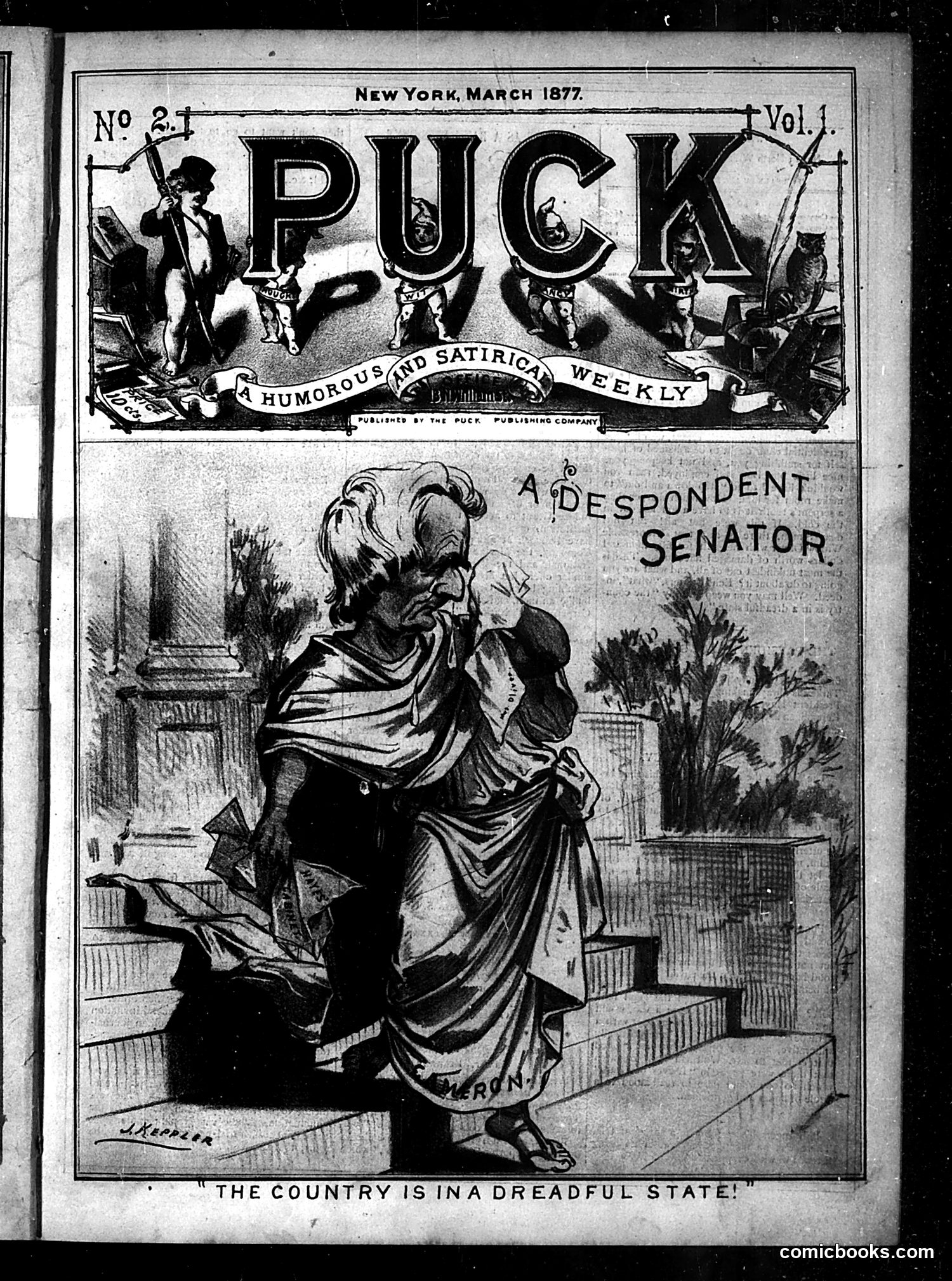
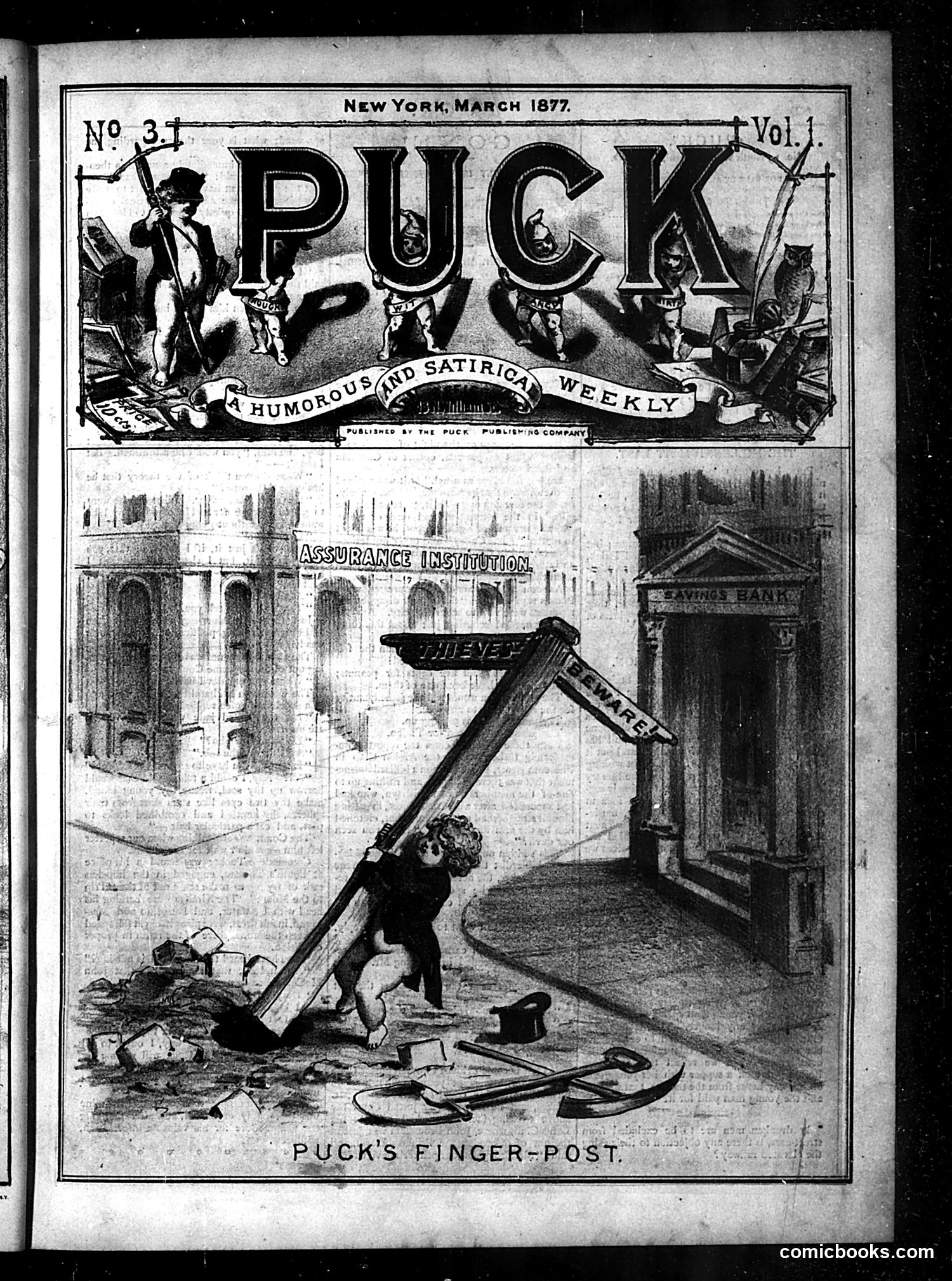
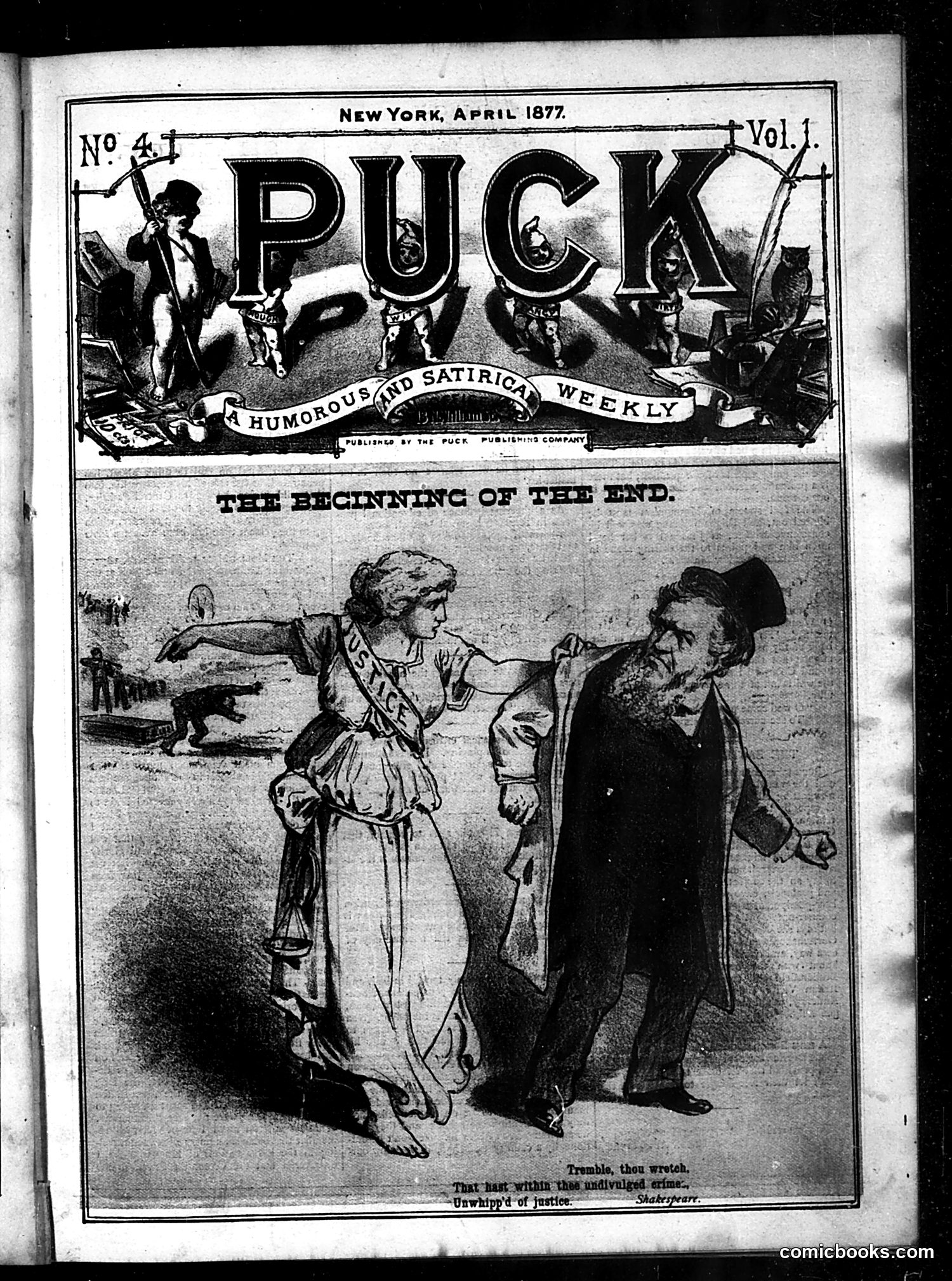
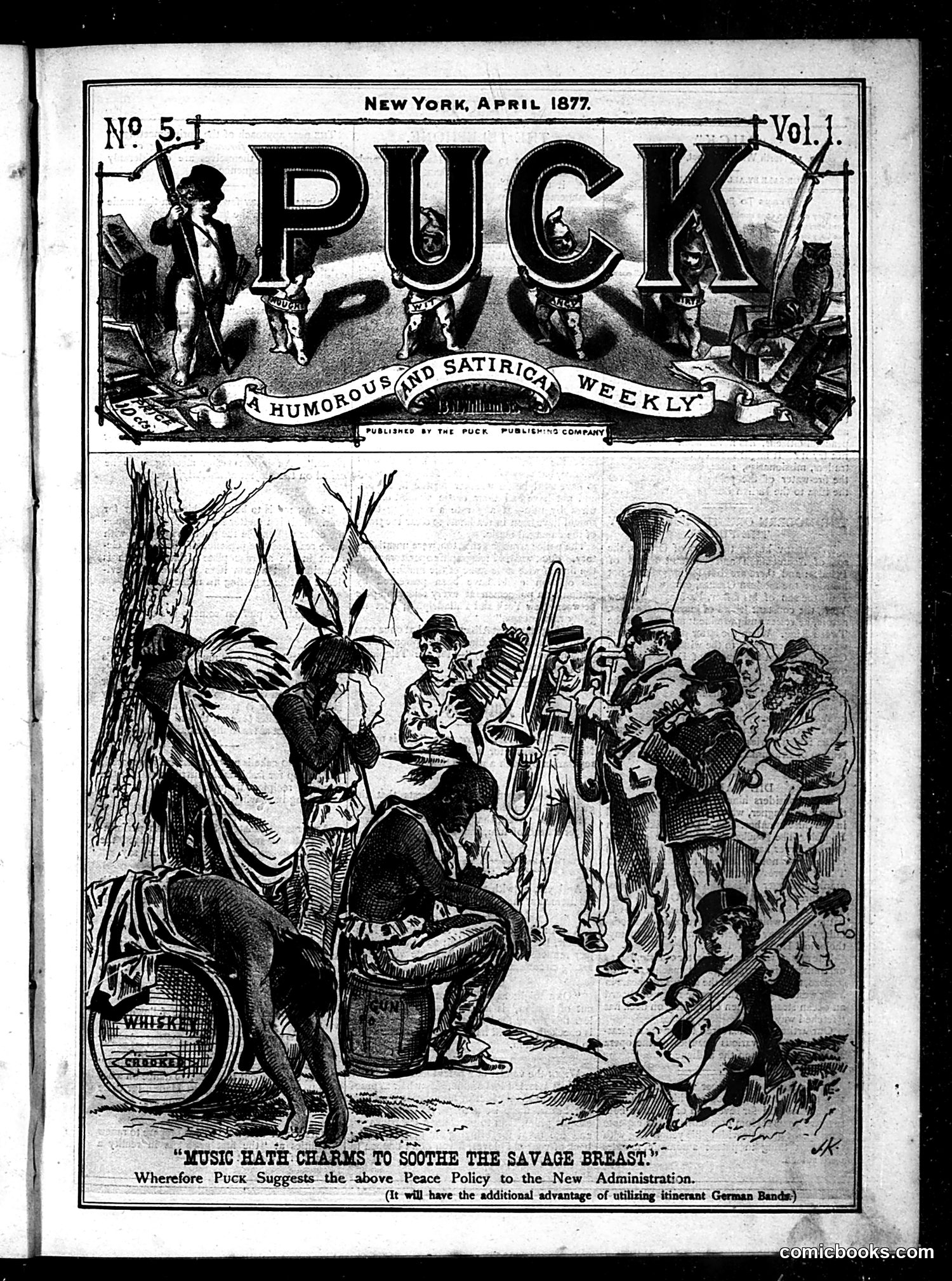
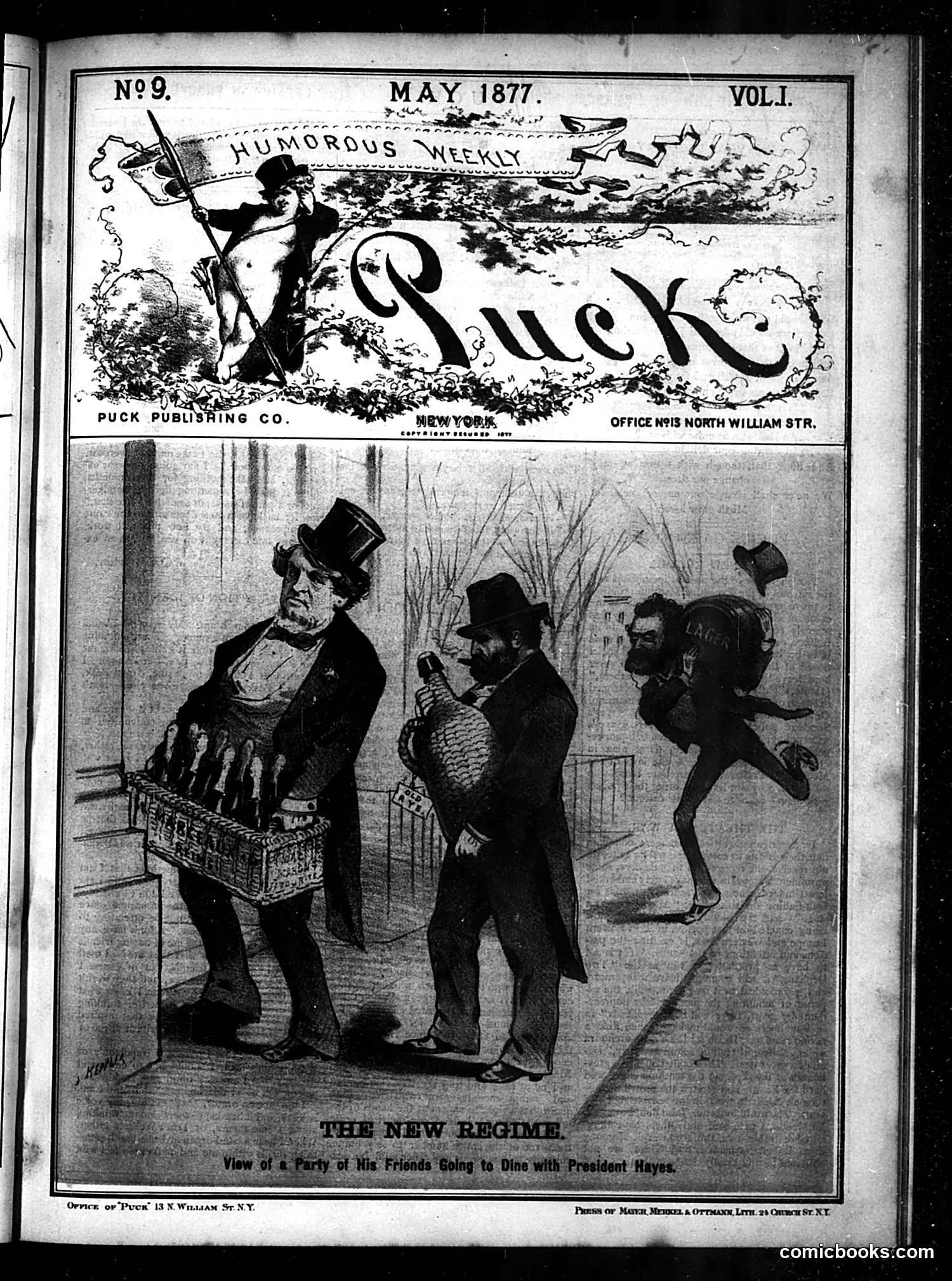
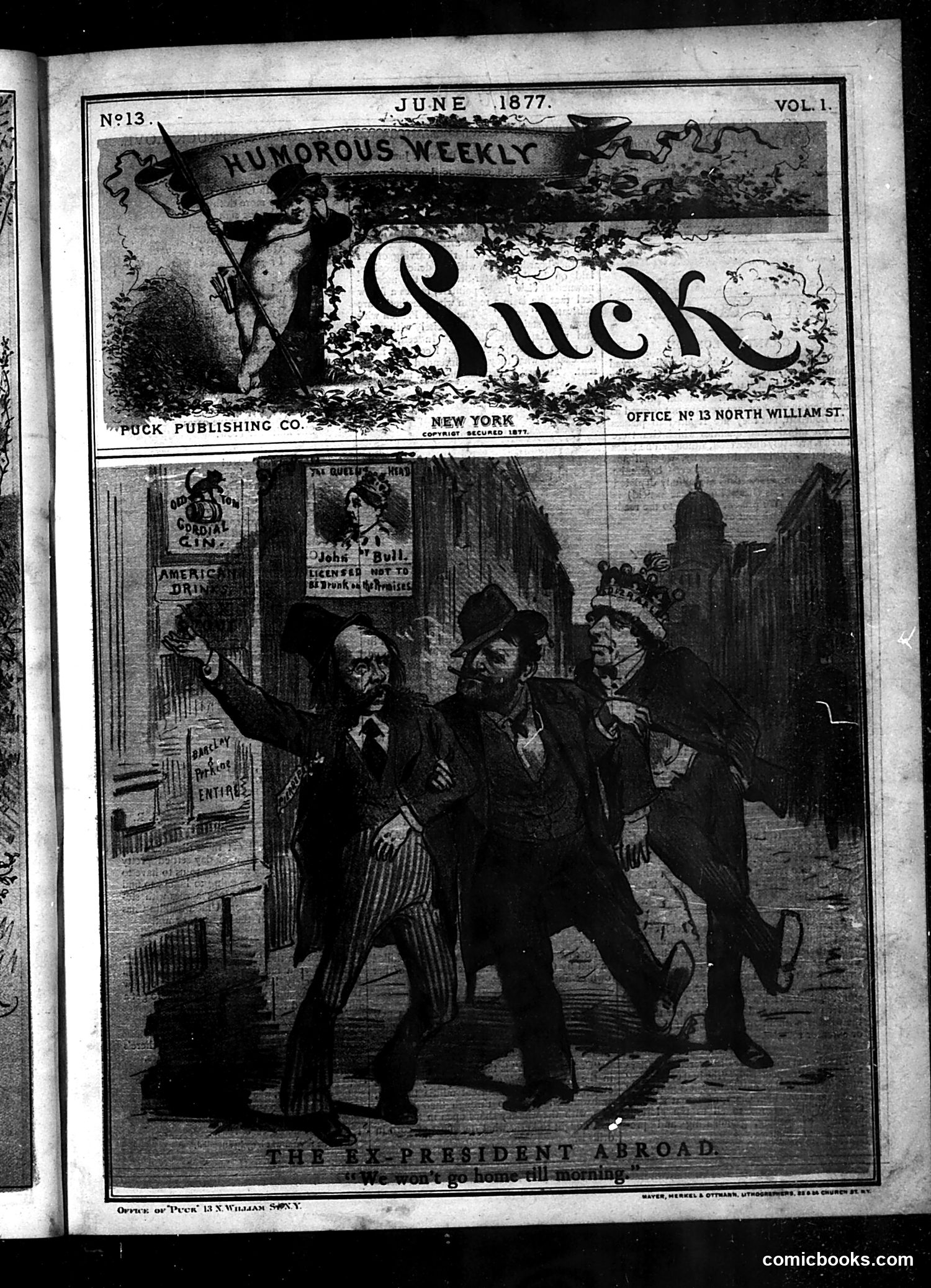
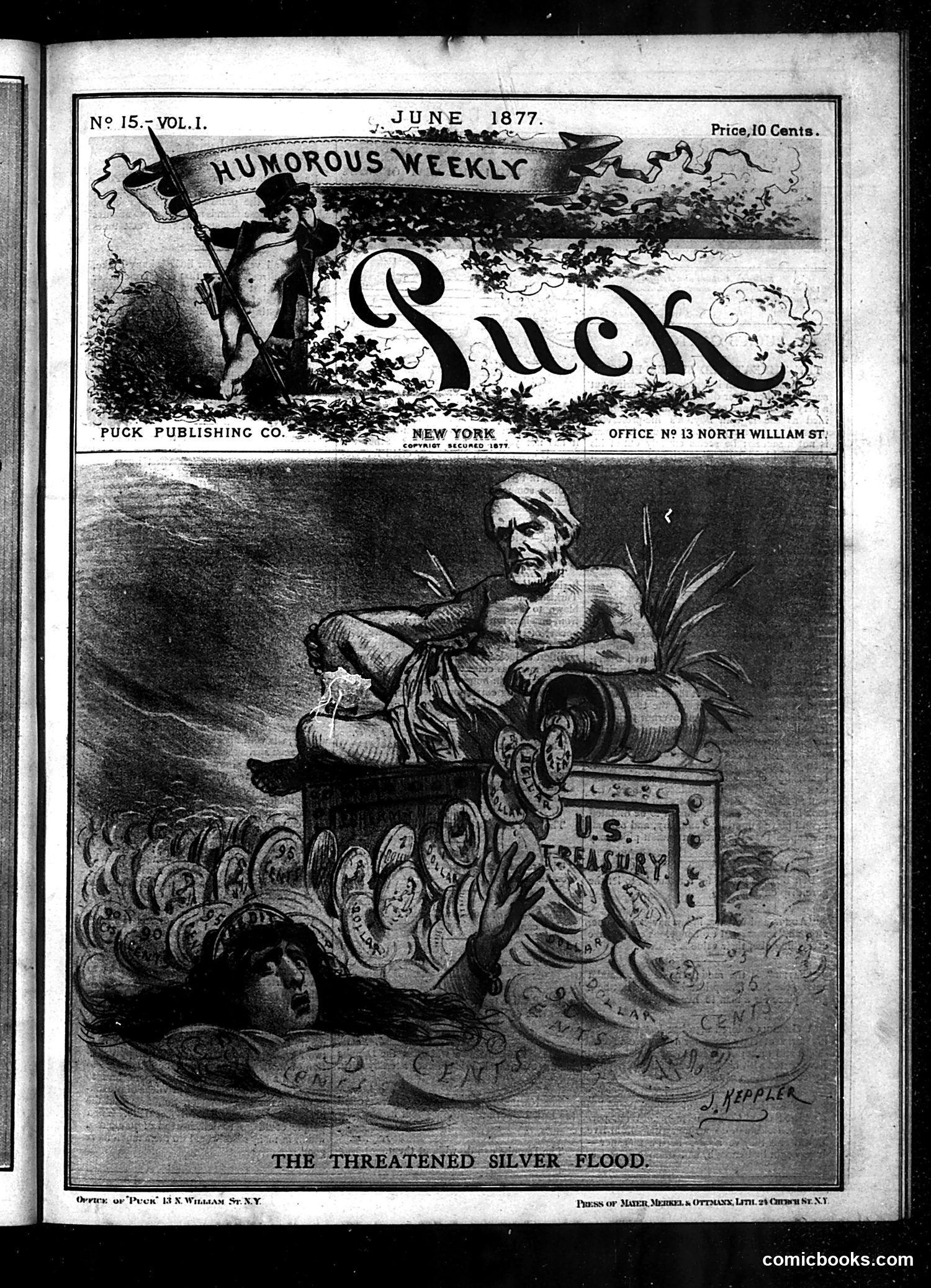
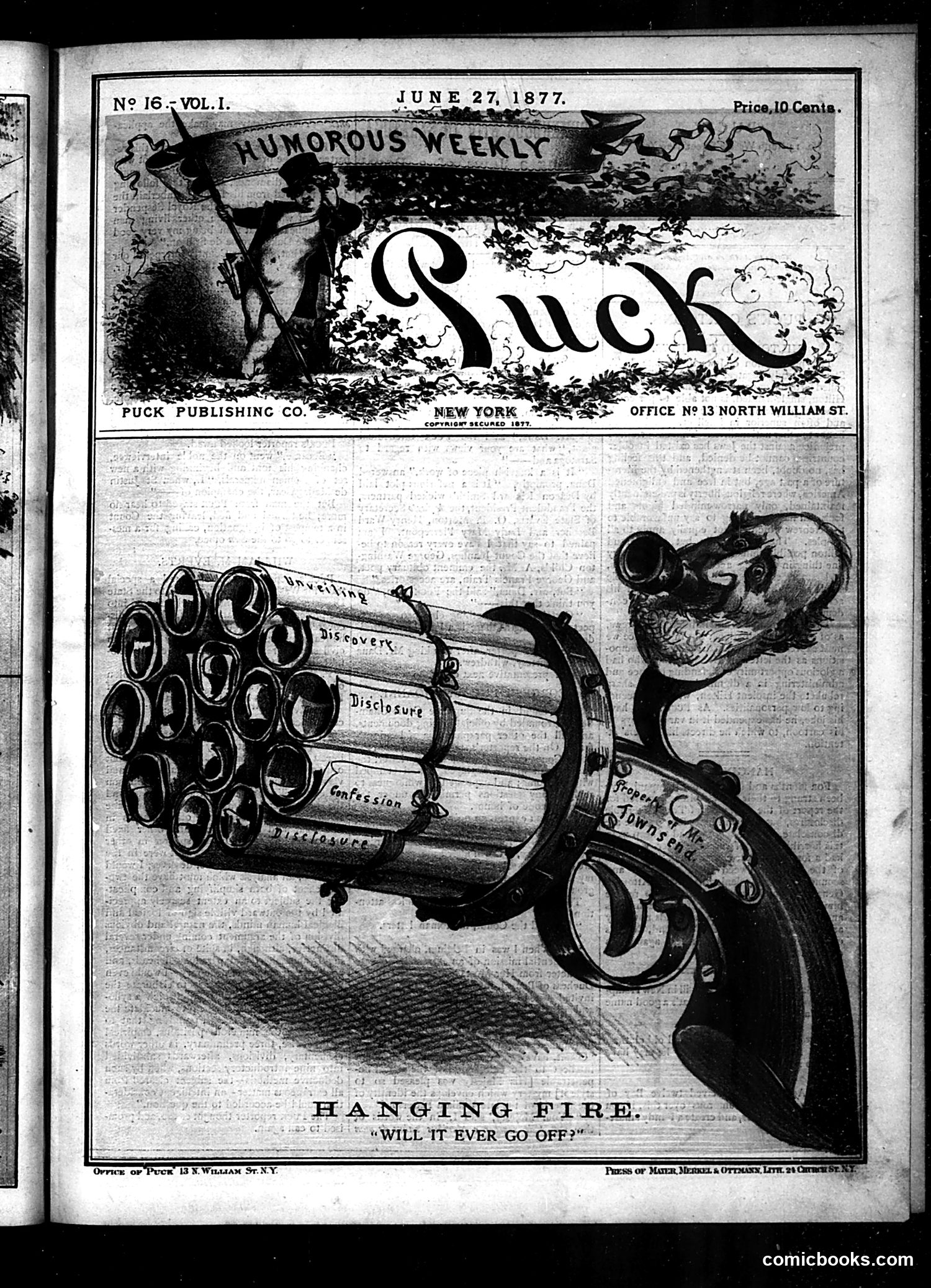
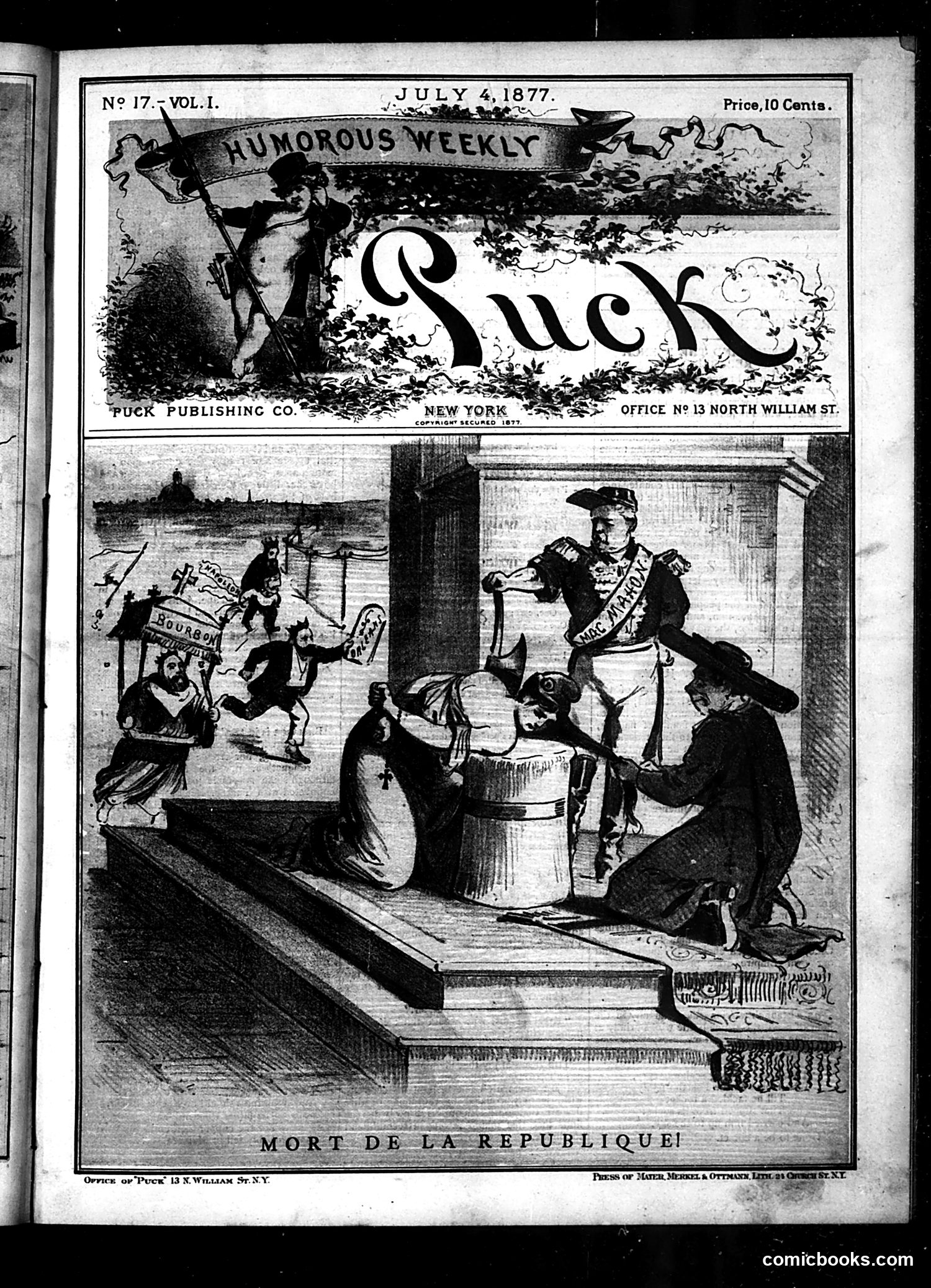
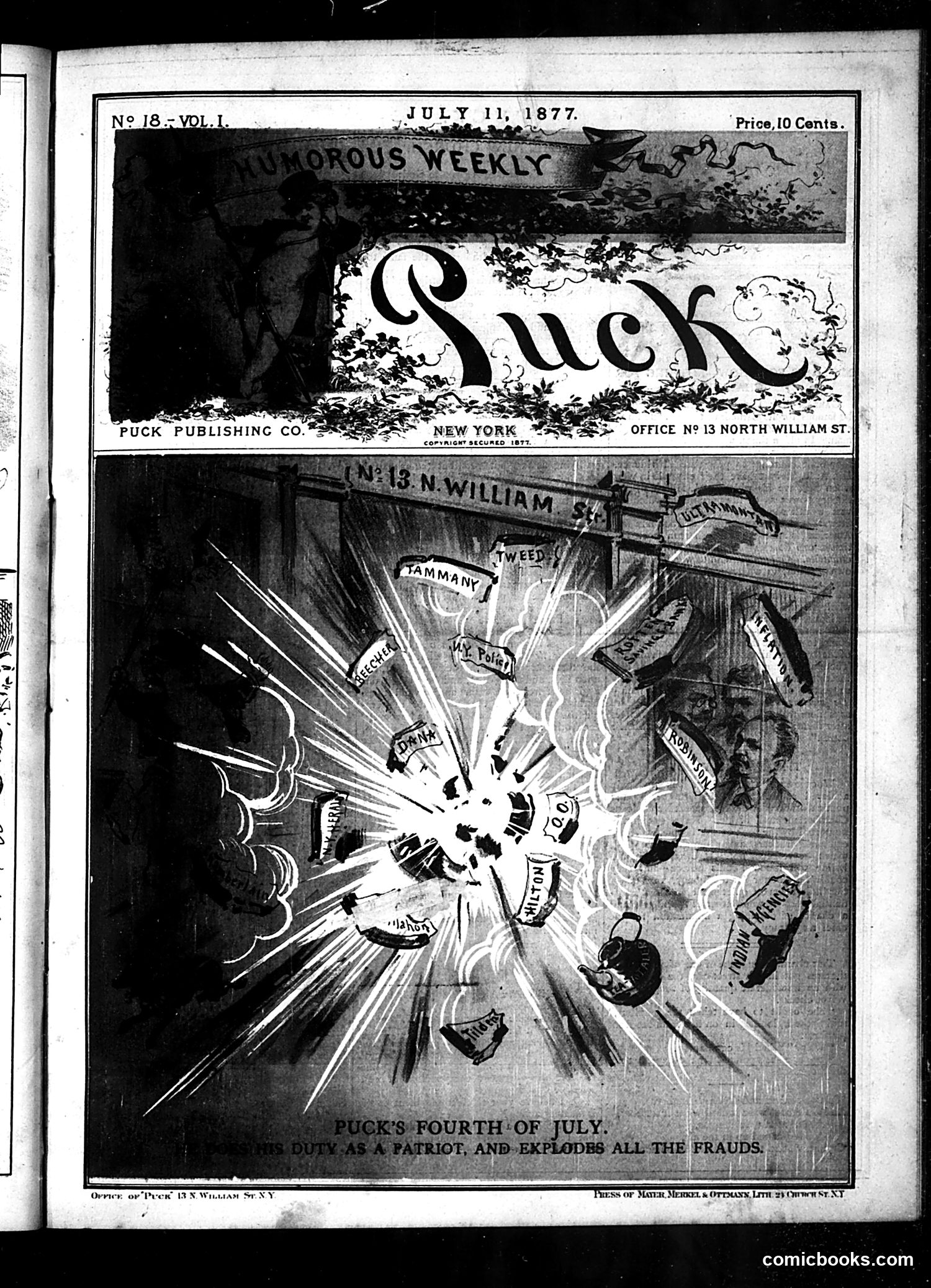
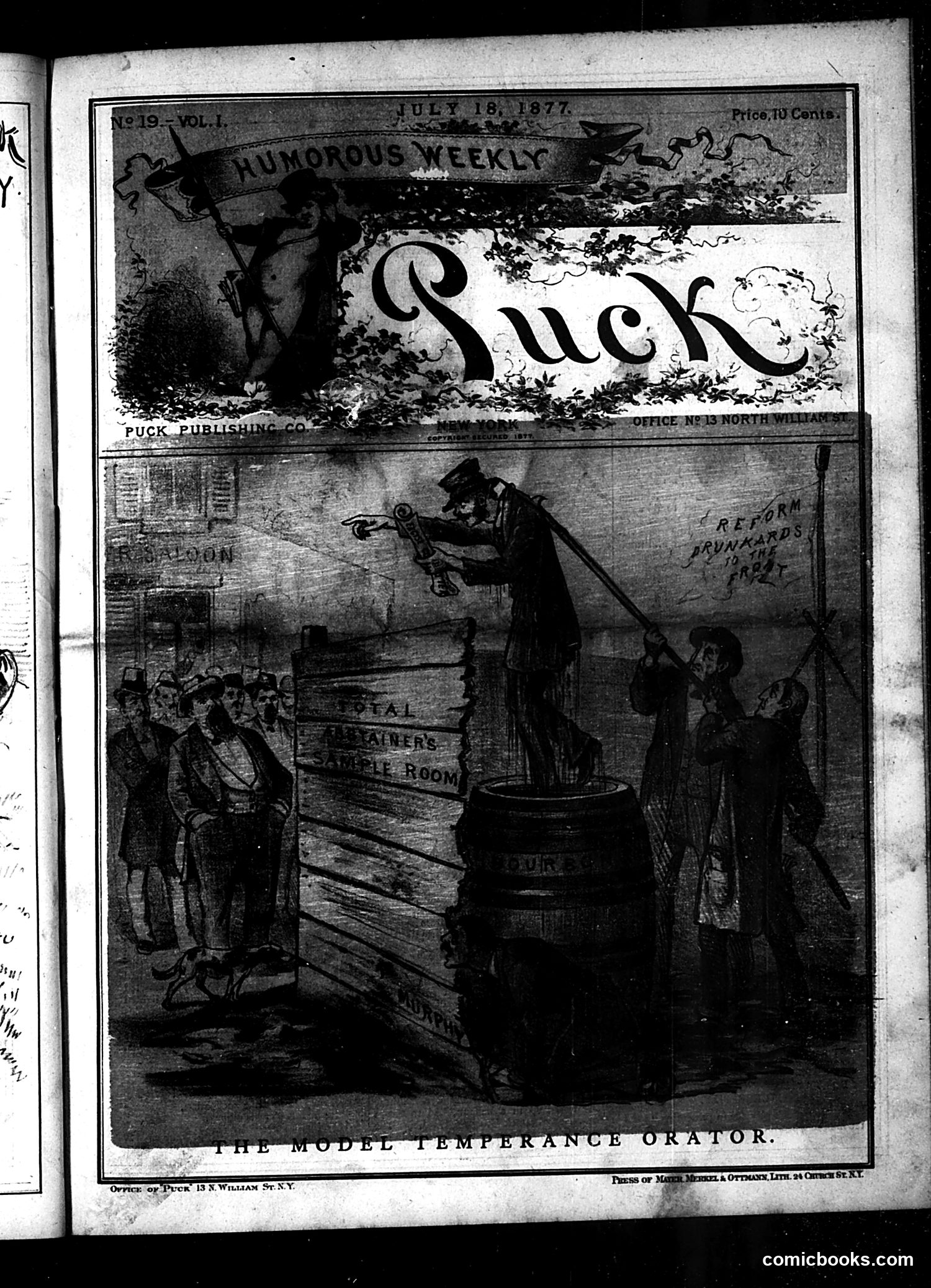
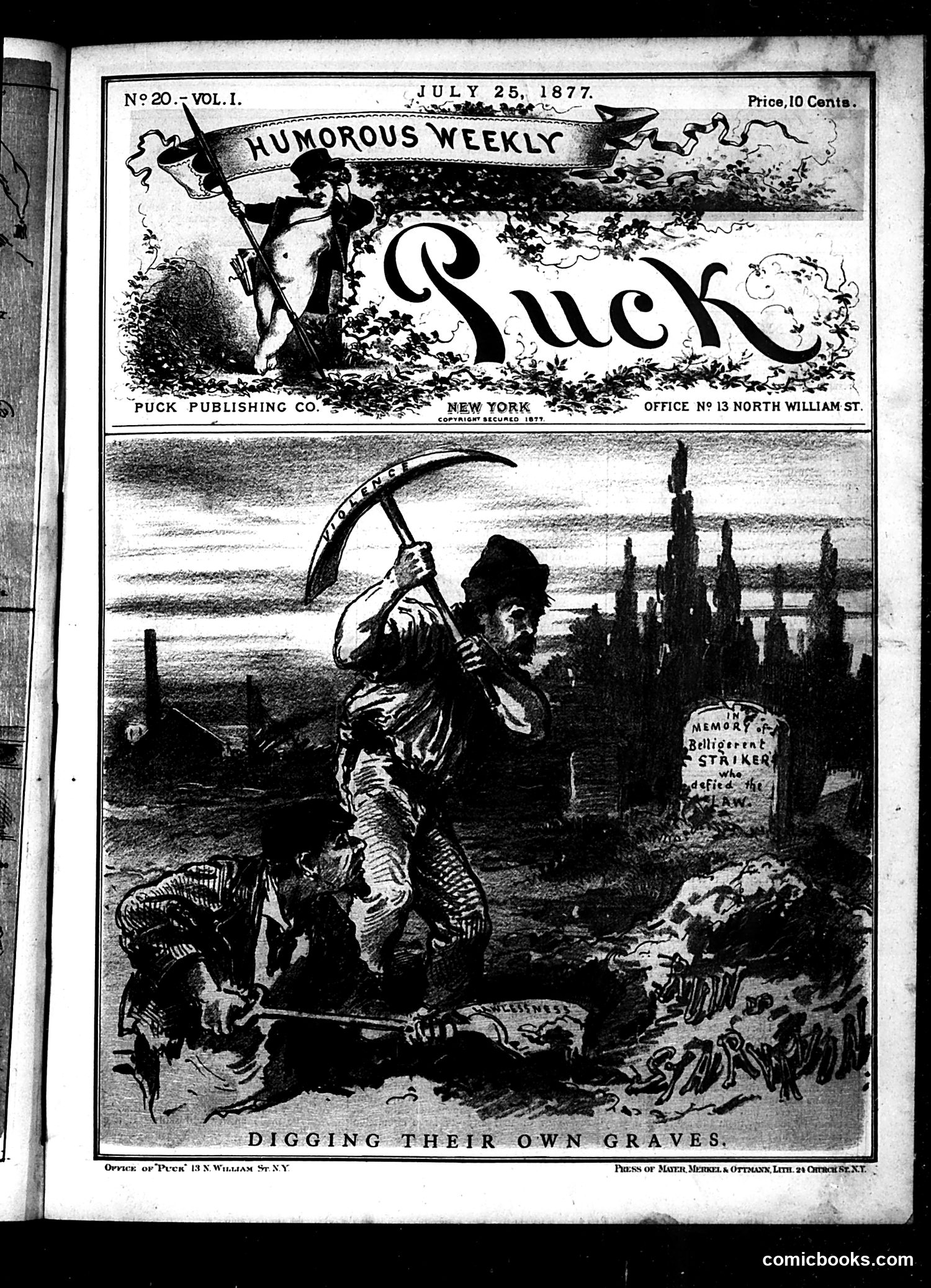
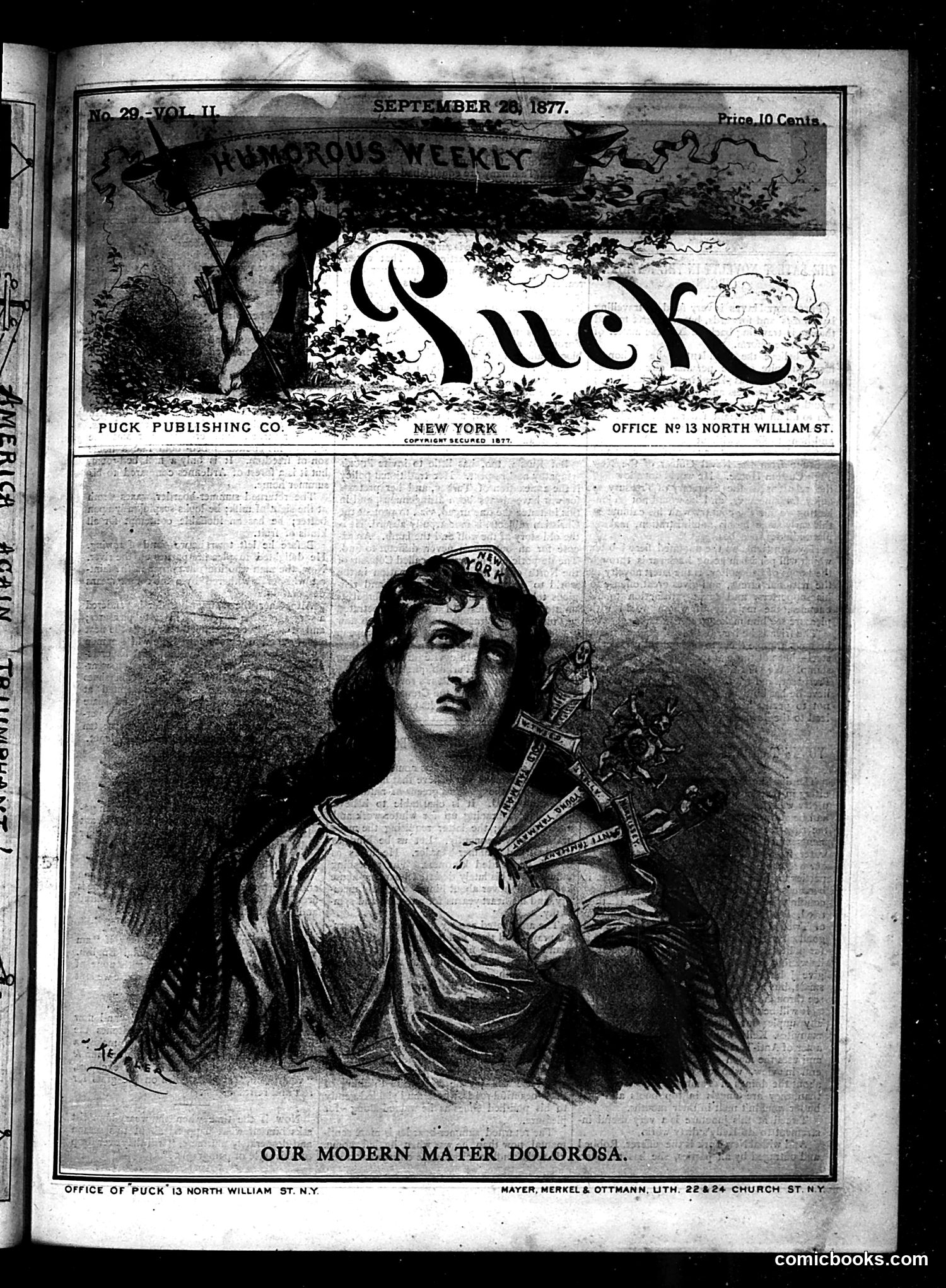
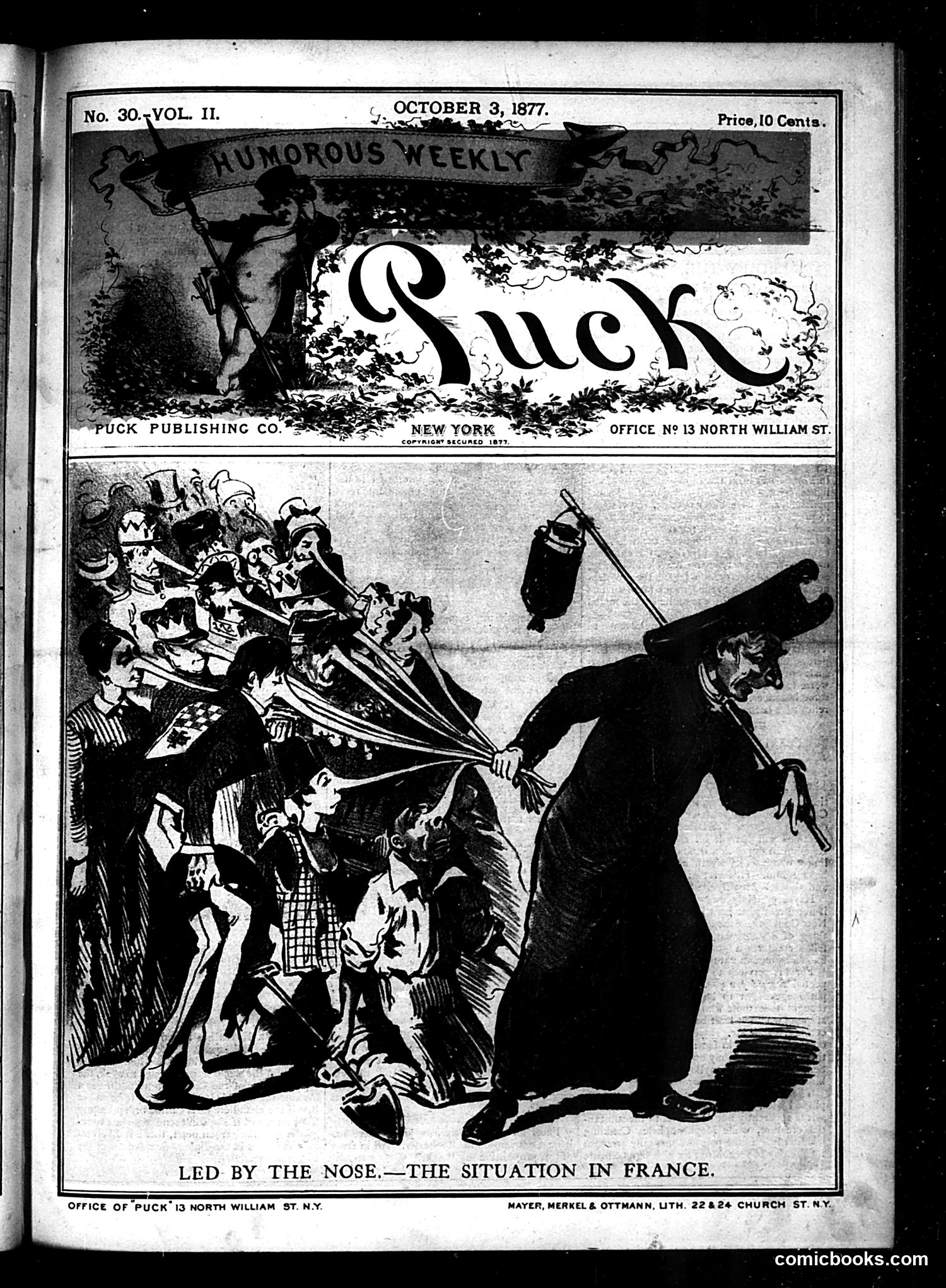
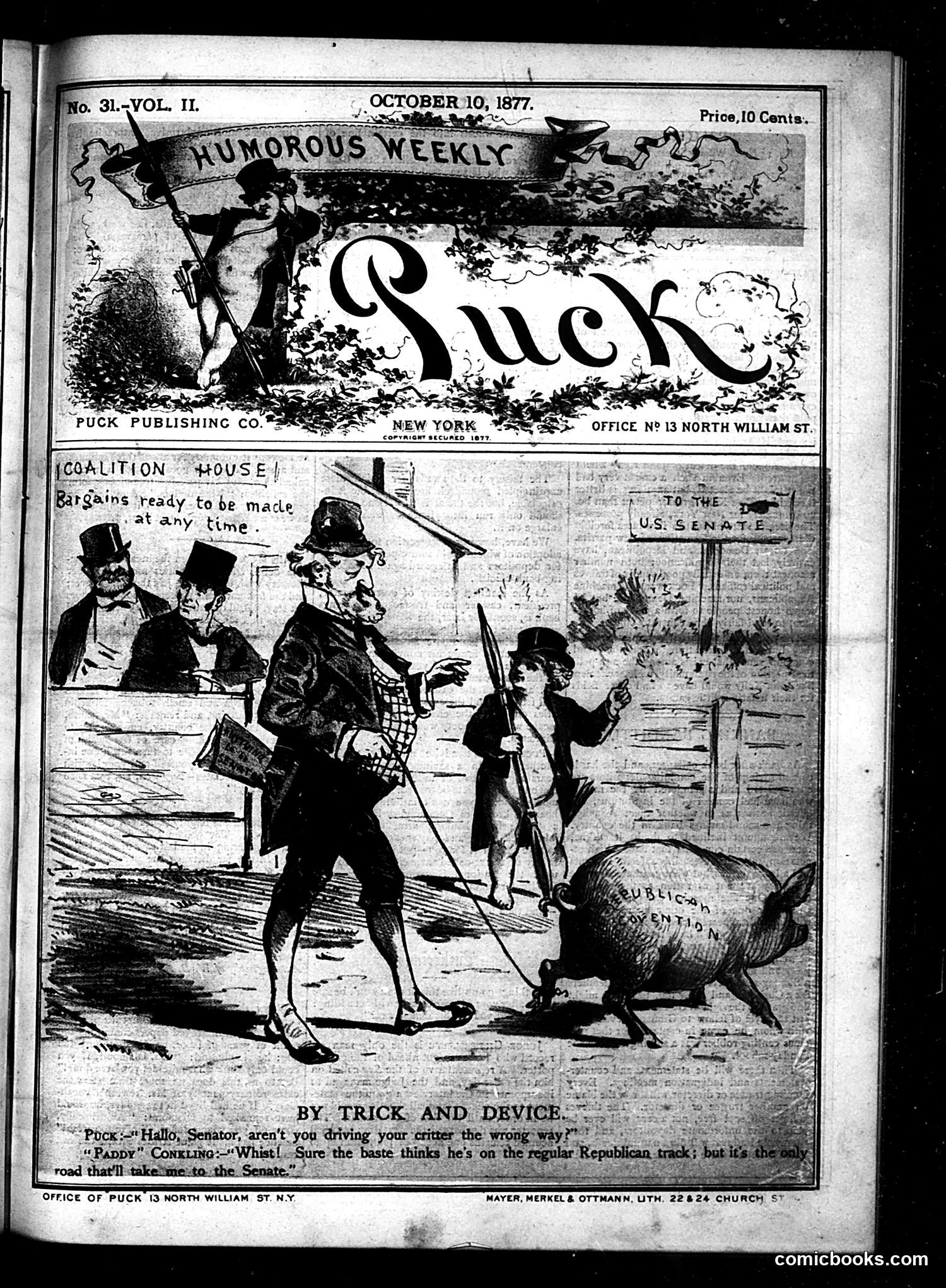
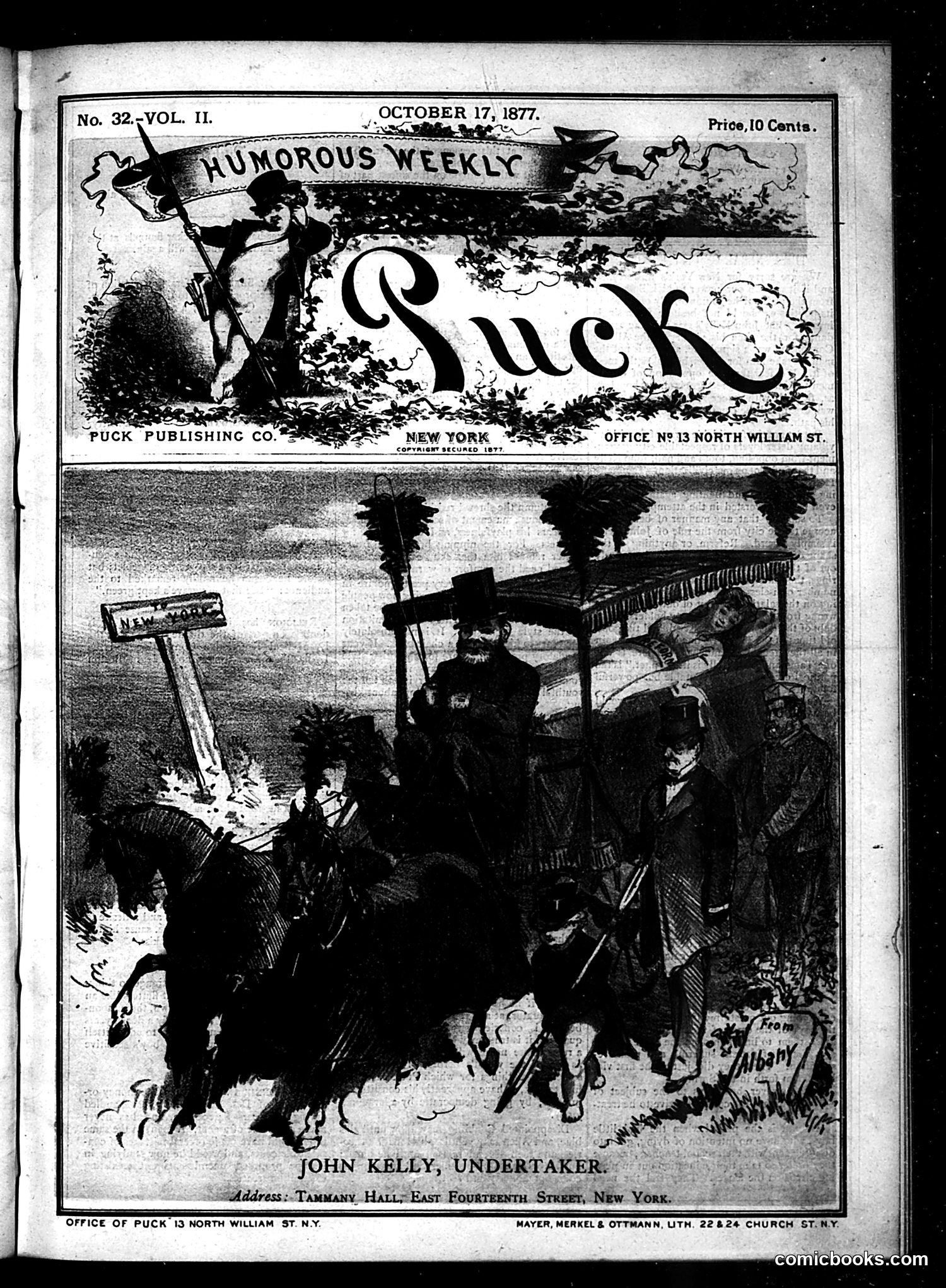
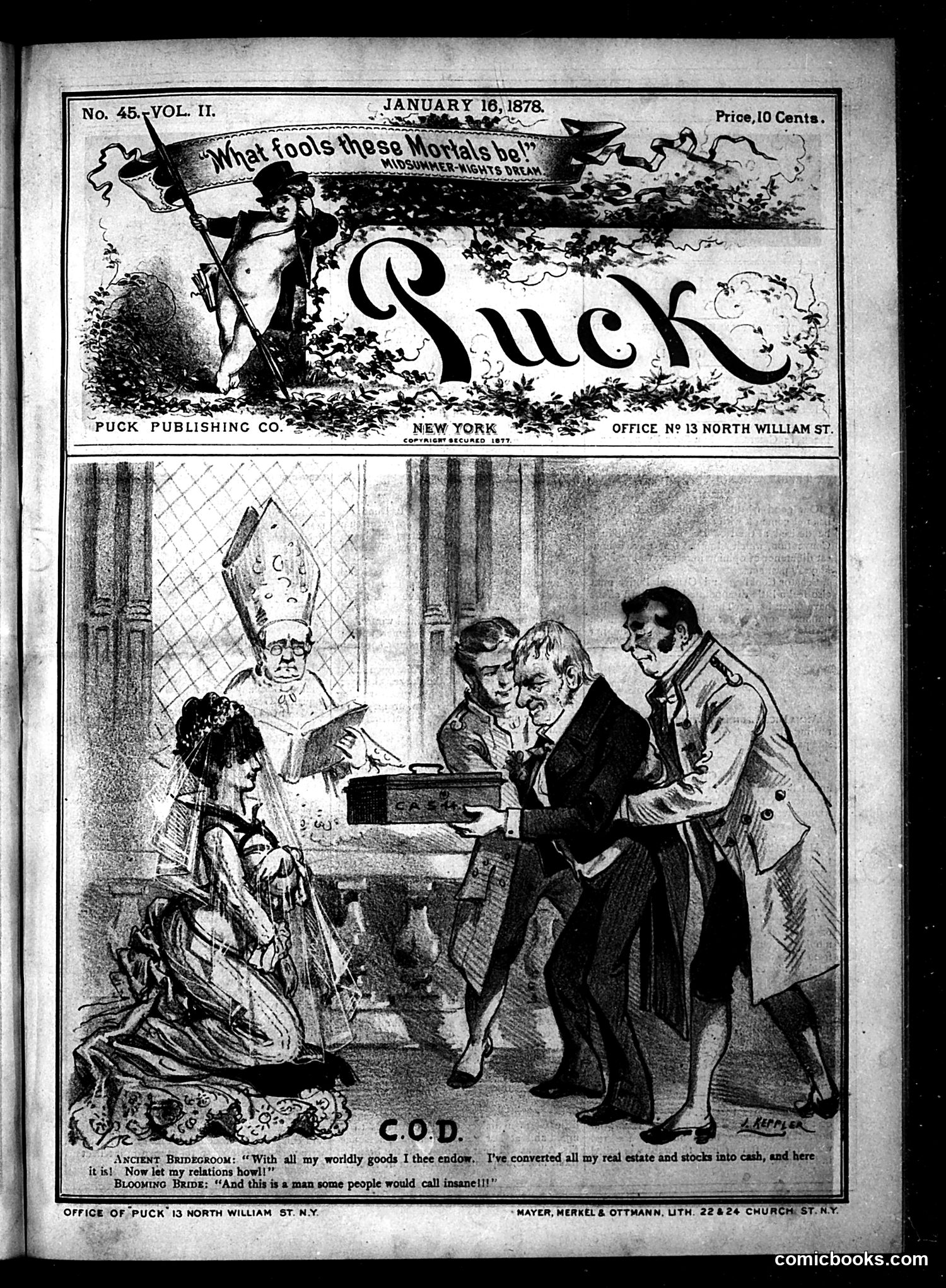
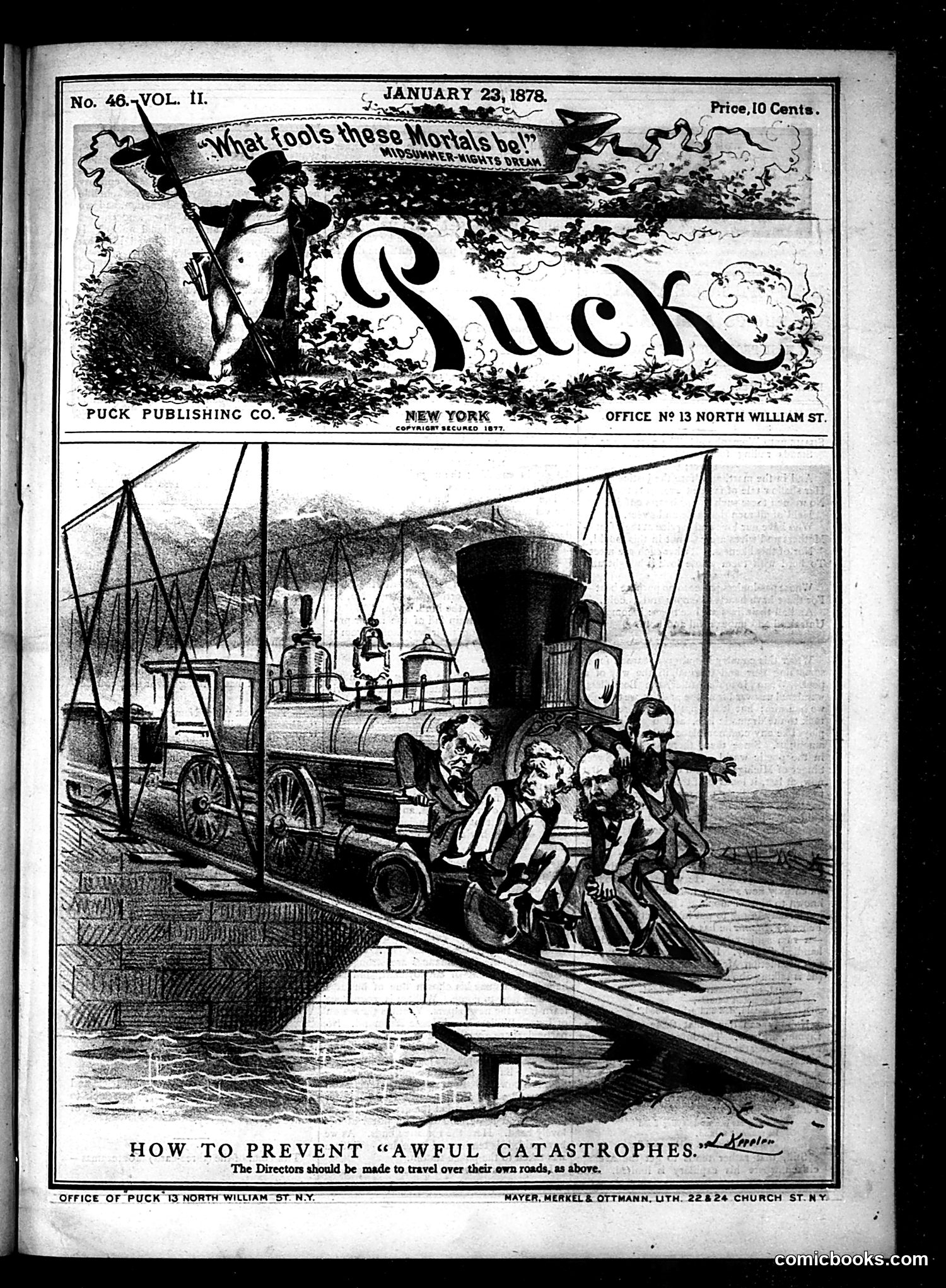
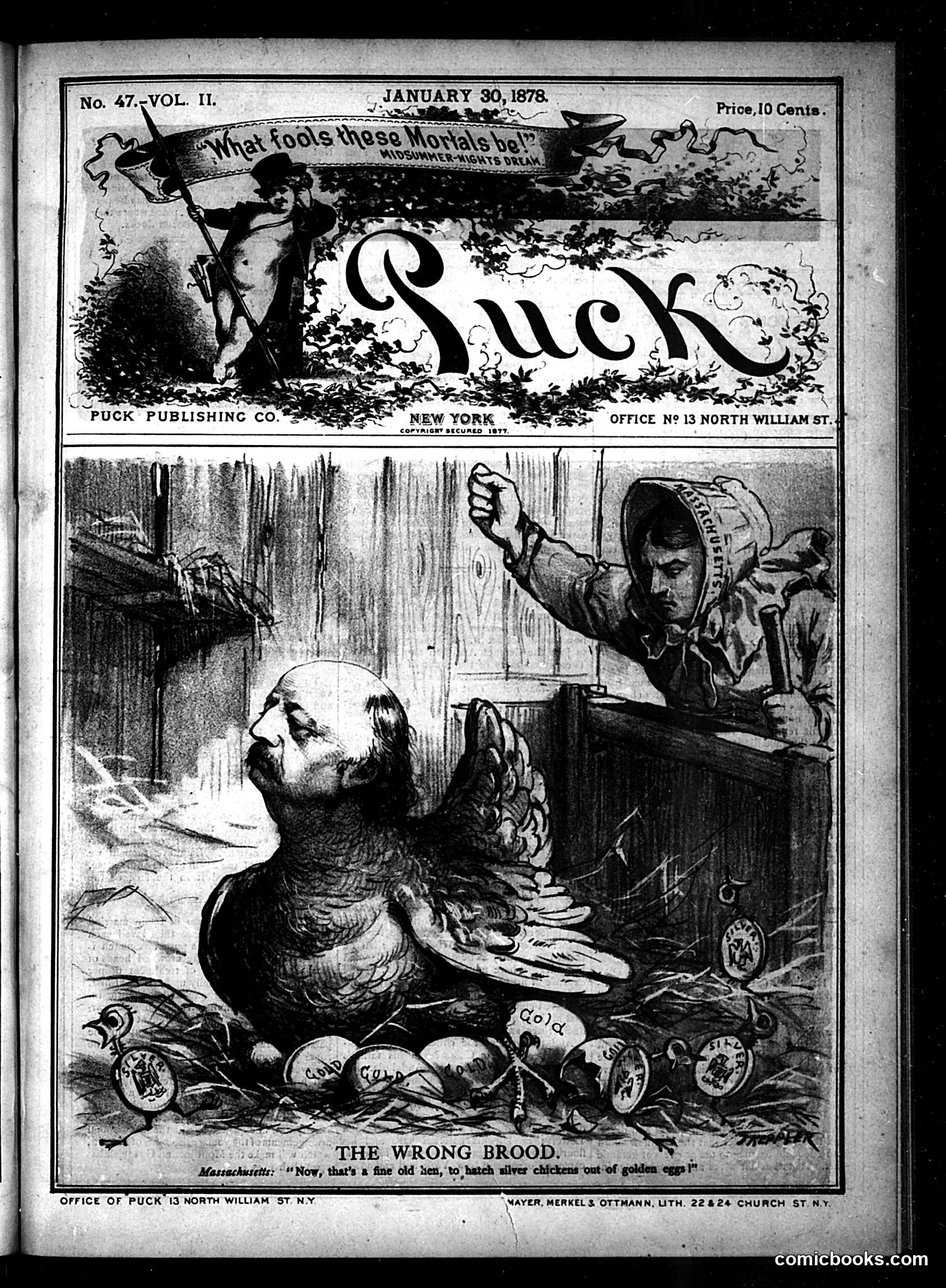
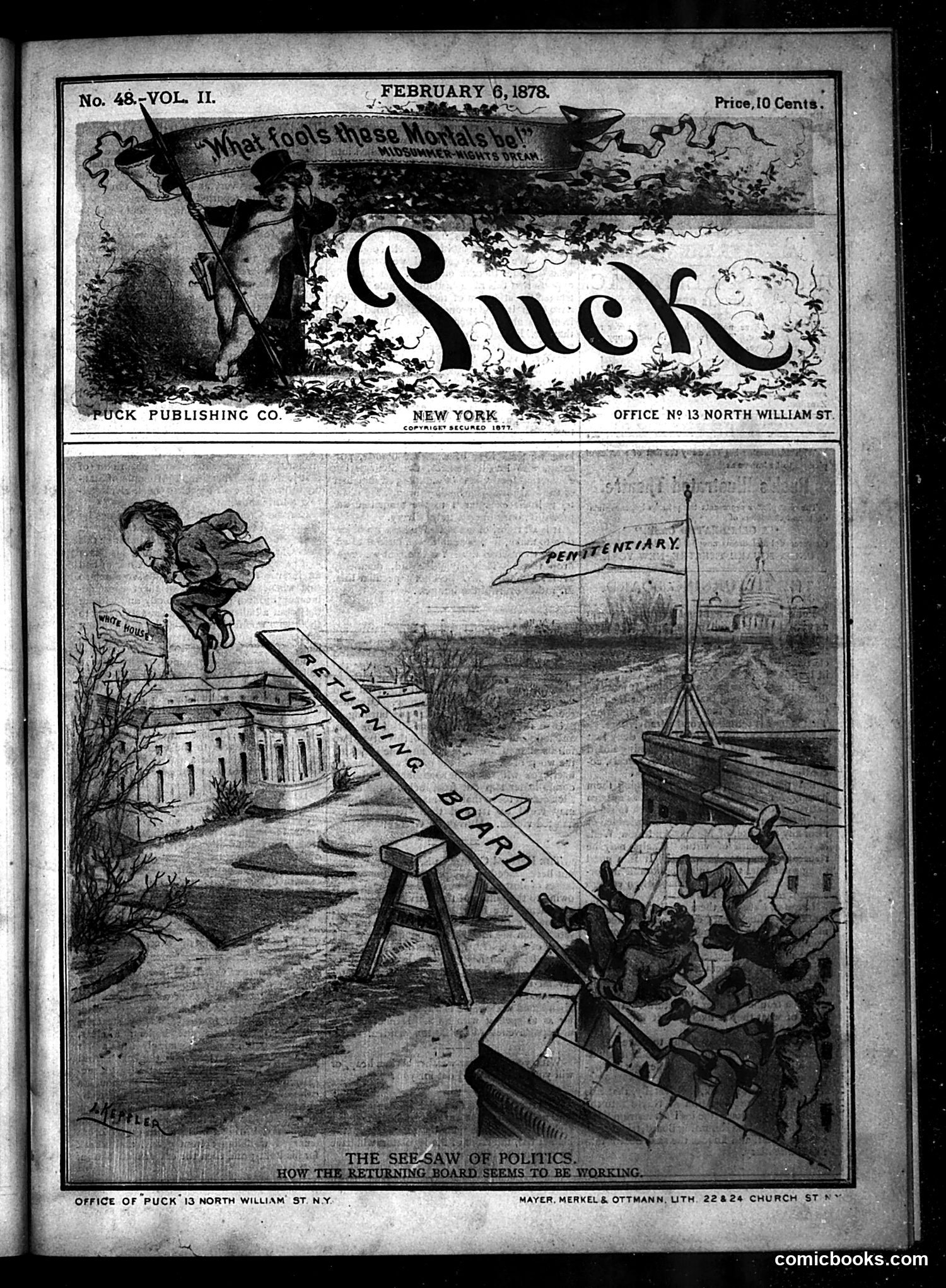
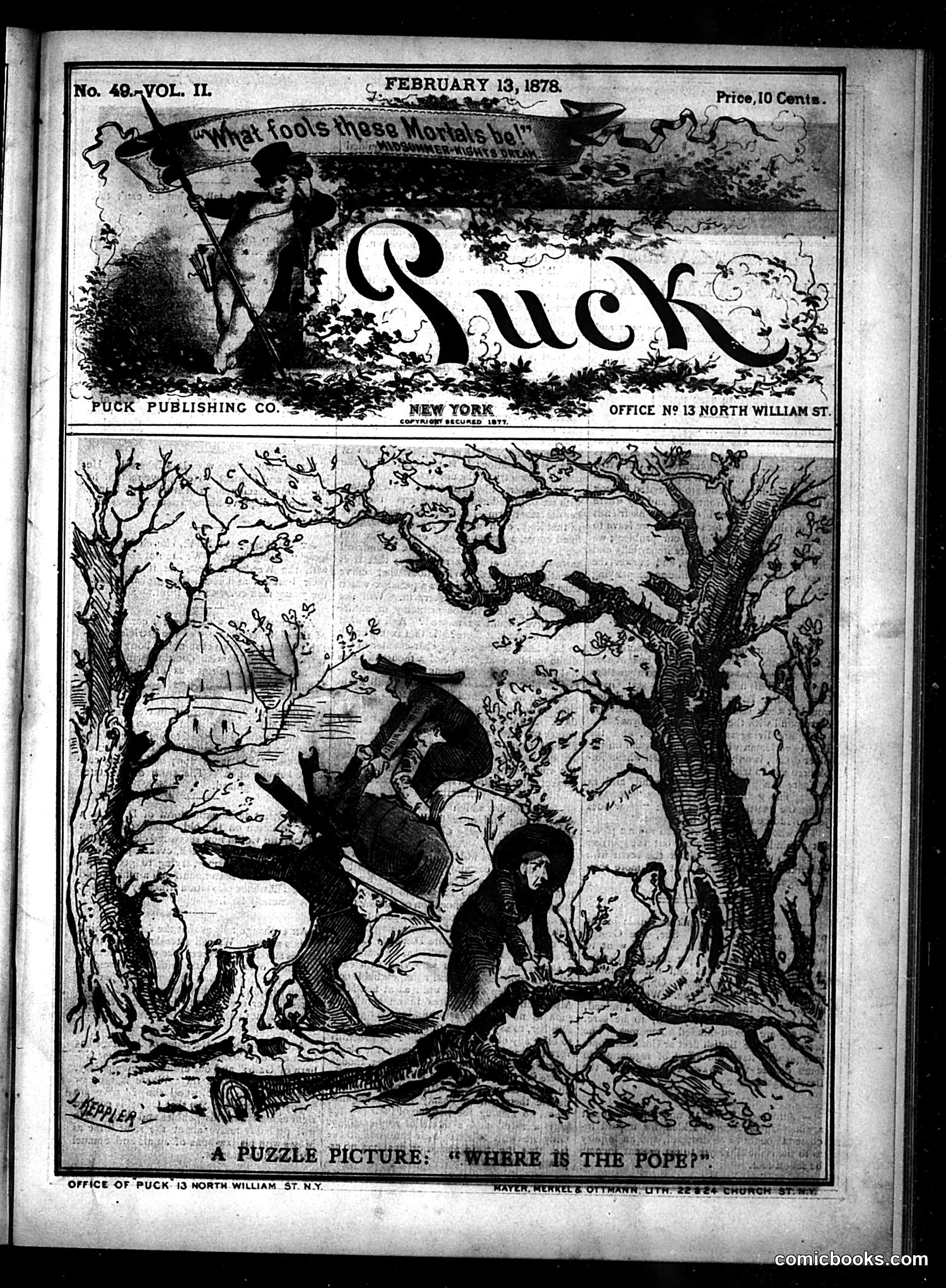
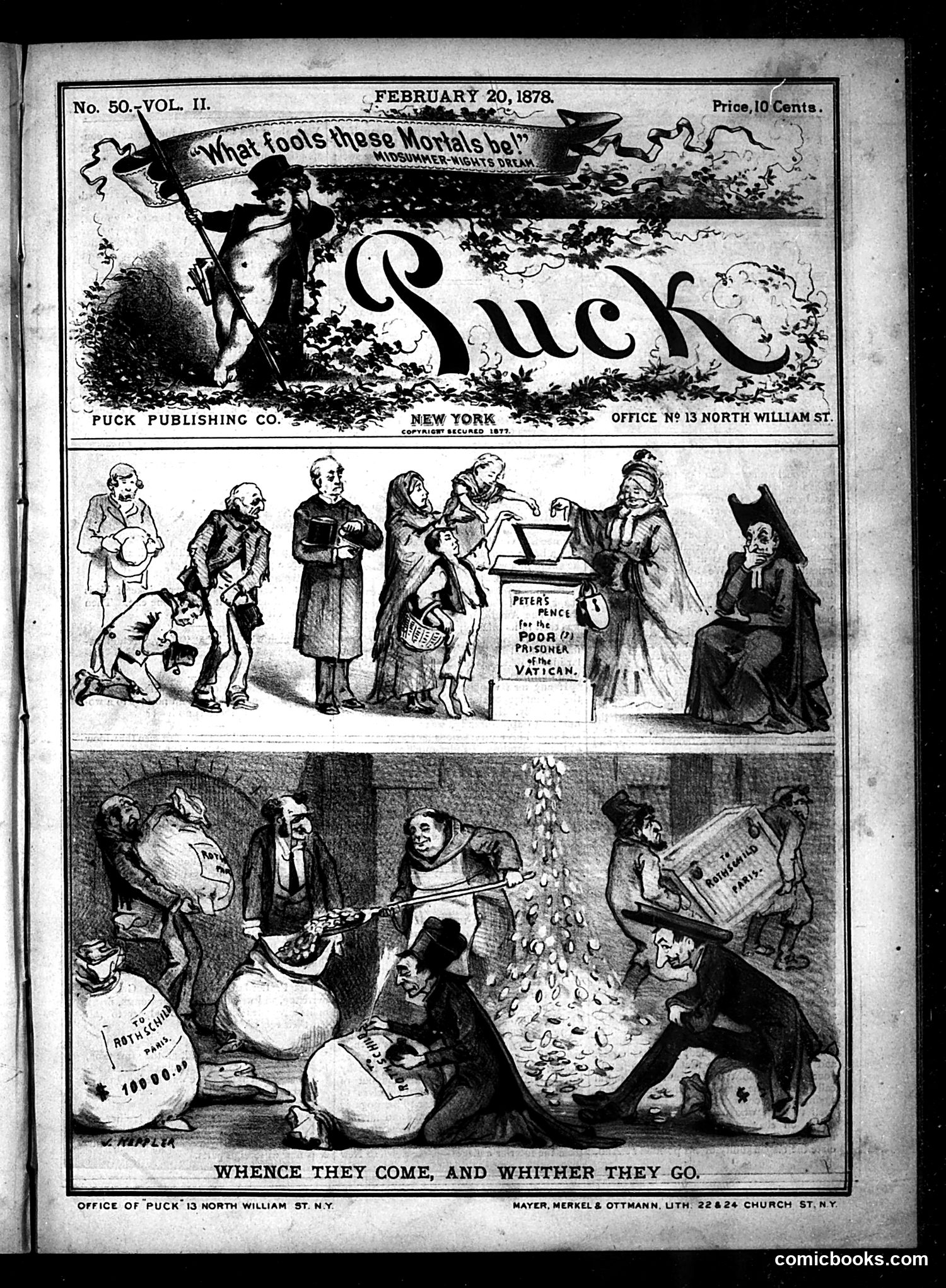
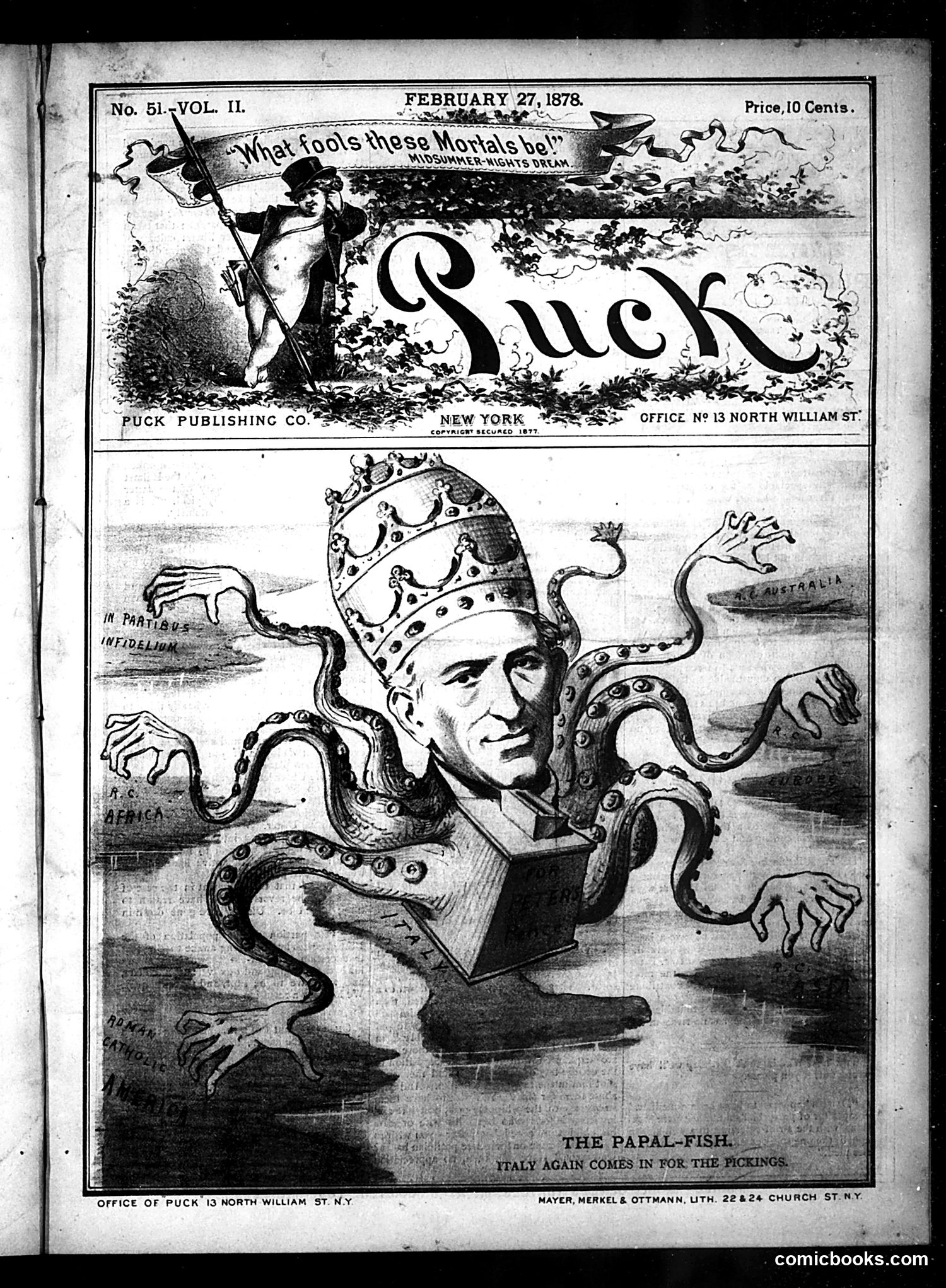
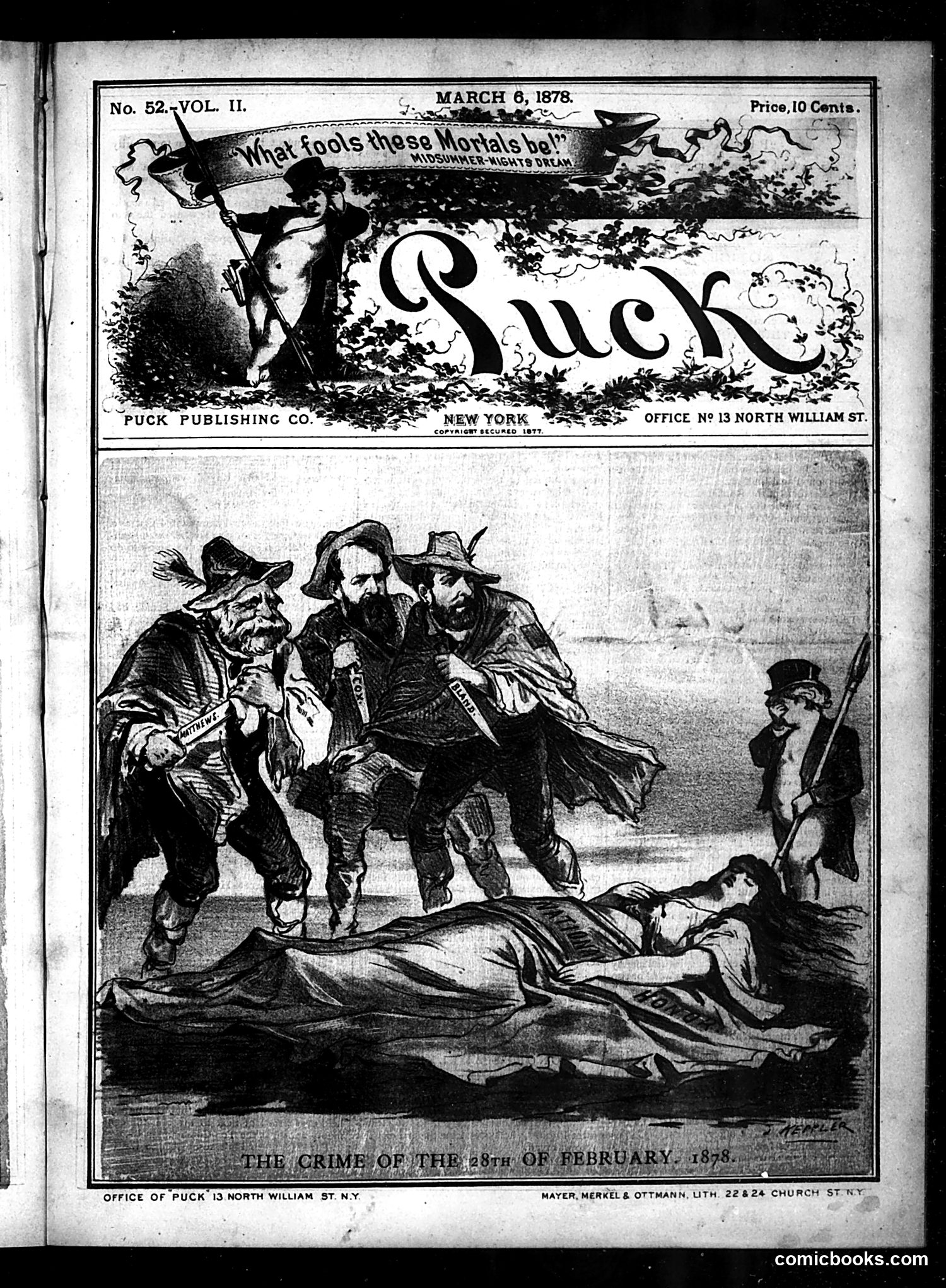
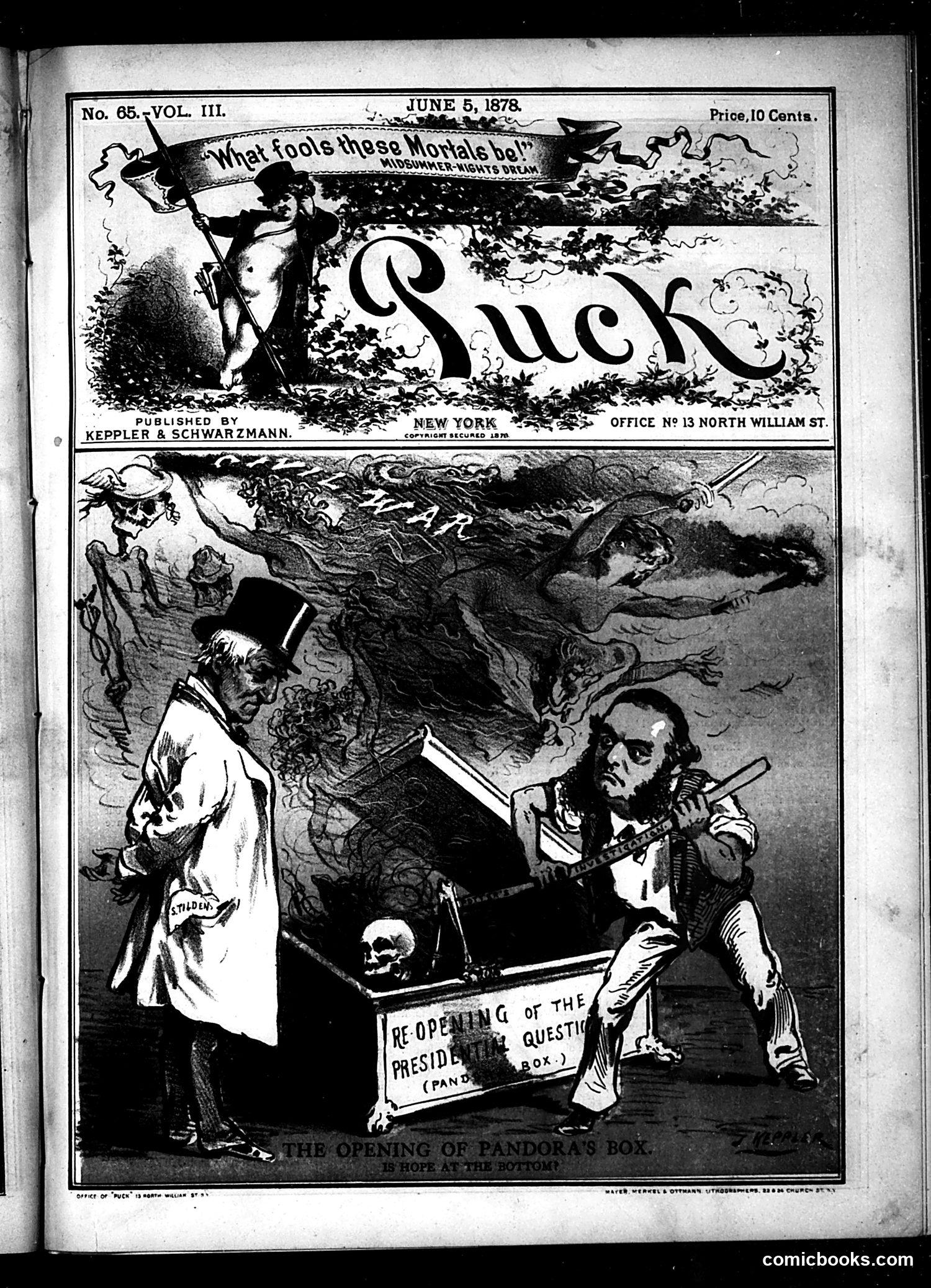
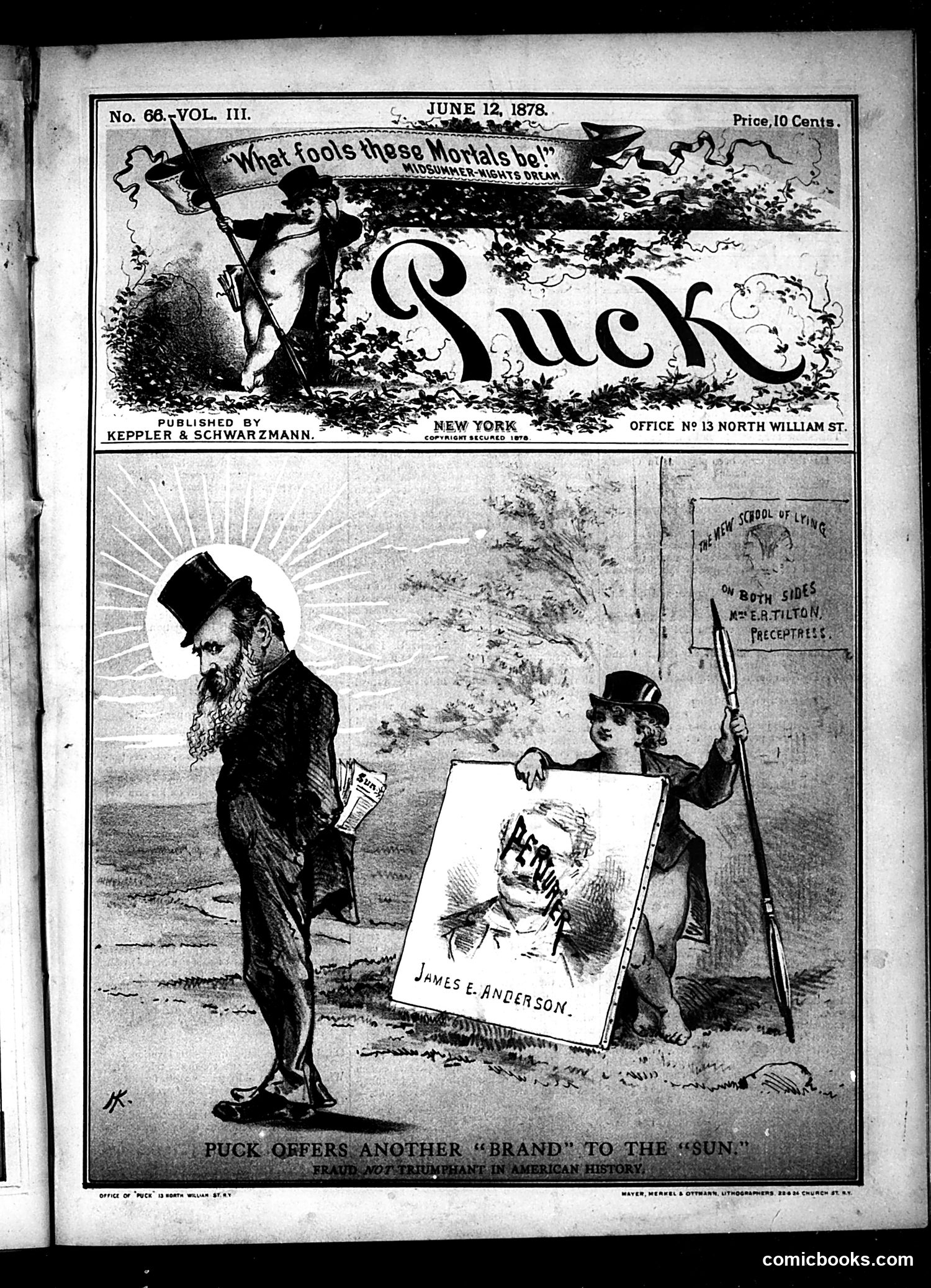
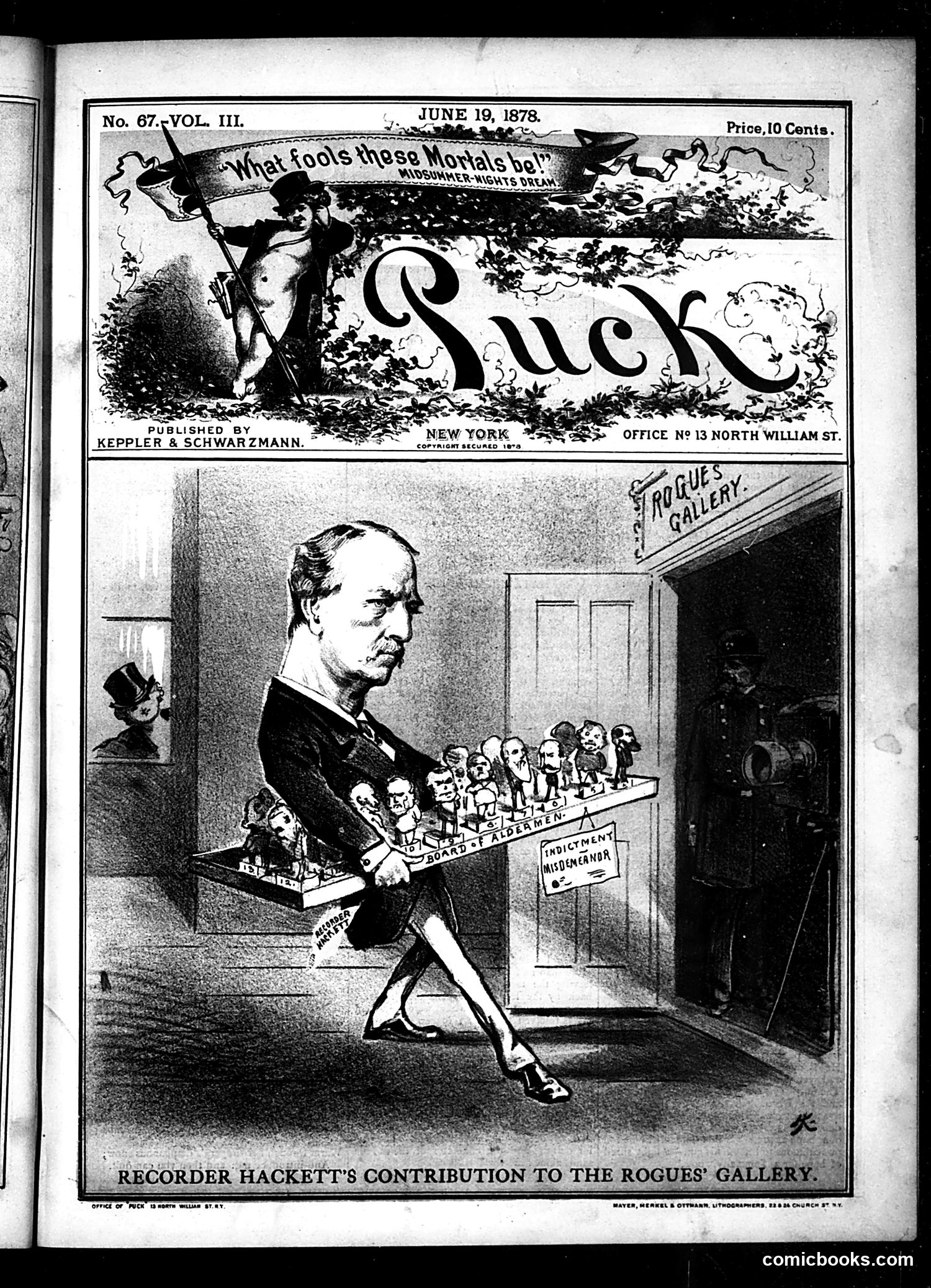
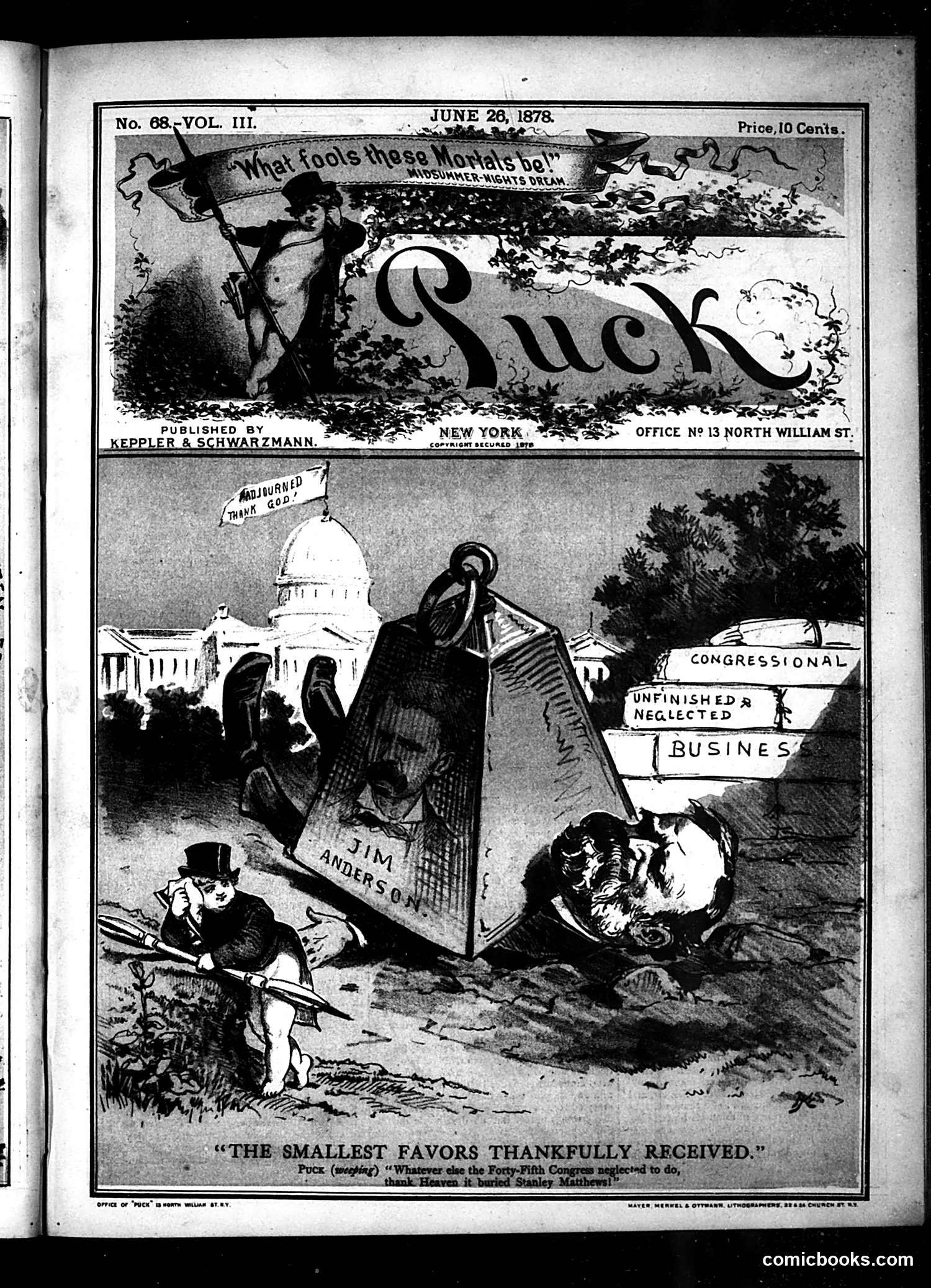
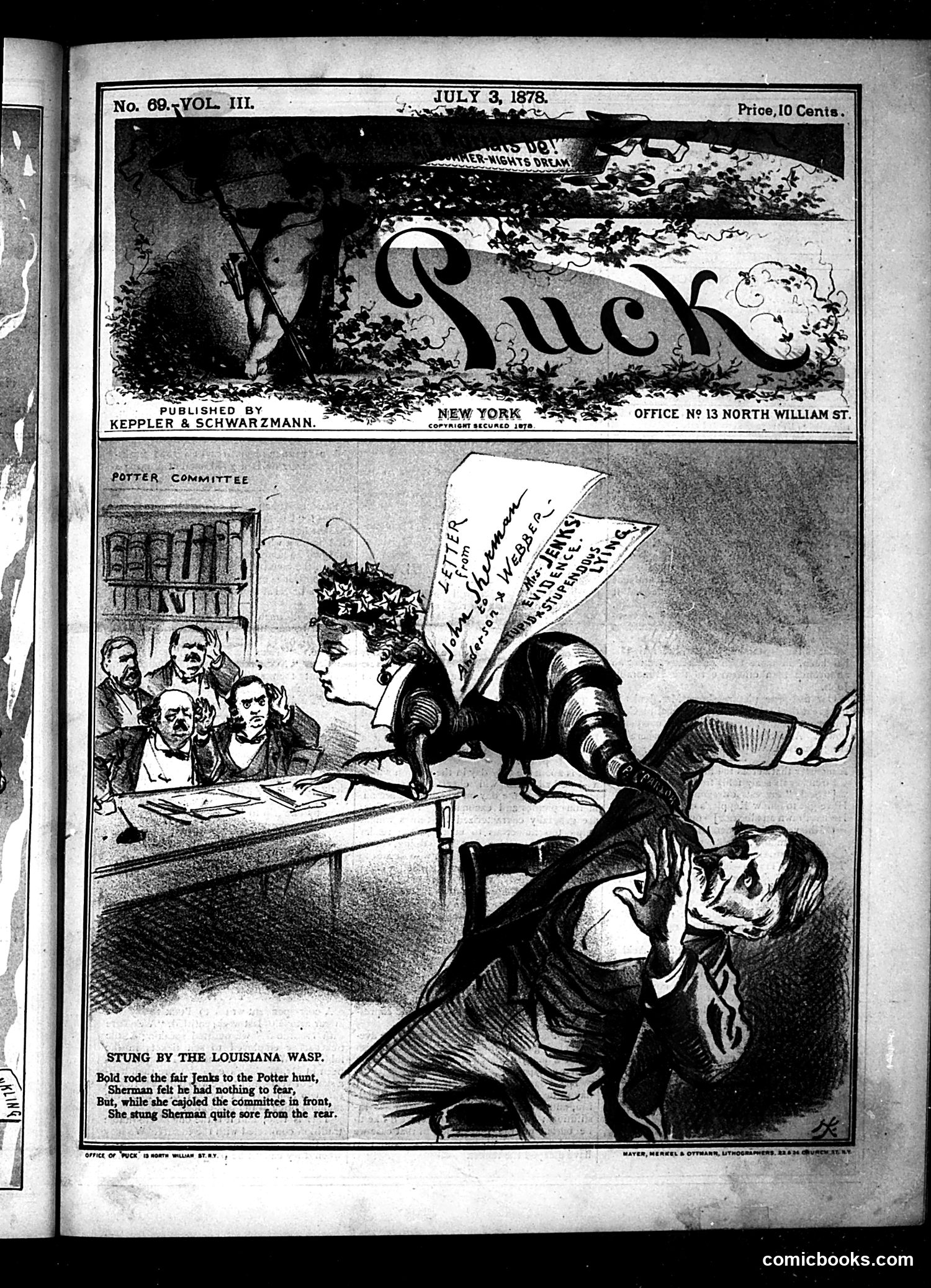
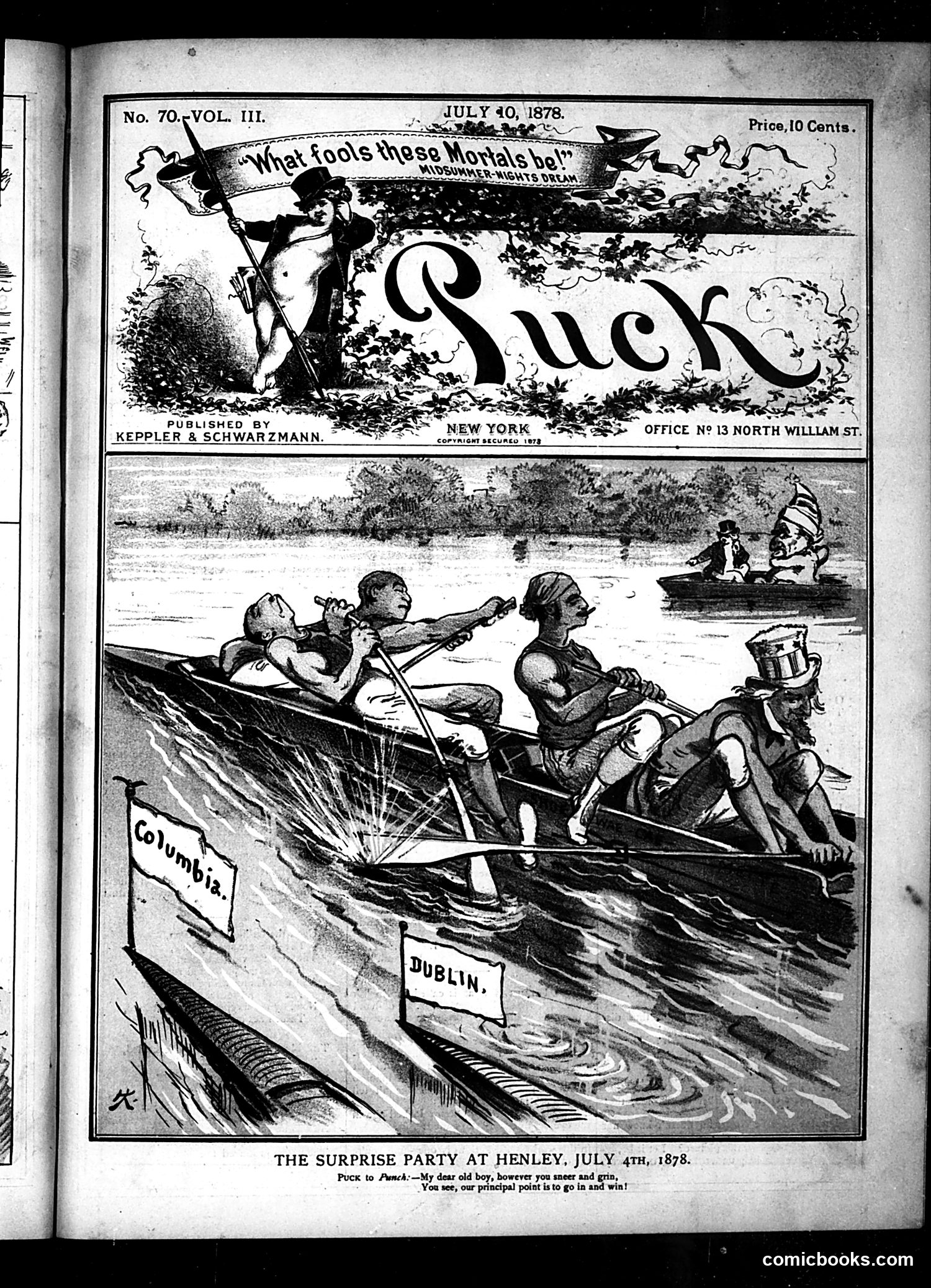
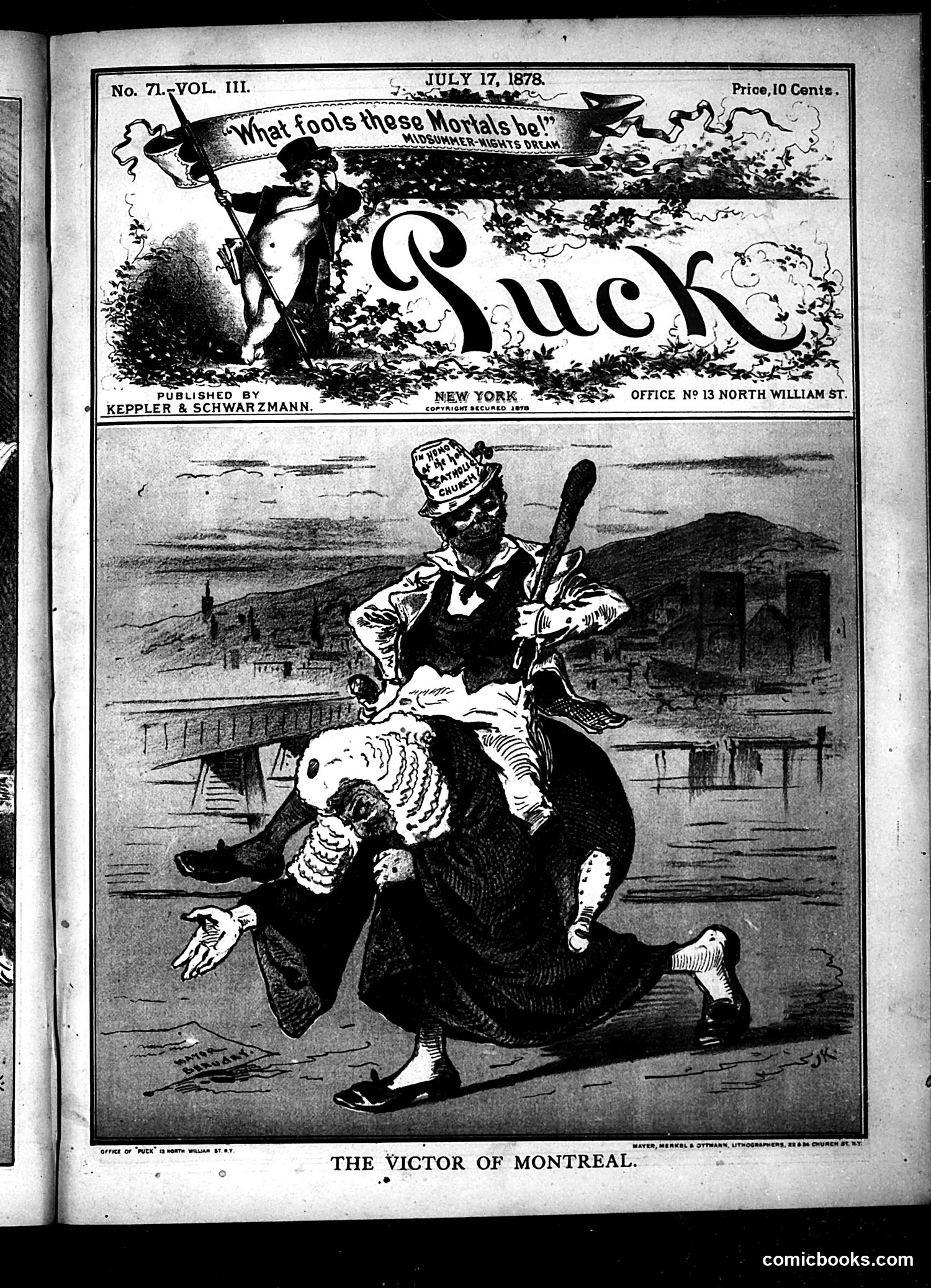
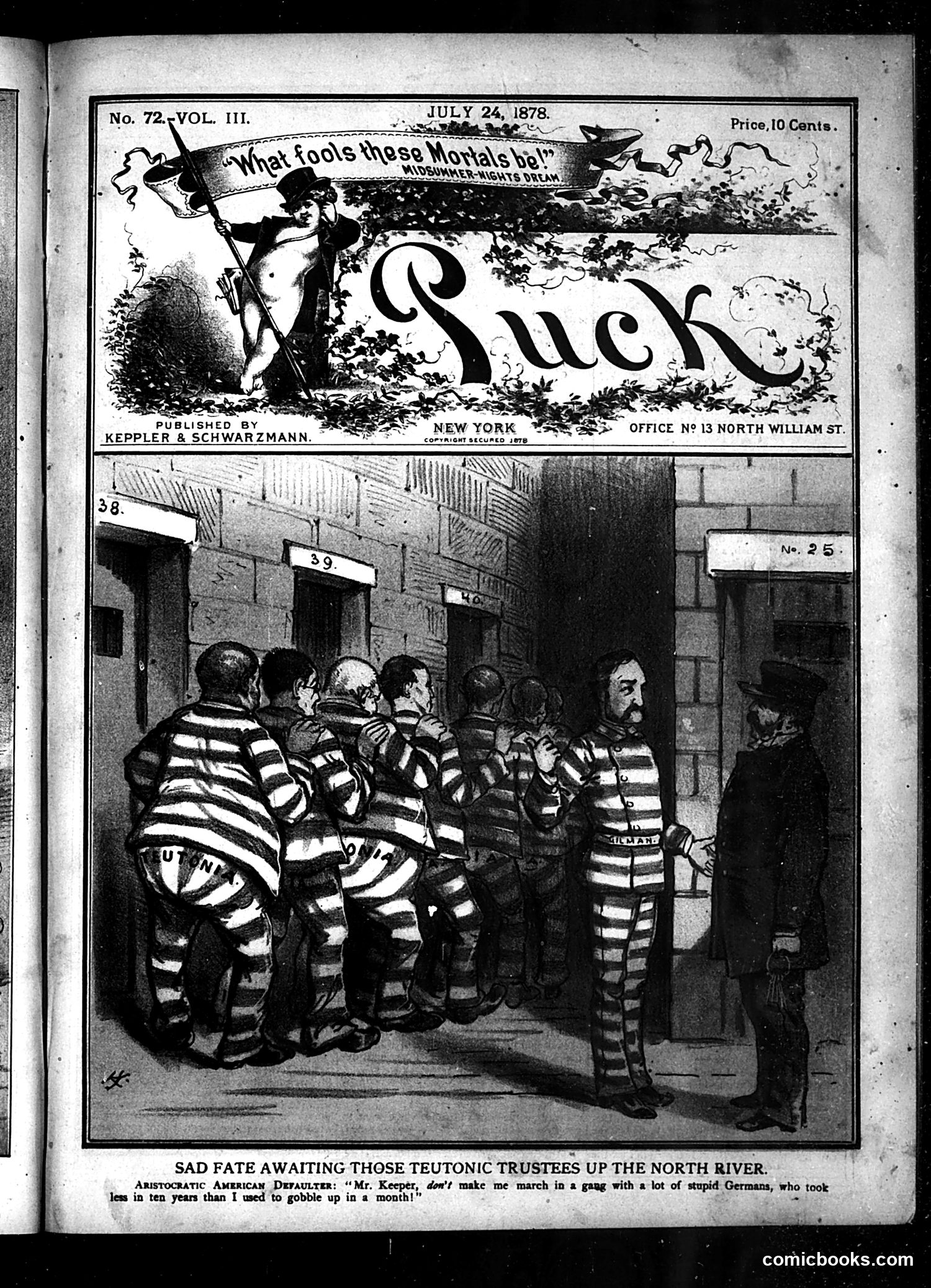
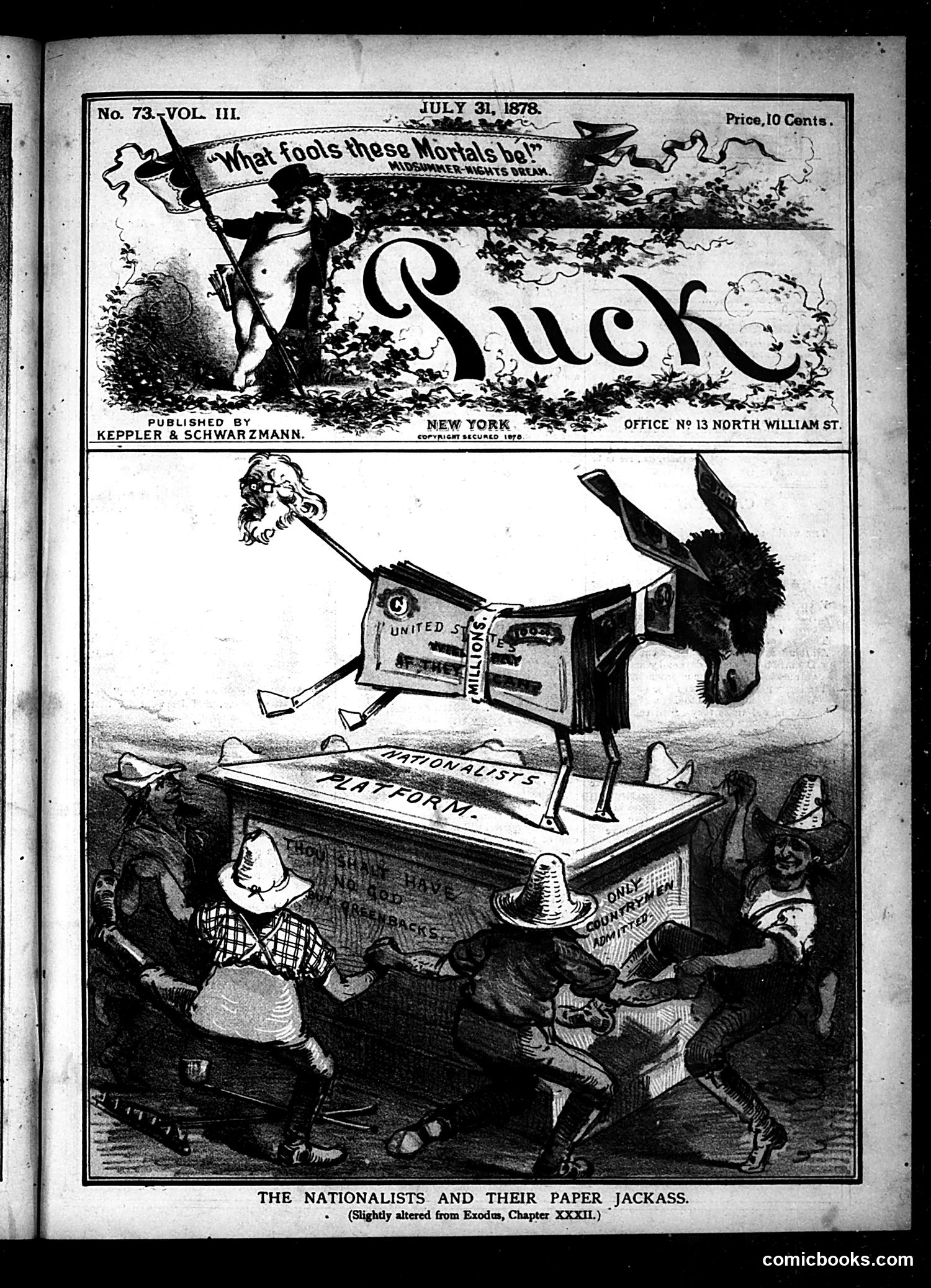
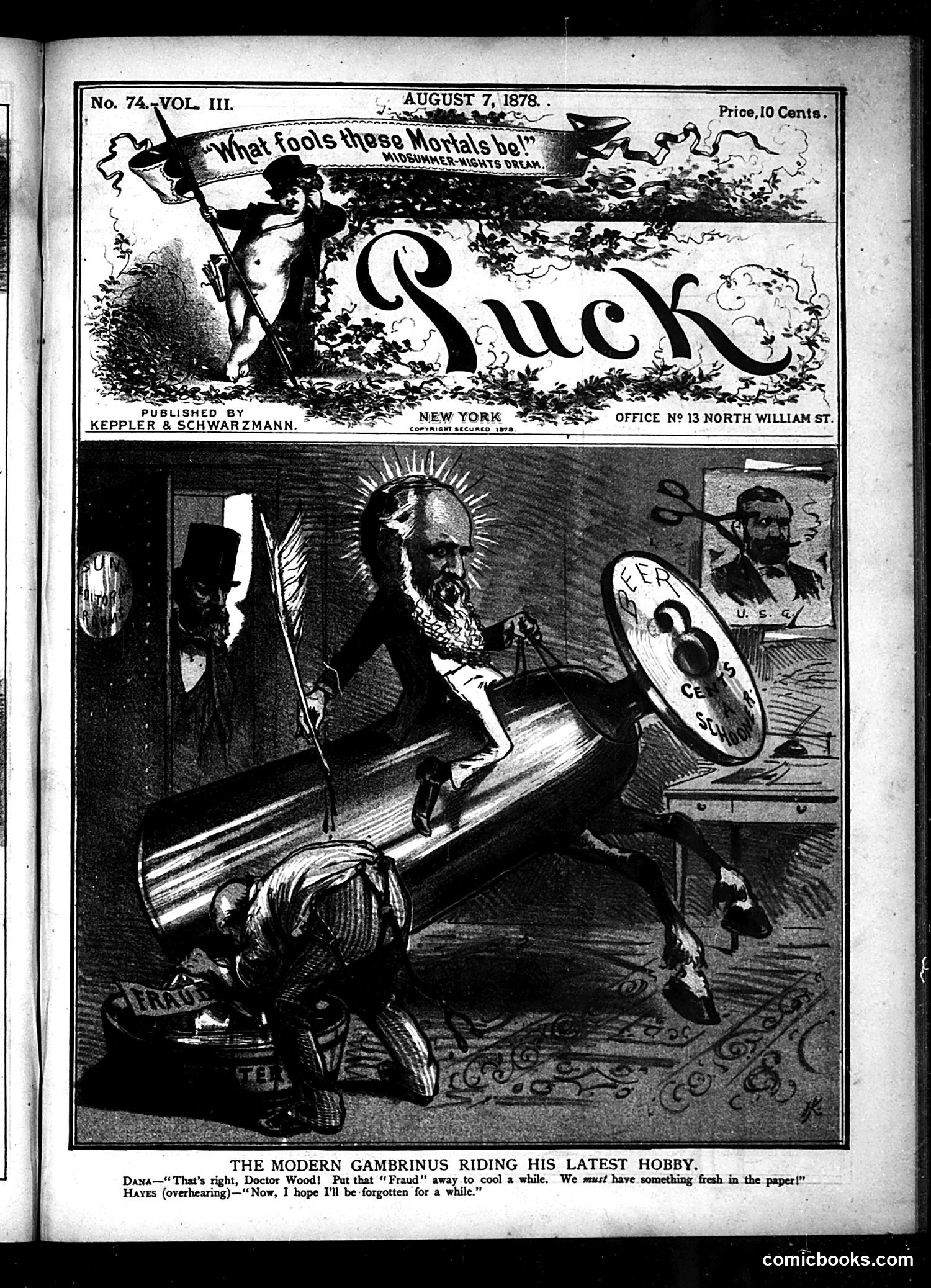
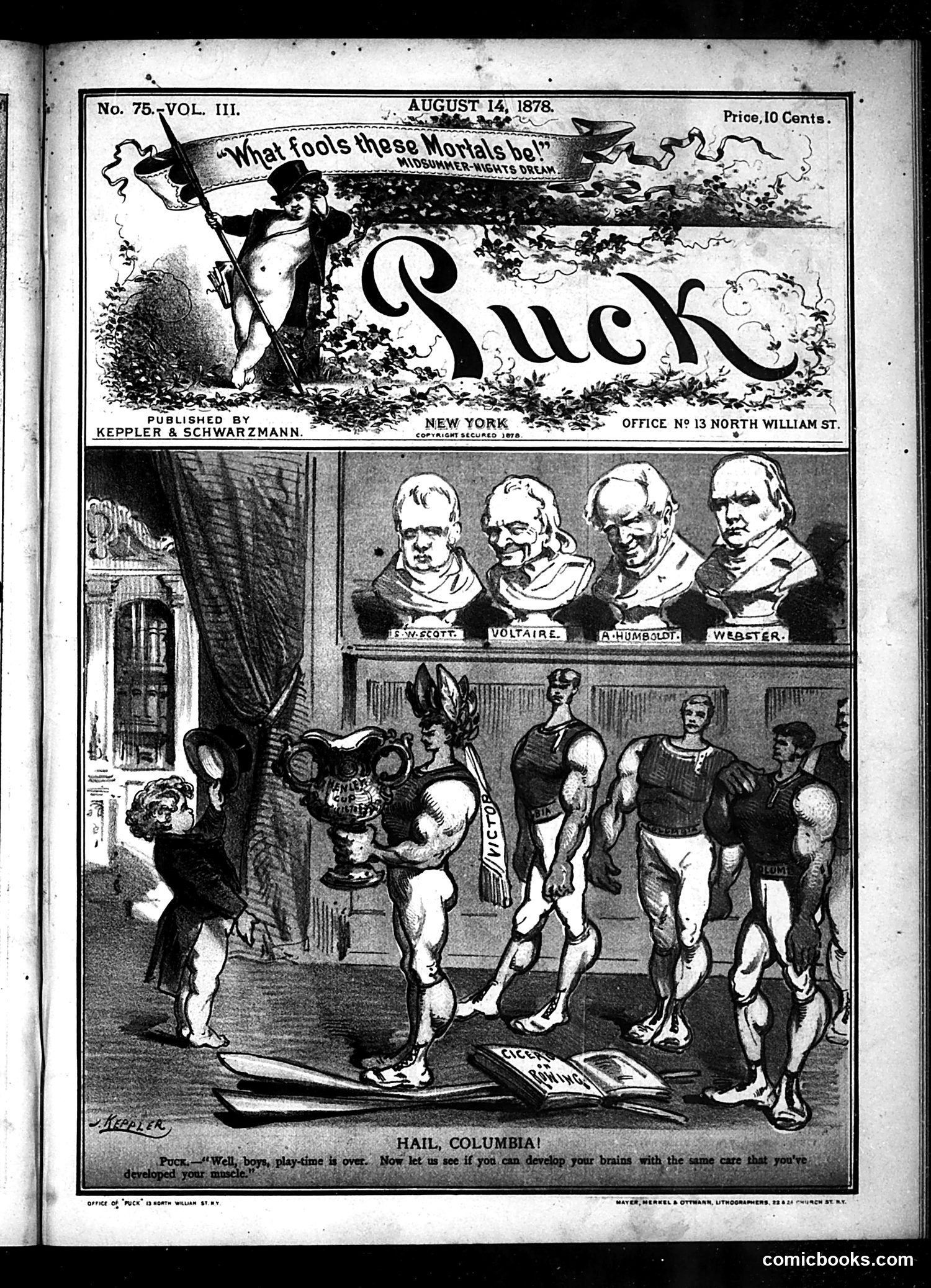
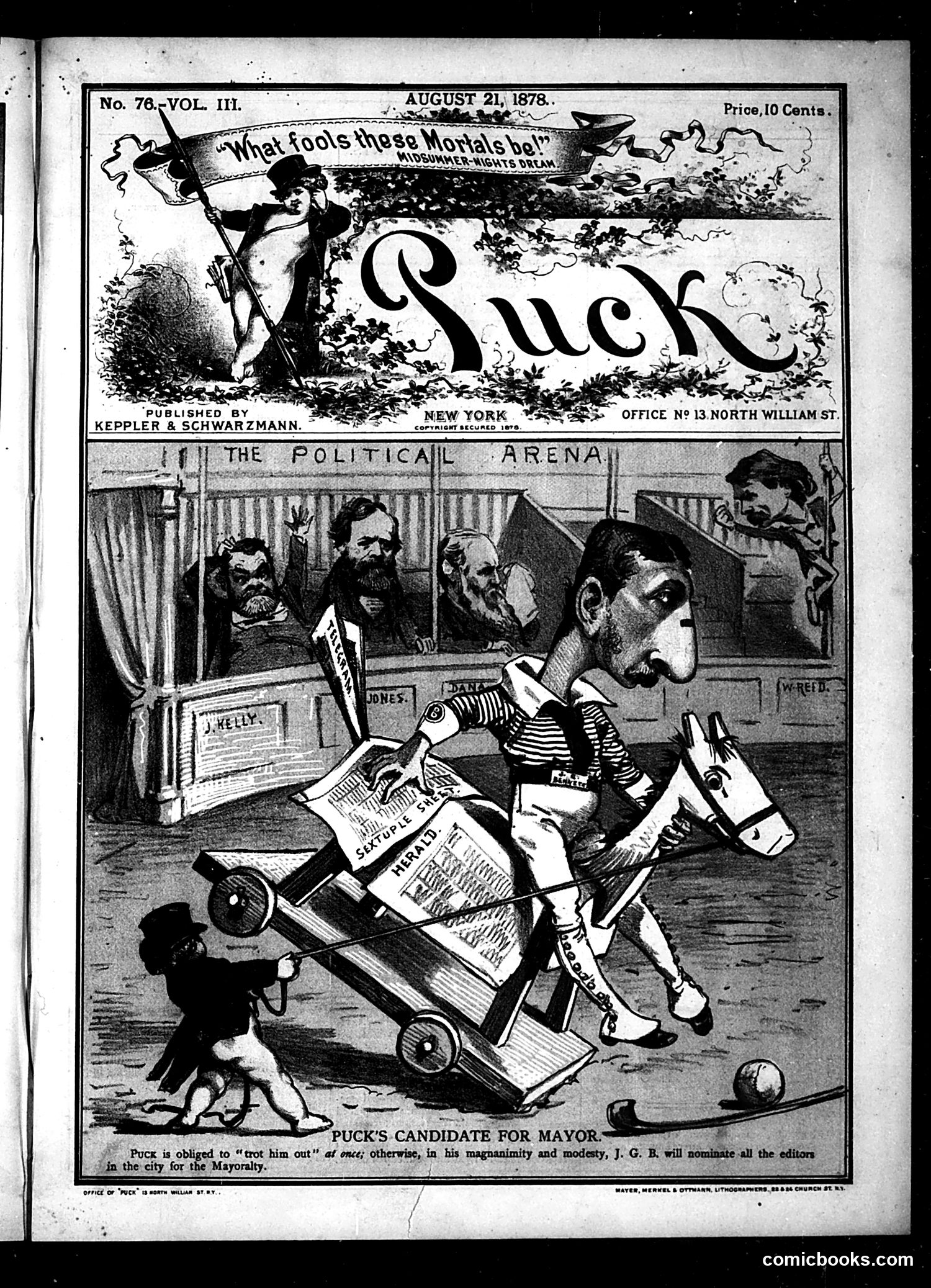
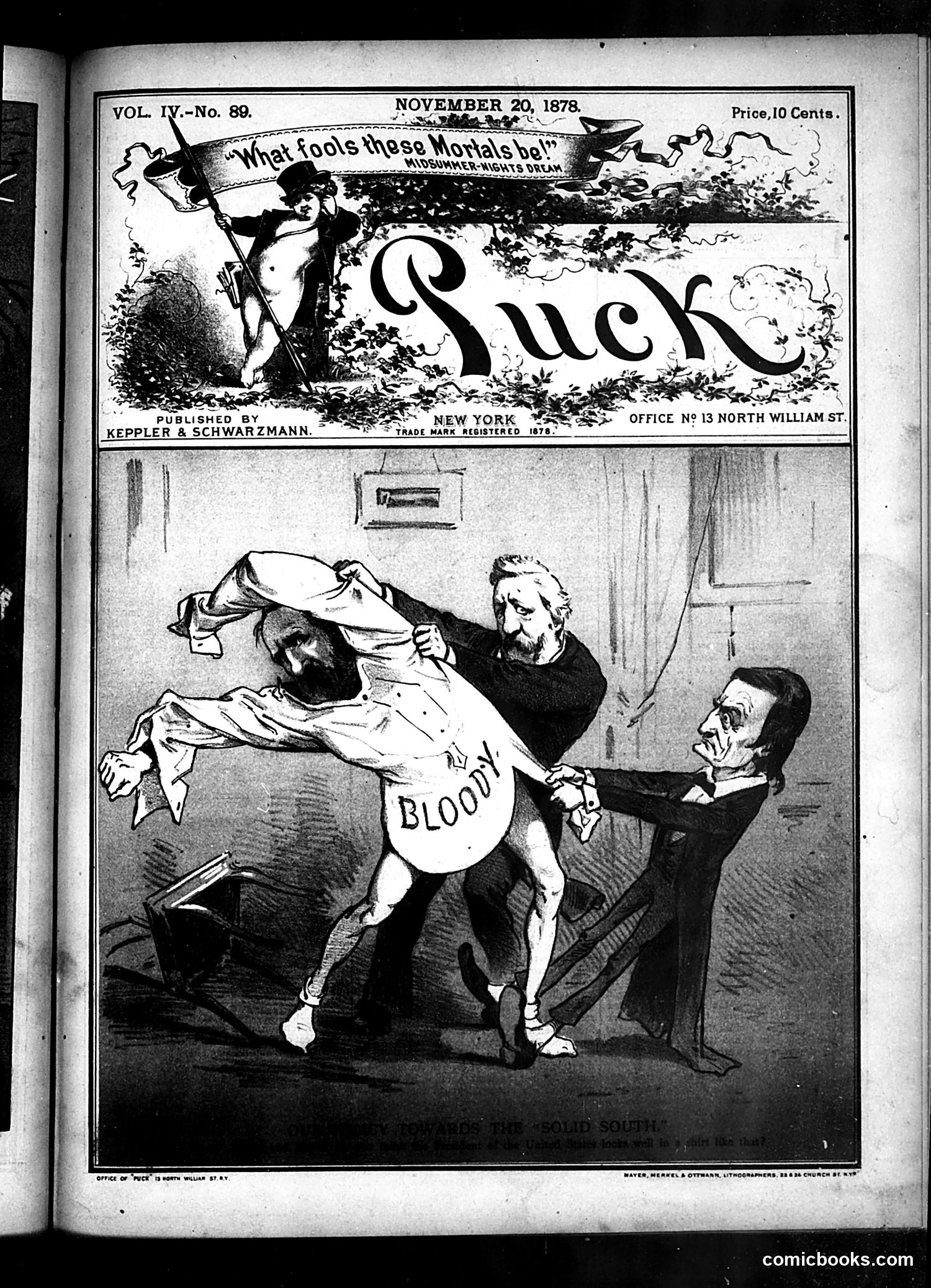
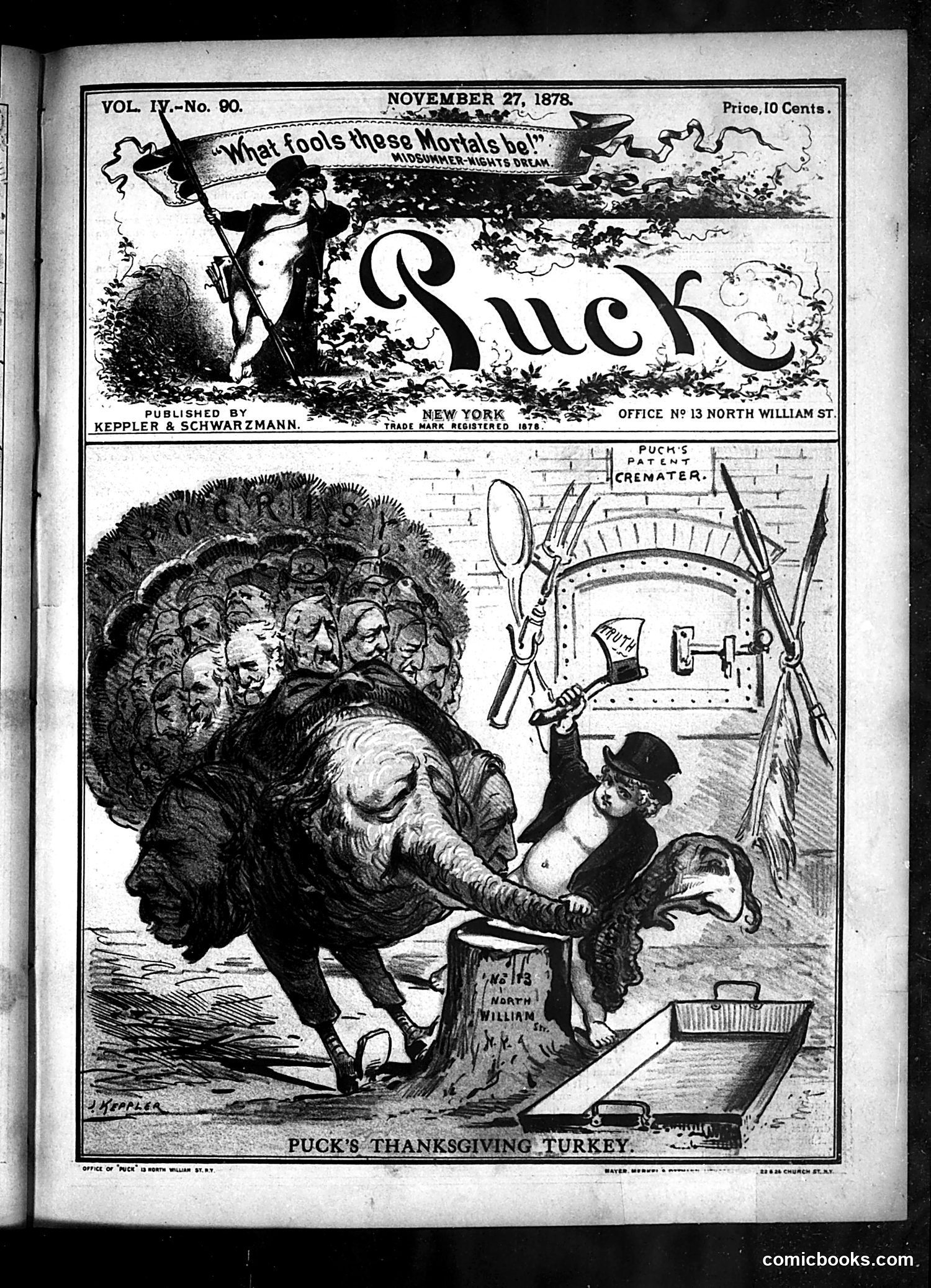
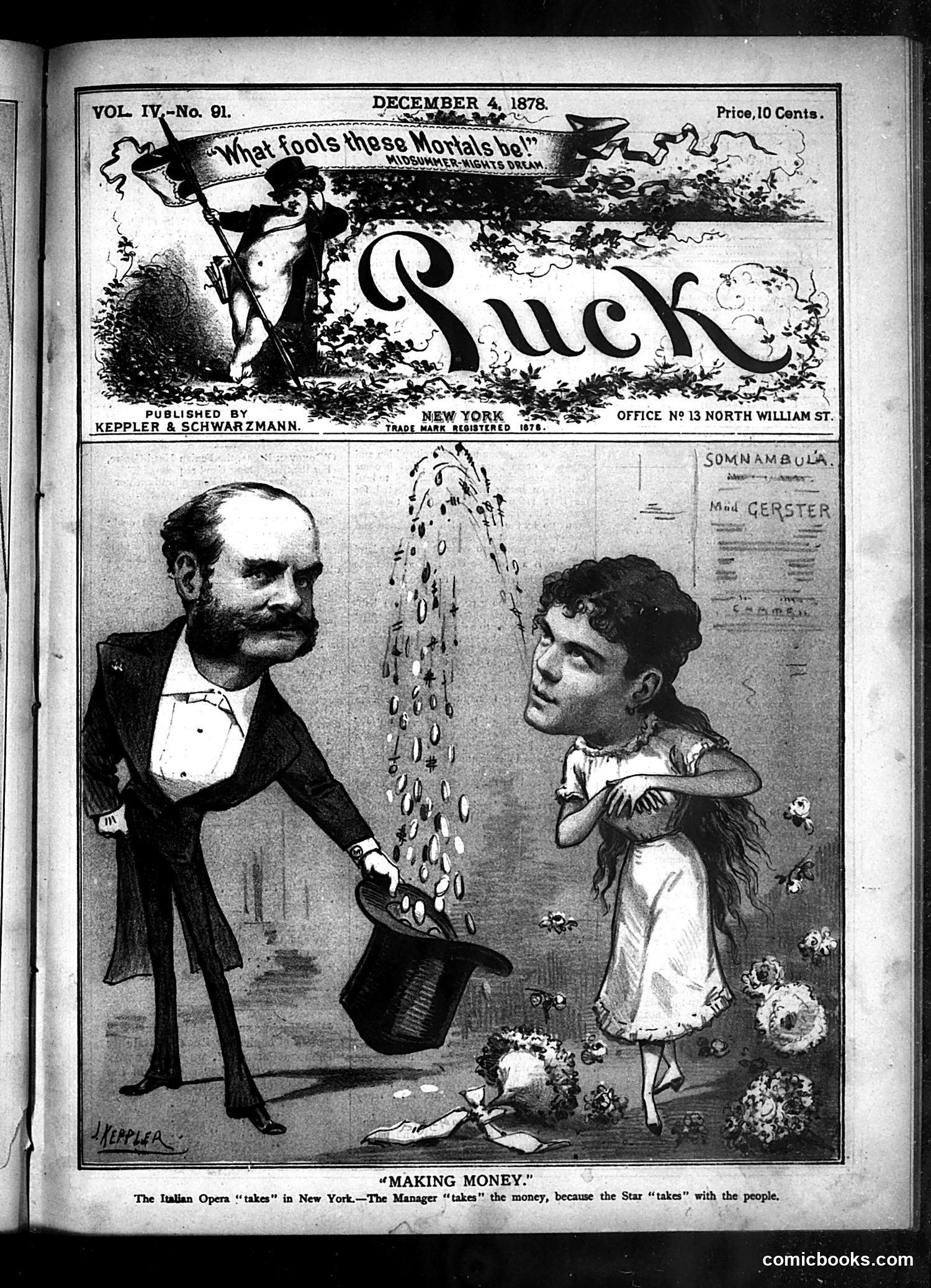
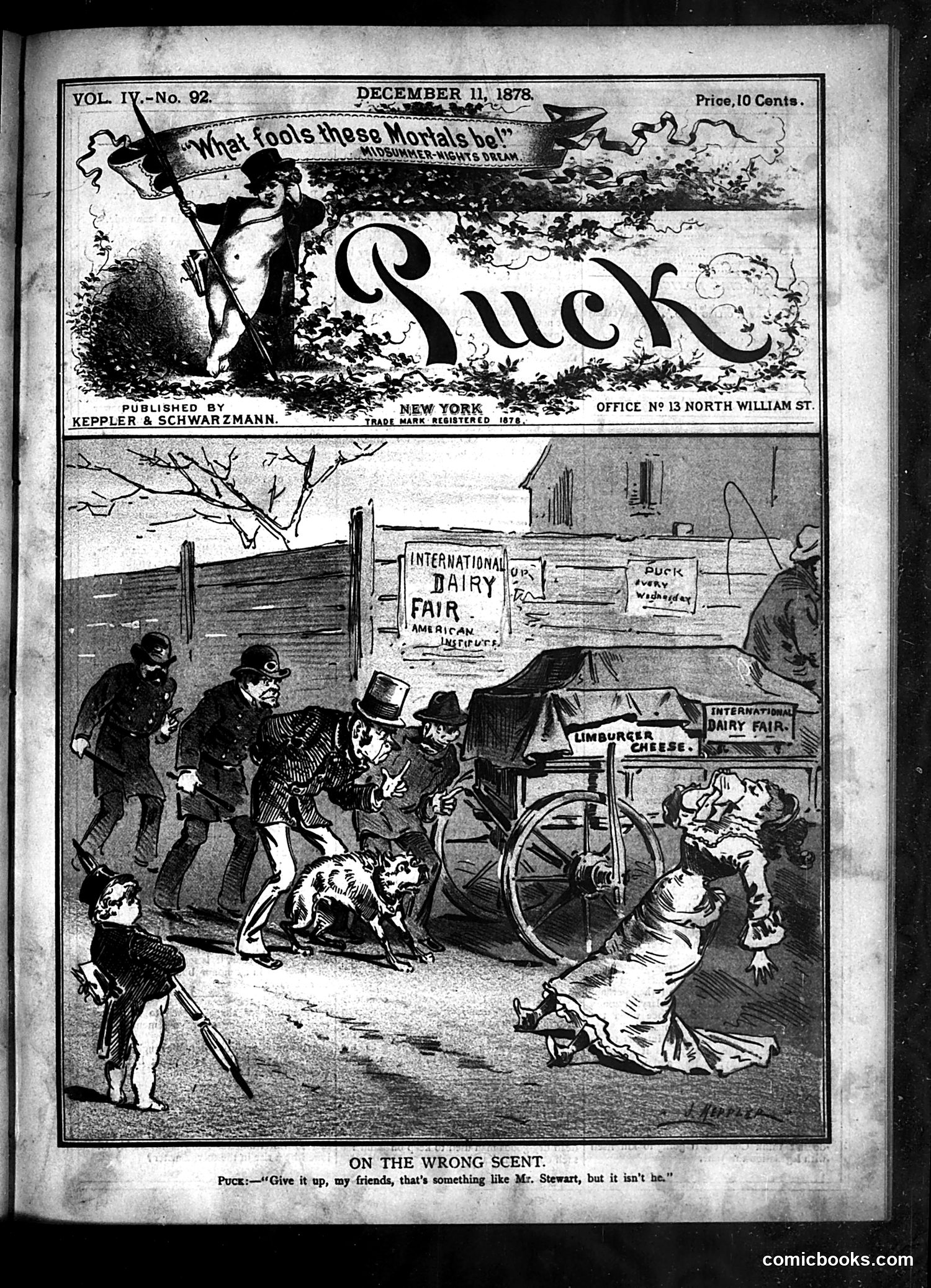
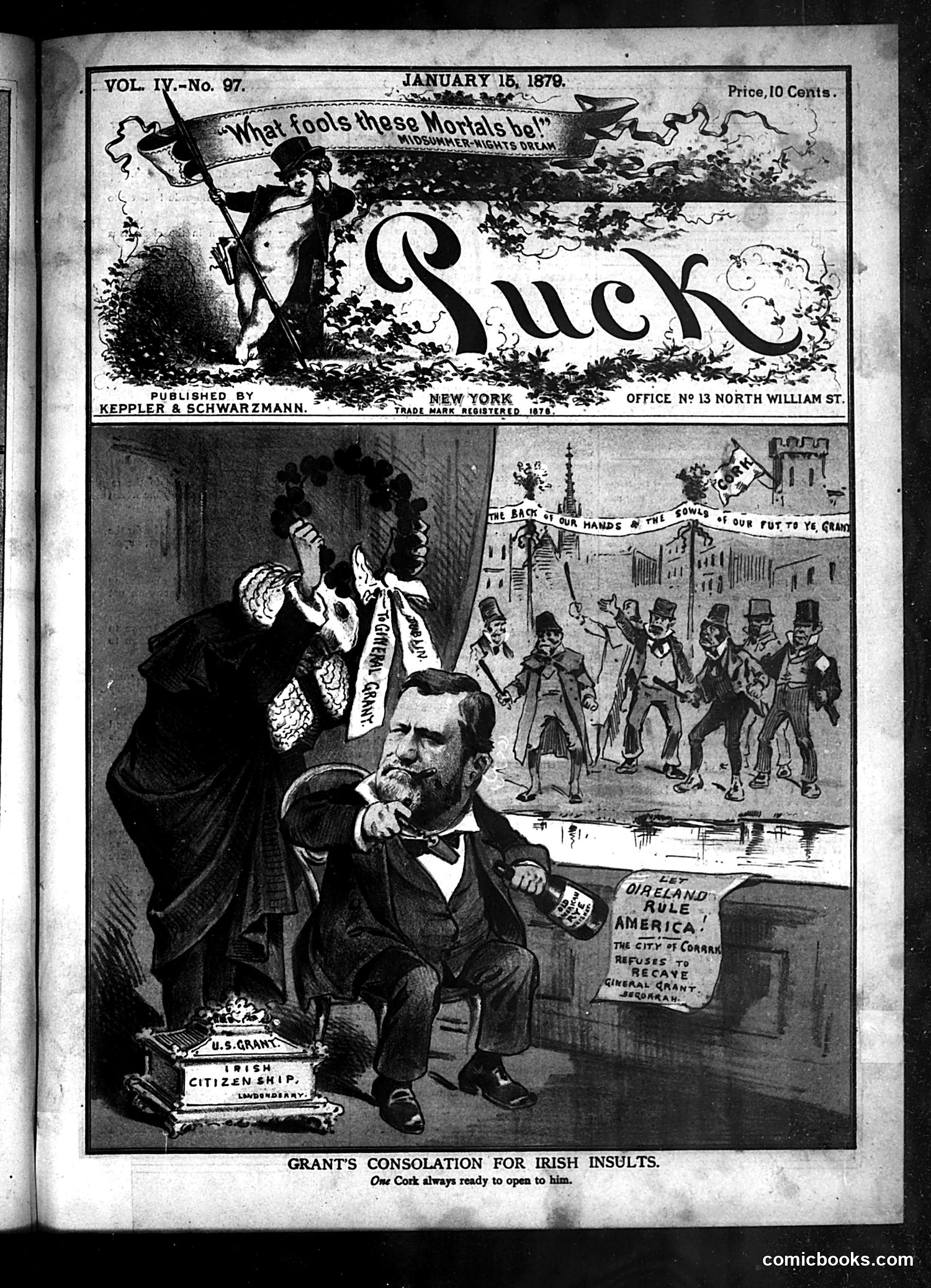
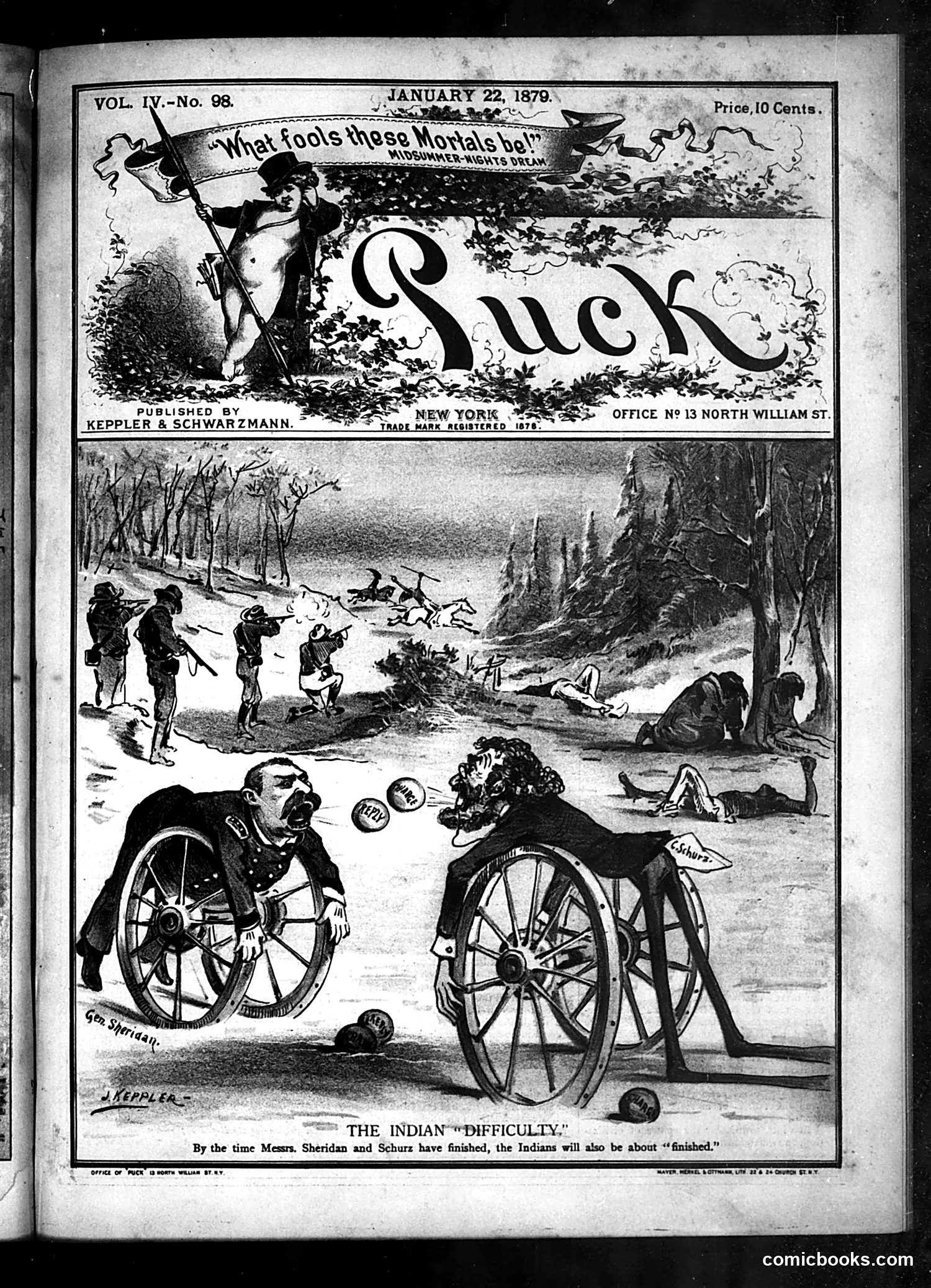
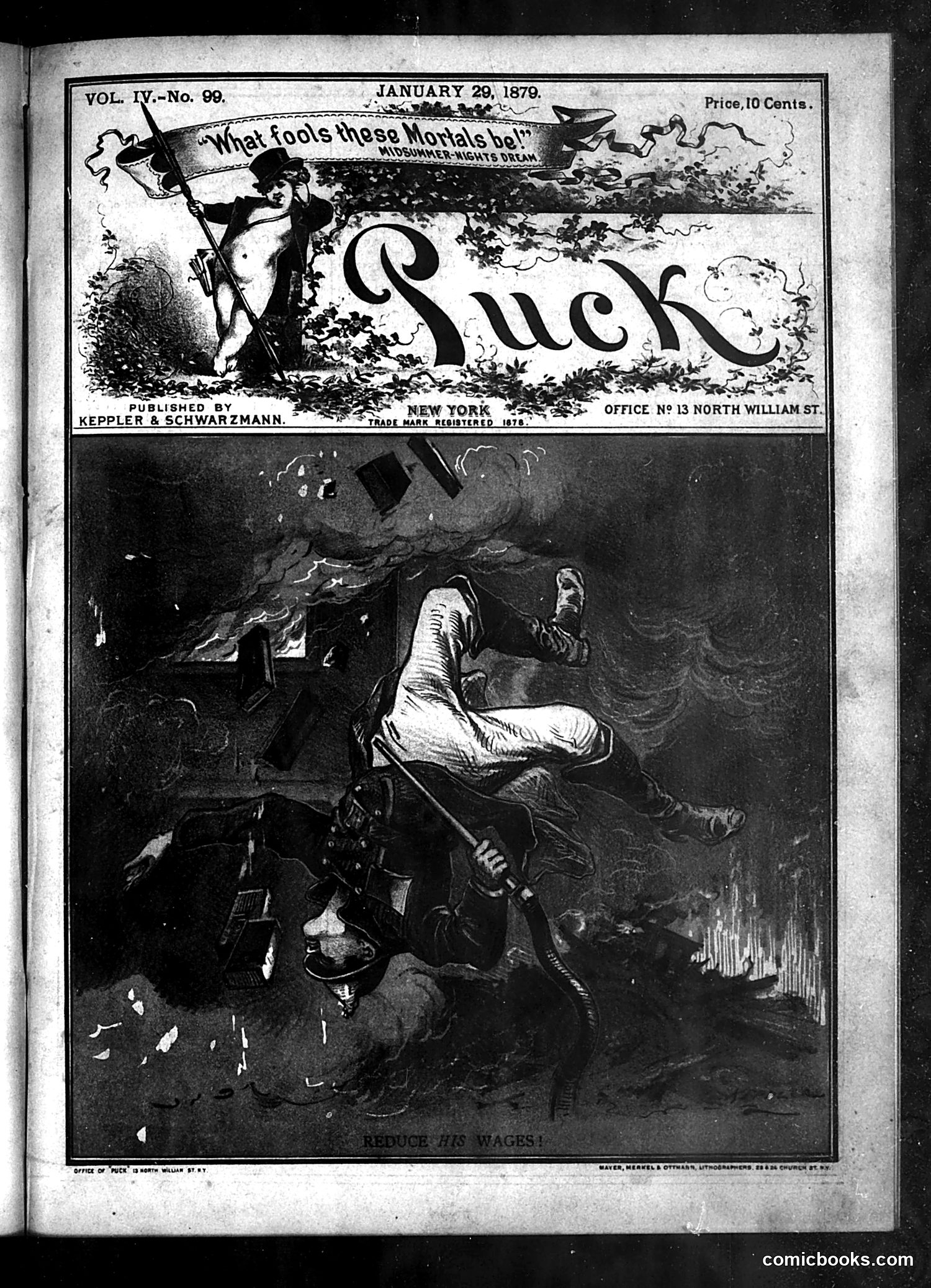
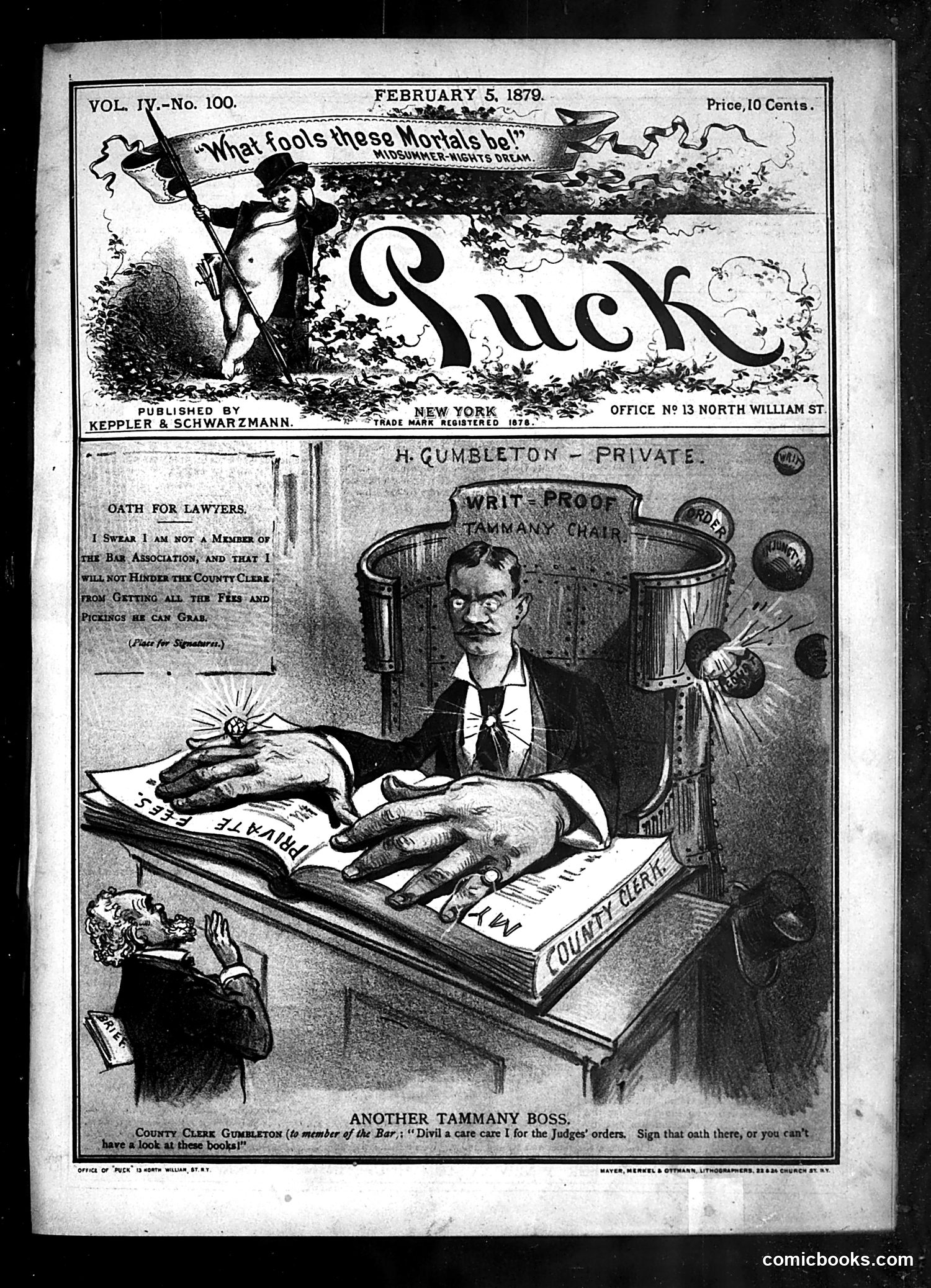
Puck was the first American humor magazine to last. Joseph Keppler, a cartoonist trained in Vienna, launched a German-language edition in New York in 1876 and an English one the next year, and built the whole enterprise around a thing his rivals could not match: color. Every week Puck ran a color cover, a color back page, and, its signature, a double-page centerfold, all produced by chromolithography, a painstaking process in which each hue required its own hand-drawn stone. In an era when color printing was rare and expensive, Puck put it on the newsstand for a dime.
A weapon with a punchline
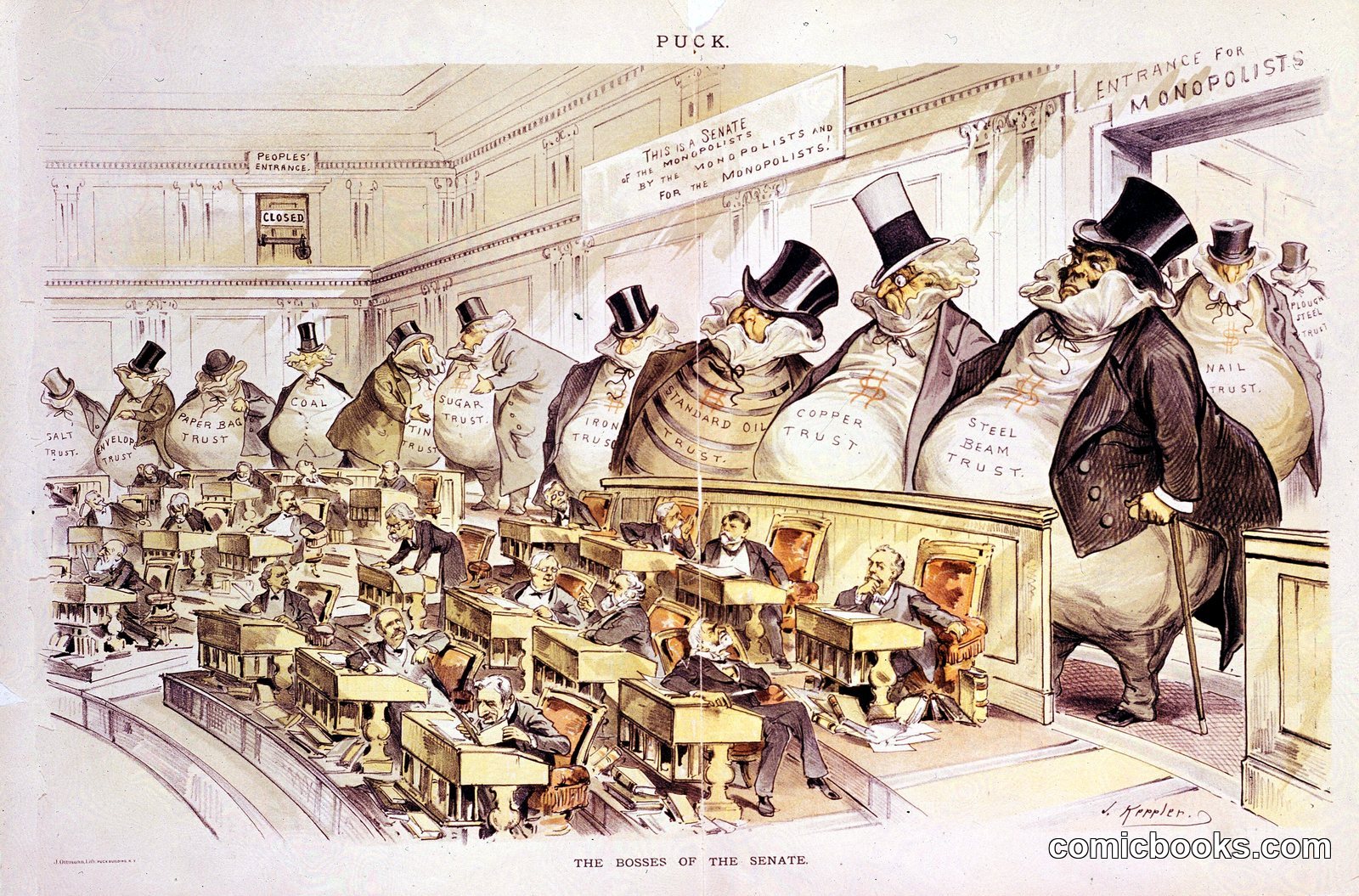
The magazine had a politics. It was Democratic, anti-monopoly, and relentless against corruption, Tammany Hall, and the Republican machine. Its cartoons were arguments you could read across a room: the trusts as bloated giants filling the Senate, Standard Oil as an octopus, a presidential candidate covered in the tattooed record of his scandals. That last campaign, Bernhard Gillam's "Tattooed Man" series, helped sink James G. Blaine in 1884 and put Grover Cleveland in the White House, about as direct a proof as a cartoonist could ask that the pictures worked.
Around Keppler gathered a deep bench, his son Udo, Gillam, Frederick Opper, Louis Dalrymple, C. J. Taylor, Frank Nankivell, whose recurring figures became a shared visual language for the whole country. Puck's reach outlived its founder, who died in 1894. But the new century caught up with it: cheap color came to the newspapers, the photograph and the Sunday comic supplement took its audience, and after a sale to Hearst the magazine folded in 1918. What survives is the pictures, and they still land.
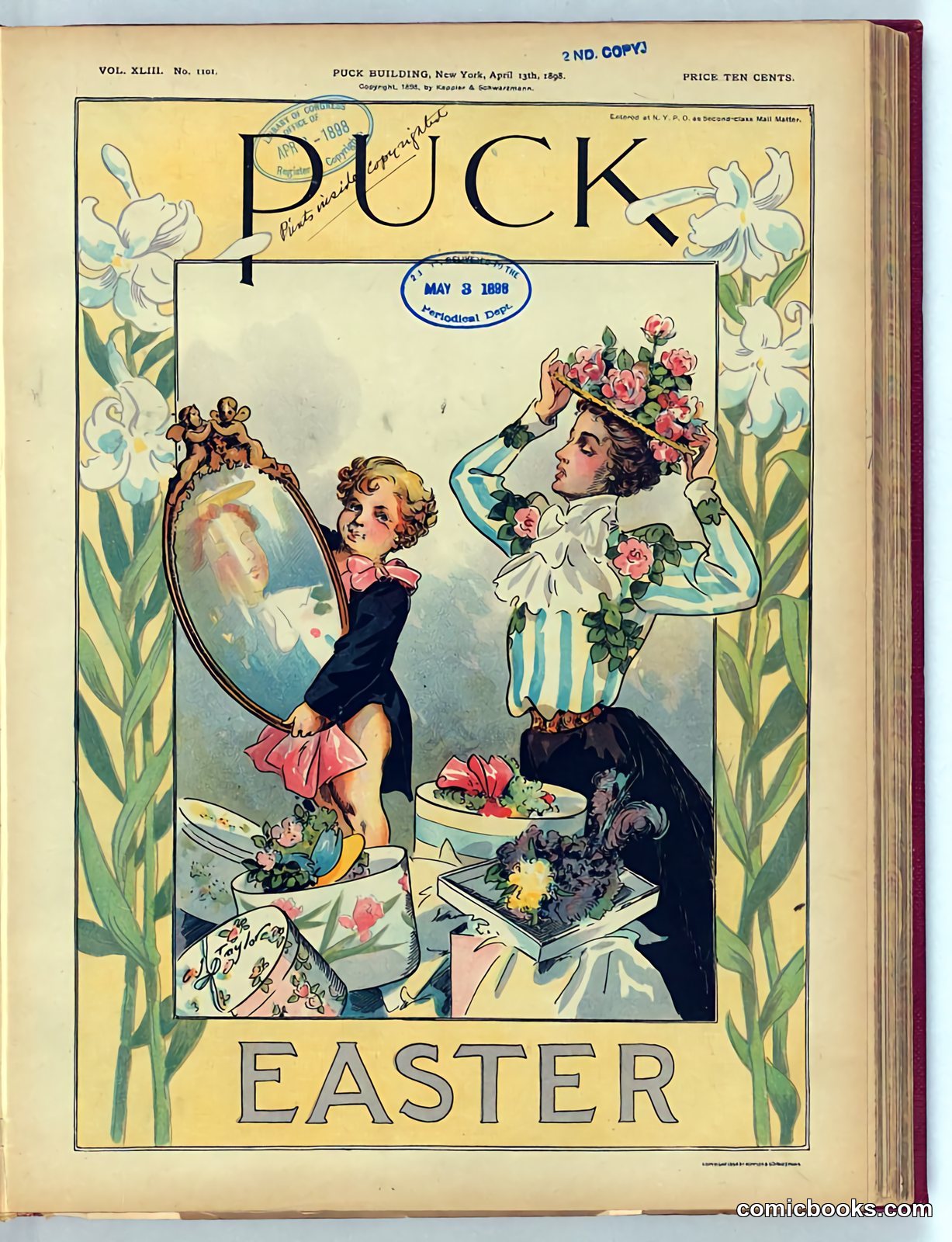
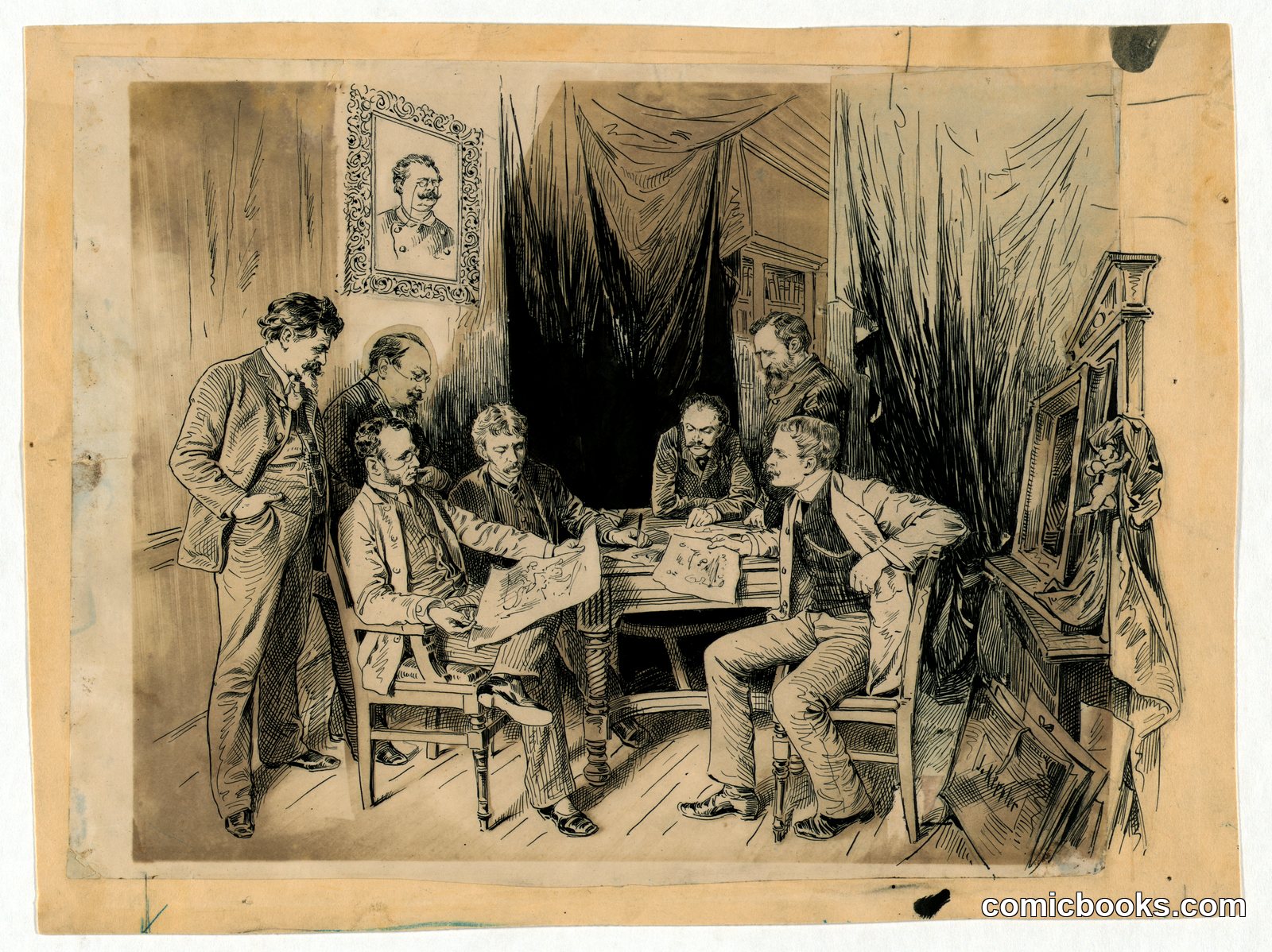
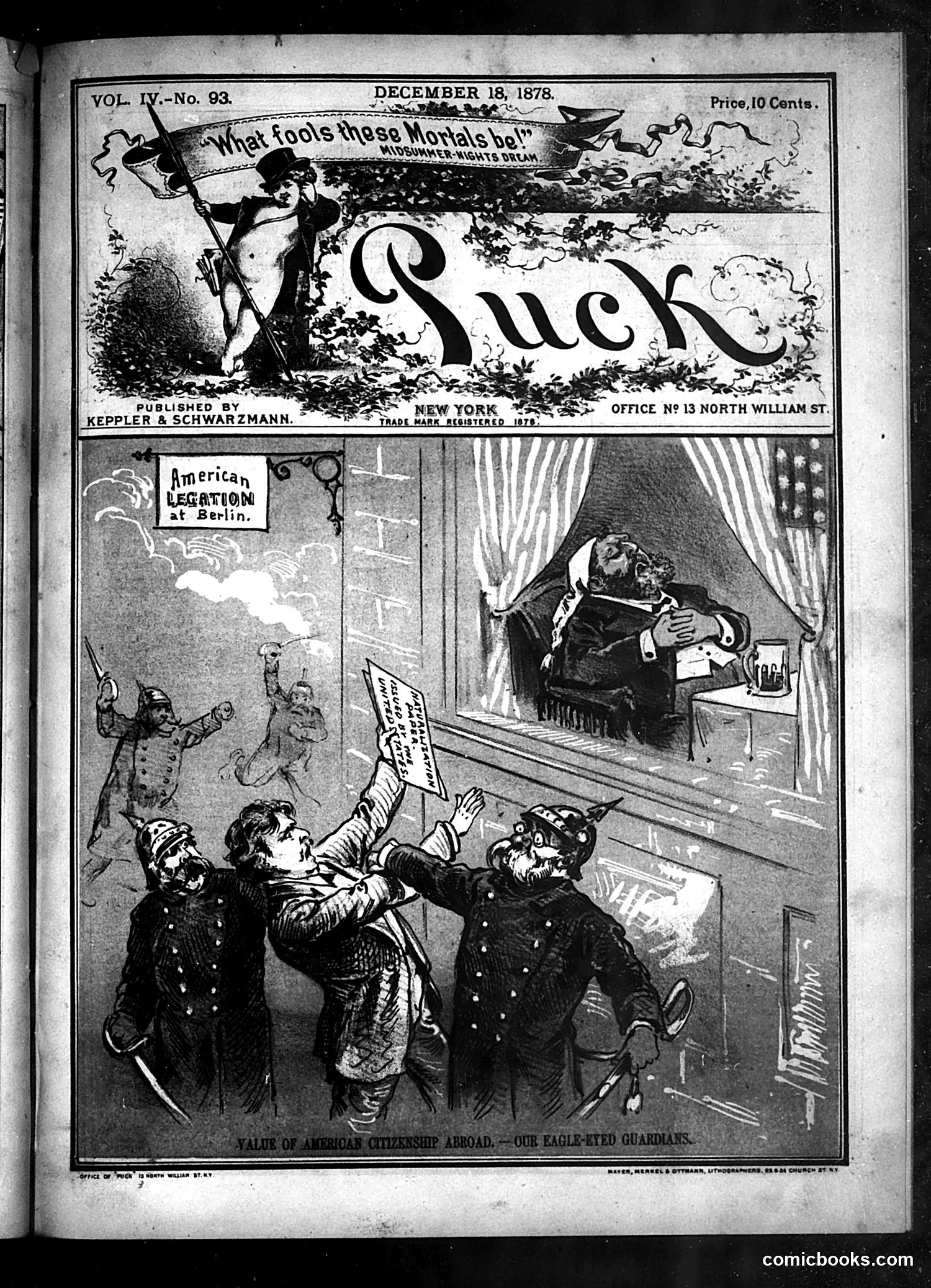
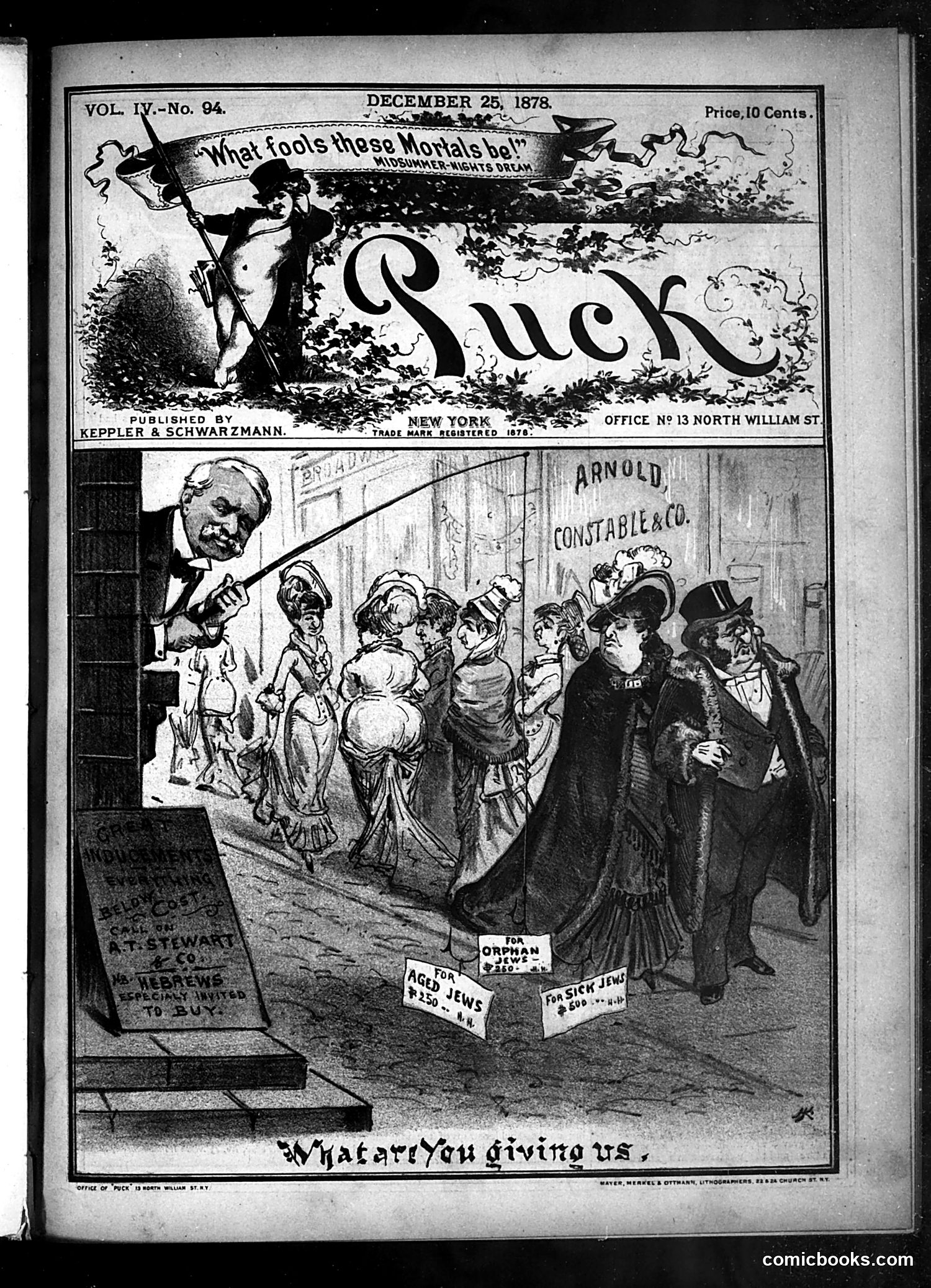
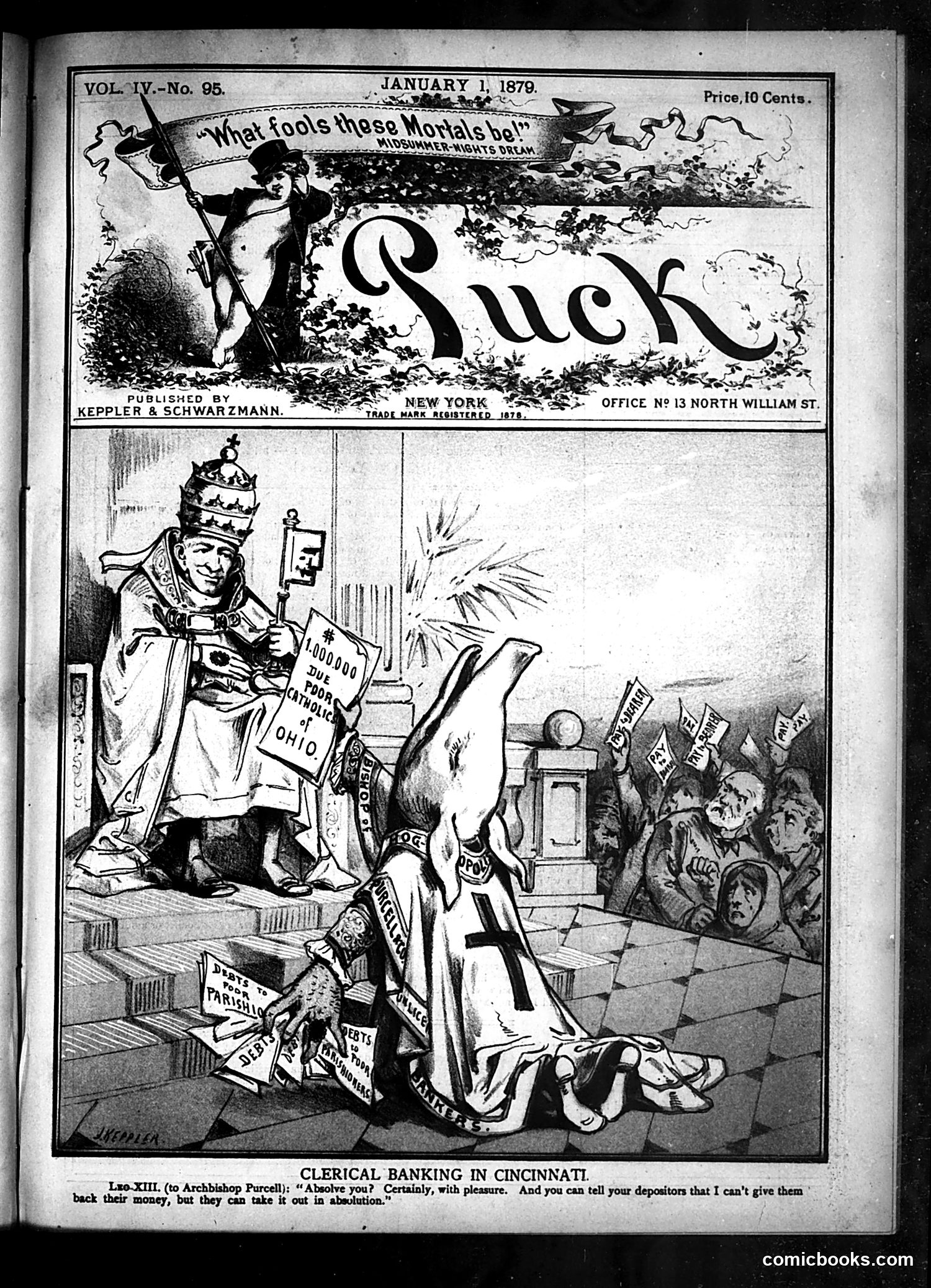
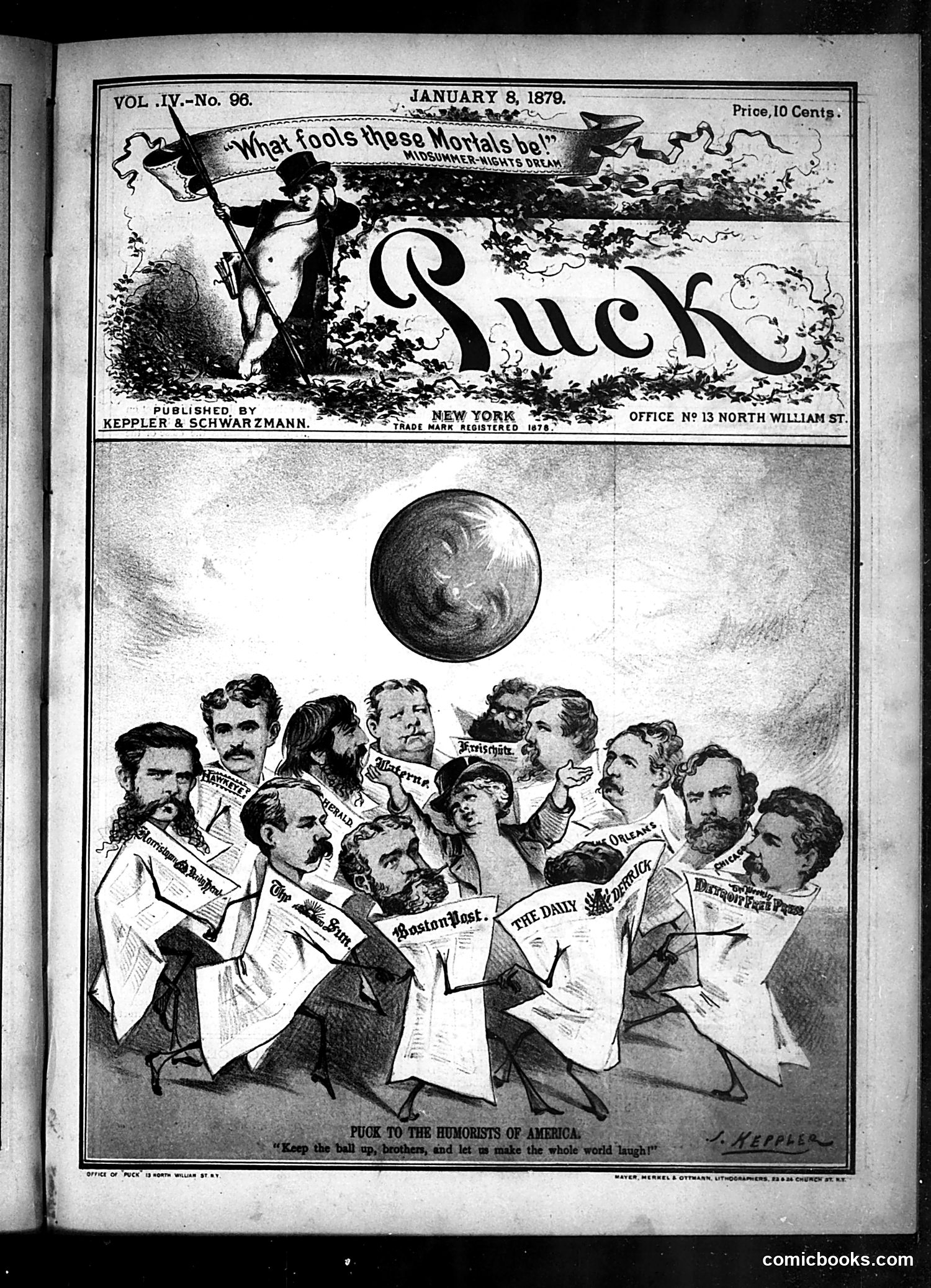
Page through a complete issue
Whole numbers, cover to cover, exactly as a reader met them — an exhibit-only reading feature.
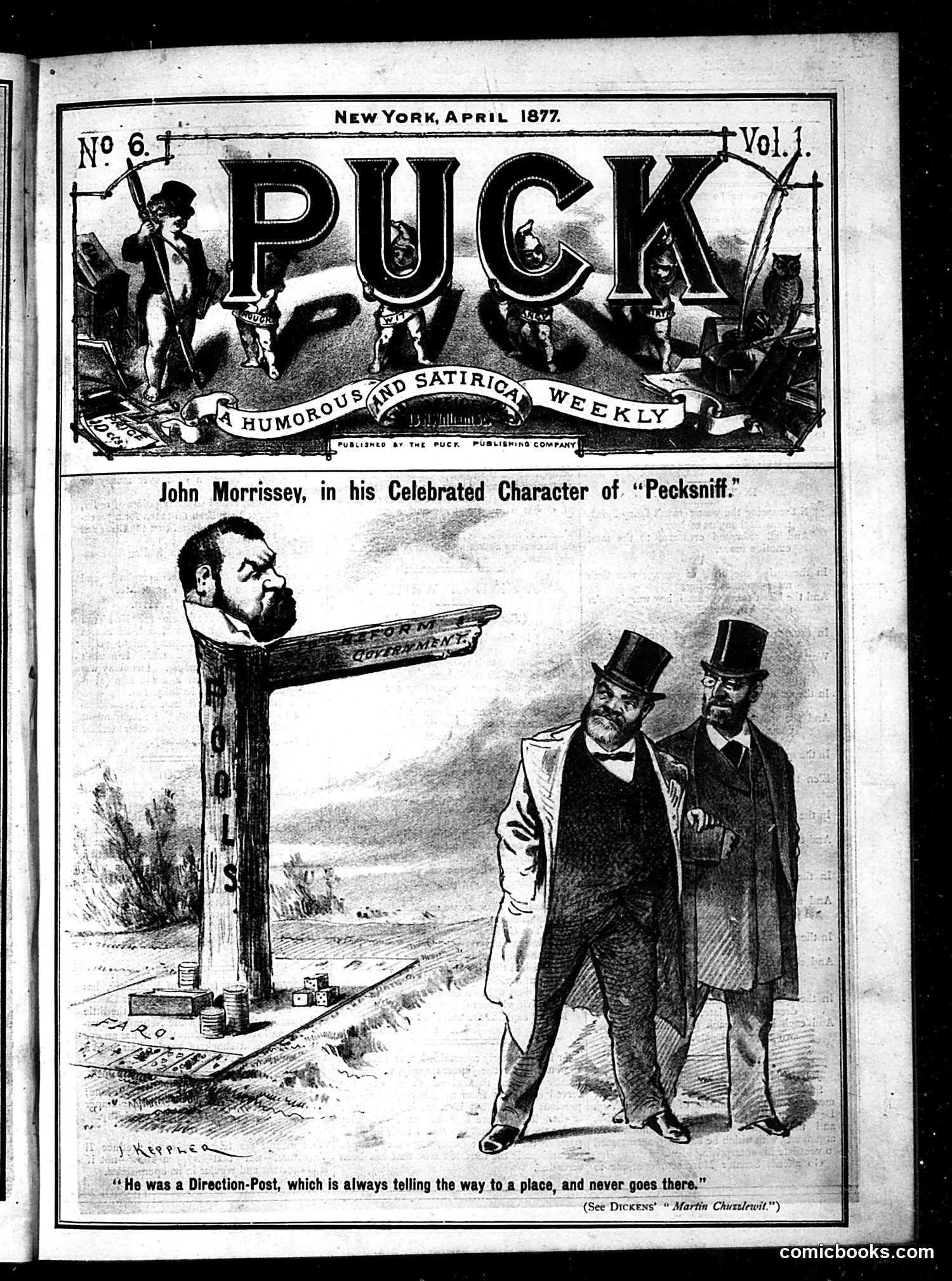
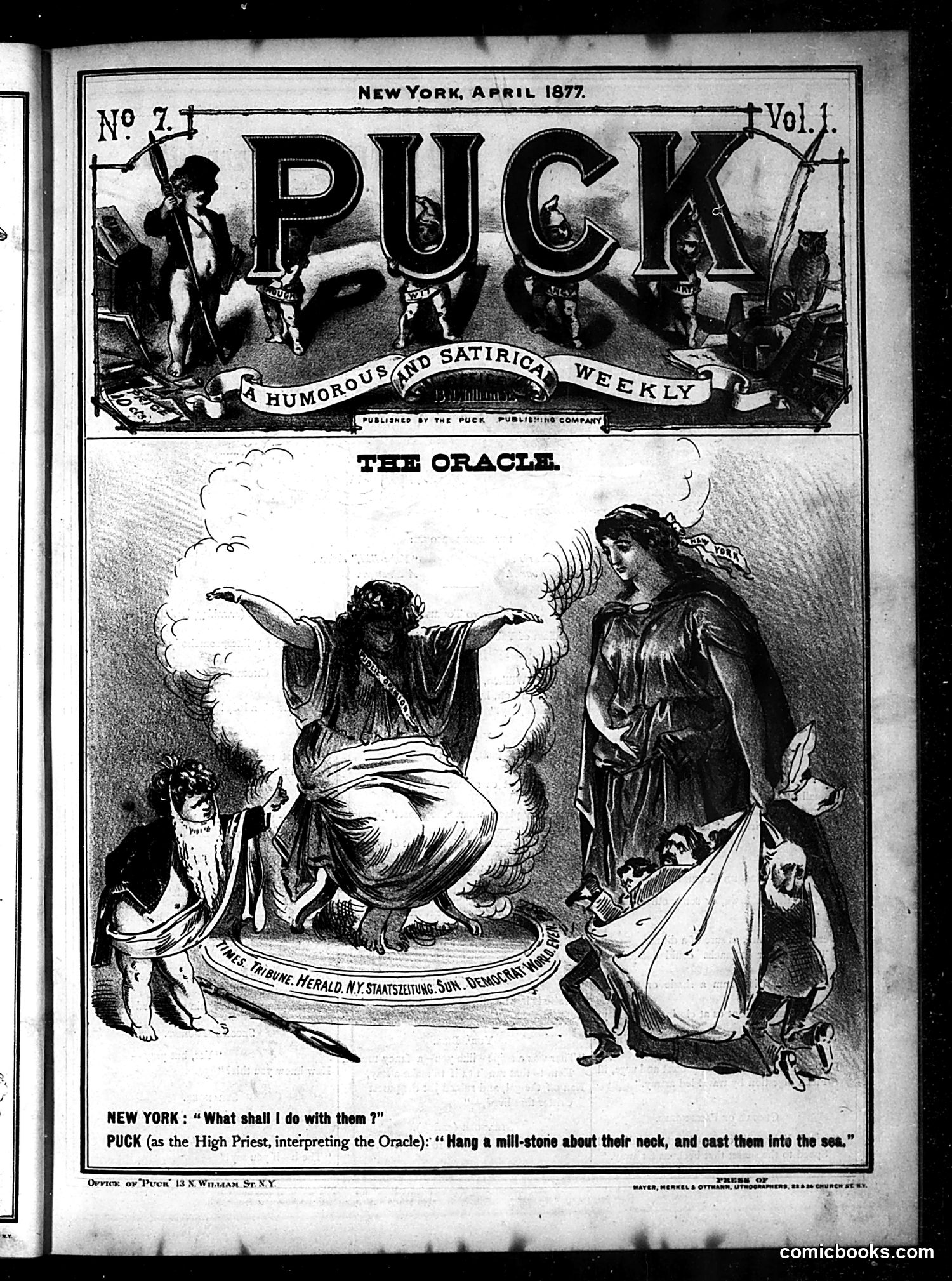
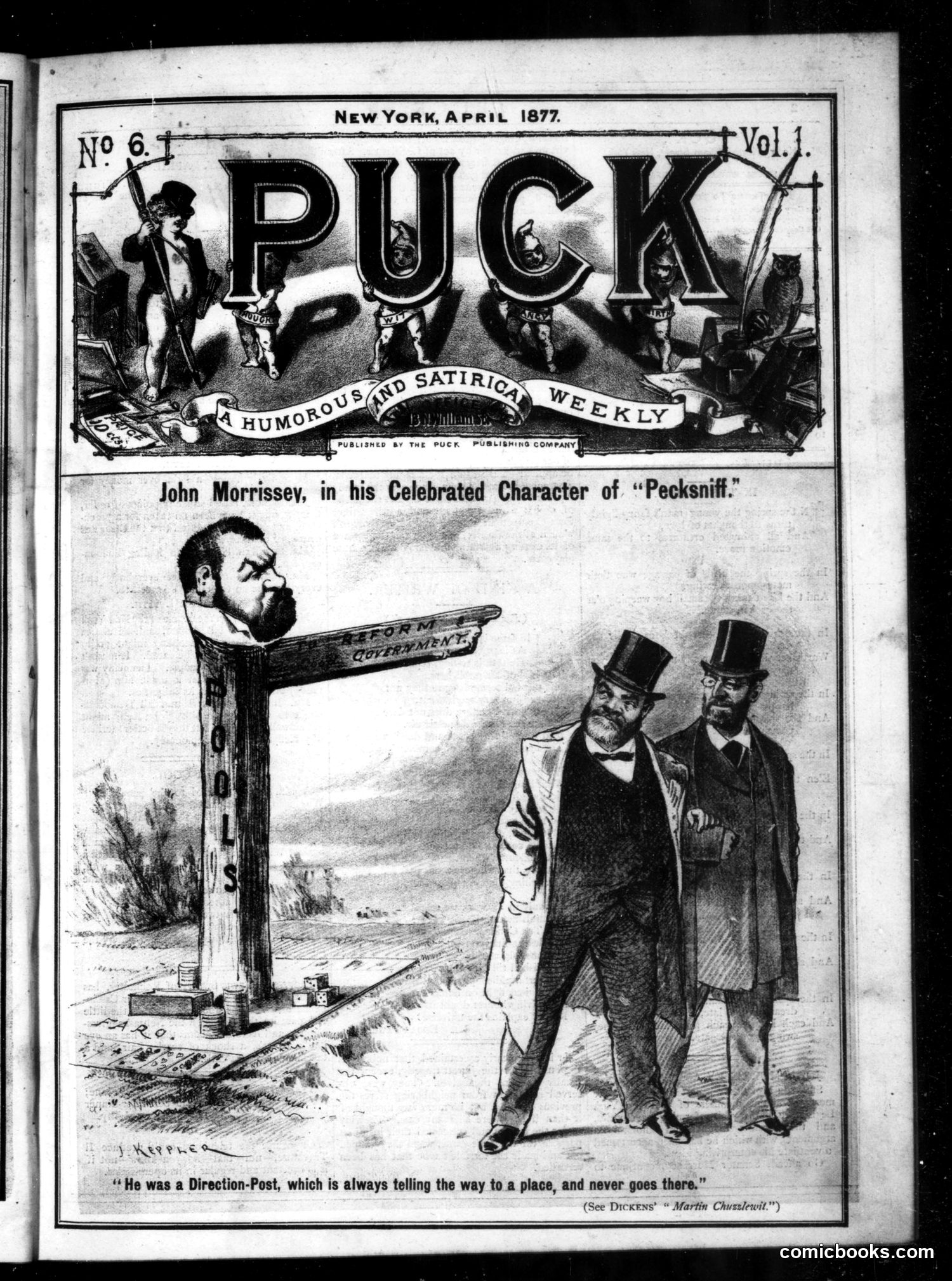
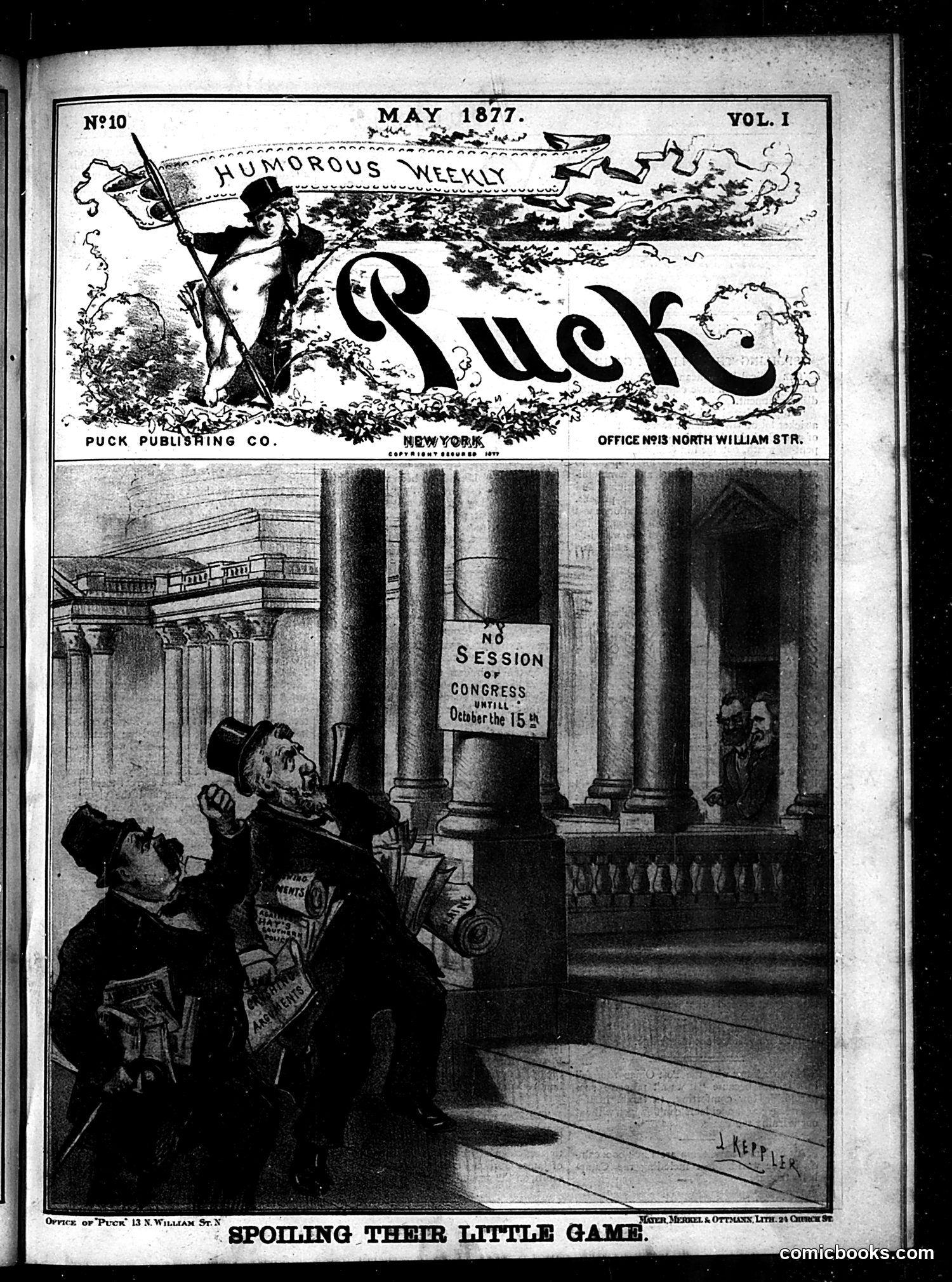
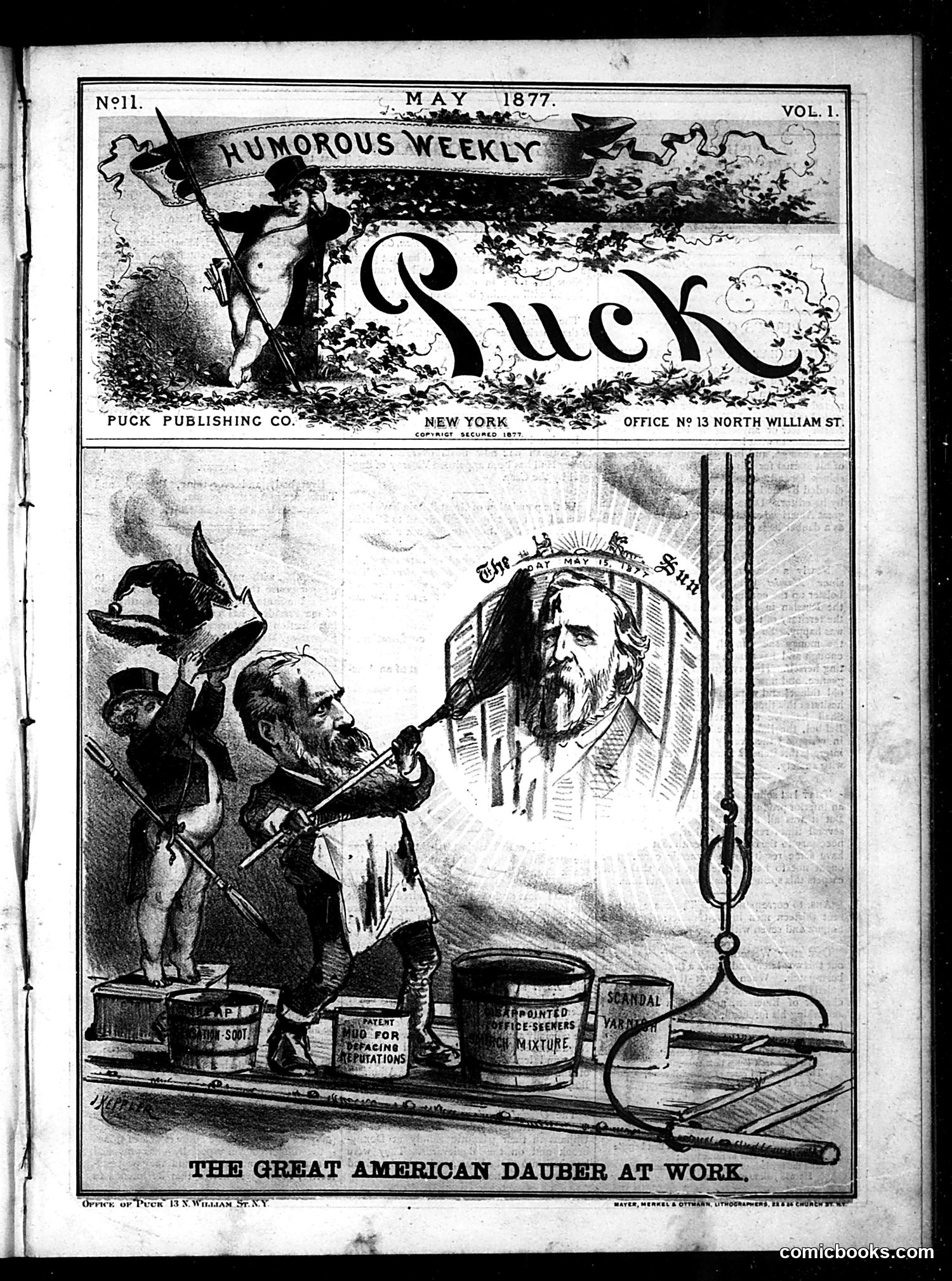
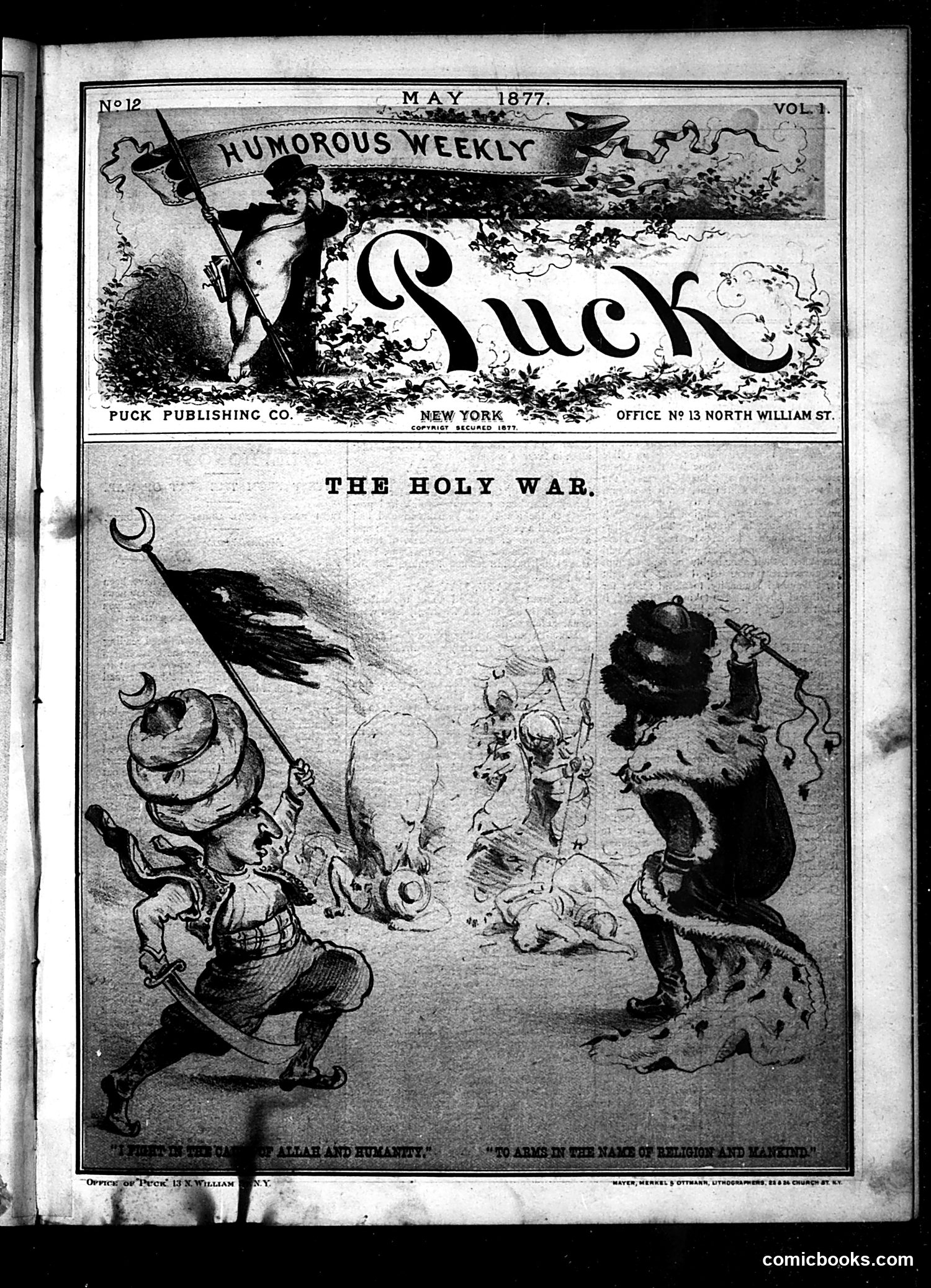
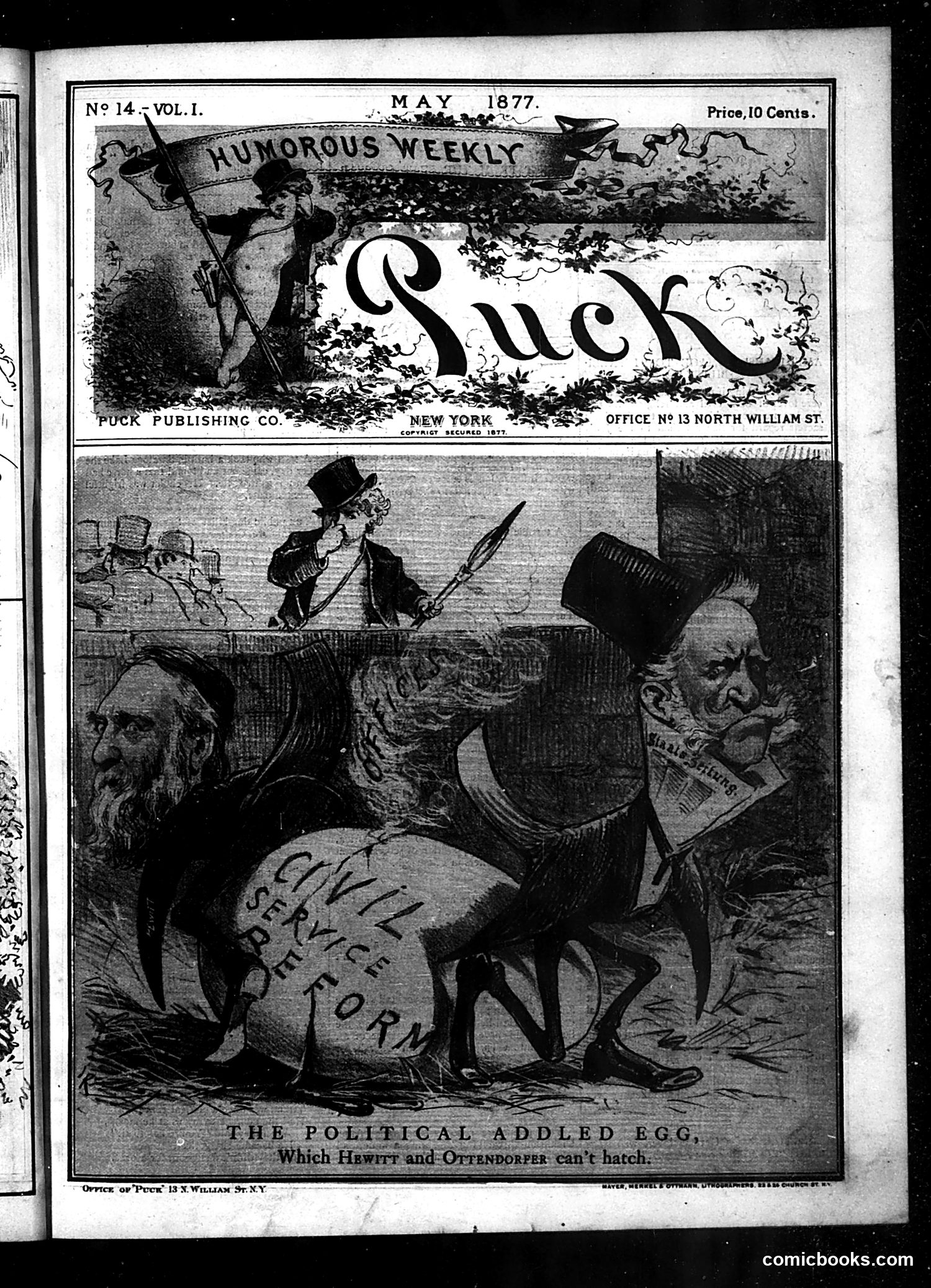
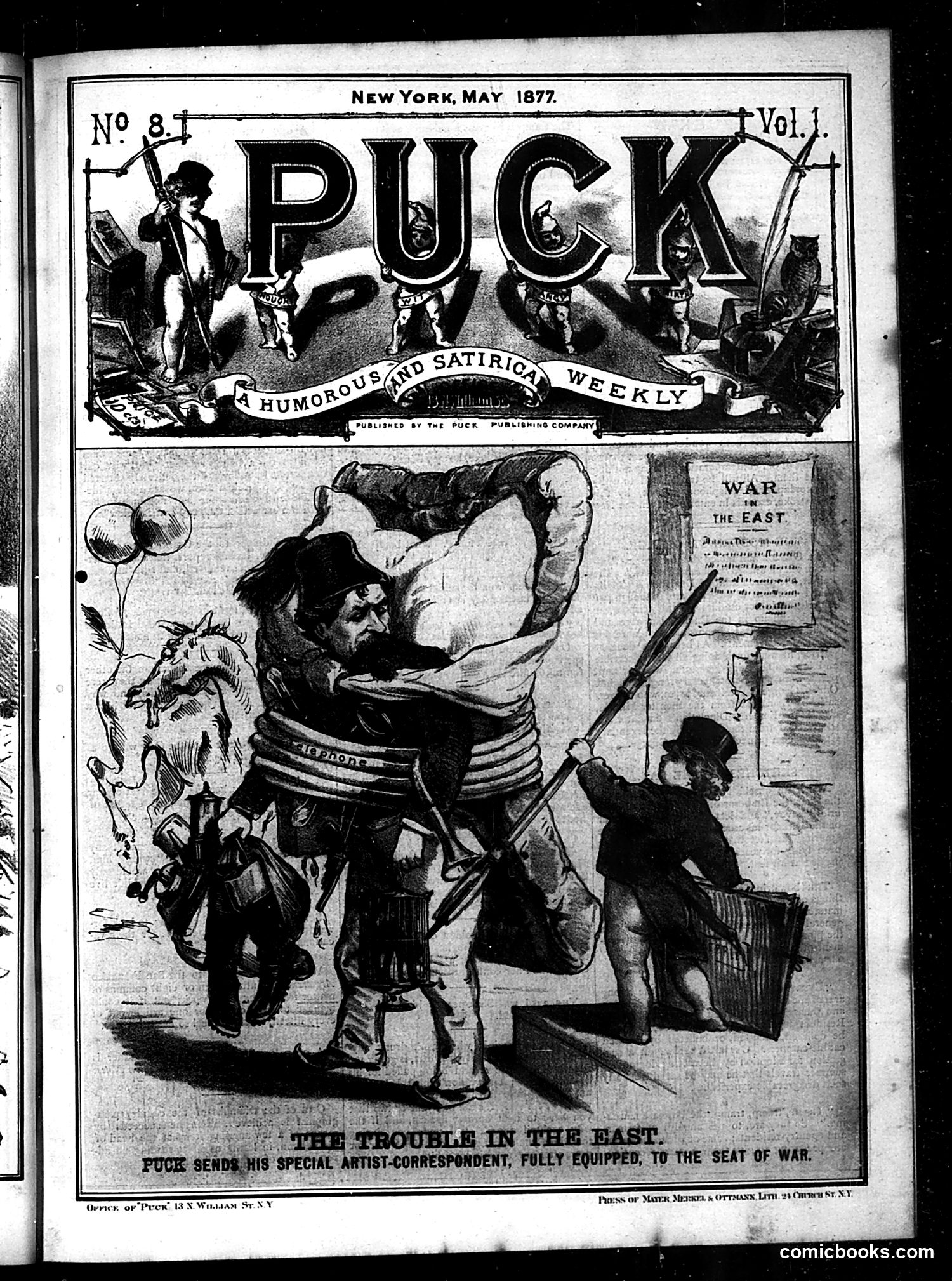
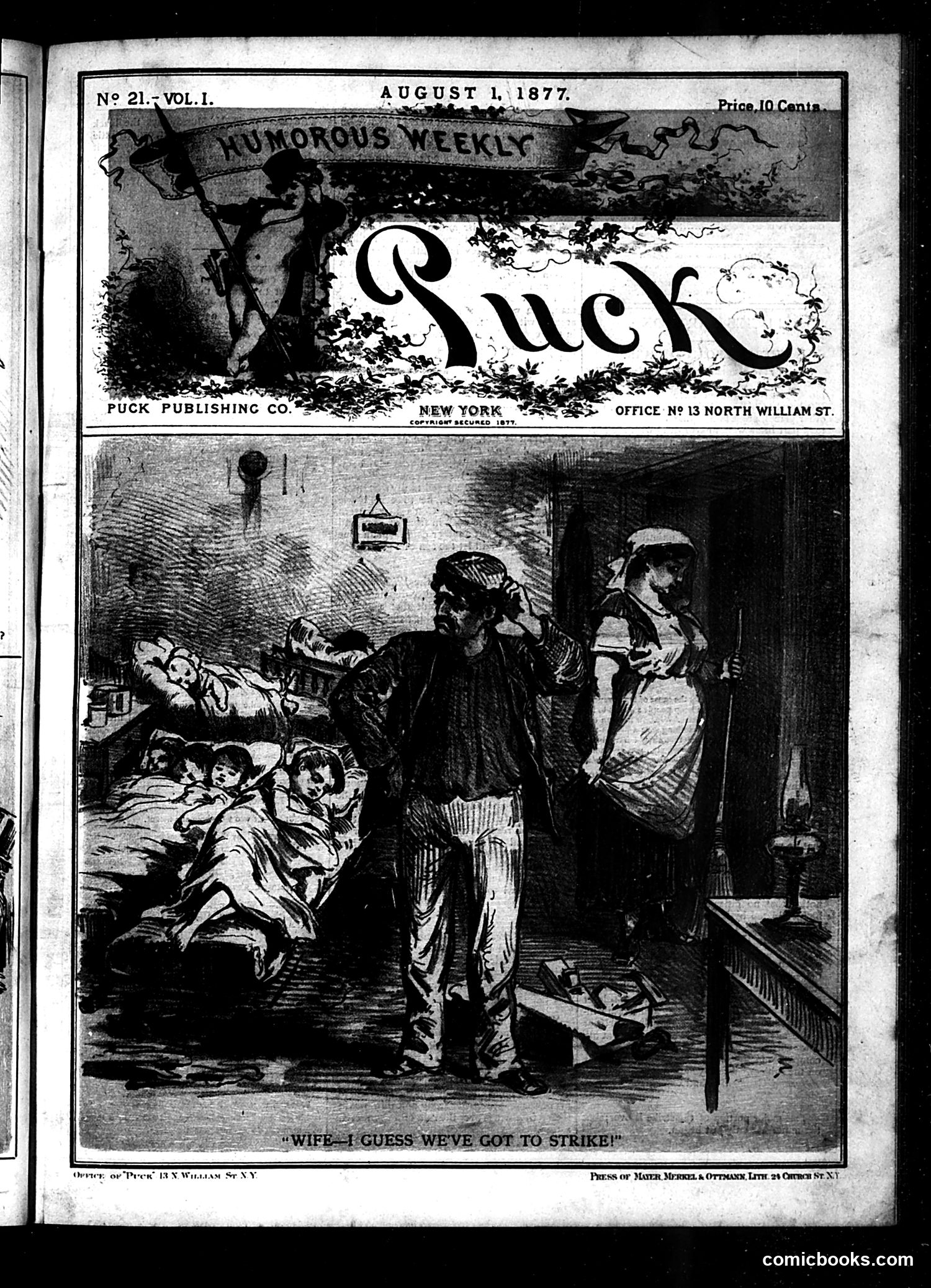
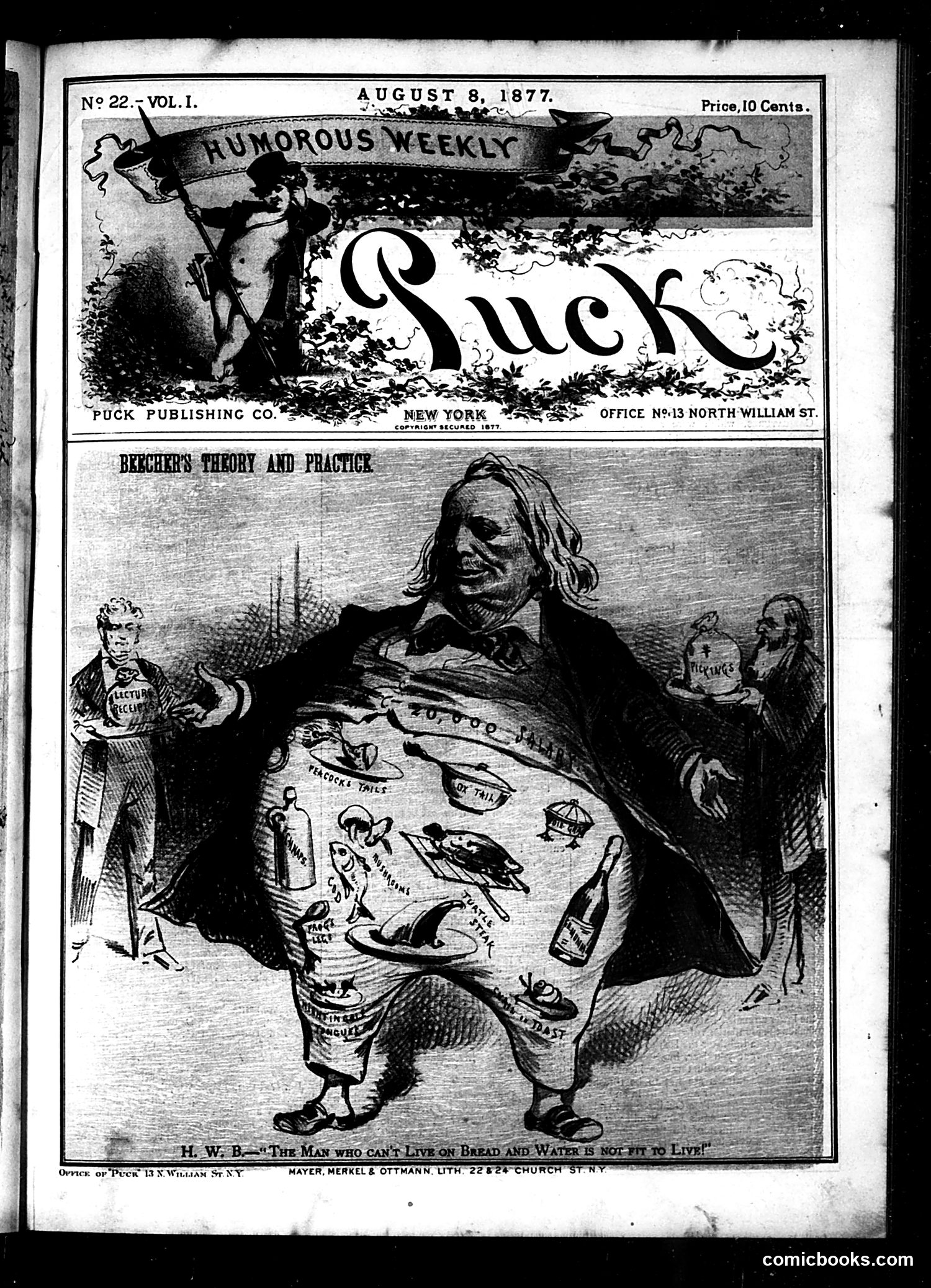
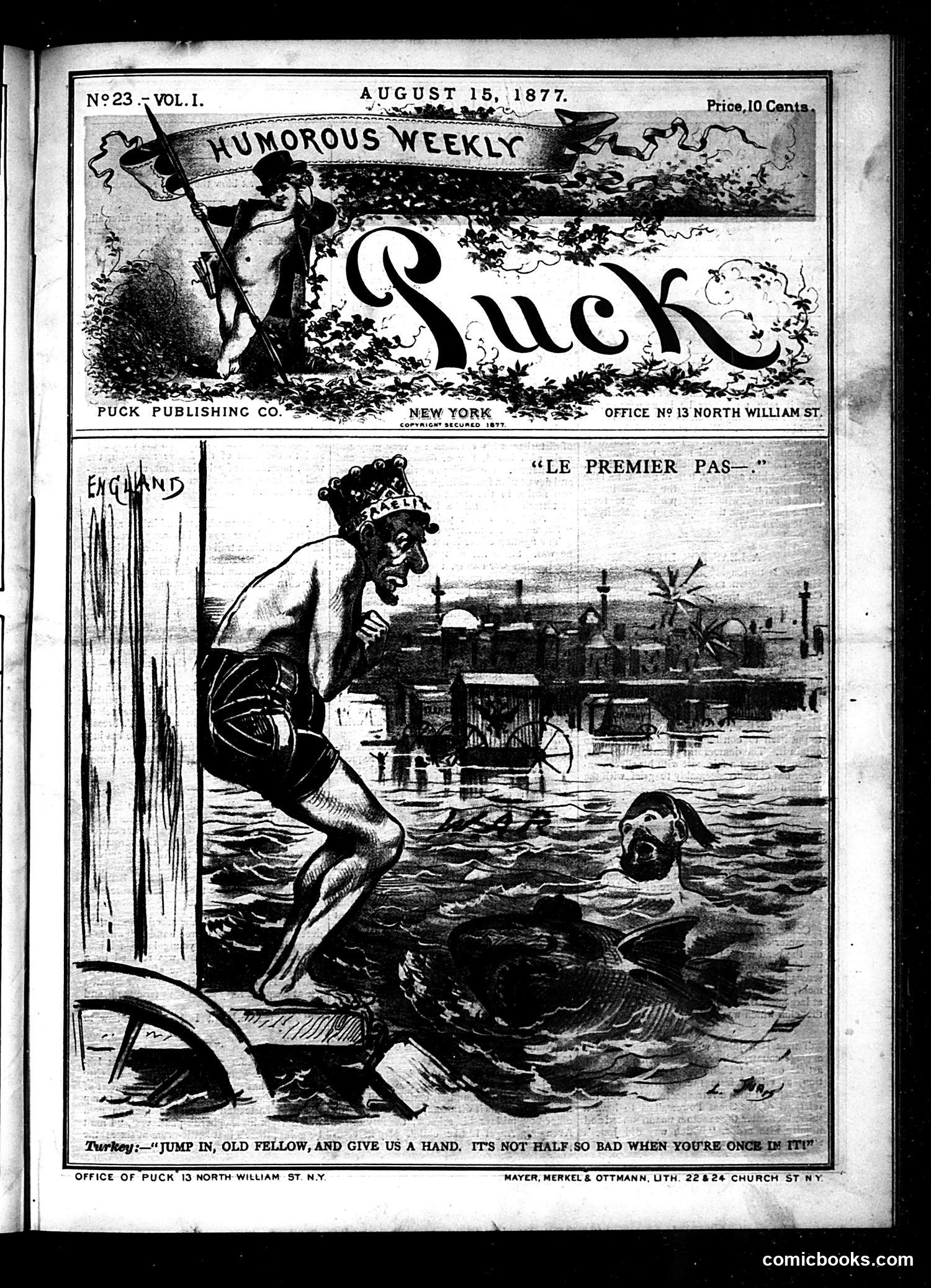
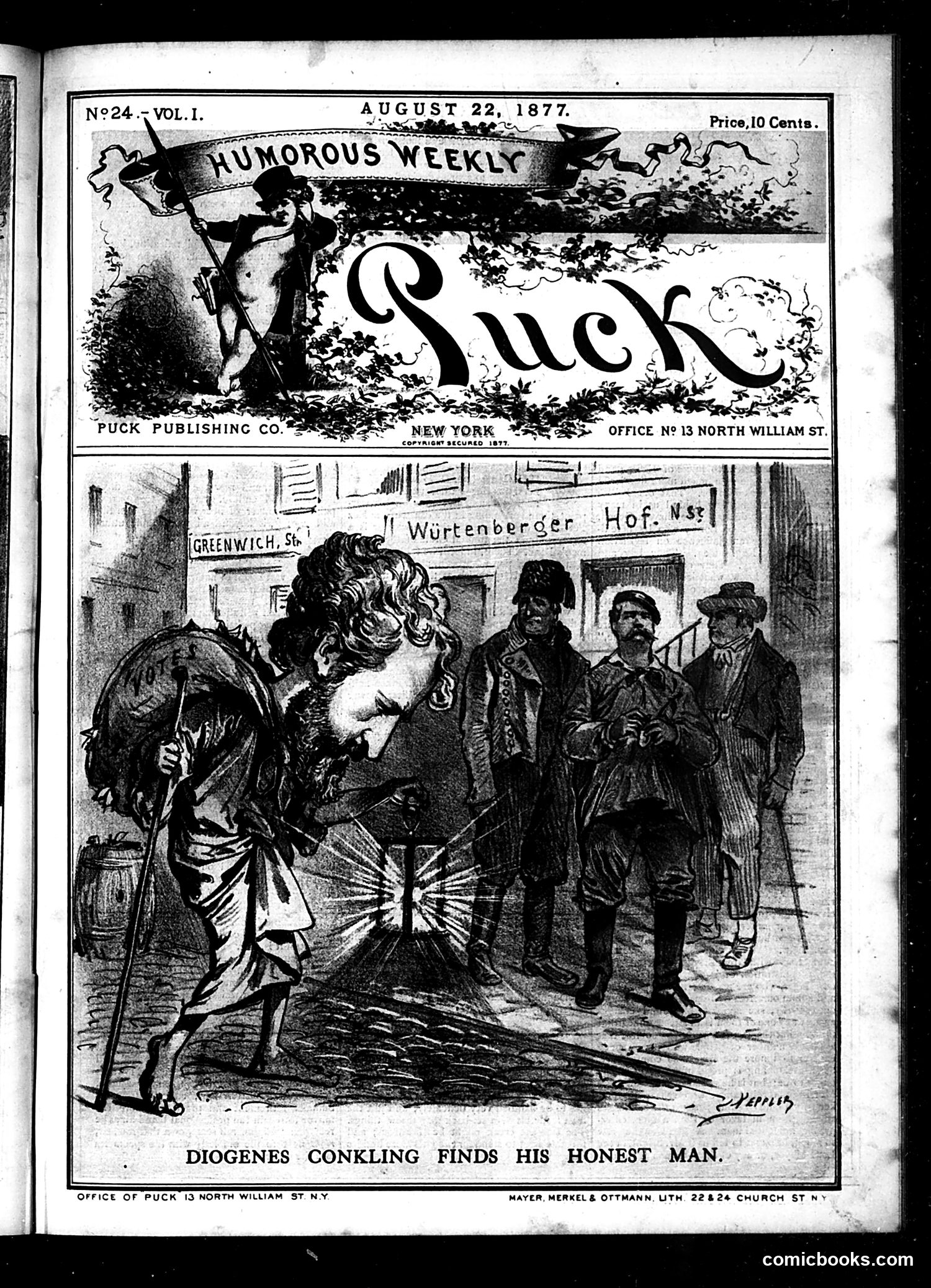
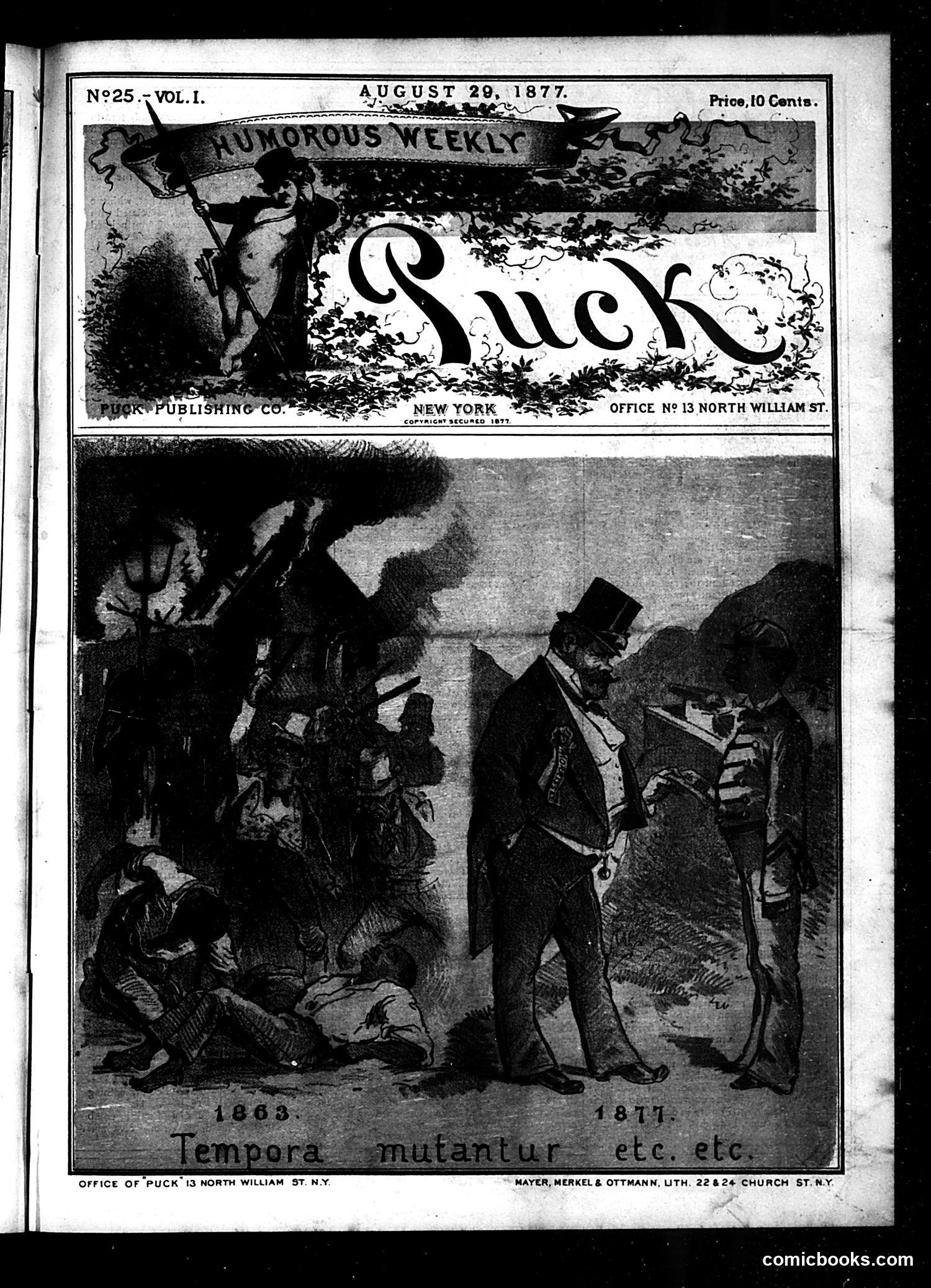
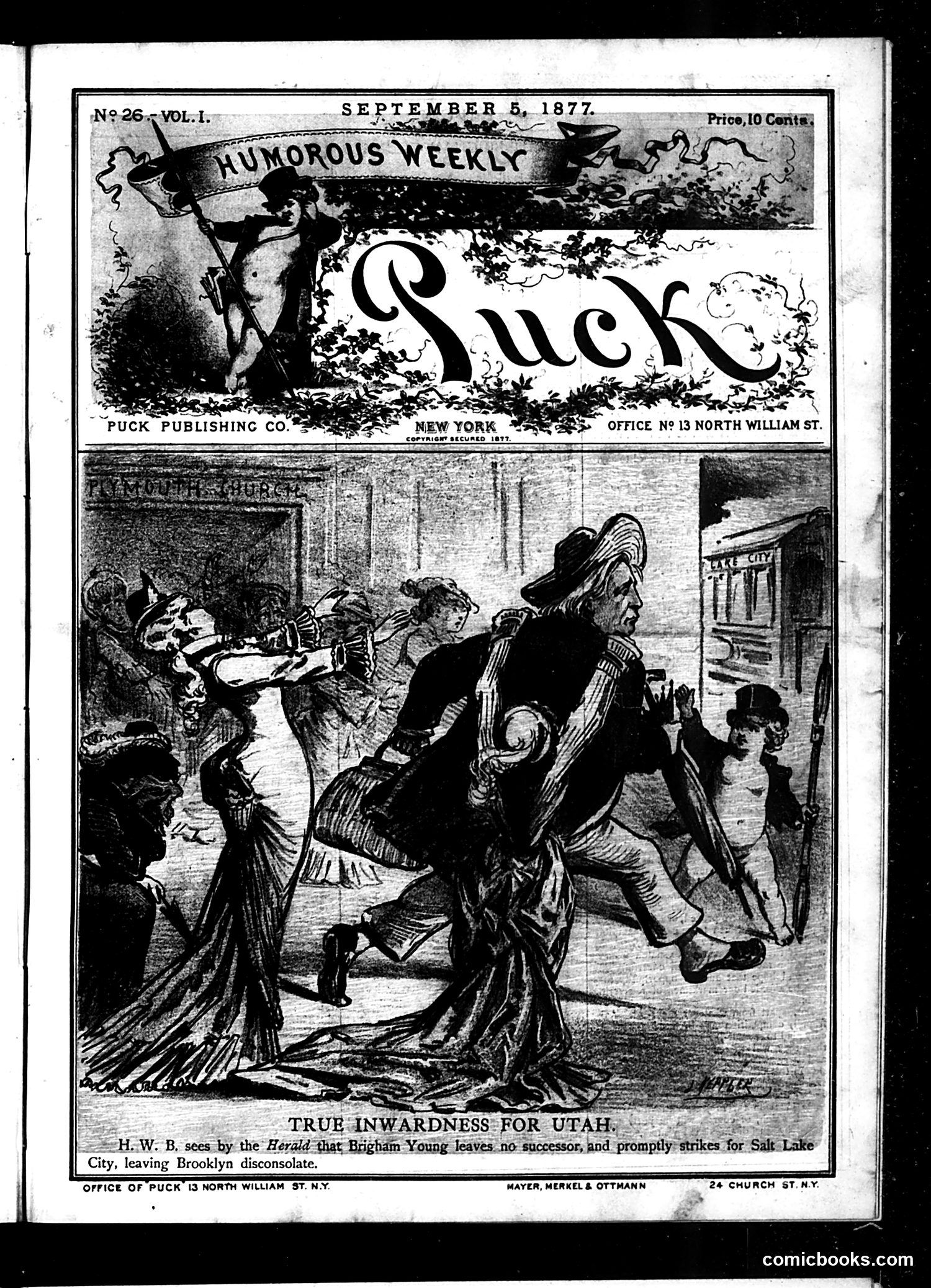
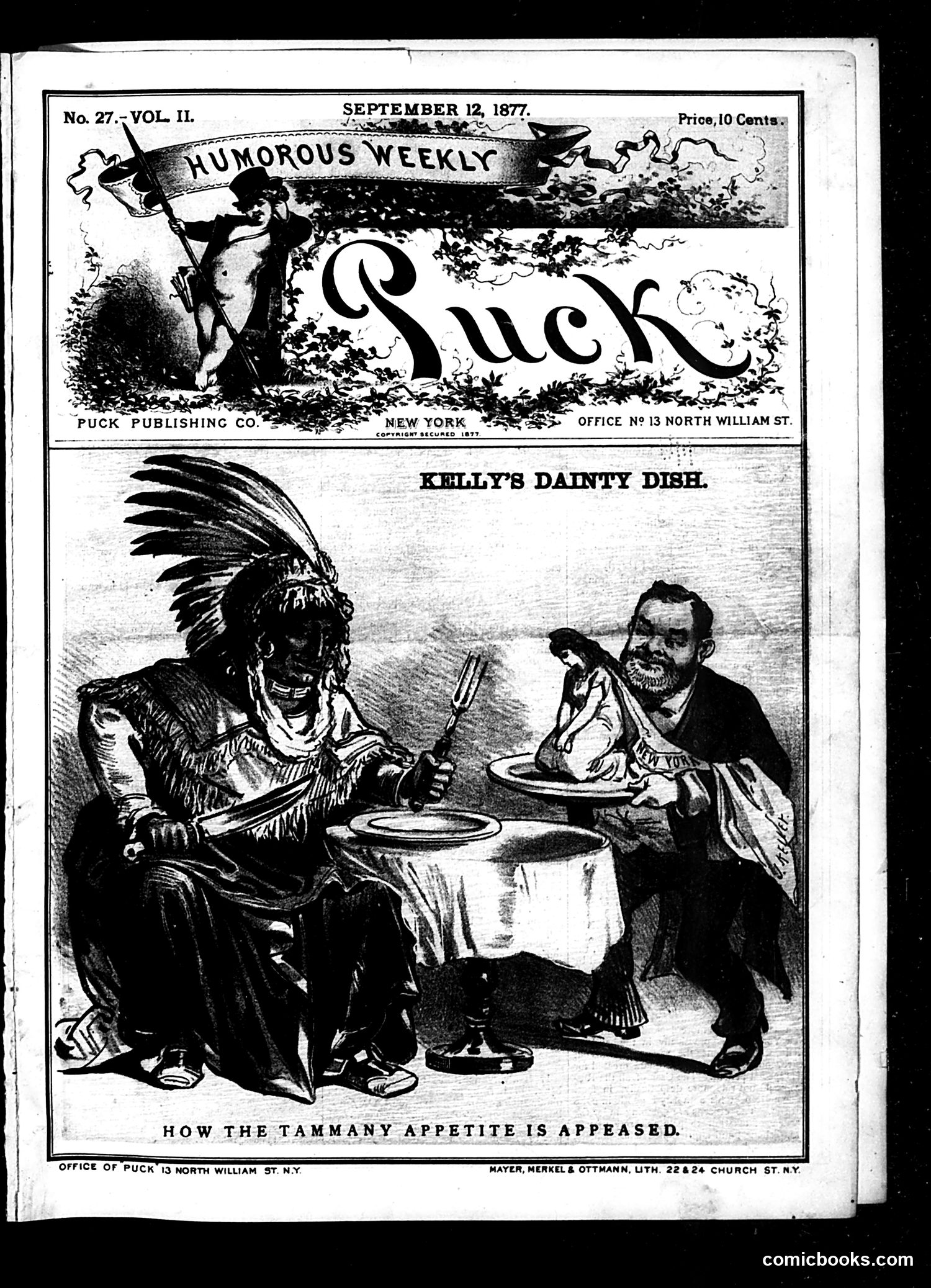
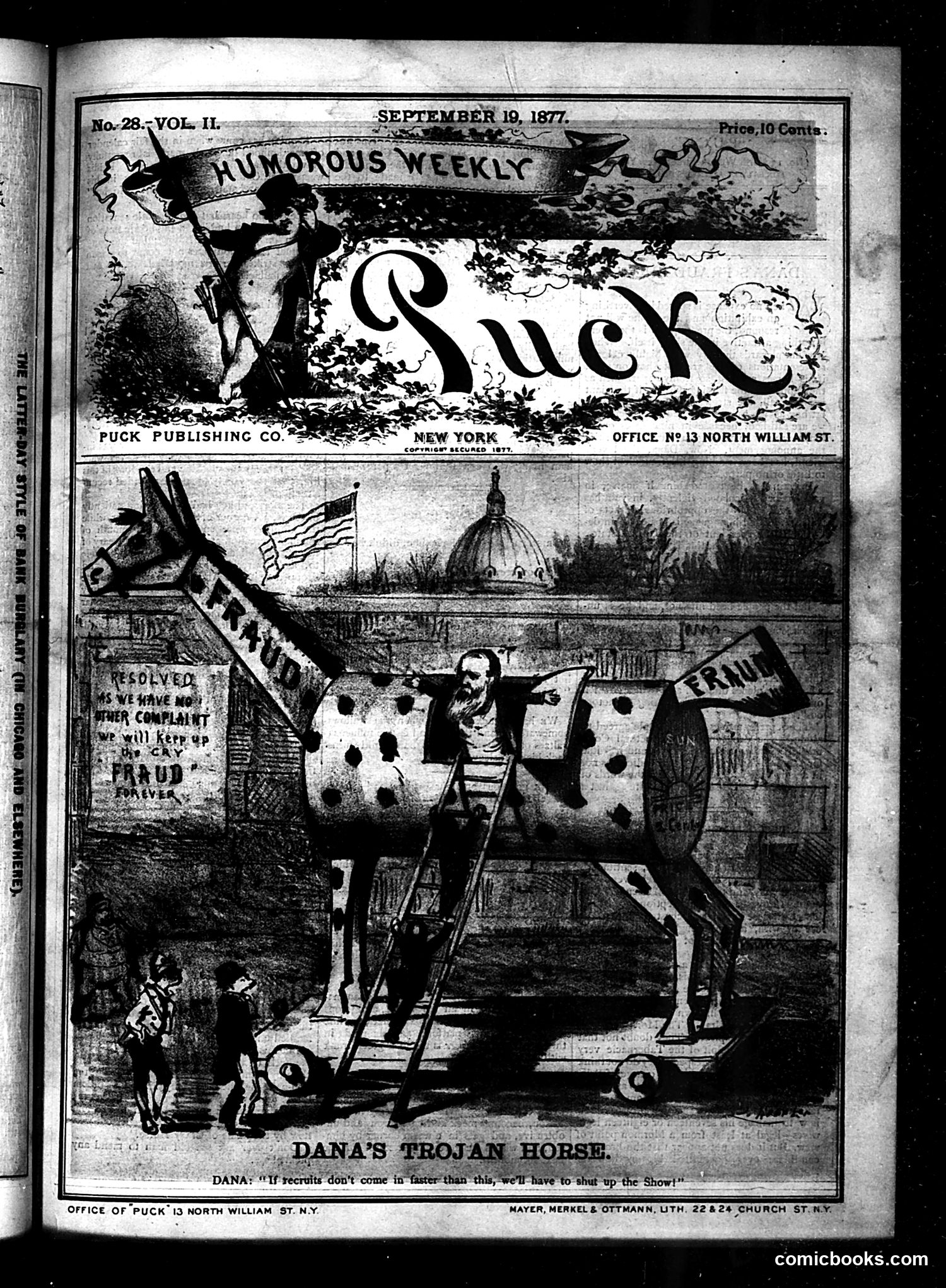
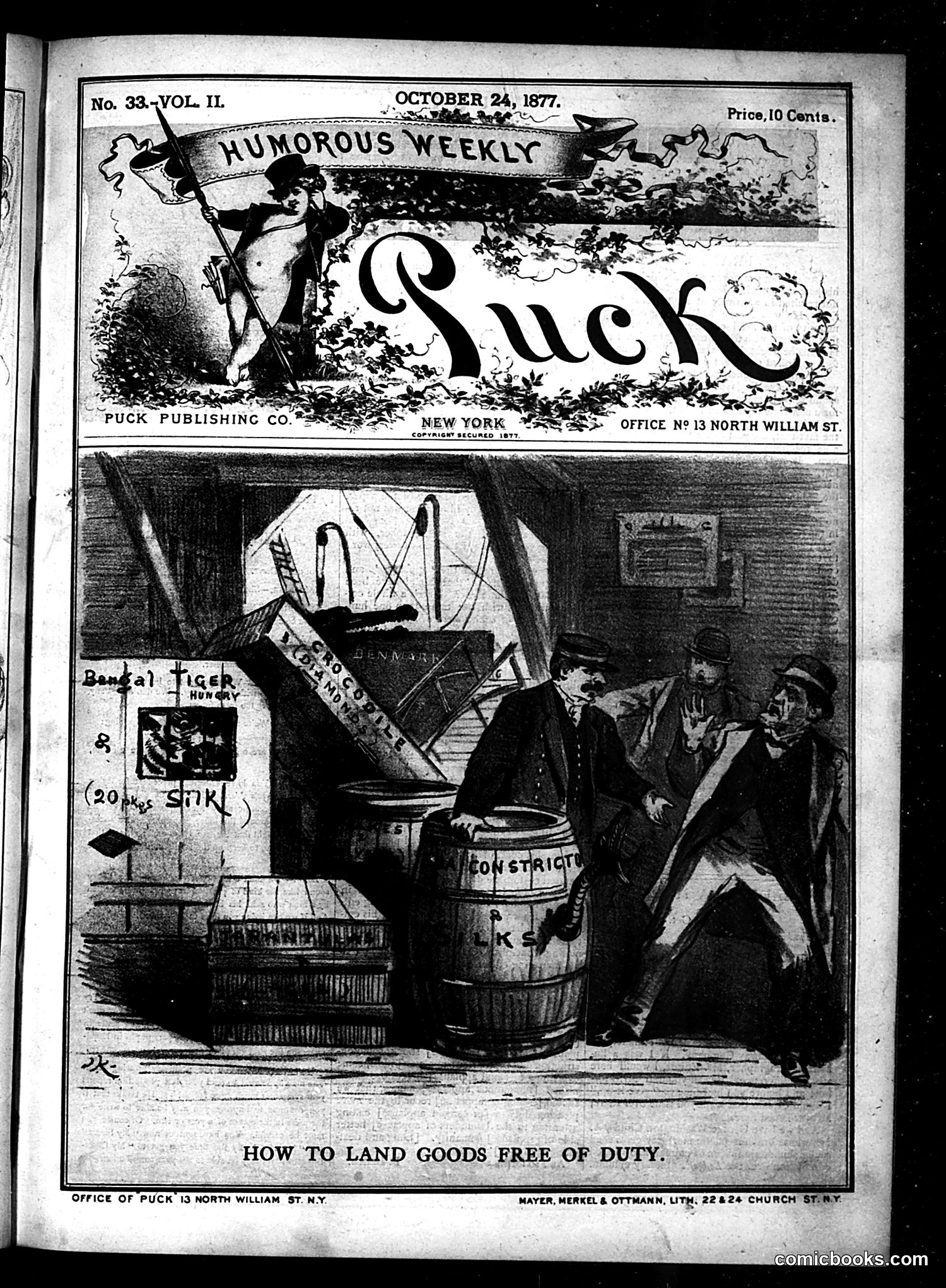
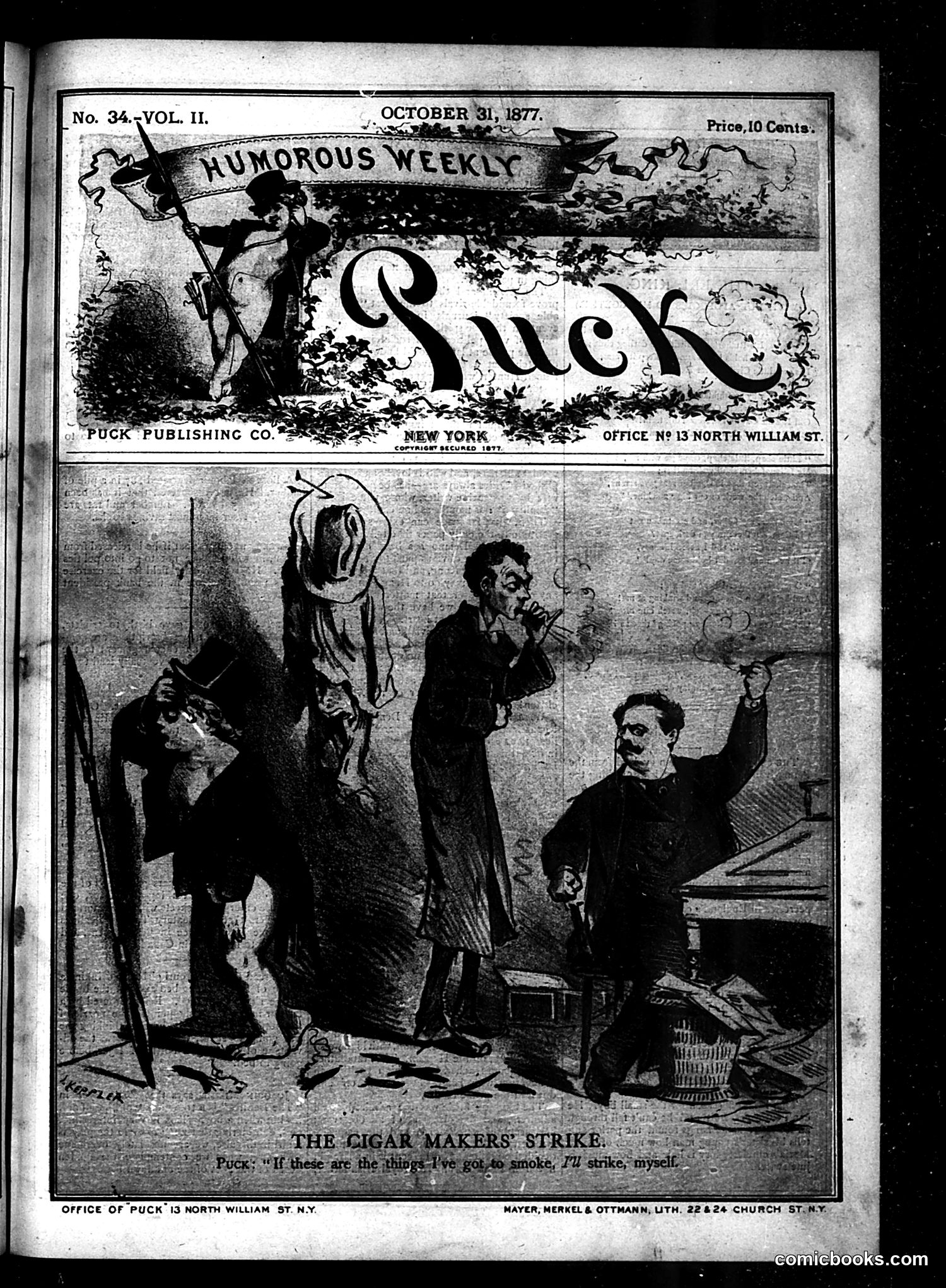
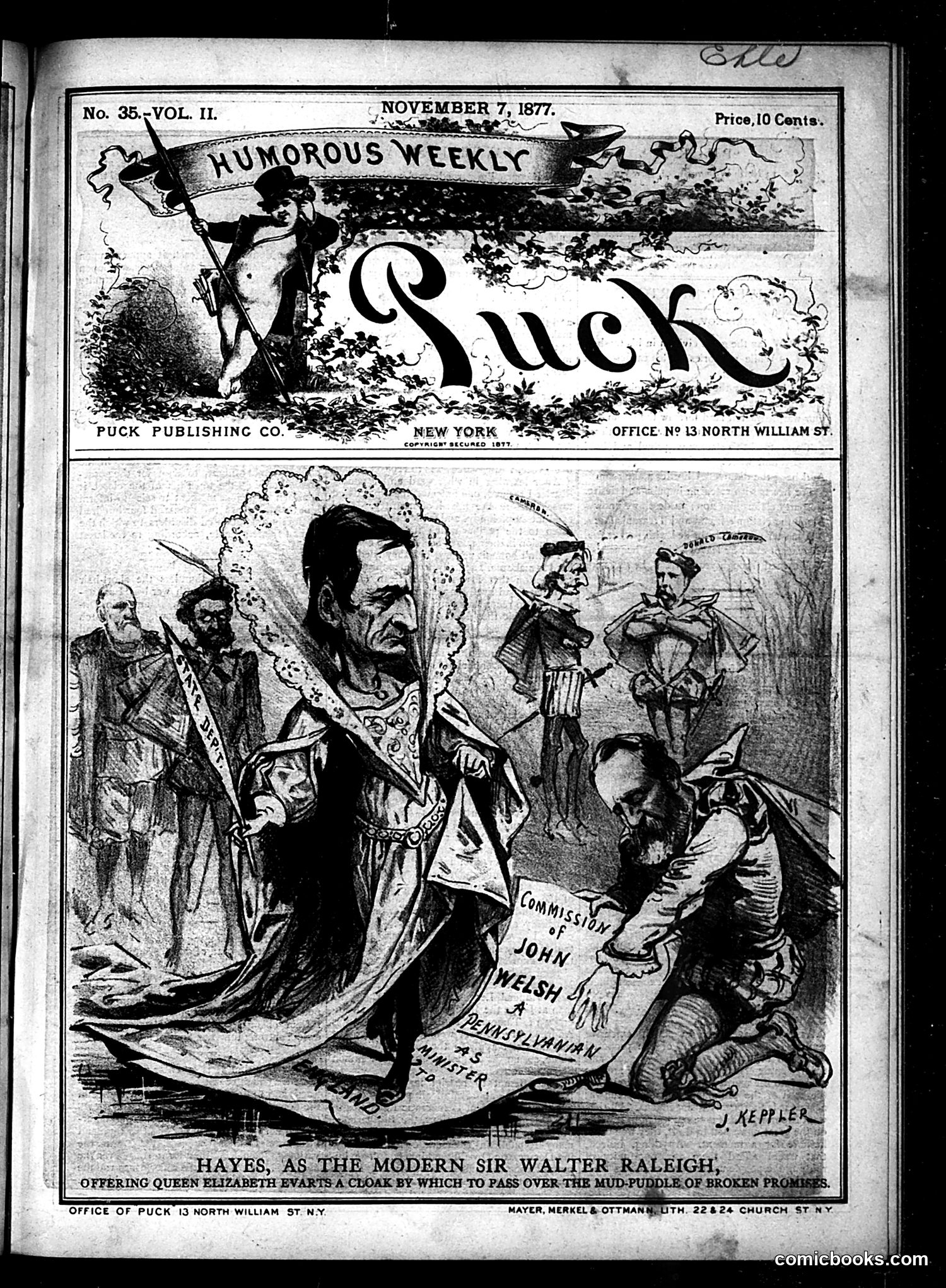
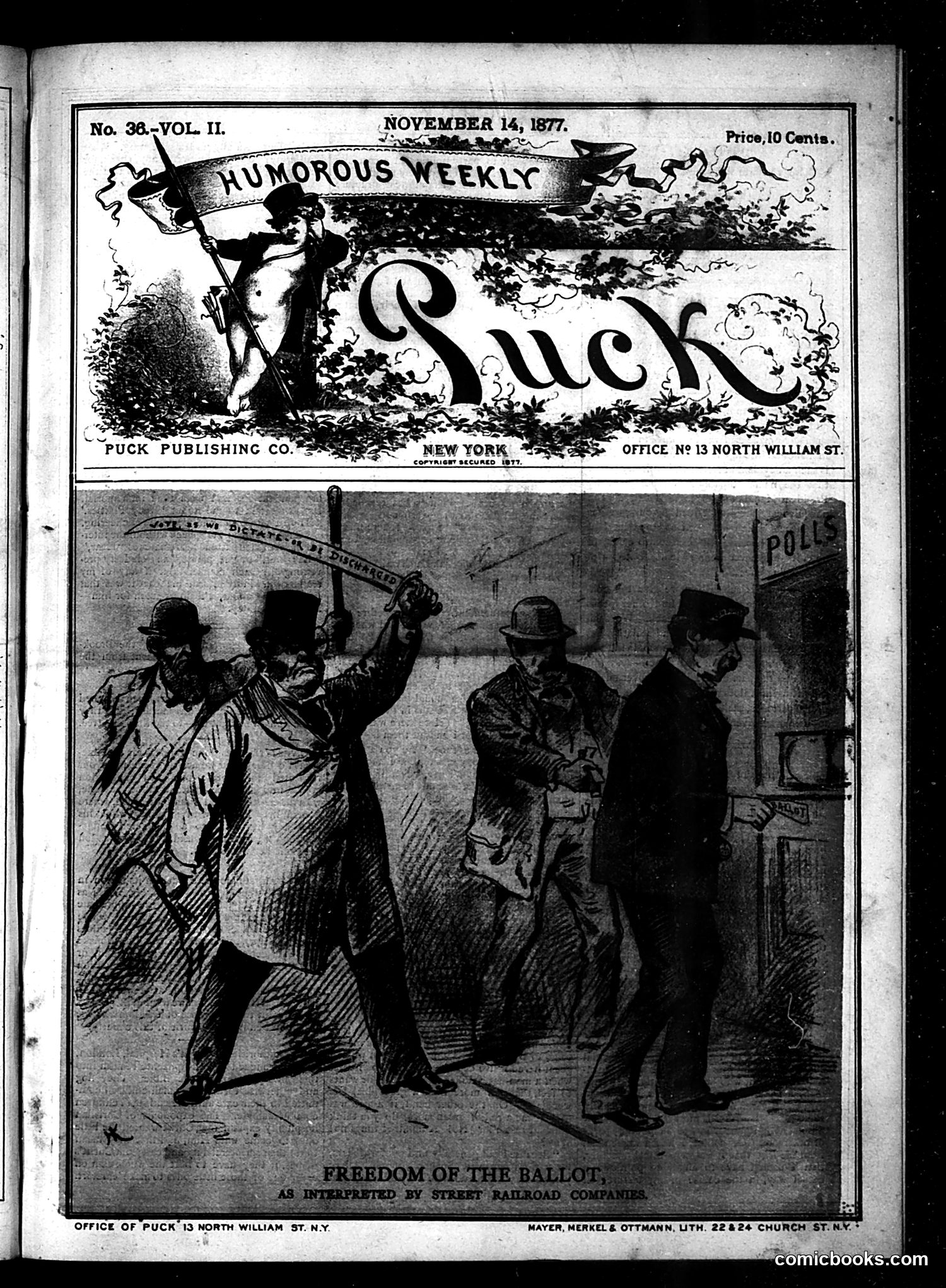
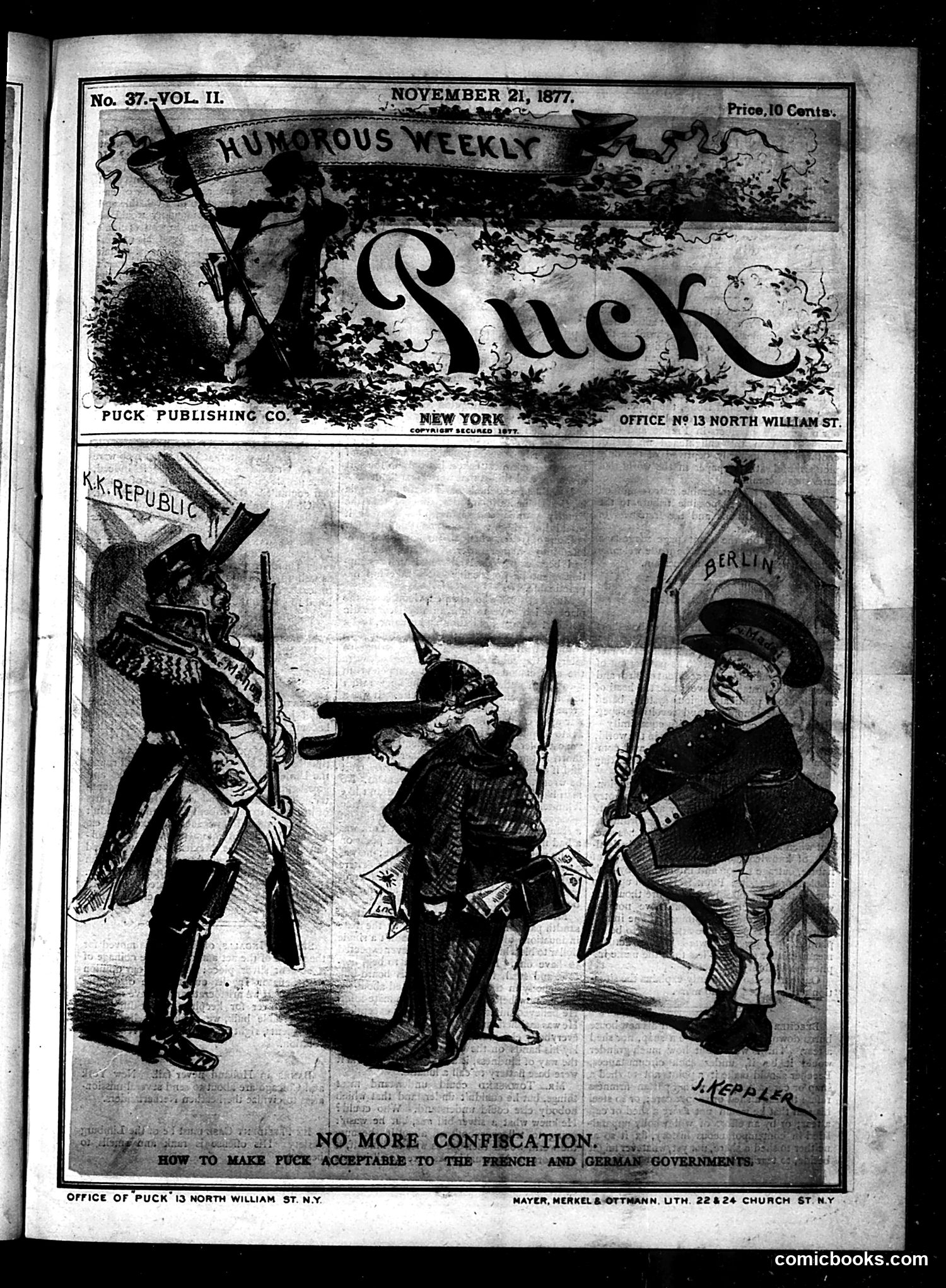
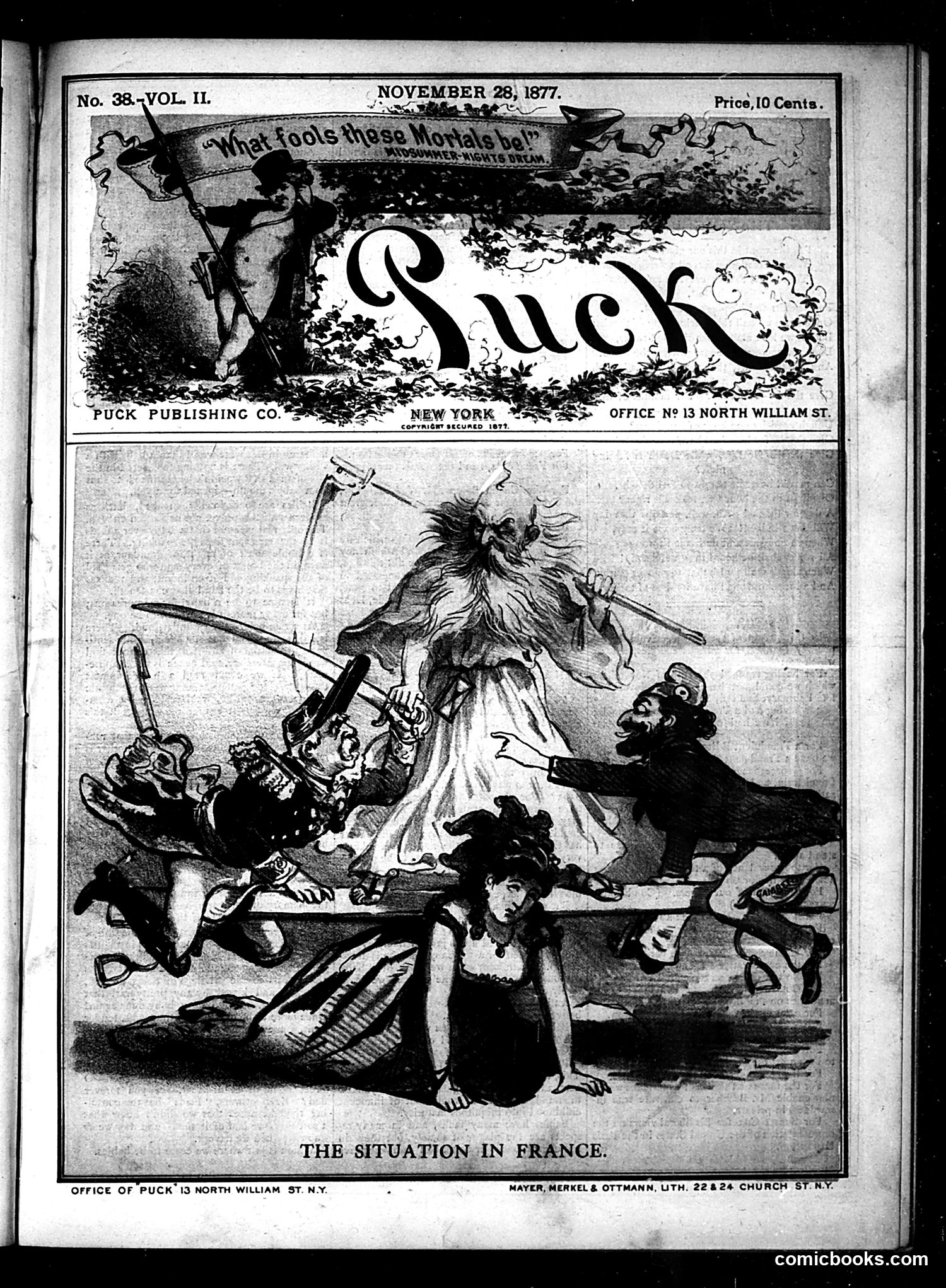
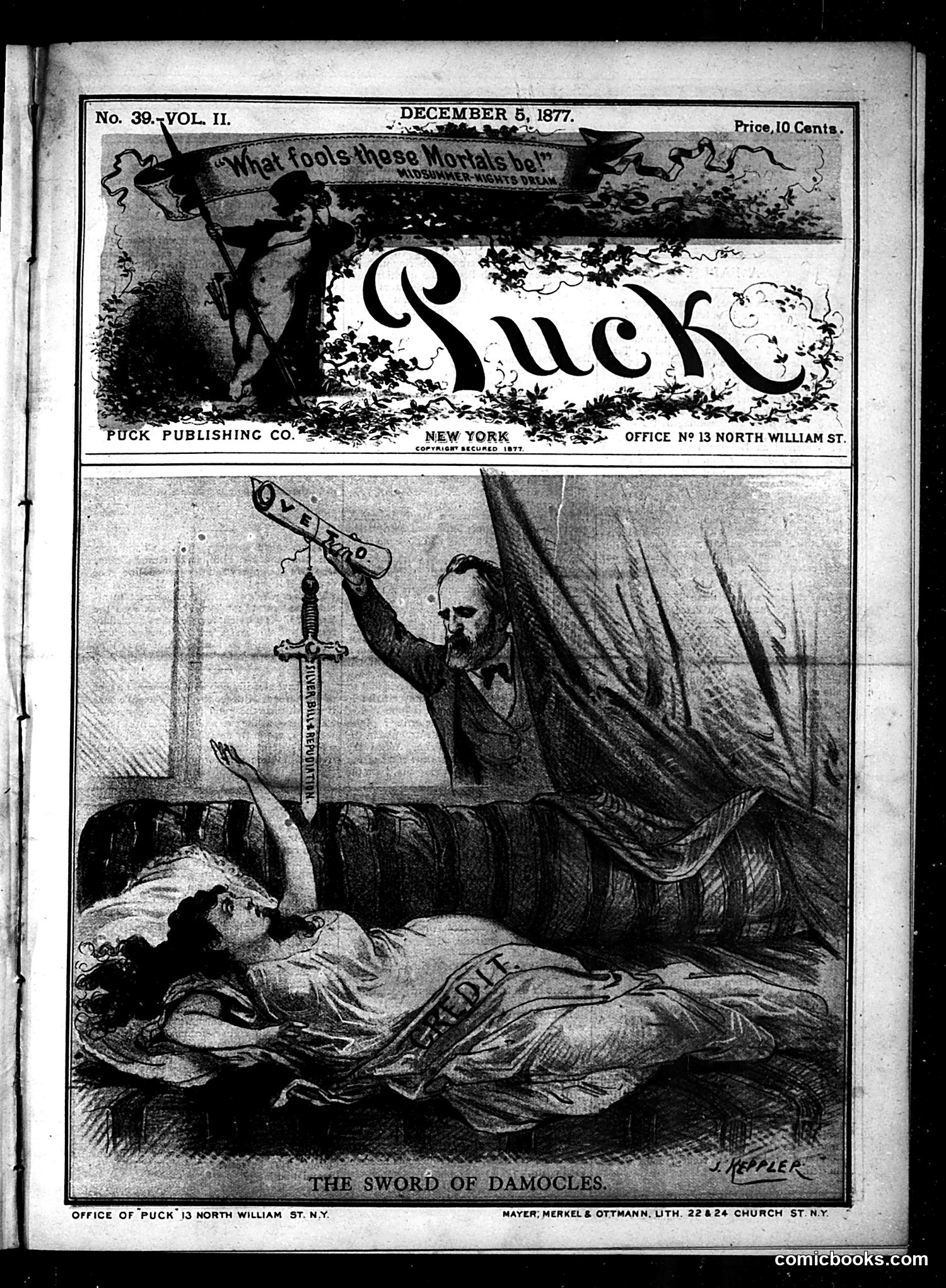
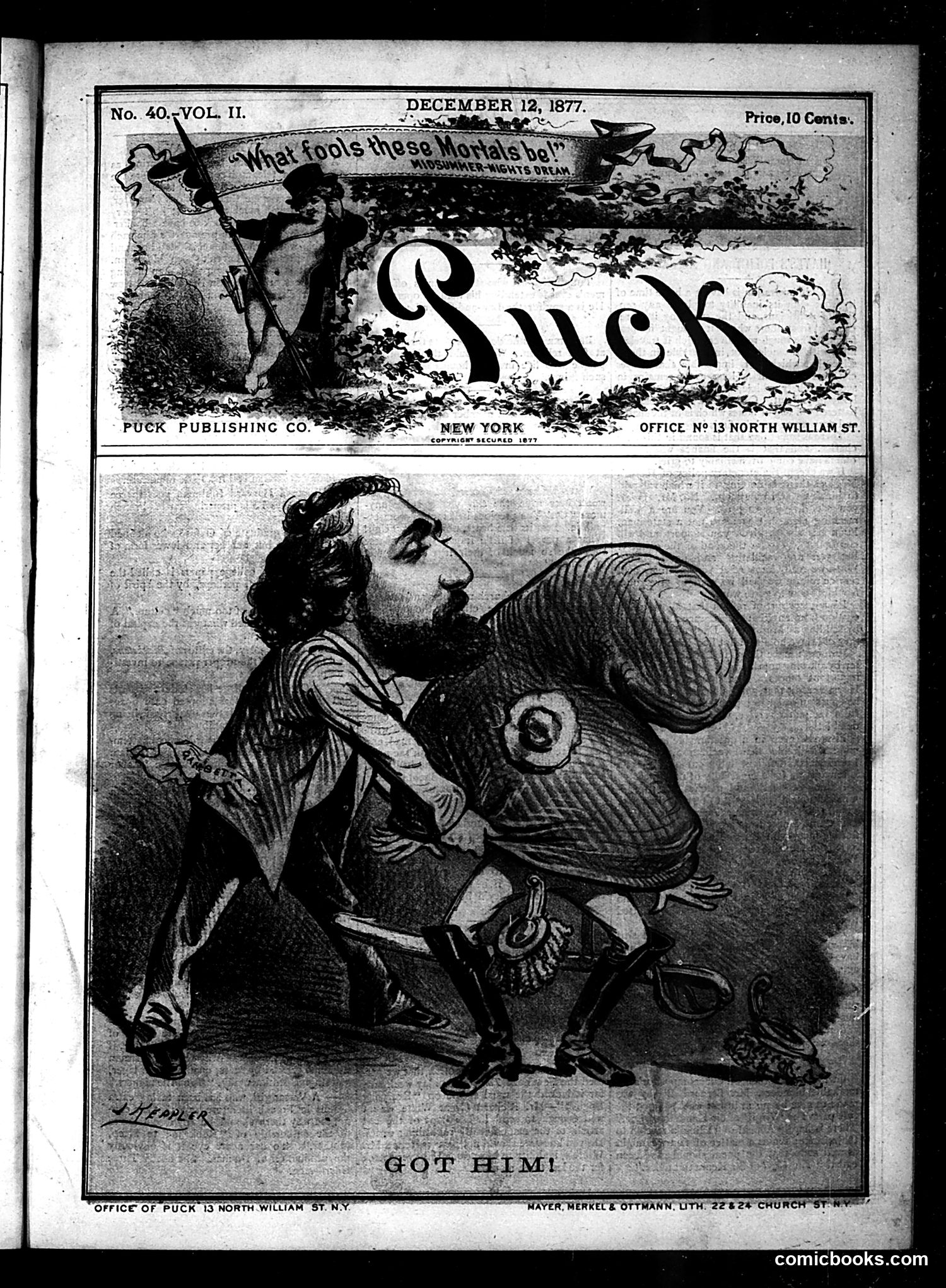
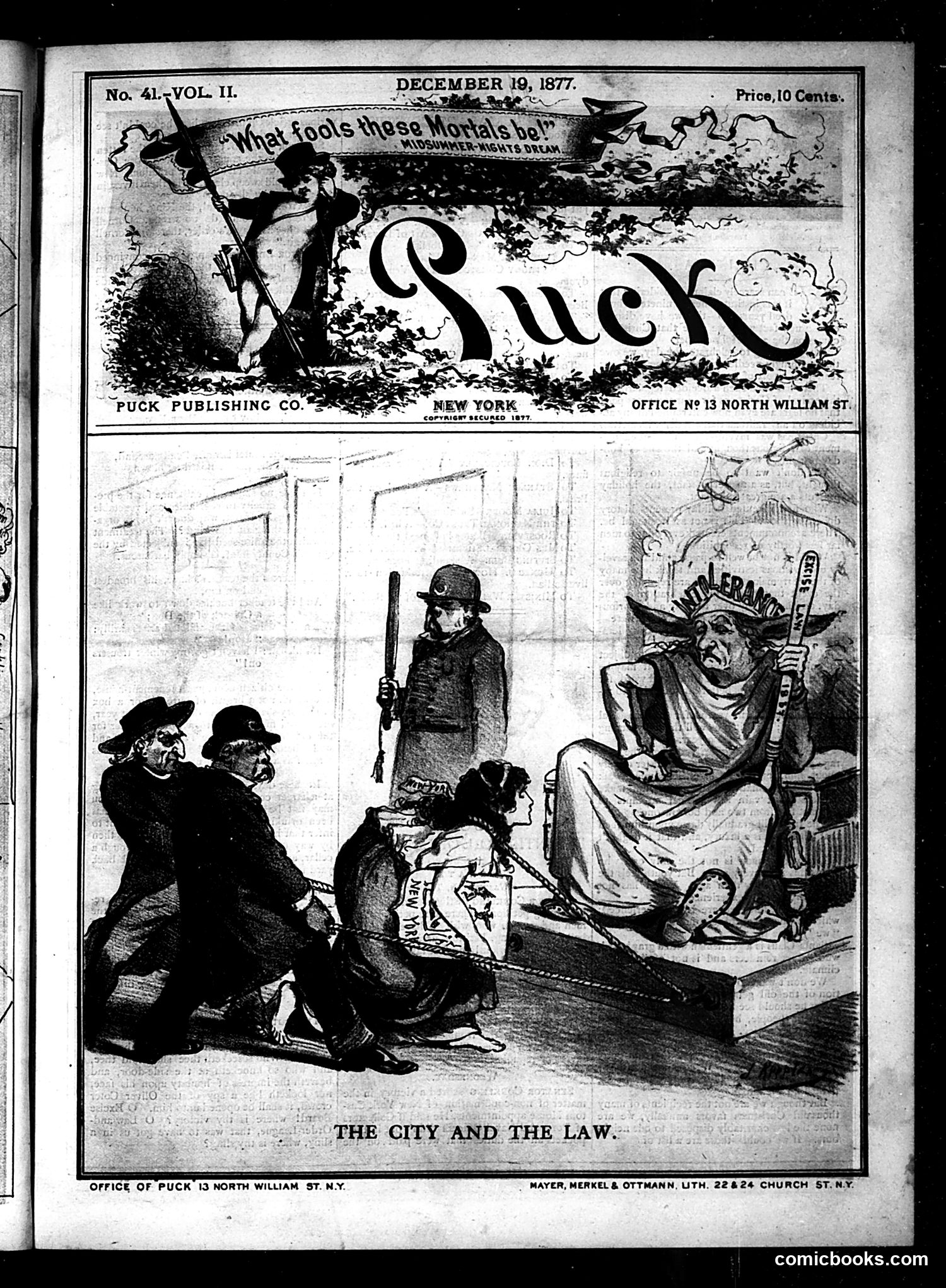
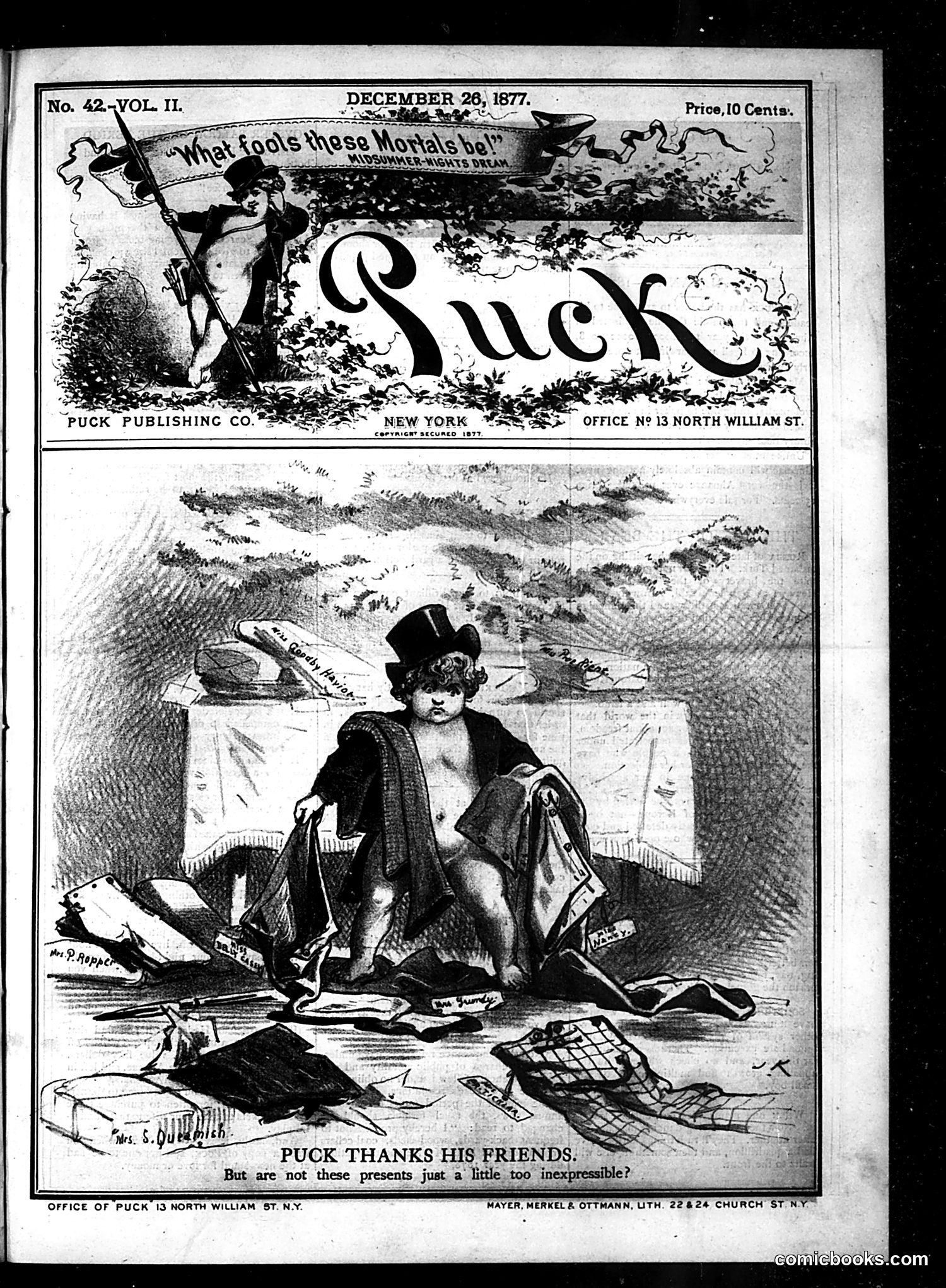
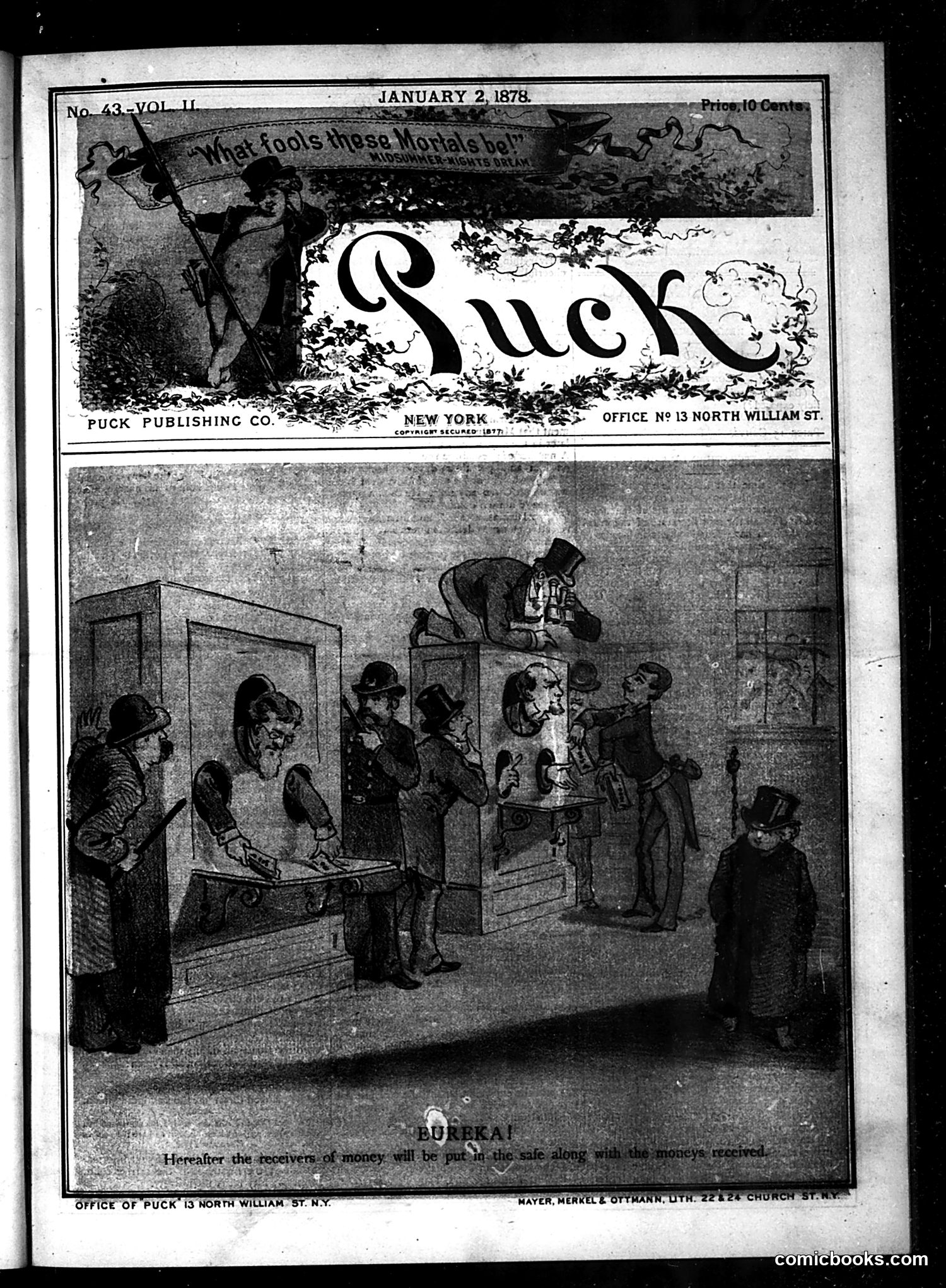
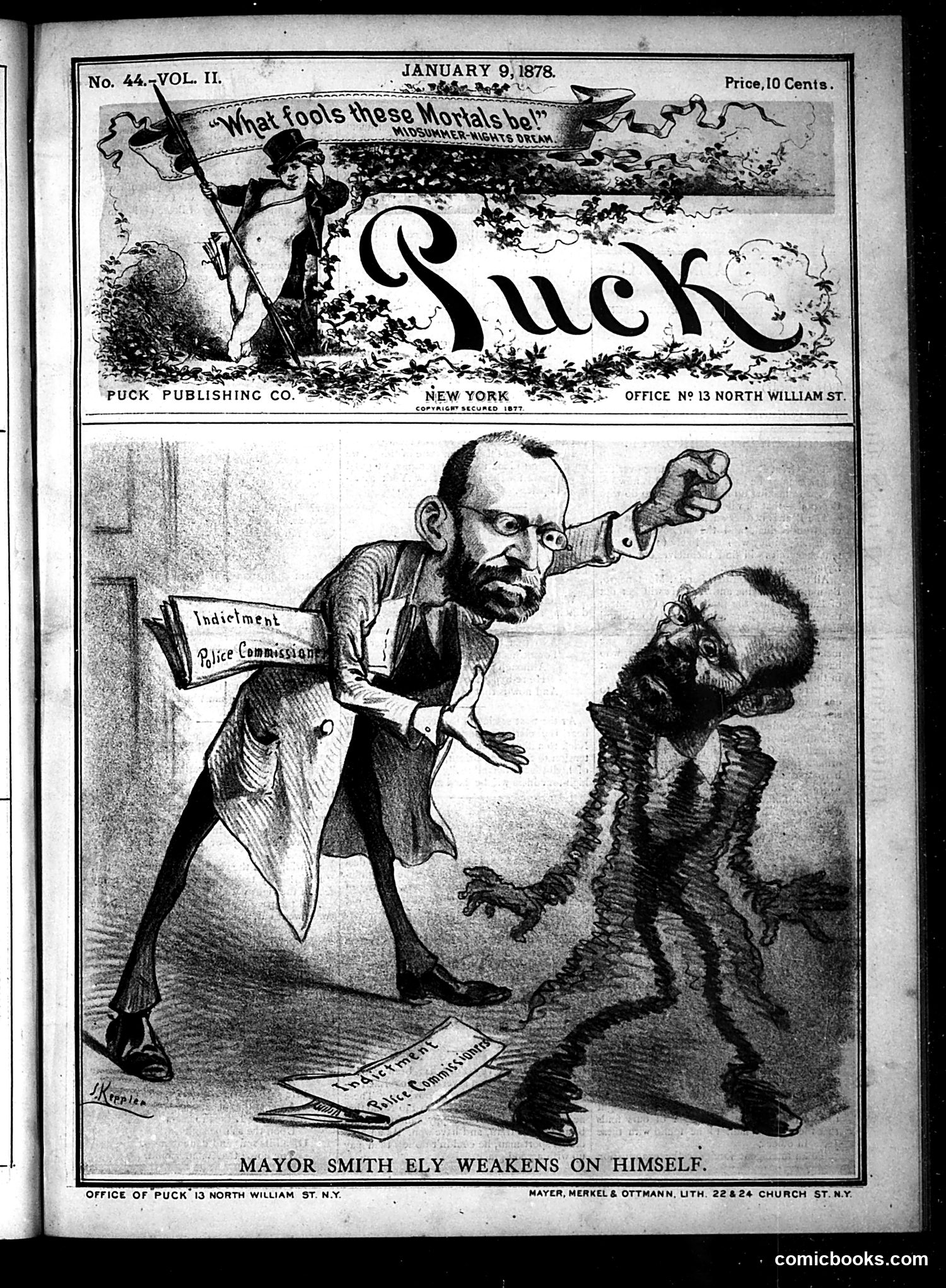
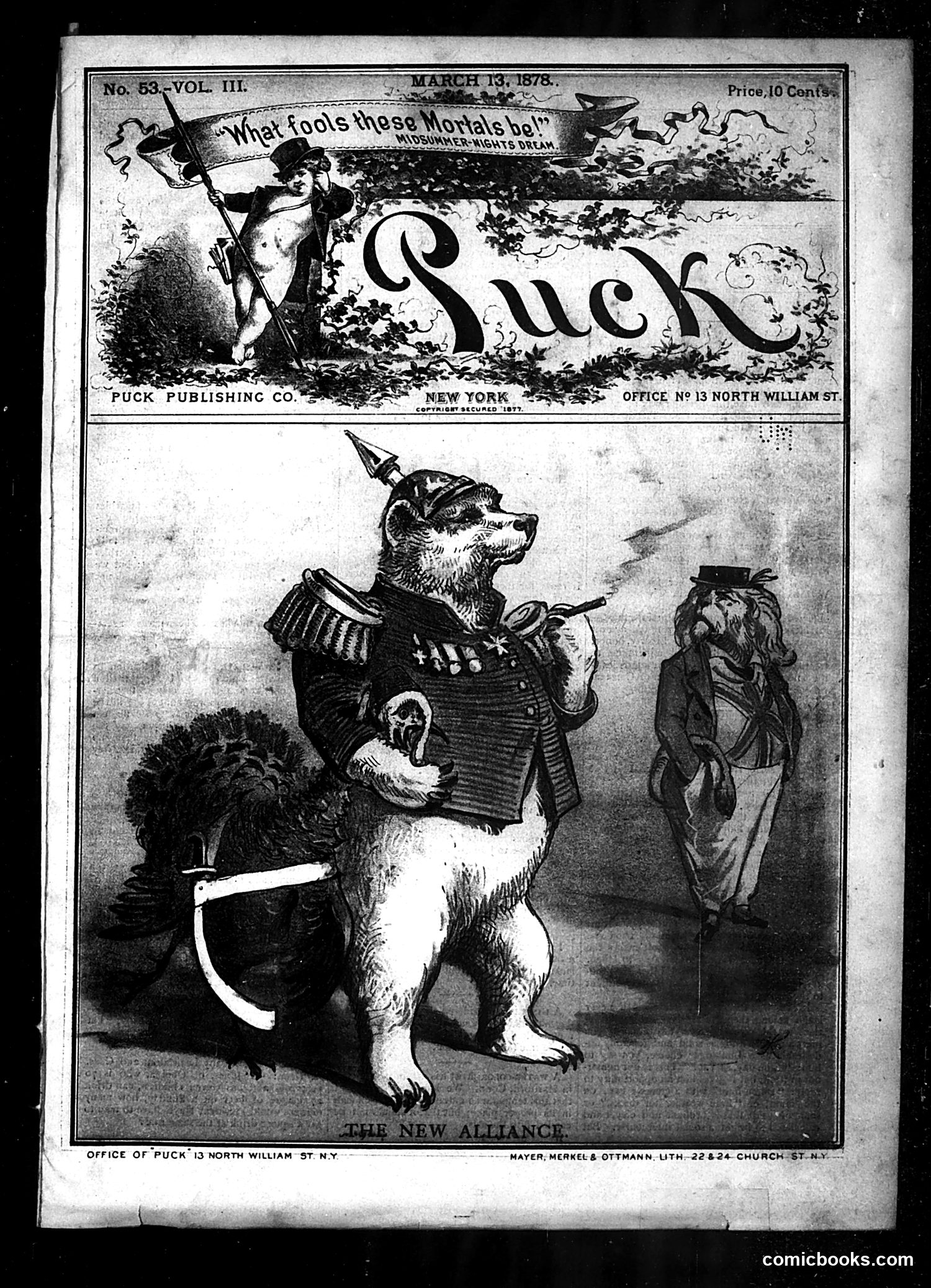
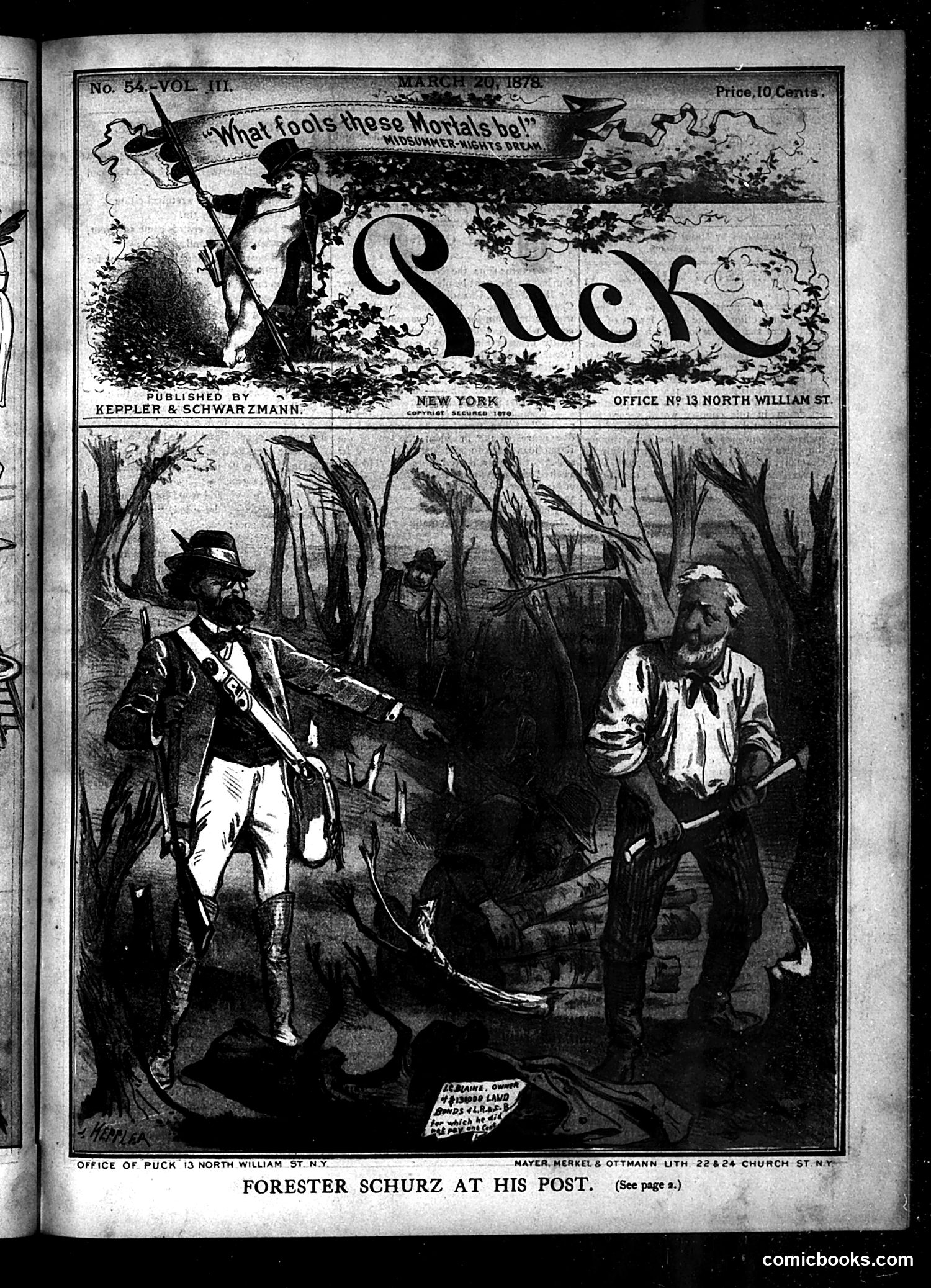
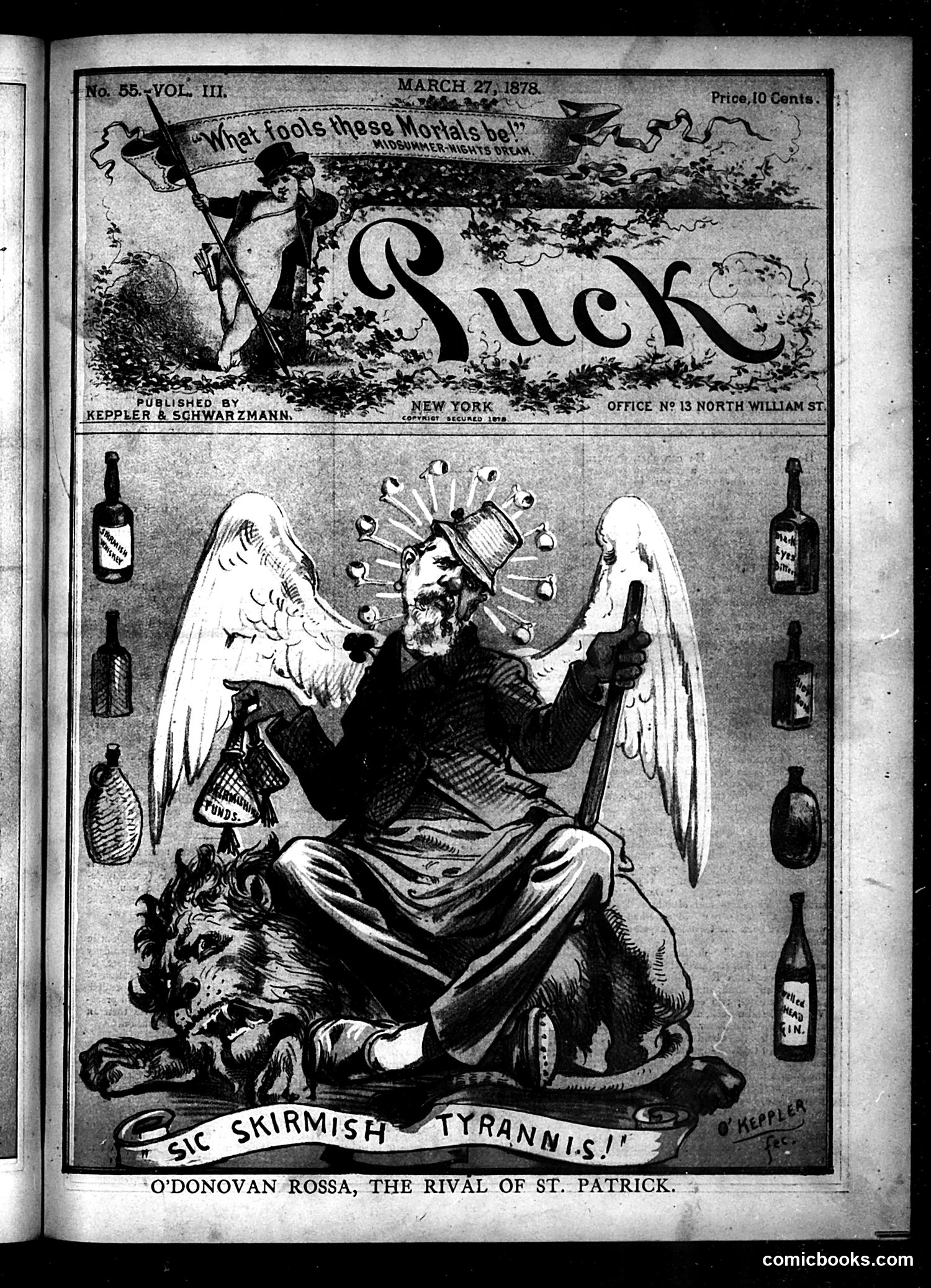
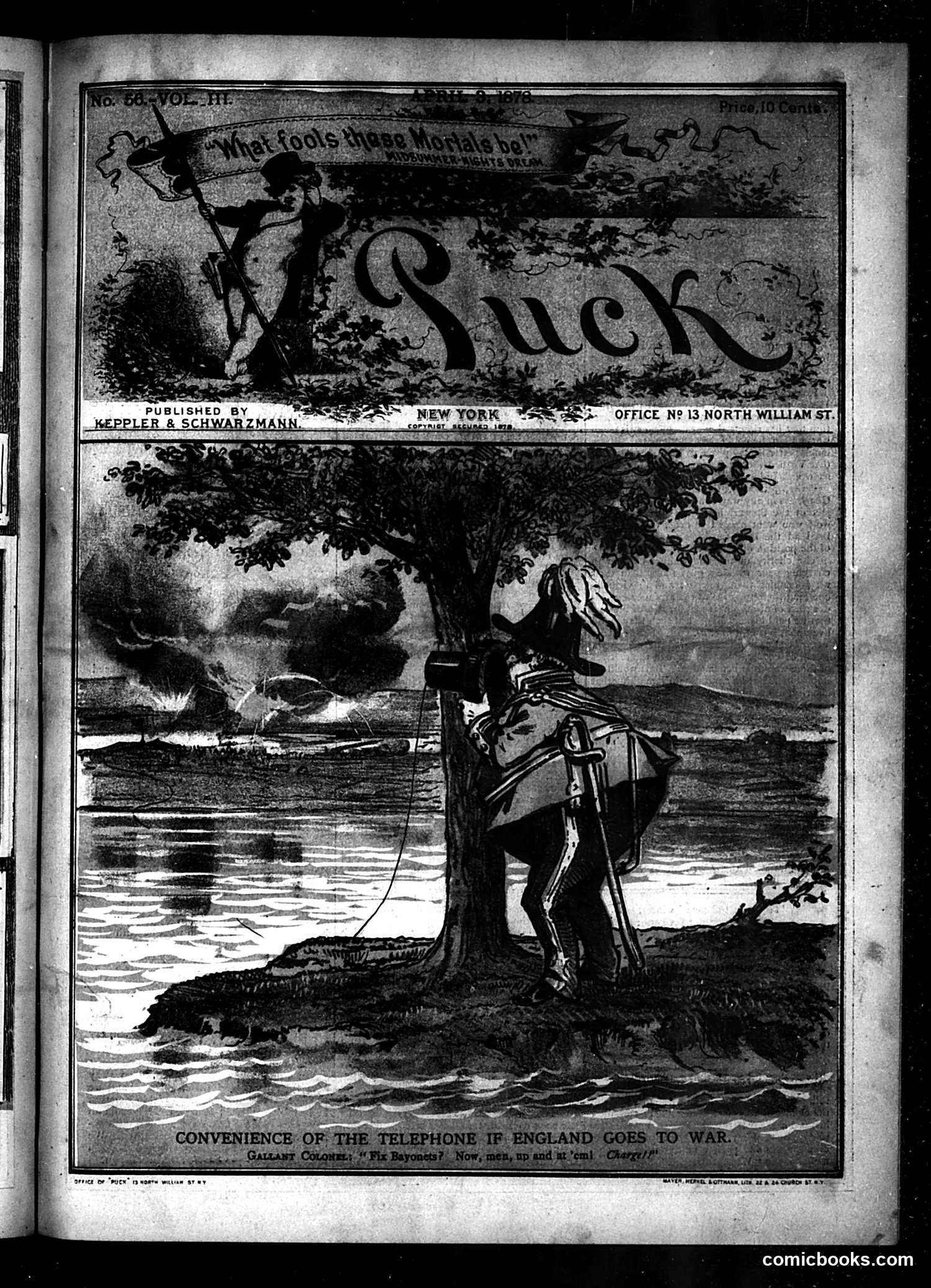
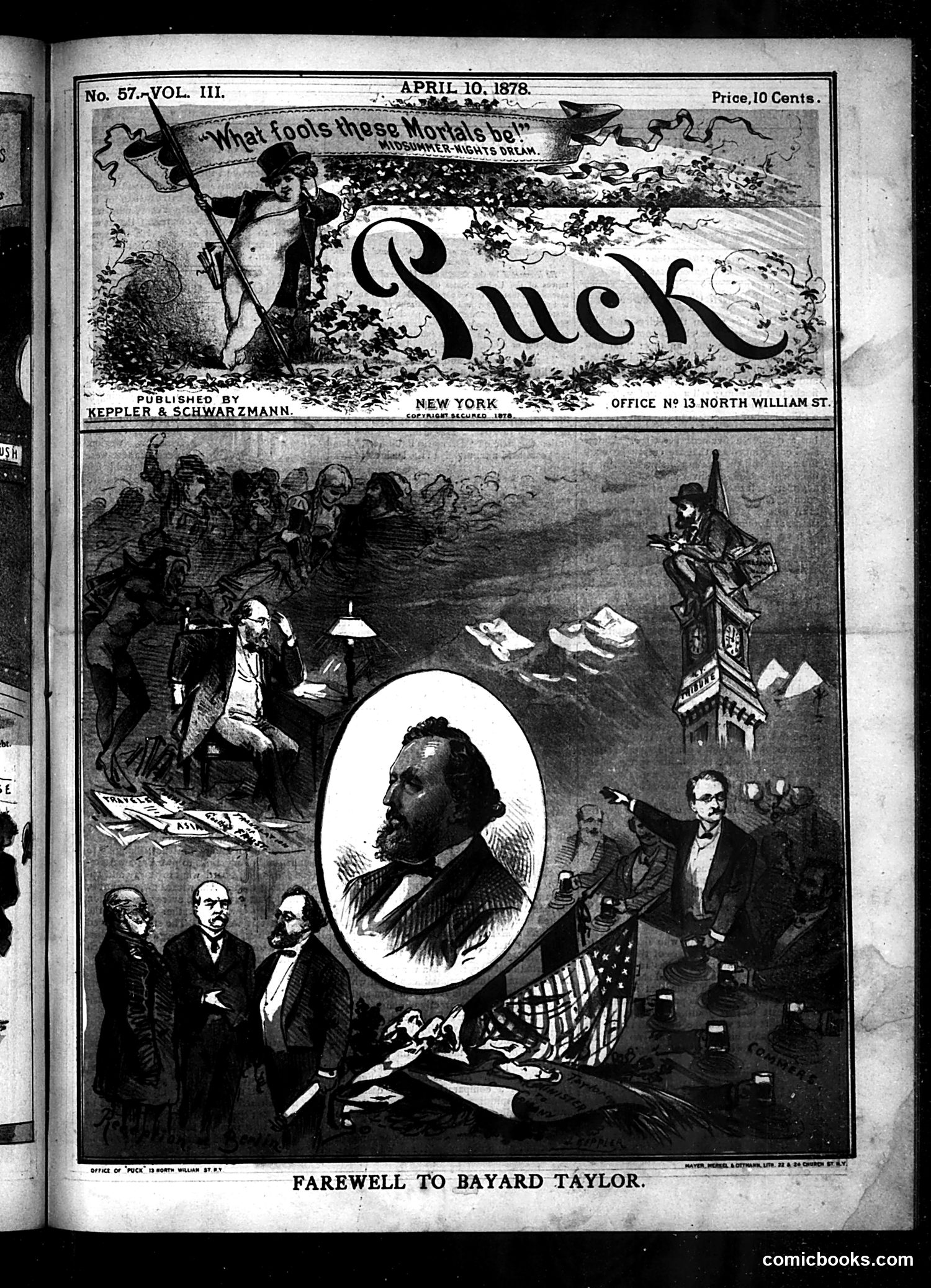
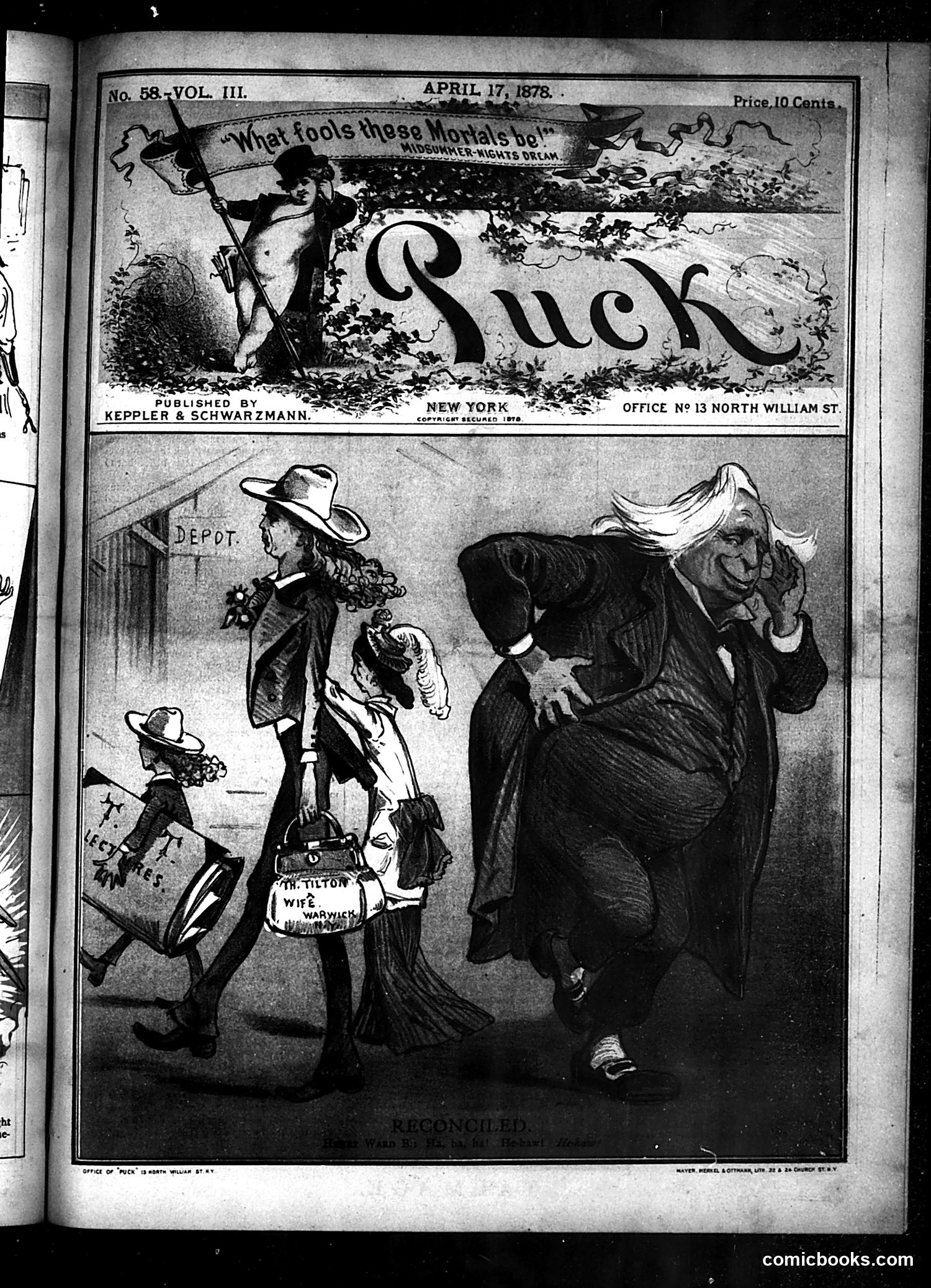
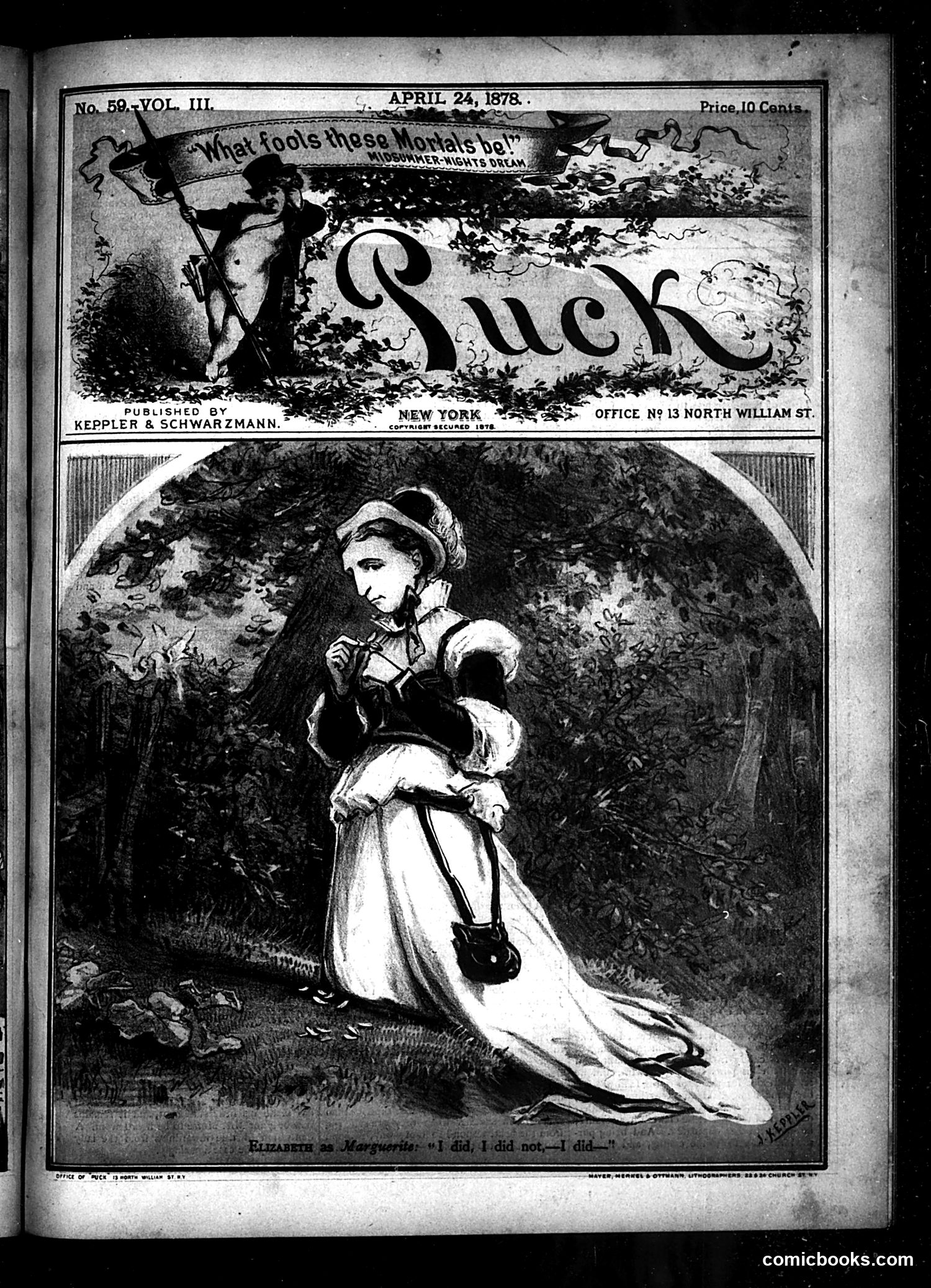
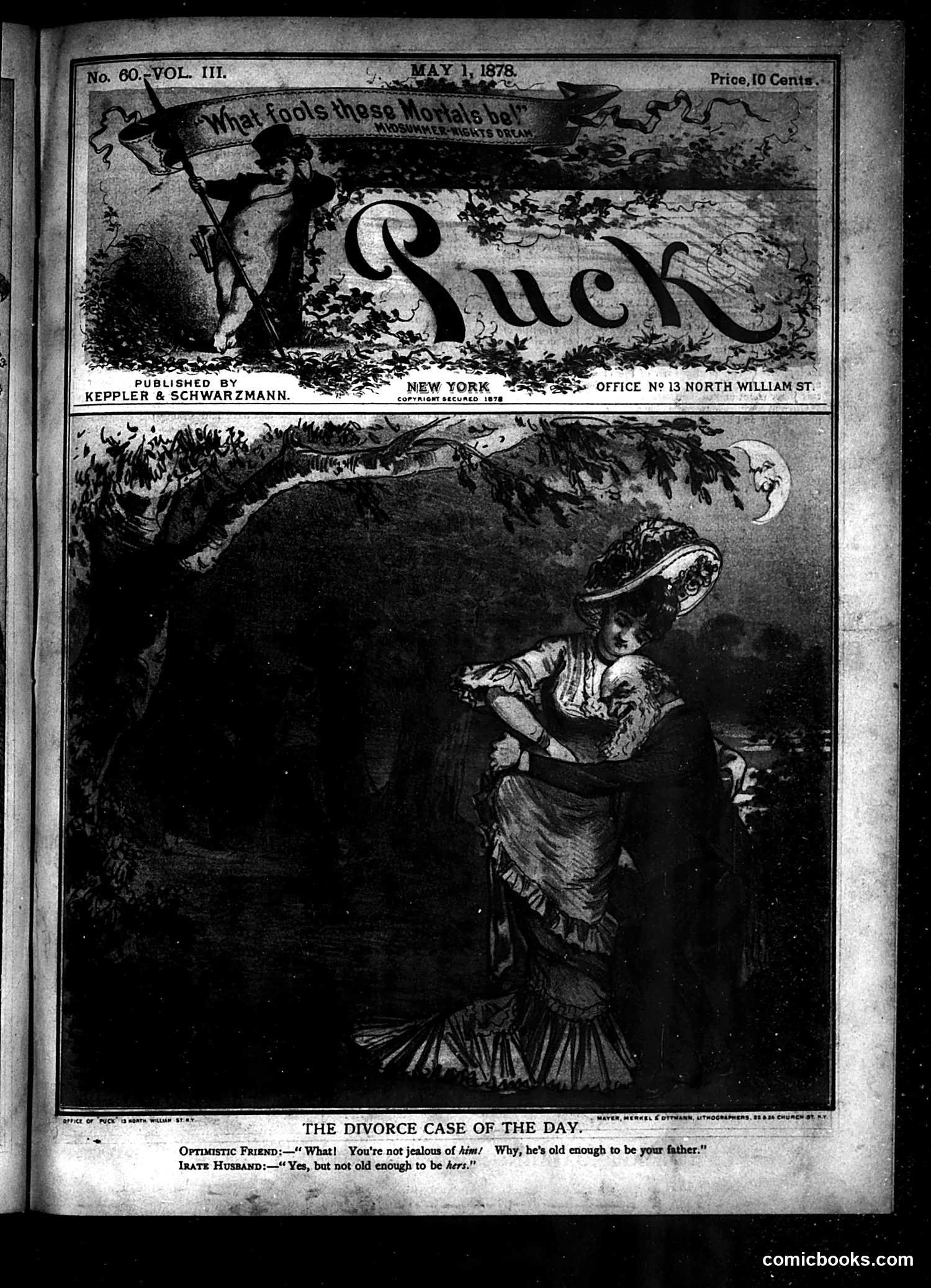
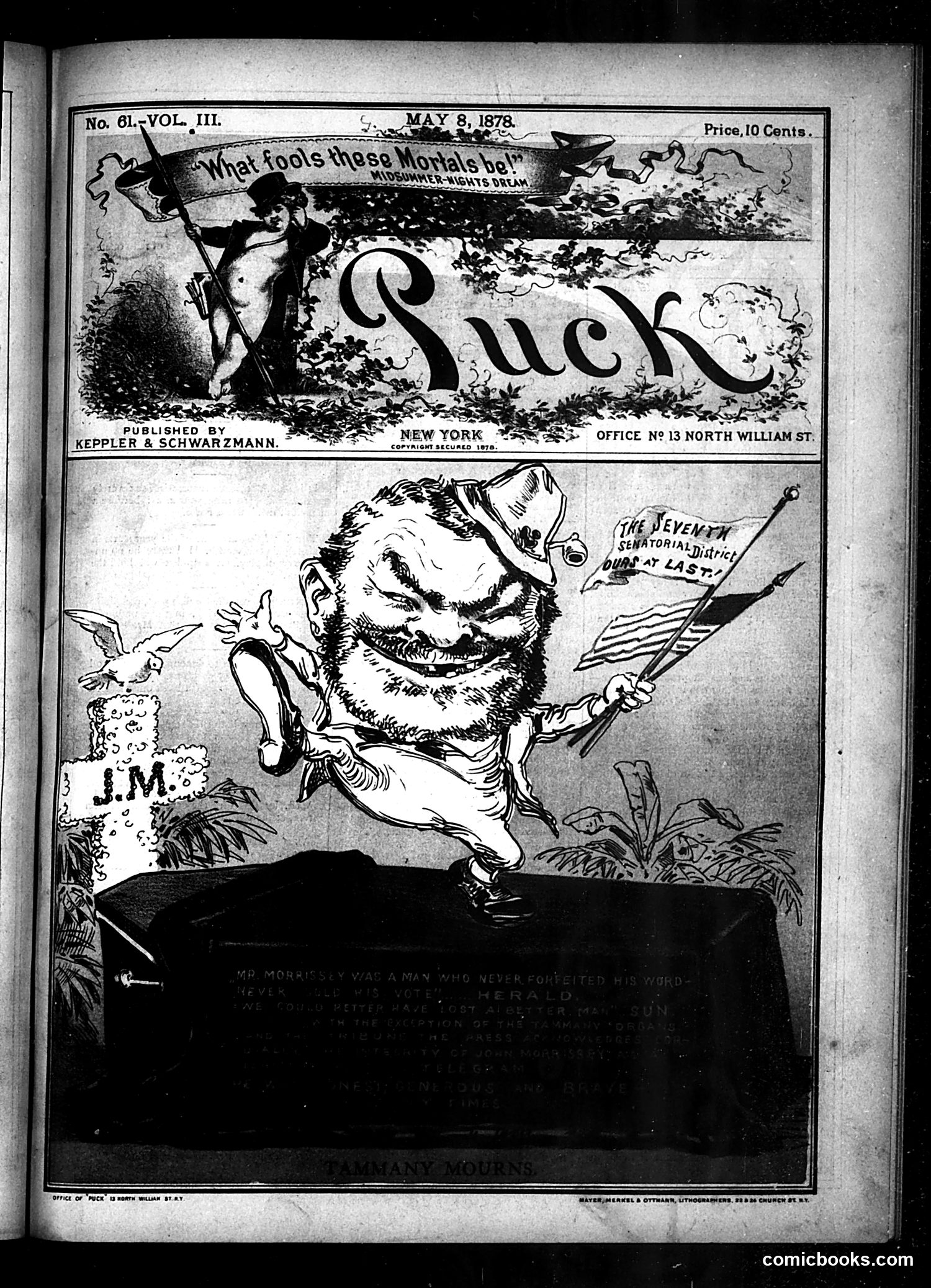
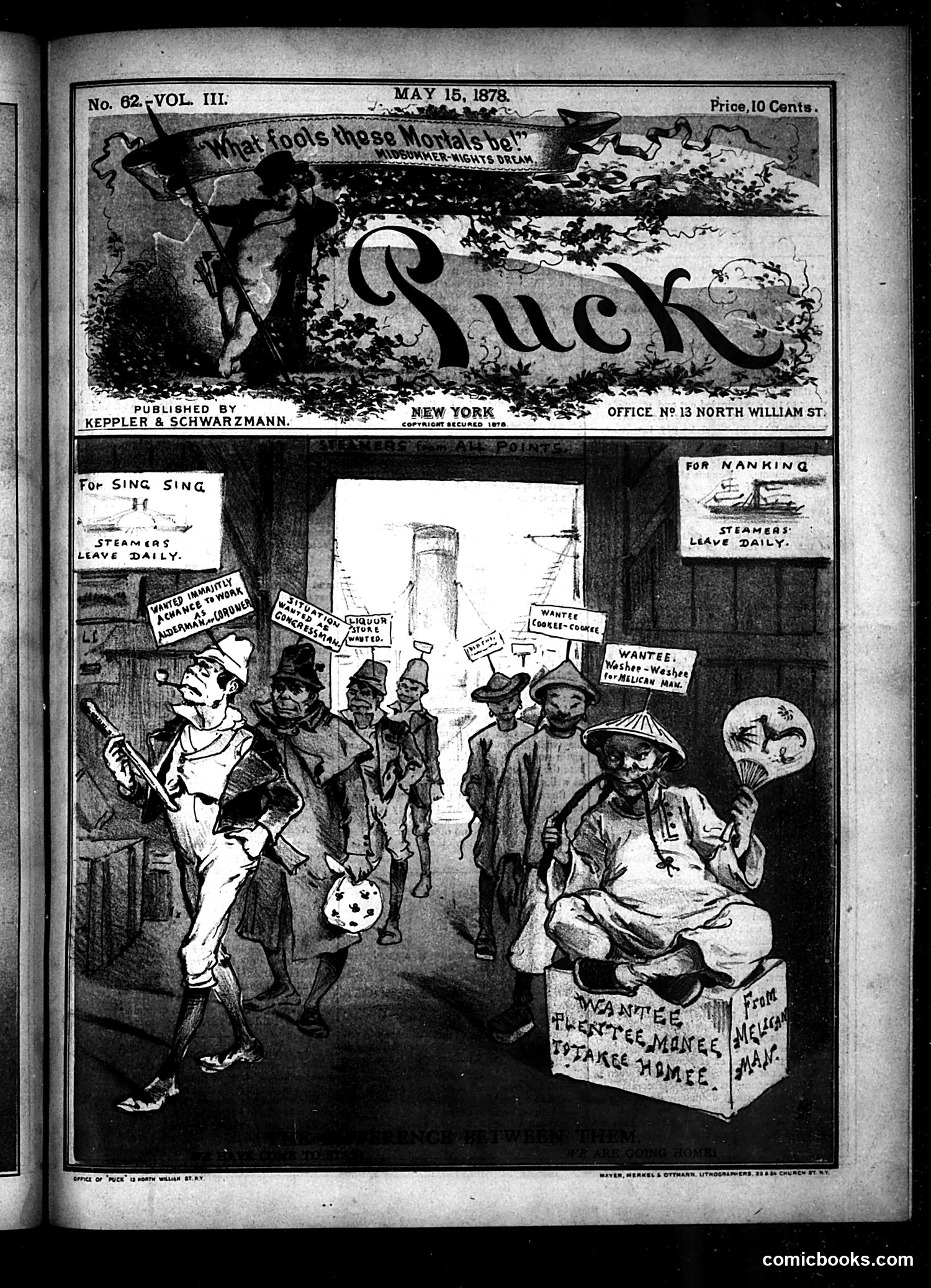
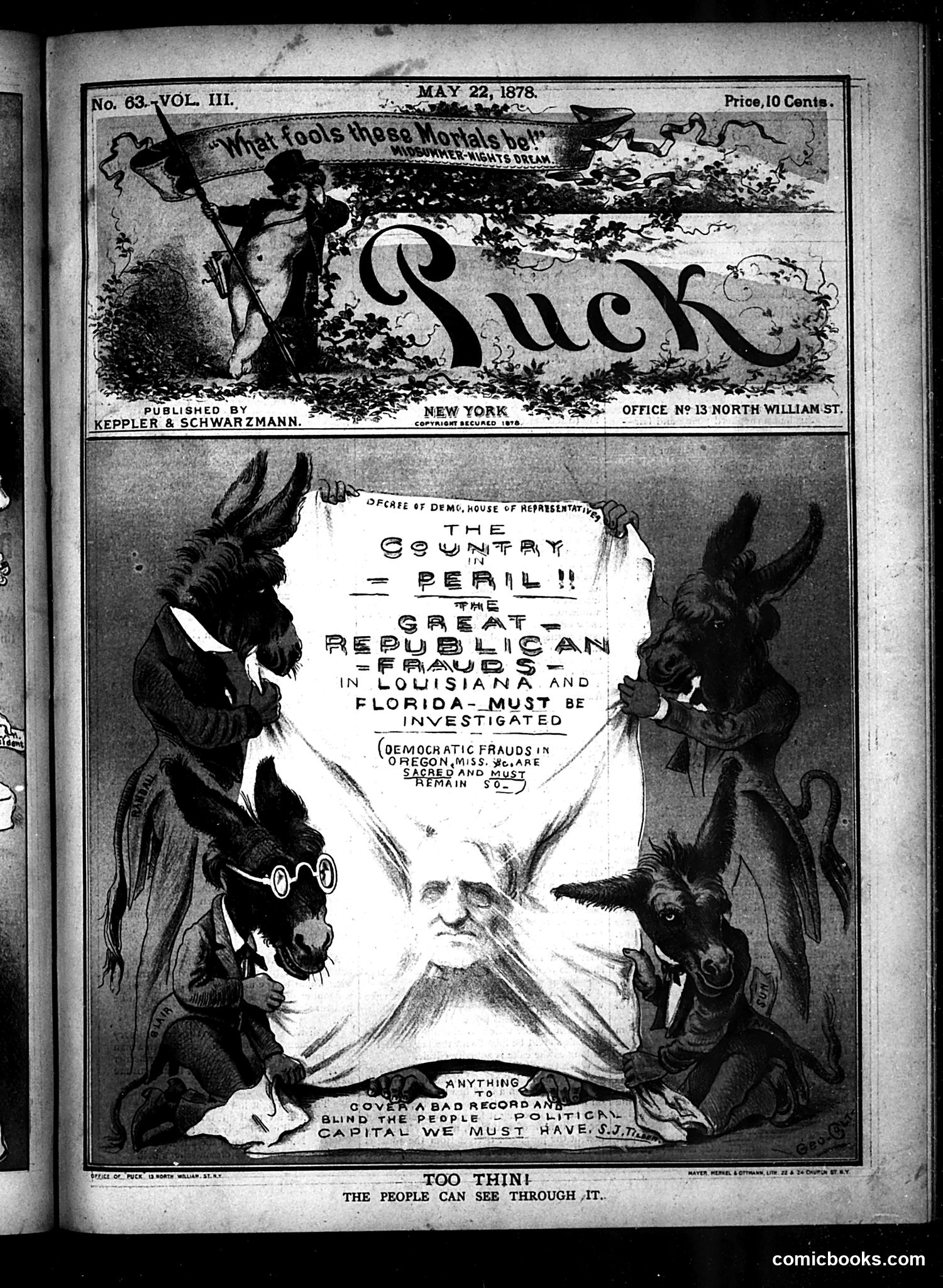
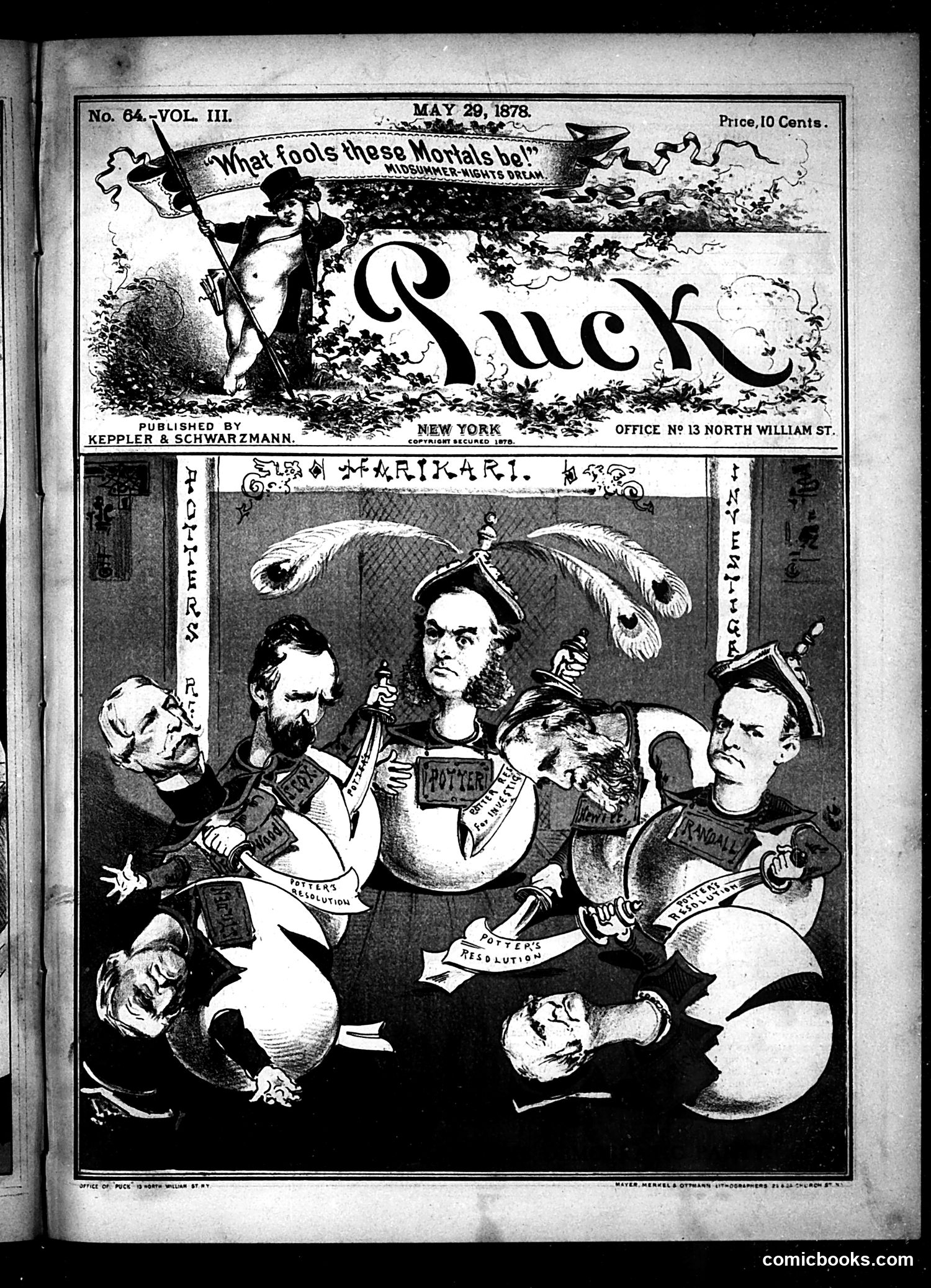
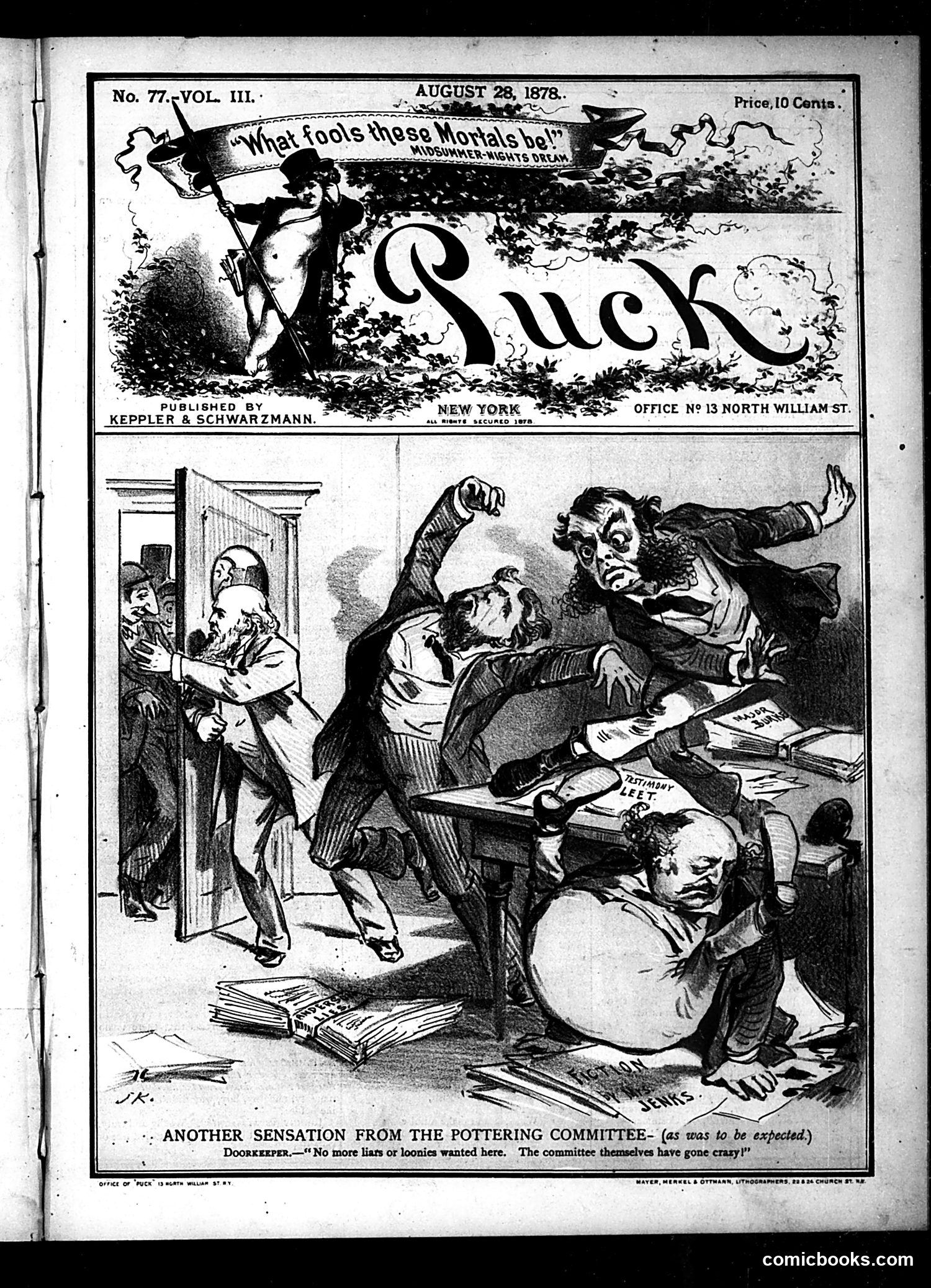
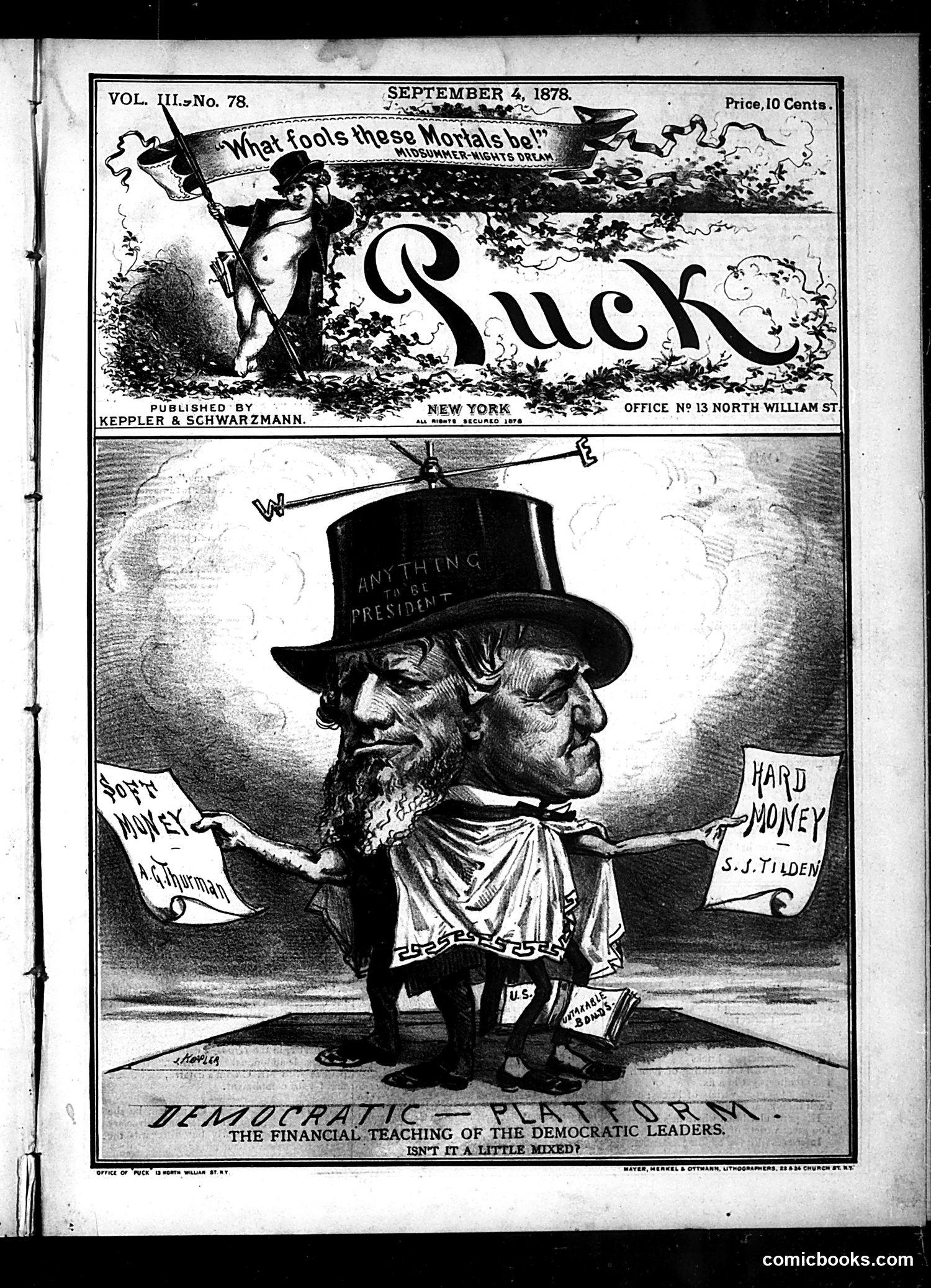
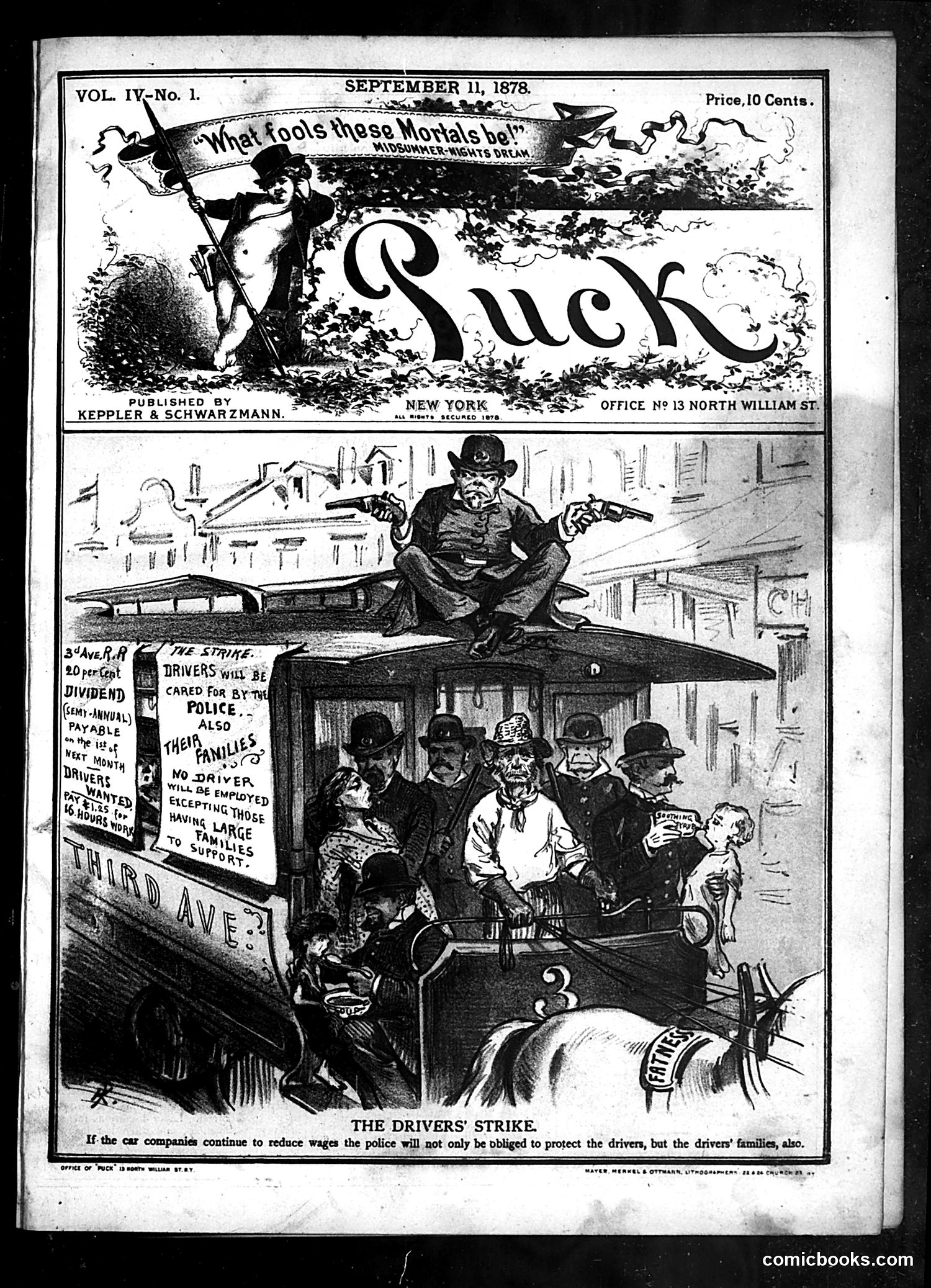
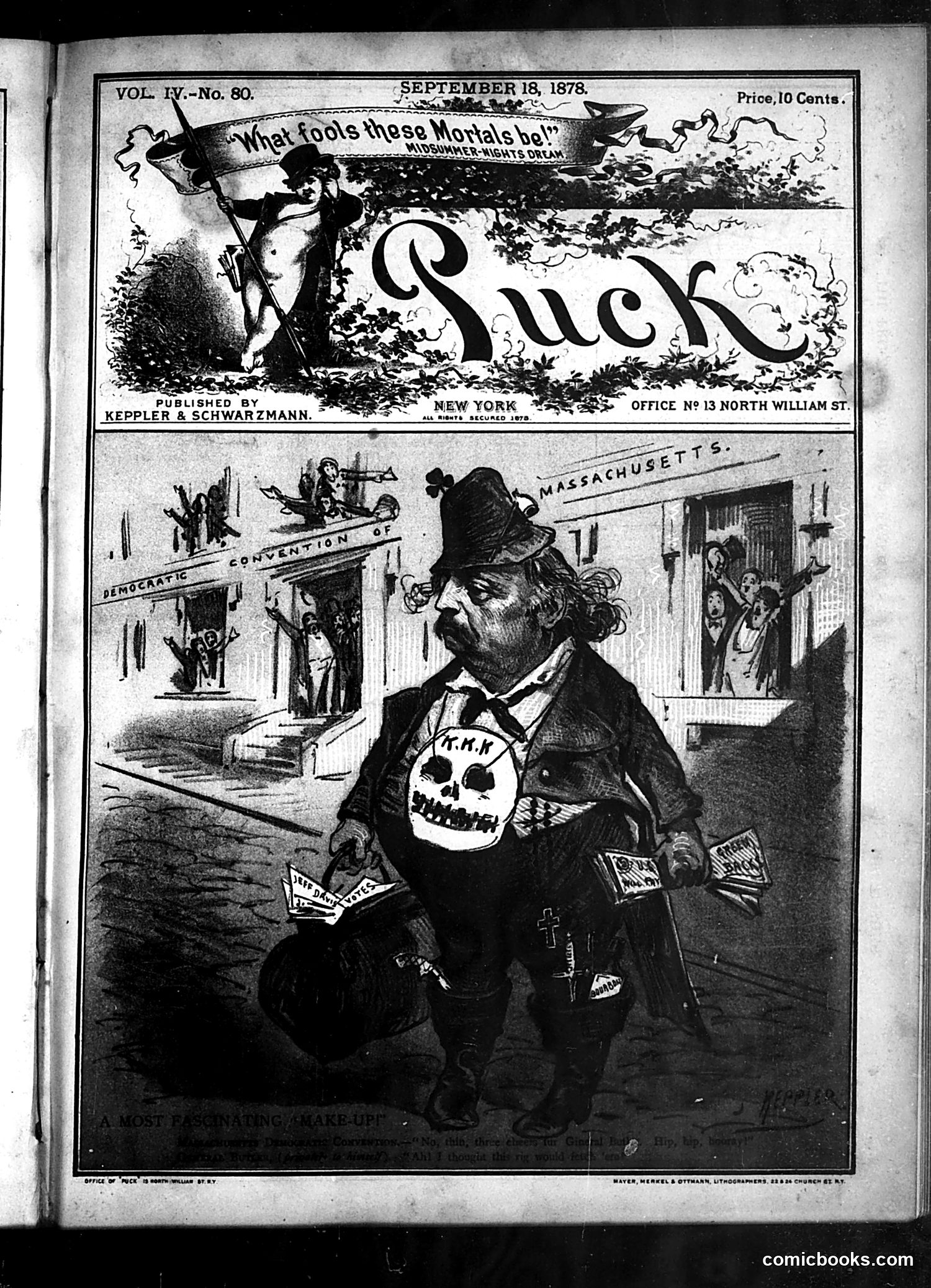
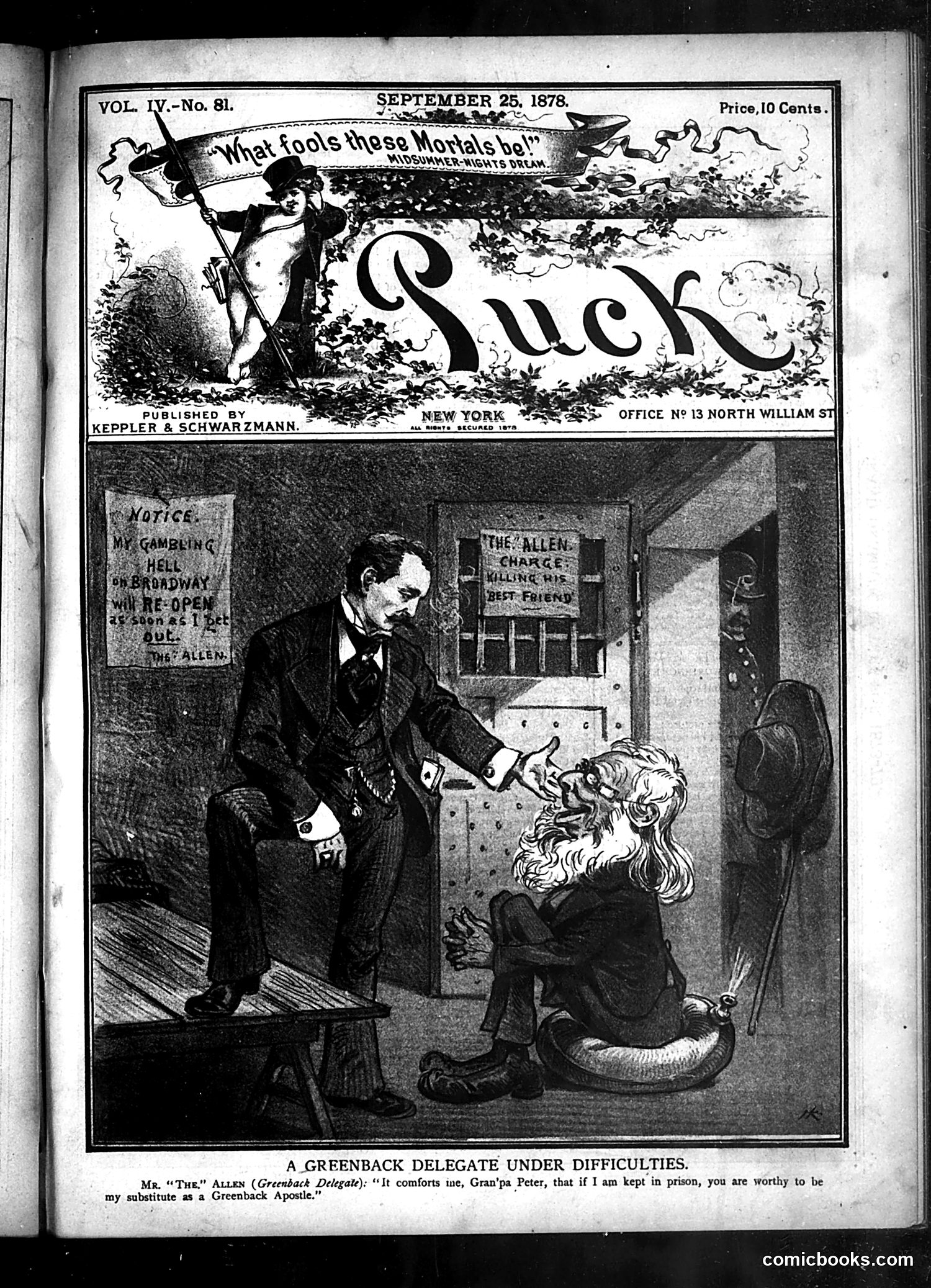
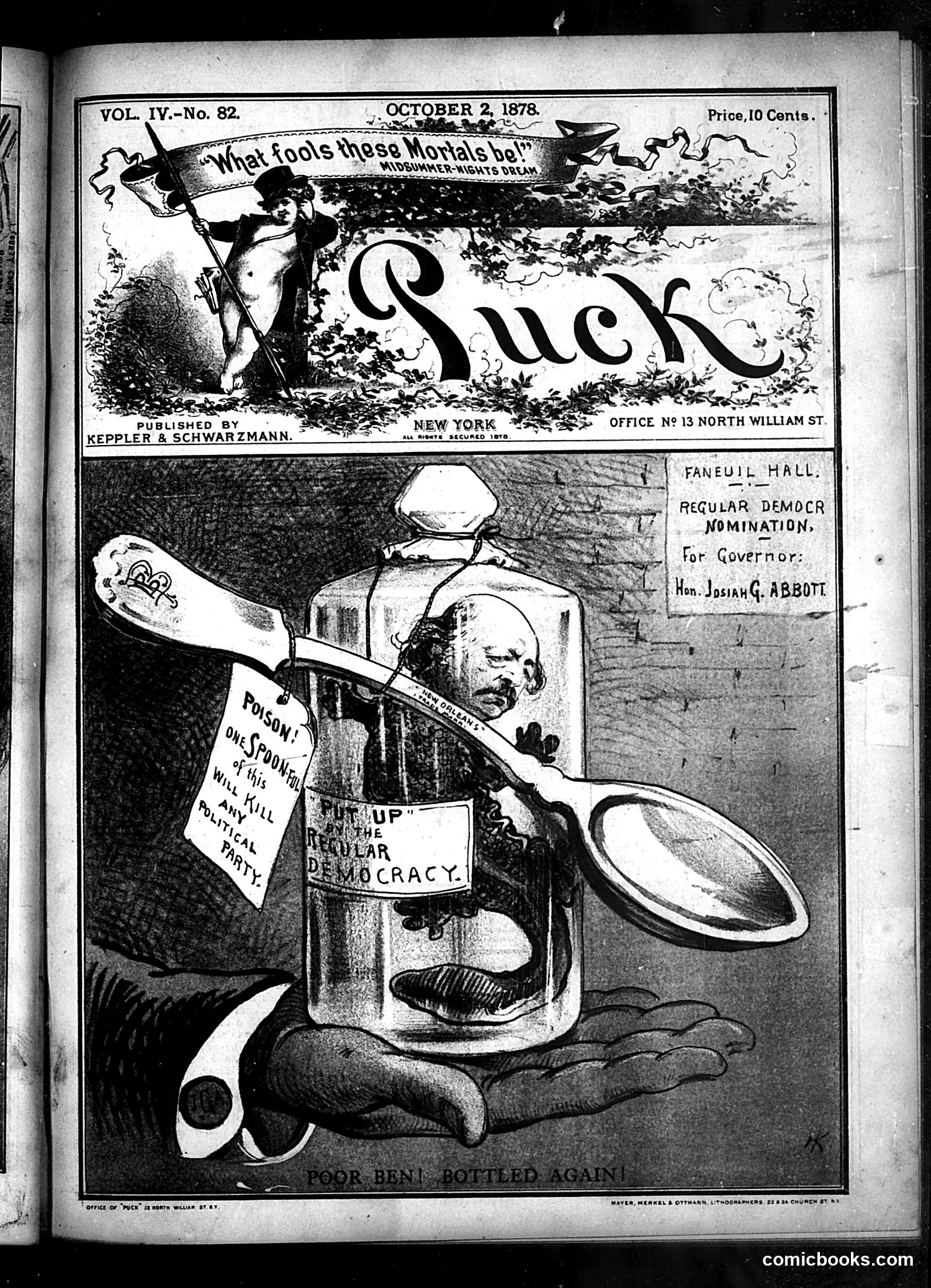
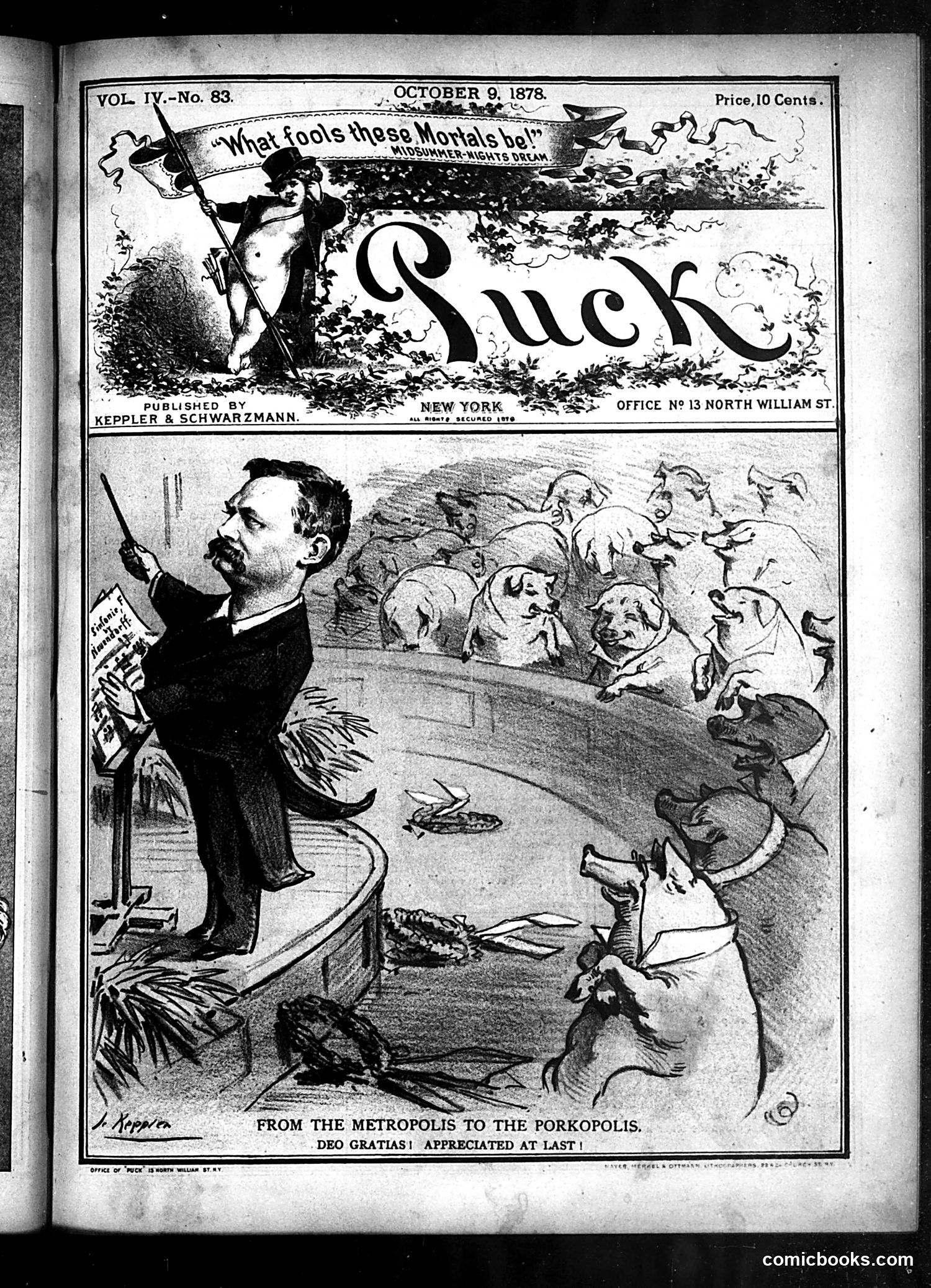
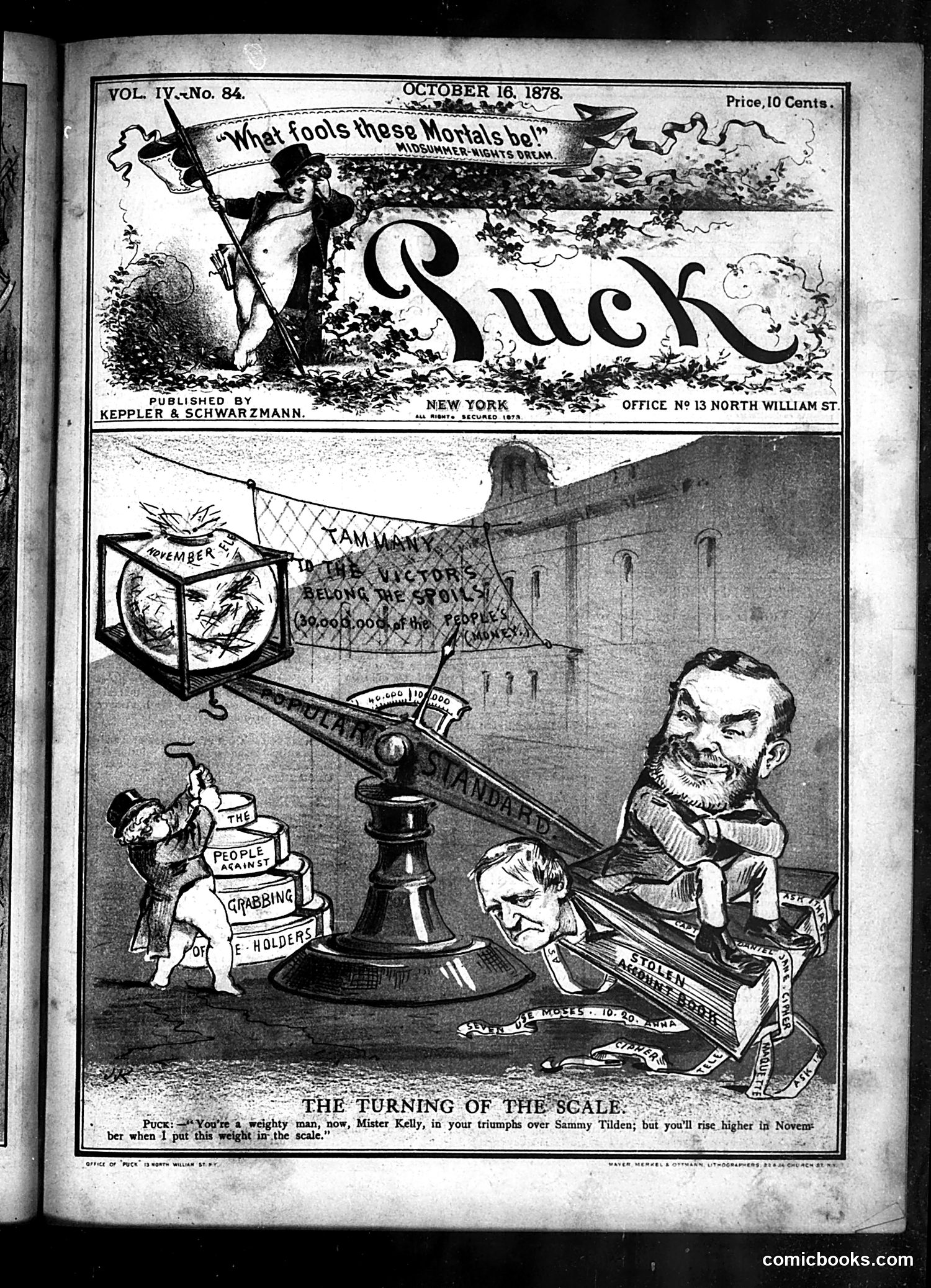
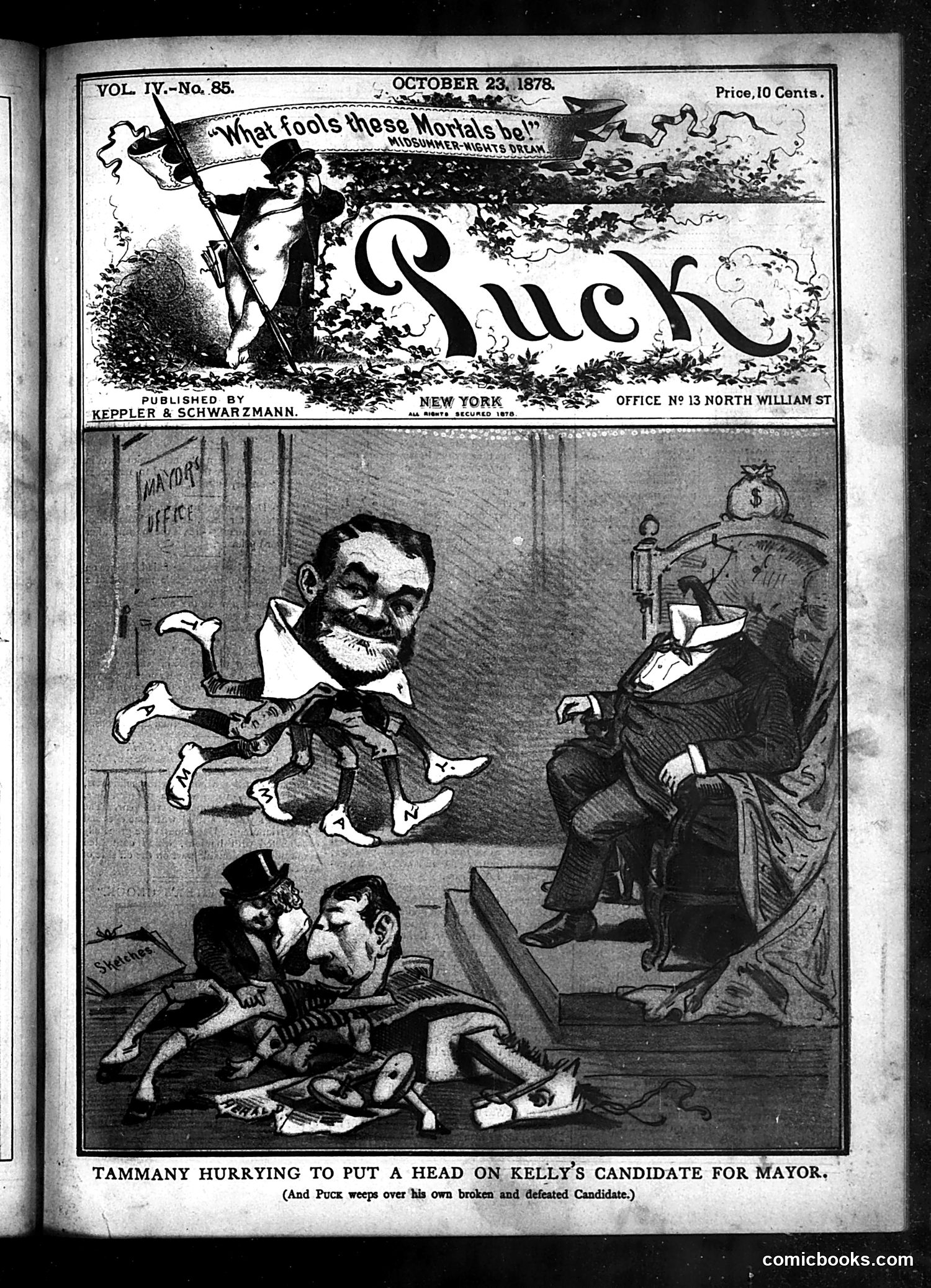
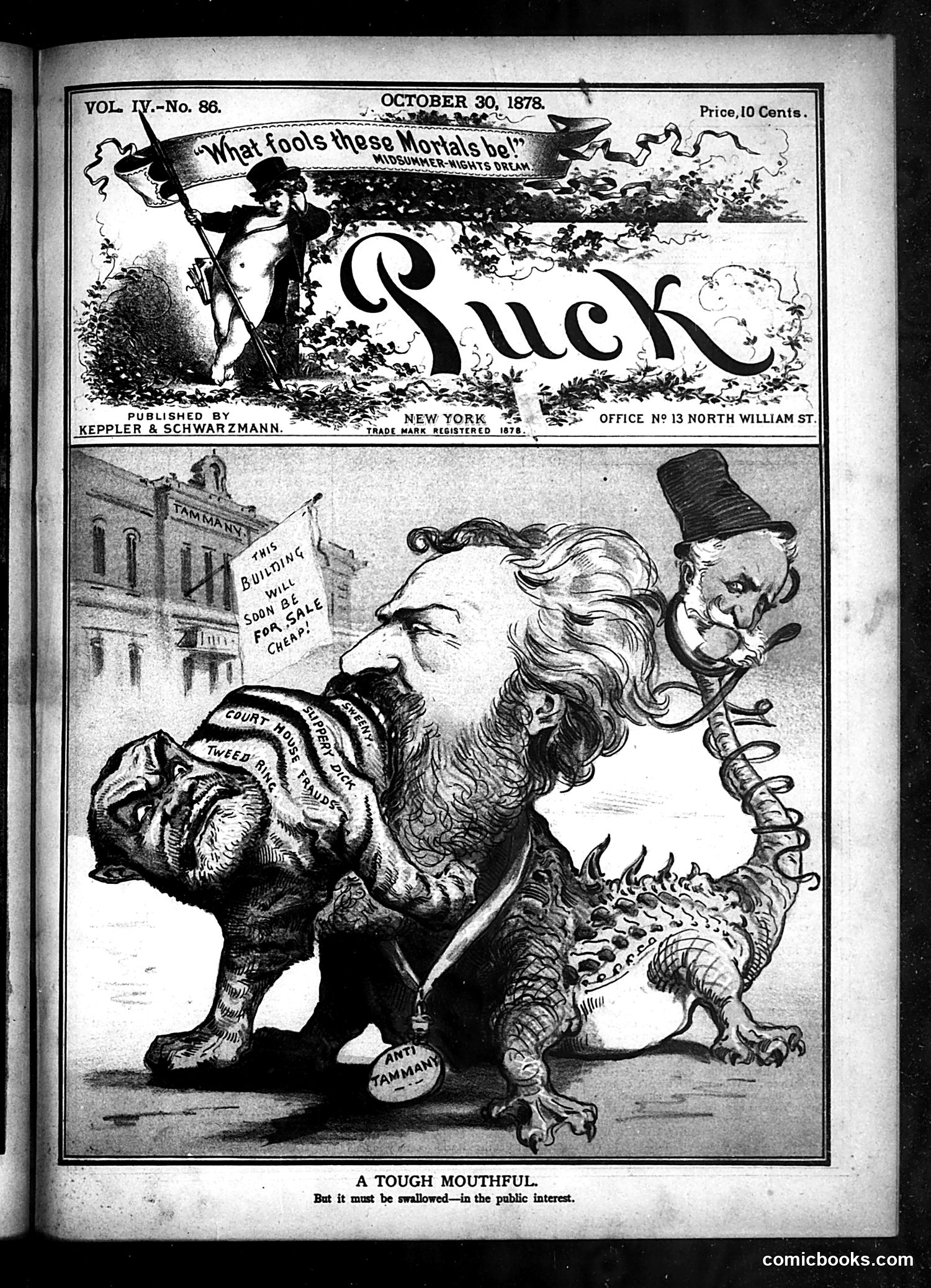
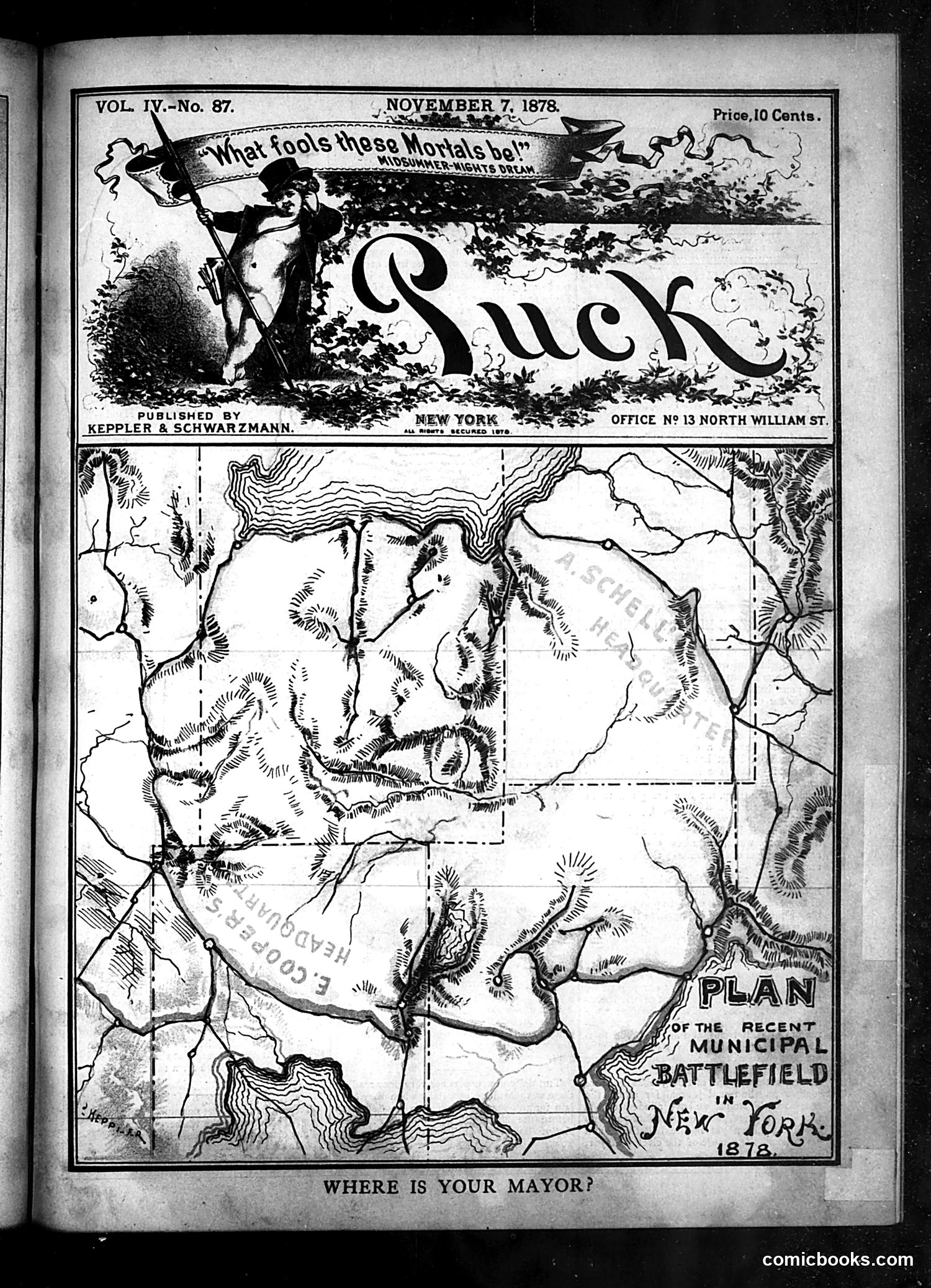
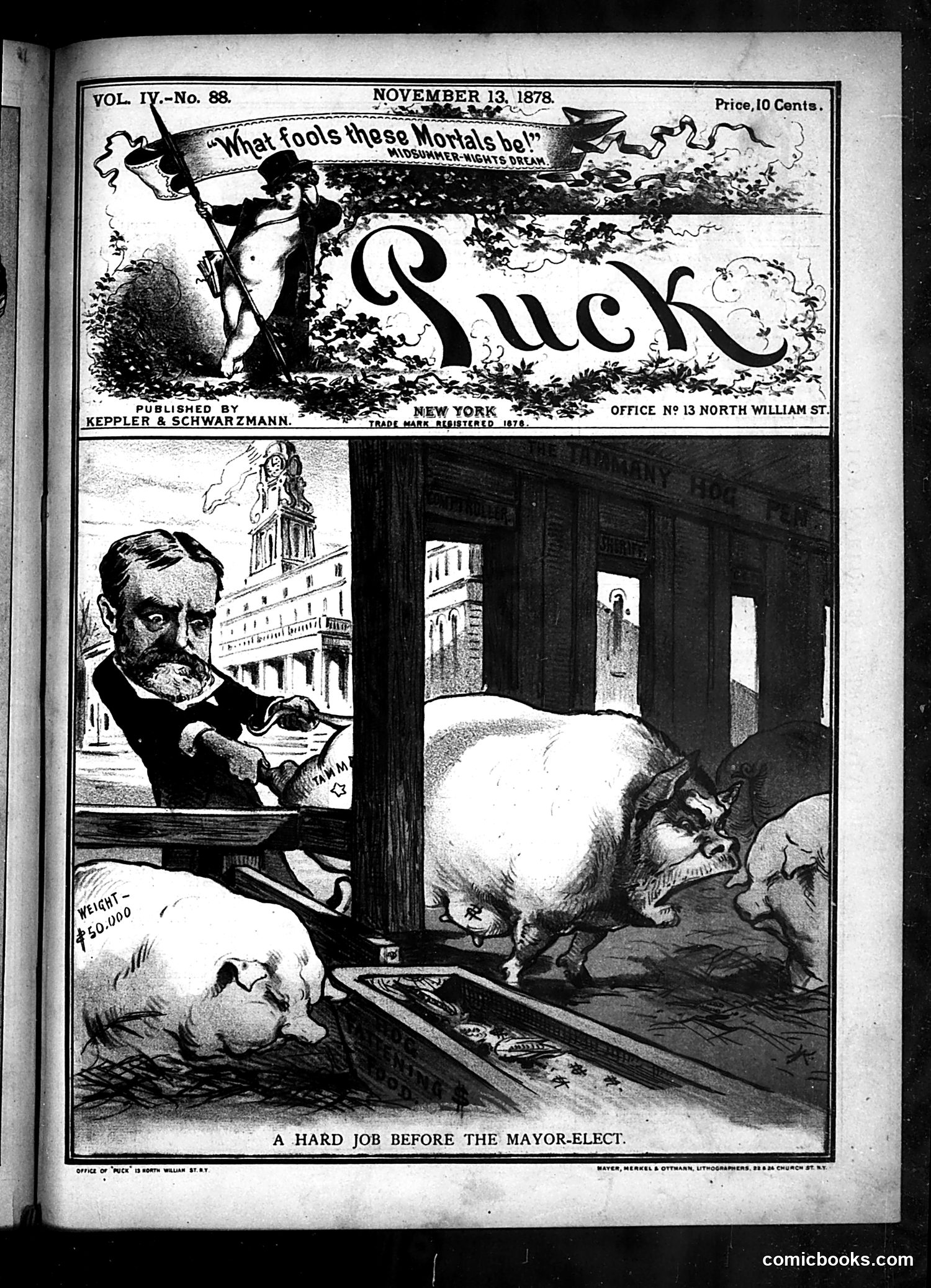
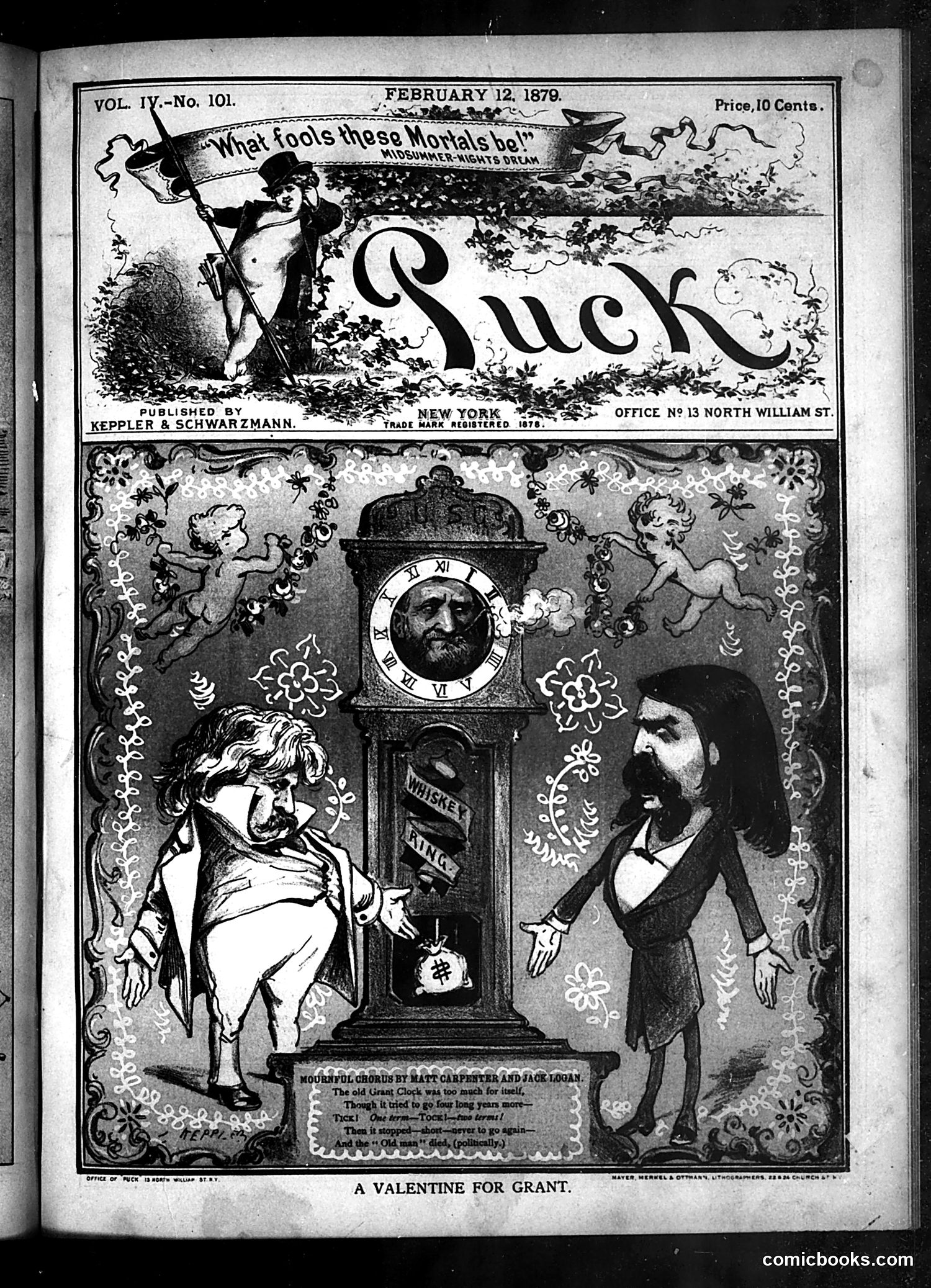
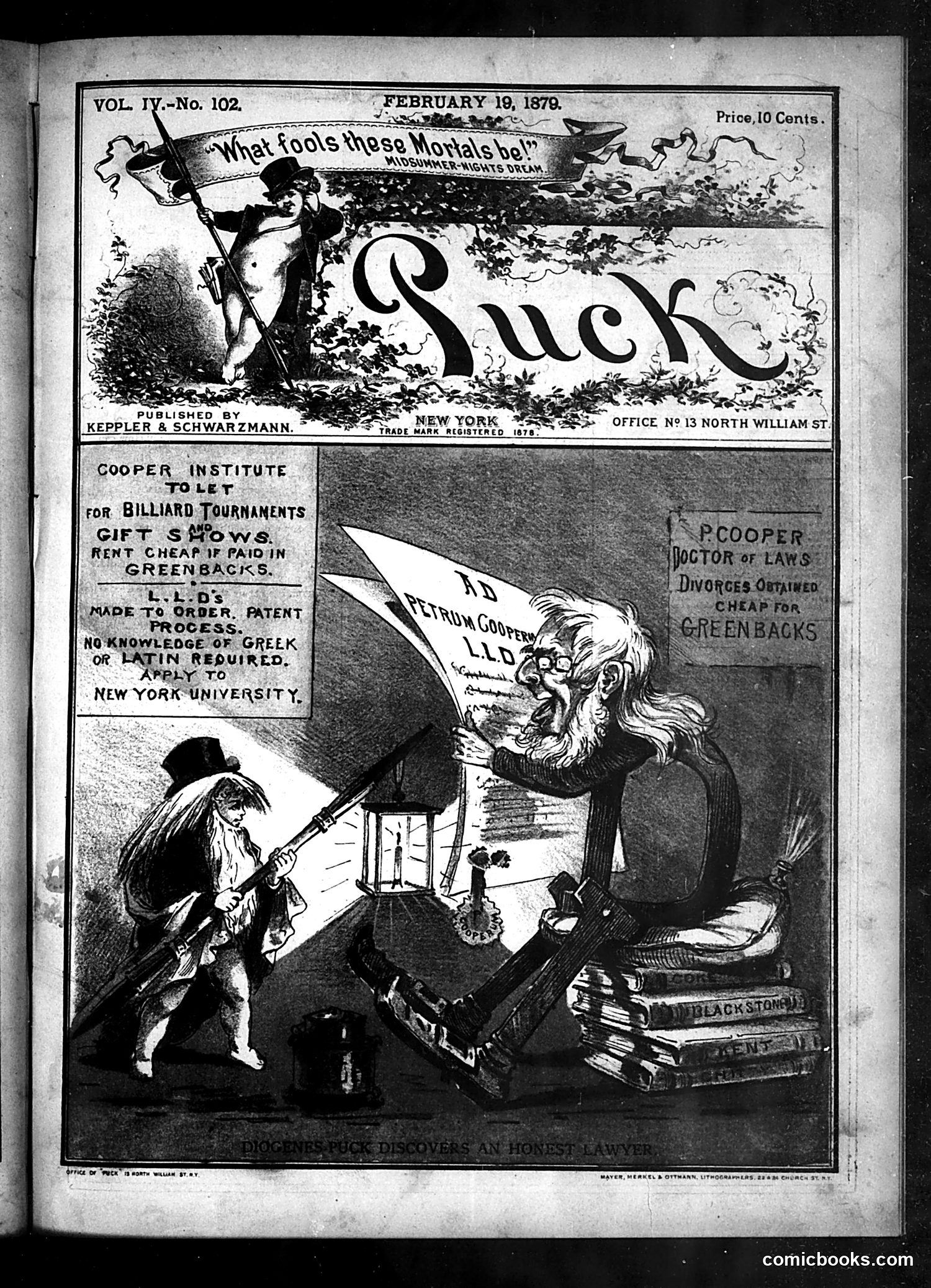
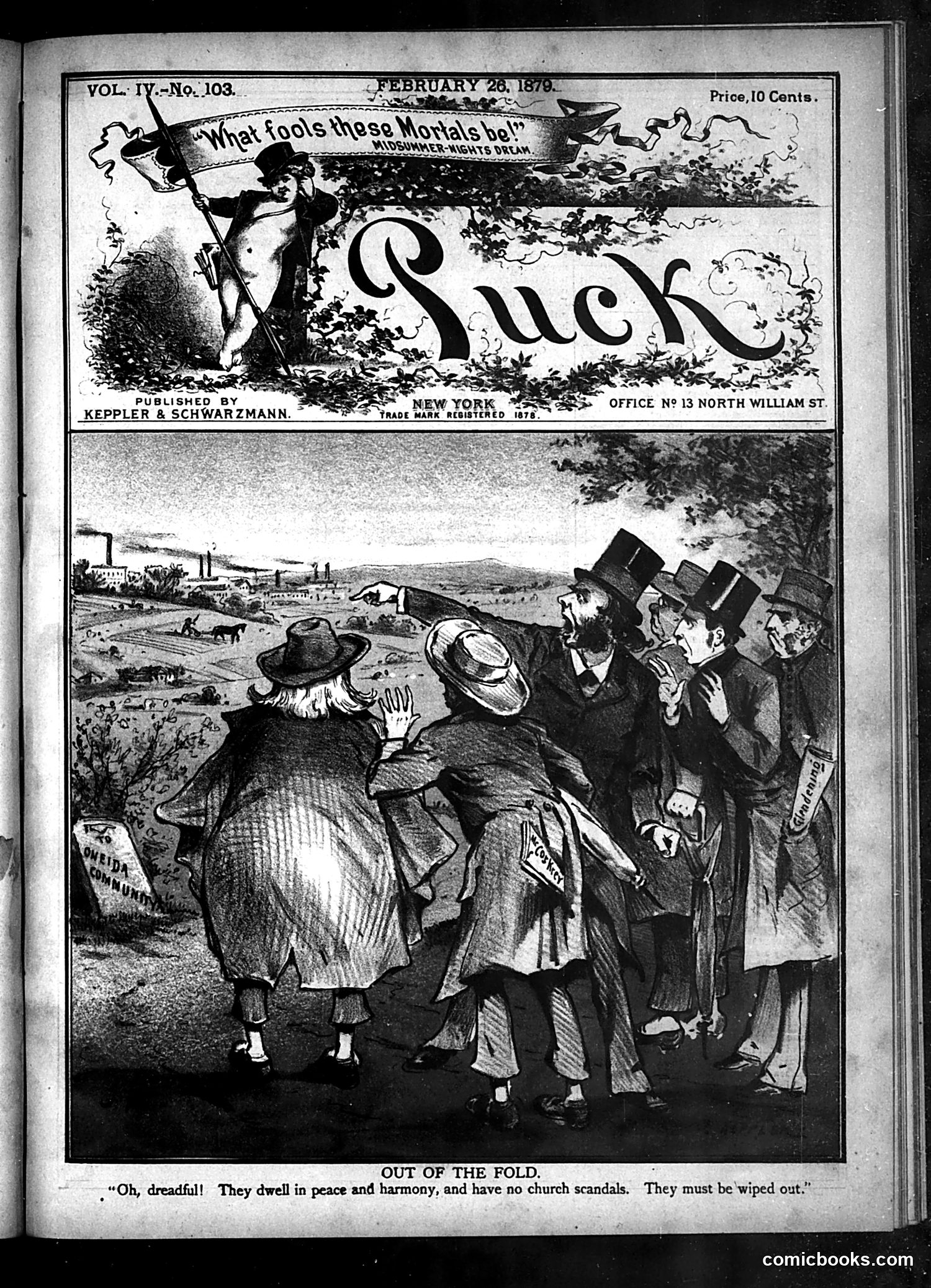
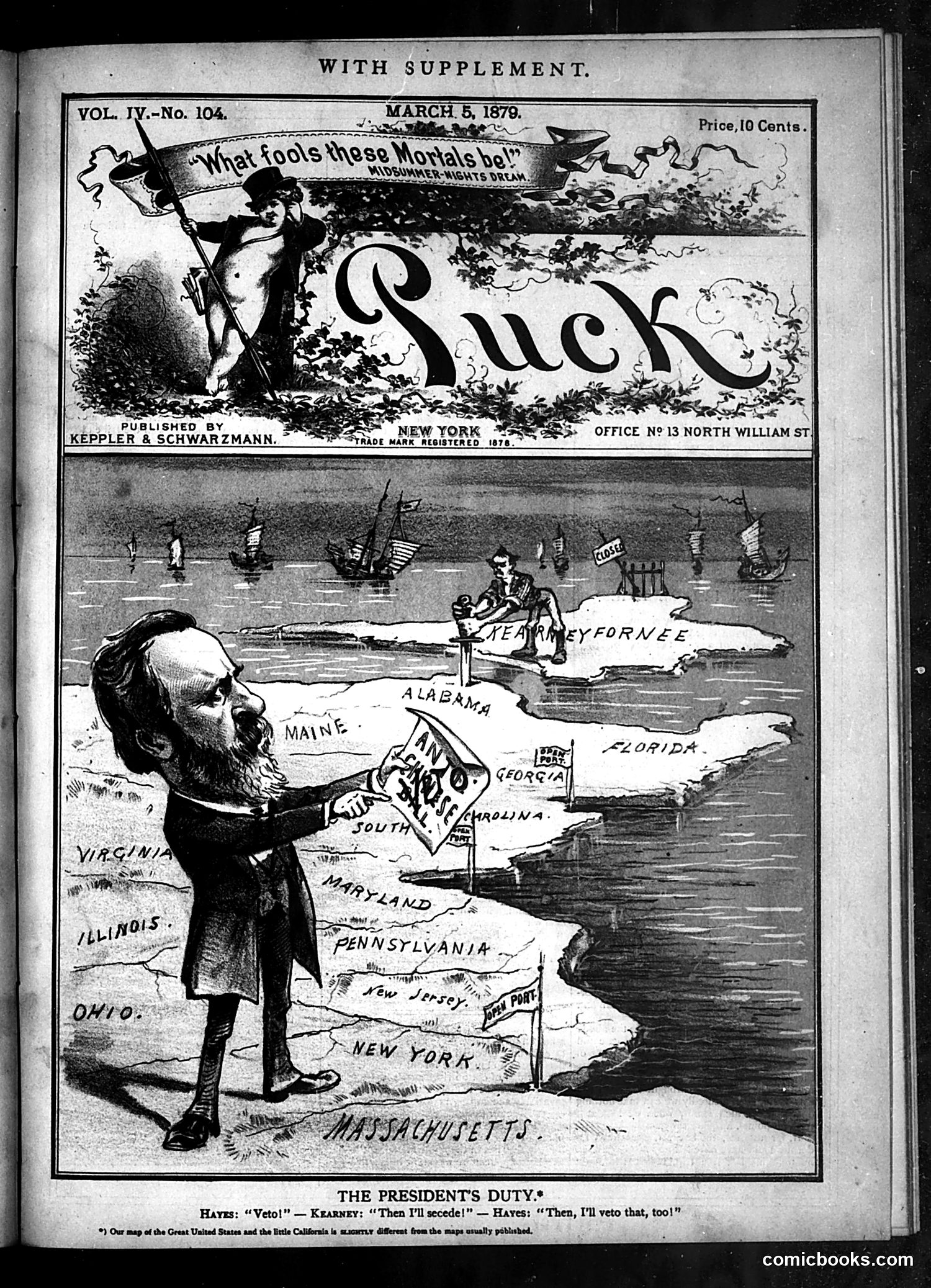
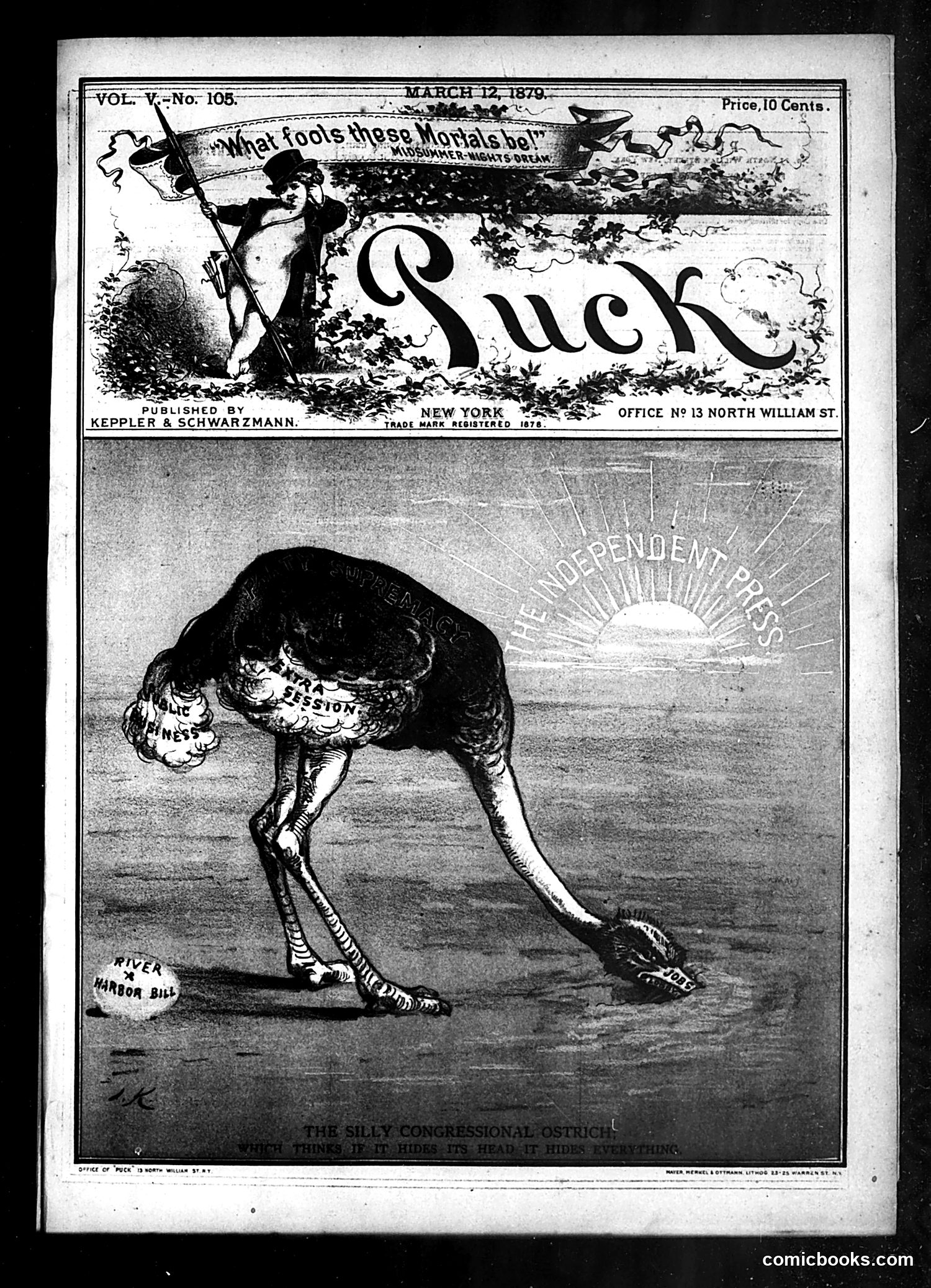
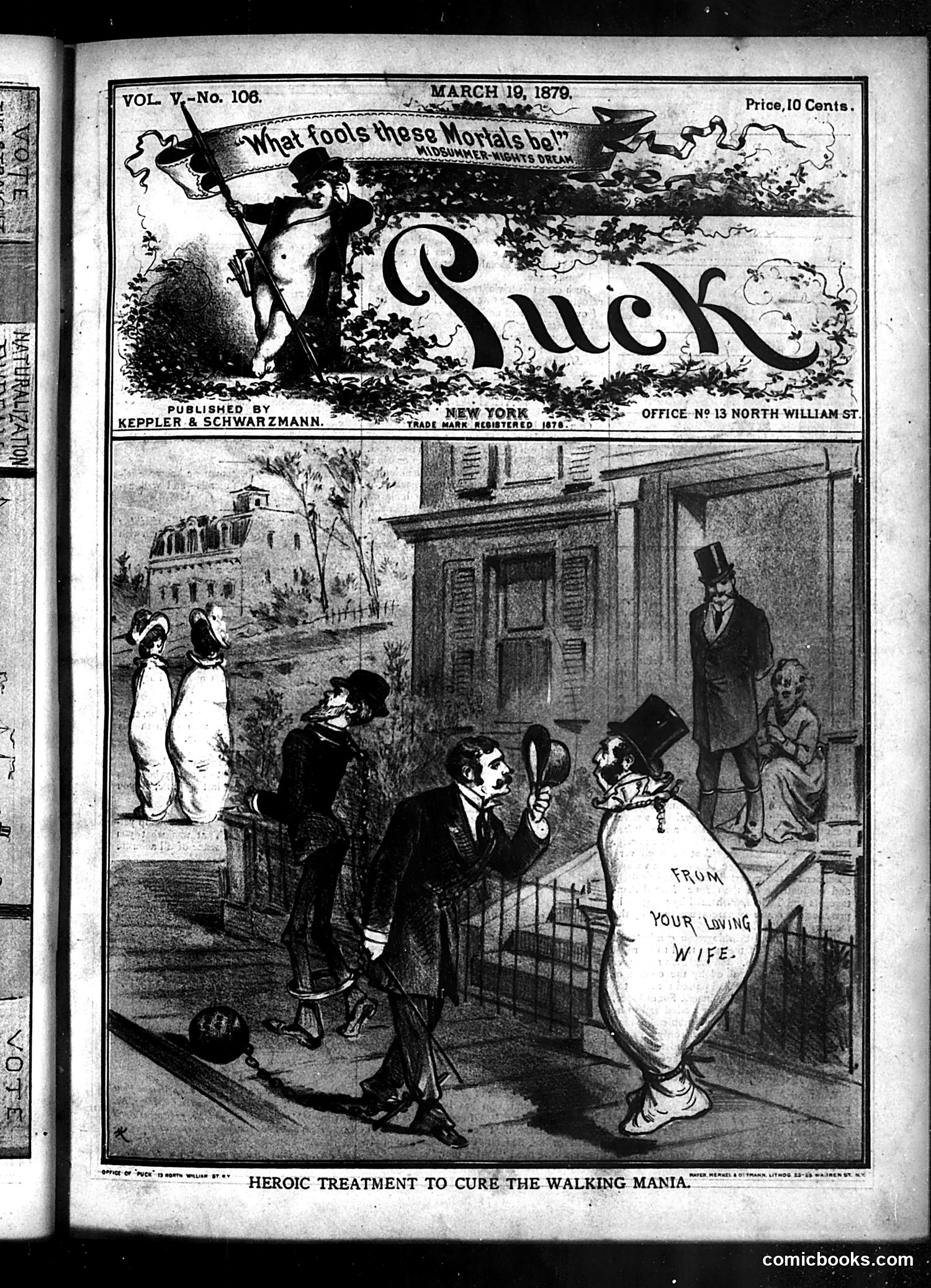
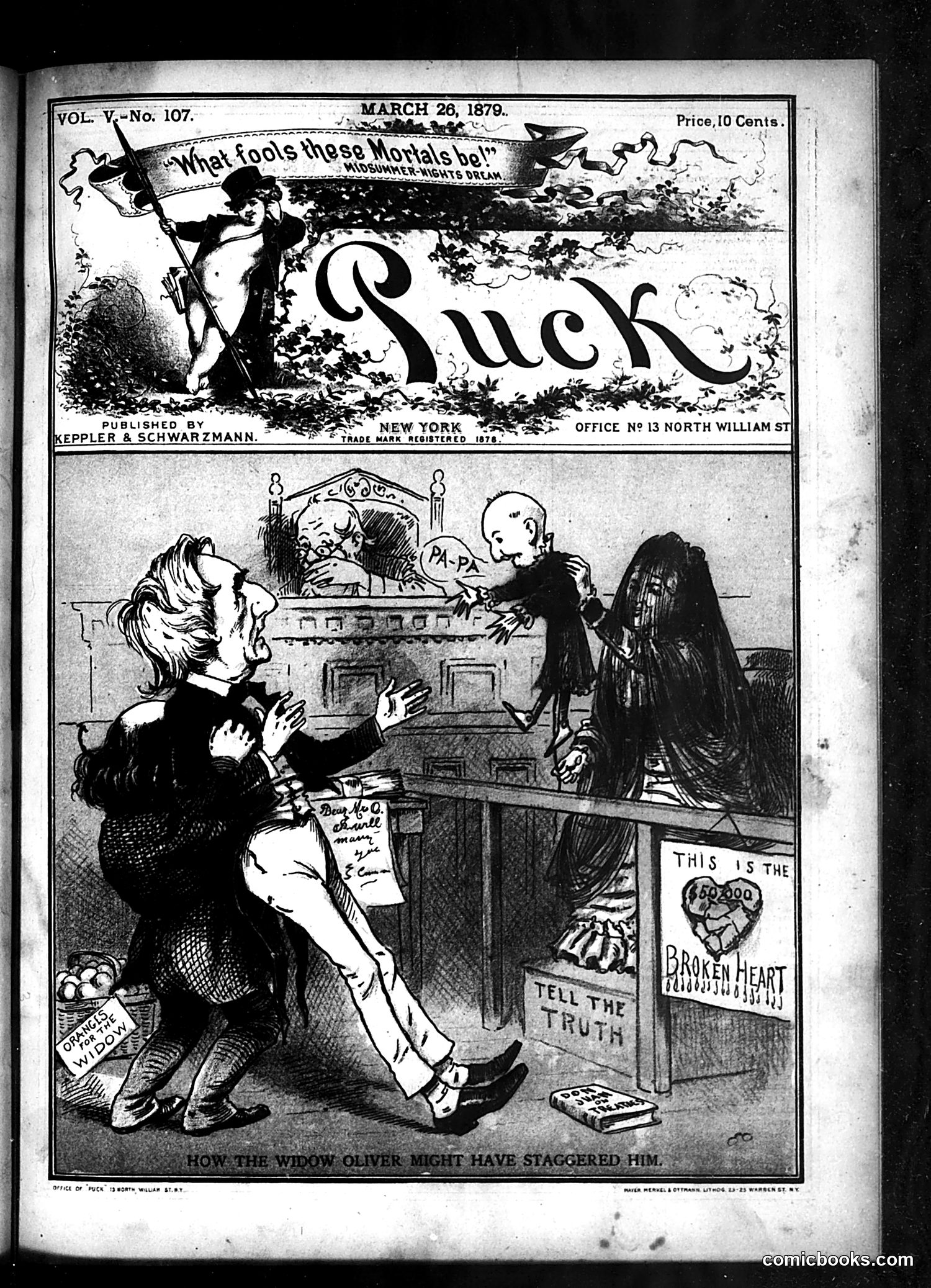
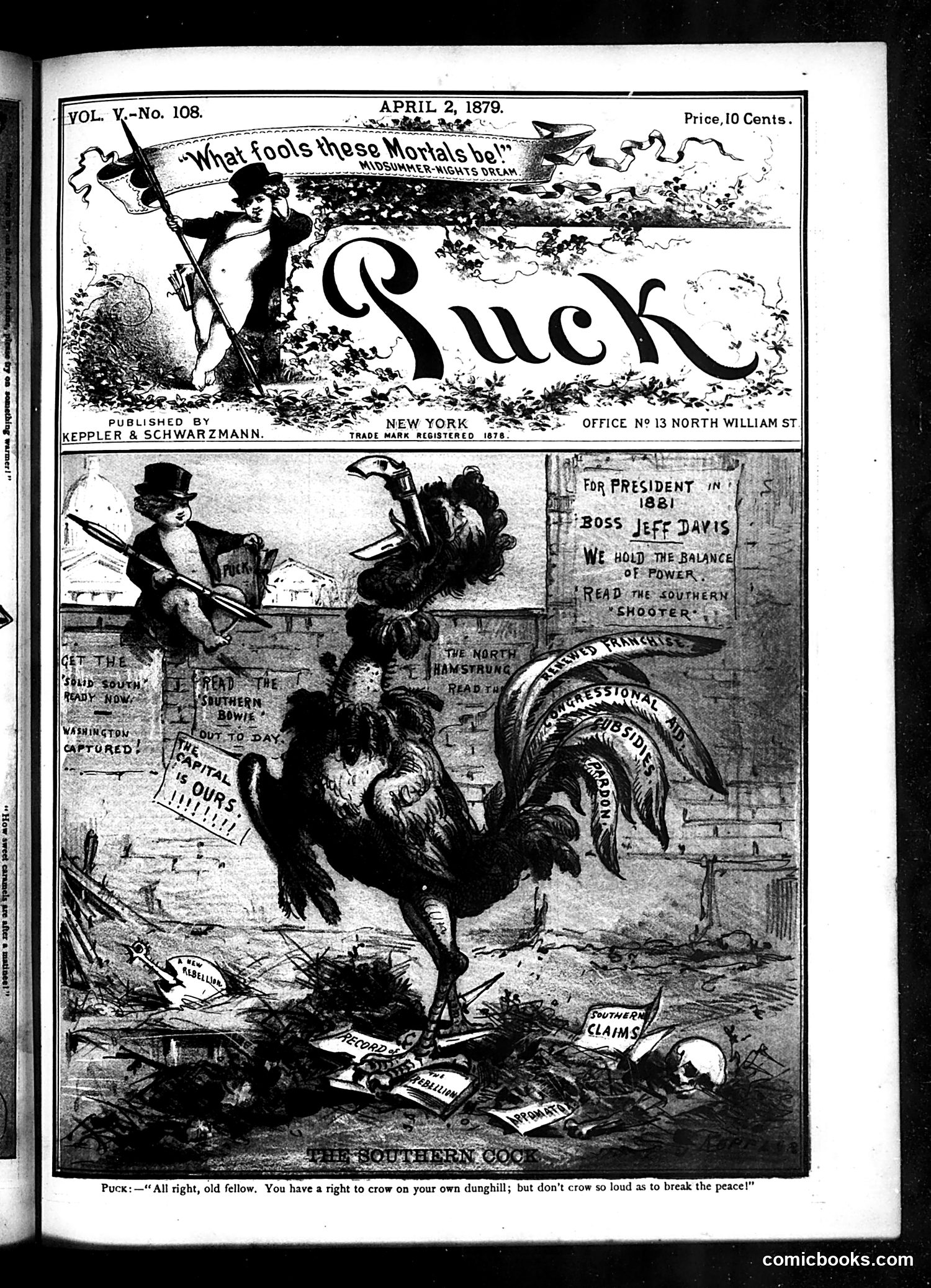
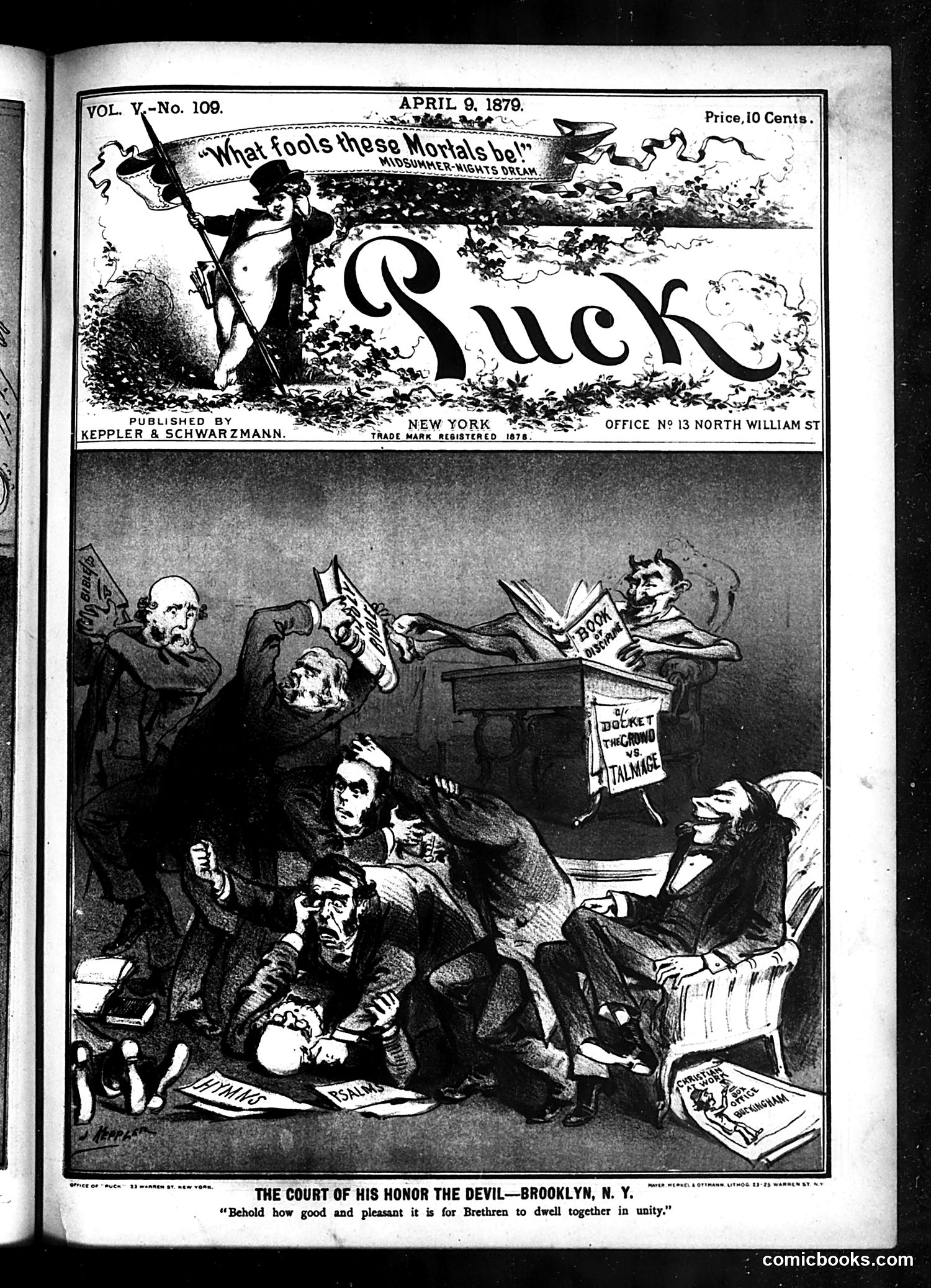
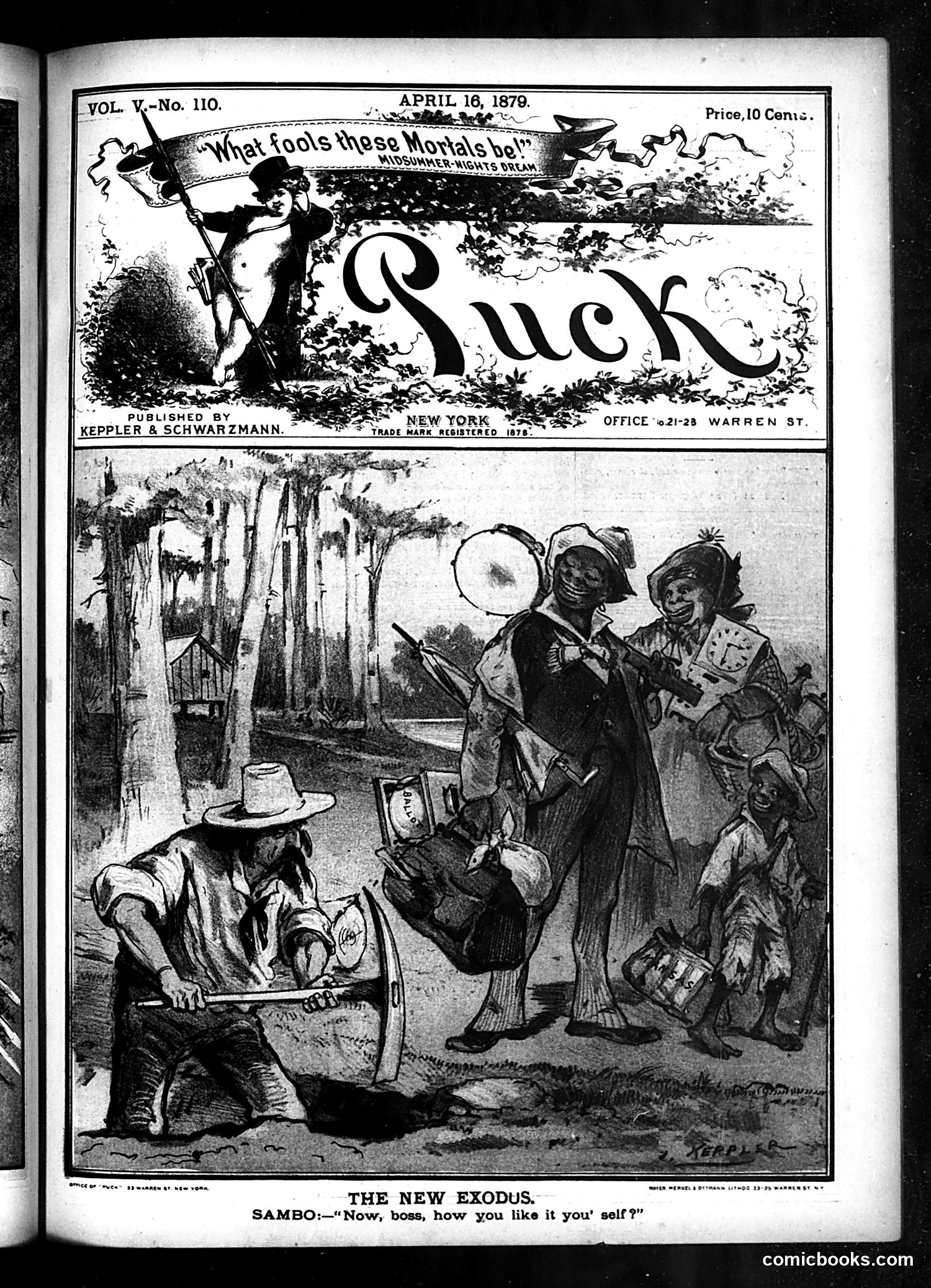
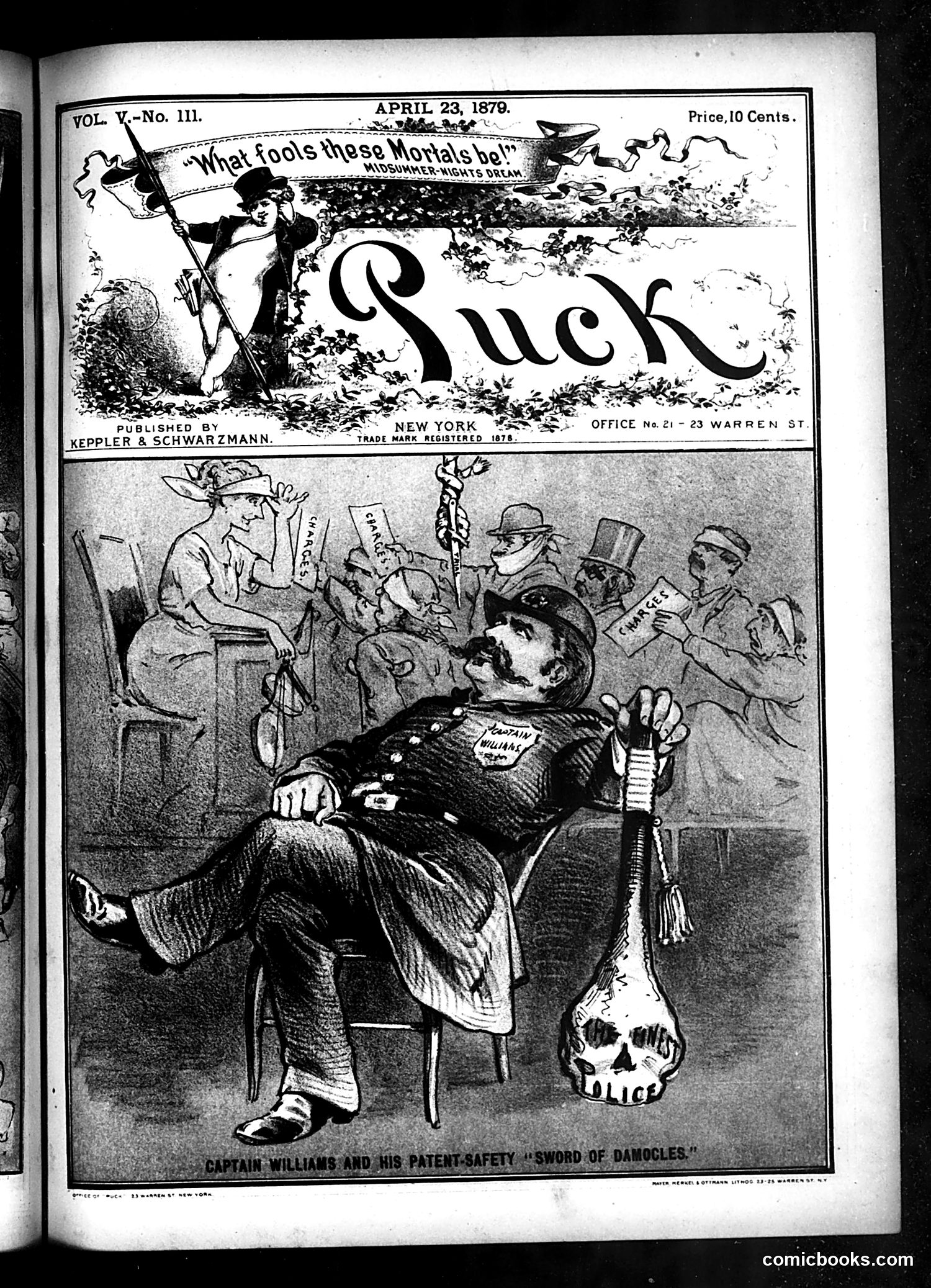
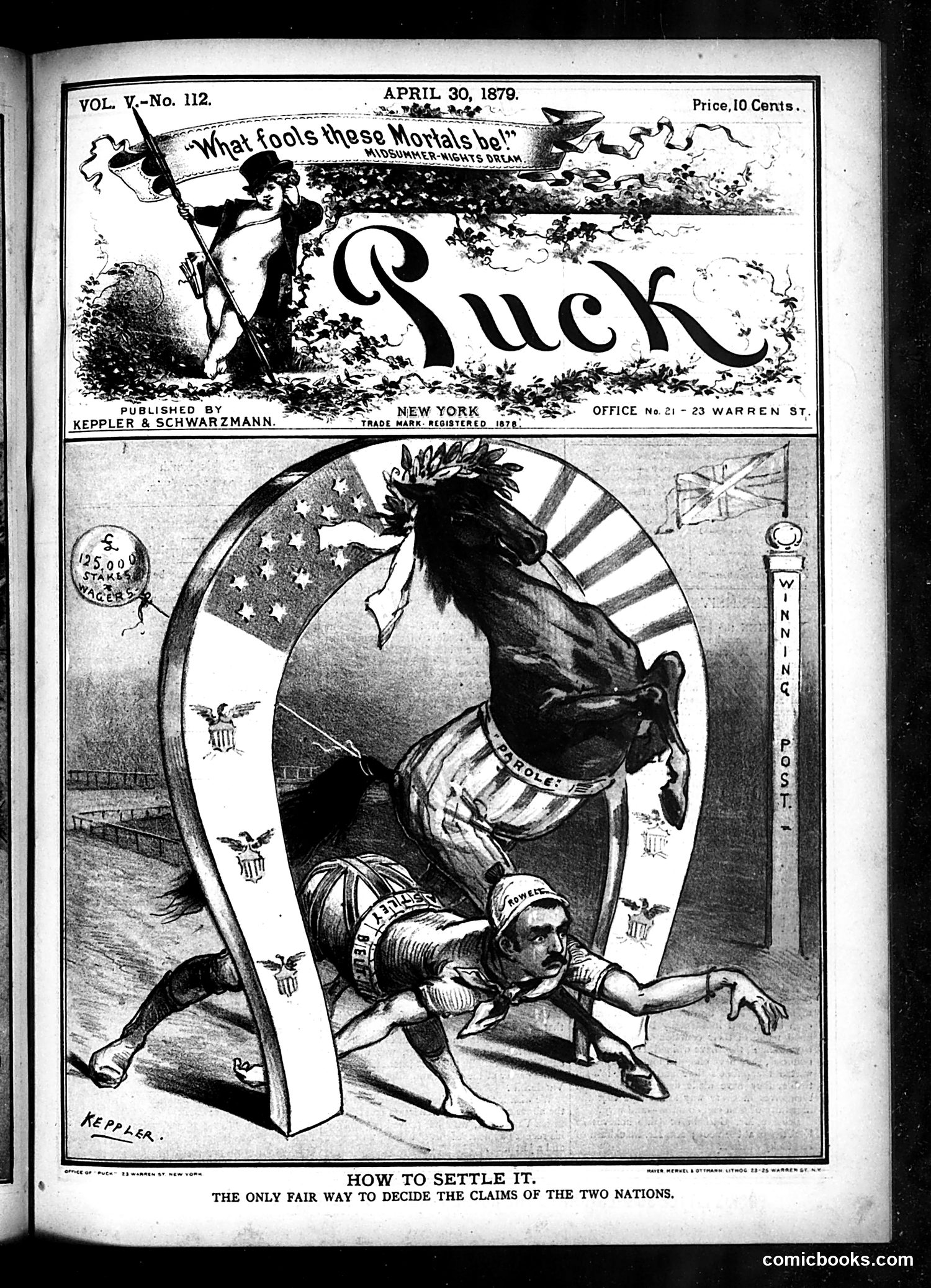
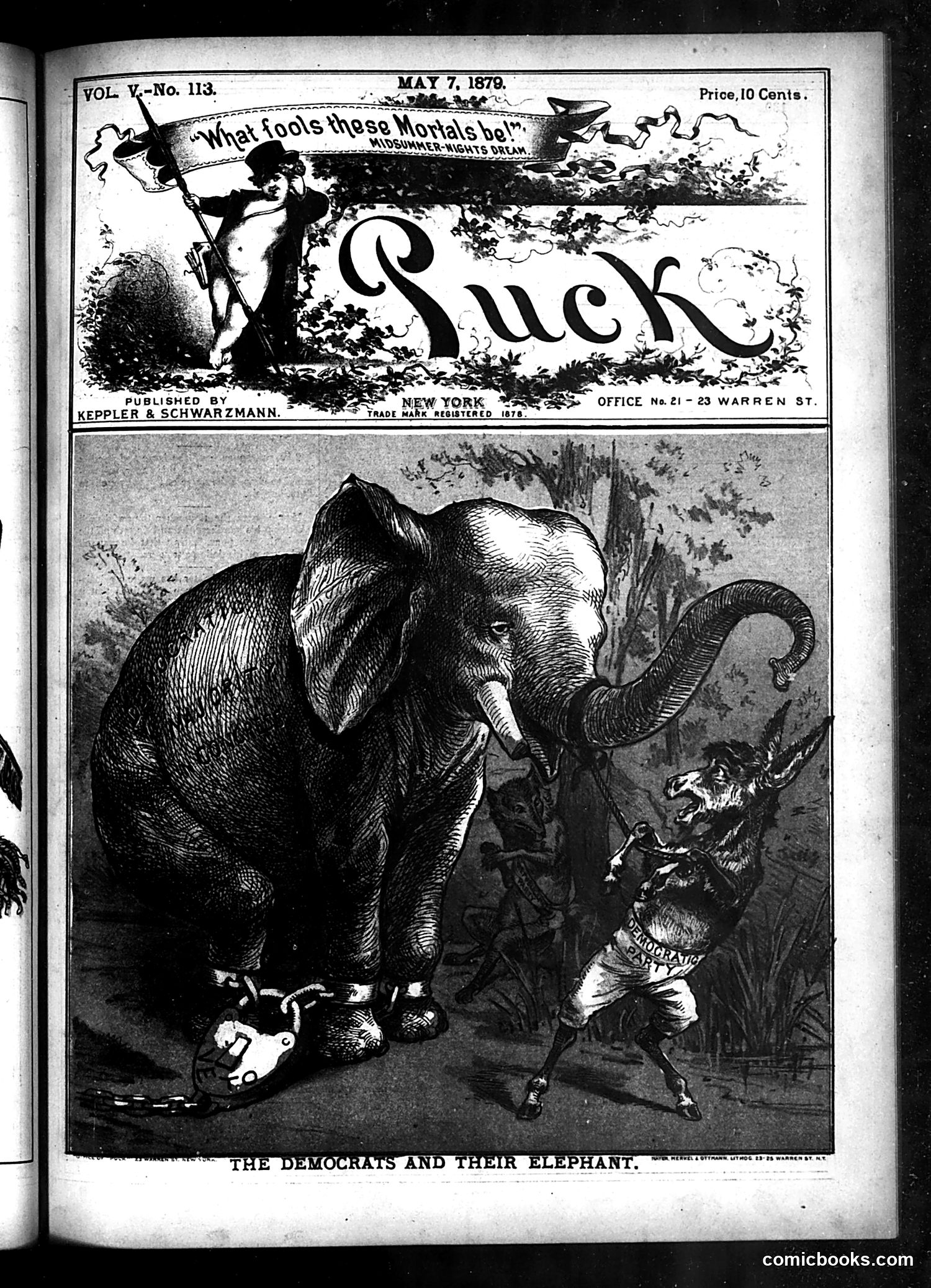
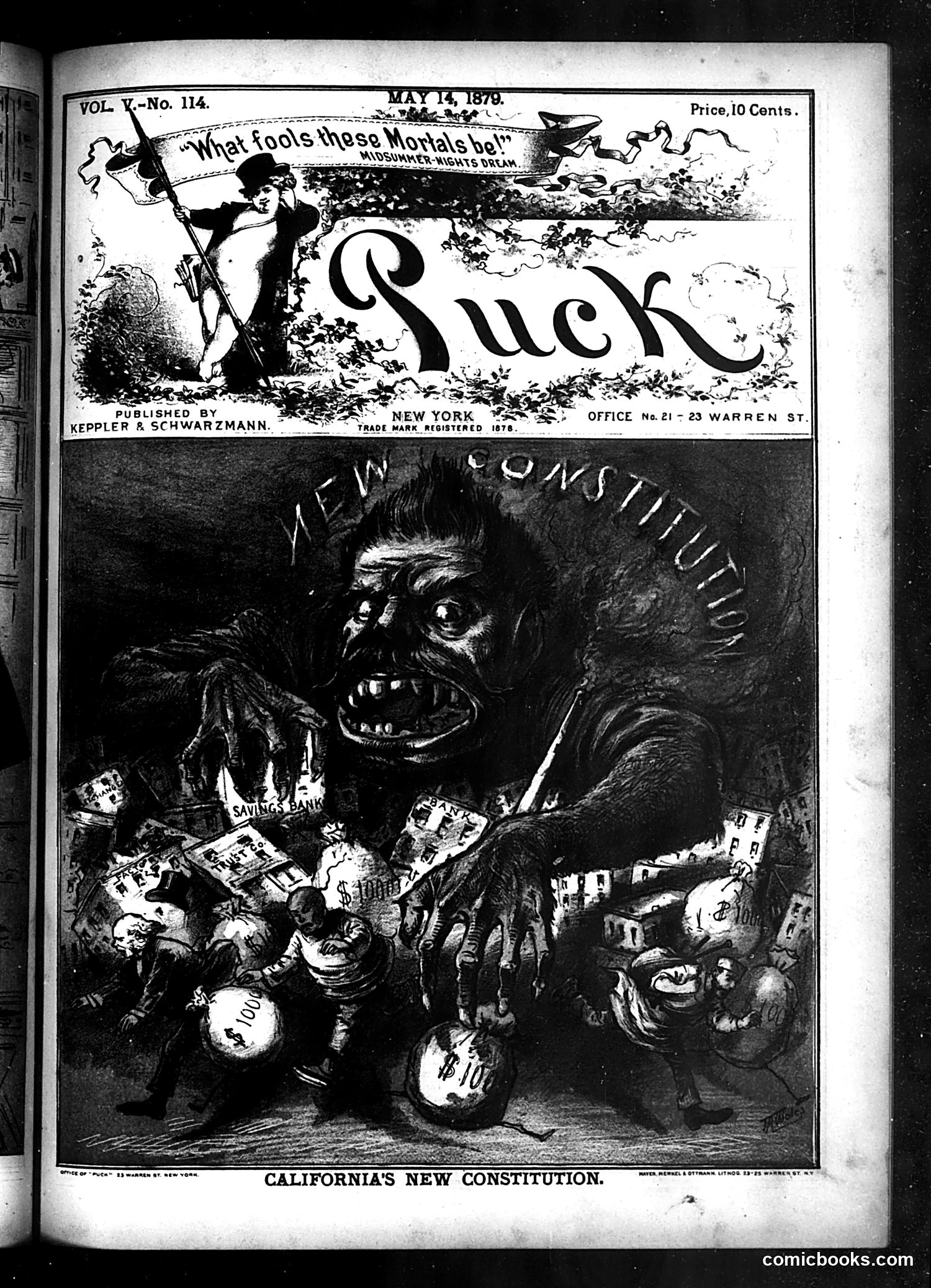
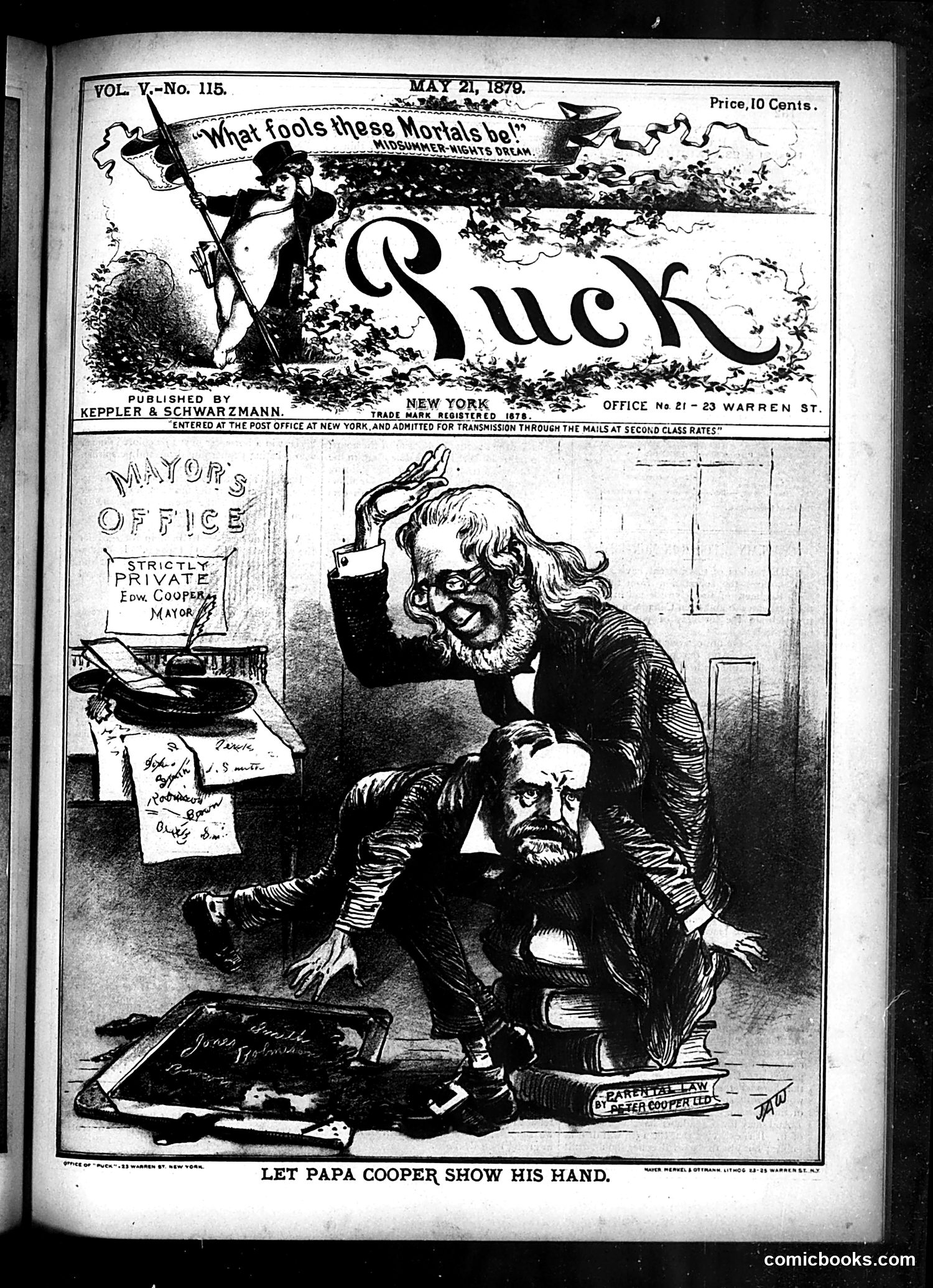
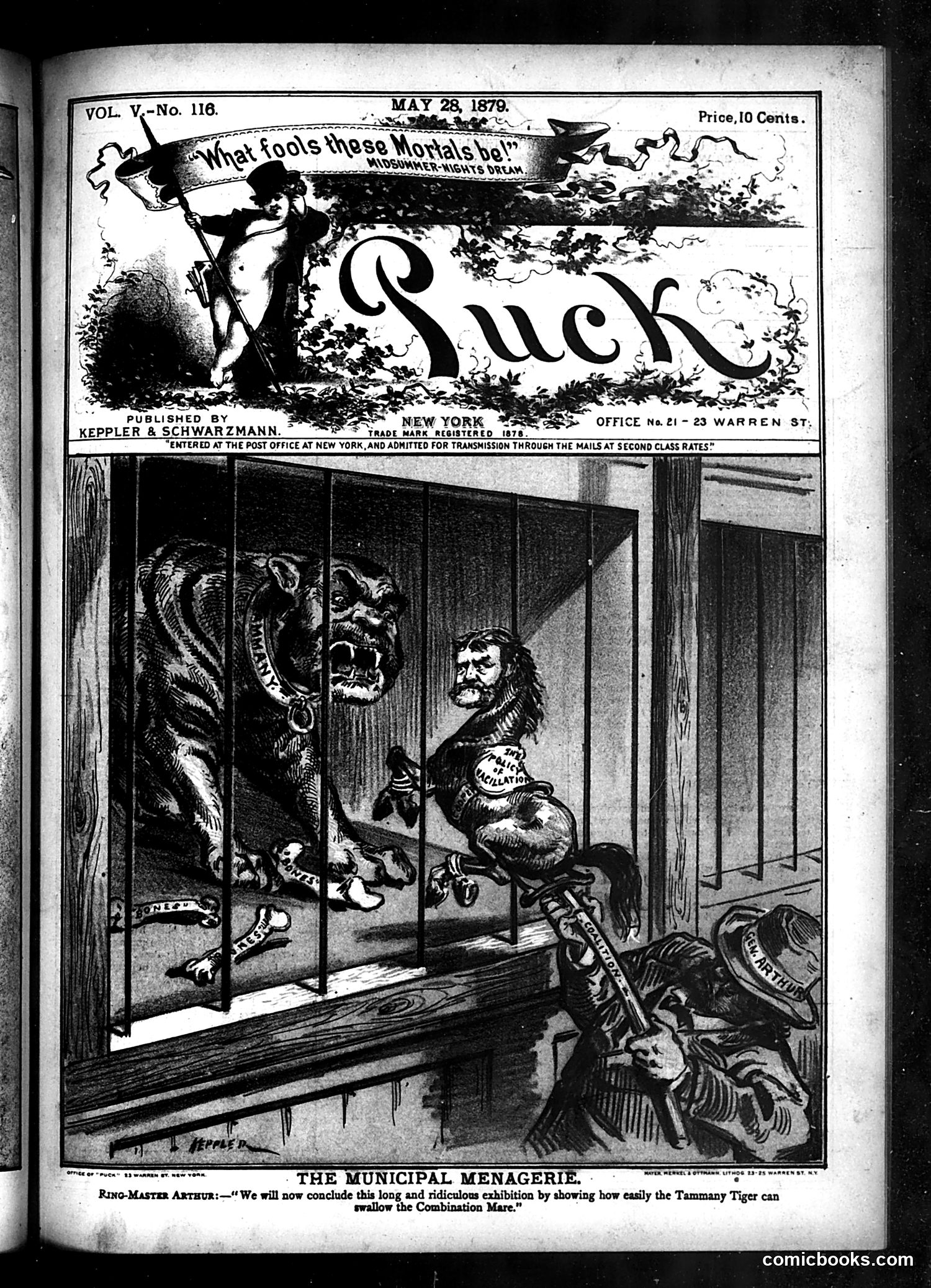
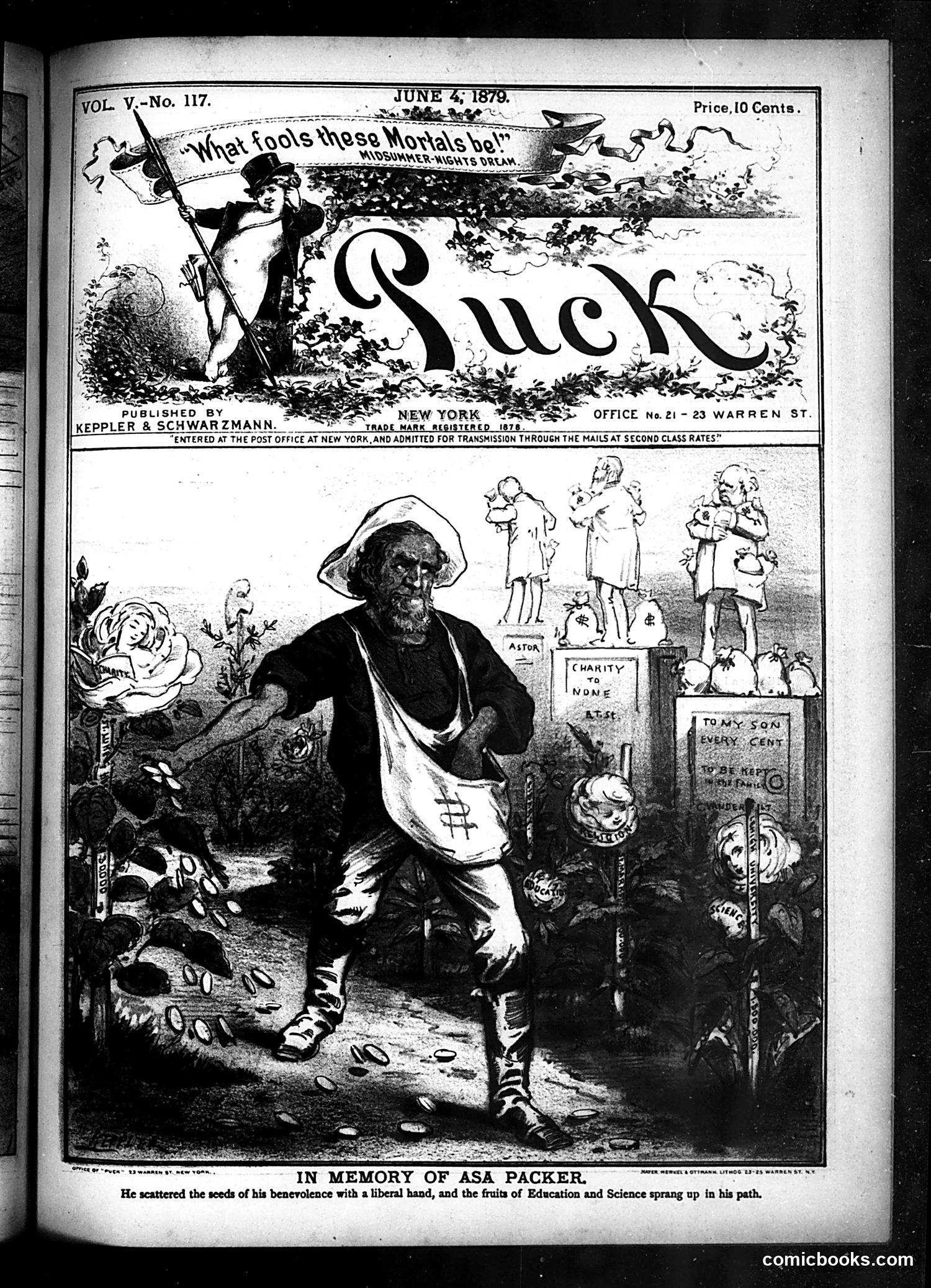
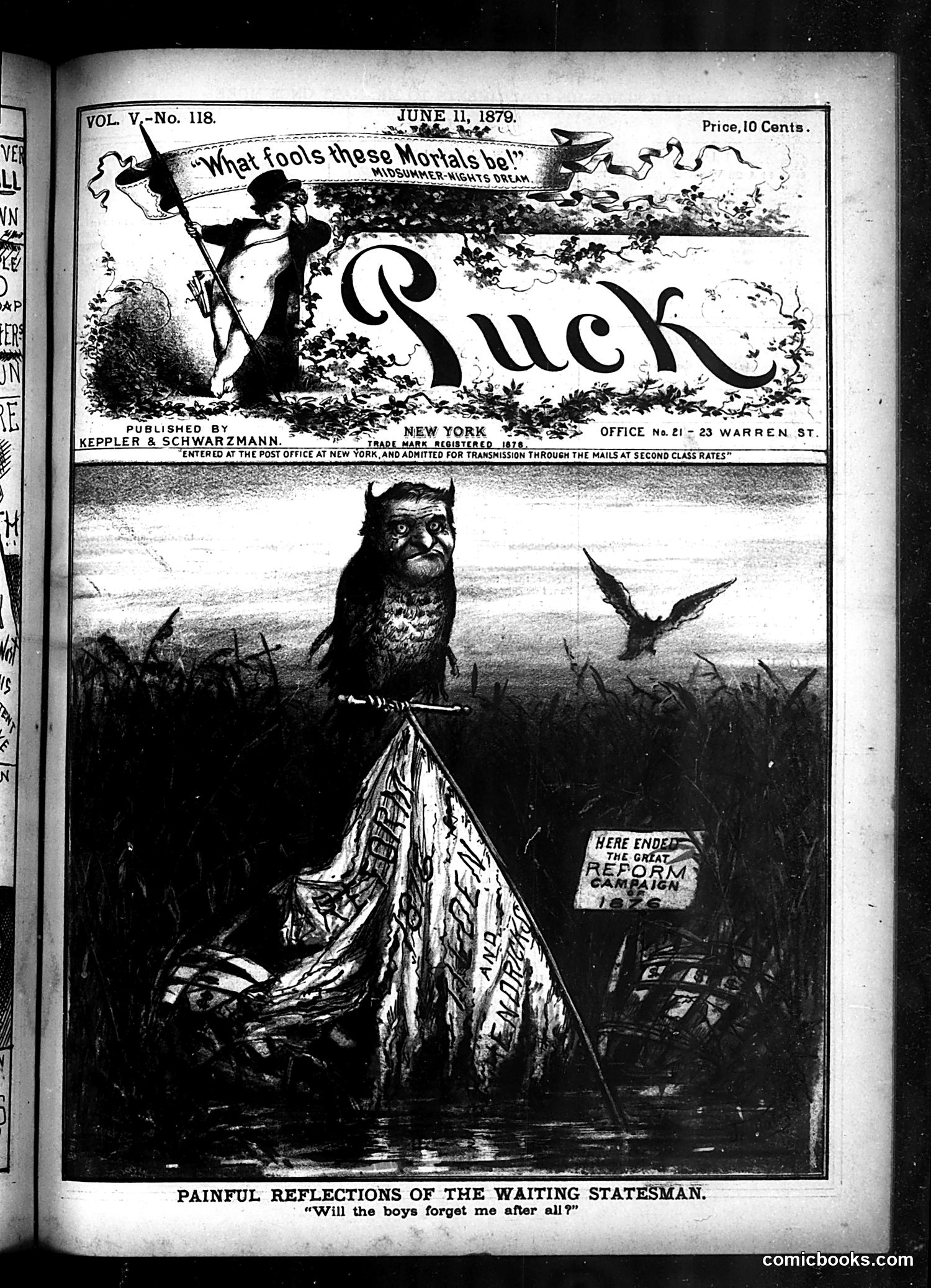
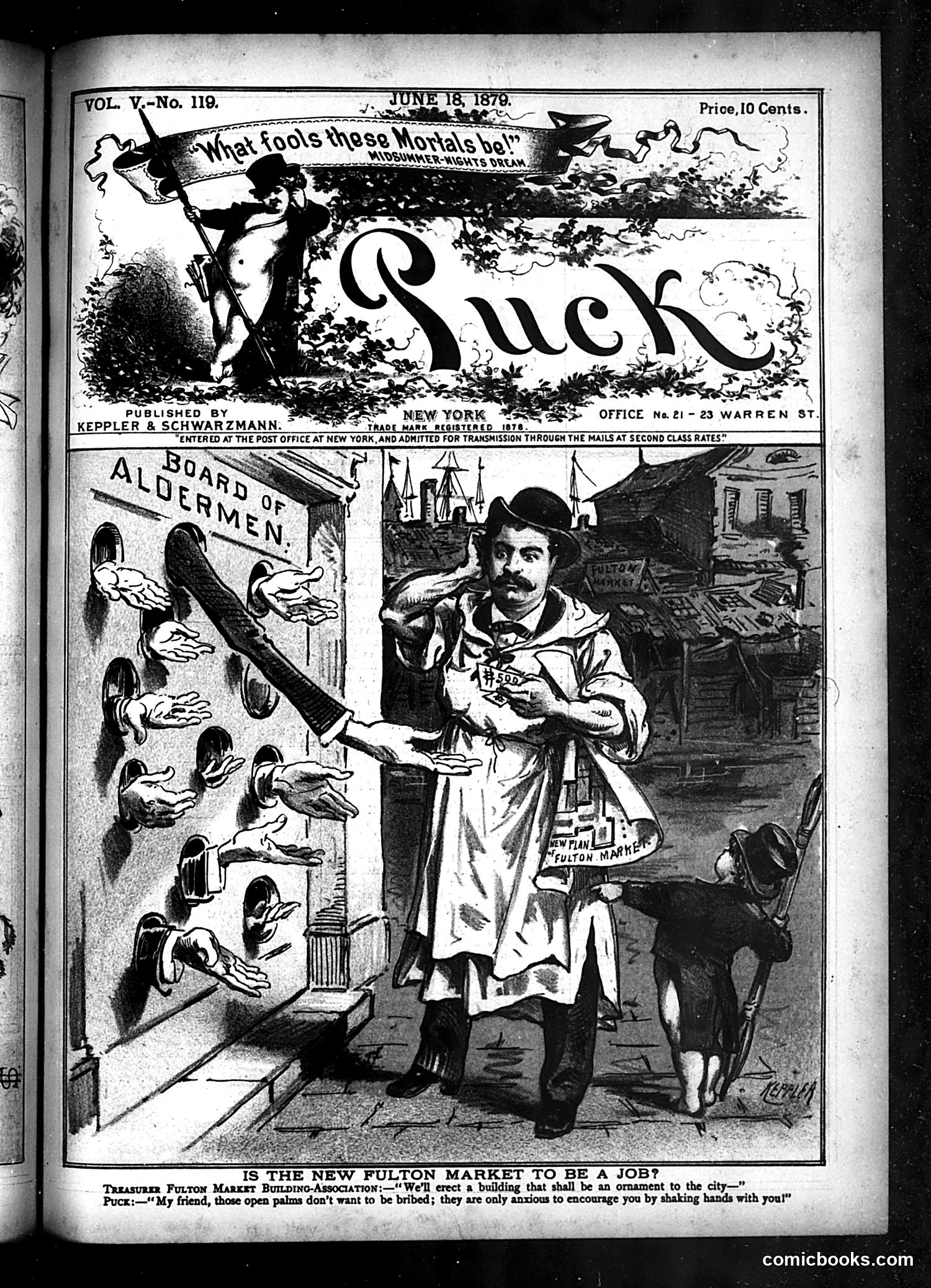
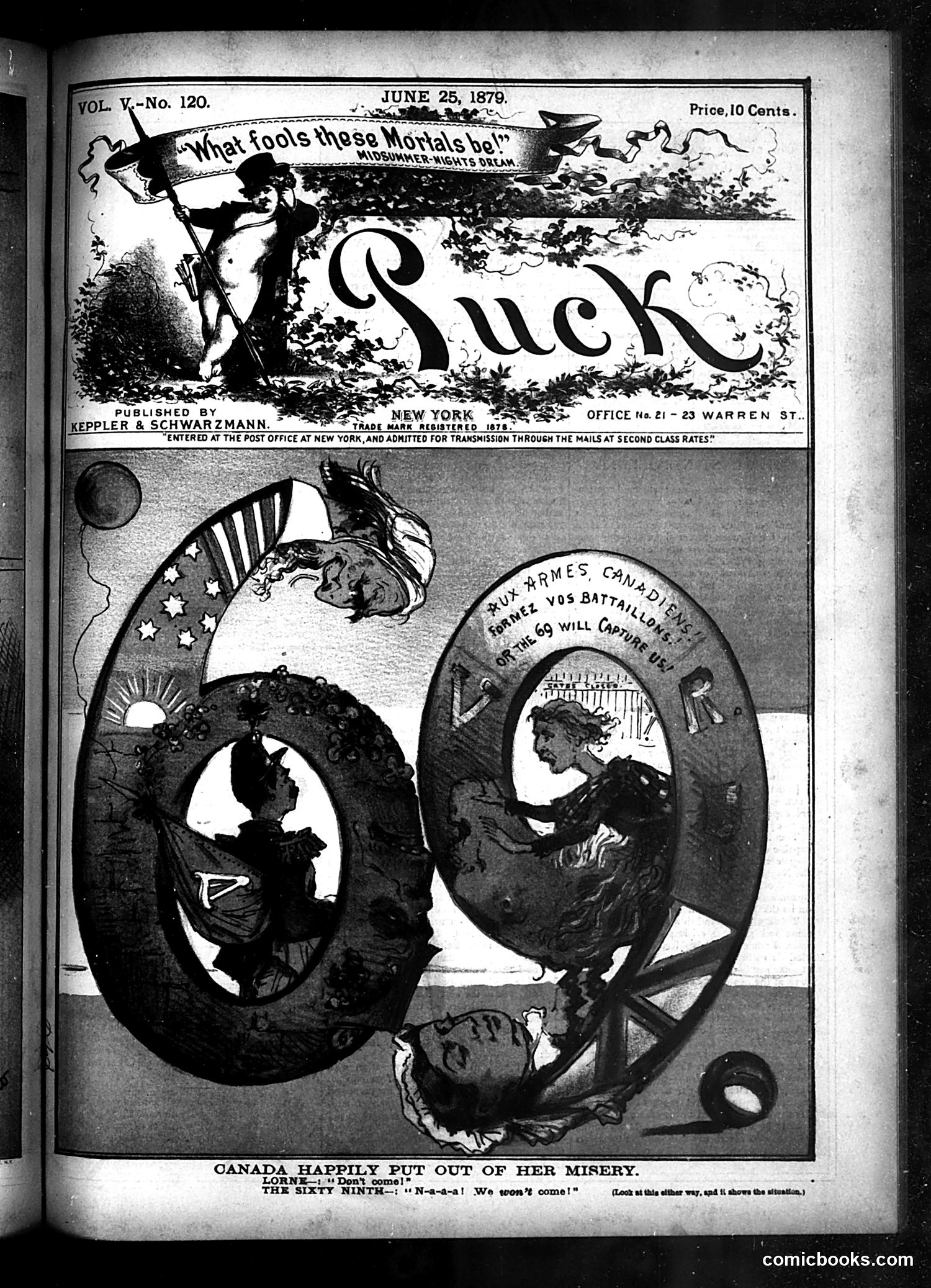
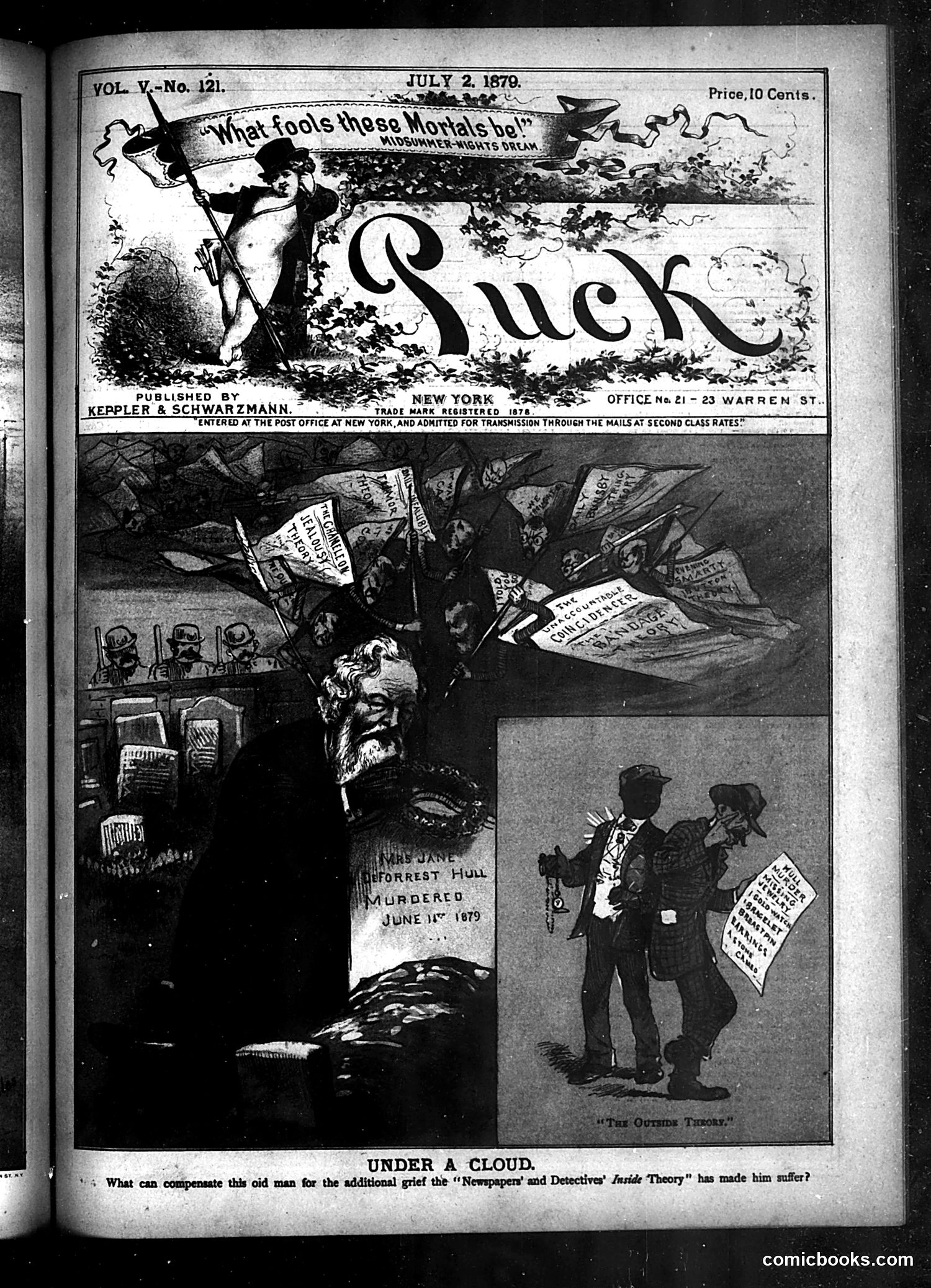
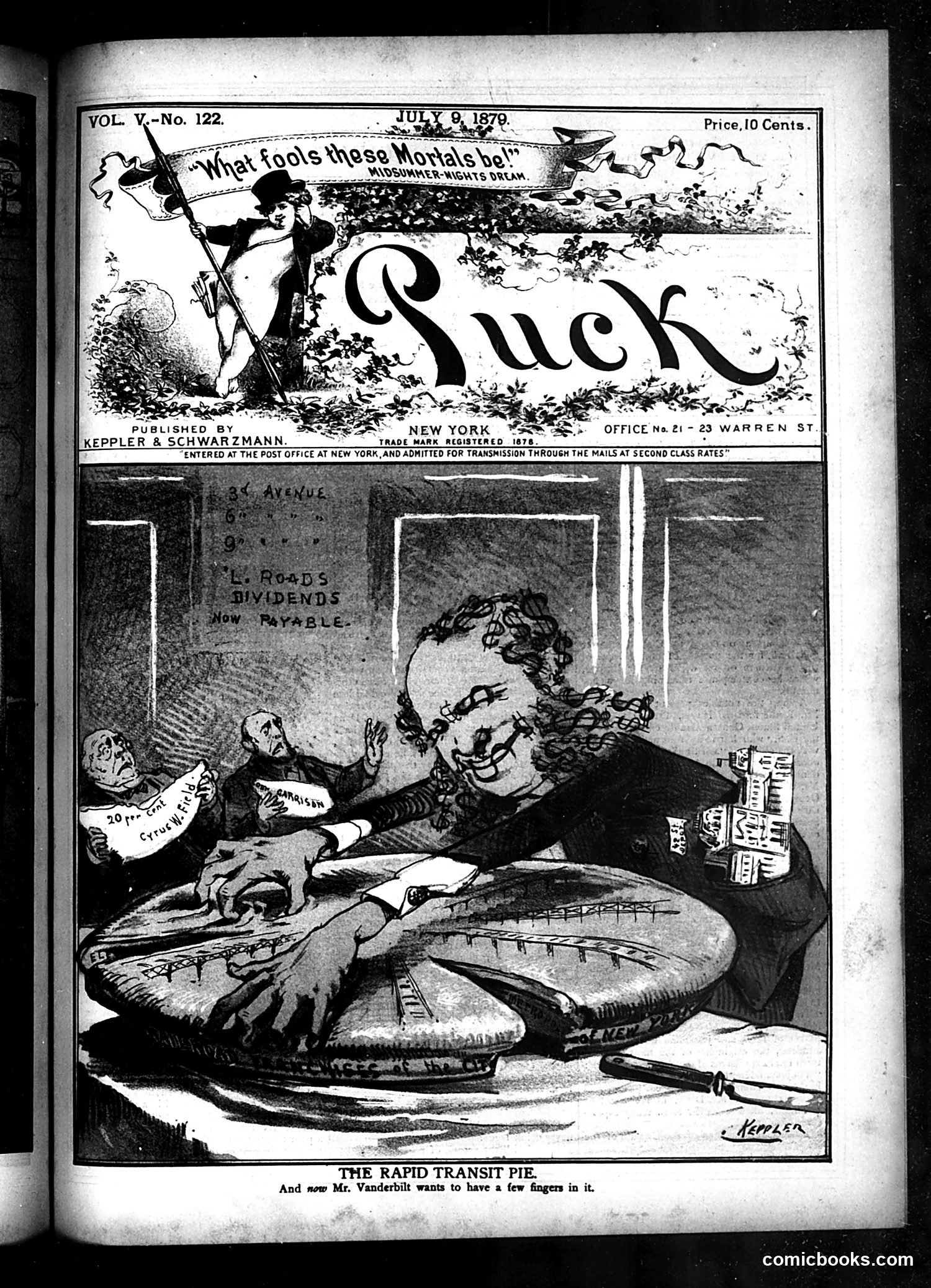
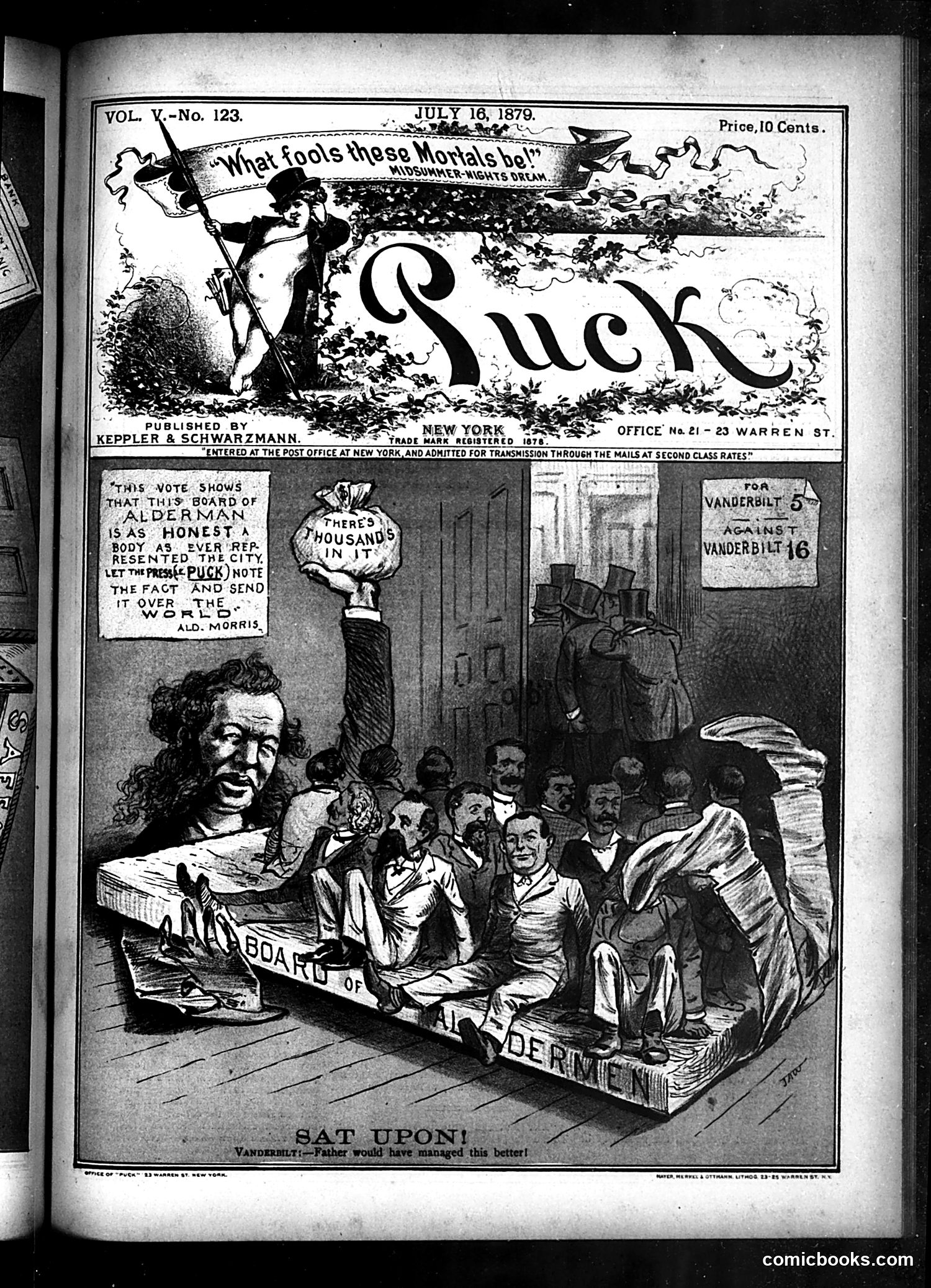
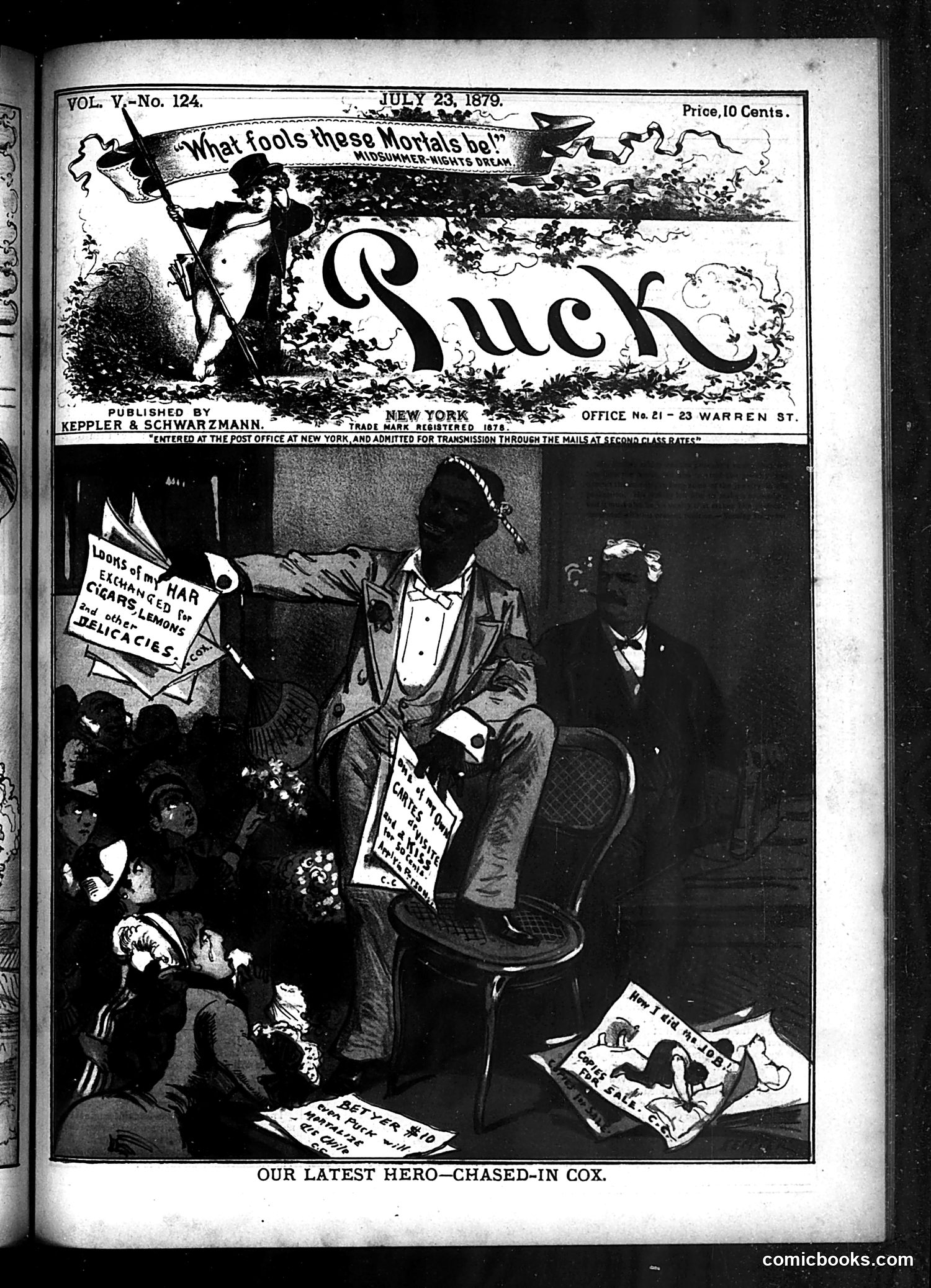
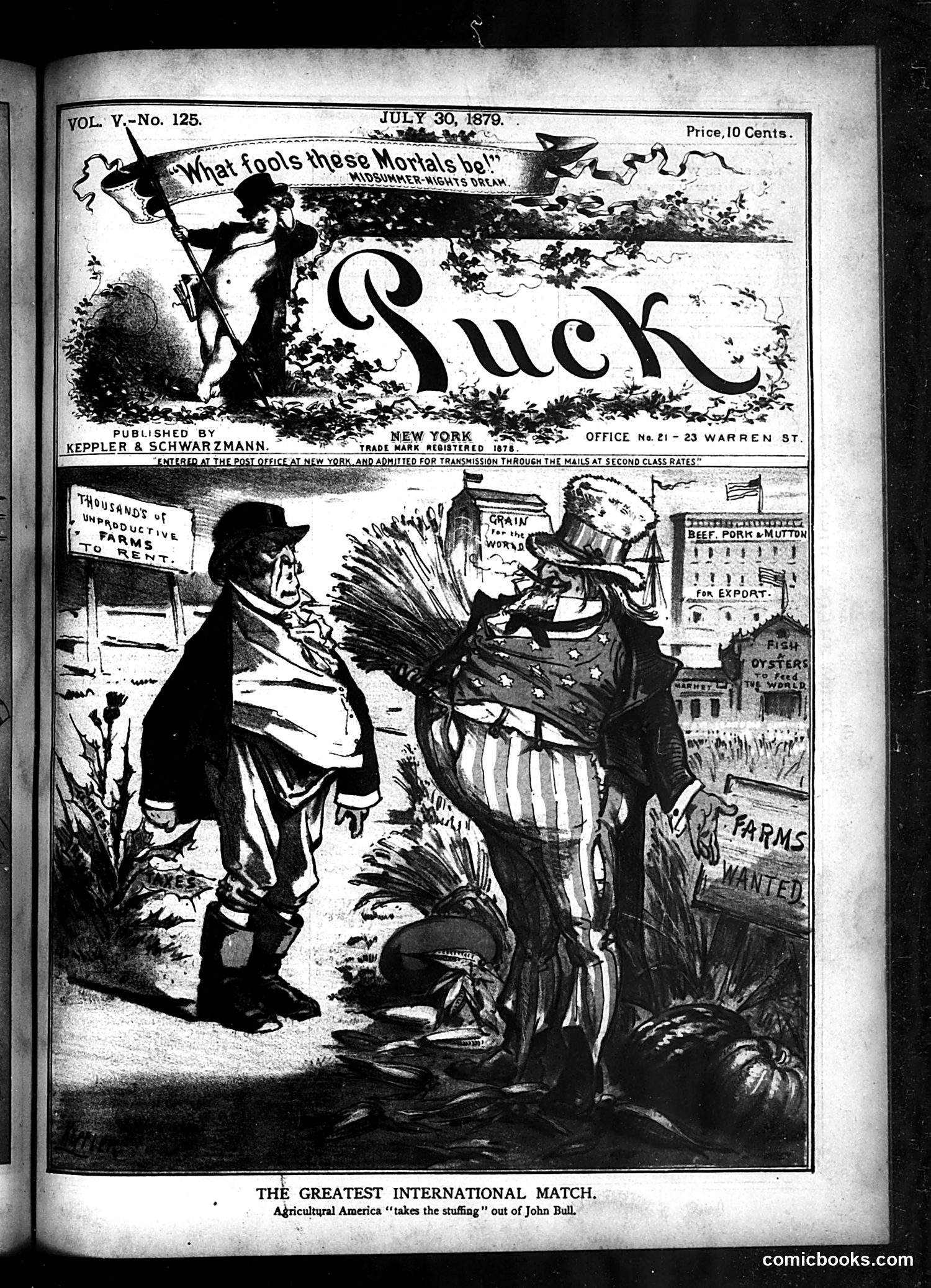
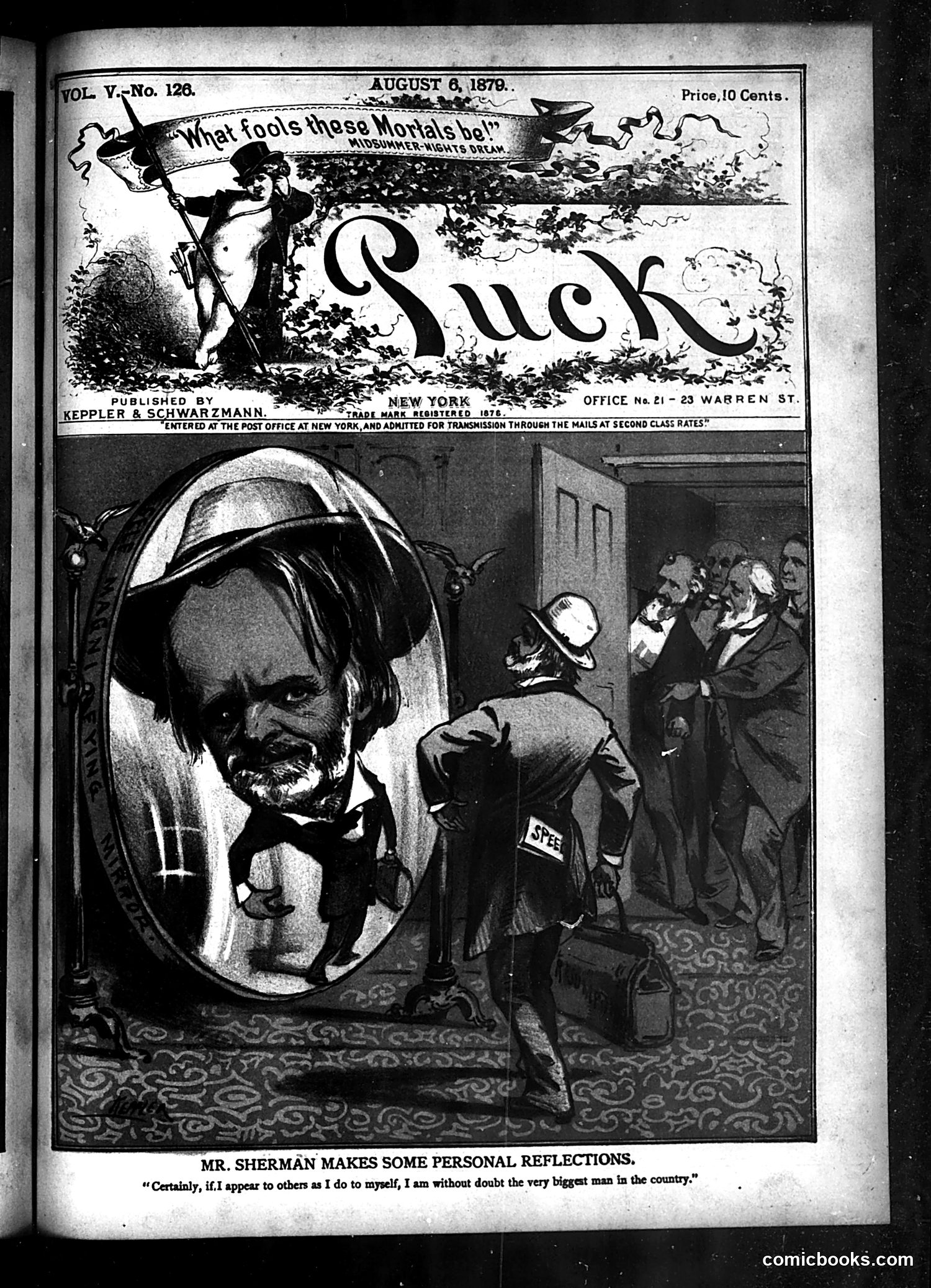
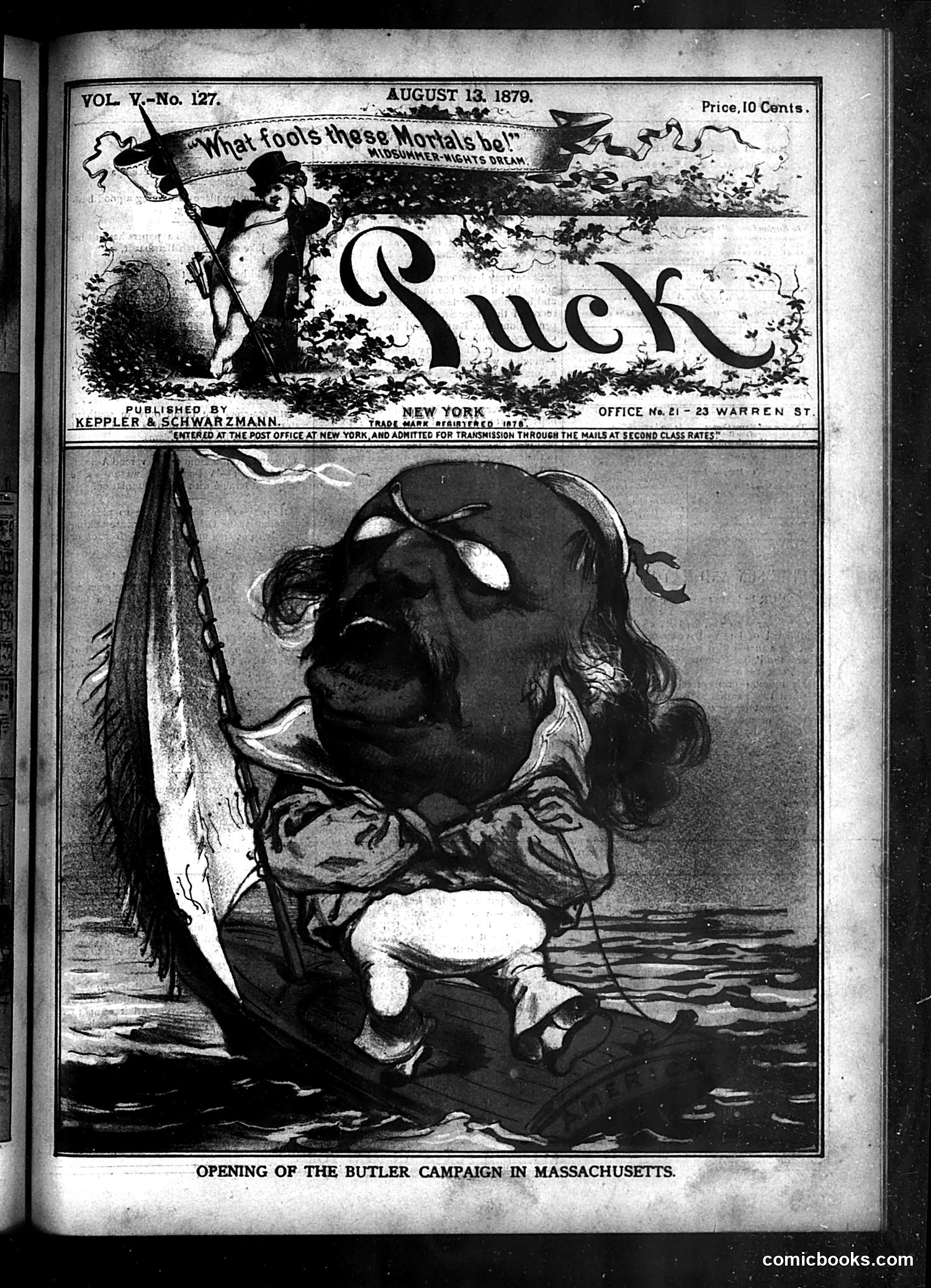
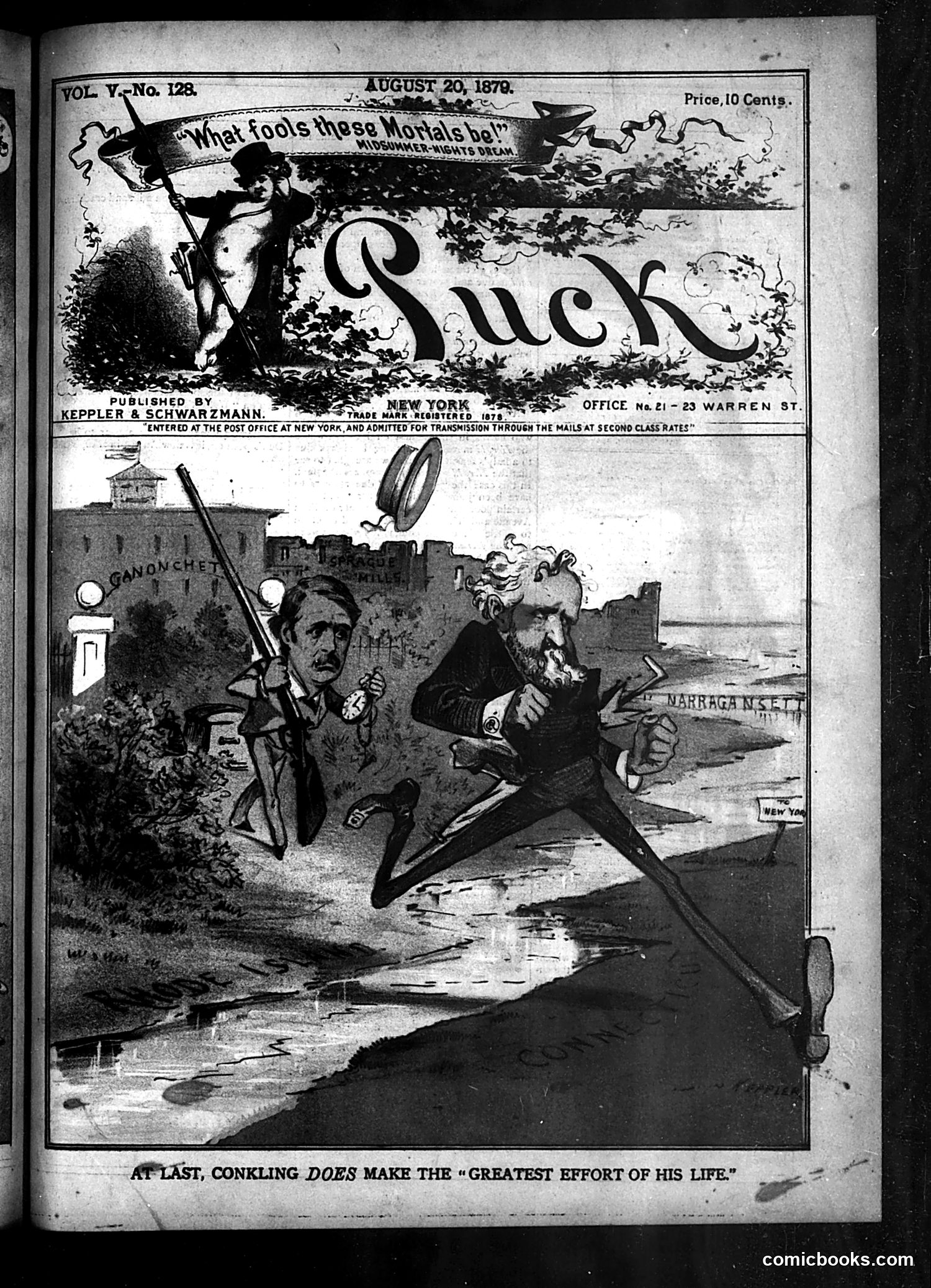
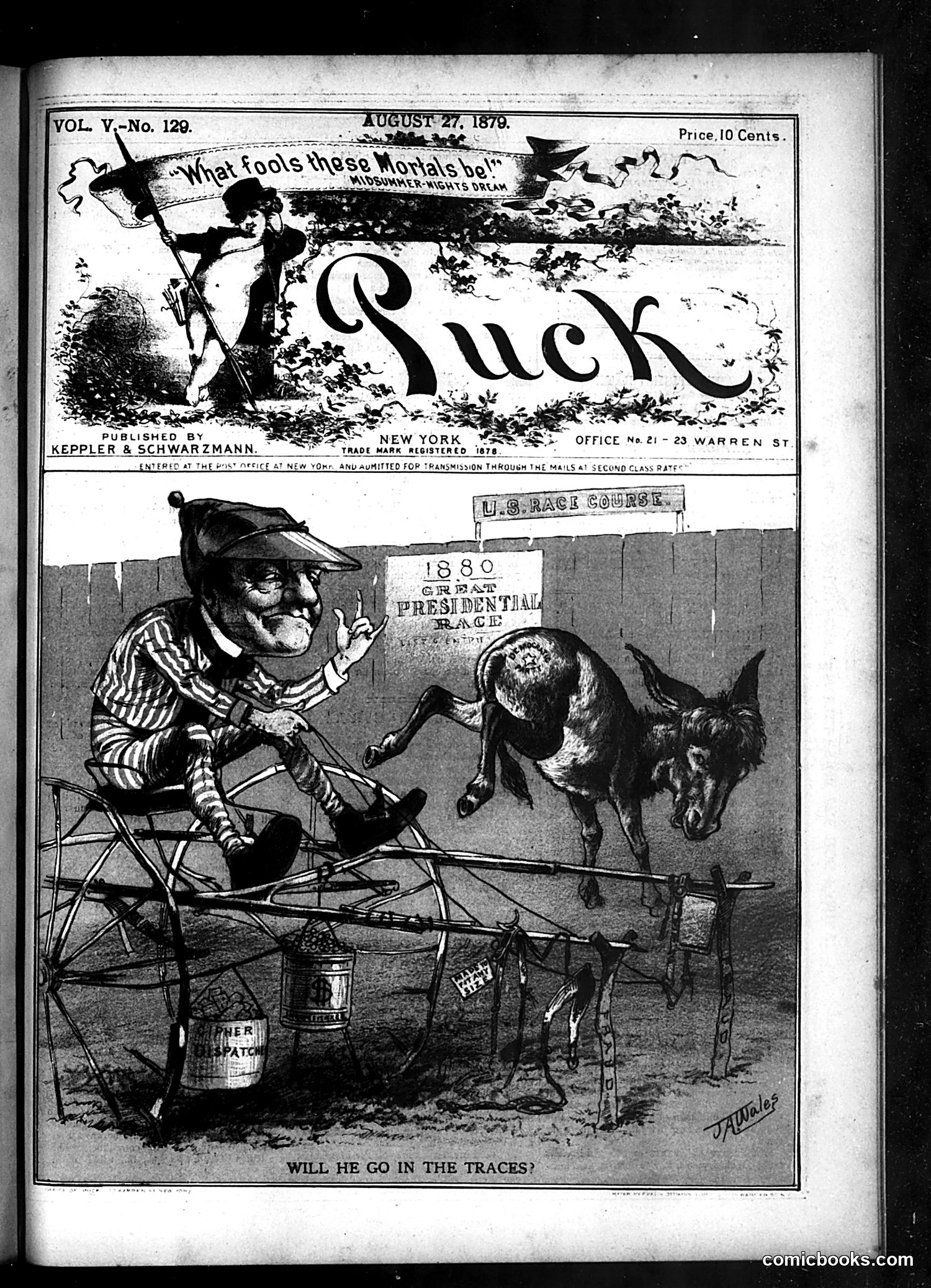
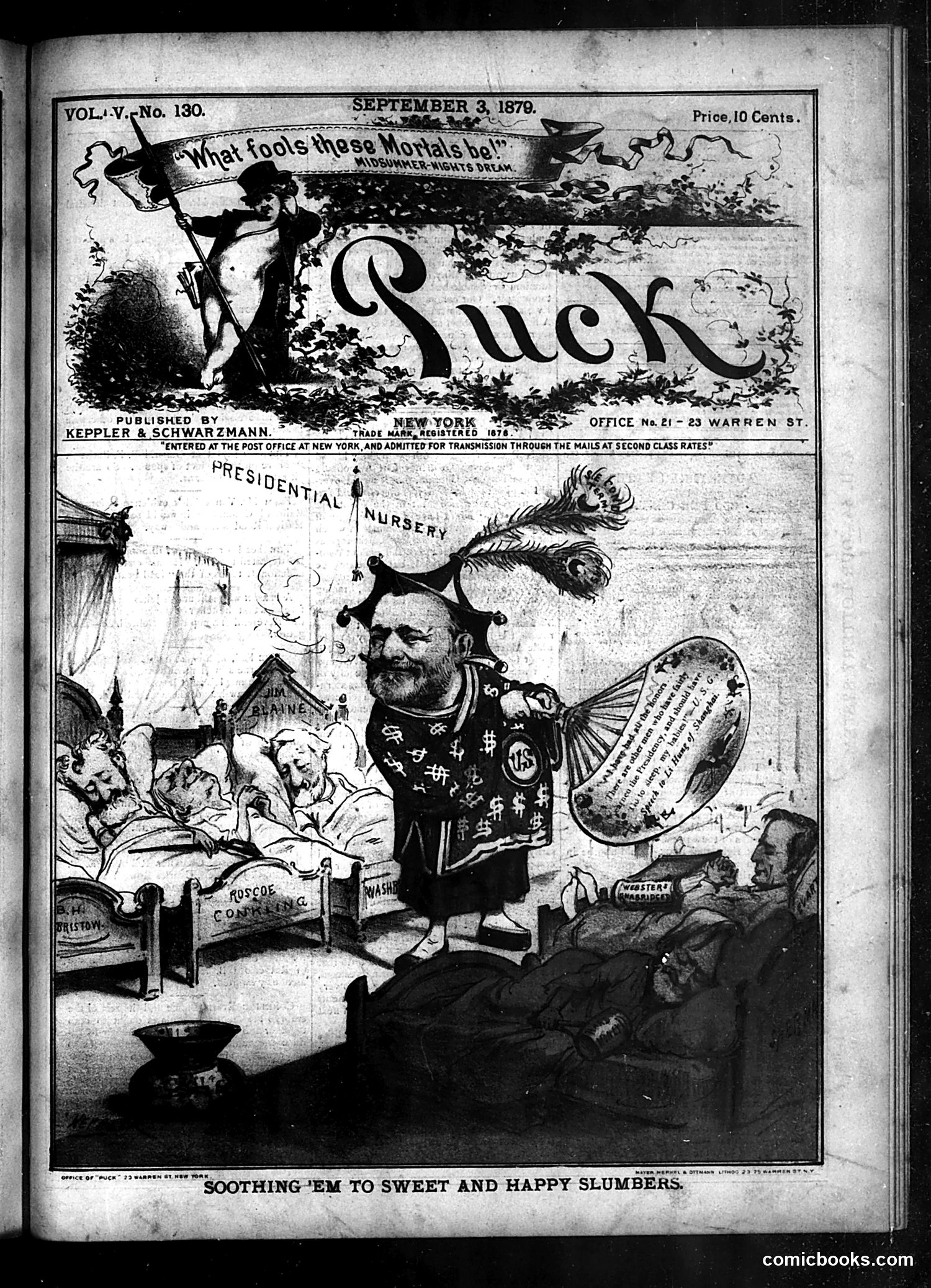
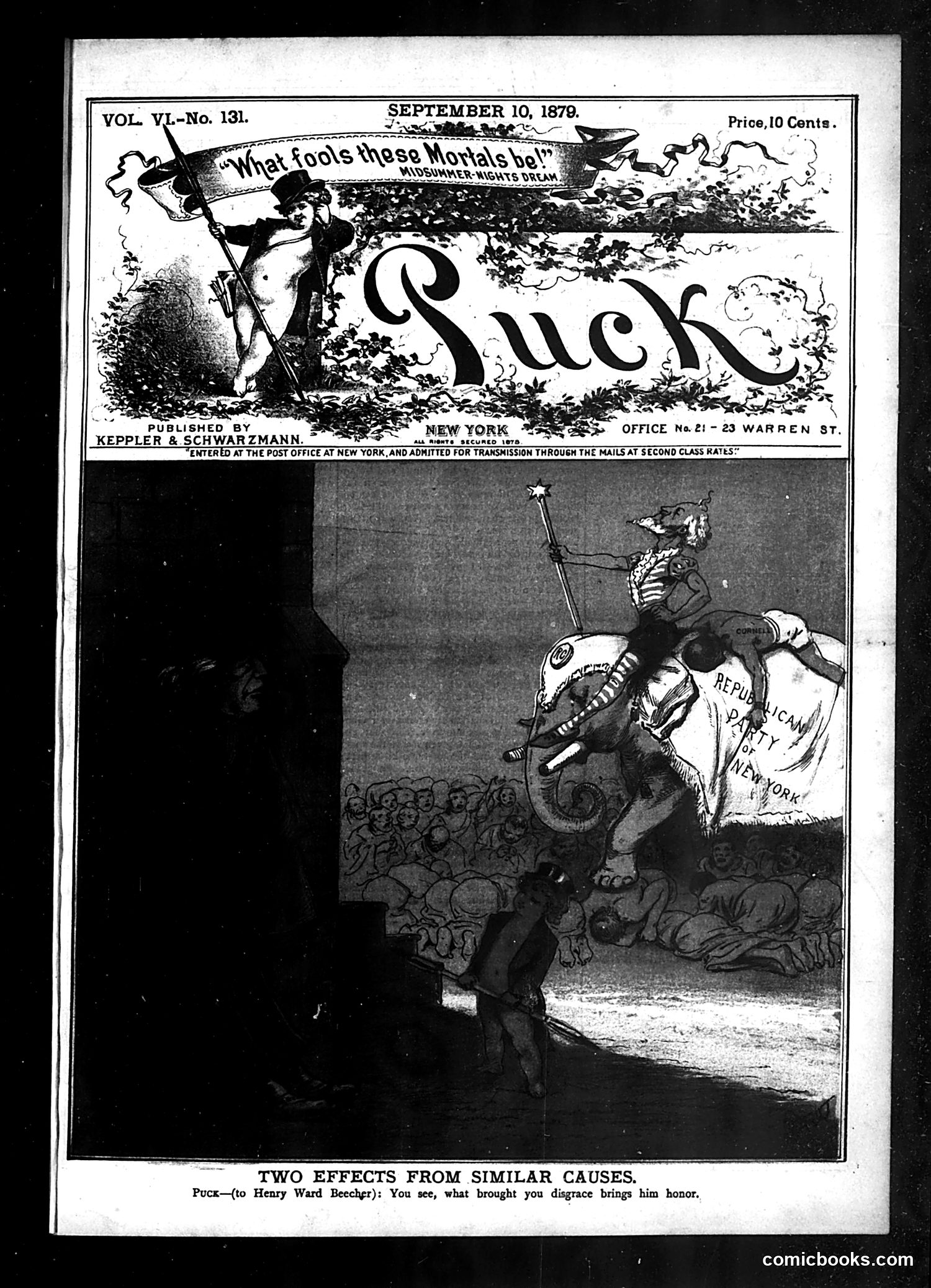
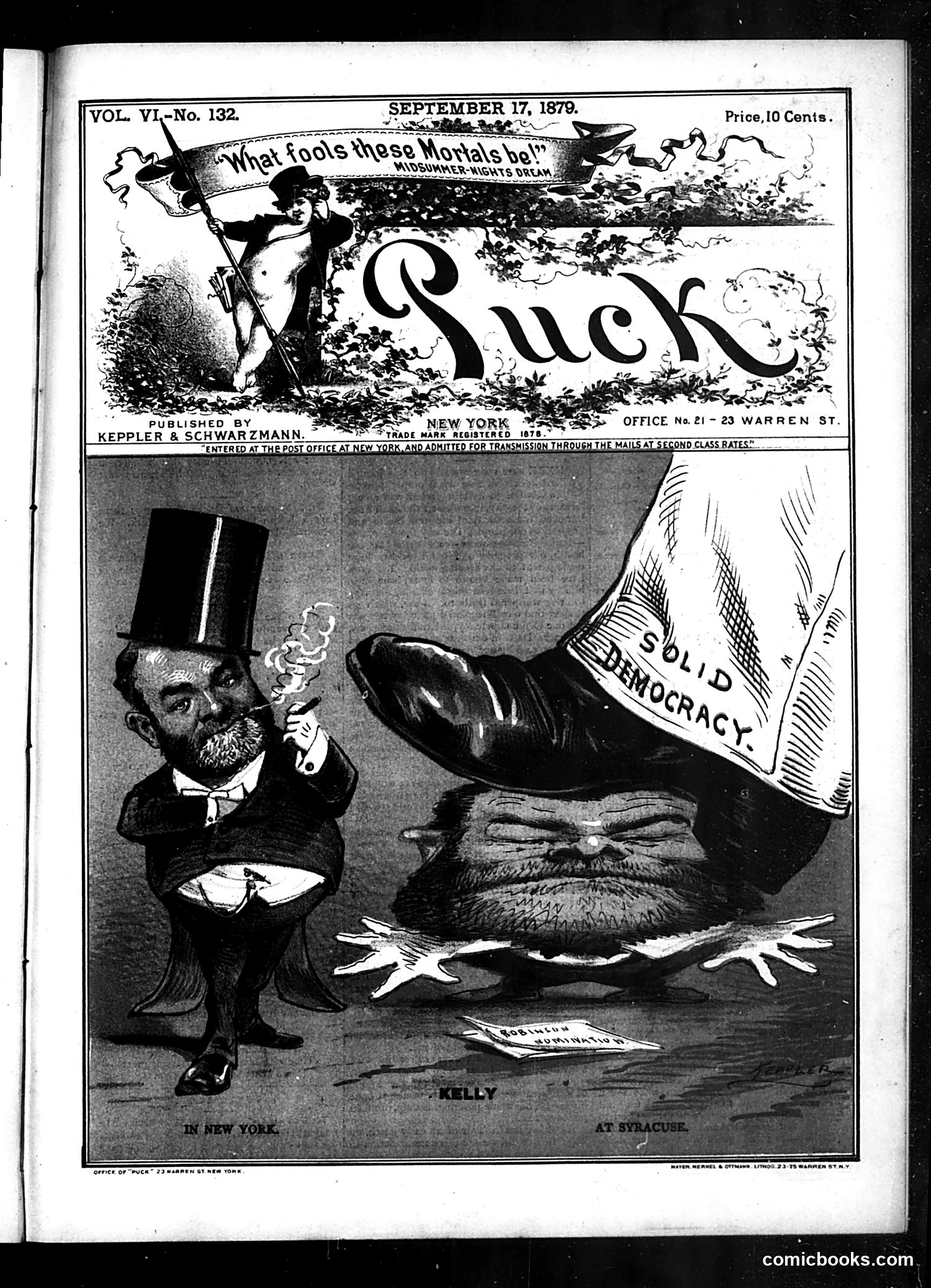
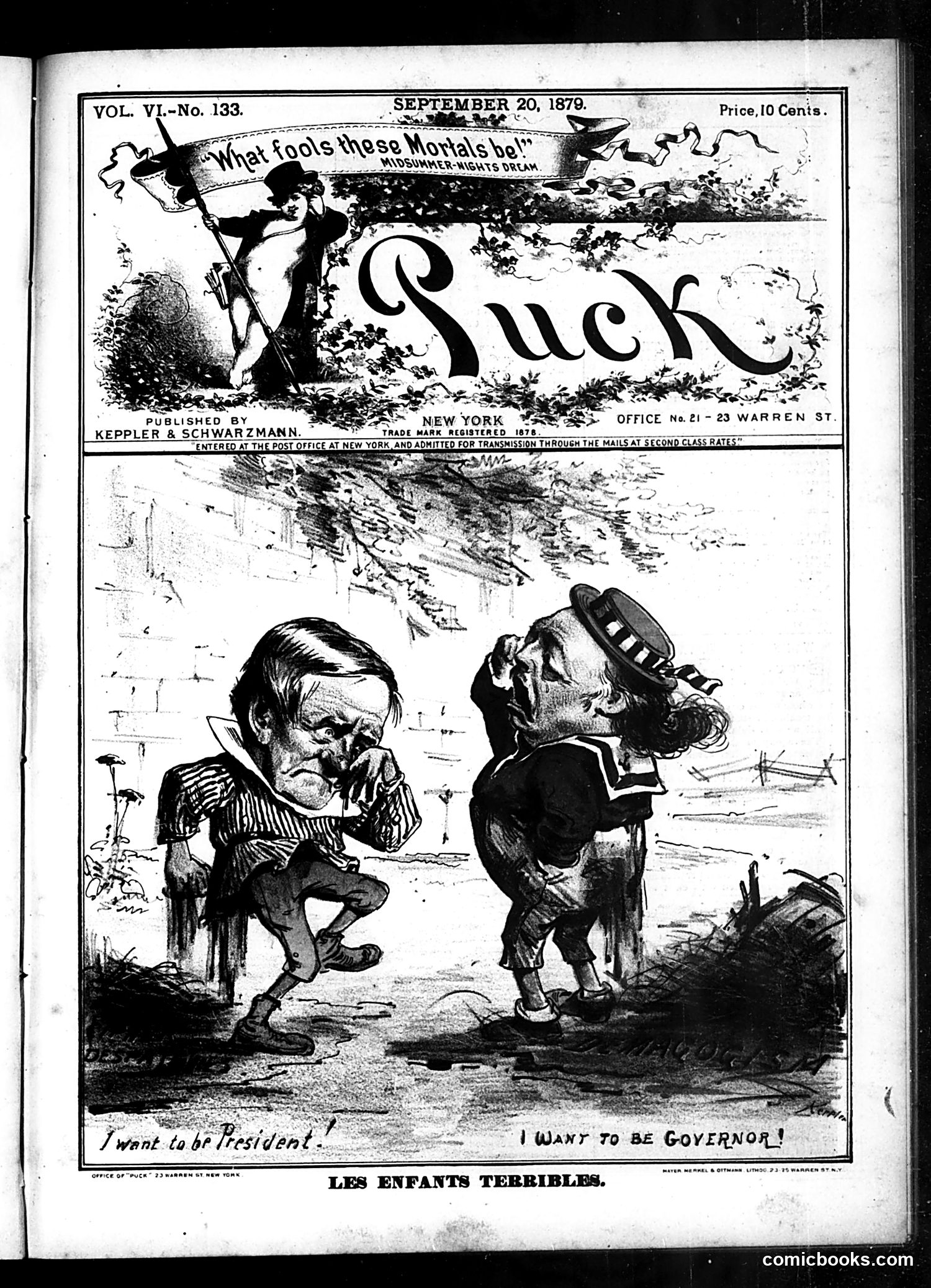
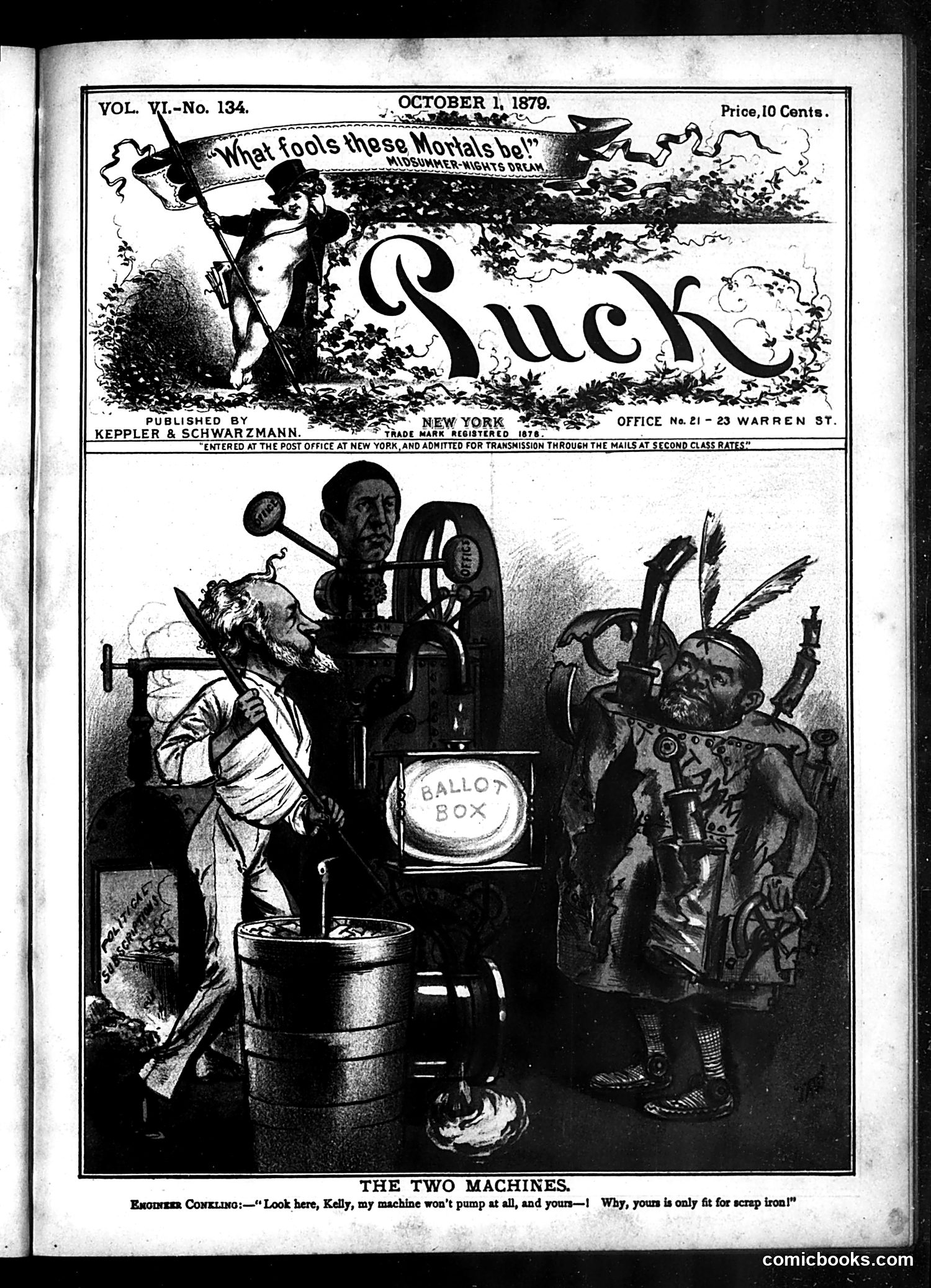
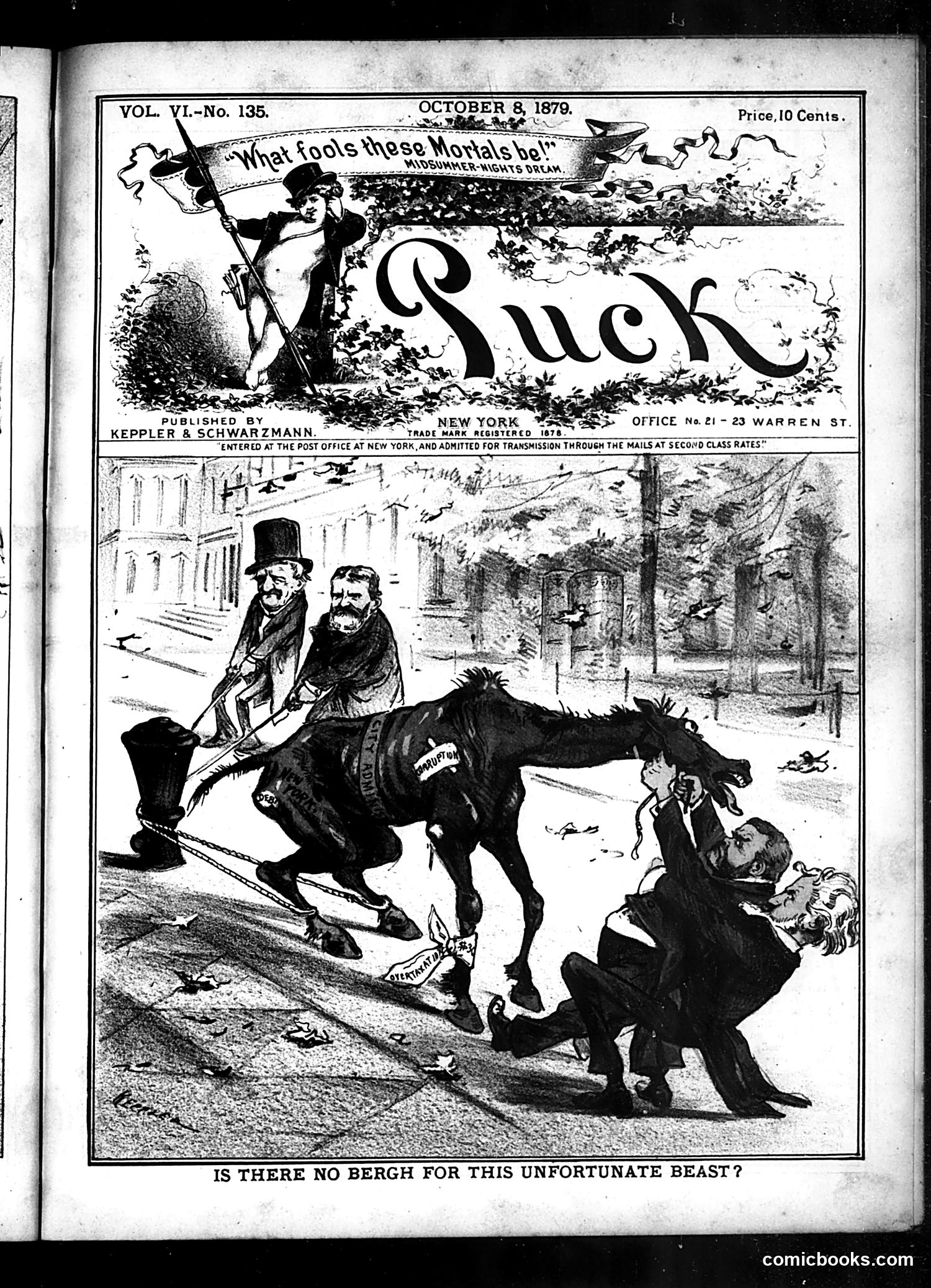
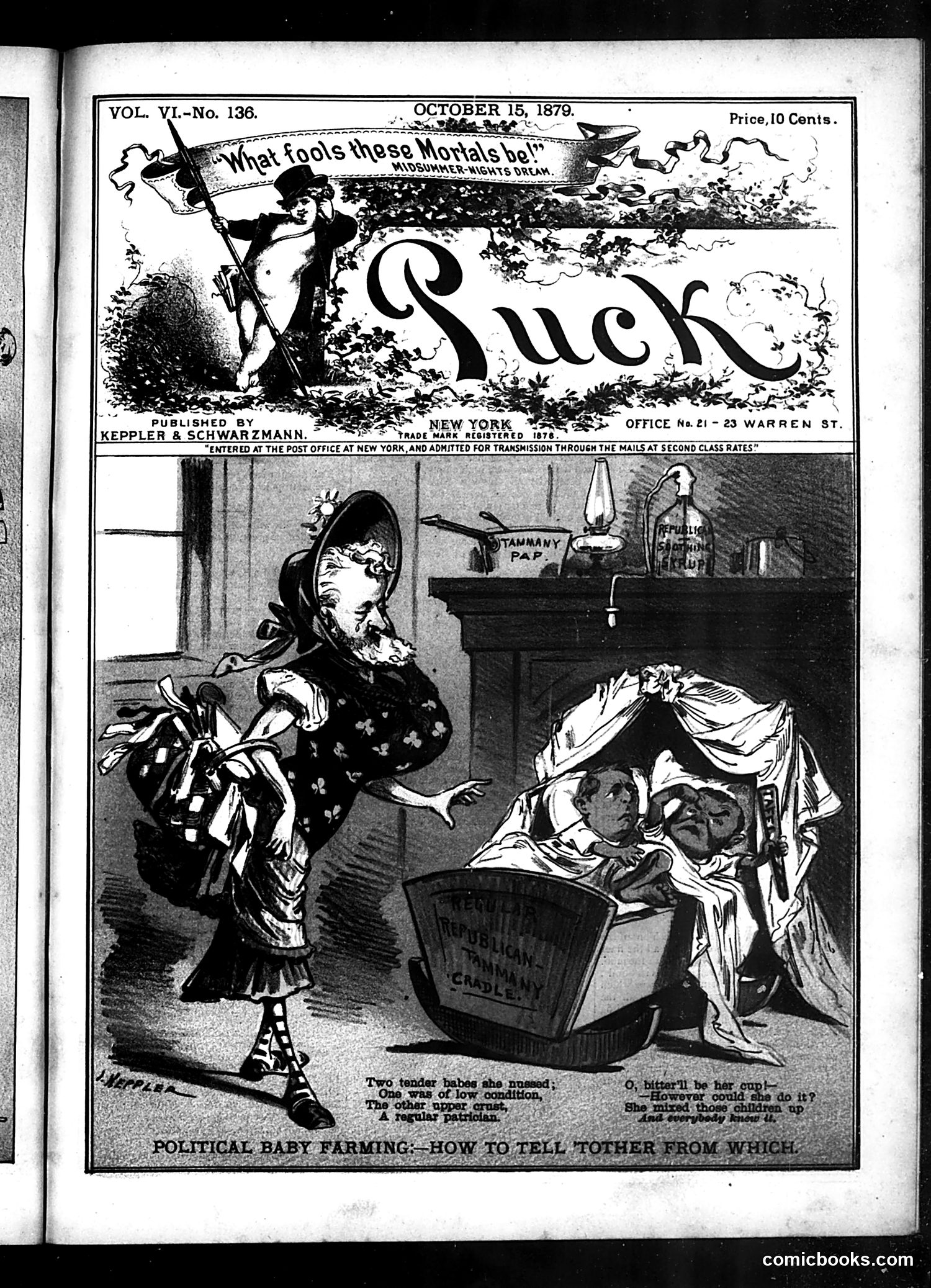
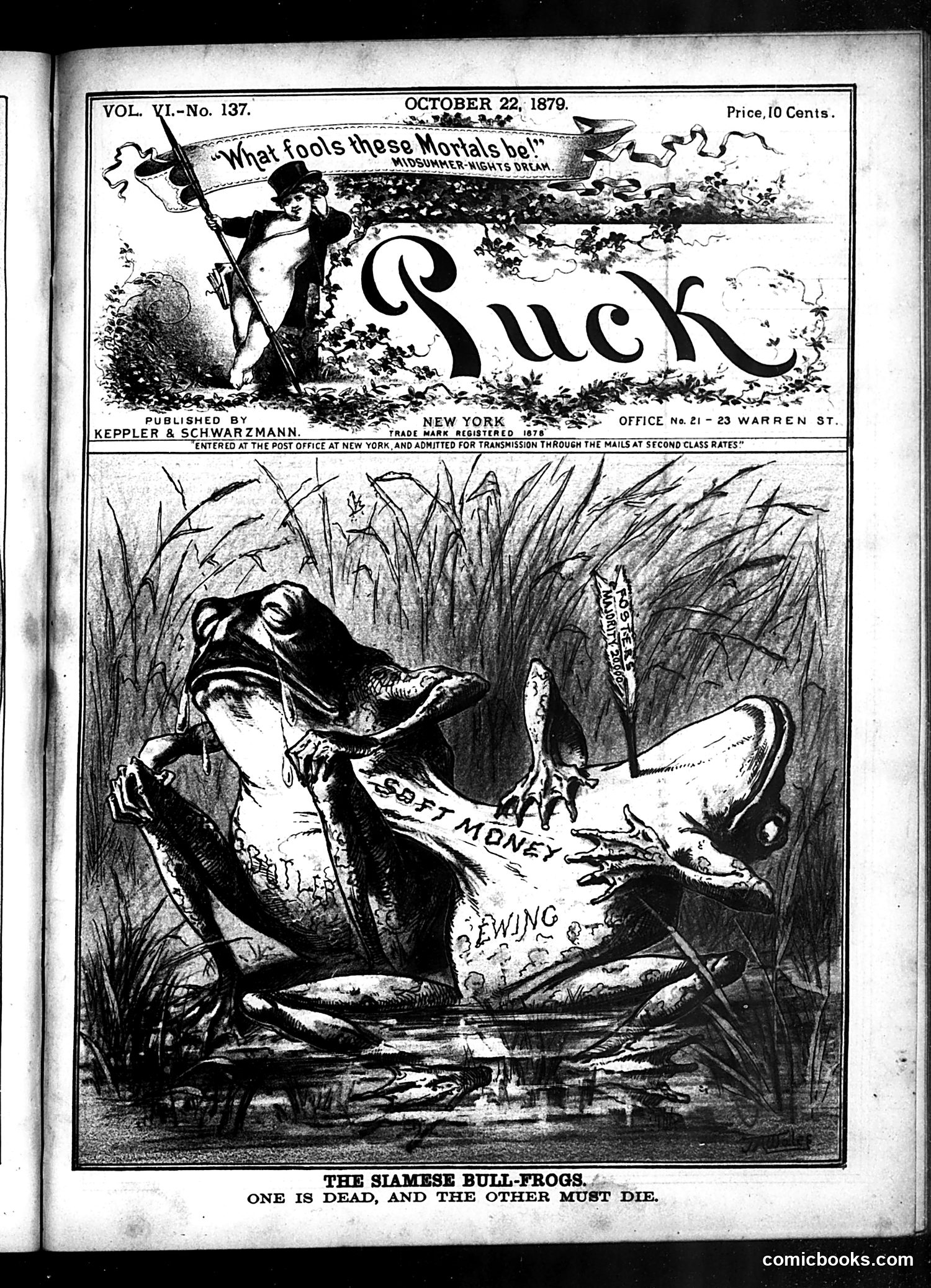
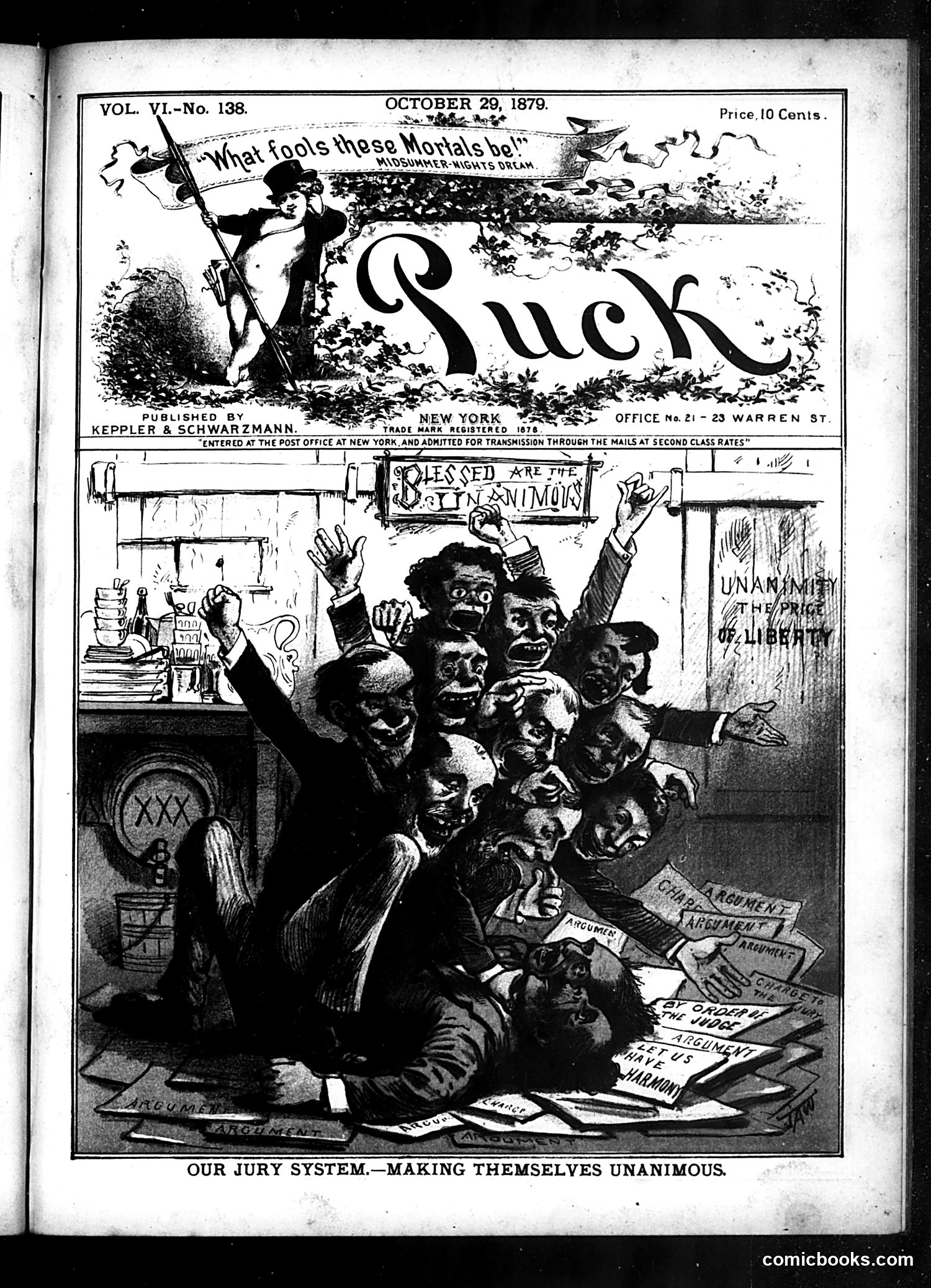
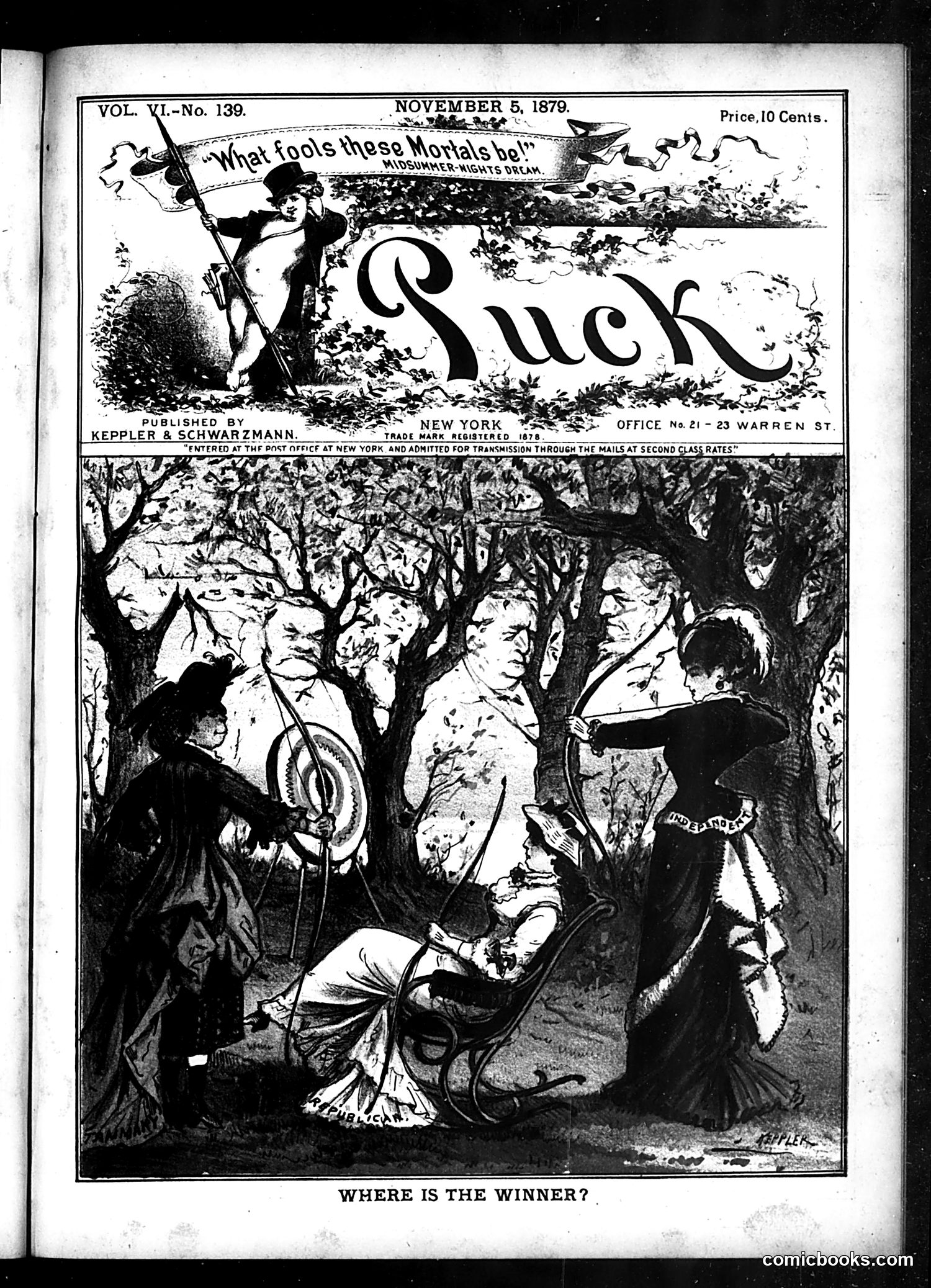
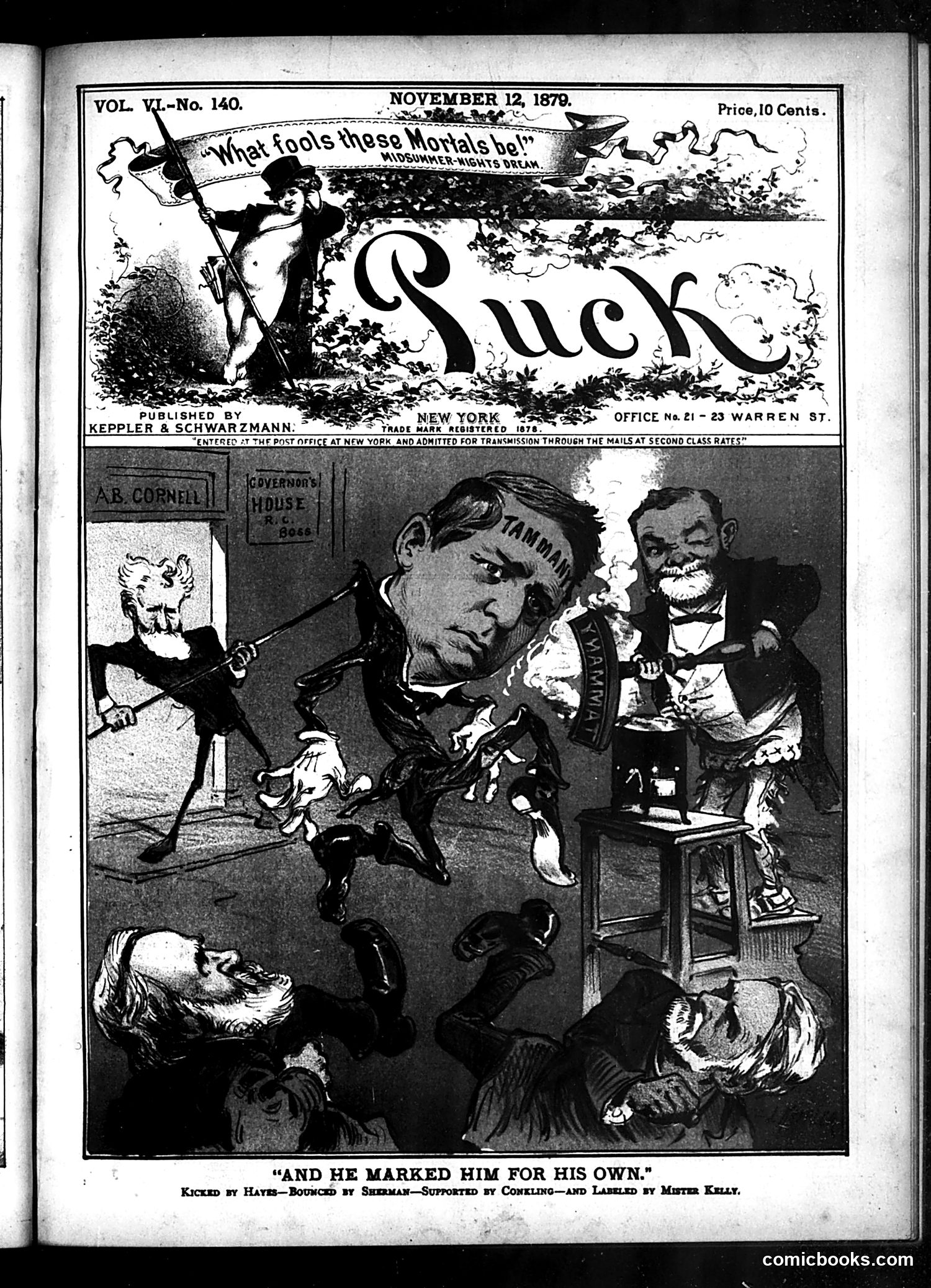
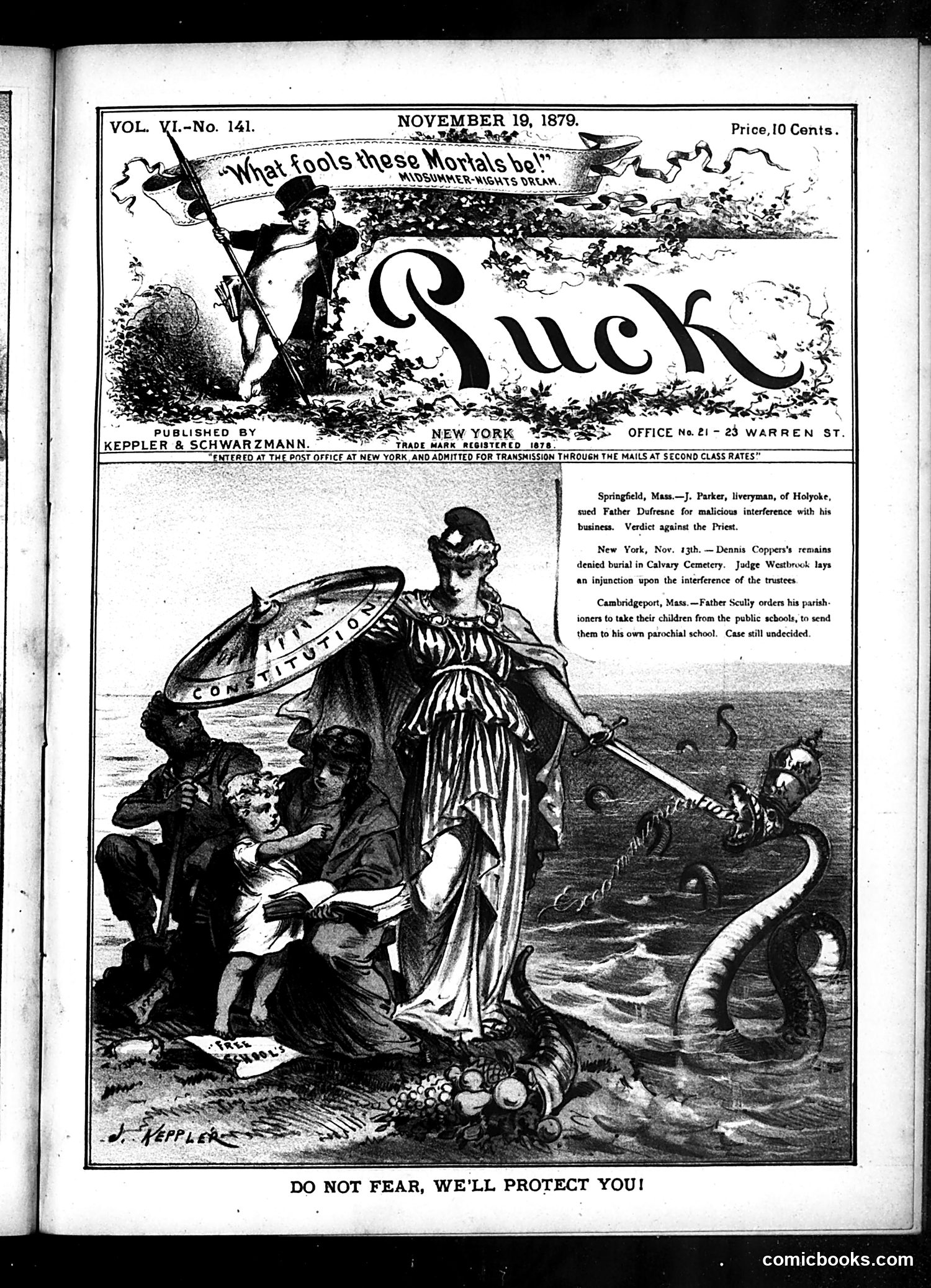
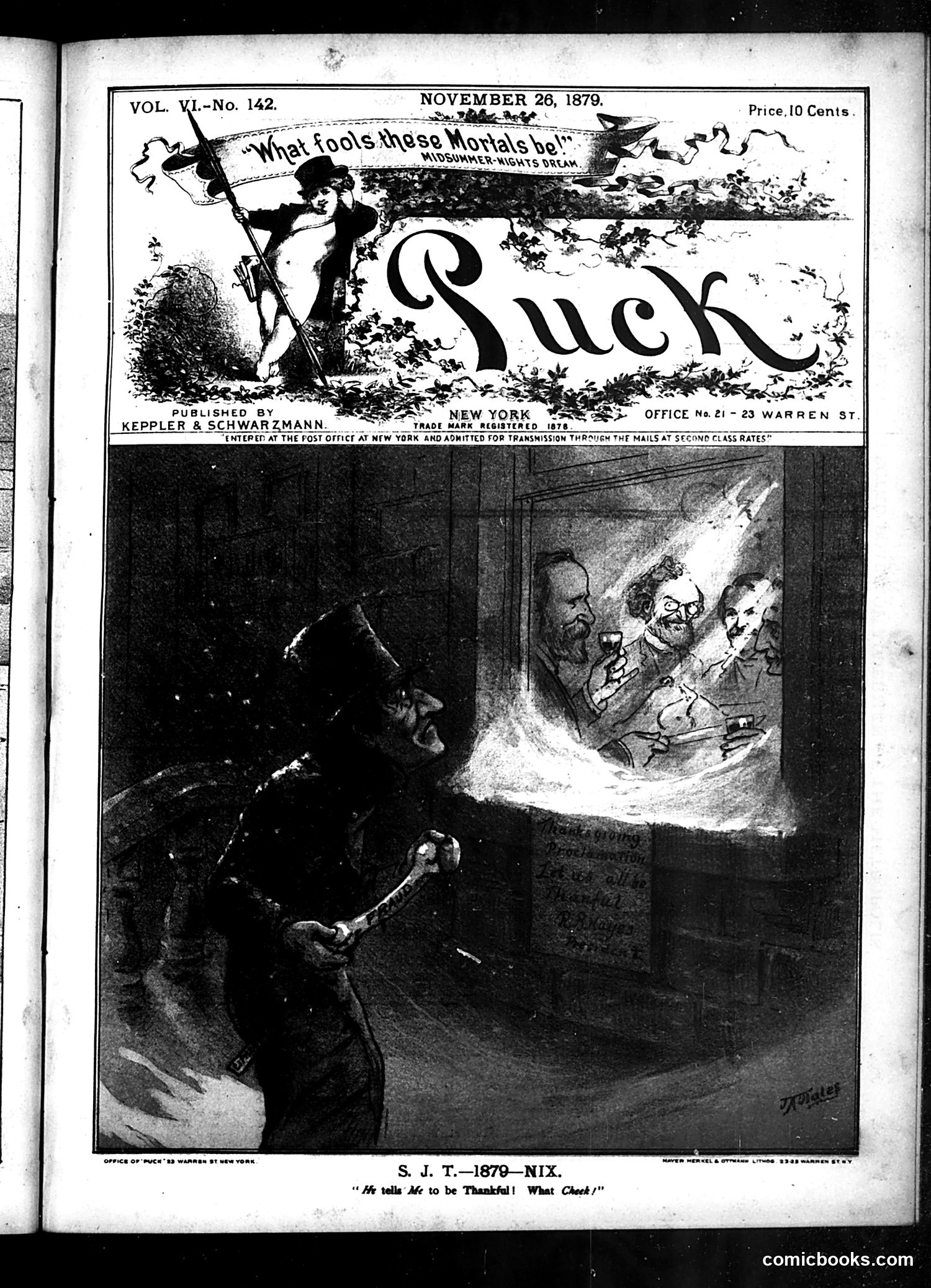
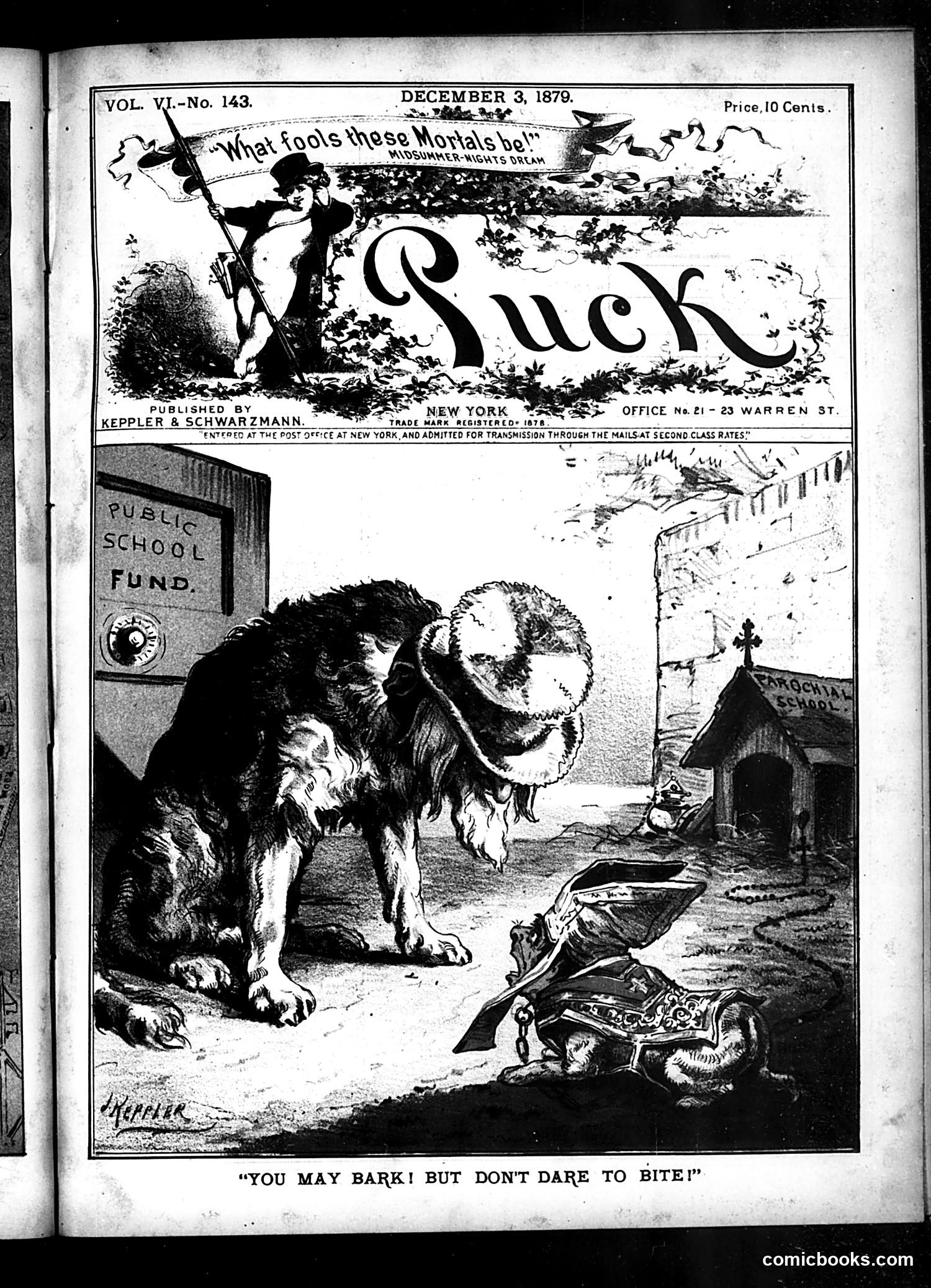
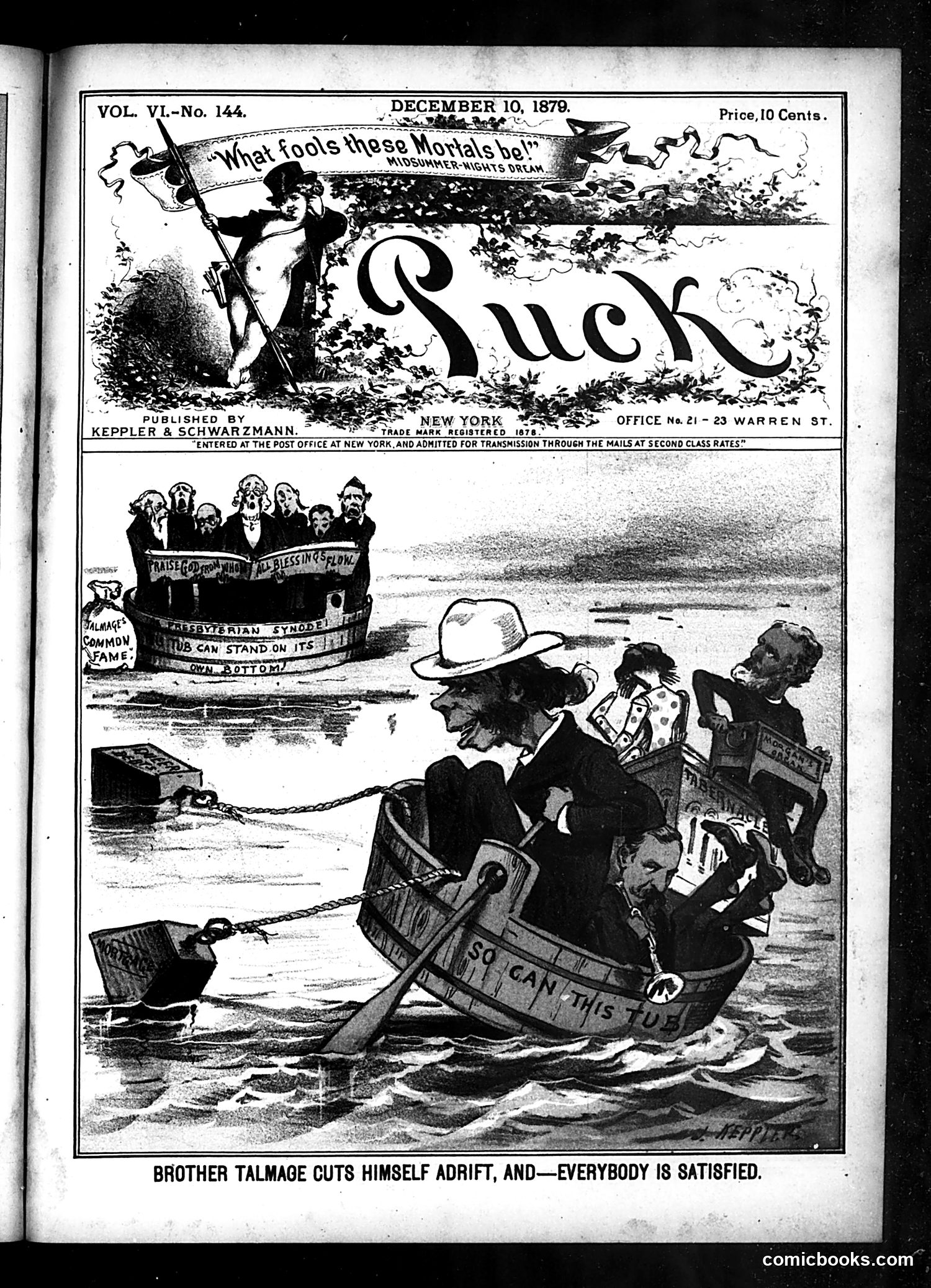
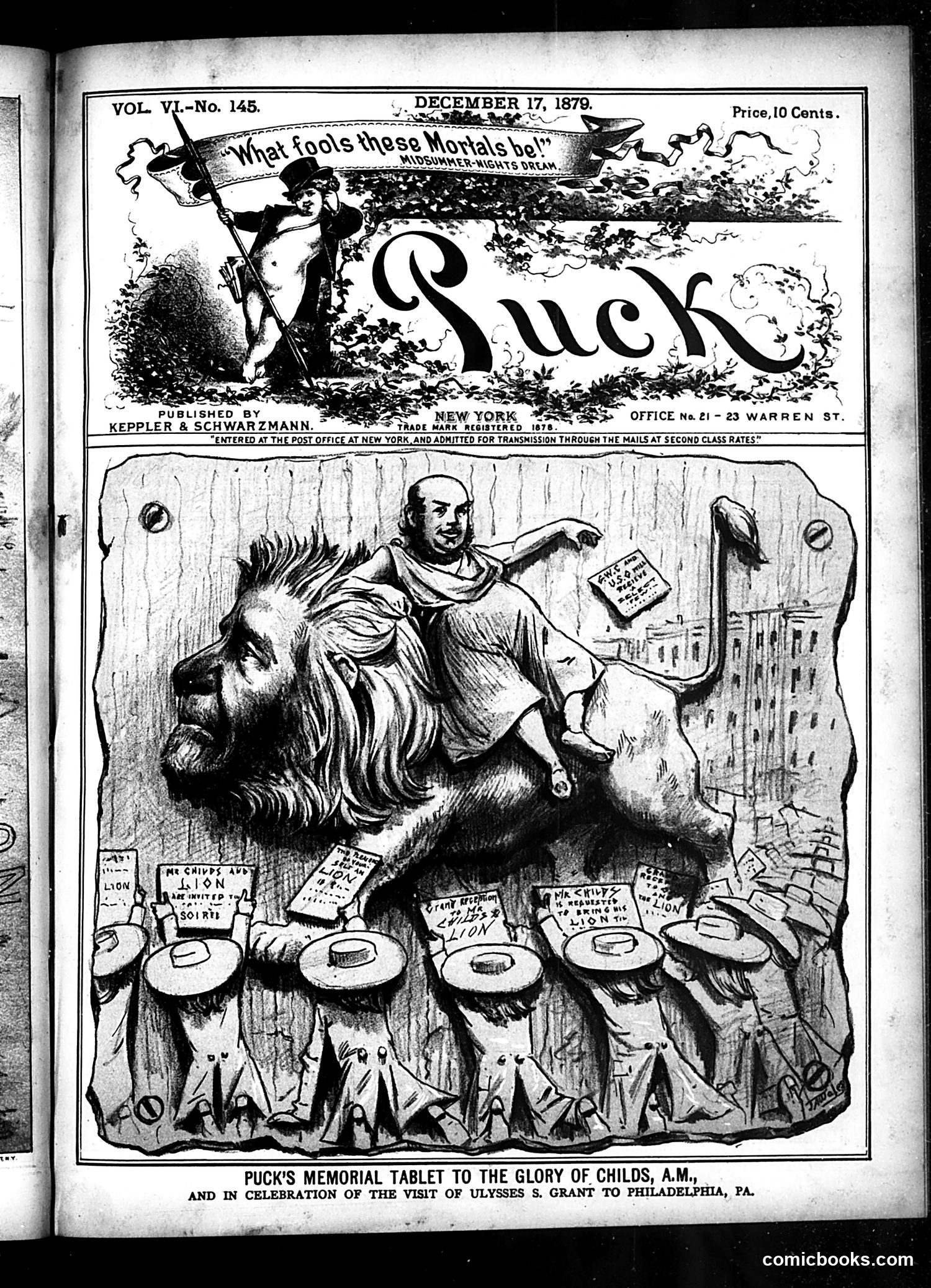
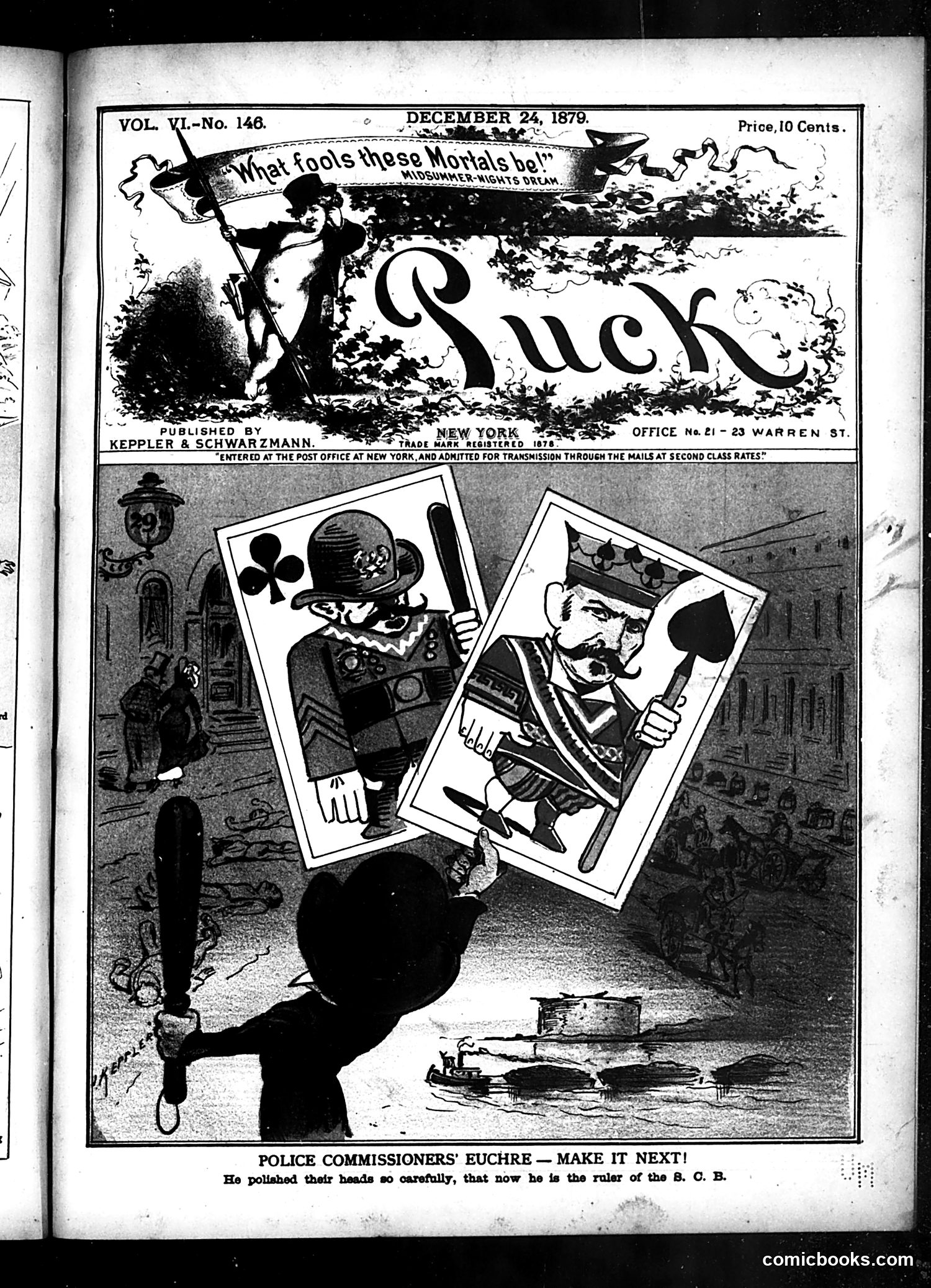
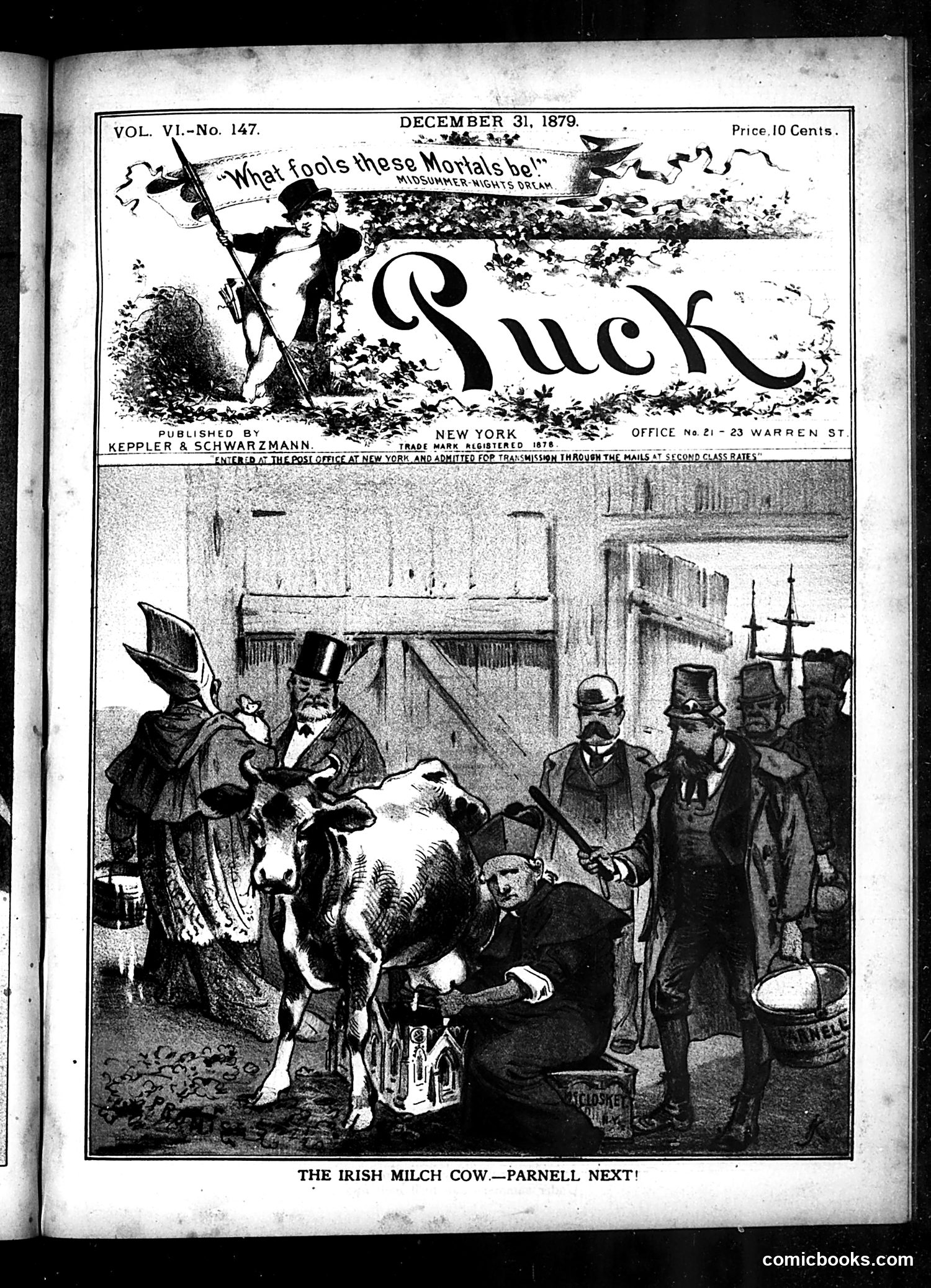
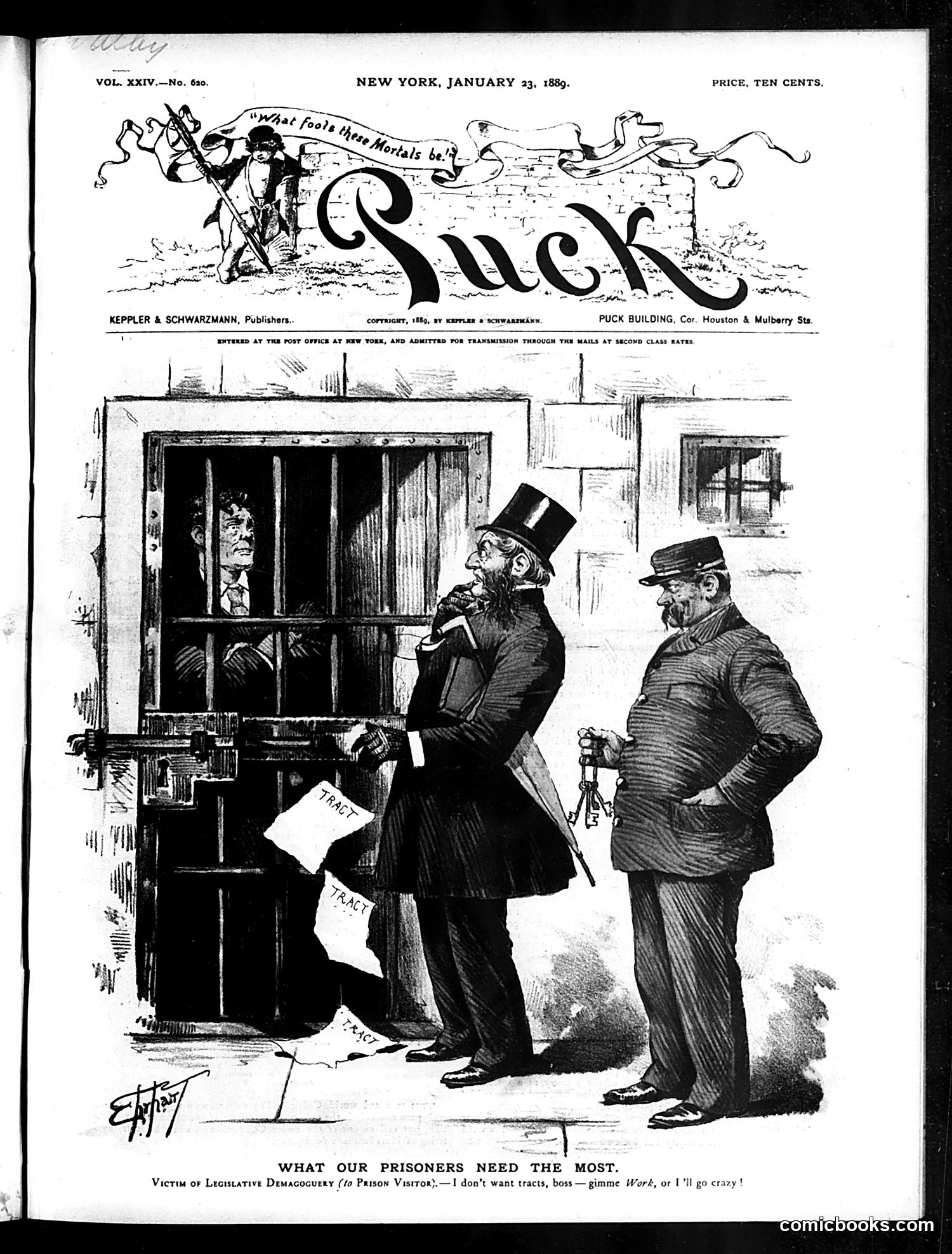
A timeline
- 1876Joseph Keppler launches a German-language Puck in New York.
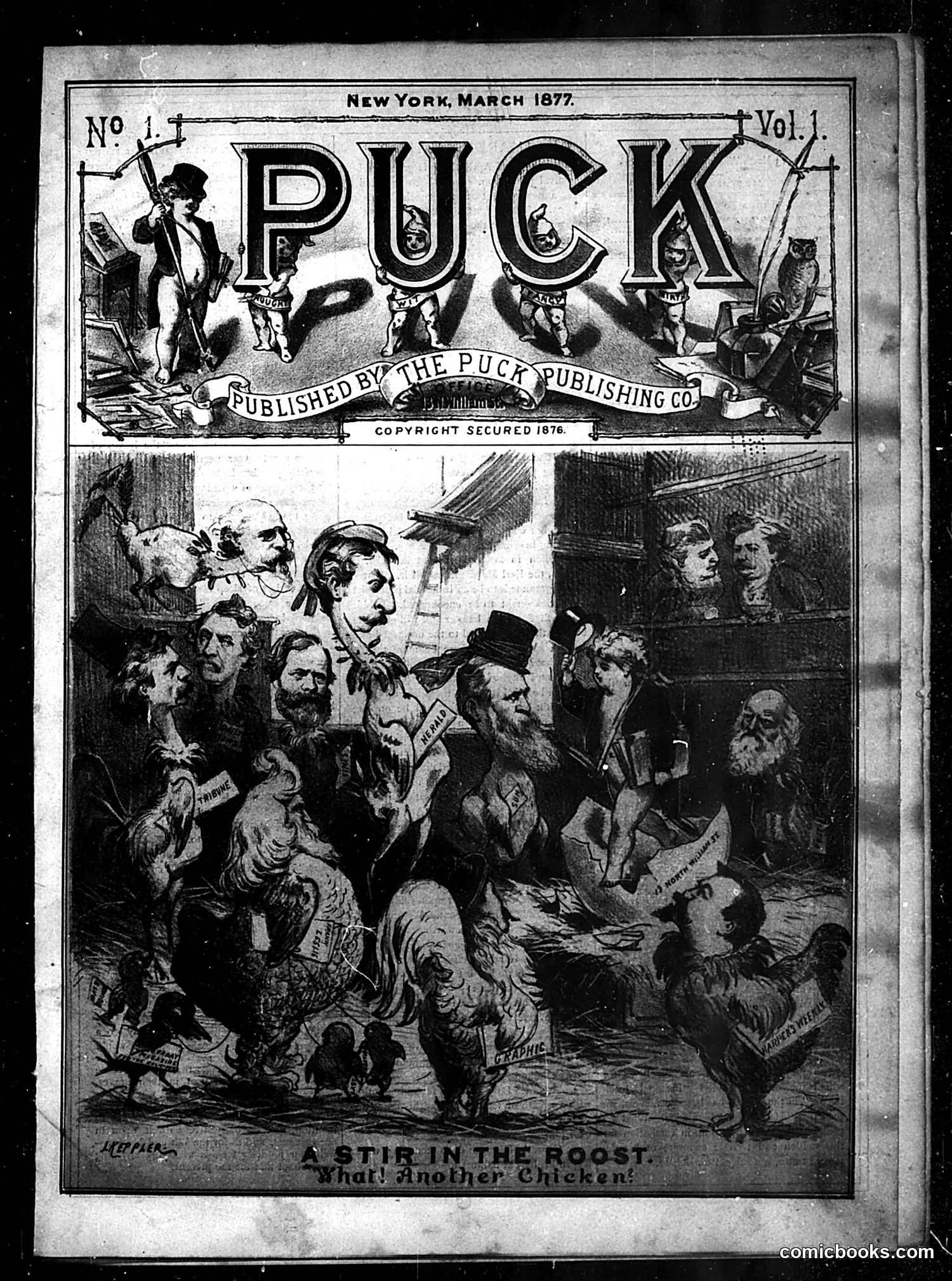
- 1877The English-language Puck debuts, priced at ten cents and built around color.
- 1884Gillam's "Tattooed Man" cartoons batter James G. Blaine; Cleveland wins, and Puck's influence peaks.
- 1889Keppler's "The Bosses of the Senate" runs, an enduring image of Gilded Age corruption.
- 1894Joseph Keppler dies; his son Udo carries on the magazine.
- 1896Puck publishes its 1,000th number and draws its own apotheosis.
- 1904Udo Keppler's "Next!" casts Standard Oil as an all-grasping octopus.
- 1917Now Hearst-owned, Puck appears in a spare modern style far from its chromolithograph heyday.
- 1918Puck ceases publication.
Puck lasted a little over forty years, and for most of them it did something no one had managed before: it made the color political cartoon a weekly national habit. The magazine could be generous and it could be cruel. It fought monopolies and machine bosses with real nerve, and it trafficked, like its era, in caricature that has not aged well. Both are here on the same pages. What holds up is the conviction behind the drawings, the belief that a single well-aimed picture could do the work of a thousand editorials, and now and then decide an election. The trusts Puck fought were broken up. The bosses it mocked are gone. The octopus, the money-bag senator, the candidate caught in his own record: those it left to us, and every editorial cartoonist since has been working in Keppler's shop.