
A complete issue · 16 pages · 1877
Puck — September 19, 1877
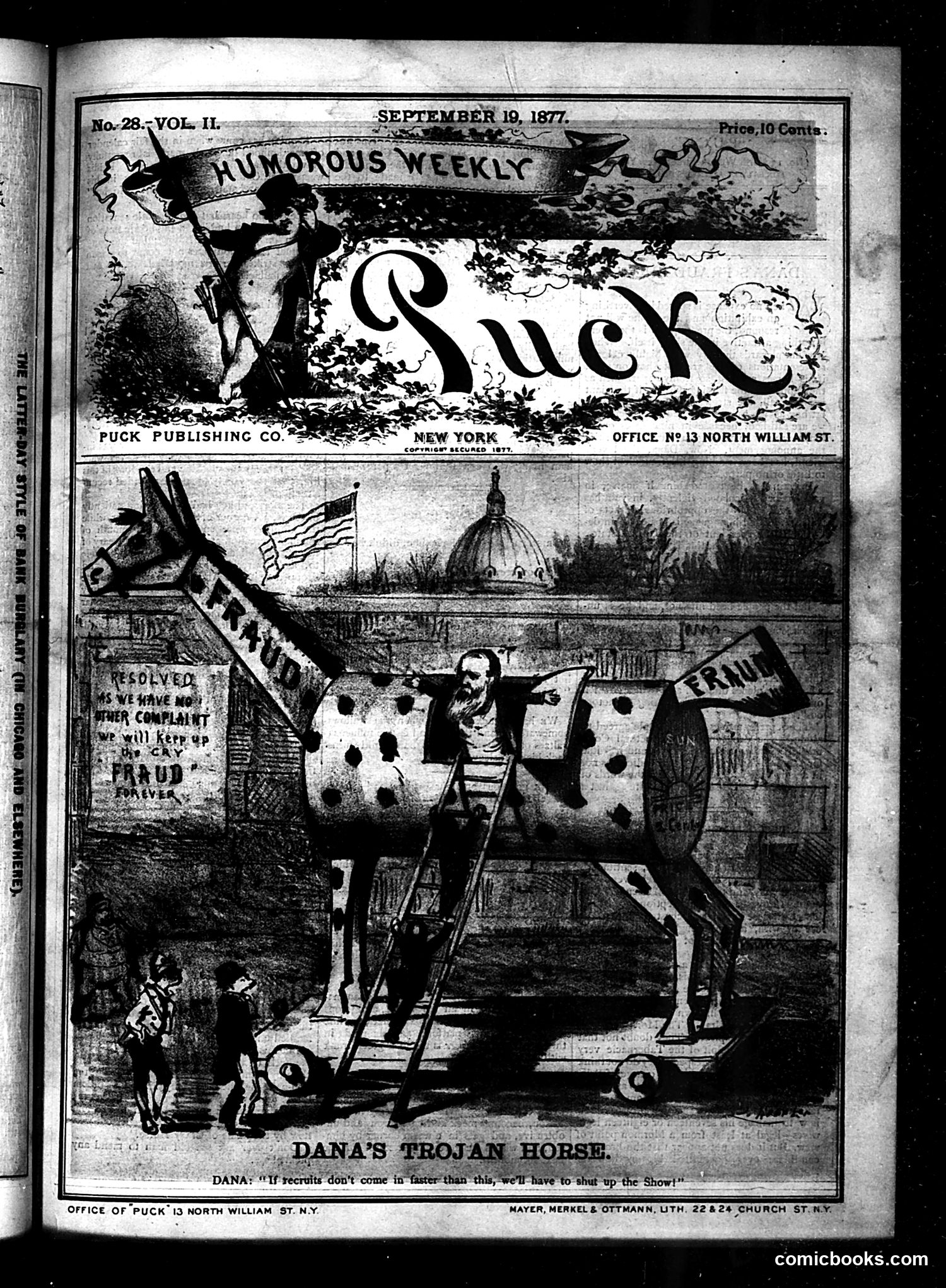
This political cartoon satirizes **Charles Dana**, editor of the New York Sun newspaper, depicted as a man perched on a giant donkey labeled with various criticisms ("Fraud," "Crime," etc.). The donkey itself appears to be a "Trojan Horse"—a deceptive device—positioned before the Capitol building with an American flag. The sign reads: "Resolved: We have not been Honest we will keep up the Show!" and Dana declares: "If recruits don't come in faster than this, we'll have to shut up the Show!" The cartoon mocks Dana's newspaper for allegedly using deception and dishonesty while claiming reform. The Trojan Horse metaphor suggests the Sun's editorial stance conceals harmful intent beneath a facade of patriotic legitimacy. The satire targets journalistic credibility and political manipulation of the Reconstruction era.
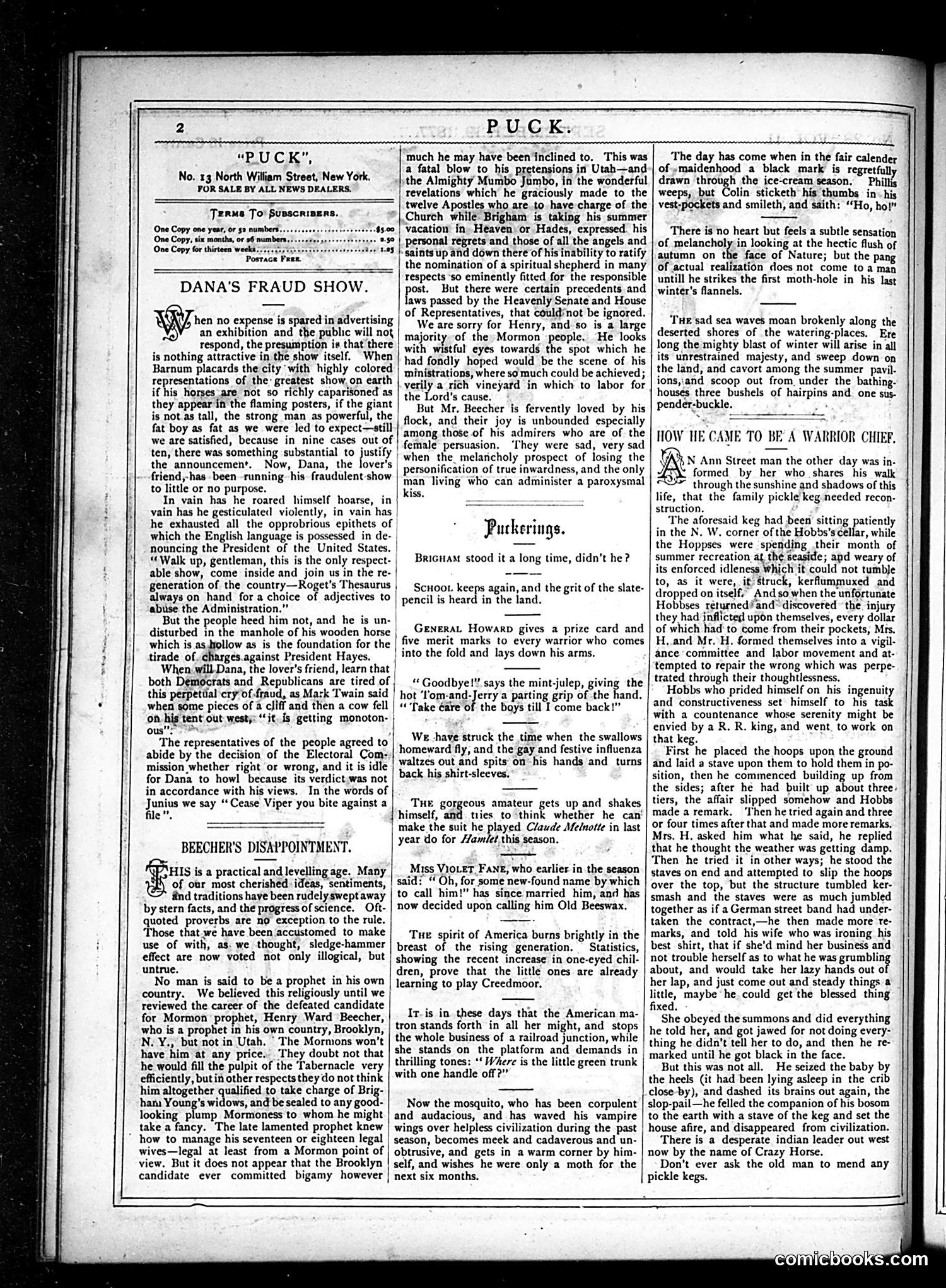
This page contains several satirical articles rather than visual cartoons. The main pieces include: **"Dana's Fraud Show"**: Satirizes Charles A. Dana's newspaper advertising practices, mocking his use of "highly colored representations" to promote businesses. The satire suggests Dana profits from false advertising while claiming moral authority. **"Beecher's Disappointment"**: References Henry Ward Beecher, the famous Brooklyn preacher, apparently criticizing his inconsistency regarding Mormon polygamy—he condemned it in Utah but allegedly tolerated similar practices among his own followers. **"How He Came to Be a Warrior Chief"**: A humorous anecdote about an ordinary man who became an "Indian leader" named Crazy Horse, likely mocking both Native American stereotypes and Americans' romanticization of frontier mythology. The page targets hypocrisy among prominent public figures through satirical commentary rather than visual caricature.
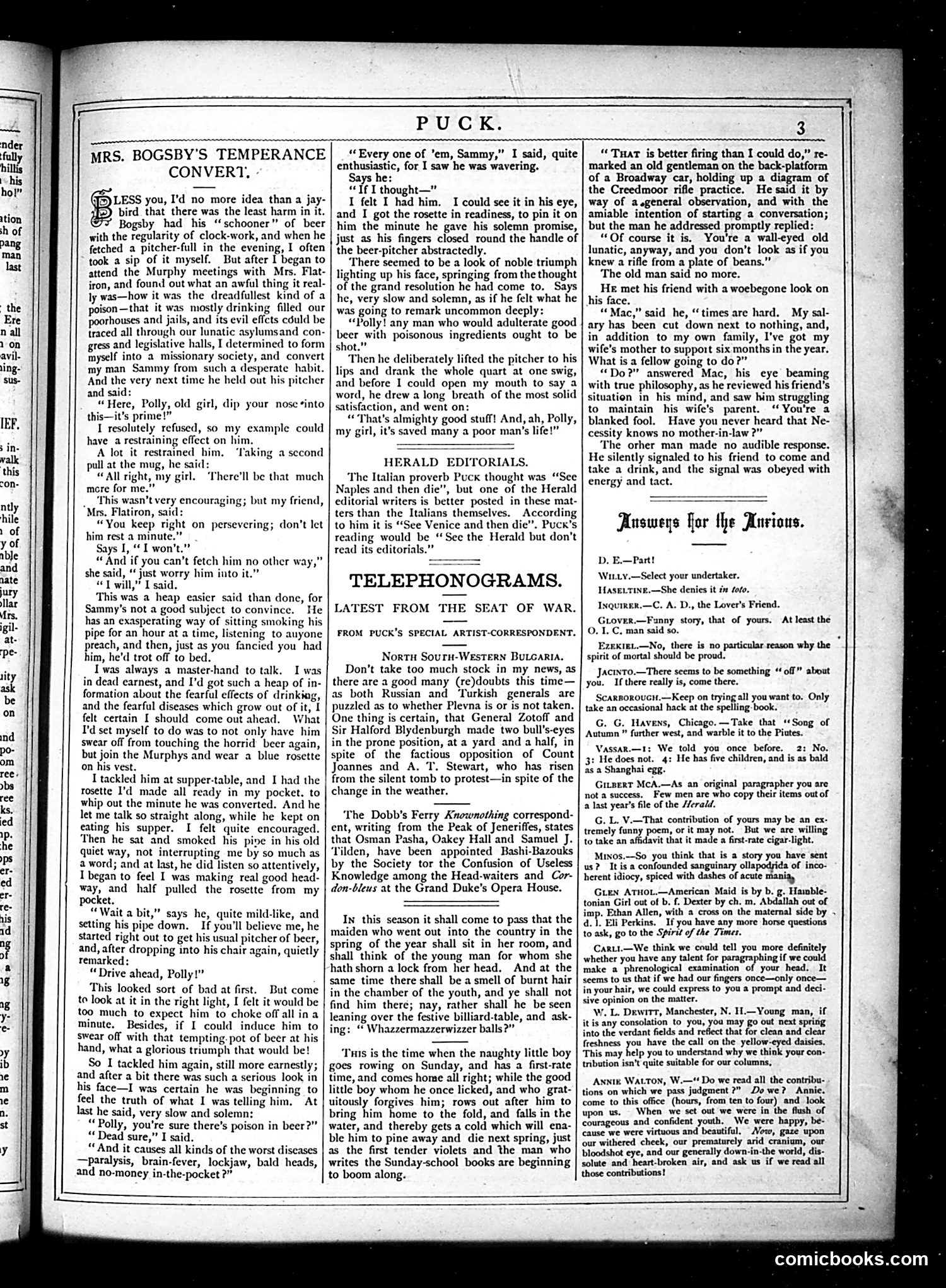
This page contains three distinct sections: 1. **"Mrs. Bogsby's Temperance Convert"** - A narrative story (not a cartoon) about a woman who converts her heavy-drinking husband to temperance through clever manipulation, eventually getting him to join a temperance society. 2. **"Herald Editorials"** - Brief editorial commentary, including a joke about an Italian proverb ("See Venice and then die") being confused with Herald editorials. 3. **"Telephonograms" and "Answers for the Anxious"** - A advice/letters column addressing reader questions on various personal matters. The page is primarily text-based rather than illustrated. It reflects Puck's satirical approach to American social issues, particularly temperance reform, which was a significant political and moral debate of the period.
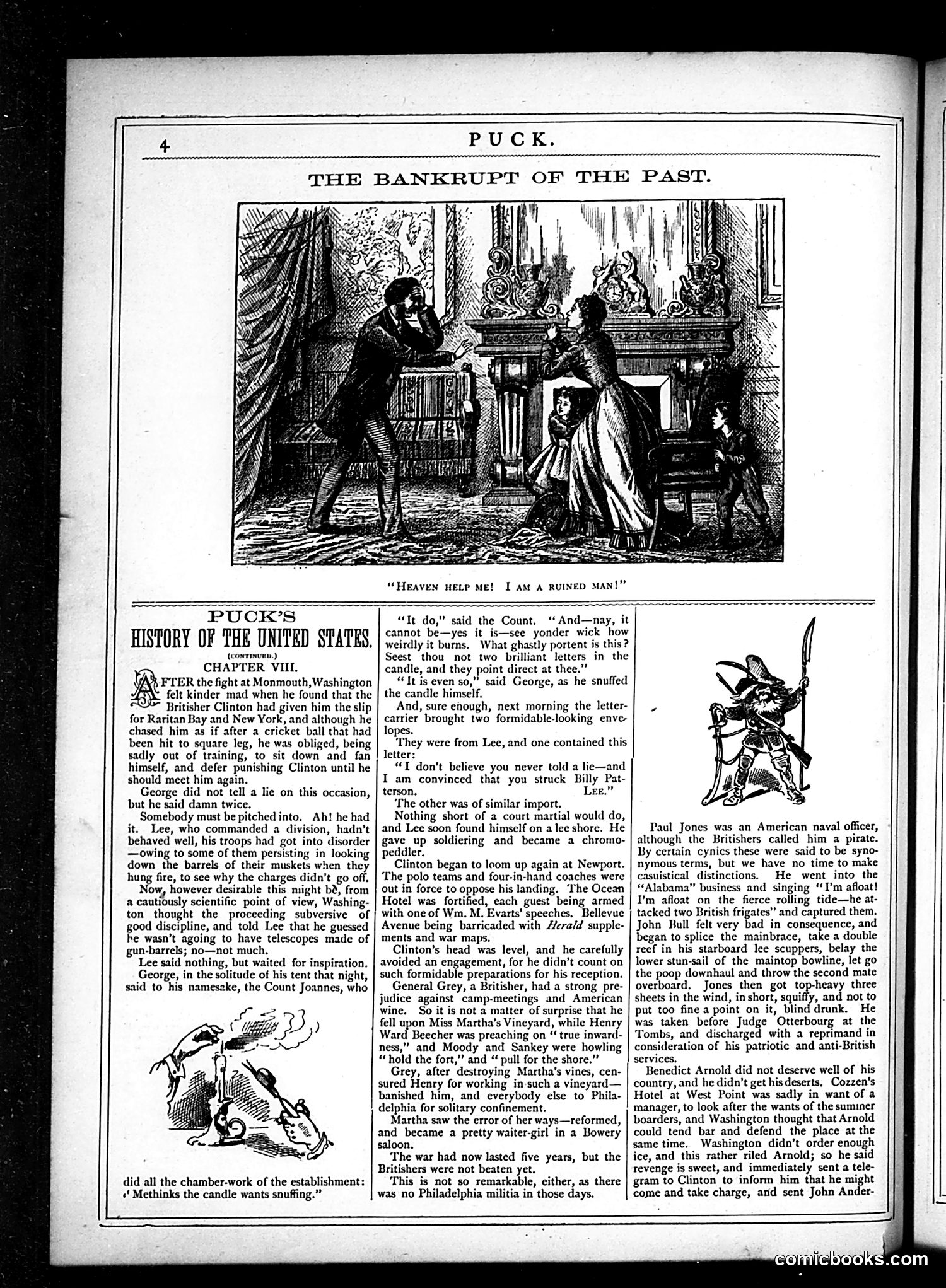
This satirical illustration depicts a financial crisis scene, likely from the late 19th century. A distressed man (center) cries "Heaven help me! I am a ruined man!" while creditors or officials surround him in an elegant interior. The accompanying text references American Revolutionary War figures—General Lee, Paul Jones, and others—in what appears to be a historical narrative about financial mismanagement and military conduct. The satire seems to critique either failed financial ventures or the legacy of historical figures whose reputations or fortunes have collapsed. The cartoon's title "The Bankrupt of the Past" suggests Puck is mocking someone whose former prestige or power has evaporated, using historical allusions to heighten the irony of their current ruin.
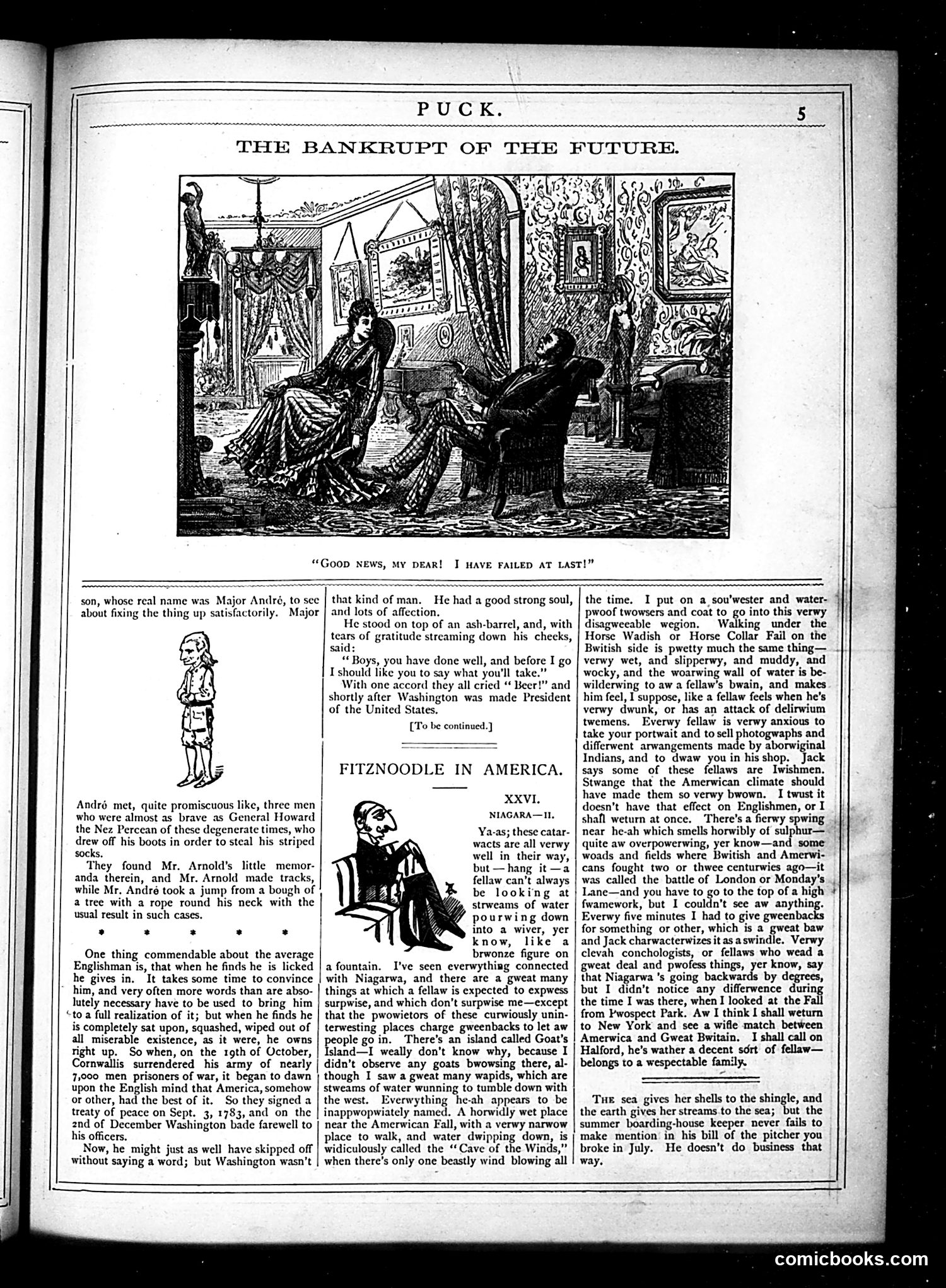
This cartoon satirizes an unnamed wealthy man (identified only as "Major André") who appears to be facing financial ruin. The illustration shows him in an ornate, lavishly decorated interior, conversing with what appears to be a creditor or financial advisor. The satire targets excessive wealth and poor financial management among the elite. The caption—"Good news, my dear! I have failed at last!"—ironically suggests relief at bankruptcy, perhaps mocking how wealthy individuals escape consequences through legal financial maneuvering that ordinary citizens cannot access. The accompanying text discusses various American travels and observations, including references to Niagara Falls and the "Cave of the Winds," suggesting this may critique American materialism and financial excess during the Gilded Age period when such satirical commentary was common in Puck magazine.
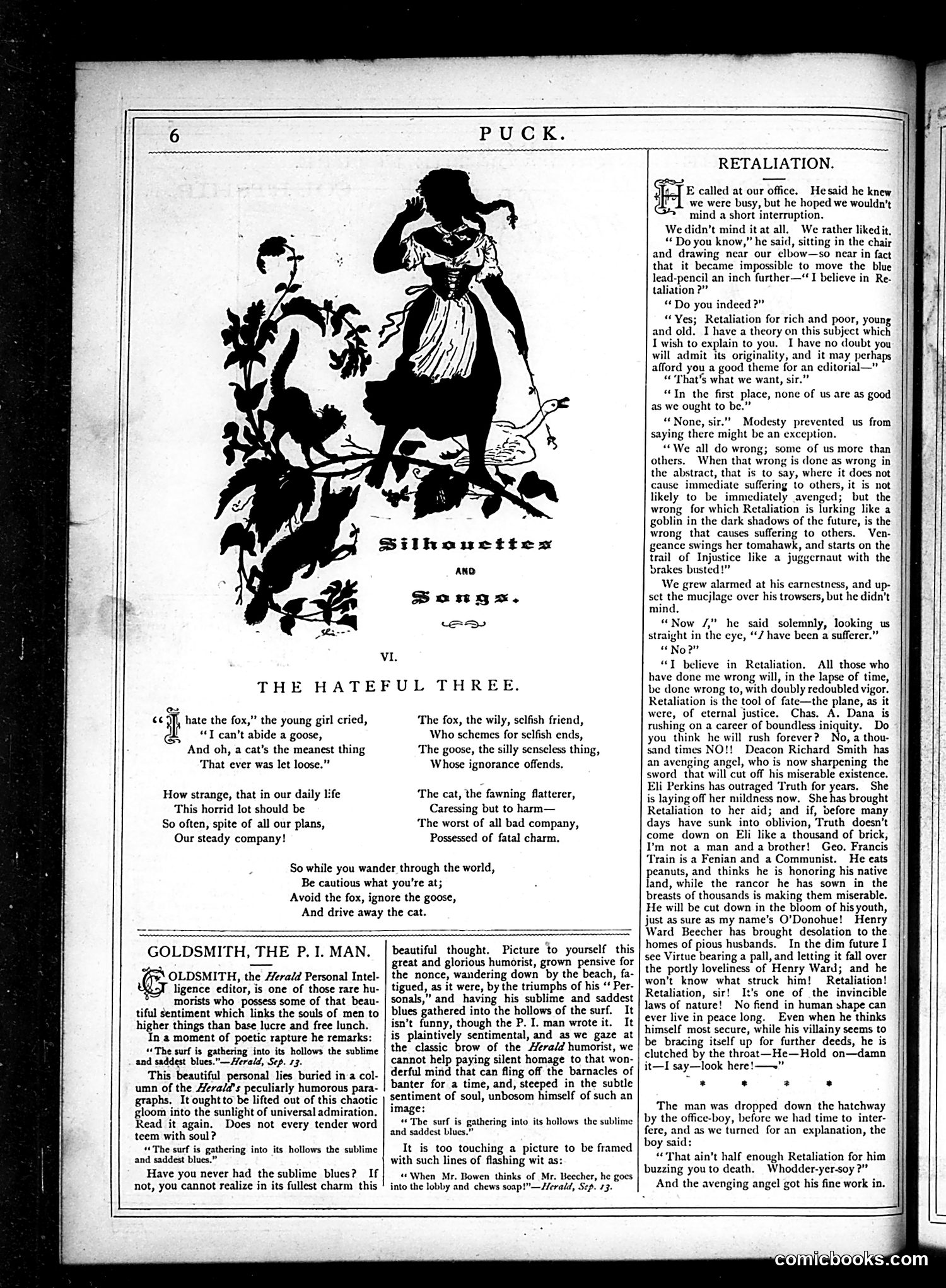
The silhouette illustration depicts a woman striking a man with a broom or stick while he cowers, labeled "Silhouettes and Songs." The accompanying article "Retaliation" presents a philosophical debate about revenge. The writer argues against retaliatory violence, using vivid metaphors: retaliation is "a goblin in the dark shadows" and "like a juggernaut with the brakes busted." The piece references specific contemporary figures—Eli Perkins, Deacon Richard Smith, and Ward Beecher—apparently involved in recent scandals or wrongs. The poem "The Hateful Three" satirizes destructive character types: the fox (selfish schemer), the goose (foolish person), and the cat (deceitful flatterer). Below, "Goldsmith, the P.I. Man" celebrates humorist Joel Chandler Harris, praising his gentle satire and "sublime blues" captured in his Herald work. Overall, the page explores themes of justice, revenge, and human character through literature and social commentary.
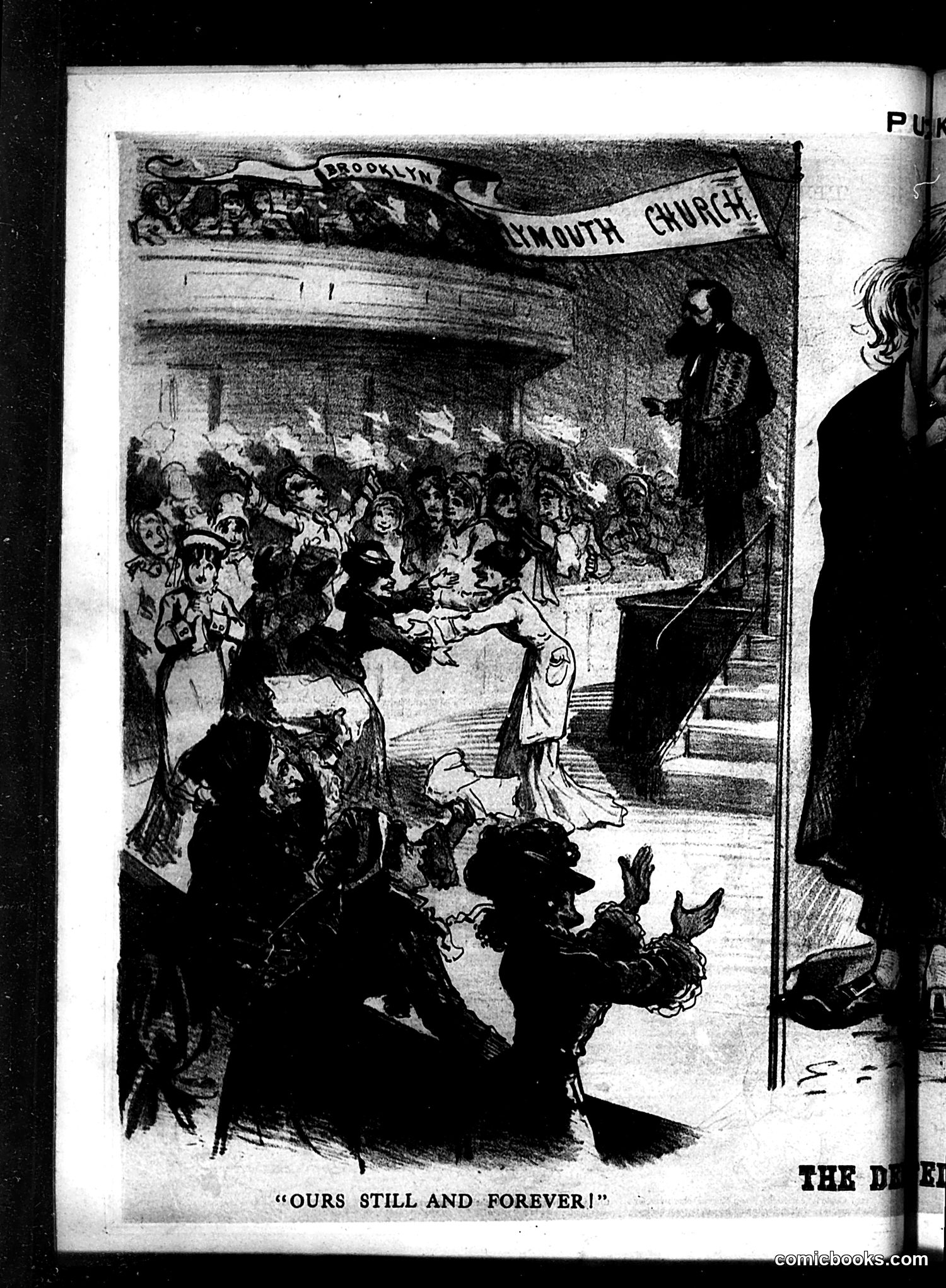
This Puck cartoon satirizes the congregation of Brooklyn's Plymouth Church, shown as a chaotic crowd of diverse worshippers. The banner reading "Brooklyn Plymouth Church" and the caption "Ours Still and Forever!" suggest this depicts a congregation asserting continued ownership or control of the church. The cartoon likely references a specific institutional dispute or leadership controversy at Plymouth Church, a historically prominent Brooklyn congregation. The crowded, somewhat undignified portrayal of the congregants—rendered in caricature—suggests Puck's satirical commentary on internal church politics or factional conflict. Without additional context identifying specific figures or dating this image, the exact nature of the dispute remains unclear, but the satire targets organizational turmoil within this well-known religious institution.
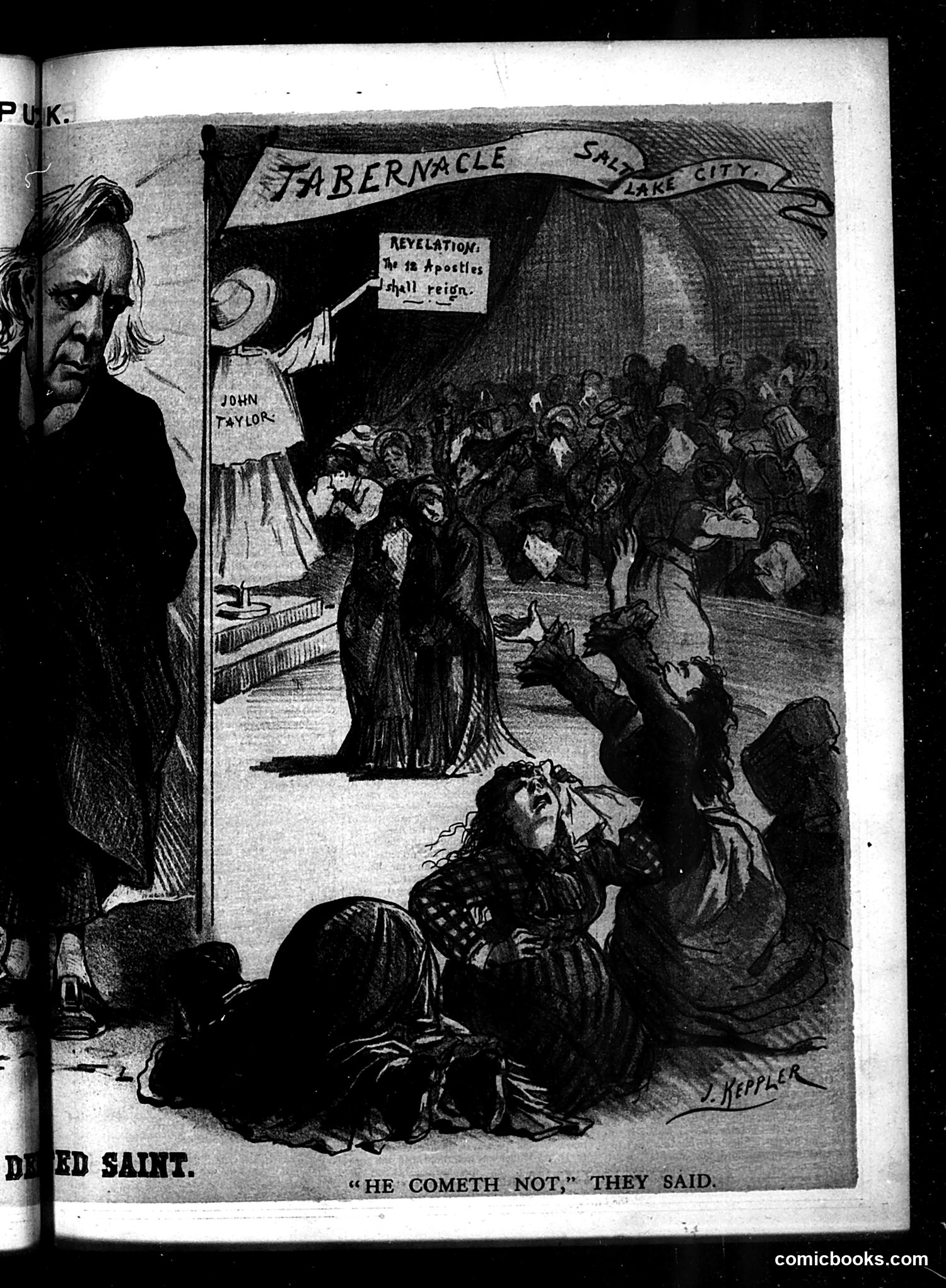
This appears to be a satirical cartoon depicting a religious scene set in "Salt Lake City" (visible on the tabernacle banner). The central figure labeled "John Taylor" stands at a pulpit displaying a sign reading "REVELATION: he as Apostles shall reign," addressing a crowd of followers below. The caption "HE COMETH NOT," THEY SAID" and the overall composition suggest this mocks Mormon leadership and doctrine, likely referencing expectations about religious prophecy or the Second Coming that failed to materialize. The figure on the left observing the scene appears to represent an outside commentator on these religious practices. This reflects 19th-century American Protestant skepticism toward Mormonism and its leadership's prophetic claims.
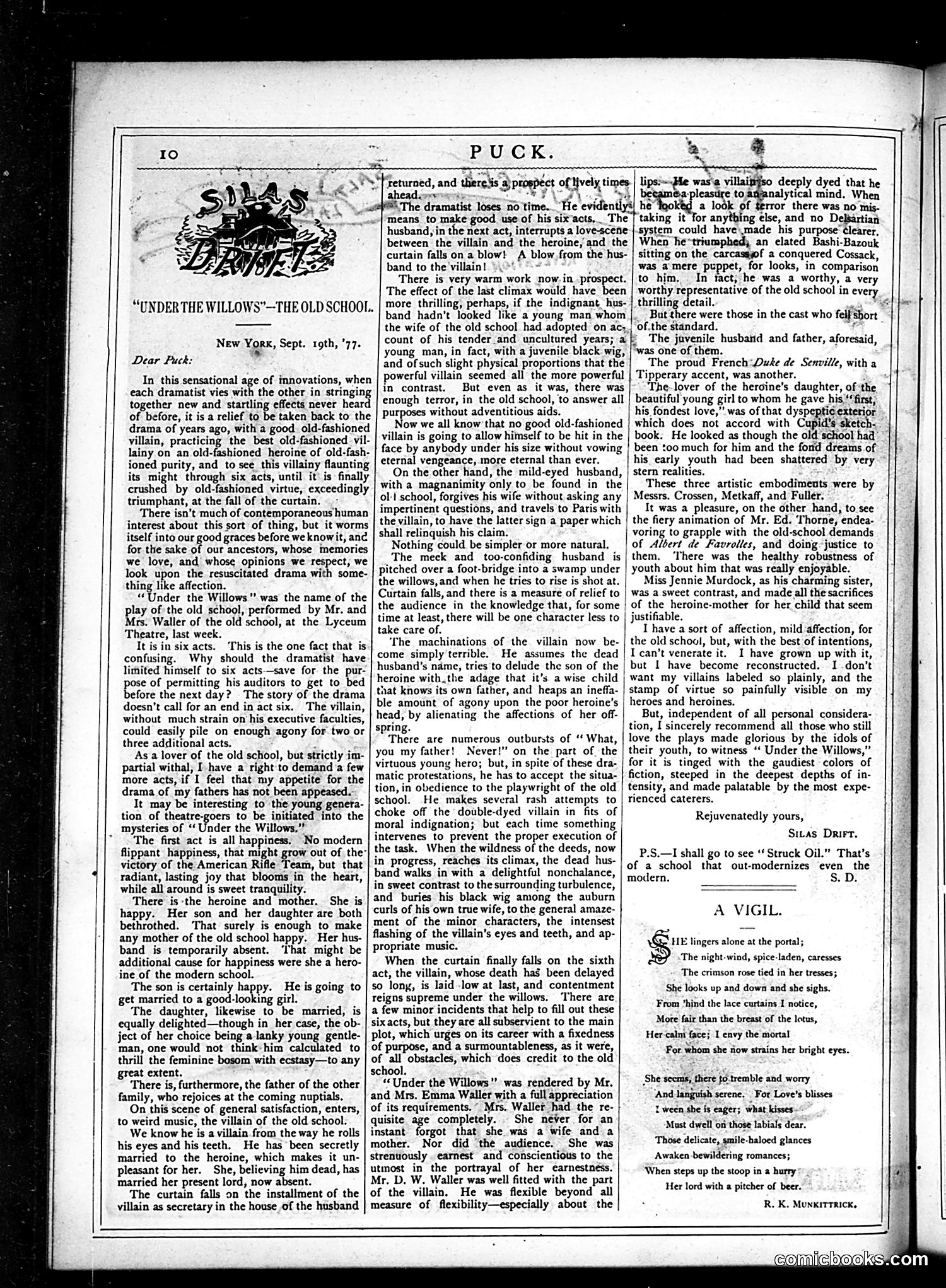
This page contains a theater review essay rather than political cartoons. The header illustration shows what appears to be a classical theatrical mask or figure, typical of Puck's decorative elements. The main content is a letter from "Silas Drift" (likely a pseudonymous theater critic) dated September 19, 1877, reviewing the play "Under the Willows" performed at an old school. The critic discusses the cast's performances, the melodramatic plot involving a villain, heroine, and moral conflicts, and evaluates the actors' abilities with both praise and gentle mockery. The page concludes with "A Vigil," an unrelated poem about a woman at a window. This is literary criticism and entertainment coverage rather than political satire.
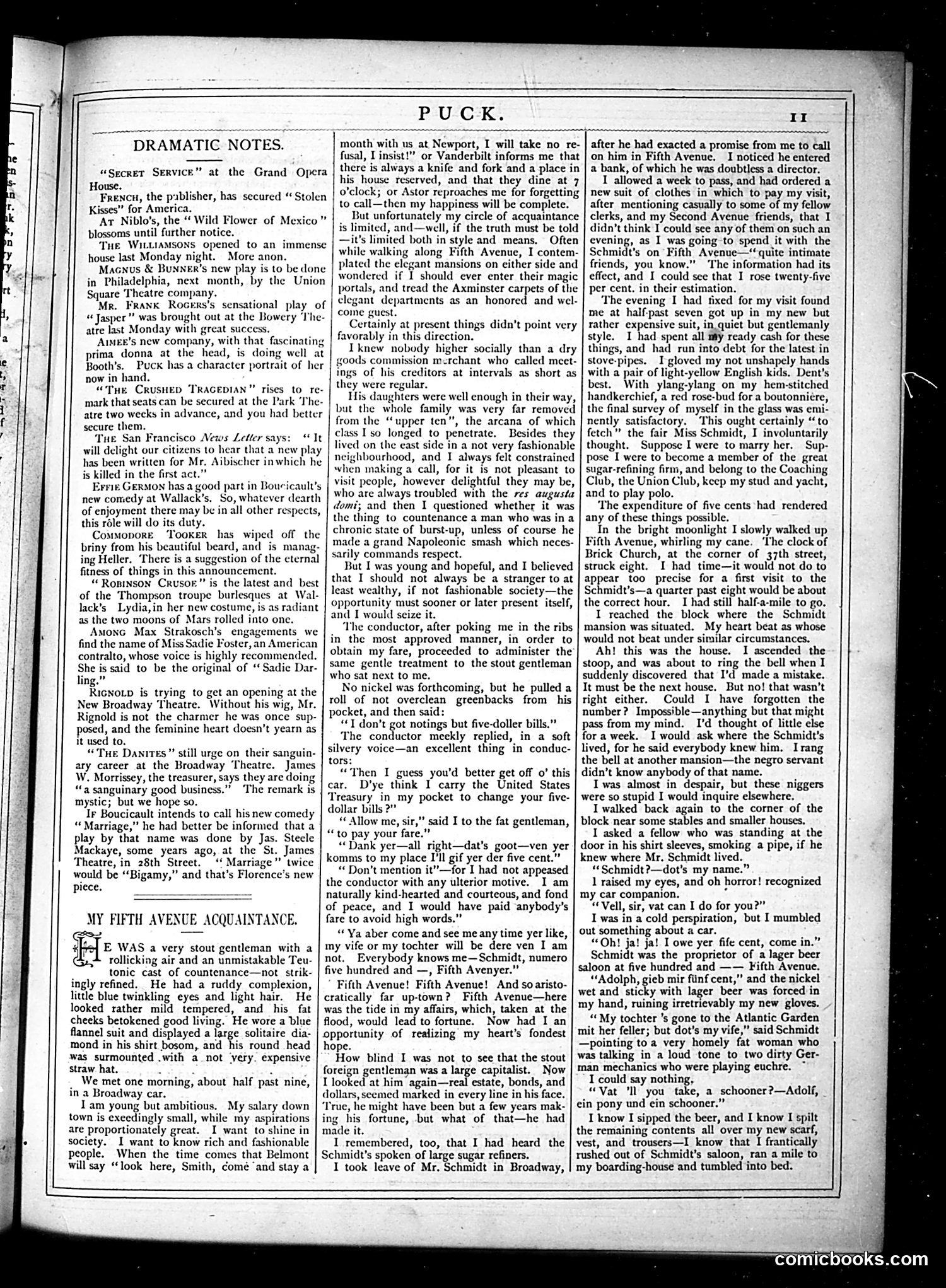
This page contains two articles with no visible cartoons or caricatures. The content includes: 1. **"Dramatic Notes"** — brief theater reviews covering productions at various venues (Grand Opera House, Wallack's Theatre, Union Square Theatre). The commentary mocks theatrical trends and society figures attending performances, including references to Fifth Avenue's wealthy elite. 2. **"My Fifth Avenue Acquaintance"** — a satirical first-person narrative about a social-climbing gentleman of modest means who aspires to wealth and status. The piece ridicules his pretensions and his encounters with a wealthy businessman named Schmidt. The satire targets Gilded Age social aspiration and the gulf between appearance and reality among New York's ambitious middle class. No specific political figures appear to be referenced.
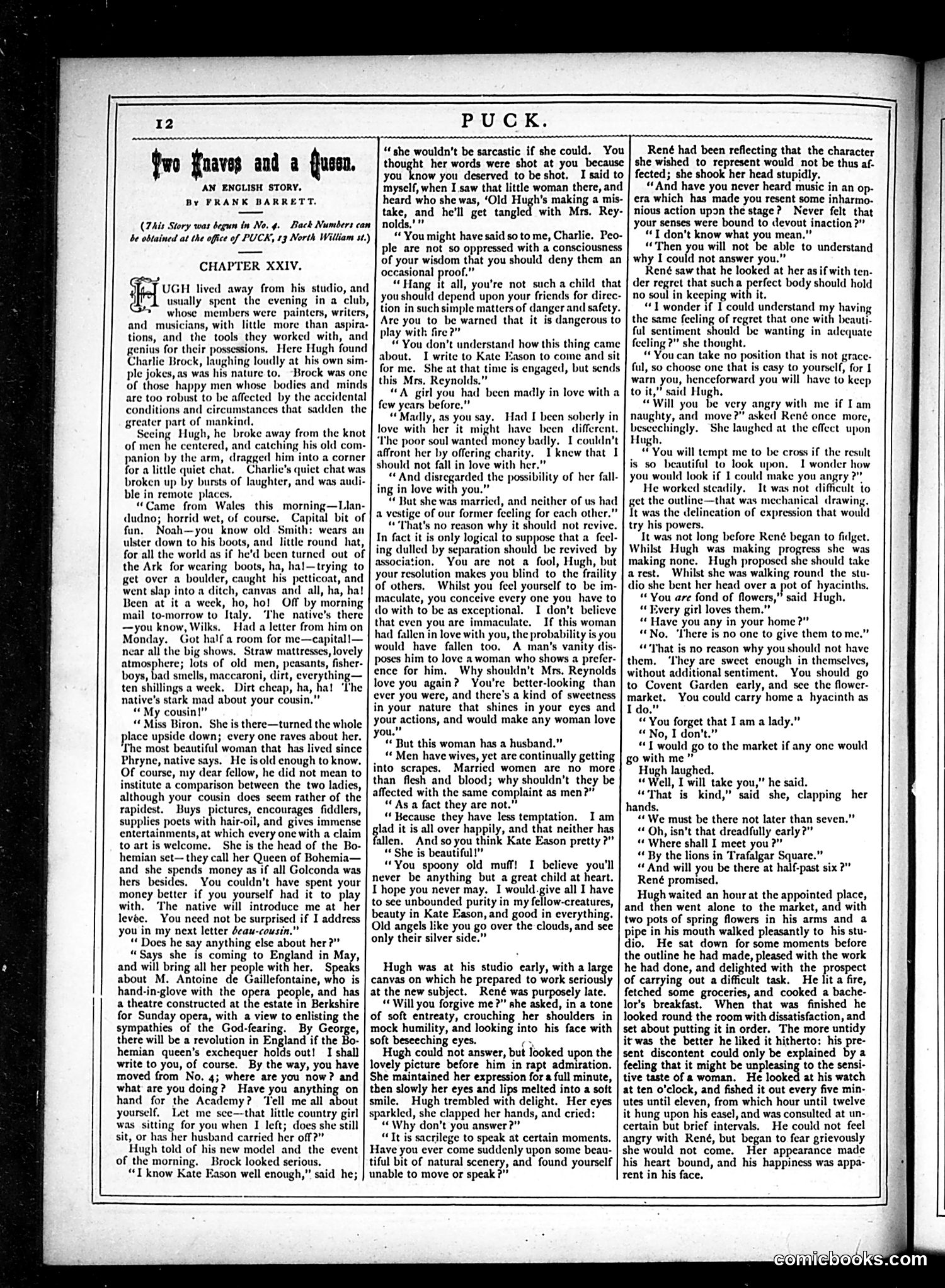
This page contains the continuation of a serialized story titled "Two Knaves and a Queen" by Frank Barrett, labeled Chapter XXIV. It appears to be primarily text rather than a political cartoon—a narrative fiction piece rather than satirical commentary. The story involves romantic drama: Hugh, an artist, receives a visit from a woman named Rene, sparking jealousy and emotional conflict with another character (Kate Eason). The dialogue centers on themes of love, jealousy, artistic life, and social propriety among bohemian artists in what appears to be Victorian-era London. Without visible caricatures or political references in the image itself, this reads as serialized fiction entertainment rather than satire. The "Queen" in the title likely refers to a woman central to the plot rather than actual royalty.
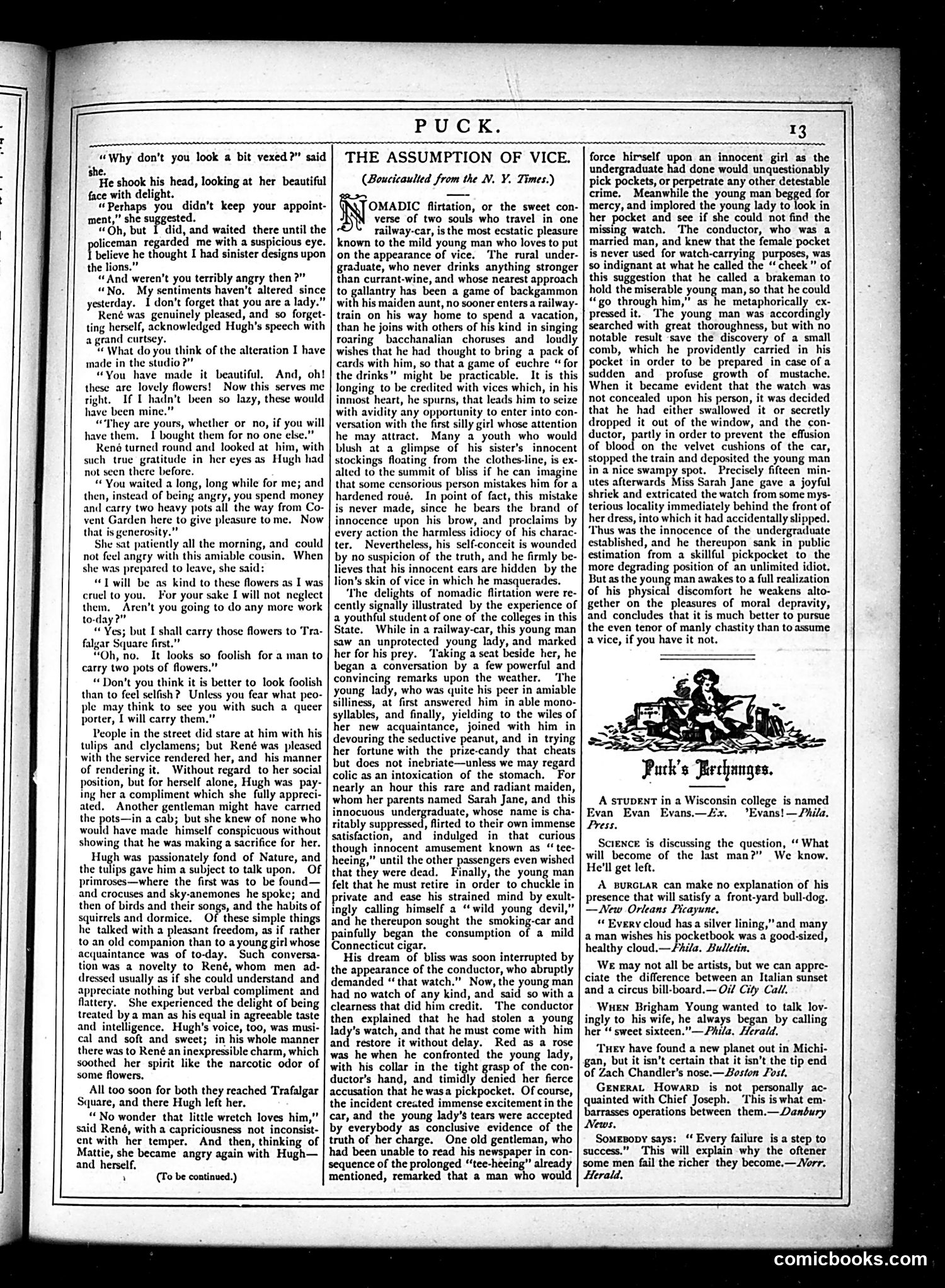
This page contains a satirical article titled "THE ASSUMPTION OF VICE" (credited to the N.Y. Times) and several shorter humorous items under "Puck's Briefings." The main article mocks young men who engage in flirtation on trains with respectable women, describing how innocent rural girls are seduced by false appearances of propriety. It satirizes how such men adopt an air of respectability while actually pursuing vice, and how their victims mistake their refined manners for genuine character. The "Briefings" section contains brief jokes about college students and social behavior—typical of Puck's format of short satirical jabs at contemporary society. The illustration shows figures in period dress engaged in casual interaction, consistent with the article's railway-car flirtation theme. Overall, this represents Puck's satirical approach to social commentary, targeting hypocrisy and moral deception in Gilded Age society.
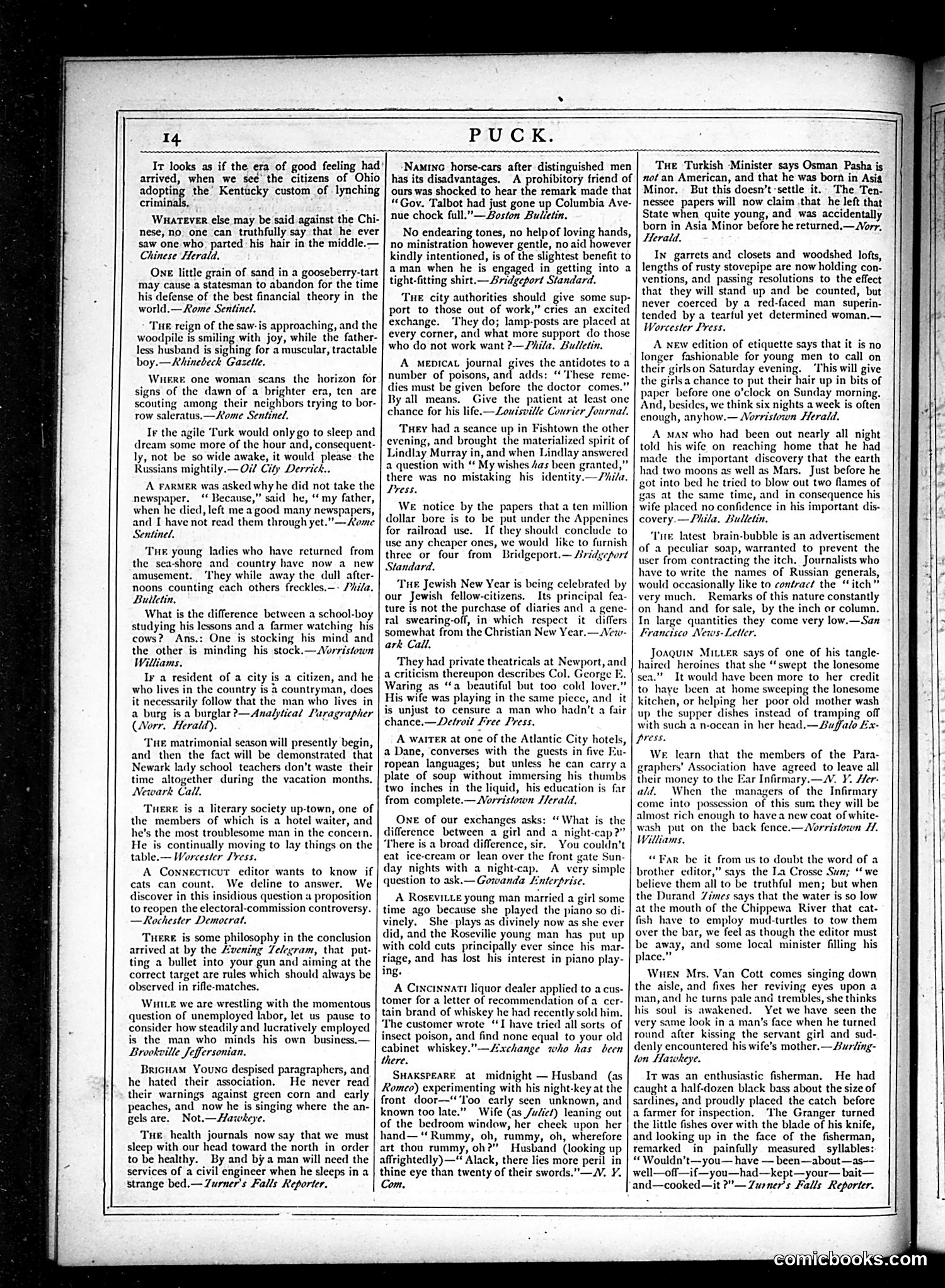
This page is primarily **text content** — a collection of brief satirical commentary items and anecdotes typical of Puck's humor section, rather than illustrated political cartoons. The items mock various contemporary subjects: Ohio's execution methods, Talbot's claims about colonial origins, newspaper exaggeration about poisons, etiquette advice, theatrical reviews, and domestic situations (marital disputes, servants, etc.). **Key satirical targets** include journalistic sensationalism, social pretension, and human folly in everyday situations. The humor relies on wordplay and social observation rather than visual caricature. Without identifying specific illustrations (which appear minimal on this page), the overall effect is **light, gossipy satire** aimed at middle-class readers—critiquing newspapers, manners, and absurd public claims through accumulated anecdotes rather than grand political commentary.
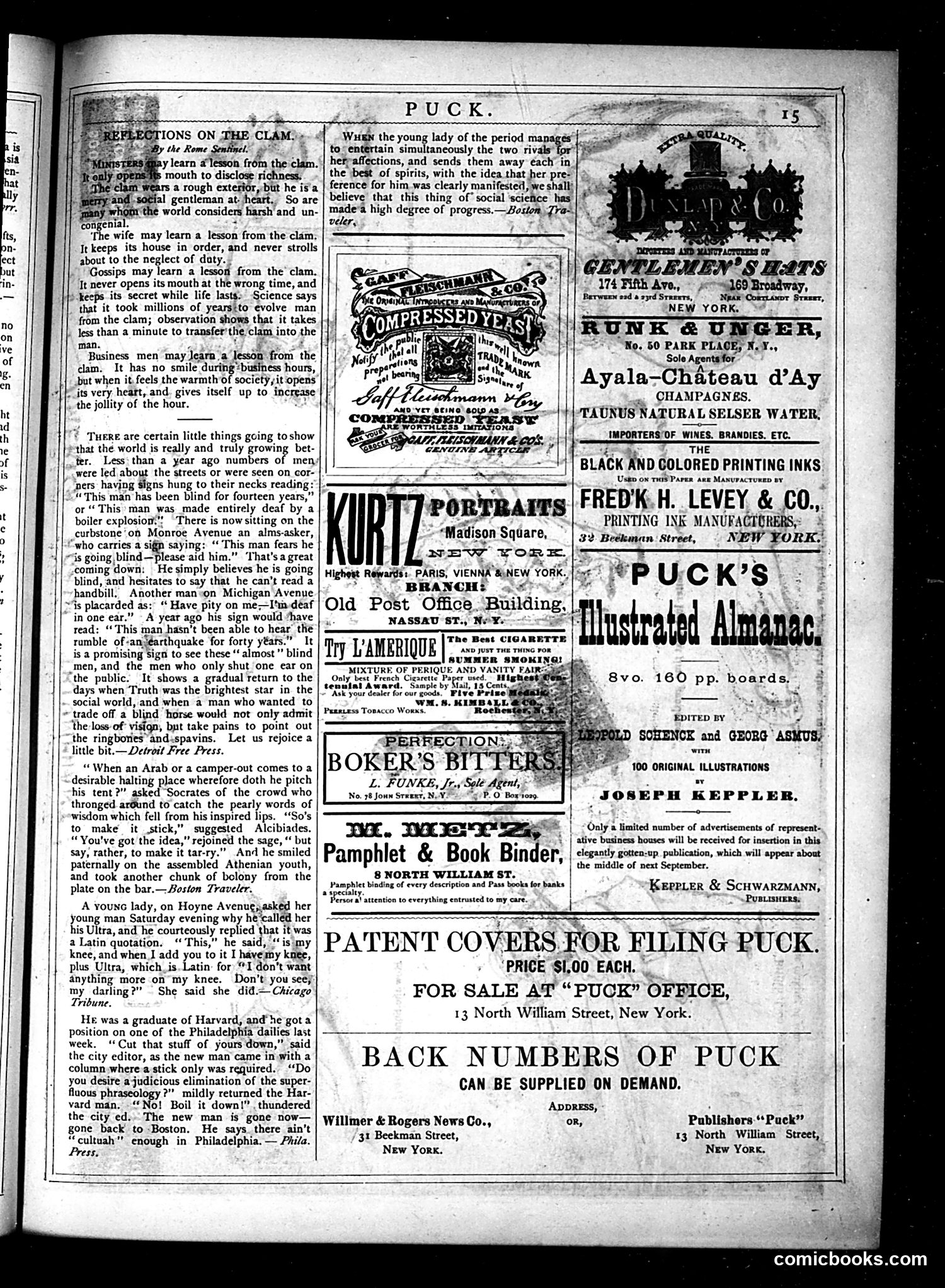
This page is primarily **advertising and announcements** rather than political satire. The visible content includes: - **"Reflections on the Clam"** by the Rambler Skeptic: A humorous essay satirizing social pretense through clam imagery, suggesting people learn little from observation and business lacks warmth despite professed ethics. - **Multiple advertisements** for contemporary products: Fleischmann's yeast, Kurti Portraits photography, champagne, printing inks, and patent filing covers. - **Puck's Illustrated Almanac announcement** with 100 illustrations by Joseph Keppler. The Rambler essay uses the clam as a vehicle for social criticism—mocking both upper-class affectation and business culture's hollow sentimentality. However, the page functions primarily as a **magazine back matter** mixing lightweight humor with commercial notices rather than presenting direct political cartooning.
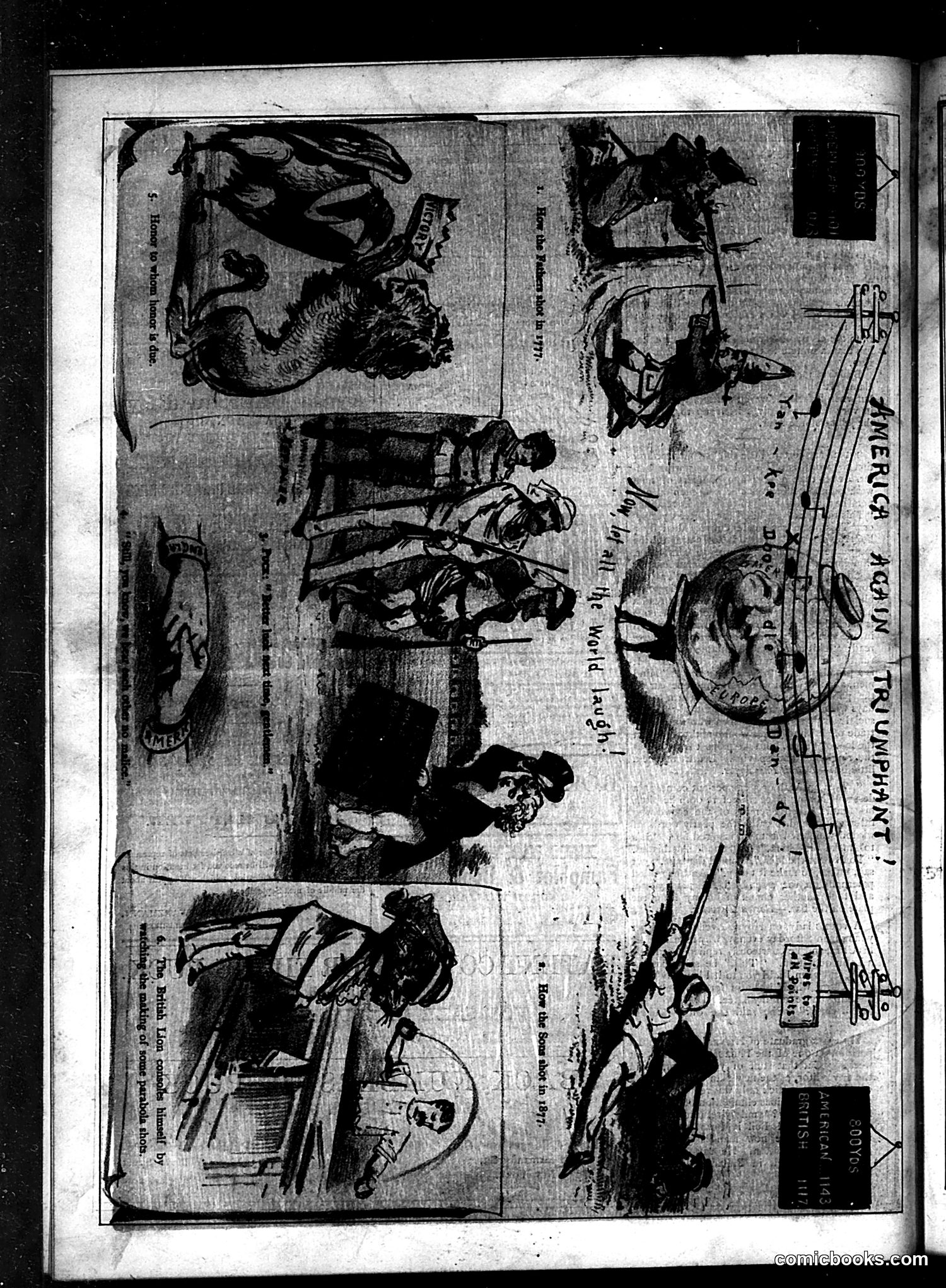
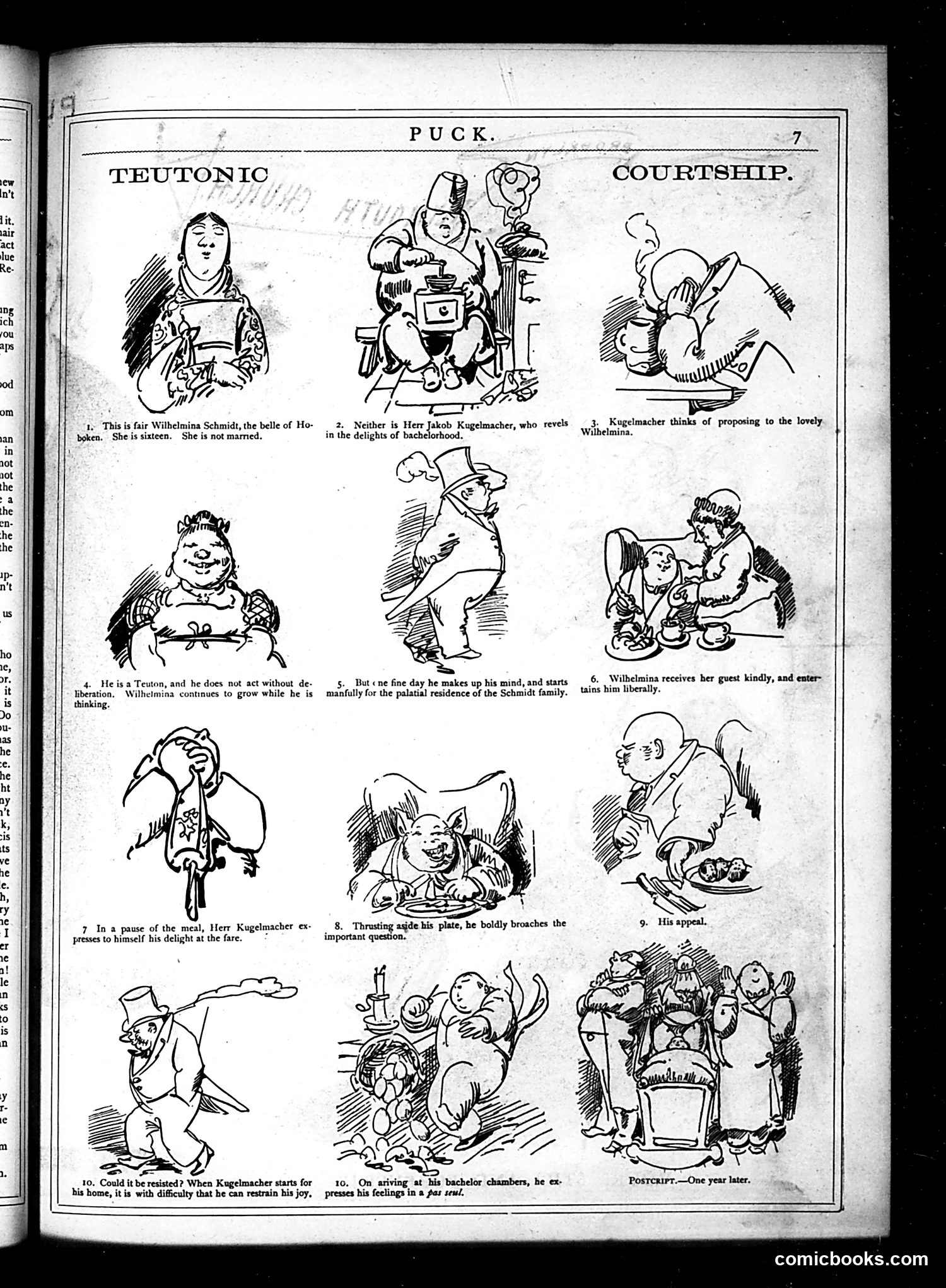
I can see this is a page from *Puck* magazine, but the image quality and orientation make it difficult to read the text clearly or identify specific figures with certainty. The page appears to contain multiple cartoon panels arranged vertically, showing various characters in what seems to be political or social satire typical of *Puck*'s style. Without being able to reliably read the captions or clearly identify the specific individuals depicted, I cannot accurately explain the satire's target or meaning to a modern reader. To provide accurate historical context about the figures, events, and jokes referenced, I would need either a higher-resolution image or clearer text that I can confidently read. I apologize that I cannot be more specific while maintaining the accuracy standard you've requested.