
A complete issue · 16 pages · 1877
Puck — May 1877
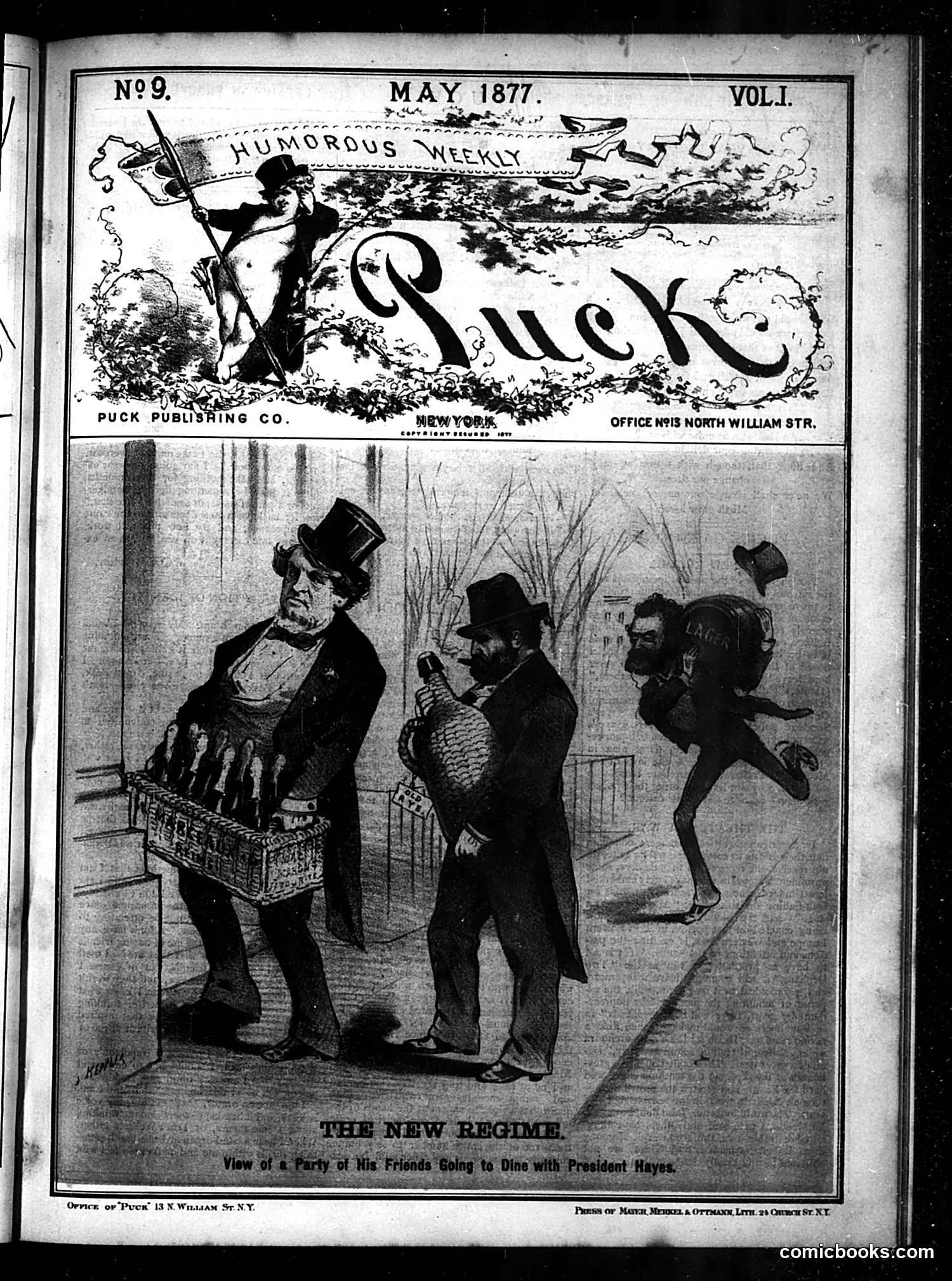
This cartoon satirizes President Rutherford B. Hayes's social policies following his contested 1876 election. The caption reads "View of a Party of His Friends Going to Dine with President Hayes." The joke appears to target Hayes's known temperance stance—he famously banned alcohol from White House functions. The figure on the left carries what looks like a wine basket or drinks case, while the middle figure holds what appears to be a bottle, and the third rushes ahead. The satire suggests that Hayes's friends must now *smuggle in* their own alcohol to presidential dinners, mocking his strict moral policies as inconvenient and impractical. "The New Regime" emphasizes that Hayes represented a departure from previous presidential social customs—a point of political criticism among those who saw his puritanism as excessive reform.
This page consists primarily of **text content rather than cartoons**: an "Ode to the Secretary of State," satirical commentary on theatrical war depictions, and reader letters. The main editorial piece ("The Theatre of War") critiques American theatrical managers for staging European war dramas while the actual conflict unfolds abroad. It appears to satirize productions capitalizing on current events—referencing performers like John Bull, Bismarck, and Uncle Sam as character types rather than specific individuals. The "Letters from Puck's Readers" section includes a humorous piece about a new economical drink (a 15-cent beverage with pie) and a philosophical letter titled "A Question of Identity" exploring personal identity and reincarnation beliefs. **No significant political cartoons are visible** on this particular page, which focuses on written satire and reader correspondence typical of Puck's format.
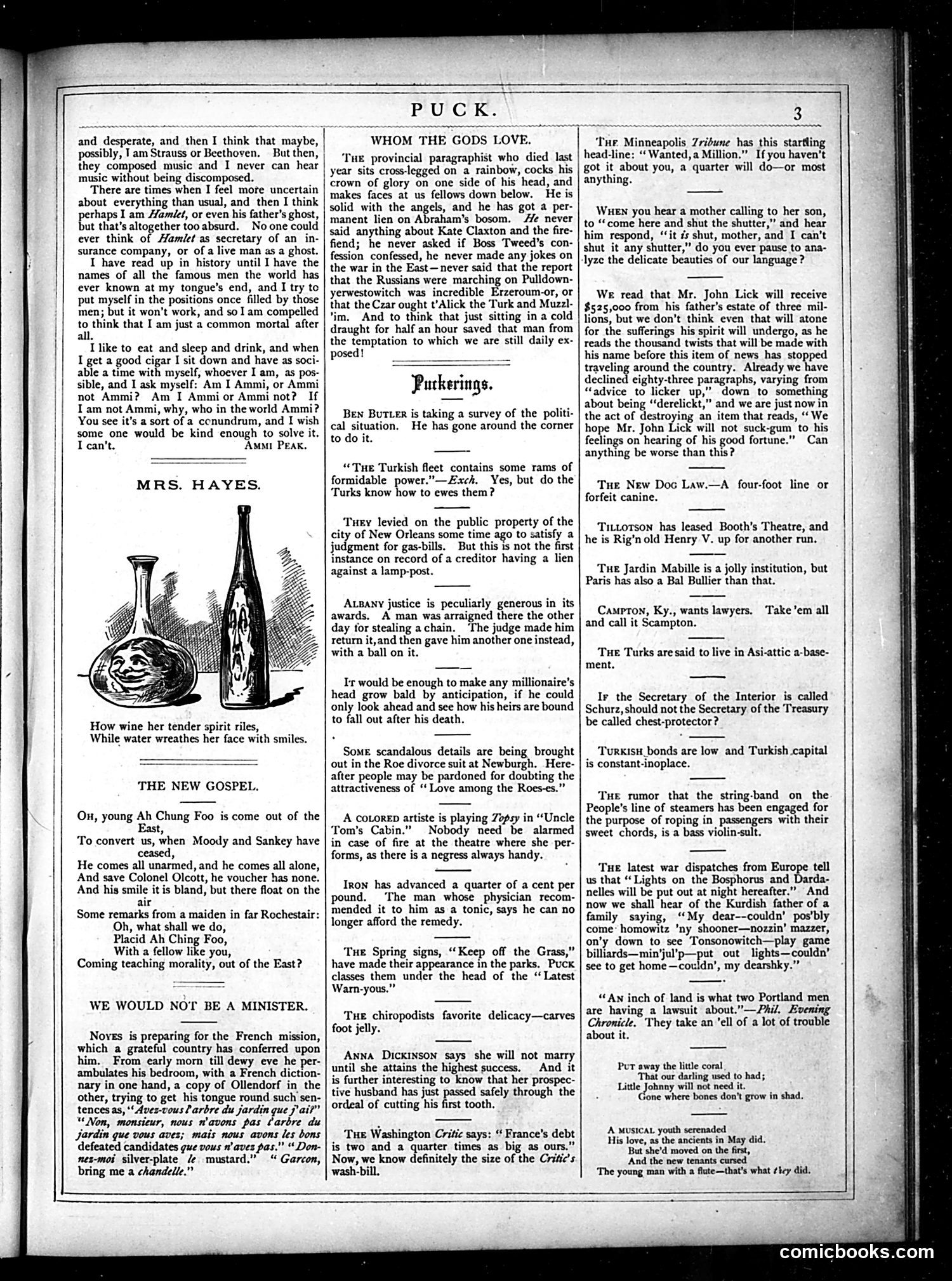
This page contains primarily satirical commentary and brief jokes rather than political cartoons. The main illustrated item is "Mrs. Hayes," showing a woman with wine bottles and glasses, accompanying a poem about her "tender spirit" and "water wreathes her face with smiles"—likely satirizing the wife of a prominent figure (possibly President Rutherford B. Hayes, known for his temperance policies). The remaining content consists of short satirical items mocking contemporary figures and events: Noyes' French missionary work, Anna Dickinson's marriage prospects, Turkish naval power, and various minor social absurdities. The humor relies on readers' familiarity with specific public figures and scandals of the period, most now obscure without additional historical context.
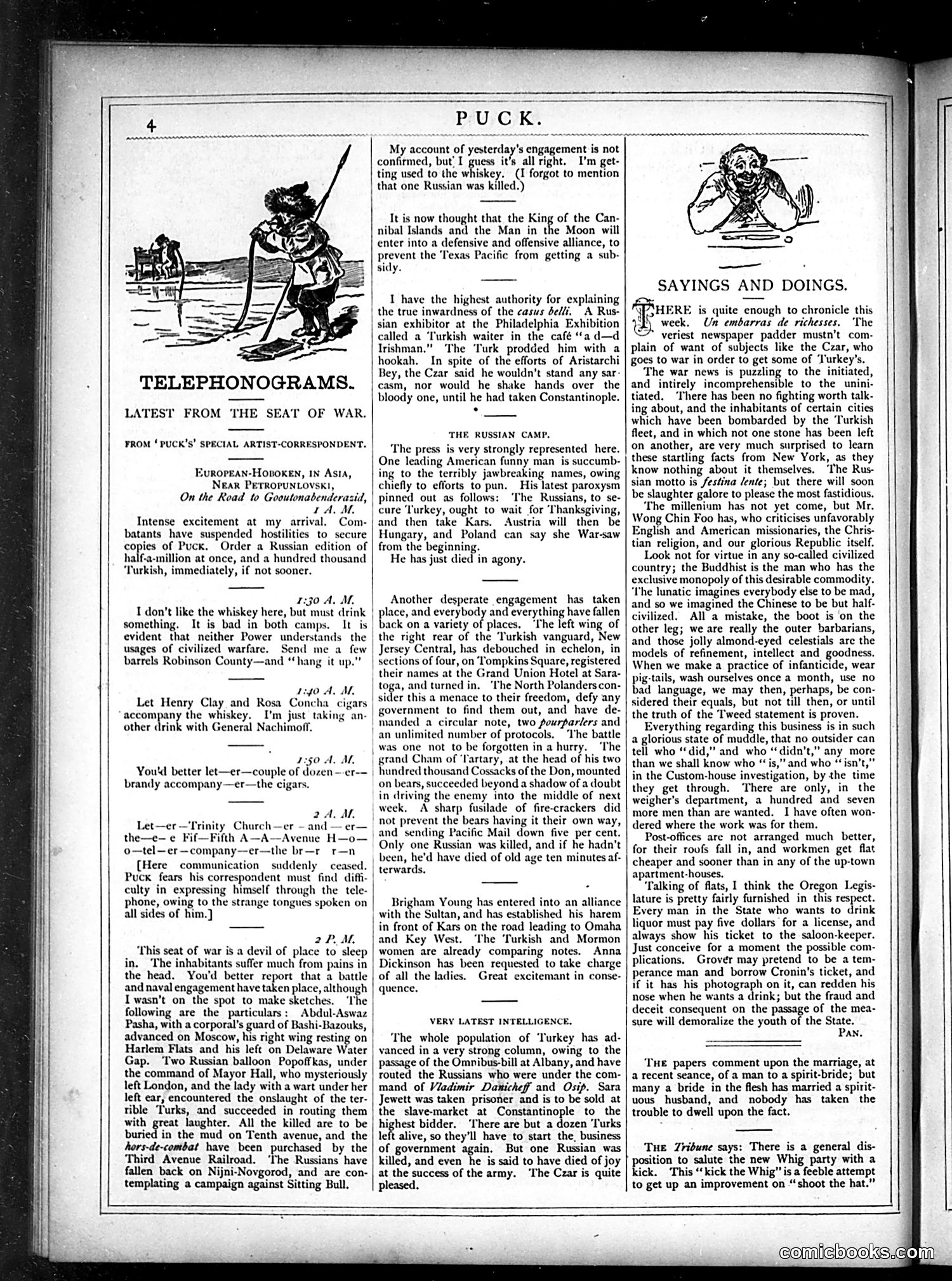
This page contains war correspondence and satirical commentary on the Russo-Turkish conflict. The left cartoon shows a soldier with an exaggerated nose operating what appears to be a large gun or cannon, labeled "TELEPHONOGRAMS" — likely satirizing absurdly detailed battlefield reports. The text mocks Russian military ineffectiveness and Turkish resilience. References include: - Turkish forces successfully resisting Russians near Petropouslovski - Satirical commentary on Russian losses and strategic failures - Jokes about whiskey consumption in camps (appearing to reference General Nachinoff) The "Savings and Doings" section offers lighter social satire about contemporary issues like questionable saloon practices and legislative problems. The overall tone suggests this page dates to the 1877-1878 Russo-Turkish War period, lampooning Russian military competence while treating Turkish resistance humorously.
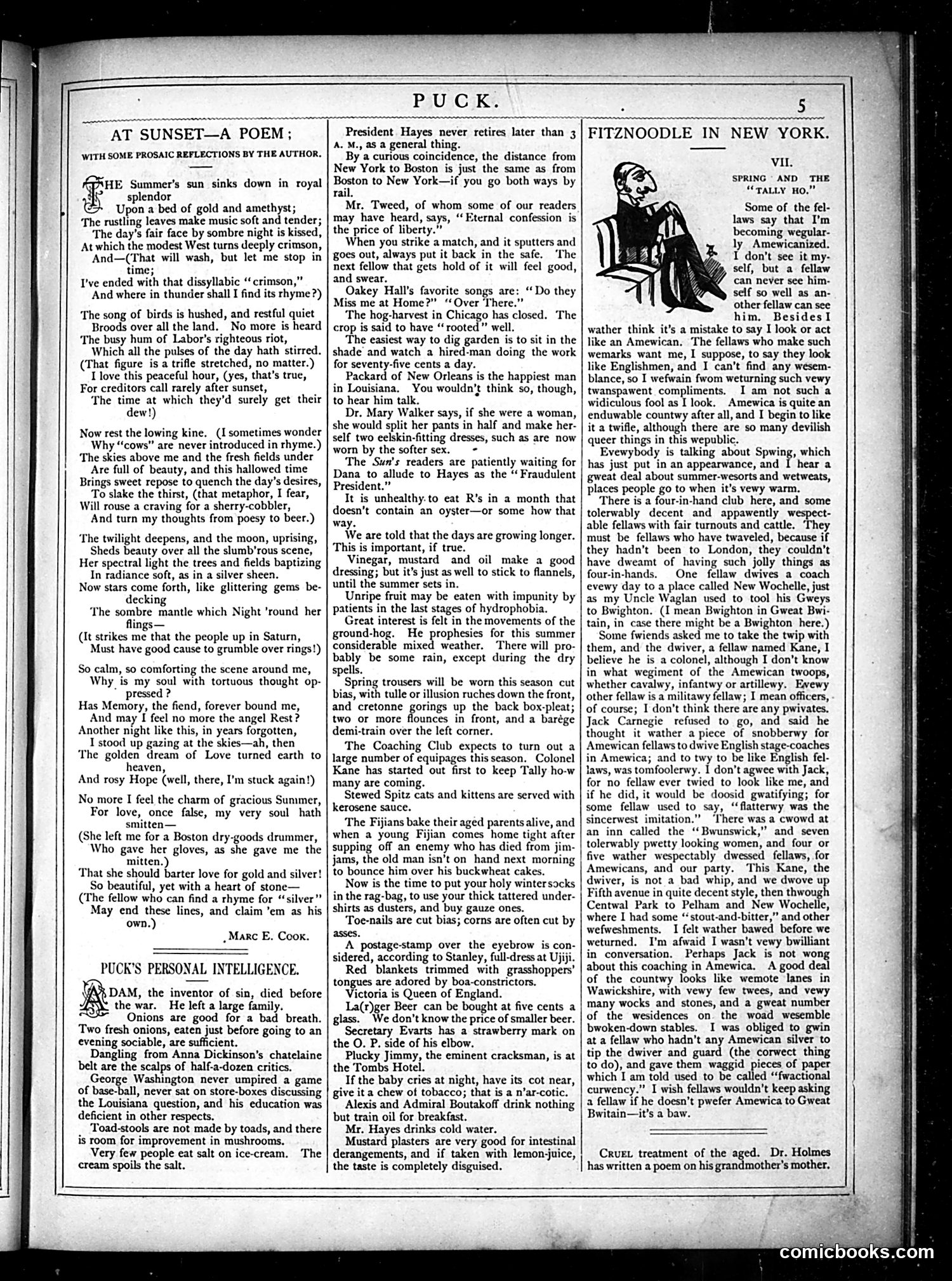
This page contains primarily **text content** rather than prominent political cartoons. The main features are: 1. **"At Sunset—A Poem"** by Marc Cook: A romantic sunset poem with prosaic reflections, occupying the left column. 2. **"Fitznoodle in New York" (Section VII)**: A humorous travel narrative about an American visitor observing American customs and comparing them to British practices. The piece satirizes American pretensions and cultural attitudes, particularly regarding class distinctions and Anglophilia. 3. **"Puck's Personal Intelligence"**: A gossip/humor section with brief satirical jabs at various public figures and social trends. A small illustration appears to accompany the Fitznoodle piece, though details are unclear in this image quality. The overall tone is lighthearted social satire typical of Puck magazine's brand of humor.
This page from Puck contains primarily **text content rather than cartoons**: two columns of "Novel Definitions" (satirical definitions of book titles) and "More Advertisements" (humorous fake ads). The "Novel Definitions" section parodies contemporary book titles through witty redefinitions—for example, redefining "Poor Humanity" and "A Son of the Soil" with sarcastic commentary. These mock popular literature of the era. The "More Advertisements" section contains absurdist humor advertising fictional products and services, including humorous translations of German signs and satirical commentary on American businessmen and tourism. Without visible illustrations on this page, the satire relies entirely on **wordplay and ironic commentary** rather than visual caricature. The humor targets contemporary popular culture, literature, and social pretensions of readers familiar with the books and situations referenced.
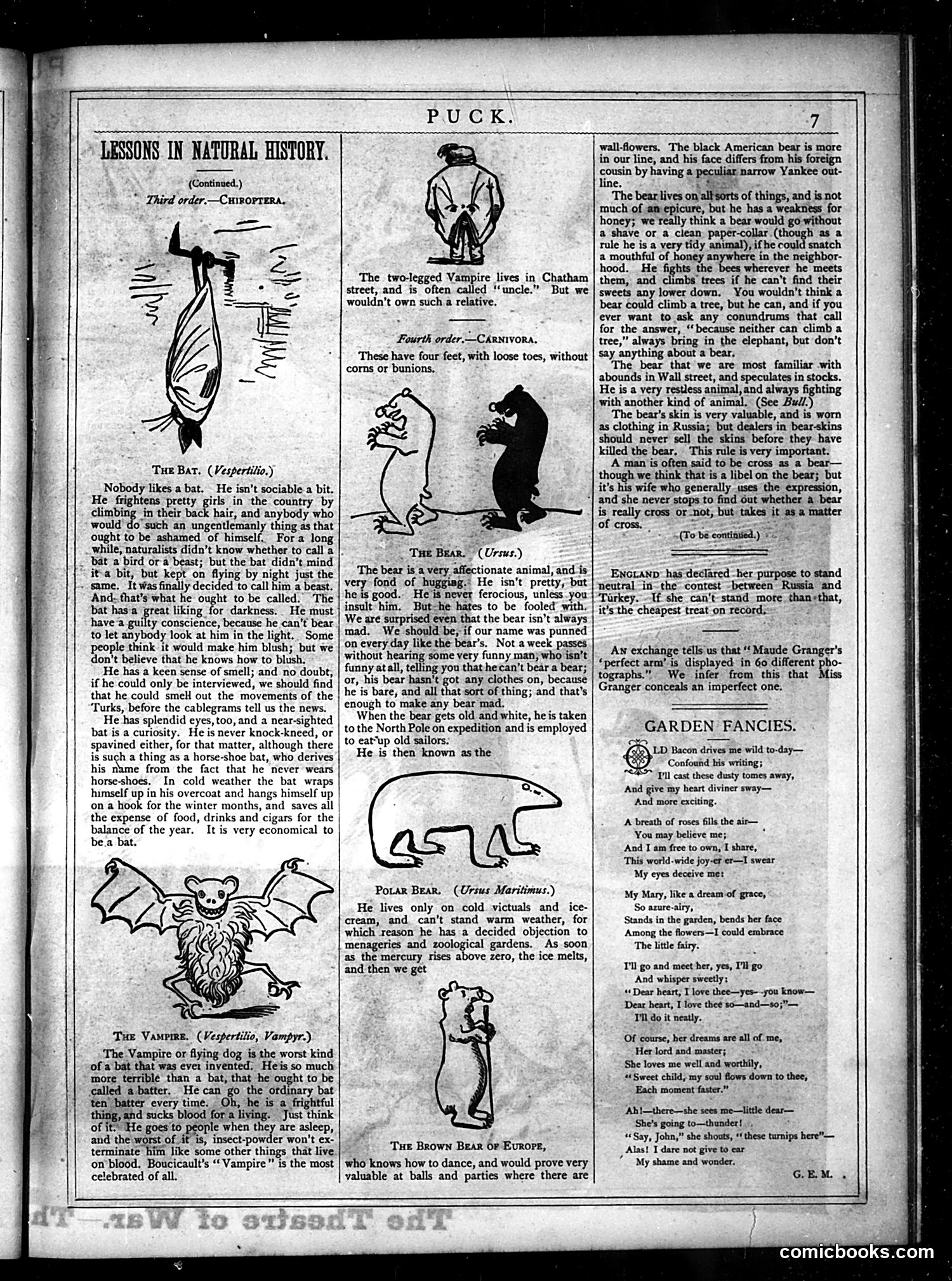
This page presents educational illustrations of animals with humorous commentary. The main content appears to be **not political satire, but rather nature education presented with wit**. The page covers: - **Chiroptera (bats)** - mocking their appearance and habits - **Carnivora (bears)** - describing various bear species with joking asides about their behavior and value - **The Vampire** - describing the bat species with dramatic flair The humor is gentle and observational rather than pointed political commentary. For example, the text jokes about bears being "affectionate animals" and remarks on the polar bear's distaste for warm weather and zoos. The page concludes with "Garden Fancies," a poem. This appears to be **educational content dressed in satirical humor** rather than political commentary targeting specific figures or events.
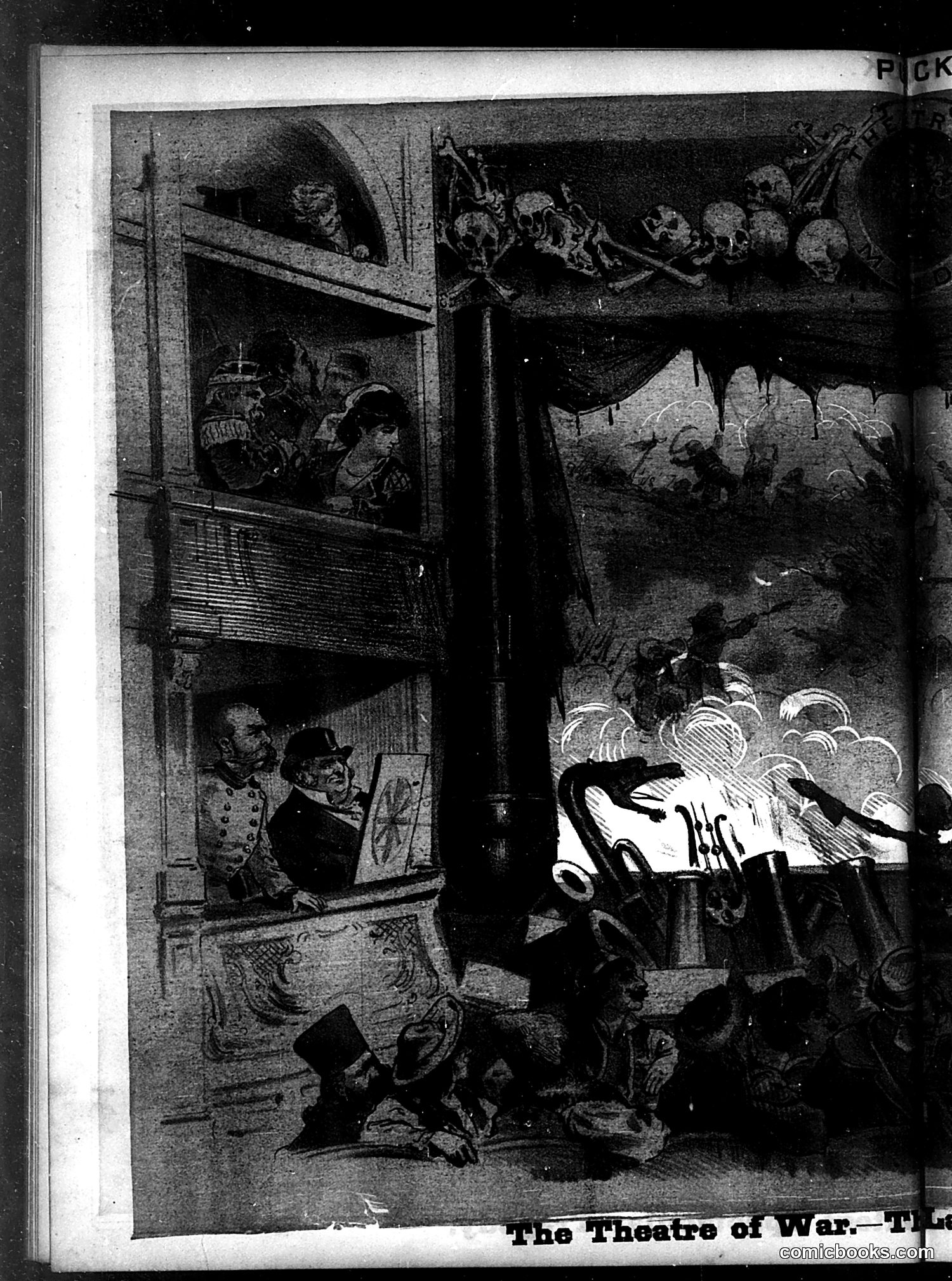
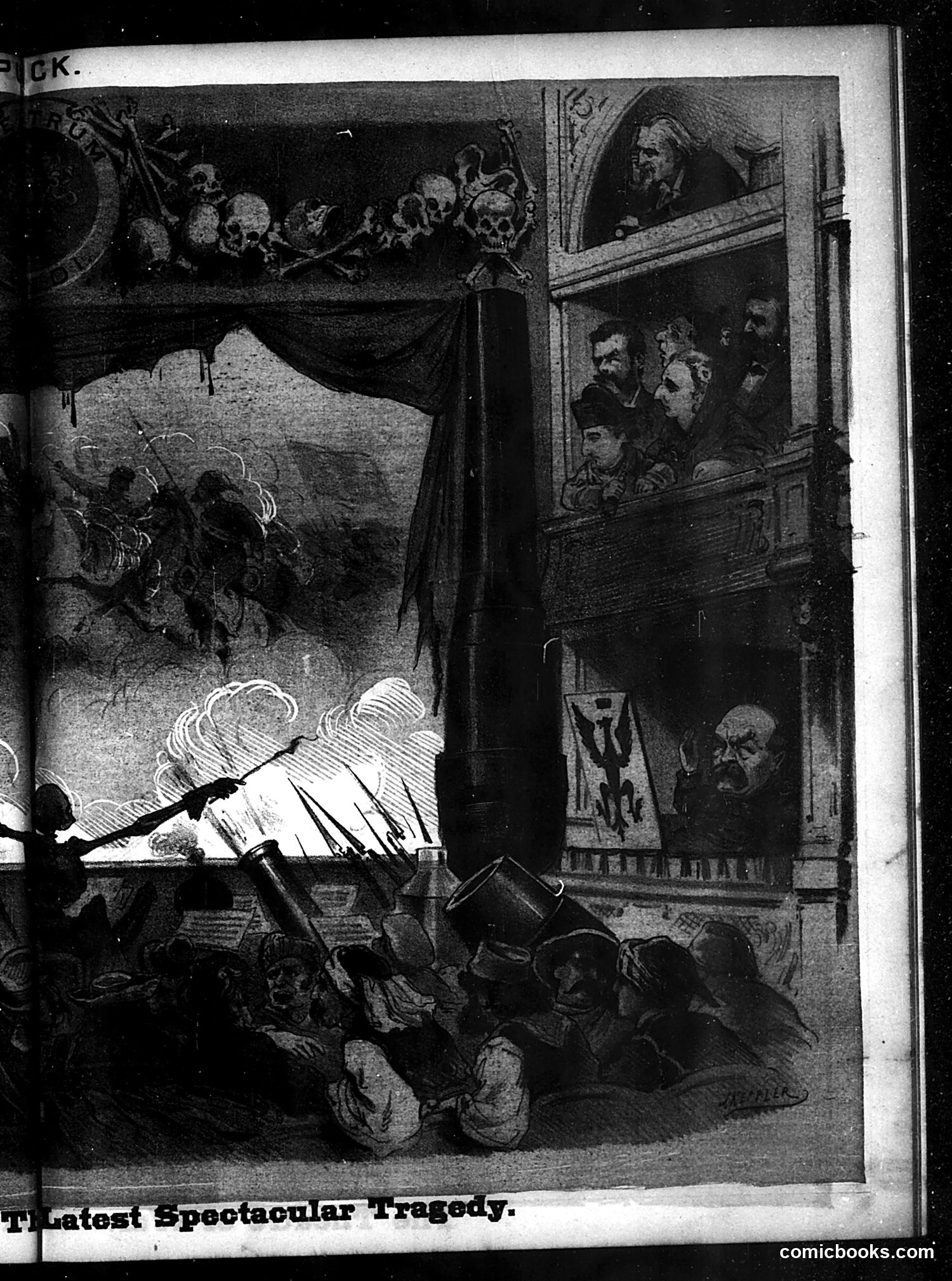
This Puck cartoon satirizes public executions as entertainment. The image shows a guillotine positioned like a theatrical stage prop, with spectators crowded in windows above and soldiers positioned below as if attending a public spectacle. The caption "The Latest Spectacular Tragedy" suggests executions were treated as popular entertainment rather than serious judicial matters. The cartoon likely critiques either 19th-century American or European attitudes toward capital punishment—portraying executions as public events drawing crowds like theater audiences. The architectural setting and formal arrangement emphasize how executions had become ritualized public performances. Without specific date context, the precise political target remains unclear, but the satire targets the sensationalism and theatrical nature of publicly staged executions.
This page contains a lengthy article titled "The Mournful History of a Spectacular Combination," discussing a theatrical production called "Baba." The piece critiques the show's management and financial troubles. The article describes how "Baba"—featuring elaborate scenery, music, and performers including the "Amazons"—initially generated excitement but ultimately failed financially. The author blames poor management decisions, including excessive salary demands and inefficient spending, for the production's collapse. The satire targets theatrical mismanagement of the era: managers overspending on spectacle while neglecting practical economics, musicians and performers exploiting the system through wage demands, and the disconnect between artistic ambition and business reality. It's a morality tale about American theatrical excess and financial irresponsibility circa the 1880s-90s.
This page contains **no political cartoon**. Instead, it features three distinct text articles: 1. A letter from "Sara Durr" complaining about unprofitable theatrical ventures and drunk musicians 2. "Curious Origin of Town Names"—an essay explaining how American towns acquired their names, discussing places like Albany, Harlem, Morrisania, and Horse-neck 3. "Two Knaves and a Queen"—the continuation of an English short story about characters named Tom, René, and others in what appears to be a domestic drama The page is primarily **editorial/literary content** rather than satirical commentary. The town-names article offers mild social observation about American nomenclature but lacks pointed political satire. This represents Puck's mixture of humor, fiction, and informational pieces.
This page contains a serialized story ("To be continued") rather than political cartoons. The narrative involves a conflict between a French aristocrat (M. de Gaillefontaine) and an English gentleman over a young woman and her illegitimate child. The right side features "Puck's Birthings"—brief satirical commentary on contemporary social issues, including observations about young men's life choices, Pueblo Indian marriage customs, and domestic frustrations (a husband's complaint about his wife's housekeeping standards using humor). The page primarily functions as literary content with light social satire rather than political commentary, typical of Puck's mixed editorial approach combining longer fiction with topical humor snippets.
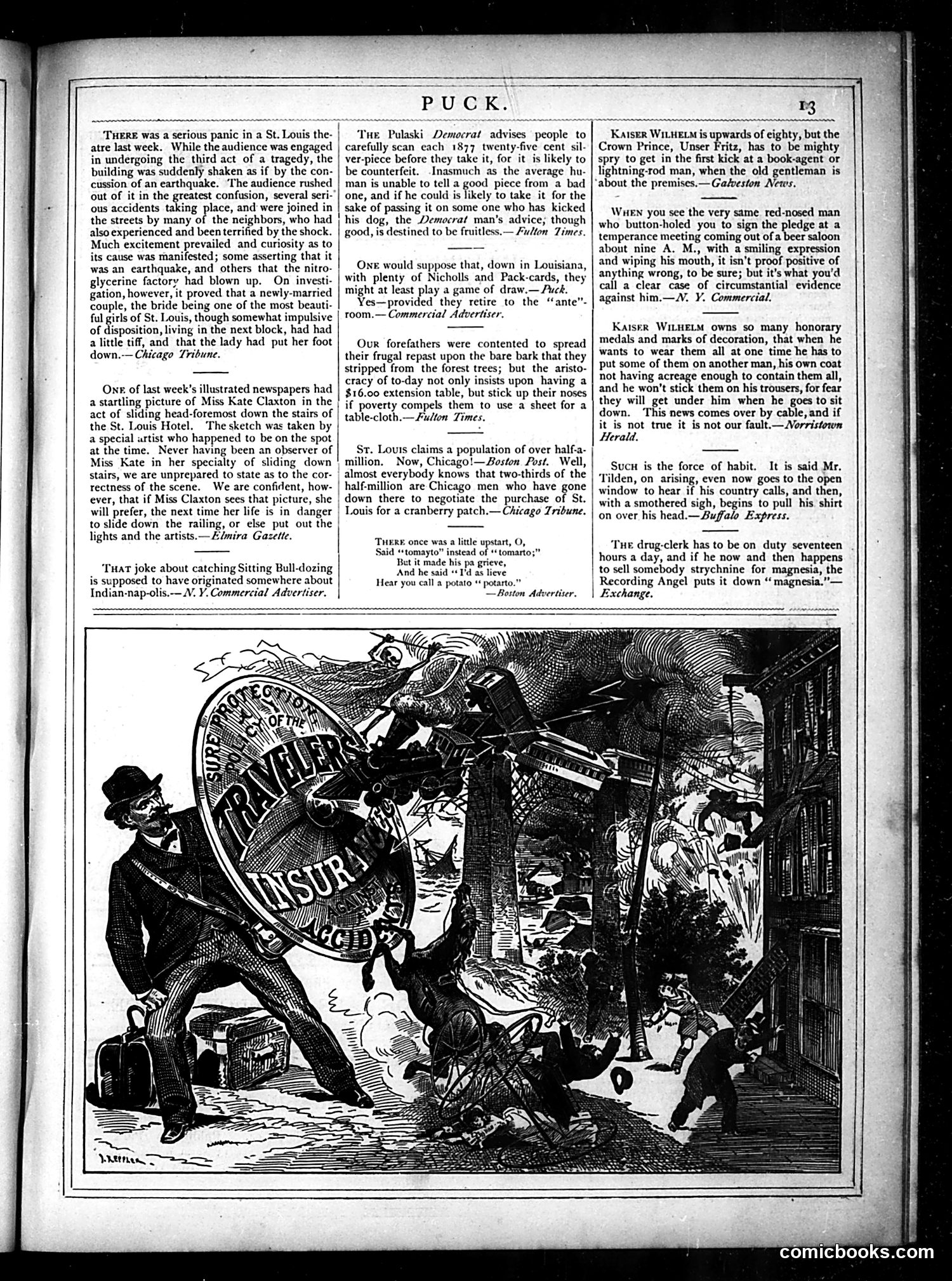
This page from Puck magazine contains a large political cartoon depicting a man operating what appears to be an insurance machine or device. The figure operates a large wheel labeled "FIRE INSURANCE," directing its output toward a building on fire. The satire appears to critique insurance companies or their practices—likely mocking how insurance companies profit from disasters or fail to prevent them. The cartoon suggests insurance is merely a reactive financial instrument rather than a protective measure. The page also includes various humor pieces and brief satirical notes about contemporary events (St. Louis theater panic, Kansas politicians, Kaiser Wilhelm II). These are typical of Puck's format: mixing political commentary with social observation and wordplay. The specific historical references are difficult to date precisely without additional context.
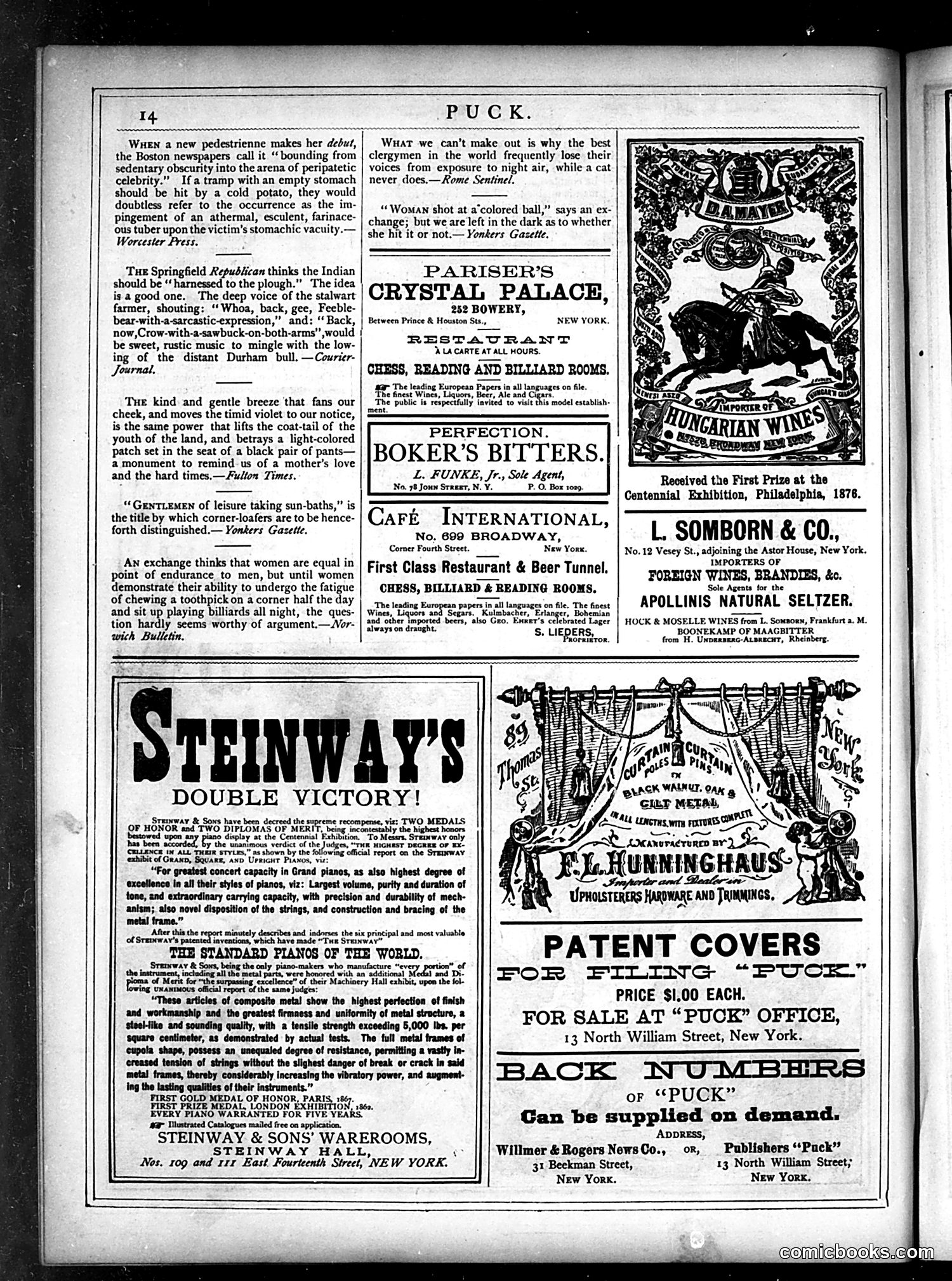
This page is primarily **advertisements and filler content** rather than political satire or editorial cartoons. The visible text includes satirical quotes (about pedestrians, stenographers, and women's equality) but these are brief commentary pieces without accompanying illustrations. The advertisements include restaurant/bar venues (Pariser's Crystal Palace, Café International), Boker's Bitters (a patent medicine), L. Somborn & Co. (wine importer), and notably a large **Steinway piano advertisement** claiming "double victory" with two gold medals. The decorative element showing furniture/hardware (F.L. Hunninghaus upholsterers) and notices about back issues of Puck complete the page layout. This appears to be a typical late-19th-century magazine page mixing modest social commentary with commercial advertising.
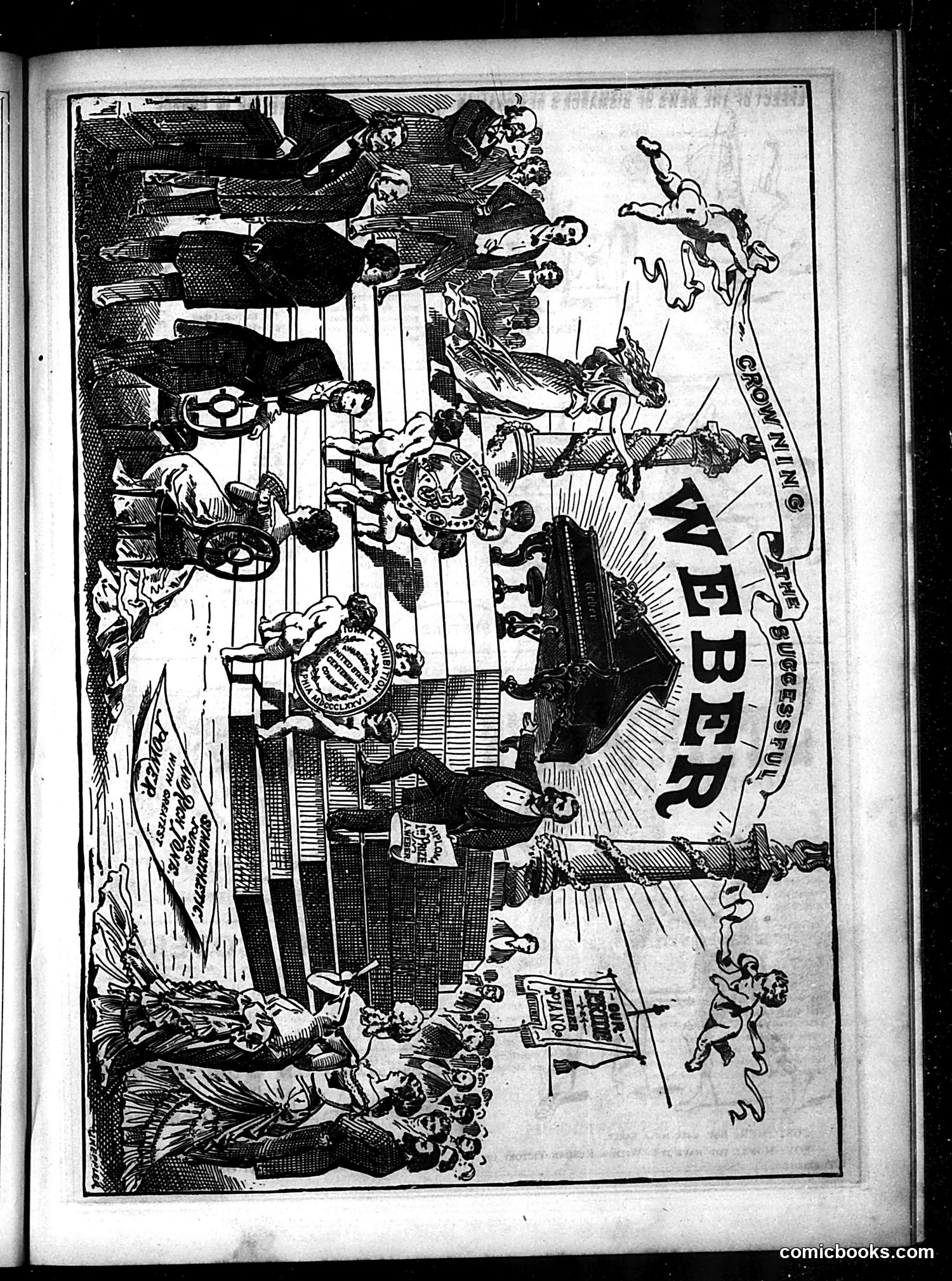
I can see this is a satirical illustration from *Puck* magazine, printed sideways (meant to be rotated to read properly). The image depicts "WEBBER" prominently displayed on what appears to be a large theatrical or carnival structure. Multiple figures in period dress surround and interact with this structure—some appear to be performers or showmen, others spectators or participants. The satire likely mocks a theatrical production, performance, or public figure named Webber, possibly ridiculing the spectacle, commercialism, or grandiosity involved. However, without clearer text legibility or additional context about which Webber this references (the date is unclear from the image), I cannot definitively identify the specific political or social target. The style suggests late 19th or early 20th-century American satire.
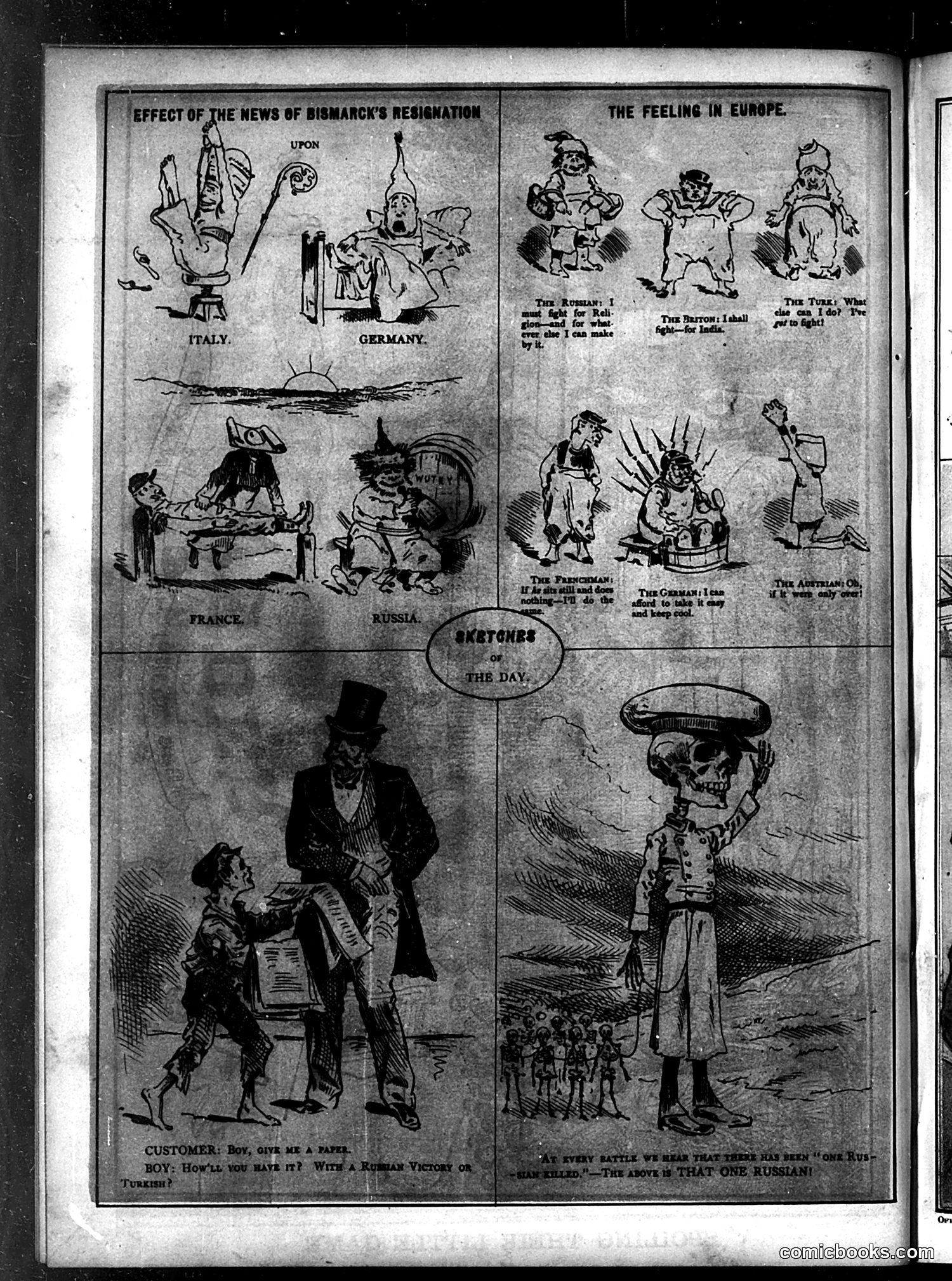
This page satirizes European reactions to Otto von Bismarck's 1890 resignation as German Chancellor. The left panel shows how different nations responded: - **Italy**: celebrates with raised arms - **Germany**: appears distressed, losing its strong leader - **France**: seemingly relieved at Germany's weakened position - **Russia**: depicted as a scheming figure The right panel ("The Feeling in Europe") shows personified nations expressing their anxieties: the Russian, Briton, Turk, Frenchman, and Austrian all voice concerns about the power vacuum and potential instability Bismarck's departure created. The bottom sketches mock various parties seeking advantage from the situation. The satire suggests Europe's balance of power was precariously dependent on one man's authority.