
A complete issue · 16 pages · 1877
Puck — November 14, 1877
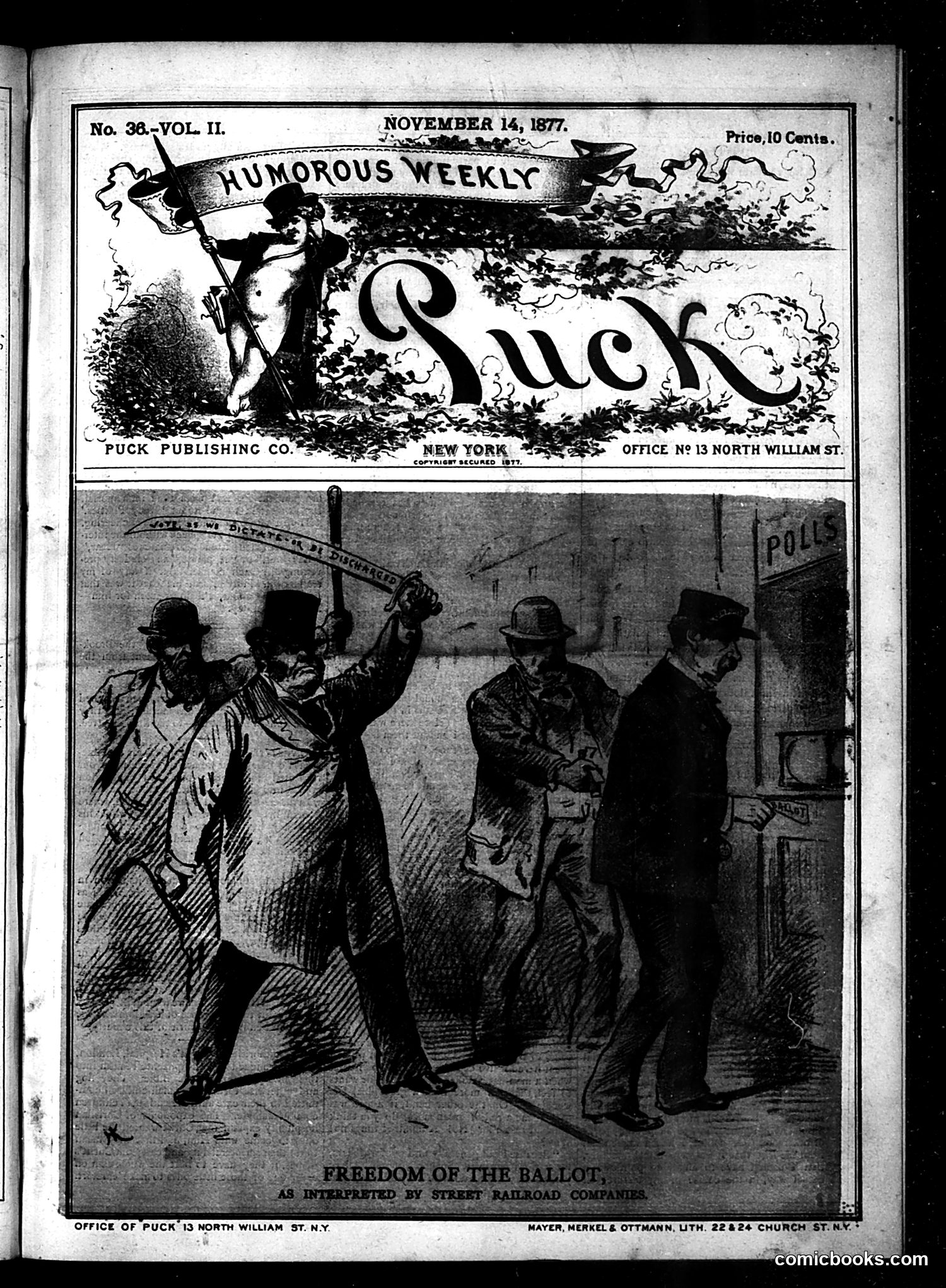
**Title:** "Freedom of the Ballot, As Interpreted by Street Railroad Companies" This political cartoon satirizes how street railroad companies were allegedly interfering with voting rights. The image shows well-dressed men (likely representing railroad company officials or their agents) physically preventing or intimidating ordinary citizens from voting or accessing polling places. One figure wielding a club appears to be blocking access, while others restrain a voter. The satire suggests that despite legal protections for voting rights, powerful corporate interests were using intimidation and force to suppress the ballot. This reflects post-Reconstruction era tensions when businesses—particularly railroads—wielded significant political power, and voting access remained contested despite the 15th Amendment.
This page contains the "Party Politics" column by the editor, discussing a lecture invitation. The author describes being asked to speak before the Pudding-head League but declining, as he'd never delivered political lectures before. The piece satirizes partisan politics by depicting the author's refusal to choose between Democratic and Republican positions. He argues that politicians reduce complex issues to party loyalty rather than addressing substantive questions—using the army's future as an example. The satire mocks how both parties demand ideological conformity while the author advocates for independent thinking on policy matters. The column criticizes what it sees as the absurdity of rigid party politics, where citizens are expected to adopt pre-packaged positions rather than reasoning through issues individually. This reflects broader Progressive-era critiques of machine politics and party bosses.
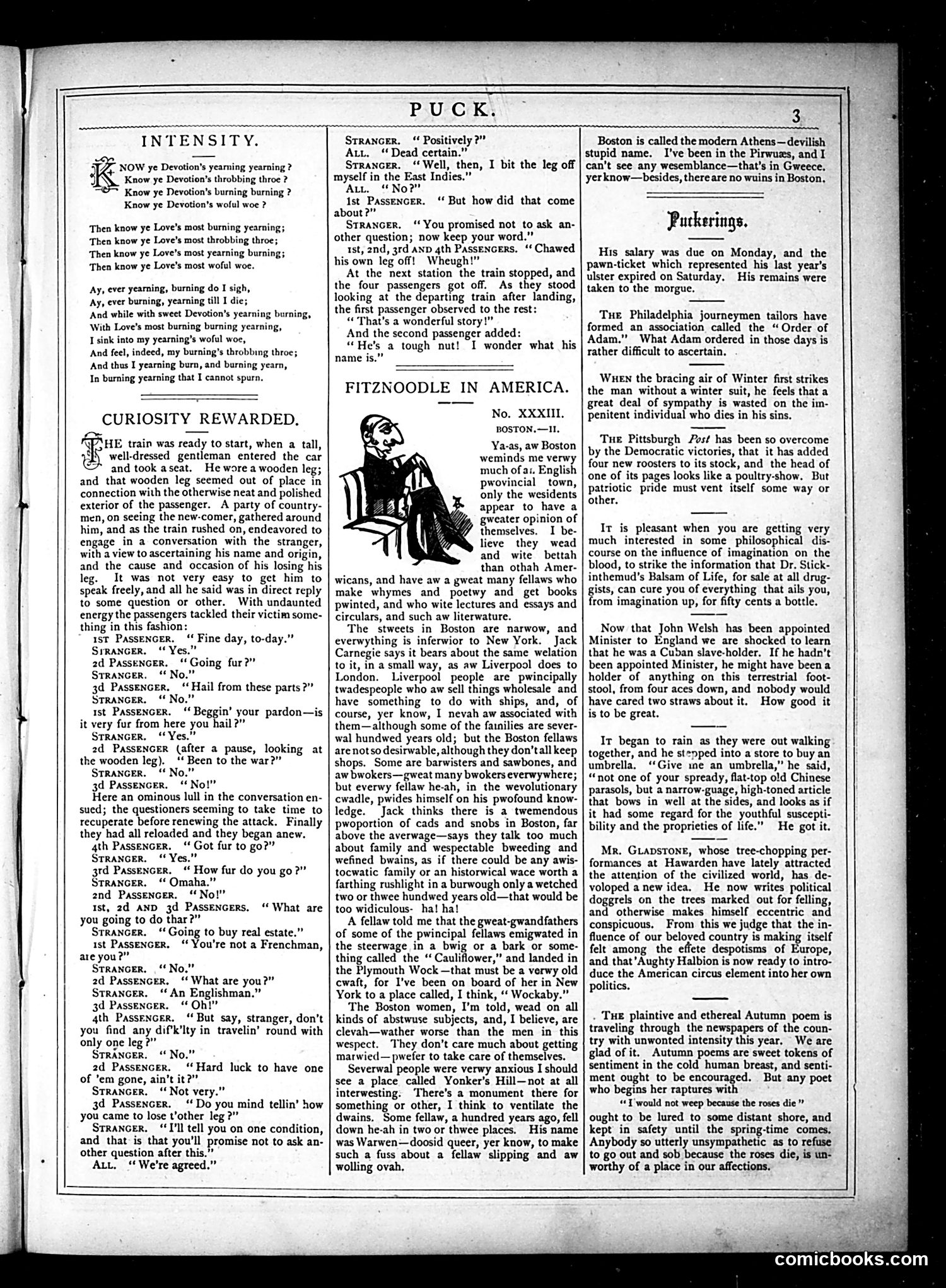
This page contains three distinct sections: a poem titled "Intensity," a brief humor piece called "Curiosity Rewarded," and a section labeled "Fitznoodle in America" featuring a cartoon of a man in a chair. The "Fitznoodle" cartoon appears to satirize Boston's pretensions and character through dialogue between a stranger and various passengers. The text mocks Boston's intellectual culture, literary aspirations, and social attitudes—contrasting Bostonians' self-regard with their actual provincial nature. References to "the Carnegie" and comparisons to Liverpool suggest commentary on American versus European cultural sophistication. The remaining prose sections are brief satirical anecdotes about conversational oddities and social behavior, typical of Puck's lighter humor. Without clearer visual detail of the cartoon's artistic style, precise identification of any specific caricatured figures remains uncertain.
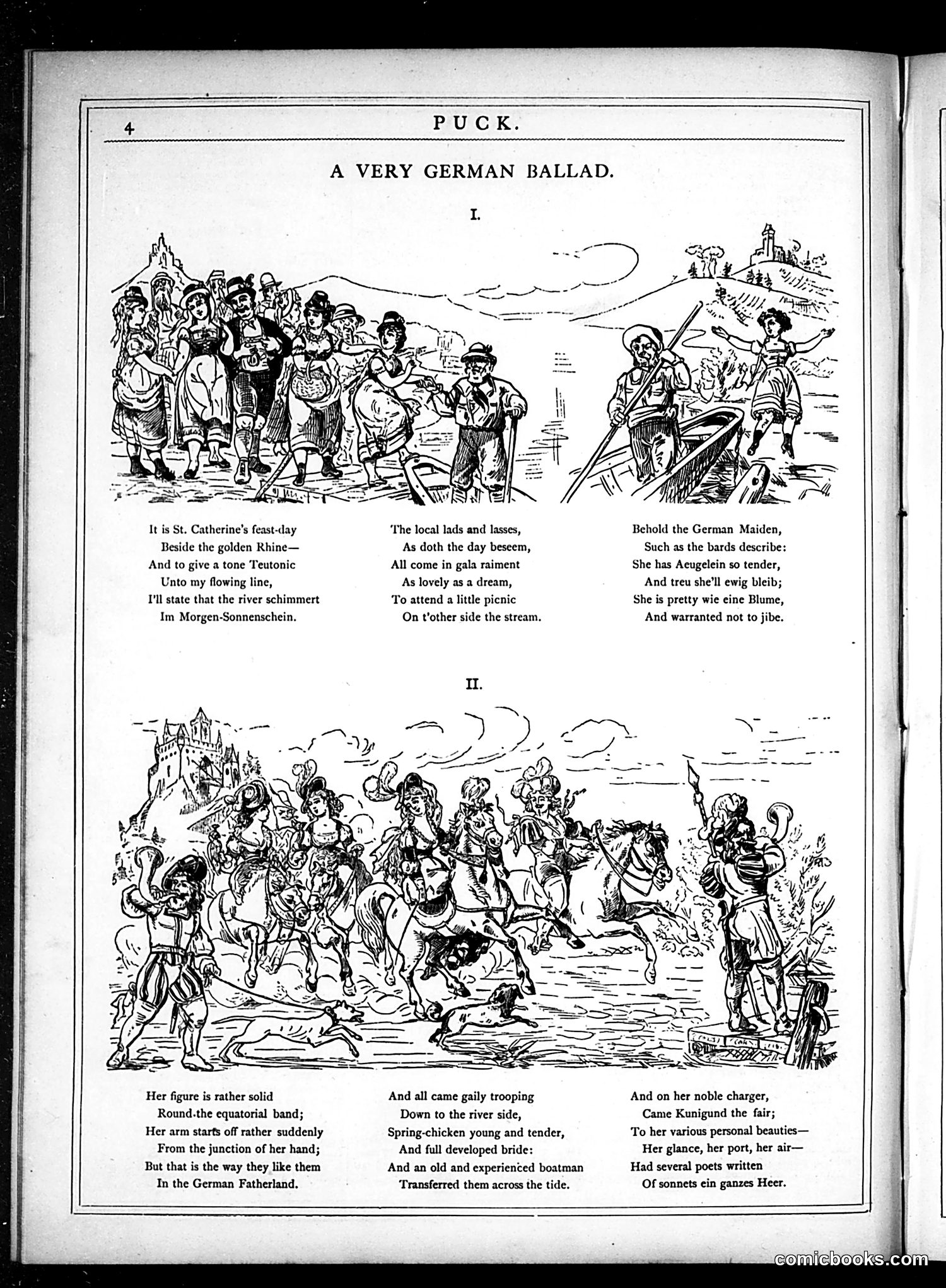
This satirical ballad mocks German culture and romanticism through exaggerated stereotypes. The narrative depicts a German maiden celebrated for her beauty—described with German characteristics like "ewig bleib" (eternally fair) and "Blume" (flower)—who attracts a procession of suitors. The two illustrated scenes show a picnic gathering and then a cavalry crossing, suggesting the absurdity of German romantic ideals clashing with military reality. The poem's rhyming couplets parody German folk ballads while poking fun at Germanic obsession with courtly love, chivalry, and aesthetic refinement. The satire likely targets late 19th-century American perceptions of German sentimentality and the contrast between German cultural pretensions and their martial militarism—a common Puck theme reflecting period tensions.
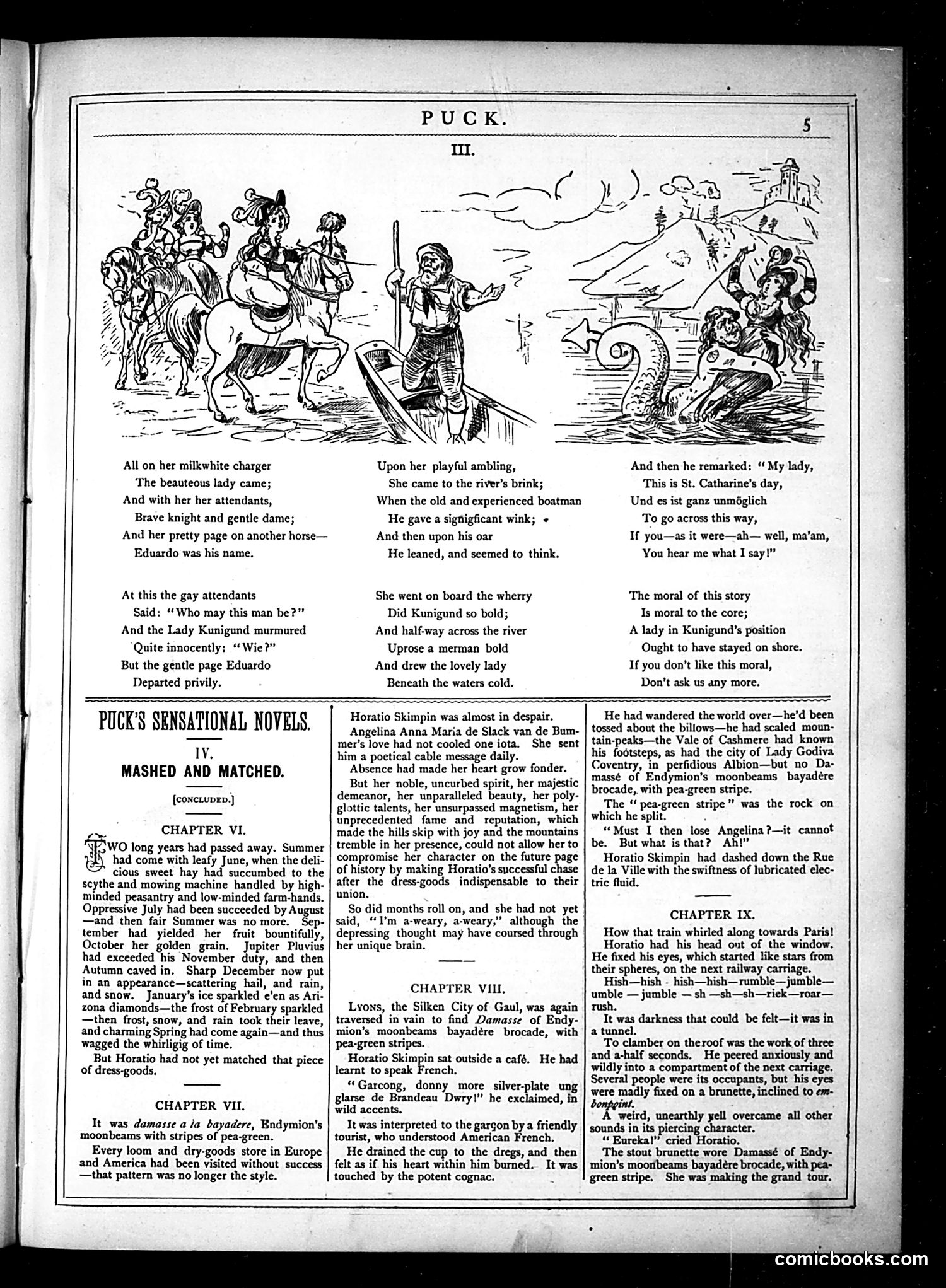
This page contains three illustrations accompanying a serialized narrative poem about a lady and a boatman, likely a romantic or comedic tale. The images depict: (1) a lady arriving on horseback with attendants; (2) the lady boarding a boat at a river; (3) the boatman making a remark to the departing lady. Below the poem, the page advertises "Puck's Sensational Novels" and begins Chapter VI of "Mashed and Matched," a serialized story. The remaining text discusses characters named Horatio Skimplin and Angelina, involving romantic complications and European travel. This appears to be entertainment/fiction content rather than political satire. The page represents Puck's dual function as both a humor magazine and publisher of serialized literature for its readers.
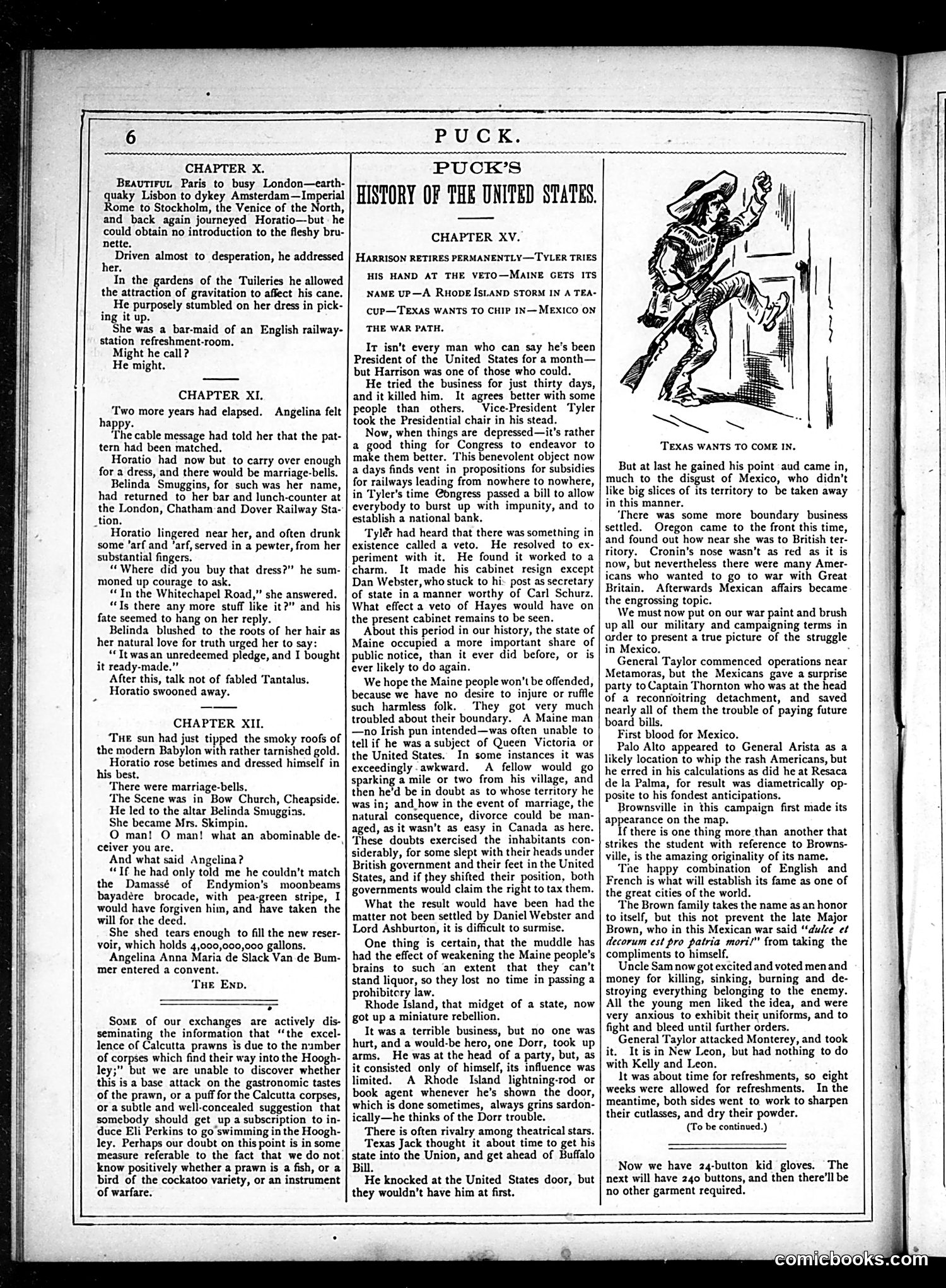
This page contains two distinct elements: 1. **Serialized Fiction**: "Puck's History of the United States" continues with Chapters X-XII, presenting satirical narrative about American political history, including commentary on President Harrison's brief tenure and Vice President Tyler's succession. 2. **Political Cartoon**: The illustration labeled "TEXAS WANTS TO COME IN" depicts a figure being forcefully ejected or thrown out, likely satirizing debates over Texas annexation. The cartoon appears to mock either resistance to Texas statehood or Mexico's opposition to U.S. territorial expansion. The text discusses boundary disputes, Mexican concerns, and General Taylor's military campaigns, providing context for the cartoon's commentary on American expansionism and sectional tensions of the era. The page also includes an advertisement about button glove manufacturing at the bottom.
This page contains a literary/mythological essay titled "Mythology on the Half-Shell: Medea" rather than political satire. The article retells the classical Greek myth of Medea, daughter of King Aeetes, focusing on her relationship with Jason and their eventual marriage. The piece adopts a humorous, irreverent tone typical of Puck, treating the ancient legend as entertainment for contemporary readers. It includes details about Medea's precocious childhood behavior and her romantic entanglement with Jason. The bottom section features "Answers for the Furious"—reader responses addressing various letters about content from previous issues. This appears to be standard magazine correspondence rather than satirical commentary on specific political or social figures.
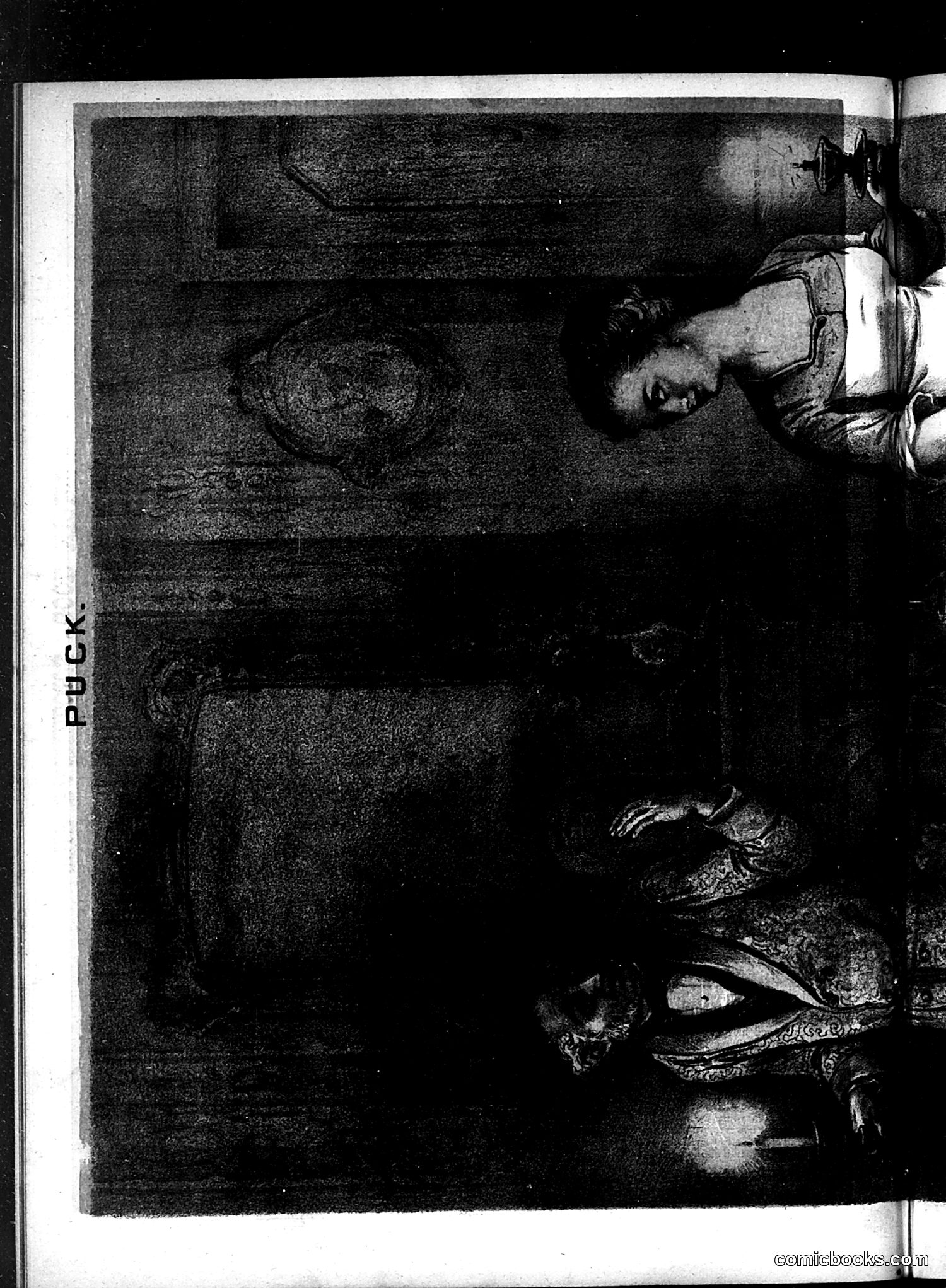
I can see this is a page from *Puck* magazine (indicated by the "PUCK" text on the left margin), but the image quality and contrast make it difficult to read the specific text or clearly identify the cartoon details. The page appears to be rotated or oriented sideways, and the reproduction is quite dark and grainy, typical of historical magazine scans. Without being able to reliably read the accompanying text or clearly distinguish the figures depicted, I cannot accurately identify who is being caricatured or what specific political or social events are being satirized. To provide an accurate explanation meeting your standards, I would need a clearer image or the legible OCR text. I apologize that I cannot be more helpful with this particular scan.
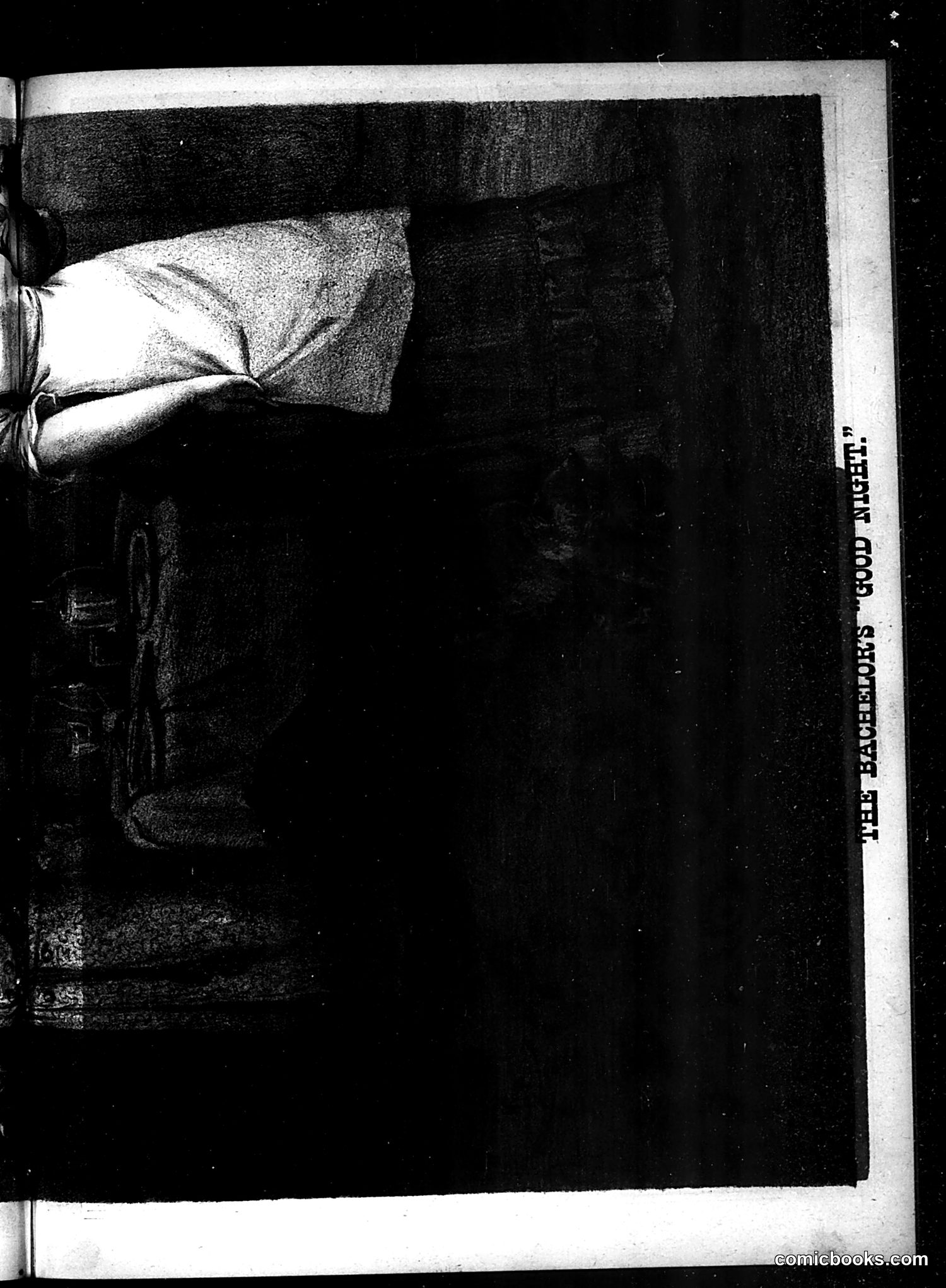
I can see this is a black and white photograph or illustration from what appears to be a Puck magazine page, showing a person's arm and hand emerging from darkness on the left side, holding what looks like a rolled document or paper. The right margin contains text reading "WELL REMEMBERED GOOD FRIENDS" (oriented vertically). However, the image quality is quite poor—mostly dark with limited detail—making it difficult to identify specific figures, caricatures, or determine the exact satirical point. Without being able to read additional OCR text or see clearer visual details, I cannot confidently explain what political or social situation this cartoon references or who the figures represent. To properly analyze this Puck cartoon's meaning for a modern reader, I would need either higher image resolution or more complete accompanying text.
This page contains **three distinct pieces**: a poem titled "To the Moolley Cow," a section called "Dramatic Notes" reviewing theatrical performances, and an article titled "Dogs" discussing the etymology and characteristics of dogs. The "Dramatic Notes" section appears to be **theater criticism** rather than political satire, reviewing contemporary stage productions and actors of the period. References include Miss Mary Anderson, Booth, and various theatrical companies. The "Dogs" article is a **humorous etymological essay** about the word "dog" and dog behavior, with personal anecdotes about the author's experiences with dogs. **No political cartoons are visible** on this page. This appears to be a content page from Puck magazine featuring literary/cultural commentary rather than visual satire or caricature.
This page contains serialized fiction ("Two Knaves and a Queen: An English Story" by Frank Barrett, Chapter XXXII-XXXIII), not political satire or editorial cartoons. The narrative focuses on a domestic drama involving characters named Hugh, Fox, René, and de Gaillefontaine. The plot concerns inheritance disputes, a contested will, and romantic entanglements among English gentry. References include London locations and legal/property matters typical of Victorian-era melodrama. While Puck was primarily known for political satire and humor illustrations, this particular page demonstrates the magazine also published serialized fiction to fill its pages—a common practice for publications of this era. The content is social drama rather than satirical commentary on current events or public figures.
This page contains **literary criticism and humor essays** rather than political cartoons. The main feature, "Puck's Pertinages," discusses Julia A. More's poetry collection, praising her work while offering gentle mockery of contemporary literary taste. The page includes several **short humorous items** satirizing various topics: bachelor life, political delegations, newspaper sensationalism, and social pretensions. References mention Pennsylvania delegates, a "baby-show" exhibition, and Dr. Holmes' weight—typical targets of Puck's satirical commentary on American society and culture. The small illustration at top appears to show a dramatic scene, likely relating to one of the literary or humorous pieces discussed below it.
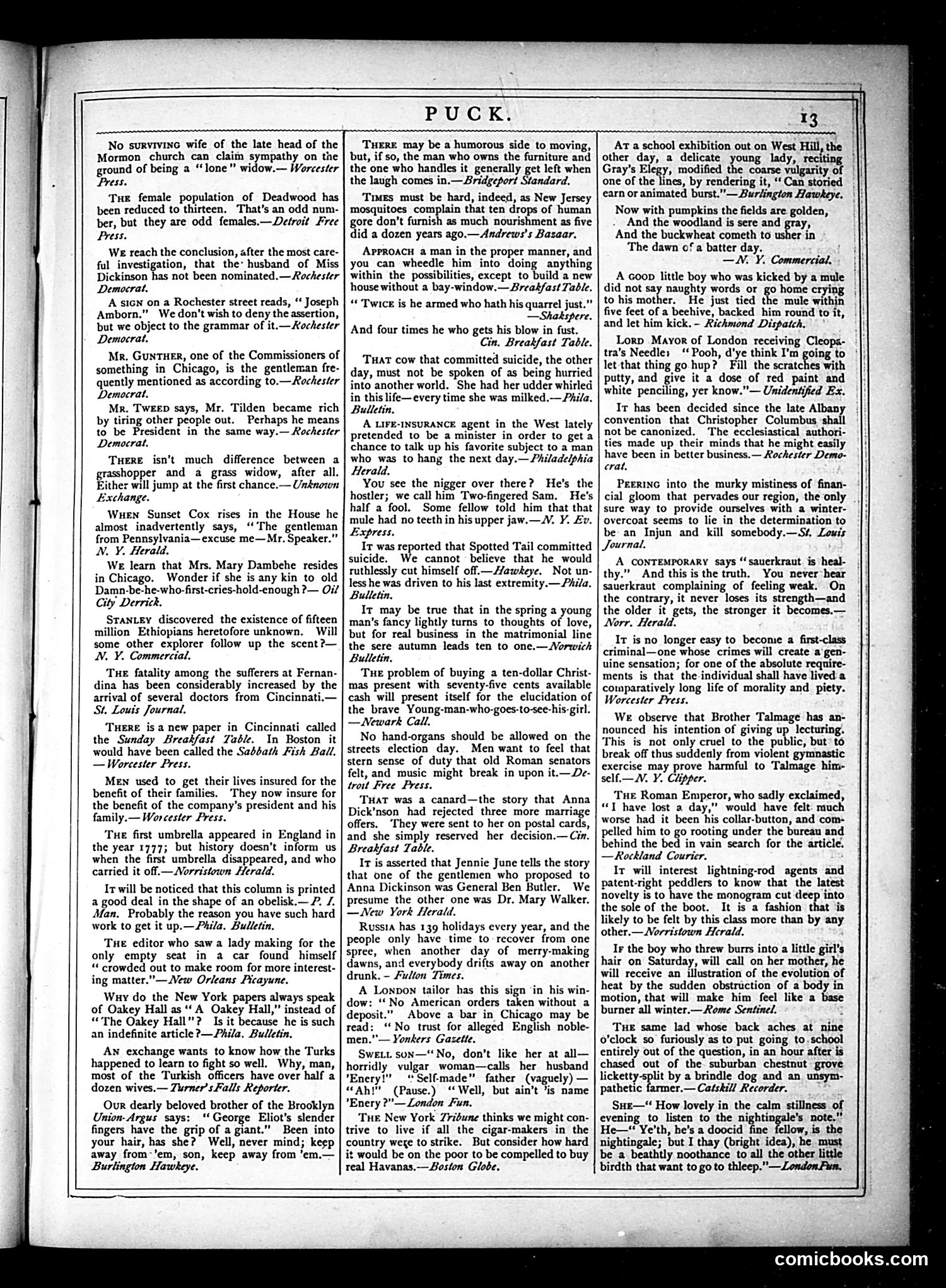
This page consists entirely of text—brief satirical anecdotes and humorous observations—rather than political cartoons. The pieces mock various social issues and personalities of the era: - Jokes about marital unhappiness and "lone widows" - Critiques of New Jersey's poor conditions - Anecdotes about Chicago commissioners and local politics - Observations on racial attitudes ("Two-Fingered Sam") - Commentary on women's suffrage and marriage - References to Christopher Columbus and historical debates - Social criticism regarding poverty, insurance fraud, and class divisions The humor relies on wordplay and satirical commentary typical of Puck's approach—mixing political commentary with domestic and social observations. Without specific dates or identifying individuals named (except historical figures like Columbus), the page represents general turn-of-century American satirical journalism targeting widespread social problems rather than specific political figures.
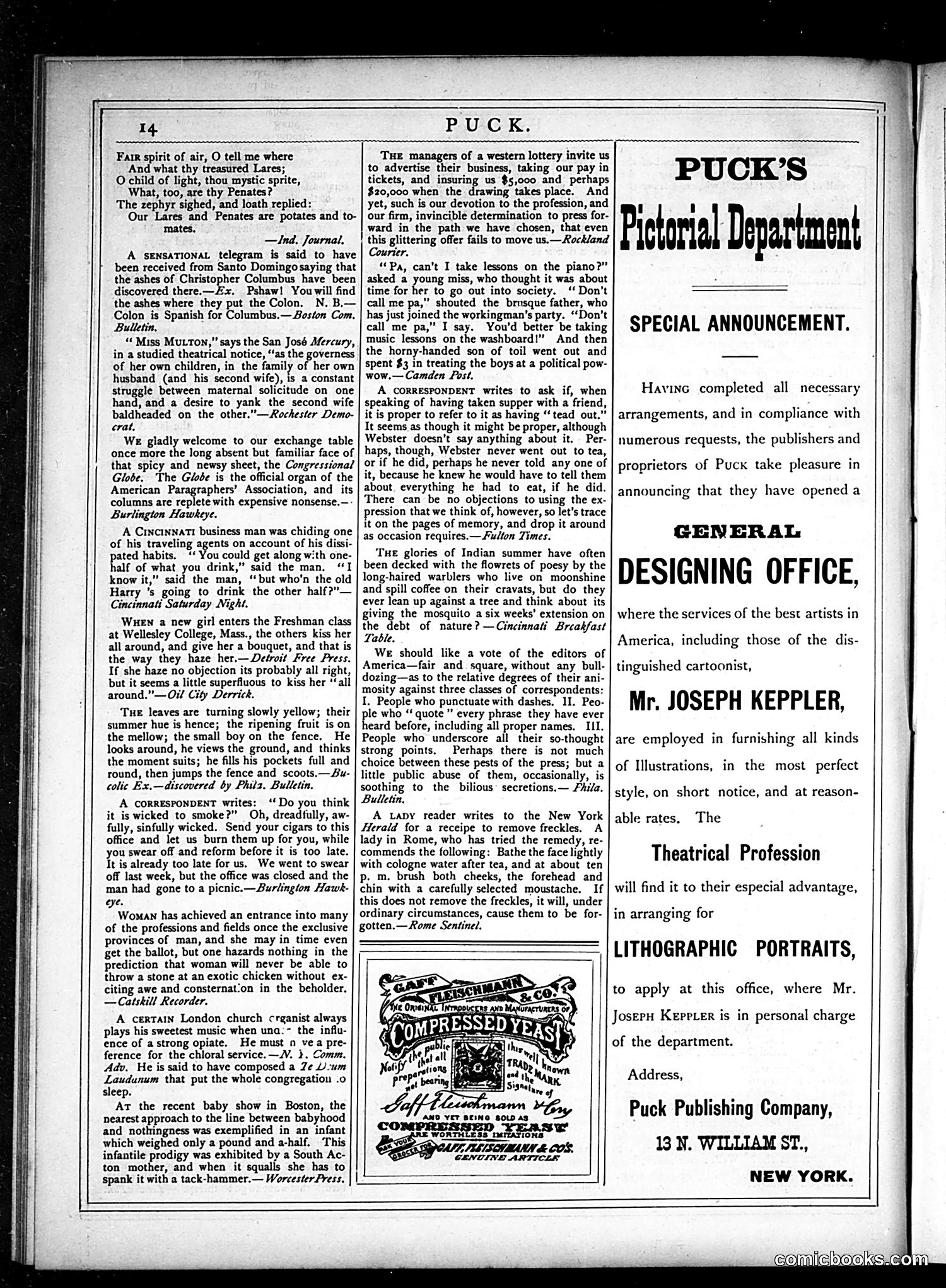
This page is primarily **advertising and announcements** rather than political satire. The right half features Puck's "Pictorial Department" announcement opening a "General Designing Office" employing artist **Joseph Keppler** (likely the magazine's founder/prominent illustrator) to provide illustrations and lithographic portraits for theatrical productions. The left side contains miscellaneous **satirical notes and social commentary** on various topics—piano lessons, Indian poetry, smoking, women in professions, church organists, and a baby show—but these are brief, disconnected quips rather than developed cartoons. There's also a **Liebmann brewery advertisement** at the bottom. The content reflects Puck's format as a humor magazine mixing short satirical observations with commercial announcements.
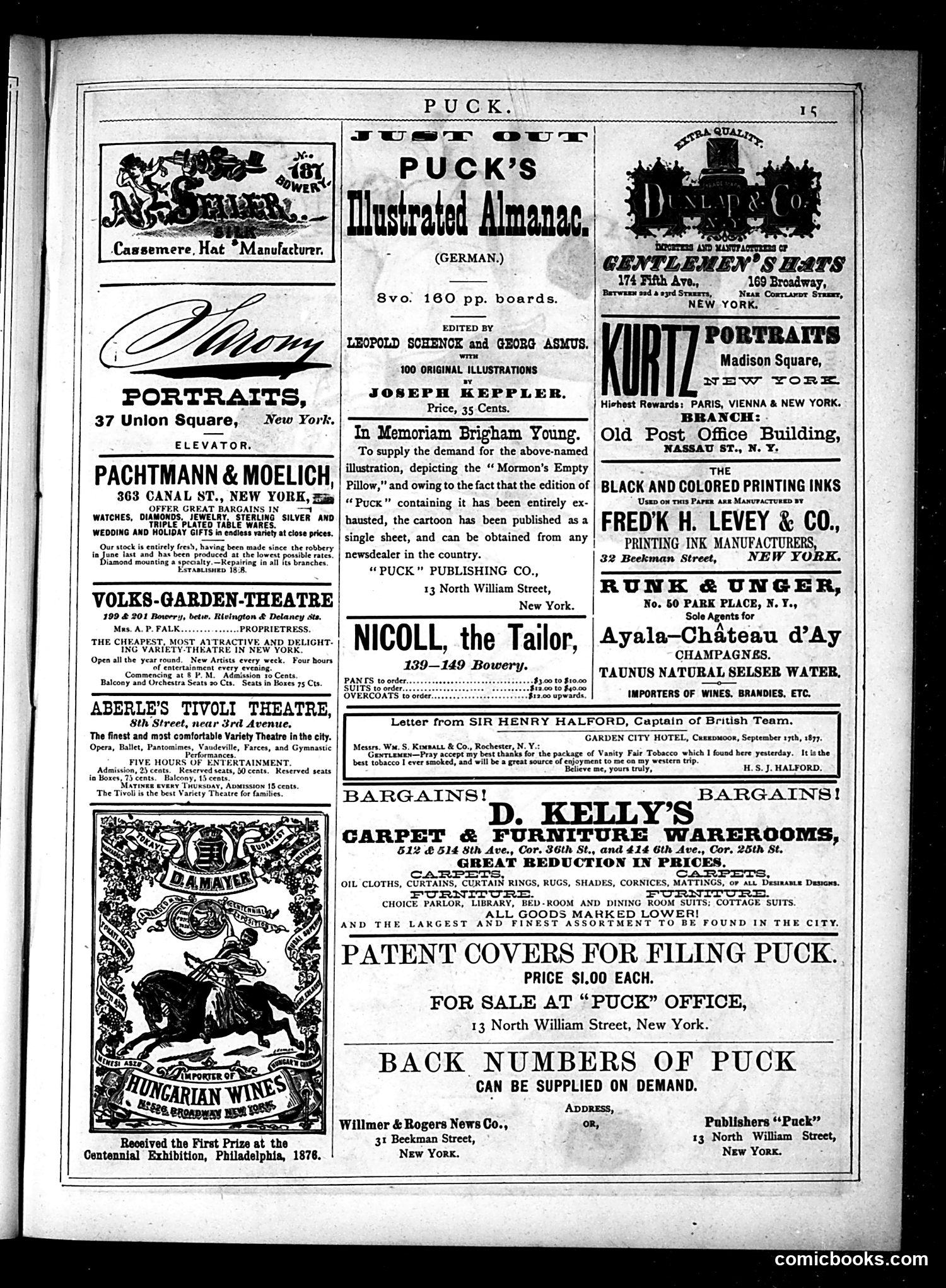
This appears to be primarily an **advertising page** from *Puck* magazine rather than a satirical cartoon page. The page contains numerous commercial advertisements for period businesses including: - Hat manufacturers and portrait studios - Jewelry and watches - Theaters and entertainment venues - Furniture and carpet showrooms - Printing inks and office supplies - Wine merchants - Hotels and restaurants There is **one decorative illustration** visible—an ornate emblem for "Damayer Hungarian Wines" featuring a horseman, likely referencing Hungarian national imagery to market the product. The page serves primarily as a revenue source for the magazine through paid advertisements rather than delivering political or social satire. No identifiable political figures or satirical commentary are present.
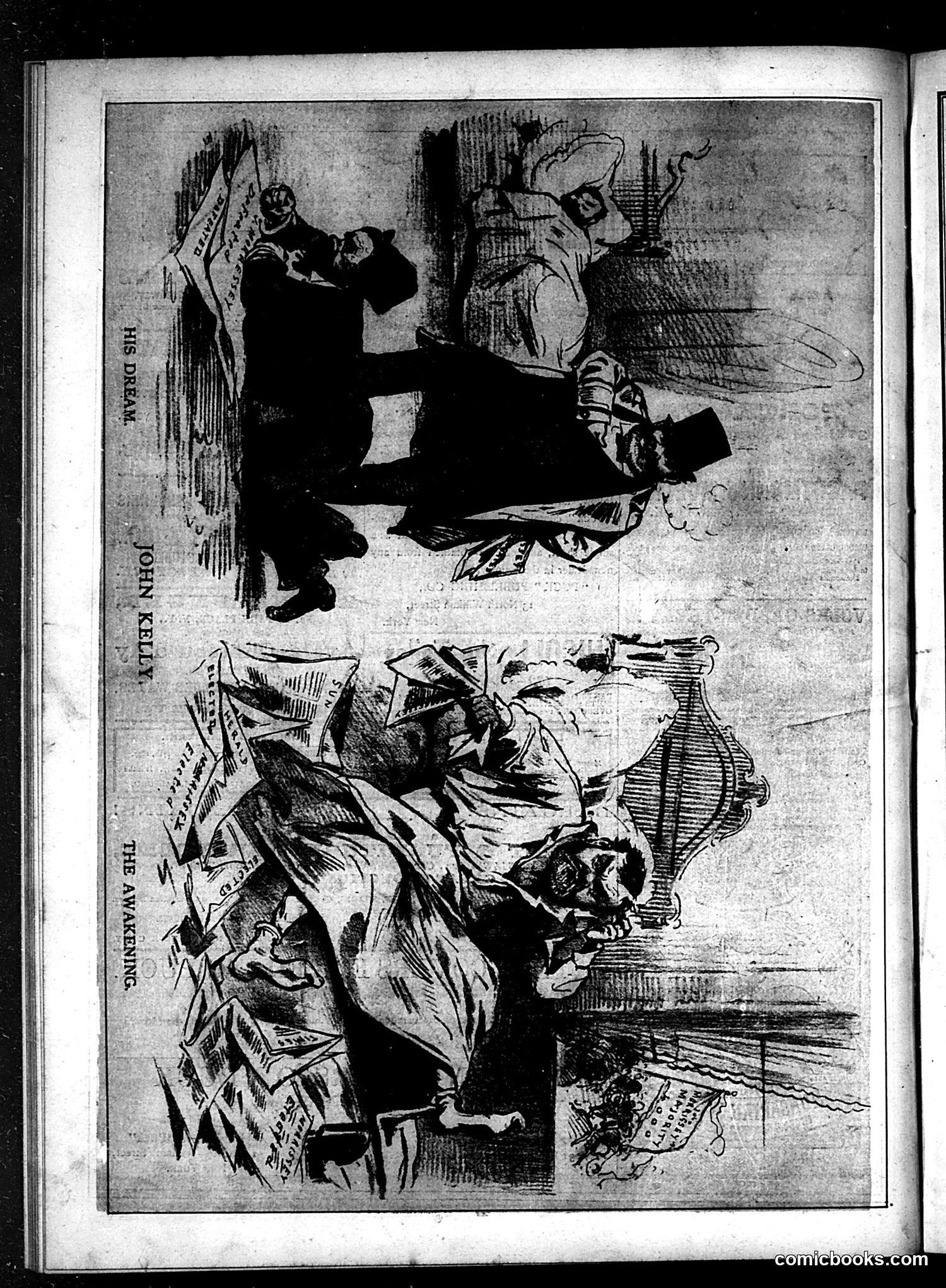
This page contains two political cartoons, printed upside-down relative to each other (a common Puck layout). The **upper cartoon** is titled "THE DARK" and appears to show figures in formal dress engaged in some kind of confrontation or political maneuvering in shadowy conditions. The **lower cartoon** is titled "THE AWAKENING" and depicts figures in what appears to be a more dramatic scene, possibly representing political revelation or exposure coming to light. Without clearer legibility of the OCR text and specific historical labels visible in the image, I cannot confidently identify the particular political figures or events referenced. The cartoons appear to contrast darkness/secrecy with awakening/revelation—likely commentary on contemporary political corruption or scandal—but the specific context remains unclear from this reproduction.