
A complete issue · 16 pages · 1878
Puck — October 16, 1878
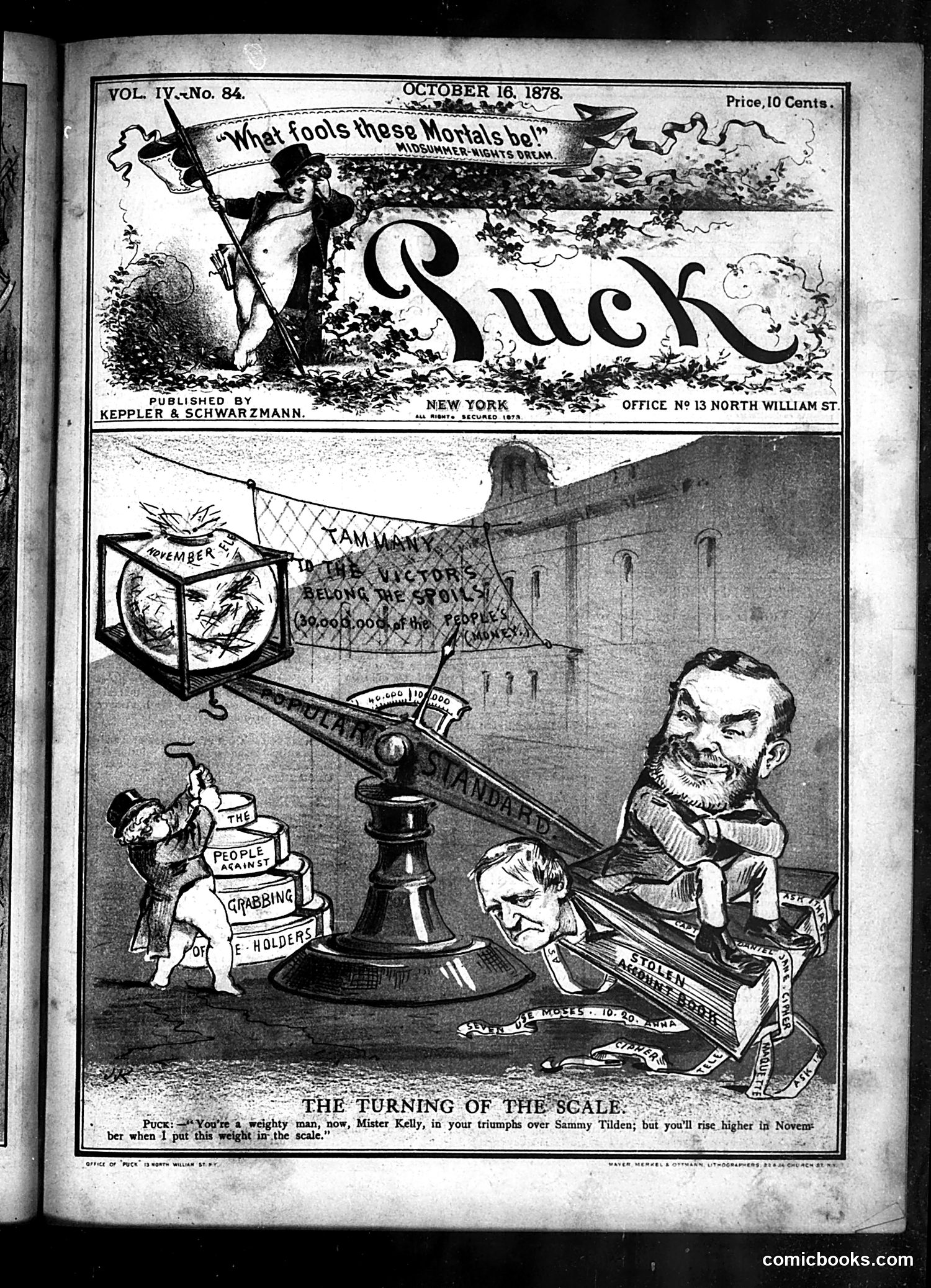
This political cartoon satirizes the 1878 election prospects, specifically referencing boxing matches between Kelly and Sammy Tilden. The giant scale depicts how political fortunes shift: one side shows "The People Against Grabbing Office Holders" (a critical weight), while the other features a caricatured man (likely a political figure, possibly Kelly) being weighed against Tilden's candidacy. The caption warns Kelly that despite current triumph over Sammy Tilden, his political fortunes will reverse by November—the weight will swing against him. The cartoon mocks electoral volatility and suggests that public sentiment favors anti-corruption politics over established political machines. The cherub at top reinforces the dream-like uncertainty of political outcomes.
This cartoon satirizes **Mister Kelly**, a political figure whose influence is "slowly turning" and declining. The image shows Kelly being weighed on scales against common people ("the Tamanny family"), suggesting his power is being measured and found wanting. The accompanying text mocks Kelly's pretensions to superiority and his control over New York politics through corruption and patronage. The satire suggests that despite Kelly's "stolen account-books" and political manipulation, ordinary citizens are finally gaining power against him. The piece appears critical of **Tammany Hall**-style political machines—the corrupt patronage networks that dominated NYC politics. The joke is that Kelly's scales of influence are "slowly turning," meaning his political dominance is eroding as public resistance grows.
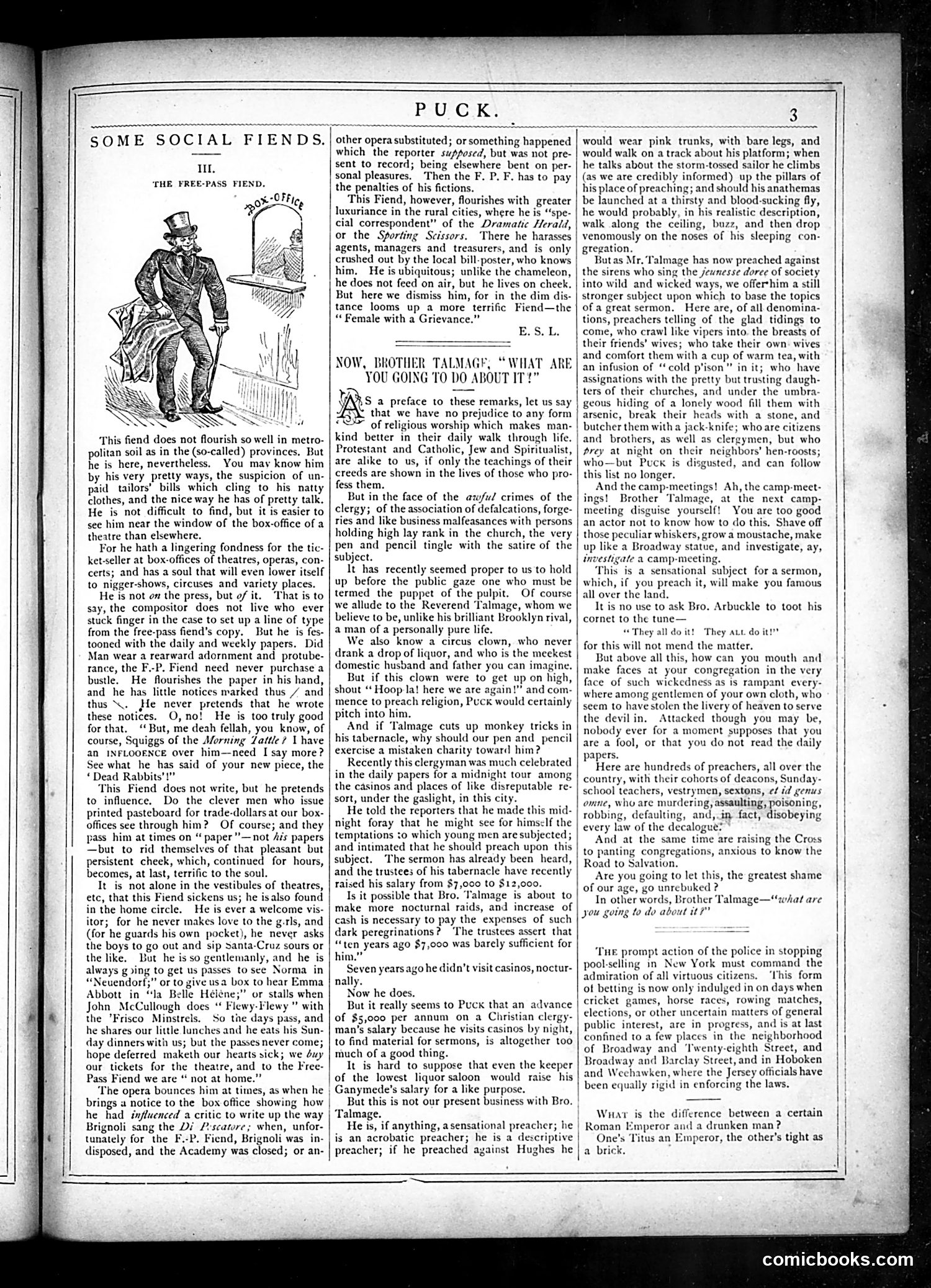
This page satirizes **Brother Talmage**, a prominent clergyman (appears to be T. DeWitt Talmage, a famous late-19th-century Brooklyn preacher). The cartoon mocks the contradiction between his public morality and private conduct. The satire focuses on Talmage's visits to casinos and saloons by night while preaching virtue by day. The text ridicules him as a hypocrite—a man who condemns worldly pleasures from the pulpit yet secretly frequents them. The accompanying illustration depicts him as a pompous figure in clerical dress. The piece criticizes how Talmage allegedly raises church funds to $5,000-$12,000 annually while justifying casino visits as "research for sermons," exposing the gap between his preaching and behavior as fundamentally dishonest.
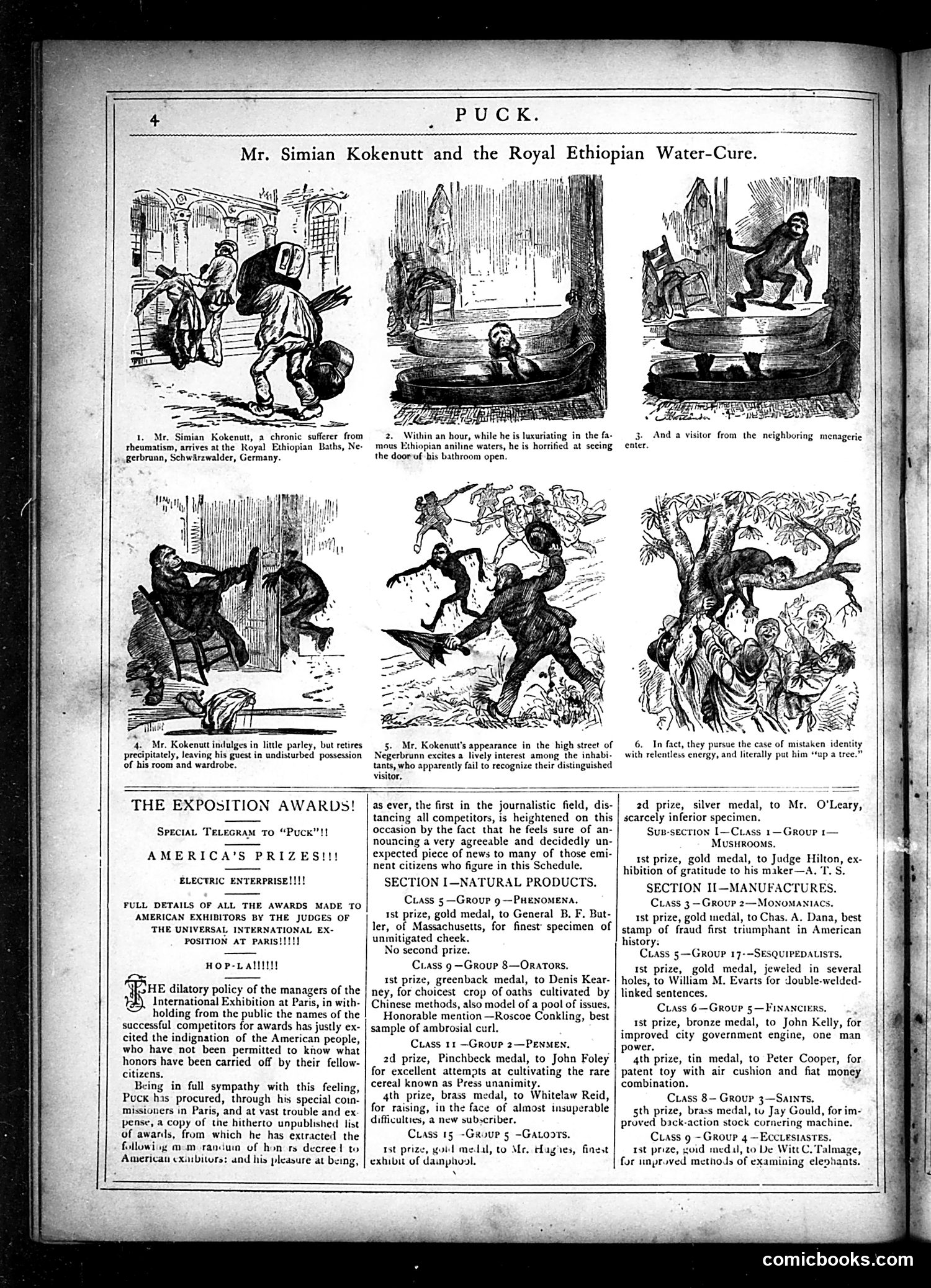
This satirical series mocks a quack medical treatment. The six panels follow "Mr. Simian Kokenut" (the name itself a joke—"simian" means ape-like) as he undergoes an absurd "Ethiopian water-cure" at a spa in Bad Kreuznach, Germany. The humor relies on racist caricature: Kokenut is drawn with exaggerated ape-like features, and the "cure" involves increasingly ridiculous water immersions and bizarre treatments. The final panel shows him literally placed "up a tree," suggesting the treatment has reduced him to animal status. This reflects 19th-century Puck's casual use of dehumanizing imagery to ridicule both medical charlatanism and, deeply offensively, non-European peoples through pseudo-scientific "othering."
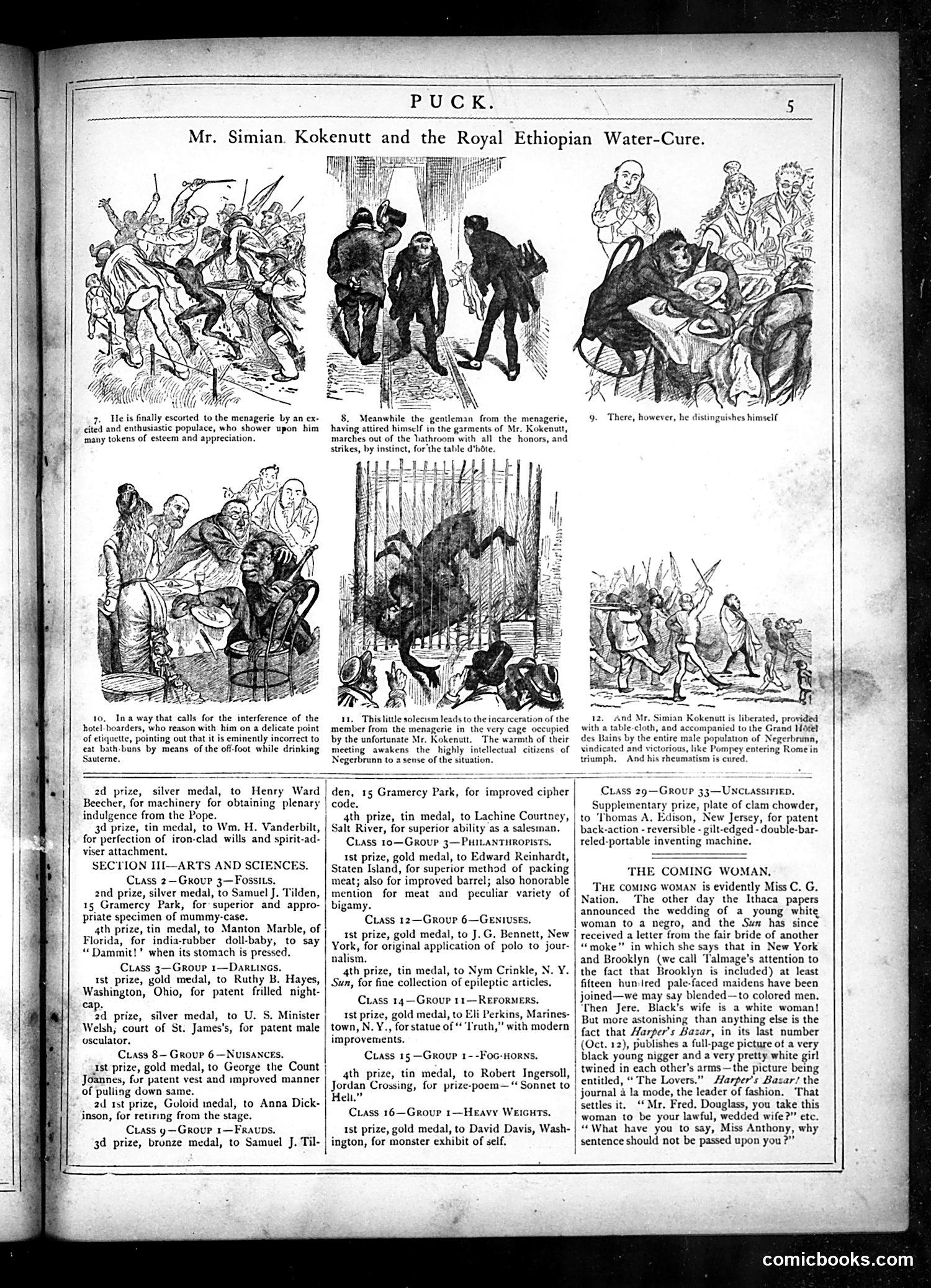
This satirical cartoon mocks a medical charlatan named Simian Kokenutt who promoted a dubious "water-cure" treatment. The six panels depict: 1. **Enthusiastic crowds** gathering around Kokenutt 2. **Kokenutt's arrival** in formal dress 3. **Wealthy patrons** endorsing the treatment 4. **The "cure" method**: forcing patients to drink water 5. **A monkey-like figure** performing acrobatic "treatment" 6. **Crowds witnessing** the theatrical spectacle The satire targets both the fraudulent doctor and the gullible public who embraced pseudoscientific medical fads. The caricature's surname "Kokenutt" and simian imagery suggest mockery of the practitioner's intelligence. The piece criticizes the era's susceptibility to medical quackery and wealthy patrons' willingness to fund absurd treatments.
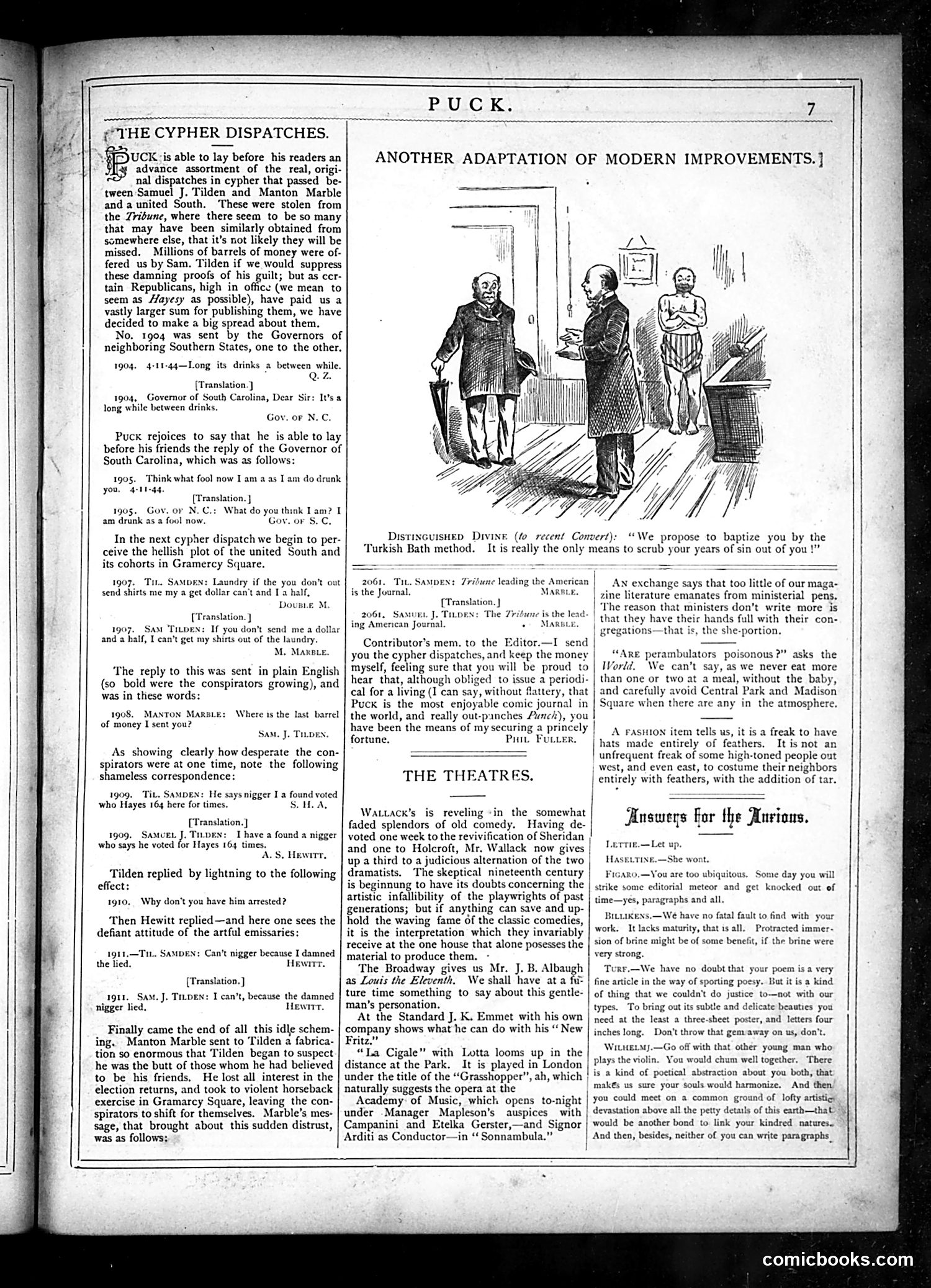
The main cartoon illustrates "The Cypher Dispatches," a satirical exchange between Southern governors about securing Republican votes through bribery. The text reveals the joke: governors were allegedly offering money to obtain Republican support, with the dispatches written in cipher to hide the scheme. The cartoon depicts what appears to be political operatives in conversation, likely representing these governors or their agents conducting illicit dealings. The accompanying "Cypher Dispatches" section contains mock telegrams from 1904 referencing vote-buying and political corruption among Southern Democratic governors attempting to sway Republican support—presumably during a heated electoral period. Below, a theater section and an "Answers for the Anxious" advice column complete the page, typical of Puck's mixed content format.
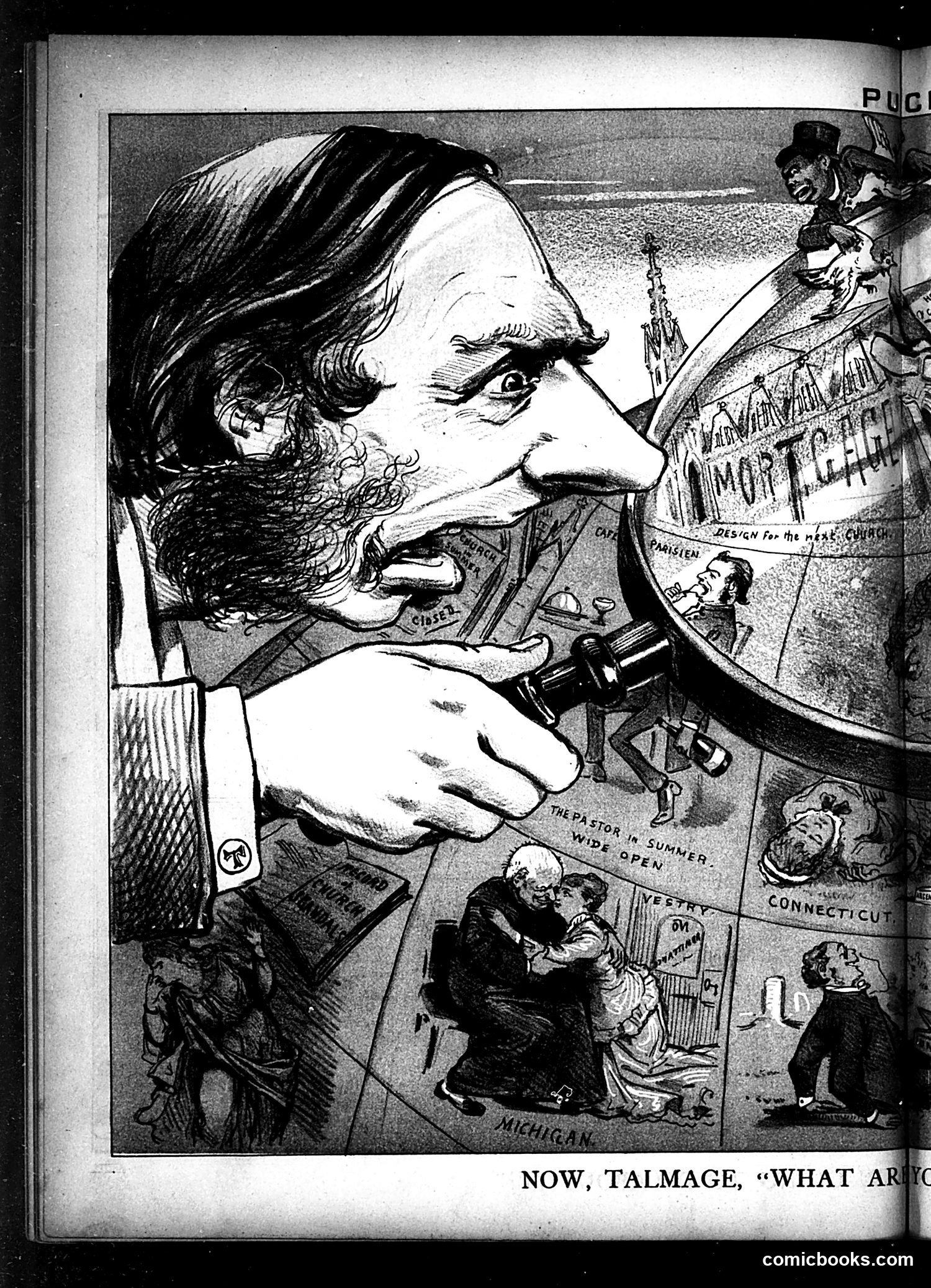
This Puck magazine page presents a caricatured figure (likely a prominent politician or public figure of the era) examining various smaller scenes through a magnifying glass. The exaggerated facial features—particularly the large nose and beard—are typical of period satirical portraiture. The smaller vignettes visible include references to locations like "Connecticut" and "Michigan," and scenes labeled "The Pastor's Summer Wide Open" and what appears to be social or religious commentary. The magnifying glass device suggests the cartoonist is scrutinizing or exposing details about this figure's activities, influence, or hypocrisy across different regions. The caption beginning "Now, Talmage, 'What Are...'" suggests the subject is likely Thomas DeWitt Talmage, a prominent 19th-century preacher, though the exact criticism remains partially unclear from this page alone.
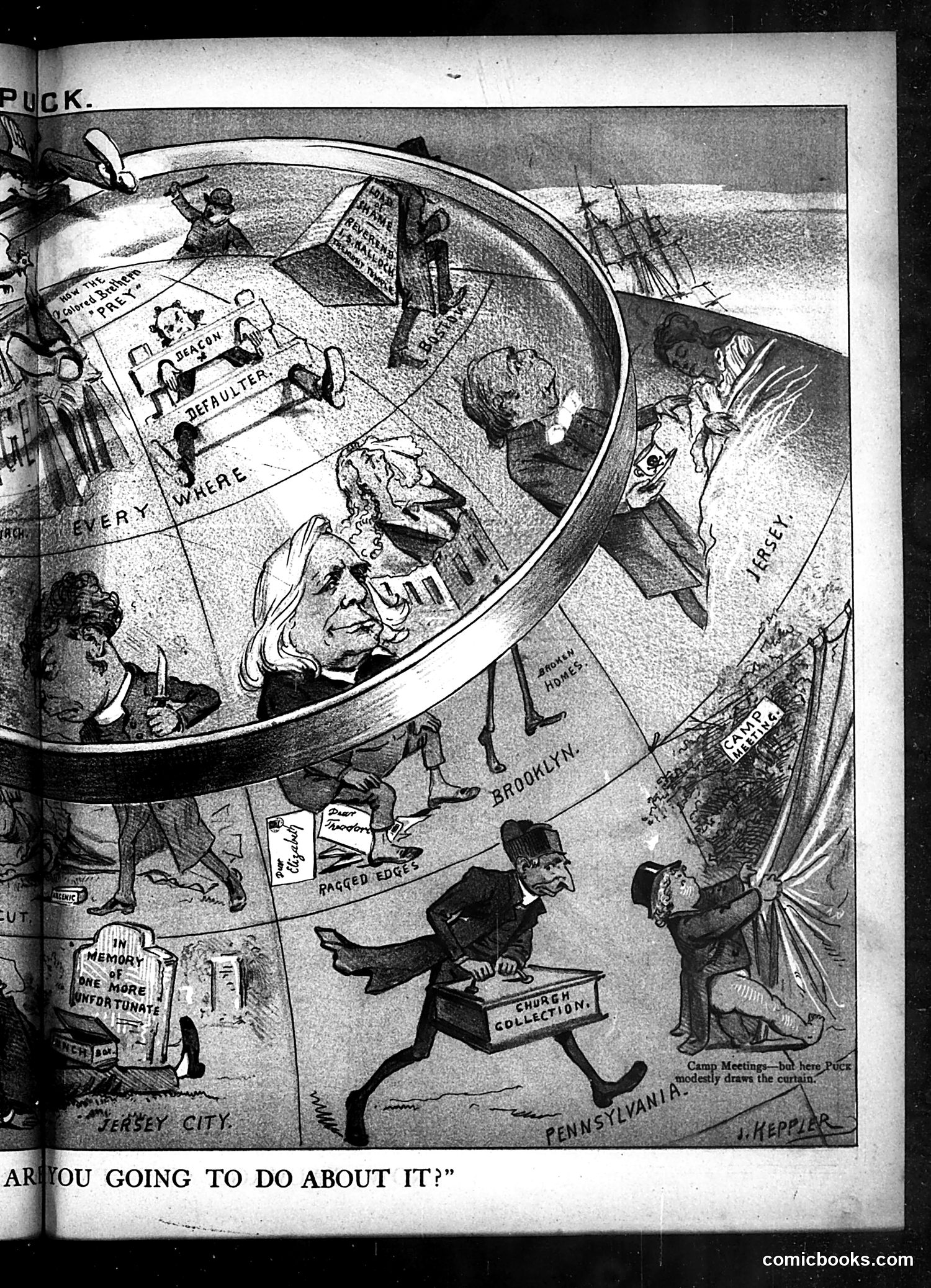
This Puck cartoon depicts a globe showing various American locations (Brooklyn, Jersey City, Pennsylvania) with caricatured figures engaged in corrupt activities. A man carrying a "Church Collection" box runs across the image, apparently fleeing with funds. The cartoon satirizes **religious fraud and embezzlement**, showing how church donations were allegedly being misappropriated. The globe format suggests this corruption was **nationwide and systemic**. Various labeled locations indicate multiple schemes. The caption "ARE YOU GOING TO DO ABOUT IT?" challenges readers/authorities to address these crimes. The cartoon appears to criticize both the perpetrators of religious financial crimes and authorities' inaction. Without a visible date, the specific scandal remains unclear, but the satire targets organized corruption exploiting people's faith and charitable giving.
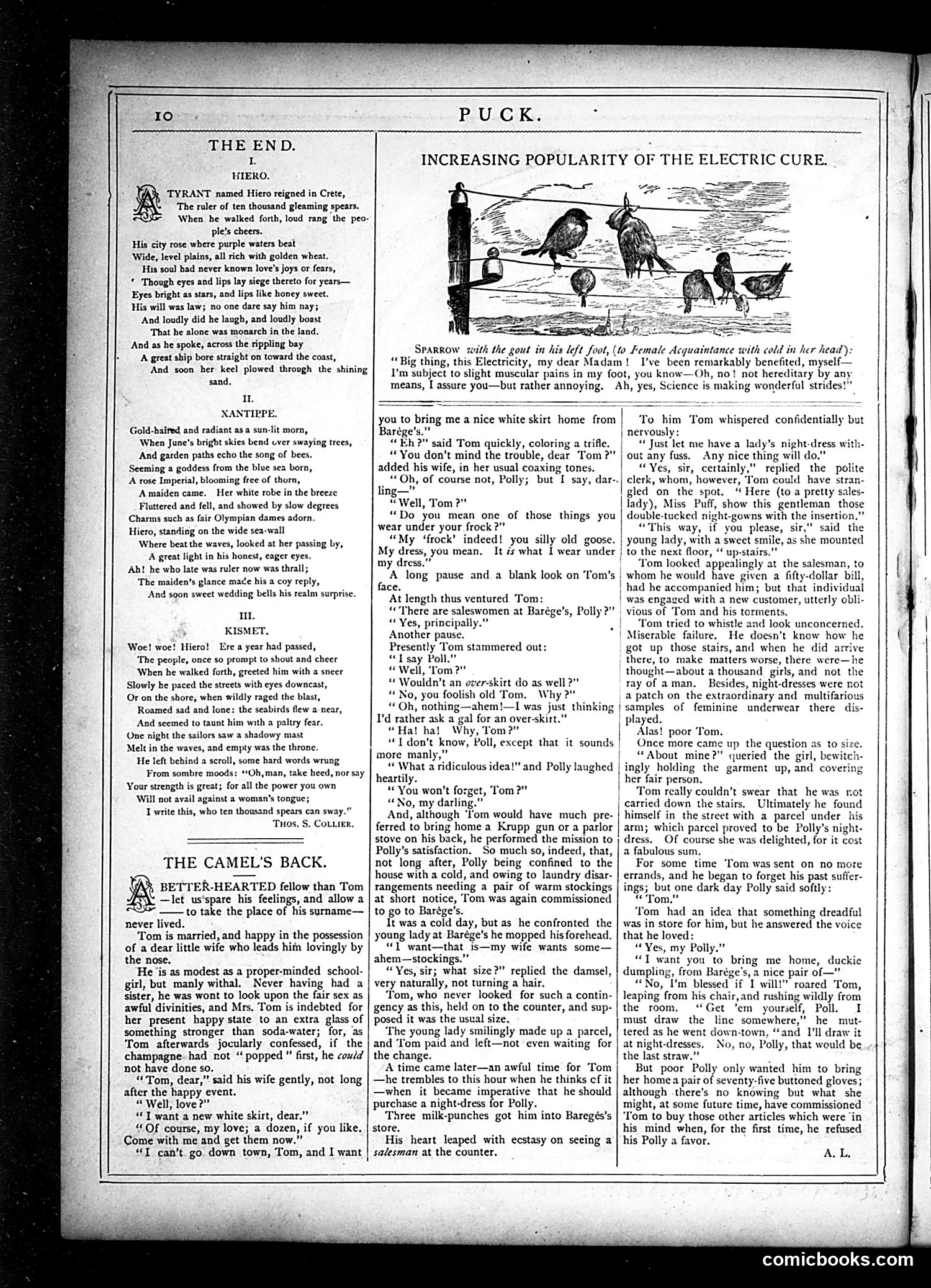
This cartoon satirizes the late-19th-century fad of using electrical treatment for medical ailments. The illustration shows birds perched on electrical poles, with a sparrow complaining to a female acquaintance about muscular pain in its foot. The female suggests electricity as a cure, boasting that "Science is making wonderful strides!" The satire mocks how indiscriminately electrical "cures" were being promoted for various complaints—the sparrow's skeptical response ("no, no! not hereditary by any means") suggests the treatment was becoming a catch-all remedy regardless of actual cause. Puck is ridiculing both the pseudoscience of electrical medicine and public gullibility in embracing trendy but unproven treatments.
This is a serialized story titled "Patient Kitty" by Halse Noes, continued from a previous issue. The text-heavy page contains no political cartoons or caricatures—rather, it's a prose narrative about romantic intrigue and moral questions. The story involves characters named Kitty, Fred, Raynor, and Halland, discussing questions of honor, confession, and duty regarding past misdeeds. The narrative concerns whether Fred should confess to workplace wrongdoing and whether Kitty should break an engagement based on a rival's claims. This appears to be serialized fiction typical of Puck's content—offering social commentary through narrative rather than visual satire. Without seeing illustrations accompanying the text, the specific satirical targets remain unclear from this text-only page.
This page contains primarily **text content** rather than a prominent political cartoon. The main feature is "Puck's Briefs"—a humor column consisting of short jokes and satirical quips on contemporary topics. The visible jokes target: - Educational pretension ("A friend of Education") - Racial stereotypes (a "dark-complexioned dumb man" joke) - Political corruption and party politics - Marriage and domestic life - Various public figures and social types The column's tone is typical of Puck's approach: lighthearted mockery of American society, politicians, and current events. However, without seeing the primary cartoon illustration on this page (if one exists), I cannot identify specific political figures or events being satirized. The page appears to be primarily a humor miscellany rather than focused satire.
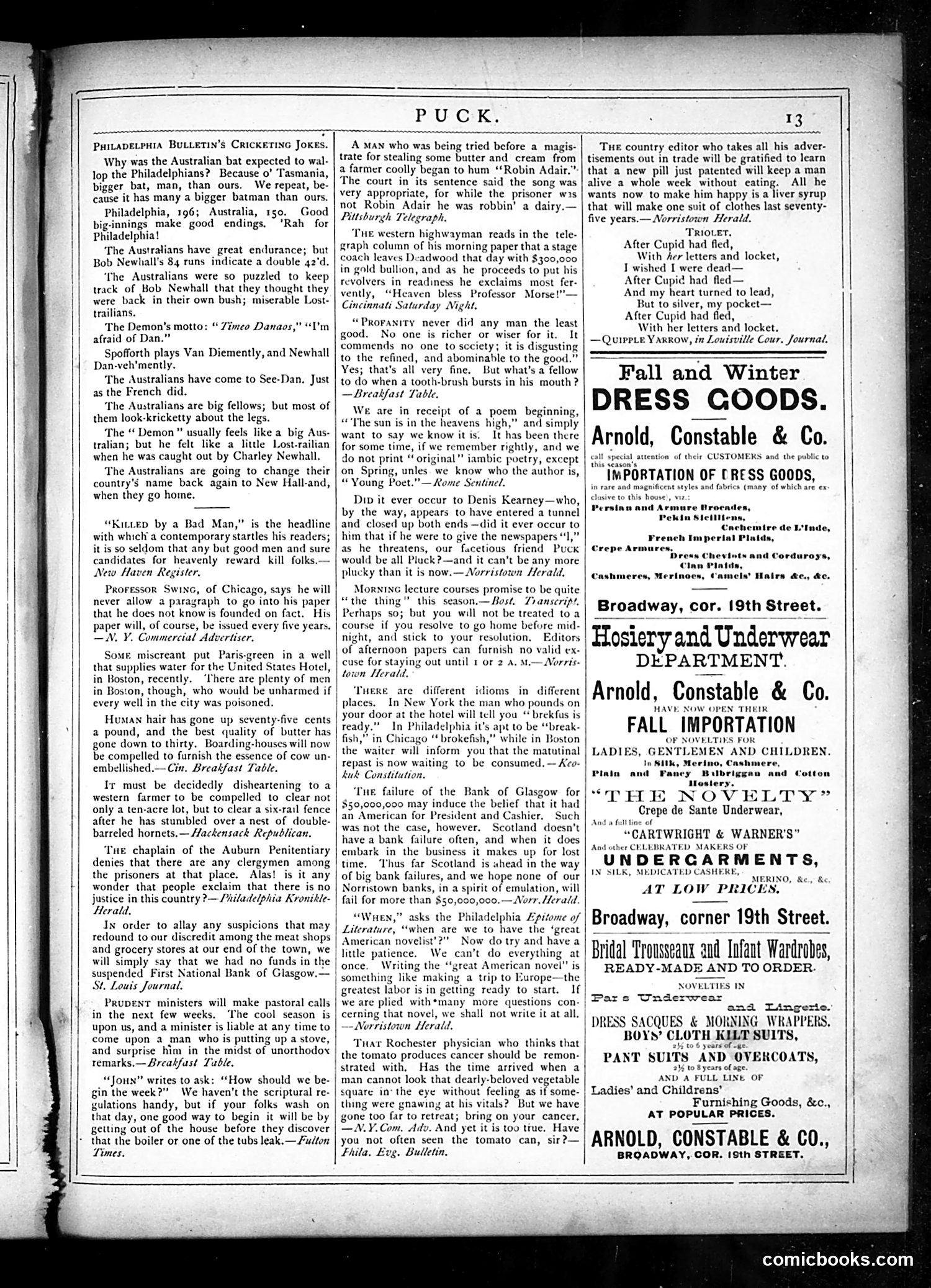
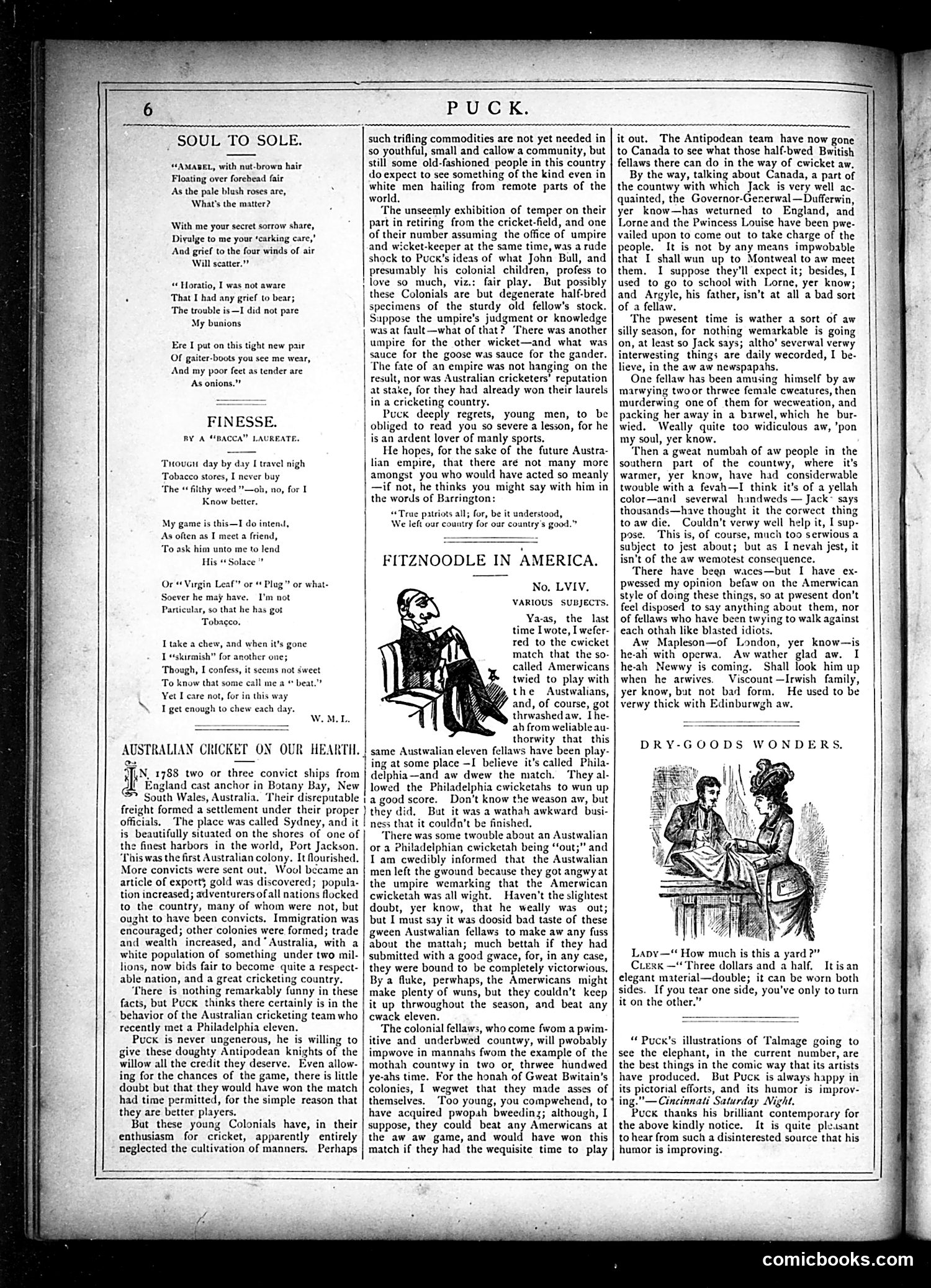
This page is primarily **advertising and miscellaneous editorial content**, not political cartoons. The left column contains brief satirical items about Philadelphia cricketers, Australian visitors, and various social observations—typical Puck filler material poking fun at contemporary figures and situations (Bob Newell, Denis Kearney, etc.). The dominant right side features **commercial advertisements** for Arnold, Constable & Co., a New York department store, advertising fall and winter dress goods, hosiery, undergarments, and children's clothing. The brief textual items employ gentle satire on everyday topics: cricket clubs, American pretensions, and minor public figures—characteristic of Puck's lighter satirical style. Without additional context, most references remain opaque to modern readers.
This page is **primarily advertising**, not satirical content. The dominant features are commercial advertisements for products including: - **Apollinaris Natural Mineral Water** ("The Queen of Table Waters") - **Anheuser's St. Louis Lager Beer** (promoted as winning "The Grand Gold Medal" at the 1878 Paris Exposition) - **Vichy water** (mineral water for health purposes) - Various portrait studios, photographers, coffee products, and patent services The single editorial element at top left discusses American journalism and British periodicals, but occupies minimal space. This appears to be a typical Puck magazine page where advertising revenue funded the publication, with minimal satirical content visible.
This is primarily an **advertising page** from Puck magazine (1878), not a political cartoon. The page contains numerous commercial advertisements for products and services including: - Umbrellas (Isaac Smith's) - Tailoring (Nicoll, The Tailor) - Furniture (Mathesius & Frey) - Gentlemen's hats (Dunlap & Co.) - Cigarettes (Best Marquis brand) - Champagne (Devenoge & Co.) - Hungarian wines - A lottery advertisement (Louisiana State Lottery Co.) - Puck's Almanac for 1878 There is one **illustration of a florist** ("Le Moult, the Florist") on the left side, but no clear satirical content or political commentary is visible on this page. It serves primarily as a revenue-generating advertisement section rather than editorial satire.
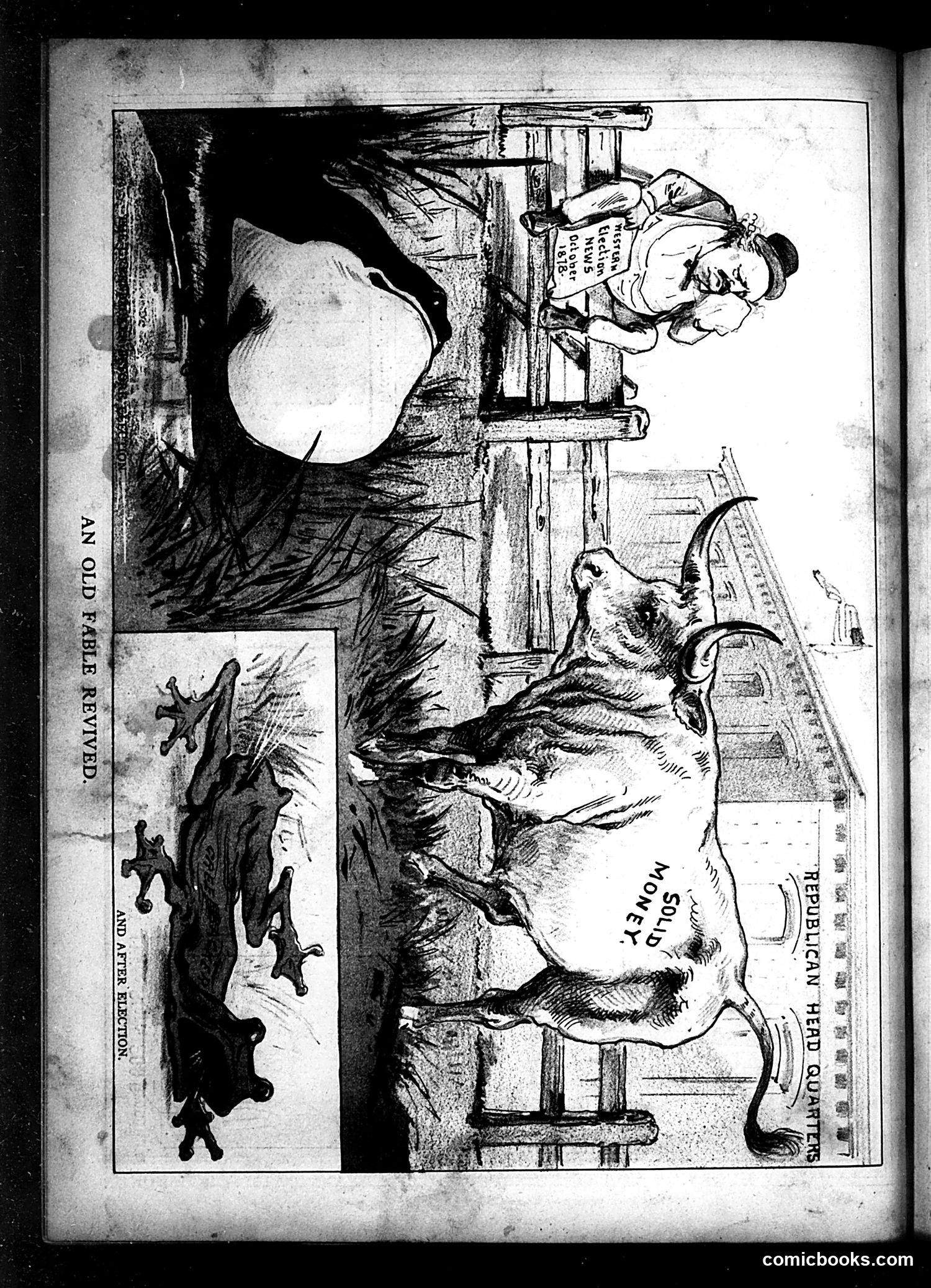
This page contains two satirical cartoons from *Puck* magazine. The main image shows a donkey labeled "Know Nothings" (appearing to reference the anti-immigrant Know Nothing political party) being ridden by a figure in what looks like a cart. Above is a separate vignette titled "An Old Rabbit Revived" depicting what appears to be historical political conflict. The cartoons satirize American political movements, particularly nativist or anti-immigrant positions. The donkey imagery was commonly used to mock Democratic or unpopular political movements. The text references suggest commentary on revived or persistent political antagonisms, though specific contemporary references are unclear without additional historical context about the publication date.