
A complete issue · 16 pages · 1878
Puck — August 28, 1878
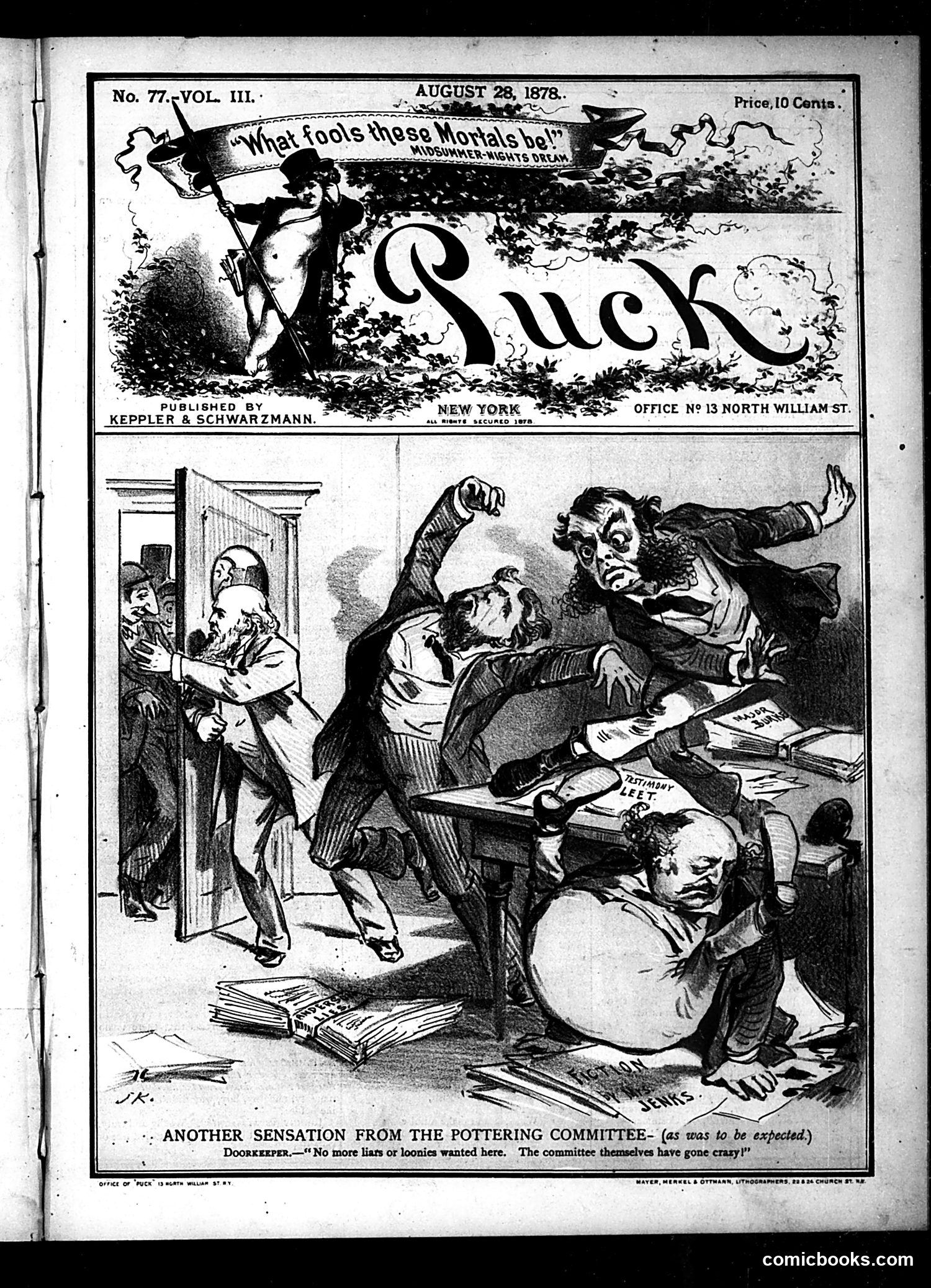
This cartoon satirizes chaos at the "Pottering Committee," likely a legislative body or political commission. The caption reads: "No more liars or loosies wanted here. The committee themselves have gone crazy!" The scene depicts physical mayhem—men fighting, papers scattered, books flying—suggesting the committee has descended into disorder and incompetence. The doorkeeper's exasperated comment implies the committee members themselves are the problem: they're hypocritically excluding "liars" while behaving chaotically. The specific committee isn't entirely clear from the text alone, but the satire targets political dysfunction and the irony of institutions attempting to maintain standards while their own members behave badly. This reflects 19th-century American skepticism toward government committees and partisan bickering.
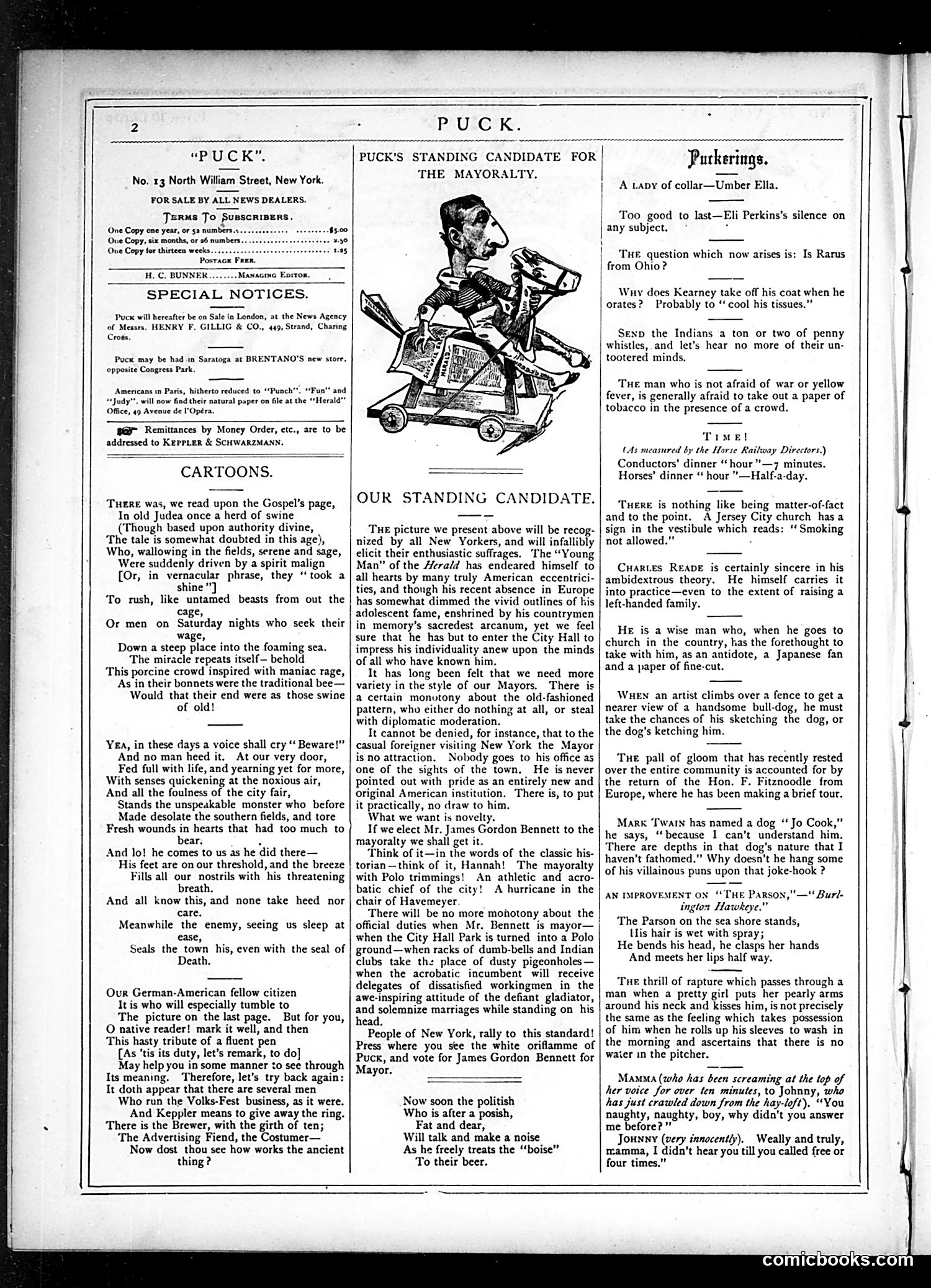
The main cartoon depicts "Our Standing Candidate" for mayor—a caricatured figure riding in a wheeled contraption, drawn in exaggerated style. The accompanying text suggests this is satirizing a prominent New York mayoral candidate, likely James Gordon Bennett (mentioned explicitly in the "Our Standing Candidate" section), proposing humorous reforms like turning City Hall Park into a Polo ground and replacing pigeons with workingmen. The cartoons and "Puckerings" column mock New York political culture and urban absurdities of the era. The satire targets both the candidate's pretensions and contemporary civic concerns—traffic congestion, urban management, social pretension. Without clearer identification of the specific election year, the exact political figure remains uncertain, though the tone is characteristic of Puck's irreverent approach to Gilded Age NYC politics.
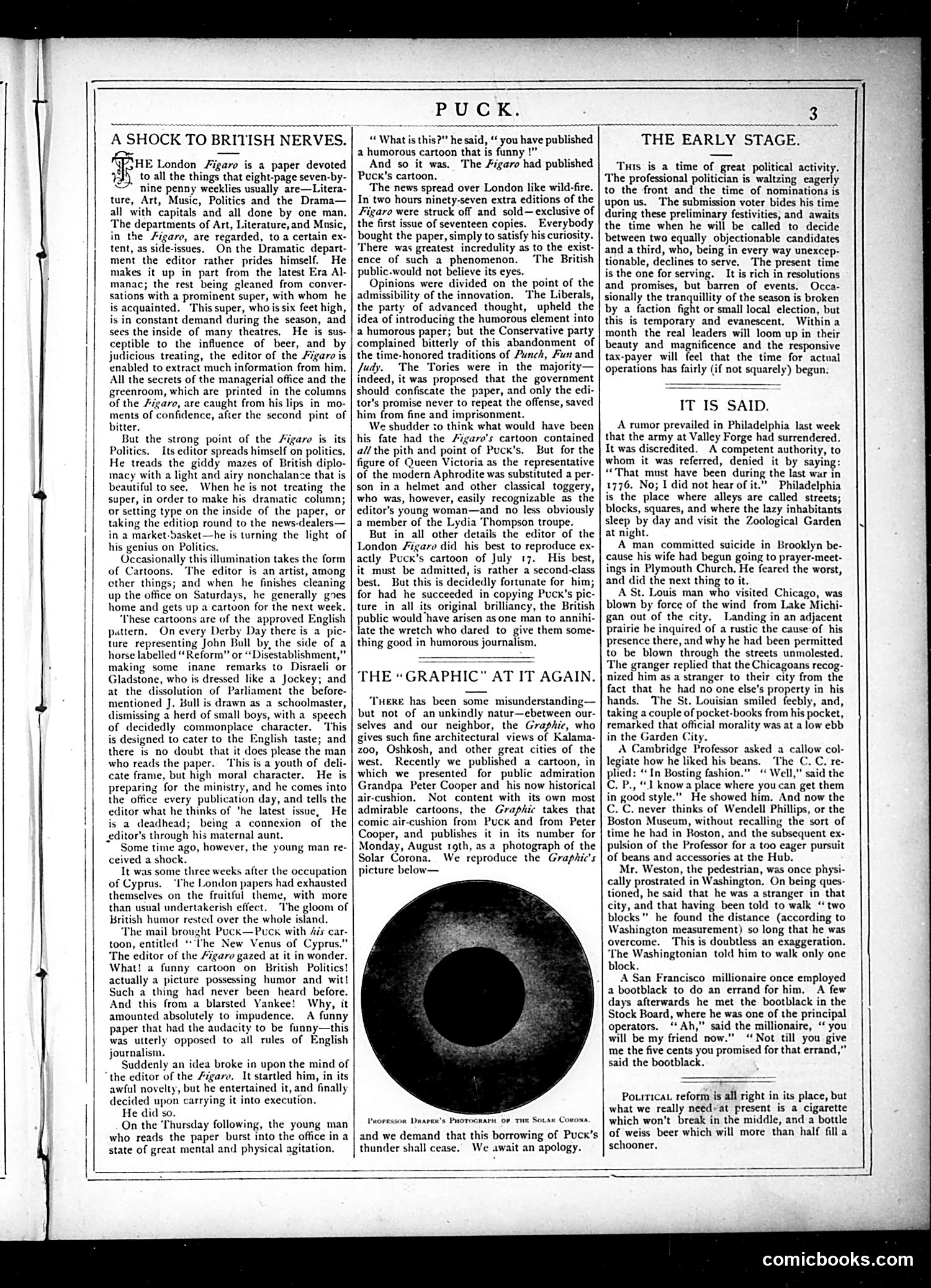
The editorial criticizes the *Figaro* (a French publication) for publishing a humorous cartoon about British life that some found offensive. The text reveals that the cartoon spread rapidly through London in multiple editions, shocking British sensibilities. The main image shows **Professor Huxley's photograph of the Solar Corona**—a scientific illustration, not political satire. The editors note they're reprinting it as "a photograph of the Solar Corona" after it was misidentified or misused elsewhere. The satire targets British resistance to French humor and the *Figaro's* audacity in lampooning English customs. Puck defends the humorous element in journalism, arguing the British shouldn't be so thin-skinned about foreign mockery of their traditions and peculiarities.
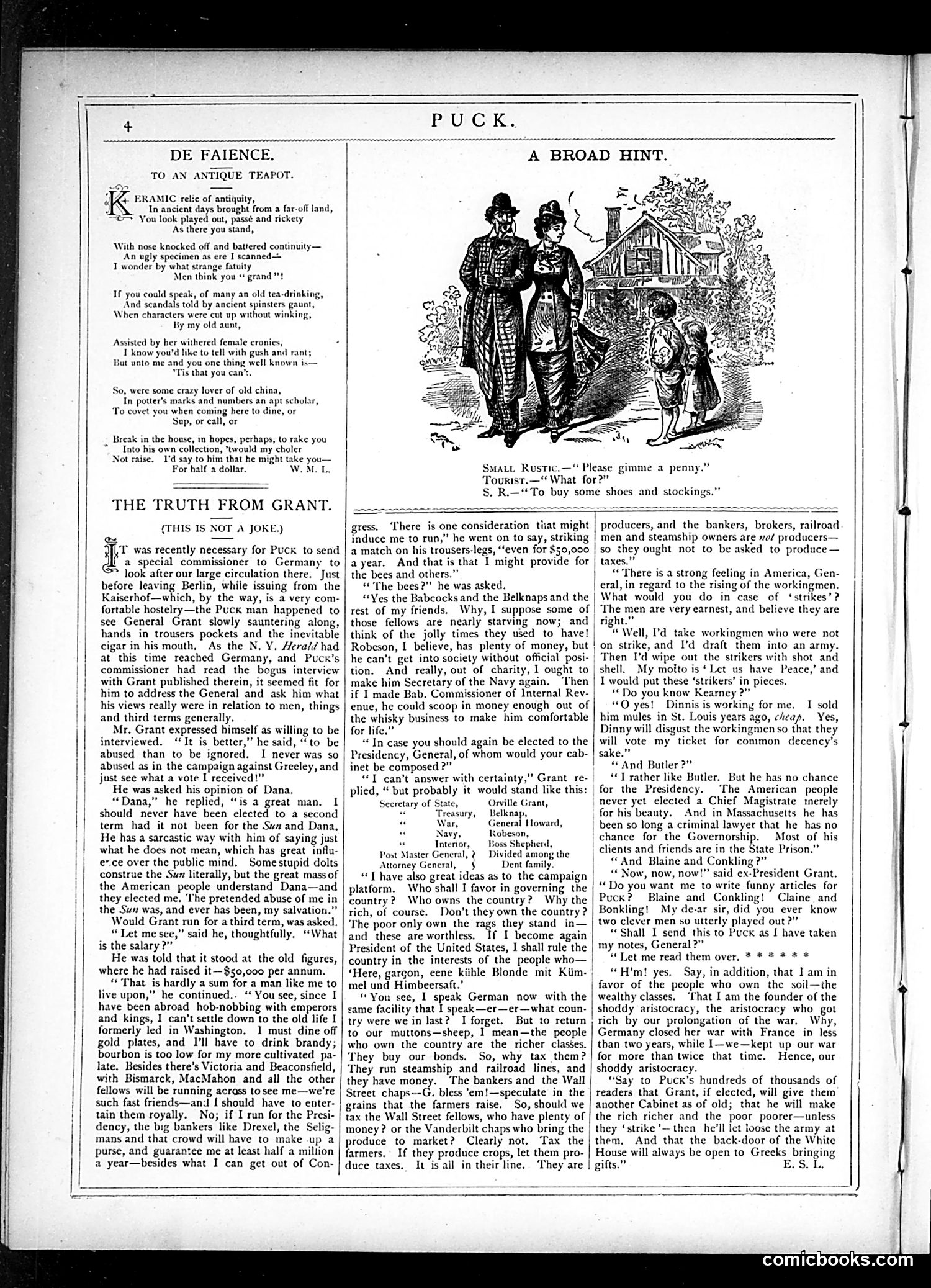
The cartoon "A Broad Hint" depicts a tourist asking a small rustic child for directions to buy shoes and stockings. It's a gentle joke about rural poverty—the implication being that such items are scarce in the countryside. "The Truth from Grant" is a political satire where General Ulysses S. Grant discusses economic policy and taxation. The text presents Grant defending his administration against criticism, arguing that taxing farmers and producers unfairly enriches bankers and railroad monopolies. The satire critiques Grant's actual policies and his relationships with wealthy industrialists, suggesting his presidency favored the rich over working people and farmers—a genuine political controversy of his era.
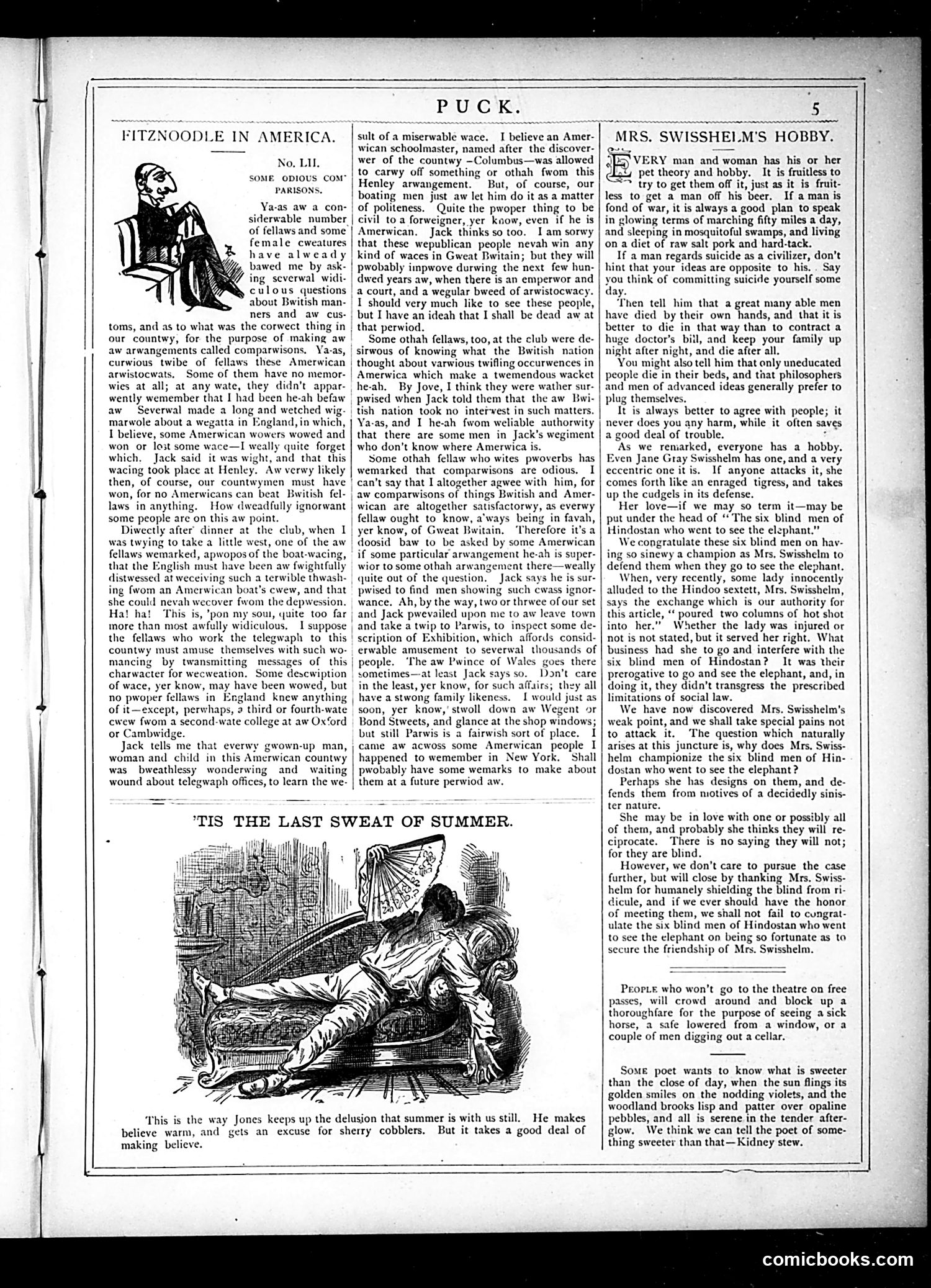
**Left cartoon:** Satirizes a pompous British visitor ("Fitznoodle") pontificating about American politics and customs. The caricatured figure embodies stereotypical British snobbery—criticizing American democracy, labor practices, and manners while claiming British superiority. Puck mocks such condescending foreign observers who visit America yet remain willfully ignorant, using Fitznoodle's absurd comparisons (wagers, legal systems) to highlight the ridiculousness of British presumption. **Right section:** "Mrs. Swissheim's Hobby" discusses charitable work for blind men who visited an elephant, apparently to experience it tactilely. The piece celebrates her humanitarian efforts while gently satirizing the enterprise's unusual nature, questioning whether such well-intentioned projects actually help or merely amuse observers. **Bottom cartoon:** Depicts summer exhaustion—a woman collapsed indoors, using a fan. Caption jokes that Jones "keeps up the delusion that summer is with us still," mocking denial of seasonal change.
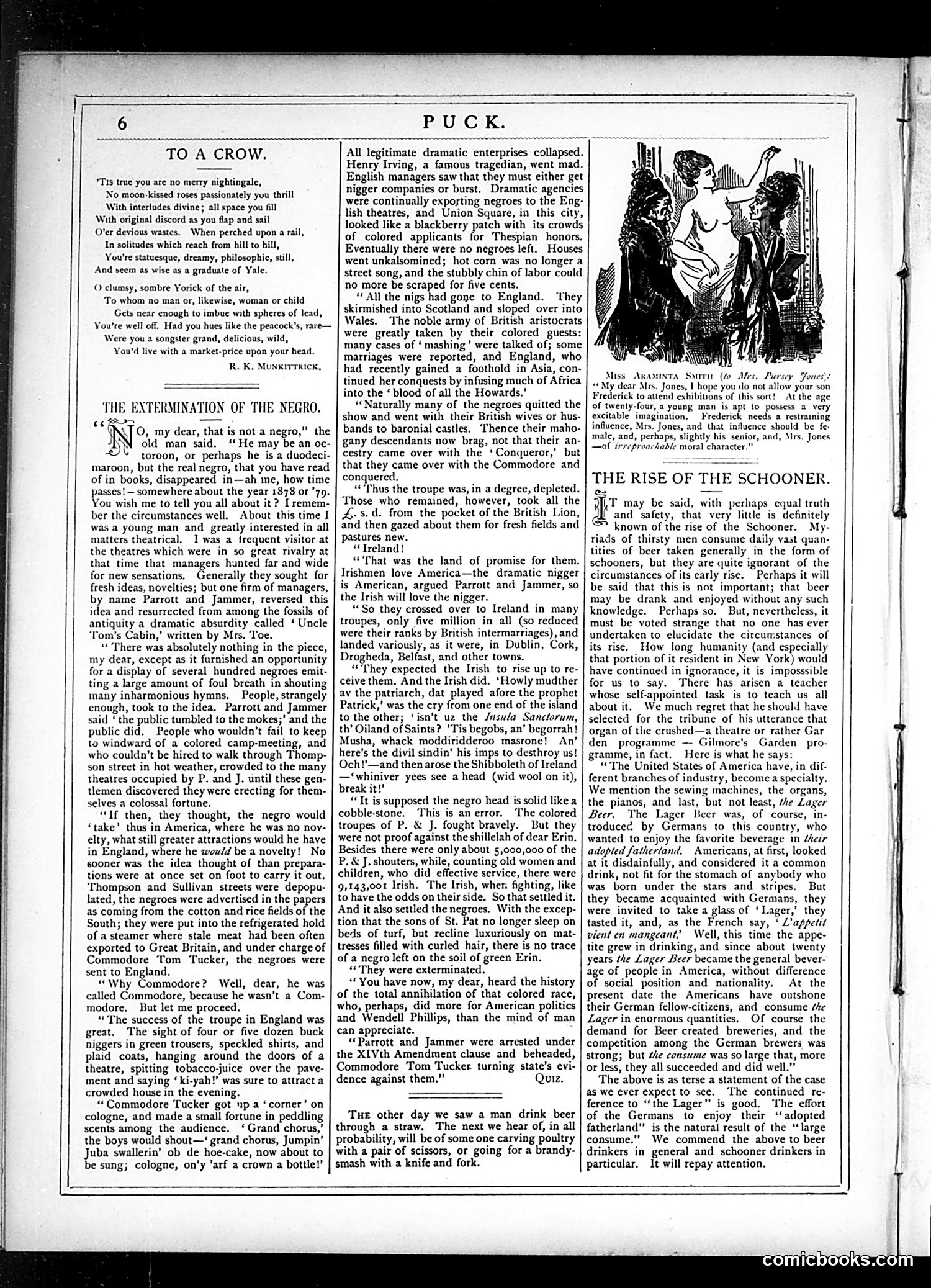
This page contains three distinct pieces: 1. **"To a Crow"** - A poem by R.K. Munkittrick mocking crows as common, unrefined creatures. 2. **"The Extermination of the Negro"** - A satirical dialogue criticizing racist attitudes. The text mocks arguments that African Americans should be removed from America, revealing their absurdity through exaggeration. It references theatrical managers' attempts to exclude Black performers and satirizes arguments about racial "purity." 3. **"The Rise of the Schooner"** - An article about the increasing popularity of a beer drink served in large glasses, humorously suggesting Americans adopted it from Germans without understanding its origins. The cartoon illustration shows figures in period dress, though specific identities aren't clearly labeled in the visible portion.
This page contains several satirical articles rather than cartoons. The main pieces mock a New York boarding house scandal and political figures: **"The New York Boarding-House: A Terrible Exposé"** ridicules a disreputable boarding house where the landlord exploits tenants, servants are mistreated, and mysterious deaths occur—likely exaggerating real conditions for comedic effect. **"Our Next Senator"** appears to satirize candidates for a U.S. Senate seat, apparently mocking their qualifications and ambitions. References to "Harper's Weekly" suggest criticism of that publication's political coverage. **"Accuracy"** briefly mentions theatrical performer Nancy Sykes and General Huller's wife, though the exact satirical point is unclear from this excerpt. The humor targets corruption, incompetence, and journalistic sensationalism typical of Gilded Age satirical commentary.
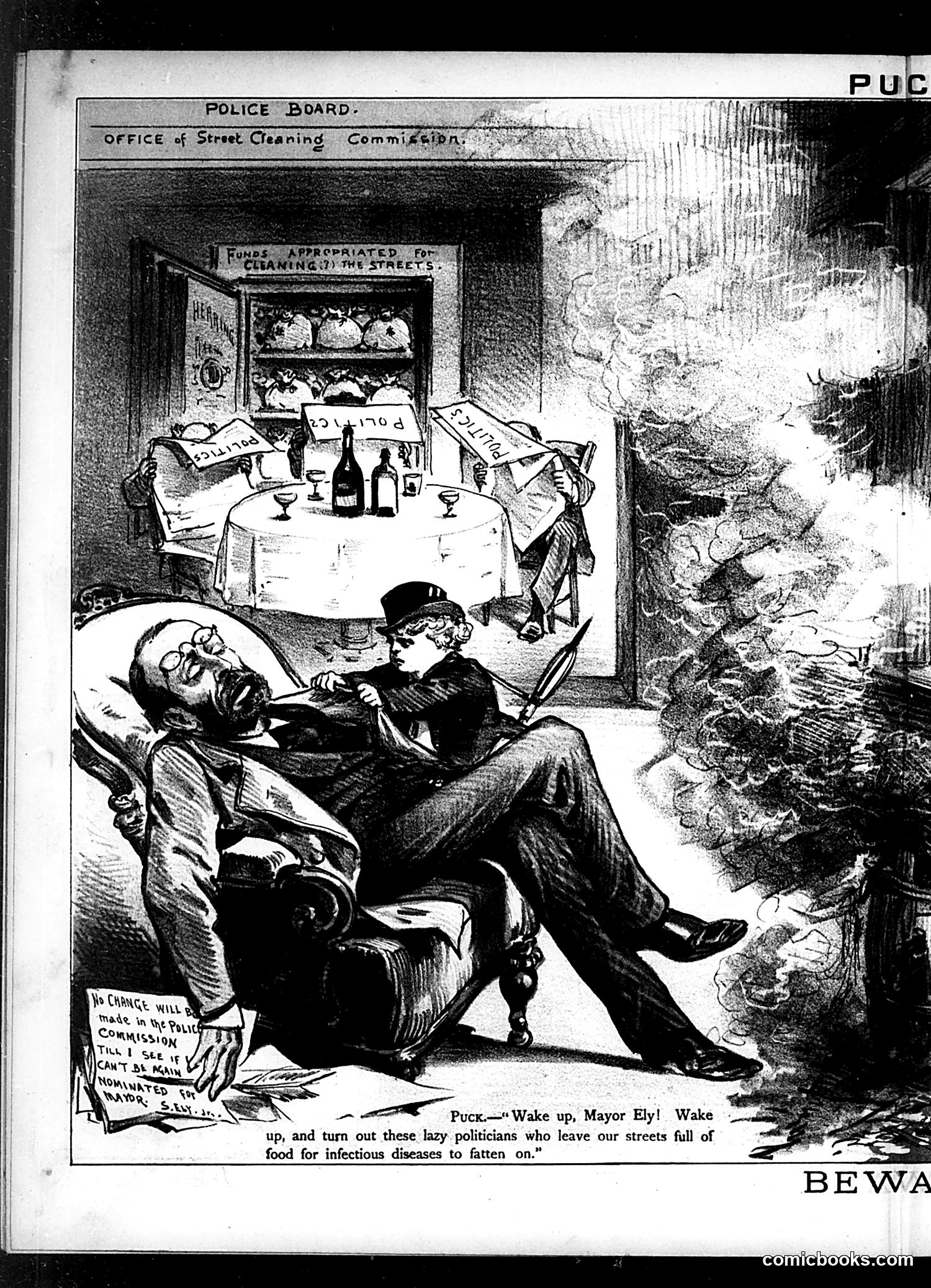
This Puck cartoon satirizes municipal corruption and neglect of public health. The central figure appears to be a corrupt or indifferent mayor, sleeping while enjoying fine dining and wine in his office. Behind him, a window labeled "Office of Street Cleaning Commission" shows overflowing garbage bins—literal "funds appropriated for cleaning of the streets." The satire's point: while municipal funds meant for street cleaning are being misused or embezzled, the city's streets accumulate filth that breeds "infectious diseases." The caption's reference to "lazy politicians" suggests the mayor and police board are either complicit in corruption or criminally negligent about public sanitation. This reflects Progressive Era concerns about urban corruption and how political mismanagement endangered public health.
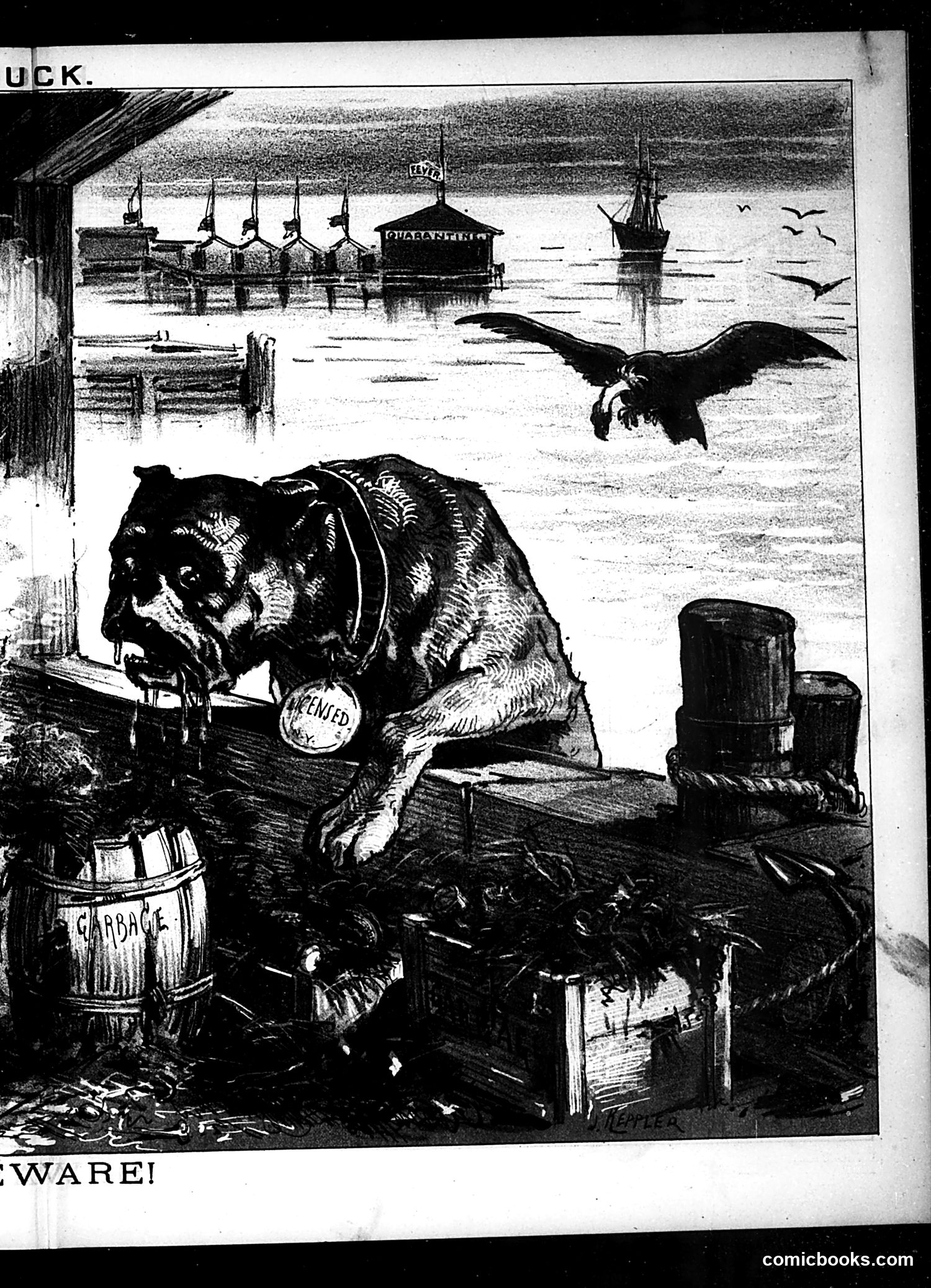
This Puck magazine cartoon depicts a bulldog labeled "EXEMPTED" on its collar, guarding garbage and refuse at a waterfront dock. The dog appears aggressive toward seabirds, while ships and maritime structures are visible in the background. The satire likely critiques **exemptions from sanitation or health regulations** — the bulldog represents something granted special exemption from normal rules or inspections. The "garbage" suggests filth or corruption being protected rather than cleaned up. The waterfront setting indicates this concerns maritime commerce or shipping operations. The cartoon's point appears to be that certain entities received preferential treatment (exemption) that allowed them to operate without the oversight or cleanliness standards applied to others — a common Progressive-era complaint about favoritism in business regulation.
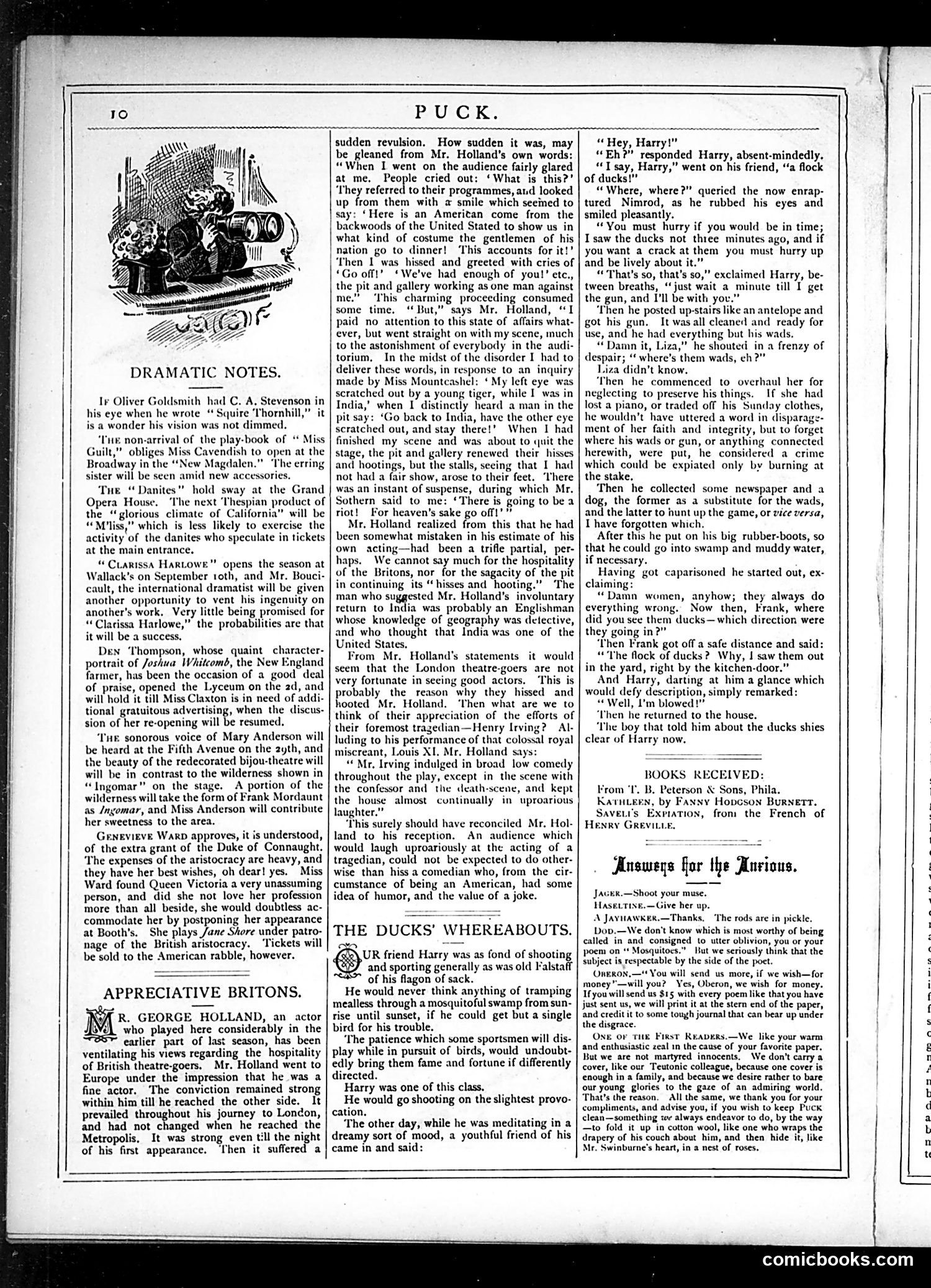
This page contains theatrical criticism rather than political satire. The main illustration shows a dramatic scene, likely from a play being reviewed. The "Dramatic Notes" section discusses recent theater productions, including Oliver Goldsmith's "She Stoops to Conquer" and a play featuring George Holland. The text criticizes Holland's performance in a play where he portrayed an American character, noting his poor geography knowledge (confusing India with the United States). "The Ducts' Whereabouts" appears to be a humorous short story about a character named Harry and his friend's obsession with duck hunting. The section includes dialogue about shooting ducks and contains social commentary on sporting culture. The page concludes with a "Books Received" section listing recently published works and an "Answers for the Anxious" advice column addressing reader inquiries.
This page consists primarily of text articles rather than political cartoons. The left column contains "POLO," a first-person account by the author describing his experiences playing polo—detailing matches, horses, and the sport's competitive nature. The right column contains "NATURAL HISTORY," which appears to be a satirical piece about snakes in America, discussing their dangers and suggesting that imported snakes could be more effective than native ones. The page also includes a small section labeled "EPHRAIM WIGGINS" with subscription information for what appears to be a club or publication. Rather than visual political satire, this page relies on written humor and commentary typical of Puck magazine's editorial content from its era.
This page presents a serialized story rather than a political cartoon. The narrative depicts a conversation between passengers in a railway carriage involving an older gentleman, a younger man, and a white-haired woman. The plot involves discussion of a crime—apparently a murder—with mentions of "St. James's" and references to silencing witnesses. The story appears to be a Gothic melodrama emphasizing class anxieties (references to "gentlemen," servants, and social propriety). The text plays on Victorian concerns about railway travel safety and criminal deception. Without seeing the illustrations or knowing the serial's full context, the exact satirical target remains unclear, though it likely reflects period anxieties about crime, class, and urban danger.
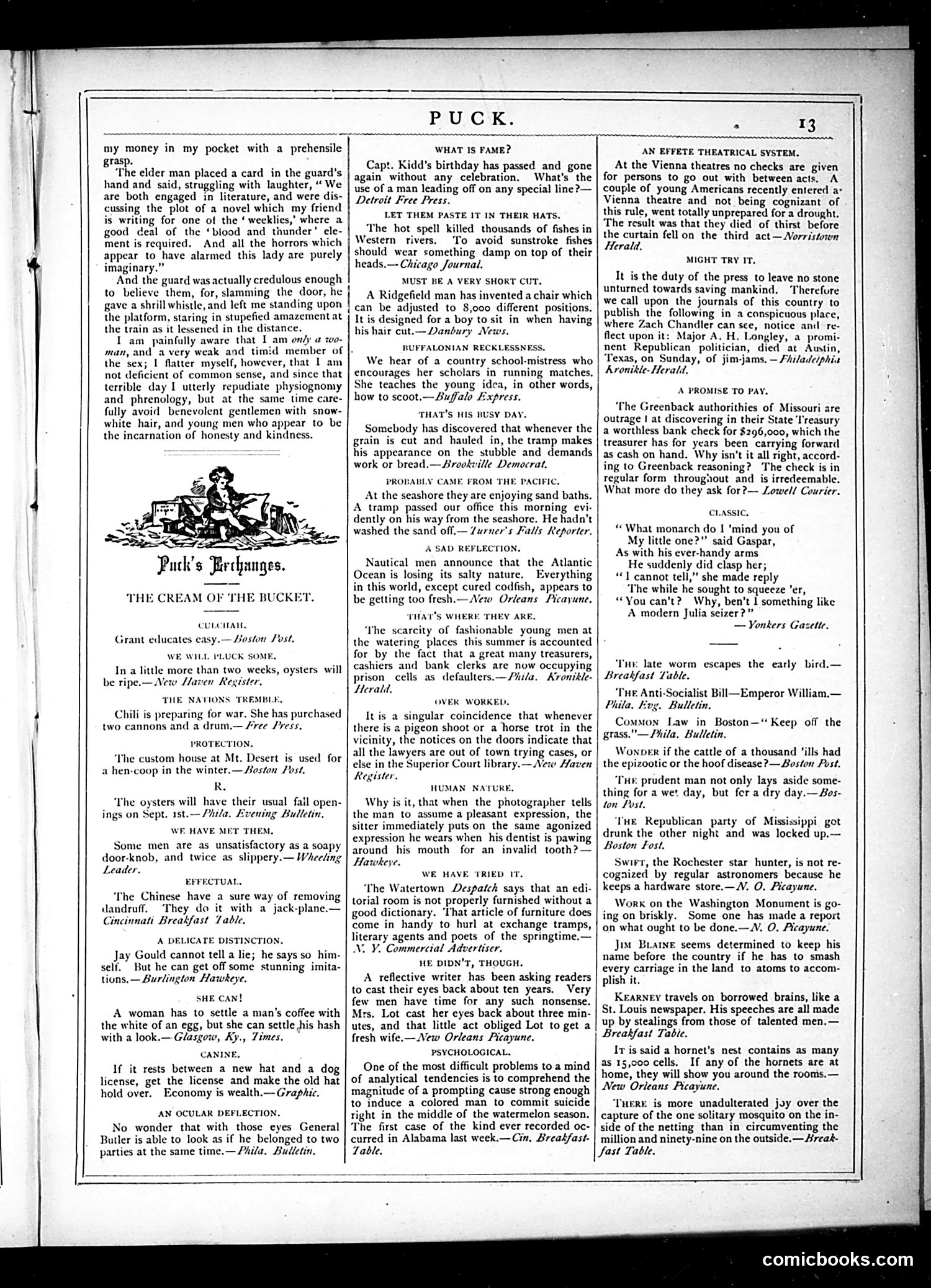
This page is primarily a **humor and satire column** titled "Puck's Birthrages" rather than a political cartoon. It consists of short, witty observations and jokes about contemporary society. The content includes satirical commentary on various topics: oyster pricing, Chinese laundry practices, coffee etiquette, hat storage, dental work, photography, and furniture design. There's also a section mocking specific groups—fashionable young men, treasurers and bank clerks as "defaulters," and a jab at the Republican party of Mississippi. The humor targets **everyday middle-class concerns and social pretensions** rather than specific political figures. The writing style relies on absurdist logic and observational comedy typical of Puck's general satirical approach to American life and manners.
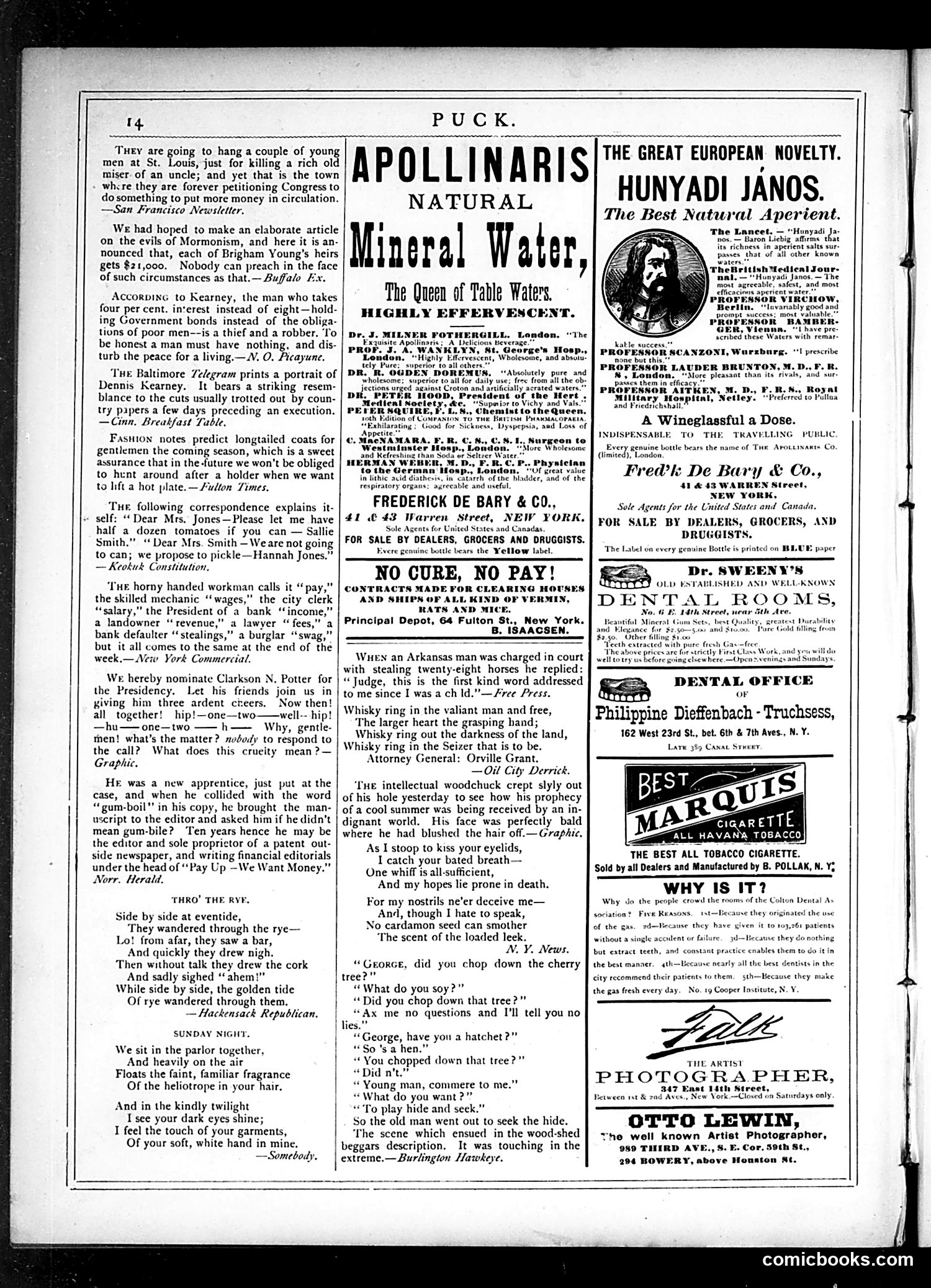
This page is primarily **advertising and miscellaneous content** rather than political satire. The main feature is a large advertisement for "Apollinaris Natural Mineral Water" with endorsements from various doctors and public figures, touting it as "The Queen of Table Waters." The page includes several short humorous items and poems—including verses about wandering through rye fields and a comedic exchange about a cherry tree—but these are light entertainment rather than political commentary. Below the mineral water ad are various other advertisements for dental offices, a photographer, and cigarettes typical of late 19th/early 20th-century publications. There are no identifiable political cartoons or significant satirical content addressing contemporary figures or events on this particular page.
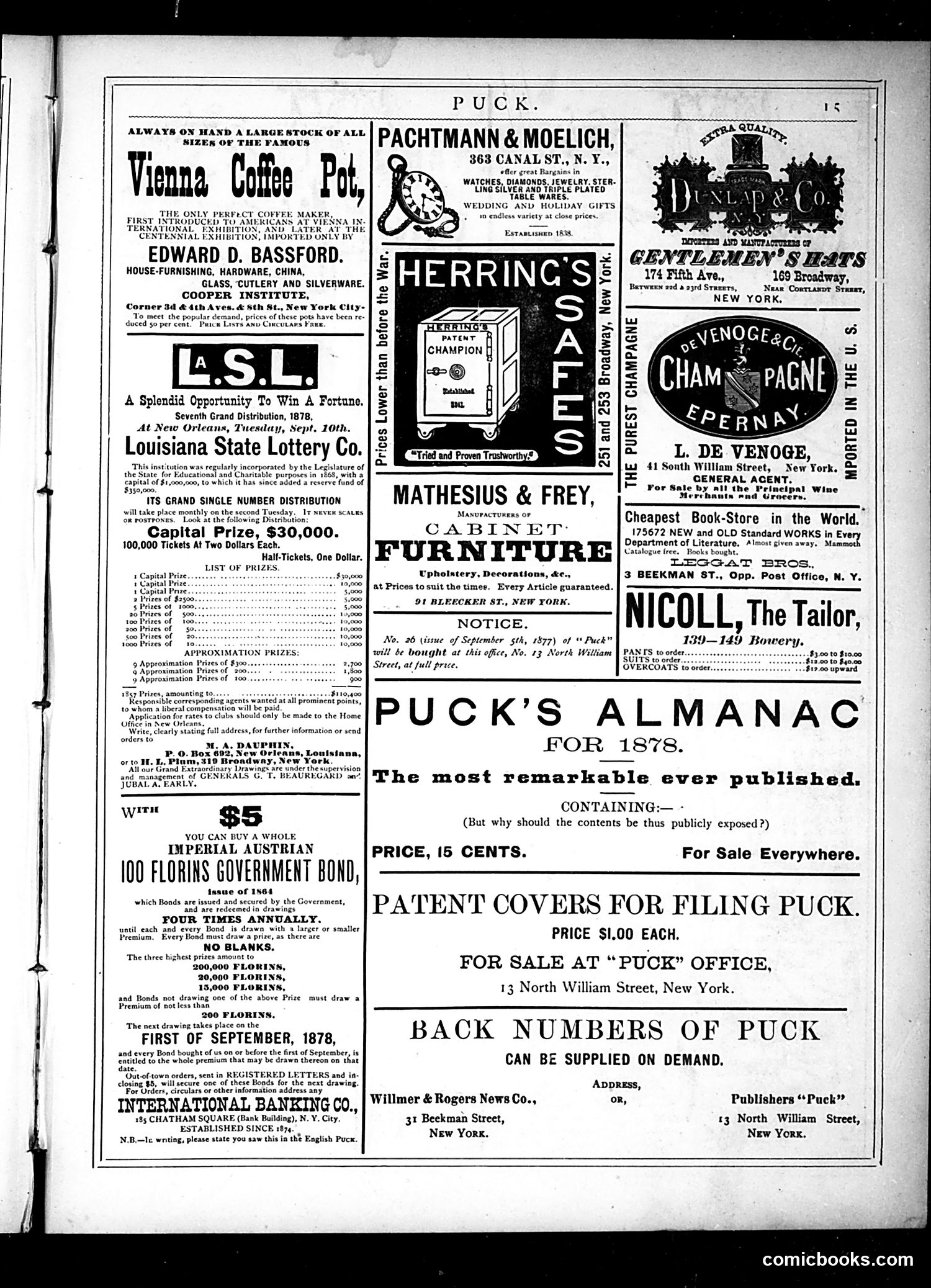
This is primarily an **advertising page** from Puck magazine's back matter (page 15), not a satirical cartoon page. The advertisements showcase period products and services: Vienna Coffee Pots, cabinet furniture, soaps, tailoring services, books, and notably a **Louisiana State Lottery** promotion offering a $30,000 capital prize. There's also a section for **Puck's Almanac for 1878** and patent cover filing information. The lottery advertisement is notable historically—such lotteries were common in this era but became increasingly controversial and were eventually banned, viewed as exploitative gambling schemes. The page demonstrates how 19th-century magazines relied heavily on advertising revenue, mixing commercial promotions with editorial content. No significant political satire or cartoon commentary appears on this particular page.
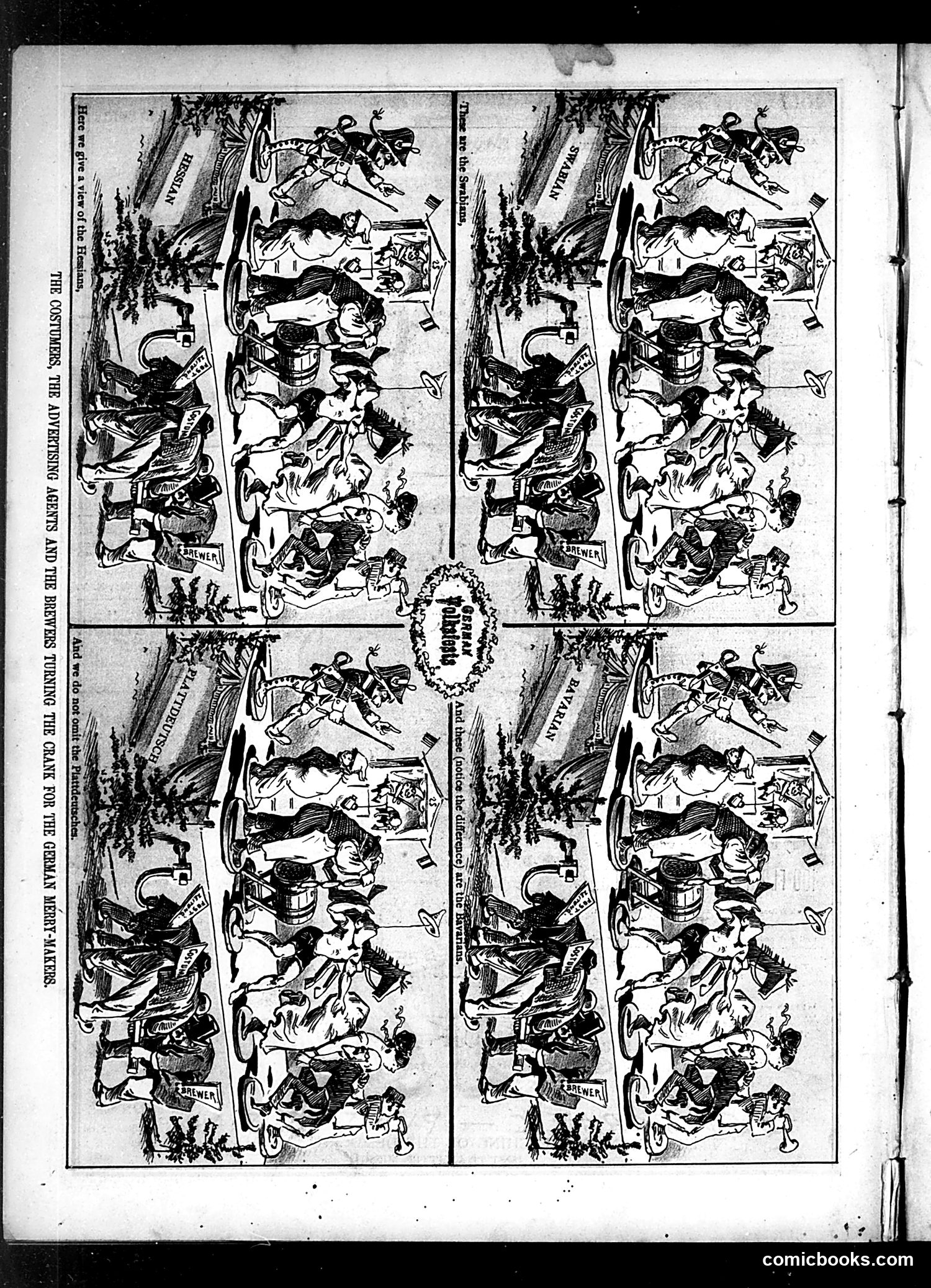
This page from *Puck* magazine presents four identical or nearly identical panels showing a chaotic domestic scene. The cartoon appears to be a "spot-the-difference" puzzle format popular in the era. The central image depicts a cluttered household in disarray—figures engaged in various activities amid scattered furniture, household items, and general pandemonium. While the OCR text is largely illegible, the visual style suggests satirical commentary on domestic life, possibly criticizing household management, marital discord, or the challenges of maintaining order in the home. The repeated panels suggest readers were meant to identify subtle differences between versions, a common *Puck* feature that doubled as both entertainment and social commentary. Without clearer text, the specific targets of satire remain unclear.