A complete issue · 16 pages · 1877
Puck — May 1877
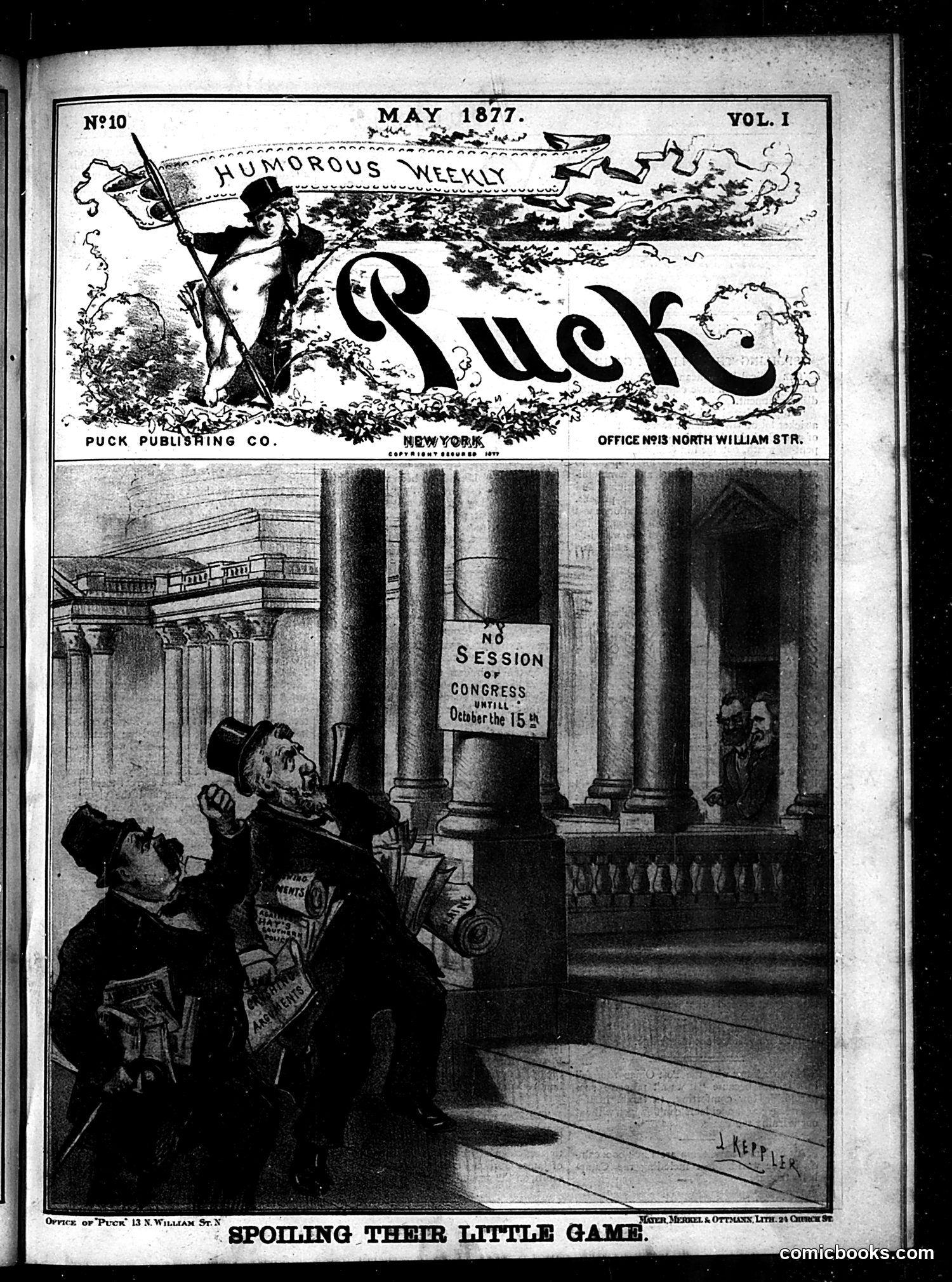
This May 1877 *Puck* cartoon satirizes Congress during a recess period. Two well-dressed men stand outside the Capitol building, which displays a sign reading "NO SESSION OF CONGRESS UNTIL October 15." The figures appear to be political operatives or lobbyists carrying newspapers and documents, seemingly frustrated by Congress's absence. The title "Spoiling Their Little Game" suggests the cartoon mocks those who benefit from legislative inactivity—likely corrupt interests, special pleaders, or machine politicians who exploit Congress when in session. The satire implies that Congress's recess inadvertently prevents certain schemes or corrupt dealings from proceeding. The cartoon critiques both institutional dysfunction and the self-interested actors who normally manipulate the legislative process.
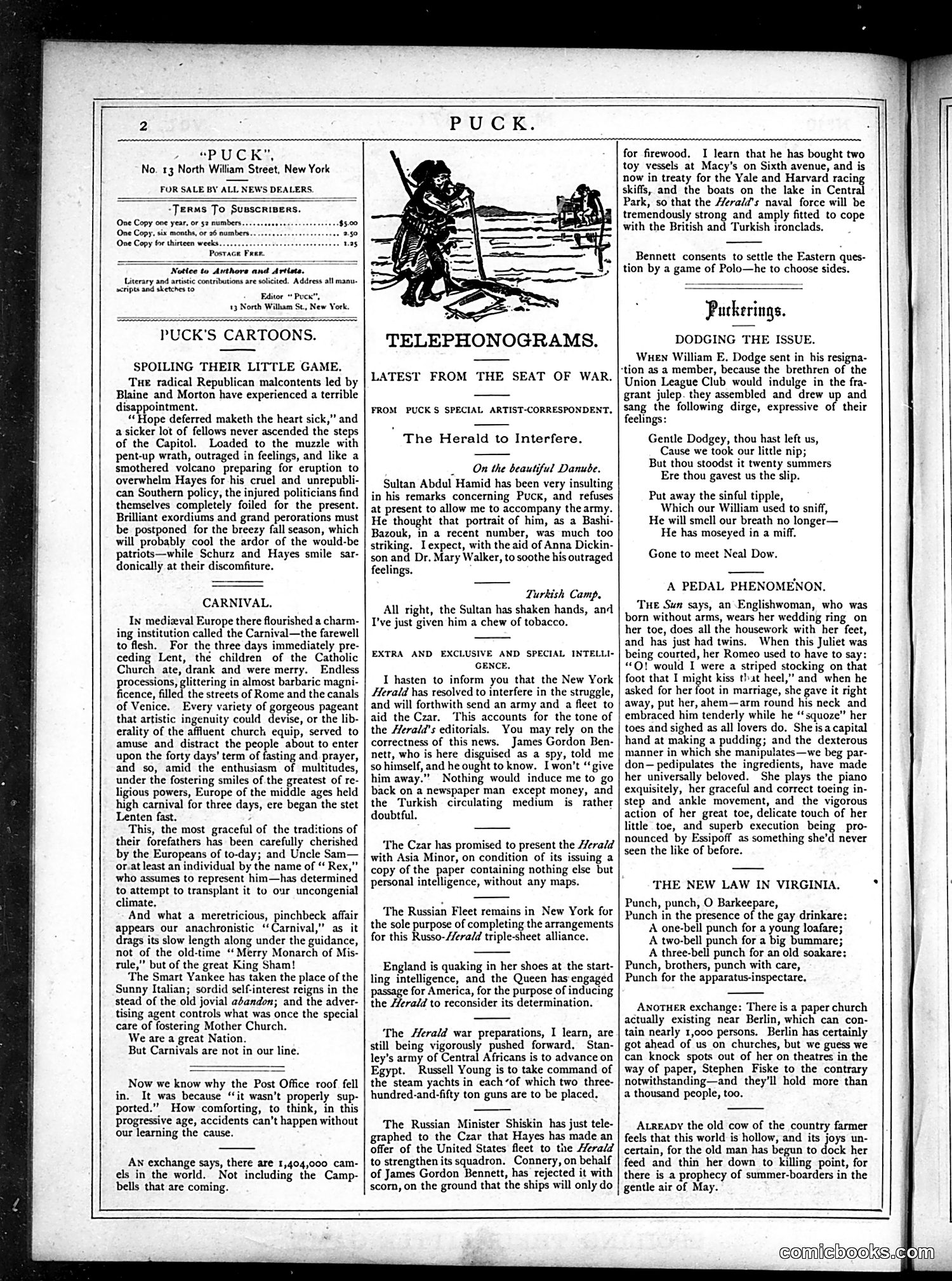
The main cartoon depicts two figures (identified in text as "Blaine and Morton") who have "experienced a terrible disappointment." The satire concerns Republican candidates whose political strategy has been undermined. The text explains they sought public sympathy through grievance-mongering—specifically outrage over Southern policy—but this approach has backfired. The cartoon shows them thwarted by Hayes (likely President Rutherford B. Hayes), whose actions have "cooled the ardor" of their campaign. The satire ridicules political opportunism: Blaine and Morton hoped to weaponize discontent for electoral gain, but Hayes's policies have neutralized their advantage, leaving them embarrassed. This reflects 1870s Republican internal divisions over Reconstruction and Southern policy.
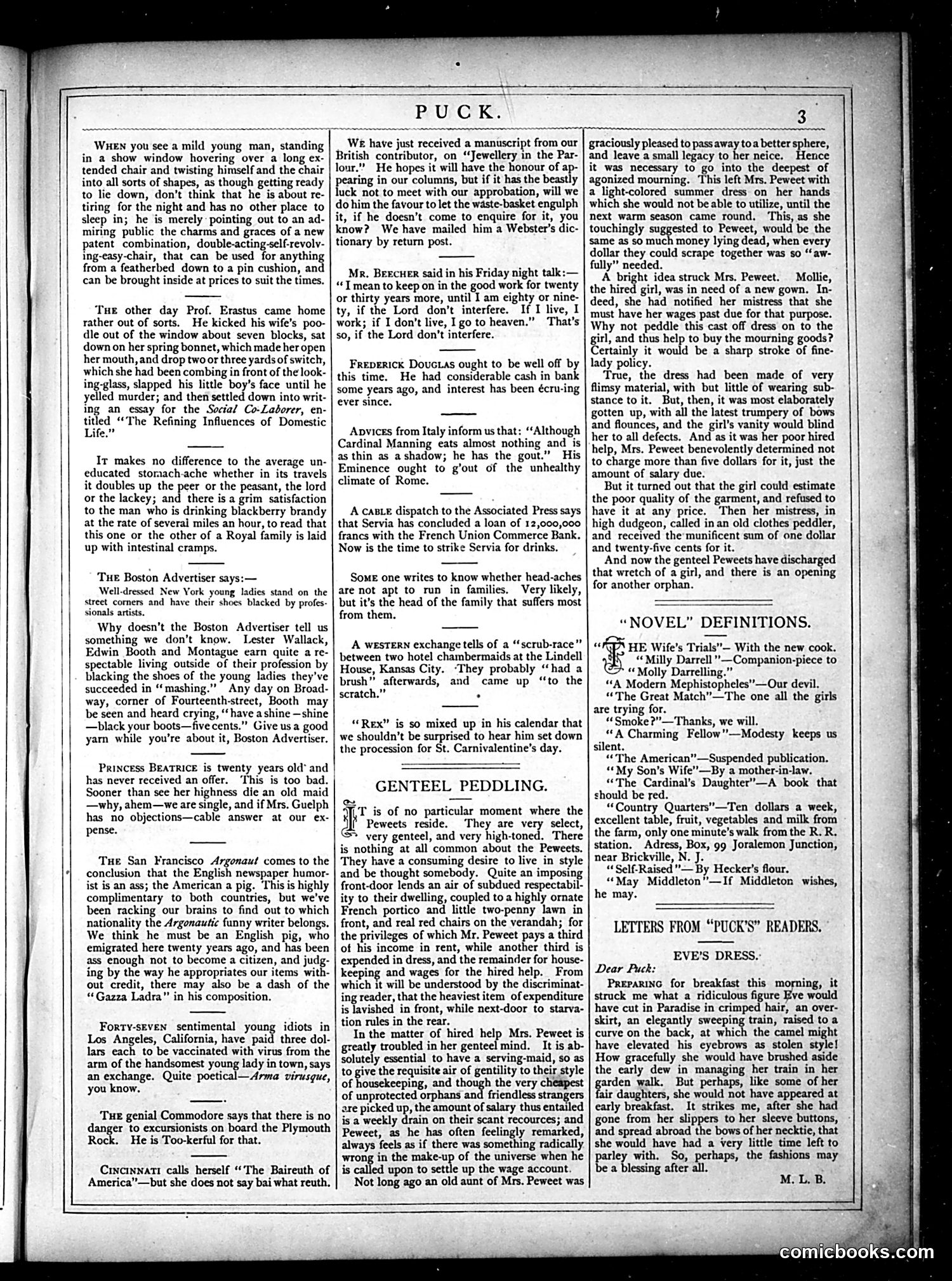
This page is primarily **text-based content rather than political cartoons**. It consists of humor columns, social commentary, and reader letters rather than illustrated satire. The content includes: - **Humorous observations** about urban life (New York fashion, Boston advertising) - **Social satire** targeting wealthy young people, their pretensions, and fashionable concerns - **"Novel Definitions"** section mocking current literary trends and book titles - **Reader letter** about women's fashion, specifically criticizing elaborate hairstyles and dress The satire targets **American consumer culture and vanity**, particularly among the wealthy and fashionable classes. References to expensive clothing, absurd hairstyles, and materialistic concerns suggest Puck was critiquing the excess and superficiality of Gilded Age society. The tone is lighthearted rather than politically confrontational.
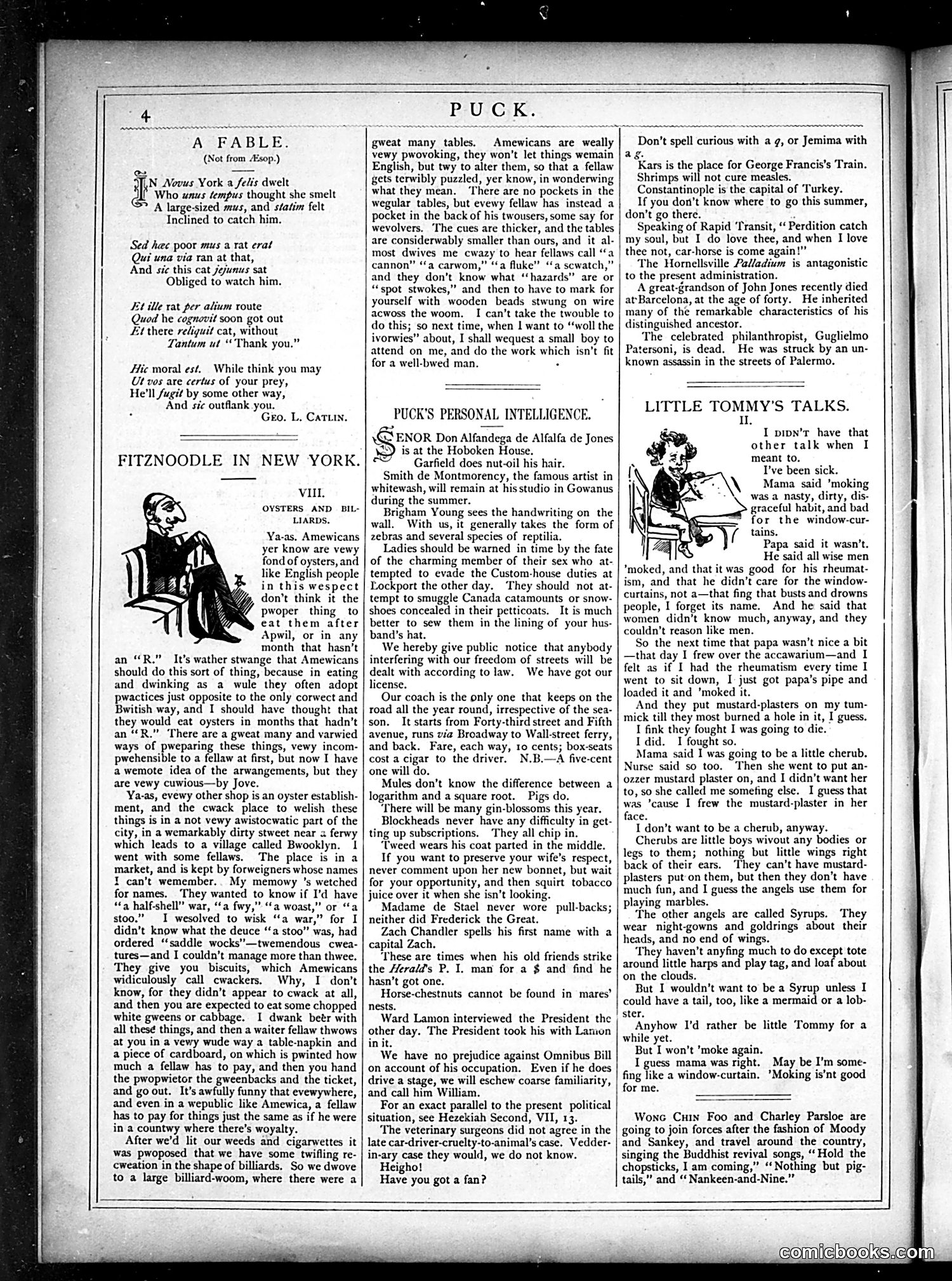
This page contains three main sections: a fable in verse about a pool player, "Fitznoodle in New York" (a satirical piece mocking American oyster-eating customs and crude behavior), and "Little Tommy's Talks" (a children's humor column). The "Fitznoodle" section ridicules American dining habits and manners, contrasting European refinement with perceived American coarseness—particularly regarding oyster consumption and table etiquette. The piece uses exaggeration to satirize stereotypical American behavior among different social classes. "Little Tommy's Talks" is a humorous children's section where young Tommy mishears or misunderstands adult conversation, leading to innocent but funny observations about smoking, illness, and supernatural beliefs (cherubs, Syrups). The page blends political/social satire with family-friendly humor typical of Puck's editorial approach.
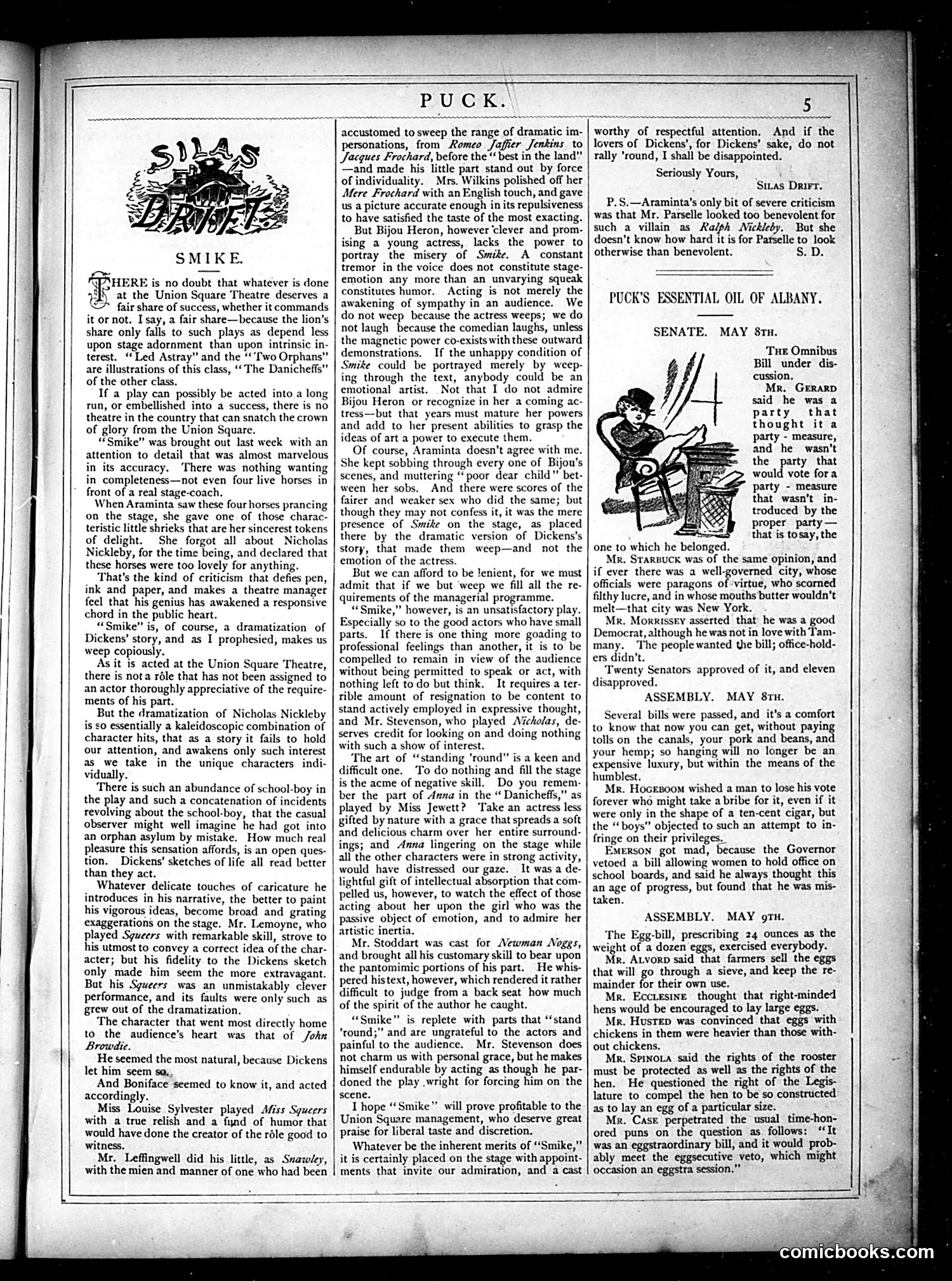
This page primarily contains **theater reviews** rather than political cartoons. The main content discusses dramatizations of Dickens' works, particularly criticizing actress Bijou Heron's performance in "Smike" for lacking emotional depth and power. The text praises other actors' performances while critiquing Heron's "constant terror in the voice" and inability to convey genuine feeling. There's debate about whether stage adaptations of Dickens adequately capture the source material's emotional impact. The small illustration shows a figure in period costume, likely related to one of the theatrical productions being reviewed. The page also contains legislative notes from the Senate and Assembly, suggesting this is a typical Puck issue mixing entertainment criticism with political/social commentary.
This page consists primarily of **text articles rather than cartoons**. The main content includes: 1. **"P.P.M."** - A personal essay about the author's experiences in theater, discussing her professional work as an actress and various romantic entanglements with theatrical figures, including references to a "Lothario" and conflicts with other performers. 2. **"WANTED—AN INTERPRETER"** - Commentary on Nym Crinkle's theater criticism, discussing the challenges of theatrical production and artistic interpretation. 3. **"THE BOYS"** - A brief note about theatrical humor and comedy routines. The page functions as **satirical commentary on theater life and personalities** rather than visual political satire. It reflects Puck's use of humor to critique theatrical society, professional conduct, and artistic pretension of the era.
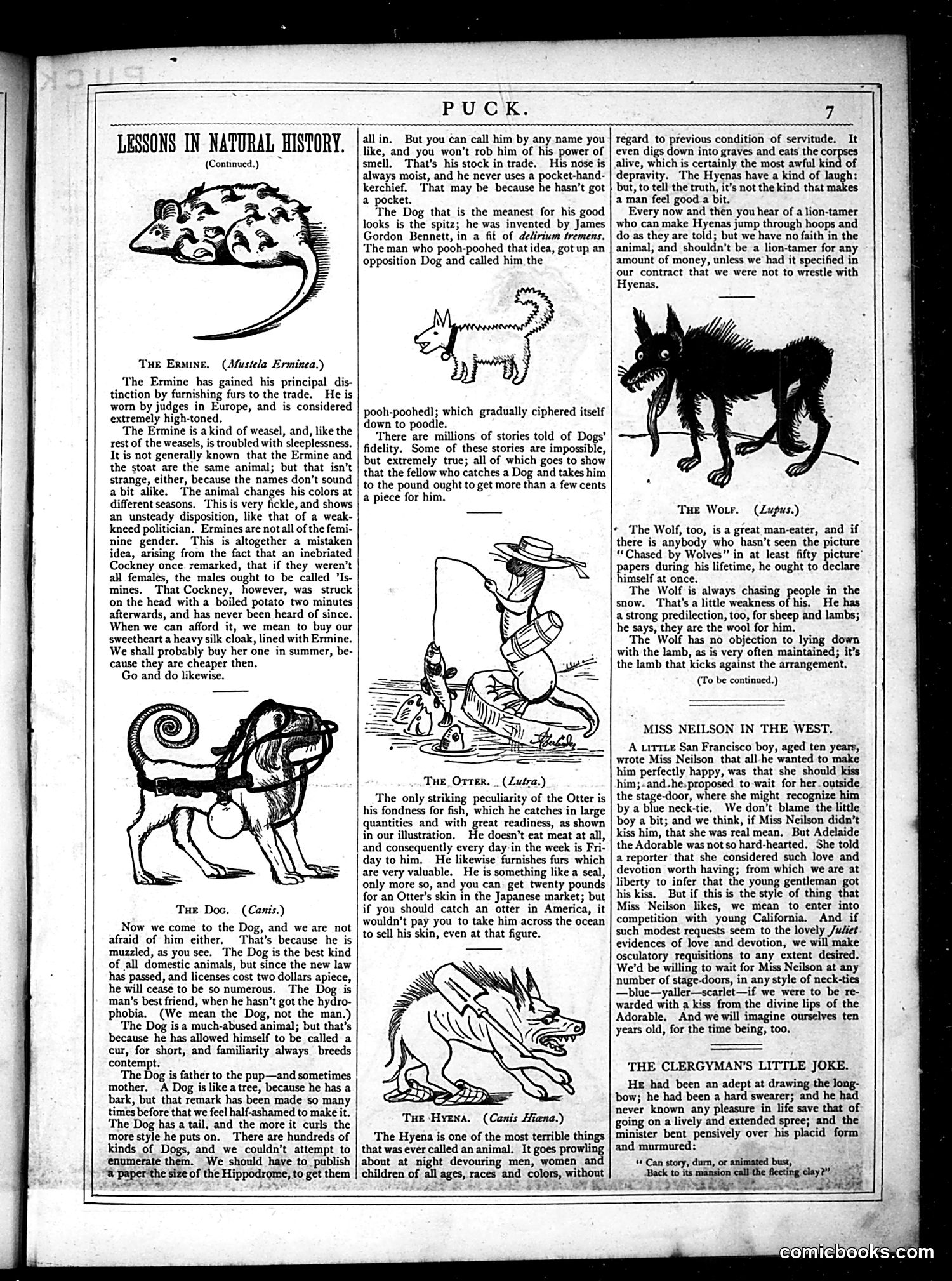
This page from *Puck* contains "Lessons in Natural History," a humorous educational feature illustrated with animal drawings and descriptions. Rather than political satire, it's comedic natural history writing about various animals: the Ermine, Dog, Otter, Wolf, and Hyena. The humor comes from anthropomorphizing these creatures with human characteristics and social commentary. For instance, the Dog section jokes about dogs being "man's best friend" and notes their popularity, while the Wolf section plays on folklore about wolves chasing people in snow. The Hyena description mentions their frightening reputation and laugh. This appears to be lighthearted educational content meant to entertain readers through witty animal descriptions rather than biting political commentary typical of *Puck*'s satirical tradition.
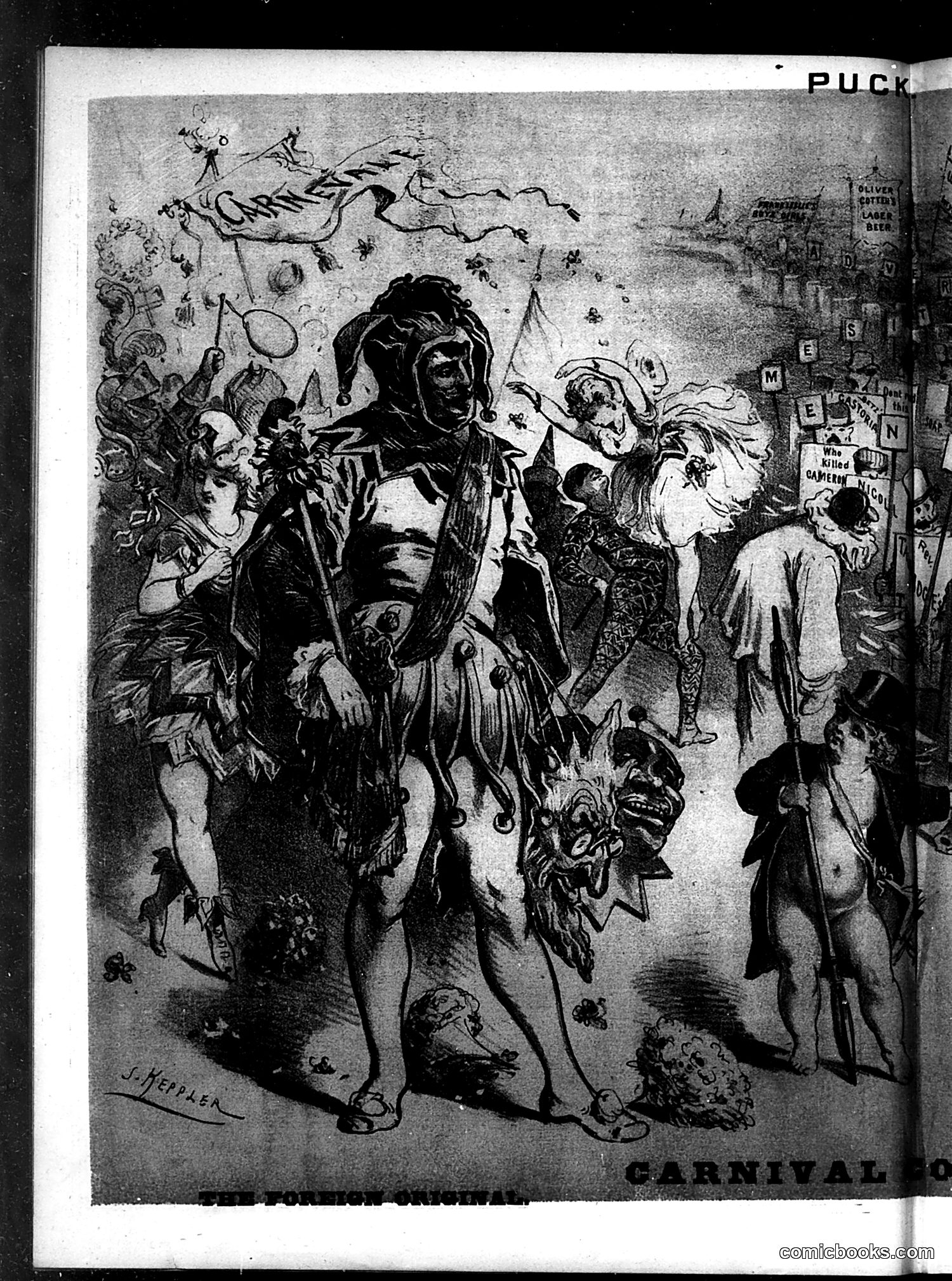
This appears to be a satirical carnival scene, likely from Puck magazine's late 19th-century satirical commentary. The central figure is a nude or near-nude male personification—possibly representing a political or social concept—surrounded by costumed revelers and carnival performers. Various fantastical figures surround him, including what appear to be allegorical characters and demons. The signature visible is "J. Keppler" (likely Joseph Keppler, Puck's founder). The partially visible text at bottom mentions "CARNIVAL" and "THE FOREIGN CARNIVAL," suggesting this comments on international political events or American foreign policy during carnival season—a traditional time for satirizing society. Without clearer text or additional context, the specific political targets remain unclear, though the carnival setting allowed Puck to mock contemporary figures and policies under the guise of festive parody.
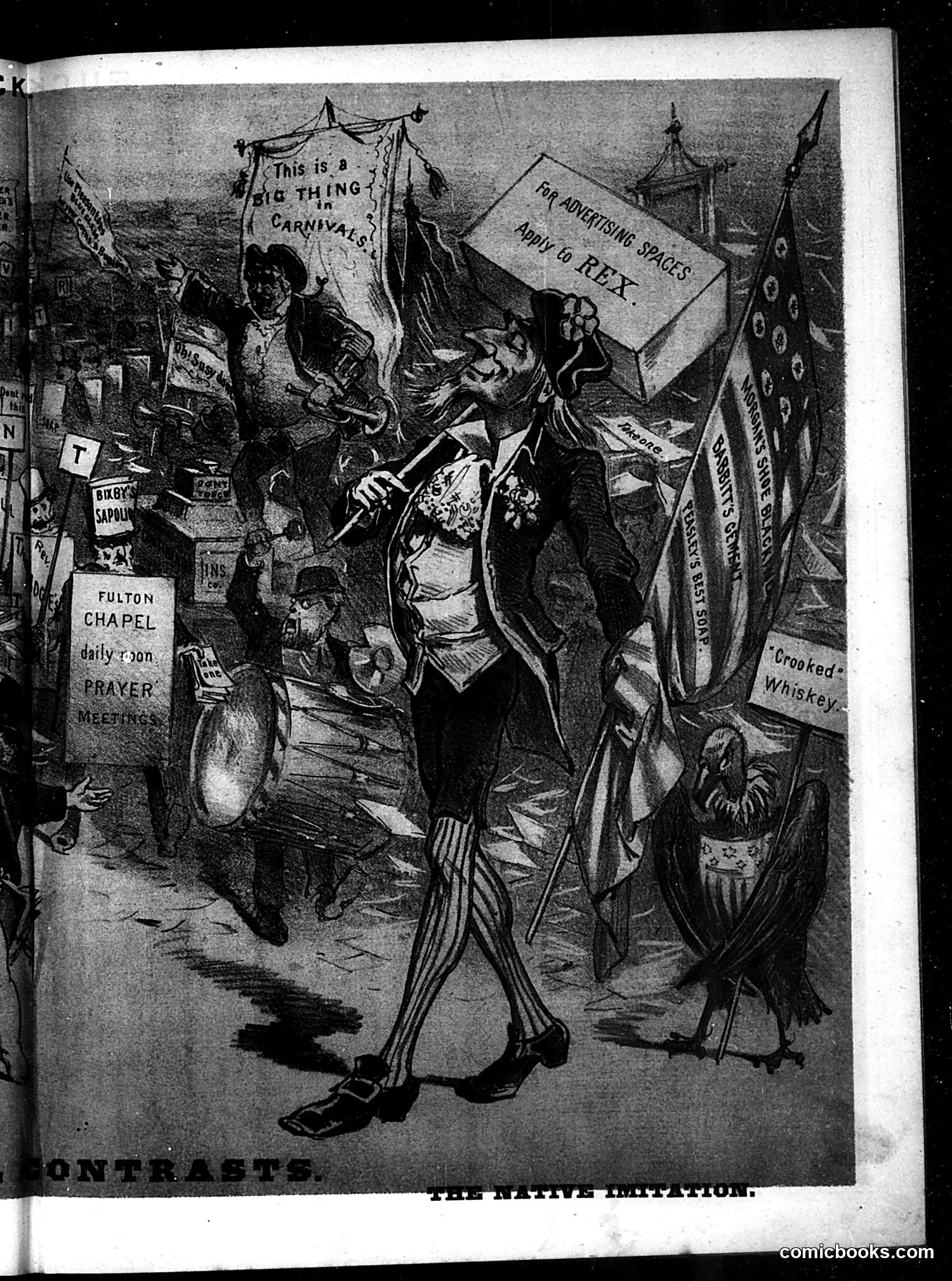
This appears to be a satirical cartoon depicting a skeletal figure (representing Death or Corruption) as a carnival barker or promoter, surrounded by various vice-related establishments and temptations. Visible signs reference: "Big Thing in Carnivals," "Crooked Whiskey," prayer meetings at Fulton Chapel, and advertising spaces for RFX. The skeleton holds a megaphone, actively promoting moral decay. The satire criticizes urban corruption and vice industries—particularly illegal alcohol (likely Prohibition-era commentary), gambling, and prostitution—coexisting alongside religious institutions. The juxtaposition suggests hypocrisy: respectable establishments like chapels operating within communities rife with vice and corruption. The figure of Death/Corruption as the active "promoter" indicts society for enabling or profiting from moral vices.
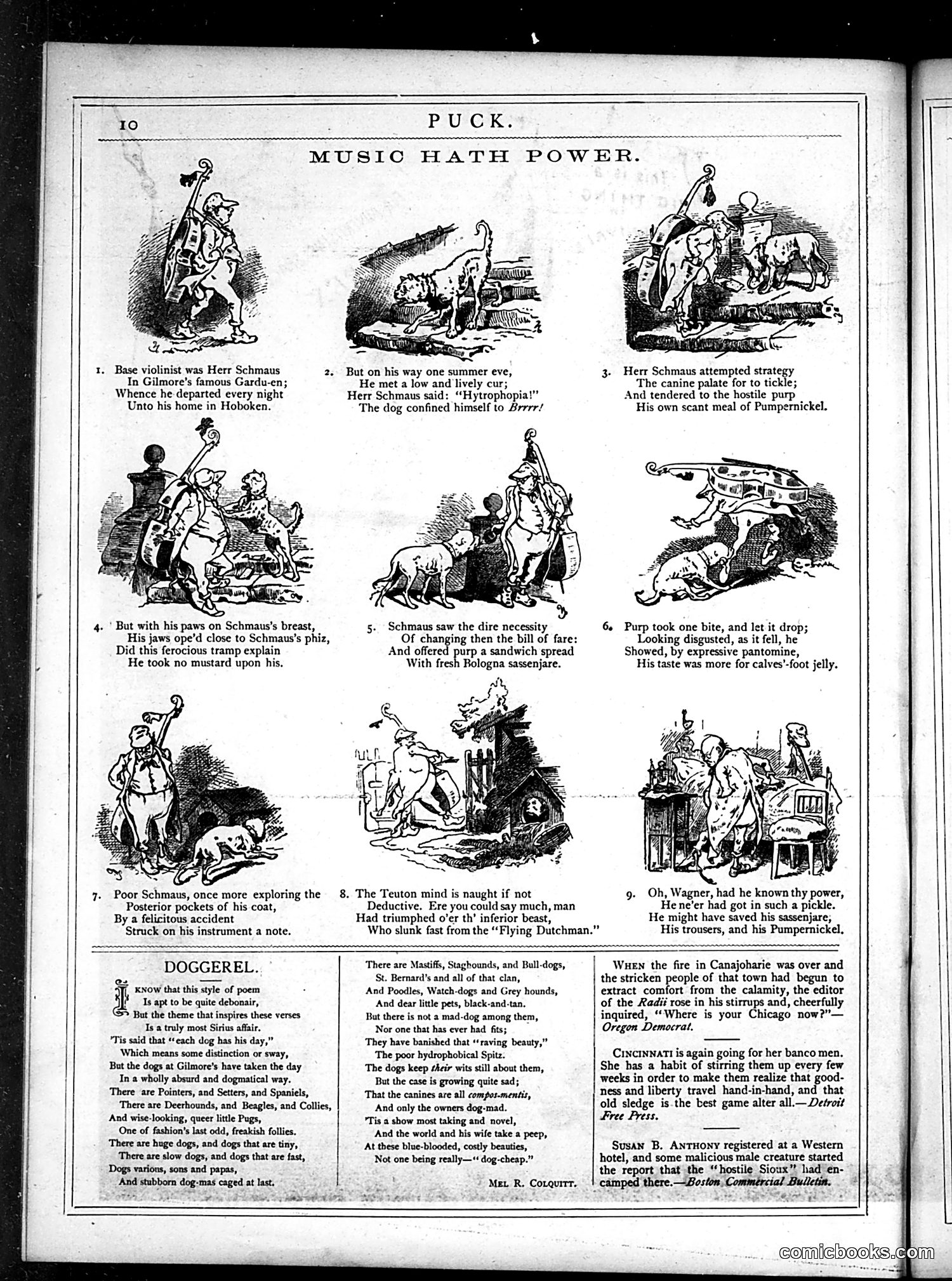
This is a nine-panel comic strip satirizing a German musician named Herr Schmaus and his violin. The narrative follows Schmaus as he attempts to use music to tame a hostile dog (named Purp). Despite various strategies—including attempting to tickle the dog and bribing it with food—the dog bites him repeatedly. The final panel shows Schmaus defeated, having failed to achieve musical mastery over the animal. The humor relies on the contrast between music's supposed civilizing power and the dog's indifference to it. The German name and setting suggest this may be gentle ethnic satire. The strip's title ironically references the classical notion that "music hath charms to soothe the savage beast"—a claim Purp thoroughly disproves through violence.
This page contains two distinct sections: a poem titled "Hendecasyllabics" (eleven-syllable verse) and two prose stories—"Lillie Rose and Sweet William: A Language of Flowers" and "Sharpe's Security." The content appears to be **fictional entertainment rather than political satire**. The stories involve romantic entanglements and financial matters among named characters (William, Lillie Rose, Sharpe). "Hendecasyllabics" is lyric poetry addressing themes of love and loss. **No clear political figures or satirical targets are visible**. This represents Puck's lighter literary content—the magazine balanced hard-hitting political cartoons with humorous fiction and verse for general entertainment. Without accompanying illustrations on this particular page, the satirical intent (if any) remains unclear.
This page contains three distinct pieces: "A Syren's Song" (a poem attributed to H.C.), "Puck in the Black Hills" (a short story), and "The Art of Head-Lining" (a commentary piece). The main story humorously describes Puck's adventures in the Black Hills, detailing his misadventures at a hotel and social gathering. The narrative satirizes frontier life and urban pretension through Puck's mishaps—getting shot at, dealing with rough characters, and attending a chaotic ball. "The Art of Head-Lining" critiques sensationalist newspaper headlines, arguing they mislead readers with exaggeration. The piece advocates for straightforward, factual reporting. These articles exemplify *Puck's* satirical approach: mocking social absurdities, journalistic excess, and human folly through humor and wit rather than visual caricature on this particular page.
This page contains the continuation of a serialized English story titled "Two Knaves and a Queen," presented as literary fiction rather than political satire or cartoon content. The narrative focuses on domestic drama: a gentleman (M. de Gaillefontaine) has acquired rooms for his granddaughter Miss Rene, and is now furnishing them lavishly. The text describes his emotional investment in the young woman, his interactions with his servant Gregory, and romantic developments involving a character named Gregory and a young woman. **There are no political cartoons, caricatures, or satirical commentary visible on this page.** This appears to be Puck magazine's serialized fiction feature—a standard offering in 19th-century periodicals that mixed humor magazines with literary content. The page is straightforward narrative prose, not visual satire.
This page contains short humorous commentary items rather than traditional political cartoons. The section includes jokes and observations about contemporary American life, sourced from various newspapers. Topics include: a woman's impractical fashion choices; a Covington man allegedly forging a check; the prevalence of newspapers in New York; an encounter between a Brown University student and an elderly man at Union Depot; and various social absurdities. A small illustration at bottom-left shows what appears to be a domestic scene with figures in period dress. The items mock everyday follies—vanity, dishonesty, romantic misunderstandings, and social pretension—rather than targeting specific political figures. This reflects *Puck*'s satirical approach to American manners and behavior during this era.
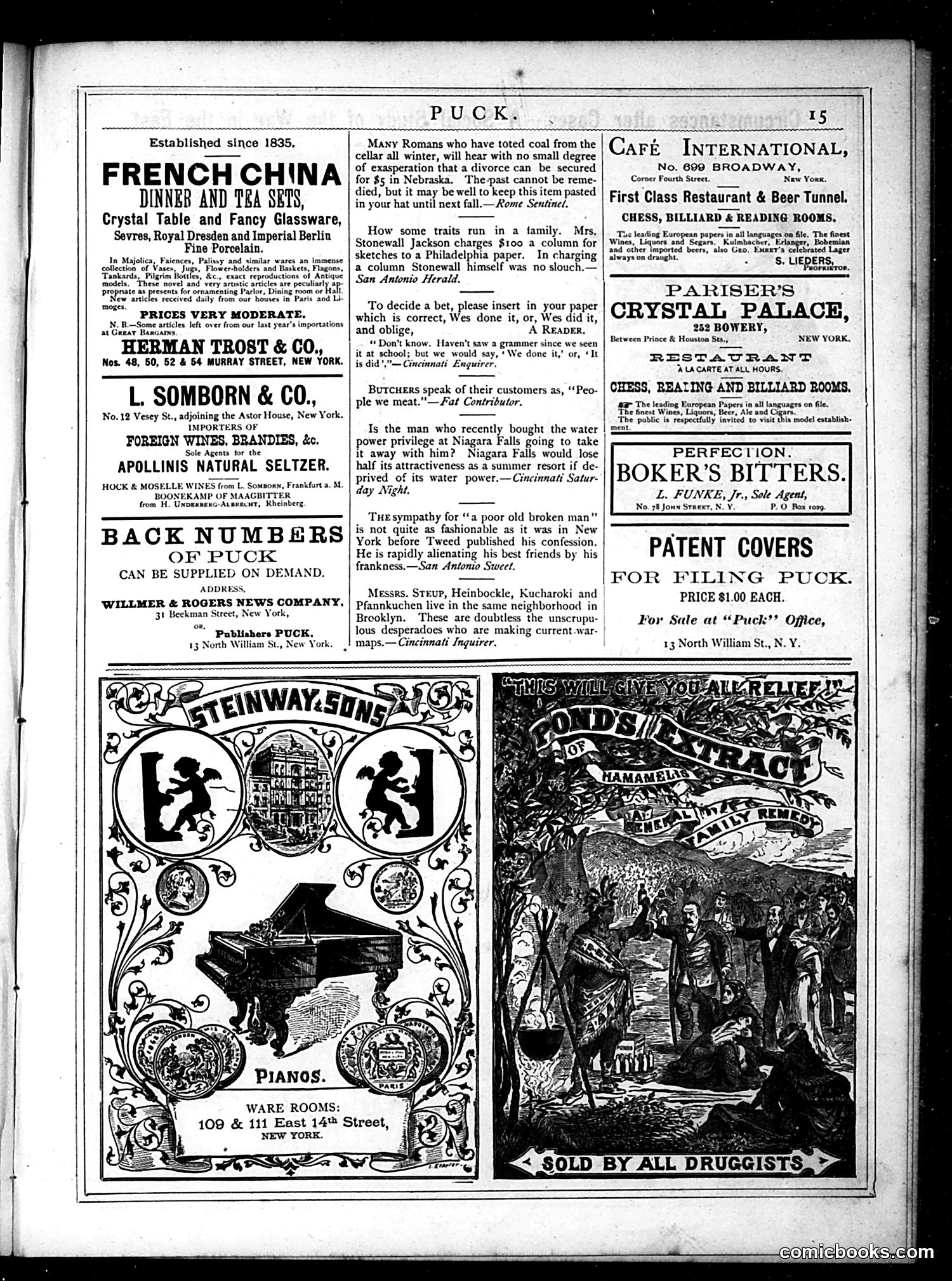
This page is primarily **advertising** from a late 19th-century Puck magazine (page 15). The left side features various commercial ads for French china, pianos (Steinway & Sons), restaurants, and other goods typical of the era. The right side contains two advertisements rather than political cartoons: one for "Café International" and one for "Bond of St. Jago" (appears to be a medicinal product sold by druggists, with the tagline "This Will Give You All Relief"). The Steinway piano advertisement uses decorative imagery with cherubs and classical motifs—standard advertising design of the period. No clear political satire or social commentary is evident on this particular page; it functions primarily as commercial space in the magazine.