
A complete issue · 16 pages · 1878
Puck — June 26, 1878
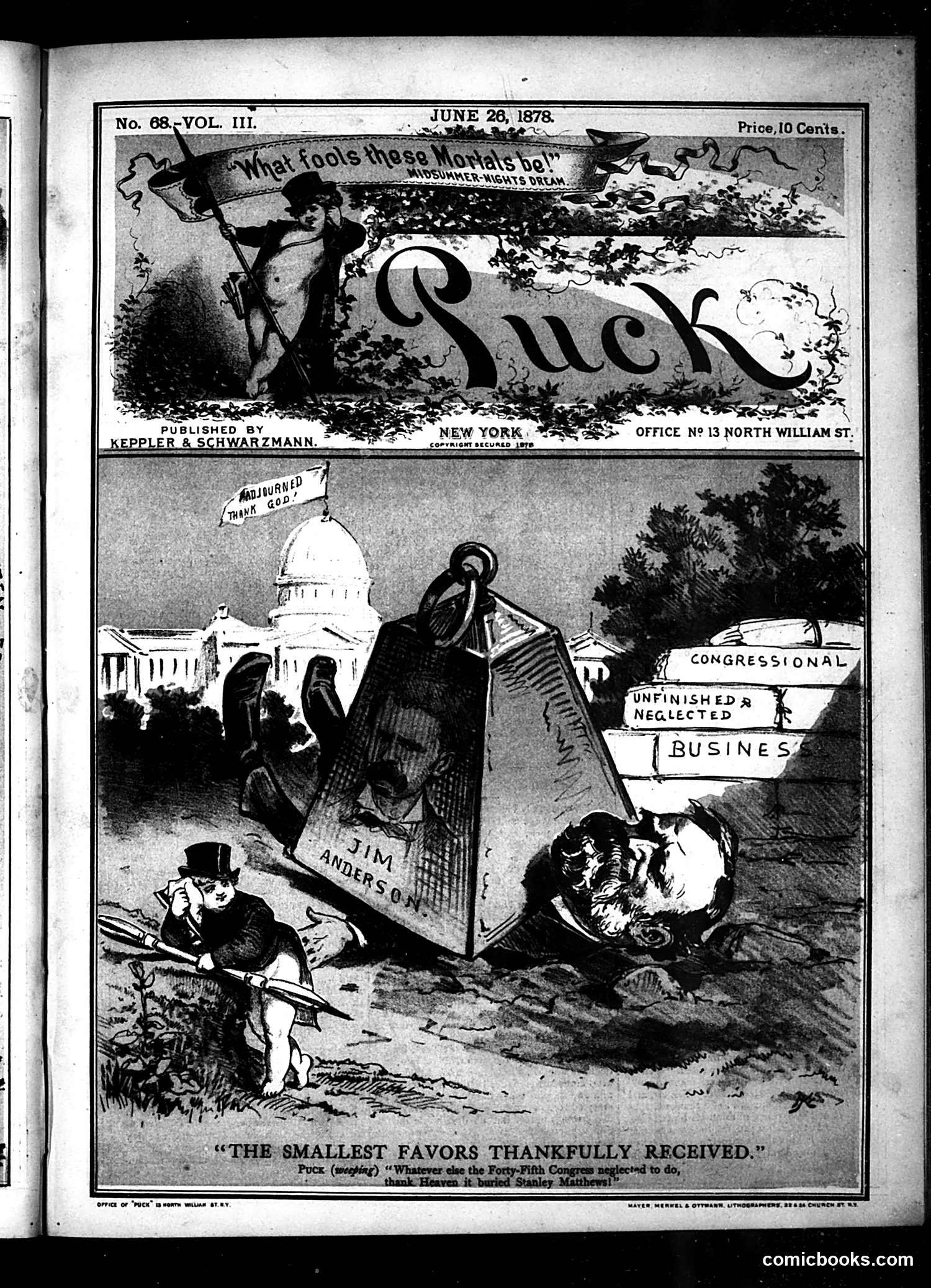
This cartoon satirizes Congressional inaction on unfinished business. The main image depicts a figure labeled "Jim Anderson" beneath a large tombstone inscribed "Unfinished & Neglected Congressional Business." A skeleton (representing Death) looms over the scene, while a small figure (possibly representing Puck or a satirist) stands to the left with a rifle. The caption reads: "The Smallest Favors Thankfully Received," with a subtitle suggesting gratitude that at least "Stanley Matthews" was buried—likely referencing a controversial political appointment or confirmation. The satire criticizes Congress for neglecting important legislation while settling minor matters. The deaths symbolism suggests such negligence is literally killing the nation's progress. The specific reference to "Stanley Matthews" appears connected to a contentious confirmation debate.
This page is primarily **editorial content and advertisements** rather than political cartoons. The main sections include: **"At Last"** celebrates Gail Hamilton, a prominent female writer and social commentator, whose portrait will appear in an upcoming issue. The piece praises her literary contributions and influence. **"The Honest Truth"** satirizes editors' reputations. It argues editors aren't actually the snobbish gatekeepers of taste they're perceived to be—they're ordinary people who simply cannot publish every submitted poem, despite their politeness in rejection. The piece gently mocks both editors' pretensions and poets' expectations, suggesting editors deserve credit for their restraint rather than criticism for their rejections. The remaining content consists of notices, subscription information, and advertisements for various services and publications.
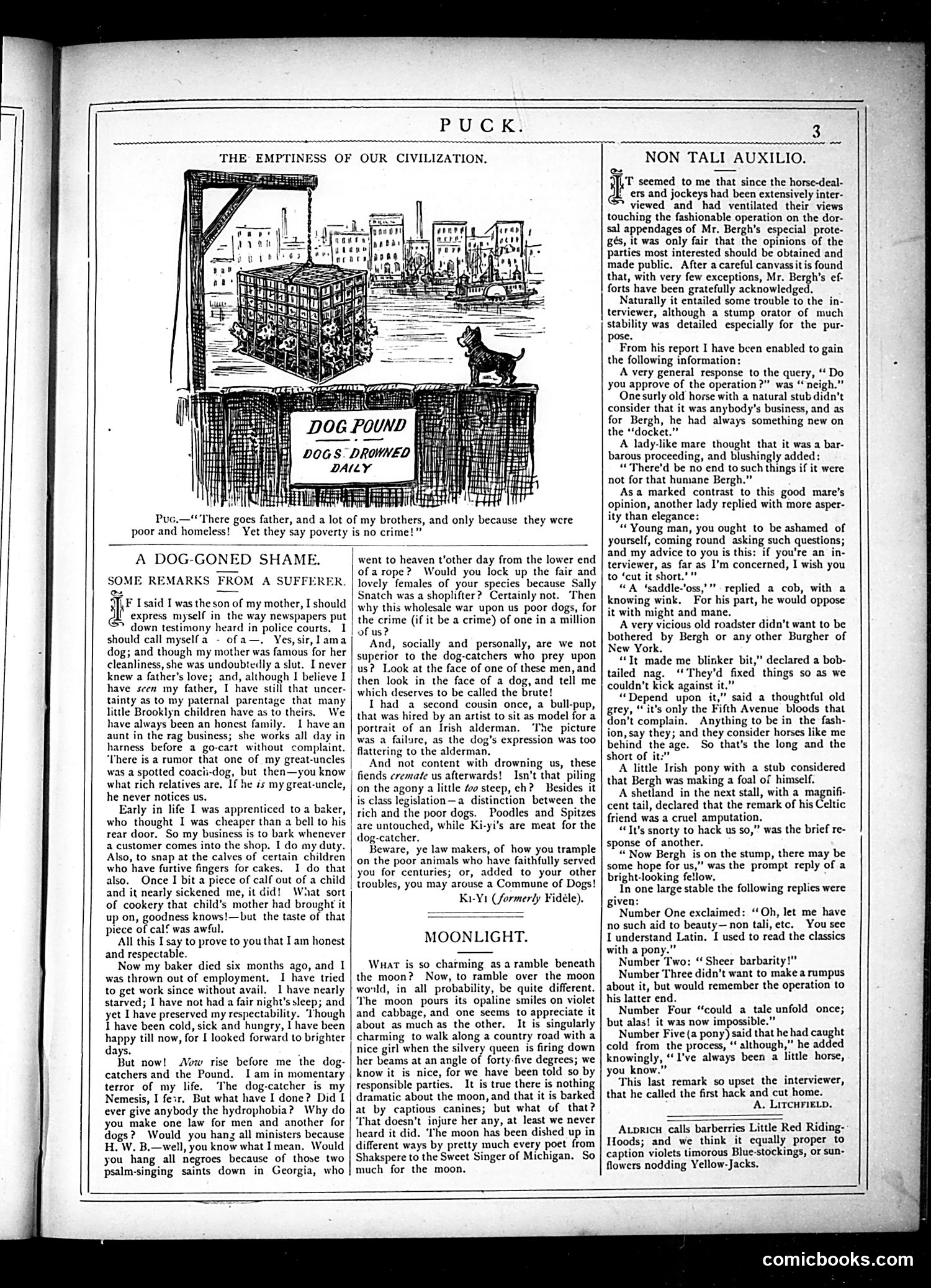
The main cartoon, "The Emptiness of Our Civilization," depicts a large dog pound structure dominating a cityscape, with a small dog nearby. The satire criticizes urban indifference to animal suffering: the caption quotes a horse questioning why society builds elaborate infrastructure to catch and kill stray dogs while claiming moral superiority. Below, "A Dog-Goned Shame" features a lengthy letter from "Some Woman from a Suburb" complaining that her unemployed father is reduced to begging while society prioritizes animal welfare. The satire suggests hypocrisy: Americans spend resources on dog shelters yet ignore human poverty and homelessness. Both pieces critique what Puck sees as misplaced moral priorities in American civilization—caring more for animals than for destitute humans.
This page contains **no political cartoons**. Instead, it features: 1. **"Memories"** — a poem by H. K. Smuckthrick, appearing to be sentimental verse about nostalgia and lost love. 2. **"The Uprising in Dade County"** — a detailed article about a Republican electoral victory in Florida's Dade County. The piece describes how Republicans unexpectedly won this typically Democratic area, attributing the triumph to various local political maneuvering and the Democrats' missteps (including a missing party operative sent to secure the region). 3. **"Rarities"** — a brief humor section listing unusual items Mr. Lowell has encountered, serving as light comic filler. The page is primarily **textual political commentary and poetry**, not visual satire.
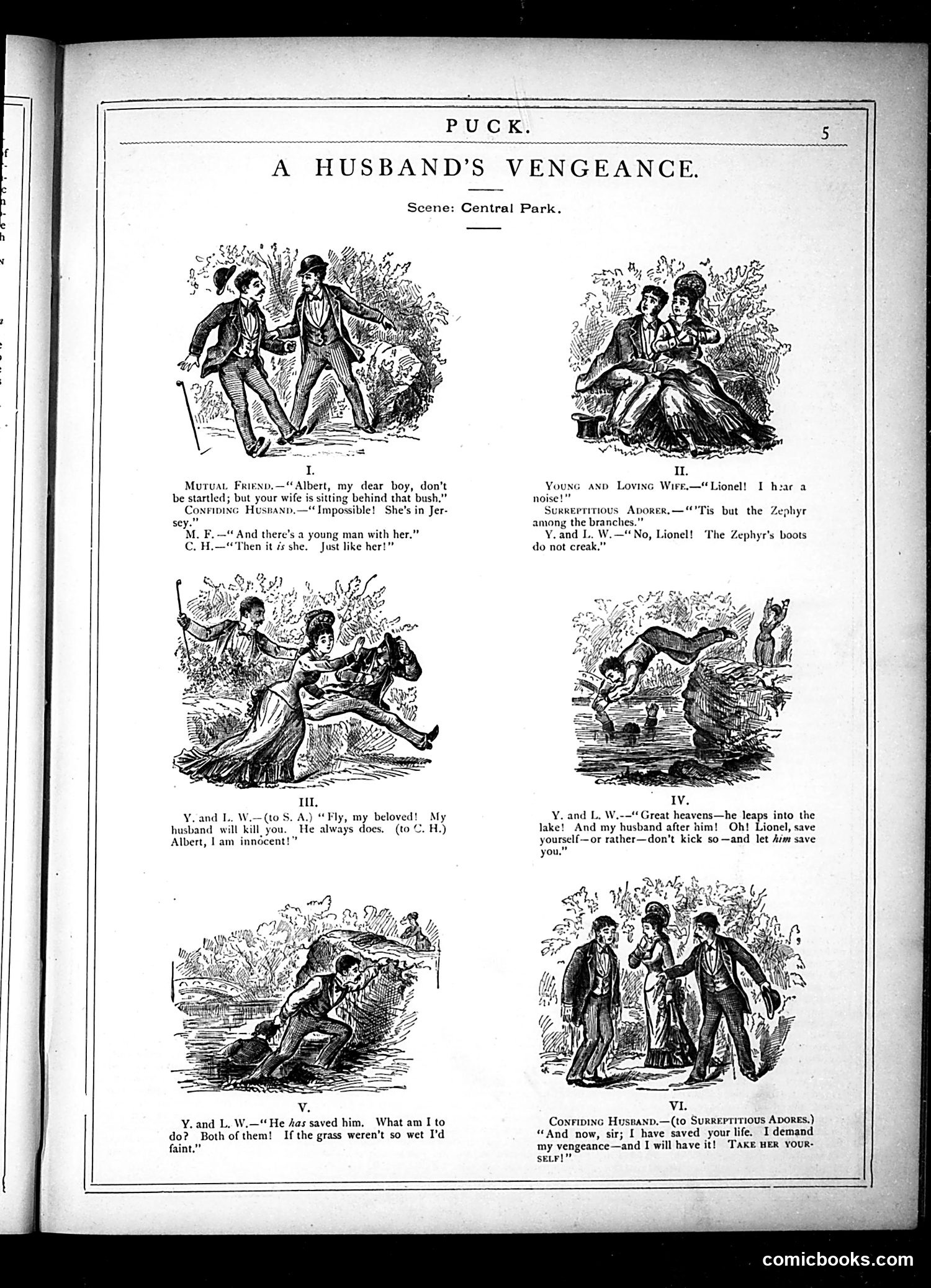
This is a six-panel comic strip set in Central Park depicting a domestic drama. A husband discovers his wife with a young man and confronts them. His friend urges calm, but the husband is determined on vengeance. The plot escalates: the wife pleads innocence, a suspicious character (labeled "Zephyr") is spotted, and the husband chases the young man into a lake. In the climactic final panel, the husband corners both the lover and his wife, demanding vengeance. The satire appears to mock melodramatic notions of masculine honor and spousal betrayal. The absurd escalation—from park encounter to water-chase—ridicules overwrought Victorian-era responses to infidelity, presenting the "wronged husband" as a comedic figure rather than sympathetic character.
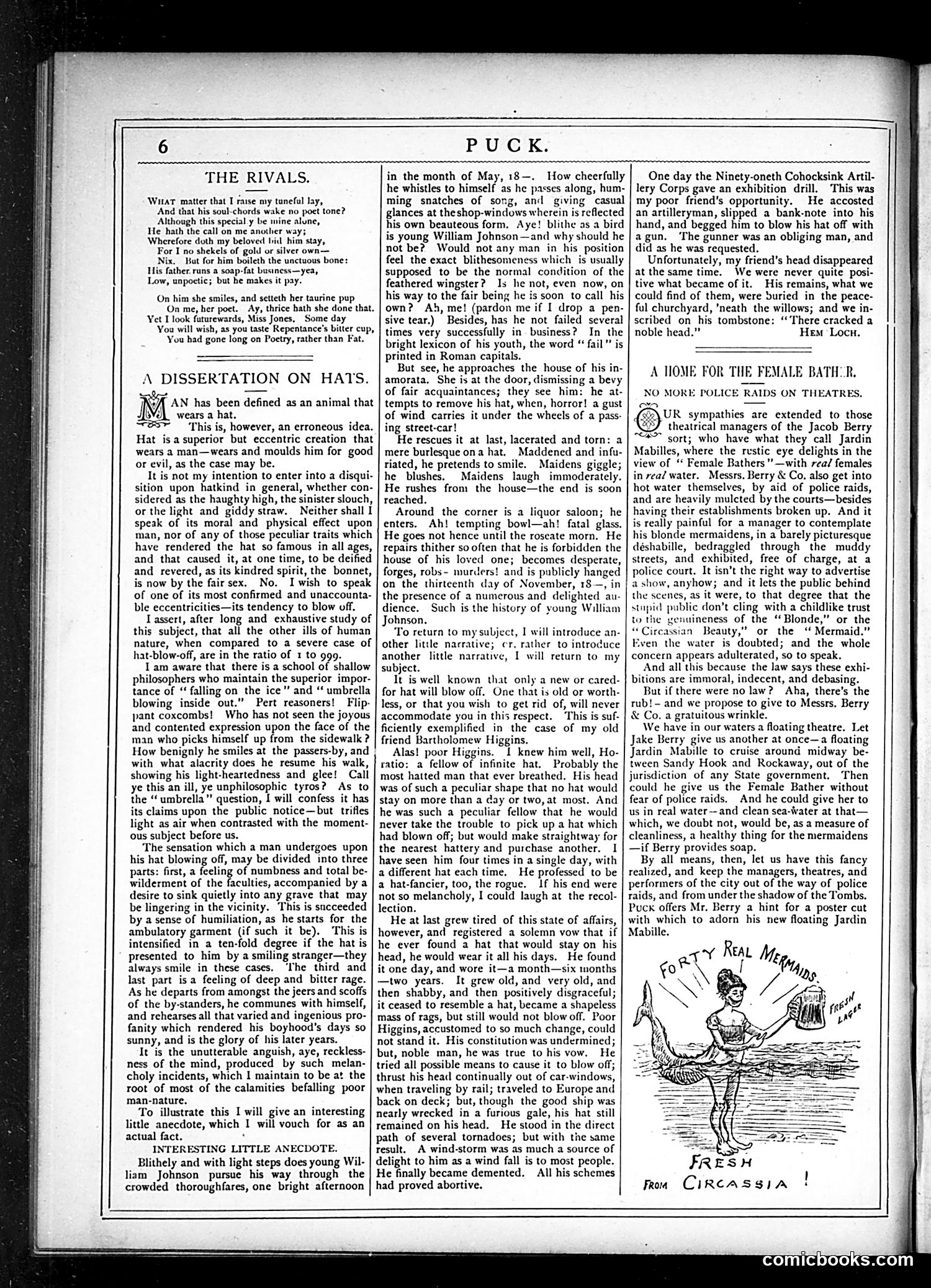
This page contains three distinct pieces: **"The Rivals"** (left column): A humorous poem about competing suitors vying for a woman's affection, with comedic boasting about their respective qualities. **"A Dissertation on Hats"** (center): A satirical essay mocking the absurdity of hat-wearing conventions and the ridiculous varieties men endure, using elaborate rhetorical language to mock pretentious philosophical discourse. **"A Home for the Female Bath"** (right): Commentary on police raids targeting theaters, defending theatrical managers (Jacob Berry's Mabilles) against morality-based closures. It advocates using police resources more productively than harassing entertainment venues. **"Forty Real Mermaids Fresh from Circassia!"** (bottom right): An illustrated advertisement or satirical reference, likely mocking sensationalist circus promotions. The page exemplifies Puck's satirical approach to social conventions and contemporary regulatory disputes.
This page is primarily text-based editorial content rather than cartoons. It contains: 1. **"The Last Words of Bryant"** — an article about W.C. Bryant's death, noting his prominence as a nineteenth-century American poet and editor. The piece discusses his contributions to journalism and literature, then reprints various anecdotes and final remarks attributed to him. 2. **"Unfinished Tales"** — a brief section criticizing publishers for incomplete serialized novels, using examples like "The Death of Kill von Küll" to illustrate the problem of stories ending abruptly without proper conclusions. 3. **"Credit"** — a note about sourcing, mentioning the Baltimore *Every Saturday* publication. The page appears to be a literary and editorial section rather than satirical visual content, focusing on cultural commentary and literary criticism typical of Puck's content.
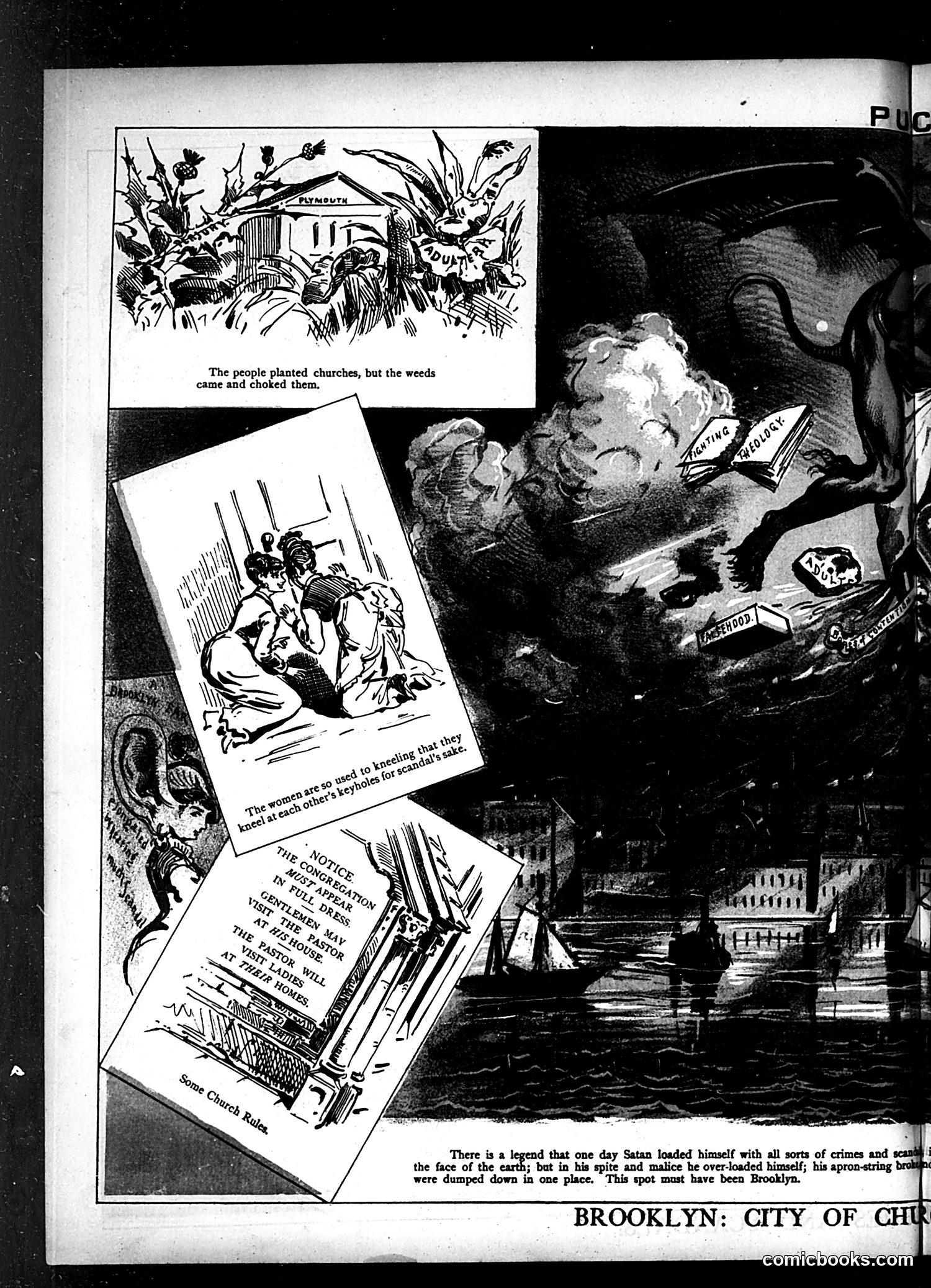
This page contains anti-religious satirical content criticizing churches in Brooklyn. The top cartoon shows a church being choked by weeds, illustrating the caption "The people planted churches, but the weeds came and choked them." The middle illustration depicts women kneeling in prayer, apparently in conflict or desperation about church matters. The bottom section contains a "Notice" (text unclear in reproduction) and concludes with text about Satan dumping "crimes and scandals" in Brooklyn, suggesting the satire equates the city's moral problems with religious hypocrisy or institutional failure. The overall message appears to be that despite Brooklyn's numerous churches, the city remains morally corrupt—a critique of organized religion's ineffectiveness in actually improving society rather than its visible prominence.
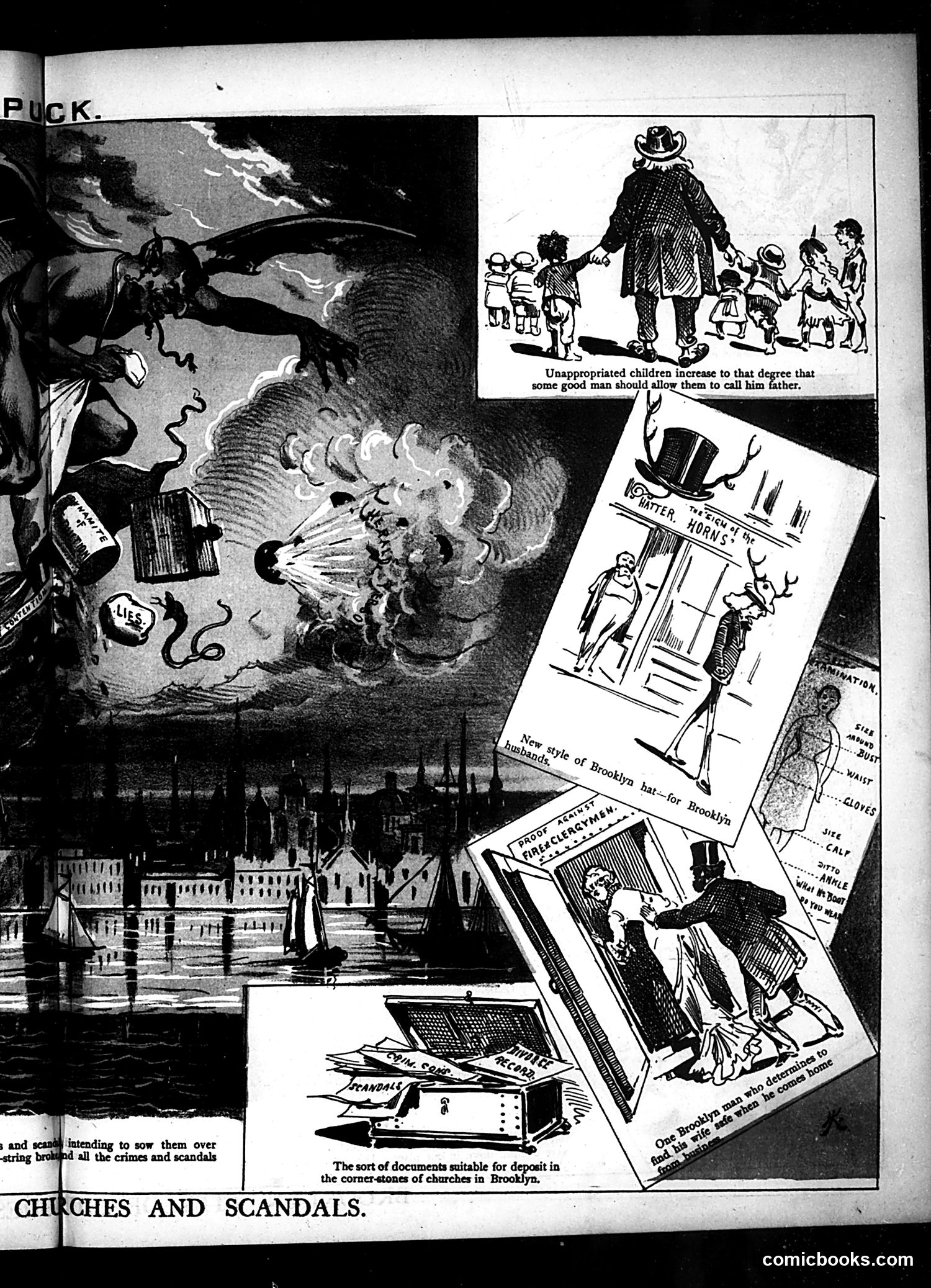
This Puck page satirizes corruption involving Brooklyn churches. The main image shows a demonic figure emerging from a box labeled "FRAUD," suggesting moral corruption hidden beneath religious institutions. The smaller cartoons mock specific scandals: 1. **Top panel**: A well-dressed man with many children, captioned about "unappropriated children"—likely satirizing a clergyman fathering illegitimate children while claiming respectability. 2. **Middle panel**: Shows a "Bitter Experience" involving what appears to be a bar or hotel, suggesting hypocrisy (religious figures in immoral establishments). 3. **Bottom panel**: Documents being deposited "in the corner-stones of churches in Brooklyn"—implying churches were used to hide incriminating evidence of crimes and financial scandals. The satire exposes the gap between Brooklyn churches' public piety and private corruption.
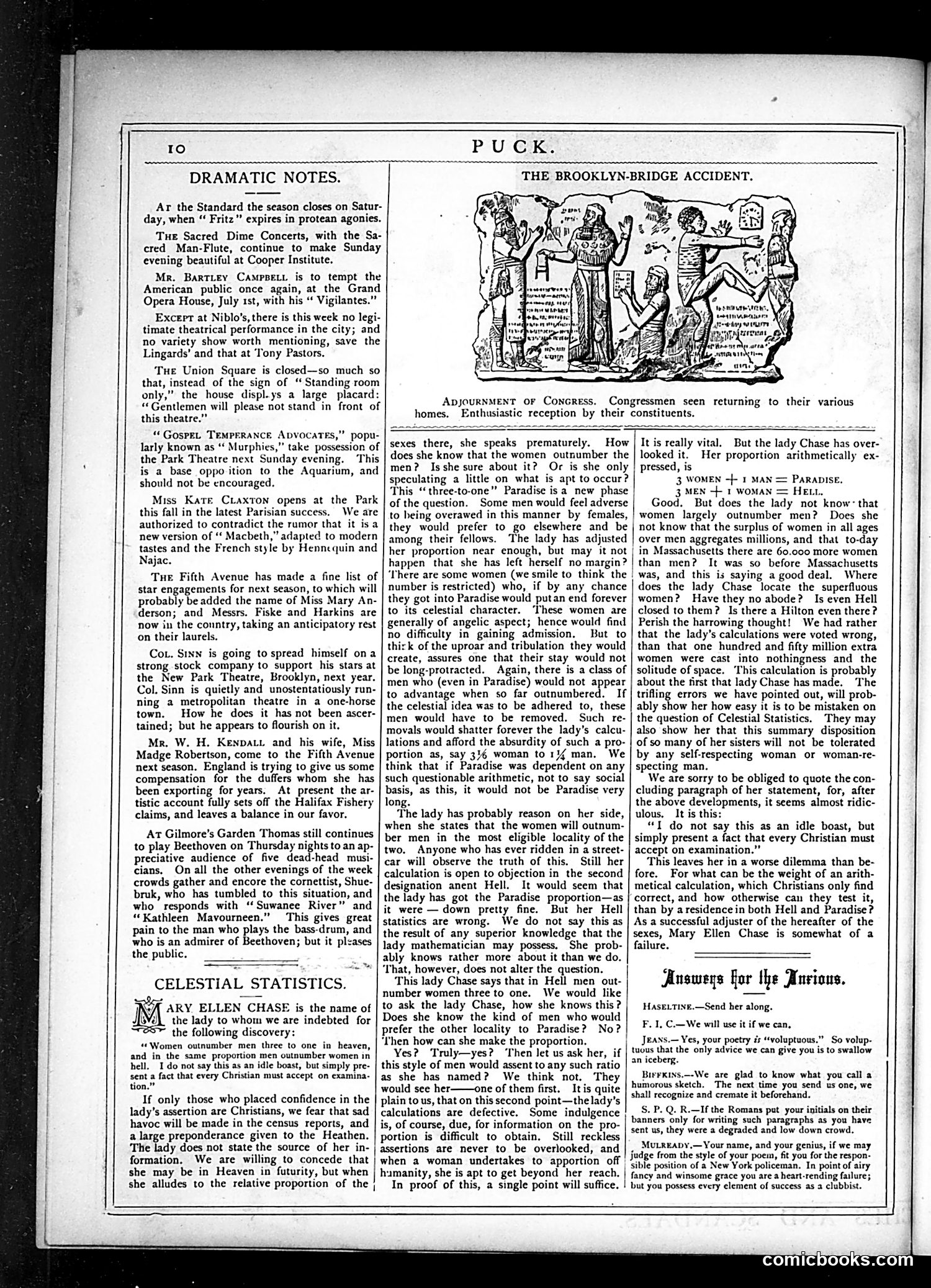
This cartoon satirizes the overcrowding of women at a social event, likely referencing a real incident. The illustration shows congressmen returning home, with the caption noting an "enthusiastic reception by their constituents." The accompanying text by "Mary Ellen Chase" argues humorously that women outnumber men in Paradise (Heaven), citing biblical proportions. The satire questions whether women would truly prefer Paradise if it meant being outnumbered by men—turning conventional gender ratio complaints on their head. The cartoon appears to mock both contemporary anxieties about women's growing social presence and the absurdity of applying mathematical proportions to theological matters. It's characteristic of Puck's witty commentary on social tensions of the era.
This page is primarily **literary content, not political satire**. It features the opening installments of "Love and Money: A Leaf from History," a serialized novel in Puck's "New Series, No. 1." The page includes: - **Chapter headings and story text** about characters named Mr. Jones, Smith, and Cloanthe - **Poems and epigraphs** from authors like Hecker and Old Song - A subtitle indicating the story is set in **Ferrara** and involves a prince and heroine - Standard **serial fiction formatting** common to 19th-century magazines Rather than political commentary, this represents how Puck balanced satirical humor with serialized entertainment fiction to attract diverse readers. The elaborate chapter structure and literary framing suggest sophisticated audience engagement through narrative storytelling.
This page contains the conclusion of a serialized story titled "Mrs. Fitzgerald" by Frank Barrett, credited as author of "Two Saved a Queen." The content is primarily **literary fiction, not political satire or cartooning**. It depicts a domestic drama involving characters named Mary and George Montey, exploring themes of marriage, repentance, and moral reformation. The narrative discusses George's past failings, his redemption through Mary's influence, and their reconciliation. There are **no visible political cartoons or caricatures** on this page. Rather than satirizing current events or public figures, this appears to be Puck magazine's serialized fiction content—a common feature in late 19th-century publications that mixed humor, satire, and literary entertainment for general audiences.
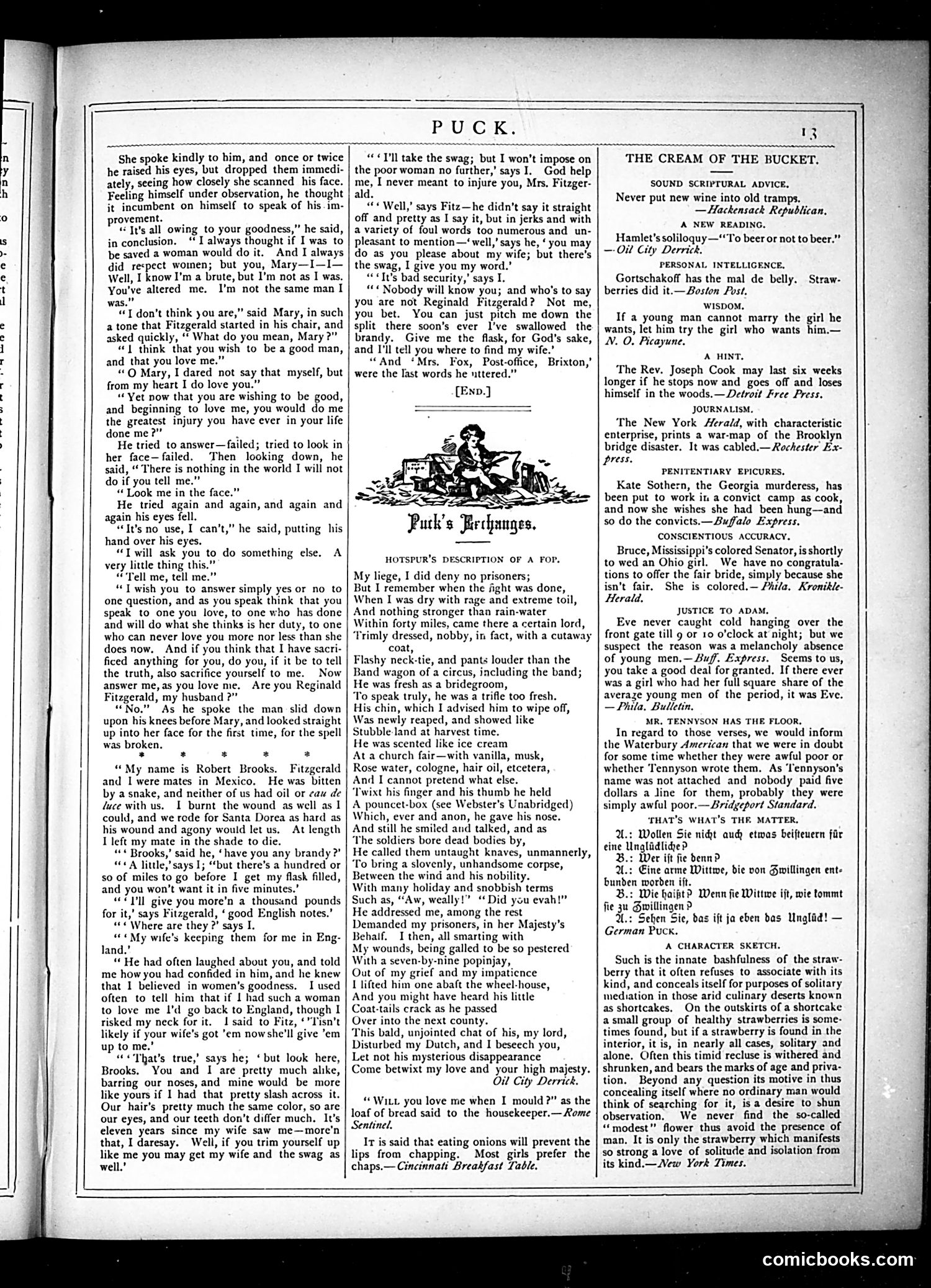
This page contains primarily **text content** rather than political cartoons. The main illustrated element is "Puck's Beginnings," a humorous story about a fox, featuring a small sketch of a fox's head among various objects. The page includes satirical commentary sections like "Personal Intelligence" and "A Hint," which mock contemporary figures and social situations through brief, sardonic notices. These appear to target individuals in politics, society, and journalism—typical of Puck's format—though specific identities are not clearly indicated in the visible portions. The overall tone is **gossipy and mocking**, characteristic of Puck's satirical approach to American public life, but without distinctive political cartoons, the specific targets and references remain unclear from this page alone.
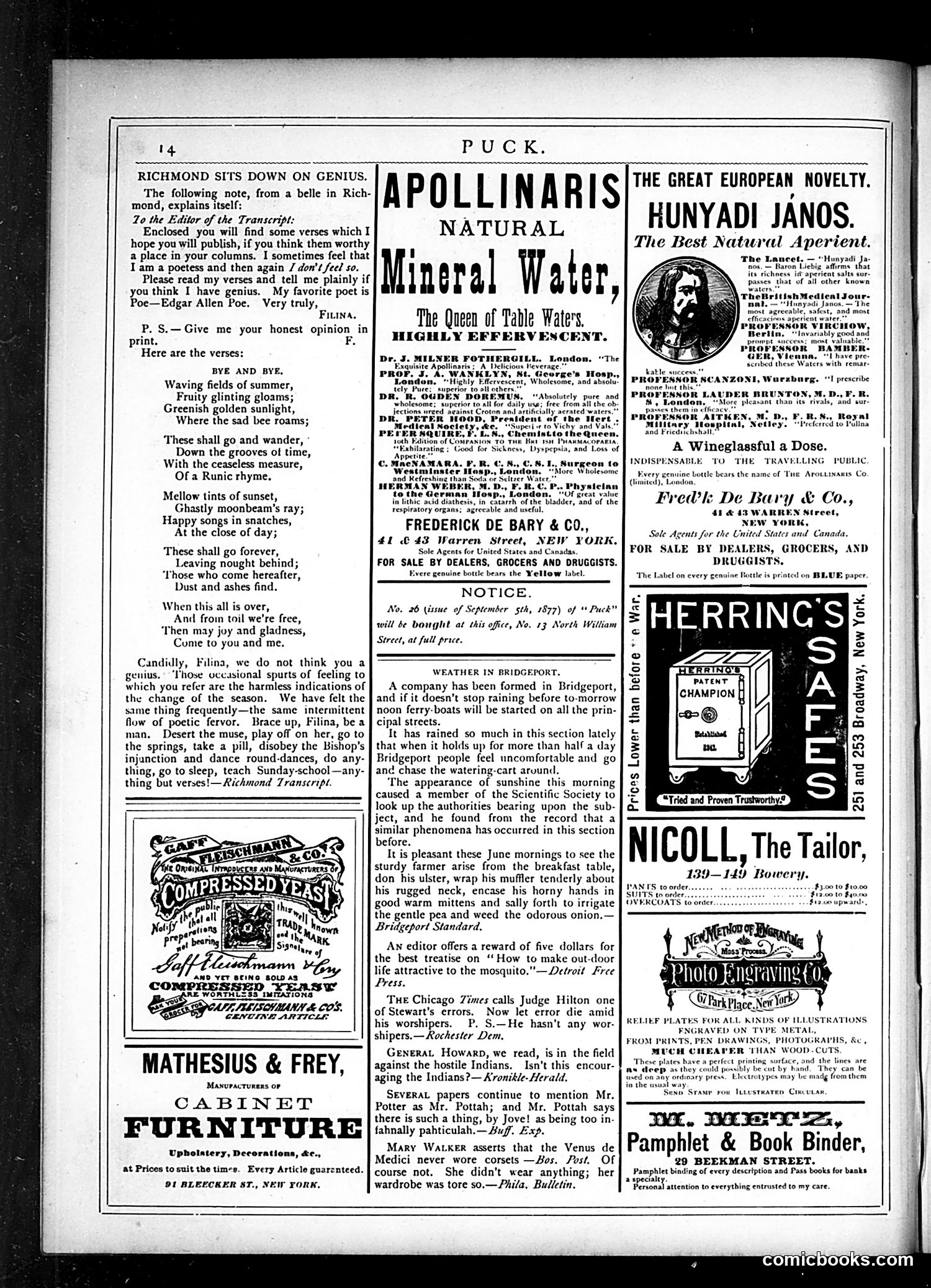
This page is primarily **advertisements and editorial content** rather than political cartoons. The main visual elements are product ads for Apollinaris Mineral Water ("The Queen of Table Waters"), Herring's Safes, Nicoll the Tailor, and other commercial products. The editorial section includes a humorous letter from "Richmond" about submitting poetry verses, followed by witty commentary on contemporary topics like weather in Bridgeport and gossip about public figures. The tone is light and satirical rather than sharply political. No specific political figures or major satirical cartoons are prominently featured on this particular page. It represents the magazine's typical mix of social commentary, humor, and commercial advertising aimed at educated, affluent readers of the era.
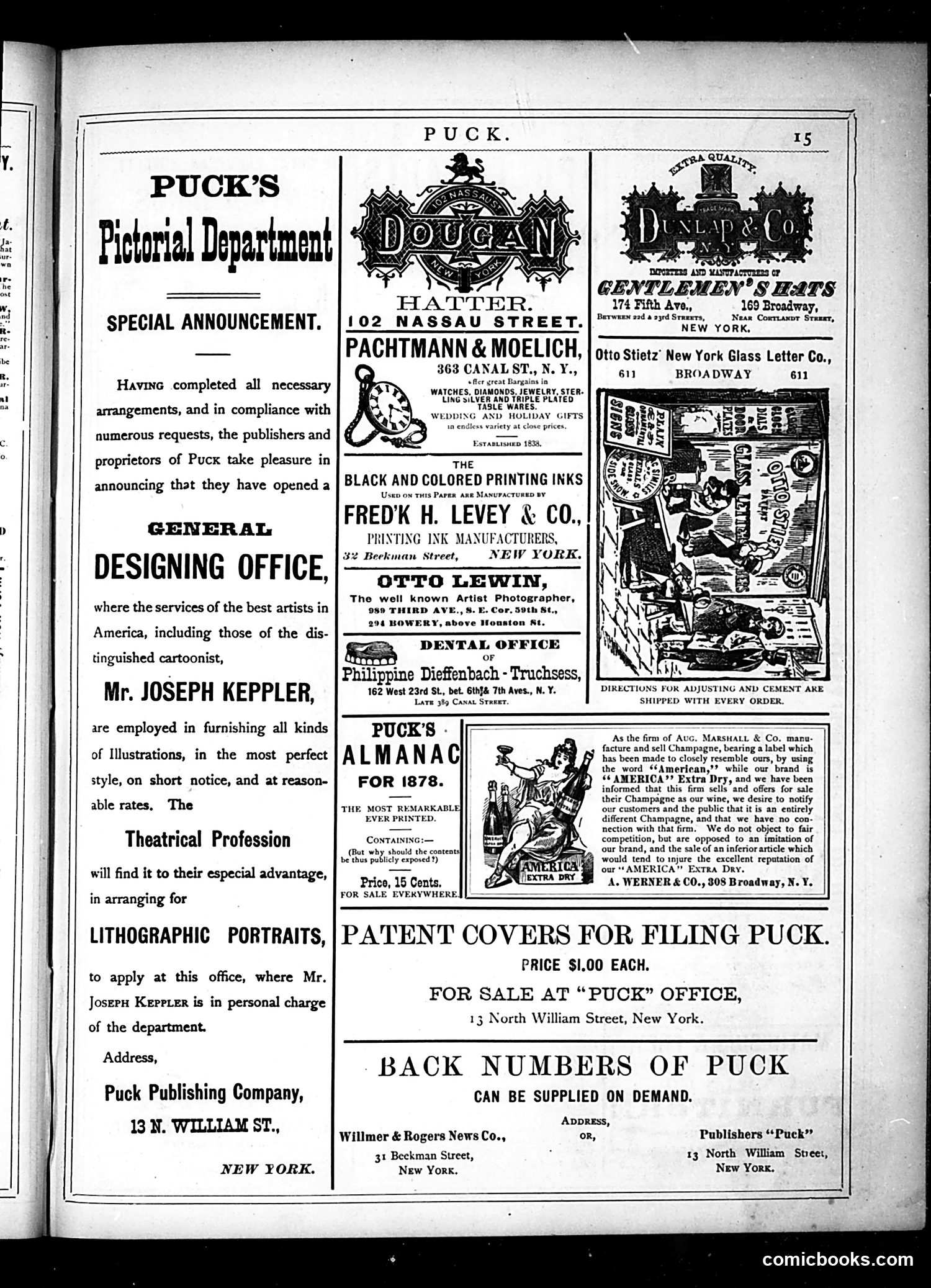
This is primarily an **advertising and announcements page** from Puck magazine, not a political cartoon. The left side announces Puck's new "General Designing Office" employing cartoonist **Joseph Keppler** to provide illustrations and lithographic portraits for theatrical professionals and publications. The right side contains various commercial advertisements for 1870s New York businesses: hatters, haberdashers, printing ink manufacturers, photographers, dentists, and champagne sellers. There's also an advertisement for **Puck's Almanac for 1878**. The only notable visual element is a small illustration promoting "America Extra Dry" champagne, showing a classical female figure with wine bottles. The page functions as both self-promotion for Puck's services and revenue generation through paid advertisements rather than satirical content.
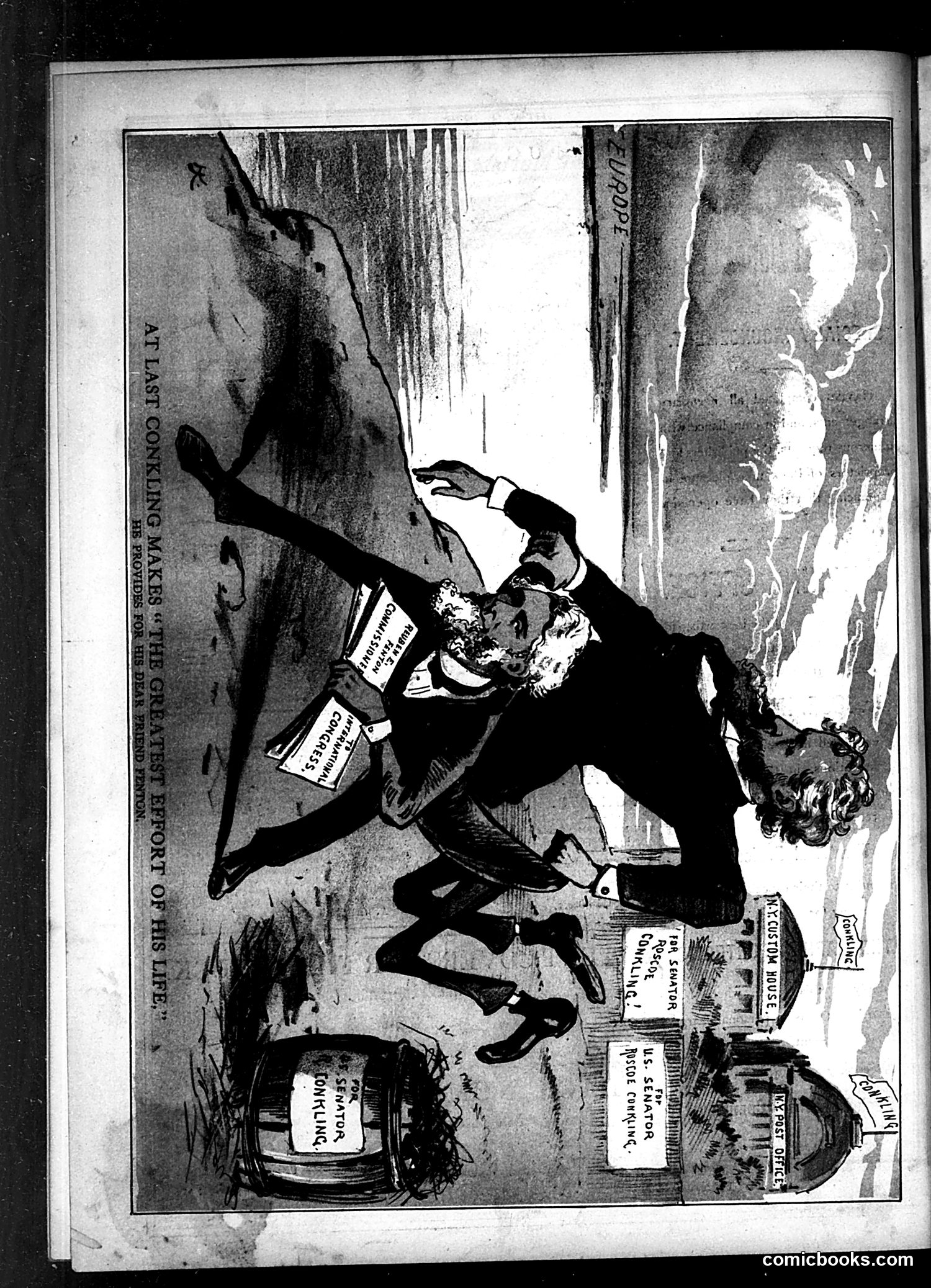
This Puck cartoon satirizes political corruption and bribery. The central figure appears to be a politician or public official who is literally climbing a wall or obstacle while carrying multiple labeled bottles/containers—these appear to represent bribes, kickbacks, or corrupt payments (labels are partially visible but difficult to read completely in this reproduction). The satire suggests that political advancement requires accepting corruption as a normal part of the climb to power. The figure's strained posture conveys the moral and physical burden of carrying such illicit dealings. The various containers suggest multiple sources of corruption or different schemes. This reflects Gilded Age concerns about widespread political corruption and the systemic nature of bribery in American government during the late 19th/early 20th century.