
A complete issue · 16 pages · 1879
Puck — July 23, 1879
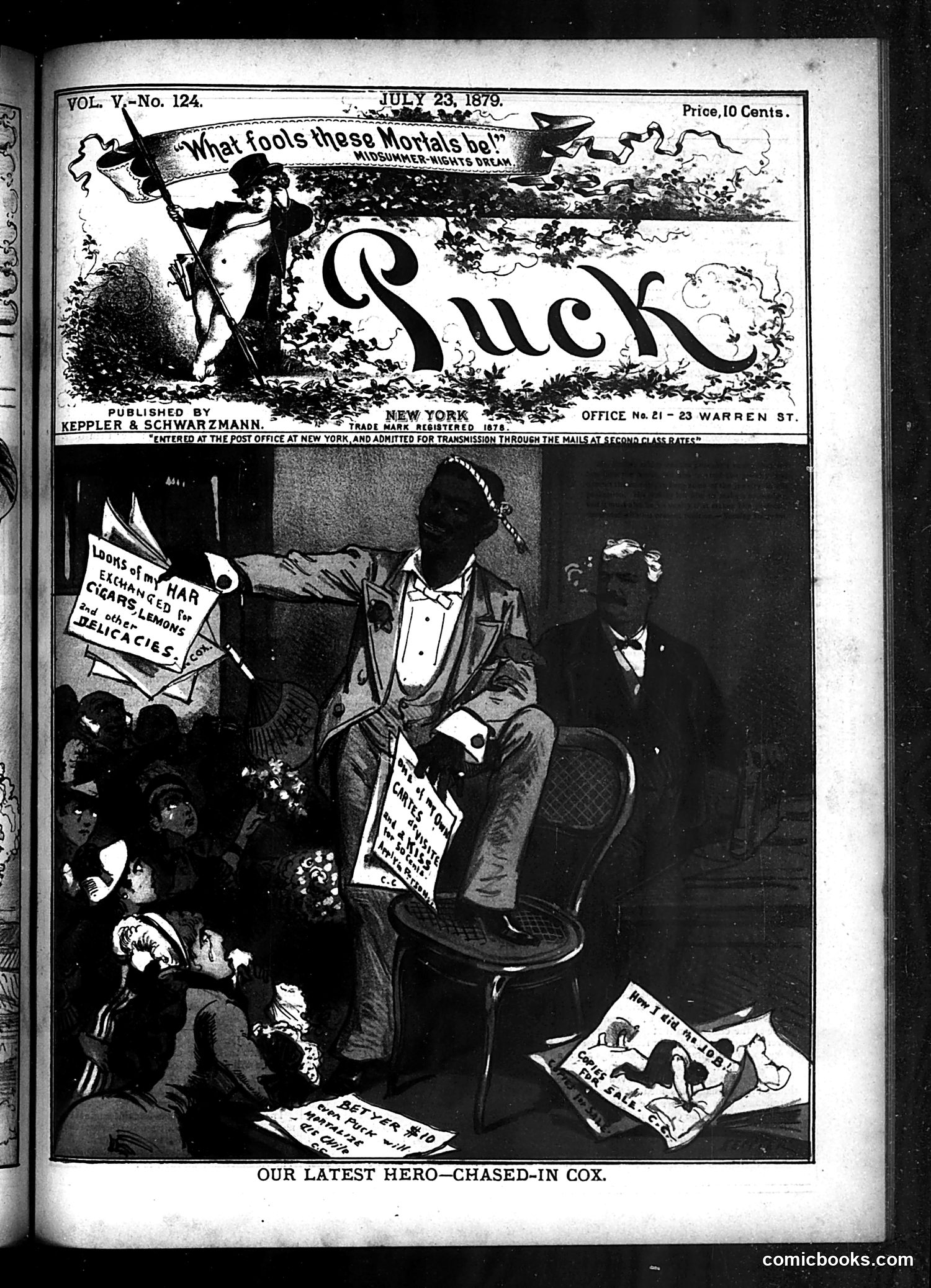
This satirical cover depicts "Our Latest Hero—Chased-in Cox," referencing a contemporary political or public figure named Cox who appears to be fleeing from pursuers. The main illustration shows a Black caricatured figure in formal dress being chased by what appears to be an angry mob or crowd of smaller figures. The signs held by pursuers reference "hair" and cigars, though the exact complaints are difficult to read clearly in the image. The header asks "What fools these Mortals be!"—Shakespeare's ironic quote suggesting human foolishness. Without clearer text on the signs or additional historical context, the specific scandal or incident being mocked remains unclear, though the cartoon clearly satirizes public shame or pursuit of a disgraced figure.
This page (306) is primarily **text-based editorial content** rather than political cartoons. The main article, "Our Latest Hero," satirizes **Chastine Cox**, a contemporary figure who apparently committed a crime (the text hints at murder) yet enjoys public sympathy and media attention. The satire mocks how Cox's physical appearance and charm—his hair, mustache, and deportment—have made him a celebrity despite criminal allegations. The piece criticizes both Cox's vanity and public society's tendency to romanticize criminals based on superficial qualities rather than character or justice. The surrounding columns contain miscellaneous society gossip and brief commentary on contemporary topics (Arctic exploration, cherry pie shipments, etc.), typical of Puck's satirical format.
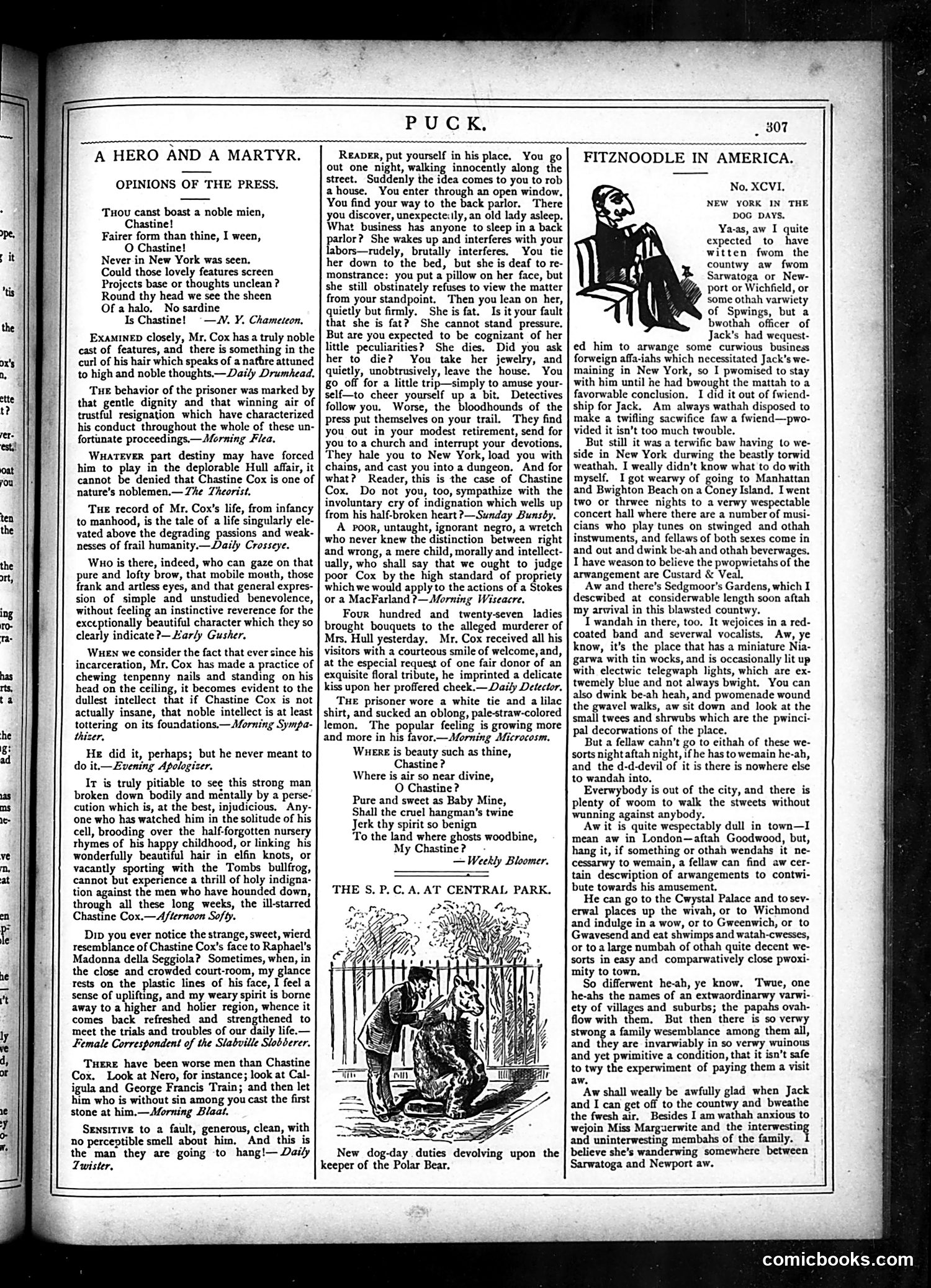
This page contains three distinct sections: a satirical article "A Hero and a Martyr" praising someone named Chastine Cox (apparently a criminal), press opinions mocking Cox's character, and "Fitznoodle in America" — a travel column about New York entertainments. The main cartoon depicts a figure in a park with children, labeled "New dog-day duties devolving upon the keeper of the Polar Bear." The satirical pieces mock Cox through heavy irony, calling him noble while describing ignoble acts. The exact identity of Cox is unclear from this page alone, but he appears to be a contemporary figure (possibly criminal) whom Puck is ridiculing through ironic praise. The cartoon's reference to a "Polar Bear keeper" and "dog-day duties" suggests seasonal summer activities, though its specific satirical target remains unclear without additional context.
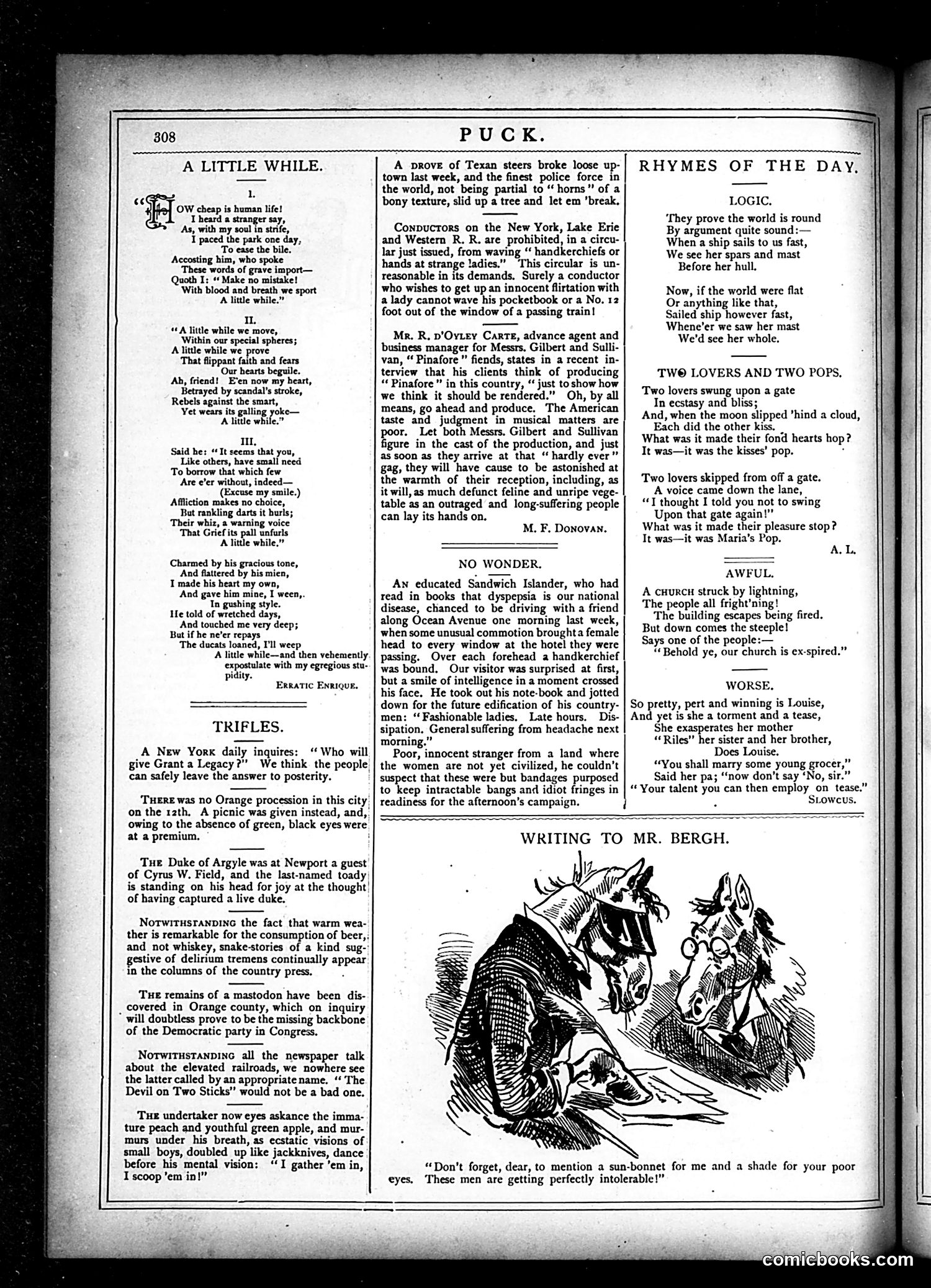
This page contains miscellaneous short humor pieces and verses rather than focused political cartoons. The "Trifles" section includes brief satirical notes about contemporary topics: a New York daily's prediction about Grant's legacy, an Orange procession absence, and the Duke of Argyle at Newport. The illustrated piece "Writing to Mr. Bergh" references Henry Bergh, founder of the American Society for the Prevention of Cruelty to Animals. The cartoon shows a figure addressing Bergh about "men getting perfectly intolerable," requesting he extend animal-cruelty protections to cover human mistreatment—a satirical commentary on Bergh's activism and the magazine's skepticism about expanding social reform efforts.
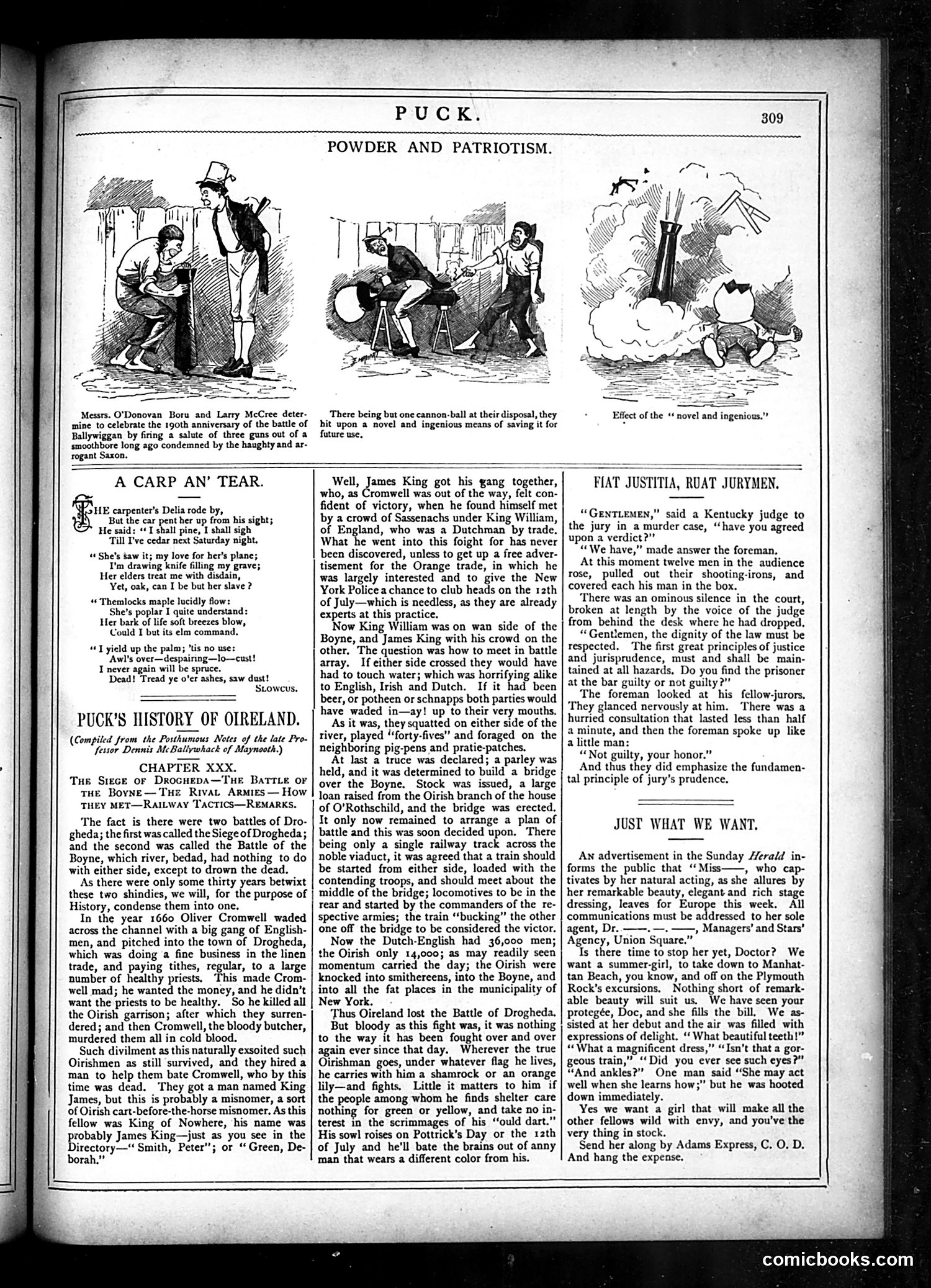
This three-panel cartoon satirizes Irish-American political figures commemorating the 1798 Battle of Ballynahinch. The OCR text identifies "Messrs. O'Donovan Rossa and Lary McCree" organizing this anniversary celebration. The first panel shows them planning with gunpowder; the middle panel depicts them with a cannon on improvised supports; the third shows an explosion. The caption explains they sought a "novel and ingenious" means to save gunpowder for "future use." The satire targets Irish nationalist commemorations and suggests these politicians are dangerously incompetent—their patriotic celebration literally backfires. The joke critiques both their revolutionary posturing and practical ineptitude, common themes in Puck's treatment of ethnic and political groups.
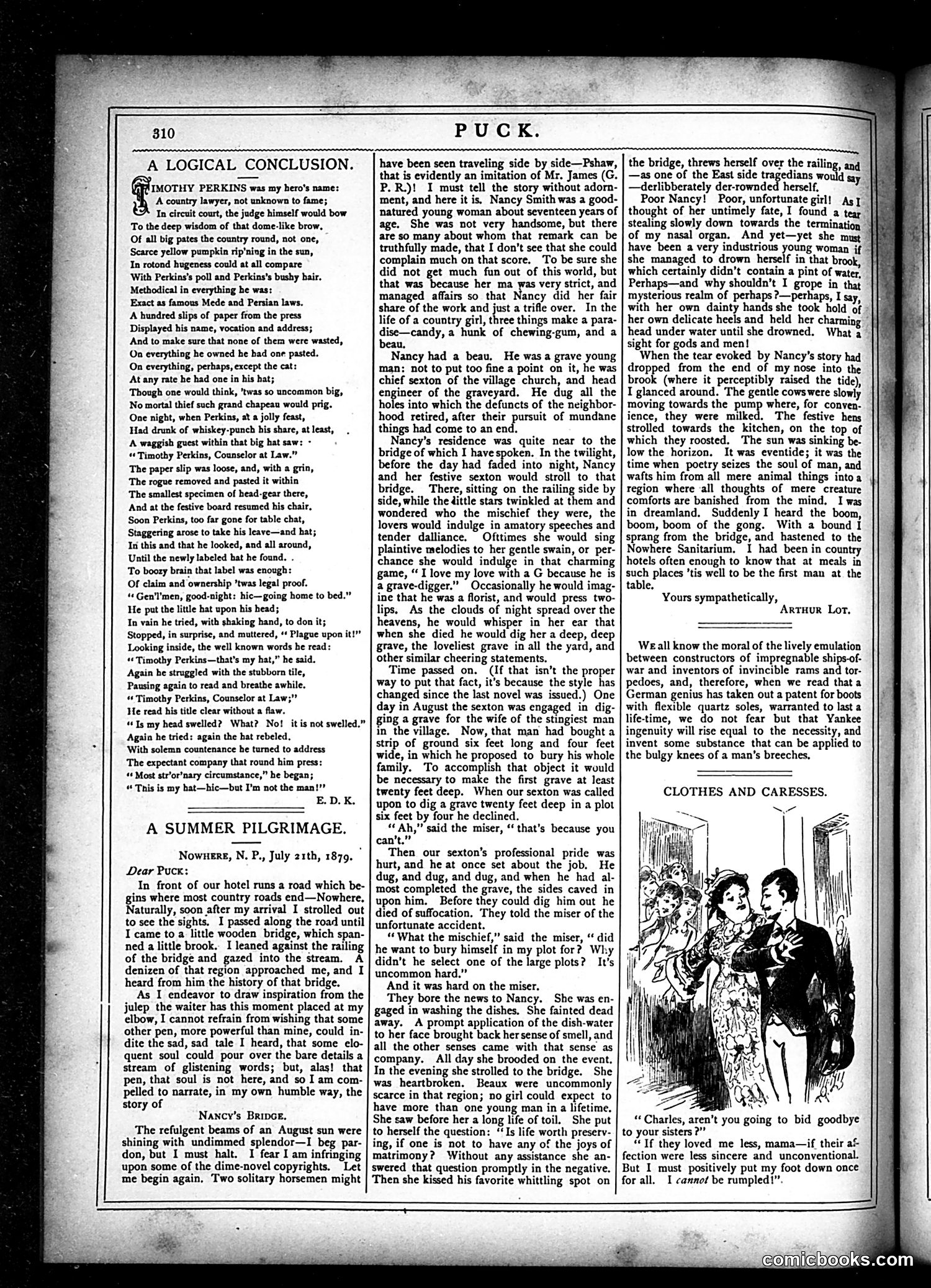
This page contains three distinct sections: a poem titled "A Logical Conclusion" satirizing a country lawyer's questionable legal reasoning; a letter titled "A Summer Pilgrimage" from Nowhere, N.P., describing a humorous anecdote about a sexton's mishap digging a grave; and an illustration labeled "Clothes and Caresses" showing what appears to be a domestic scene with women near a wardrobe. The "Logical Conclusion" poem mocks verbose, contradictory legal arguments. The "Summer Pilgrimage" letter uses rural humor—a sexton digging a grave too deep, then too shallow—to poke fun at incompetence. The illustration appears to depict a period domestic moment, though its specific satirical target remains unclear from the visible image alone.
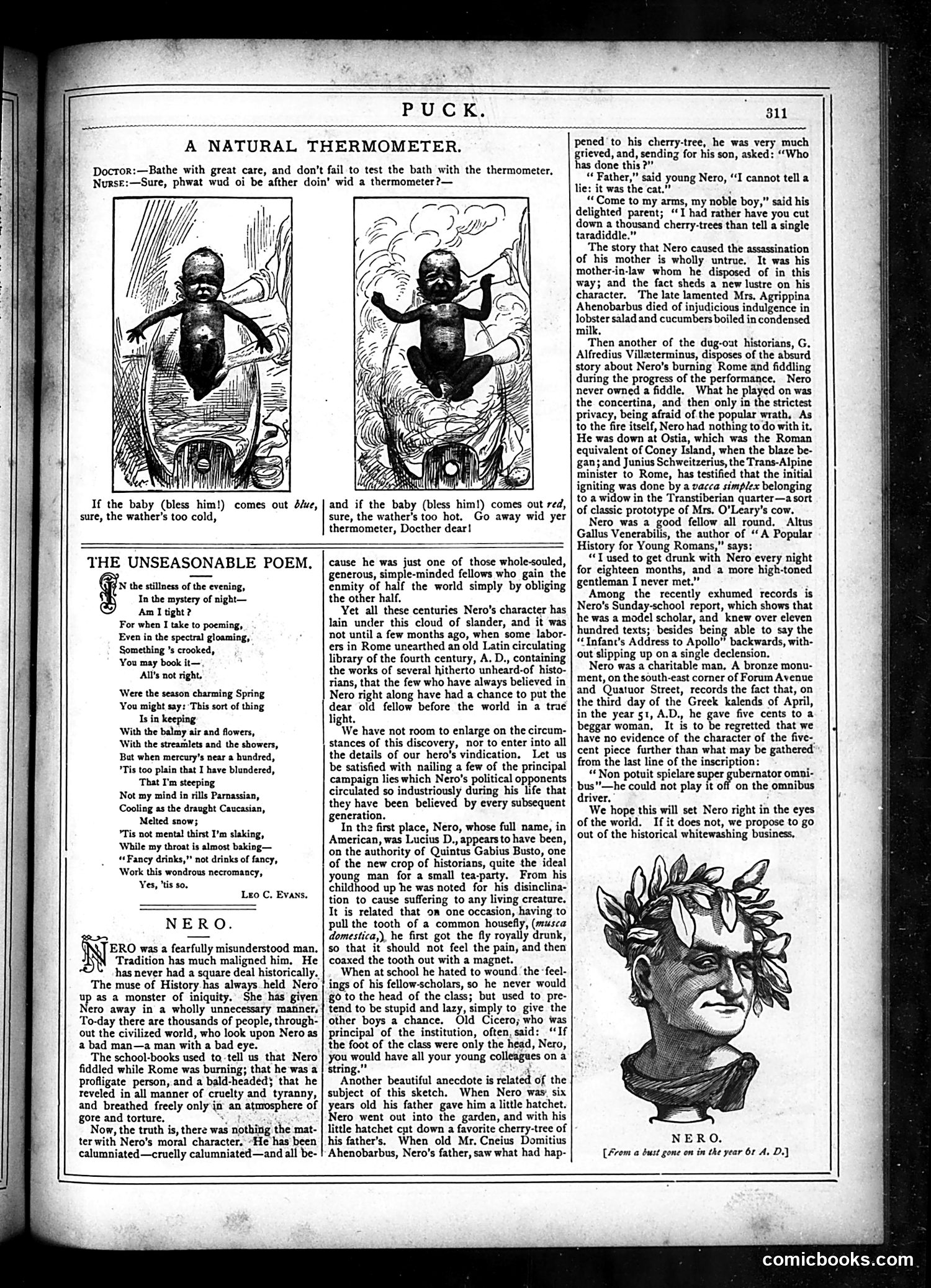
The top cartoon shows a baby in hot and cold water as a "thermometer"—a dark joke about parental negligence. The doctor's instruction to "bathe with great care" is undercut by the visual: if the baby emerges "blue" (cold) or "red" (hot), you'll know the water temperature. This satirizes careless or incompetent parenting. The main article discusses the historical Roman emperor Nero, debunking popular myths—that he was a monster of cruelty, that he fiddled while Rome burned, that he was bald and cross-eyed. The text argues these slanders were spread by his political enemies and weren't believed by subsequent generations. This appears to be historical revisionism challenging conventional wisdom about a infamous historical figure.
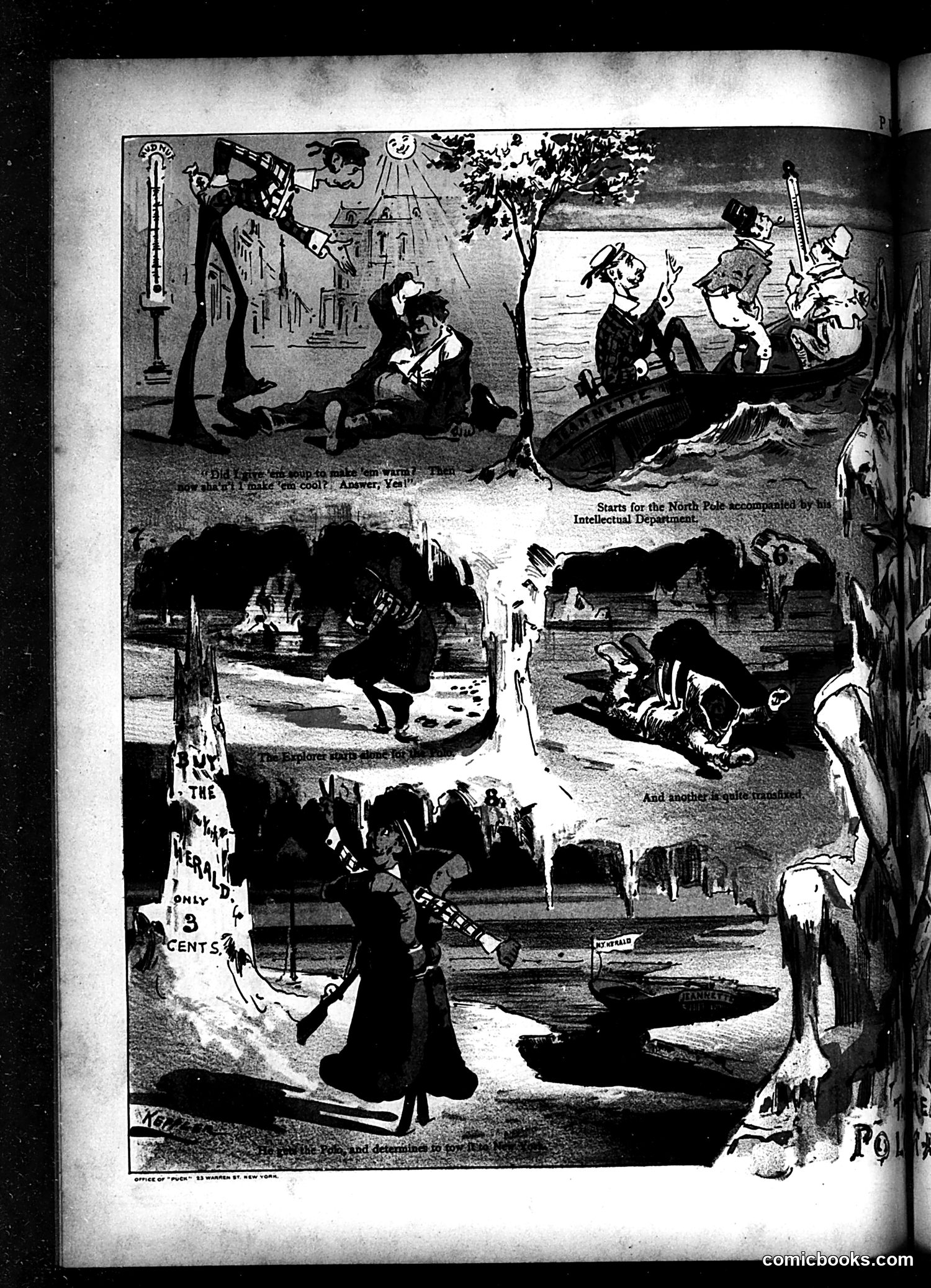
This page appears to be a multi-panel comic strip or series of satirical illustrations, though the OCR text is largely illegible and doesn't clearly correspond to the visible images. The top panel shows figures in formal dress near a building and boat, with one character seated. The middle and lower panels depict various characters in what appear to be comedic or dramatic situations. One panel includes text referencing "The moral" and mentions "only 3 cents," suggesting commercial or consumer-related satire. Without clearer text or caption identification, I cannot definitively identify the specific political figures, events, or social commentary being satirized. The style is consistent with early 20th-century Puck humor, but determining the precise satirical targets would require more legible source material.
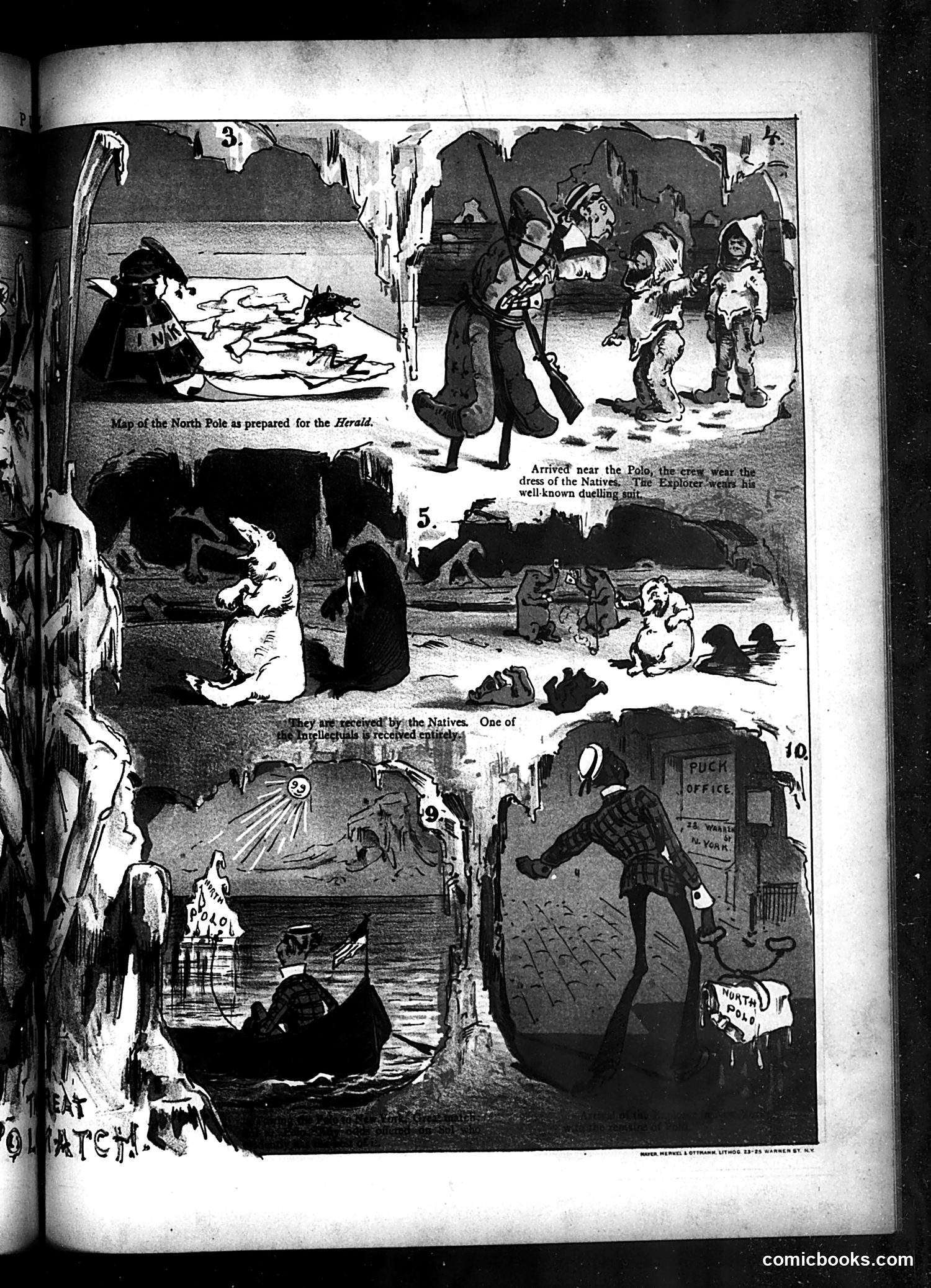
This page appears to be a satirical comic strip sequence about Arctic exploration, likely referencing early 20th-century polar expeditions. The numbered panels (3-10) show: Panel 3: "Map of the North Pole as prepared for the Herald" - suggesting newspaper coverage of polar claims. Panel 4: An explorer arriving at the pole, meeting natives and remarking on their "dress." Panel 5: Natives "discovered" by the explorer; one "received entirely." Panels 9-10: A figure entering a "Puck Office," apparently a satirical commentary on how explorers and newspapers fabricated or exaggerated polar expedition claims. The satire mocks the era's sensationalized exploration journalism and dubious polar discovery claims, portraying them as theatrical fabrications rather than genuine achievement.
This page consists primarily of text content rather than cartoons. It contains three sections: 1. **"A New Watering Place"** — a correspondence piece about New Amsterdam (likely referring to a resort or recreational area), describing its attractions and visiting patterns. 2. **"Answers for the Anxious"** — an advice column addressing reader inquiries on various topics, including poetry criticism and personal matters. 3. **"Justice to the Police"** — an opinion piece criticizing New York City police brutality, advocating for accountability and reform of what the writer calls the "Golden Rule" abuse within the force. The page also includes notices about new publications, including one titled "Under the Willows" and information about the Metropolitan Railway. This appears to be a typical issue page mixing editorial content, correspondence, and social commentary rather than featuring prominent political cartoons.
This page is primarily **text**, not a cartoon. It continues "Archie Gascoyne, A Romance of Skye," a serialized fiction story by John Fraser written expressly for Puck magazine. The page shows **Chapter XV** of this romance novel set in Scotland. The narrative focuses on characters including Archie, Doctor Macleod, Miss Maggie, and Captain Macleod planning a fishing and shooting expedition. This is **not satirical or political content**—it's entertainment fiction published in Puck magazine. The story appears to be a straightforward romantic narrative rather than social commentary or political satire. Puck, while known for satire, also published serialized stories alongside its humorous content.
This page contains **"A Song for the Season,"** a humorous poem about Arctic exploration. The illustration shows a figure on ice, likely referencing polar expeditions popular in the 1880s-1890s era. The poem mocks the hardships of Arctic life—freezing temperatures, isolation, and danger—while the speaker romanticizes it as an adventure. Lines like "Oh, a life on the yacht Jeannette! / A home on the frozen deep!" reference the USS *Jeannette*, a real Arctic exploration vessel. The surrounding column contains brief satirical notes on contemporary topics: politics, social customs, and public figures. The overall effect is typical Puck humor: gentle mockery of both polar explorers' bravado and everyday American society.
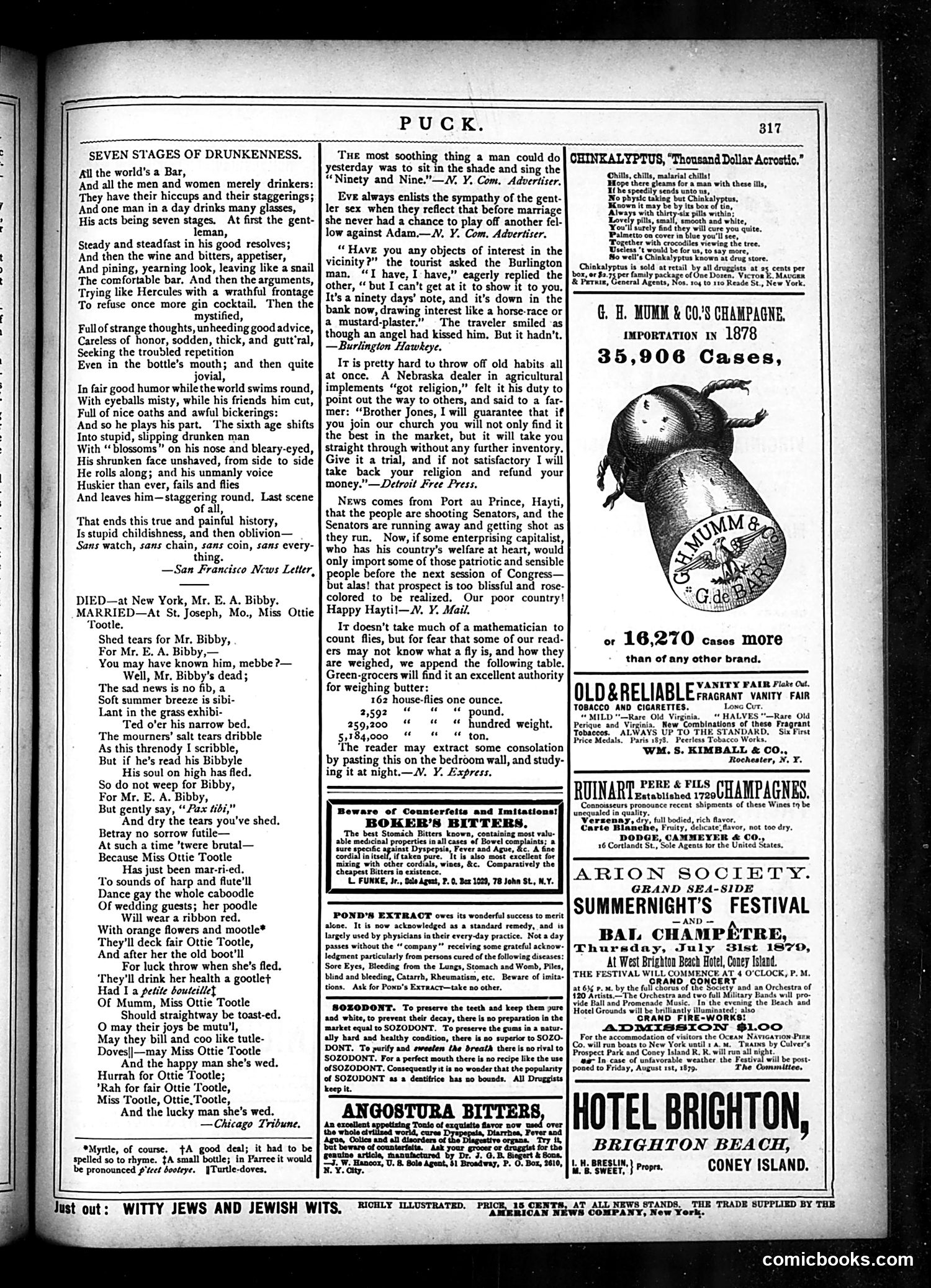
This is primarily an **advertising and miscellaneous content page** from Puck magazine, page 317. The page contains: - **"Seven Stages of Drunkenness"** — a humorous poem describing progressive intoxication, presented as satire of common drinking culture - **Various death and marriage notices** with accompanying jokes - **Multiple period advertisements** for champagne (G.H. Mumm & Co.), bitters, tobacco, and hotels The tone is typical of 19th-century American humor — crude, focusing on alcohol consumption and domestic situations. The "Seven Stages" poem uses exaggerated physical descriptions (eyeballs rolling, nose "blossoms," etc.) as comedic commentary on public drunkenness. No significant political cartoon or social satire is visible on this particular page — it's primarily devoted to lighthearted entertainment content and commercial advertisements typical of Puck's format.
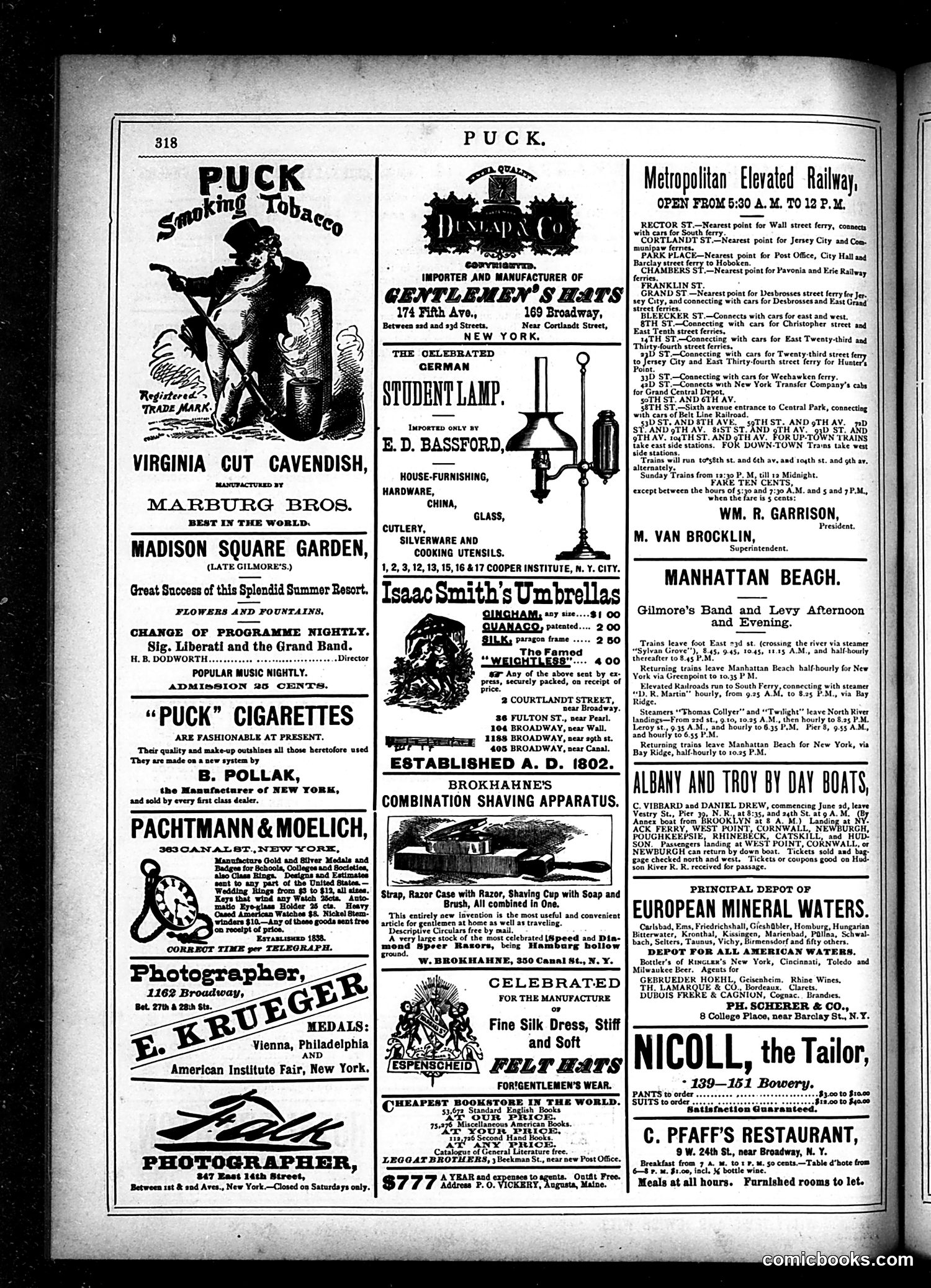
This page is **primarily advertising** for late 19th-century New York businesses and services, with minimal satirical content. The prominent left-side illustration shows **"Puck Smoking Tobacco"** featuring a caricatured figure (Puck, the magazine's mascot) in period dress holding a pipe and tobacco products. This is a straightforward product advertisement. Other notable ads include: - **Madison Square Garden** (promoting summer entertainment) - **Isaac Smith's Umbrellas** (with trademark imagery) - **Brokhahne's Combination Shaving Apparatus** - Various New York photographers, restaurants, and transportation services The page lacks evident political satire or caricature of public figures. It functions as a typical magazine back page, monetizing space through commercial advertisements while promoting the Puck brand itself through its mascot tobacco endorsement.
This is primarily an **advertising page** from Puck magazine (page 319), not a political cartoon or satirical content page. The page features numerous commercial advertisements for late 19th/early 20th-century products and services, including: - Tailoring (Barrett) - Champagne and beverages - Patent/trademark services - Dental rooms - Furniture - Lottery services - Various consumer goods Notable items include ads for "Bohemian Bier," French clocks and jewelry, and mining industry publications. The layout uses typical period typography with decorative borders and illustrations. **No political satire or cartoon commentary is present.** This represents how Puck, like modern magazines, relied heavily on advertising revenue to subsidize its editorial content.
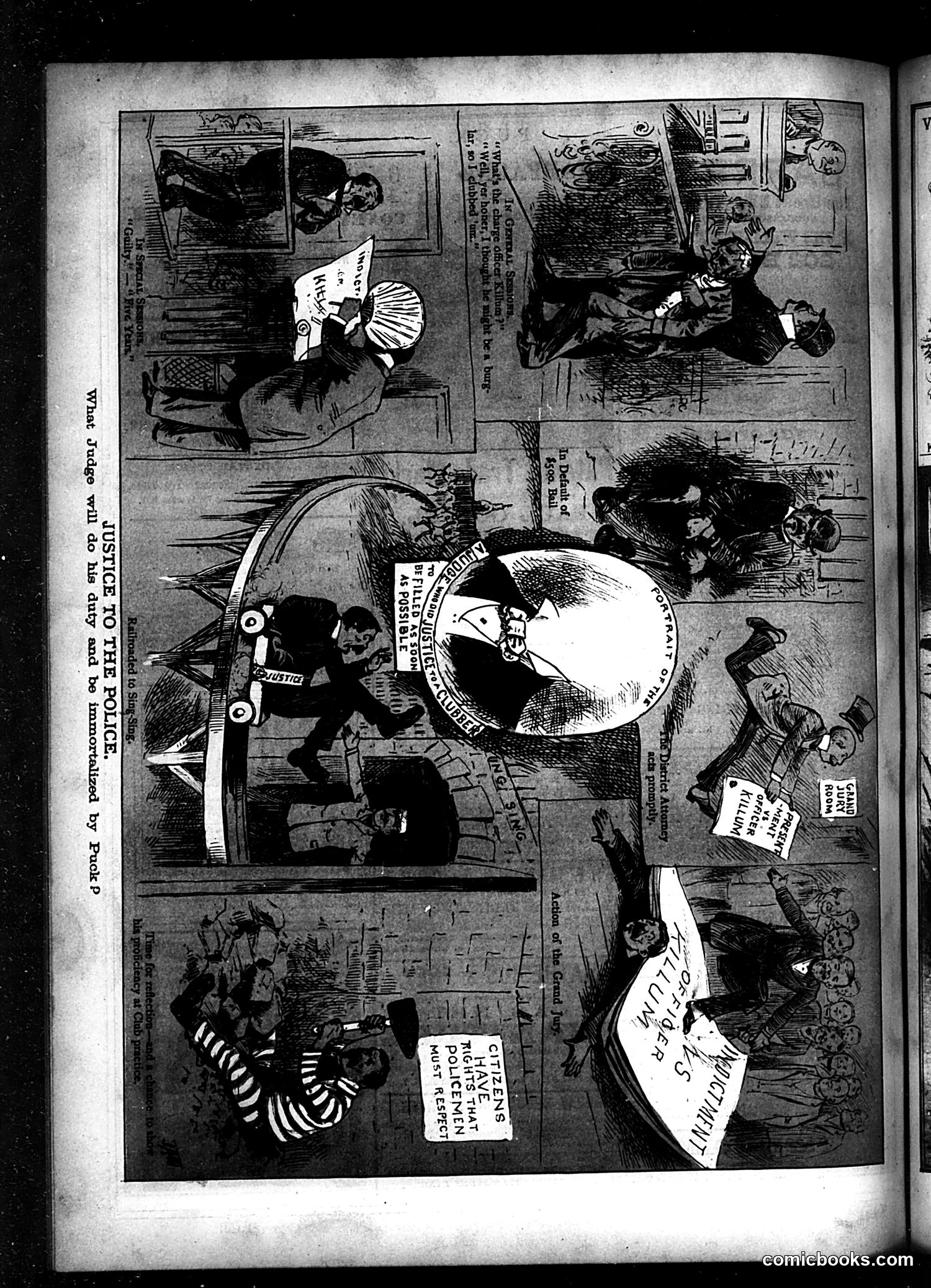
This appears to be a multi-panel political cartoon satirizing **police conduct and authority**. The central large circular panel depicts what seems to be a police officer or authority figure in a confrontational interaction. Surrounding panels show various scenes involving police and civilians in different settings—streets, interiors, and public spaces. The cartoon's message appears critical of **police behavior or abuse of power**, a recurring theme in Puck's satirical work. The repeated panels suggest a pattern or systemic issue rather than isolated incidents. However, **without clearer text visibility**, I cannot definitively identify specific officers, incidents, or dates referenced. The style and printing quality suggest early-to-mid 20th century publication, typical of Puck's muckraking satire on institutional corruption and civic misconduct.