
A complete issue · 16 pages · 1878
Puck — April 17, 1878
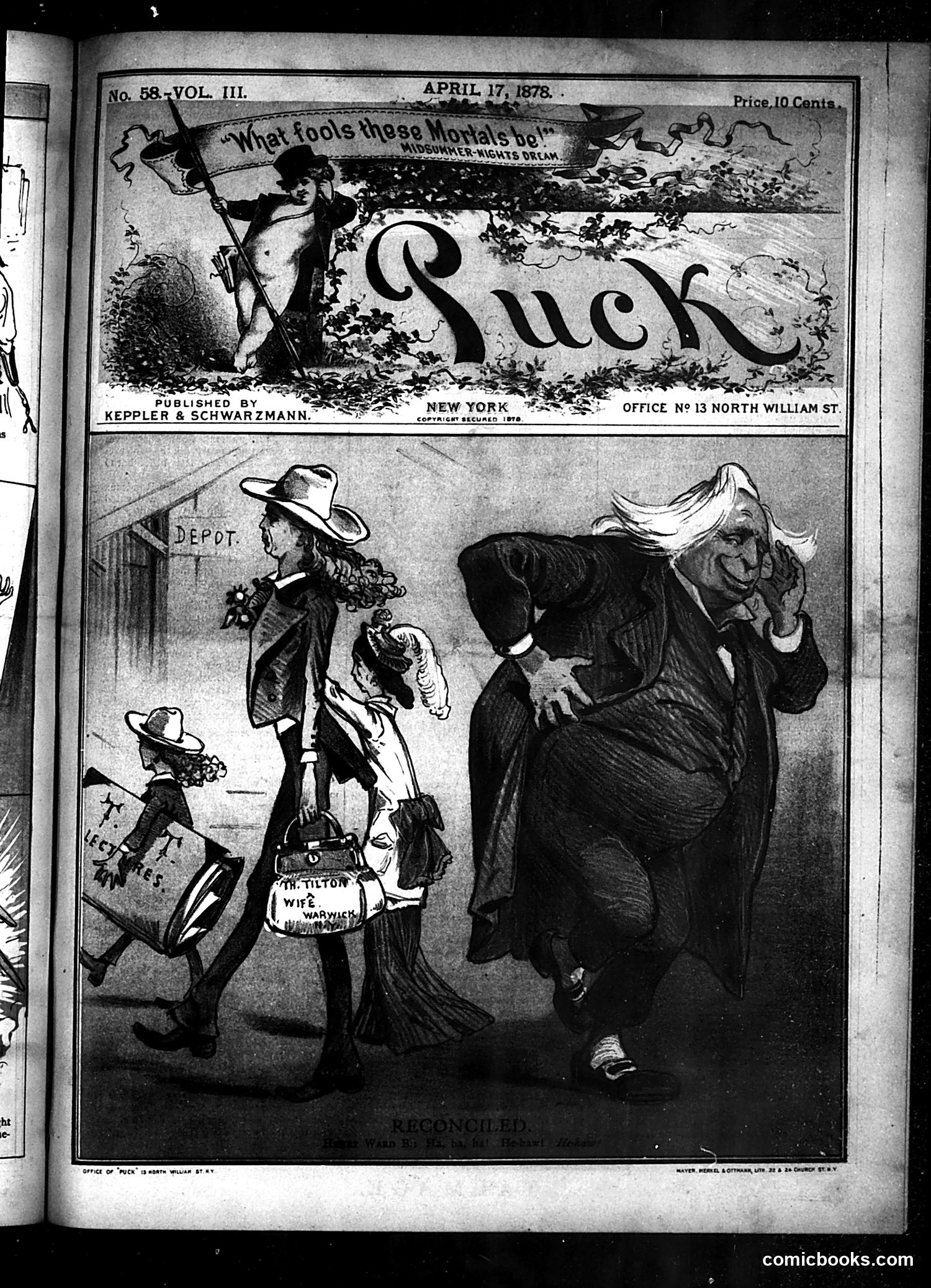
This page contains two cartoons. The top shows the magazine's masthead with the tagline "What fools these Mortals be!" The bottom cartoon, titled "RECONCILED," depicts a reconciliation scene at a train depot. A man in Western attire (labeled "TILTON" and "WIFE" on luggage) appears to be departing with a woman, while a portly gentleman on the right seems distressed or defeated. This likely references the famous Tilton-Beecher scandal—a messy 1870s adultery case involving Reverend Henry Ward Beecher and Theodore Tilton's wife. The cartoon satirizes the resolution of this public scandal, with the wife apparently leaving with Tilton rather than remaining involved with Beecher.
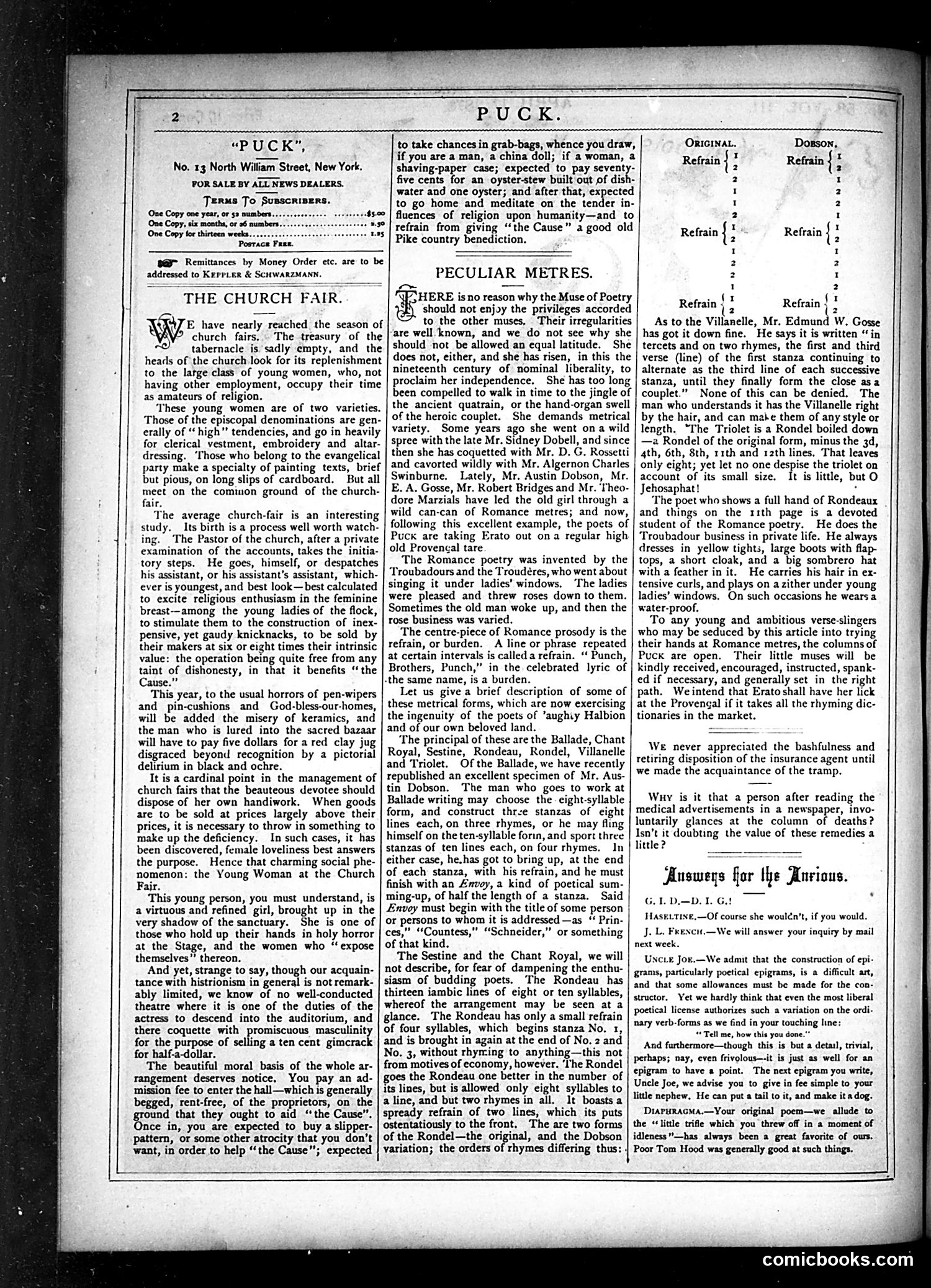
This page primarily contains **editorial content rather than political cartoons**. The main article, "The Church Fair," is a humorous essay about women organizing church fundraising events. It satirizes the social phenomenon of church ladies using fairs as occasions for elaborate dress, socializing, and mild mischief—framing their religious devotion as secondary to the social spectacle. The "Peculiar Metres" section discusses poetry forms used in Romance languages, offering literary criticism rather than satire. The bottom section, "Answers for the Inquisitive," is an advice column addressing reader questions about practical matters. This page represents **Puck's lighter content**—social satire and humor rather than hard political commentary. The church fair piece gently mocks Victorian-era female social behavior through gentle irony.
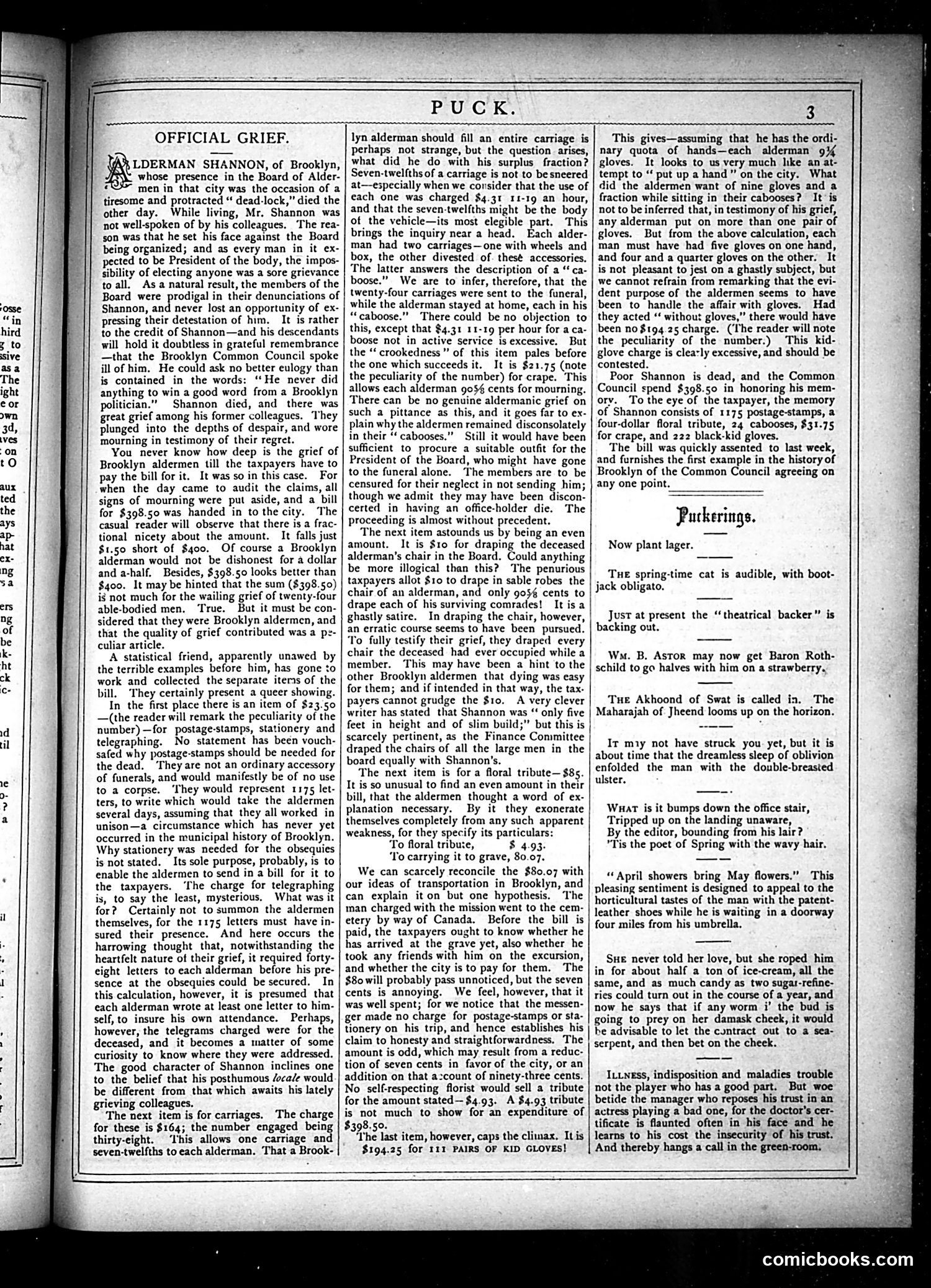
This page from *Puck* magazine (page 3) contains primarily text articles rather than cartoons. The main piece, "Official Grief," is a satirical commentary on Brooklyn aldermen's expenses related to Alderman Shannon's funeral. The satire attacks the aldermen for billing the city for various funeral-related costs—carriages, gloves, draping chairs—claiming these were legitimate municipal expenses. The author argues these charges are excessive and questions whether dying aldermen should cost taxpayers money through inflated "official grief" expenses. The smaller sections ("Puckerings") are brief humorous quips about contemporary topics like spring, theater, and romance—typical of *Puck's* miscellaneous satirical humor. The overall thrust critiques municipal corruption and wasteful government spending disguised as solemn ceremony.
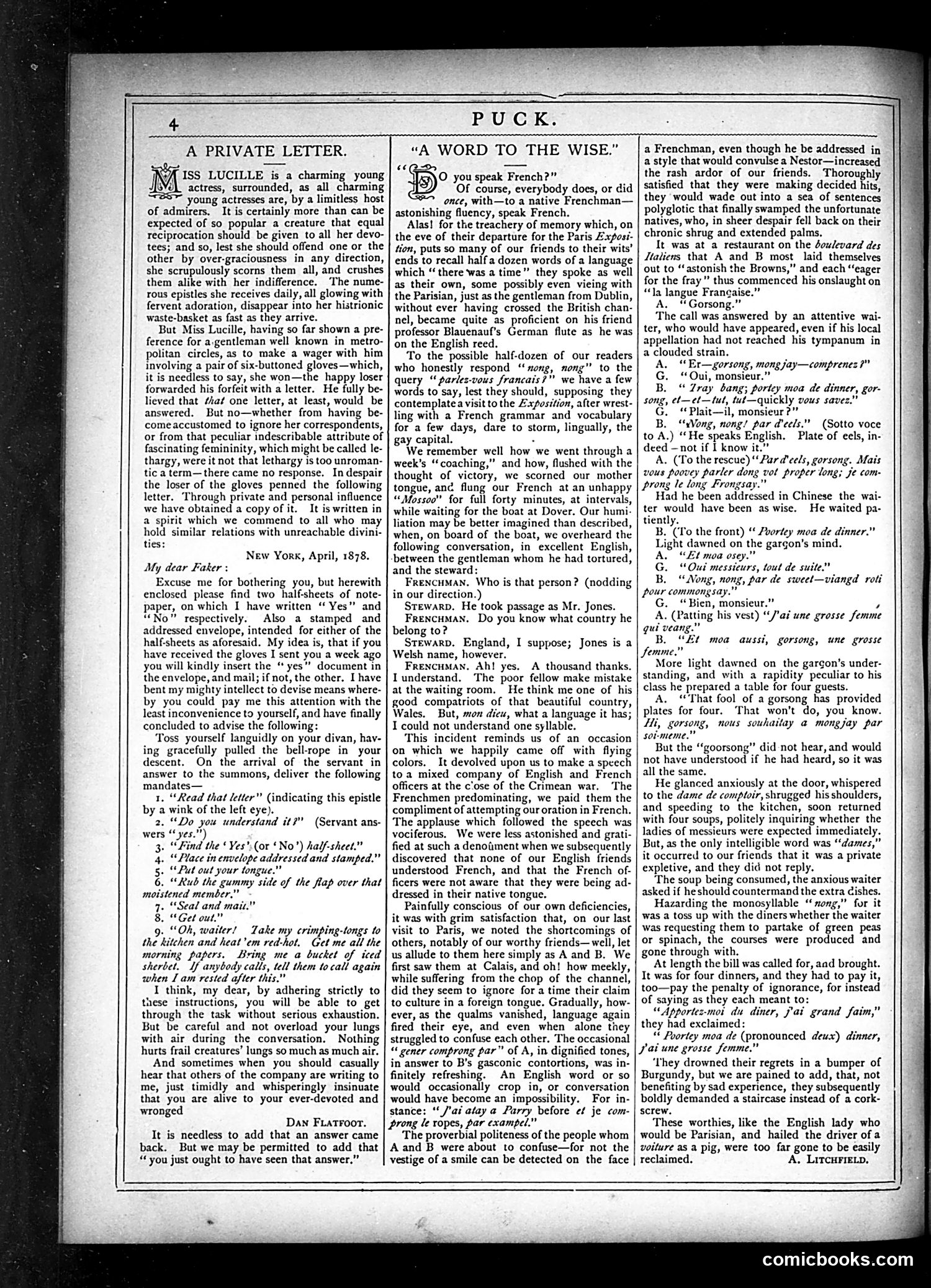
This page contains three articles rather than political cartoons: 1. **"A Private Letter"** - A humorous piece about Miss Lucille, a young actress, discussing her correspondence habits and social etiquette regarding letter-writing and glove-wearing. 2. **"A Word to the Wise"** - A satirical commentary on French language usage among English speakers, particularly mocking affectations and pretension. It includes anecdotes about English people attempting French and the absurdities that result, suggesting the author views such linguistic pretension as ridiculous and affecting. 3. The page contains social commentary typical of Puck's satirical approach, targeting upper-class affectations and cultural pretensions of the era. The content focuses on social satire rather than political figures, ridiculing contemporary manners and linguistic snobbery among the English gentry.
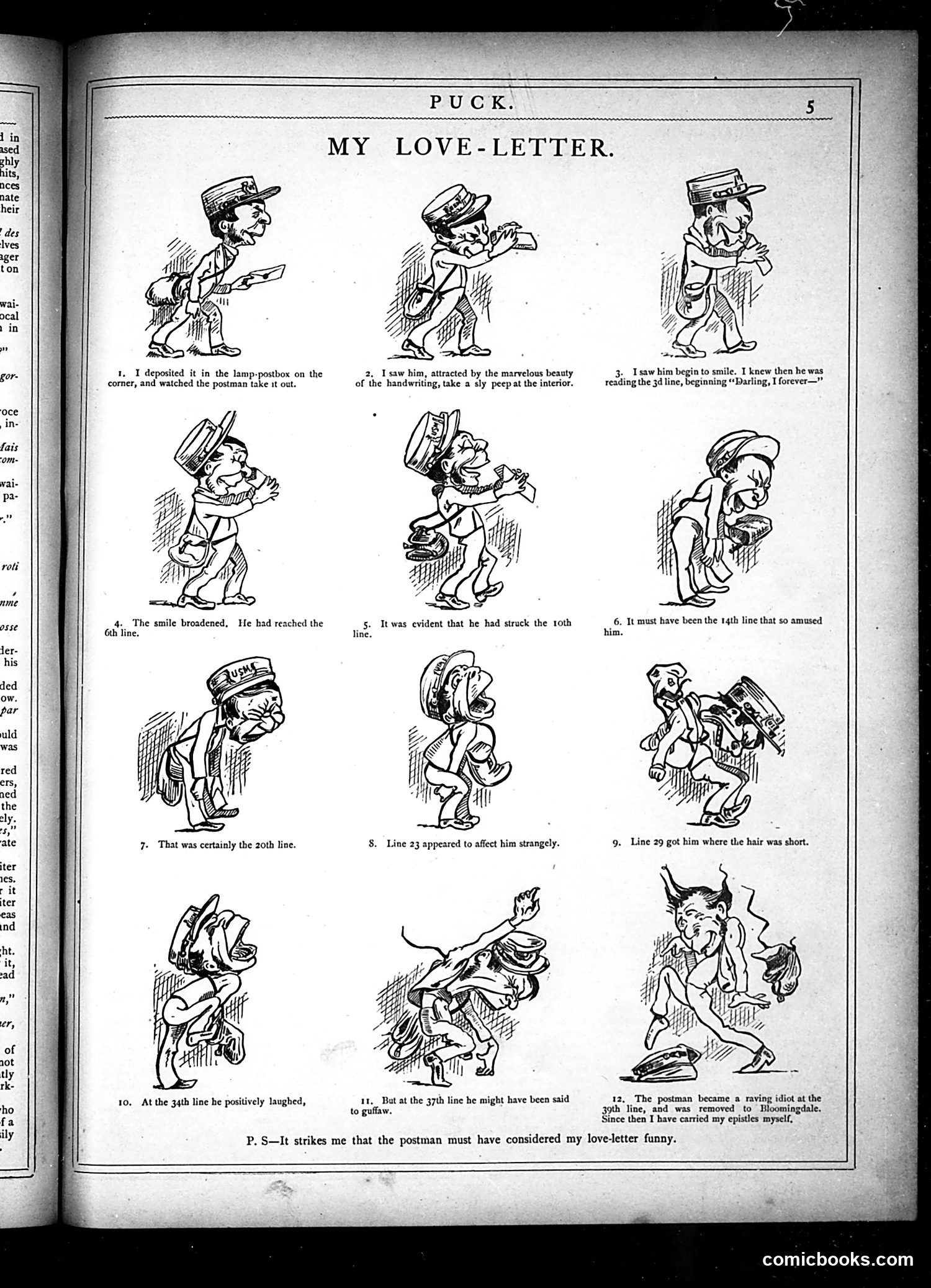
This is a sequential comic strip satirizing a postman's delivery of a love letter. The narrative follows a postal worker reading increasingly absurd lines from a letter as he delivers it, his reactions becoming more exaggerated and ridiculous with each excerpt. The humor relies on the contrast between romantic love-letter conventions and the absurd, nonsensical content the postman encounters—including references to specific line numbers (6th line, 14th line, 20th line, etc.) that apparently contain bizarre or inappropriate phrases. The final panel reveals the postman became so disturbed he was admitted to Bloomingdale (likely an asylum), and the author has "carried my eyeballs myself." The satire mocks both overwrought Victorian love letters and postal workers' exposure to ridiculous correspondence.
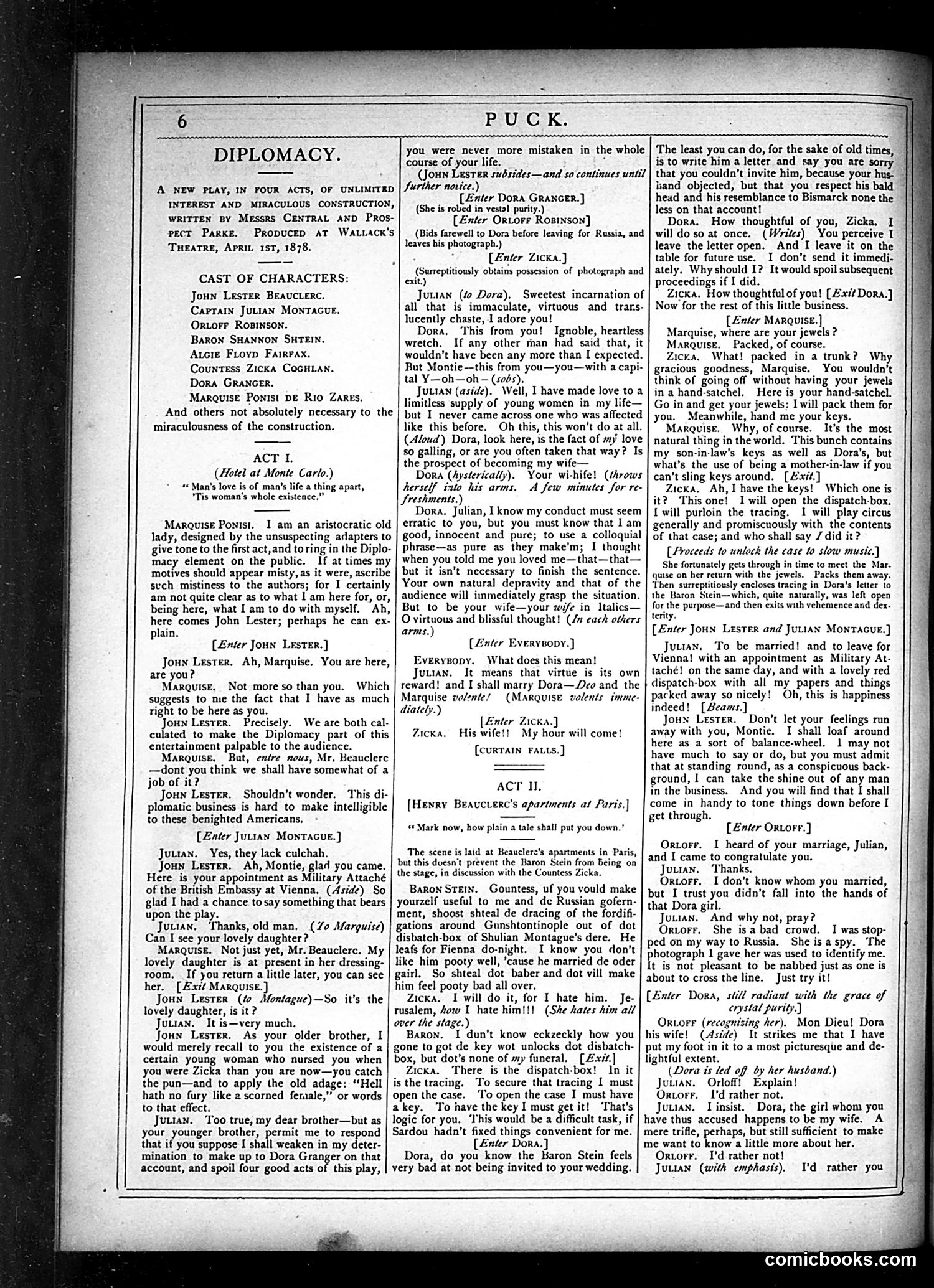
This page contains the script for "Diplomacy," a four-act satirical play produced at Wallace's Theatre on April 1st, 1878. The play satirizes diplomatic and aristocratic pretension through characters like Marquise Posini (an old aristocratic lady) and John Lester (an American). The satire targets the contrast between European aristocratic snobbery and American straightforwardness. References to "Military Attaché" positions, Russian affairs, and Constantinople suggest it mocks mid-Victorian diplomatic intrigue and the social climbing enabled by diplomatic appointments. The plot involving marriage, social standing, and aristocratic maneuvers critiques how nobility manipulated marriages and social position for political advantage. The humor derives from colliding American practicality against European pretension and absurd diplomatic machinations.
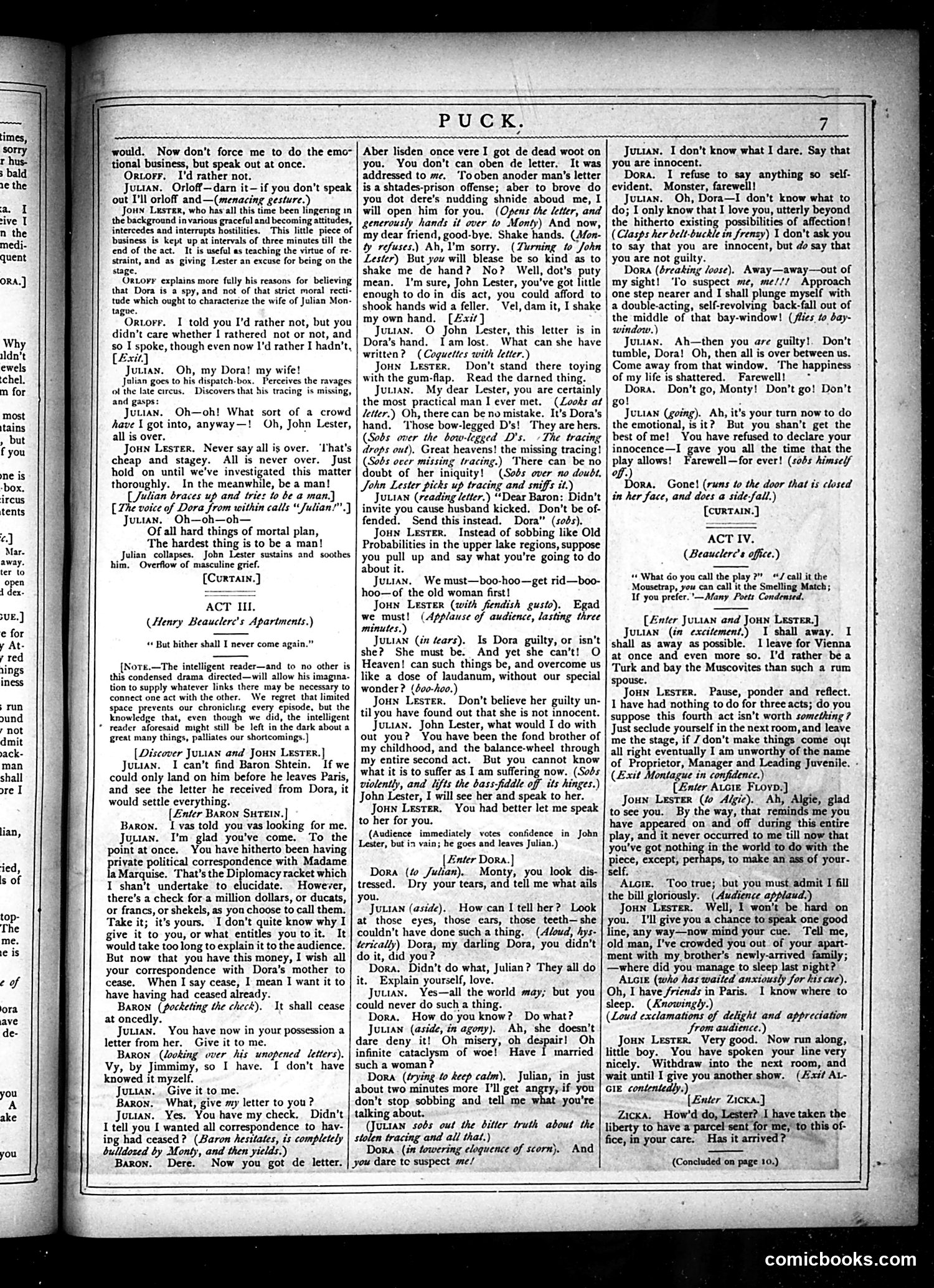
This page contains a dramatic scene from what appears to be a theatrical play, not a political cartoon. The text shows dialogue between characters named Julian, Dora, John Lester, and others, discussing personal matters involving letters, jealousy, and romantic entanglement. The page is labeled "PUCK" at the top and shows "ACT III" and "ACT IV," indicating this is a serialized dramatic work published in the magazine. The dialogue reveals plot complications—a missing letter, accusations of infidelity, and emotional confrontations between the characters. Without additional context about which play this is from or when it was published, I cannot identify the specific satirical or political commentary. This appears to be entertainment content rather than social satire typical of Puck's political cartoons.
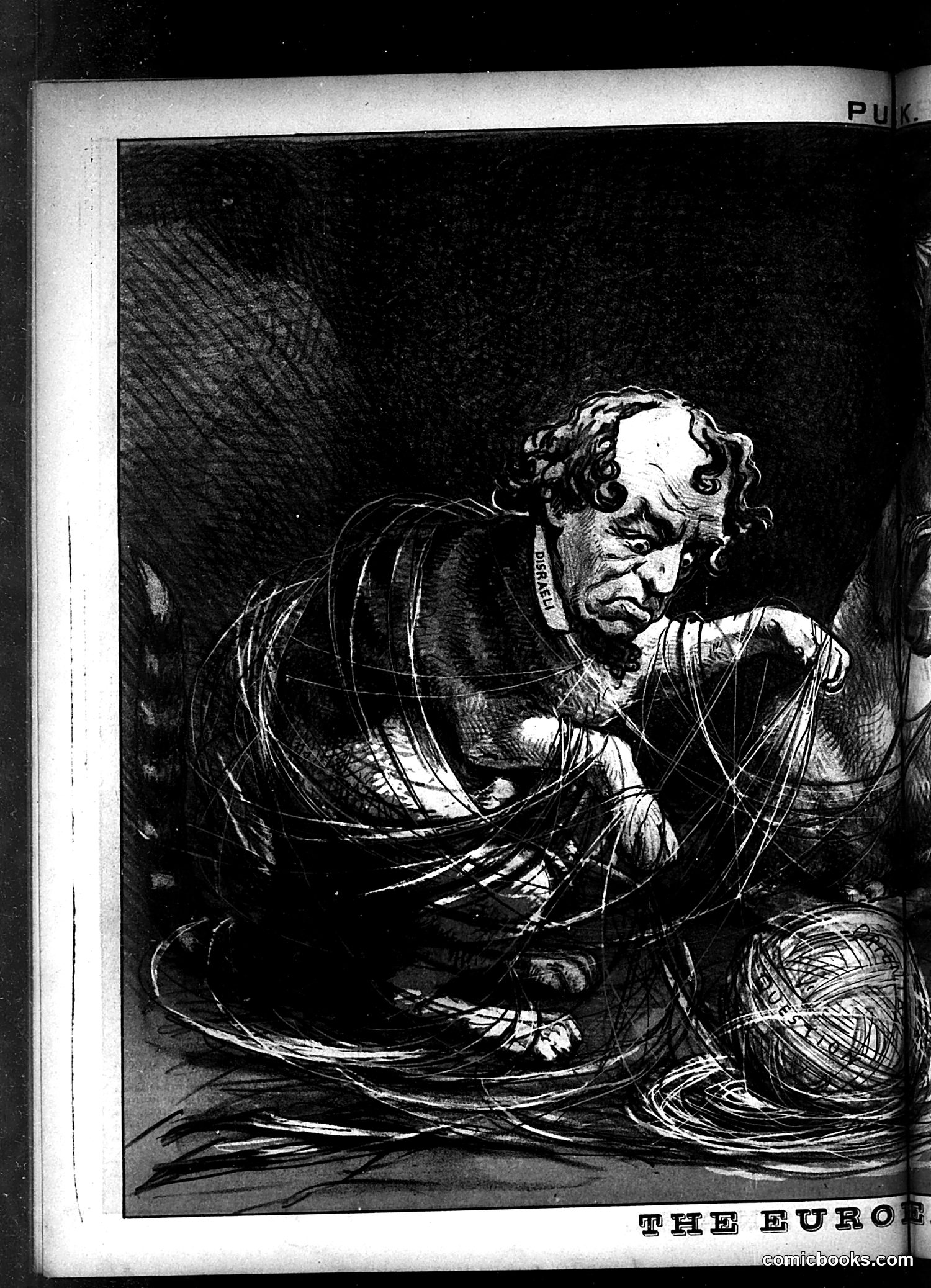
This appears to be a political cartoon from Puck magazine, though the OCR text provided is incomplete (only showing "THE BUROF" at bottom, likely "BUREAU" cut off). The image depicts a caricatured figure in 19th-century clothing, rendered in dramatic black-and-white etching style. The subject is shown in an exaggerated pose with curled hair and distinctive facial features typical of period political satire. The figure is surrounded by what appears to be coiled ropes or bureaucratic red tape—a common visual metaphor for government entanglement and inefficiency. Without the complete caption or text, I cannot definitively identify the specific figure or pinpoint the exact political issue being satirized. The rope imagery suggests commentary on bureaucratic corruption, overregulation, or administrative excess—themes Puck frequently addressed during the Gilded Age.
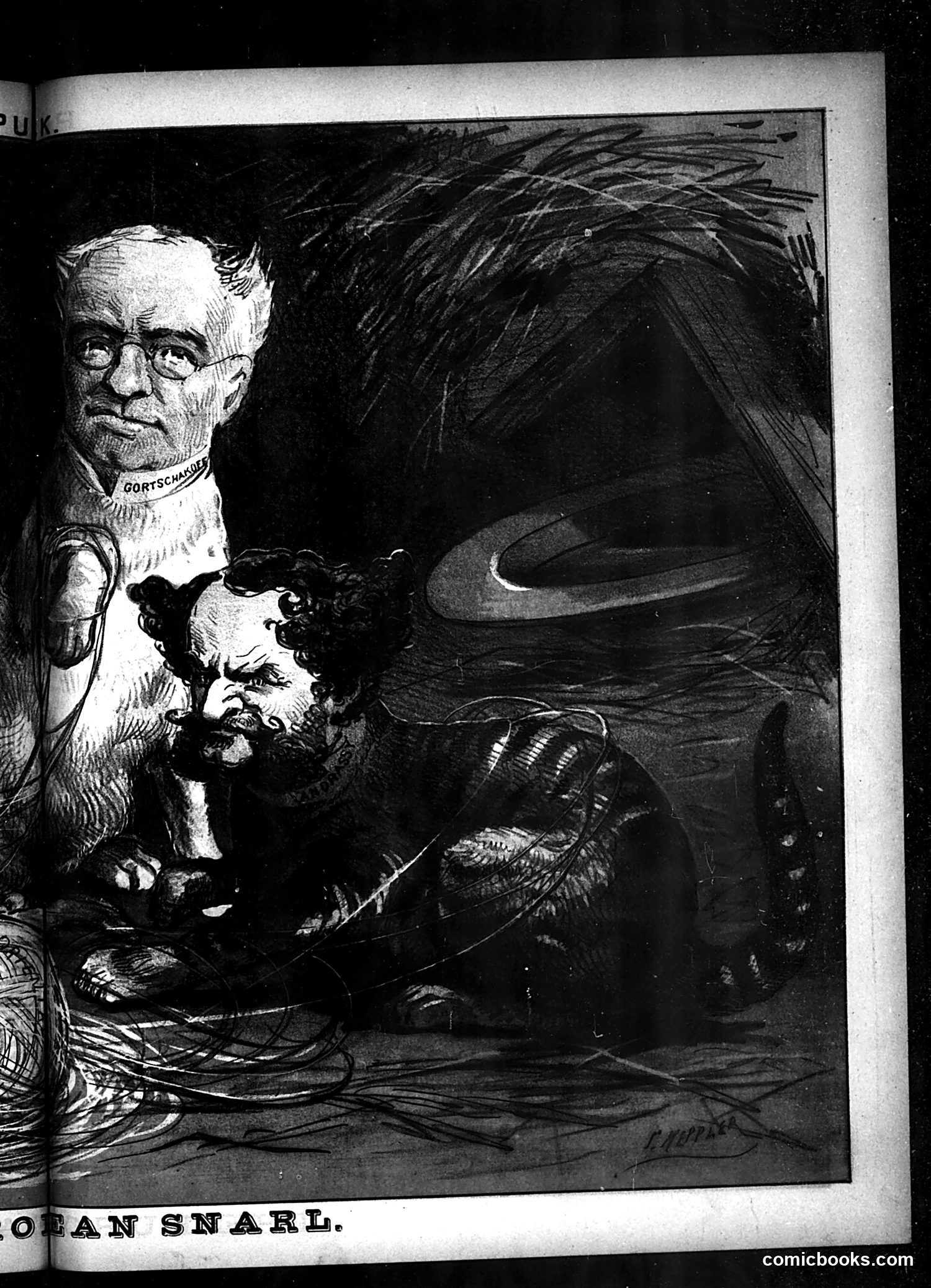
This Puck magazine cartoon depicts two figures: a bespectacled man labeled "GORTSCHAKOFF" (likely Russian statesman Aleksandr Gorchakov) and a bearded man beside him. They appear to be observing or reacting to a dark, dramatic scene on the right—possibly representing a shadowy threat or turbulent situation. The satire likely comments on Russian foreign policy or diplomatic tensions of the era when this was published. The dramatic, shadowy imagery suggests danger or uncertainty, while the two figures' expressions indicate concern or complicity. Without the publication date visible, the specific political crisis referenced remains unclear, but the cartoon appears to critique Russian imperial ambitions or diplomatic maneuvering during a period of international tension.
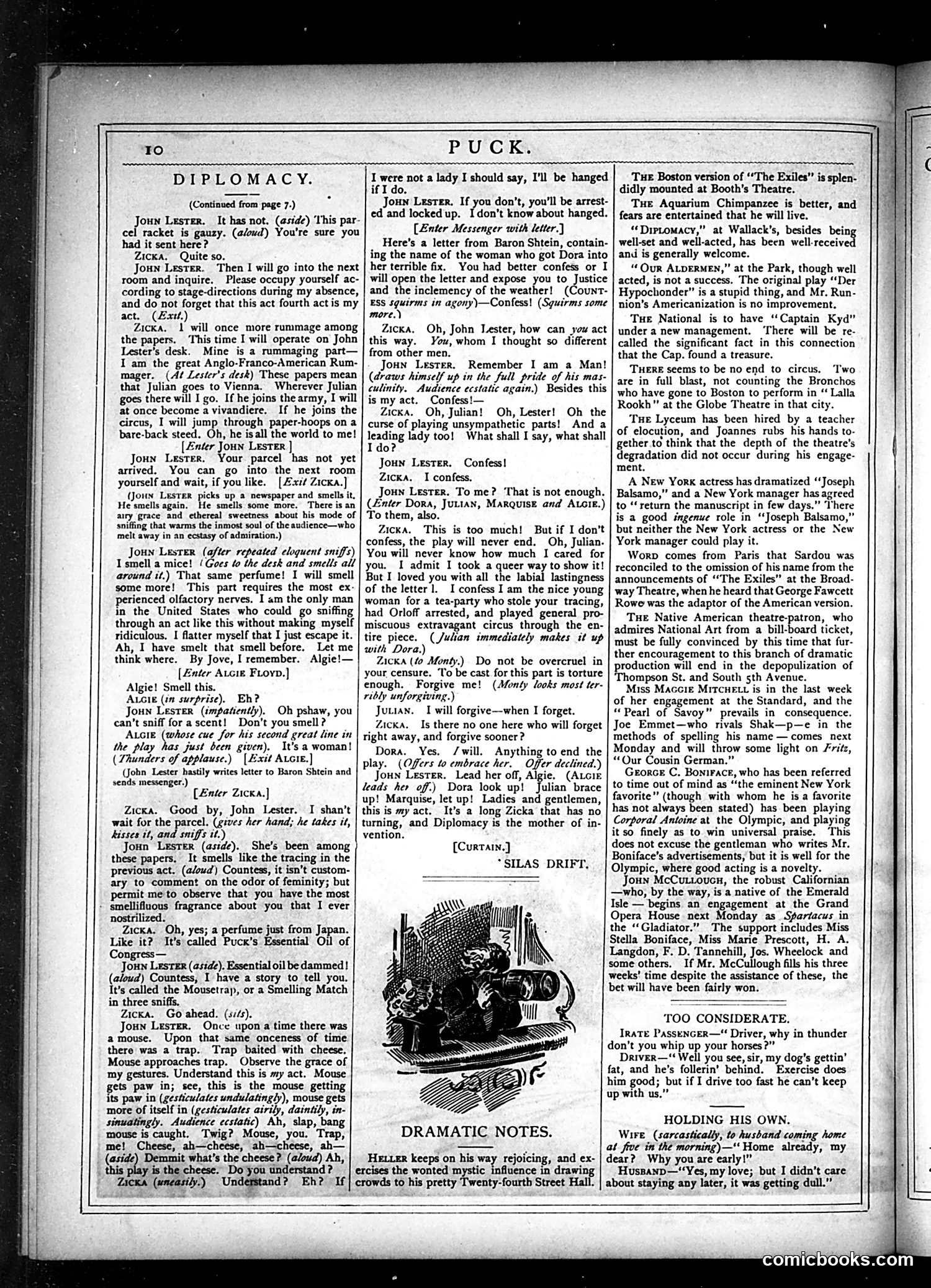
This page from *Puck* contains a satirical play script titled "Diplomacy" (continued from a previous page). The humor centers on a romantic entanglement: character John Lester has carelessly revealed confidential information about a woman named Dora to Baron Stein, creating diplomatic complications. The satire mocks social pretense and male foolishness—Lester must navigate increasingly absurd excuses and confessions to manage the scandal. The dialogue emphasizes how one indiscretion spirals into elaborate cover-ups, a common theme in Victorian-era farce. The right column contains theater reviews and notes about contemporary Broadway productions, typical *Puck* content mixing theatrical criticism with gossip about actors and New York entertainment venues.
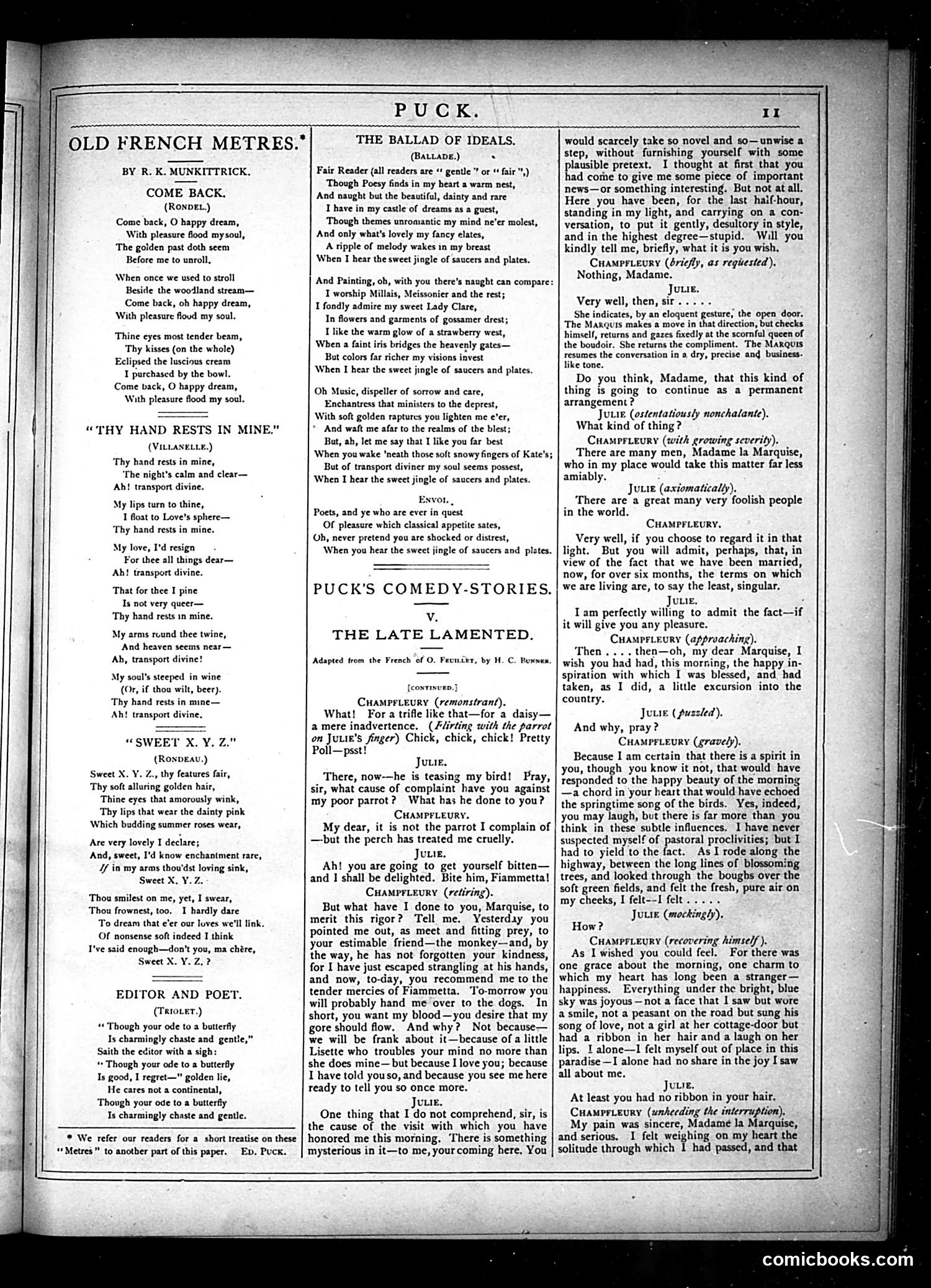
This page from *Puck* magazine (page 11) contains primarily **literary content rather than political cartoons**. The material includes: - **Poetry sections**: "Old French Metres" by R.K. Munkittrick, including poems titled "Come Back," "Thy Hand Rests in Mine," and "Sweet X.Y.Z." - **"Puck's Comedy-Stories"**: A dramatic dialogue titled "The Late Lamented," adapted from French by H.C. Bunner. The scene depicts a conflict between characters named Champfleury and Julie regarding a parrot, with discussion of romantic troubles and reconciliation. - **"Editor and Poet"**: A brief satirical poem about butterflies. The page is **not primarily satirical commentary** but rather showcases *Puck*'s literary and humorous fiction offerings. No specific political figures or events are referenced in the visible content.
This page from *Puck* contains serialized fiction rather than political satire or cartoons. The main text is "And We Took Her Home," credited as "By the Author of 'Lovel.'" The narrative appears to be a domestic comedy about a governess or companion named Miss Lisbon and tensions with a housekeeper named Mrs. Frant. The passage discusses keys, household management disputes, and social awkwardness among servants and their employers—typical Victorian-era domestic fiction themes. There is a decorative header illustration ("And We Took Her Home" in ornamental text) but no political cartoon or satirical commentary visible on this page. This represents *Puck's* lighter literary content rather than its signature political humor.
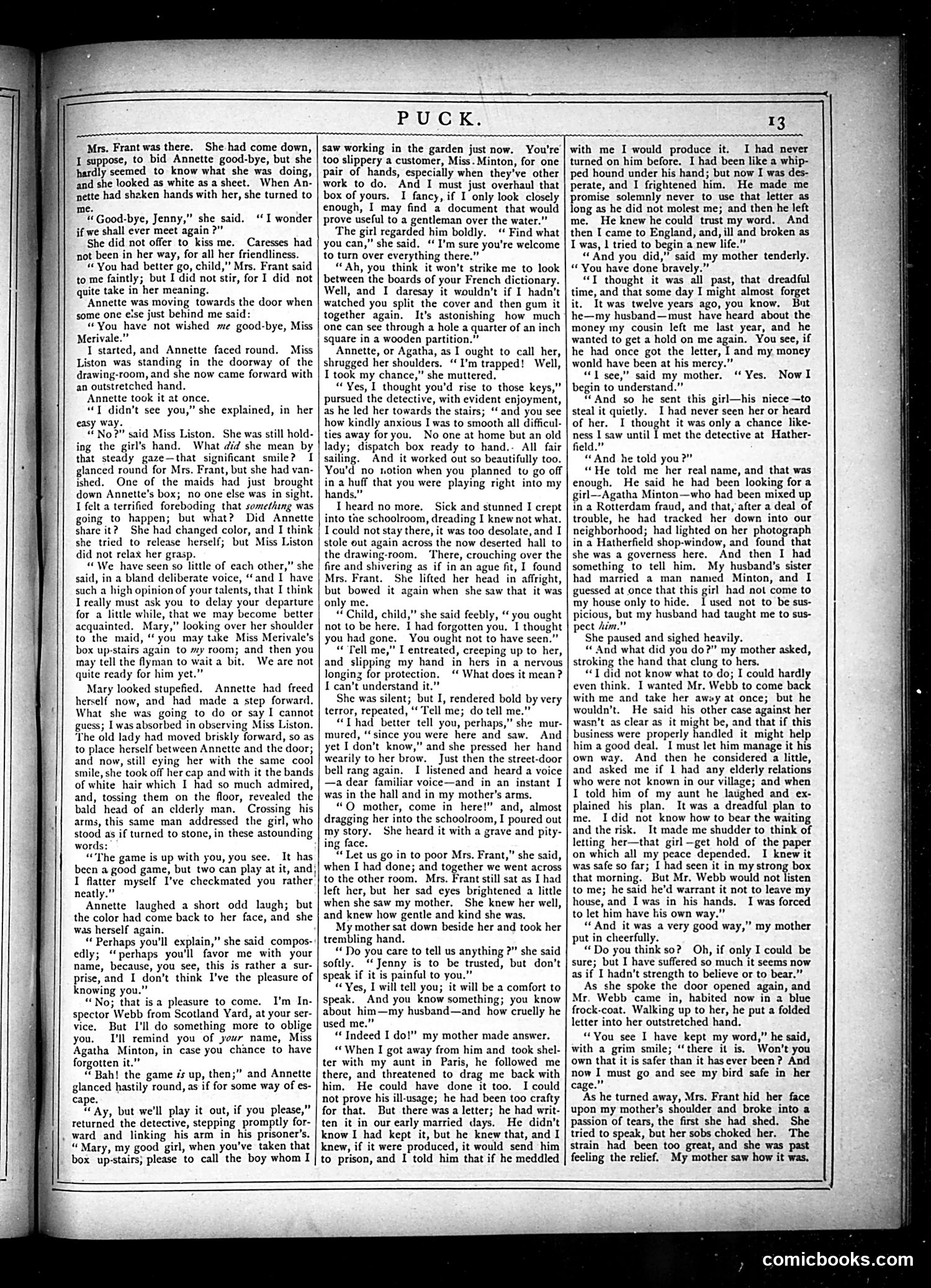
This page contains a serialized story titled "Puck" with no visible political cartoon. The narrative is a domestic drama involving characters named Mrs. Frant, Annette, Miss Minton, and Mr. Webb. The plot concerns a stolen letter that could expose marital infidelity—Mrs. Frant's husband has apparently conducted an affair, which she fears will be discovered. The story reflects Victorian-era social anxieties: marital scandal, class concerns (reference to a "Rotterdam fraud"), and the vulnerability of women's reputations. The emphasis on secrecy and the letter's power suggests the period's preoccupation with propriety and the devastating social consequences of moral transgression. This appears to be fiction rather than satire or political commentary.
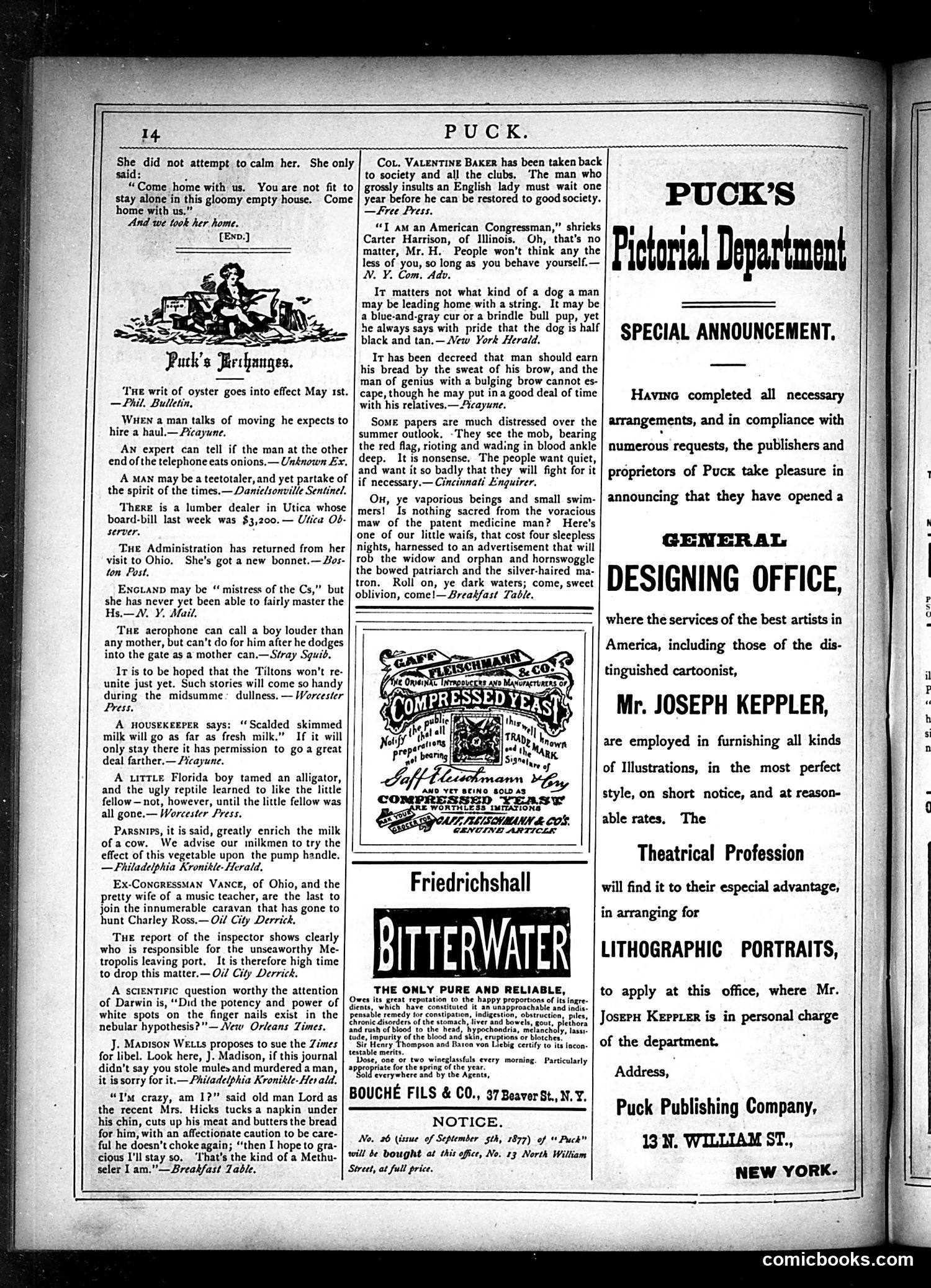
This page is primarily **advertising and announcements** rather than political cartoons. The main content includes: 1. **Puck's Birthplace** - A brief humorous column with short satirical anecdotes about contemporary social issues (women, dogs, administrators, etc.), typical of Puck's style. 2. **Friedrichshall Bitterwasser advertisement** - A German mineral water product promoted as "pure and reliable." 3. **Puck's Pictorial Department announcement** - Advertising the magazine's newly opened general designing office, highlighting cartoonist **Joseph Keppler** (likely the magazine's founder/chief artist) and offering illustration services to theatrical professionals and others at reasonable rates. 4. **Notice** - A business notice regarding office location. There are **no significant political cartoons** on this page—it functions as a house advertisement and miscellaneous content page.
This page is primarily **advertising and notices**, not political satire. The masthead reads "PUCK" (page 15), and the content consists entirely of commercial advertisements and publication notices typical of a magazine's back matter. Notable ads include: - **Allergy Portraits** (Union Square, NYC) - **Pachtmann & Moelich** (jewelry, watches, diamonds) - **NICOL The Tailor** (clothing) - **Vanity Fair Tobacco and Cigarettes** - **Warner Champagnes** (beverages) - Various printing and ink suppliers There's also a notice about "In Memoriam Brigham Young" and announcements for **Puck's Almanac for 1878**, plus notices about back issues and patent covers for filing Puck magazines. The page serves primarily as a revenue-generating advertising section rather than editorial content with political meaning.
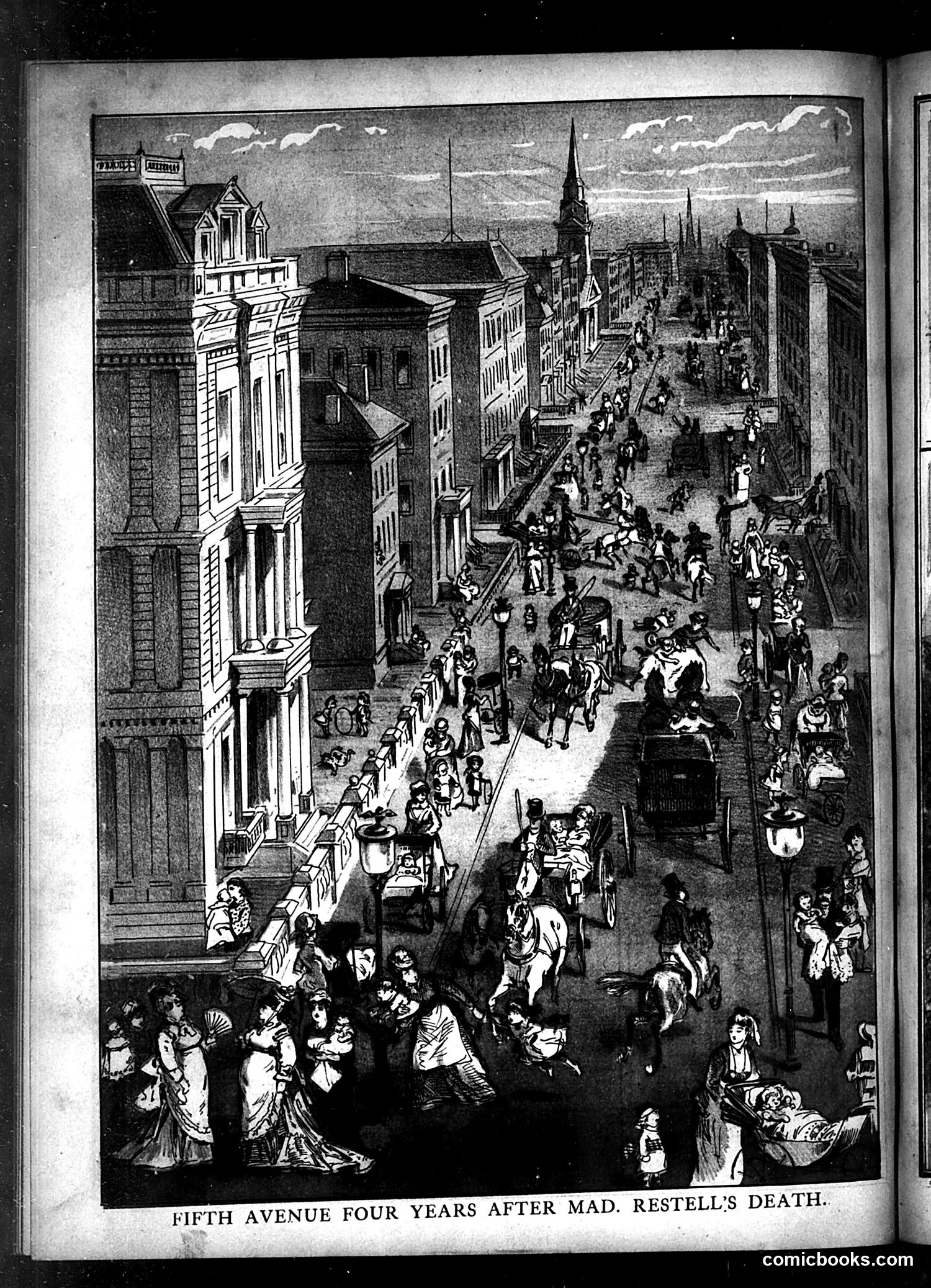
This engraving depicts a bustling New York City street scene on Fifth Avenue. The caption references "Mad. Restell's death," likely referring to Madame Ann Lohman (known as "Madame Restell"), a notorious 19th-century abortionist and purveyor of contraceptive devices who died in 1878. The cartoon appears to satirize the continued urban activity and commerce on Fifth Avenue following her death, suggesting that despite the removal of this infamous figure, the street—and presumably the illicit activities associated with it—continued thriving. The crowded scene with carriages, pedestrians, and street life implies that Restell's absence changed little about Fifth Avenue's character or the demand for such services in the city.