
A complete issue · 16 pages · 1877
Puck — April 1877
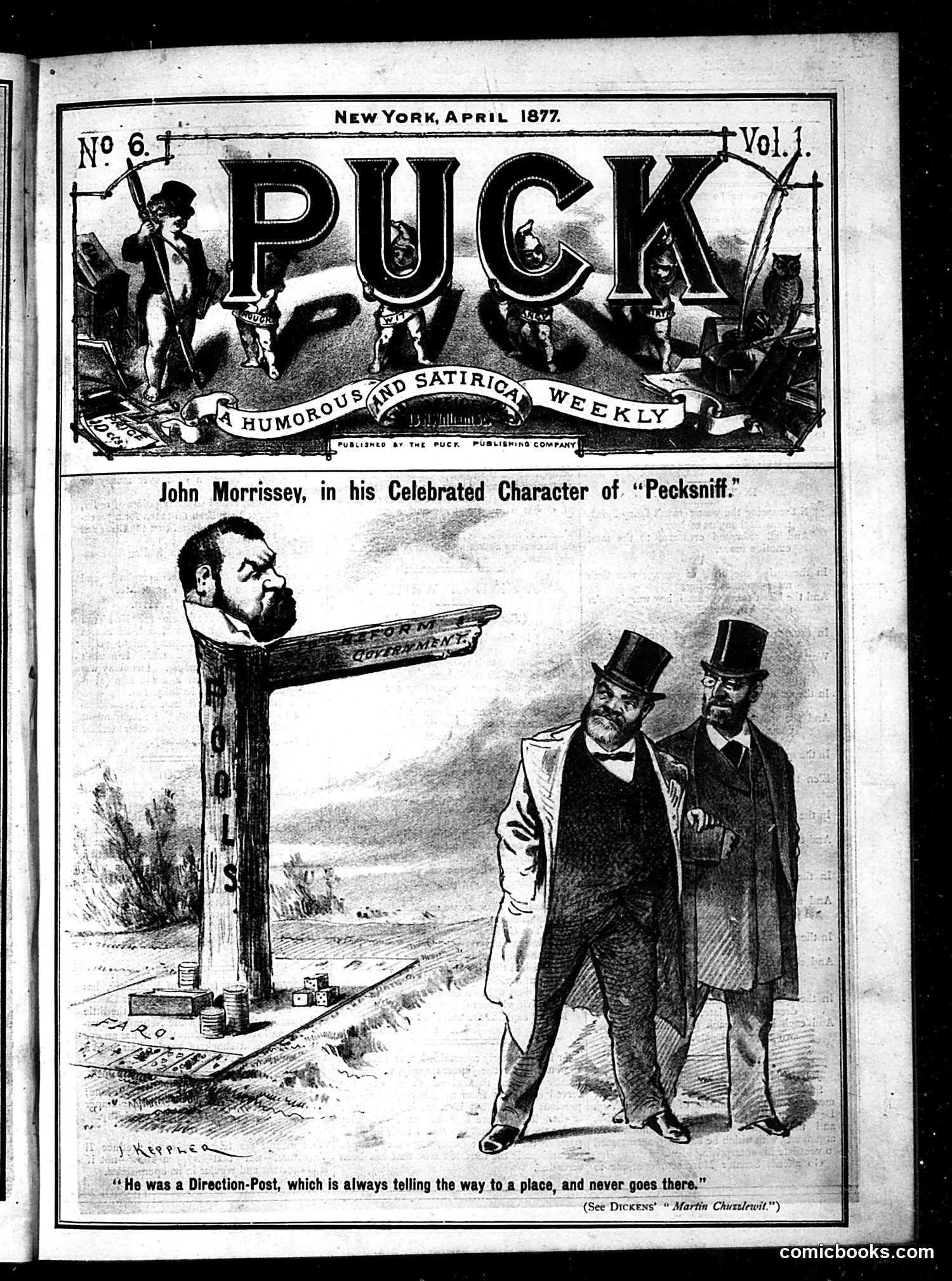
This April 1877 cartoon satirizes John Morrissey, a notorious politician and boxer, depicted as a "Direction-Post" — a signpost pointing the way somewhere but never actually going there himself. The caption, referencing Dickens's "Martin Chuzzlewit," suggests Morrissey was all talk and no action regarding government reform. Two well-dressed gentlemen consult the signpost labeled "Government Reform," seeking direction. The joke: Morrissey publicly advocated reform while apparently doing nothing substantive to achieve it. The caricature uses the metaphor of a useless signpost to mock his political posturing and empty promises during the Reconstruction era. The visual pun equates the politician with an inanimate object—a cutting critique of political hypocrisy common in Gilded Age satire.
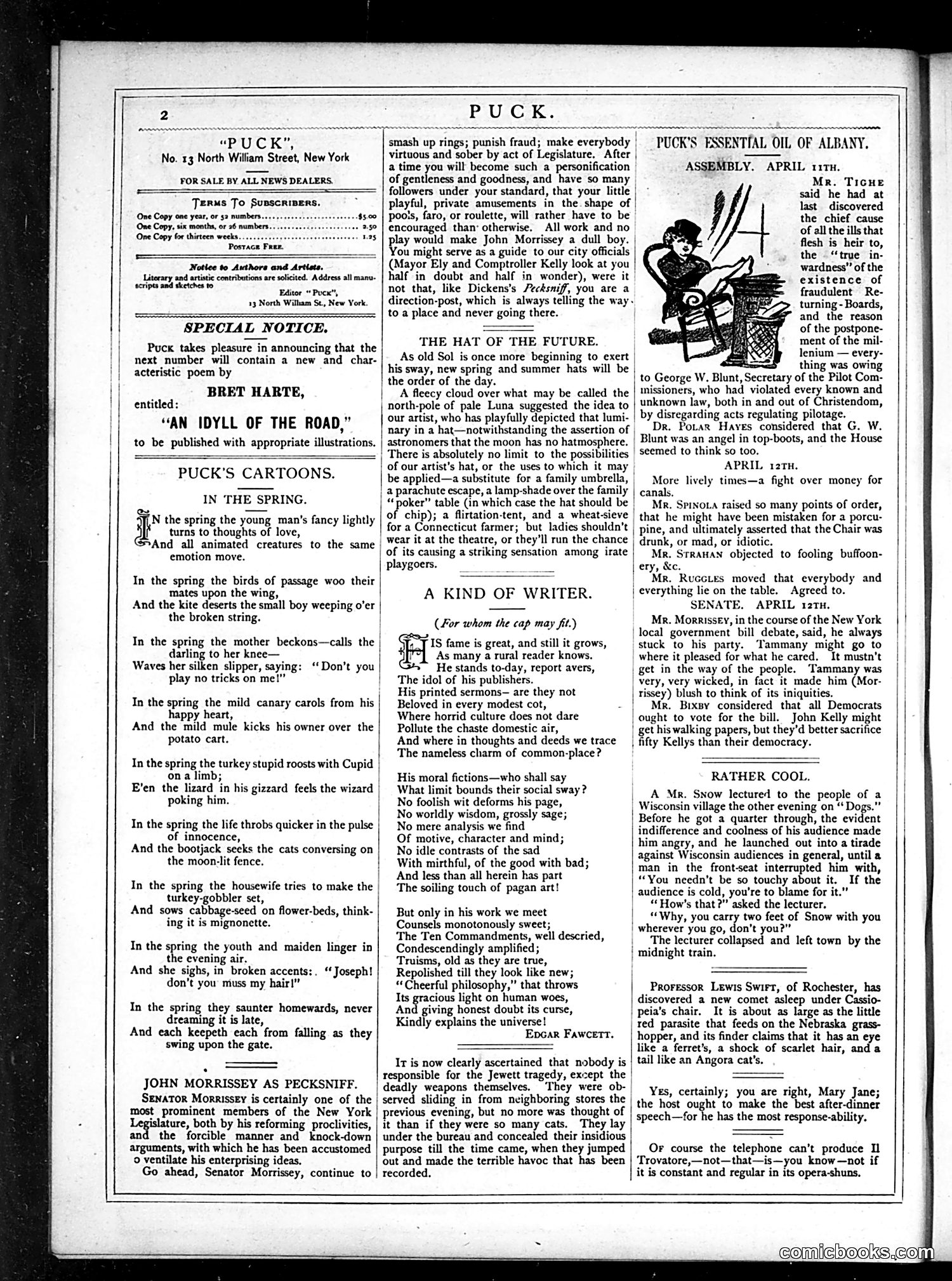
This page contains **no political cartoons**, despite being from Puck's satirical magazine. Instead, it features: 1. **"An Idyll of the Road"** by Bret Harte—a literary poem about spring romance, formatted as "Puck's Cartoons" but actually verse with decorative illustrations. 2. **"A Kind of Writer"** section—satirical commentary on publishers and writers, mocking their pretensions and "pagan art." 3. **"Rather Cool"** anecdote—humorously describing a lecturer at Wisconsin interrupted by an indifferent student who leaves by midnight train. 4. **Senate notes** (bottom)—brief commentary on Senator Morrissey and Democratic politics, appearing to reference a New York legislative debate. The page is primarily **literary content and brief political commentary** rather than visual satire.
This page contains primarily **text content rather than political cartoons**—it's a humor and commentary section titled "Puckerings." The pieces mock various social situations and public figures of the era through short satirical anecdotes. Notable targets include: - **Grass widows** (women whose husbands are absent) - **Church etiquette violations** (tobacco spitting) - **Police conduct** (a story about an officer arresting someone) - **Rev. Wm. McCaffrey**, described as a clergyman "whose forbearance is exhausted" regarding human error The humor relies on period-specific social anxieties: class behavior, gender roles, and authority figures. Without more visual cartoons present on this page, the satirical impact depends entirely on the written jokes rather than caricature or illustration.
This page from *Puck* contains epitaphs and satirical commentary rather than political cartoons. "Some New Epitaphs" are mock tombstones commemorating various figures—Mary Hatch, Marian Bell, Horace Munn, Martha Briggs, and others—with humorous verses about their deaths or lives. The second section, "Ethereal Mildness Come Again!", satirizes spring's arrival and social follies. It mocks pretentious behaviors like using "pistachio-nuts" as affectations, references theatrical performances, and comments on fashionable society's absurdities. The "Popular Mistakes" column debunks common misconceptions about Lent, newspapers, churches, and other social institutions. The tone is lighthearted social satire targeting upper-class pretension and public gullibility rather than specific political figures or events.
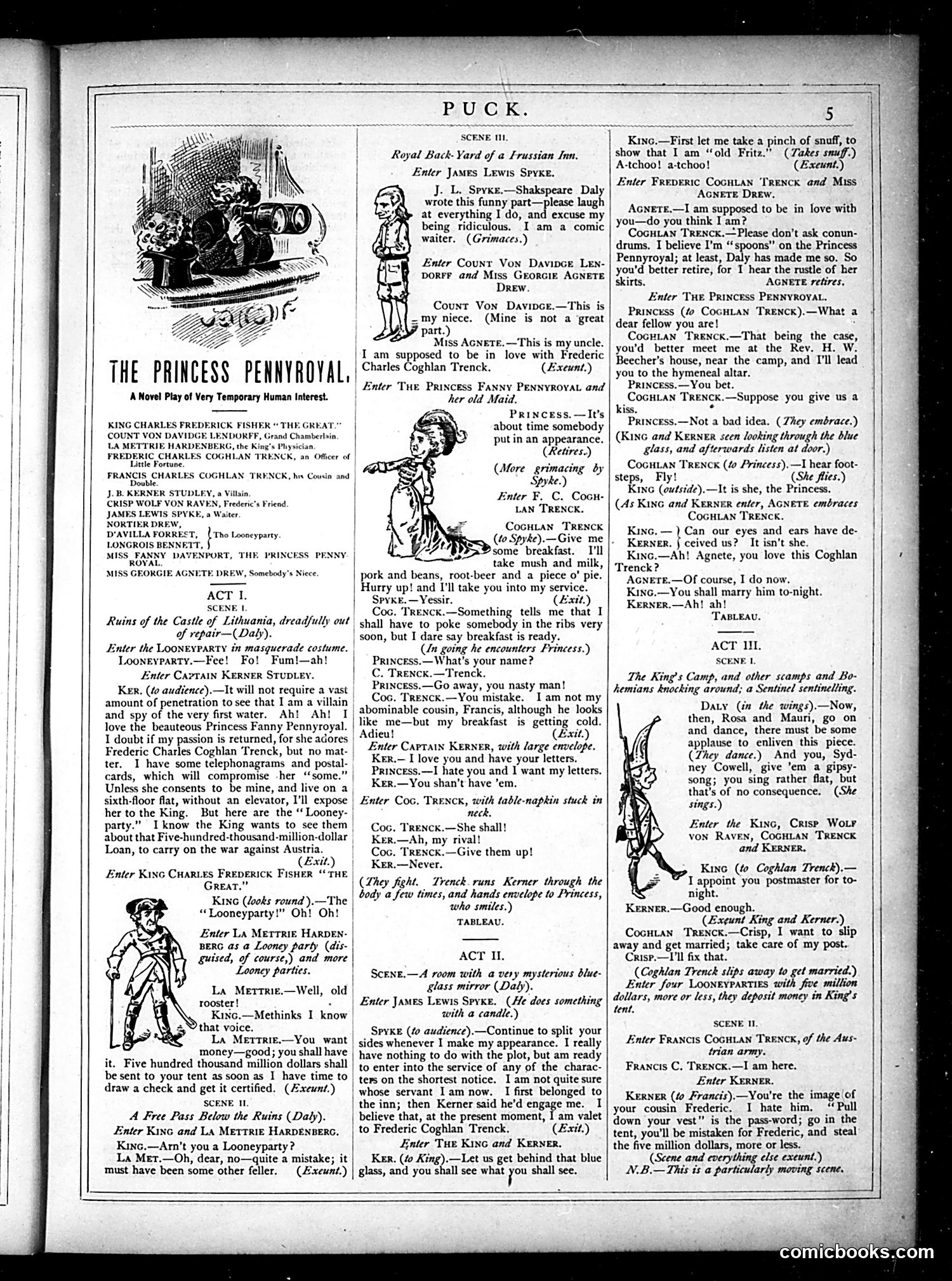
This page presents a theatrical script titled "The Princess Pennyroyal: A Novel Play of Very Temporary Human Interest," credited to J.L. Spyke as a comedy piece. The cartoon illustrations show characters in Victorian-era costume, appearing to depict a satirical play about royalty and social pretension. The script includes dialogue mocking aristocratic behavior, with characters like "King Charles Frederick Fisher," "La Mettrie," and various nobles engaging in absurd situations—including references to money troubles and marital arrangements. The satire appears to target upper-class vanity and the artificiality of nobility. Without specific historical context identifying the figures or current events referenced, the piece seems a general mockery of pretentious aristocratic society rather than commentary on specific individuals or contemporary political events.
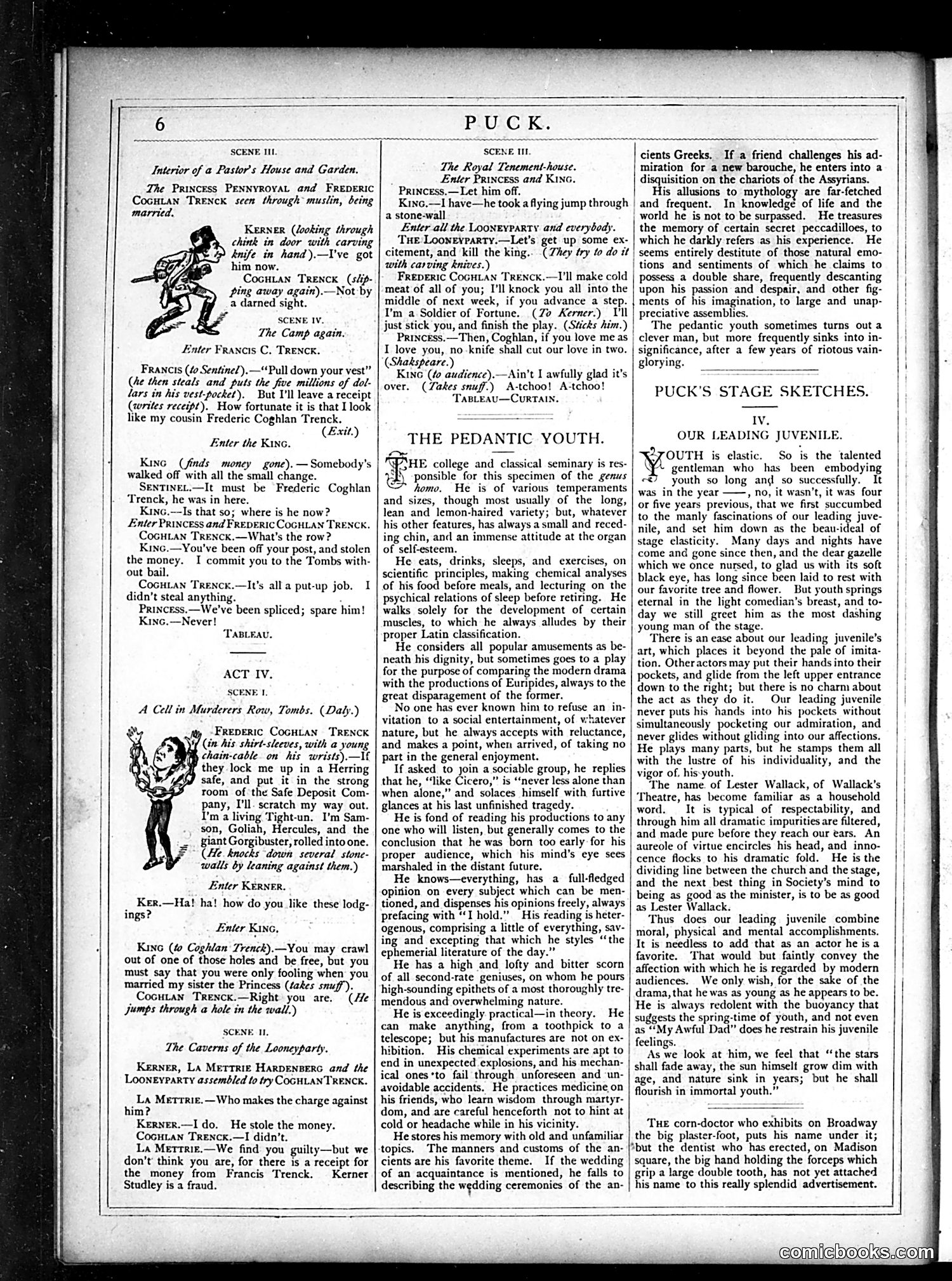
This page from *Puck* contains theatrical content rather than political satire. It includes stage sketches and dramatic scenes, primarily featuring characters named Coghlan, Trench, and a King in various comedic situations involving money theft, marital disputes, and military fortune-seeking. The main illustrated sketch shows a figure in elaborate costume amid what appears to be a tomb or burial setting, suggesting a theatrical production scene. The bulk of the page is devoted to "The Pedantic Youth," a character sketch describing a college student type—intellectual, pedantic, opinionated, and impractical. This appears to be social satire targeting educated young men who are theoretically knowledgeable but practically incompetent, a recognizable type *Puck* frequently mocked. The content is primarily entertainment-focused rather than explicitly political.
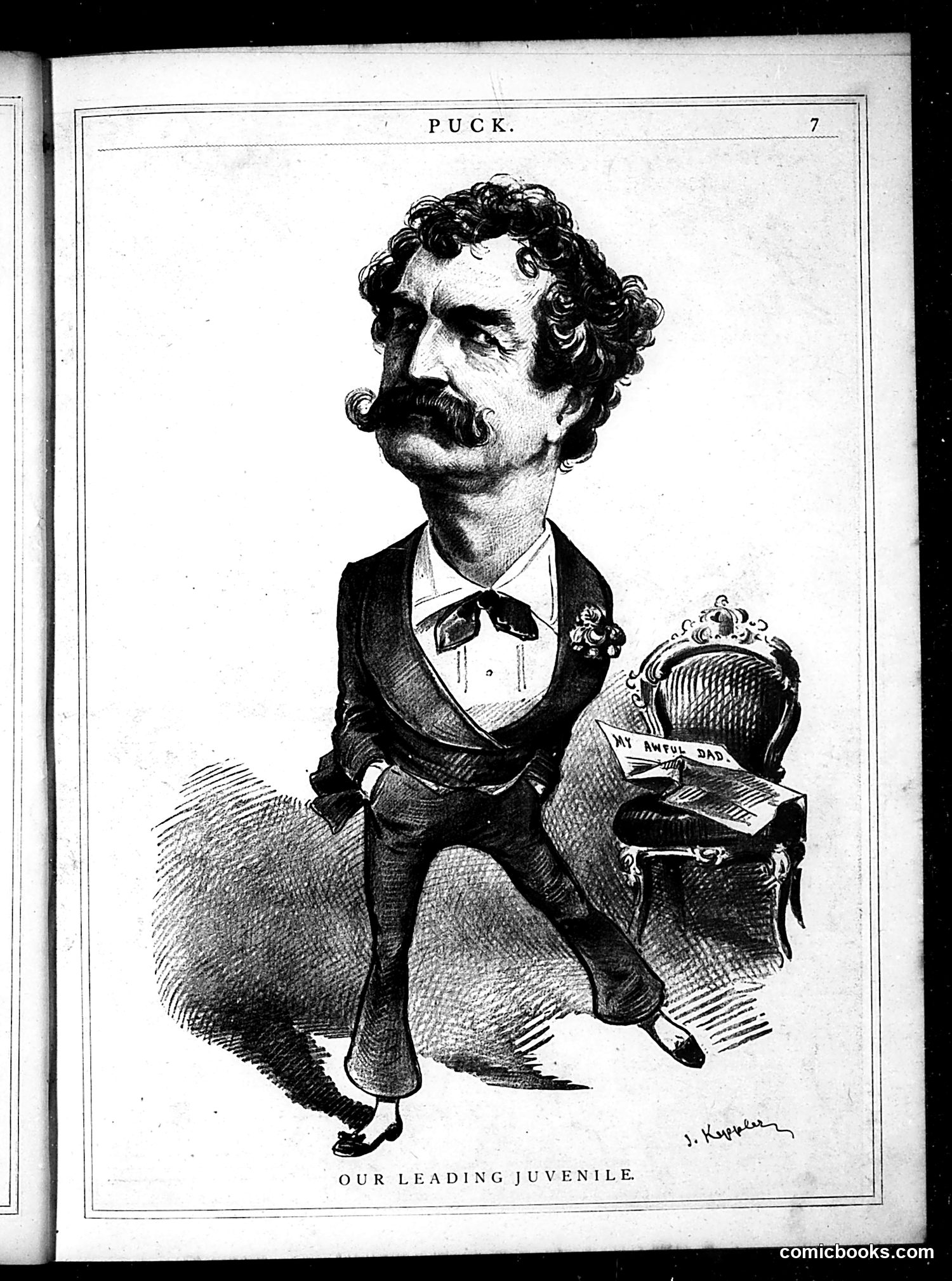
This is a caricature from *Puck* magazine (page 7) depicting a man in formal evening wear holding what appears to be a book or manuscript labeled "An Awful Bad Boy" or similar. The title "Our Leading Juvenile" is satirical—it mockingly calls an adult man a "juvenile," likely referencing an actor known for playing youthful roles despite his mature appearance. The exaggerated features—particularly the prominent mustache and nose—are characteristic of 19th-century political caricature. The formal attire and the manuscript suggest this satirizes either an actor's career choices or perhaps a literary figure's work. Without additional context about *Puck*'s publication date or identifying information visible on the page, the specific subject remains unclear, though the satire targets someone prominent in theater or literature of that era.
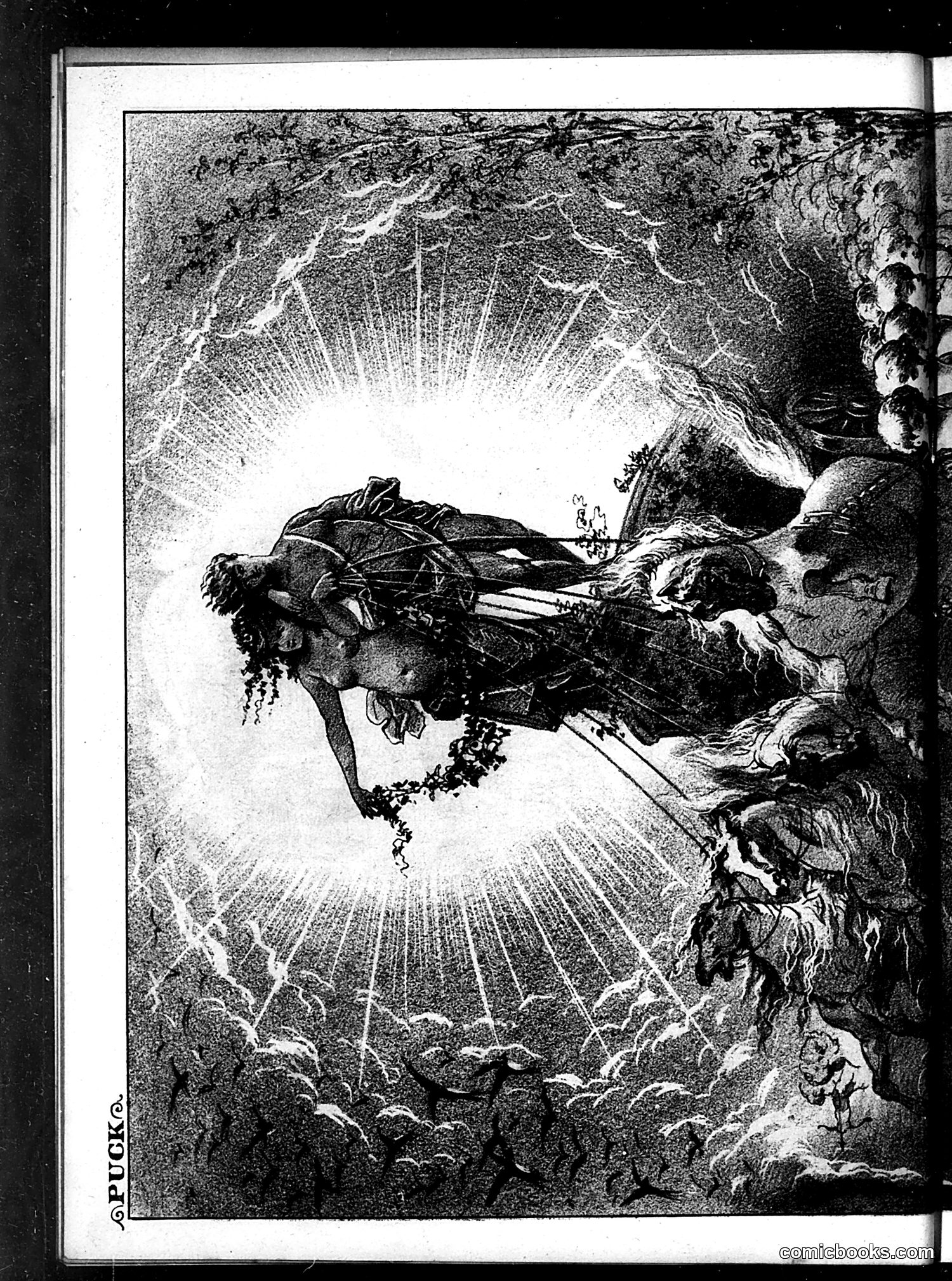
This Puck illustration depicts a classical allegorical scene with a chariot ascending through radiant light toward the heavens. The composition suggests apotheosis—the elevation of a figure to divine or heroic status. On the right side, earthly figures (appearing to be common people or soldiers) gaze upward in reverence. The chariot's ornate design and the figure's elaborate dress suggest this represents someone of great importance being immortalized or canonized. Without clearer identifying details visible in the image or readable text, I cannot definitively identify which specific historical figure or event this commemorates. The satirical intent likely lies in mocking either excessive hero-worship or the glorification of a particular political or military leader through exaggerated religious/mythological imagery—a common Puck strategy. The signature "©PUCK'S" appears at bottom left.
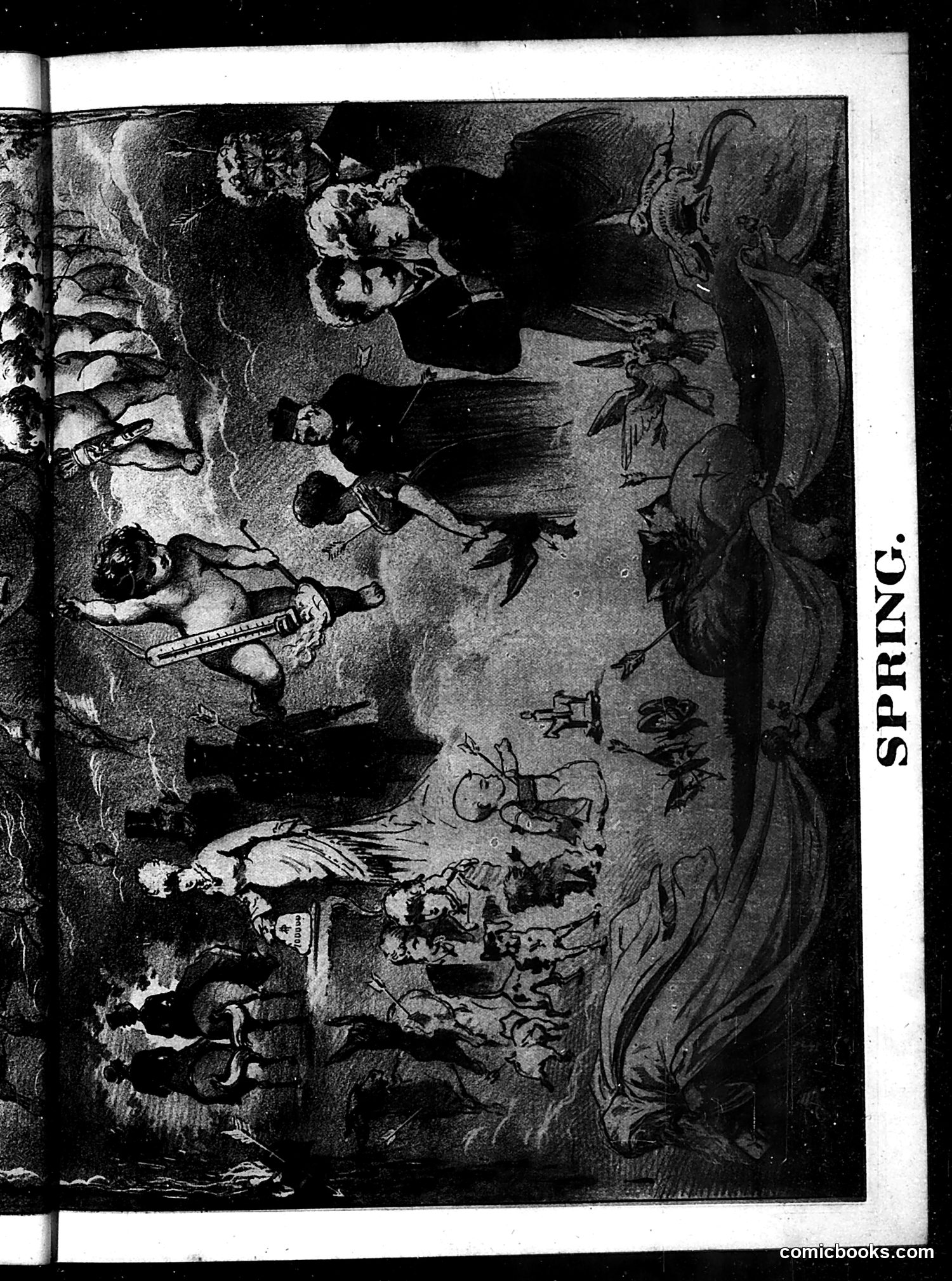
This page appears to be titled "SPRING" and shows a satirical illustration in the style typical of Puck magazine's political cartoons. The image depicts multiple human figures in various states of activity and dress scattered across a landscape, with what appears to be allegorical or personified elements (possibly including nature spirits or classical figures on the right side). However, the image quality and OCR limitations make it difficult to identify specific political figures or determine the precise satirical message. The composition suggests commentary on seasonal themes or social conditions, but without clearer details or additional text, I cannot confidently explain which specific historical events, political figures, or social issues this cartoon addresses. The style and presentation are consistent with Puck's tradition of biting social satire, but the specific targets remain unclear from this reproduction.
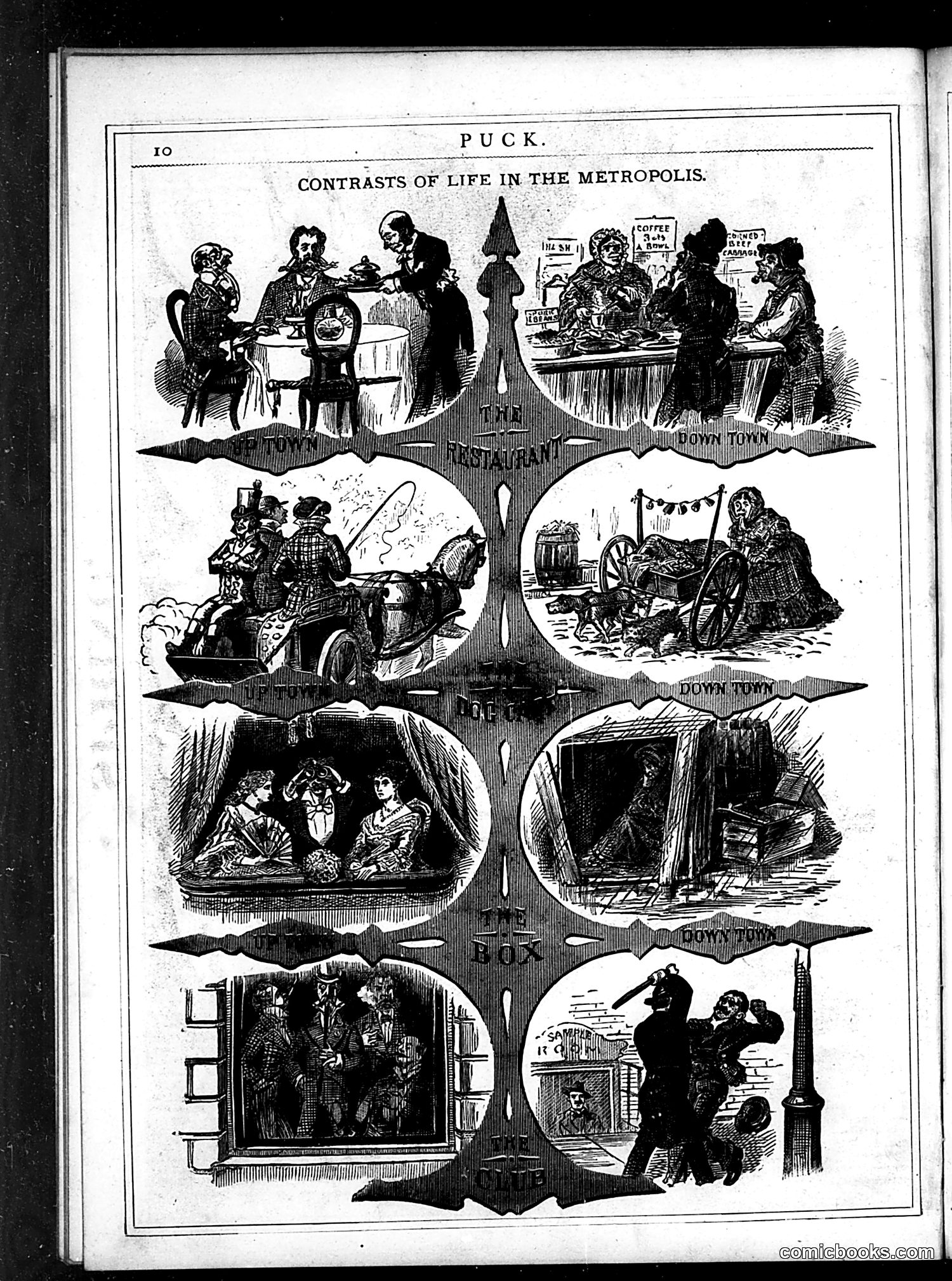
This satirical illustration compares wealthy and poor urban experiences in Victorian-era cities. The top section shows affluent diners at a fancy restaurant with fine service. Below that are scenes labeled "Down Town" depicting working-class and impoverished life—people in cramped tenements, rough street conditions, and crowded public spaces like theaters or entertainment venues. The central dividing structure resembles a cross or church spire, possibly suggesting moral judgment on these stark inequalities. The contrast between refined "up-town" dining culture and gritty "down-town" survival illustrates the severe class divisions of metropolitan life that Puck regularly criticized. This was typical 19th-century social commentary on urban poverty alongside extreme wealth.
This page contains **no political cartoon**. Instead, it features two distinct literary pieces: 1. **"What Ailed the Ghost"** — The conclusion of a serialized English short story about a character named Hamlet experiencing supernatural disturbances at an Indian country theater, involving his wives, babies, and various ghostly phenomena. 2. **"Two Knaves and a Queen"** — A continuation of another English story (Chapter IV), following characters named Hugh and Mr. Fox, depicting their interactions with a young woman near a beach. Below these is **"Science vs. Wages and Drinks,"** a dialogue between a university professor and workers debating the merits of intellectual pursuits versus practical labor concerns. This page is primarily **literary content** rather than satirical political cartooning, which was Puck magazine's typical focus.
This page is primarily **text content** — a serialized short story titled "PUCK" (visible at top). The narrative describes rural/country life, with characters including Mr. Fox, Hugh (a laborer), Miss Blake, and various gentry figures like Sir Humphrey Clinker and Tom Reynolds. The story appears to be social satire about **class distinctions** in English countryside society — depicting interactions between working-class characters (Hugh, laborers) and the upper-class landowners who employ them. There's romantic/sentimental tension involving Miss Blake and Hugh's unrequited affections. **No visible political cartoon** appears on this page — it's a dense text column typical of Puck's mixed advertising and serialized fiction format. The satire operates through narrative characterization rather than visual caricature.
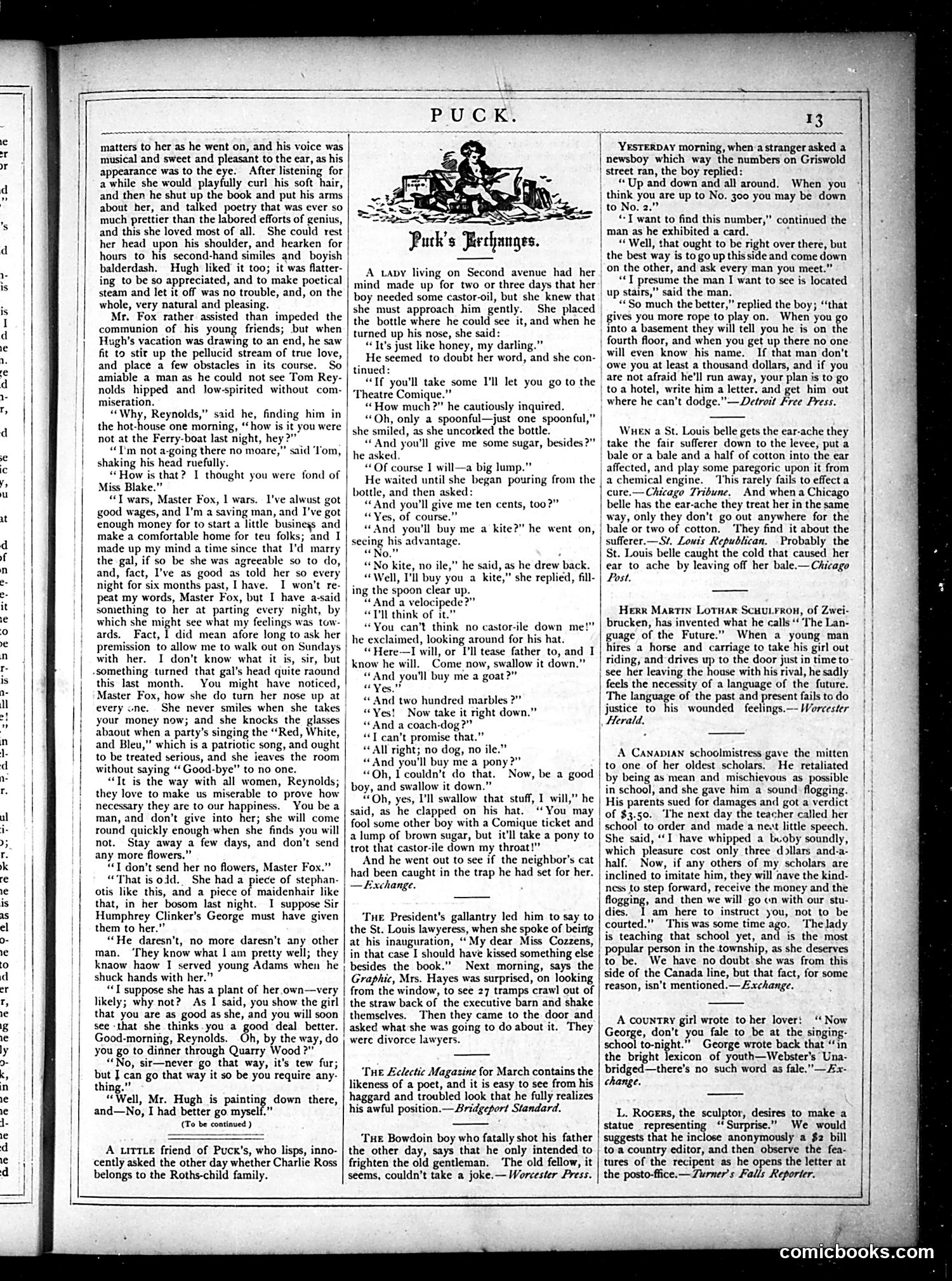
This page is primarily **textual content** rather than political cartoons. "Puck's Exchanges" appears to be a humor column featuring brief anecdotes and witticisms. The content includes: - A story about a lady and castor oil (a common laxative), playing on social embarrassment around discussing bodily functions - A dialogue about buying a kite, poking fun at haggling and negotiation - References to St. Louis lawyers and "inauguration" (unclear which event) - Various brief jokes about domestic life and social interactions The satire targets **everyday middle-class social situations**: pretentious neighbors, cheap husbands, marital tension, and bodily humor. There are no identifiable political figures or major events referenced on this visible portion. It's primarily **social satire** of common American domestic life rather than political commentary.
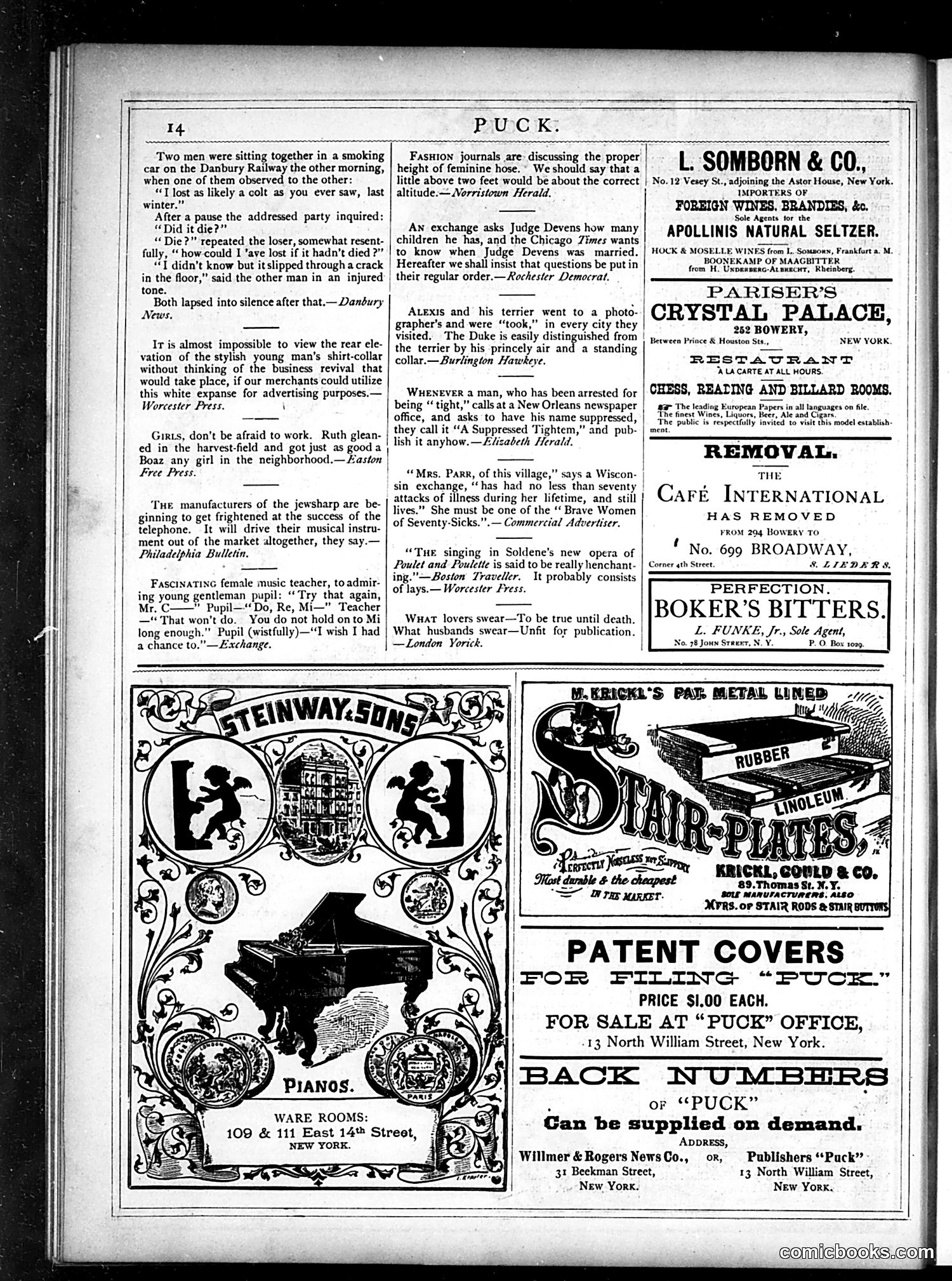
This page is primarily **advertising and notices**, not political satire. The main visual element is a large ornamental advertisement for **Steinway & Sons pianos**, featuring decorative flourishes and silhouettes of cherubs/putti flanking a grand piano. The text content consists of brief humorous anecdotes and social commentary typical of Puck's satirical style—including jokes about marriage, work, and social conventions—rather than targeted political cartoons. Supporting advertisements promote various products: foreign wines, natural seltzer, a crystal palace restaurant, chess/billiard rooms, and a relocated café. The page demonstrates how 19th-century magazines integrated editorial humor with commercial advertising, with no clear separation between content and paid notices.
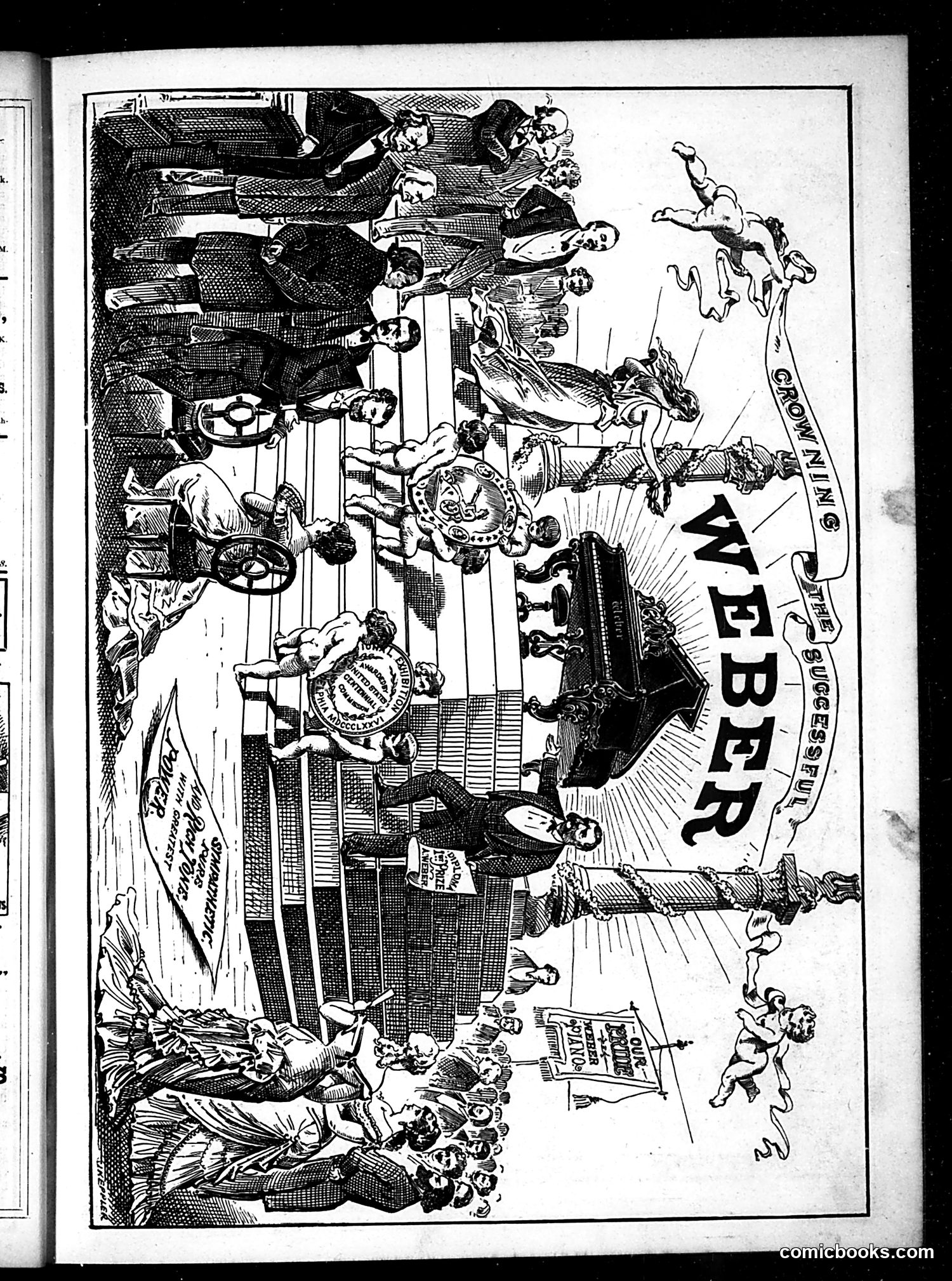
The image shows a satirical illustration titled "WEB**ER**" (text partially visible), depicting what appears to be a central figure surrounded by multiple characters in a crowded scene. The composition suggests political or social commentary typical of Puck magazine's style. However, **I cannot reliably identify the specific historical figures or political situation referenced** without clearer text or additional context. The OCR text provided contains only fragmented words that don't clarify the cartoon's subject, date, or targets. To properly explain this satire to modern readers, I would need: the publication date, complete visible text, or additional source information identifying the central figure and the historical event being mocked.
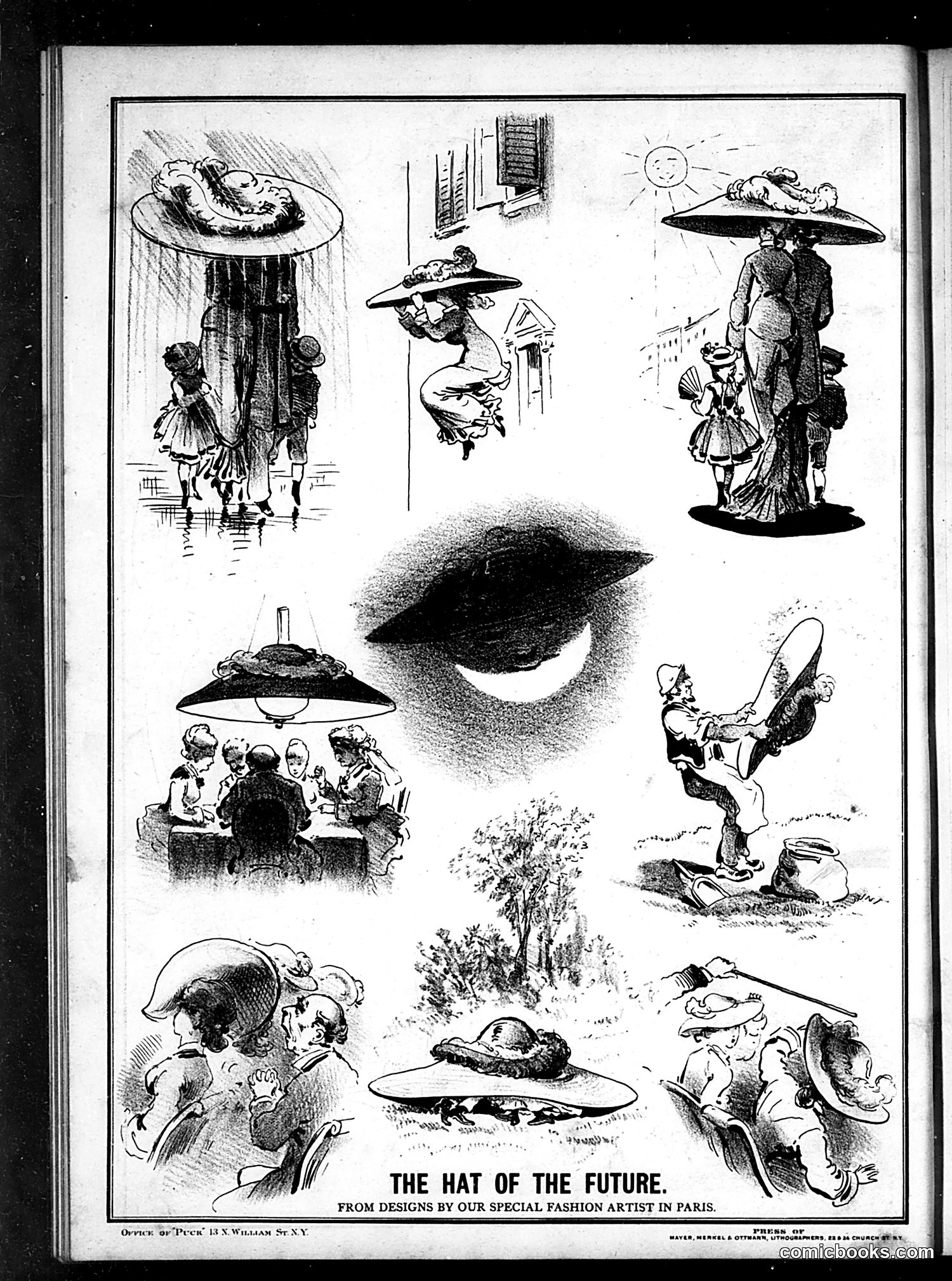
This page satirizes absurdly impractical hat fashions allegedly designed by Parisian fashion designers. The central large dark shape appears to be the "future hat" being mocked. The surrounding vignettes show ridiculous scenarios resulting from these oversized, unwieldy hat designs: women struggling to fit through doorways, people unable to sit at tables, figures being blown away or toppled by wind, and children dwarfed by enormous headwear. The satire targets the fashion industry's tendency to promote increasingly extreme styles, particularly the notoriously large hats popular in early 20th-century women's fashion. By depicting the practical impossibilities and absurd consequences, Puck ridicules both haute couture designers and society women who blindly follow such trends, regardless of functionality or common sense.