A complete issue · 88 pages · 1938
Judge — January 1938
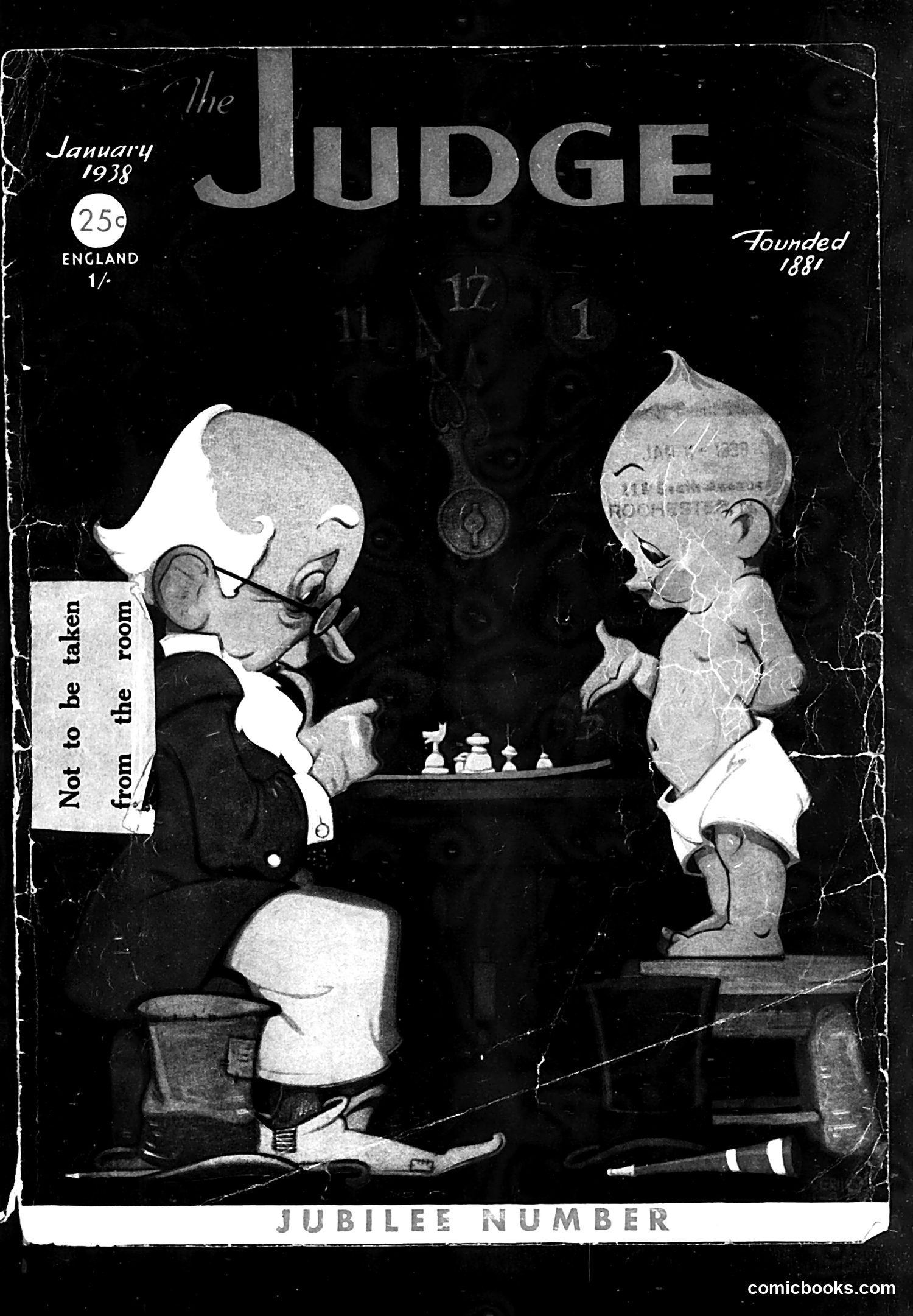
# Judge Magazine, January 1938 Analysis This is a "Jubilee Number" cover featuring two caricatured figures playing chess. The left figure wears a suit and has exaggerated features; the right figure appears bald with distinctive characteristics. The caption "Not to be taken from the room" suggests this is a reference to something restricted or controlled. The chess game symbolizes strategic political maneuvering during a tense period. Given the January 1938 date, this likely comments on international politics of that era—possibly referencing diplomatic tensions or negotiations between world leaders. The chess metaphor indicates the cartoonist views political dealings as calculated games. However, without clearer identification of the specific figures or events, the precise political target remains uncertain. The satire appears to criticize how political leaders engage in strategic posturing during international crises.
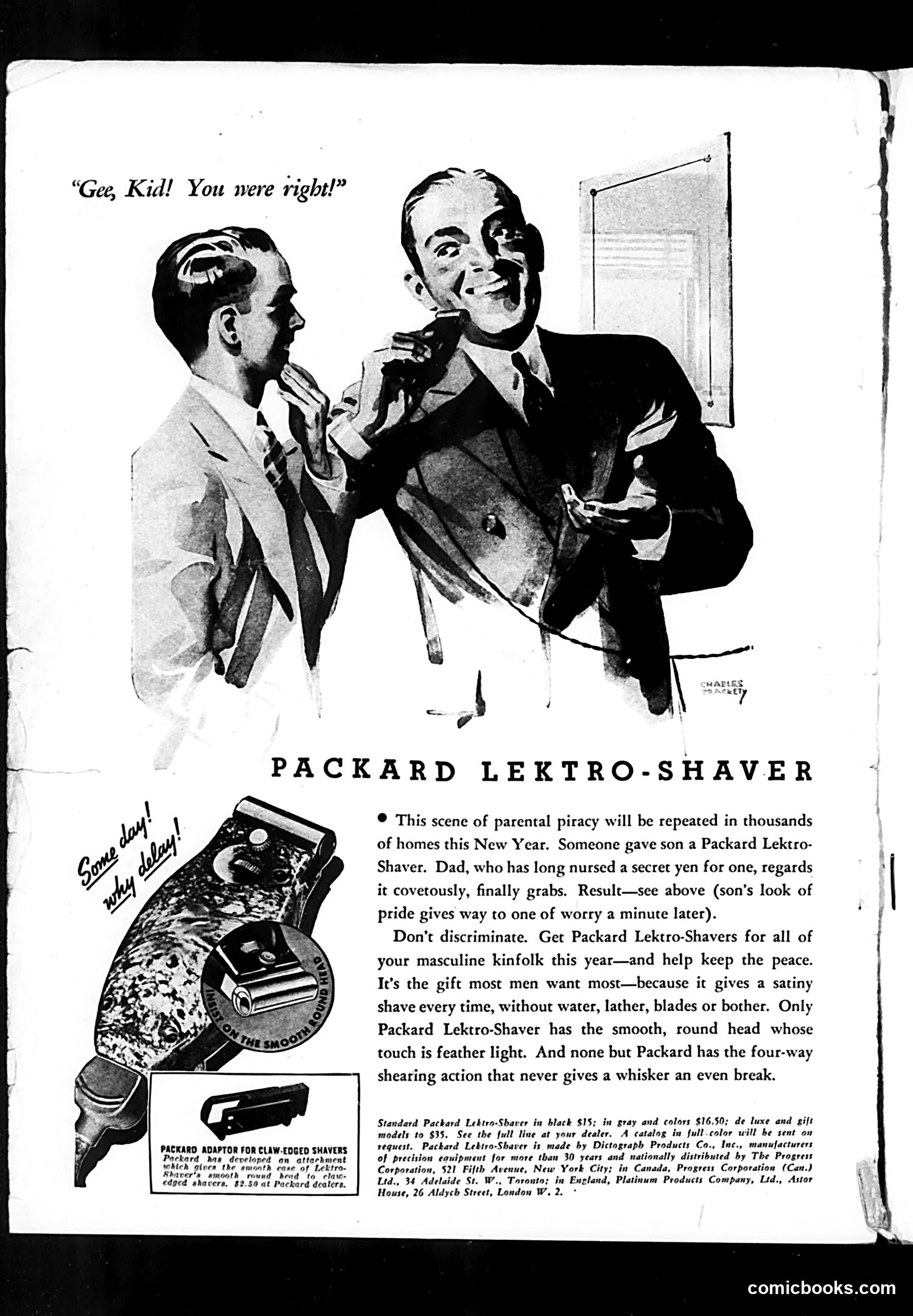
# Packard Lektro-Shaver Advertisement This is primarily a **commercial advertisement**, not political satire. It depicts a father and son in a humorous domestic scene where the father has secretly taken his son's new Packard Lektro-Shaver electric razor—a New Year's gift. The caption "Gee, Kid! You were right!" suggests the father, coveting the product, has finally experienced its superior shave. The humor appeals to masculine pride and domestic rivalry rather than social commentary. The ad emphasizes the razor's features: no water, lather, or blades needed, and a "four-way shearing action." The accompanying text frames gift-giving as conflict prevention ("help keep the peace"), positioning the electric shaver as the ideal masculine gift to prevent exactly this scenario of paternal jealousy.
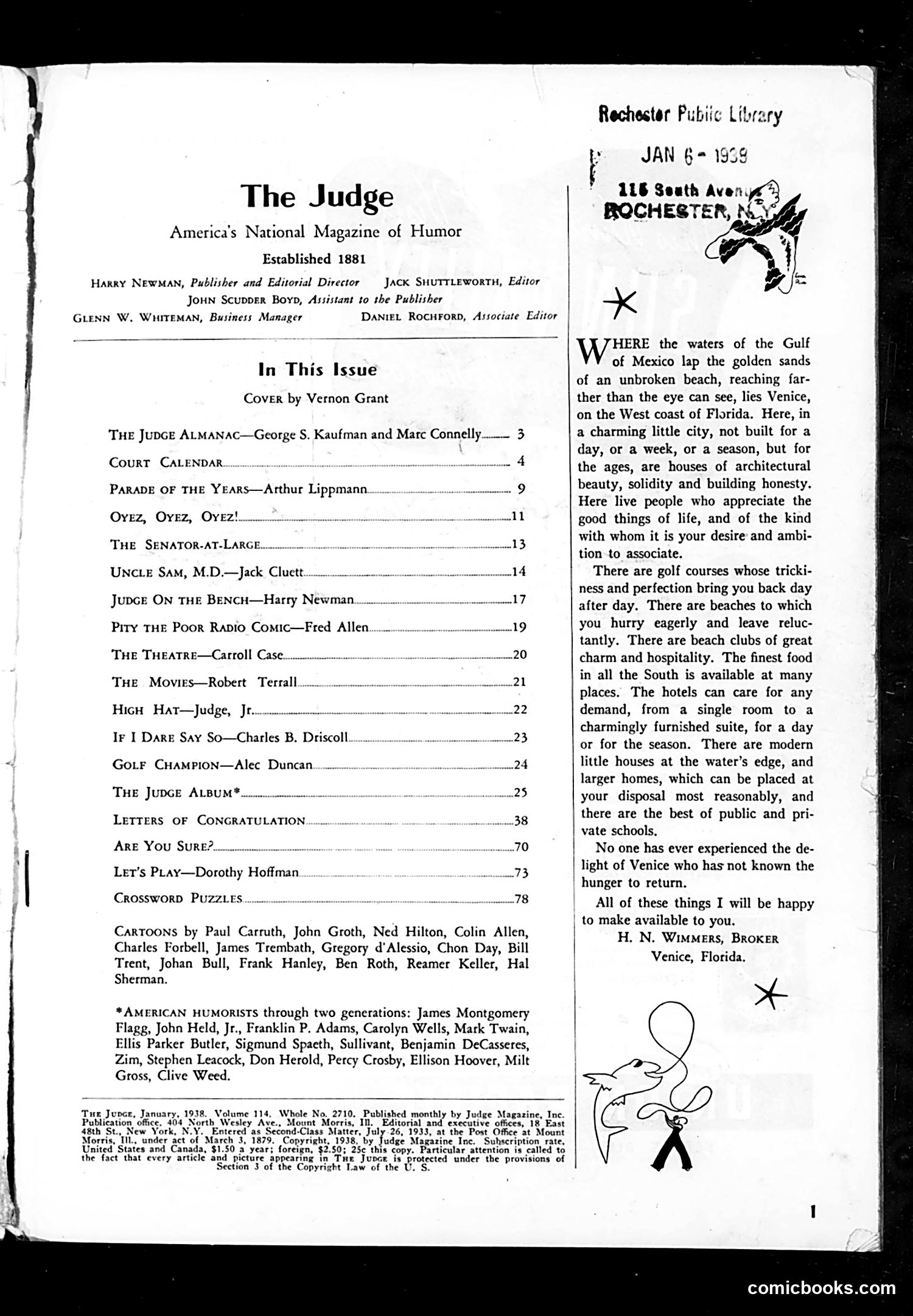
# Analysis of Judge Magazine Page (January 1938) This is a table of contents and cover page for Judge magazine's January 1938 issue. The right side features promotional text about Venice, Florida, written by H. N. Wimmers, a broker—essentially advertising the coastal resort town's attractions (golf, beaches, hotels, schools). The cartoons visible are minimal and decorative rather than political. One shows a stylized figure with a balloon; another depicts a simplified character. These appear to be generic illustrations rather than satirical commentary on specific political figures or events. The content listing suggests this issue focuses on humor columns, theatrical reviews, and light satire typical of Judge's format—social commentary through comedy rather than pointed political cartoons. Without clearer identifying details in the illustrations, specific satirical targets remain unclear.
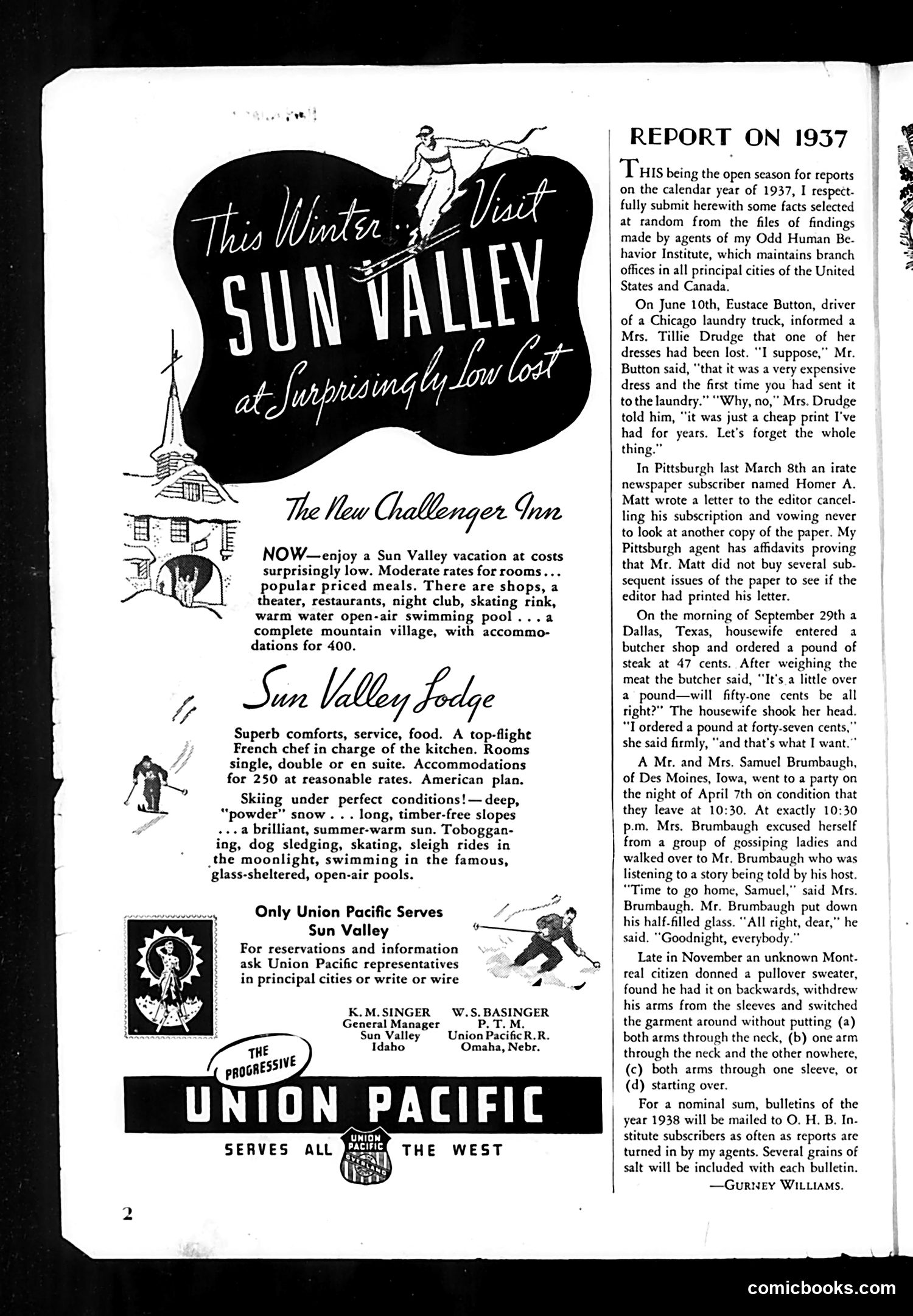
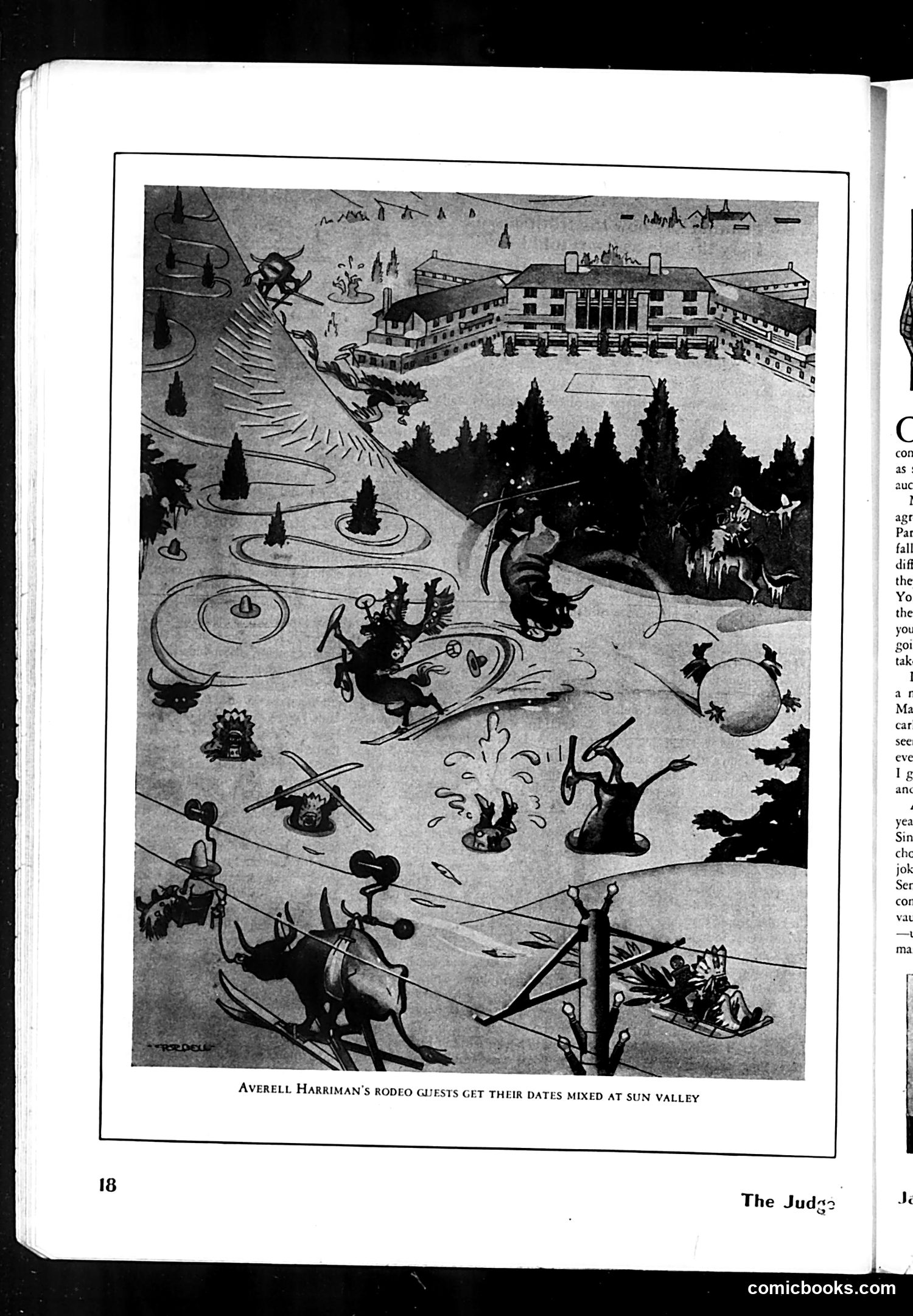
# Analysis This page is primarily **advertising, not satire or political content**. The left side features Union Pacific Railroad advertisements promoting Sun Valley, Idaho as a winter vacation destination, highlighting the newly opened Challenger Inn and Sun Valley Lodge with skiing, pools, and dining. The right side contains "Report on 1937," a column by Gurney Williams describing anecdotes from the Odd Human Behavior Institute's files—a collection of amusing everyday incidents (lost laundry, newspaper complaints, meat-weighing disputes, etc.). These are humorous human-interest stories rather than political satire. The page reflects 1930s consumer culture and leisure travel promotion rather than commentary on current events or political figures.
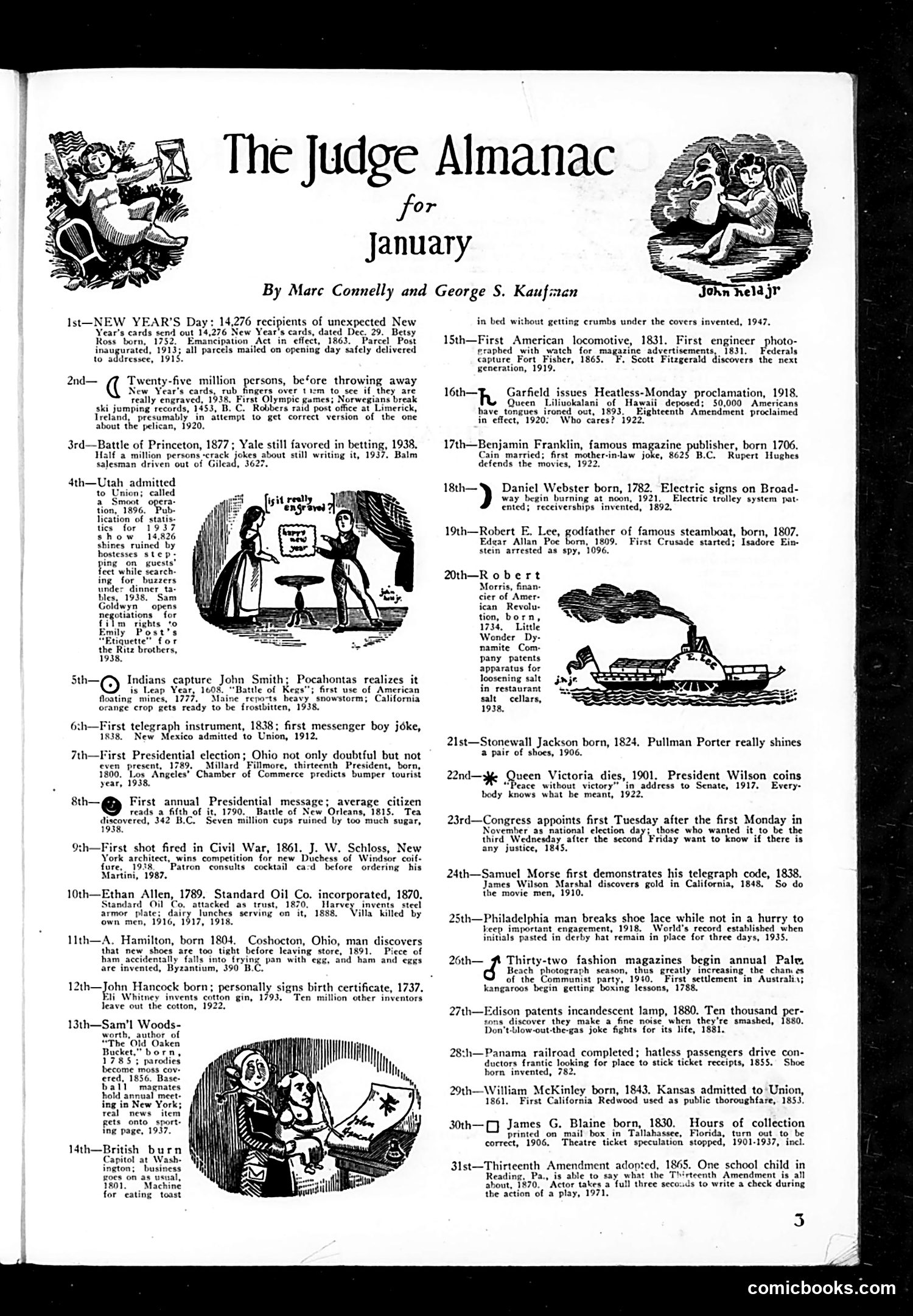
# The Judge Almanac for January This page is primarily an almanac of historical events and notable births for January dates, rather than political satire. However, it includes three illustrative cartoons: 1. **Entry 4**: Shows a couple at a dining table with the woman complaining about her husband's behavior—appears to be domestic humor about marital disputes. 2. **Entry 13**: Features "The Old Oaken Bucket" reference, depicting what appears to be a nostalgic scene, likely mocking sentimentality about the past. 3. **Entry 14**: Illustrates a British burn victim, accompanying text about a fire at Washington's Capitol. The cartoons function as visual accompaniment to the historical entries rather than standalone political commentary. The overall page serves Judge's dual purpose as both a satirical magazine and practical almanac for readers.
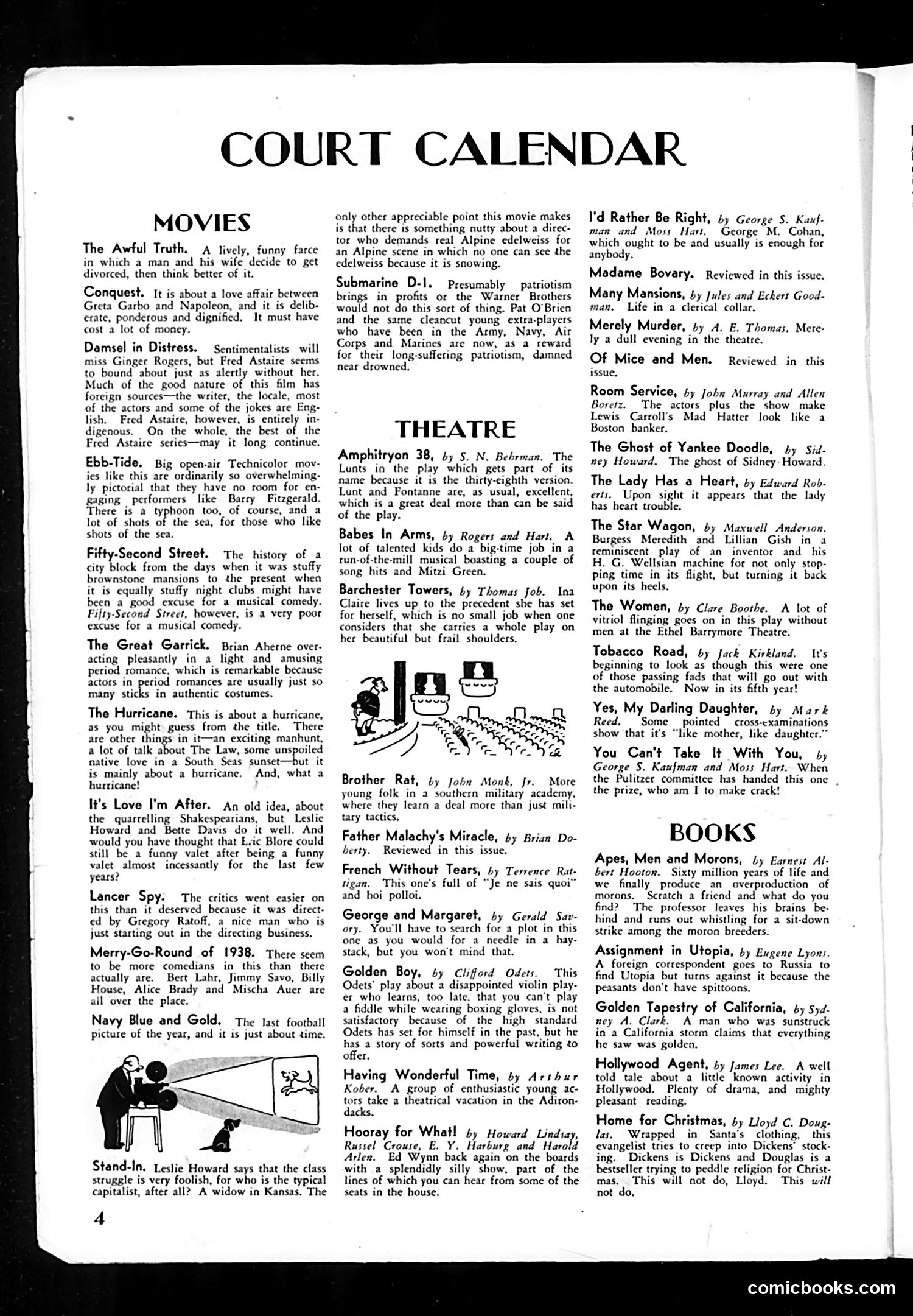
# Court Calendar Page Analysis This is primarily a **reviews and listings page** rather than a satirical cartoon section. It contains capsule reviews of current movies and theatrical productions, with brief plot summaries and critical commentary. The small illustrations appear to be generic theatrical/entertainment imagery rather than political satire—including what looks like a **top-hatted figure** (standard vaudeville iconography) and comedic theater scenes. The reviews themselves offer mild social commentary through their subject matter (military academies, Southern romance, patriotic themes), but this reflects **entertainment preferences of the era** rather than pointed political satire. This page demonstrates Judge's broader function as a **general-interest magazine** covering culture and entertainment, not exclusively political humor.
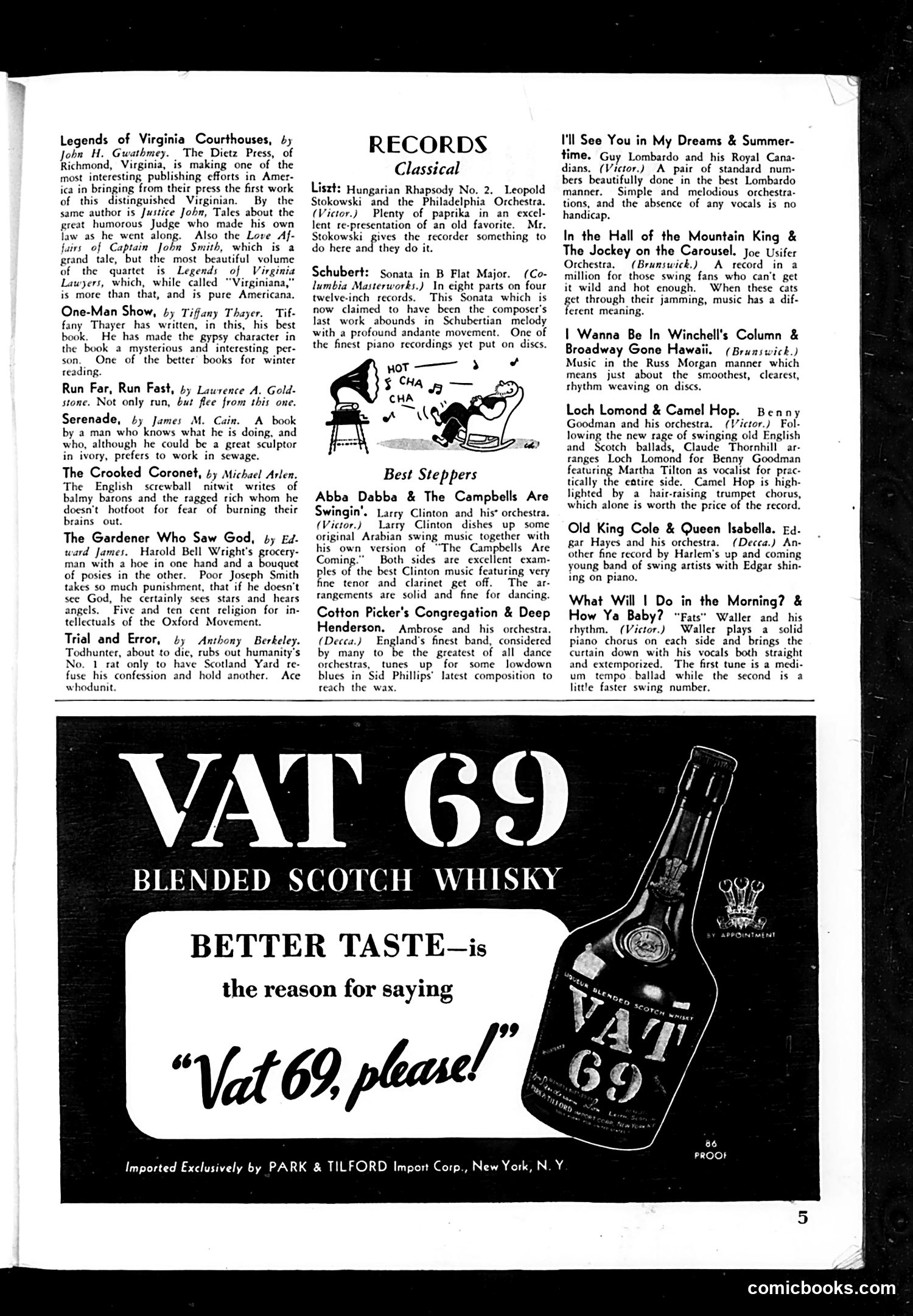
# Analysis This page is primarily **advertising and record reviews**, not political satire. The upper half contains classical music record reviews from what appears to be a 1930s-era Judge magazine. The reviews discuss various orchestral recordings and popular songs of the period. The dominant content is a **full-page advertisement for VAT 69 Blended Scotch Whisky** at the bottom. The ad features a bottle illustration and the slogan "BETTER TASTE—is the reason for saying 'Vat 69, please!'" This is a straightforward commercial advertisement with no satirical content. The page demonstrates how Judge magazine mixed editorial content with advertising revenue. There is no political cartoon or social satire evident on this particular page.
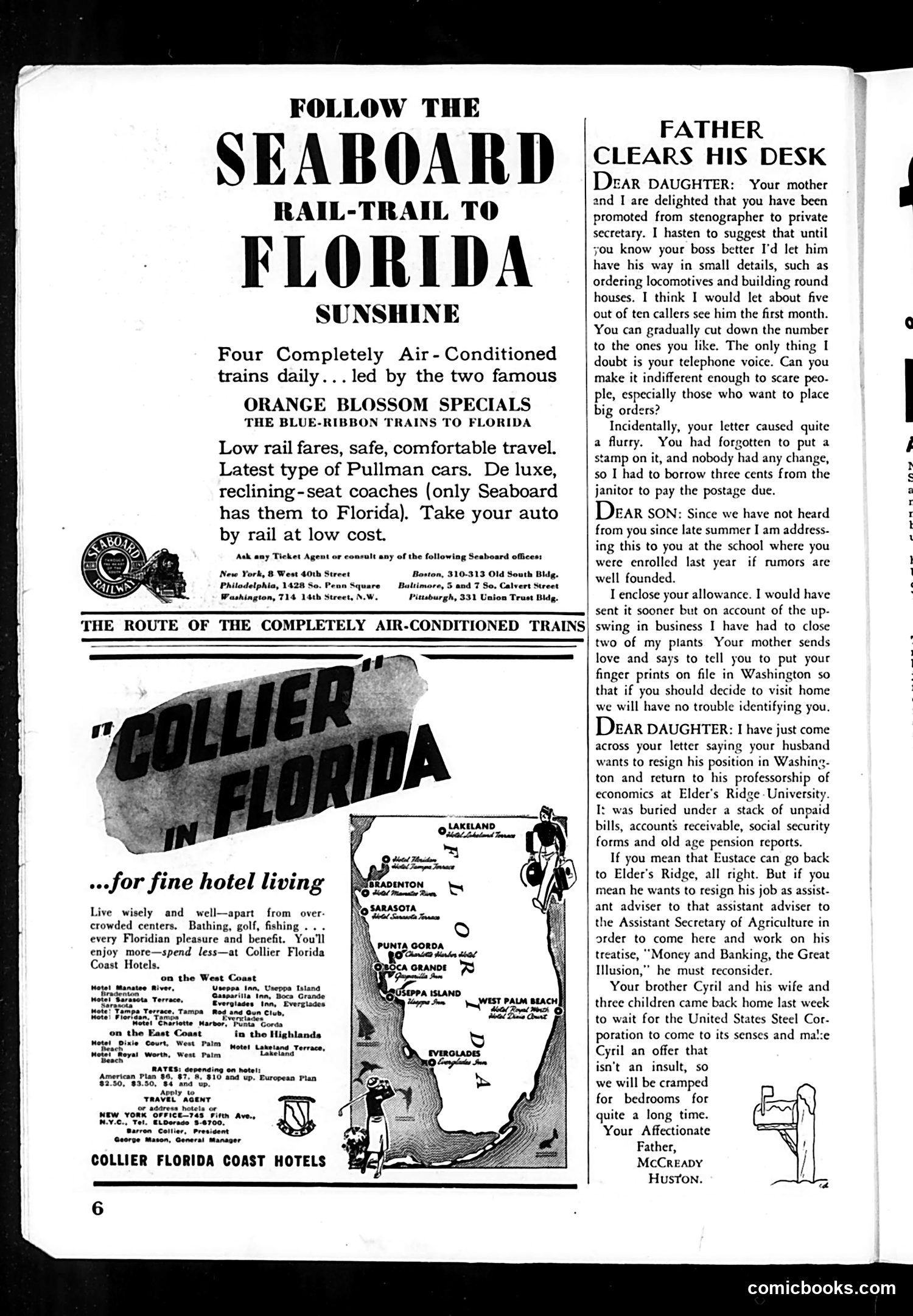
# Analysis of Judge Magazine Page This page is primarily **advertising and advice column content**, not political satire. The left side features railroad and hotel advertisements promoting travel to Florida via the Seaboard Air Line Railway, highlighting air-conditioned trains and beachfront hotels—typical 1930s-40s leisure marketing. The right side contains "Father Clears His Desk," an advice column where a father responds to three family letters. The humor is gentle domestic satire: he gently chides his daughter about a postal error, discusses his son's educational plans, and addresses his other son's potential career resignation from government service. The column uses period-typical anxieties about employment, education, and family propriety for mild comedic effect. Overall, this is a **social humor and commercial page** rather than political commentary.
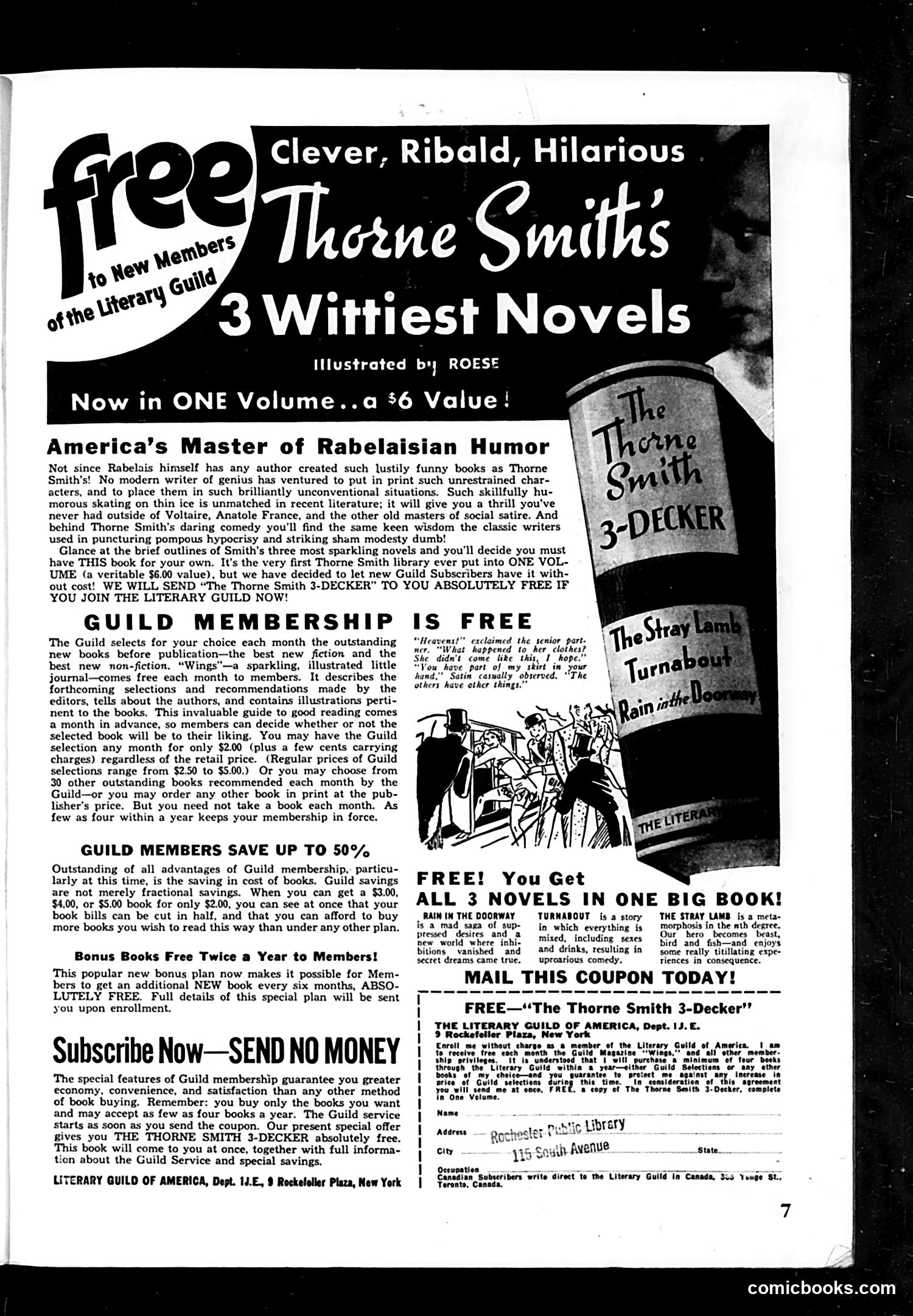
This page is primarily an advertisement for the Literary Guild of America, promoting a membership offer for Thorne Smith's "3 Wittiest Novels" in a single volume. The ad emphasizes Smith as "America's Master of Rabelaisian Humor," highlighting his reputation for writing bawdy, unconventional fiction with lusty funny characters. The advertisement focuses on membership benefits rather than satire: free enrollment, savings up to 50% on book purchases, and bonus free books twice yearly. The copy stresses that members buy only books they want at discounted prices. There are no political cartoons or satirical illustrations on this page—it's purely commercial content designed to recruit new Guild subscribers by offering the Thorne Smith collection as an incentive.
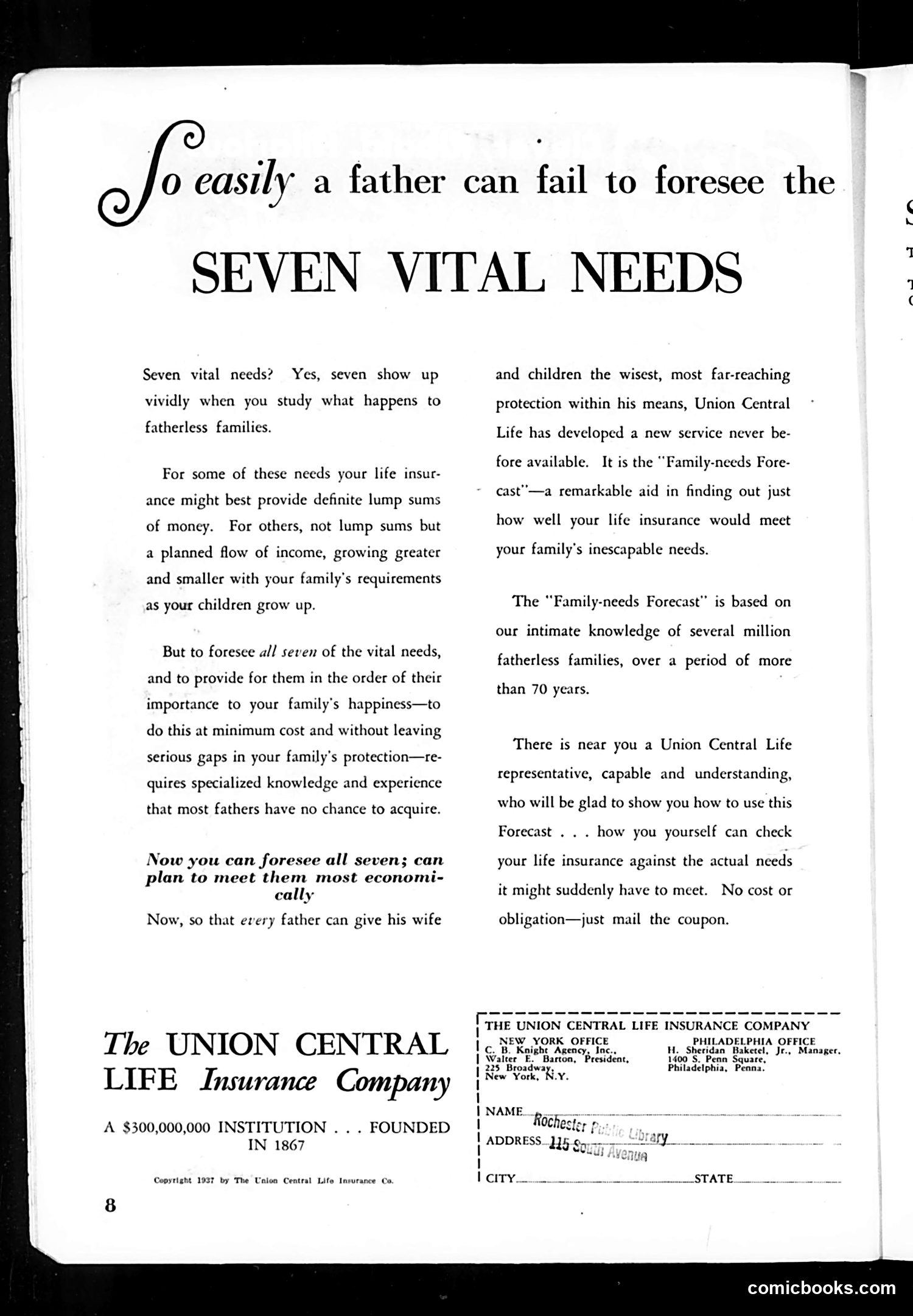
This is primarily **advertising, not satire or editorial cartoon**. The page is a 1937 life insurance advertisement by Union Central Life Insurance Company. The "SEVEN VITAL NEEDS" headline refers to financial provisions every father should make for his family in case of death—including income replacement, children's education, and widow's support. The text targets anxious fathers by suggesting they lack the knowledge to properly plan for their families' financial security. Union Central pitches its new "Family-needs Forecast" service, claiming expertise based on "several million fatherless families" studied over 70+ years. There is no cartoon visible on this page—only typography, text blocks, and a tear-out coupon. The emotional appeal ("how well your life insurance would meet your family's inescapable needs") uses mild fear-based marketing typical of Depression-era insurance advertising, emphasizing that most fathers don't understand their responsibilities.
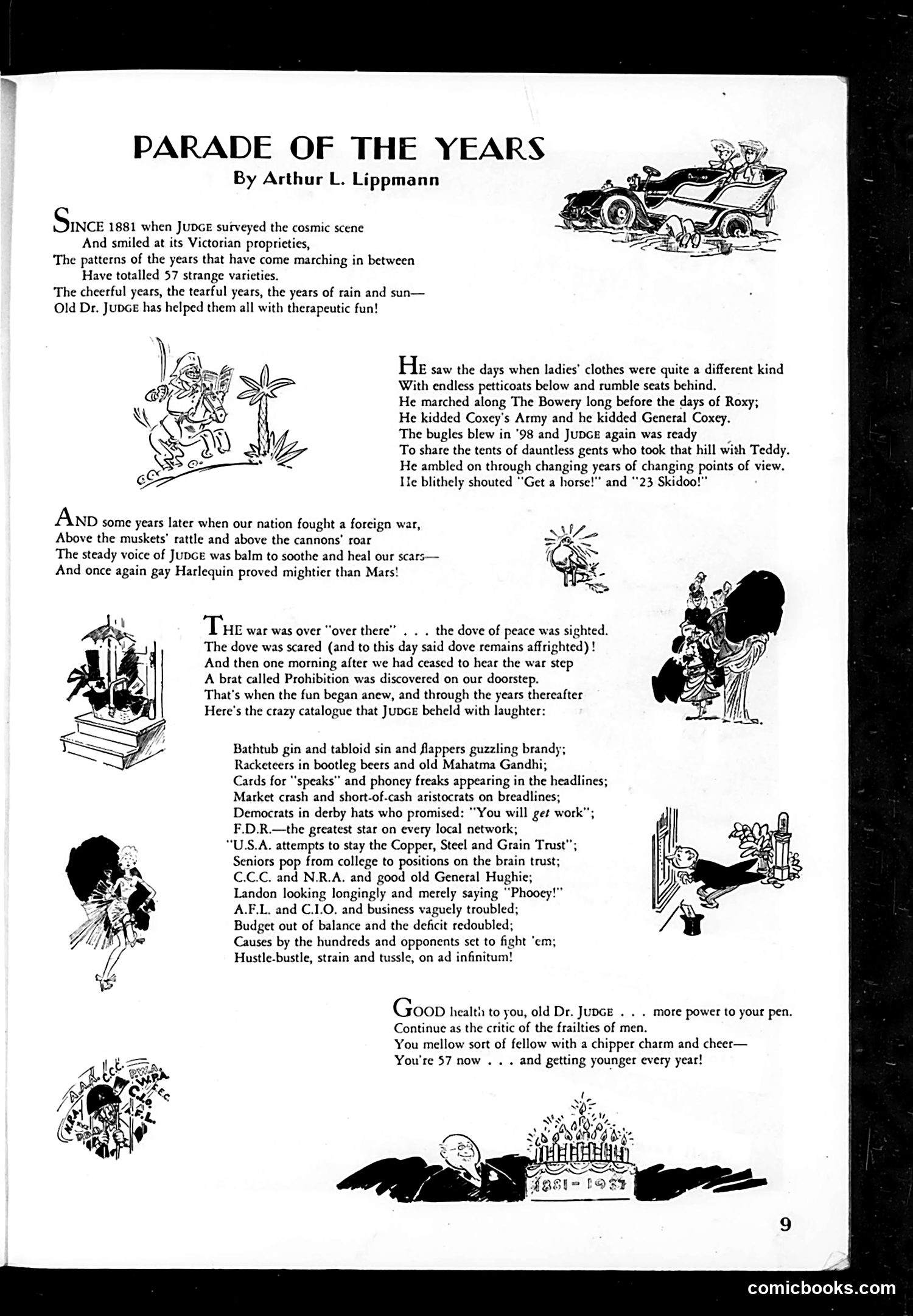
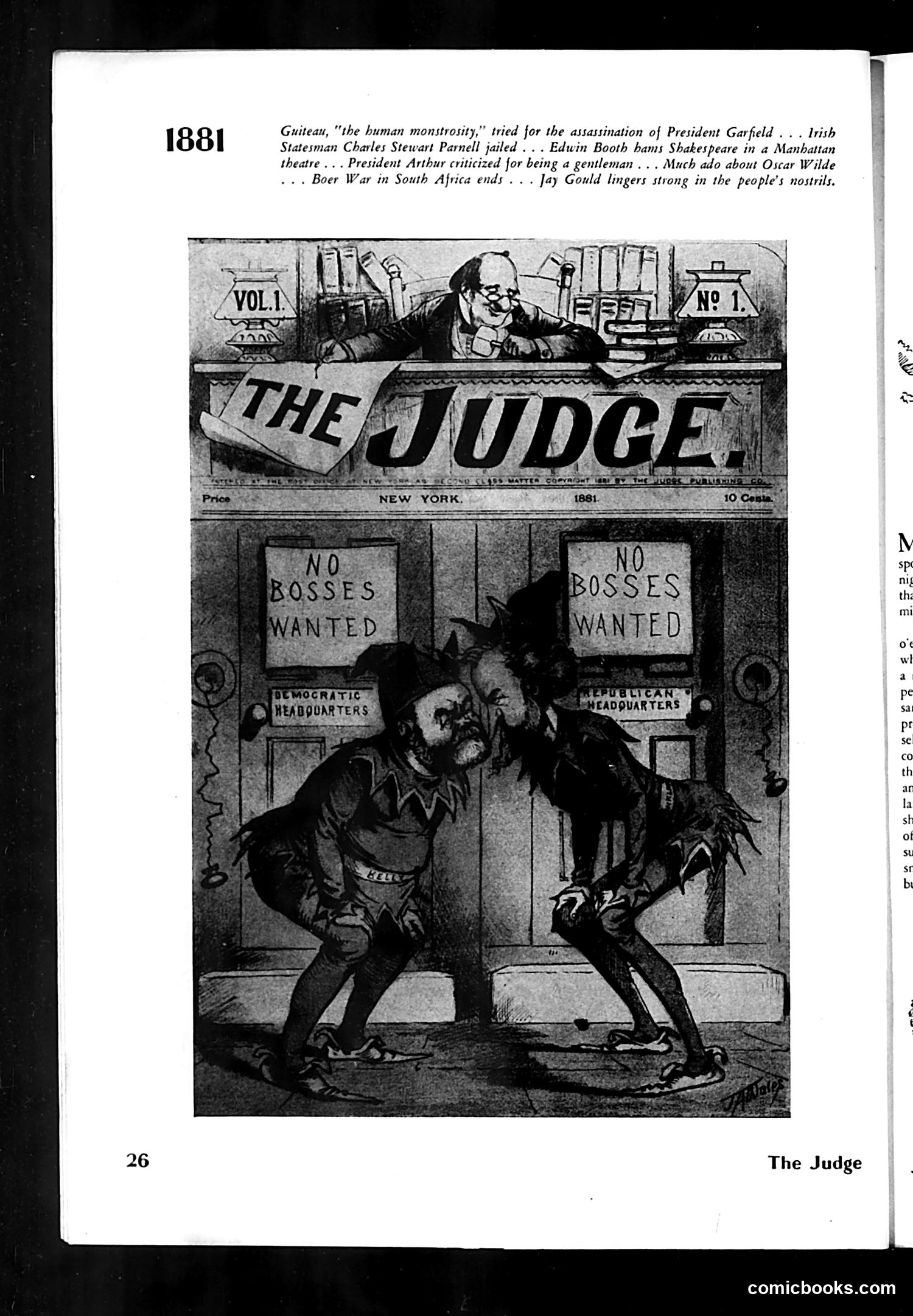
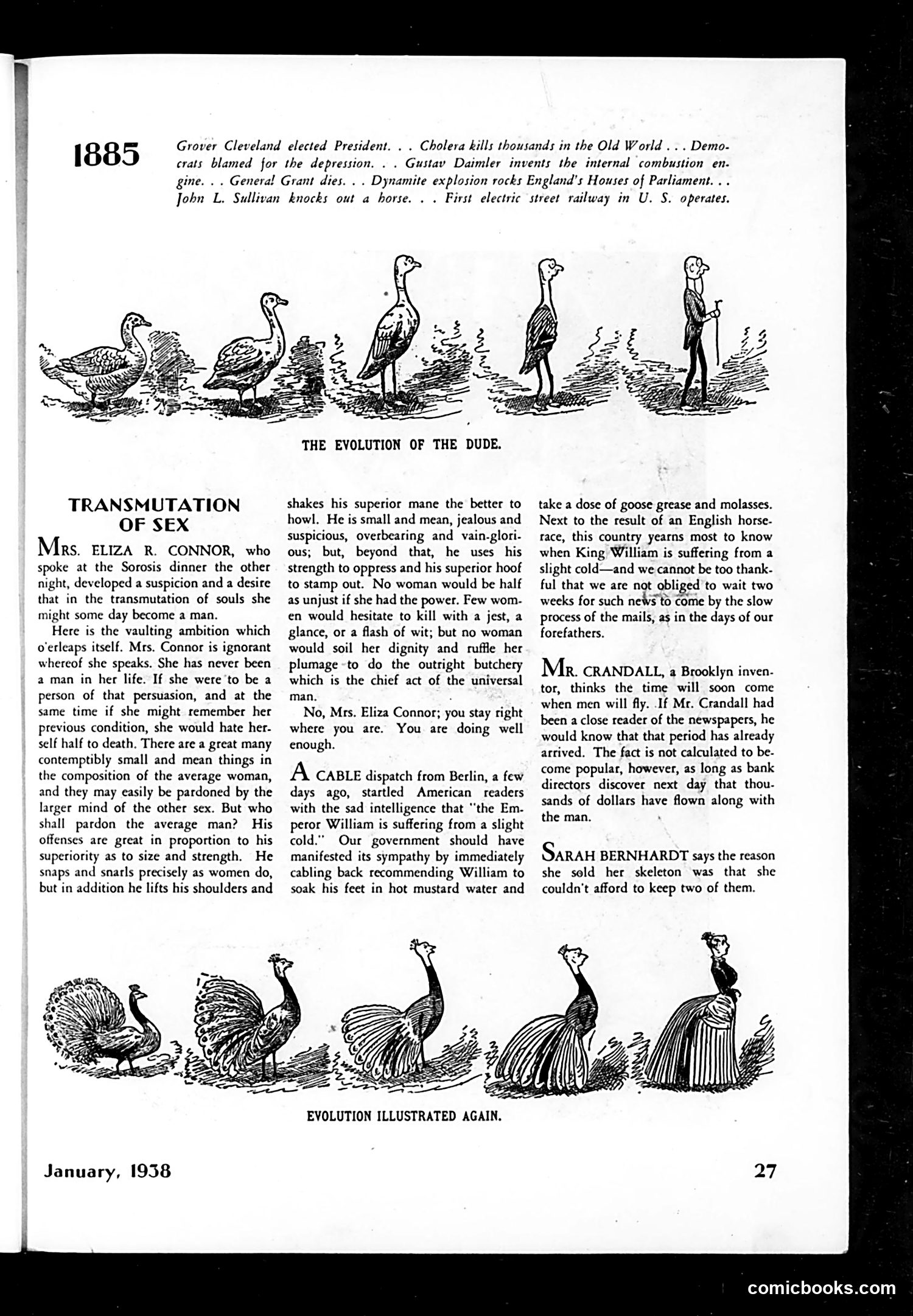
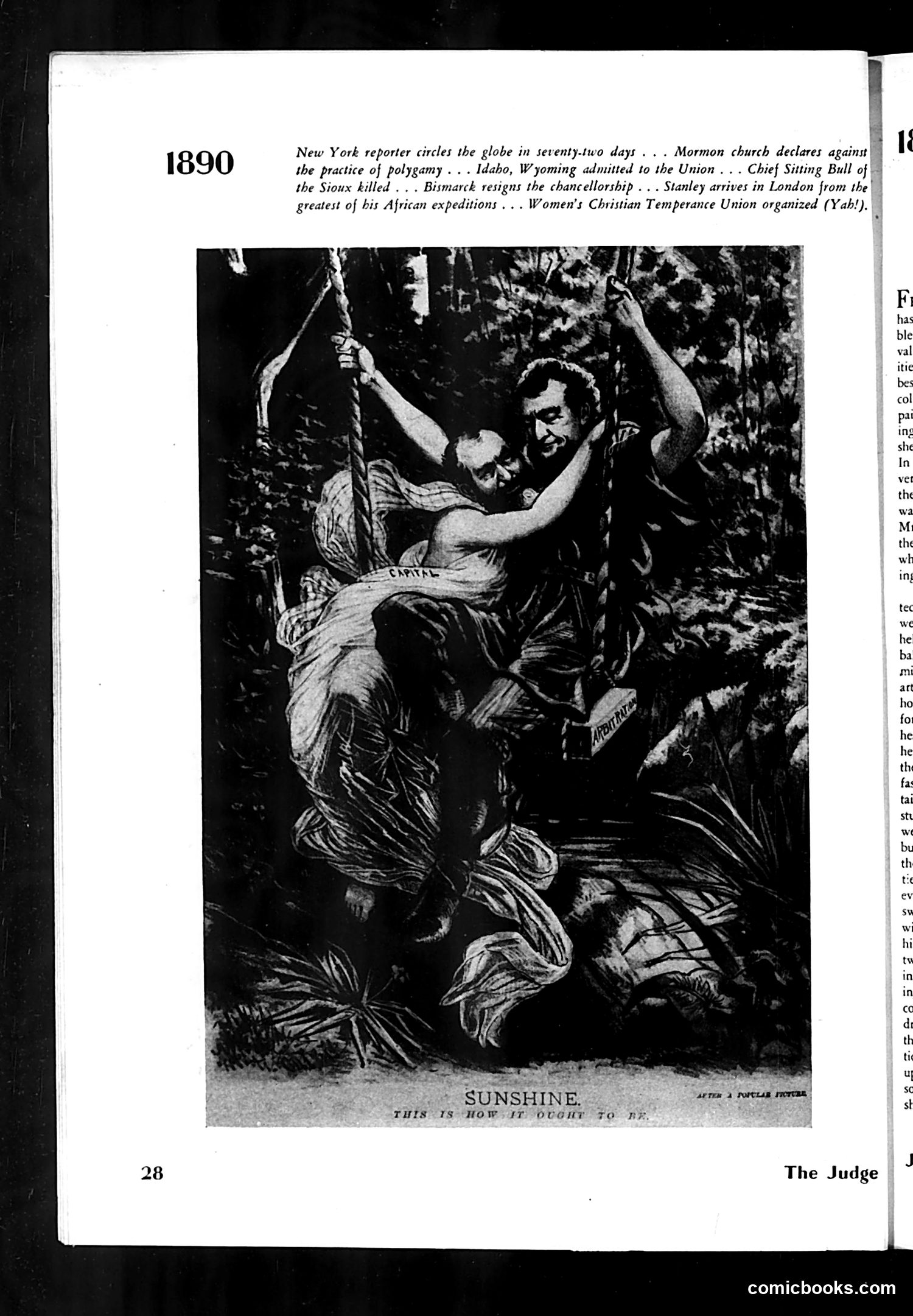
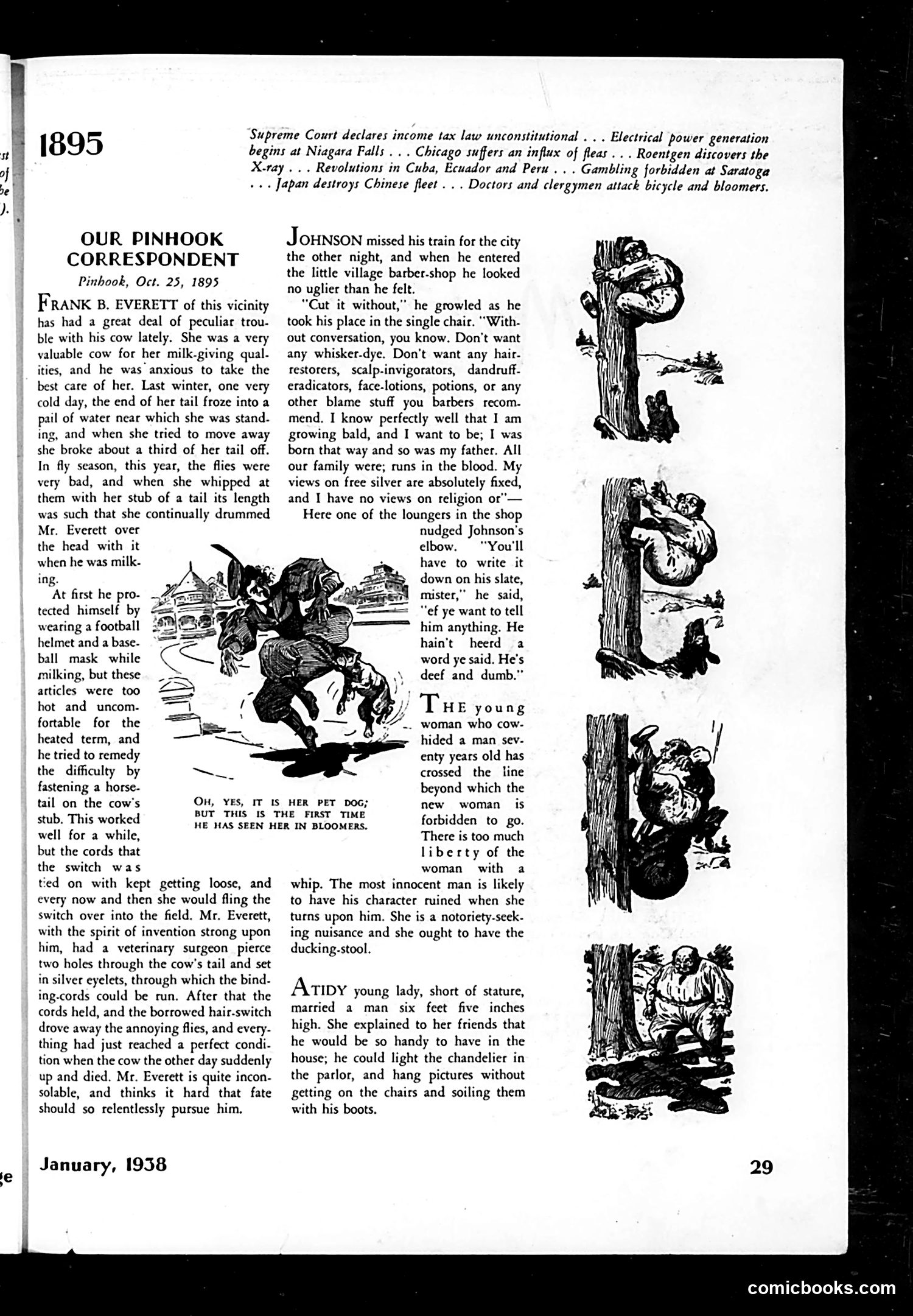
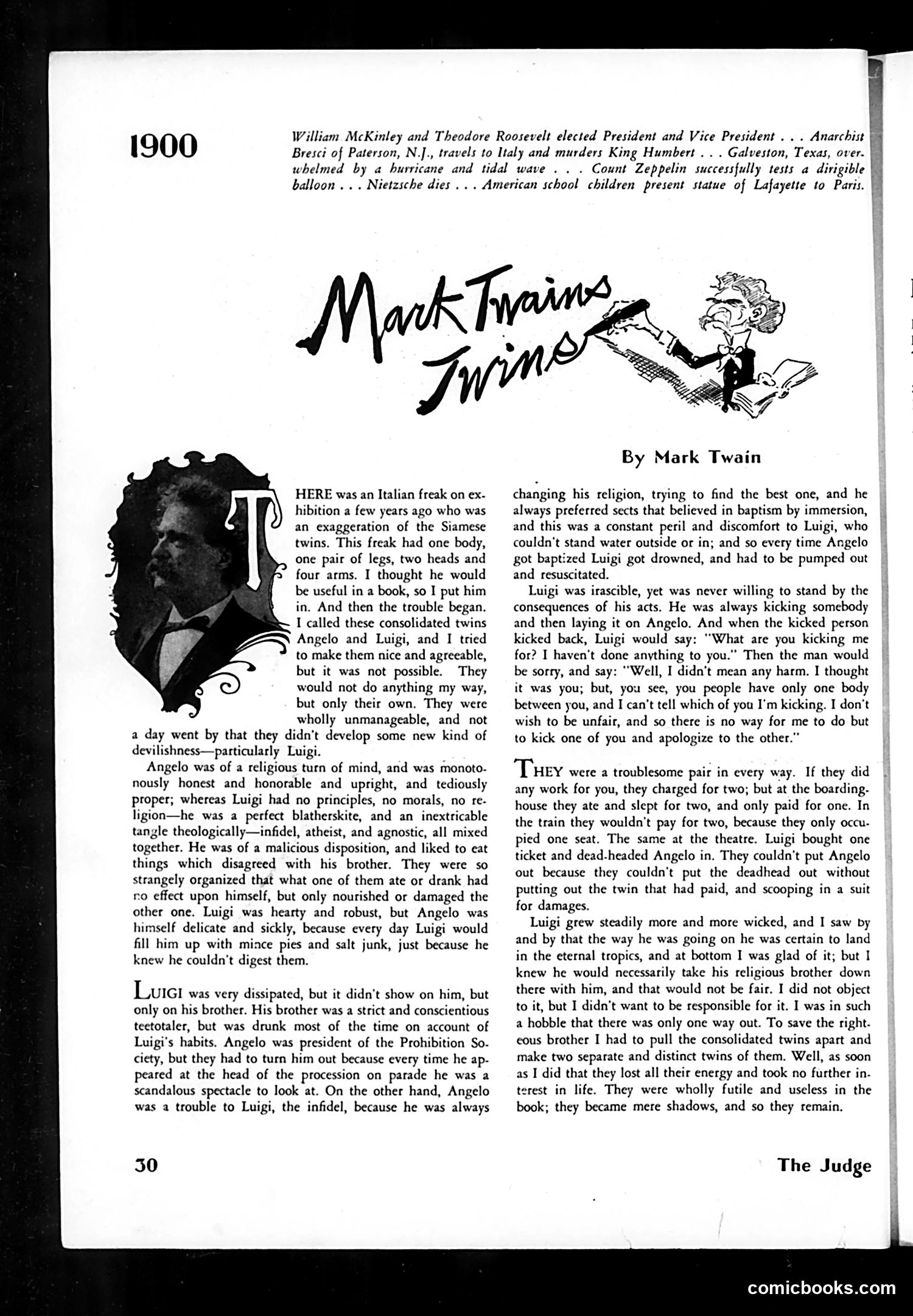
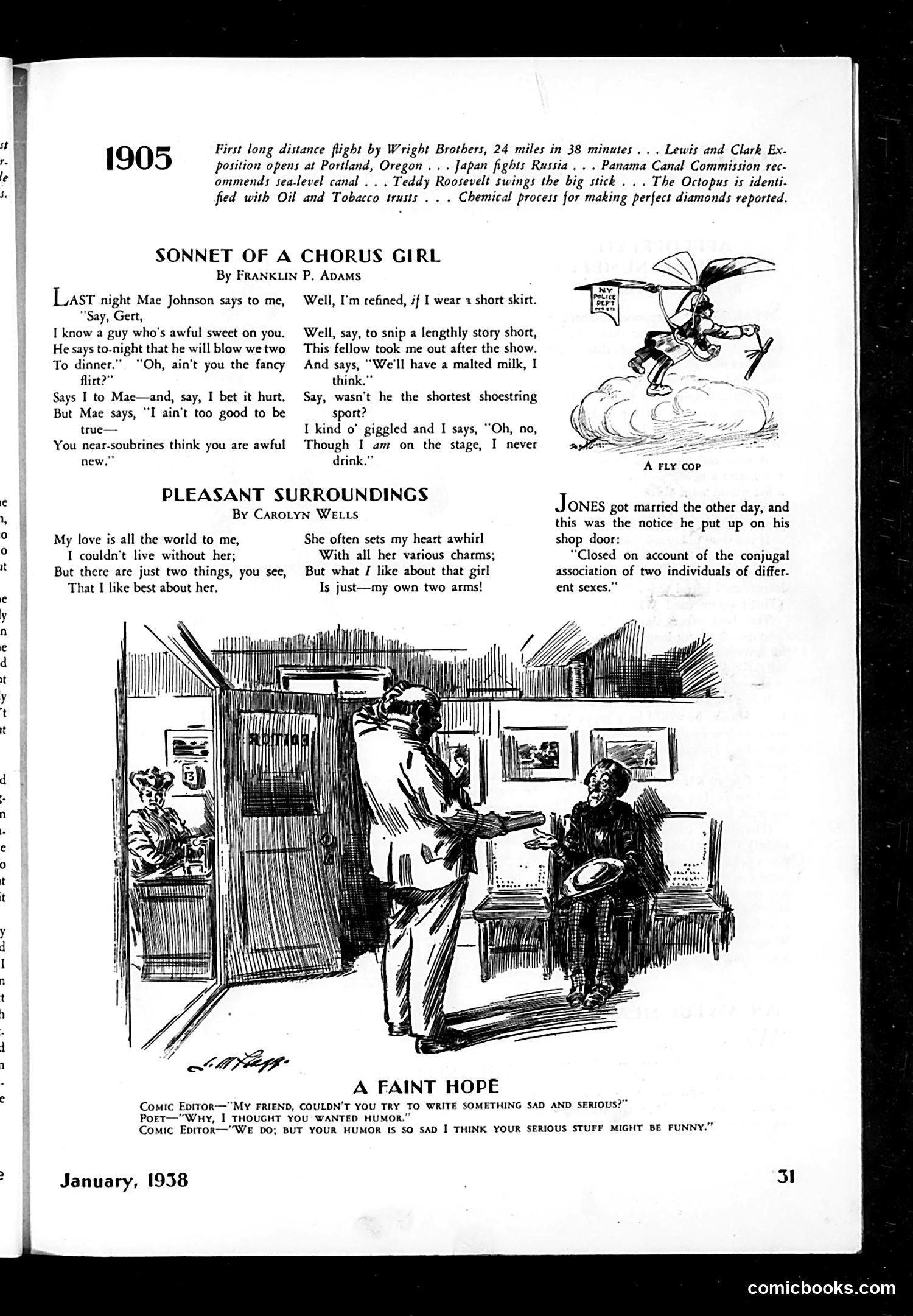
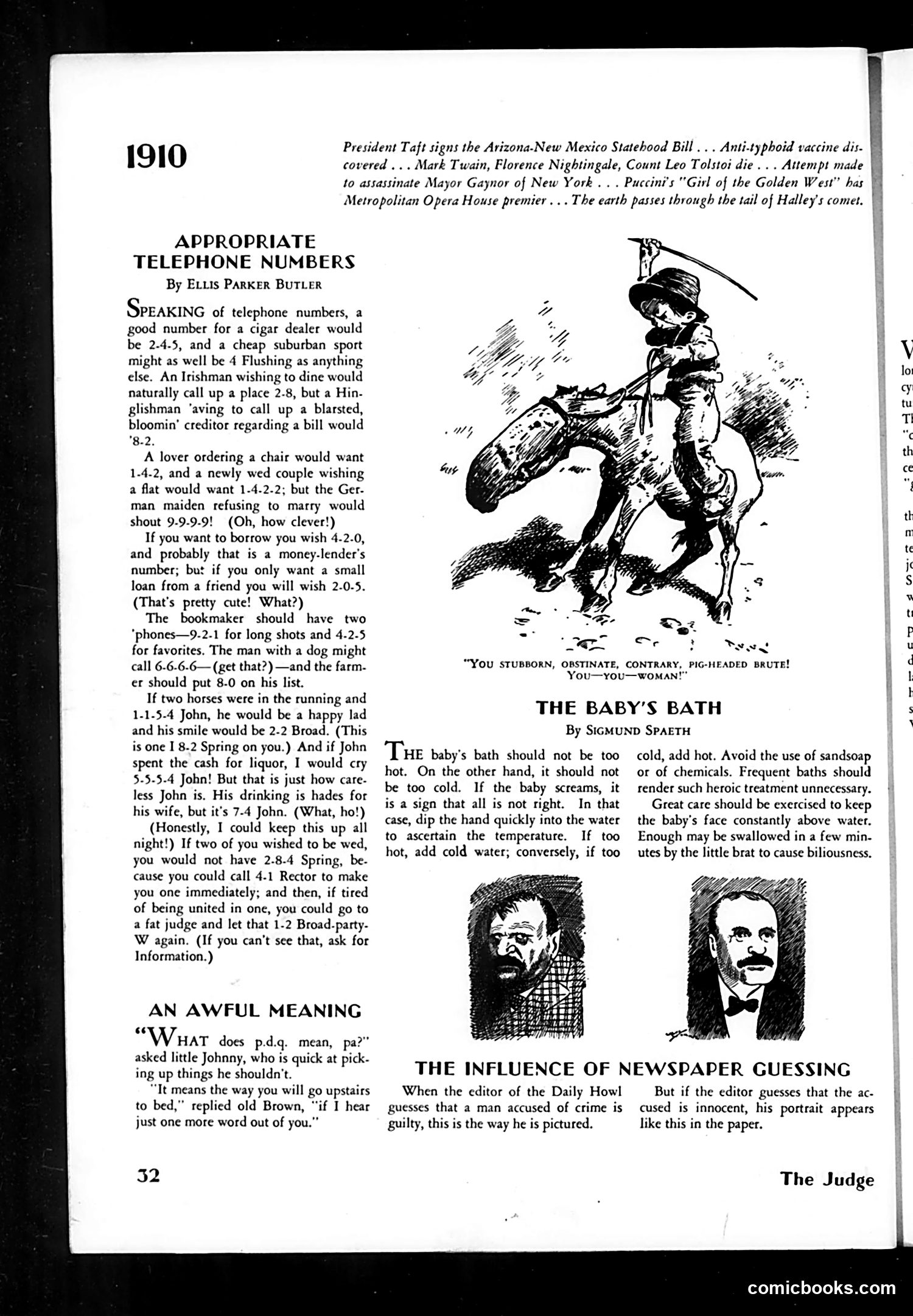
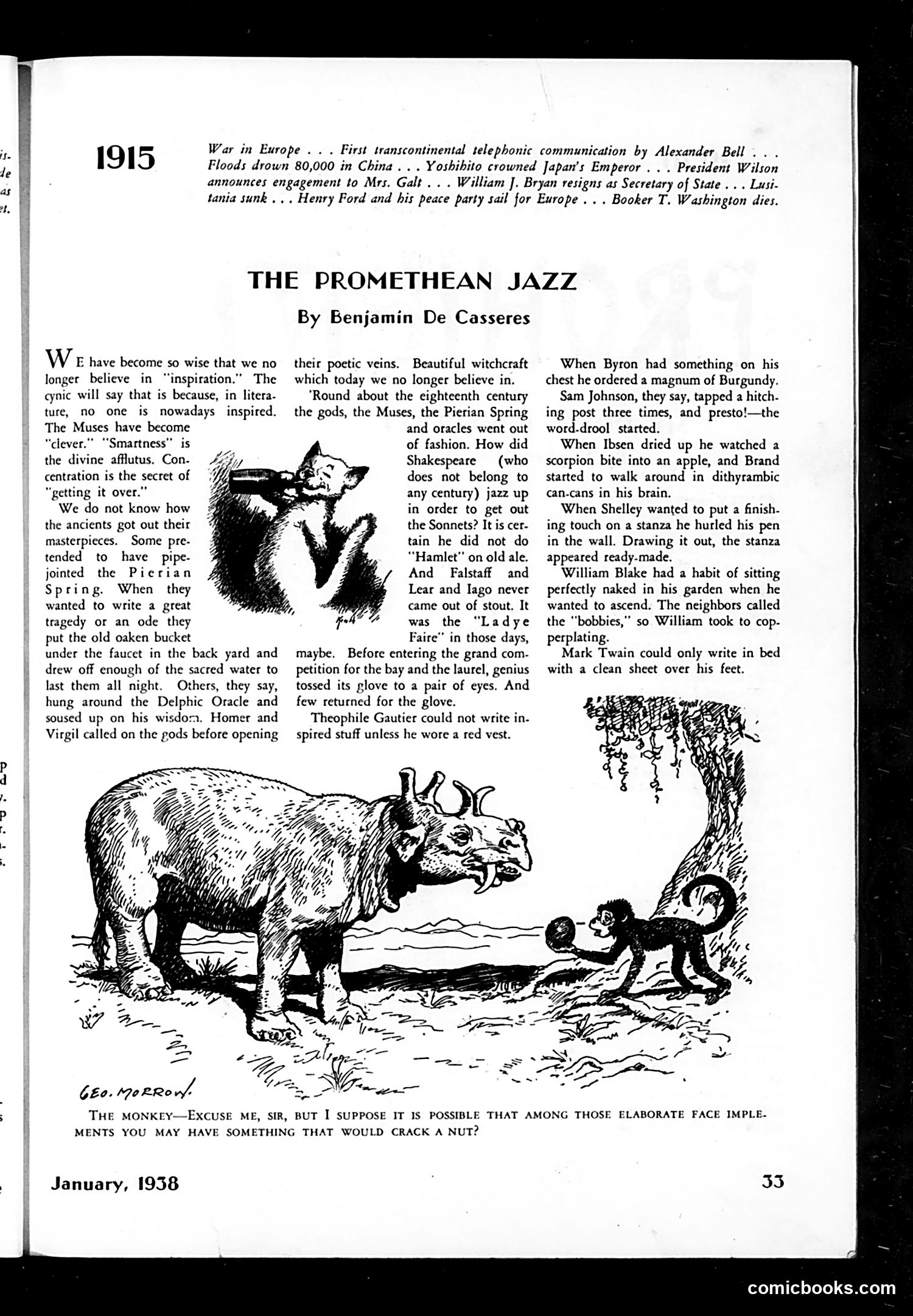
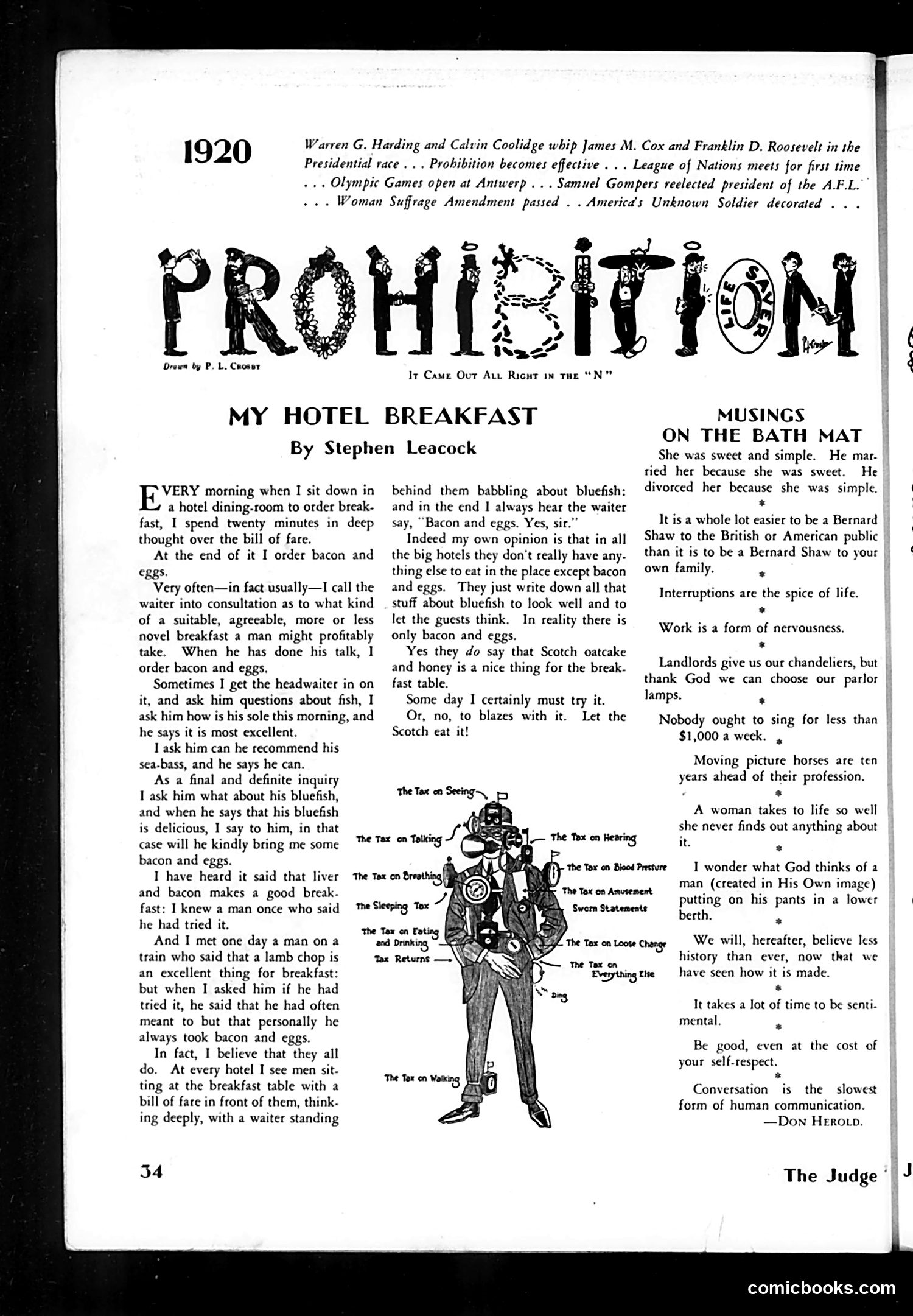
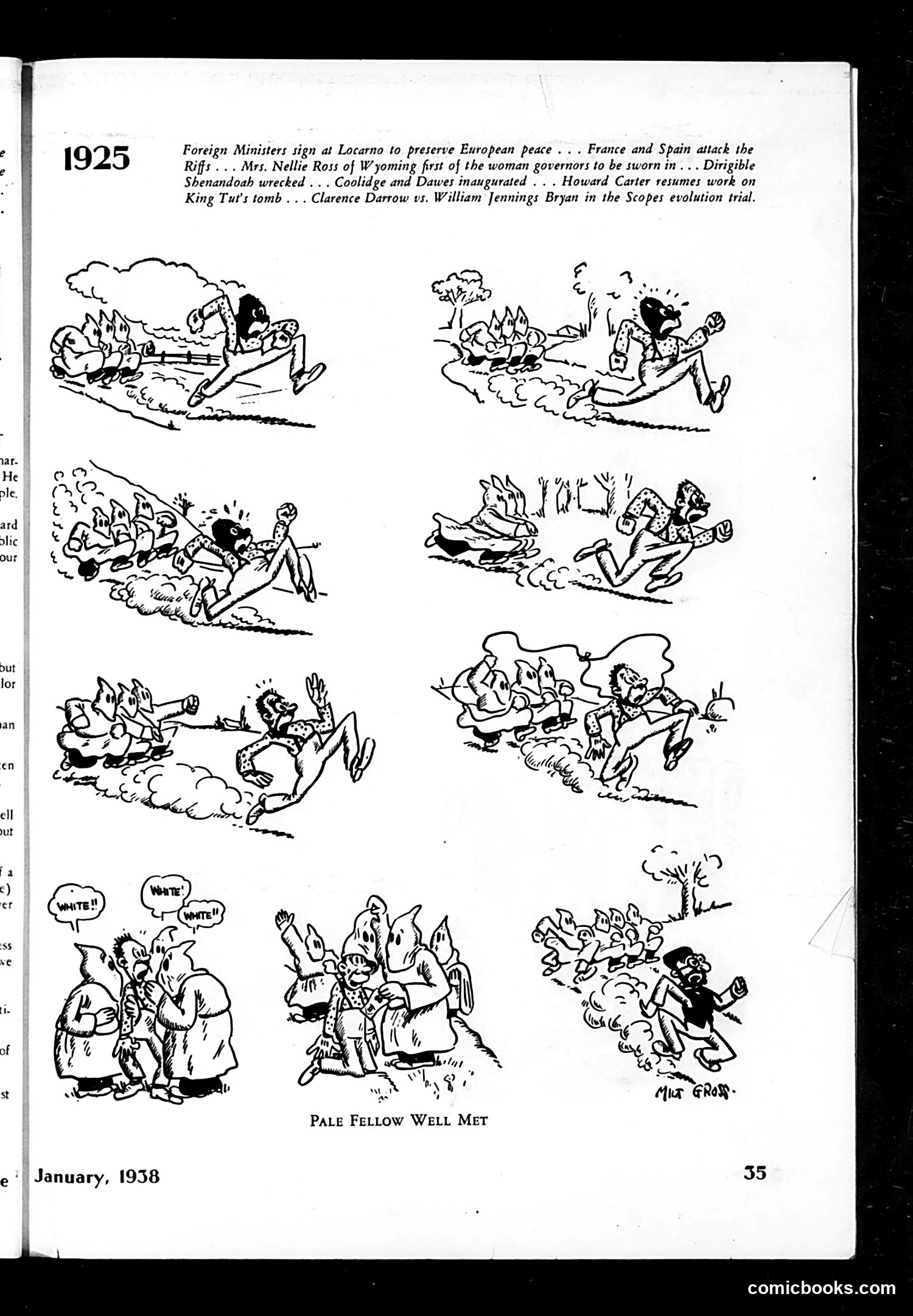
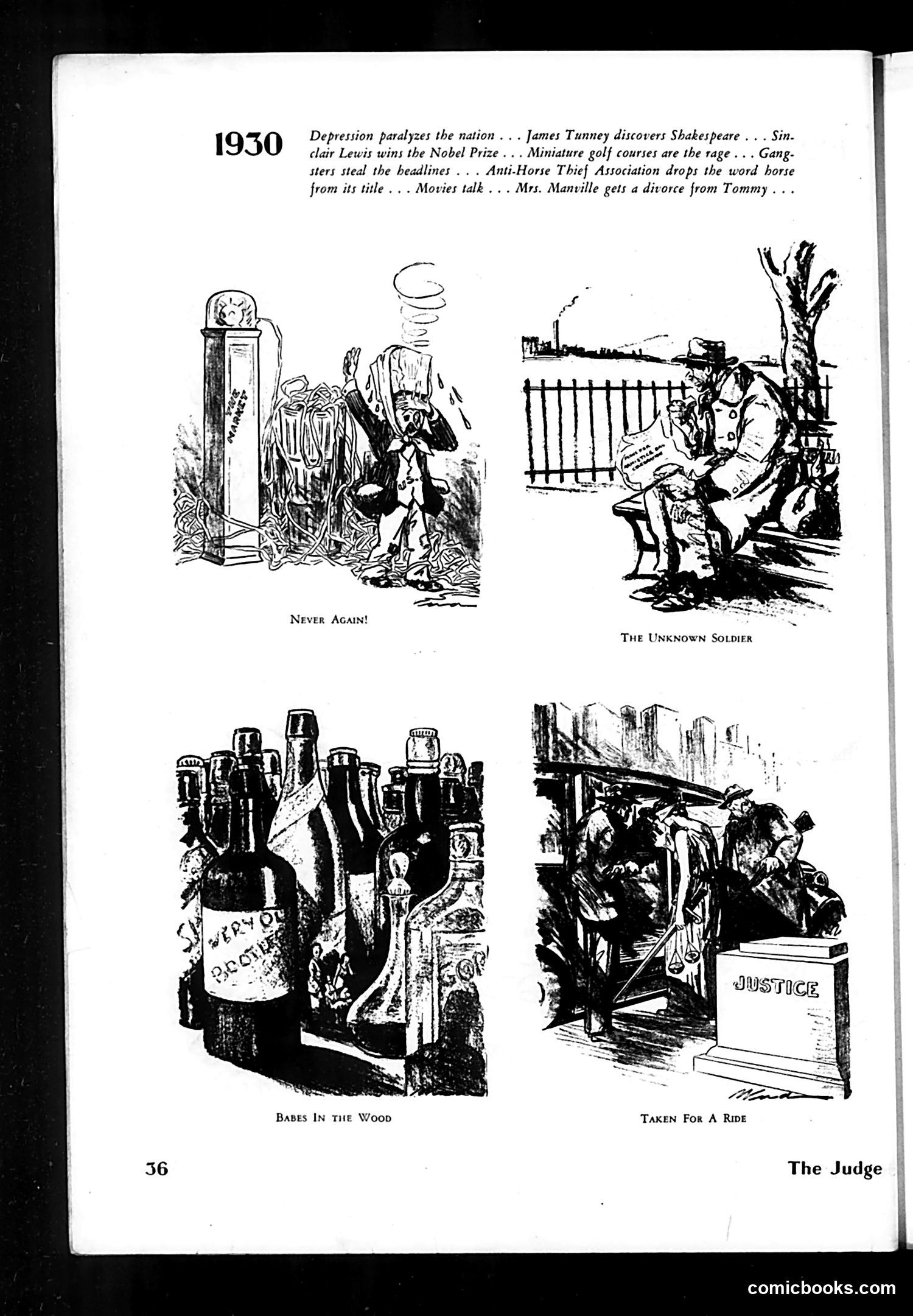
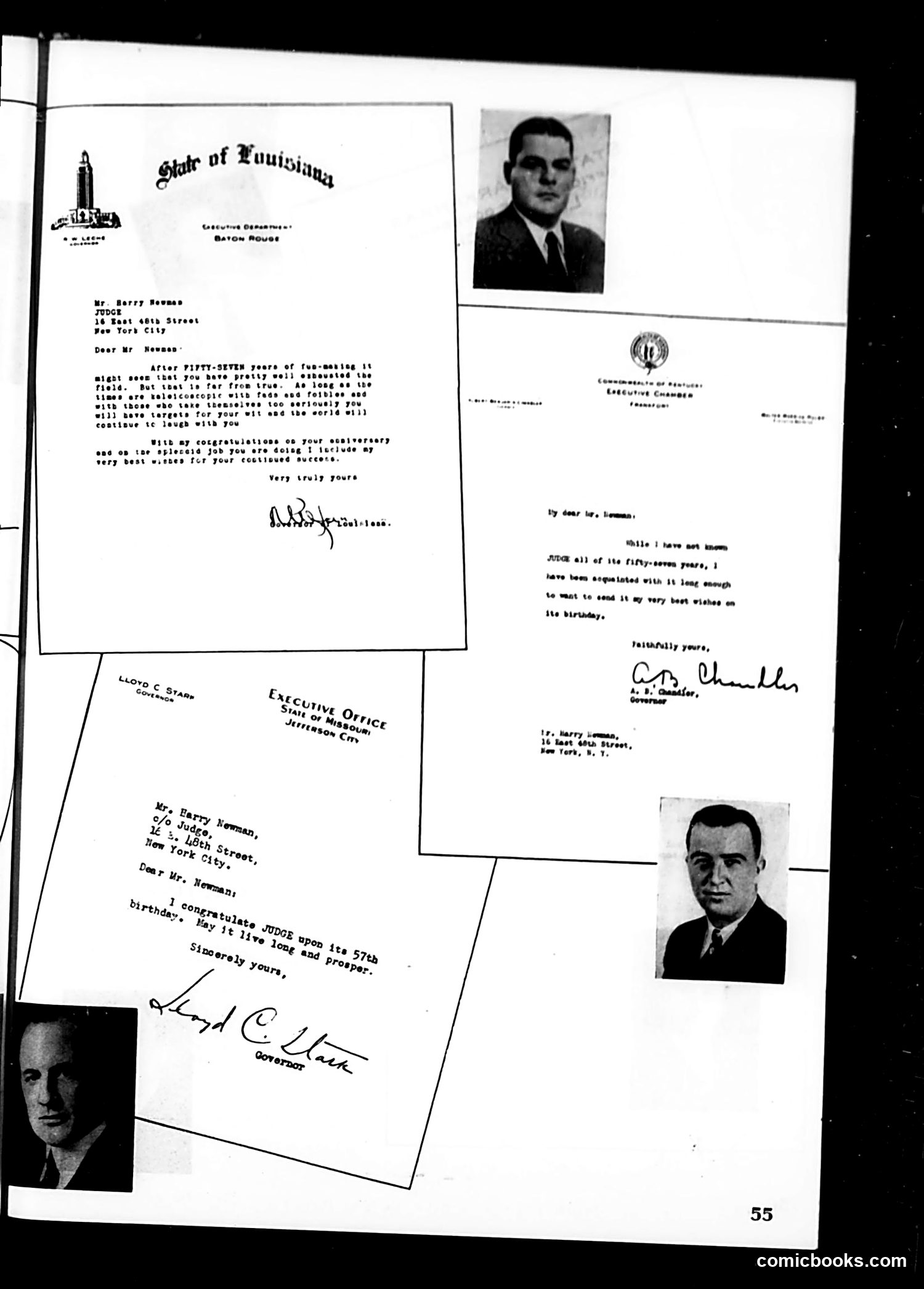
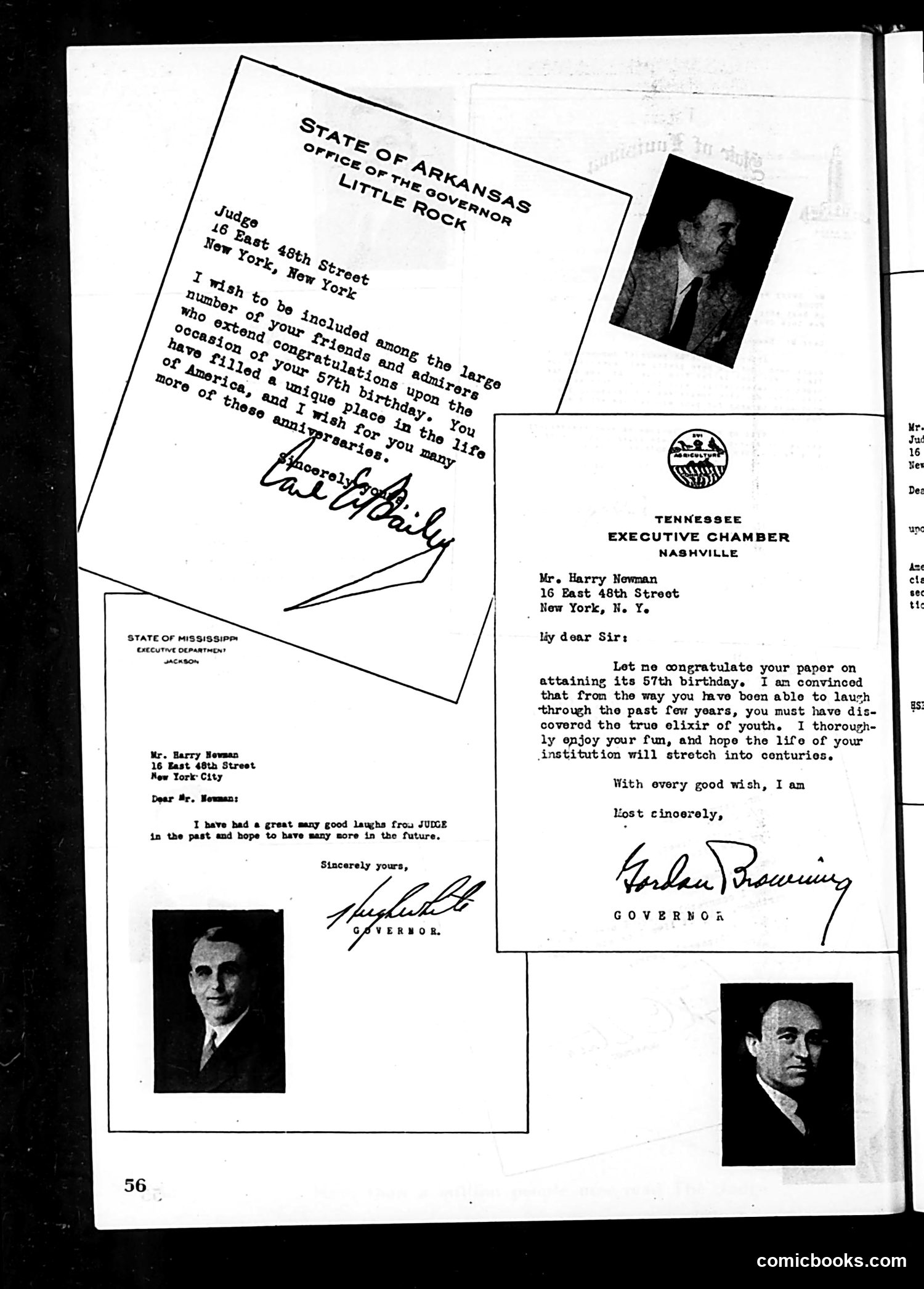
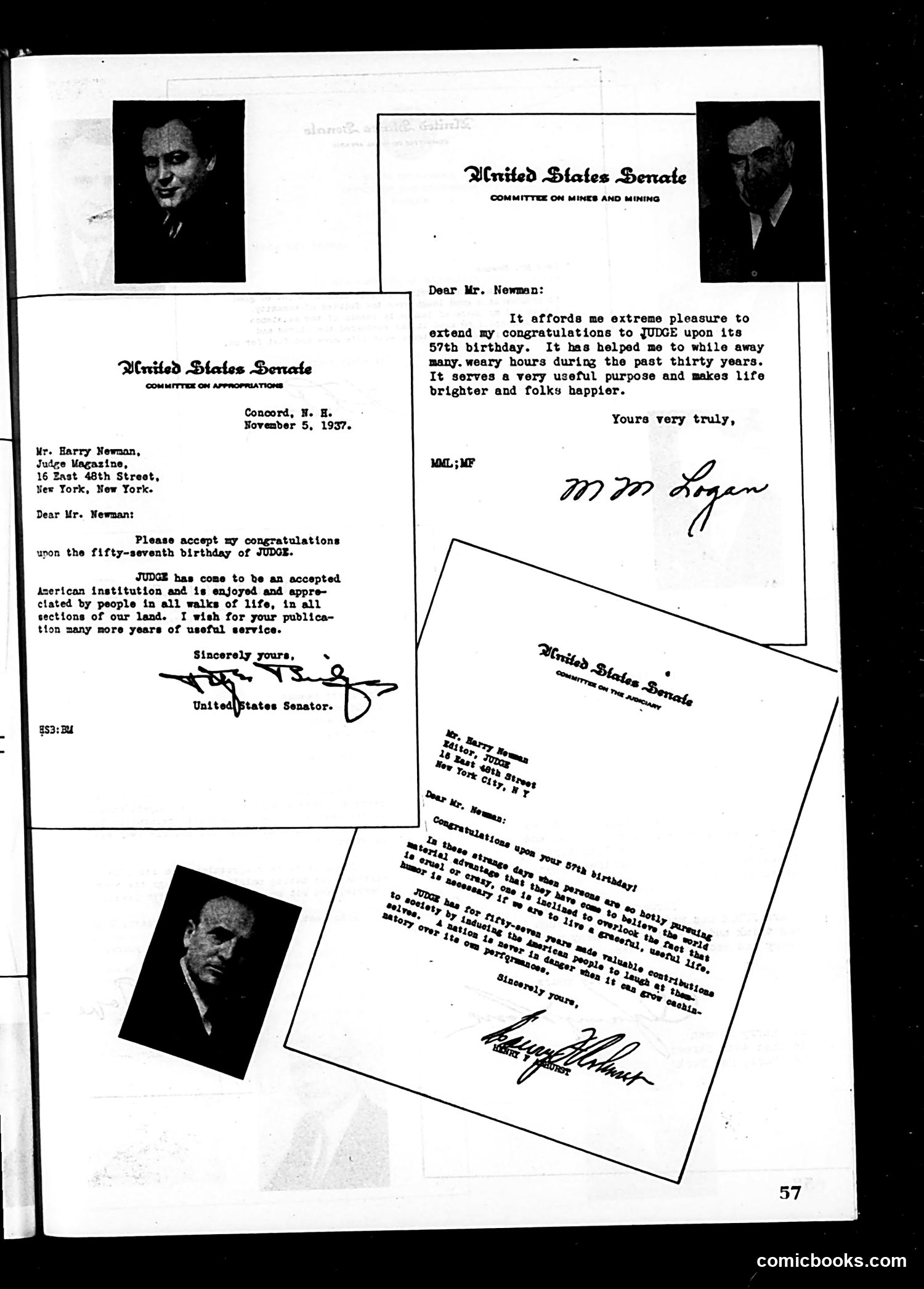
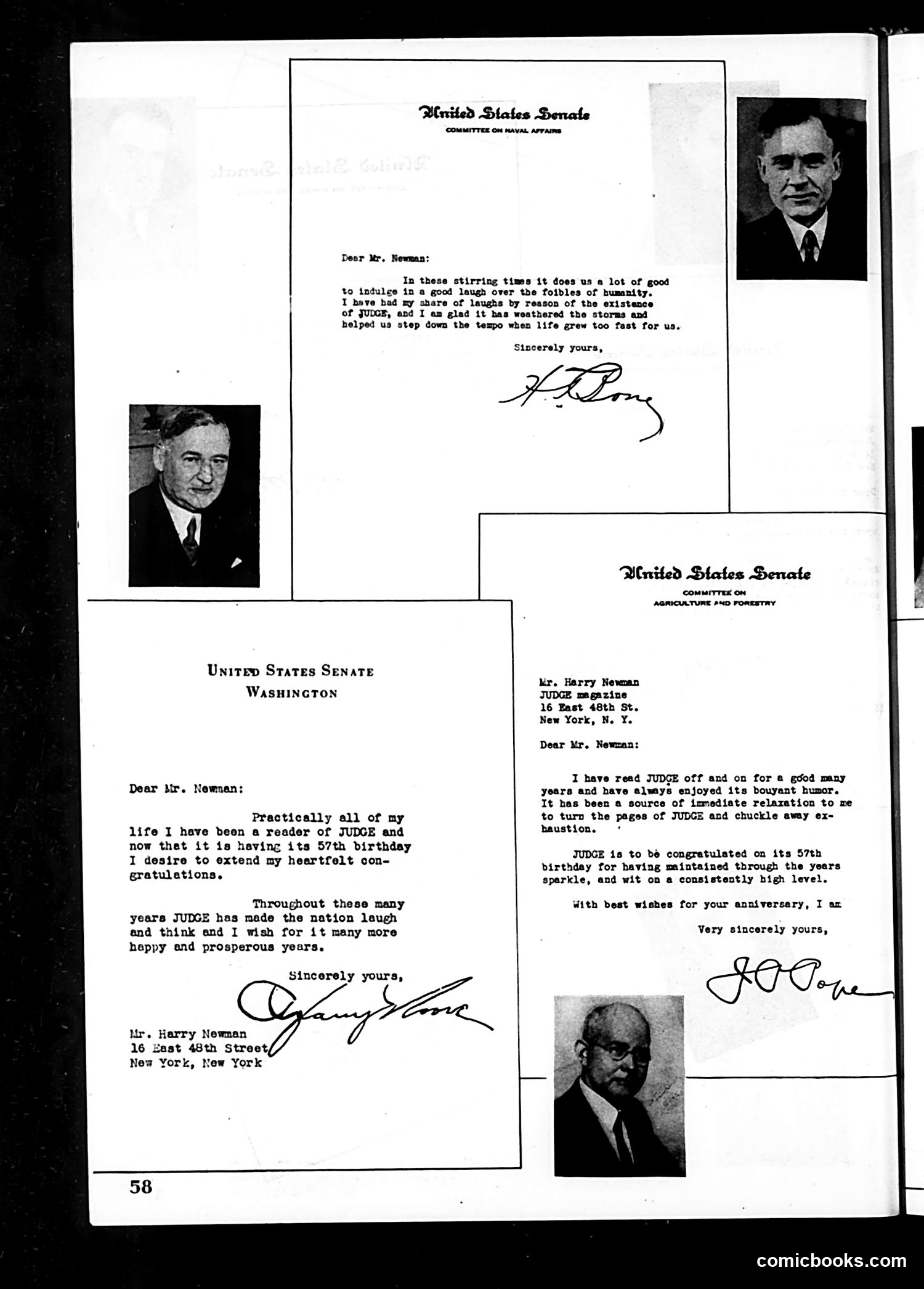
# "Parade of the Years" - Judge Magazine Satire This celebratory piece marks Judge magazine's 57th anniversary (since 1881). The text presents a nostalgic survey of American history through Judge's satirical lens, highlighting targets of ridicule: **Historical references include:** Coxey's Army (1894 protest march), the Spanish-American War ("that hill with Teddy"—Rough Riders), WWI, Prohibition, the 1920s (flappers, speakeasies/"speaks"), the stock market crash, and the Great Depression. **1930s New Deal programs** receive particular attention: F.D.R., the C.C.C. (Civilian Conservation Corps), N.R.A. (National Recovery Administration), and the "brain trust" of young college-educated advisors. **Political figures mocked:** Alf Landon (Republican 1936 presidential candidate saying "Phooey"), references to labor unions (A.F.L., C.I.O.), and "General Hughie" (likely General Hugh Johnson, NRA administrator). The satire suggests Judge views these Depression-era interventions with skeptical humor—treating them as fodder for comedic criticism rather than serious policy assessment.

# Analysis This is a **Bell Telephone System advertisement**, not satirical content. The page promotes telephone service expansion with the tagline "MORE SERVICE FOR MORE PEOPLE." The visual shows a rotary telephone dial with letter-number combinations (GHI, DEF, ABC, JKL, MNO) visible—the standard mapping system used on mid-20th century phones. The advertisement's three key claims are: 1. More Bell telephones exist than ever before 2. More people can talk with you; you can talk with more people 3. Bell telephone service provides greater value This appears to be **corporate messaging from the Bell Telephone System's golden age** (likely 1930s-1950s), emphasizing the company's expansion and improved connectivity as consumer benefits. It reflects the era when telephone availability was still a growing service, not yet universal.