A complete issue · 52 pages · 1937
Judge — January 1937
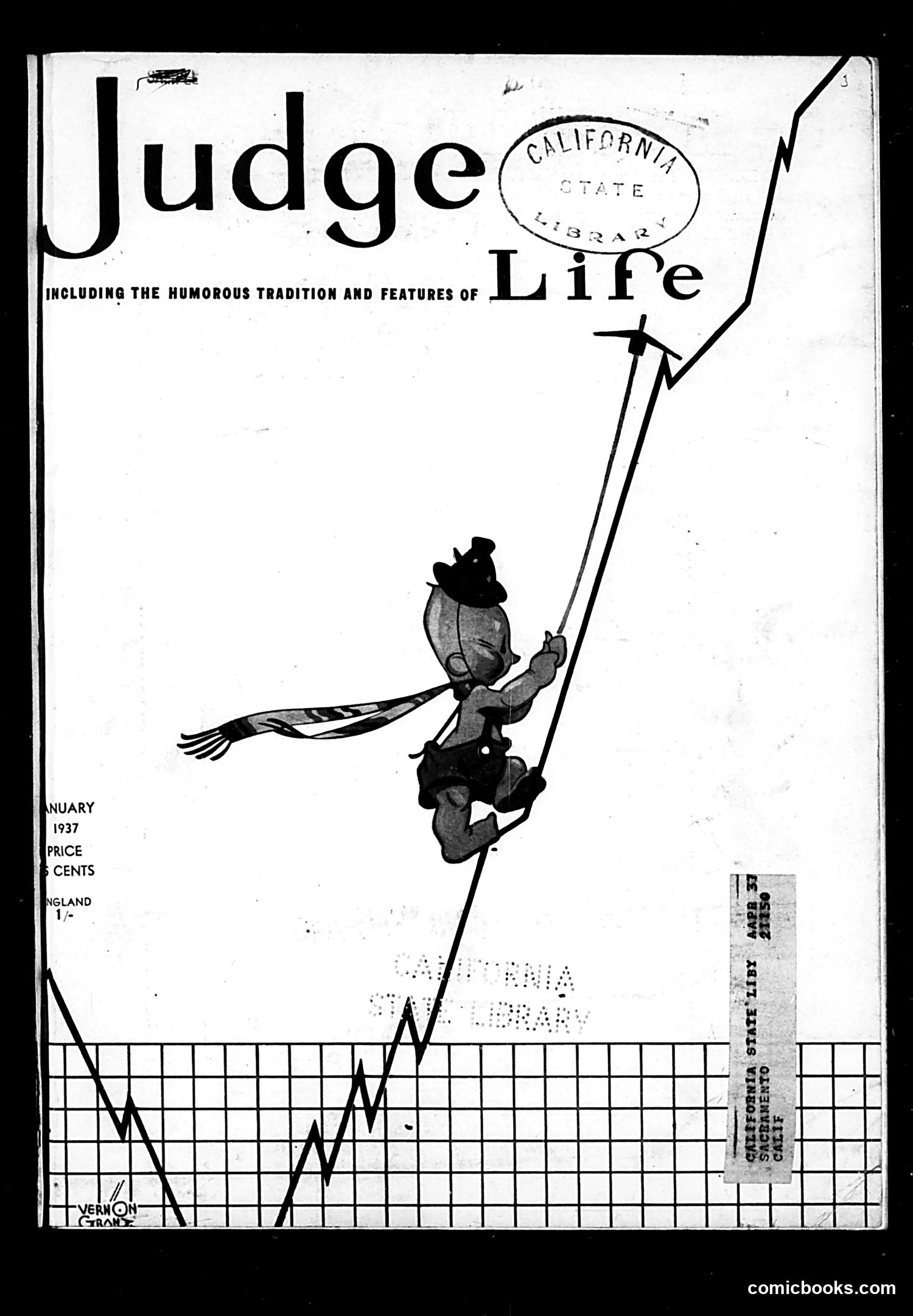
# Judge Magazine Cover Analysis - January 1937 This cover depicts a figure climbing upward along a sharply rising stock market graph line, suggesting economic recovery during the Great Depression's later years. The character appears to be a judge or authority figure (fitting for *Judge* magazine's mascot tradition), optimistically ascending what the subtitle promises: "including the humorous tradition and features of Judge Life." The dramatic upward trajectory of the graph contrasts with earlier Depression imagery, likely celebrating the economic recovery period of 1936-1937. The confident pose and determined climb suggest cautious optimism about America's economic future, though the sharp fluctuations in the underlying graph line hint at the market's volatility and uncertainty—a subtle reminder that recovery remained precarious.
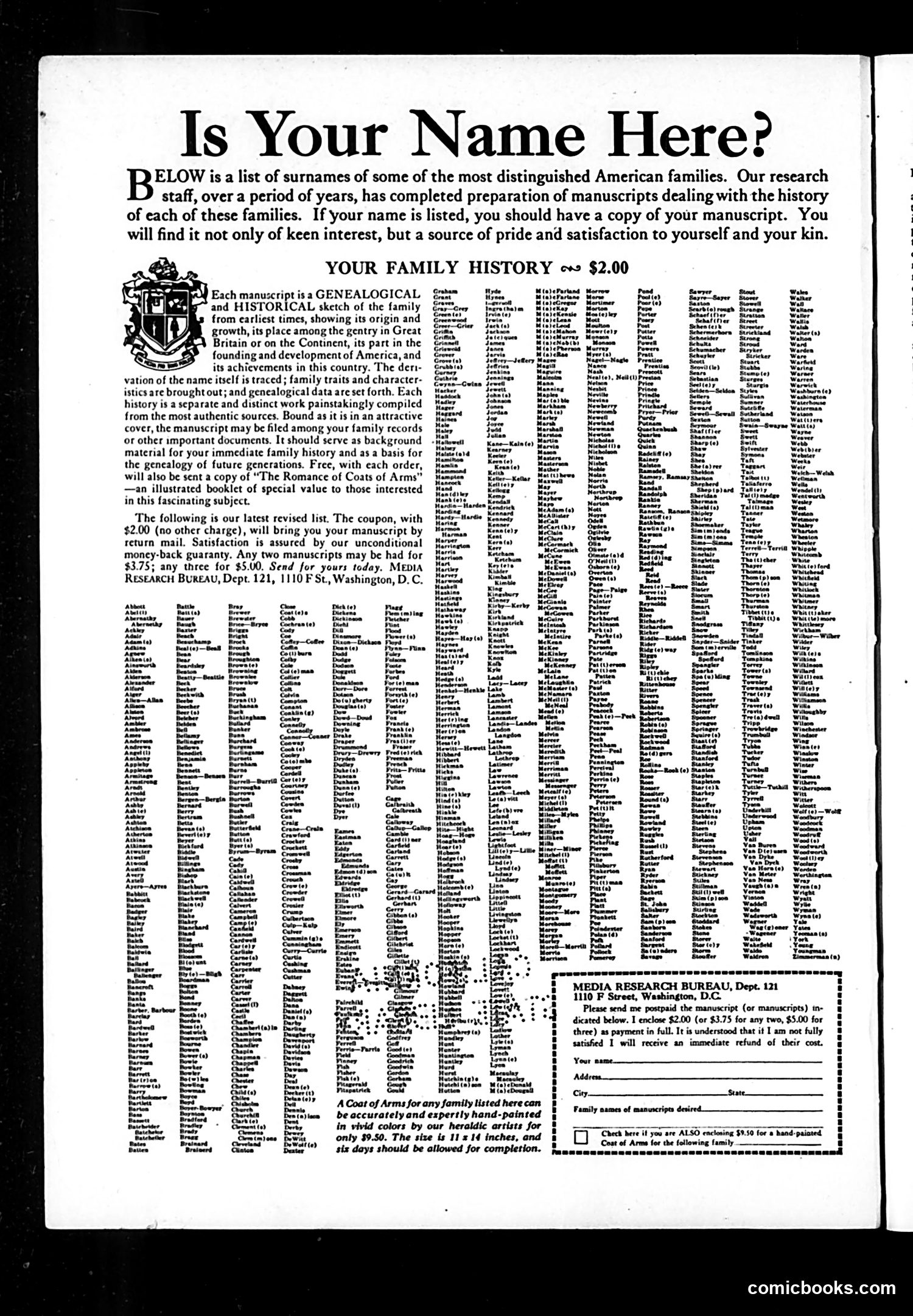
# Analysis This page is **primarily an advertisement**, not satirical content. It's a full-page ad from the Media Research Bureau promoting genealogical family history manuscripts for $2.00. The ad features an ornate coat-of-arms emblem and extensive columns of surnames—"a list of surnames of some of the most distinguished American families." The pitch targets middle-class Americans interested in tracing their ancestry back to "Great Britain or on the Continent" and establishing family pride through documented genealogy. This reflects early 20th-century American fascination with hereditary status and lineage. The ad appears designed to capitalize on anxieties about social standing by offering "proof" of respectable ancestry—a common commercial appeal of that era before modern genealogy became a hobby.
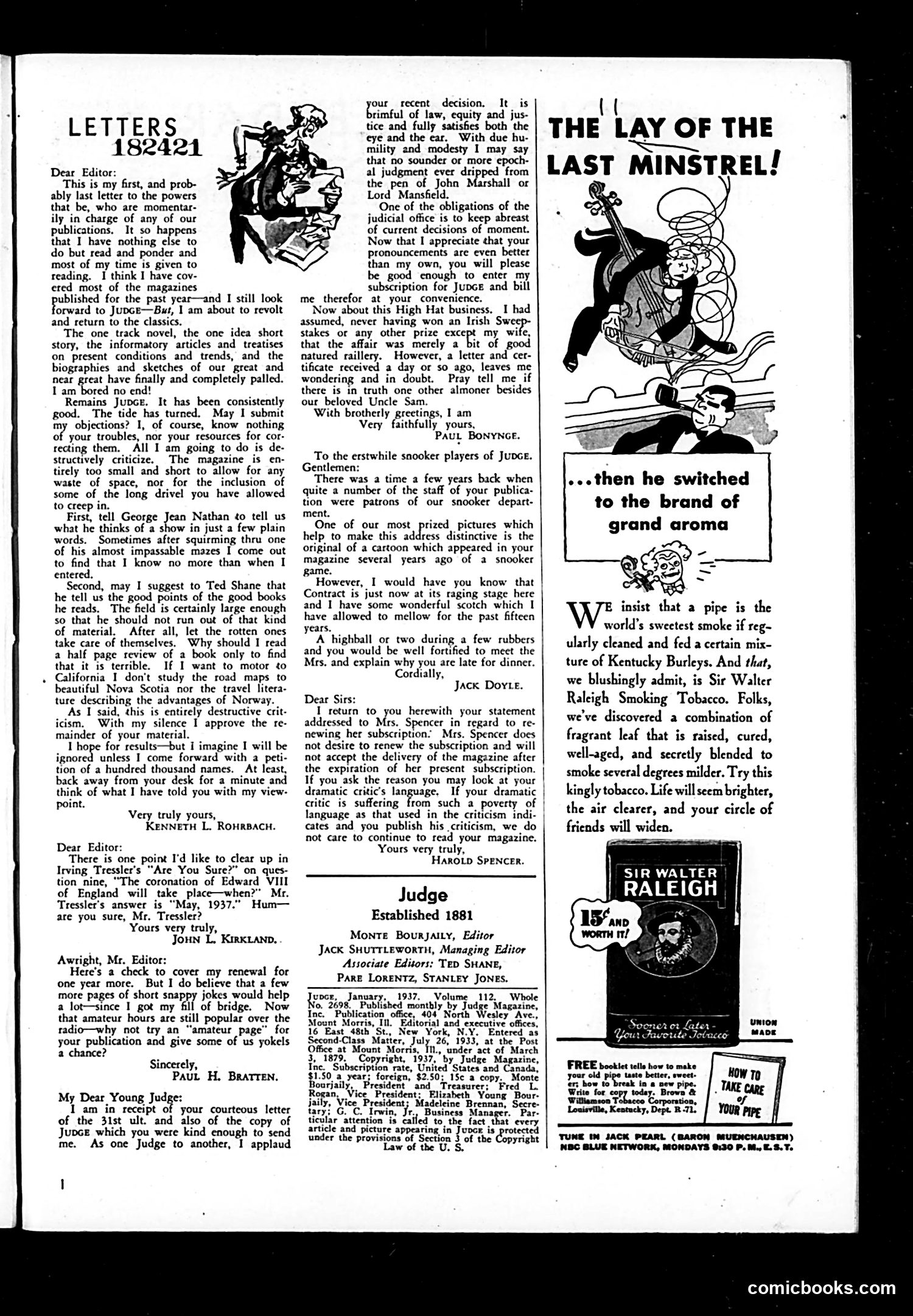
# Analysis of Judge Magazine Page (January 1937) The main cartoon, "The Lay of the Last Minstrel," depicts a figure (appearing to be an Irish immigrant based on the caricature style) discovering that switching to Sir Walter Raleigh tobacco enhances his social status or appeal—he's now accepted by what appears to be upper-class company. This is primarily an **advertising page** for Sir Walter Raleigh Smoking Tobacco, using ethnic humor common to 1930s advertising. The joke relies on period stereotypes: the implication that an Irish working-class character can "improve" himself through consumer choice. The page also contains editorial letters addressing magazine policy and a snooker-related contribution, but these are secondary to the tobacco advertisement, which occupies substantial visual space and represents the page's commercial purpose.
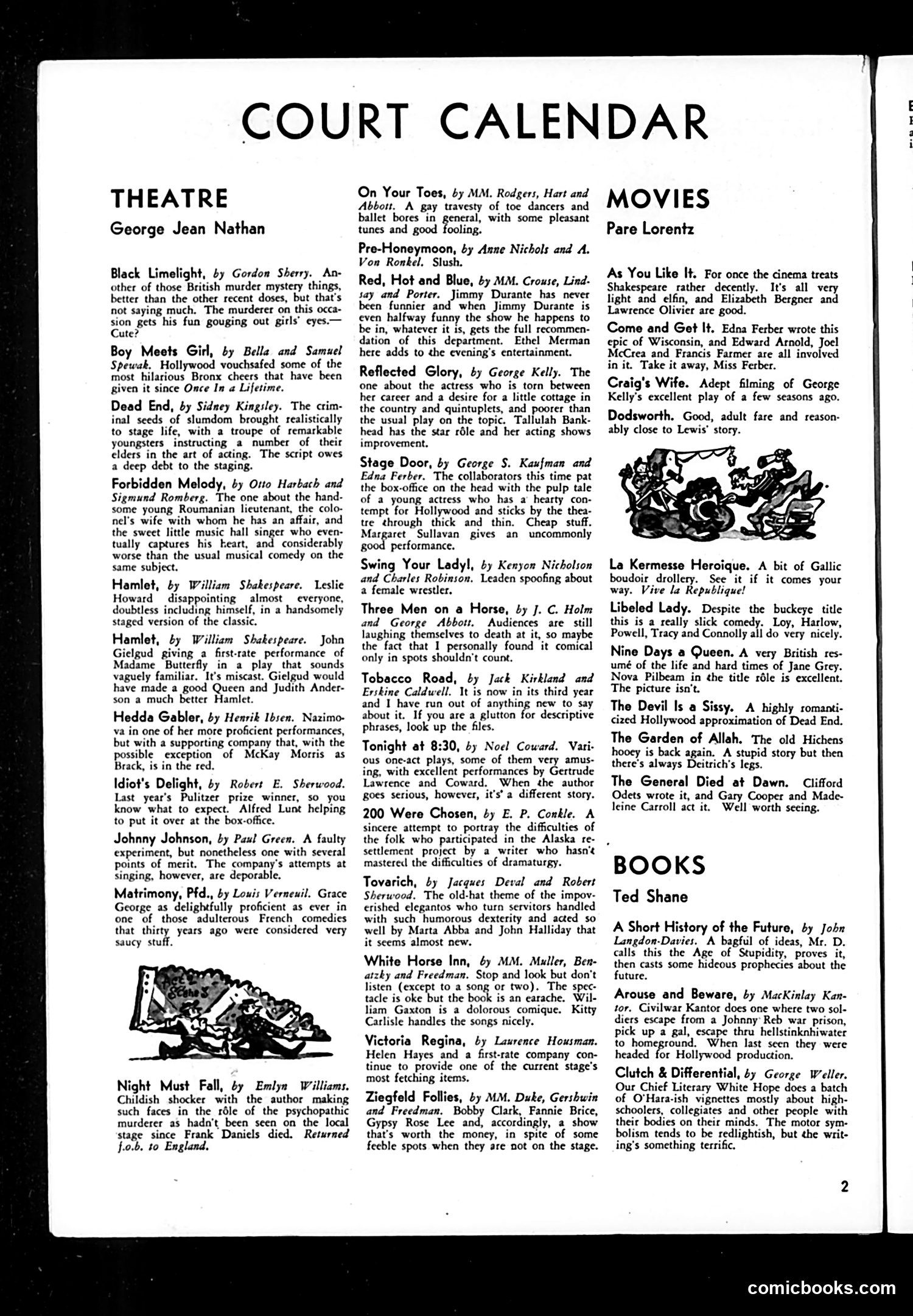
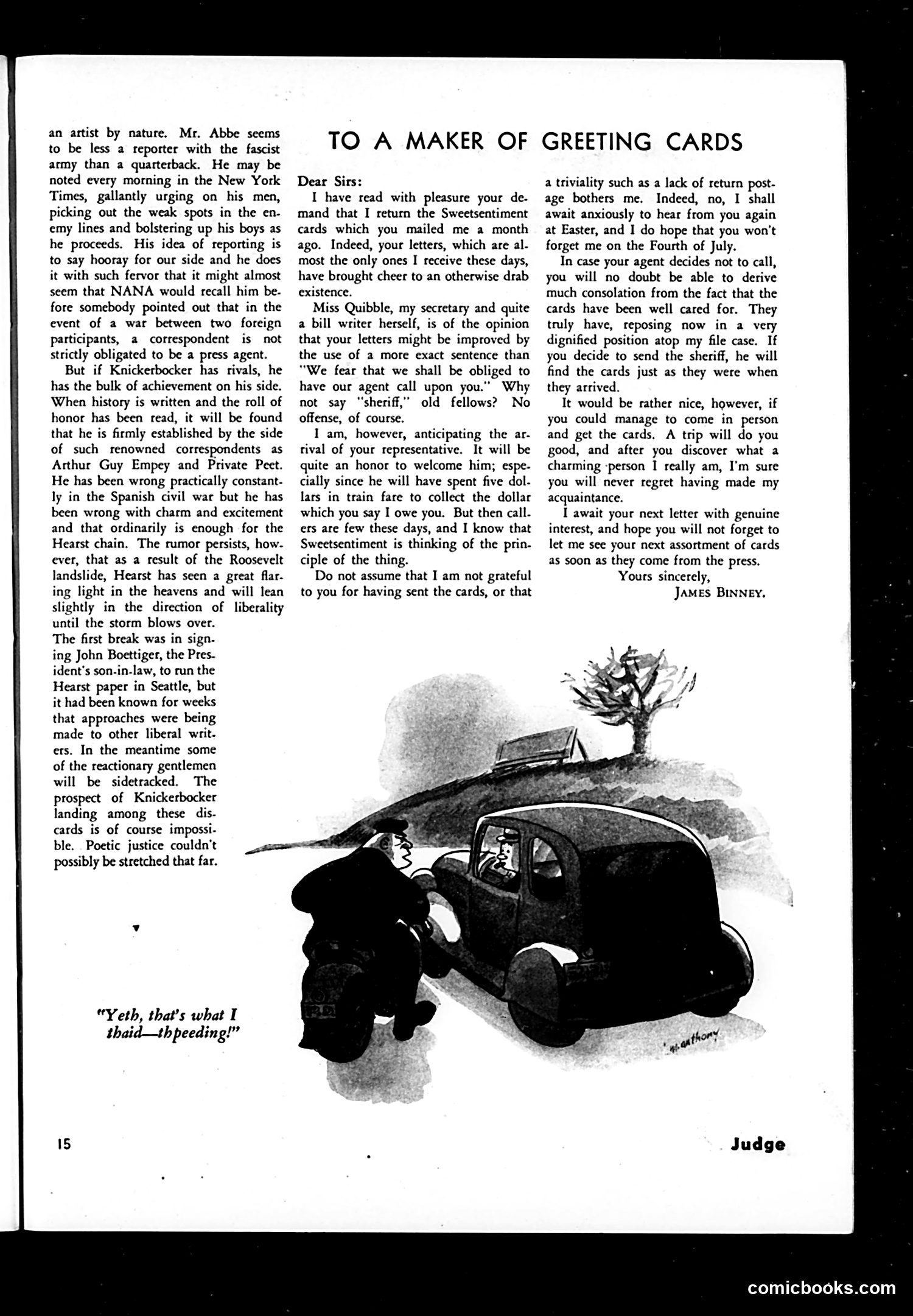
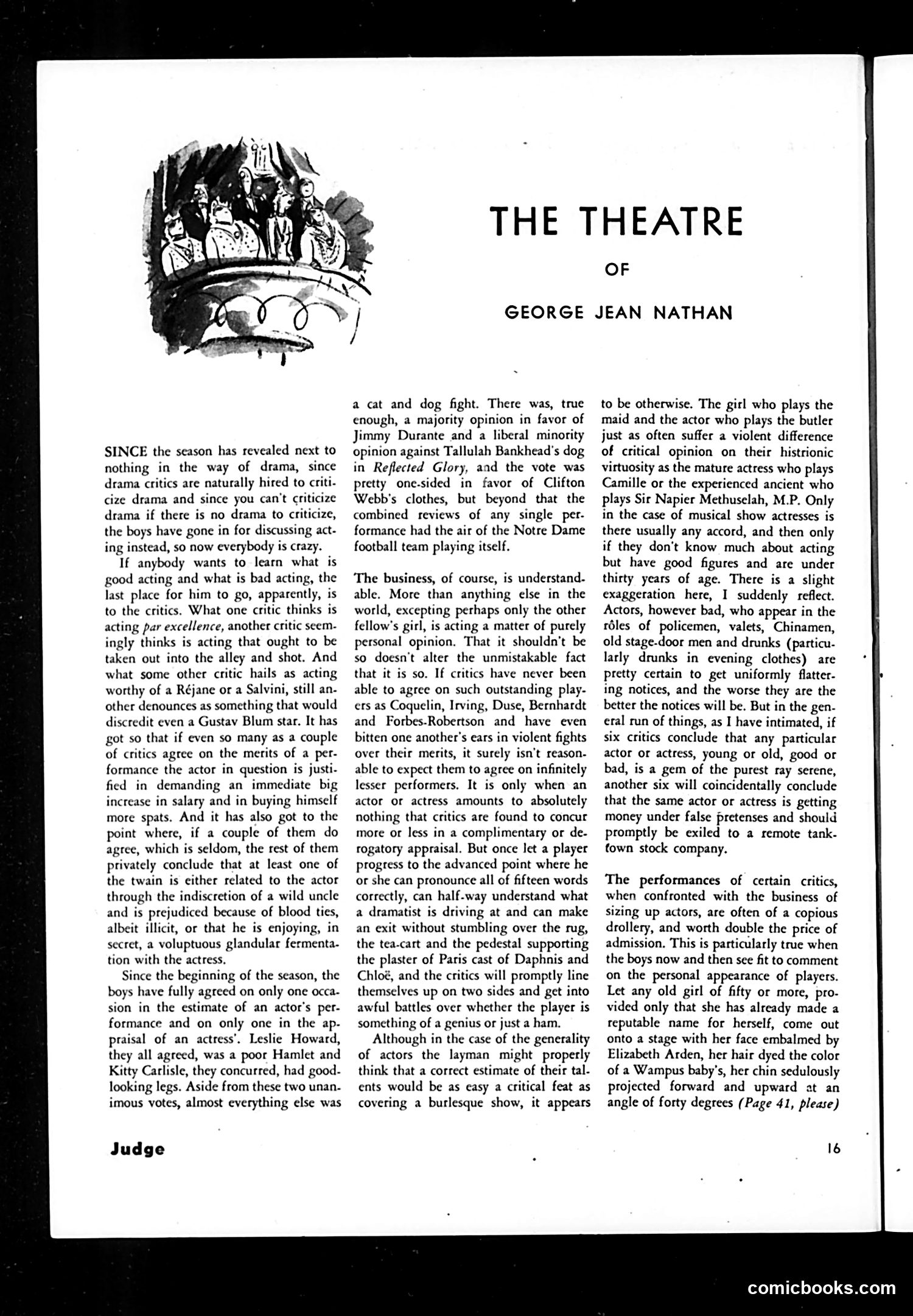
# Court Calendar Page Analysis This is primarily a **review and listing page** from Judge magazine, not a political cartoon page. It contains theater reviews (by George Jean Nathan), movie reviews (by Pare Lorentz), and book reviews (by Ted Shane). The only cartoon visible is a small **decorative illustration** in the lower left corner showing what appears to be a stylized figure in an exaggerated pose—likely meant as a humorous vignette rather than political satire. The page functions as entertainment criticism and cultural commentary typical of Judge's format. The reviews discuss contemporary Broadway shows, films, and literature without apparent political agenda. The cartoon, if satirical, is too small and unclear in this reproduction to determine its specific meaning or targets.
# Analysis of Judge Page This page is primarily **advertising and music reviews** rather than political satire. The main content is "RECORDS" by Dave Thompson, reviewing classical music recordings and popular songs from artists like Beethoven, Haydn, and Teddy Wilson. The left column contains brief **humorous book reviews** of titles like "Enjoyment of Laughter" and "Fighting Angel"—these appear to be lighthearted commentary on popular literature rather than political satire. The advertisements feature the **Trianon Room** (featuring dancer Ramon Ramos) and the **Hotel Raleigh** in Washington, D.C., typical of Judge's era advertising. No clear political cartoons or caricatures are visible on this page. This appears to be a standard entertainment/culture issue from Judge's mid-20th century run.
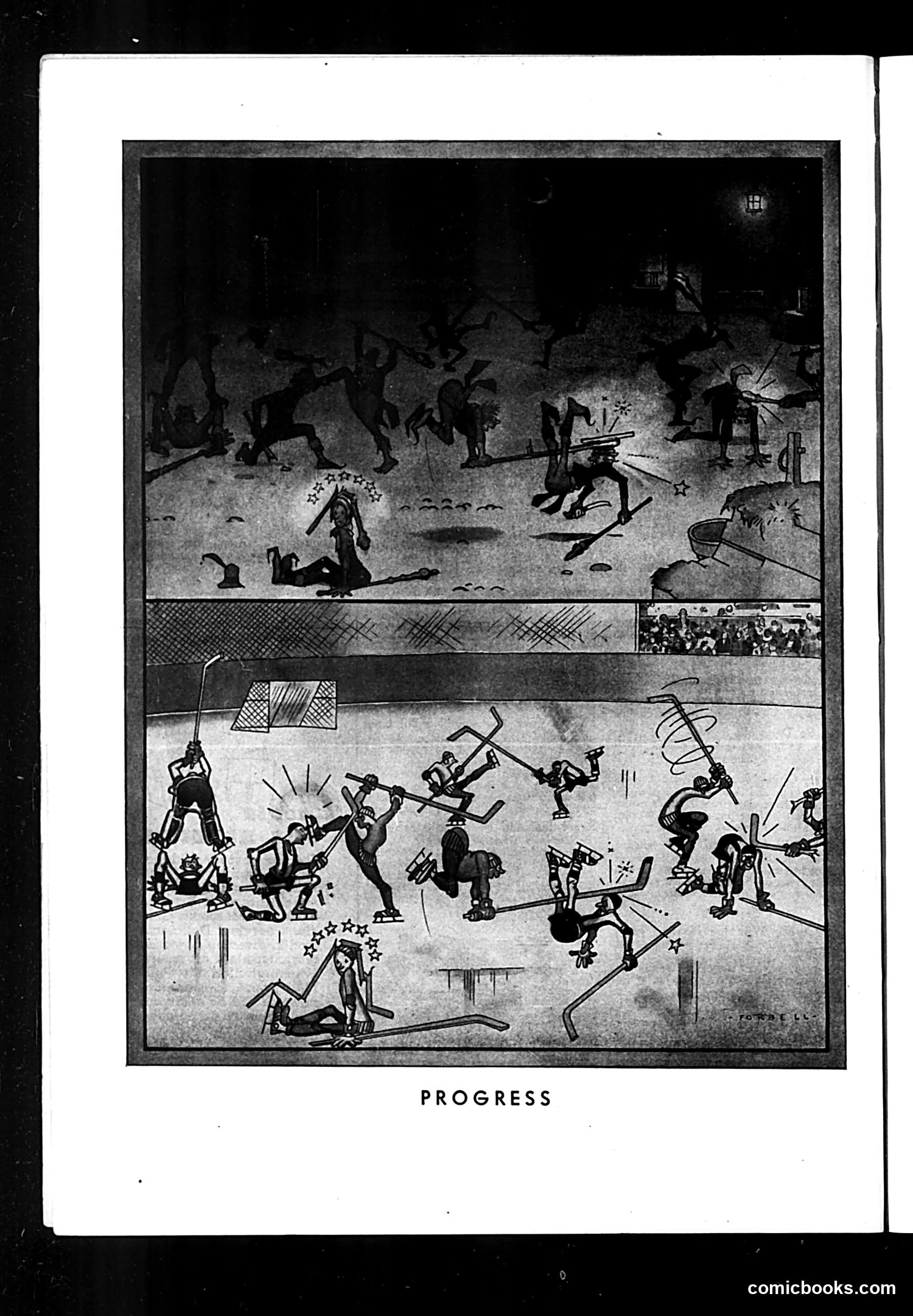
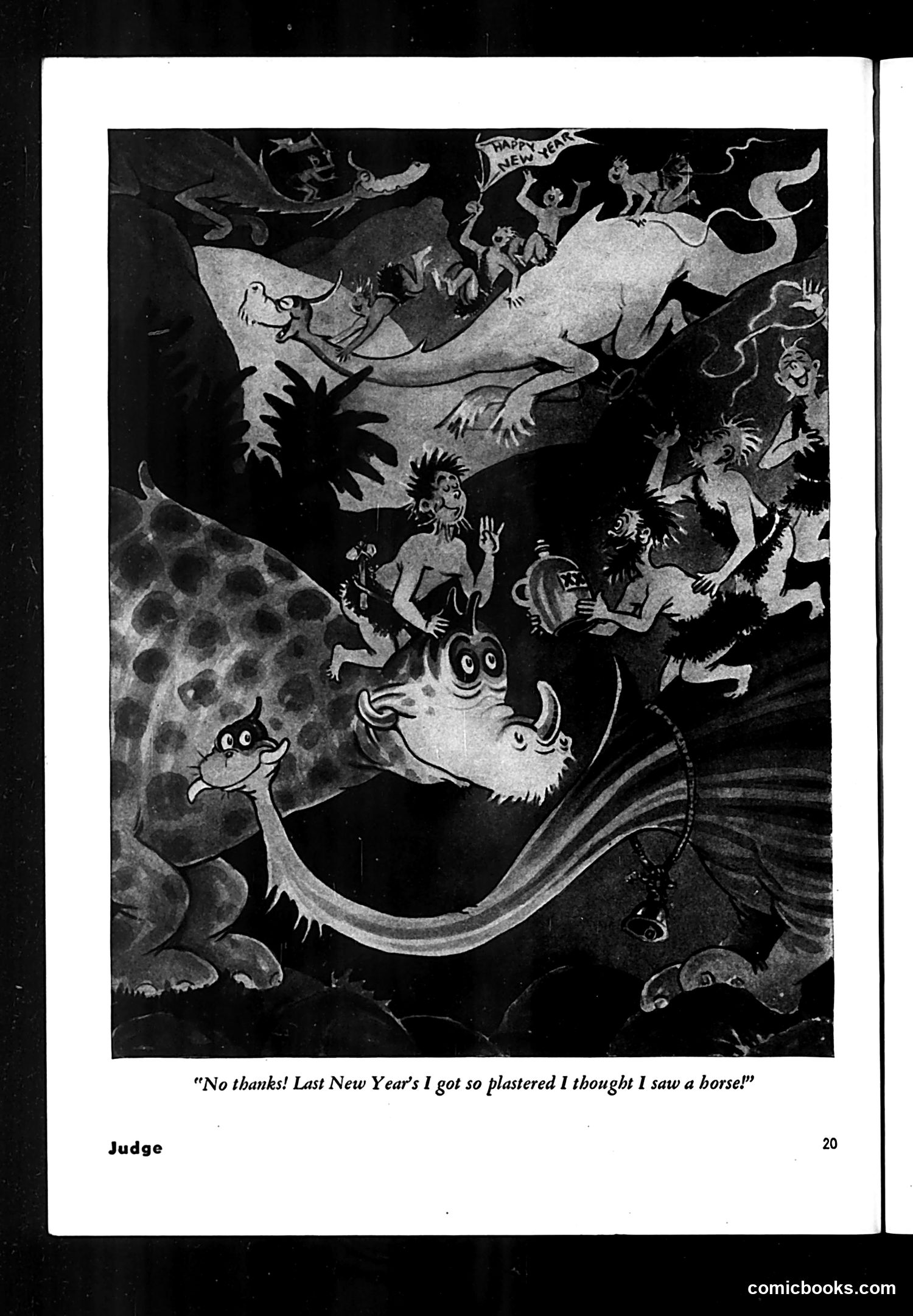
# "Progress" - Judge Magazine Cartoon This two-panel satirical cartoon contrasts primitive and modern civilization. The **top panel** depicts what appears to be a chaotic prehistoric or "savage" scene with figures engaged in violent conflict—fighting, wielding weapons, and generally behaving chaotically under moonlight. The **bottom panel** shows a modern ice hockey game, where players are similarly engaged in aggressive, violent physical contact—checking, fighting, and colliding on ice. The cartoon's title **"Progress"** is ironic: it suggests that despite civilization's supposed advancement, modern humans still engage in the same brutal, violent behavior as their primitive ancestors—merely in a more organized, institutionalized form. The satire critiques how contemporary society legitimizes and celebrates violence through organized sports rather than recognizing it as evidence that humanity hasn't truly progressed morally or behaviorally.
# Analysis of "Judge" Page: "Some of the People" This page satirizes WPA (Works Progress Administration) artists and various public figures through anecdotal sketches. The main cartoon depicts a rotund man with a large palette, likely representing a WPA artist—the Depression-era program that employed artists whose work was often dismissed as derivative or inadequate by establishment critics. The text mocks several targets: WPA artists as a class ("their statues are rejected by townsmen"), a story about an auto baron's humiliating prank on hotel staff, and profiles of figures like John L. Flanagan (liquor store owner) and advertising professionals. The overall tone is dismissive toward both struggling WPA artists and various working professionals, reflecting the magazine's satirical stance toward Depression-era cultural and economic conditions. The page relies on period-specific references requiring historical context to fully appreciate.
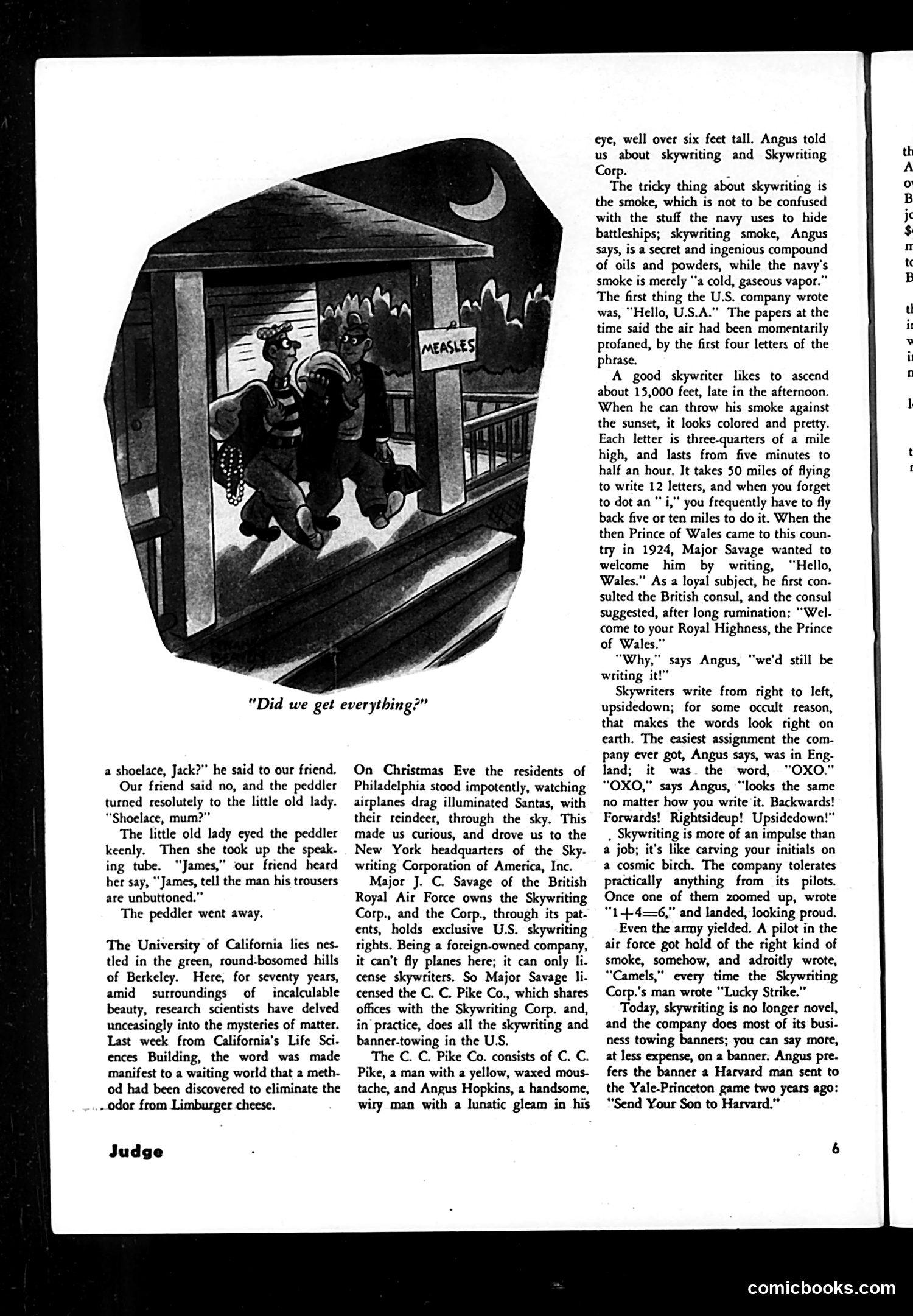
# "Did we get everything?" This cartoon satirizes skywriting—a then-novel aerial advertising method. The image shows a storefront labeled "MEASLES" with figures inside appearing sick, while skywriters operate above. The joke hinges on a dark pun: skywriters have just "written" measles in the sky, and the store's occupants anxiously ask whether they've advertised everything needed. The satire mocks how skywriting was being used for commercial promotion, imagining it applied absurdly to disease rather than legitimate products. The accompanying text discusses skywriting's actual mechanics and early high-profile uses (including a 1924 greeting to the Prince of Wales). The cartoonist ridicules both the novelty of aerial advertising and its indiscriminate commercial applications, suggesting even epidemics might be "marketed" via this new technology.
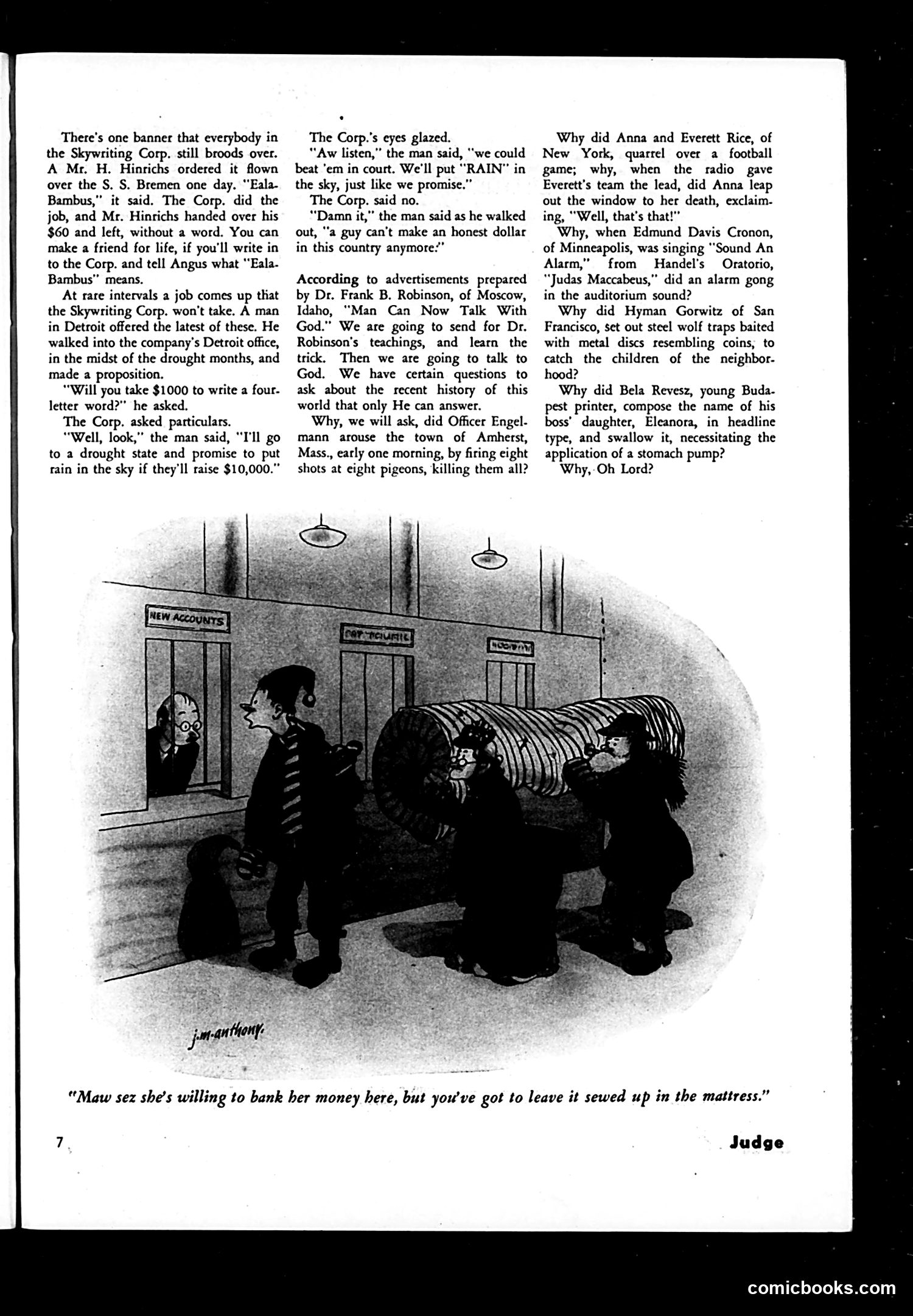
# Cartoon Analysis: "Judge" Magazine Page This page contains a satirical cartoon and anecdotes mocking American business and advertising culture, likely from the 1920s-1930s based on style. The main cartoon depicts people examining a large cylindrical object (possibly a mattress or safe) at what appears to be a bank. The caption reads: "Maw sez she's willing to bank her money here, but you've got to leave it sewed up in the mattress." The joke critiques distrust of banks—a rural or working-class woman refuses to deposit her savings conventionally, instead keeping money literally sewn into a mattress, a common Depression-era practice reflecting widespread banking skepticism. The surrounding text mocks corporate advertising schemes (like the "Skywriting Corp." and "Man Can Now Talk With God") and absurd business propositions, satirizing American commercial excess and gullibility.
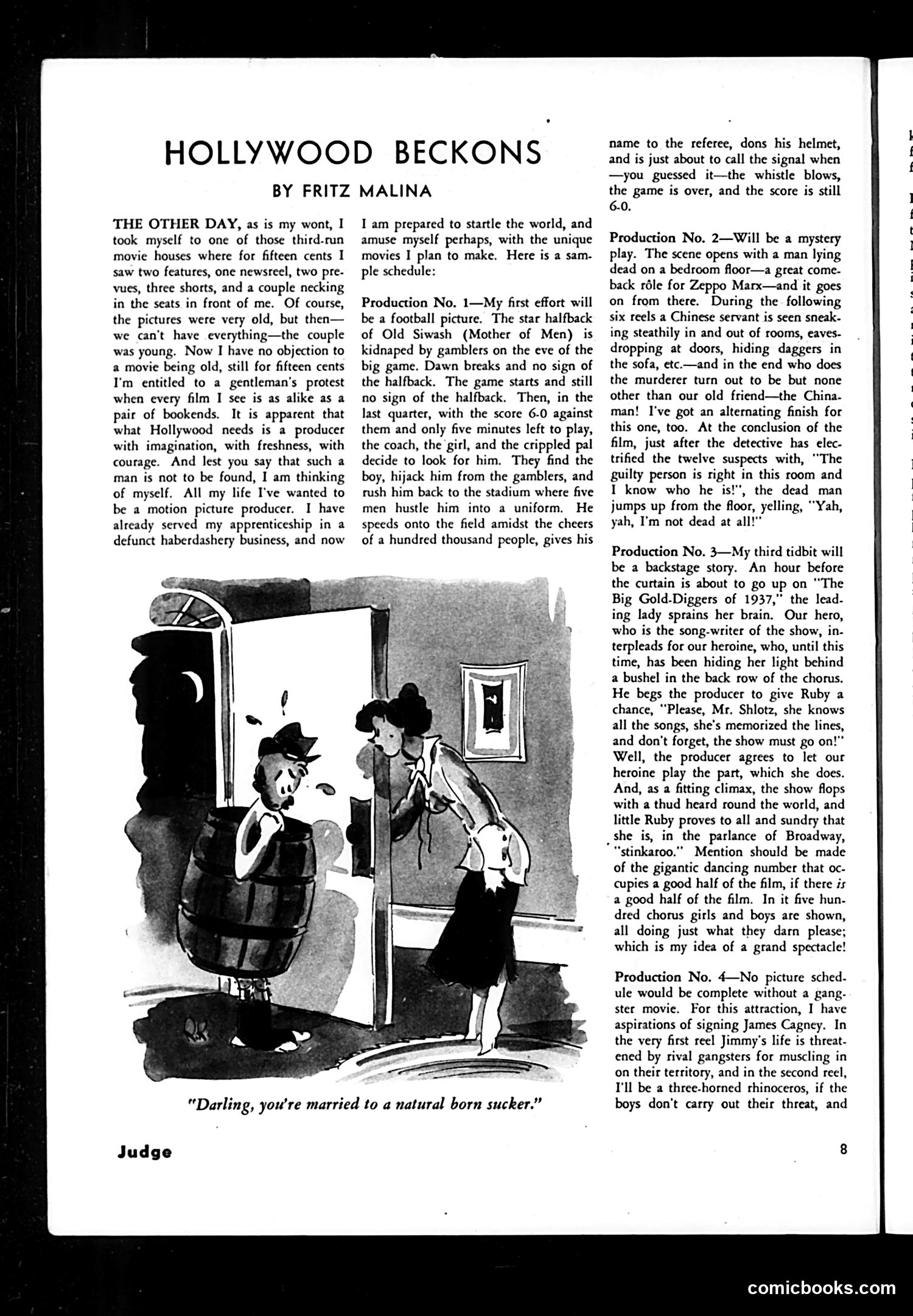
# "Hollywood Beckons" by Fritz Malina This is a satirical essay mocking formulaic Hollywood screenwriting. The author, posing as an aspiring producer, outlines four hilariously clichéd movie pitches that parody common studio tropes of the 1930s: **Production 1** ridicules sports movies: a kidnapped football star mysteriously reappears mid-game, only to have it end anticlimactically. **Production 2** mocks mystery films: Chinese servants skulk mysteriously, the supposedly dead man was alive all along. **Production 3** parodies backstage musicals: an unknown chorus girl ("Ruby") gets her big chance when the star is injured, the show flops anyway—a reference to the "Gold Diggers" series. The single cartoon below illustrates marital naiveté: a woman calls her husband "a natural born sucker," a dig at male gullibility. Malina's satire targets Hollywood's creative bankruptcy—recycled plots, stereotypical characters (the "Zeppo Marx" reference), and predictable outcomes. The piece is both criticism and self-aware comedy about tinseltown's formula-driven productions.
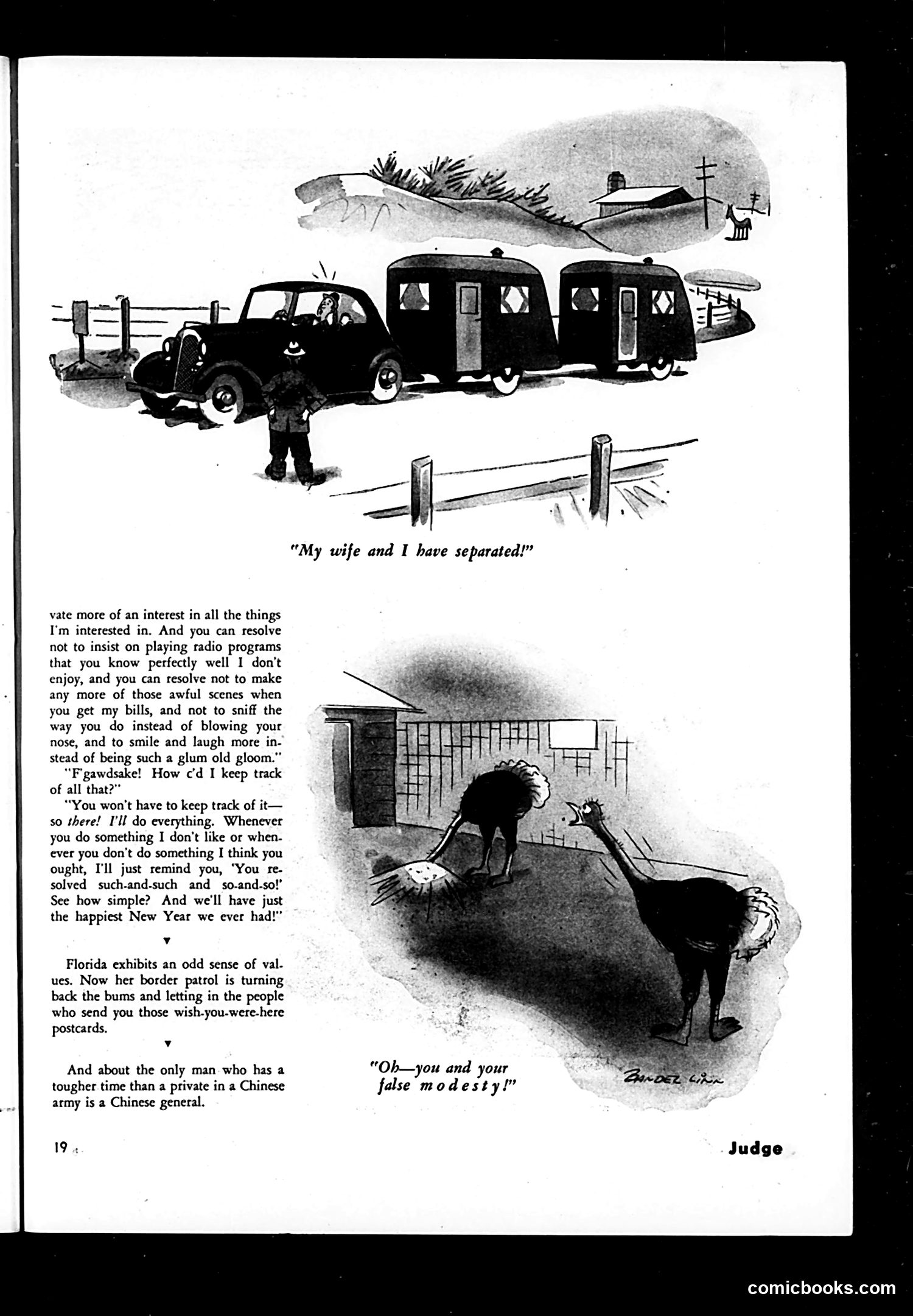
# "The World Progresses" Cartoon Analysis This single-panel cartoon satirizes consumer behavior and the illusion of progress. Mr. McCreedy visits a gas station featuring new pumps that display both gallons *and* dollars/cents simultaneously. Impressed by this "modern" technology, he requests forty cents' worth of gas—ostensibly to test the mechanism. The satire lies in the joke's caption and setup: McCreedy believes he's making a sophisticated choice by purchasing gas by *price* rather than *volume*. However, the new pump simply provides an additional display option; it doesn't fundamentally change the transaction. The cartoon mocks how consumers mistake superficial "improvements" or new marketing presentations for genuine progress or meaningful choice. This reflects 1920s-30s American consumer culture anxieties about whether modern conveniences and advertising genuinely benefited consumers or merely repackaged existing products.
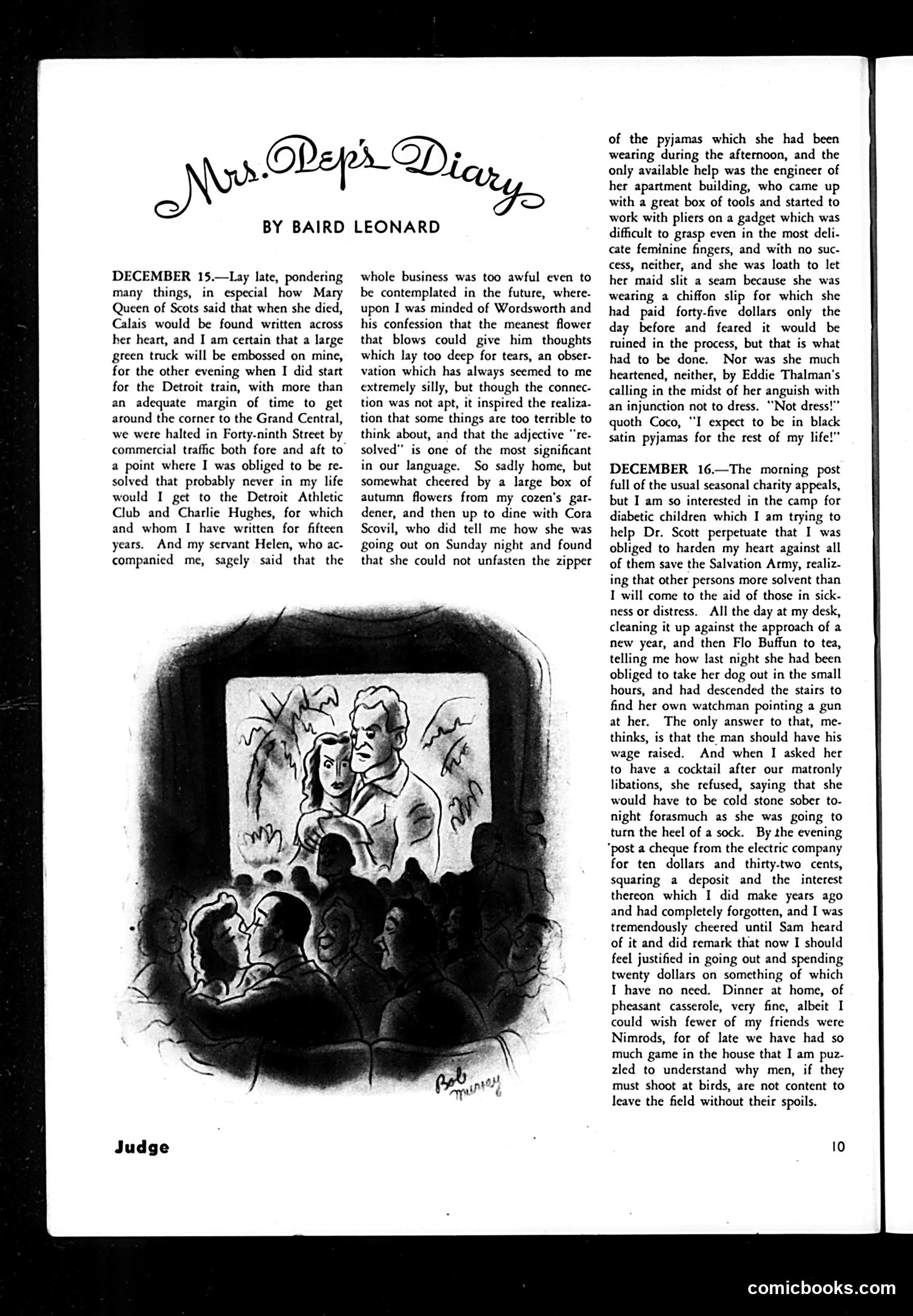
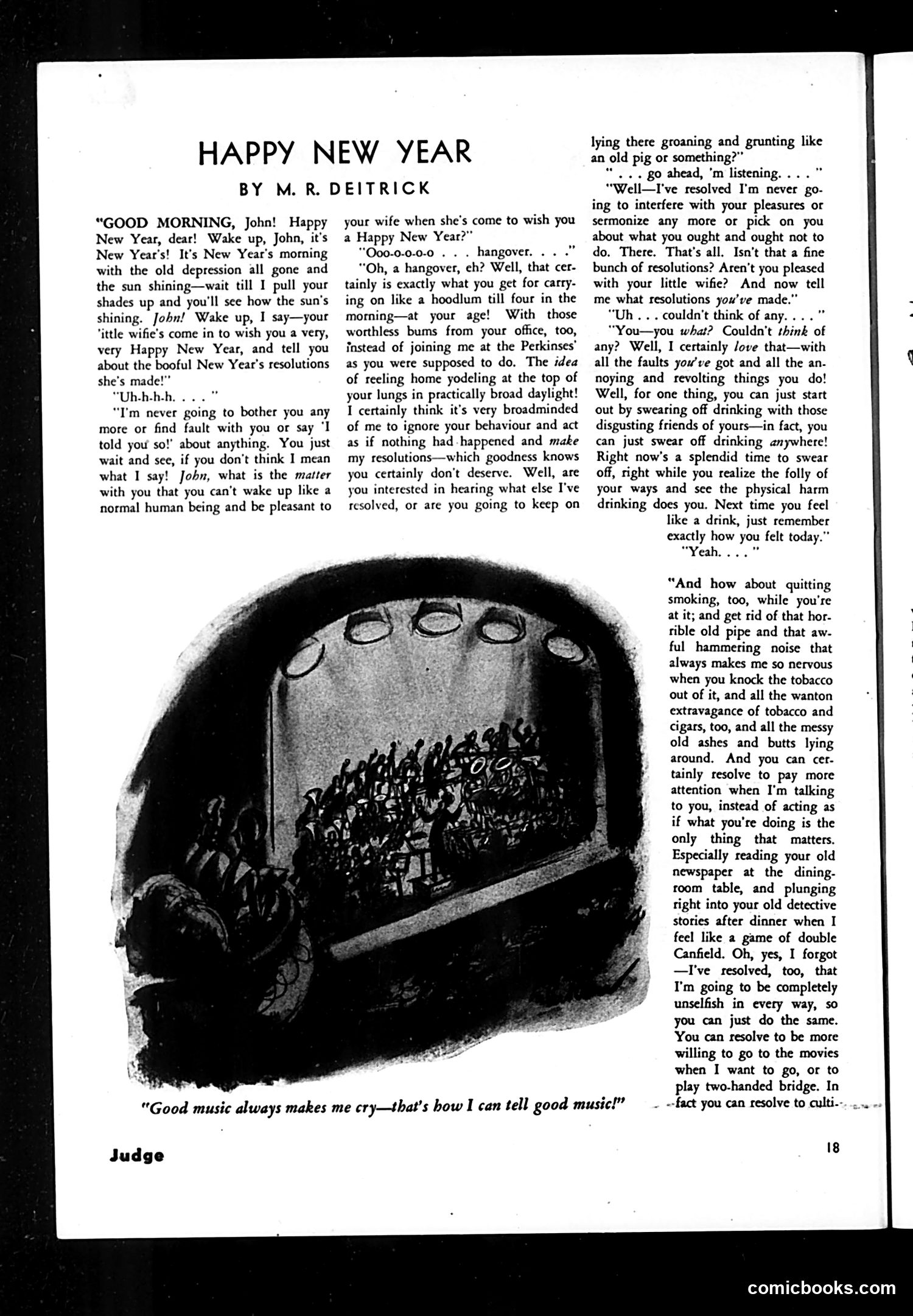
# "Mrs. Dep's Diary" - December 15-16 This is a humorous diary entry by Baird Leonard satirizing upper-middle-class urban life in what appears to be 1920s New York. The unnamed diarist chronicles trivial domestic frustrations—being stuck in Forty-ninth Street traffic en route to the Detroit Athletic Club, a dinner guest's jammed pajama zipper requiring an apartment building engineer's intervention with pliers, and a watchman pointing a gun at a friend descending stairs at night. The cartoon (artist signature unclear) depicts people watching what appears to be a theatrical performance or screen, likely illustrating one of the diary's anecdotes. The satire mocks how the leisure class dramatizes minor inconveniences as catastrophes worthy of Wordsworth-level contemplation. The tone is gently self-mocking—the diarist's breathless recounting of these "crises" undercuts any genuine concern, exposing the comfortable absurdity of their problems.