
A complete issue · 36 pages · 1922
Judge — May 13, 1922
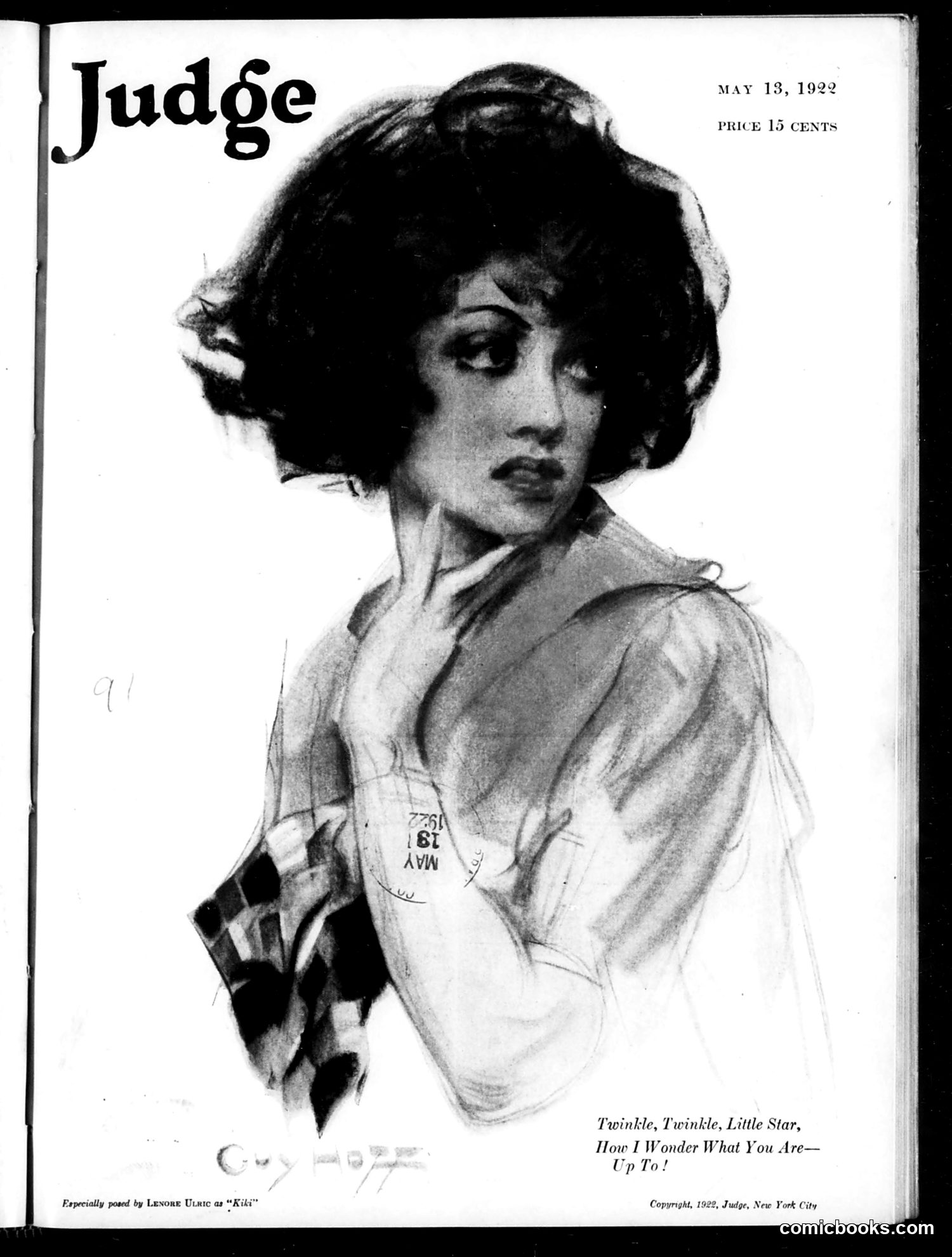
This is a magazine cover rather than a political cartoon. It features a portrait illustration of a woman with short, dark bobbed hair—a fashionable 1920s hairstyle—gazing downward. She wears a light-colored garment. The caption reads "Twinkle, Twinkle, Little Star, / How I Wonder What You Are— / Up To!"—a playful twist on the nursery rhyme. This appears to reference contemporary anxieties about young women's independence and changing social behavior during the Jazz Age. The "up to" suggests mysterious or potentially scandalous activities, reflecting period concerns about women's liberation and the "flapper" phenomenon. The illustration is credited to Lioncourt Usaac as "Kiki."
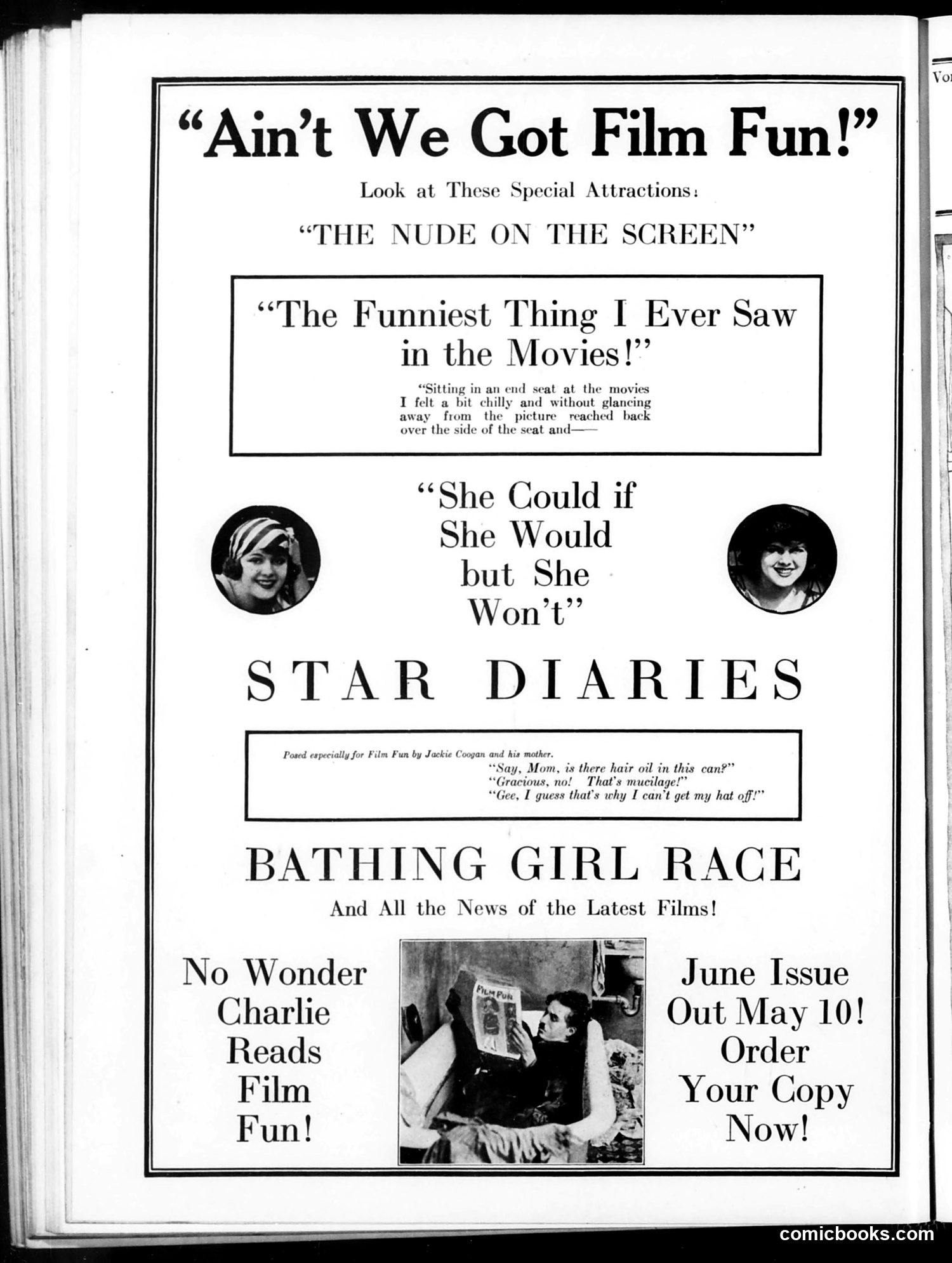
This appears to be primarily **advertising content** rather than political satire or editorial cartooning. The page promotes "Film Fun," a Judge magazine feature, advertising upcoming content including: - "The Nude on the Screen" - "The Funniest Thing I Ever Saw in the Movies" - "Star Diaries" (featuring Jackie Cooper) - "Bathing Girl Race" The humor is light and entertainment-focused—typical 1920s-30s magazine fare emphasizing movie industry gossip, physical comedy, and bathing beauties rather than political commentary. The central photograph shows someone reading a "Film Fun" magazine in bed, serving as a visual advertisement for the publication itself. This reflects Judge's evolution toward lifestyle and entertainment content alongside its traditional satirical commentary.
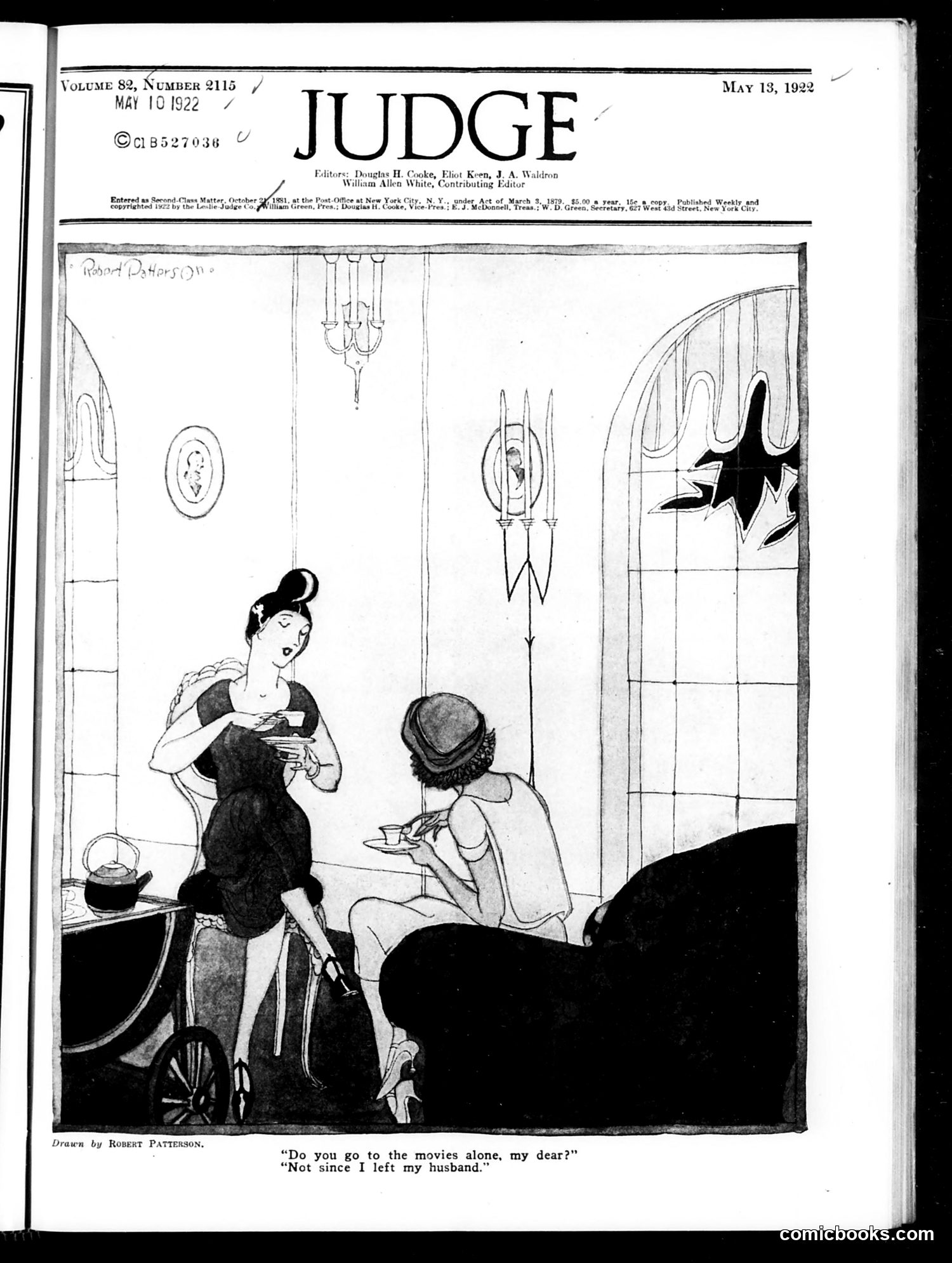
This single-panel cartoon by Robert Patterson depicts two women in what appears to be a bedroom. One woman, standing and holding a mirror, asks another seated woman: "Do you go to the movies alone, my dear?" The response: "Not since I left my husband." The joke satirizes marital dynamics and changing social attitudes in the 1920s. It suggests that married women had limited independence, using "going to the movies alone" as shorthand for female autonomy. The woman's statement that she only gained this freedom after leaving her husband implies that marriage restricted women's personal liberty—a commentary on restrictive spousal expectations of the era. The cartoon humorously critiques traditional marriage constraints on women's independence.
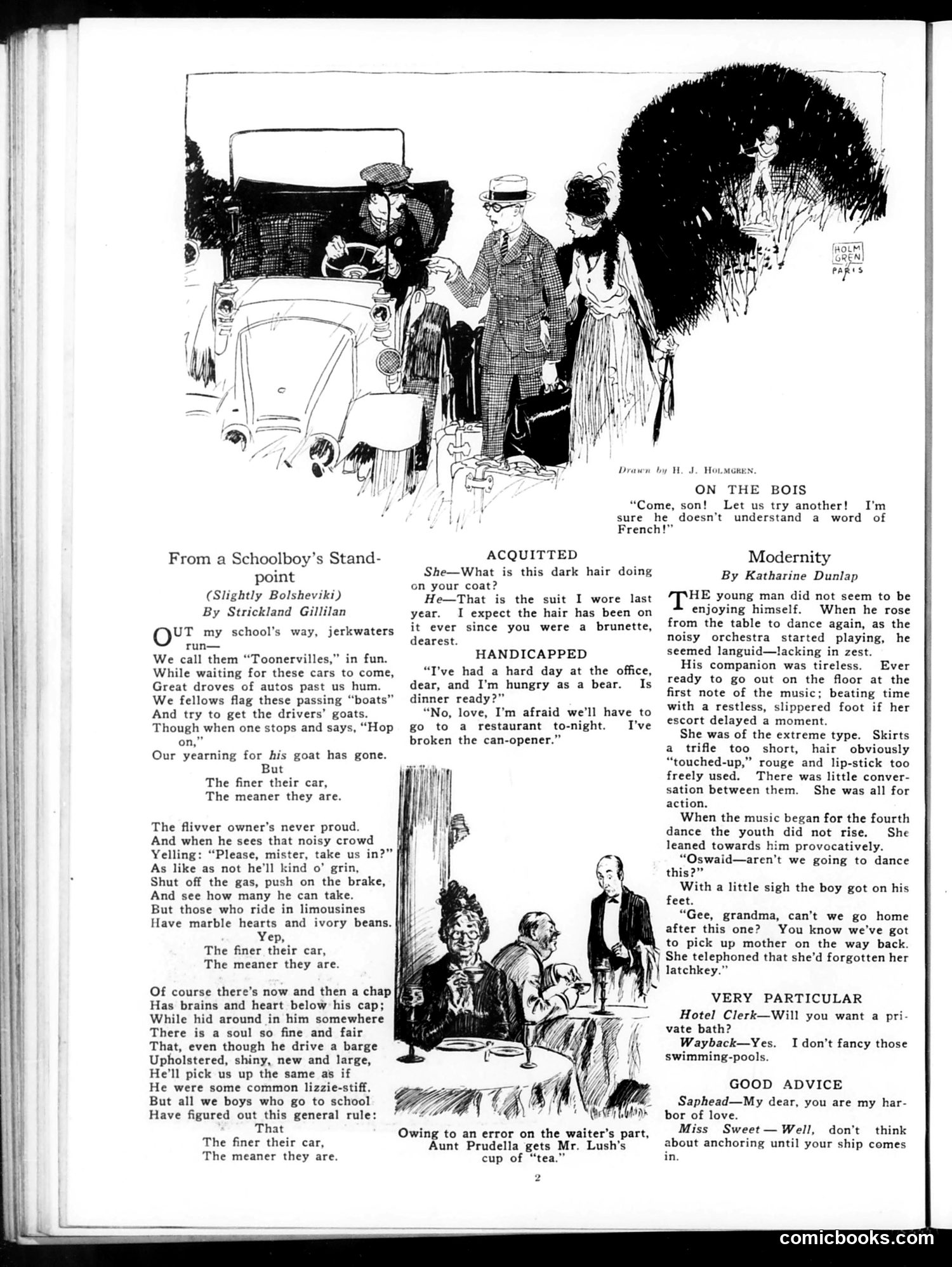
This page contains several short humor pieces and sketches rather than a single political cartoon. **Top illustration** ("On the Bois"): Shows people in an open car with French dialogue, satirizing Parisians. The joke appears to target French linguistic pretension—an American character struggles to understand French, stereotyping Parisians as snobbish. **"From a Schoolboy's Stand-point"**: A poem mocking working-class aspiration and car culture, suggesting rivalry between owners of fine automobiles versus "Toonervilles" (cheap cars). The repeated refrain "The finer their car, / The meaner they are" presents cynical class commentary. **Other pieces** ("Acquitted," "Modernty," "Handicapped," etc.) are brief anecdotes about social situations, reflecting period attitudes toward gender relations, dining etiquette, and courtship—typical light satirical fare for an early 20th-century humor magazine.
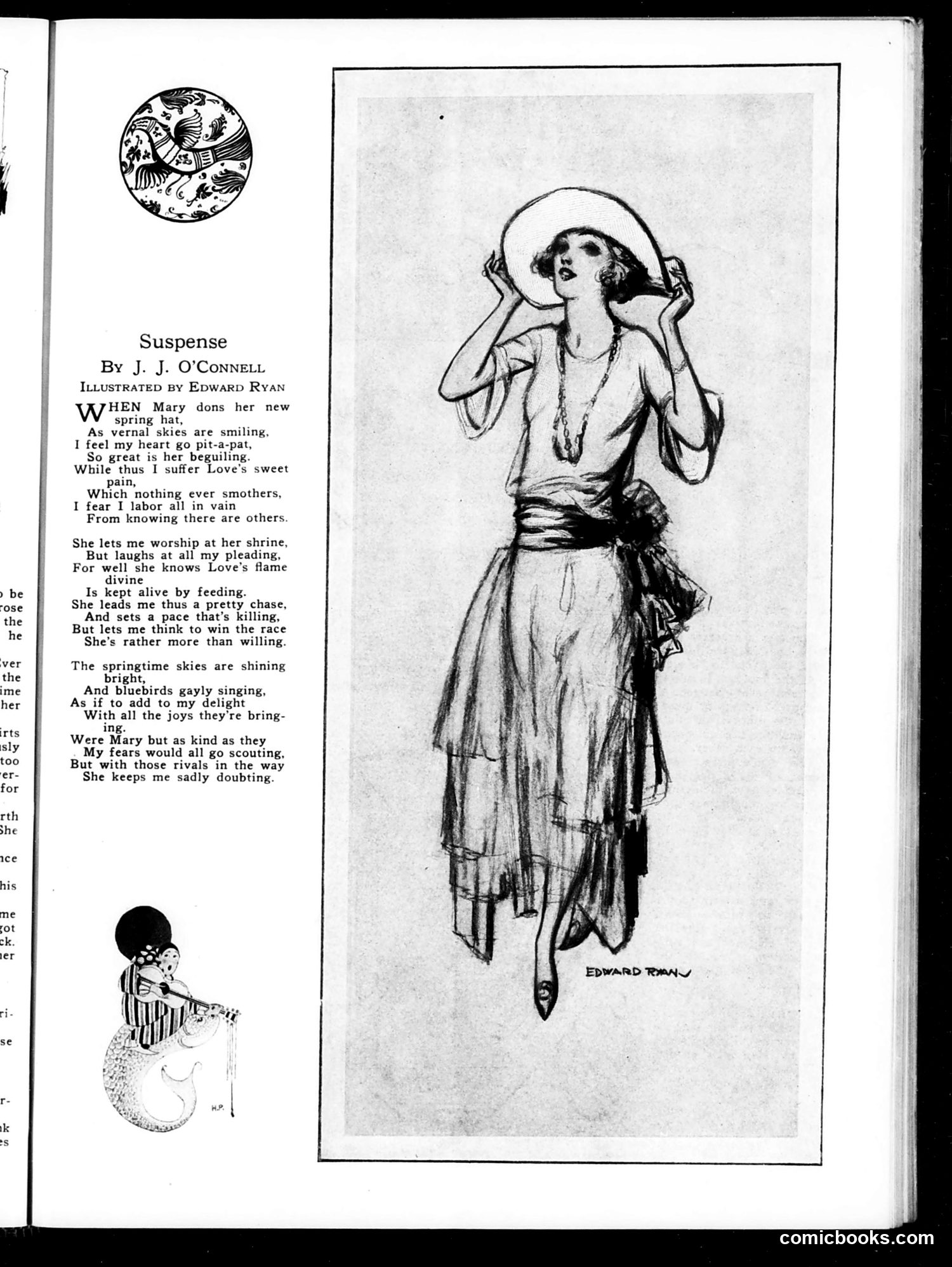
This page presents a romantic poem illustrated by Edward Ryan rather than political satire. The poem "Suspense" describes a man's anxious love for a woman named Mary—specifically his uncertainty about her affections despite her apparent kindness and beauty. The main illustration depicts a fashionably dressed woman in 1910s-era clothing (wide-brimmed hat, elegant dress) adjusting her hat while looking upward, visually capturing the poem's theme of romantic uncertainty and longing. The smaller decorative elements (circular design at top, small illustration at bottom) appear to be typical Judge magazine ornamental features rather than satirical commentary. This is primarily literary/romantic content rather than social or political satire.
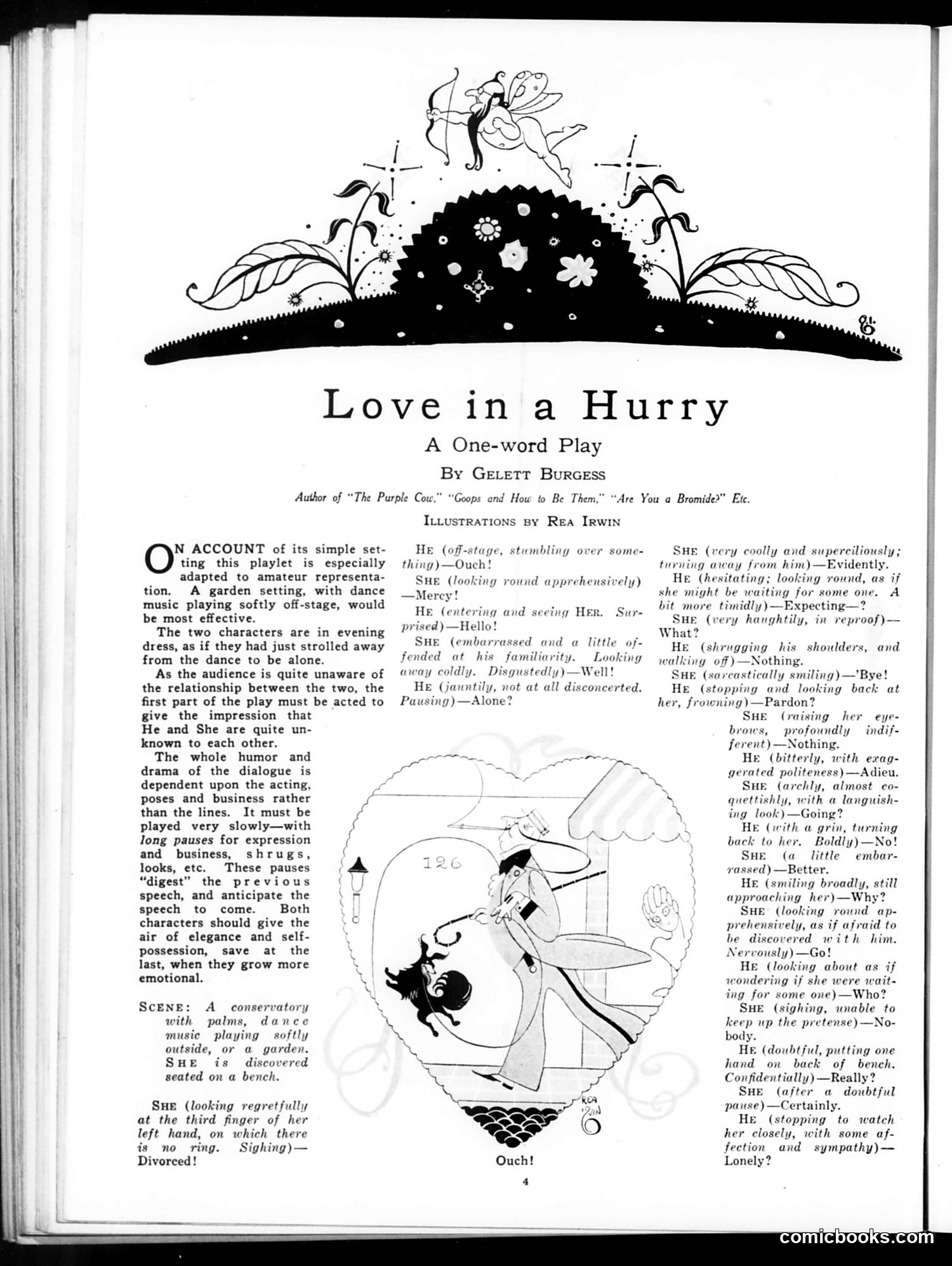
This is a comedic one-act play by Gelett Burgess, illustrated by Rea Irwin. The piece satirizes hasty romantic encounters, likely reflecting early 20th-century anxieties about modern courtship's accelerated pace. The scene depicts a conservatory where a man and woman meet awkwardly—he stumbling in, she sitting alone. The stage directions emphasize physical comedy and misread signals: she interprets his stumbling as rudeness, he mistakes her coldness for disinterest. The dialogue relies on dramatic pauses and exaggerated politeness masking mutual confusion. The satire targets how urbanized, busy modern life leaves little time for genuine romantic connection. The couple's complete miscommunication despite proximity suggests that rushing through courtship produces only awkward, emotionally hollow encounters rather than authentic love.
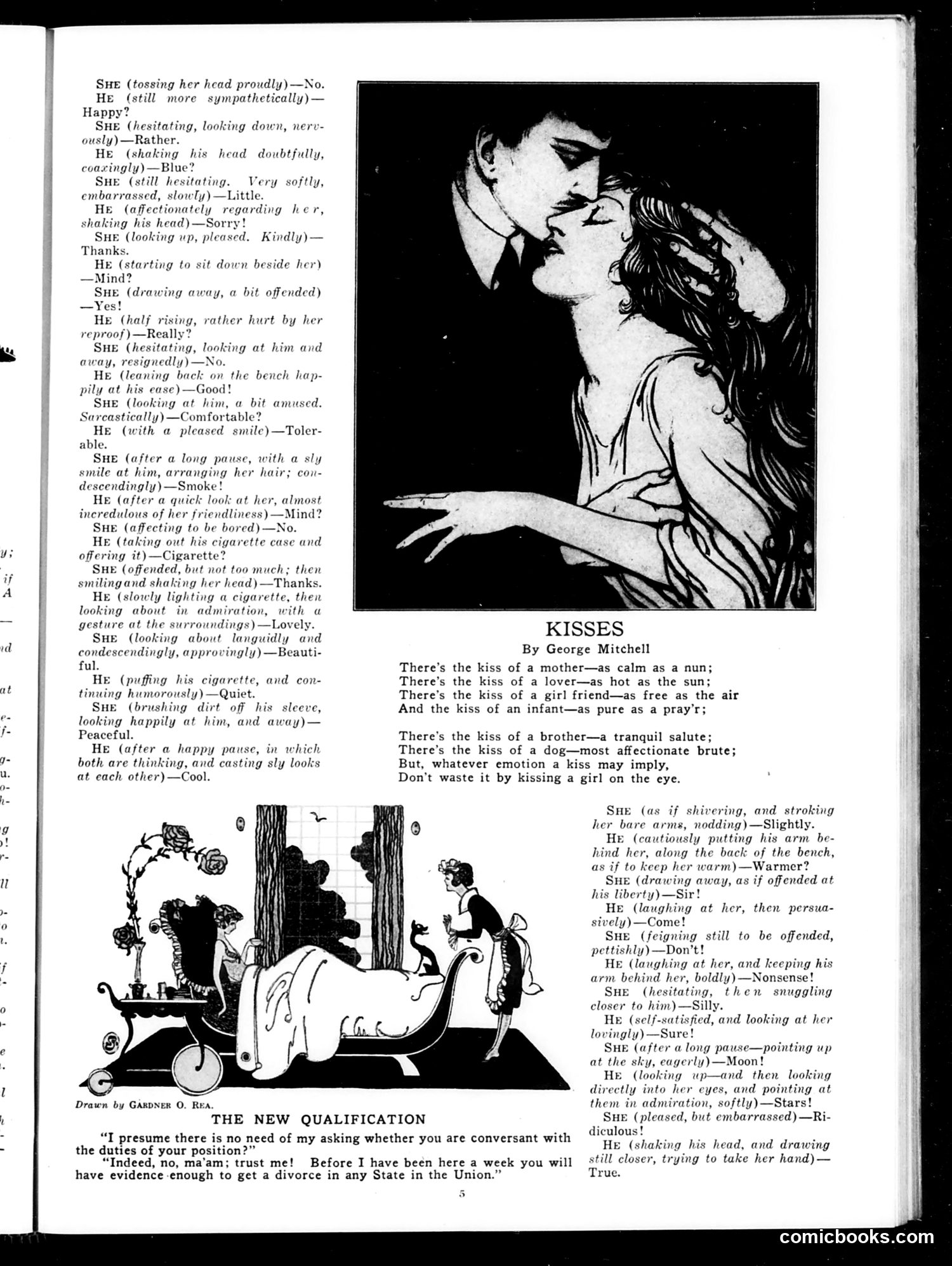
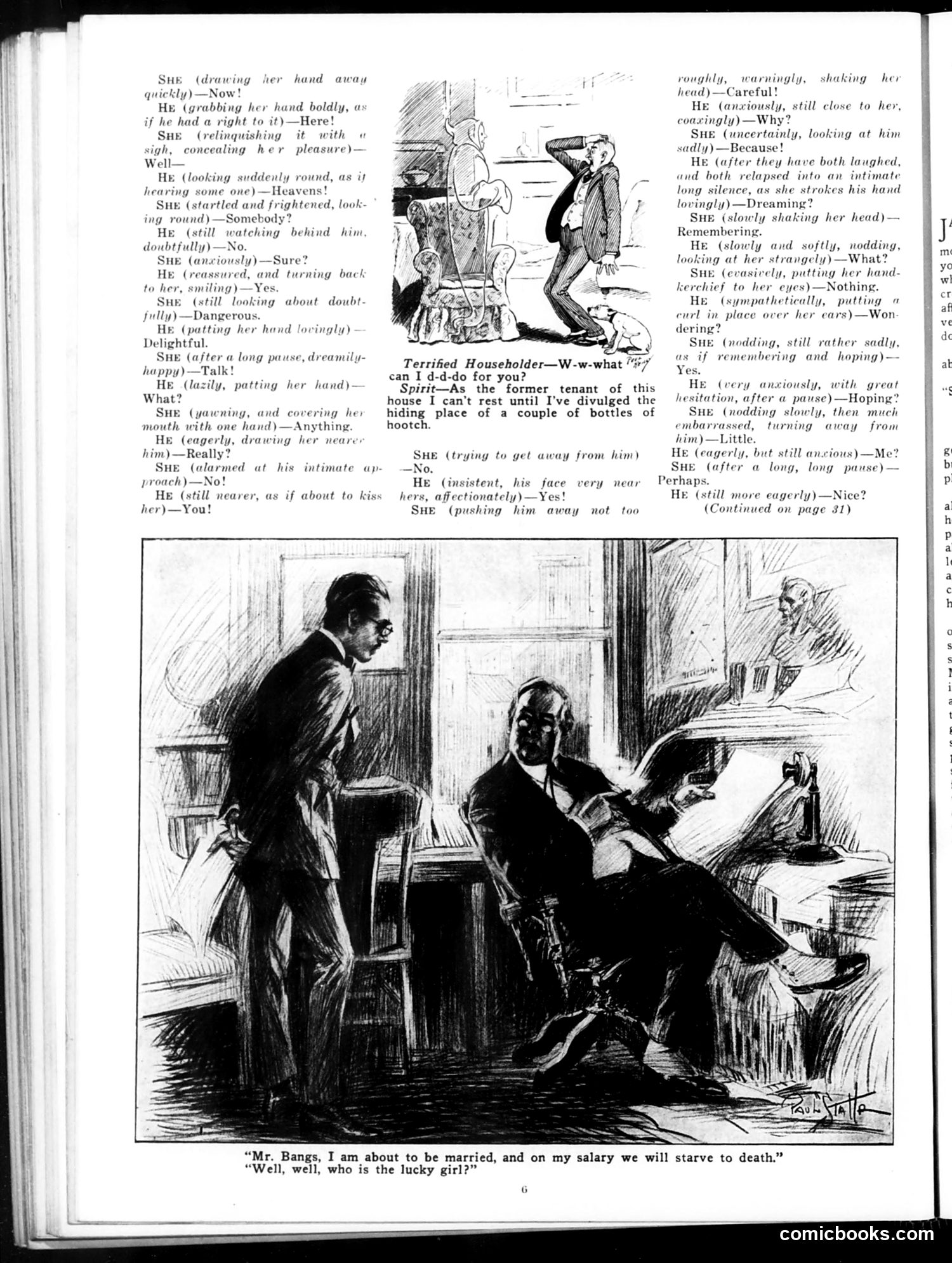
This page contains two distinct satirical pieces: **Top Section:** A romantic dialogue between a courting couple—likely representing young middle-class lovers of the era. The humor derives from their affected, overwrought emotional language and the woman's coy resistance-yet-compliance with the man's advances. It satirizes the theatrical sentimentality of courtship conventions. **Bottom Cartoon:** Shows a "Terrified Householder" confronted by a ghost demanding to reveal where hidden "hootch" (alcohol) is buried. This is a Prohibition-era joke—likely 1920s-1930s. The satire targets Prohibition's absurdity: even the dead can't rest because of hidden liquor. The ghost represents the persistence of drinking culture despite legal bans. **Caption Cartoon:** A man tells his employer he'll "starve to death" on his salary after marriage, asking "who is the lucky girl?"—darkly joking that only a desperate woman would marry someone so poorly paid. All three pieces mock contemporary social concerns: romantic conventions, Prohibition enforcement, and economic anxiety about marriage and wages.
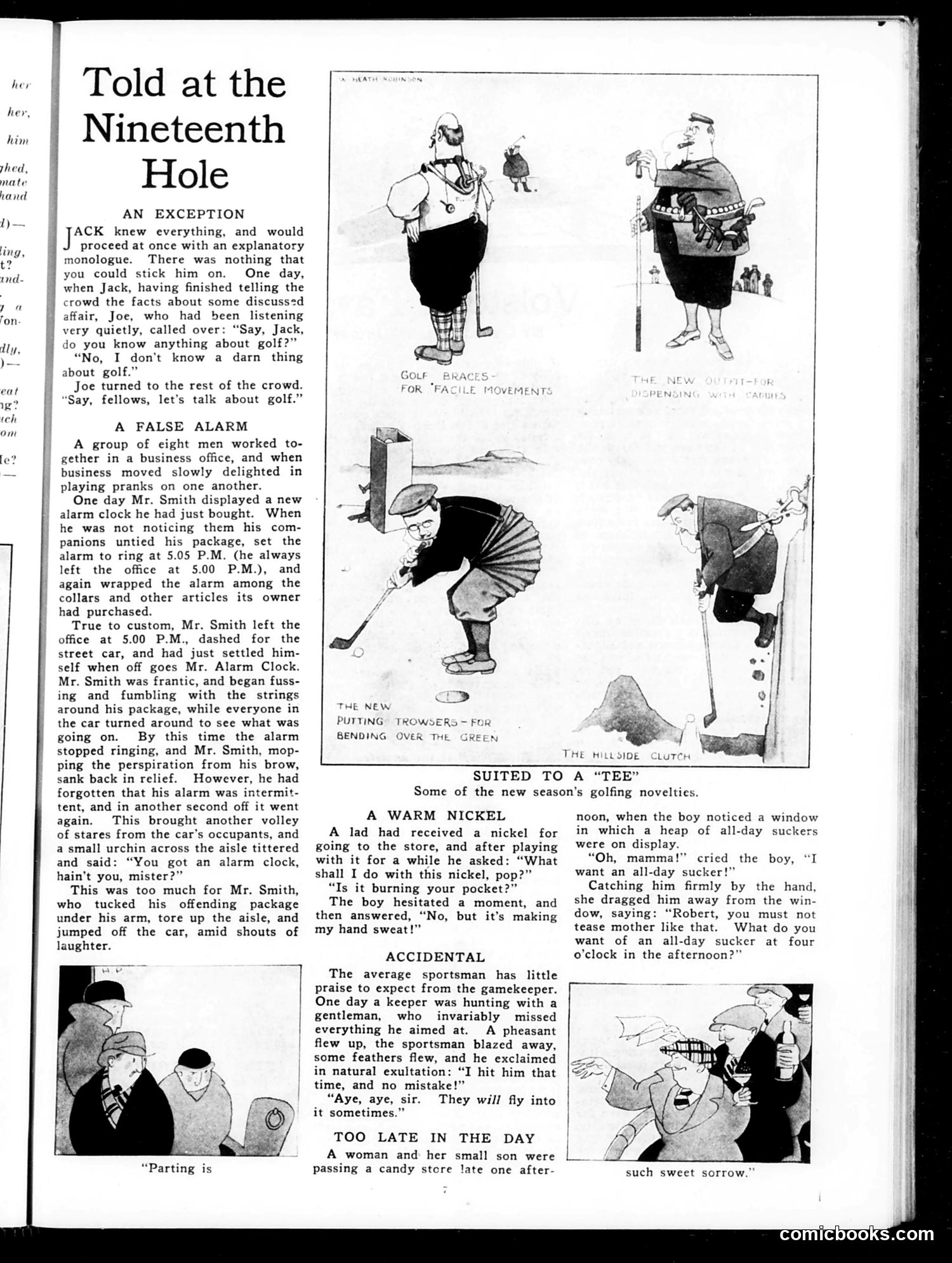
This page collects humorous anecdotes and golf-themed cartoons typical of early 20th-century American humor magazines. **Main stories**: "Told at the Nineteenth Hole" presents jokes told at golf clubs. "An Exception" mocks a know-it-all named Jack who admits ignorance only about golf. "A False Alarm" depicts office workers pranking a colleague with an alarm clock, creating public embarrassment on a streetcar—humor based on slapstick and social mortification. **Golf novelties cartoons**: The right column illustrates absurd golfing gadgets and fashions—braces for "facile movements," outfit modifications, and exaggerated putting postures—satirizing the sport's affectations and commercialization. **Other anecdotes**: "A Warm Nickel," "Accidental," and "Too Late in the Day" are light domestic comedy—child logic, hunting mishaps, and parental discipline. The "all-day sucker" joke plays on children's persistence and time-blindness. The page's humor relies on physical comedy, social awkwardness, and simple wordplay rather than political commentary.
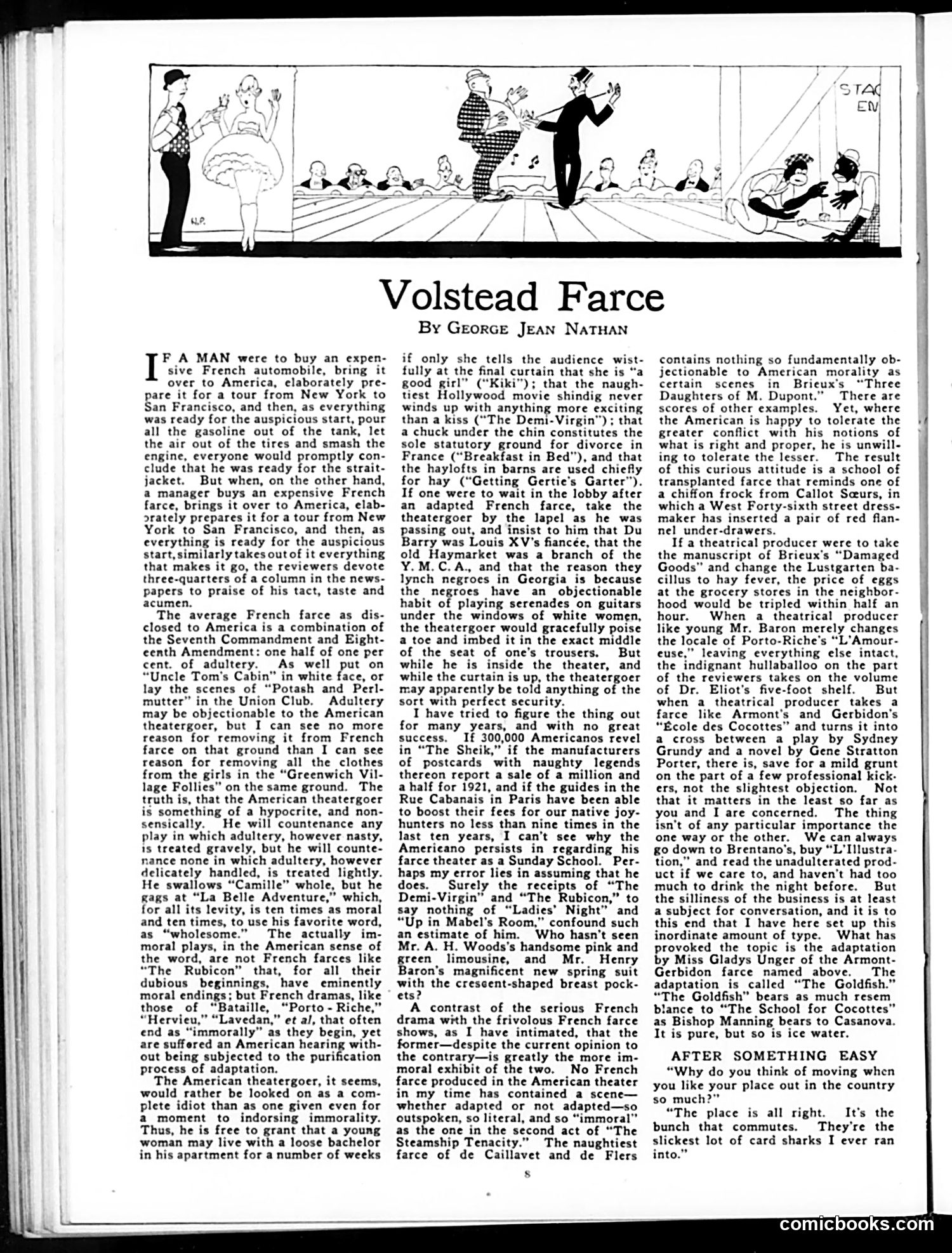
This article by George Jean Nathan critiques American audiences' hypocrisy regarding French farces adapted for American theaters. **The Satire:** Nathan argues that American theatergoers tolerate serious moral transgressions (adultery, loose living) in dramatic plays but demand that comedic French farces be "sanitized" of their adult content—removing the very elements that make them work. He uses the metaphor of buying an expensive car, then destroying its engine before the trip. **The "Volstead" Reference:** The title invokes the Volstead Act (Prohibition), suggesting Americans similarly gut imported culture of its essential character to fit moral standards, much as they prohibited alcohol. **The Point:** Nathan exposes the audience's contradiction—they'll accept immorality if treated seriously but reject identical behavior if presented lightly or comically. He cites specific plays: "Kiki," "The Demi-Virgin," "Breakfast in Bed," and "Getting Gertie's Garter," arguing these adaptations became absurdly sanitized while genuinely immoral French dramas escaped censure. The satire targets American prudishness and the illogic of theatrical censorship practices.
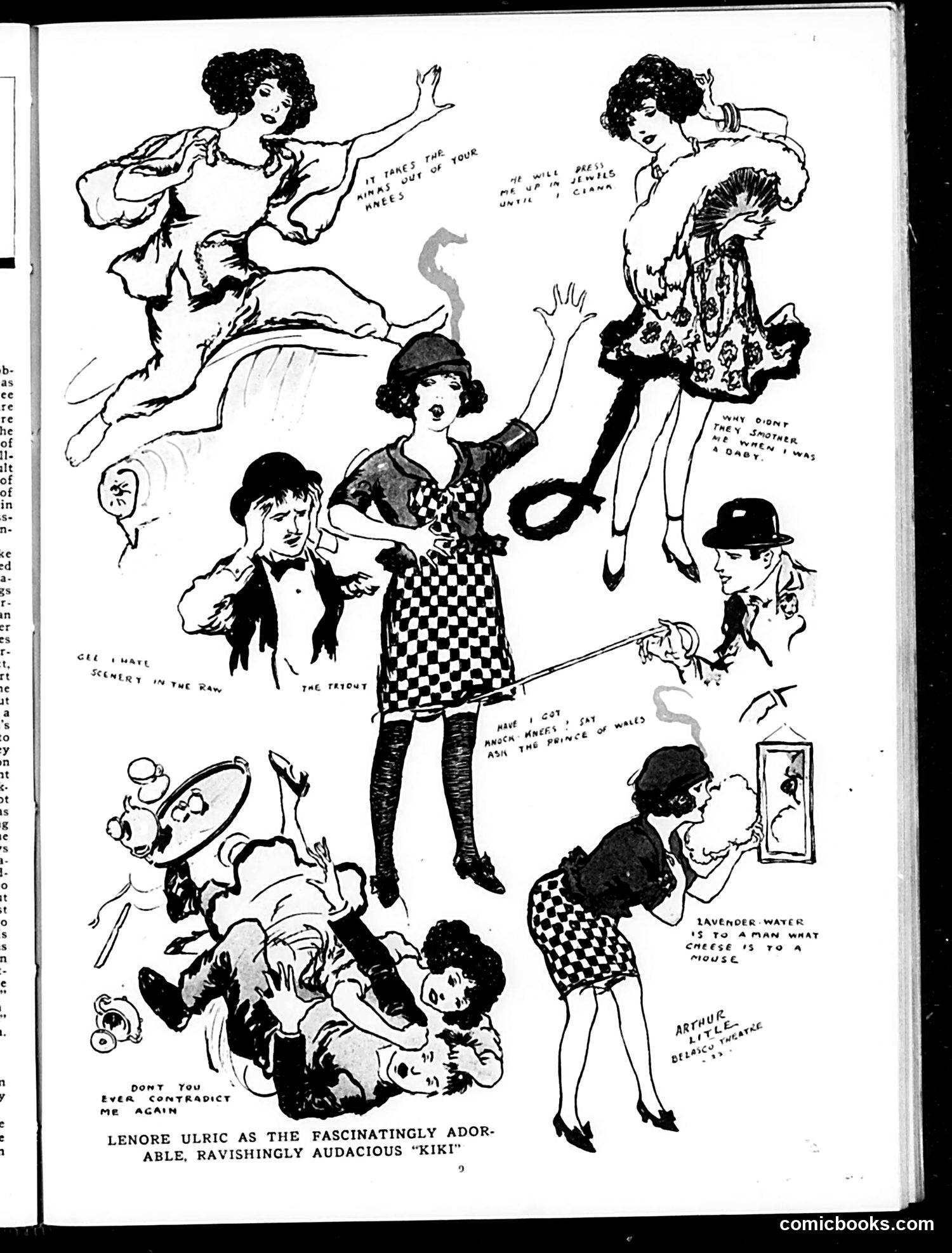
This is a promotional illustration for actress Lenore Ulric in a theatrical production called "Kiki." The page celebrates her character as alluringly bold and mischievous through multiple sketched vignettes showing the character in various flirtatious situations—flaunting herself, manipulating men, and engaging in scandalous behavior. The cartoons satirize early 1920s attitudes about modern women. "Kiki" represents the "new woman"—independent, sexually confident, and socially audacious in ways that scandalized conservative society. The jokes emphasize her power over men through charm and manipulation, playing on anxieties about female autonomy during the Jazz Age. References like "lavender water" used to attract men suggest she uses feminine wiles as tools. The overall tone treats her outrageous behavior as entertainingly transgressive rather than genuinely dangerous, typical of Judge magazine's satirical approach to social change.
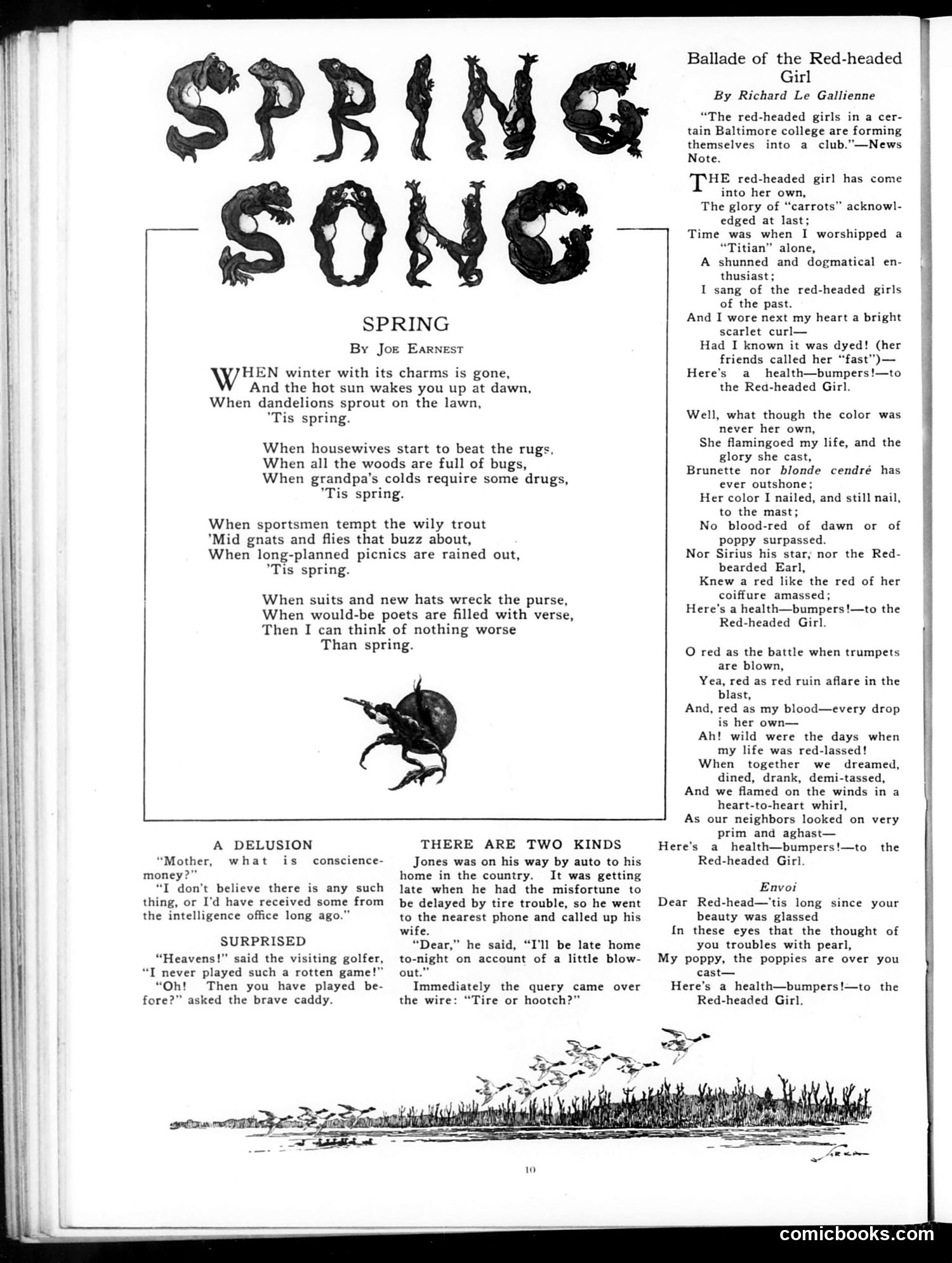
This page contains three distinct pieces of content: **"Spring" by Joe Earnest** (center-left): A humorous poem cataloging spring's annoyances—housewives beating rugs, bugs, colds, ruined picnics, and poets flooding the market with verse. The joke is that spring, typically romanticized, actually brings mostly inconveniences and financial strain ("suits and new hats wreck the purse"). **"Ballad of the Red-headed Girl" by Richard Le Gallienne** (right): A romantic poem celebrating a red-haired woman who captivated the speaker, complete with toasts ("health—bumpers!"). The satire mocks flowery romantic poetry itself—the speaker admits her red hair was dyed, yet he obsesses over its brilliance anyway. **Three brief comic sketches** (bottom): "A Delusion" jokes about conscience having no monetary value; "Surprised" is a golf gag; "There Are Two Kinds" depicts a man calling his wife about car trouble, with her first question being whether it's a tire or alcohol problem ("hootch")—likely referencing Prohibition-era concerns. The page satirizes romantic excess, spring's realities, and contemporary social anxieties.
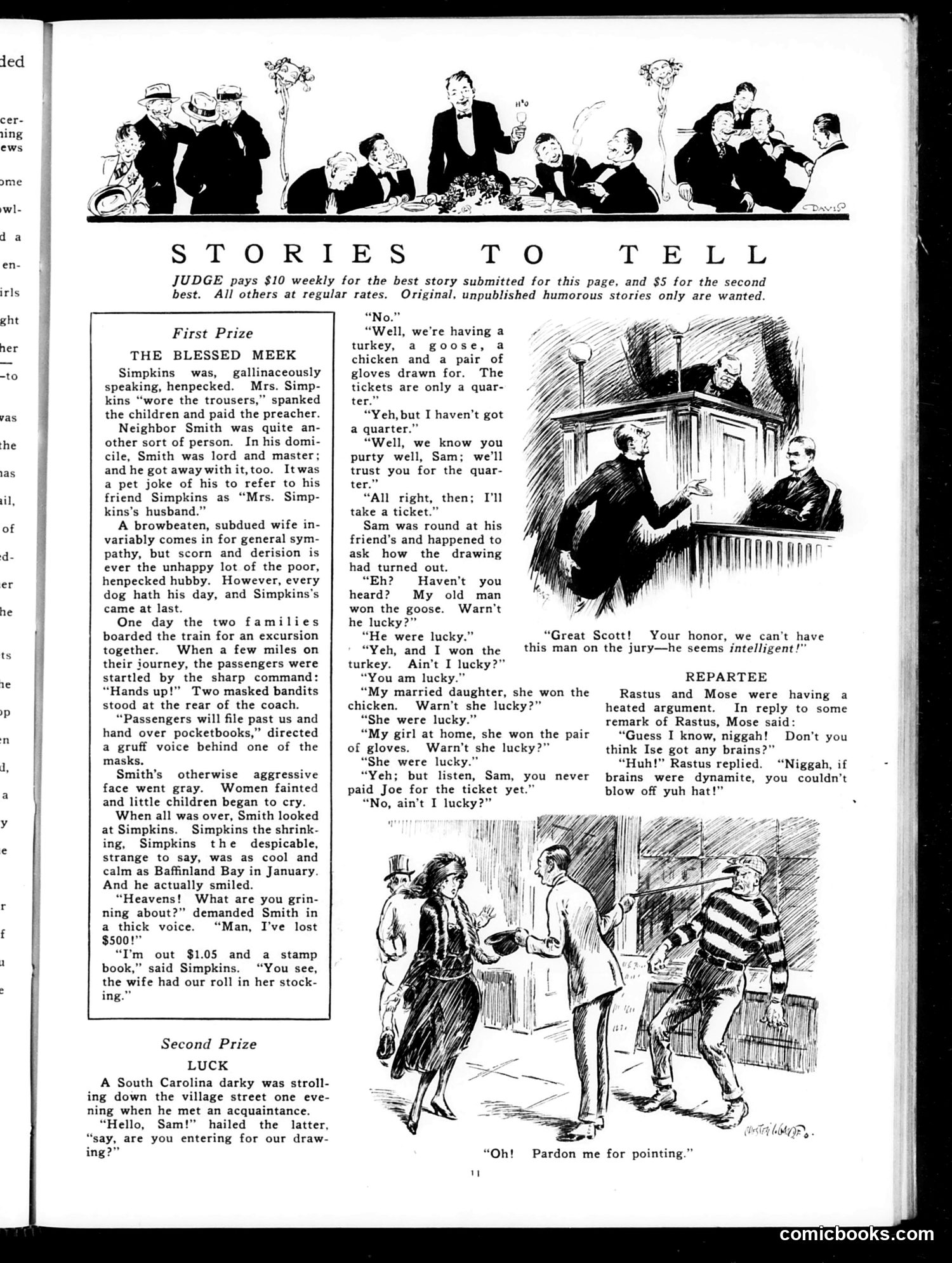
This page contains three humorous stories typical of Judge magazine's early 20th-century satirical content: **"The Blessed Meek"** (First Prize): A reversal-of-fortune tale where Simpkins, a submissive, henpecked husband mocked by his domineering neighbor Smith, proves calm and composed during a train robbery while the aggressive Smith panics. The joke inverts expectations: meekness becomes strength under pressure. **"Luck"** (Second Prize): A racial stereotype piece featuring a Black character named Sam who wins a lottery ticket through credit, then his entire family wins prizes. The humor relies on minstrel-show dialect and the notion of improbable luck, reflecting period prejudices. **"Repartee"**: A brief exchange between two Black characters ("Rastus" and "Mose") trading insults about intelligence, using derogatory language and stereotypical speech patterns. The page reflects Judge's reliance on class-based humor and racial caricature common to early 1900s American humor publications. Modern readers should note these reflect historical attitudes, not current editorial standards.
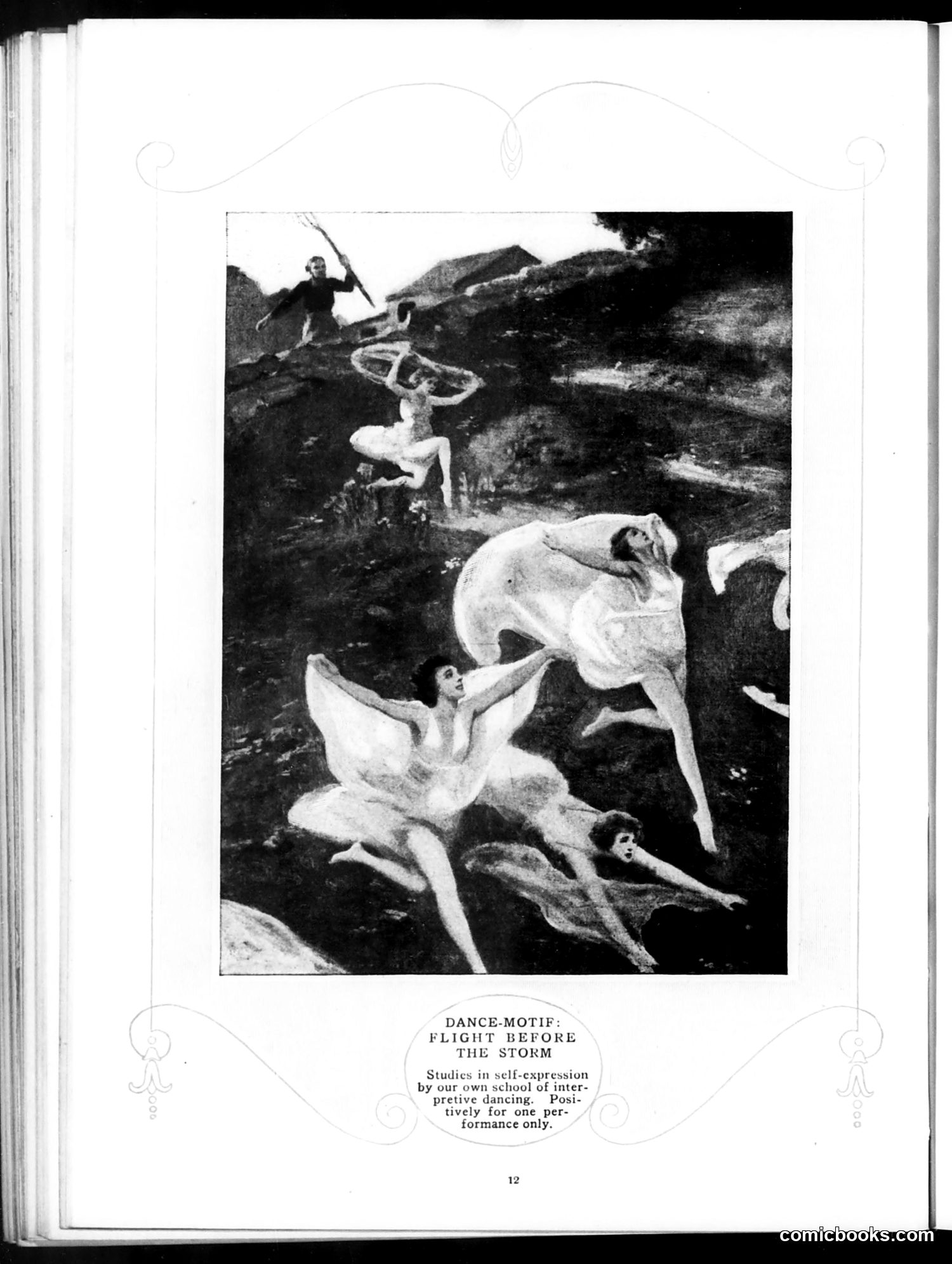
This page showcases an avant-garde dance performance titled "Flight Before the Storm." The black-and-white photograph depicts multiple dancers in flowing, diaphanous costumes posed dramatically across a rocky landscape. The figures appear to be engaged in interpretive or modern dance—a relatively new art form at the time this Judge magazine was published. The caption indicates this represents "studies in self-expression" from their "school of interpretive dancing," noted as "positively for one performance only," suggesting an experimental, unconventional theatrical event. The satire likely mocks the pretentiousness or obscurity of modern interpretive dance—a movement that avant-garde enthusiasts championed but mainstream audiences often found bewildering or ridiculous. Judge's satirical intent appears to be gently ridiculing this highbrow artistic trend through its breathless, serious presentation.
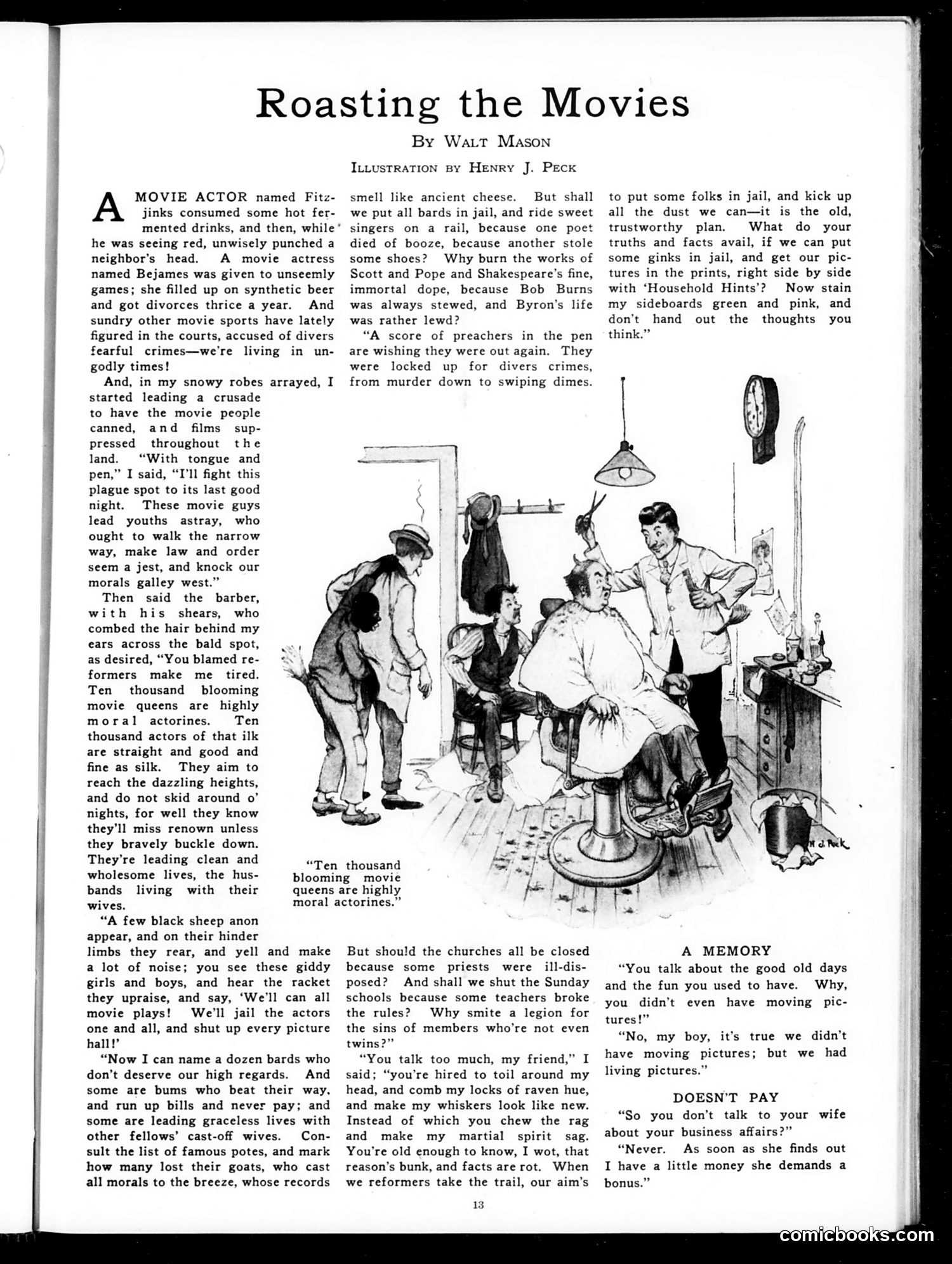
This is Walt Mason's satirical poem with Henry J. Peck's accompanying illustration, defending Hollywood against moral crusaders. **The Setup:** Mason describes a crusader (himself) outraged by scandalous movie actors—drunken brawlers, divorce-happy actresses—and vowing to shut down the entire film industry. **The Satire's Target:** A barber interrupts to expose the crusader's hypocrisy. He argues that while some actors misbehave, most are decent people living clean lives. More pointedly, he notes that society overlooks identical moral failings in *other* professions—corrupt clergy, dissolute poets (Byron, Burns), philandering ministers—yet doesn't demand banning literature or churches. **The Punchline:** The crusader silences the barber, admitting reformers care nothing for "reason" or "facts"—they simply want to jail people and generate publicity ("pictures in the prints"). The illustration shows a domestic scene where they're physically preventing the barber from speaking. **Historical Context:** This reflects 1920s debates over film censorship and the emerging moral panic about Hollywood's corrupting influence on youth. Mason defends entertainment while mocking self-righteous reformers as publicity-seeking hypocrites applying double standards.
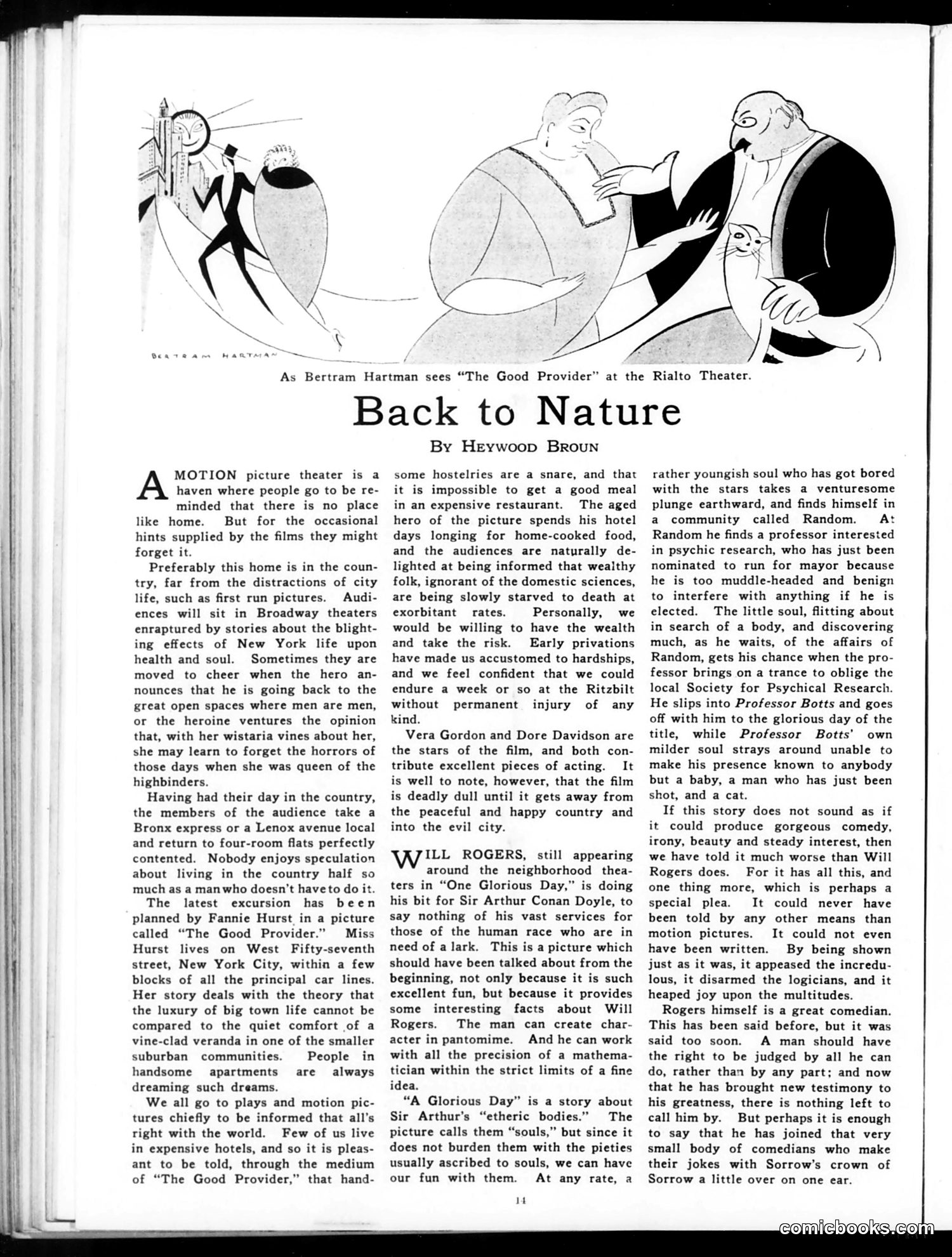
This page contains a satirical film review by Heywood Broun critiquing the common Hollywood trope of extolling rural simplicity to urban audiences. The cartoon (top left) shows a man being pulled back toward nature/the country while two well-fed men observe. Broun mocks the hypocrisy: audiences in Broadway theaters cheer films condemning city life and praising country living, then immediately return to their apartments. He reviews "The Good Provider" (starring Vera Gordon and Dore Davidson), a film claiming wealthy hotel living cannot compare to home cooking—a message Broun finds amusing since he'd gladly trade places with the rich. The page also praises Will Rogers' pantomime acting in "A Glorious Day," adapted from Arthur Conan Doyle's spiritualist concept of "etheric bodies" or souls visiting Earth. The satire targets both filmmakers exploiting nostalgia and audiences who enjoy escapist fantasies they have no intention of living.
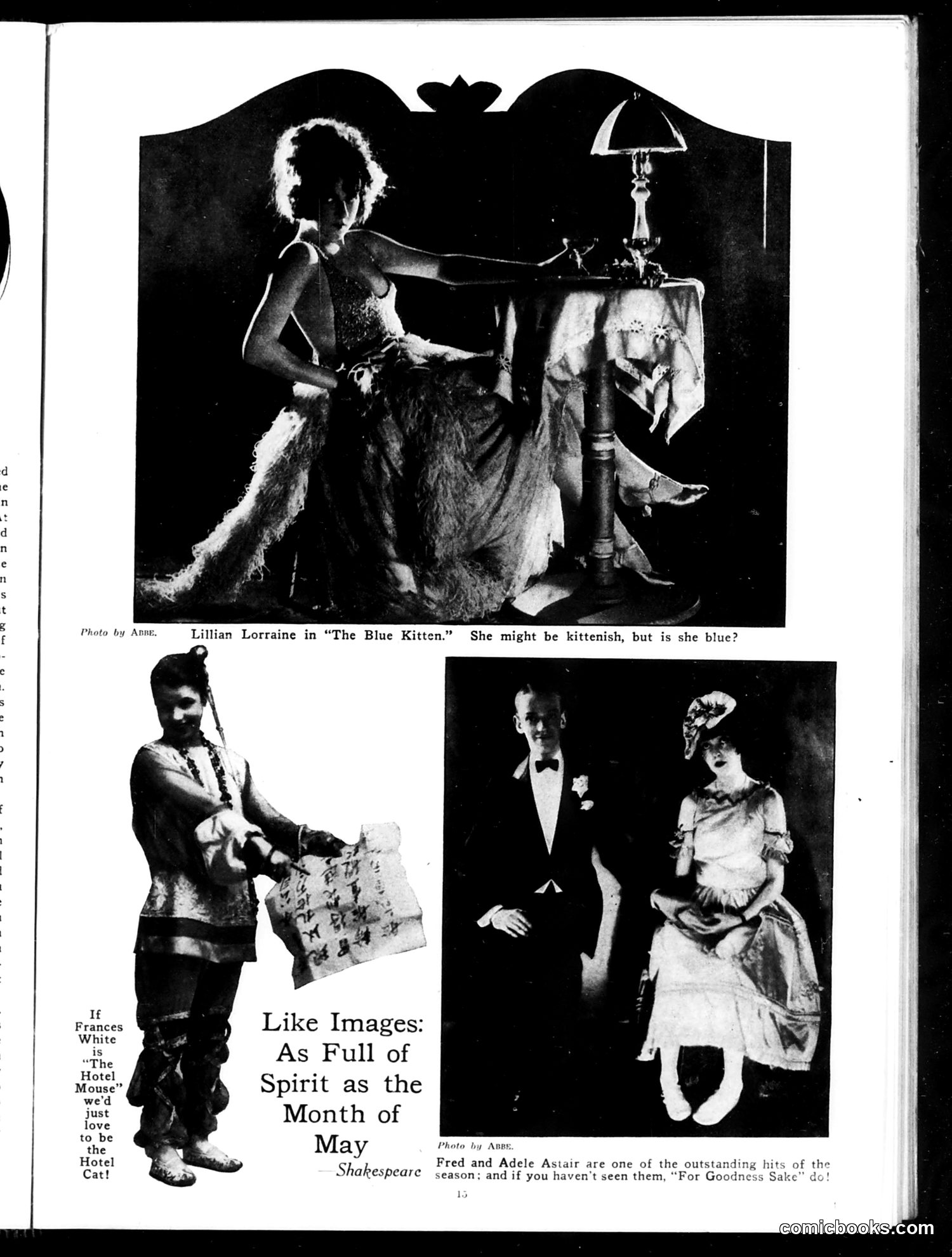
This page features theatrical advertisements and photographs from Judge magazine. The top image shows actress Lillian Lorraine in "The Blue Kitten," with a caption posing a playful question about her character's nature. Below, Frances White is referenced in "The Hotel Mouse" with a pun about the "Hotel Cat." The main content advertises Fred and Adele Astaire in a Shakespeare production ("For Goodness Sake"), calling them "one of the outstanding hits of the season." The phrase "Like Images: As Full of Spirit as the Month of May" appears to be promotional copy describing the performers' energy and appeal. These are straightforward theatrical advertisements targeting Judge's audience, promoting popular stage entertainers of the era—typical entertainment promotion for a satirical magazine's pages.
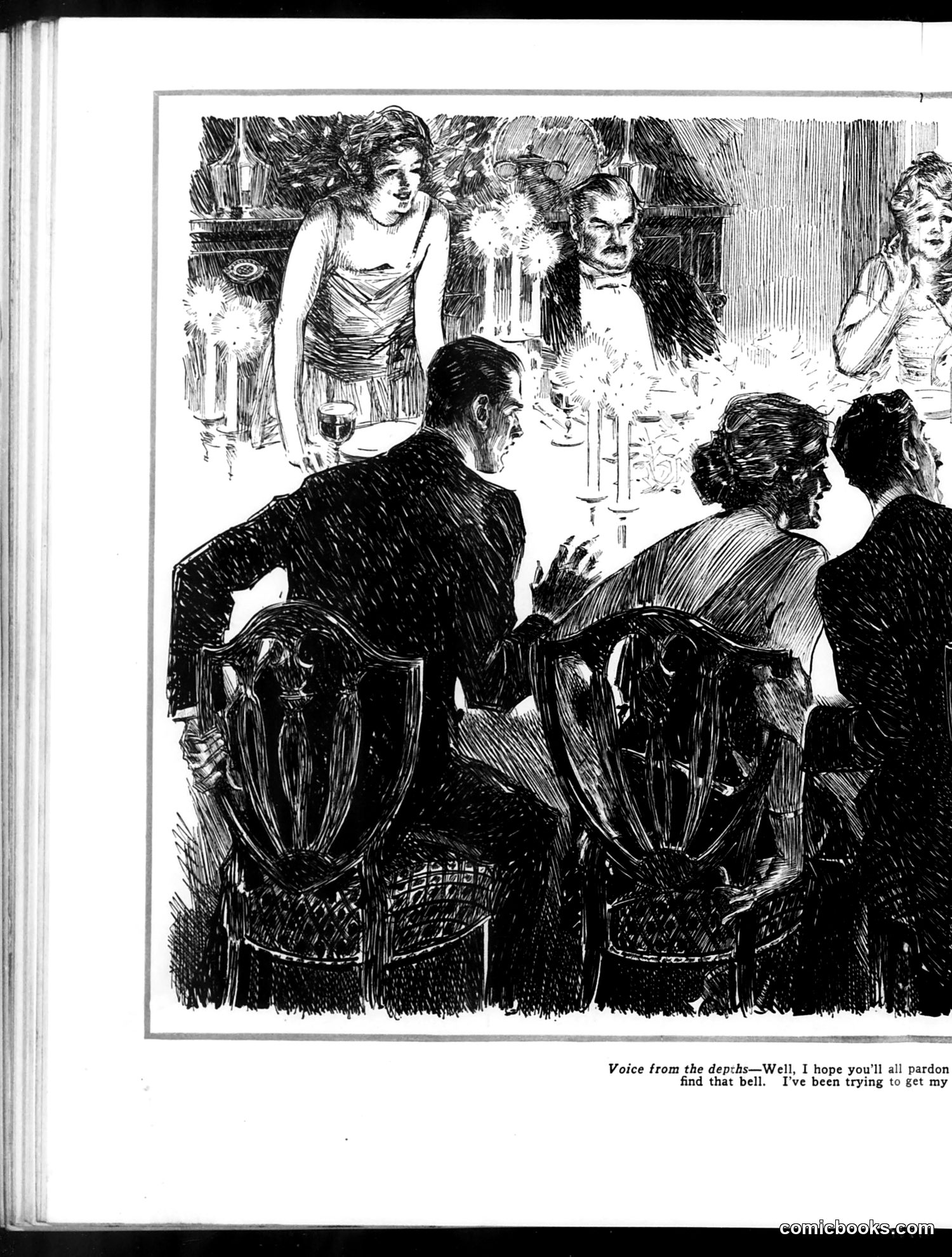
This is a satirical illustration from *Judge* magazine depicting a formal dinner party. The cartoon shows well-dressed men and women seated at a table with candelabras and flowers, when a disembodied voice interrupts from "the depths" below—apparently from underground or the afterlife. The speaker expresses frustration about trying to retrieve "that bell," suggesting a supernatural complaint or unresolved grievance from beyond. The satire likely mocks either spiritualism (the popular belief in communicating with the dead) or critiques someone in power being literally haunted by past wrongs or broken promises. Without additional context about the magazine's publication date or specific political figures referenced, the exact target remains unclear, though the visual contrast between the refined dinner party and the intrusive supernatural voice creates the comedic effect.
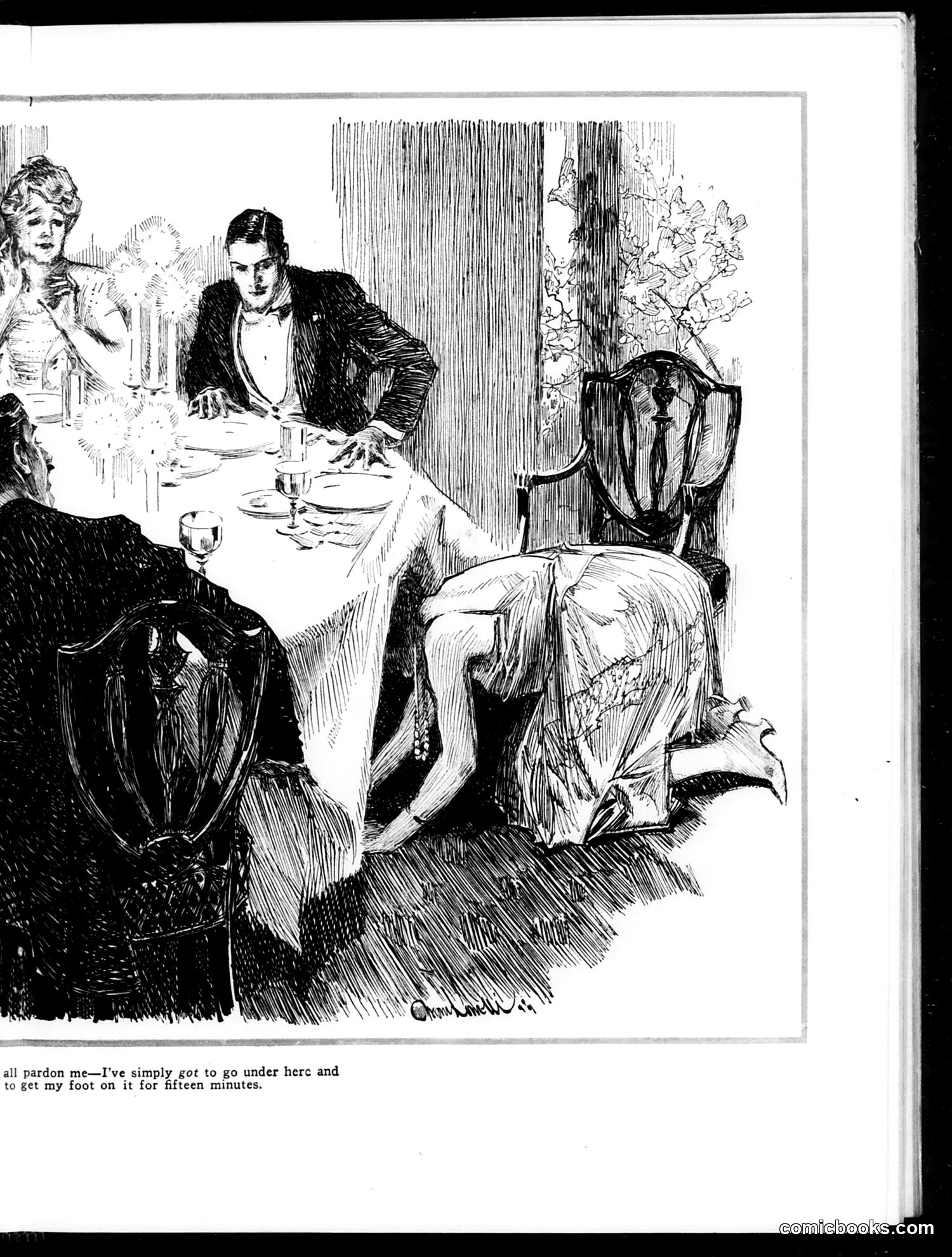
This is a single-panel cartoon depicting a dinner party scene. A well-dressed man at a formal dining table appears to be making an awkward announcement or excuse to the other guests—specifically addressing a woman across from him. Based on the visible text, he's claiming he needs to place his foot on something (presumably under the table) for fifteen minutes, asking for "pardon." The humor appears to rest on an embarrassing or inappropriate physical action at a formal social gathering. The cartoon satirizes breaches of etiquette and social decorum—the discomfort created when someone prioritizes a personal physical need over maintaining polite dinner-table behavior. The other diners' reactions (visible in their expressions) suggest disapproval or shocked amusement at this socially transgressive moment. Without additional context, the specific reason for this action remains unclear, though it appears intentionally absurd for comedic effect.
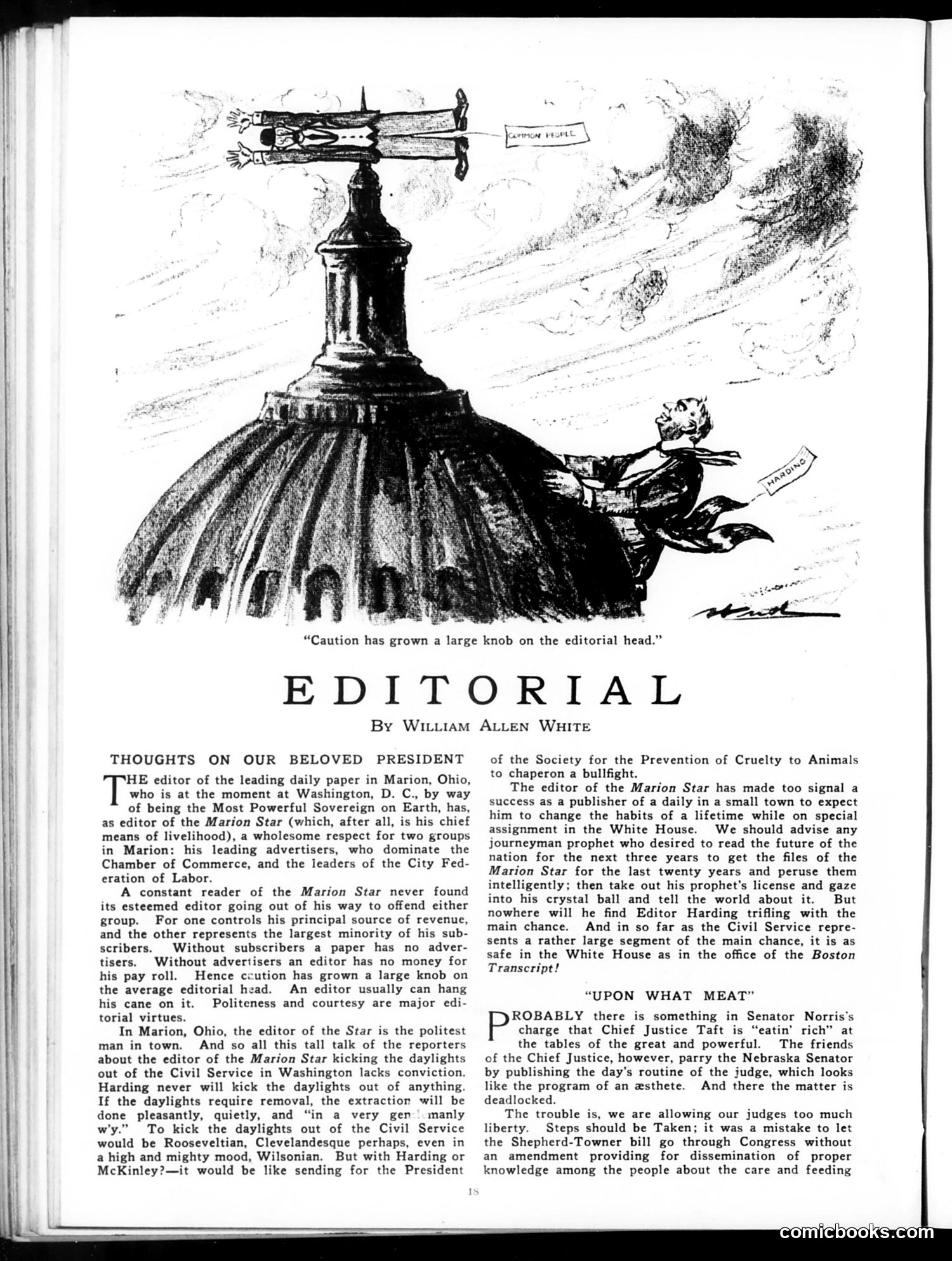
This page satirizes **Warren G. Harding**, the newly elected president and former editor of the Marion Star newspaper in Ohio. The cartoon's caption—"Caution has grown a large knob on the editorial head"—depicts Harding as overly cautious, symbolized by an enlarged bump on his head atop the Capitol dome. White argues Harding's newspaper success depended on pleasing two groups: advertisers and labor leaders. Now in the White House, White predicts Harding will maintain this timid approach rather than boldly reform the Civil Service (unlike aggressive predecessors like Roosevelt or Cleveland). The second editorial, "Upon What Meat," references Senator Norris accusing Chief Justice **Taft** of living lavishly ("eatin' rich") while on the bench. It concludes the real problem is insufficient public regulation of judicial conduct. The satire targets Harding's lack of executive boldness and highlights early 1920s concerns about corruption and the independence of federal officials.
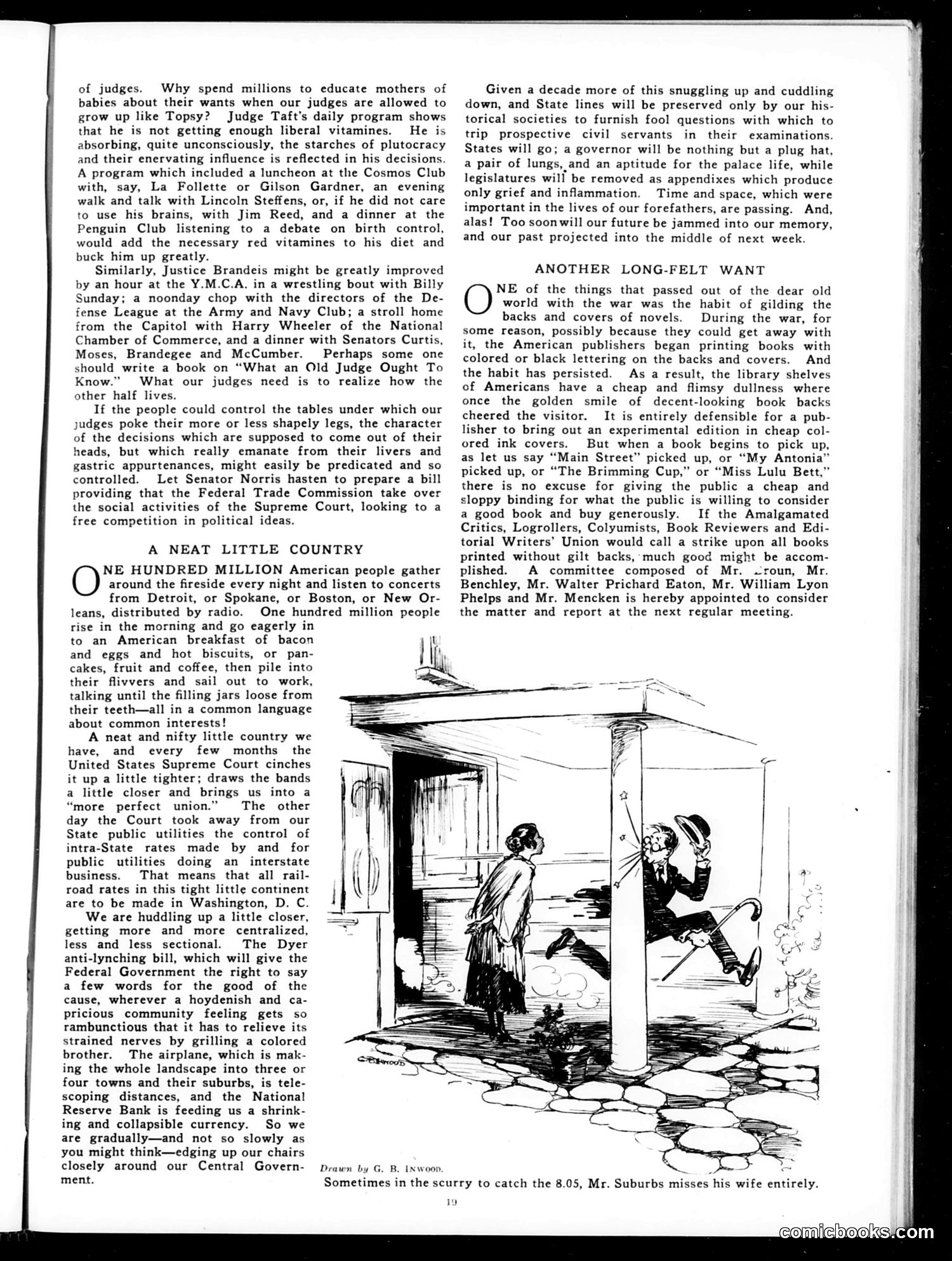
This page contains two satirical pieces critiquing American institutions circa 1920s. ## Top Section: Judges and Supreme Court The first article mocks Supreme Court justices (particularly Judge Taft, the Chief Justice) for being out of touch with ordinary Americans. The satire argues judges' decisions reflect their privileged social circles—fancy club lunches and dinners with wealthy businessmen—rather than understanding how "the other half lives." It sarcastically suggests the Federal Trade Commission should oversee judges' social activities to ensure they gain diverse perspectives. ## Bottom Section: Centralization of Power The second article satirizes increasing federal centralization. It celebrates America's unity (radio, highways, common language) while ironically warning that the Supreme Court and federal agencies are eroding state autonomy. The Dyer anti-lynching bill and the airplane are presented as examples of how Washington D.C. gains power over local communities. The small cartoon depicts a suburban commuter missing his train, captioned "Sometimes in the scurry to catch the 8:05, Mr. Suburbs misses his wife entirely"—satirizing modern commuter culture.
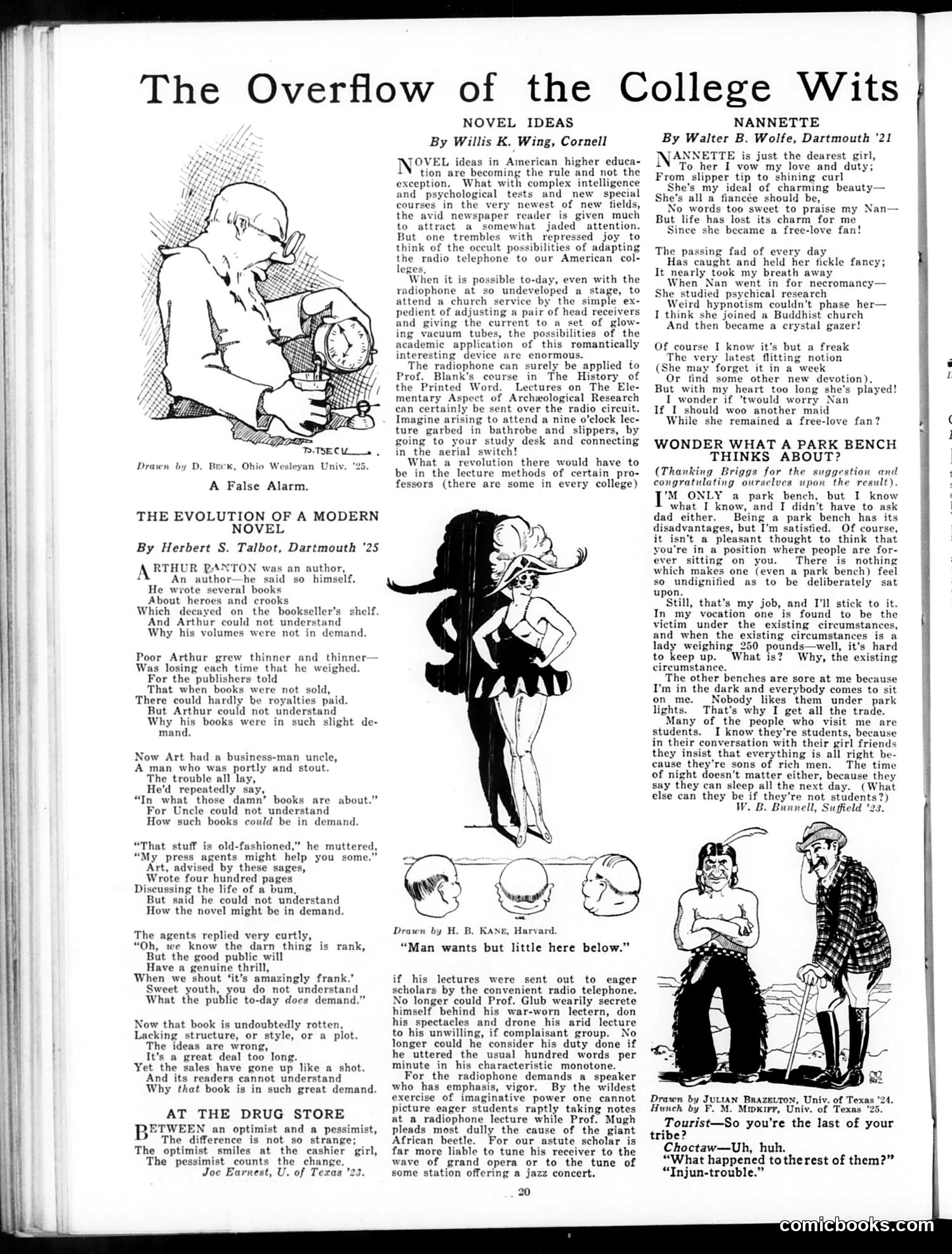
This Judge magazine page satirizes 1920s college culture through multiple pieces: **"A False Alarm"** (cartoon): Shows a student startled by a ringing telephone—a visual gag on the novelty and surprise of emerging telephone technology in dormitory life. **"The Evolution of a Modern Novel"**: Verse satire mocking how publishers and "press agents" push commercial trash over literary merit. Arthur Ranton writes a "rotten" book about "the life of a bum" lacking "structure, style, or a plot," yet it sells wildly because it's marketed as "amazingly frank." The joke: modern readers demand sensationalism, not quality—and don't understand why. **"Novel Ideas"**: Proposes applying radio technology to college lectures, sarcastically imagining students attending class in bathrobes via radio-telephone. The satire targets both academic pretension and professors' monotonous, uninspiring lectures—implying that even technological innovation can't fix dull teaching. Both pieces lampoon the gap between intellectual standards and popular demand, mocking both lowbrow commercialism and academic stuffiness.
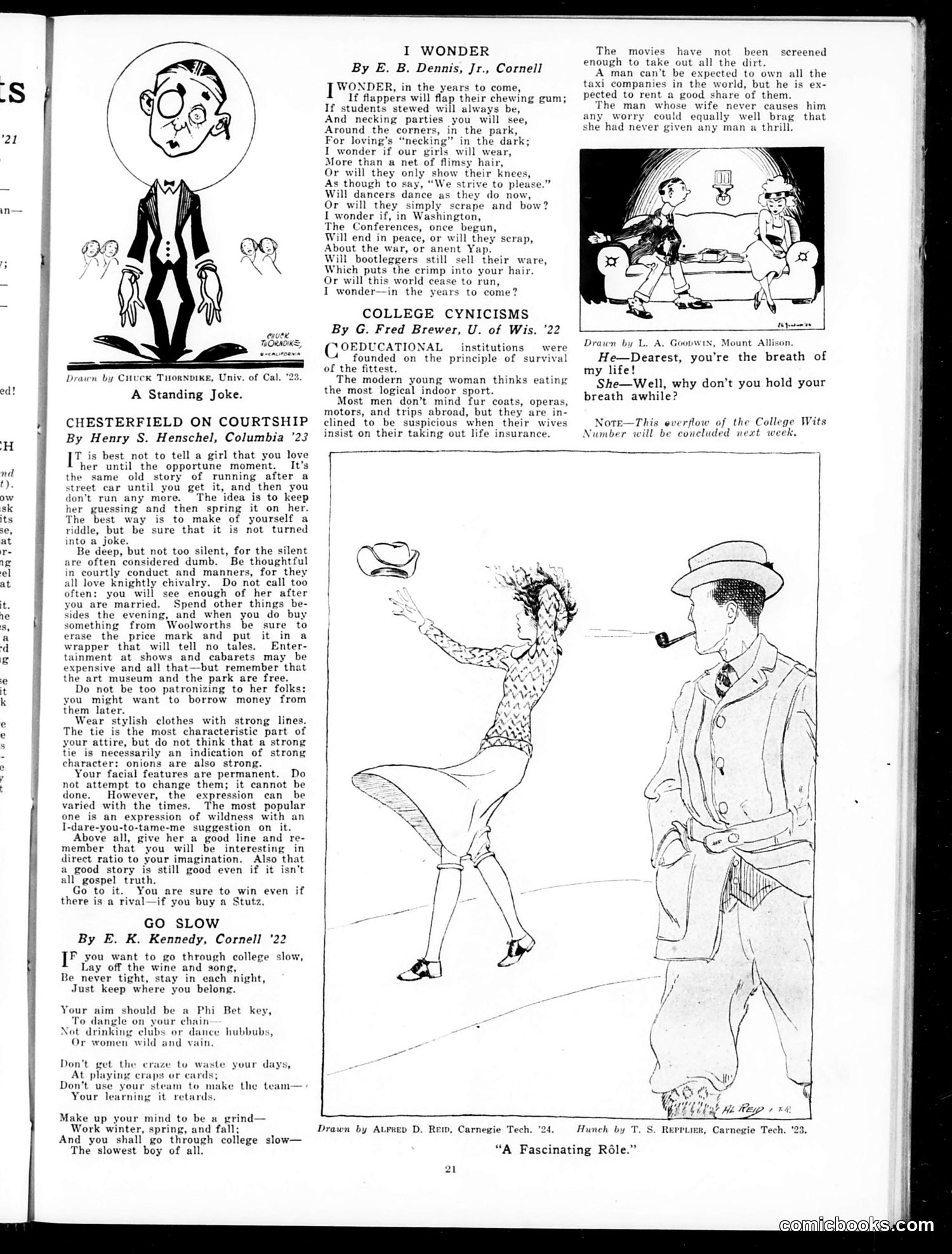
This page from Judge magazine (circa 1921-1922) contains three pieces of college-themed satire: **"I Wonder"** (poem): Reflects post-WWI anxieties about social change—worried that flappers will continue "necking" (kissing/petting), that Prohibition bootleggers will persist, and questioning whether Washington peace conferences will succeed. **"College Cynicisms"**: Brief satirical observations mocking modern dating expectations and gender relations—notably that women expect financial support ("rent a good share" of taxis) while men want thrills without responsibility. **"Chesterfield on Courtship"**: Dating advice lampooning male courtship strategy as performance art: stay mysterious, buy Woolworth trinkets in unmarked boxes, maintain emotional distance until marriage, then expect frequent visits. The drawings are humorous caricatures supporting these themes. Overall, the page satirizes 1920s youth culture, the "flapper" era, Prohibition, and traditional courtship's apparent absurdities from a sardonic collegiate perspective.
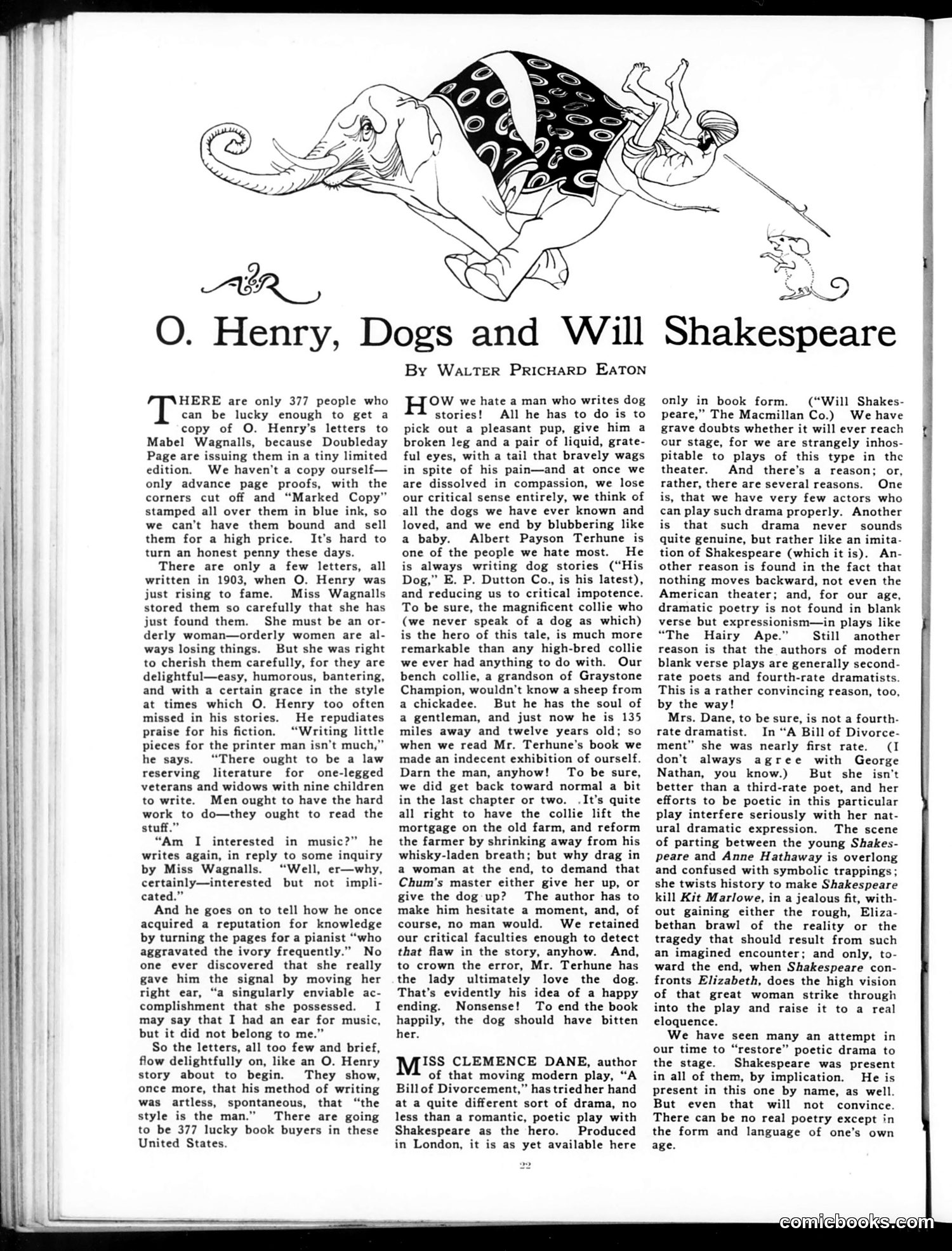
This page reviews three literary topics. The main illustration shows an elephant carrying a parasol and a small figure, likely referencing a humorous or whimsical story context. The text discusses O. Henry's recently discovered letters (377 limited copies), praising their charm and self-deprecating humor about his own writing. It then critiques author Albert Payson Terhune's dog stories, admitting the reviewer is manipulated by sentimental tales of noble collies with injured legs and "grateful eyes." The satire targets readers' predictable emotional responses to animal fiction—they lose critical judgment and "blubber like a baby." The reviewer complains that Terhune's latest book nearly had them crying, though they object to a romantic subplot involving a woman character. The piece mocks both sentimentalist literature and readers' susceptibility to it.
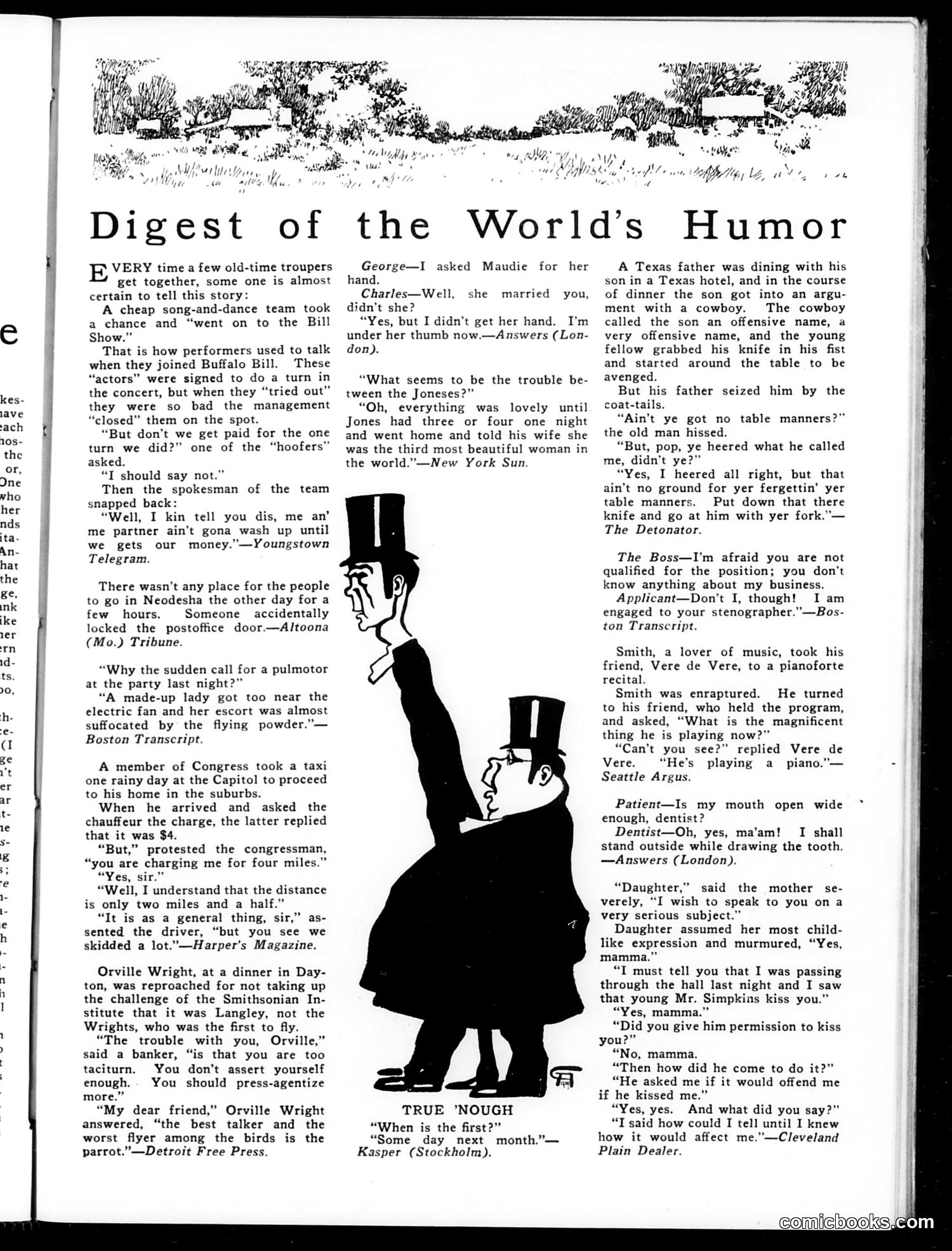
This page from the satirical magazine **Judge** contains a "Digest of the World's Humor"—a collection of brief jokes and anecdotes rather than political cartoons. The two illustrated figures appear to be generic "straight man" and "funny man" character types used to frame some jokes, not specific historical figures. The humor reflects early 20th-century American attitudes: jokes about marriage (wives controlling husbands), class differences (congressmen, bankers), and regional stereotypes (Texas frontier violence). One joke references the **Wright Brothers' aviation achievement** and their reluctance toward self-promotion—a topical reference to Orville Wright's famous modesty. The page satirizes contemporary social conventions: table manners, courtship, workplace hierarchies, and gender dynamics. The "Texas father" joke endorses using a fork rather than a knife in a dispute—darkly satirizing frontier violence while nominally praising etiquette. Most humor depends on wordplay and situational irony rather than political commentary.
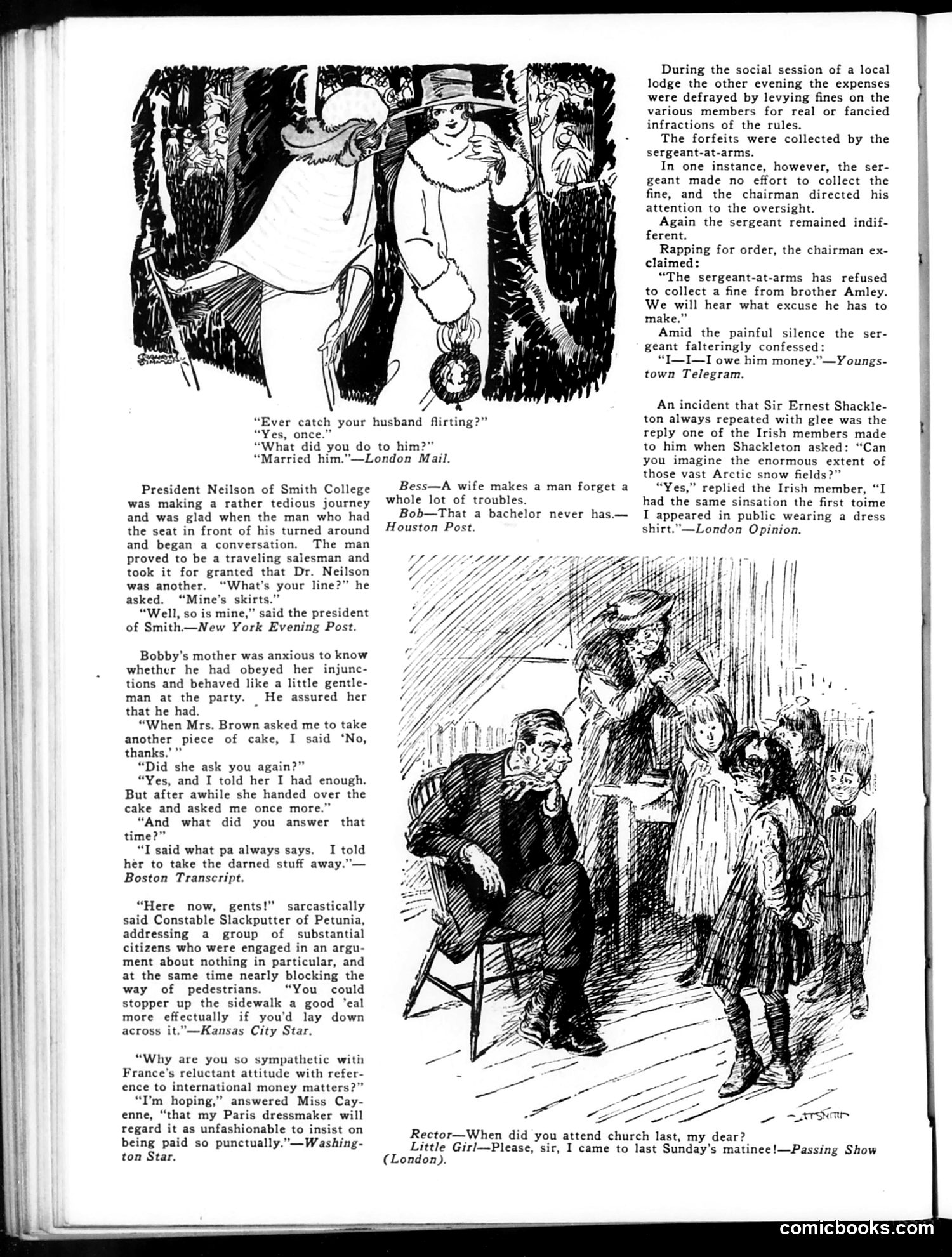
This page contains a collection of brief humorous anecdotes and jokes typical of early 20th-century American satirical magazines, plus one illustration. **The main cartoon** (top left) shows a well-dressed woman catching her husband in flirtation—the joke being she "married him" as punishment, suggesting marriage itself is the consequence of infidelity. **The other jokes satirize**: - Gender roles ("Mine's skirts" / "So is mine"—a double entendre about women's clothing) - Parenting and etiquette (a boy's misunderstanding of polite refusals) - Civic behavior (pedestrians blocking sidewalks) - Women's fashion spending and international finance - Marriage as burden versus bachelorhood - Lodge fraternity dynamics - Class attitudes (an Irish Arctic explorer's joke about formal dress shirts) - Religious attendance (a child confusing church service with theater matinee) **The satire targets** conventional morality, gender expectations, class pretension, and absurdities in everyday social interaction. The humor relies on wordplay, unexpected reversals, and gentle mockery of bourgeois life—typical of Judge's audience.
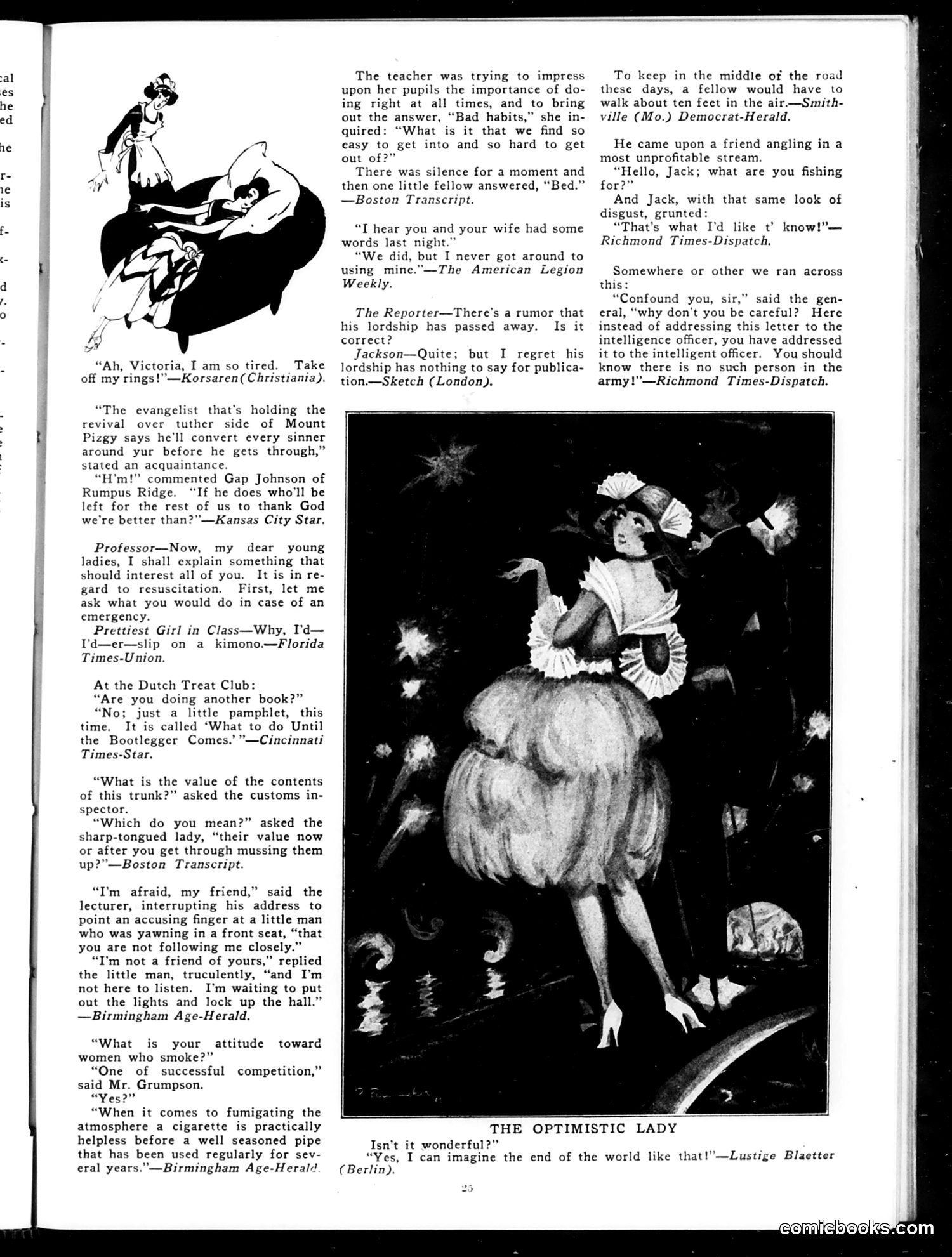
This single-panel cartoon depicts a fashionably dressed woman gazing upward at what appears to be a meteor or celestial object streaking across the sky. The caption reveals her remarkably positive outlook: she imagines the world's end as something beautiful rather than catastrophic. The satire targets early 20th-century optimism and materialism. Despite genuine existential threats—the cartoon was likely published during or after WWI—this "optimistic lady" remains absorbed in aesthetic appreciation rather than concern. Her elaborate dress and fashionable appearance suggest she represents privileged society indifferent to serious danger. The German source attribution (*Lustige Blaetter*, Berlin) indicates this was international commentary on how some people maintained cheerful denial about apocalyptic possibilities. The joke mocks shallow optimism divorced from reality—finding beauty in potential annihilation reflects either profound philosophy or deliberate avoidance of uncomfortable truths.
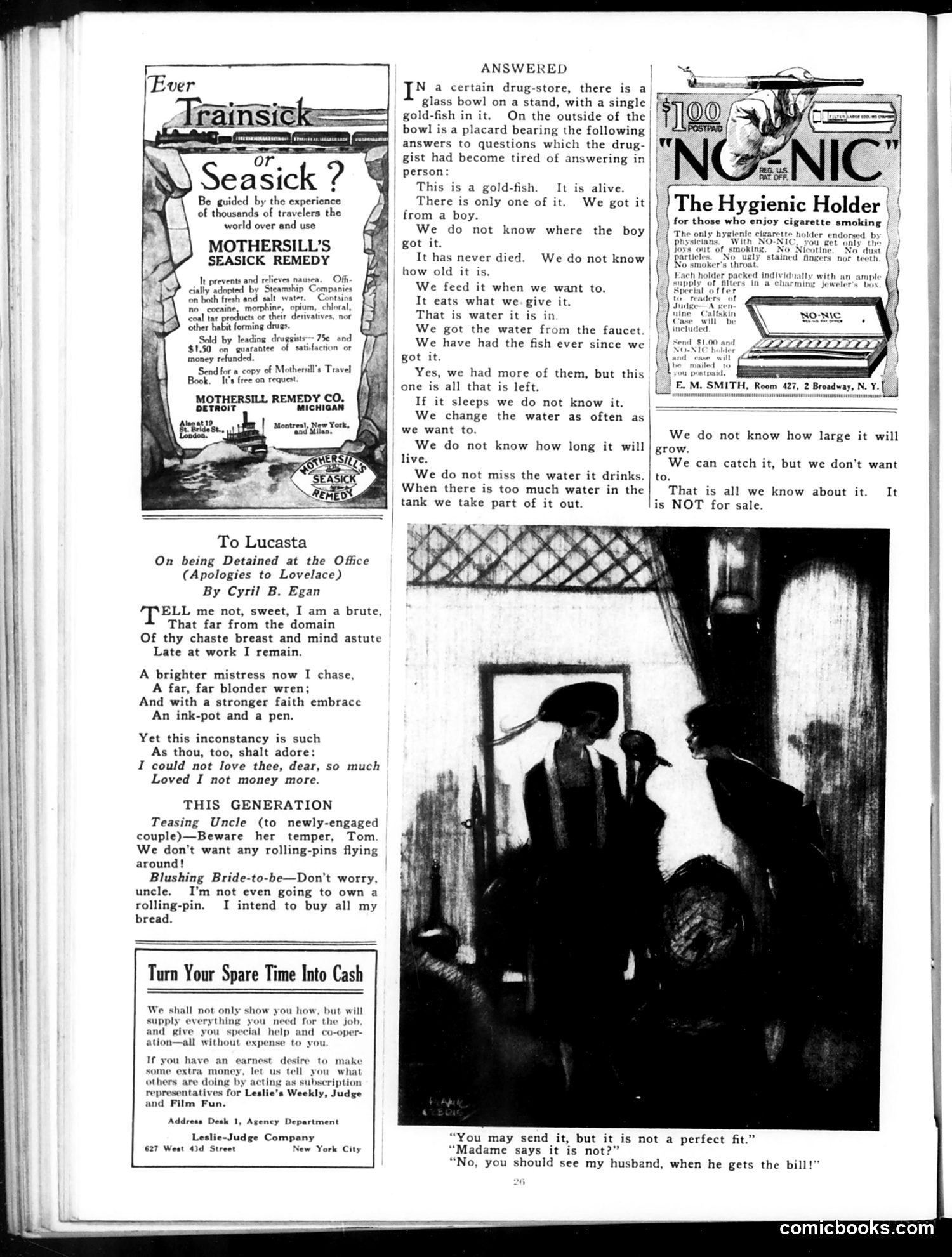
This page contains several satirical pieces typical of early 20th-century American humor: **Main Content:** A humorous "Answered" section features a drug store goldfish with a placard listing exasperated, deadpan responses to repetitive customer questions ("This is a gold-fish. It is alive"). The satire targets both curious customers and tired retail workers forced to answer obvious questions repeatedly. **Supporting Pieces:** - A poem "To Lucasta" parodies Lovelace's love poetry, joking that a man loves money more than his sweetheart - "This Generation" mocks modern engaged couples, with a bride-to-be claiming she won't own a rolling pin because she'll buy bread—satirizing changing gender roles and domesticity - Period advertisements for Mothersill's seasickness remedy and cigarette holders **Social Context:** The satire reflects anxieties about modernization: busy office workers, changing women's roles (rejecting traditional domestic tools), consumer culture, and the mundane frustrations of commercial life. The humor is gentle and observational rather than pointed political commentary.
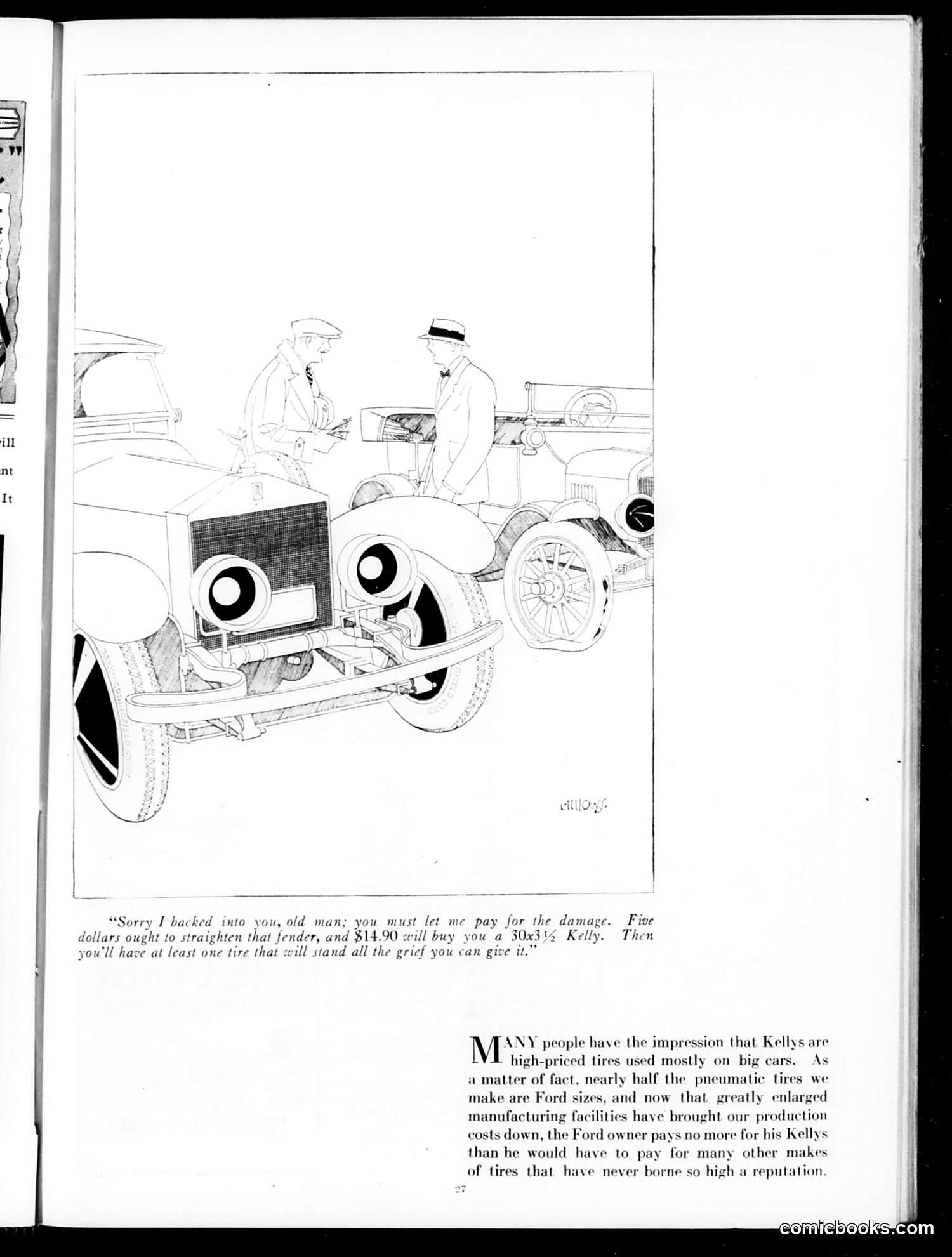
This is a **Kelly Tire advertisement disguised as humor** from Judge magazine. The cartoon depicts a car accident where one driver offers to compensate the other. The punchline itemizes the settlement: five dollars for the fender repair, and $14.90 for a Kelly tire, suggesting Kelly tires are such high-quality they'll outlast the vehicle itself ("stand all the grief you can give it"). The accompanying text counters a common misconception: that Kelly tires are luxury products for expensive cars. The ad argues that since Kelly now manufactures tires for **Ford vehicles** (the mass-market car of the era), production costs have dropped, making Kellys affordable to ordinary Ford owners—yet still maintaining their superior reputation compared to cheaper competitors. The satire is gentle: the joke sells the product by positioning Kelly tires as dependable investments that justify their cost, appealing to the practical Ford-driving middle class.
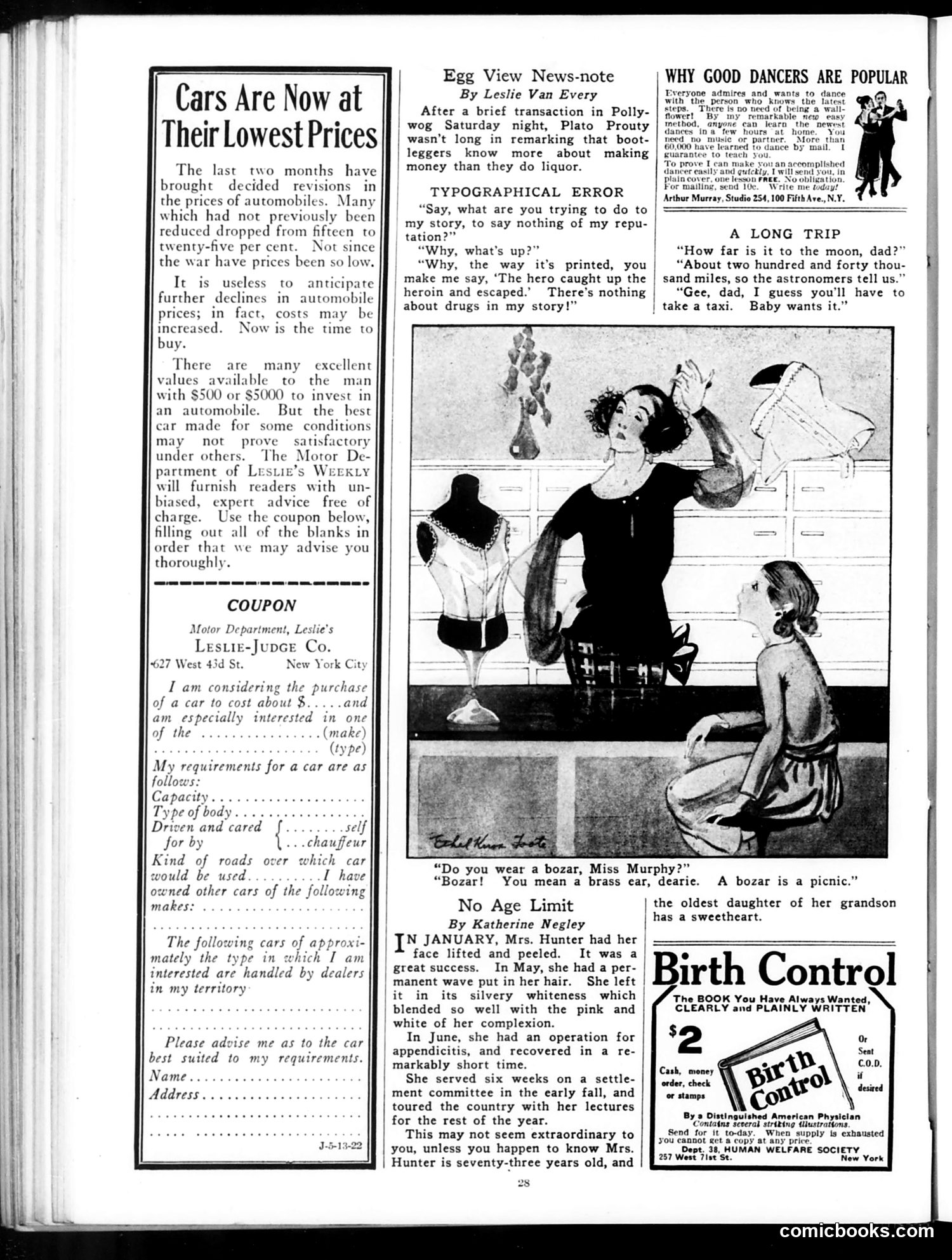
This page contains **primarily advertisements and humor columns**, not political cartoons. The main content includes: **"Egg View News-note"** by Leslie Van Every: Brief satirical anecdotes, including a joke about bootleggers during Prohibition profiting more than the liquor they sell, and a typographical error that accidentally inserts "heroin" into a story. **"A Long Trip"**: A children's joke playing on literal interpretation—a child asks how far to the moon, then wants to "take a taxi" there because "baby wants it." **"No Age Limit"**: Humorous anecdote about a 73-year-old woman who undergoes cosmetic procedures (face lift, permanent wave, appendectomy) and remains active on committees and lecture tours. **Large advertisements** dominate: car prices, birth control information, and Arthur Murray dance lessons. The page reflects 1920s concerns: post-war automobile economics, Prohibition-era bootlegging, women's cosmetic procedures, and contraception access—then relatively novel topics for mainstream magazines.
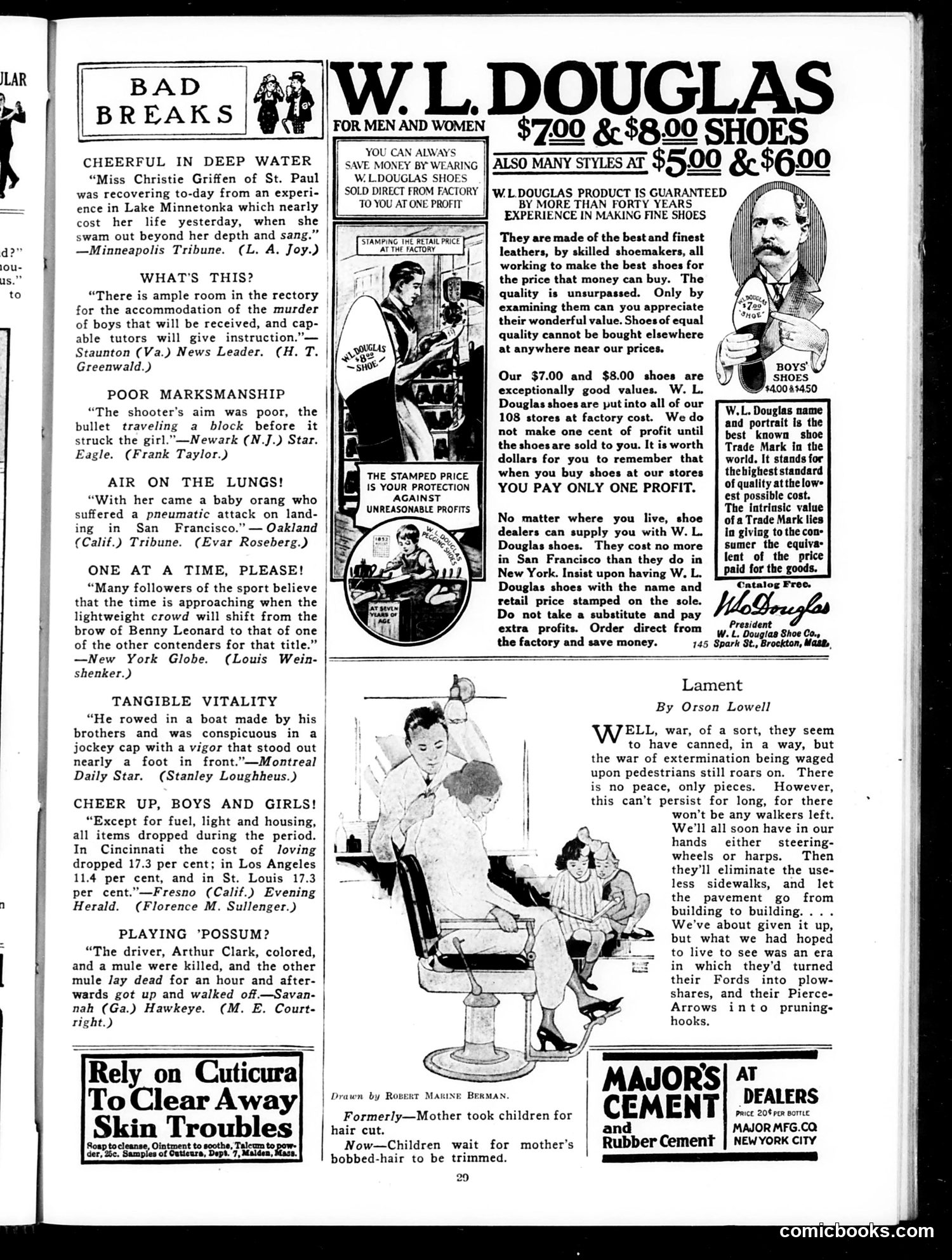
This page is primarily advertising, dominated by a W.L. Douglas shoes advertisement. However, the upper portion contains "Bad Breaks"—a regular Judge humor feature showcasing absurd newspaper typographical errors and malapropisms. The jokes mock unintentionally hilarious newspaper mistakes: a woman who "sang" while drowning, a rectory offering room for a "murder of boys" (misprint for group), a bullet that traveled a block before hitting its target, and a baby "orang" suffering a "pneumatic attack" (likely "pneumonia" misheard). These highlight journalism's careless editing. The page's centerpiece is a lengthy W.L. Douglas shoe advertisement emphasizing factory-direct sales at "$7.00 & $8.00," positioning the brand as value-conscious and profit-transparent—appealing to post-WWI consumers concerned about wartime price inflation (referenced in the "Cost of Loving" clipping). The illustration by Robert Marine Herman depicts children playing with toys, likely advertising cement or building products.
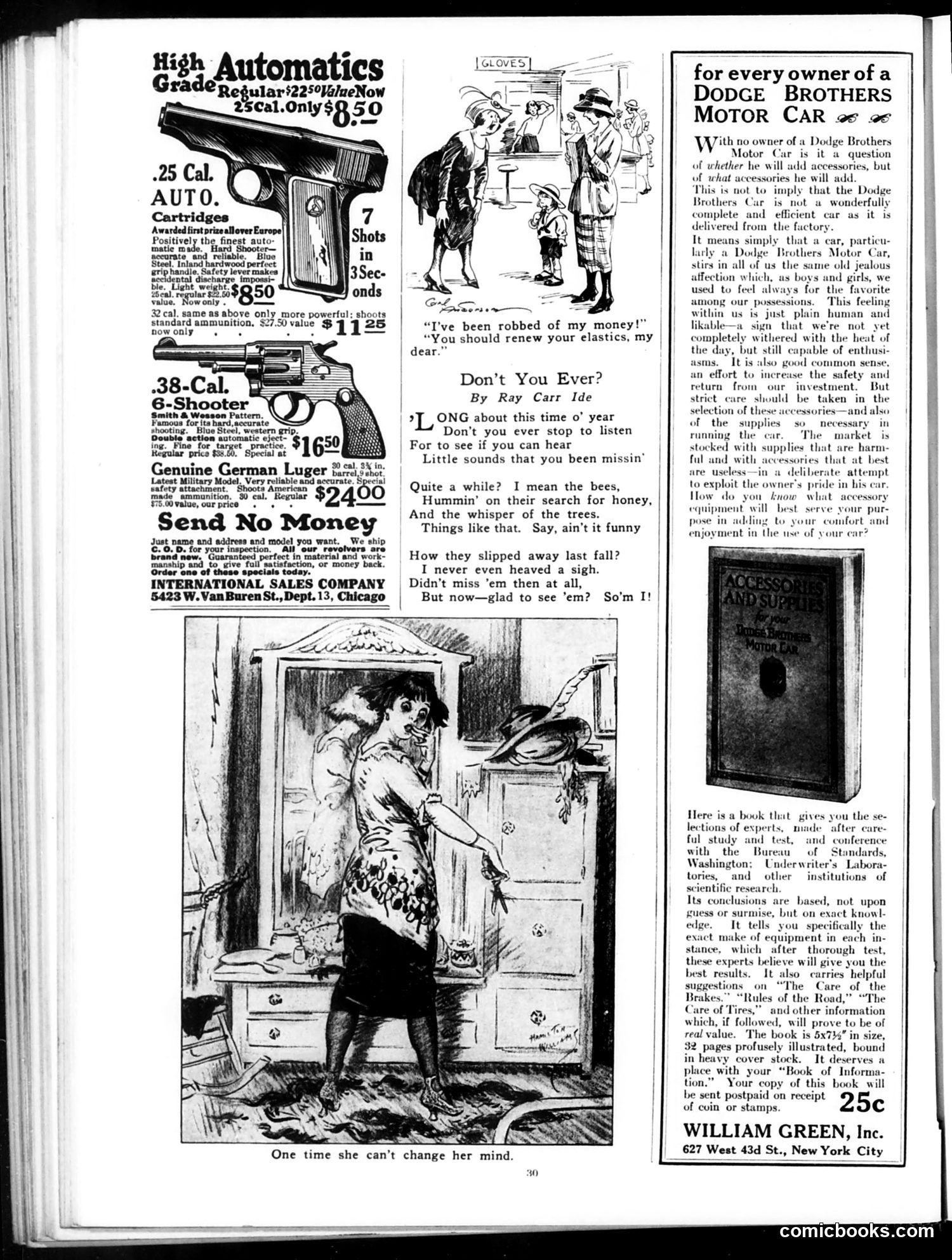
This page mixes period advertising with satirical content. The main cartoon depicts a woman at a refrigerator with the caption "One time she can't change her mind"—satirizing the stereotype of women as indecisive. The joke suggests that once food spoils in a refrigerator, even a woman cannot reverse the consequence, implying women are characteristically fickle or changeable in other contexts. The page is dominated by advertisements for firearms (.25 and .38 caliber pistols) and automobiles (Dodge Brothers vehicles), typical of the 1920s-30s era. The poem "Don't You Ever?" by Ray Carr Ide is nostalgic, contrasting pleasant rural sounds (bees, whispers of trees) with lost youth—a sentimental reflection common to the period. William Green's book advertisement promotes automotive accessories and care guidance, positioning expert-endorsed products as essential for car owners. The editorial content frames accessories as desirable additions to factory-standard vehicles, reflecting early automotive consumer culture.
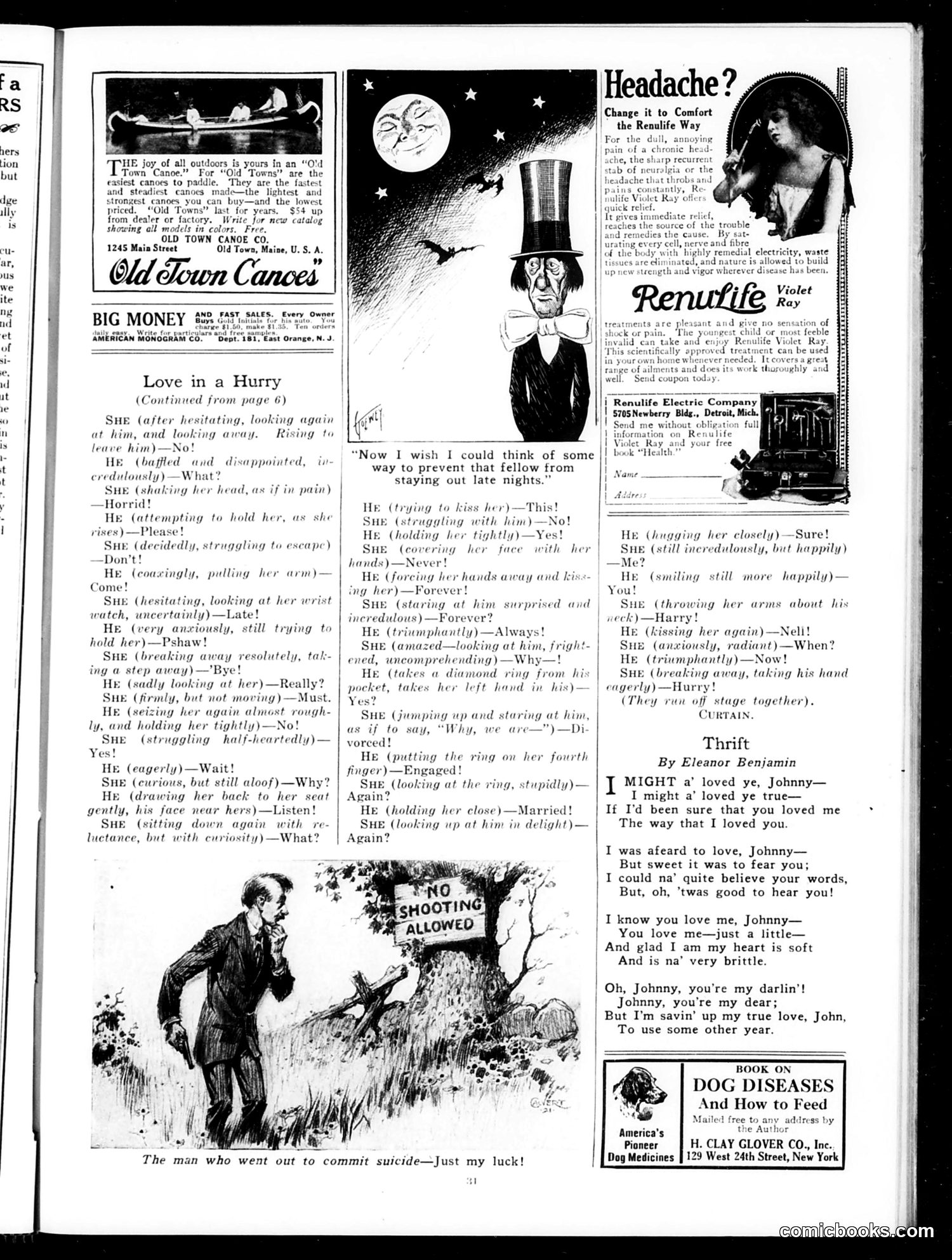
This page contains a comic playlet mocking rapid courtship and marriage. The dialogue depicts a couple's escalating romantic encounter that proceeds from hesitation to engagement to marriage—all within moments. Each of her protests ("No!", "Don't!", "Really?") is overcome by his persistence until she suddenly agrees to everything. The satire targets the impulsiveness and illogic of romance: the woman's reluctance evaporates instantly upon receiving a diamond ring, and both characters' emotional reversals happen without explanation. The final stage direction—"(They run off stage together)"—emphasizes the comedy of their whirlwind commitment. Below, the poem "Thrift" by Eleanor Benjamin offers contrasting perspective: a woman who loves cautiously and withholds "true love" for the future, suggesting romantic restraint as prudent rather than foolish. The page also features period advertisements for canoes, dog medicines, and headache remedies—typical Judge magazine content padding.
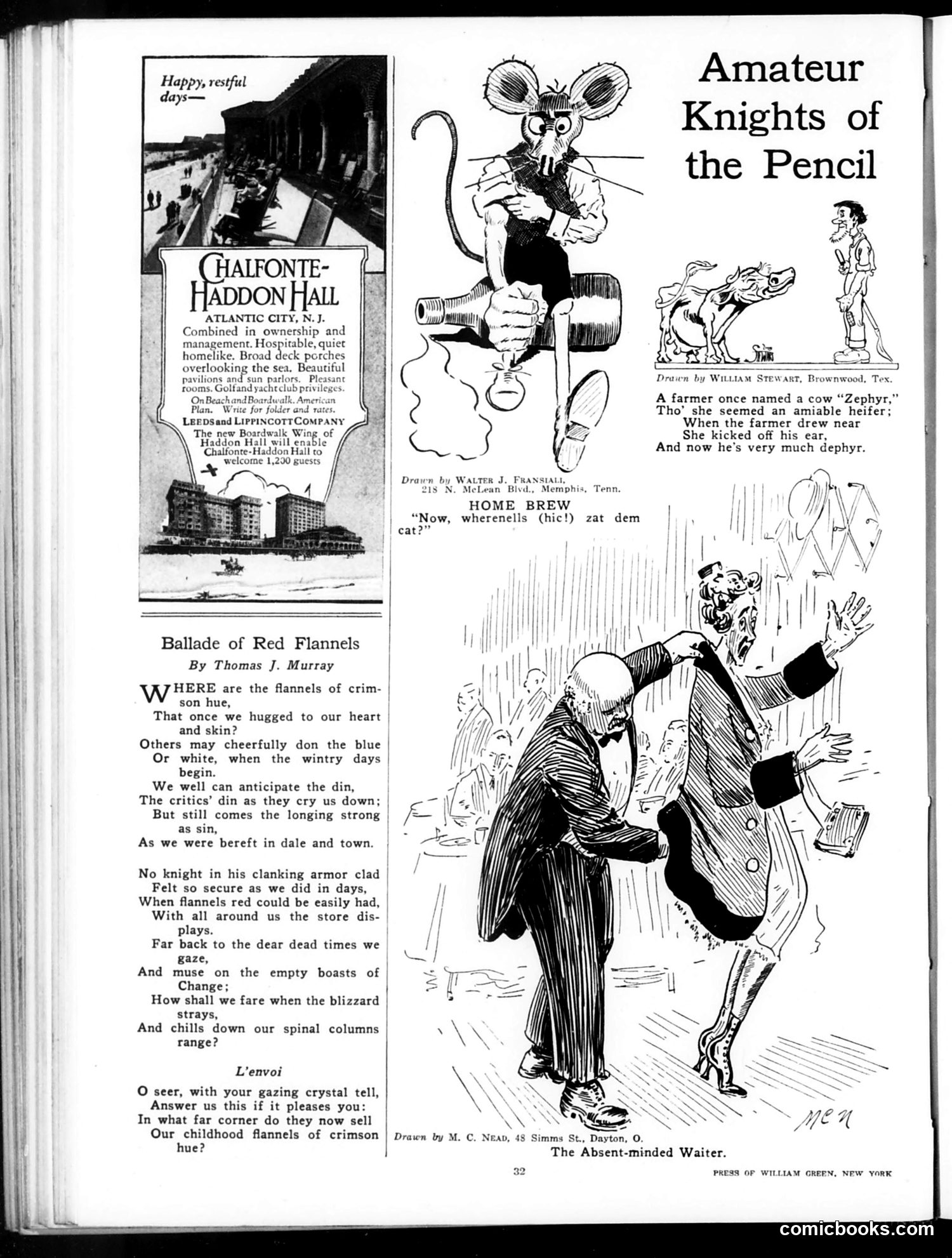
This page contains humorous filler content typical of early 20th-century satirical magazines: **"Amateur Knights of the Pencil"** is a section showcasing reader-submitted cartoons and verses. The three pieces are lighthearted, gentle humor: 1. A cow pun: A farmer names his cow "Zephyr"; she kicks off his ear, making him "dephyr" (deaf). It's simple wordplay. 2. **"Home Brew"**: A cartoon of a drunk man (indicated by "hic!"—a hiccup) searching for cats in slurred speech. The joke relies on intoxication humor. 3. **"The Absent-minded Waiter"**: Shows a waiter obliviously tossing food/dishes in a restaurant during what appears to be chaos. The humor comes from his inattentiveness. 4. **"Ballade of Red Flannels"**: A nostalgic poem mourning the disappearance of red flannel underwear from stores, treating them with mock-heroic language ("No knight in his clanking armor clad / Felt so secure"). The page is primarily entertainment—no political satire. It advertises Chalfonte-Haddon Hall hotel and showcases reader contributions, which was common in Judge's format.
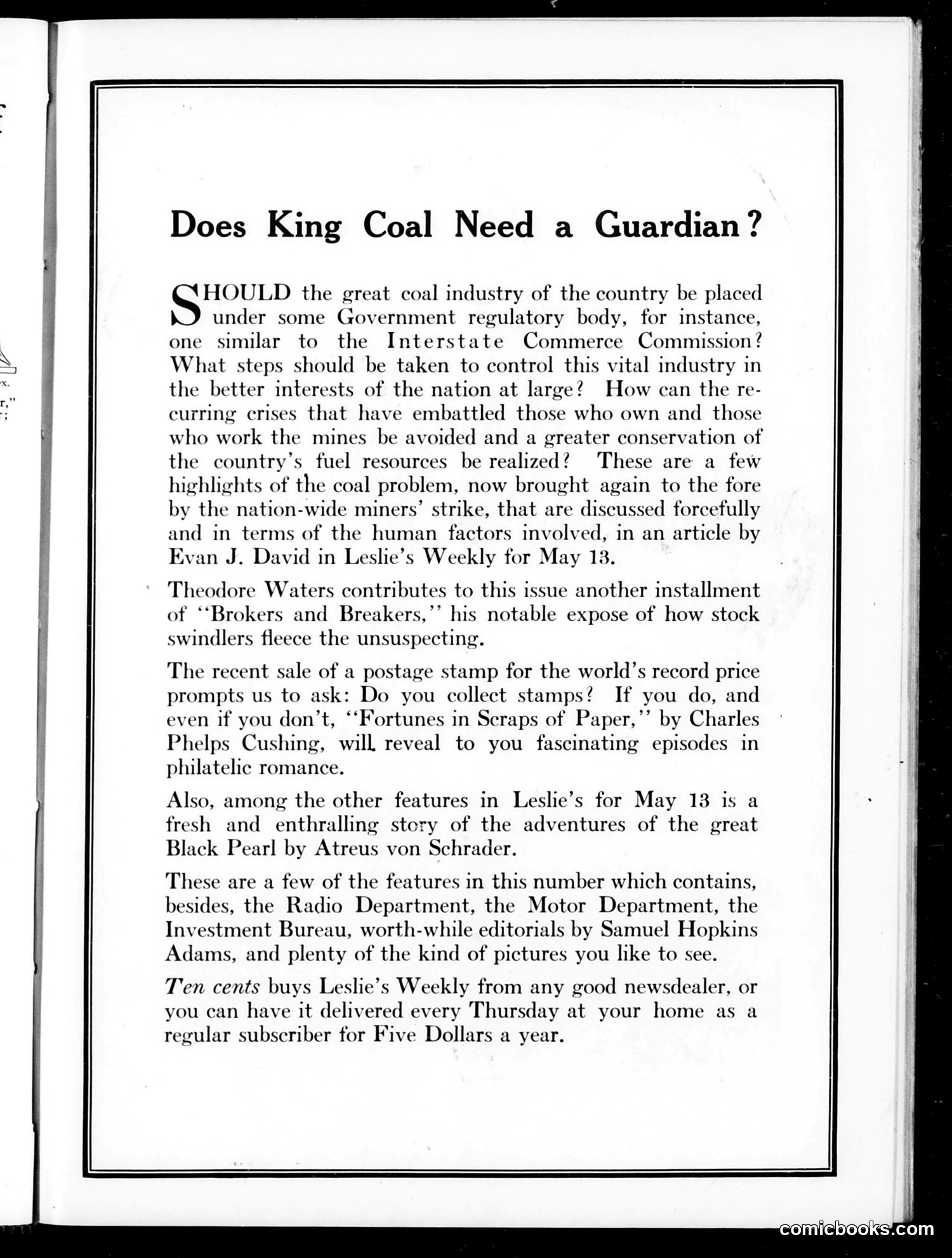
This is a **promotional advertisement** for Leslie's Weekly magazine, not a political cartoon. The page promotes the May 13 issue by highlighting its contents. The main article discussed is "Does King Coal Need a Guardian?" — referencing a **nation-wide miners' strike** (timing unclear from this page, but likely early 20th century). The piece examines whether the coal industry should be regulated by government bodies like the Interstate Commerce Commission, addressing labor disputes between mine owners and workers, resource conservation, and recurring industry crises. Other featured content includes Theodore Waters's exposé on stock fraud ("Brokers and Breakers"), articles on stamp collecting and maritime adventure, plus departments on radio and automobiles. **The "satire" here is subtle**: calling coal "King Coal" and asking if it needs a "Guardian" ironically suggests the industry has become so powerful it requires external oversight—a jab at unchecked industrial power during labor unrest. The ad costs 10 cents per issue or $5 annually.
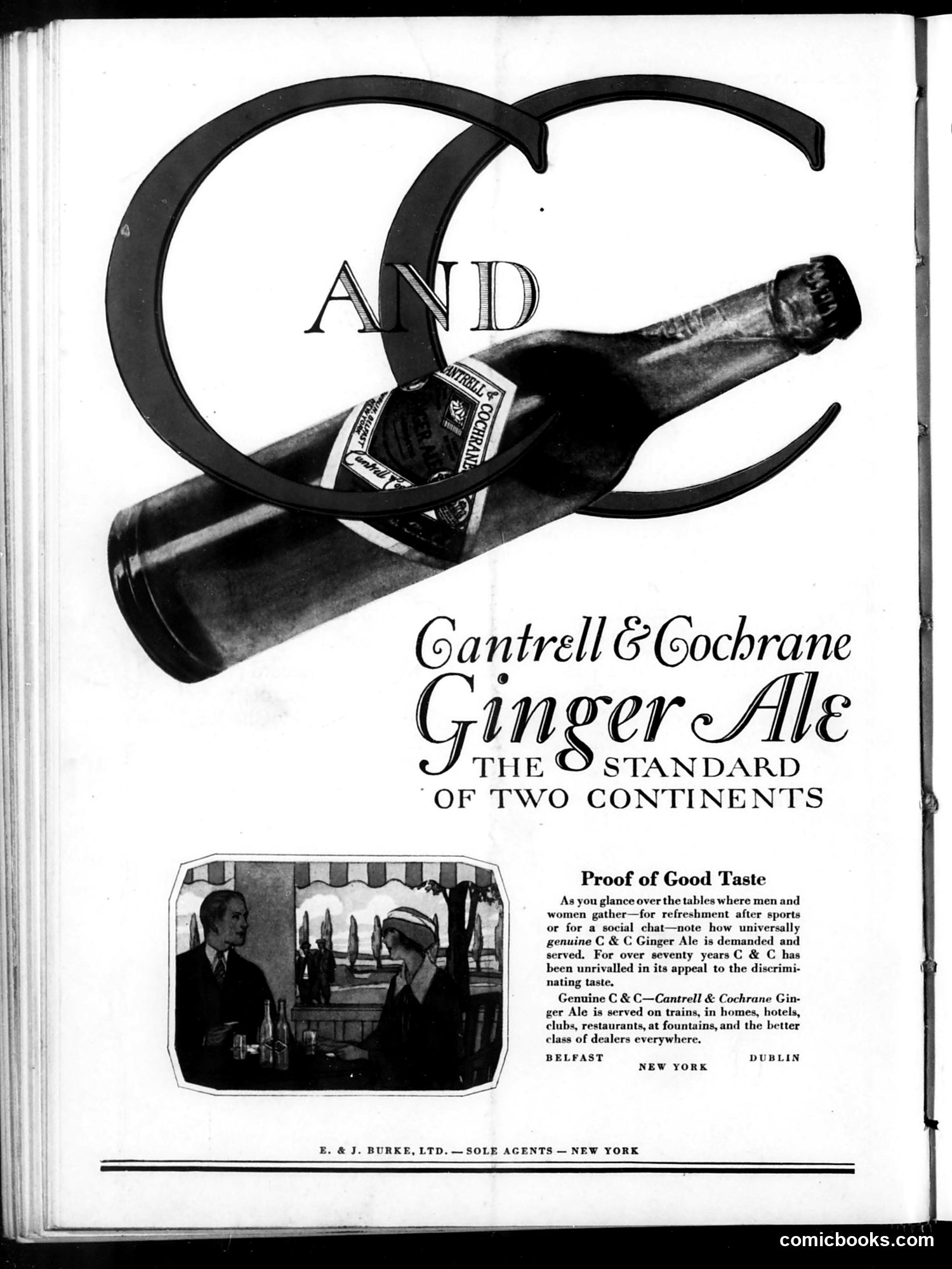
This is primarily a **product advertisement**, not political satire. It promotes Cantrell & Cochrane (C&C) Ginger Ale as "the standard of two continents" (British-Irish and American distribution). The large decorative "C&C" letterforms frame a bottle of the ginger ale. The accompanying text uses a common advertising strategy of the era: claiming universal social acceptance among refined people. It asserts that ginger ale is demanded at respectable venues—trains, hotels, clubs, restaurants—and appeals to "discriminating taste." The small photograph shows what appears to be an elegant social gathering, reinforcing the product's association with sophisticated company. The copy emphasizes seventy years of market dominance to suggest reliability and prestige. This reflects early-20th-century advertising's emphasis on class aspiration and social proof rather than product features or price.