
A complete issue · 39 pages · 1927
Life — June 9, 1927
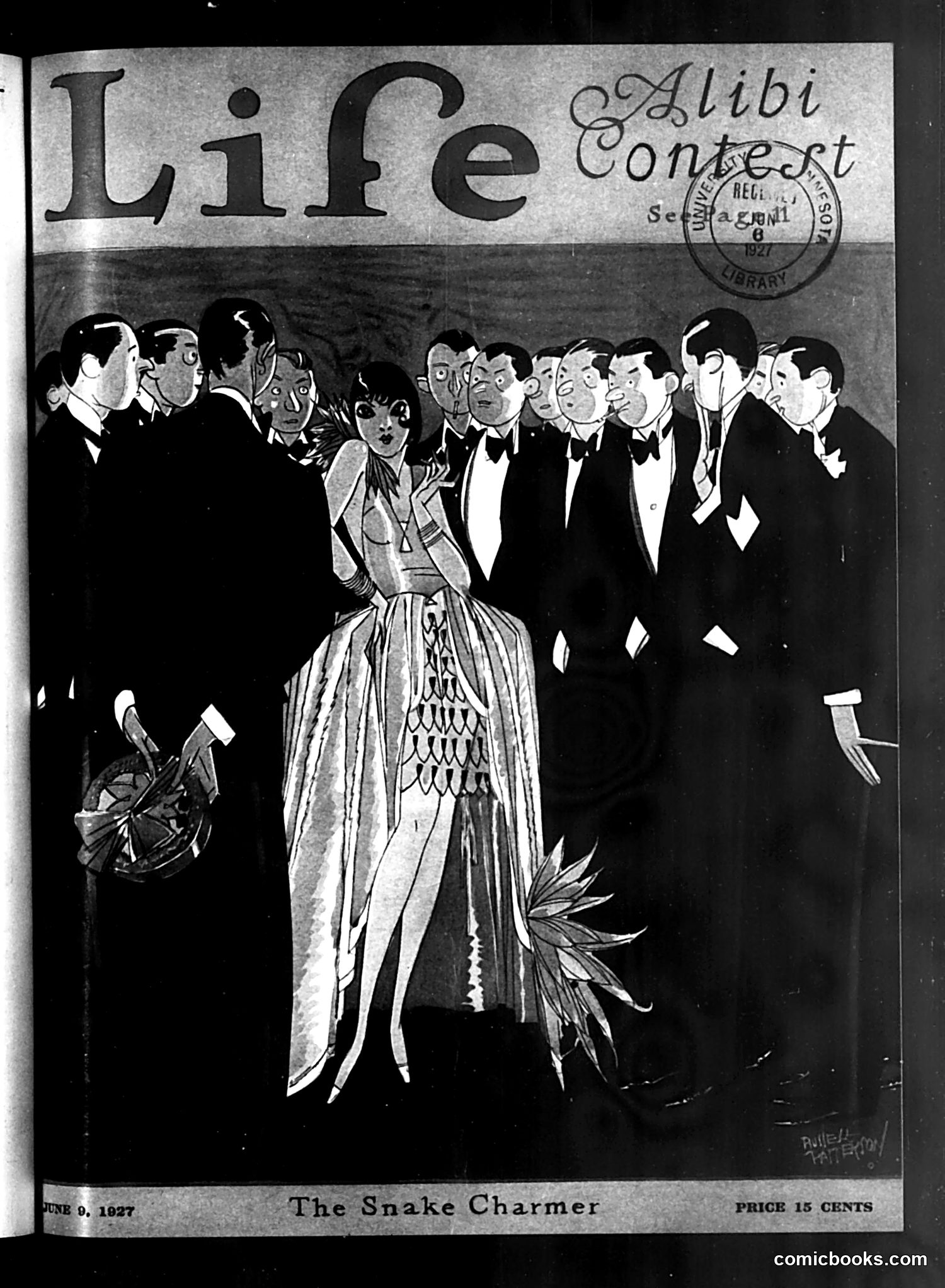
This satirical cover depicts a woman in an elaborate, exotic costume (suggesting a "snake charmer") surrounded by formally dressed men in tuxedos who appear mesmerized or enchanted by her presence. The exaggerated facial expressions and body language suggest the men are under her spell or control. The cartoon likely comments on female allure and power over men during the 1920s—the Jazz Age era when women's social roles were shifting. The "snake charmer" metaphor suggests manipulative feminine wiles, while the formally dressed men represent authority figures or society's establishment being figuratively charmed or controlled by an attractive woman. This reflects period anxieties about changing gender dynamics during an era of increased female independence and fashion liberation.
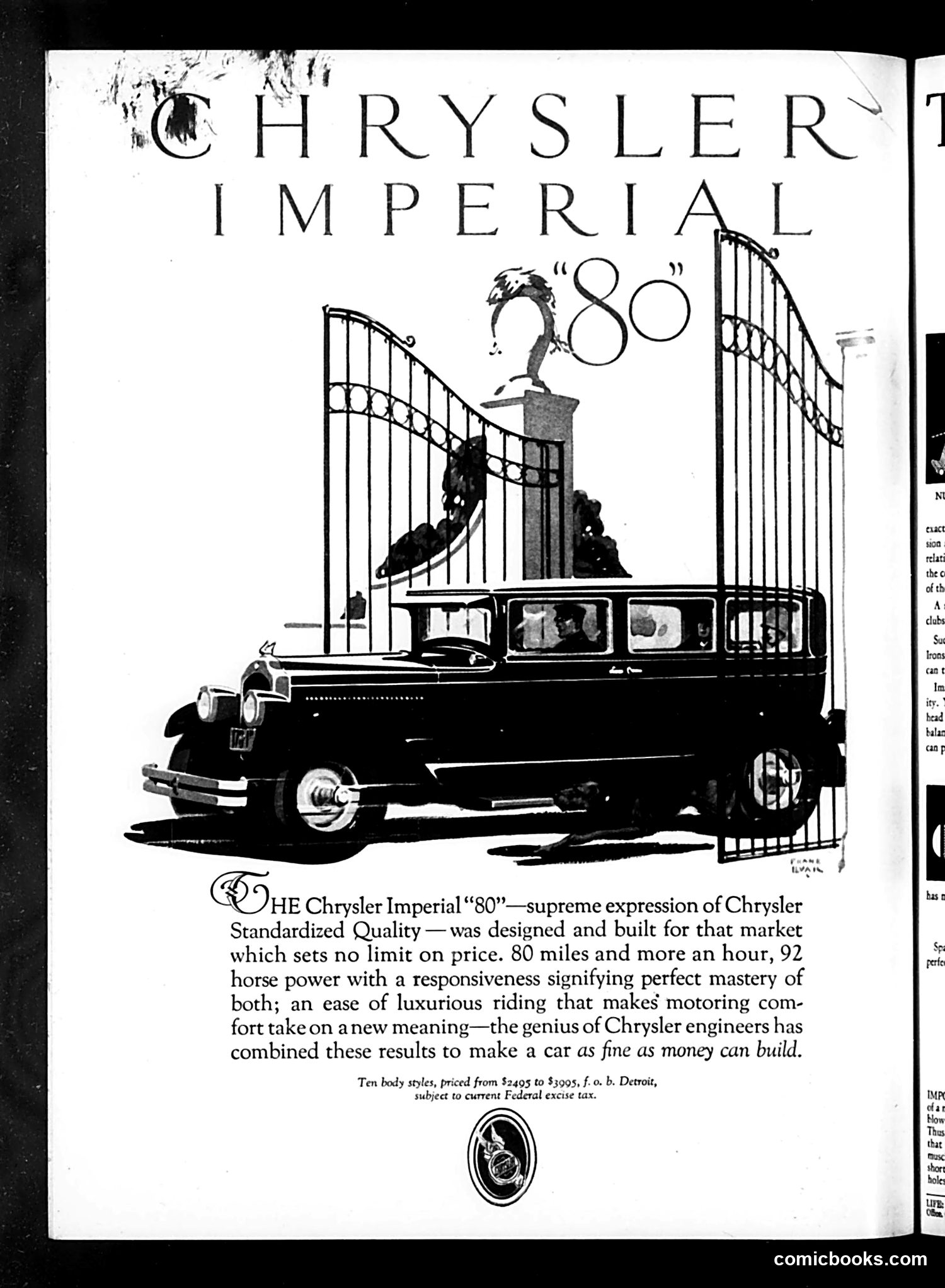
This is primarily a **Chrysler automobile advertisement**, not political satire. The image shows a 1928 Chrysler Imperial "80" luxury car positioned beneath an ornate Art Deco gate structure with decorative urns and statuary—visual metaphors for wealth and prestige. The ad copy emphasizes the car as "supreme expression of Chrysler Standardized Quality," highlighting its performance (80+ mph, 92 horsepower) and luxurious comfort. The tagline claims it's "as fine as money can build." The artistic composition deliberately evokes aristocratic gatehouse imagery, associating the automobile with upper-class status. This reflects 1920s advertising strategy: positioning cars as status symbols for wealthy consumers. The "Ten body styles, priced from $2495 to $3995" indicates this was a premium product during the prosperous pre-Depression era.
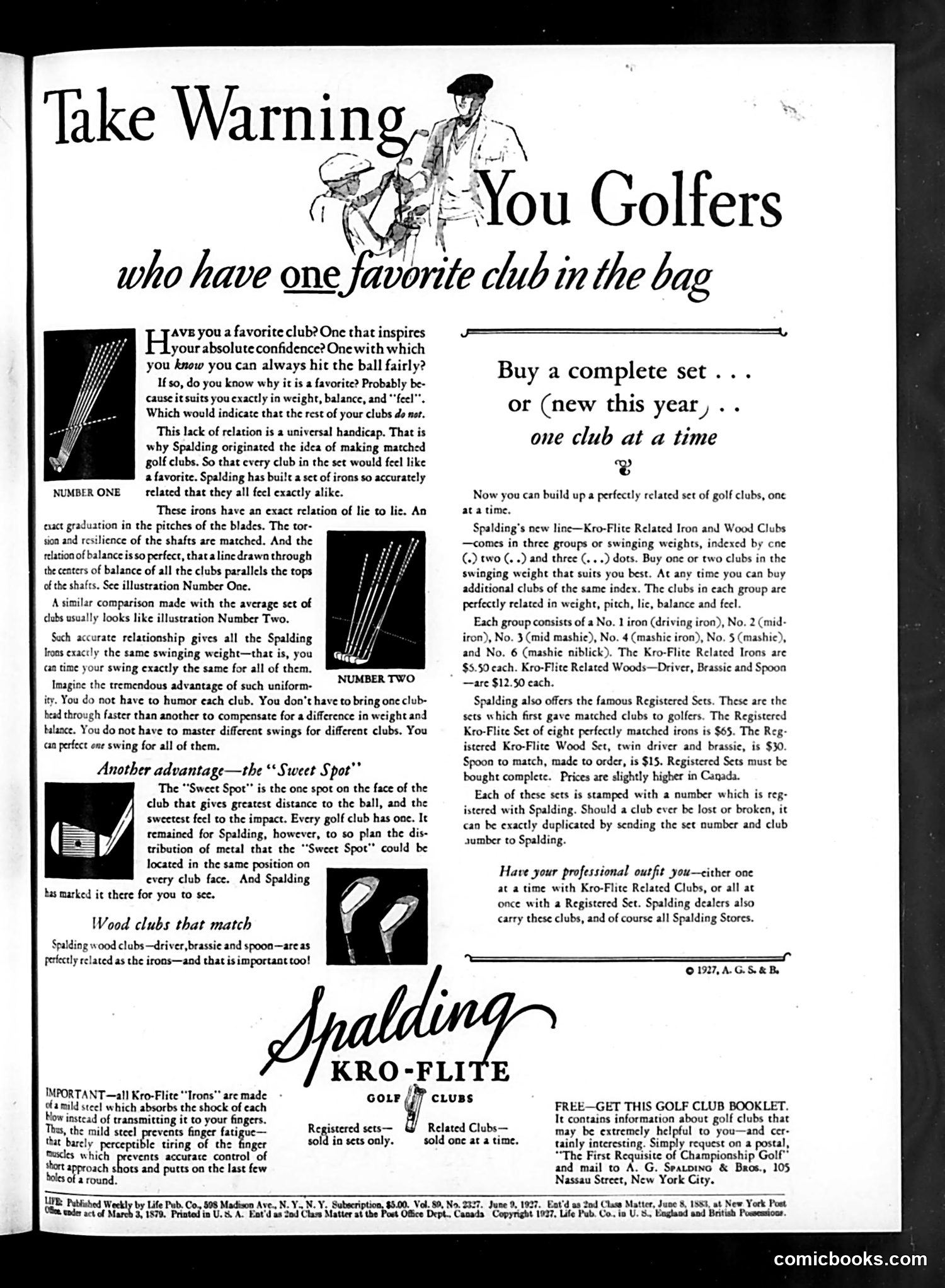
This is **not a political cartoon or satire**—it's a straightforward **advertisement for Spalding Kro-Flite golf clubs**, published in Life magazine in 1927. The page warns golfers who own only one favorite club that they should purchase complete matched sets instead. The illustrations show proper club design and the "sweet spot" on club faces. The ad explains Spalding's innovation: matched sets where all clubs share consistent weight, balance, and "feel," eliminating the handicap of using mismatched equipment. It promotes buying clubs gradually ("one at a time") through their Related Irons and Woods system, or complete Registered Sets. This reflects 1920s golf equipment marketing—emphasizing scientific design and standardization as modern advantages for players.
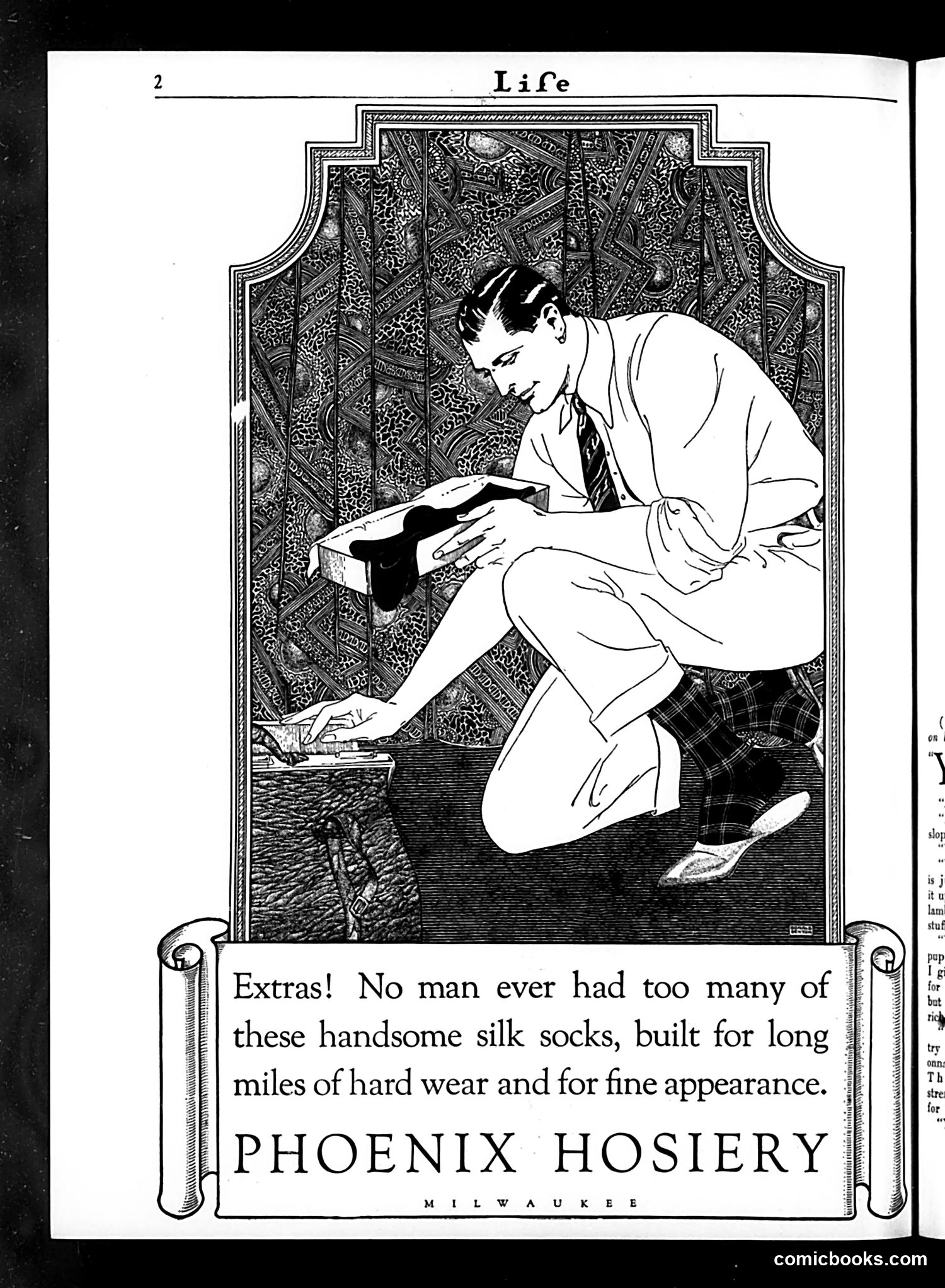
This page is primarily an **advertisement for Phoenix Hosiery**, not satire or political commentary. The image shows a man in business attire kneeling while examining silk socks, with decorative patterned wallpaper in the background. The ad copy emphasizes that quality silk socks are a worthwhile purchase—"No man ever had too many of these handsome silk socks, built for long miles of hard wear and for fine appearance." The headline "Extras!" suggests socks as an affordable luxury item. This represents typical **early 20th-century advertising**, targeting male consumers by associating the product with sophistication and practicality. The illustration style and approach are characteristic of Life magazine's commercial content from this era, using genteel imagery to appeal to middle and upper-class readers.
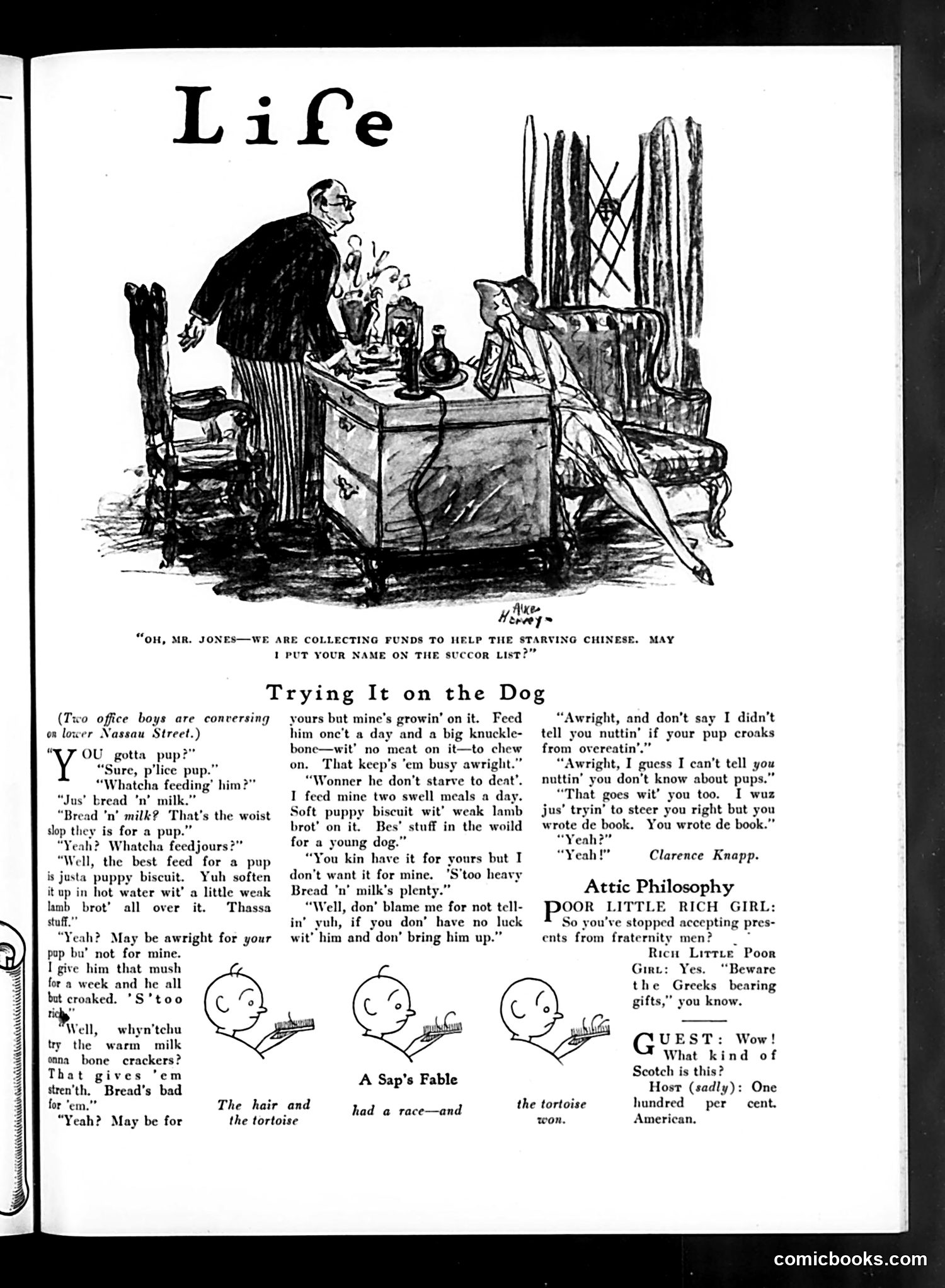
**Main Cartoon (top):** A well-dressed man at a desk is solicited by a woman to donate to relief for starving Chinese. The satire targets wealthy individuals' selective charity—he's willing to help distant suffering but presumably indifferent to local problems. **"Trying It on the Dog":** Two office workers debate puppy nutrition. The humor relies on working-class dialect and the absurdity of applying human dietary theories to dogs. References to "bread 'n' milk" and feeding practices reflect early 20th-century casual pet care attitudes. **"A Sap's Fable" & "Attic Philosophy":** Brief comic vignettes with simple visual humor and wordplay. **Overall:** This page mixes social satire (charitable hypocrisy) with lighthearted humor about everyday life and relationships.
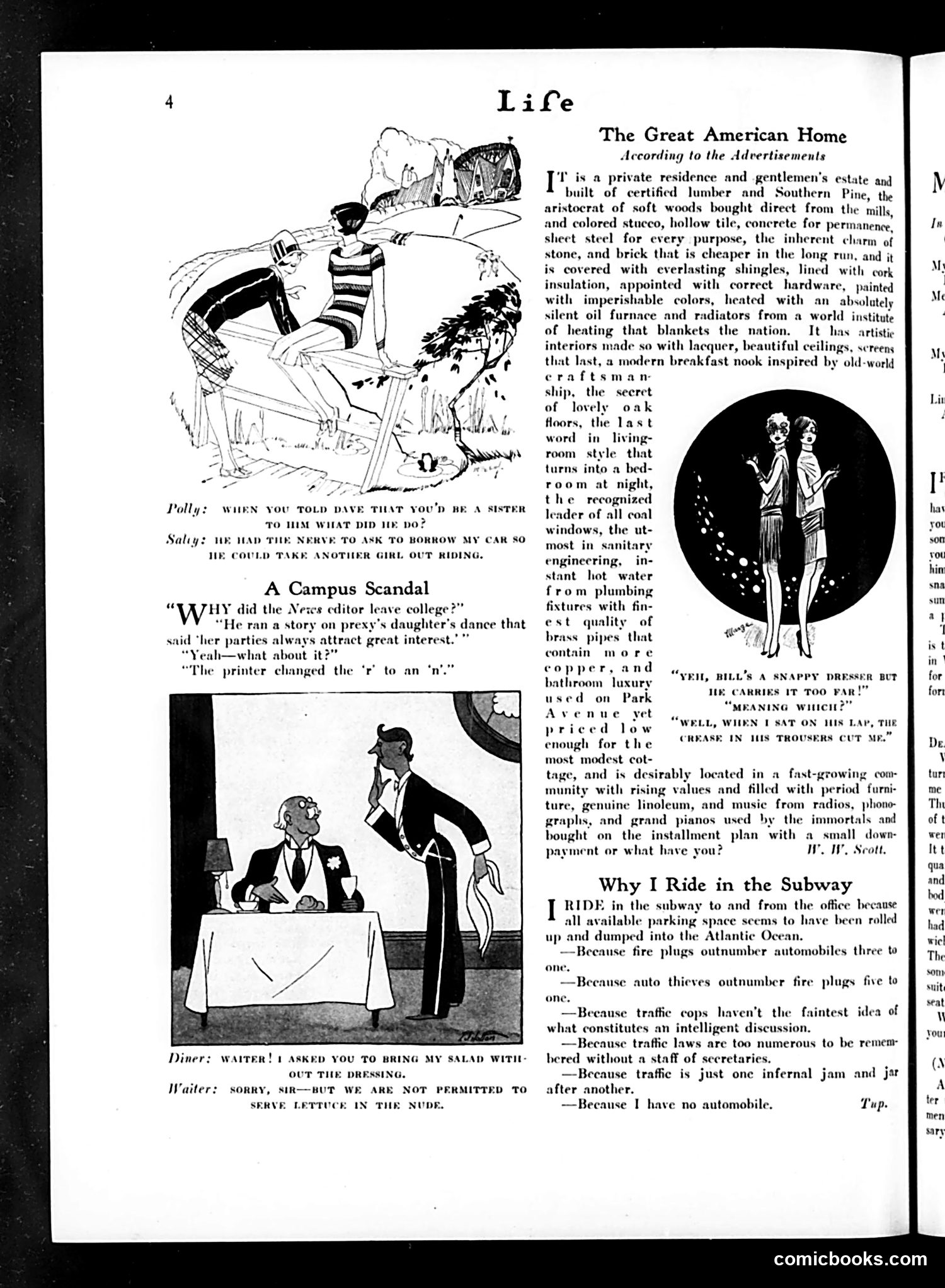
This page contains three separate humorous pieces: 1. **"A Campus Scandal"**: A joke about a college newspaper printer who changed the letter 'r' to 'n' in a story, creating an unintended obscenity. The humor relies on the accidental profanity created by this typographical error. 2. **Diner cartoon**: A waiter refuses to serve salad without dressing, claiming lettuce cannot be served "in the nude"—a play on prudish social attitudes of the era applied absurdly to food service. 3. **"Why I Ride in the Subway"**: A humorous list of reasons for using public transit, mocking automobile culture and traffic problems—parking space scarcity, car theft, traffic laws, and congestion. The final punchline: "Because I have no automobile." All pieces satirize contemporary 1920s-30s American life through lighthearted wordplay and social observation.
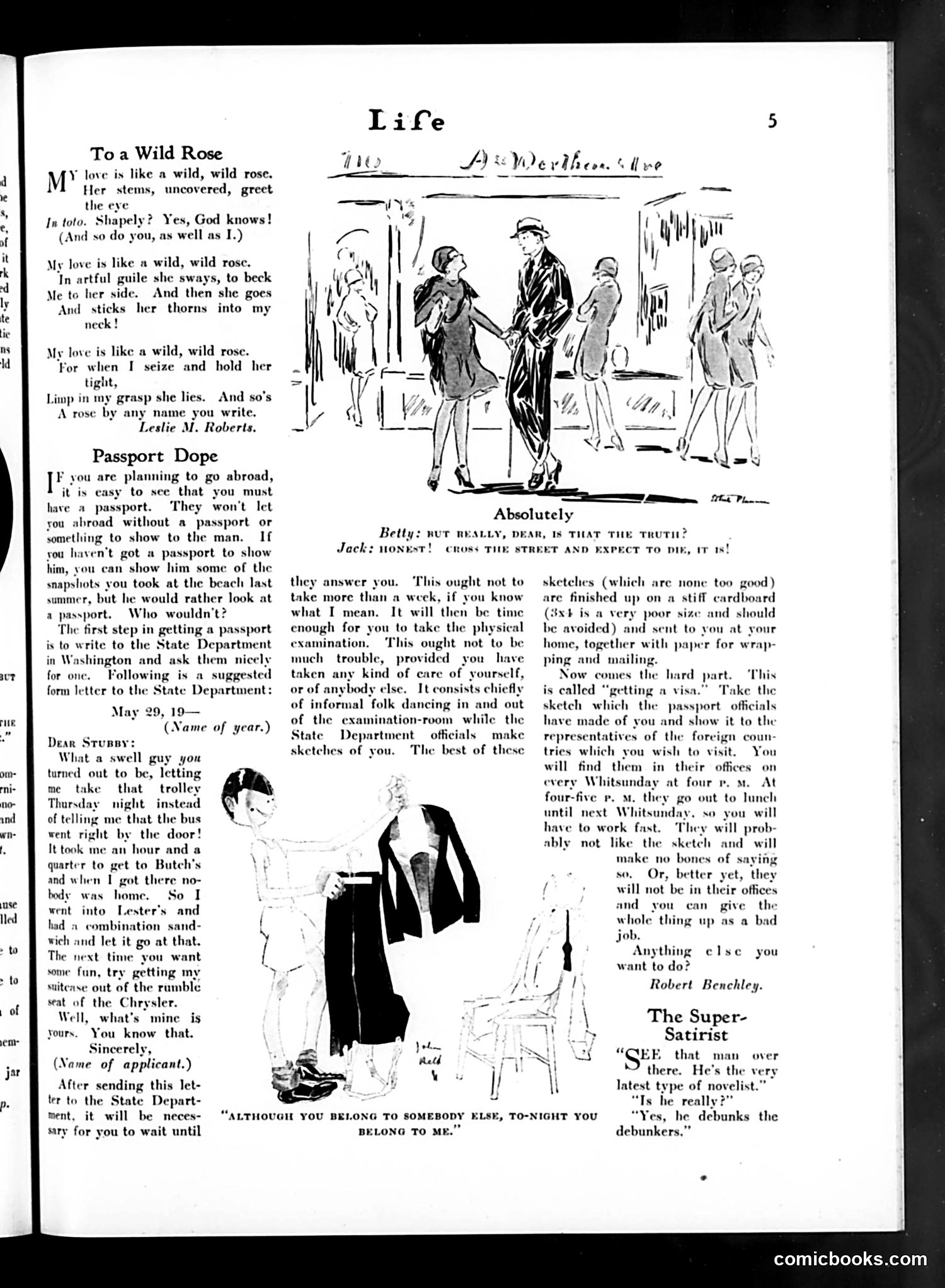
This page contains three distinct pieces of satirical humor typical of early 20th-century Life magazine: 1. **"To a Wild Rose"** (poem by Leslie M. Roberts): A humorous love poem using extended metaphor, playing on romantic clichés. 2. **"Passport Dope"**: Satirizes the bureaucratic absurdity of obtaining U.S. passports. The piece mocks how officials require applicants to submit sketches (which they will poorly reproduce and circulate to foreign officials), making the process inefficient and embarrassing. It's satirizing government incompetence and red tape. 3. **"The Super-Satirist"**: A brief joke about a novelist who debunks overly earnest modern literary types. The cartoon shows an everyday domestic scene with the caption "Although you belong to somebody else, to-night you belong to me," likely mocking sentimental romantic expressions.
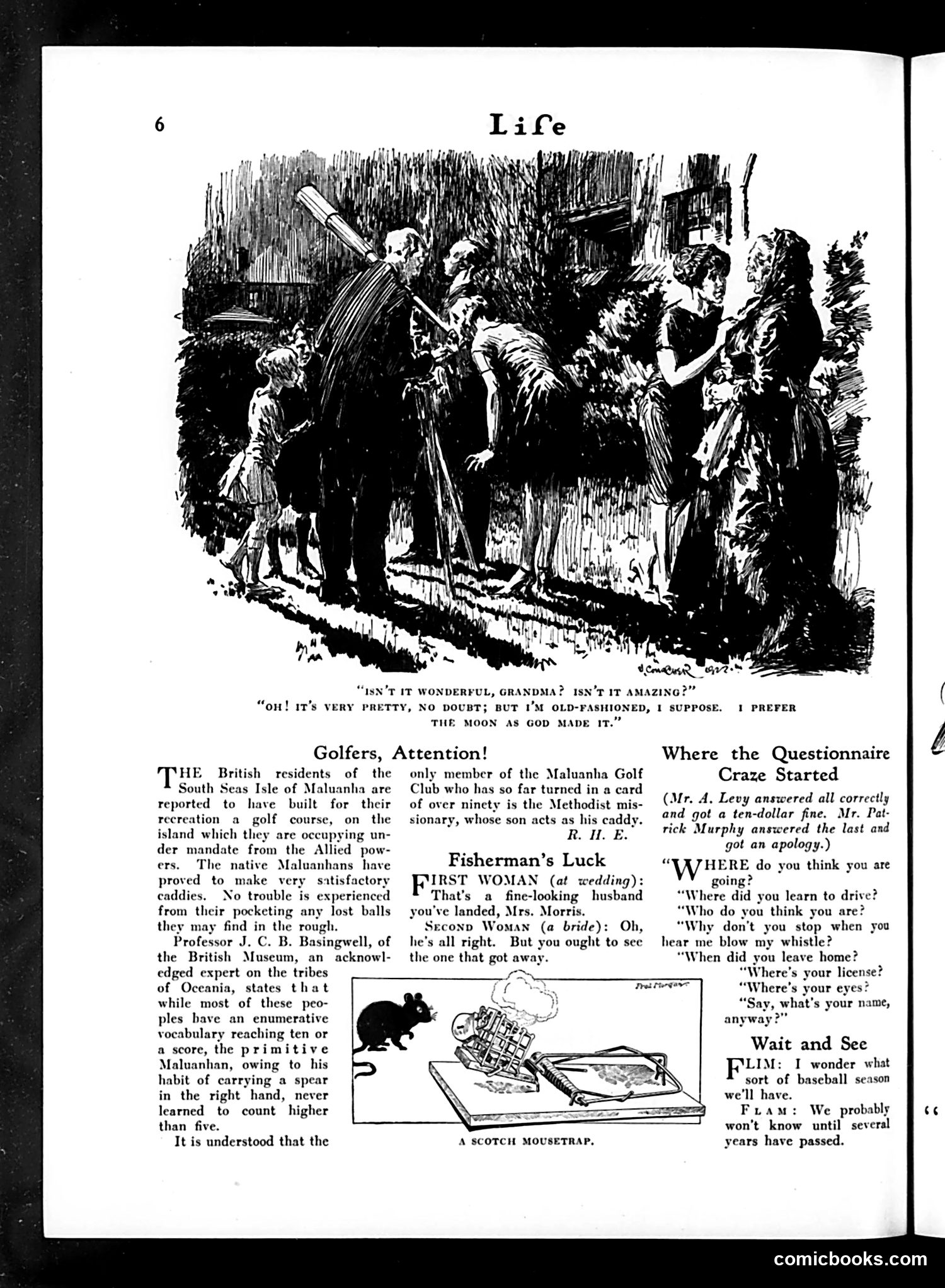
This page contains several unrelated humorous pieces typical of early 20th-century Life magazine: **Main Cartoon:** Shows a family admiring the moon through a telescope. A grandmother prefers the moon "as God made it" to the modern, artificial-looking telescopic view—satirizing tension between tradition and scientific progress. **"Golfers, Attention!"** mocks British colonizers in Maluanha (fictional) who struggle teaching native caddies golf, since the locals' counting vocabulary apparently maxes at five. **Other pieces** include "Fisherman's Luck" (a bride/wife joke), "Where the Questionnaire Craze Started" (poking fun at survey obsession), and "Wait and See" (baseball speculation). The small illustration shows "A Scotch Mousetrap"—a mouse in a whisky bottle, playing on Scottish stereotypes. The humor is period-typical: colonial, domestic, and based on ethnic/regional caricatures.
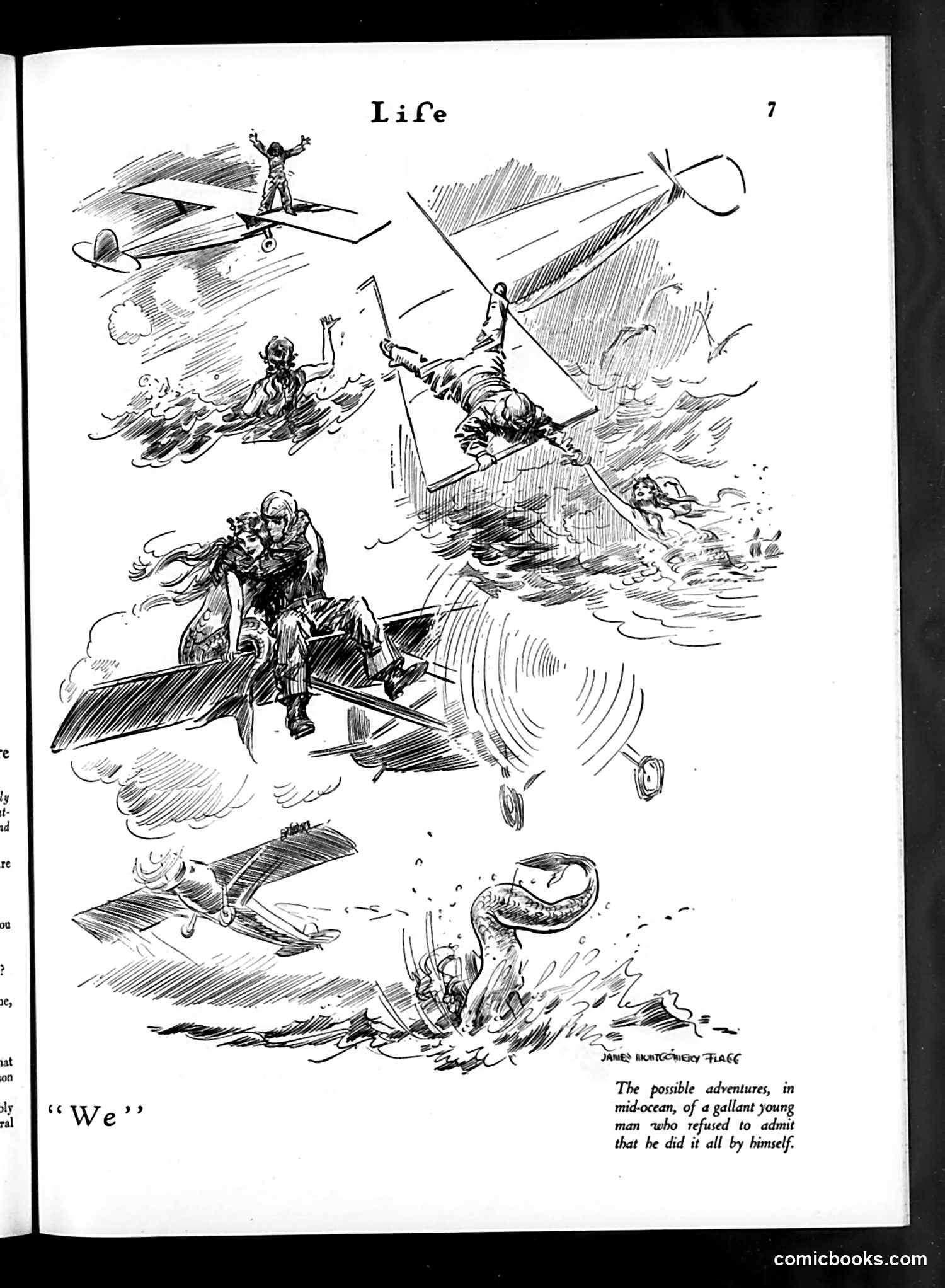
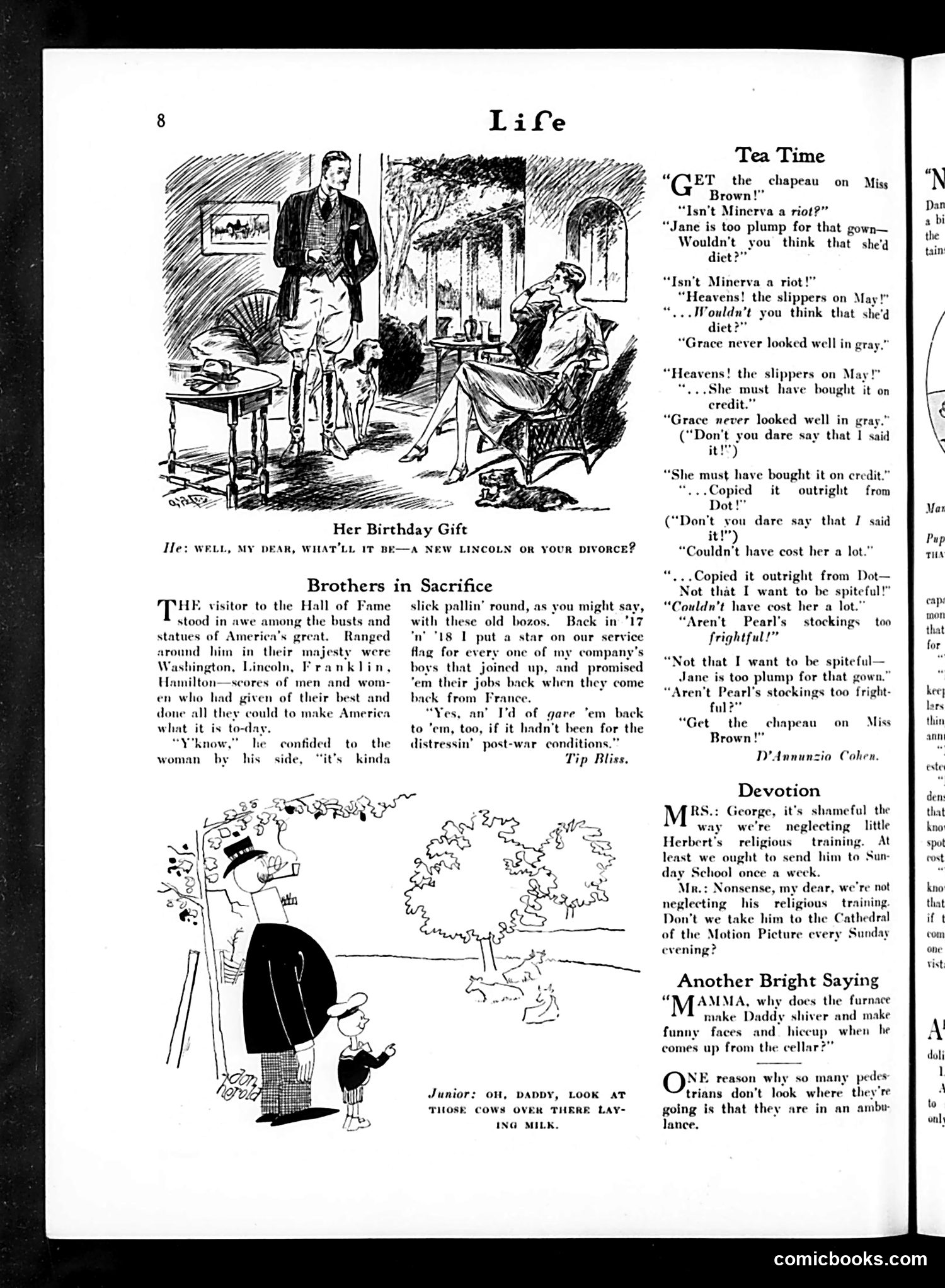
This page contains three distinct humor pieces: **"Tea Time"** (top): A gossipy conversation between women about acquaintances' fashion choices and spending habits—Grace's gray outfit, Jane's weight and diet, and Minerva's extravagant purchases. The satire targets post-WWI women's preoccupation with appearances and social judgment. **"Brothers in Sacrifice"** (middle): References American soldiers in WWI ("'17 to '18"), praising those who gave their lives. The speaker contrasts these heroes with wealthy civilians who made fortunes during wartime yet broke promises to rehire veterans. This critiques war profiteering and broken social contracts. **"Devotion" and "Another Bright Saying"** (bottom right): Brief domestic humor pieces about parenting and child-rearing. The overall theme reflects post-WWI American anxieties about class, patriotism, and social responsibility.
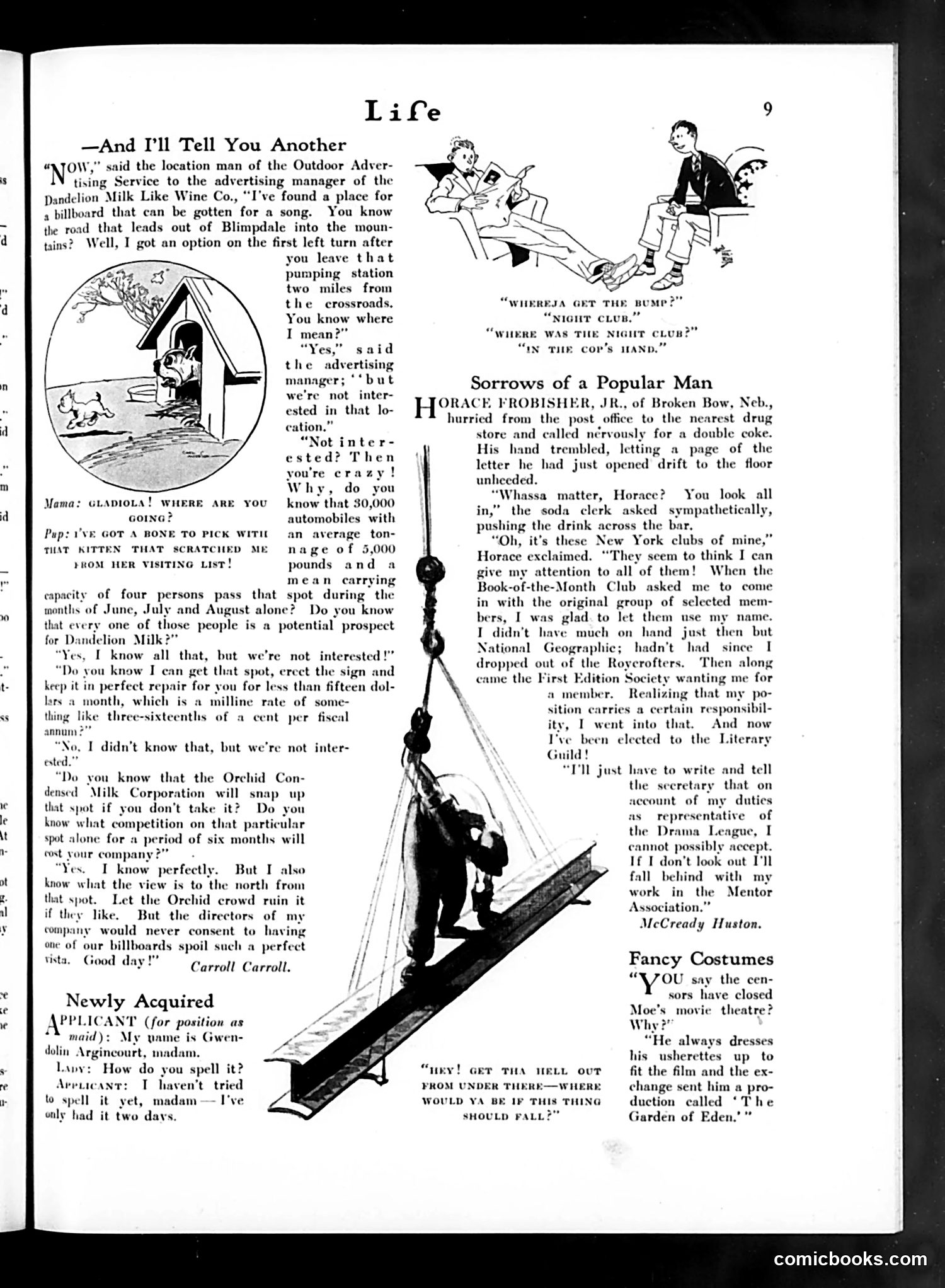
This page contains three separate humorous pieces typical of Life's satirical content: 1. **"And I'll Tell You Another"** (top left): A location scout discusses finding a billboard site near Blimpdale, pitching it to an advertising manager. The joke centers on the absurdity of competing billboard placements and corporate competition for advertising space—likely satirizing 1920s-30s commercialism and the proliferation of roadside advertisements. 2. **"Sorrows of a Popular Man"** (center): Horace Frobisher, overwhelmed by invitations to exclusive clubs and societies (Book-of-the-Month Club, National Geographic, First Edition Society, Drama League), humorously depicts the burden of being sought-after by multiple organizations—satire on American club culture and social climbing. 3. **"Newly Acquired"** and **"Fancy Costumes"** (bottom): Brief jokes about spelling difficulties and costume design in cinema. The overall theme: modern social and commercial pressures.
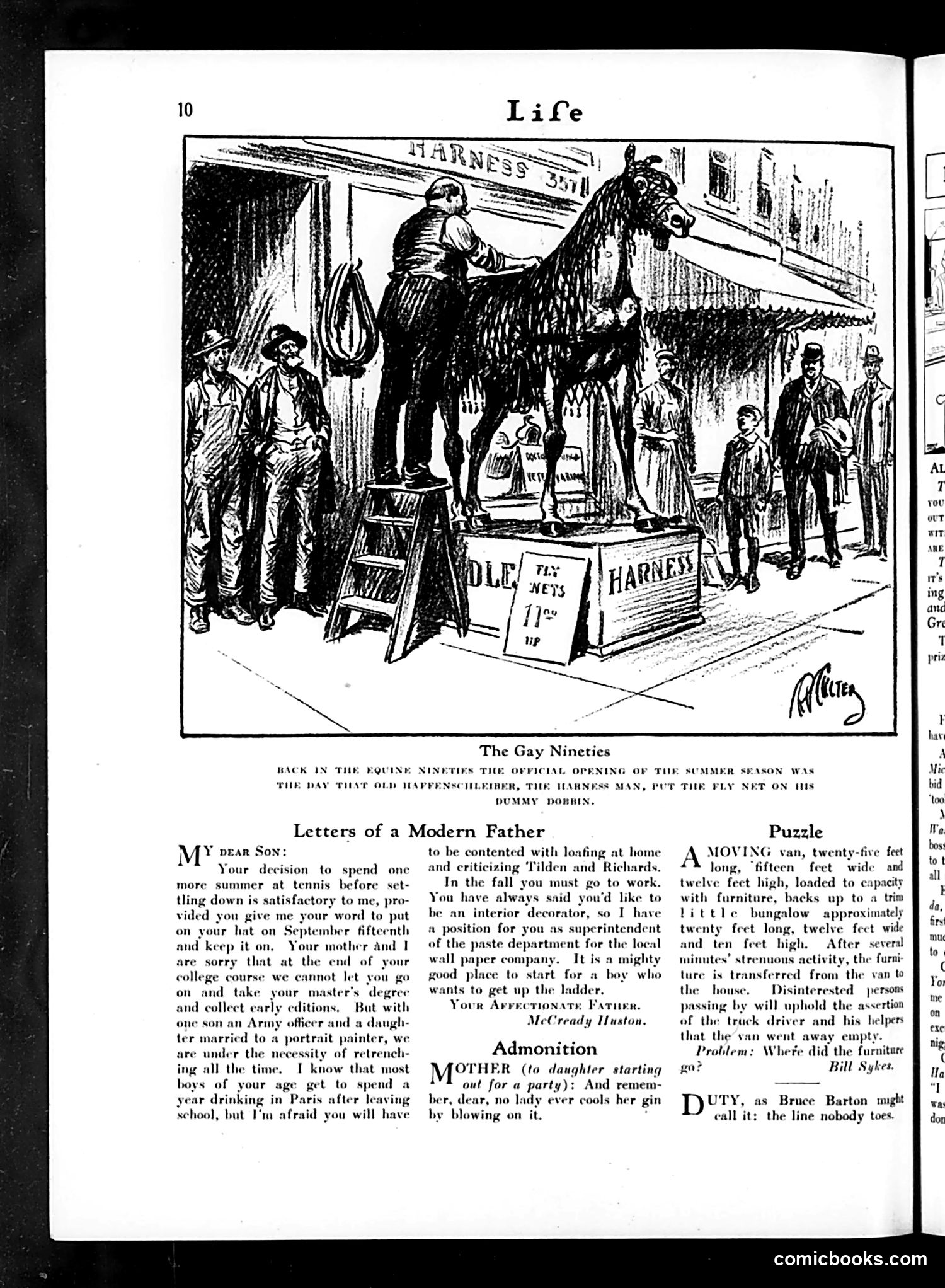
This illustration depicts a street scene from the 1890s showing a horse being auctioned or displayed for sale. The caption references "old Happenschleiber, the harness man," who is putting a fly net on the horse's "dummy dobbin" (a dated term for horse). The cartoon satirizes the commercial world of late-19th-century urban life, specifically the horse trade and street commerce. The gathered onlookers in period dress suggest this was a notable or amusing public spectacle. The title "The Gay Nineties" indicates this is nostalgic commentary on that era's character—likely poking fun at both the period's business practices and its quaint street activities that would soon become obsolete with automobile adoption. The humor appears to rest on depicting routine commercial activity as entertaining spectacle.
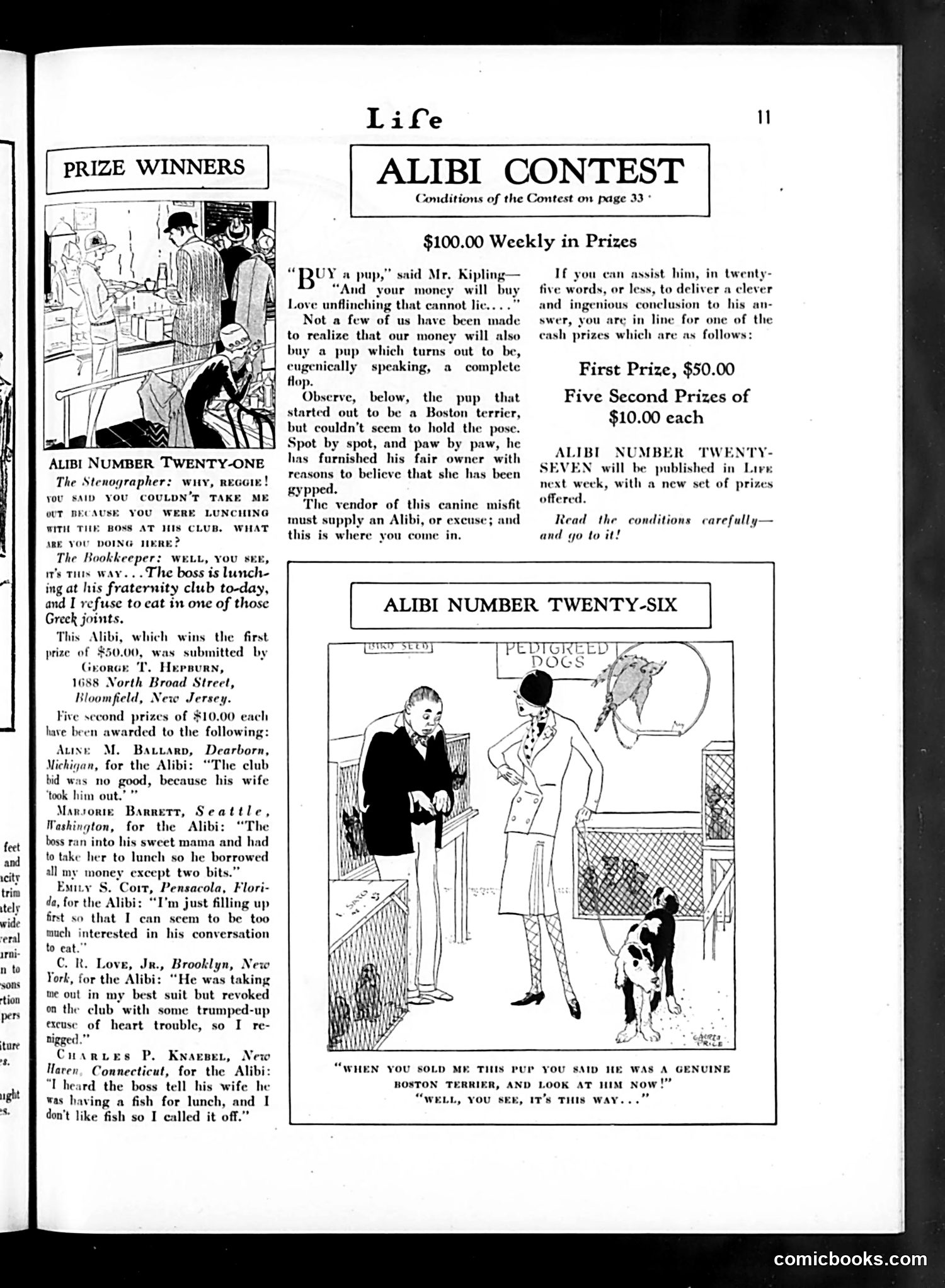
This page features "Life" magazine's "Alibi Contest," offering $100 weekly in prizes for clever excuses. The main cartoon (Alibi #26) depicts a man confronting a woman about a pedigree dog she's holding. The joke hinges on the dog's poor condition—the man says he bought it as a genuine Boston Terrier, but now questions whether the woman misrepresented it. The sidebar showcases winning alibis from readers, humorous excuses people gave their bosses or spouses for various transgressions (arriving late, borrowing money, etc.). This reflects the magazine's satirical tradition of mocking everyday dishonesty and the creative lies people tell to escape consequences—a timeless human activity presented as entertainment.
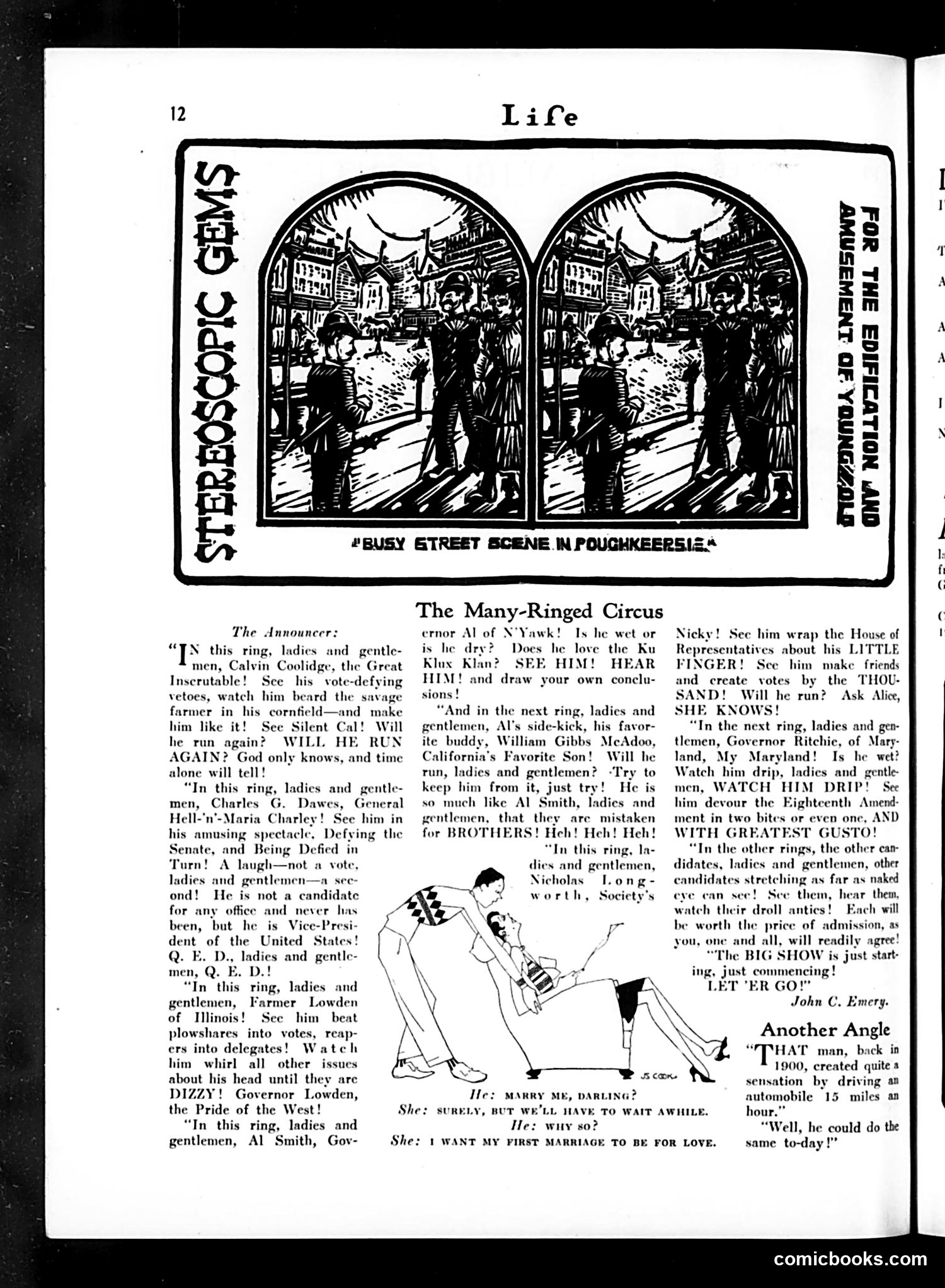
This is a satirical commentary on American politics presented as a circus with multiple "rings" of political figures and events. The announcer invites readers to observe various politicians performing their acts: - **Charles G. Dawes** and **General Hell-'n-Maria Charlie**: Political figures presented as spectacles - **Al Smith**: Referenced multiple times as a political performer - **Governor Lowden**: Featured as "The Pride of the West" - **William Gibbs McAdoo**: California's "Favorite Son" The satire mocks the 1920s presidential race as entertainment, with politicians as circus performers competing for attention. The "many rings" structure suggests simultaneous, competing political machinations. The bottom illustration of a couple negotiating marriage terms parallels the absurdity of political negotiations. Overall, the piece ridicules how electoral politics resembles a circus spectacle rather than serious governance.
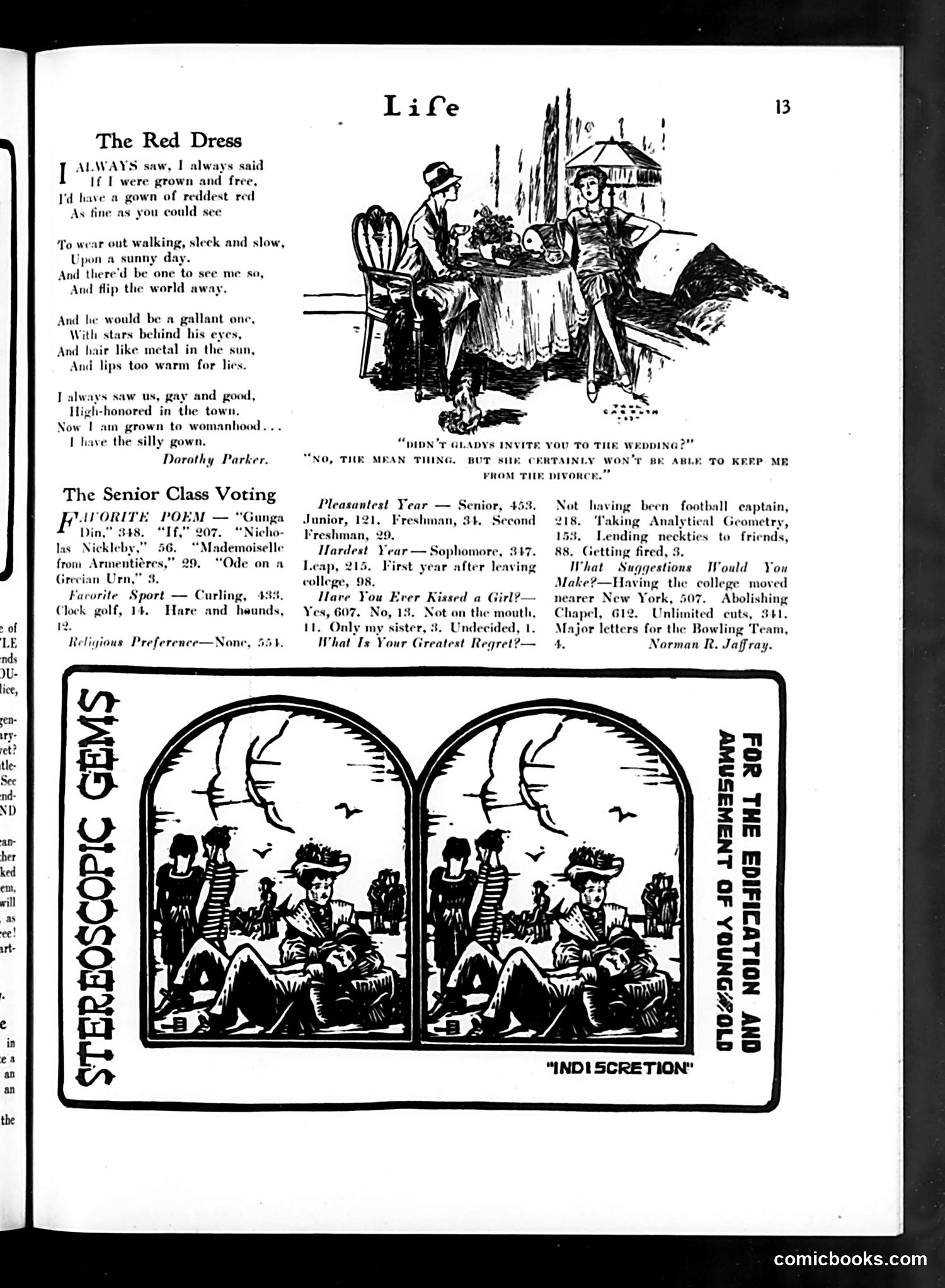
This page combines a romantic poem ("The Red Dress" by Dorothy Parker) with humor about senior class predictions and a stereoscopic comic titled "Indiscretion." The main cartoon shows a stereoscopic gem (a double image viewed through a special viewer) depicting what appears to be a compromising social situation. The caption reads "INDISCRETION," and the advertisement text warns that viewing such stereoscopic gems could damage one's reputation or create scandal—a humorous reference to how risqué or suggestive stereoscopic images were popular novelty items that people kept private due to social propriety concerns. The senior class section lists typical yearbook information (favorite sports, poems, voting preferences), grounding this issue in college/high school culture of the era. The overall page satirizes both romantic idealism and Victorian social anxieties about morality and propriety.
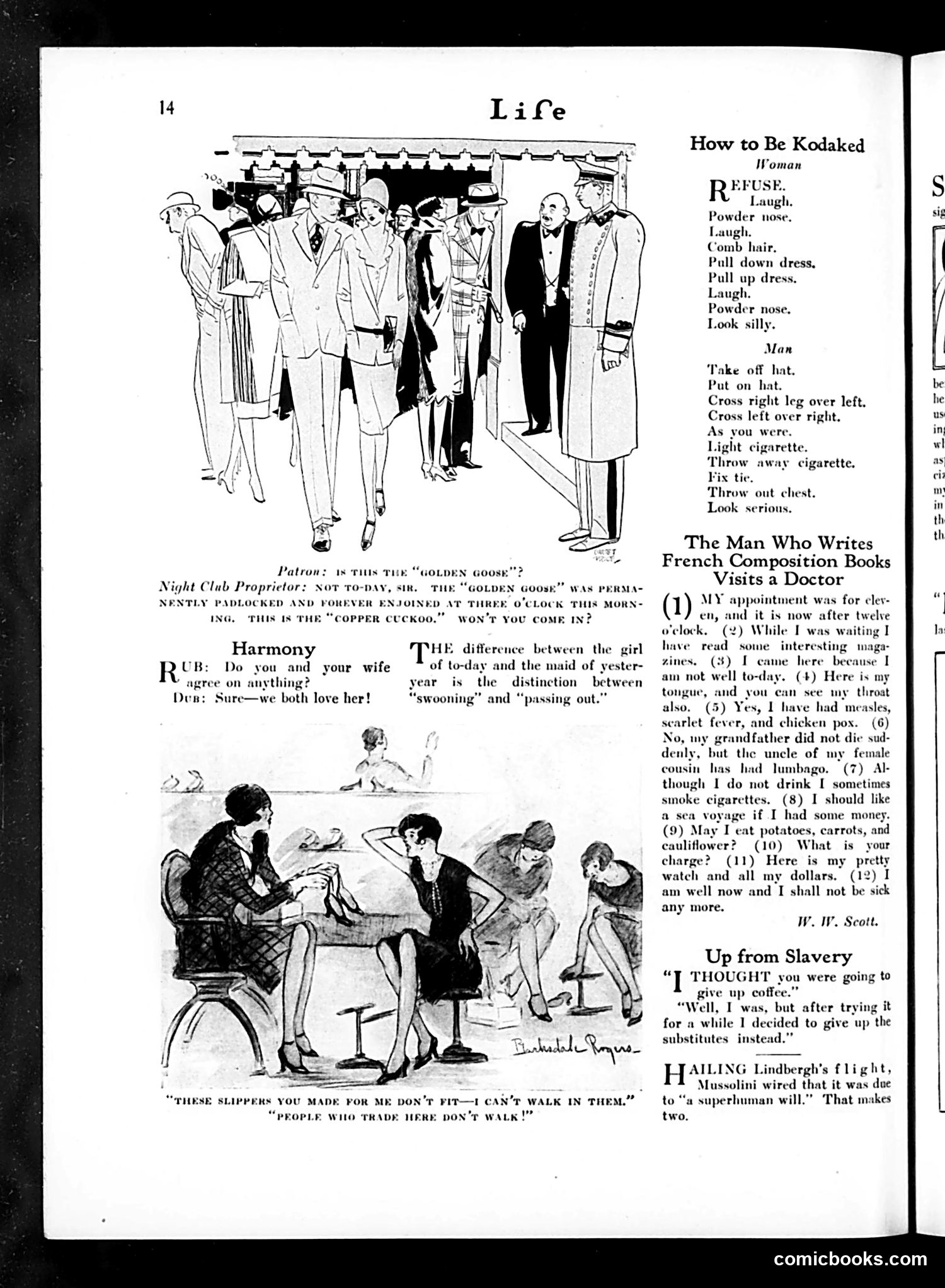
This page contains three satirical pieces from Life magazine (a humor publication, not news): 1. **"How to Be Kodaked"** - Instructions for posing unnaturally for photographs, mocking how people behaved self-consciously when cameras were present. The humor targets both the awkwardness of early photography and people's vanity. 2. **"Harmony"** - A brief dialogue joke about marital agreement, accompanied by a cartoon showing women at a beauty salon. The humor critiques both marriage dynamics and the emerging consumer culture around cosmetics and appearance. 3. **"The Man Who Writes French Composition Books Visits a Doctor"** - A numbered anecdote (12 items) satirizing the absurd, disconnected sentences found in language textbooks. This was a longstanding joke format mocking the artificial examples in educational materials. All three pieces target early 20th-century social conventions and consumer culture through gentle satire.
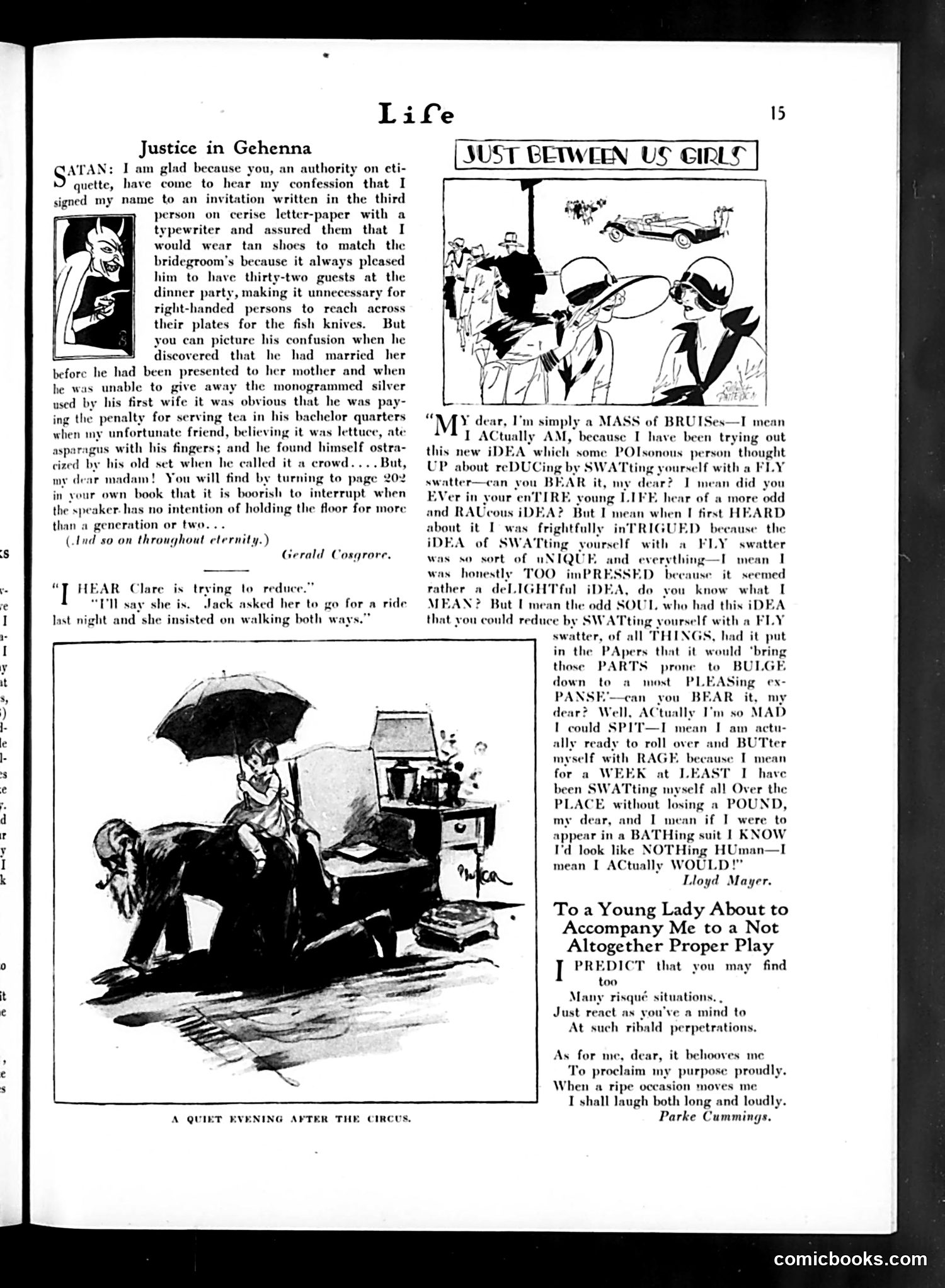
**"Justice in Gehenna"** (top left): A satirical piece where Satan complains about a man who signed his name to an invitation promising thirty-two dinner guests would wear tan shoes. The joke mocks social pretension and the chaos caused by such trivial, binding commitments—suggesting even Hell finds such bureaucratic absurdity punishing. **"Just Between Us Girls"** (top right): A humorous exchange between two women discussing the "IDEA" of reducing oneself by "SWATting" with a fly swatter. The satire mocks women's fashion anxieties and fad dieting/weight-loss schemes, using exaggerated capitalization and ironic desperation to ridicule the absurd lengths women go to for appearance. **Bottom cartoon**: "A Quiet Evening After the Circus" depicts a couple under an umbrella—likely satirizing domestic life's anti-climactic mundanity following excitement.
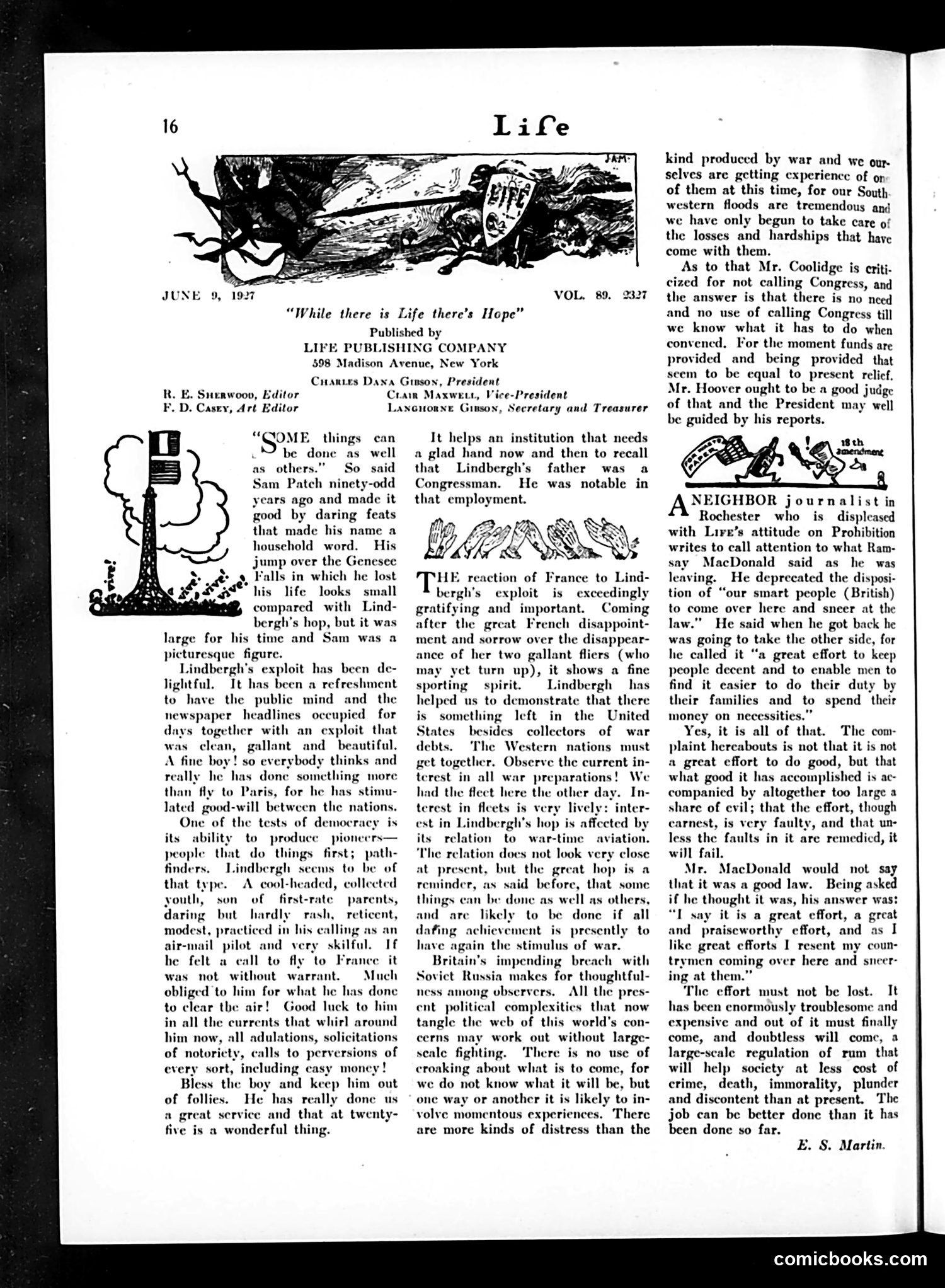
This page contains editorial commentary rather than political cartoons. The main illustration shows a figure jumping over what appears to be Genesee Falls, referencing Charles Lindbergh's father (a congressman) and likely Sam Patch, a legendary daredevil of the 1820s known for jumping waterfalls. The text discusses Lindbergh's transatlantic flight exploit and France's reaction to it. The editorial praises Lindbergh as a democratic hero—an ordinary person achieving extraordinary feats—while critiquing American political response and praising his demonstration that achievement remains possible beyond war's destruction. A sidebar addresses Prohibition enforcement efforts, expressing skepticism about their effectiveness. The overall tone celebrates individual accomplishment and questions government overreach.
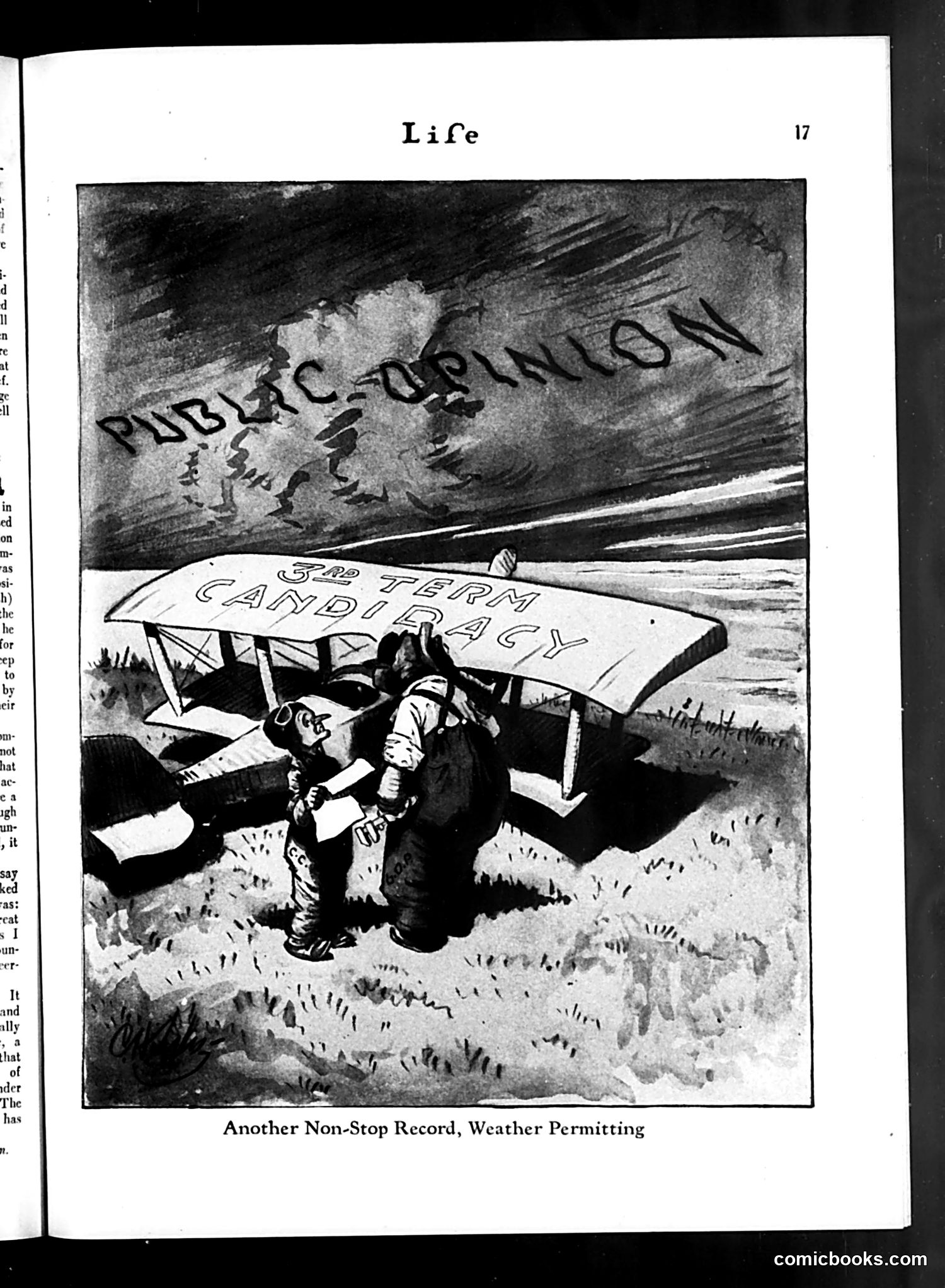
This is a satirical illustration showing an aircraft labeled "The Tern Candracy" (likely a play on words referencing aviation records). The plane appears damaged or crashed, and there's a "PUBLIC OPINION" stamp across the sky above it. The caption reads "Another Non-Stop Record, Weather Permitting," which is sarcastic—suggesting that aviation records for non-stop flights are only impressive "weather permitting," implying the conditions were favorable rather than the achievement being genuinely remarkable. The figure below the plane appears to be a person commenting on or reacting to this record attempt. The cartoon satirizes the tendency to qualify or downplay aviation achievements by citing favorable circumstances, mocking how record-breakers might attribute their success to luck rather than skill. This likely references early 1920s-30s aviation mania and competitive record-setting culture.
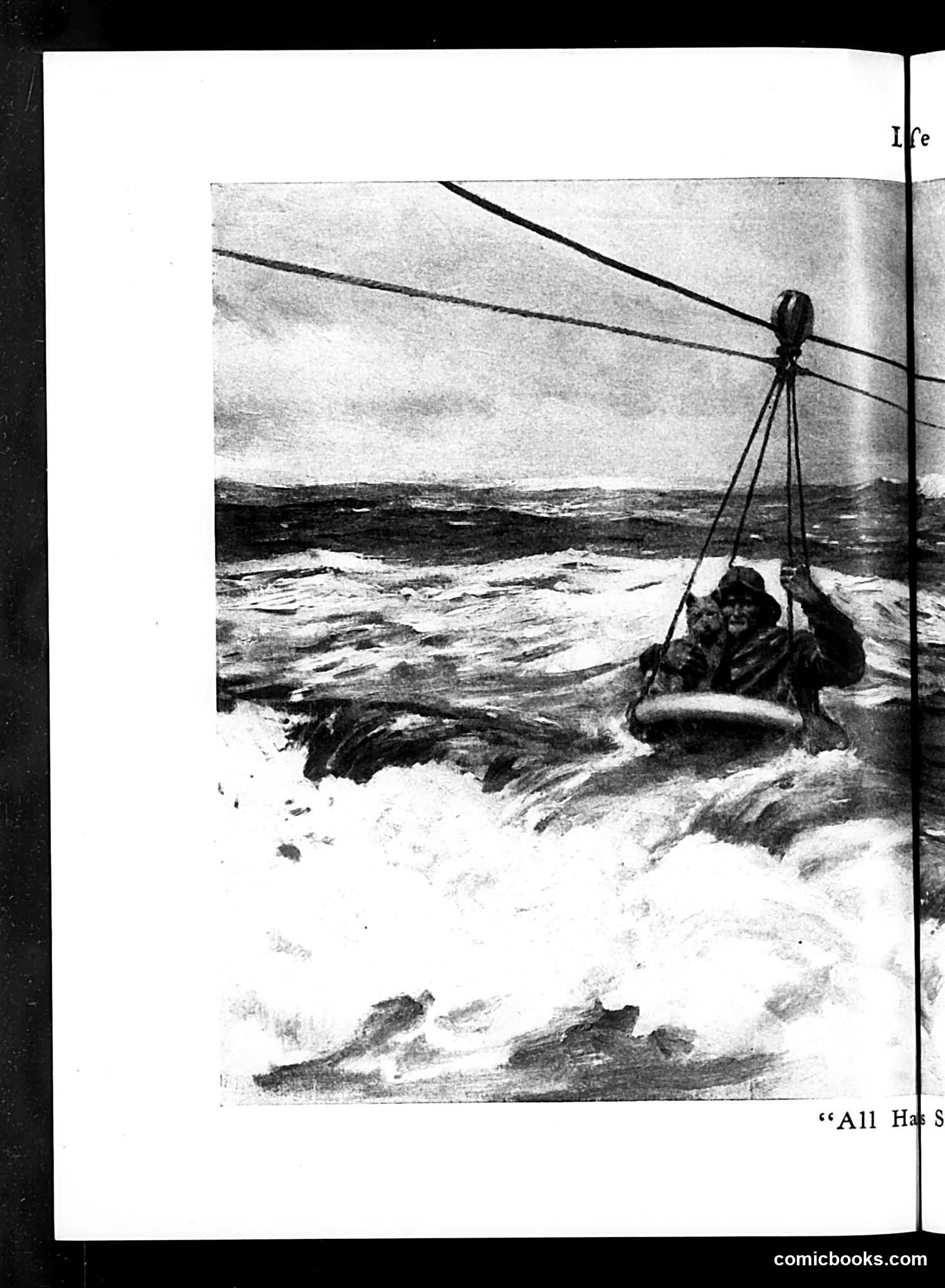
This black-and-white photograph shows a person in a swing suspended over a rocky beach during rough seas. The image appears to be illustrative rather than a political cartoon—it's a scenic or narrative photograph rather than satirical artwork. The partial caption visible reads "All Has S[...]" (cut off), which provides insufficient context to identify the specific reference or subject matter. The page header indicates this is from *Life* magazine, and the comicbooks.com watermark suggests this is from a digitized archive. Without the complete caption or additional text, I cannot reliably identify what social, political, or humorous point this image was meant to convey to its original audience.
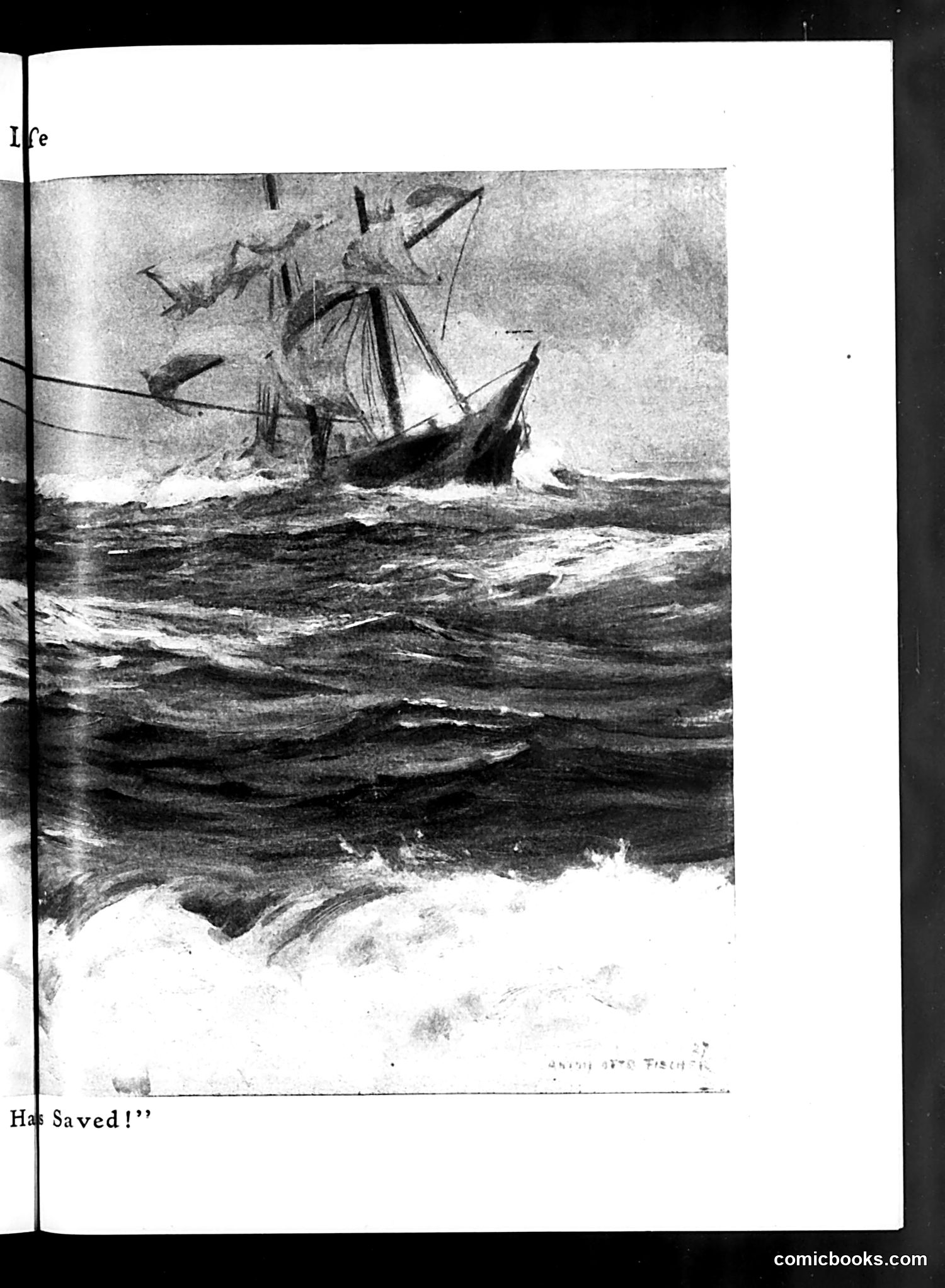
This page from *Life* magazine shows a dramatic maritime photograph of a large sailing ship in distress, battling heavy seas with waves crashing over its bow. The page is titled "Life Has Saved!" — apparently a caption celebrating the ship's rescue or survival. The image itself appears to be a straightforward historical or news photograph rather than political satire or caricature. Without additional context about the specific ship, incident, or date, I cannot identify the particular vessel or event being documented. The photograph demonstrates the perilous conditions faced by seafaring vessels of that era, but the specific satirical or editorial point *Life* magazine intended remains unclear from this image alone.
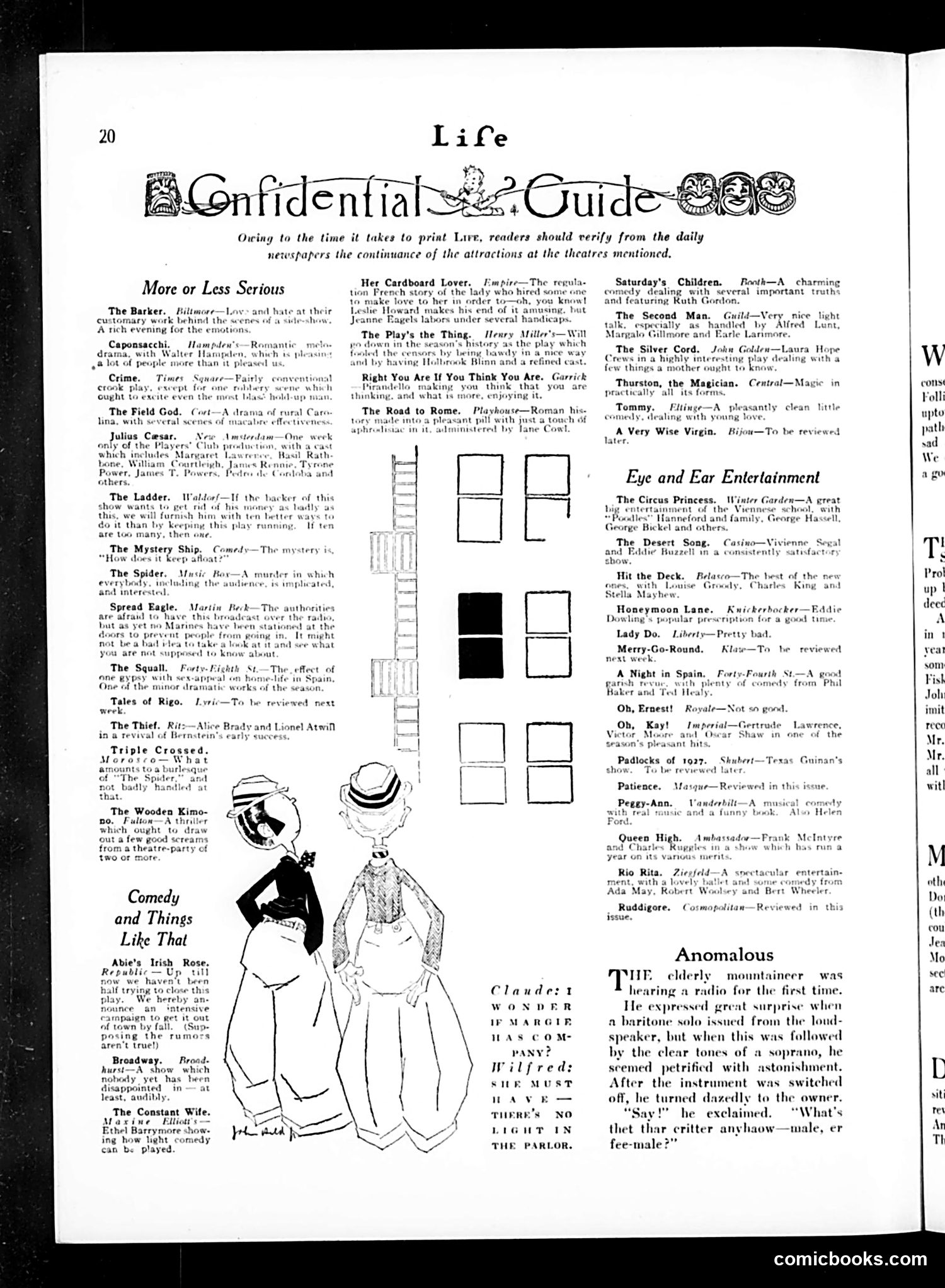
This page is primarily a **theater review section** listing Broadway shows with brief critical assessments. The main cartoon depicts two figures in 1920s attire (hats, coats) - likely representing urban sophistication contrasted with rural simplicity. The notable satirical content is the **"Anomalous" section** at bottom right: an elderly rural mountaineer hears a radio for the first time. Upon hearing both a male baritone and female soprano vocalist in succession, he becomes confused and asks the owner whether "that thar critter" is "male, or fee-male?" **The satire targets** rural unfamiliarity with new technology (radio was still novel in the 1920s) and the culture gap between cosmopolitan city-dwellers and country folk. The humor relies on the mountaineer's literal-minded confusion—he seemingly believes the radio contains an actual creature, not understanding broadcasting technology. This reflects common 1920s urban condescension toward rural Americans as unsophisticated and out-of-touch with modernity.
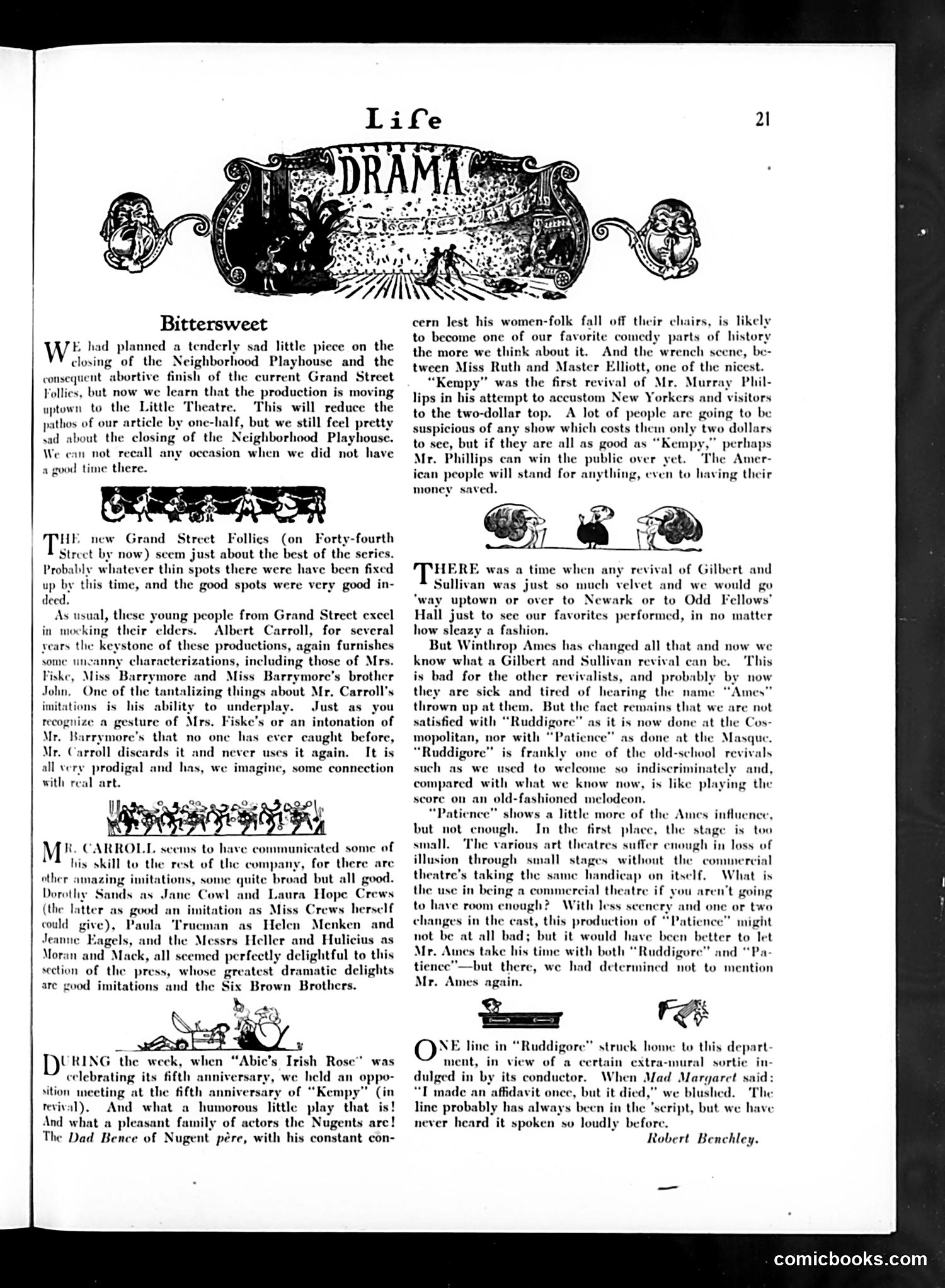
This page reviews contemporary Broadway productions from the 1920s. The "Grand Street Follies" is a revue featuring Albert Carroll, who excels at mimicking established actors like Mrs. Fiske and the Barrymore family. The review praises Carroll's skill at subtle imitation—recognizing his gestures then watching him discard them. The piece also reviews "Kempy," a two-dollar-top revival by producer Murray Phillips, praising the Nugent family's performances. A significant section critiques Gilbert and Sullivan revivals, specifically praising Winthrop Ames's productions of "Ruddigore" and "Patience" while dismissing older revival styles as "old-school" and indiscriminate compared to Ames's standards. The satire targets theatrical pretension and changing entertainment economics—notably the skepticism surrounding affordable two-dollar theater tickets.
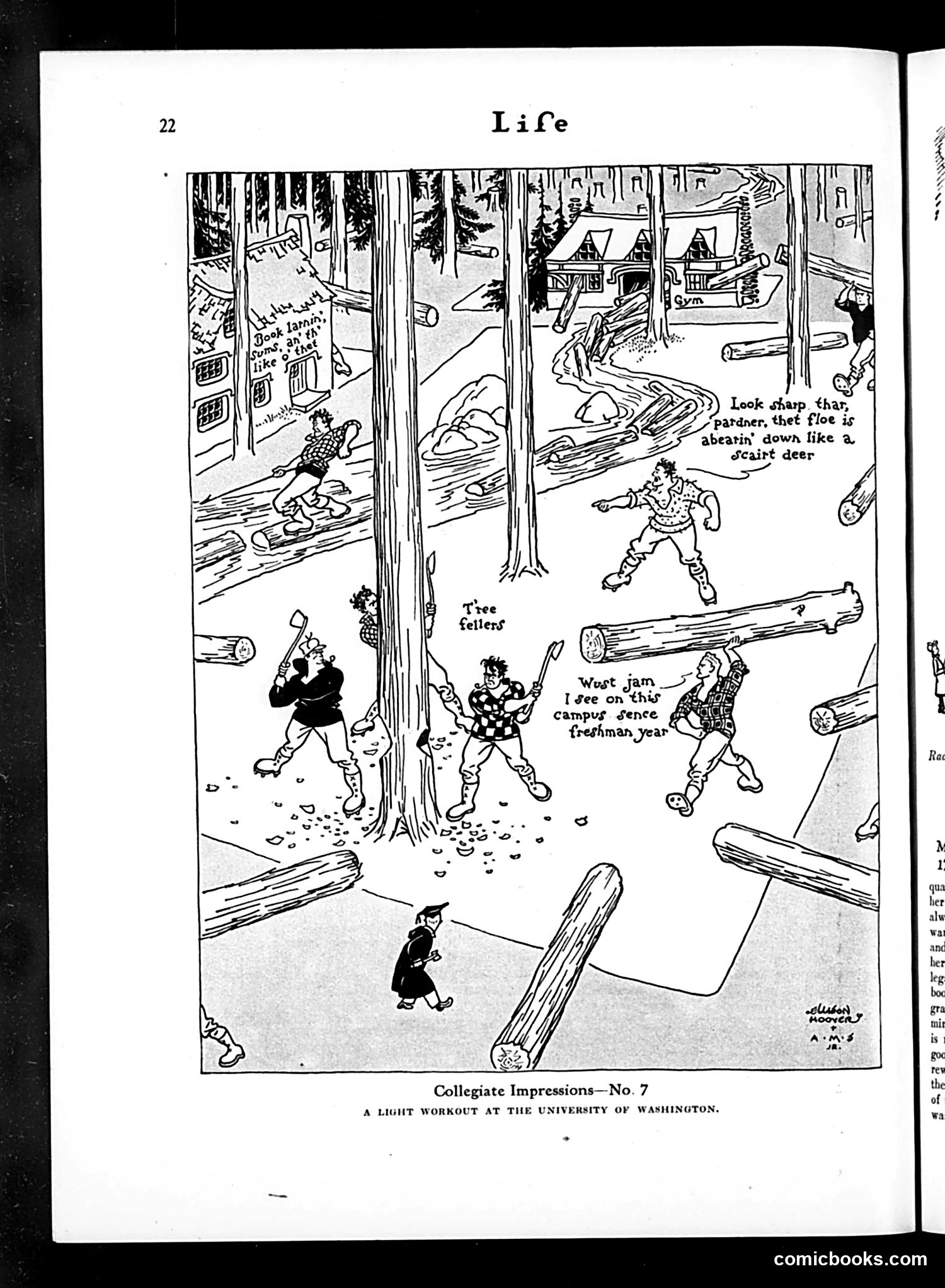
This is a humorous cartoon titled "Collegiate Impressions—No. 7," depicting a logging camp scene at the University of Washington. The comic shows students engaged in tree-felling and log-handling activities among felled trees and logs scattered across a campus clearing. The satire plays on the University of Washington's location in the Pacific Northwest, a heavily forested region historically associated with logging. The joke juxtaposes typical collegiate activities with the region's timber industry—suggesting that a "light workout" at this university involves manual labor like chopping wood and moving logs, rather than standard gymnasium exercises. One character comments that this "wost jam" represents a persistent "campus fence freshman year" tradition, implying logging-related hazing or orientation activities unique to this institution. The cartoon satirizes regional identity and university customs through exaggeration.
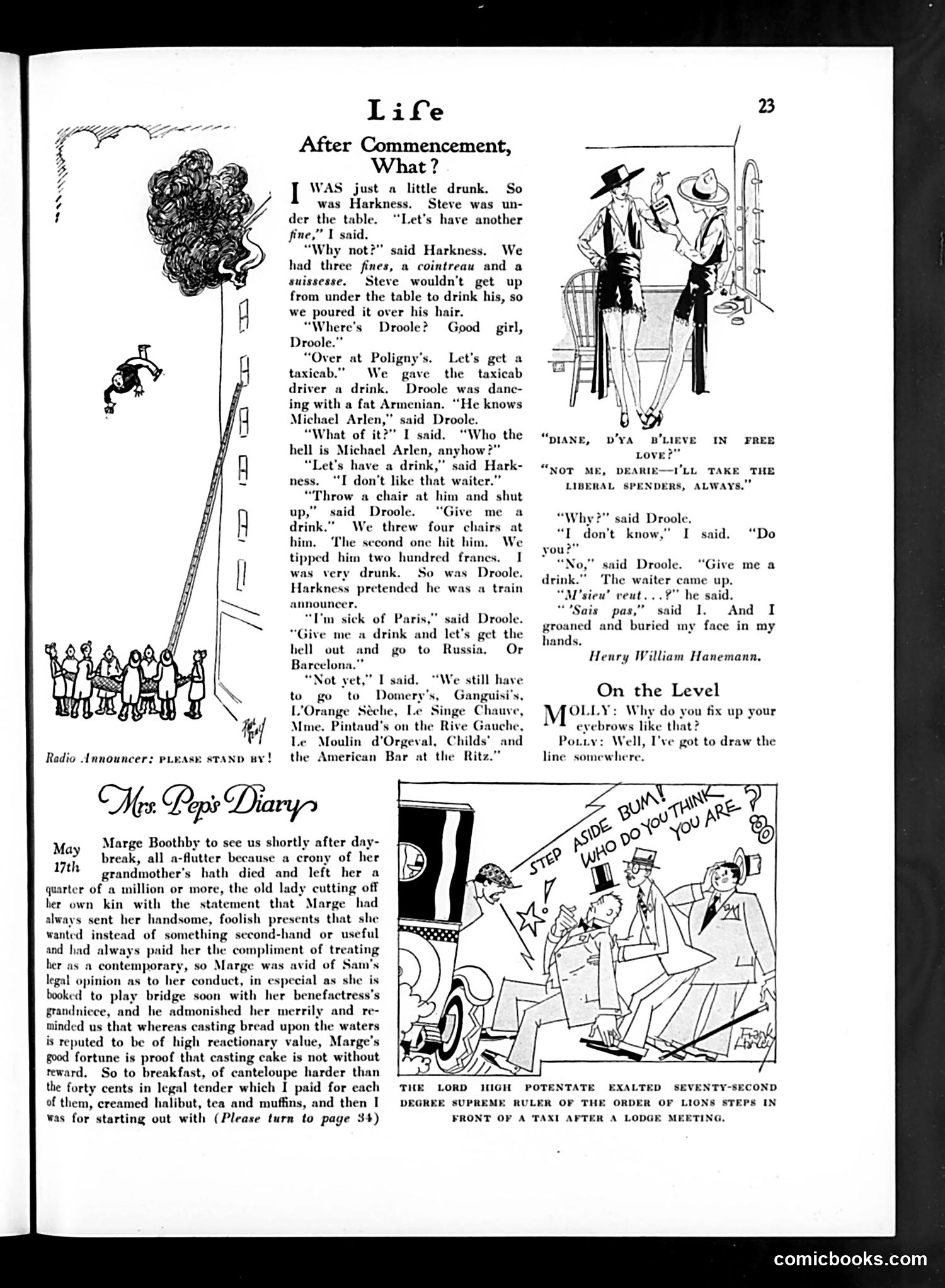
This page contains three satirical pieces about post-collegiate excess and social behavior: **"After Commencement, What?"** depicts young college graduates on a drunken Paris bender, carelessly throwing money around—pouring drinks on unconscious friends, tipping the taxi driver, throwing chairs at waiters, and tipping them 200 francs afterward. The satire targets the irresponsible hedonism and wasteful spending of wealthy youth abroad, particularly the casual brutality masked by generous tips. **"Mrs. Peps's Diary"** (May 17th) humorously describes a woman who inherits a fortune because she treated her elderly relative as an equal and sent frivolous rather than practical gifts. The legal advice frames this as ironic proof that generosity pays off materially. **"On the Level"** is a brief joke about eyebrow makeup, playing on the phrase "draw the line." The cartoons mock Jazz Age excess and the disconnect between inherited wealth and actual social responsibility—themes central to 1920s satire.
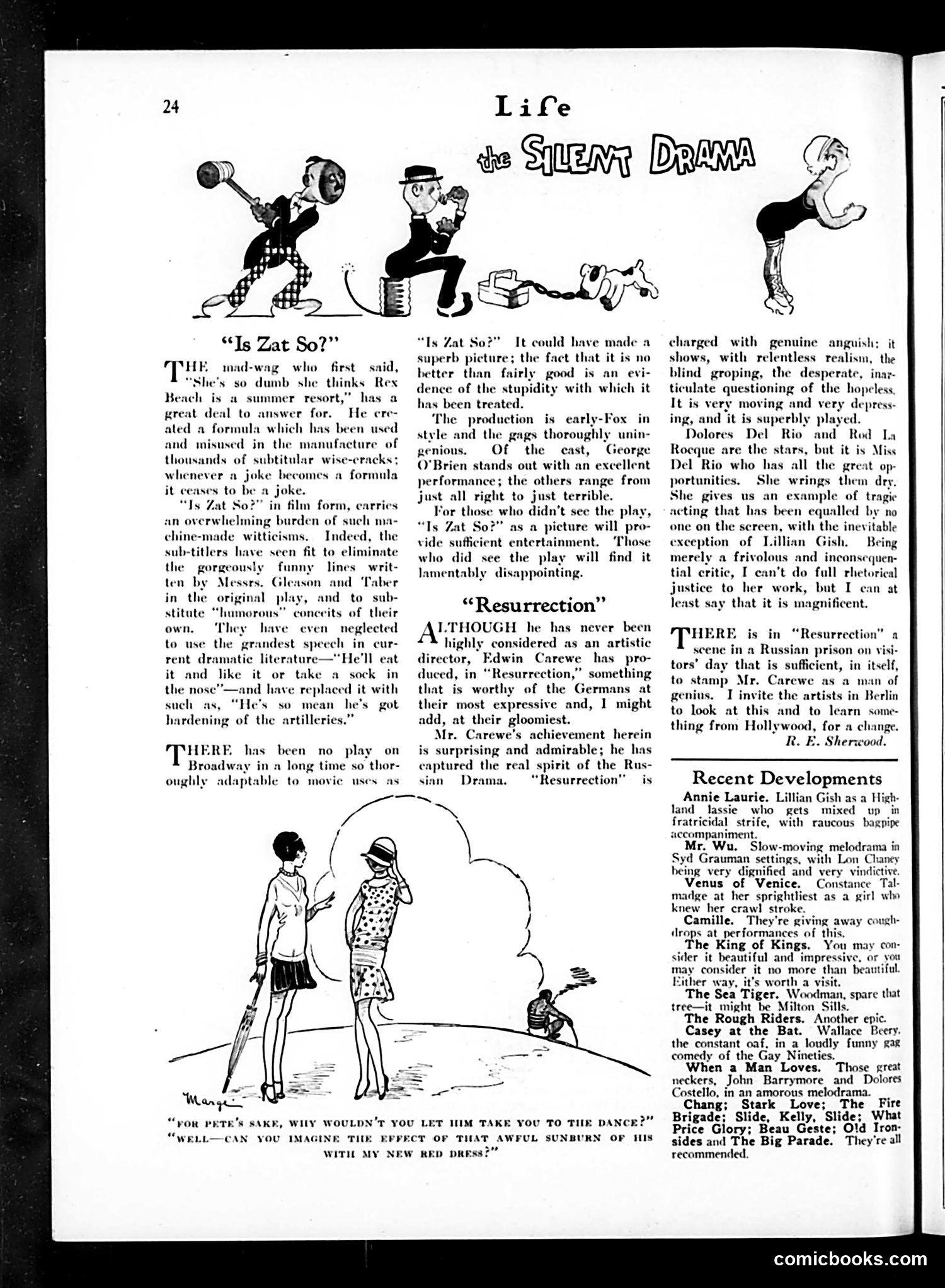
This Life magazine page reviews silent films and includes movie criticism and satirical cartoons about cinema. The main cartoon depicts two women in fashionable 1920s dress; one asks the other why she won't let her boyfriend take her dancing, given her new red dress. The joke plays on a social anxiety: a severe sunburn would make the red dress look absurd by comparison—the woman's burned skin would match her clothing, creating an unflattering effect. The page reviews "Is Zat So?" (a film adaptation of a Broadway play) and "Resurrection" (directed by Edwin Carewe). The critic praises Carewe's direction and Dolores Del Rio's acting in the latter, while dismissing the former as a missed opportunity that replaced the original play's genuinely funny dialogue with formulaic "machine-made" subtitle jokes. The "Recent Developments" section briefly lists other current films with sarcastic commentary, typical of Life's irreverent tone toward entertainment.
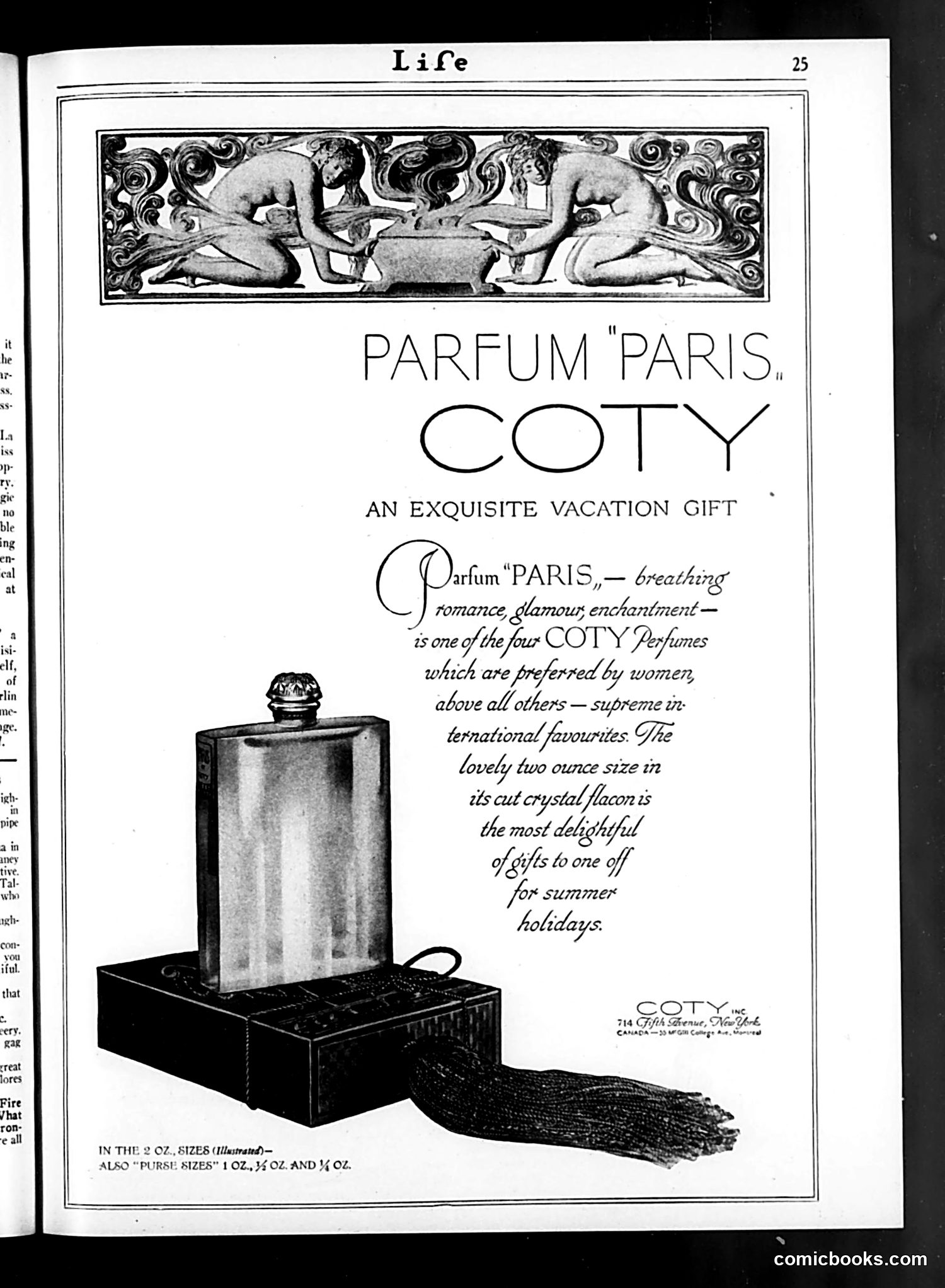
This is a **straightforward perfume advertisement**, not political satire or a cartoon. The page advertises Coty's "Parfum Paris" fragrance as a vacation gift. The decorative header features classical cherubs in an ornamental design—typical Art Deco styling of the era, evoking luxury and romance rather than satirical intent. The ad copy emphasizes that this perfume is "supreme international favourite" among women, marketed as ideal for "summer holidays." The crystal flacon bottle is displayed on a dark base with a decorative tassel. **For modern readers**: This represents vintage fashion advertising before mid-20th-century marketing regulations. The romantic, aspirational language ("breathing romance, glamour, enchantment") and emphasis on European sophistication reflect period advertising conventions. The classical imagery and elegant typography aim to position the product as refined luxury—a common strategy in interwar magazine advertisements.
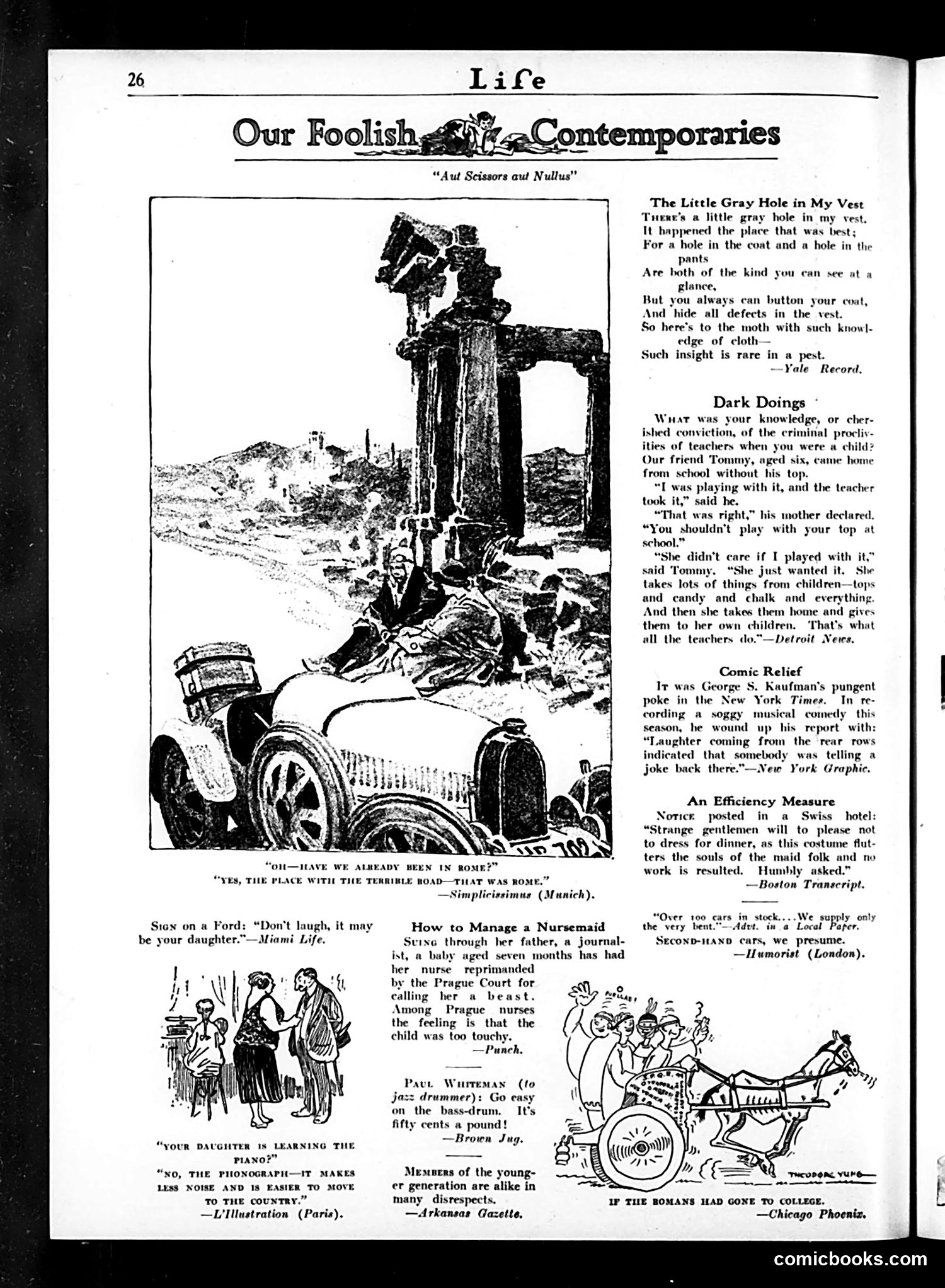
This is a humor compilation page collecting jokes and satirical observations from various publications, organized around themes of modern foolishness. **Main cartoon** (top): Shows a man in a broken-down car amid Roman ruins, captioned "Yes, the place with the terrible road—that was Rome." The satire mocks tourists who complain about poor road conditions while visiting historically significant sites. **Recurring themes:** - **Class/parenting absurdities**: A father boasts his daughter learns from a phonograph instead of piano lessons because it's "easier to move to the country"—mocking upper-class pretension. - **Child-rearing contradictions**: A nursemaid is legally reprimanded for calling a baby a "beast," yet nurses feel the child was oversensitive—satirizing excessive coddling. - **Teacher theft**: A child reports teachers routinely steal students' toys and candy for their own children—dark social commentary on teacher ethics. - **Inefficiency humor**: A Swiss hotel requests guests not dress formally because it upsets maids' work; a car dealer advertises "over 100 cars in stock" but supplies only second-hand vehicles. The page reflects 1920s-30s anxieties about modern manners, education, and commercialism.
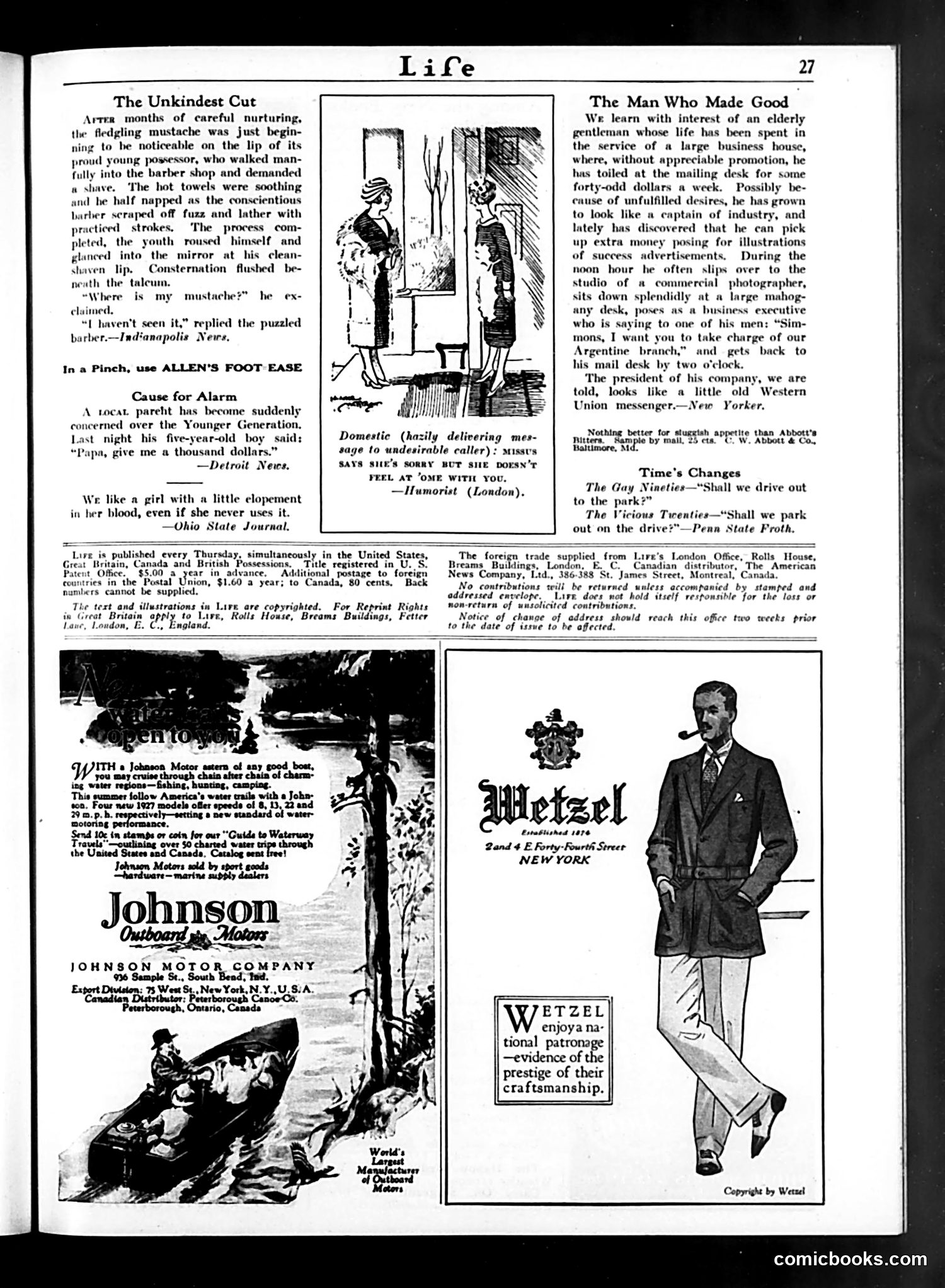
This page contains several short humorous pieces typical of Life's satirical style: **"The Unkindest Cut"** mocks a young man who carefully grew a mustache, only to have a barber accidentally shave it off. The joke plays on the youth's disappointment and the barber's obliviousness. **"Cause for Alarm"** satirizes generational anxiety—a parent worries about youth asking for money, reflecting 1920s concerns about the "Younger Generation's" materialism and entitlement. **"The Man Who Made Good"** offers ironic social commentary: an underpaid, long-suffering mail clerk poses as a successful business executive in advertisements for a few extra dollars, while his actual boss—genuinely powerful—looks unimpressive. It critiques both false advertising imagery and class appearance. **"Time's Changes"** compares 1890s courtship ("drive out to the park") with 1920s behavior ("park out on the drive"), implying increased sexual permissiveness among youth—a common moral anxiety of the era. The page also features advertisements for Johnson Motors and Wetzel clothing.
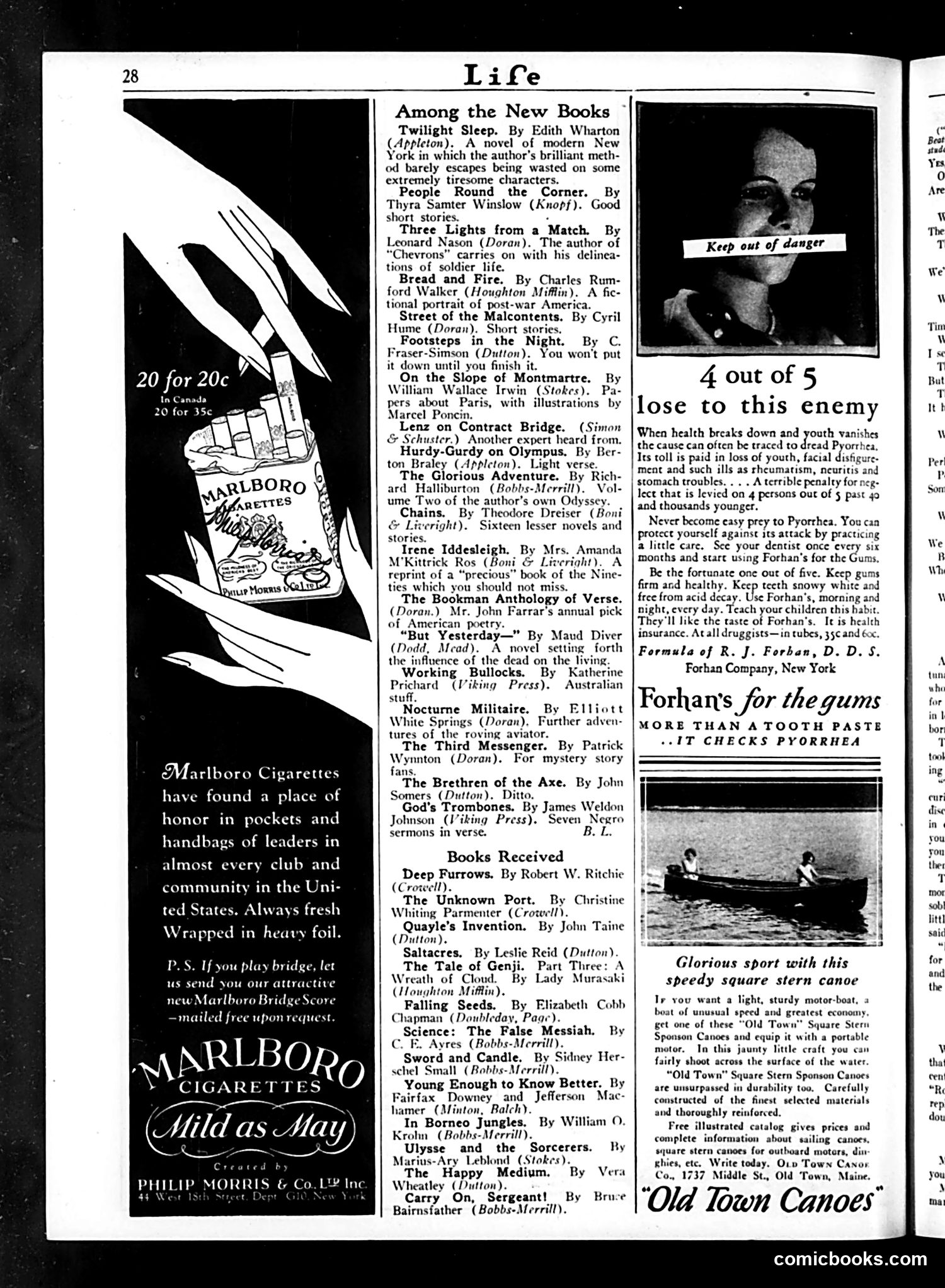
This page is primarily **advertising and book reviews**, not political satire. The dominant left side features a **Marlboro Cigarettes advertisement** (Philip Morris & Co.) emphasizing the product's popularity among social leaders and its "heavy foil" wrapping—a marketing appeal to quality and status during the 1920s. The right side contains a **Forhan's toothpaste advertisement** warning against pyorrhea (gum disease), claiming it affects "4 persons out of 5 past 40." This reflects period medical anxieties and the emerging consumer health-product market. The center column lists contemporary book reviews from *Life*'s "Among the New Books" section, covering popular 1920s literature including works by Edith Wharton and James Weldon Johnson. There is **no political cartoon or satire** on this page—it's a standard magazine layout mixing editorial content with paid advertising, typical of *Life*'s format during this era.
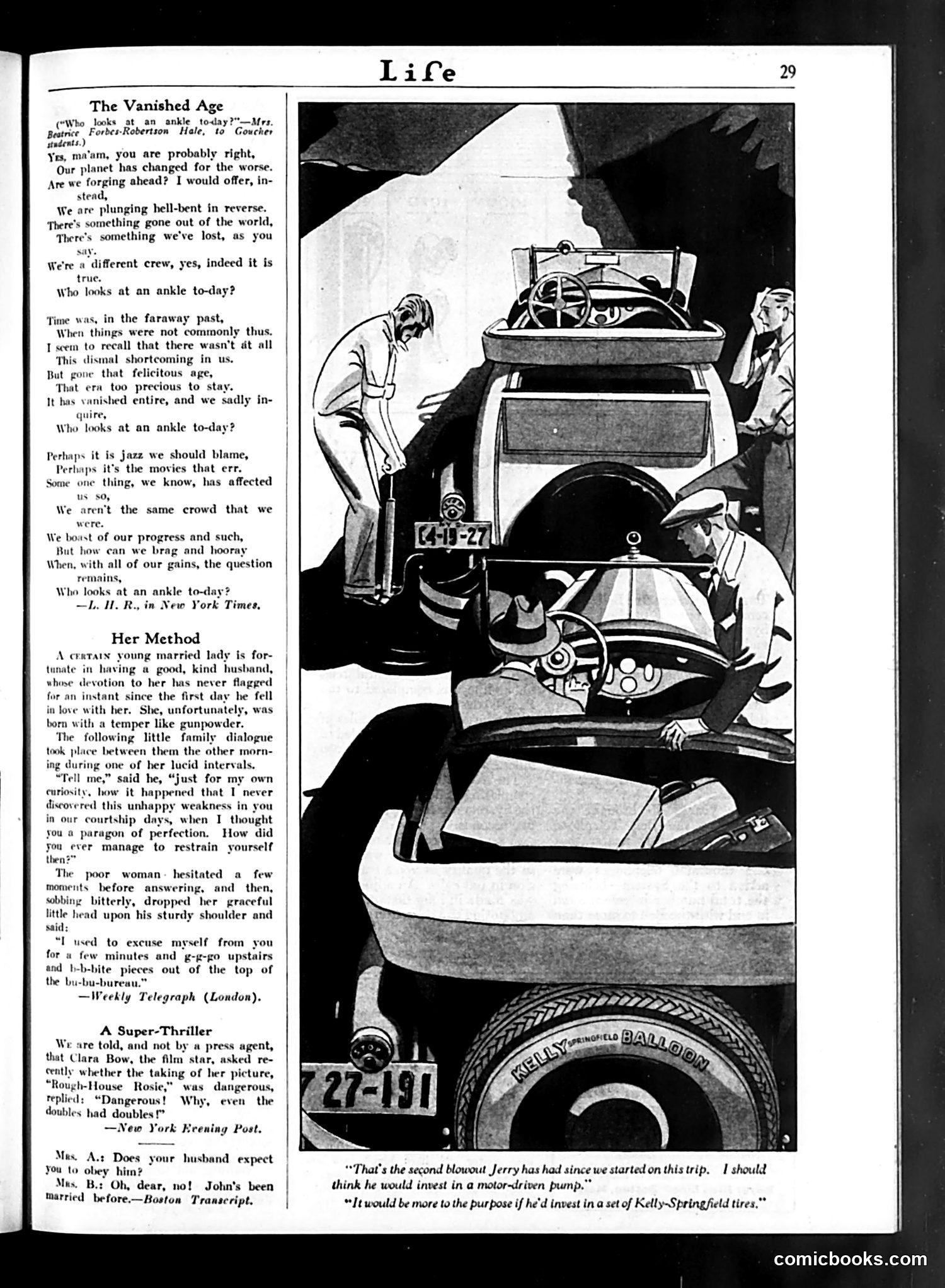
This page contains three distinct humorous pieces reflecting 1920s social anxieties: **"The Vanished Age"** is a nostalgic poem lamenting that modern men no longer appreciate women's ankles—a reference to the shocking fashion change of the era when women's hemlines rose dramatically, revealing legs previously hidden. The poem blames "jazz" and "movies" for corrupting society's morals and attention spans. The satire mocks both the older generation's prudish nostalgia and modern youth culture. **"Her Method"** is a domestic humor piece about a short-tempered wife who, when asked how she restrained herself during courtship, admits she'd bite the bureau instead—suggesting women hide their true temperaments from suitors. **The bottom cartoon** features two cars with blown tires, with the caption joking about investing in a motor-driven pump versus better tires—light automobile humor reflecting the novelty of motoring. Together, these pieces reflect period preoccupations: changing sexual mores, gender relations, and modern technology's role in society.
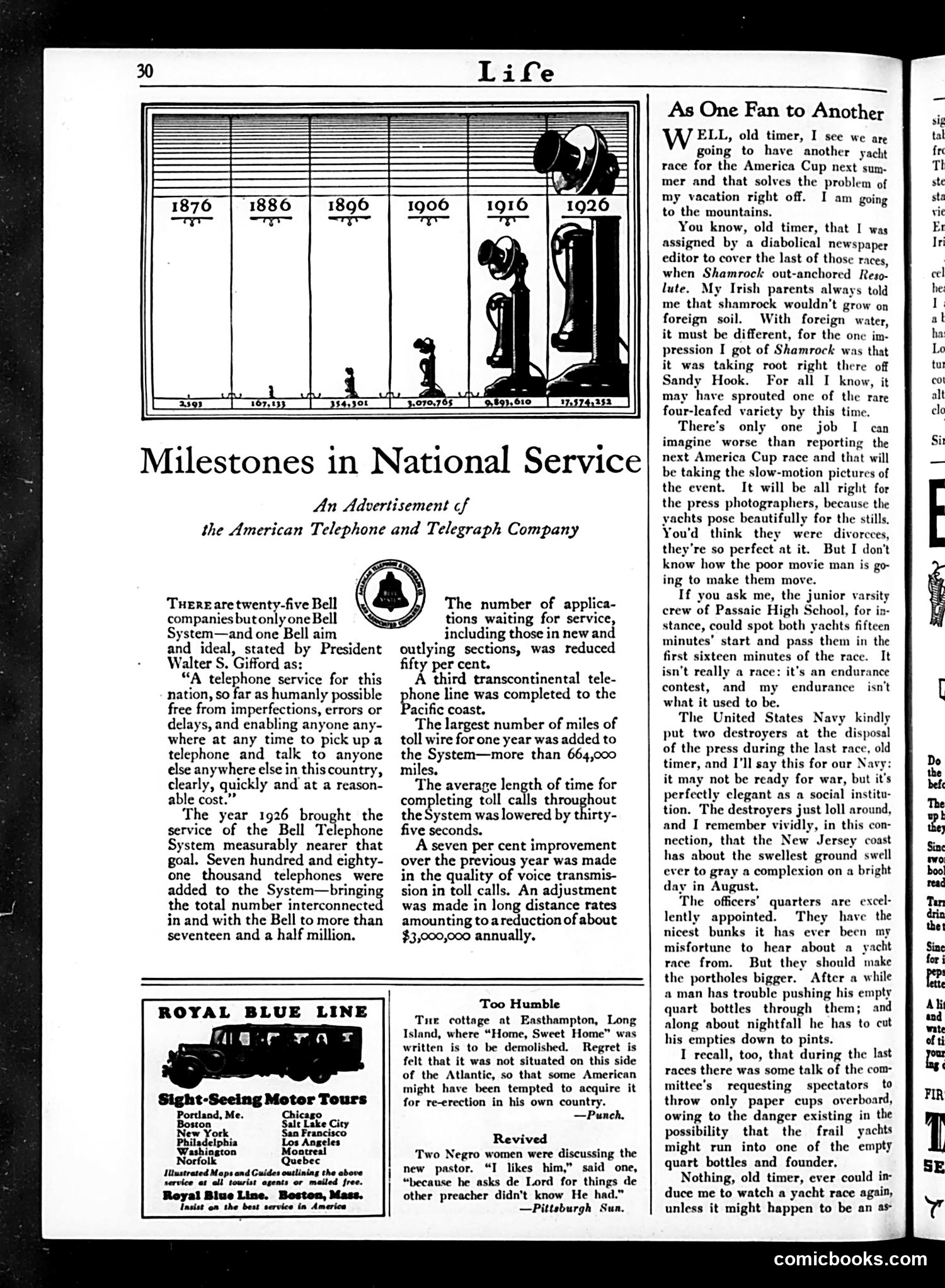
This page combines corporate advertising with satirical humor pieces typical of *Life* magazine's format. **Main Content:** The large chart and advertisement promote AT&T's telephone expansion in 1926—celebrating growth metrics (781,000 new phones added, reduced service wait times, extended transcontinental lines). This reflects the era's optimism about technological progress and corporate achievement. **The Satire:** The right-hand column contains three separate humorous pieces mocking various subjects: 1. **"As One Fan to Another"** ridicules yacht racing and America's Cup competition as tediously slow and unexciting—the author compares the yachts to "divorcees" posing for photographs and suggests high school rowing crews would be more exciting. 2. **"Too Humble"** sardonically notes Americans would demolish the English cottage where "Home, Sweet Home" was written, yet wouldn't bother preserving it if it existed in America. 3. **"Revived"** is a brief joke about a Black pastor who asks God for things the previous pastor didn't know about. The contrast between earnest corporate boasting and irreverent social commentary typifies *Life's* satirical approach.
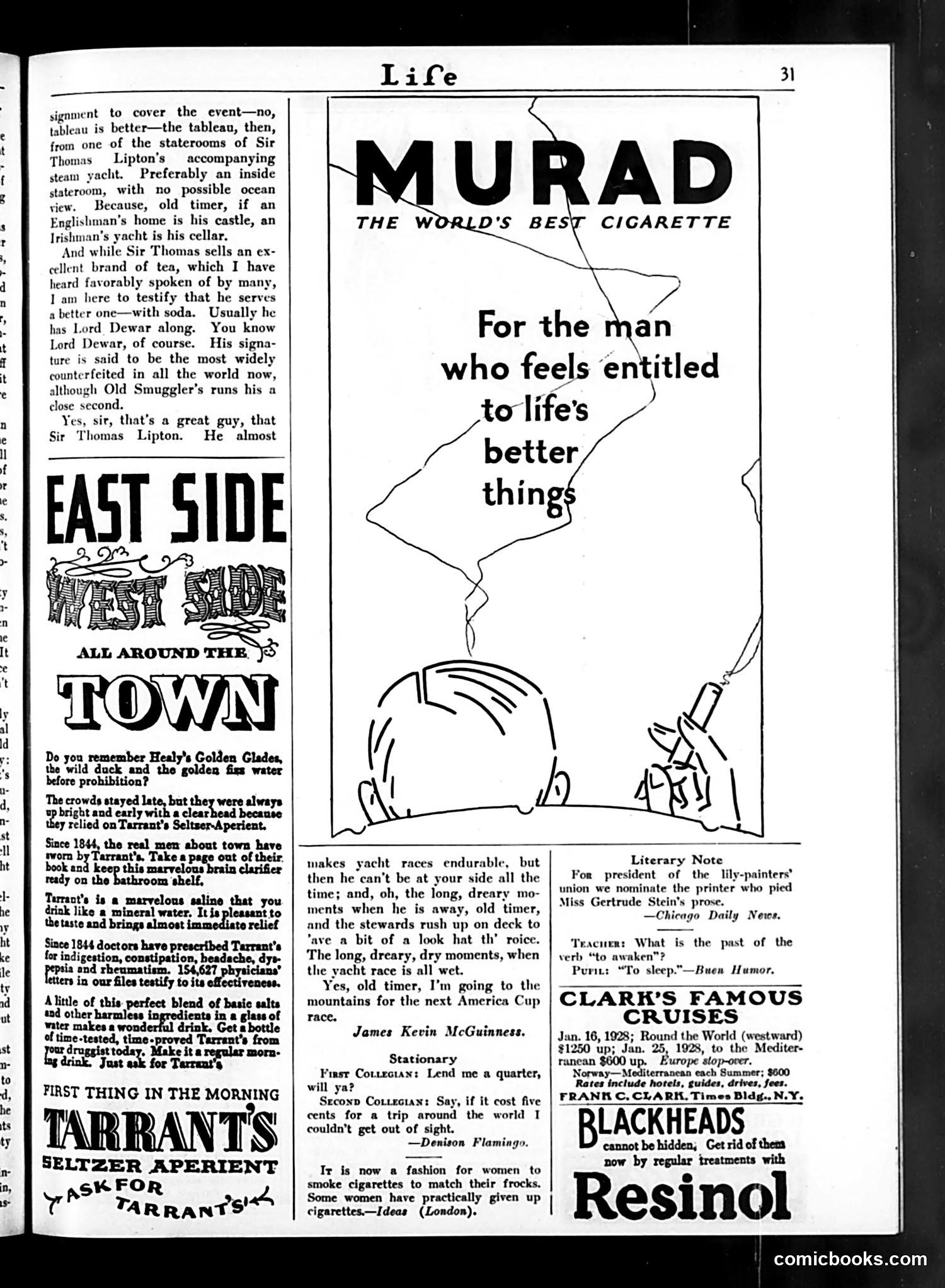
This page consists primarily of **advertisements and humorous filler content** rather than political satire. The main satirical piece discusses **Sir Thomas Lipton**, a real Irish businessman and yacht-racing enthusiast. The text humorously suggests he's planning to cover an America Cup yacht race from his steam yacht—specifically from an interior cabin—because "an Irishman's yacht is his cellar," a joke about Irish drinking habits. The piece pokes fun at Lipton's commercial ventures (tea, Lord Dewar whisky) while praising his hospitality, ultimately joking that the author will skip the race entirely for the mountains to escape "long, dreary, dry moments" when yacht racing prevents drinking. The remaining content includes brief comedic quips (one about lending money, another about women matching cigarettes to clothing) and period advertisements for products like Tarrant's Seltzer (a digestive aid), Clark's Cruises, and Resinol (for blackheads). **Context for modern readers**: The humor relies on Prohibition-era drinking references and stereotypes about Irish people that were considered acceptable comedic fodder in 1920s American magazines.
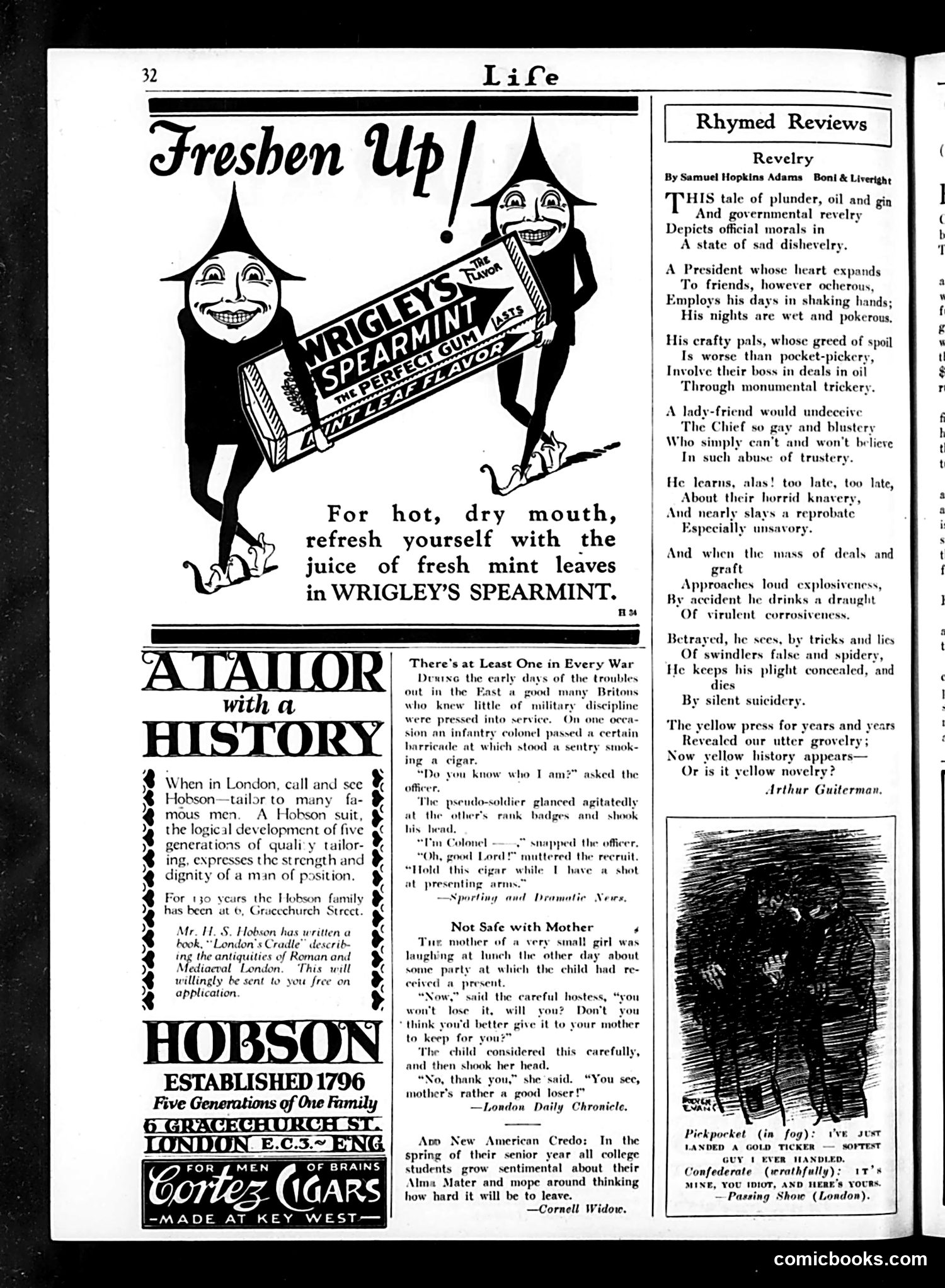
This page satirizes the **Teapot Dome scandal** era (early 1920s), when President Warren G. Harding's administration was rife with corruption. Samuel Hopkins Adams's poem "Revelry" mocks: - A President ("Chief") who fraternizes with corrupt officials while engaging in drinking and partying - Cabinet members exploiting oil deals and government contracts for personal gain - A female confidante unable to warn him of their treachery - His eventual discovery of their betrayal leading to his demise The scandal involved Interior Secretary Albert Fall secretly leasing federal oil reserves to private companies. Adams depicts a government drowning in moral corruption—officials stealing ("pocket-pickery"), manipulating their superior, and hiding crimes until exposure becomes inevitable. The satirical verse structure emphasizes the absurdity of normalizing such blatant dishonesty at the highest levels. This reflects contemporary public outrage at widespread governmental graft during the Harding administration.
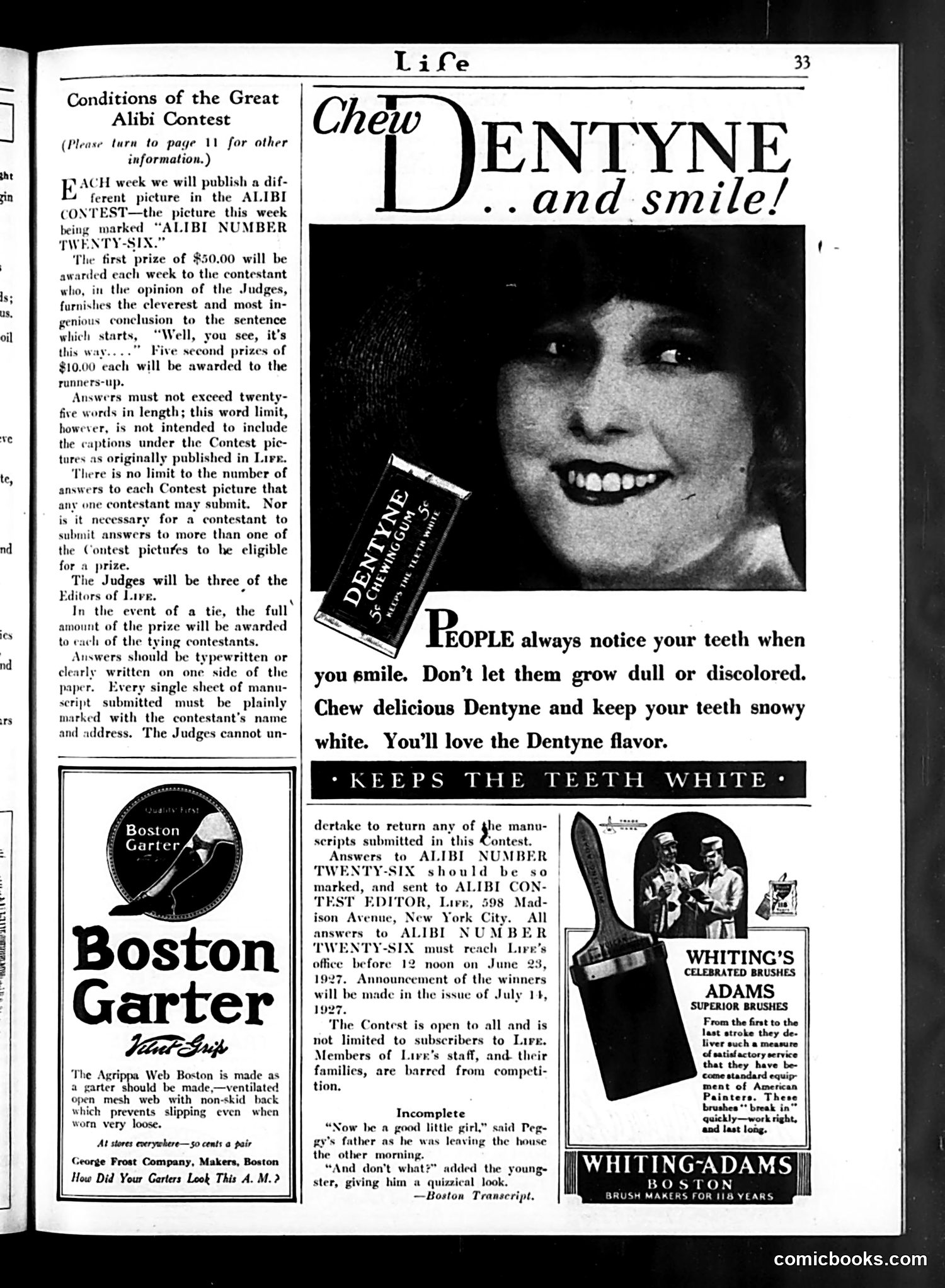
This page is primarily **advertising and contest information**, not political satire. The main content includes: **The "Alibi Contest"**: Life's weekly reader competition where contestants submit humorous written "alibis" completing the sentence "Well, you see, it's this way..." to explain a picture. Winners receive $50 (first prize) or $10 (runners-up). The contest rules occupy the left column. **Advertisements**: - **Dentyne chewing gum**: Features a smiling woman's face promoting teeth whitening - **Boston Garter**: Hosiery product for men - **Whiting-Adams brushes**: Art/painting supplies **A brief joke** (labeled "Incomplete") from the Boston Transcript about a father's ambiguous parting instruction to his daughter. The page reflects 1920s consumer culture and Life's dual function as humor magazine and advertising vehicle. There is no political cartoon or satire present—it's a typical magazine interior page mixing editorial contests with commercial promotion.
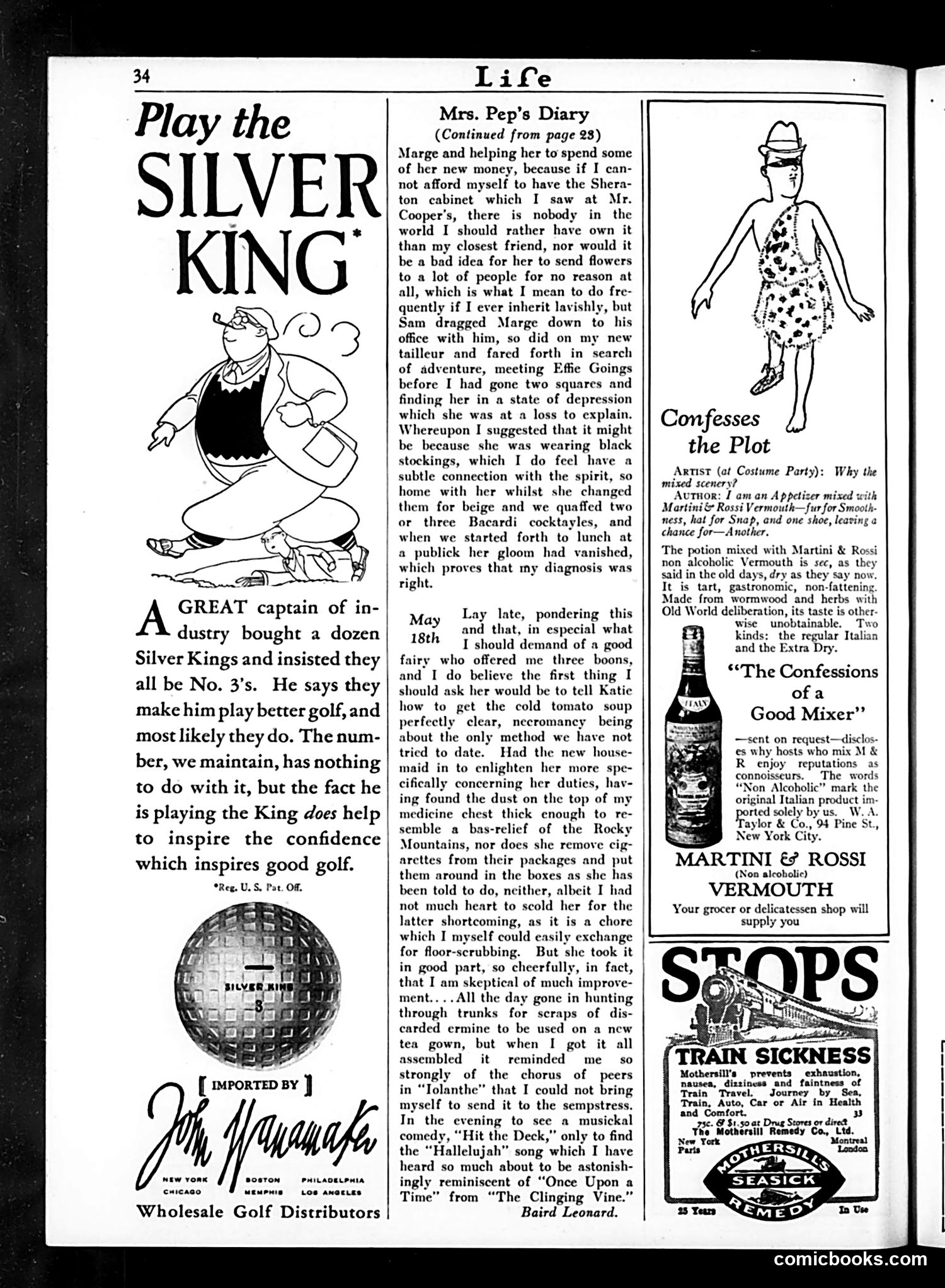
**Main Advertisement (Left):** "Silver King" golf clubs are advertised as improving play. The satire mocks wealthy businessmen's superstitious belief that expensive branded equipment guarantees better performance—the joke being that confidence in the product, not the product itself, drives results. **"Mrs. Pep's Diary" (Center):** A society gossip column lampooning wealthy women's trivial concerns: buying furniture, changing servants' uniforms, attending musical theater, and cocktail parties. The humor targets their leisured, self-absorbed lifestyle and minor domestic anxieties. **"Confesses the Plot" (Right):** A cartoon joke about a costume party guest dressed as a cocktail ("Appetizer mixed with Martini & Rossi Vermouth"). The humor plays on the double meaning of "mixed" and "costume"—the guest has literally assembled a drink costume from random accessories. **Advertising:** The page includes ads for Martini & Rossi vermouth and a seasickness remedy, typical of 1920s-30s *Life* magazine's blend of satire and commercial content.
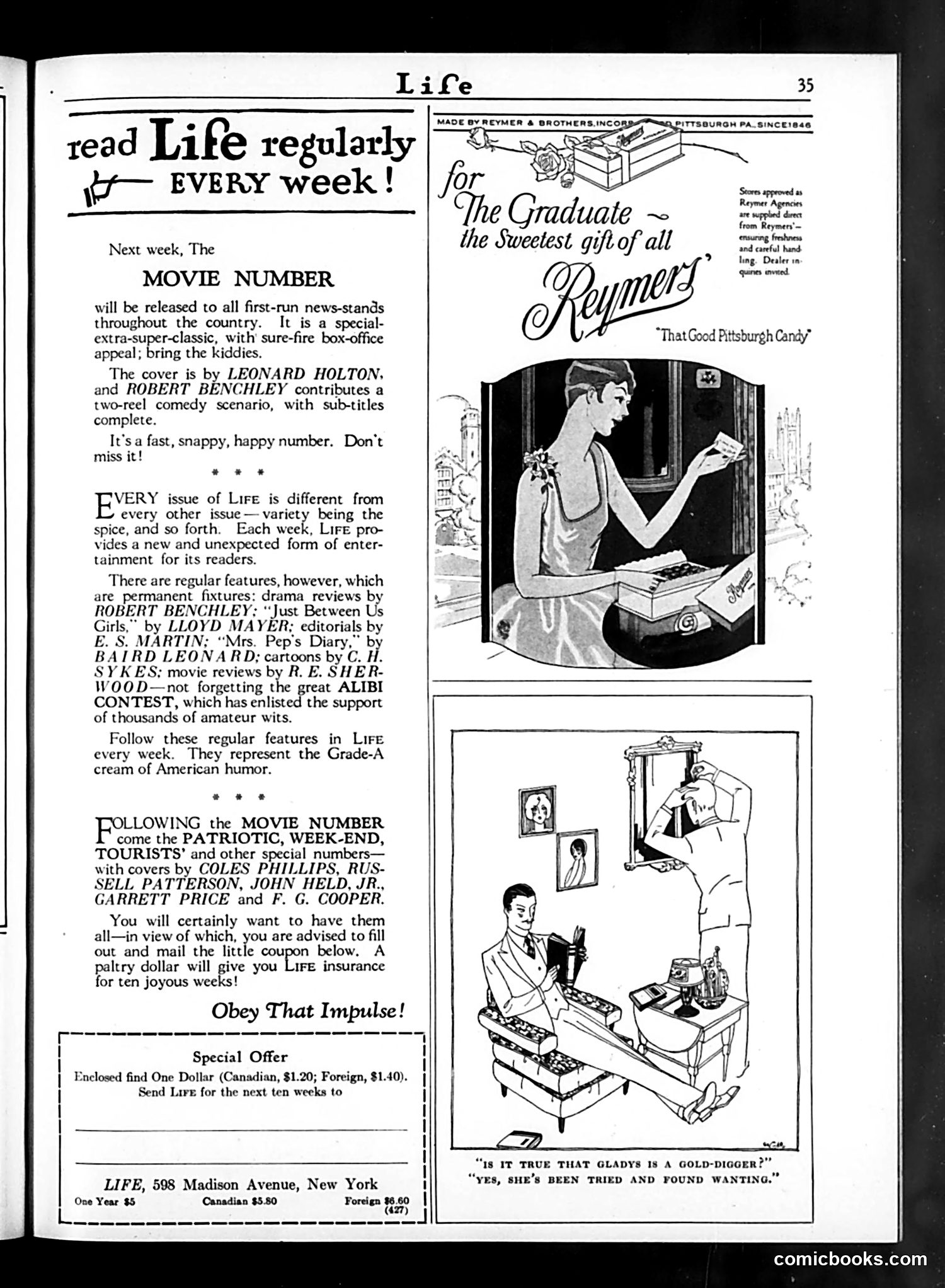
This is primarily a **subscription promotion and house advertisement** for Life magazine itself, with one cartoon. The main cartoon (bottom right) depicts a domestic scene where a man reads while a woman sits nearby with luggage. The caption reads: "Is it true that Gladys is a gold-digger?" / "Yes, she's been tried and found wanting." The joke plays on the double meaning of "tried"—suggesting Gladys has been both tested as a romantic prospect *and* literally tried (in court) for gold-digging, but "found wanting" (lacking sufficient evidence or ability). This reflects 1920s anxieties about women pursuing wealthy men for money. The page also promotes upcoming special issues featuring covers by prominent illustrators (Coles Phillips, John Held Jr., etc.) and regular features by humorists like Robert Benchley. The Reymers candy advertisement depicts a young woman with a gift box—promoting luxury consumption as appropriate for graduates. The overall message: subscribe to Life for sophisticated, Grade-A American humor.
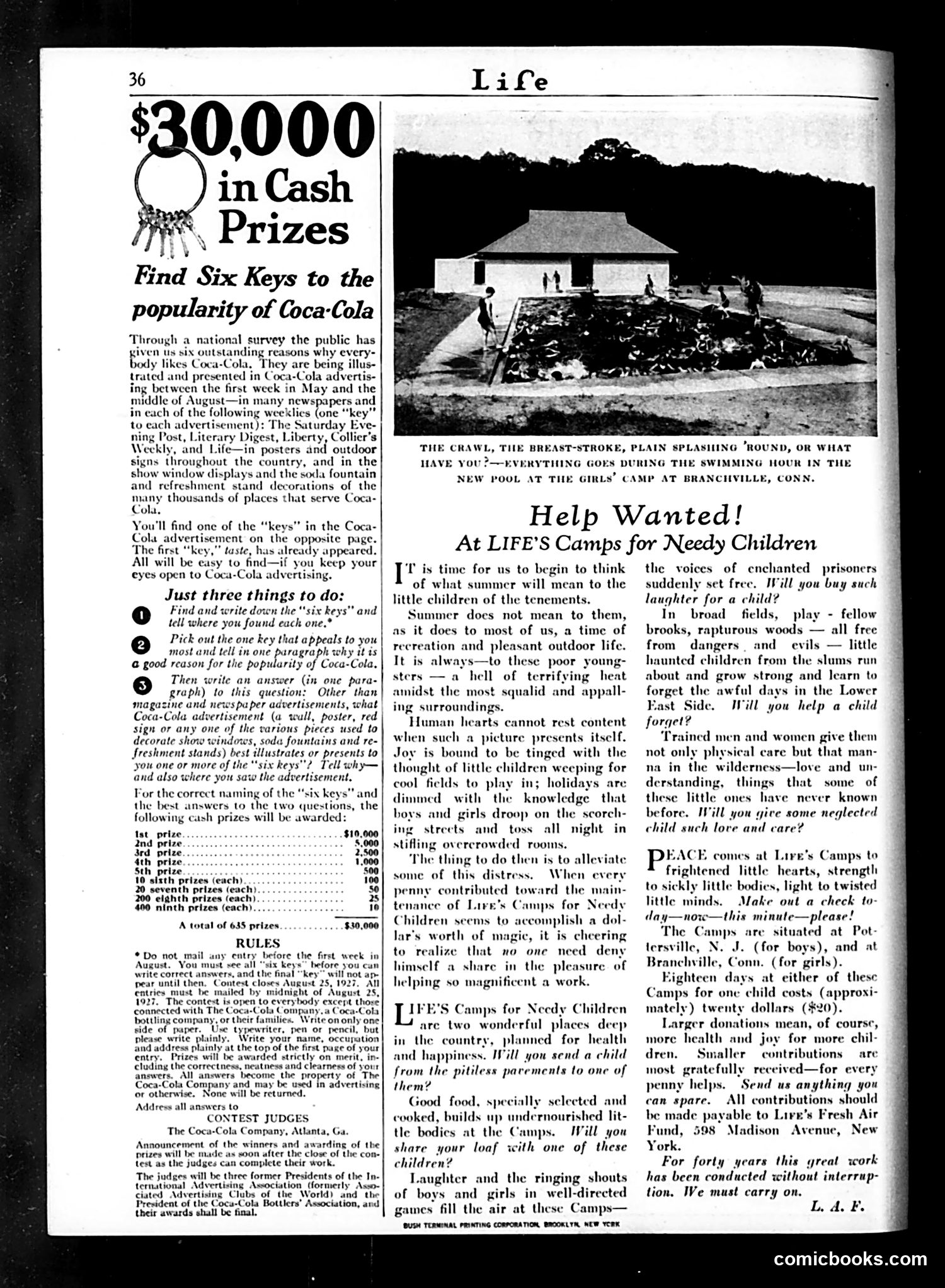
This page combines advertising with philanthropic appeals. The top half is a **Coca-Cola contest advertisement** offering $30,000 in cash prizes to readers who find "six keys" explaining Coca-Cola's popularity across multiple publications. This was a common marketing strategy in the 1920s—engaging consumers through interactive puzzles while building brand awareness across media. The bottom half shifts tone dramatically to a **fundraising appeal for Life's Camps for Needy Children**. The accompanying photograph shows a swimming pool at a girls' camp in Connecticut. The text contrasts the summer experiences of privileged children with poor tenement children, arguing that while wealthy children enjoy recreation, poor children suffer in "stifling overcrowded rooms." The appeal solicits donations (minimum $20) to send children to these camps, emphasizing health benefits and moral development. The juxtaposition—affluent consumer contest alongside poverty charity—reflects 1920s middle-class anxieties and philanthropic attitudes, positioning Life magazine readers as both consumers and civic benefactors.

I can see this is a very dark, low-contrast black and white page that appears to be from a historical publication. However, the image quality is too poor for me to reliably make out specific cartoon figures, caricatures, or textual content beyond the "comicbooks.com" watermark at the bottom. The page shows what might be shadowy figures or illustrations on the right side, but I cannot discern them clearly enough to identify specific people, political references, or satirical points with confidence. To provide an accurate analysis meeting your requirement to assert only what the image supports, I must acknowledge: **this image is too degraded for me to responsibly identify the cartoon's subjects or meaning.** A clearer scan would be needed for proper historical interpretation.