
A complete issue · 40 pages · 1921
Life — March 17, 1921
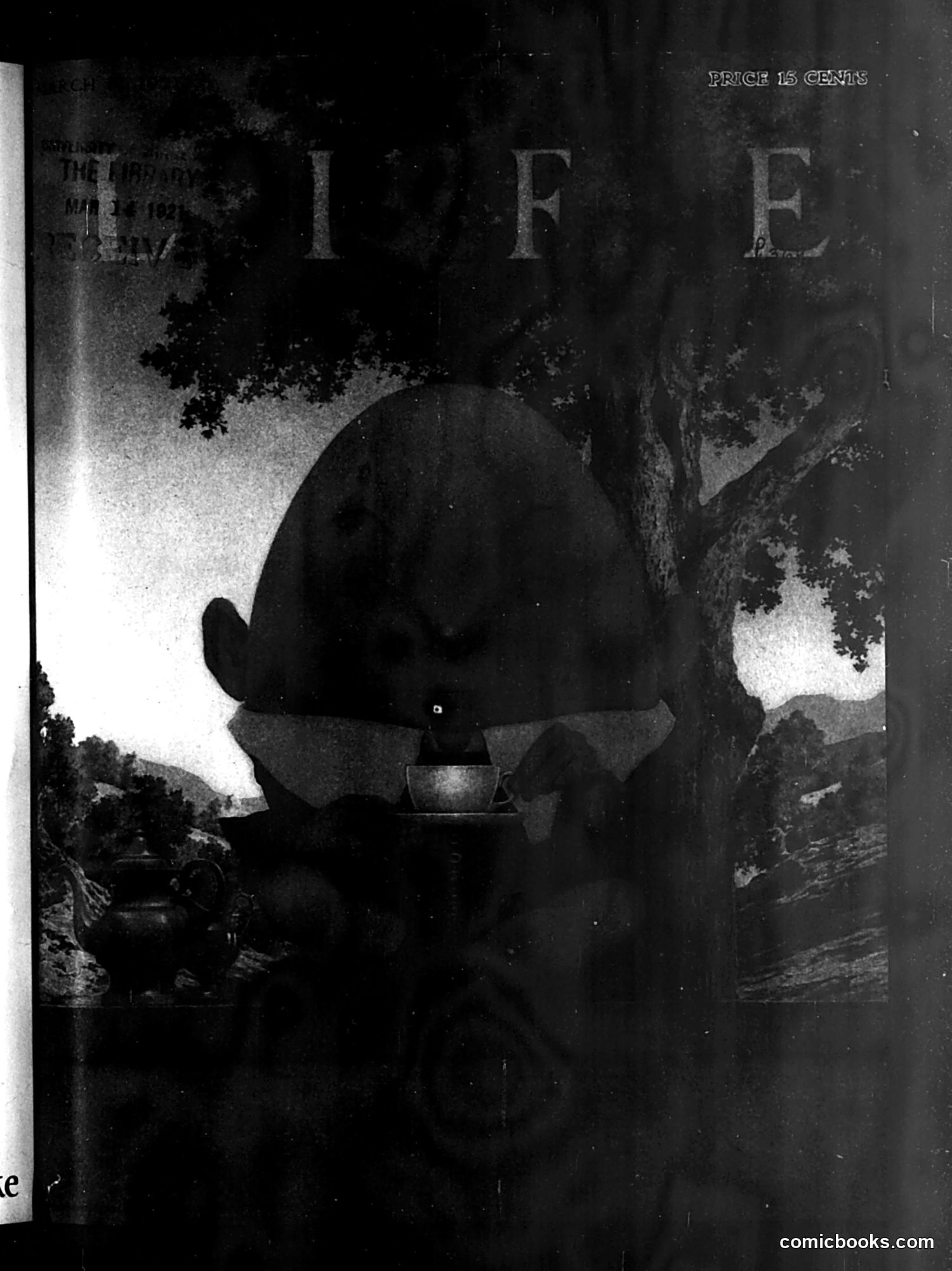
I can see this is a Life magazine cover (price 15 cents) with the large letters "LIFE" visible at the top. The image shows a silhouetted figure wearing what appears to be a large hat, depicted against a landscape with trees and water. However, the OCR text provided contains only "LIFE" and doesn't include the actual caption, article titles, or explanatory text that would clarify the specific political or social reference. Without readable text identifying the subject matter, date, or context, I cannot reliably explain what figure is being caricatured, what event is referenced, or what the satire intends. To properly analyze this cartoon's meaning for a modern reader, I would need legible OCR text from the actual article or caption accompanying this cover image.
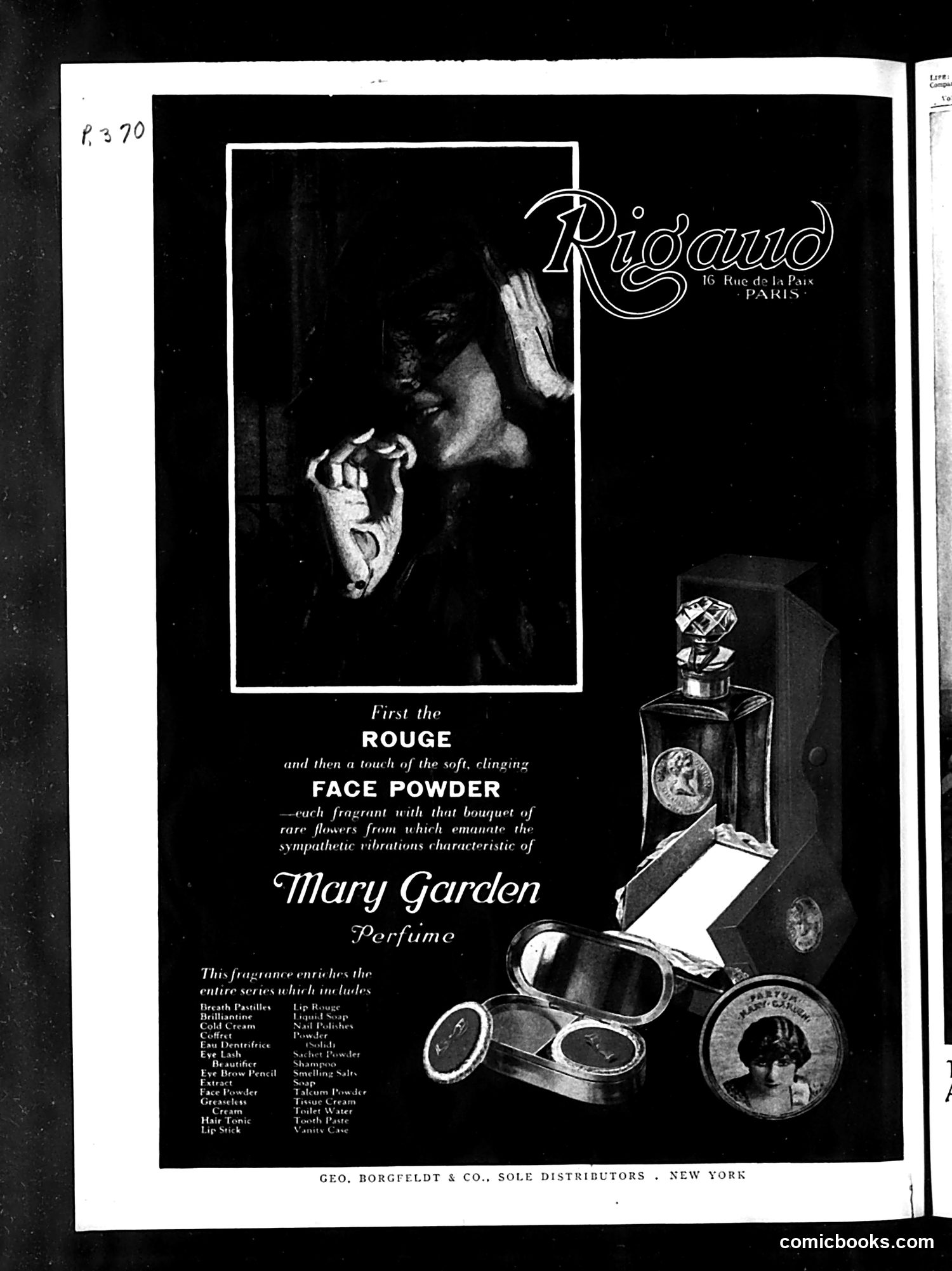
This page is **primarily an advertisement**, not political satire or a cartoon. It advertises Rigaud perfume and cosmetics from Paris, distributed by Geo. Borgfeldt & Co. in New York. The ad features a dramatic black-and-white photograph of a woman's face in profile, applying makeup with particular emphasis on rouge and face powder. The copy instructs users to apply rouge first, then face powder, to achieve the scent of "Mary Garden Perfume." Below the portrait, the ad lists an extensive product line including cold cream, nail polish, eye shadow, and other cosmetics—typical of luxury European beauty brands marketed to American women in the early-to-mid 20th century. There is no political content or satire present on this page.
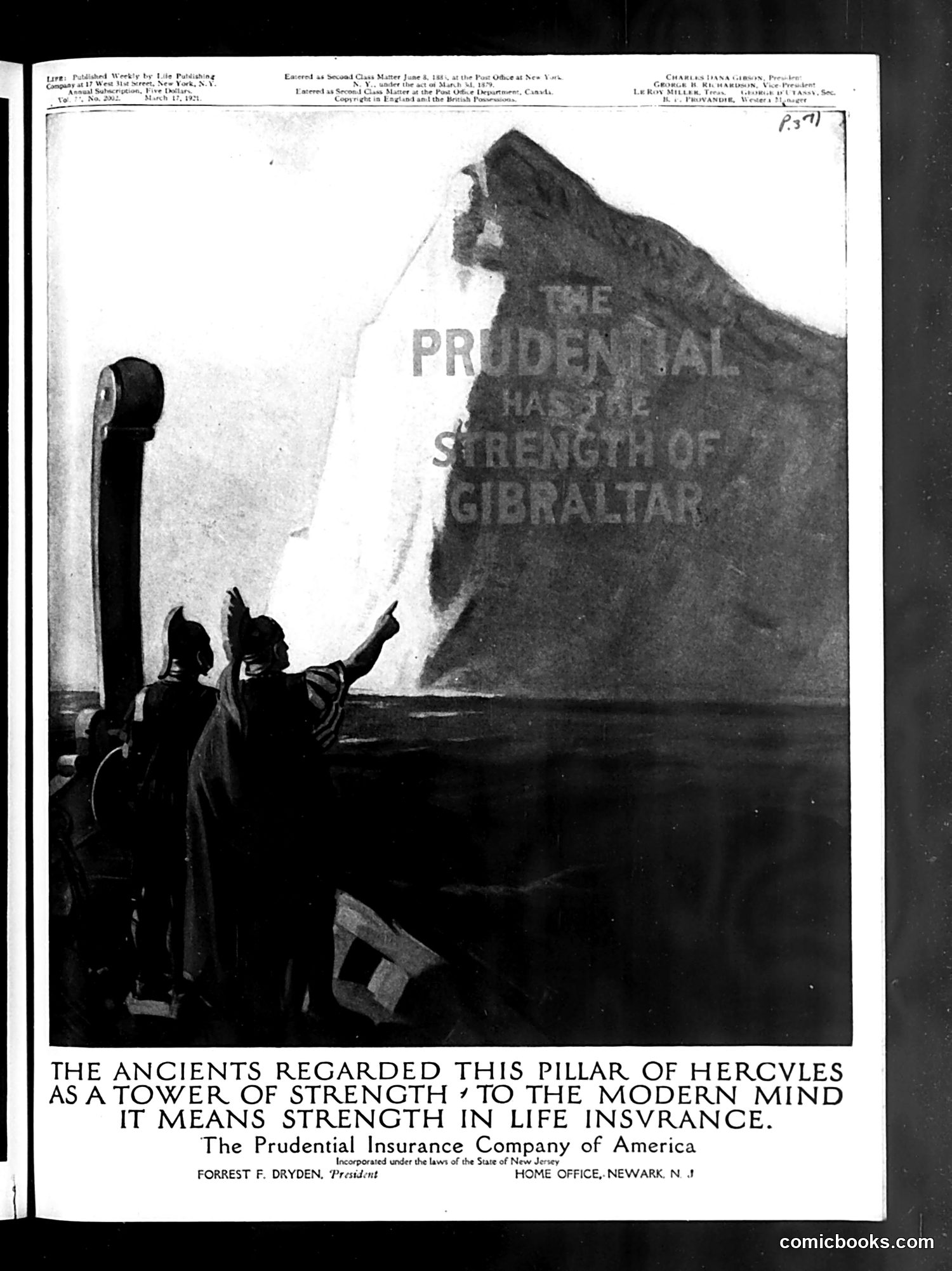
This is primarily **an advertisement**, not satire or political commentary. The Prudential Insurance Company uses classical mythology to market life insurance. The image shows the Rock of Gibraltar with two figures in military dress pointing toward it. The overlaid text reads "The Prudential has the strength of Gibraltar." The advertisement's caption explains the metaphor: "The ancients regarded this pillar of Hercules as a tower of strength; to the modern mind it means strength in life insurance." The company conflates Gibraltar's historical reputation for impregnability with financial reliability, suggesting Prudential offers similarly dependable protection. The military figures likely represent security or vigilance rather than specific historical individuals. This reflects early-20th-century advertising strategy using classical references and patriotic imagery to build consumer confidence in financial institutions.
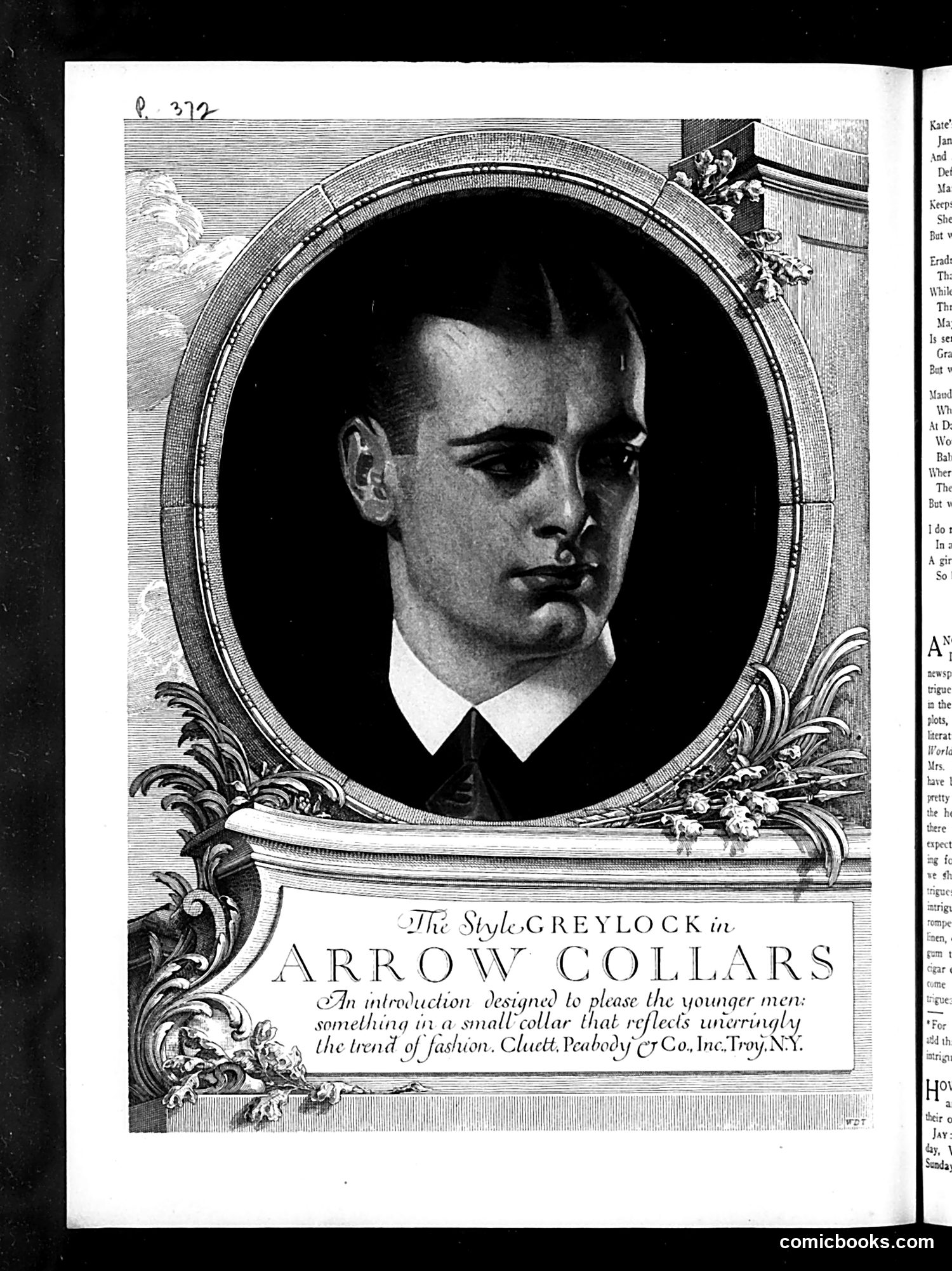
This page is **primarily an advertisement**, not political satire. It features a formal portrait of a man in business attire within an ornate oval frame, advertising "Arrow Collars" by Cluett, Peabody & Co., Inc. of Troy, N.Y. The ad copy describes these as "The Style GREYLOCK in ARROW COLLARS"—"An introduction designed to please the younger men; something in a small collar that reflects unerringly the trend of fashion." This represents early-20th-century men's fashion advertising, using a dignified portrait to market collar styles. The elaborate decorative frame lends prestige to the product. There is no political cartoon or satire present on this page; it's a commercial advertisement inserted into the magazine.
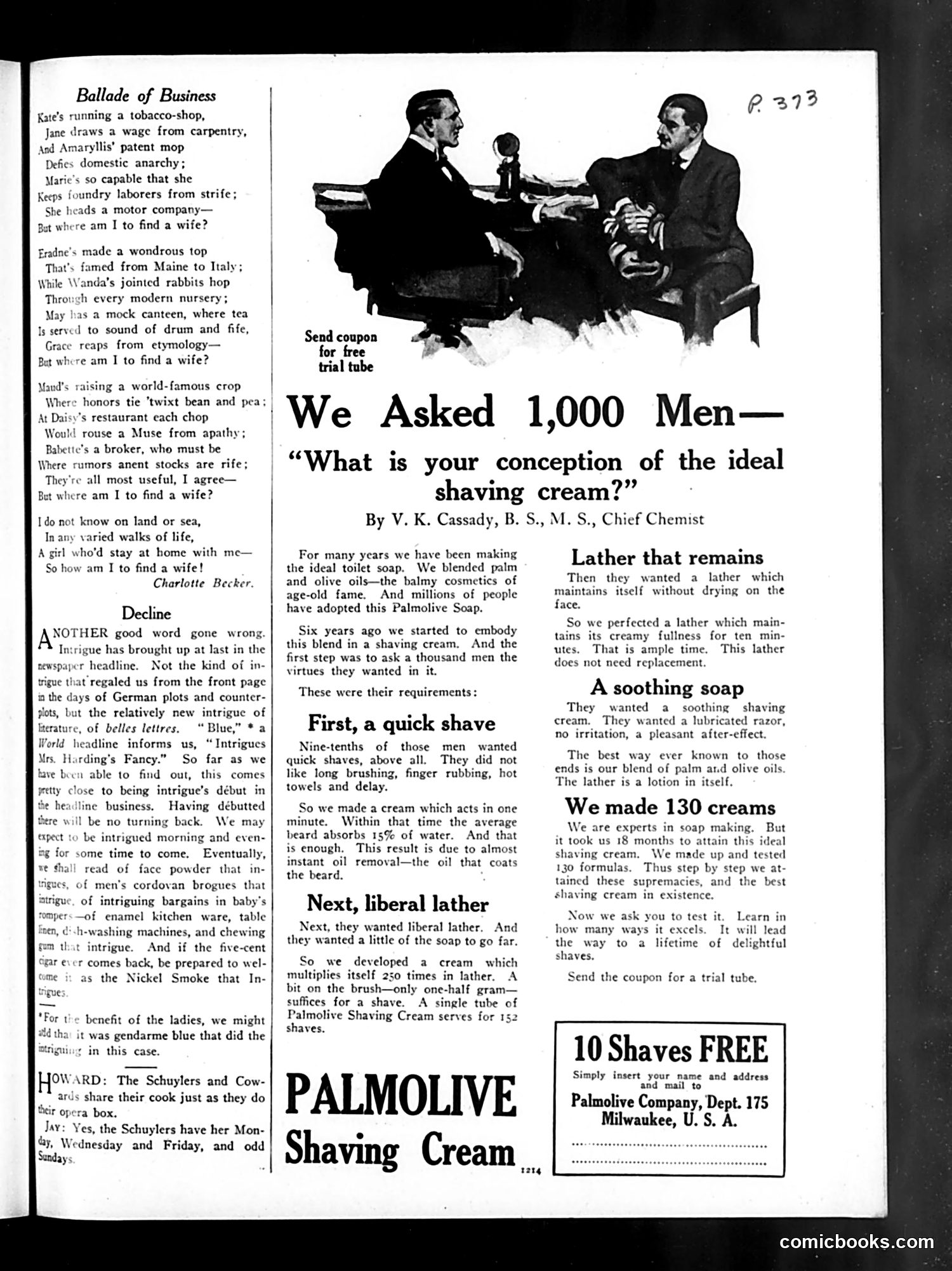
This page is primarily **advertising** for Palmolive Shaving Cream, not political satire. The top contains "Ballade of Business," a humorous poem by Charlotte Becker mocking the contradiction that successful businessmen (running shops, companies, etc.) struggle to find wives. It's gentle social commentary on work-life imbalance rather than political satire. The illustration shows two men in conversation, likely representing a businessman and a barber or salesman, supporting the product pitch below. The main content is a marketing appeal citing a survey of 1,000 men about ideal shaving cream qualities—quick shave, liberal lather, soothing properties—which Palmolive claims to provide. The "Decline" section briefly references German plots, suggesting WWI-era context, but this appears incidental to the advertisement's focus.
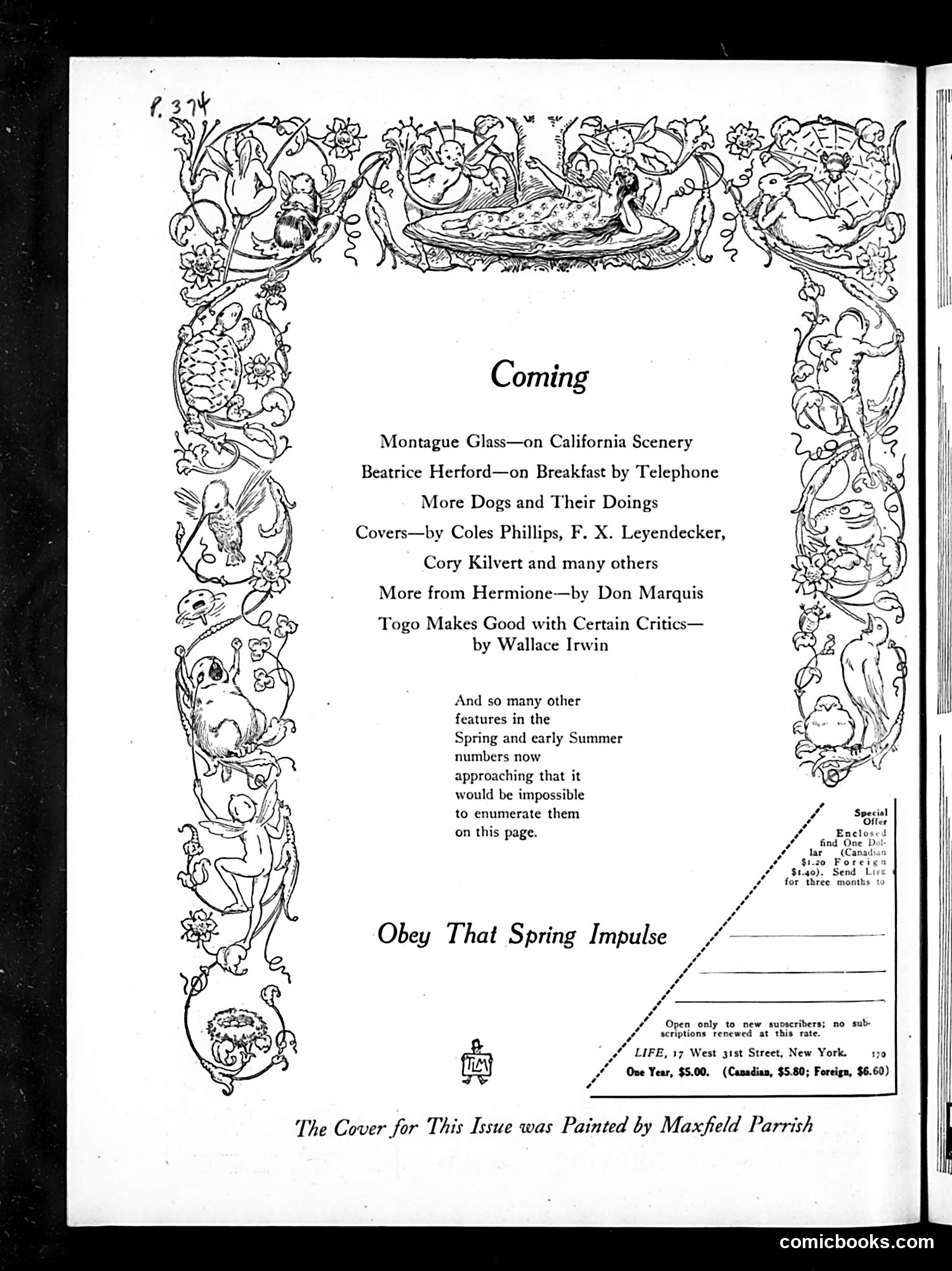
This page is primarily a **"Coming Attractions" advertisement** for Life magazine's upcoming Spring and early Summer issues, rather than political satire or comics. The ornate decorative border features whimsical illustrations of cherubs, animals, and flora—typical Art Nouveau styling of the period. The listed upcoming features include articles by Montague Glass (California scenery), Beatrice Herford (humorous telephone sketches), and pieces about dogs and various cover art. The phrase "Obey That Spring Impulse" is a seasonal subscription pitch. The bottom credits cover artist Maxfield Parrish, a renowned illustrator of that era. This is essentially a **promotional page** encouraging new subscriptions at $5 annually, with no political commentary or satirical content visible.
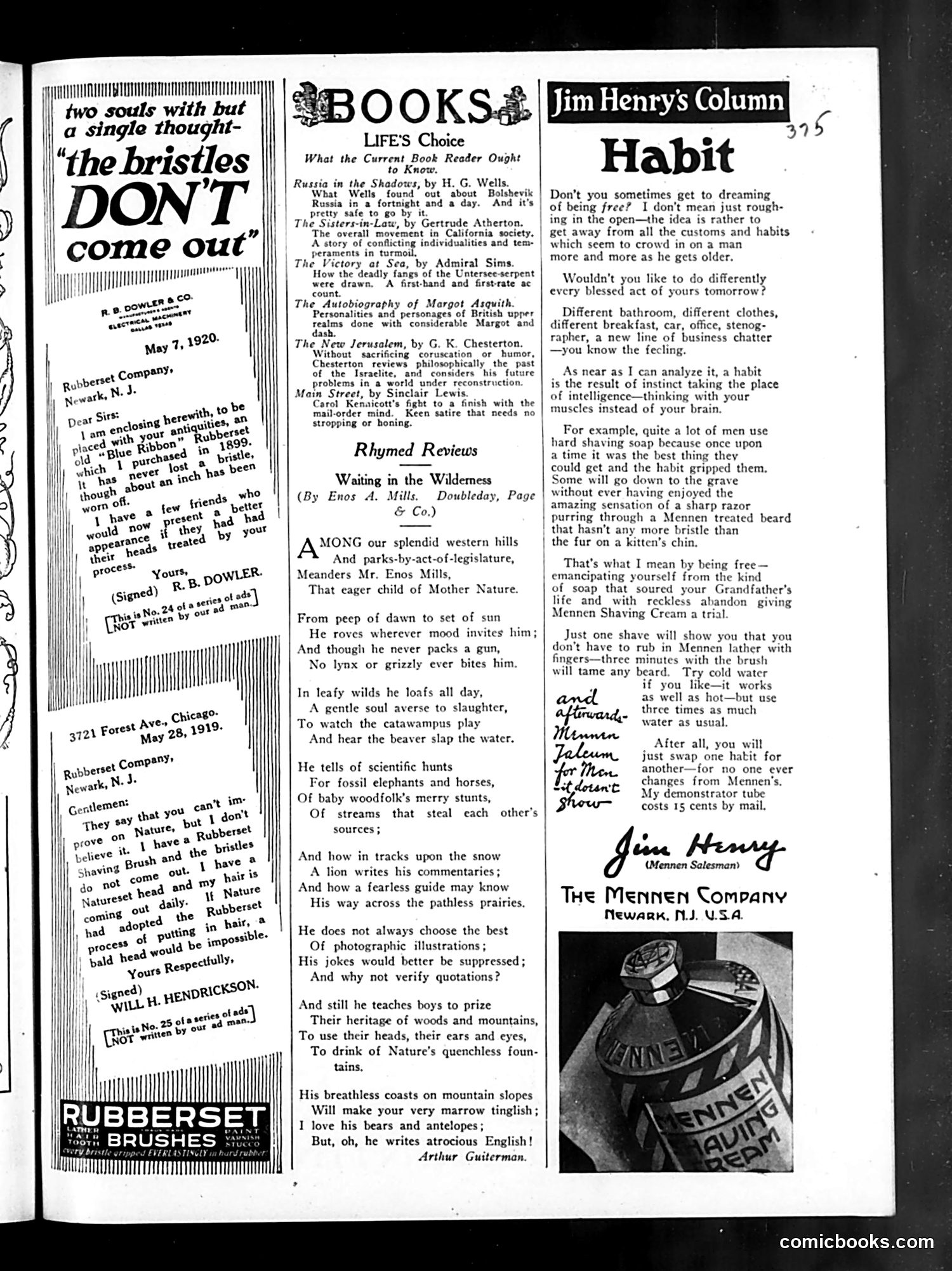
This page is primarily **advertising and reader correspondence**, not political satire. The left side contains letters to the editor and ads for Rubberset brushes. The right features Jim Henry's column "Habit," promoting Mennen shaving products, and a book review section. The only potentially satirical content is the letter header "the bristles DON'T come out," which appears to be an advertisement emphasizing product durability—a humorous way to highlight that Rubberset brushes won't shed bristles, a common complaint about inferior brushes at the time. The page reflects 1920s consumer culture and early advertising techniques using humor to sell everyday grooming products.
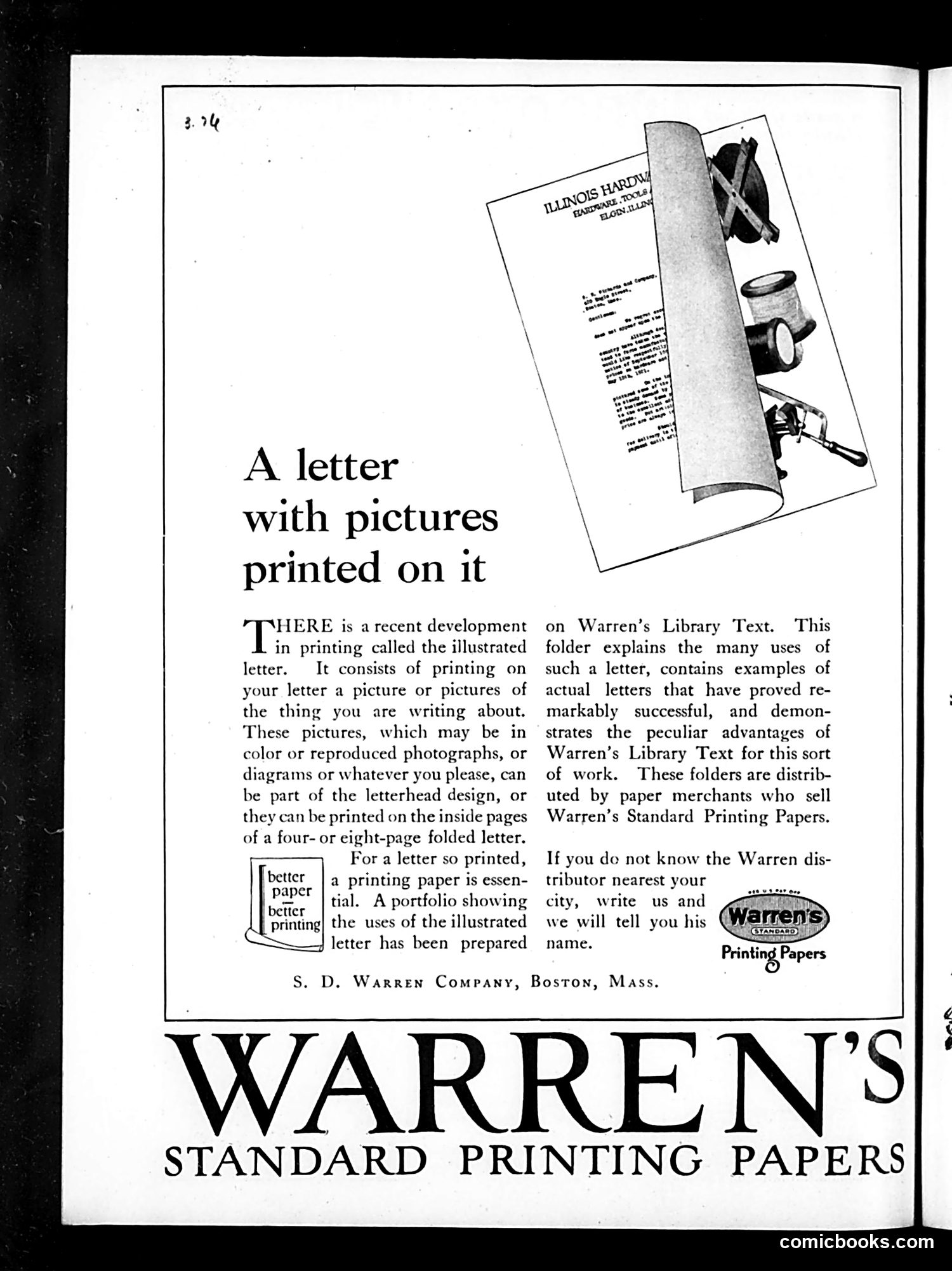
This is an **advertisement**, not a political cartoon or satirical content. It promotes Warren's Standard Printing Papers, specifically their new "illustrated letter" product—letterhead that includes printed pictures or photographs relevant to the sender's business or purpose. The ad explains that this innovation allows businesses to include visual imagery directly on correspondence, which could appear on the letterhead design or inside folded letter pages. The text emphasizes practical advantages for commercial use. The rolled paper shown in the image demonstrates the product format. This represents early 20th-century printing innovation—essentially an early form of visual marketing materials incorporated into everyday business correspondence. There is no satire, political commentary, or caricature present on this page.
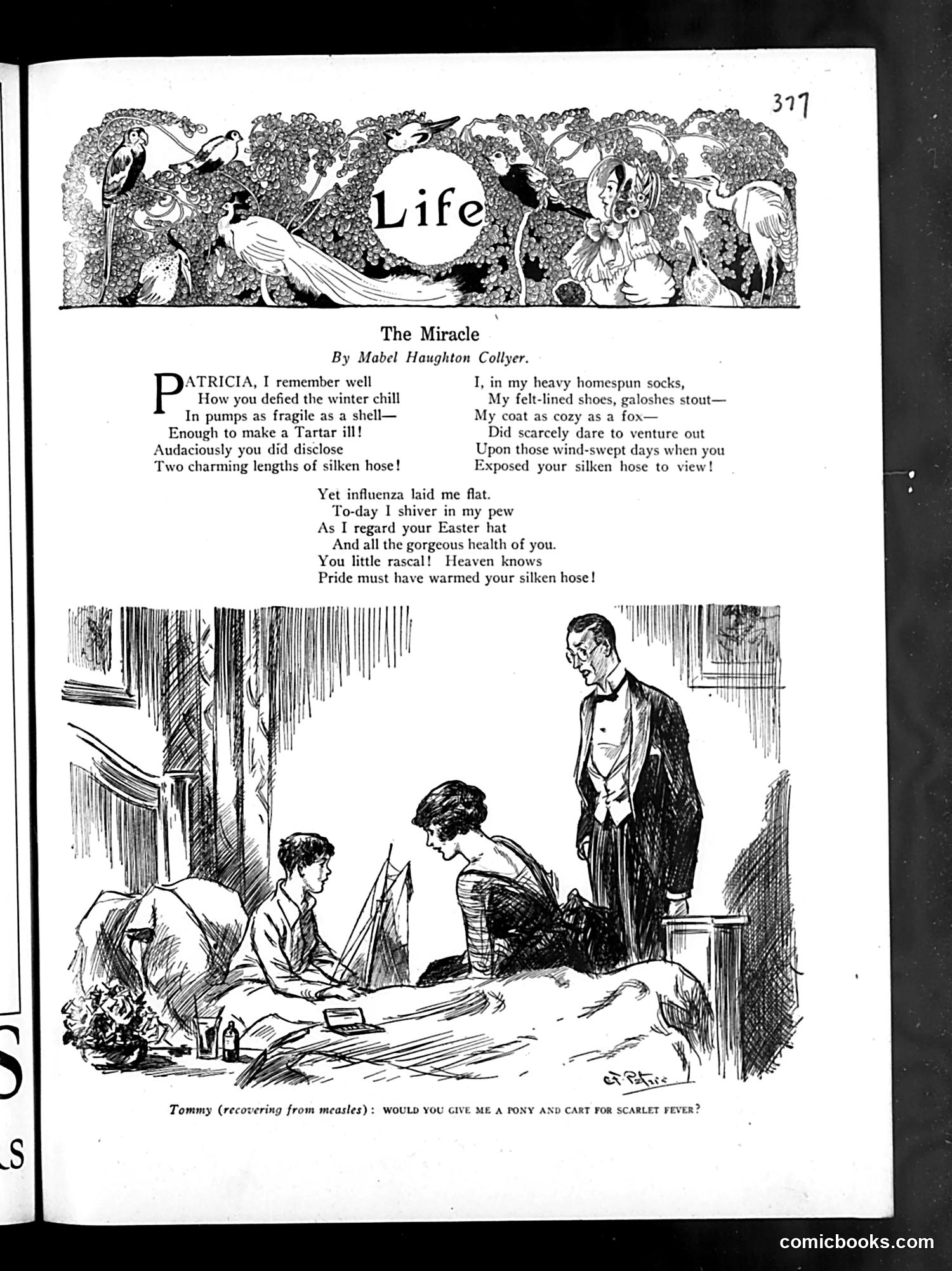
This page presents a poem and illustration about a bedridden child named Tommy recovering from measles. The poem addresses "Patricia," recalling how she defied winter weather by wearing silk stockings and exposing her legs—considered scandalously immodest in the era. The speaker, now ill with influenza, ironically suggests Patricia's pride in displaying her silken hose somehow warmed the child Tommy back to health—a "miracle." The satirical point targets early 20th-century attitudes toward women's fashion and modesty. By attributing a child's recovery to exposed female legs rather than proper medicine, the piece mocks both conservative morality and contemporary medical explanations, using humor to comment on changing social norms around women's clothing and bodily display.
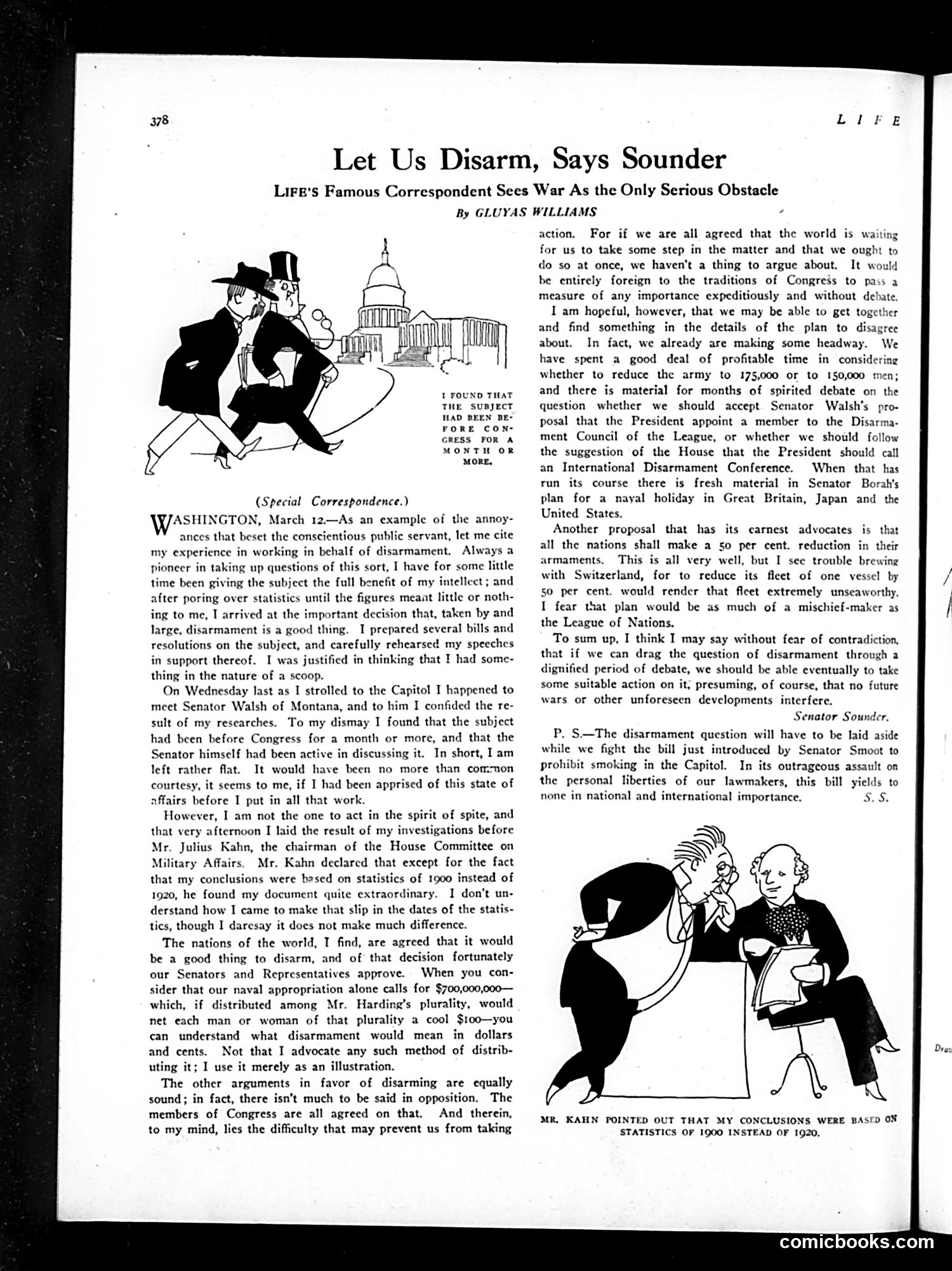
This article by Gluyas Williams discusses post-WWI disarmament proposals. The top cartoon shows a figure crouching with military equipment, satirizing reluctance to disarm despite public support. The bottom cartoon ridicules a specific debate: Mr. Kahn (chairman of the House Military Affairs Committee) challenged the author's statistical arguments about disarmament costs, claiming his conclusions were "based on statistics of 1900 instead of 1920." The cartoon mocks this pedantic objection—Kahn points out the date discrepancy while ignoring the broader disarmament argument itself, suggesting critics use minor technical errors to avoid substantive engagement with peace proposals. The piece reflects 1920s-era American debates over naval reduction and League of Nations involvement.
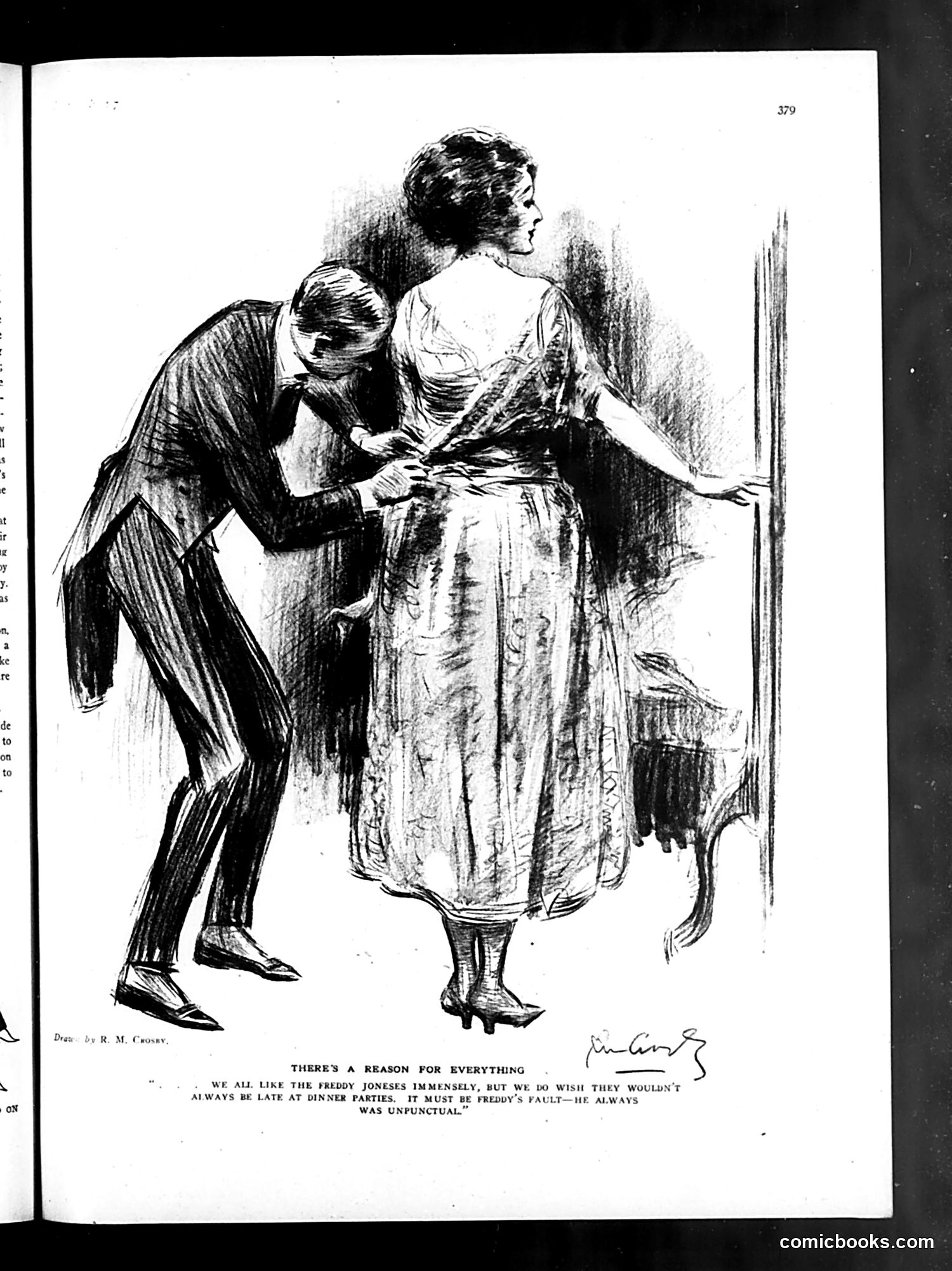
This sketch by R.M. Crosby depicts a social comedy about punctuality at dinner parties. A man in formal attire leans toward a woman, apparently explaining why their friend "Freddy Jones" is chronically late to social gatherings. The caption quotes him saying Freddy's unpunctuality "must be Freddy's fault—he always was unpunctual." The humor targets a specific social anxiety of the era: dinner party etiquette and the embarrassment caused by tardy guests. "Freddy Jones" appears to be a generic name representing a recognizable social type—the perpetually late acquaintance whose behavior was considered inconsiderate and frustrating in formal social settings. The cartoon gently mocks both Freddy's irresponsibility and the social obsession with punctuality.
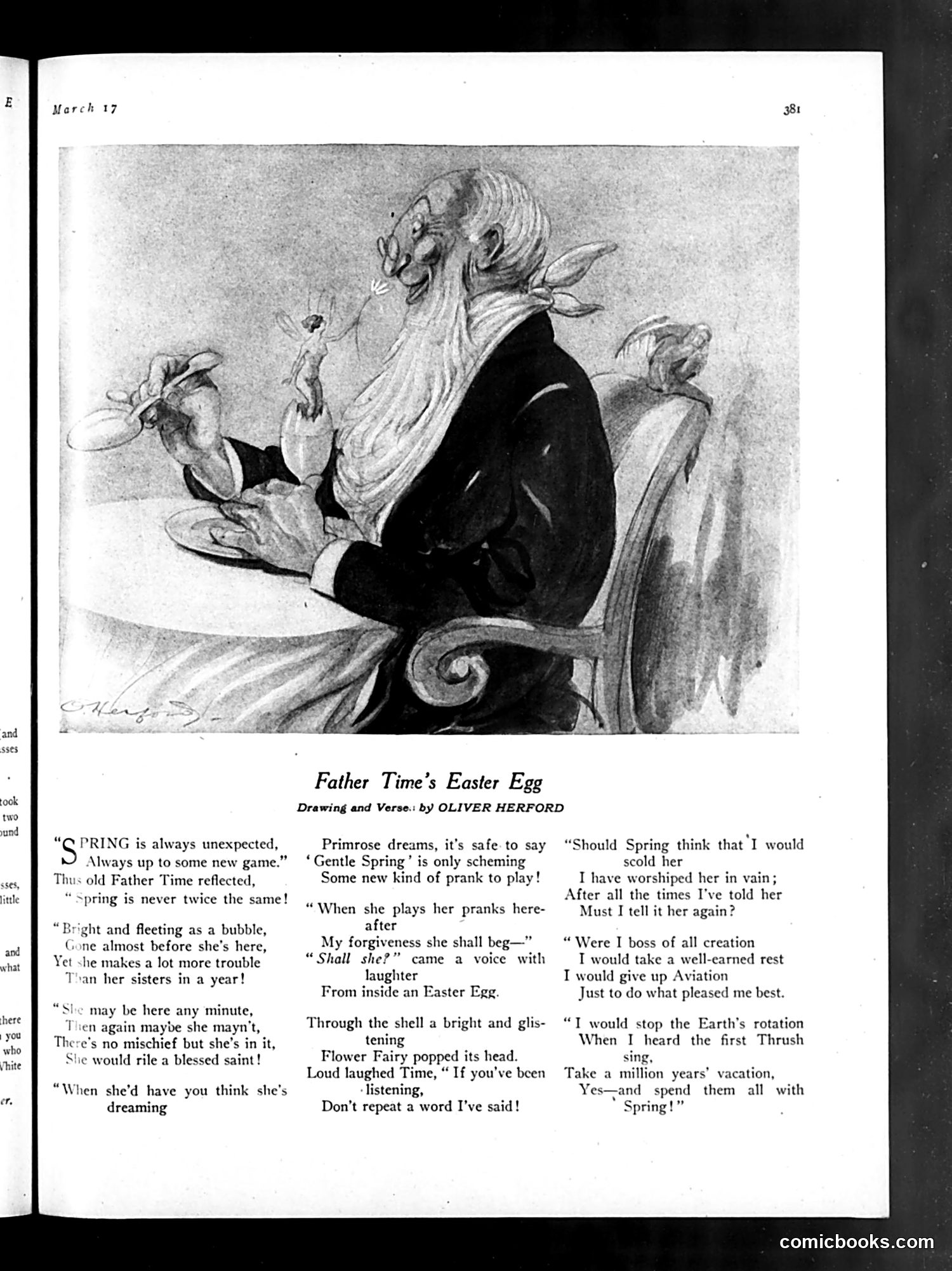
This satirical poem and illustration depicts **Father Time** (the elderly bearded figure) encountering Spring emerging from an Easter egg, represented as a "Flower Fairy" with delicate wings. The satire targets **Spring's unpredictability and chaos**. Father Time complains that Spring causes endless trouble—arriving suddenly, playing pranks, creating mischief through her sisters (the seasons), and being fundamentally unreliable ("Spring is never twice the same!"). The joke is that despite Spring's disruptiveness, Father Time remains unable to control her. The poem ends with his resigned fantasy of escaping by stopping Earth's rotation or taking "a million years' vacation"—satirizing humanity's frustration with spring weather's notorious inconsistency and the season's chaotic arrival each year.
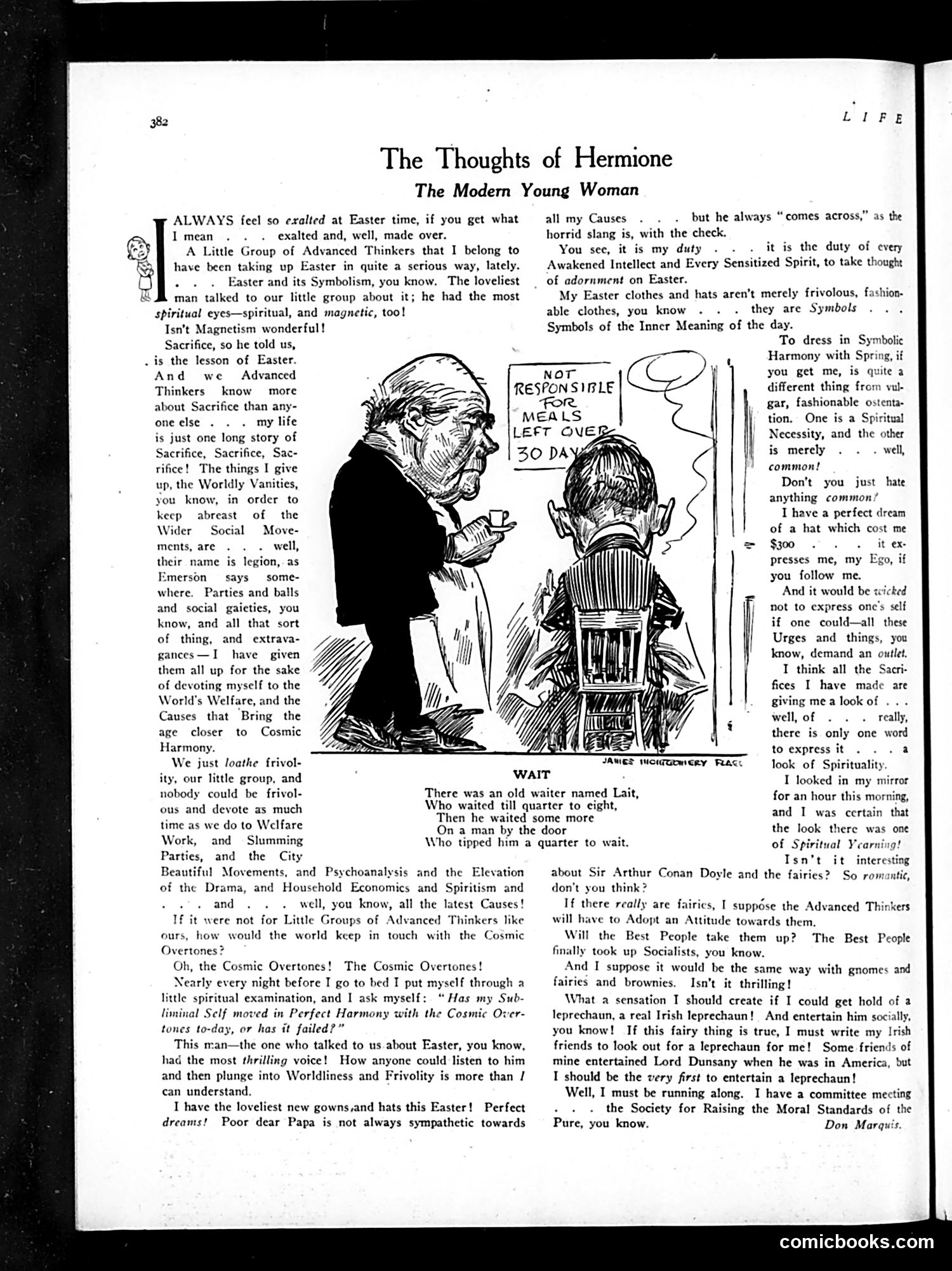
This satirical piece mocks a self-absorbed young woman of the 1920s who claims advanced, spiritual intellectualism while pursuing shallow materialism. The cartoon shows an older man (likely her father, given context about "Papa") confronting her about irresponsible behavior—specifically, a note reading "NOT RESPONSIBLE FOR MEALS LEFT OVER 30 DAYS." The satire targets the pretentious "Advanced Thinkers" who espouse causes like "World's Welfare" and "Cosmic Harmonies" while neglecting practical duties. Hermione dreams of a $300 hat and entertaining a leprechaun, embodying the contradiction between claimed spiritual awakening and actual frivolity. The piece ridicules 1920s young women who adopted intellectual affectations without genuine commitment.
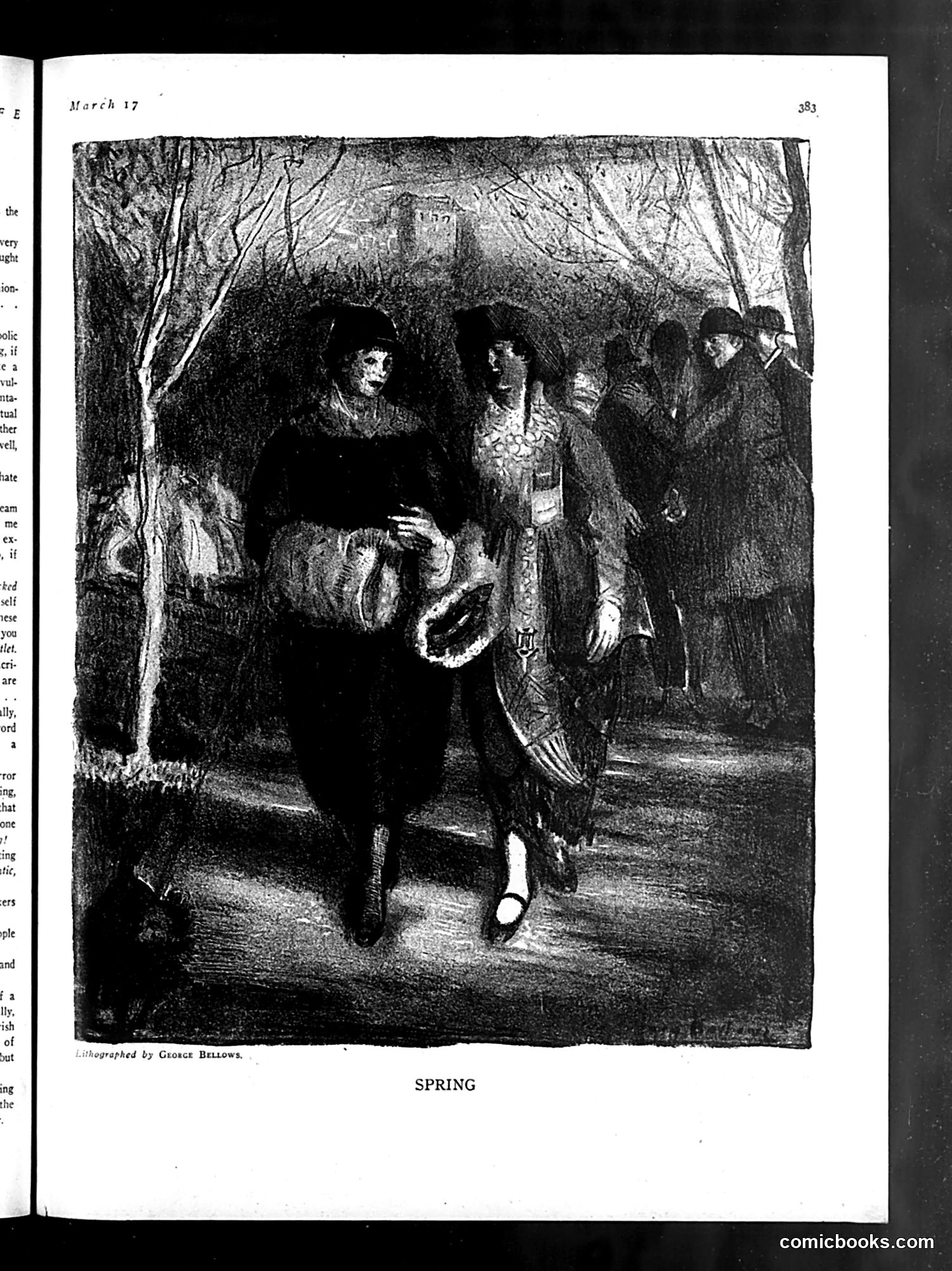
This lithograph by George Bellows depicts an urban nighttime scene titled "Spring." The image shows a woman in dark clothing standing prominently in the foreground on a tree-lined street or park path, with several other figures visible in the background. The woman appears to be a sex worker or street figure, based on her positioning and the composition's focus on her solitary stance among passersby. The work likely critiques urban social conditions during the early 20th century, using "Spring" as ironic counterpoint to the gritty, morally ambiguous street life depicted. Bellows was known for documenting working-class and marginalized urban scenes, presenting social realism rather than sanitized romanticism.
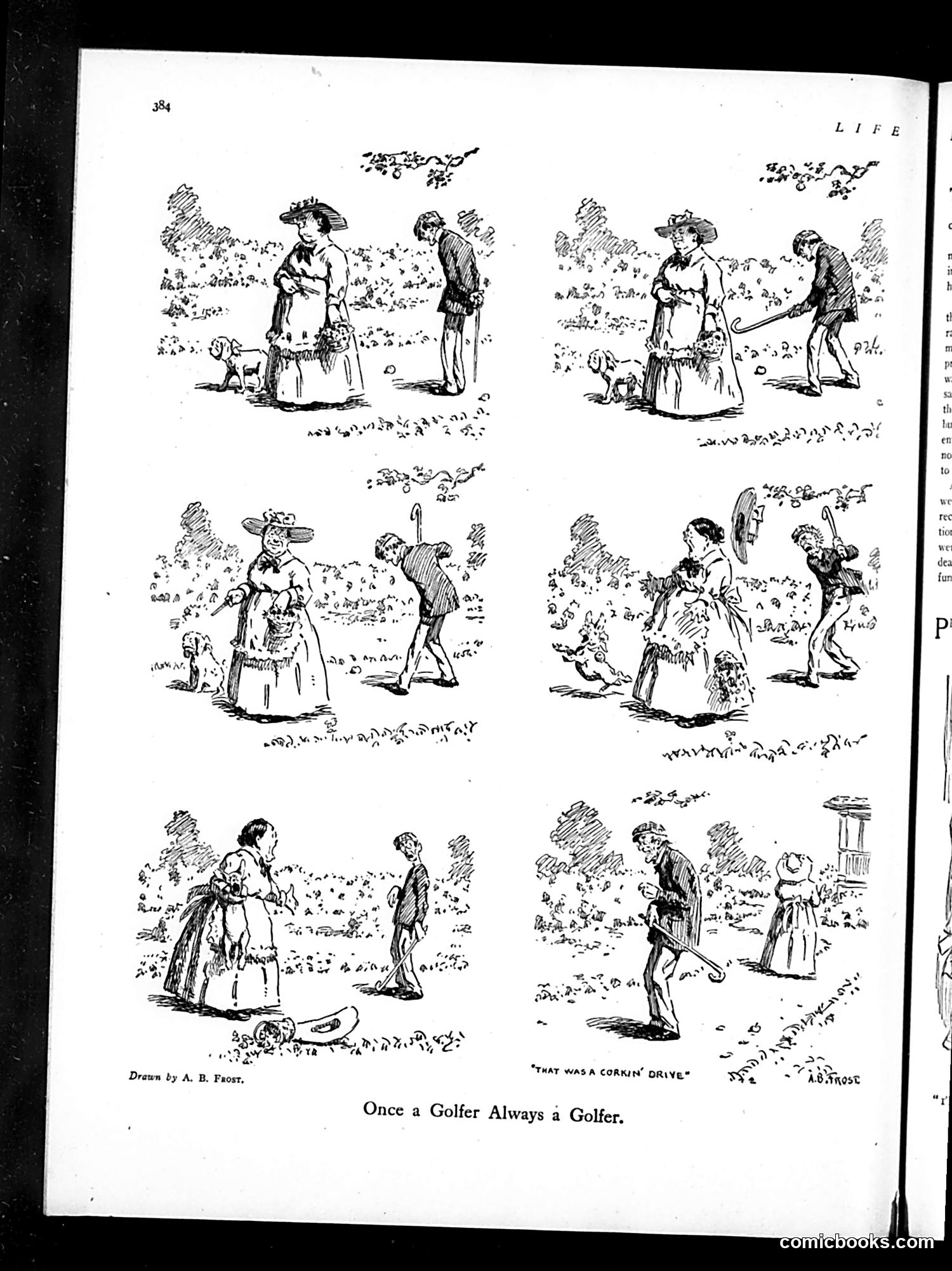
This six-panel comic strip by A. B. Frost depicts the progression of a man's obsession with golf across different life stages and circumstances. The sequence shows a gentleman repeatedly playing golf despite increasingly inconvenient situations—with his wife, children, and social obligations present. The final panel, captioned "THAT WAS A CORKIN' DRIVE," shows him swinging a golf club while a woman and child watch disapprovingly. The satire targets the golf craze that swept American upper-class society in the late 19th/early 20th century, mocking how men prioritized the sport above family responsibilities and social propriety. The title's double meaning—once someone takes up golf, they're obsessed with it forever—is the joke's core. It's a gentle but pointed critique of masculine recreational excess.
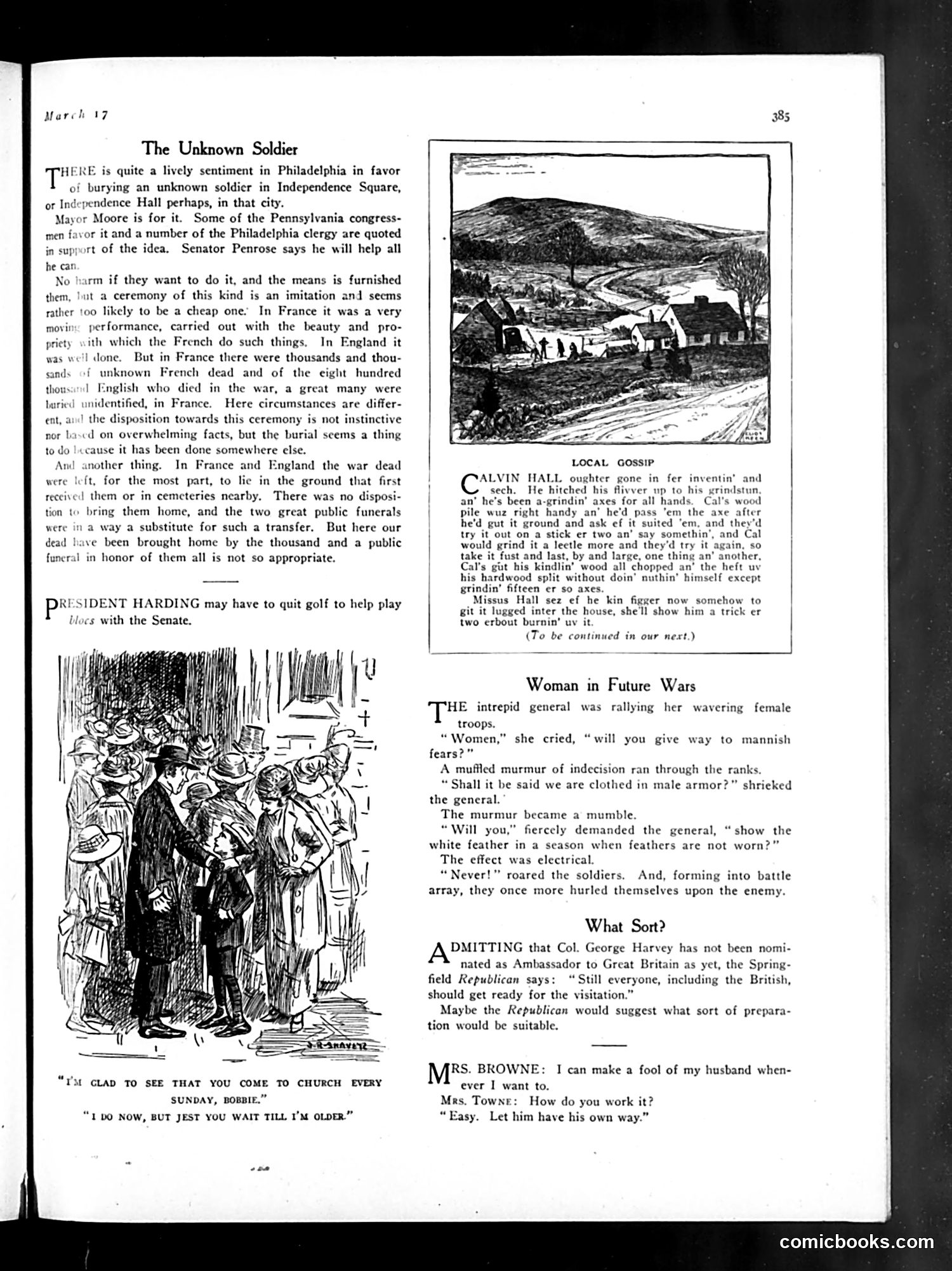
This page contains three distinct satirical pieces from the early 1920s: **"The Unknown Soldier"** critiques Philadelphia's proposal to bury an unknown WWI soldier. The author argues it's an imitative, cheap ceremony—whereas France and England buried unknowns out of necessity (thousands of unidentified dead), America is simply copying them despite having already brought most war dead home. The satire targets empty civic pageantry done merely because "it has been done somewhere else." **"President Harding may have to quit golf"** mocks President Harding's golfing habits while Congress needs him to resolve legislative disagreements ("play blocs with the Senate"). **"Woman in Future Wars"** is satirical dialogue imagining female soldiers. A female general rallies wavering women troops with absurd rhetoric about "mannish fears" and "white feathers"—mocking both contemporary anxieties about women's roles and the overwrought military oratory of the era. The bottom items are light domestic humor about marriage and church attendance, typical of the magazine's satirical tone.
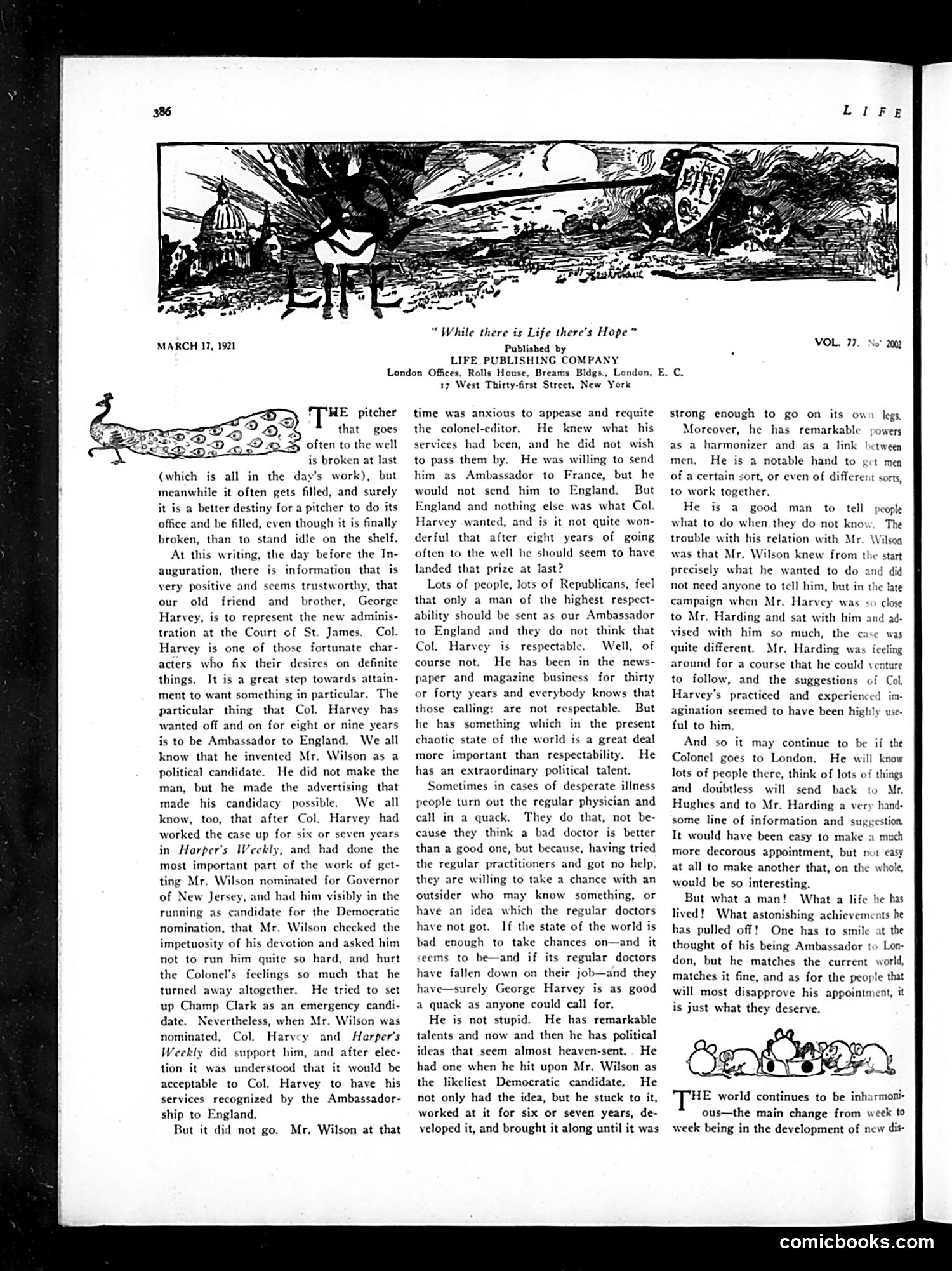
This is satirical commentary (not a cartoon) defending Colonel George Harvey's appointment as U.S. Ambassador to England under the new Harding administration. **The figures:** Colonel George Harvey—newspaper editor and political operative who had promoted Woodrow Wilson's early career but later fell out with him. The text discusses Wilson's earlier refusal to appoint Harvey ambassador to France or England. **The satire's point:** Life argues that while Harvey lacks "respectability" (a dig at his newspaper business), he possesses valuable "political talent." The extended metaphor compares him to a quack doctor—unconventional but potentially useful when regular physicians have failed. The opening proverb ("While there is Life there's Hope") suggests optimism despite Harvey's controversial nature. **Context:** This reflects post-WWI political realignment and the transition from Wilson to Harding, with Life defending an unconventional but strategically connected choice for a prestigious diplomatic post.
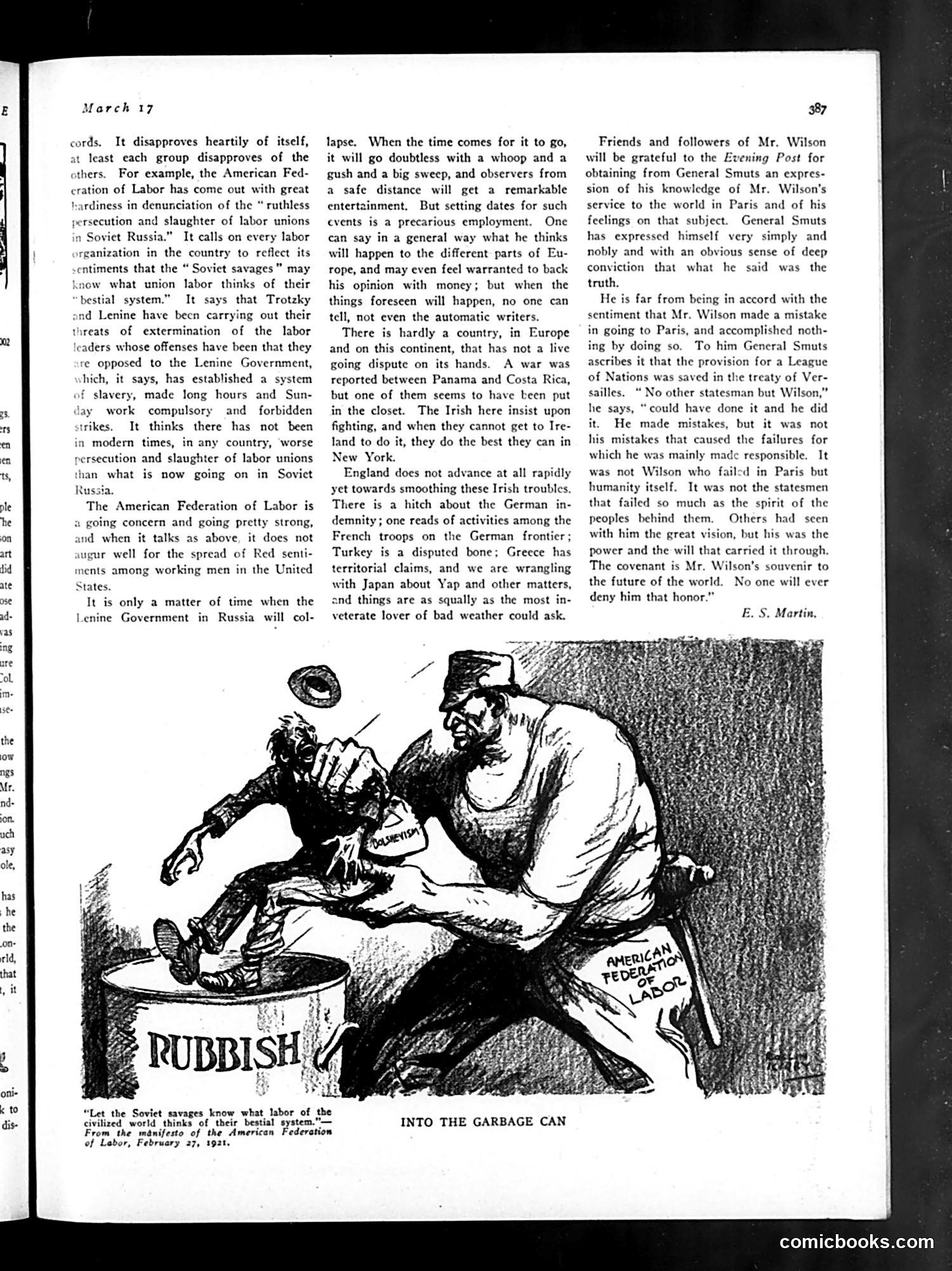
This cartoon satirizes the American Federation of Labor's denunciation of Soviet Russia (published February 27, 1921). The image depicts a large figure labeled "American Federation of Labor" dumping a small, caricatured Bolshevik figure into a garbage can labeled "RUBBISH." **Context:** Post-WWI America feared communist expansion. The AFL publicly condemned Soviet treatment of labor unions and the Bolshevik leadership (Lenin and Trotsky), despite the irony that labor movements theoretically aligned with communist ideology. **The satire's point:** The cartoon mocks this contradiction—American labor unions, which should theoretically sympathize with communist workers' movements, instead reject Soviet communism as barbaric ("bestial system," per the quoted AFL manifesto). The garbage-can disposal suggests the AFL views Bolshevism as literal trash. The accompanying article dismisses predictions the Soviet government will soon collapse, while documenting global unrest (Ireland, Germany, Turkey, Greece).
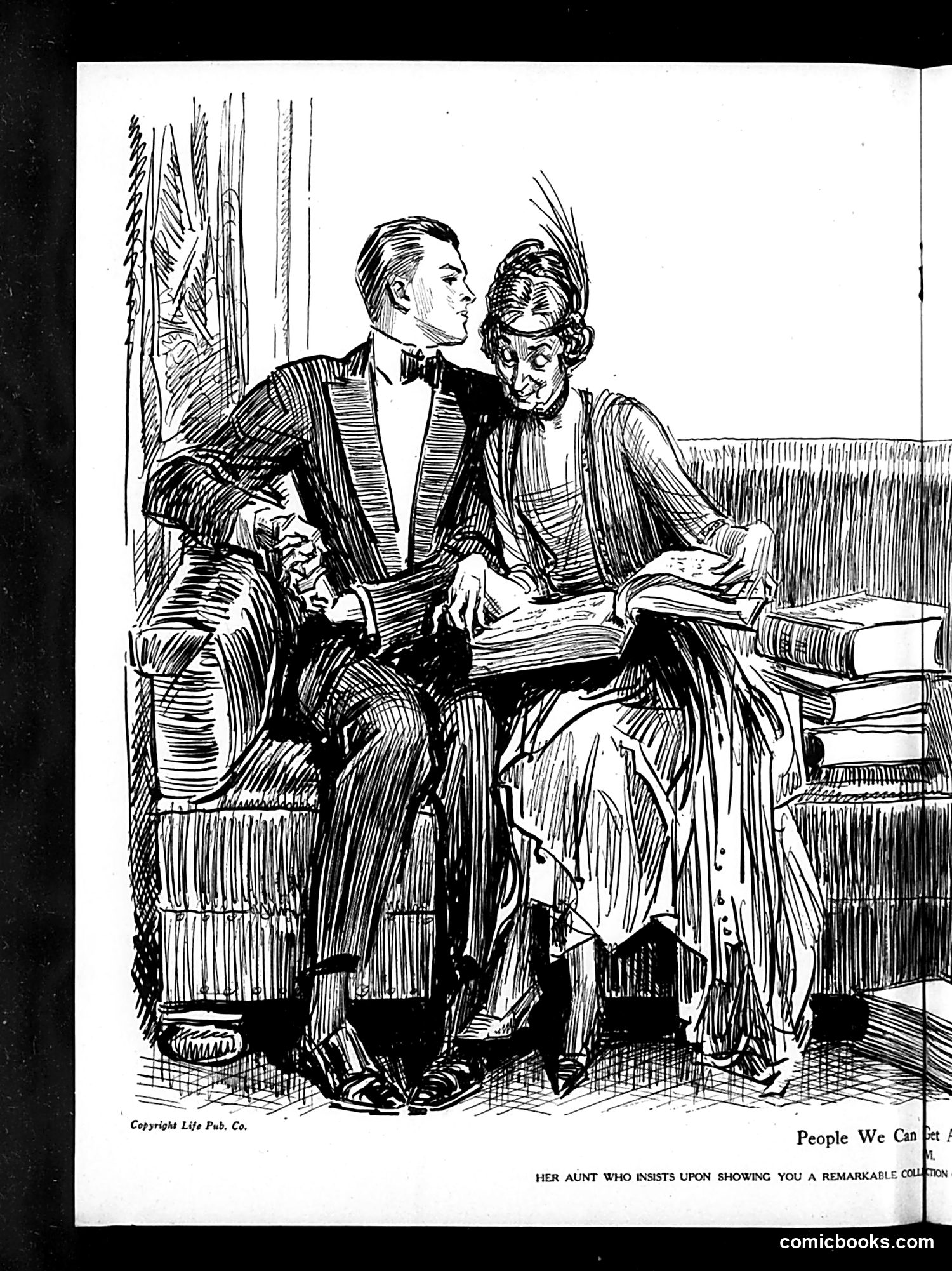
This is a satirical illustration titled "People We Can [Meet]" showing "Her Aunt Who Insists Upon Showing You a Remarkable Collection." The cartoon depicts a well-dressed young man in formal attire (tuxedo and bow tie) being subjected to an enthusiastic older woman displaying her collection of books. The humor lies in a recognizable social scenario: the tedious obligation of politely enduring a relative's insistent pride in their possessions—in this case, an extensive book collection. The satire targets both figures: the aunt's provincial enthusiasm and need for validation, and the man's trapped politeness. This reflects early 20th-century social etiquette where one couldn't easily refuse such "cultural" displays without rudeness. The exaggerated facial expressions emphasize the awkwardness of the situation—a universal social discomfort that made this relatable to Life magazine's urban, educated readership.
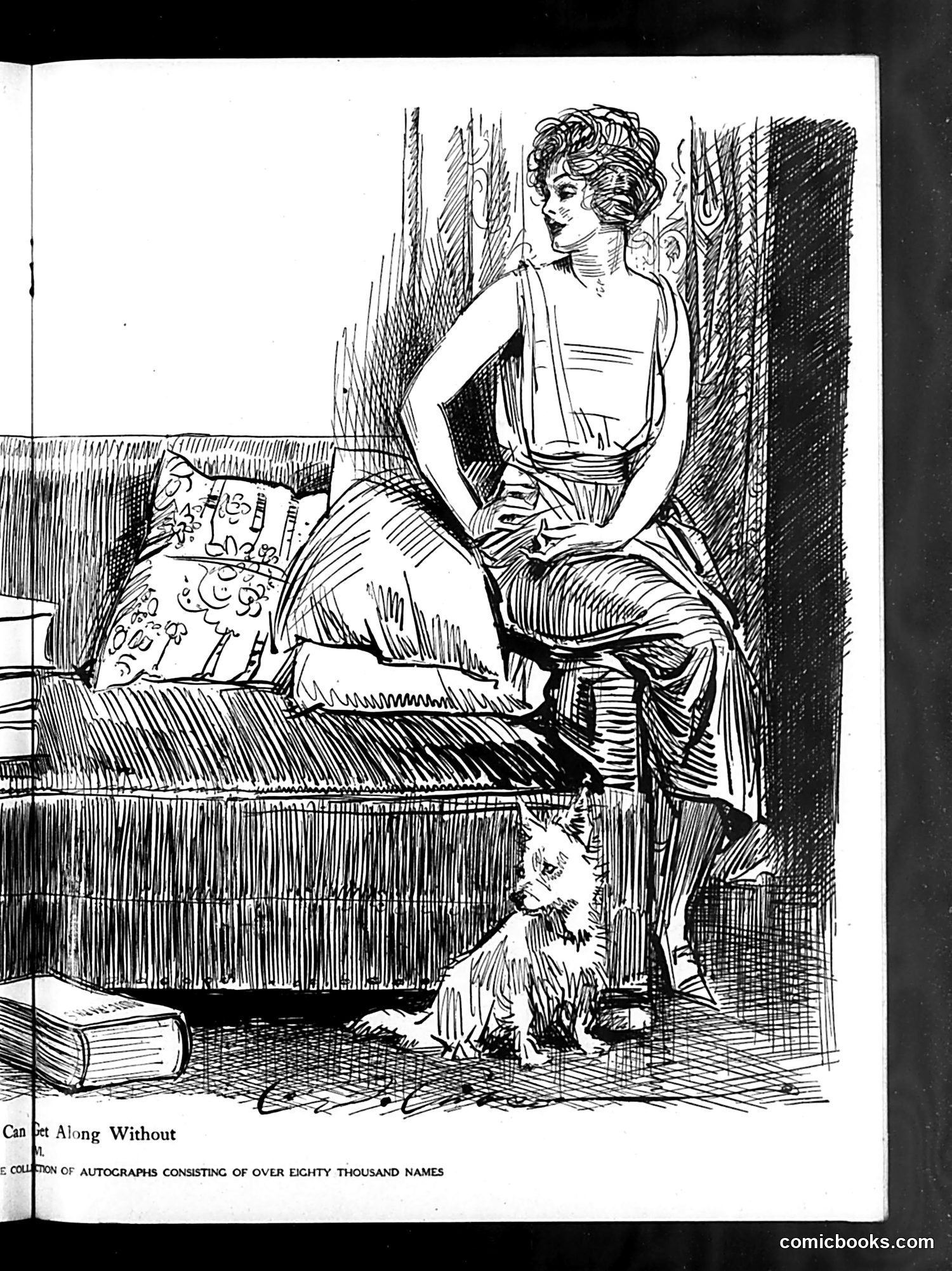
This page appears to be from a satirical piece titled "Can Get Along Without" (visible at bottom left). The illustration shows a fashionably-dressed woman sitting on a bed with a small dog beneath it, in what appears to be a bedroom interior rendered in detailed pen-and-ink style. The OCR text references "a collection of autographs consisting of over eighty thousand names," suggesting this cartoon comments on collecting fads or celebrity obsession—likely satirizing women's fascination with autograph collections, which were popular pastimes in the early 20th century. The woman's confident pose and the domestic setting suggest the joke plays on the idea that despite having thousands of famous signatures, one can manage perfectly well without them—mocking the frivolousness of the collecting craze.
This theater column reviews Broadway plays selected for matinee audiences dominated by women. The critic discusses four productions: *The Tyranny of Love*, *The White Villa*, *Cradle Song*, and four one-act plays by Clare Kummer. The satire targets the plays' obsession with female psychology and romantic suffering. *The Tyranny of Love*—a French adaptation—is mocked as a ridiculous marital farce where the wife's only "crime" is loving her husband too much, and everyone absurdly blames each other. *The White Villa* is dismissed with sardonic brevity: a woman wanted to live alone on an island; it didn't work out; she can never return. The column's biting humor emerges in casting blame (humorously attributing responsibility to "Mr. Henry Baron") and the pointed observation that an Irish actor playing a Spanish doctor suggests the character was originally named "O'Shea" before immigration. The overall tone satirizes both these sentimental women's plays and the female theater audiences presumed to enjoy them, reflecting early 20th-century gender stereotypes about women's tastes.
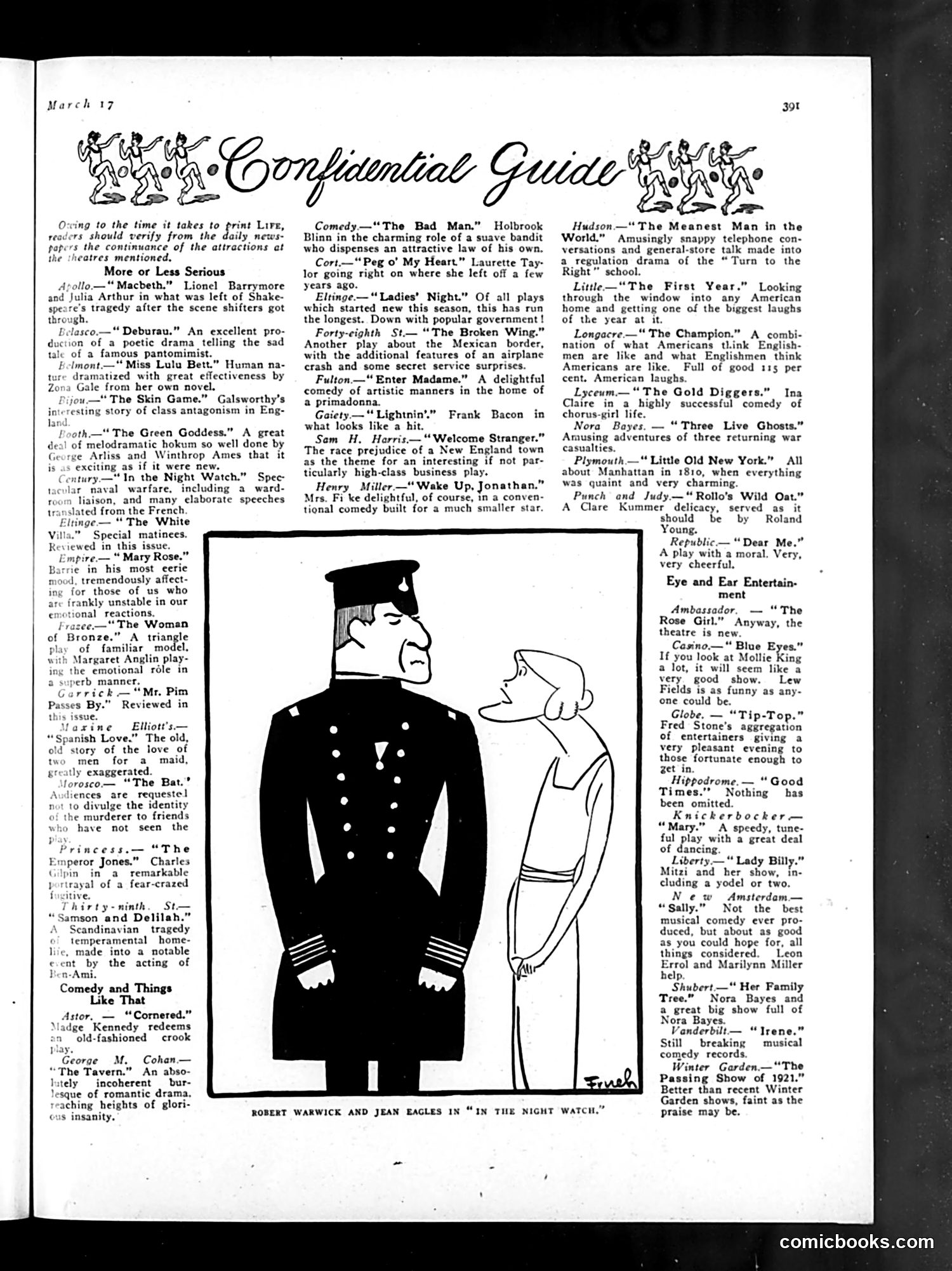
This is a theater review page from *Life* magazine listing Broadway shows running around March 1921. The central illustration shows two figures from "In the Night Watch"—a naval warfare spectacle—in a stylized art-deco drawing by what appears to be an artist's signature. The page is primarily informational: brief descriptions of current theatrical productions, ranging from serious drama (Lionel Barrymore in *Macbeth*, Charles Gilpin in *The Emperor Jones*) to popular comedies (*Peg o' My Heart*, *The Gold Diggers*). The humor is mild and embedded in the descriptions themselves—noting that *Macbeth* is "what was left...after the scene shifters got through," or joking about *Ladies' Night* running so long that it disproves democracy ("Down with popular government!"). The right column adds brief capsule reviews of lighter entertainment and musicals. This is essentially a theater listing with editorial commentary for New York's entertainment-hungry readers.
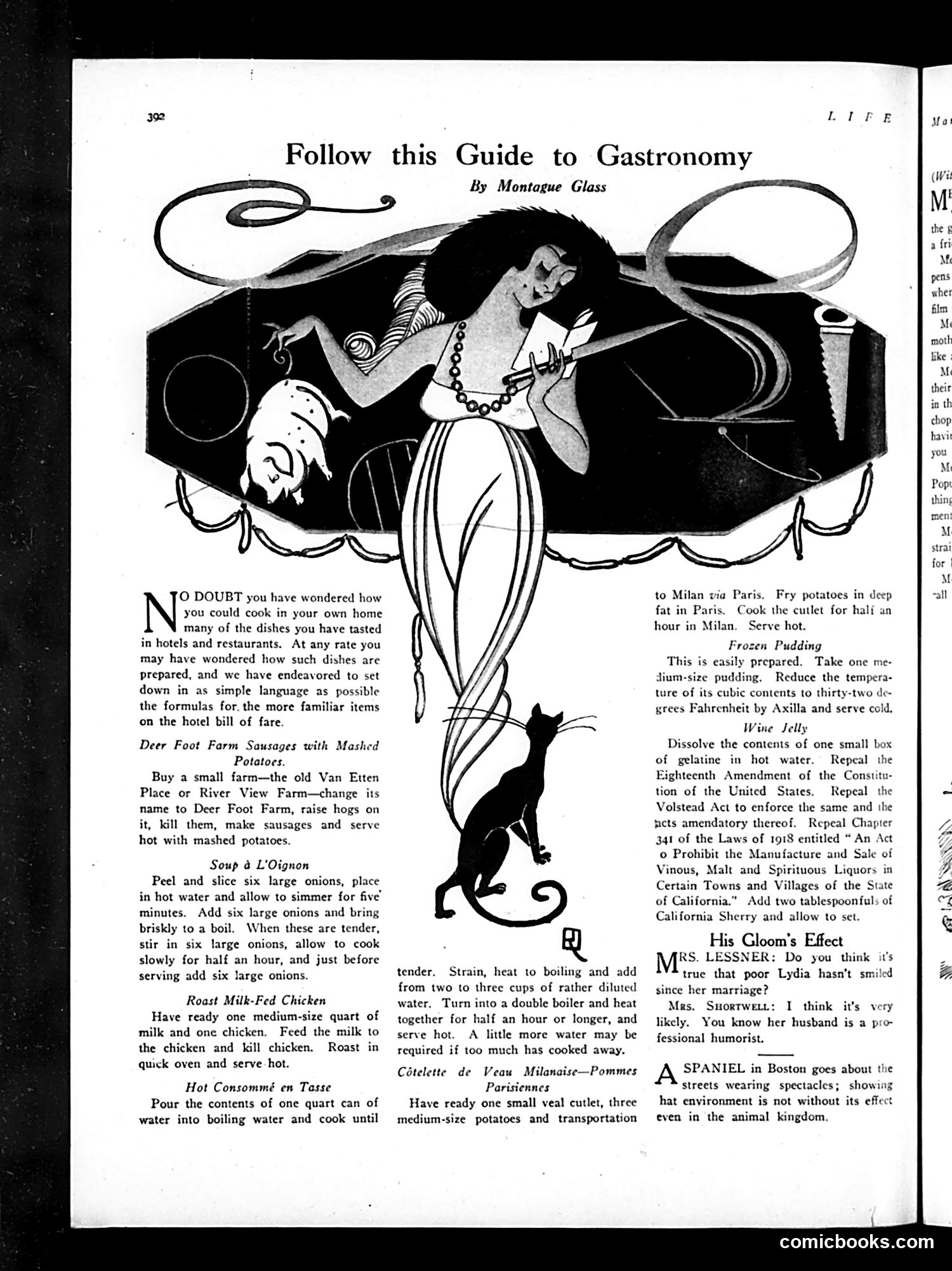
This is humorous satire by Montague Glass mocking the mystique of fancy restaurant cuisine. The joke: elaborate French dishes aren't actually difficult—they just require absurd, impractical steps presented as recipes. Examples include buying an entire farm to make sausages, or cooking a veal cutlet in Milan after frying potatoes in Paris. The "Wine Jelly" recipe hilariously demands repealing Prohibition and multiple California liquor laws just to obtain sherry. **The underlying social critique:** Americans were intimidated by European haute cuisine and pretentious restaurant culture. Glass satirizes this by suggesting the "secret" to fancy food is simply unnecessary complexity and pretension, not genuine culinary skill. The illustrations show a sophisticated woman and cat, emphasizing the class anxiety around dining sophistication. The page also includes unrelated humor columns (about a glum bride, a spectacled spaniel), typical of Life magazine's miscellaneous satirical format.
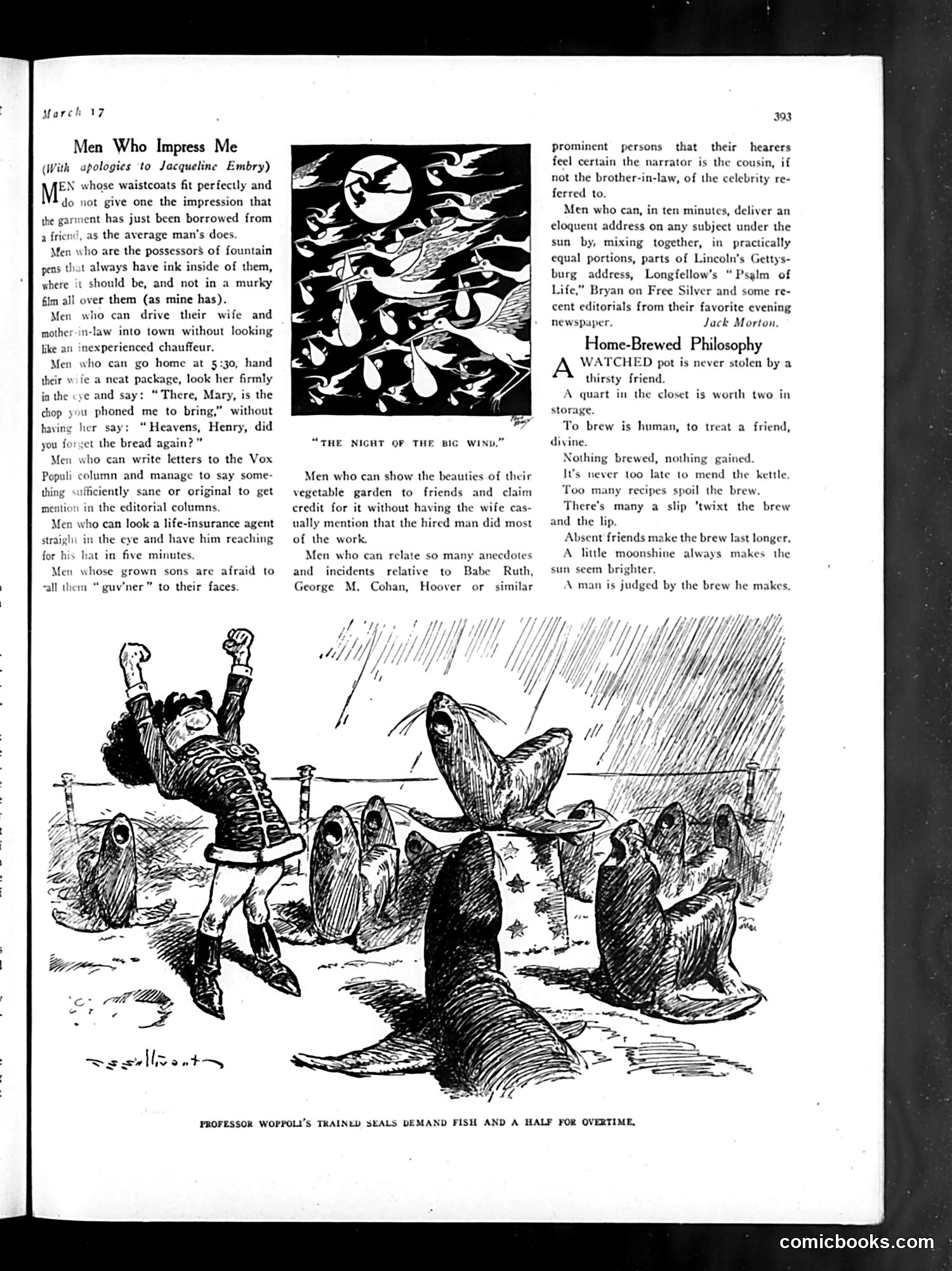
This page contains two satirical pieces mocking male pretension and incompetence. **"Men Who Impress Me"** is a humorous essay listing types of men the author finds impressive—but the "impressive" traits are actually mundane competencies most men lack: wearing properly-fitting clothes, keeping fountain pens functional, driving without looking nervous, arriving home on time with the correct groceries. The satire targets male everyday failures and the low bar for male respectability. **The cartoon below** depicts "Professor Woppoli's Trained Seals Demanding Fish and a Half for Overtime"—anthropomorphized seals in human clothing striking or protesting in heavy rain. This appears to be labor-strike satire, likely referencing contemporary labor disputes or union demands, with the absurdity of animals unionizing for better pay serving as commentary on worker demands (perhaps viewed as unreasonable by the magazine's readers). **"Home-Brewed Philosophy"** offers folk sayings about brewing alcohol—relevant given Prohibition-era America's underground alcohol culture.
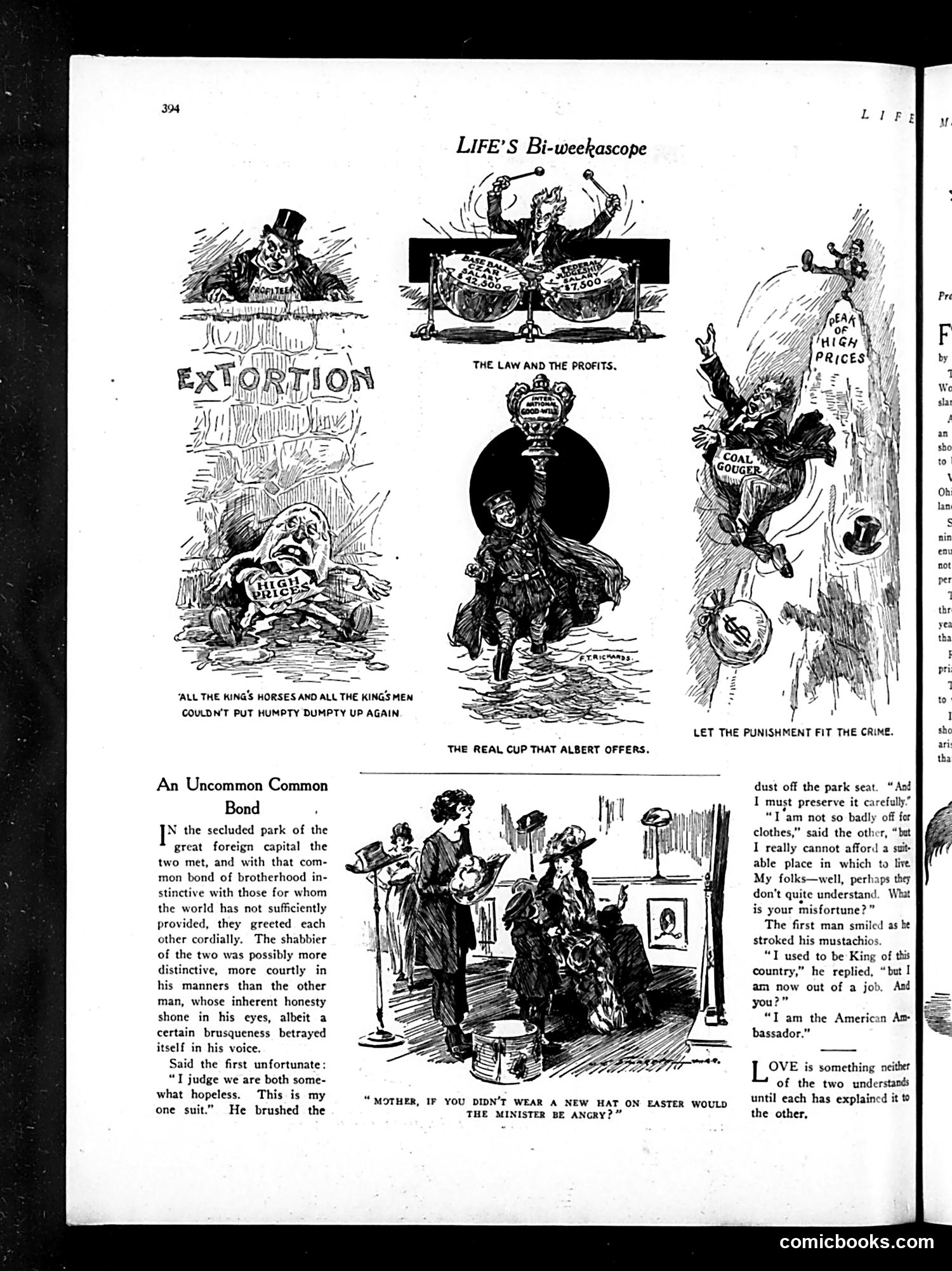
This page contains multiple cartoons satirizing early 20th-century social and political upheaval. The top panels mock contemporary crises: "Extortion" depicts financial collapse, "The Law and the Profits" shows wealth inequality, and "The Real Cup That Alert Offers" appears to reference labor unrest or economic instability. The main story, "An Uncommon Common Bond," depicts two destitute men in a "great foreign capital" (likely Europe post-WWI). One claims to be a deposed king; the other identifies as the American Ambassador. The satire pivots on this absurdist reversal: the titled nobleman is now jobless and impoverished, while the American diplomat is equally desperate. This likely mocks how post-war upheaval displaced European monarchies while questioning American diplomatic pretensions. The caption about Easter hats satirizes bourgeois concerns amid widespread poverty.
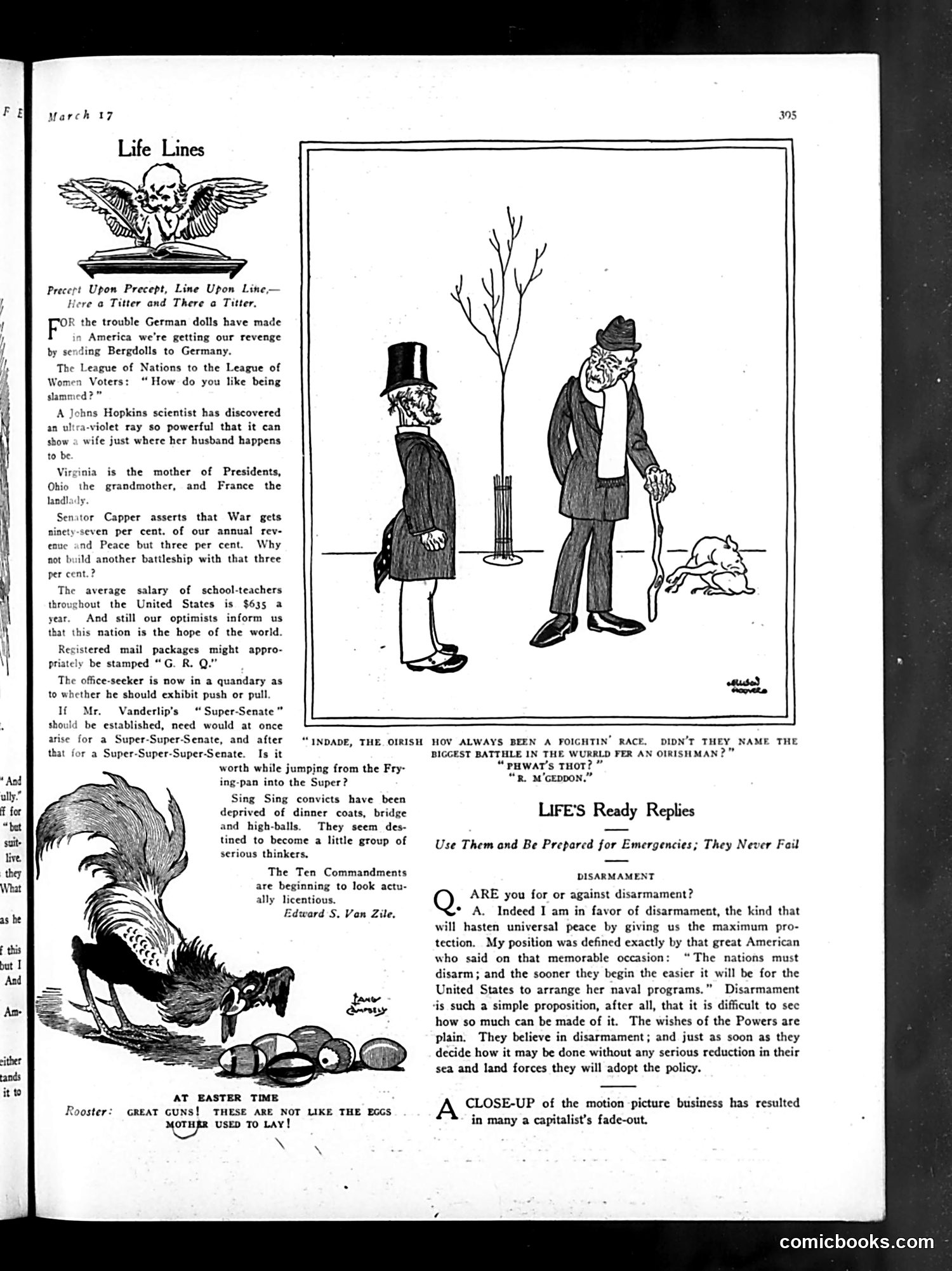
This page contains satirical commentary typical of Life's post-WWI era content. The main cartoon depicts two Irish men discussing "Armaggeddon" (mispronounced as "R. M'Geddon"), using heavy Irish dialect—a common satirical device of the period playing on Irish-American stereotypes and their association with fighting. The "Life's Ready Replies" section mocks political doublespeak about disarmament, presenting a response that contradicts itself: advocating disarmament while simultaneously justifying maintaining naval superiority. This satirizes politicians' hollow peace rhetoric during post-war treaty negotiations. The scattered "Life Lines" jokes reference contemporary issues: German war reparations, the League of Nations, teacher salaries, military spending, and Sing Sing prison conditions. The rooster cartoon makes an Easter pun about eggs. The cartoons reflect American anxieties about international diplomacy, economic priorities, and class divisions in the 1920s.
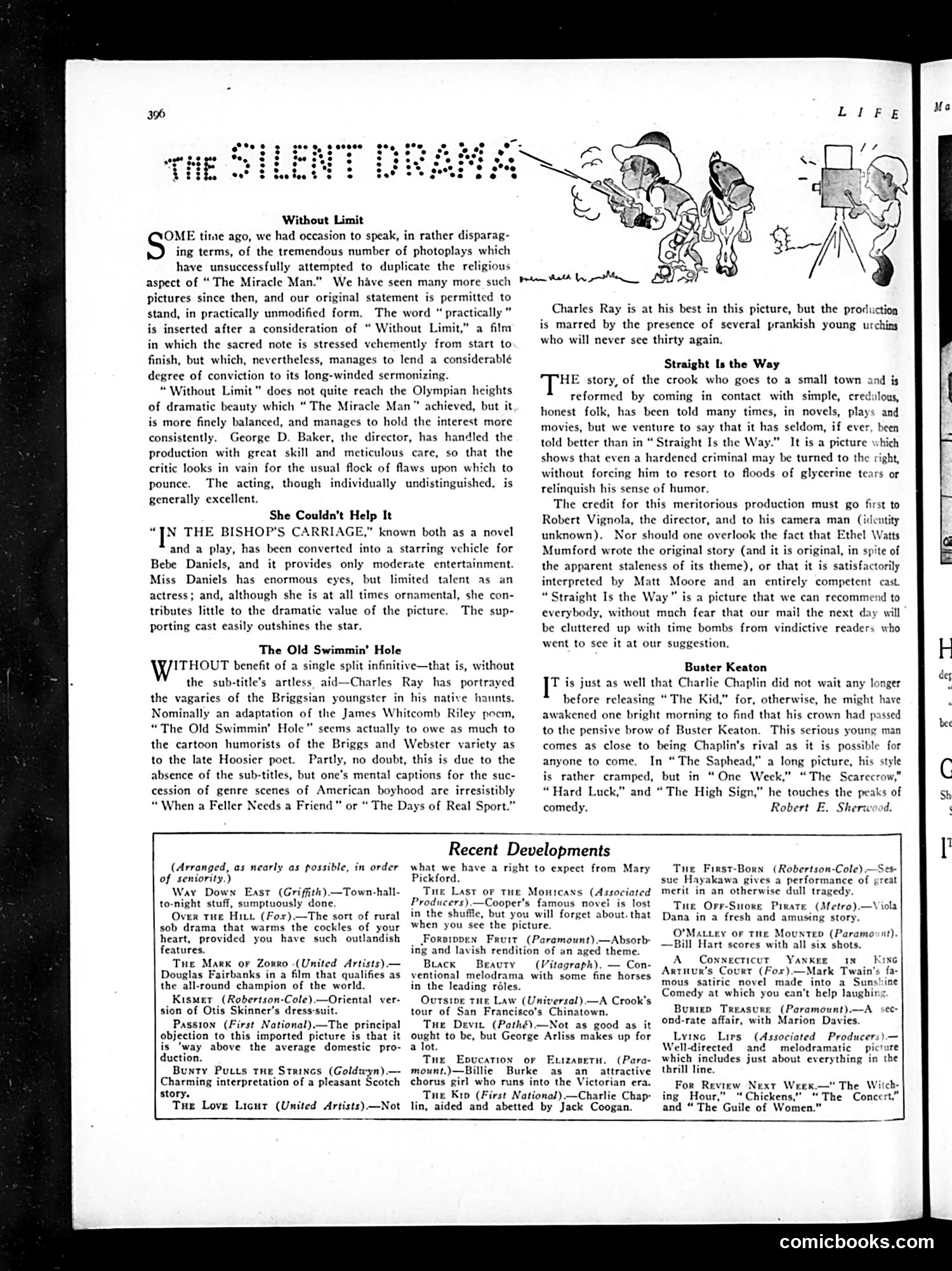
This page reviews five silent films from approximately 1921. The cartoons at the top illustrate film production—showing directors, cameramen, and actors on set. The reviews discuss: - **"Without Limit"**: A religious drama attempting to replicate "The Miracle Man's" success, praised for balanced direction by George D. Baker - **"In the Bishop's Carriage"**: Stars Bebe Daniels, criticized for her "enormous eyes" but limited acting talent - **"The Old Swimmin' Hole"**: Charles Ray adapts James Whitcomb Riley's poem; the reviewer compares it to newspaper comic strips by Briggs and Webster - **"Straight Is the Way"**: A redemption story about a criminal reformed by honest townsfolk; recommended without reservation - **"The Kid"**: Brief mention of Chaplin's film, comparing it favorably to Buster Keaton's work The tone is sophisticated and critical, typical of Life magazine's cultural commentary. References to "glycerine tears" mock melodramatic sentimentality common in early cinema.
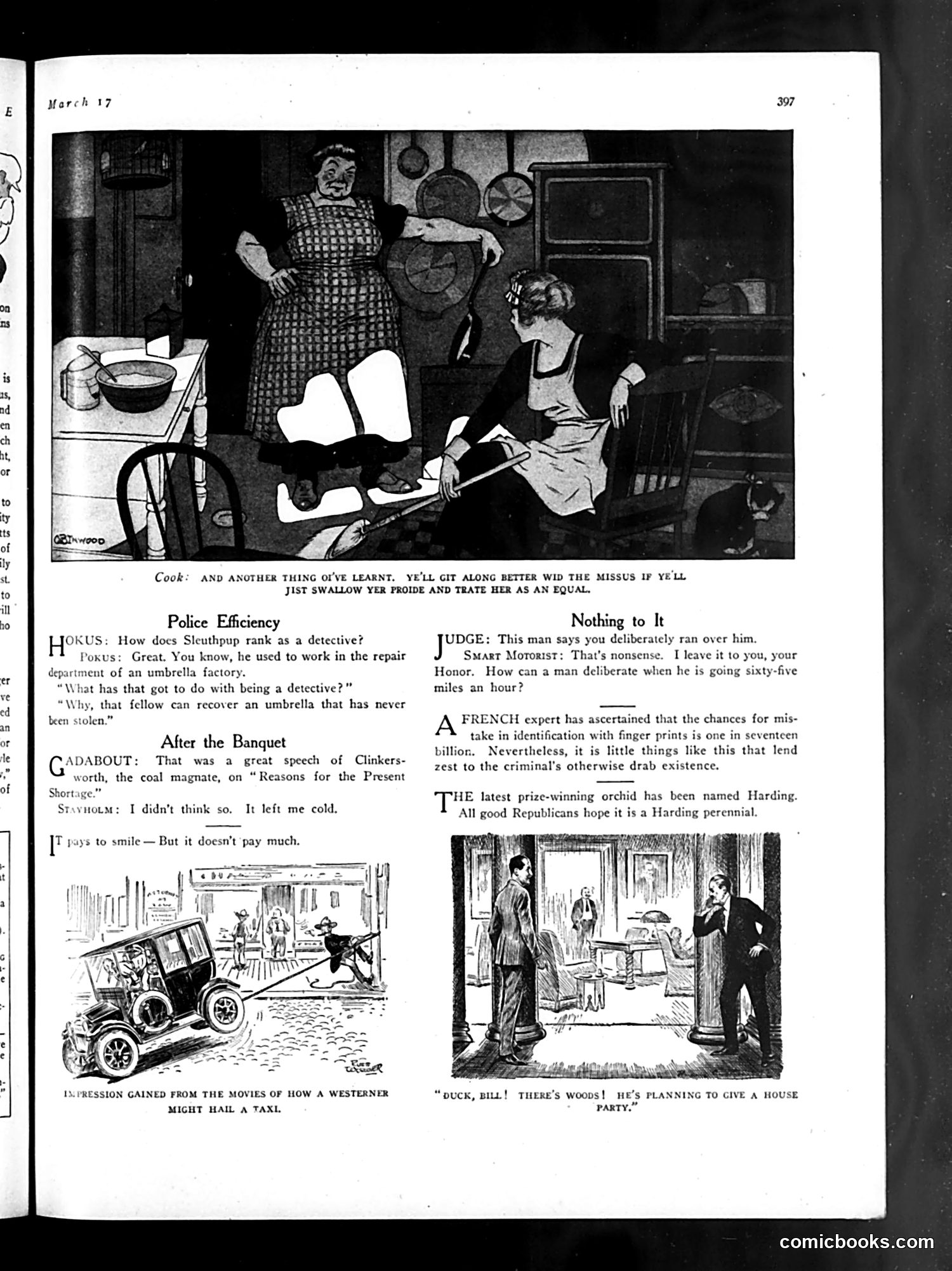
This page contains several brief satirical jokes typical of Life's humor: **"Police Efficiency"**: Absurdist joke mocking detective incompetence—a man who worked in umbrella repair is supposedly skilled at recovering *stolen* umbrellas, which is nonsensical. **"After the Banquet"**: A coal magnate's speech leaves the listener unmoved ("left me cold"), with a pun on emotional coldness. **"Nothing to It"**: Satirizes reckless driving and judicial leniency. A motorist argues he *couldn't* have deliberately hit someone while going 65 mph—an ironic defense treating dangerous speed as exculpatory. **Finger prints/criminal reference**: Dark humor suggesting criminals accept identification risks as part of their "drab existence." **Harding orchid**: Political joke—naming a prize orchid after President Harding, with sardonic hope it's a "Harding perennial" (likely mocking his administration). **Bottom cartoon**: References Western movie tropes of flagging down taxis dramatically, with the punchline involving an unexpected house party.
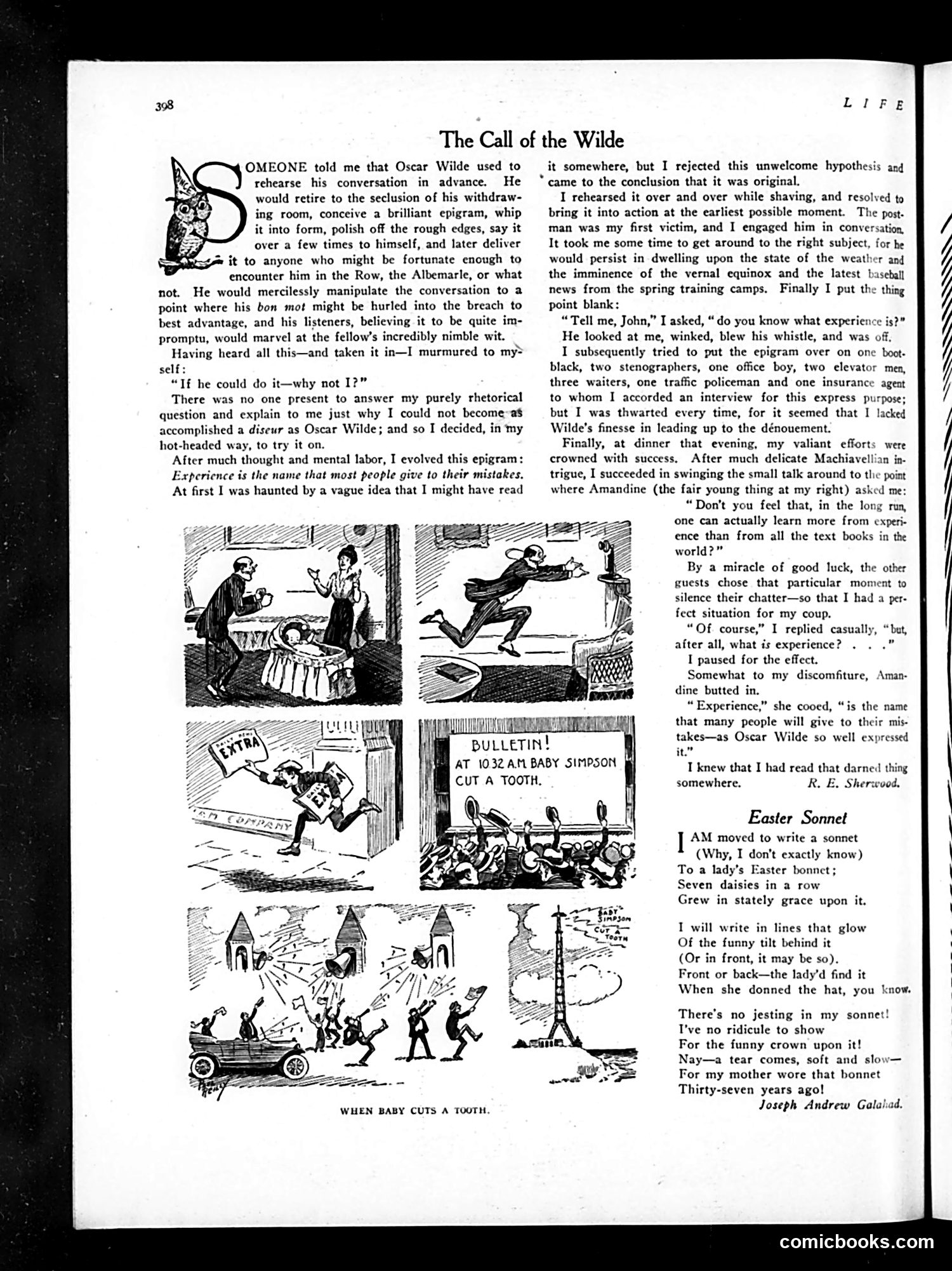
This article mocks Oscar Wilde's famous reputation for witty conversation by describing how the author attempted to imitate Wilde's method: carefully rehearsing clever epigrams before deploying them in social situations. The author crafts what he believes is an original observation—"Experience is the name that most people give to their mistakes"—and repeatedly tries it out on various people (a postman, doorman, stenographers, waiters, a traffic policeman). Each attempt fails due to his clumsy social manipulation. Finally, at a dinner party, a woman named Amandine delivers *his own* epigram back to him—attributing it directly to Oscar Wilde. The satire's point: the author's "original" wit wasn't original at all; he'd unconsciously plagiarized Wilde without realizing it. The cartoon illustrations show comical failures as he pursues various victims with his prepared line.
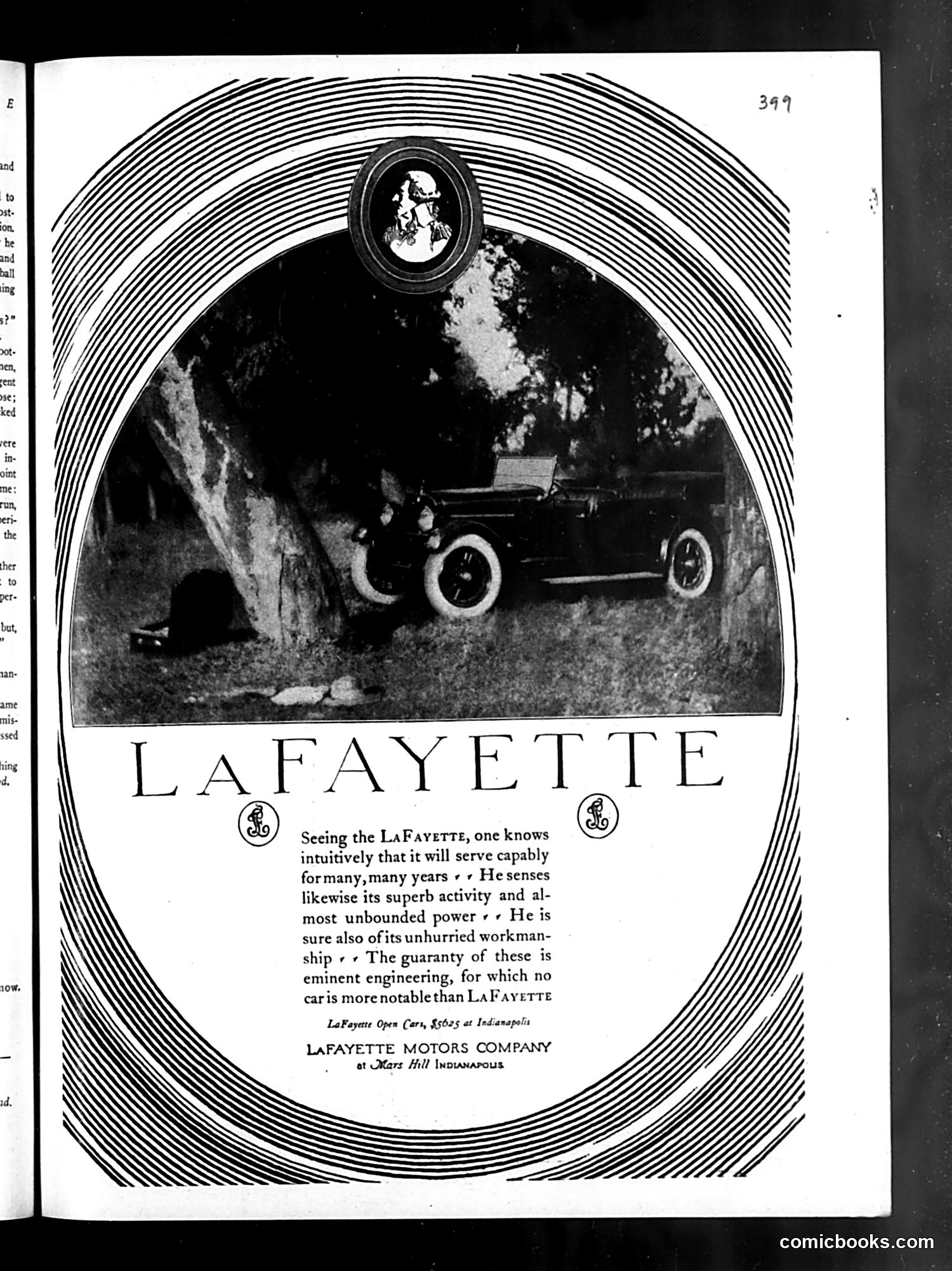
This is a **automobile advertisement**, not a political cartoon. It promotes the Lafayette, a car manufactured by Lafayette Motors Company in Indianapolis. The page features a photograph of a Lafayette open-air automobile in a scenic outdoor setting, framed by an ornamental border. A small portrait medallion at the top appears to be the Marquis de Lafayette, the French Revolutionary War figure—likely chosen to lend prestige and historical gravitas to the brand name. The advertising copy emphasizes the car's durability, power, and superior engineering, promising it will serve "for many, many years." The listed price of $5,625 indicates this was a luxury vehicle marketed to affluent buyers. The rhetoric reflects early 20th-century automotive marketing that emphasized engineering quality and longevity as selling points.
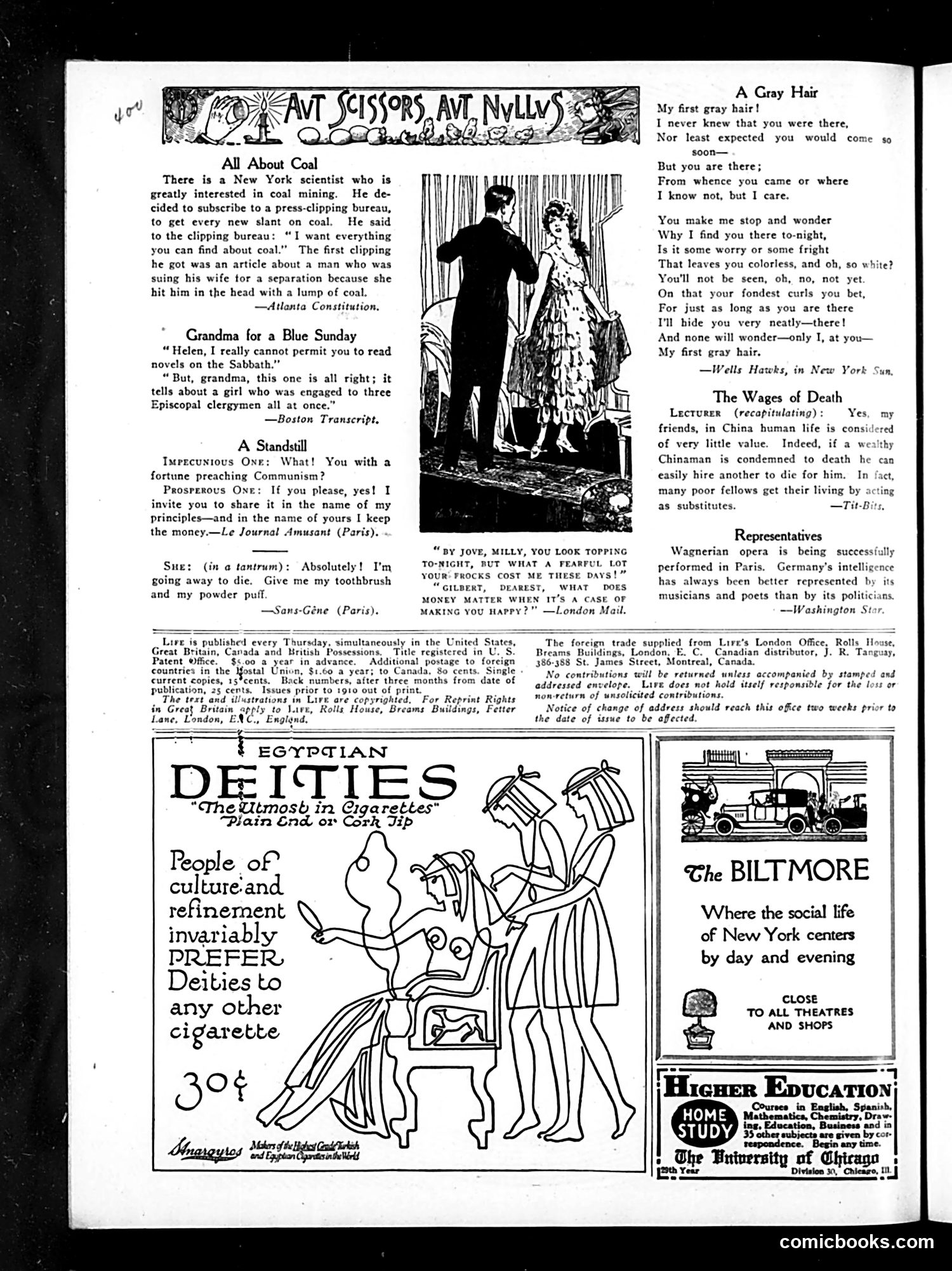
This page from *Life* magazine contains several short humorous pieces typical of the publication's satirical style: **The cartoons/jokes** are brief, topical anecdotes: - A scientist requesting coal-mining clippings receives an absurd article about domestic violence involving coal - A grandmother forbidding Sunday novel-reading, ironically, based on moral grounds - A hypocritical communist preacher who practices communism in theory but keeps wealth personally - A domestic squabble about clothing expenses **The "Gray Hair" poem** is sentimental verse about aging and worry. **"The Wages of Death"** references Chinese attitudes toward human life's economic value—a somewhat condescending commentary on perceived cultural differences. **The advertisements** (Egyptian Deities cigarettes, The Biltmore hotel, University of Chicago) represent period marketing. The humor relies on irony, hypocrisy, and wordplay. Most jokes target class pretension, marital discord, and moral inconsistency—standard *Life* fare emphasizing middle-class social anxieties of the early 20th century.

This is a **full-page advertisement** for United States Rubber Company's tire brand, not satire or political commentary. The ad argues that American consumers now demand "full value for their money" rather than accepting price fluctuations. It presents this consumer assertiveness as a positive social trend ("wholesome sign of the changing times"). The central message: U.S. Tires succeeds by consistently delivering quality regardless of market conditions or car size. The company refuses to exploit temporary price advantages or sell inferior products. This principled approach, the ad claims, has made U.S. Tires industry-leading. The tire illustration shows the "U.S. Usco Tread"—a specific product line marketed as reliable and economical. **Context for modern readers**: This reflects post-WWI consumer culture emphasizing standardization, reliability, and fair pricing—a reaction against earlier unstable markets. The ad equates ethical business practices with competitive success.
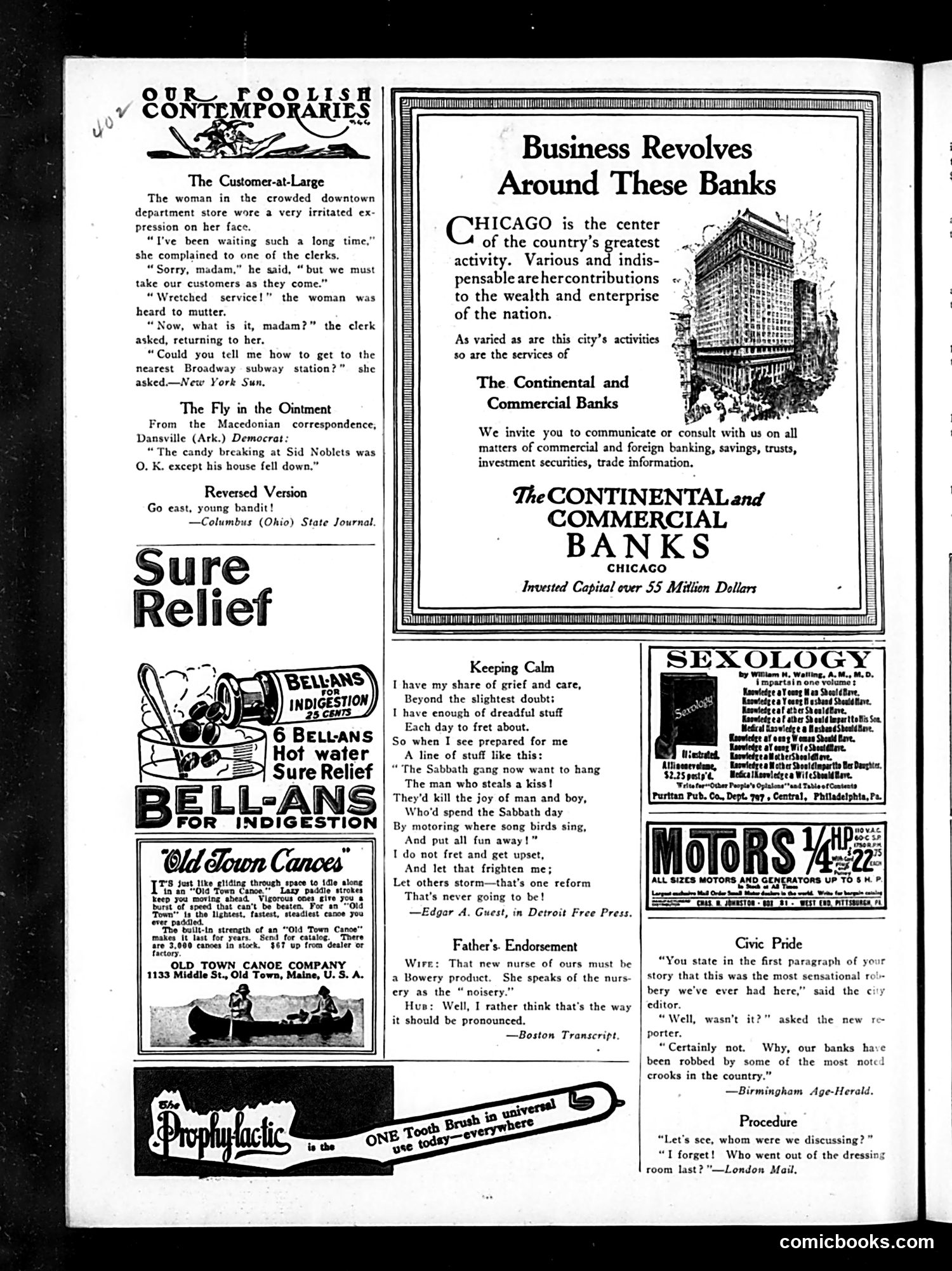
This is primarily an **advertising and humor page** from Life magazine, mixing comic anecdotes with product ads. The **satirical content** includes: - **"The Customer-at-Large"**: Mocks retail service complaints—a woman frustrated by slow department store clerks complains about long waits, then asks for subway directions, highlighting absurd customer expectations. - **"Keeping Calm"**: Edgar A. Guest's poem satirizes moral panic over leisure activities. It mocks religious reformers ("The Sabbath gang") trying to ban Sunday motor drives and kissing, suggesting their attempts at social control are futile and ridiculous. - **"Civic Pride"**: A newspaper editor boasts their city's bank robberies involved "the most noted crooks in the country"—absurdly treating criminal notoriety as a source of civic distinction. The remaining content is straightforward **advertising** for Bellans indigestion remedy, Old Town Canoes, Continental and Commercial Banks, and Prophylactic toothbrushes—typical period commercial messaging.
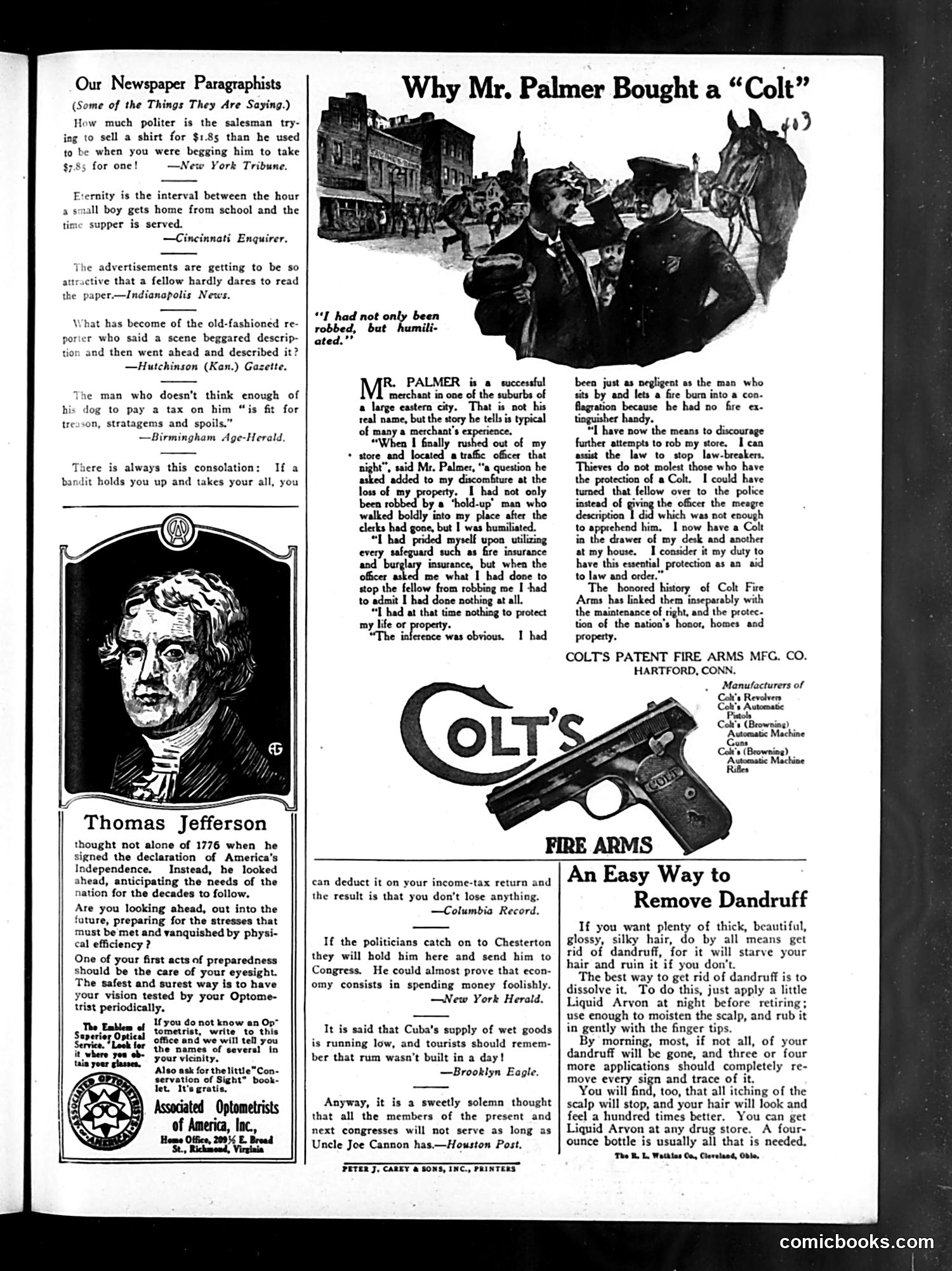
This page primarily contains **newspaper humor snippets** (left column) and **advertisements** rather than political cartoons. The **Thomas Jefferson portrait** is a patriotic reference encouraging civic preparedness and vision care—not satire. The main feature is a **Colt firearms advertisement** disguised as customer testimonial. Mr. Palmer, a merchant, describes being robbed and humiliated. Rather than rely on police, he purchased Colt pistols for self-defense, positioning the gun as necessary protection and civic duty. **The satire**: The advertisement uses crime anxiety to sell weapons while framing gun ownership as patriotic responsibility—a marketing strategy that conflates personal protection with national strength (referencing Jefferson and preparedness). The scattered **newspaper quips** mock various social observations: politeness inflation, childhood hunger, advertising excess, and taxation. **Modern relevance**: This reveals early 20th-century attitudes toward armed self-defense and how commercial interests leverage security fears in advertising.
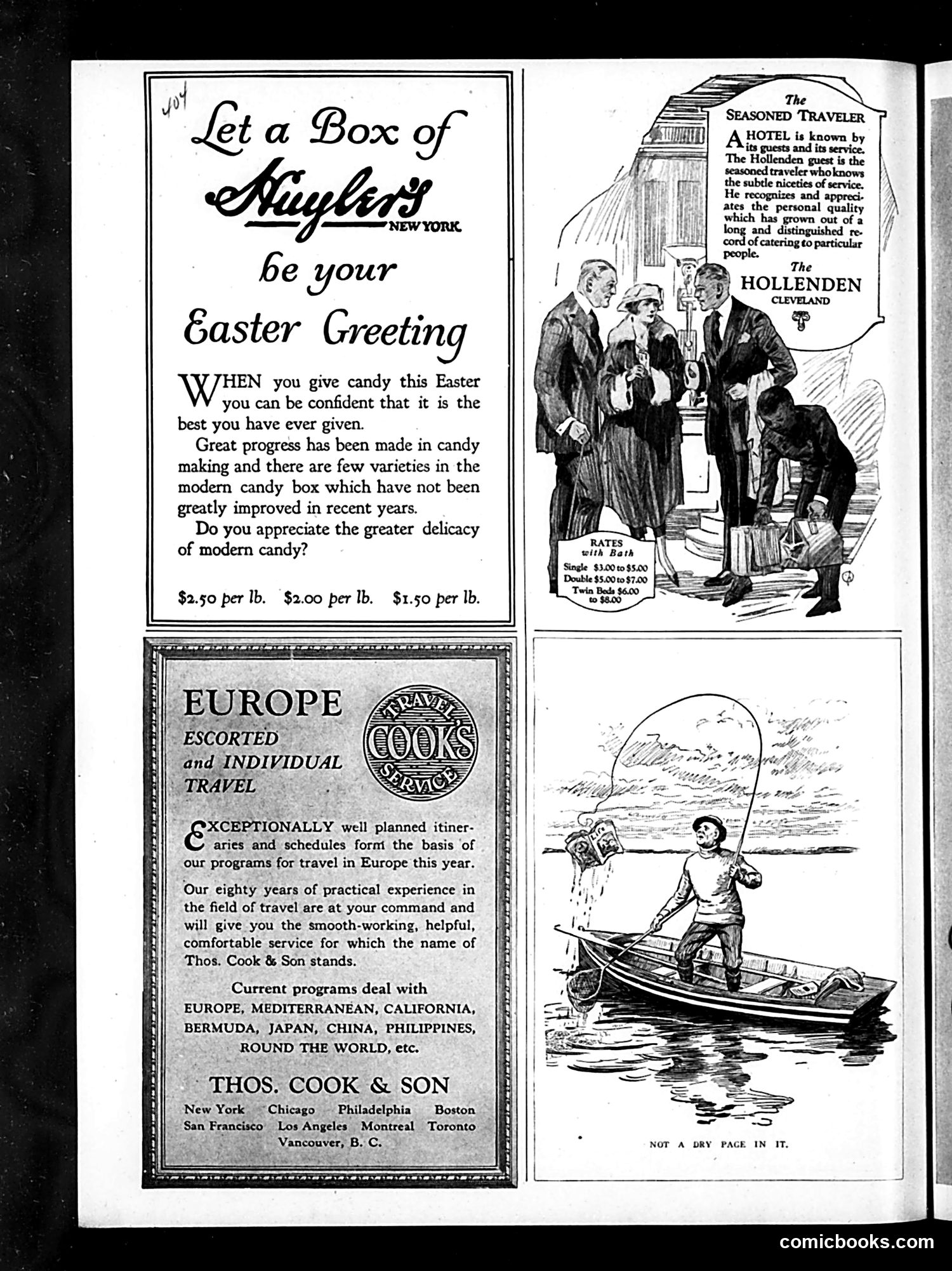
This page is primarily **advertising**, not satire or political commentary. It contains four advertisements from what appears to be an early-20th-century *Life* magazine: 1. **Nuylass Candy** (top left): An Easter gift suggestion, emphasizing modern candy-making improvements and quality. 2. **The Hollenden Hotel** (top right): A Cleveland hotel advertising luxury service for discerning travelers, with room rates listed ($1.00-$8.00). 3. **Thos. Cook & Son** (bottom left): A travel agency promoting European and worldwide tours, leveraging "eighty years of practical experience." 4. **Bottom right illustration**: An untitled sketch depicting fishing—likely accompanying travel or leisure-related content, with the caption "NOT A DRY PAGE IN IT" (unclear reference). The page reflects early-1900s consumer culture: luxury goods (candy, hotels, travel) marketed to affluent audiences. There is no political satire visible here—merely period advertising appeals to leisure and quality.
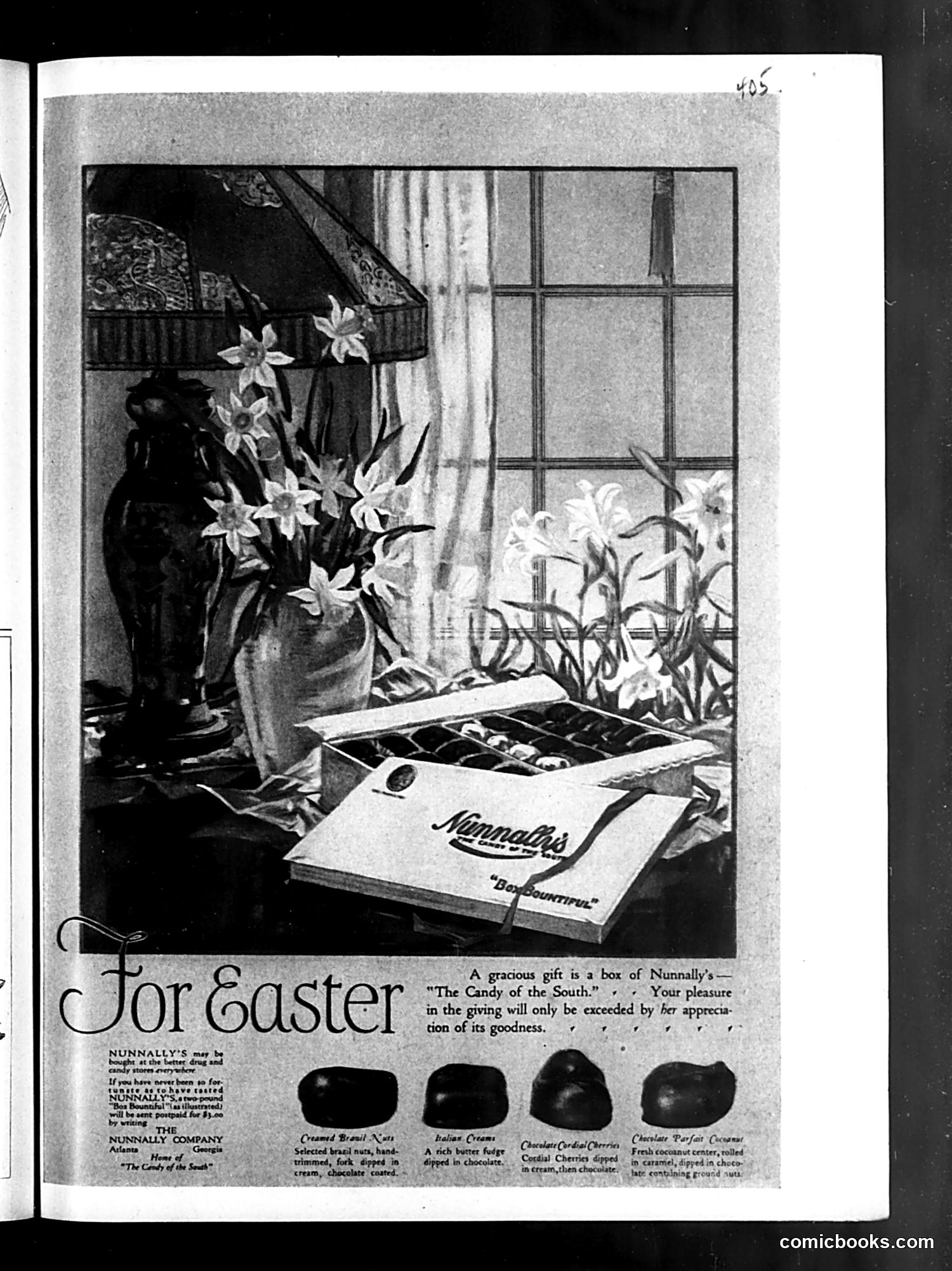
This is primarily **advertising, not satire or political commentary**. The page features an Easter-themed advertisement for Nunnally's candies, a Southern confectionery brand. The image shows a decorative still life: a windowsill with flowering plants (daffodils), a gift box of Nunnally's "The Candy of the South," and what appears to be chocolate candies displayed below. The composition evokes springtime and genteel domesticity—appropriate for Easter gifting. The ad's messaging positions Nunnally's as a luxury "gracious gift," emphasizing that the giver's pleasure is "exceeded by her appreciation." This reflects early 20th-century gender conventions where women were positioned as grateful recipients of refined treats. The bottom text describes specific candies: Creamed Brazil Nuts, Butter Creams, Cordial Cherries, and Chocolate Parfait Coconut—typical of the period's upscale candy marketing. There is no political cartoon or satire present on this page.
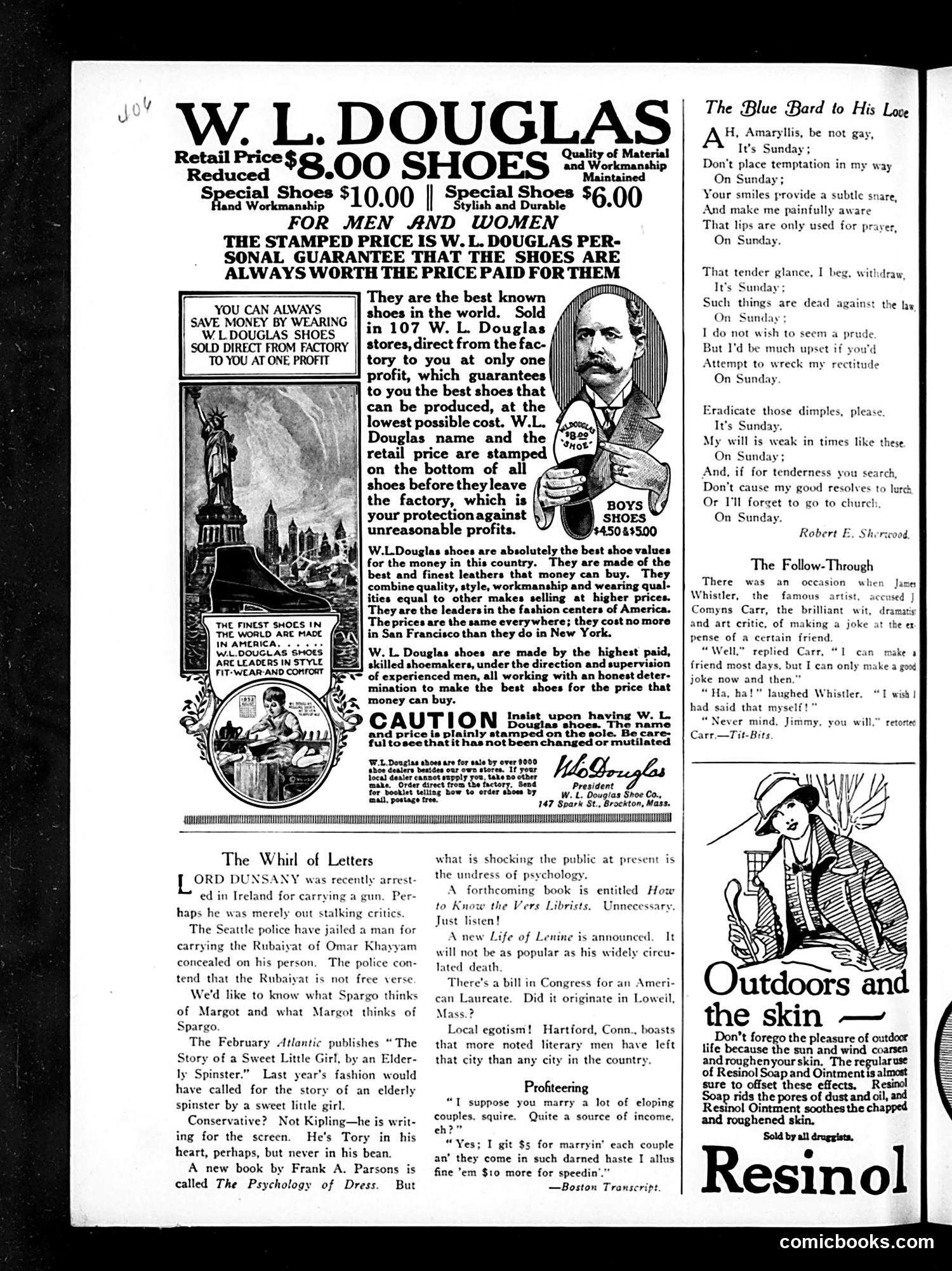
This page is primarily a **full-page shoe advertisement** for W.L. Douglas brand shoes, prominently featuring the company's founder/namesake in a portrait. The ad emphasizes direct factory-to-consumer sales eliminating middleman profits, with the retail price stamped on every shoe as a "personal guarantee" of value. The right column contains **"The Whirl of Letters,"** a satirical gossip section mocking contemporary literary and cultural figures. References include: - Lord Dunsany (Irish writer) arrested for carrying a gun - Kipling's shift to screenwriting - A book called *How to Know the Vers Librists* (mocking free verse poetry, trendy among modernists) - Lenin's death being more "popular" than his biography - A proposed American Poet Laureate The humor targets literary pretension and the modernist poetry movement ("vers librists"), while the profiteering joke satirizes rural justices of the peace overcharging couples.
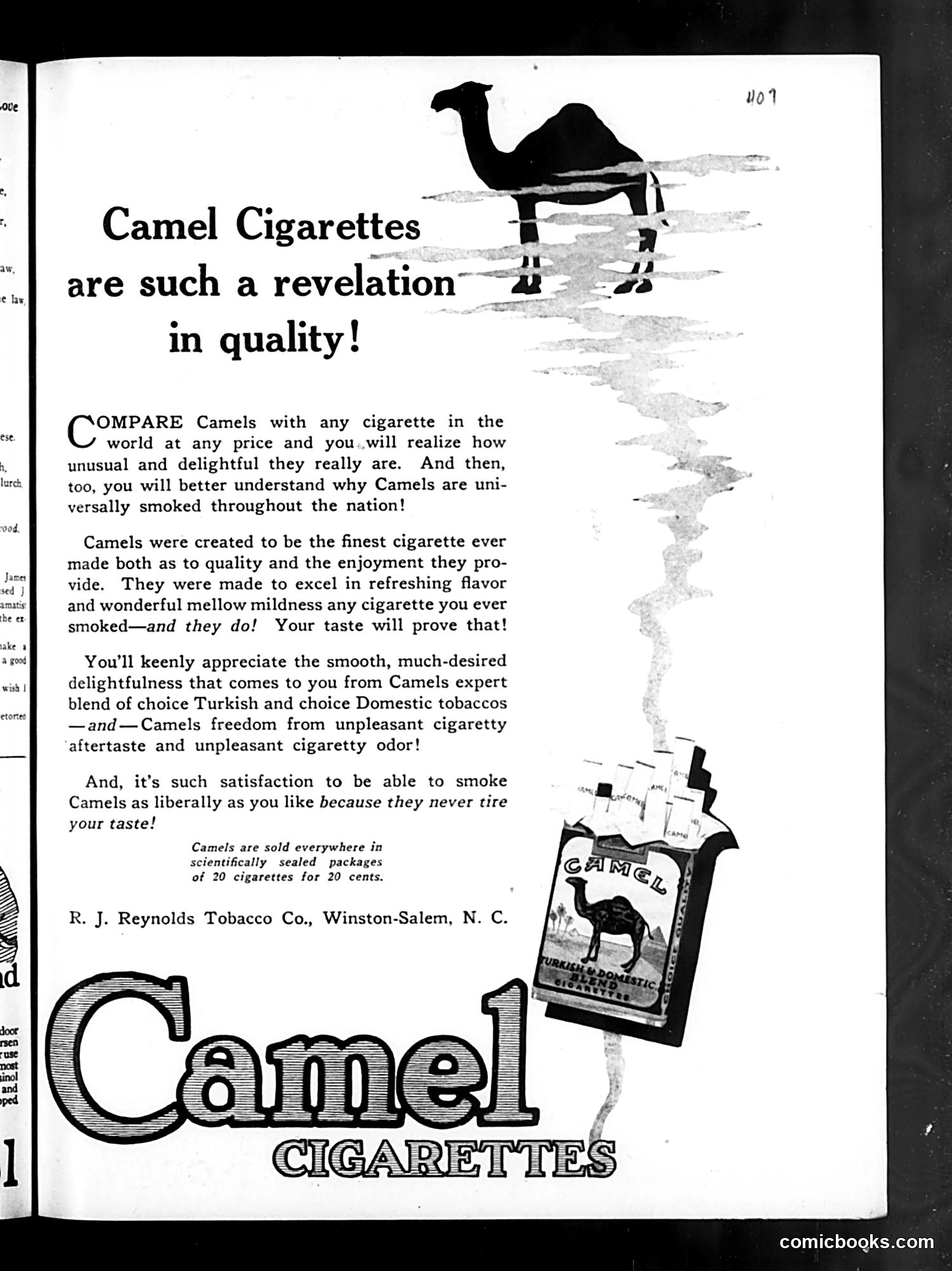
This is a straightforward **cigarette advertisement**, not satire or political commentary. It's a vintage ad for Camel cigarettes by R.J. Reynolds, likely from the 1920s-30s based on styling and the 20-cent price point. The page features the iconic Camel logo—a dromedary camel in profile—and emphasizes product claims common to early cigarette marketing: superior quality, mild flavor, Turkish and domestic tobacco blends, and freedom from unpleasant aftertaste or odor. The camel mascot served as Camel's distinctive brand identity. The ad's language ("revelation in quality," "never tire your taste") represents typical marketing hyperbole of the era, before cigarette health risks became widely acknowledged. **Modern context**: This represents pre-regulation tobacco advertising, before warning labels, health disclosures, or restrictions on marketing claims were legally required. Such advertisements would be illegal today.
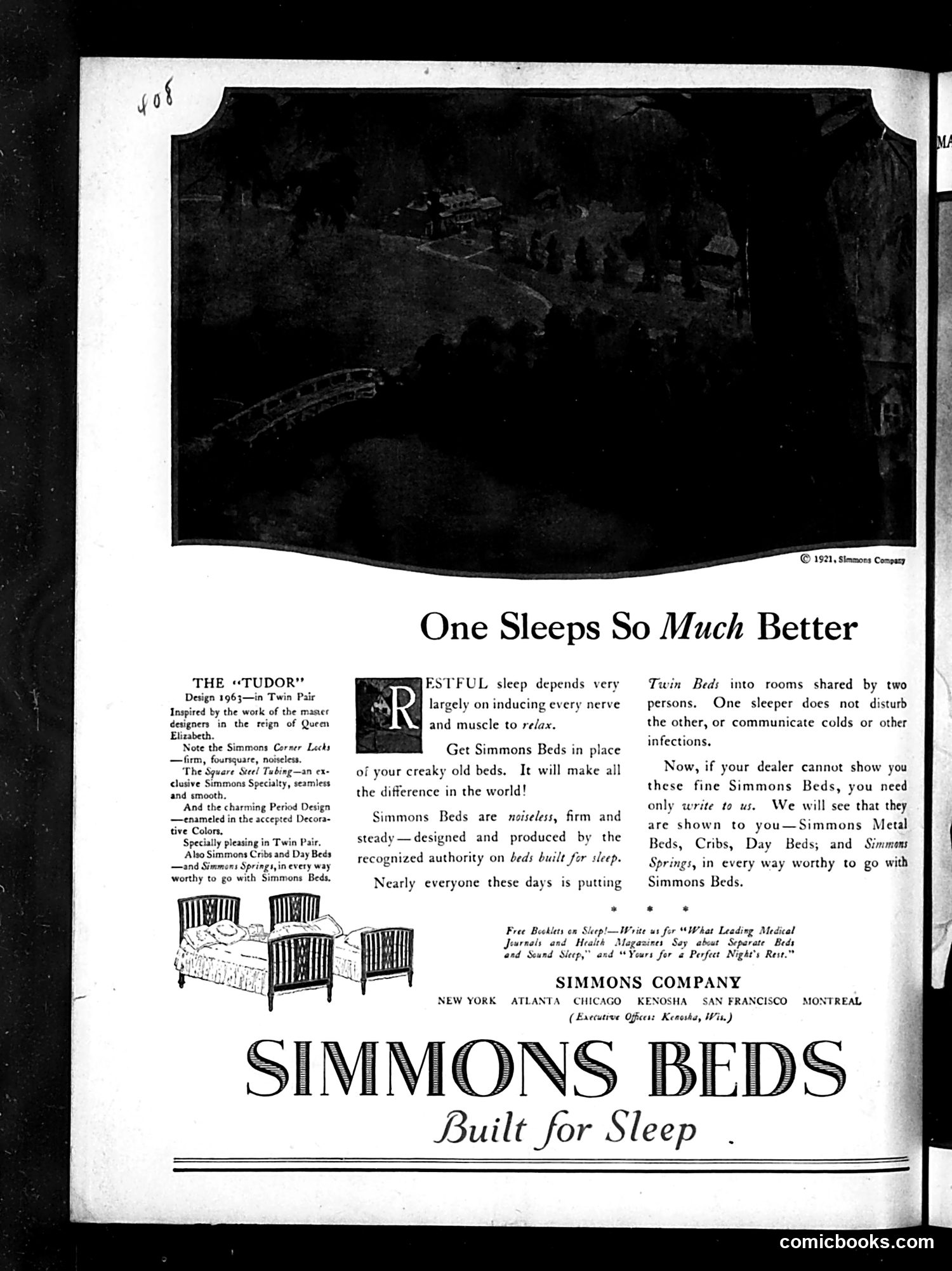
This is primarily a **furniture advertisement**, not a political cartoon. The Simmons Company is marketing their beds, particularly "Twin Beds," as the solution to better sleep. The page features a photograph of what appears to be a bedroom interior at the top, and below it promotional text emphasizing that Simmons Beds are "noiseless, firm and steady" and designed by "the recognized authority on beds built for sleep." A notable social element: the advertisement promotes **Twin Beds specifically for couples sharing rooms**, claiming one sleeper won't disturb the other or "communicate colds or other infections." This reflects 1920s attitudes about separate sleeping arrangements within marriage—a period when Twin Beds were marketed as modern, hygienic alternatives to shared beds. The small illustration shows two Twin Beds side-by-side in "Period Design" (Tudor-inspired), emphasizing their aesthetic appeal alongside function. This is commercial messaging, not satire.