A complete issue · 36 pages · 1937
Judge — October 1937
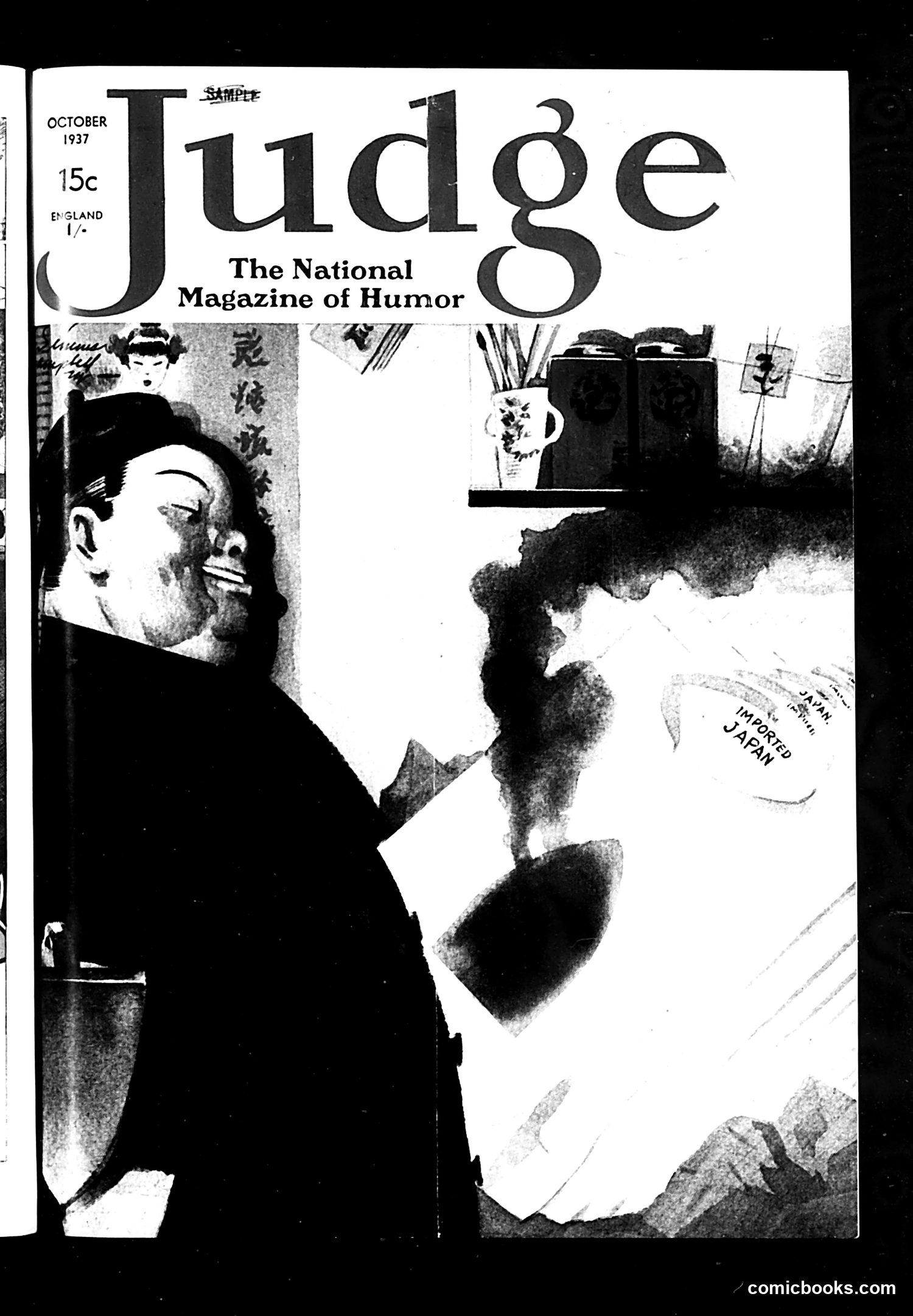
# Analysis of Judge Magazine Cover, October 1937 This cover depicts a man in formal attire examining what appears to be a map labeled "IMPORTED JAPAN." The satirical point likely concerns Japan's imperial expansion in the 1930s—a major international concern by 1937, when Japan was actively invading China. The figure appears to be an American businessman or politician scrutinizing Japanese imports or territorial ambitions. The humor works on multiple levels: the man's exaggerated facial expression suggests bemusement or concern, while the "imported" label suggests Japan's goods flooding American markets during this period. This reflects Depression-era anxieties about foreign competition and Japan's aggressive militarism simultaneously. The cartoon mocks American commercial or diplomatic engagement with an increasingly militaristic Japan.
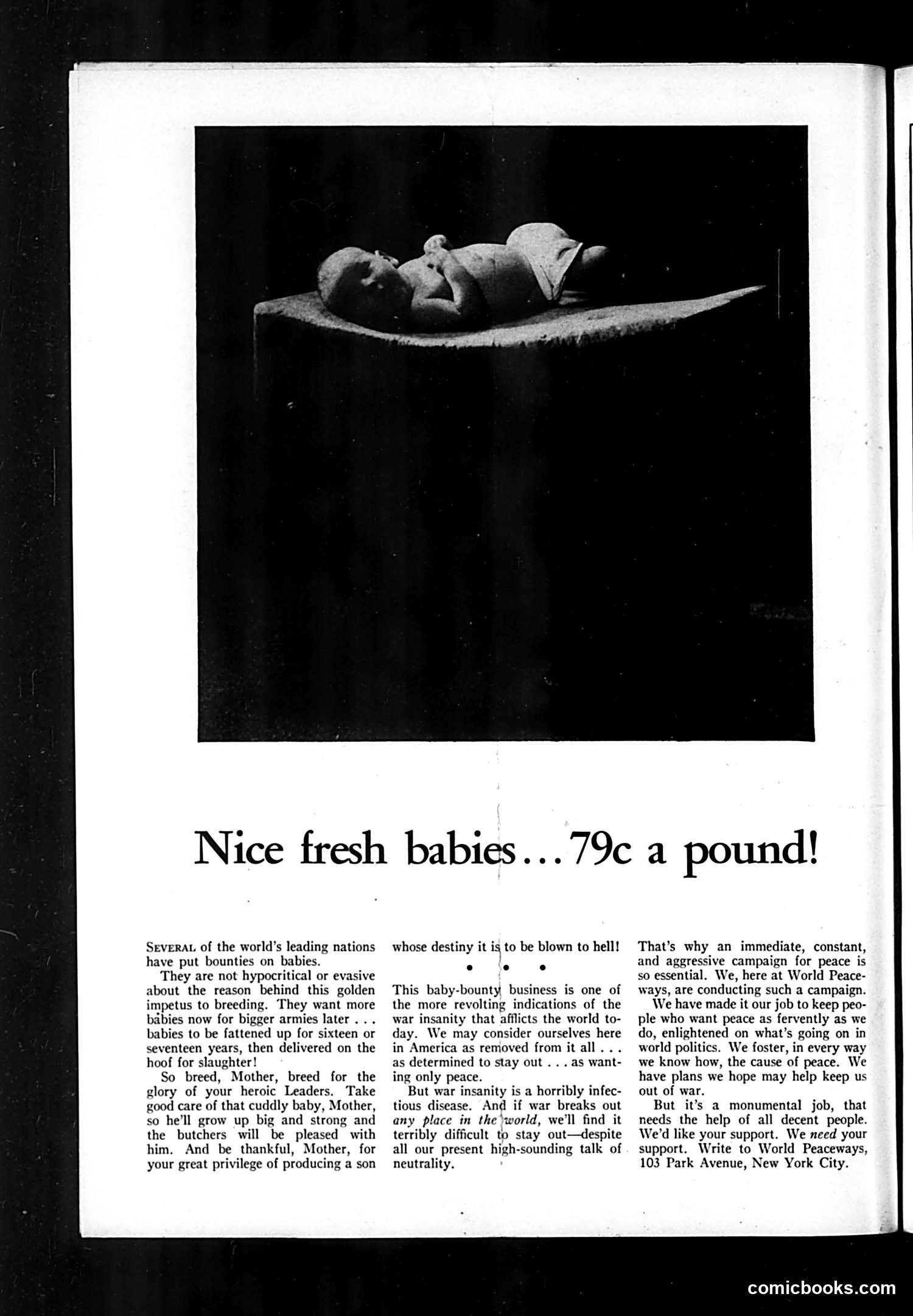
# Satire on War and Infant Mortality This is anti-war propaganda from Judge magazine, likely from World War I or the interwar period. The grotesque image shows dead babies on a scale, priced at 79 cents per pound—a darkly satirical commentary on nations that offered "bounties on babies" to encourage population growth for military purposes. The accompanying text criticizes world leaders for breeding soldiers destined for slaughter, sarcastically praising mothers for producing cannon fodder. It argues this cycle demonstrates the insanity of war and calls for peace activism through "World Peaceways," a peace advocacy organization (address provided). The satire equates militaristic nationalism with treating human lives as commercial commodities, condemning both war and the propaganda encouraging large families to sustain armies.
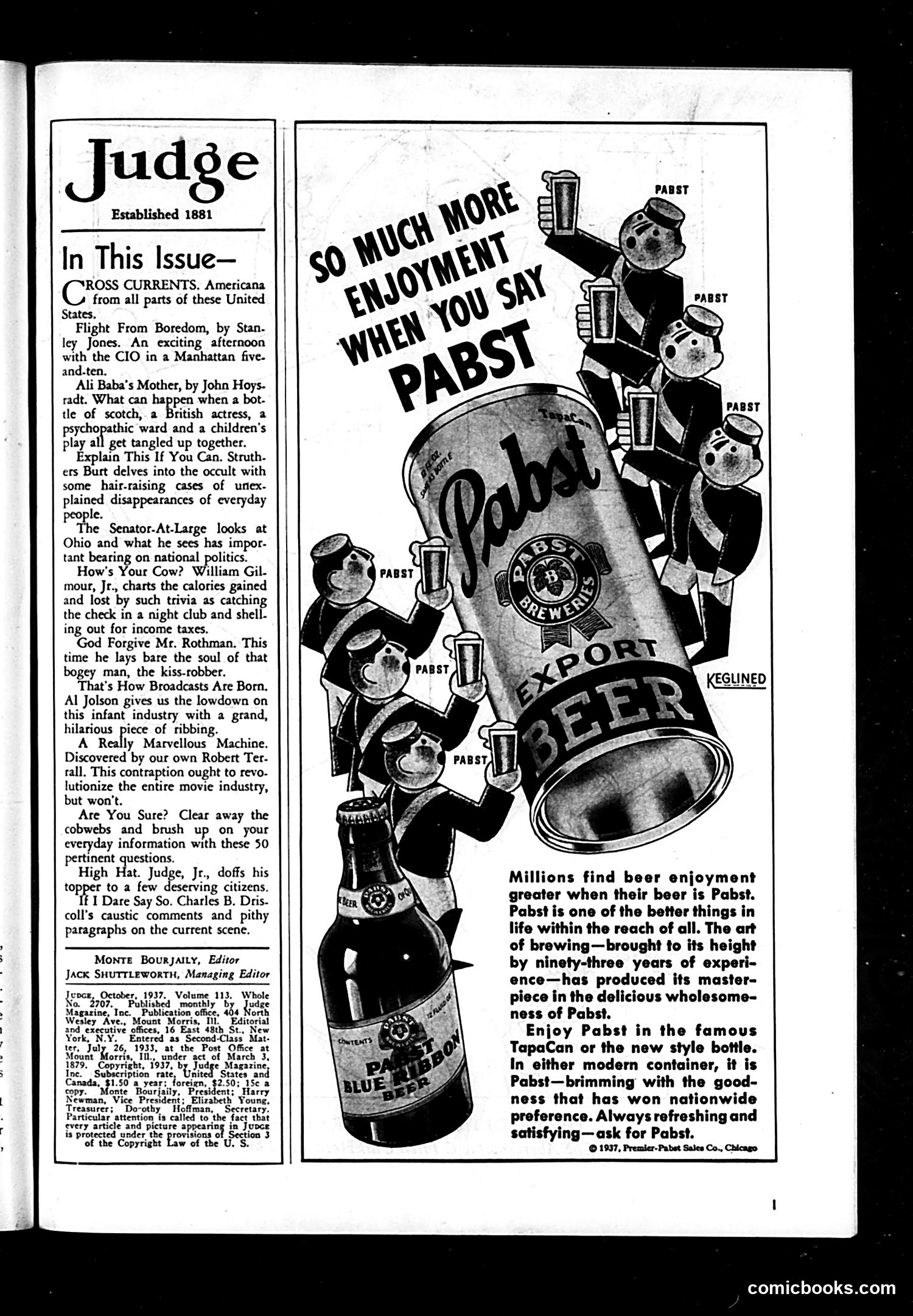
# Analysis This page is primarily a **Pabst beer advertisement** rather than political satire. The large right-side ad depicts anthropomorphic beer mugs with human faces cheerfully holding Pabst bottles, with the slogan "SO MUCH MORE ENJOYMENT WHEN YOU SAY PABST." The left column contains Judge magazine's table of contents listing various articles and satirical pieces for that issue (October 1917). The articles reference typical Judge content: social commentary ("Cross Currents"), celebrity gossip, and humor columns. **Historical context**: This 1917 advertisement predates Prohibition (1920-1933), when such beer ads were still legal and common in American magazines. The cheerful, cartoonish style was typical advertising of the era. The page demonstrates how early-20th-century magazines mixed editorial content with advertising.
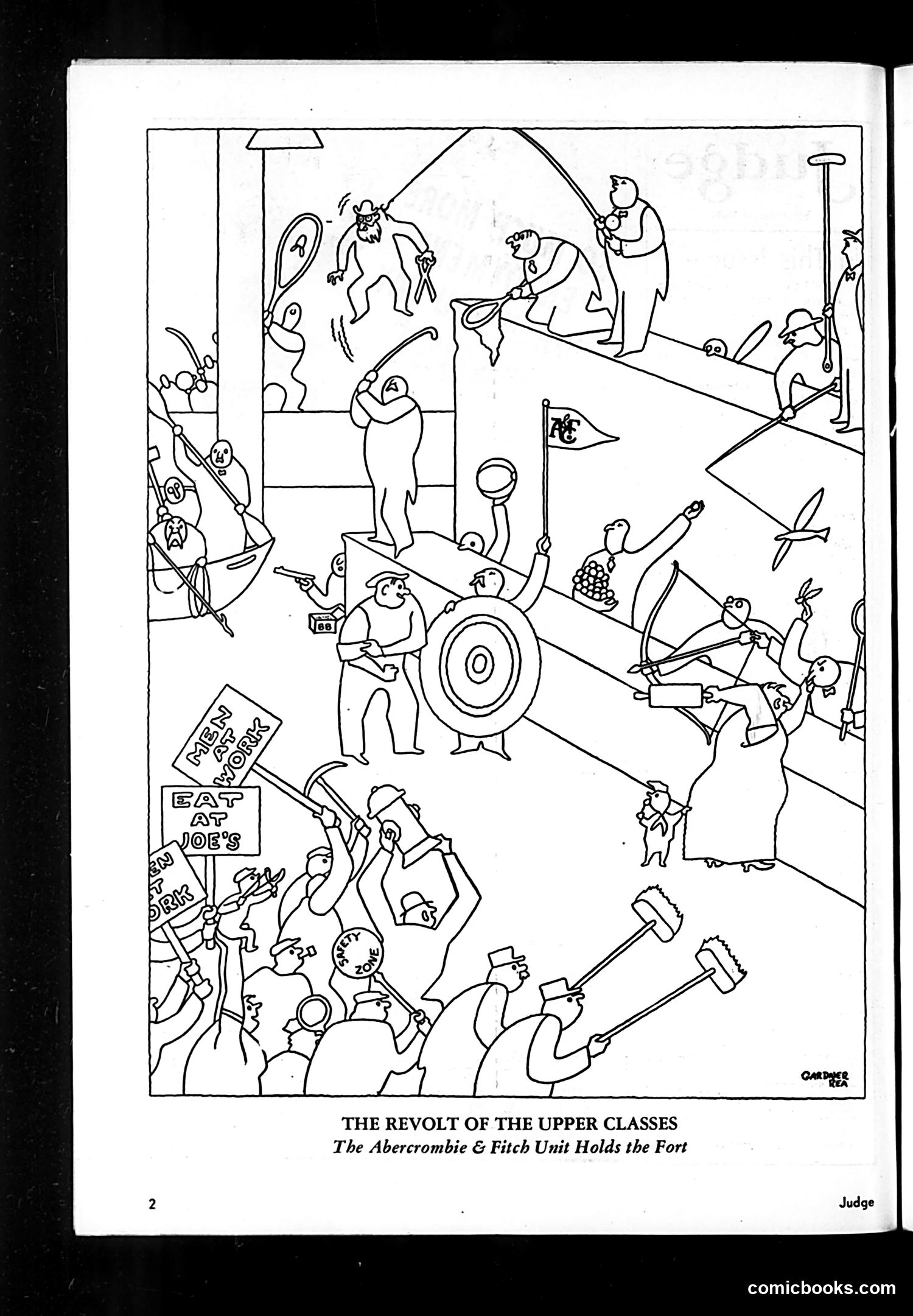
# Analysis This is a satirical cartoon titled "The Revolt of the Upper Classes: The Abercrombie & Fitch Unit Holds the Fort." The cartoon depicts wealthy, well-dressed figures engaged in chaotic rebellion or conflict, apparently barricaded in some kind of fortress or stronghold. The satire appears to mock the upper classes—specifically referencing Abercrombie & Fitch, a luxury retailer—by portraying them as comically militant and defensive. The imagery suggests social unrest or class conflict, with the wealthy depicted as organized yet absurd in their "revolt." The specifics of what historical event this references are unclear without additional context, but Judge magazine frequently satirized wealth inequality and class tensions in early-to-mid 20th-century America. The humor seems to lie in the incongruity of privileged people portrayed as rebels.
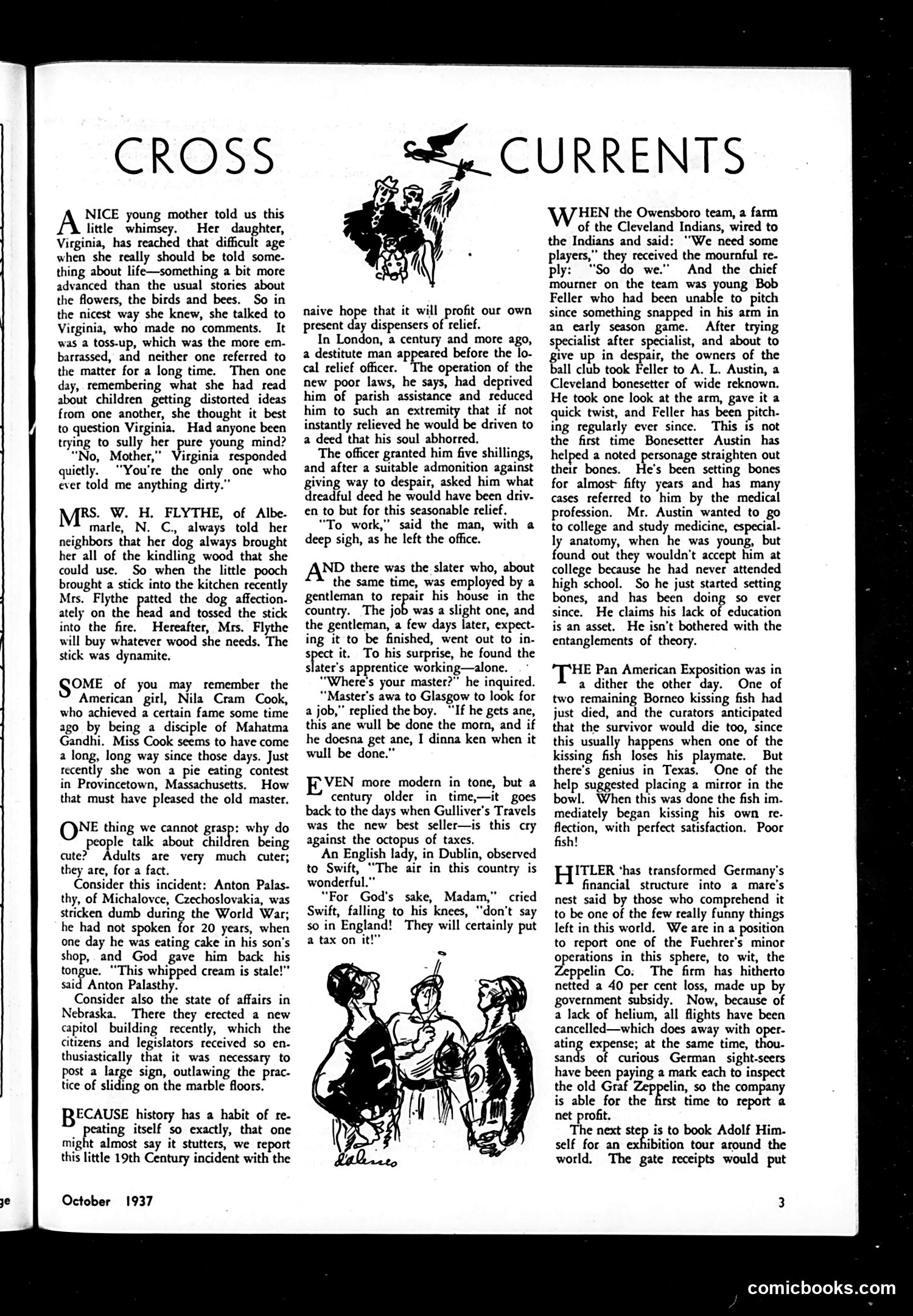
# Analysis of Judge Magazine Page (October 1937) This page contains two unrelated articles under the "Cross Currents" header rather than political cartoons. The left column features anecdotes about kindness to animals and people, including stories about a woman who told her daughter that dogs teach morality, and Mrs. W.H. Flythe who fed a stray dog. The right column discusses contemporary issues: Bob Feller's baseball injury, the Pan American Exposition's kissing fish exhibit in Texas, and—most significantly—criticism of Hitler's financial restructuring of Germany. The author notes the Nazi regime's losses due to lack of helium for Zeppelin operations and suggests booking Adolf Hitler for a world exhibition tour as a solution. The Hitler reference reflects pre-WWII American satirical skepticism toward Nazi Germany's economic policies and leadership.
# Analysis of Judge Magazine Page This page contains several satirical pieces rather than a single cartoon. The top illustration shows a demonic figure with wings seated in a chair—likely representing negative forces or corruption—though the specific reference is unclear from the visible text. The articles mock various 1930s New Deal initiatives and political figures: - "Rum Stuff" satirizes President Roosevelt's Virgin Islands rum project, suggesting government overreach into private business - "Slip Knot" jokes about marital dissolution and property division - References to Secretary Ickes and a New Orleans editor indicate criticism of New Deal administrators The satire targets government inefficiency, political patronage, and what Judge's conservative editors viewed as wasteful federal spending during the Depression era. The tone is lighthearted mockery of bureaucratic absurdity rather than serious political critique.
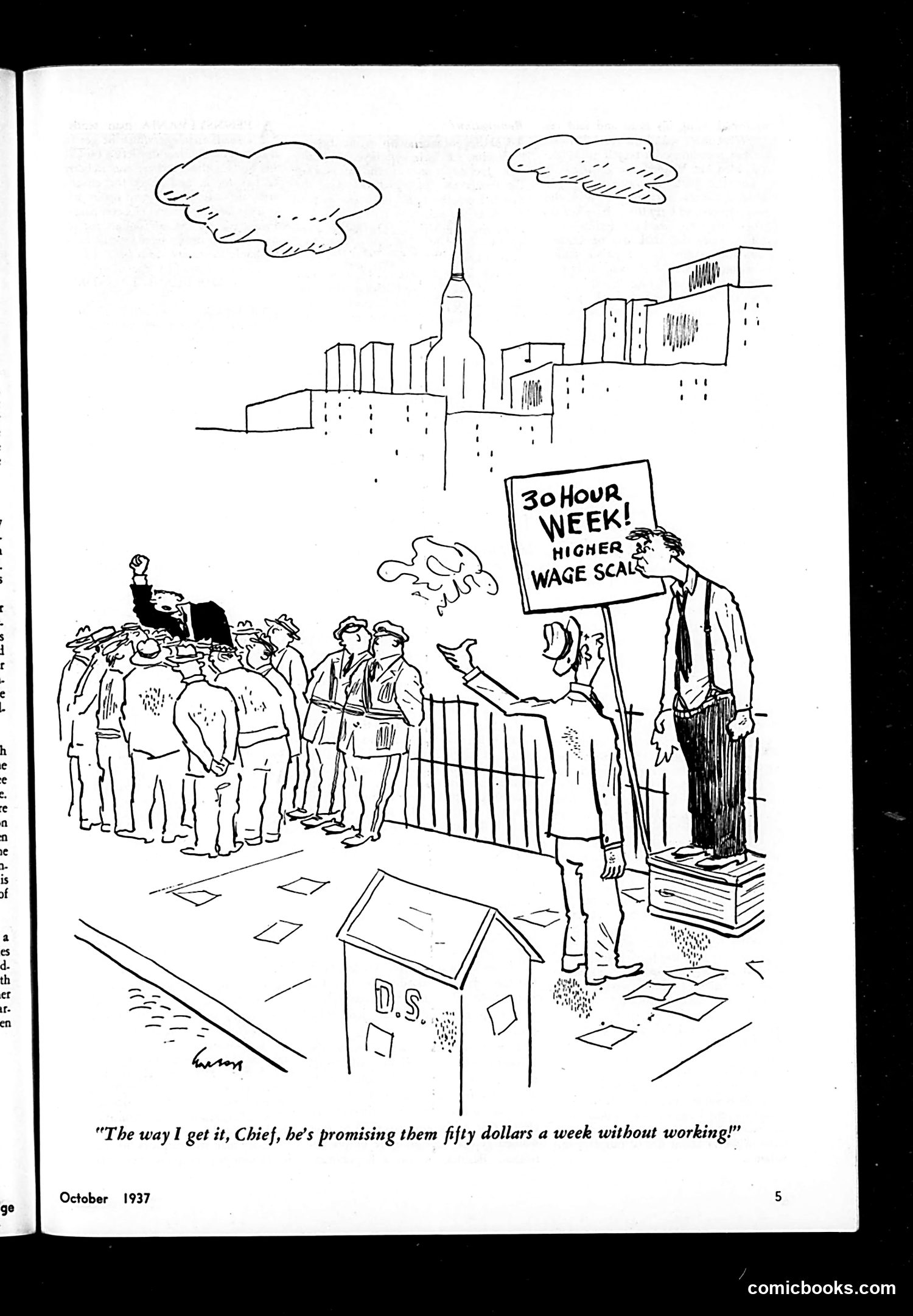
# Political Cartoon Analysis: October 1937 This cartoon satirizes a political promise of a "30-hour week" with "higher wage scale." A speaker holds the sign while addressing a crowd of workers behind a barrier near what appears to be a government building (marked "D.S.," possibly Department Services). The caption reveals the satire: a police chief dismisses the promise as unrealistic, claiming the speaker is "promising them fifty dollars a week without working." The cartoon mocks labor-reform proposals circulating in the 1930s Depression era—suggesting such promises are impossibly generous or fraudulent. It reflects skepticism toward New Deal-era labor initiatives and questions whether reduced working hours with maintained wages could realistically be delivered. The cartoon criticizes both the politician making the promise and implies workers are gullible for believing it.
# Judge Magazine Page Analysis This page contains humor columns and anecdotes rather than political cartoons. The content includes: **"Renovations"** — a humorous section mocking excuses couples use to justify marital problems (sleeping on platforms, filing divorce suits over sauerkraut and asparagus). **"Broody Business"** — a comedic tale about a hen that laid a double-yolk egg, which broke, leading to the hen's death from overproduction. **"Bloody Business"** — brief anecdotes about stock investors and a political candidate who became engaged to four women simultaneously. **"The Art of Making Friends"** — a philosophical essay contrasting primitive weapons with modern civilization. **"Football"** — a commentary praising football as beautiful sport, with game-day observations. The page functions as a satirical humor magazine typical of early-20th-century Judge, mixing social commentary with lighthearted domestic jokes and observations about American life. No specific political figures or events appear identifiable on this particular page.
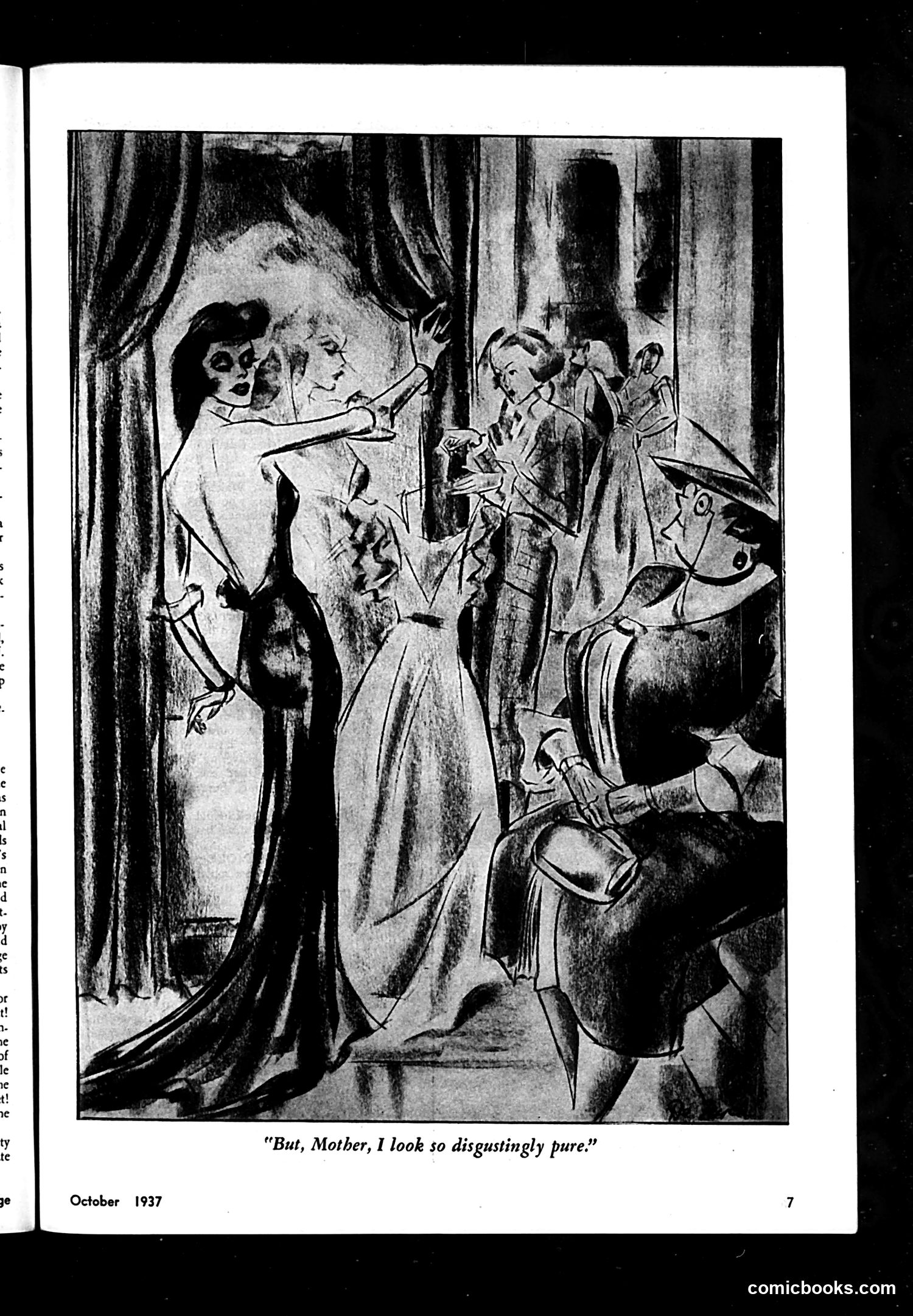
# Cartoon Analysis: "But, Mother, I look so disgustingly pure" This October 1937 cartoon satirizes excessive prudishness or artificial morality. A young woman in an elegant gown addresses her mother while surrounded by what appears to be military or formally-dressed figures. The caption's ironic tone—claiming to look "disgustingly pure"—suggests the cartoon mocks exaggerated displays of virtue or propriety, particularly among the wealthy or socially prominent. The specific historical context remains unclear without additional information, though the formal military dress and the emphasis on artificial purity suggest possible commentary on pre-war social pretension or hypocrisy. The satirical point appears to be that outward appearances of virtue can be deliberately manufactured and unconvincing, a common Judge magazine theme targeting upper-class affectation.
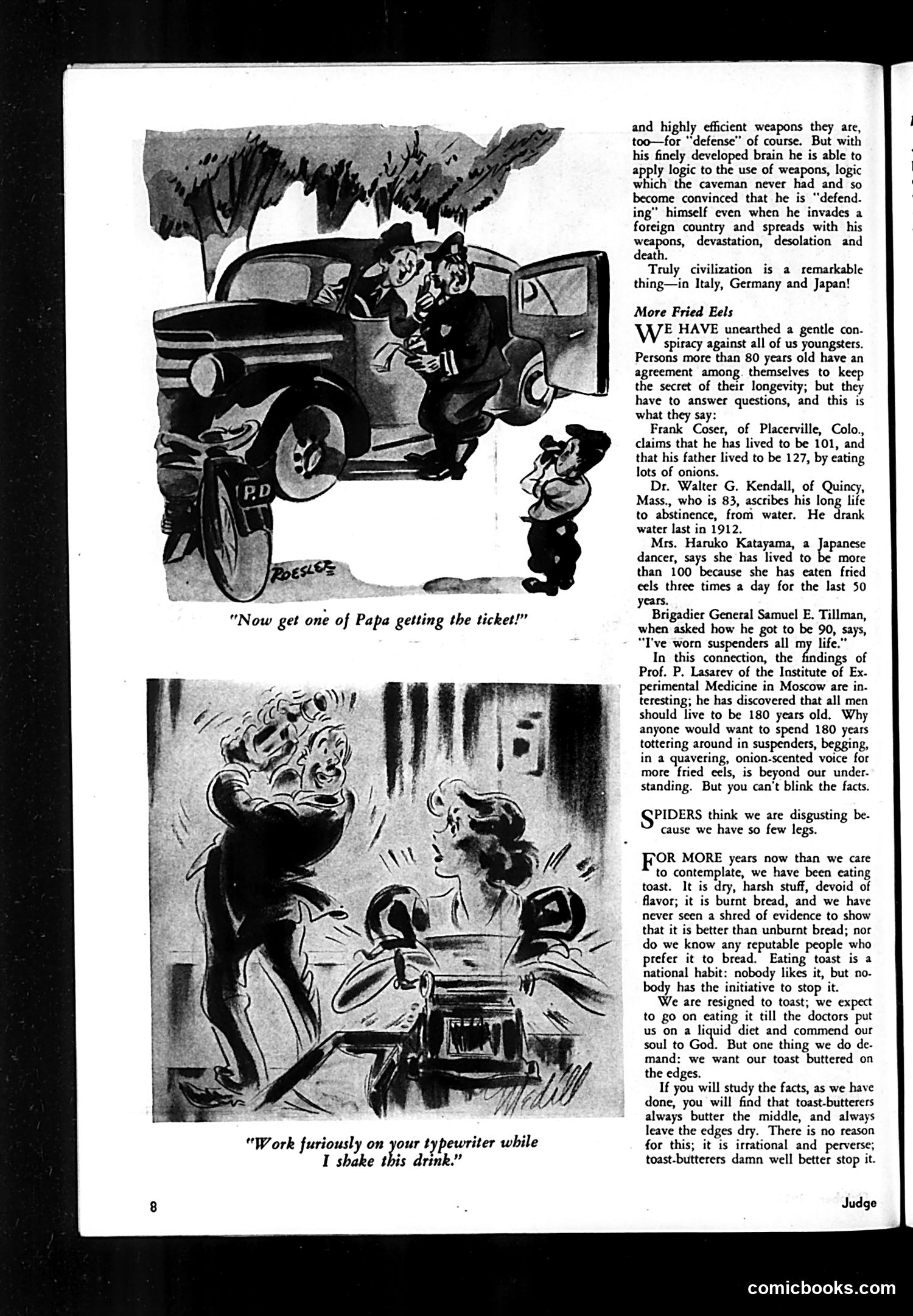
# Political Cartoon Analysis: Judge Magazine Page This page contains three satirical pieces from Judge magazine (likely 1930s-40s, given references to Italy, Germany, and Japan as threats). **Top cartoon:** Satirizes fascist nations' justification of military aggression as "defense." The figure being chased (likely representing a civilian or smaller nation) illustrates how authoritarian regimes use sophisticated rhetoric to disguise invasive warfare, contrasting their "civilized" weapons with caveman-like logic. **"More Fried Eels" section:** Humorously debunks longevity claims. It mocks elderly people's contradictory secrets to long life (onions, water abstinence, fried eels, suspenders) while referencing a Soviet scientist's claim that humans should live 180 years—then sardonically questions why anyone would want to. **Bottom cartoon and toast essay:** Absurdist humor complaining that toast-buttering servants always butter the middle instead of edges. This appears to be pure comedic filler, mocking minor domestic frustrations. The page blends political satire with lighthearted humor typical of Judge's satirical approach.
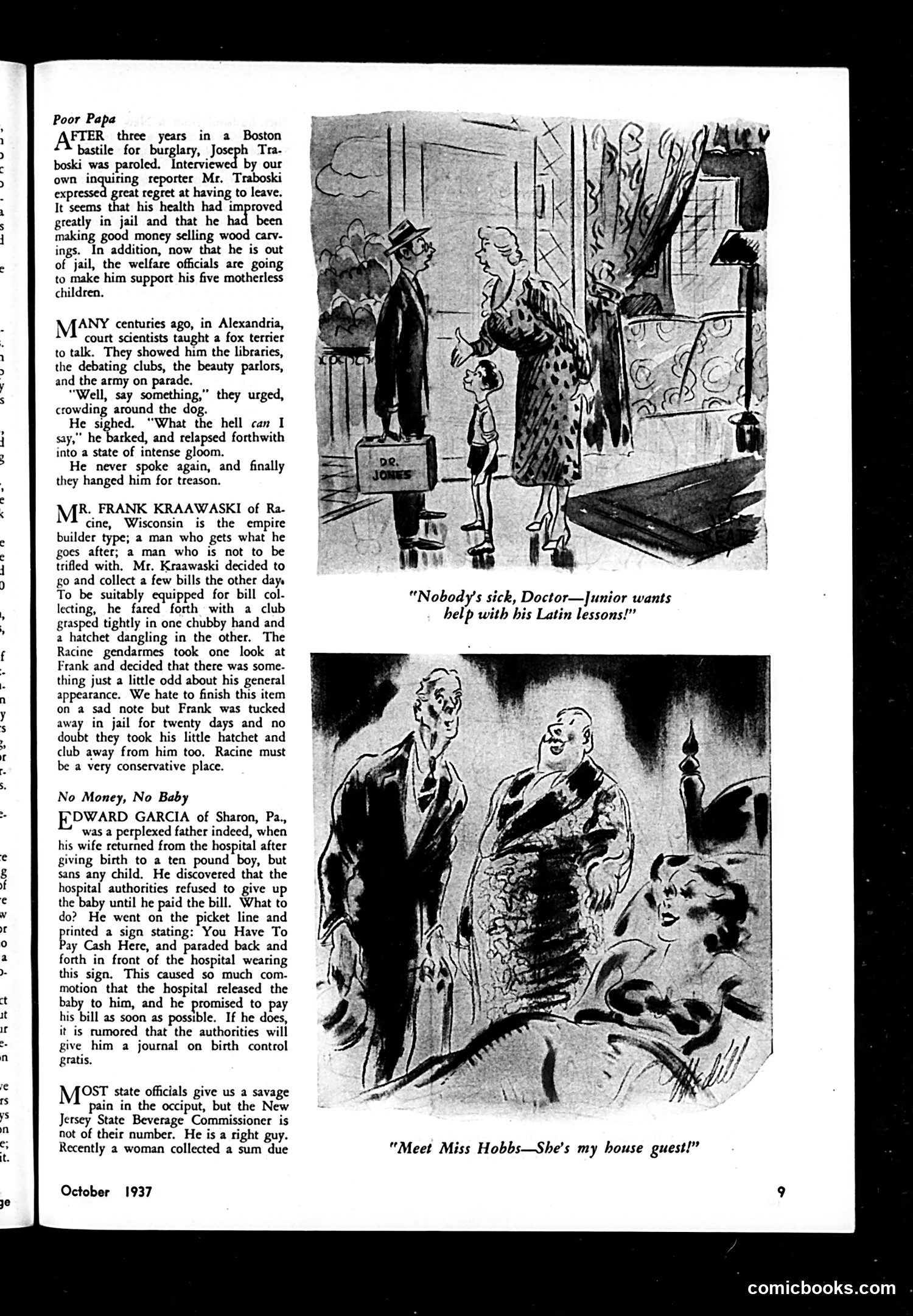
# Judge Magazine, October 1937: Satirical Anecdotes This page presents humorous social commentary through brief anecdotes rather than political cartoons. The pieces mock bureaucratic absurdity and human folly: **"Poor Papa"** satirizes the paradox of incarceration: a burglar thrives in jail (better health, income from woodcarvings) but faces hardship upon release when forced to support five children—suggesting the prison system is more humane than poverty. **The Alexandria fable** is a cynical commentary on education and intellectualism: exposing a dog to culture produces only despair and cynicism, ending in execution for "treason"—mocking how education can corrupt innocence. **The Krawaski anecdote** ridicules overzealous debt collection: a man armed with club and hatchet is jailed for attempting to collect bills, satirizing both aggressive business practices and small-town law enforcement. **"No Money, No Baby"** criticizes hospital profiteering: a hospital withholds a newborn until payment is made, forcing the father to picket. This attacks healthcare commercialism and lack of compassion. The cartoons accompanying these stories use exaggerated character drawing typical of 1930s satirical illustration.
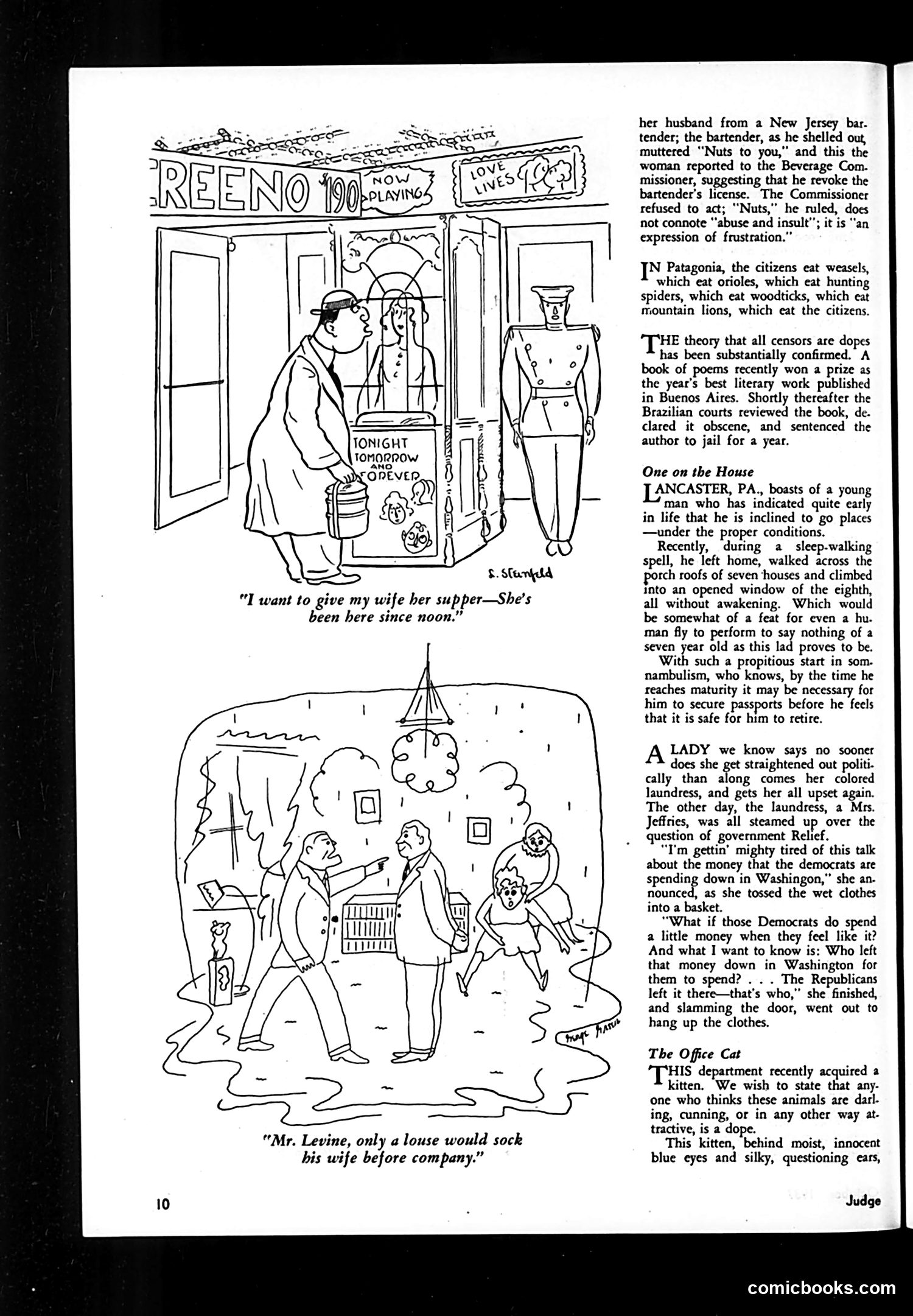
# Judge Magazine Page Analysis This page contains three cartoons and several humorous anecdotes satirizing social issues of the era (appears to be 1930s based on references to government relief and New Deal politics). **Top cartoon**: A man at a speakeasy door wants to give his wife supper, but she's been waiting since noon—satirizing Prohibition-era speakeasies and their lack of service. **Bottom cartoon**: "Mr. Levine" appears ready to hit his wife in front of company, mocking domestic violence attitudes and class pretense. **Text stories** mock: - Government bureaucracy (a bartender saying "Nuts" isn't ruled abuse) - Literary censorship in South America - A sleepwalking child's impossible feats - A Black laundress's sharp political commentary about Democratic vs. Republican spending - Cats as overrated pets The laundress anecdote is particularly notable: presenting her as politically astute while maintaining a patronizing tone typical of the era. The humor relies on period prejudices and casual attitudes toward domestic violence now considered offensive.