
A complete issue · 24 pages · 1912
Judge — March 2, 1912
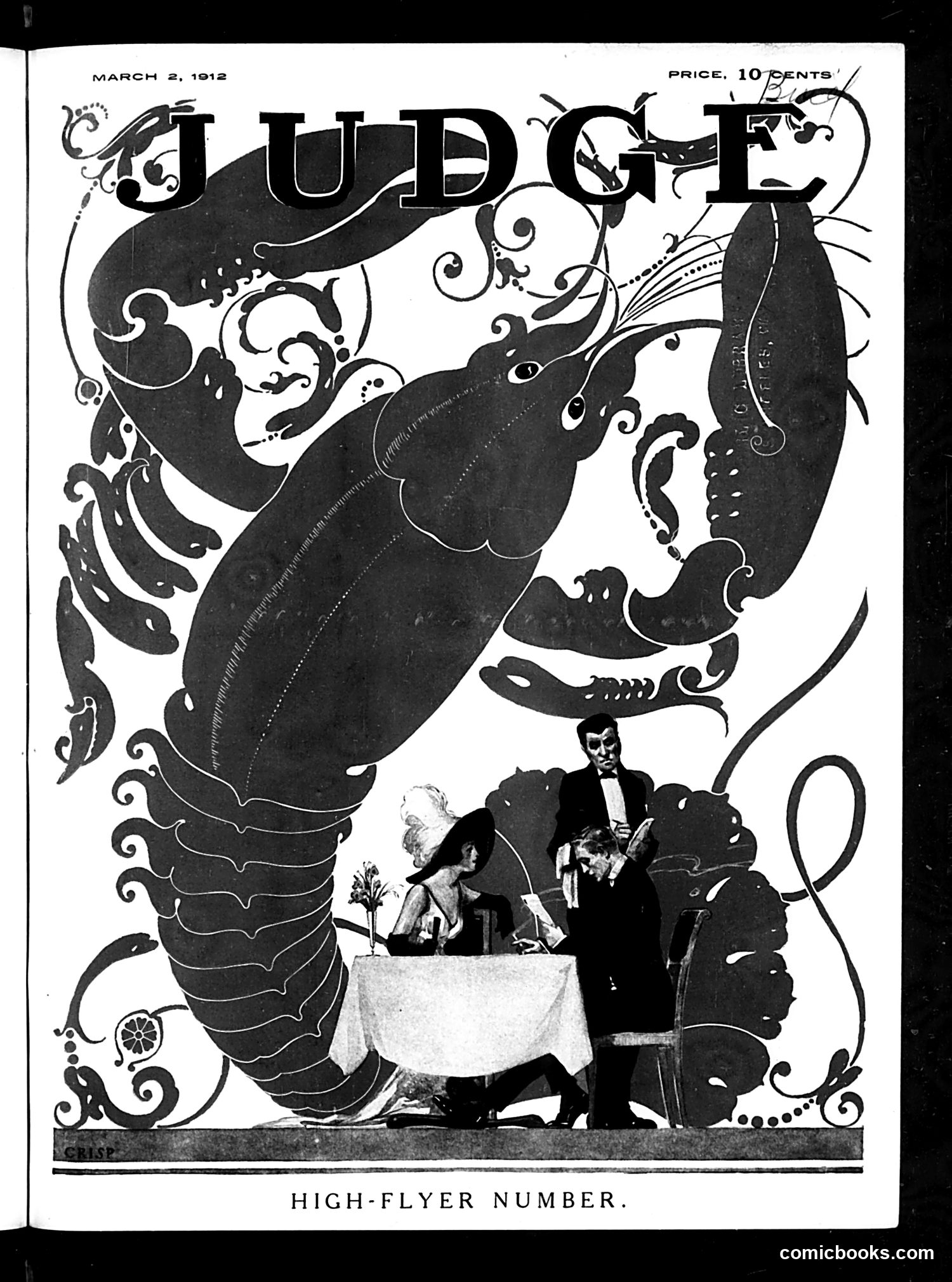
This is a "High-Flyer Number" cover depicting an enormous fantastical creature—part fish, part demon—dominating the composition with grotesque, swirling appendages. Below, two well-dressed figures sit at a dining table, apparently unconcerned or oblivious to the massive, menacing form looming above them. The satire likely comments on a contemporary political or financial situation in 1912. The "high-flyer" reference suggests speculation, risky financial ventures, or inflated ambitions. The couple's calm demeanor amid chaos suggests either complacency about a threatening situation or satirical commentary on public indifference to danger. The exaggerated creature embodies the threat—possibly corruption, monopolies, or economic instability—that the seated figures either ignore or fail to adequately address.
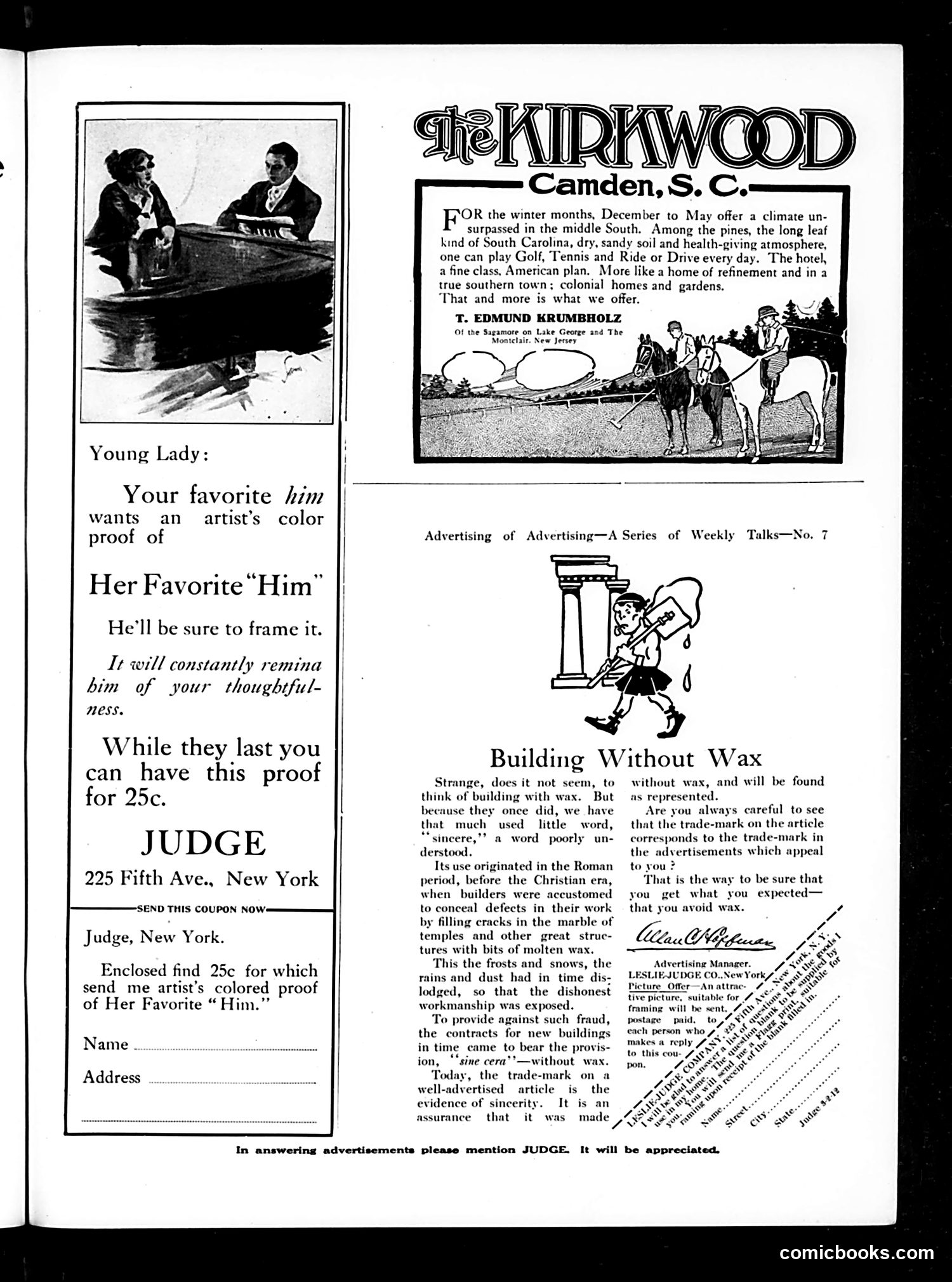
This page is primarily **advertising**, not political satire. The left side contains an ad for Judge magazine's photo proofing service—a young woman wants an artist's color proof of "Her Favorite 'Him'" to frame as a gift. For 25 cents, Judge would provide this service, marketed as a thoughtful keepsake. The right side advertises **Kirkwood in Camden, South Carolina** as a winter resort, promoting golf, tennis, and riding in pleasant climate. It mentions colonial homes and southern charm. Below is an unrelated piece titled **"Building Without Wax,"** explaining historical use of wax in Roman construction and how modern builders could verify building quality through trade-marks—essentially early consumer protection advice. The page represents typical Judge magazine content: commercial advertisements mixed with light educational or humorous commentary, rather than political cartooning.
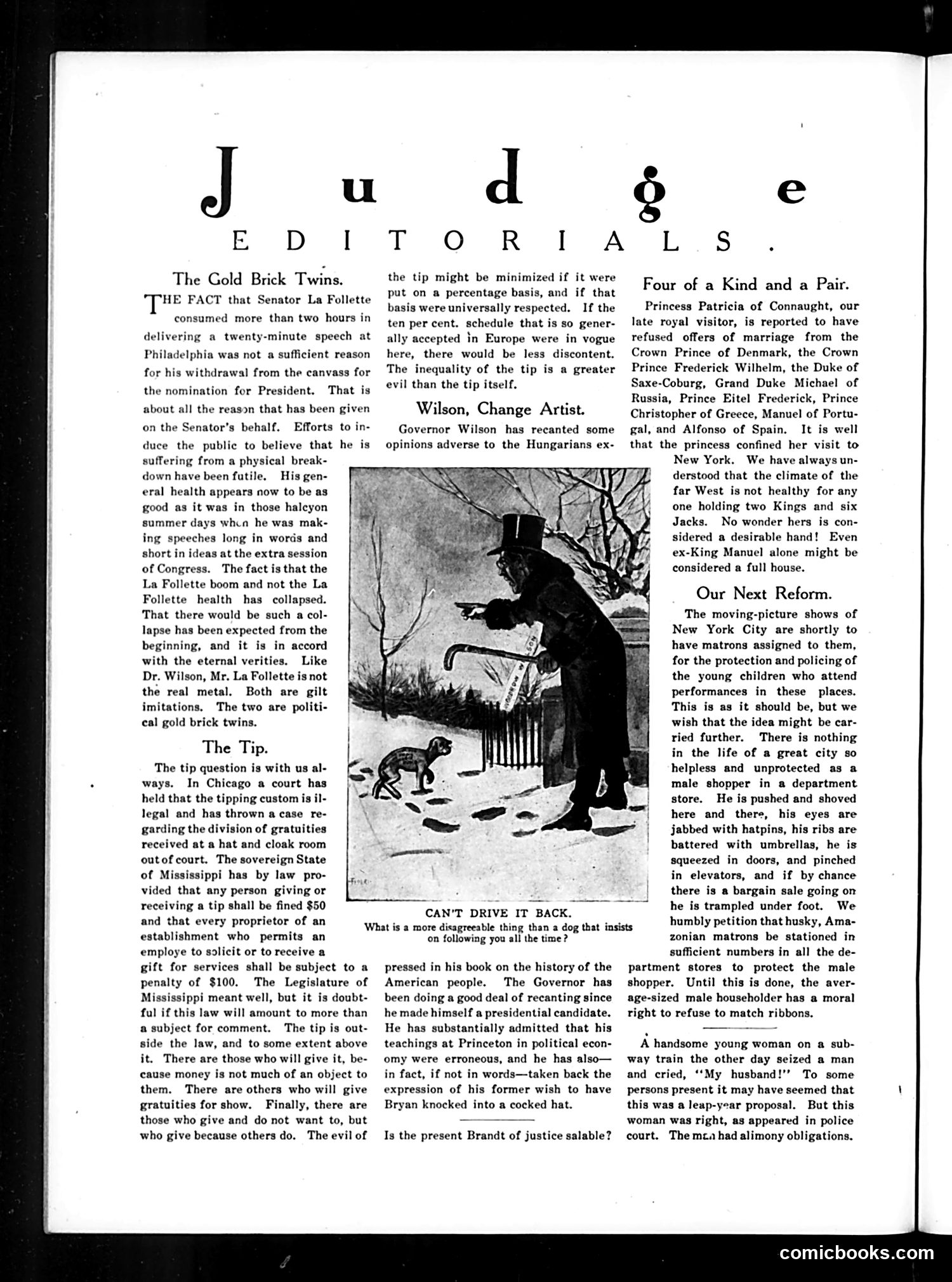
The main cartoon depicts a well-dressed man (likely a politician or wealthy figure, given the top hat) being followed persistently by a dog. The caption reads: "What is a more disagreeable thing than a dog that insists on following you all the time?" This appears to be political satire about an unwanted follower or pursuer—possibly a scandal, critic, or rival politician—that cannot be shaken off regardless of efforts to do so. The dog metaphorically represents something persistent and bothersome attached to the figure's reputation. The accompanying editorial text discusses Governor Wilson's changing positions and various political matters, suggesting the cartoon relates to contemporary political embarrassments or contradictions that haunt a public figure, much like the dog follows the man in the image.
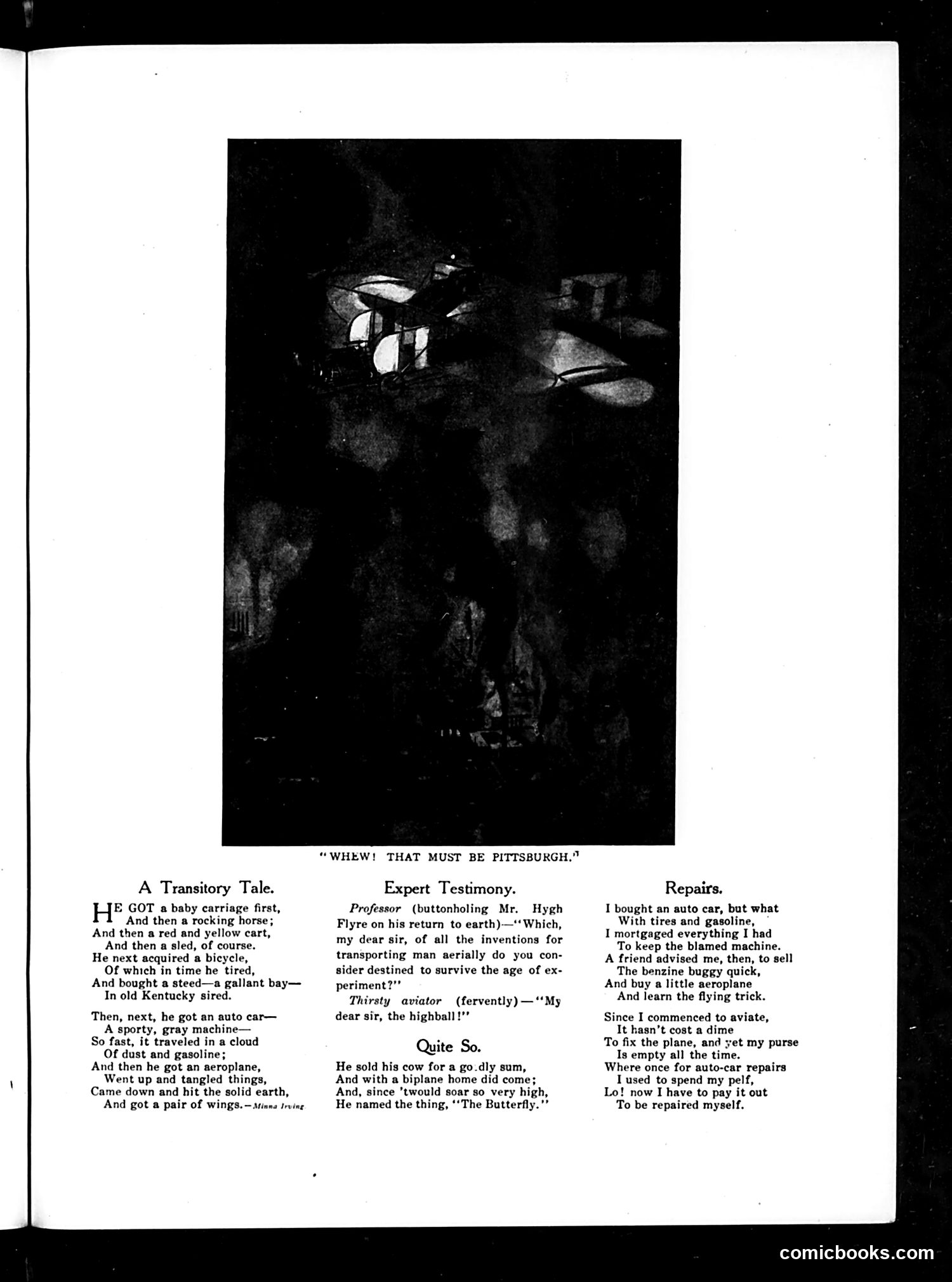
This page features three humorous poems about aviation's early development. The image caption "WHEW! THAT MUST BE PITTSBURGH" suggests a dark, chaotic aerial scene—likely depicting the chaos of early flight. The poems satirize the rapid technological progression of transportation: - **"A Transitory Tale"** mocks how quickly people abandoned each innovation (baby carriage → bicycle → automobile → airplane), suggesting human obsession with the newest invention. - **"Expert Testimony"** features a professor and "thirsty aviator" discussing flying experiments and a cow-powered "Butterfly" aircraft—clearly absurdist humor about ridiculous aviation schemes. - **"Repairs"** laments the expensive, endless maintenance required for owning an airplane. The satire targets both the fickle nature of technological enthusiasm and aviation's impracticality in this early era.
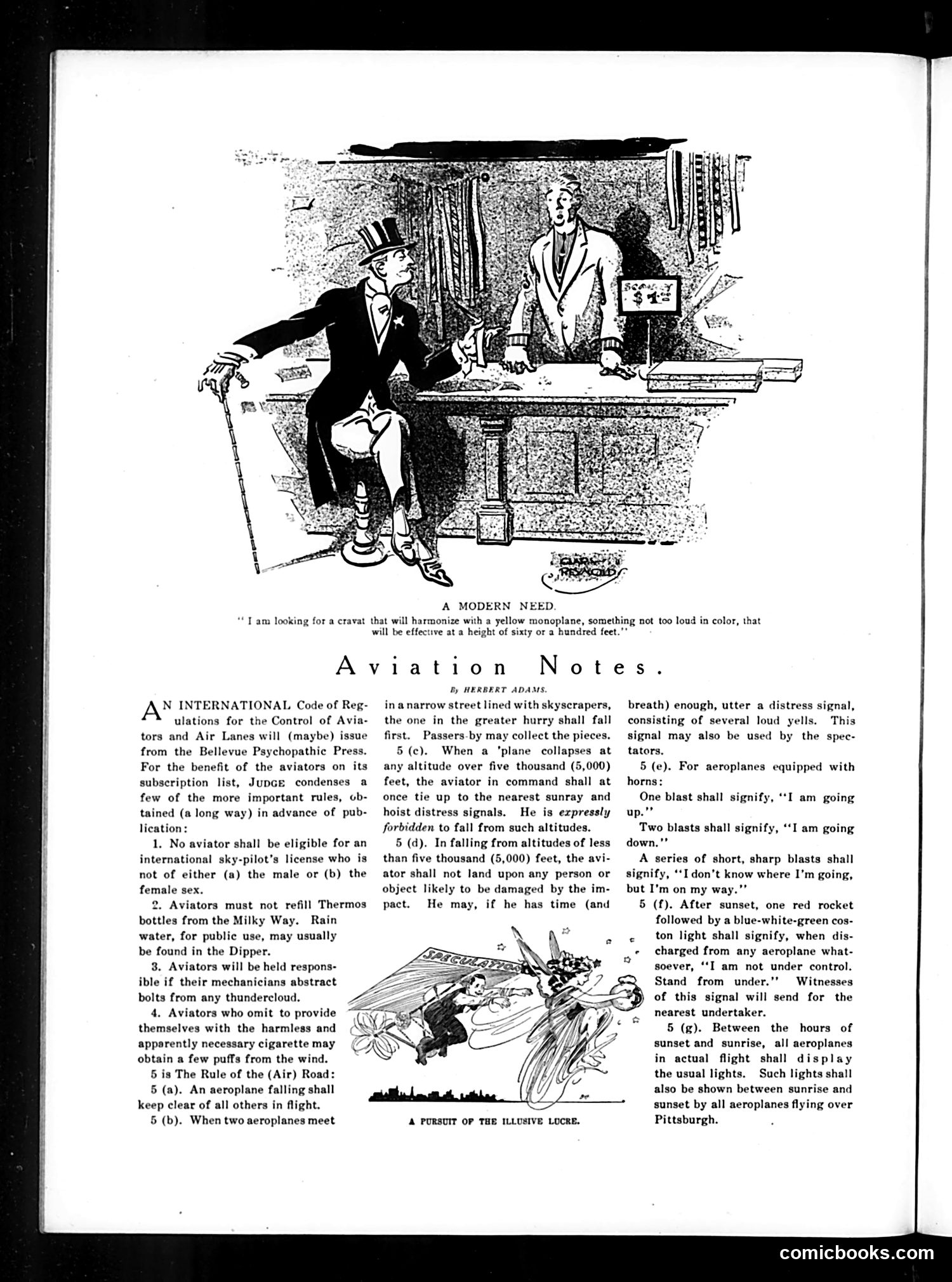
This page satirizes the then-nascent aviation industry's lack of regulation. The top cartoon shows a gentleman asking a haberdasher for a necktie matching his "yellow monoplane"—mocking how aviation had become a fashionable pursuit for wealthy dandies rather than serious aviators. The main text, presented as mock "international regulations," ridicules aviation's chaotic state through absurdist humor. Rules like "An aeroplane falling shall keep clear of all others in flight" and pilots not landing on people they'd "damage by the impact" joke about near-collisions and crashes. The regulation about Pittsburgh suggests that city was particularly polluted or hazardous to flight. Herbert Adams uses exaggeration to highlight genuine safety concerns: the lack of actual air traffic control, standardized signals, and pilot licensing. The humor underscores how dangerously unregulated early aviation was, with wealthy amateurs operating aircraft without formal rules or oversight.
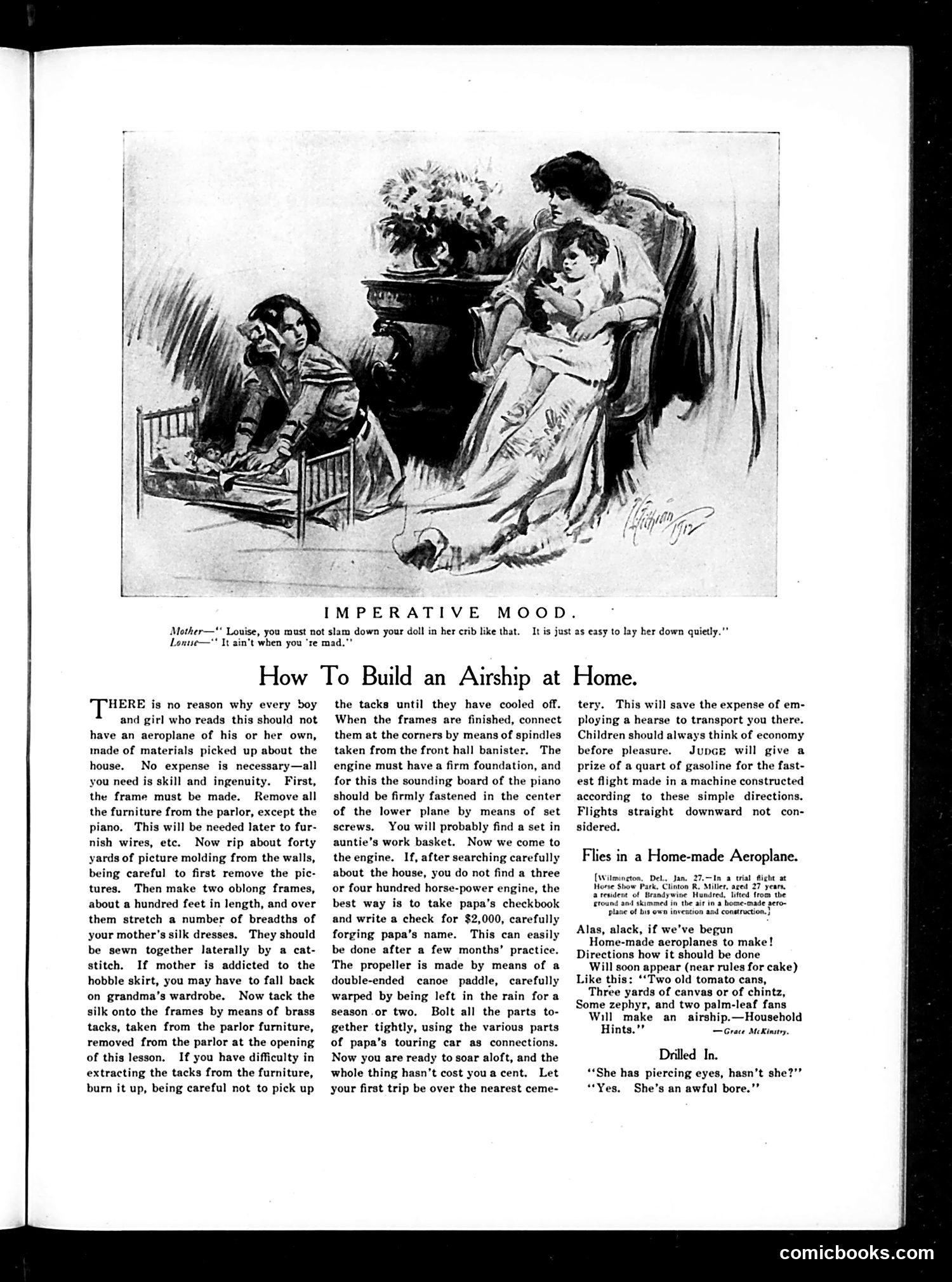
This page contains two pieces of early aviation satire, likely from around 1910 when homemade aircraft were briefly a novelty. **"How To Build an Airship at Home"** is absurdist humor mocking both the DIY craze and aviation mania. The joke presents deliberately destructive "instructions" — dismantling your home (removing furniture, ripping picture molding, burning things to extract tacks) to construct an aircraft. The punchline combines financial irresponsibility (forging a $2,000 check to your father) with dark humor about crashing: flights should aim downward "over the nearest cemetery" to save funeral expenses. It's satirizing both parental indulgence of children's schemes and the reckless experimentation of early aviation. **"Flies in a Home-made Aeroplane"** references an actual 1911 incident where Clinton Miller flew a genuine homemade aircraft. The accompanying verse mocks the trend's spread into mainstream domestic advice, imagining aeronautics instructions appearing alongside recipes in household hint columns—suggesting the fad had become absurdly ubiquitous. The opening cartoon "Imperative Mood" is unrelated: a child argues that anger justifies poor behavior toward dolls.
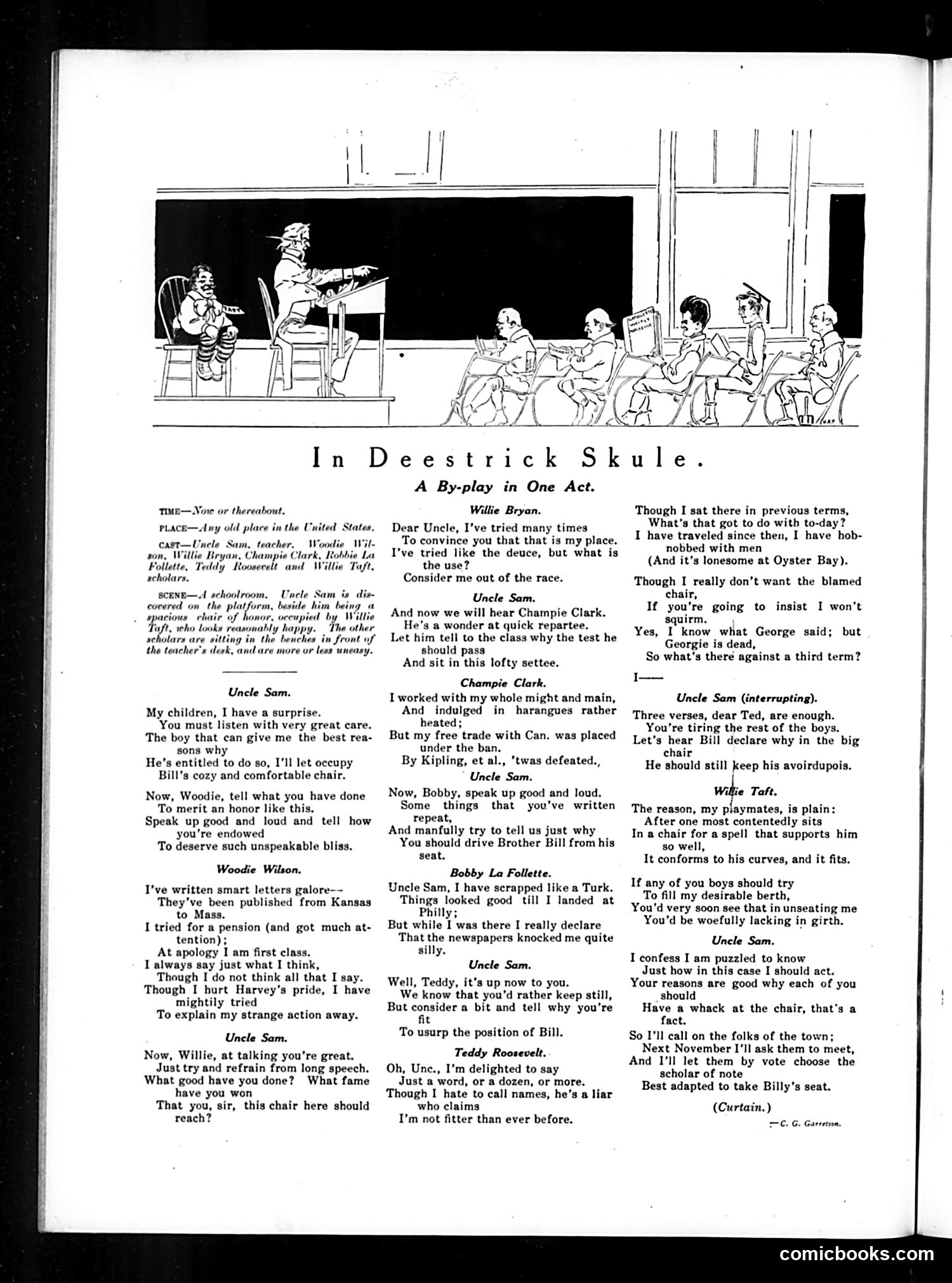
This one-act play satirizes the 1912 U.S. presidential race. Uncle Sam (representing America) conducts a "schoolroom" competition where candidates argue why they deserve the "chair of honor"—the presidency currently occupied by Willie Taft. The competitors are: - **Woodie Wilson**: Boasts of writing letters and apologizing, mocking his verbose intellectualism - **Willie Bryan**: The perennial failed candidate, conceding defeat before arguing - **Champie Clark**: Emphasizes hard work but notes his free-trade policies were defeated - **Bobby La Follette**: Claims aggressive reform efforts but admits newspaper ridicule derailed him - **Teddy Roosevelt**: Dominates the debate, insisting he's still fit despite promising not to seek a third term, dismissing opposition since "Georgie is dead" (likely McKinley) - **Taft**: Justifies staying put by claiming the chair fits his physique perfectly The satire mocks each candidate's actual weaknesses and contradictions during this factional election year.
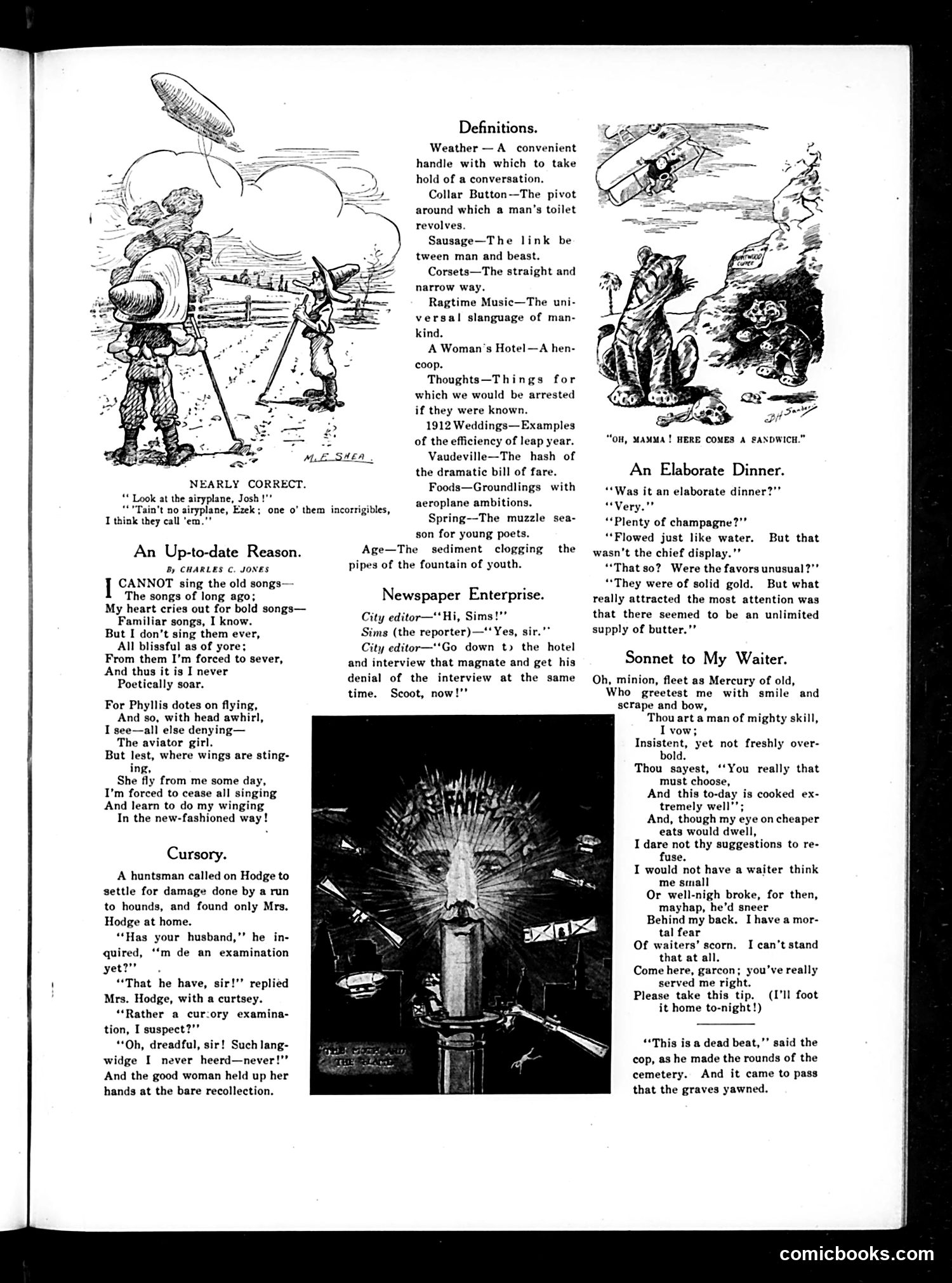
This page from Judge magazine (likely early 1910s) contains satirical humor typical of the era: **"Nearly Correct"**: A cartoon mocking early aviation. Two observers mistake an airplane for something else—the humor lies in the novelty and unfamiliarity of aircraft to ordinary people. **"An Up-to-date Reason"**: A poem about a man who abandons traditional singing because he's infatuated with "the aviator girl"—satirizing how aviation and modern women were reshaping social life. **Definitions**: Sharp satirical one-liners targeting contemporary life. "A Woman's Hotel—A hen-coop" reflects period misogyny; "1912 Weddings—Examples of the efficiency of leap year" jokes about marriage customs. **"Newspaper Enterprise"**: Mocks journalistic ethics, showing an editor demanding a reporter get a denial from someone about an interview—implying fabricated news. **"Sonnet to My Waiter"**: Satirizes class anxiety and economic insecurity, where a diner fears appearing poor and trusts the waiter's suggestions despite preferring cheaper food. The overall tone reflects pre-WWI anxieties about modernization, gender roles, and social pretense.
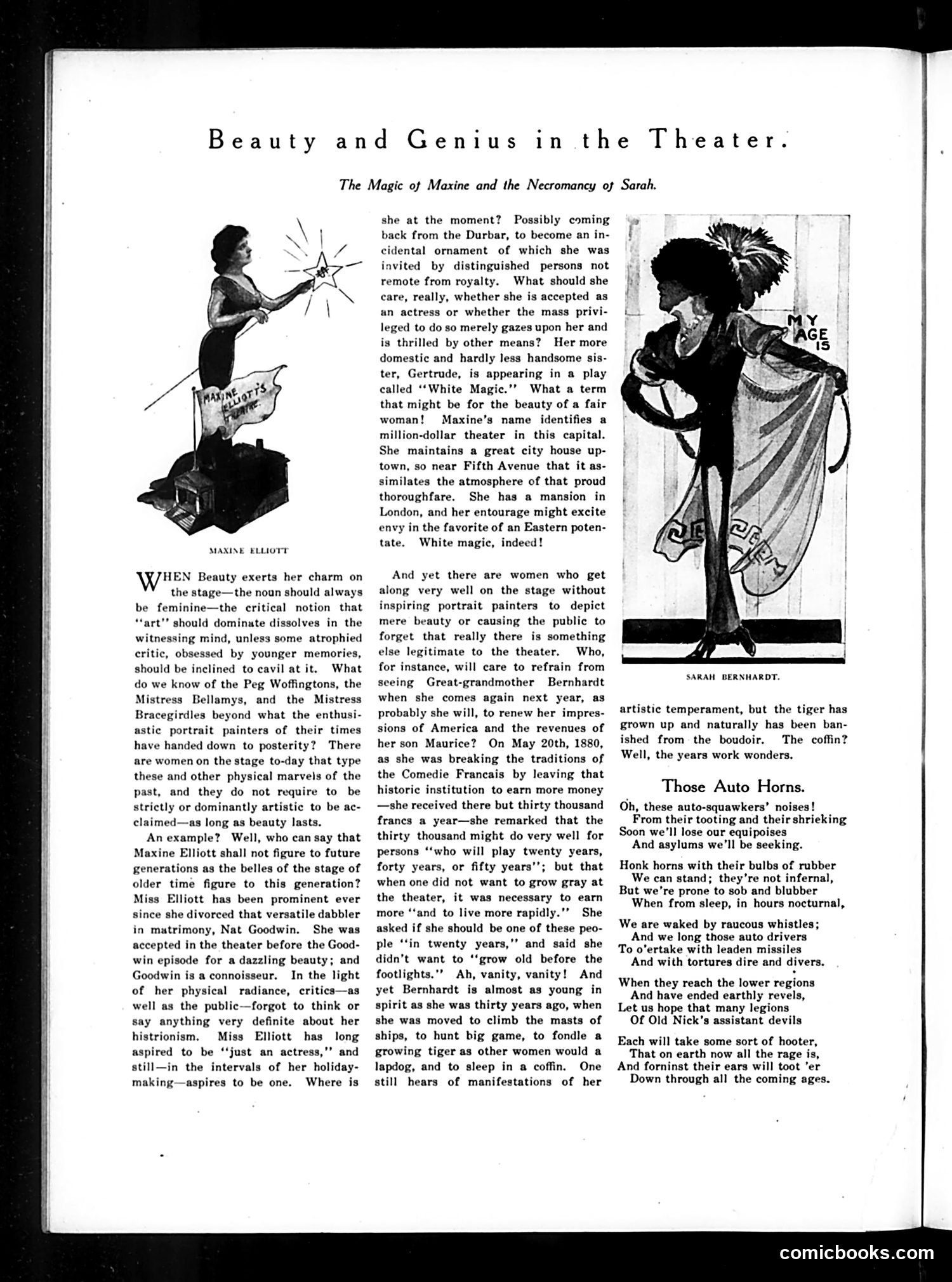
This Judge article compares two famous actresses: **Maxine Elliott** and **Sarah Bernhardt**. Elliott is critiqued as a beautiful but non-serious performer—the piece notes she divorced actor Nat Goodwin, maintains expensive properties on Fifth Avenue and in London, and relies on physical beauty rather than acting talent. The satire questions whether she'll be remembered as anything more than decorative. Bernhardt, by contrast, is praised as a genuine artist. The article quotes her 1880 remark that she couldn't afford to "grow old at the theater" and thus had to earn money rapidly. It celebrates her fierce vitality—hunting game, climbing ship masts, sleeping in a coffin—contrasting her dramatic commitment to Elliott's leisure pursuits. The piece argues that true theatrical genius transcends mere beauty: audiences will always return to Bernhardt, while Elliott's appeal depends entirely on youth and looks.
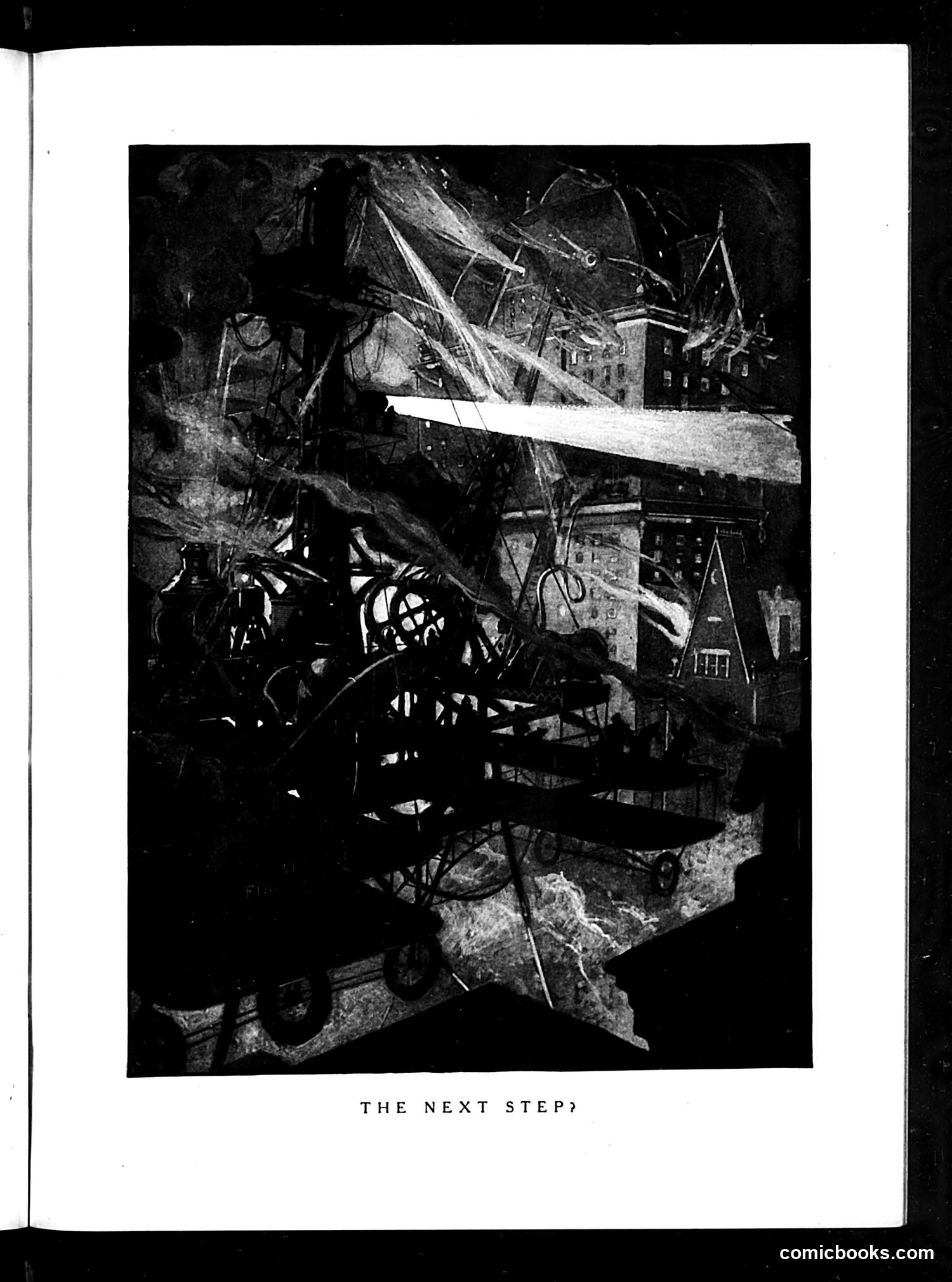
This page features a stark black-and-white illustration showing industrial machinery and urban architecture in dramatic shadow. The caption "THE NEXT STEP?" suggests social or political commentary about industrial progress. The image depicts complex mechanical structures—gears, frameworks, and industrial equipment—looming over cityscape buildings. The composition emphasizes the dominance of machinery over human habitation, creating an ominous mood. Without additional context or visible signatures, the precise political target remains unclear. However, the satirical framing suggests *Judge* magazine was questioning whether unchecked industrialization represented genuine progress. This likely reflects early-20th-century anxieties about mechanization's social impact—labor conditions, urban overcrowding, or technological determinism. The threatening scale and shadowy rendering imply skepticism about industrial society's trajectory.
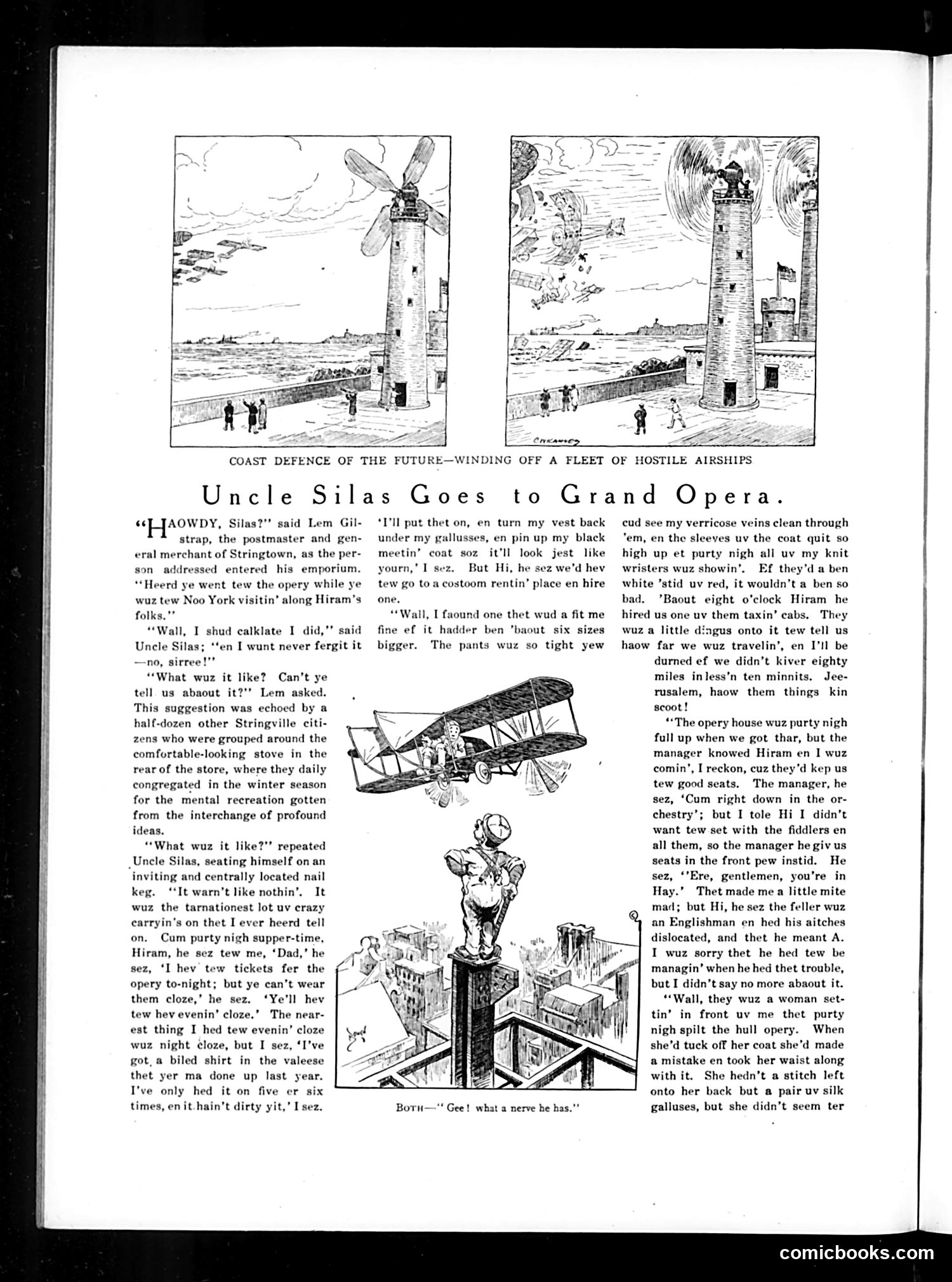
This page presents "Uncle Silas Goes to Grand Opera," a rural-versus-urban satire common to early 20th-century American humor magazines. **The Setup:** Uncle Silas, a country man from "Stringtown," visits New York City and attends the opera—an unfamiliar, elite cultural experience. The satire works through his dialect-heavy narration to townspeople gathered around a store stove. **The Joke:** The humor derives from Silas's confused encounters with urban sophistication: rental formal wear that doesn't fit properly, taxi cabs he finds bewilderingly fast, opera house seating terminology ("orchestra" misheard), and British staff with "dropped h's." The punchline involves a woman who accidentally removes her blouse along with her coat, leaving her in only a corset—played for comedic shock. **The Satire:** This mocks both rural ignorance of city ways and the pretension of high culture itself. The top illustrations—"Coast Defence of the Future"—appear unrelated, likely part of Judge's typical mixed content format. The humor relies on class and regional stereotypes now considered crude.
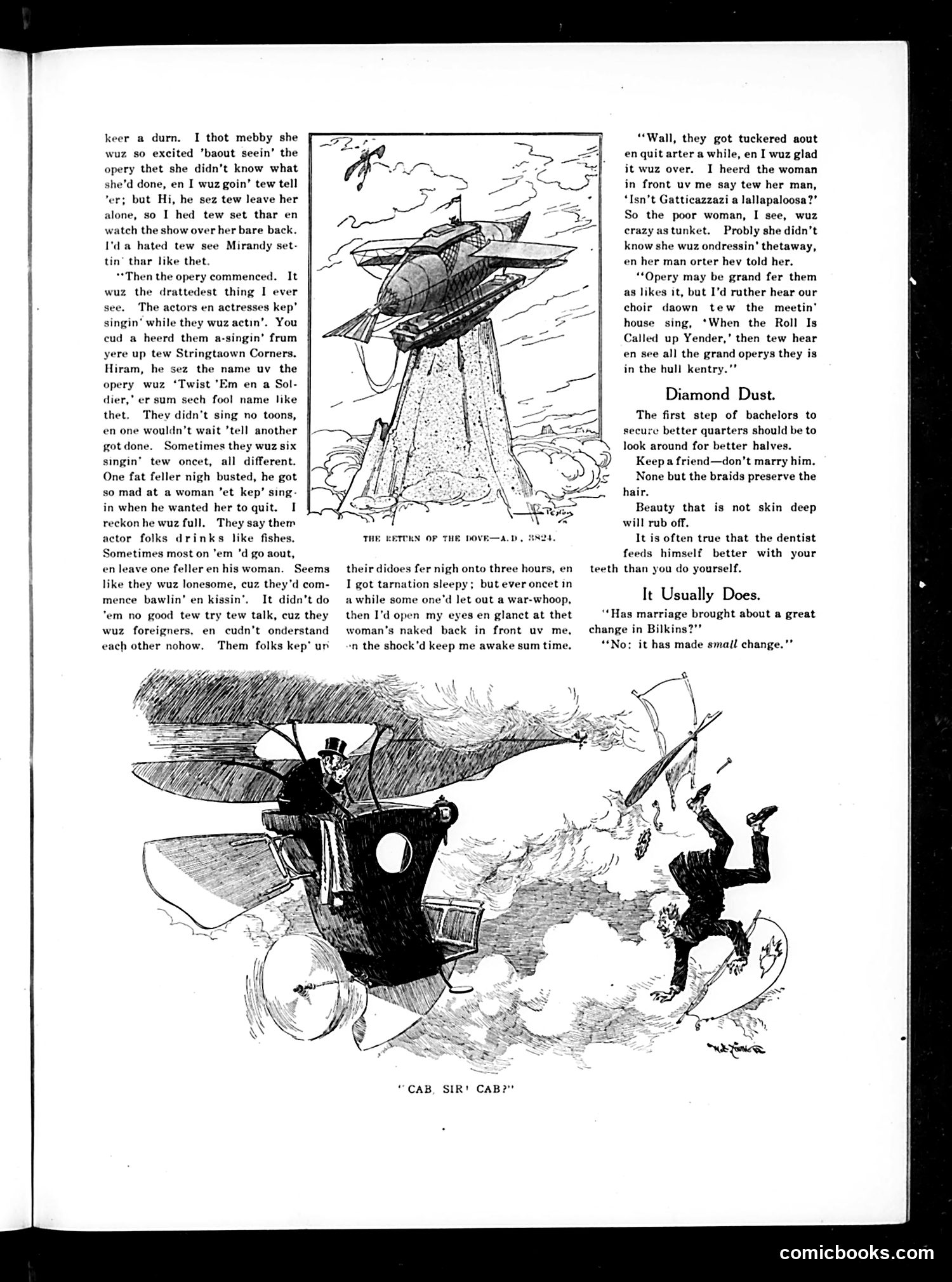
This page from *Judge* magazine contains two main satirical pieces: **Top section:** A rural character recounts attending an opera, mocking both the art form and urban sophistication. The humor relies on dialect comedy (popular in this era) depicting an unsophisticated farmer bewildered by operatic conventions—foreign singers, simultaneous dialogue, emotional intensity. His preference for church hymns over grand opera satirizes the cultural divide between rural and urban America. **Bottom illustration ("Cab Sir! Cab!"):** Shows a fantastical flying vehicle—appearing to be an early motorcar with wings. This likely satirizes the era's obsession with emerging transportation technology and futuristic speculation (early aviation was nascent). The gentleman in a top hat frantically hailing it as a "cab" mocks both technological utopianism and the absurdity of expecting such contraptions for everyday use. **"Diamond Dust" section:** Brief aphoristic humor about bachelor housing, marriage, and beauty—typical filler content for the magazine. The overarching satire targets American class divisions and the gap between technological promise and practical reality.
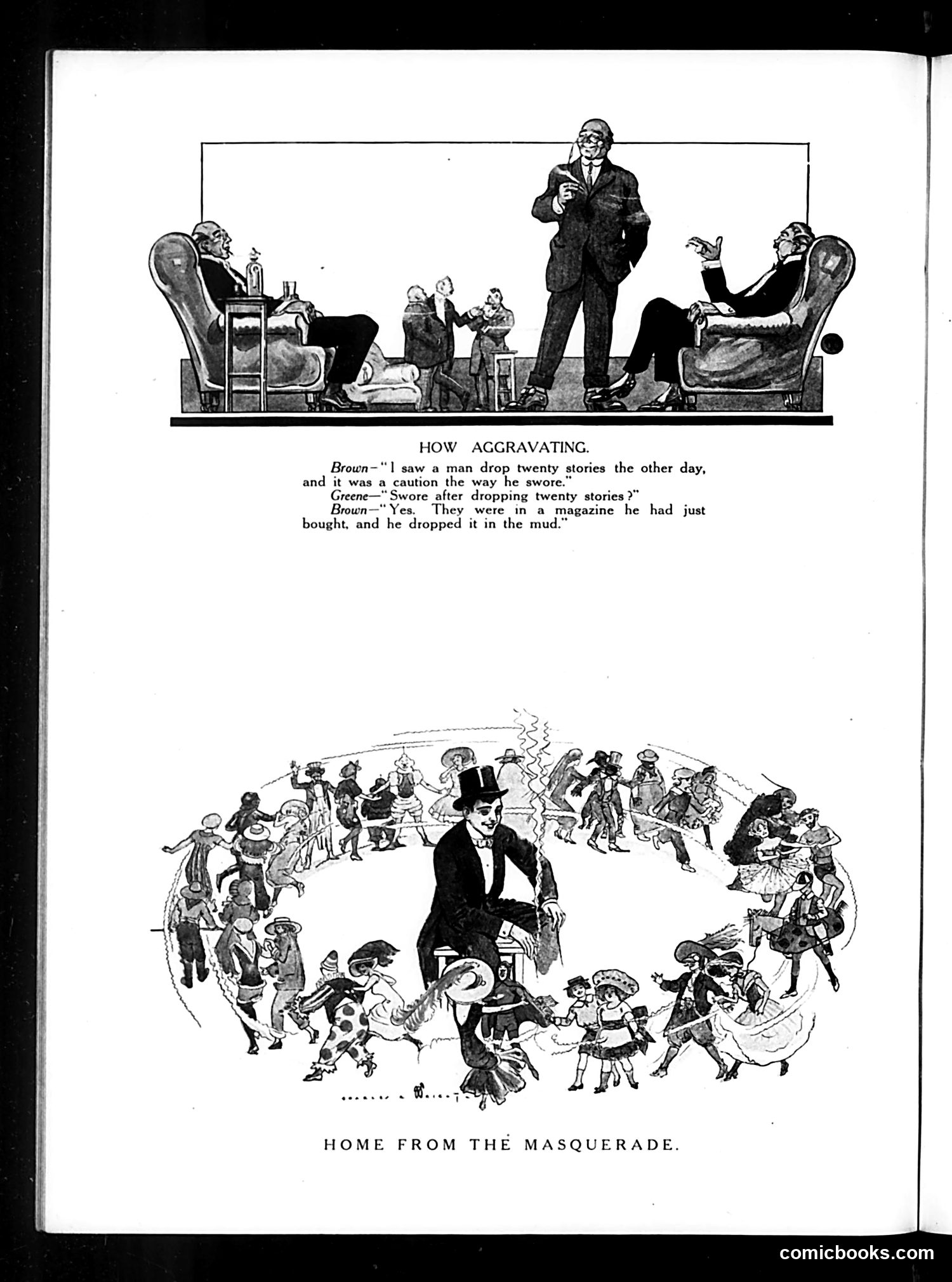
**Top cartoon ("How Aggravating"):** A simple joke about exaggeration in conversation. Brown describes someone swearing after dropping "twenty stories"—Greene initially misunderstands this as a person falling from a building. The punchline reveals it's merely a magazine that fell in mud. The humor lies in the miscommunication and the anticlimactic reveal; the man's profanity wasn't about a dramatic accident but about ruining a purchased magazine. **Bottom cartoon ("Home from the Masquerade"):** Depicts a well-dressed man in formal attire and top hat surrounded by costumed carnival or masquerade revelers. The title suggests social satire about aristocratic pretense—someone returning home from a masquerade ball while surrounded by common entertainers or "masked" ordinary people, possibly commenting on class divisions or the artificiality of high society.
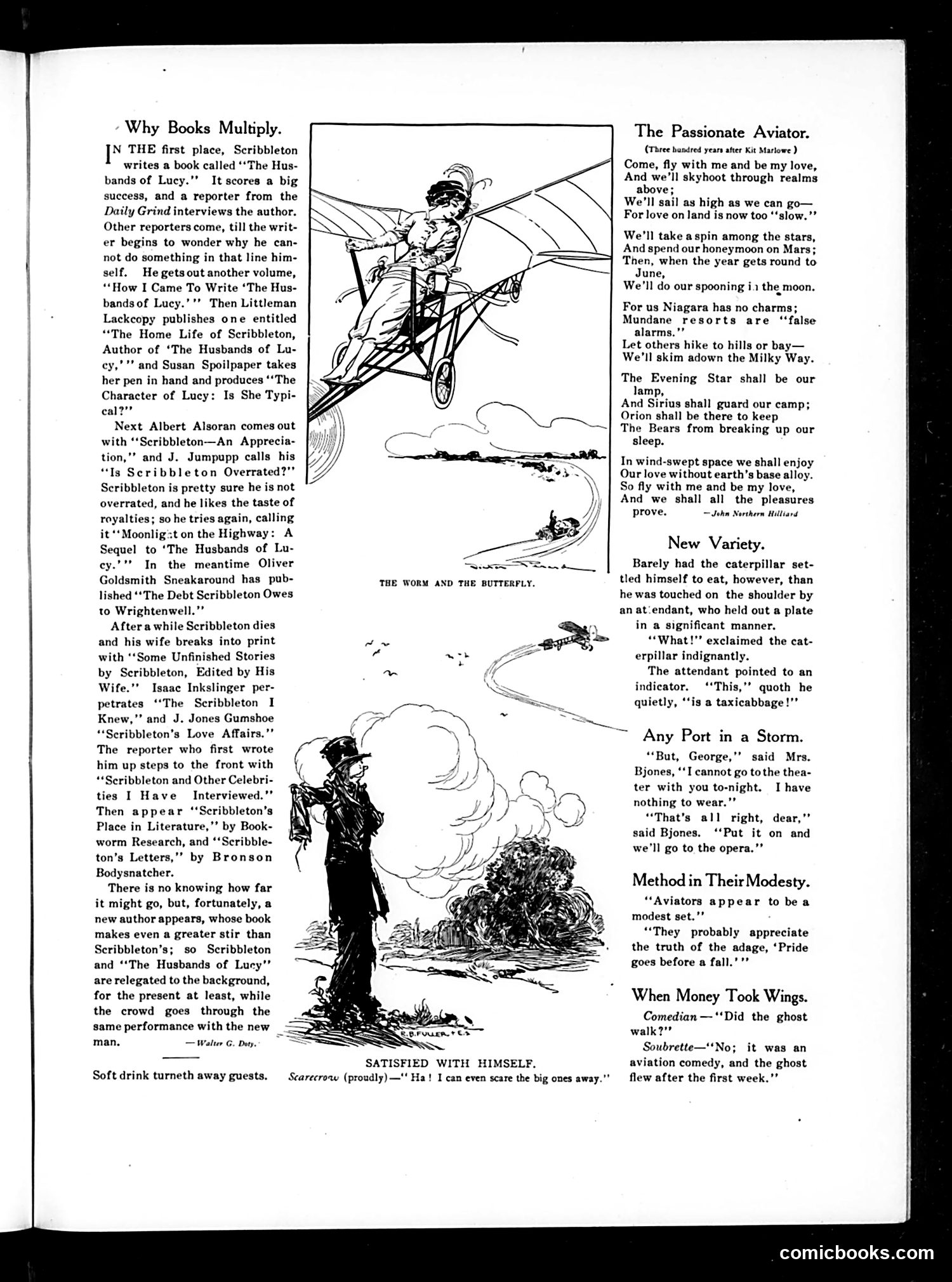
This *Judge* page satirizes **literary productivity and sequel culture**. The main article "Why Books Multiply" mocks how one successful novel spawns endless derivative works: sequels, critical analyses, biographies of the author, even posthumous "lost" manuscripts. Real names like "Isaac Inkslinger" and "Bronson Bodysnatcher" are invented types representing parasitic critics and editors who profit from an original work's success. The joke is that this publishing frenzy continues until a *new* bestseller arrives and the cycle repeats with another author—a pointed critique of commercialism in publishing. The cartoons are lighter sketches: "The Passionate Aviator" parodies romantic poetry by setting courtship in airplanes (aviation was then-fashionable); "New Variety" makes a pun on "taxicab" and cabbage; others involve simple wordplay. The page reflects early-1900s anxieties about mass production, celebrity culture, and the commodification of literature.
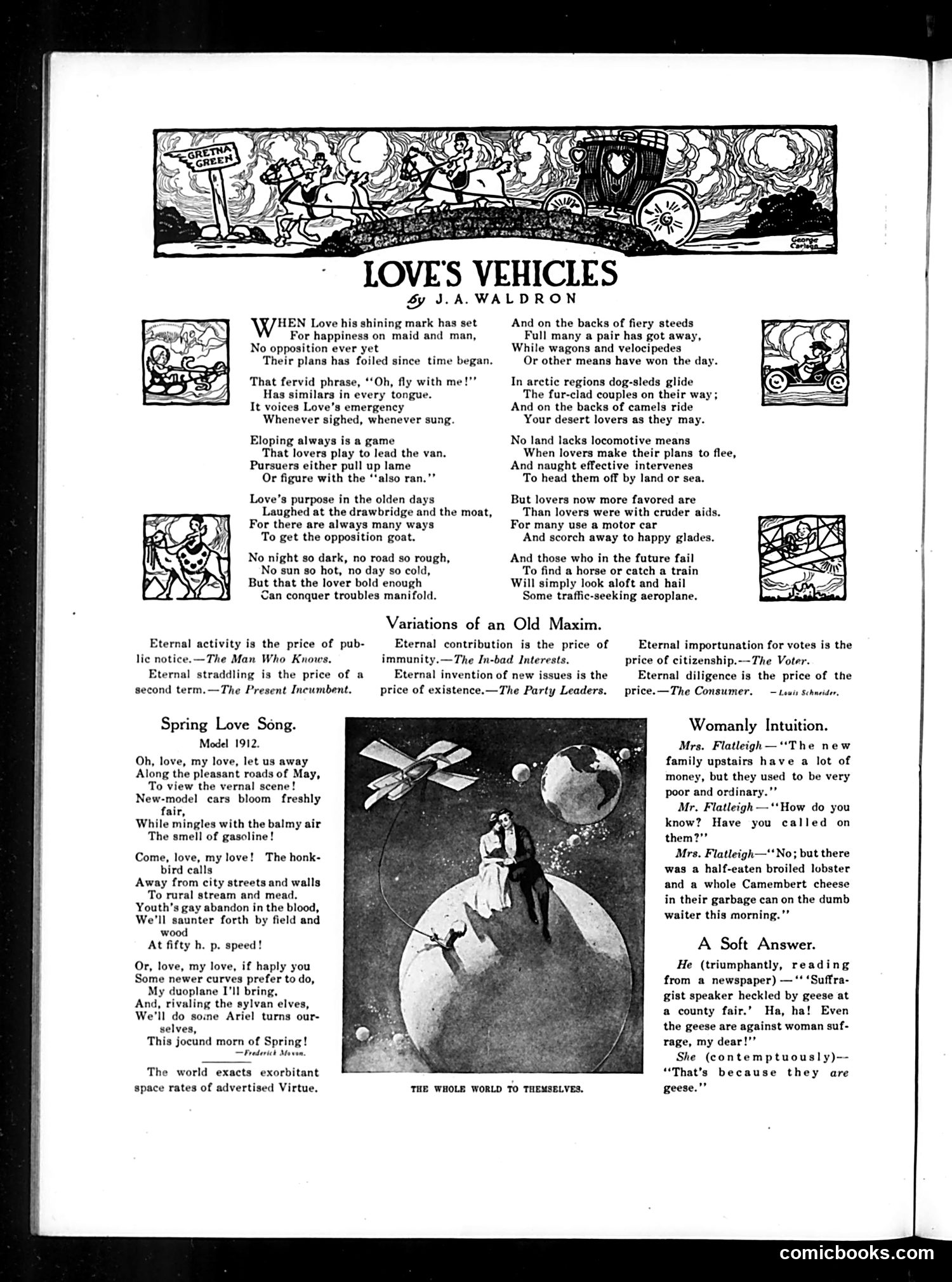
This page satirizes early 20th-century courtship and elopement through multiple pieces: **"Love's Vehicles"** (main poem by J.A. Waldron) humorously catalogs how lovers throughout history have fled together—from horseback and carriages to the modern motorcar and, looking forward, aeroplanes. The satire updates the romantic "elopement" trope for the 1912 automotive age, suggesting lovers now have unprecedented technological means to escape parental opposition. **"Spring Love Song"** parodies Victorian romantic poetry by replacing pastoral imagery with automobile and aviation references—"fifty h.p. speed," "duoplane," "gasoline"—mocking how modernity has infiltrated even love and courtship. The remaining items ("Variations of an Old Maxim," "Womanly Intuition," "A Soft Answer") are brief satirical quips on politics, gender dynamics, and the suffrage debate—Mrs. Flatleigh's deduction from garbage revealing newly-wealthy neighbors, and the exchange mocking anti-suffrage sentiment by having a woman outwit a man's anti-women's-rights jab. The overall theme: mechanization and modern life have transformed even romance and social observation.
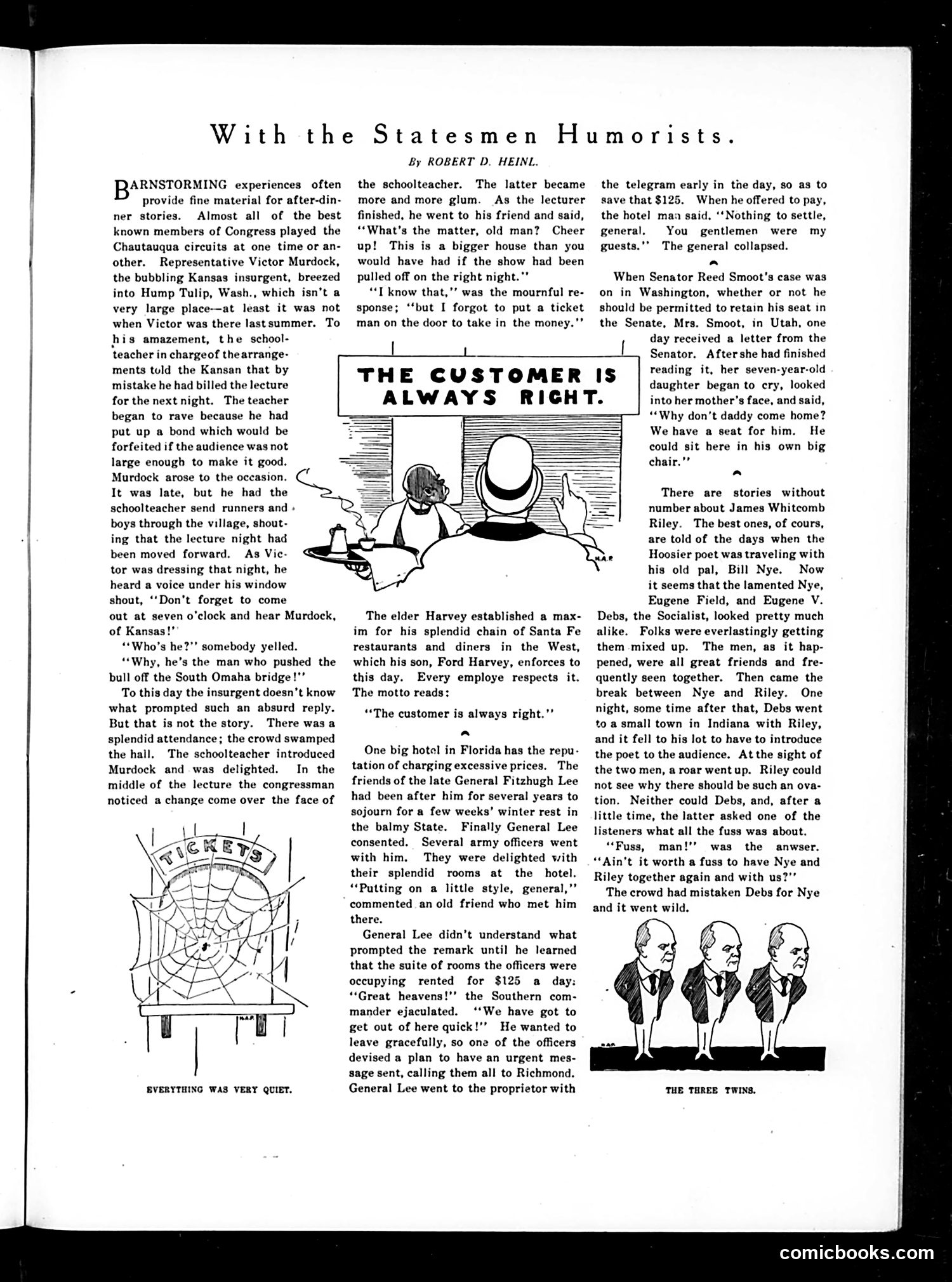
This humorous article collects anecdotes about American politicians and public figures, illustrating their wit and character through barnstorming and social encounters. The main cartoon (center) shows the Harvey restaurant chain's motto: "THE CUSTOMER IS ALWAYS RIGHT"—a business principle enforced by founder Fred Harvey and his son. The text includes stories about Representative Victor Murdock (Kansas "insurgent"), Senator Reed Smoot (whose polygamy case was debated in Congress), and General Fitzhugh Lee (post-Civil War figure). Each anecdote plays on the tension between politicians' public personas and practical realities—missed lecture logistics, family longing during political scandal, and embarrassment over expensive hotel bills. The three-figure sketch at bottom ("THE THREE FINDS") appears to depict politicians or statesmen, though the reference is unclear from the visible text. The humor targets politicians' hypocrisy, pretension, and disconnect from ordinary life, typical of Judge's satirical approach.
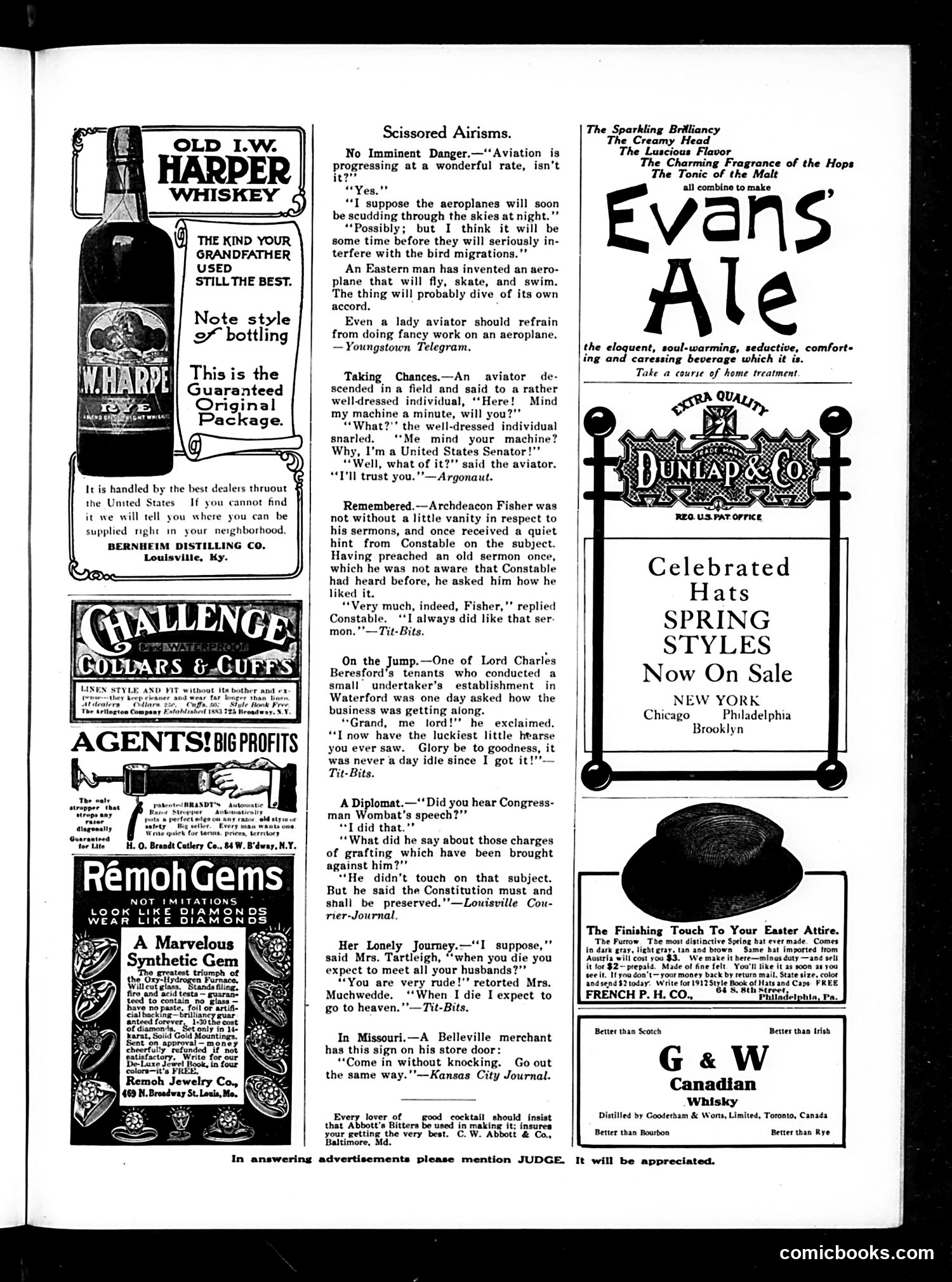
This page is primarily **advertising with a humor section**. The "Scissored Airisms" column contains brief satirical anecdotes—short jokes mocking contemporary figures and situations. ## Key Content: **The humor pieces** target: - **Aviation enthusiasts** (new technology being treated naively—one joke suggests aeroplanes will interfere with bird migration) - **A U.S. Senator** (depicted as pompously refusing to do manual labor) - **Congressman Wombat** (satirizing politicians who dodge corruption charges by invoking patriotic rhetoric about the Constitution instead of addressing actual grafting allegations) - **A widow** (humor based on her multiple marriages) **The advertisements** are for alcohol (whiskey, ale, bitters), synthetic gems, hats, and cutlery—typical products of the era. The "RémohGems" ad explicitly markets fake diamonds as legitimate substitutes. The satire reflects early-1900s anxieties: new aviation technology, political corruption, and consumer culture's embrace of imitation products. Modern readers should note the casual acceptance of both advertising fraud and political evasion.
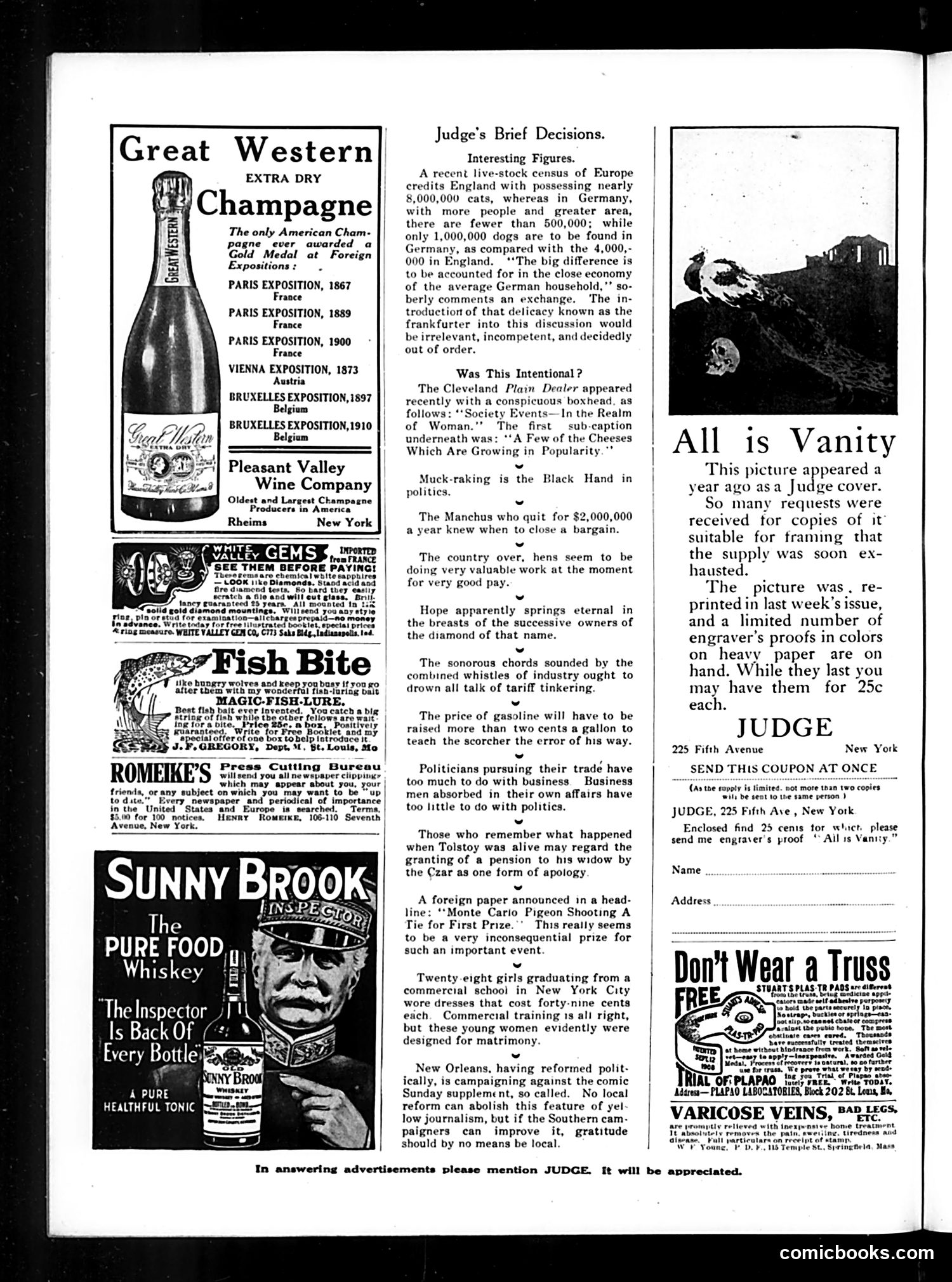
This is primarily an **advertising and editorial page** from Judge magazine, a satirical publication. The main content consists of: **Advertisements** for products including champagne, fake gems, fish lures, and whiskey—typical turn-of-the-century mail-order goods. **"Judge's Brief Decisions"** section contains short satirical commentary on contemporary issues: - A **jab at German frugality** (comparing cat/dog ownership between England and Germany, with a implied frankfurter joke) - **Newspaper editorial mishaps** (mocking a Cleveland paper's awkward placement of "cheeses" under a "Women's Realm" section) - **Political commentary** ("Muck-raking is the Black Hand in politics") - **Social satire** on hen productivity, gasoline prices, and a commercial school where girls' cheap dresses supposedly indicate they were "designed for matrimony" The page's humor relies on observational satire about everyday life, consumer culture, and mild political critique typical of Judge's approach—irreverent but not deeply partisan.
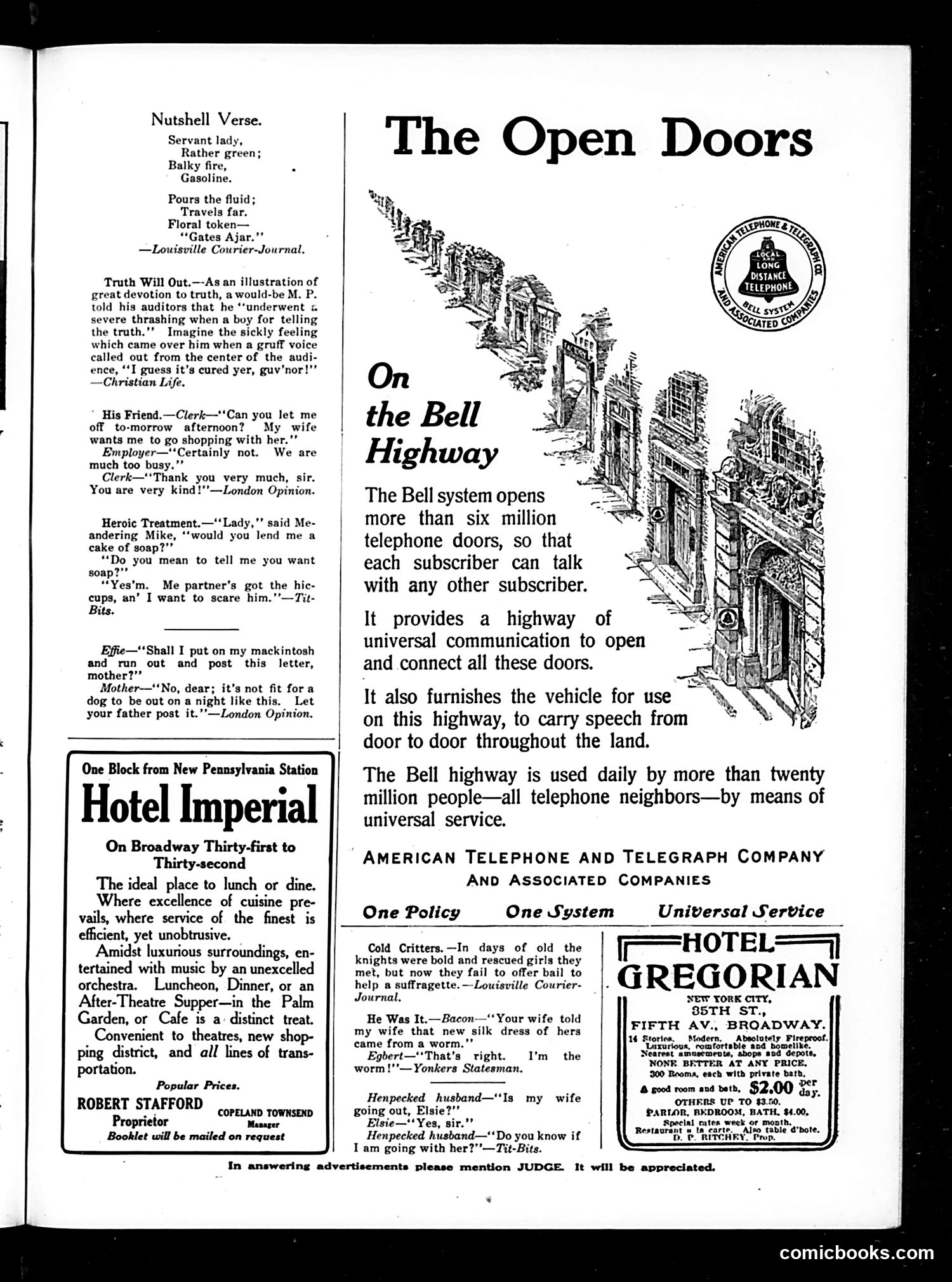
This page comprises primarily **short humorous anecdotes** and **advertisements** rather than political cartoons. The humor targets everyday social situations: **Notable Jokes:** - "Nutshell Verse" satirizes a servant girl's carelessness with gasoline, resulting in death ("Gates Ajar"—a reference to an afterlife) - "Truth Will Out" mocks a political candidate who claims childhood beatings cured him of honesty—a heckler suggests the beatings worked - "His Friend" and "Effie" jokes play on gender dynamics: wives inconvenience husbands with shopping; fathers are expendable for dangerous errands - "Henpecked husband" jokes mock male subservience to wives **The Major Content** is an **AT&T Bell System advertisement** using "Open Doors" as metaphor for telephone connectivity—six million subscribers can reach each other. This corporate messaging occupies substantial space. **Hotel advertisements** for the Imperial and Gregorian complete the page. The humor reflects early 20th-century attitudes: gender role anxieties, class-based comedy, and acceptance of domestic hierarchy. No specific political figures or events are referenced.
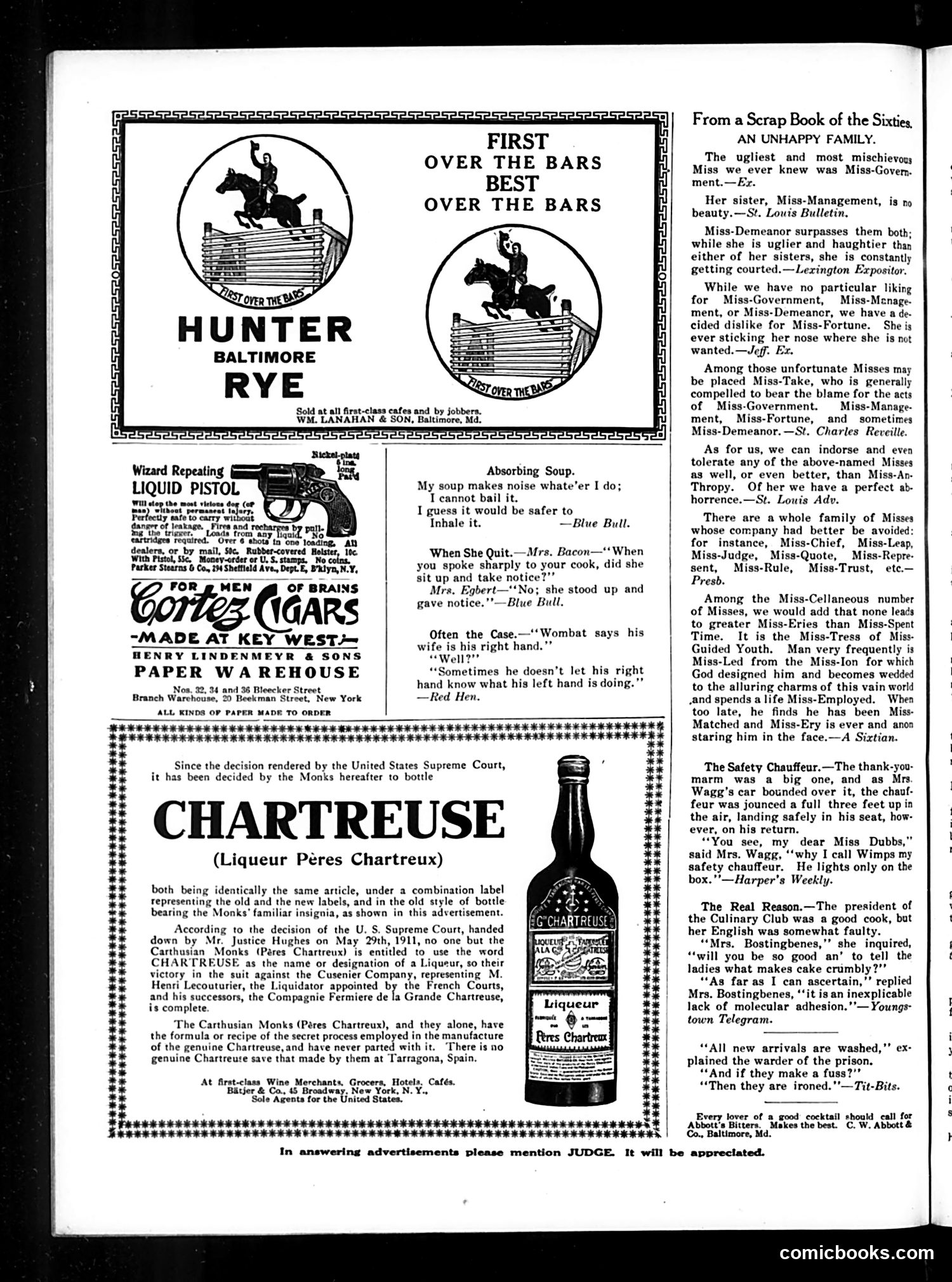
This page combines advertisements with satirical humor typical of 1860s-era Judge magazine. **Main Content:** The prominent feature is a legal notice about Chartreuse liqueur, referencing a 1911 Supreme Court decision establishing that only the Carthusian Monks can use the "Chartreuse" name. This resolved a trademark dispute with the Cusenier Company. **Humor Sections:** The page includes several short jokes playing on wordplay and domestic situations—"When She Quit" (a cook resigns after being scolded), "Often the Case" (a marital pun about right and left hands). **Right Column:** "An Unhappy Family" presents personified social concepts as unattractive sisters: Miss-Government, Miss-Management, Miss-Demeanor, Miss-Fortune, and Miss-Take. This moralistic satire blames these abstract failings for societal problems, a common 19th-century rhetorical device. **Advertising:** The page also features period product ads (Hunter Baltimore Rye whiskey, cigars, paper warehouse), standard for Judge's revenue model. The page represents typical magazine content mixing commerce, legal notices, and satirical social commentary.
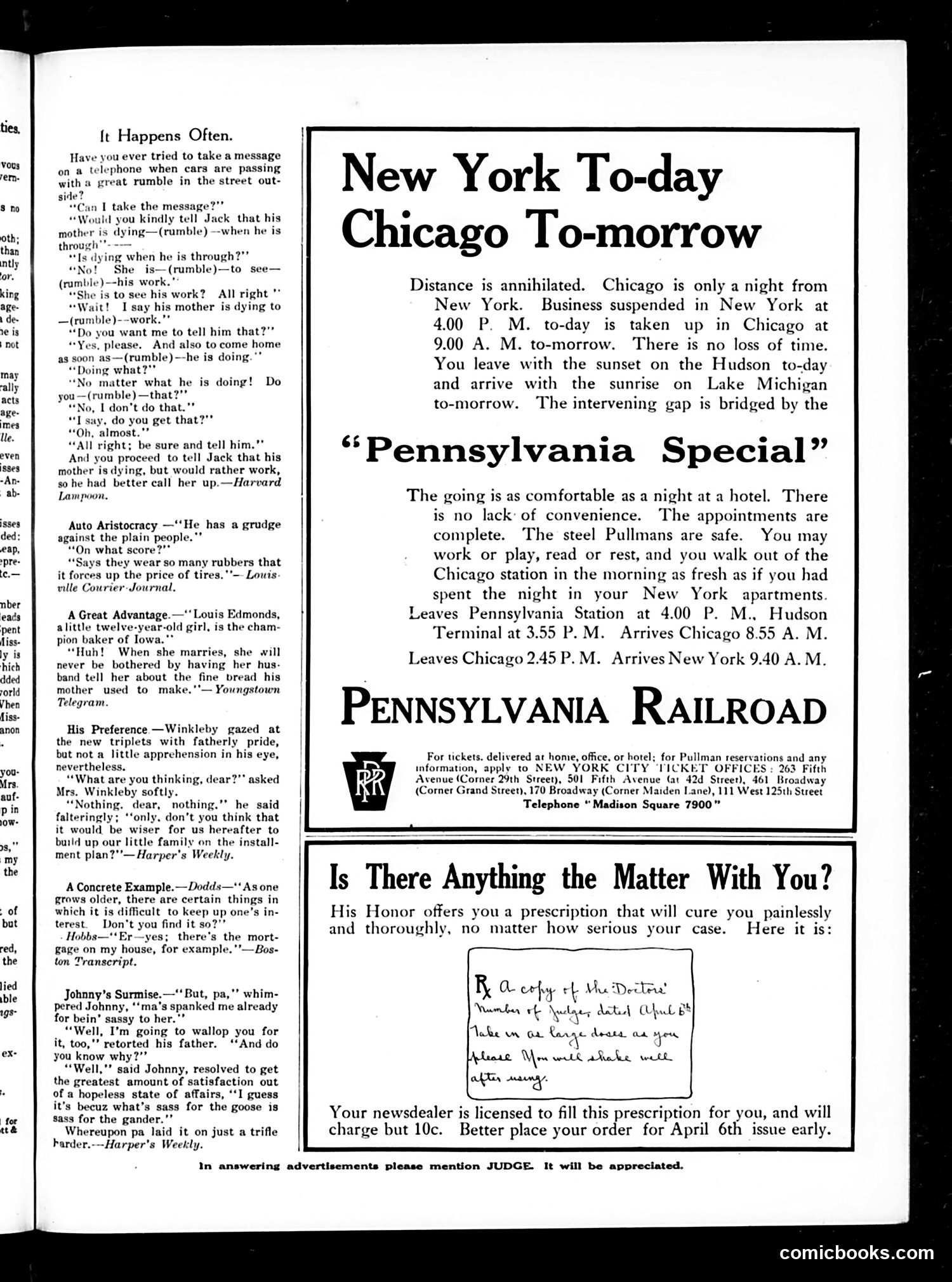
This page from *Judge* magazine contains multiple satirical humor pieces typical of early 20th-century American comedy, plus a full-page Pennsylvania Railroad advertisement. **The Humor Pieces** mock everyday frustrations and social situations: - "It Happens Often" satirizes the difficulty of taking telephone messages amid street noise (street cars and traffic rumble) - "Auto Aristocracy" jokes about wealthy people's disdain for ordinary citizens - Several brief pieces poke fun at marriage, parenting, and domestic life **The Advertisement** for the Pennsylvania Railroad's "Pennsylvania Special" train promotes overnight travel between New York and Chicago as modern, efficient, and luxurious—emphasizing that business can be "suspended" in New York at 4 PM and resumed in Chicago by 9 AM the next morning. This reflects early-20th-century enthusiasm for railroad technology as a marvel of progress. **The Bottom Section** appears to be a humorous "prescription" parody, though the handwritten text is difficult to read clearly in the image. The overall tone reflects *Judge*'s characteristic blend of gentle domestic satire and boosterism for contemporary American innovations.
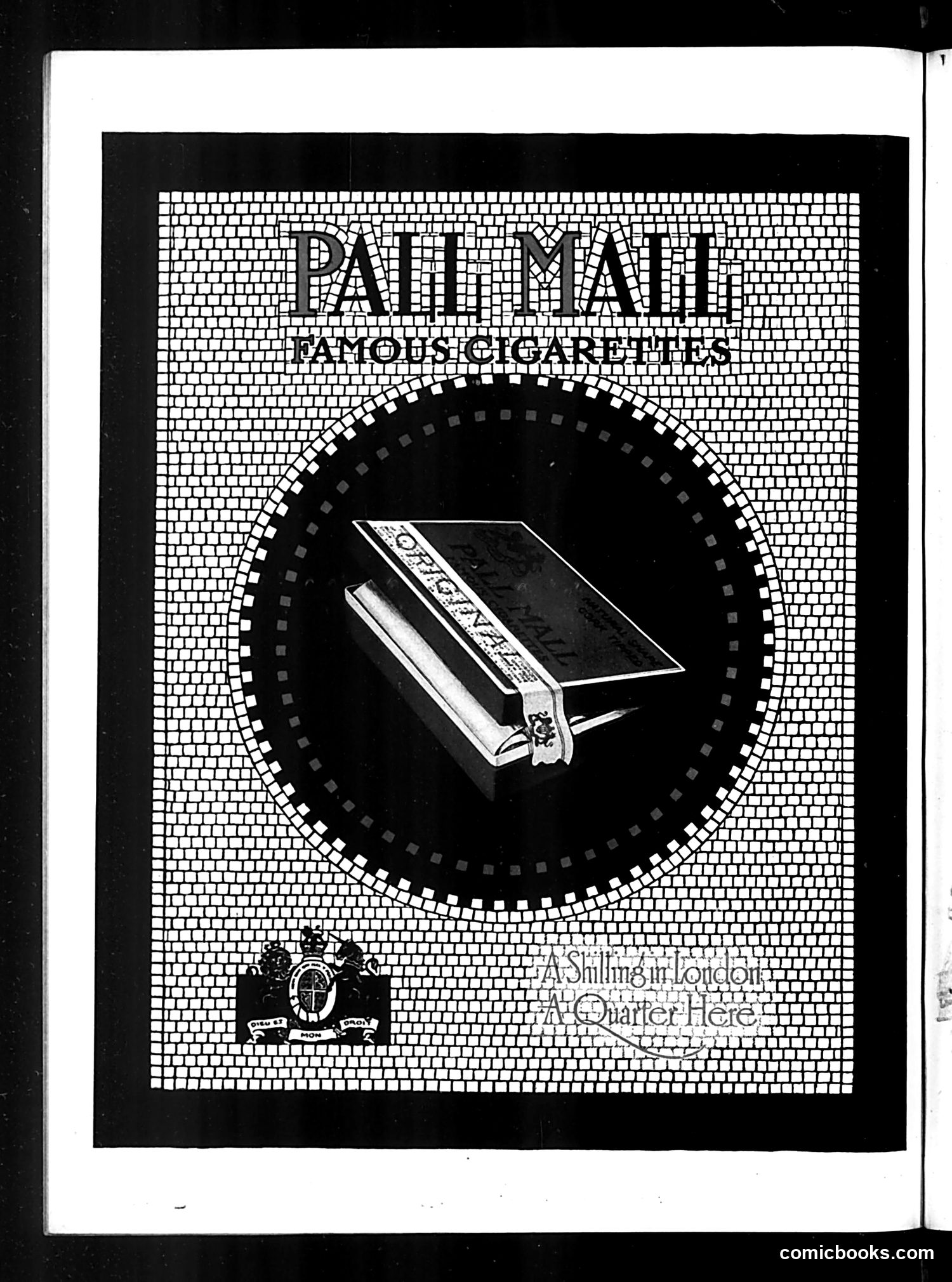
This is a full-page advertisement for Pall Mall Famous Cigarettes. The design features a package of cigarettes displayed prominently within a circular frame, set against a decorative mosaic-pattern background. Below the product image appears text reading "Selling in London A Quarter Here," suggesting a price comparison between British and American markets. The advertisement uses elegant Art Deco styling typical of early 20th-century commercial design. A coat of arms or brand emblem appears at the bottom left. This appears to be primarily commercial advertising rather than political satire or editorial cartooning—it's a product promotion page rather than satirical content from Judge magazine.