
A complete issue · 44 pages · 1921
Life — June 2, 1921
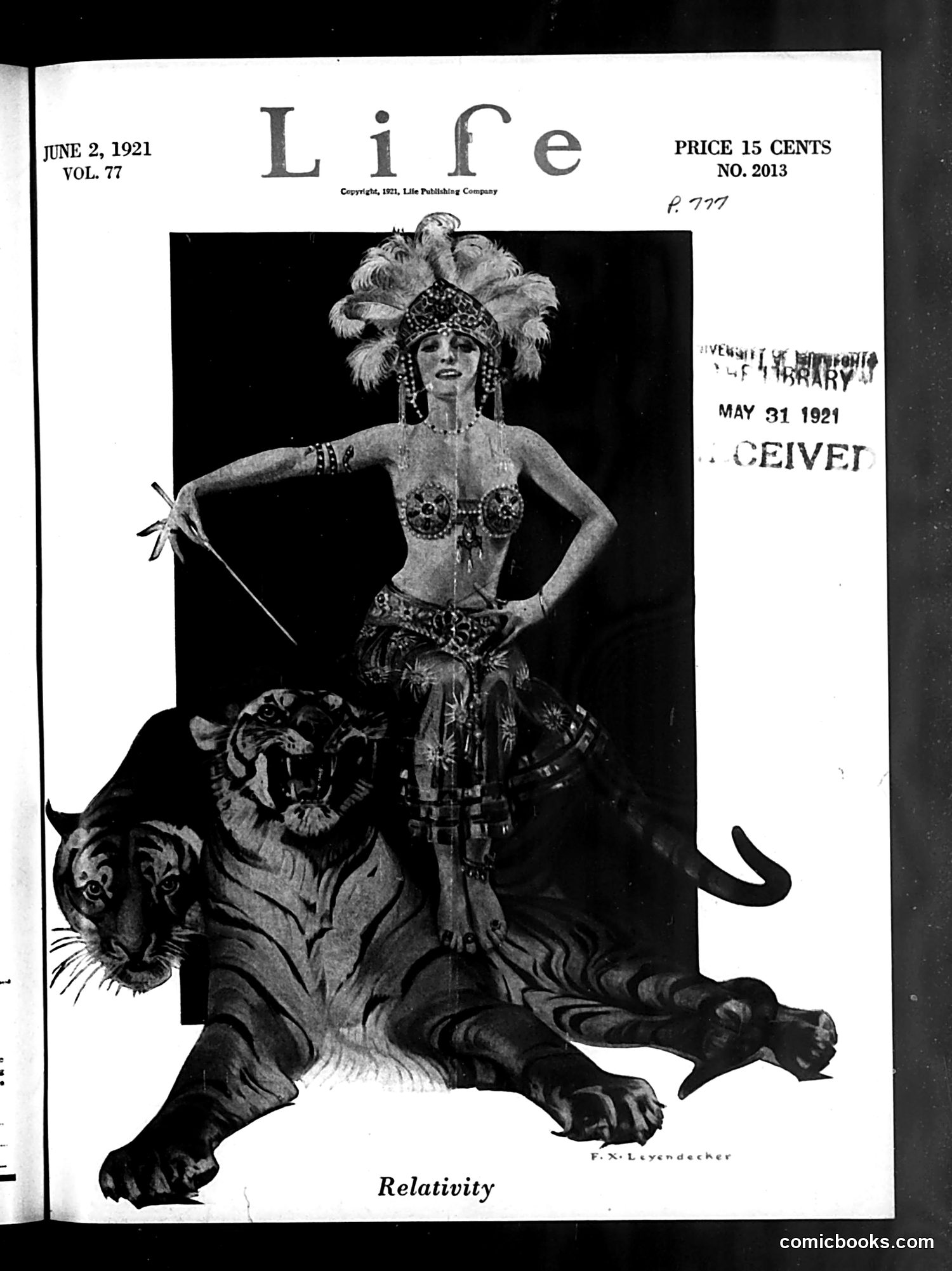
This satirical illustration comments on Einstein's newly famous theory of relativity through absurdist humor. The cartoon depicts a scantily-clad woman in exotic costume (appearing to reference contemporary "exotic dancer" stereotypes) riding a tiger, wielding a sword—a fantastical, chaotic image. The satire works by visual analogy: just as Einstein's relativity theory seemed incomprehensibly bizarre and defied common sense to the general public in 1921, the "anything goes" absurdity of this image mirrors how bewildering the scientific concept felt to ordinary Americans. The title directly connects the wild, logic-defying scene to the famously complex physics theory, suggesting that both operate in a realm beyond normal understanding.
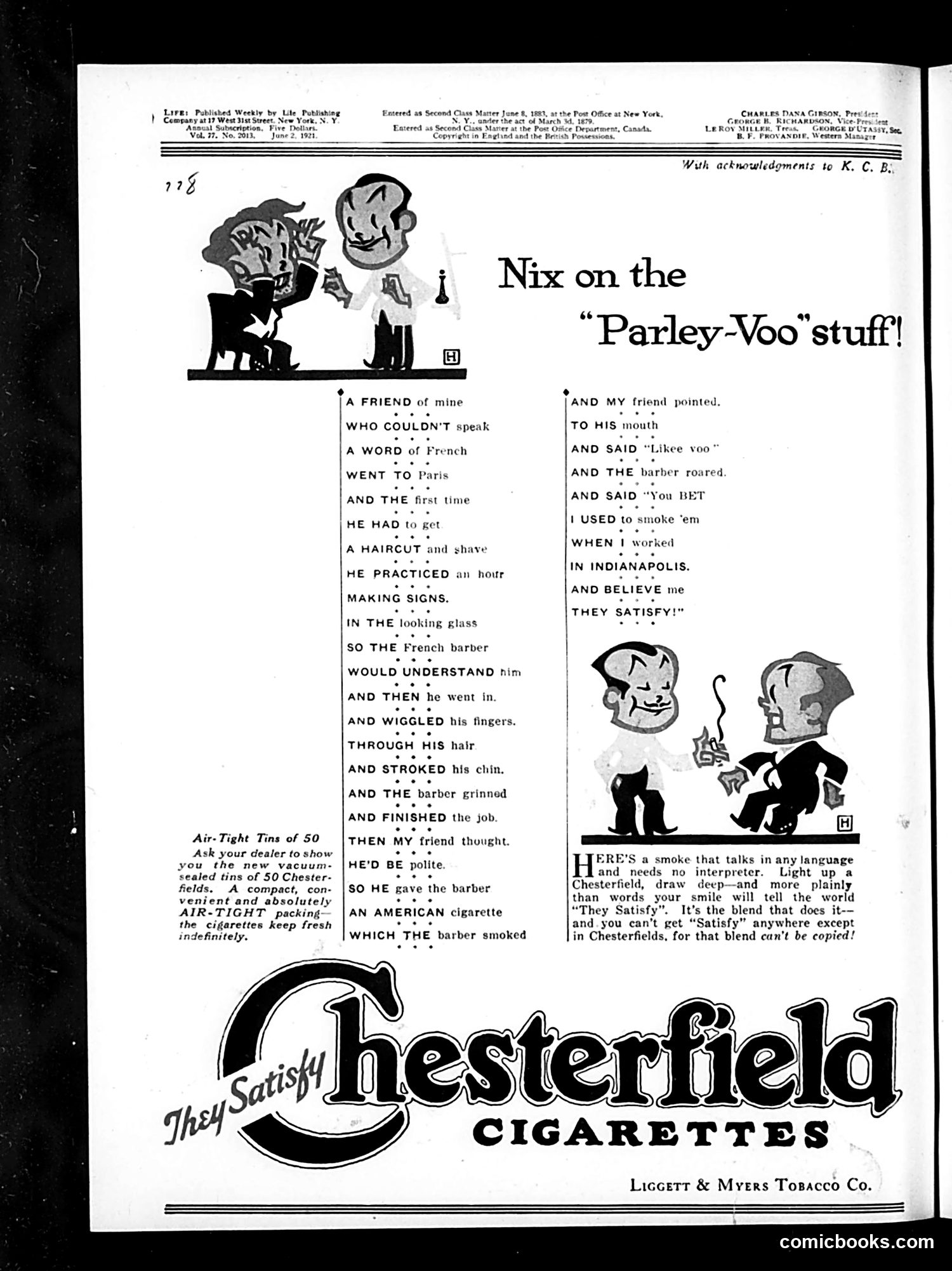
This is primarily a **Chesterfield cigarette advertisement** rather than political satire. The page features a humorous narrative about "Parley-Voo" (French slang for "parlez-vous," meaning "do you speak French?"). The joke concerns an American who couldn't speak French visiting Paris. He attempts to communicate with a French barber through pantomime—making signs in a mirror and wiggling his fingers through his hair. The barber eventually understands and cuts his hair. The American then smokes a Chesterfield cigarette, which the advertisement humorously suggests would have satisfied the barber, implying cigarettes transcend language barriers. The cartoon illustrations show exaggerated, cartoonish faces typical of 1920s-era advertising. The humor is gentle and relies on the Universal-language appeal of smoking, rather than political commentary.
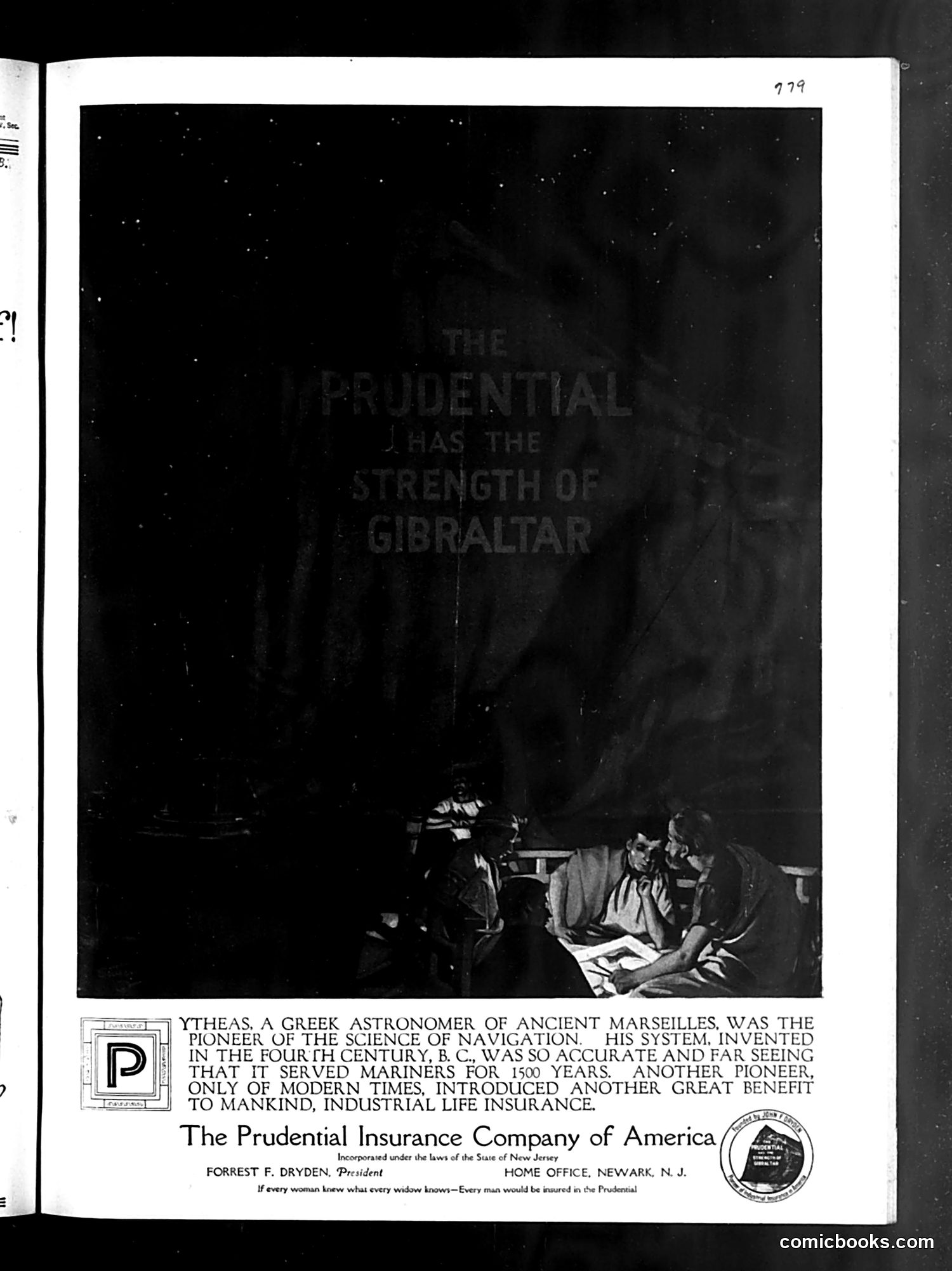
This page is primarily **advertising**, not satire or political commentary. It's a Prudential Insurance Company advertisement that appeared in *Life* magazine. The ad uses a historical narrative framing: it credits Pytheas, an ancient Greek astronomer from Marseilles, as pioneering navigation science—a system that "served mariners for 1500 years." The text then pivots to insurance as another "great benefit to mankind." The dramatic image shows what appears to be classical or biblical figures in shadow against a stone wall, with the text "THE PRUDENTIAL HAS THE STRENGTH OF GIBRALTAR" overlaid—referencing Gibraltar as a symbol of stability and durability. This is a **brand-building advertisement** using historical precedent to suggest Prudential's reliability and lasting value, rather than political or social satire.
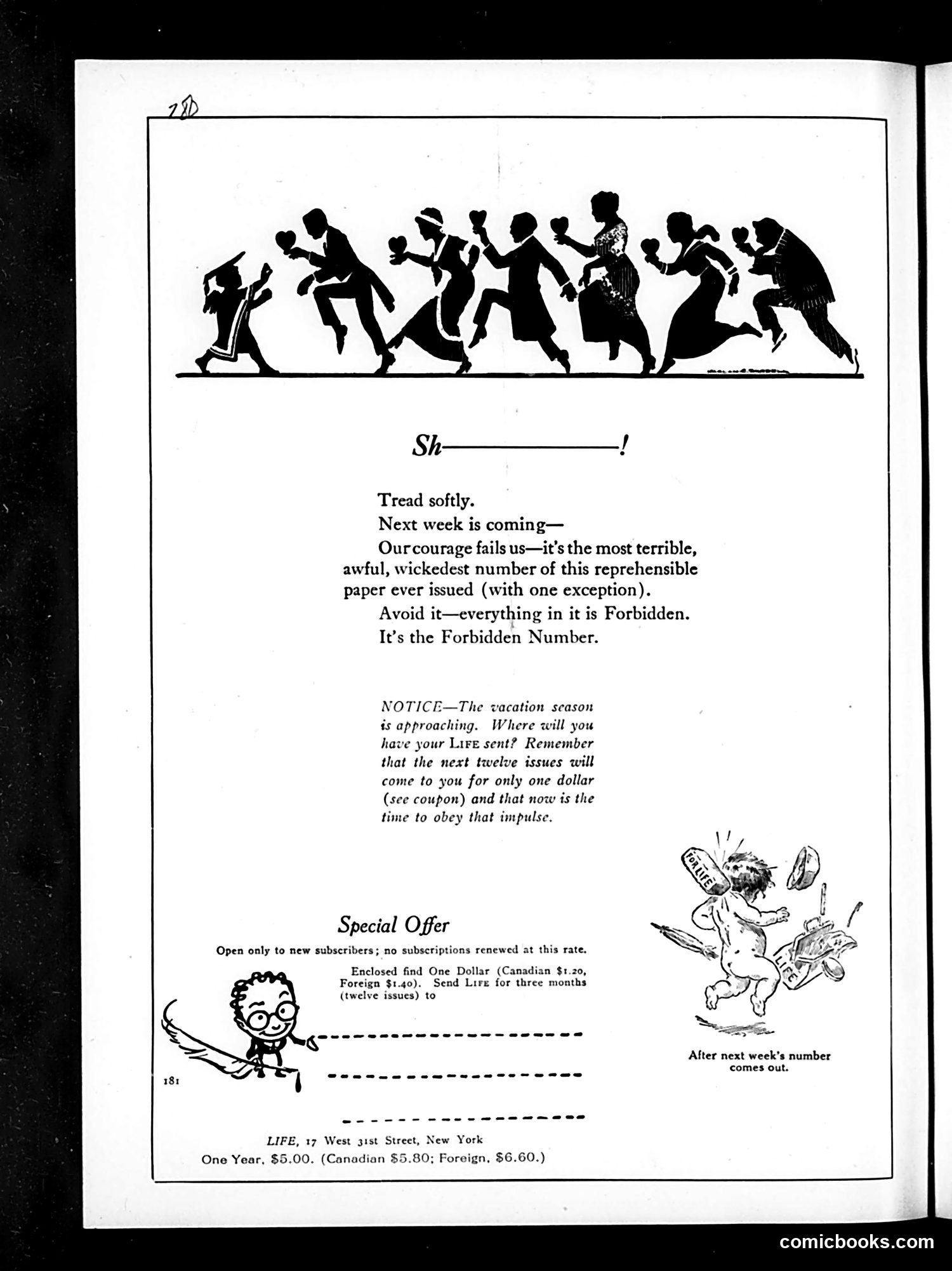
This is primarily a **subscription advertisement** for *Life* magazine, not a political cartoon. The silhouette illustration at top shows people in motion—appearing to run or dance together—paired with the cryptic text "Sh—!" and a warning about next week's issue being "the most terrible, awful, wickedest number of this reprehensible paper ever issued (with one exception)." This appears to be **promotional hyperbole**, teasing readers with mystery about forbidden or scandalous content to come. The "Special Offer" section advertises three-month subscriptions for one dollar to new subscribers, emphasizing urgency as "vacation season is approaching." The cartoon figures (a cherub-like mascot) are decorative elements typical of *Life's* house style. Without knowing the specific date, the exact scandal being teased remains **unclear**, though such language was common promotional rhetoric in early 20th-century satirical magazines.
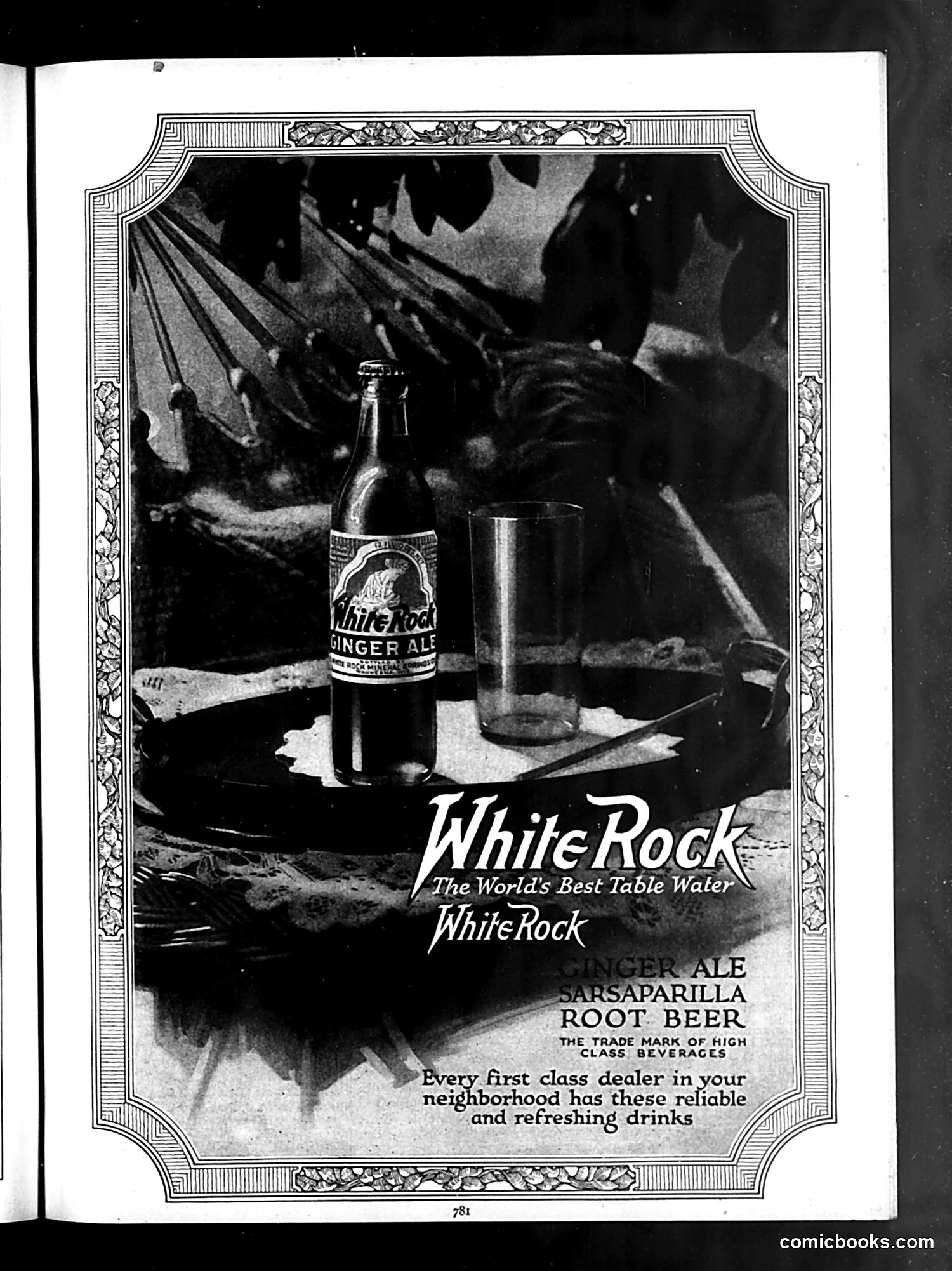
This is **not a political cartoon or satire**, but rather a **commercial advertisement** for White Rock beverages, likely from the early 20th century. The ad promotes three products: Ginger Ale, Sarsaparilla, and Root Beer, all marketed as "The World's Best Table Water." The image shows a bottle and glass in what appears to be an outdoor camping or leisure setting, with people visible in the background. The advertisement's tagline promises that "Every first class dealer in your neighborhood has these reliable and refreshing drinks," positioning White Rock as a premium beverage brand available through quality retailers. This represents standard product advertising from the era, not editorial content or political commentary.
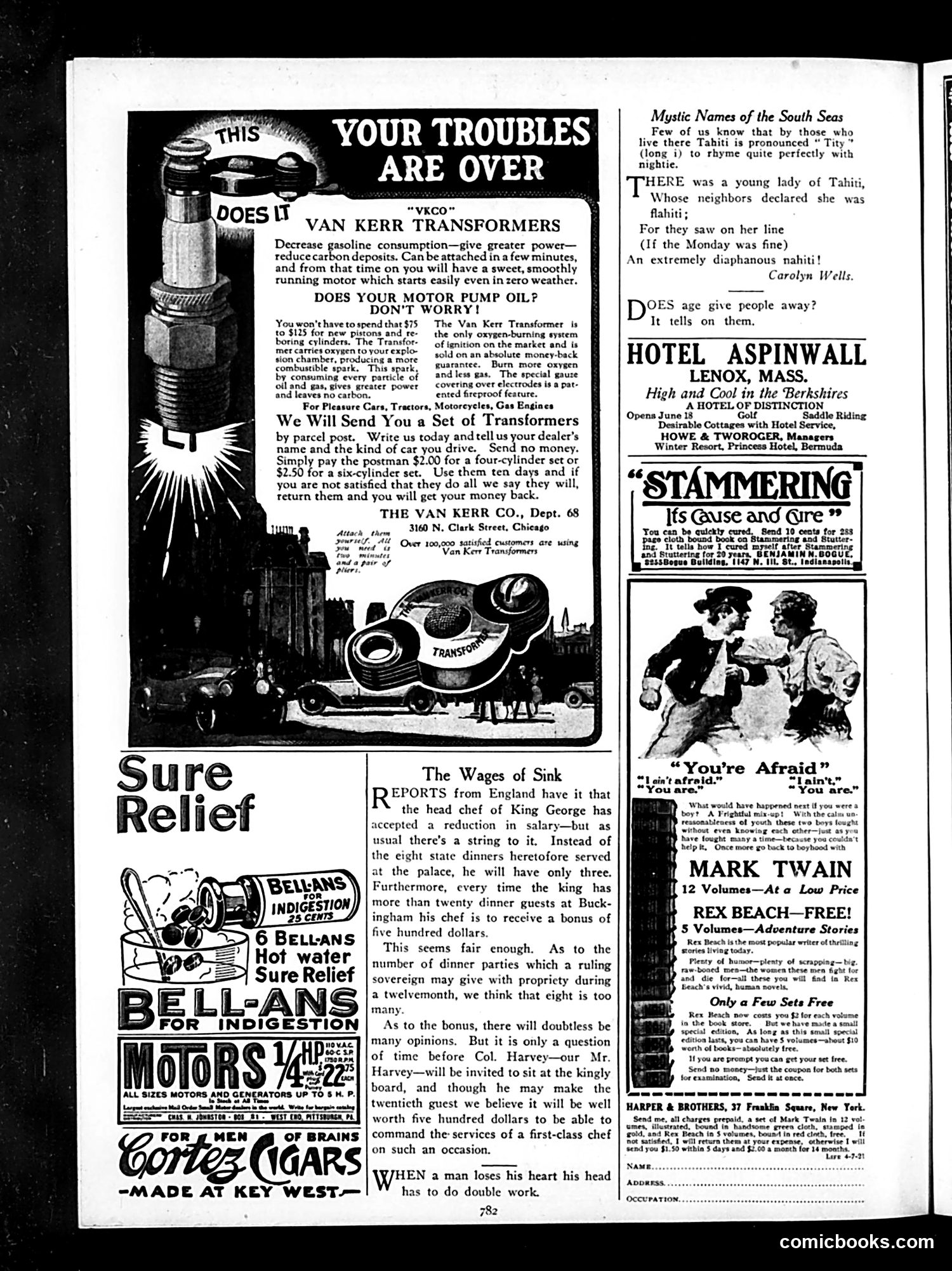
This page is primarily **advertising and filler content** rather than political satire. The dominant advertisements include: - **Van Kerr Transformers**: A motor/engine component marketed to solve cold-weather starting problems - **Bellans for Indigestion**: A digestive remedy - **Motors**: Electrical equipment - **Cortez Cigars**: Marketed "for men of brains" The right column contains brief items: a hotel advertisement, a speech impediment treatment ("Stammering"), a Mark Twain book promotion, and a short piece titled "The Wages of Sink" commenting on King George's reduced dinner parties—a minor social observation rather than sharp satire. The "Mystic Names of the South Seas" item is a light cultural note about Tahitian pronunciation. Overall, this is a typical early 20th-century magazine page mixing advertisements with brief, gentle humor rather than pointed political commentary.
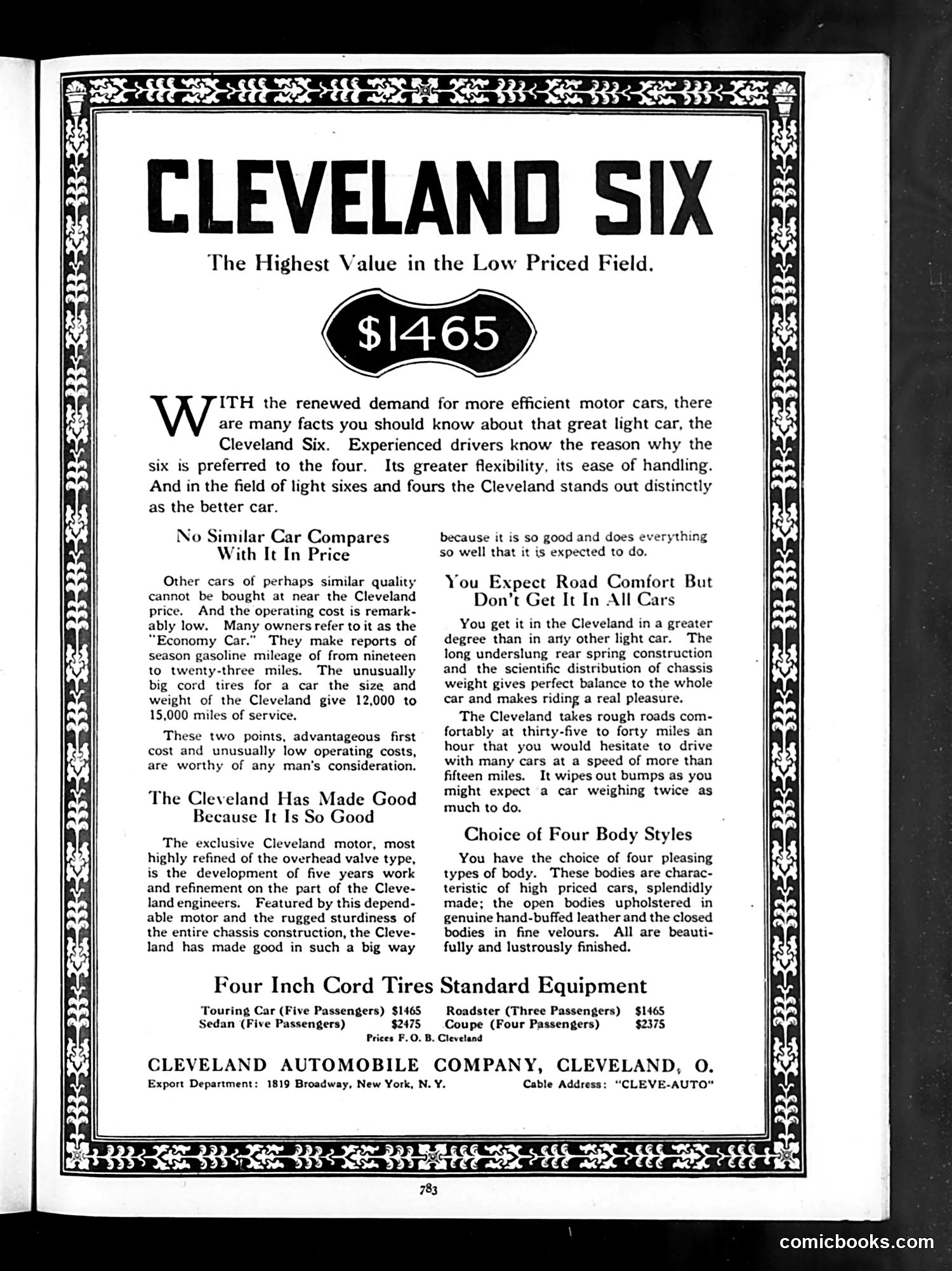
This is a full-page advertisement for the Cleveland Six automobile, not satirical content. The ad promotes the car as "the highest value in the low priced field" at $1,465, emphasizing its efficiency, handling, and comfort compared to competitors. Key selling points include: fuel economy (19-23 miles per gallon), durability (12,000-15,000 miles of service), and comfort features like rear spring construction. The ad highlights four available body styles and standard four-inch cord tires. The "cartoon" element is minimal—there's only a decorative border and the price display. This appears to be from a period when Life magazine published substantial advertising alongside editorial content, before modern magazine layout conventions separated advertising clearly from editorial material.
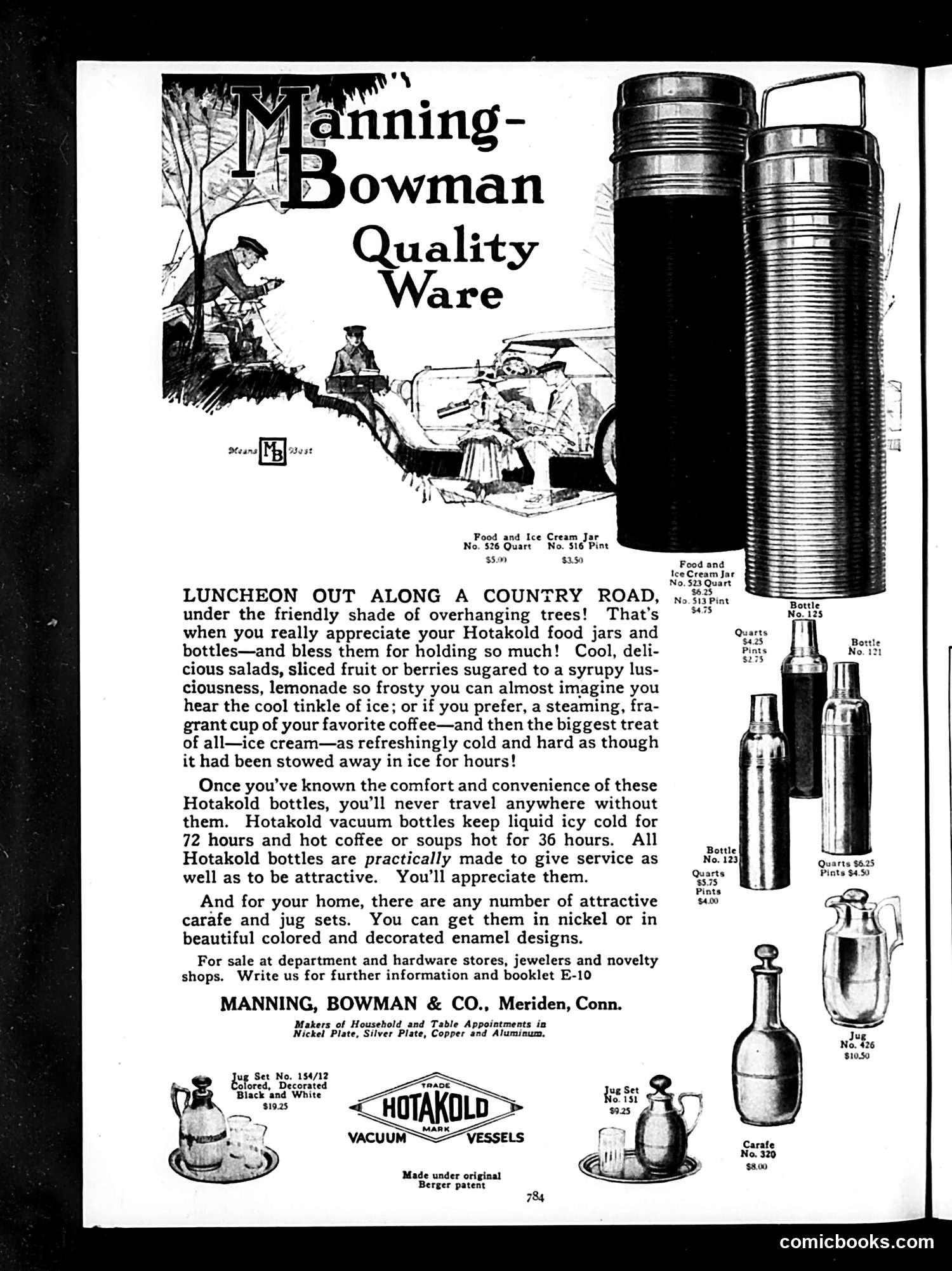
This page is primarily **advertising, not satire or political commentary**. It's a Manning-Bowman Quality Ware advertisement for Hotakold vacuum bottles and related products. The ad features an illustrated scene of people enjoying a country picnic under trees—a nostalgic, idealized image meant to appeal to consumers. The text emphasizes the practical benefits: keeping food cold for 72 hours and beverages hot for 36 hours. Various bottle sizes and styles are displayed with prices (ranging from $1.25 to $10.50), along with product categories like food jars, carafe sets, and jug sets available in nickel, silver plate, or copper finishes. There is **no political cartoon or satire here**—this is straightforward early-20th-century consumer product marketing targeting middle-class families interested in outdoor leisure activities.
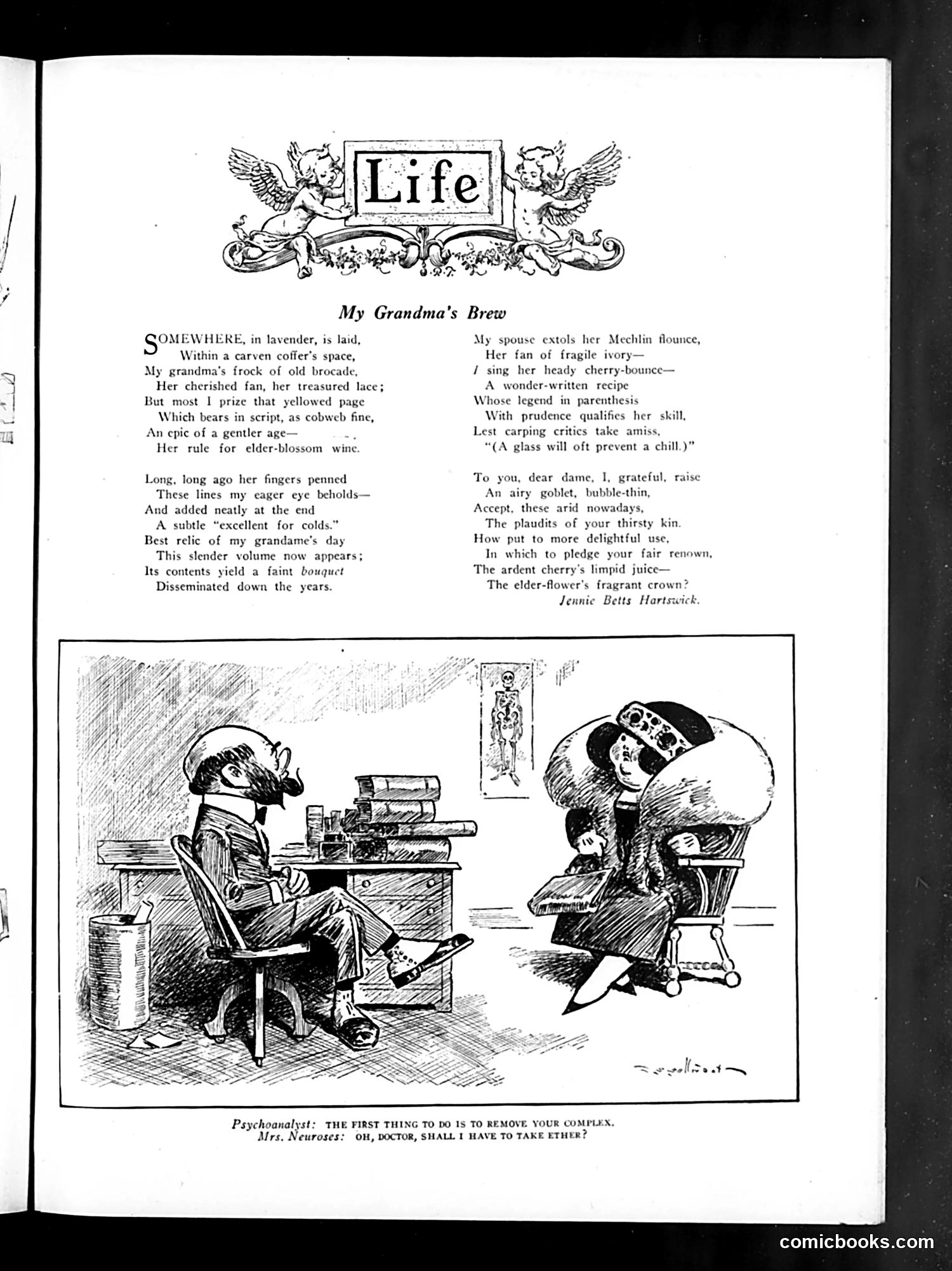
This page features a poem titled "My Grandma's Brew" by Jennie Betts Horowitz celebrating an old family recipe for elder-blossom wine, presented nostalgically as a cherished heirloom. The accompanying cartoon satirizes early 20th-century psychoanalysis. A patient sits with an analyst, and the caption reads: "Psychoanalyst: THE FIRST THING TO DO IS TO REMOVE YOUR COMPLEX. Mrs. Neuroses: OH, DOCTOR, SHALL I HAVE TO TAKE ETHER?" The joke mocks both Freudian psychology's then-new concepts ("complexes," "neuroses") and the patient's literal misunderstanding—she assumes "removing" a complex requires anesthesia like a surgical procedure. This reflects contemporary skepticism about psychoanalysis as pseudoscientific pseudointellectual nonsense, treating psychological problems as absurdly as one might treat physical ailments.
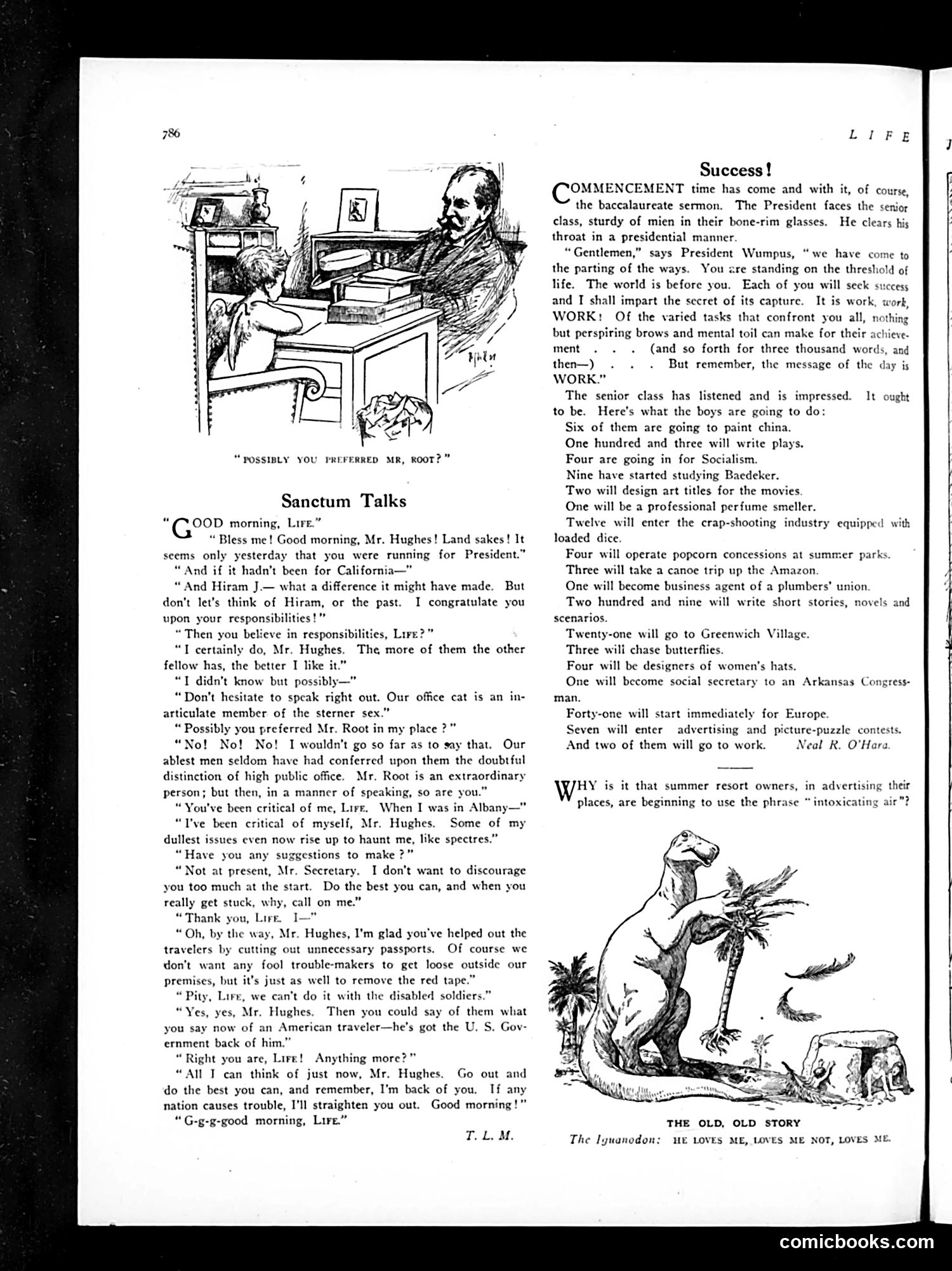
The "Sanctum Talks" section features a conversation between Mr. Hughes (the editor, seated at desk) and Lire, his secretary. Hughes discusses commencement season and reflects on past editorial decisions, particularly regarding passport removals and troublemakers. The main cartoon, labeled "Possibly you preferred Sir, Root?" depicts Hughes at his desk with a visitor. The caption sarcastically references Elihu Root, appearing to critique Hughes's editorial choices or policies. Root was a prominent political figure, suggesting the cartoon comments on editorial leadership or controversial decisions. The "Success!" section lists outcomes for graduating seniors—various career paths mixing conventional and satirical choices (advertising, Socialism, perfume-smelling, loaded dice, canoe trips). The page exemplifies *Life's* characteristic editorial humor blending workplace banter with topical social commentary.
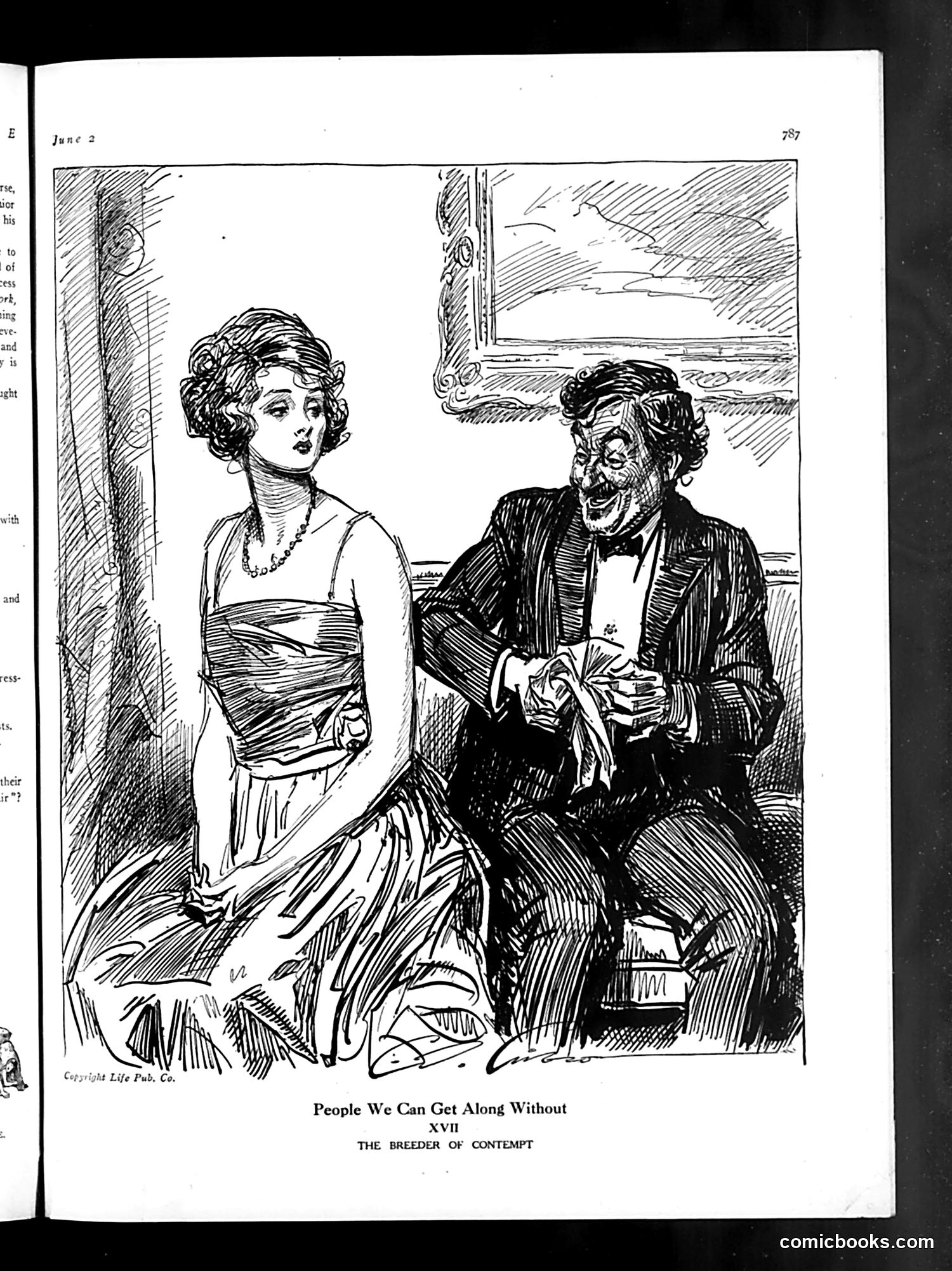
This satirical illustration depicts a confrontation between two figures: a well-dressed woman in an elegant gown and a disheveled man in formal wear who appears agitated or contemptuous. The title suggests social commentary about interpersonal friction. The caption "The Breeder of Contempt" likely references someone who generates social discord or disdain through their behavior or character. The contrasting appearances—her composed elegance versus his apparent emotional outburst—suggests a critique of a particular personality type: likely someone who provokes negative reactions in others through their conduct. Without additional context about Life magazine's 1910s-era editorial focus, the specific identity remains unclear, though the visual language suggests commentary on social types rather than identifiable individuals.
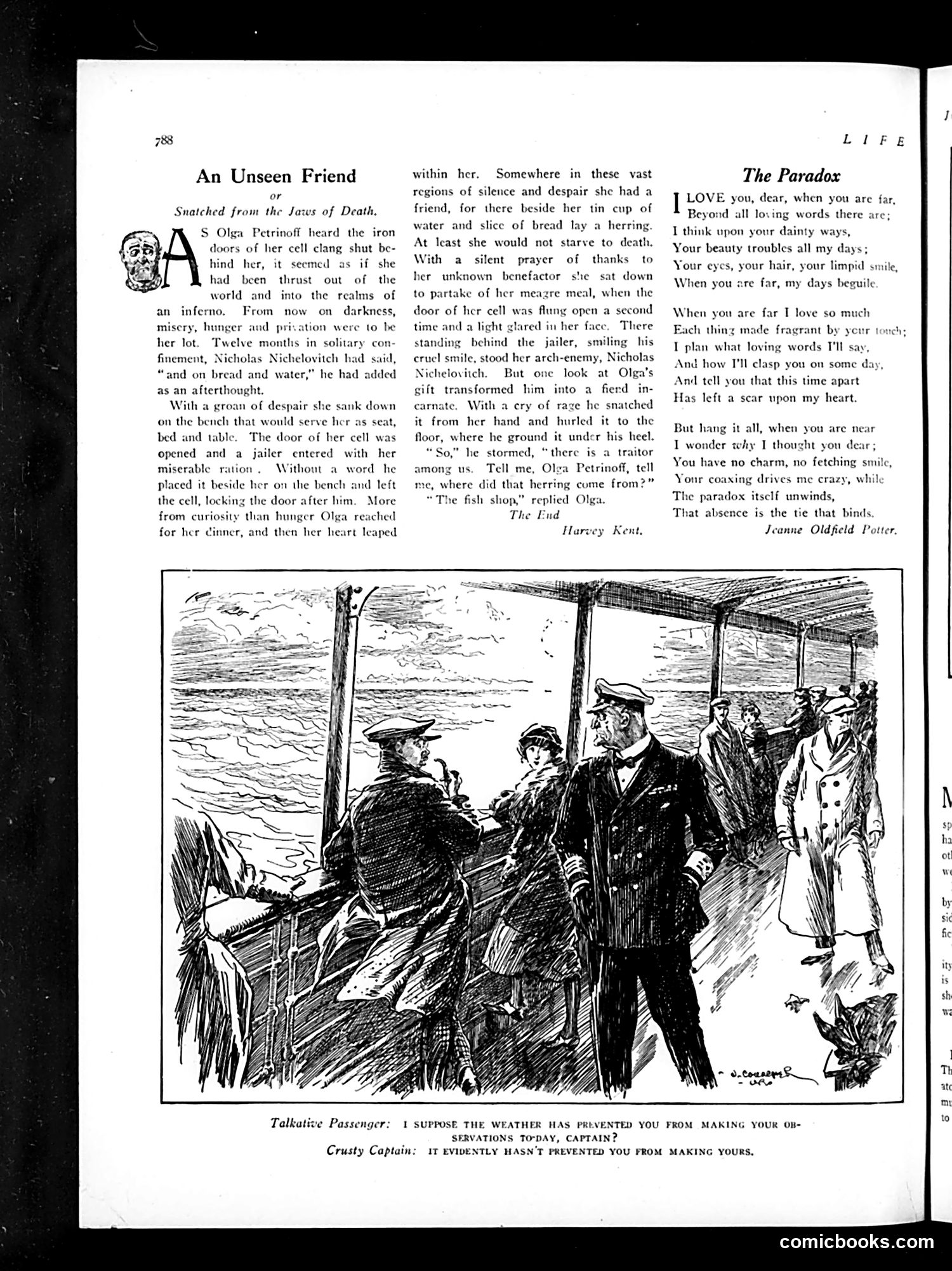
This page contains three literary pieces: "An Unseen Friend" (a short story by Harvey Kent about a prisoner named Olga Petrovich), and "The Paradox" (a poem by Joanna Oldfield Potter about long-distance love). The cartoon at bottom depicts a shipboard scene with well-dressed passengers. A "Talkative Passenger" remarks that weather prevented someone from making observations, to which a "Crusty Captain" replies that weather hasn't prevented the passenger from making *their own* observations—a joke about the passenger's relentless chattering. The humor is straightforward social satire about an annoying, garrulous traveler, requiring no specialized historical context beyond understanding early 20th-century shipboard social hierarchies and the stock character of the tiresome talker.
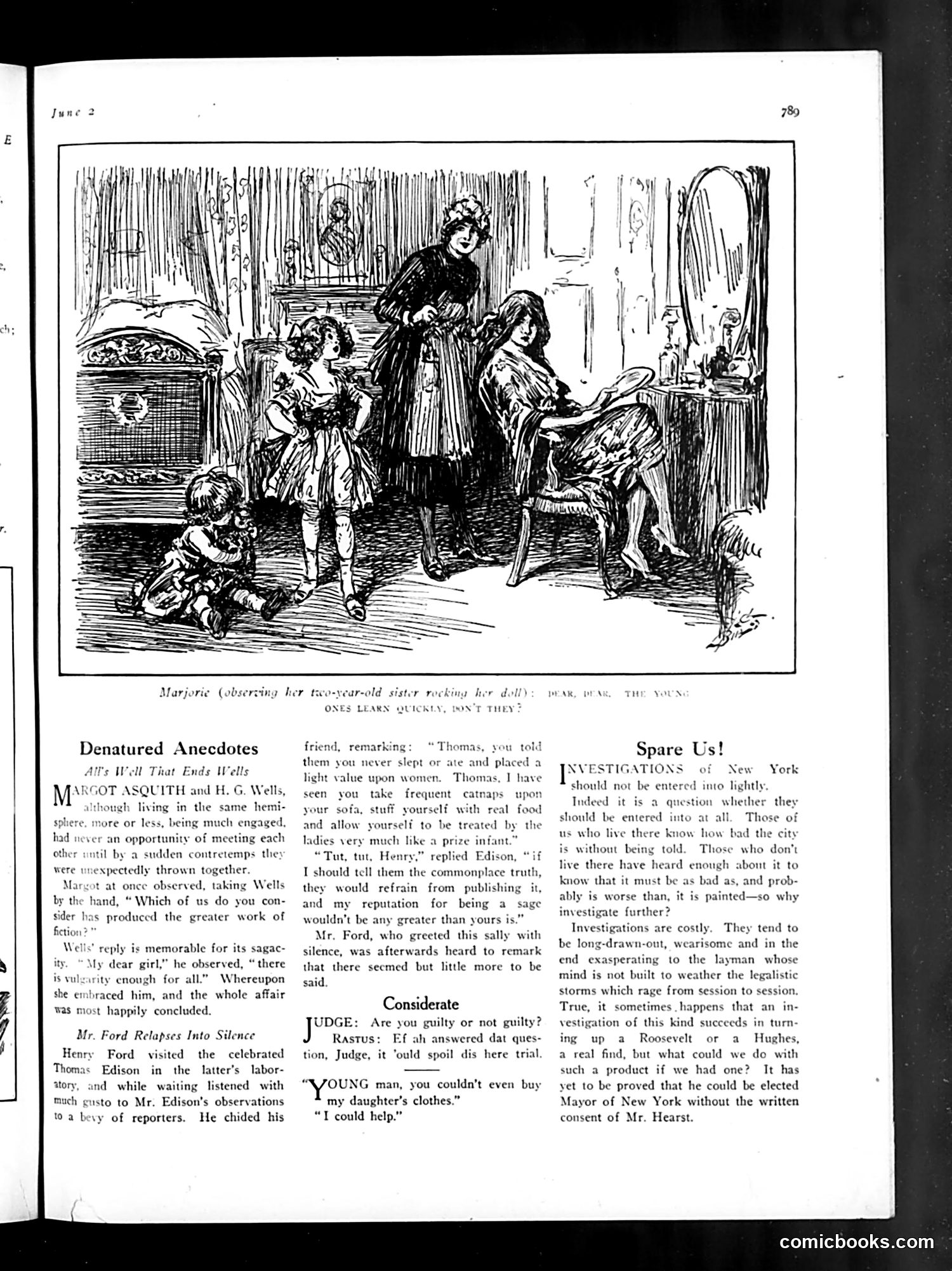
This page contains three separate sections: an illustration depicting a domestic scene with children and adults, followed by three short humor columns titled "Denatured Anecdotes," "Spare Us!," and "Considerate." The main illustration shows what appears to be a Victorian-era household scene with a governess or nanny and children. The caption references "Marjorie" correcting her sister about playing with dolls, with dialogue about "the young ones" being noisy. The three text sections are brief satirical anecdotes poking fun at various social situations: one involving Thomas Edison and Henry Ford, another critiquing New York City investigations, and a final joke about courtroom testimony regarding purchasing clothing for a daughter. These are lighthearted, domestic humor pieces typical of Life magazine's satirical content from this era.
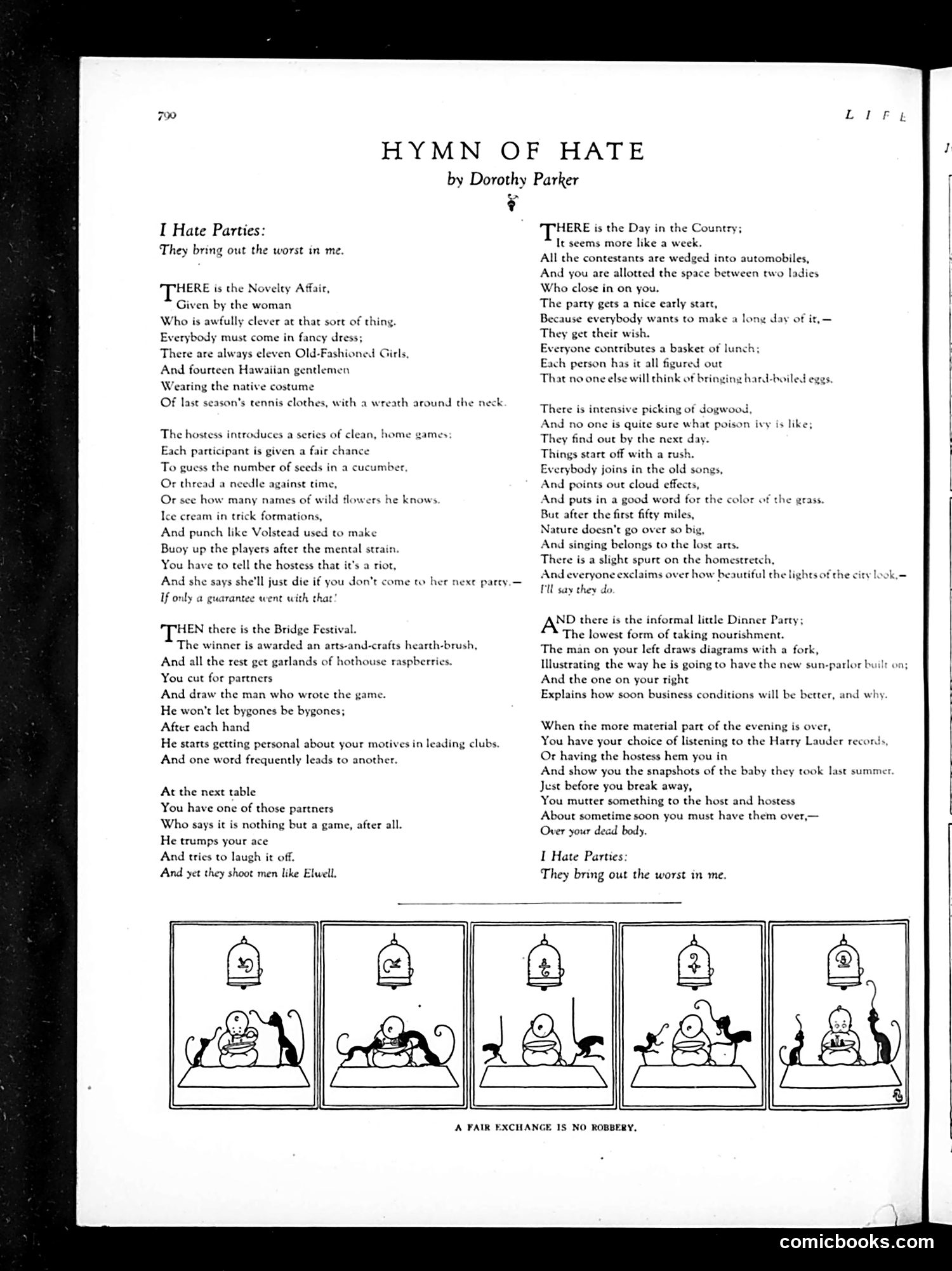
This is Dorothy Parker's satirical poem attacking American social gatherings, particularly country club parties and bridge tournaments. The poem mocks the tedium and social pretension of these events: forced games, awkward conversation, and the obligation to attend despite their dullness. The five illustrated panels at the bottom appear to show a sequence of dinner party scenes with exaggerated, somewhat grotesque figures around a table under a bell jar—suggesting claustrophobia and artificiality. The caption "A fair exchange is no robbery" hints at the transactional, hollow nature of these social obligations. Parker's satire targets middle-class aspiration and the performative nature of leisure activities that supposedly bring joy but actually "bring out the worst in me."
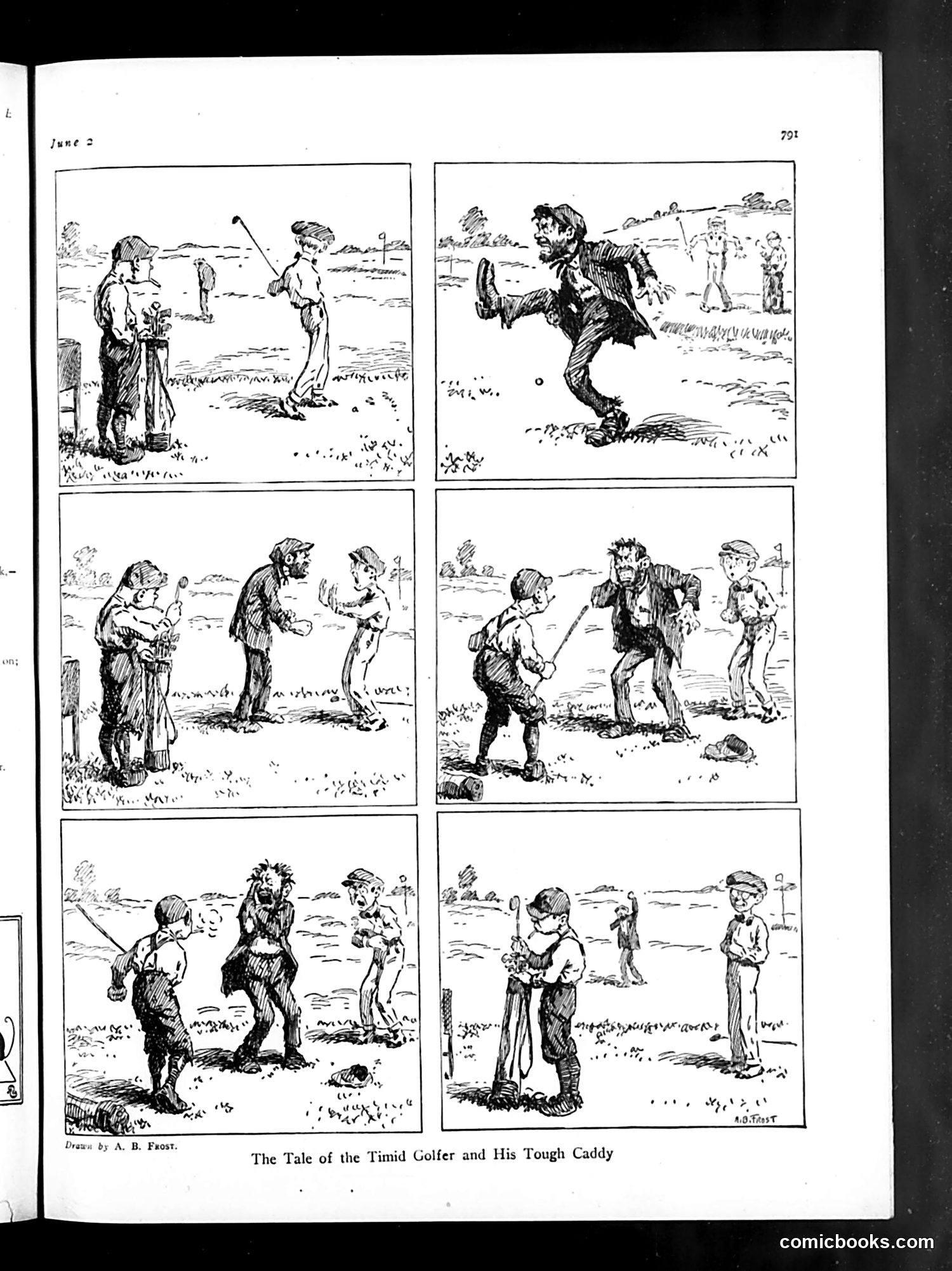
This six-panel comic strip, illustrated by A. B. Frost, depicts a humorous golf scenario. The narrative follows a nervous, thin golfer paired with a rough, aggressive caddy. The sequence shows their interaction: the caddy appears to intimidate or mock the golfer's playing; in one panel the caddy seems to strike an exaggerated pose while the golfer watches nervously; later panels show the caddy becoming increasingly dominant or controlling during their round. The humor derives from class and personality contrasts—the genteel sport of golf disrupted by a working-class caddy's aggressive behavior, turning the expected hierarchical relationship upside down. The "timid" golfer is literally outmatched by his hired help's toughness and confidence.
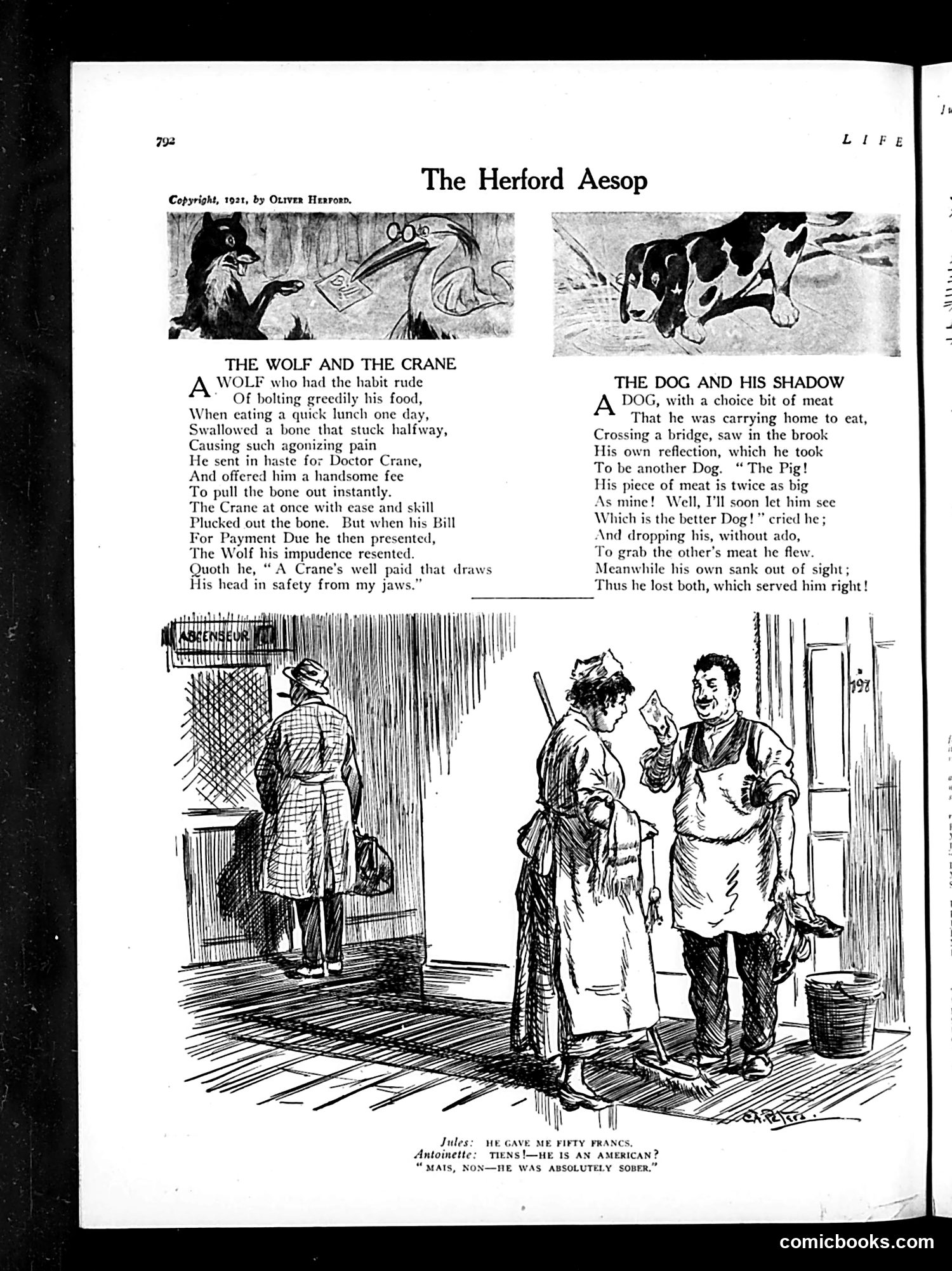
This page presents two classic Aesop's fables illustrated with both animal drawings and human cartoons. **"The Wolf and the Crane"** depicts the traditional moral tale: a wolf with a bone stuck in its throat hires a crane to remove it, then refuses payment, arguing the crane should be grateful to escape alive. **"The Dog and His Shadow"** shows a dog losing his real meat by greedily snapping at his own reflection's meat in water—a fable about losing what you have through excessive desire. The bottom cartoon appears to be a modern satirical commentary, showing two people discussing an American who gave fifty francs. The humor likely references post-WWI attitudes toward Americans abroad, portraying them as wealthy but unsophisticated spenders. The comment "absolutely sober" suggests surprise that an American could be restrained.
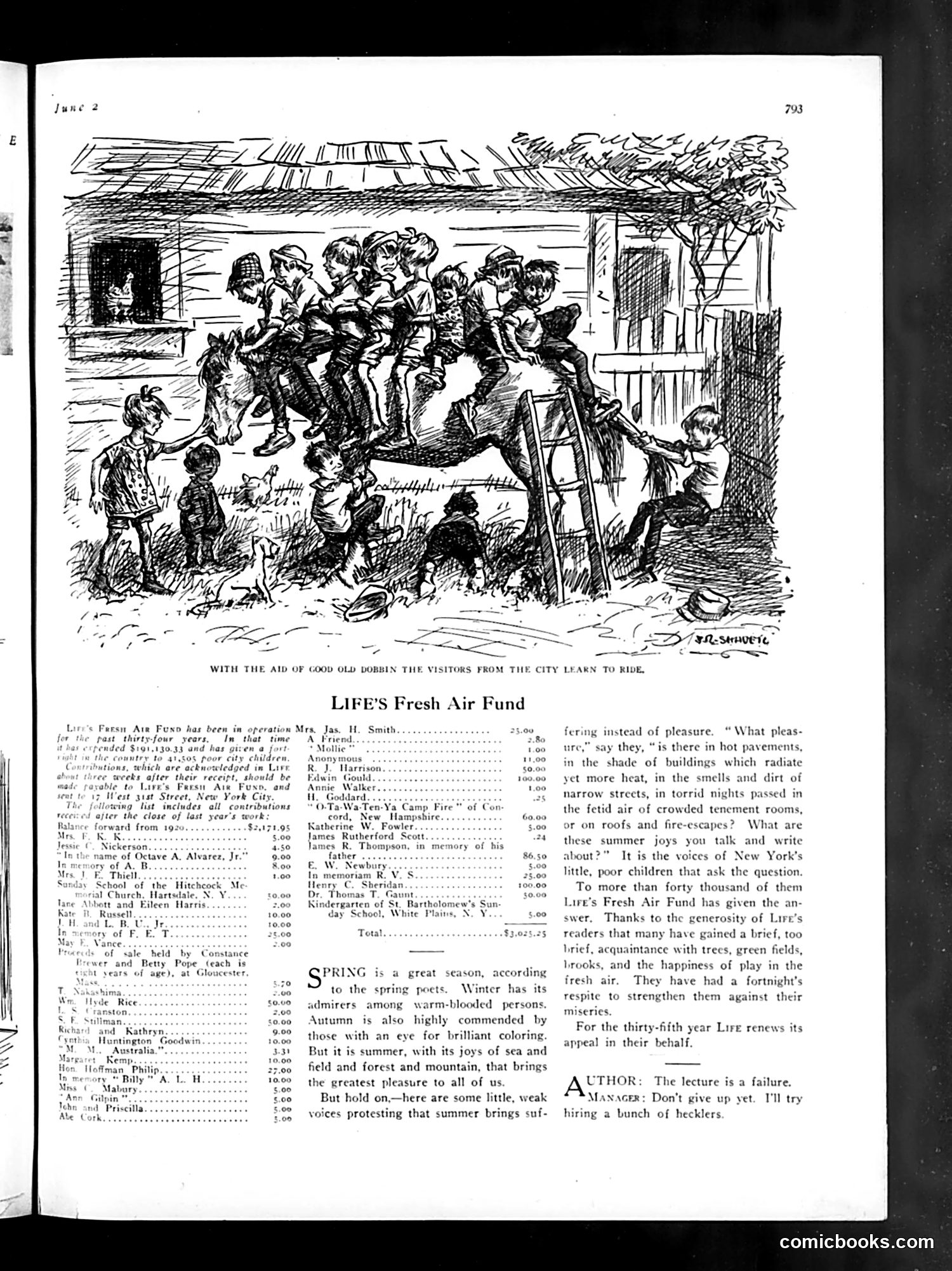
This page promotes **Life's Fresh Air Fund**, a charitable program that had operated for 34 years, providing poor city children temporary escapes to rural areas during summer. The cartoon depicts city children riding a horse-drawn wagon, heading out of the city with aid of "good old Dobbin" (the horse). The illustration contrasts the oppressive urban environment—hot pavements, tenement rooms, fetid air—with the restorative benefits of fresh air, trees, and green fields. The text acknowledges that while spring and autumn are celebrated by poets, summer brings suffering to poor urban children trapped in cramped, overheated conditions. The Fund's mission was addressing this inequity by giving impoverished youngsters brief respites in healthier environments. The page includes donor lists and a satirical exchange between an author and manager about hiring hecklers to enliven a failed lecture—unrelated humor typical of Life's format.
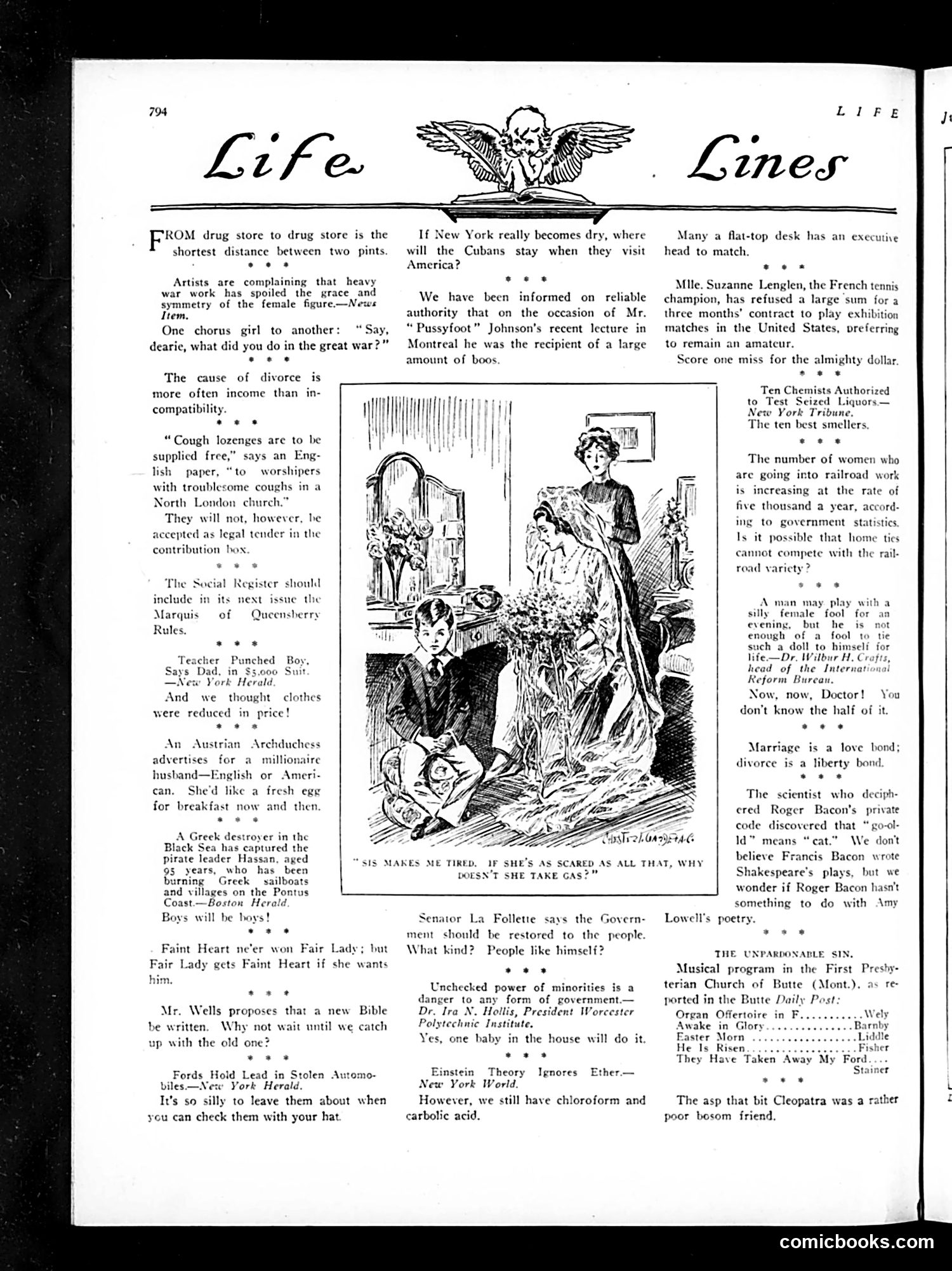
This page from *Life* magazine presents a collection of satirical one-liners and a central cartoon mocking American social attitudes during the Prohibition era (likely early 1920s). The **central cartoon** depicts a woman at a door telling a child "Sis makes me tired. If she's as scared as all that, why doesn't she take gas?"—a dark joke about using domestic gas for suicide, reflecting Prohibition-era anxieties. **Key satirical targets include:** - **"Pussyfoot" Johnson**: A real anti-alcohol crusader whom the text mocks for receiving "boos" in Montreal, suggesting public resistance to Prohibition - **Prohibition itself**: Multiple jokes about alcohol (Cubans visiting dry New York, "ten chemists authorized to test seized liquors") - **Gender and labor**: Jokes about women entering railroad work and the "female figure" being damaged by war work - **Class hypocrisy**: Senator La Follette's call to "restore government to the people" is mocked as hypocritical The humor relies on readers recognizing contemporary figures and understanding the social tensions of post-WWI America—particularly anxiety over Prohibition's enforcement and women's changing social roles.
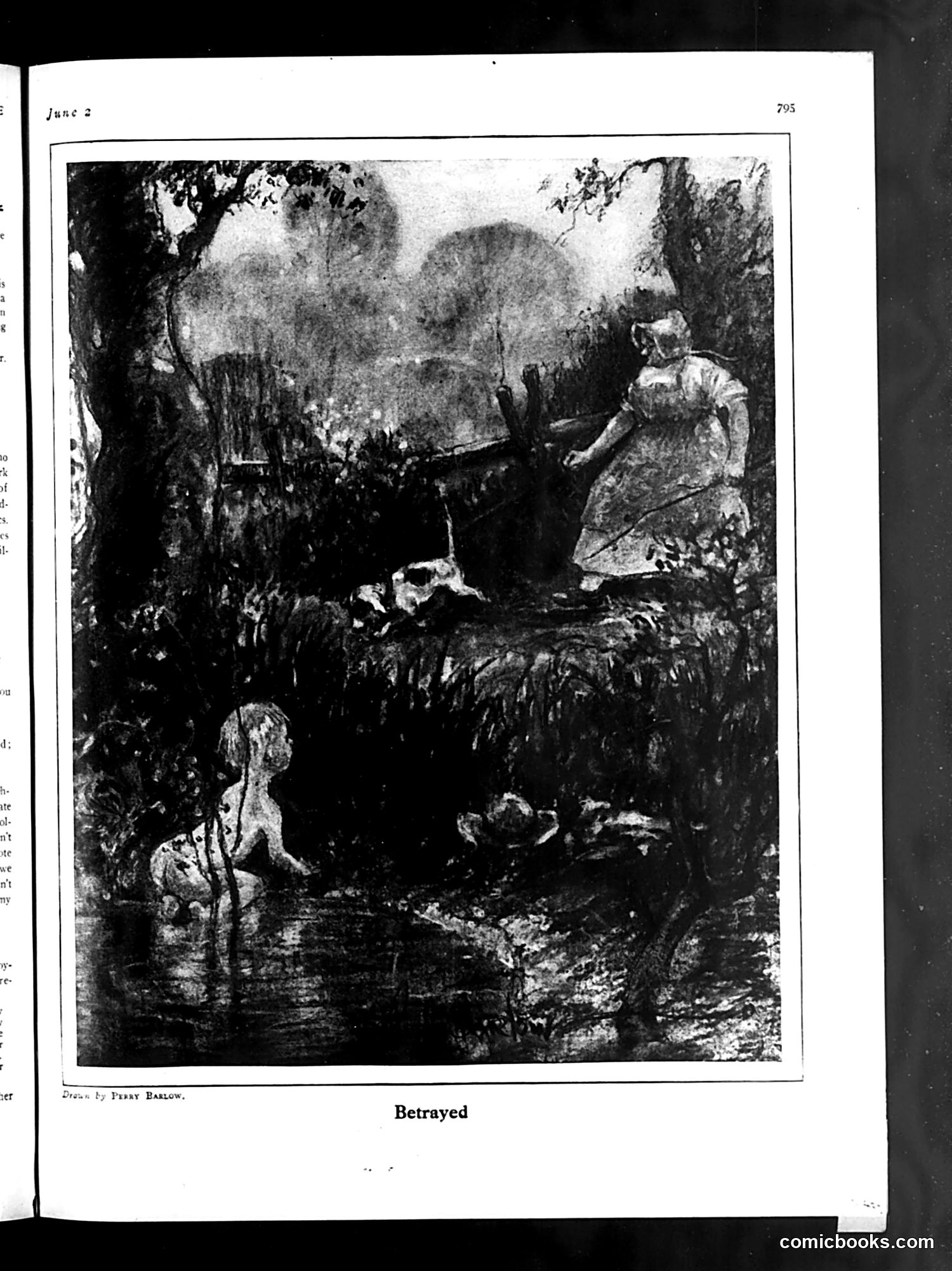
This is a dramatic illustration by Percy Harlow titled "Betrayed," appearing on page 795 of Life magazine (dated June 2, though the year isn't visible). The image depicts a woodland or pastoral scene with multiple figures near water. A woman in light clothing stands prominently on the right, while another figure sits in the water on the left. Additional figures appear in the darker background among trees. Without additional context from the magazine's text, the specific narrative or satirical point remains unclear. The title "Betrayed" suggests a dramatic story of deception or broken trust, but the exact subject—whether it references a contemporary political event, social scandal, literary work, or moral tale—cannot be determined from the image alone.
This page contains two satirical essays rather than visual cartoons. **The first essay** mocks American political anxiety by sarcastically invoking the Monroe Doctrine in response to solar sunspots and aurora borealis that disrupted telegraph and railroad systems on May 14th. The author ridicules isolationist Senator Henry Lodge (a prominent Monroe Doctrine advocate) by suggesting celestial phenomena constitute "foreign interference" requiring political response—absurdist satire attacking overreliance on protectionist doctrine. **The second essay** discusses Lord Reading's (British Viceroy) meeting with Mohandas Gandhi, leader of Indian independence movements. The author characterizes Gandhi as an ascetic, non-violent revolutionary attracting spiritual followers across religious lines. He notes Gandhi's power demonstrated when he drew only 30 people to an event intended for 30,000—showing his influence over Indians despite (or through) rejection of pomp. The piece appears sympathetic to Gandhi's character while cautiously noting uncertainty about his true intentions.
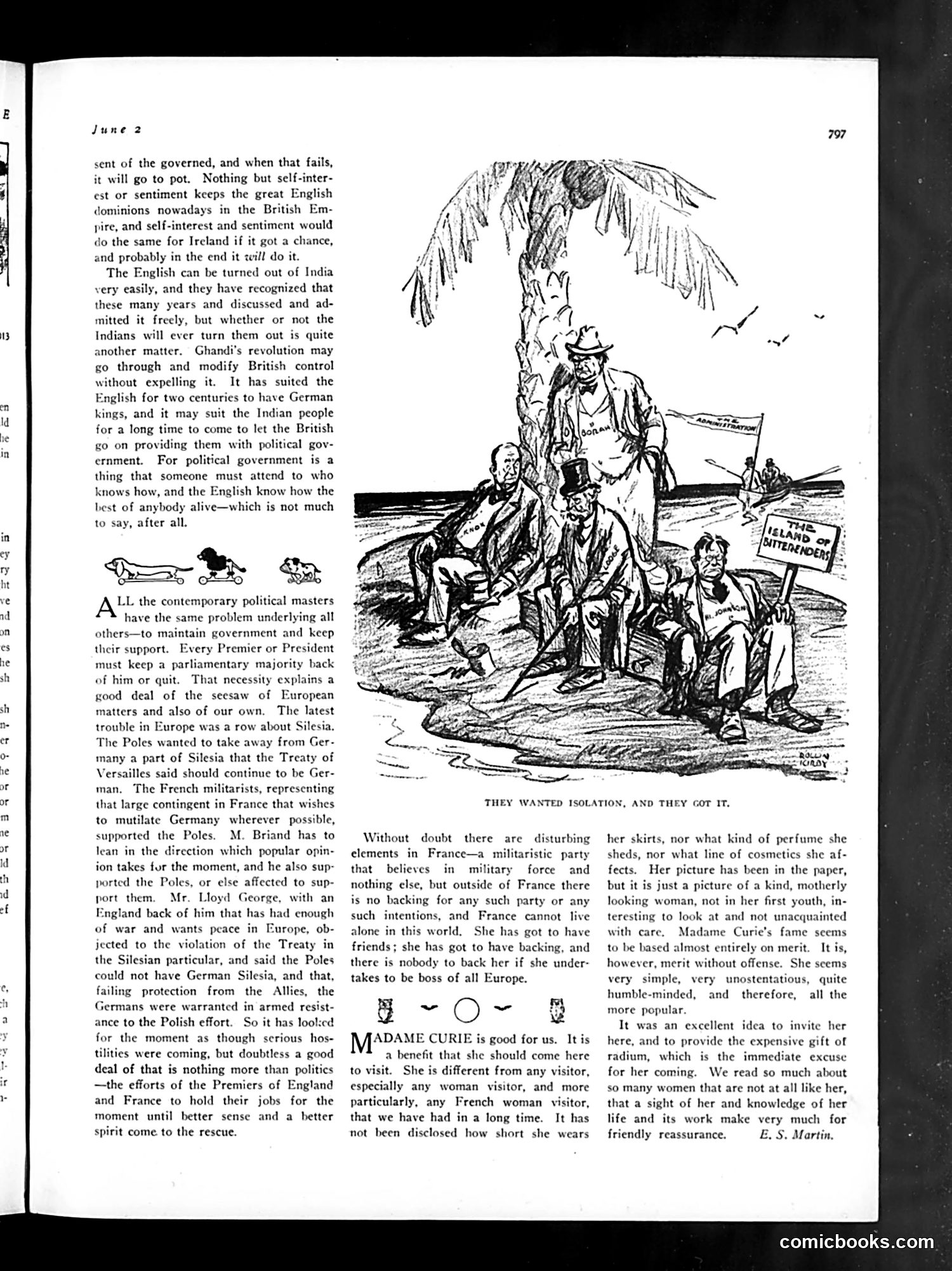
This cartoon illustrates post-WWI European territorial disputes, specifically the Silesian question between Poland and Germany following the Treaty of Versailles. The figures appear to represent European nations as characters beneath a dying tree labeled "Island of Nationalism." The satire critiques European leaders—particularly French Premier Briand and British PM Lloyd George—trapped by nationalist politics. The text explains that French militarists wanted to weaken Germany by supporting Polish claims to German Silesia, while Lloyd George opposed violating the treaty. The cartoon's title mocks how European nations pursued isolationist, nationalist agendas rather than cooperative peace-building. The "dying tree" symbolizes how nationalism and military posturing were destroying Europe's post-war recovery. The page also discusses Madame Curie's upcoming American visit as a positive counterpoint—a figure of international scientific cooperation and simple dignity versus political posturing.
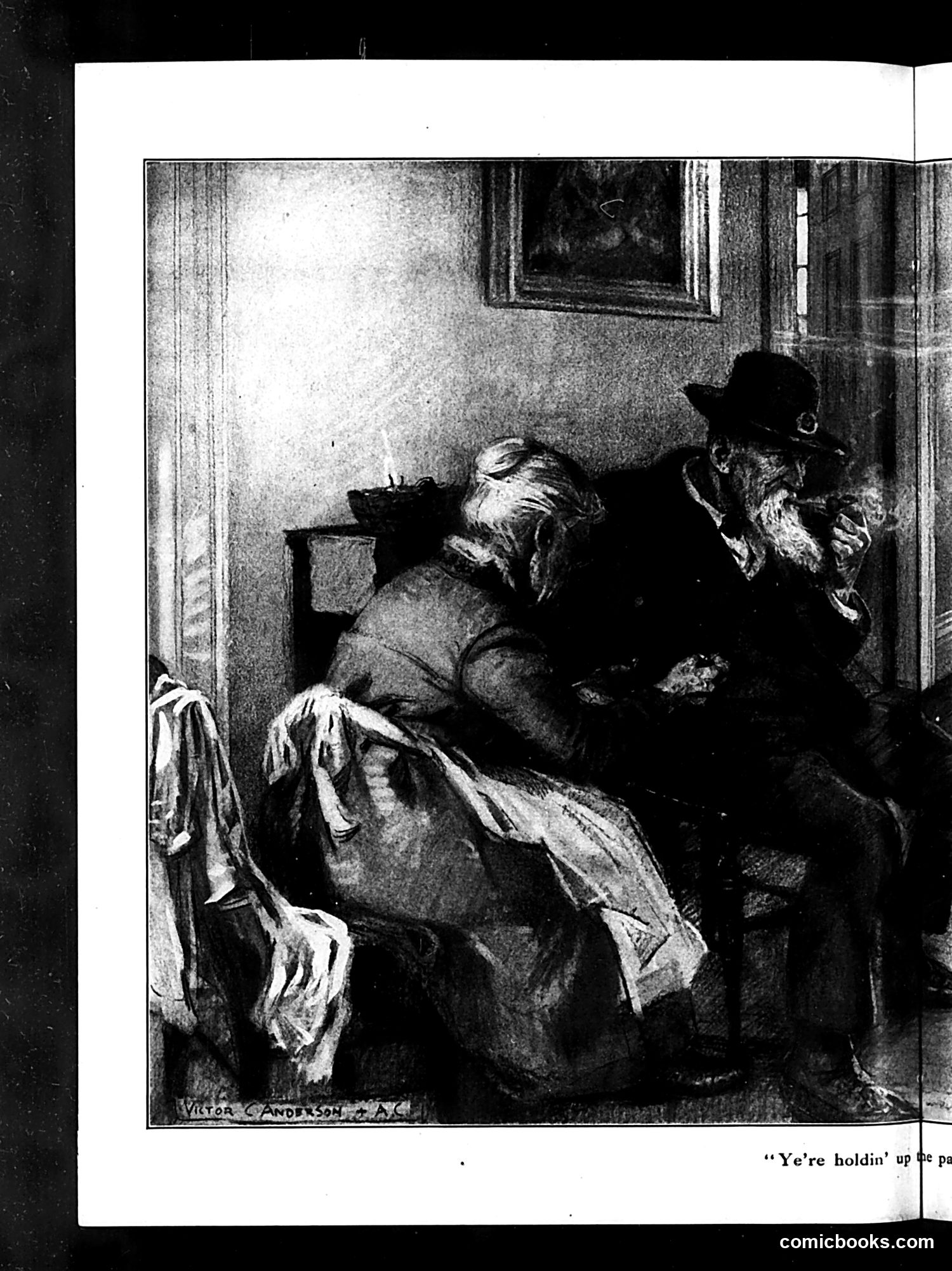
This appears to be a Victor C. Anderson illustration from *Life* magazine depicting a scene of police apprehension. Two figures—one wearing a hat and appearing disheveled—are being confronted by what seems to be law enforcement or authority figures in an interior setting. Laundry or cloth items hang in the background. The incomplete caption reads "Ye're holdin' up" (likely "Ye're holdin' up..."), suggesting the figures are being arrested for robbery or similar crime. Without the complete caption and publication date, the specific satirical target remains unclear. However, the style and subject matter suggest commentary on crime, law enforcement, or possibly immigrant/working-class stereotypes common to early-to-mid 20th century American satire. The dialectical speech pattern ("Ye're") may indicate ethnic or class-based characterization typical of the era's cartooning.
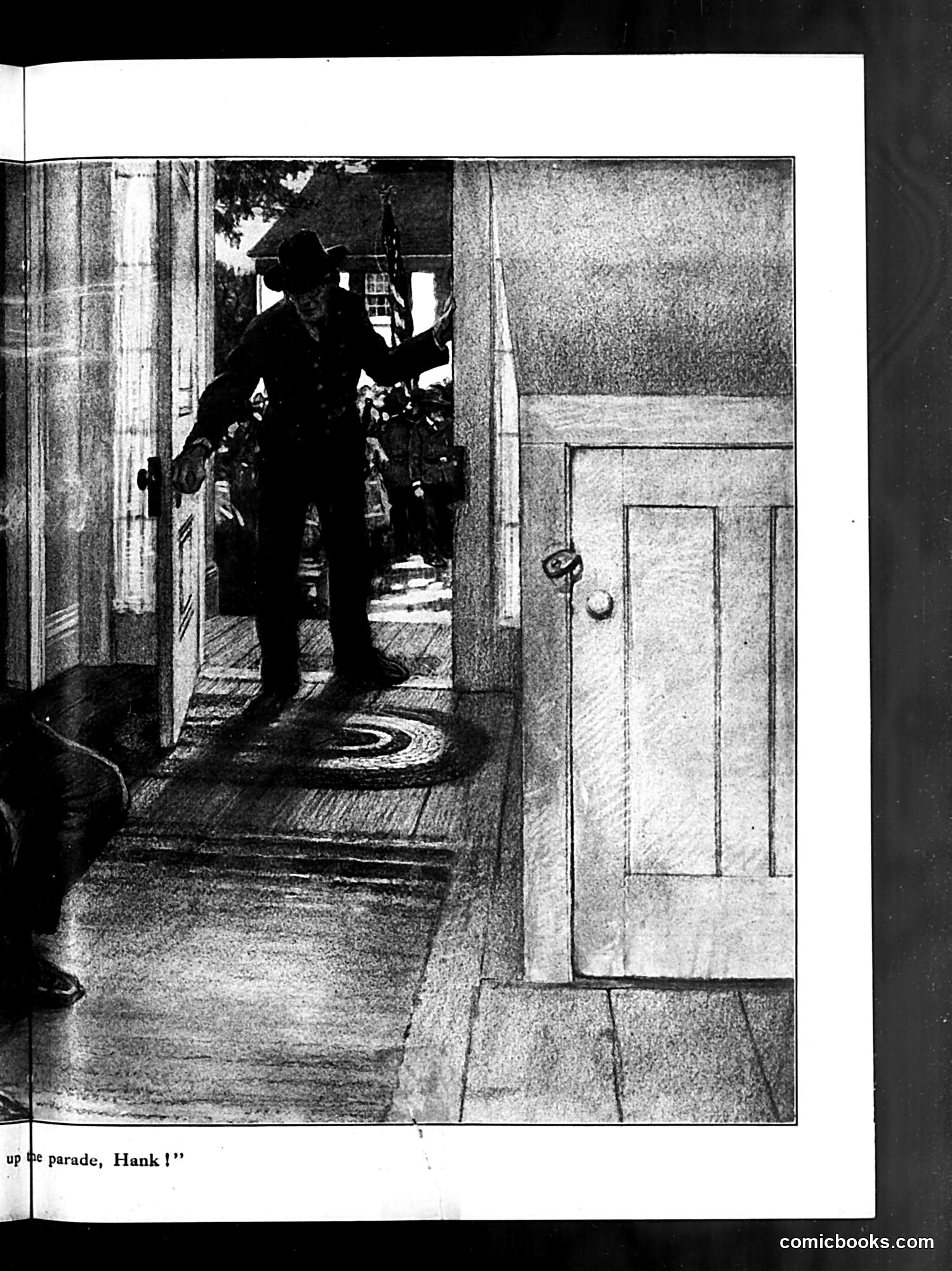
This appears to be a black and white illustration from Life magazine showing a silhouetted figure in formal attire and a hat standing in a doorway, addressing people gathered outside. The visible OCR text fragment reads "up the parade, Hank!'" which suggests someone is calling out to a character named Hank. Without additional context or visible caption text, I cannot definitively identify the specific political figures or events referenced. The formal dress and doorway setting suggest this may depict a social or political scenario, but determining the exact satire or commentary would require: - Complete caption text - The publication date - Fuller context from surrounding pages The image's composition emphasizes the silhouetted authority figure addressing an unseen crowd, suggesting themes of leadership or announcement.
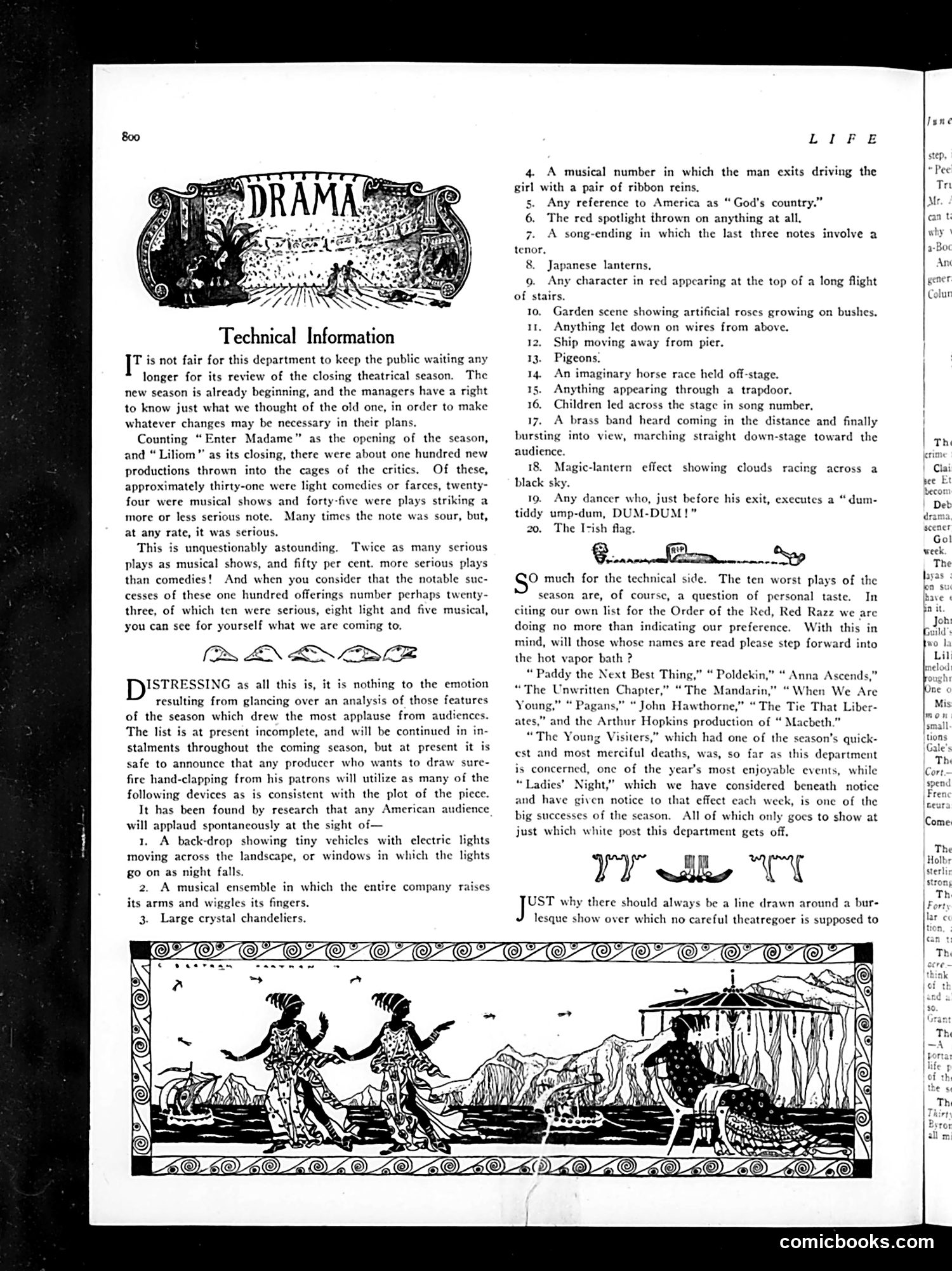
This page satirizes the theatrical season by mocking what audiences actually applaud for, rather than quality drama. The anonymous critic lists 20 "technical devices" guaranteed to produce applause—artificial spectacle rather than genuine artistry. Items include: tiny electric-lit vehicles on backdrops, actors wiggling fingers in unison, crystal chandeliers, "God's country" references, red spotlights, Japanese lanterns, characters descending staircases, artificial roses, things lowered on wires, ships moving away, pigeons, offstage horse races, trapdoors, children in songs, brass bands, and Irish flags. The point: Broadway audiences were predictably manipulated by cheap theatrical tricks and nationalist sentimentality rather than demanding substantive performances. The critic then lists the season's ten worst plays—including "Paddy the Next Best Thing" and others—implying these likely relied on such devices. The decorative illustration shows performers in an exoticized stage scene, reinforcing the artificiality critique.
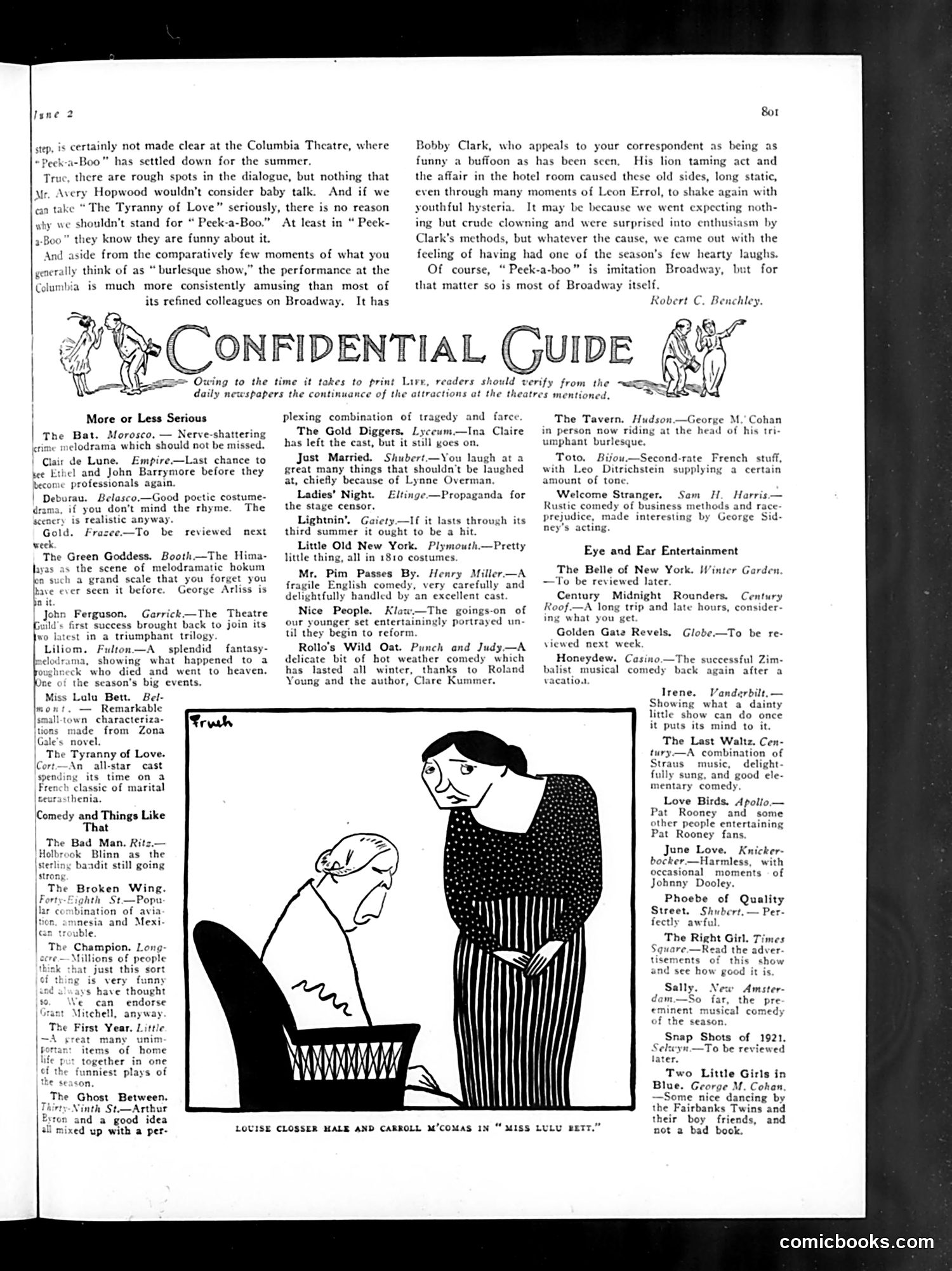
This page features theater reviews and a cartoon illustration labeled "LOUISE CLOSSER HALE AND CARROLL M'COMAS IN 'MISS LULU BETT.'" The cartoon depicts a woman in 1920s dress scolding or lecturing a man whose face shows distress or contrition. The illustration appears to accompany reviews of Broadway productions, likely satirizing a scene from one of the plays discussed. The "Confidential Guide" section reviews current theatrical productions with witty commentary—praising Bobby Clark's buffoonery in "Peek-a-Boo," noting that "Peek-a-boo" is "imitation Broadway, but for that matter so is most of Broadway itself" (critic Robert C. Benchley's jab at theatrical authenticity). The cartoon likely illustrates a dramatic or comedic moment from "Miss Lulu Bett," one of the plays reviewed, capturing the domestic tensions or relationship dynamics that characterized popular theater of the era.
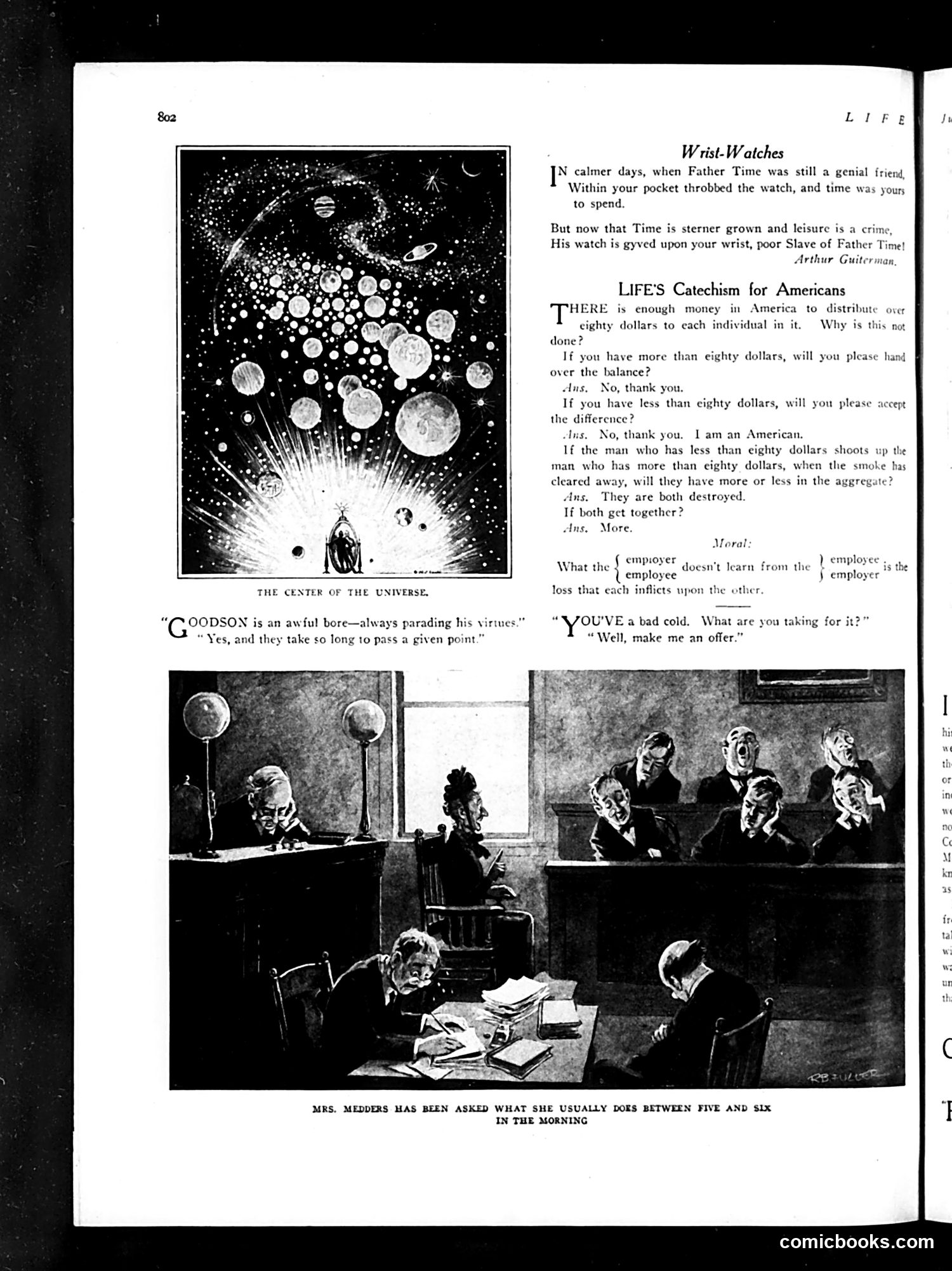
This *Life* magazine page contains three distinct satirical pieces: **"The Center of the Universe"** mocks someone named Goodson as a tedious bore whose self-promotion seems endless—a personal jab using astronomical imagery. **"Wrist-Watches"** (with Guiterman's poem) satirizes modern industrial society's obsession with time management. The metaphor of watches as "gyves" (shackles) suggests workers are enslaved to punctuality and productivity—a critique of industrial-era time discipline replacing older, leisurely notions of time. **"LIFE's Catechism for Americans"** uses Q&A format to mock wealth inequality and American individualism. It presents a satirical "paradox": if distributed equally, Americans would each receive eighty dollars, yet wealthy individuals refuse redistribution while poor ones reject charity—highlighting the contradiction between theoretical equality and actual class divisions. The bottom cartoon about "Mrs. Medders" remains unclear without additional context, though it appears to joke about her unusual morning routine.
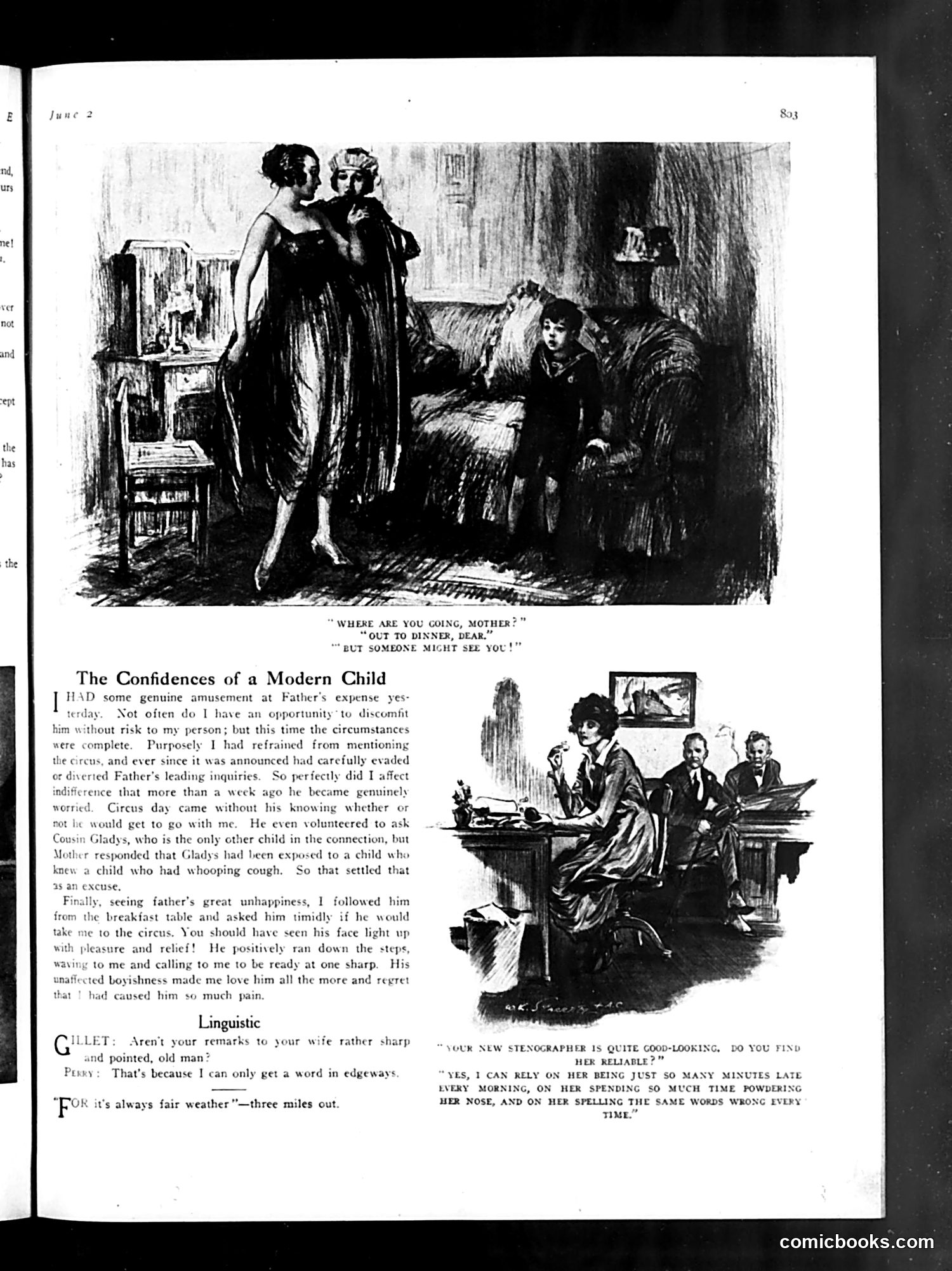
This page from *Life* magazine contains three satirical pieces about early 20th-century social conventions: **"The Confidences of a Modern Child"** mocks parental manipulation—a child deliberately withholds news of the circus to test her father's affection, then "forgives" him, exploiting his emotional vulnerability. The satire targets both the child's calculated behavior and the father's eager capitulation. **"Linguistic"** jokes that a husband can only "get a word in edgeways" because his wife talks constantly—a common complaint about domineering wives in period comedy. **The stenographer joke** stereotypes young female office workers as unreliable, vain (powdering their noses), and incompetent (chronic misspellings and tardiness). This reflects workplace sexism of the era, presenting these failings as predictable female traits rather than individual issues. The top illustration shows a woman leaving for dinner while a child protests someone might see her—satirizing either maternal propriety or social anxiety about unmarried activities.
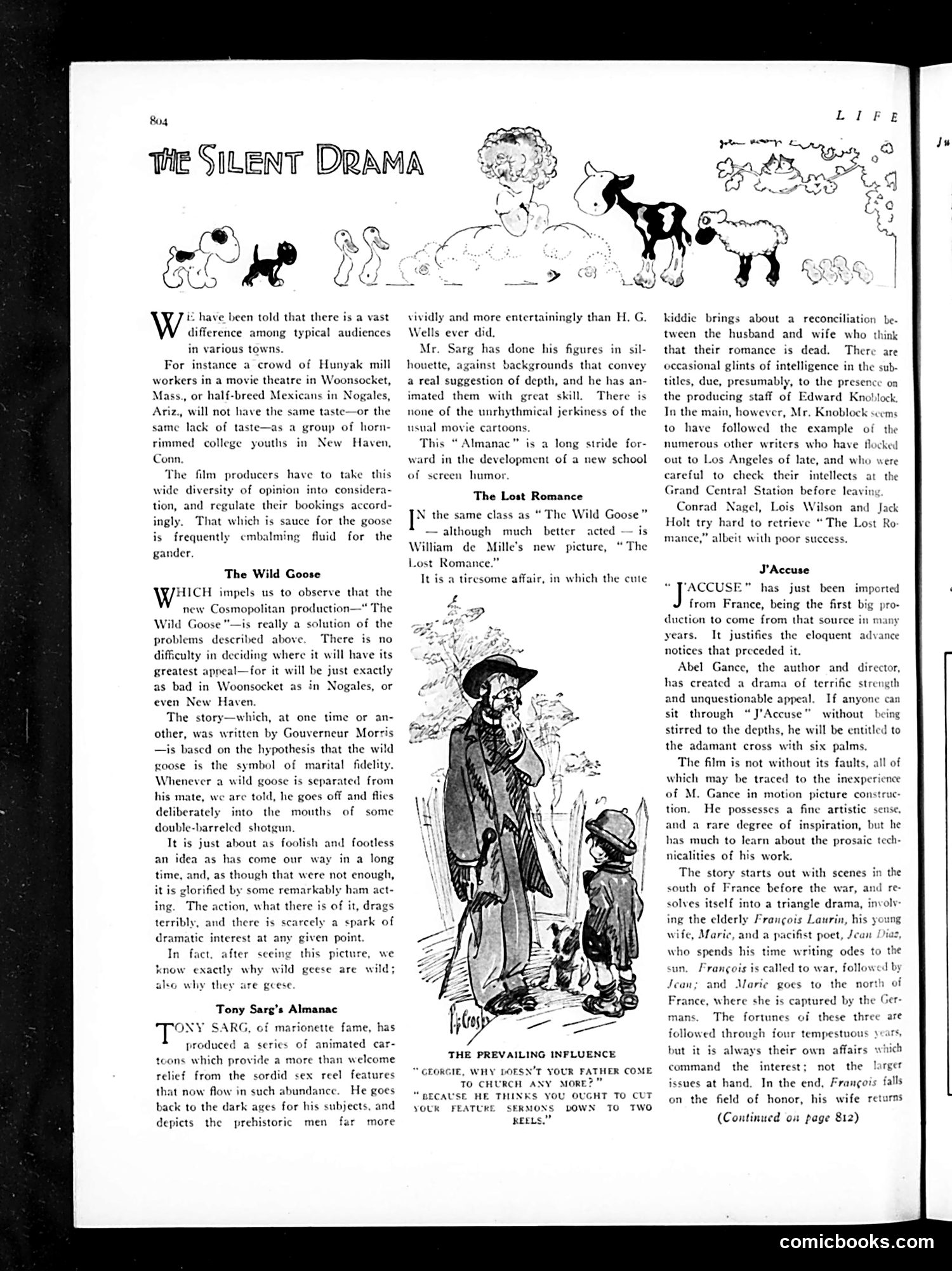
This page reviews several 1920s silent films. The main satirical point concerns audience taste: Life mocks film producers' assumption that different demographics (mill workers, Mexicans, college students) have vastly different preferences. The reviewer argues *The Wild Goose* is "just exactly as bad" everywhere—equally terrible regardless of audience. The film itself, a Cosmopolitan production, uses the absurd premise that wild geese symbolize marital fidelity. The review harshly criticizes its "foolish" plot, poor acting, and draggy pacing. A cartoon caption jokes that a father stopped attending church because sermons should be "cut down to two reels"—likening lengthy sermons to tedious silent films. Other reviews discuss *Tony Sarg's Almanac* (praised for animated cartoons improving beyond "sordid sex reel features"), *The Lost Romance*, and *J'Accuse*, a French import the critic praises as powerful drama. The overall tone: Life positions itself as sophisticated critic mocking Hollywood's mediocrity while defending artistic merit in film.
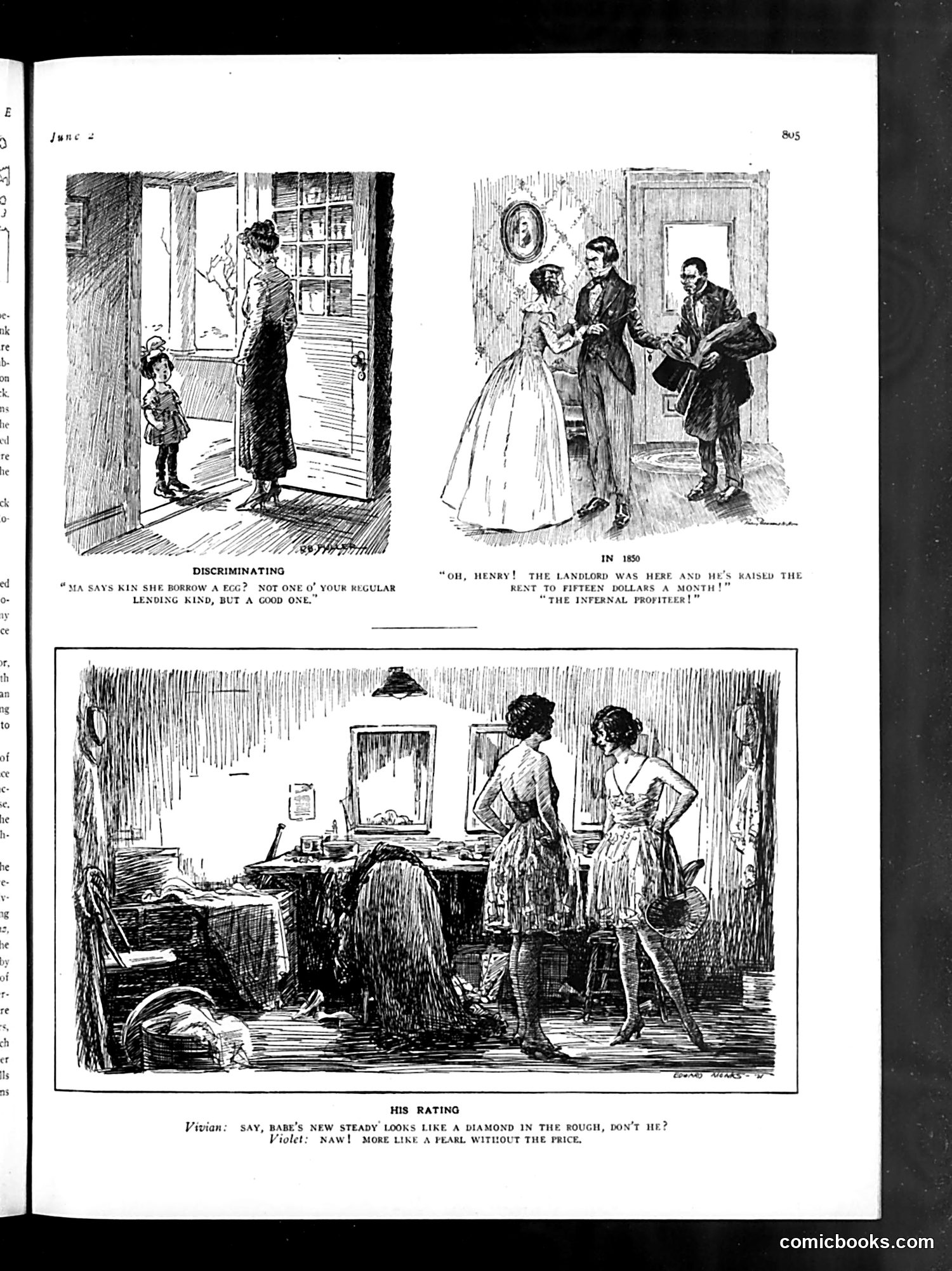
This page contains three separate satirical cartoons critiquing early 20th-century social issues: **"Discriminating"**: A mother asks to borrow an egg from a neighbor, specifying she wants a "good one"—implying class-based judgment about borrowing between neighbors. **"In 1880"**: A couple learns their landlord has raised rent to $15/month, with the husband calling him an "infernal profiteer"—satirizing exploitative landlords and housing cost inflation. **"His Rating"**: Two women discuss a man as romantic prospect: one calls him "a diamond in the rough"; the other dismisses him as "a pearl without the price"—mocking shallow materialism in dating, where men are valued primarily by wealth. The cartoons collectively target social pretension, economic exploitation, and mercenary attitudes toward relationships—characteristic targets of *Life's* satirical humor about American society and class dynamics.
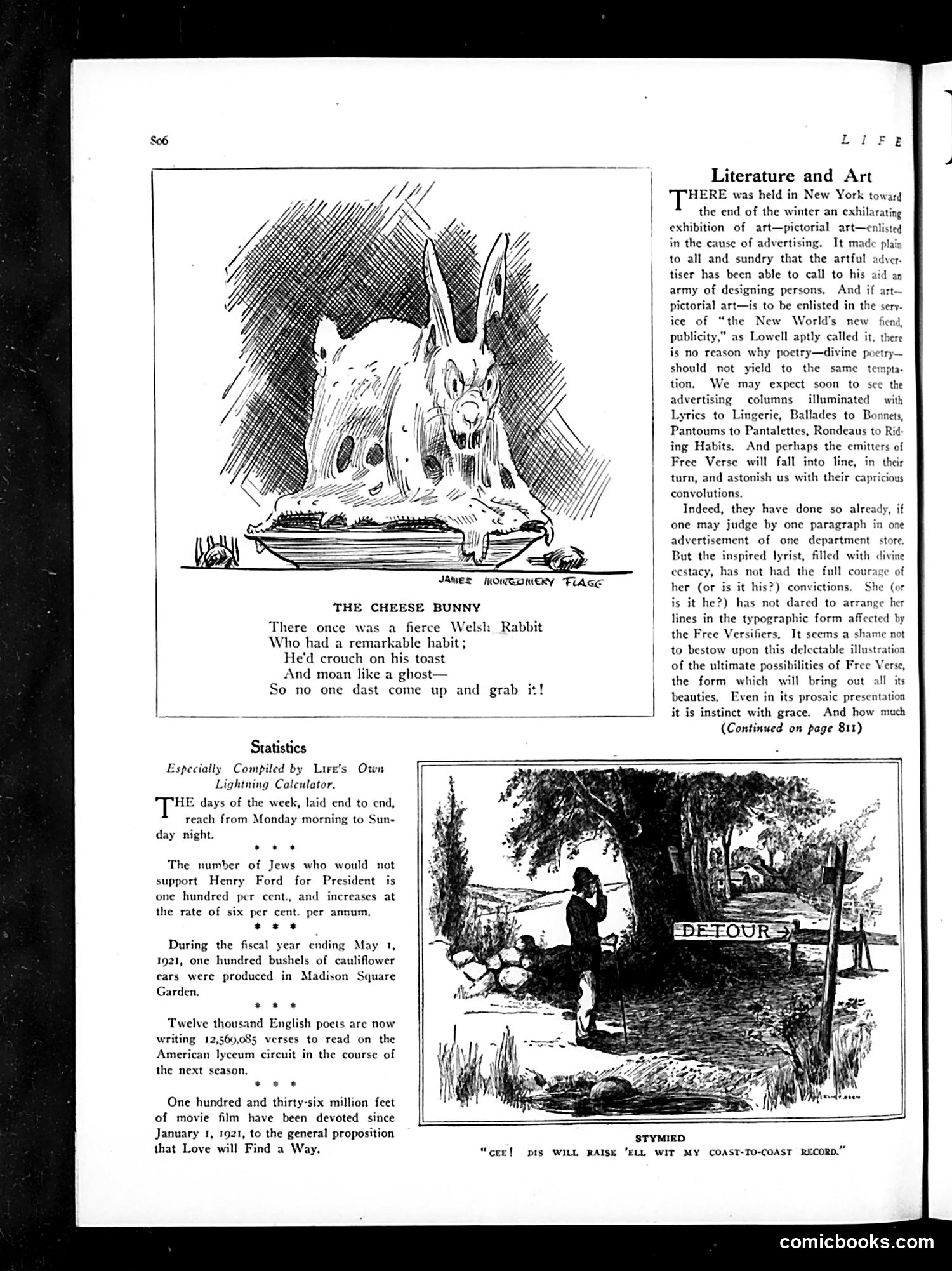
This page satirizes the commercialization of art and poetry. The main text mocks how advertising has enlisted visual artists, then sarcastically suggests poetry should follow—imagining absurd results like "Lyrics to Lingerie" and "Ballades to Bonnets." It notes a department store has already attempted this but lacked courage to fully commit to free verse formatting. **"The Cheese Bunny"** is a whimsical illustrated limerick about a Welsh rabbit (rabbit breed) that haunts his toast, preventing anyone from eating it—a mild, silly joke. The **Statistics** section is pure satirical humor: absurdist "facts" like "twelve thousand English poets writing verses," cauliflower cars in Madison Square Garden, and the Henry Ford/Jewish support joke (Ford was famously antisemitic, making the "100% won't support" claim pointed). **"Stymied"** shows a golfer frustrated his record attempt is ruined—a sports reference joke. Overall, the page mocks commercial culture's invasion of high art while celebrating advertising's ridiculous overreach.
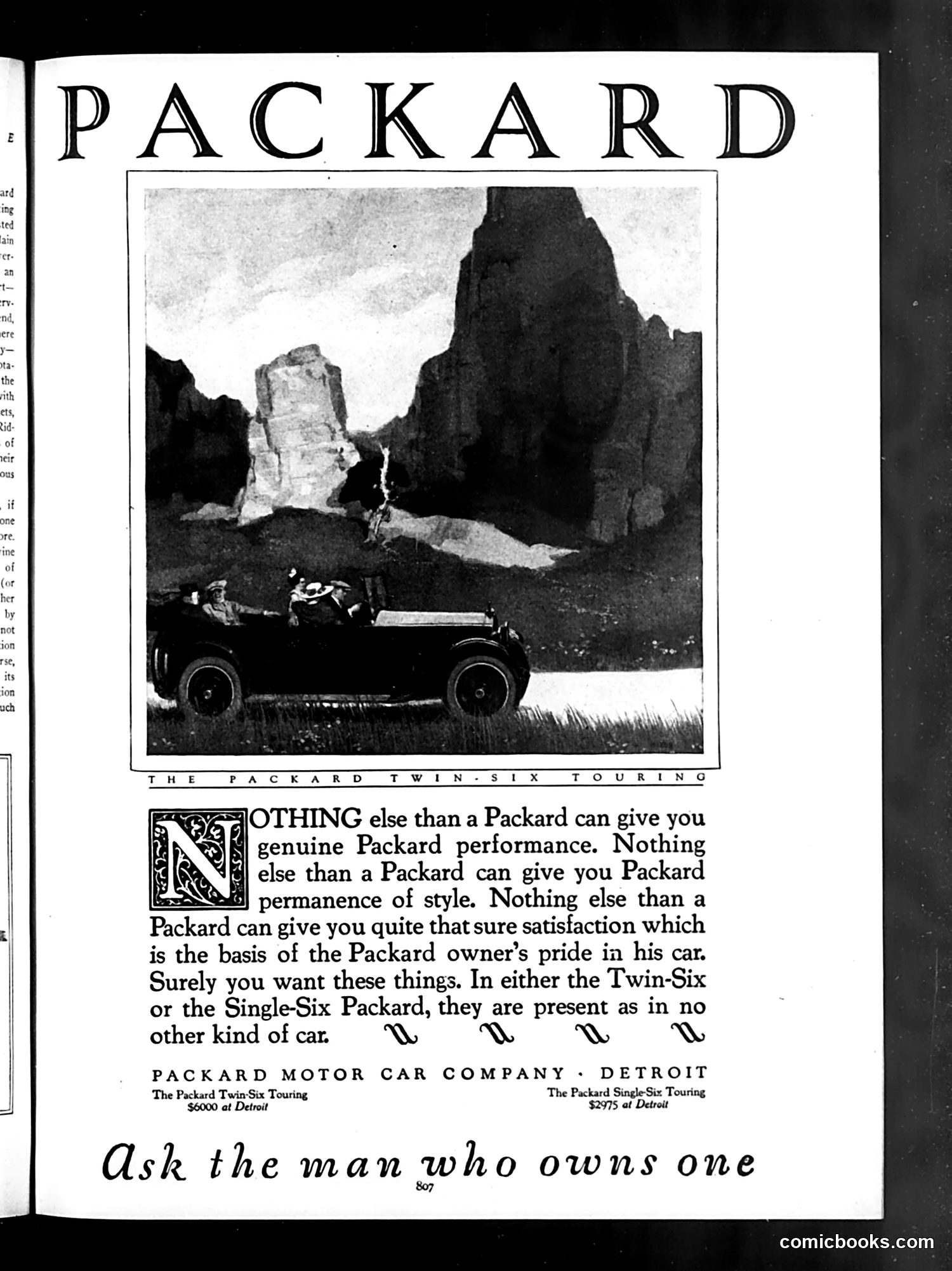
This is primarily a **luxury automobile advertisement**, not satire or political commentary. It promotes Packard Motor Car Company's Twin-Six and Single-Six touring models. The image shows a Packard vehicle positioned dramatically against towering rock formations (likely the Grand Canyon or similar scenic landscape), suggesting adventure and prestige. The advertisement uses repetitive rhetoric to emphasize exclusivity: "Nothing else than a Packard can give you genuine Packard performance." The tagline "Ask the man who owns one" was Packard's actual slogan, implying that satisfied owners serve as testimonials. The price points ($6,000 and $2,975) indicate this targets upper-middle and upper-class buyers. This appears in *Life* magazine's advertising section. For modern readers: this represents early automotive marketing targeting aspirational buyers through lifestyle imagery and brand prestige rather than specific technical specifications.
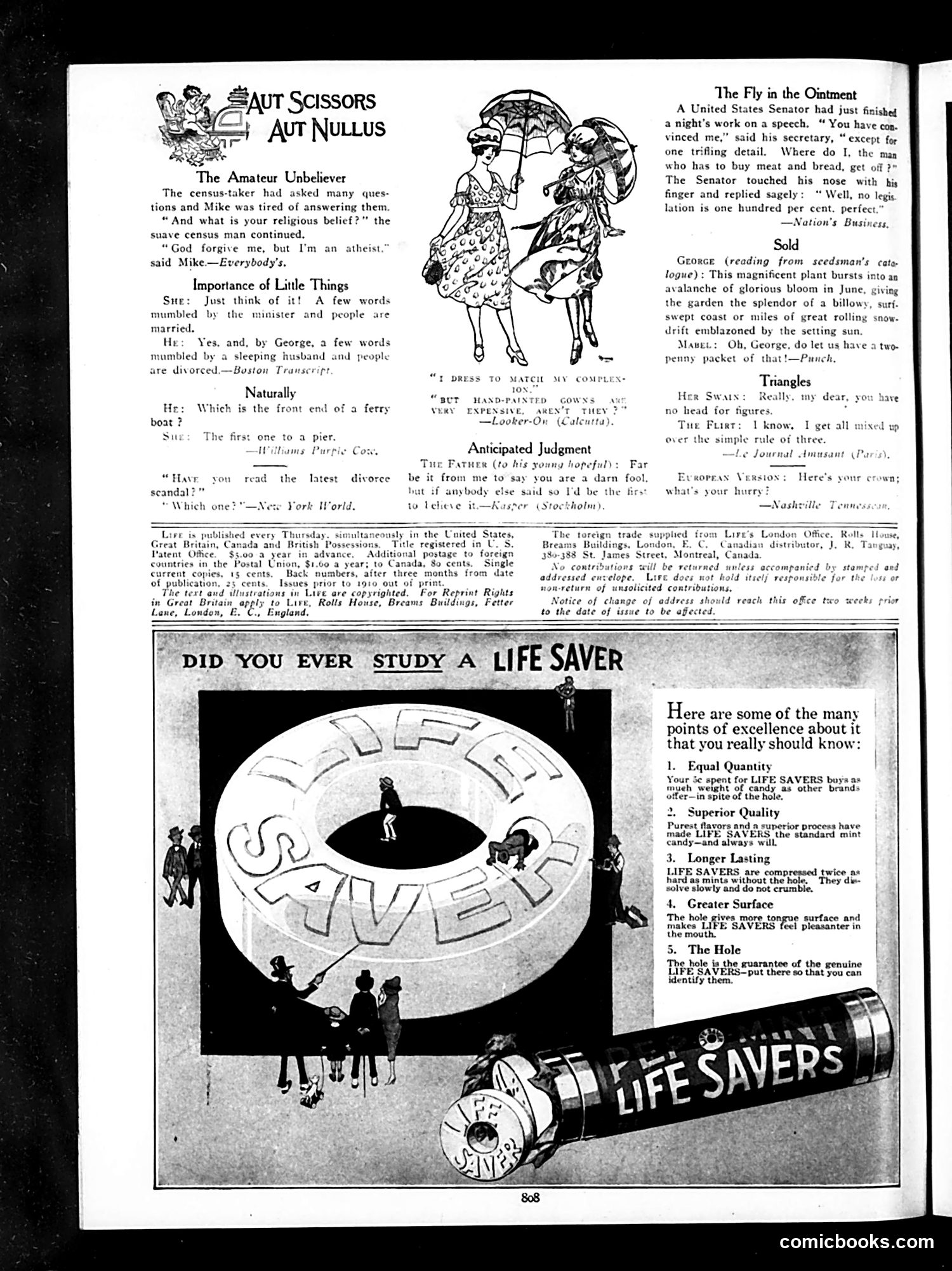
This page contains several short humor pieces typical of *Life* magazine's satirical style, plus a Life Savers candy advertisement. The cartoons mock everyday absurdities: a census-taker's persistence ("atheist"), the irony of marriage versus divorce (few words create both), and political hypocrisy. "The Fly in the Ointment" satirizes a U.S. Senator who gives a rousing speech about national prosperity while ignoring that ordinary workers (who must buy food) cannot afford it—a critique of disconnected politicians during economically difficult times. Other jokes target romantic miscommunication and pretentious garden-catalog language. The Life Savers advertisement below uses an enormous candy hole as its visual hook, with people studying it like scientists. The copy emphasizes the product's superiority: equal quantity despite the hole, superior quality, longer-lasting compression, and—ironically—that the hole itself serves as a guarantee of authenticity. The page reflects *Life*'s formula: political-social satire mixed with consumer advertising and light domestic humor.
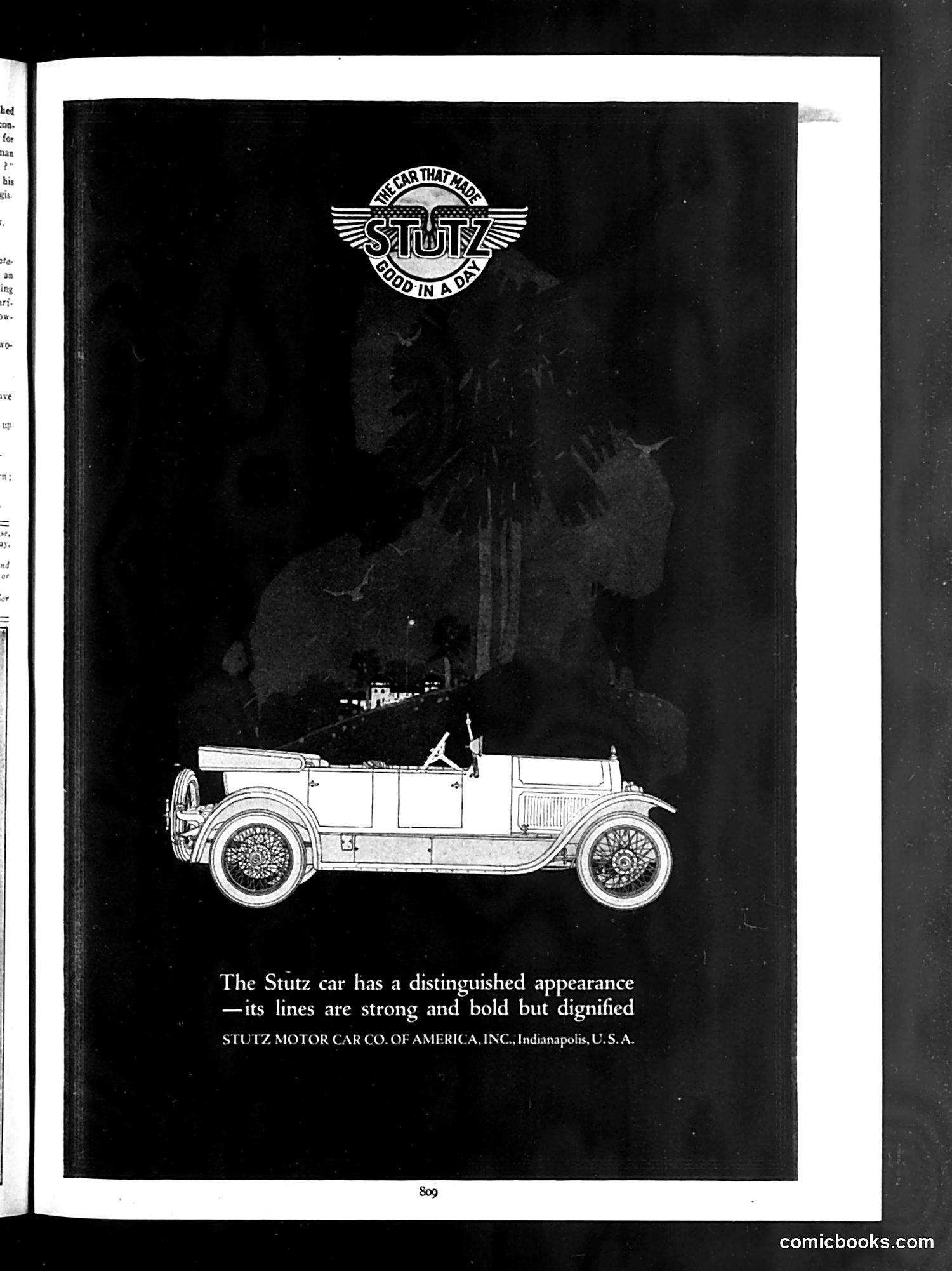
This is a **car advertisement**, not political satire. It promotes the Stutz Motor Car Company of Indianapolis, highlighting their vehicle's aesthetic qualities. The ad features an illustration of an open-air touring car rendered in white against a dramatic black background with atmospheric imagery (buildings, smoke). The tagline emphasizes that the Stutz has "strong and bold but dignified" lines—marketing language positioning the car as both powerful and refined, appealing to buyers seeking prestige and quality craftsmanship. The company's slogan "The Car That Made Good in a Day" appears at the top. This is straightforward commercial advertising typical of early-to-mid 20th century magazines, targeting affluent consumers interested in automobiles as status symbols.
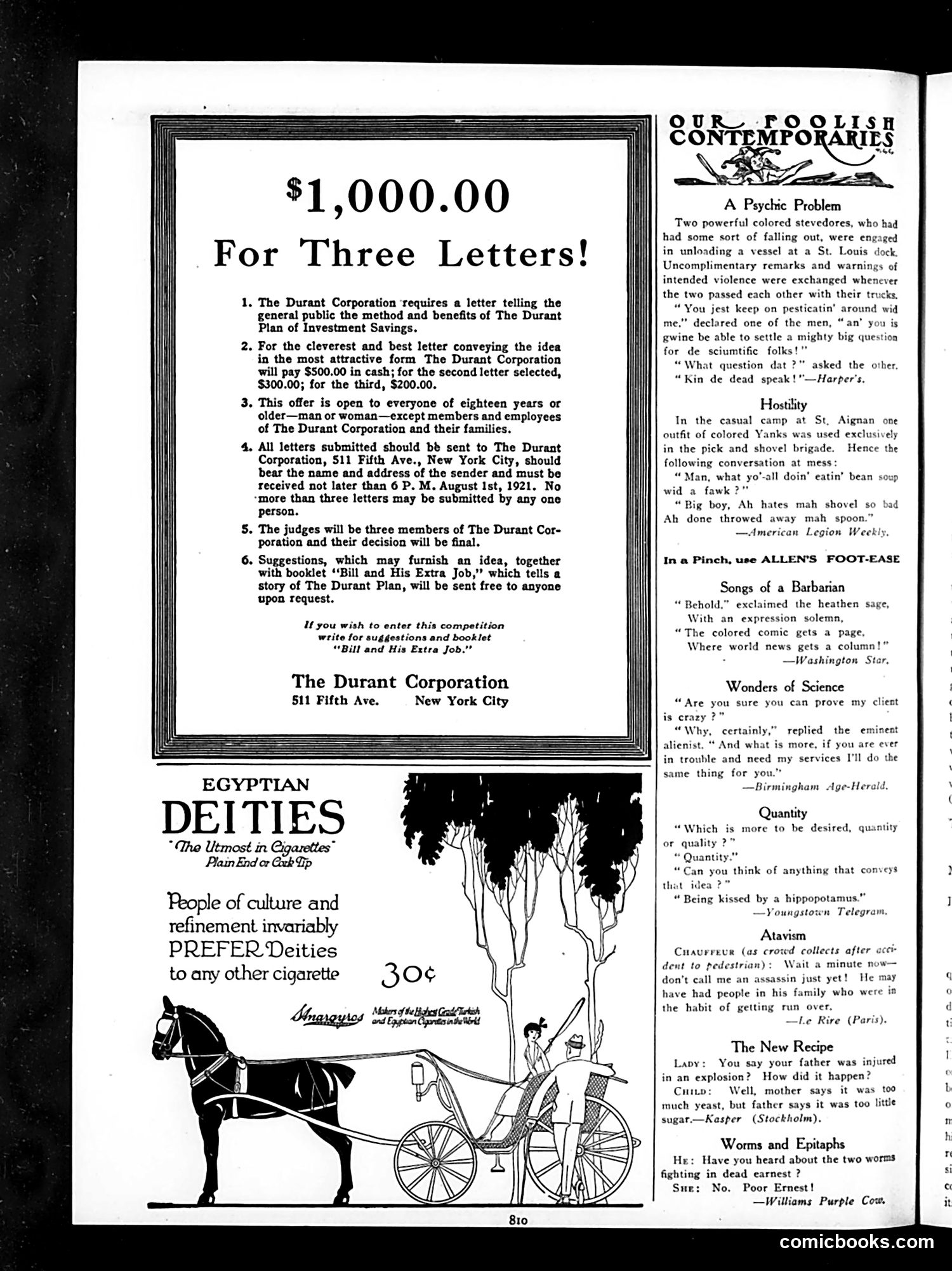
This page combines advertisements with humorous short jokes typical of 1920s satirical magazines. **Main Content:** The page is dominated by a **Durant Corporation advertisement** offering $1,000 in prize money for letters promoting their investment savings plan—a corporate marketing campaign disguised as a writing competition. **Side Column Humor:** The right side contains brief jokes and comic anecdotes, mostly racial stereotypes typical of the era. "A Psychic Problem" features two Black stevedores with exaggerated dialect; "Hostility" similarly stereotypes Black soldiers. These pieces reflect the casual, offensive racial humor that was normalized in 1920s mainstream publications. **Additional Ads:** An "Egyptian Deities" cigarette advertisement uses pseudo-Egyptian imagery to market luxury cigarettes at 30 cents. **Overall Context:** This page reflects early-1920s American magazine culture—mixing commercial advertising, corporate promotions, and ethnic humor that modern readers would recognize as deeply problematic. The publication's "satirical" reputation applied mainly to political commentary, not the racial caricatures presented here.
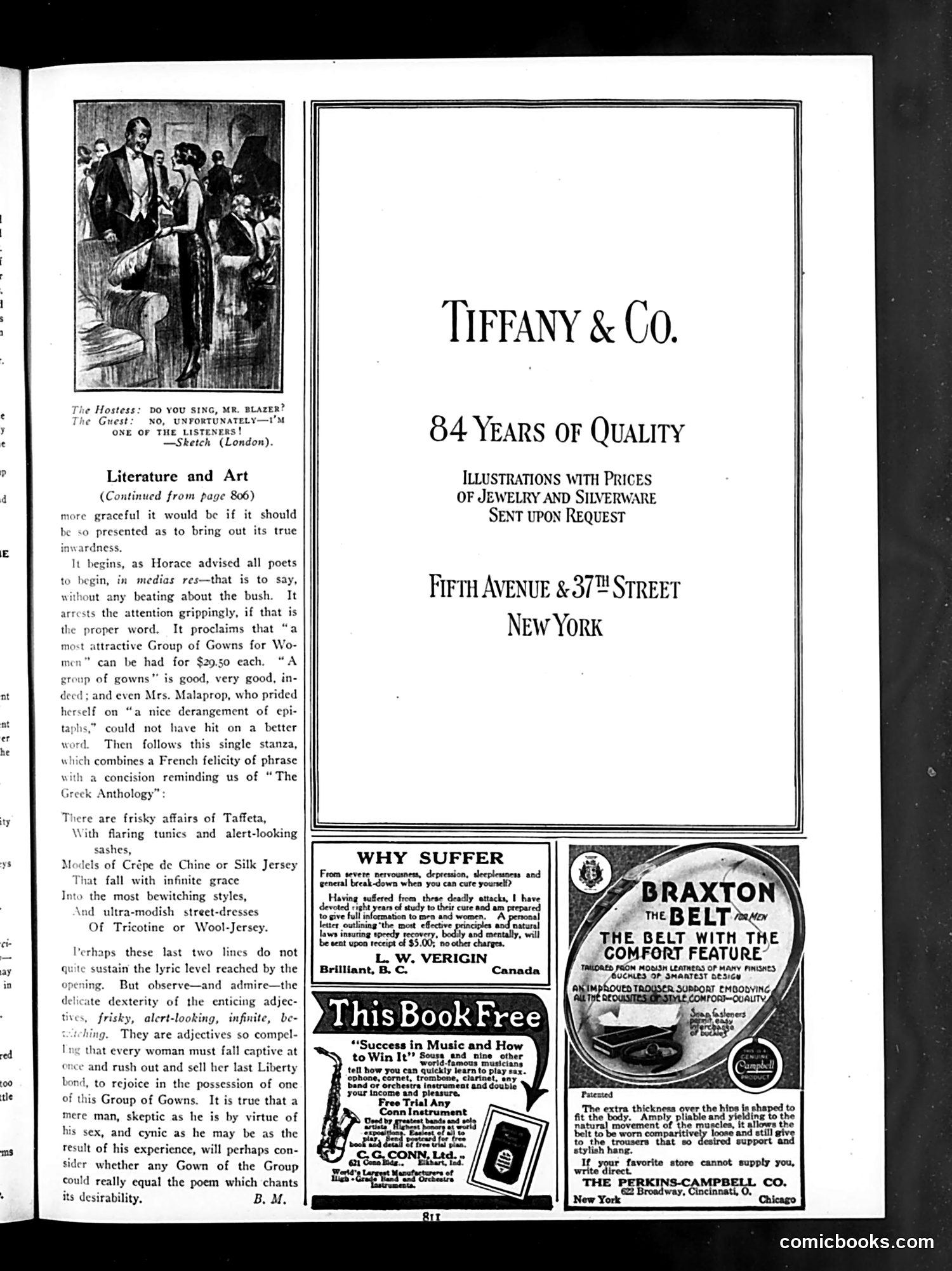
This page opens with a small cartoon sketch satirizing social gatherings. The joke is simple: a hostess asks a guest if he sings; he replies "No, unfortunately—I'm one of the listeners!" The humor mocks the tedium of being trapped listening to amateur singers at Victorian-era parlor gatherings, a common social obligation. The guest's wry response suggests he'd rather *not* endure the performance. The remainder of the page is primarily advertising (Tiffany & Co., a music instruction book, health remedies, and belts), with a literary essay about poetry and advertising copy for women's dresses. The cartoon itself requires no specialized historical knowledge—it's universal: the social discomfort of polite captive audiences subjected to unwanted entertainment, a timeless social predicament that would resonate with modern readers facing similar situations (mandatory karaoke, talent shows, etc.).
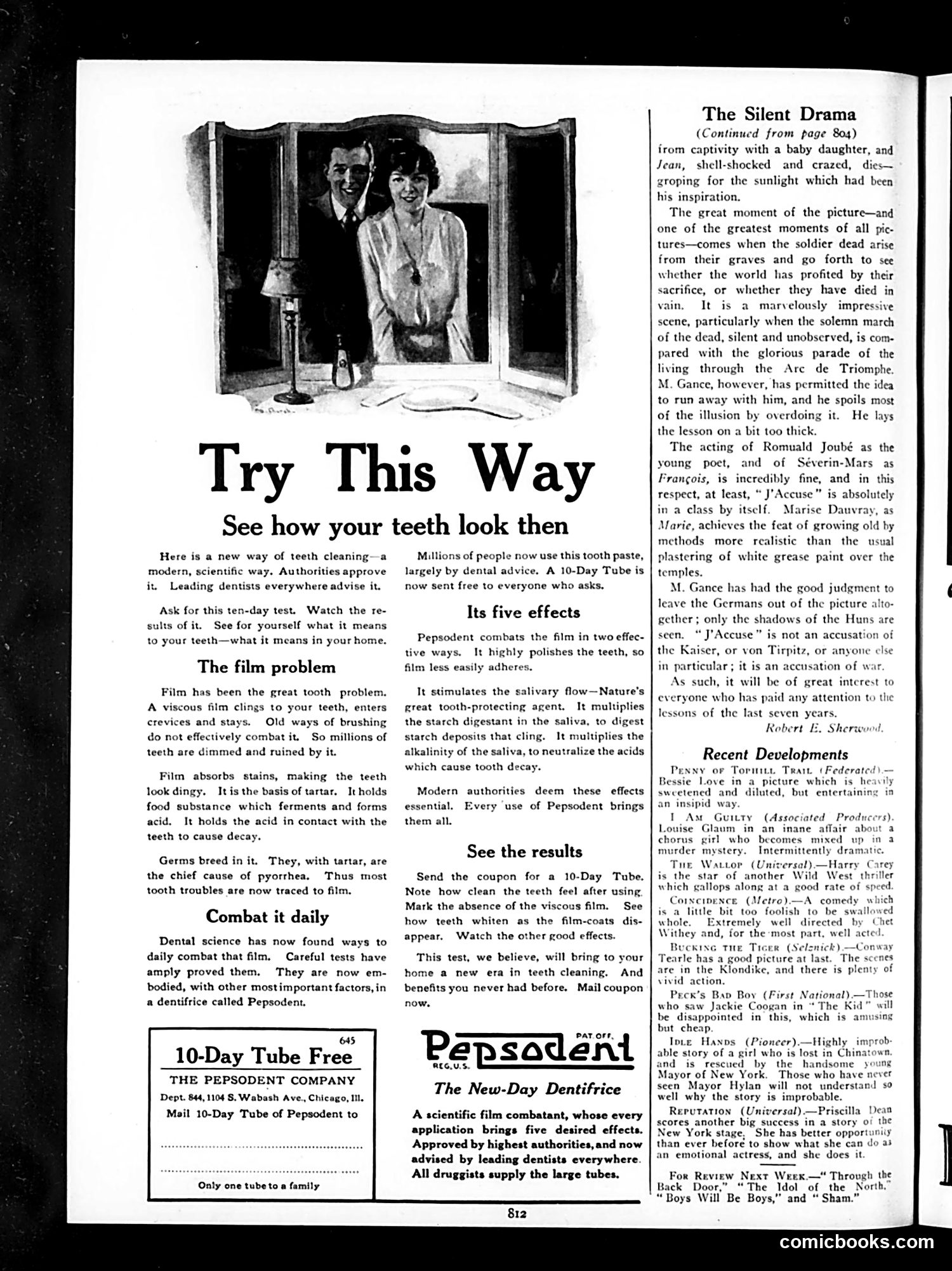
This page is primarily a **Pepsodent toothpaste advertisement**, not political satire. The "cartoon" at top shows a couple at a window—a simple illustration promoting the product's teeth-whitening effects. The ad makes scientific claims about combating "film" (plaque) buildup through five mechanisms: polishing teeth, stimulating saliva flow, and neutralizing acids. It offers a free 10-day trial tube to encourage consumer testing. The right column contains unrelated film criticism discussing a French war movie called *J'Accuse*, praising its acting and its famous scene of dead soldiers rising from graves. This represents **early 20th-century advertising strategy**: combining pseudo-scientific language with dentist endorsements and free samples to build consumer confidence in a new commercial product. The page reflects how Life magazine integrated advertisements with editorial content.
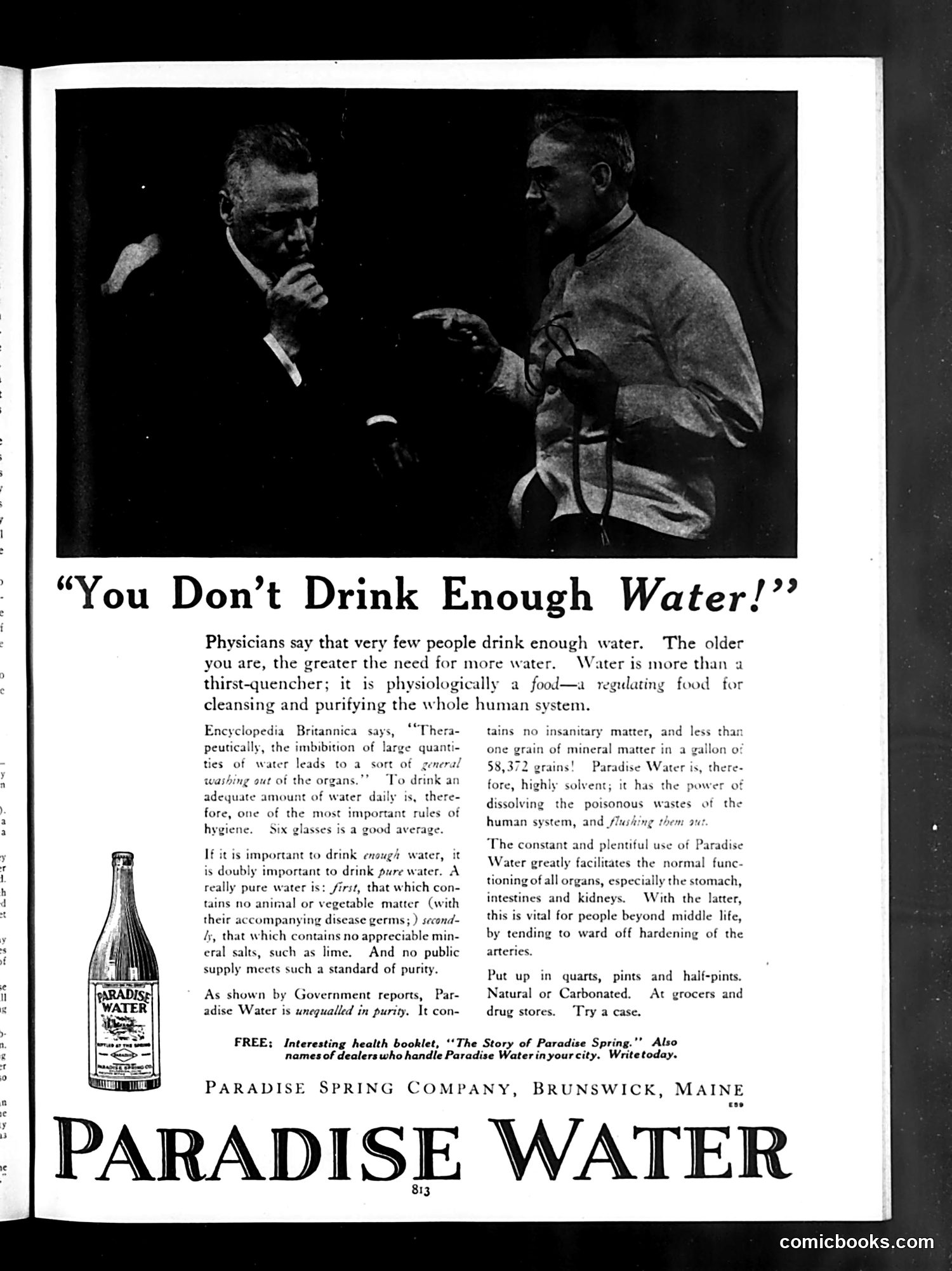
This is a **health advertisement, not satire or political cartoon**. It's a vintage ad for Paradise Water, a bottled spring water from Brunswick, Maine. The page uses a photograph of two men (likely a doctor and patient, based on the medical context) to establish authority. The ad's main pitch: Americans don't drink enough water, and when they do, it must be pure. It claims Paradise Water is superior because government reports show it has minimal mineral content and no contamination—unlike public water supplies. The "six glasses a day" recommendation and emphasis on water's role in flushing "poisonous wastes" reflects early 20th-century health beliefs common to patent medicine advertising. The reference to "people beyond middle life" and hardening of arteries suggests marketing toward aging readers concerned about health. This is straightforward commercial persuasion disguised as medical advice, typical of pre-FDA-regulation magazine advertising.
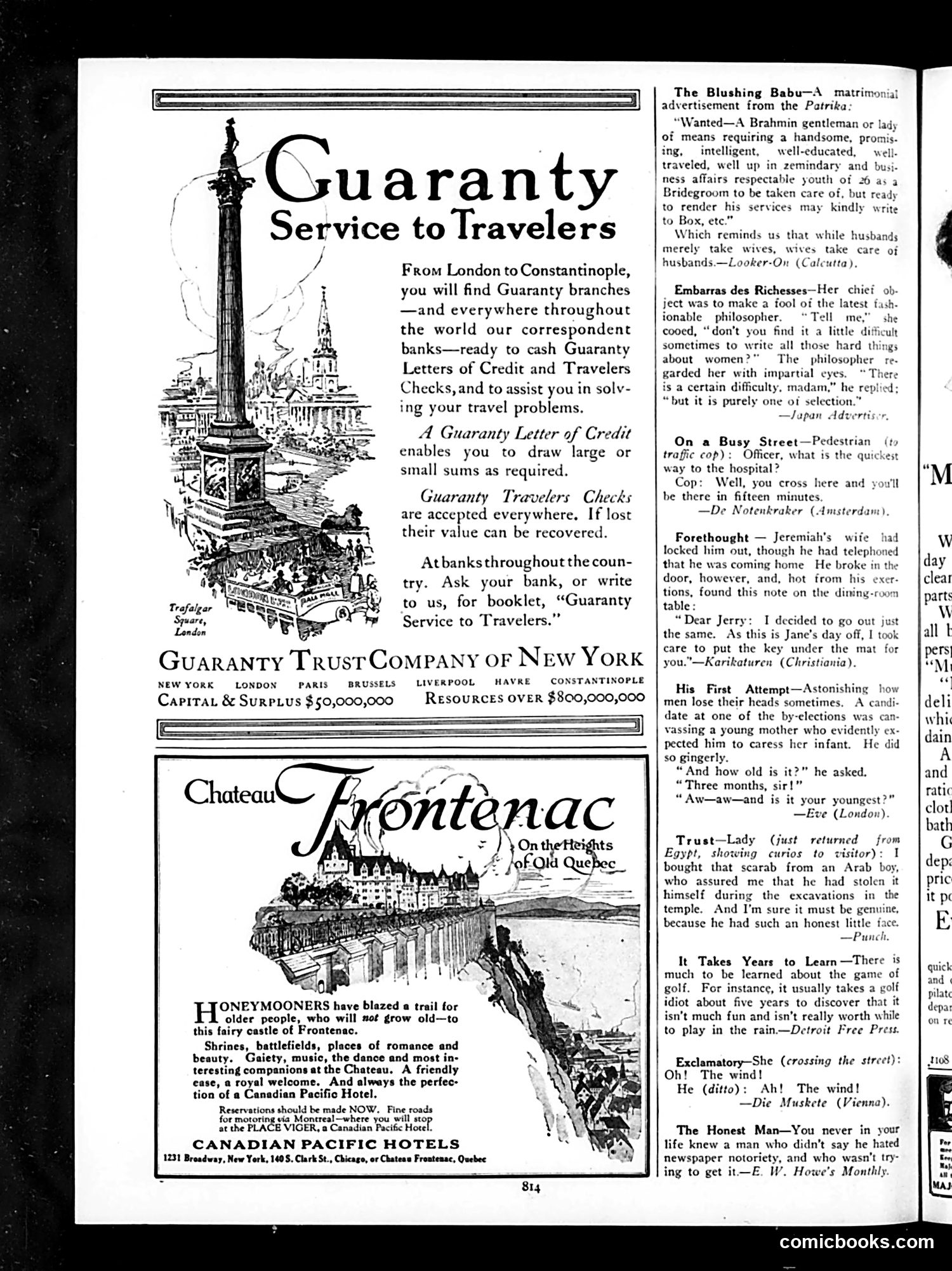
This page is primarily **advertising** for financial services (Guaranty Trust Company) and Canadian Pacific Hotels, not political satire. The right column contains humor **anecdotes** reprinted from international publications—brief, often sexist jokes about marriage, gender relations, and social situations. These include: - A matrimonial ad seeking a Brahmin wife-caregiver (satirizing arranged marriage expectations) - A philosopher's difficulty writing critically about women - A wife locking out her husband - A politician awkwardly interacting with a mother and infant - A tourist trusting an Arab boy's claims about a stolen artifact The humor relies on dated stereotypes and social assumptions about gender, colonialism, and class. The "point" is lightweight observational comedy—no specific political figures or events are targeted. This reflects *Life* magazine's shift from hard political satire toward general-interest humor and advertising by this era.
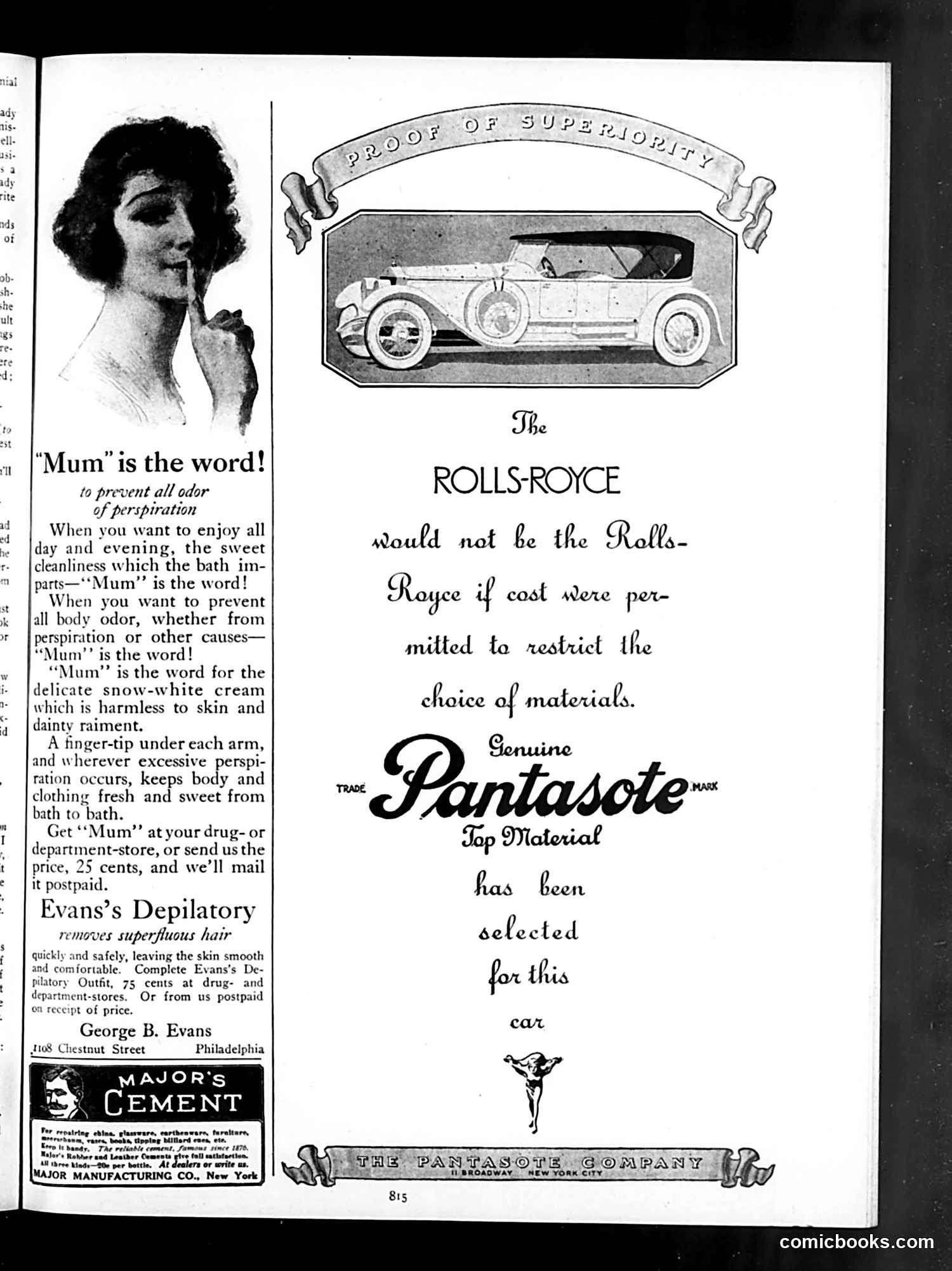
This page is primarily **advertising**, not political satire. It contains four distinct advertisements from the early 20th century: 1. **"Mum" deodorant** — emphasizes preventing body odor and perspiration through daily use of a cream product (25 cents) 2. **Evans's Depilatory** — removes unwanted hair safely (75 cents) 3. **Rolls-Royce automobile** — a luxury car advertisement claiming that Pantasote fabric was selected for the vehicle's interior materials, suggesting quality and exclusivity 4. **Major's Cement** — industrial adhesive for repairs The Rolls-Royce ad contains a subtle joke: it suggests the car would be even more luxurious if cost weren't a limiting factor in material selection—implying exclusivity through restraint rather than excess. The other advertisements reflect period attitudes toward personal hygiene and beauty standards. These are straightforward consumer pitches with no apparent political commentary.
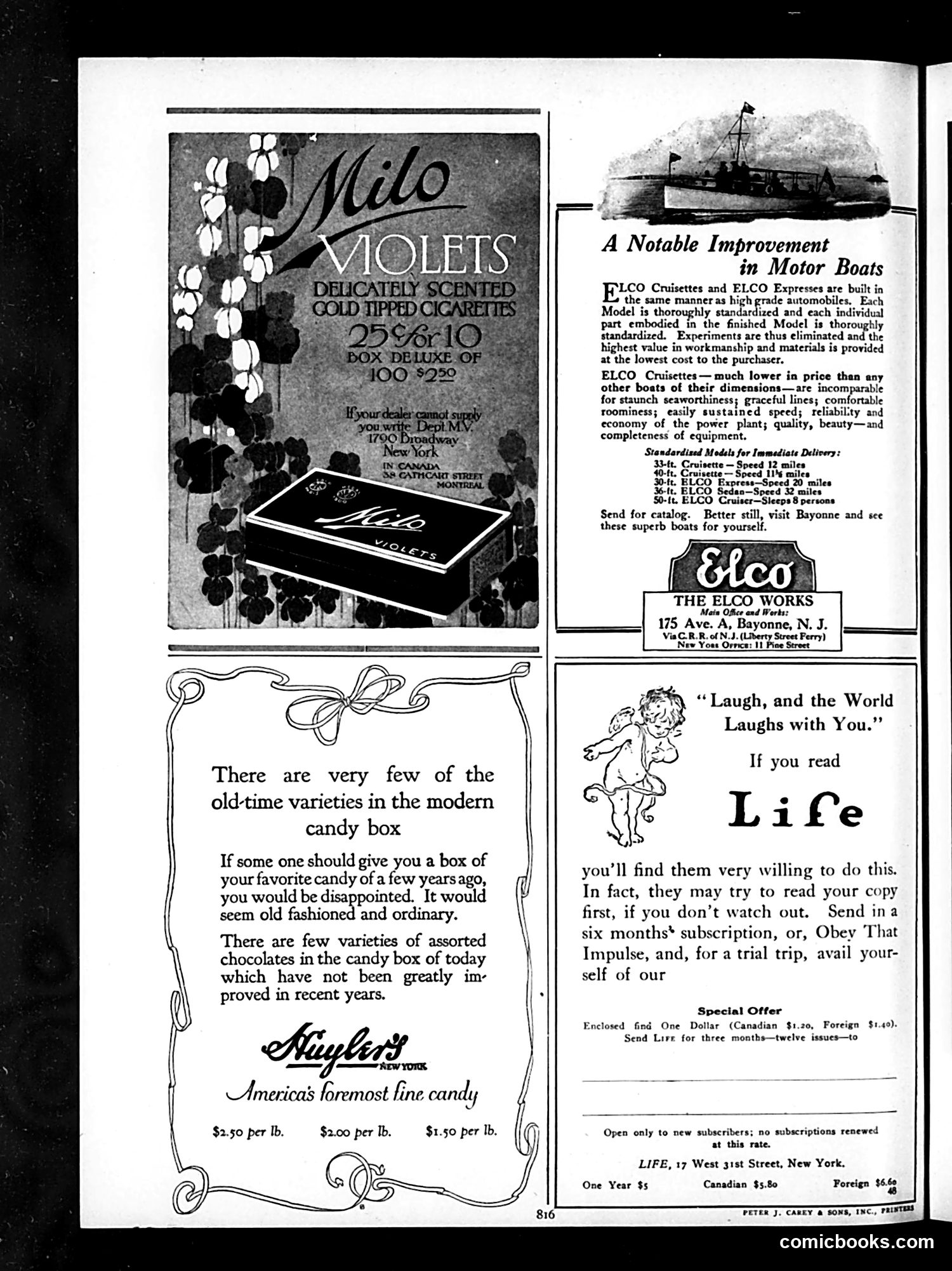
This page consists primarily of **advertisements rather than editorial cartoons**. The content includes: **Left side:** Milo Violets cigarettes ad (gold-tipped, delicately scented) and a Nuylar's candy box advertisement emphasizing that modern candy boxes contain improved varieties compared to "old-time" options. **Right side:** Two ads—one for ELCO motor boats (standardized, affordable cruisettes and expresses built like automobiles) and one promoting **Life magazine itself**, using humor to encourage subscriptions. The Life ad features a cherub figure and appeals to readers' sense of humor, suggesting Life magazine will make them laugh. The page reflects **early 20th-century consumer culture**, emphasizing standardization, improvement, and modernity as selling points. There is no political satire present—this is a commercial page showcasing period products and services aimed at middle-to-upper-class consumers.
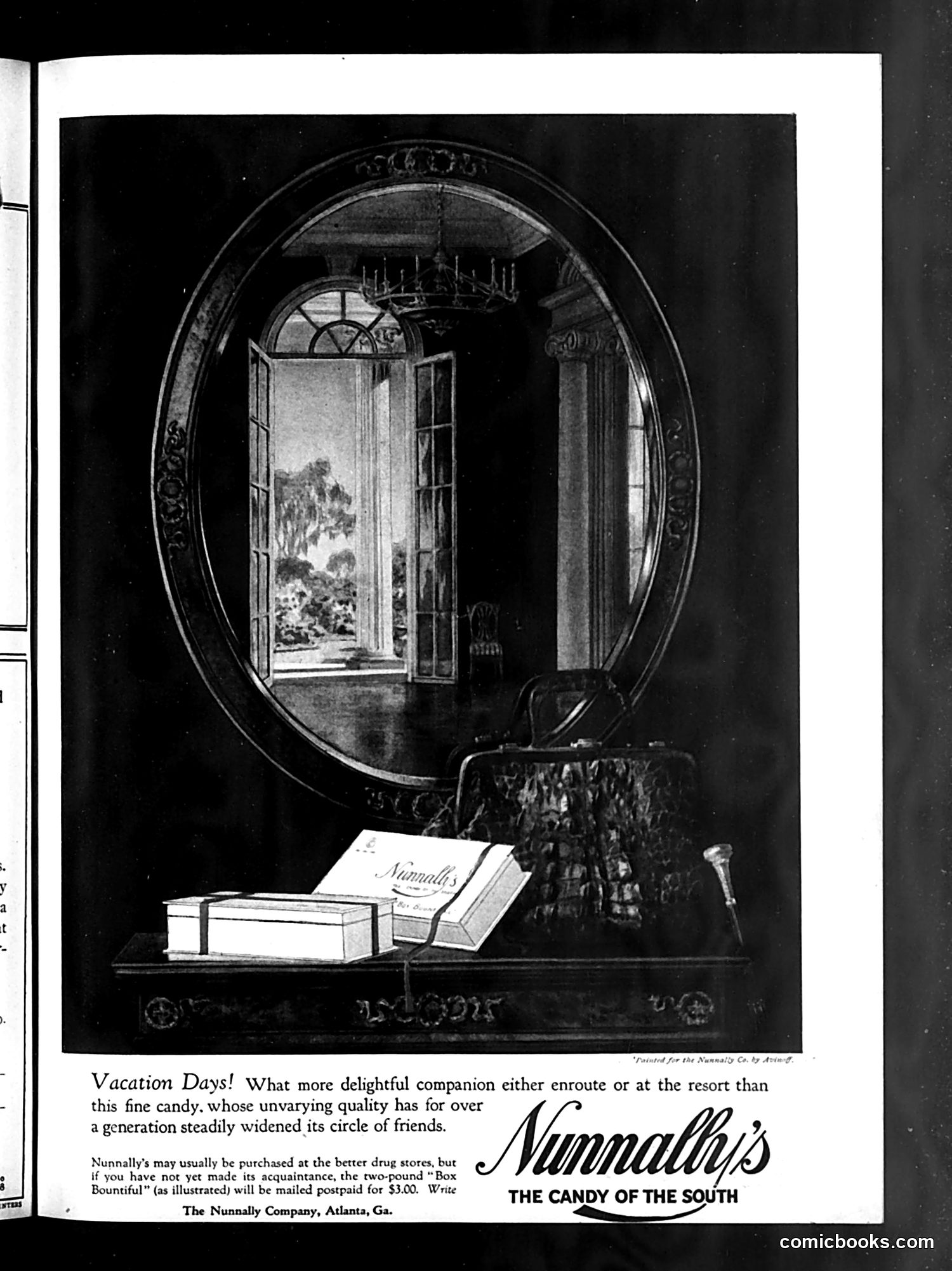
This page is primarily **advertising, not satire or political content**. It's a Nunnally's candy advertisement from *Life* magazine. The image shows an ornate circular mirror reflecting an elegant interior with tall windows and a garden view. In the foreground sit two books and what appears to be decorative items on a shelf. The ad copy positions Nunnally's candy as an ideal vacation companion—a luxury product associated with leisure and refined taste. The text emphasizes the candy's long-standing reputation ("over a generation") and appeals to the affluent readership of *Life* by mentioning availability at "better drug stores." The "$3.00" price for a two-pound box suggests this was a premium product. This represents early 20th-century marketing strategy: linking consumer goods to aspirational lifestyles and leisure rather than practical necessity.
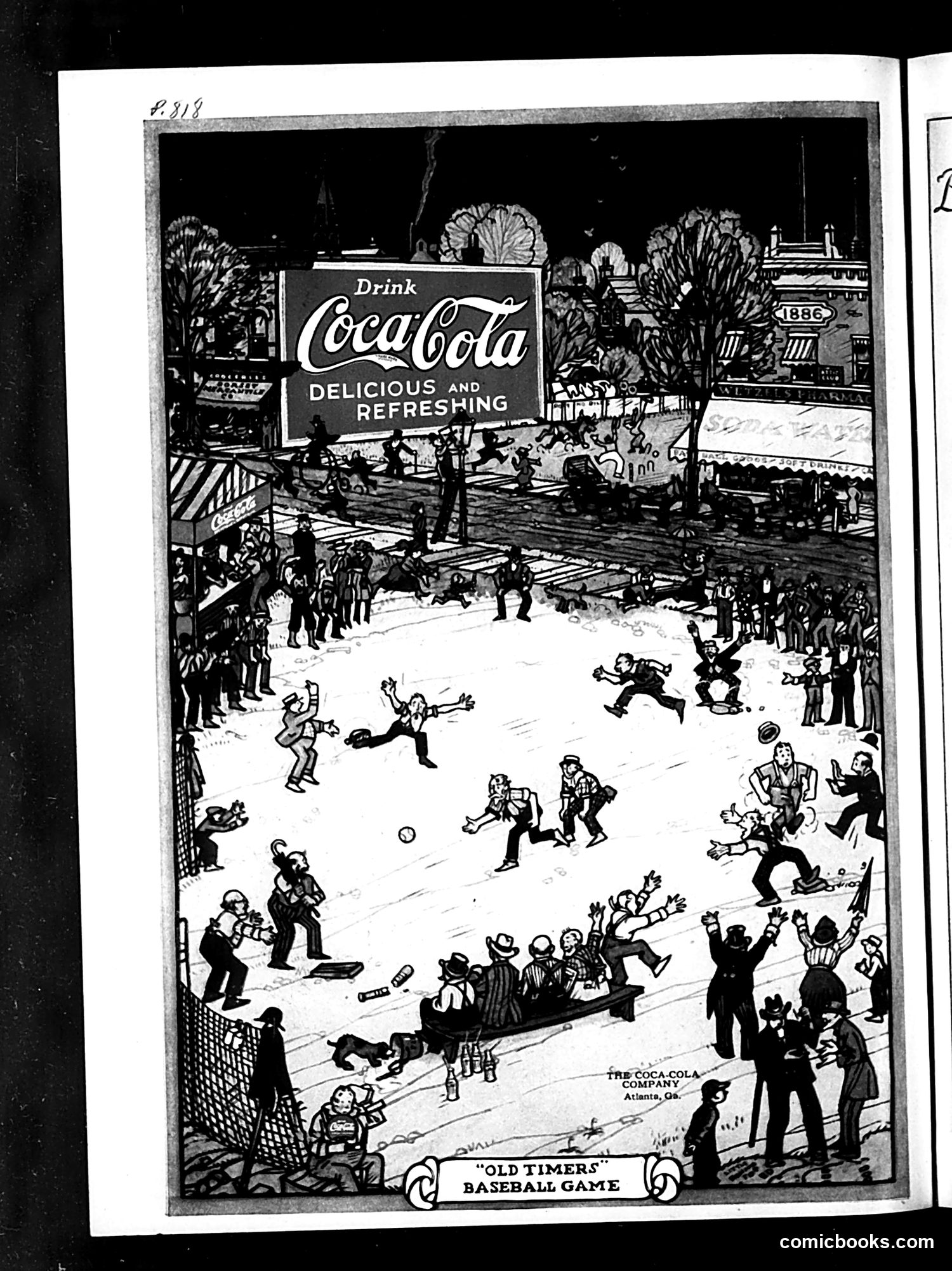
This is a Coca-Cola advertisement disguised as a humorous illustration. It depicts a chaotic baseball game played by men in formal attire (suits, top hats) rather than athletic uniforms, labeled "Old Timers' Baseball Game." The comedy derives from the contrast between dignified, formally-dressed gentlemen and the undignified, slapstick nature of baseball—players sprawling, colliding, and acting clumsily while spectators crowd the stands. The large Coca-Cola billboard dominates the background, and Coca-Cola bottles are visible on the field, integrating the product into the scene. This represents early 20th-century advertising strategy: embedding brand messaging within entertainment imagery to associate Coca-Cola with leisure, social gathering, and American recreation. The "old timers" concept suggests nostalgia and approachability, positioning the drink as suitable for all demographics.
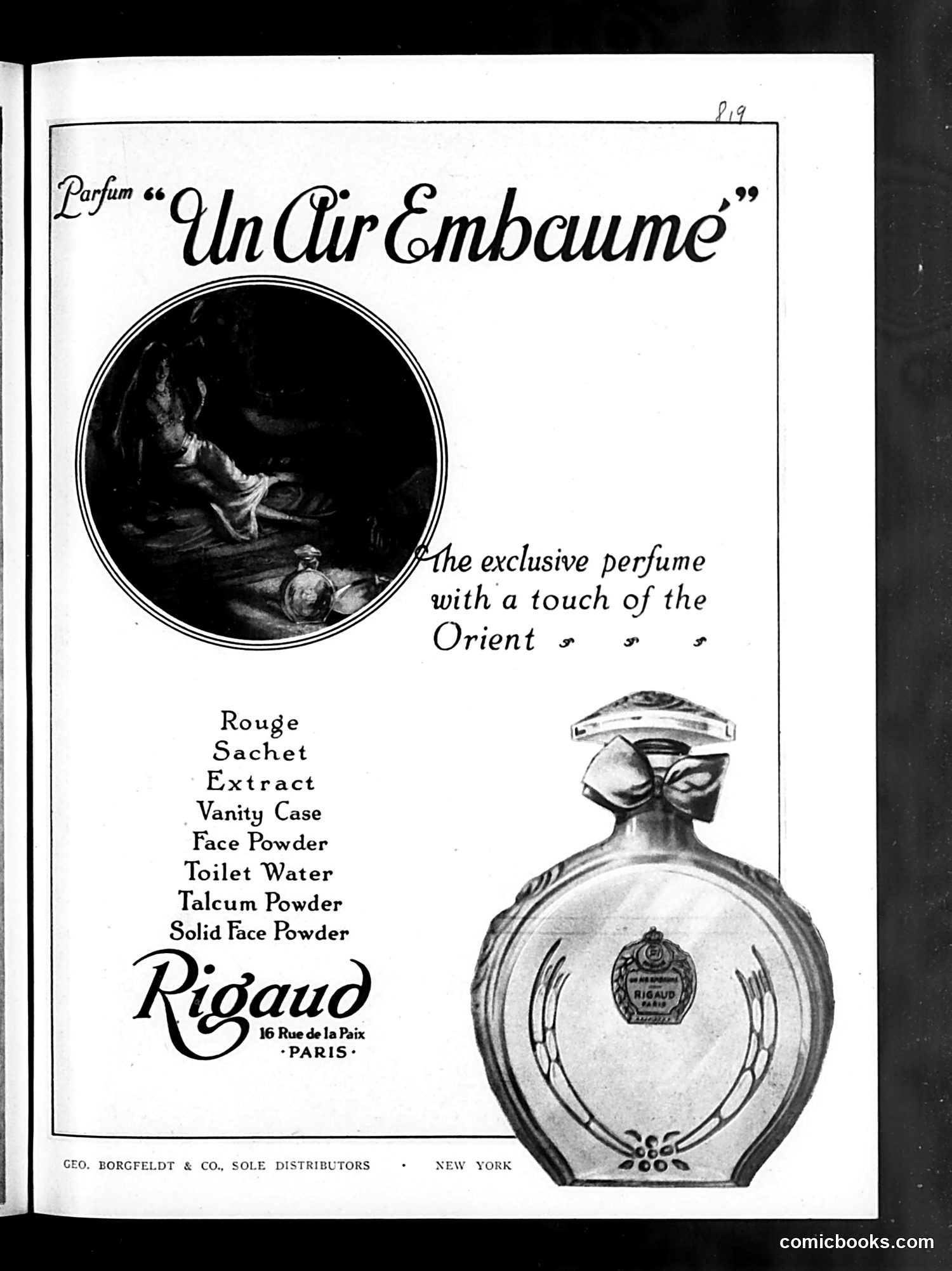
This is a **perfume advertisement**, not a political cartoon or satire. It promotes "Un Air Embaume," described as "the exclusive perfume with a touch of the Orient," manufactured by Rigaud of Paris and distributed in New York by Geo. Borgfeldt & Co. The page features: - A circular illustration showing an orientalist scene (likely meant to evoke exoticism) - A product image of an ornate perfume bottle with a decorative bow stopper - A product list including rouge, sachets, extracts, face powders, and talcum powder The advertisement reflects early 20th-century marketing that capitalized on Western fascination with "Oriental" aesthetics and fragrances—a common trope in luxury goods advertising of the era. There is no political commentary or satire present on this page.
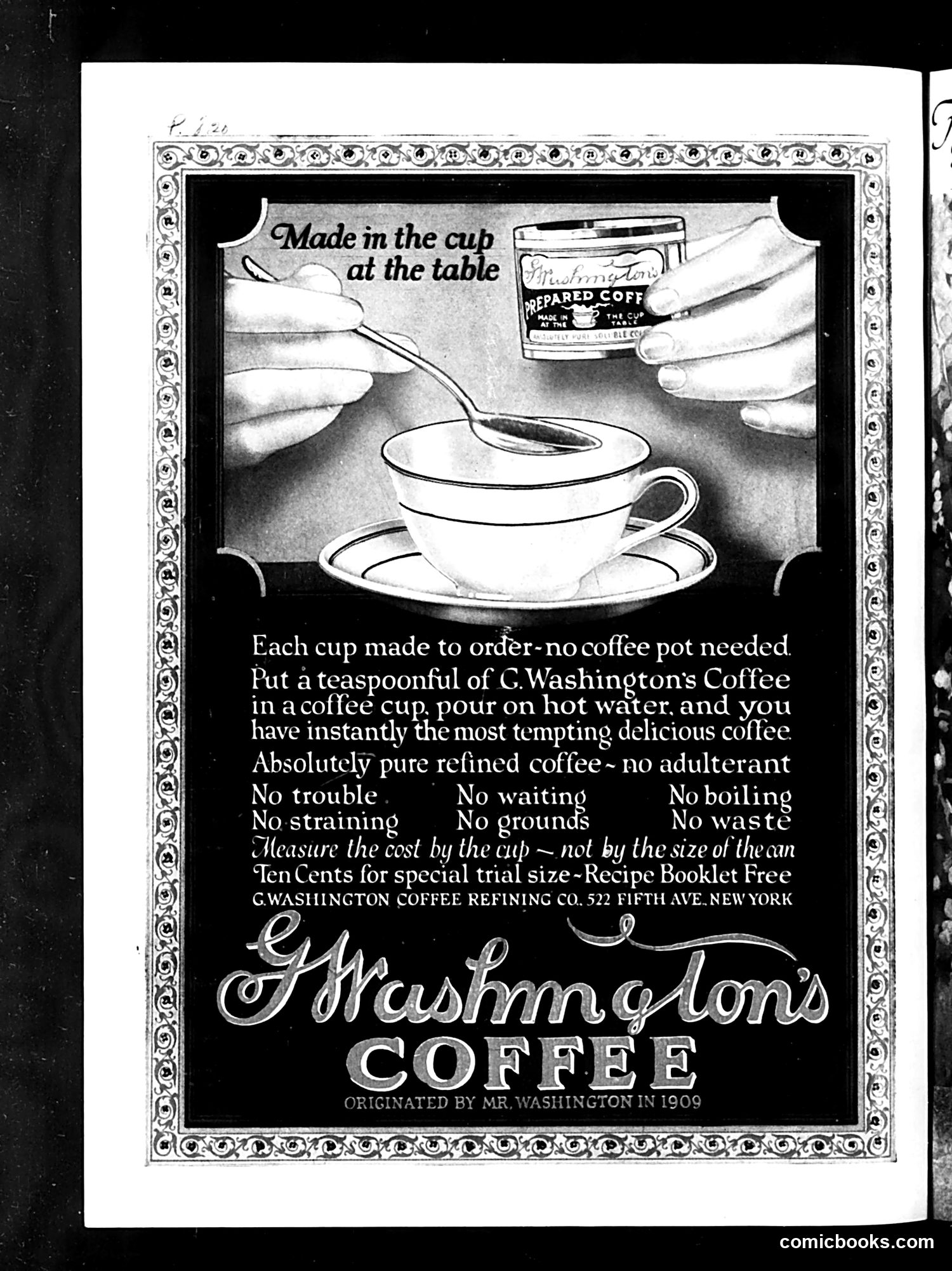
This is a **vintage advertisement, not a political cartoon**. It promotes G. Washington's instant coffee, a real product from the early 1900s (originated 1909, per the ad). The ad emphasizes convenience: users simply add a teaspoon of instant coffee to hot water in a cup—no pot, brewing, straining, or grounds needed. Key selling points include speed, purity ("no adulterant"), and cost-per-cup pricing rather than can size. The illustration shows hands preparing coffee at a table, demonstrating the claimed ease. The decorative border and elegant typography reflect period advertising standards. For modern readers: this represents early instant coffee marketing, appealing to busy households by eliminating traditional coffee-making steps. The emphasis on "purity" likely responds to contemporary food-safety concerns and patent medicine skepticism of that era.