
A complete issue · 40 pages · 1912
Life — August 15, 1912
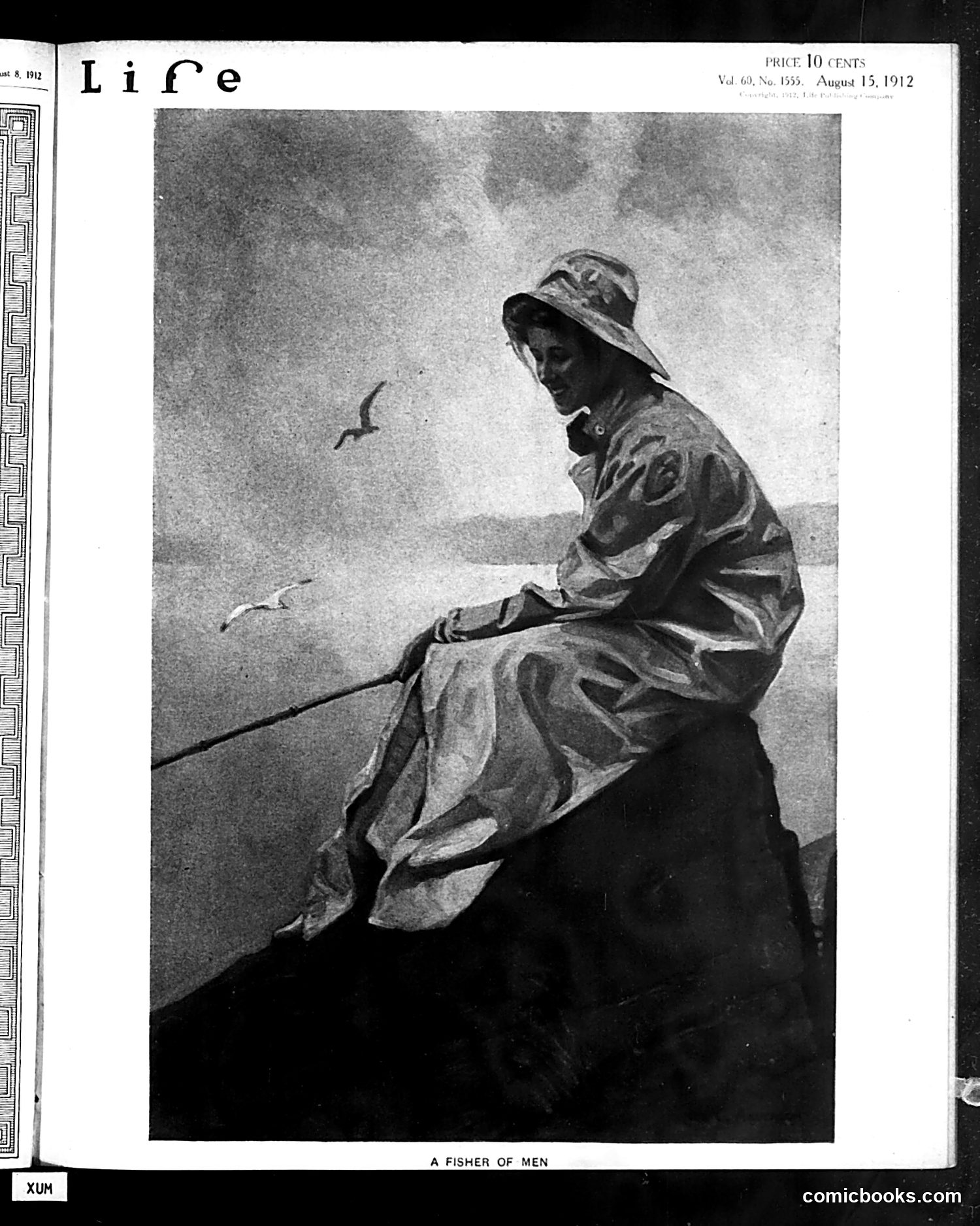
This image depicts a fisherman casting his line into water with two fish visible. The caption "A Fisher of Men" is a biblical reference (Matthew 4:19) that typically describes religious evangelists or charismatic leaders "fishing" for converts or followers. In 1912 context, this likely refers to a political figure—possibly Theodore Roosevelt or another candidate in that year's presidential election—metaphorically "fishing" for voters or supporters. The image uses the fishing metaphor to satirize political recruitment, suggesting the figure is strategically luring people rather than genuinely inspiring them. Without additional context or identifying details in the image itself, the specific target remains unclear, but the satire critiques manipulative political recruitment tactics.
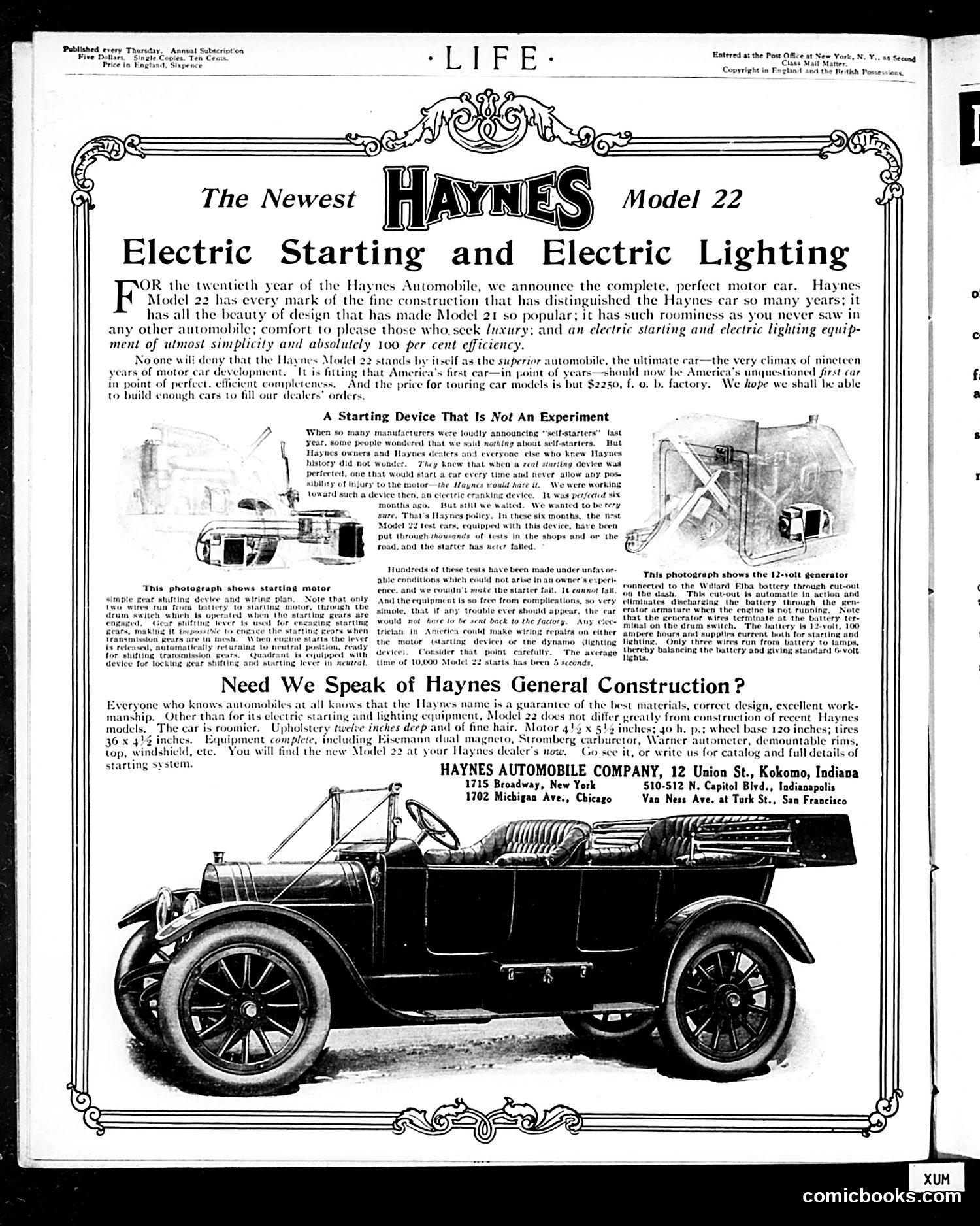
This page is primarily **advertising, not satire or editorial content**. It's a full-page advertisement for the Haynes Model 22 automobile, published in *Life* magazine. The ad promotes the car's electric starting and lighting systems as innovations—featuring technical diagrams and detailed specifications. The headline asks "Need We Speak of Haynes General Construction?" to emphasize reliability and quality engineering. The large illustration shows a side-view of the open-air touring car with prominent wheels and mechanical details typical of early 1910s automobiles. **There is no political cartoon or satire here.** This is straightforward product marketing highlighting technological advances in automotive engineering that would have been genuinely novel to contemporary readers—electric systems were significant innovations for the era.
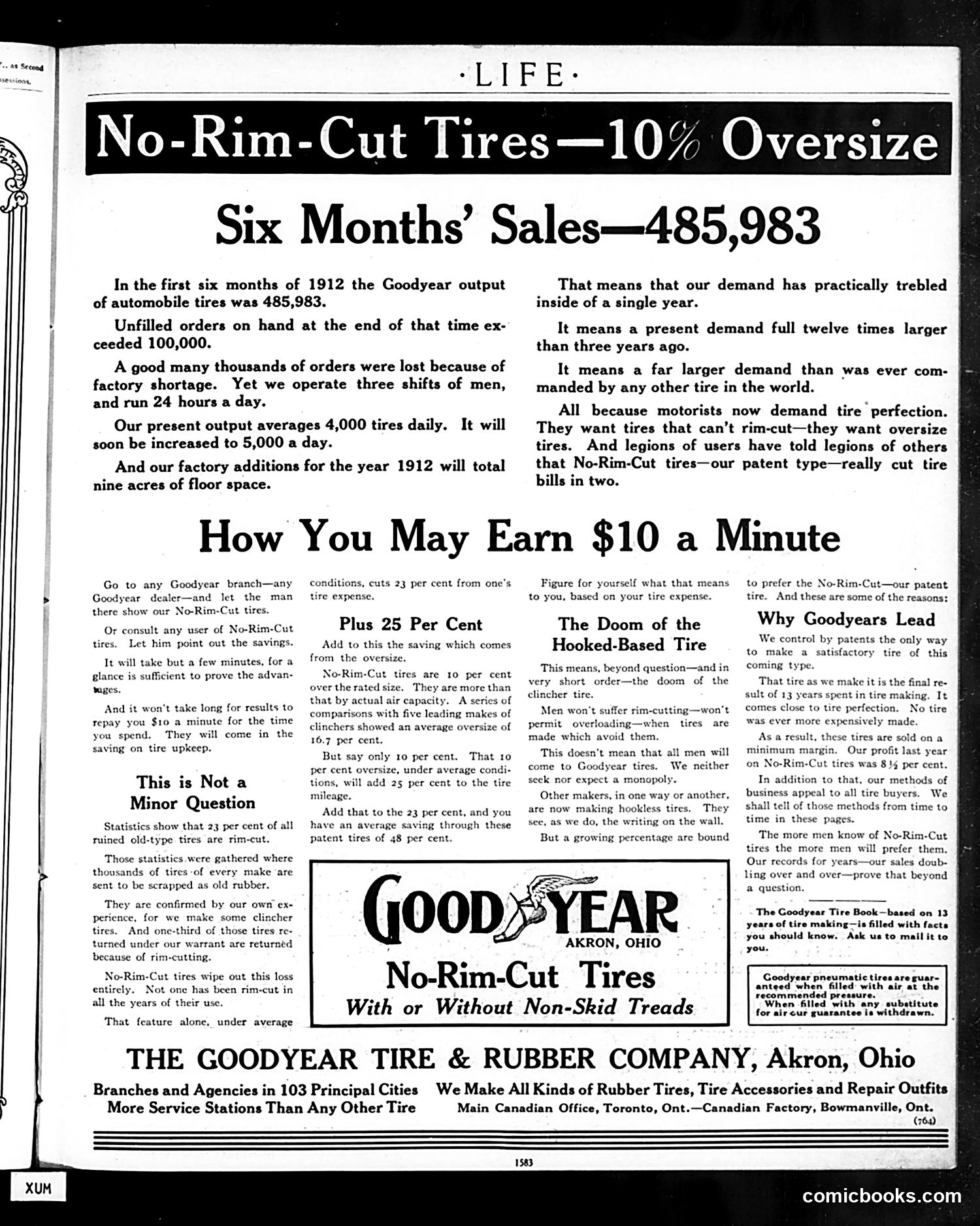
This is **not satire or a political cartoon** — it's a commercial advertisement for Goodyear's "No-Rim-Cut" tires. The ad promotes Goodyear's innovative tire design that prevents rim-cutting (a common failure mode in early automobile tires). Key selling points include: - Sales of 485,983 tires in six months, indicating market dominance - Claims that demand has "trebled" in one year - A "how to earn $10 a minute" scheme encouraging dealers to promote the tire's savings - Technical advantages: tires are 10% oversized and resist rim-damage The page emphasizes Goodyear's factory capacity (4,000 daily output) and market leadership. This represents early-20th-century automobile industry advertising when tire reliability was a major consumer concern and competitive selling point.
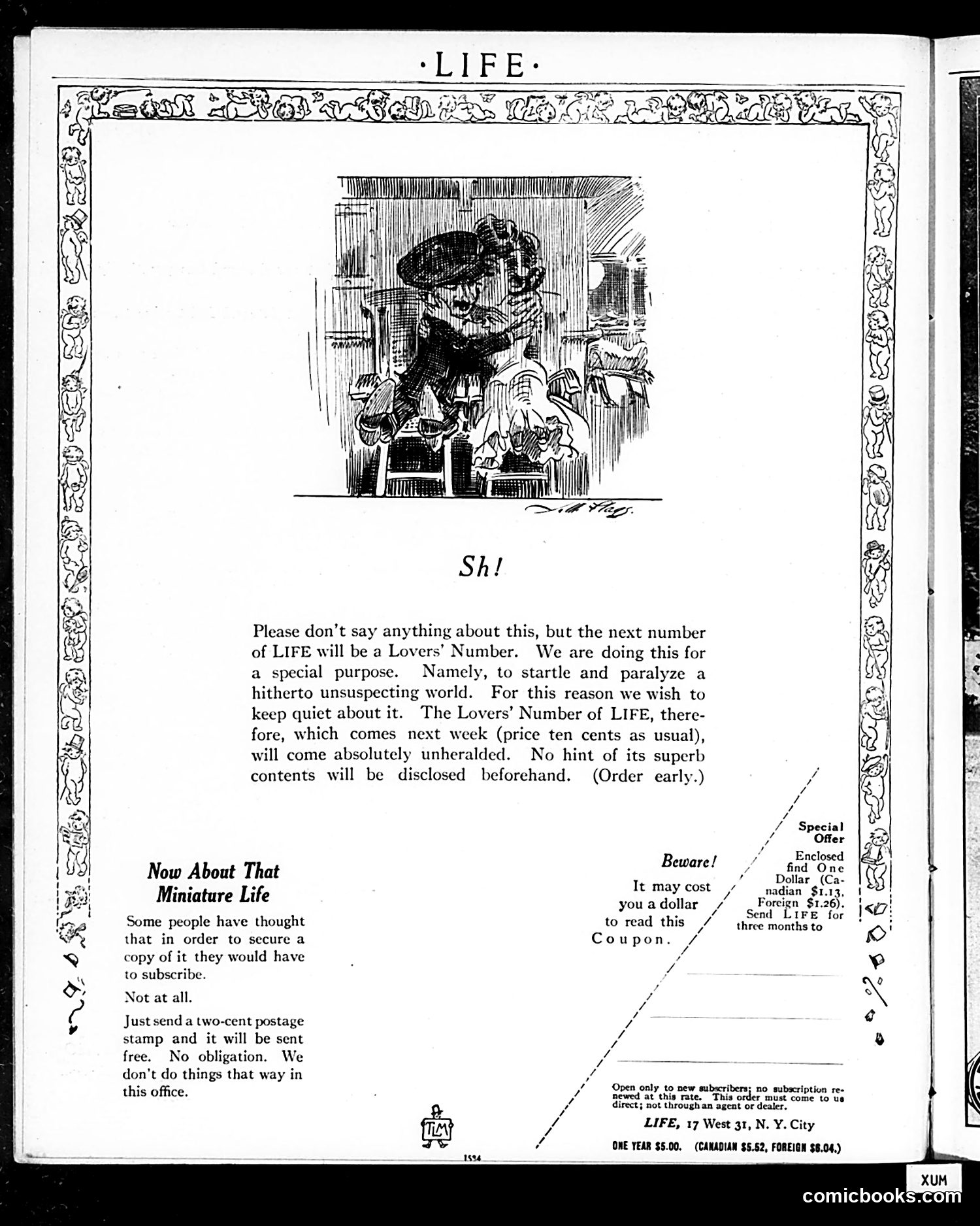
The main cartoon depicts a woman in an elaborate hat shushing the viewer with "Sh!" The accompanying text explains that Life's next issue will be a "Lovers' Number" designed to "startle and paralyze a hitherto unsuspecting world." The magazine promises to keep its contents secret until publication, marketed as a special promotional strategy. Below, a section titled "Now About That Miniature Life" addresses reader inquiries about obtaining copies, clarifying that no subscription is necessary—just a two-cent postage stamp will bring a free copy. The satire appears to mock both the magazine's sensationalism and readers' eagerness for supposedly scandalous content, while the "Lovers' Number" likely referenced romantic or mildly risqué material considered daring for the era.
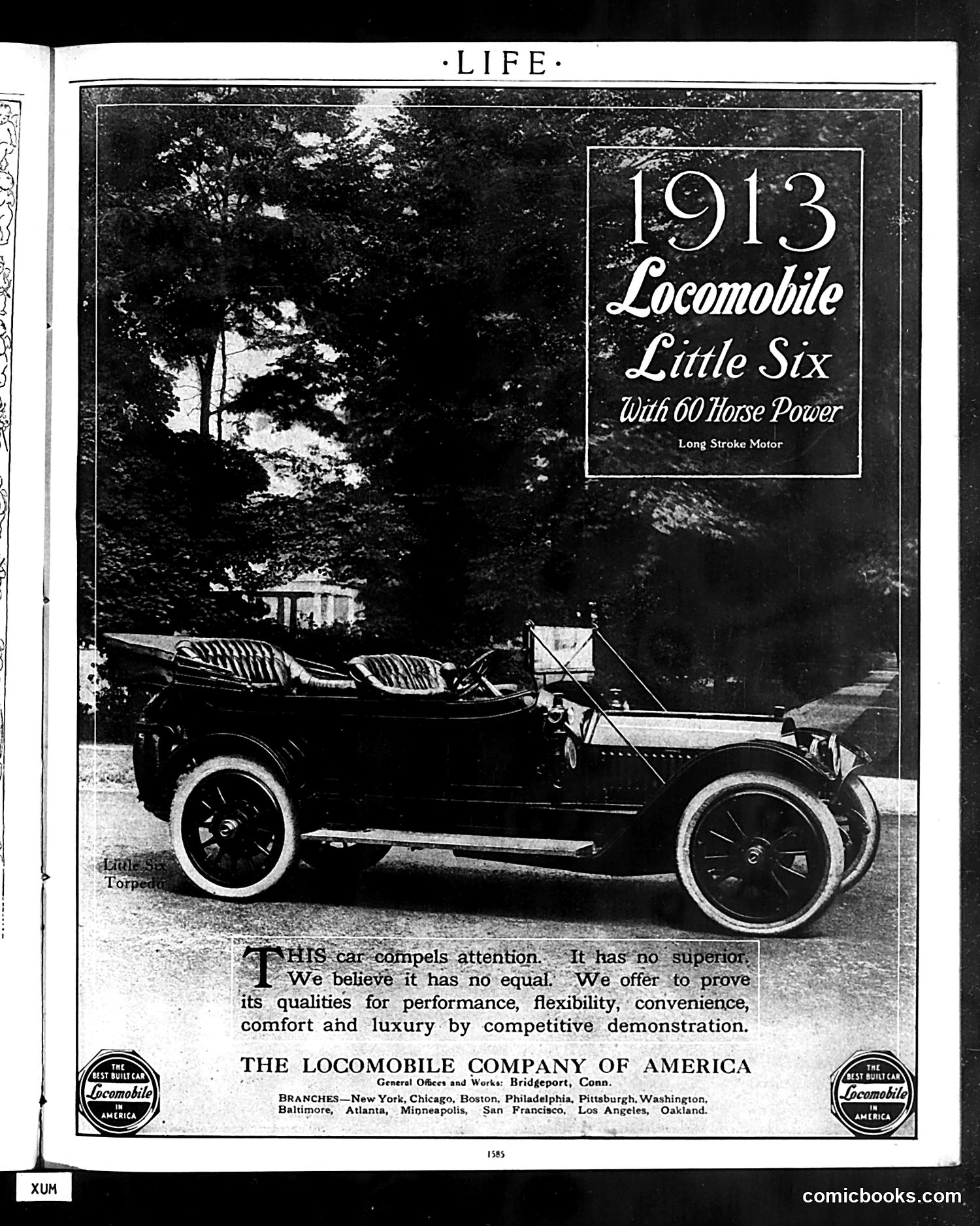
This is not a cartoon but a **product advertisement** for the Locomobile Company of America, appearing in *Life* magazine. It features their 1913 "Little Six" automobile model with a 60 horsepower, long-stroke motor. The ad uses promotional language typical of the era, claiming the car "compels attention" and has "no superior" or "equal." It emphasizes performance qualities—"flexibility, convenience, comfort and luxury"—and promises to prove these virtues through "competitive demonstration." The scenic setting with boats suggests leisure and affluence. The Locomobile Company was a real, prestigious American automaker. This represents early automotive advertising targeting wealthy consumers during the pre-mass-production era when automobiles were luxury goods.
This page is **not a cartoon or satirical content**—it's a straightforward advertisement for the Packard Motor Car Company's five-ton truck, published in *Life* magazine. The ad promotes the "Five-Ton Packard Truck" as a commercial vehicle option that complements Packard's existing 2 and 3-ton trucks. It emphasizes the truck's 40-horsepower motor, automatic speed governor (limiting it to 8.5 mph), customizable body types, and flexible frame lengths. The advertisement notes Packard trucks operate in 162 trade lines across 235 cities, highlighting dealer support nationwide. This is period commercial marketing rather than political or social satire—typical of *Life* magazine's mix of editorial and advertising content from the early automotive era.
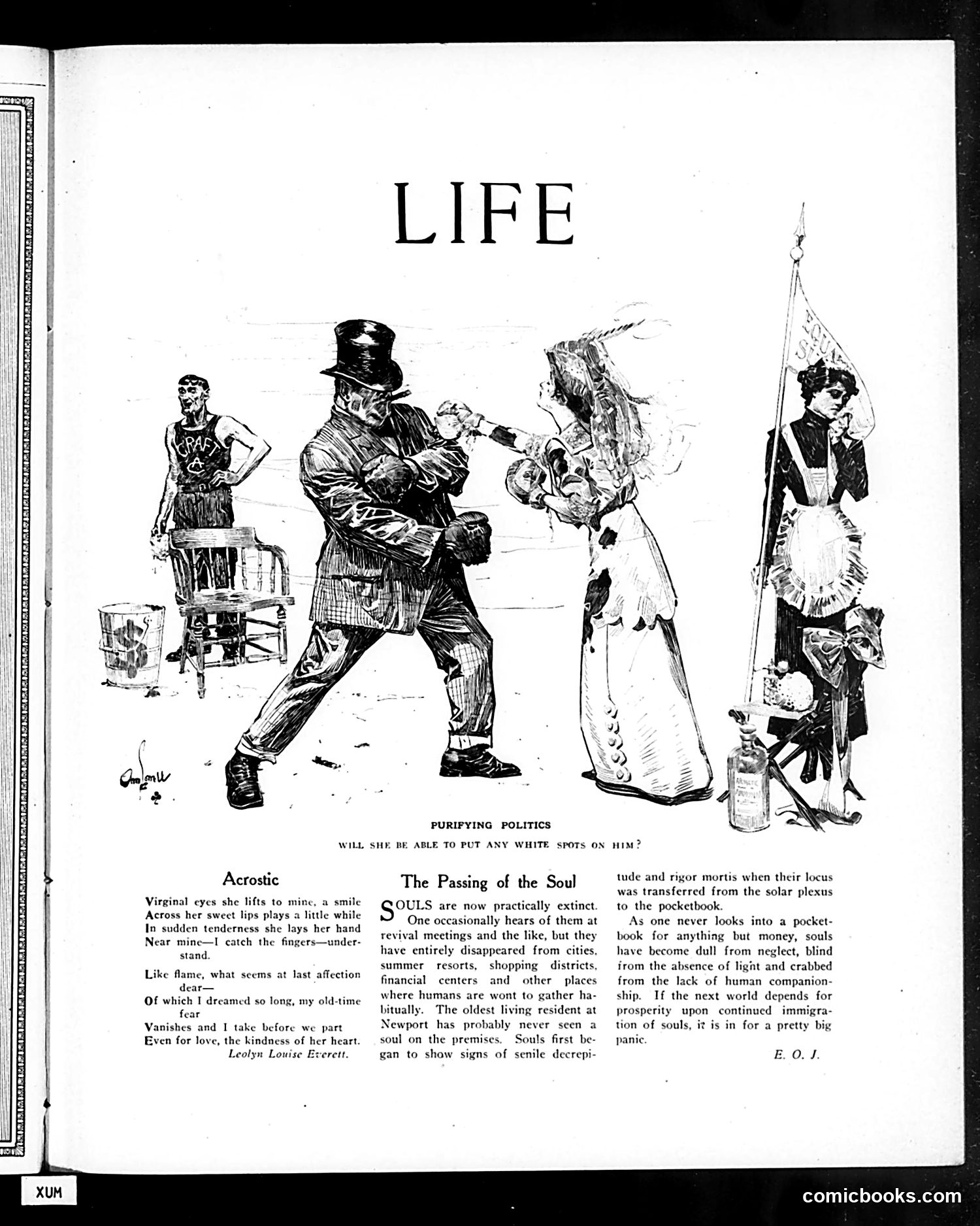
This page features a political cartoon titled "PURIFYING POLITICS" with the subtitle "WILL SHE BE ABLE TO PUT ANY WHITE SPOTS ON HIM?" The cartoon depicts a woman (appearing to represent reform or civic virtue) attempting to clean a corrupt politician—shown as a man in a top hat covered in grime. The visual metaphor suggests efforts to remove corruption from politics through reform movements. The accompanying text includes poems and an article about "The Passing of the Soul," discussing the decline of spiritual values in modern society. The satire targets political corruption and the challenges of reform—questioning whether any amount of "cleaning" can actually purify a thoroughly compromised politician. This reflects Progressive Era concerns about machine politics and the need for governmental reform, likely early 20th century.
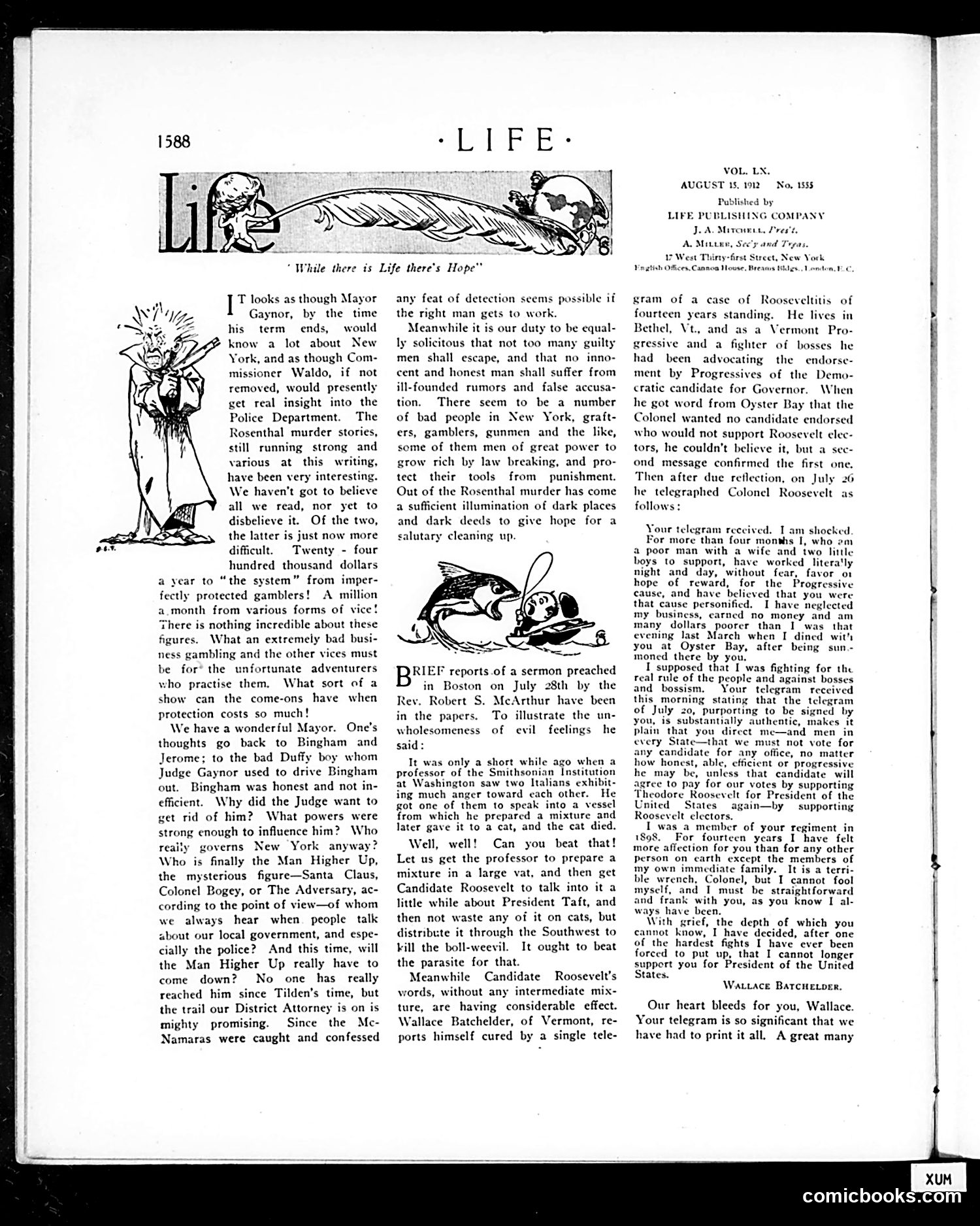
This page satirizes New York City politics and crime. The main text discusses Mayor Gaynor's inability to control the Police Department despite "wonderful" leadership, questioning what "higher Up" (likely the Mayor or city government) truly governs New York. The cartoon features a skeletal figure labeled "Santa Claus, Colonel Bogey, or The Adversary"—representing corruption or evil—suggesting these mysterious forces secretly control the city instead of elected officials. A separate brief mentions Rev. Robert MacArthur's sermon about evil, and includes a congratulatory letter to Colonel Roosevelt from "Wallace Batchelder," likely referencing Theodore Roosevelt's 1912 presidential campaign. The overall tone mocks New York's actual governance amidst public claims of reform.
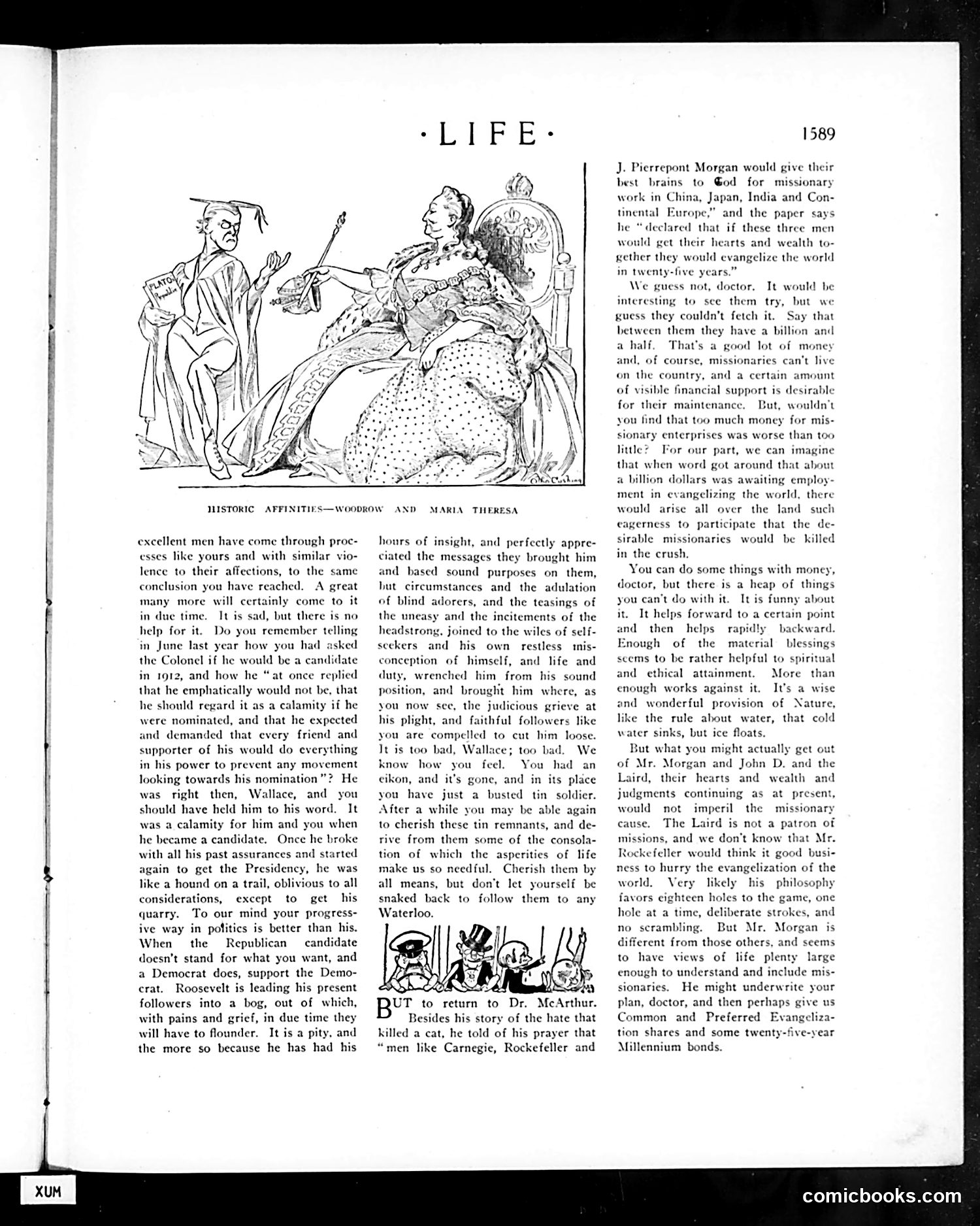
This cartoon satirizes President Woodrow Wilson by comparing him to Maria Theresa, the 18th-century Austrian empress. The caption's title suggests Wilson shares characteristics with the historical figure. The sketch shows Wilson in a feminine pose wearing a dress, seated beside a figure labeled Maria Theresa. This is gendered mockery—a common satirical tactic attacking Wilson's policies or leadership style as overly cautious or insufficiently forceful. The accompanying article discusses Wilson's missionary evangelization efforts and criticizes his approach to foreign policy and financial support for such ventures. The cartoon likely mocks Wilson's diplomatic style as timid or ineffectual, comparing his decision-making to that of a historical female monarch.
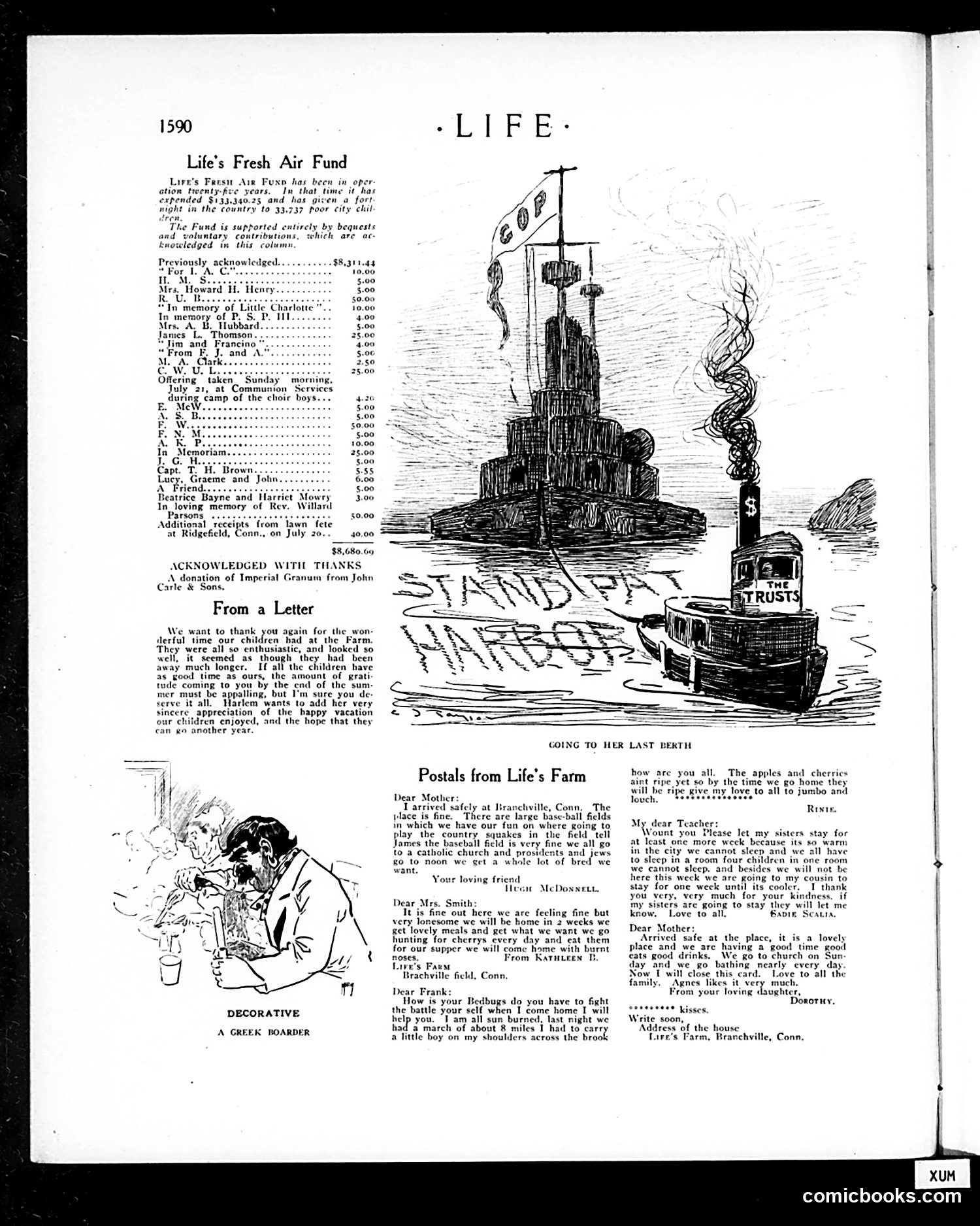
This page contains **Life's Fresh Air Fund** — a charitable fundraising section listing donations to send poor children to the country. The amounts range from small gifts ($1-5) to larger donations ($50). The main illustration, titled "Going to His Last Berth," shows a sinking ship, likely satirizing the Titanic disaster (1912). The visual pun on "berth" (sleeping quarters) versus death is darkly humorous. Below are "Postals from Life's Farm" — thank-you letters from children who attended the fund-sponsored vacation, expressing gratitude for fresh air, baseball, church, and cherries. **The satire's point**: contrasting the tragedy of wealthy passengers drowning with the charitable provision of fresh air to poor urban children — suggesting Life magazine's social conscience through humor and sentimentality.
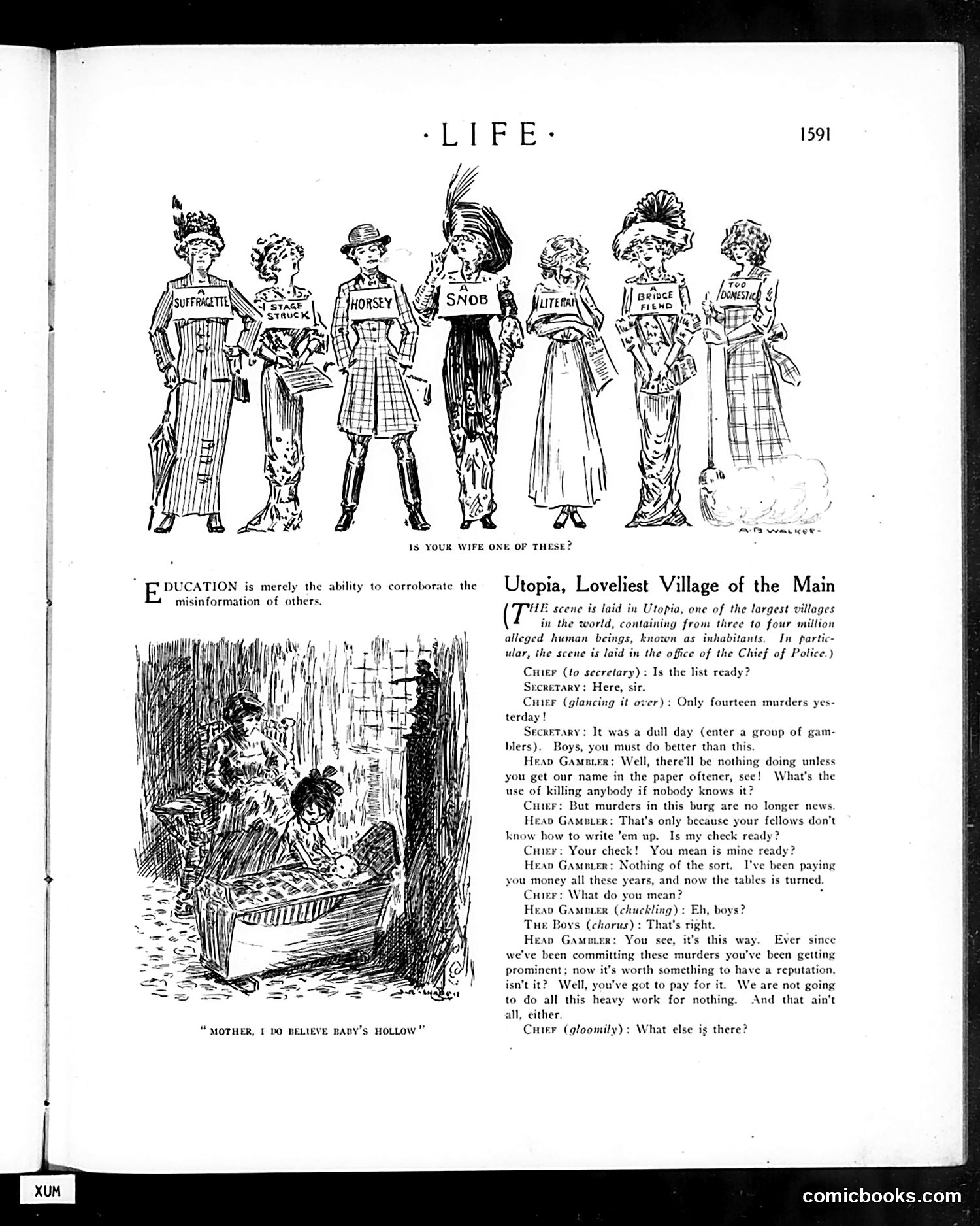
This page satirizes corruption and criminality in an idealized American town. The top illustration shows seven women labeled with character types like "Divorce," "Bridge," and "Two Husbands" — mocking hypocritical respectability in polite society. The lower sketch depicts a dialogue between a police chief and gamblers/criminals about covering up murders. The satire's point: in this supposedly perfect "Utopia," crime flourishes openly while the town maintains a facade of respectability. The criminals frankly discuss how their murders have enhanced their reputation and demand payment for silence. The opening quote about education "corroborating the misinformation of others" reinforces the theme — this society systematically conceals its moral rot behind genteel appearances.
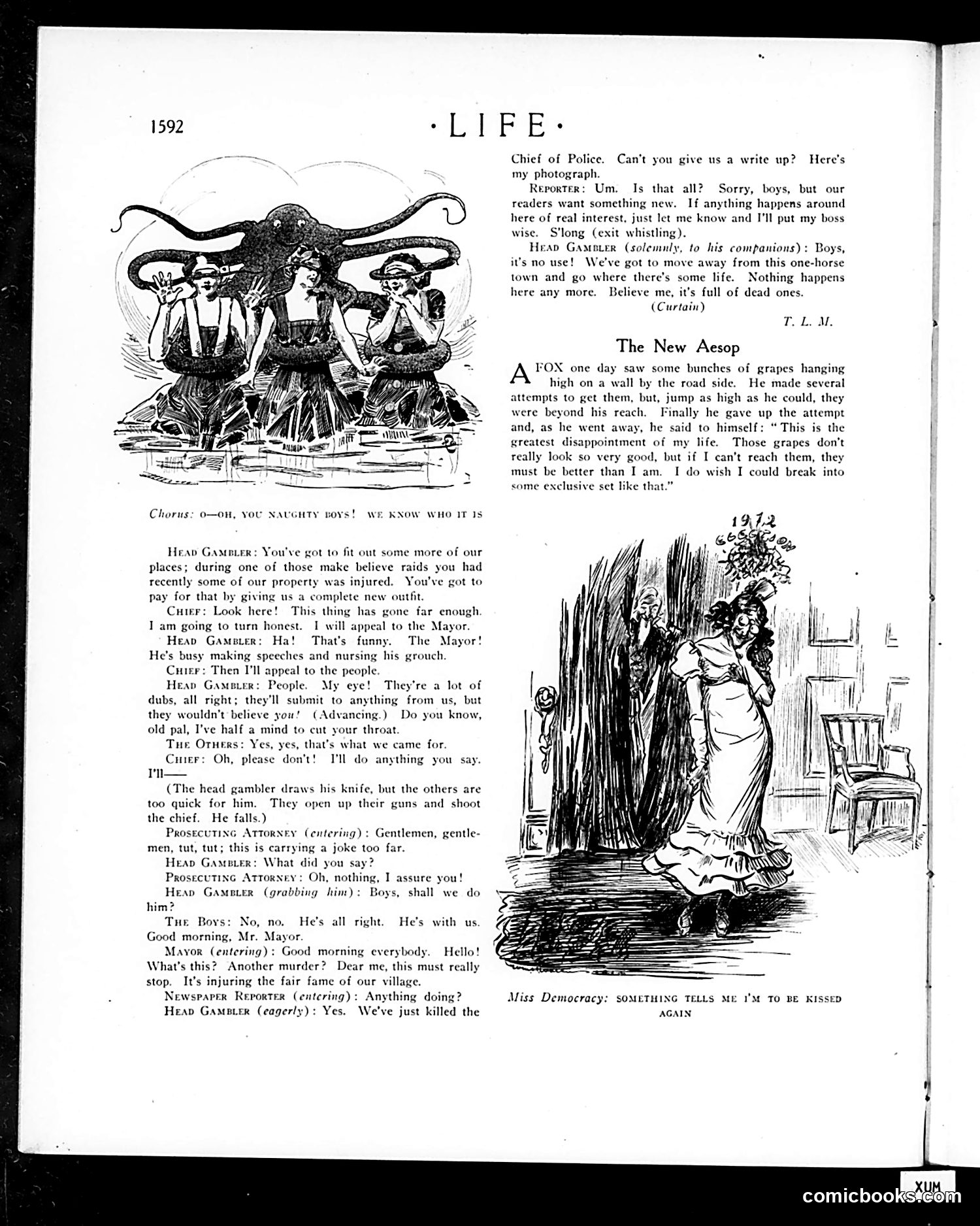
This page contains a theatrical sketch about small-town corruption. The "Head Gambler" is caught in a raid and demands compensation from local officials, threatening to expose them publicly. The satire targets municipal government: the Mayor is "busy making speeches," the Chief of Police is evasive, and the Prosecuting Attorney is powerless—all suggesting officials are complicit in or indifferent to gambling operations. The sketch mocks how small towns allegedly tolerated vice while maintaining appearances of respectability. The gambler's ability to shake down the entire power structure suggests corruption runs deep. The separate item, "The New Aesop," is a brief fable about a fox unable to reach grapes, rationalizing his failure—a commentary on sour grapes rationalization.
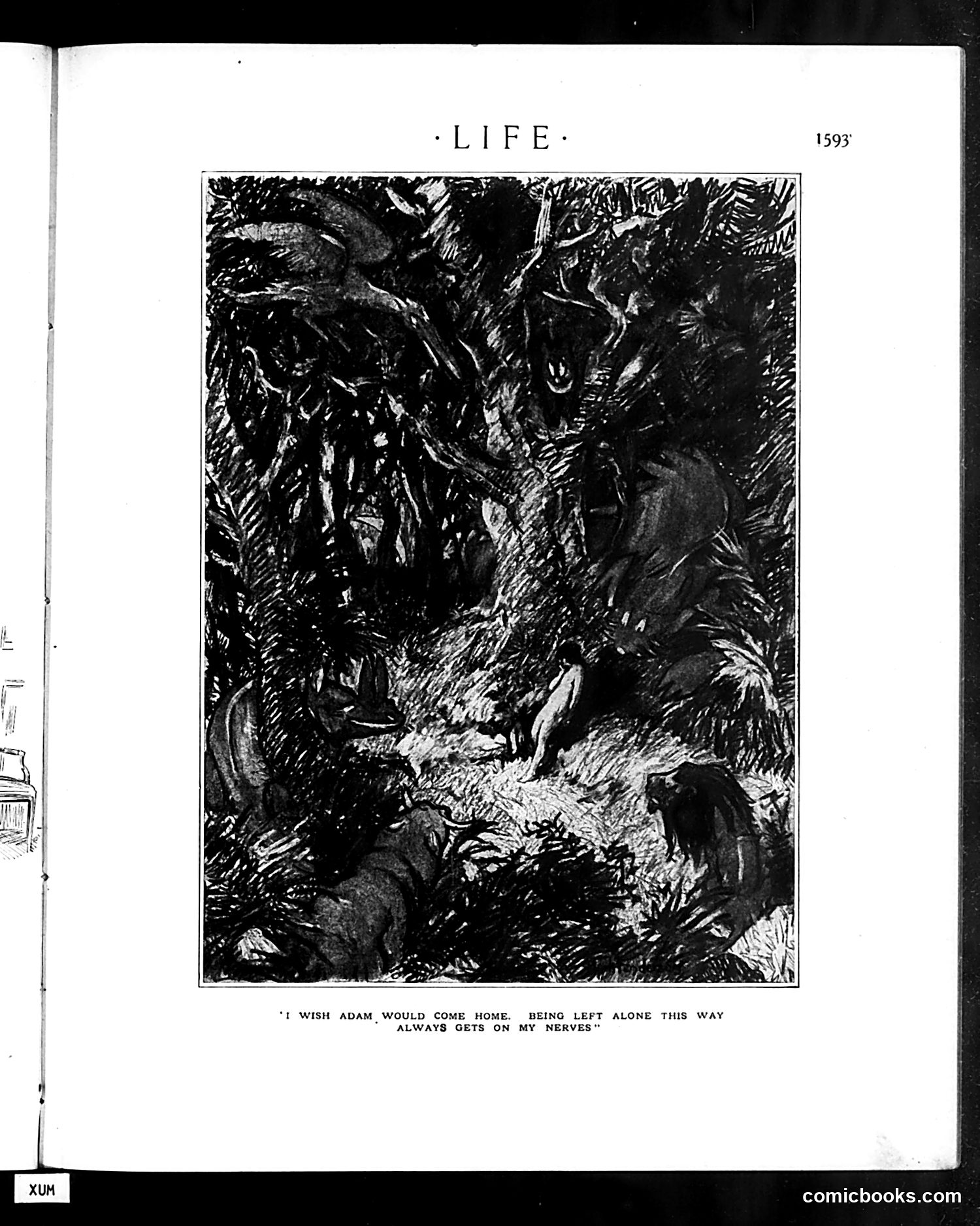
This appears to be a satirical illustration from *Life* magazine depicting a domestic scene. The caption reads: "I WISH ADAM WOULD COME HOME. BEING LEFT ALONE THIS WAY ALWAYS GETS ON MY NERVES." The cartoon shows a woman alone in what appears to be an overgrown, wild interior space—likely her home. The satire seems to target anxieties about women's domestic isolation and dependence on male companionship. By referencing "Adam" (evoking the biblical Adam and Eve origin story), the cartoonist suggests the woman's identity is entirely defined by her relationship to her husband. The wild, chaotic nature of the depicted space humorously exaggerates how a woman's mental state deteriorates without male presence—a commentary on both women's restricted social roles and contemporary attitudes about female psychology and domesticity.
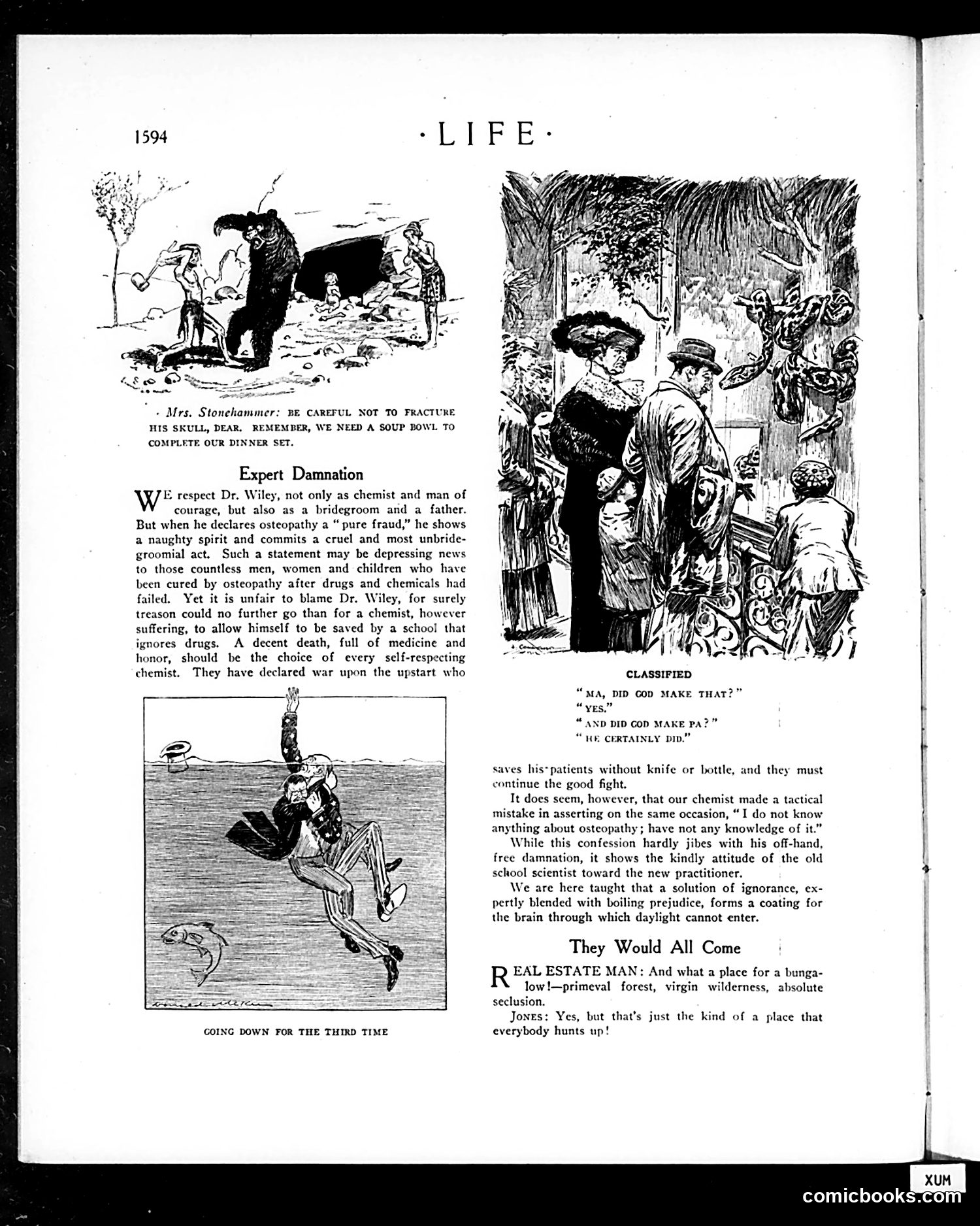
This page contains satirical commentary on Dr. Wiley, a chemist who exposed food adulteration but made a tactical error denying knowledge of osteopathy. The "Expert Damnation" section criticizes his hypocrisy: while he courageously fights dangerous chemicals in food, he ironically dismisses an emerging medical practice, showing "boiling prejudice" masquerading as scientific authority. The cartoon "Going Down for the Third Time" depicts a drowning figure—likely representing someone caught in scandal or failure, possibly related to the Wiley controversy or similar public embarrassment. The bottom section, "They Would All Come," presents a humorous dialogue between a real estate man and Jones about a remote, pristine property—implying that even unspoiled wilderness cannot escape human exploitation and tourism.
This 1895 *Life* article satirizes the "New Thought" movement—a contemporary spiritual fad promising cosmic harmony and occult wisdom. "Swami Baa Baa" (a mocking name suggesting fakery) operates "Vibration Parlors" offering mystical advice to gullible women and financial guidance for Wall Street investors. The satire mocks several targets: **Spiritualist practices**: The absurd "seven stages" of meditation—lying in bed staring at nothing, sitting on hitching posts watching weathervanes—lampoon pseudoscientific spiritual techniques. **Wall Street greed**: Connecting stock trading to "rhythmic harmony" and charging $30 weekly for financial letters ridicules both spiritualism and market speculation. **The letter**: A man pays for spiritual guidance to seduce a woman, then blames his "molecular plane" when her husband appears and beats him. The punchline exposes the movement's uselessness while mocking masculine entitlement. The trained nurse "in attendance" for hysterical clients further satirizes the emotional manipulation and pseudoscience involved.
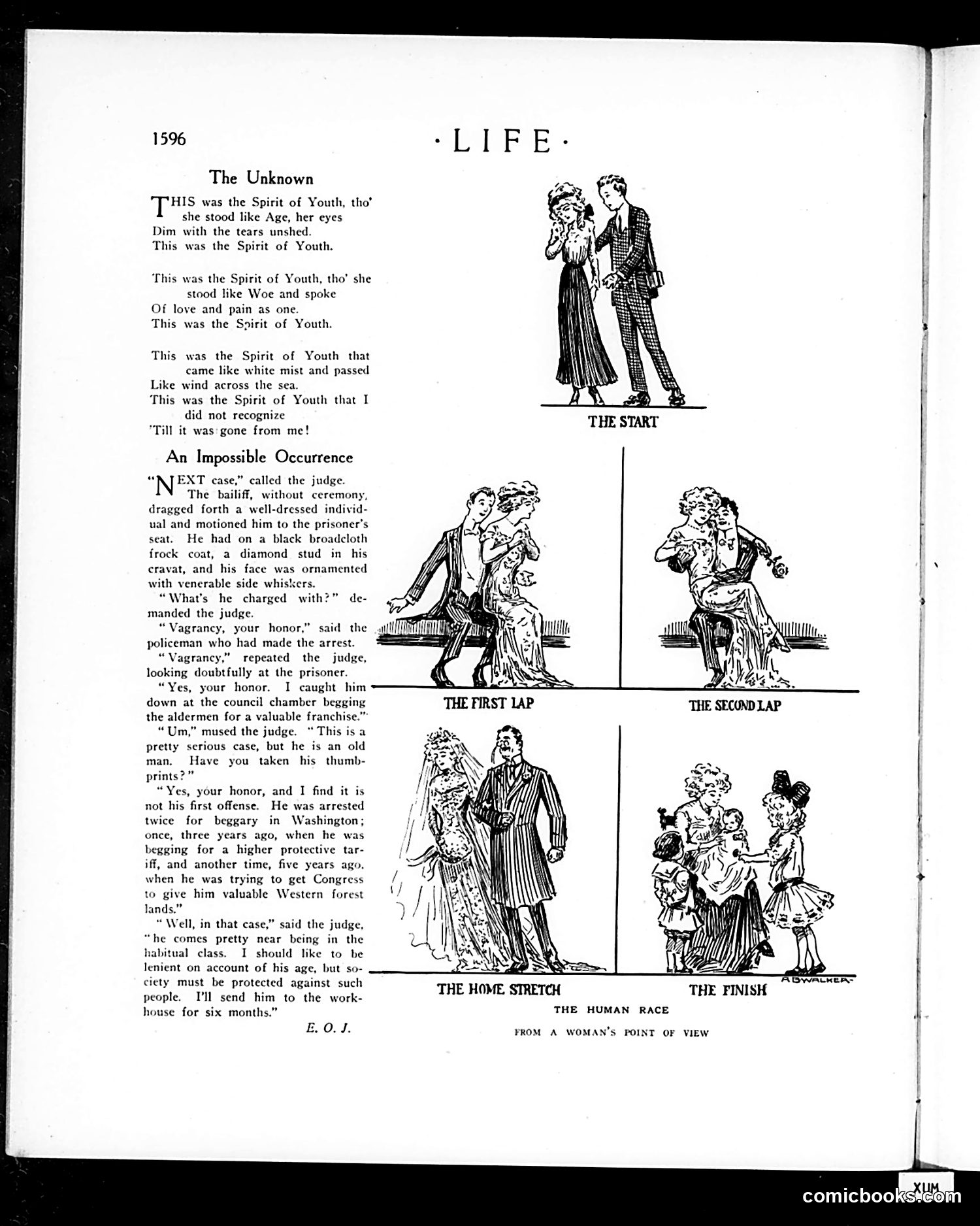
This 1596-numbered page contains two distinct pieces. **"The Unknown"** is a sentimental poem about the fleeting nature of youth, illustrated with panels depicting life stages ("The Start," "First Lap," "Second Lap," "Home Stretch," "Finish")—presented "From a Woman's Point of View," suggesting a meditation on female life's trajectory. **"An Impossible Occurrence"** is a satirical court sketch mocking wealthy businessmen who seek government favors. A well-dressed man with expensive accoutrements (diamond stud, fine coat) is arrested for "vagrancy"—specifically for begging aldermen for valuable franchises and lobbying Congress for protective tariffs and forest lands. The joke's impossibility: a rich man being arrested for what amounts to corporate lobbying, treating such influence-peddling as socially contemptible "begging." The judge sentences him to the workhouse, satirizing how actual wealthy wheeler-dealers escape punishment while minor offenders face jail. This critiques Gilded Age corruption and corporate influence.
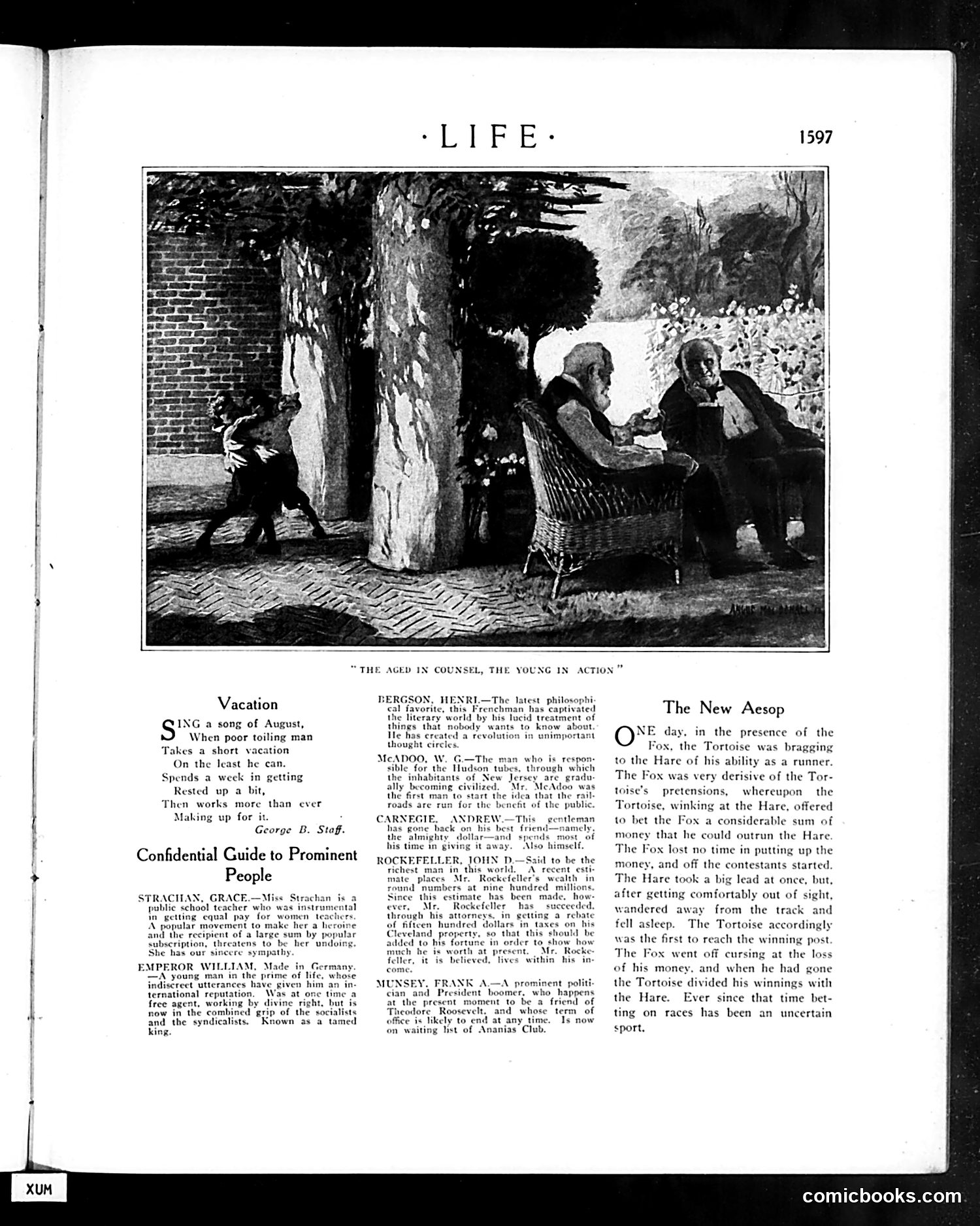
This page contains satirical biographical sketches of prominent figures and a moral fable. **"The Aged in Counsel, the Young in Action"** illustration depicts two seated gentlemen (likely representing establishment figures) while a younger person acts energetically in the background—visually representing the tension between conservative wisdom and youthful action. **The biographical section** mockingly profiles public figures including Emperor William II (portrayed as losing autonomy to socialist/syndicalist forces), Henri Bergson (a French philosopher dismissed as creating "revolution in unimportant thought circles"), William McAdoo (Hudson Tubes official), Andrew Carnegie (philanthropist), John D. Rockefeller (wealthy industrialist), and Frank Munsey (political operative and Roosevelt associate). **"The New Aesop"** retells the tortoise-and-hare fable with modern cynicism: the tortoise and hare conspire together to defraud the fox through a fixed race, then split the winnings. The moral: modern betting is unreliable because participants engage in corruption. The page exemplifies Life's early-1900s approach: mixing social commentary, wealthy-person satire, and morality-subverting humor to critique American power structures and ethics.
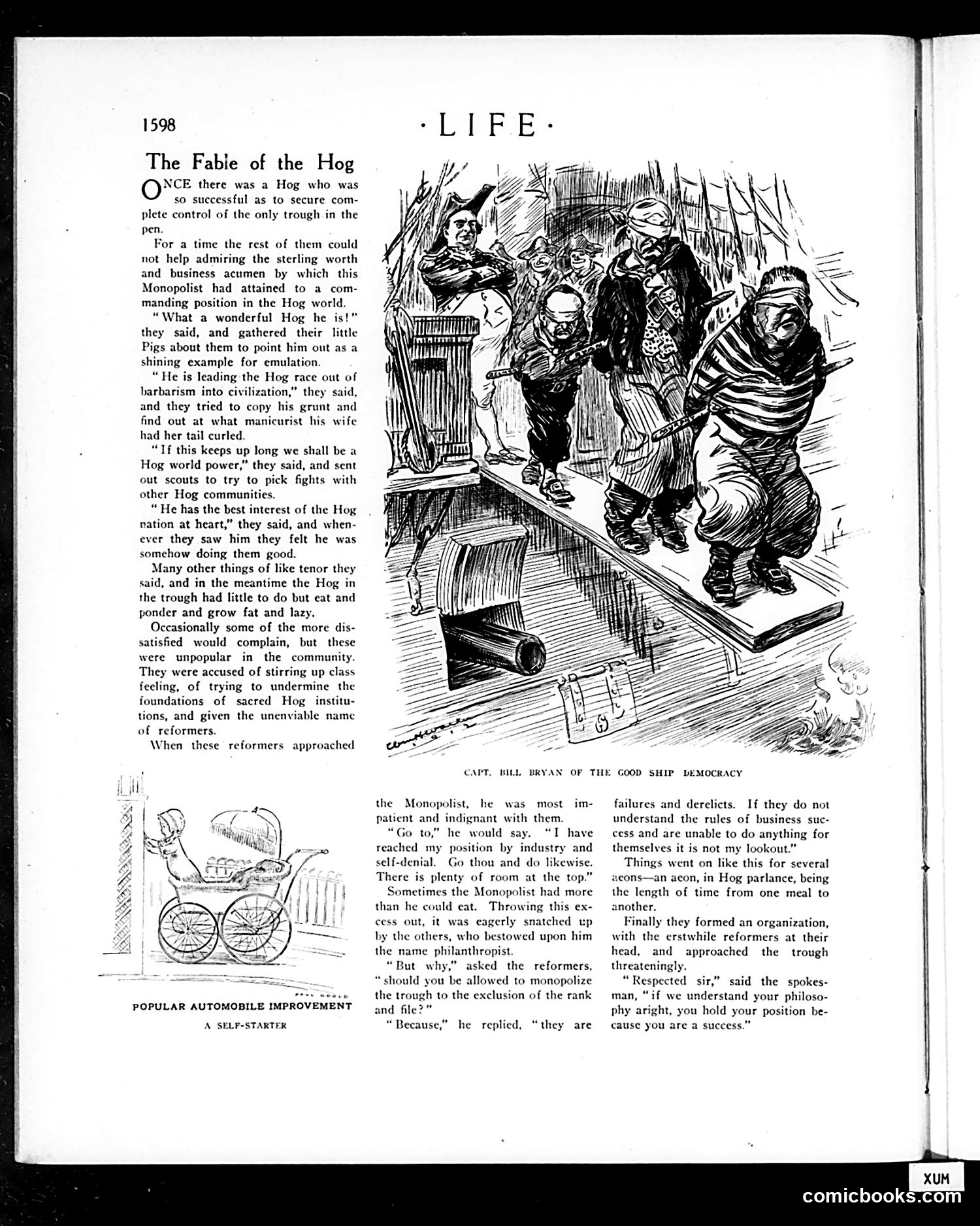
This is a Gilded Age political allegory attacking unchecked monopolies and wealth concentration. The "Hog" represents a wealthy industrialist (likely a robber baron) who controls the "trough"—the economy's resources. The satire mocks: - **Public admiration** of the monopolist as a civilization-builder, despite his self-serving control - **His justifications**: claiming success proves merit, dismissing the poor as "failures and derelicts" - **Co-opted philanthropy**: his table scraps rebranded as generosity - **Suppression of dissent**: reformers labeled troublemakers for questioning the system The cartoon at bottom references "Capt. Bill Bryan of the Good Ship Democracy"—likely William Jennings Bryan, who championed anti-monopoly positions. The reformers finally organize to confront the monopolist, threatening his unchallenged power. The fable advocates for collective action against concentrated economic control.
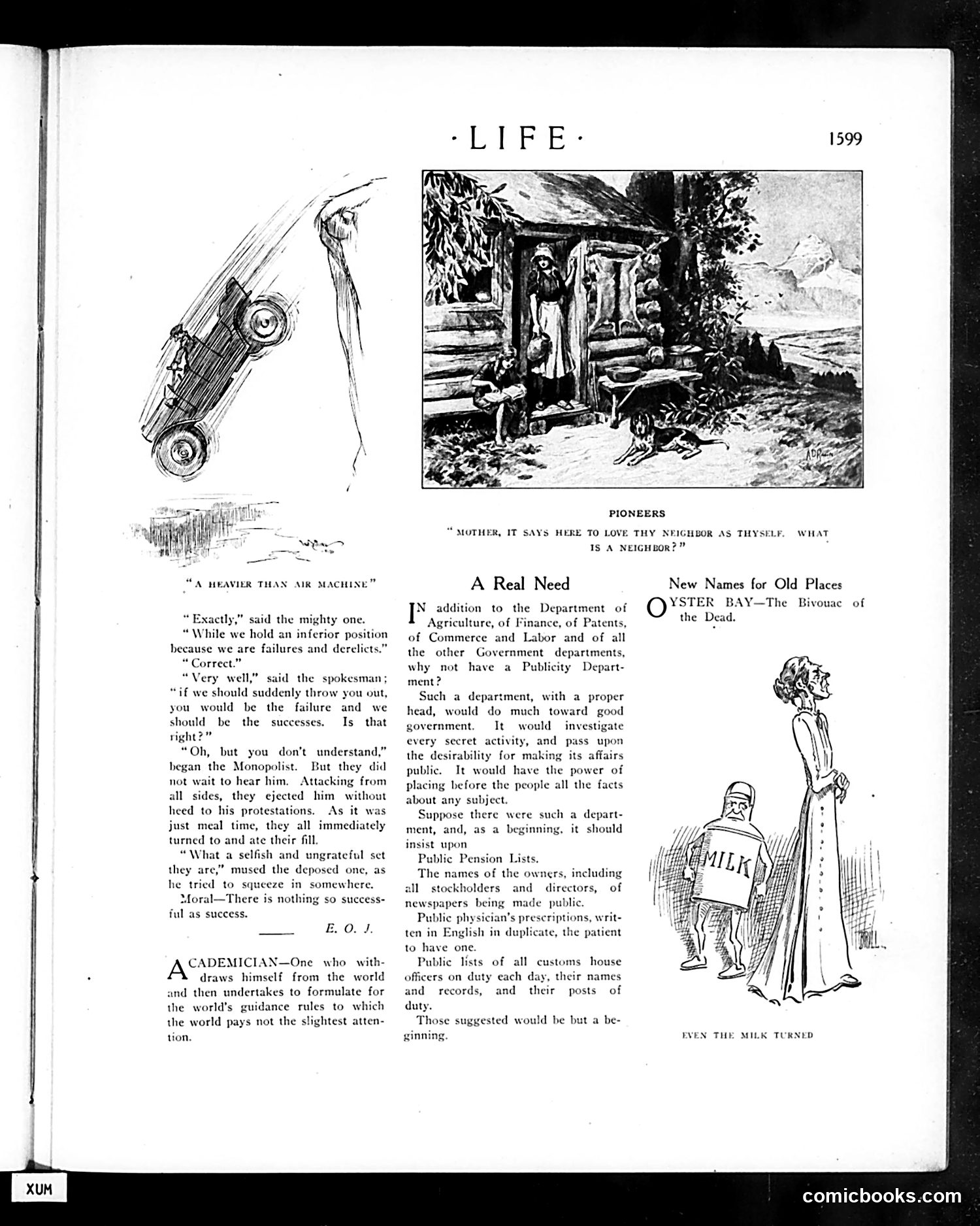
This 1899 *Life* magazine page contains three distinct pieces of satire: **"A Heavier Than Air Machine"** (left cartoon): A satirical dialogue where a "Monopolist" is violently ejected by workers/common people who turn the tables on him—if he's a "failure," removing him makes them "successes." The moral critiques the hypocrisy of the powerful: success justifies everything, even their own logic used against them. **"A Real Need"** (center): Proposes creating a government Publicity Department to enforce transparency—public pension lists, newspaper owner names, customs officers' records, etc. This is progressive-era satire advocating for governmental accountability and anti-corruption measures. **"Even the Milk Turned"** (right cartoon): A small illustration labeled "New Names for Old Places" mockingly renames "Oyster Bay" as "The Bivouac of the Dead." This likely references Theodore Roosevelt's Oyster Bay estate, suggesting criticism of his administration or policies. The "milk turned" caption implies spoilage/corruption. All three pieces reflect 1890s Progressive Era concerns: labor vs. capital, government transparency, and political criticism.
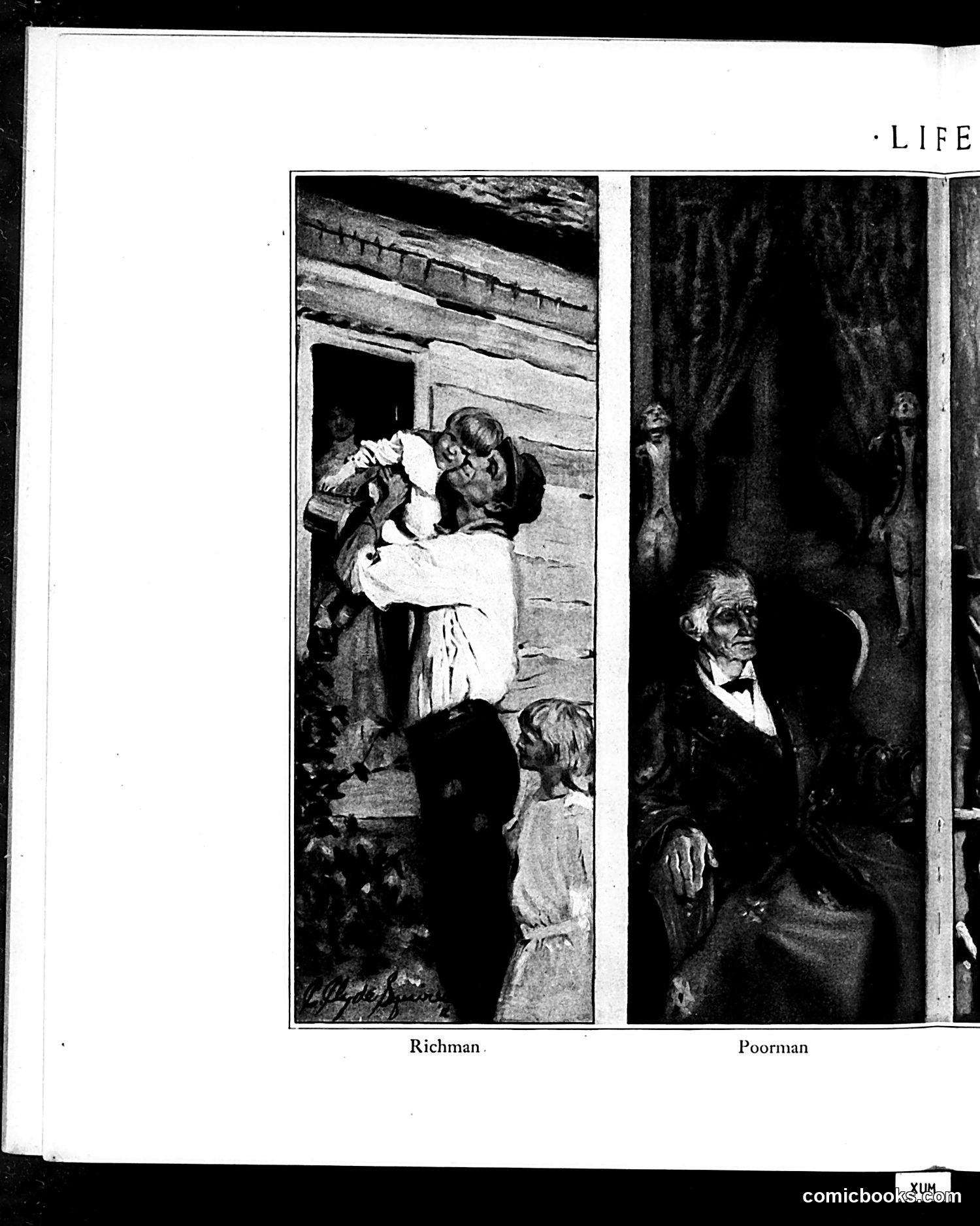
This page presents two contrasting scenes labeled "Richman" and "Poorman," appearing to be satirical illustrations comparing wealth and poverty. The **left image** ("Richman") shows a well-dressed woman in light clothing handing something to a child at a wooden house entrance, suggesting charitable giving or domestic comfort. The **right image** ("Poorman") depicts an elderly, gaunt man in dark clothing in what appears to be a sparse interior, with other figures visible in shadow, suggesting deprivation and hardship. The juxtaposition creates social satire about class disparity—likely commenting on the gap between wealthy and poor populations. Without additional context or visible publication date, the specific historical moment remains unclear, though this appears to critique economic inequality through visual contrast.
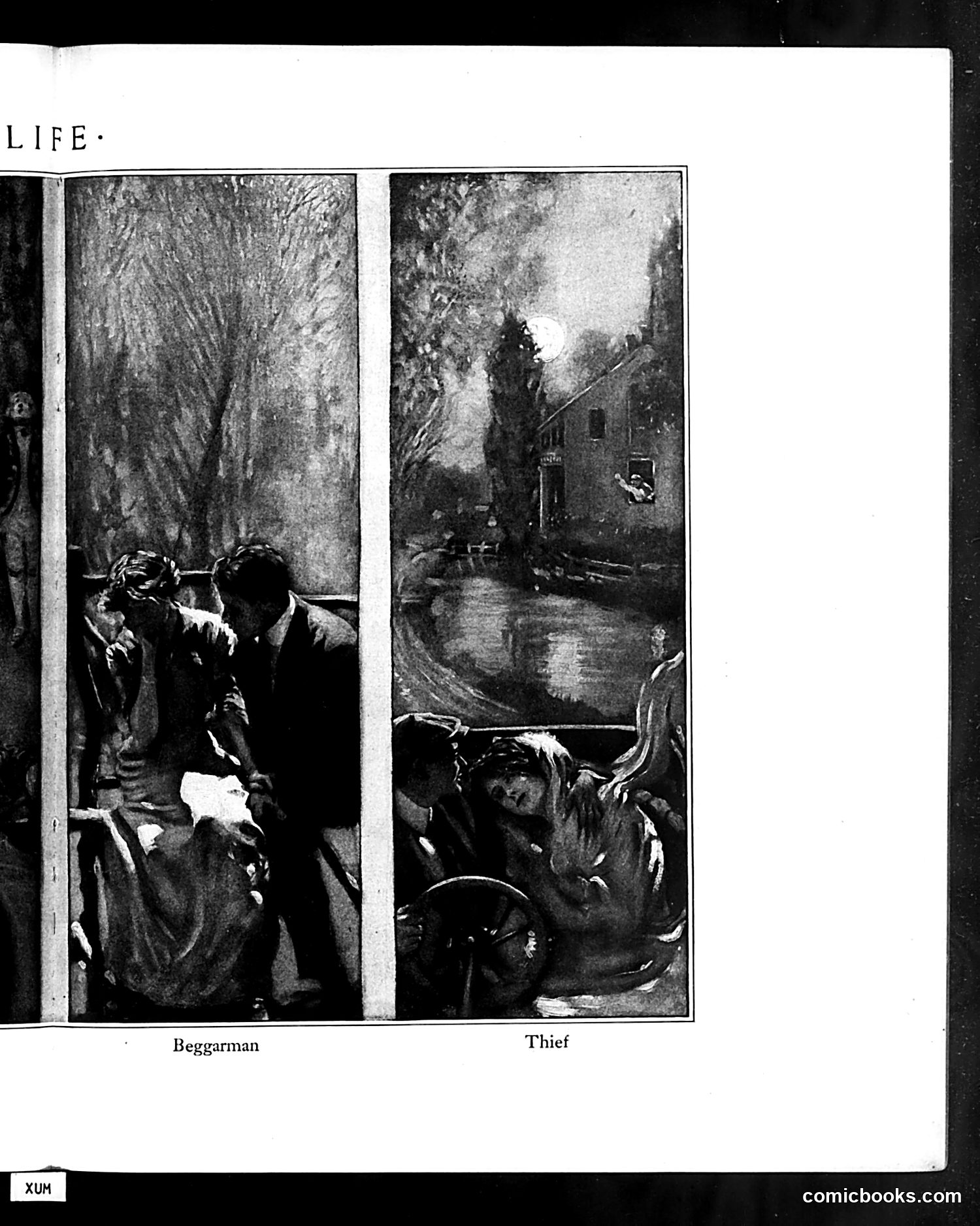
This page from *Life* magazine presents two film stills labeled "Beggarman" and "Thief." The left image shows two figures in what appears to be an interior scene with weathered walls. The right image depicts a nighttime outdoor scene with a full moon, buildings, and figures by water. Without additional context or visible credits, the specific films and their social commentary aren't entirely clear from the image alone. However, the pairing of "Beggarman" and "Thief" suggests either a comparison between two films exploring poverty and crime, or possibly frames from a single narrative contrasting these social conditions. This likely reflects *Life*'s satirical interest in how cinema portrayed working-class struggles during the early-to-mid twentieth century.
This essay satirizes people resistant to new ideas—the "Aunt Julias" and "Uncle Juliuses" who represent intellectual stagnation despite their virtues ("salt of the earth"). The author argues that humanity's true achievement wasn't biological evolution (upright posture, opposable thumbs) but rather the capacity for abstract thinking—"swinging ourselves mentally from idea to idea." This is presented as risky but necessary progress. The piece then reviews two books presenting "big ideas": James Harvey Robinson's *The New History* is praised for reframing history beyond politics and gossip toward understanding human cooperation and conscious evolution. The essay celebrates this as the era's most vital spiritual influence. The satire targets closed-minded traditionalists who would reject such progressive reinterpretation of history and human potential—they "need not apply" to this modern intellectual movement.
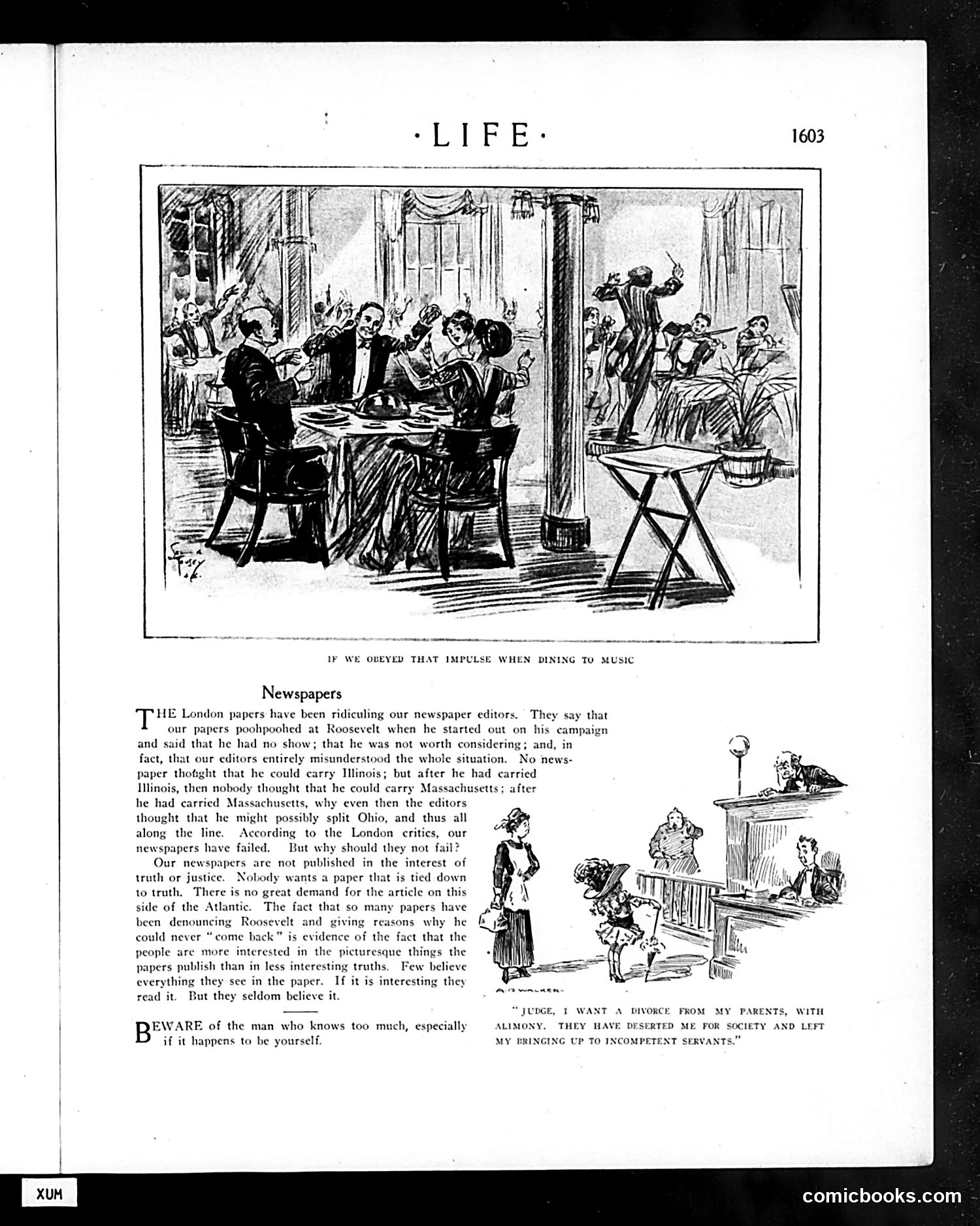
This page critiques American newspaper editors' poor political judgment. The text argues that London papers correctly mocked U.S. editors for dismissing Theodore Roosevelt's political viability—editors claimed he couldn't carry Illinois, then Massachusetts, then Ohio, yet he succeeded repeatedly. The satire's point: American newspapers prioritize sensationalism over truth. The piece notes readers don't actually believe what they read; they simply enjoy "picturesque things" over "less interesting truths." This reflects early-1900s anxiety about press credibility and yellow journalism. The cartoon at top illustrates the opening phrase about dining to music—showing diners so distracted by entertainment they've abandoned proper behavior. The bottom cartoon depicts a custody case, likely a separate satirical item about social decay and incompetent servants, typical of Life's commentary on contemporary society.
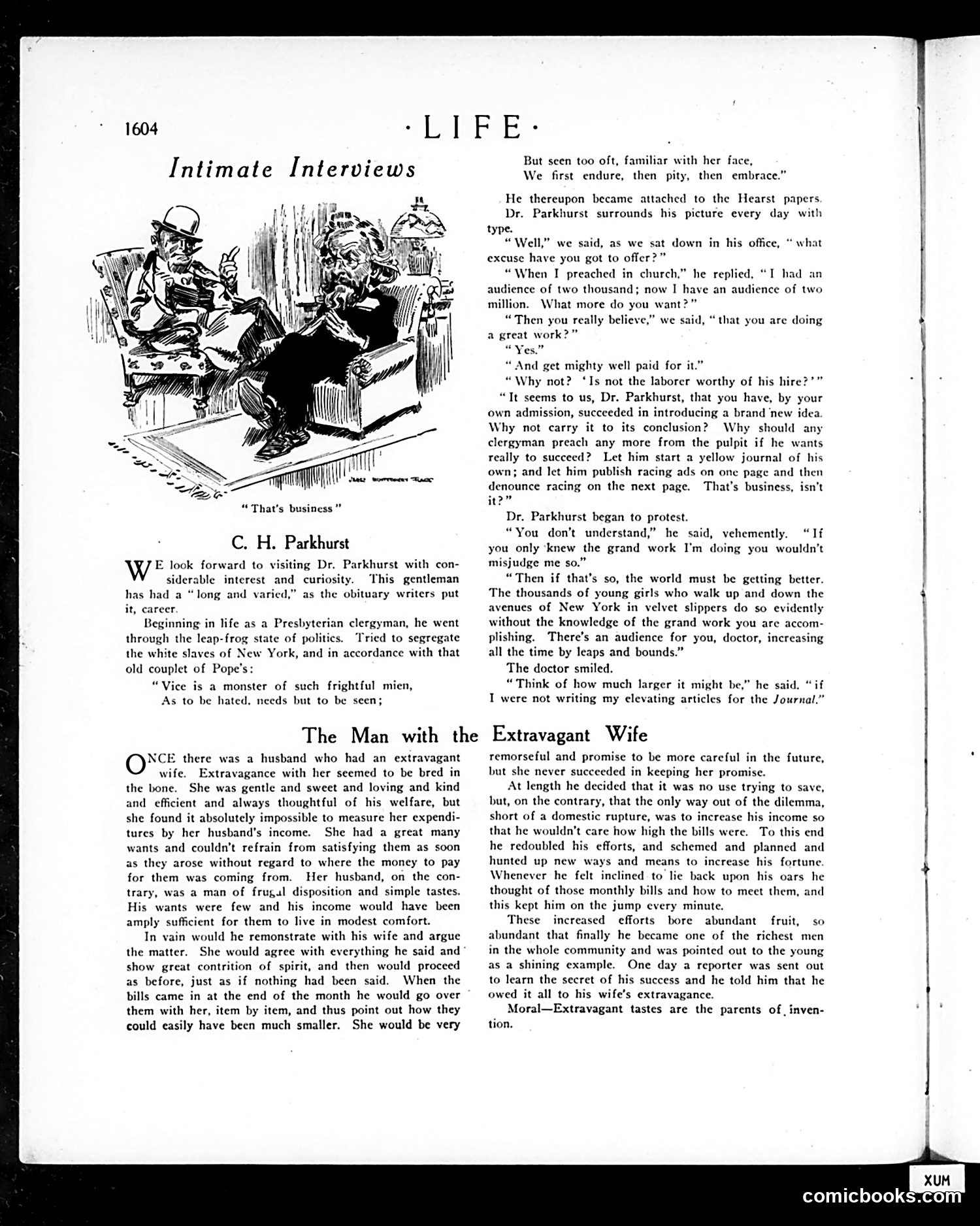
## The Cartoon: "That's Business" The sketch depicts an interview between Life's editor and **Dr. C. H. Parkhurst**, a real Presbyterian minister who became famous in 1890s New York for crusading against vice and corruption. The satire mocks Parkhurst's apparent hypocrisy: he abandoned pulpit preaching (audience: 2,000) for writing sensationalist articles in Hearst's yellow journalism (audience: 2 million), claiming this represents greater moral work. The interviewer sardonically suggests Parkhurst exemplifies modern "business"—that clergymen should start their own scandal sheets, running "racing ads" while denouncing racing. The joke: Parkhurst profits from exactly the vice he claims to oppose, using reform rhetoric to build a media empire. ## "The Man with the Extravagant Wife" A separate morality tale about a husband who abandons financial restraint, instead working to increase income so he can afford his wife's spending. The satire's moral: **extravagant tastes drive ambition**—mirroring Parkhurst's apparent motivation.
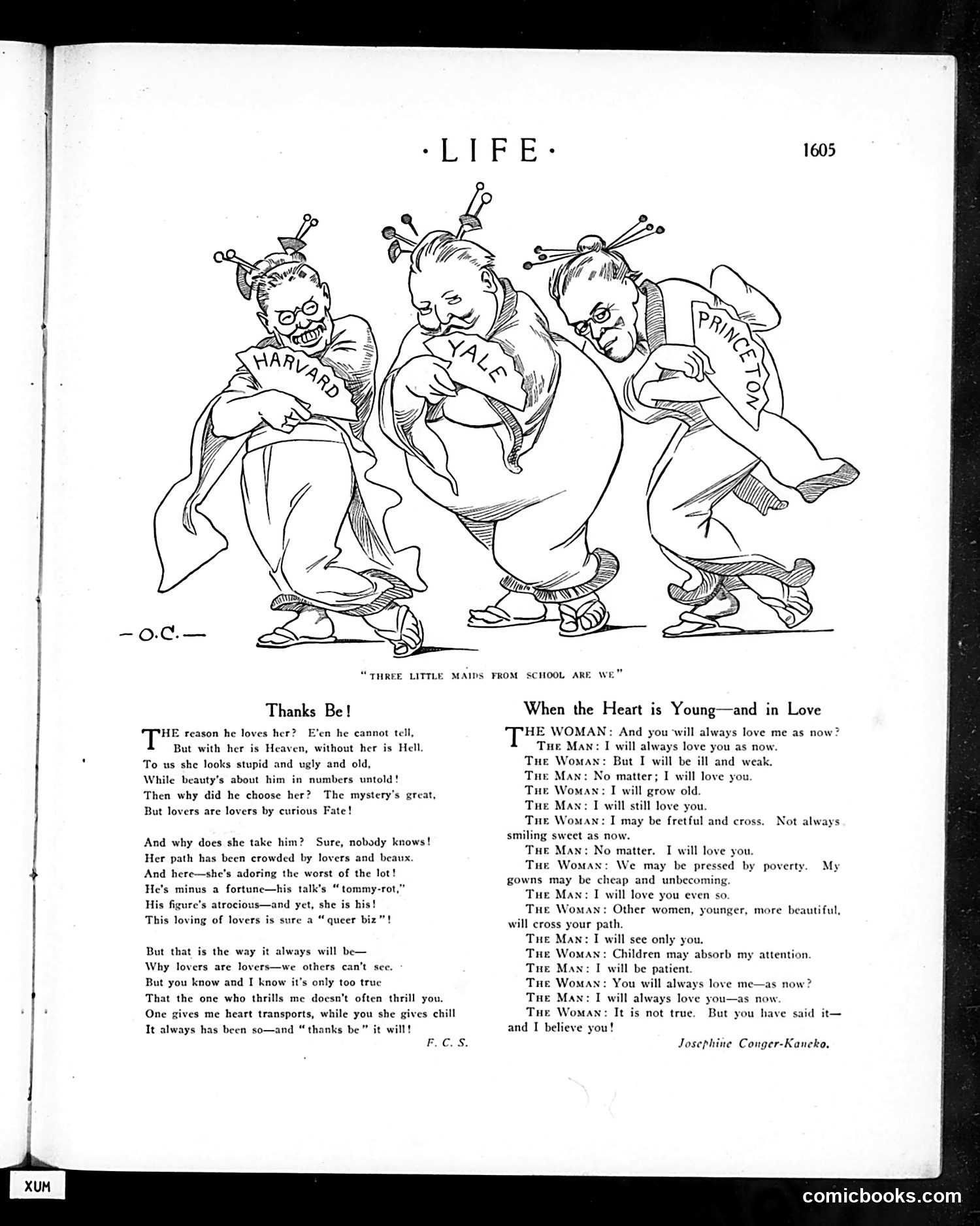
This 1605 *Life* magazine page contains satirical commentary on romance and marriage. **Top Cartoon:** The illustration of three grotesque figures labeled "Harvard," "Yale," and "Princeton" mocking the caption "Three Little Maids from School Are We" (from *The Mikado*) satirizes elite university men as foolish and unattractive despite their prestigious educations. **"Thanks Be!" poem:** A cynical piece questioning why people fall in love—noting that the beloved often appears "stupid and ugly and old" to outsiders, yet lovers are mysteriously drawn to them anyway. It argues that attraction is inexplicable and varies person to person. **"When the Heart is Young" dialogue:** A romantic exchange where a man promises eternal love through all hardships (aging, poverty, infidelity temptations, children), and the woman, knowing such promises are impossible, chooses to believe him anyway—capturing the willful self-deception required for romantic commitment. Together, these pieces present love as simultaneously absurd (the cartoons) and beautiful (the dialogue)—a contradiction the magazine explores with gentle mockery.
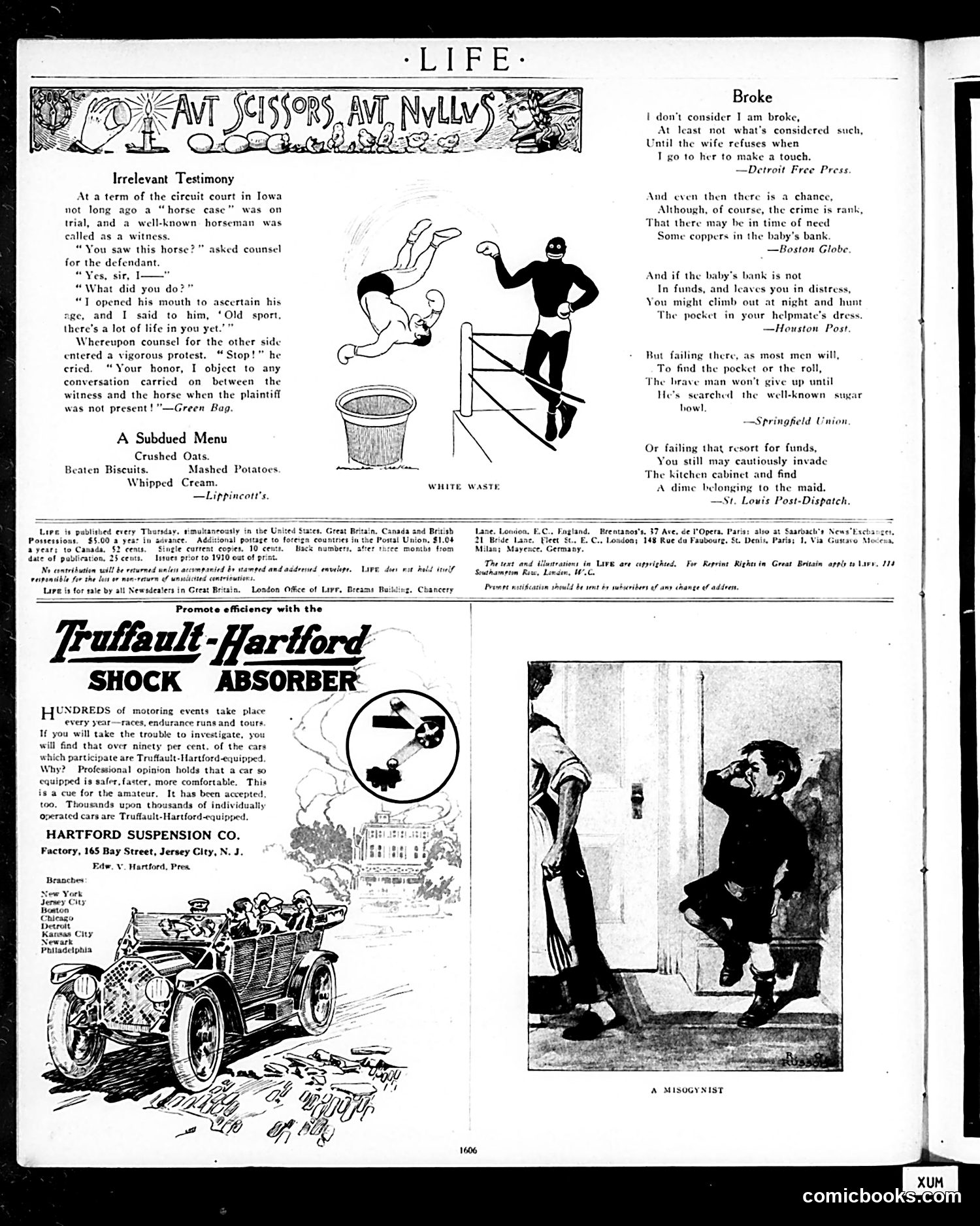
This page contains several satirical pieces about marital finances and male financial desperation: **"Broke"** presents humorous poetry about how a husband knows he's truly broke only when his wife refuses to lend him money—a comedic reversal of typical financial concerns. **"Irrelevant Testimony"** is a courtroom anecdote mocking legal procedure: a witness describes examining a horse's teeth to determine age, and opposing counsel absurdly objects that the horse wasn't present during the alleged incident—satirizing overly technical legal objections. **"A Subdued Menu"** appears to joke about economical, humble food offerings. The right column contains a series of witty verses about husbands searching for money during financial hardship—checking the baby's piggy bank, raiding the wife's dress pockets, searching kitchen drawers, and consulting the maid's savings. The humor centers on marital dynamics and male financial dependency on female family members. **"A Misogynist"** (photo caption, lower right) likely illustrates miserly or woman-avoiding behavior, though the specific image context is unclear. The page reflects early 20th-century domestic comedy tropes about marriage and money.
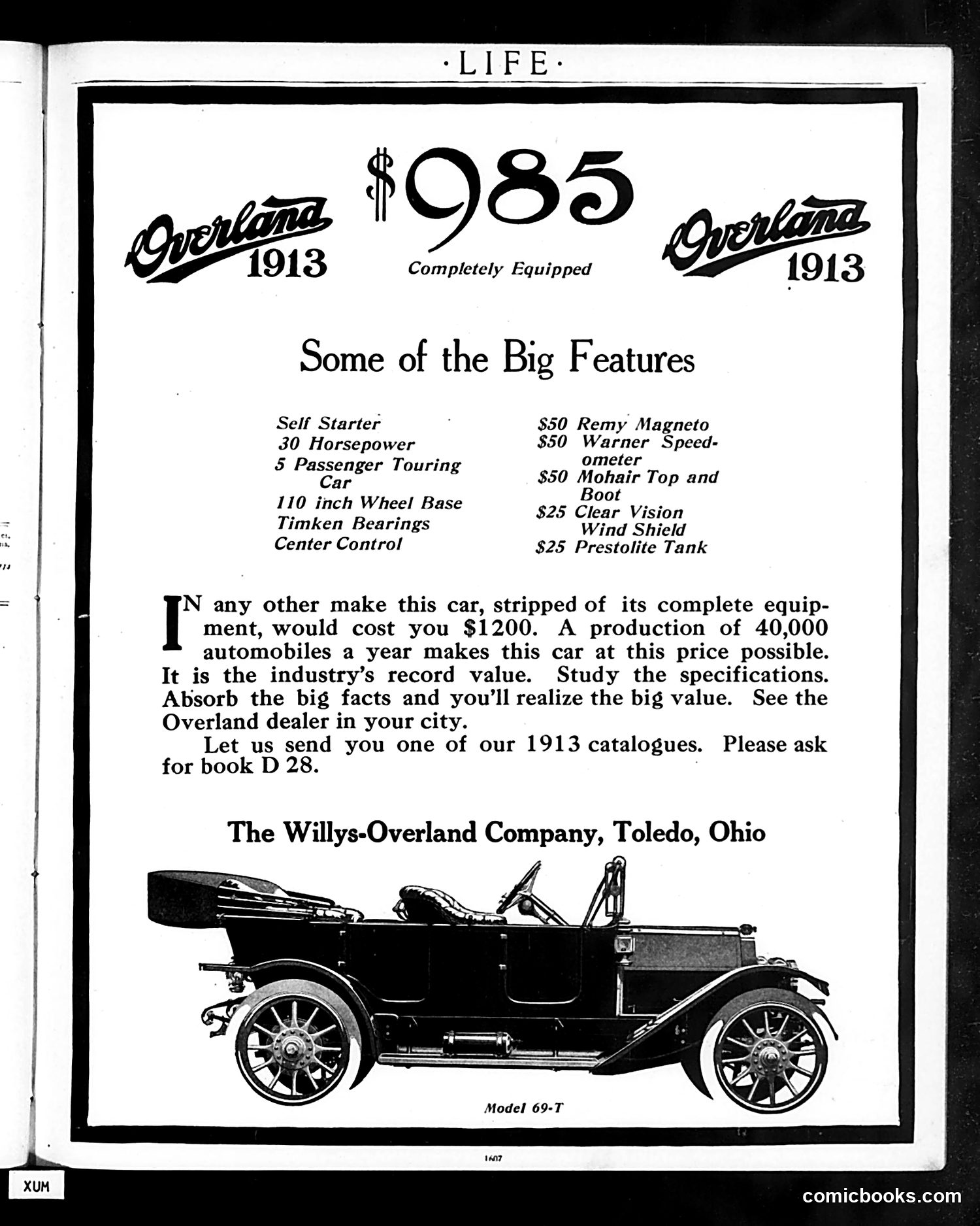
This is **not a cartoon or satire**—it's a straightforward automobile advertisement from Life magazine, circa 1913. The page advertises the **Overland 1913 Model 69-T**, a 5-passenger touring car priced at $985, described as "completely equipped." The ad emphasizes value proposition: claiming that the same car stripped of equipment would cost $1,200 elsewhere, but Overland achieves this price through mass production (40,000 units annually). Features listed include a self-starter, 30 horsepower, Timken bearings, and various optional upgrades (magneto, speedometer, mohair top, windshield). The manufacturer, **Willys-Overland Company of Toledo, Ohio**, positions this as "the industry's record value." The ad reflects early automotive marketing strategy: emphasizing technological features (self-starters were still relatively novel) and economies of scale as selling points to a readership for whom automobiles were luxury goods.
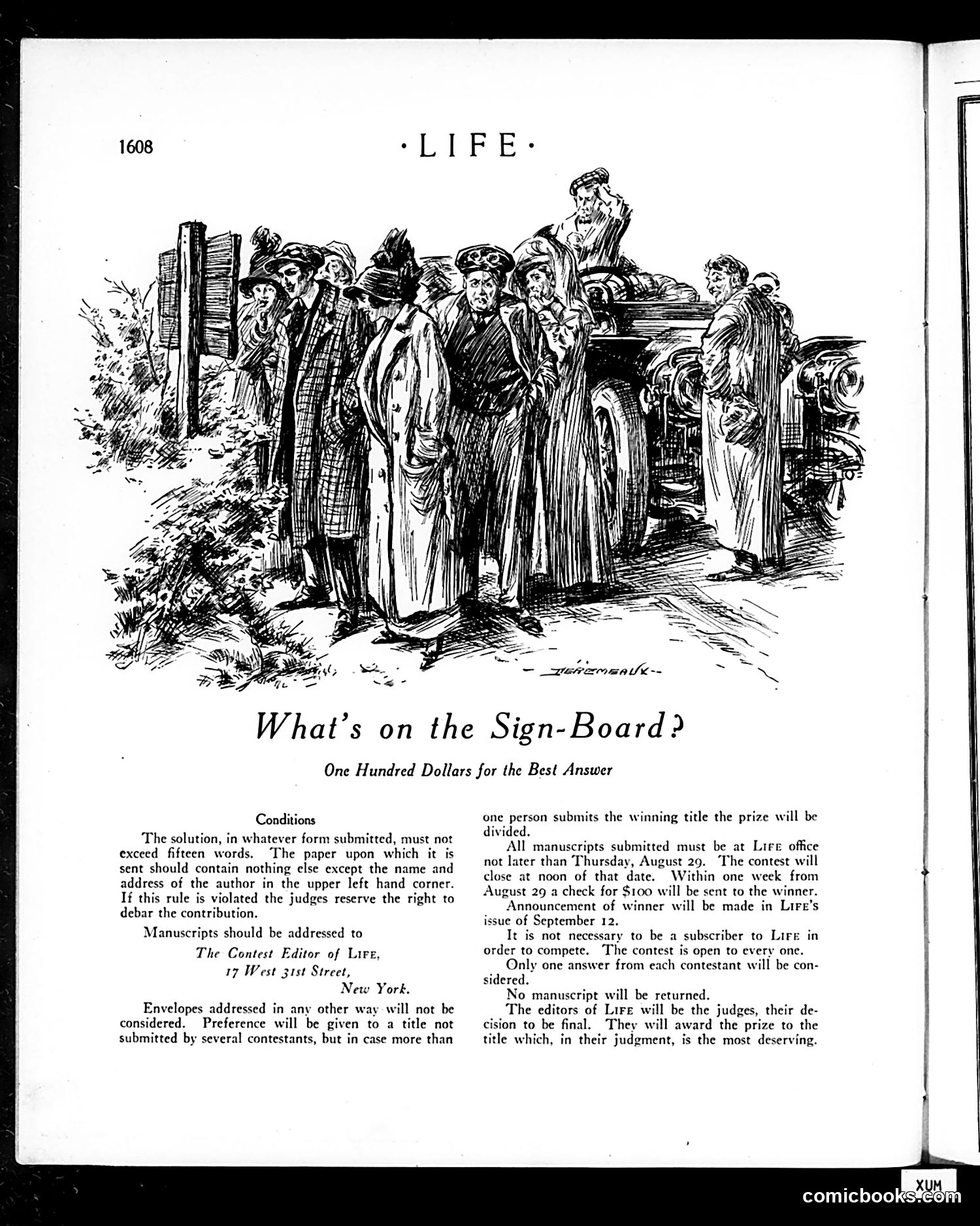
This is a *Life* magazine contest page from 1908, not a political cartoon. The illustration shows a group of people gathered around an automobile, staring at an illegible sign board mounted on it. The contest challenges readers to guess what the sign says in fifteen words or fewer, with a $100 prize—substantial money at the time. The joke appears to be about early automobile advertising or signage being unreadable or mysterious to the public. The vague nature of the sign invites reader participation and engagement. This was a common *Life* feature: humorous illustrations paired with reader contests designed to boost circulation and audience interaction.
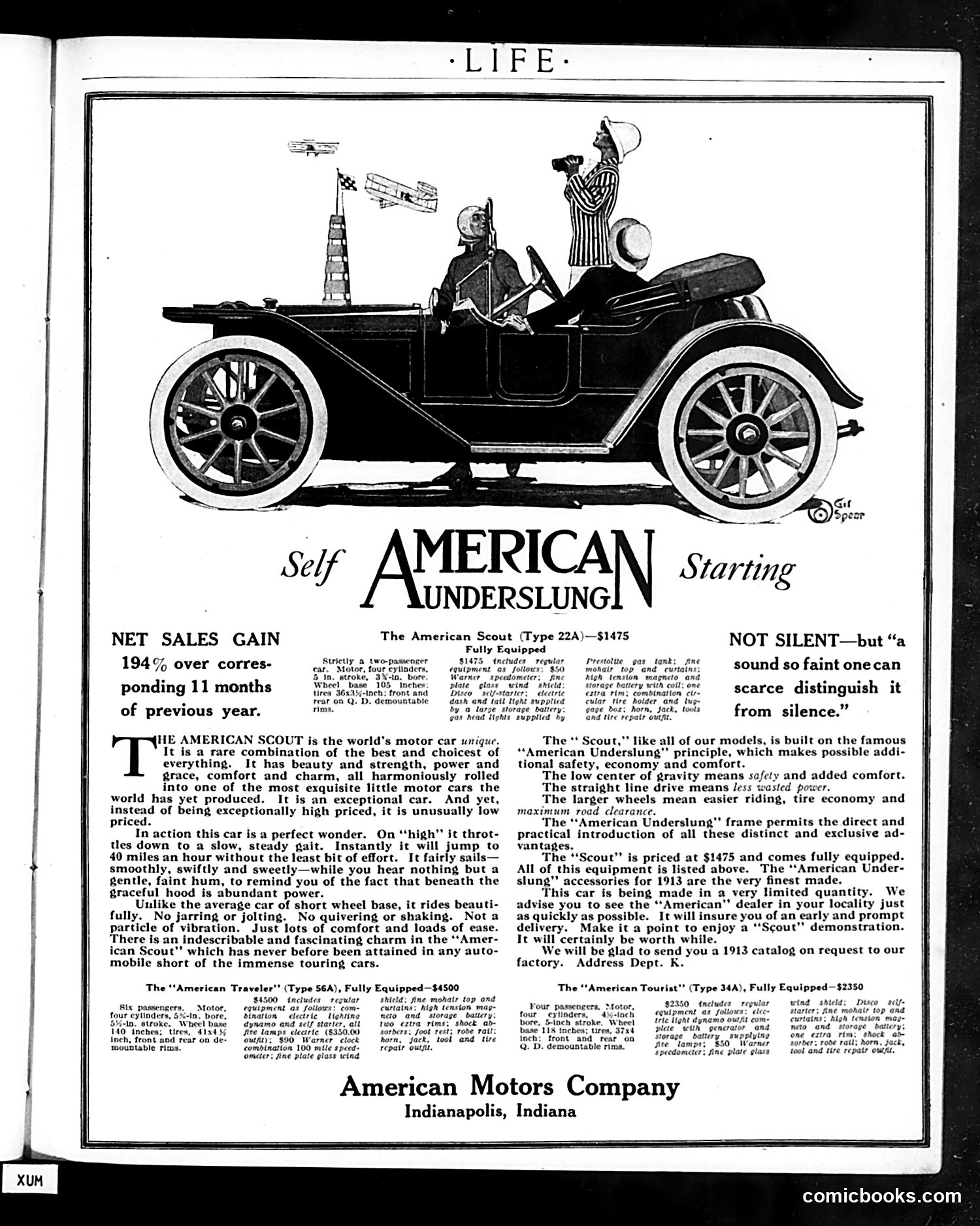
This is **not a political cartoon but a full-page automobile advertisement** from Life magazine (circa 1913). The illustration shows two well-dressed figures in an early motorcar—the "American Scout"—with aviation imagery (airplane, wireless tower) in the background, symbolizing modernity and progress. The ad emphasizes cutting-edge features: the "underslung" chassis design (lowered frame for stability), electric starter, high-tension magneto, and mohair upholstery. Key selling points include exceptional handling ("jarring or jolting"), smooth operation ("faint hum"), and affordability at $1,475—positioning the Scout as accessible luxury during the automobile boom. The "NOT SILENT" tagline humorously acknowledges the car makes noise, but so quietly it's barely noticeable—a notable feature when many contemporary vehicles were loud and unreliable. The 194% sales increase claim demonstrates market success. This reflects early-1900s American optimism about technology, consumer capitalism, and automotive leisure as status symbols.
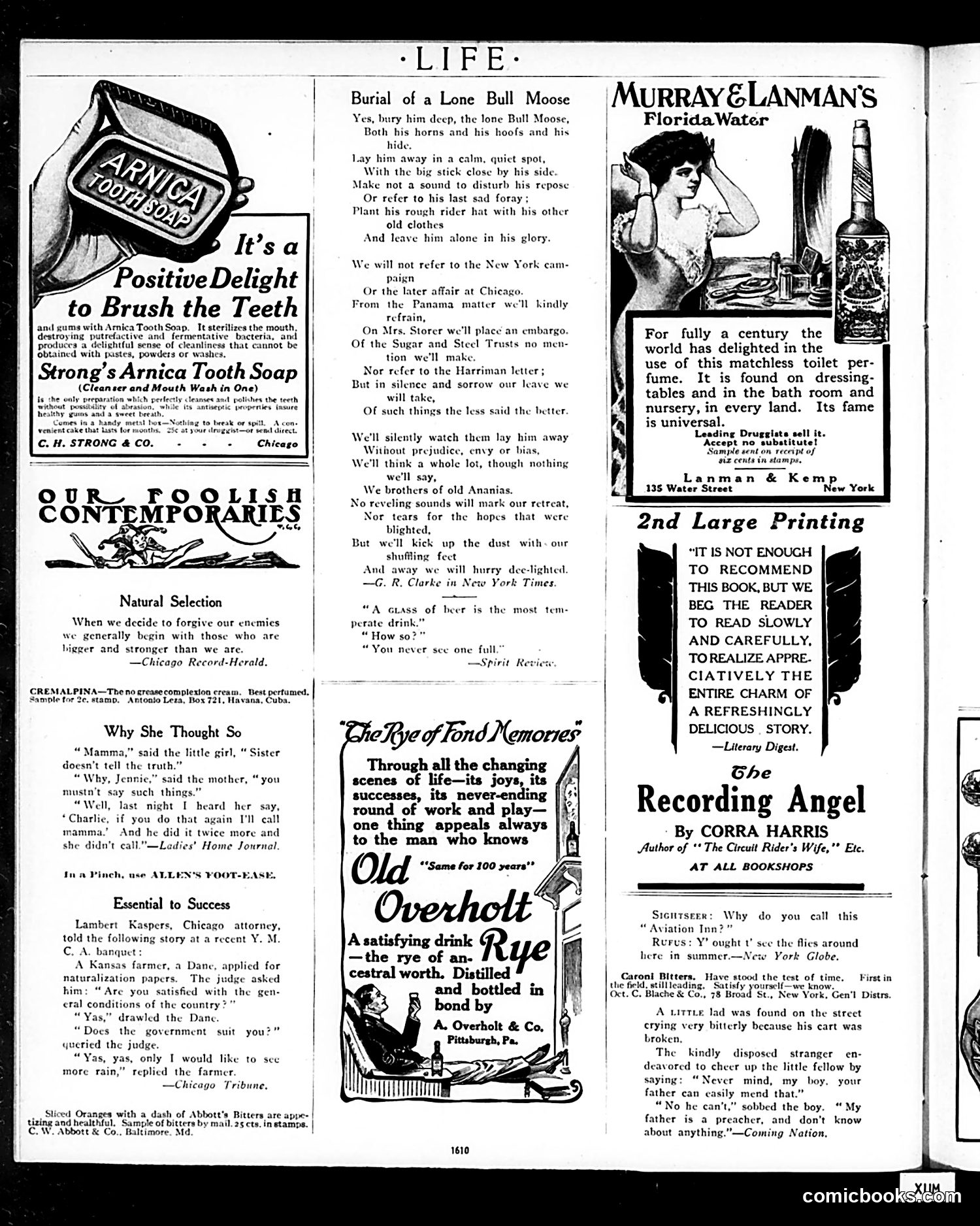
This page is primarily **advertisements and light humor** rather than political satire. The content includes: **Main items:** 1. **"Burial of a Lone Bull Moose"** — A poem likely referencing Theodore Roosevelt's failed 1912 Progressive "Bull Moose" presidential campaign. The text suggests burying the movement and avoiding discussion of Roosevelt's tenure, scandals (Panama Canal matters, Mrs. Storer affair), and trust-busting efforts. It's a satirical eulogy treating the political movement as dead. 2. **Product advertisements** — Standard period ads for toothsoap, complexion cream, and patent medicines occupying most space. 3. **Brief humor items** — "Natural Selection" jokes about forgiving stronger enemies; "Why She Thought So" about a child catching her sister in a lie; immigration/farmer anecdotes. The page is essentially a typical **early-1910s Life magazine layout** mixing satirical political commentary with commercial advertising. The Roosevelt reference is the only substantive political content.
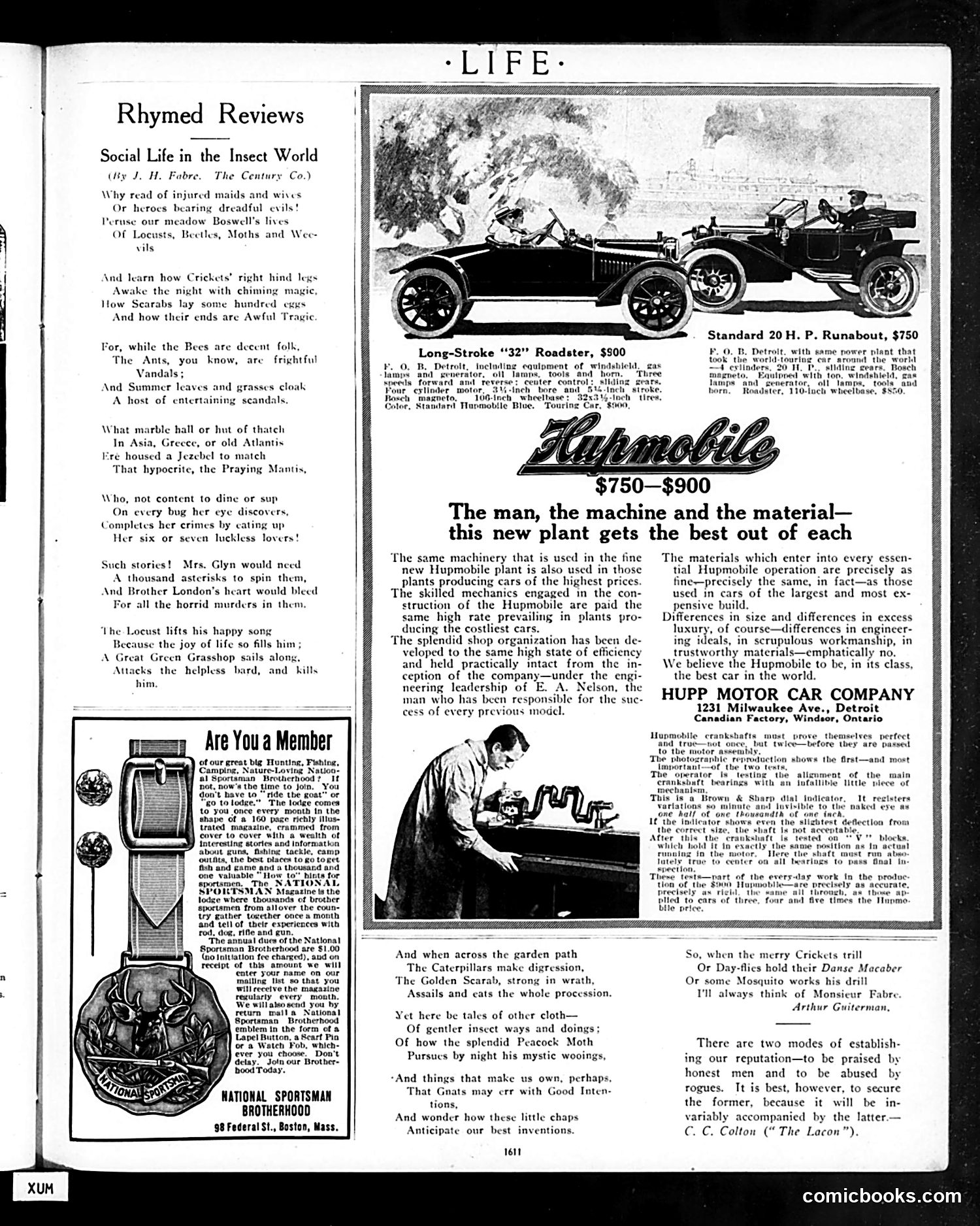
This page combines **satirical poetry reviewing a nature book with automobile advertising**. The "Rhymed Reviews" section humorously critiques J.H. Fabre's *Social Life in the Insect World*. The reviewer mocks the book's sensational insect dramas—presenting bugs as moral cautionaries. The joke centers on treating insects with mock-serious anthropomorphism: the Praying Mantis is a "hypocrite" who devours her lovers; grasshoppers commit murder. The satire suggests readers seeking scandal prefer insect melodrama to human literature. The page also features **Hupmobile automobile advertisements** prominently displaying two car models ($500 and $750) with technical specifications. The ad's rhetoric—"the man, the machine and the material"—emphasizes that Hupmobiles maintain quality despite affordability by using identical manufacturing standards to luxury cars. A secondary ad promotes the **National Sportsman Brotherhood**, a hunting/fishing club magazine subscription ($1 annually) offering member pins and badges. The juxtaposition of nature satire with consumer goods reflects *Life*'s era: mixing cultural commentary with commercial appeals.
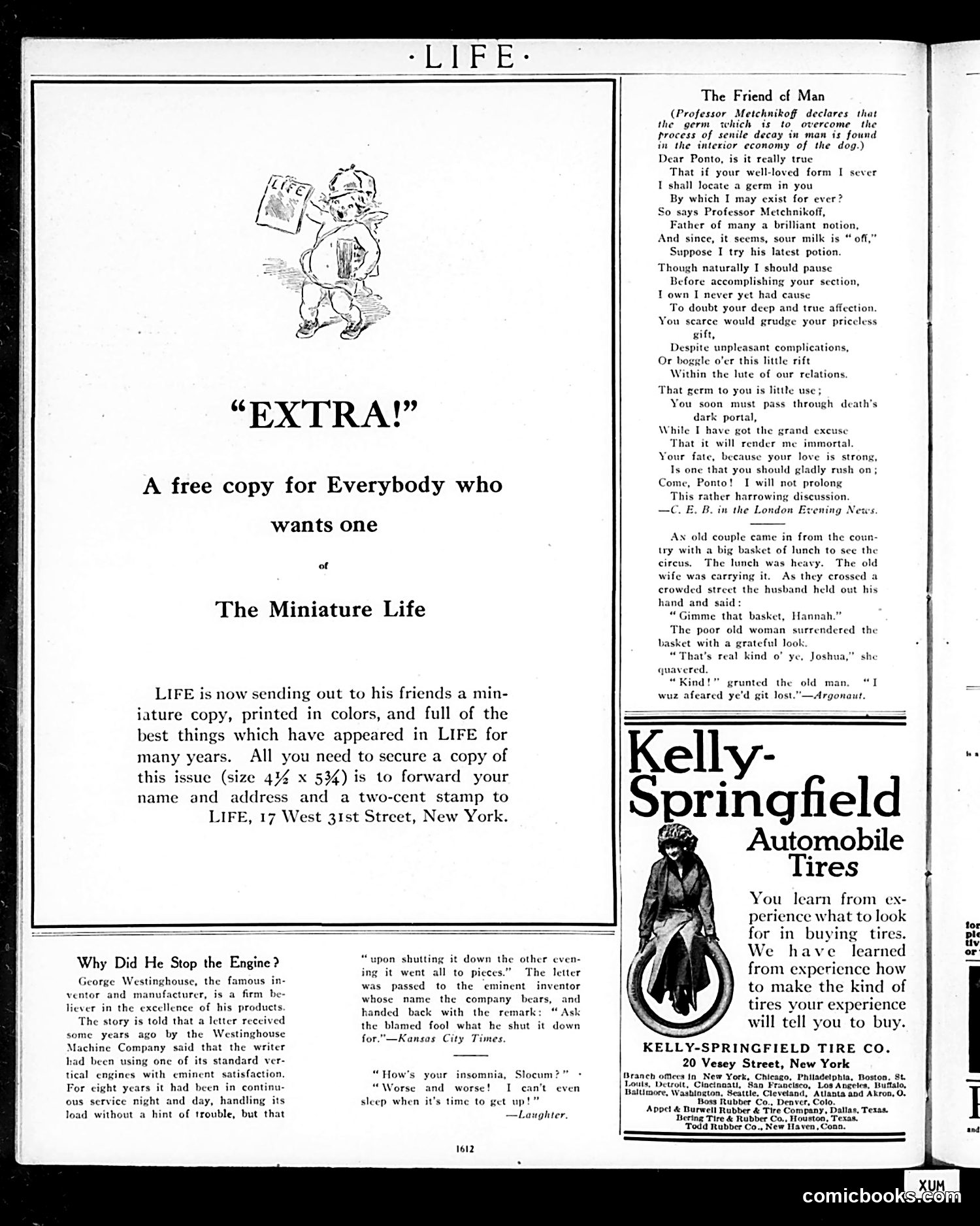
This page contains **promotional material and satirical content** from *Life* magazine, not primarily political cartoons. **Main Elements:** 1. **"EXTRA!" Advertisement** (left): *Life* promotes a miniature colored edition available by mail for a two-cent stamp—a marketing pitch disguised as news. 2. **"Why Did He Stop the Engine?"** (bottom left): An anecdote about inventor George Westinghouse, illustrating his confidence in his products' durability. The joke: when a customer's engine broke after eight years of constant use, Westinghouse's response was dismissive—implying the machine was so reliable that stopping it was the actual problem. 3. **"The Friend of Man"** (right): A satirical poem about Professor Metchnikoff's theory that a longevity germ exists in dogs. The speaker proposes extracting this germ from his dog "Ponto" to achieve immortality—a darkly humorous take on emerging immunology theories. 4. **Anecdotes** (bottom right): Two brief humorous stories about elderly couples. 5. **Advertisements** for Kelly-Springfield Automobile Tires dominate the lower right. The page reflects early 20th-century satirical humor mixed with period advertising.
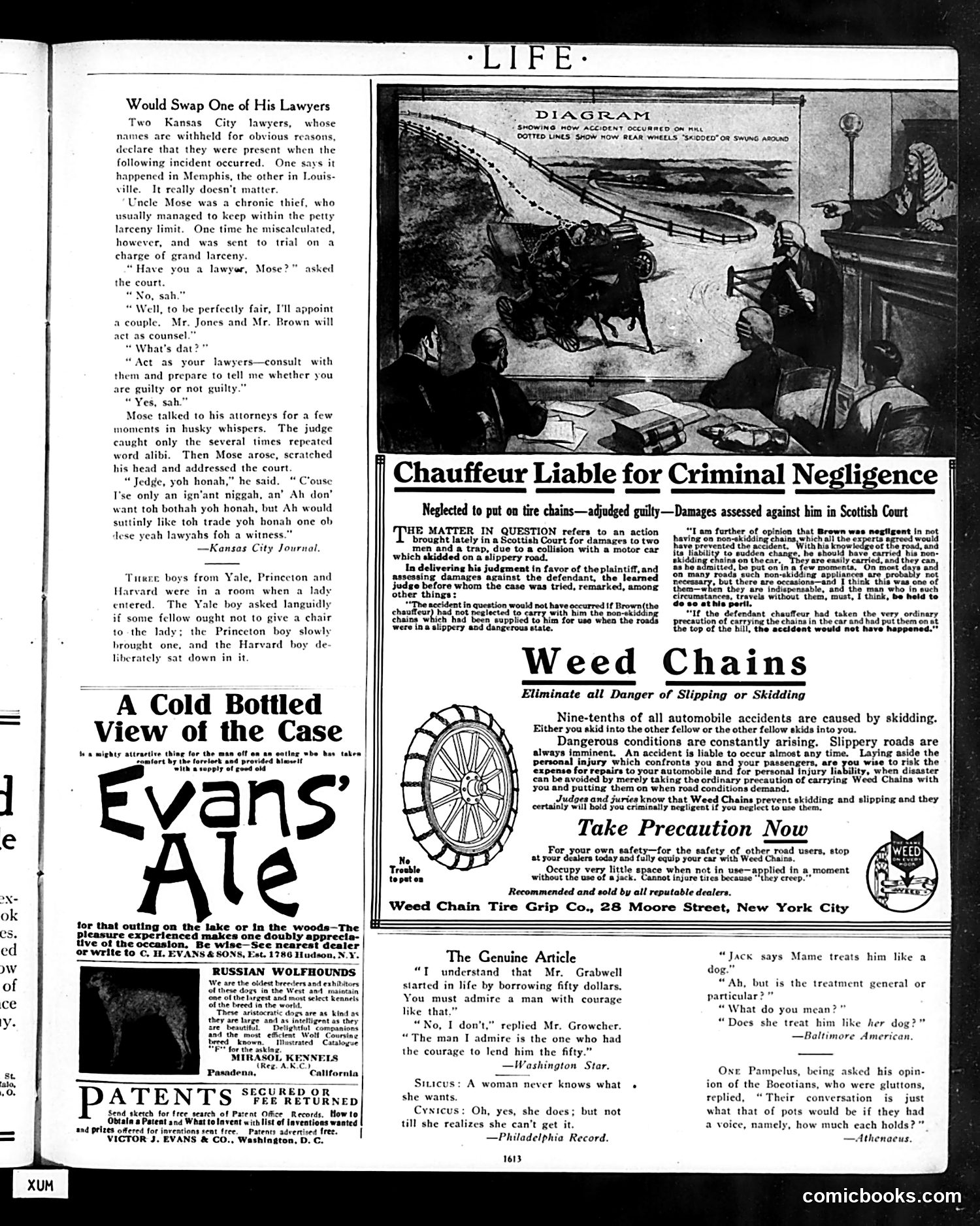
This page mixes humor and automotive safety advertising. The main cartoon, "Would Swap One of His Lawyers," is a dialect joke featuring "Uncle Mose," a Black man on trial for grand larceny. The humor relies on racist stereotypes—Mose is portrayed as illiterate and speaks in exaggerated dialect. The punchline: after consulting with his court-appointed lawyers about his alibi, Mose asks to trade one lawyer for a witness instead, suggesting the lawyers are useless. This reflects early 20th-century attitudes about both criminal justice and racial caricature. The dominant content is advertising for Weed Chains tire grips, using a recent Scottish court case as marketing material. A judge ruled a chauffeur criminally negligent for not using chains on a slippery road, causing an accident. The ad weaponizes this ruling to promote safety chains, framing their use as legally and morally necessary. The page illustrates how automobile safety was still novel and marketed through fear and legal precedent.
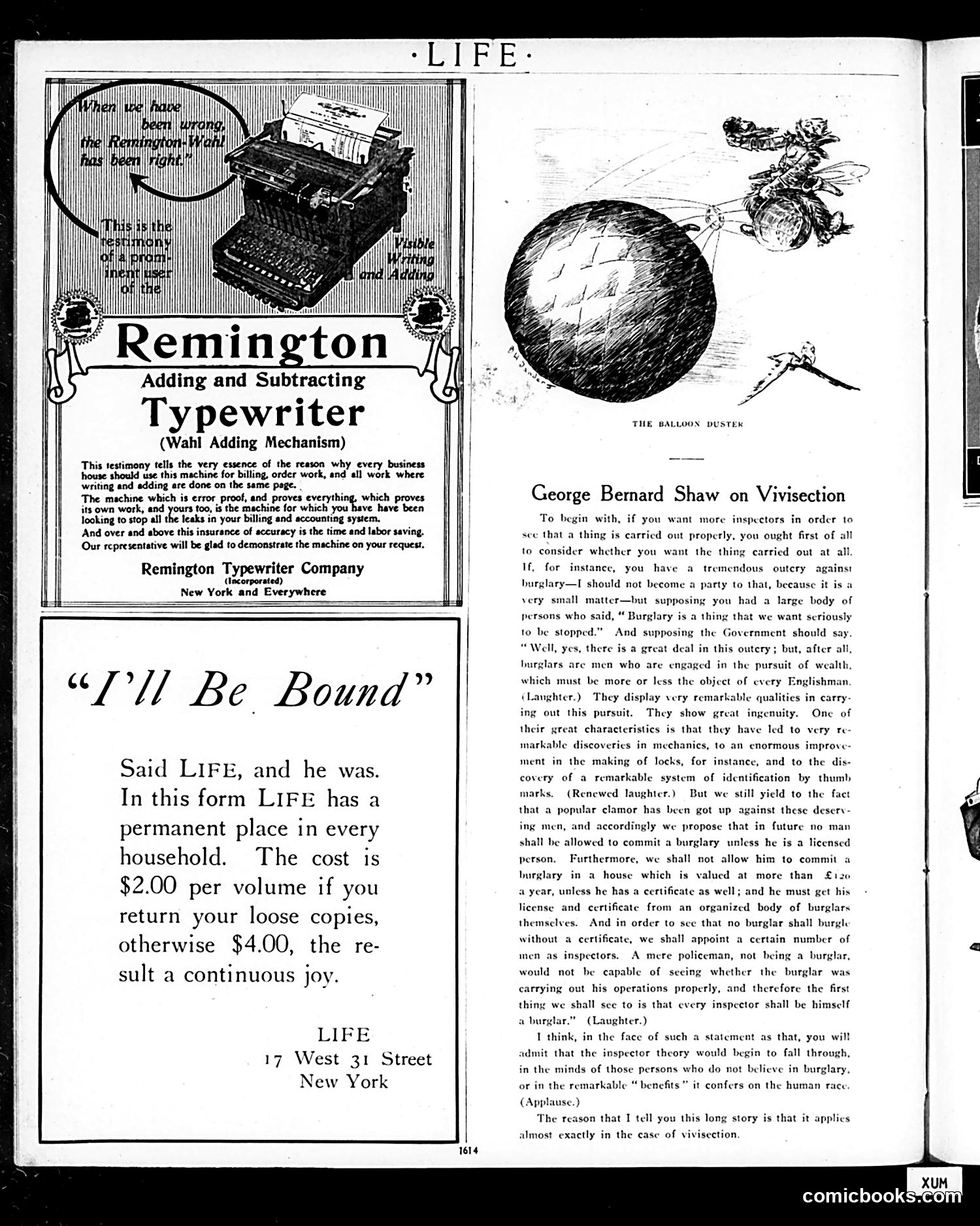
This page combines advertisements with political satire by George Bernard Shaw on vivisection (animal experimentation). **The Advertisements:** The top features a Remington typewriter ad and a LIFE magazine subscription offer (bound volumes for $2-$4). **The Satire:** Shaw's "Balloon Buster" cartoon uses absurdist logic to critique vivisection. He presents a reductio ad absurdum argument: if the government justified burglary by noting burglars' ingenuity and contributions to lock-making, requiring burglar inspectors to BE burglars themselves, the logic would collapse. Similarly, Shaw argues, justifying animal experimentation by claiming its scientific benefits while licensing only vivisectionists as inspectors reveals the absurdity of the entire enterprise. **The Point:** Shaw satirizes how institutions rationalize practices (animal testing) by emphasizing their "benefits" while ignoring their fundamental ethics. The comparison makes vivisection sound as obviously wrong as legalizing burglary—a common Shavian rhetorical technique mocking establishment hypocrisy.
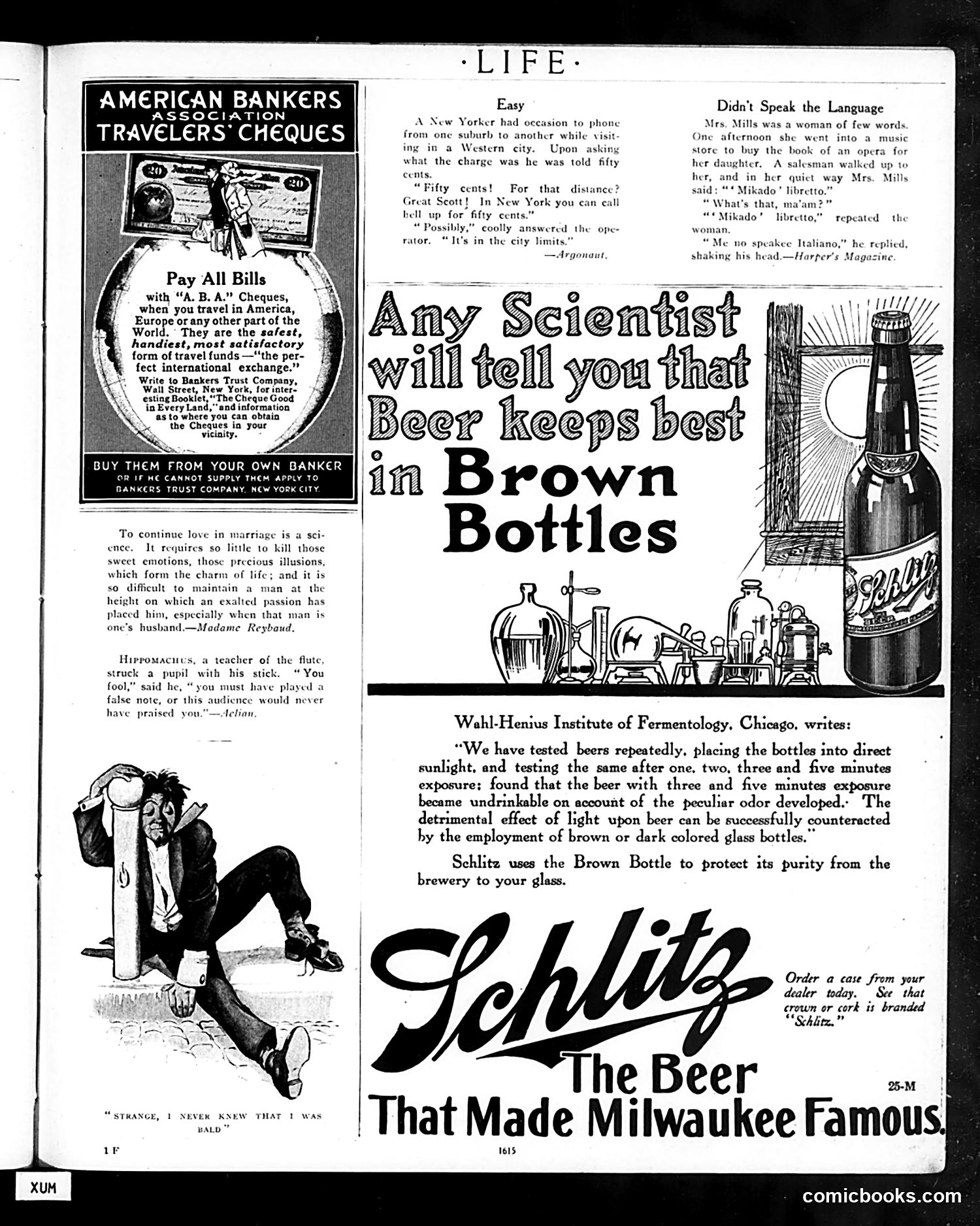
This page contains **three separate humor pieces and advertisements** typical of early 20th-century American magazines. The **two captioned cartoons** are brief anecdotes: one mocks inflated long-distance telephone rates in Western cities versus New York (the operator's retort that "hell" is "in the city limits" is the punchline), and another features ethnic-accent humor where a music store clerk affects broken Italian ("Me no speakee Italiano") when a customer requests a *Mikado* libretto—playing on assumed immigrant workers in retail. The **main advertisement** promotes Schlitz beer in brown bottles, citing scientific authority (Wahl-Henius Institute) claiming brown glass protects beer from light damage better than clear bottles. This appears to be legitimate product differentiation marketing. The page also includes a **bankers' association advertisement** for traveler's checks and humorous quotations about marriage and music teaching—padding typical of period magazines. The ethnic humor and casual stereotyping reflect attitudes normalized in early 1900s American publications that modern readers would recognize as offensive.
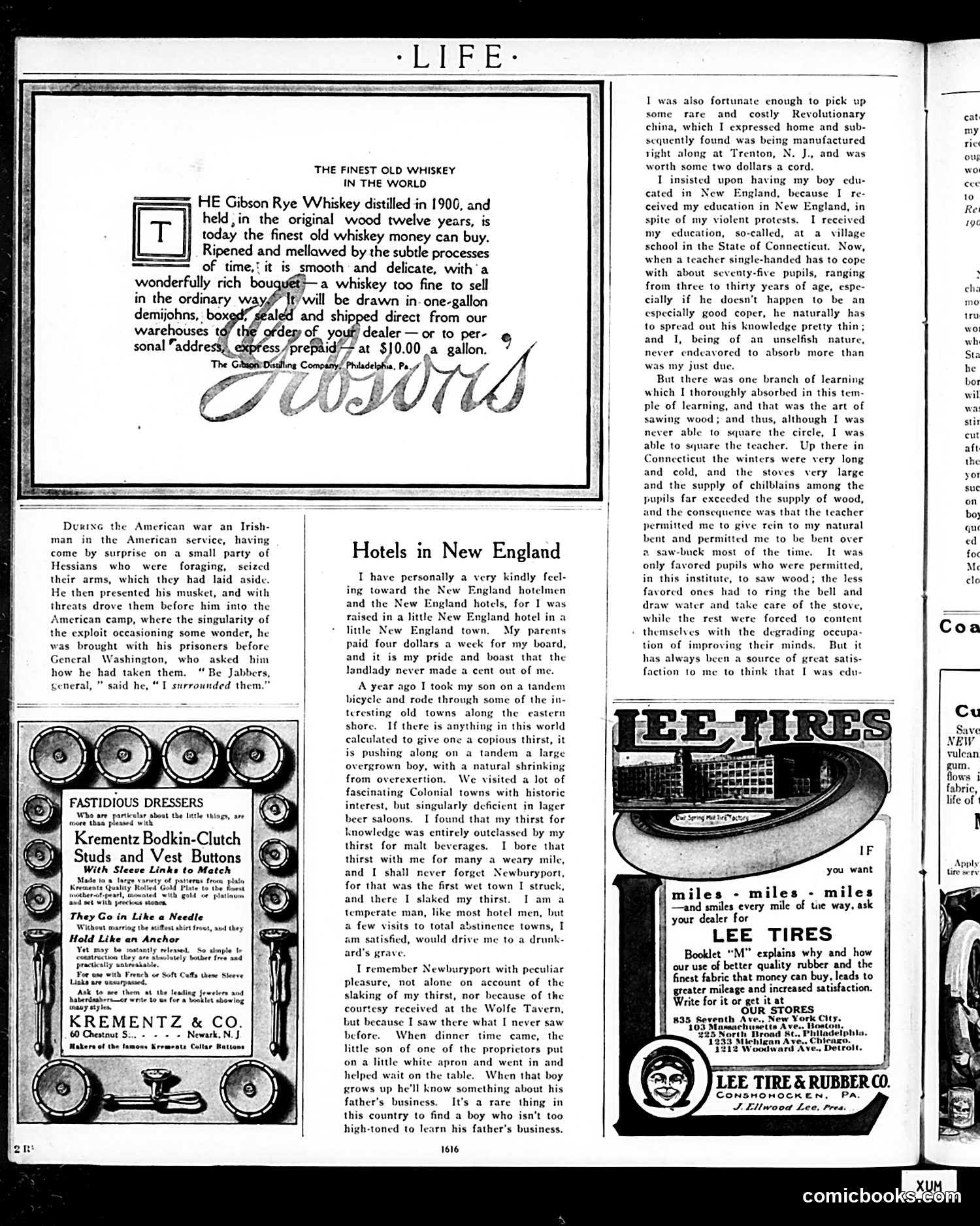
This page is primarily **advertising and editorial content** rather than political cartoons. The main elements are: **Gibson Rye Whiskey Advertisement**: A large ad promoting pre-Prohibition whiskey distilled in 1900, emphasizing its age and quality—a nostalgic appeal likely written *during* Prohibition (when alcohol sales were illegal), making this advertisement itself legally problematic. **"Hotels in New England"**: An editorial essay humorously complaining about the lack of beer saloons in New England towns while praising Newburyport for having one. The author mocks "total abstinence towns" and satirizes his discovery that Revolutionary-era china sold as antiques was actually being mass-produced in Trenton, New Jersey—a jab at consumer gullibility. **Supporting Advertisements**: For Krementz jewelry buttons and Lee Tires occupy the remaining space. The page's satirical edge targets Prohibition-era temperance culture and consumer fraud, but contains no political cartoons or caricatures.
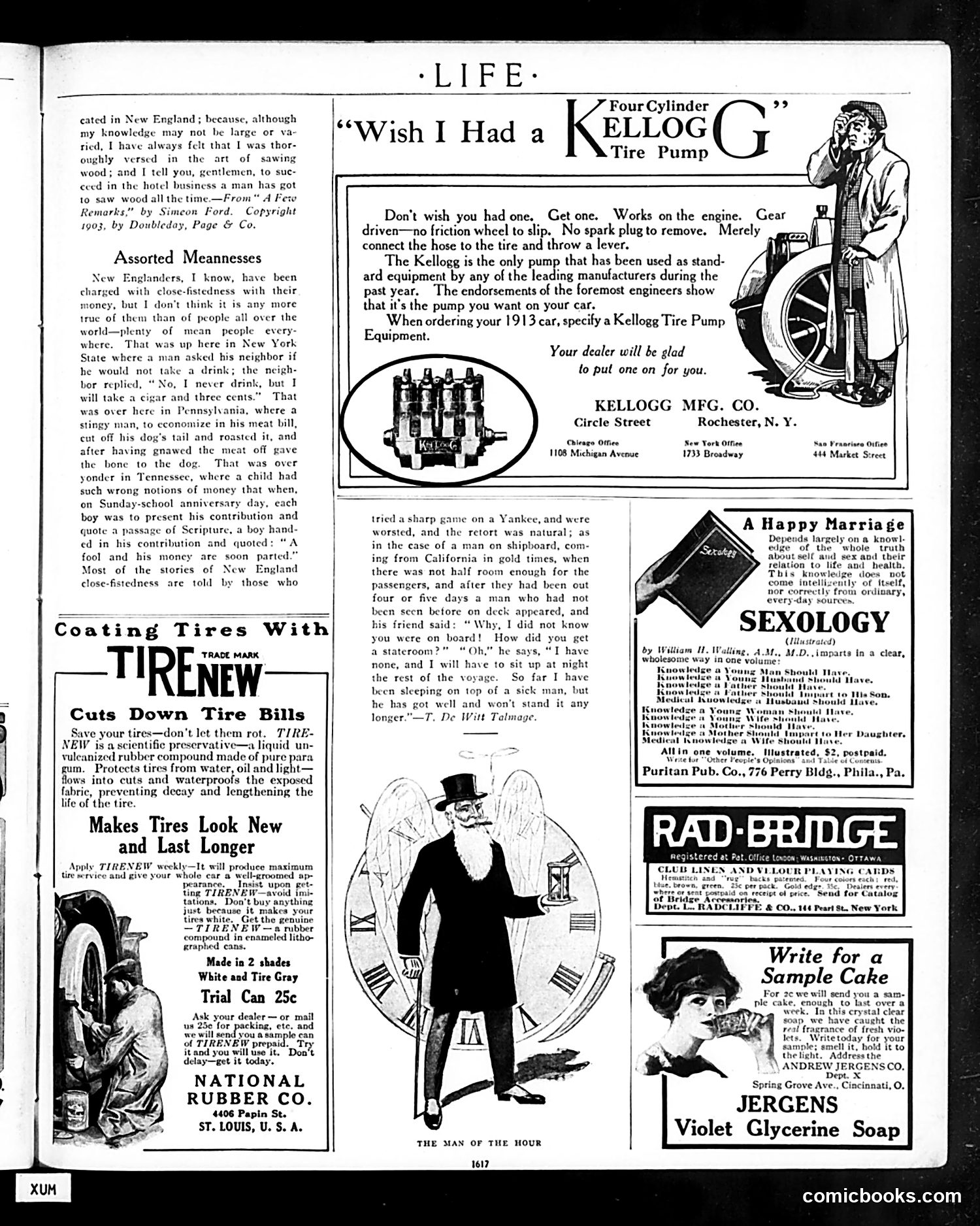
This page is primarily **advertisements** with one central cartoon titled "The Man of the Hour." The cartoon depicts a bearded man with angel wings standing inside a large clock face, dressed formally in a top hat and coat. The figure represents **Father Time** or a personification of time itself—a traditional allegorical figure. The "man of the hour" likely refers satirically to someone currently in the public spotlight or under discussion during the magazine's publication period (appears to be 1913, based on the Kellogg Tire Pump ad). The joke relies on visual pun: the literal representation of "the man of the hour" as a figure positioned within clock numerals. Without knowing the specific 1913 context, it's unclear **who this specific figure represents**—it could mock a politician, businessman, or public figure whose prominence the editors expected readers to recognize. The surrounding advertisements (tire pumps, soap, marriage advice books) suggest this is a general-interest magazine page with satirical humor interspersed among commercial content.
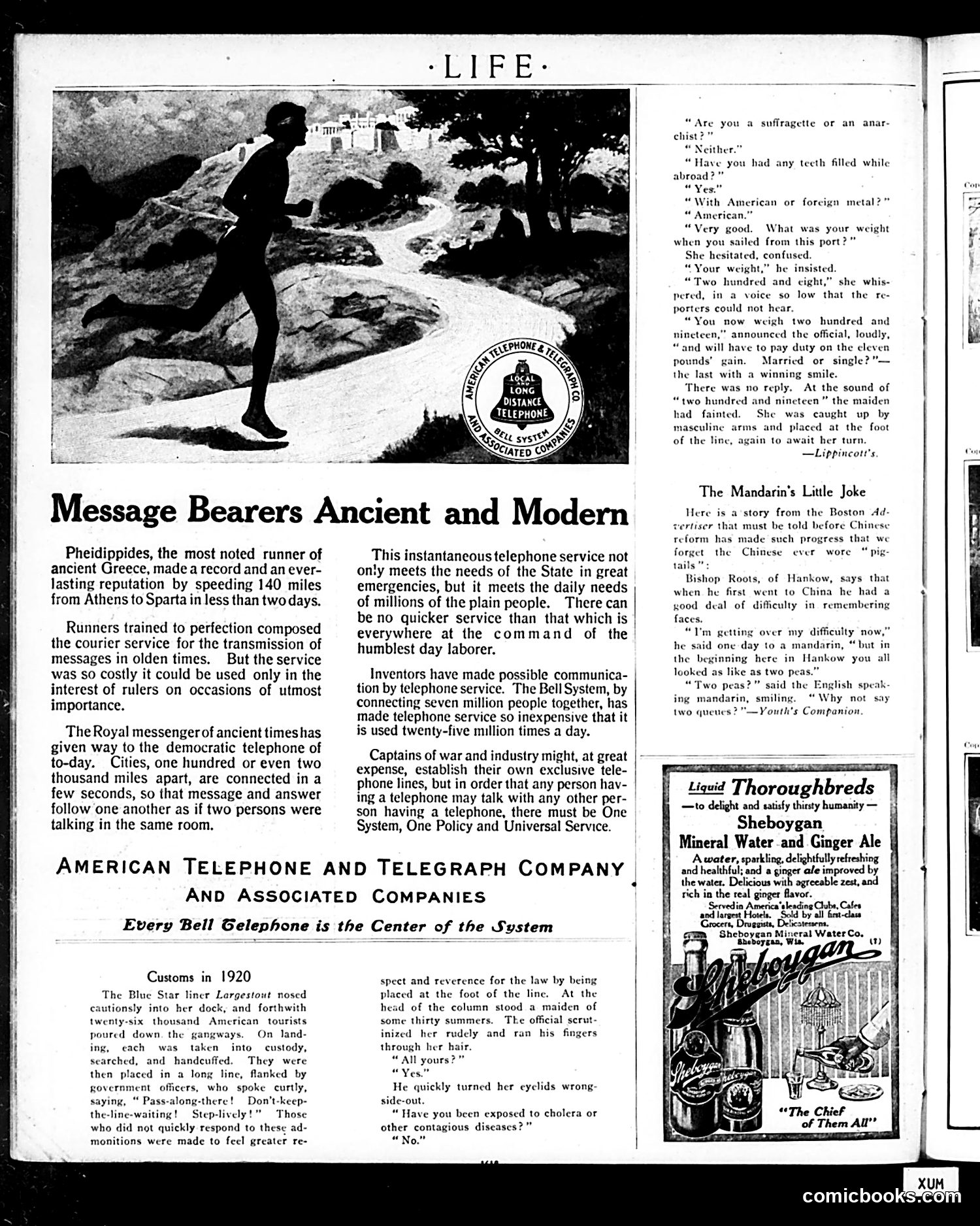
This page contains **three distinct pieces**: 1. **AT&T Advertisement** (top/center): Disguised as editorial content, this compares ancient message runners (Pheidippides) to the modern telephone, arguing that the Bell System's "One Policy and Universal Service" democratizes communication for ordinary people, not just the wealthy or powerful. It's corporate propaganda presenting monopoly as progress. 2. **"Customs in 1920"** (bottom left): A satirical critique of aggressive U.S. immigration/customs procedures. Officials humiliate returning American tourists through intrusive searches, body inspections, and interrogations about dental work and weight—the final indignity being charged duty on weight gained abroad. The satire mocks the bureaucratic absurdity and loss of dignity. 3. **"The Mandarin's Little Joke"** (bottom right): A brief anecdote where a Chinese mandarin responds to an American bishop's comment that Chinese people "all look alike" by making a joke implying Westerners look identical to him—gentle cross-cultural humor about mutual incomprehension.
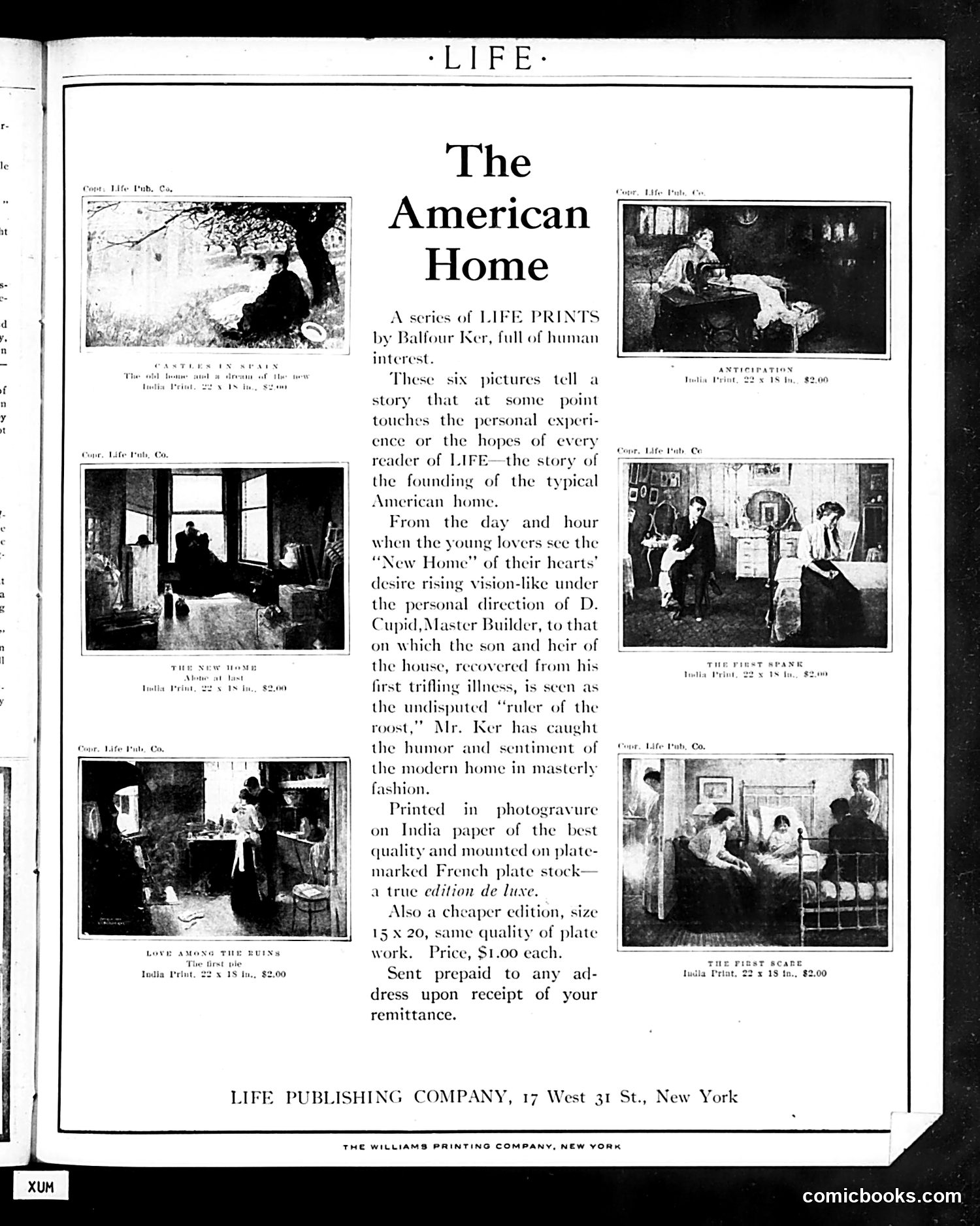
This is an advertisement for a series of six satirical prints by artist Balfour Ker depicting the founding and early life of a typical American home. Rather than political satire, this is social humor about domestic life. The series follows a narrative arc: young lovers envisioning their dream home (guided by "Cupid, Master Builder"), through to their son becoming the household's "ruler of the roost" after recovering from childhood illness. The prints humorously capture the sentiment and comedy of modern domestic life. The advertisement emphasizes the quality of production—photogravure prints on fine India paper with French plate stock—and offers both a luxury edition and cheaper alternative ($1.00). This was a mail-order product from Life Publishing Company, reflecting early 20th-century print culture where magazines sold artwork directly to readers as home decoration.
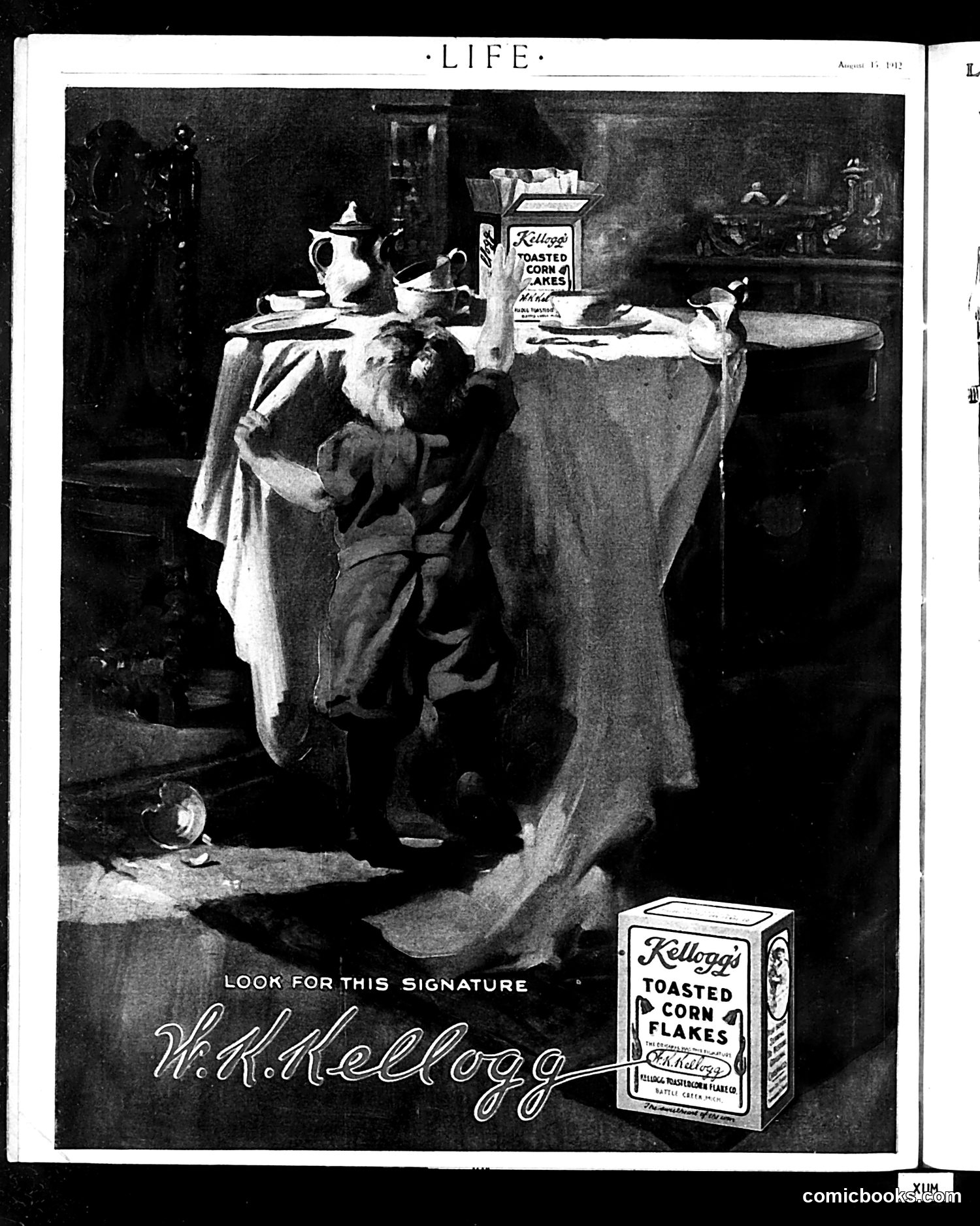
This is a Kellogg's Toasted Corn Flakes advertisement from Life magazine (August 15, 1942, based on the header). The image shows a child reaching toward a table laden with breakfast items, with a Kellogg's cereal box prominently displayed. The advertisement's appeal relies on the signature "W.K. Kellogg" printed at bottom—emphasizing the founder's personal endorsement as a mark of quality and trustworthiness. This represents typical 1940s advertising strategy: using a founder's name recognition to build consumer confidence in packaged goods. The domestic breakfast scene appeals to post-Depression and wartime audiences valuing reliable, convenient nutrition. The child figure suggests the product's suitability for family consumption during an era when processed breakfast cereals were still relatively new consumer products.