A complete issue · 36 pages · 1932
Judge — January 9, 1932
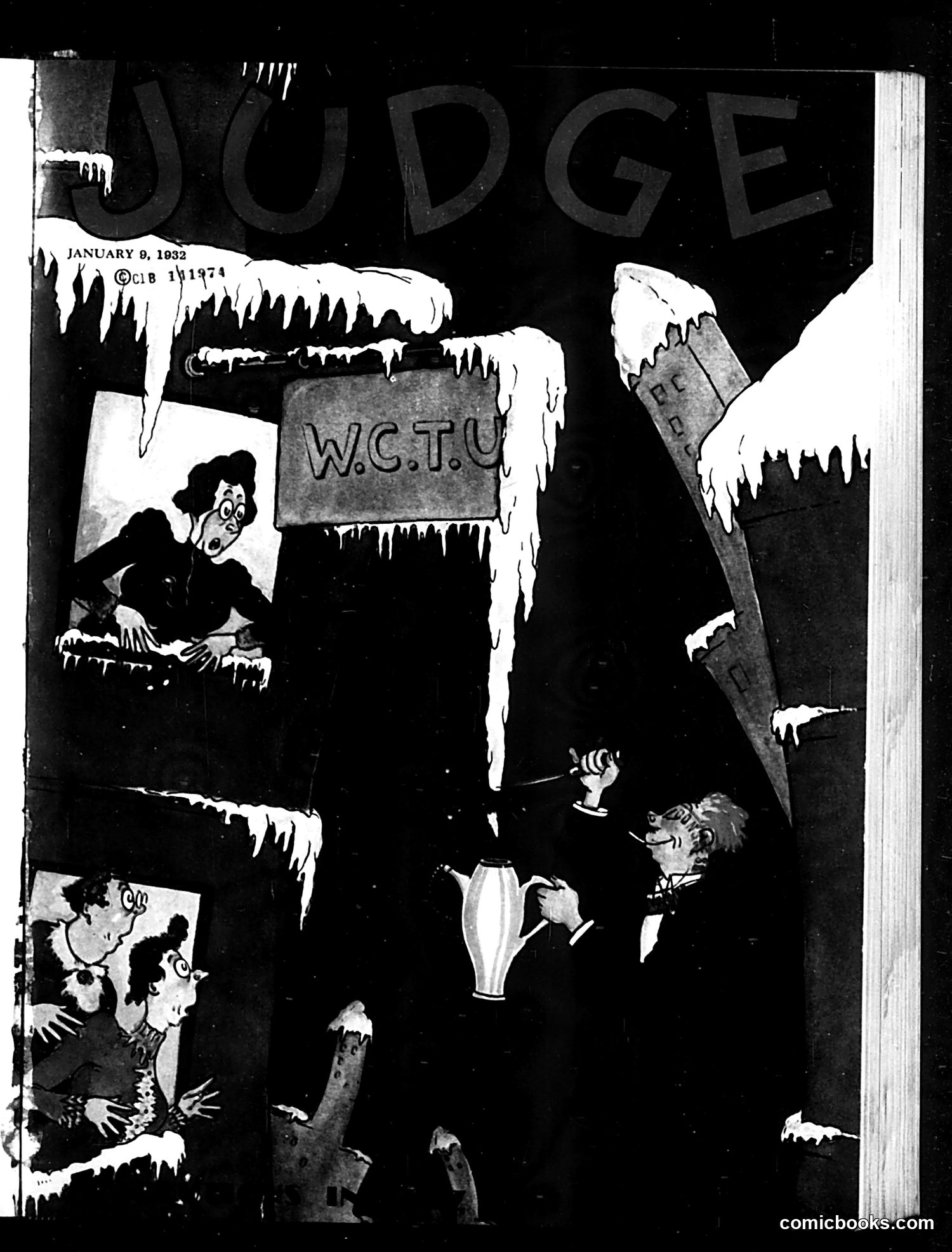
# Judge Magazine Cartoon Analysis (January 9, 1932) This cartoon depicts a frozen building labeled "W.C.T.U." (Women's Christian Temperance Union) during winter, with icicles covering its structure. Several caricatured figures appear distressed or trapped outside in the cold. The satire references Prohibition's failure and the WCTU's role in advocating for it. By January 1932—near Prohibition's end (repealed December 1933)—the cartoon mocks the temperance movement as frozen, obsolete, and ineffective. The distressed figures likely represent temperance advocates confronting the reality that their decades-long crusade has collapsed amid the Great Depression and widespread public opposition. The harsh winter imagery symbolizes the WCTU's declining influence and relevance in American society.
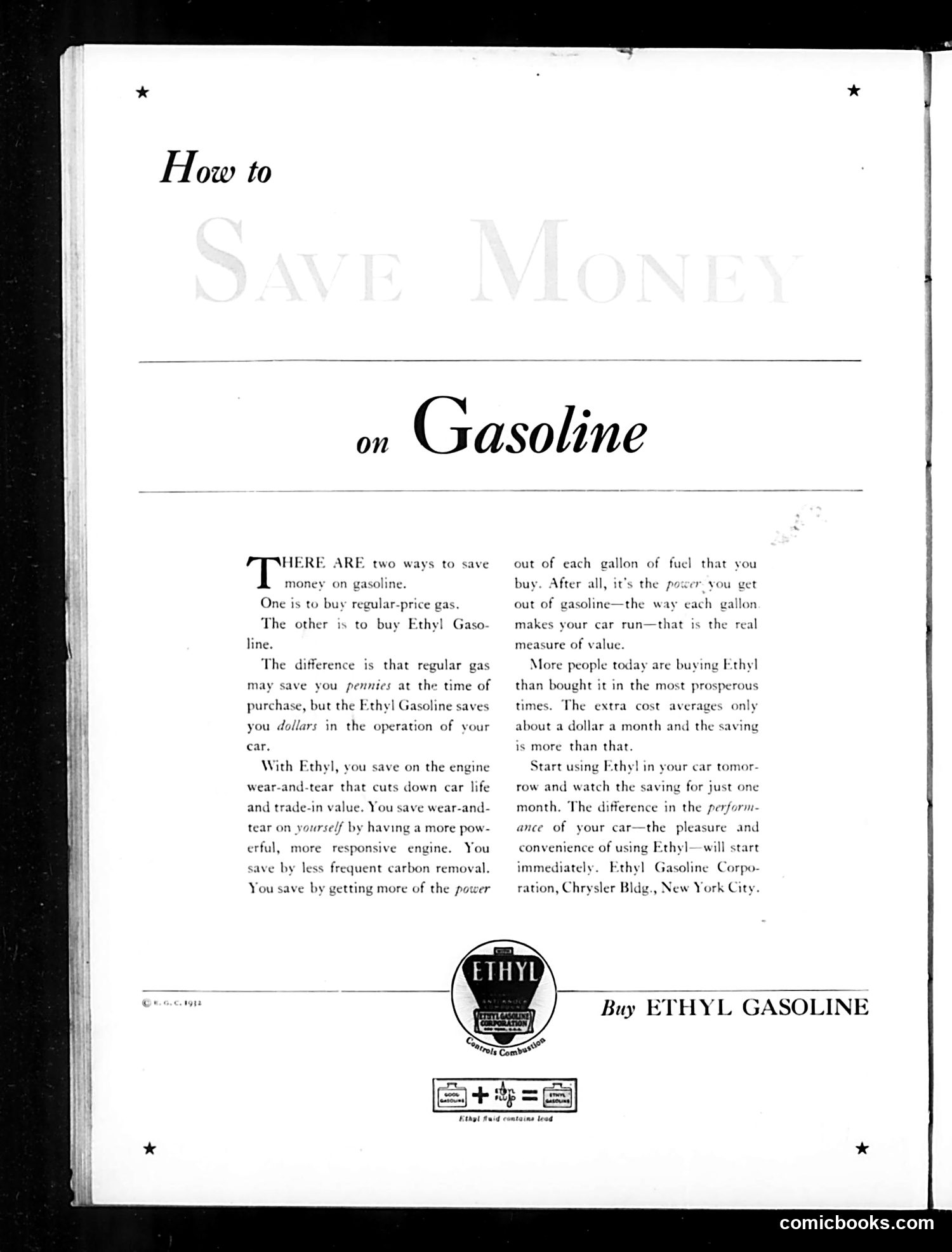
# Analysis This is primarily **advertising content**, not satire or political commentary. The page promotes Ethyl Gasoline, a fuel additive product from the Ethyl Gasoline Corporation (Chrysler Building, New York City). The ad argues that while regular gasoline may save "pennies" at purchase, Ethyl Gasoline saves "dollars" through engine efficiency—reducing wear-and-tear, improving performance, and decreasing maintenance needs. The copy claims buyers will notice improved car "performance" and "pleasure" immediately. The page contains no political figures or satirical commentary. It's a straightforward product advertisement using comparative claims typical of 1920s-30s consumer marketing. The brand logo and call-to-action ("Buy ETHYL GASOLINE") dominate the lower portion.
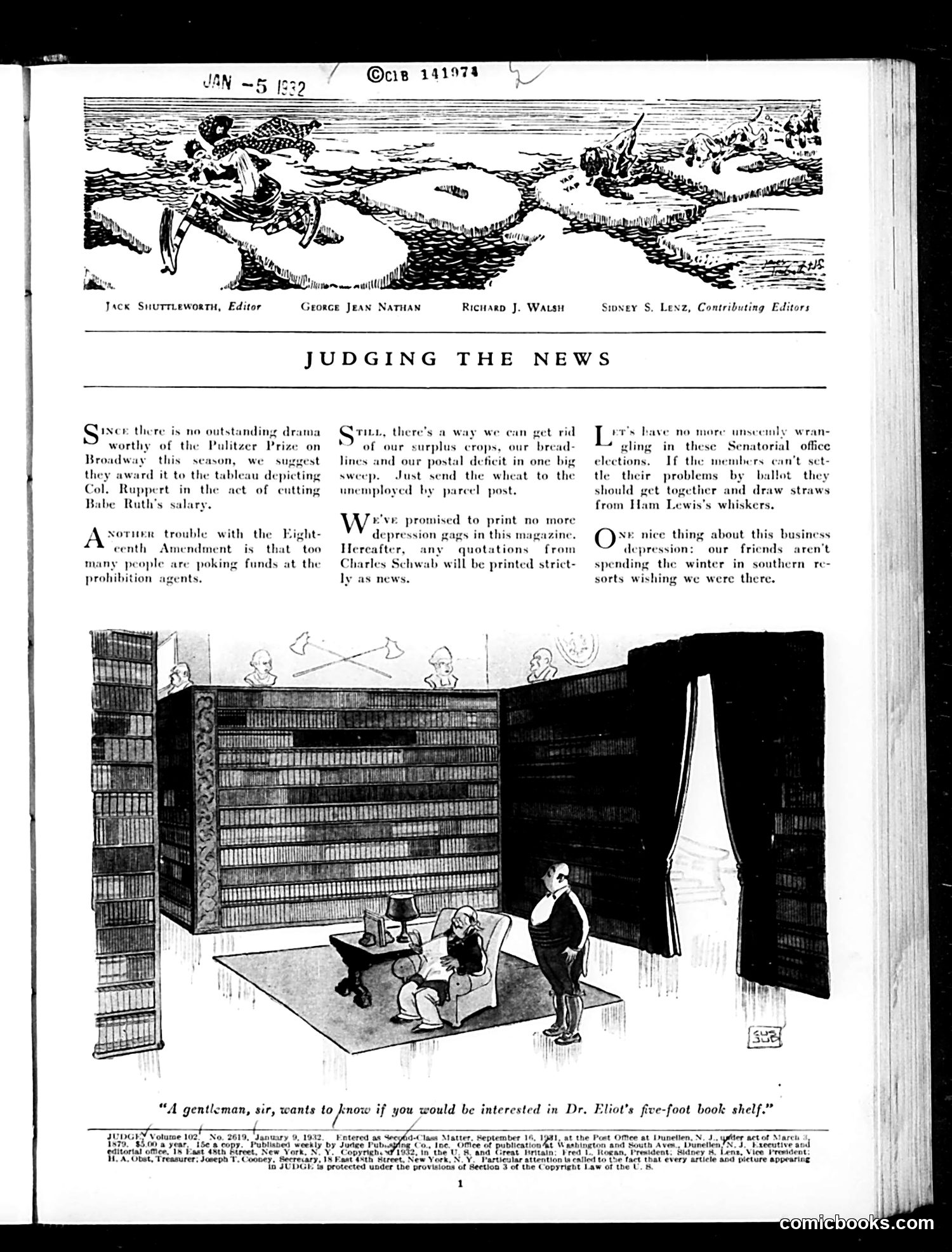
# Analysis of "Judging the News" - Judge Magazine, January 9, 1932 This page contains brief satirical commentary on current events rather than a single political cartoon. The main illustration depicts a humorous scene about information management: a visitor inquires whether someone is "interested in Dr. Eliot's five-foot book shelf"—likely referencing Charles W. Eliot's famous curated collection of essential books. The commentary above jokes about Depression-era problems (surplus crops, postal deficits), mentions avoiding depression-themed content in future issues, and pokes fun at Prohibition enforcement and senatorial elections. The five-foot shelf reference appears to satirize Americans' pretensions toward self-education during economically difficult times, suggesting the irony of intellectual pursuits amid widespread hardship.
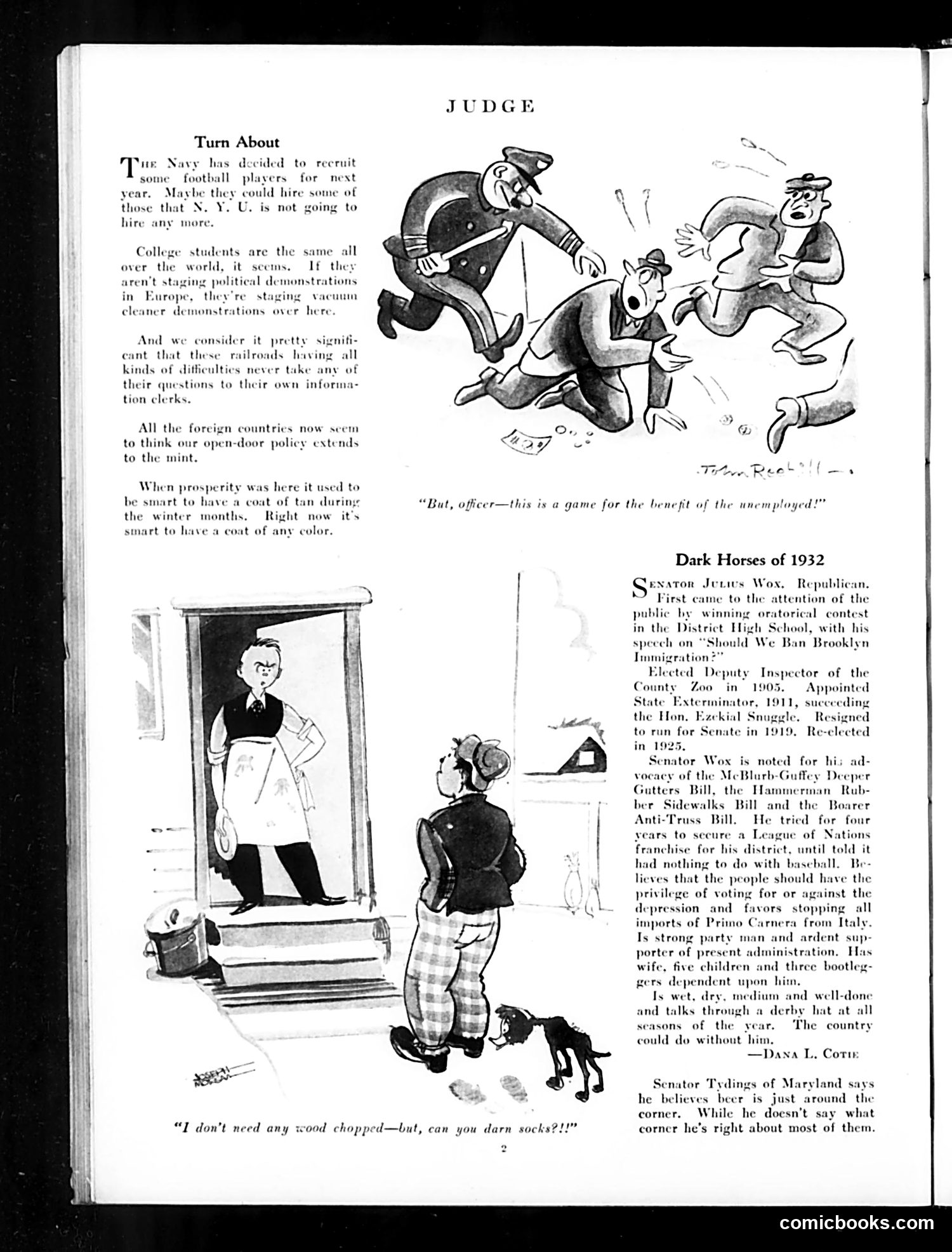
# Analysis of Judge Page **Top Cartoon ("Turn About"):** This satirizes Navy recruitment difficulties and compares American college student protests to European demonstrations. The cartoon shows military officers chasing what appear to be reluctant recruits or students, suggesting the Navy struggles to recruit while students avoid military service through activism. **Bottom Cartoon ("Dark Horses of 1932"):** Profiles Republican Senator Jesse Wax, apparently a political newcomer gaining attention. The domestic scene shows a woman calling out "I don't need any wood chopped—but, can you darn socks?!" — likely mocking his ability to handle practical governing versus theoretical politics, or suggesting unproven political credentials during the Depression era when economic management was critical.
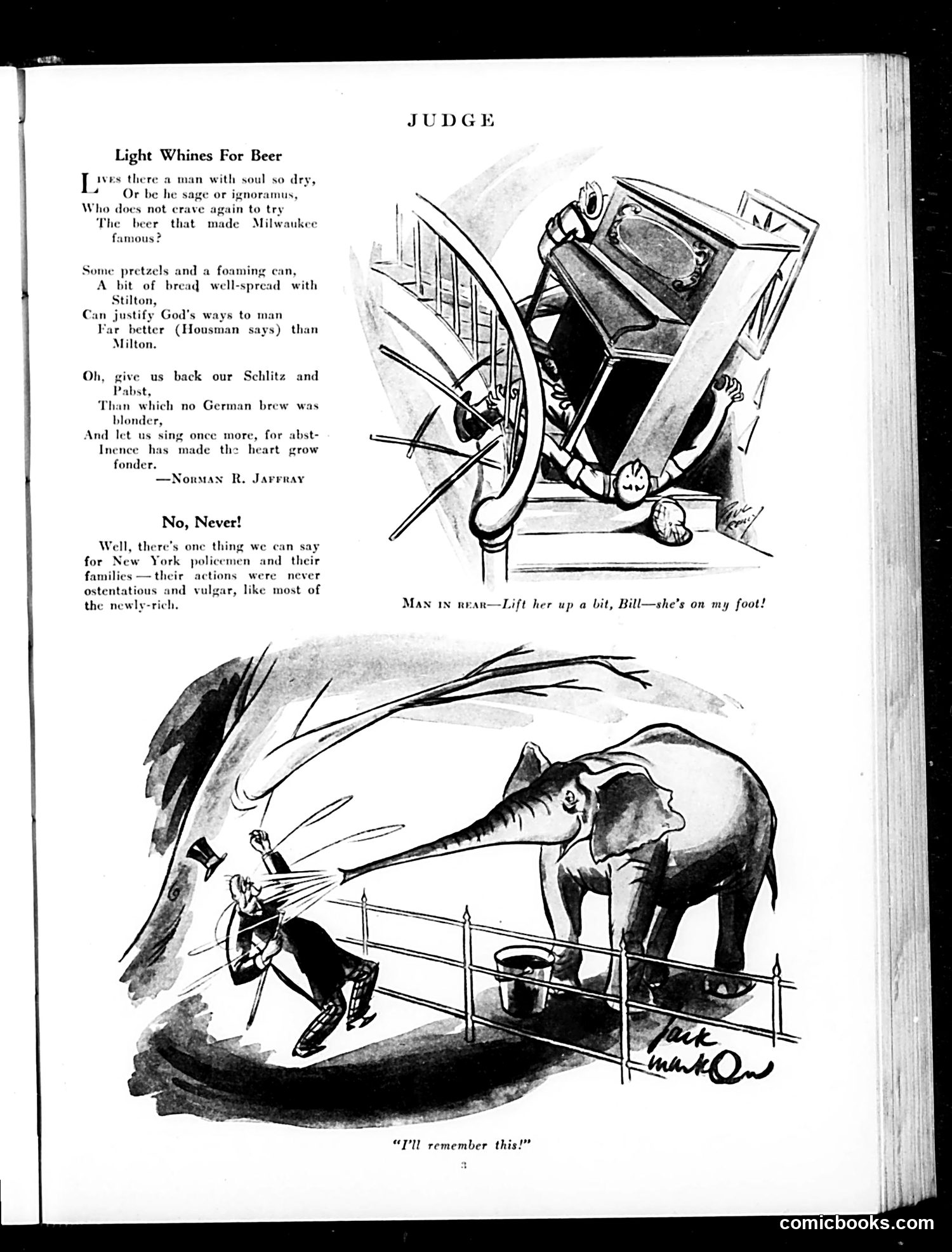
# Analysis of Judge Magazine Page This page contains two satirical cartoons and a poem about beer. **"Light Whines For Beer"** is a poem by Norman R. Jaffray lamenting the decline of German beer quality, specifically mentioning Milwaukee beer (then famous for German immigrant breweries). The verses nostalgically reference Schlitz and Pabst brands while complaining that modern American beer lacks the character of authentic German brews. **"No, Never!"** criticizes New York police and their families for not being ostentatiously vulgar like "the newly-rich"—implying police maintained dignified, modest behavior despite their positions. The two cartoons below illustrate these themes: one shows a chaotic automobile scene, the other depicts a man struggling to control a large elephant, captioned "I'll remember this!"—likely satirizing difficulty controlling something powerful, possibly relating to Prohibition or regulatory challenges of the era.
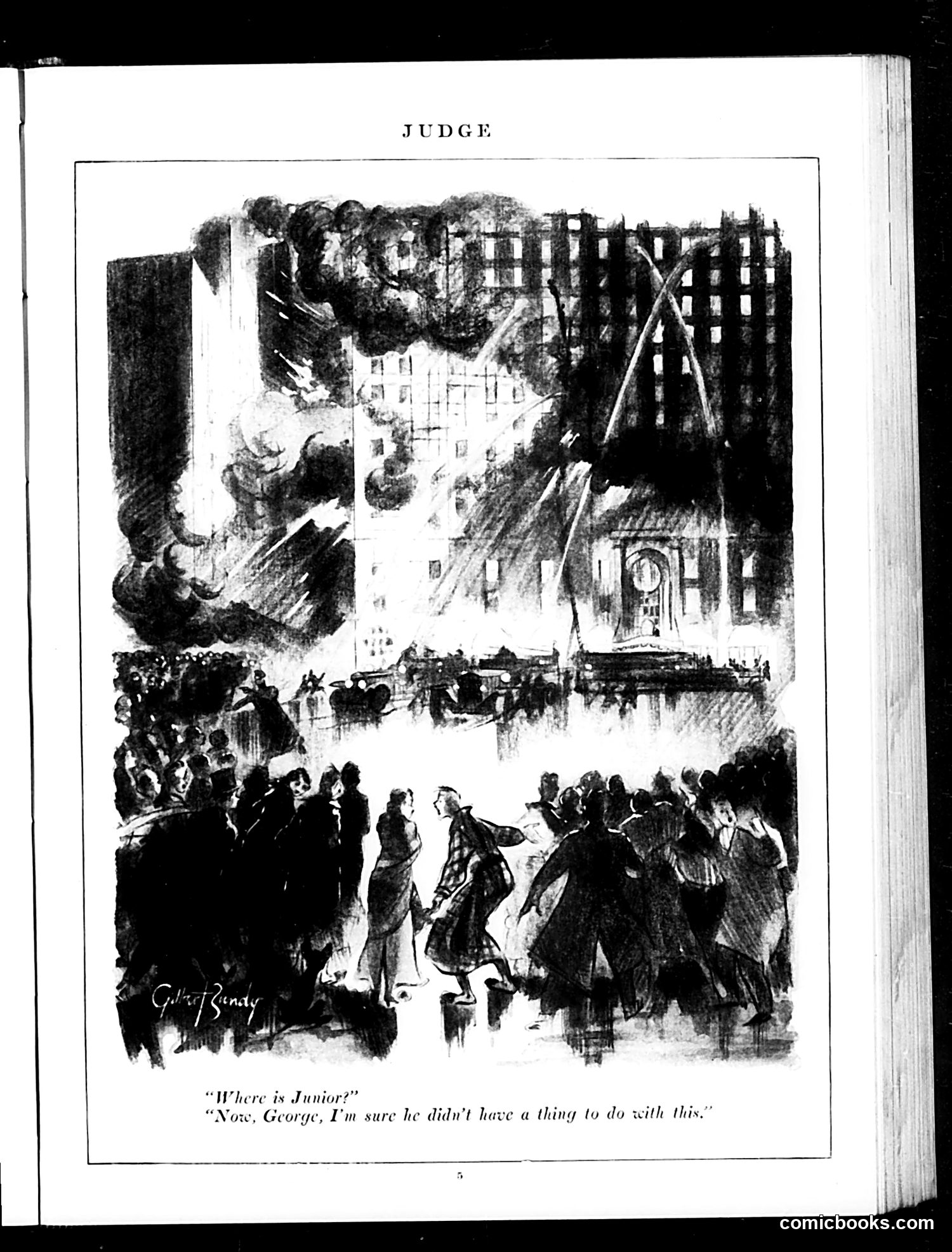
# Judge Cartoon Analysis This cartoon depicts a public execution or lynching scene in an urban setting, with crowds gathered below tall buildings. The caption reads: "Where is Junior?" / "Now, George, I'm sure he didn't have a thing to do with this." The satire appears to target wealthy parents who shield their children from consequences for crimes. "Junior" (suggesting an upper-class son) has apparently committed a serious offense warranting execution, yet his mother assures "George" (the father) of the boy's innocence—a darkly ironic commentary on parental denial and class privilege. The cartoon critiques how wealthy families might use their social status to protect children from legal accountability, contrasting sharply with the grim execution scene. The joke's cruelty reflects Judge magazine's often harsh satirical approach to class and crime.
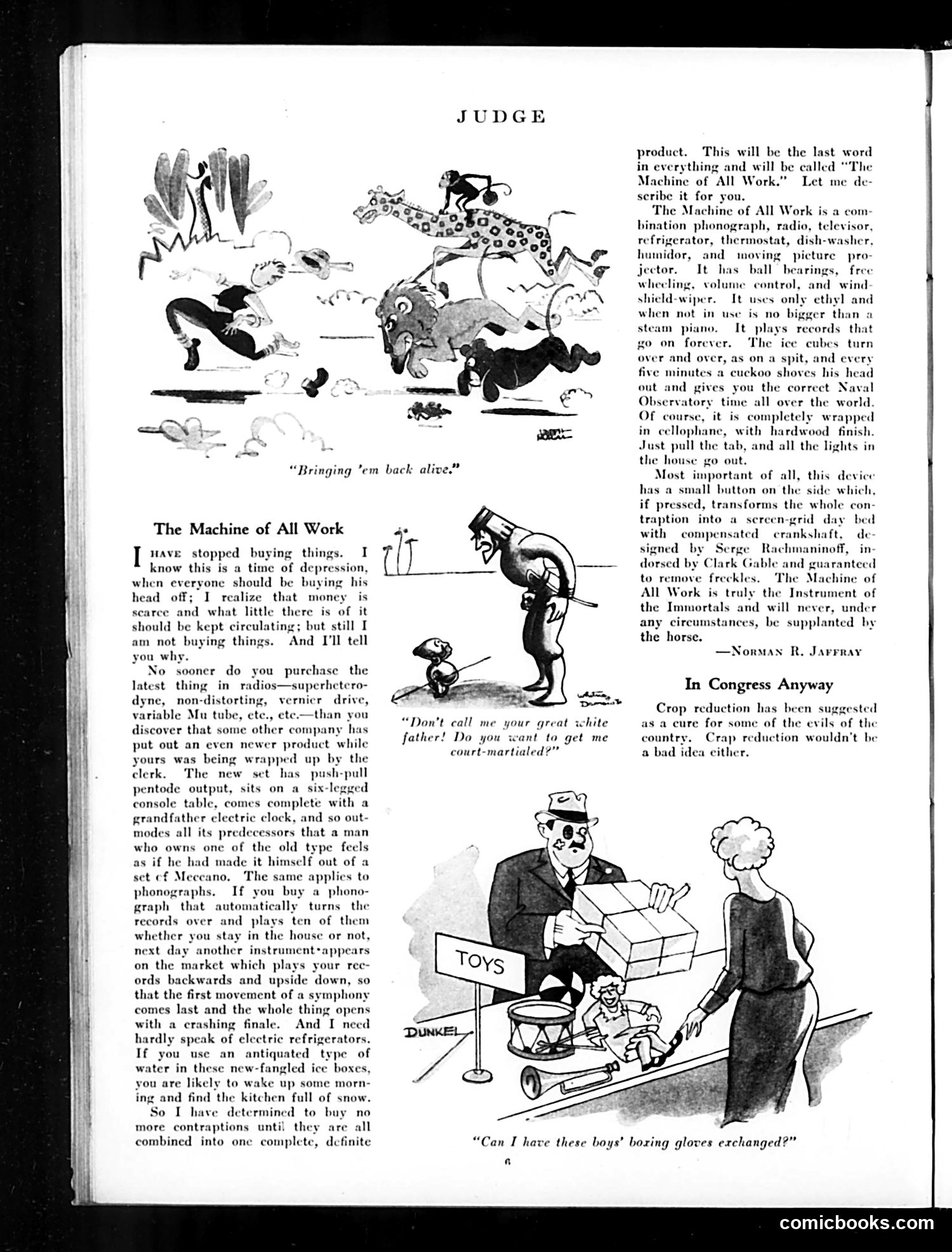
# Analysis of Judge Magazine Page This page satirizes consumer culture during economic depression (likely 1930s). **"The Machine of All Work"** mocks the era's obsession with labor-saving gadgets. The author humorously describes an absurdly over-engineered contraption supposedly combining phonograph, radio, television, refrigerator, and other devices—all crammed into something the size of a steam piano. The joke is that consumers keep buying unnecessary gadgets despite financial hardship, hoping each new invention will solve problems. **"In Congress Anyway"** cartoon shows a toy merchant exchanging children's boxing gloves, satirizing crop-reduction policies. The pun suggests that while Congress debated agricultural reforms, ordinary people still faced economic struggle—the solutions felt as trivial as children's toys compared to real needs. Both items critique Depression-era thinking: blind faith in technology and government solutions failing ordinary citizens.
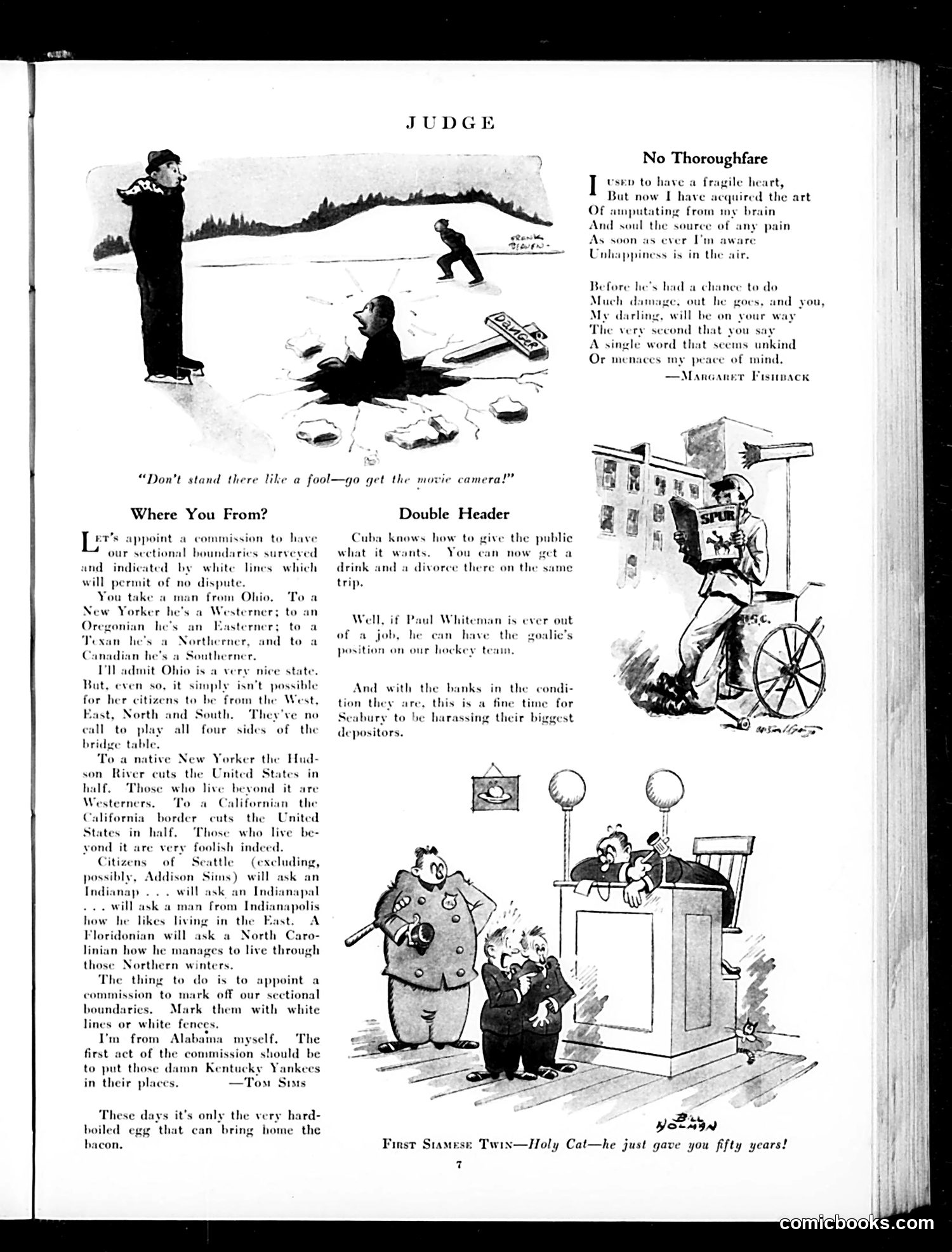
# Judge Magazine Page Analysis This page contains three separate satirical pieces: **"Where You From?"** mocks American regional provincialism. The text jokes that citizens define the U.S. from their own perspective—New Yorkers think the Hudson River divides the country; Californians think their border does. The author (Tom Sims) proposes marking sectional boundaries with white lines to end confusion about regional identity. The satire targets parochial attitudes and the absurdity of regional superiority complexes common in early 20th-century America. **"Double Header"** makes three brief topical jokes: Cuba offering both alcohol and divorce (likely referencing post-Prohibition era tourism), Paul Whiteman (a famous bandleader of the 1920s-30s) becoming a hockey goalie, and banks harassing depositors during financial hardship. **"No Thoroughfare"** (poem by Margaret Fishback) and the cartoon about "Siamese Twins" satirize emotional detachment—the ability to amputate feelings and relationships instantly when they become uncomfortable, depicted as conjoined twins where one simply abandons the other after 50 years. The ice-fishing cartoon at top appears unrelated to the articles below it.
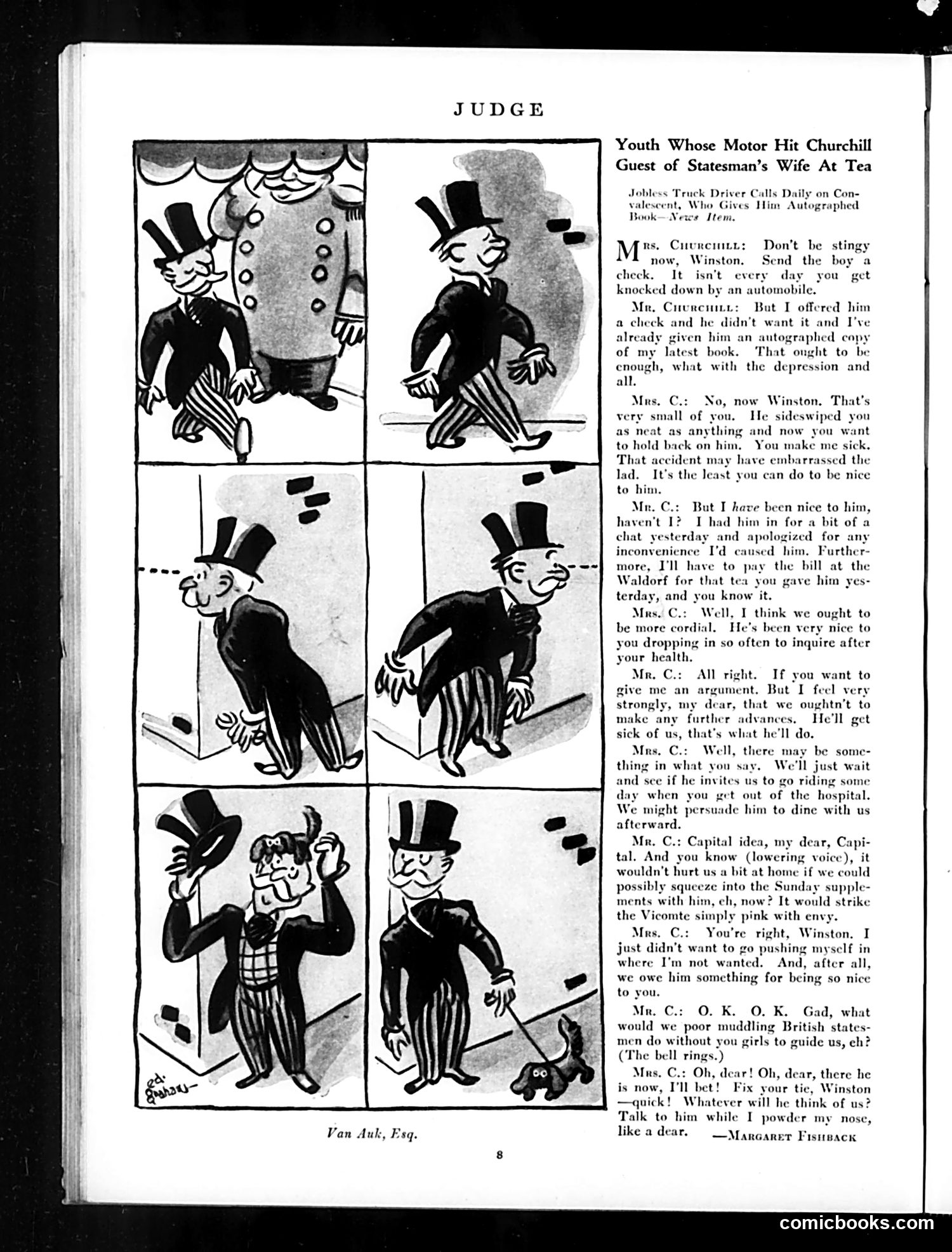
# Judge Magazine Cartoon Analysis This cartoon satirizes the social pretensions and obsequiousness of the British upper class toward a young working-class man who accidentally hit Winston Churchill with a motor vehicle. The joke: Churchill and his wife are debating whether to give the jobless truck driver money beyond an autographed book and tea invitation. Mrs. Churchill insists on excessive generosity to avoid appearing stingy, while Winston resists—yet he's secretly delighted at the social opportunity to appear in the Sunday newspaper supplements with the young man, hoping to impress "the Vicomte" through envy. The satire targets aristocratic hypocrisy: their concern isn't genuine kindness but social status-climbing and newspaper publicity. The servant-and-master dynamic reverses—the wealthy Churchills anxiously prepare themselves for the working man's arrival, straightening ties and powdering noses. The cartoon ridicules how Britain's privileged class weaponizes charity as social currency, and how an accident creates an excuse for networking rather than genuine compassion.
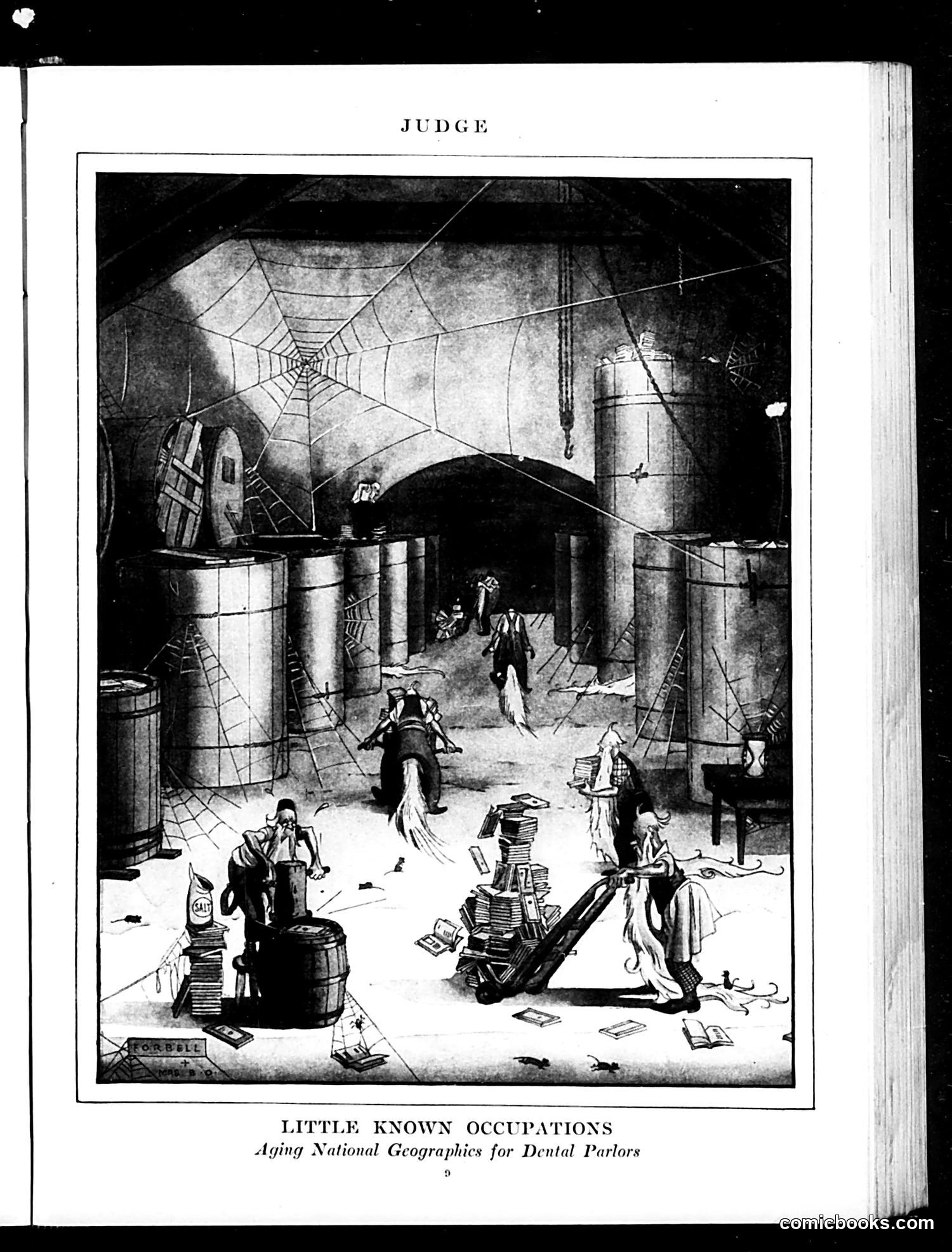
# Analysis This satirical illustration depicts an underground or warehouse setting where figures are engaged in the absurd occupation of "aging National Geographics for Dental Parlors." The scene shows workers surrounded by stacks of magazines and papers, with large cylindrical storage containers and massive spider webs overhead. The joke targets a specific social observation: dental offices notoriously display outdated National Geographic magazines in their waiting rooms. Rather than dentists simply neglecting to update their reading materials, this cartoon humorously imagines it as an intentional *profession*—people deliberately age magazines to create that characteristically dusty, decades-old atmosphere found in dental waiting rooms. The spider webs reinforce this aesthetic of neglect and stagnation. It's satire about the standardized, unchanging nature of dental office décor and the universal experience of finding ancient magazines during dental visits.
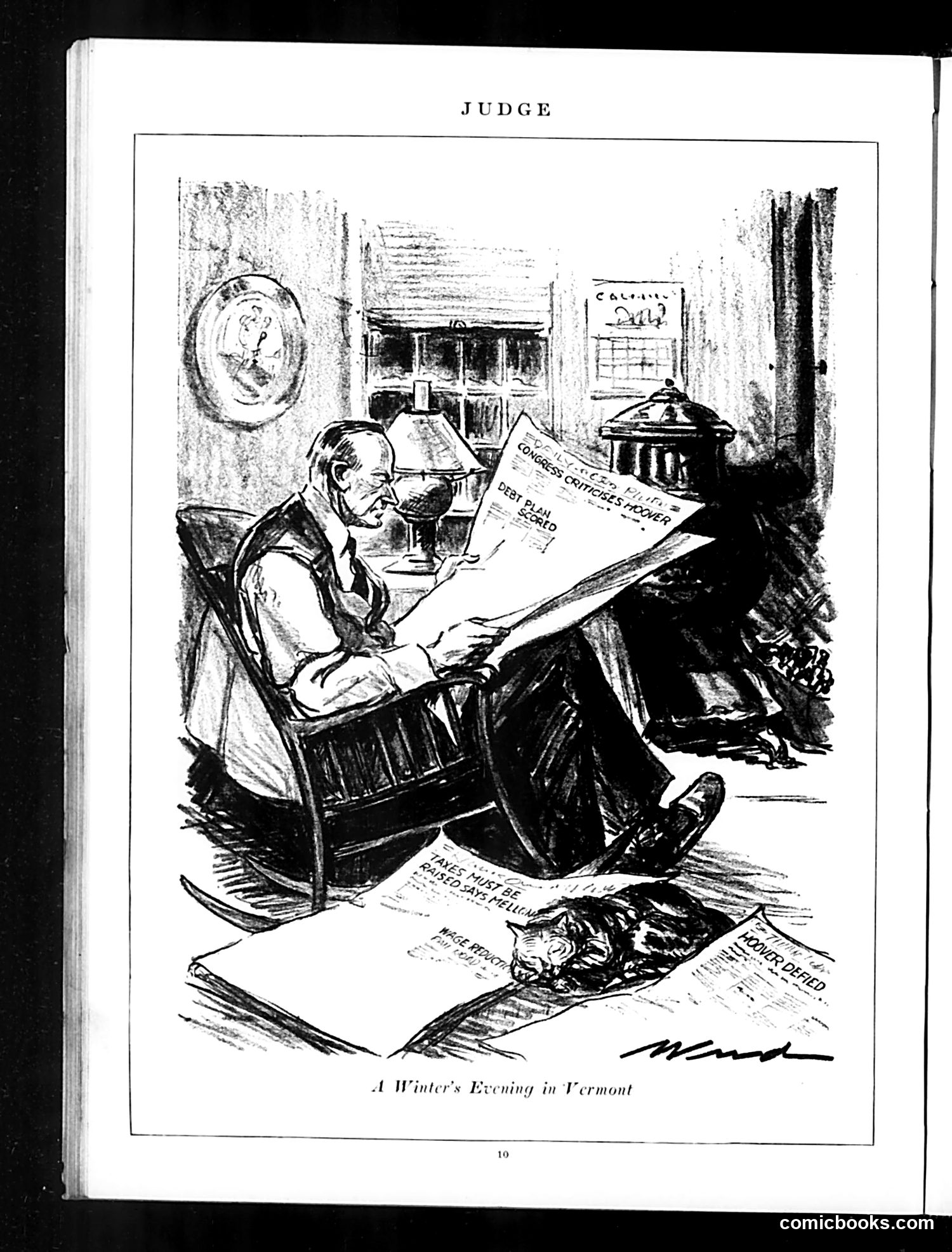
# "A Winter's Evening in Vermont" This Judge cartoon depicts a seated man reviewing documents labeled with references to congressional critics and power—including what appears to be "Congress's Critters' Power" and other legalistic papers scattered around him. The setting suggests a Vermont winter evening (note the stove, window, and sparse interior). The satire likely targets a Vermont political figure or judge dealing with legislative scrutiny or criticism. The documents strewn about suggest bureaucratic burden or political pressure. The man's stern expression and focused reading posture convey his serious engagement with these matters. Without additional context about the specific date or Vermont figures involved, the exact identity and precise political reference remain unclear, though the cartoon clearly mocks someone's winter predicament navigating Congressional oversight.