
Judge, 1932-01-09 · page 10 of 36
Judge — January 9, 1932 — page 10: what you’re looking at
What you’re looking at
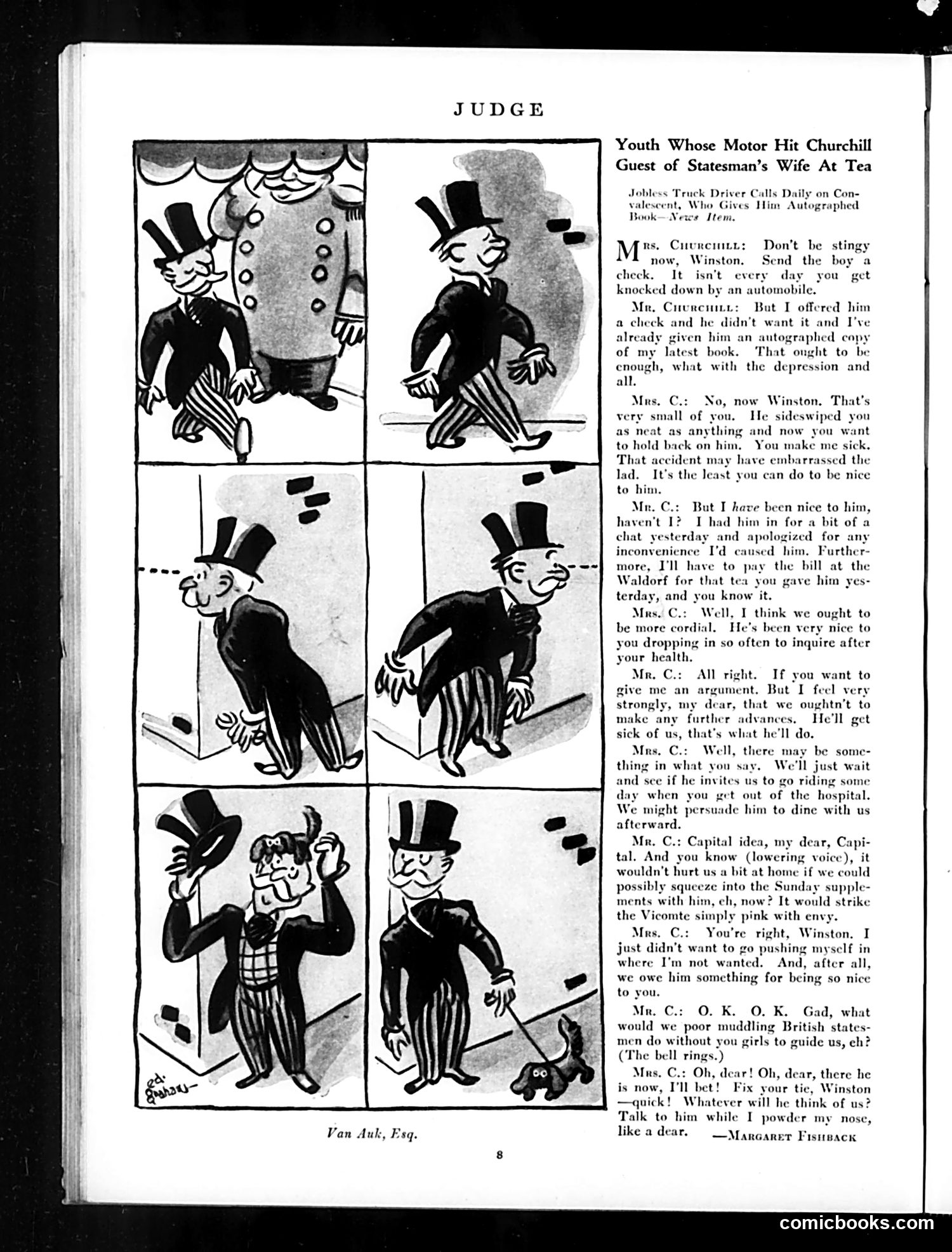
# Judge Magazine Cartoon Analysis This cartoon satirizes the social pretensions and obsequiousness of the British upper class toward a young working-class man who accidentally hit Winston Churchill with a motor vehicle. The joke: Churchill and his wife are debating whether to give the jobless truck driver money beyond an autographed book and tea invitation. Mrs. Churchill insists on excessive generosity to avoid appearing stingy, while Winston resists—yet he's secretly delighted at the social opportunity to appear in the Sunday newspaper supplements with the young man, hoping to impress "the Vicomte" through envy. The satire targets aristocratic hypocrisy: their concern isn't genuine kindness but social status-climbing and newspaper publicity. The servant-and-master dynamic reverses—the wealthy Churchills anxiously prepare themselves for the working man's arrival, straightening ties and powdering noses. The cartoon ridicules how Britain's privileged class weaponizes charity as social currency, and how an accident creates an excuse for networking rather than genuine compassion.
📄 Transcribed text from this page (OCR, searchable)
Machine-transcribed from the original scan — historical spelling and the odd misread are preserved.
Youth Whose Motor Hit Churchill Guest of Statesman’s Wife At Tea Jobless Truck Driver Calls T on Con- valescent, Who Gives Him Autographed Book— News Item, M™ Cuvremtt: Don't be stingy now, Winston, Send the boy a check. It isn’t every day you get knocked down by an automobile. Me. Cuvrenmmr: But I offered him a check and he didn’t want it and I've already given him an autographed copy of my latest book. That onght to be enough, what with the depression and all. Mrs. C.: No, now Winston. That's very small of you. He sideswiped you as neat as anything and now you want to hold back on him, You make me sick. That accident may have embarrassed the lad. It’s the Jeast you can do to be nice to him. Mr. C.: But I have been nice to him, haven't 1? ad him in for a bit of chat yeste ind apologized for any inconvenience I'd caused him. Furthe more, I'll have to pay the bill at the Waldorf for that tea you gave him yes- terday, and you know it. Mrs. C Well, I think we ought to be more cordial. He's been very nice to you dropping in so often to inquire after your health. Mr. C.: All right. If you want to give me an argument, But I feel very strongly, my dear, that we oughtn’t to any further advances. He'll get of us, that’s what he'll do. Mrs. C.: Well, there be some- thing in what you say Yell just wait and see if he invites us to go riding some day when you get out of the hospital. We might persuade him to dine with us afterward. Mr. C.: Capital idea, my dear, Capi- tal. And you know (lowe voice), it wouldn't hurt us a bit at home if we could possibly squeeze into the Sunday supple- ments with him, ch, now? It would strike the Vicomte simply pink with envy. Mrs. C.: You're right, Winston. I just didn’t want to go pushing myself in where I'm not wanted. And, after all, we owe him something for being so nice to you. Mr. C.: O. K. 0. K. would we poor muddling Br men do without you girls to guide us, eh? (The bell rings.) Mrs. C.: Oh, dear! Oh, dear, there he is now, I'll bet! Fix your tie, Winston —quick! Whatever will he think of us? Talk to him while I powder my nose, Van Auk, Esq. like a dear, _Mancarer Fisipack comicbooks.com