
A complete issue · 37 pages · 1926
Life — July 15, 1926
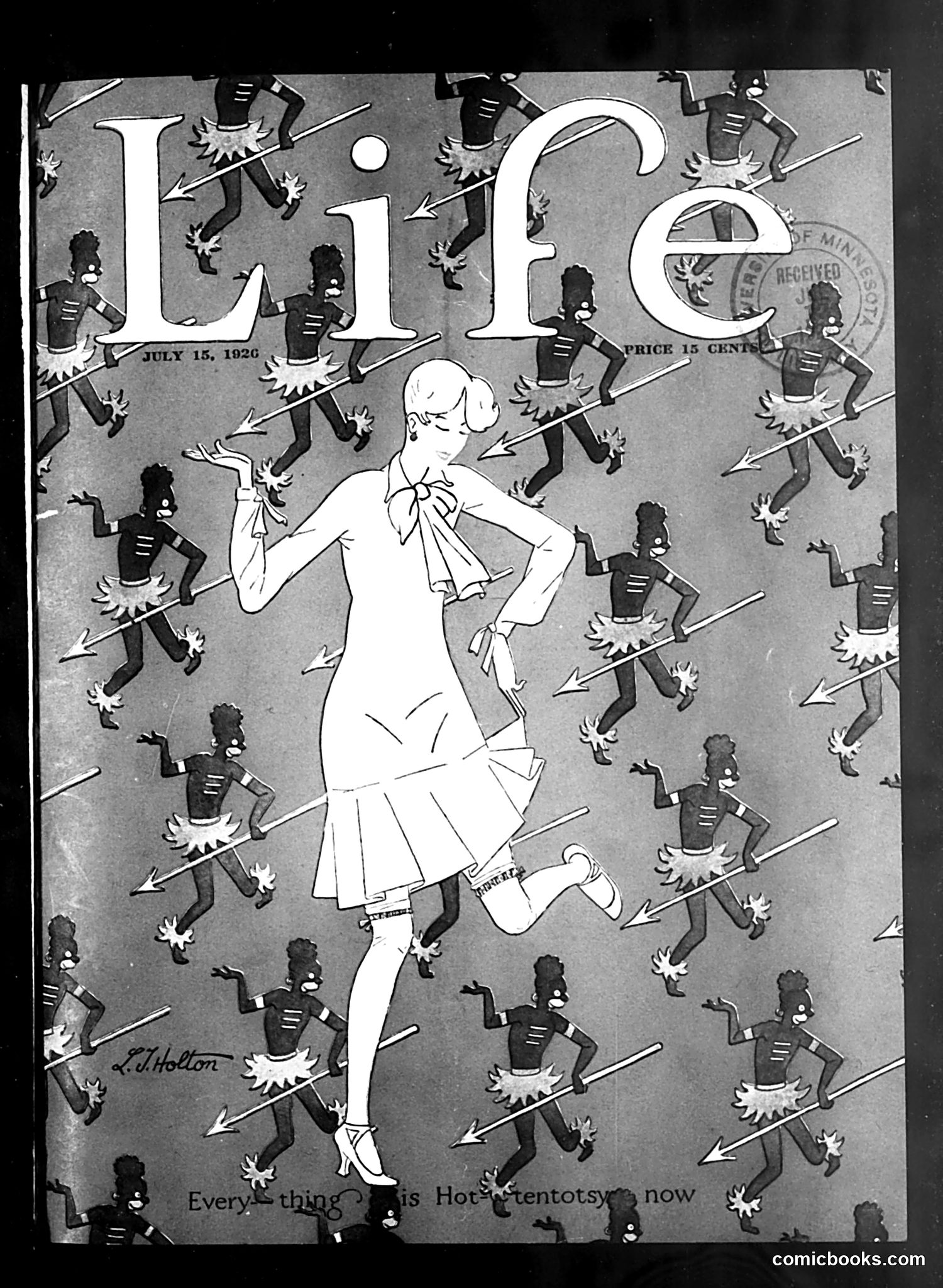
This cover satirizes the "Jazz Age" craze of the 1920s. A fashionable white woman in a short, loose-fitting dress dances energetically in the center, surrounded by repeated silhouettes of Black jazz musicians in formal attire playing instruments (appearing to be trumpets or similar). The caption states "Everything is Hot and Centotsy now"—"centotsy" likely being a colloquial variant of "syncopated" or referring to jazz rhythms. The satire targets the era's fascination with jazz music and the accompanying social anxieties. The composition suggests how white audiences and dancers were embracing African American musical forms while the image's design—through repetition and decorative framing—reduces the musicians to mere background elements, reflecting the racial dynamics of entertainment patronage during this period.
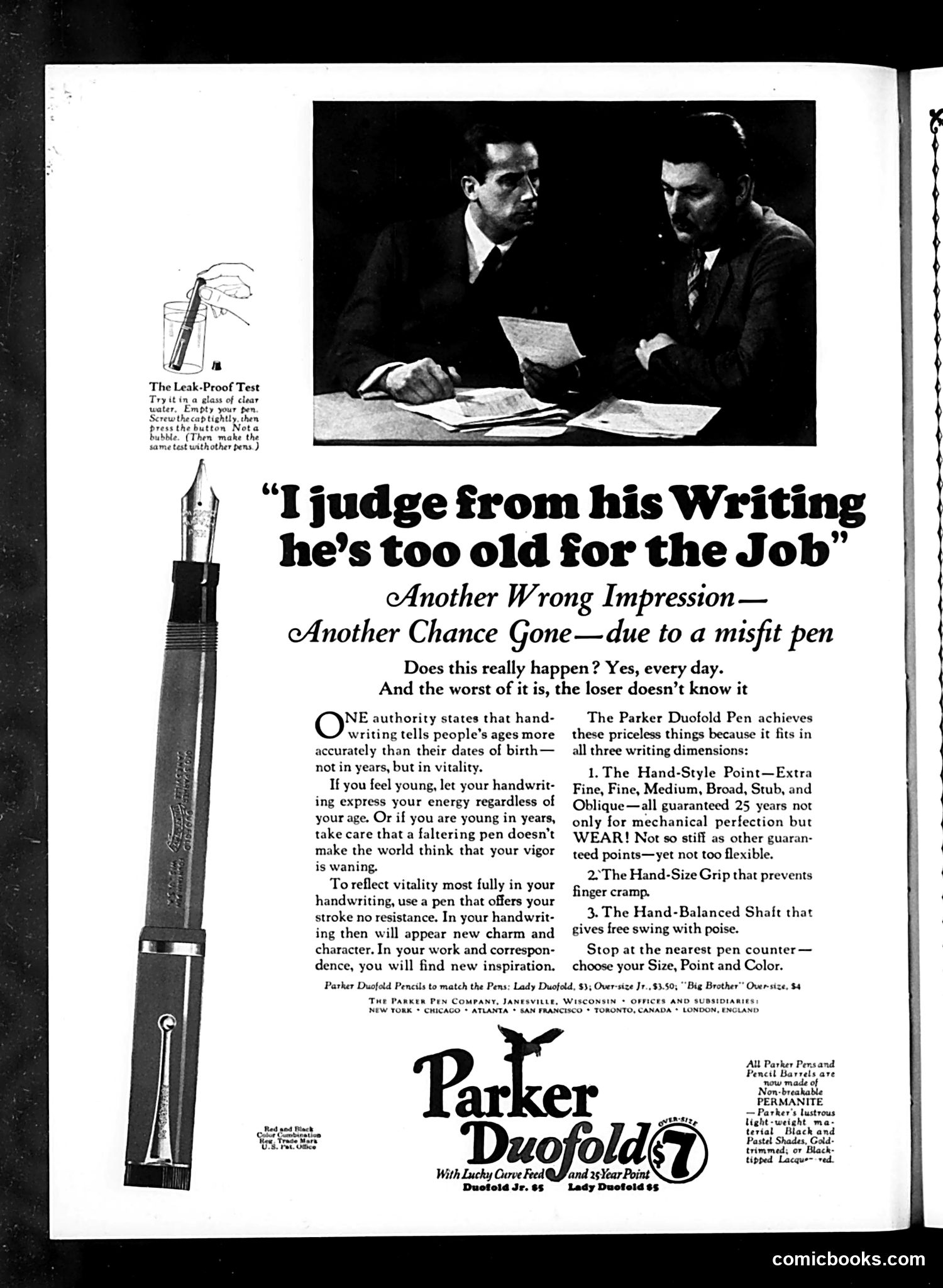
This is primarily a **Parker Duofold pen advertisement**, not political satire. The page depicts two businessmen examining documents, with the headline claiming someone was judged "too old for the job" based on his handwriting. The ad's premise is that poor penmanship—caused by using an inferior pen—creates a negative impression on employers and colleagues, potentially costing job opportunities. The advertisement argues that the Parker Duofold pen prevents this through superior design features: a specialized point, ergonomic grip, and balanced shaft that enable confident, youthful-appearing handwriting. The left sidebar includes a "leak-proof test" demonstrating the pen's quality. This is commercial messaging rather than political commentary, targeting early 20th-century professional anxieties about self-presentation.
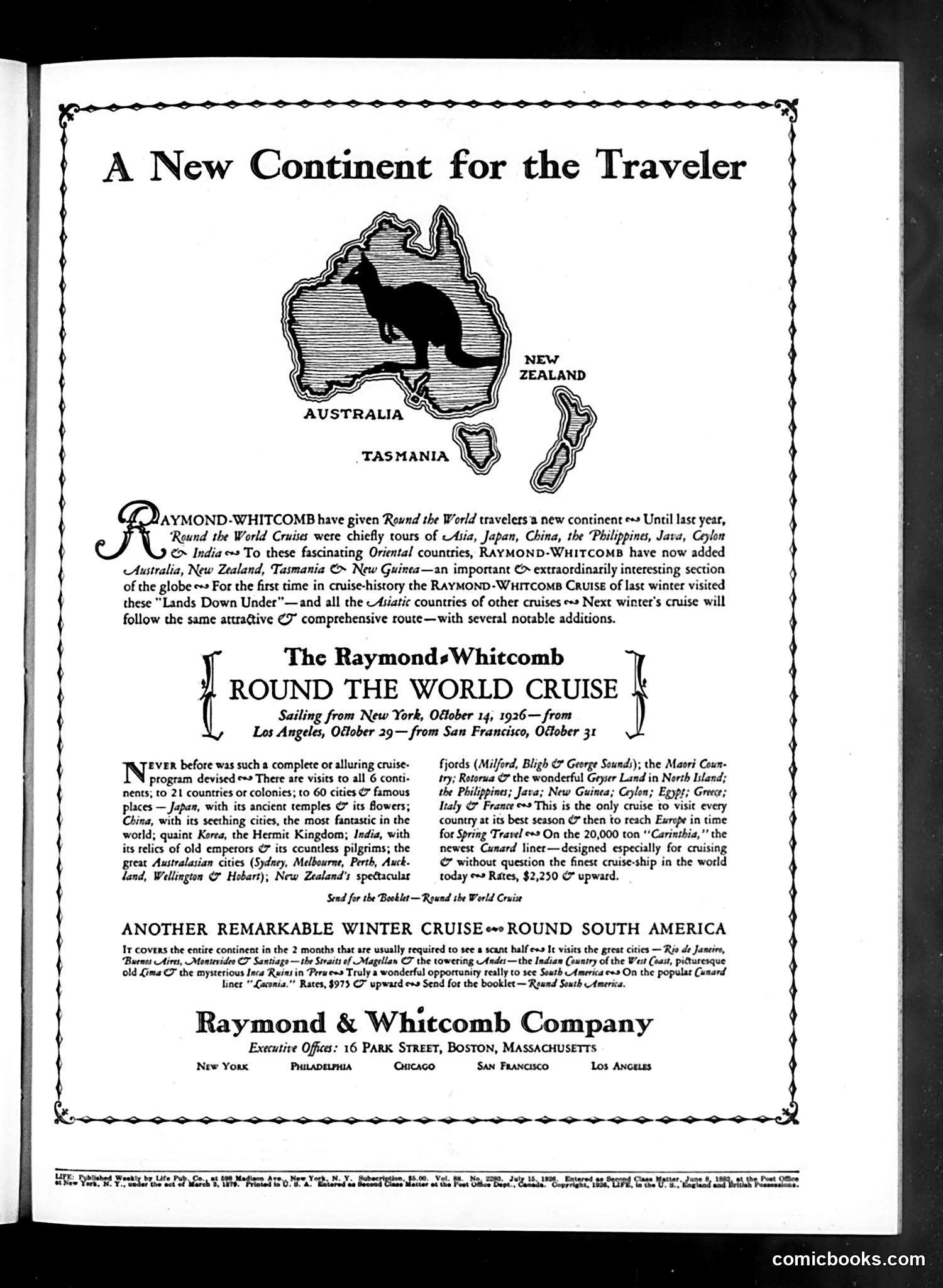
This page is primarily an advertisement for Raymond-Whitcomb cruise travel, not a political cartoon. It promotes two luxury cruises: a "Round the World Cruise" departing October 1926 from New York, and a "Round South America" cruise. The ad uses a map illustration featuring Australia, New Zealand, and Tasmania with a kangaroo silhouette—imagery designed to entice travelers with exotic, distant destinations. The text emphasizes this is the first time Raymond-Whitcomb's cruises visited these "Asiatic countries" and the Australian region, positioning it as groundbreaking travel opportunity. The satire, if any exists, is subtle—the title "A New Continent for the Traveler" somewhat playfully overstates the novelty of established regions. This reflects early-20th-century attitudes treating non-European destinations as exotic frontiers for wealthy American tourists.
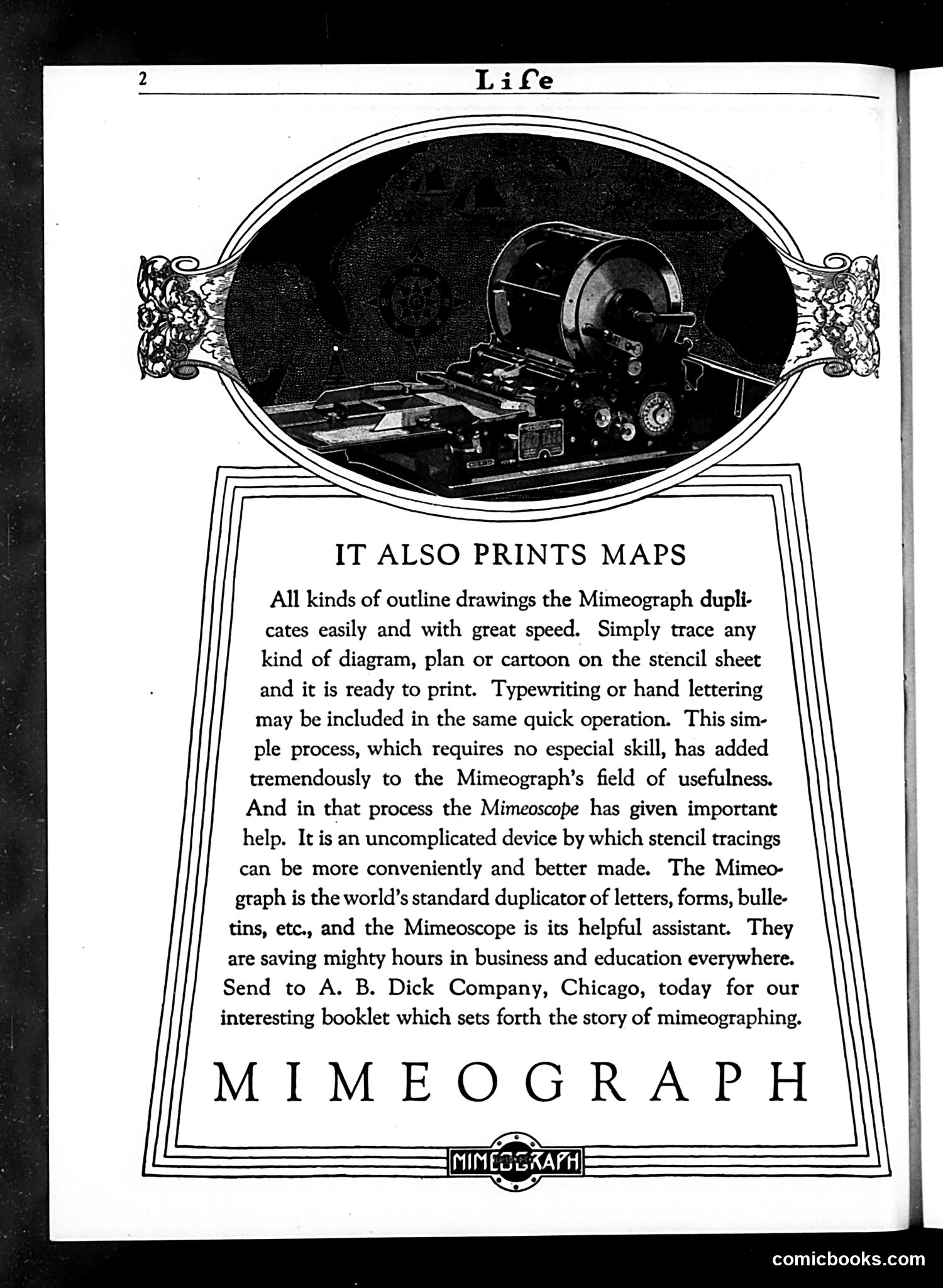
This is **an advertisement, not editorial content or satire**. The page promotes the Mimeograph, a duplicating machine manufactured by A.B. Dick Company of Chicago. The ad describes the device's capability to print maps and reproduce outline drawings, diagrams, plans, and cartoons. It emphasizes the speed and simplicity of the stencil-tracing process, requiring "no special skill." The text highlights how the Mimeoscope (an accessory tool) assists in making stencil tracings more convenient and precise. The oval image shows the mechanical Mimeograph apparatus itself. This is straightforward product marketing aimed at business and educational institutions, promoting labor-saving office technology. There is no political satire or cartoon commentary present on this page.
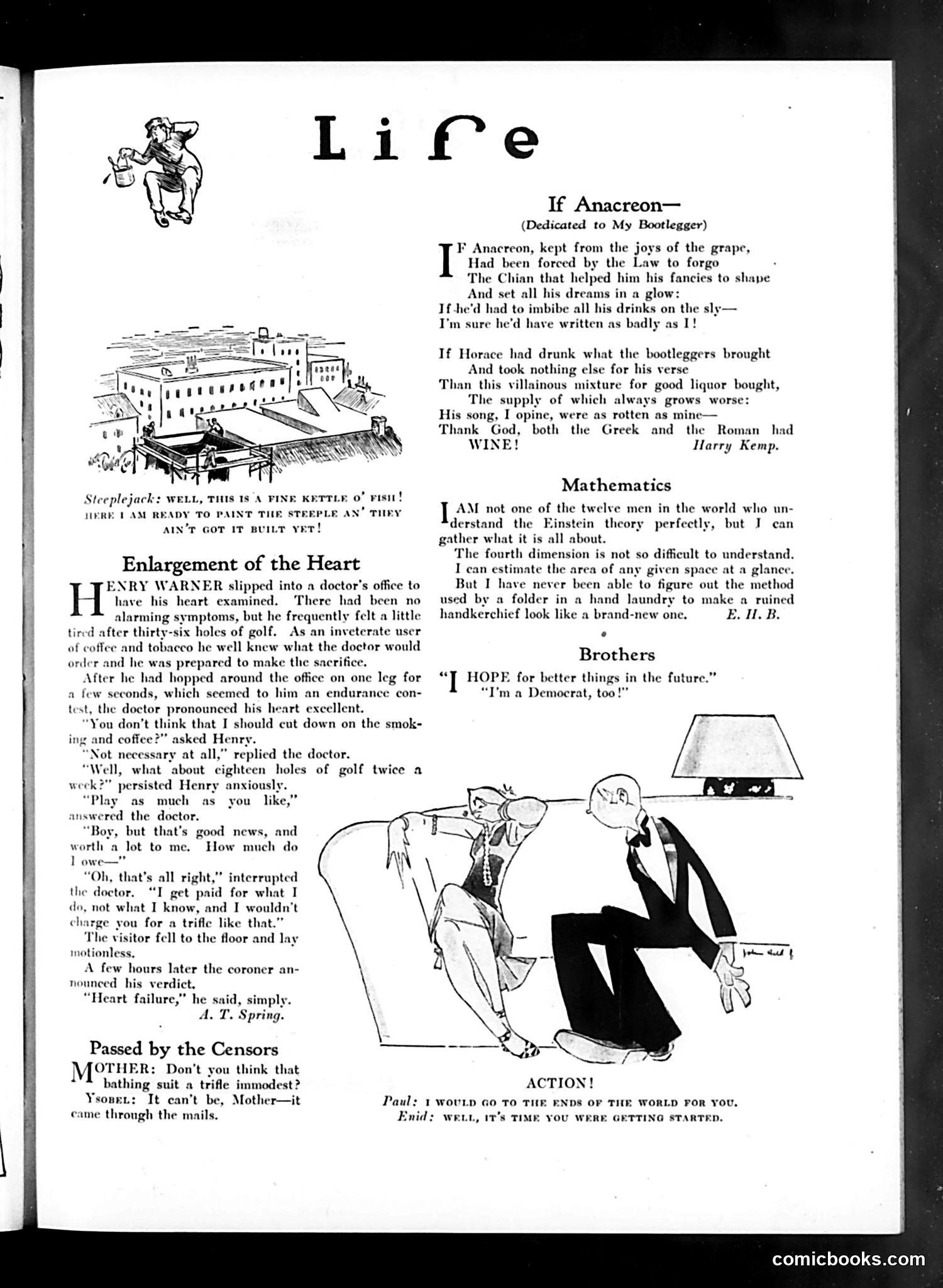
This page from *Life* magazine contains several short humorous pieces: **"If Anacreon"** (top right) is a poem by Harry Kemp mocking classical poets. It jokes that ancient Greek and Roman poets like Horace would have written differently if they'd encountered bootleg alcohol during Prohibition—their work would have suffered because cheap liquor quality was poor. **"Enlargement of the Heart"** tells of a man with hypochondria who visits a doctor complaining of heart trouble. The joke hinges on the doctor's diagnosis: the man's "enlarged heart" is revealed to be emotional/moral rather than medical—he's simply generous or overly sympathetic. **"Action!"** (bottom) shows a couple where one says he'd go to the world's end for the other, and the response is essentially "then get started"—a joke about marriage realities. These are typical *Life* magazine humor pieces from the Prohibition era.
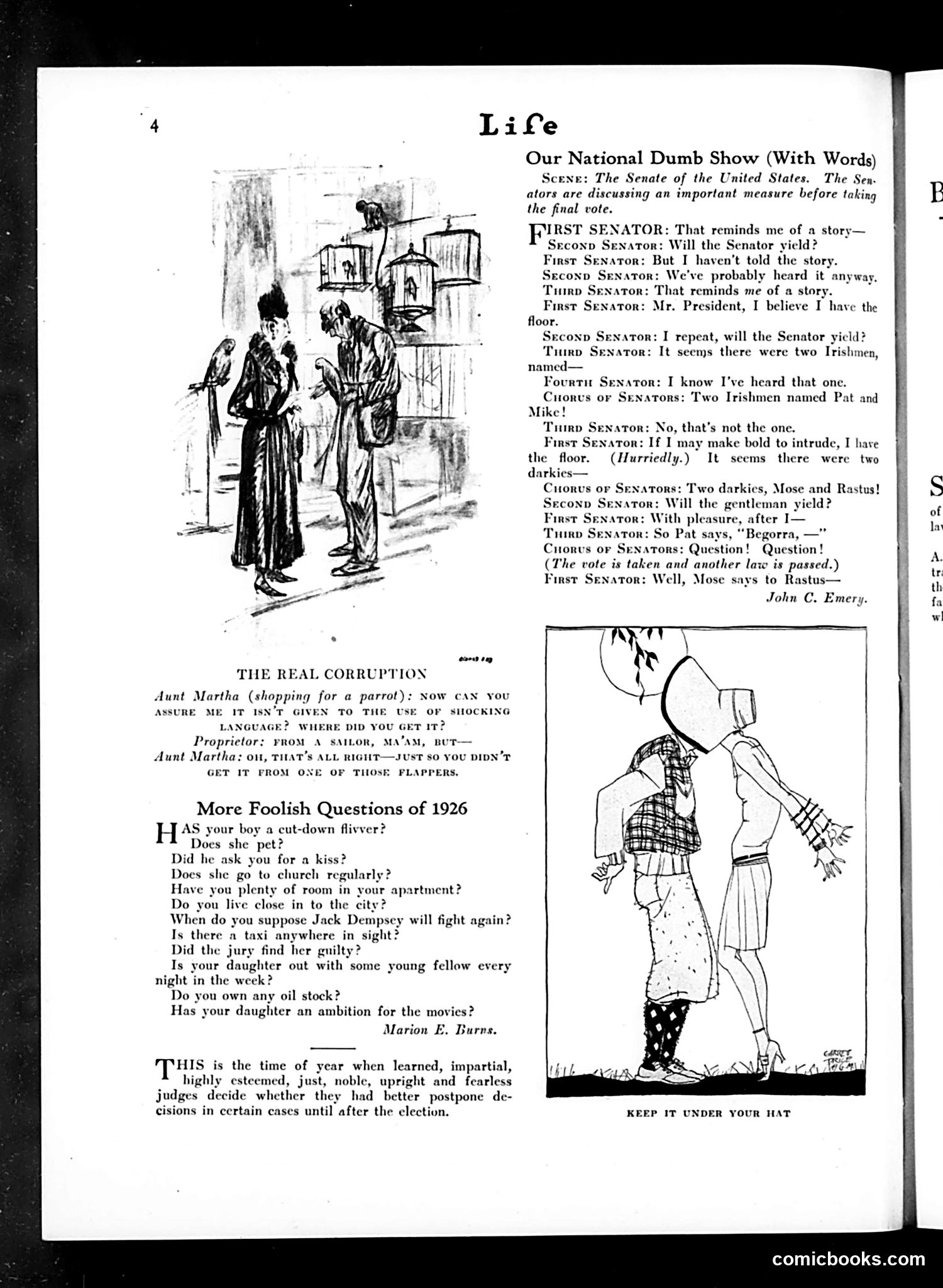
This page contains political satire from 1926 mocking Senate debate. "Our National Dumb Show (With Words)" presents senators discussing an "important measure" where two Irish senators named Pat and Mike allegedly yielded the floor to "two darkies"—Mose and Rastus. The humor relies on racist stereotypes and ethnic mockery typical of 1920s satirical magazines. "The Real Corruption" mocks Aunt Martha's use of sailor slang, suggesting social hypocrisy about "shocking language." "More Foolish Questions of 1926" lists absurd domestic inquiries about dating, church attendance, and oil stocks—satirizing contemporary social concerns and gossip. The cartoons critique Senate ineffectiveness and contemporary middle-class preoccupations, using now-offensive racial and ethnic caricatures standard to period publications.
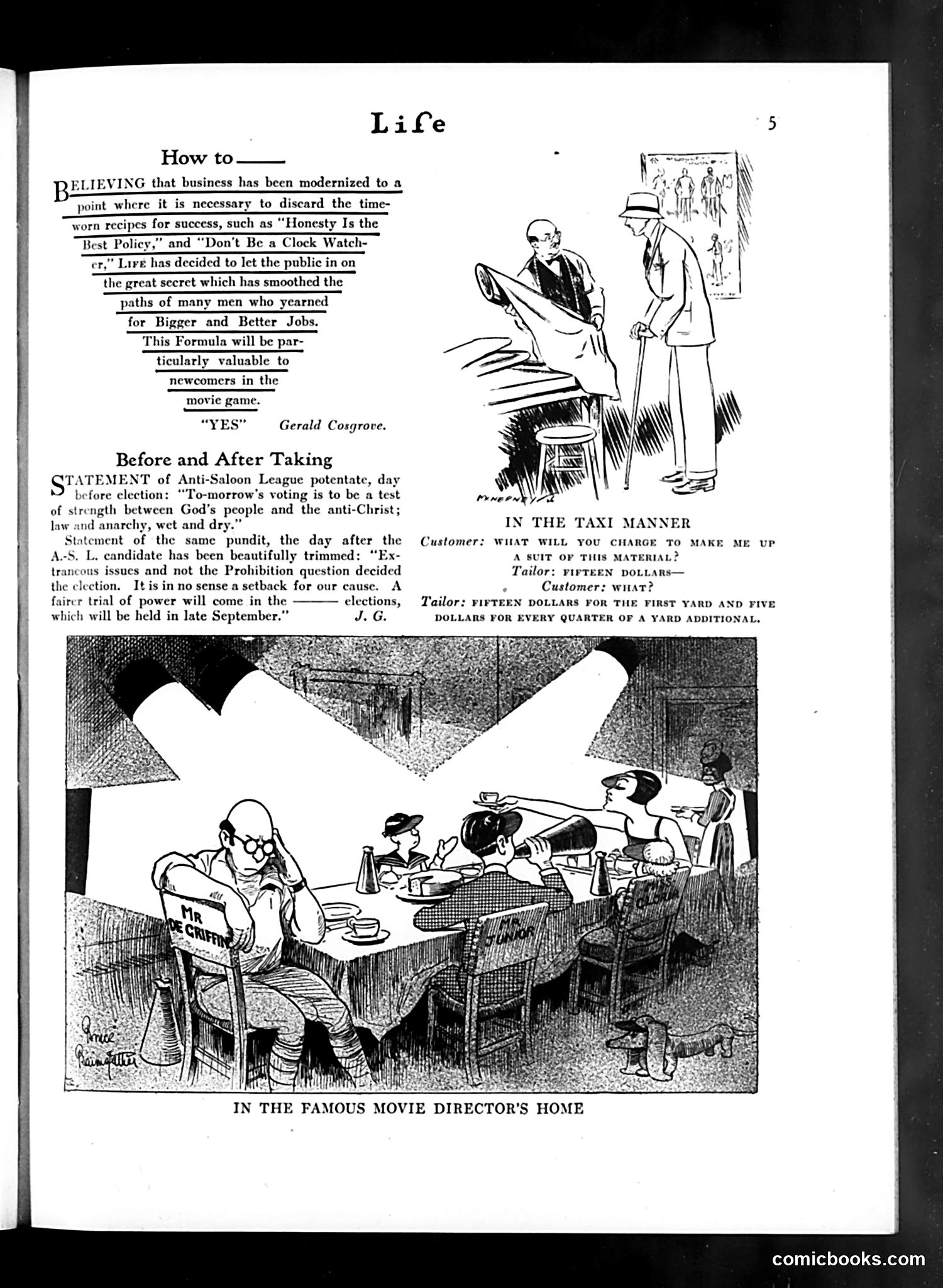
This page contains two satirical pieces from Life magazine's humor section. **Top section**: A commentary on business modernization, claiming that outdated success wisdom ("Honesty Is the Best Policy," "Don't Be a Clock-Watcher") should be discarded. It presents a contradictory "formula" for newcomers in the movie industry, attributed to Gerald Cosgrove saying "YES." **"In the Taxi" joke**: A customer asks a tailor the price for alterations. The tailor charges fifteen dollars initially, then fifteen dollars per quarter-yard additionally—essentially making the job infinitely expensive through hidden incremental costs. This satirizes deceptive pricing practices. **Bottom cartoon**: Shows a famous movie director's dinner party (labeled "Mr. Griffith," likely D.W. Griffith). The scene appears to mock pretentious Hollywood social gatherings with exaggerated character types present. The overall theme criticizes business dishonesty and Hollywood culture.
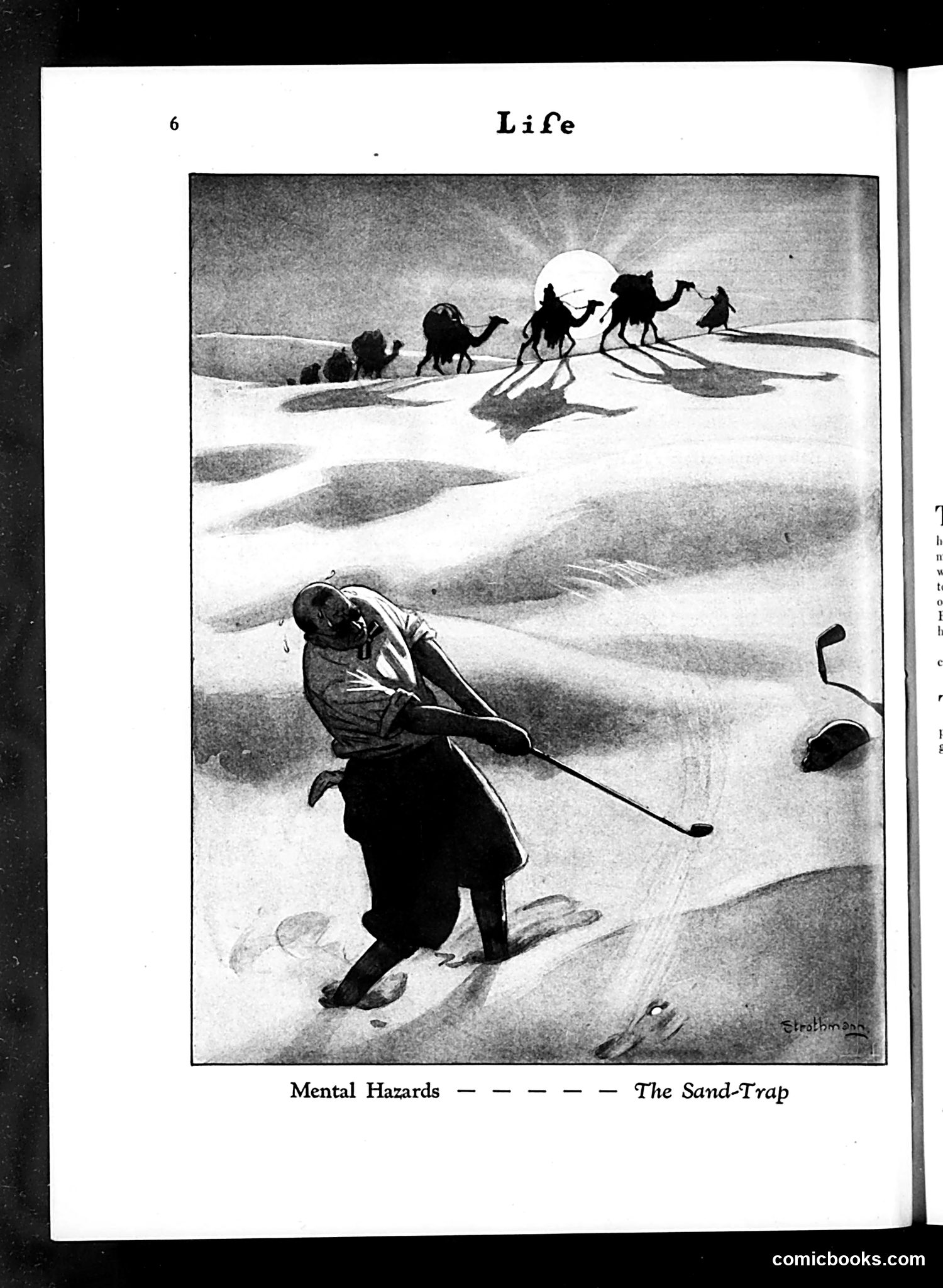
This is a golf cartoon captioned as a "Mental Hazard." The image shows a golfer in the foreground struggling in a sand bunker, while in the background a caravan of camels and their handlers trek across the desert landscape beneath a large moon. The satire plays on the golfer's psychological distress in the sand trap—a common golfing obstacle. The desert caravan in the background appears to mock the golfer's predicament by suggesting his sand trap resembles an actual desert. The humor derives from the contrast between a minor sporting frustration and the far more arduous challenges of actual desert travel, critiquing perhaps how much mental importance golfers attach to their sport's obstacles.
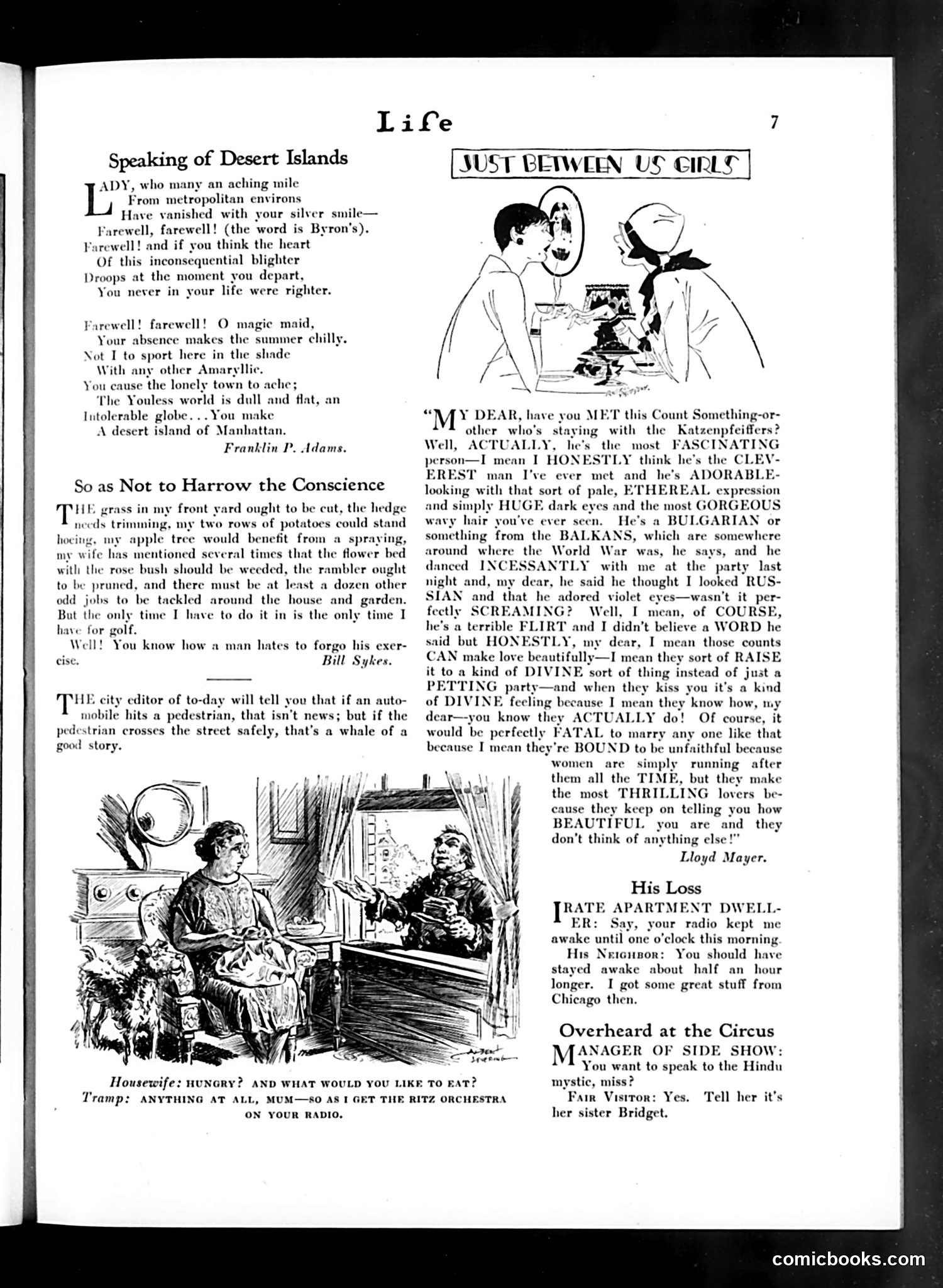
This page contains several humorous sections typical of Life's satirical format: **"Speaking of Desert Islands"** is a farewell poem by Franklin P. Adams addressing a departing woman, using Byron's romantic style ironically. **"Just Between Us Girls"** is a gossip column where one woman describes meeting a Count at the Katzenpfeifers' party. The joke mocks upper-class social pretension—she breathlessly catalogs his supposed exotic attributes (Balkan origin, dark eyes, "divine" manner) before revealing he's merely a flirt and social climber. The satire targets how wealthy women romanticize foreign aristocrats and mistake superficial charm for genuine distinction. The accompanying illustration shows women at a social gathering examining what appears to be a mirror or reflective object. Other brief humor pieces include observations about yard work, urban safety, and circus performers—typical Life magazine social commentary.
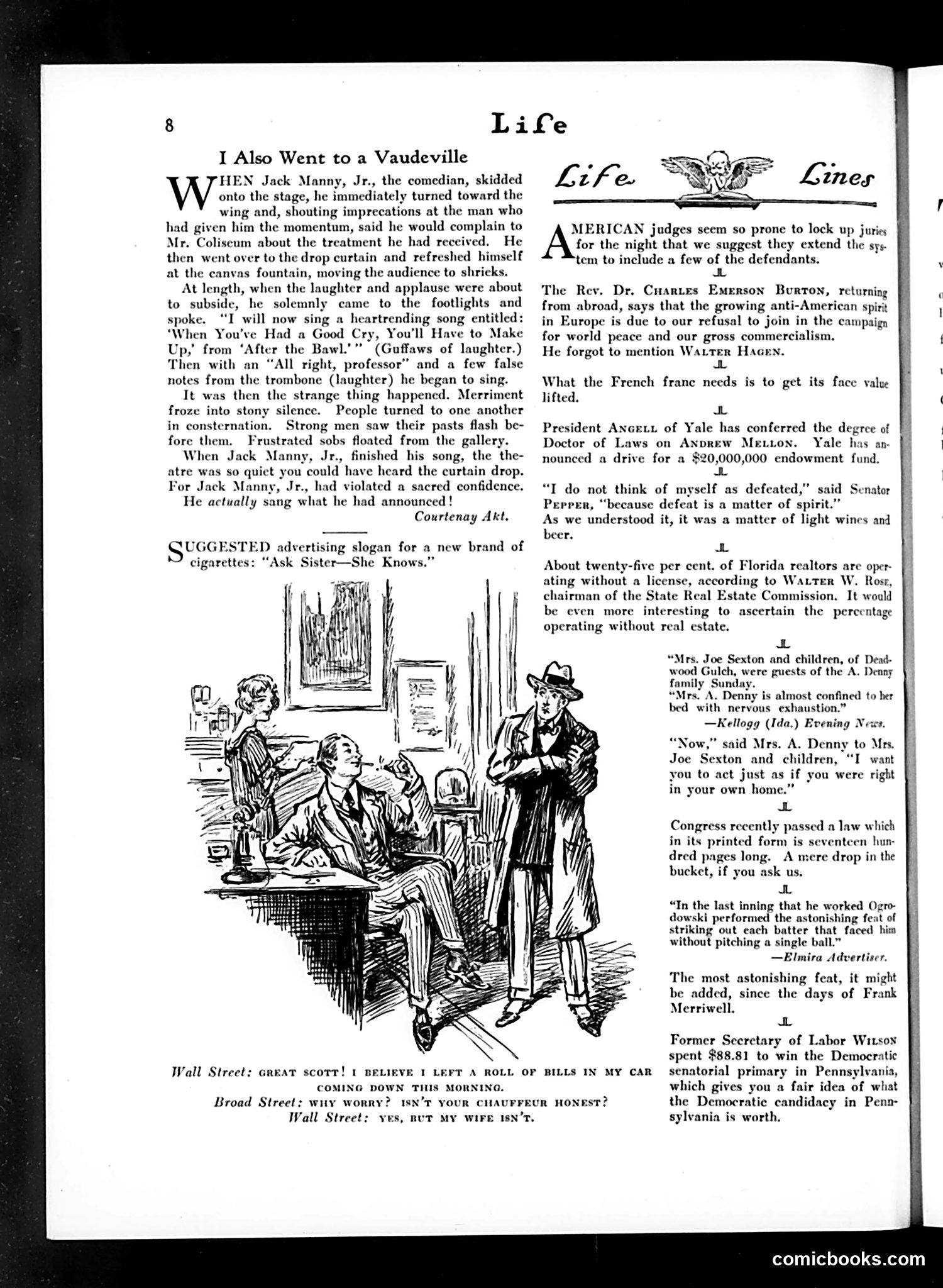
This page contains a humorous cartoon about a domestic dispute over missing bills/money. Two men on Wall Street and Broad Street (financial district locations) discuss a chauffeur's honesty after the chauffeur claims bills left in his car have gone missing. The wife disputes this. The joke plays on class dynamics and trust: the wealthy employer assumes the working-class chauffeur is dishonest, but the twist suggests the wife may be the real culprit. It satirizes how the wealthy readily suspect servants of theft while overlooking their own family members' failings. The accompanying "Life Lines" column on the right contains brief social and political commentary typical of the era's satirical journalism, touching on judicial practices, anti-Americanism abroad, and labor politics.
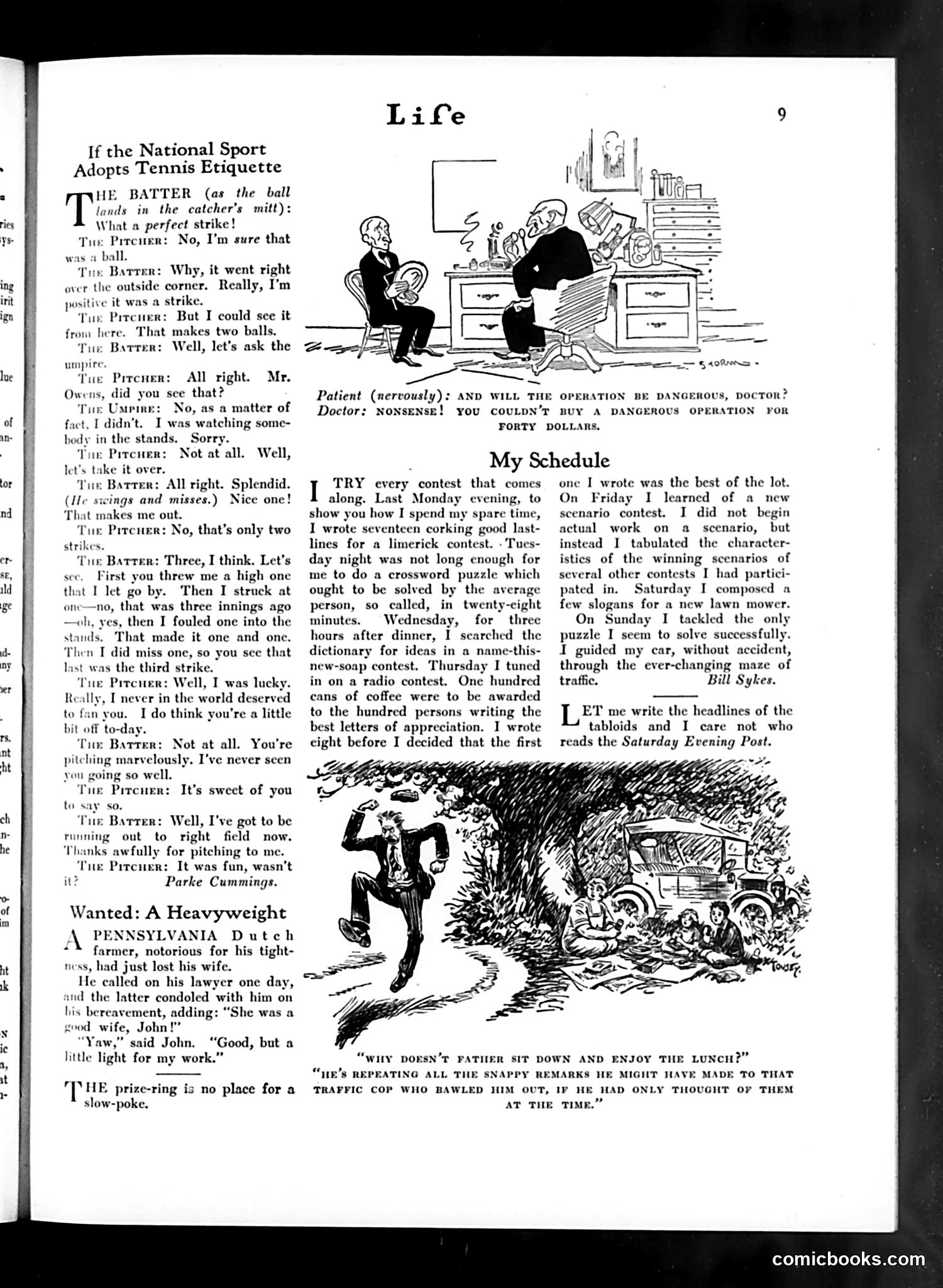
This page contains three distinct pieces of humor: 1. **"If the National Sport Adopts Tennis Etiquette"**: A dialogue between a batter and pitcher adopting overly polite tennis conventions. The satire mocks how rigidly formal tennis etiquette contrasts with baseball's rough-and-tumble nature—absurdly applying tennis politeness to baseball creates comedy through incongruity. 2. **"My Schedule"**: Bill Sykes humorously catalogs his obsession with entering contests, having written seventeen corking entries and numerous puzzle solutions. The joke targets 1920s-era contest mania—Americans' compulsive participation in magazine and radio competitions. 3. **"Wanted: A Heavyweight"**: A brief anecdote about a Pennsylvania Dutch farmer seeking a "light" wife after losing his heavy one, playing on ethnic stereotypes and wordplay. 4. **Cartoon illustration**: Shows a man being stopped by a traffic cop, with caption about repeating "snappy remarks" to the officer.
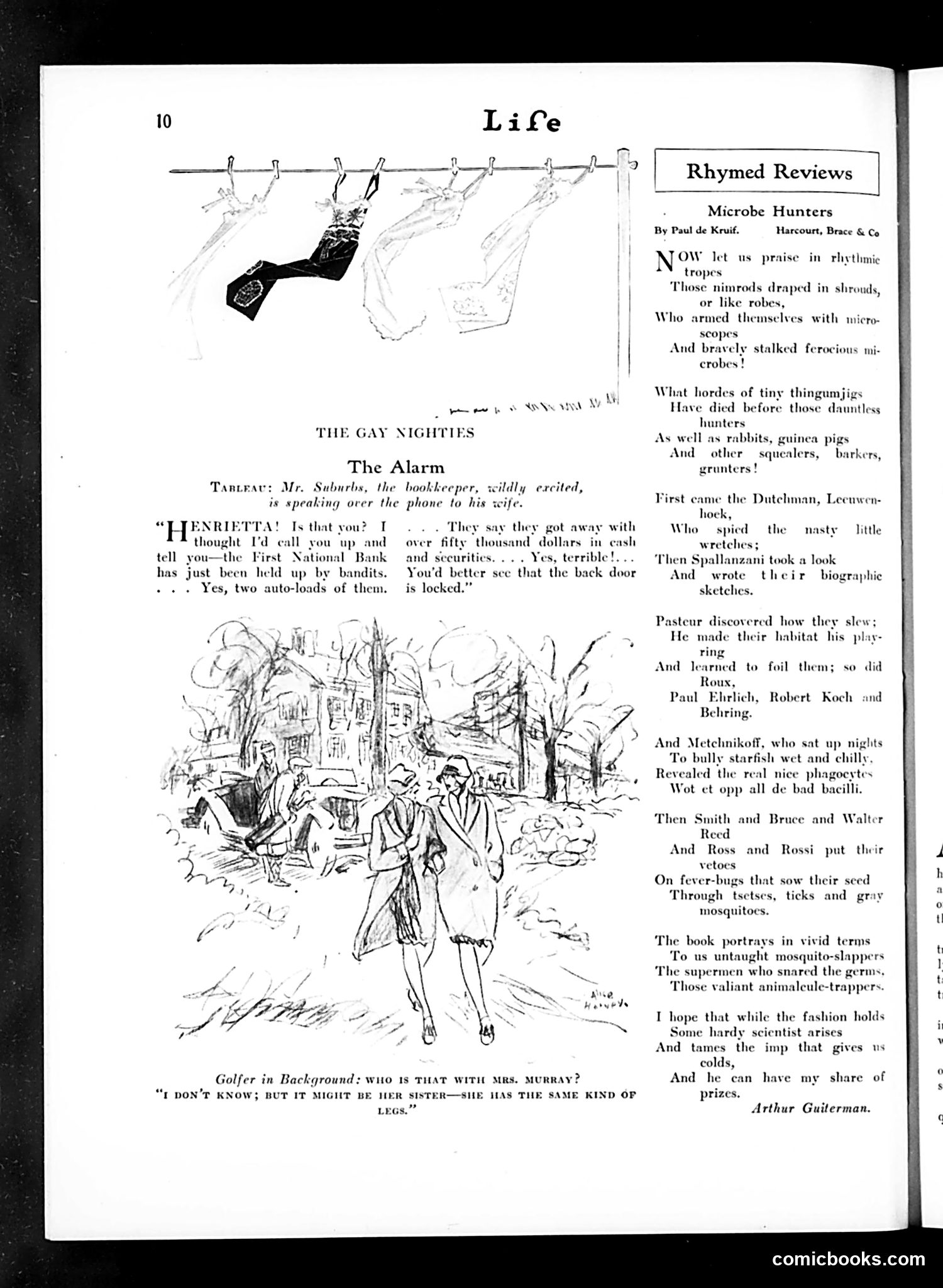
This cartoon depicts a man (labeled "Mr. Suburbs, the bookkeeper") frantically calling his wife about a bank robbery. He's panicked that bandits have stolen fifty thousand dollars in cash and securities from the First National Bank, and worries the back door of his home isn't locked. The sketch satirizes middle-class anxiety during the 1890s about crime and property security. The contrast between the massive bank heist and the suburban homeowner's petty concern about his own back door illustrates how ordinary people's worries about theft trickled down from major crimes to minor household security. The accompanying illustration shows a chaotic street scene typical of period crime-scene imagery.
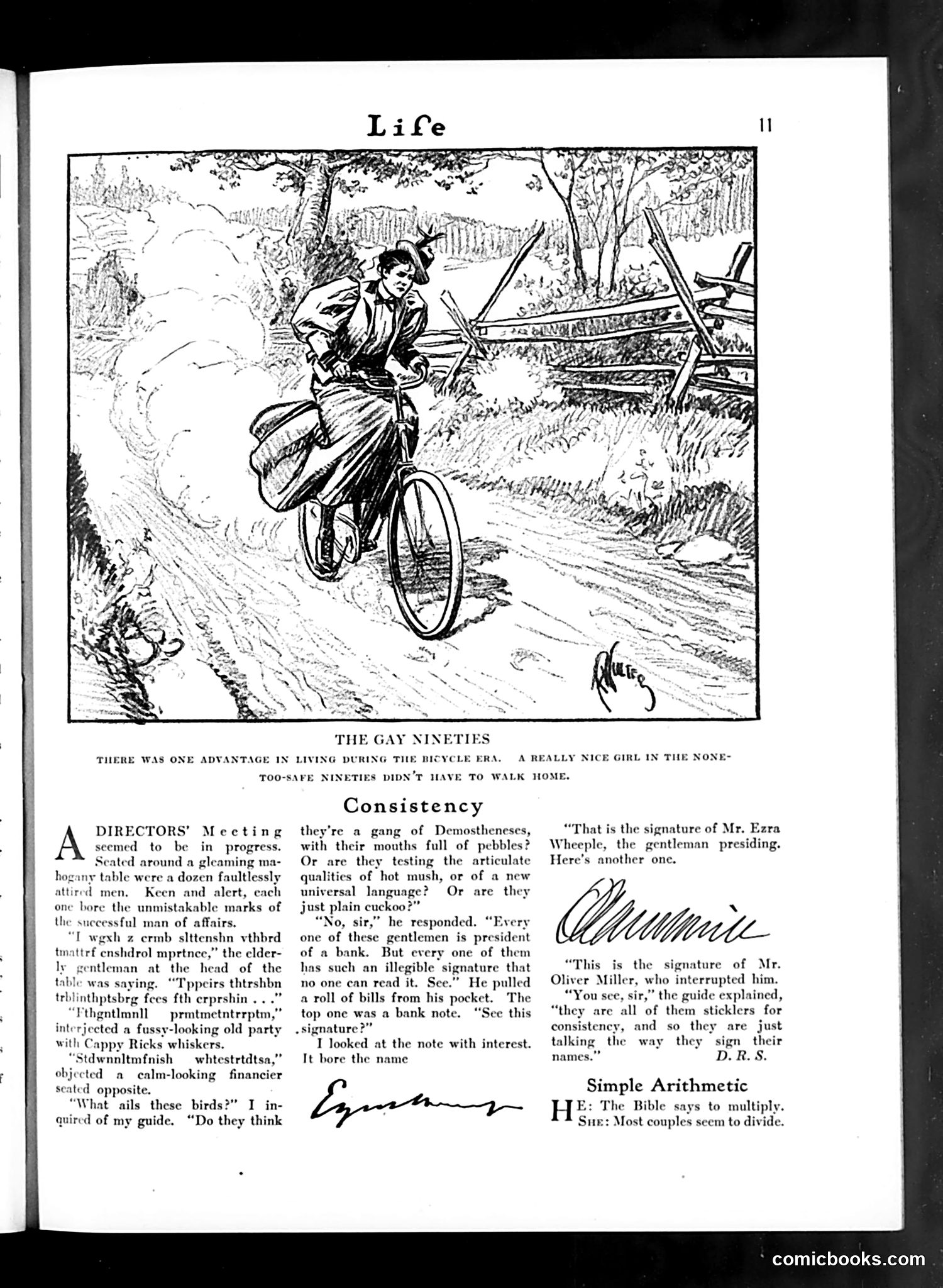
**Main Illustration (Top):** "The Gay Nineties" depicts a woman riding a bicycle in a long skirt, captioned that during the bicycle era, "a really nice girl in the nonetoosafe nineties didn't have to walk home." This nostalgically references the 1890s when bicycles offered women newfound independence and mobility—a progressive social change of that era. **Text Sections Below:** Include humorous anecdotes about business signatures and banking practices, followed by two sections titled "Consistency" and "Simple Arithmetic"—brief satirical pieces about duplicitous businessmen and marital discord. The signatures shown appear to authenticate these satirical observations about gentlemen's inconsistency. The page exemplifies Life's early-20th-century satirical style: social commentary mixed with period nostalgia and domestic humor.
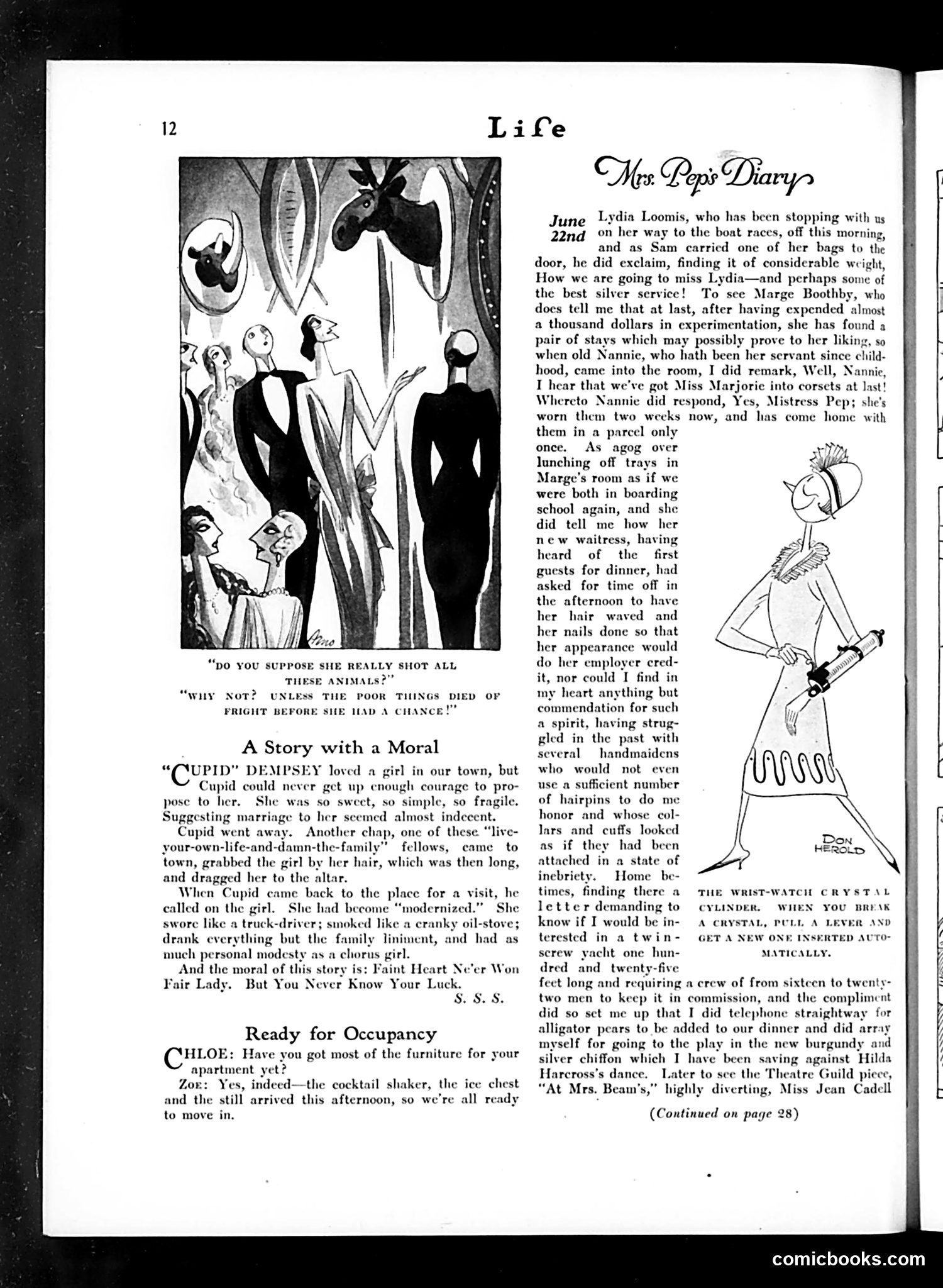
This page contains **Mrs. Pep's Diary** (a society gossip column dated June 22nd) and **"A Story with a Moral"** about a character named Cupid Dempsey. The main illustration shows figures in silhouette examining animals in what appears to be a zoo or menagerie. The caption reads: "Do you suppose she really shot all these animals? Why not? Unless some things died of fright before she had a chance!" This **references big-game hunting**, likely mocking a wealthy woman hunter of that era. The joke suggests she's claiming credit for killing animals she didn't actually shoot—implying exaggeration is common among hunters. The gossip column discusses social events, servants, and fashion details typical of early 20th-century upper-class life, serving as satirical commentary on trivial society concerns.
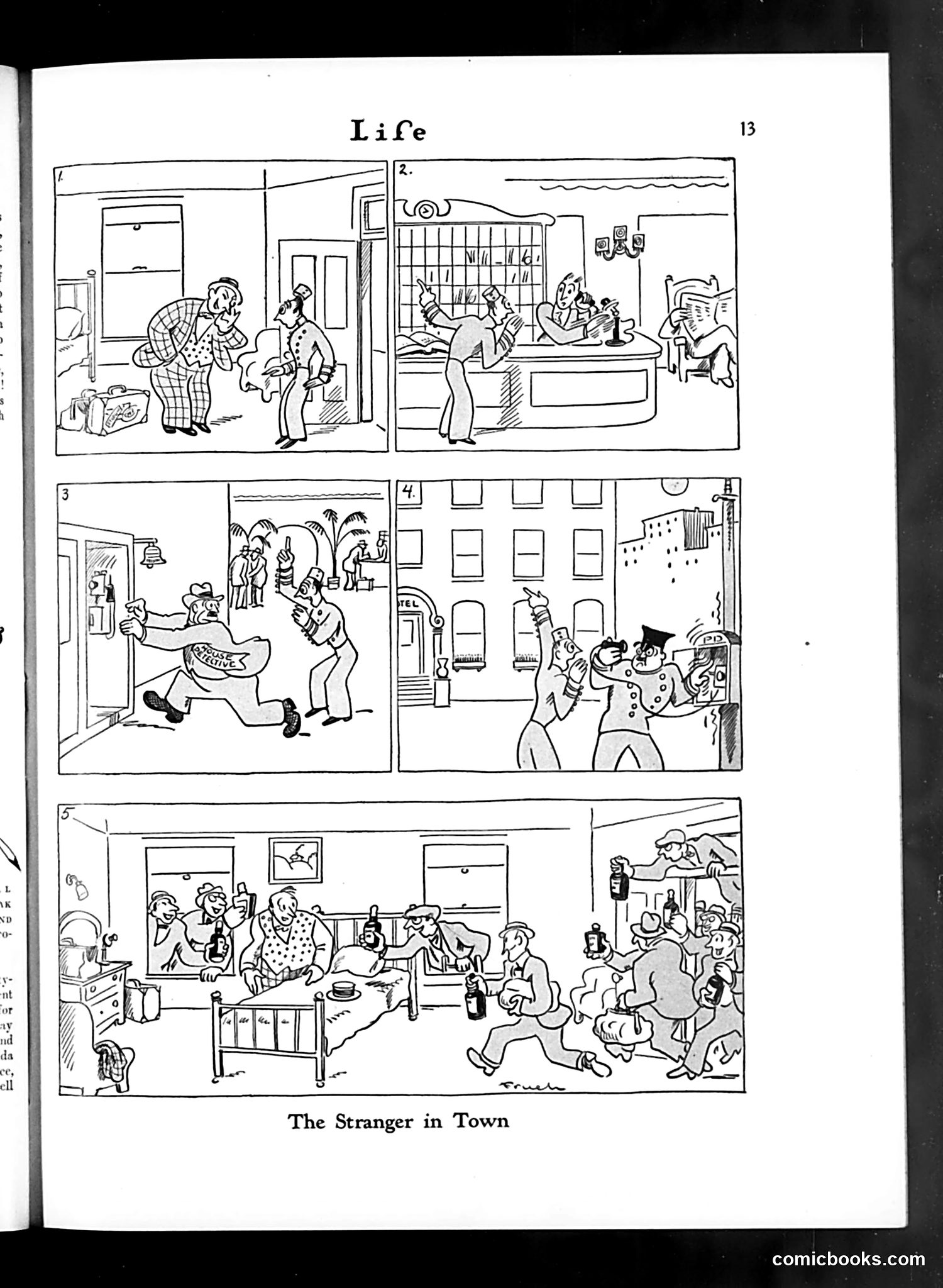
This is a six-panel comic strip depicting a visitor's chaotic arrival in a small town. The narrative follows a man with a suitcase as he encounters local establishments and citizens: 1-2: He arrives at what appears to be a hotel or boarding house 3: He enters a home carrying an enormous fish, causing alarm 4: Street chaos erupts as townspeople react dramatically 5: A boarding house or inn scene with multiple residents 6: A large outdoor gathering or party The humor derives from the "stranger" disrupting normal town life through increasingly absurd situations—the massive fish being particularly comedic. This reflects a common early 20th-century satirical trope: outsiders bringing disorder to small-town routine. The exaggerated reactions and escalating chaos are typical of *Life* magazine's slapstick humor style from this era.
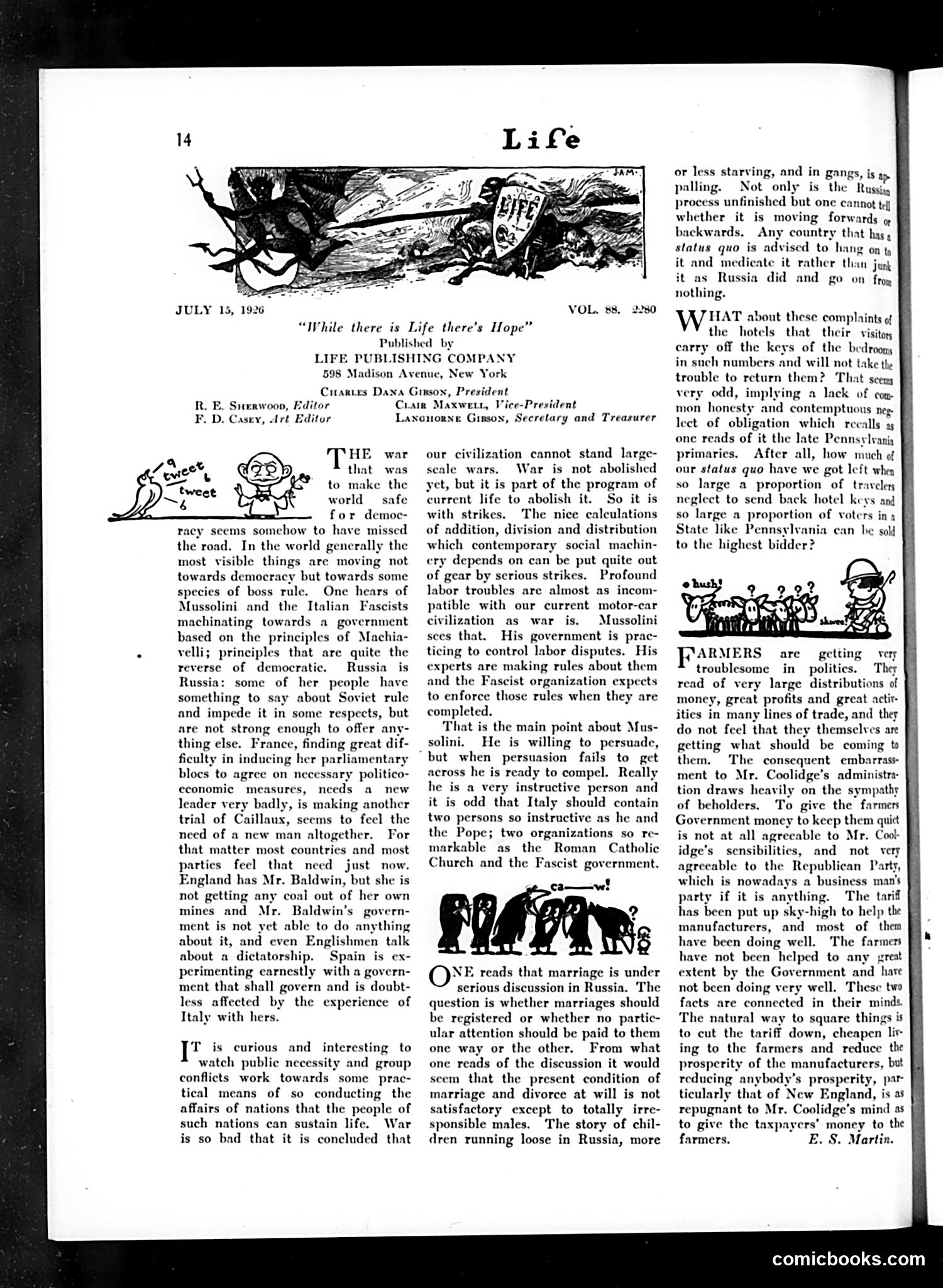
This page contains editorial commentary on contemporary political crises rather than traditional editorial cartoons. The text discusses labor unrest, Mussolini's Fascist government in Italy, and Russian Soviet rule as competing models for social order. Two small illustrations appear: one showing a figure labeled "Sweet" (unclear context), and another depicting silhouetted figures in what appears to be a confrontational stance, likely representing labor disputes or class conflict. The editorial argues that while democracy struggles with strikes and labor troubles, authoritarian systems like Mussolini's Italy and Soviet Russia attempt to impose order through force and control. The writer suggests these represent two competing answers to managing industrial civilization's problems—a key debate of 1920s America.
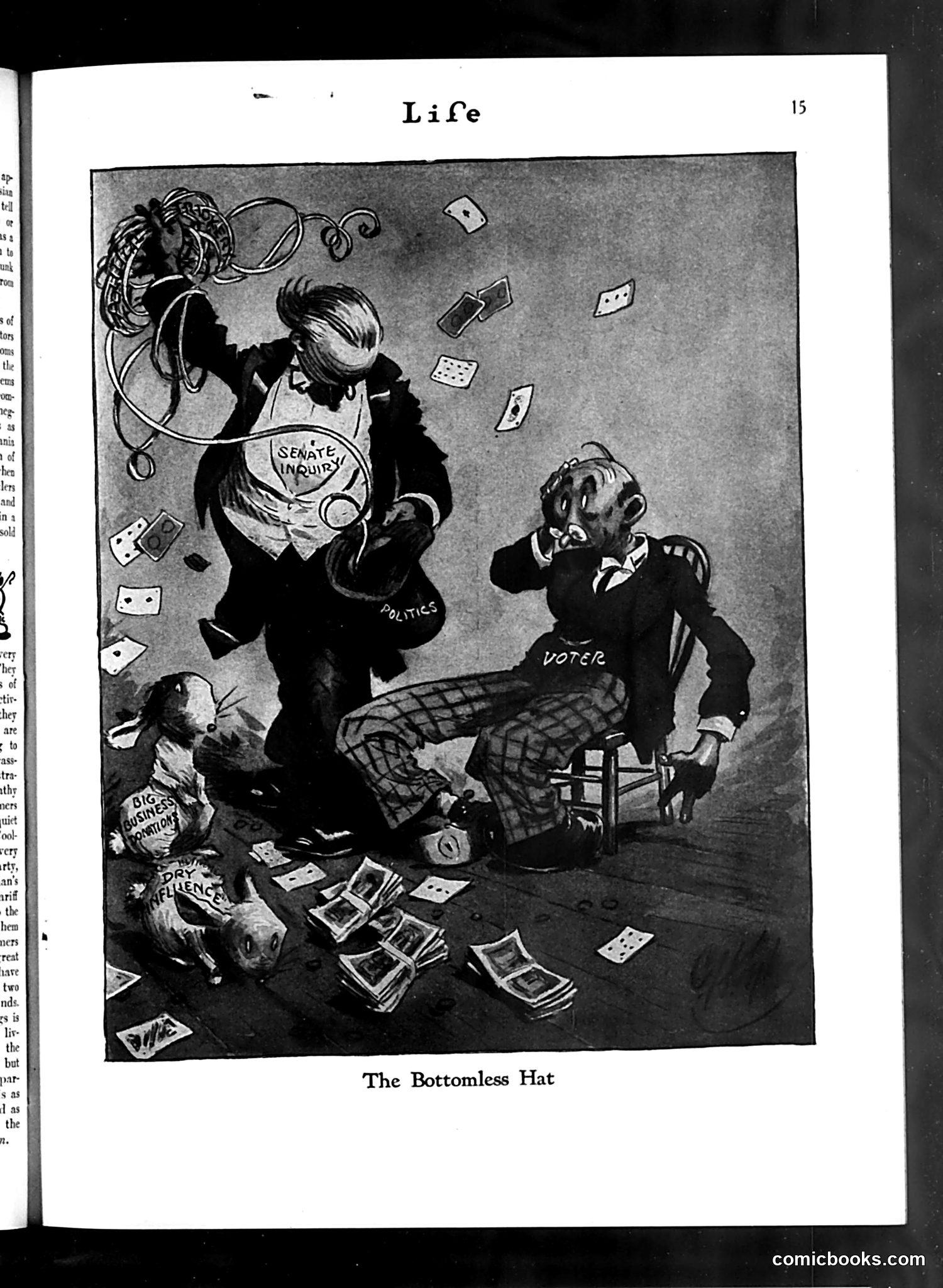
This political cartoon satirizes corruption in American politics. A figure labeled "Politics" juggles money while wearing a "Senate Inquiry" hat—suggesting senate investigations are ineffective or cosmetic. Money continuously falls from this "bottomless hat," representing endless corruption that cannot be contained or stopped by official oversight. A seated figure labeled "Voter" watches helplessly, appearing distressed or frustrated. On the ground sits what appears to be "Big Business" or similar corporate interests, labeled items scattered around suggesting financial malfeasance. The cartoon's message critiques how senate inquiries fail to actually stop political corruption and financial impropriety. Despite official investigations, corrupt money flows endlessly, leaving ordinary voters powerless witnesses to a rigged system benefiting corporate and political elites.
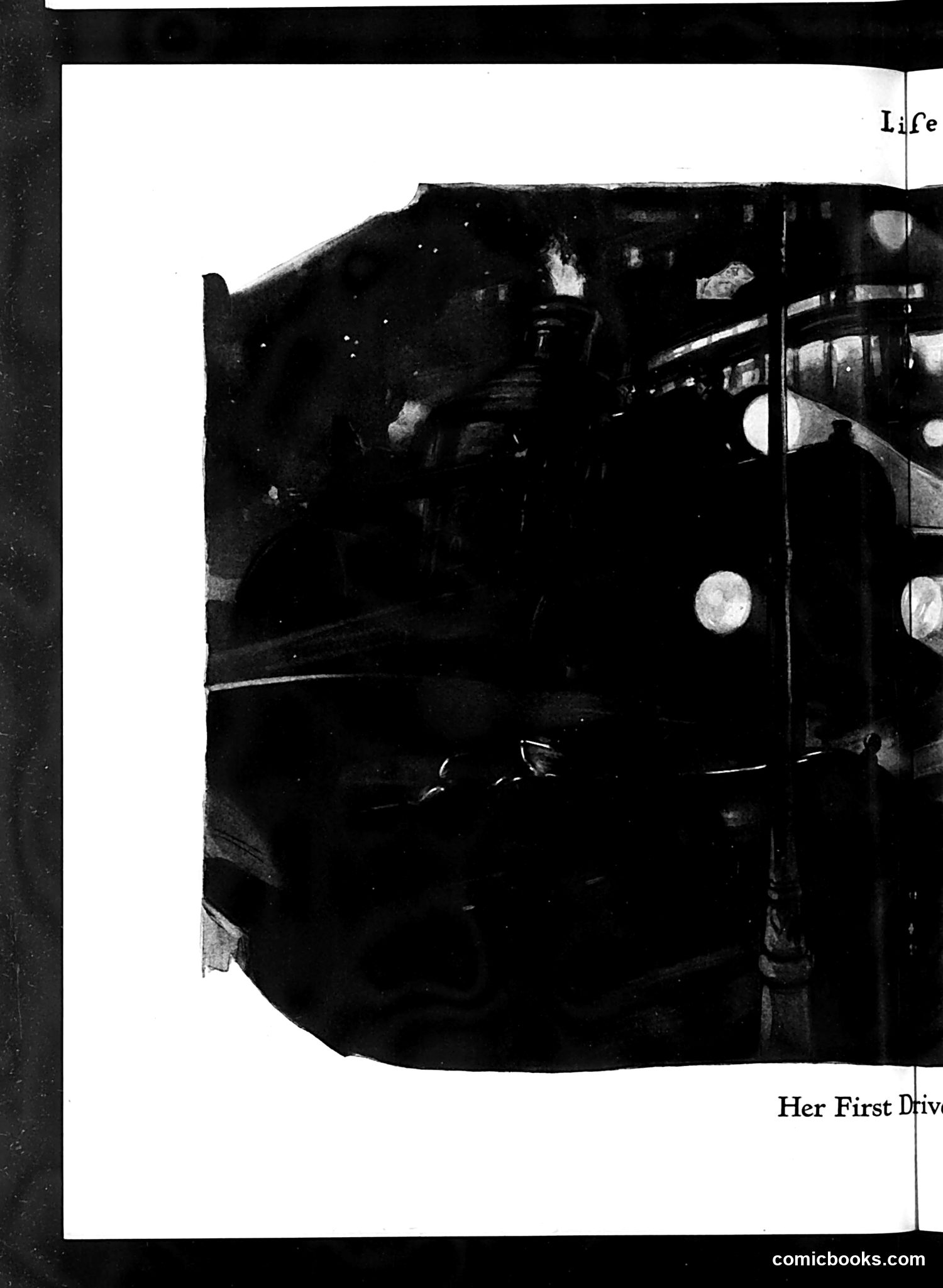
This page shows a photograph titled "Her First Drive" featuring what appears to be an early automobile interior, likely from the early 1900s. The image captures the silhouettes of passengers inside a car lit by interior lamps, with circular window lights visible. The humor likely stems from the novelty of automobile travel for women at this time. "Her first drive" suggests this is documenting a woman's inaugural experience driving or riding in a motorcar—a relatively new and daring activity for women in the early automotive era. The formal documentation in *Life* magazine indicates this was considered noteworthy social content, reflecting both the excitement around automobiles and contemporary attitudes about women engaging in modern technology and independent mobility.
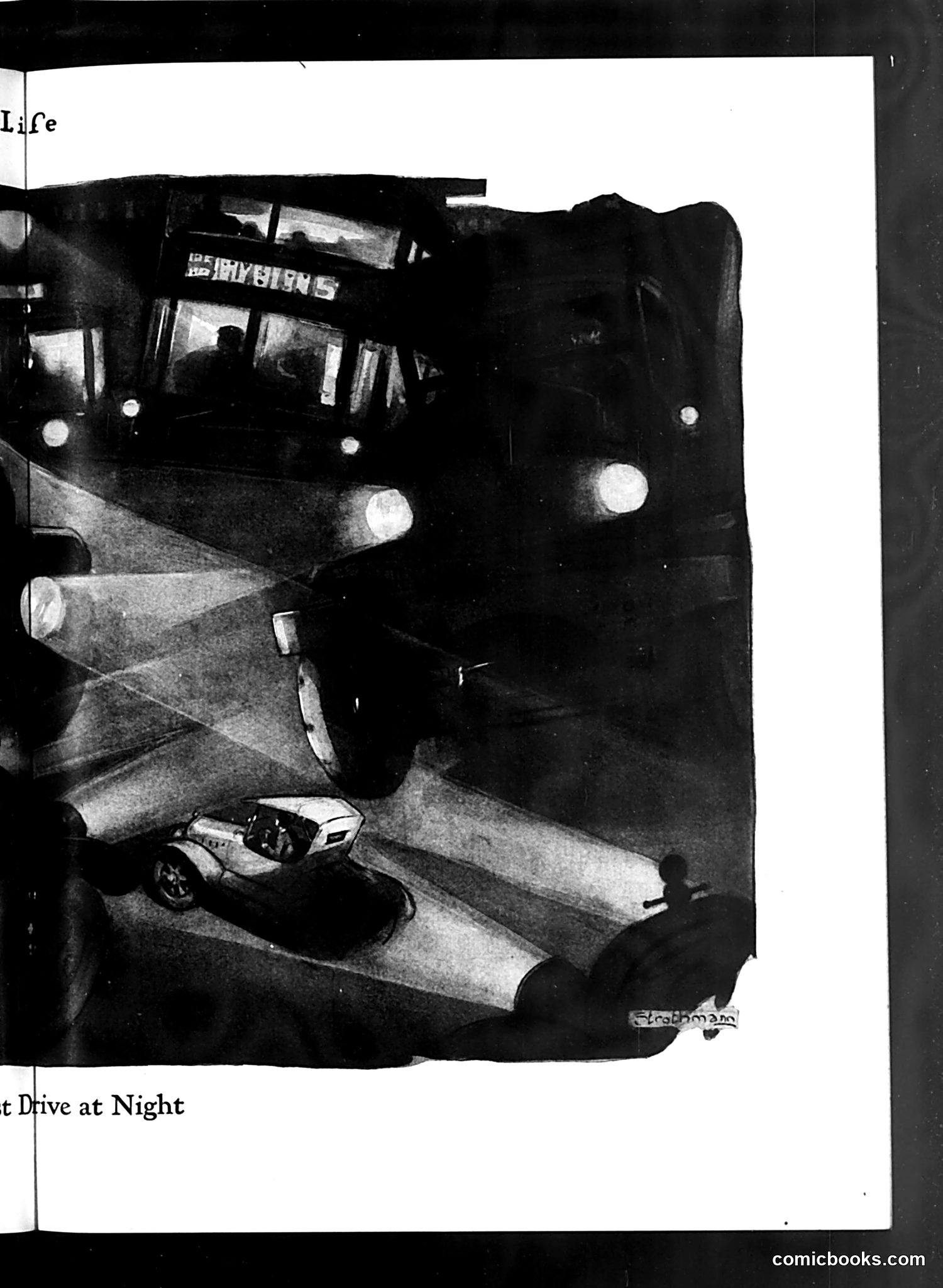
This appears to be a satirical illustration showing a nighttime urban scene with stark contrasts. A small toy car is depicted on a street illuminated by dramatic searchlight beams from large vehicles above—likely buses or trucks. The composition emphasizes the vulnerability of the tiny automobile dwarfed by the massive vehicles surrounding it. The satire likely critiques the dangers of nighttime driving in early-to-mid twentieth-century urban traffic, where larger vehicles posed significant hazards to smaller cars. The exaggerated scale and theatrical lighting create dark humor around automotive safety concerns. The title's redundancy ("Night Drive at Night") may itself be part of the joke, suggesting the obvious dangers of the scenario being depicted.
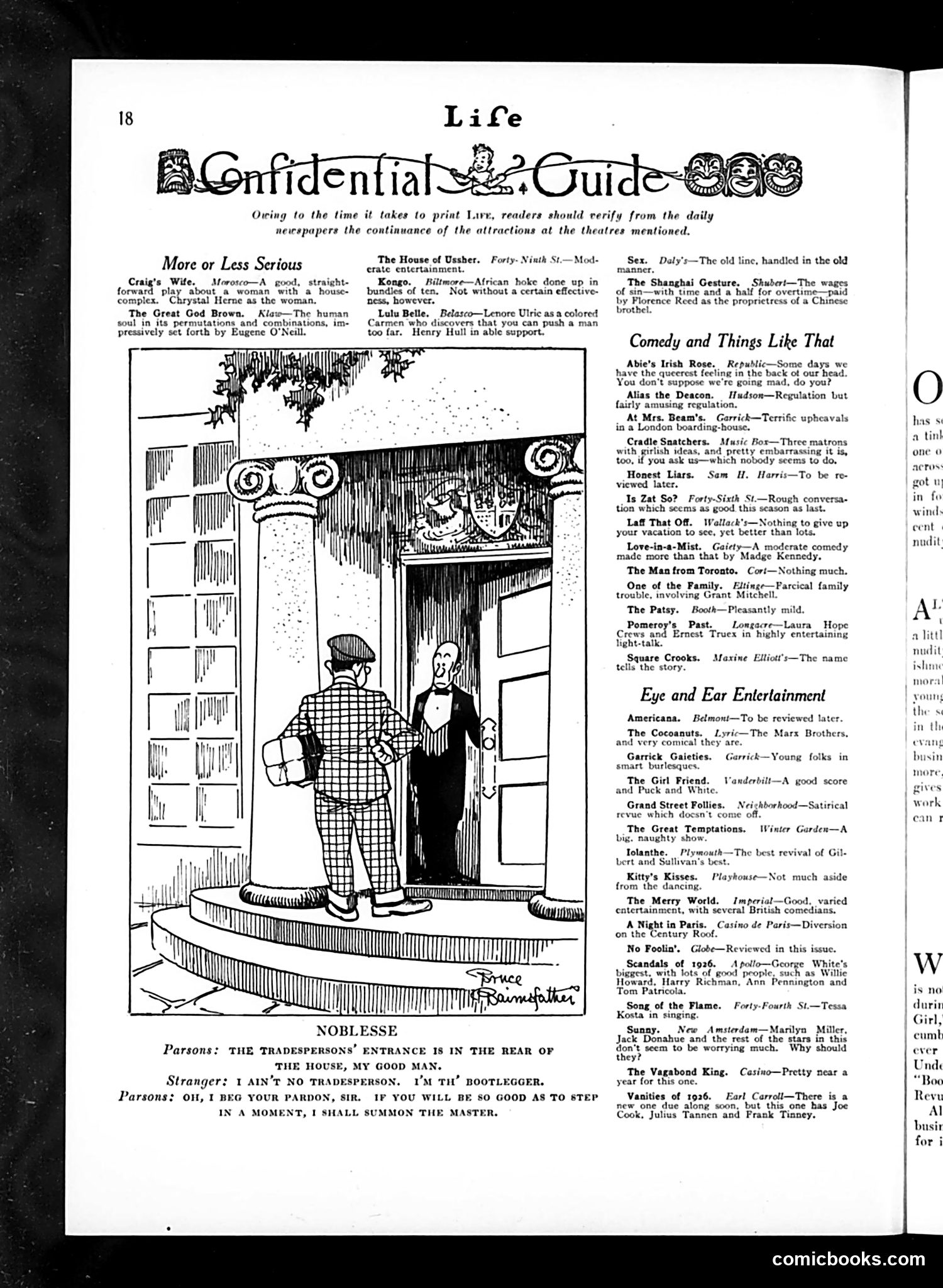
This cartoon mocks class pretension during Prohibition (1920-1933). A well-dressed man at an elegant entrance mistakes a visitor for a tradesperson and offers to use the servants' entrance. The visitor corrects him: "I ain't no tradesperson, I'm th' bootlegger." The satire is sharp: despite Prohibition's legal ban on alcohol, bootleggers (illegal liquor suppliers) had become so economically and socially essential to wealthy households that they warranted front-door treatment—actually *above* tradespeople in the social hierarchy. The cartoon exposes how Prohibition inverted class values; respectable society now depended on criminals for basic luxuries, elevating bootleggers despite their illegality. The title "Noblesse" (French for nobility/upper class) underscores the irony: true "nobility" now belonged to those breaking the law, not those maintaining pretense.
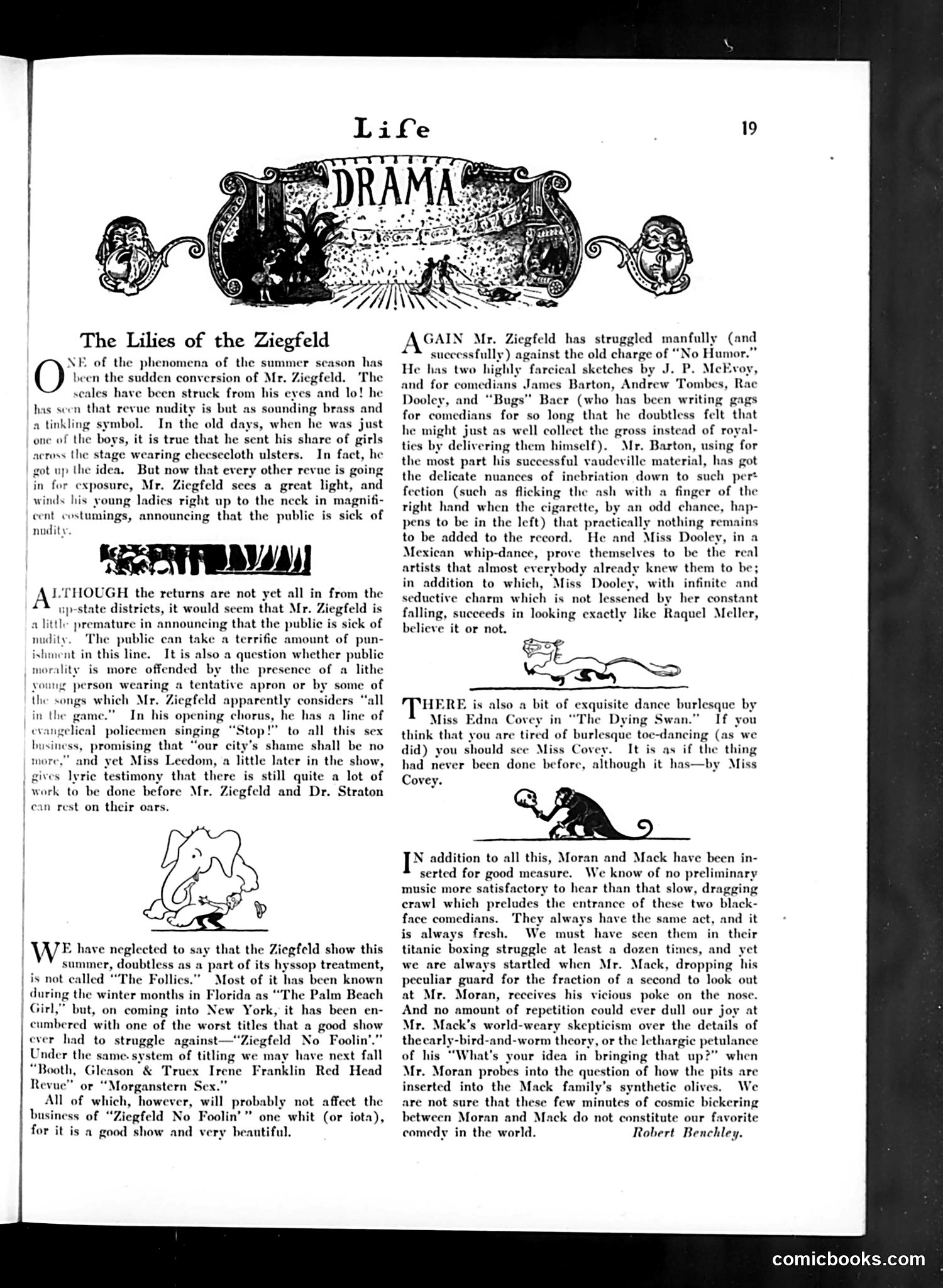
This is a theater review of Florenz Ziegfeld's revue "Ziegfeld No Foolin'" from *Life* magazine. The satire centers on Ziegfeld's sudden *claimed* shift away from nudity—historically his signature appeal—toward full costuming, claiming the public is "sick of" exposure. The reviewer is skeptical: Ziegfeld announces this moral conversion just as every competitor has adopted his former nude-heavy formula, suggesting opportunistic repositioning rather than principle. The critic doubts the public genuinely objects to nudity in revues. The piece praises specific performers (James Barton's drunk act, Miss Dooley's Mexican dance mimicking Raquel Meller, Moran and Mack's blackface comedy routine) while mocking the show's terrible title. The joke is that Ziegfeld's "purification" appears calculated—changing tactics only after nudity became industry-standard—rather than reflecting actual audience fatigue or moral awakening.
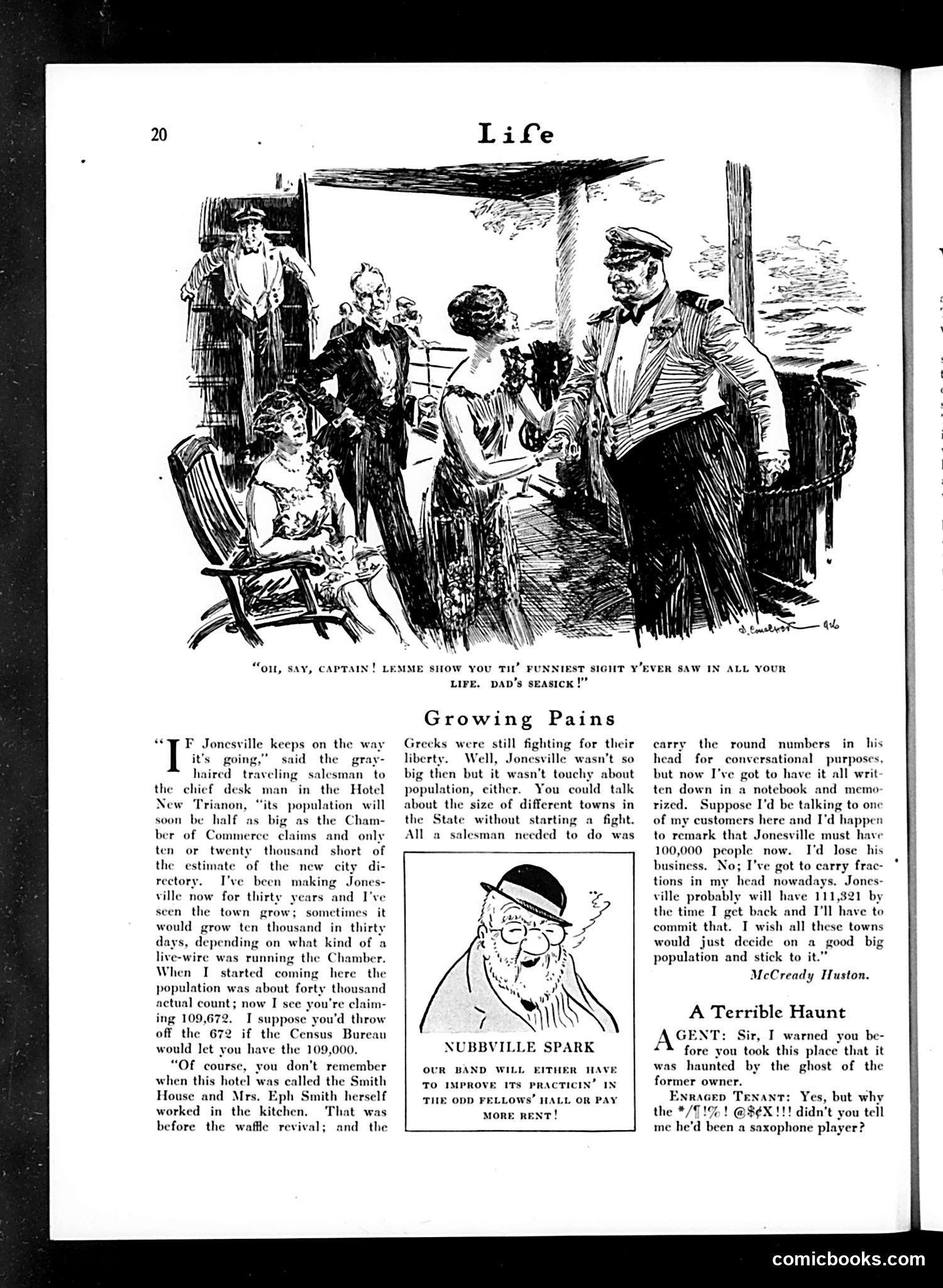
This satirical piece mocks small-town boosterism—the exaggerated promotion of population figures by local Chambers of Commerce. A traveling salesman tells a hotel clerk that Jonesville's claimed population of 109,672 is inflated nonsense; he's watched the town artificially inflate numbers for decades depending on whoever runs the Chamber. The satire targets civic pride gone absurd: towns now jealously guard their population claims and fight over comparative sizes. The salesman laments he must memorize exact fractional figures rather than round numbers, since locals will lose business over inaccuracy. The accompanying cartoon shows a ship captain entertaining ladies with tall tales—visual parallel to the boosterism theme. # A Terrible Haunt (Joke) A tenant complains to an agent that the haunted house's ghostly former owner is unbearable. The punchline: the agent neglected to mention the ghost was a saxophone player—implying the noise/quality of saxophone playing is worse than any supernatural haunting. This is simply a joke about bad music.
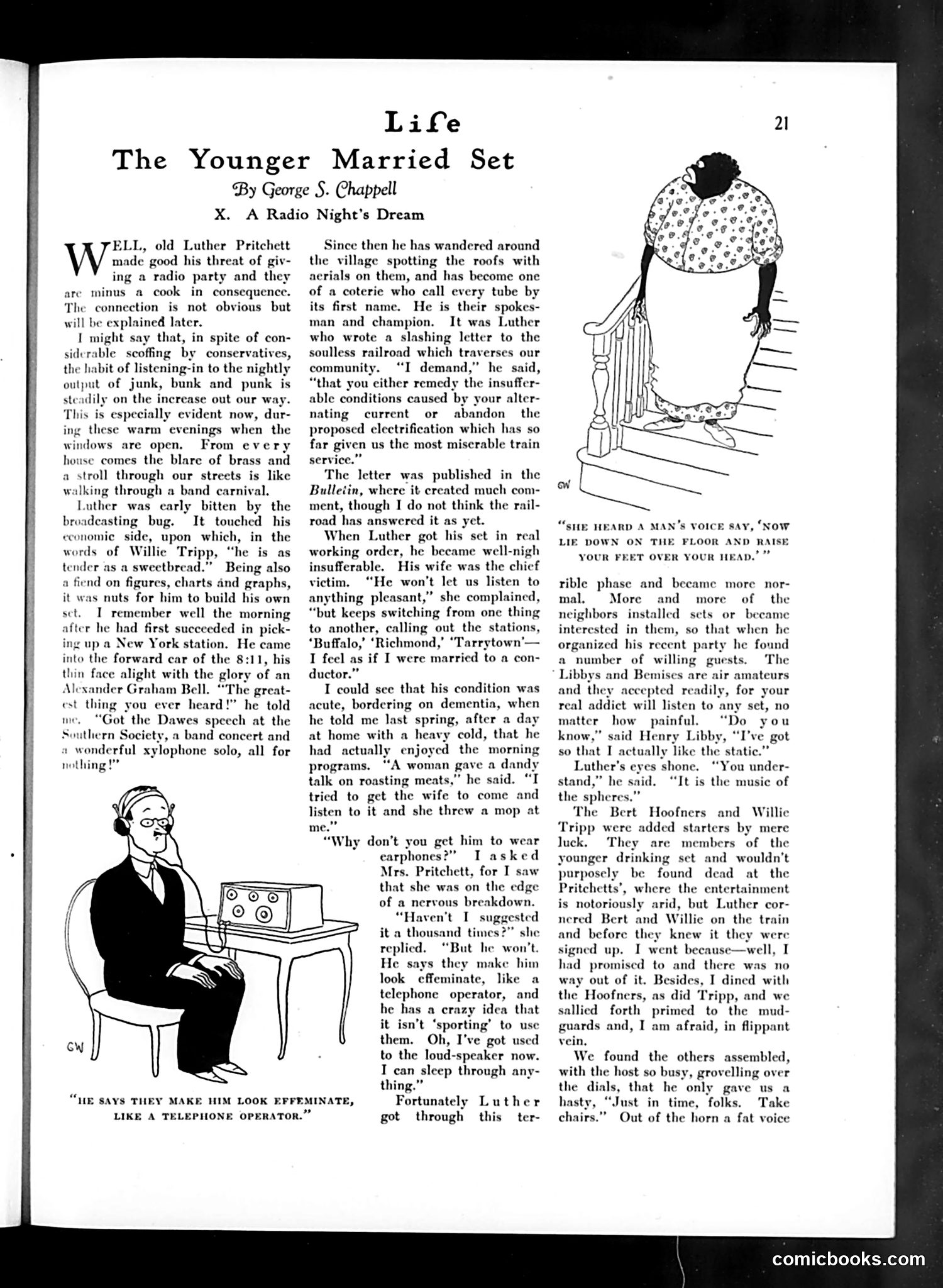
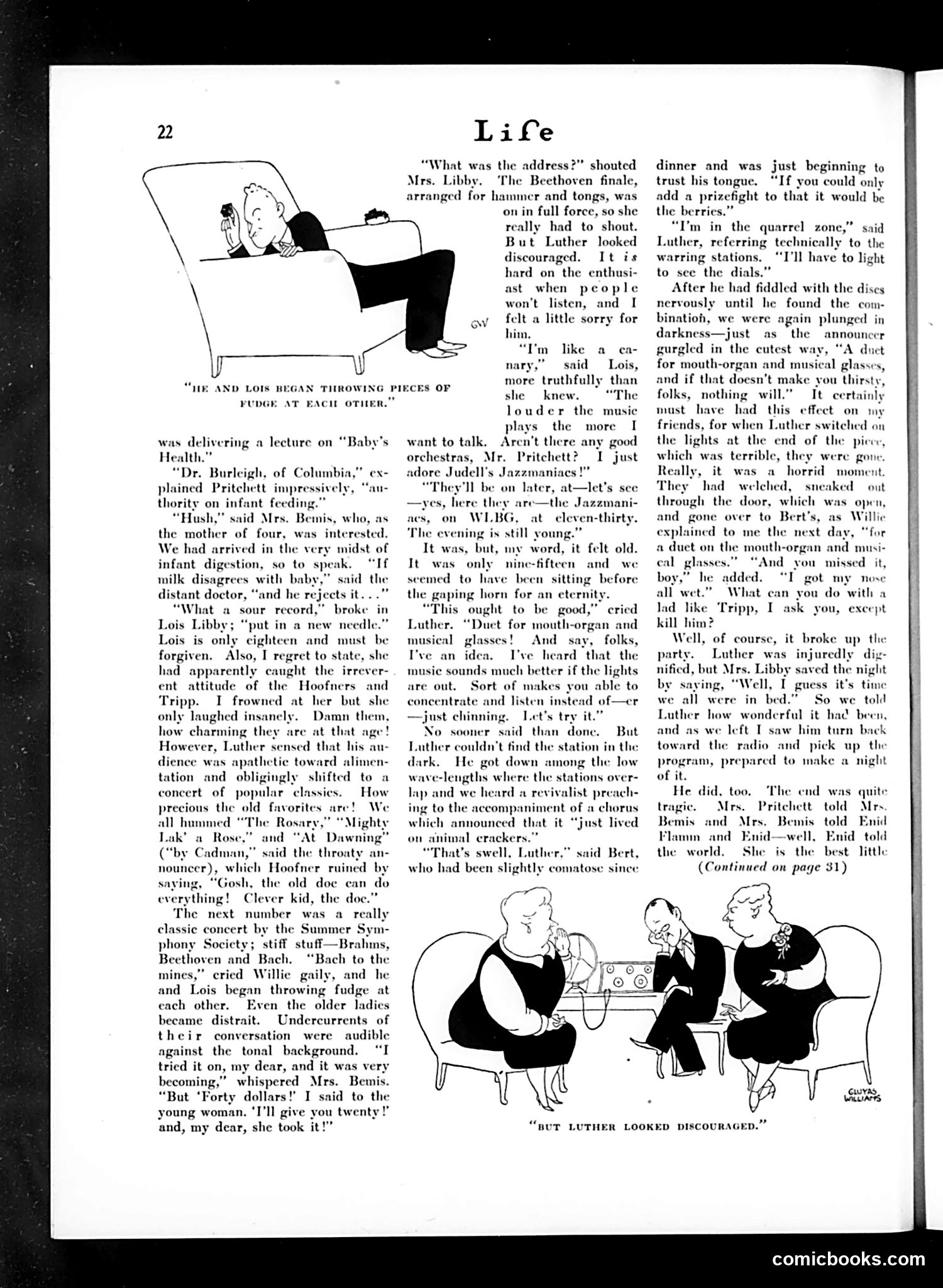
This 1920s satirical story mocks the early radio craze and its obsessive enthusiasts. Luther Pritchett represents the typical early radio adopter—a man so consumed by his homemade radio set that he alienates his wife and household staff through constant, loud broadcasting. The cartoon (bottom left) illustrates Mrs. Pritchett's complaint: Luther refuses to use earphones because he fears they'll make him "look effeminate, like a telephone operator"—revealing period anxieties about masculinity. He also considers private listening "unsporting," insisting on subjecting everyone to the loud public broadcast. The satire targets both radio's novelty appeal and the social disruption it caused. The story notes the "steadily increasing" habit despite "considerable scoffing by conservatives," capturing the generational divide over new technology. The illustration of the woman at right appears to depict someone listening to radio broadcasts, embodying the passive consumption that increasingly defined domestic leisure during this era.
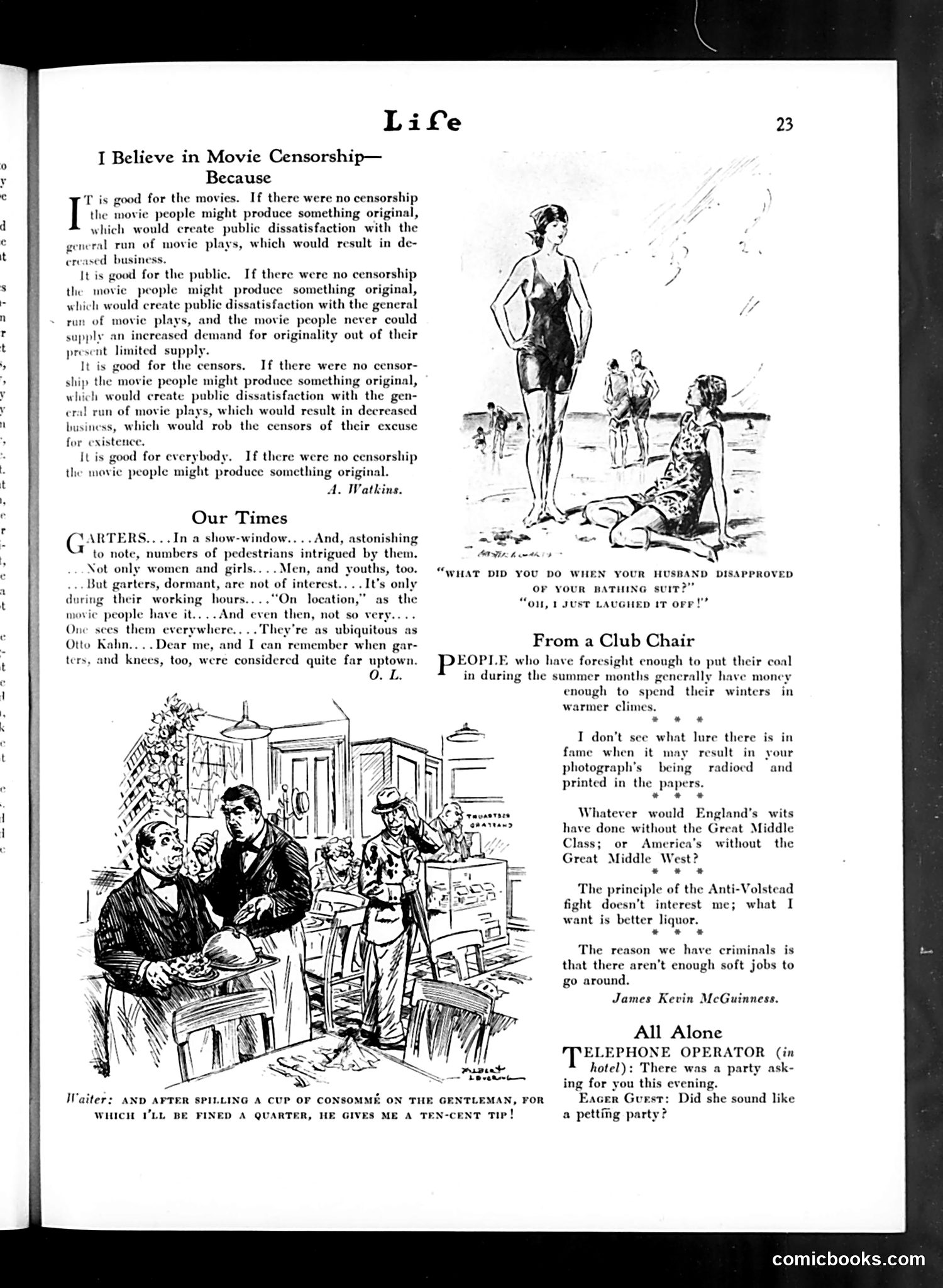
This page from *Life* magazine presents satirical commentary on 1920s American social issues. **"I Believe in Movie Censorship"** is ironic social criticism. A. Watkins argues FOR censorship by listing absurd reasons—claiming it protects the movie industry from producing original content that might satisfy audiences better than current mediocre films. The satire mocks both the film industry's resistance to innovation and censorship boards' self-interested justification for existing. **"Our Times"** contains observational humor about changing social norms. References to garters and knees being displayed in public shock an older generation (O.L.), reflecting 1920s anxieties about women's changing fashion and behavior. Otto Kahn's observation treats modern fashion as ubiquitous and inevitable. **"From a Club Chair"** offers witty one-liners on wealth, fame, social class, and Prohibition—the latter mocking anti-Prohibition activists by suggesting the real issue isn't moral principle but quality liquor. **The cartoons** depict class interactions: a waiter's mishap, a beach scene suggesting marital discord, and a hotel operator's innuendo about an "eager guest" receiving a call from a woman.
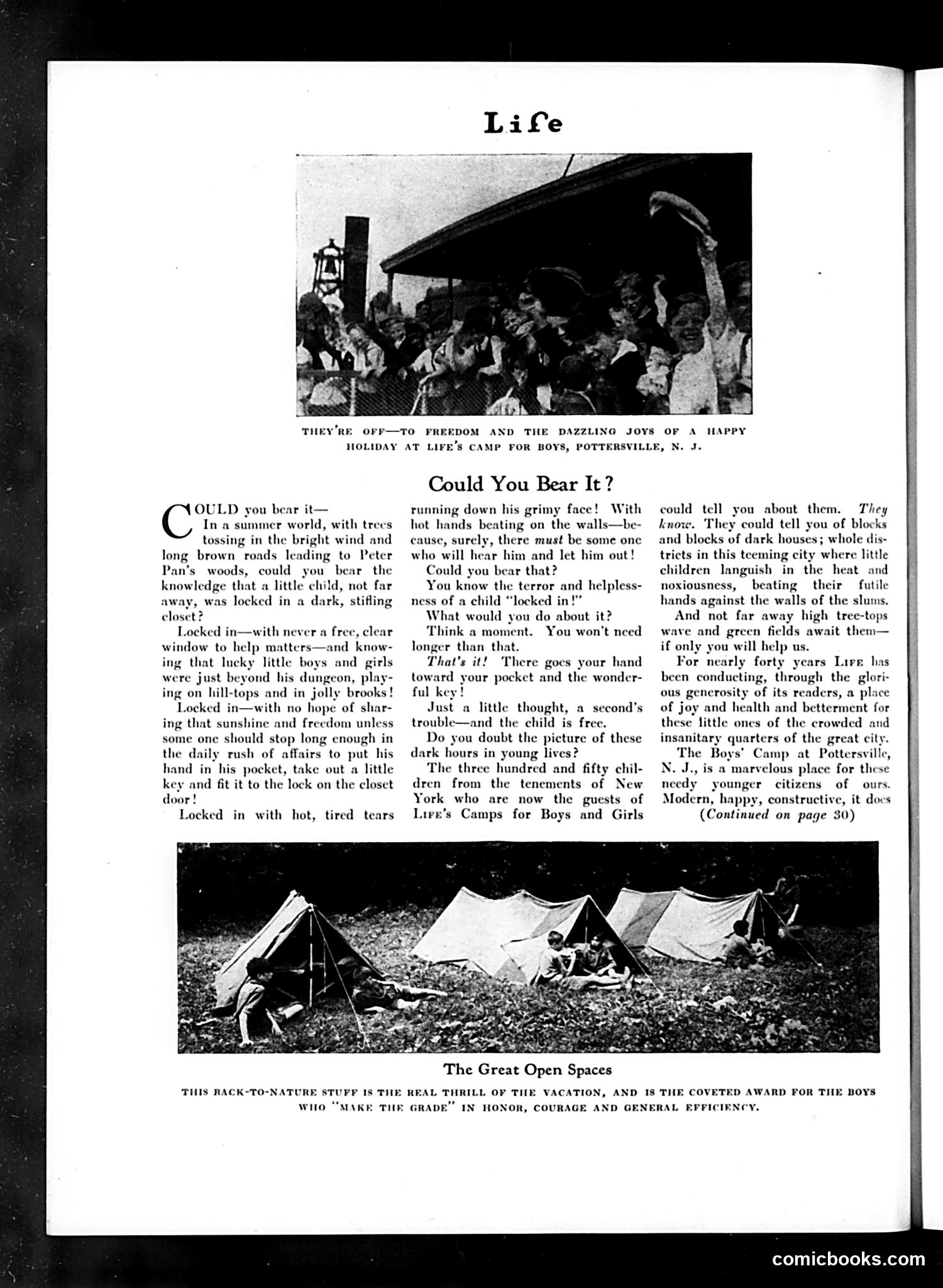
This is a fundraising appeal, not satire. *Life* magazine solicits donations to send poor children from New York tenements to its Boys' Camp in Pottersville, New Jersey. The text uses emotional rhetoric—comparing slum children to those "locked in" dark closets—to motivate wealthy readers to contribute. The metaphor emphasizes helplessness and the contrast between impoverished urban children and the natural freedom of the countryside. The photographs show the camp's appeal: happy children at a gathering (top) and boys camping outdoors in tents (bottom), presenting the vacation as wholesome and character-building ("honor, courage and general efficiency"). The pitch notes *Life* has run this charitable program "nearly forty years," leveraging reader loyalty. This reflects Progressive-era philanthropy and the period's fascination with "nature cure" ideology for urban poor children.
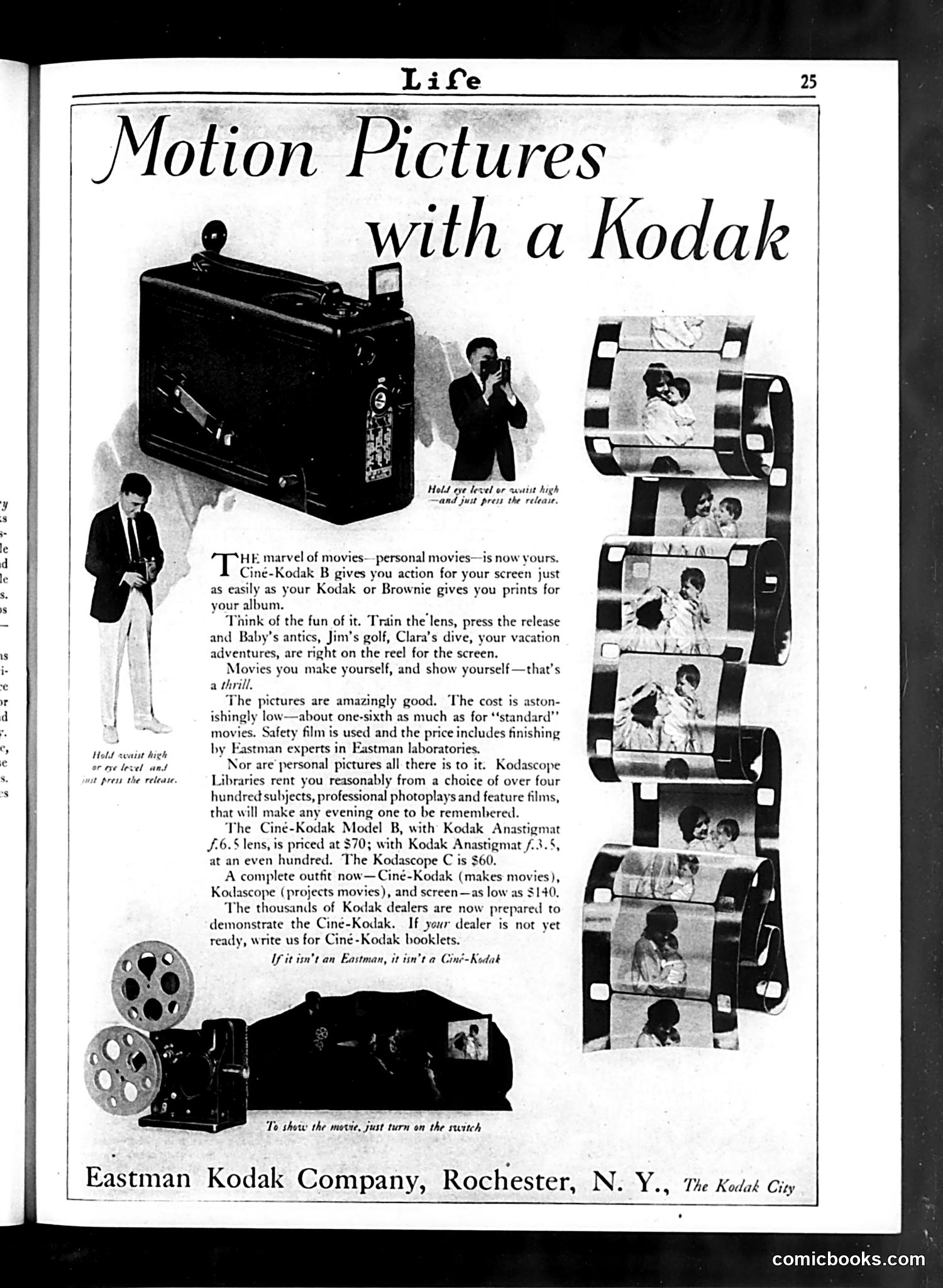
This is **not a cartoon or satire**—it's a straightforward advertisement for Eastman Kodak's new Ciné-Kodak motion picture camera, published in *Life* magazine (likely 1920s). The page promotes consumer home movie-making as a novelty product. It shows the camera, film reels, and a projector (Kodascope), along with images of ordinary people filming everyday activities: babies, golf, swimming, vacations. The appeal is **democratization of filmmaking**: whereas movies were previously only made by professionals for theatrical release, average families could now create and project their own films affordably. The tagline emphasizes ease—"just press the release"—and cost (one-sixth the price of professional "standard" movies). Notably, prices are listed ($70 for the camera; $140 for complete outfit), and the ad mentions Kodak's rental library of professional films for home projection, positioning both equipment and content as accessible consumer products. This represents early **consumer electronics marketing**, not political or social satire.
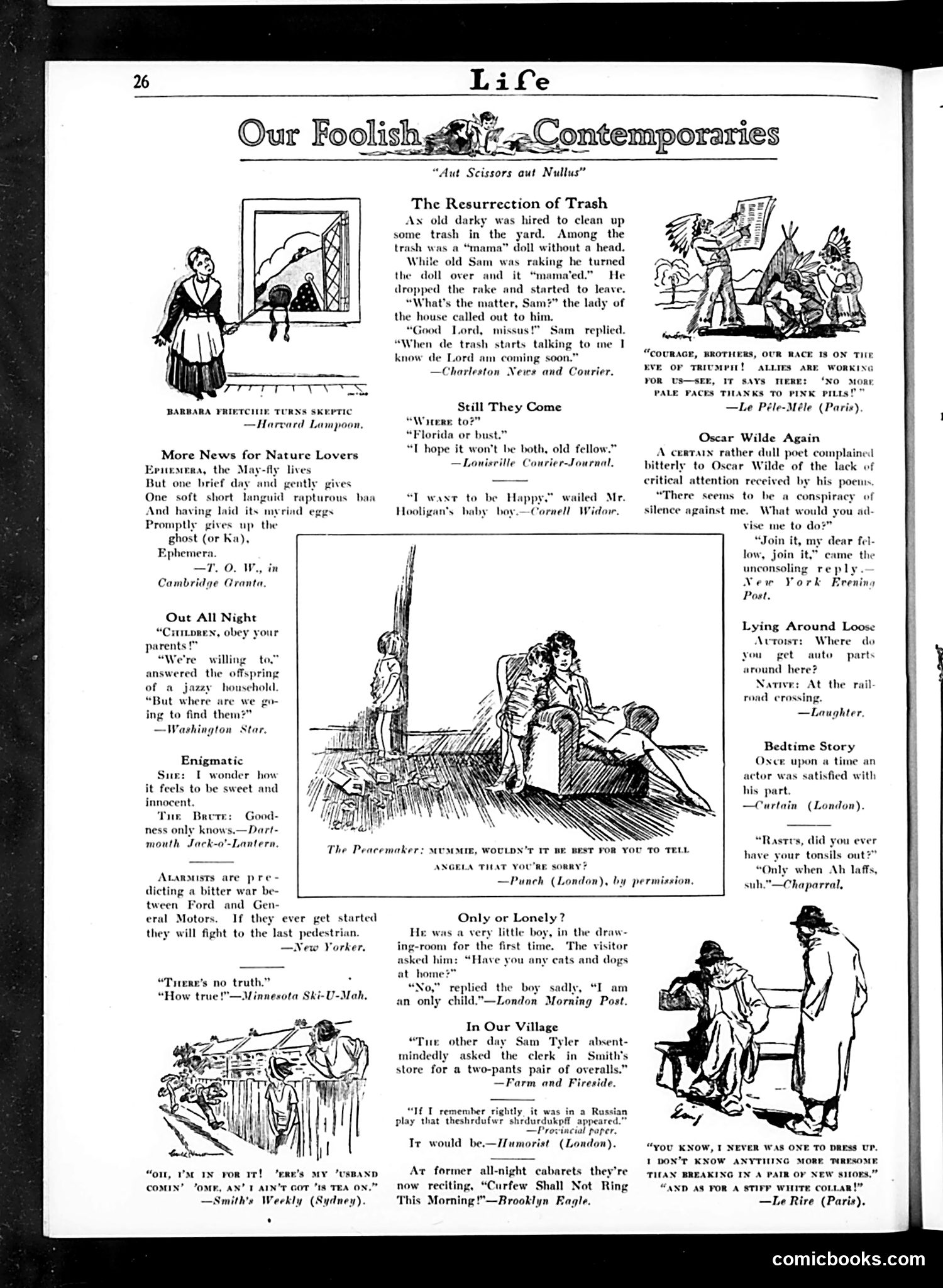
This is a humor compilation page featuring short jokes and anecdotes from various sources. The satire targets everyday foolishness rather than specific political figures. Notable items include: **"The Resurrection of Trash"**: An elderly Black servant mistakes a talking doll in discarded items for a supernatural sign, planning to leave because "the Lord am coming soon." The joke relies on racial stereotypes about superstition. **"Oscar Wilde Again"**: A dull poet complains to Wilde about being ignored by critics. Wilde's advice to "join it" (the conspiracy of silence) is witty misanthropy—the poet should accept his irrelevance. **"Only or Lonely?"**: A small boy admits being an only child, sad and isolated. The cartoons show domestic scenes: a skeptical woman observing a doll, a mother attempting to mediate a child's complaint, and men discussing auto parts. The page exemplifies Life's early-20th-century formula: satirizing middle-class absurdities, marital dynamics, and social pretension through brief, punchy jokes sourced from newspapers and college humor magazines.
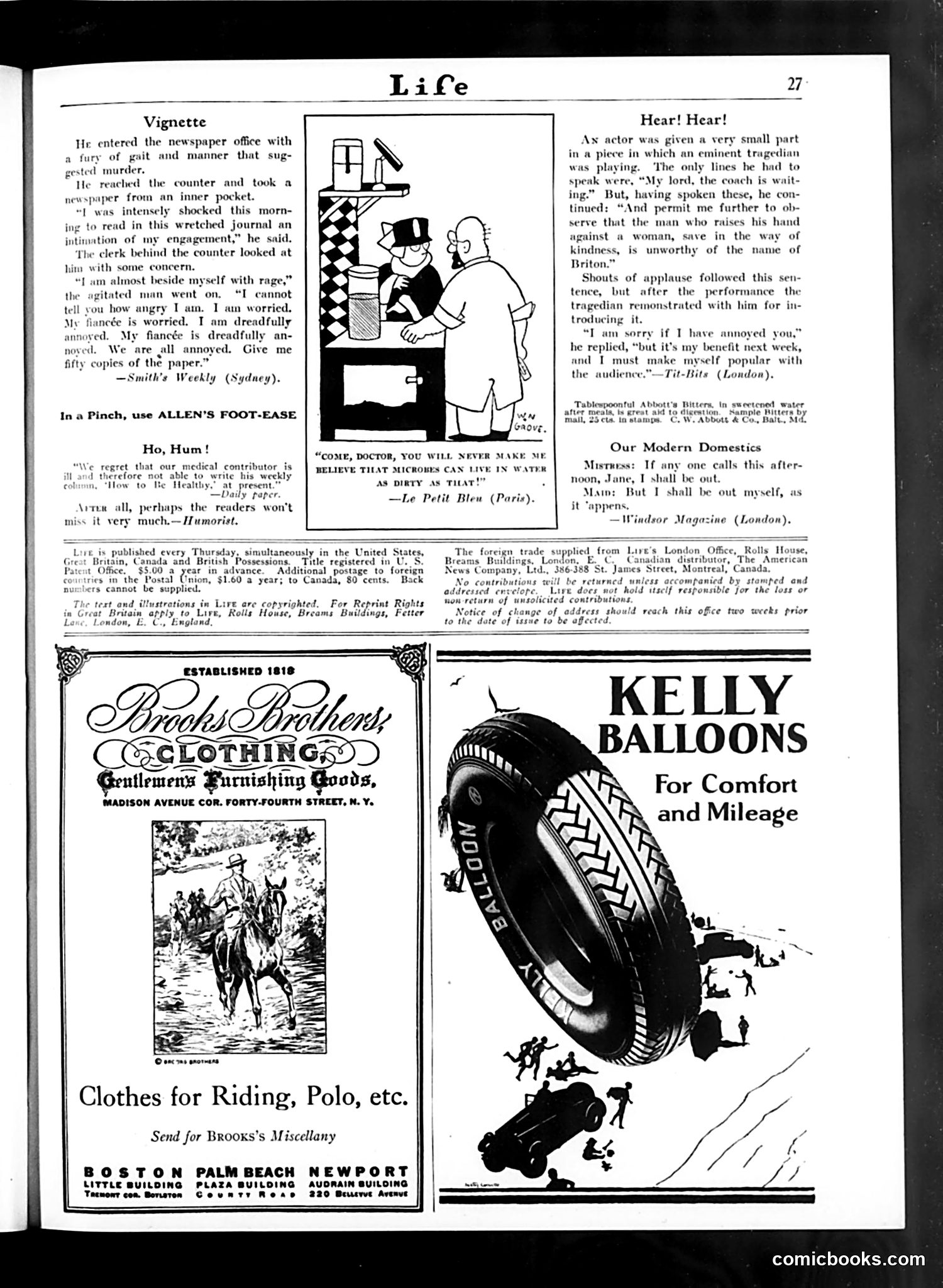
This page contains three brief humor vignettes typical of early 20th-century satirical magazines: 1. **"Vignette"** (top left): A man storms into a newspaper office furious about an engagement announcement. The joke's twist: he demands fifty copies—he's actually pleased and wants to spread the news widely, contradicting his initial rage. 2. **"Hear! Hear!"** (top right): A minor actor in a play with a famous tragedian ad-libs an extended patriotic speech about respecting women. When confronted, he admits he did it for his own benefit performance to impress the audience—prioritizing personal gain over professional propriety. 3. **"Ho, Hum!"** (left): A brief note lamenting a missing medical column, joking that readers won't miss it. The satire targets vanity, self-promotion, and the gap between public behavior and private motivation. The page also includes period advertisements for Brooks Brothers clothing and Kelly Balloons, typical of Life's revenue model.
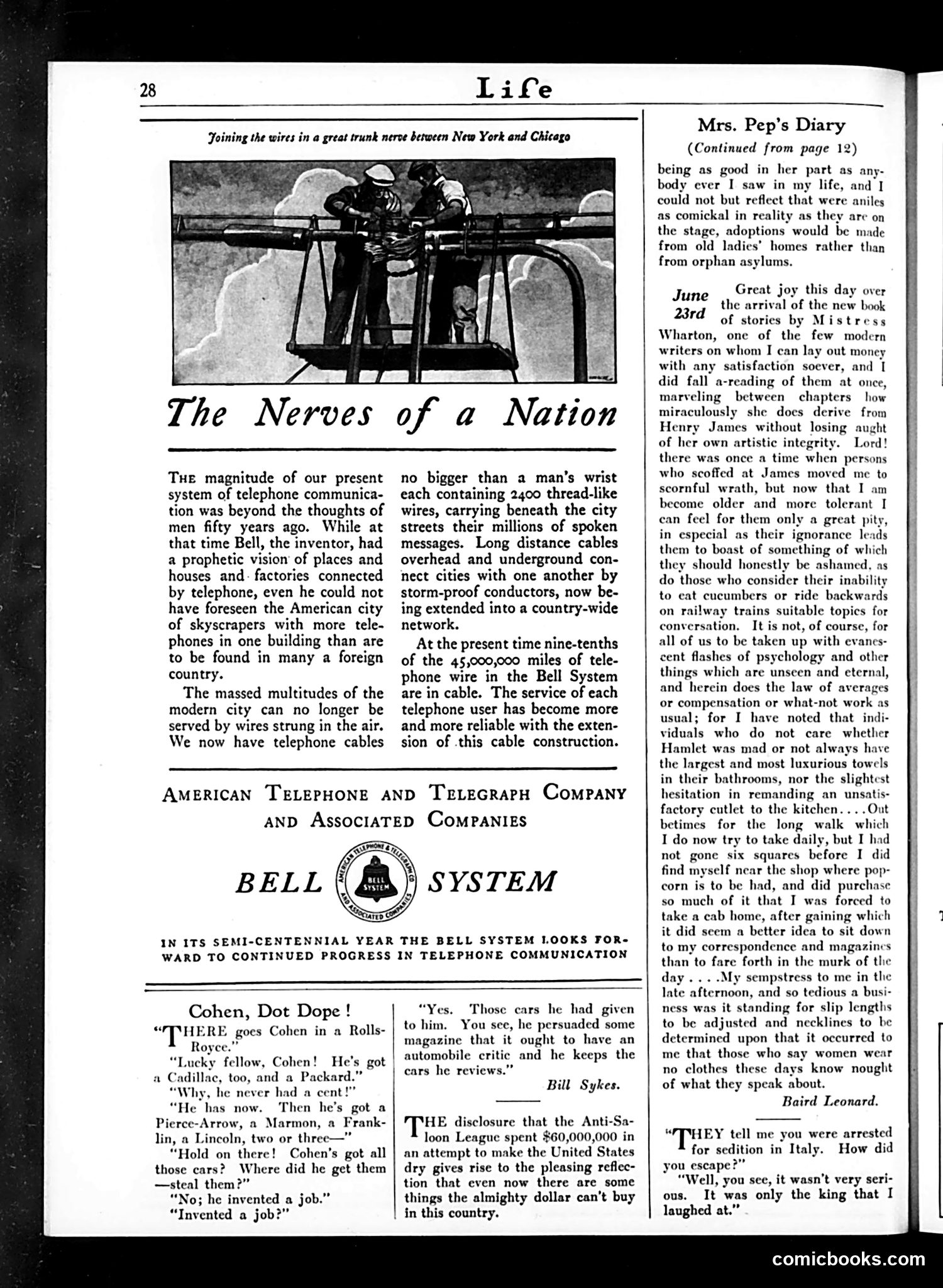
This page combines an **advertisement for Bell Telephone System** with satirical humor pieces typical of Life magazine's format. **The Advertisement:** The top section promotes telephone infrastructure—specifically underground cable systems connecting major cities. The photograph shows workers installing massive communication cables. The text celebrates Bell's semi-centennial, emphasizing technological progress: cables now carry 2,400 wires in packages "no bigger than a man's wrist." **The Satire:** Below are three humorous pieces mocking contemporary society: 1. "Cohen, Dot Dope!" jokes about a newly wealthy man who invented a fake job as an automobile critic to justify keeping review cars—satirizing both social climbing and journalistic ethics. 2. A brief piece mocks the Anti-Saloon League's failed $60 million effort to enforce Prohibition, suggesting money cannot buy everything. 3. "Mrs. Pep's Diary" offers pretentious observations about reading Edith Wharton and Henry James, gently ridiculing intellectual snobbery. The juxtaposition—serious corporate progress messaging alongside mockery of greed and pretension—typifies Life's satirical approach to American modernity.
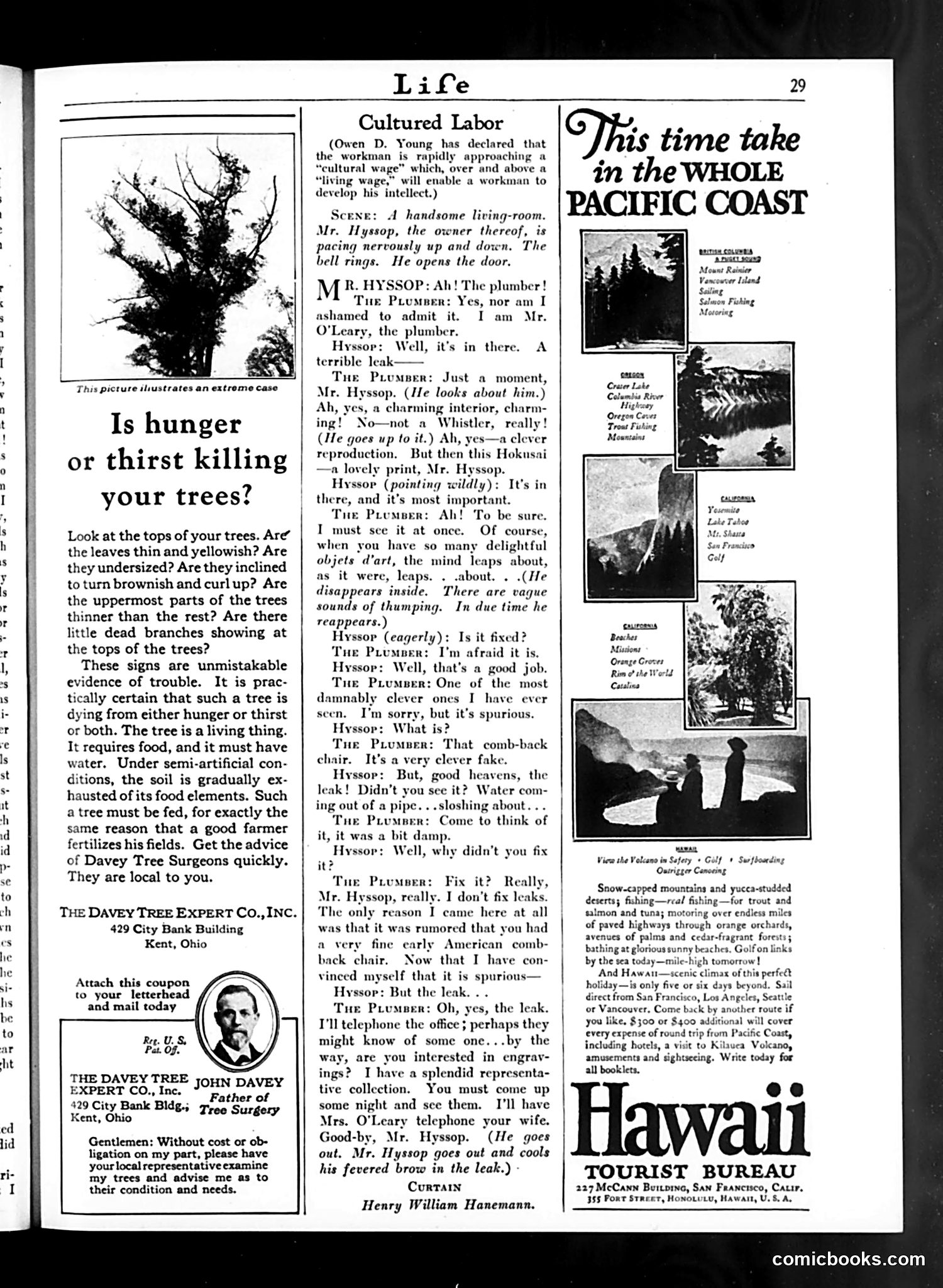
This page contains two distinct pieces of content: **Left side:** A Davey Tree Expert Company advertisement disguised as practical advice, warning homeowners about signs of dying trees and urging them to hire the company's services. **Center/Right:** A satirical playlet titled "Cultured Labor" by Henry William Hanemann, responding to Owen D. Young's declaration that workers would soon earn a "cultural wage" enabling intellectual development. The satire mocks this optimism through a plumber character (Mr. O'Leary) who arrives to fix a leak but immediately abandons his job to discuss art—examining paintings, critiquing a fake antique chair, and promoting his wife's engraving collection—while the homeowner's pipe floods. The joke: the plumber's newfound "cultural" interests make him useless at his actual trade. The satire questions whether workers spending time on art appreciation actually benefits society or simply creates distracted, incompetent laborers. It's a cynical commentary on the "cultured wage" concept.
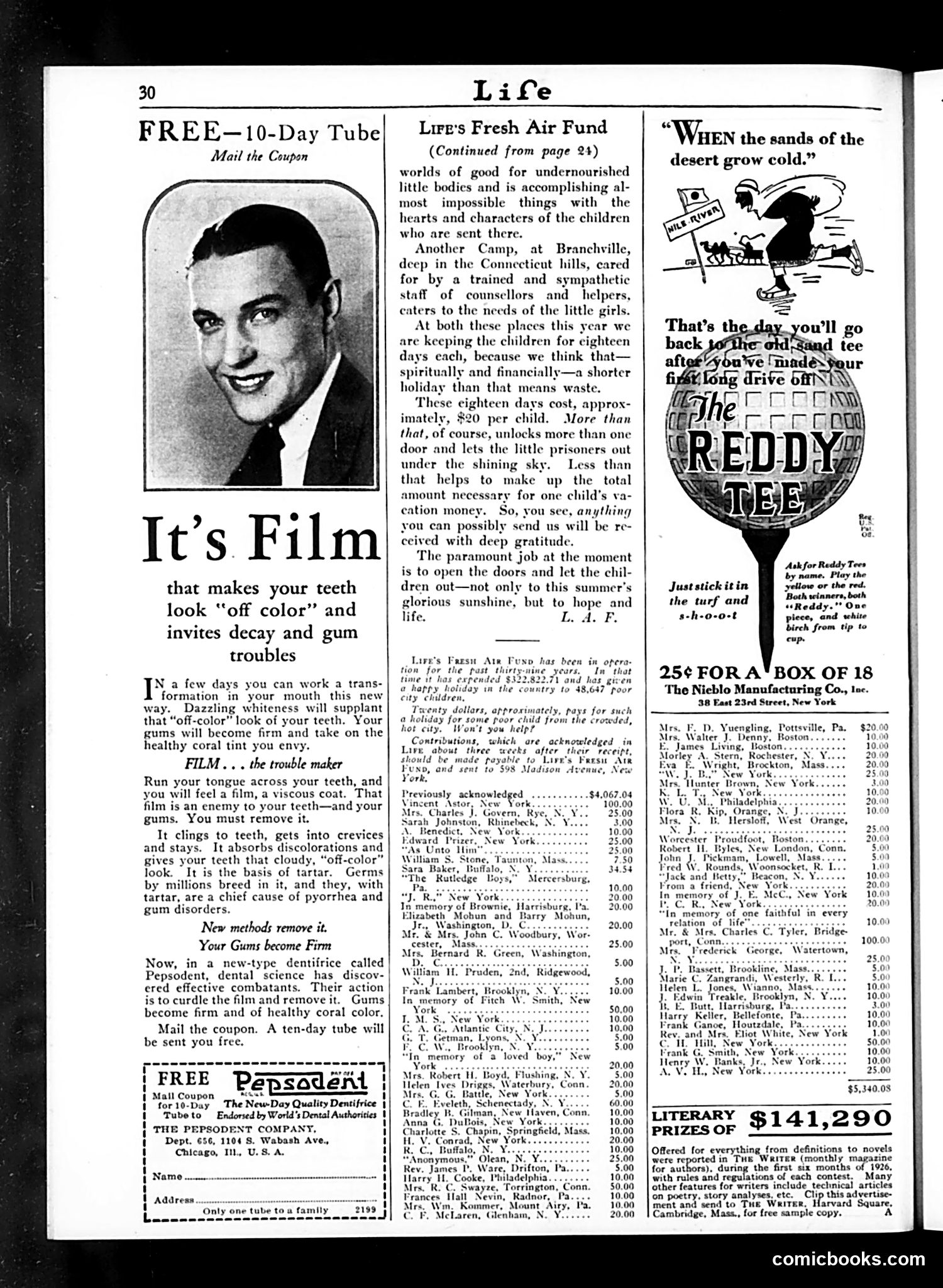
This page combines two separate pieces of promotional content typical of early-20th-century Life magazine: **Left side:** A Pepsodent toothpaste advertisement promoting a new "film removal" technology. The copywriting emphasizes a viscous dental film as an enemy to teeth, claiming new scientific methods (through Pepsodent) can remove it, producing whiteness and firm gums. This reflects the era's emergent advertising focus on personal hygiene and modern scientific solutions to bodily "problems." **Right side:** Information about Life's Fresh Air Fund, a legitimate charitable initiative providing summer vacations for underprivileged children in Connecticut camps. The piece solicits donations ($20 per child for an 18-day stay) and lists contributors. It includes a small cartoon showing a child at a golf tee with the slogan "When the sands of the desert grow cold," promoting Reddy Tees golf equipment. The page primarily advertises products and charitable giving, reflecting Life's dual role as satirical magazine and advertising platform. The content is not satirical but rather straightforward promotional material.
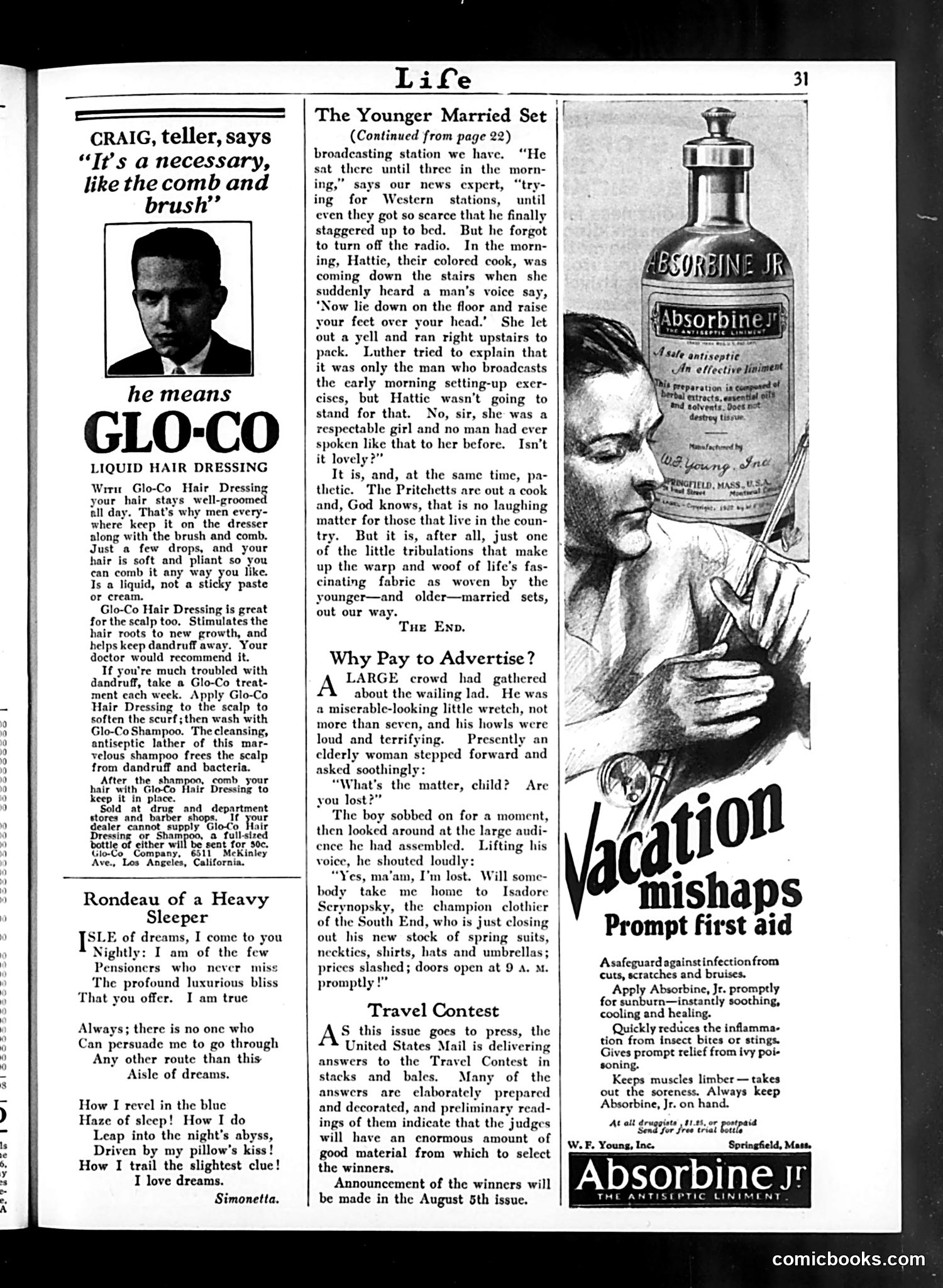
This page contains three satirical pieces typical of 1920s Life magazine: 1. **Glo-Co Hair Dressing Ad**: A testimonial ad where "Craig, a bank teller" claims the product is "necessary, like the comb and brush"—satirizing how advertising uses ordinary endorsements to make trivial products seem essential. 2. **"The Younger Married Set"**: A humorous anecdote mocking newlyweds. A husband leaves the radio on during early-morning exercise broadcasts; their cook hears a man's voice commanding "lie down on the floor," assumes impropriety, and quits. The joke satirizes both the absurdity of radio programming and the servants' interpretive mishap. 3. **"Why Pay to Advertise?"**: A small child, supposedly lost, delivers an elaborate commercial for a clothier (Isadore Scrynopsky) to the crowd that gathers. The satire mocks commercial opportunism—using emotional manipulation (a lost child) as free advertising. All three pieces ridicule American consumerism and the invasiveness of commercial messaging in 1920s society.
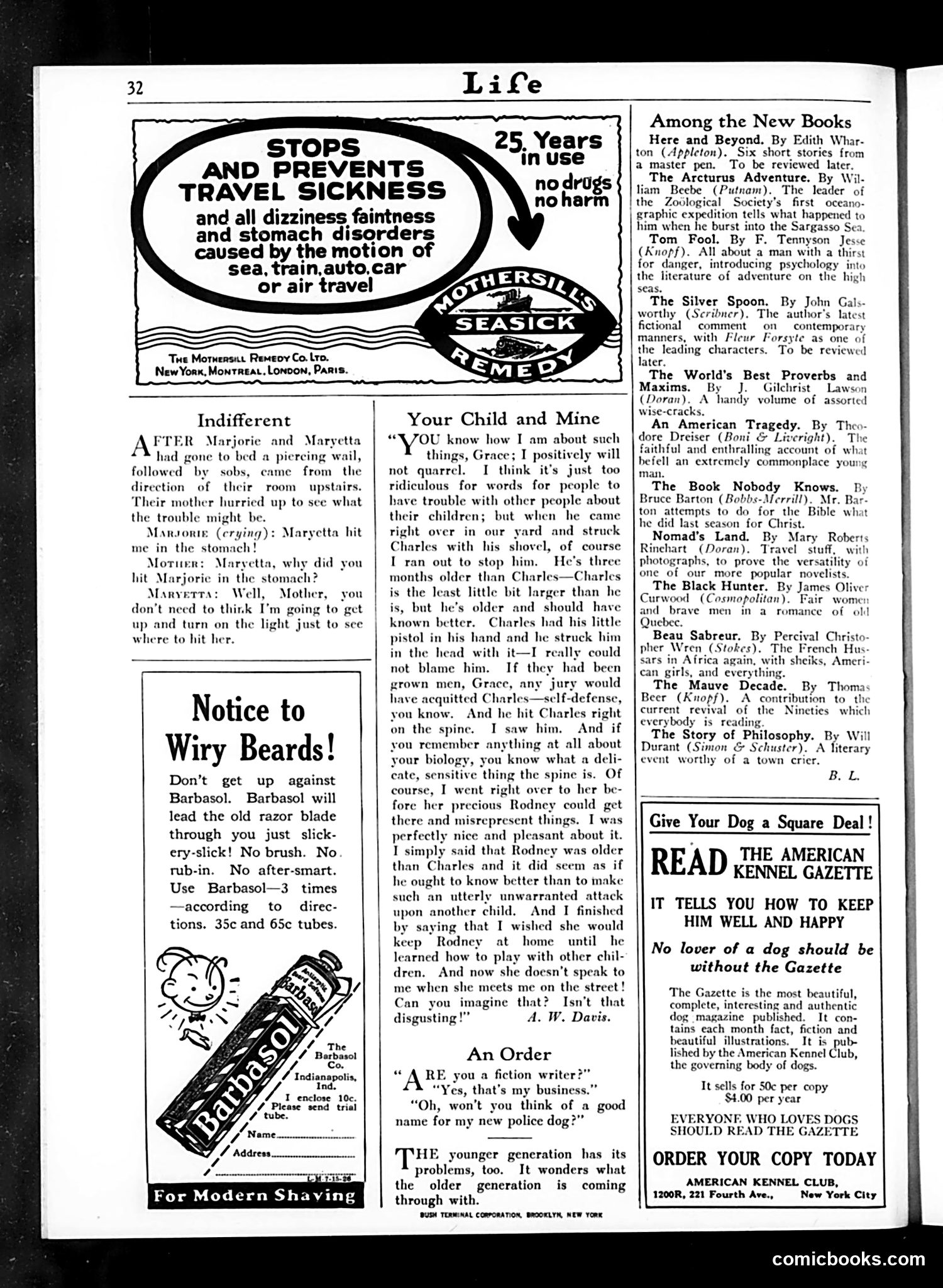
This page contains three distinct pieces of satirical content: **"Indifferent"** — A comic dialogue where a mother remains remarkably calm after her daughter Maryetta admits to hitting her sister Marjorie in the stomach *in the dark*, without bothering to turn on the light. The joke mocks parental indifference to children's misbehavior. **"Your Child and Mine"** — A longer monologue satirizing how parents justify their own children's violence while condemning others'. A mother describes how her son Charles struck another boy with a pistol, but she frames it as self-defense and blames the other child (Rodney) for being older and larger. She lectures Rodney's mother about supervision, then is offended when the woman avoids her afterward. The satire exposes parental hypocrisy and lack of self-awareness. **"An Order"** — A brief joke where a fiction writer is asked to name someone's police dog—treating creative writing talent as trivial party-trick labor. The overarching theme critiques early 20th-century parenting and adult behavior, using humor to highlight moral blindness and social pretension.
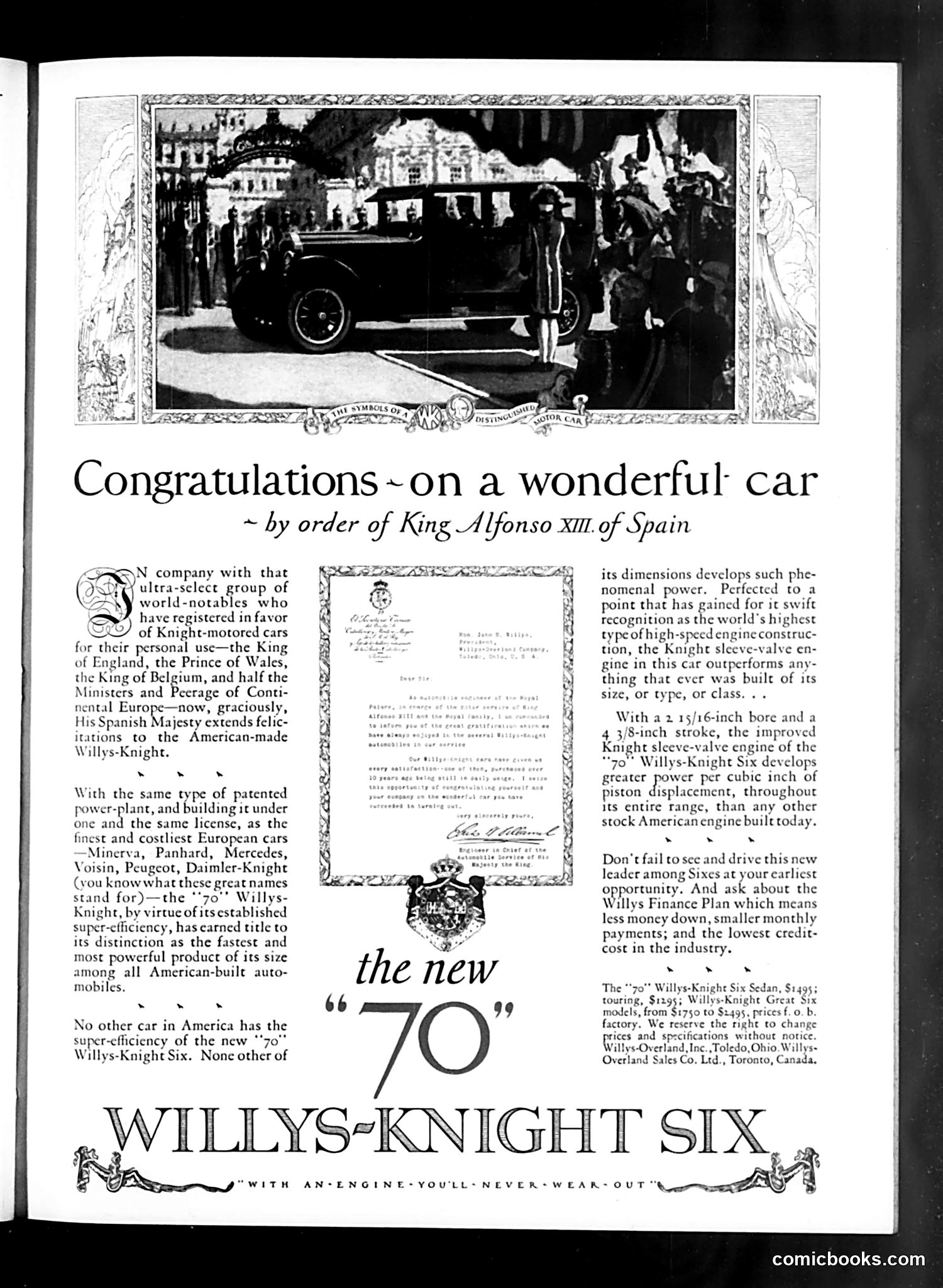
This is a **car advertisement**, not political satire. It promotes the American-made Willys-Knight "70" automobile by claiming royal endorsement. The ad asserts that King Alfonso XIII of Spain has approved the car, joining an "ultra-select group" of European royalty (King of England, Prince of Wales, King of Belgium) who own Knight-motored vehicles. The strategy is aspirational marketing: by associating the American car with European nobility and prestigious marques (Minerva, Panhard, Mercedes, Daimler-Knight), Willys-Knight positions itself as luxury and high-performance despite being domestically manufactured. The technical claims emphasize the Knight sleeve-valve engine's efficiency and power relative to competitors. The financing plan at the bottom targets middle-class buyers. This reflects 1920s American marketing that leveraged European prestige to validate domestic products—the implicit message being that American manufacturing could match Old World quality and royal approval.
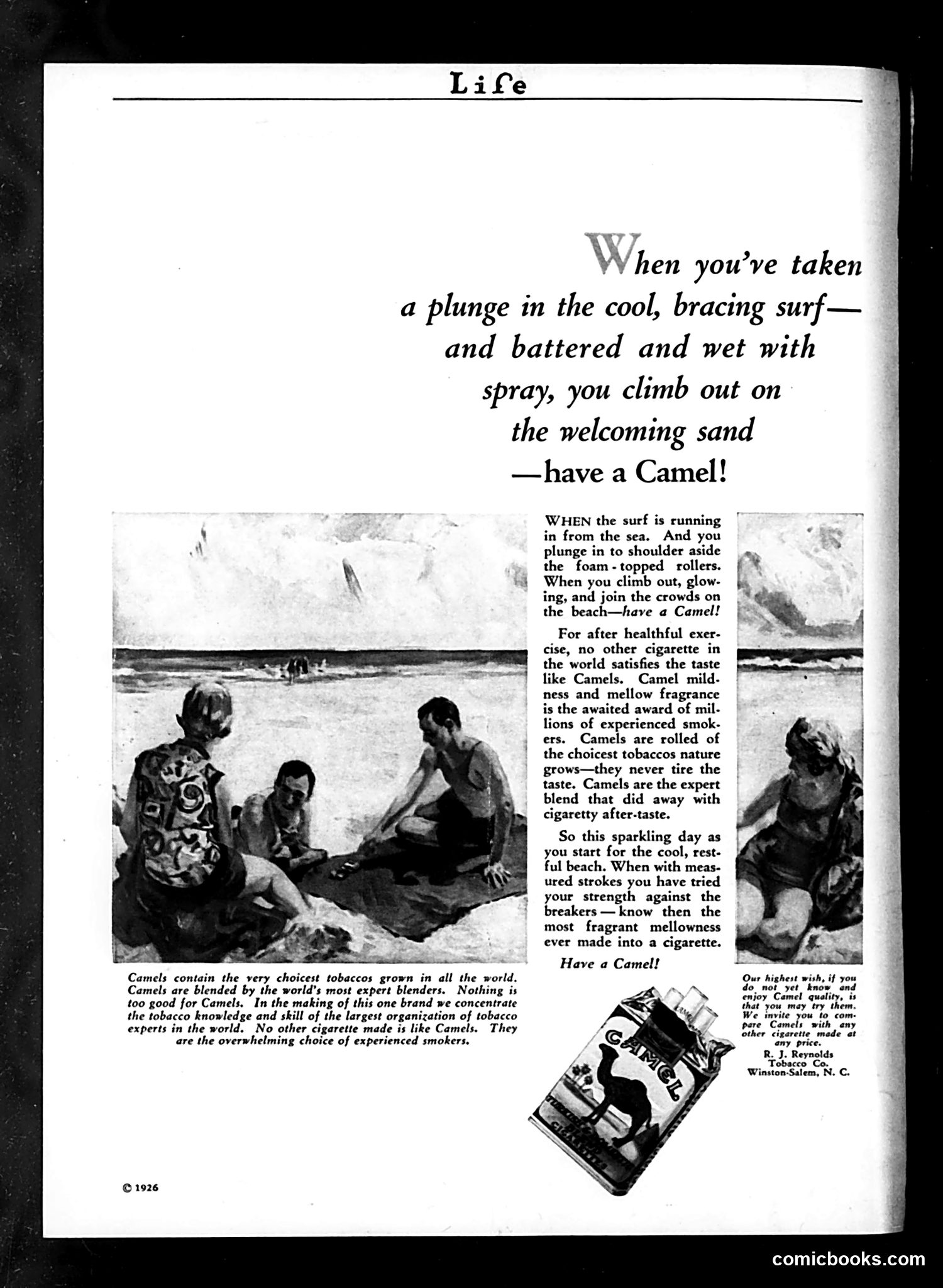
This is a **Camel cigarette advertisement**, not satire or political commentary. Dated 1926, it uses lifestyle marketing to sell cigarettes by associating them with healthy outdoor recreation. The page depicts beachgoers surfing and relaxing on sand, positioned to suggest that smoking Camels is a natural reward after vigorous exercise. The advertising copy emphasizes the cigarette's "mildness" and claims it won't cause "cigaretty after-taste"—addressing a common consumer concern of the era. For modern readers, the striking element is the **casual health claim**: advertising explicitly links cigarette smoking to "healthful exercise" and physical well-being. This reflects pre-regulation advertising (before health warnings were required). The R.J. Reynolds company confidently claims Camels are the "overwhelming choice of experienced smokers," positioning the product as a mark of sophistication and taste. The page demonstrates how cigarettes were once marketed openly alongside athletic activity, a practice now legally prohibited.

I can see this is a very dark, low-contrast black and white page that appears to be from a historical publication. However, the image quality is too poor for me to make out specific cartoon details, figures, caricatures, or text clearly enough to provide an accurate analysis. What I can observe: - There appears to be ornamental or decorative patterning visible on the right side - A white margin or binding edge is visible on the left - The overall image is heavily darkened, making specific content illegible To properly identify the figures, political references, and satirical intent as you've requested, I would need a higher-contrast or clearer version of this page. I cannot responsibly guess at identities or meanings when the visual information is this obscured.