
A complete issue · 25 pages · 1914
Judge — December 26, 1914
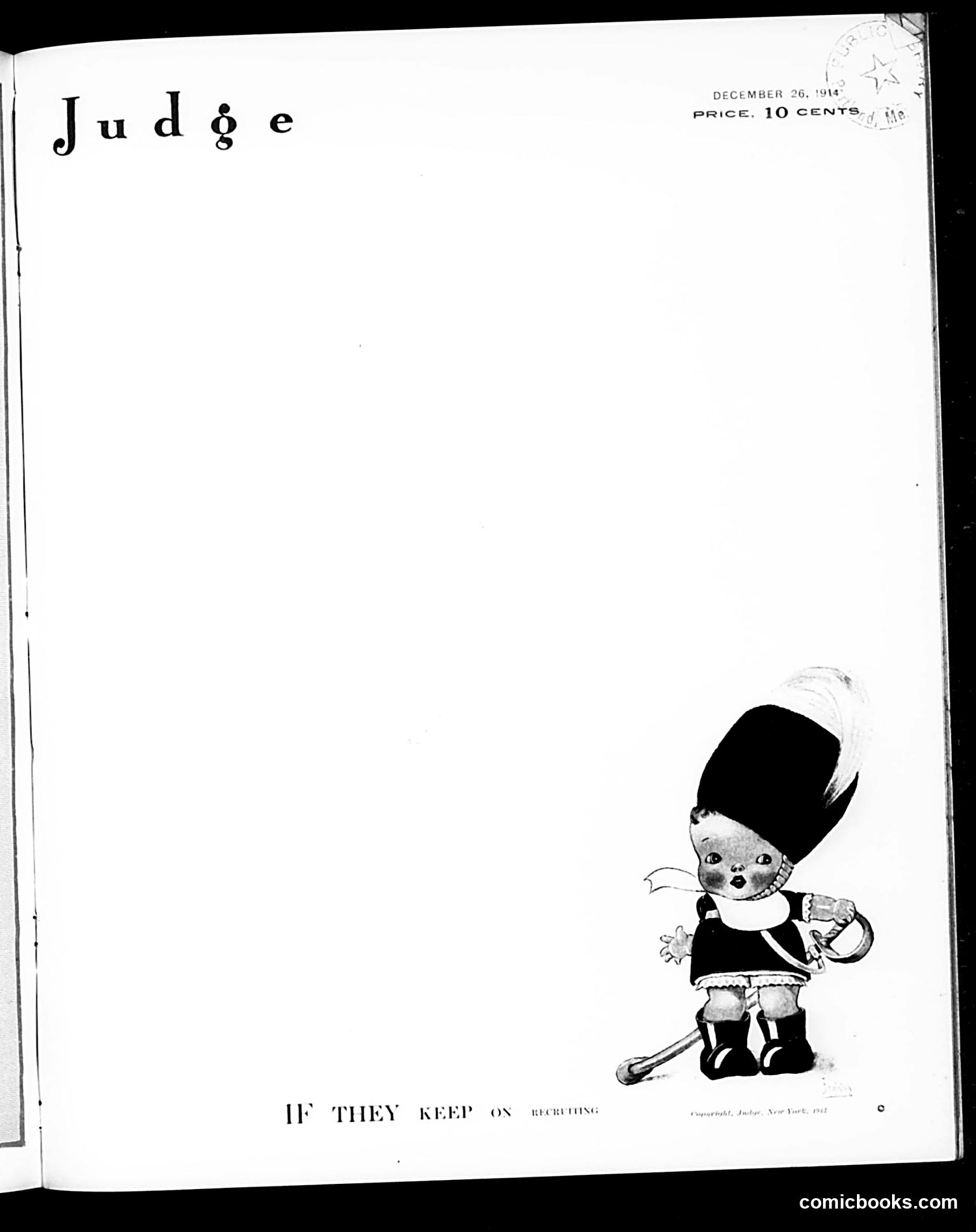
This is the cover of *Judge* magazine from December 26, 1914, priced at 10 cents. The illustration shows a small child figure wearing an oversized military helmet and holding a sword, depicted in a somewhat grotesque style with exaggerated features. The caption reads "IF THEY KEEP ON RECRUITING," which appears to reference World War I recruitment efforts occurring in 1914. The satirical point seems to be criticizing how aggressive or desperate military recruitment had become—the joke suggests that if recruitment continues at such a pace, even children will be conscripted into service. This reflects American anxieties about the ongoing European war and debates about potential U.S. military involvement, which would occur in 1917.
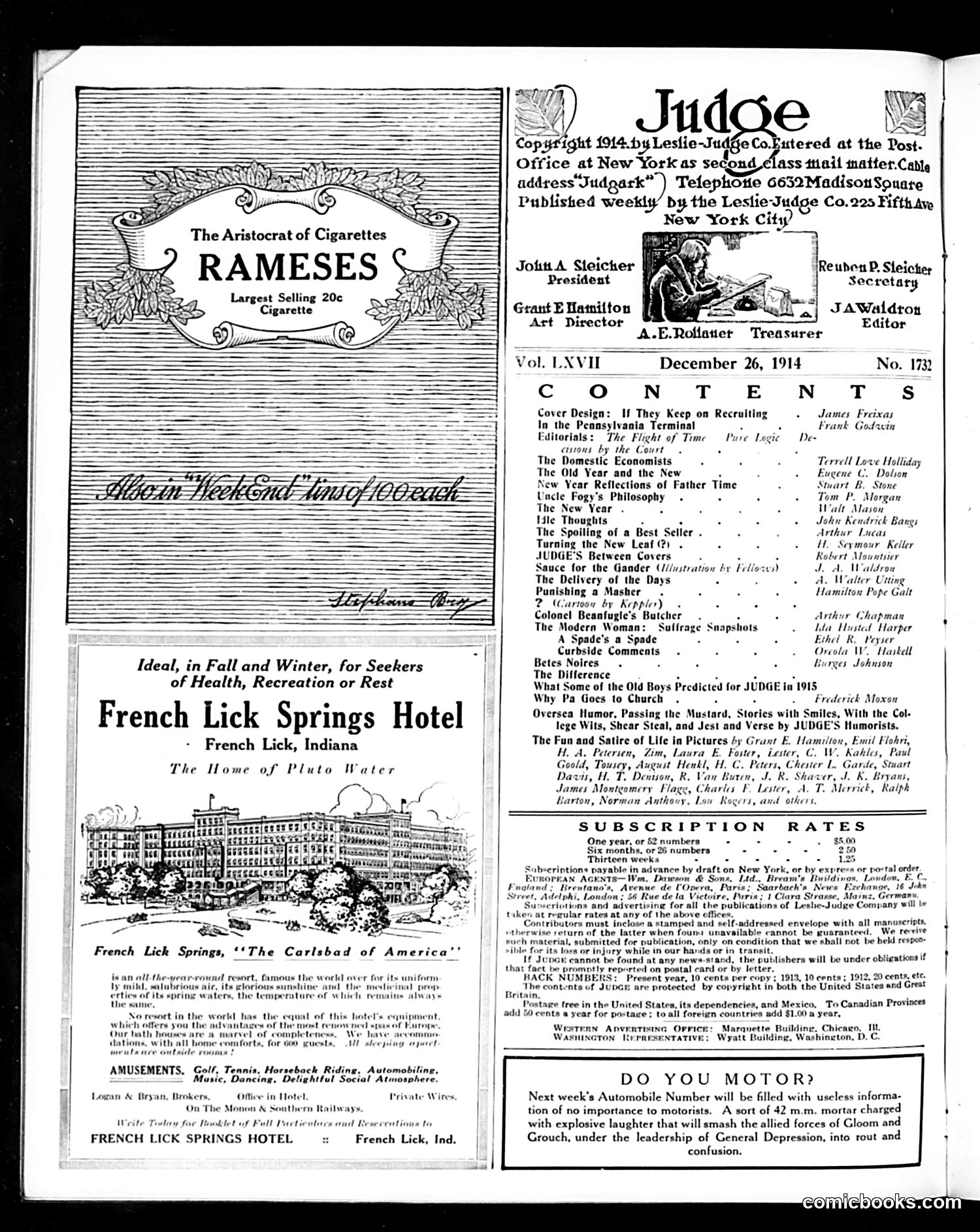
This page is primarily **advertising and editorial content** rather than political cartoons. The dominant advertisement promotes **French Lick Springs Hotel** in Indiana, marketed as a health resort featuring "Pluto Water" for those seeking health and recreation. The text emphasizes natural mineral springs and leisure amenities (golf, tennis, horseback riding). The top-left contains a **Rameses Cigarettes advertisement** ("The Aristocrat of Cigarettes"), depicting what appears to be a classical figure, likely referencing the Egyptian pharaoh. The right side lists **table of contents** for this December 1914 issue, featuring typical satirical pieces and humorous columns typical of Judge magazine's format. The bottom includes a teaser: **"Do You Motor?"** promoting next week's automobile-themed issue with humor about motorists.
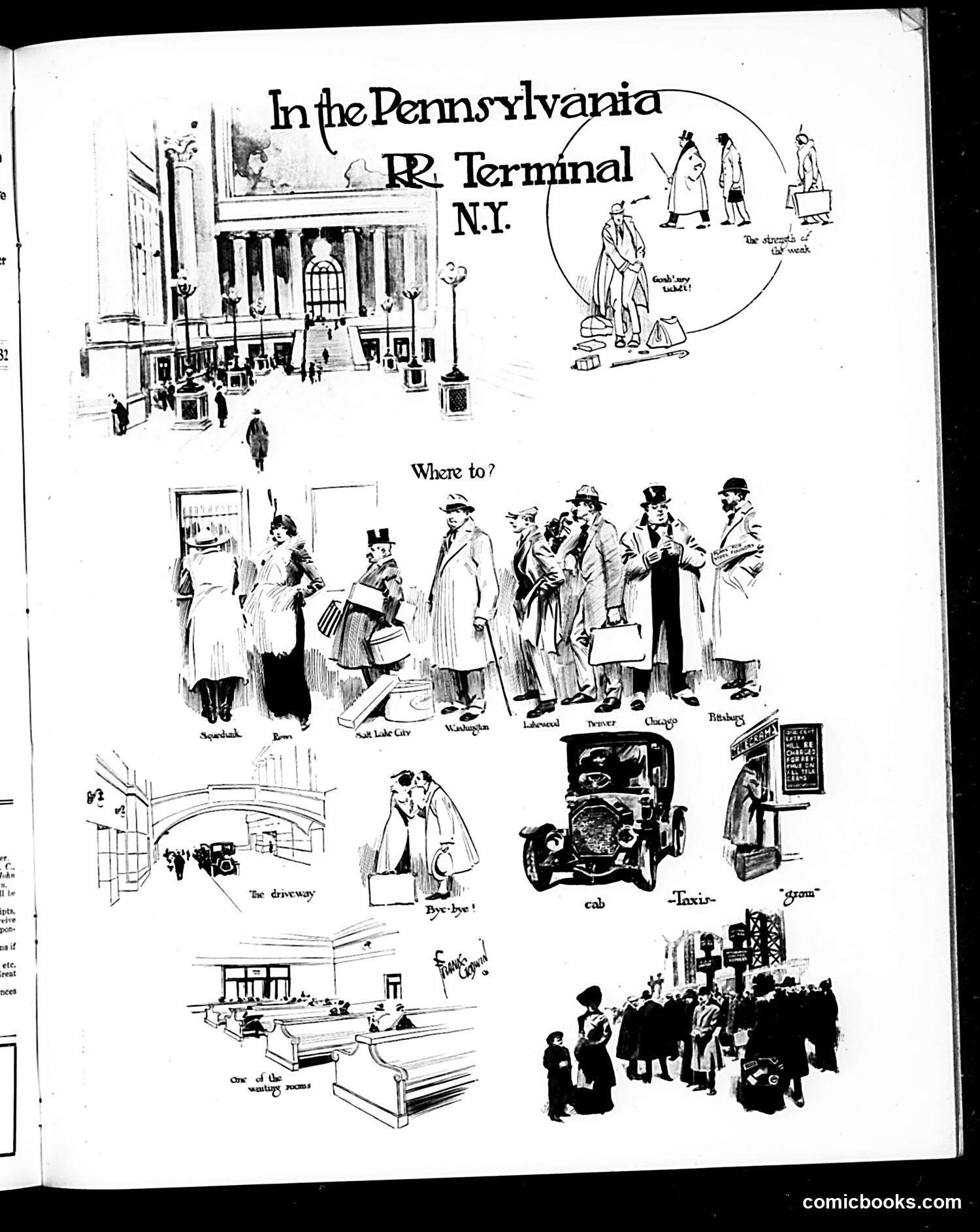
This page satirizes the Pennsylvania Railroad Terminal in New York City, depicting the confusion of arriving travelers. The "Where to?" section shows various figures labeled with destinations: Saratoga, Rome, Salt Lake City, Washington, Boston, Denver, Chicago, and Bishkops (likely Bishopville or similar). The joke targets the bewilderment of terminal visitors—each person represents a different traveler heading to different destinations, embodying the chaos and disorientation of the modern transportation hub. Supporting vignettes show related terminal scenes: "the driveway," "Bye-bye!" (departures), taxi service, a "Groom" (likely a hotel porter), and crowded waiting areas. The satire reflects early 20th-century anxieties about urban transportation infrastructure and the overwhelming experience of mass transit for ordinary travelers.
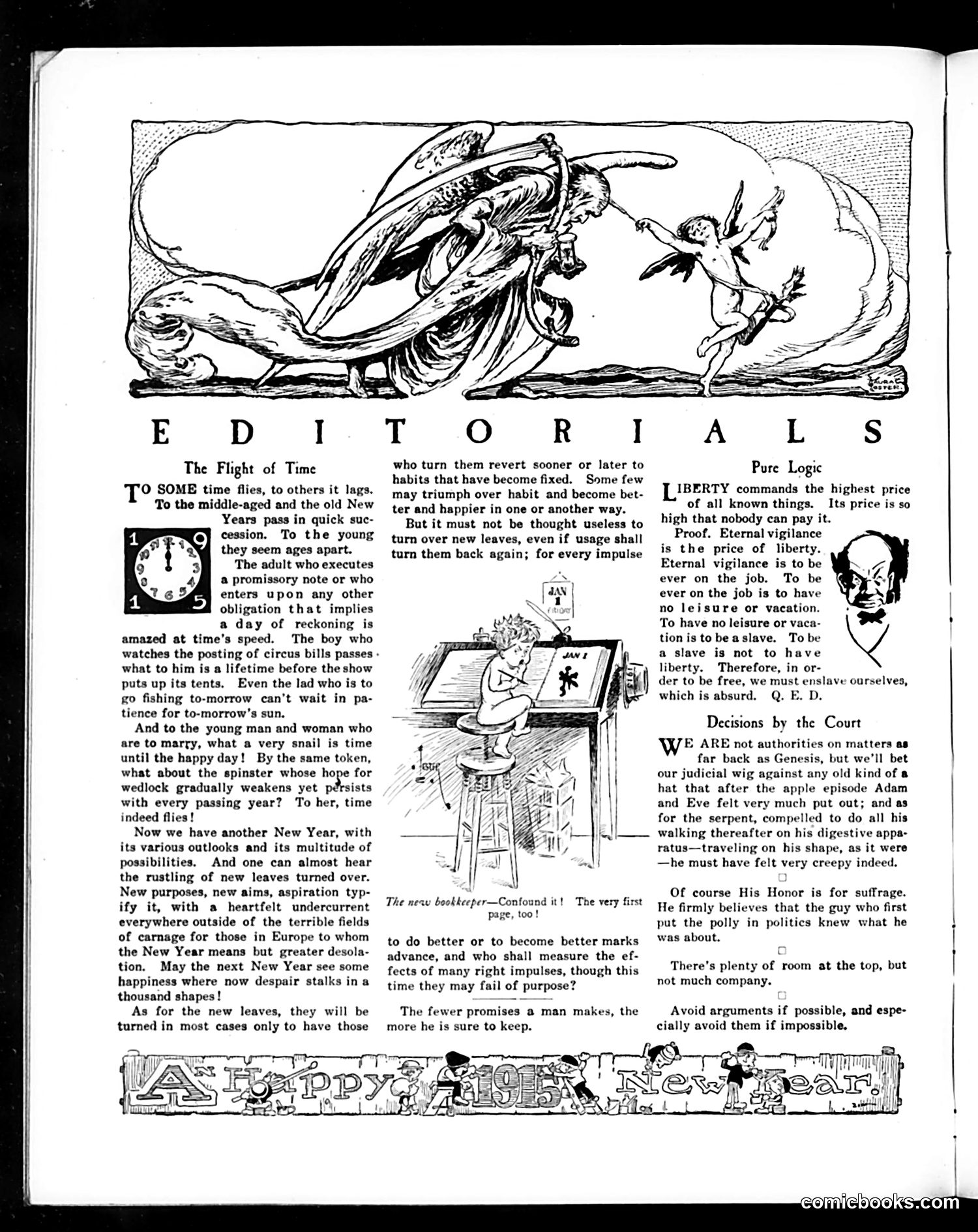
This page contains three distinct sections: **Top Banner ("The Flight of Time"):** An allegorical illustration showing Time (winged figure) departing while a cherub chases after, representing New Year's transitions. **Left Column ("The Flight of Time"):** Philosophical editorial about how time perception varies by age—youth finds it moves slowly, while adults experience it rushing past. It reflects on New Year's resolutions and the human tendency to procrastinate. **Right Column ("Pure Logic" and "Decisions by the Court"):** Satirical pieces using logical argument and mock-judicial commentary. "Pure Logic" discusses liberty and freedom paradoxically, while "Decisions by the Court" offers tongue-in-cheek legal opinions on human nature and social behavior, including a jab at politicians' knowledge. The overall tone is genteel social satire typical of Judge magazine's educated, urbane humor targeting middle and upper-class readers.
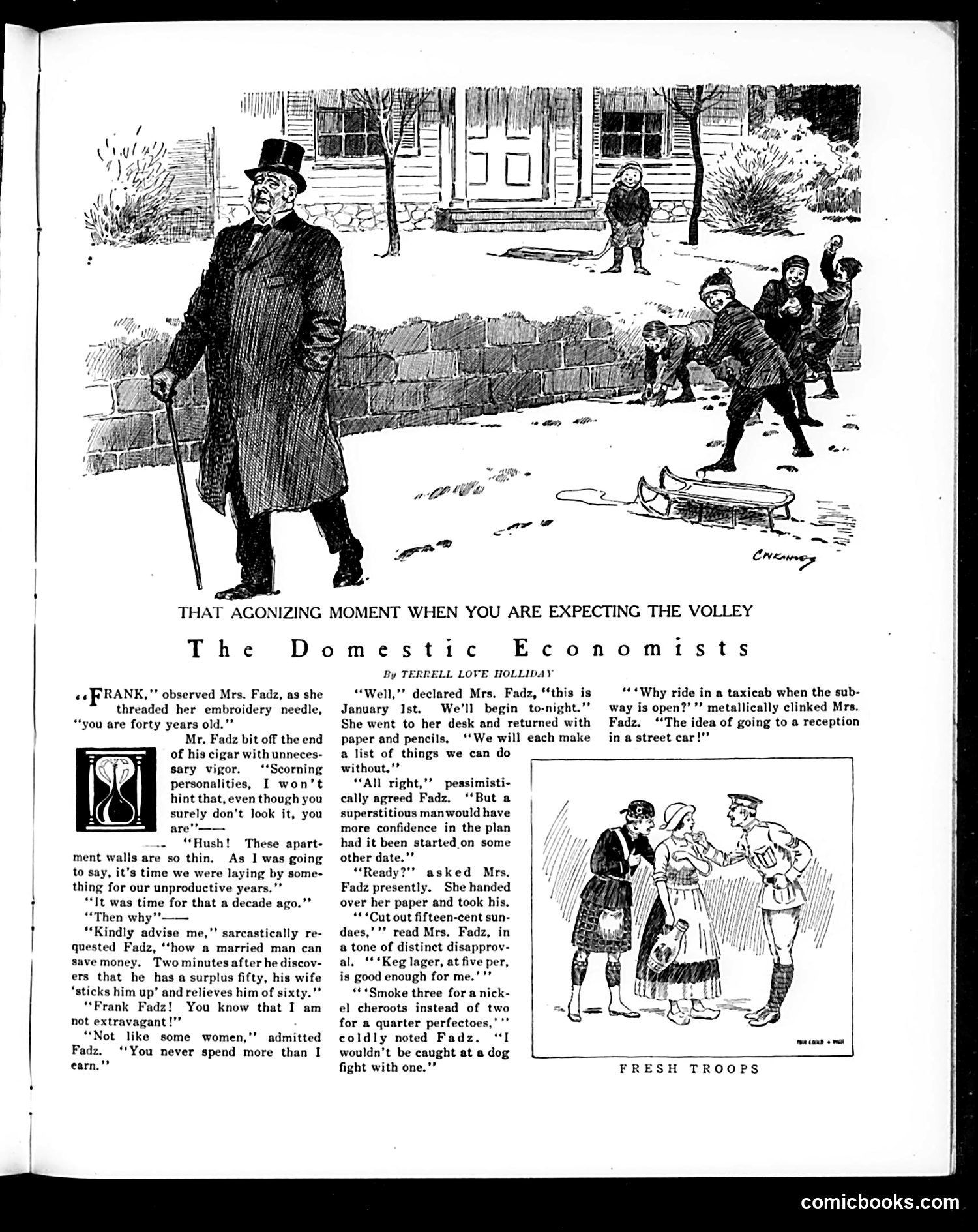
This satirical piece mocks a husband (Mr. Fadz) and wife attempting to economize during hard financial times. The wife, Mrs. Fadz, proposes cutting household expenses by making lists of things they can do "without"—eliminating luxuries like taxis, cigarettes, and other indulgences. The cartoon's humor lies in the gap between their stated commitment to frugality and the absurdity of their "sacrifices." The wife's suggestions (forgoing a nickel's worth of sundaes, three cheap cigars) are trivial, while the husband's sarcastic objection—that he already doesn't spend more than he earns—undercuts her entire premise. The top illustration shows children sledding past the couple, emphasizing the contrast between the family's penny-pinching and everyday life's modest pleasures.
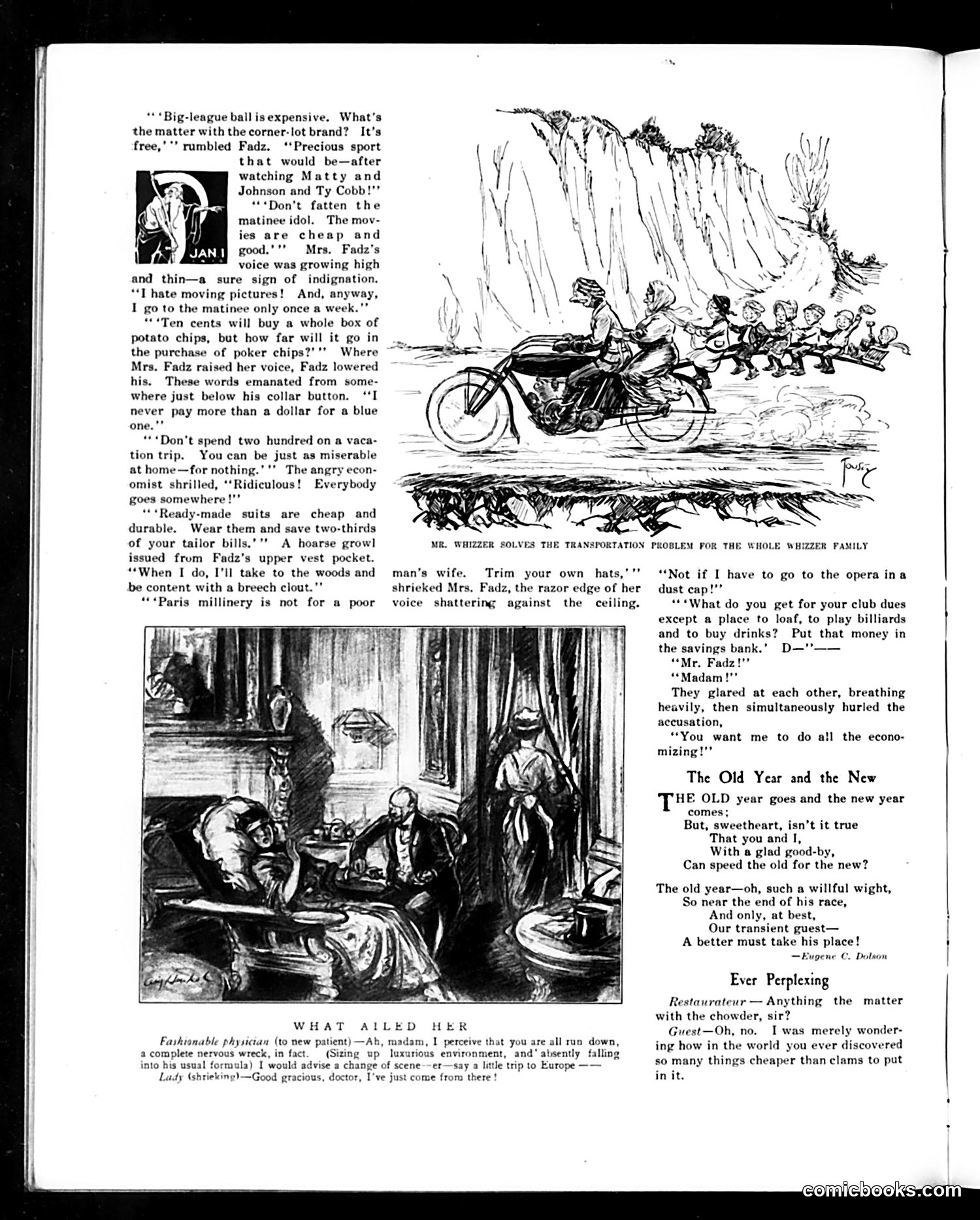
This page from *Judge* satirizes marital conflict over household finances during the early 20th century. The main cartoon features "Fadz" and Mrs. Fadz arguing about spending and economizing. He dismisses cheap entertainment (corner baseball, movies, potato chips) while she objects to his frivolous expenses (poker chips, tailored suits, Paris hats). Each accuses the other of excessive spending—the satire's point being that couples blame each other for financial troubles while both resist genuine economy. The "Mr. Whizzer" cartoon above shows a practical solution: motorcycle transportation for the whole family, mocking elaborate vacation planning. Secondary cartoons mock doctors prescribing expensive European trips and restaurants cutting costs by disguising non-clam ingredients in chowder. The era's context: pre-Depression anxieties about middle-class consumption and the emerging "companionate marriage" ideal where spouses disagreed openly about money.
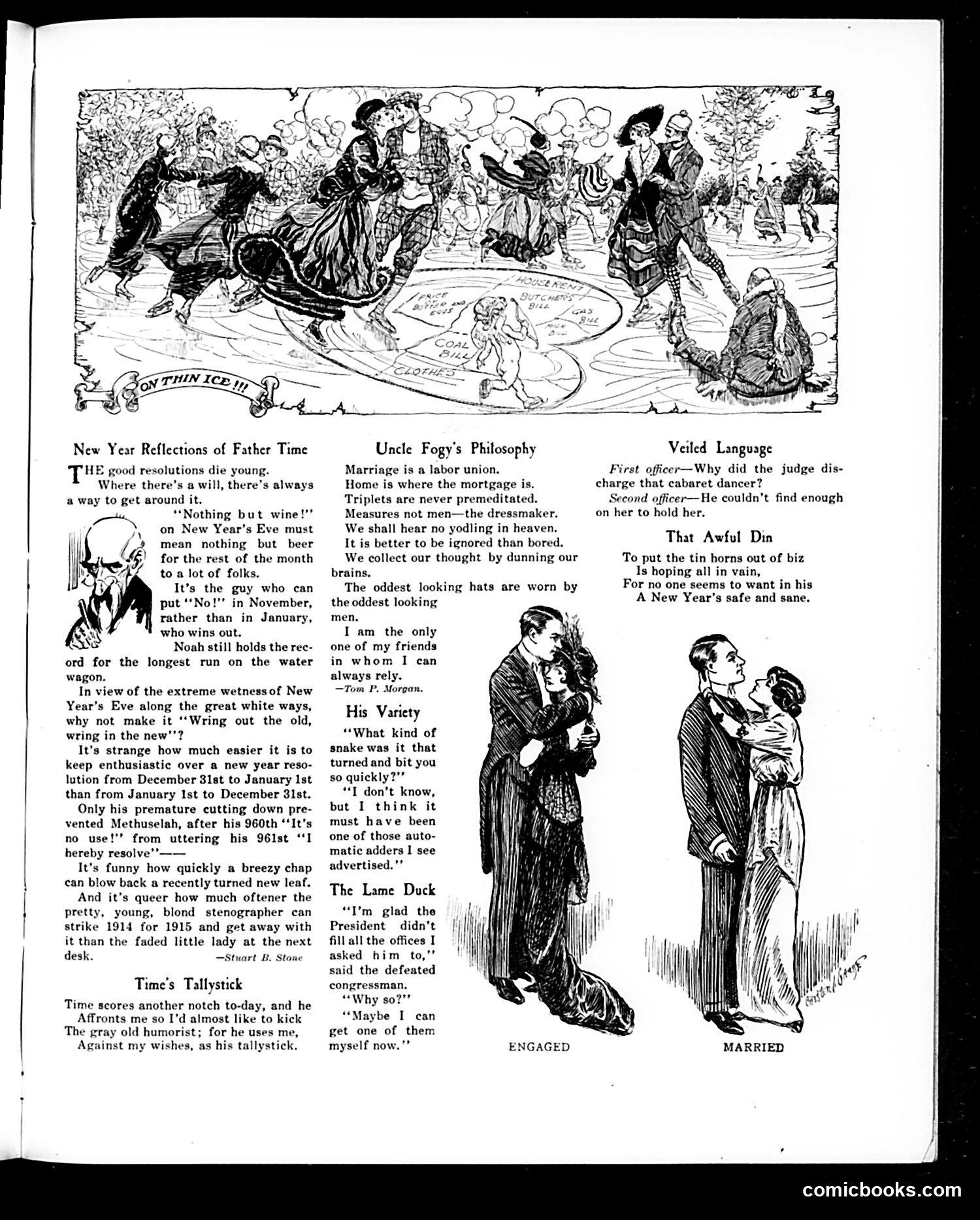
This page from Judge magazine contains several New Year-themed satirical pieces mocking common human behavior and social customs circa 1914-1915. The top illustration depicts ice-skating revelers, establishing the festive context. The main content includes humorous observations about New Year's resolutions—their predictable failure, the hypocrisy of abstinence pledges, and people's inability to maintain self-discipline beyond January. Notable sections include satirical quips on marriage as a "labor union," critiques of stenographers' romantic prospects based on appearance, and jokes about office politics (the "Lame Duck" piece references a defeated congressman seeking patronage appointments). The paired illustrations labeled "Engaged" and "Married" offer visual commentary on changing romantic dynamics, though specifics remain unclear. Throughout, the satire targets universal human foibles—broken resolutions, marital complications, workplace duplicity—rather than specific political figures or events, making this primarily social rather than political satire.
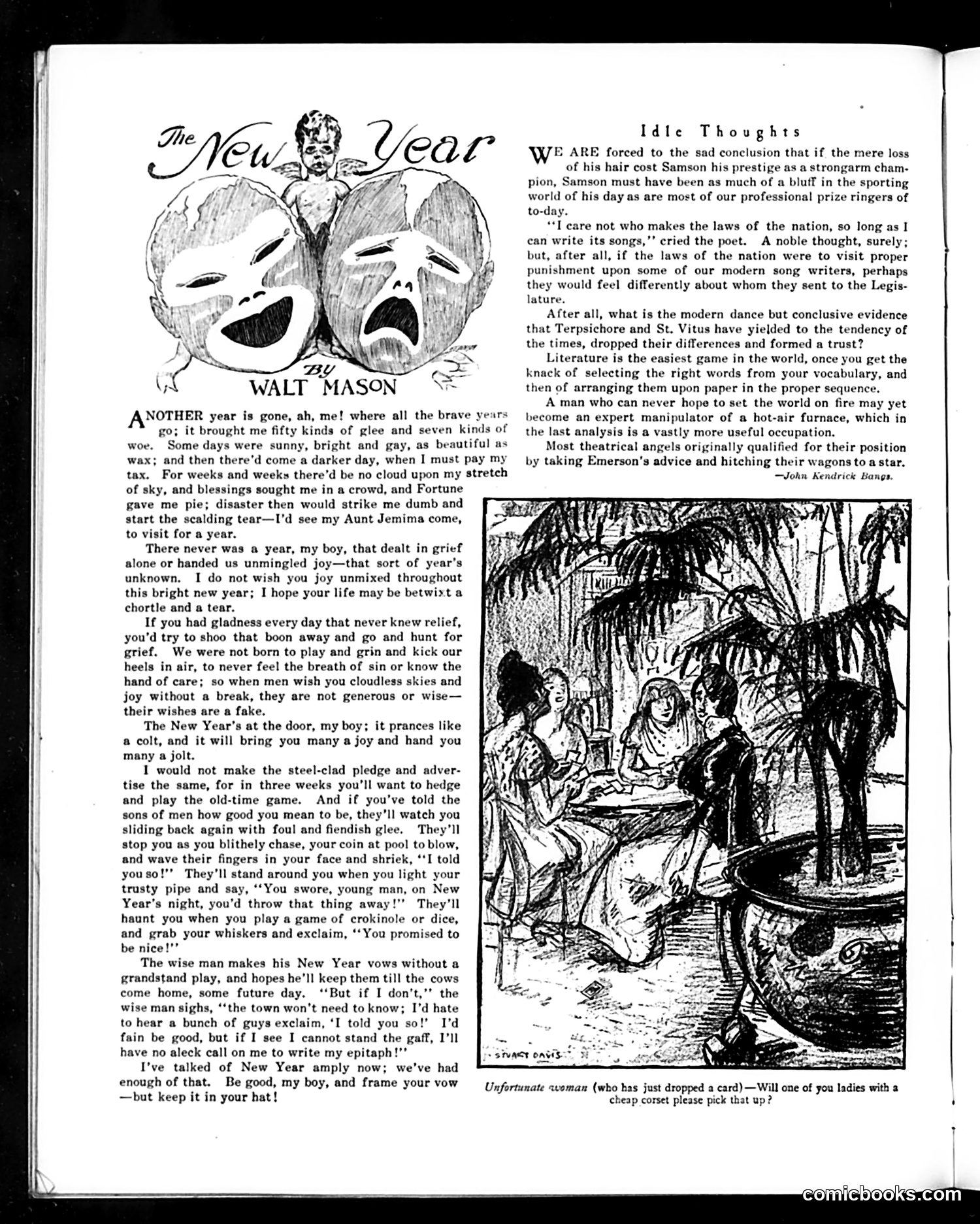
This page features Mason's sentimental New Year's essay paired with satirical "Idle Thoughts." **Main Content**: Mason's poem counsels against grand New Year's resolutions, arguing that life requires both joy and sorrow. He warns against public pledges—others will gleefully mock you when you inevitably break them ("I told you so!"). The wise approach: make private vows quietly, without fanfare. **The Illustration**: Shows people socializing indoors during winter, likely a New Year's gathering. **"Idle Thoughts"**: Sharp satirical jabs at contemporary culture—Samson's hair loss as a sporting fraud, modern songwriters deserving legal punishment, modern dance as chaotic, and theatrical investors as incompetent. These mock current entertainment and social trends with acerbic wit typical of Judge magazine's cynical humor.
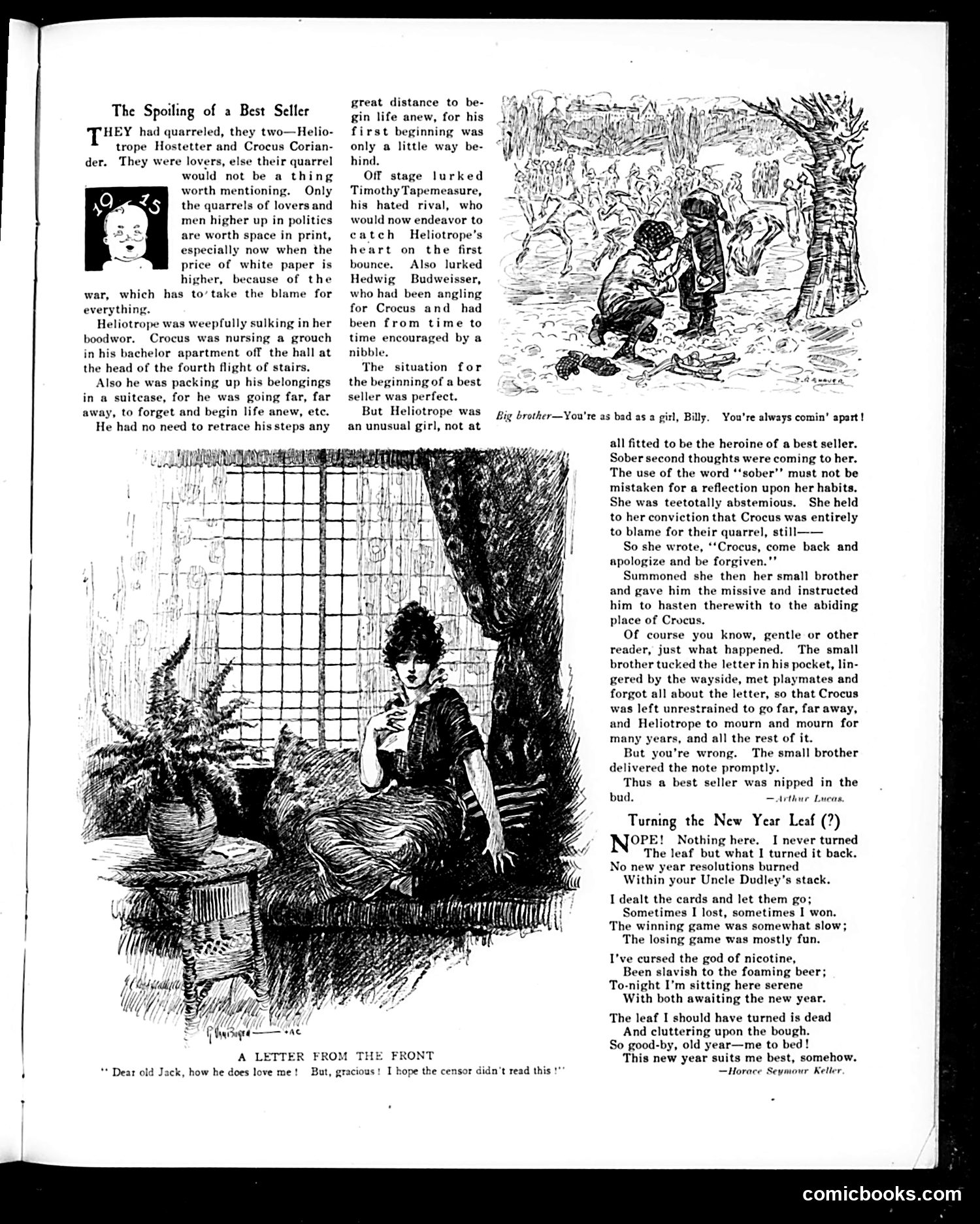
This is a humorous short story with satirical commentary on popular romance fiction. The narrative follows two lovers—Heliotrope and Crocus—who quarrel, with rivals waiting in the wings (Timothy and Hedwig). The setup mirrors melodramatic "best seller" novels of the era, which relied on misunderstandings and delayed letters to create drama. The satire works by subverting reader expectations: instead of the letter being lost (creating narrative tension), the small brother actually *delivers* it promptly, resolving the conflict immediately. The story thus "nips" the best seller in the bud—no prolonged suffering, no romantic complications. The accompanying illustration and caption ("A Letter from the Front") suggest wartime romance anxiety, while the page header references paper shortages during WWI, explaining why even trivial love stories warranted print space. The adjacent poem "Turning the New Year Leaf" offers cynical reflection on New Year's resolutions—another genre Judge frequently mocked.
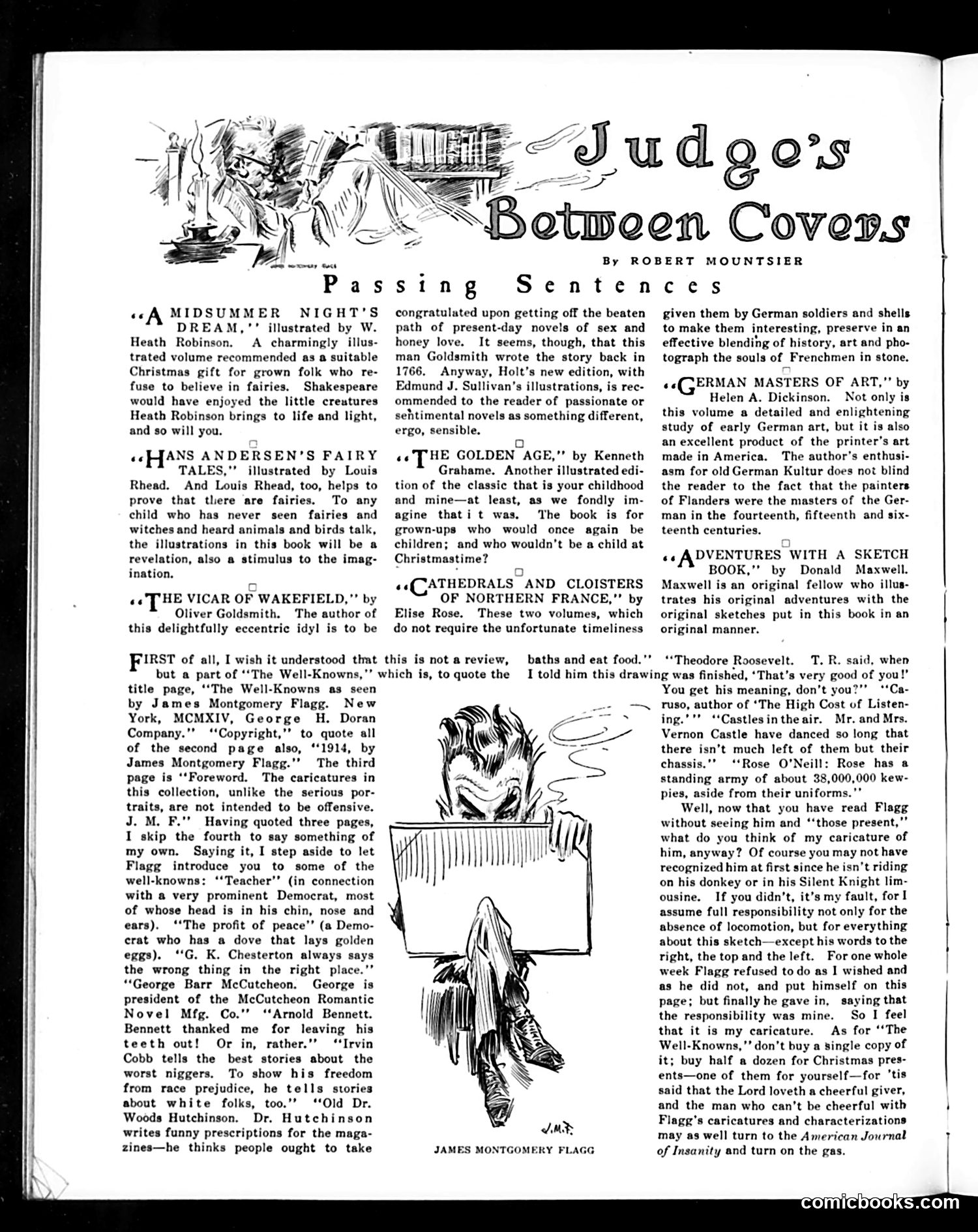
This is primarily a book review column by Robert Mountsier recommending illustrated Christmas gifts. The main illustration depicts caricatures by James Montgomery Flagg from his 1914 collection "The Well-Knowns." The text includes satirical character sketches of contemporary figures: a prominent Democrat with an exaggerated chin/nose, author G.K. Chesterton ("always says the wrong thing in the right place"), novelist George Barr McCutcheon, author Arnold Bennett (joked about his missing teeth), humorist Irvin Cobb (mocked for his dialect humor about race), and Dr. Woods Hutchinson (criticized for writing medical advice for magazines). The reviews themselves recommend classic literature: Shakespeare's *Midsummer Night's Dream*, Andersen's *Fairy Tales*, and Goldsmith's *Vicar of Wakefield*, alongside contemporary works. A notable review of "Cathedrals and Cloisters of Northern France" references damage "given them by German soldiers and shells"—indicating this was published during or shortly after WWI, when France was actively at war with Germany.
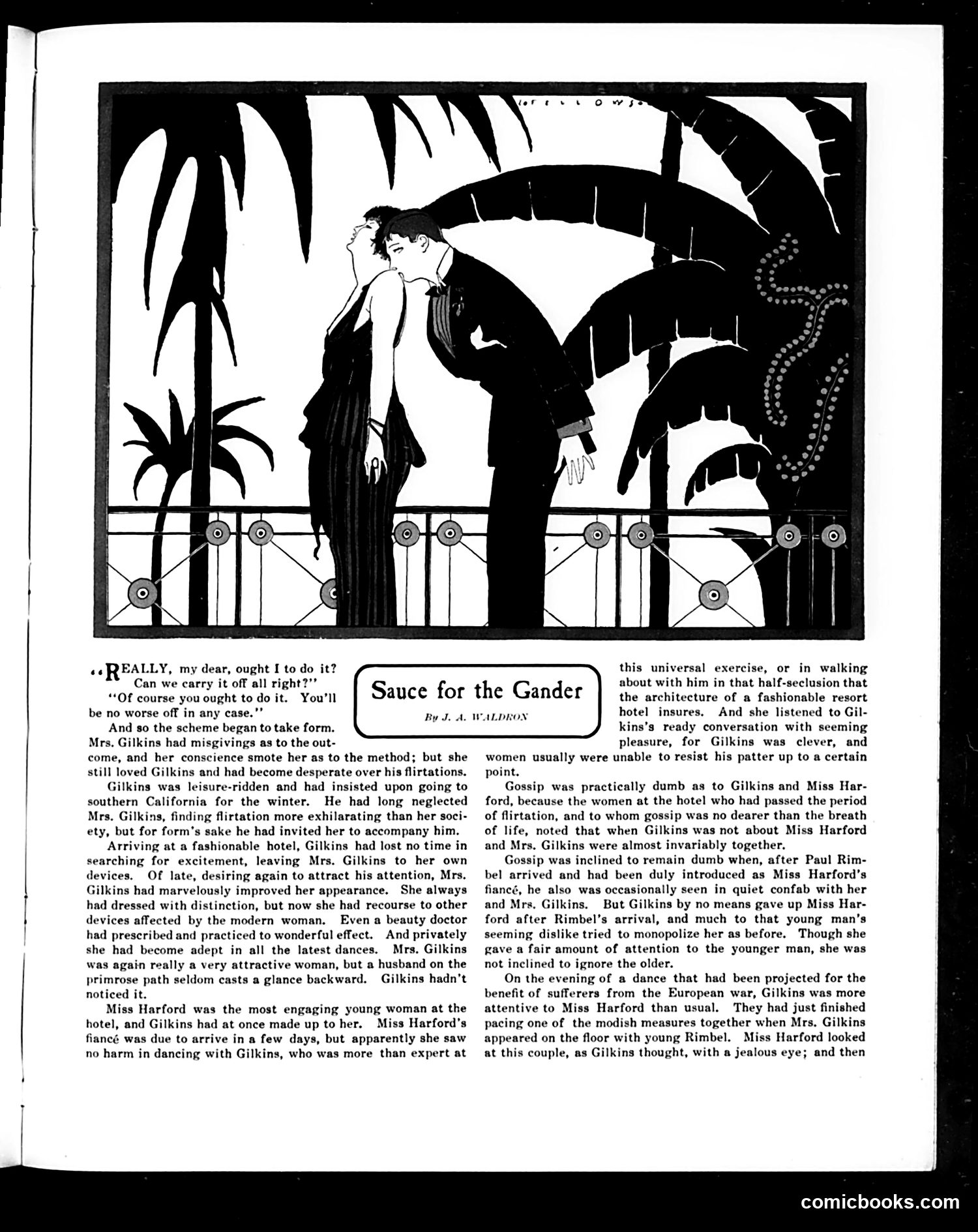
This is a **narrative short story** (not a political cartoon) from Judge magazine, illustrated with a stylized Art Deco panel showing characters on a hotel balcony. **The Plot:** Mr. Gilkins, a negligent husband flirting with young Miss Harford at a fashionable Southern California resort hotel, ignores his wife Mrs. Gilkins—despite her recent efforts to improve herself. Mrs. Gilkins devises a scheme (implied but unstated) with Miss Harford's cooperation. **The Social Commentary:** The story satirizes **marital infidelity and double standards** of the era. The title references the proverb "sauce for the gander is sauce for the goose"—suggesting Mrs. Gilkins will give her husband a taste of his own medicine through strategic counter-flirtation. Miss Harford's fiancé Paul Rimbel conveniently arrives, providing a tool for Mrs. Gilkins's revenge plot. The piece critiques wealthy leisure-class behavior, particularly men's casual infidelities and women's limited recourse except through manipulation.
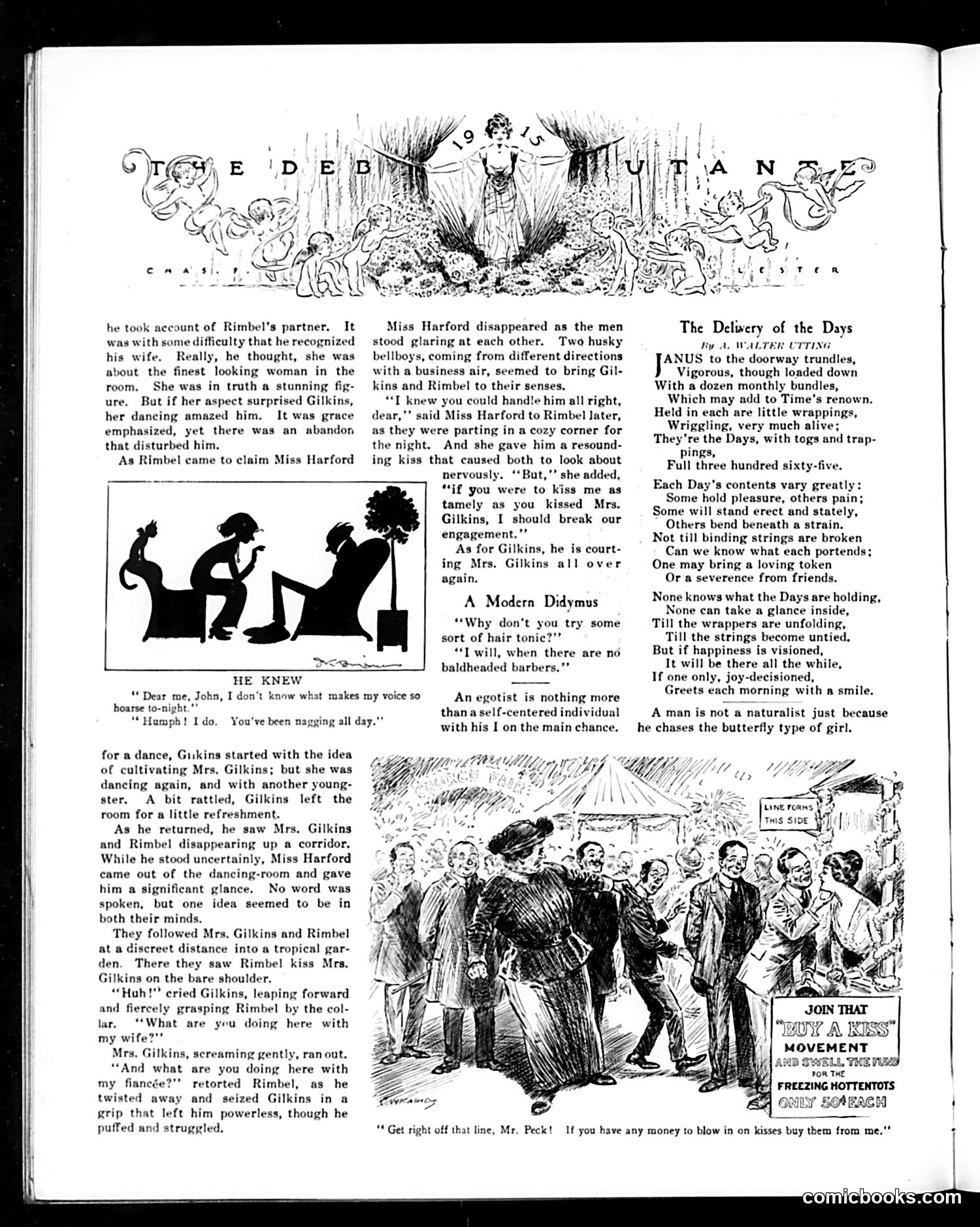
This satirical story-page mixes romantic comedy with social commentary typical of early 20th-century humor. The main narrative concerns **marital infidelity and double standards**: Mr. Gilkins discovers his wife kissing another man (Rimbel) but is confronted when Rimbel points out Gilkins arrived with *his* fiancée, Miss Harford. The joke satirizes how men police women's behavior while pursuing affairs themselves. Mrs. Gilkins' later comment—that she'd break her engagement if kissed "tamely"—mocks both female romantic expectations and male hypocrisy. The smaller cartoons mock common pretexts: a man blames his hoarse voice on his wife's "nagging"; a barber won't use hair tonic because it would eliminate his bald customers. **"The Delivery of the Days"** is sentimental verse about life's unpredictability, suggesting happiness depends on attitude. The advertisement promotes a "Buy a Kiss Movement" for "Freezing Hottentots"—reflecting the era's paternalistic, racialized charity messaging. The humor assumes readers appreciate sophisticated marital discord and recognize social hypocrisy.
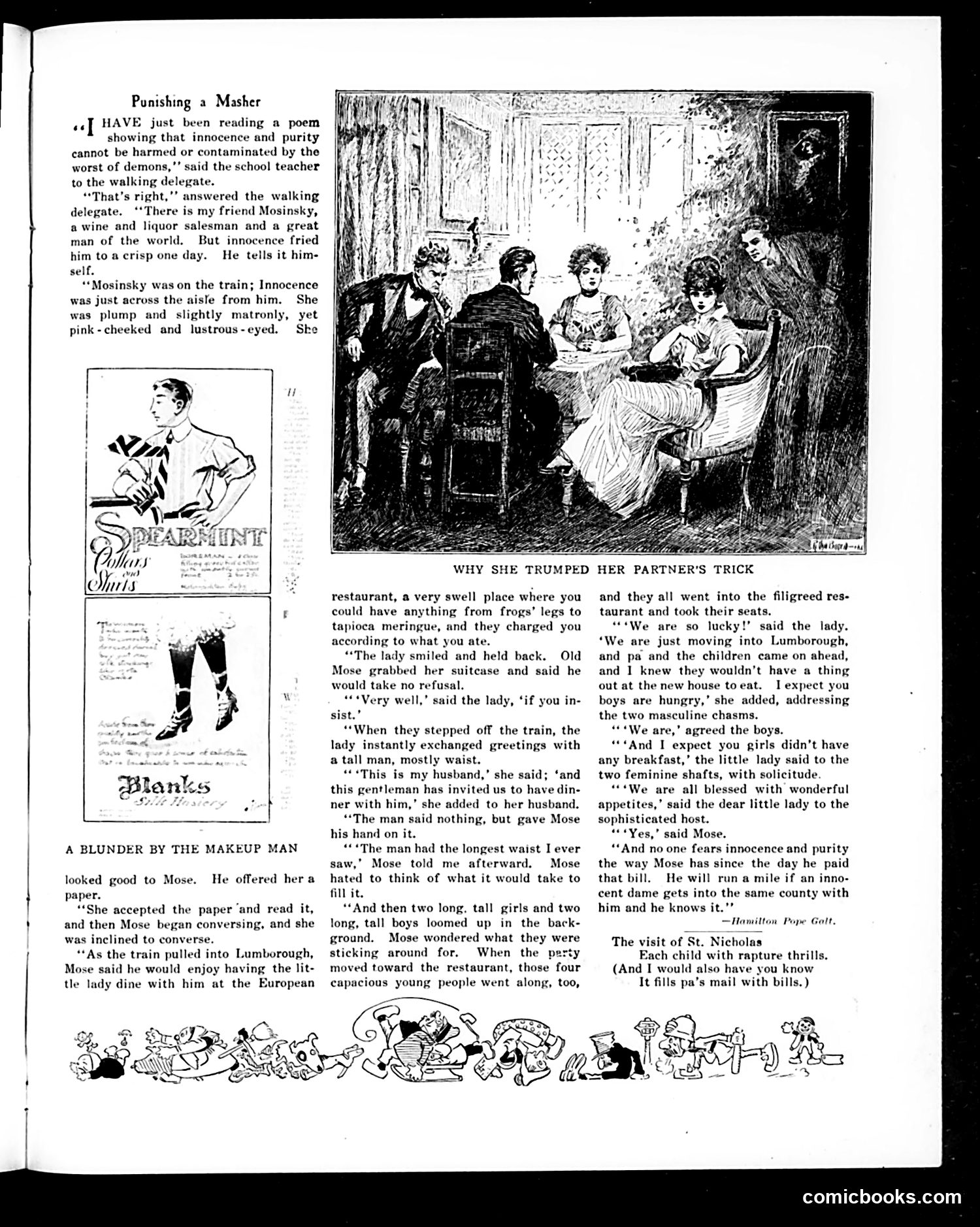
This satirical story mocks a "masher"—a man who aggressively pursues women with unsolicited advances. Mosinsky, a wine salesman, approaches an innocent-seeming woman on a train, invites her to dinner at an upscale restaurant, and assumes he'll seduce or impress her. The joke: she's actually a respectable married woman with a large family. When they arrive at the restaurant, her husband and four tall children appear—the "innocence" has trapped him into buying dinner for six people. The satire inverts the typical morality tale: instead of innocence being corrupted, it's the aggressive man who gets punished through his own assumptions and greed. The accompanying advertisement parodies show fashion products. The page satirizes both sexual predation and the comeuppance of entitled men who underestimate women's cunning.
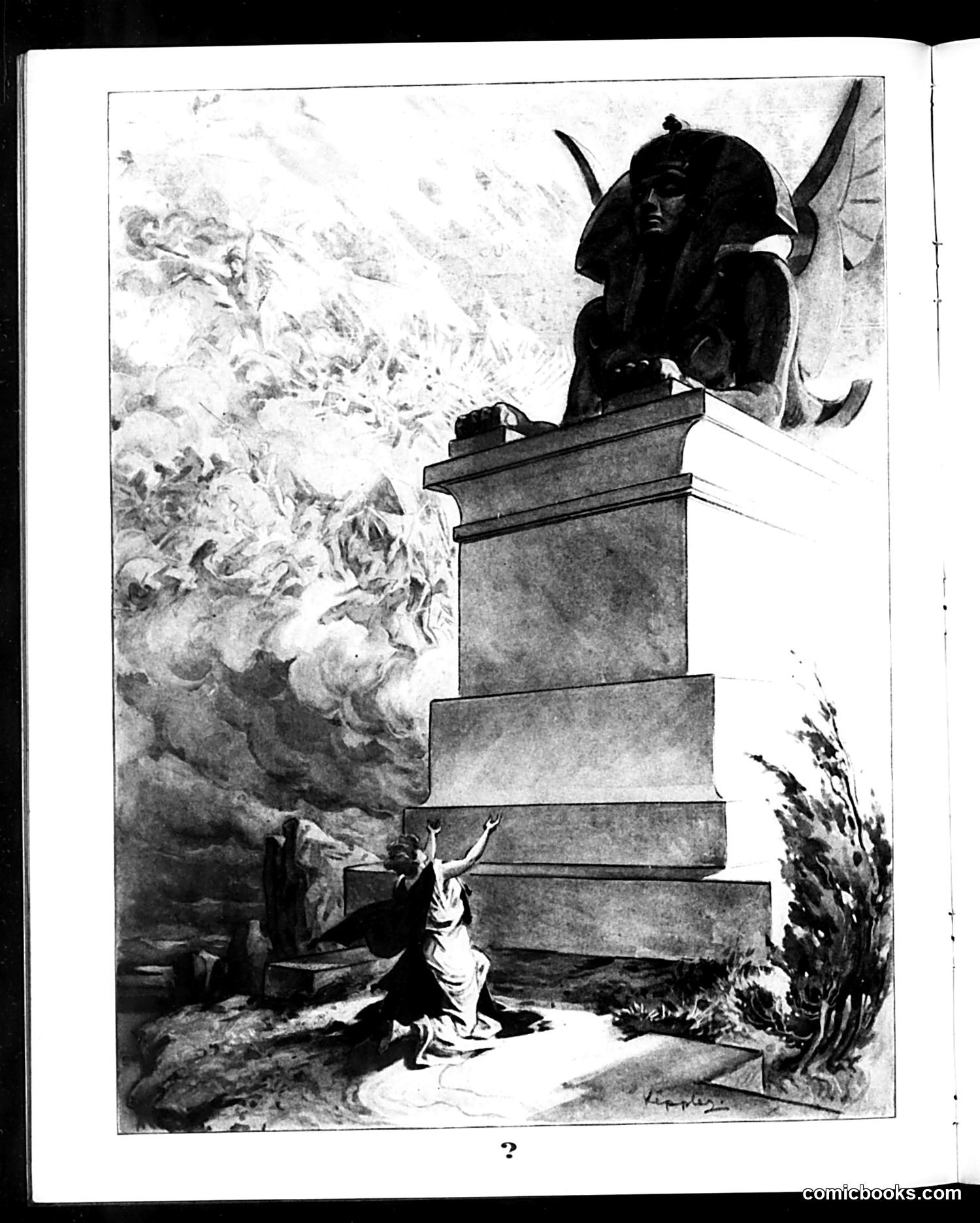
This appears to be a satirical illustration showing a demonic or devilish figure perched atop a large pedestal or monument. Below, a human figure in classical dress kneels or cowers in apparent fear or submission. The imagery suggests political or social commentary about power dynamics—likely depicting how a malevolent force (represented by the demon) has gained dominance over humanity or a nation. The pedestal's monumental scale emphasizes the grotesque elevation of this evil influence. Without visible text identifying specific figures or dates, the precise historical reference remains unclear. However, the style and format suggest this critiqued a contemporary political leader, ideology, or social problem that Judge's readership would have immediately recognized as threatening or corrupting to society.
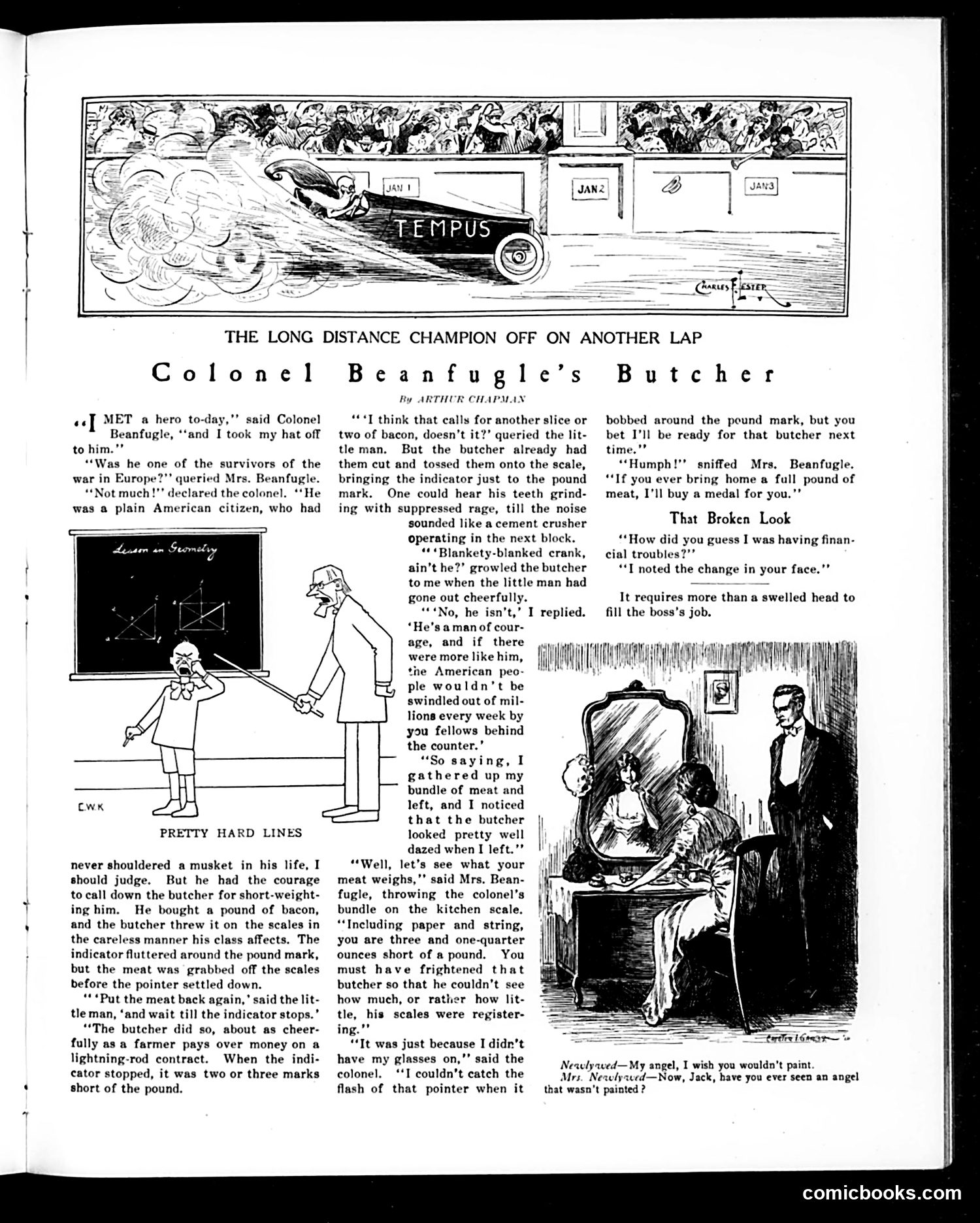
This satirical story lampoons consumer fraud and retail dishonesty. Colonel Beanfugle praises an ordinary citizen as a "hero" for standing up to a butcher who uses deceptive scales to short-weight customers. When the butcher carelessly tosses bacon on the scale, the colonel demands he wait until the indicator settles—revealing the meat is significantly underweight. The joke's irony: Beanfugle calls this act of basic consumer vigilance heroic, suggesting such fraud was rampant and most people too passive to resist it. The punchline undercuts him—his own wife discovers he brought home short-weighted meat anyway, implying either his confrontation failed or butchers were universally cheating. The accompanying cartoons ("Pretty Hard Lines" and "That Broken Look") appear to be unrelated domestic humor vignettes typical of Judge magazine's format. This reflects Progressive-era concerns about business dishonesty and working-class vulnerability to merchant exploitation.
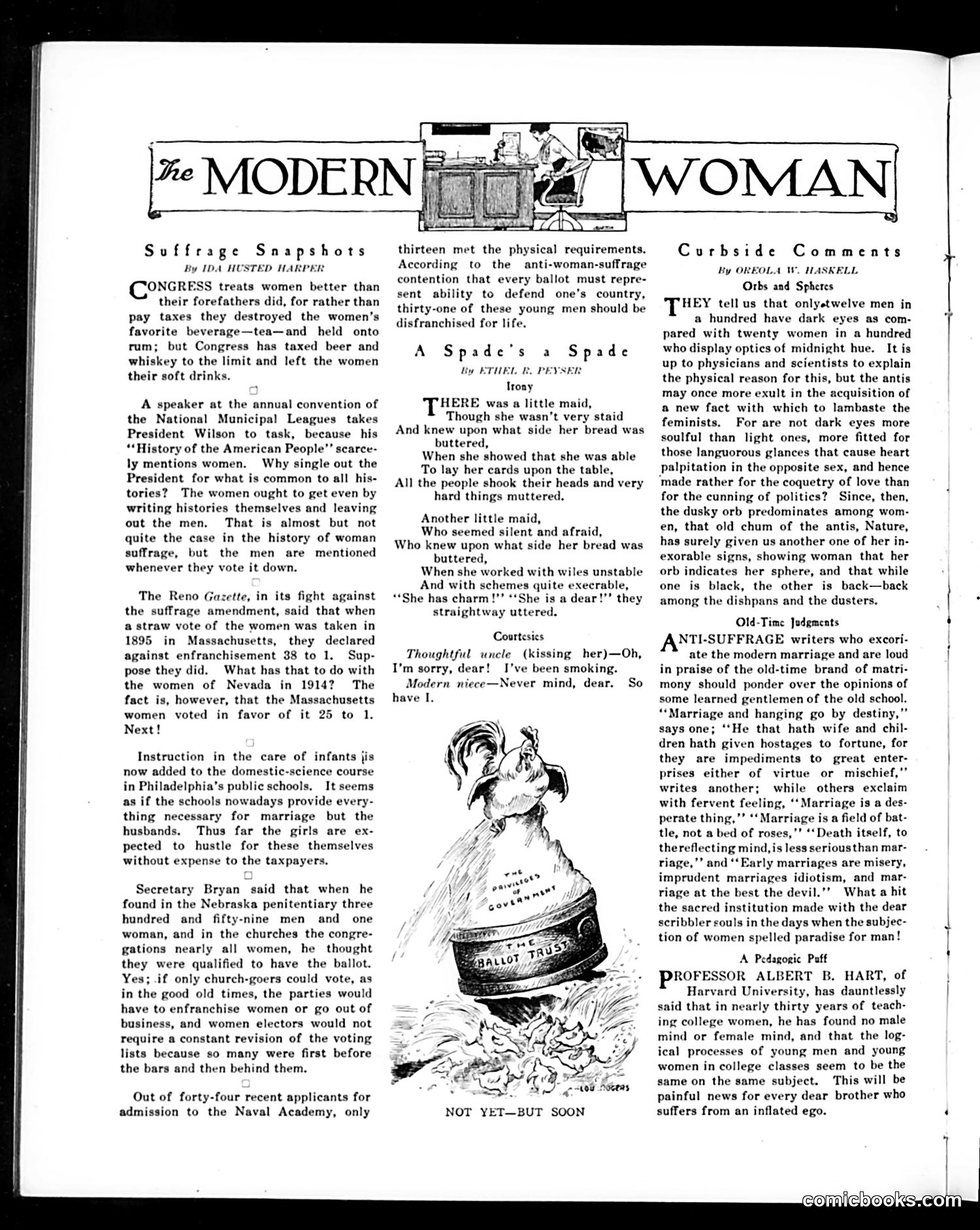
This page from Judge satirizes anti-suffrage arguments through multiple pieces. The main text columns attack opponents of women's voting rights by exposing logical fallacies and hypocrisies in their positions. **"Suffrage Snapshots"** by Ida Husted Harper uses ironic examples: Congress taxed beer and whiskey but not women's soft drinks (implying women lack political power); anti-suffragists cite an 1895 Massachusetts straw vote against suffrage while ignoring that same state later voted 25-to-1 *for* it; and she notes that if only churchgoers could vote, women would dominate the electorate. **"A Spade's a Spade"** contrasts two young women—one honest, one manipulative—to mock society's reward of feminine deception over directness. The **cartoon** (captioned "NOT YET—BUT SOON") depicts a woman labeled "BALLOT TIED" in chains, symbolizing women's denied voting rights and the anticipated future enfranchisement. **"Orbs and Spheres"** sarcastically addresses anti-feminist claims that women's darker eyes suit them for romance rather than politics—mocking the argument that biological differences disqualify women from civic participation.
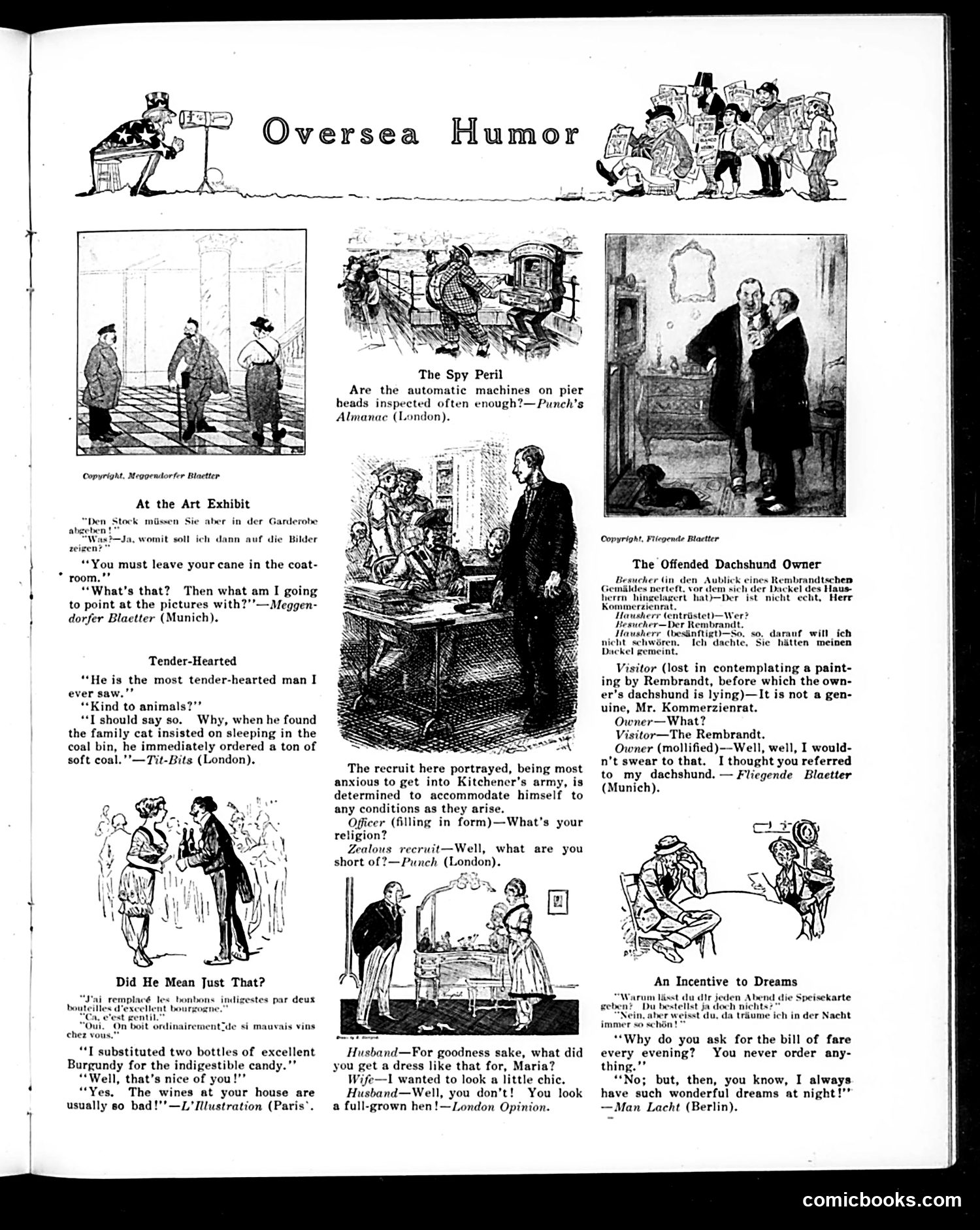
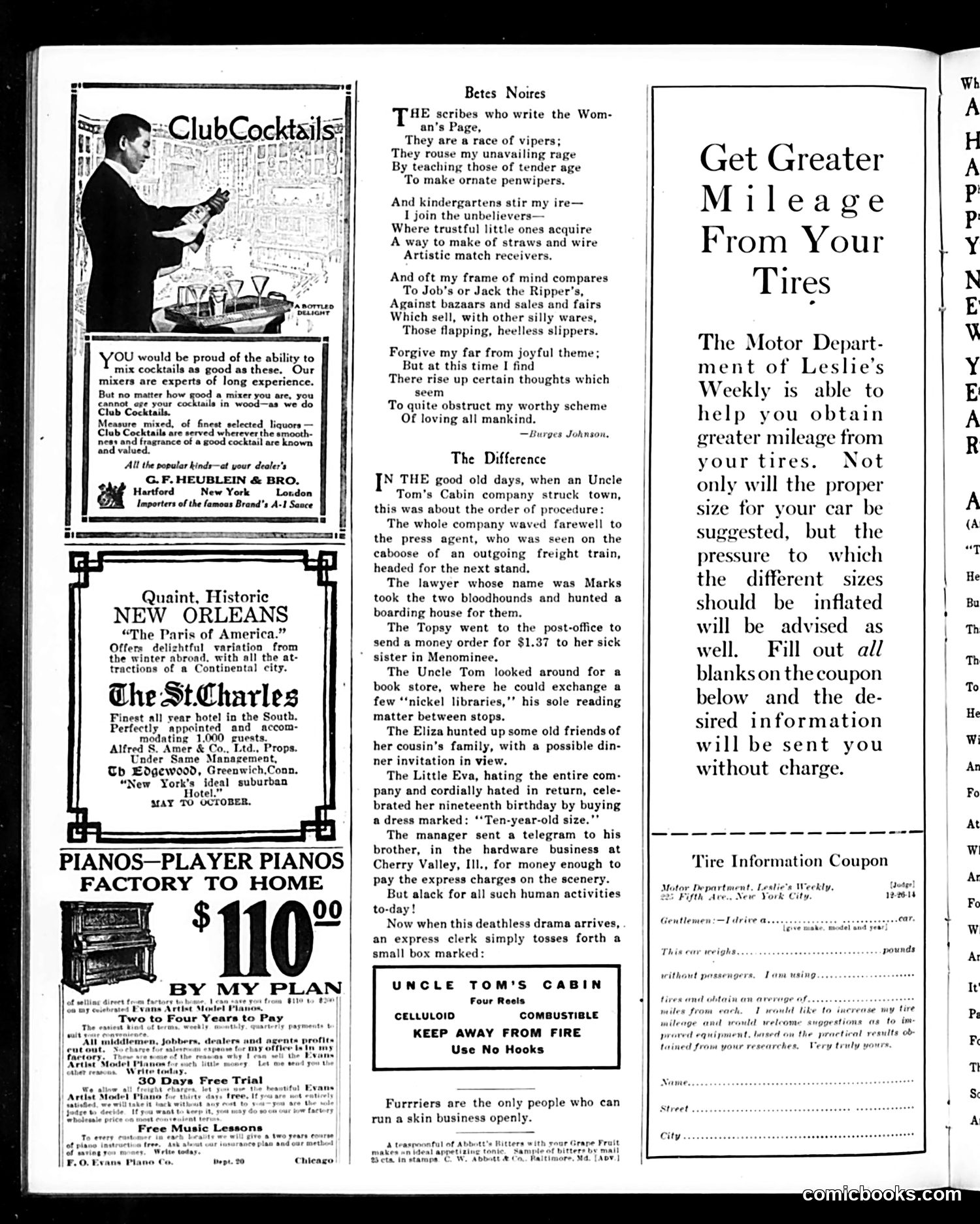
This page is primarily **advertising and service content** rather than political satire, though it includes one humorous poem. The main satirical piece is **"Betes Noires"** (French for "pet peeves"), a poem by Burges Johnson mocking women's magazine culture. The author complains about Women's Page writers ("a race of vipers") who teach children to make crafts like "ornate penwipers" and "match receivers" from straws and wire. He also criticizes kindergartens, bazaars, and stores selling frivolous items like "heelless slippers"—targeting the sentimental domesticity and commercialized sentimentality marketed to women in the early 20th century. **"The Difference"** humorously contrasts how traveling theater troupes (specifically Uncle Tom's Cabin companies) once operated with multiple cast members handling logistics, versus the modern era where a single express clerk ships the entire production as a small celluloid film box—satirizing cinema's disruption of live theater. The remainder consists of advertisements for cocktail mixers, hotels, pianos, and tire information services typical of the era's magazines.
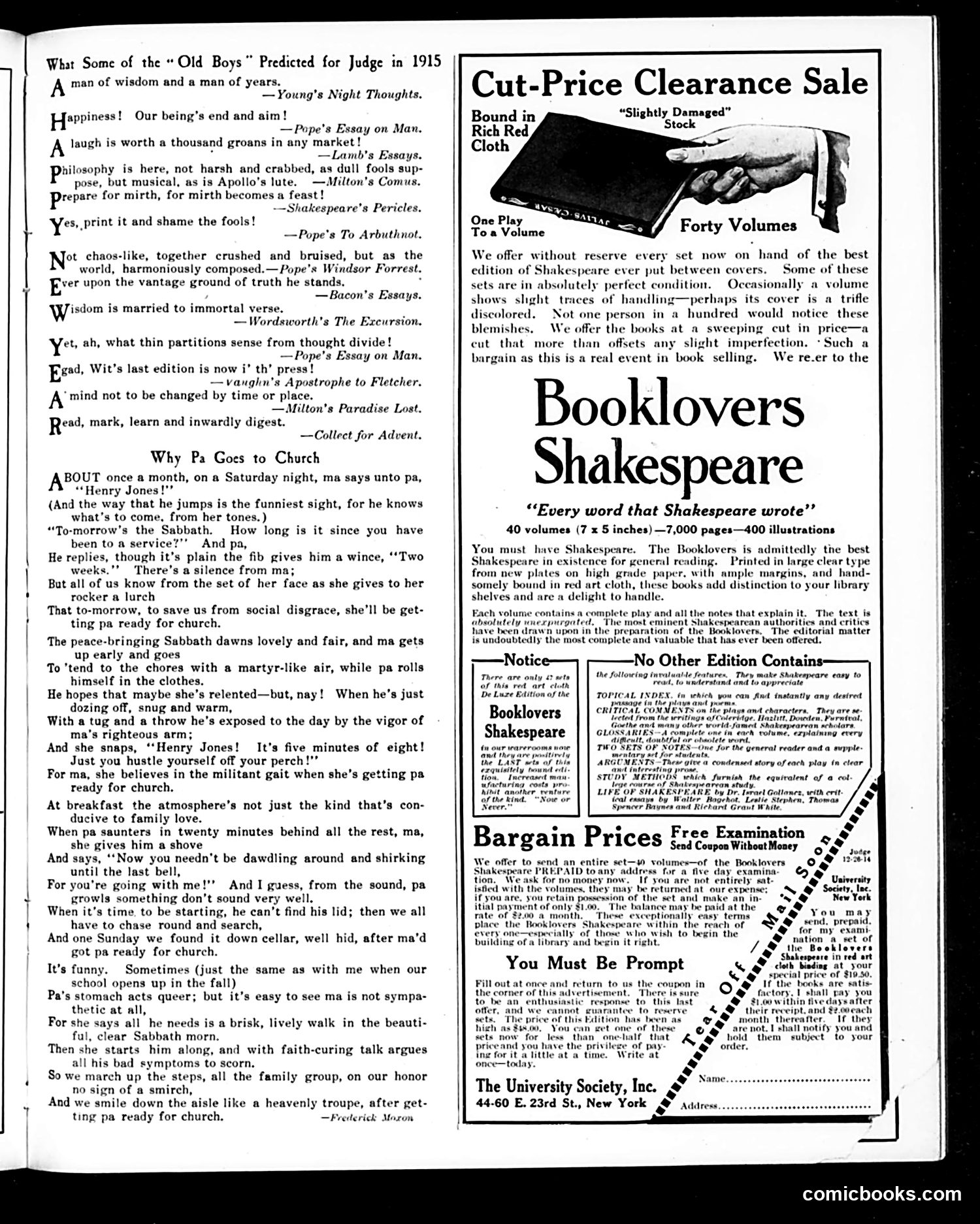
This page contains two distinct elements: **Left side: "Why Pa Goes to Church"** — A humorous domestic narrative poem depicting the weekly struggle of getting a reluctant husband (Henry Jones) to attend church. The satire targets both marital dynamics and religious hypocrisy: Pa attends out of social obligation rather than genuine piety, while Ma enforces attendance through domineering tactics. The joke relies on period gender stereotypes—the nagging wife, the lazy husband, the appearance of family respectability masking internal discord. **Right side: Advertisement** — A clearance sale for "Bookloovers Shakespeare," a 40-volume complete works set. The ad emphasizes affordability and notes volumes are "slightly damaged" but essentially perfect. This appears alongside the church content coincidentally rather than as connected satire. The page is primarily entertainment and advertising rather than political commentary. The church poem reflects early 20th-century American attitudes about obligatory religious observance and domestic relations.
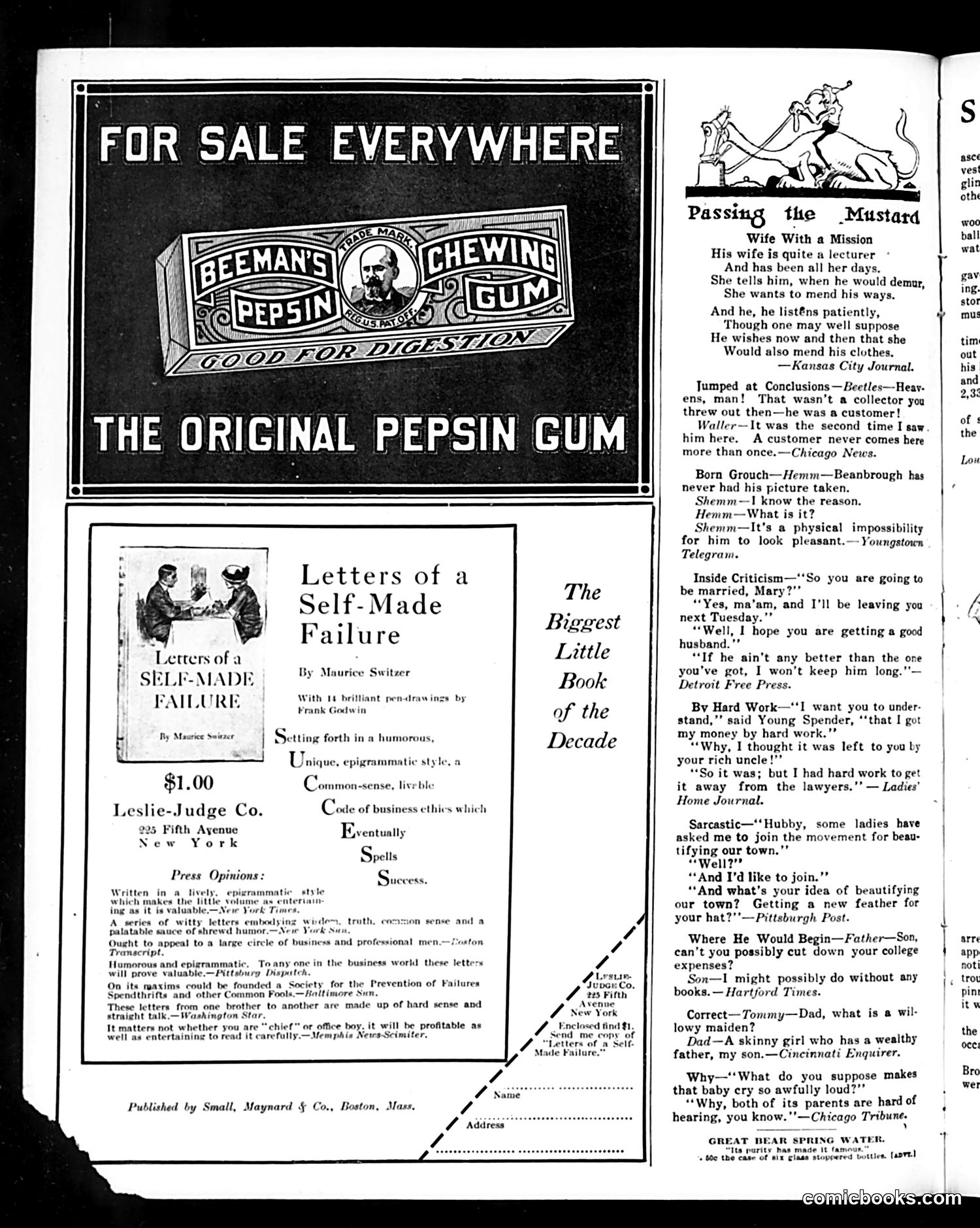
This page is primarily **advertising and humor content**, not political cartooning. The dominant feature is a full-page ad for **Beeman's Pepsin Chewing Gum** ("The Original Pepsin Gum"), marketed as "Good for Digestion." Below that are advertisements for two books: *Letters of a Self-Made Failure* by Maurice Switzer (with illustrations by Frank Godwin) and *The Biggest Little Book of the Decade*. The right column contains **humorous short jokes and anecdotes** typical of Judge magazine's satirical humor, including domestic comedy ("Passing the Mustard: Wife With a Mission"), workplace humor, and observations about marriage and social behavior. These are generic witticisms rather than references to specific political events or identifiable figures. The overall page reflects early 20th-century middlebrow American humor: gentle satire about marriage dynamics, social pretension, and business life, aimed at the magazine's professional-class readership.
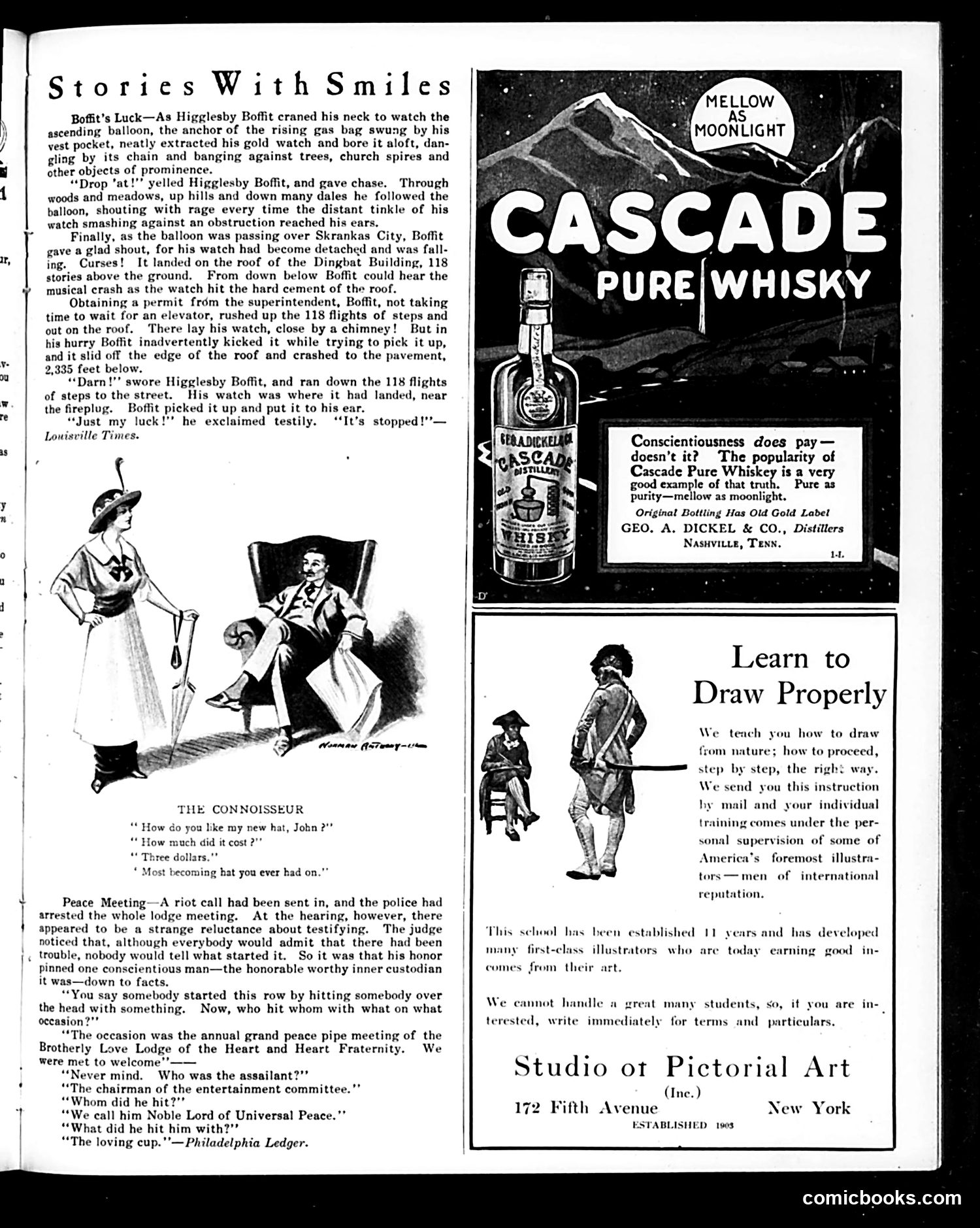
This page contains three humorous anecdotes typical of Judge magazine's satirical humor: **"Boffit's Luck"** mocks the irony of persistence meeting disaster. A man chases his gold watch through the air, down a 118-story building, and across a city—only to recover it completely stopped, rendering his entire exhausting pursuit meaningless. The joke satirizes obsessive determination that achieves nothing. **"The Connoisseur"** is a brief visual joke about pretense. A man praises another's cheap three-dollar hat as "most becoming," illustrating false flattery and social hypocrisy in polite conversation. **"Peace Meeting"** satirizes fraternal lodge meetings and their mock-serious ceremonies. When police arrest lodge members for fighting at a "peace pipe meeting," members' reluctance to testify and their use of absurd titles ("Noble Lord of Universal Peace") for someone who hit others with a "loving cup" mocks the pomposity and contradiction of such organizations. The page also contains period advertisements for Cascade whiskey and a drawing-instruction school.
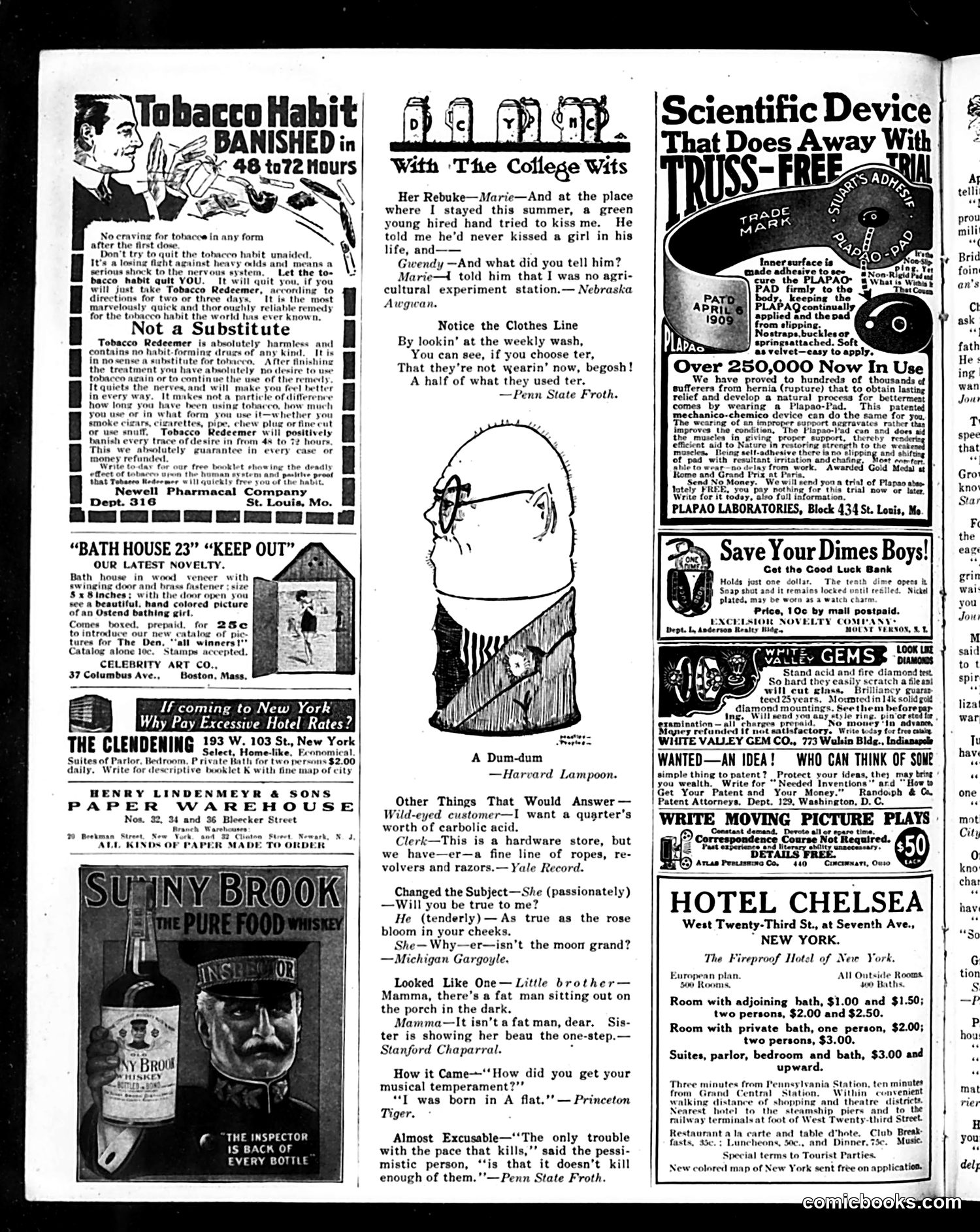
This page contains primarily **advertisements and humor reprinted from college publications**, rather than political cartoons. The central illustration—a large face labeled "A Dum-dum"—appears to be a generic humorous doodle, not a caricature of a specific person or political figure. The page's content reflects early 1900s concerns: a "Tobacco Redeemer" patent medicine promising to break smoking habits within "48 to 72 hours"; advertisements for rupture/hernia supports and medical devices; and novelty items like a coin-locking piggy bank. The college humor snippets (from Penn State, Princeton, Yale, etc.) include mild sexual innuendo—a young woman comparing a farmhand's sexual inexperience to an "agricultural experiment," jokes about women's hemlines dropping, and dancing couples in the dark. These reflect period anxieties about changing gender roles and looser social behavior among youth. The satire is gentle domestic comedy rather than political critique.
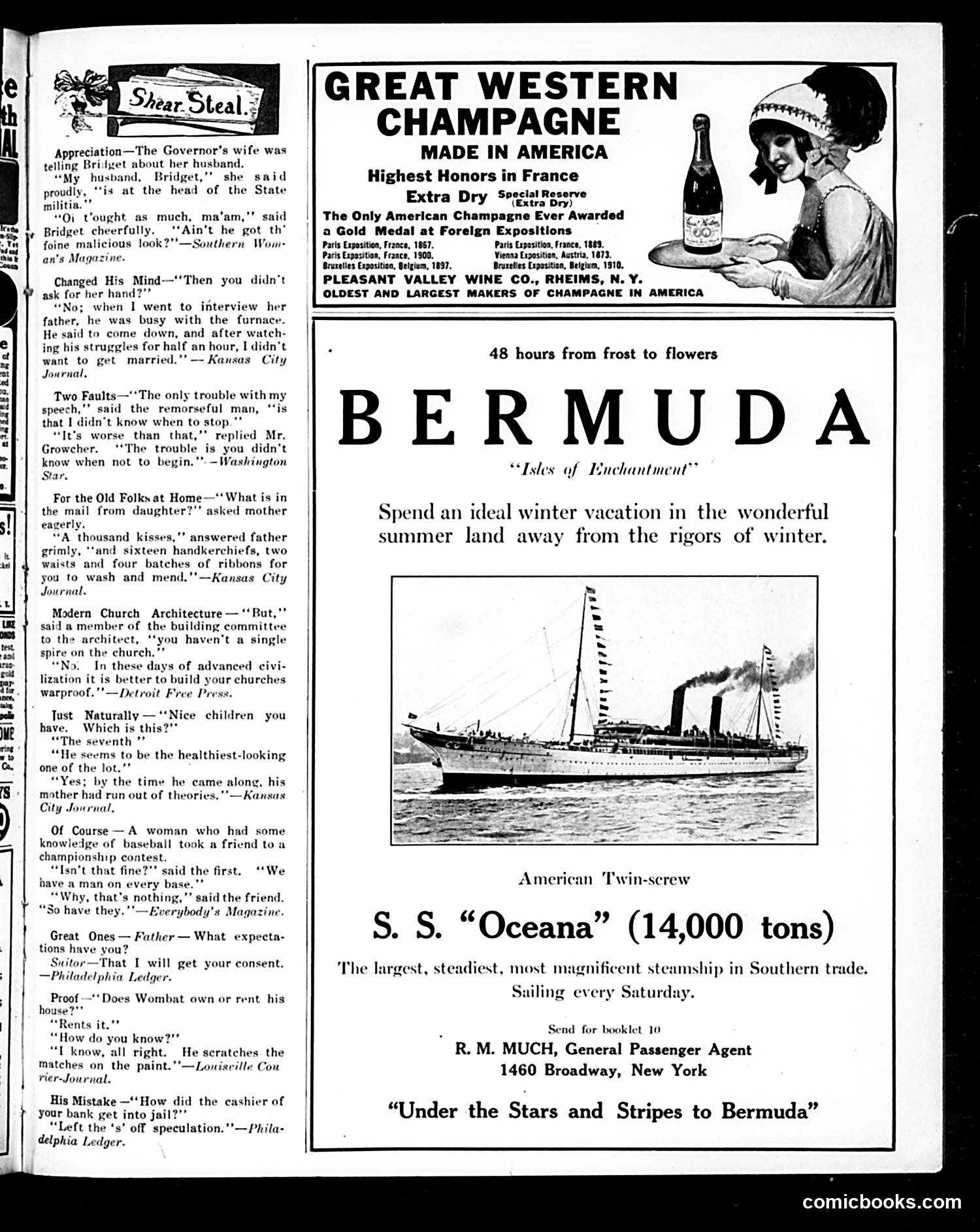
This page is primarily **advertising**, not political satire. The dominant content includes: **Main Advertisements:** - Great Western Champagne (American-made, claiming French honors) - S.S. "Oceana" steamship to Bermuda (14,000 tons, sailing Saturdays from New York) **Sidebar Humor:** The left column contains brief jokes typical of early 20th-century humor magazines—mostly playing on Irish domestic servants ("Bridget"), marital mishaps, and wordplay. For example, one joke mocks a man who watched his potential father-in-law struggle with a furnace and decided against marriage. **Social Context:** The champagne ad emphasizes American industrial prowess by claiming medals at international expositions. The Bermuda voyage advertises leisure travel for the wealthy. The jokes reflect period stereotypes and domestic comedy conventions. The page reflects early 1900s advertising and humor conventions—no specific political cartoon or identifiable caricature is present. It's a typical magazine layout mixing ads with filler humor.
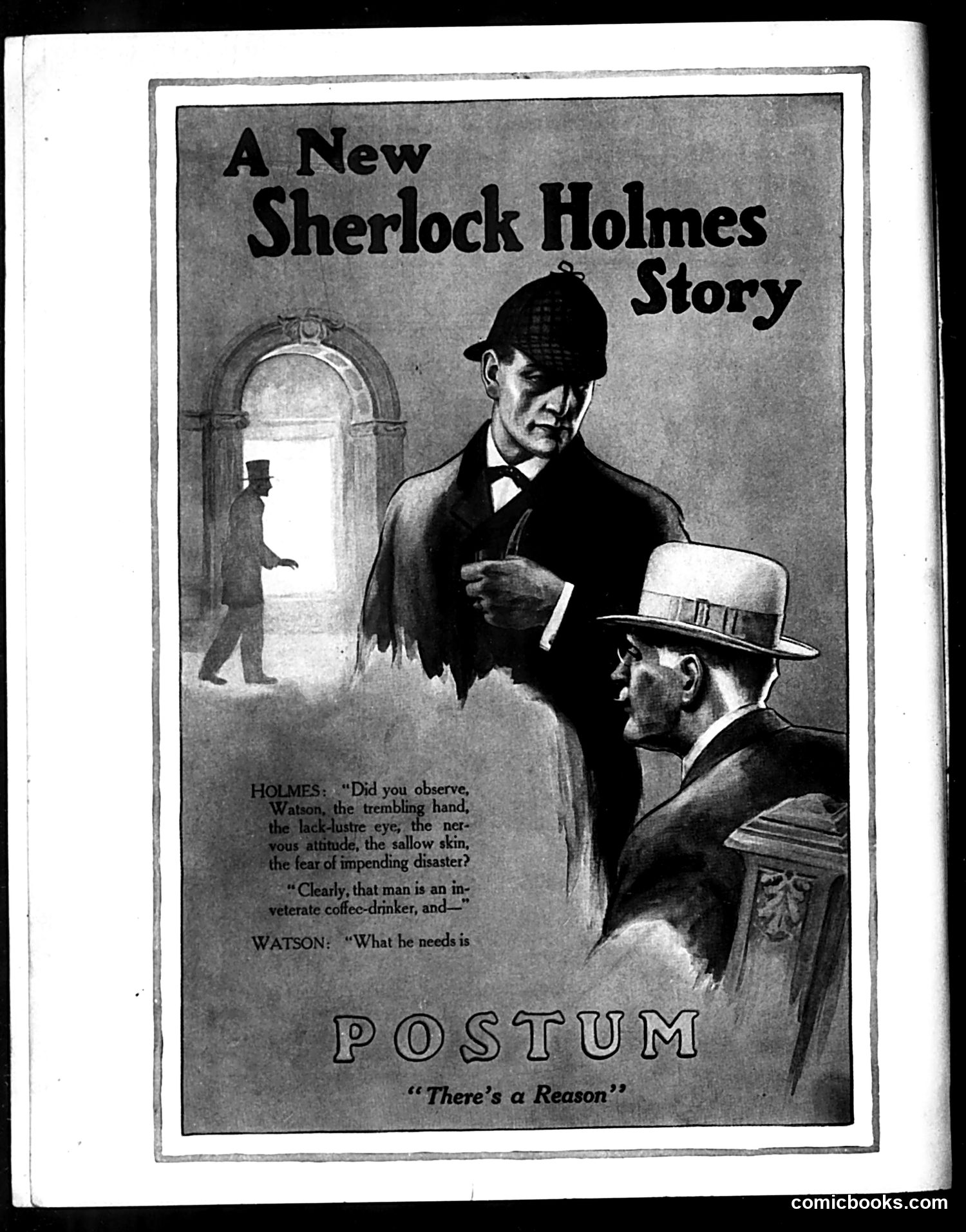
This page advertises a Sherlock Holmes film called "Postum: 'There's a Reason.'" It's primarily a **product advertisement** masquerading as entertainment content. The image shows Holmes and Watson in a dramatic scene, with quoted dialogue where Holmes deduces that a man is "an inveterate coffee-drinker" based on observable signs. Watson responds "What he needs is—" (presumably Postum, a caffeine-free coffee substitute). The satire is subtle: by framing a consumer product pitch as a Sherlock Holmes deduction, the ad conflates product endorsement with detective logic. It suggests Postum's superiority can be "deduced" scientifically, a common advertising technique of the era. The joke plays on Holmes's reputation for brilliant observation—here applied to selling a substitute beverage rather than solving crimes.

I can see this is a page from Judge magazine, but the image is almost entirely black with only a white margin visible on the left side and the "comicbooks.com" watermark at the bottom right. No cartoon illustrations, text content, or readable details are discernible in this heavily darkened or poorly scanned image. To provide meaningful analysis of the political satire, caricatures, and historical references you're asking about, I would need a clearer, properly exposed version of the page. As it stands, I cannot identify any figures, jokes, or social commentary with confidence.