
Judge, 1914-12-26 · page 6 of 25
Judge — December 26, 1914 — page 6: what you’re looking at
What you’re looking at
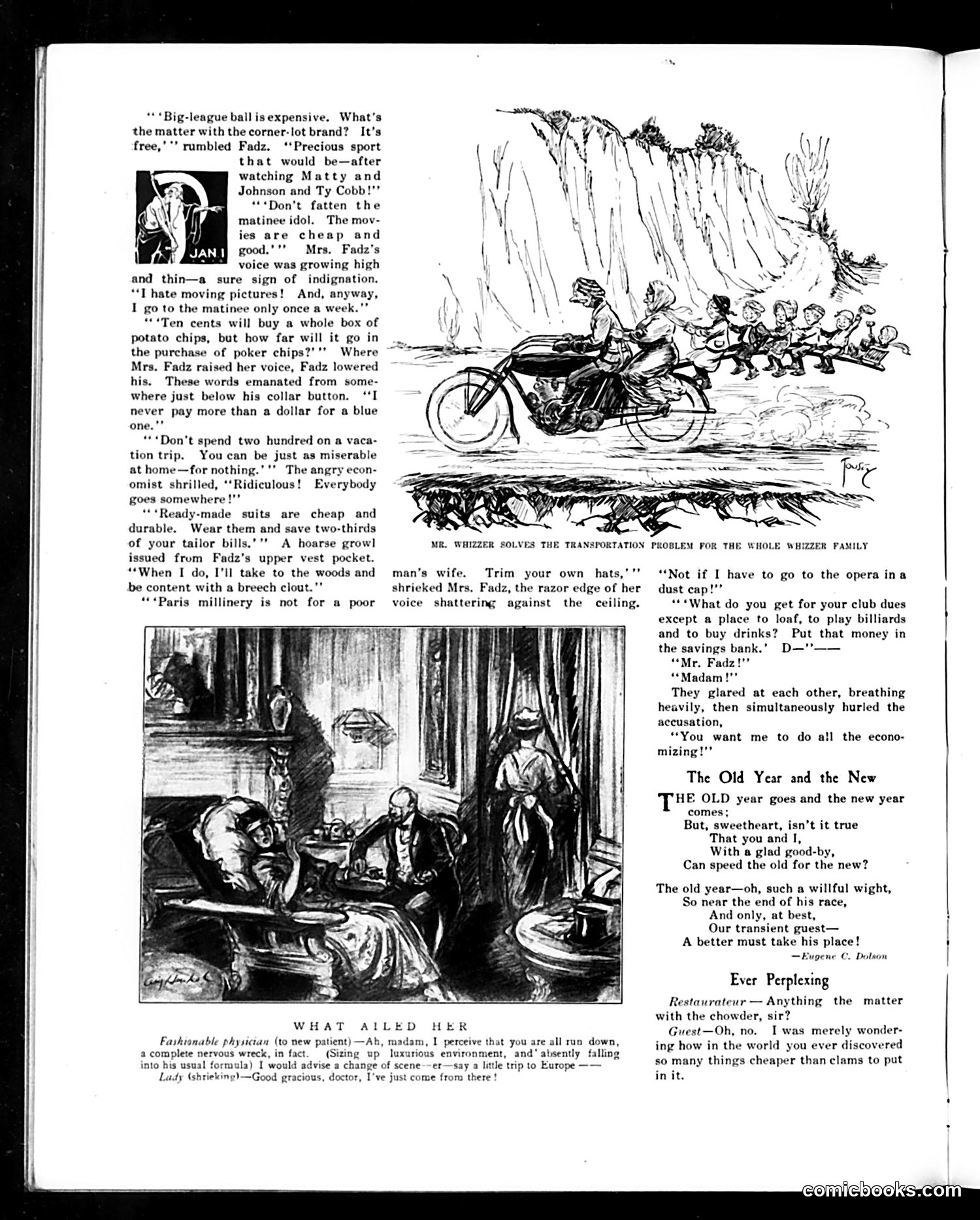
This page from *Judge* satirizes marital conflict over household finances during the early 20th century. The main cartoon features "Fadz" and Mrs. Fadz arguing about spending and economizing. He dismisses cheap entertainment (corner baseball, movies, potato chips) while she objects to his frivolous expenses (poker chips, tailored suits, Paris hats). Each accuses the other of excessive spending—the satire's point being that couples blame each other for financial troubles while both resist genuine economy. The "Mr. Whizzer" cartoon above shows a practical solution: motorcycle transportation for the whole family, mocking elaborate vacation planning. Secondary cartoons mock doctors prescribing expensive European trips and restaurants cutting costs by disguising non-clam ingredients in chowder. The era's context: pre-Depression anxieties about middle-class consumption and the emerging "companionate marriage" ideal where spouses disagreed openly about money.
📄 Transcribed text from this page (OCR, searchable)
Machine-transcribed from the original scan — historical spelling and the odd misread are preserved.
“**Big-league ball isexpensive. What's the matter with the corner-lot brand? It’s free,’*’ rumbled Fadz. ‘‘Precious sport that would be—after watching Matty and Johnson and Ty Cobb!"" “Don't fatten the matinee idol. The mov- ies are cheap and good.’ Mrs. Fadz’s voice was growing high and thin—a sure sign of indignation. “T hate moving pictures! And, anyway, I go to the matinee only once a week.” ***Ten cents will buy a whole box of potato chips, but how far will it go in the purchase of poker chips?’’’ Where Mrs. Fadz raised her voice, Fadz lowered his. These words emanated from some- where just below his collar button. ‘‘I never pay more than a dollar for a blue one.”* ***Don’t spend two hundred on a vaca- tion trip. You can be just as miserable at home—for nothing.’ '’ The angry econ- omist shrilled, **Ridiculous! Everybody goes somewhere !"’ ‘**Ready-made suits are cheap and durable. Wear them and save two-thirds of your tailor bills.’"” A hoarse growl issued frum Fadz’s upper vest pocket. “*When I do, I'll take to the woods and ‘ontent with a breech clout."’ Paris millinery is not for a poor man’s wife. MR. WHIZZER SOLVES THE TRANSPORTATION PROBLEM FOR THE WHOLE WHIZZER PAMILY shrieked Mrs, Fadz, the razor edge shattering against the c voice WHAT Al Fashionable physician (to new patient) —Ab, madam, I perceive that you are all run down, luxurious environment, and’ absently falling a complete nervous wreck, in fact. (Sizing into his usual a) I would advise a Lady (shtieking)—Good gracious, doc LED of scene HER er say a little trip to Europe —— I've just come from there! Trim your own hats, “Not if I have to go to the opera ina dust cap!"’ “‘*What do you get for your club dues except a place to loaf, to play billiards and to buy drinks? Put that money in the savings bank.’ Pe “Mr. Fadz!’" “Madam!"" They glared at each other, breathing heavily, then simultaneously hurled the accusation, “You want me to do all the econo- mizing!" The Old Year and the New THE OLD year goes and the new year comes ; But, sweetheart, isn’t it true That you and I, With a glad good-by, Can speed the old for the new? The old year—oh, such a willful wight, So near the end of his race, And only, at best, Our transient guest— A better must take his place! Eugene C. Dotson Ever Perplexing Restaurateur — Anything the with the chowder, sir? Guest—Oh, no. I was merely wonder- ing how in the world you ever discovered so many things cheaper than clams to put in it. matter