
A complete issue · 26 pages · 1912
Judge — July 20, 1912
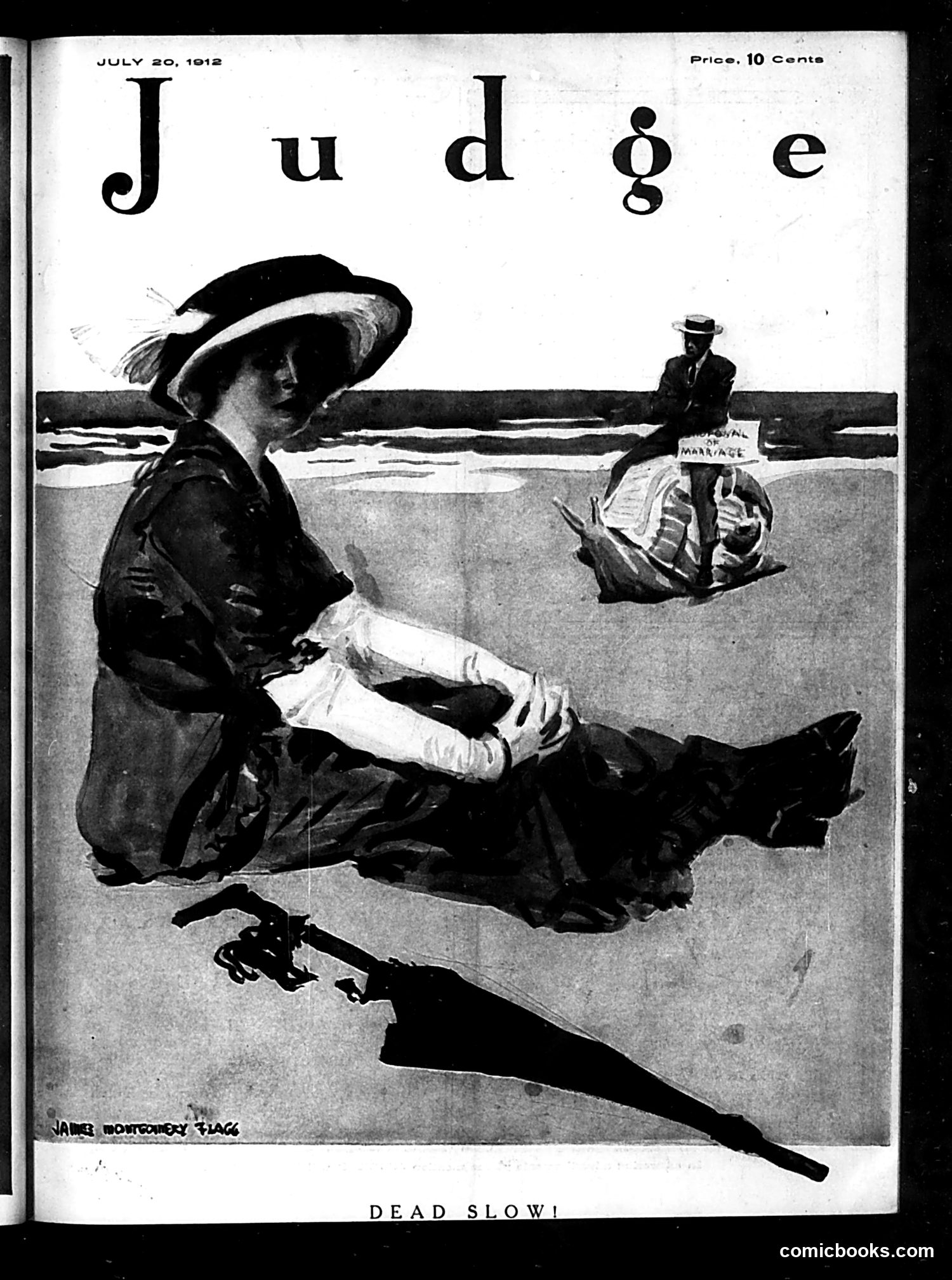
This cartoon satirizes a marriage scandal or divorce case that was apparently newsworthy enough to occupy public attention. The title "Dead Slow" suggests the proceedings are moving at a glacial pace. The image shows a woman in fashionable dress reading what appears to be marriage or legal documents while sitting on a beach. In the background, figures appear to be waiting or observing. The cartoon's social commentary likely critiques either: 1. The prolonged nature of high-profile matrimonial disputes among the wealthy 2. Public fascination with scandal involving prominent figures 3. The slow machinery of the legal system The specific identities of the figures and the particular case referenced are unclear from the image alone, though the 1912 date suggests this references a notable contemporary scandal.
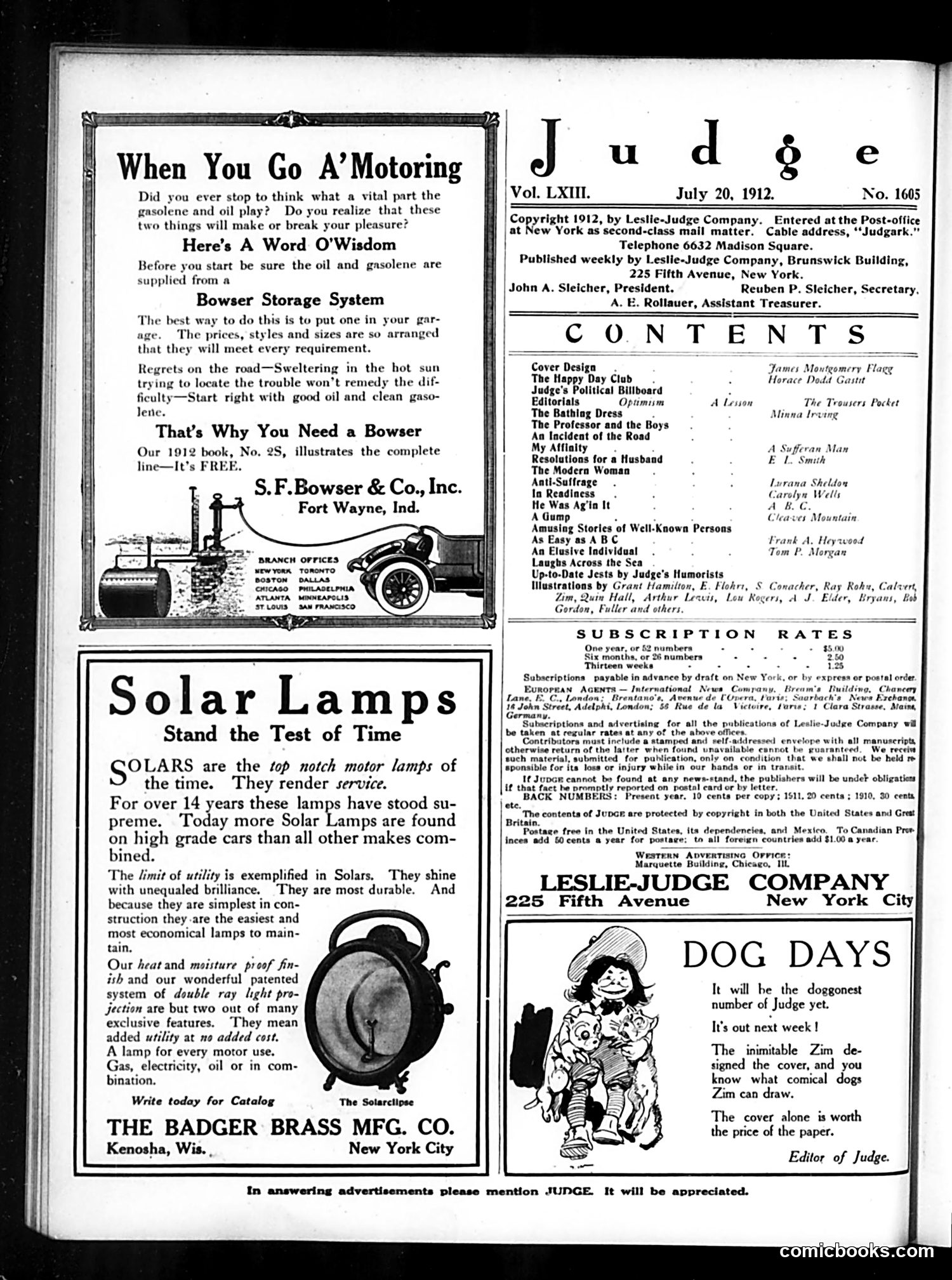
This page is primarily **advertising and contents listing** rather than political satire. The left side features ads for automotive products (Bowser Storage Systems, Solar Lamps) targeting early motorists—practical concerns about fuel storage and vehicle lighting in the pre-standardized automobile era. The right side contains the magazine's table of contents and subscription information. The notable item is "**Dog Days**" by the Editor, featuring an illustration of a child with dogs. This appears to be a humorous piece about summer heat (the literal meaning of "dog days"), not political commentary. The page reflects 1912 consumer culture and the nascent automobile industry rather than satirical commentary.
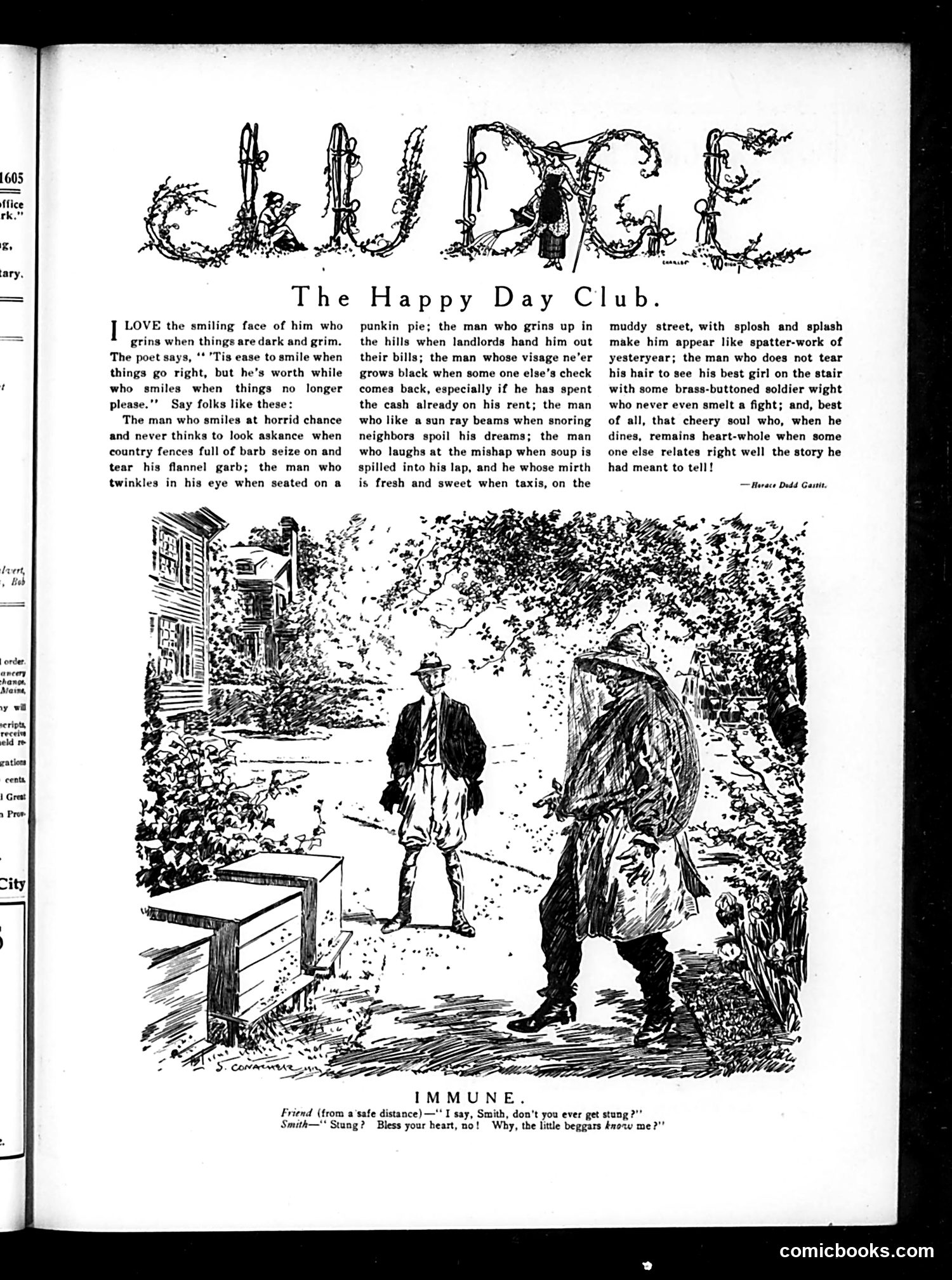
This page presents two pieces. The top text, "The Happy Day Club," celebrates people who maintain cheerfulness despite hardship—those who smile through poverty, muddy streets, and disappointment. It's a sentimental celebration of working-class resilience. The bottom cartoon, titled "Immune," depicts two men at a distance during what appears to be a contagious disease outbreak. One asks if the other ever gets sick; the response suggests immunity comes from having beggars around. The joke appears to reference either actual disease fears (possibly cholera or similar epidemics common in the era) or uses illness metaphorically. The "immunity" through exposure to poverty is darkly comedic social commentary—suggesting the poor's constant exposure to filth and disease makes them hardier than the wealthy.
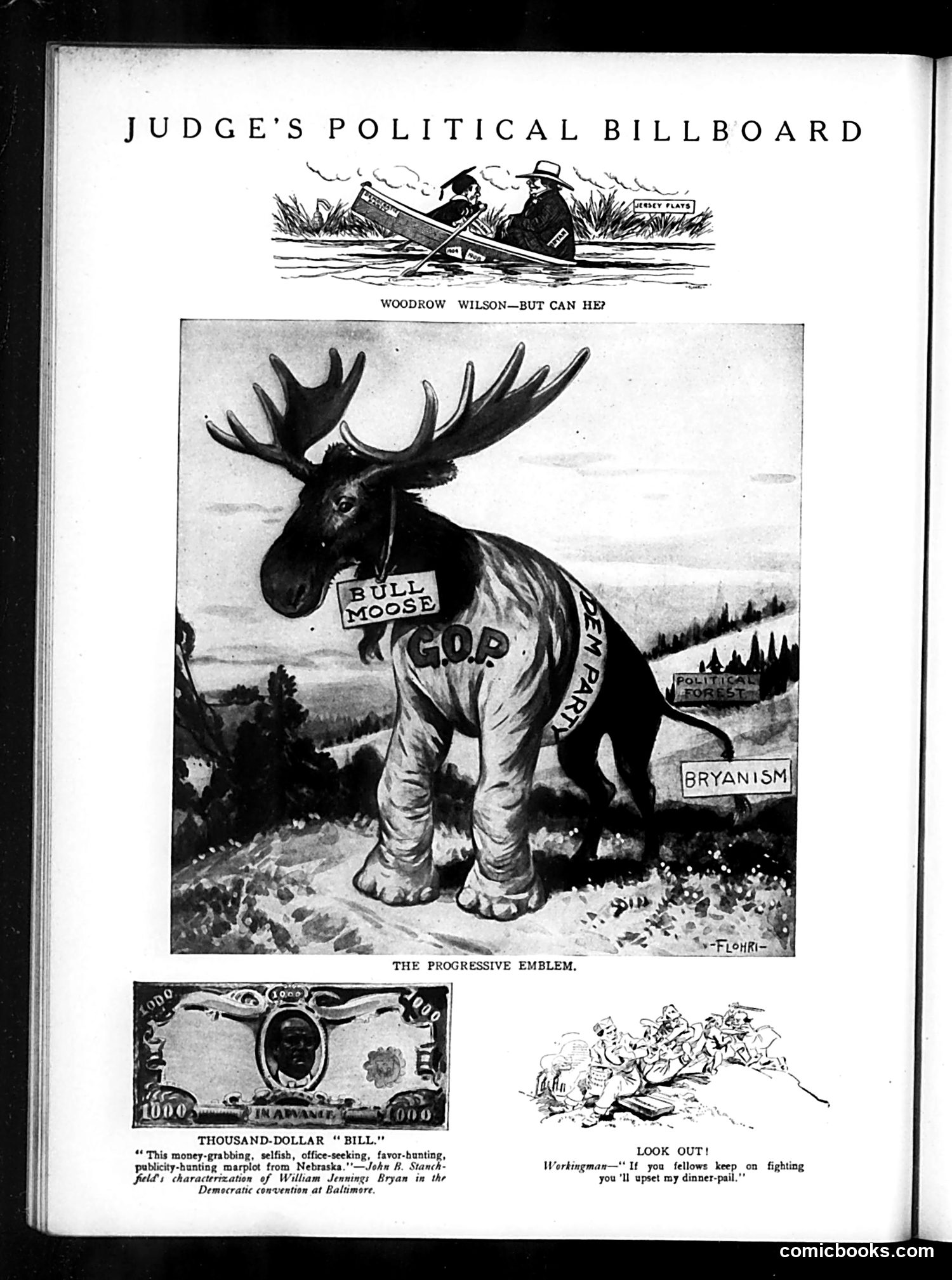
This page satirizes William Jennings Bryan, the Democratic presidential candidate, through three interconnected cartoons attacking his 1896 campaign. **"The Progressive Emblem"** depicts a moose labeled with Bryan's key positions: "Bull Moose," "GOP," "Bryanism," and "Political Parties." The absurd hybrid animal represents Bryan's contradictory stances—appearing to appeal simultaneously to Republicans and Democrats while promoting his own ideology. **"Thousand-Dollar Bill"** mocks Bryan as money-grabbing and self-serving, characterizing him as a corrupt Nebraska politician. **"Look Out!"** warns workingmen that Bryan's policies will destroy their livelihoods. Collectively, these cartoons attack Bryan as a charlatan with muddled positions, corrupt motives, and dangerous economic policies that threaten ordinary workers.
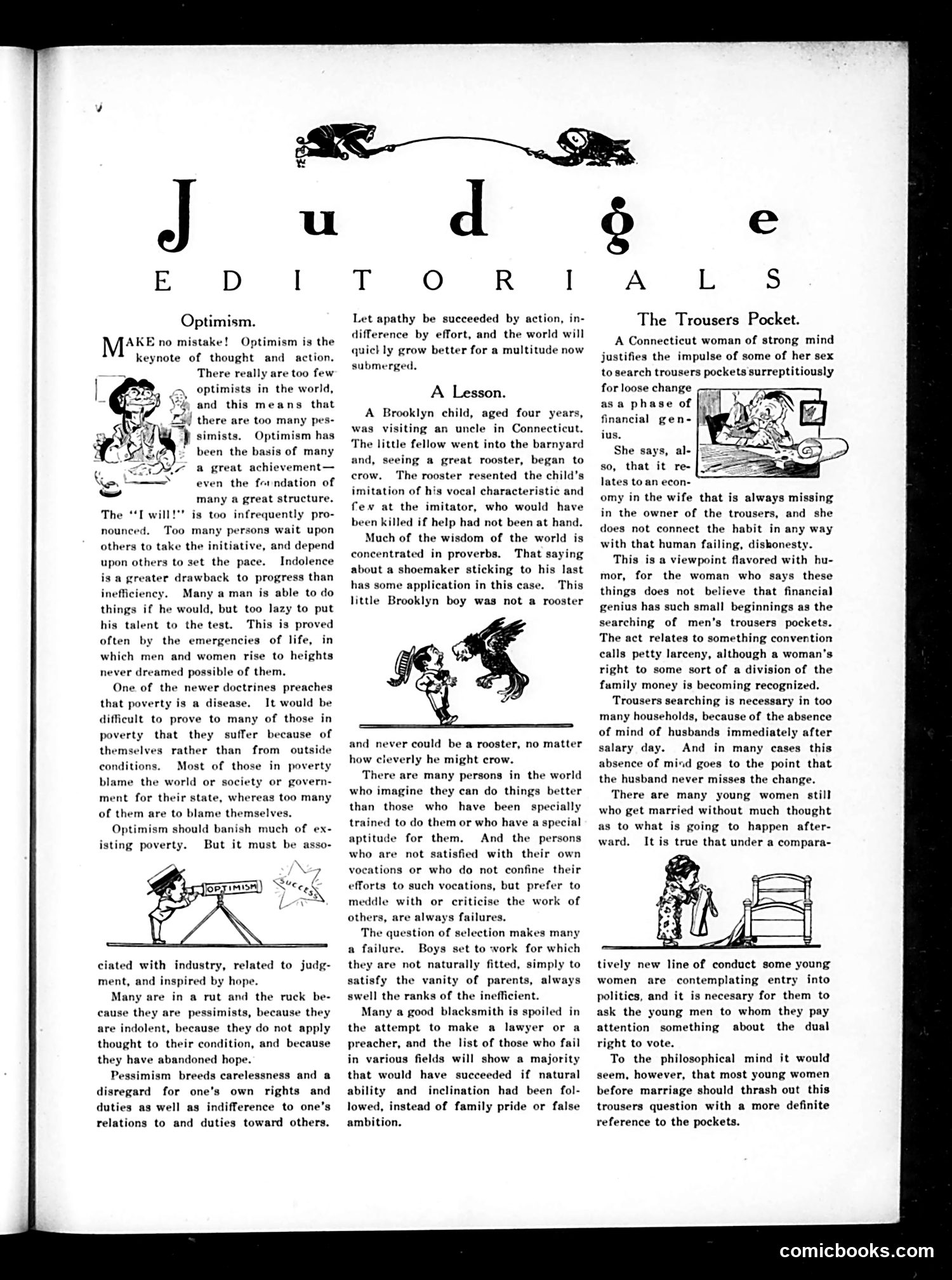
This page contains three editorial pieces rather than political cartoons: 1. **"Optimism"** (left): A brief essay arguing optimism enables achievement, contrasting it with pessimism's paralysis. The small illustration shows someone looking through a telescope labeled "OPTIMISM." 2. **"A Lesson"** (center): A parable about a Brooklyn boy who imitates a rooster, learning that natural ability matters more than imitation. The moral critiques those who attempt work they're unsuited for. 3. **"The Trousers Pocket"** (right): Defends women searching their husbands' trouser pockets for money, arguing financial transparency in marriage is reasonable. It advocates for women's economic awareness before marriage. These pieces reflect early 20th-century concerns about personal virtue, gender roles, and marital finances rather than specific political events or figures.
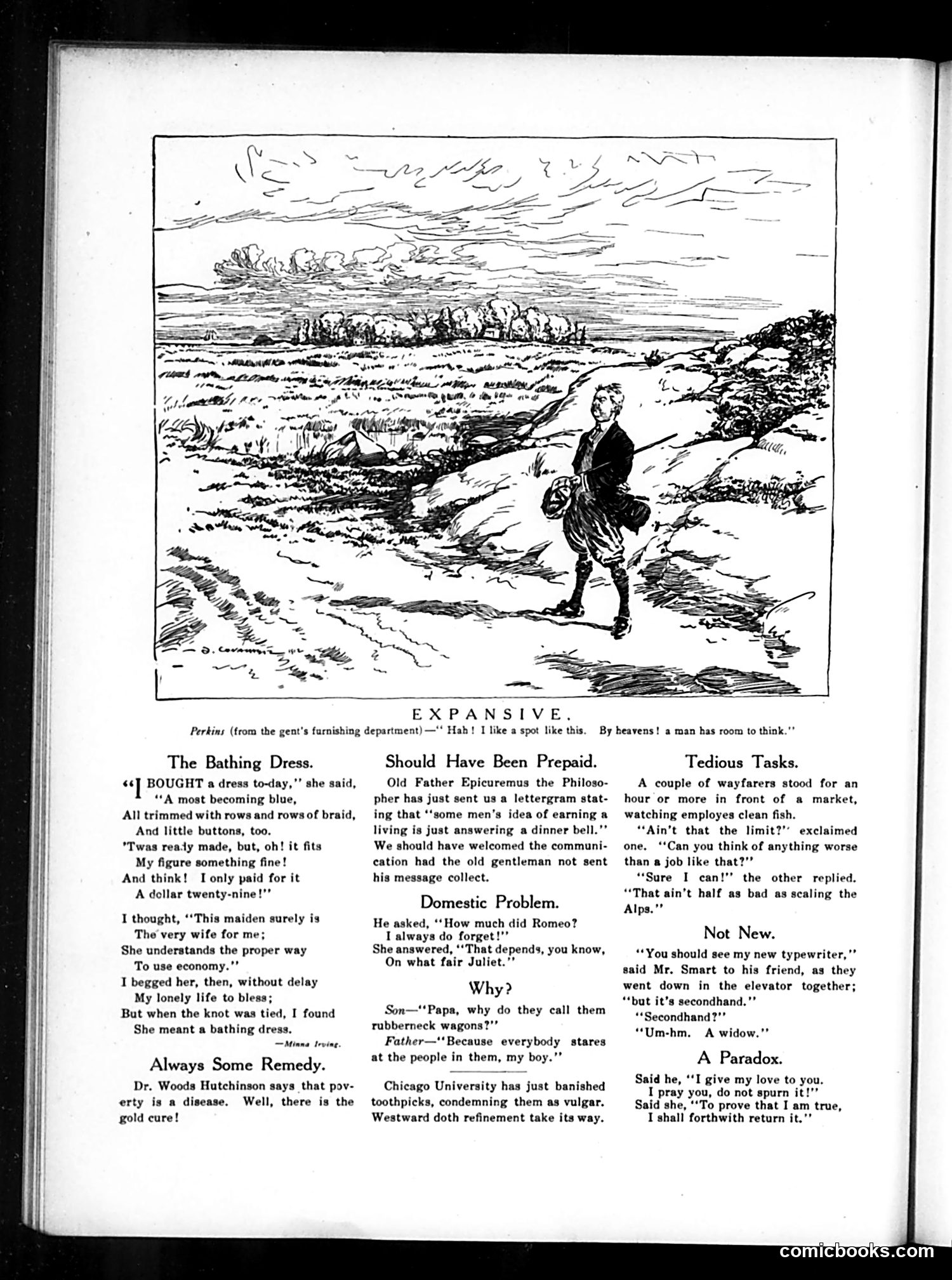
This page from the satirical magazine **Judge** contains multiple short humorous pieces typical of early 20th-century American wit: **"The Bathing Dress"** mocks a man fooled by his frugal fiancée—she bragged about buying an economical dress for $1.29, but meant her bathing suit, leaving him disillusioned about her thriftiness. **"Always Some Remedy"** jokes that Dr. Hutchinson's claim poverty is a "disease" has an ironic cure: gold (money)—a jab at simplistic solutions to complex social problems. **"Should Have Been Prepaid"** ridicules Old Father Epicuremus for sending a collect telegram criticizing men who avoid work, wasting money on the message itself. The remaining items are brief social observations: a man watching fish-cleaning finds it tedious; the "rubberneck wagon" joke explains why people stare in tour carriages; Chicago University's banning toothpicks as vulgar; and wordplay about secondhand typewriters and paradoxical romance. The tone is light, domestic, and mildly satirical of contemporary American manners and foibles.
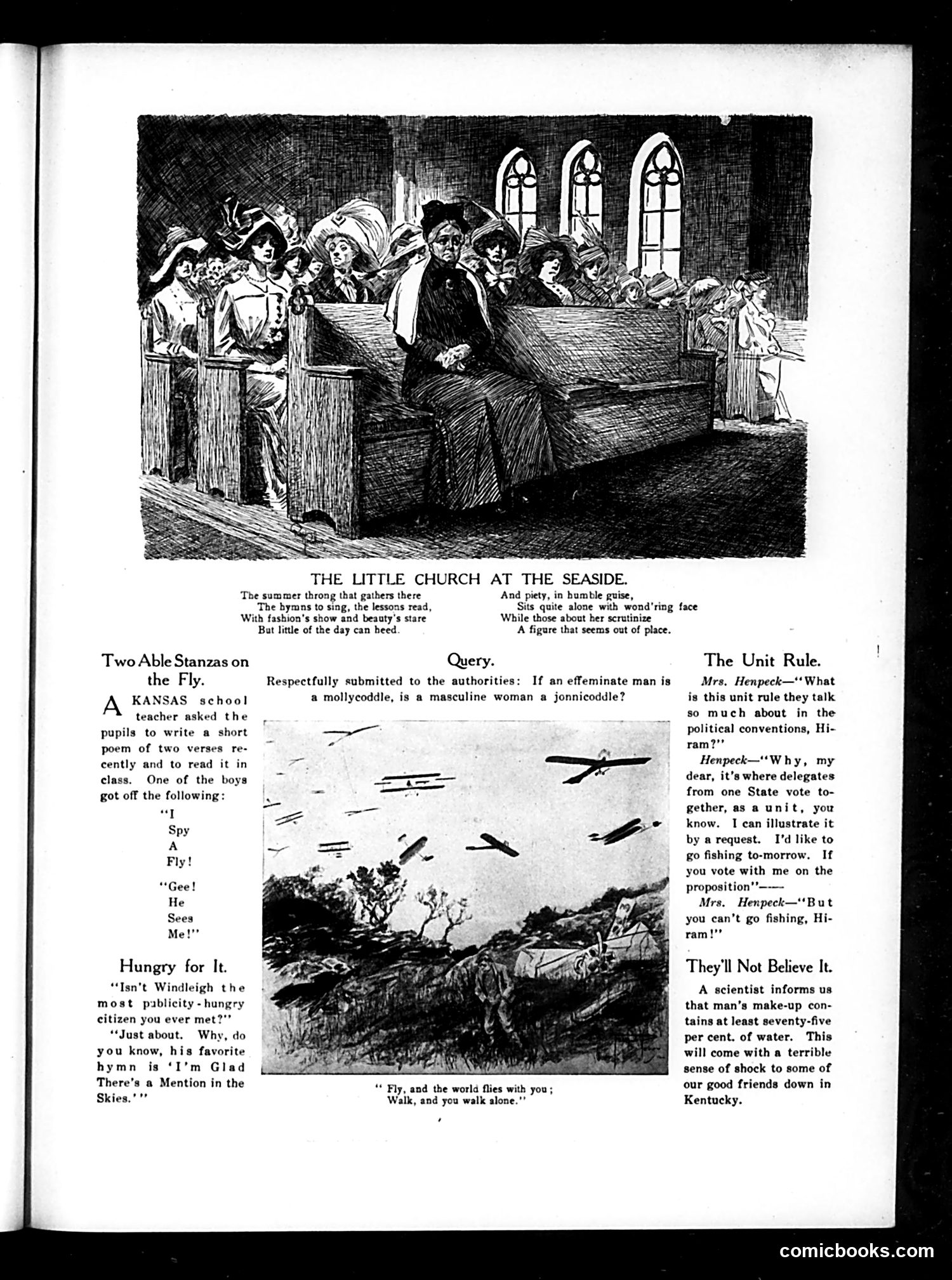
This page contains several short humorous pieces typical of Judge's satirical format: **"The Little Church at the Seaside"** depicts a fashionable seaside congregation more interested in displaying wealth and beauty than genuine piety—a common critique of hypocritical religiosity among the wealthy. **"Two Able Stanzas on the Fly"** presents a children's poem about a spy and a fly, meant as innocent classroom humor. **"The Unit Rule"** is a political satire about Democratic National Convention voting procedures where state delegations vote as unified blocs. It jokes that a husband asking his wife to vote with him on a fishing trip illustrates how the unit rule works—except she votes "no," humorously suggesting wives' actual power over domestic decisions. **"They'll Not Believe It"** mocks Kentucky residents' drinking habits, suggesting they'd be shocked to learn the human body contains 75% water (implying Kentuckians consume more alcohol than water). **"Hungry for It"** satirizes a publicity-seeking citizen obsessed with getting his name mentioned anywhere, even in hymn titles.
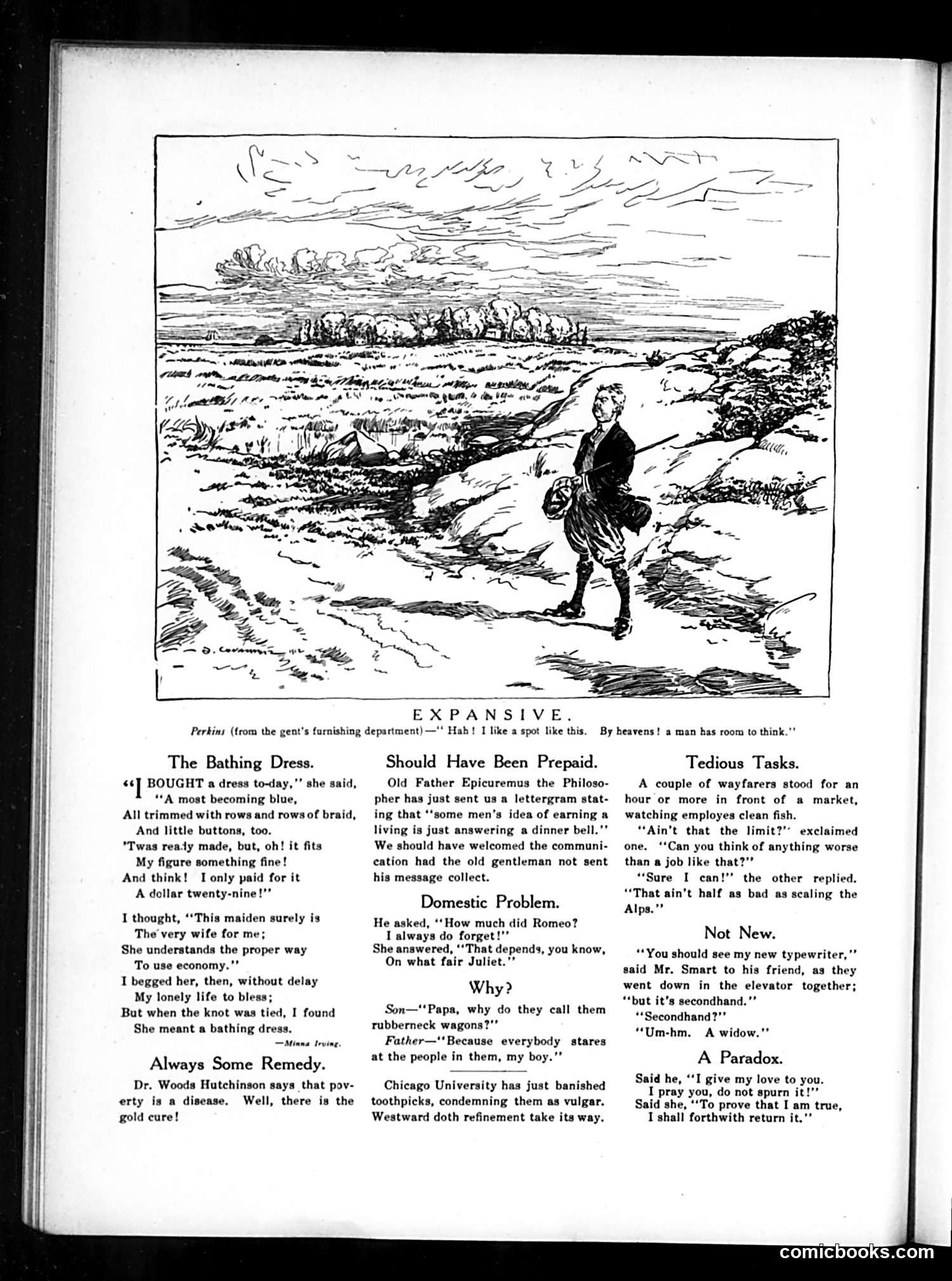
This page from *Judge* magazine contains several brief satirical pieces and a cartoon. The main cartoon shows a man in a rural landscape saying he likes a spot where "a man has room to think"—a joke about needing space away from civilization's noise. The written pieces mock domestic life and social pretense: "The Bathing Dress" jokes about a man marrying an economical woman, only to discover her frugality applies only to everyday clothes, not swimwear. "Should Have Been Prepaid" satirizes someone sending a costly telegram *collect* (paid by recipient). Other snippets target wealthy people's affectations (Chicago University banning toothpicks as "vulgar"), class anxieties (the "secondhand" typewriter joke implying a widow's desperation), and marital humor. The overall tone is light mockery of middle-class vanities, consumer culture, and courtship conventions typical of early 20th-century *Judge* content.
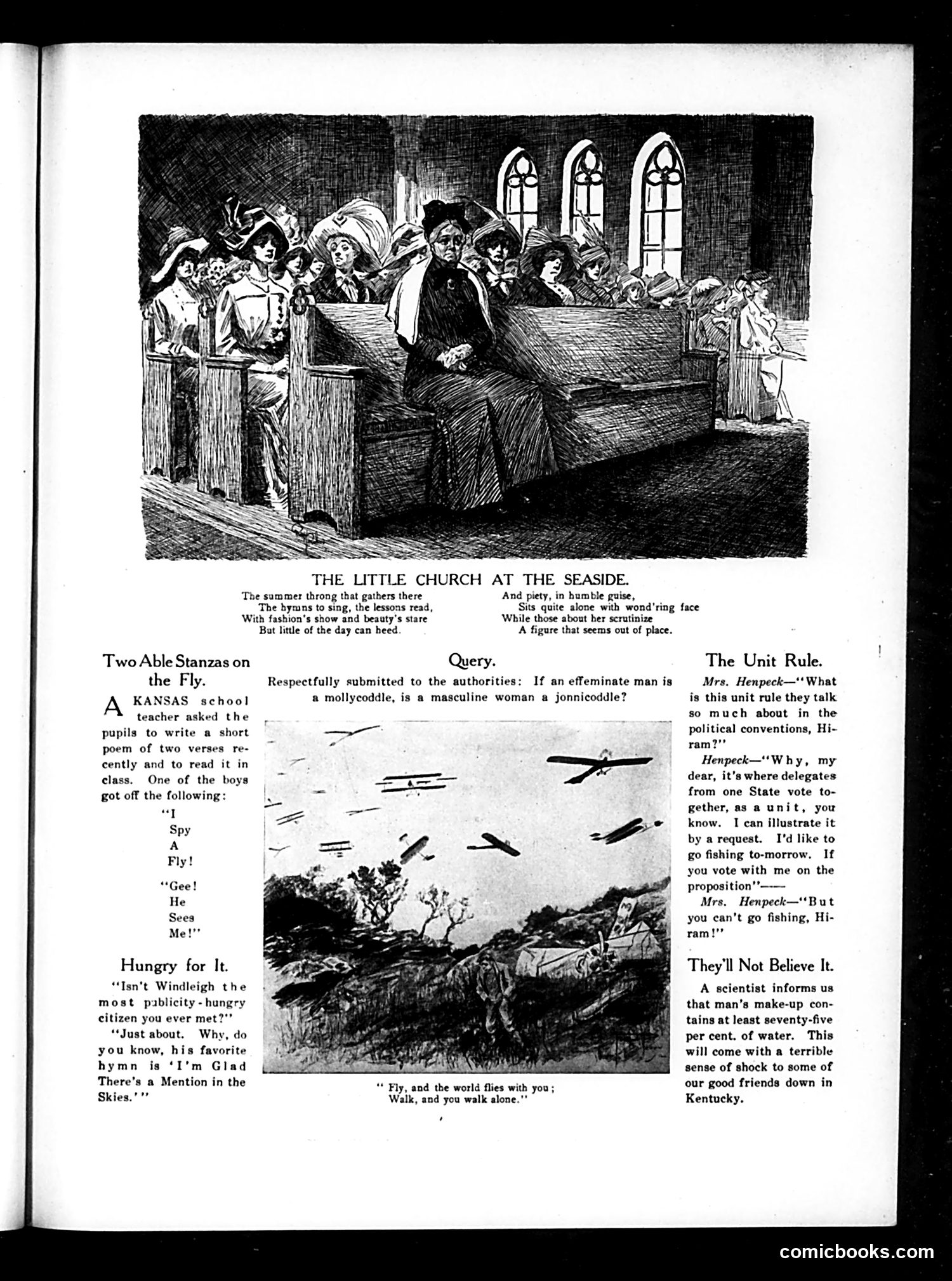
This page contains several light satirical pieces typical of Judge's humor: **"The Little Church at the Seaside"** (top illustration): A poem mocking fashionable beachgoers who attend church more for social display than genuine piety. The engraving shows an overdressed congregation; the satire targets their superficial religiosity and preoccupation with appearance over spiritual devotion. **"Two Able Stanzas on the Fly"**: A brief, gentle joke about a Kansas schoolboy's deliberately minimal two-line poem about a fly—poking fun at lazy student writing. **"Hungry for It"**: A pun-based joke about a publicity-hungry citizen whose favorite hymn is "I'm Glad There's a Mention in the Skies"—mocking people obsessed with public attention. **"The Unit Rule"**: Political satire explaining how state delegates vote as a bloc. The joke uses a henpecked husband as metaphor—illustrating the unit rule by noting he can't go fishing because his wife's "vote" controls him, satirizing both political rigidity and domestic subordination. **"They'll Not Believe It"**: A regional joke suggesting Kentuckians would find it shocking that humans contain 75% water—a mild stereotype about Southern skepticism.
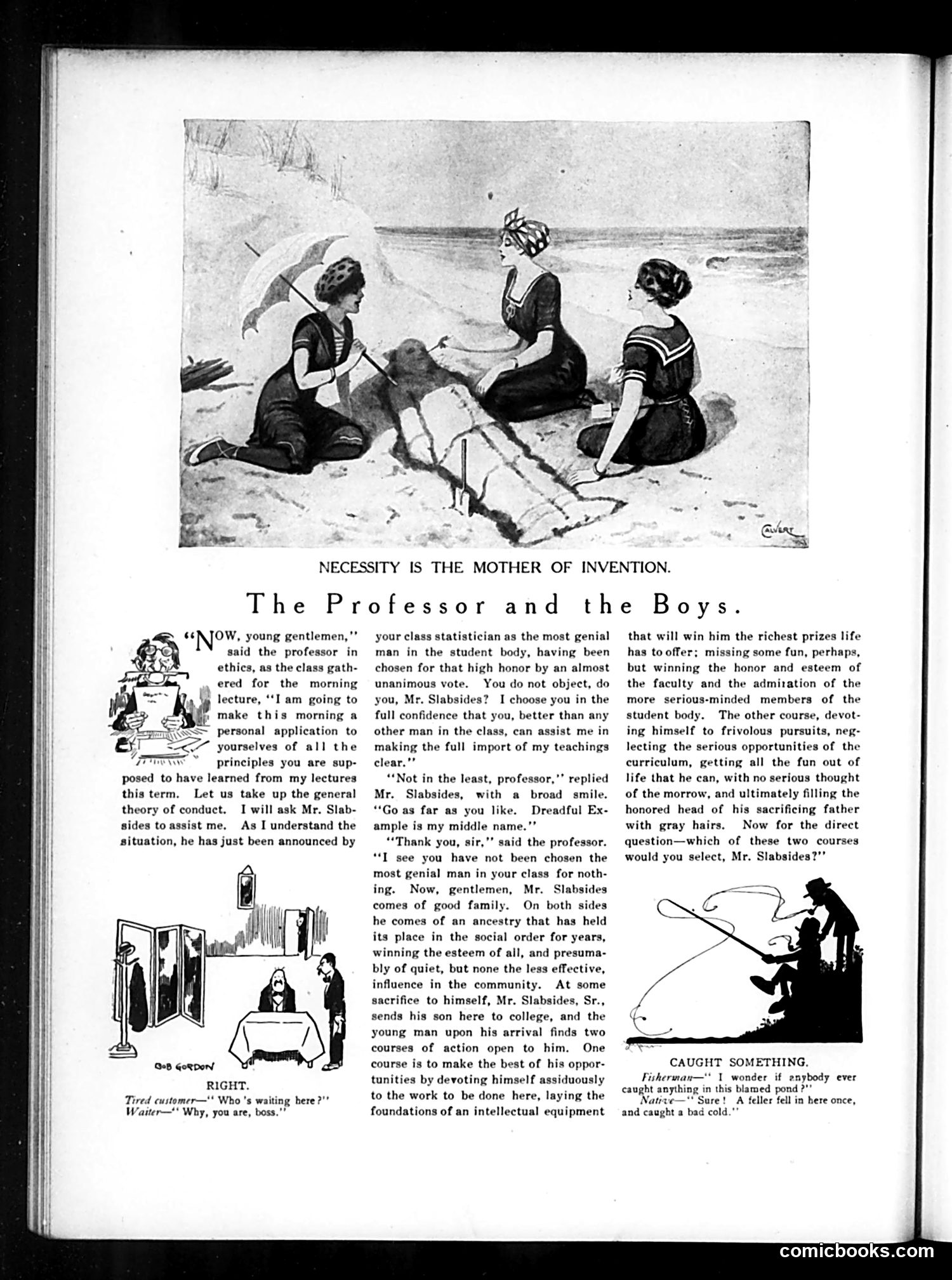
This satirical story mocks collegiate ethics instruction through obvious irony. A professor lectures on moral conduct, then asks popular student "Mr. Slabsides" to serve as a negative example—despite Slabsides coming from a respectable family and being unanimously voted "most genial." The professor presents two life paths: diligent study versus frivolous pursuits, then asks which Slabsides would choose. The satire targets the gap between what professors *teach* about virtue and what students actually *do*. By making the well-liked student the cautionary tale while describing his advantages and good character, Judge mocks the assumption that ethics lectures change behavior. The humor lies in the professor's transparent pedagogical setup—everyone knows what answer he expects, yet real student conduct likely differs entirely. The accompanying cartoons about "necessity" and fishing appear unrelated filler material.
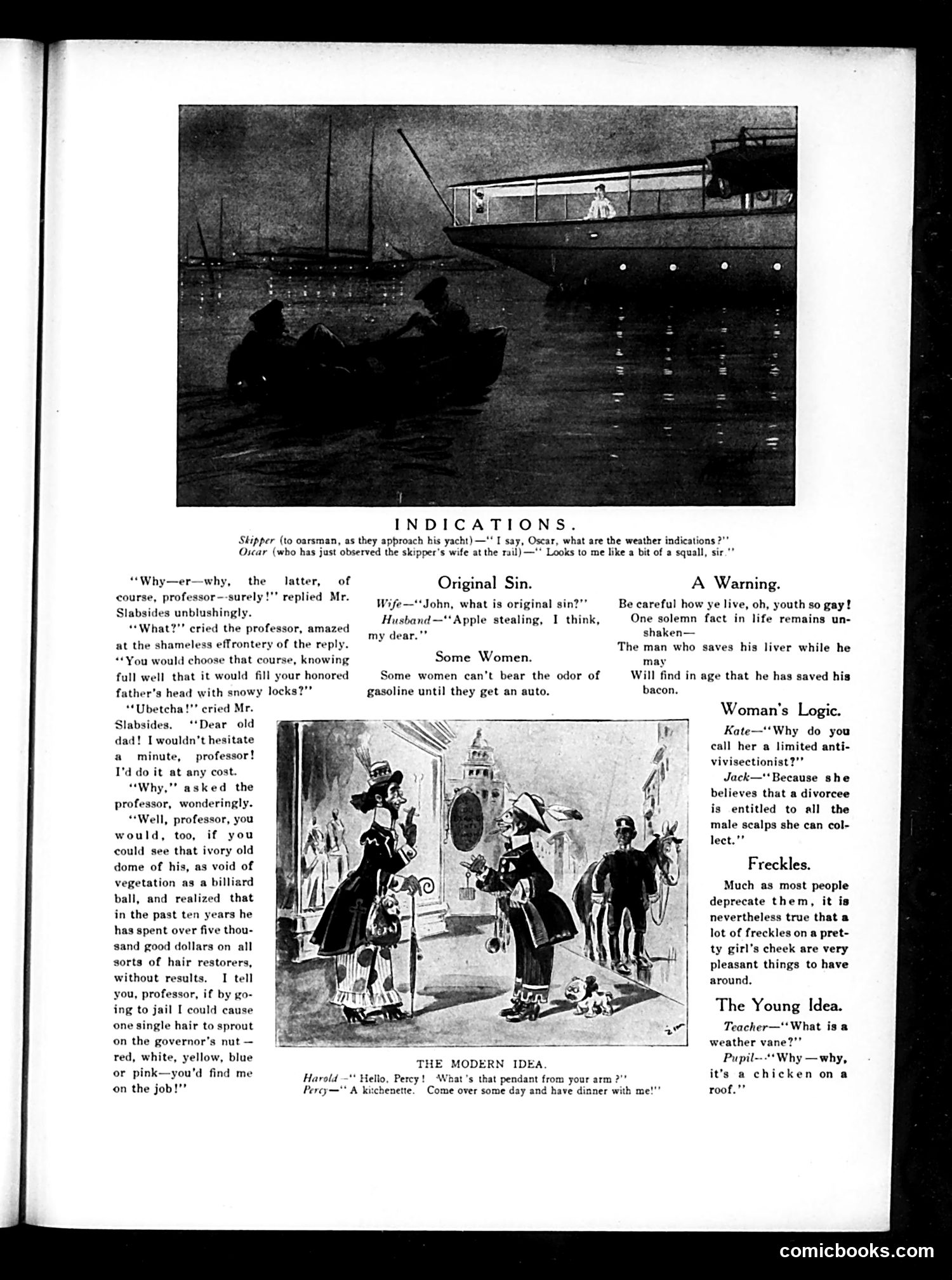
This page contains multiple short humor pieces typical of early 20th-century American satirical magazines: **"Indications"** (top): A naval joke where a skipper asks his oarsman about weather signs. The punchline relies on the oarsman's double meaning—he's referring to the skipper's wife appearing at the rail as an ominous "squall," playing on the idea that wives represent domestic trouble. **"Original Sin"** and other brief sections are short, standalone gags about everyday topics (hair restoration, gasoline smell, etc.) requiring little historical context. **"The Modern Idea"** (center illustration): Shows fashionably dressed people in what appears to be a social setting, with dialogue about a "pendant" and dinner invitation—likely satirizing contemporary courtship customs or social pretension. **"Woman's Logic"** mocks women's reasoning about divorce and remarriage. The humor throughout reflects period attitudes toward gender relations, automobiles as novelties, and social conventions. Most jokes rely on simple wordplay or familiar stereotypes rather than specific political references.
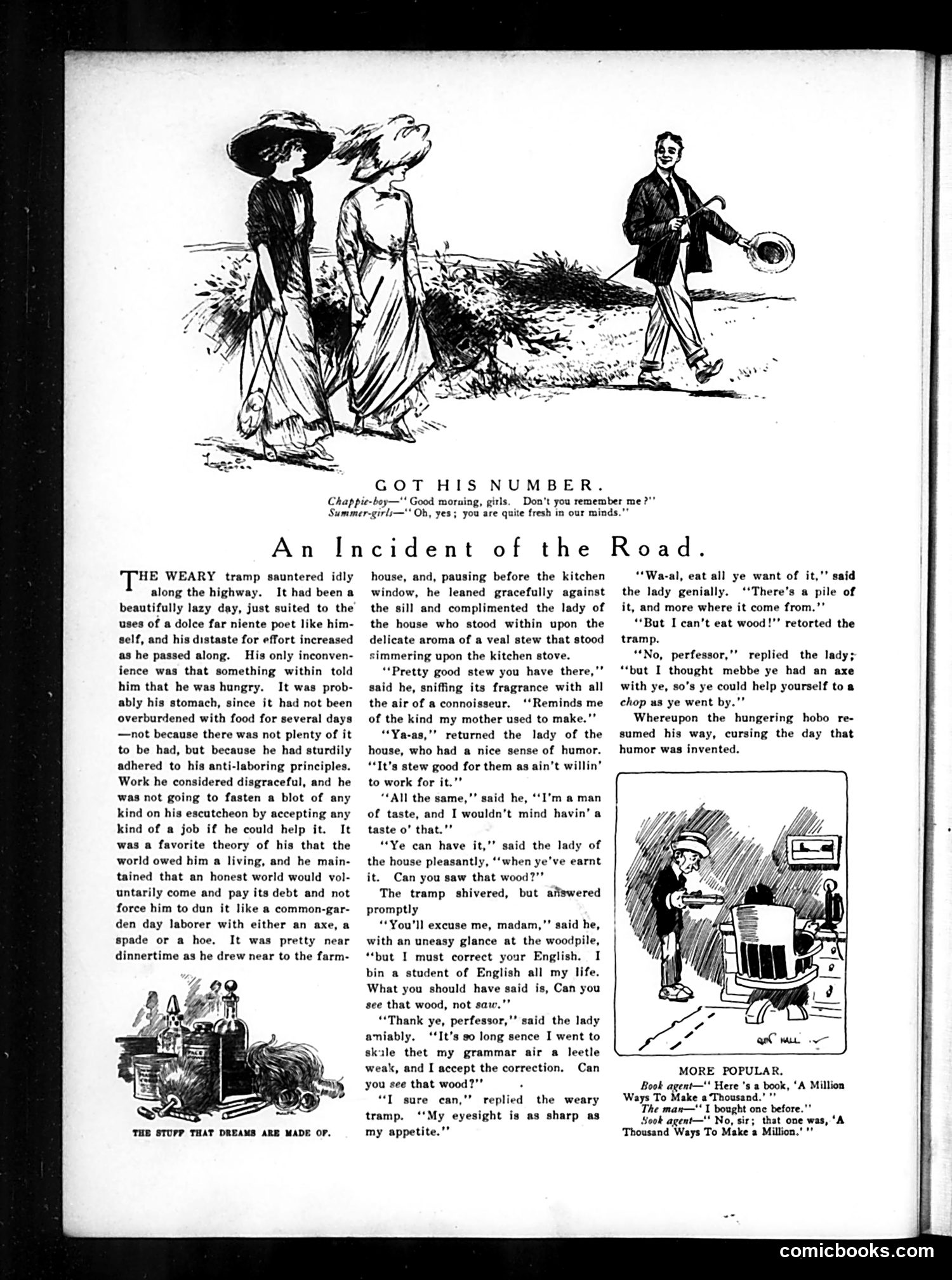
This story satirizes a lazy vagrant's entitlement and his comeuppance through wit. The tramp, who refuses work on principle (believing "the world owed him a living"), attempts to charm a farmwoman into feeding him by flattering her stew. When she offers food in exchange for sawing wood, he pedantically corrects her grammar—"see" versus "saw"—rather than accept the work. The farmwoman cleverly turns his own pretension against him: she "corrects" herself and asks if he can "see that wood," making clear he must chop it to eat. The tramp leaves hungry and frustrated. The satire targets both idleness and false gentility. The vagrant uses affected language ("connoisseur," grammatical pedantry) to mask his unwillingness to labor, but the sharp farmwoman exposes his hypocrisy. The joke's sting: cleverness cannot substitute for honest work, and those who refuse labor deserve their hunger.
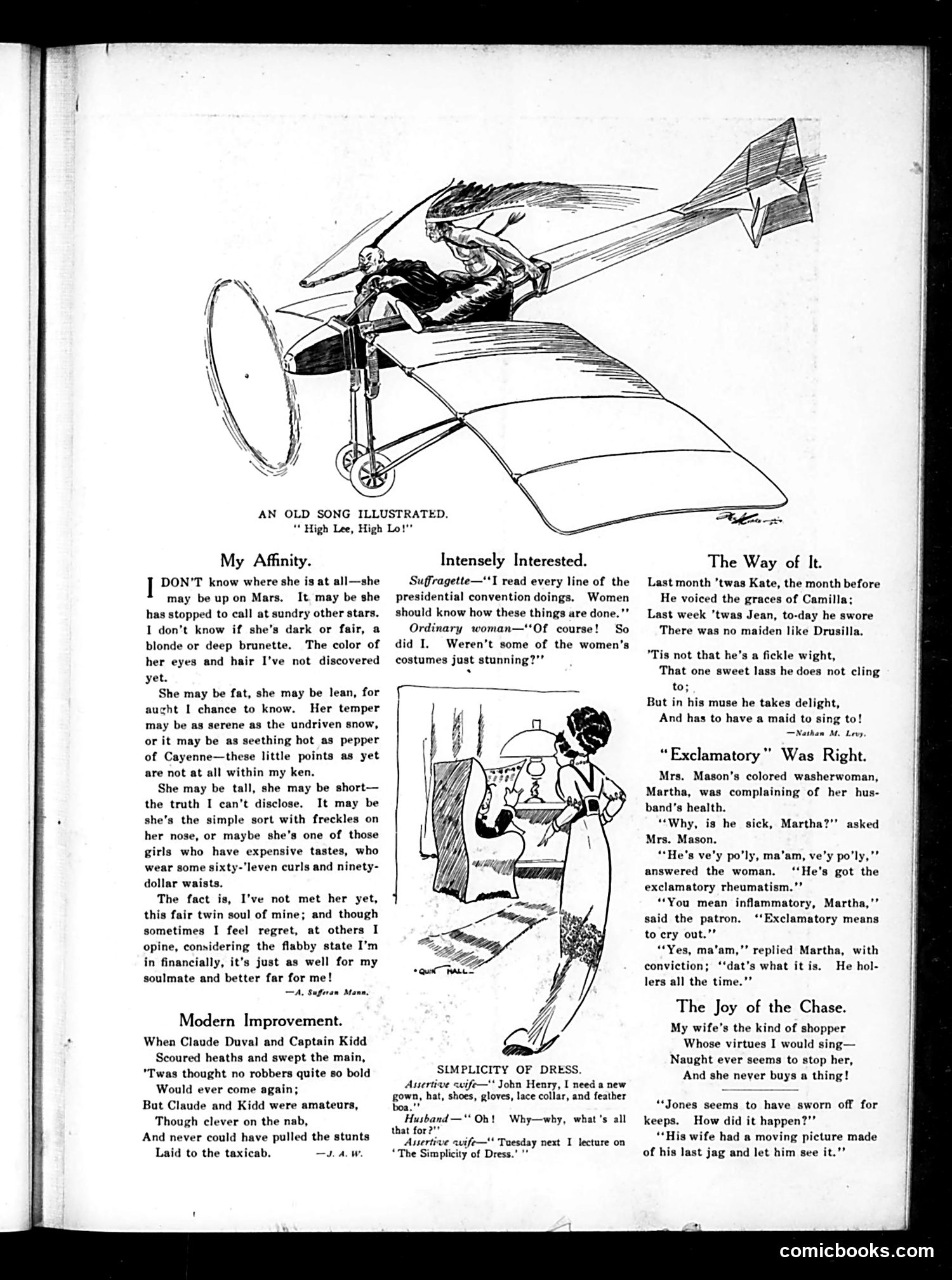
This page contains several satirical pieces typical of early 20th-century American humor: **Top cartoon**: "High Lee, High Lo" illustrates a man piloting a flying machine while pursuing an idealized woman in the sky—satirizing the romantic notion of soulmates and "affinity." The joke is that he's obsessed with finding his perfect match despite knowing nothing about her. **"Modern Improvement"**: Compares old highwaymen (Claude Duval, Captain Kidd) unfavorably to modern taxi drivers—implying taxi drivers are thieves through their overcharging. **"Intensely Interested"**: Mocks female suffragettes' claim to political engagement. When a suffragette boasts of following convention proceedings, an ordinary woman reveals she read the same coverage but only cared about the women's fashion—undermining the suffragette's pretense of serious political interest. **"Simplicity of Dress"**: A wife ironically lectures on dress simplicity while demanding expensive new clothing, exposing hypocrisy. The remaining pieces are light domestic humor about fickleness in romance and malapropisms.
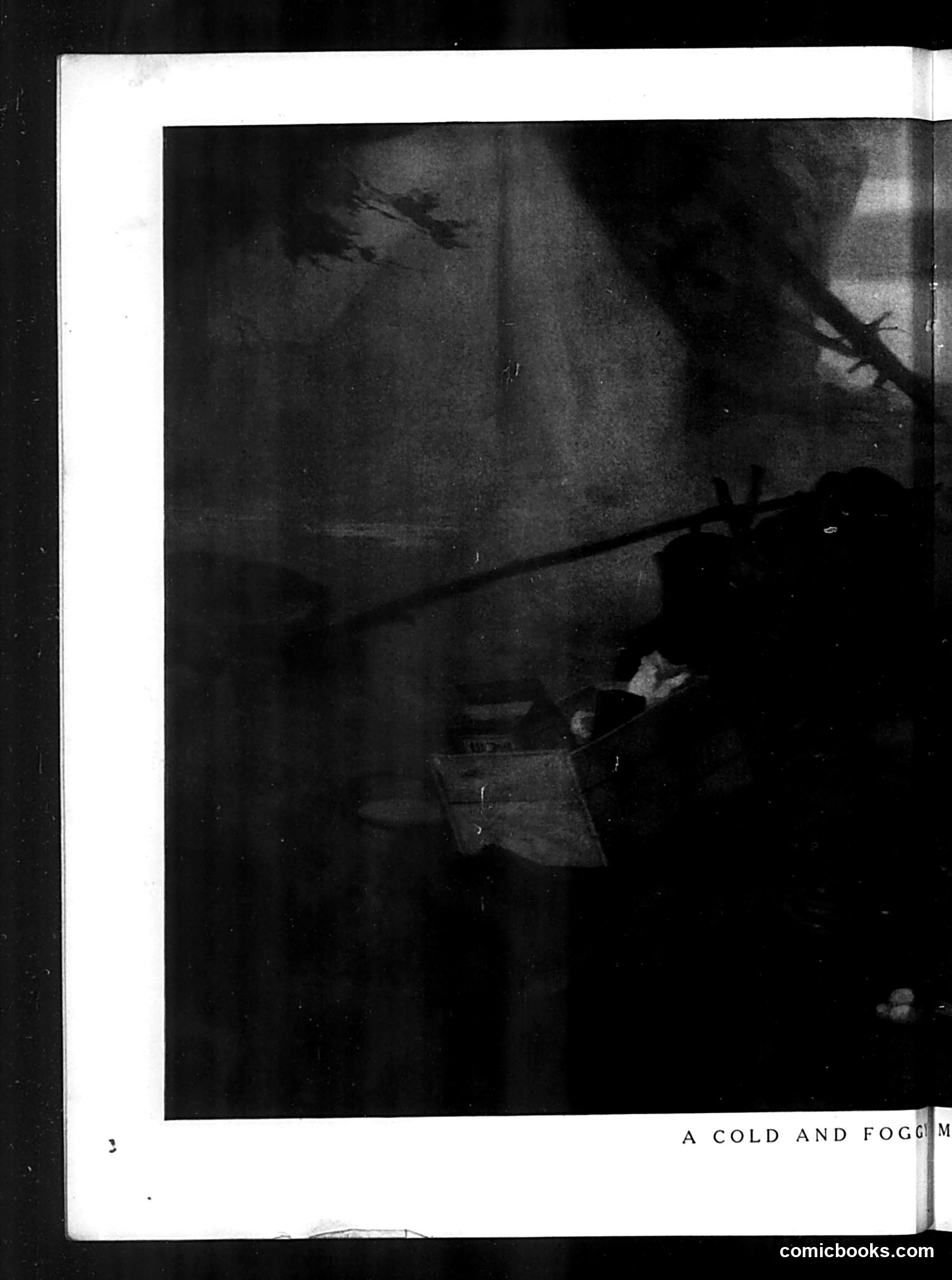
This page appears to be from a Judge magazine satirical piece titled "A Cold and Foggy" (title partially cut off). The image itself is quite dark and difficult to discern clearly—it appears to show silhouetted figures in fog or poor visibility conditions, consistent with the title's reference to cold and foggy weather. Without clearer visibility of the figures or additional text content on the page, I cannot definitively identify specific political or social references the cartoon intends to satirize. The composition suggests an atmospheric scene depicting the titled weather conditions, but the satirical point remains unclear from this reproduction. Additional context or clearer imagery would be needed for accurate interpretation.
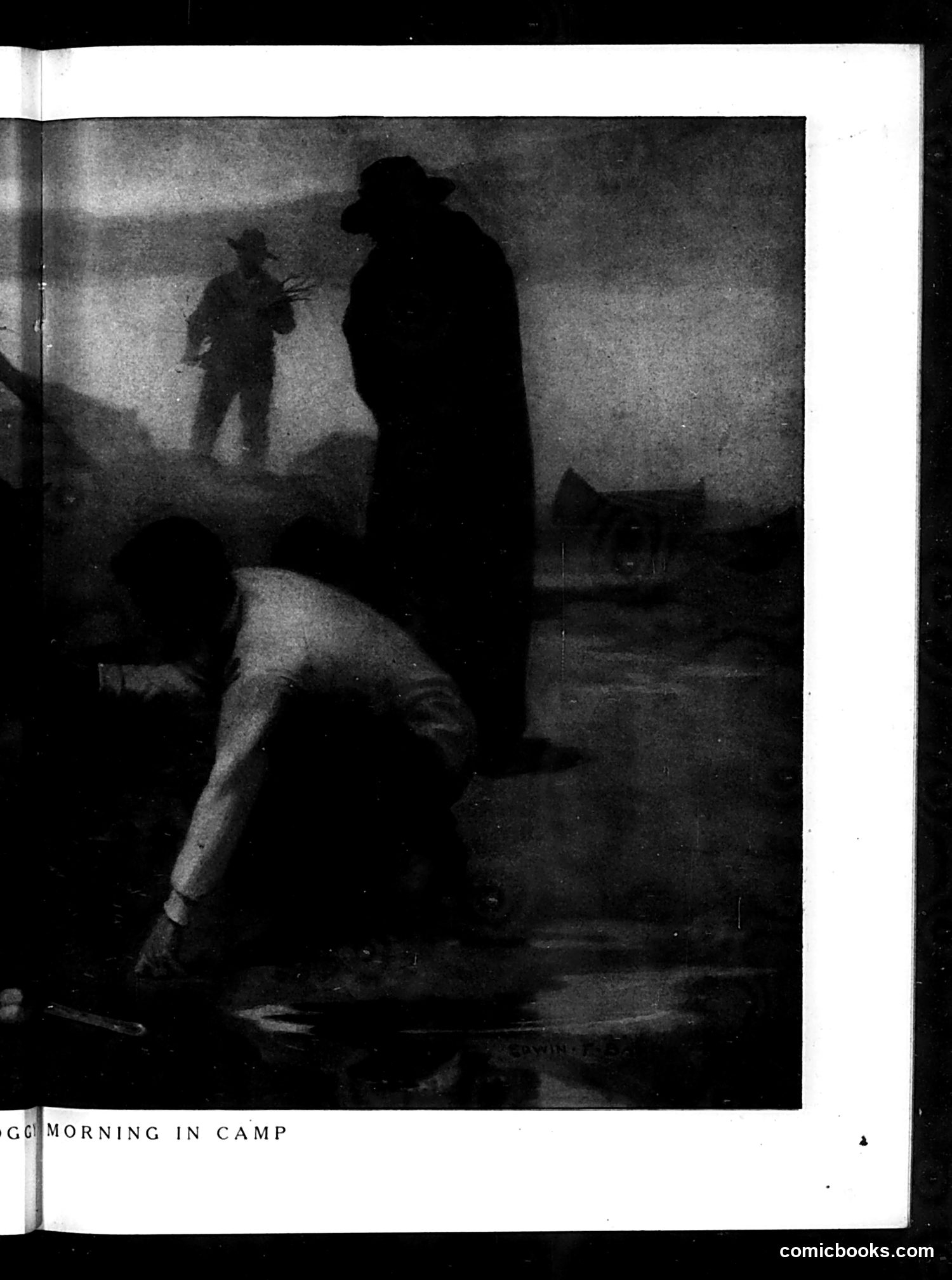
This appears to be a dramatic photograph or illustration rather than a traditional cartoon, showing silhouetted figures in what seems to be a military encampment. The composition is stark and moody—a man in a hat and coat stands prominently in the foreground, while another figure is visible in the background near what appears to be a tent or structure. Without additional context from the magazine's surrounding text or date, the specific satirical target is unclear. Given *Judge* magazine's focus on political and social commentary, this could reference contemporary military affairs, labor disputes, or social conditions. The theatrical staging and silhouette technique suggest the image aims to evoke emotion about the subject matter, though the exact historical or political reference requires more information to identify with certainty.
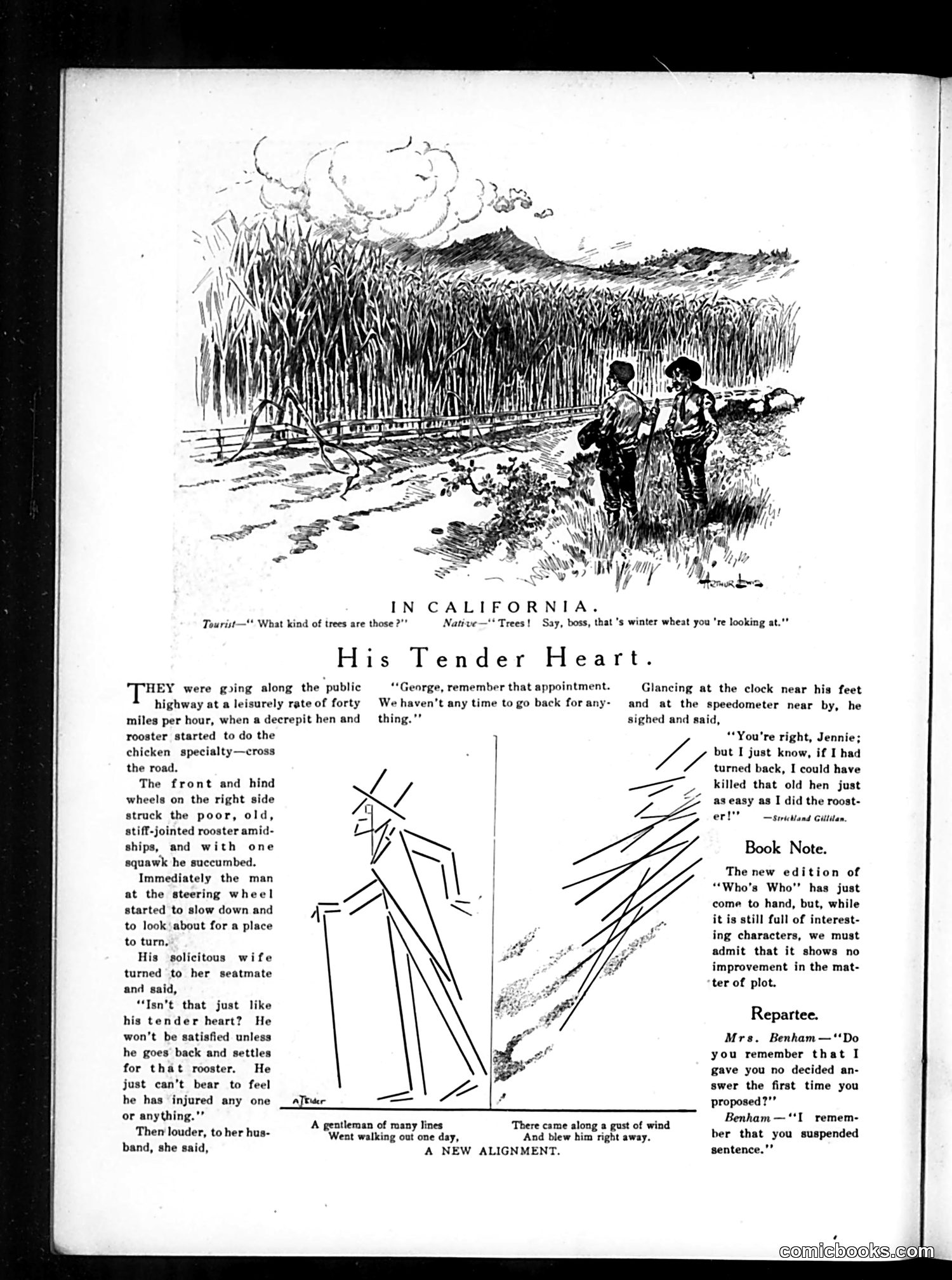
This page contains two separate humorous pieces from *Judge* magazine: **"His Tender Heart"** satirizes automotive-age hypocrisy. A motorist kills a rooster while driving and his wife praises his "tender heart," claiming he'll want to go back and pay for the damage. However, the husband admits he actually wanted to kill the hen too—revealing his supposed compassion as performative. The joke mocks people who display moral virtue publicly while being indifferent or callous privately. **"In California"** is a brief joke about a tourist mistaking a wheat field for trees, playing on the idea of California's agricultural abundance or the tourist's ignorance. The page also includes minor items: a "Book Note" criticizing a new *Who's Who* edition for lacking narrative improvement, and "Repartee" about a woman claiming she "suspended" her answer to a marriage proposal—a witty non-answer to a direct question.
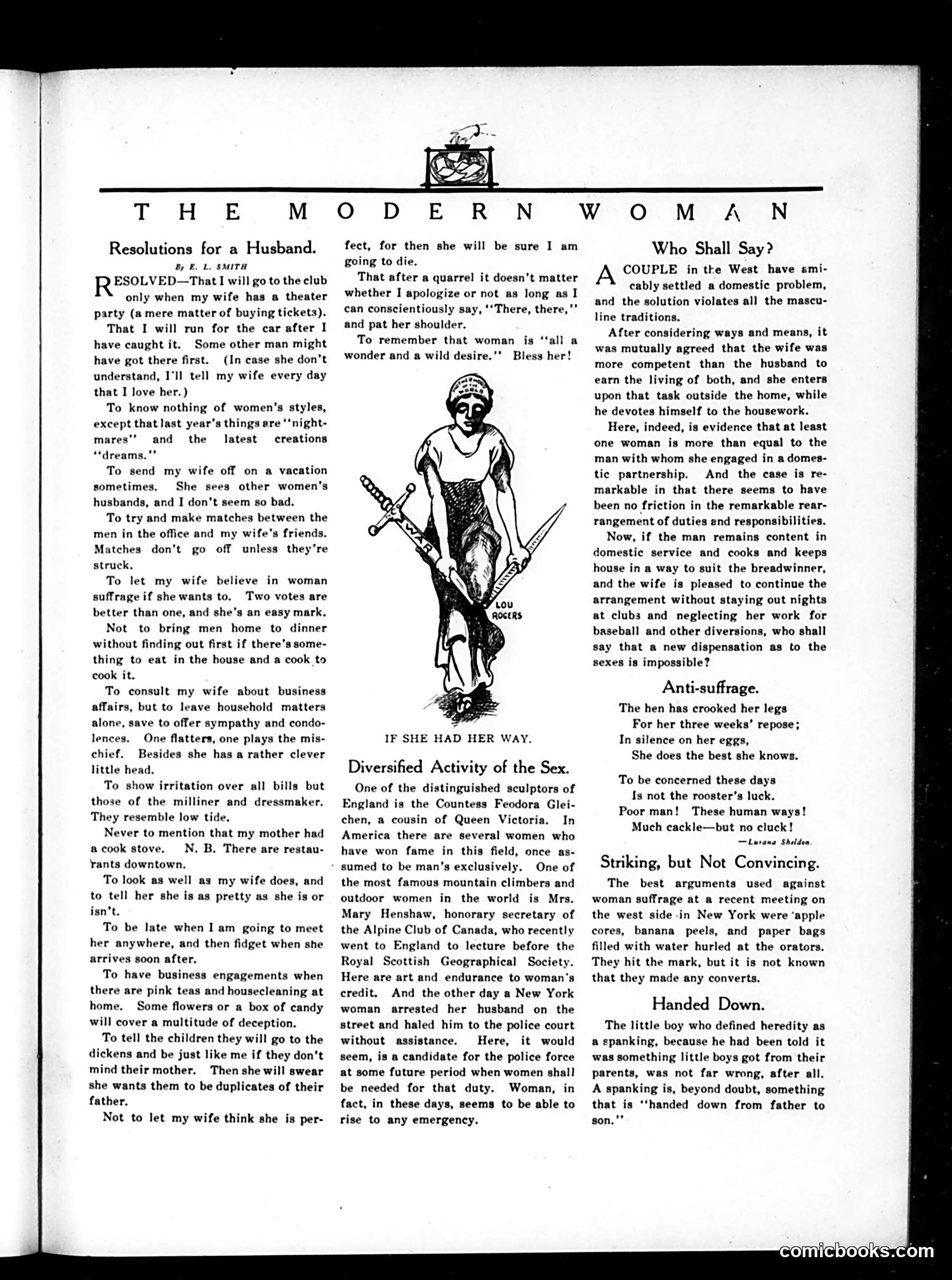
This *Judge* magazine page satirizes early 20th-century gender roles and the emerging women's suffrage movement through multiple pieces: **"Resolutions for a Husband"** presents a husband's tongue-in-cheek "rules" for marriage, mocking progressive ideas. He'll allow his wife to believe in suffrage ("Two votes are better than one, and she's an easy mark"), consult her on business, and accept her spending on fashion—all while maintaining male authority. The satire cuts both ways: it ridicules both husbands resistant to change and wives demanding it. **"If She Had Her Way"** (central illustration) depicts a woman wielding a sword and scales, symbolizing justice and power—imagery suggesting anxieties about female empowerment. **"Diversified Activity of the Sex"** catalogs women's actual achievements: a sculptor, mountaineer, and a woman who arrested her husband—highlighting women already operating outside traditional roles, implying they're capable of police work and other "male" professions. The pieces collectively reflect early 1900s debate about women's expanding public roles versus traditional domesticity.
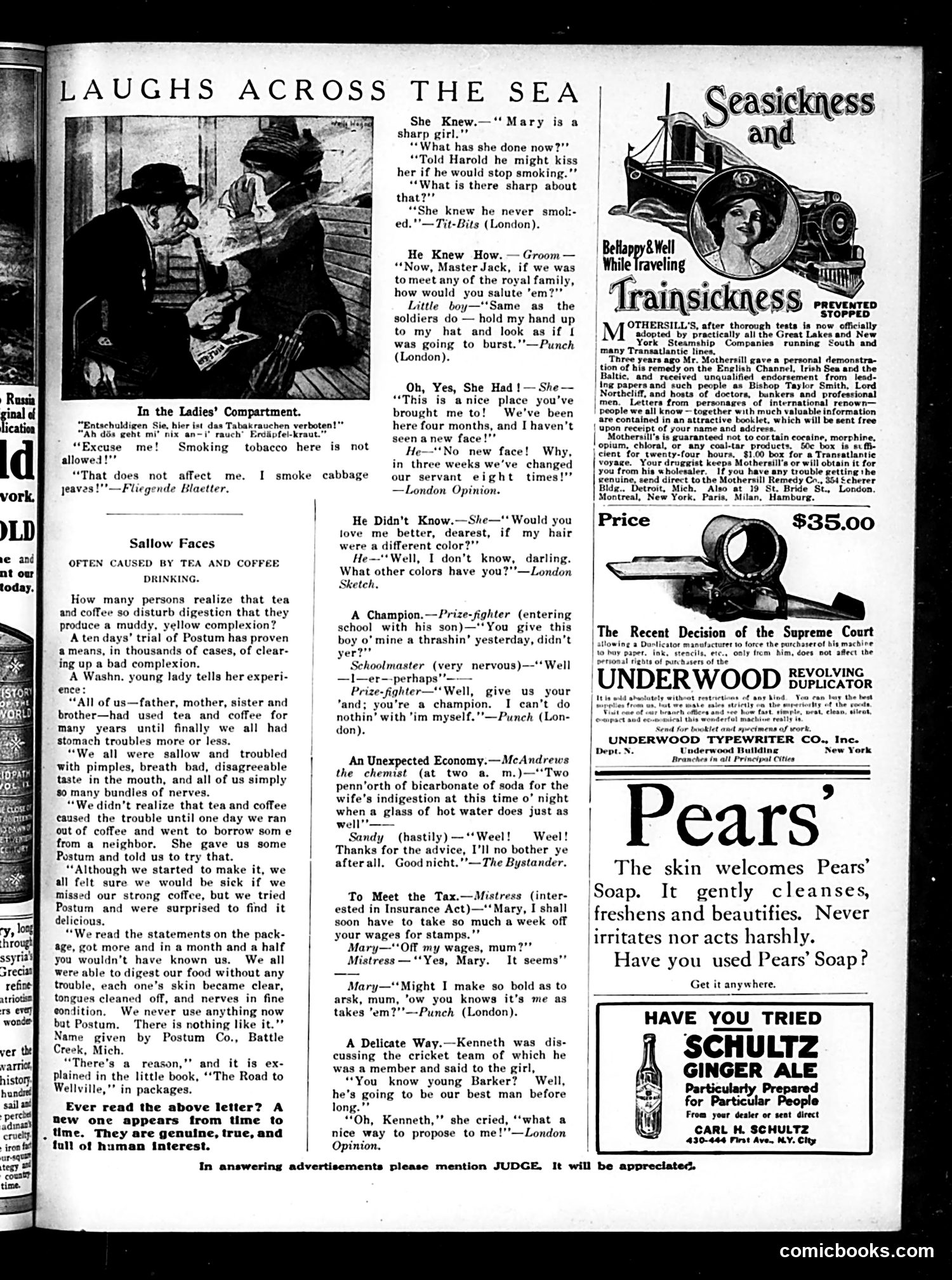
This page collects humorous anecdotes from British and European publications, republished for American readers. The cartoons mock everyday social situations and marital dynamics: **The opening cartoon** shows a German train compartment where a man smokes cabbage leaves instead of tobacco—a joke about resourcefulness or desperation, likely referencing post-WWI German economic hardship. **The jokes** target familiar themes: a woman's shrewdness ("Mary is a sharp girl" — she knows her boyfriend never smoked), class humor (a prize-fighter praising a schoolmaster for disciplining his unruly son), and domestic wit (husbands feigning ignorance about their wives' appearance; servants dismissed frequently). **The "Insurance Act" joke** references Britain's new National Insurance system (1911), mocking working-class anxieties about wage deductions for stamps. The humor relies on stereotypes: nervous schoolmasters, working-class dialect, marital tension, and social anxiety — reflecting early 20th-century attitudes about class and gender relations.
This page consists primarily of **advertisements** (Budweiser beer, The Whittier Inn hotel) rather than political satire. The actual comic content includes three brief humorous pieces: 1. **"In Readiness"** — a cute children's poem by Carolyn Wells about a boy calling a caterpillar a "cattypillow for a little fairy cat" (innocent wordplay). 2. **"Life"** — A domestic humor piece about an Irish couple, Dennis and Maggie O'Flaherty, having a violent food-fight ("at it again"), hitting each other with tomatoes, coffee grounds, and a rolling pin. Dennis learns it's their wedding anniversary mid-brawl — the joke being the absurdity of celebrating marital violence as festive. 3. **"Afraid of Draughts"** — A one-liner playing on the double meaning of "draught" (air current vs. beer). These are light, domestic comedies typical of Judge's humor section, not political commentary. The eagle illustration is Budweiser's logo, not a political symbol.
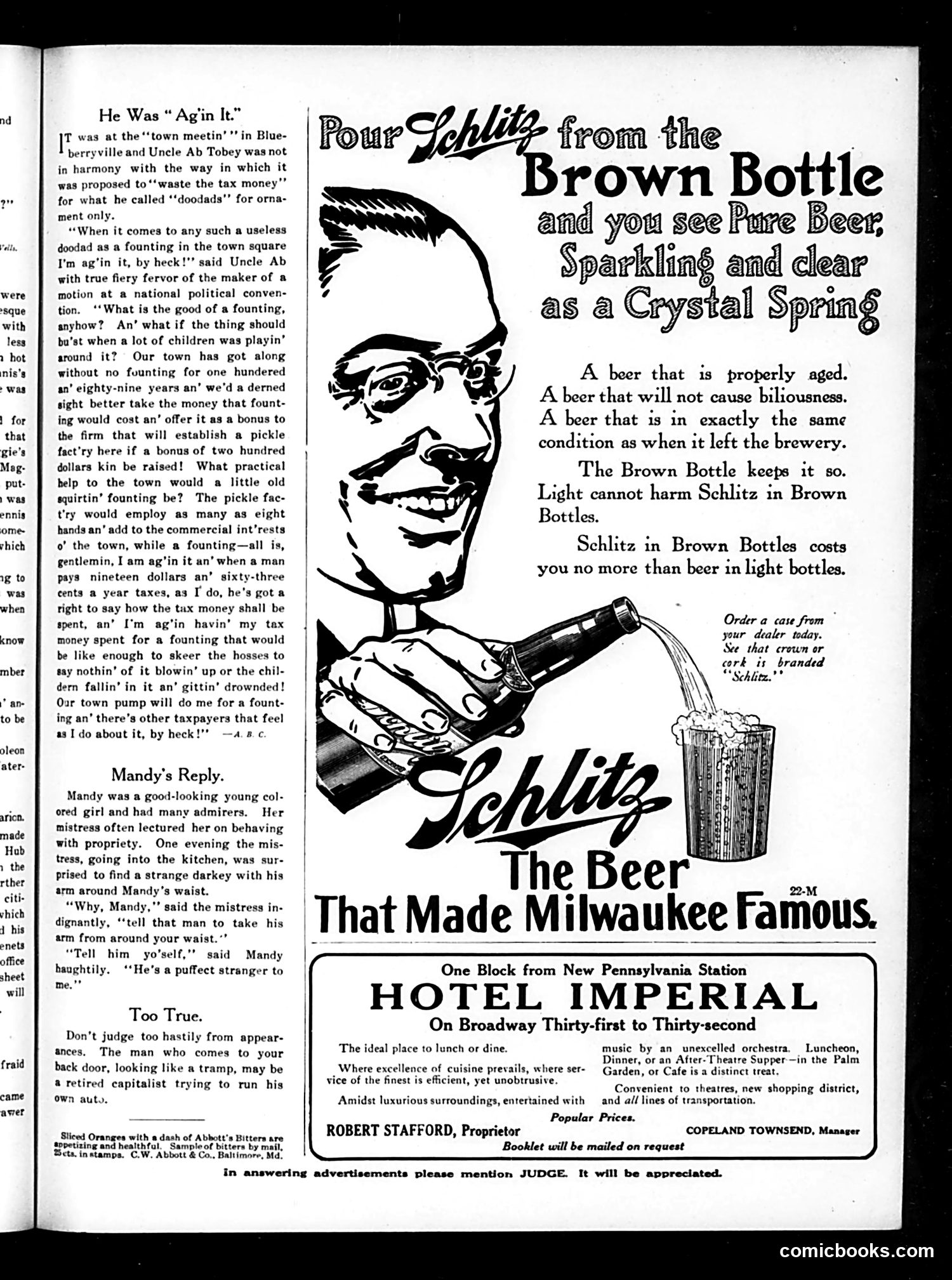
This page from *Judge* contains several distinct pieces: **Main Comic Story**: "He Was 'Ag'in It'" depicts Uncle Ab Tobey opposing a town fountain at a public meeting, arguing tax money should fund a pickle factory instead. The humor relies on the rural character's obstinate, folksy opposition to civic improvements—a common *Judge* satirical trope mocking small-town conservatism and fiscal resistance. **Secondary Humor**: Two brief anecdotes follow—one about "Mandy" (a Black servant) dismissing her mistress's propriety lecture, and another about judging by appearances. These reflect period attitudes but read today as casually racist and sexist. **Large Advertisement**: Schlitz beer dominates the right side, emphasizing brown bottles preserve beer quality. The illustration shows a caricatured face (unclear identity) pouring beer. **Hotel Advertisement**: Standard hospitality advertising appears at bottom. The page is primarily satirical commentary on rural obstinacy mixed with period advertising and stereotypical humor now considered offensive.
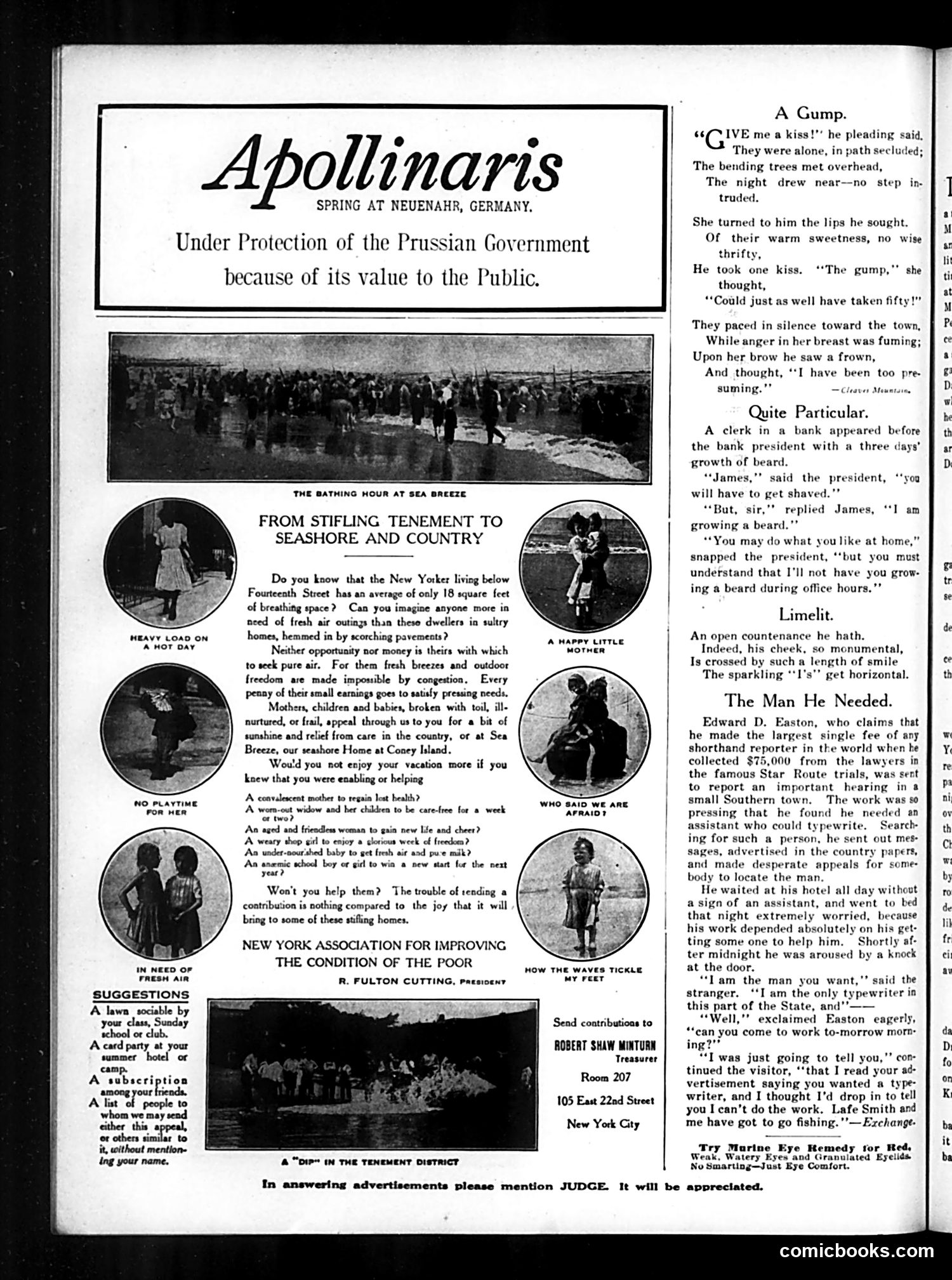
This page mixes charitable fundraising with light humor and short fiction, typical of Judge's format. **Main Content:** The top half promotes the New York Association for Improving the Condition of the Poor, highlighting tenement dwellers' desperate living conditions (18 square feet of breathing space below 14th Street). It solicits donations for "Sea Breeze," a country retreat for poor mothers, children, and workers. R. Fulton Cutting is listed as president. Photographs show cramped urban conditions contrasted with seaside recreation. **Humor Pieces:** The right side contains three short comedic stories: - "A Gump": A young woman annoyed her suitor only kissed her once ("gump" = cheapskate) - "Quite Particular": A bank clerk disciplined for growing a beard during work hours - "The Man He Needed": Edward D. Easton, a wealthy stenographer, seeks an assistant **Context:** The charitable appeal represents Progressive Era social reform concerns about urban poverty, while the humor provides light entertainment typical of the magazine's mixed content approach.
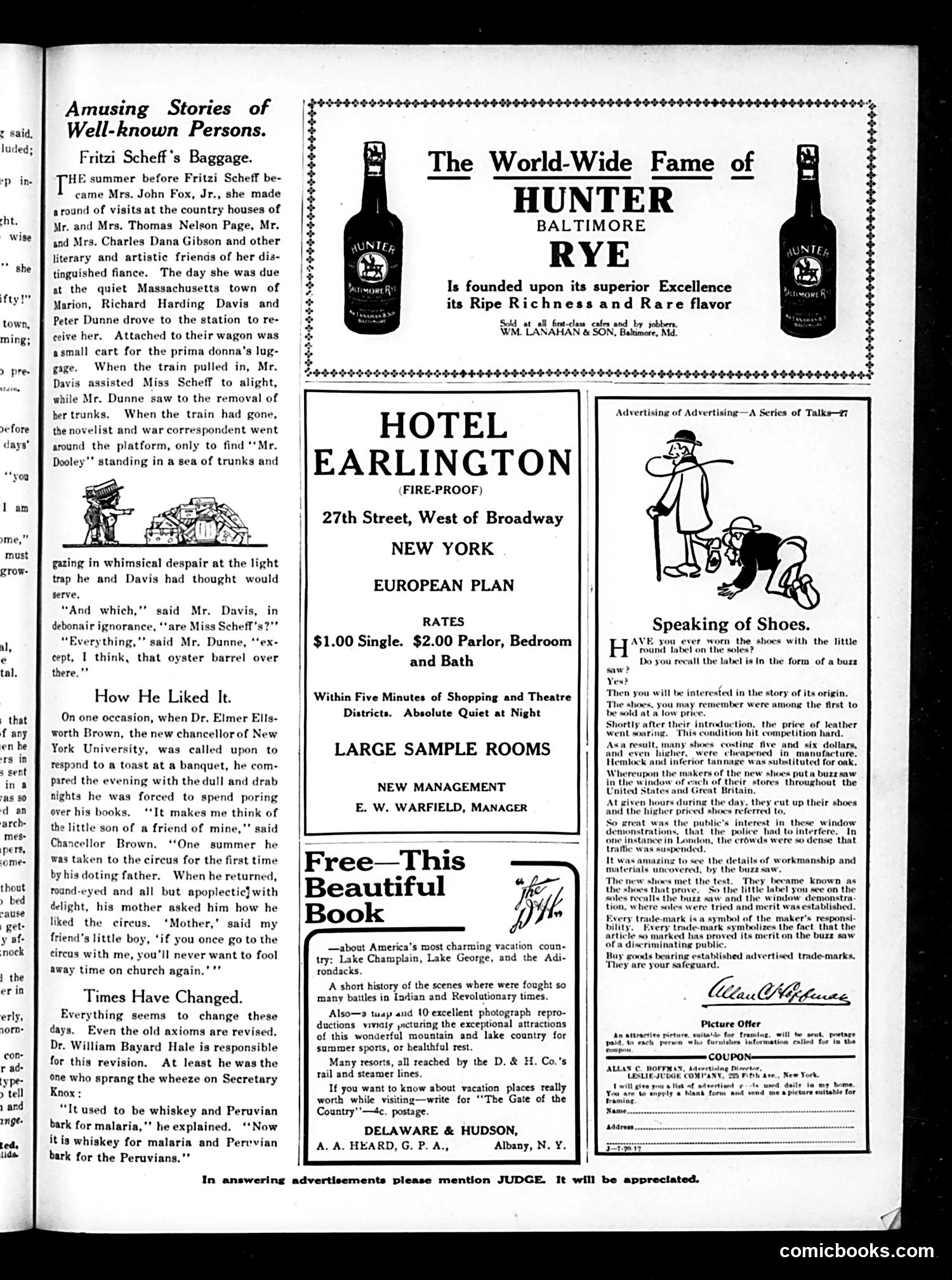
This page contains primarily **anecdotal humor** rather than political cartoons. The "Amusing Stories" section presents three lighthearted tales about well-known early-1900s figures: 1. **Fritzi Scheff's Baggage**: A joke about the opera singer arriving with excessive luggage—her trunks vastly outnumber expectations, prompting Peter Dunne's quip that everything belongs to her "except...that oyster barrel." 2. **Chancellor Brown's Circus Story**: A meta-joke where the university chancellor compares a banquet to a child's first circus, suggesting church pales by comparison. 3. **Secretary Knox's Malaria Joke**: A topical pun where Secretary of State Philander Knox supposedly quipped that whiskey now treats malaria while Peruvian bark treats "the Peruvians"—likely referencing American interventionism in Peru. The page is **mostly advertisements** (Hunter Rye, Hotel Earlington, Delaware & Hudson Railway). The humor relies on contemporary celebrity recognition and wordplay rather than satirical commentary. Modern readers would need familiarity with these figures and early-1900s social contexts to fully appreciate the jokes.
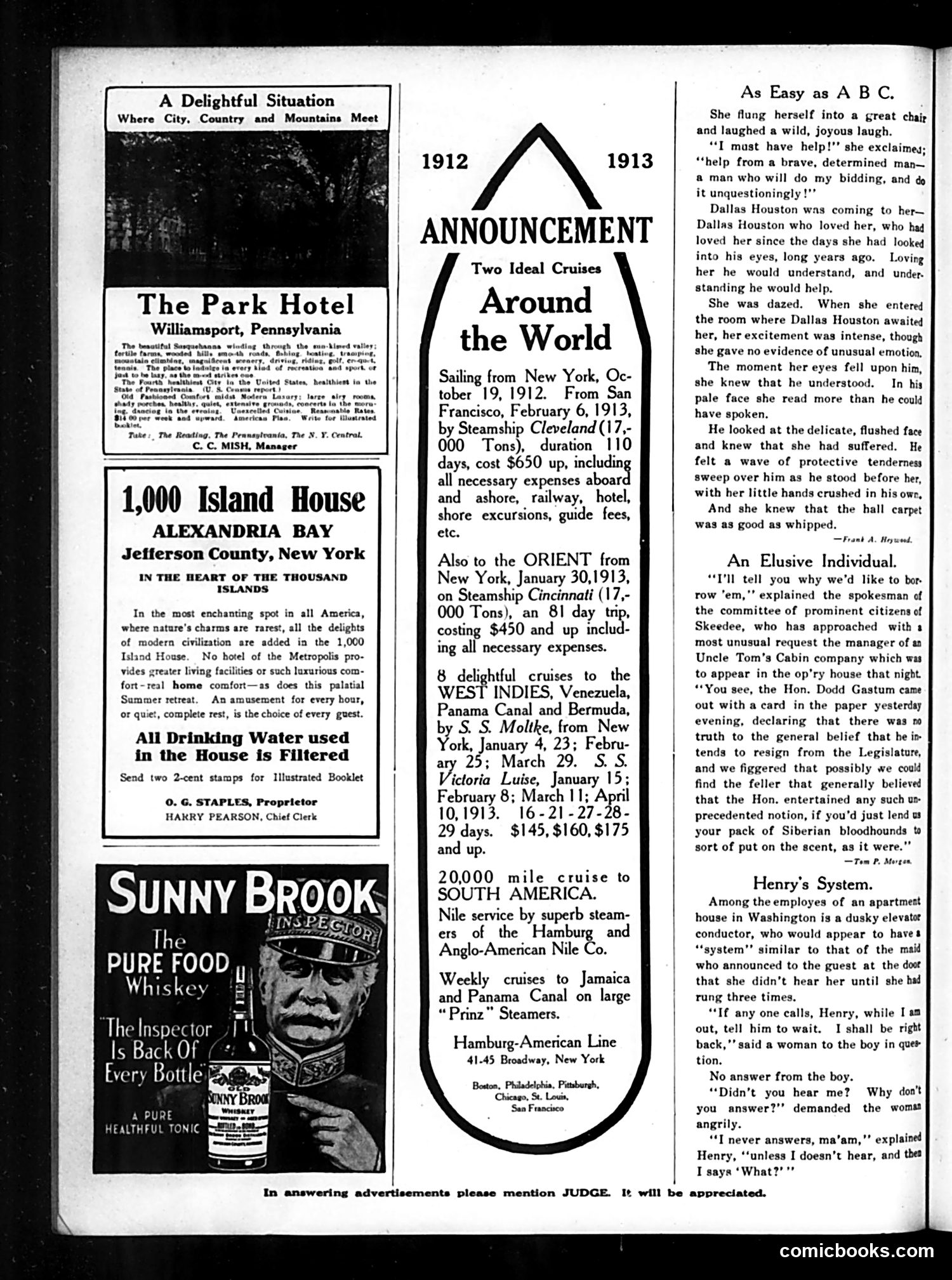
This page is primarily **advertisements and serial fiction**, not political cartoons. The page contains: 1. **Hotel/Travel Ads** (top-left): Promoting resort destinations and cruise lines—reflecting the era's leisure industry for wealthy travelers. 2. **Sunny Brook Whiskey Ad** (bottom-left): A product advertisement with an inspector character, typical early-20th-century marketing using mascots. 3. **Central Announcement** (large): Cruise line offerings around the world (1912-1913), showcasing the era's fascination with international travel and the newly-opened Panama Canal. 4. **Two Short Stories** (right column): - "As Easy as ABC": A romantic melodrama about a woman summoning her devoted lover Dallas Houston - "An Elusive Individual": A humorous small-town sketch where citizens ask to borrow bloodhounds from an Uncle Tom's Cabin theatrical company to track down an evasive politician The page reflects *Judge* magazine's mixed content: advertisements, serial romance fiction, and satirical humor about contemporary small-town politics and human nature.
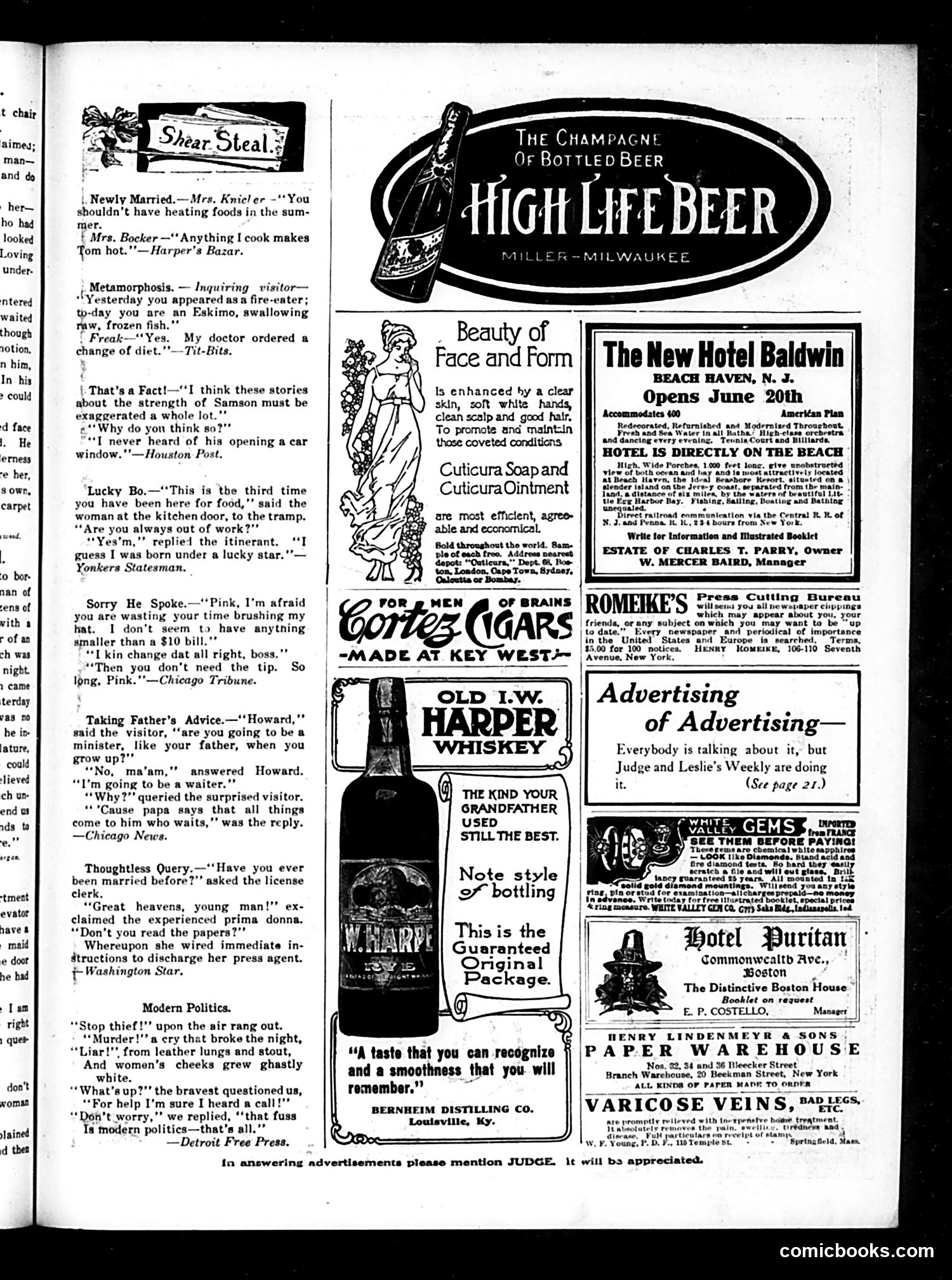
This page is primarily **advertising**, with humorous short jokes in the left column serving as filler content. The jokes are typical early 20th-century domestic humor: newlyweds, hobos, tramps, and miscommunications. The "Modern Politics" poem at bottom satirizes contemporary political discourse as mere noise and shouting—a timeless critique suggesting politicians resort to name-calling rather than substance. The advertisements reveal period concerns: beauty products (Cuticura), hotels, whiskey (Old I.W. Harper, Bernheim), beer (High Life), cigars, and a press-clipping bureau. Most notable is the "Thoughtless Query" joke about a prima donna offended at being asked if she'd been married before—reflecting early 1900s attitudes about actresses' reputations and the importance of public relations (she immediately fires her press agent). The page contains **no identifiable political cartoons or caricatures**—it's a standard magazine interior mixing advertisements with light comedic content typical of Judge's format.
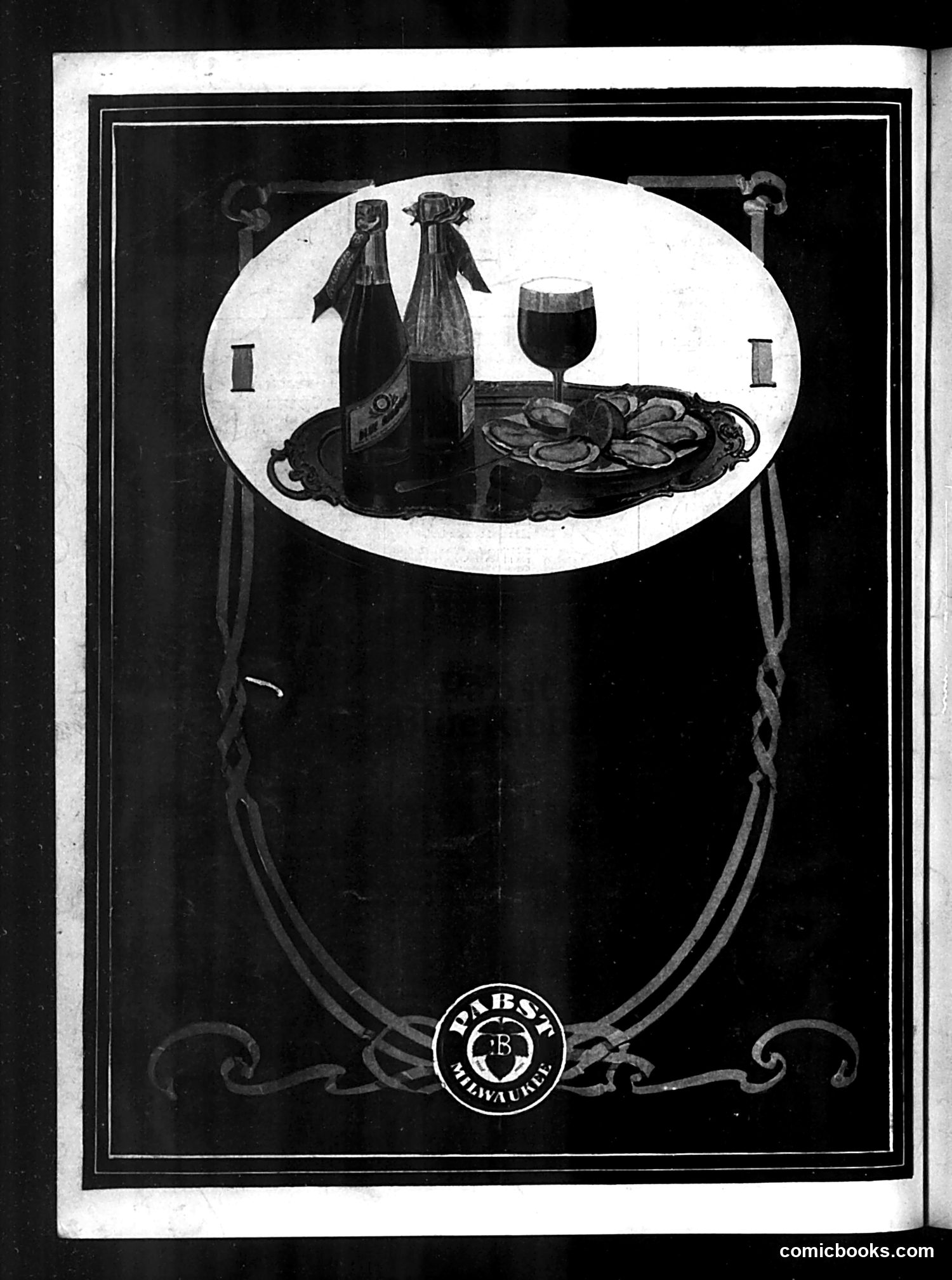
This appears to be a title page or advertisement for *Judge* magazine, published by Pabst Milwaukee (identifiable from the circular logo at bottom). The illustration depicts an elegantly styled still life arrangement featuring two wine bottles with bows, a wine glass filled with dark liquid, and a plate of oysters arranged on what appears to be a decorative tray. Given Pabst's beer brand and the Prohibition era context of early 20th-century American satire magazines, this image likely satirizes or celebrates alcoholic beverages during a period when their legal status was contentious. The sophisticated presentation—fine dining imagery with premium beverages—may be commenting on class distinctions, luxury, or the appeal of "forbidden fruit" during Prohibition debates.