
Judge, 1912-07-20 · page 3 of 26
Judge — July 20, 1912 — page 3: what you’re looking at
What you’re looking at
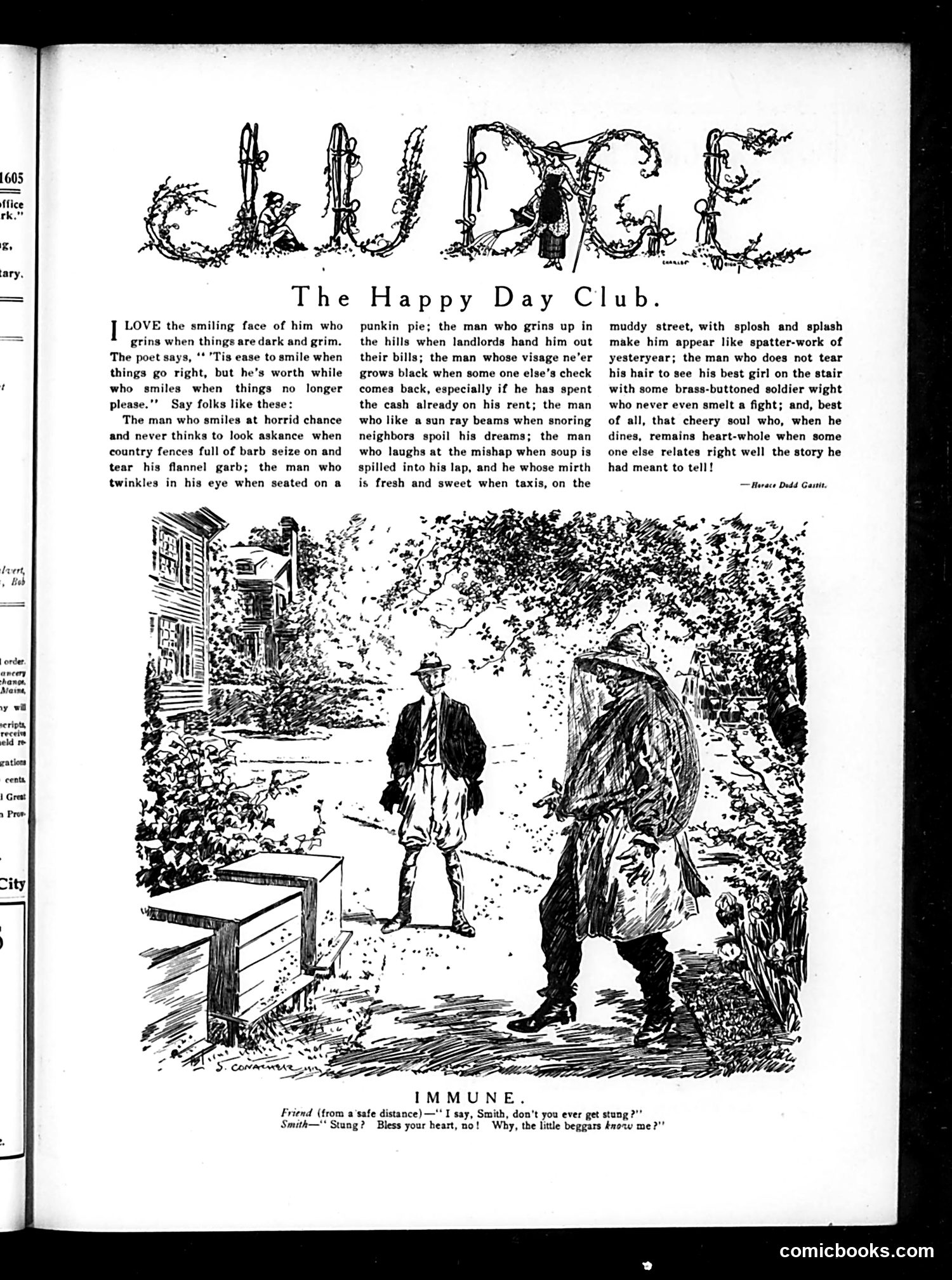
This page presents two pieces. The top text, "The Happy Day Club," celebrates people who maintain cheerfulness despite hardship—those who smile through poverty, muddy streets, and disappointment. It's a sentimental celebration of working-class resilience. The bottom cartoon, titled "Immune," depicts two men at a distance during what appears to be a contagious disease outbreak. One asks if the other ever gets sick; the response suggests immunity comes from having beggars around. The joke appears to reference either actual disease fears (possibly cholera or similar epidemics common in the era) or uses illness metaphorically. The "immunity" through exposure to poverty is darkly comedic social commentary—suggesting the poor's constant exposure to filth and disease makes them hardier than the wealthy.
📄 Transcribed text from this page (OCR, searchable)
Machine-transcribed from the original scan — historical spelling and the odd misread are preserved.
1605 {fice rk.” The Happy Day Club. LOVE the smiling face of him who grins when things are dark and grim. The poet says, ‘* Tis ease to smile when things go right, but he’s worth while who smiles when things no longer please."” Say folks like these: The man who smiles at horrid chance and never thinks to look askance when country fences full of barb seize on and tear his flannel garb; the man who twinkles in his eye when seated on a fit eS AS. CONOR, ae punkin pie; the man who grins up in the hills when landlords hand him out their bills; the man whose visage ne’er grows black when some one else’s check comes back, especially if he has spent the cash already on his rent; the man who like a sun ray beams when snoring neighbors spoil his dreams; the man who laughs at the mishap when soup is spilled into his lap, and he whose mirth is fresh and sweet when taxis, on the IMMUNE. muddy street, with splosh and splash make him appear like spatter-work of yesteryear; the man who does not tear his hair to see his best girl on the stair with some brass-buttoned soldier wight who never even smelt a fight; and, best of all, that cheery soul who, when he dines, remains heart-whole when some one else relates right well the story he had meant to tell! Horace Dodd Gastit, Friend (from a’safe distance) —"' I say, Smith, don't you ever get stung ?”” Smith—* Stang? Bless your heart, no! Why, the little beggars Anow me?" comicbooks.com