A complete issue · 39 pages · 1939
Judge — January 1939
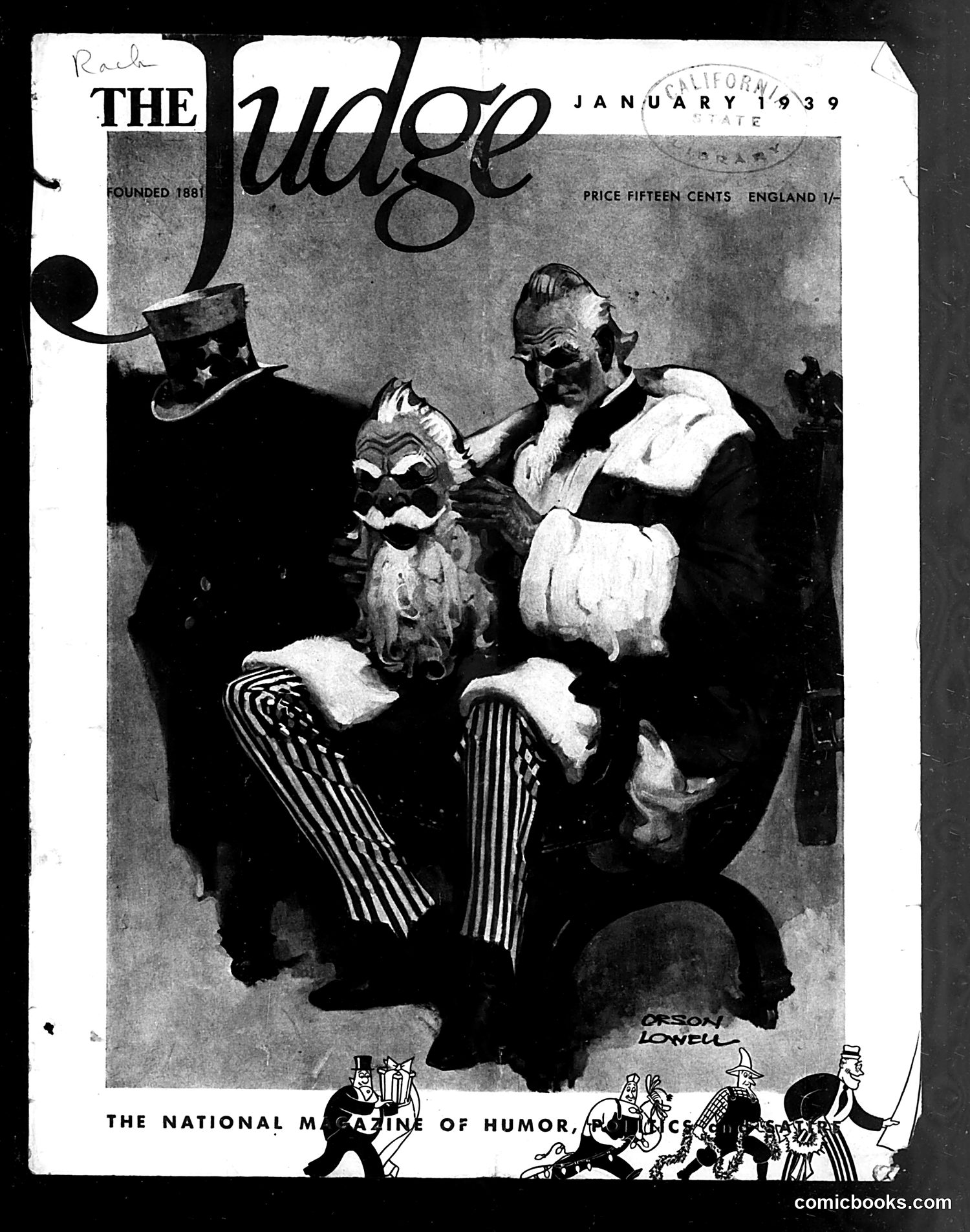
# Analysis of Judge Magazine Cover, January 1939 This cover illustrates political anxiety about European fascism in early 1939. The two figures in elaborate military uniforms with medals and decorative fur collars appear to represent European fascist dictators—likely Hitler and Mussolini, based on the historical context and their exaggerated, menacing appearance with grotesque masks or faces. The smaller figure between them, dressed as what appears to be Uncle Sam or a classical figure, represents either democracy or the United States being threatened or controlled by these authoritarian powers. The ornate, theatrical costumes emphasize the satirist's view of fascism as performative spectacle and dangerous theater. The joke warns American readers about the growing threat of European fascism as WWII loomed.
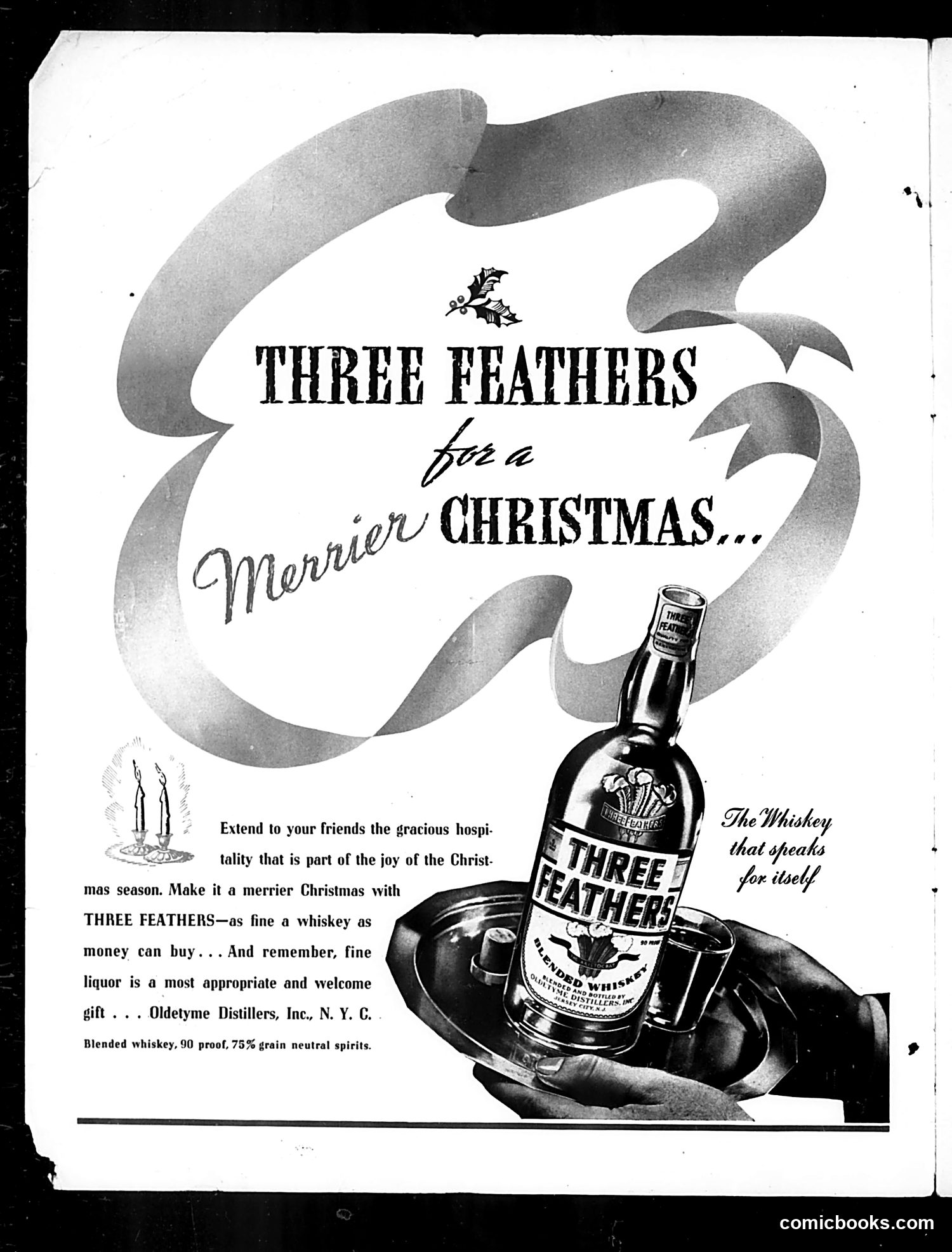
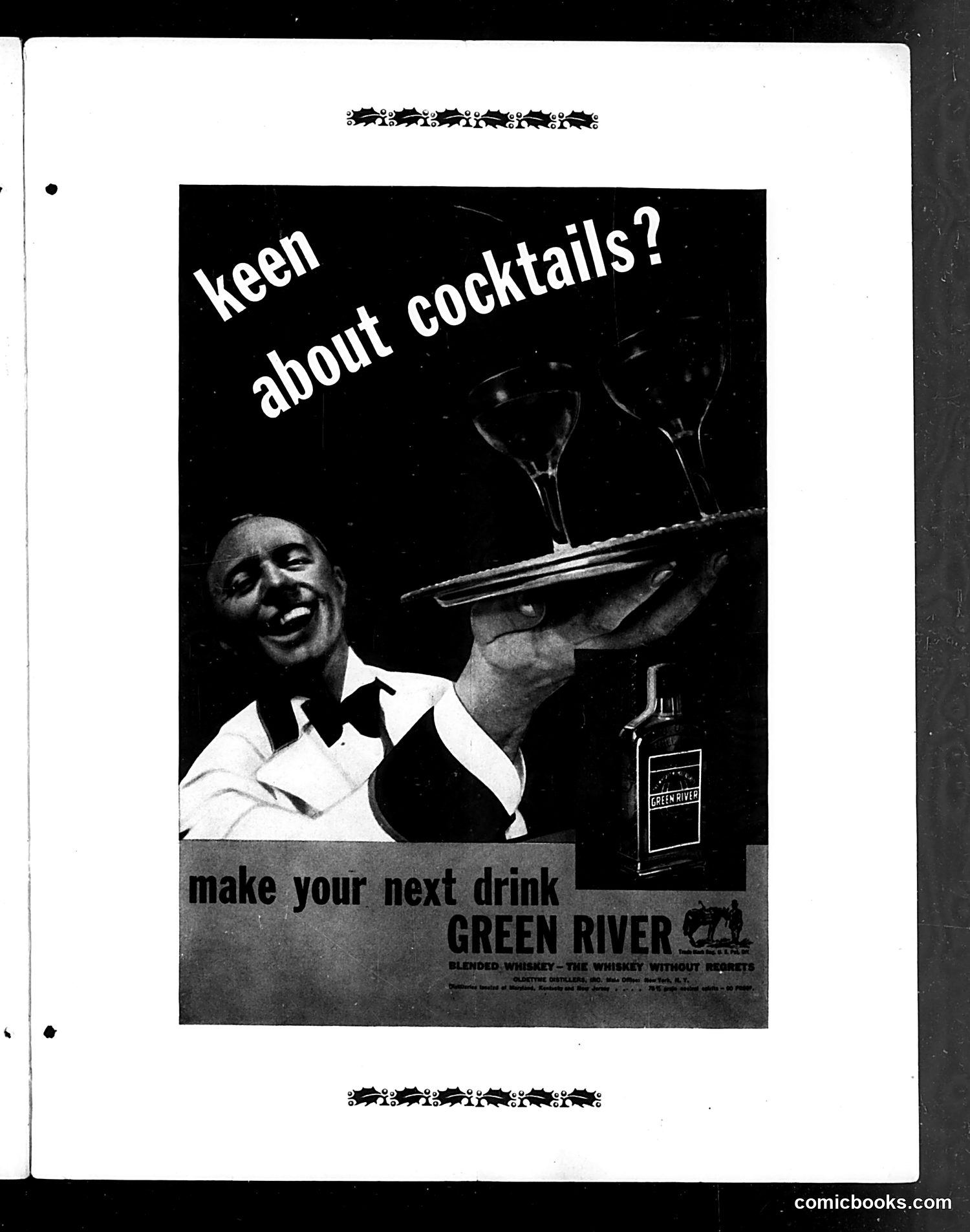
# Analysis This is primarily a **commercial advertisement**, not editorial satire. It promotes Three Feathers whiskey as a Christmas gift. The design uses festive imagery—a decorative ribbon border forming a wreath-like frame and holly sprigs—to create holiday appeal. A hand presents a bottle of Three Feathers blended whiskey alongside glasses on a serving tray. The ad's messaging emphasizes social obligation: extending "gracious hospitality" during Christmas is framed as appropriate gift-giving. The tagline "The Whiskey that speaks for itself" suggests quality. **Historical context**: The ad reflects mid-20th-century attitudes normalizing alcohol as a standard holiday present and celebrating conspicuous generosity during the season. This represents pre-modern advertising standards regarding alcohol promotion.
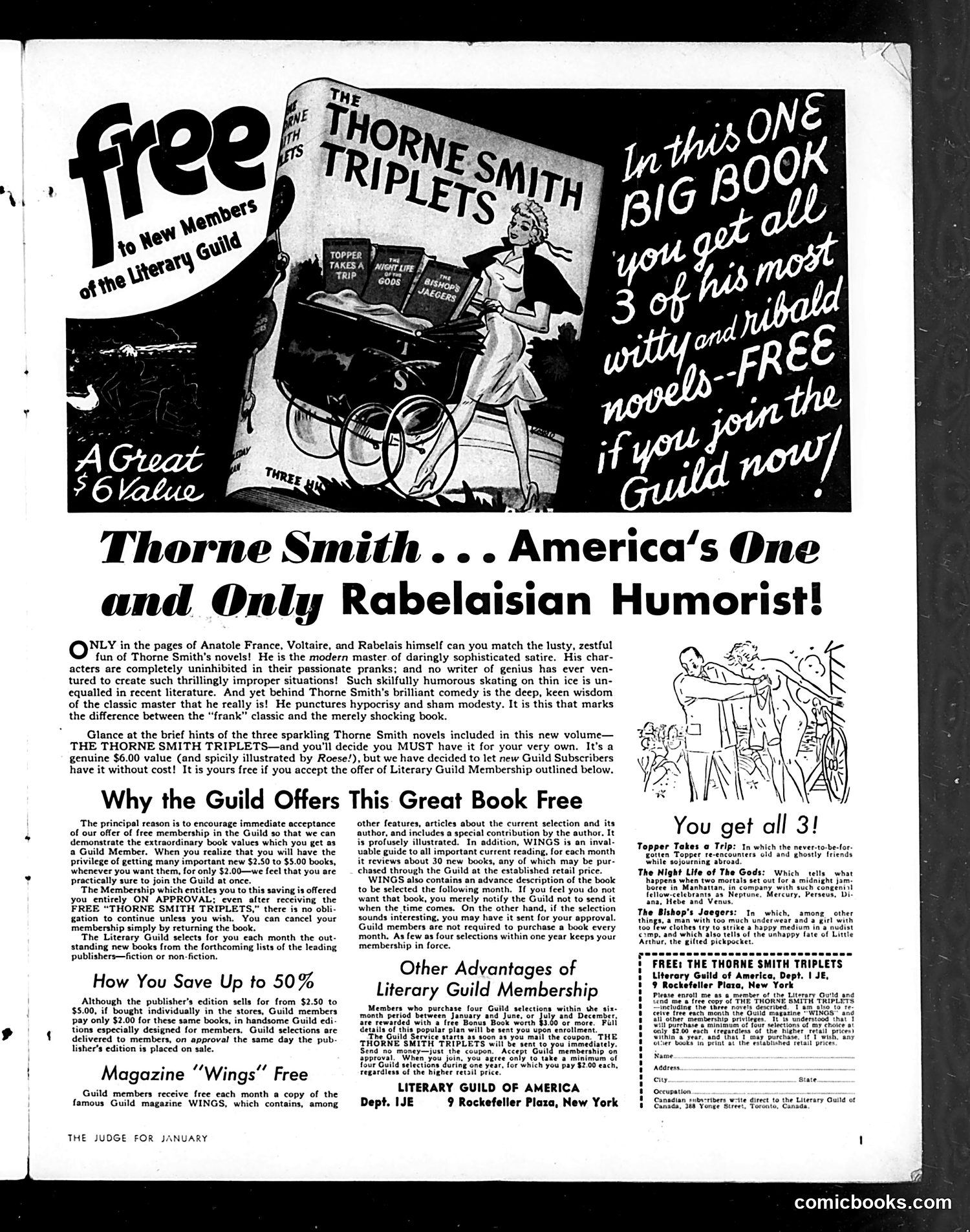
# Judge Magazine Advertisement Analysis This page is primarily a **Literary Guild membership advertisement**, not political satire. The main image promotes "The Thorne Smith Triplets"—three novels by humorist Thorne Smith, offered free to new Guild members. The cartoon shows a woman with a baby carriage surrounded by book titles, illustrating Smith's reputation as "America's One and Only Rabelaisian Humorist." The visual joke references his bawdy, sophisticated comedic style. The advertisement emphasizes membership benefits: receiving three books worth $6 retail value for free, discounted future purchases, and access to the monthly *Wings* magazine. The pitch targets readers seeking entertainment during the Depression era by promising significant savings on books. This is **commercial advertising**, not political commentary.
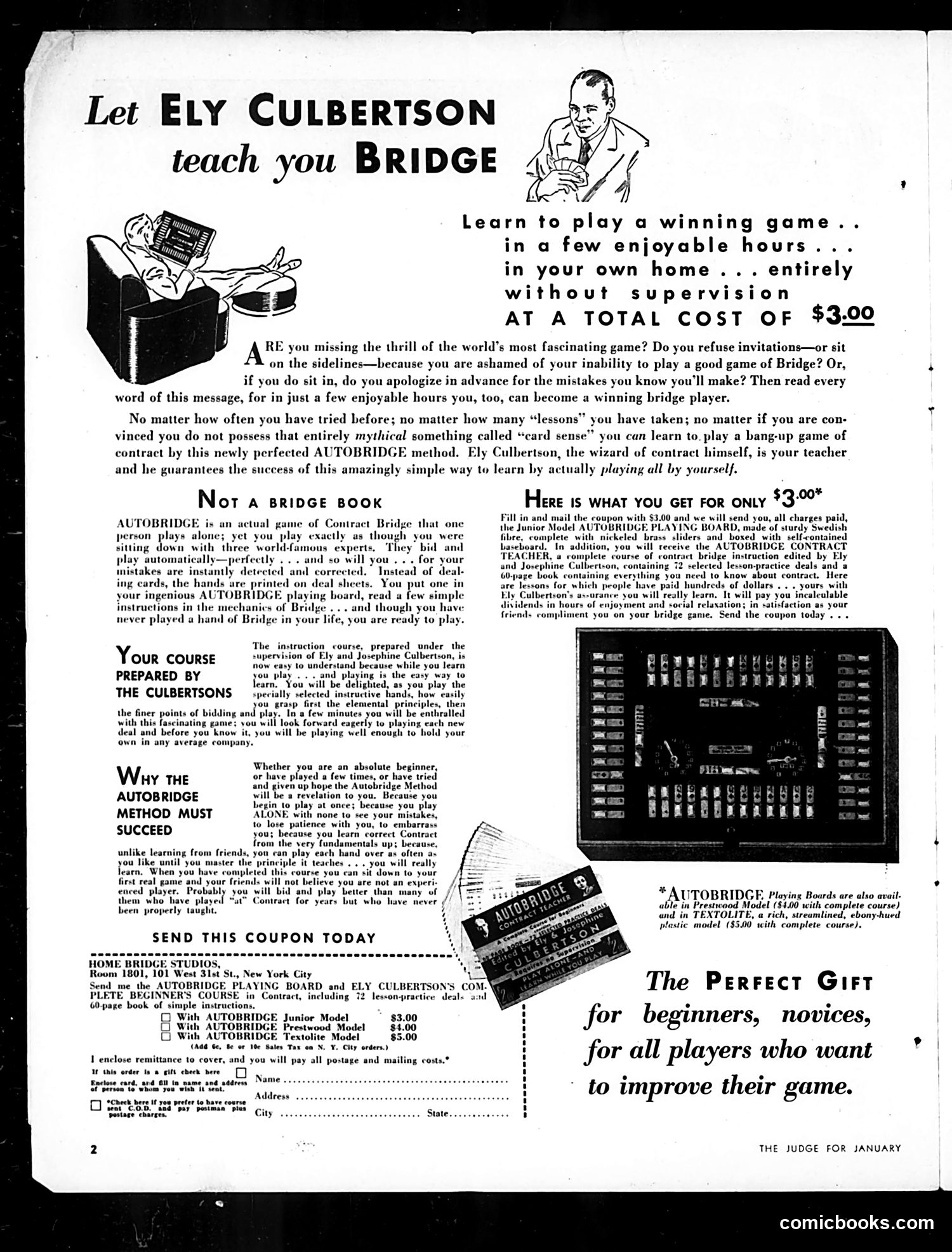
# Analysis This page is **primarily a vintage advertisement**, not political satire. It promotes the "Autobridge" bridge-playing instruction system by Ely Culbertson, a famous bridge expert of the era. The advertisement uses persuasive copy targeting bridge enthusiasts who feel insecure about their play. It promises that Culbertson's method allows learners to master contract bridge independently at home for $3.00—then a modest sum. The illustrations show a relaxed person learning from Culbertson's materials and display the physical product: a mechanical learning board with sliding cards representing bridge hands. There is **no political content or satire** on this page. Judge magazine, while known for humor and commentary, used its pages for paid advertisements like this one, which represent everyday consumer culture of the period.
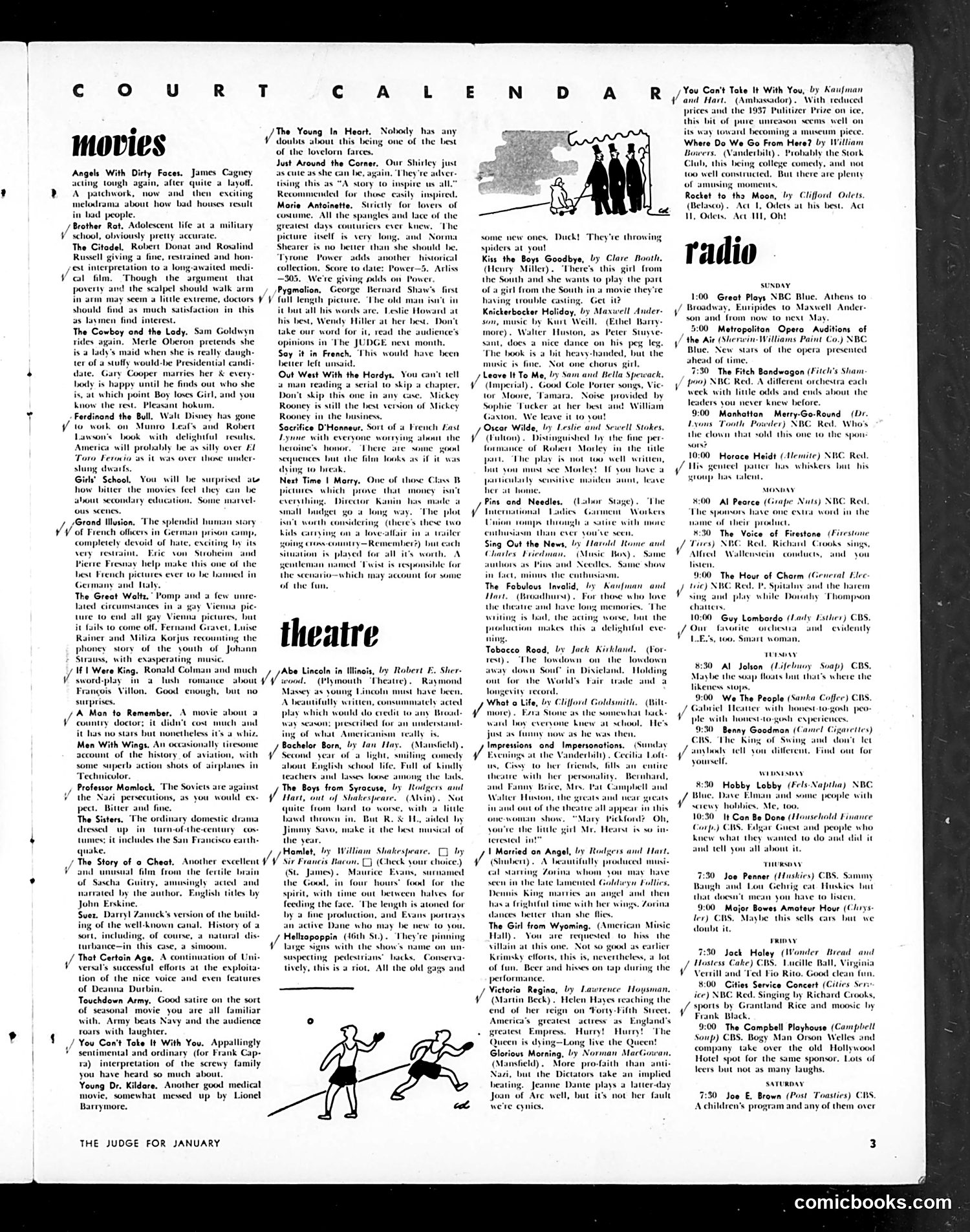
# Court Calendar Page Analysis This is primarily an **entertainment guide page** from Judge magazine, listing movies, theatre, and radio programming. The small cartoons are decorative elements accompanying the listings rather than satirical commentary. The two cartoon figures at the bottom appear to be **generic comedic characters** (not identifiable political figures) in exaggerated poses—likely illustrating entertainment or physical comedy themes relevant to the listed shows. The page itself is a **scheduling/review digest** rather than political satire. It reviews films like "Angels With Dirty Faces" (Cagney) and theatrical productions, providing entertainment recommendations for readers. The cartoon elements are incidental decorative features, not the page's primary content or message. Without clearer identification of specific individuals or dated references in the cartoons, they appear to be **general humor rather than pointed political satire**.
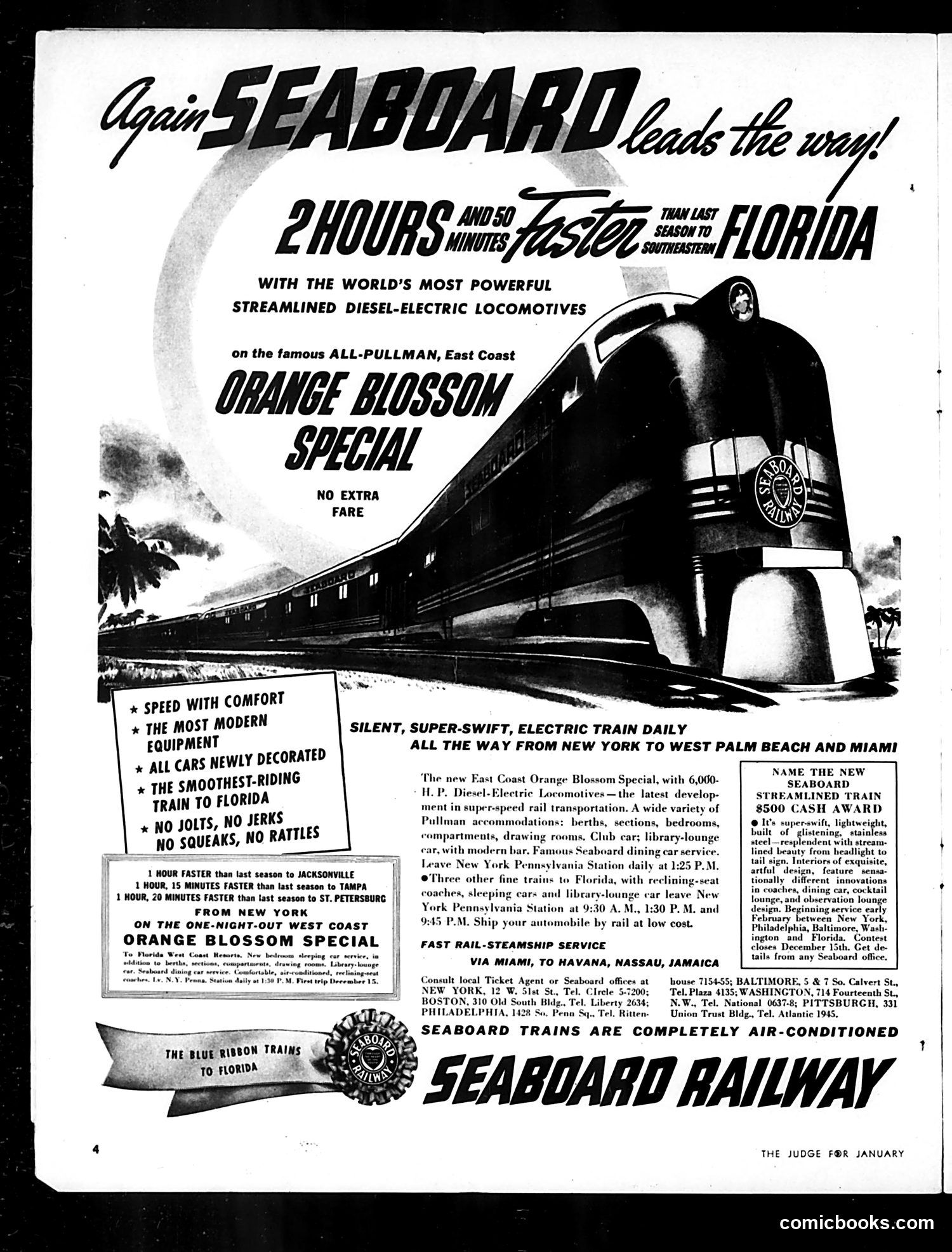
# Analysis This page is **primarily an advertisement**, not political satire. It promotes the Seaboard Railway's "Orange Blossom Special" train service to Florida, featuring: - A streamlined diesel-electric locomotive with art deco styling - Marketing claims: 2 hours faster than competitors, no extra fare, air-conditioned cars, smooth ride - Service details: New York to Florida, daily runs, connections to Miami/Havana The "Blue Ribbon Trains to Florida" logo appears at bottom left. **No political cartoon or satire is present.** This is a straightforward 1940s transportation advertisement emphasizing modernity, speed, and comfort—typical of the era's optimistic industrial marketing. Judge magazine regularly carried such full-page ads alongside its satirical content.
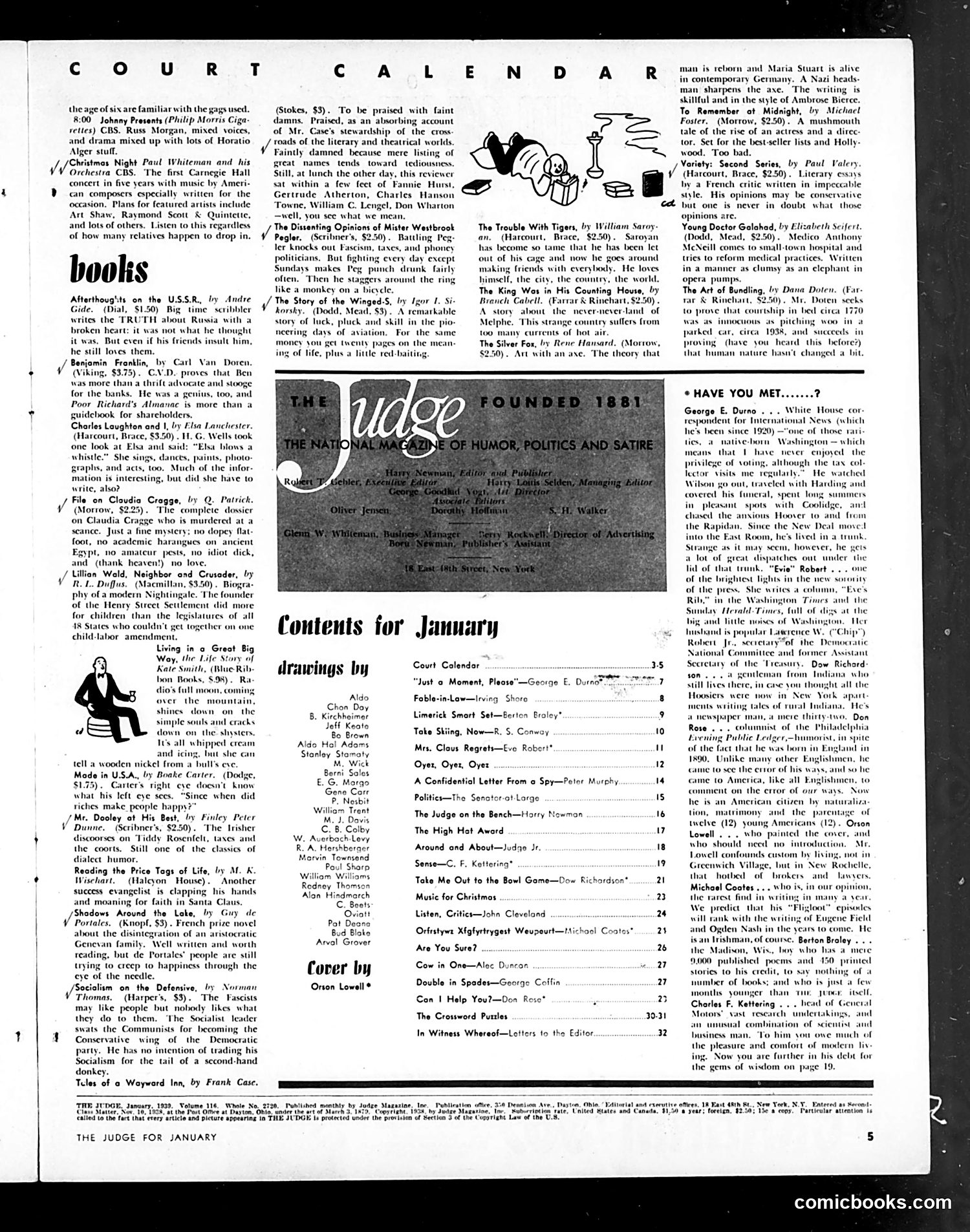
# Analysis of Judge Magazine Content Page (January 1934) This page primarily contains a **table of contents and masthead** for Judge magazine's January 1934 issue, rather than finished cartoons or satirical illustrations. The visible cartoon appears to show a figure (possibly a child or small person) surrounded by scattered objects, though the specific political reference is unclear from the image quality. The "HAVE YOU MET...?" section features **George E. Durso**, described as a humor correspondent. The biographical note indicates he's been with Judge since 1929, establishing this as professional staff material rather than satire commentary. The page is primarily **editorial/administrative content** — listing article titles, illustrators, and contributors — rather than containing substantial satirical cartoons for modern interpretation.
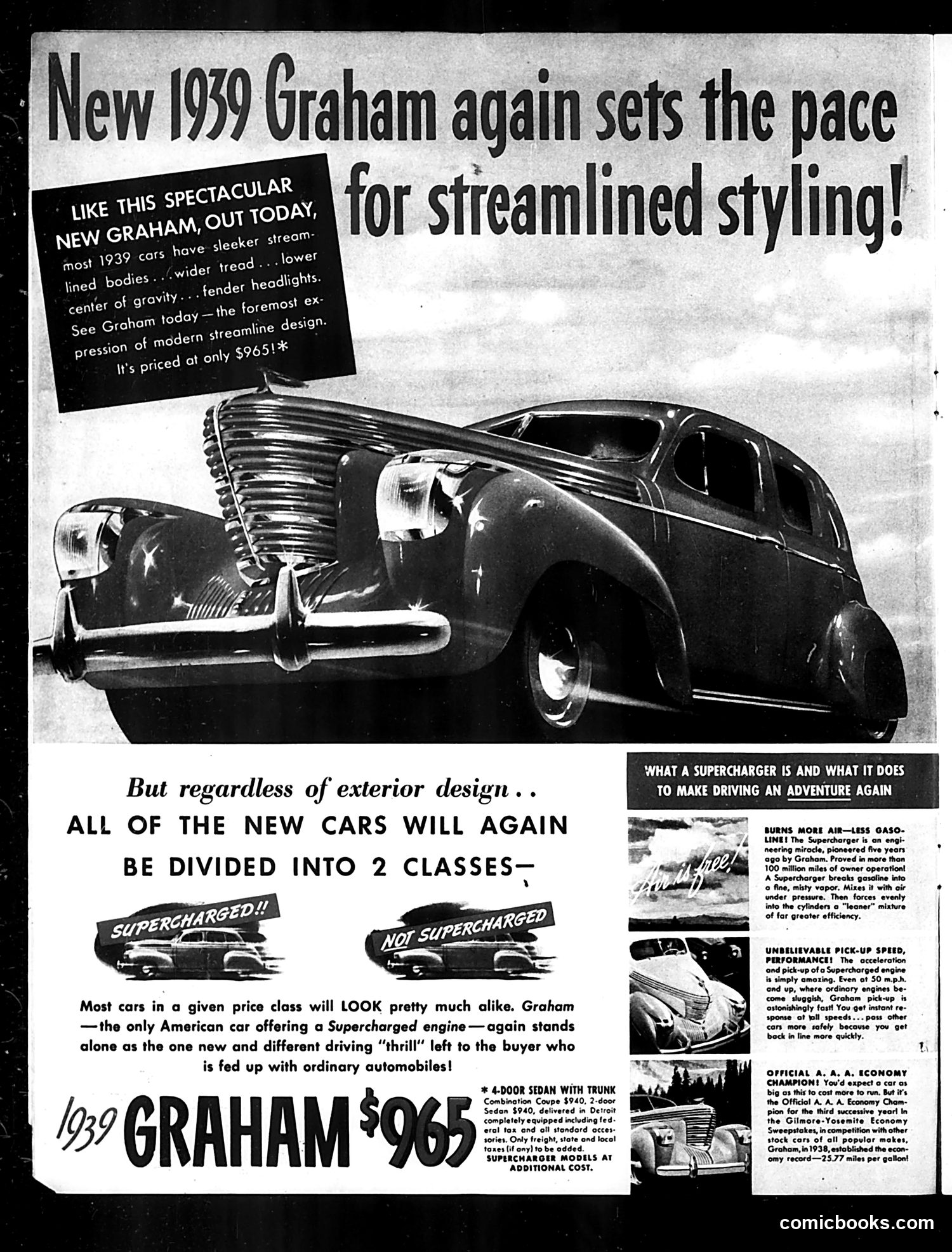
# Analysis This is primarily a **1939 Graham automobile advertisement**, not satirical content. The page promotes Graham's new "streamlined styling" as setting the pace for the industry, featuring a sleek 1939 model priced at $965. The key marketing angle distinguishes Graham cars into two classes: "Supercharged" and "Not Supercharged" models. The advertisement emphasizes that Graham's supercharger technology—which "burns more air, less gasoline"—provides superior performance and acceleration compared to ordinary engines. The page includes technical explanations of supercharger benefits and economy records, positioning Graham as an innovative manufacturer offering exciting driving performance. This appears to be straightforward automotive advertising rather than political or social satire, capitalizing on 1930s consumer interest in technological advancement and modern automotive design.
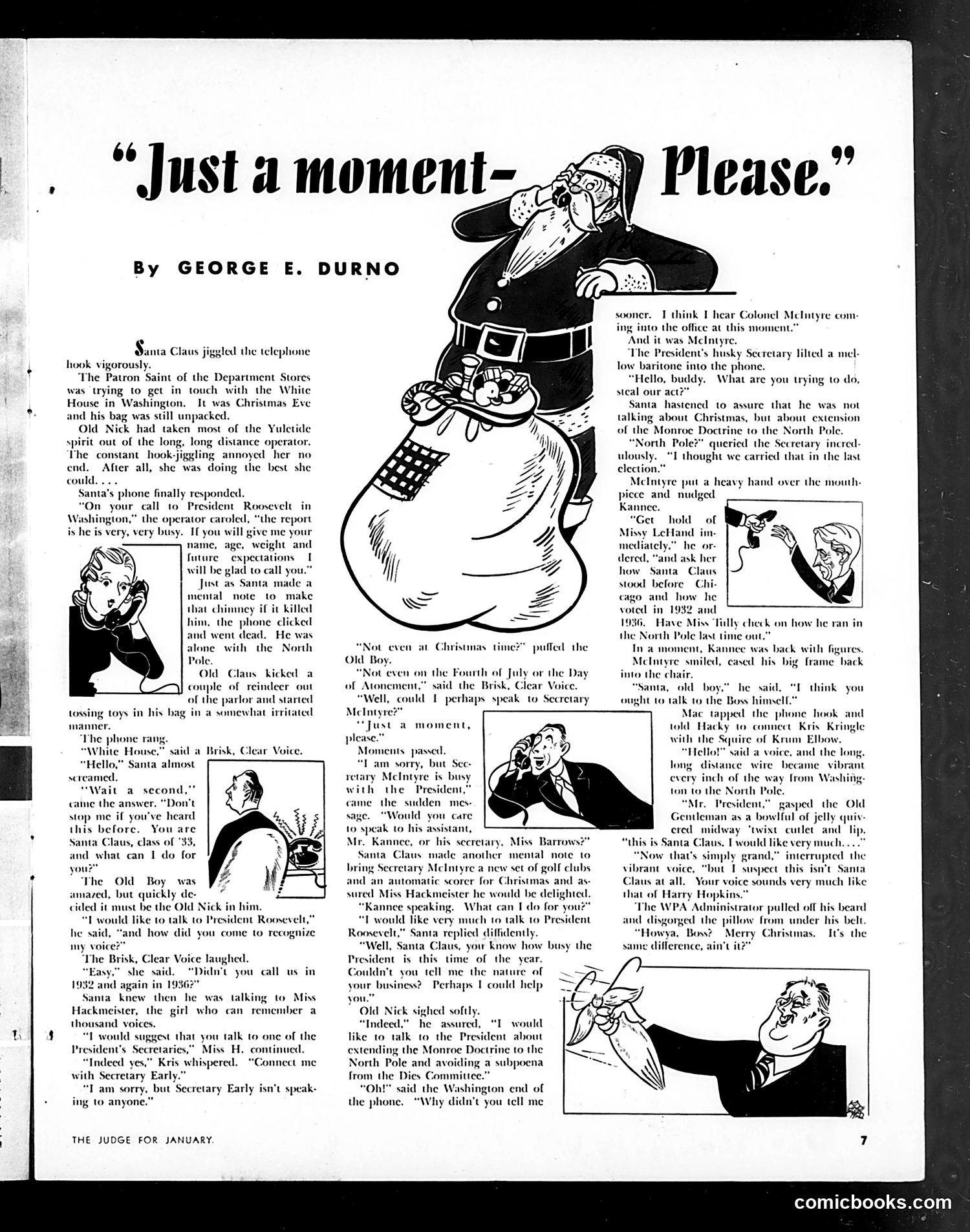
# "Just a Moment—Please" by George E. Durno This satirical story depicts Santa Claus repeatedly attempting to call President Roosevelt in Washington during the Christmas season, but encountering constant bureaucratic obstruction. Santa seeks to discuss extending the Monroe Doctrine to the North Pole and avoiding a subpoena from the Dies Committee. The humor centers on the difficulty of reaching the President through his staff—particularly Secretary McIntyre—and the absurdity of Santa's official "business" with the federal government. The Dies Committee reference points to the contemporary House Un-American Activities Committee investigations of the 1930s-40s. The cartoon satirizes both presidential inaccessibility and Cold War-era government paranoia, presenting Santa's North Pole operations as subject to federal scrutiny.
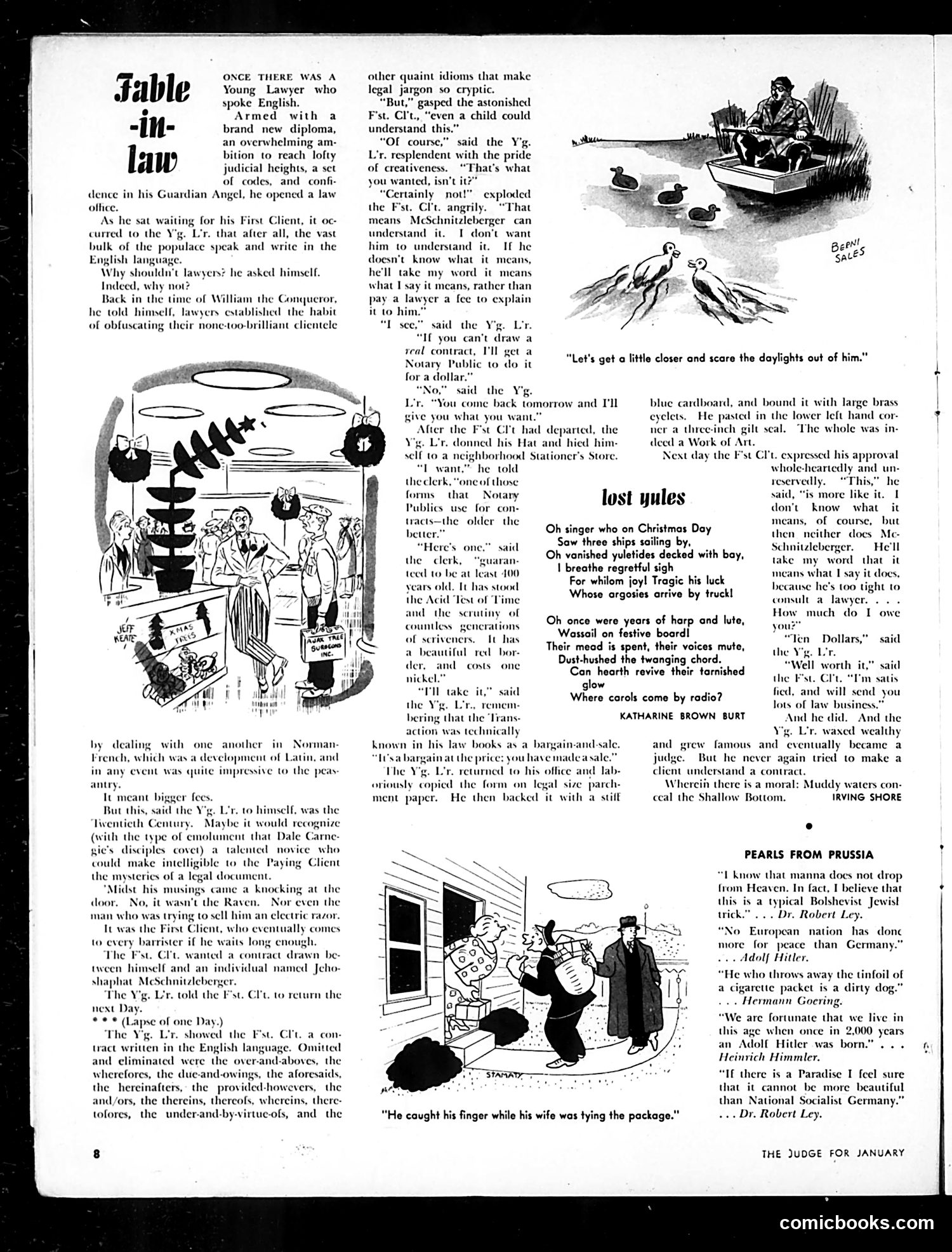
# "Fable-in-law": Legal Jargon Satire This story satirizes lawyers' deliberate use of incomprehensible language to inflate their fees and maintain professional mystique. A young lawyer, idealistic about making law accessible to ordinary clients, drafts a contract in plain English. His first client is horrified—he *wants* the contract incomprehensible so the other party cannot understand its terms without paying a lawyer to explain it. The satire's target is the legal profession's self-interested obscurantism. The young lawyer learns that clarity threatens lawyers' business model: incomprehensibility creates demand for legal expertise. The client eventually buys an old, ornate notary form covered in archaic jargon—precisely because its impenetrability serves his interests. The accompanying illustrations show the client's satisfaction with obtuse language and include unrelated comic vignettes. This reflects Judge magazine's typical format mixing satirical stories with humorous sketches.
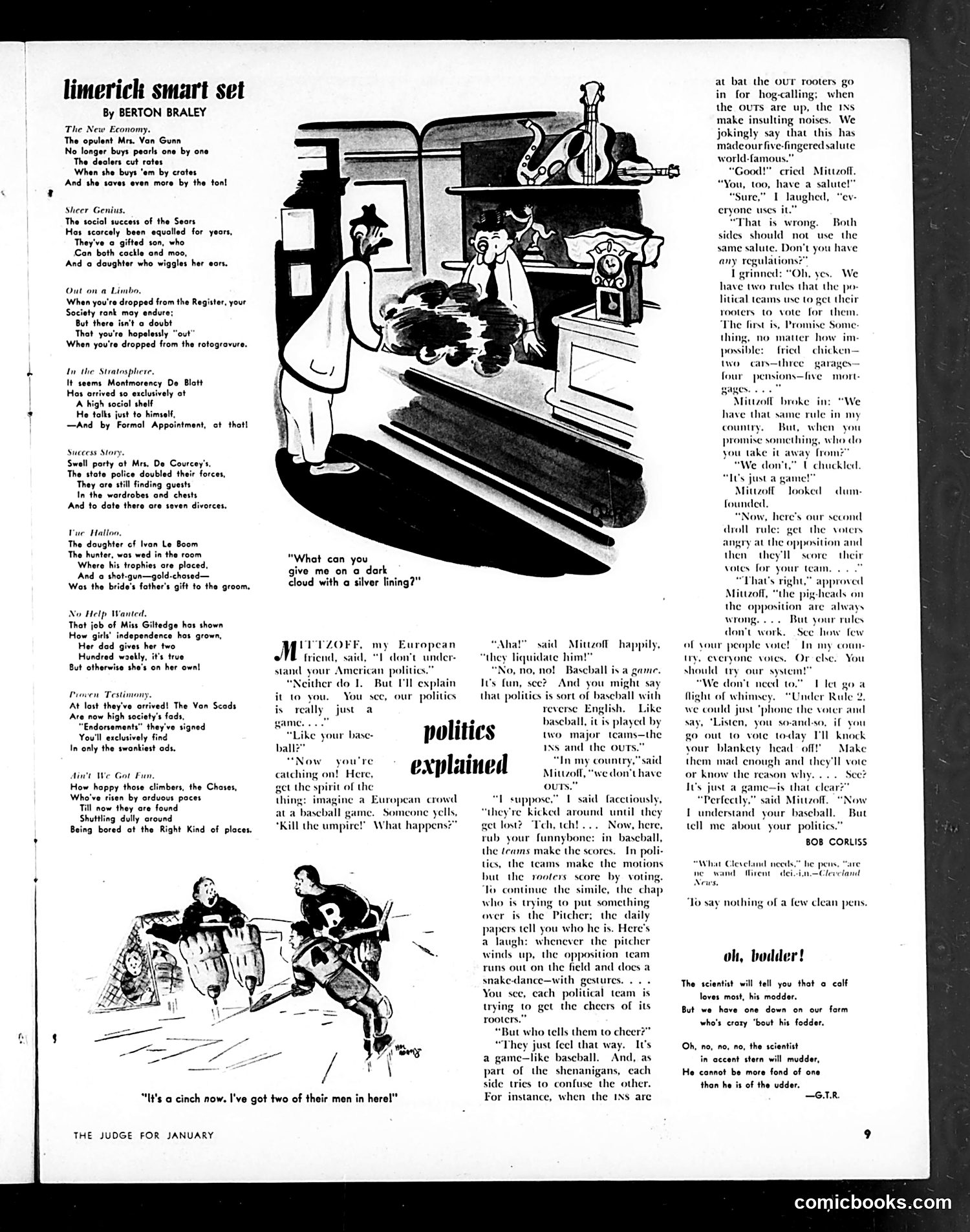
# "Politics Explained" - Judge Magazine Satire This page contains humorous limericks and a longer comic dialogue explaining American politics to a European visitor named Mittzoff. **The Main Cartoon/Article:** A European friend struggles to understand American politics. An American explains it using baseball as an analogy: politics is like baseball with "ins" (those in power) and "outs" (opposition). Teams make motions while voters score by voting. The "pitcher" is whoever's trying to push an agenda; newspapers identify him. When the pitcher winds up, the opposition team runs out and does a "snake-dance" with gestures—like fans making insulting noises when the outs are up. The satire mocks American politics as mere spectacle and game-playing rather than serious governance, with voters as passive "rooters" cheering their team rather than thinking critically. **The Limericks** poke fun at wealthy socialites, nouveau riche climbers, and superficial society life—typical Judge targets. The piece assumes readers understand baseball well enough to follow the political metaphor.
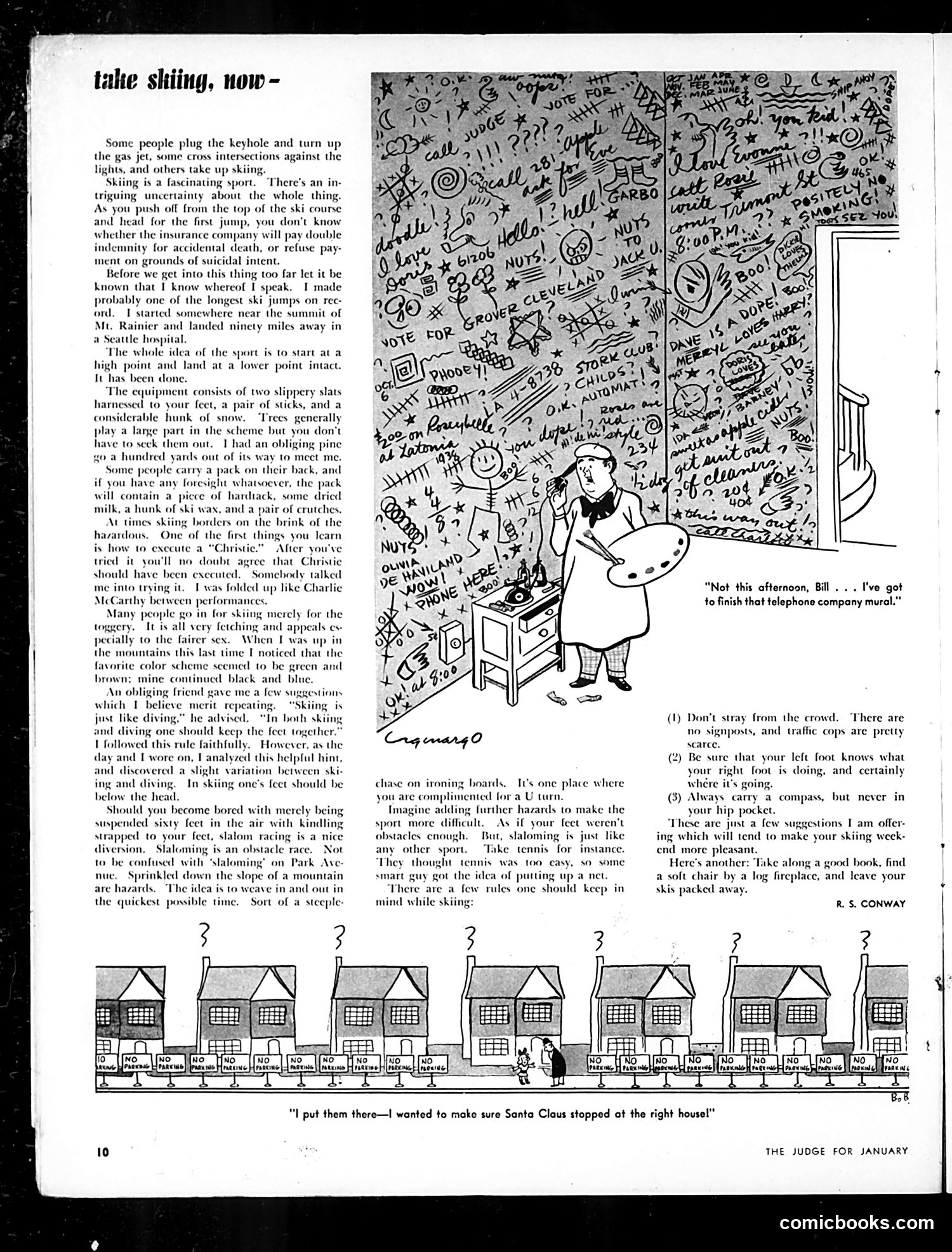
# Judge Magazine Page Analysis This page contains a humorous essay on skiing by R.S. Conway, satirizing the sport's inherent dangers and absurdity. The main cartoon shows a man at a drafting table working on a "telephone company mural"—a reference to the widespread practice of defacing public spaces with graffiti-like markings (visible in the dense scribbles covering the wall behind him). The skiing article mocks the sport through exaggerated descriptions: comparing it to executing a dangerous maneuver called the "Christie," describing a fictional ski jump ending in a Seattle hospital, and offering deliberately unhelpful safety tips (carry a compass "but never in your hip pocket"). The bottom cartoon shows someone placing items at houses, joking about ensuring "Santa Claus stopped at the right house"—a simple Christmas-themed gag unrelated to the skiing content. The satire targets skiing's fashionability among wealthy Americans and the sport's genuine hazards, presented through deadpan, ironic humor typical of Judge magazine's style.