A complete issue · 53 pages · 1938
Judge — September 1938
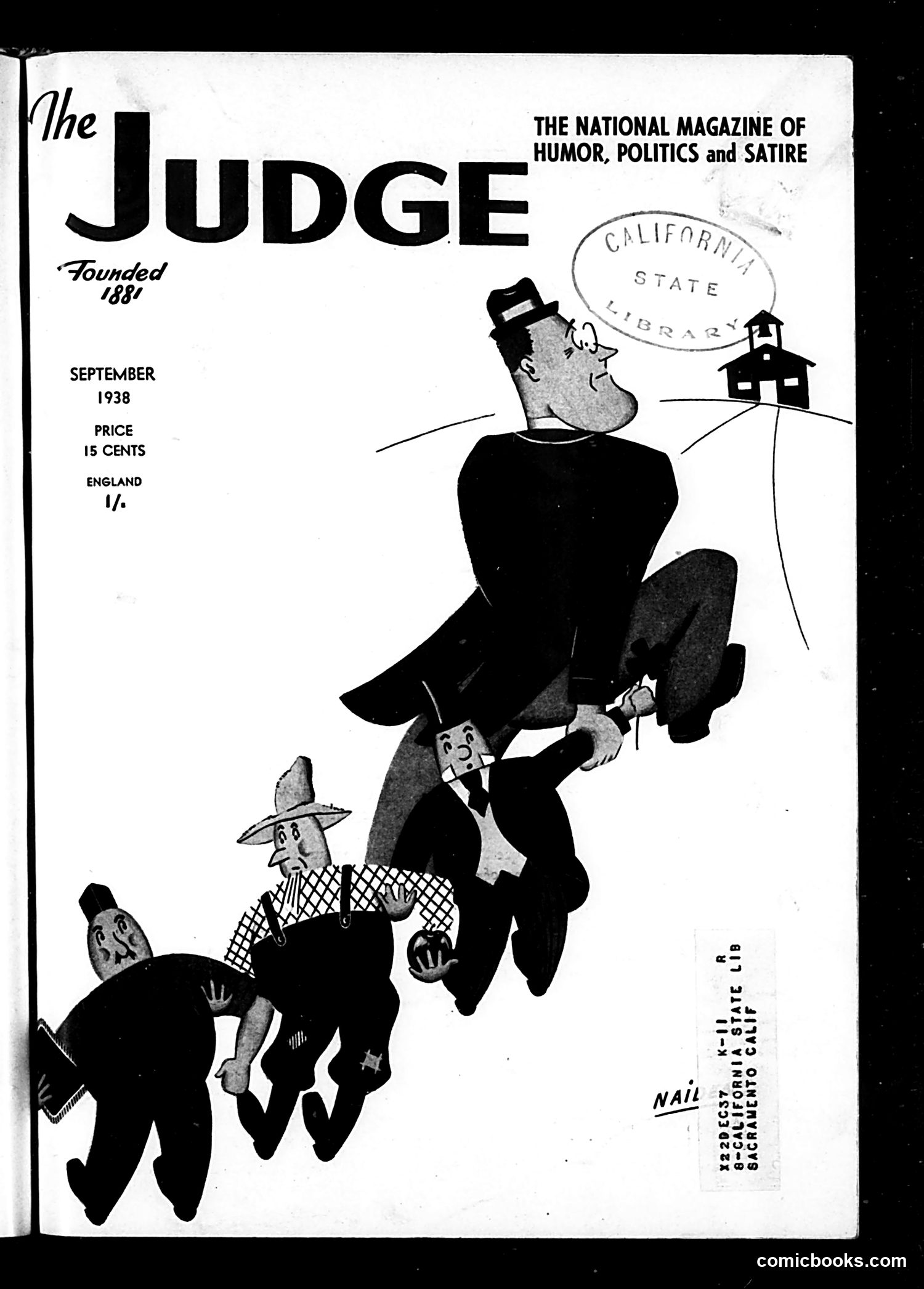
# Analysis of Judge Magazine Cover, September 1938 This cover depicts a tall figure in formal dress being pulled downward by three smaller men in various costumes (appearing to represent different national or political interests). The schoolhouse in the background suggests American education or values at stake. The satire likely comments on **isolationism versus international pressure** during 1938—a year of rising European fascism and calls for American intervention. The smaller figures appear to represent foreign powers or ideological movements attempting to drag America into their conflicts, while the tall American figure resists or struggles with these pressures. The specific identities of the smaller figures remain unclear without additional context, but the composition clearly expresses anxiety about external forces threatening American independence during this pre-World War II period.
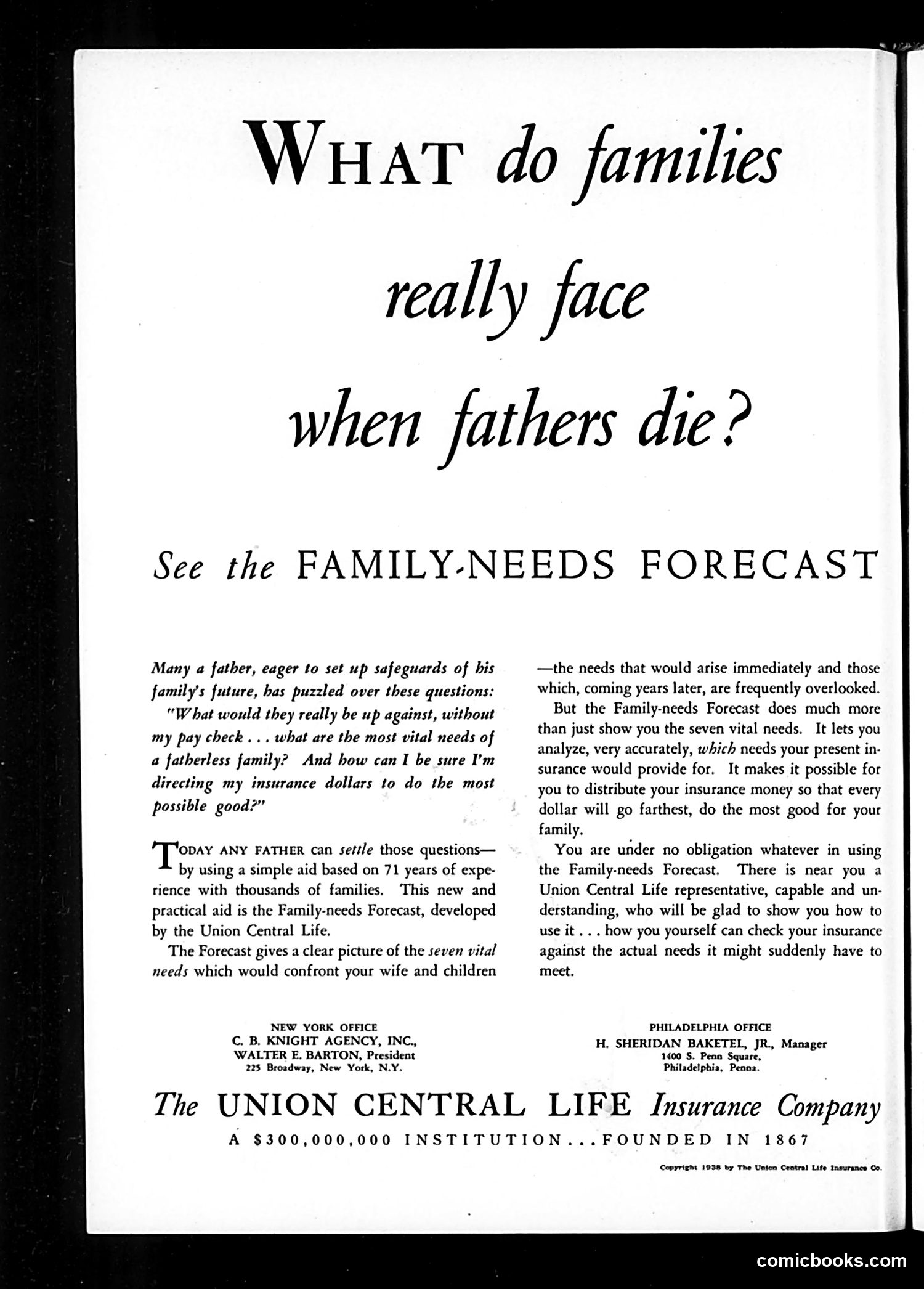
# Analysis This is **not a cartoon or satire page**, but rather a **full-page insurance advertisement** from Union Central Life Insurance Company (copyright 1938). The ad addresses fathers directly, posing the question: "What do families really face when fathers die?" It then promotes the "Family-Needs Forecast," a tool claiming to help men plan adequate life insurance by identifying seven vital financial needs their dependents would face after their death. The appeal is to middle-class male anxieties about providing for wives and children. The ad emphasizes practical financial planning rather than emotional manipulation, offering a Union Central Life representative to help calculate appropriate coverage amounts. This reflects 1930s life insurance marketing strategies targeting breadwinners during the Depression era.

# Analysis This page is **primarily an advertisement**, not a cartoon or satirical content. It promotes "The De Luxe Samarkand Edition of the Rubaiyat of Omar Khayyam"—a beautifully illustrated classic poetry book—being offered free to new members of the De Luxe Editions Club. The ad emphasizes the book's value (formerly sold for $5-$10) and appeals to culturally refined readers by highlighting Edmund Dulac's 12 full-color illustrations. It explains the club's business model: members pay $1.69 per selection for leather-bound classics normally priced much higher. There is no political satire, caricature, or social commentary visible. The page is a straightforward commercial solicitation using prestigious literary content to attract book-loving subscribers.
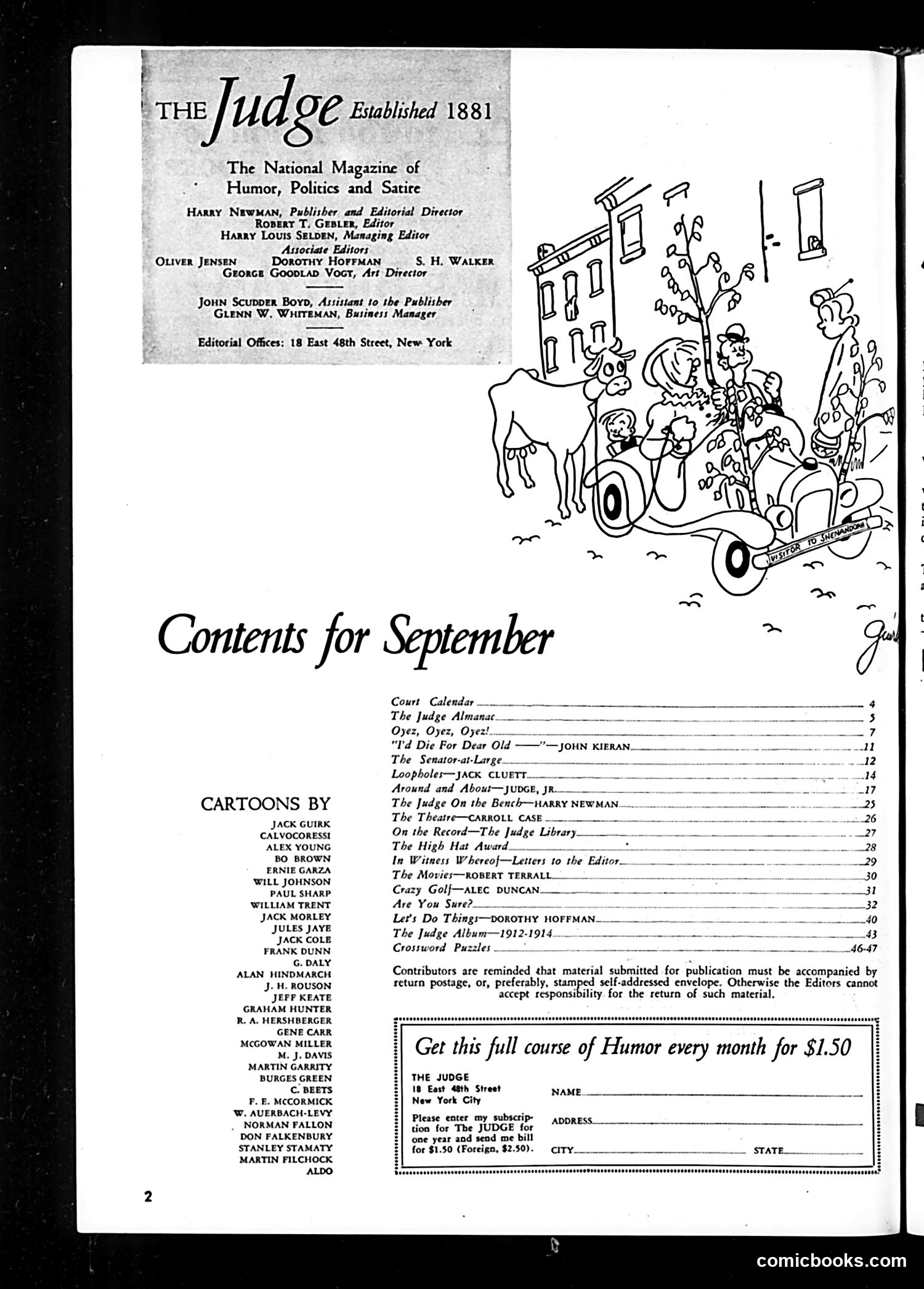
# Analysis of Judge Magazine Contents Page (September) This is a table of contents page for *The Judge*, a satirical magazine established in 1881. The masthead illustration depicts a chaotic street scene with a car (appearing to be from the early 1900s) surrounded by pedestrians, a cow, and falling debris from a building—likely satirizing urban congestion or automobile dangers during the early automotive era. The contents list includes political and social commentary pieces: "The Senator-at-Large," "Around and About," and "The Theater" suggest commentary on government, society, and culture. Without seeing the actual articles, the specific satirical targets remain unclear, though the cartoonists listed (Jack Guirk, Cesare Cegliossi, others) were known contributors to *Judge's* humorous social critique.
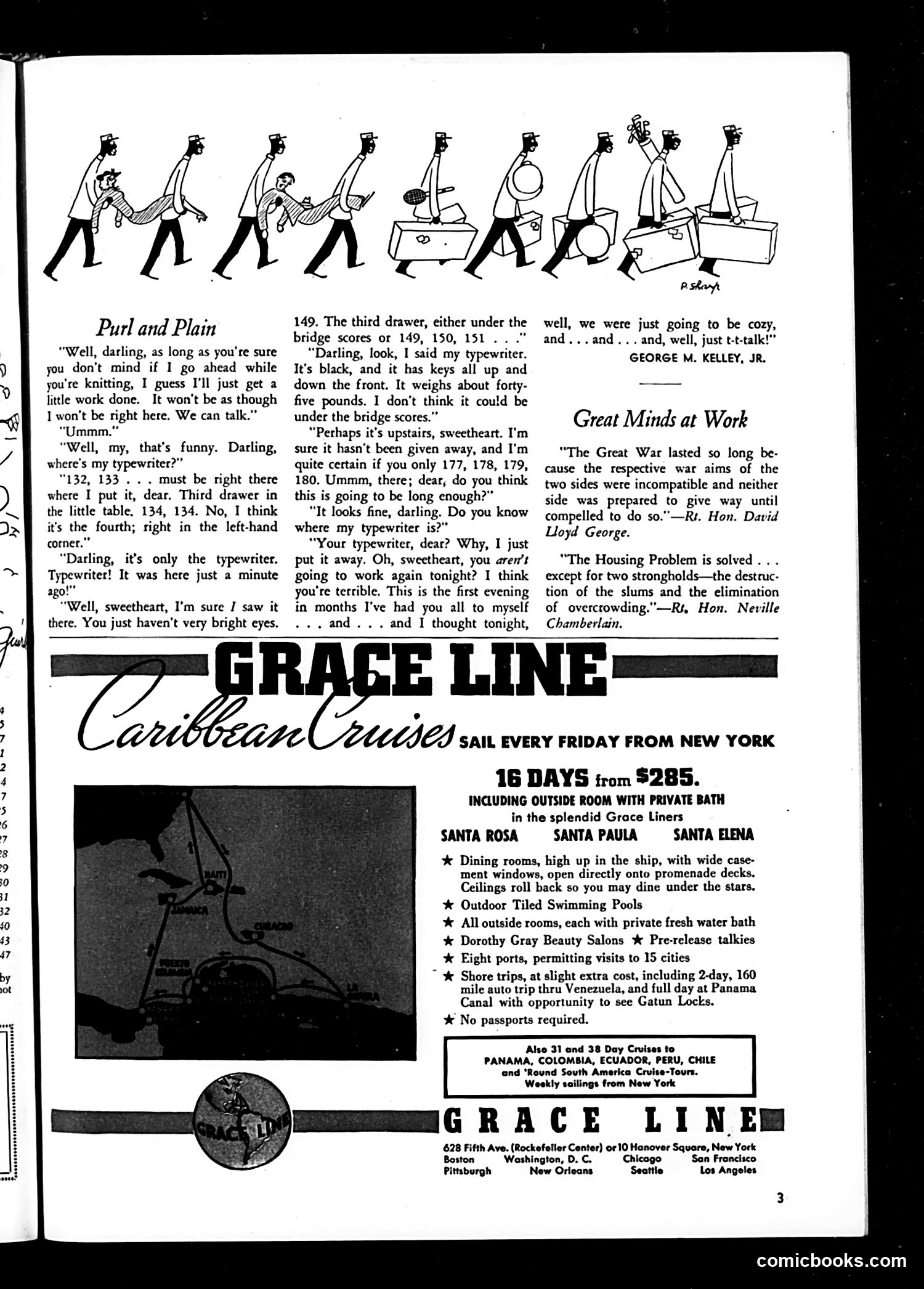
# Analysis of This Judge Magazine Page The top cartoon, "Purl and Plain," depicts a domestic comedy sketch about knitting. A wife is knitting while her husband wants to go out, but she insists on staying in. The humor involves their playful banter about a typewriter and drawer locations—standard marital banter of the era. This appears to be lighthearted domestic humor rather than political satire. The bulk of the page is a Grace Line Caribbean Cruises advertisement promoting 16-day voyages from $285, featuring three ships (Santa Rosa, Paula, Elena) with amenities like swimming pools and beauty salons. The "Great Minds at Work" section quotes historical figures on war and housing problems, but these are brief, unrelated quotes rather than connected commentary. Overall, this is primarily an **advertising page** with minimal satirical content.
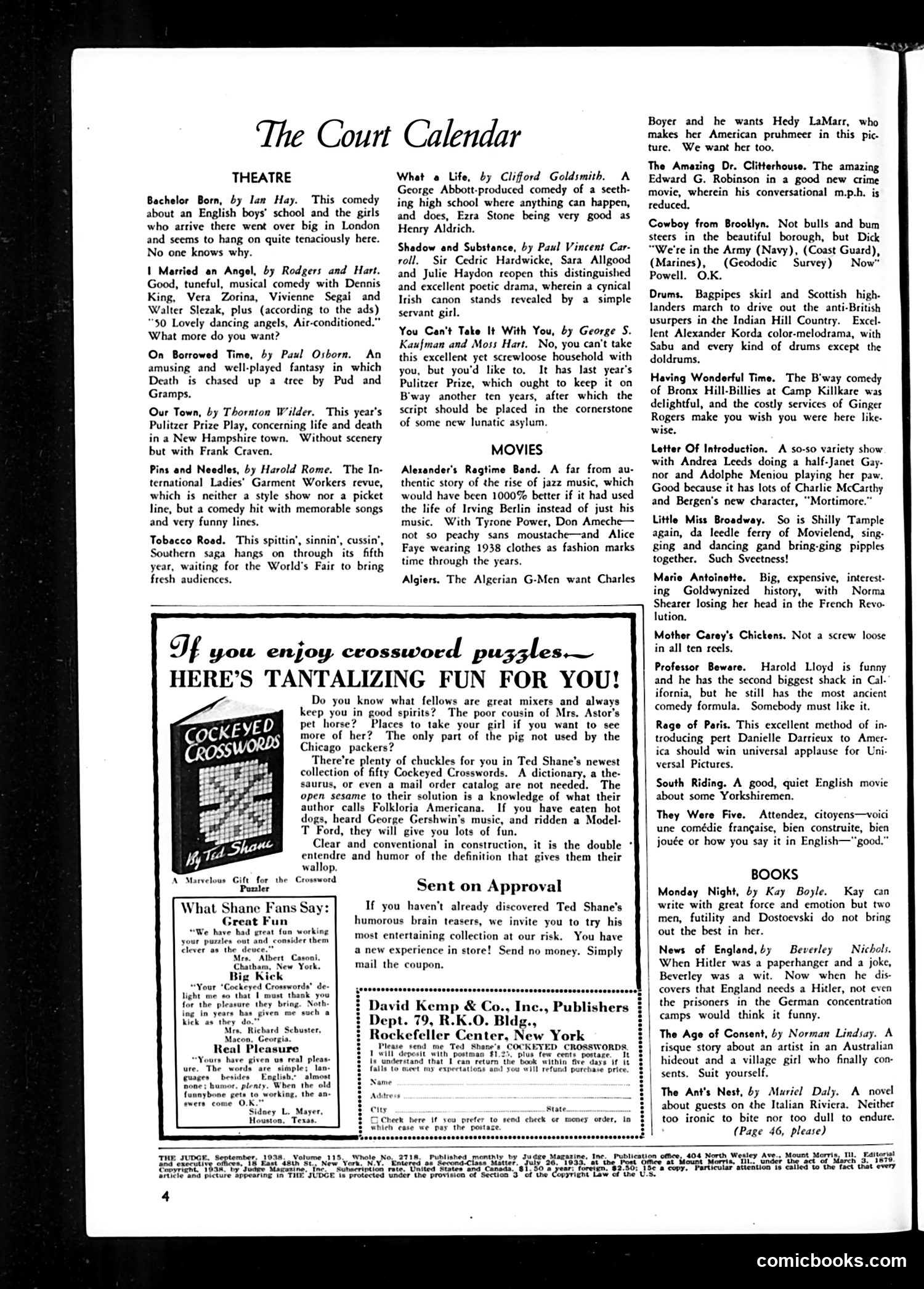
# The Court Calendar - Judge Magazine, September 1938 This page is primarily a **theater and entertainment review section** rather than political satire. It contains brief reviews of current Broadway plays, movies, and books, along with advertisements. The main visual element is a **crossword puzzle advertisement** for "Cockeyed Crosswords" by Ted Shane, marketed as entertainment. The puzzle promotion includes testimonials from fans praising Shane's puzzles. The content reflects **1938 popular culture**: references to jazz history, Harold Lloyd films, and contemporary British and American theater. A notable book review mentions Hitler and concentration camps, indicating some awareness of Nazi Germany. The page demonstrates Judge's shift toward general entertainment coverage rather than political commentary by this date.
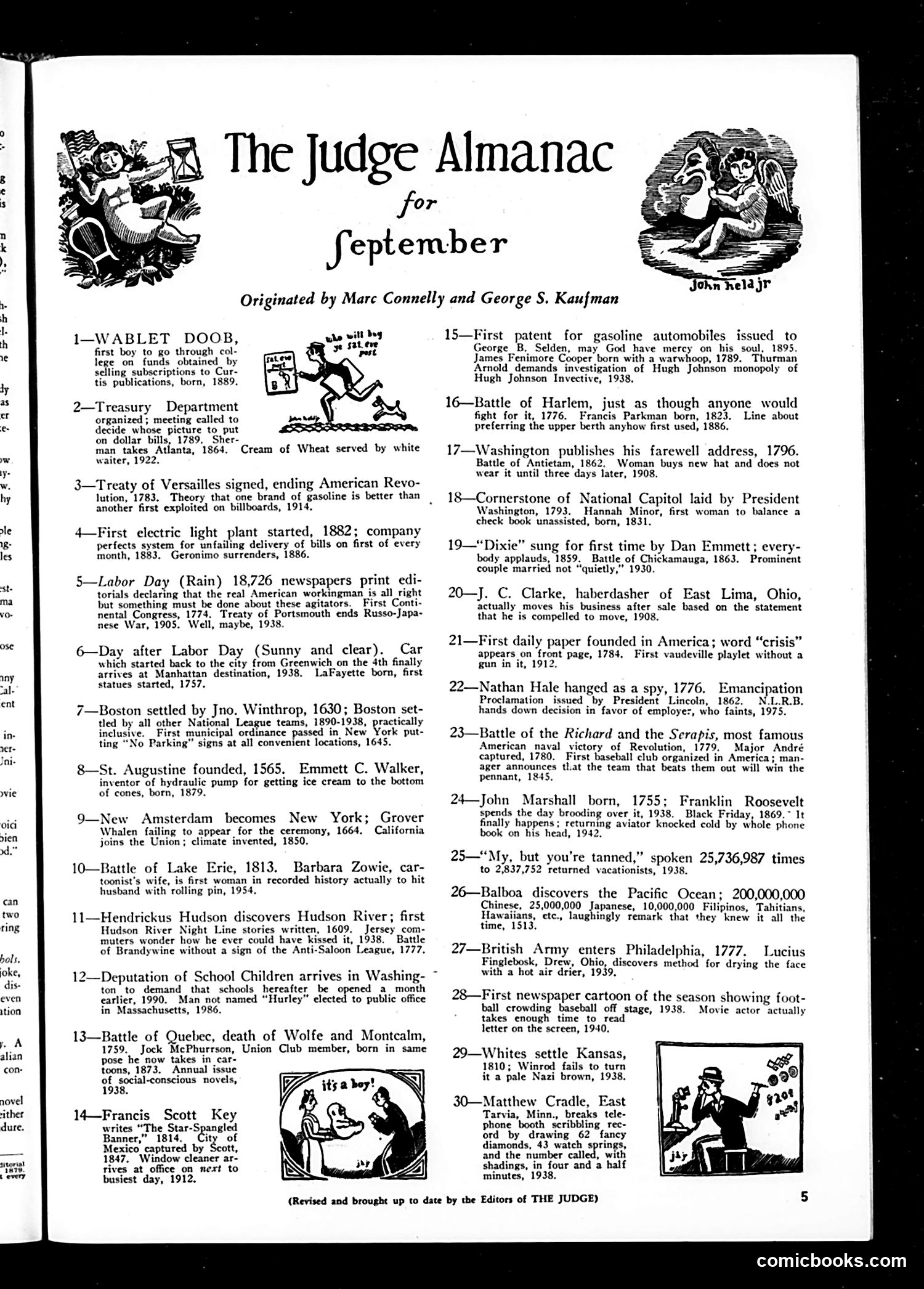
# The Judge Almanac for September This page is primarily an **almanac of historical facts and dates**, not political satire. It lists 30 significant American historical events tied to September dates—ranging from the founding of Boston (1630) to recent 1938 items like a movie actor reading a letter on screen. The three small **cartoon illustrations** are generic vignettes accompanying unrelated items: one shows someone running (item 5, Labor Day), another depicts a domestic scene (item 14), and a third shows a man with money (item 30). These are decorative elements typical of Judge magazine's layout rather than satirical commentary. The page functions as educational/entertaining reference material, reflecting American historical pride through compiled dates and achievements.

# Analysis This is a **Bell Telephone System advertisement**, not satire or political commentary. The page promotes telephone service quality through an appeal to patriotic values. The central image shows a vintage rotary telephone, flanked by three smaller photographs depicting telephone workers: an operator ("the voice with a smile"), a male technician ("the man on the job"), and office staff. The ad claims good telephone service depends on "constant courtesy" and credits Bell's workforce—specifically praising "telephone men and women" and their "courtesy and efficiency." The boxed text below suggests telephone service is essential infrastructure, positioning reliable phones as a national asset "in good times and bad." This is straightforward corporate messaging emphasizing employee dedication rather than satire.
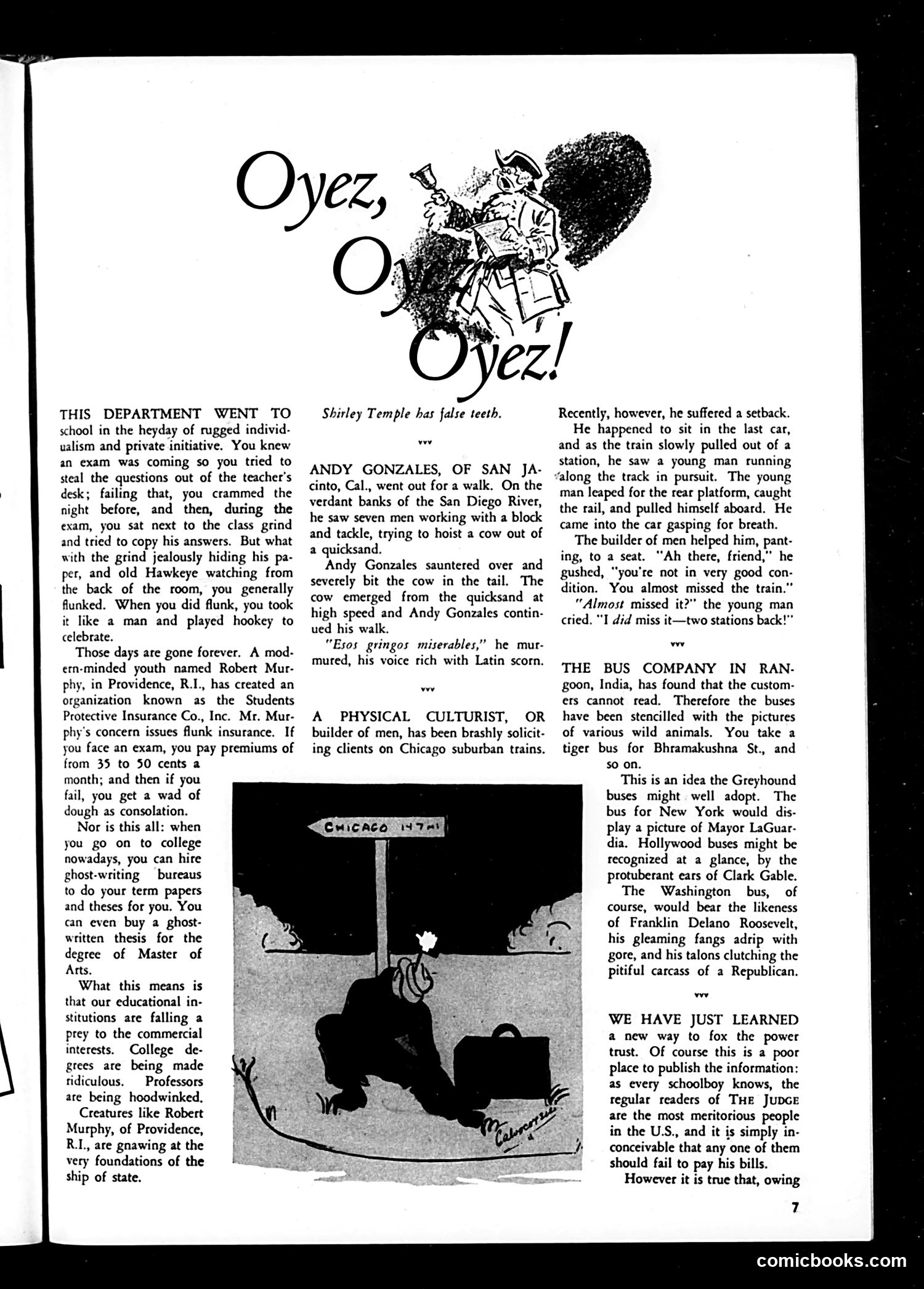
# Analysis of Judge Magazine Page This page contains satirical commentary on American education and social issues, circa early 20th century. **Main Cartoon:** Depicts a "Physical Culturist, or builder of men" soliciting clients on Chicago suburban trains. The figure appears to be a muscular man in a somewhat undignified pose, satirizing fitness charlatans who preyed on gullible commuters. **Text Commentary:** The left column critiques academic dishonesty—students hiring ghost-writers for papers and thesis work, suggesting educational institutions are "falling prey to commercial interests." The author mocks this degradation, noting that even Master of Arts degrees can be purchased. **Other Items:** Brief anecdotes about false teeth, a cow rescue, and bus company illustrations in India. The final section mocks media coverage of the "power trust," suggesting even The Judge's readers—described as "most meritorious people"—fail to pay attention to important issues. The page satirizes commercialism, fraud, and public apathy in early 20th-century America.
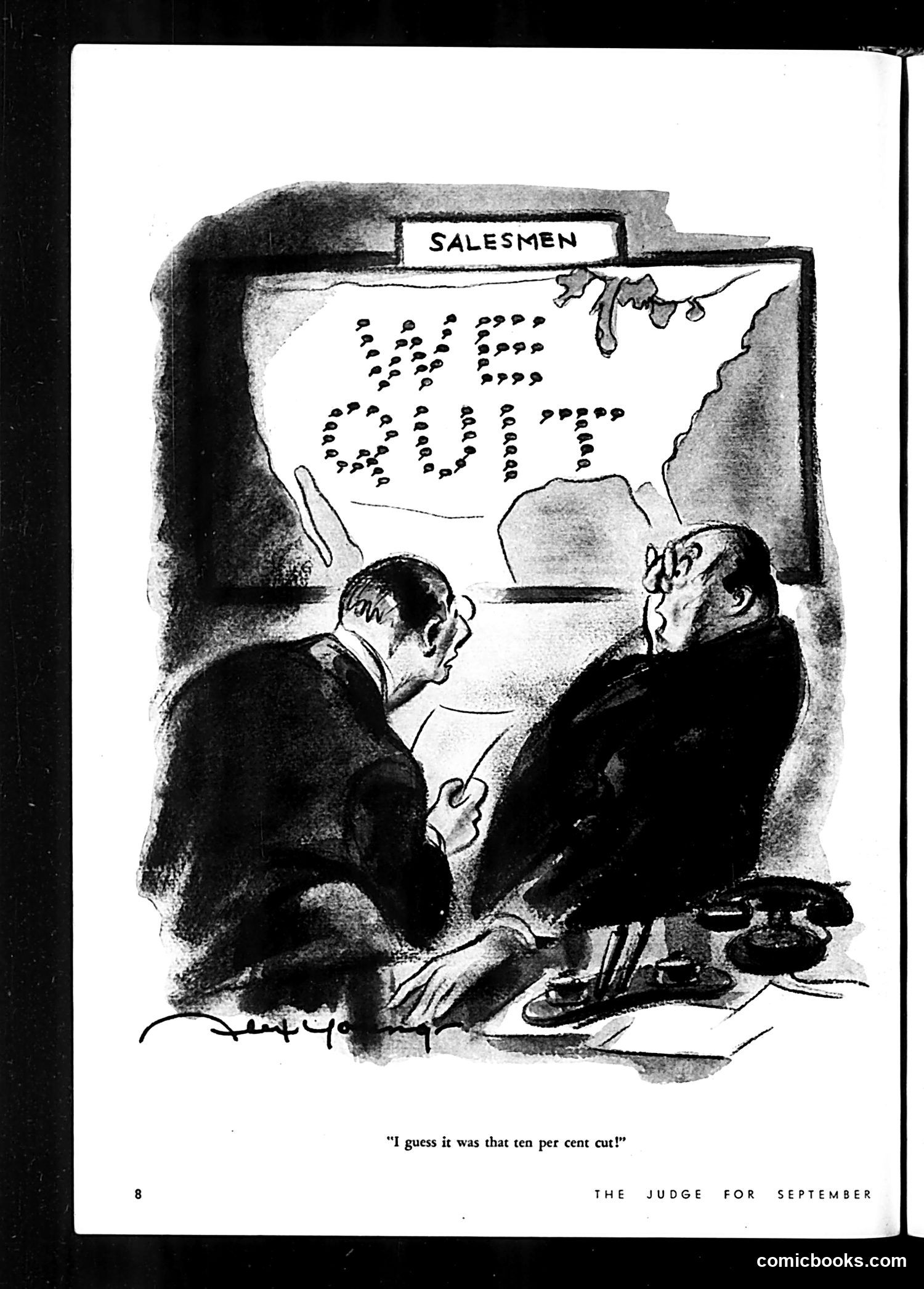
# Cartoon Analysis This single-panel cartoon from *Judge* magazine satirizes sales management during an economic downturn. Two businessmen in an office examine a U.S. map labeled "SALESMEN" where sales territories are marked with small figures arranged in declining patterns—visually representing reduced sales numbers. The caption, "I guess it was that ten per cent cut!" suggests ironic commentary on corporate cost-cutting measures. One manager apparently expects the other to acknowledge that cutting salesmen's pay or commissions by 10% has directly caused the visible collapse in sales performance shown on the map. The joke critiques corporate logic: management implemented cost-cutting expecting no consequences, but the data now clearly shows the negative impact. It's a satire on short-sighted business decision-making where penny-pinching backfired, demonstrating that reduced compensation demotivates the sales force and harms overall revenue.
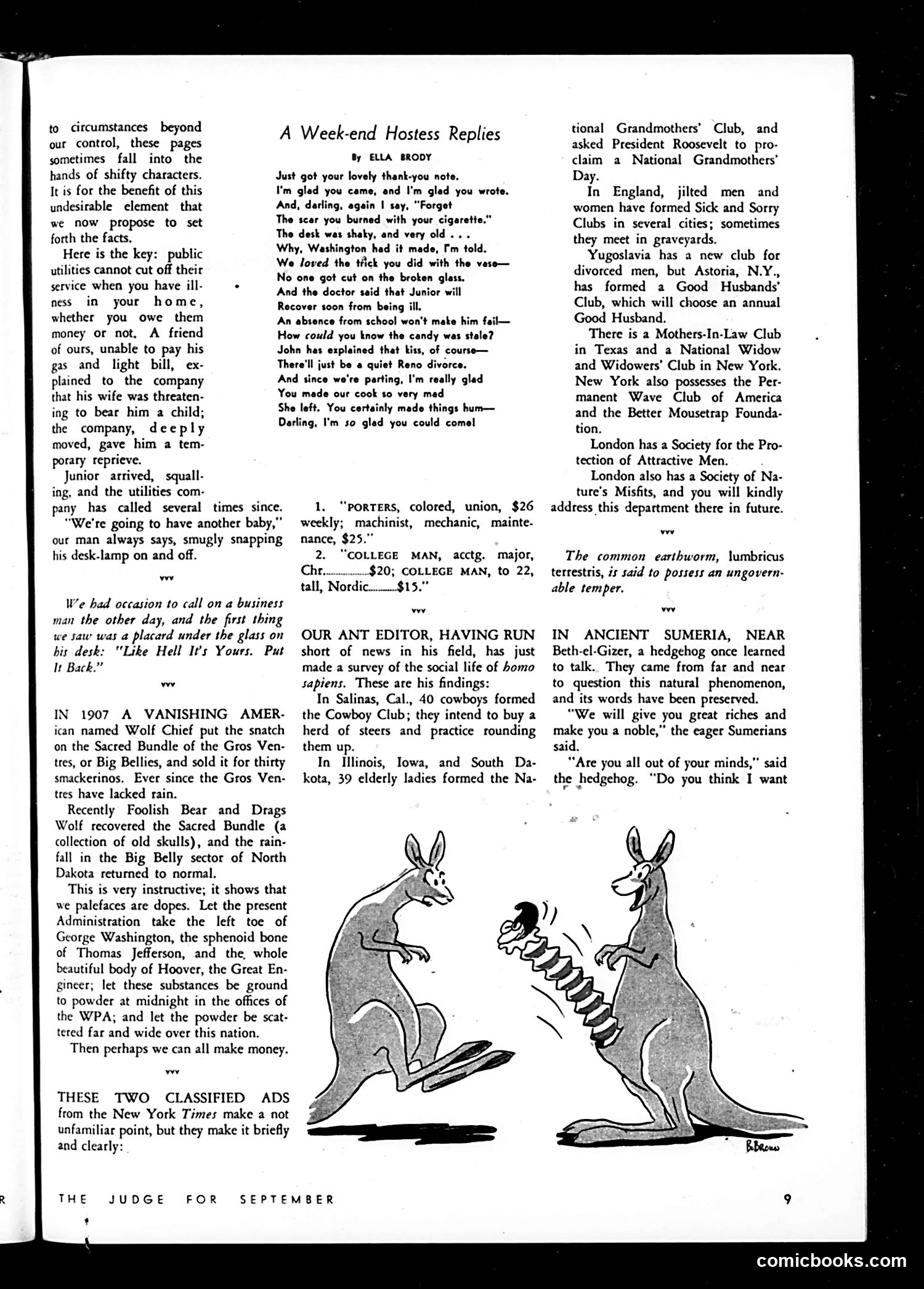
# Analysis of Judge Magazine Page This page contains satirical commentary on 1930s American social issues. **Main Content:** The "Week-end Hostess Replies" poem satirizes poor guest behavior through mock-gracious acceptance of various offenses: burning furniture with cigarettes, breaking glassware, serving stale candy that sickened the host's child, and causing the host's infidelity (leading to divorce). The humor lies in the hostess's exaggerated politeness masking genuine disaster. **Social Satire:** A brief article mocks utility companies' policies, describing how a man exploits their reluctance to disconnect service during family emergencies by repeatedly claiming his wife is pregnant. Another section ridicules racial and class discrimination revealed in classified ads: identical positions paying $26/week for Black workers versus $15-20 for white college graduates based on appearance ("tall, Nordic"). **Political Reference:** A mock-serious proposal suggests grinding up relics of Washington, Jefferson, and Hoover to scatter nationwide to cure economic problems—satirizing New Deal policies (WPA mentioned) as ineffective superstition. The kangaroo cartoon illustrates the hostess poem's theme of escalating chaos.
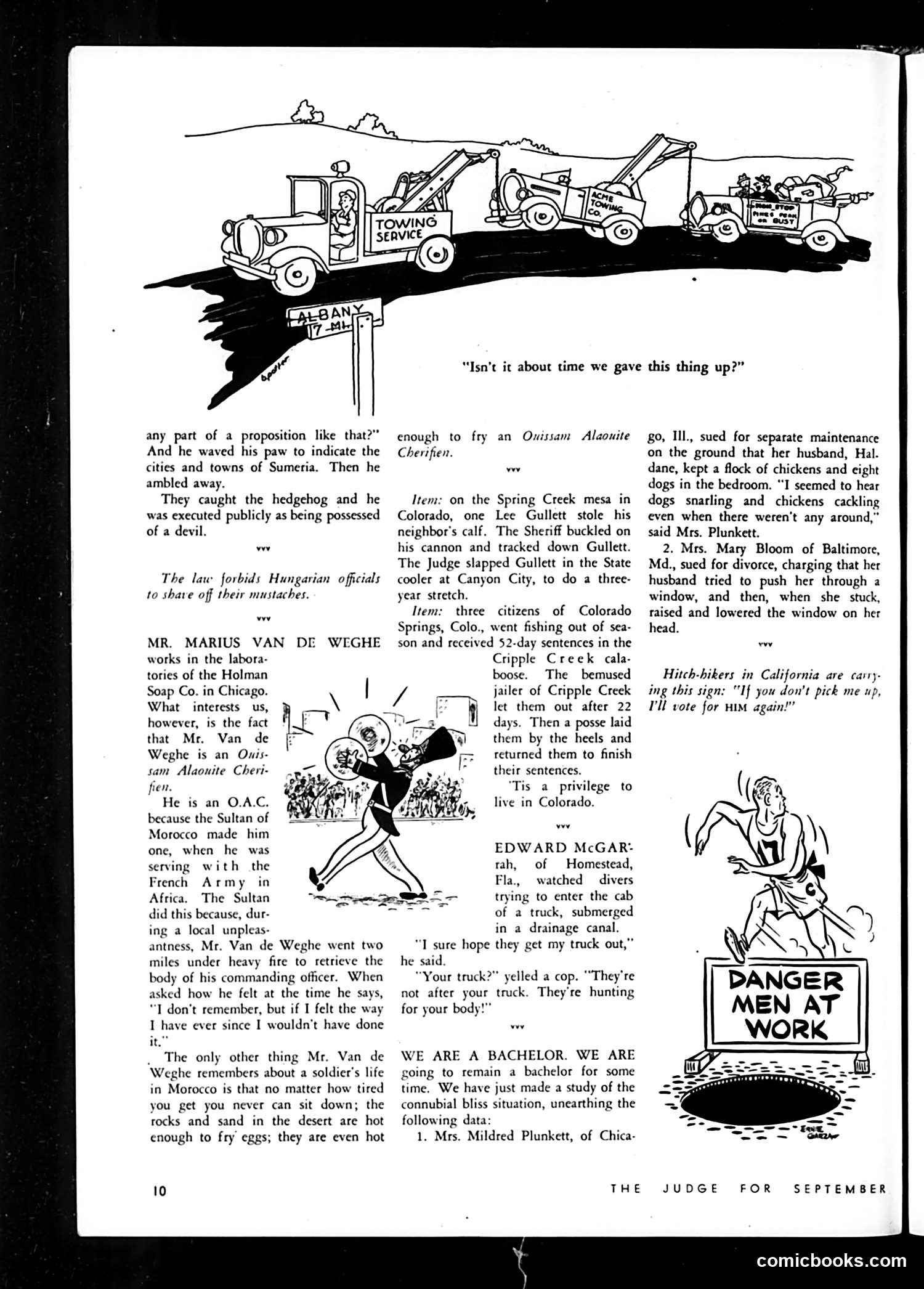
# Page Analysis: Judge Magazine This page from **Judge** (a satirical magazine) contains several humorous anecdotes and cartoons mocking American life and marriage. **Top Cartoon**: Shows a towing service procession on a cliff labeled "ALBAN," with the caption "Isn't it about time we gave this thing up?" This appears to satirize either the towing industry's proliferation or automobiles' unreliability—vehicles constantly needing rescue. **Main Content**: The page features brief, darkly comic stories: - **Van de Weghe profile**: Notes his Moroccan military honor, contrasting his exotic credentials with mundane Chicago soap factory work—satirizing how immigrant/cosmopolitan credentials become irrelevant in American employment. - **Colorado law enforcement anecdotes**: Mock inconsistent justice (stealing a calf gets three years; fishing violations get 52 days, then jailers let prisoners out early, requiring recapture). - **Marriage horror stories**: Wives divorcing husbands for keeping livestock in bedrooms or attempting murder through windows—satirizing domestic misery. The magazine's humor relies on absurdist exaggeration to critique social institutions, immigration assimilation, legal inconsistency, and marriage unhappiness.