A complete issue · 36 pages · 1937
Judge — November 1937
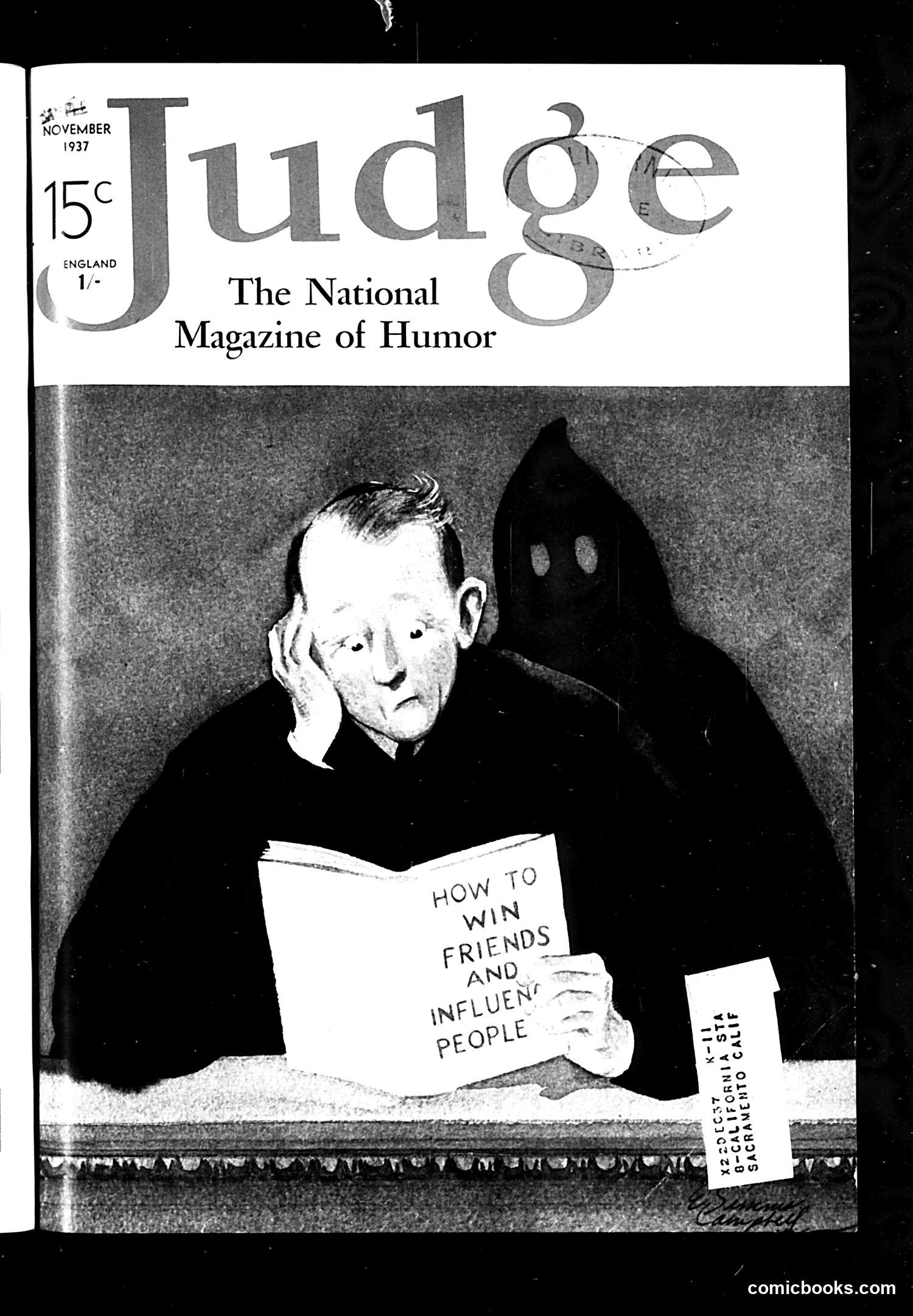
# Judge Magazine Cover Analysis (November 1937) This cover satirizes self-help culture and social anxiety. A worried man reads "How to Win Friends and Influence People"—likely Dale Carnegie's bestselling 1936 book—while a menacing dark figure looms behind him, suggesting his fears won't be solved by such guides. The humor targets: 1. **Self-help book mania**: The proliferation of pop-psychology guides promising social success 2. **Modern anxiety**: The implication that readers remain anxious despite following advice 3. **The sinister shadow**: Possibly representing Depression-era economic or political dread that no etiquette manual can address The cover mocks the era's optimistic belief that personal improvement books could solve deeper societal or personal problems.
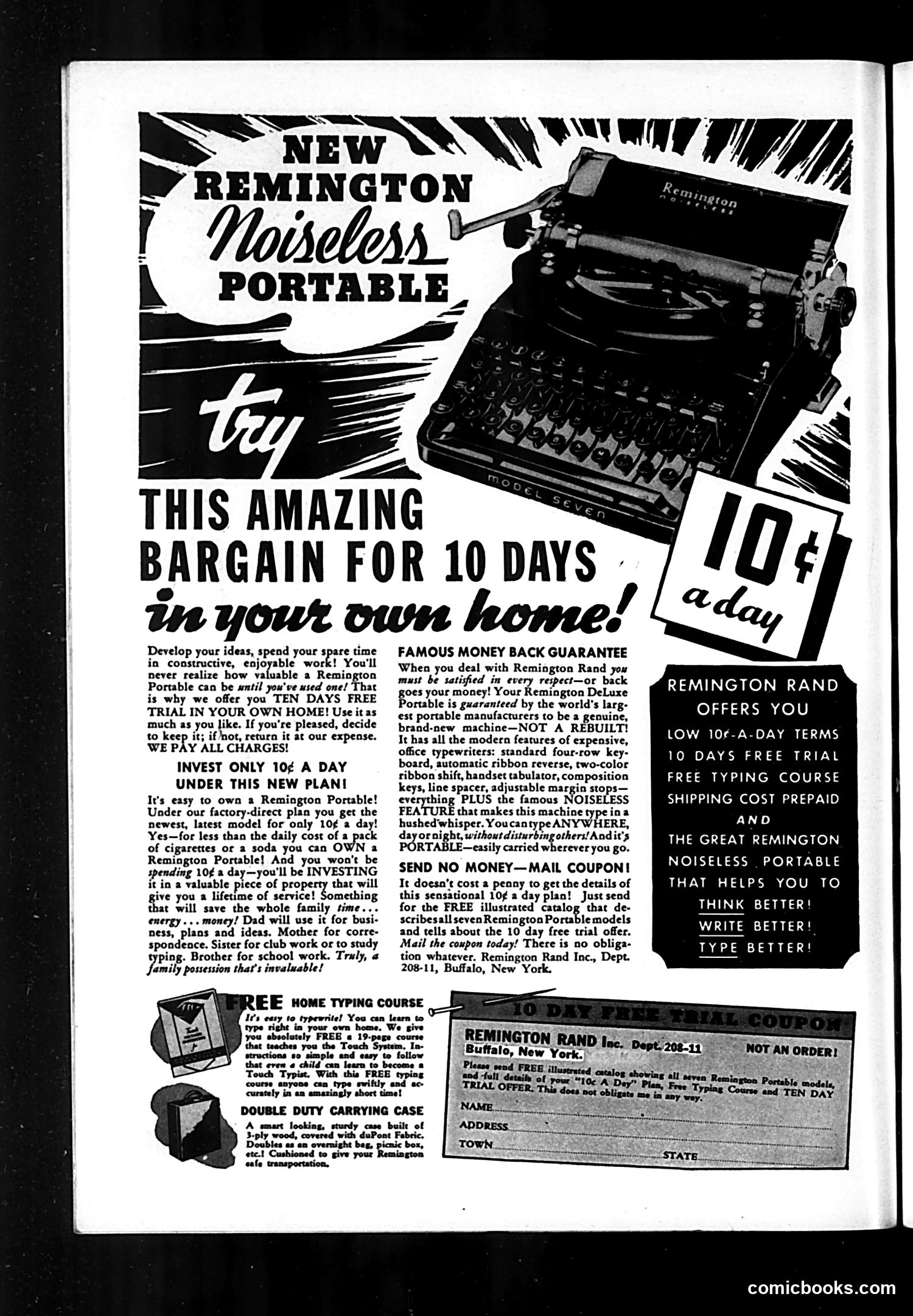
# Analysis This page is **primarily an advertisement**, not political satire. It promotes the Remington Noiseless Portable typewriter through a direct-mail campaign. The ad targets home users by emphasizing affordability—10¢ per day for a 10-day free trial—and portability. Key selling points include the "noiseless" feature and a money-back guarantee. The copy appeals to multiple demographics: writers developing ideas, students, typists, and families. The included coupon offers a free typing course and illustrated catalog. Remington Rand positions this as an investment in "a lifetime of service," leveraging the typewriter's cultural importance during this era. The "Double Duty Carrying Case" accessory and emphasis on transportation suggest typewriters were increasingly mobile tools for modern workers. **No political cartoon content is present on this page.**
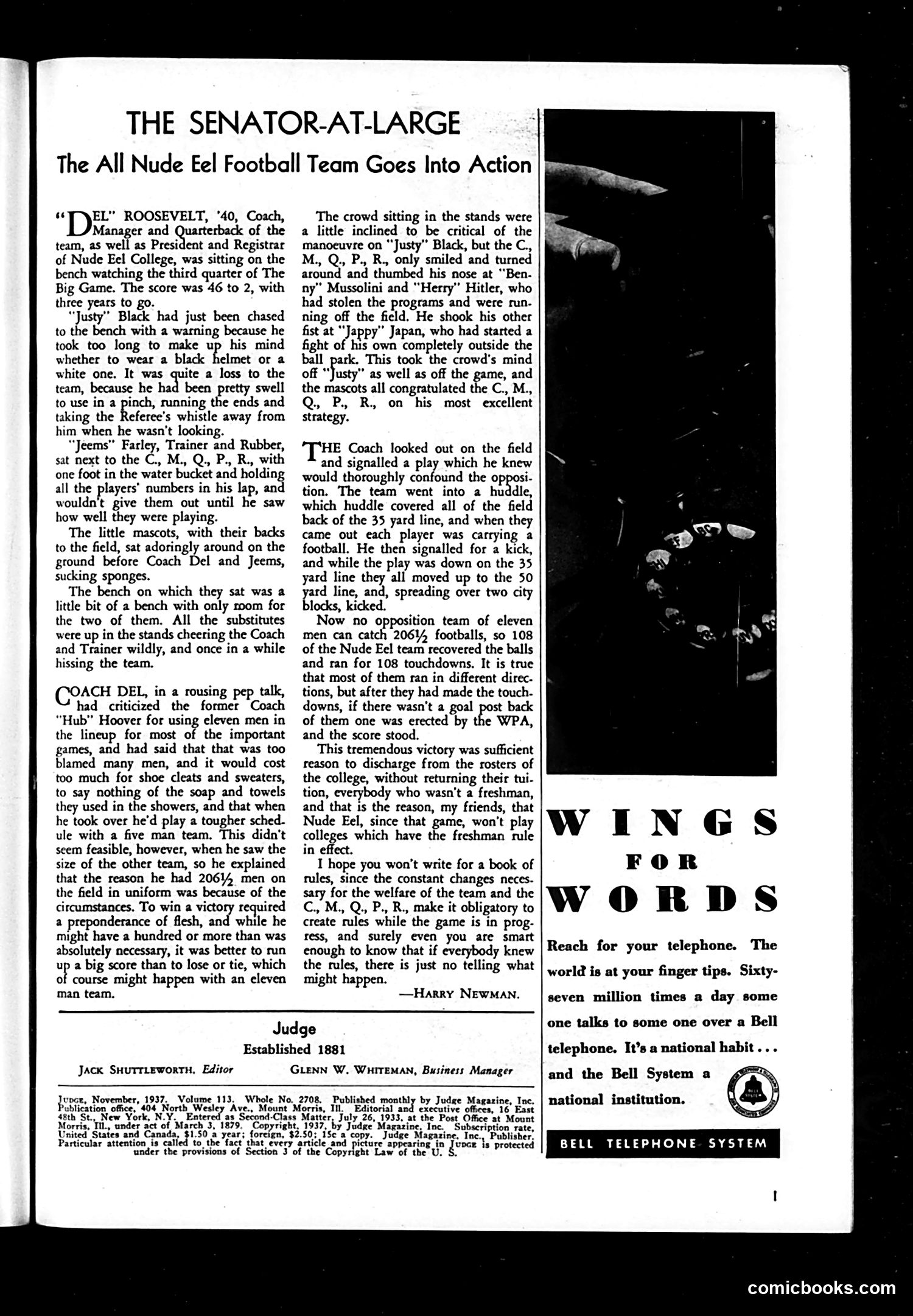
# Analysis of Judge Magazine Page (November 1937) This page contains a humorous fictional article titled "The All Nude Eel Football Team Goes Into Action," describing an absurdist college football game at "Nude Eel College." The satire mocks serious sports commentary by treating ridiculous premises (naked players, mascots named after dictators) with deadpan seriousness. The article references contemporary figures: "Benny" Mussolini and "Herry" Hitler appear as stolen program mascots, reflecting 1937 anxieties about fascism. The joke likely satirizes American indifference to international threats—even at sporting events, fascist leaders are treated as minor annoyances rather than serious concerns. The accompanying Bell Telephone advertisement is unrelated to the satire. The piece exemplifies Judge's blend of absurdist humor with subtle political commentary during the pre-WWII era.
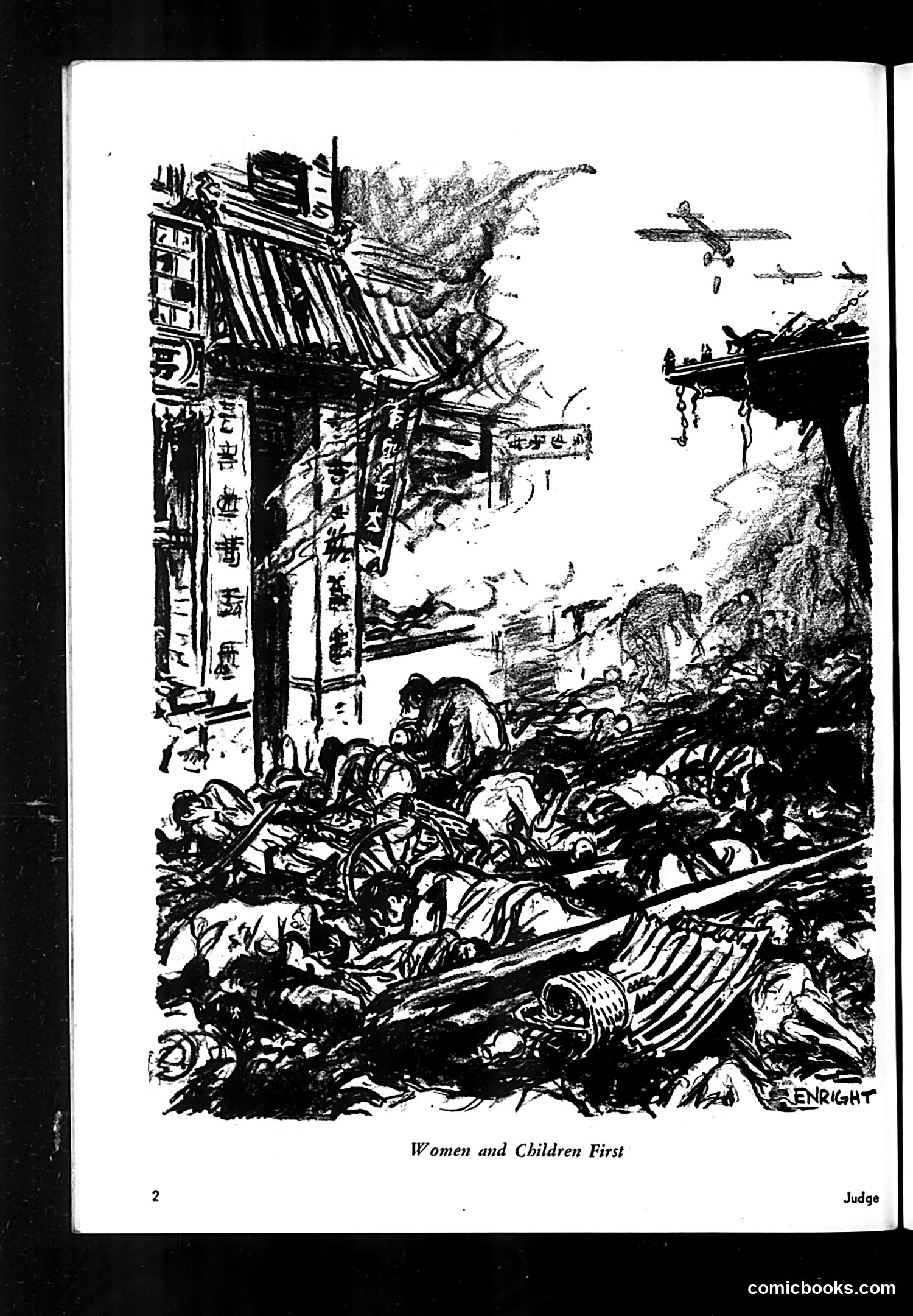
# "Women and Children First" This political cartoon depicts the destruction of an Asian (likely Chinese or Japanese) temple or pagoda, with bodies and casualties scattered in the foreground. Military aircraft appear overhead, suggesting aerial bombardment. The caption "Women and Children First" is darkly ironic—invoking the maritime disaster protocol—while the image shows indiscriminate civilian casualties including what appear to be women and children. The cartoon critiques military aggression against Asian populations, likely referencing early-20th-century warfare or imperial conflict. The artist (signed "Penright") uses bitter satire: the phrase typically associated with protecting civilians instead highlights their victimization. This appears designed to condemn either Japanese militarism, American/Western military intervention, or both, depending on *Judge* magazine's editorial stance at the time.
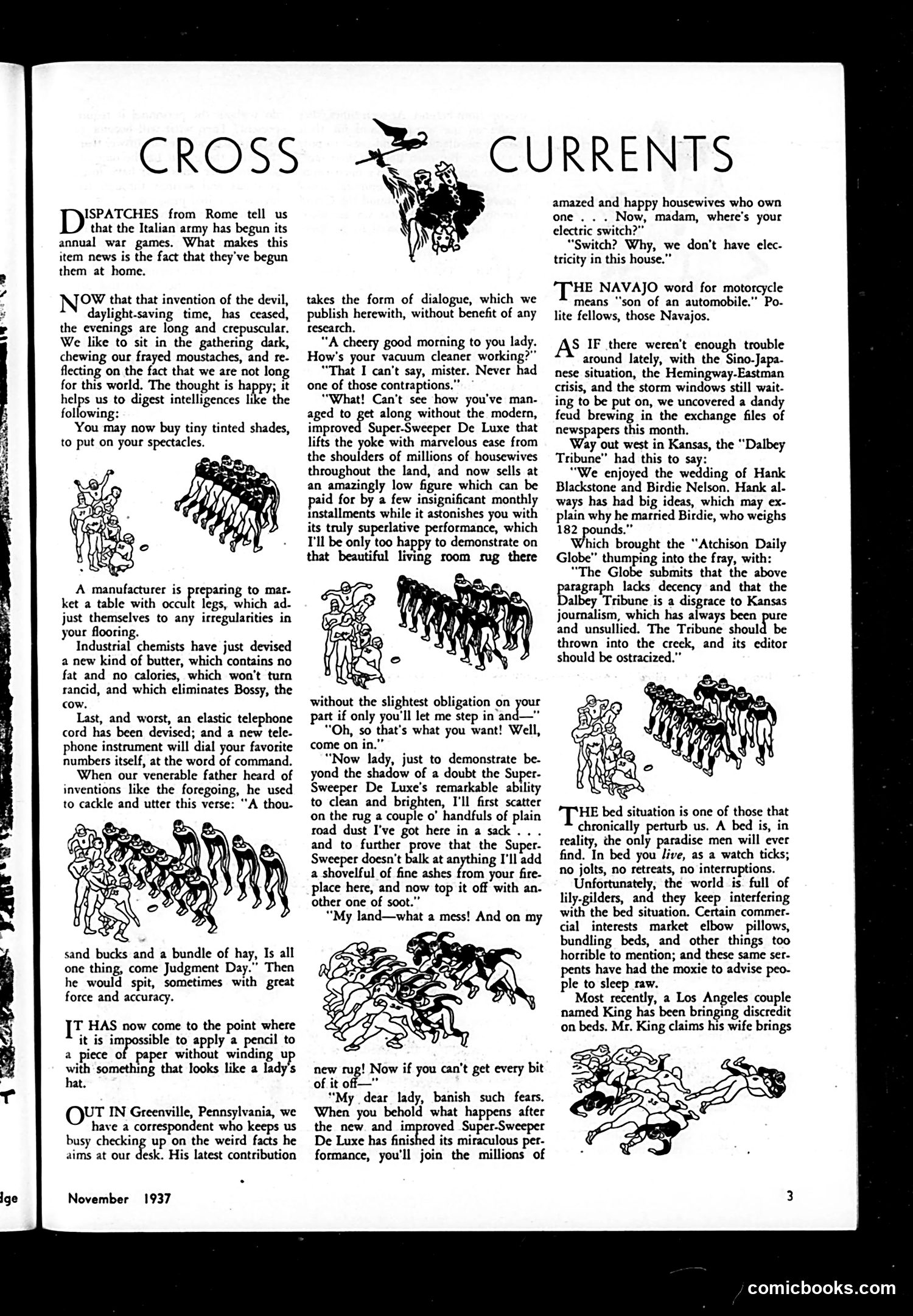
# Cross Currents (November 1937) This satirical column features miscellaneous social commentary typical of Judge magazine. The content includes: **Main topics:** - Italian army war games (dispatch from Rome) - Daylight-saving time ending - A dialogue about vacuum cleaners, seemingly advertising the "Super-Sweeper De Luxe" - Complaints about modern inventions: elastic telephone cords, low-calorie butter - Critiques of Kansas journalism (the Atchison Daily Globe and Dalby Tribune) - A humorous piece about bed situations and commercial interests in sleep products - A reference to a Los Angeles couple (King) having marital disputes over beds The accompanying cartoons appear to show domestic scenes with people and animals. The satire targets consumer culture, domestic life, and minor journalistic controversies rather than major political figures.
# Analysis of Judge Magazine Page This page contains several brief satirical pieces rather than a single cartoon. The illustrations depict: 1. **Top left**: A domestic scene showing what appears to be a woman confronting a man, likely illustrating the piece about Marion Davies converting a dog-house into guest quarters—satirizing wealthy celebrities' extravagant lifestyle choices. 2. **Bottom right**: A figure reading a newspaper, accompanying text about the Cleveland City Council and radio education during school closures—mocking bureaucratic decision-making. The satire targets: excessive wealth and poor judgment among the famous (Davies), the absurdity of overcomplicated bureaucratic solutions to simple problems, and institutional failings. The tone is light, focusing on social foibles and professional incompetence rather than serious political critique. Without specific dates visible, the exact historical moment remains unclear.
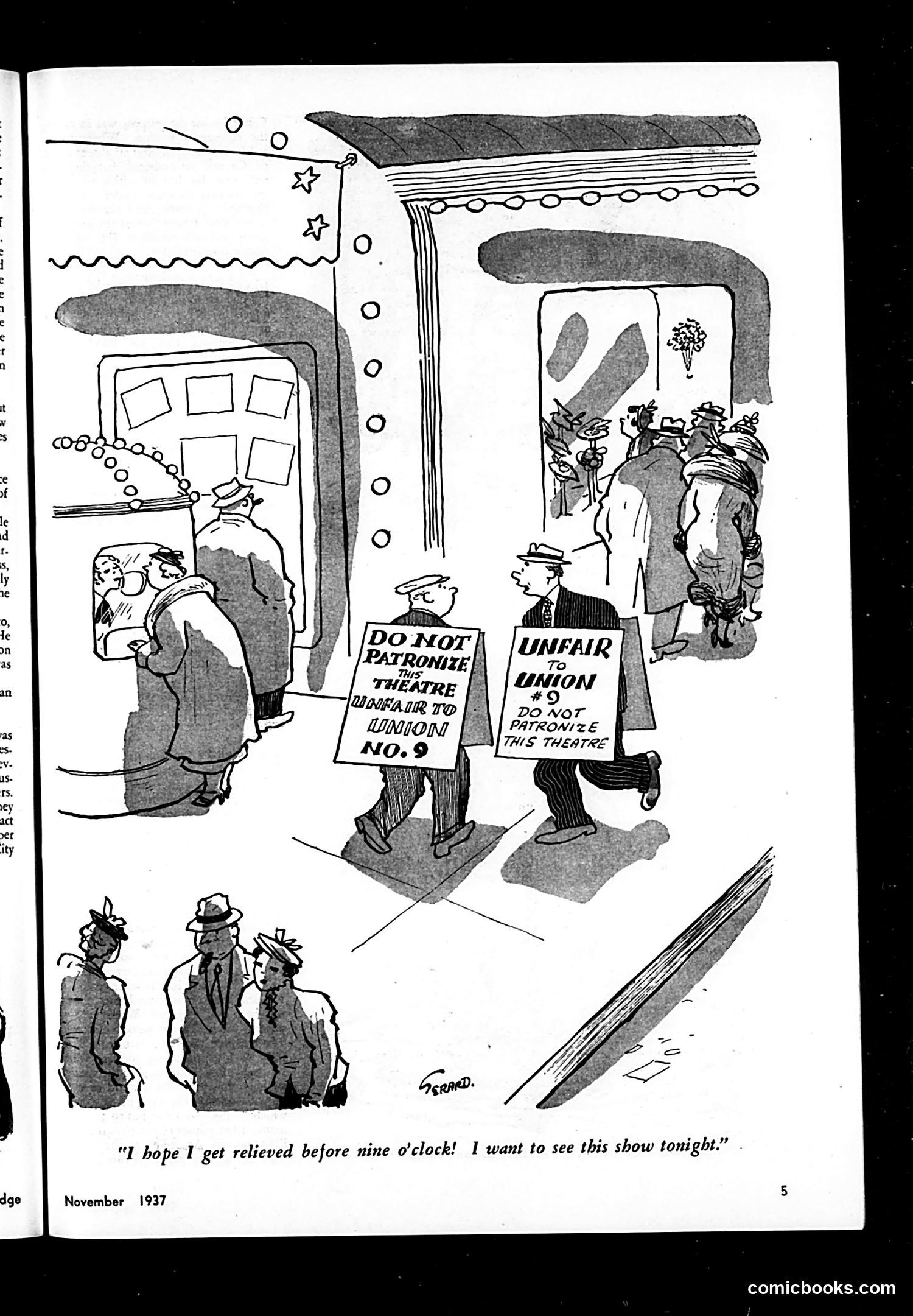
# Political Cartoon Analysis: November 1937 This cartoon depicts a **theater labor dispute**, likely involving union picketing. Two picketers hold signs reading "DO NOT PATRONIZE THIS THEATRE" and "UNFAIR TO UNION" with "DO NOT PATRONIZE THIS THEATRE" beneath. The humor targets a **theatergoer** expressing anxiety about the picket line—hoping to be "relieved before nine o'clock" so they can still attend the show that night, seemingly indifferent to the workers' grievances. The cartoon satirizes **middle-class entertainment priorities over labor concerns**. The casual dismissal of union action and the speaker's sole focus on not missing their evening entertainment exemplifies how ordinary patrons ignored labor disputes affecting service workers. This reflects 1937's active union organizing period in American entertainment industries.
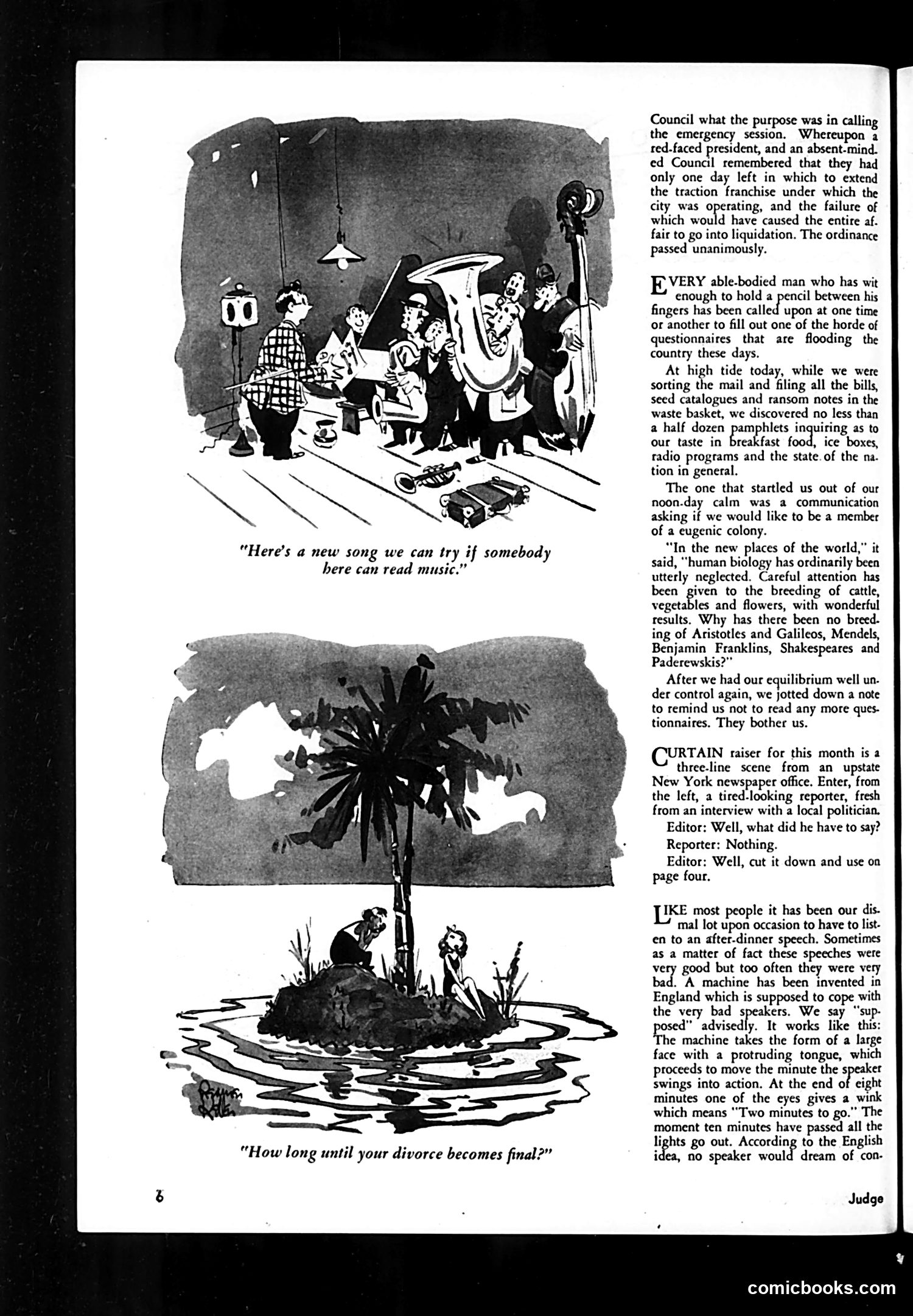
# Analysis of Judge Magazine Page This page contains two cartoons satirizing American social absurdities of the era. The **top cartoon** mocks the prevalence of questionnaires flooding the country. A group of people gather around a large tuba, attempting to read music for a new song—the joke being that even musical instruction has become subject to questionnaire culture. The **bottom cartoon** depicts a tree growing from a pool, captioned "How long until your divorce becomes final?"—satirizing the era's divorce proceedings and their emotional toll. The accompanying text discusses questionnaire fatigue, eugenics colony proposals, newspaper editorial absurdities, and after-dinner speech tedium. A British machine invention is mentioned that supposedly interrupts bad speakers by moving a tongue mechanism. Together, these pieces critique bureaucratic excess, social pseudo-science trends, and institutional inefficiency in contemporary American life.
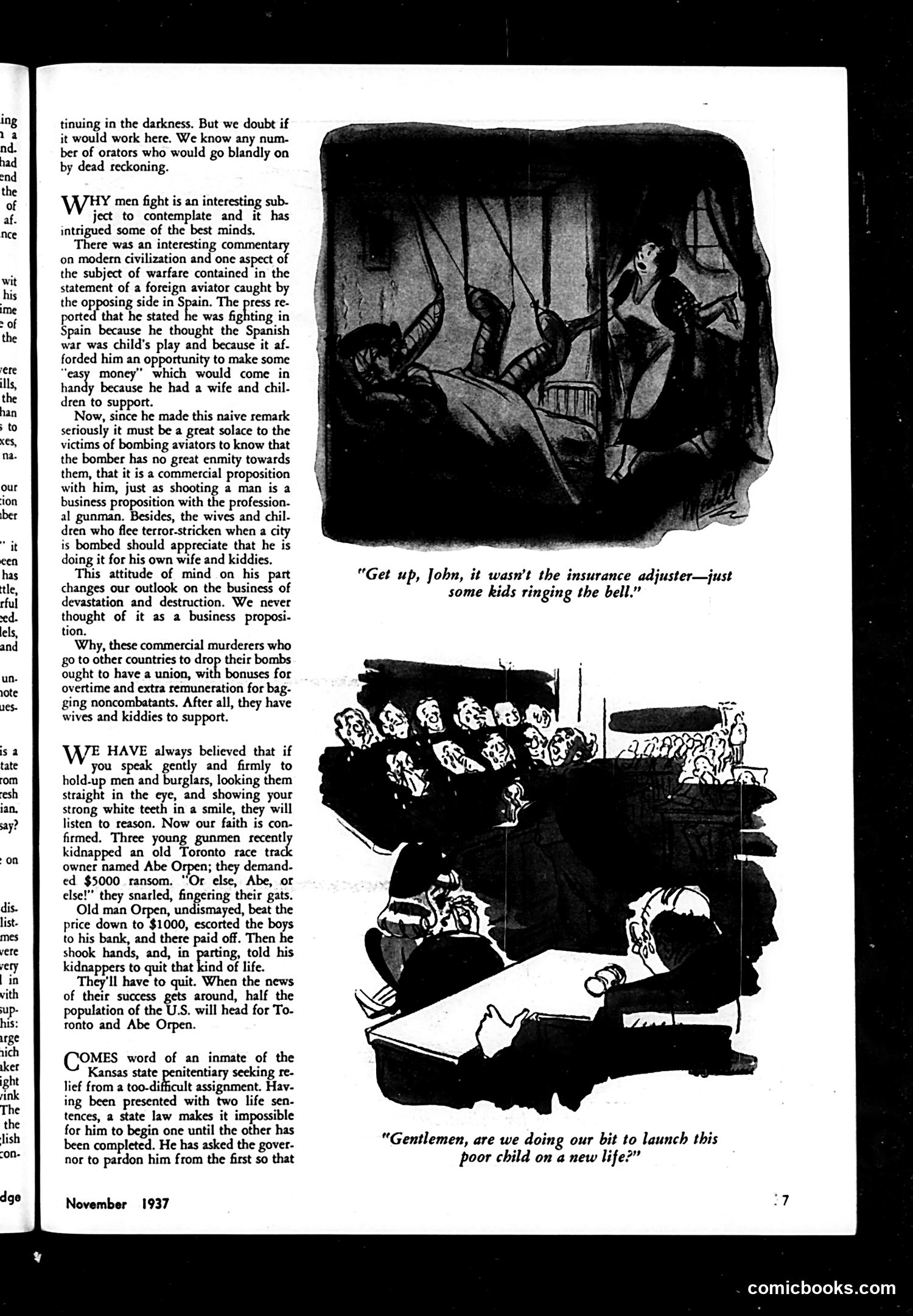
# Analysis of Judge Magazine Page, November 1937 This page contains two satirical cartoons critiquing wartime profiteering and callousness toward human suffering. The **upper cartoon** mocks an insurance adjuster's indifference to bombing casualties—he dismisses children ringing a doorbell as mere "insurance adjuster" business rather than victims needing help. The **lower cartoon** depicts wealthy businessmen discussing launching "this poor child on a new life," suggesting cynical exploitation of orphans or war refugees for profit rather than genuine charity. The accompanying text criticizes "commercial murderers"—arms dealers and bombers who treat warfare as business. It argues they should unionize for hazard pay, sarcastically suggesting bombing civilians is morally equivalent to any other profession. The overall message: war profiteers show no humanity toward victims, viewing devastation purely as financial opportunity.
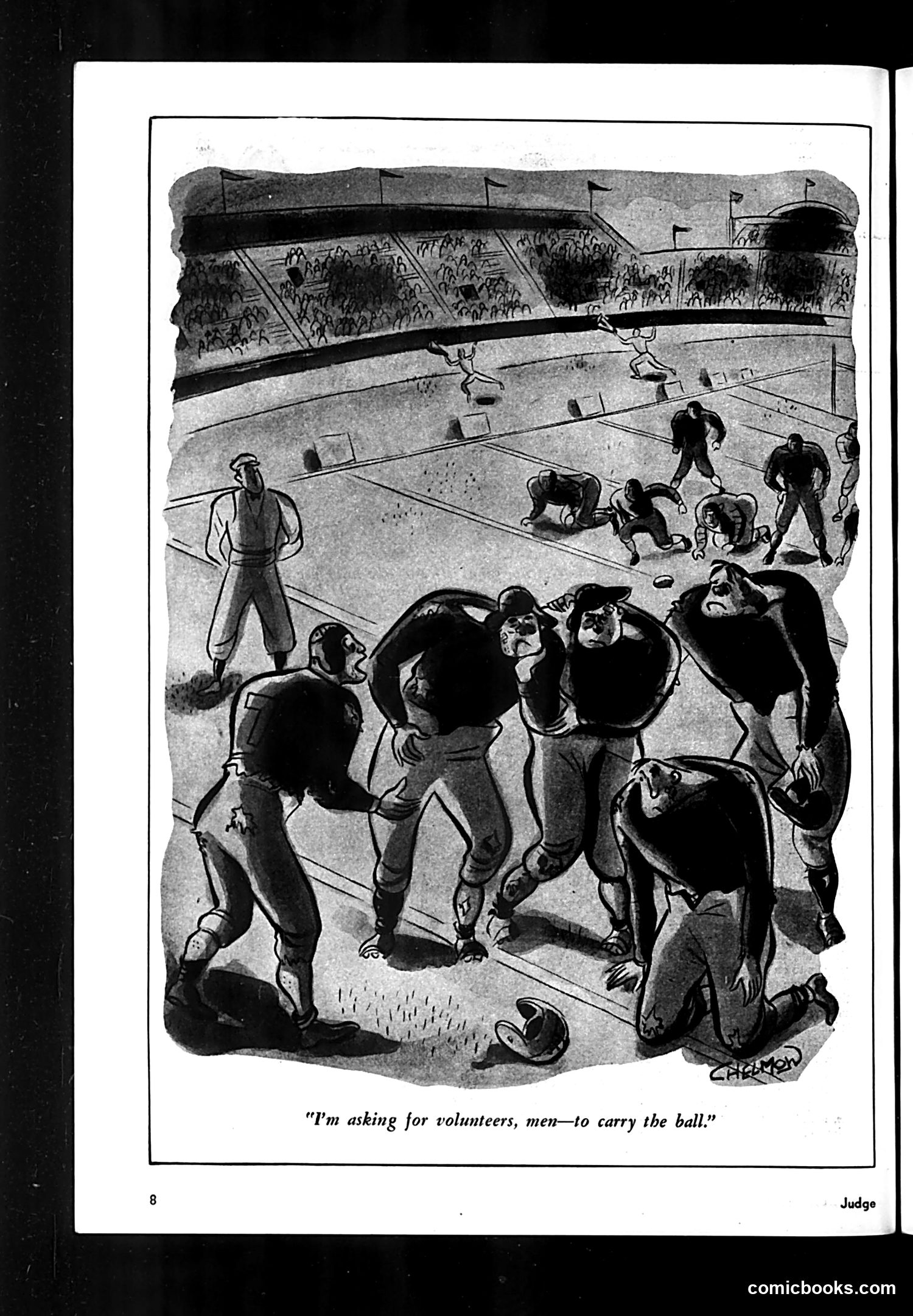
# Political Cartoon Analysis This Judge magazine cartoon depicts a coach (left, standing) addressing his football team in a stadium, asking for volunteers "to carry the ball." The humor lies in a double meaning: while literally requesting players willing to take possession during the game, the phrase "carry the ball" was a common idiom meaning to take responsibility for an initiative or cause. The cartoon appears to satirize leadership or civic duty—likely commenting on reluctance among men to take on responsibility or risk, whether in sports, military service, or public affairs. The players' hesitation to volunteer suggests unwillingness to shoulder burden or responsibility when called upon. Without the publication date visible, the specific historical reference remains unclear, though the style suggests early-to-mid 20th century.
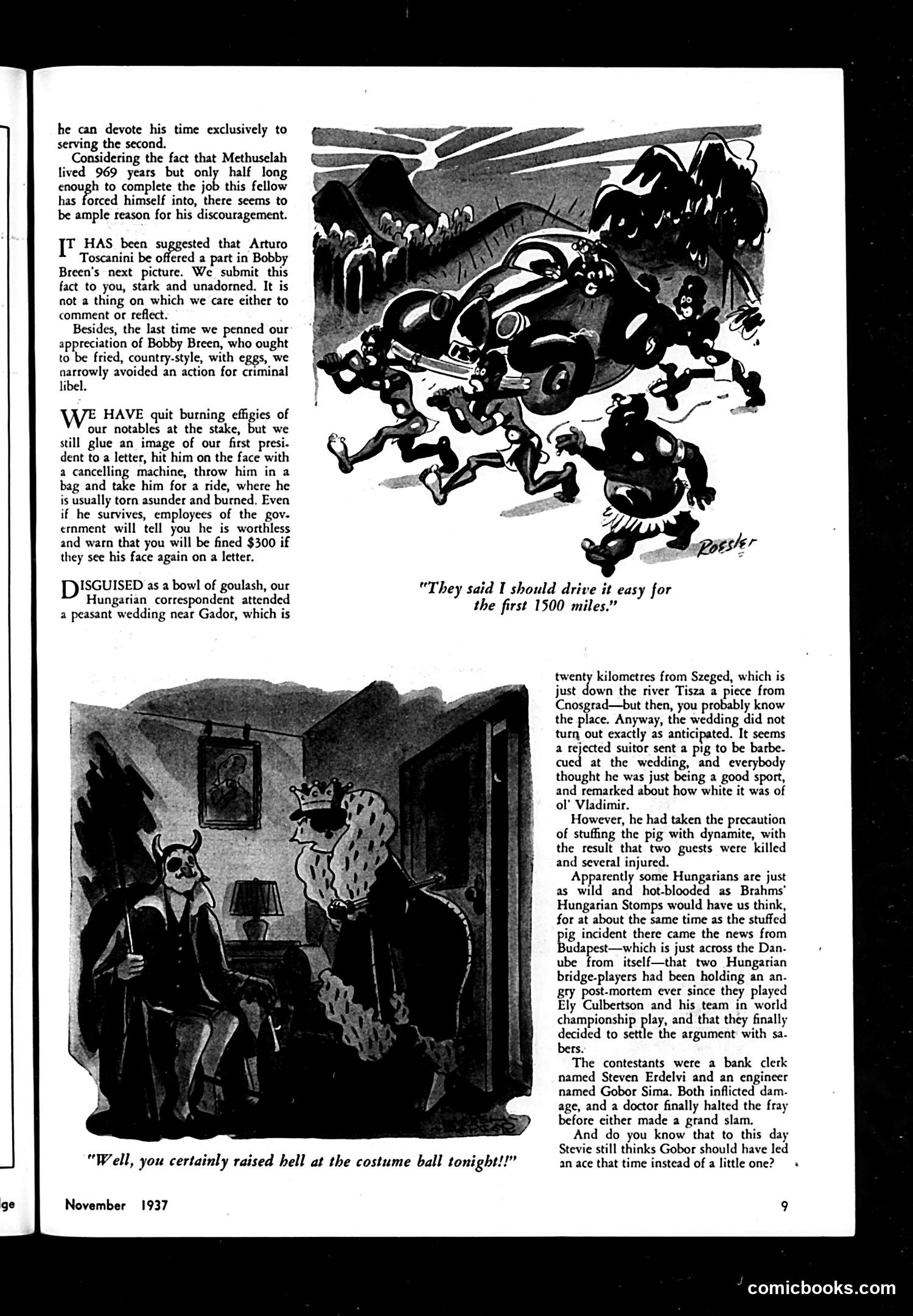
# Judge Magazine, November 1937: Page Analysis This page contains two distinct satirical pieces: **Top cartoon**: Mocks a new driver given advice to "drive it easy for the first 1500 miles." The exaggerated chaos—with the car surrounded by fleeing figures—suggests the driver is recklessly dangerous despite (or because of) this cautionary instruction. It's a joke about incompetent motorists. **Bottom section**: A humorous travelogue by Judge's "Hungarian correspondent" describing a peasant wedding near Budapest that went catastrophically wrong. A rejected suitor sabotaged the celebration by dynamiting a pig intended as food, killing two guests. The piece then pivots to an anecdote about two Hungarian bridge players who became so heated debating a card game against Ely Culbertson's championship team that they settled their argument with swords—a satirical commentary on Hungarian temperament and the intensity of competitive bridge culture in the 1930s. The humor relies on exaggeration and ethnic stereotyping common to the era's satire.
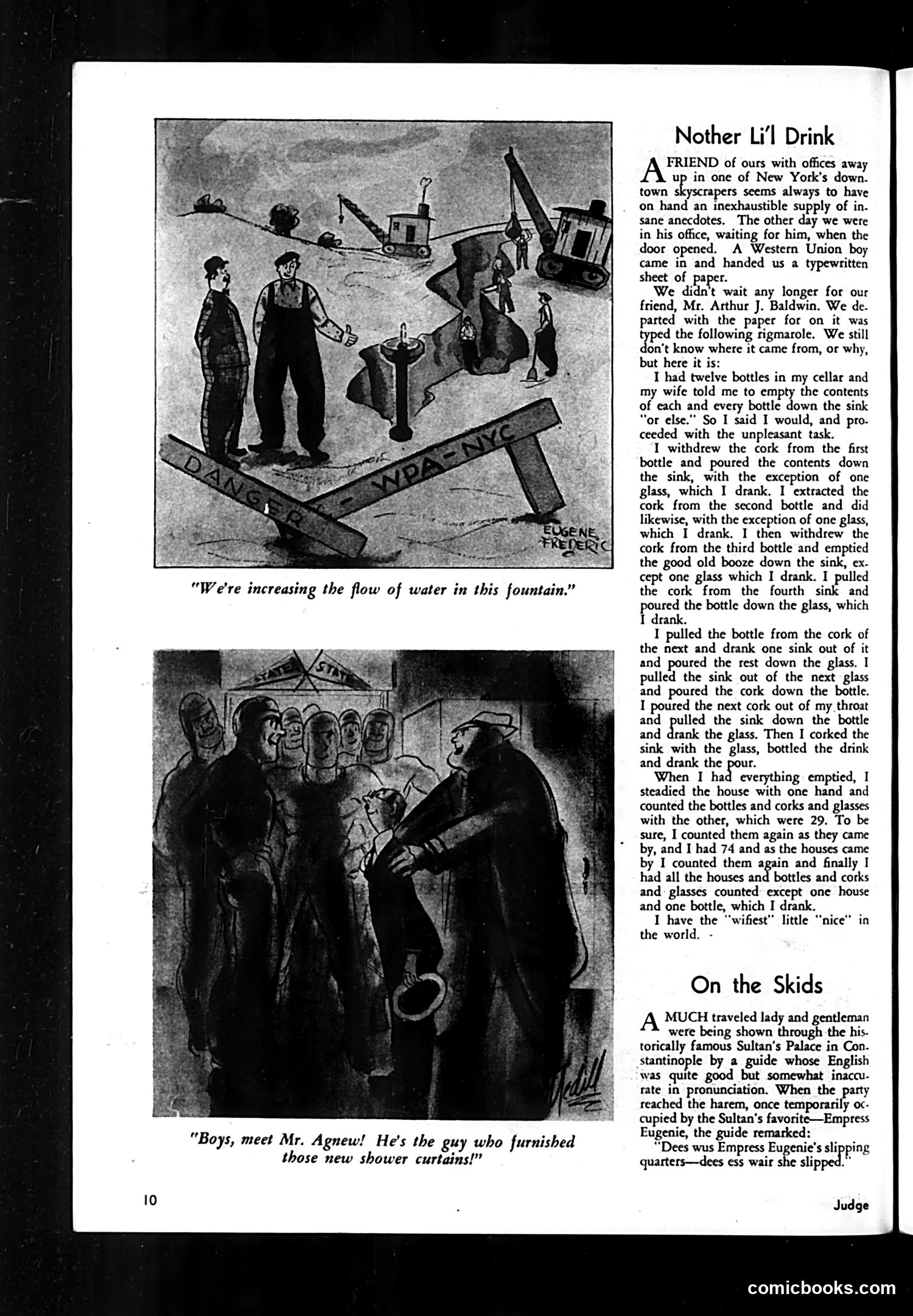
# "Nother Li'l Drink" and "On the Skids" **"Nother Li'l Drink":** This humorous anecdote satirizes Prohibition-era drinking. A man claims his wife demanded he empty twelve bottles of alcohol down the sink "or else." The joke lies in the deliberately scrambled narrative—as he drinks, his account becomes increasingly incoherent, with bottles, glasses, sinks, and corks mixed up syntactically. The deteriorating prose mimics drunkenness itself, ending with the narrator unable to count correctly (claiming 29 items but then 74). The humor targets both excessive drinking and the absurdity of Prohibition enforcement (wives policing husbands' alcohol). **"On the Skids":** A crude joke about mispronunciation. A tour guide at Constantinople's Sultan's Palace, showing visitors Empress Eugenie's former quarters in the harem, says she "slipped" there—appearing to reference a sexual scandal or indiscretion. The humor depends on the guide's broken English making "slipping quarters" sound like a euphemism for illicit activity. It relies on period stereotypes about foreign guides and suggests gossip about historical figures.