A complete issue · 45 pages · 1937
Judge — February 1937
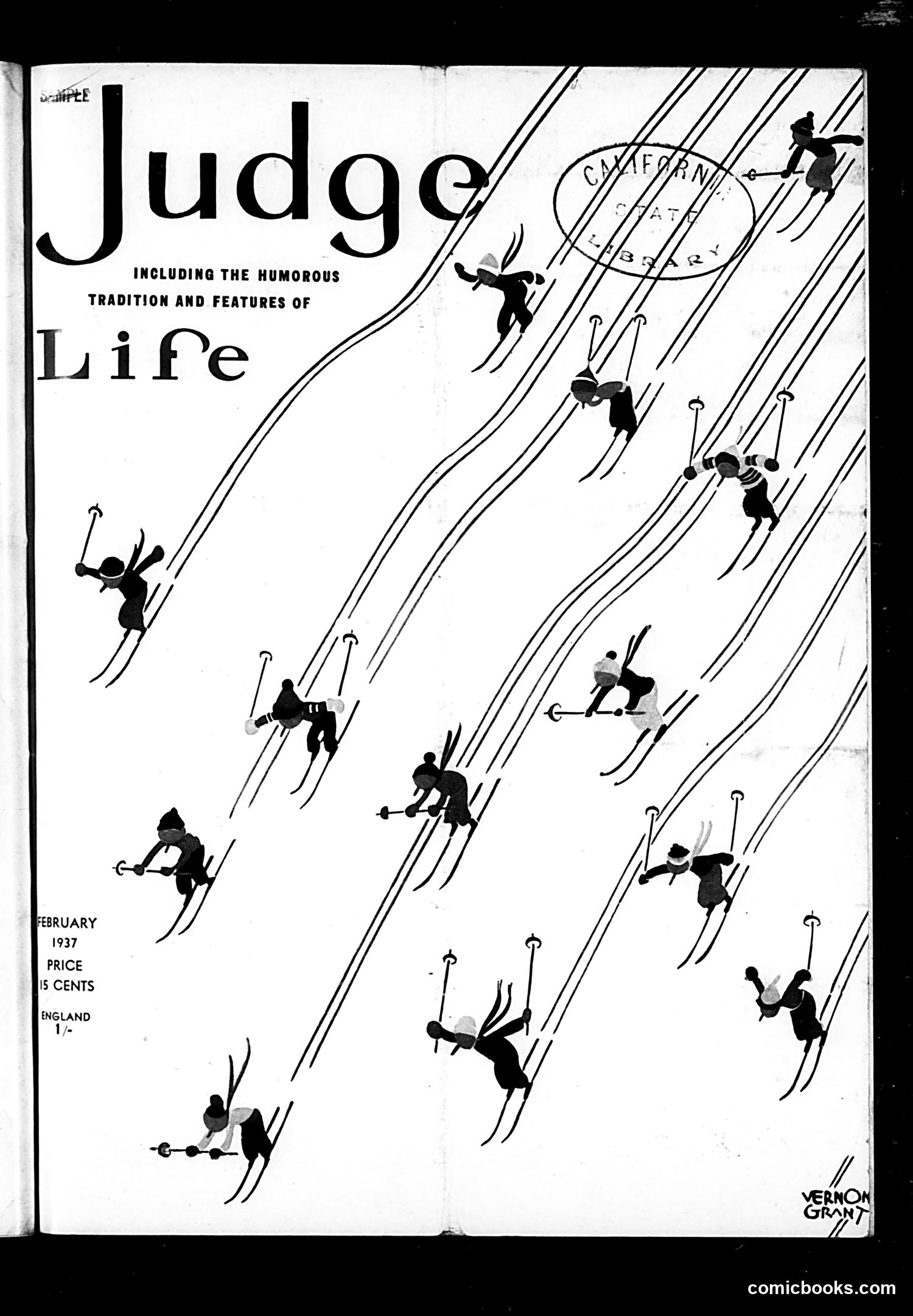
# Analysis of Judge Magazine Cover (February 1937) This cover satirizes **skiing**, a winter sport growing in popularity during the 1930s. The illustration depicts multiple skiers descending slopes in various states of chaos and mishap—tumbling, falling, and losing control—suggesting the sport's inherent danger and the comedic misadventures of amateur participants. The title "Judge Life: Including the Humorous Tradition and Features of Life" indicates this is a satirical magazine issue. The artwork by Vernon Grant uses slapstick humor typical of 1930s American comedy, mocking both the sport itself and the fashionable leisure activities of the era's affluent classes who could afford winter resorts. The "California" marking suggests this may reference a ski destination or resort culture.
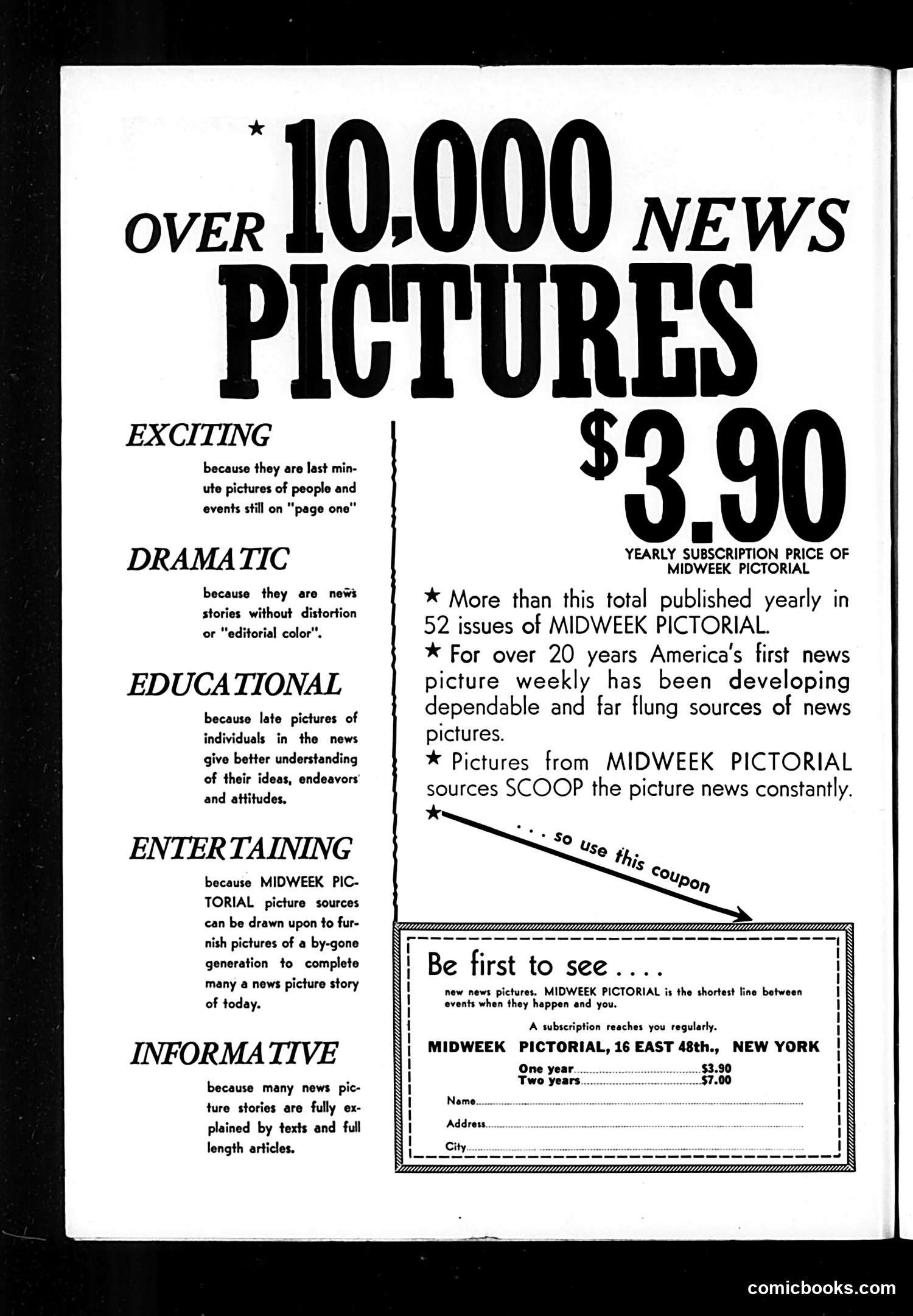
# Advertisement Analysis This is primarily a **paid advertisement**, not satirical content. It promotes "Midweek Pictorial," a news picture weekly magazine costing $3.90 yearly. The ad highlights five reasons to subscribe: - **Exciting**: Last-minute photos of ongoing events - **Dramatic**: Undistorted news stories - **Educational**: Photos explaining individuals' ideas and attitudes - **Entertaining**: Pictures supplementing news stories - **Informative**: Picture stories with full explanatory text The ad emphasizes the publication has operated for "over 20 years" as "America's first news picture weekly," positioning it as a reliable source for photojournalism. A subscription coupon appears at the bottom. This reflects early-20th-century media marketing—emphasizing visual journalism's growing importance before television.
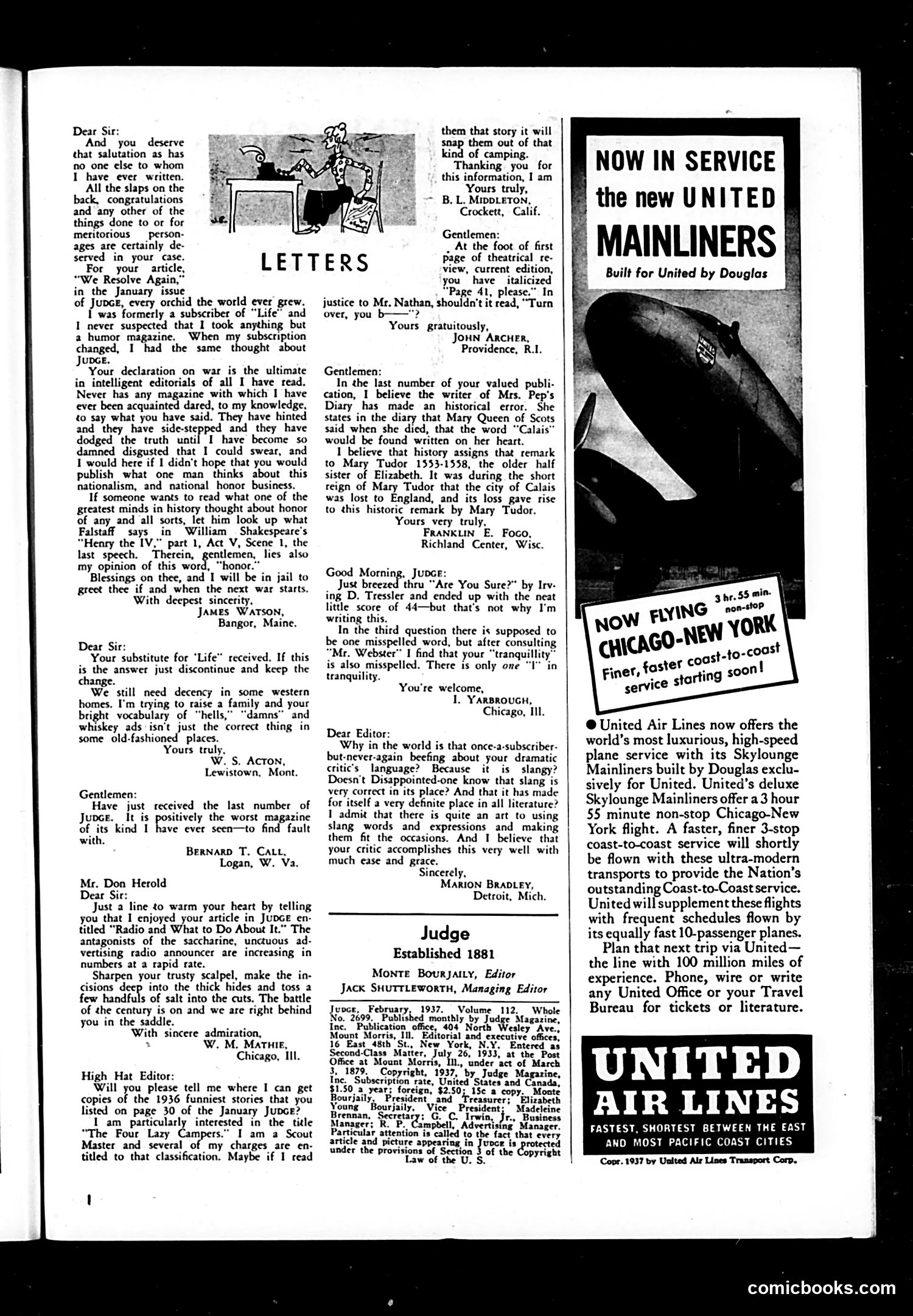
# Analysis of Judge Magazine Page This page is primarily **letters to the editor and advertisements** rather than satirical cartoons. The main visual element is a small illustration at the top of the letters section showing what appears to be two figures at a desk or counter—the joke or context is unclear from the image alone. The letters discuss serious topics including war, honor, magazine content quality, and language usage—typical reader feedback for a 1937 publication. The page features substantial advertising for United Airlines' new mainliner service and Chicago-New York flights. The cartoon content is minimal; the page emphasizes reader correspondence and commercial advertising, reflecting Judge's format during this period rather than featuring prominent satirical editorial art.
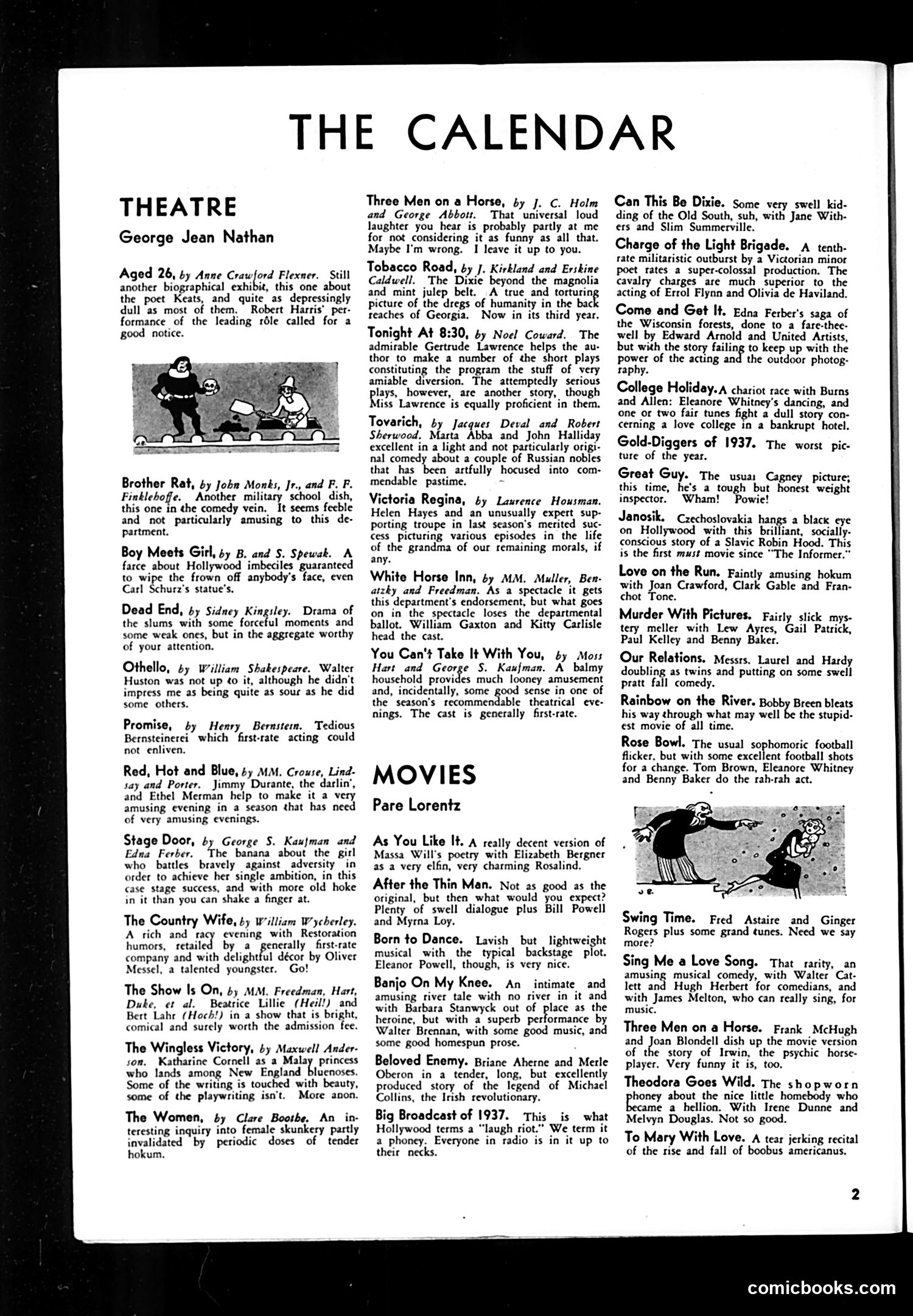
# Analysis of "The Calendar" Page from Judge This page from Judge magazine contains theater and movie reviews, not political cartoons. The small illustration accompanying the "Brother Rat" review shows two figures in what appears to be a comedic scene, but the image quality makes specific identification difficult. The page is primarily devoted to entertainment criticism from the 1930s era, reviewing Broadway shows like "George Jean Nathan," "Tobacco Road," and "Tovarich," along with films including "As You Like It" and "Three Men on a Horse." The content reflects typical Judge magazine fare—satirizing contemporary entertainment rather than politics. Without clearer images or more distinctive caricatures, specific satirical targets cannot be definitively identified. This appears to be a standard entertainment section rather than political commentary.
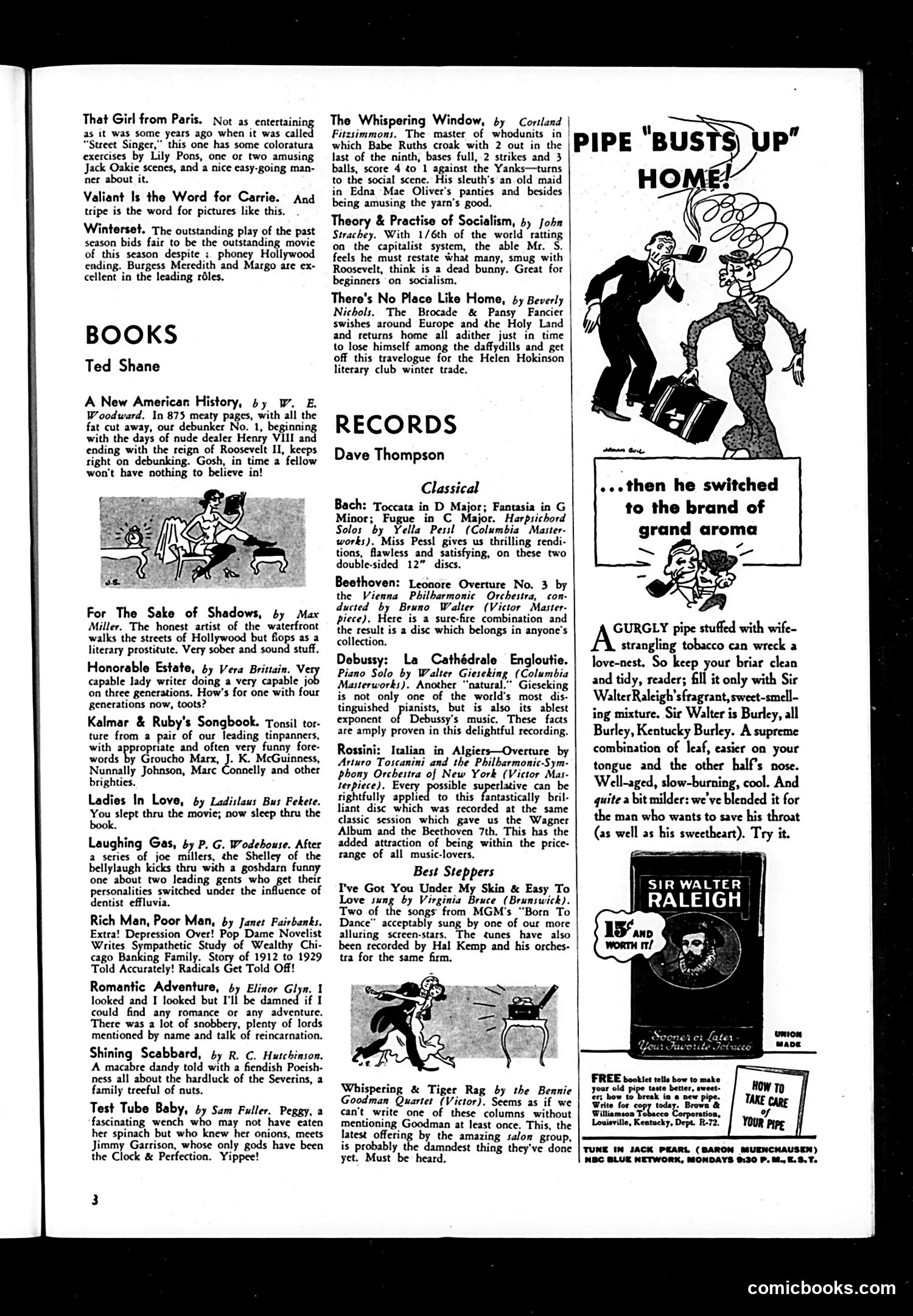
# "Pipe Busts Up Home" Cartoon Analysis This cartoon illustrates a domestic scene where a man has switched to Sir Walter Raleigh pipe tobacco, causing him to become so energetically happy that he's literally disrupting his home—his wife appears startled as he dances or jumps about exuberantly. The humor relies on exaggeration: the product is advertised as so pleasurable that it transforms the user into an uncontrollable force of joy, destroying domestic peace. This is a straightforward **product advertisement disguised as humor**—a common marketing technique of the era. The cartoon mocks consumer culture's promise that commercial goods deliver happiness so intense it becomes absurd. The joke's target is less political satire and more about poking fun at advertising claims while simultaneously promoting the tobacco brand.
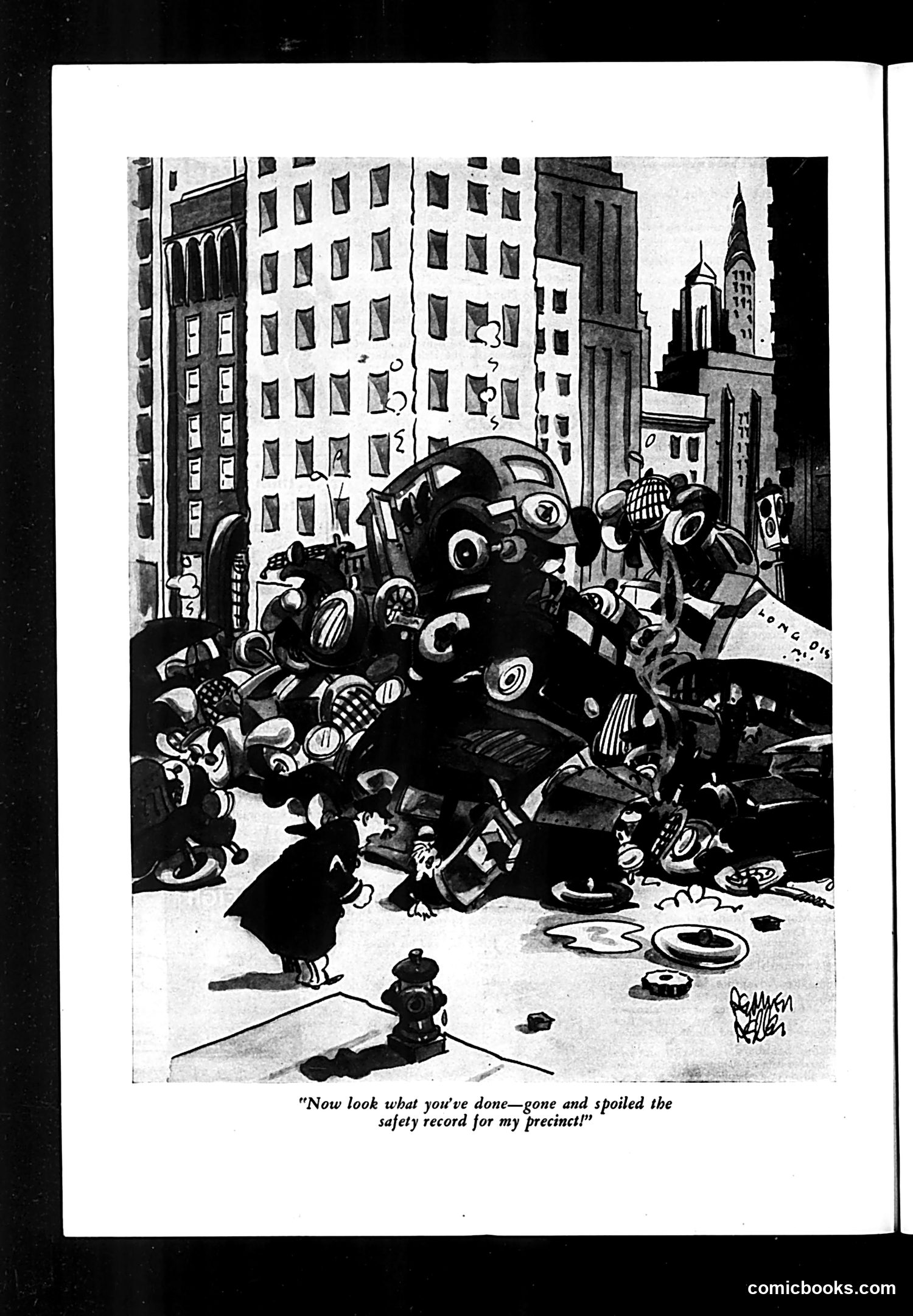
# Political Cartoon Analysis This cartoon satirizes urban traffic safety concerns, likely from the 1920s-1930s based on the art style. A distressed figure stands before a chaotic pile-up of cars and toys in a city street, complaining: "Now look what you've done—gone and spoiled the safety record for my precinct!" The joke targets police or municipal officials who prioritize their own statistics and reputations over genuine public safety. The officer appears more concerned that an accident has marred his "safety record" than with the actual wreckage and potential harm. The jumbled vehicles and toys suggest children and families were endangered. The satire critiques bureaucratic indifference and performance metrics that incentivize hiding problems rather than solving them—a timeless critique of institutional accountability.
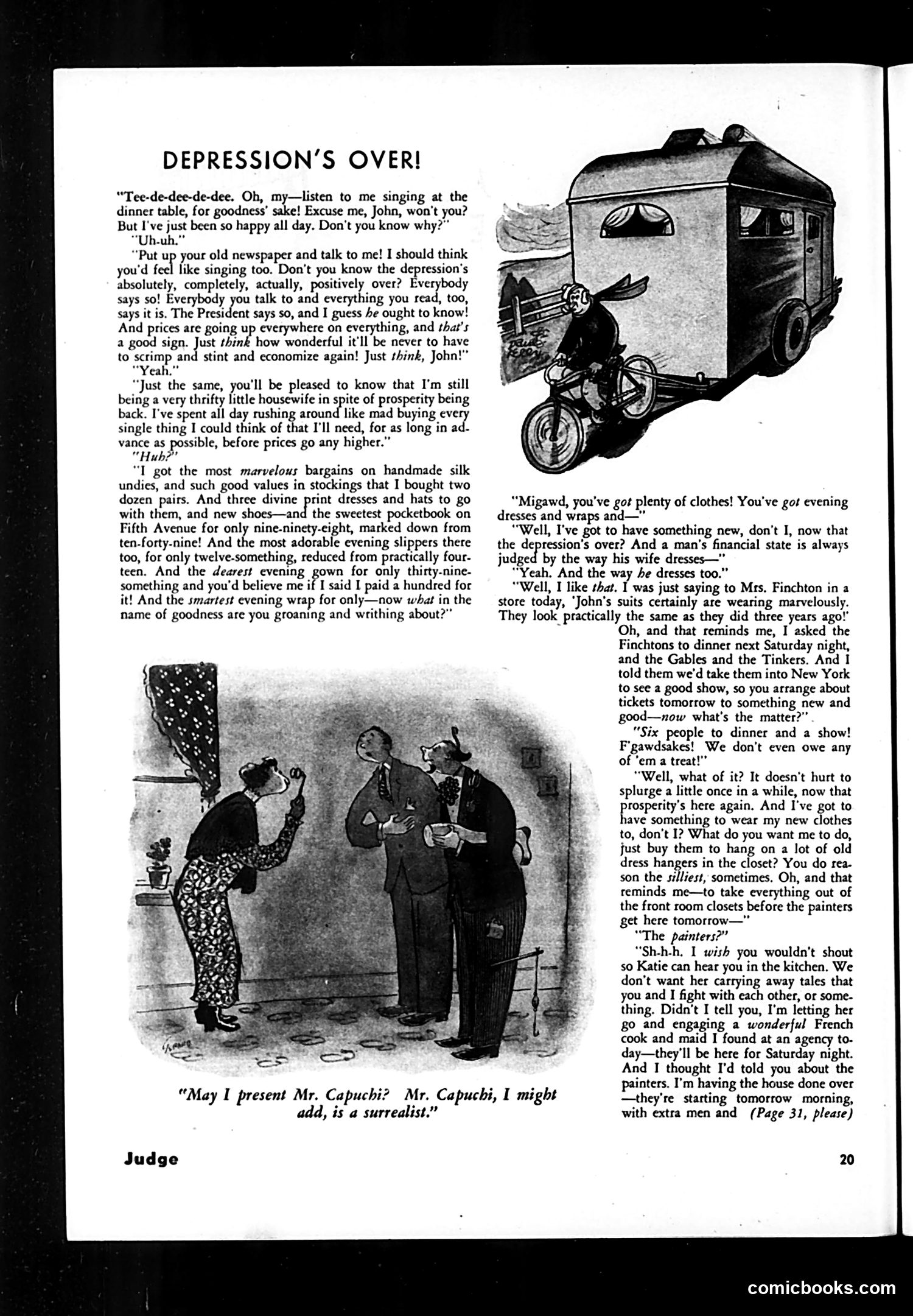
# Analysis of Judge Magazine Page This page from Judge magazine (dated November 2, 1899) is primarily **text-based social commentary** rather than political cartooning. The title "JUDGE: SOME OF THE PEOPLE" frames various humorous anecdotes about American life. The content satirizes: - **The "trailer" phenomenon** as a new, defining American trend - **Urban crime waves** across U.S. cities (theft, burglary, embezzlement) - **Police incompetence**, illustrated by Sergeant Patrick Kelly's weight gain (429 pounds) - **Suburban anxieties** about safety and social disorder Small illustrations accompany the text, showing a trailer and figures engaged in domestic scenes. The satire is gentle—mocking American preoccupations with modernity, crime, and social change rather than targeting specific political figures. The tone suggests Judge's audience was educated, urban readers concerned with contemporary American culture.
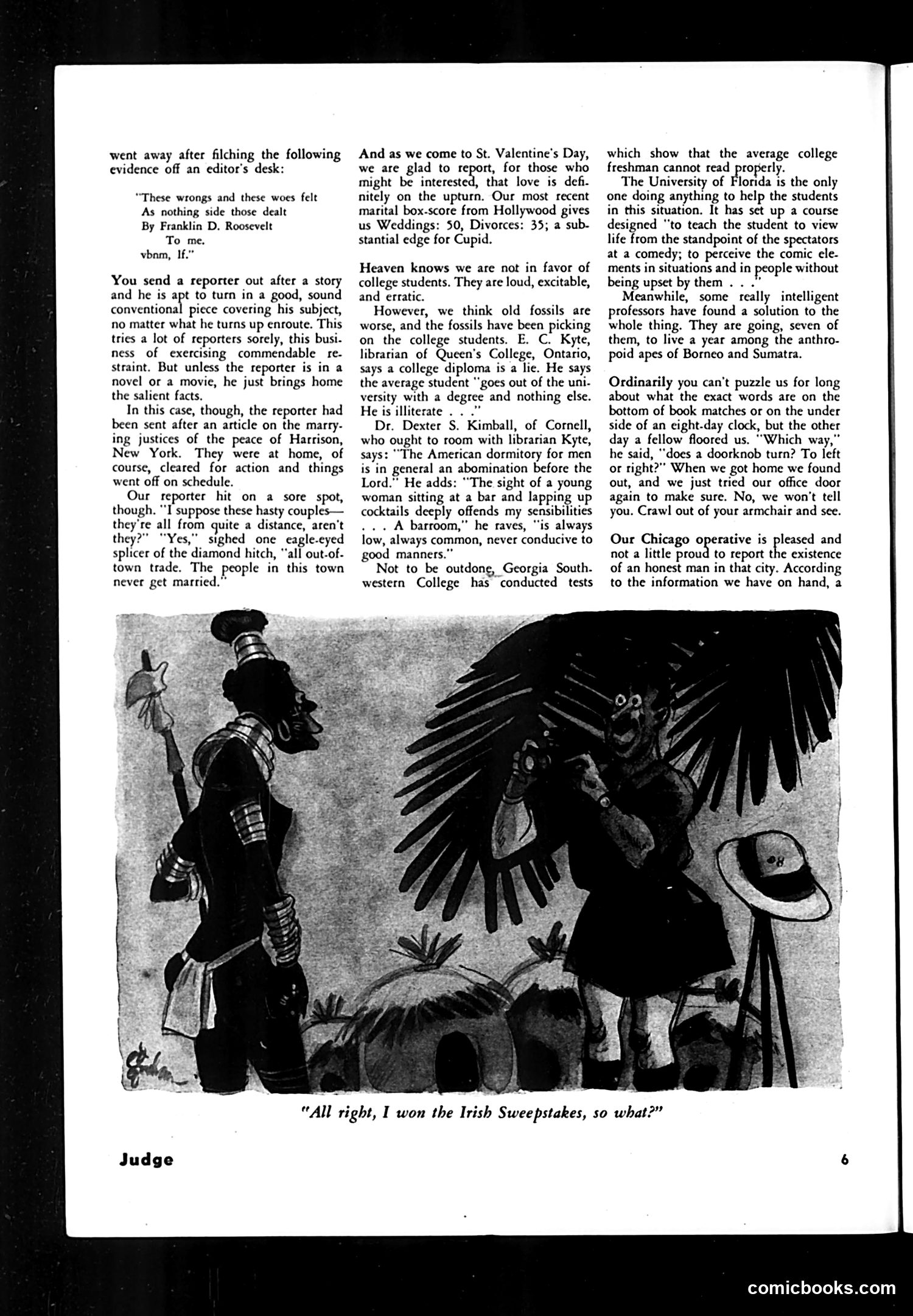
# Analysis of Judge Magazine Page This page contains editorial commentary and a single cartoon. The text discusses college life, including a satirical marriage-statistics comparison ("Weddings: 50, Divorces: 55") and critiques of higher education. One anecdote mocks a reporter's assignment covering marriage ceremonies at Harlem churches in New York. **The Cartoon:** Shows two figures in formal/military dress at what appears to be a cockfighting scene. One holds a fighting cock with spread wings; the other holds a staff. The caption reads: "All right, I won the Irish Sweepstakes, so what?" The cartoon likely satirizes Irish immigrants or Irish-American culture, referencing the Irish Sweepstakes (an illegal lottery popular during Prohibition). The joke appears to mock someone's boastful attitude about winning while engaged in illegal cockfighting—implying that even newfound wealth doesn't elevate questionable behavior.
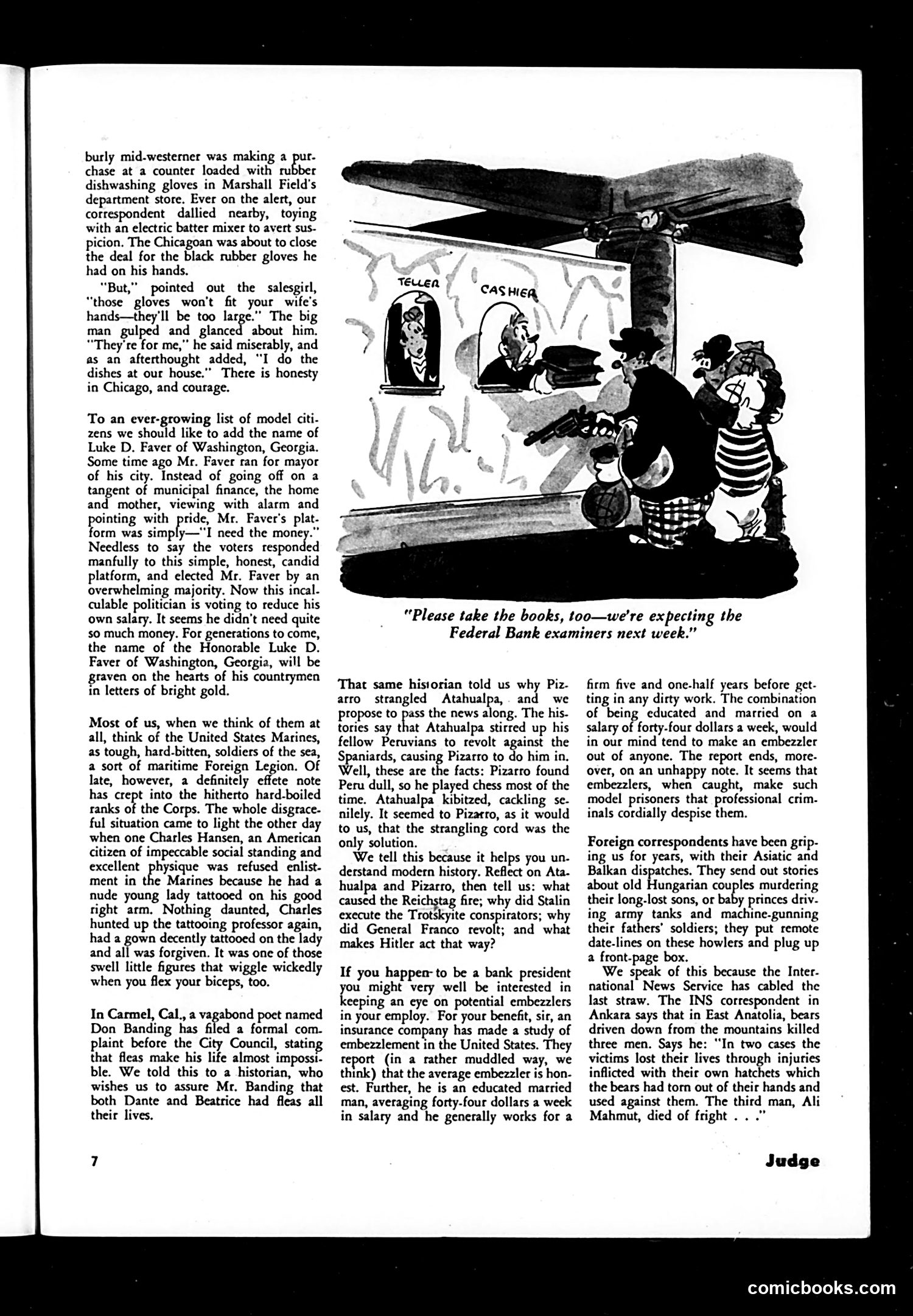
# Analysis of Judge Magazine Page The main cartoon depicts a bank teller and cashier looking at books while a nervous customer (likely an embezzler) stands nearby. The caption reads: "Please take the books, too—we're expecting the Federal Bank examiners next week." **The satire:** This joke mocks banking corruption and embezzlement during the era when Federal Bank examiners conducted inspections. The bank employees are so confident in their dishonesty that they're offering to hide the account books—suggesting they've cooked the records so thoroughly that examiners can't discover the fraud. The surrounding text discusses various public figures and historical anecdotes, including references to Marines, Luke D. Faver of Washington Georgia, Pizarro, Atahualpa, and banking industry embezzlement scandals—all supporting Judge's theme of exposing corruption in government and business institutions.
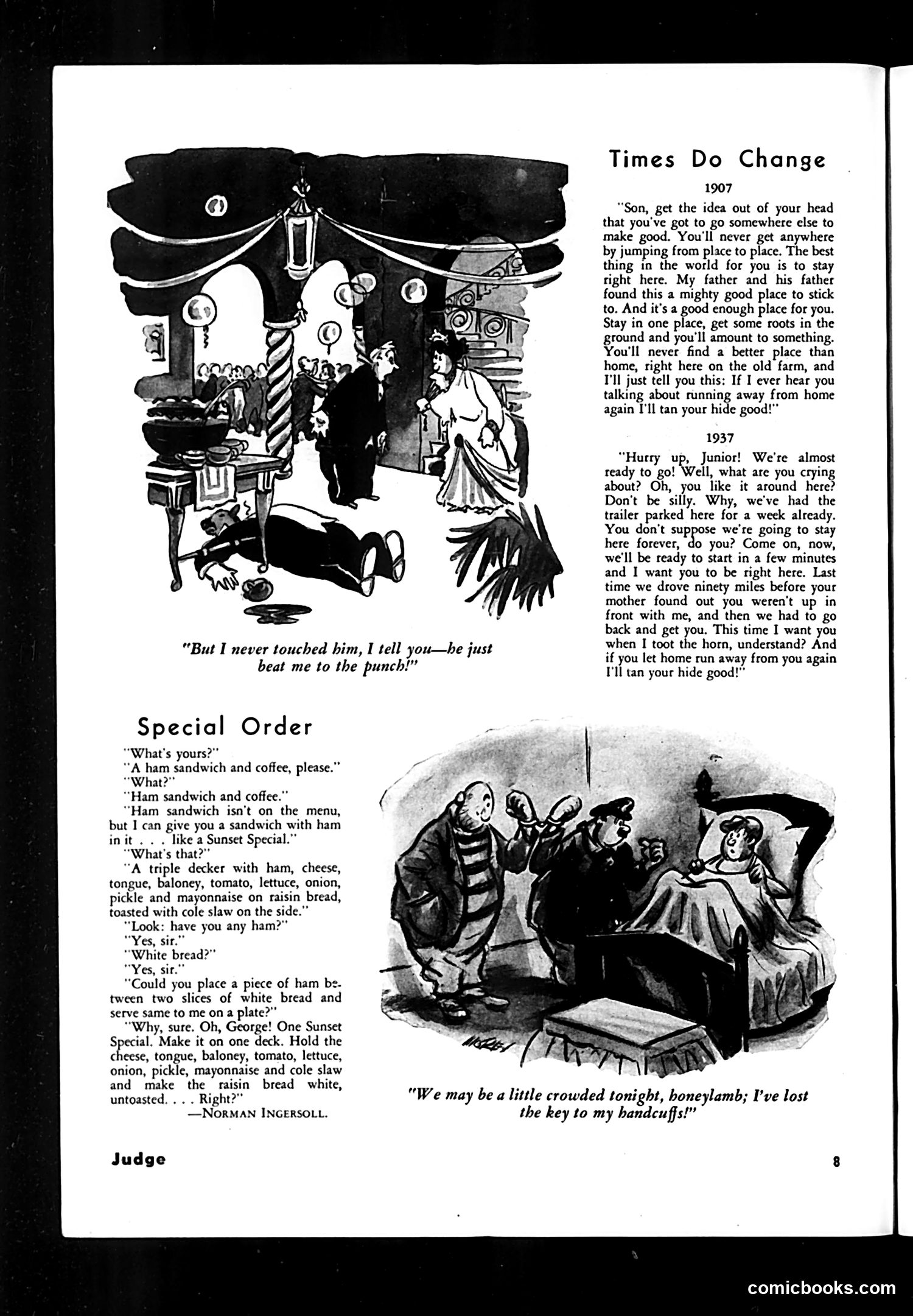
# "Times Do Change" (1907-1937) This two-panel cartoon contrasts American attitudes toward stability and rootedness across three decades. In 1907, a father scolds his son for wanting to leave the farm, insisting that staying put and building roots is the path to success. The advice reflects early 20th-century agrarian values: stability equals prosperity. By 1937, the same scenario is inverted. Now a mobile parent rushes their reluctant son into a trailer, dismissing his attachment to place as foolish. The family constantly relocates—they've already parked there a week, drove 90 miles before retrieving a lost child. The satire captures how the Great Depression and automobile culture fundamentally shifted American life from settled agricultural communities to mobile, transient existence. What was once virtuous (staying rooted) became obsolete; what was once foolish (constant movement) became necessity or lifestyle. The identical punchline emphasizes the irony: both fathers threaten to "tan your hide" if the child runs away—yet one anchors home, the other treats it as temporary.
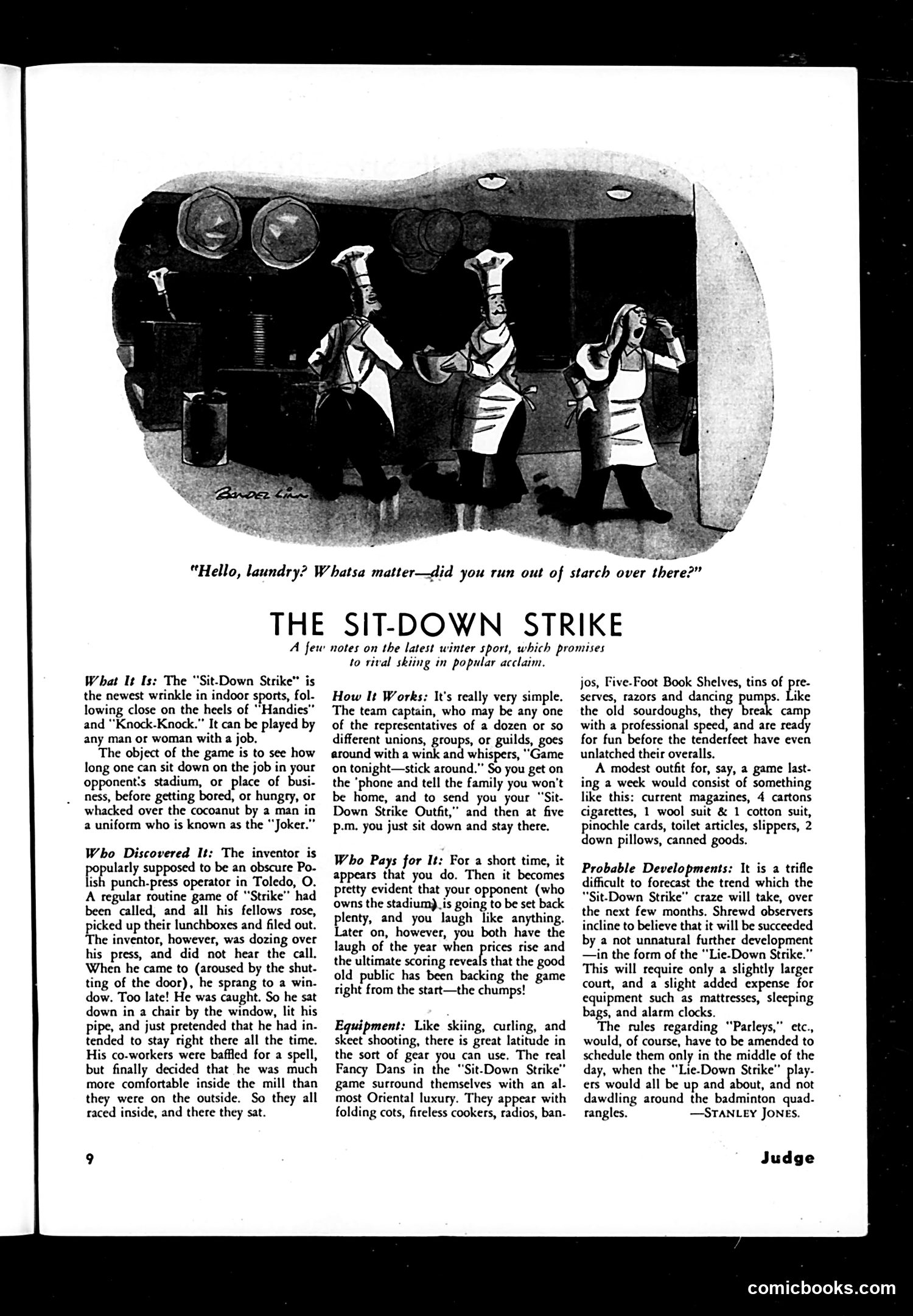
# "The Sit-Down Strike" Satire This Judge magazine article mocks the sit-down strike movement—a real labor tactic where workers occupied factories and refused to leave, paralyzing production without crossing picket lines. The 1930s sit-downs were major labor actions against companies like General Motors. The cartoon depicts strikers inside a laundry, with the opening joke showing management calling to ask about starch supplies—implying the strikers are comfortable enough to stay indefinitely. The satire works by treating the strike as a frivolous "winter sport" with equipment lists (magazines, cards, pillows) and inventing absurd rules and scoring systems. This deliberately trivializes what workers viewed as serious economic protest. The article's final jab—predicting a coming "Lie-Down Strike"—suggests strikers are becoming lazier. The piece ridicules both strikers' comfort and the public as "chumps" who ultimately pay higher prices. Judge's satire sided with business interests against organized labor activism.
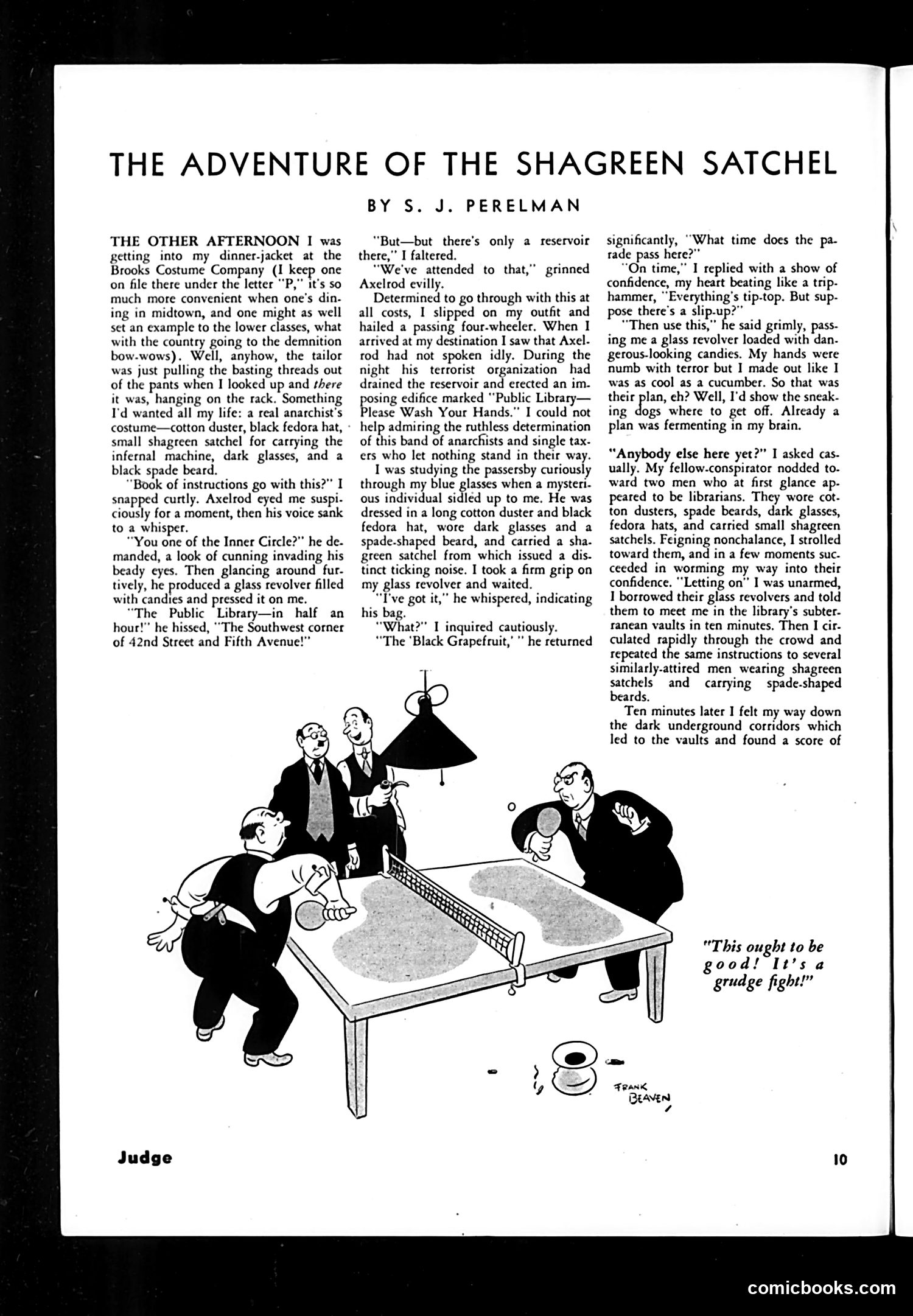
# "The Adventure of the Shagreen Satchel" - Satire Explanation This is a humorous short story by S.J. Perelman satirizing early 20th-century American anxiety about anarchists and "radical" threats. The narrator, a wealthy Upper East Side dandy, stumbles into what appears to be an anarchist plot after renting a costume from a tailor. The satire mocks several things: (1) the era's exaggerated fear of anarchists with bombs hidden in satchels; (2) the absurdity of anarchists as incompetent conspirators (the "Black Grapefruit" plot, glass candy revolvers); and (3) upper-class obliviousness and casual entanglement in danger they barely understand. The cartoon shows men playing ping-pong while dressed as anarchists, further deflating any genuine threat. The joke relies on readers recognizing contemporary anxieties about radical terrorism while finding the actual "conspirators" ridiculous and the narrator's participation farcical.