A complete issue · 48 pages · 1931
Judge — January 17, 1931
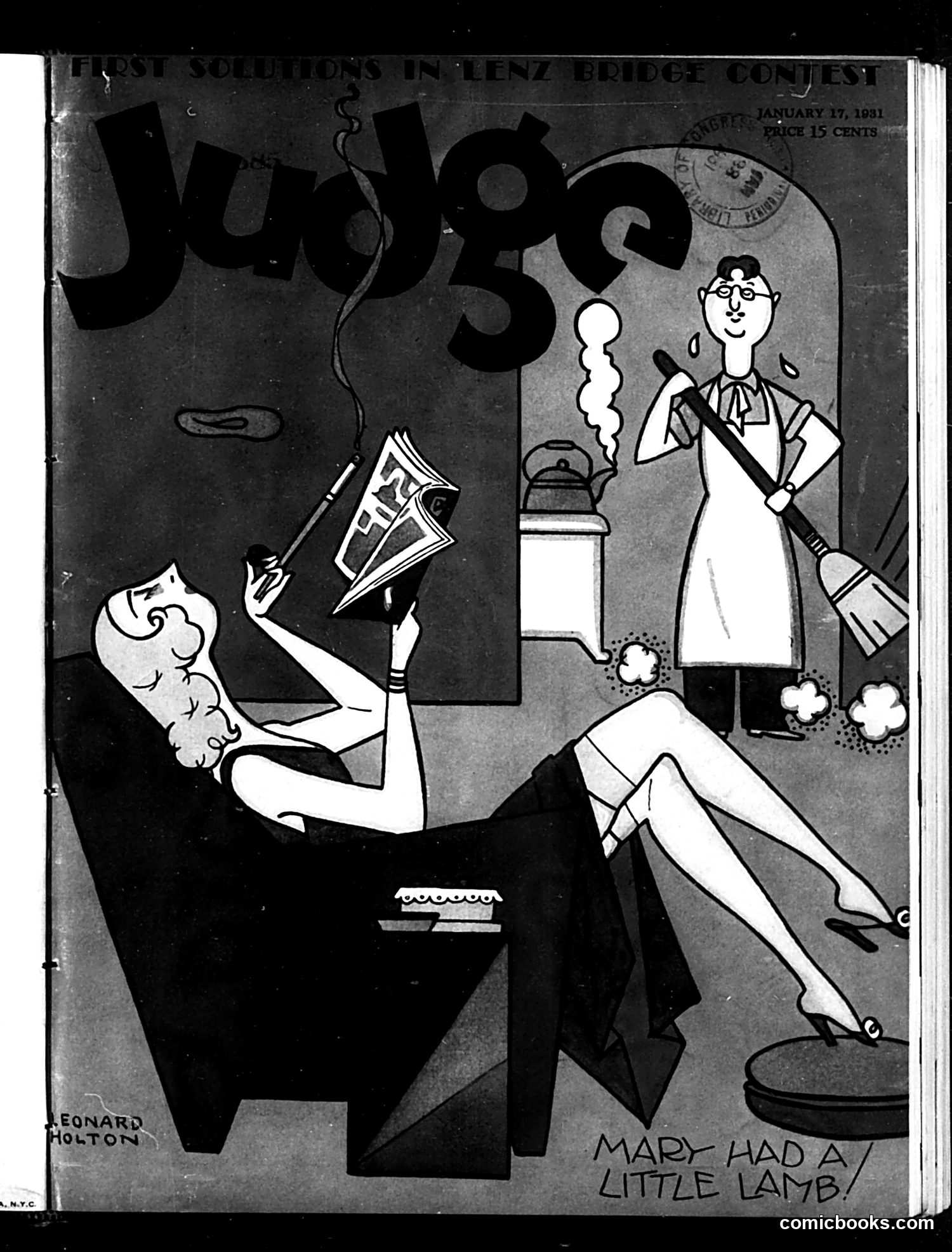
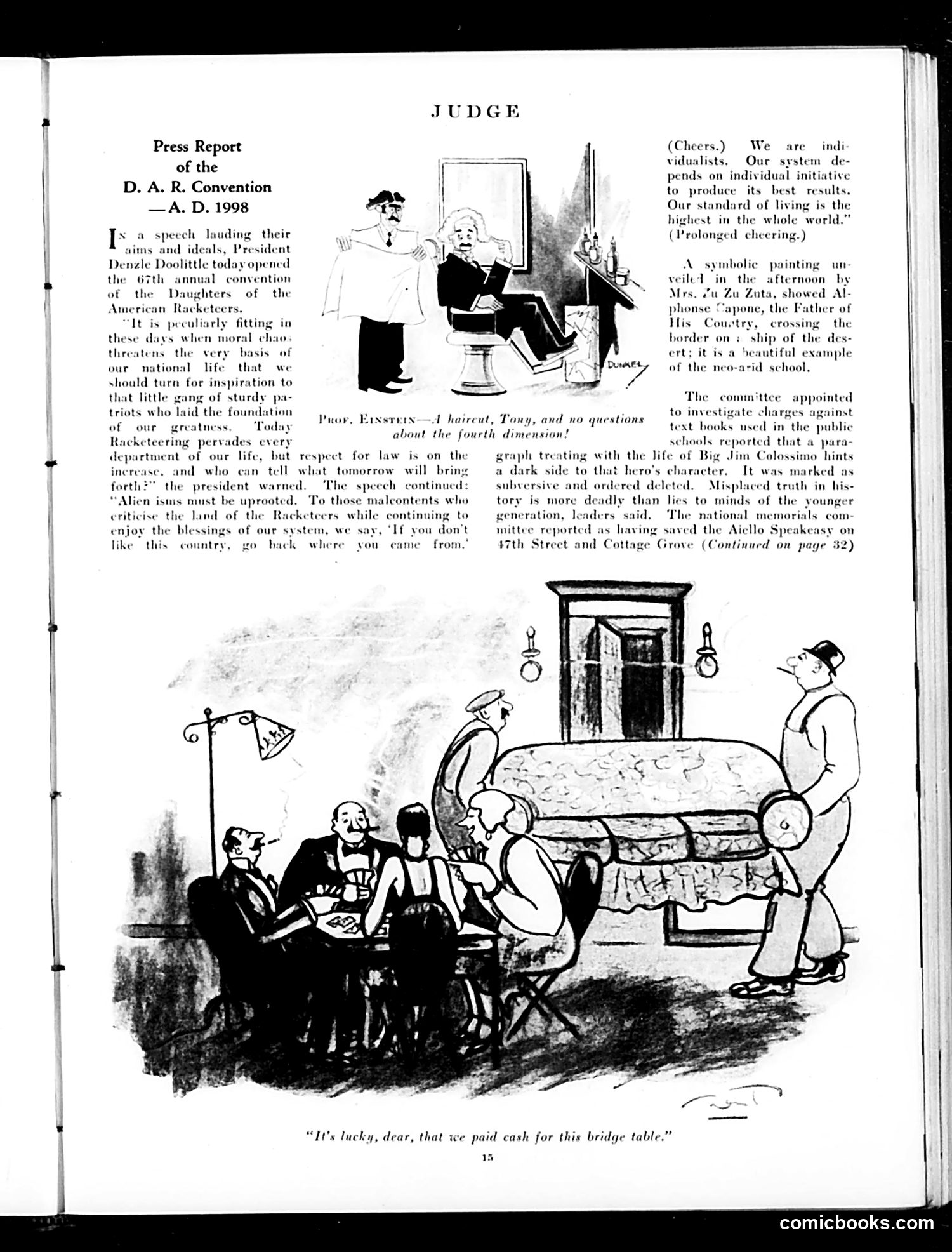
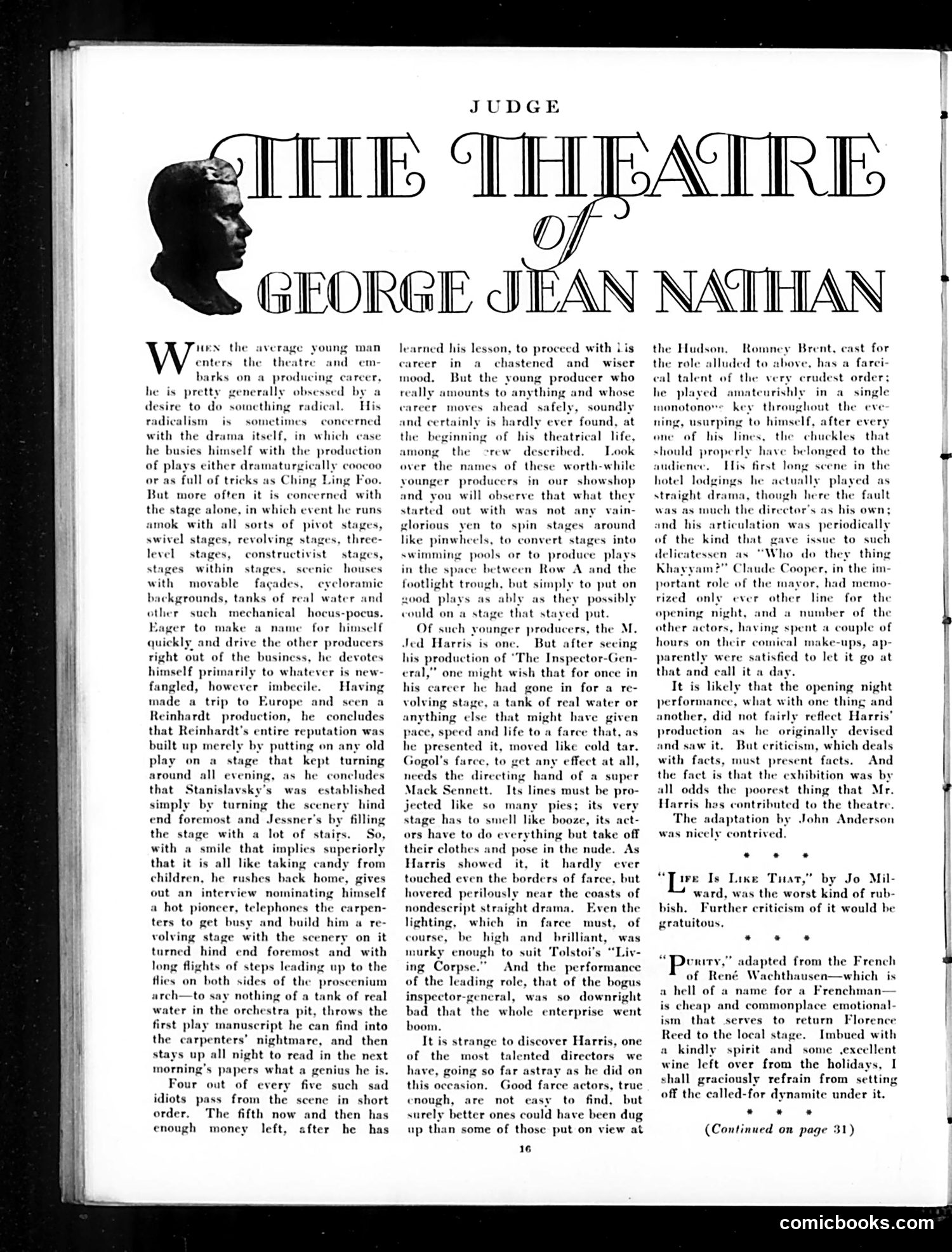
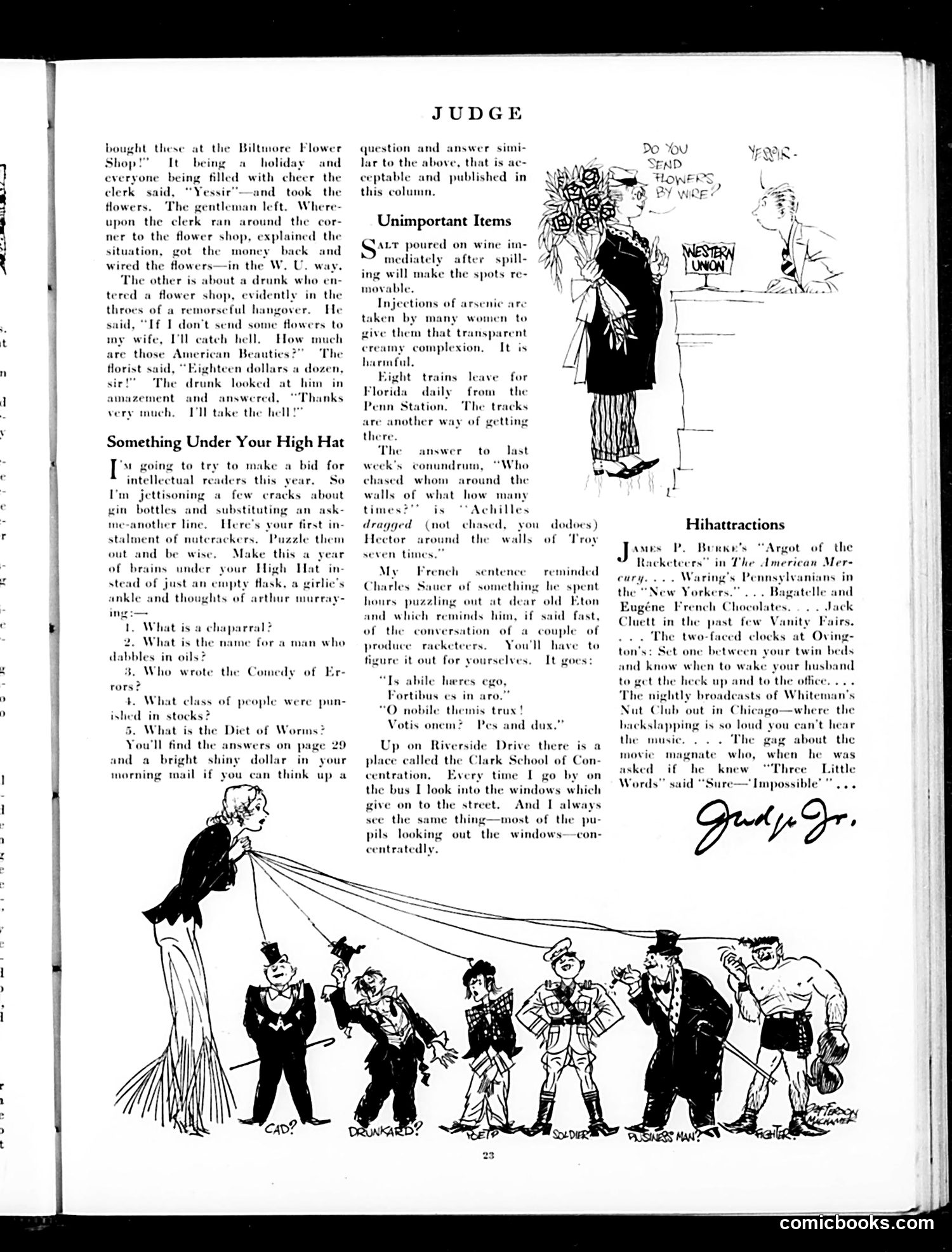
# Analysis This Judge magazine cover from January 17, 1921 satirizes domestic life through two scenes. On the left, a relaxed woman reads magazines while reclining, apparently indifferent to housework. On the right, another woman stands actively cleaning with a broom and dustpan. The title "Mary Had a Little Lamb" appears to reference the nursery rhyme, but here applies satirically to domestic duty. The contrast between the leisured woman and the diligent one likely critiques changing attitudes toward housework—possibly mocking either the "new woman" of the 1920s who rejected traditional domestic roles, or conversely, praising women who maintained household standards. The "15 cents" price and "First Solutions in Lenz Bridge Contest" text suggest this was entertainment/puzzle content mixed with social commentary typical of Judge's format.
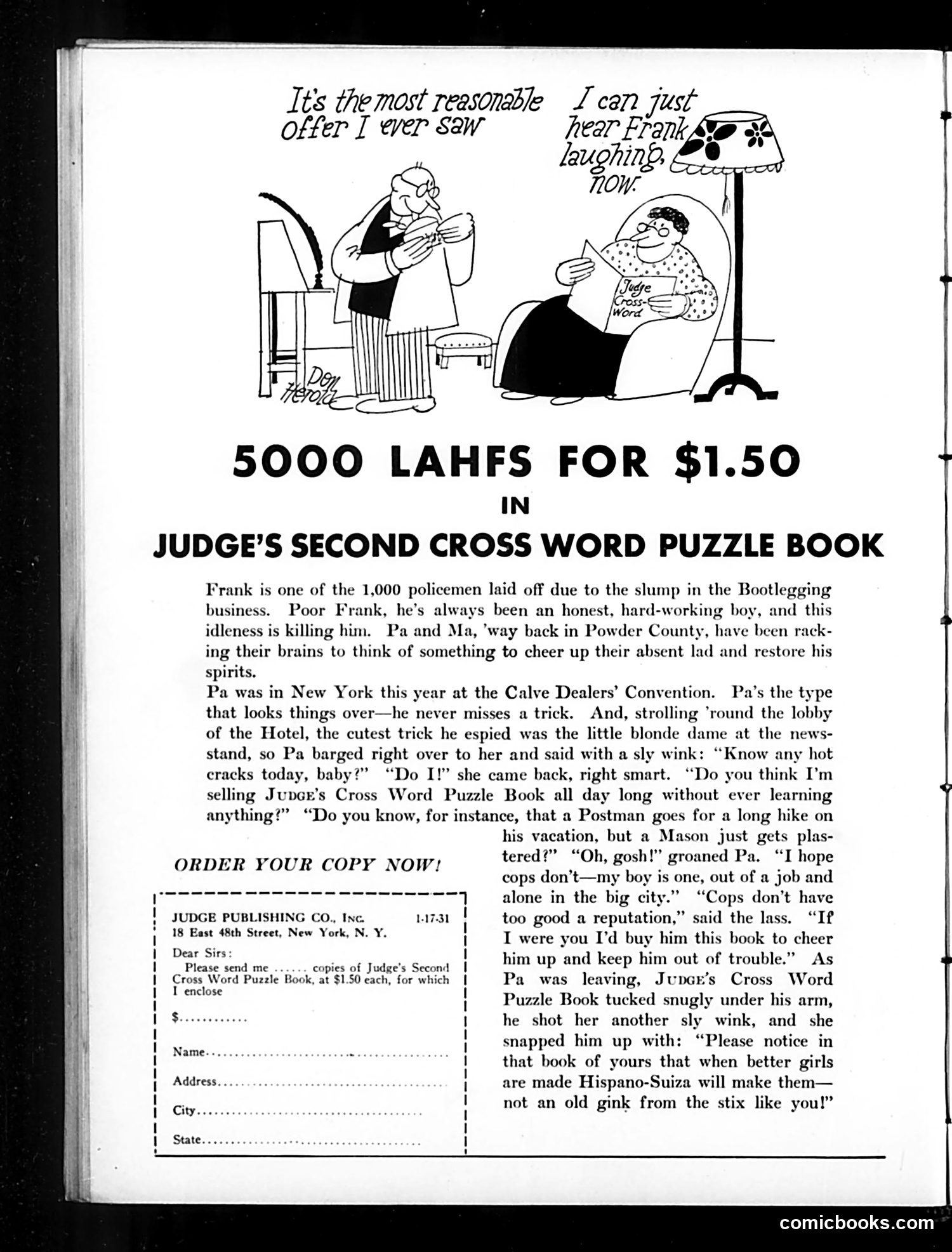
# Analysis This page is primarily **advertising** for Judge's Second Cross Word Puzzle Book, priced at $1.50. The cartoon depicts a domestic scene where a father (Frank) is unemployed due to "the slump in the Bootlegging business," indicating this dates to Prohibition era (1920s-early 1930s). The accompanying narrative is a humorous sales pitch: Pa encounters a newsstand clerk selling the puzzle book and uses it as a conversation starter, ultimately recommending it to cheer up his idle son. The humor relies on the contrast between the "honest, hard-working boy" now idle due to economic conditions, and the implication that puzzle-solving beats getting into trouble. The satire is **economic rather than political**—critiquing Depression-era unemployment and idle youth, while cleverly advertising the product as wholesome entertainment.
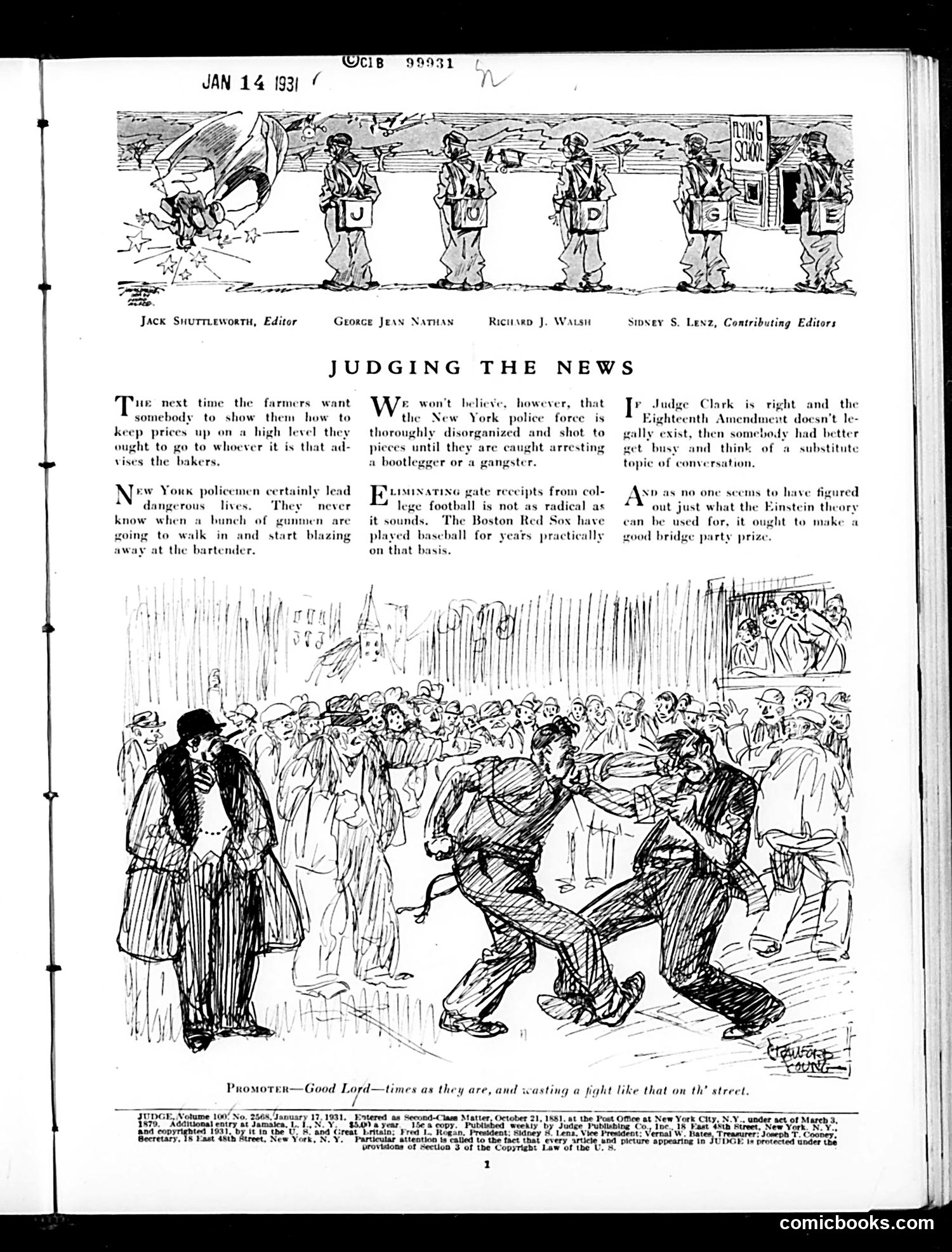
# "Judging the News" - Judge Magazine, January 14, 1931 This editorial page features commentary on contemporary issues. The main cartoon depicts a street fight between two men while a well-dressed "Promoter" watches, captioned "Good Lord—times as they are, and wasting a fight like that on th' street." The satire critiques economic desperation during the Great Depression: rather than waste energy on street brawls, the promoter sees profit opportunity—suggesting fights could be monetized. The cartoon mocks both Depression-era poverty (driving men to street violence) and capitalist exploitation of misery for entertainment. The text above discusses New York police tactics and Boston Red Sox baseball, using these topics to make broader points about governance and institutions, though specific references are unclear without additional historical context.
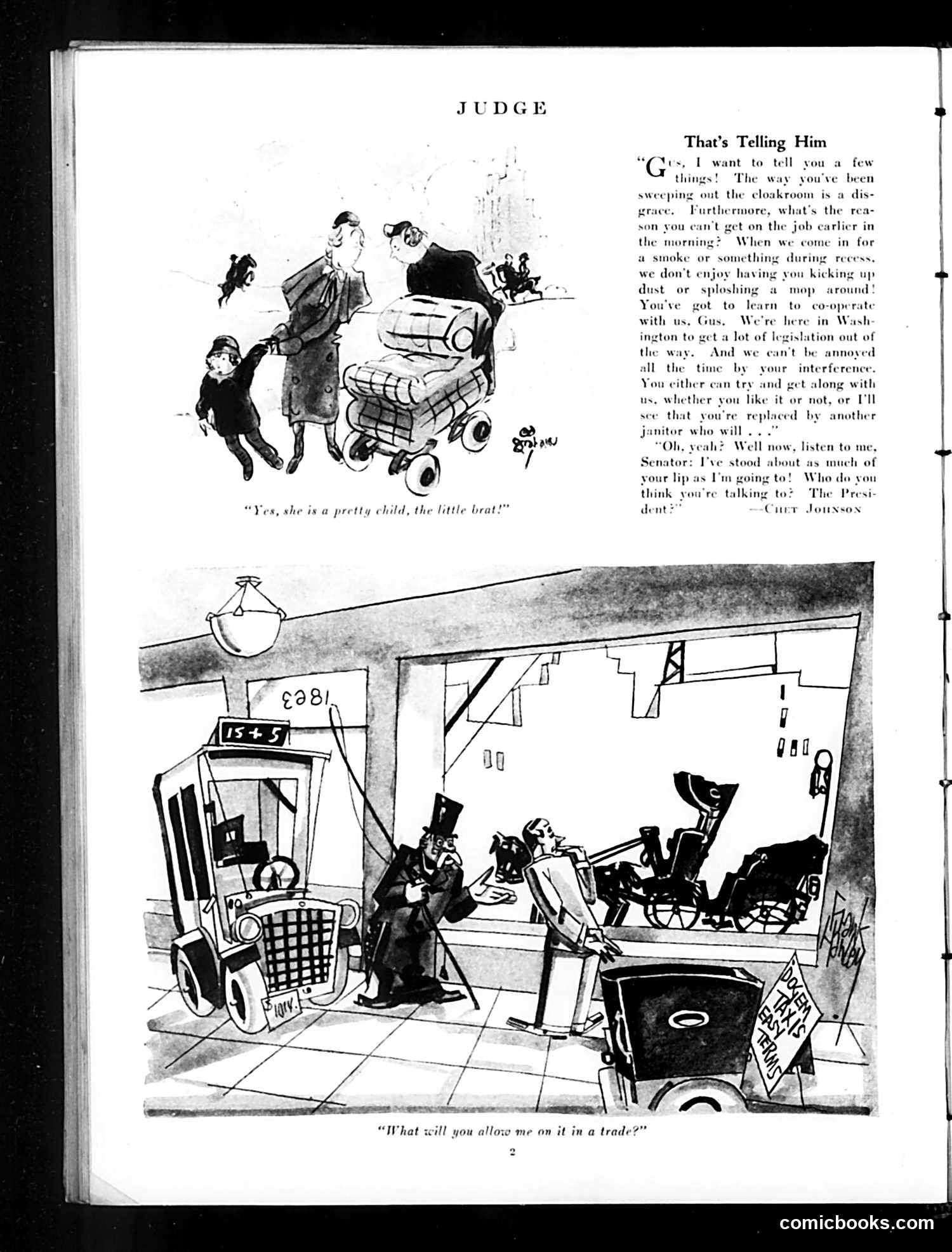
# Political Satire Analysis This Judge magazine page contains two cartoons addressing Congressional dysfunction and bureaucratic inefficiency. The top cartoon depicts a Senator being confronted about messy office conditions—sweeping out cloakrooms, interfering with job carriers—with a child in a carriage. The figure labeled "Gus" (likely representing ordinary constituents or bureaucratic workers) complains the Senator won't cooperate and threatens replacement by "another janitor." The bottom cartoon shows a street vendor with a toy carriage, asking "What will you allow me on it in a trade?" This appears to satirize government deals and legislative horse-trading—politicians bartering favors and compromises like marketplace transactions. Together, the cartoons mock Congressional incompetence, obstruction, and the transactional nature of legislative politics, suggesting politicians prioritize petty disputes over actual governance.
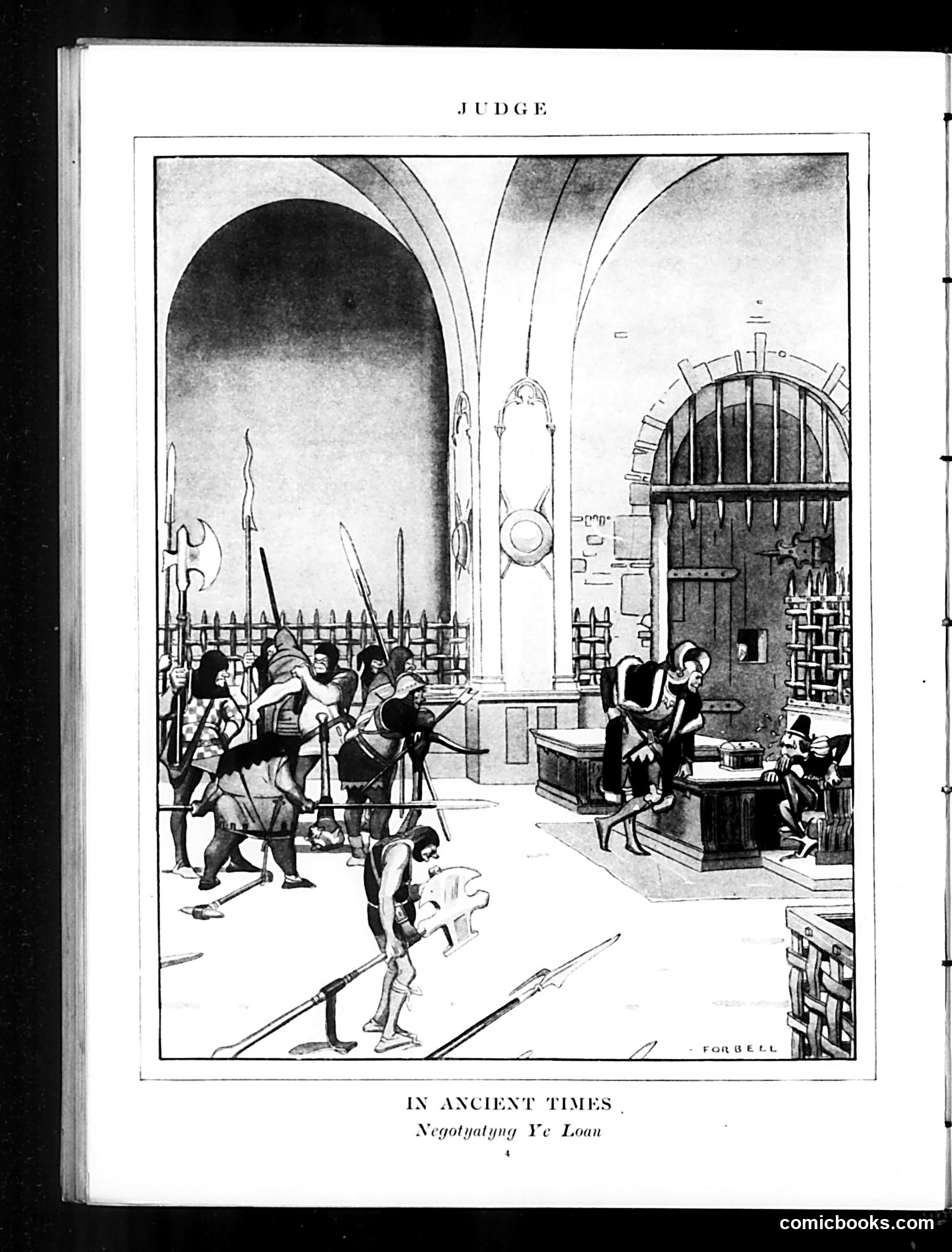
# Judge Magazine: "In Ancient Times—Negotiating Ye Loan" This cartoon satirizes loan negotiations by presenting them as a medieval/ancient court scene. Armed soldiers with pikes surround a figure seated at a desk (likely representing a lender or judge), while supplicants approach with weapons and armor, seeking to "negotiate" a loan. The satire suggests that in "ancient times," borrowers resorted to intimidation or force to obtain loans—implying that modern loan negotiations similarly involve coercion or aggressive tactics, just dressed in contemporary language. The title "Negotiating Ye Loan" puns on "ye olde" English while mocking the pretense of civilized negotiation masking what amounts to threats. The cartoon likely critiques aggressive lending practices or borrower desperation during Judge's publication period.
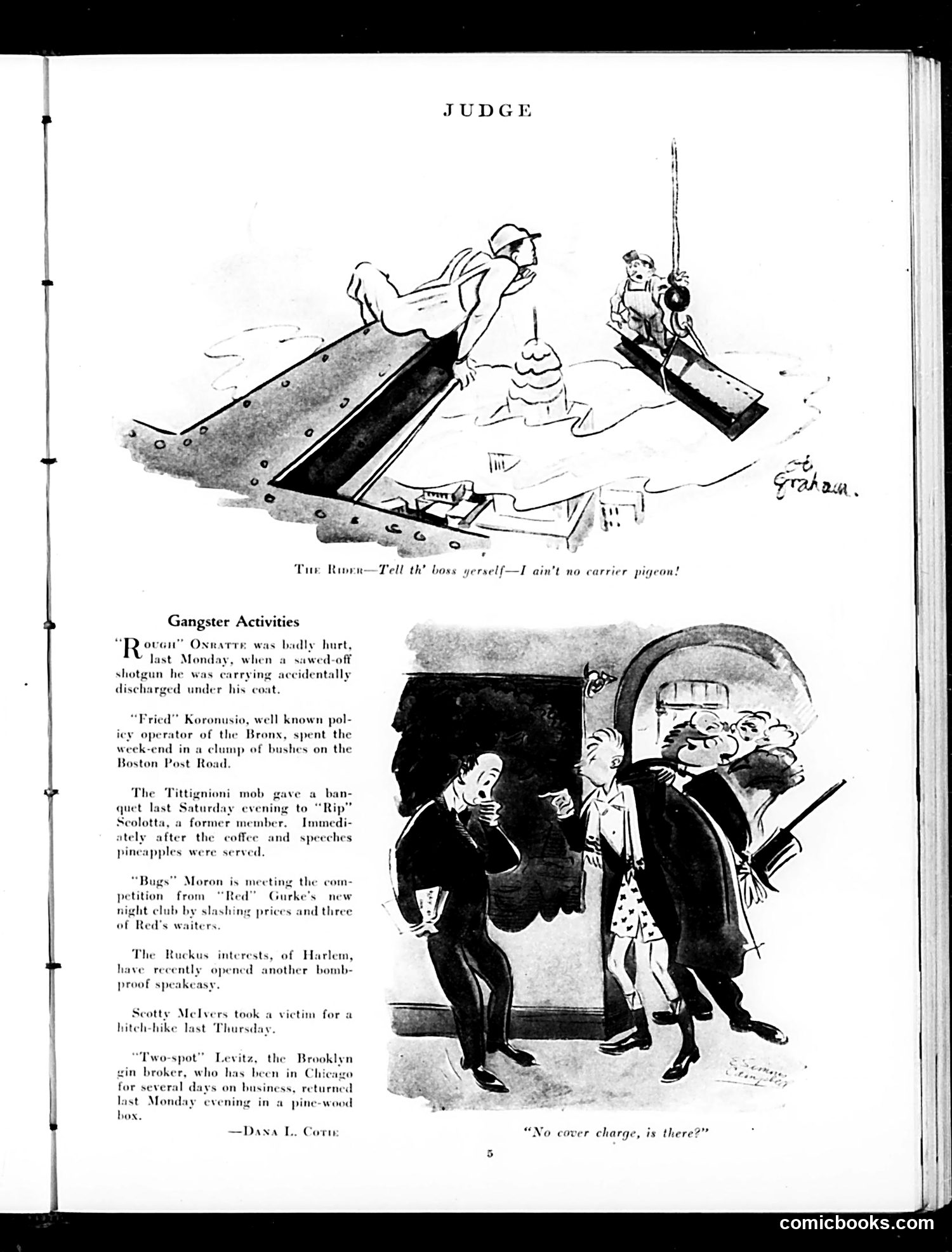
# Judge Magazine Page Analysis This page satirizes 1920s gangster culture during Prohibition. The top cartoon mocks gang violence: a man slides down a chute labeled "The Rider" while declaring "I ain't no carrier pigeon!"—suggesting he's been disposed of by criminals. The "Gangster Activities" section below reports on organized crime figures with dark humor: "Roman" Onsatte's accidental shotgun discharge, "Fried" Koromusio's weekend hideout, the Tittignoni mob's banquet, "Bugs" Moran's rivalry with "Red" Curke, and Ruckus interests' speakeasy opening. The lower cartoon shows men entering what appears to be an illegal bar, with one asking "No cover charge, is there?"—satirizing the prevalence and open operation of Prohibition-era speakeasies despite legal bans on alcohol sales.
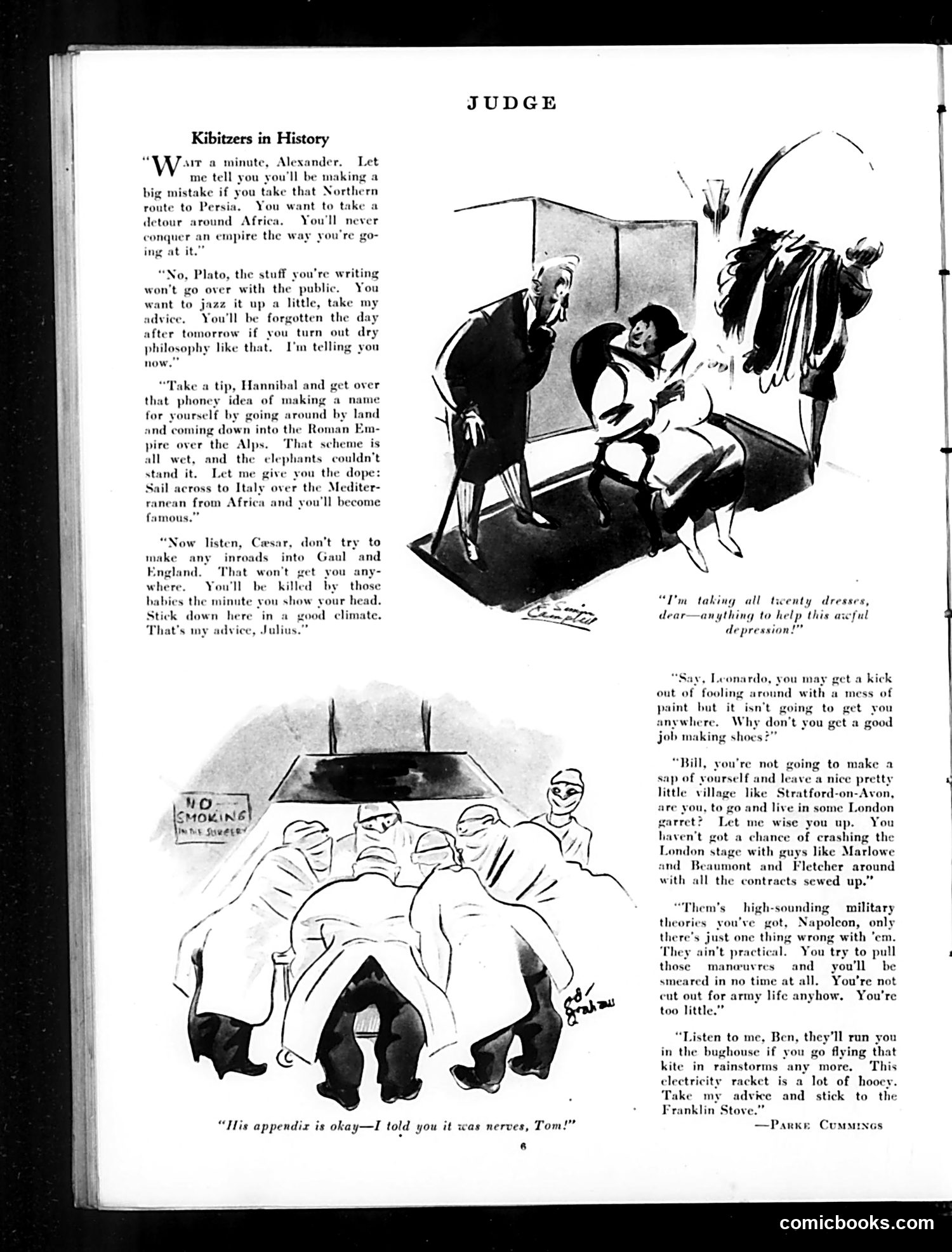
# "Kibitzers in History" - Judge Magazine Satire This page satirizes armchair strategists and backseat commanders throughout history. The top cartoon shows someone offering unsolicited advice to historical figures (Alexander, Plato, Hannibal, Caesar) about military campaigns—suggesting their famous strategies were actually flawed. The bottom cartoon depicts men in what appears to be a WWI-era hospital or military shelter (marked "NO SMOKING"), with the caption "His appendix is okay—I told you it was nerves, Tom!" This mocks civilians pretending to be medical experts, confidently diagnosing conditions they're unqualified to assess. The right-side quotes continue the theme: various "kibitzers" (unsolicited advisers) offer contradictory wisdom about careers and life choices, all equally presumptuous and unhelpful. The satire targets human tendency to give confident advice outside one's expertise.
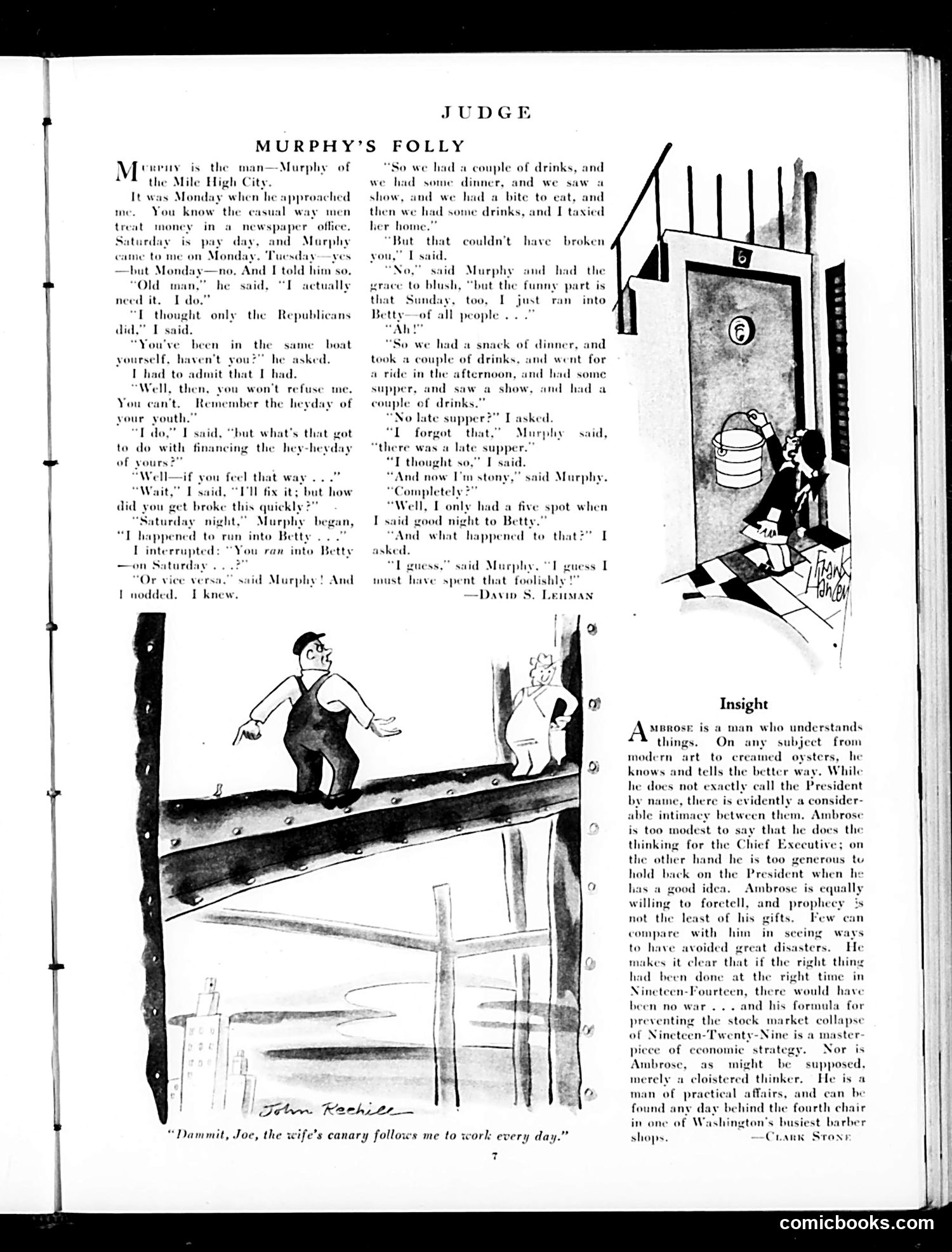
# Murphy's Folly & Judge Magazine Page Analysis **"Murphy's Folly"** is a humorous narrative about a man who borrows money from the narrator on Monday, claiming poverty. Murphy then admits he spent the entire weekend—Saturday and Sunday—taking his girlfriend Betty on repeated outings: dinners, drinks, shows, taxi rides, and more drinks. Each day he "accidentally" ran into Betty and spent lavishly on entertainment, completely depleting his finances. The satire targets **post-WWI leisure spending and dating culture**—the casual way young men frittered away wages on entertainment and women. Murphy's repeated claim of coincidentally encountering Betty while broke suggests either poor judgment or romantic impulsiveness. **The secondary cartoon** (by John Rachilze) shows a man on a high beam, with the caption "Dammit, Joe, the wife's canary follows me to work every day"—a domestic complaint joke about marital entanglement. **"Insight"** appears to be a separate humorous essay about an unnamed advisor figure (possibly satirizing Washington insiders) who offers unsolicited expertise on everything from art to economics and presidential matters.
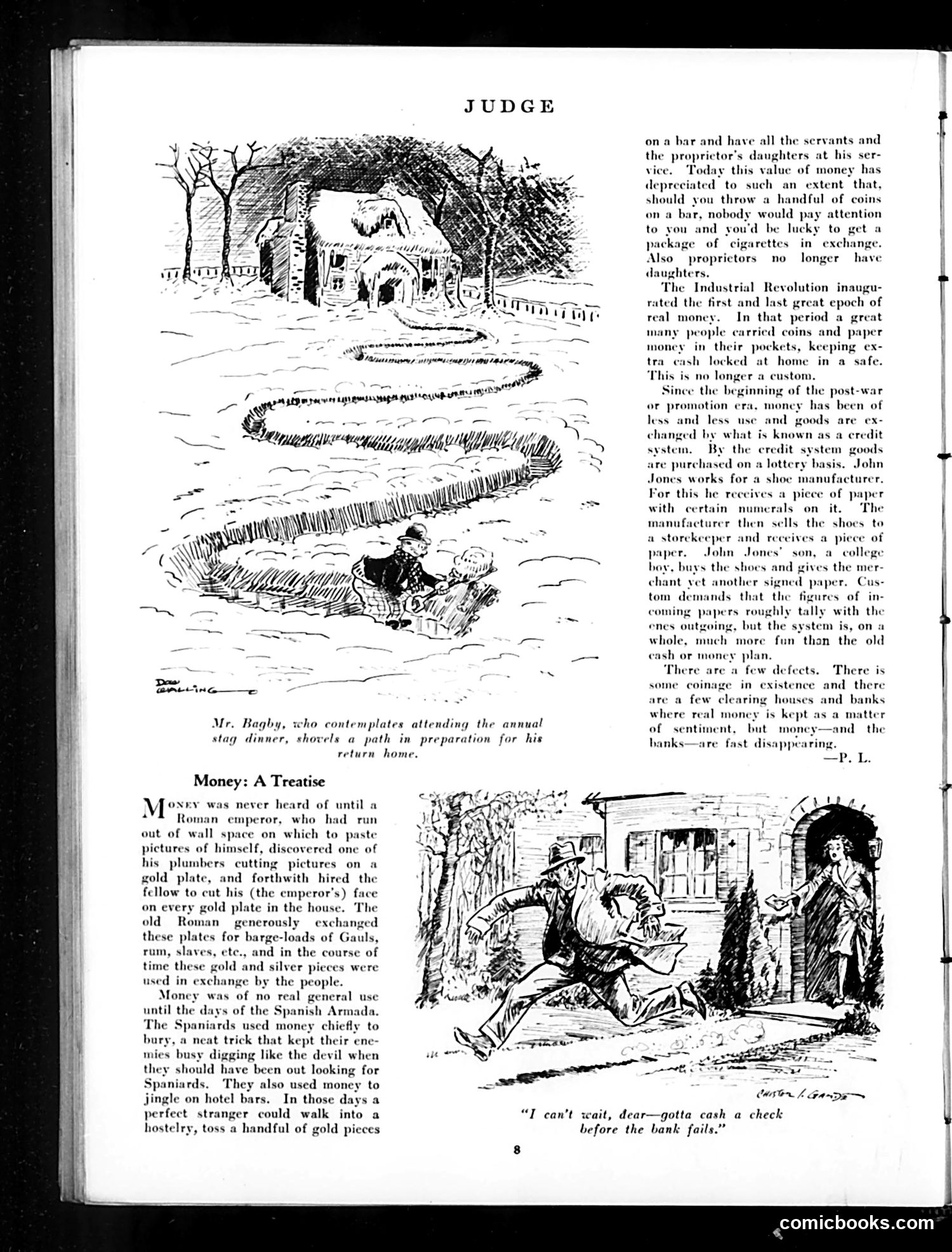
# Analysis of Judge Magazine Page This page contains two satirical pieces on money and finance, likely from the 1920s post-WWI era. **Top section ("Judge"):** A cartoon shows a man shoveling snow, illustrating how money's value has collapsed—he must physically labor rather than rely on cash. The accompanying text laments that real money has nearly disappeared, replaced by a credit system based on exchanging signed papers. The example of "John Jones" demonstrates the absurdity: a manufacturer receives paper for shoes, a storekeeper receives different paper, Jones's son receives yet another signed paper—an unstable chain dependent on numbers "roughly" matching. **"Money: A Treatise":** A humorous pseudo-historical essay traces money from Roman emperors to the Spanish Armada, ending with a cartoon showing a couple urgently discussing cashing a check "before the bank fails." This captures post-war economic anxiety—the satire suggests banking collapse is imminent and inevitable. **The satire's point:** Both pieces mock the fragility of credit-based economics and the public's loss of faith in financial institutions during this economically turbulent period.
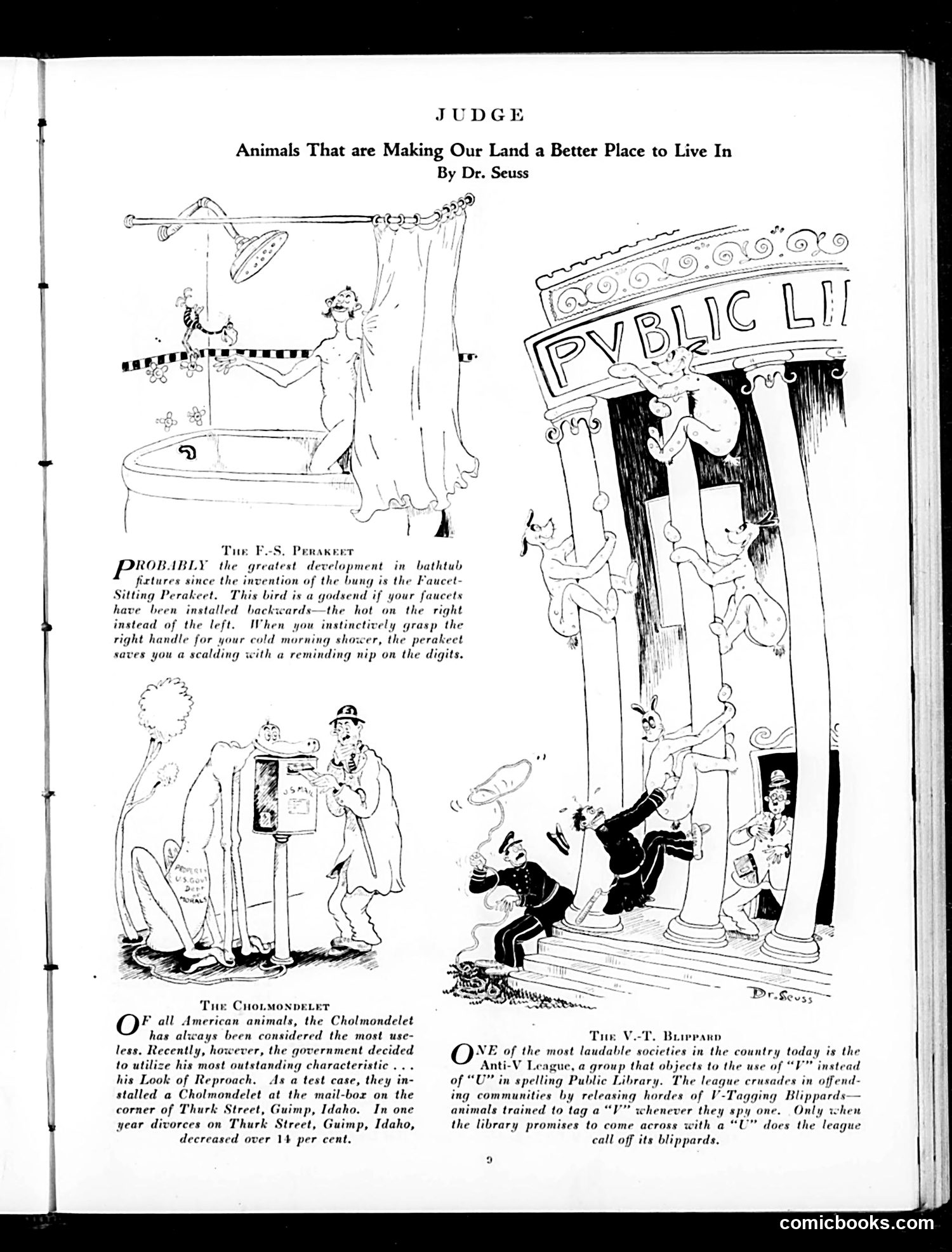
# Judge Magazine: Dr. Seuss's Satirical "Animals" This is a Dr. Seuss humor piece from Judge magazine featuring three absurdist inventions disguised as animal discoveries. Each represents contemporary annoyances rendered ridiculous: **The Faucet-Sitting Perakeet** satirizes poor bathroom fixture design (hot/cold handles installed backwards), proposing a bird that pecks your hand as a "solution." **The Cholmondelet** mocks useless things given forced utility—a creature valued solely for its disapproving expression, credited with reducing divorces in a fictional Idaho town by 14 percent through shame alone. **The V-T Blippard** parodies pedantic activist groups. The "Anti-V League" objects to "V" replacing "U" in "Public Library" and releases trained animals to correct the "error." This satirizes both prescriptivist language crusades and overzealous civic organizations. The humor relies on Seussian invented creatures and deadpan absurdity—treating ridiculous problems with mock-serious solutions, poking fun at both consumer complaints and social reform movements of the era.
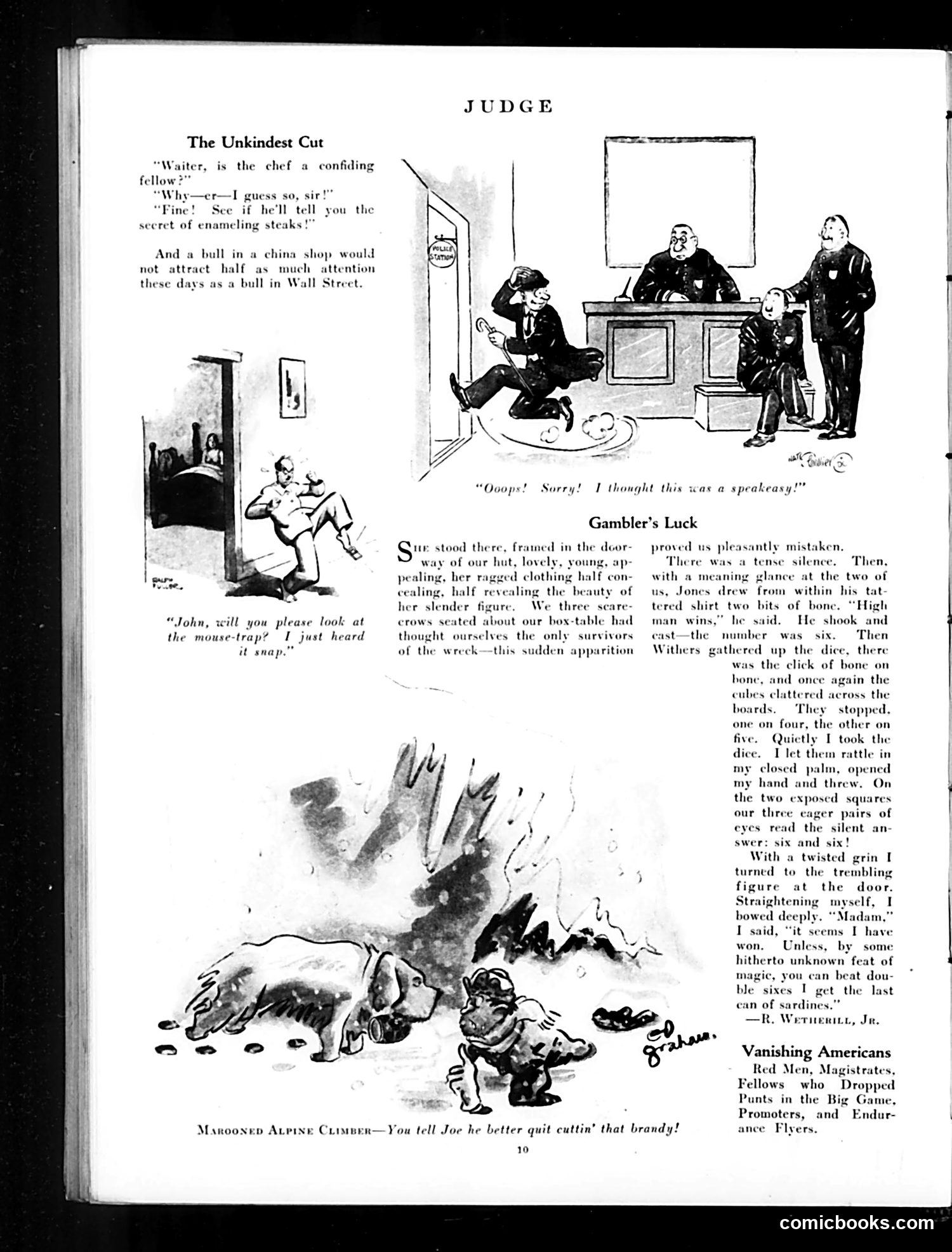
# Judge Magazine Page Analysis This page contains three separate satirical pieces: **"The Unkindest Cut"**: A brief joke about a chef guarding his steak-enameling secret, with commentary comparing a "bull in a china shop" to a "bull in Wall Street"—suggesting Wall Street speculation/chaos is as destructive as literal property damage. **"Oops! Sorry! I thought this was a speakeasy!"**: A courtroom scene where someone crashes through the door, confusing the judge's bench with an illegal speakeasy—satirizing Prohibition-era confusion and the prevalence of underground bars. **"Gambler's Luck"**: A longer narrative about shipwreck survivors gambling with bone dice. A woman appears at their hut; the narrator rolls double sixes and claims victory. The joke appears to concern whether supernatural luck or deception determines outcomes in gambling. **"Marooned Alpine Climber"**: A cartoon about someone drinking brandy in distress. The page mixes social satire (Wall Street excess, Prohibition) with humor about gambling and vice.