
A complete issue · 29 pages · 1916
Judge — December 30, 1916
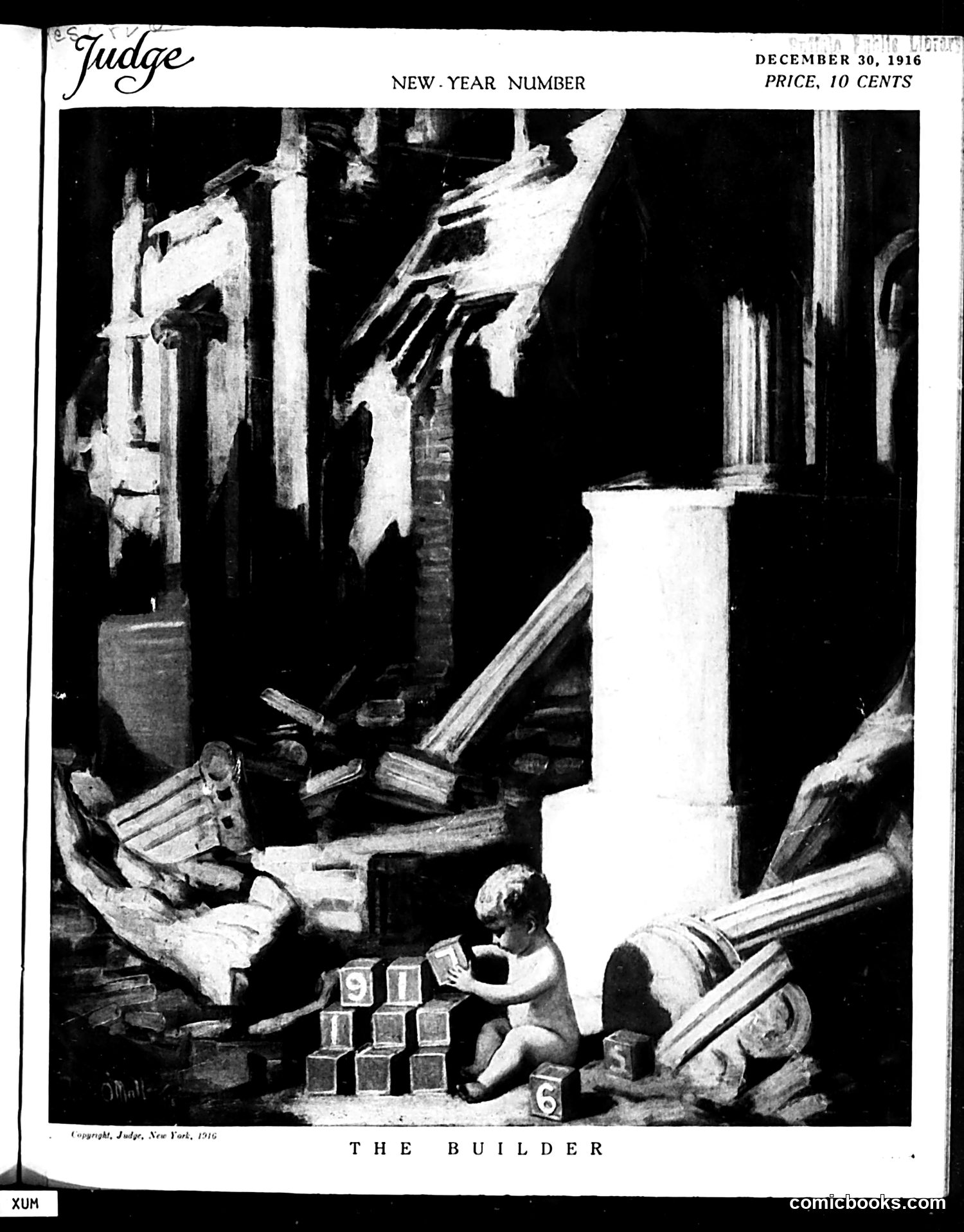
This New Year's issue cover depicts a child building with blocks in the midst of architectural ruins and debris. The cartoon appears to be allegorical commentary on post-WWI reconstruction and renewal. The child represents either America or optimistic humanity generally, constructing numbered blocks (suggesting orderly progress) amid the destruction—the collapsed columns, rubble, and white pillar suggest classical civilization in ruins, likely referencing the devastation of World War I then raging in Europe. The title "The Builder" suggests themes of hope, reconstruction, and the possibility of building anew from the wreckage of old systems. For a 1916 New Year's issue, it likely expresses faith in humanity's capacity to rebuild civilization after the war's destruction.
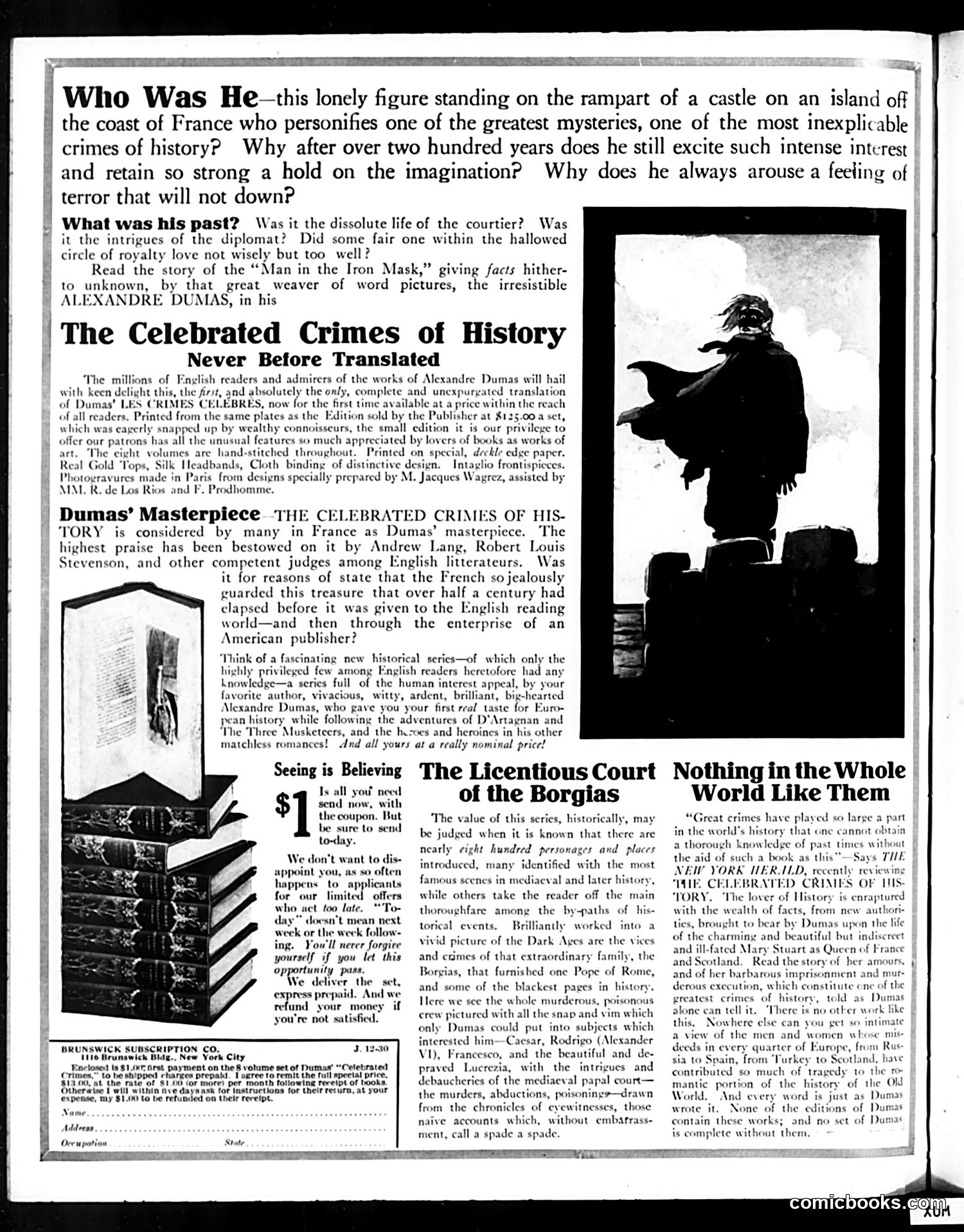
This page is primarily **advertising rather than satire or political commentary**. It promotes "The Celebrated Crimes of History," a new English translation of Alexandre Dumas's famous work, published by Brunswick Subscription Company. The silhouetted illustration depicts a mysterious figure on a castle rampart—likely referencing Dumas's "The Man in the Iron Mask," one of his most famous historical crime narratives. The ad emphasizes this as Dumas's "masterpiece," praised by English literary judges. The marketing angle targets affluent readers, positioning this eight-volume set as a prestigious collectible with special design features (hand-stitched binding, French paper, custom illustrations). There's no apparent political satire—just commercial promotion of classic literature to the Judge magazine's educated, wealthy audience.
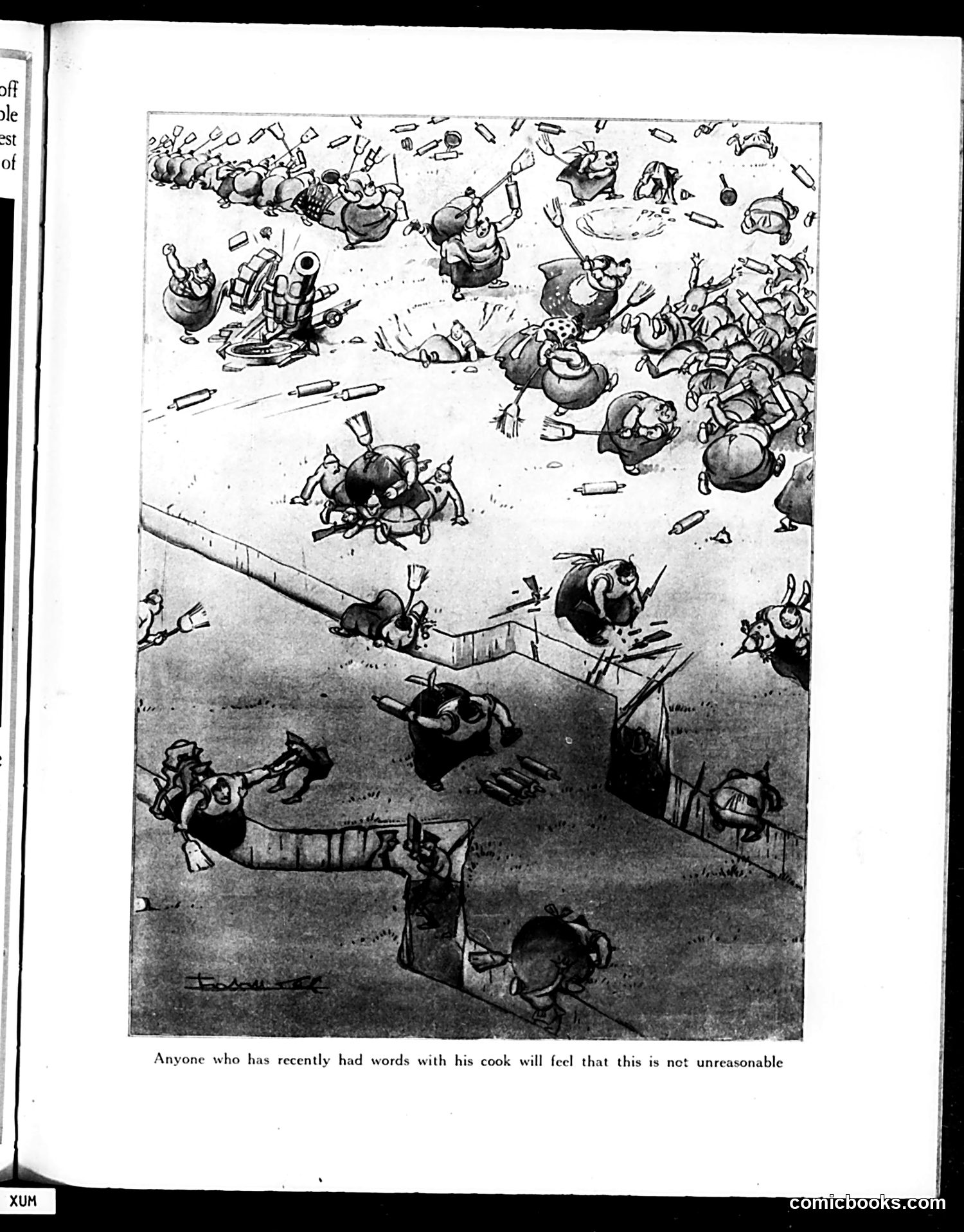
This is a satirical cartoon depicting a chaotic kitchen battlefield. The caption reads: "Anyone who has recently had words with his cook will feel that this is not unreasonable." The cartoon shows anthropomorphized cookware and kitchen implements (pots, pans, utensils) engaged in what appears to be a violent conflict or rebellion, with explosions and weapons scattered about. The joke plays on the contemporary tension between employers and domestic servants—specifically cooks—during an era when household staff were becoming increasingly difficult to retain and manage. The satire suggests that cooks were so temperamental or powerful in their position that having a disagreement with one might result in literal warfare in the kitchen. This reflects early-20th-century anxieties about changing labor dynamics and the rising assertiveness of domestic workers who had become valuable and harder to replace.
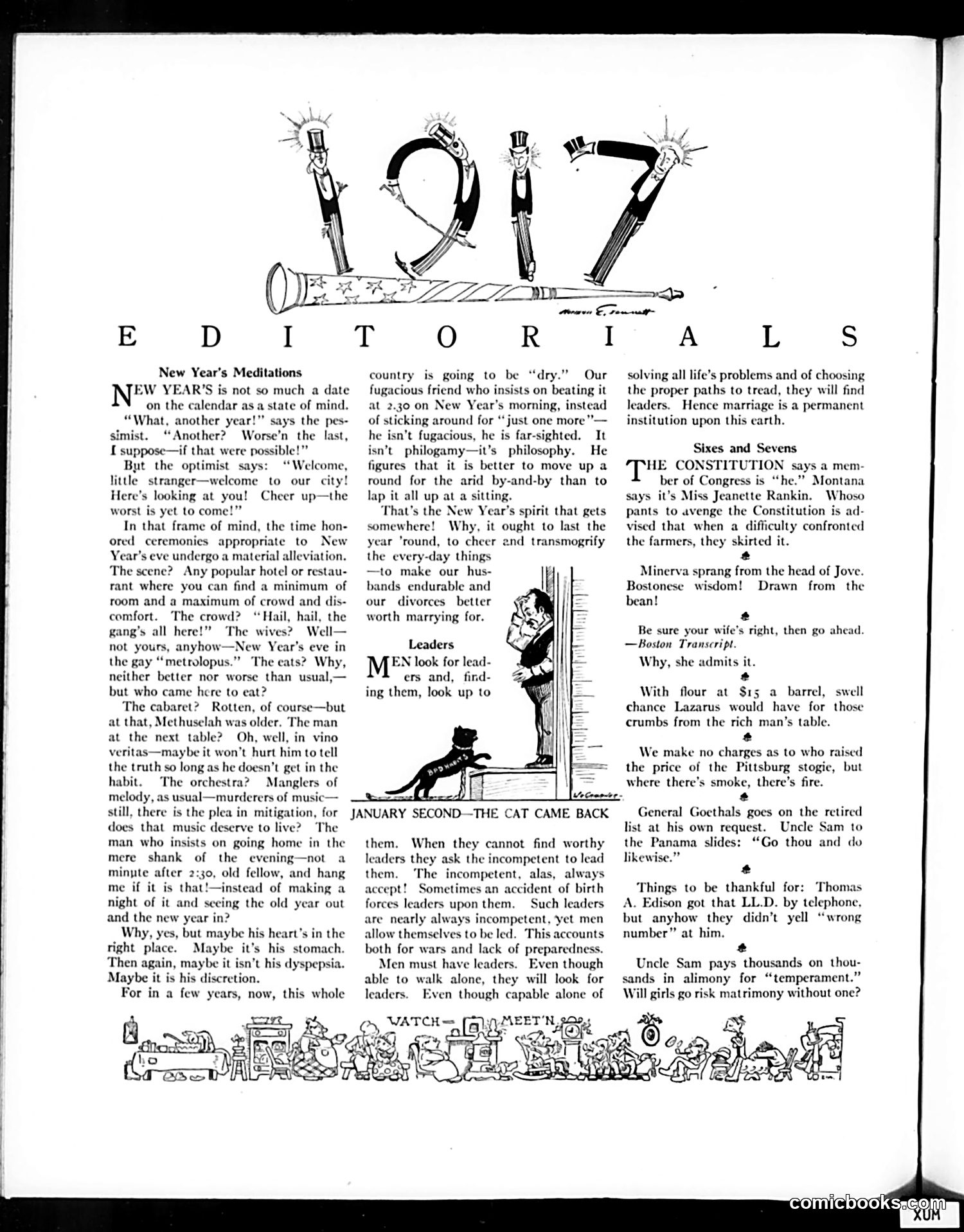
This appears to be a 1917 editorial page from Judge magazine (indicated by the "1917" prominently displayed at top in decorative numerals). **Content:** The page features several short satirical pieces addressing New Year's themes and contemporary issues: - "New Year's Meditations" mocks holiday excess and hangovers - "Leaders" criticizes incompetent military/political leadership during WWI, suggesting mediocre men are promoted to positions they cannot handle - "Sixes and Sevens" references Montana congresswoman Jeanette Rankin, appearing to mock women's suffrage advocates **The cartoon** shows a cat measuring itself against a height chart—likely satirizing vanity or self-assessment. The magazine uses humor to critique wartime leadership failures, social pretension, and contemporary political debates including women's suffrage, which was a contentious issue in 1917.
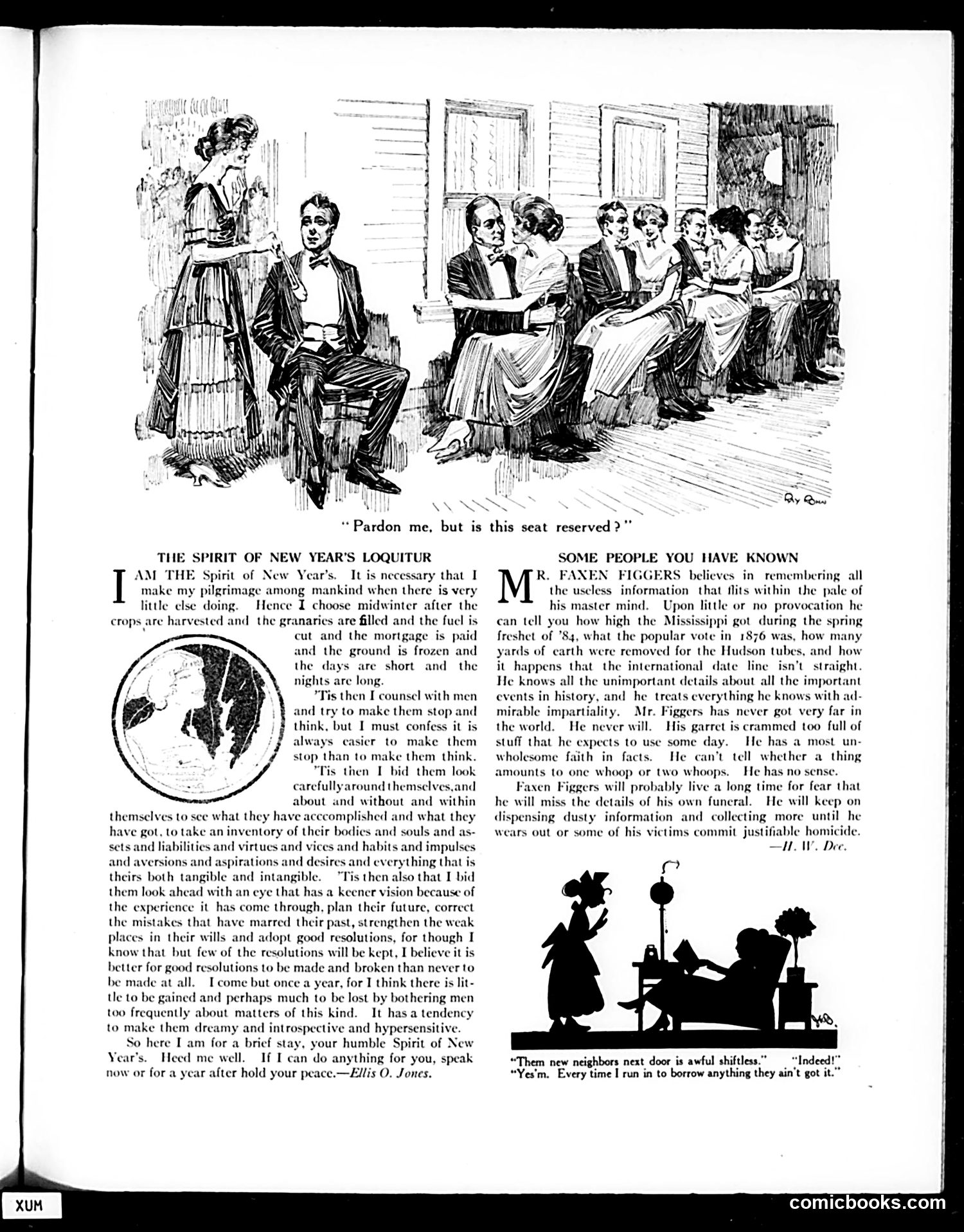
**Top Cartoon:** A social scene showing a man asking a woman if a seat is reserved. This appears to be satirizing social etiquette and romantic courtship conventions of the era—likely mocking awkward social interactions at formal gatherings. **Left Column ("The Spirit of New Year's Loquitur"):** Ellis O. Jones personifies New Year's spirit offering reflective advice about self-examination and resolving to improve oneself—a common New Year's theme. The piece humorously acknowledges people rarely keep resolutions. **Right Column ("Some People You Have Known"):** A character sketch satirizing Mr. Faxen Figgers, a pedantic bore who fills conversations with useless historical trivia and obscure facts, expecting admiration for his memory. The satire targets conversational pretension and know-it-alls. **Bottom Cartoon:** Social commentary on bothersome neighbors constantly borrowing items.
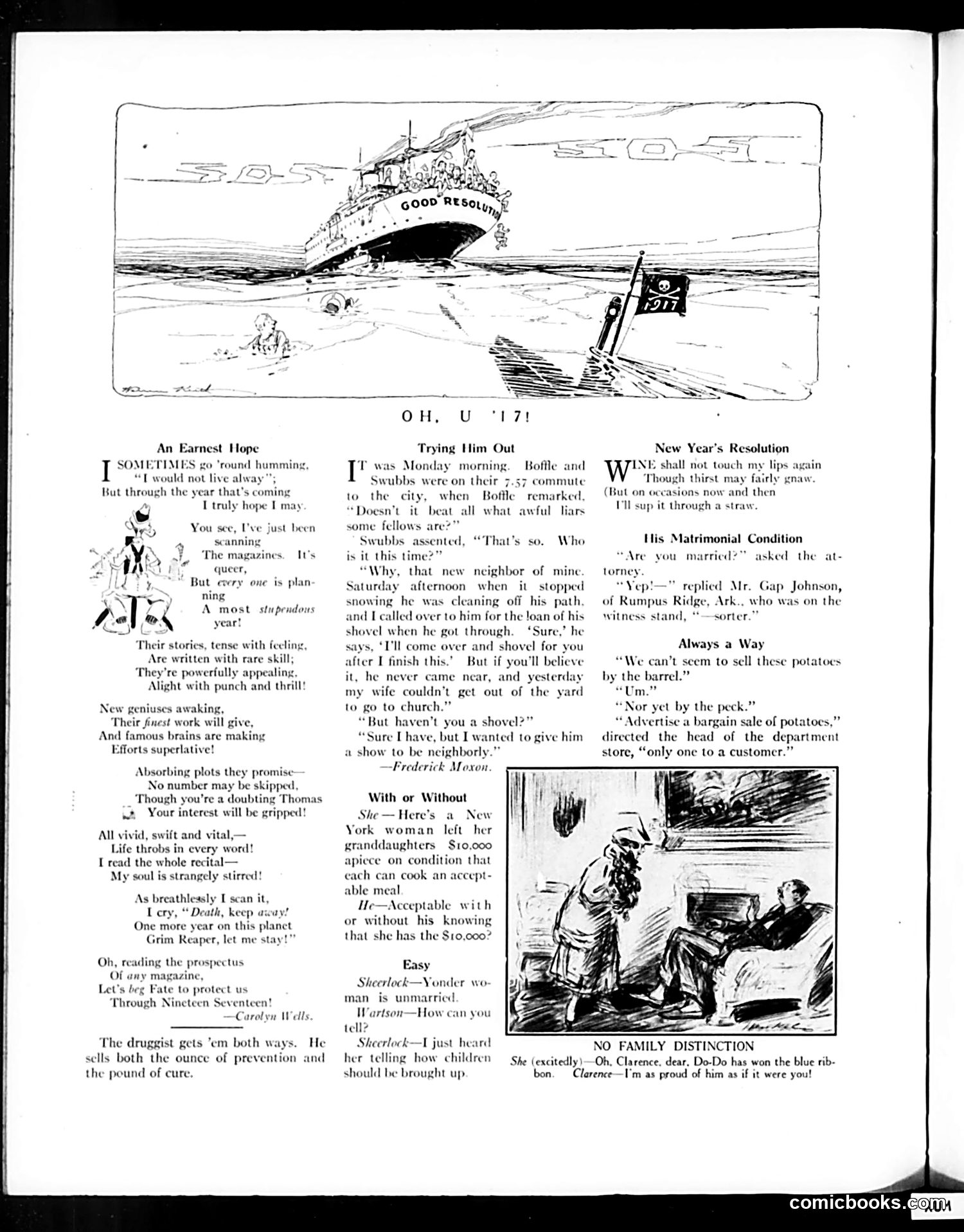
This page from *Judge* (a pre-1923 satirical magazine, likely around 1917 based on "Nineteen Seventeen" reference) contains several unrelated humorous pieces typical of the publication's format. The main cartoon depicts the ship "Good Resolution" wrecked on shore, symbolizing broken New Year's resolutions—a timeless satire on people's failed promises to themselves. The text pieces include: - Poetry celebrating ambitious magazine plans for the coming year - Short comedic dialogues mocking common social situations: a neighbor who promises but fails to help shovel snow; a "Sherlock Holmes" pastiche about unmarried women; a wealthy woman's conditional inheritance requiring cooking ability; marital ambiguity ("sorter" married); and a retail joke about selling potatoes individually instead of in bulk. These represent typical *Judge* humor: wordplay, domestic comedy, and gentle mockery of middle-class life and pretense. The humor relies on recognizable social scenarios rather than specific political references. The "1917" date likely appears on the ship's hull.
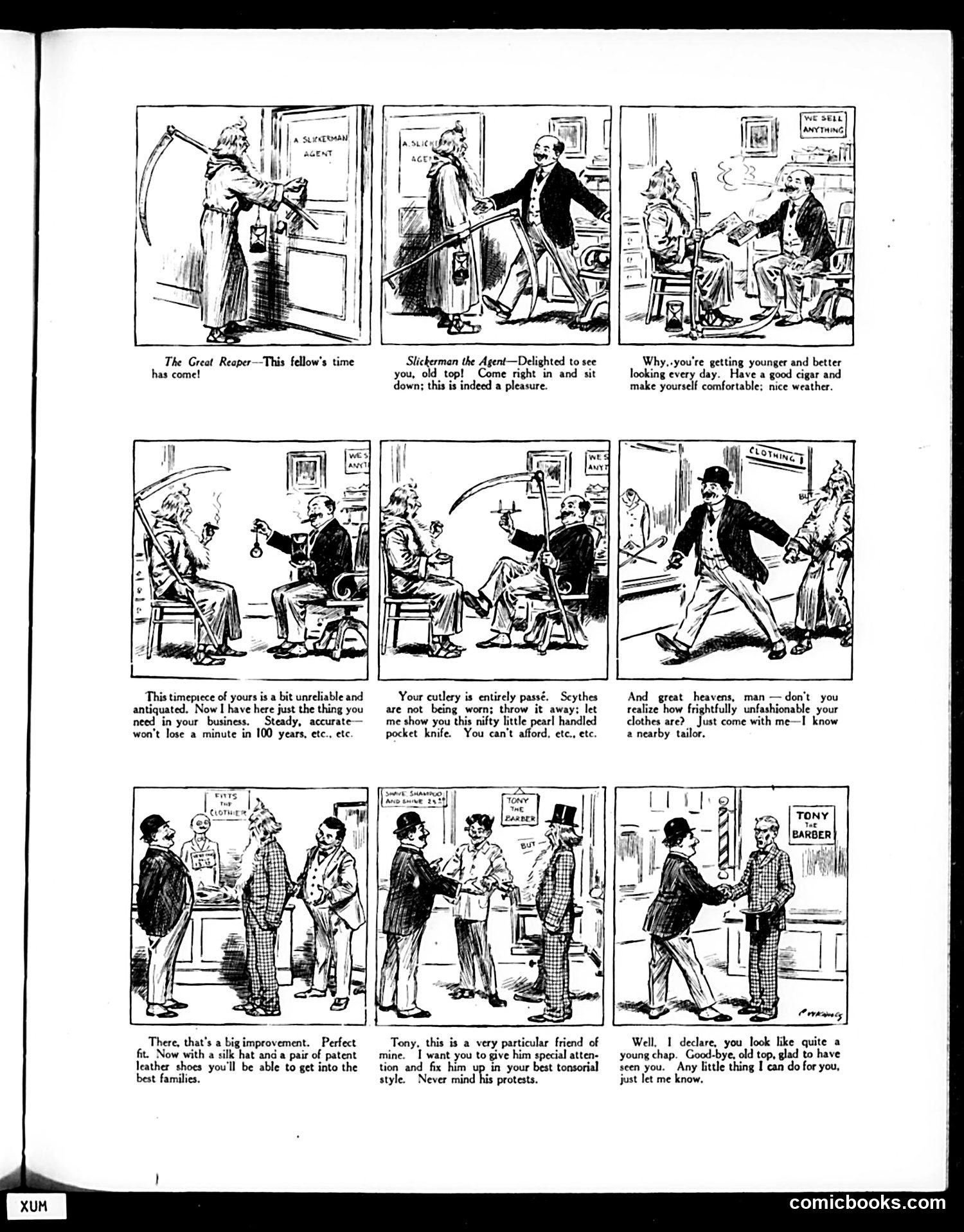
This is a satirical sequence about a smooth-talking con artist or salesman ("Slickerman the Agent") who preys on Death himself—represented as the Grim Reaper carrying his traditional scythe and hourglass. The joke relies on Death being treated as an ordinary customer. Slickerman uses high-pressure sales tactics to convince Death that his tools are "outdated" and unfashionable, replacing them with modern consumer goods: a pocket knife instead of a scythe, a pocket watch instead of an hourglass, then fashionable clothing, a silk hat, patent leather shoes, and a haircut. The satire mocks both aggressive salesmanship tactics of the era and consumer culture's promise that buying new products will transform you. By the final panel, Death has been thoroughly modernized and civilized—rendered harmless through consumerism. The title's dark humor suggests that even Death's time has come to be "updated" by relentless American capitalism.
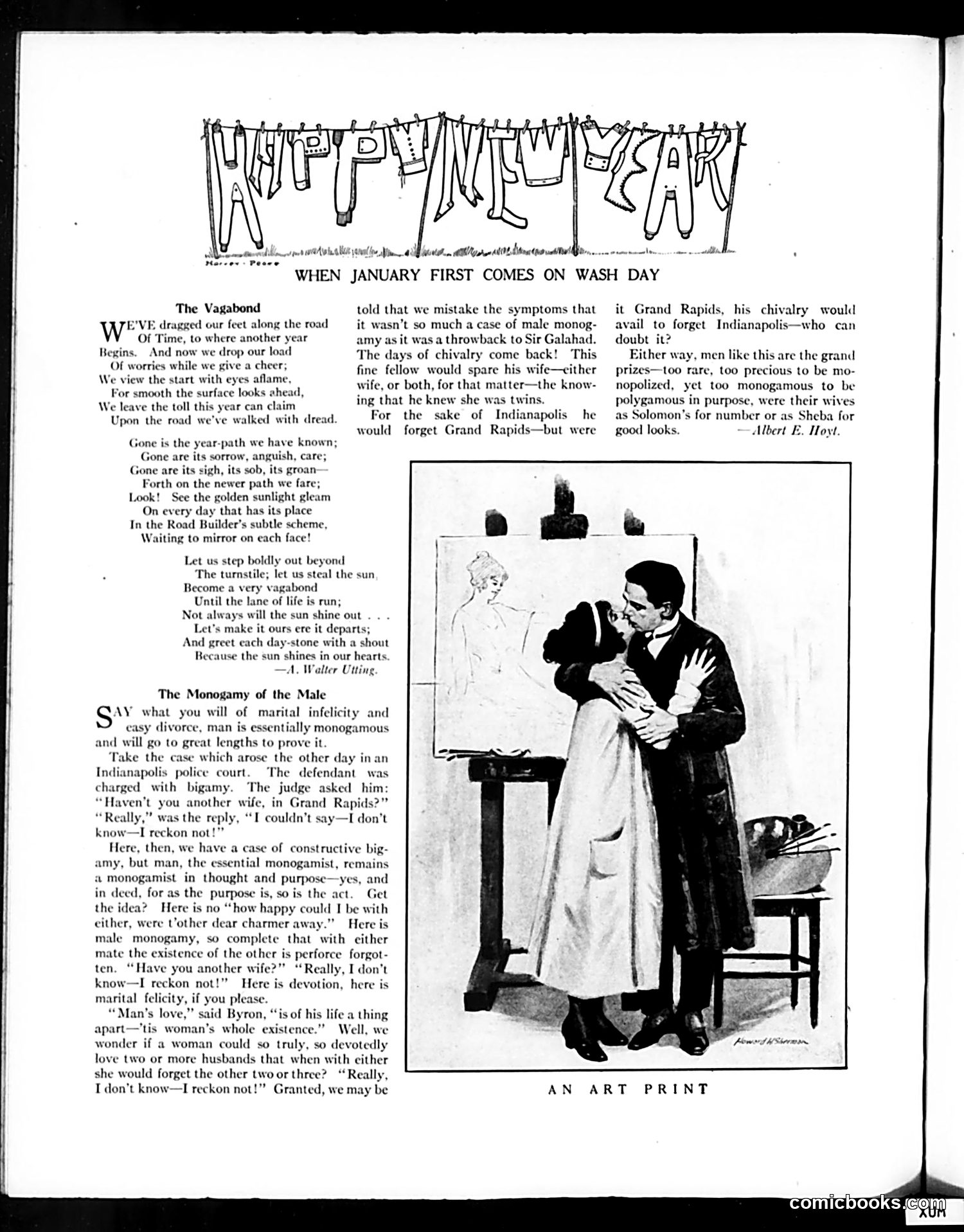
This page satirizes male infidelity and hypocrisy. The accompanying illustration shows a man embracing a woman while a portrait of another woman hangs on the wall behind them—visualizing the article's premise. The text describes a real Indianapolis court case where a man charged with bigamy (having two wives—one in Grand Rapids, one in Indianapolis) claims he can't remember his other spouse. The article's dark humor argues that men are "essentially monogamous" because they conveniently *forget* their other wives when with either one, thus technically remaining devoted to whichever woman they're currently with. The satire cuts both ways: it mocks both male infidelity and the absurd legal/logical pretzel men twist themselves into to avoid accountability. The closing rhetorical question—wondering if women could similarly love multiple husbands while forgetting the others—emphasizes how the male argument collapses under scrutiny.
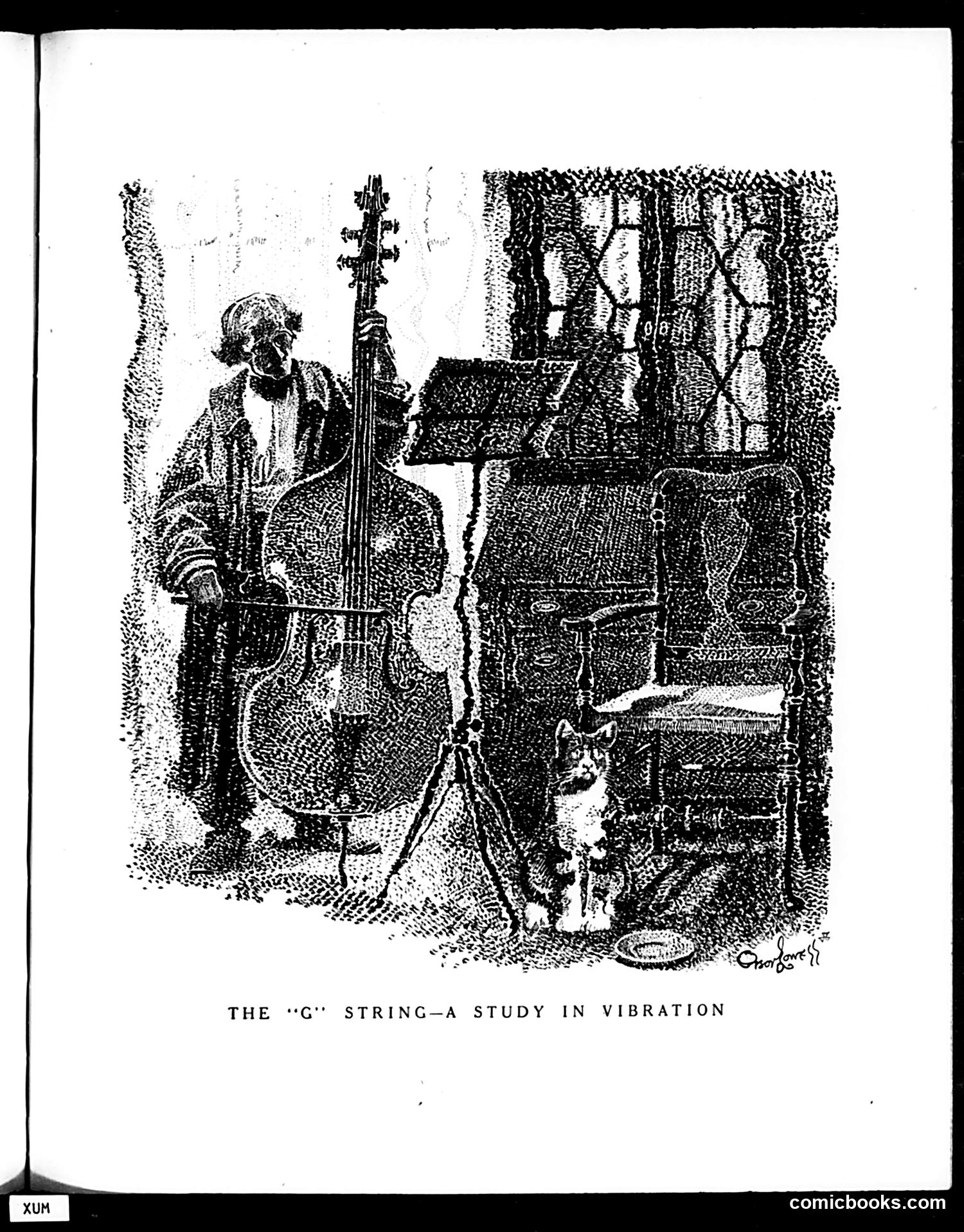
This is a visual pun playing on the double meaning of "G string." The cartoon shows a classical musician (likely a cellist based on the instrument visible) in formal attire, performing in what appears to be an elegant interior setting with a fireplace and decorative elements. The joke exploits the term "G string," which refers both to a string on musical instruments and to a minimal undergarment. The caption's phrase "study in vibration" adds suggestive wordplay. The cartoon is essentially a genteel, clothed version of a risqué joke—using the pretense of serious musical study to allude to something more provocative. This reflects early 20th-century humor in *Judge* magazine, which often employed double entendre and euphemistic wordplay for adult readers while maintaining a veneer of respectability.
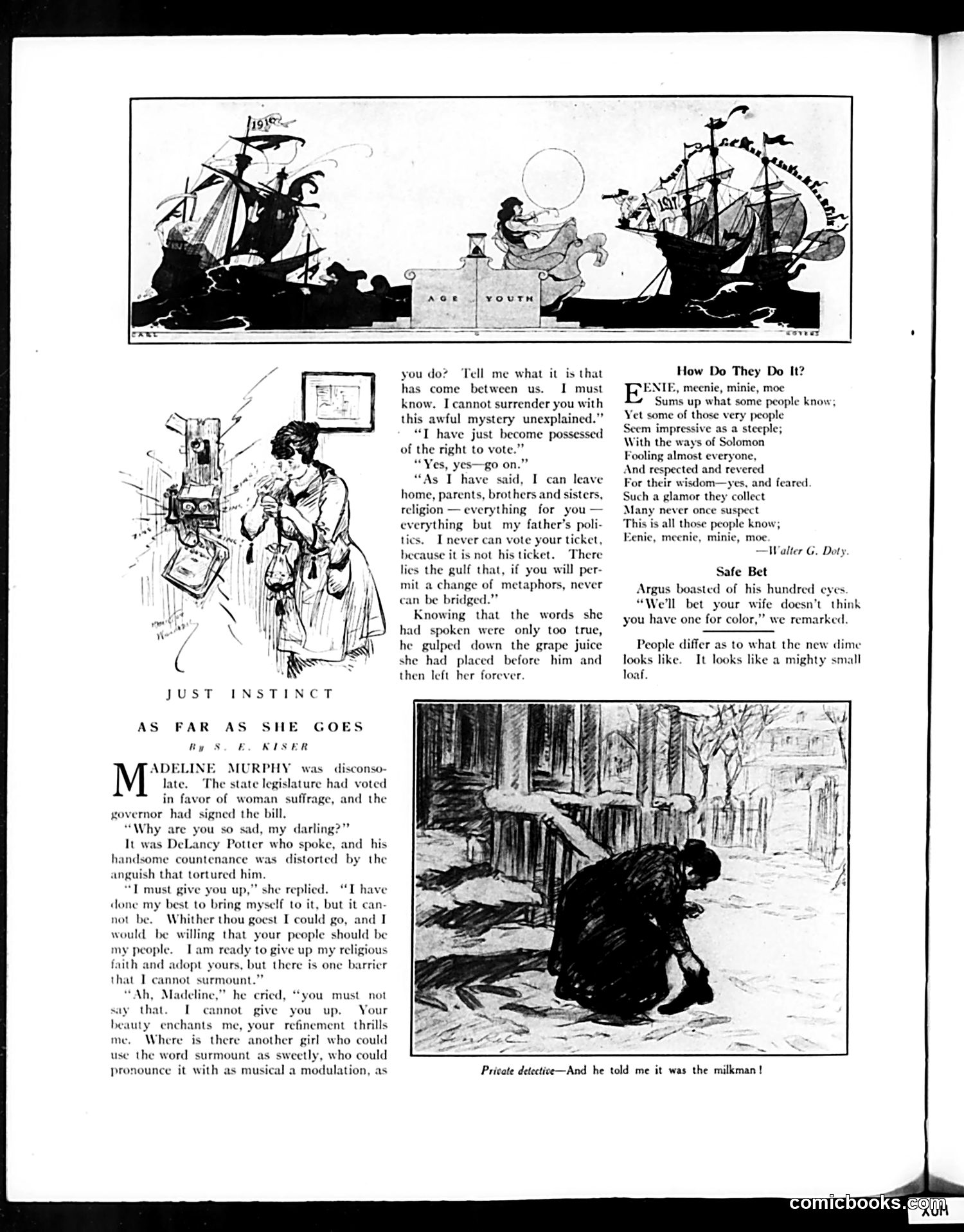
This page satirizes women's suffrage through a romantic comedy story. Madeline Murphy refuses to marry DeLancy Potter after women gain voting rights, because she cannot vote for his political party—she's bound by loyalty to her father's ticket instead. Potter abandons her, unable to bridge this political gulf. The satire's point: women's newly won voting rights create an absurd, insurmountable obstacle to marriage because women remain politically dependent on their fathers' choices rather than exercising independent judgment. The story mocks both the impracticality of women voters and the rigidity of political loyalty. The top illustration shows "Age" and "Youth" flanking ships, likely representing the old and new political eras surrounding women's suffrage. The other content—poems about deception and color blindness, an unrelated detective joke—appears filler material typical of satirical magazines.
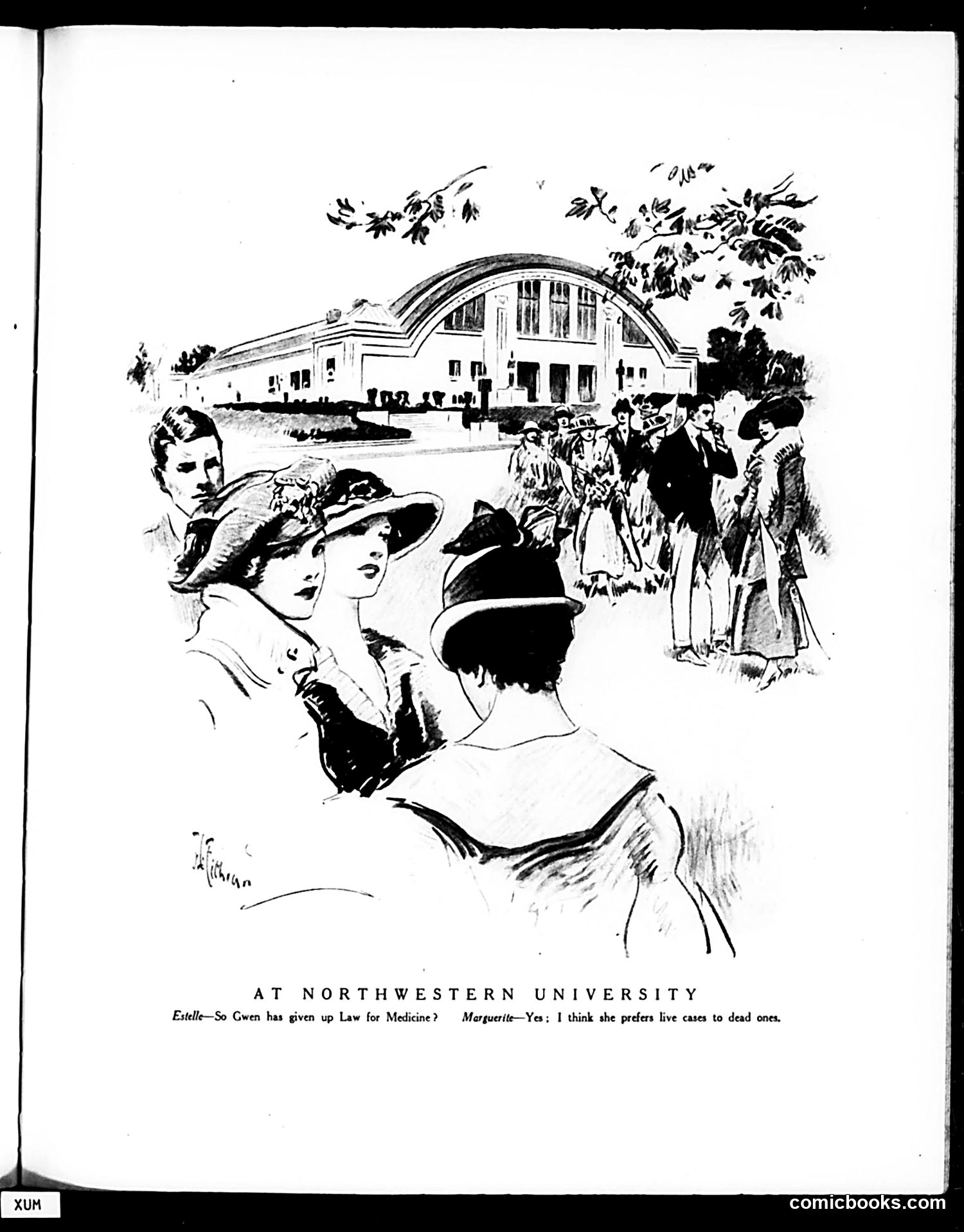
This cartoon satirizes women's educational choices at Northwestern University. Three fashionably dressed women discuss their friend Gwen's career switch from law to medicine. The joke relies on a period stereotype: that law involves studying "dead" cases (precedents from past legal decisions), while medicine involves treating living patients. The satire targets early 20th-century attitudes about women professionals. The caption implies Gwen finds medicine more appealing than law's intellectual/historical focus—suggesting women prefer direct, practical work over abstract scholarship. This reflects both the novelty of women in higher education and contemporary assumptions about their supposedly different professional interests and capabilities. The ornate building in the background establishes the university setting, while the women's elaborate hats and clothing date the piece to the early 1900s.
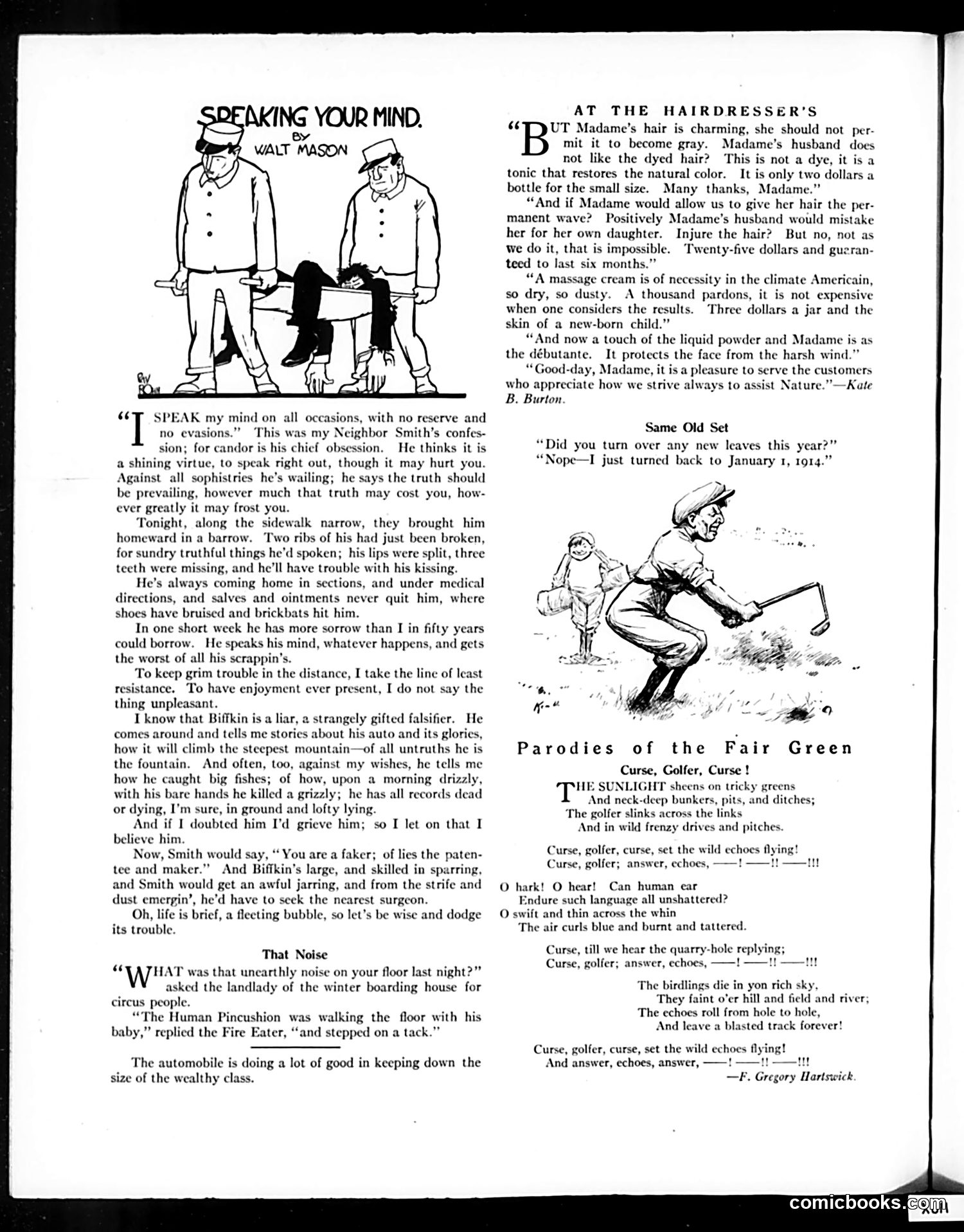
**"Speaking Your Mind" (Walt Mason):** A cautionary verse contrasting two neighbors—Smith, who speaks harsh truths and gets beaten up for it, versus the narrator, who tactfully tolerates lies from his friend Biffkin to avoid conflict. The satire mocks Smith's self-righteous honesty while suggesting that social peace requires diplomatic dishonesty. This reflects early 20th-century tension between blunt candor and social propriety. **"At the Hairdresser's":** A satirical dialogue exposing beauty-industry deception. A hairdresser manipulates a woman into expensive treatments (dye, permanent waves, creams) by flattering her and suggesting her husband will prefer her altered appearance. The humor targets vanity and commercial exploitation of women's insecurity. **"Parodies of the Fair Green":** A poem mocking golfers' frustration with difficult courses, using mock-heroic language. The humor is straightforward: golfers curse their poor play on challenging greens. **"That Noise":** A brief joke about circus performers (a fire-eater and human pincushion) in a boarding house, playing on the absurdity of their professions.
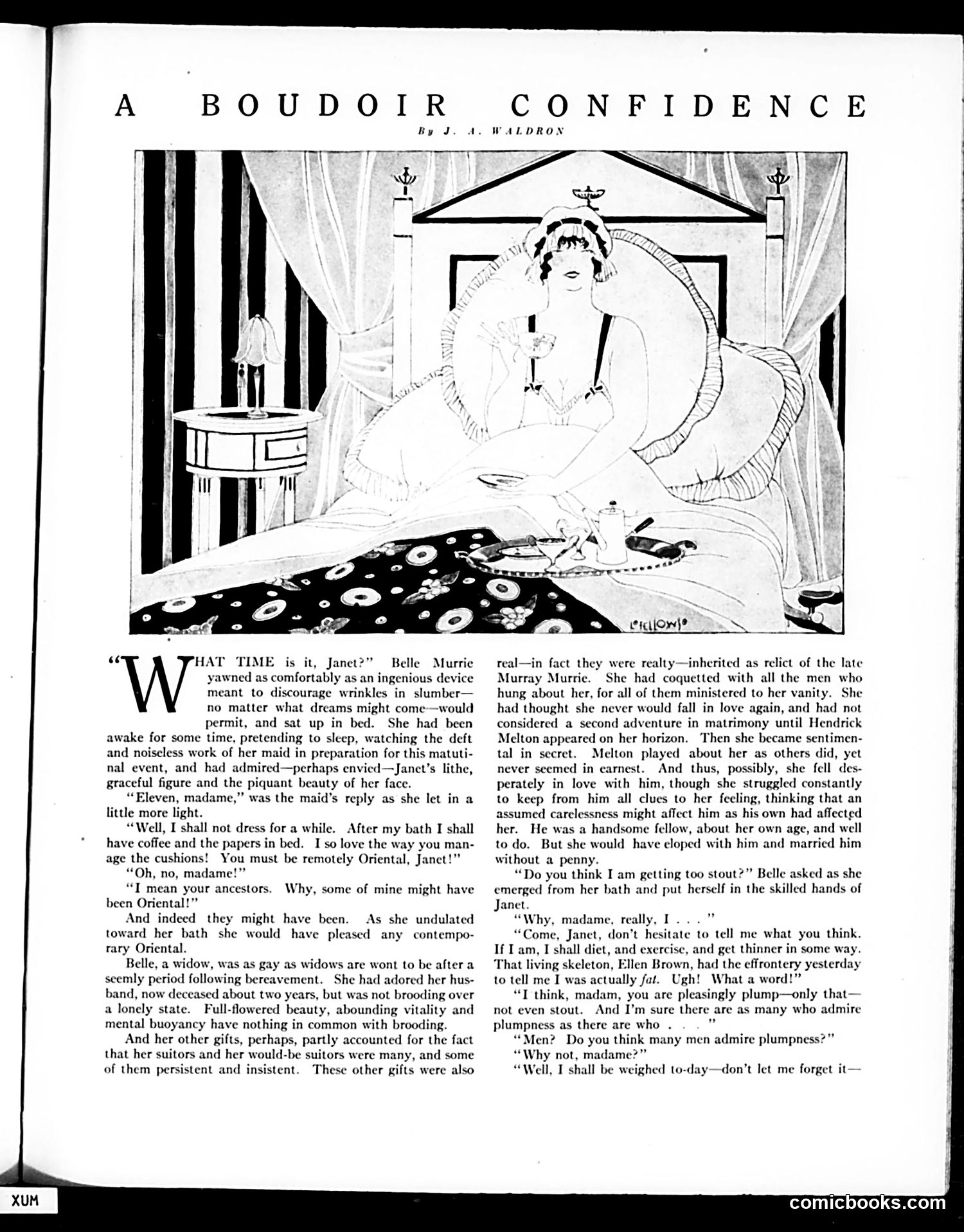
This is a comedic domestic sketch (not political satire) depicting a wealthy widow, Belle Murrie, conversing with her lady's maid Janet in her bedroom. The humor centers on Belle's vanity and romantic preoccupations. The joke: Belle is obsessing over her appearance and weight, ostensibly for her own health but transparently because she's pursuing a man named Hendrick Melton. She claims indifference to his attention yet is "desperately in love with him," strategically maintaining an air of carelessness to manipulate his interest. The satire targets female vanity and the social dynamics of courtship among wealthy widow—Belle inherited significant wealth from her late husband and uses it to attract suitors, though she genuinely desires only Melton. Her anxious questions about whether men admire plumpness reveal her insecurity beneath the confident exterior. The maid serves as confidante and mirror for Belle's self-absorption, a common dynamic in period domestic fiction.
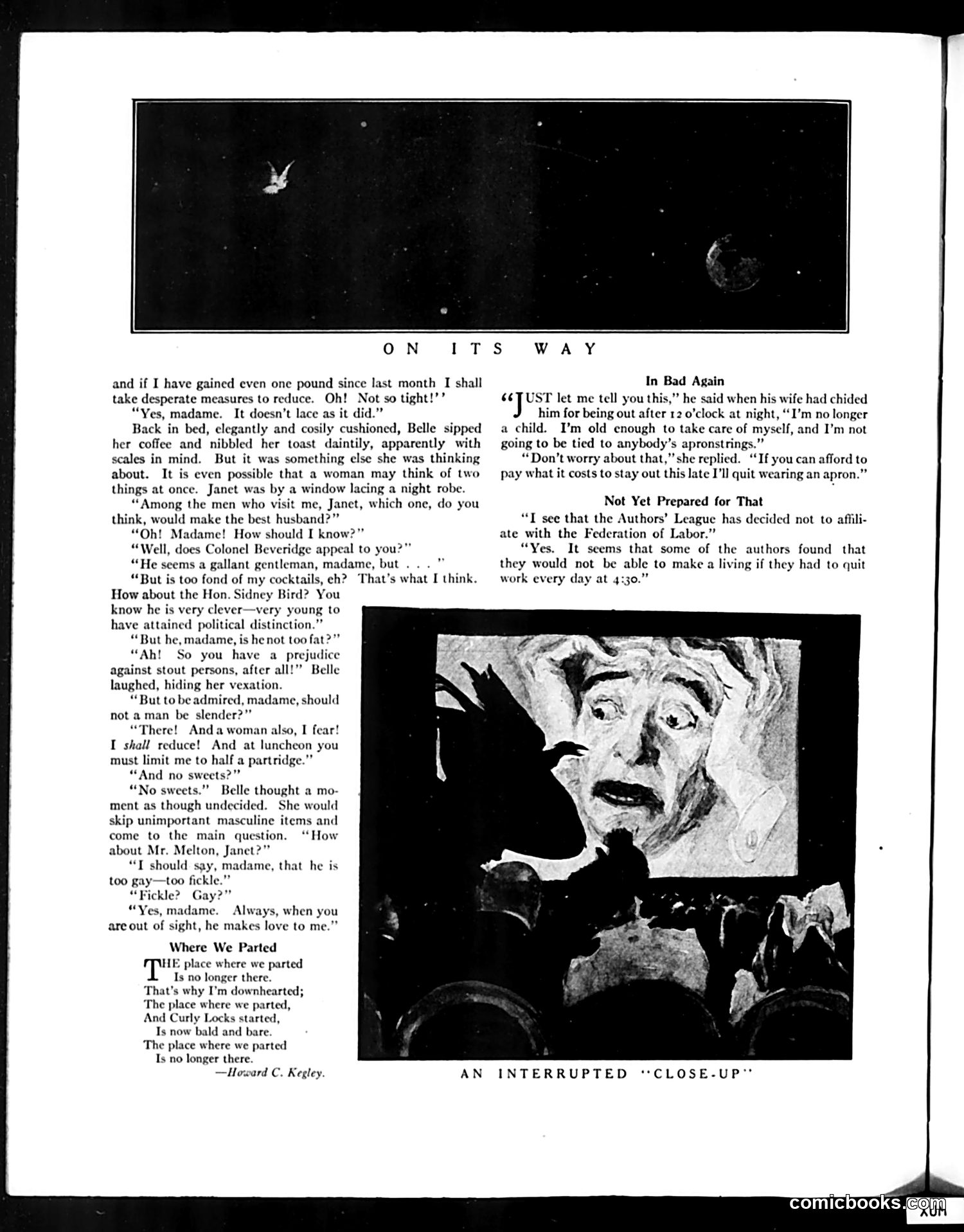
This page contains three separate humor pieces from *Judge* magazine: **Top section ("On Its Way")**: A dialogue between society woman Belle and her maid Janet about potential husbands. Belle obsesses over her weight while discussing suitors—Colonel Beveridge (drinks too much), Hon. Sidney Bird (too fat and politically ambitious), and Mr. Melton (unfaithful). The satire mocks upper-class women's shallow marriage calculations and vanity about appearance. **"Where We Parted" (poem)**: A sentimental verse parodying romantic poetry, playing on "Curly Locks"—likely referencing the nursery rhyme character—now "bald and bare." This mocks overly sentimental romantic literature. **Bottom right cartoons and captions ("In Bad Again," "Not Yet Prepared for That")**: These mock domestic conflict (husband staying out late) and critique the Authors' League's refusal to unionize with the Federation of Labor, suggesting authors were too concerned with income to support labor activism. The page's overall tone satirizes upper-class pretension, romantic clichés, marital dynamics, and labor politics of the era.
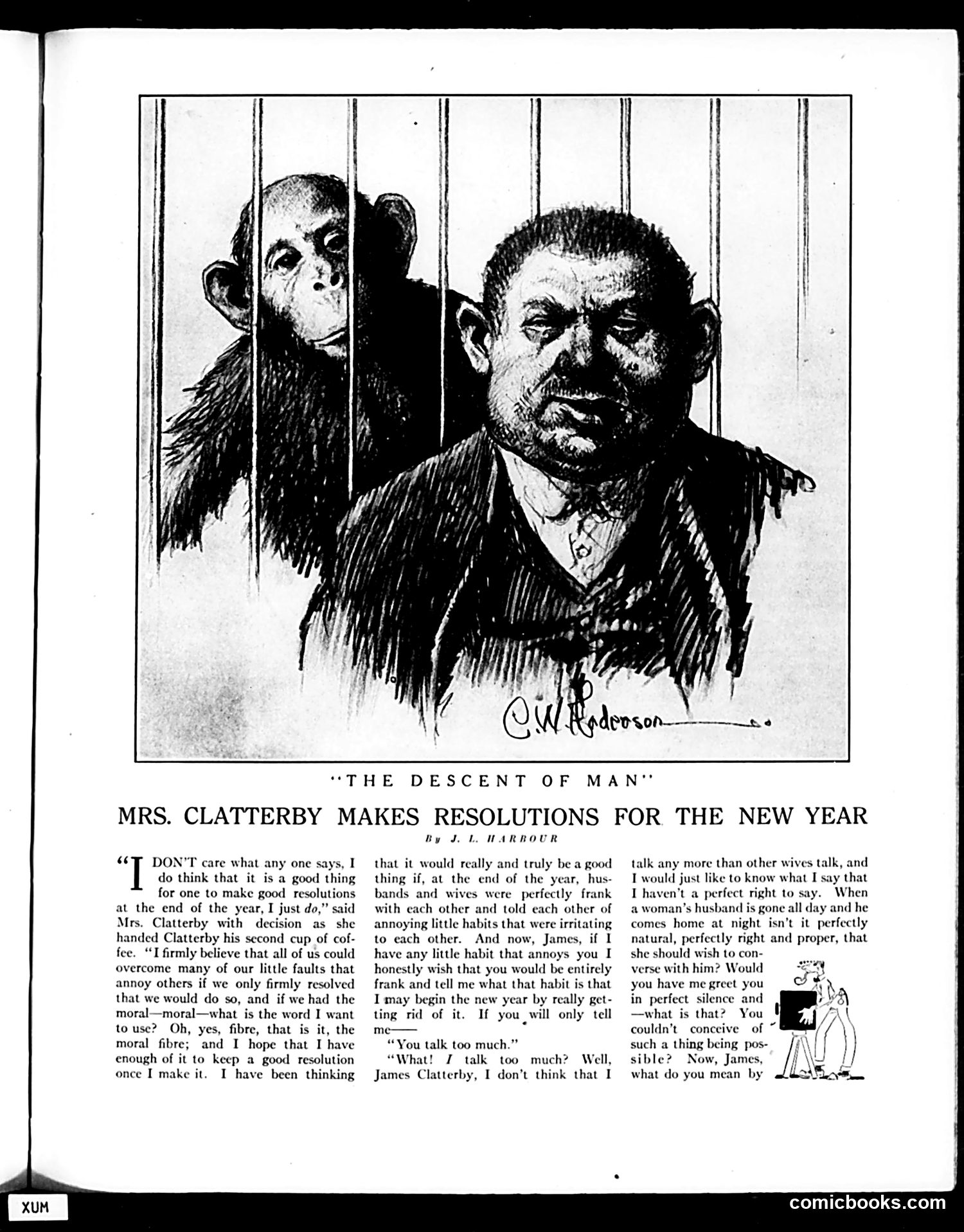
This satirical piece mocks marital dynamics and women's talkativeness. The cartoon shows a man with a monkey perched behind him—the "descent of man" title references Darwin's evolution theory, sarcastically suggesting the husband is devolving into an ape. The joke: Mrs. Clatterby self-righteously proposes that spouses be "perfectly frank" about annoying habits. When James immediately tells her she talks too much, she launches into a lengthy, defensive monologue—proving his point spectacularly. The irony is that her attempt to improve through honesty immediately backfires as she demonstrates the very flaw she claims to address. The satire targets both nagging wives and self-deluding domesticity, portraying a husband reduced to animal frustration by endless female chatter.
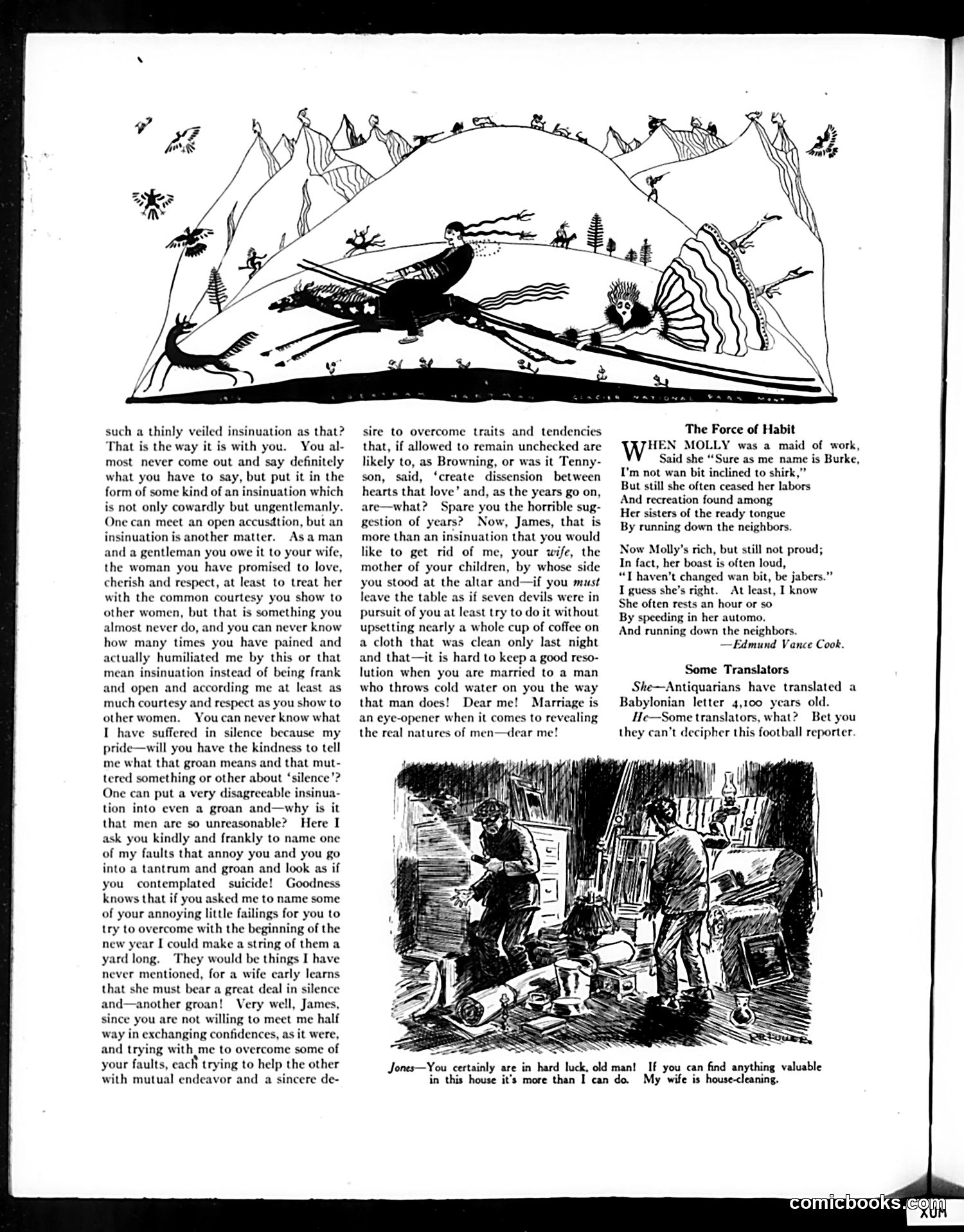
The page contains two distinct pieces of social satire: **Main Text (Left):** A lengthy marital complaint, apparently from a wife to her husband "James," criticizing his use of insinuation rather than direct communication. She catalogs his failings—his groans of disapproval, his cold demeanor, his inability to meet her halfway in marriage. The satire targets Victorian-era marital dynamics: the wife's expectation of emotional reciprocity clashing against the husband's withdrawn, passive-aggressive behavior. It's a critique of both parties—her endless monologuing and his silent resistance. **"The Force of Habit" (Poem):** A humorous commentary on social mobility. Molly, once a working maid who gossiped about neighbors, is now wealthy but hasn't changed her nature—she still gossips, now while speeding in her automobile. The joke: money can't alter fundamental character traits, particularly unflattering ones. **Bottom Cartoon:** Shows a man searching a messy house; the caption jokes that finding anything valuable is impossible when his wife is house-cleaning—domestic chaos as comedy. All three pieces satirize early 20th-century social behavior and marital tension.
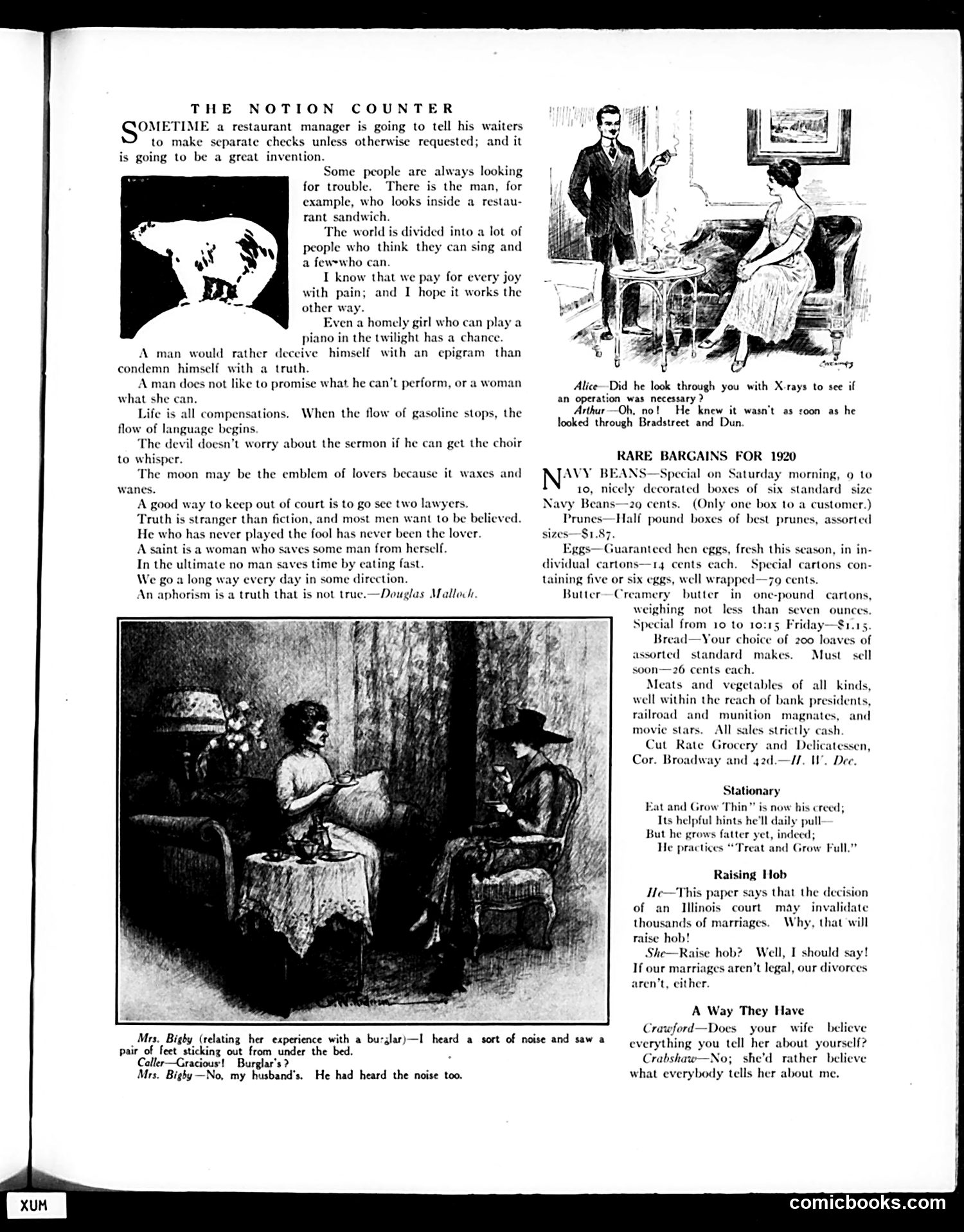
This Judge magazine page combines satirical aphorisms with period humor reflecting post-WWI anxieties. **Top Section:** Douglas Malloch's witty observations mock human nature—people seeking trouble, self-deception, and social pretense. The philosophical tone targets broad human foibles rather than specific figures. **Cartoon:** Mrs. Bigby's burglar anecdote satirizes marital relationships: when she hears a noise, her husband investigates, but the joke reveals he's indistinguishable from an intruder—mocking husbands as household nuisances. **Advertisements:** "Rare Bargains for 1920" ironically lists inflated post-war prices ($1.15 butter, 26-cent bread) as "bargains," satirizing severe inflation and food scarcity affecting ordinary Americans. **Bottom Humor:** Short jokes mock credit agencies (Bradstreet and Dun evaluating marriage prospects) and the era's self-help diet culture ("Eat and Grow Thin"). The marriage/divorce joke reflects anxieties about legal/social instability of the era. Overall, the page satirizes post-war economic hardship and marital skepticism through genteel wit.
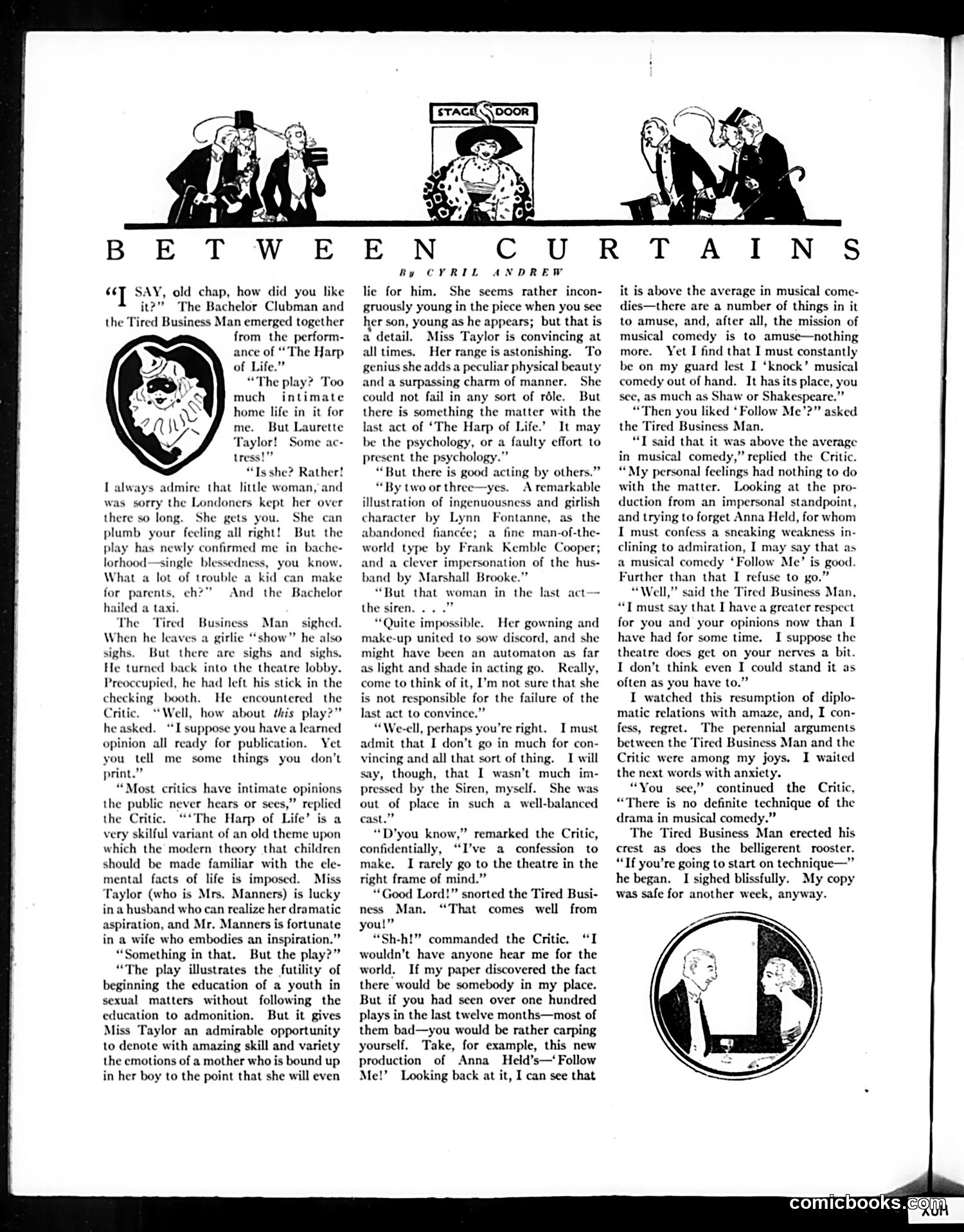
This is a theatrical review column disguised as dialogue between two characters—a Bachelor Clubman and a Tired Business Man—discussing a play called "The Harp of Life" starring Laurette Taylor. The satire targets **theatrical criticism itself**. The Critic admits he rarely attends theater "in the right frame of mind" and confesses he'd lose his job if his newspaper knew he sees plays while mentally exhausted. This exposes professional critics as jaded, overworked observers rather than authentic judges of art. The column also celebrates **Laurette Taylor's acting talent** while gently mocking the play's dated moral framework about sexual education. The dialogue format allows the author (Cyril Andrew) to present nuanced opinions—praising individual performances while critiquing the script's psychology. The illustrations show well-dressed gentlemen in top hats, reflecting Judge's upper-class audience and the era's formal theater culture.
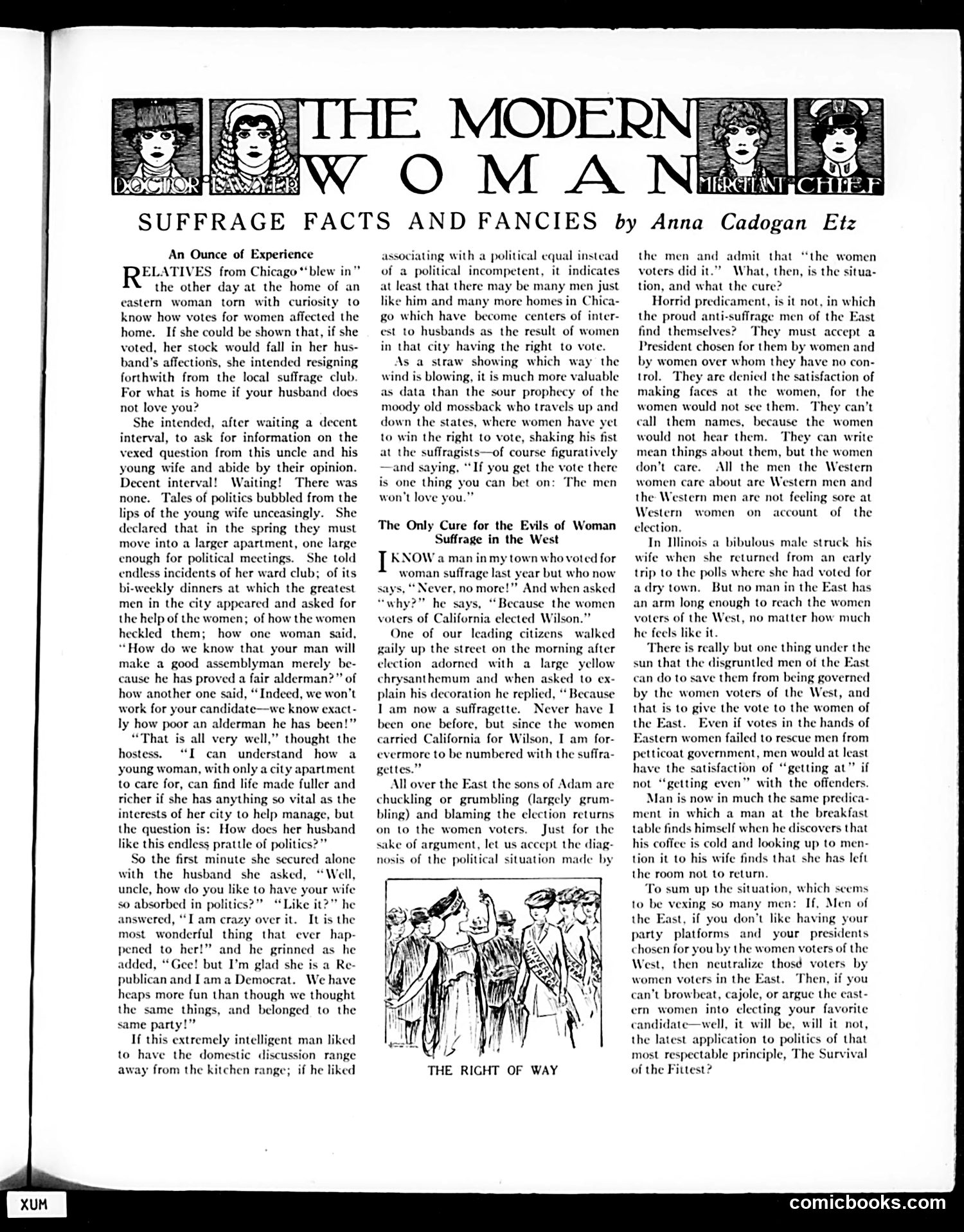
This *Judge* article satirizes opposition to women's suffrage by presenting anecdotes that undermine anti-suffrage arguments. The main cartoon ("The Right Way") depicts women suffragists marching—a visual representation of the women's movement gaining momentum. The text describes a Chicago woman visiting an Eastern hostess, expecting voting would harm marriages. Instead, she discovers a husband *delighted* that his wife engages in political discussion rather than domestic trivia—suggesting suffrage *strengthens* relationships by creating intellectual equals. The article then ironically notes that some Western men, initially supporting suffrage, now oppose it because women voters helped elect Woodrow Wilson (presumably a Democratic choice the author's Republican subjects disliked). Others, like the man with the yellow chrysanthemum, reversed course and *now* support suffrage for the same reason. The satire's point: suffrage opponents' arguments collapse under scrutiny. Their real objection isn't marital harm but loss of political control—they simply dislike how women actually vote.
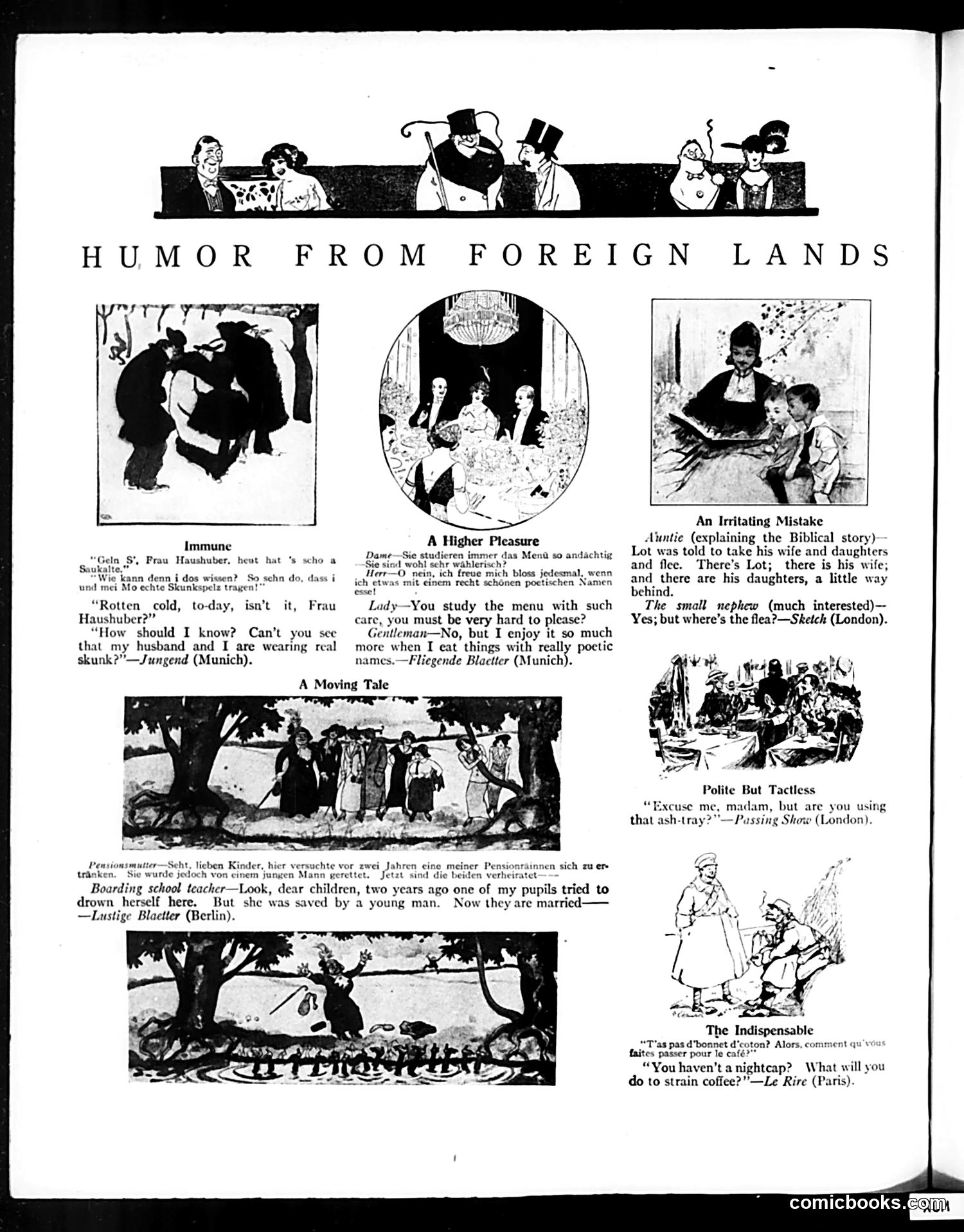
This page collects translated jokes and humorous anecdotes from European satirical publications, primarily German and French sources from what appears to be the early 20th century. The jokes target everyday social pretensions and domestic situations. "Immune" mocks conspicuous consumption—a woman boasts of wearing real skunk fur during cold weather. "A Higher Pleasure" satirizes affected diners who enjoy food more for its poetic menu description than actual taste. "A Moving Tale" presents dark humor: a schoolteacher tells children that a student once attempted suicide at this location but was rescued by a man she later married—treating tragedy as heartwarming romance. The remaining cartoons play on linguistic misunderstandings and innocent naïveté: a child confuses "flea" with Biblical names; someone uses an ashtray incorrectly; confusion over French slang for "nightcap" versus coffee-straining. The page demonstrates Judge magazine's practice of showcasing European humor to American readers, highlighting universal themes of class anxiety, social awkwardness, and verbal confusion across cultures.
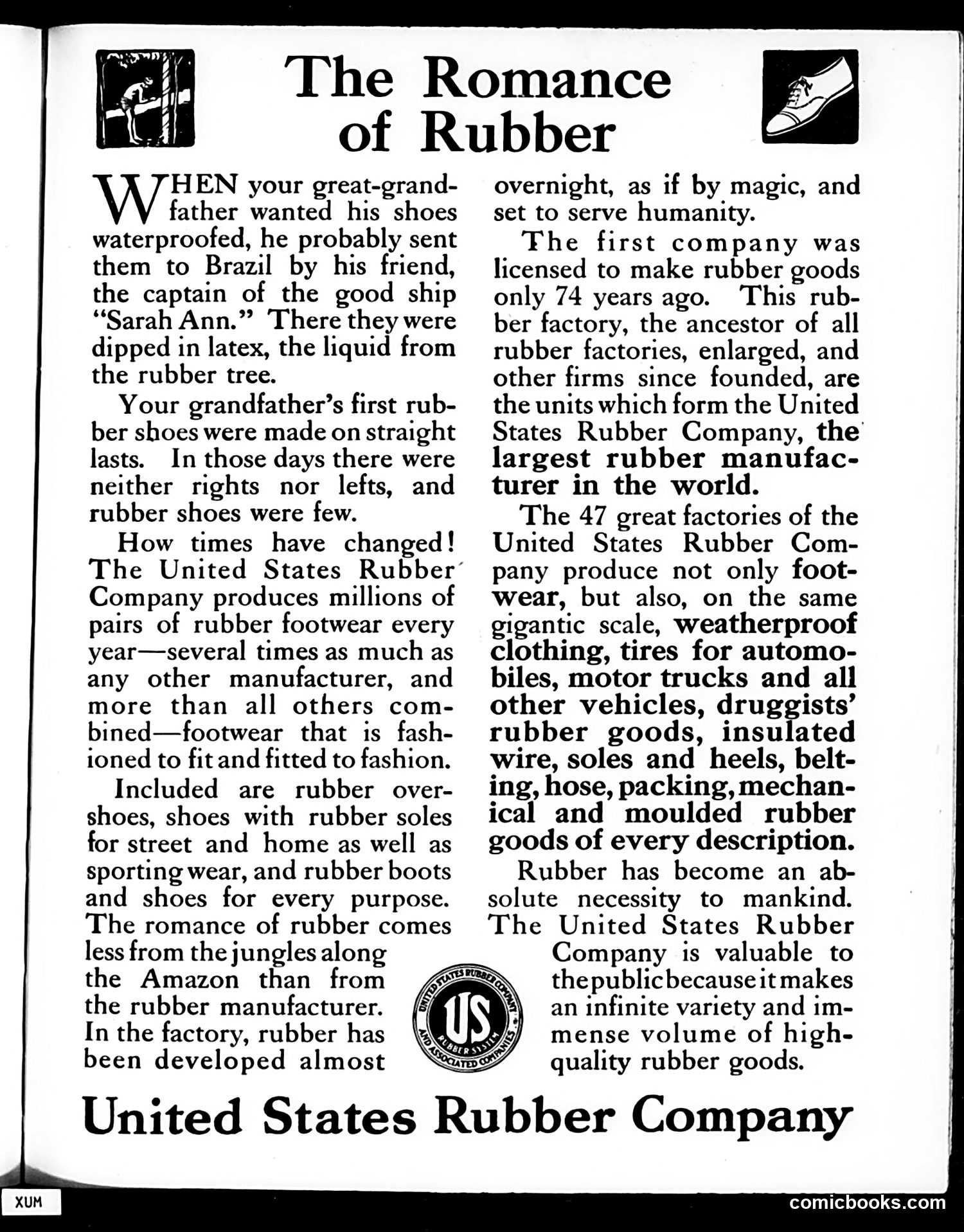
This is **advertising content**, not satire or political commentary. The United States Rubber Company has purchased a full-page advertisement in *Judge* magazine to promote its products and corporate history. The page uses a narrative hook—a romanticized family history of rubber shoes from great-grandfather to present day—to establish brand prestige. It contrasts past scarcity (shoes with no distinction between left and right) with modern industrial abundance and specialization. The "romance" claim is ironic: the text argues that rubber's real adventure comes not from jungle exploration but from **American manufacturing innovation**. The company emphasizes its dominance (producing more than all competitors combined) and product range, from footwear to automobile tires to electrical insulation. The small decorative illustrations of shoes frame the text, while a company seal appears mid-page for credibility. This reflects early 20th-century advertising strategy: using nostalgia and nationalist pride to sell industrial products as markers of progress and American superiority.
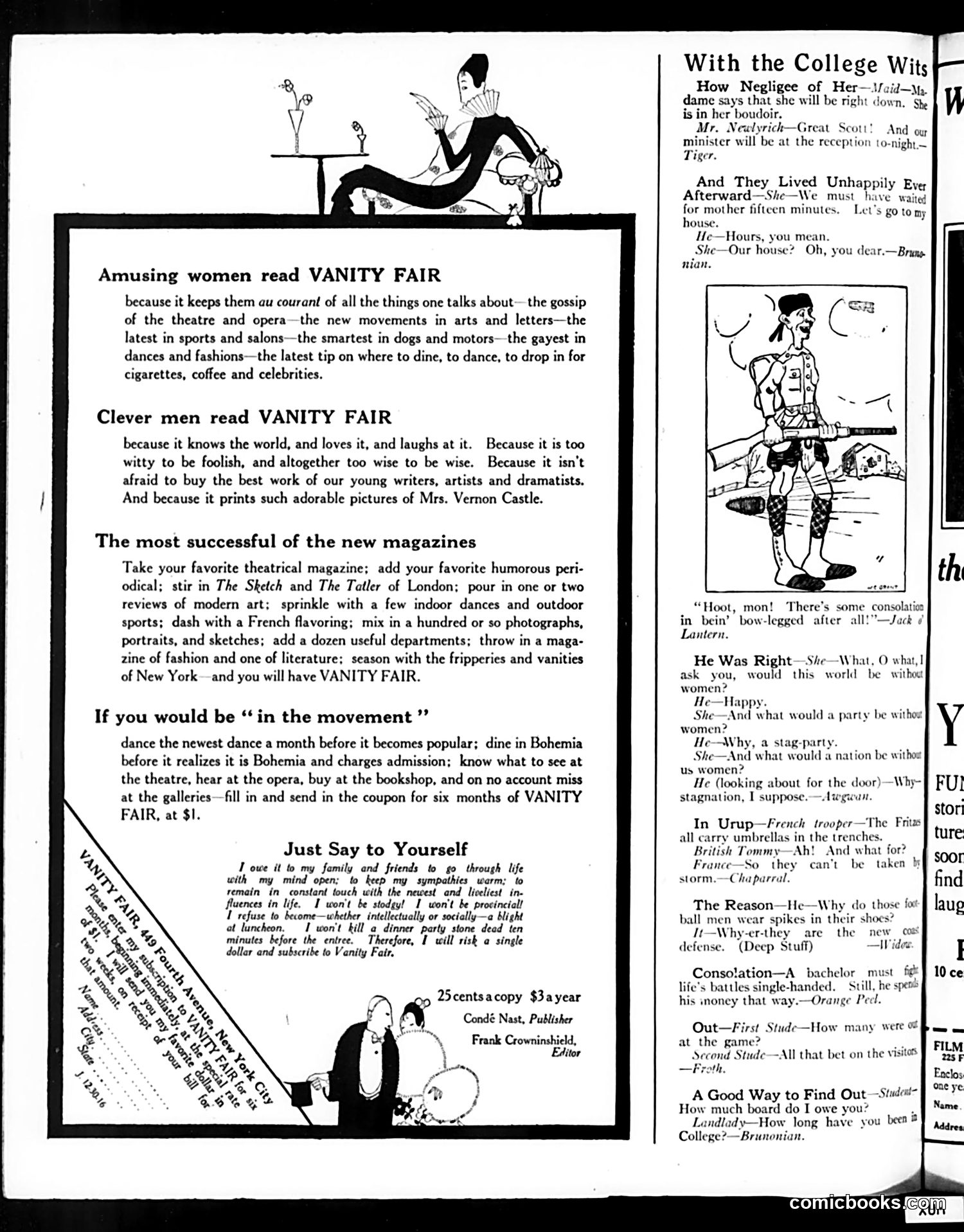
This is primarily an **advertisement for Vanity Fair magazine** rather than political satire. The page pitches the publication to two audiences: "amusing women" interested in theater, fashion, and society gossip, and "clever men" who enjoy wit and high-quality art. The right side contains short **humor pieces** typical of the era—largely jokes about marriage, gender roles, and social manners. These include jabs at nouveau-riche pretension ("Mr. Newlyrich"), marital discord, and bachelor life. The references to "College Wits," French soldiers, and university life suggest this targets an educated, urbane readership. **Mrs. Vernon Castle** (mentioned in the ad) was a famous dancer of the 1910s, adding contemporary celebrity appeal. The overall message: Vanity Fair positions itself as the magazine for cosmopolitan, fashionable people who stay "in the movement"—modern, witty, and culturally aware. The page conflates sophistication with consumption and social status.
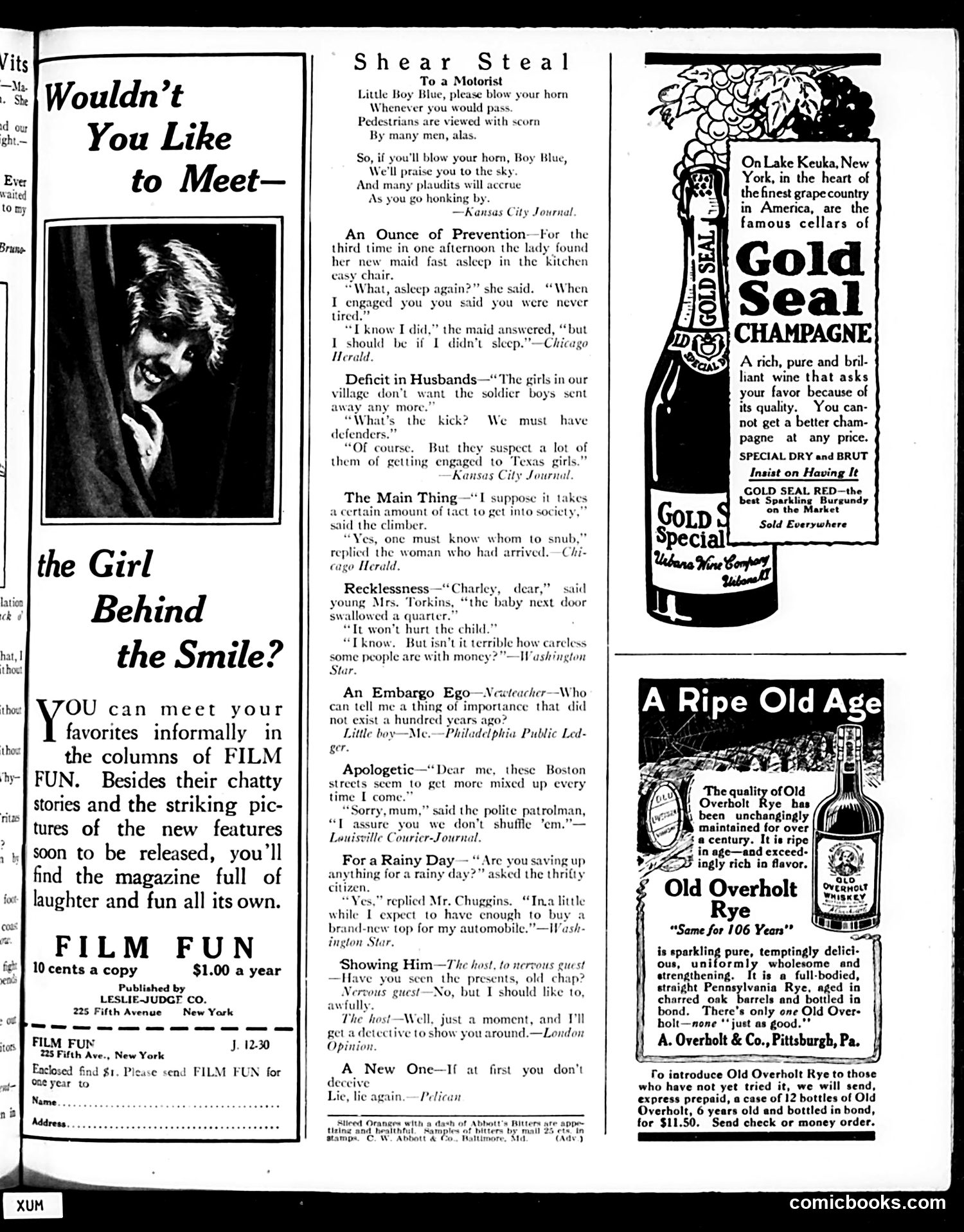
This page is primarily **advertising and subscription promotion**, not political satire. The left side advertises *Film Fun* magazine—a companion publication featuring celebrity gossip and movie content. The pitch emphasizes meeting "favorites informally" through chatty stories and photos of upcoming film releases. The center contains humorous anecdotes reprinted from various newspapers (Kansas City Journal, Chicago Herald, etc.). These are lighthearted domestic and social jokes—about motorists not honking, lazy maids, soldier boyfriends, social climbing, careless people, confused Boston streets, and similar everyday topics. None appears to target specific political figures or events. The right side features **product advertisements**: Gold Seal Champagne and Old Overholt Rye whiskey, both emphasizing quality and tradition. This appears to be a **typical 1920s Judge issue page**—mixing subscription pitches, reprinted humor, and alcohol advertising (legal before Prohibition's enforcement). The content reflects middle-class American concerns and consumer culture rather than political commentary.
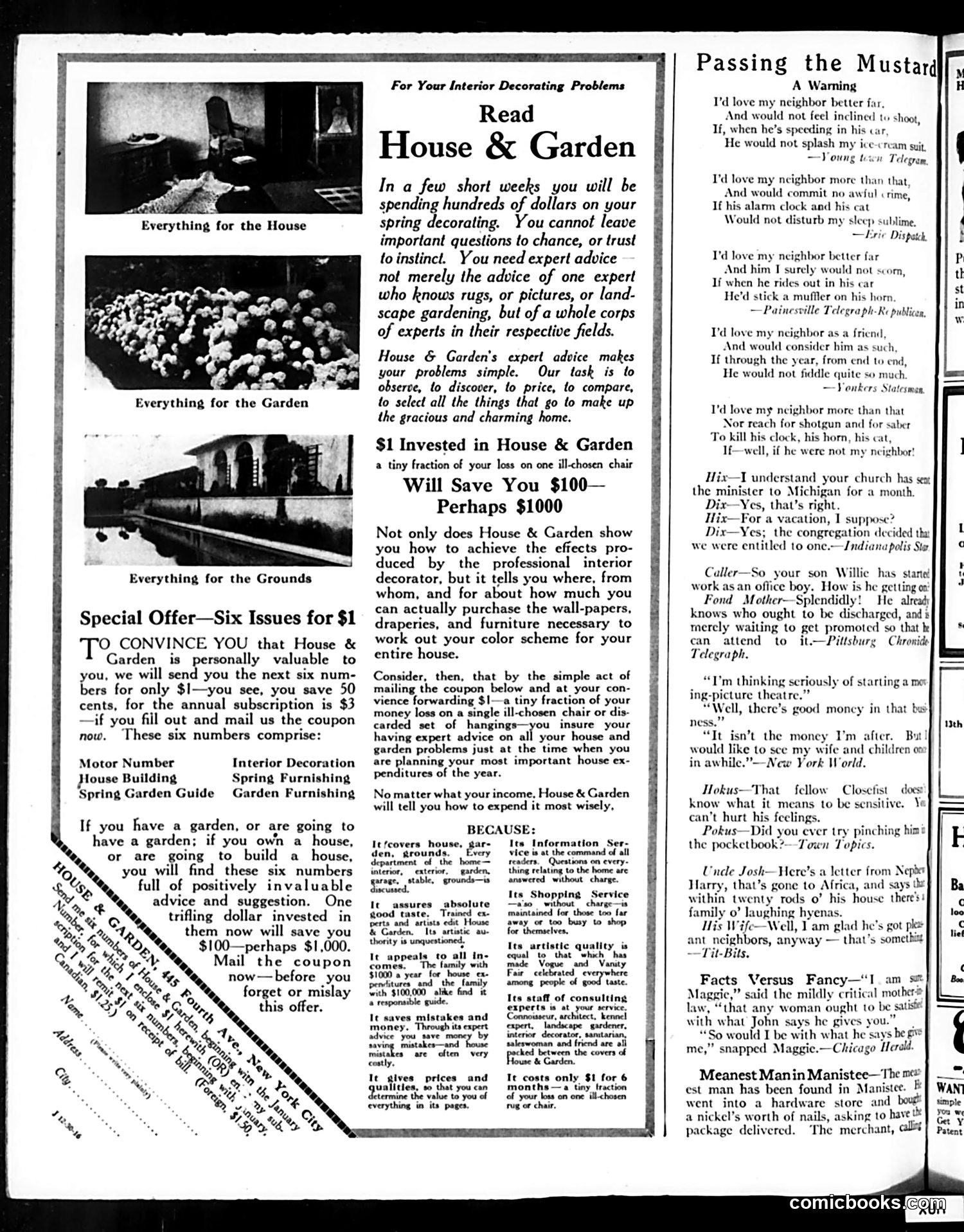
This page is **primarily advertising**, not political satire. It contains a substantial paid advertisement for *House & Garden* magazine (left side) and what appears to be advice columns or reader letters (right side, titled "Passing the Mustard"). ## The Advertisement The *House & Garden* ad targets middle-class homeowners with a promotional offer: six issues for $1 (half price). It promises that expert interior design advice will save readers $100-$1,000 on home decoration mistakes. The ad emphasizes that professional guidance ensures good taste in furnishings, colors, and landscaping—suggesting that without expert help, ordinary people might make costly errors. ## The Column (Right Side) "Passing the Mustard" contains humorous reader letters and responses about neighborly annoyances—speeding cars, alarm clocks, etc. This is gentle social humor rather than political satire, focusing on everyday domestic complaints. **Overall:** This is a consumer-oriented magazine page reflecting early 20th-century aspirations for middle-class home improvement and domestic advice.

This page is primarily **advertising and humor shorts** rather than political cartoons. The main content includes: - **Pekingese dog breeding advertisement** (top left) - **Short comic anecdotes** about economy, marriage, and prohibition (center), typical of Judge's recurring humor features - **A "From the Trenches" letter** requesting a French soldier's pen pal match through the magazine—reflecting WWI-era patriotic content (the date "Nov. 11, 1916" suggests Armistice-related publication) - **Hotel and liquor advertisements** (Black & White Scotch Whisky, Hotel Longacre, etc.) The humor is **light domestic satire**: penny-pinching customers, economical wives, and marriage jokes—typical early 20th-century magazine fare. The **historical context**: This appears to be from WWI era, evidenced by the French soldiers' letter seeking American pen pals for morale support, reflecting contemporary American engagement with the European conflict.
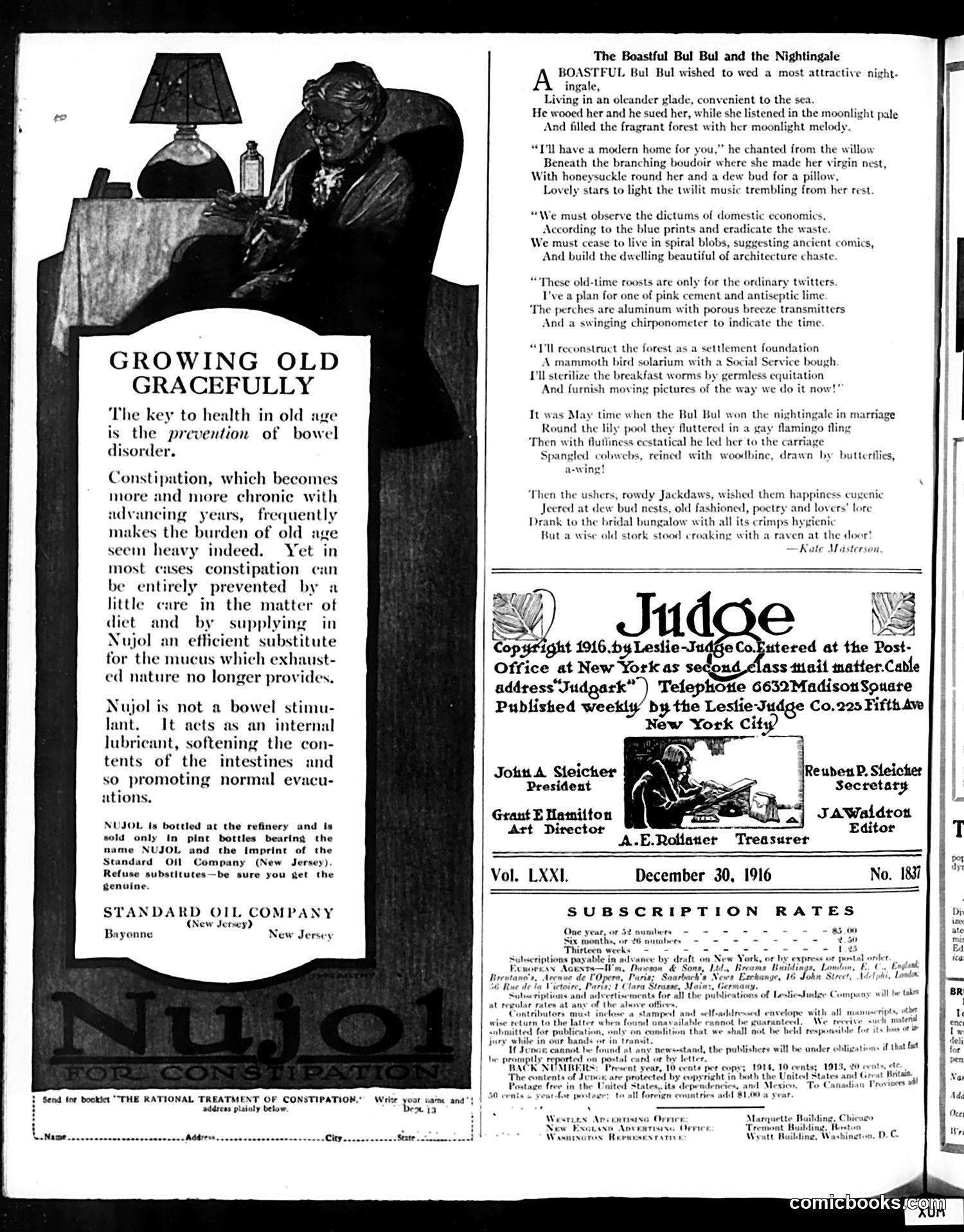
The page contains two unrelated pieces: **Left side:** A Nujol advertisement promoting mineral oil as a digestive aid for constipation in elderly people. This reflects early-20th-century anxieties about aging and digestive health, positioning Nujol as a "natural" lubricant (not a stimulant laxative). **Right side:** A satirical poem titled "The Boastful Bul Bul and the Nightingale" by Kate Masterson. A male bird (bul bul) courts a nightingale by boasting of modern conveniences—a house with "pink cement," "aluminum perches," a "chirponometer," sterilized food, and a "solarium." He dismisses old-fashioned nests and poetry. After they marry, rowdy wedding guests mock traditional values. However, a "wise old stork" stands at the door, croaking ominously—suggesting the boastful modernist's marriage will end in misfortune despite his progressive promises. The satire targets masculine braggadocio and empty technological optimism, defending older values.
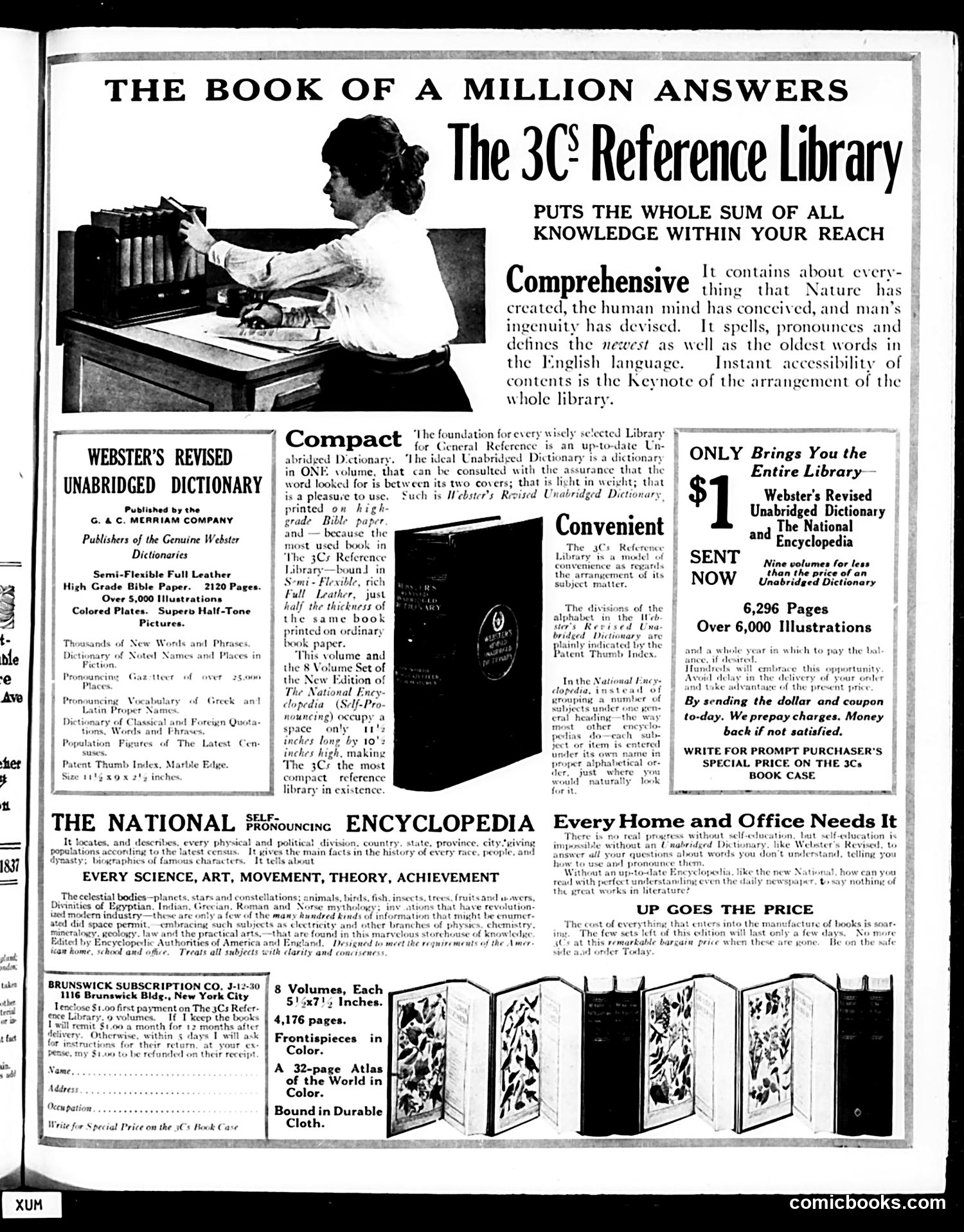
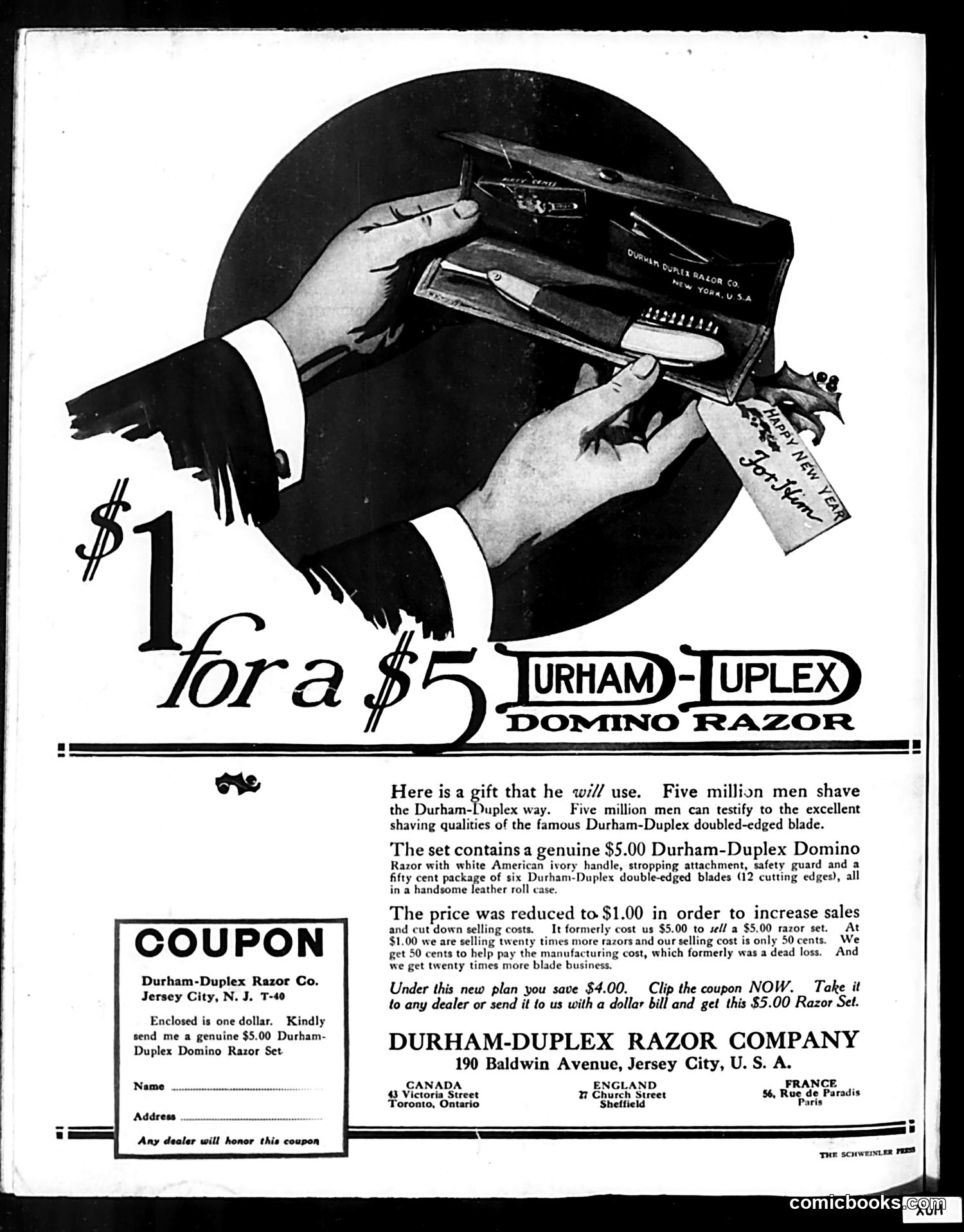
This is primarily a **product advertisement**, not satire or political commentary. It appears in *Judge* magazine (likely early 20th century based on styling and typography). The ad promotes a razor set originally priced at $5.00, now reduced to $1.00. The image shows hands in formal dress opening an elegant case containing the "Domino" razor. The accompanying text explains the business strategy: by lowering the price dramatically, the company increases volume sales of replacement blades—their actual profit source. They claim five million men already use Durham-Duplex razors. The coupon allows readers to purchase the discounted set by mail or through retailers. This represents early **loss-leader marketing**: selling the razor at reduced cost to capture customers for recurring blade purchases. There is no satirical commentary—*Judge* simply accepted advertising revenue from major manufacturers of the era.

I can see this is a page from Judge magazine (as indicated by the "comicbooks.com" credit at bottom), but the image is almost entirely black with only minimal visible content - some faint vertical lines and marks that don't resolve into readable cartoon panels or text. The OCR text only provides the comicbooks.com attribution and doesn't contain any article text, captions, or identifying information about the page's content. Without legible imagery or substantive text, I cannot identify specific figures, political references, or explain the satirical intent. The page appears to be either a title page, blank page, or severely degraded scan that prevents analysis of its actual content.