A complete issue · 36 pages · 1931
Judge — December 12, 1931
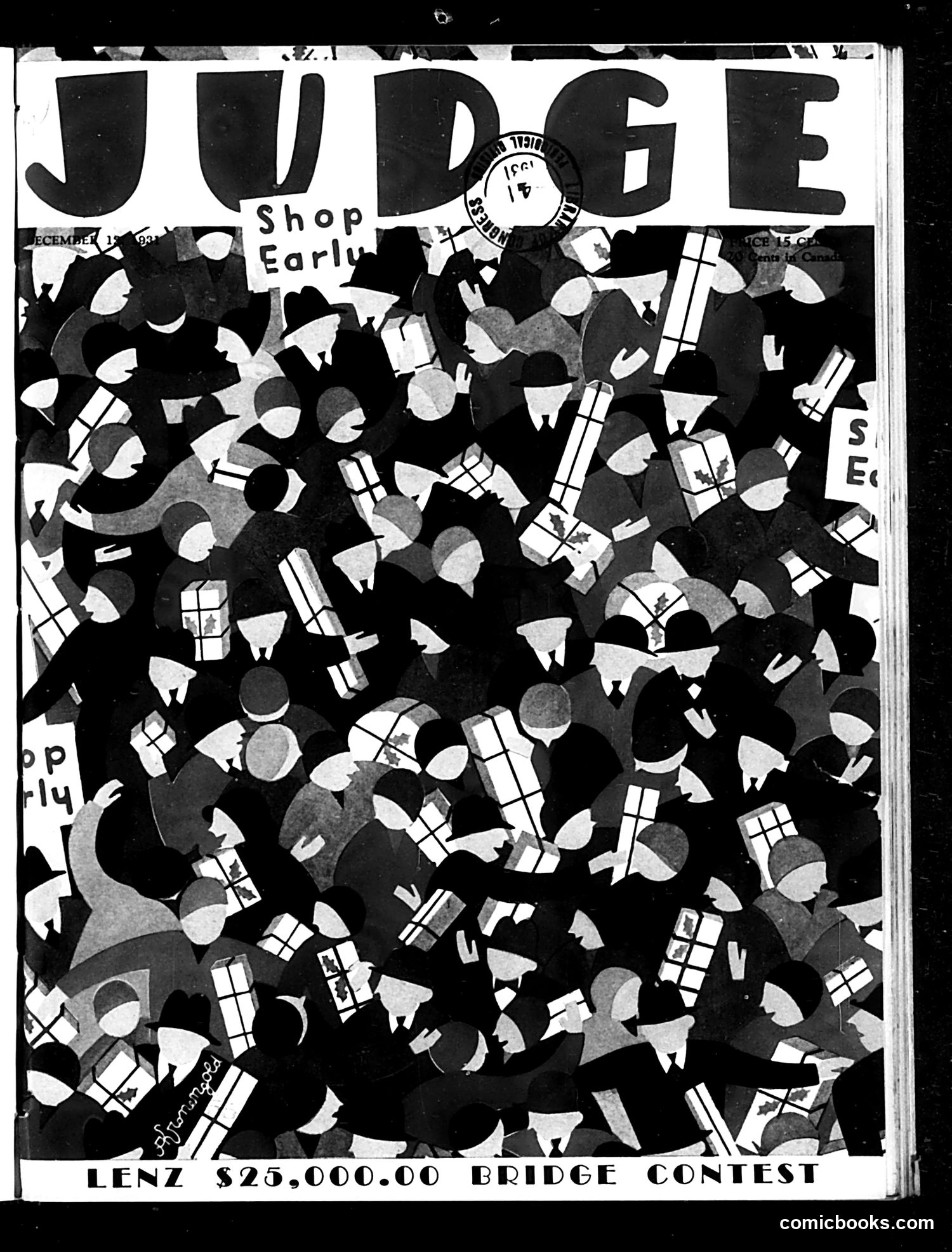
# Analysis This Judge magazine cover depicts a crowded Christmas shopping scene, with the large "JUDGE" masthead and "Shop Early" message at top. The image shows masses of people (rendered as silhouettes and simplified forms) carrying wrapped presents and packages during the holiday season. The satire appears to target the commercialization of Christmas and the frenzied consumer behavior it generates—the overwhelming crowds rushing to purchase gifts. The "Shop Early" advisory is ironic, suggesting that despite such warnings, people still wait until the last moment, creating chaotic scenes. At bottom, a "Lenz $25,000.00 Bridge Contest" advertisement appears, likely unrelated editorial content. The date marking shows December 1906, placing this during the early 20th-century retail era when Christmas shopping was becoming a major commercial phenomenon worthy of satirical commentary.
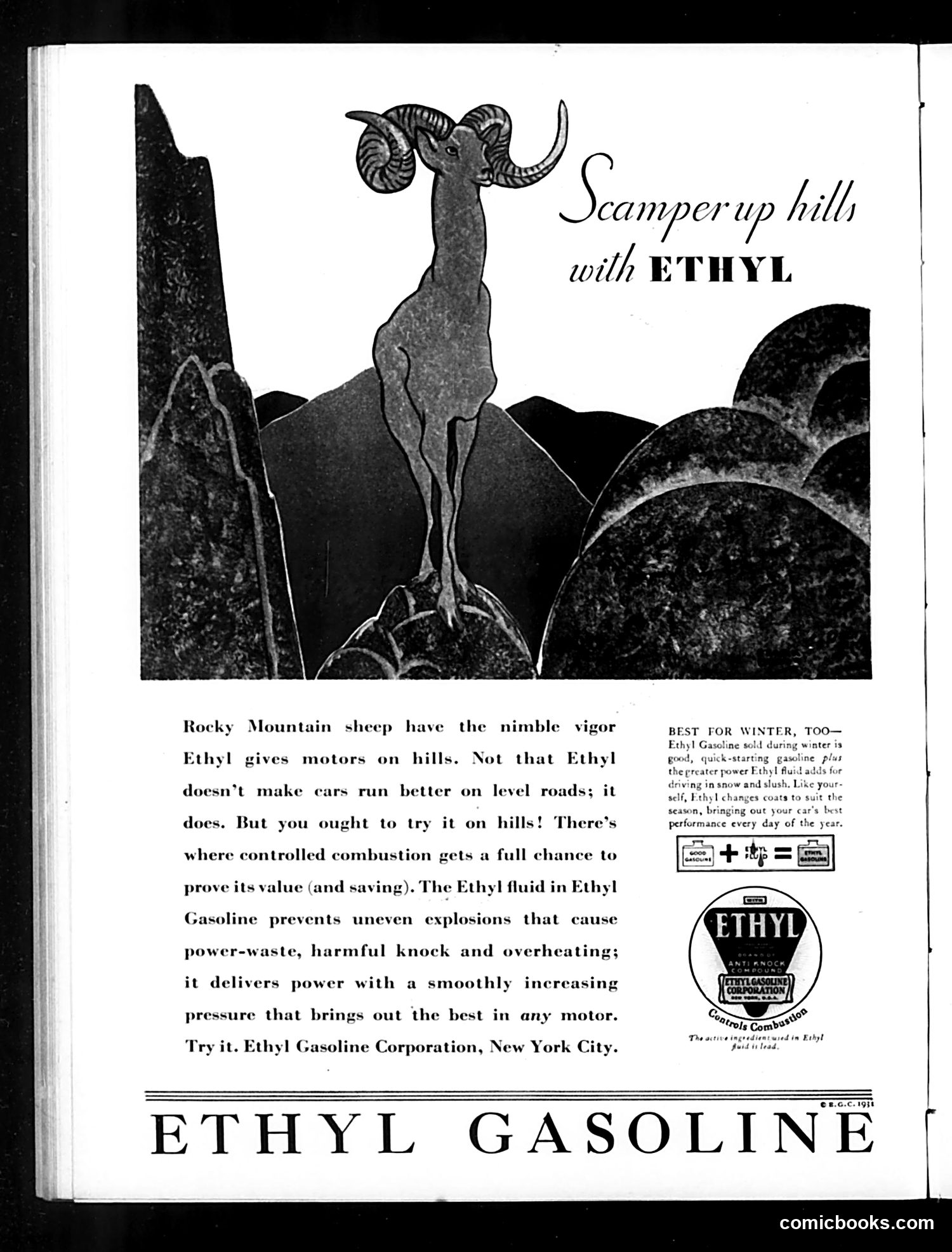
# Ethyl Gasoline Advertisement, Judge Magazine This is primarily a **commercial advertisement**, not satire. It promotes Ethyl Gasoline, a brand that added tetraethyl lead to fuel as an anti-knock additive (now recognized as toxic). The advertisement uses a Rocky Mountain sheep mascot to represent the product's power and vigor. The visual pun compares the sheep "scampering up hills" with enhanced motor performance—suggesting Ethyl gasoline gives cars superior climbing ability and power on inclines. The copy emphasizes combustion control and smooth power delivery, claiming Ethyl prevents engine knock and overheating. A small diagram shows the additive's chemical formula. This reflects early-20th-century marketing before lead's health dangers were widely understood or regulated.
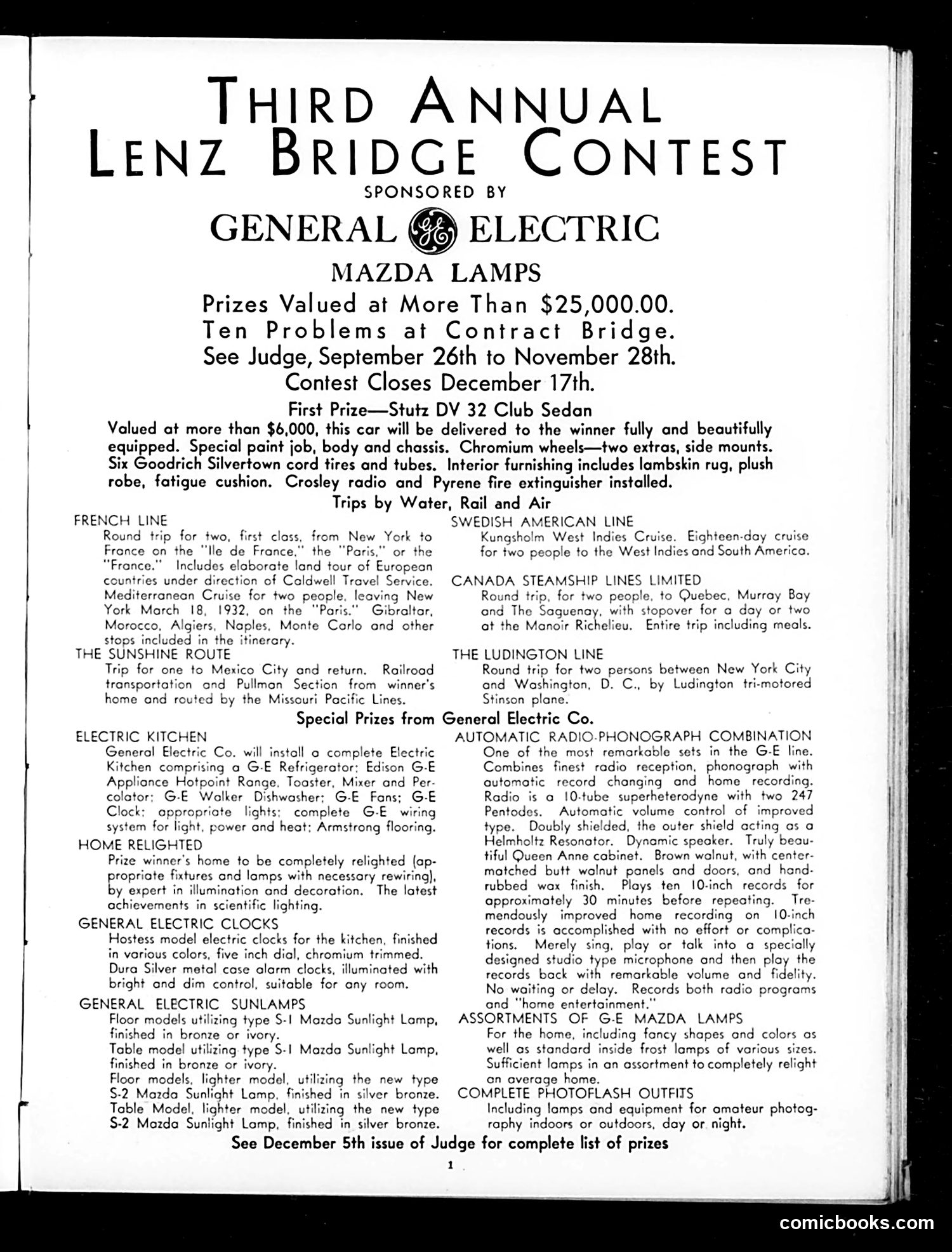
# Content Description This page is primarily **advertising, not satire or political commentary**. It announces the "Third Annual Lenz Bridge Contest" sponsored by General Electric and Mazda Lamps, with prizes totaling over $25,000. The contest involves solving "ten problems at Contract Bridge," with entries accepted September 26 through November 28, closing December 17. The first prize is a Stutz DV 32 Club Sedan valued at $6,000, plus additional prizes including international trips (French Line cruise, Swedish American Line, Canadian Steamship), a complete electric kitchen, home relighting, General Electric clocks, lamps, and photography equipment. This reflects 1920s-30s **commercial promotion through games and contests**—a marketing strategy where manufacturers sponsored bridge (a popular card game) competitions to advertise products.
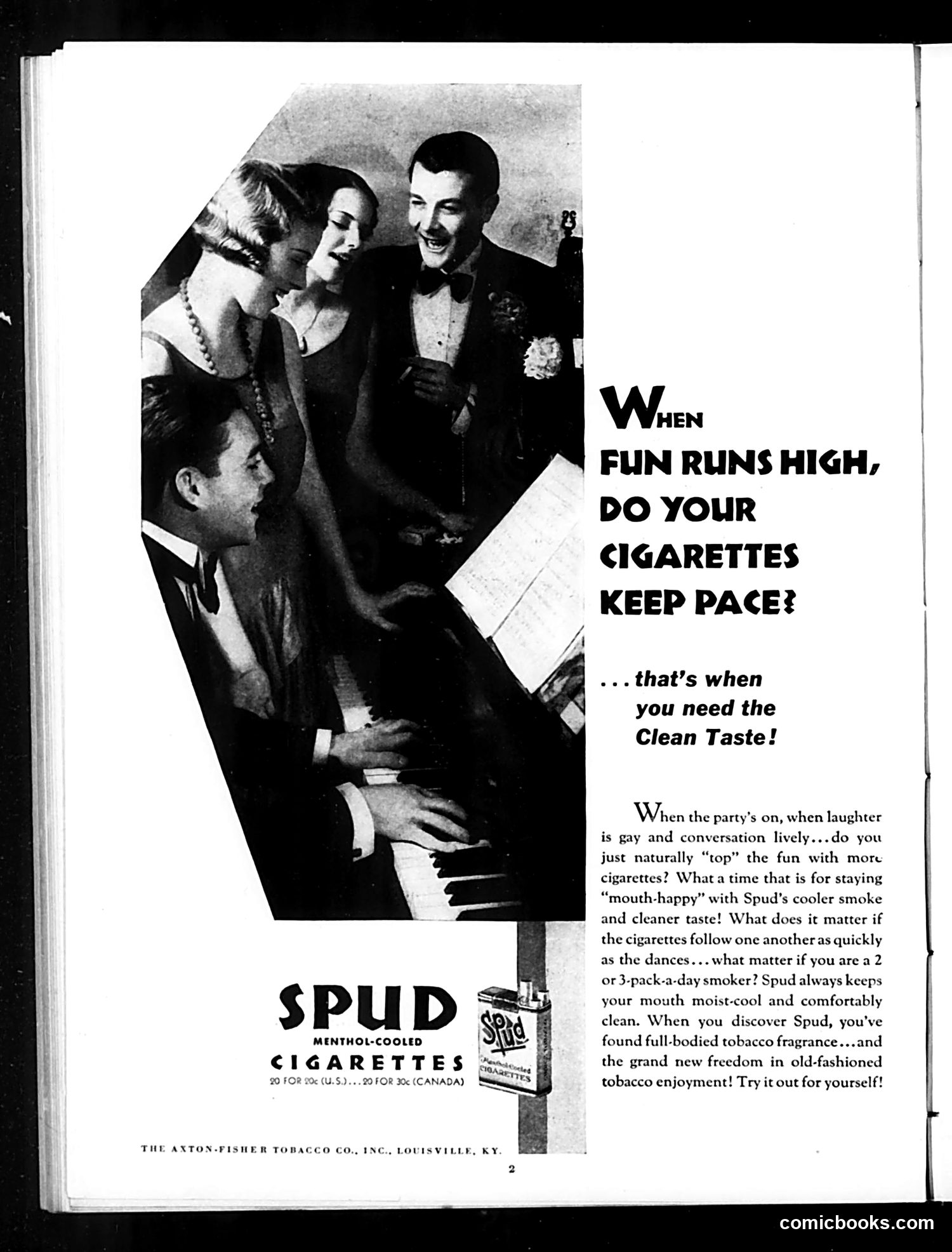
# Analysis This page is **primarily a cigarette advertisement**, not political satire. It's a Spud menthol cigarettes ad from the Axton-Fisher Tobacco Company (Louisville, Kentucky). The image shows well-dressed people at what appears to be a social gathering or party. The ad's appeal is to active smokers who consume cigarettes rapidly ("2 or 3-pack-a-day smoker"), arguing that Spud's menthol keeps the smoker's mouth "moist-cool and comfortably clean" despite heavy smoking. The phrase "when fun runs high, do your cigarettes keep pace?" frames smoking as integral to social enjoyment. This reflects mid-20th-century advertising that normalized heavy smoking in social contexts without health disclaimers. This is a historical artifact showing how cigarettes were once marketed as lifestyle products for active, sociable people.
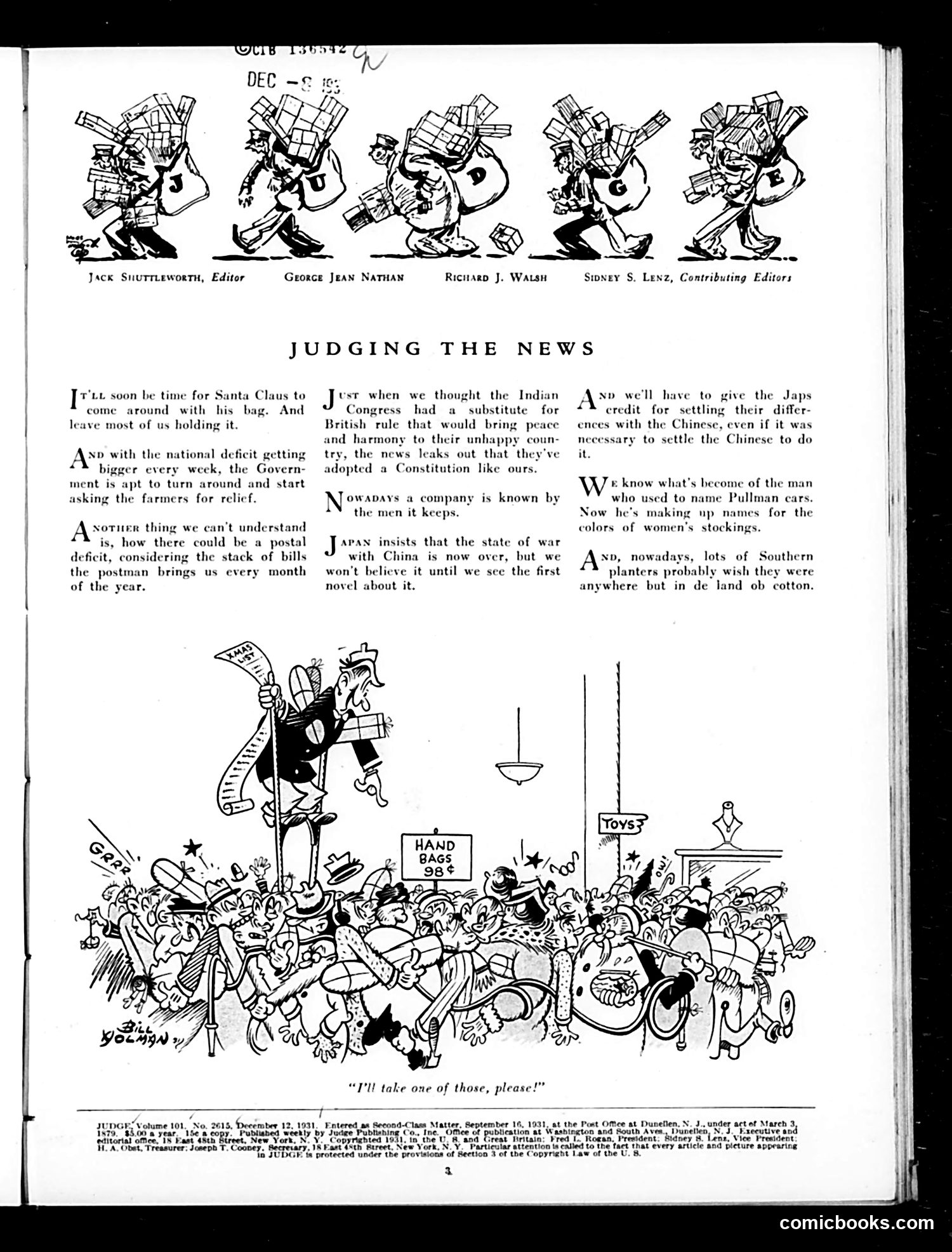
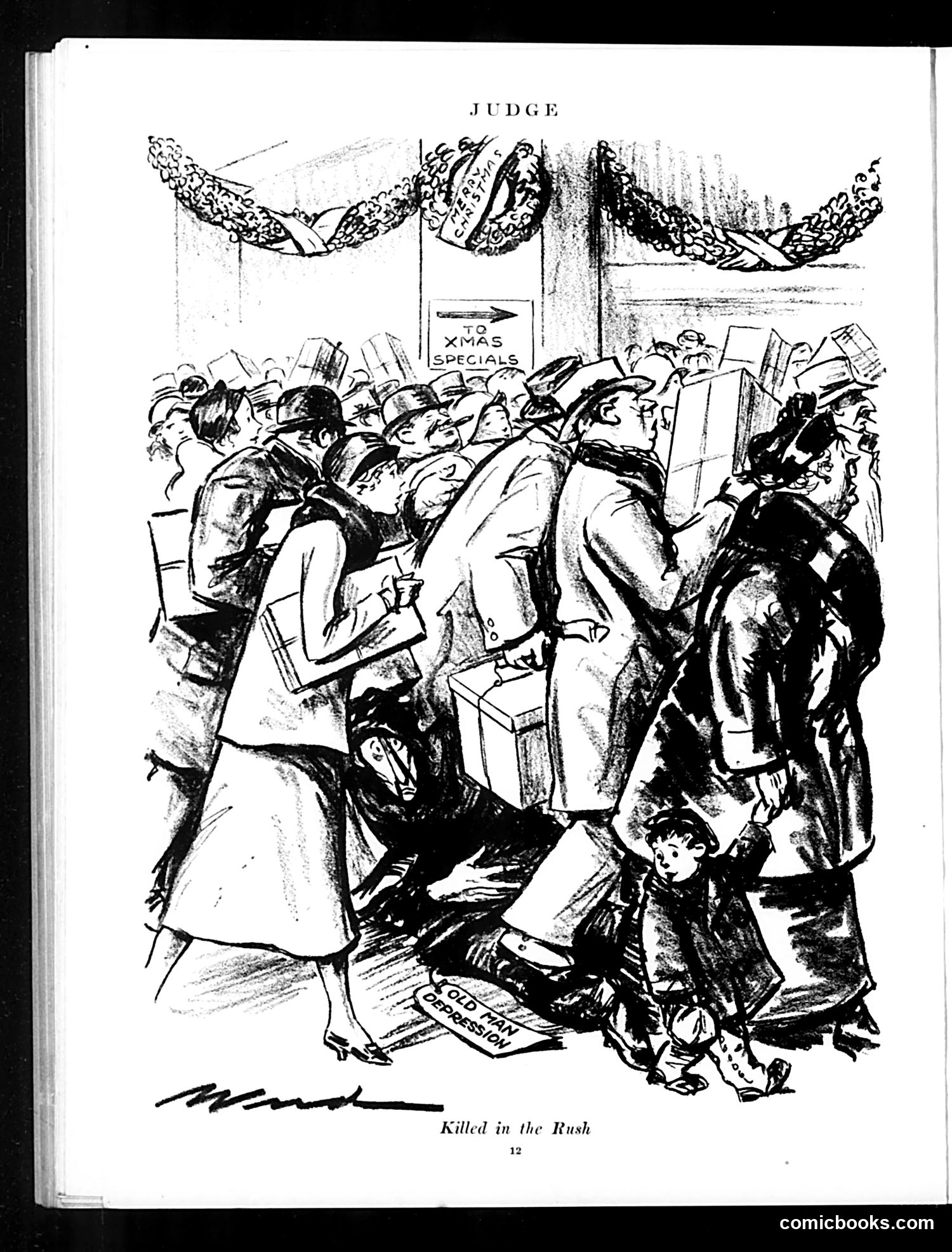
# Analysis of "Judging the News" Page This December 1931 *Judge* page offers satirical commentary on current events through brief editorial quips and a large cartoon. The text addresses: - **Santa/holiday deficit**: Sardonic comments on national financial troubles during the Great Depression - **Indian Congress**: Reference to Indian independence negotiations with Britain - **Postal deficit**: Criticism of government inefficiency - **Japan-China conflict**: Skepticism about Japan's claims regarding their war with China - **Pullman cars/women's stockings**: A gossip item about a railway executive The large cartoon depicts a chaotic Christmas/consumer shopping scene with a vendor on a pole surrounded by crowds grabbing toys and goods, captioned "I'll take one of those, please!" This satirizes Depression-era consumerism and retail chaos—the desperation or excess of holiday shopping despite economic hardship.
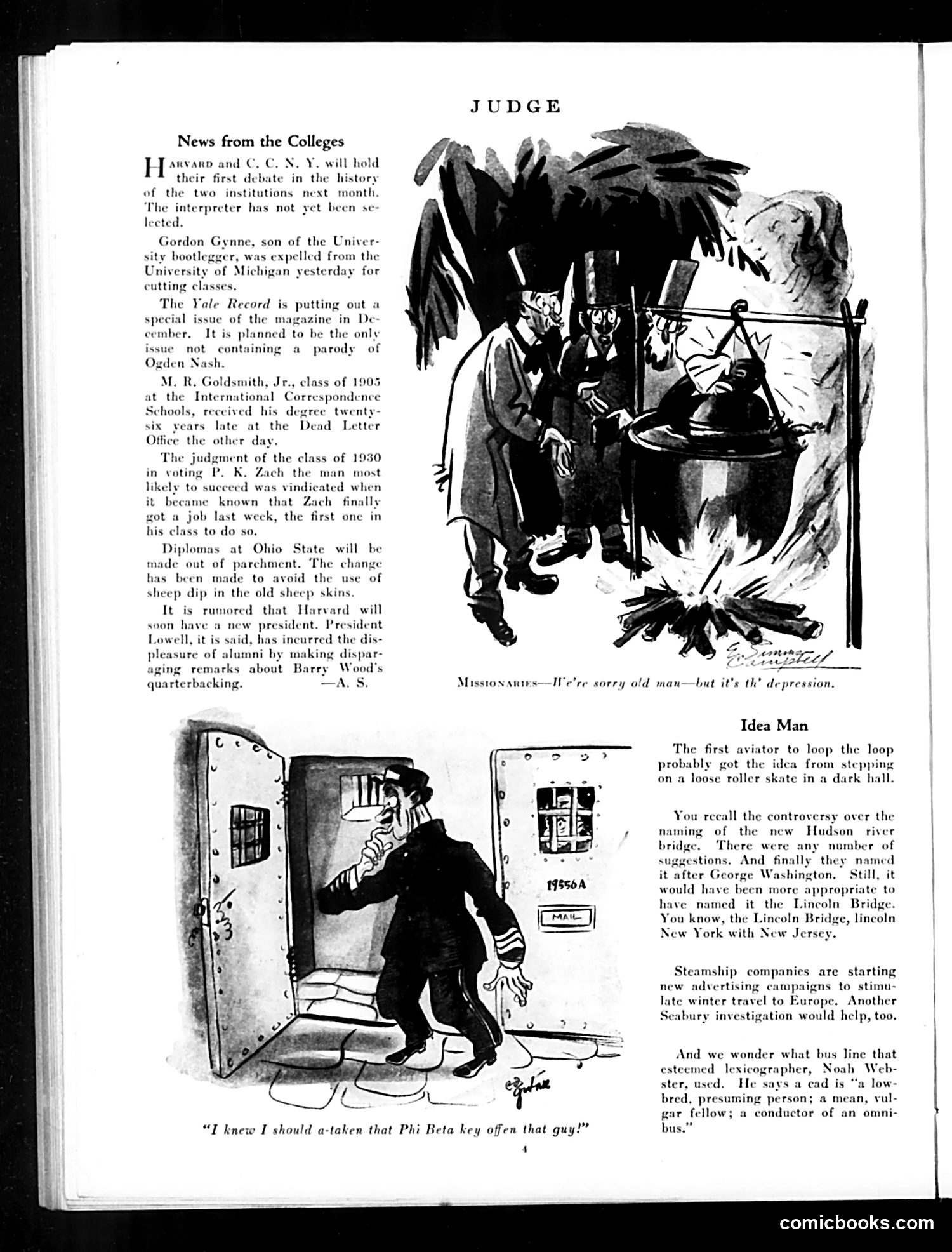
# Analysis of Judge Magazine Page **Top Cartoon ("Missionaries"):** Shows figures in a cauldron over fire. The caption reads "We're sorry old man—but it's the depression." This is satirizing the Great Depression era (1930s based on context clues), suggesting that economic hardship justifies extreme measures—here, darkly joking about missionary cannibalism. The satire targets how the Depression affected even supposedly civilized society. **Bottom Cartoon:** A man at a door labeled "MAIL" appears caught using a Phi Beta Key (academic honor society key). The caption "I knew I should a-taken that Phi Beta key often that guy!" suggests he's a mail carrier or postal worker stealing from mail using the academic key—satirizing white-collar crime or postal service corruption during economically desperate times. The page combines social commentary on Depression-era desperation.
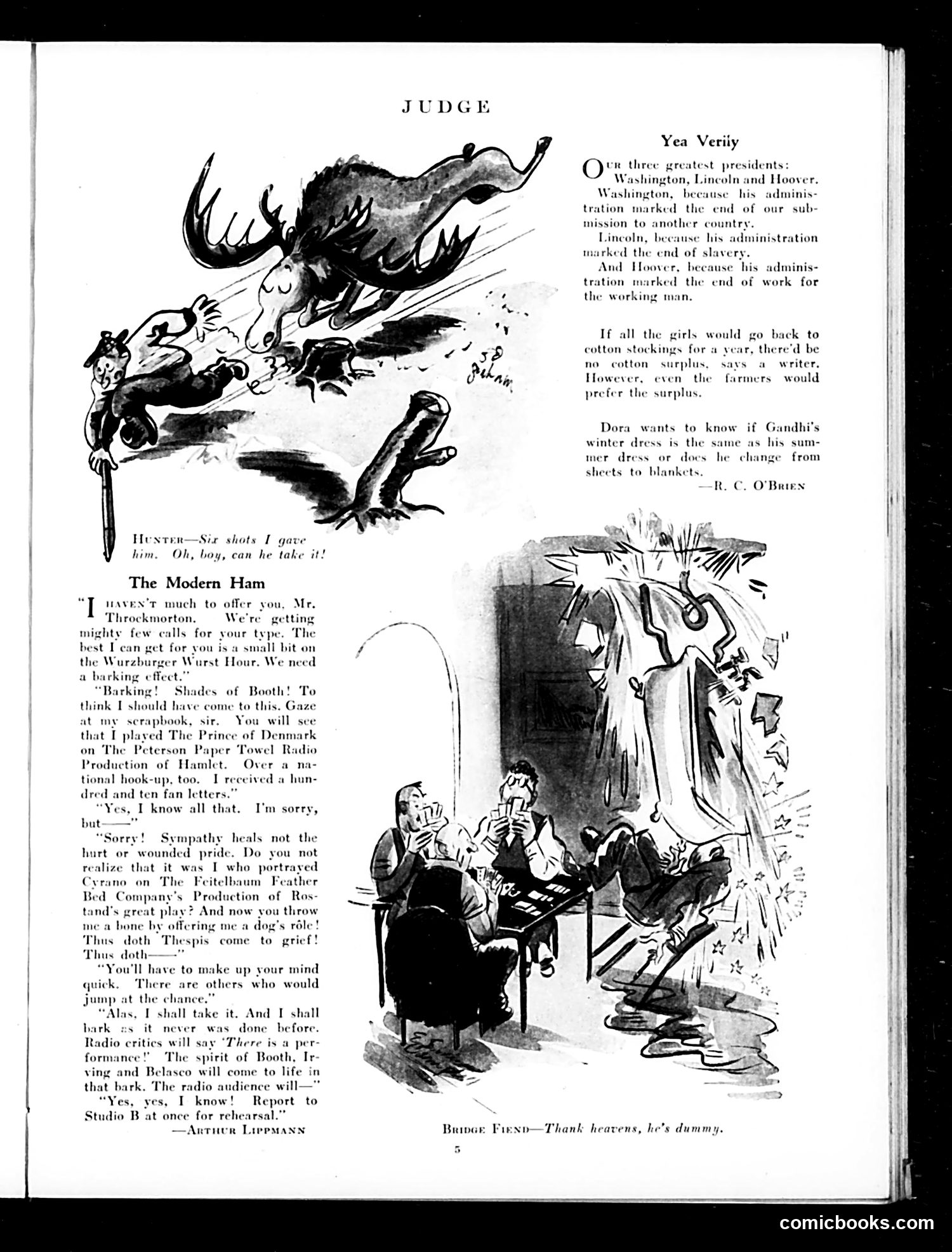
# Analysis of Judge Magazine Page This page contains two satirical pieces: **"The Modern Ham"** (left): A theater satire mocking an actor named Throckmorton who's auditioning. The joke centers on his terrible performance—he wants "barking effects" for a Hamlet radio production. The humor lies in conflating Shakespeare with crude sound effects, satirizing both bad acting and radio's novelty as a performance medium. **"Bridge Fiend"** (right): Shows someone at a bridge table, apparently playing poorly or behaving badly. The caption "Thank heavens, he's dummy" is a bridge card-game pun—the "dummy" is a legitimate position—while suggesting the character is actually incompetent or foolish. Both pieces mock popular entertainments and social pretensions of the era.
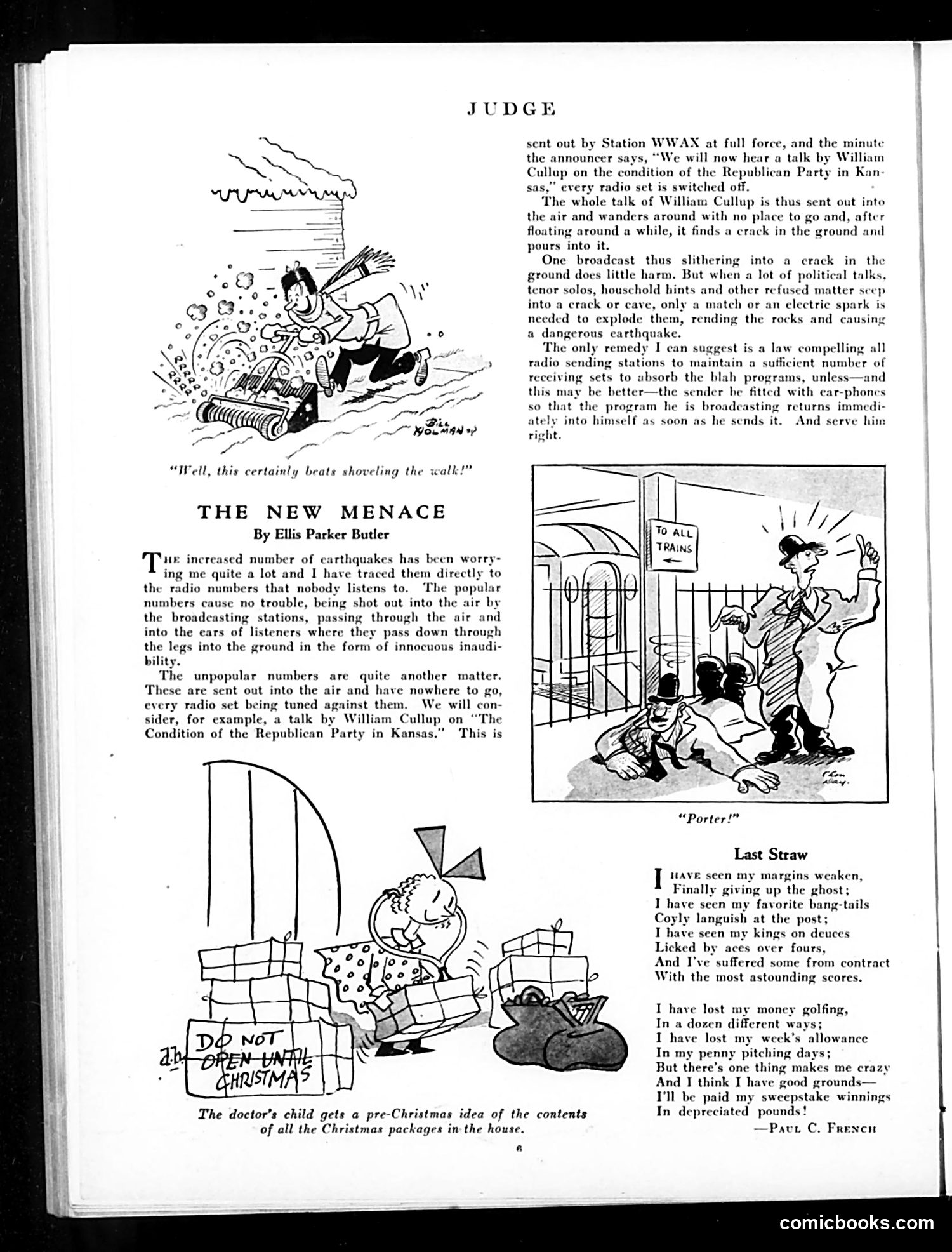
# "The New Menace" - Judge Magazine Satire This article by Ellis Parker Butler satirizes radio broadcasting's unintended consequences. The main cartoon shows earthquakes caused by radio waves penetrating the ground—a humorous exaggeration of early 20th-century anxieties about new technology's hidden dangers. Butler specifically references a broadcast by William Cullup about "The Condition of the Republican Party in Kansas," arguing that unpopular radio content "nowhere to go" gets broadcast indiscriminately. The satire suggests radio stations lack quality control, broadcasting trivial political speeches that paradoxically cause literal damage. The secondary cartoons mock unrelated domestic chaos—a Christmas-obsessed child and a train station porter. These appear to be standalone Judge humor pieces rather than connected to the main radio satire.
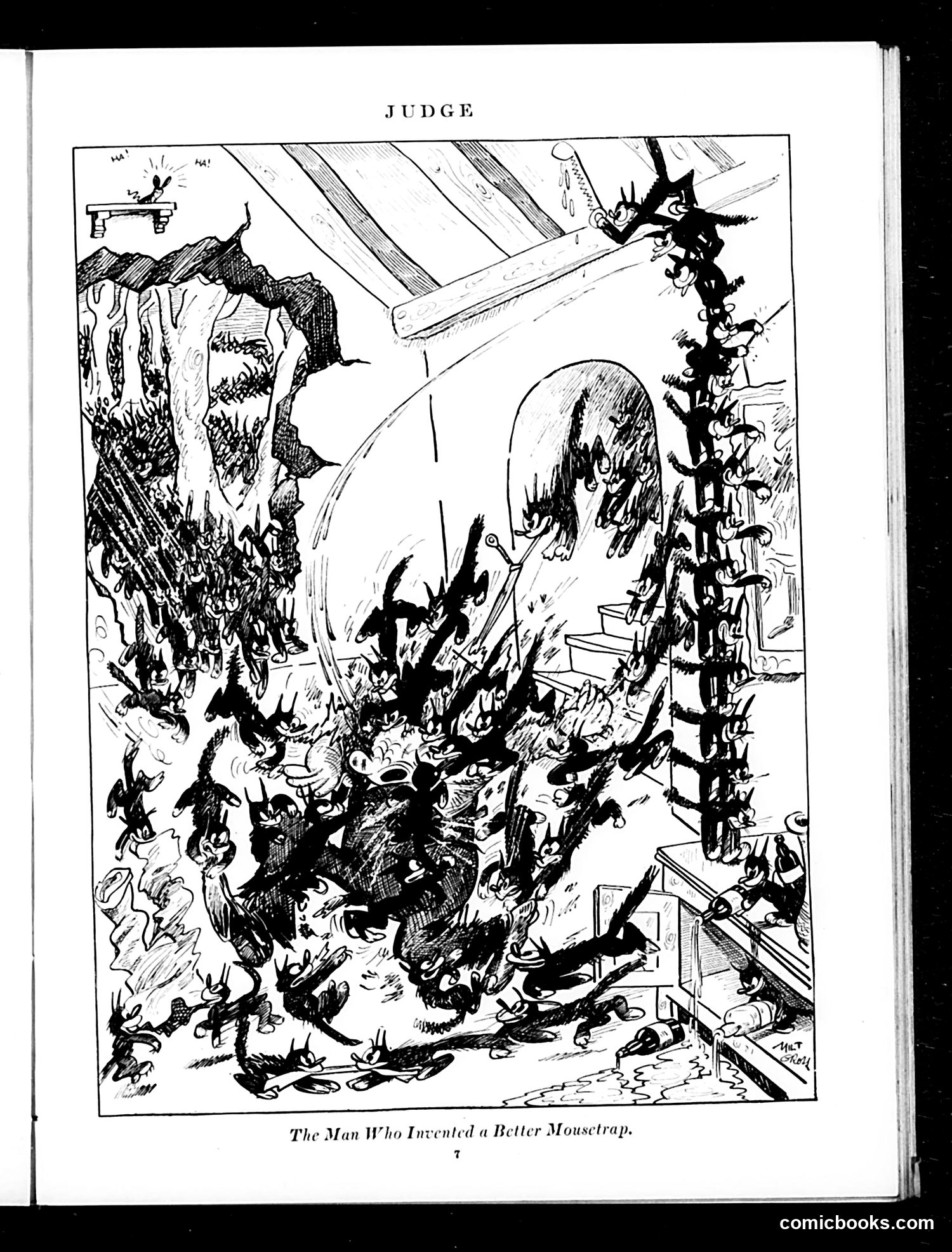
# "The Man Who Invented a Better Mousetrap" This satirical cartoon illustrates the famous saying that "if you build a better mousetrap, the world will beat a path to your door." The image shows the inventor's house overwhelmed by a chaotic mob of mice—contradicting the proverb's promise of success and wealth. Instead of bringing customers eager to buy his invention, the "better mousetrap" has attracted hordes of mice directly to his home, creating pandemonium. The cartoon satirizes the gap between entrepreneurial hopes and harsh reality: innovations don't automatically guarantee prosperity. It mocks both the naive optimism of inventors who believe a good product sells itself, and the false promise of the original aphorism itself.
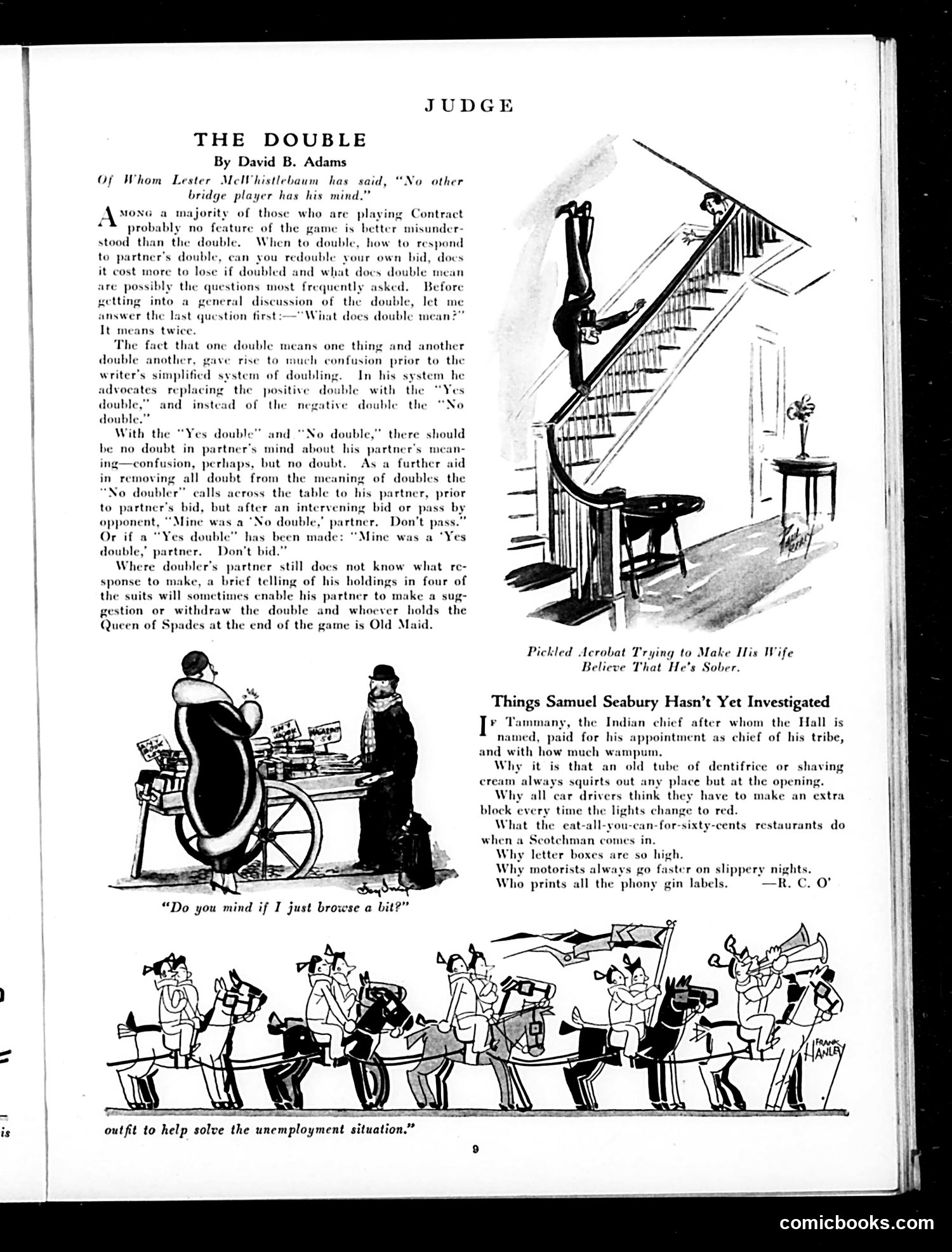
# Analysis This Judge magazine page contains two distinct elements: **"The Double" (main article):** A humorous instructional piece by David B. Adams about Contract Bridge strategy, specifically how to interpret and communicate "doubles" (competitive bids). The satire lies in the deliberately absurd "simplified system"—replacing confusing bridge terminology with blunt declarations like "Mine was a 'No double,' partner. Don't pass," culminating in the joke that whoever holds the Queen of Spades at game's end plays "Old Maid" (a children's card game), mocking the complexity bridge players encounter. **"Things Samuel Seabury Hasn't Yet Investigated":** A satirical list referencing Samuel Seabury, likely the 1930s New York judge who investigated municipal corruption (Tammany Hall). The piece humorously suggests trivial, unsolvable mysteries he should investigate instead—like why toothpaste tubes malfunction or why Scotsmen avoid restaurant deals. This mocks Seabury's high-profile investigations as potentially endless, suggesting there are always more absurd "crimes" to examine. Both items use absurdist humor typical of Judge's sophisticated readership.
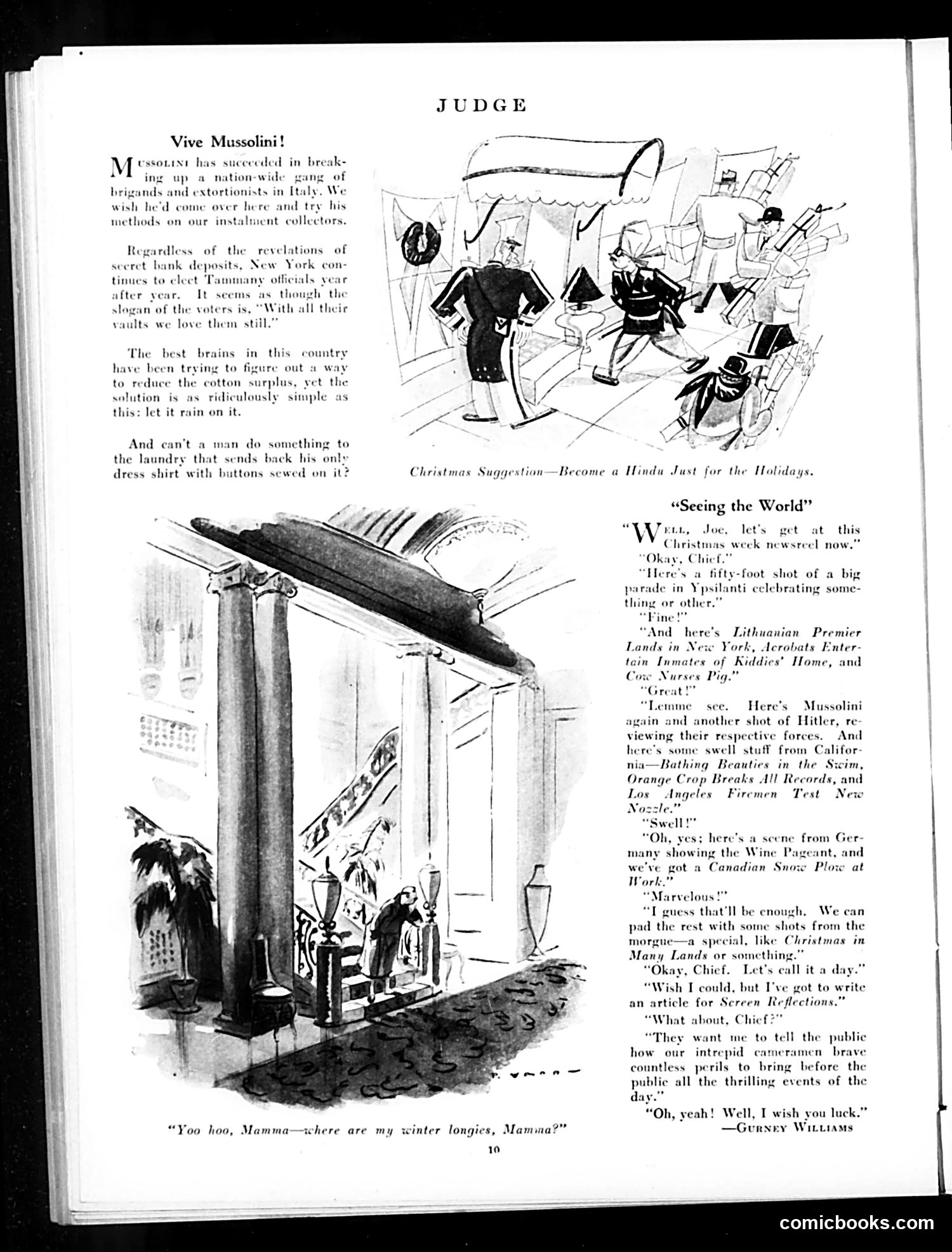
# Judge Magazine Page Analysis This page contains three satirical pieces: **Top Section - "Vive Mussolini!"**: A brief commentary praising Mussolini for breaking up organized crime in Italy, sarcastically wishing he'd come to America to deal with "instalment collectors" (debt collectors). This reflects 1920s-30s fascination with Mussolini's authoritarian methods, before widespread recognition of fascism's dangers. **Upper Cartoon**: Shows Hindu fakirs (holy men) as a "Christmas Suggestion," likely mocking Americans' superficial interest in exotic Eastern religions as holiday novelties. **Main Cartoon - "Seeing the World"**: Depicts newsreel editors discussing mundane footage: Lithuanian premier visits, circus acts, California scenes, and repeated Hitler/Mussolini military footage. The satire criticizes how newsreels pad programming with trivial content and morgue footage, presenting routine events as thrilling journalism while genuinely significant political developments receive repetitive coverage. **Bottom Cartoon**: A domestic joke about laundry losing a person's winter clothing. The page satirizes 1930s media superficiality and fascist propaganda visibility.
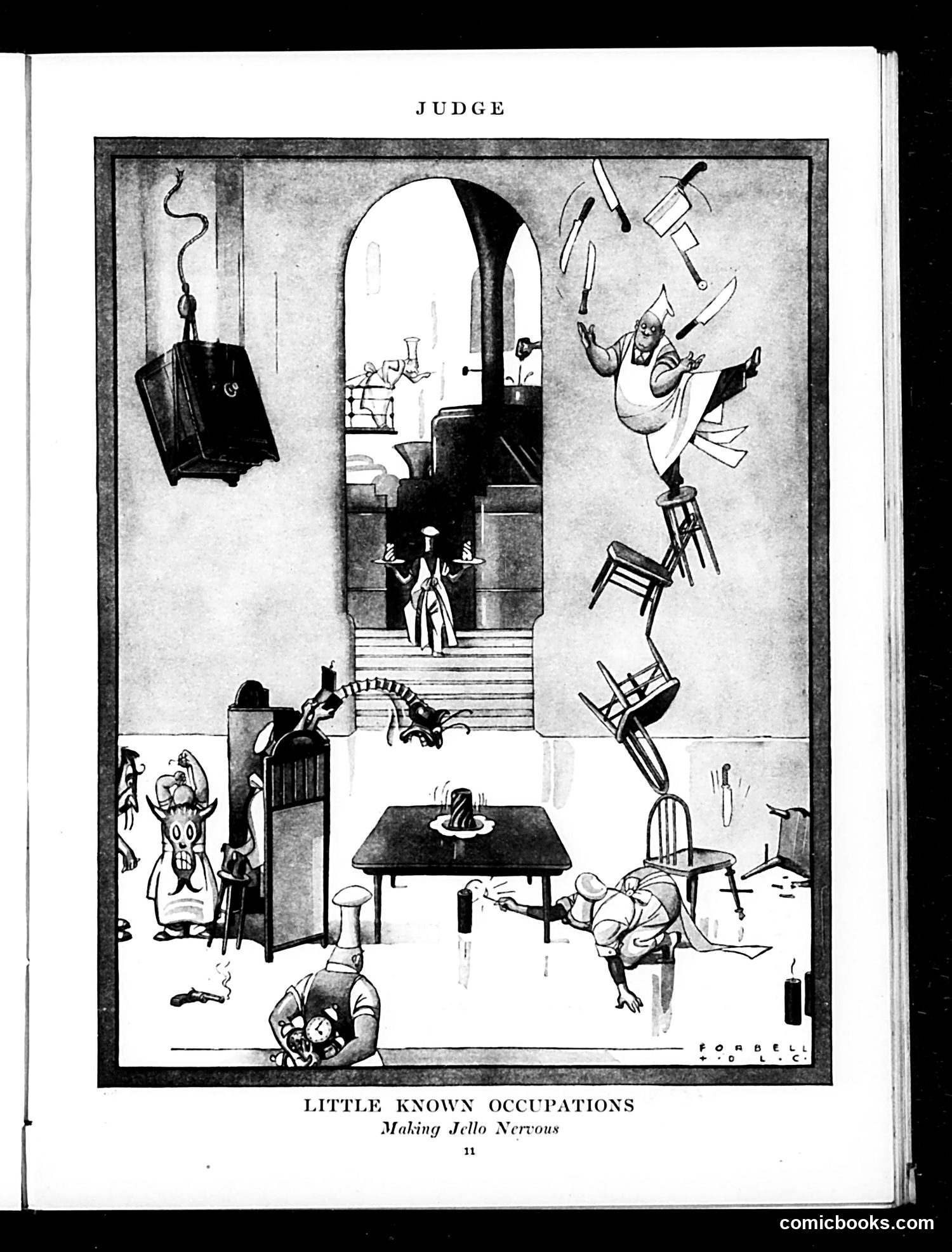
# "Making Jello Nervous" — Judge Magazine Cartoon This is a single-panel cartoon satirizing the work of a judicial officer or judge. The central figure seated on an elevated bench presides over a courtroom in chaos—literally. Lawyers, documents, furniture, and people are flying through the air around the room, suggesting the disruptive nature of legal proceedings. The title's pun—"Making Jello Nervous"—plays on "Judge" and the gelatin dessert's notorious instability when jostled. The cartoon jokes that judges preside over inherently chaotic, turbulent environments where order constantly collapses into disorder. It's satirizing either judicial incompetence, courtroom mayhem, or simply the absurd unpredictability of legal proceedings that supposedly aim for order and justice.