A complete issue · 36 pages · 1931
Judge — July 18, 1931
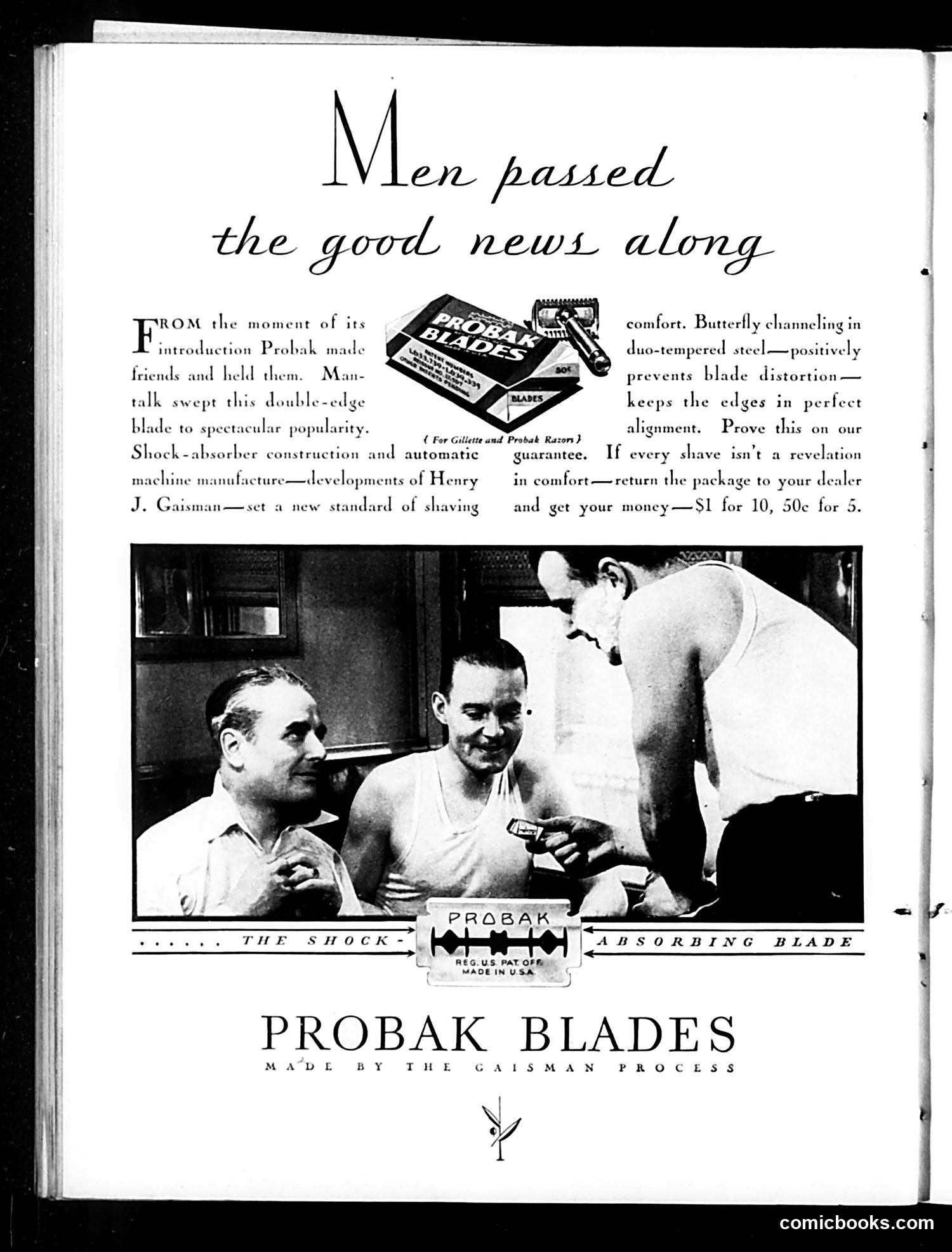
# Analysis This is primarily a **product advertisement**, not satire or political commentary. It advertises Probak Blades, a razor blade brand made using the "Gaisman Process." The page's headline—"Men passed the good news along"—is a marketing claim suggesting the product's popularity spreads through word-of-mouth. The photograph shows men in a barber shop examining and discussing the blade, visually supporting this messaging. The ad emphasizes technical features: "shock-absorber construction," "automatic machine manufacture," and "duo-tempered steel" to prevent blade distortion. It includes a money-back guarantee ($1 for 10 blades, 50¢ for 5). This is straightforward vintage advertising with no apparent political or satirical content—simply a commercial pitch using social proof and technical specifications to market razor blades to male consumers.
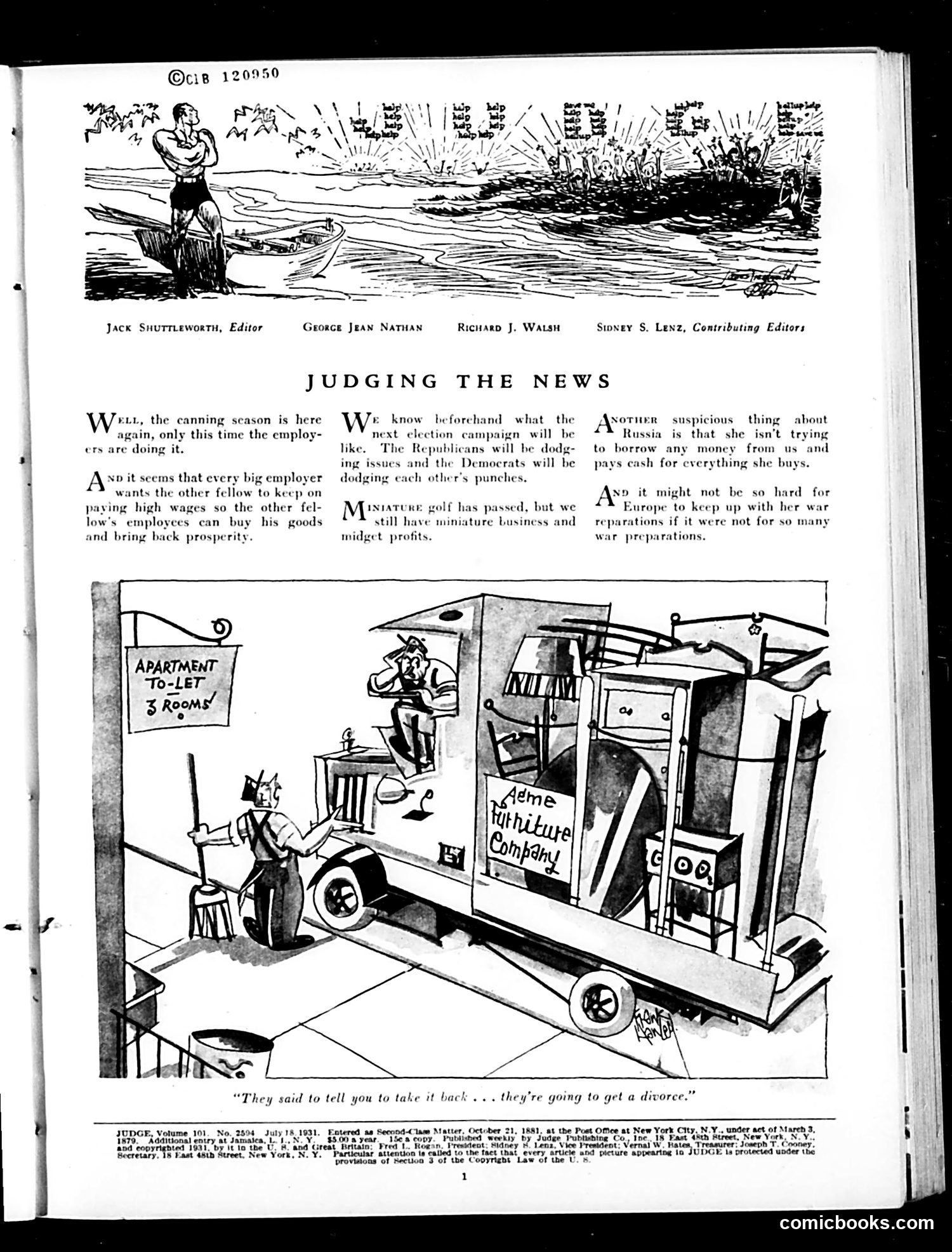
# Analysis of Judge Magazine Page (July 13, 1931) The main cartoon depicts a moving van labeled "Acme Furniture Company" outside an apartment building advertising "3 Rooms to Let." Inside the van, a couple sits amid their belongings while a figure tells them: "They said to tell you to take it back... they're going to get a divorce." **The satire:** This reflects Depression-era anxieties about marriage instability and consumer debt. Newlyweds purchased furniture on credit, but economic collapse made payments impossible. The joke—being told to return the furniture because the marriage is ending—encapsulates the era's cascading failures: financial ruin leading to family breakdown. The editorial text above discusses election campaigns and Europe's war preparations, providing contemporary context for the magazine's serious undertones beneath the humor.
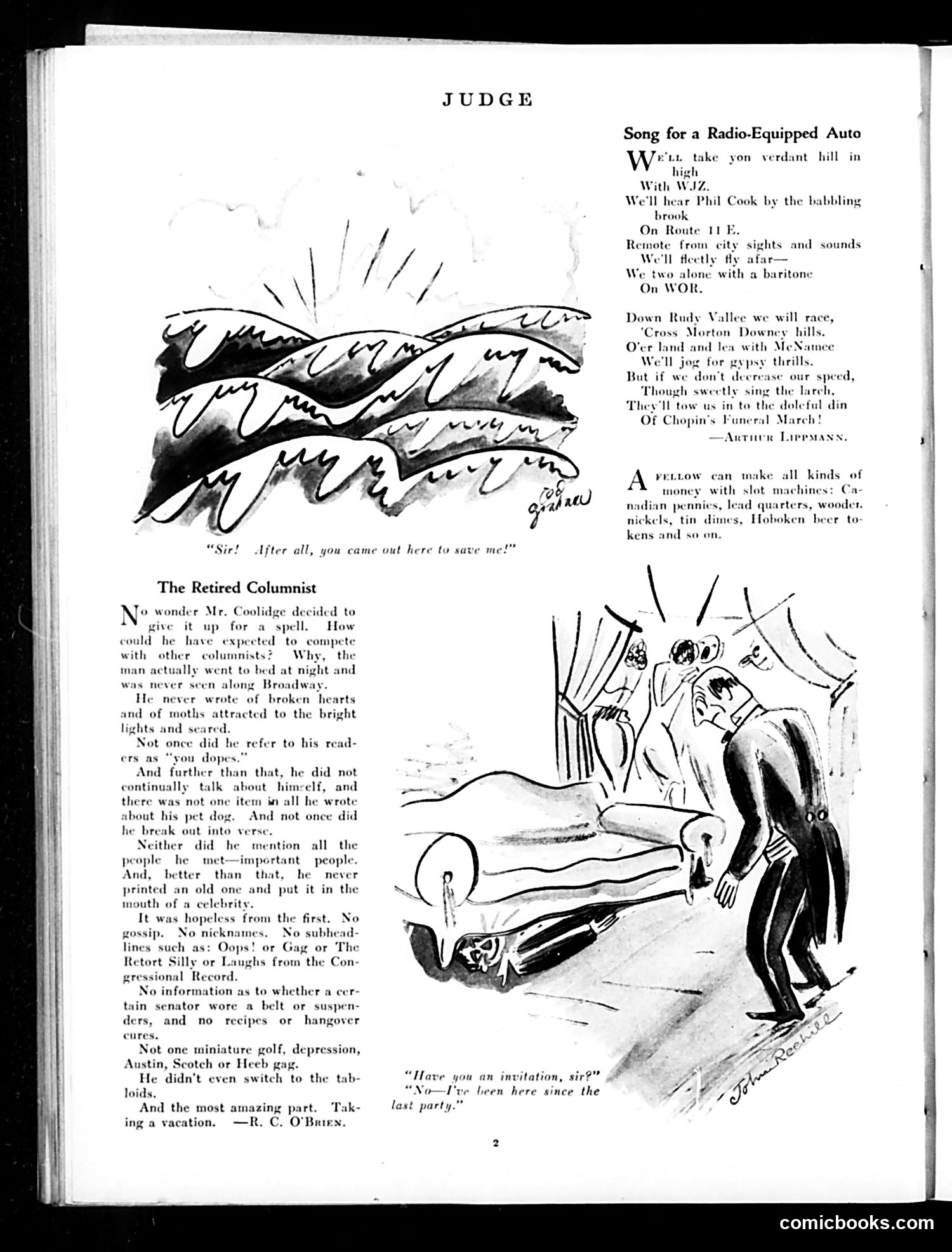
# Analysis of Judge Magazine Page This page contains two distinct pieces: **"Song for a Radio-Equipped Auto"** (top right) is a humorous poem by Arthur Lippmann celebrating early automobile radio technology. It references specific radio stations (WJZ, WOR) and playfully suggests drivers might be so distracted by broadcasts that they'll ignore speed limits and traffic safety—a satirical jab at the novelty and allure of car radios in this pre-modern era. **"The Retired Columnist"** (left) praises an unnamed columnist (likely a real public figure) for his restraint and professionalism. The satire celebrates what he *didn't* do: he avoided gossip, celebrity scandals, personal complaints, and sensationalism. Instead, he simply took a vacation. This is gentle mockery of the gossip-column genre prevalent in 1920s-30s journalism. Both pieces reflect era-specific consumer technologies and media culture.
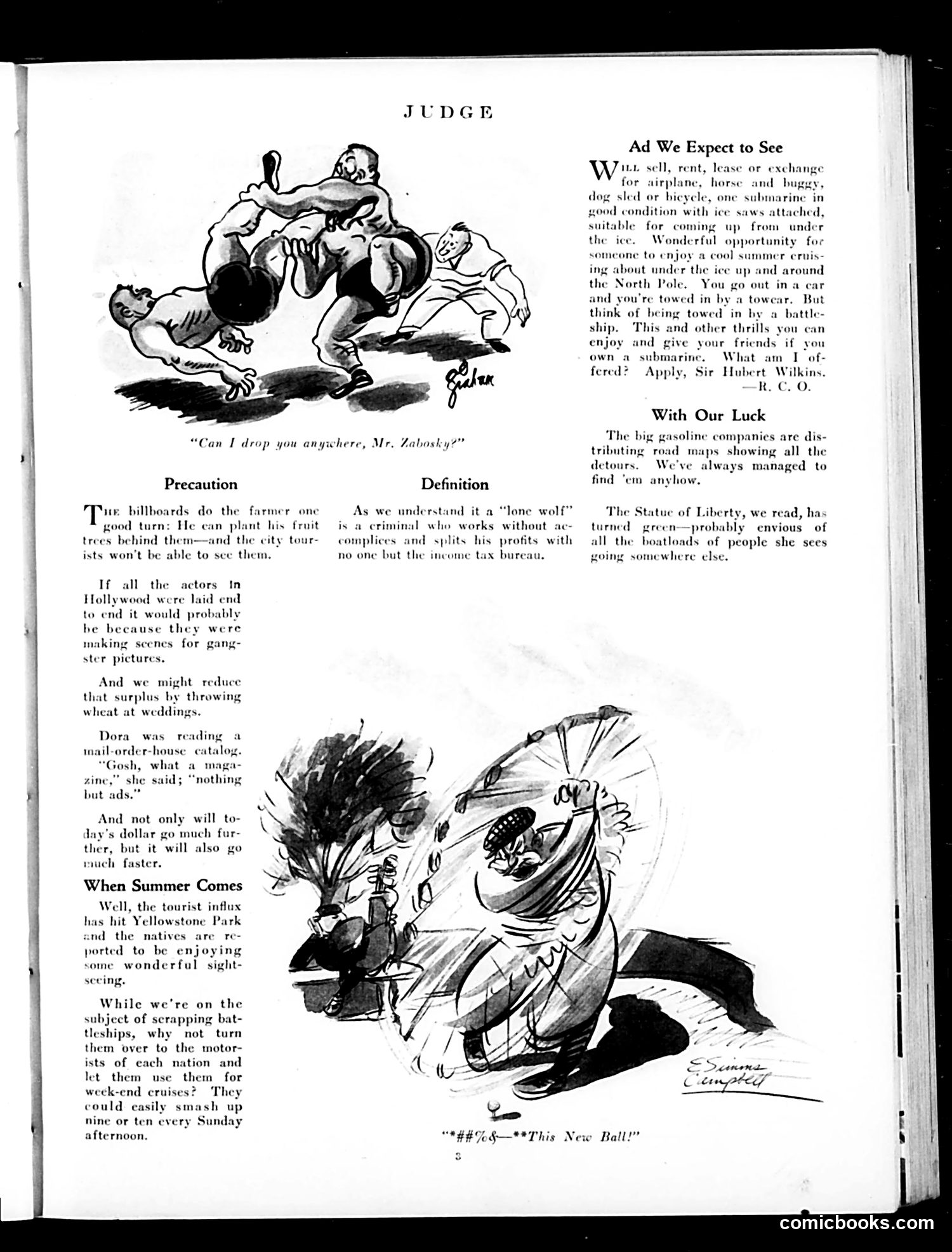
# Analysis of Judge Magazine Page This page contains satirical commentary on 1920s American life and economics. The top cartoon, "Can I drop you anyplace, Mr. Zalozky?" depicts a chauffeur struggling to carry an overweight passenger, satirizing wealthy individuals who exploit workers. The "Precaution" section mocks billboard advertising's environmental impact and Hollywood's gangster films. The "Definition" section jokes that a "lone wolf" in criminal terms avoids paying taxes—a commentary on wealthy tax evasion. The bottom cartoon, "This New Ball!" shows a woman in a car accident, likely satirizing dangerous driving habits or poor automobile safety during the early automotive era. Overall, the page critiques wealth inequality, labor exploitation, tax avoidance, and new consumer culture problems emerging in Jazz Age America.
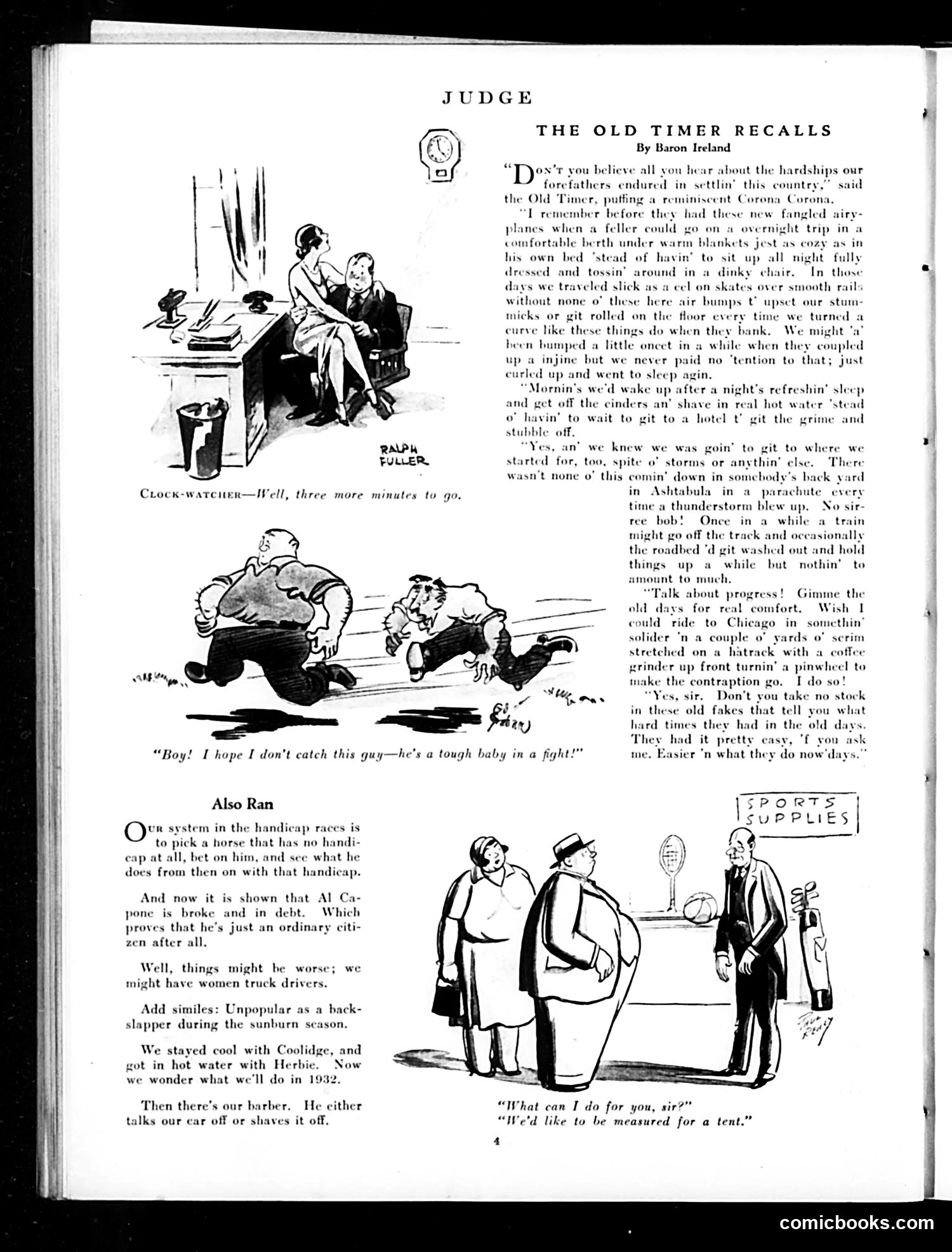
# Analysis of Judge Page This page contains two distinct sections: **"The Old Timer Recalls"** (top): A nostalgic monologue where an elderly man reminisces about hardships of train travel in earlier eras—sleeping upright, rough conditions, derailments. The satire mocks romantic nostalgia for "the old days," suggesting modern comfort (like hotels) is preferable, despite people's tendency to idealize the past. **"Also Ran"** (bottom): A series of brief comic observations about contemporary issues. References include Al Capone (likely about his legal troubles), unpopular backslappers, and barbers. The sports supplies cartoon depicts two portly men requesting to be "measured for a tent"—mocking their large size. The overall theme: debunking sentimental myths about previous eras while satirizing current social and public figures.
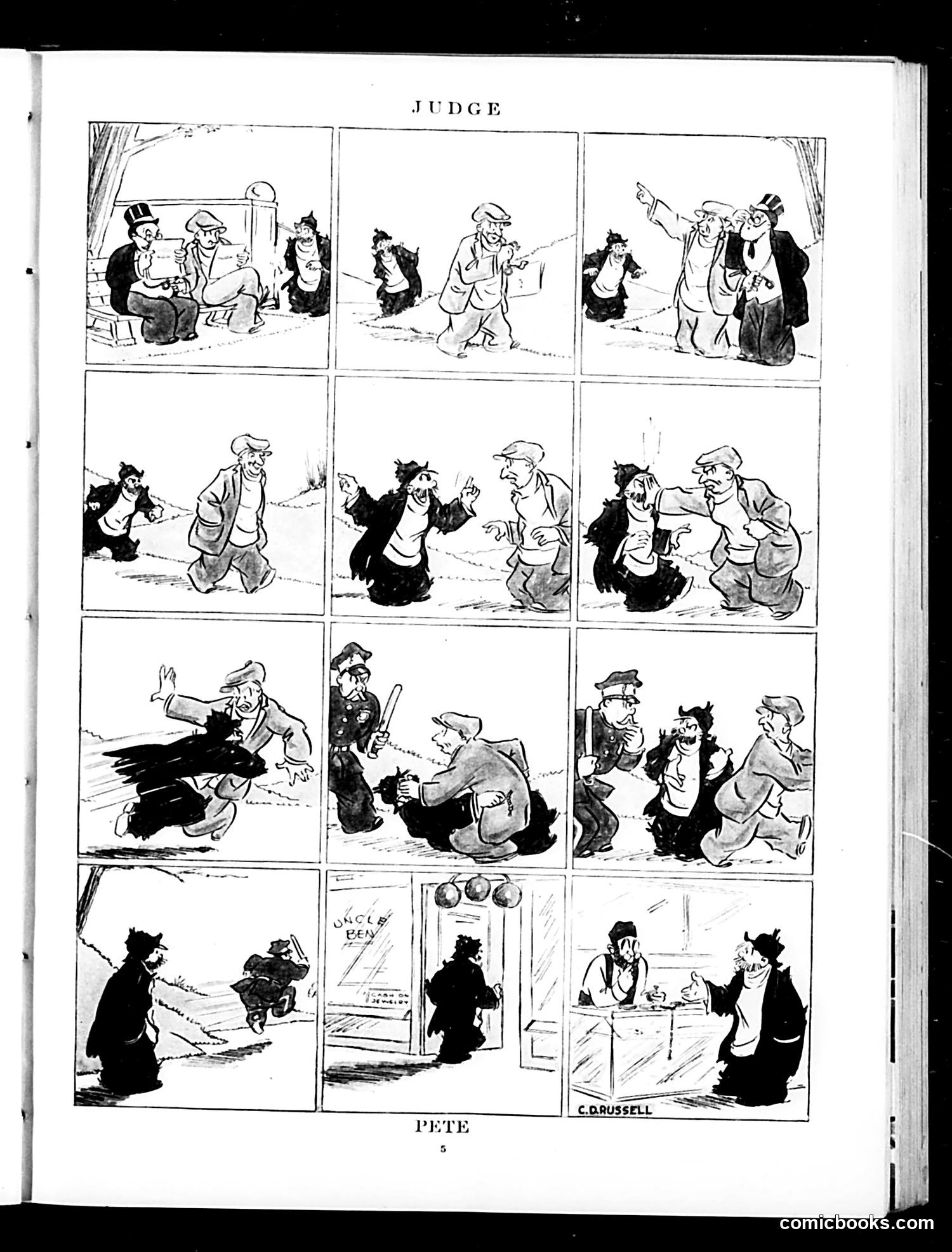
# "Judge" Comic: "Pete" (Political Satire) This is a sequential comic strip titled "Pete" by C.D. Russell satirizing what appears to be judicial or legal proceedings. The narrative follows a character through various encounters with authority figures and law enforcement. The strip depicts Pete in conflict with officials—being questioned, arrested, or judged. The humor relies on slapstick physical comedy (characters falling, fighting) combined with commentary on legal systems or police conduct. Without clearer identifying marks or dates, the specific political target remains unclear. However, the repeated confrontations with uniformed authority and the final "Uncle Ben" reference suggest commentary on either crime, justice system corruption, or police abuse—common *Judge* magazine themes during the Gilded Age/Progressive Era.
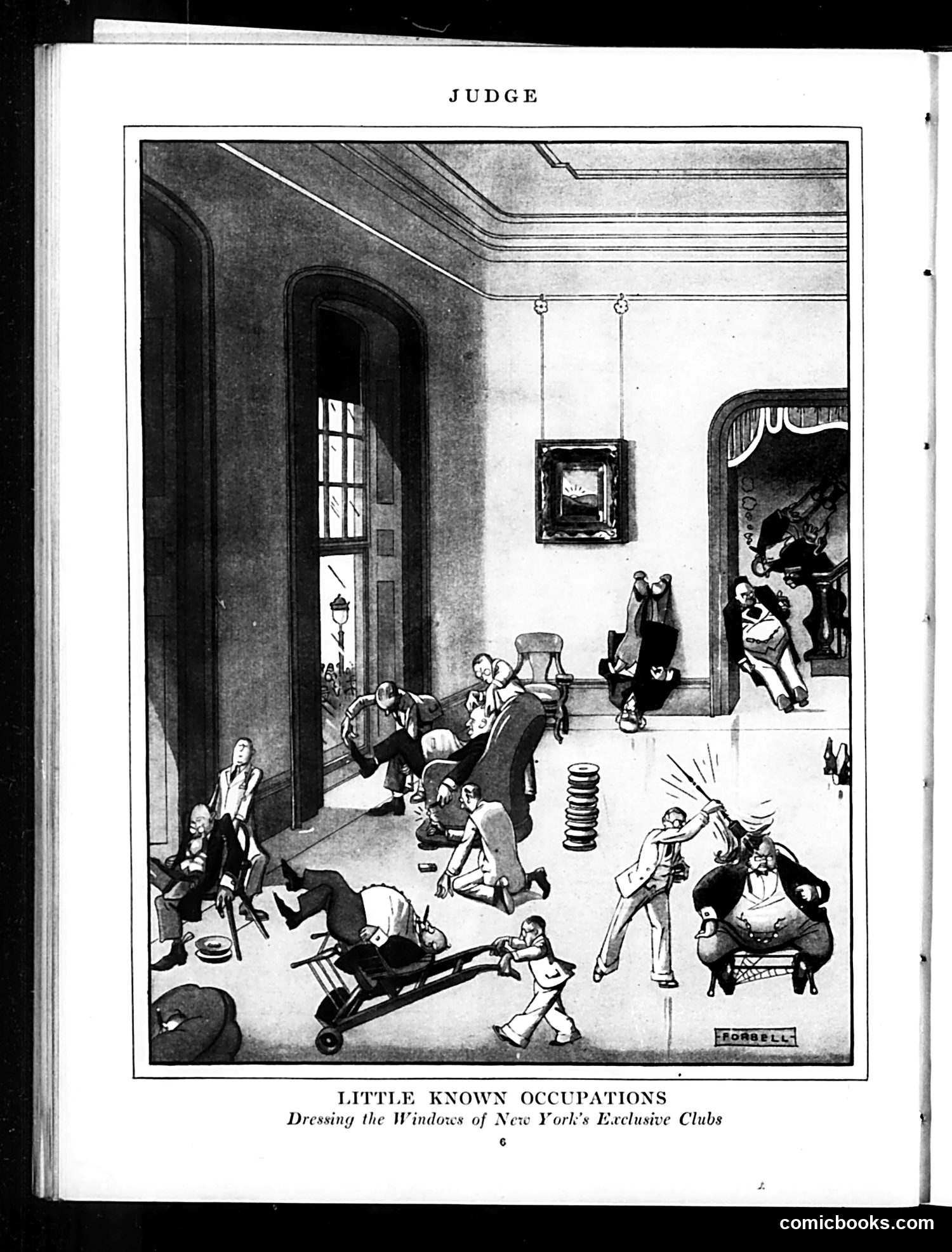
# Analysis This is a satirical illustration titled "Little Known Occupations: Dressing the Windows of New York's Exclusive Clubs." The cartoon depicts an ornate interior—apparently a high-end club—where wealthy gentlemen are being arranged and dressed like mannequins in a shop window display by workers and servants. The satire mocks the artificiality and performative nature of exclusive New York club life. The "occupations" are ironic: the wealthy men aren't actually *doing* anything productive—they're being positioned and styled for display, suggesting their primary function is to exist as decoration within these prestigious institutions. This critiques the leisure class's lack of genuine employment or purpose, portraying them as ornamental rather than contributory to society. The signed work (Cesare) uses visual humor to expose social pretension.
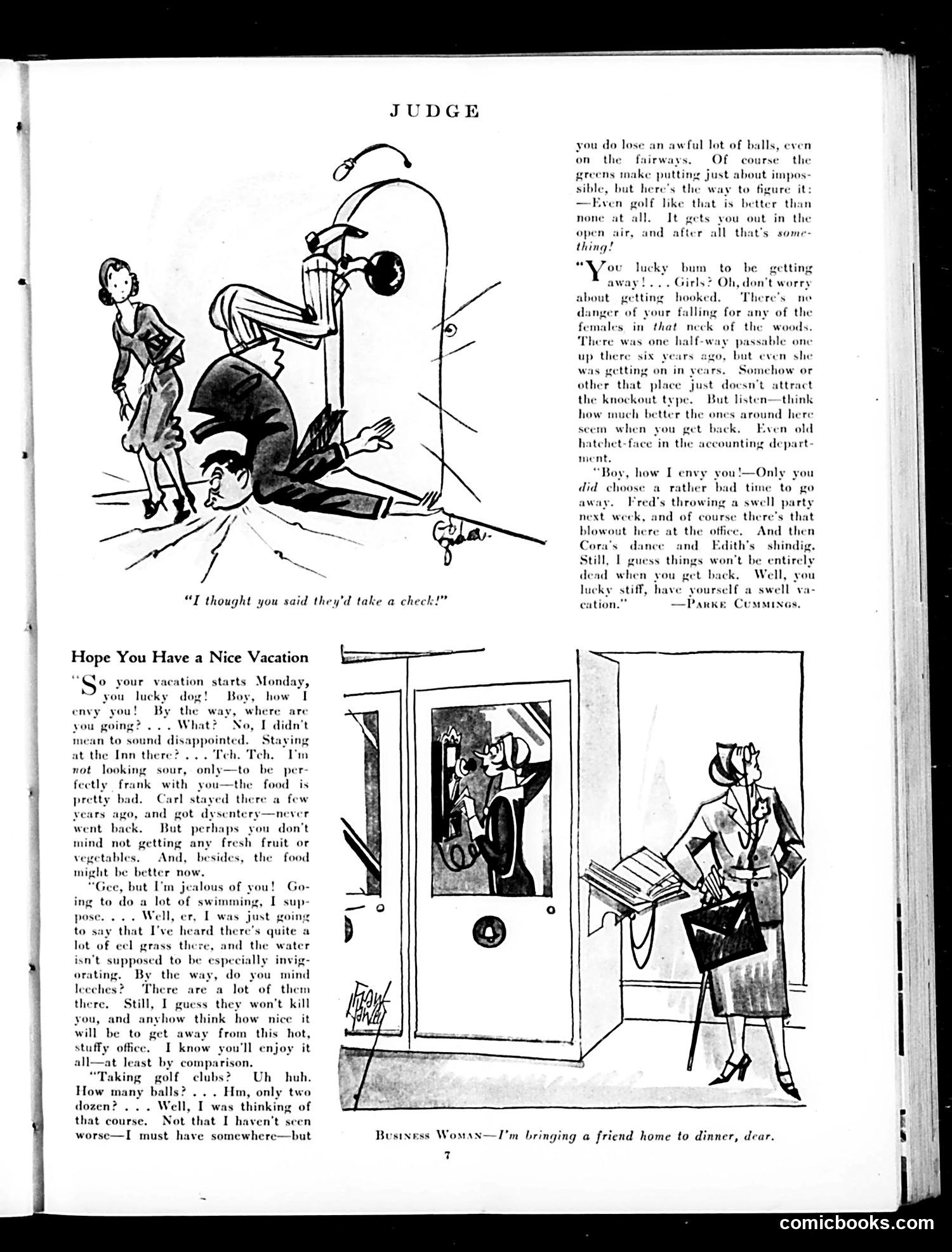
# Analysis of Judge Magazine Page This page contains two separate pieces: **"Judge" cartoon (top):** Shows a man at a fishing rod caught up in equipment while a woman watches. The caption "I thought you said they'd take a check!" satirizes men's excuses about leisure activities—the fisherman claims fishing is affordable but is clearly disaster-prone and expensive in practice. It's social satire about masculine pastimes and financial dishonesty within relationships. **"Hope You Have a Nice Vacation" (bottom):** A workplace scenario where someone jealously discusses a coworker's vacation plans. The satire targets office dynamics and resentment of colleagues' time off, while the speaker remains stuck at work in the heat. The cartoon criticizes workplace jealousy and the gap between vacation fantasy and office reality. Both pieces use humor to mock everyday social situations and relationship dynamics.
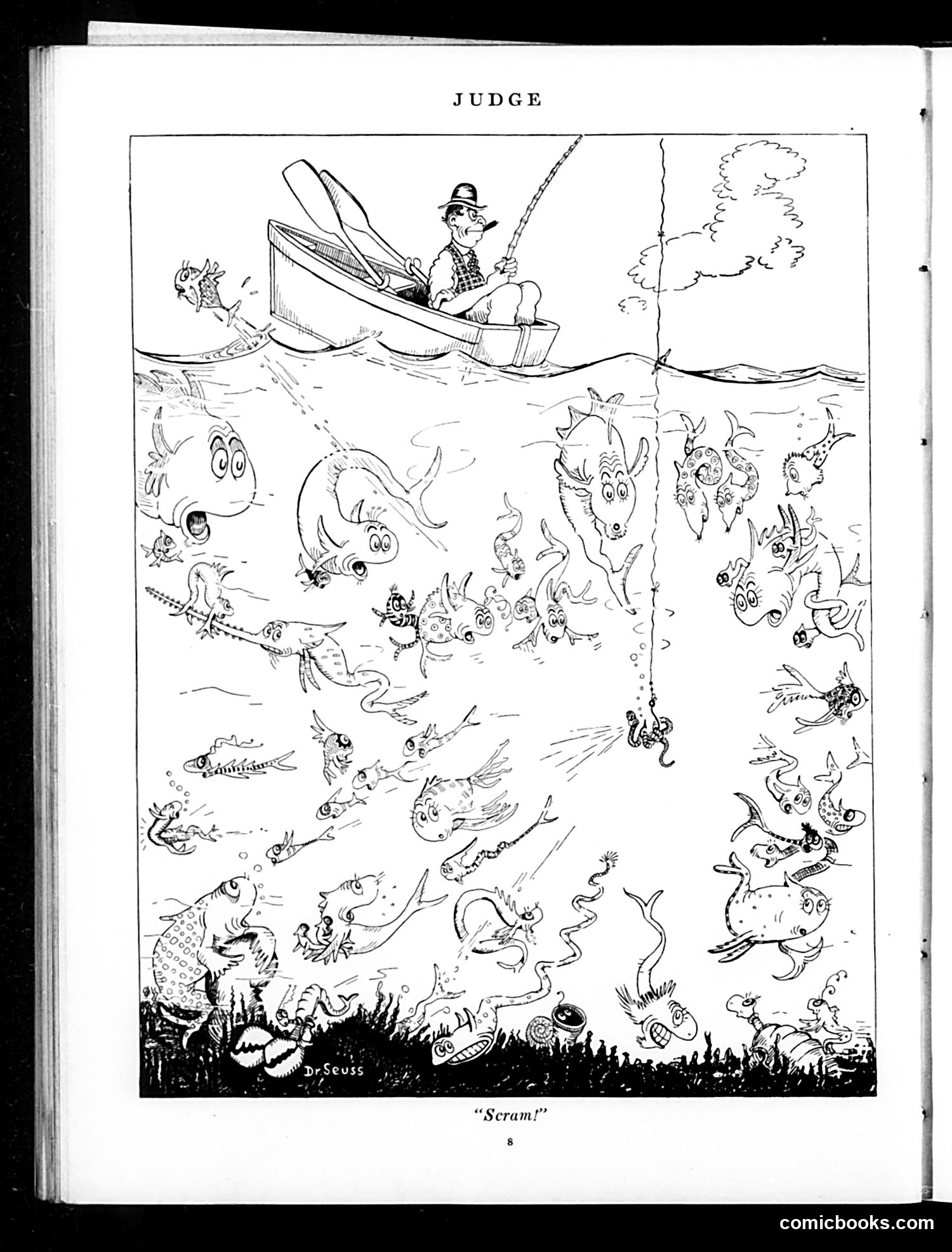
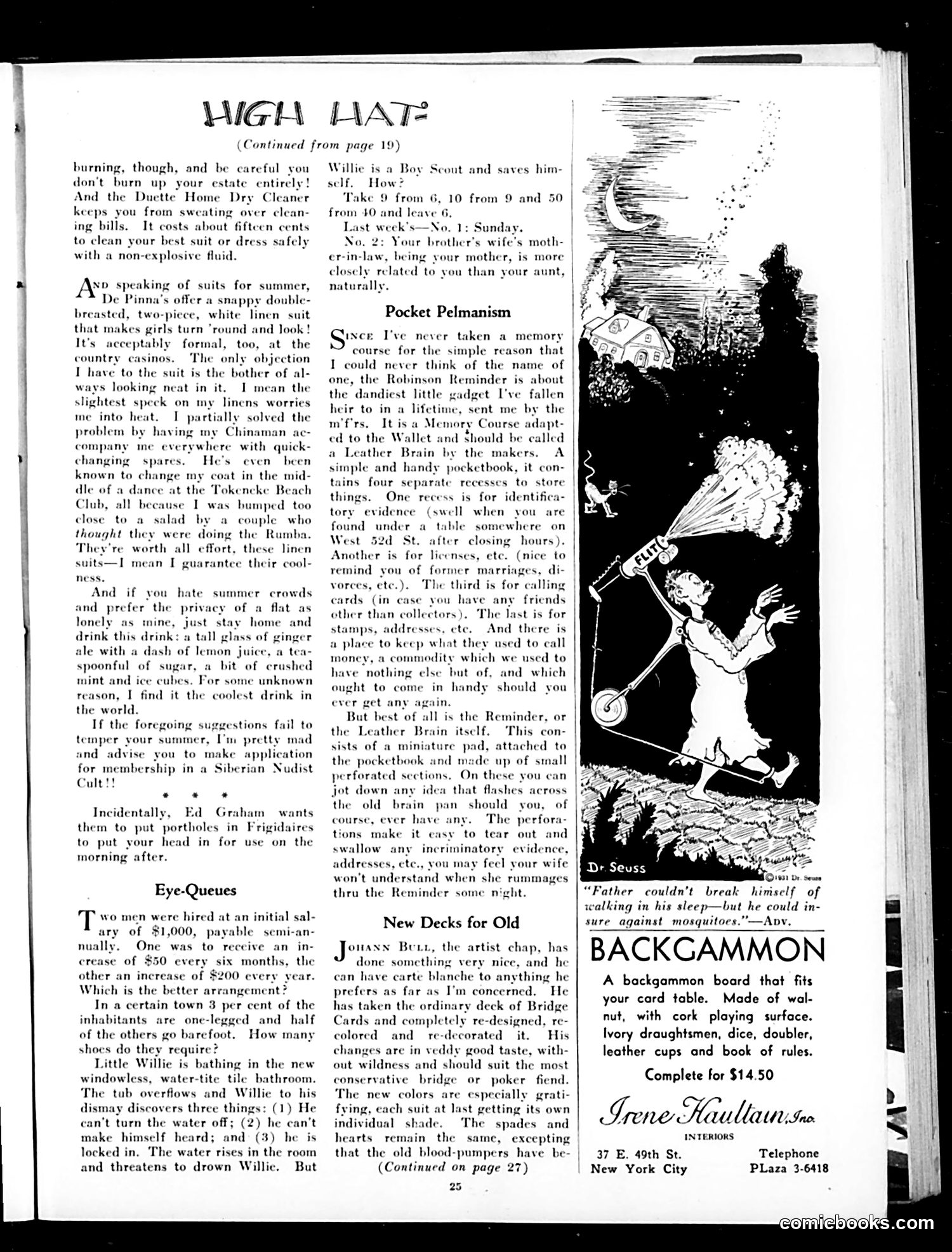
# "Scram!" by Dr. Seuss This cartoon by Dr. Seuss depicts a fisherman in a boat above water, casting his line downward at a chaotic underwater scene. Below, dozens of fantastical sea creatures—fish with exaggerated features, tentacled beings, and other whimsical monsters—appear to be swarming or attacking the fishing line in a frenetic mass. The title "Scram!" suggests the creatures are being told to scatter or flee. The satire likely comments on either overfishing, the perceived chaos of marine life, or possibly serves as social commentary using the underwater scene metaphorically. The crowded, aggressive composition emphasizes disorder and mayhem beneath an innocuous surface activity. Without additional context about Judge magazine's issues from this period, the specific political or social target remains unclear.
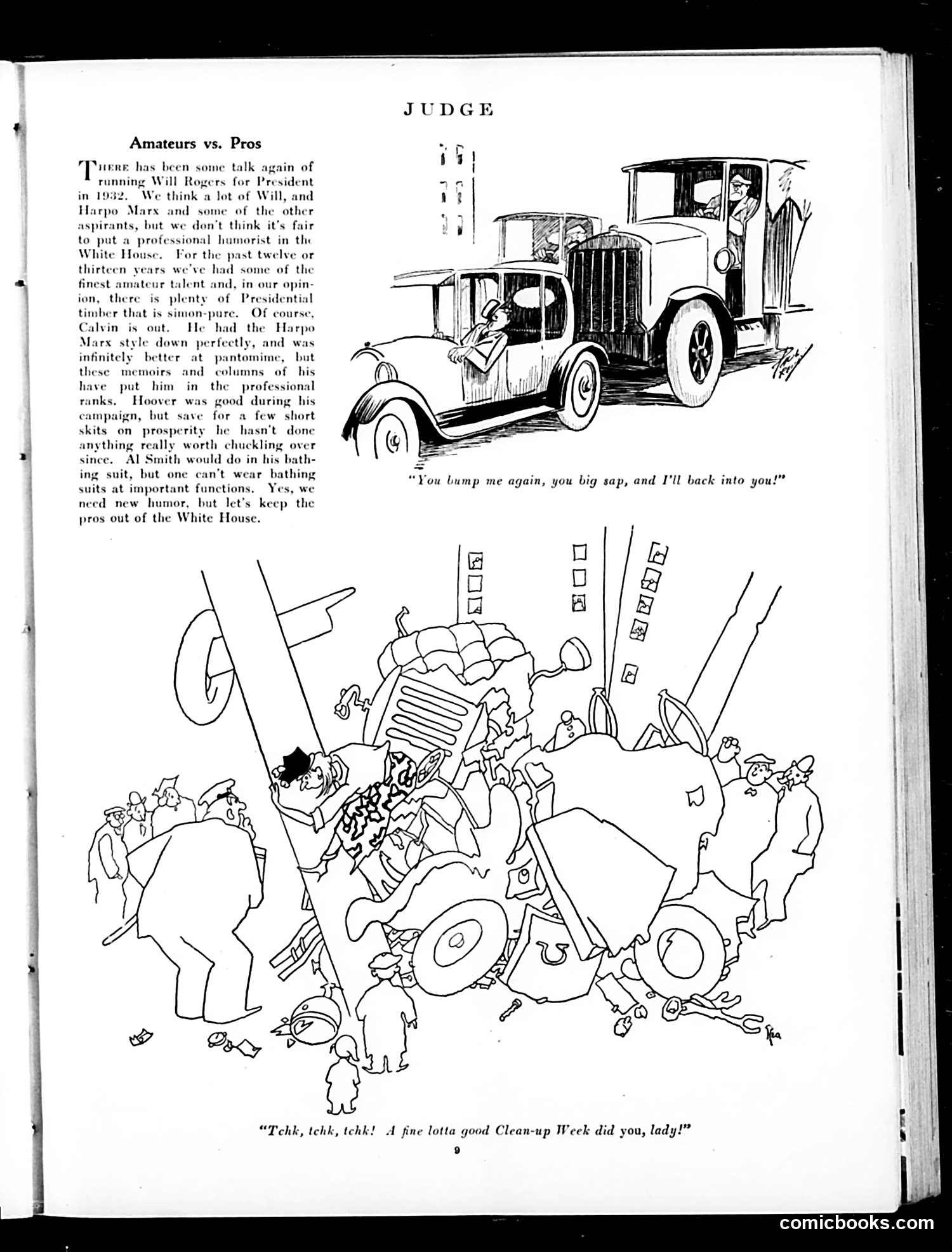
# Political Satire Analysis This 1932 *Judge* page satirizes the idea of electing professional entertainers as president. The text mocks recurring proposals to run **Will Rogers** for president, alongside **Harpo Marx** and other comedians, arguing comedians shouldn't hold high office. The article uses ironic logic: it claims the U.S. has had "fine amateur talent" as president for years—clearly mocking **Calvin Coolidge** and **Herbert Hoover** as inadvertent comedians whose actual presidencies were farcical. **Al Smith** (likely the 1928 Democratic candidate) is dismissed as merely presentable. The cartoons illustrate this theme through slapstick: the top shows cars colliding with comedic dialogue; the bottom depicts massive traffic chaos and wreckage during "Clean-up Week," suggesting government incompetence creates disaster. The satirical point: current professional politicians are already running the country like comedians—so why hire actual entertainers? It's biting social commentary on 1930s economic failure and political dysfunction.
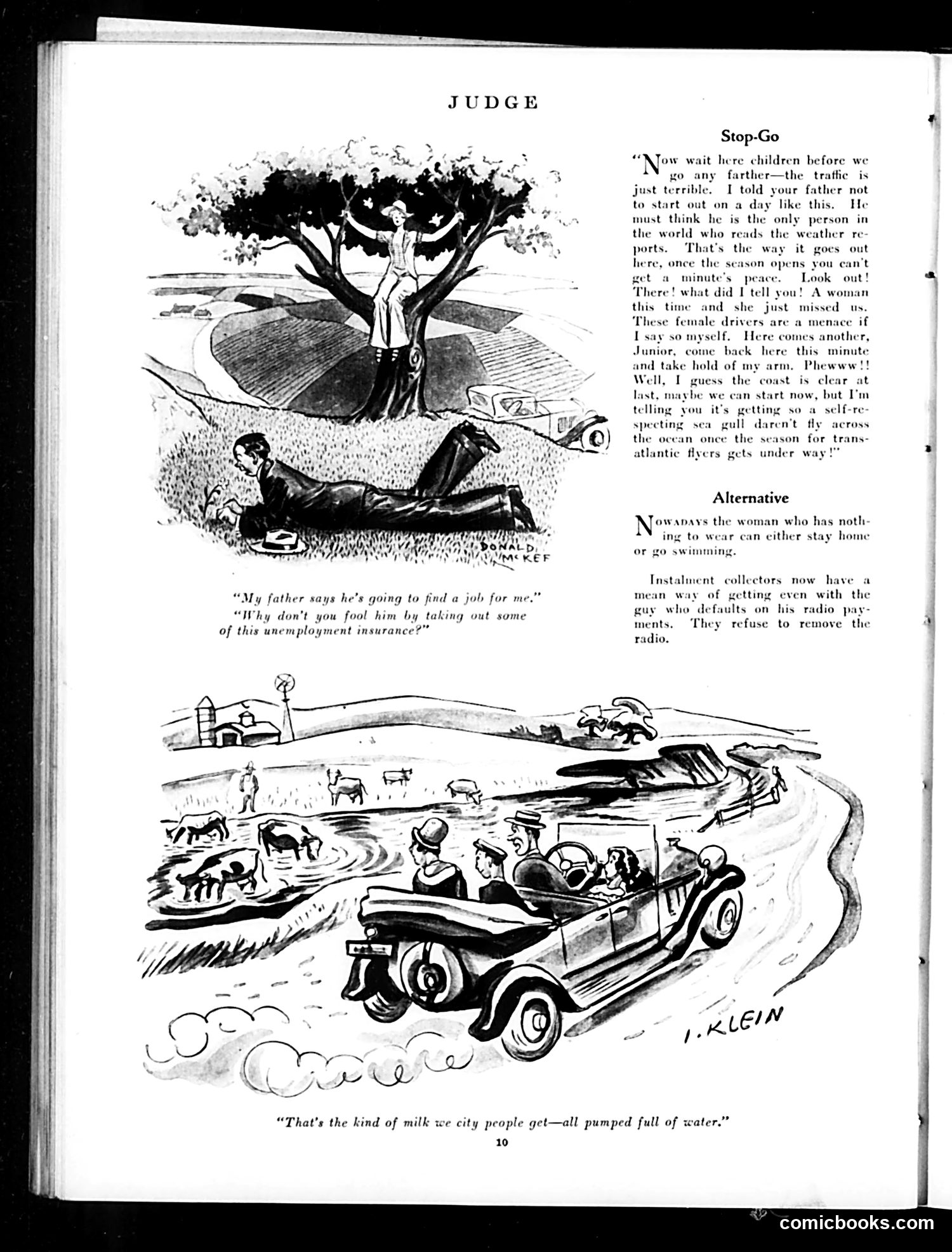
# Explanation for Modern Readers This page from *Judge* magazine contains three separate satirical pieces reflecting Depression-era concerns: 1. **Top cartoon ("Stop-Go")**: Mocks suburban traffic congestion and anxious mothers during vacation season. The woman's complaint about female drivers and sea gulls reflects period stereotypes about women behind the wheel. 2. **Middle cartoon**: Satirizes economic desperation. A father promises to find his son employment, while another jokes about "unemployment insurance"—likely referencing New Deal programs. The "watered milk" joke suggests city people getting inferior products. 3. **"Alternative" section**: Brief satirical quips. One mocks women's fashion ("nothing to wear"). The second targets installment debt during the Depression—when someone defaults on radio payments, collectors' revenge is petty: they won't remove the radio, leaving it as a humiliating reminder of non-payment. Overall, these pieces capture working-class anxieties: job insecurity, consumer debt, and social embarrassment during economic hardship.