A complete issue · 36 pages · 1929
Judge — December 14, 1929
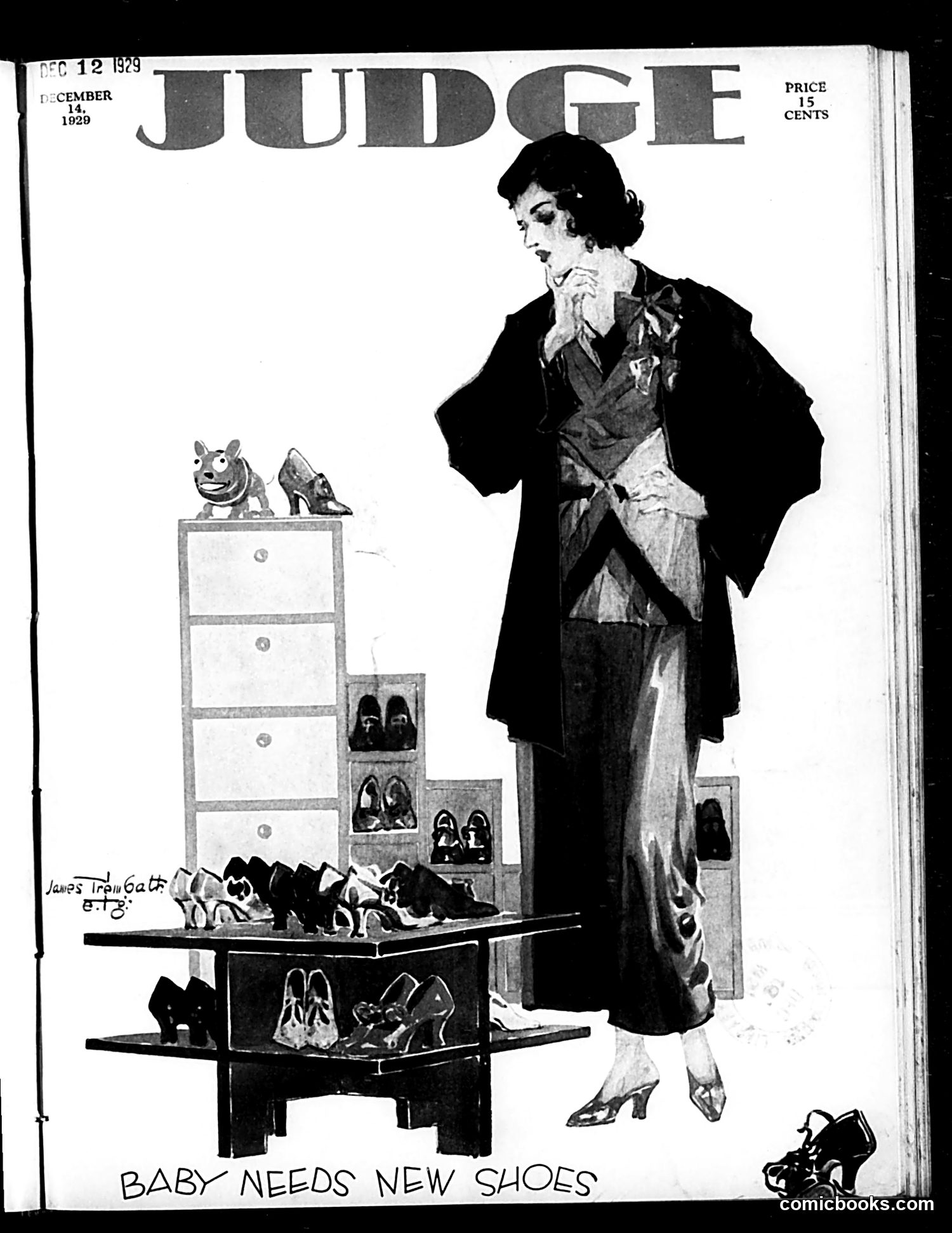
# Analysis of Judge Magazine Cover, December 14, 1929 This cover satirizes excessive consumer spending on children's clothing, particularly shoes. A fashionably dressed woman stands amid elaborate display furniture showcasing numerous infant shoes and boots. The caption "BABY NEEDS NEW SHOES" delivers the joke: the absurd abundance of footwear suggests either parental overindulgence or the pressure of commercial marketing to constantly purchase new items for children. The timing is significant—December 1929, just weeks after the stock market crash. The cartoon likely critiques both pre-crash consumerism and the disconnect between frivolous spending on luxury baby goods and the economic crisis unfolding. The illustration satirizes the era's emerging consumer culture and advertising industry's ability to manufacture artificial "needs."
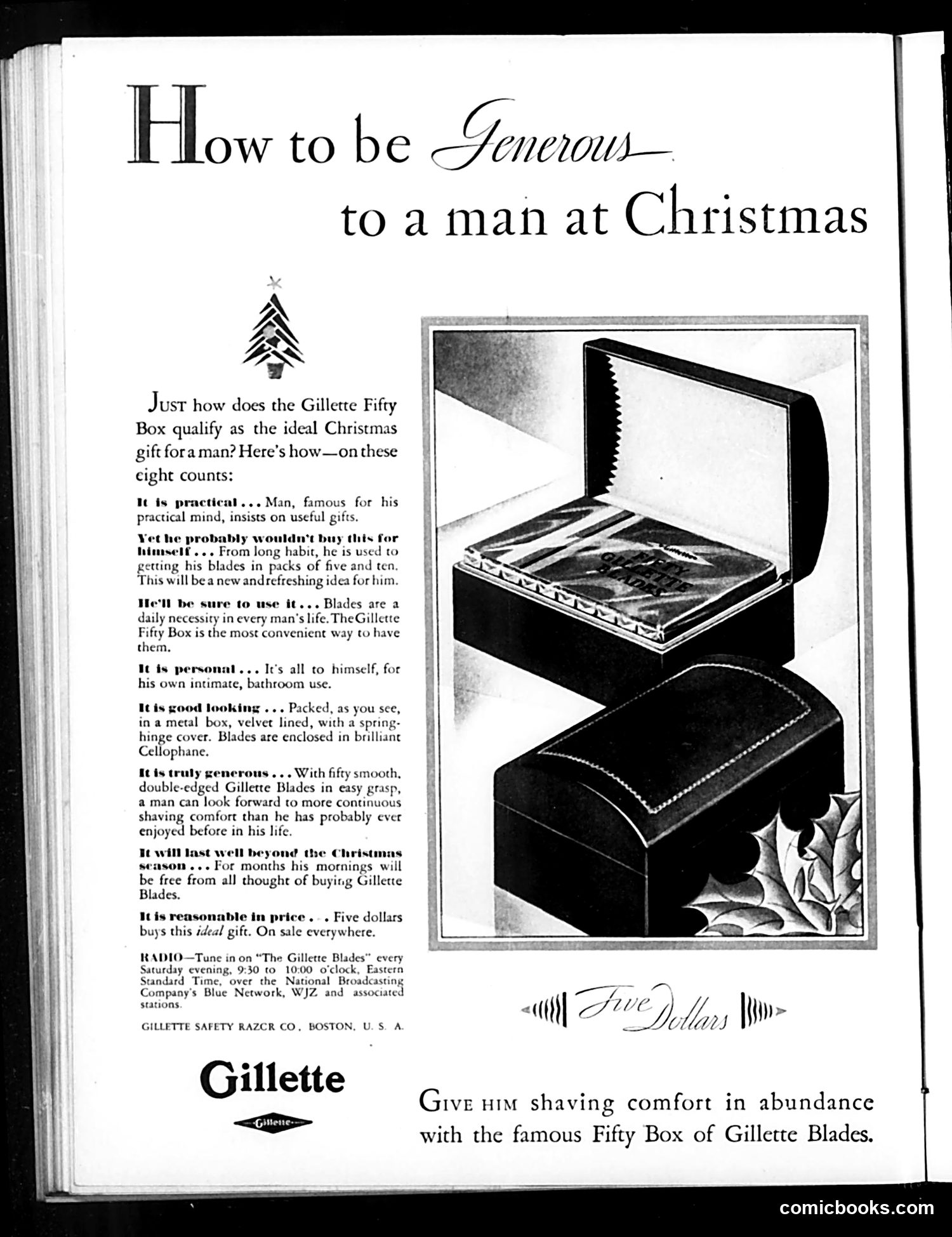
# Analysis This is **not a cartoon or satire page**, but rather a **straightforward advertisement** for Gillette razor blades, disguised as editorial content. The page promotes the Gillette Fifty Box as an ideal Christmas gift for men. It lists eight selling points: practicality, novelty (men traditionally bought blades in smaller packs), daily utility, personal use, attractive packaging, superior shaving comfort, longevity, and affordable pricing at five dollars. The only visual humor is mild—the product presentation with holly decoration suggests Christmas gifting. This represents early 20th-century advertising strategy: presenting commercial messages as lifestyle advice rather than explicit sales pitches. There's no political satire or social commentary present; it's purely a consumer product endorsement.
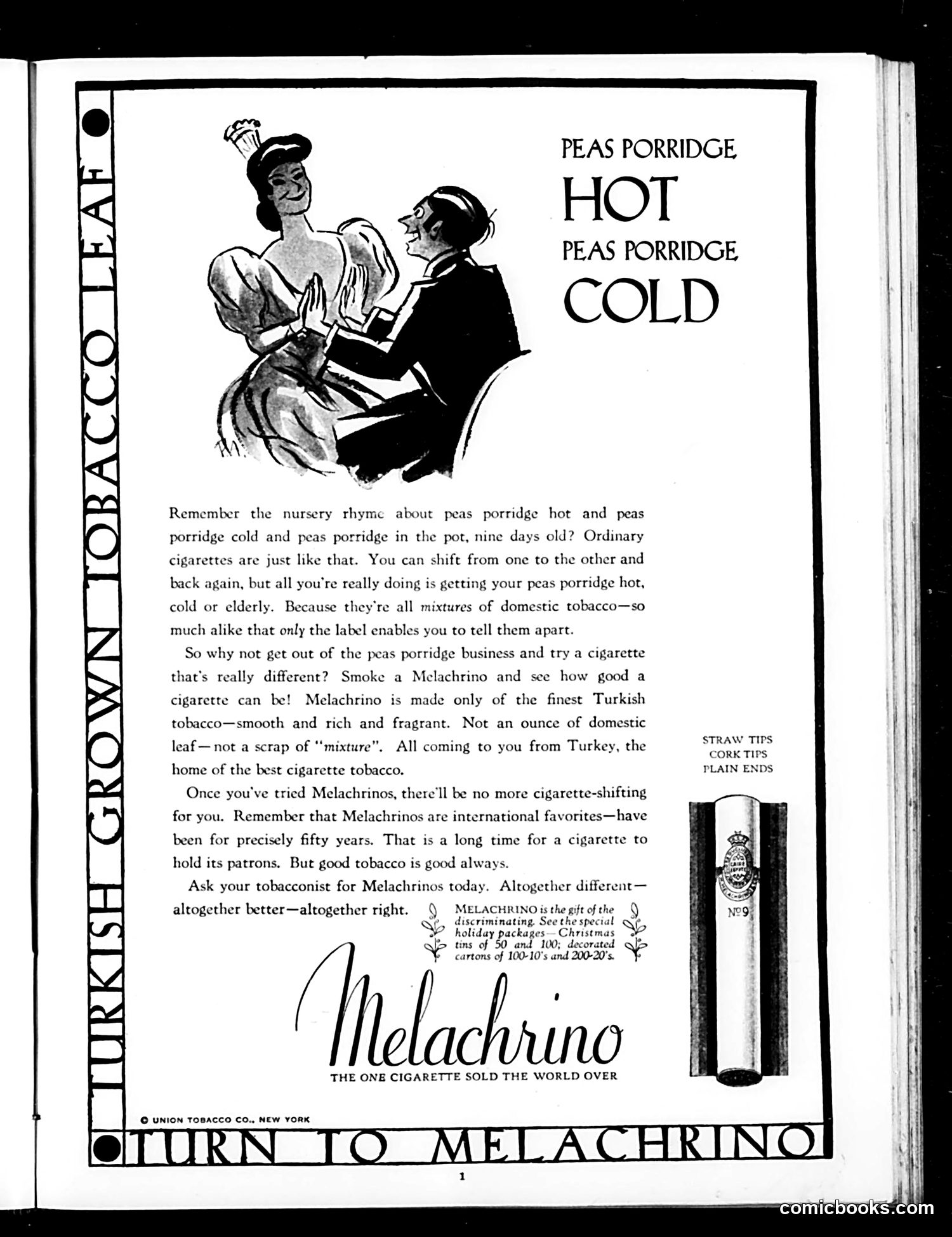
# Melachrino Cigarette Advertisement This page is primarily a **cigarette advertisement** for Melachrino brand, not political satire. The illustration shows a couple in formal attire, with the man appearing to offer the woman a cigarette. The ad uses the "Peas Porridge" nursery rhyme as a hook—comparing switching between hot and cold peas porridge to switching between different cigarette brands. The copywriter argues that since all cigarettes are similar "mixtures of domestic tobacco," consumers should try Melachrino instead, marketed as made from "finest Turkish tobacco." The humor relies on the outdated premise that cigarette brands are interchangeable. This reflects **early-20th-century advertising** before health concerns were widely acknowledged. The tagline claims Melachrino has been "an international favorite" for fifty years.
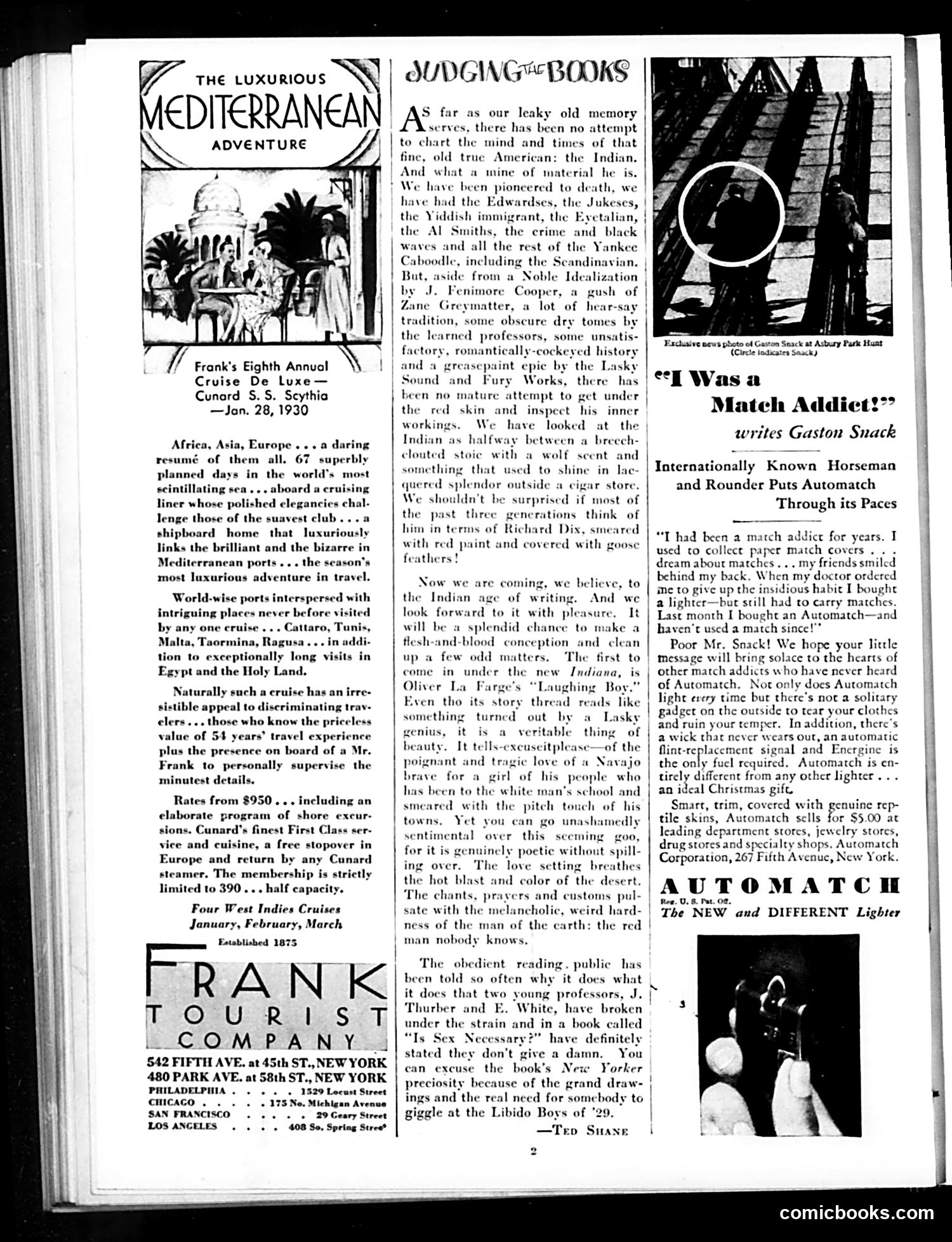
# Page Analysis This page is primarily **advertising and book reviews** rather than political satire. The left side features ads for Frank Tourist Company's Mediterranean cruise (described as "luxurious adventure") and mentions their "Eighth Annual Cruise De Luxe" on the S.S. Scythia departing Jan. 28, 1930. The center contains "Judging the Books," a literary review section discussing new publications, including commentary on Native American representation in literature. The right side features an article titled "I Was a Match Addict?" by Gaston Snack about an "Automatch" product—a novelty lighter sold for $5.00. The piece humorously chronicles the author's obsession with collecting matchbooks before discovering this alternative. The page lacks significant political cartoons or social satire, instead showcasing Judge's commercial content typical of 1930s magazines.
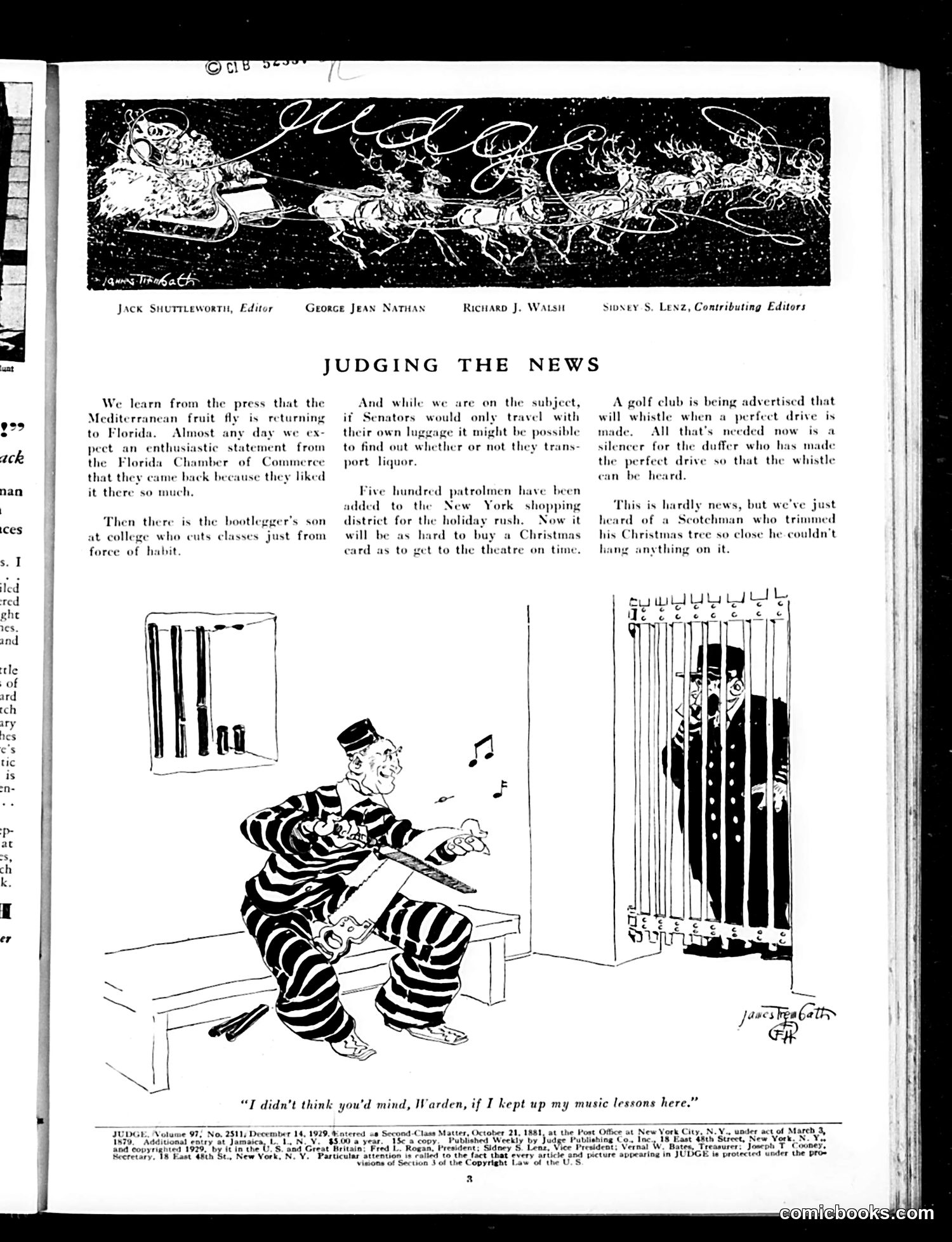
# "Judging the News" - December 14, 1929 This page contains editorial commentary and two cartoons satirizing contemporary social issues. The main cartoon depicts a prisoner in striped uniform playing a flute while guards peer through cell bars, with the caption: "I didn't think you'd mind, Warden, if I kept up my music lessons here." The satire appears to mock either prison conditions or an inmate's audacity in demanding recreational privileges. The prisoner's casual demeanor contrasts with his confinement, suggesting commentary on either prisoner rights or absurd entitlement. The brief editorial items above joke about the Mediterranean fruit fly returning to Florida, a bootlegger's son skipping college classes, and holiday shopping congestion in New York—typical 1920s-era social observation and light satirizing of contemporary inconveniences.
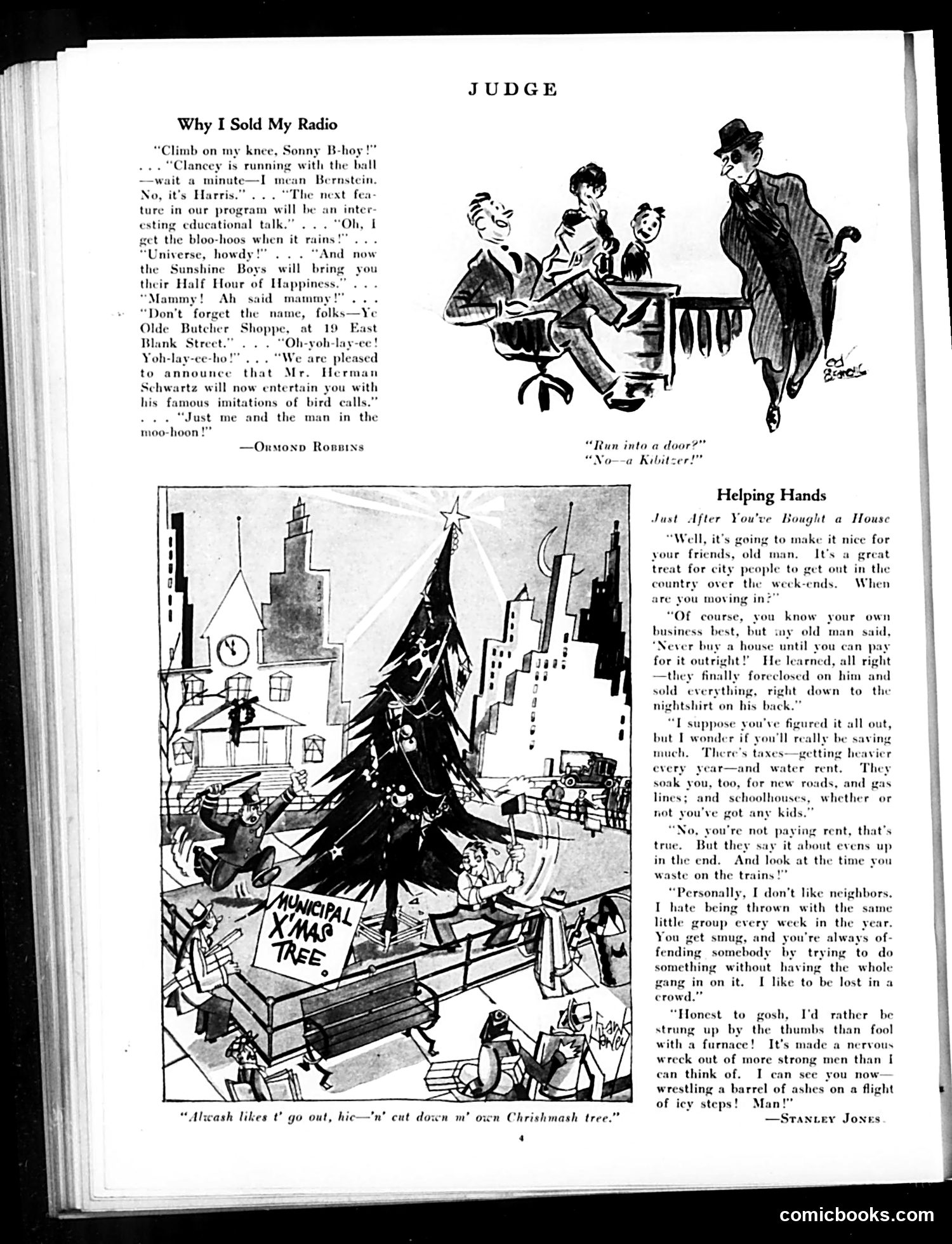
# Analysis of Judge Magazine Page This page contains two separate pieces of satire: **"Why I Sold My Radio"** (top) mocks the proliferation of radio advertising and interruptions in the 1920s-30s. The author complains that radio programs constantly cut to advertisements and promotional announcements, making listening frustrating. The cartoon shows a family gathered around a radio being bombarded by commercial messages. **"Helping Hands: Just After You've Bought a House"** (bottom) satirizes post-purchase expenses for new homeowners. The large illustration depicts a chaotic Christmas tree decorated with bills and financial obligations—taxes, water rent, gas lines, schoolhouse expenses. The accompanying text humorously warns that homeownership costs far exceed the initial purchase price, with neighbors constantly soliciting for community improvements. It's social commentary on the hidden burdens of home ownership.
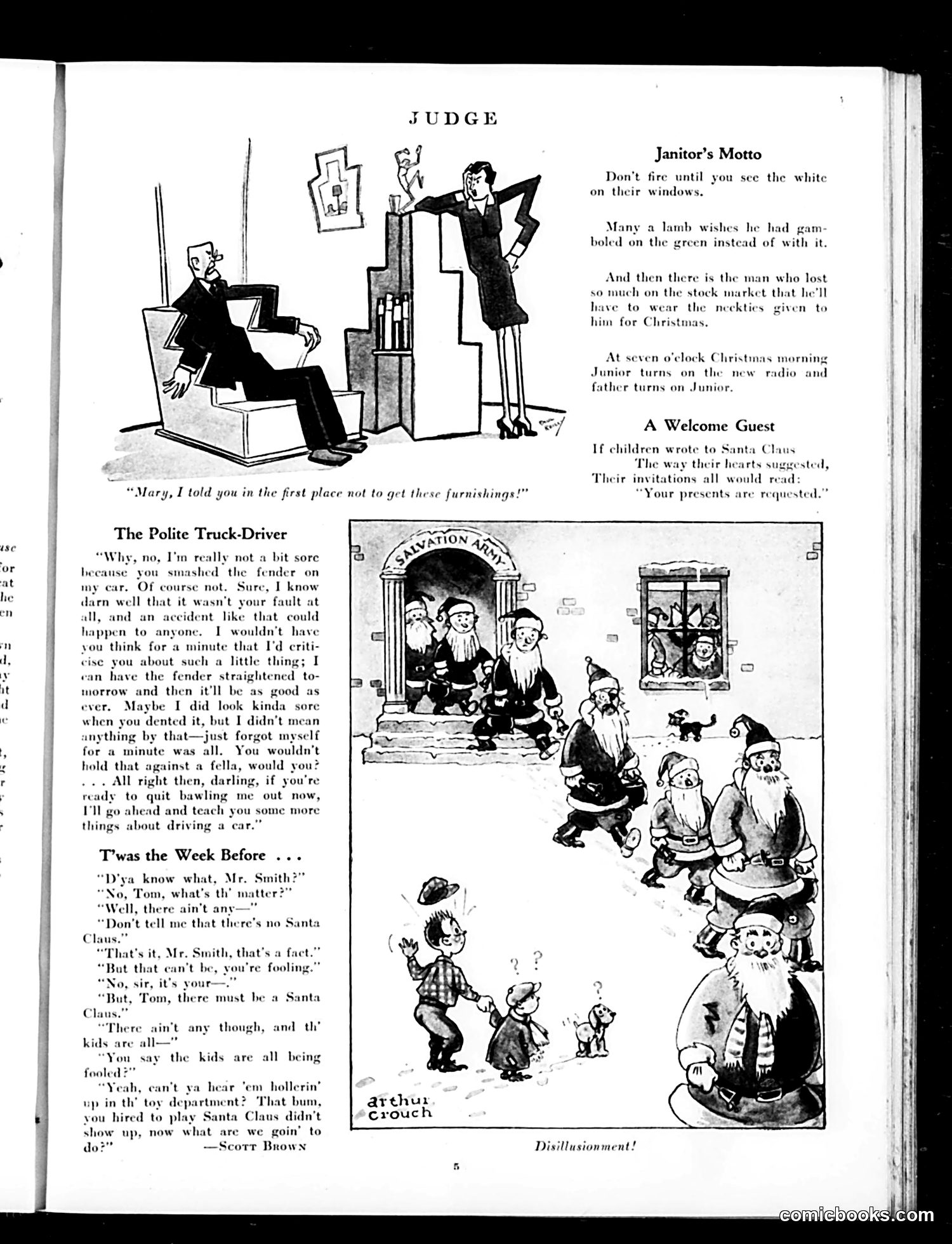
# Judge Magazine Page Analysis This page contains three separate humor pieces from Judge magazine (a satirical publication): 1. **"The Polite Truck-Driver"** (top): A domestic scene where a husband apologizes excessively to his wife about a minor car fender-bender, exemplifying overly formal politeness in contrast to the crude stereotype of truck drivers. 2. **"'Twas the Week Before..."** (left): A dialogue satirizing the commercialization of Christmas and Santa Claus, mocking how department stores employ fake Santas while denying children's belief in the real Santa—critiquing holiday retail cynicism. 3. **"A Welcome Guest"** (right): Arthur Crouch's illustration showing Santa surrounded by children in a Salvation Army setting, humorously depicting children's Christmas wish letters requesting gifts rather than charitable donations—commenting on materialism versus charity. These pieces reflect early-to-mid 20th century concerns about commercialism, class dynamics, and holiday traditions.
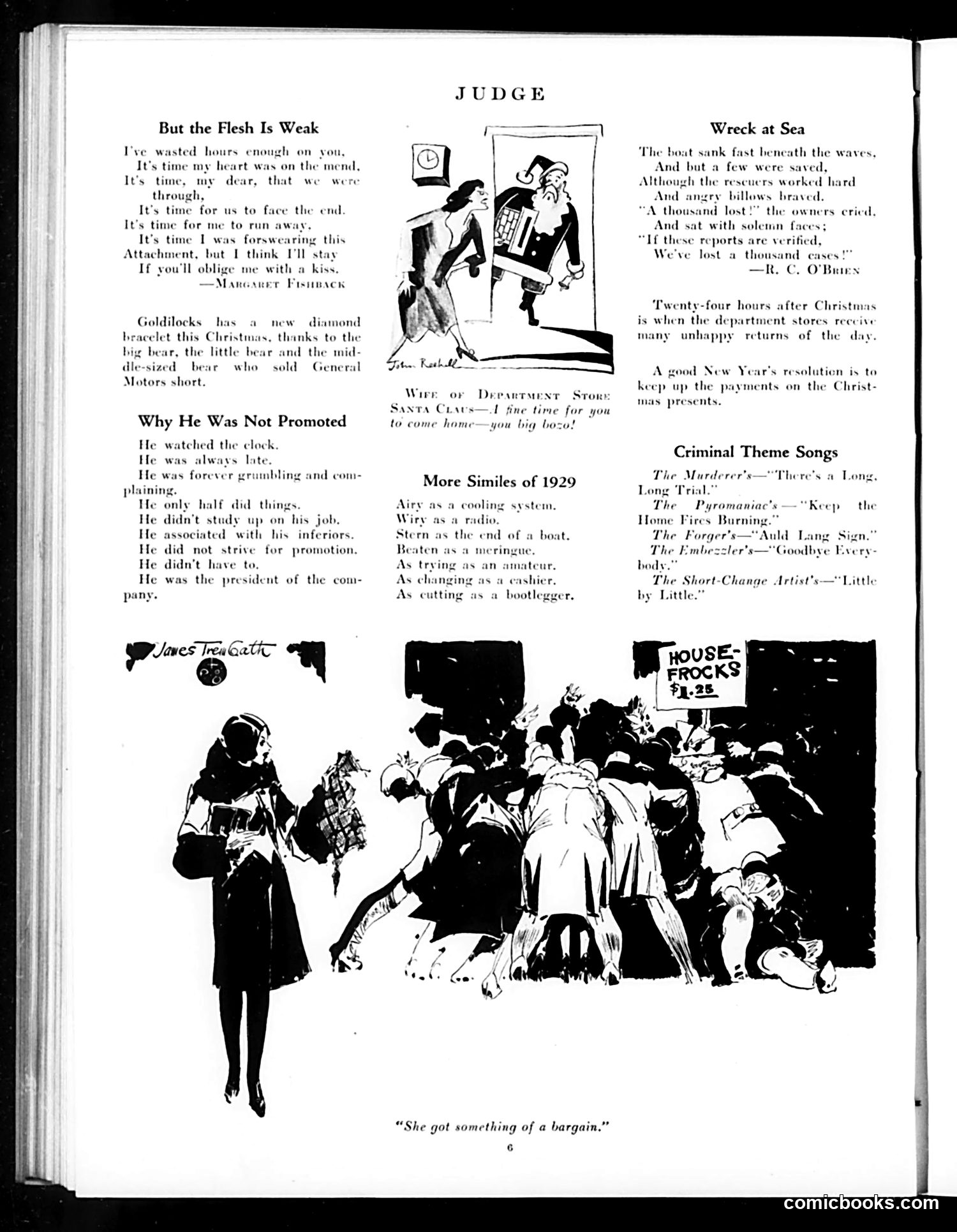
# Analysis: Judge Magazine Page This page contains several satirical humor pieces typical of Judge magazine's 1920s content: **"But the Flesh Is Weak"** (top left): A poem by Margaret Fishback about romantic temptation, illustrated with a couple in an embrace. **"Why He Was Not Promoted"**: A list of character flaws explaining workplace failure—laziness, incompetence, and association with inferiors. Standard workplace satire. **"Wreck at Sea"** and **"More Similes of 1929"**: Poetry and observations about contemporary life and current events. **Bottom cartoon**: Depicts a woman at a "House Frocks $1.25" sale, surrounded by aggressive shoppers fighting over merchandise. The caption "She got something of a bargain" satirizes the chaos of bargain hunting—a relatable consumer culture critique showing how desperately people scrambled for cheap clothing during the economically uncertain late 1920s. The page reflects Jazz Age concerns about work, romance, and consumer behavior.
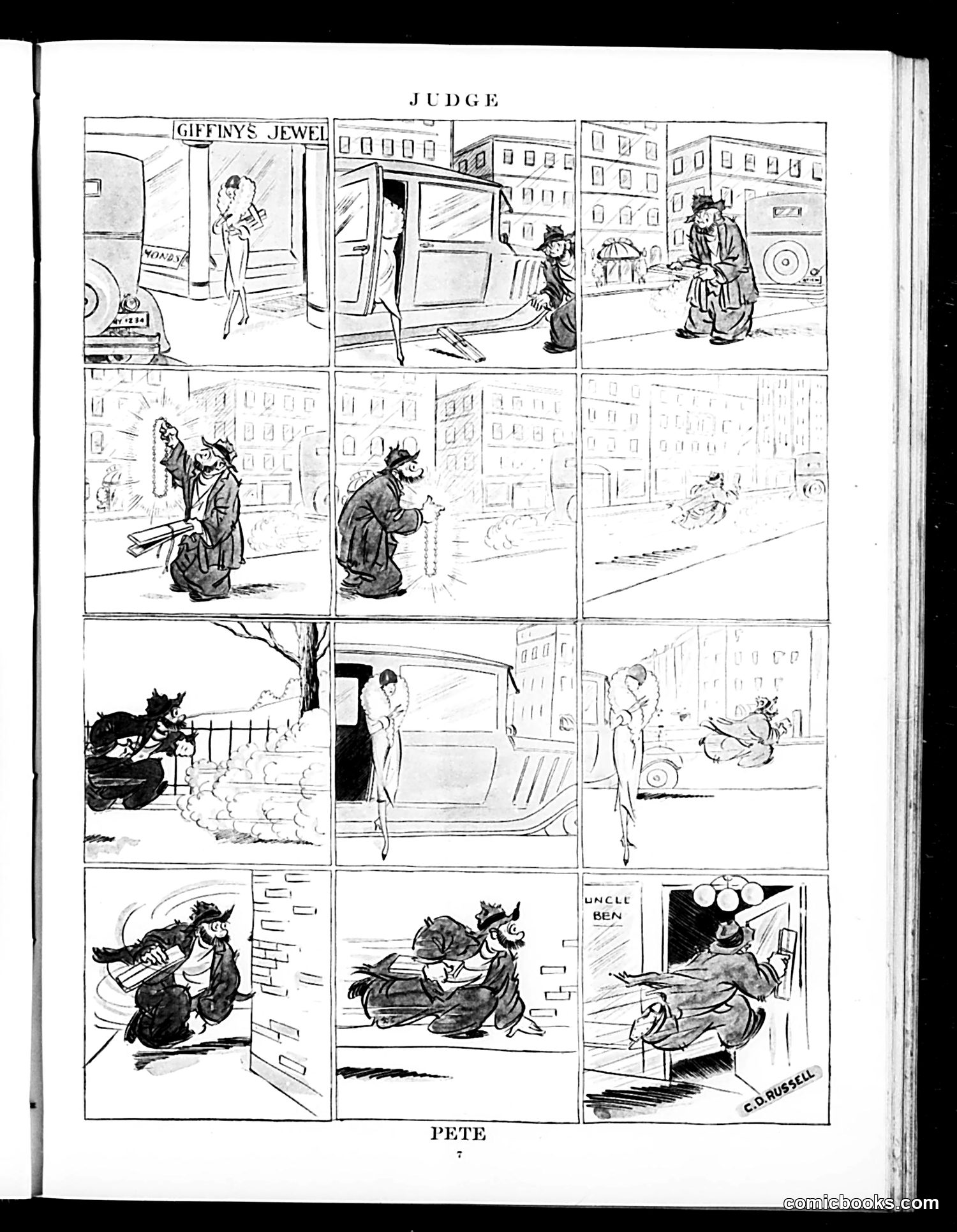
# Judge Comic Page Analysis This page contains two separate comic strips: "Judge" (top) and "Pete" (bottom). The "Judge" strip appears to depict a series of urban street scenes involving what looks like a jewelry store robbery or theft ("Giffiny's Jewel" visible in first panel), with police and civilians responding to the crime. The narrative follows the incident's progression through the city. The "Pete" strip below uses exaggerated animal characters (appearing to be devils or imps) in domestic situations, likely satirizing everyday human behavior or social situations through absurdist humor. Both strips use the visual storytelling format typical of early 20th-century comic strips. Without clearer context about specific dates or contemporary events, the exact political or social references remain unclear, though the "Judge" strip's crime narrative suggests commentary on urban crime or law enforcement.
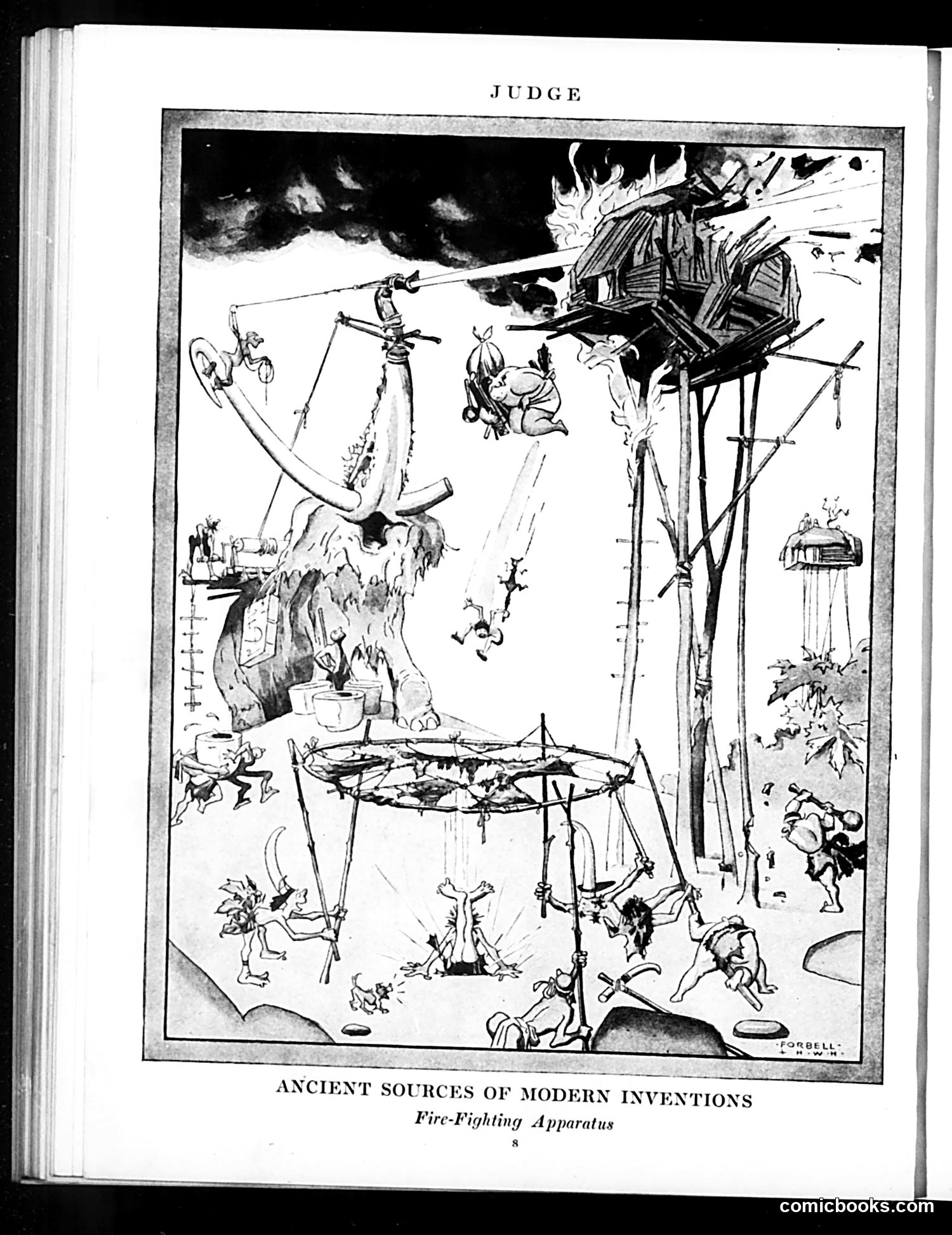
# Judge Magazine: "Ancient Sources of Modern Inventions" This cartoon satirizes fire-fighting technology by depicting its supposed ancient origins. The illustration shows fantastical, absurdly primitive contraptions—bizarre mechanical devices, human-powered pulleys, and crude apparatus—all operated by small figures in chaotic activity. The humor works through contrast: modern fire-fighting equipment is presented as merely elaborate elaborations of ridiculous ancient methods. The elaborate machinery, pipes, and structures appear both impossible and comical, suggesting that firefighting innovation isn't as sophisticated or "modern" as contemporaries believed. The artist (signed "Forbell") mocks either technological progress itself or society's tendency to mythologize invention origins. This appears to be part of a recurring Judge series parodying how modern inventions are credited to ancient sources—a commentary on historical narrative or hubris about technological advancement.
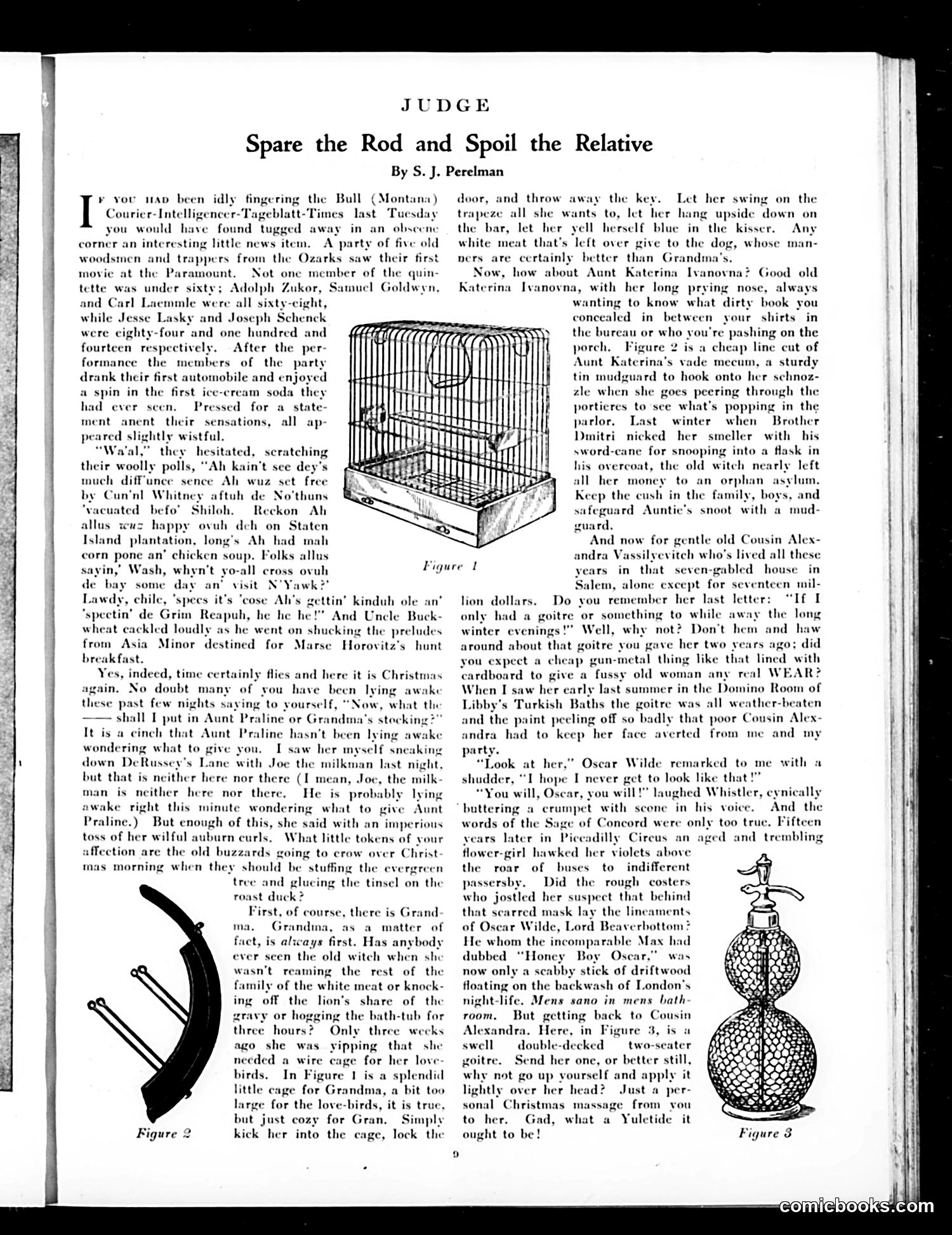
# Analysis of "Spare the Rod and Spoil the Relative" This is a humorous essay by S.J. Perelman (a celebrated satirist) about Christmas gift-giving for difficult elderly relatives. The three figures shown are practical gifts with accompanying jokes: **Figure 1** depicts a birdcage, presented as a "gift" for Grandma—the satire being that she's so annoying (hogging the bathtub, stealing food, complaining constantly) that the author suggests literally caging her. **Figure 2** shows a horseshoe or restraint device, continuing the mock-serious tone about controlling troublesome relatives. **Figure 3** appears to be a decorative perfume atomizer, humorously suggested for another relative (Cousin Alexandra) who's vain about her appearance and aging. The essay's humor relies on exaggeration and absurdist logic: since elderly relatives are burdensome and ungrateful, perhaps literal confinement or vanity-based gifts are solutions. This reflects 1920s-30s American attitudes toward aging relatives and family obligations, satirizing both their complaints and younger generations' impatience with them.
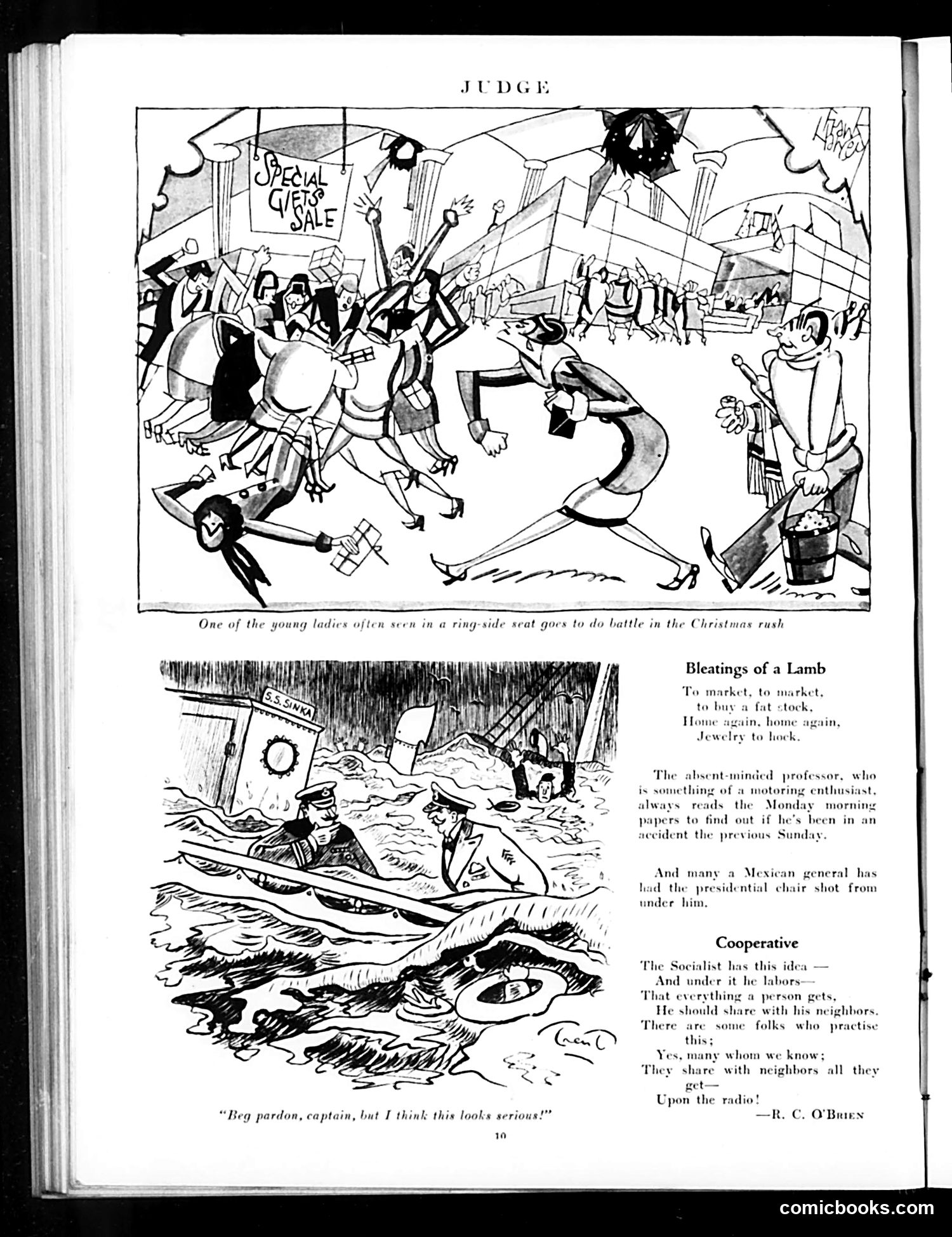
# Judge Magazine Page Analysis This page contains three satirical pieces: **Top cartoon**: Depicts chaotic Christmas shopping, with women fighting over bargains at a "Special Clearance Sale." The caption jokes that young women "go to do battle in the Christmas rush"—satirizing the frenzy and aggression of holiday shopping. **Middle cartoon**: Shows a shipwreck or disaster scene with the caption "Beg pardon, captain, but I think this looks serious!" The humor appears to stem from massive understatement in a dire situation. **Text sections**: "Bleatings of a Lamb" mocks an absent-minded professor who reads Monday papers to learn if he had a car accident Sunday—satirizing both distracted intellectuals and dangerous driving. It also includes a jab at Mexican political instability. **"Cooperative" poem**: Satirizes Socialists' sharing ideology by suggesting people practice it only by broadcasting their radio programs loudly to neighbors—a joke about noise pollution and selective altruism. The overall page reflects Judge's conservative, satirical stance toward modern life, shopping culture, and progressive politics.
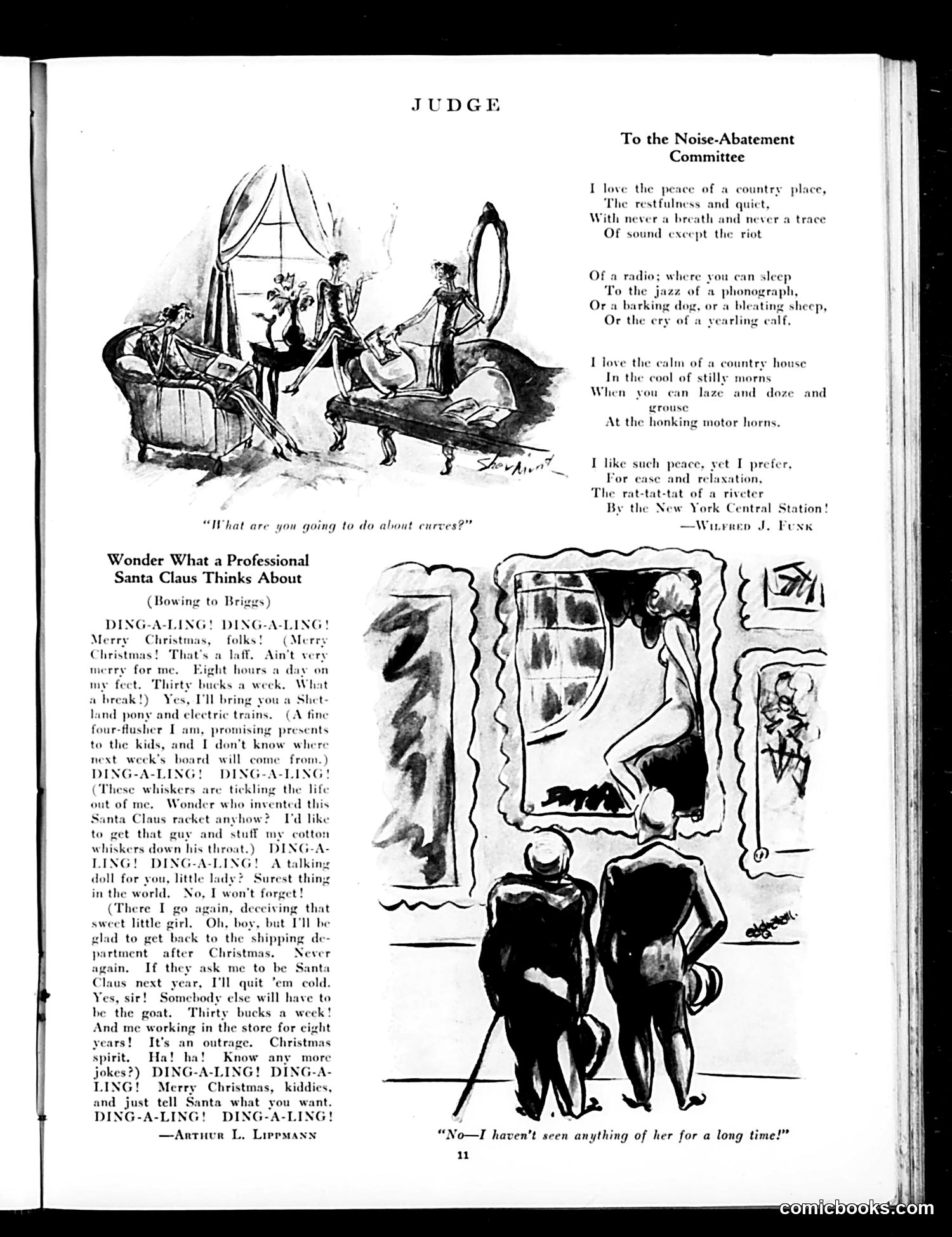
# Judge Magazine Page Analysis This page contains two satirical pieces critiquing early 20th-century American life: **"Wonder What a Professional Santa Claus Thinks About"** (by Arthur L. Lippmann) mocks the disconnect between Santa's cheerful public persona and the exploited worker underneath. The Santa complains bitterly about low pay ($30/week), long hours, uncomfortable costume ("whiskers are tickling"), and the moral burden of lying to children about gifts he can't afford. The satire exposes commercial Christmas's hypocrisy and worker mistreatment—he's literally a "four-flusher" pretending holiday spirit while facing financial desperation. **"To the Noise-Abatement Committee"** (by Wilbur J. Funk) uses ironic praise of rural "peace and quiet" to expose modern urban noise pollution. The poem's twist reveals that country silence is constantly interrupted by radios, phonographs, barking dogs, and train horns—especially the "rat-tat-tat" of construction near New York Central Station. The satire highlights how industrialization and technology have made genuine quiet impossible, even in supposedly peaceful locations. Both pieces critique American modernity's human costs.