
A complete issue · 16 pages · 1885
Judge — July 11, 1885
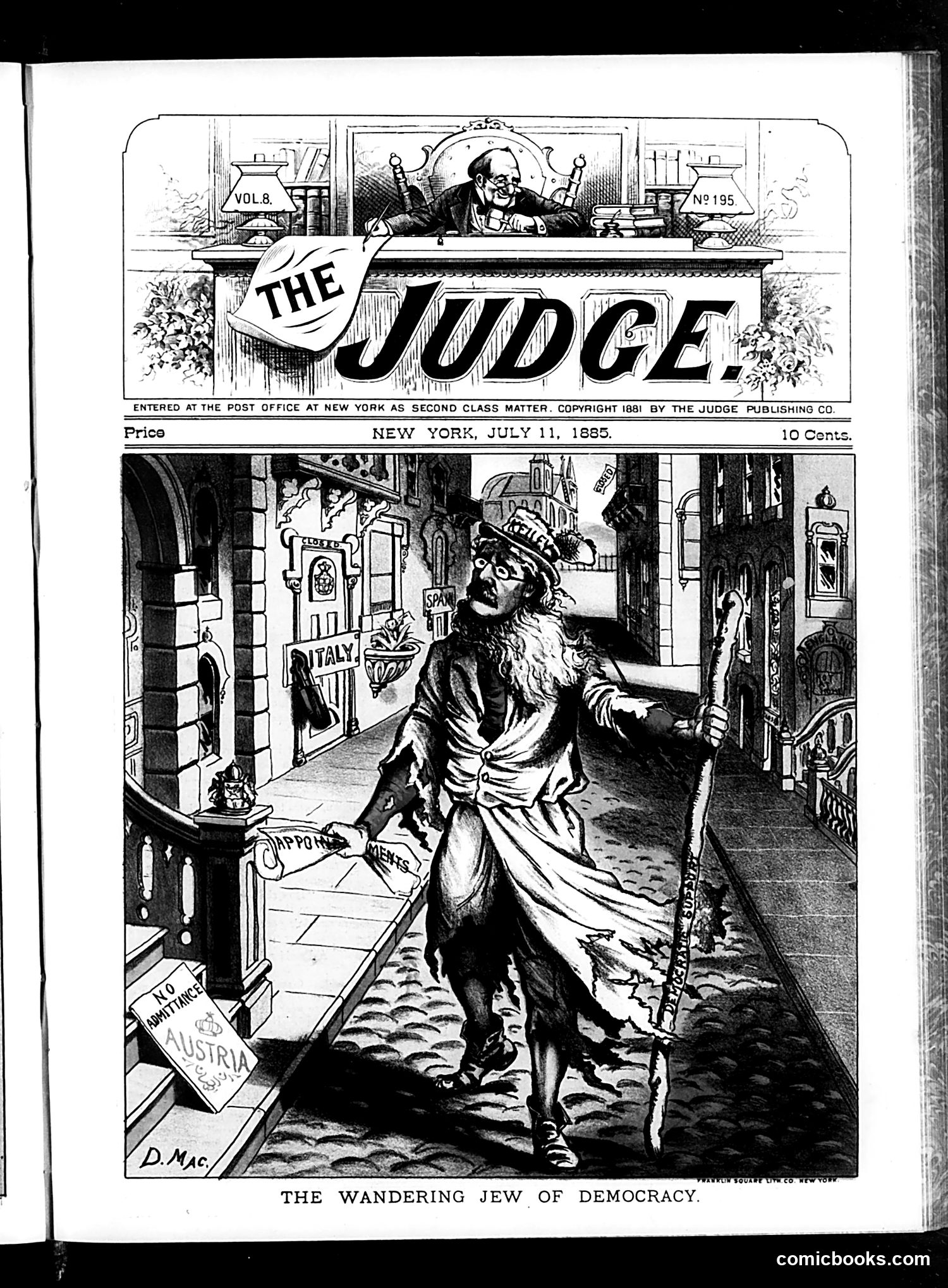
This 1885 *Judge* cartoon employs an antisemitic stereotype—"The Wandering Jew"—to satirize what the cartoonist views as destabilizing foreign influences in American democracy. The bearded figure, depicted with exaggerated features typical of period antisemitic caricature, wanders through European cities (marked "Italy," "Spain," "Austria") carrying a walking staff and what appears to be revolutionary materials. The satire suggests that Jewish immigrants or leftist agitators are perpetually destabilizing democracies across nations. The figure's journey implies these destabilizing forces are now threatening America. This reflects late-19th-century nativist anxieties about immigration and political radicalism, weaponizing the ancient antisemitic "Wandering Jew" trope to oppose democratic openness to foreign-born populations.
**The Main Cartoon:** The masthead illustration depicts a disheveled man—likely representing a politician or office-seeker—associated with the magazine's satirical commentary. **"What Will He Do With It?"** This article mocks President Cleveland's appointment of Keiley, described as an old Democrat from Andrew Jackson's era, to a diplomatic post. The satire compares Keiley to a reanimated corpse: the administration resurrected him politically but now cannot control or dismiss him. The "Wandering Jew" metaphor suggests Keiley will haunt the administration until the 1888 election. **Context:** Cleveland's revival of Jacksonian-era Democrats was seen as outdated "archaeology" rather than modern statesmanship. The piece ridicules how the administration is stuck with an embarrassing appointment it cannot undo. **"Only Fancy":** A lighter piece explaining why fans work through psychological comfort rather than actual cooling—contrasting imagery of hot scenes on fans creates relative comfort through imagination.
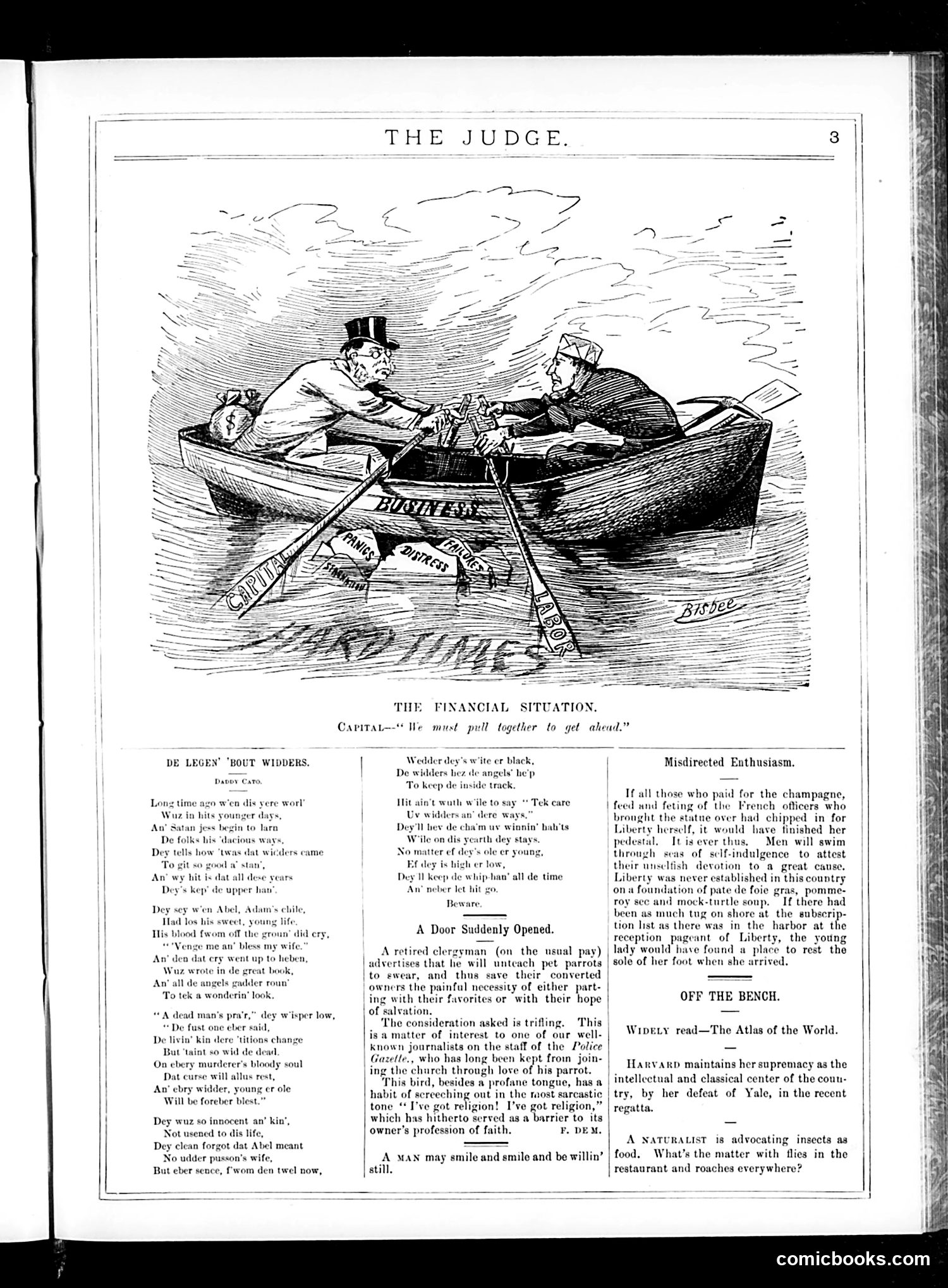
**Main Cartoon: "The Financial Situation"** Two figures in a boat labeled "Business" row in opposite directions while surrounded by oars labeled with economic concerns (Capital, Finance, Banking, etc.). The caption quotes "We must pull together to get ahead"—satirizing political/business leaders who publicly call for unity while privately pursuing conflicting interests. This appears to reference late 19th-century economic tensions, possibly the recurring financial crises of that era. **Other Content:** The page includes period dialect poetry about widows, a brief anecdote about a clergyman teaching parrots not to swear, and several short satirical observations ("OFF THE BENCH") mocking Harvard's boating victory and the impracticality of eating insects as food. The cartoon's core message: American institutions lack genuine cooperation despite rhetorical calls for teamwork, resulting in economic stagnation.
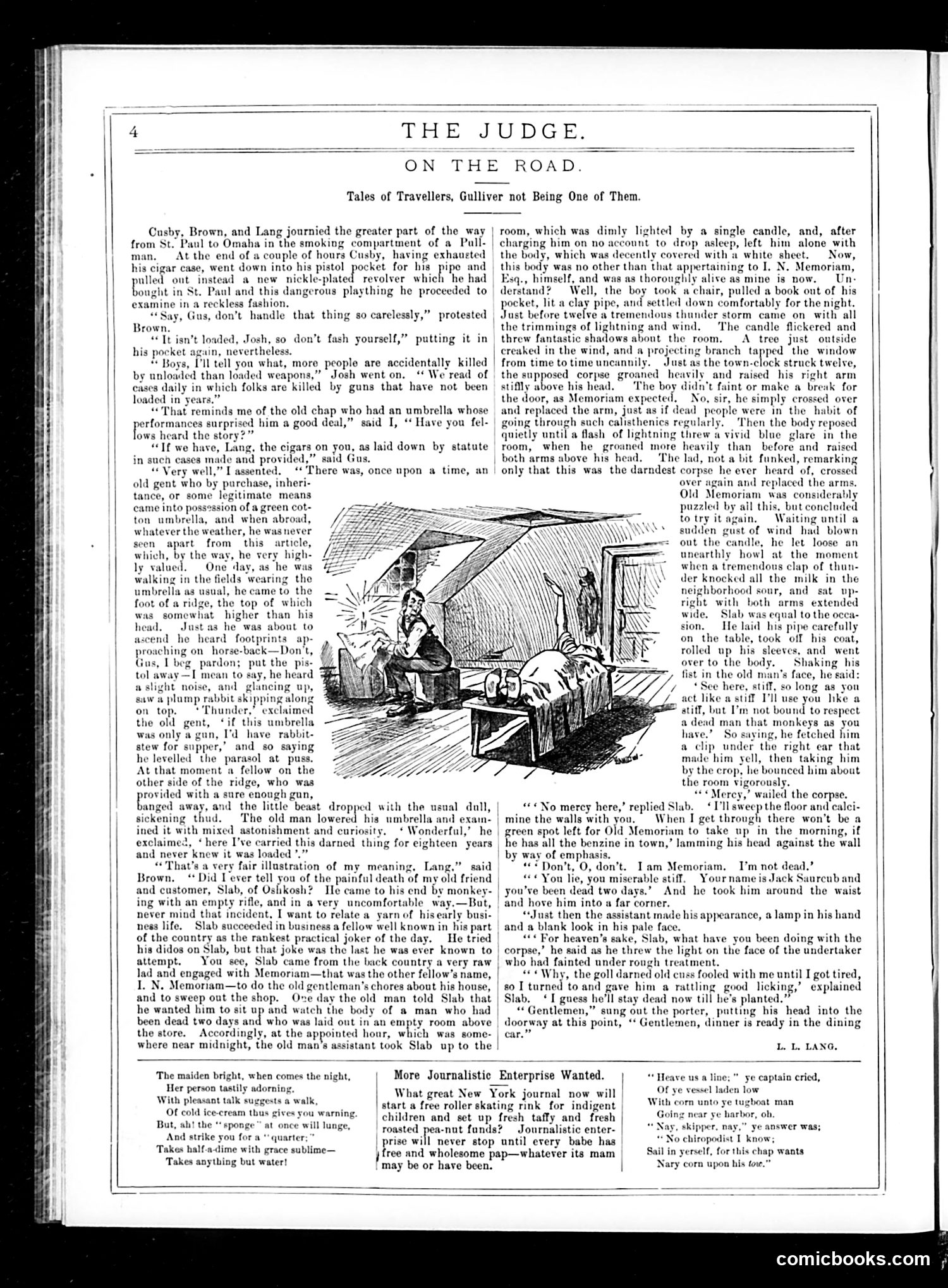
This page from *Judge* contains a humorous story-within-story titled "Tales of Travellers," featuring three men (Cusby, Brown, and Lang) trading yarns on a train journey. The primary narrative concerns an old man who shoots a rabbit with his umbrella—which he'd carried for eighteen years without realizing it was "loaded." The satire critiques human gullibility and the absurdity of tall tales. Brown then launches into another story about "Slab" and his encounter with a practical joker named Memoriam, involving watching a dead body overnight. The humor relies on the period's fascination with travelers' tales and practical jokes—common themes in late 19th-century satirical magazines. The illustration shows men conversing in a train compartment, supporting the "journey frame story" structure. The page also includes a brief note about "More Journalistic Enterprise Wanted" satirizing sensationalist journalism. No identifiable political figures appear; the satire targets universal human folly rather than specific public events.
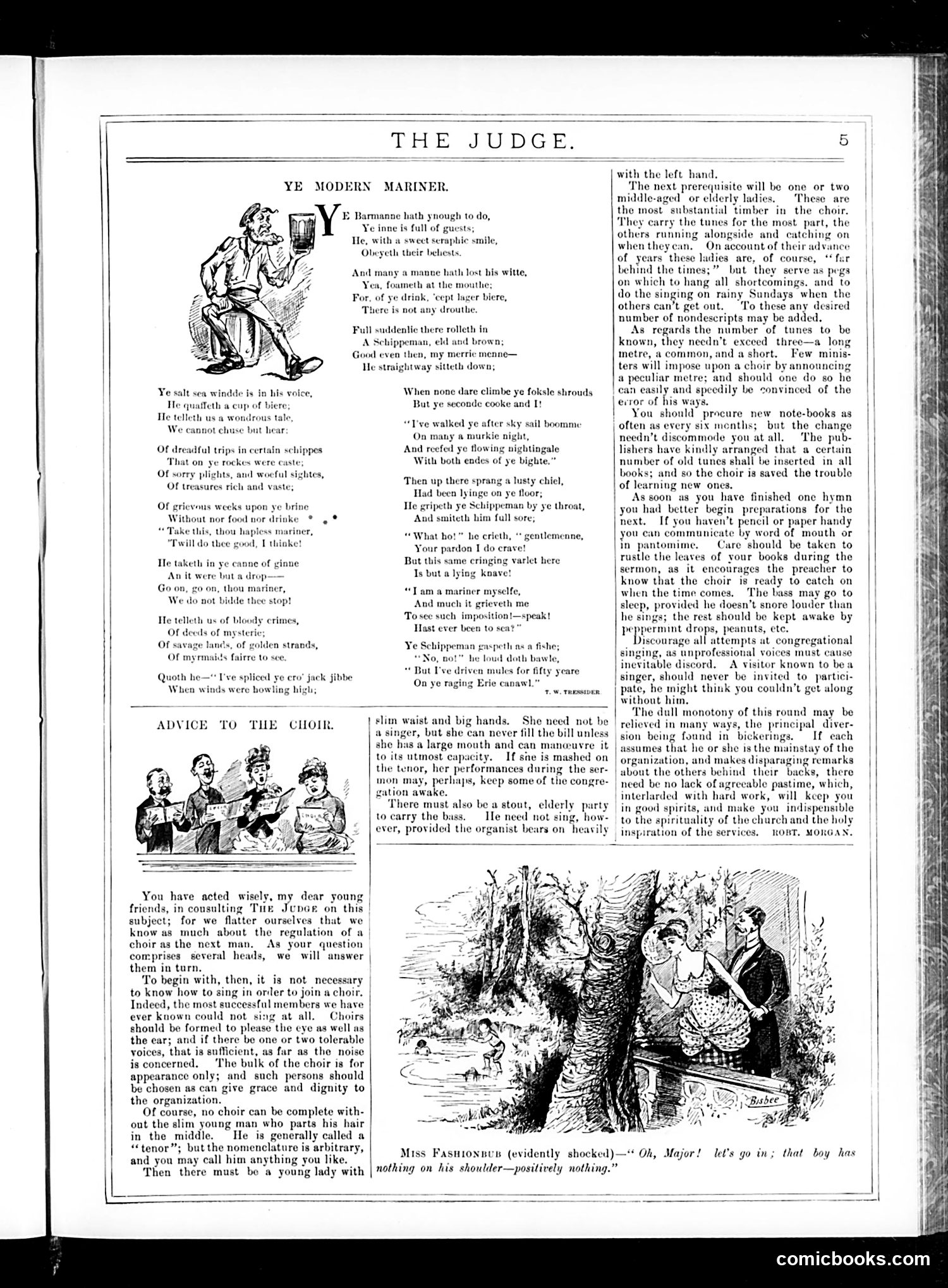
**"Ye Modern Mariner"** is a humorous poem mocking tall-tale-telling sailors. A garrulous mariner entertains inn guests with exaggerated adventures—sky sails, nightingales, shipwrecks—until another man interrupts, exposing him as a fraud: he's actually driven mules for fifty years, never been to sea. The joke targets both the boastful liar and credulous audiences who believe obvious fabrications. **"Advice to the Choir"** is satirical guidance on church choir selection. Humorously, it argues that singing ability is unnecessary; choirs exist for visual appeal. The piece ridicules actual choir practices by suggesting members are chosen for appearance (slim tenor, busty soprano, stout bass singer), romantic entanglement, and age rather than talent. It mocks both choir directors' priorities and churches' tolerance of poor musical performance, suggesting congregations accept "inevitable discord" to maintain appearances. Both pieces critique human folly—gullibility and vanity—through mock-earnest, exaggerated advice.
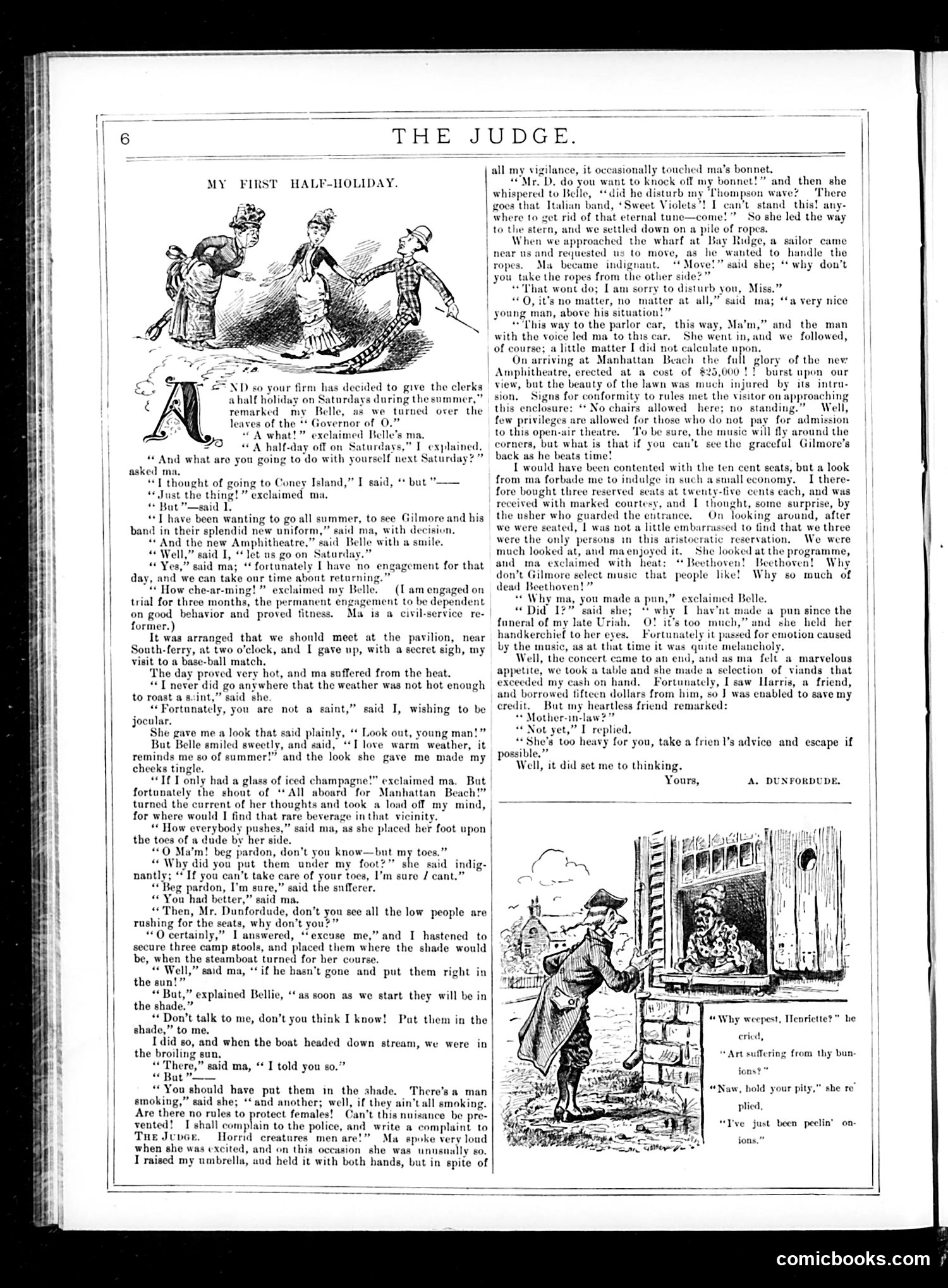
This humorously depicts a clerk's Saturday half-day outing to Coney Island with his fiancée Belle and her mother. The satire targets the mother-in-law figure—a stock character of Victorian comedy—who complains constantly: the weather is too hot, crowds push too much, men smoke excessively, her bonnet gets touched, and the reserved seats end up in the sun despite reassurances. The joke relies on era-specific references: Gilmore's band (a famous brass ensemble), the new Amphitheatre at Coney Island, and mentions of "base-ball matches" and steamboat excursions as typical leisure activities. The narrator's repeated frustrations with the mother's impossible demands and his helpless accommodation would resonate with contemporary readers familiar with domestic comedy tropes. The accompanying illustration shows a woman at a building, likely depicting one of the outing's mishaps. This is gentle domestic satire, not political commentary.
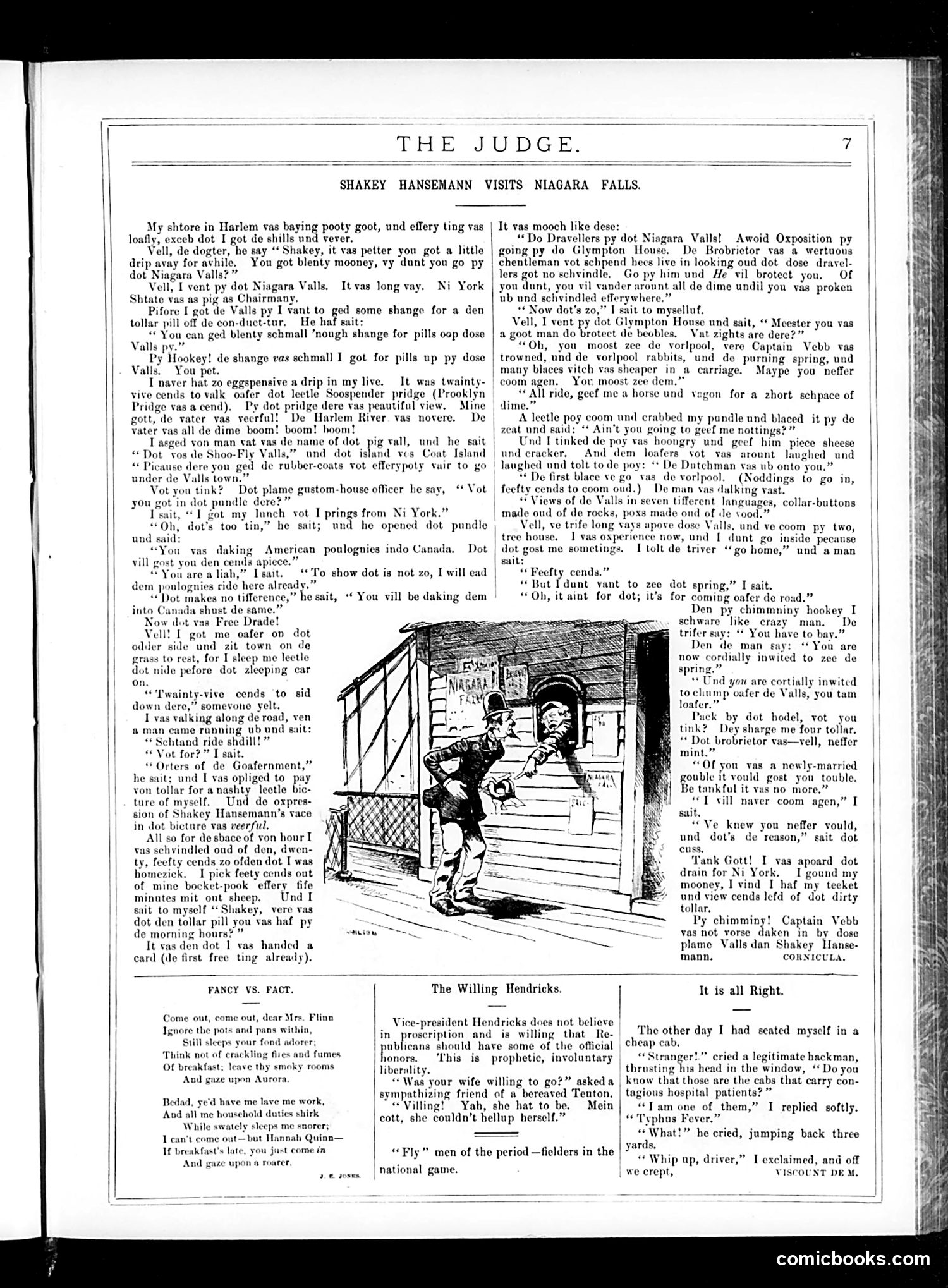
This is a dialect humor piece featuring a German-Jewish immigrant character ("Shakey Hansemann") recounting his trip to Niagara Falls. The comedy relies on heavy Yiddish-influenced English malapropisms and mispronunciations ("Valls" for Falls, "chentleman" for gentleman). The satire targets **tourist exploitation at Niagara Falls**—the character is repeatedly overcharged and swindled: paying inflated prices for small change, being forced to pay to have his photo taken, charged fees for using viewing areas. The U.S. customs officer demanding payment for imported "poulognies" (sausages) satirizes **protectionist tariff policies** as absurd. The cartoon (visible at center) shows Hansemann interacting with figures at the falls, illustrating these petty frauds. The piece mocks both tourist-trap commercialism and American bureaucratic nickel-and-diming, while the ethnic dialect humor was typical (if offensive by modern standards) of Judge's era.
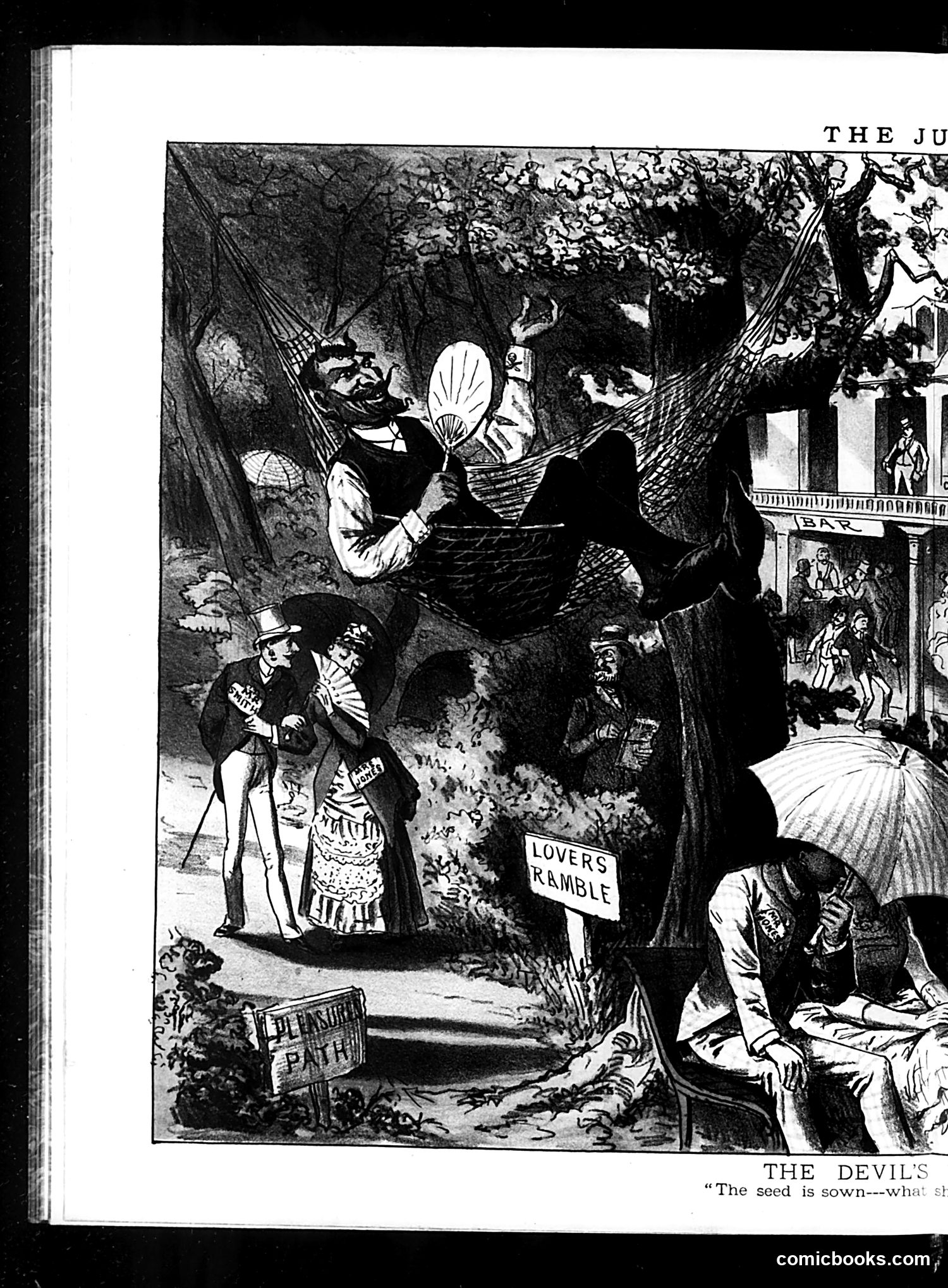
This appears to be a satirical illustration titled "The Devil's Seed" (subtitle: "The seed is sown—what shall..."). The cartoon depicts a demonic figure in a hammock suspended between trees, overlooking a pastoral scene with various social classes below. A sign reading "LOVERS RAMBLE" marks the location. The satire likely critiques moral corruption spreading through society—the "devil's seed" represents some perceived social evil (possibly vice, immorality, or corruption) being sown among different classes visible in the scene. The contrast between the comfortable, leisurely demon above and the struggling figures below suggests commentary on how corruption or vice flourishes while common people suffer consequences. The ornate building visible on the right suggests wealth or institutional complicity. Without the full text, the specific social or political target remains unclear, though the imagery suggests Victorian-era concerns about moral decay.
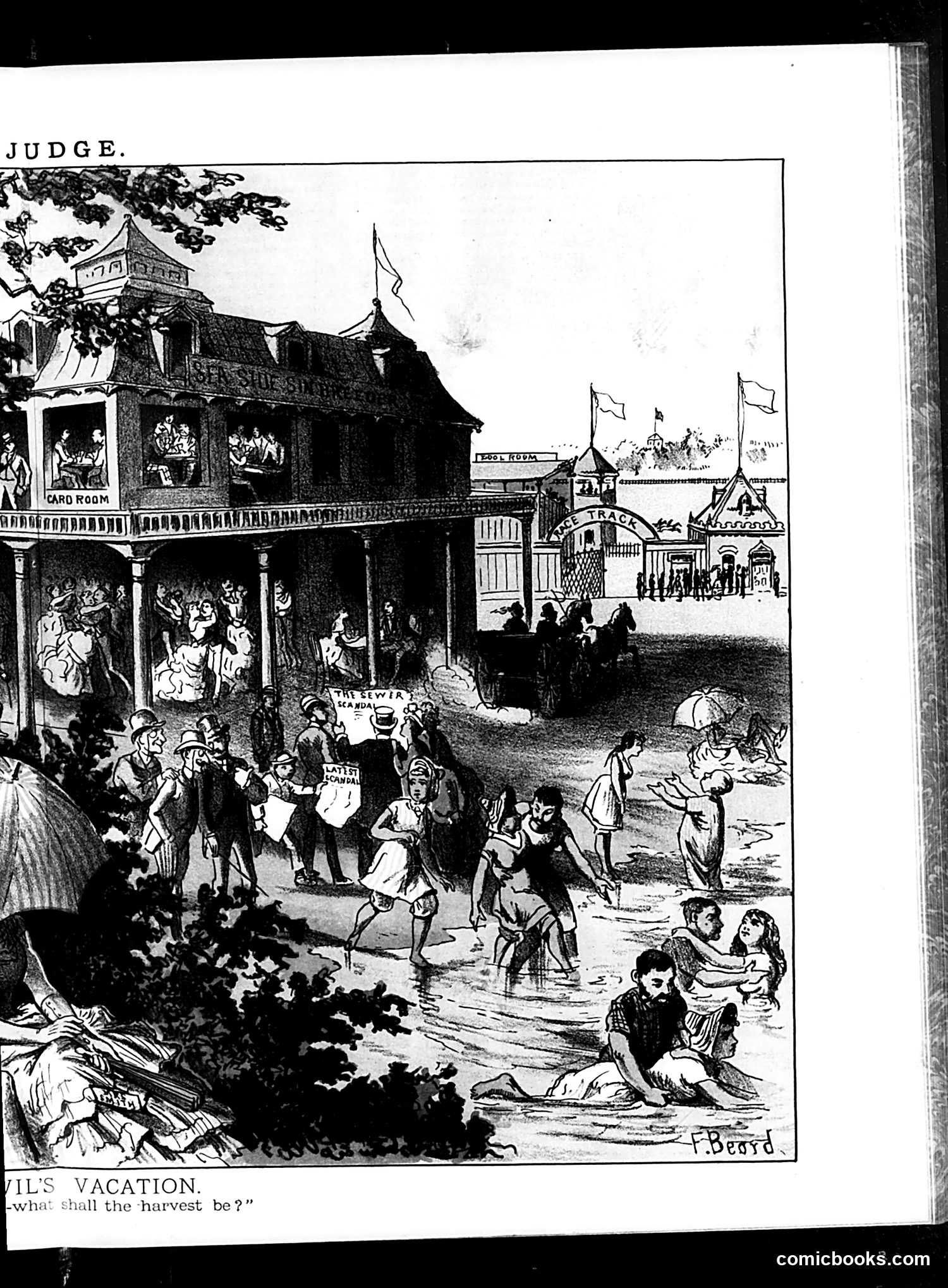
This political cartoon, signed by F. Beard, depicts a seaside amusement park scene titled "A Judge's Vacation" with the caption "What shall the harvest be?"—likely a biblical reference suggesting consequences or judgment. The cartoon appears to satirize judicial corruption or lax oversight. The "Judge" (referenced in the page header) is shown vacationing at a pleasure resort while chaos unfolds below: crowds at various attractions, people in water, carnival-like confusion. The implied critique suggests that while authority figures enjoy leisure, social disorder or moral decay proliferates unchecked. The "harvest" metaphor suggests that negligent leadership will reap negative societal consequences. This reflects Progressive-era concerns about judicial accountability and public welfare.
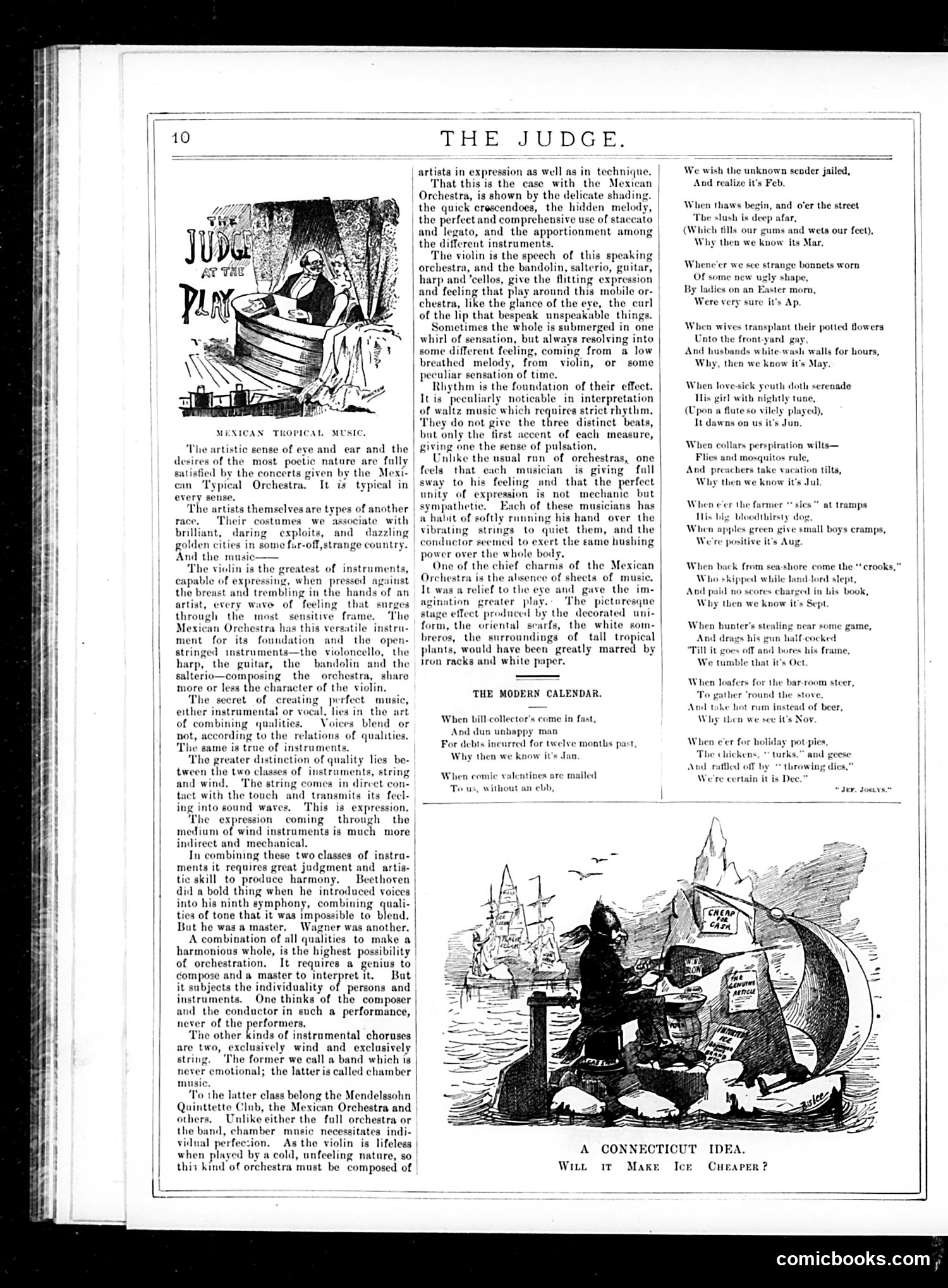
This page contains two distinct items: a lengthy article praising the Mexican Typical Orchestra's musical artistry, and a small cartoon at the bottom. The cartoon depicts a figure at a waterfront, apparently attempting to freeze water to make ice cheaply—hence "Will it Make Ice Cheaper?" The joke appears to be satirizing either an impractical invention scheme or someone's misguided attempt at cost-cutting. The figure's location (a harbor or waterfront) and casual posture suggest the idea is absurdly simple-minded or naive. Without additional context about contemporary Connecticut ice-making debates, the specific target remains unclear, but the satire mocks someone's foolish belief that nature (or improper methods) could produce a commercial product more economically.
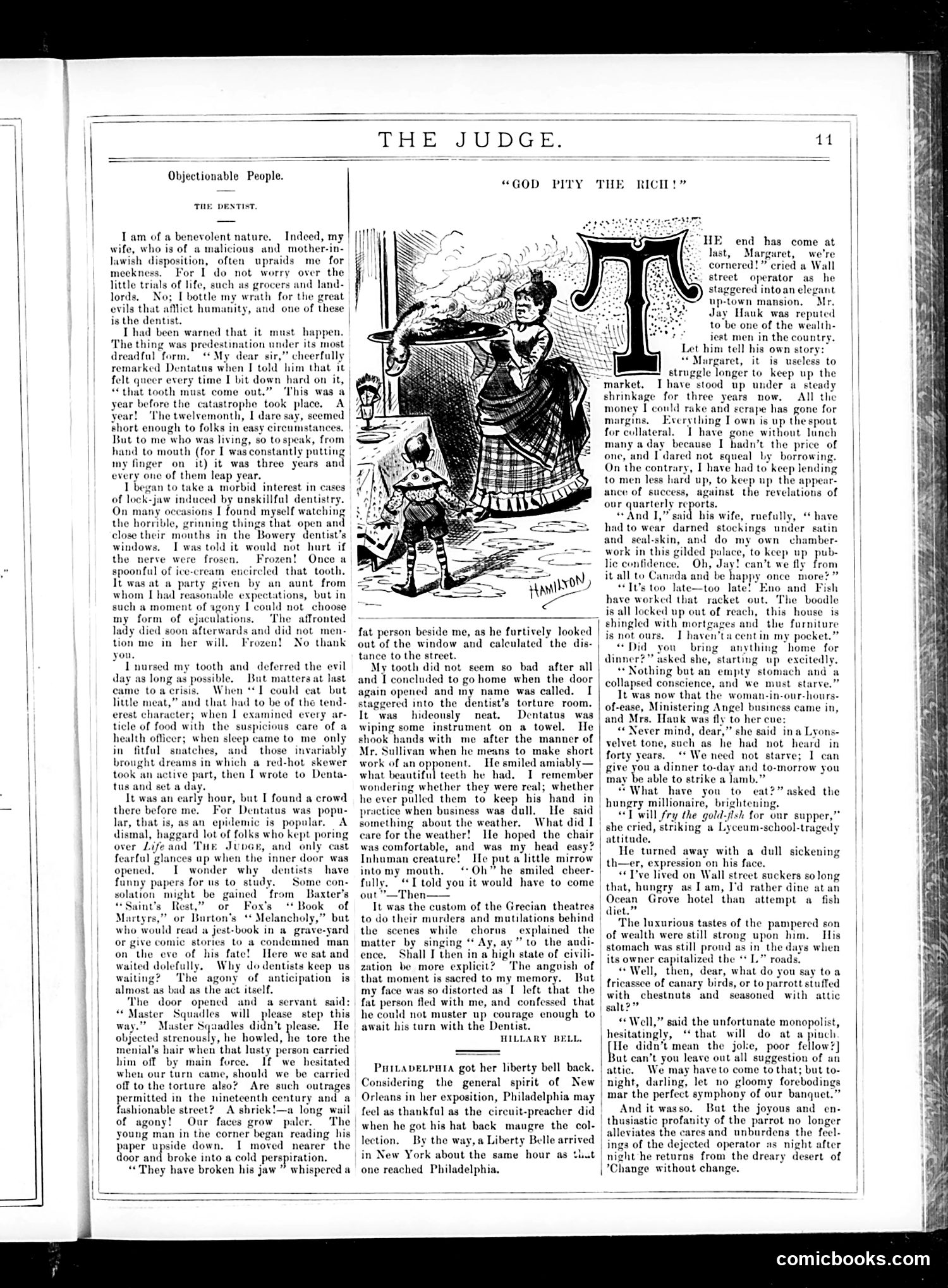
This satirical piece mocks the universal fear and dread of visiting a dentist in the late 19th century. The unnamed narrator, a supposedly benevolent man, describes his year-long anxiety over a problematic tooth and his dreaded appointment with "Dentatus" (a play on Latin dental terminology). The humor derives from the *exaggerated terror* of dental visits: the narrator postpones treatment despite pain, compares the dentist's office to a torture chamber, and witnesses another patient ("Master Squadles") being forcibly carried away screaming. The waiting room features only grim reading material—*Life* and *Judge* magazines—which the cartoonist jokes are depressing choices. The satire targets both the genuine horror of pre-anesthetic dentistry and patients' irrational anxiety about it. The reference to frozen nerves alludes to early ice-based numbing attempts, which clearly didn't work well. The overall tone suggests that visiting a dentist ranked among life's greatest ordeals—a relatable fear for readers then and now.
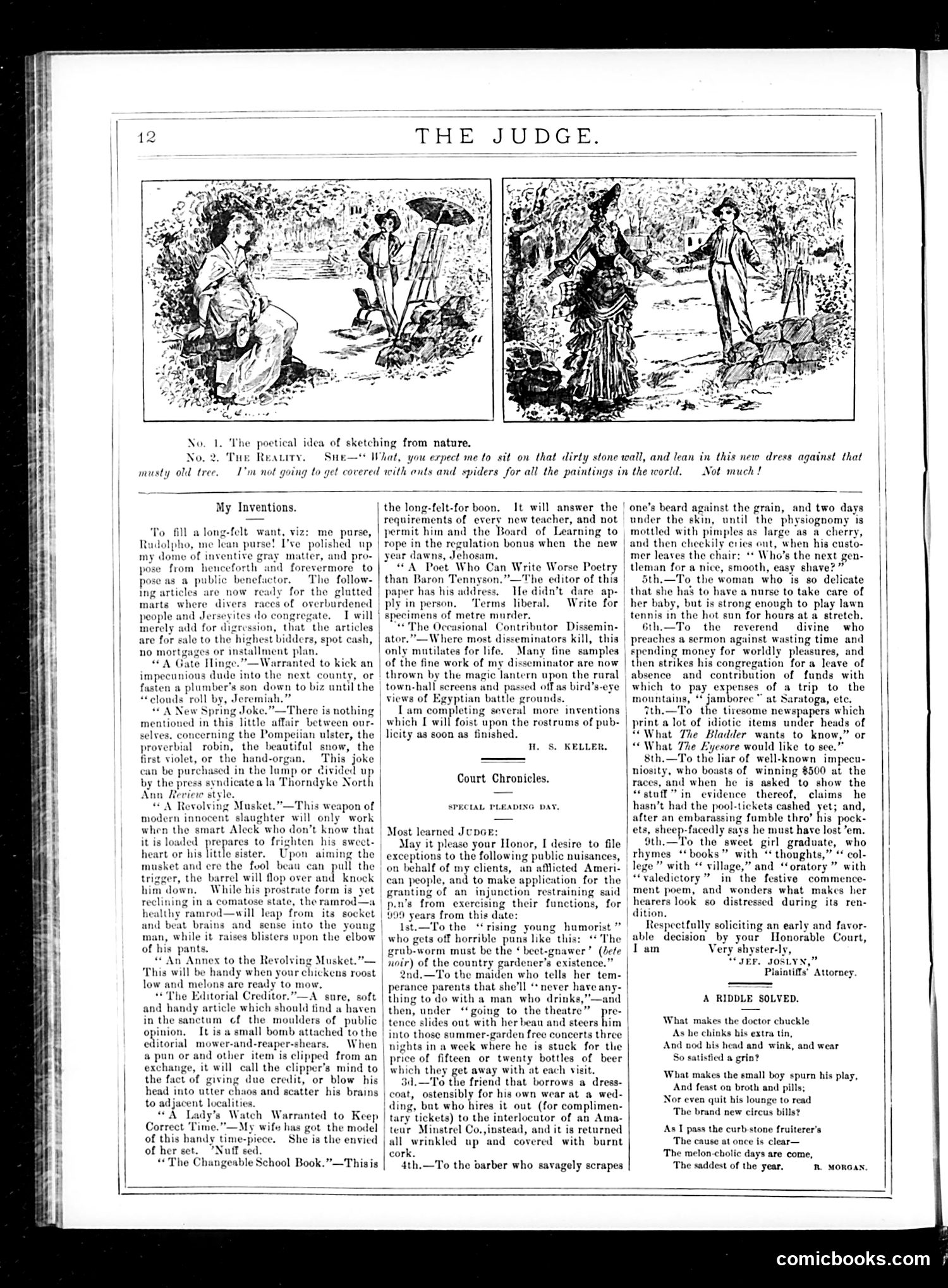
This page from Judge presents two types of satirical content: **Top Cartoons:** A two-panel comparison titled "The Poetical Idea vs. The Reality." The left panel shows an idealized romantic scene of an artist sketching outdoors. The right panel deflates this pretension—a woman refuses to pose on a dirty stone wall in her nice dress, complaining she won't ruin her clothes sitting among insects "for all the paintings in the world." **Column Content:** H.S. Keller's "My Inventions" column satirizes useless or absurd gadgets he claims to have invented—including a gate that kicks out non-paying tenants, a self-destructing musket, and other impractical devices. The humor targets inventors and get-rich-quick schemes common in the era. **Court Chronicles section** parodies legal proceedings, with petitions against "rising young humorists" who tell bad puns and other social annoyances. The overall theme mocks romantic idealism versus mundane reality, and satirizes American commercial culture's obsession with dubious inventions and schemes.
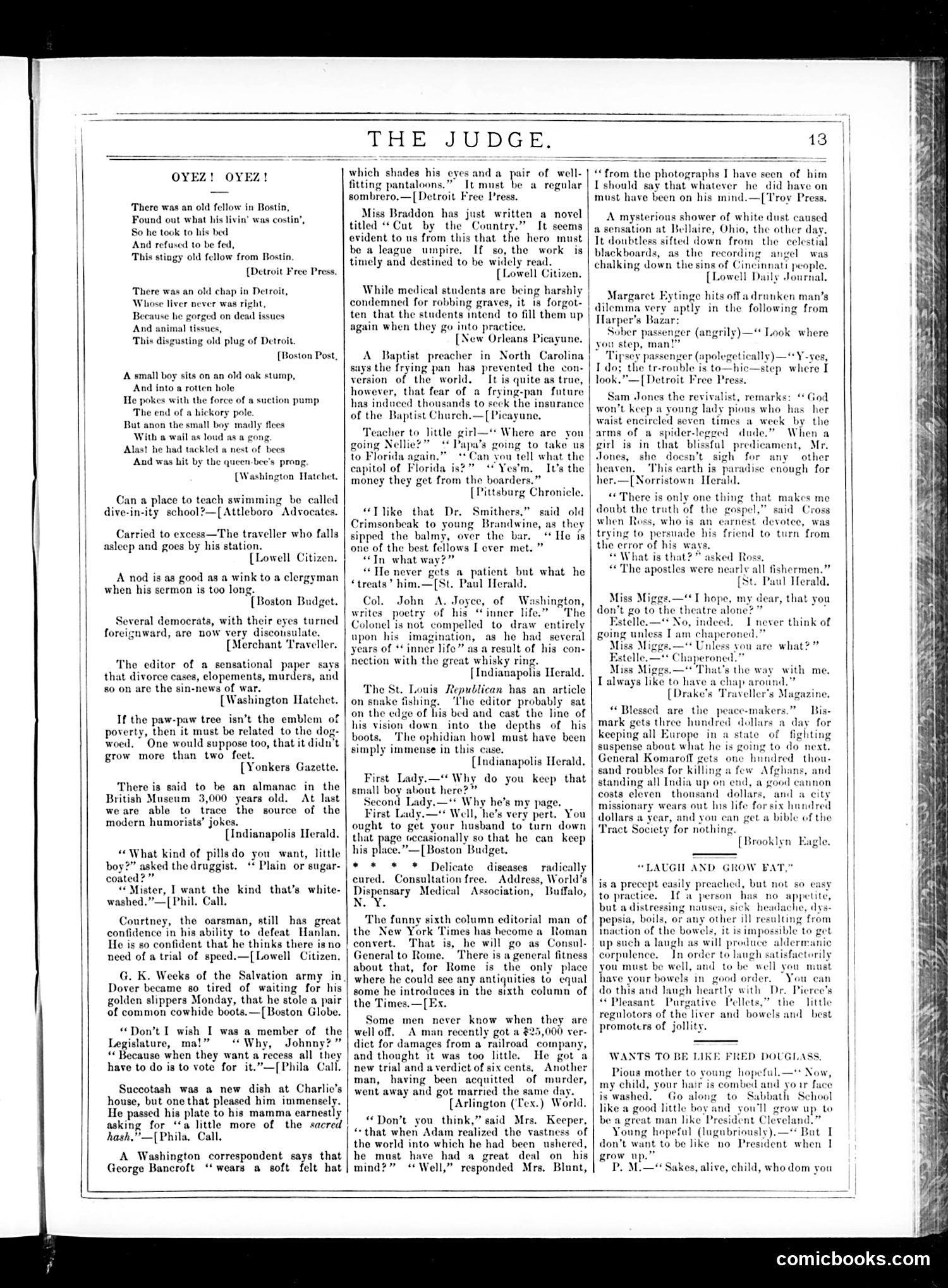
This page is primarily a **collection of brief satirical jokes and witticisms** rather than illustrated political cartoons. The humor targets various subjects: **Social Commentary:** - Politicians and lawyers are mocked (references to "sensational papers" covering "divorce cases, elopements, murders") - Democrats are depicted as "disconsulate" (suggesting recent political disappointment) - The Salvation Army is ridiculed for stealing boots **General Satire:** - Medical students robbing graves for anatomy study (contemporary scandal) - Educational absurdities (a geography joke about Florida's "capitol" being tourist money) - Domestic and everyday foolishness (a boy attacking a bee's nest, various puns) **Notable Figures:** References to oarsman Courtney, historian George Bancroft, and novelist Miss Braddon appear, though used primarily for joke setups rather than serious political commentary. The humor reflects 1880s American concerns: political corruption, medical ethics, education quality, and class pretensions. Most jokes rely on wordplay and situational comedy rather than sophisticated satire.
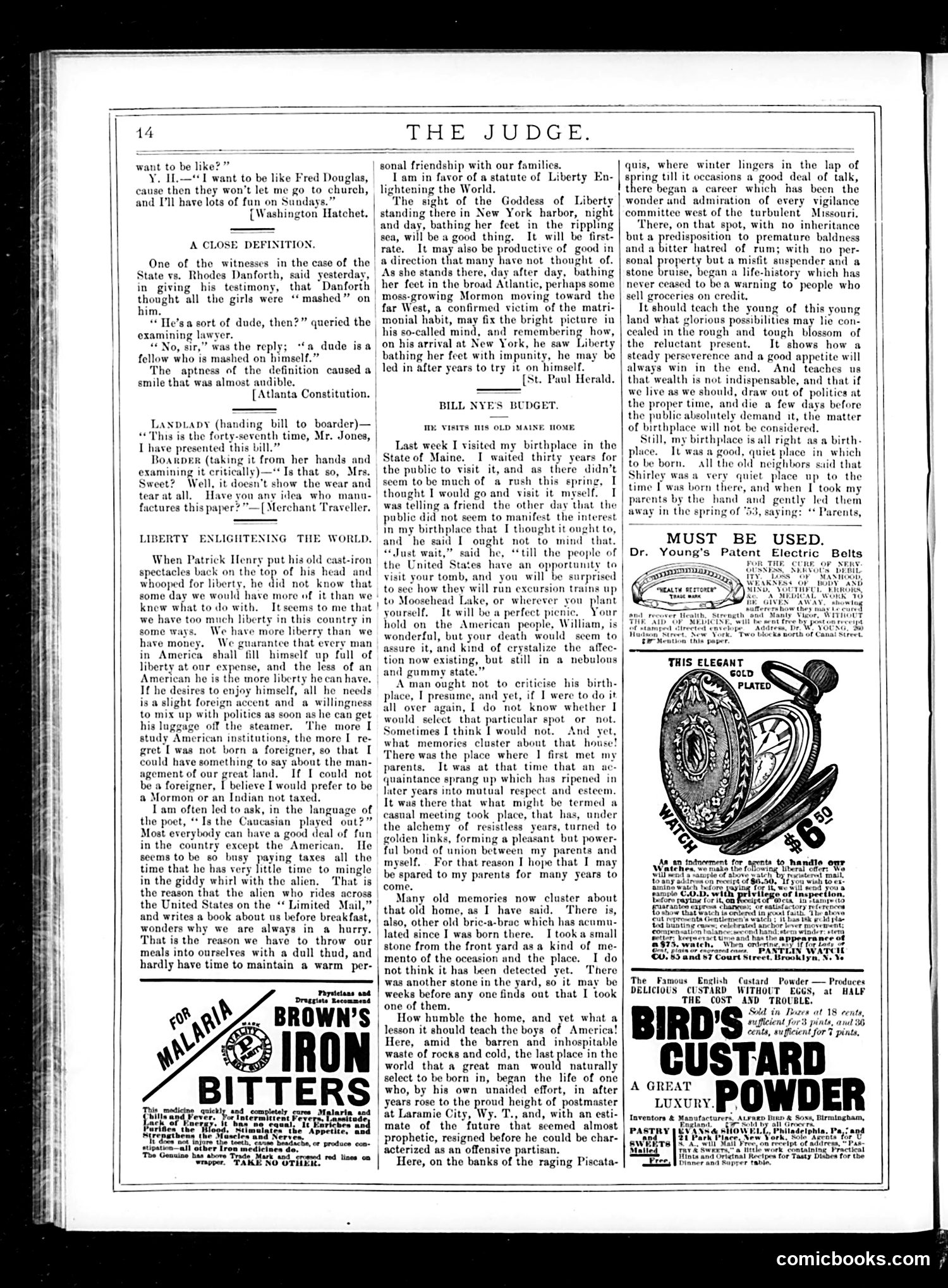
This page contains three main satirical pieces typical of late 19th-century American humor: 1. **"Liberty Enlightening the World"** references the Statue of Liberty, recently installed in New York Harbor. The satire criticizes American excess of freedom—the author ironically laments that Americans have "too much liberty" and are too busy to enjoy life, while foreigners exploit American openness. He suggests the Statue might inspire Mormons to practice polygamy (a contemporary scandal), sarcastically endorsing a "statute of Liberty Enlightening the World" as ironic social commentary. 2. **"A Close Definition"** and **"Landlady" sketches** are brief, conventional humor about romantic obsession and unpaid boarding bills. 3. **Bill Nye's Budget** is travel writing about visiting rural Maine, emphasizing American restlessness and materialism. The page is primarily filled with **period advertisements** for patent medicines (Iron Bitters), electric belts, and custard powder—typical of Judge's revenue model.
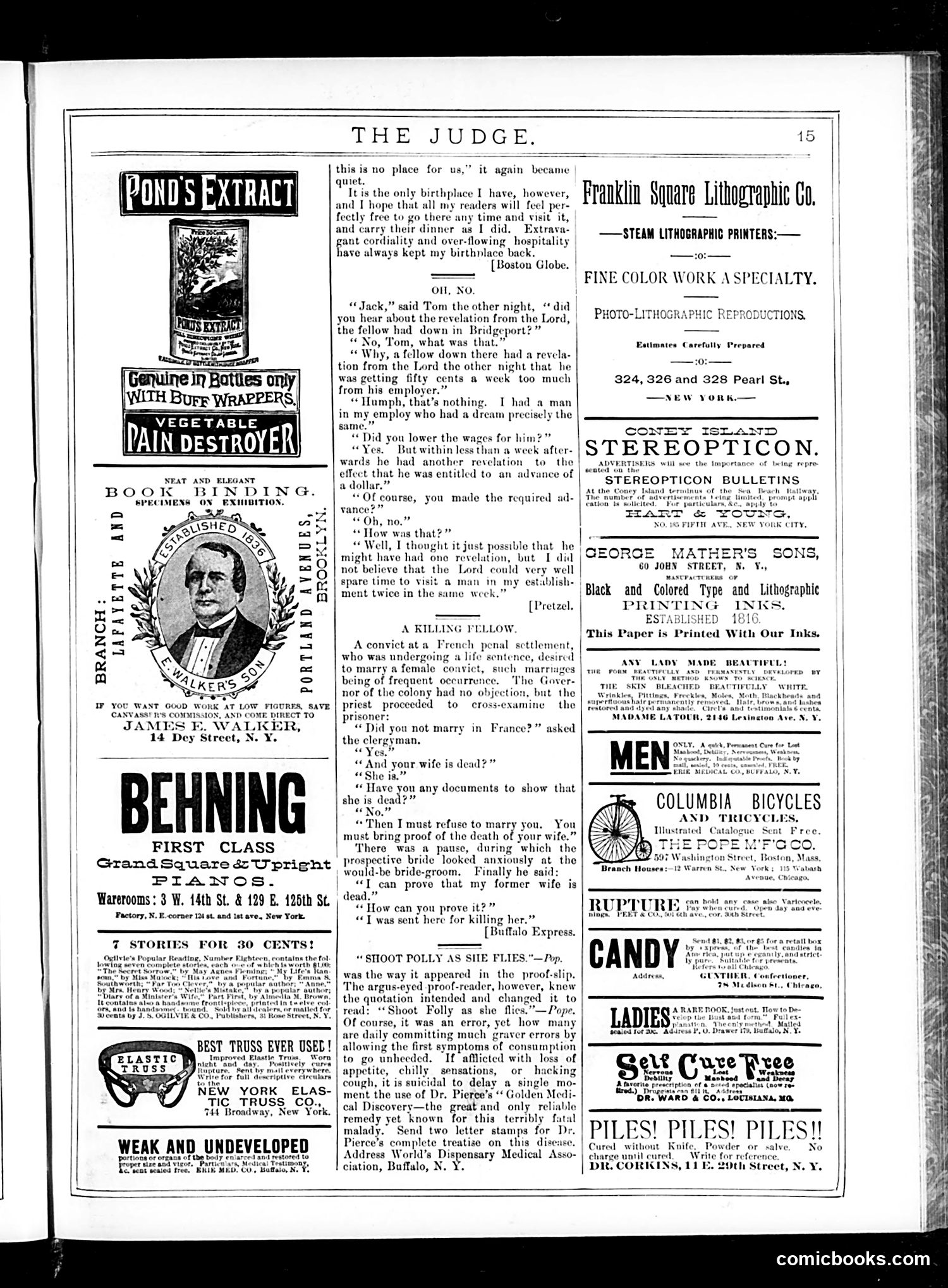
This page consists primarily of **advertisements and commercial notices**, not political cartoons. The main editorial content is a brief humor piece titled "A Killing Fellow" about a French convict unable to prove his former wife's death (he killed her), which prevents his remarriage—the dark joke being his literal "proof." The other short joke, "Oh, No," depicts working-class men discussing supposed religious revelations justifying wage complaints—likely satirizing both labor disputes and spurious religious claims of the era. The page is dominated by **late-19th-century product ads**: Pond's Extract (patent medicine), pianos, bicycles, medical treatments (trusses, hemorrhoid cures), printing services, and lithography companies. **Context for modern readers**: Judge was a humor magazine that mixed satirical commentary with advertising. These ads reveal period concerns—patent medicines, manual labor wages, and the printing/lithography industry's importance. The humor is relatively mild by today's standards, focusing on word-play and workplace anecdotes rather than pointed political satire.
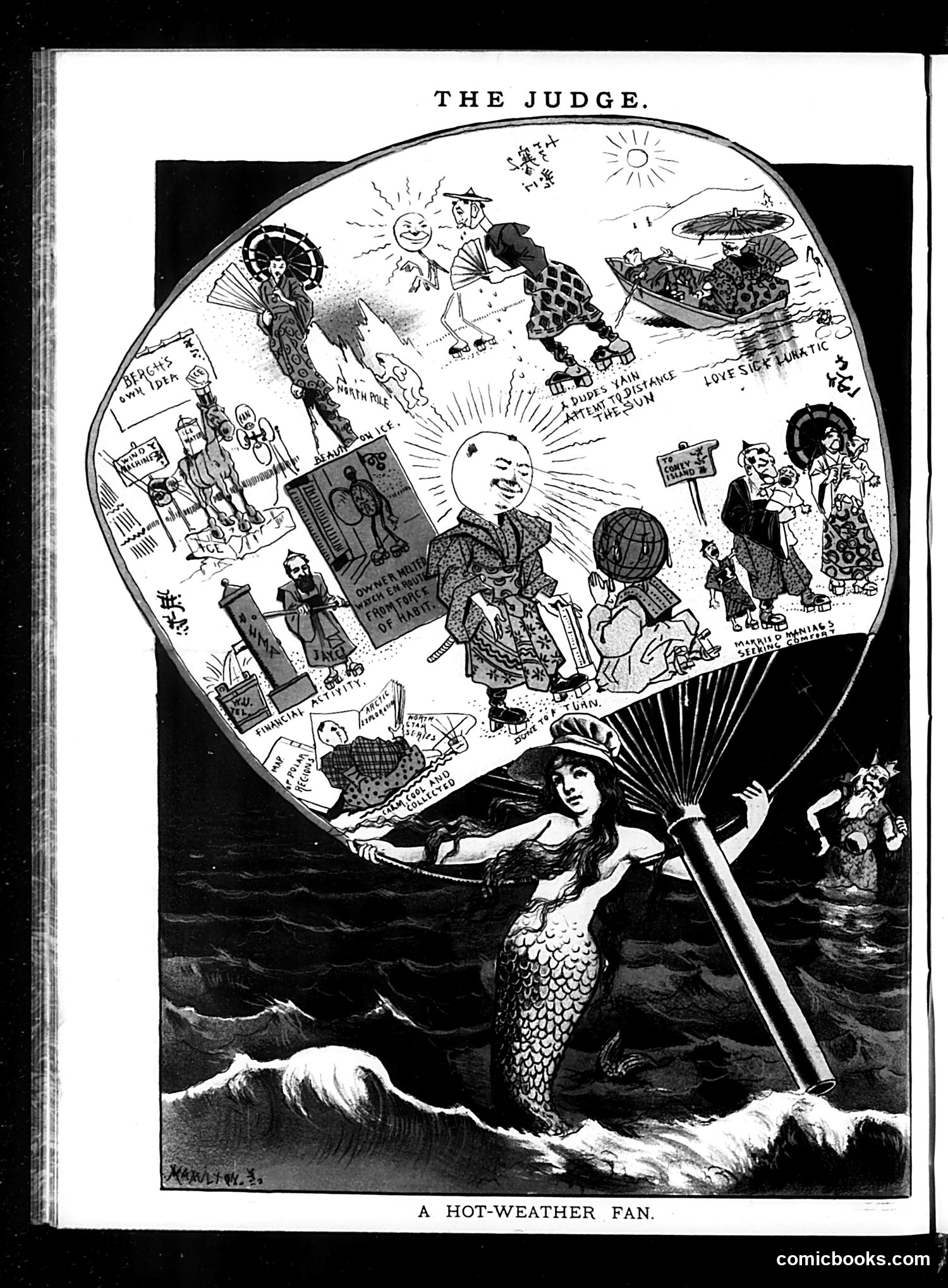
This Judge cartoon satirizes judicial authority during summer. A mermaid—representing the judge's power or authority—holds a large decorative fan displaying various scenes of social life and human activity within a circular frame. The title's pun suggests the judge "fans" or influences hot-weather behavior and public conduct. The vignettes visible on the fan appear to depict everyday summer scenes and social interactions, likely including instances of questionable behavior that would fall under judicial purview. The image critiques how judges' decisions and authority shape public life and social norms, even during leisure season. The mermaid figure—a fantastical, liminal character—may suggest the judge's somewhat otherworldly or arbitrary power over ordinary citizens' summer activities and behavior.