
A complete issue · 44 pages · 1901
Life — December 2, 1901
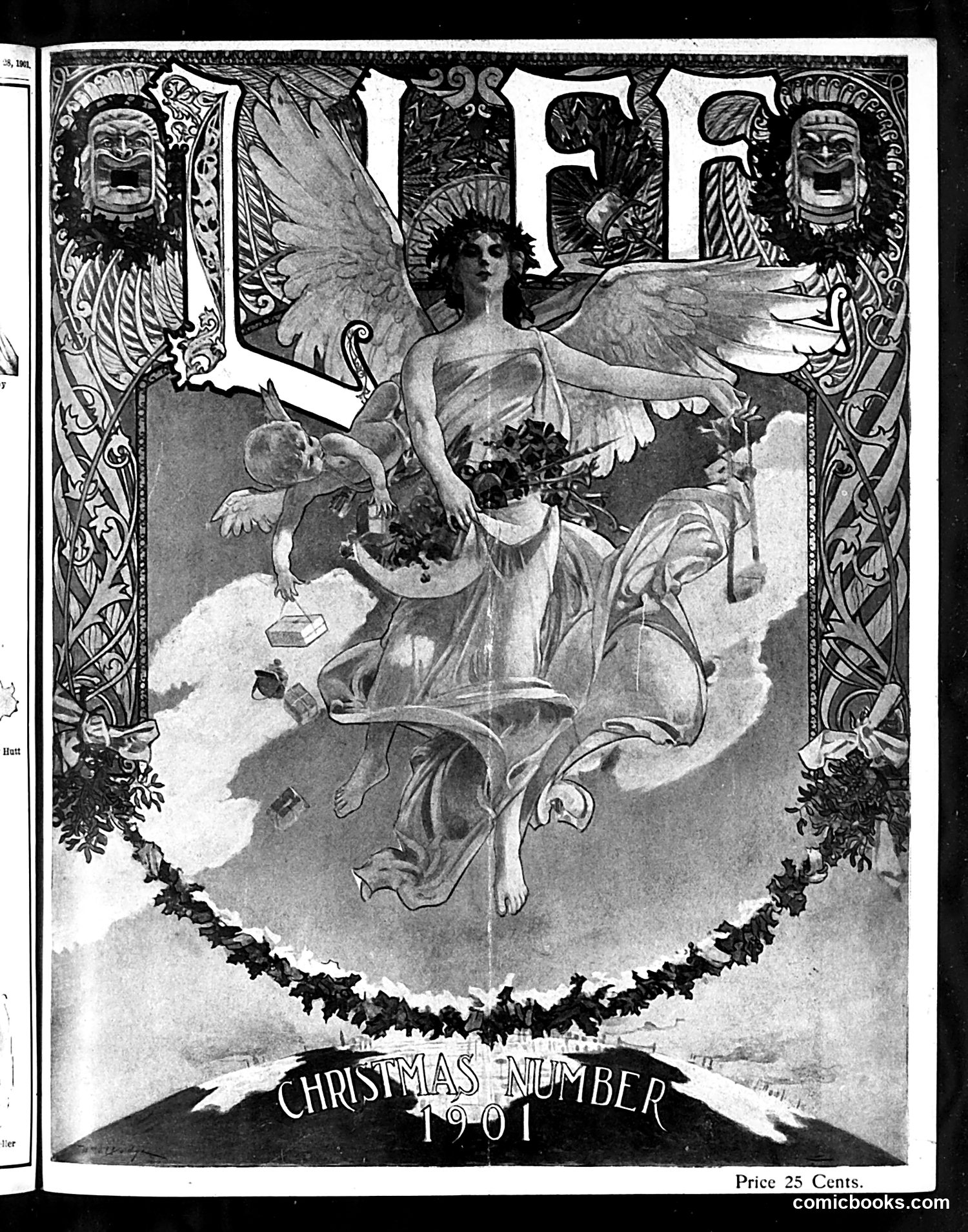
This is the cover of *Life* magazine's 1901 Christmas issue (price 25 cents). The illustration depicts an allegorical female figure—likely representing Peace, Plenty, or Christmas itself—floating among clouds with wings spread wide. She holds a cornucopia overflowing with gifts and is attended by a cherub. The ornate decorative border frames elaborate masks or theatrical faces, suggesting themes of festivity and celebration. The elaborate Art Nouveau styling and classical imagery reflect the magazine's sophisticated aesthetic. This appears to be a straightforward holiday cover celebrating abundance and goodwill rather than political satire, which was common for *Life*'s seasonal issues. The 1901 dating places this during the McKinley presidency and post-Spanish American War period.
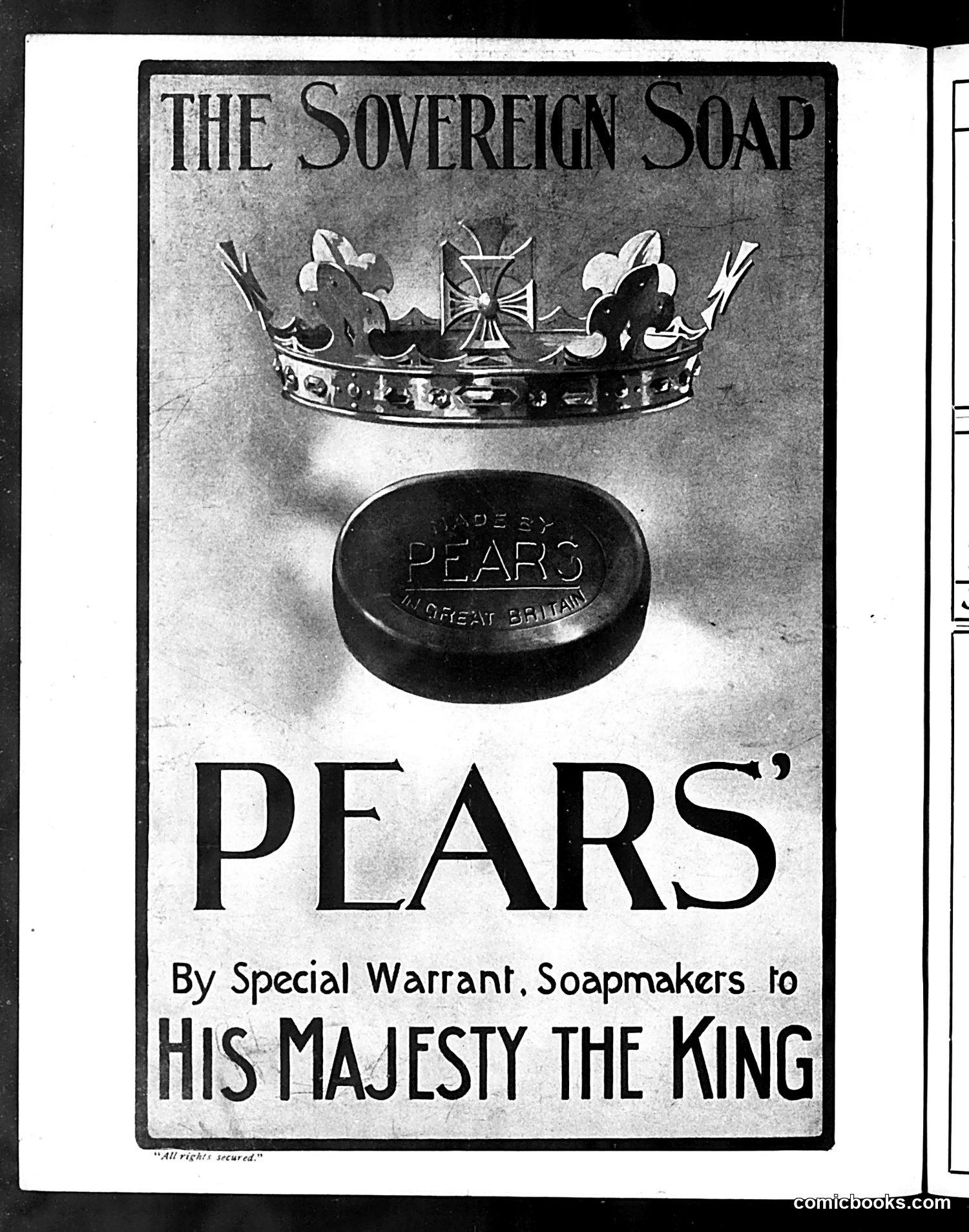
This is an advertisement for Pears' soap, a British brand. The ad emphasizes royal prestige by displaying a crown above the product and stating it was made "By Special Warrant, Soapmakers to His Majesty The King." The "Sovereign Soap" name plays on both the product's royal endorsement and the British currency term "sovereign" (a gold coin), suggesting luxury and value. The crown imagery reinforces exclusivity and high status. This represents a common Victorian and Edwardian marketing strategy: associating consumer products with royal approval to suggest quality, refinement, and superiority. Pears' soap was indeed a famous British brand that capitalized heavily on such royal warrants to market itself as a premium, respectable product for the discerning consumer.
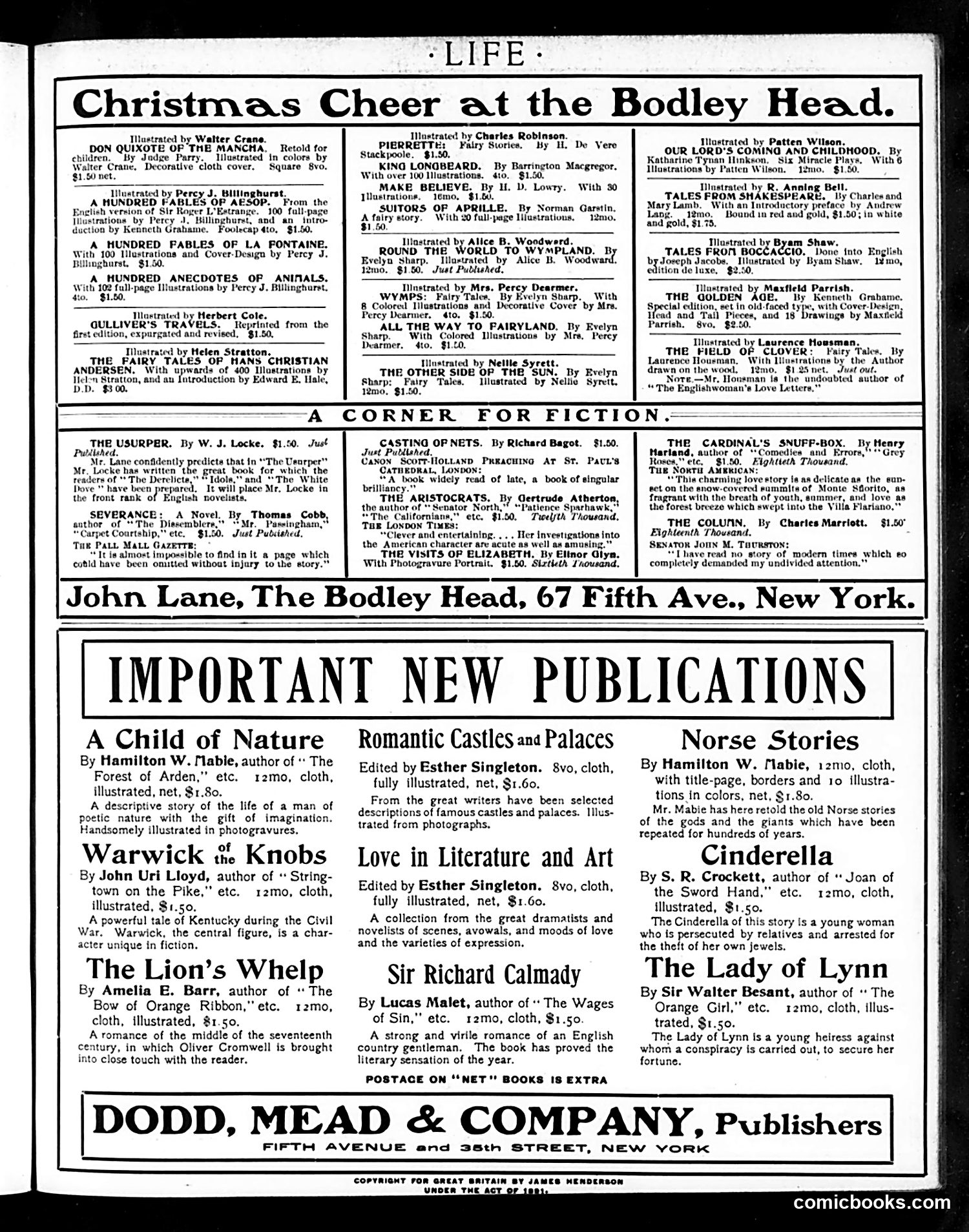
This page is primarily **advertising and book announcements** rather than political satire or comics. The top section features "Christmas Cheer at the Bodley Head," showcasing holiday-themed books with illustrations—fairy tales, fables, and children's stories by authors like Charles Robinson and H.D. Lowry. Below that is a "Corner for Fiction" advertising adult novels including works by W.J. Locke and Thomas Cobb. The bulk of the page displays "Important New Publications" from Dodd, Mead & Company, listing literary titles such as *A Child of Nature*, *Romantic Castles and Palaces*, *Norse Stories*, and *Cinderella*—all illustrated gift books typical of early 20th-century publishing. **No political cartoons or satirical content appears on this page.** It's essentially a publisher's catalog.
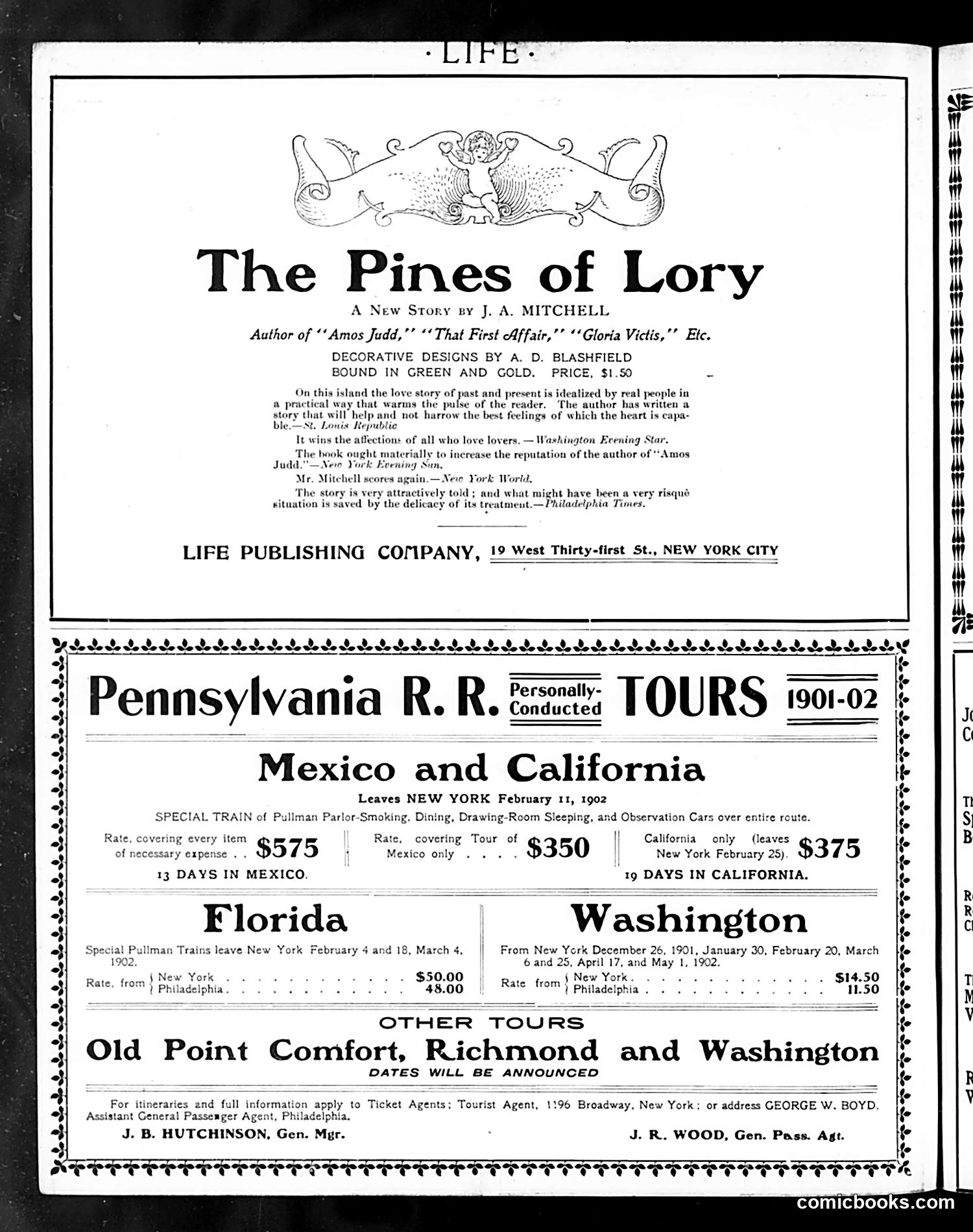
This page is **primarily advertising**, not satirical content. It contains two main advertisements: 1. **Upper section**: A book advertisement for "The Pines of Lory" by J.A. Mitchell, published by Life Publishing Company. The decorative header features a cherub design typical of early 1900s book marketing. 2. **Lower section**: Pennsylvania Railroad tour advertisements for 1901-02, promoting personally-conducted trips to Mexico, California, Florida, and Washington. These showcase luxury Pullman train travel with specific pricing ($575 for Mexico/California tour, $350 for Mexico only, etc.), departing February 11, 1902. The page reflects early-20th-century advertising conventions and the popularity of rail tourism among affluent Americans. No political satire or caricature is evident.
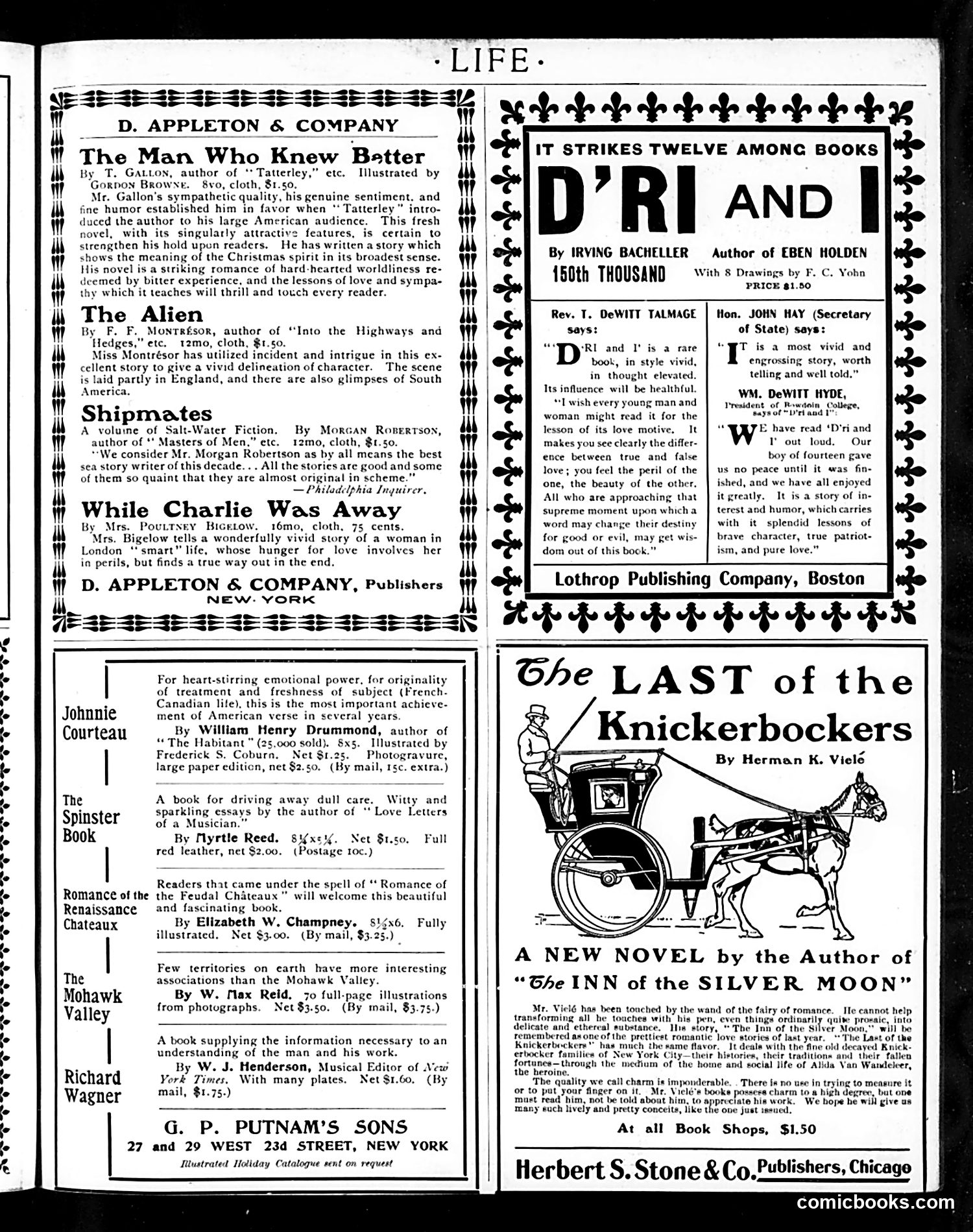
This page is primarily **book advertisements** rather than editorial cartoons or satire. It features promotional notices for novels and literary works from publishers including D. Appleton & Company, Lothrop Publishing Company, G. P. Putnam's Sons, and Herbert S. Stone & Co. The advertisements showcase titles like "The Man Who Knew Better" by T. Gallon, "D'ri and I" by Irving Bacheller, and "The Last of the Knickerbocker" by Herman K. Vielé. Each includes author descriptions, illustrations, and prices (typically $1.50). The decorative fleur-de-lis borders and typography reflect early 20th-century magazine design. There is **no political satire or cartoon content** visible on this page—it functions as a commercial section promoting contemporary literature to Life's readership.
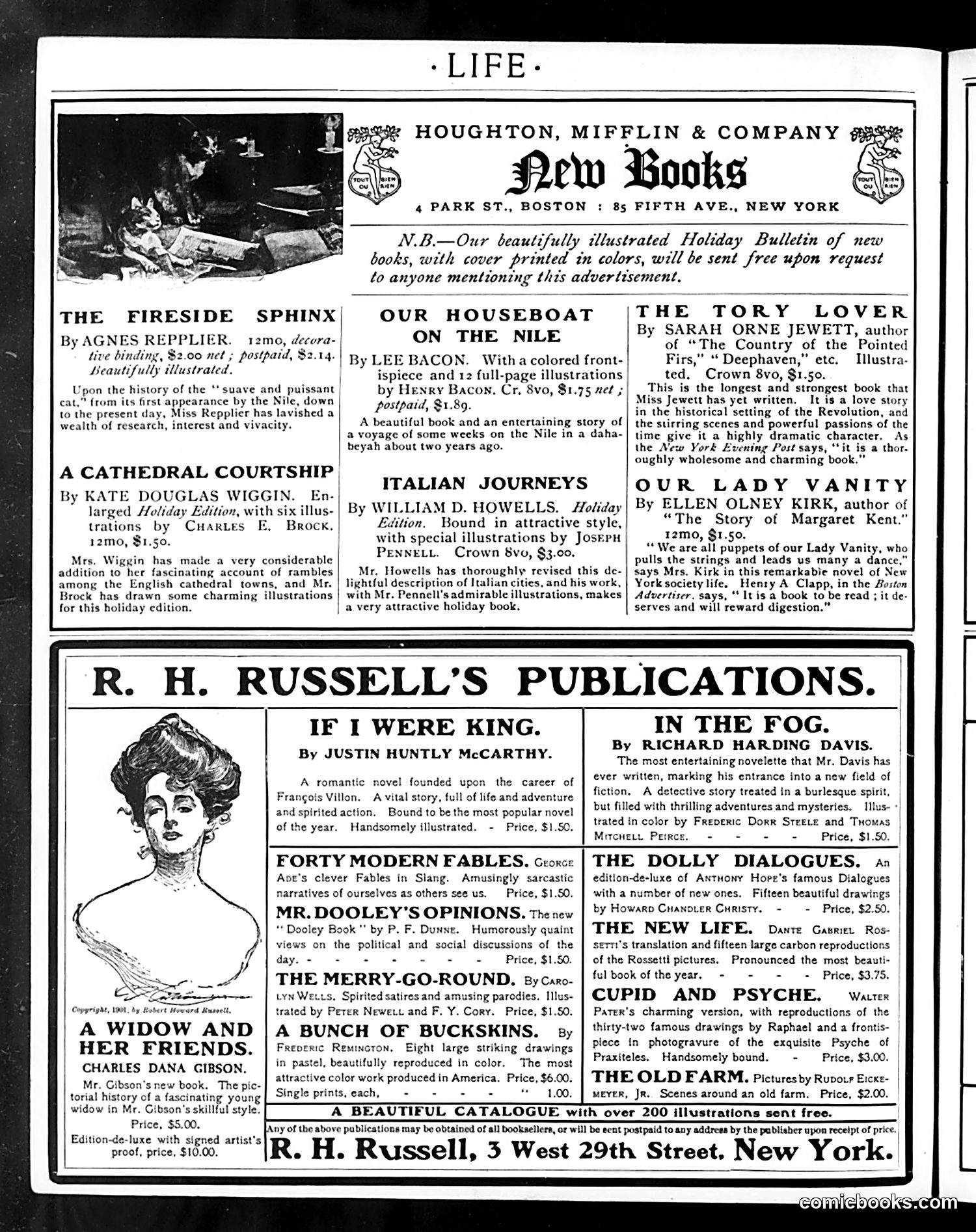
This page is **primarily advertising**, not political satire. It contains two book advertisements from major publishers (Houghton Mifflin and R.H. Russell) from what appears to be the early 1900s. The only illustration is a portrait of a woman's head and shoulders accompanying "A Widow and Her Friends" by Charles Dana Gibson. This appears to be a **Gibson Girl**—the idealized feminine beauty standard Gibson popularized through his pen-and-ink drawings in Life magazine itself. The image exemplifies Gibson's distinctive style: elegant profile, fashionable upswept hair, and refined features representing aspirational American femininity. The page reflects Life's dual role as both satirical magazine and literary/cultural marketplace, showcasing popular novels and illustrated books of the period rather than political commentary.
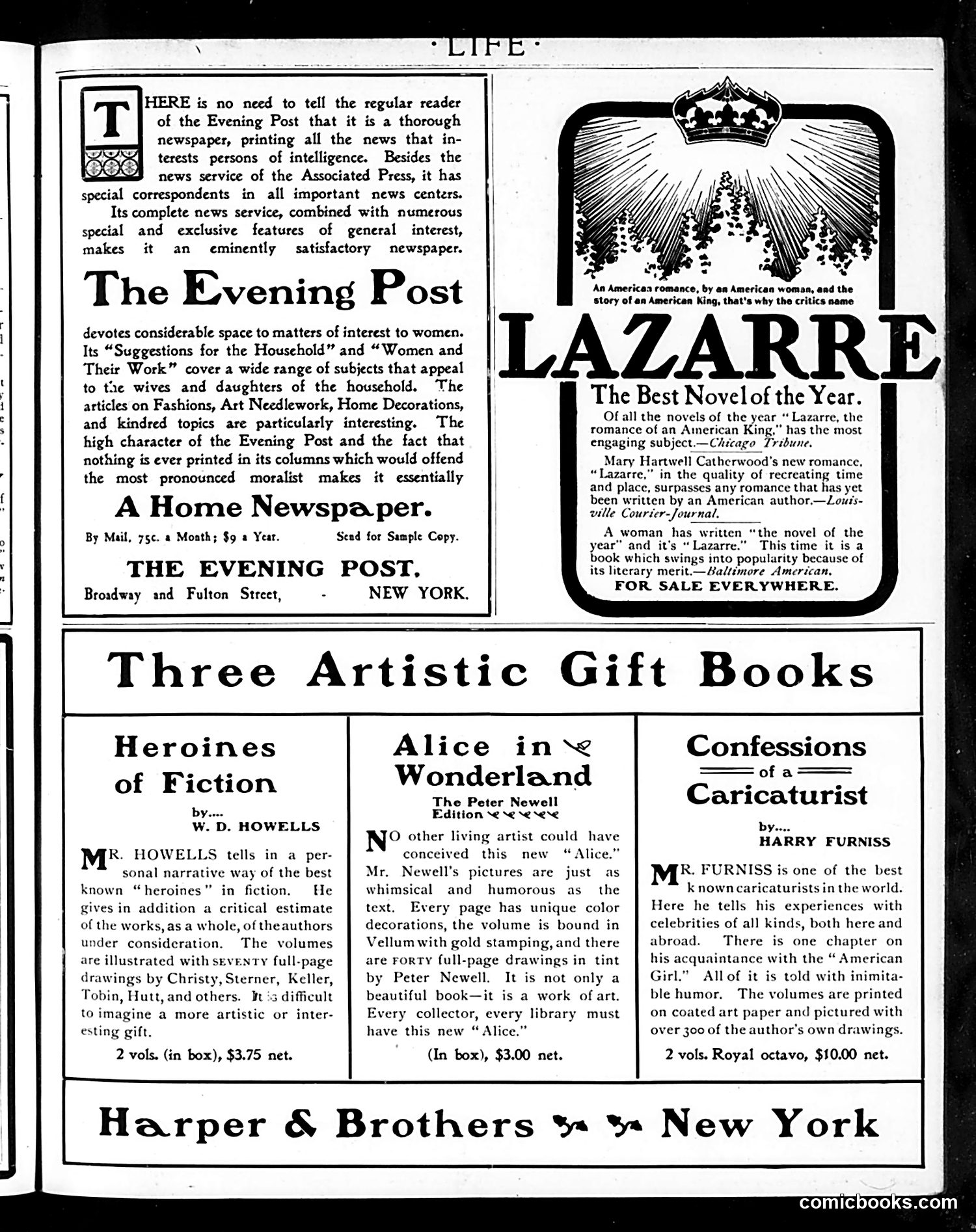
This page is primarily **advertising**, not satirical content. It contains: 1. **The Evening Post advertisement** — promoting a newspaper as "A Home Newspaper" with special appeal to women through fashion, home decoration, and needlework content. 2. **"Lazarre" book advertisement** — promoting a novel described as "The Best Novel of the Year," written by an American woman about an American king. The ad quotes positive reviews from *Chicago Tribune* and *Baltimore American*. 3. **Three Artistic Gift Books** — Harper & Brothers advertising three illustrated volumes: *Heroines of Fiction* by W.D. Howells, *Alice in Wonderland* (Peter Newell Edition), and *Confessions of a Caricaturist* by Harry Furniss. There is **no political satire or cartoon commentary** on this page — it is a standard period advertisement page featuring literary and periodical products aimed at educated, middle-class readers.
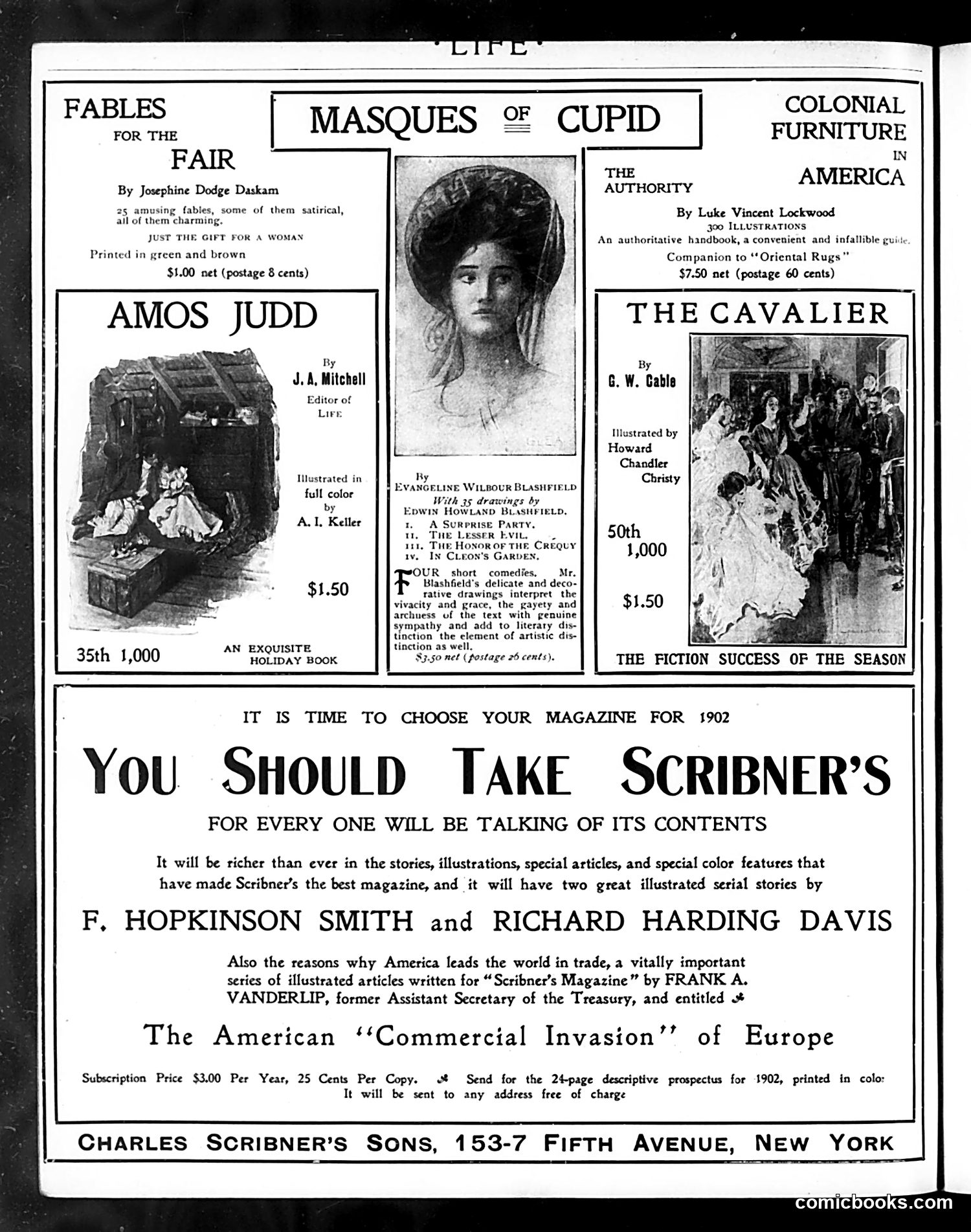
This page is primarily **advertising for books and magazines** rather than political satire or comics. The upper section advertises four publications: - *Fables for the Fair* by Josephine Dodge Daskam - *Amos Judd* by J.A. Mitchell (illustrated by A.I. Keller) - *Masques of Cupid* (illustrated portrait of a woman) - *Colonial Furniture in America* by Luke Vincent Lockwood - *The Cavalier* by G.W. Cable (illustrated by Howard Chandler Christy) The dominant lower half is a **subscription advertisement for Scribner's Magazine** for 1902, promoting upcoming serial stories by F. Hopkinson Smith and Richard Harding Davis, plus articles about America's commercial dominance in Europe. There is no political cartoon or satire visible on this page.
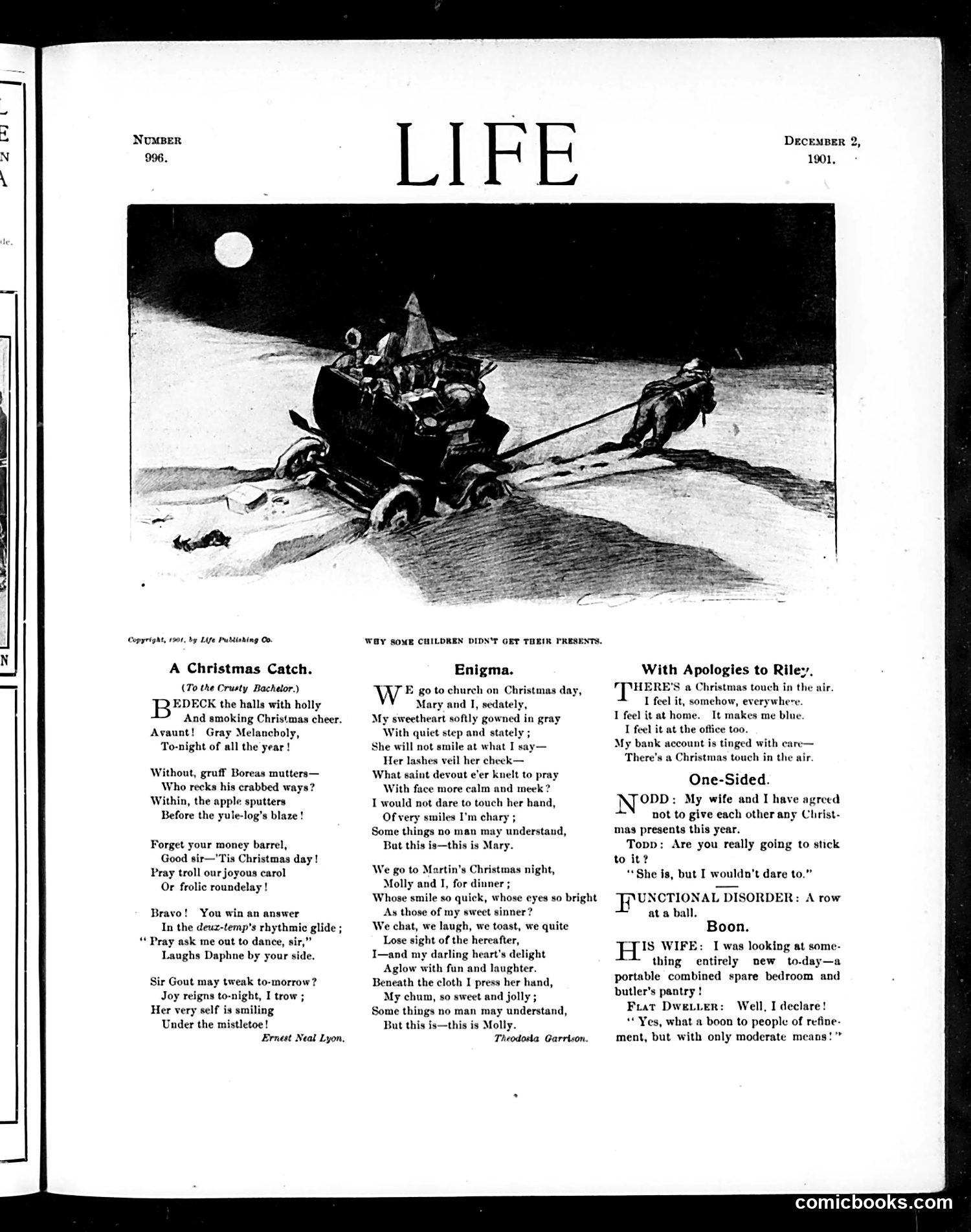
The main illustration shows Santa's sleigh being pulled by a figure across a moonlit landscape, titled "Why Some Children Didn't Get Their Presents." This appears to be a visual joke about Santa getting stuck or delayed—the sleigh seems bogged down or struggling, explaining absent Christmas gifts. The page contains three humorous poems/pieces: "A Christmas Catch" (about holiday decorations), "Enigma" (wordplay about Mary at Christmas), and "With Apologies to Riley" (about Christmas touches). The small dialogues "One-Sided," "Functional Disorder," and "Boon" present domestic humor and marital banter typical of early-1900s satirical magazines. The satire targets holiday sentimentality, marital dynamics, and middle-class domesticity rather than political figures.
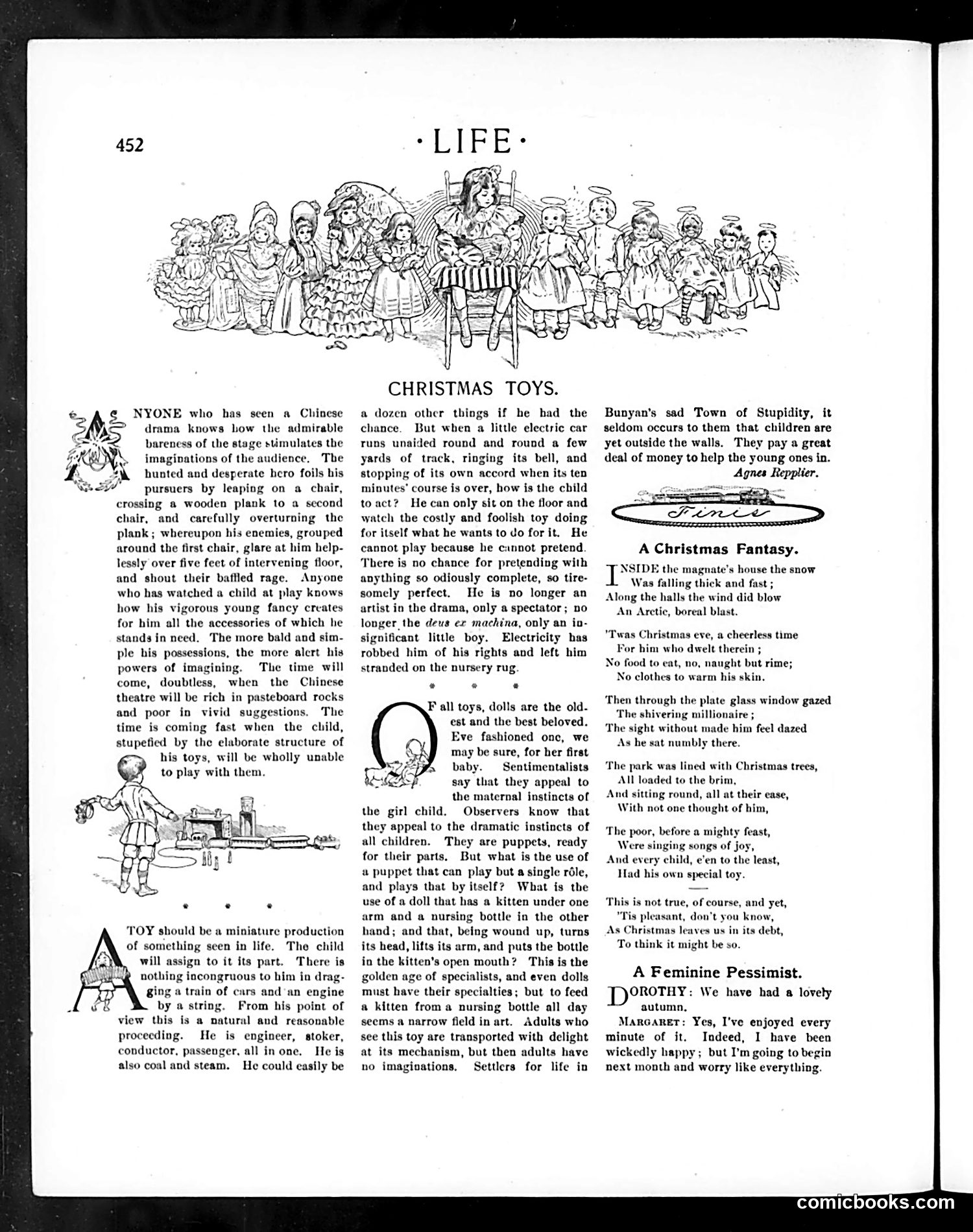
This page discusses the educational and dramatic value of toys, particularly dolls and mechanical trains. The text critiques how realistic toys—like dolls with nursing bottles or wind-up trains—paradoxically limit children's imagination by being too functionally complete. The author argues that children need toys that require their creativity to animate and complete imaginatively. The illustrations show a child playing with a toy train and another examining a doll, demonstrating these mechanical toys in action. The page also includes poetry titled "A Christmas Fantasy" about a poor child viewing Christmas trees through a window, and a brief dialogue between "Dorothy" and "Margaret" about autumn worries—typical Life magazine features mixing social commentary with sentimental verse.
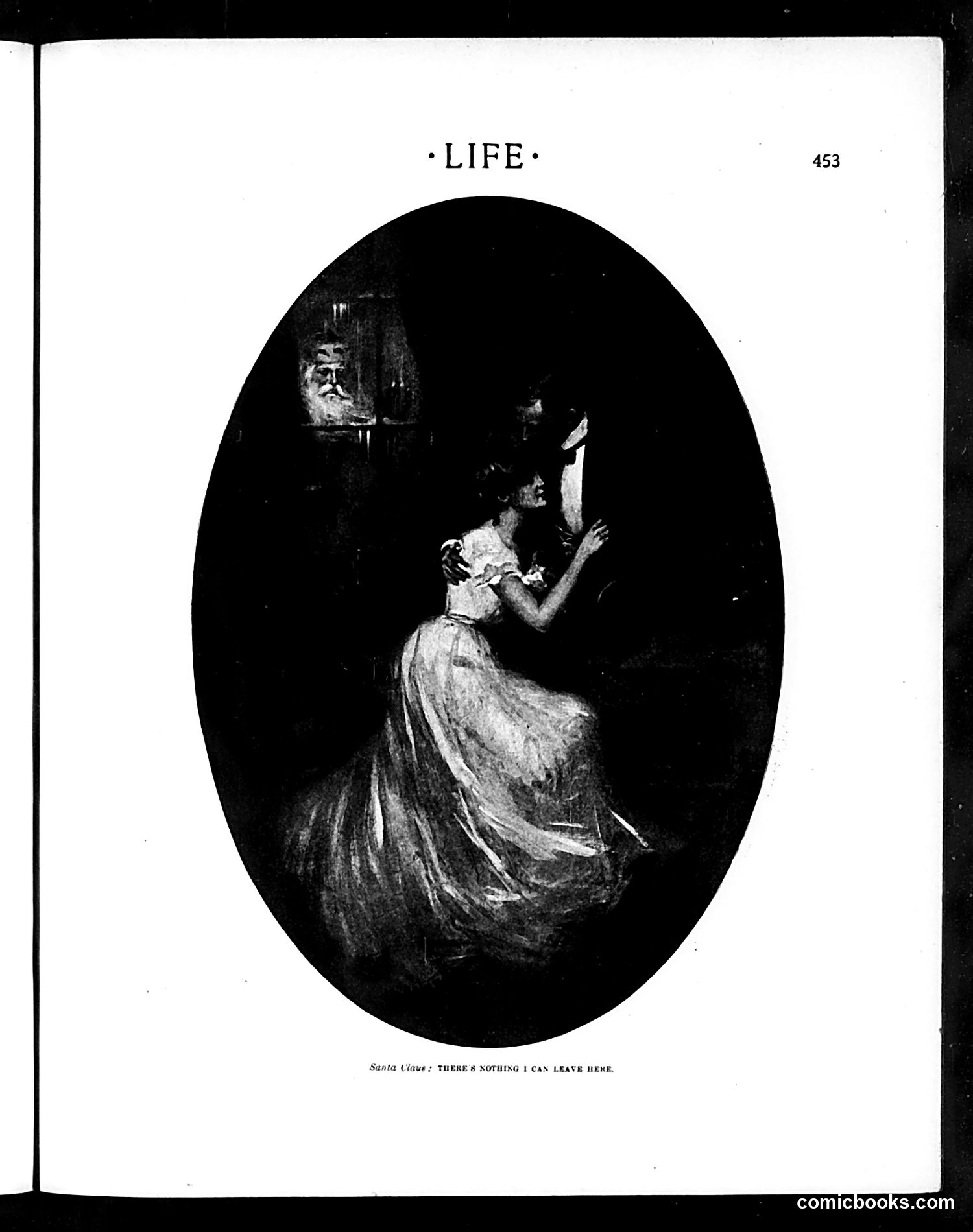
This page features a single illustration titled "There is Nothing I Can Leave Here" by Sasta Claus (likely a pseudonym). The image shows a woman in classical dress gazing at a portrait on a wall in a darkened interior—apparently a museum or wealthy home. The woman appears to be saying farewell to the artwork, suggesting she must leave something precious behind. The exact satirical meaning is unclear without fuller context. It may comment on: - Wartime art preservation or loss - Cultural displacement or exile - A wealthy person's difficult choices during hardship The classical styling and melancholic tone suggest social commentary on sacrifice or cultural loss, but the specific historical reference remains uncertain from this page alone.
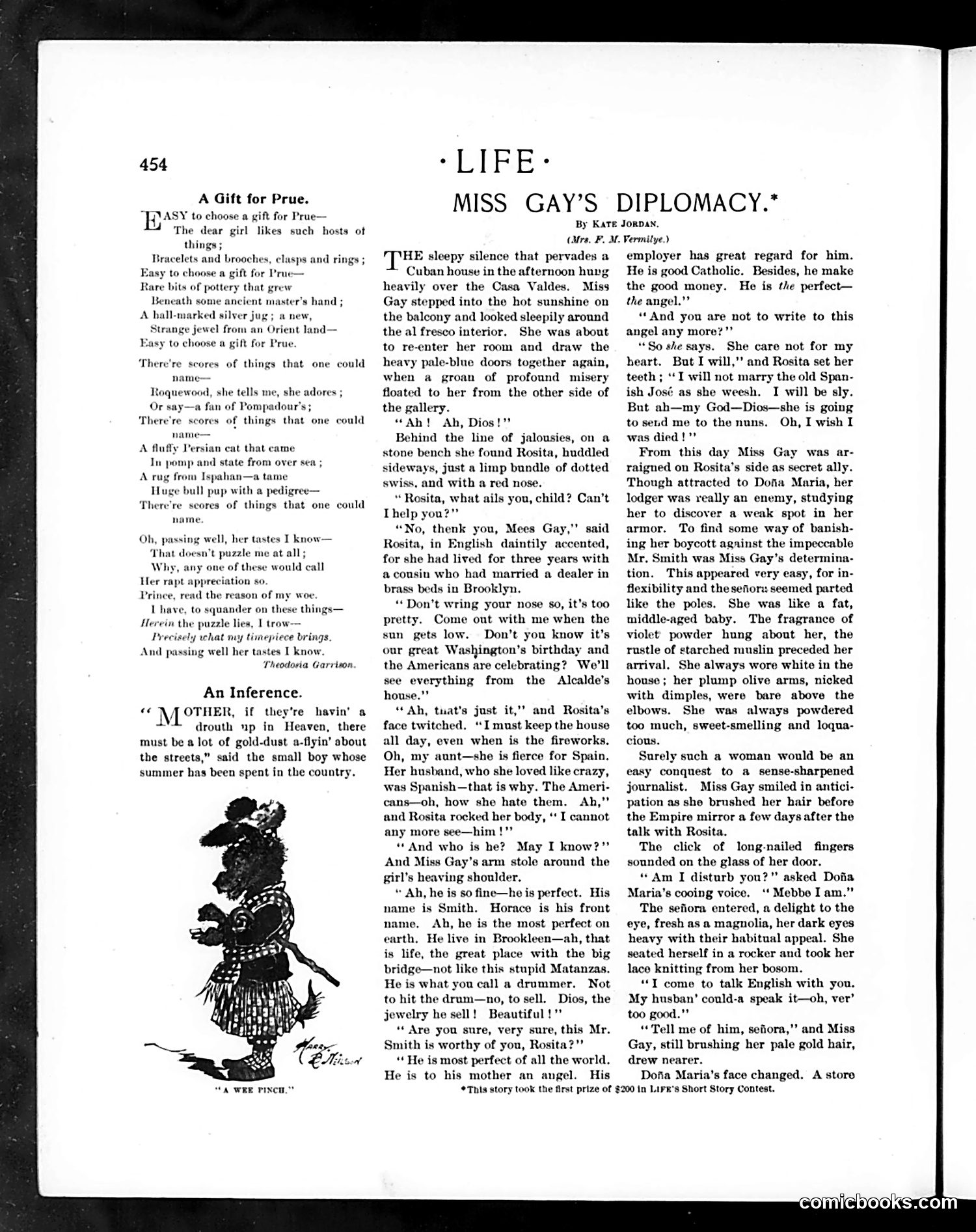
This page contains two distinct pieces: a poem titled "A Gift for True" (left) and a short story titled "Miss Gay's Diplomacy" by Kate Jordan (right), with an illustration of "A Wee Pinch" (a woman in elaborate dress). **The cartoon/illustration** labeled "A Wee Pinch" appears to be a decorative figure illustrating feminine fashion or character types of the period—likely early 20th century based on the styling. **The content** is not political satire but rather literary material typical of Life magazine's mixed format: light verse and fiction aimed at middle-class readers. The story concerns Miss Gay navigating social dynamics with her employer's son in Brooklyn, involving themes of propriety and romantic tension. The satirical elements are social rather than political—gentle mockery of romantic conventions and class-consciousness rather than commentary on current events.
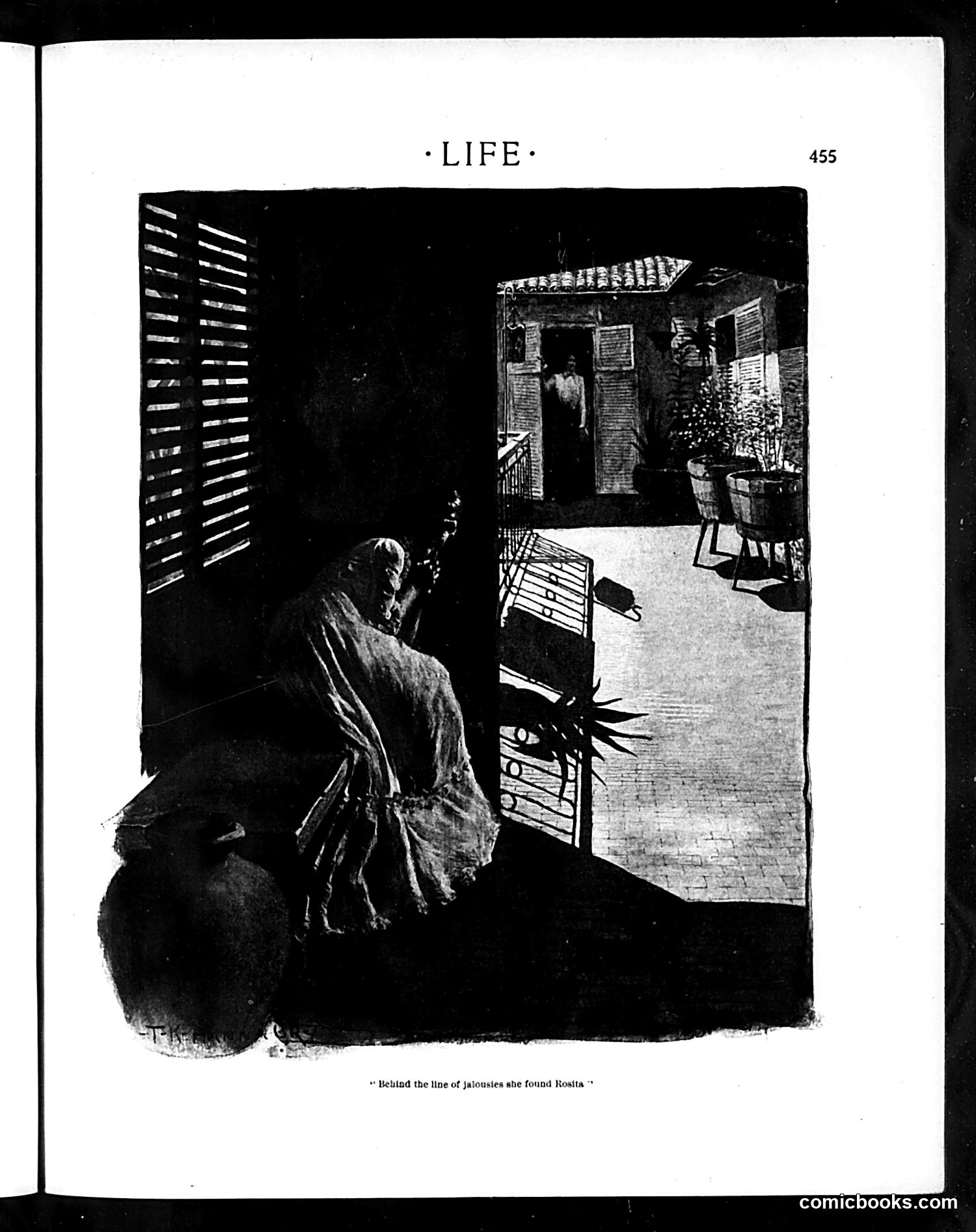
This page contains a single illustration with the caption: "Behind the line of jalousies she found Rosita." The image depicts a scene viewed through venetian blinds (jalousies). A figure in dark clothing sits in a shadowy foreground, observing through the slats into a bright courtyard or patio area beyond. In the illuminated space, other figures can be seen near a brick building with climbing vines. The illustration appears to be from a serialized story or narrative feature in *Life* magazine. The dramatic chiaroscuro lighting—contrasting deep shadows with bright exterior light—suggests mystery or surveillance. The caption references discovering someone named "Rosita," implying this is a pivotal moment in an ongoing plot. The artistic style and subject matter suggest this may accompany a serialized fiction piece typical of *Life*'s editorial content from that era.
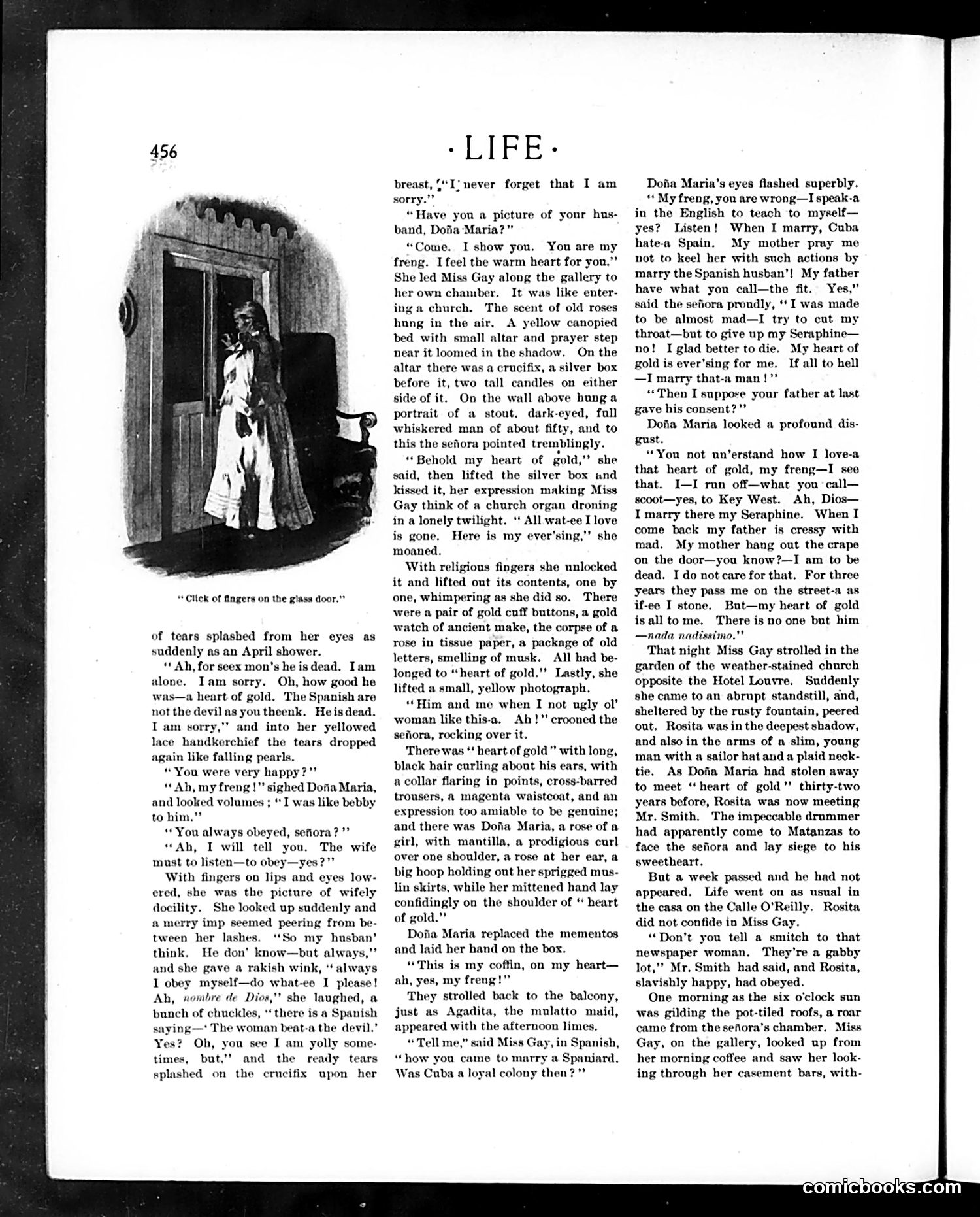
This page presents a sentimental short story featuring a Spanish widow, Doña Maria, recounting her marriage to an American visitor, Miss Gay. The narrative uses ethnic stereotypes common to early 20th-century American literature. **Key elements:** The illustration shows a woman in a doorway accessing a shrine-like space with religious imagery—candles, crucifix, altar—emphasizing the melodramatic, devout characterization. **The satire/social commentary:** The story satirizes American sentimentality about "exotic" Spanish/Cuban culture and the romanticization of passionate, obedient foreign women. Doña Maria is depicted through exaggerated dialect and emotional extremes (tears, devotion to her deceased husband's portrait and belongings). However, there's subtle irony: beneath her performed docility, she admits to covert independence ("I obey myself—do what I please"), suggesting the "exotic woman" trope masks female agency. The political subtext references Cuba's colonial relationship with Spain, positioning Doña Maria's cross-cultural marriage as defiant resistance against Spanish rule.
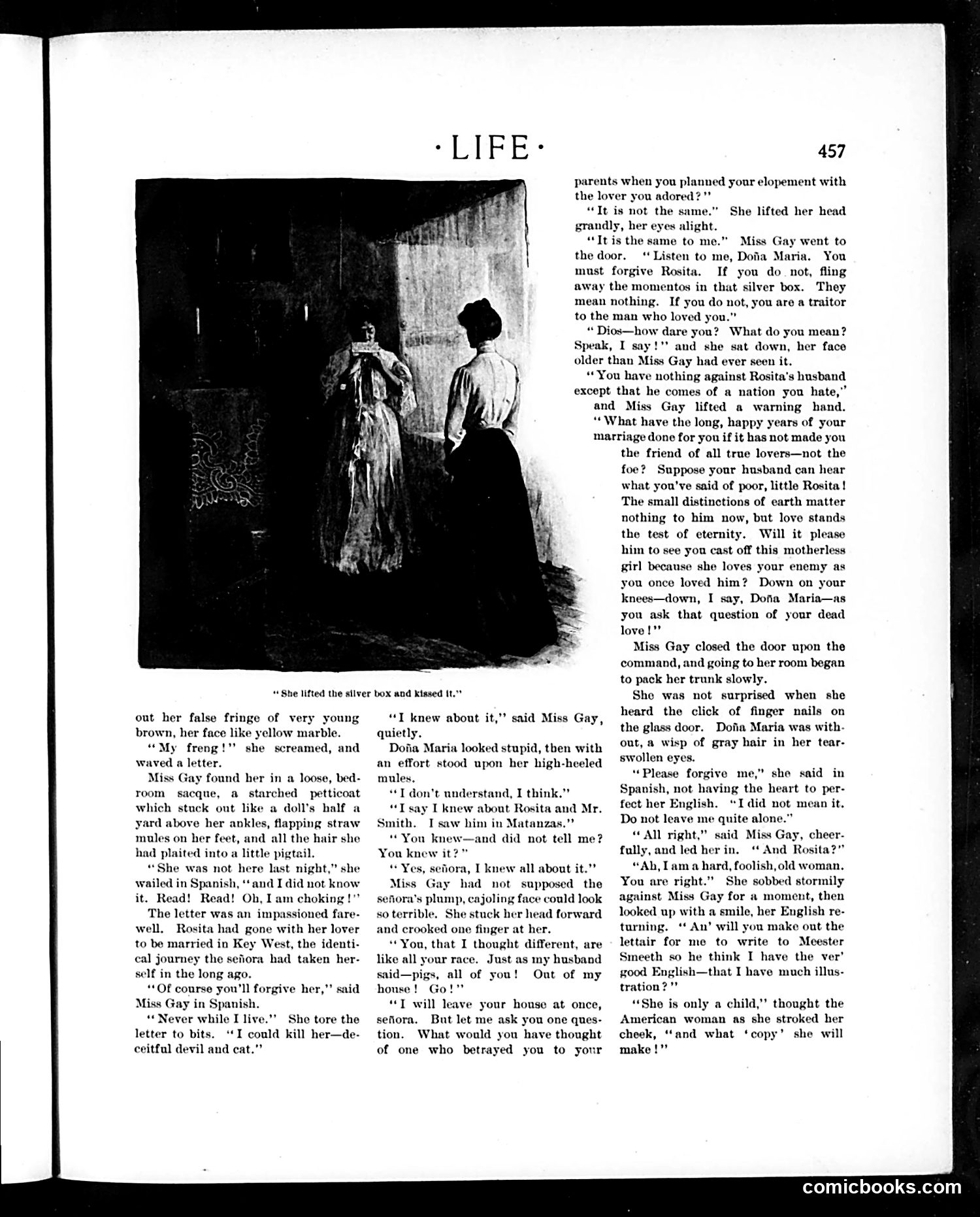
This is a serialized short story (not a political cartoon) from *Life* magazine, depicting a domestic drama between an elderly Spanish woman, Doña Maria, and an American woman, Miss Gay. **The Plot**: Doña Maria discovers her daughter Rosita has eloped with a man named Mr. Smith to Key West—ironically, the same destination where Doña Maria herself eloped decades earlier. Despite this parallel, Doña Maria refuses forgiveness because Smith is foreign (appears to be American), whom she despises. **The Point**: Miss Gay delivers a moral rebuke, arguing that national prejudice and earthly distinctions matter nothing compared to love and eternity. She pressures Doña Maria to forgive by suggesting her deceased husband would judge her harshly for rejecting love based on nationalism. **Social Context**: The story critiques rigid ethnic/national prejudices while exploring themes of hypocrisy (Doña Maria condemning behavior she herself committed) and generational conflict. The ending shows Doña Maria's capitulation and her comedic concern about appearing educated to the American.
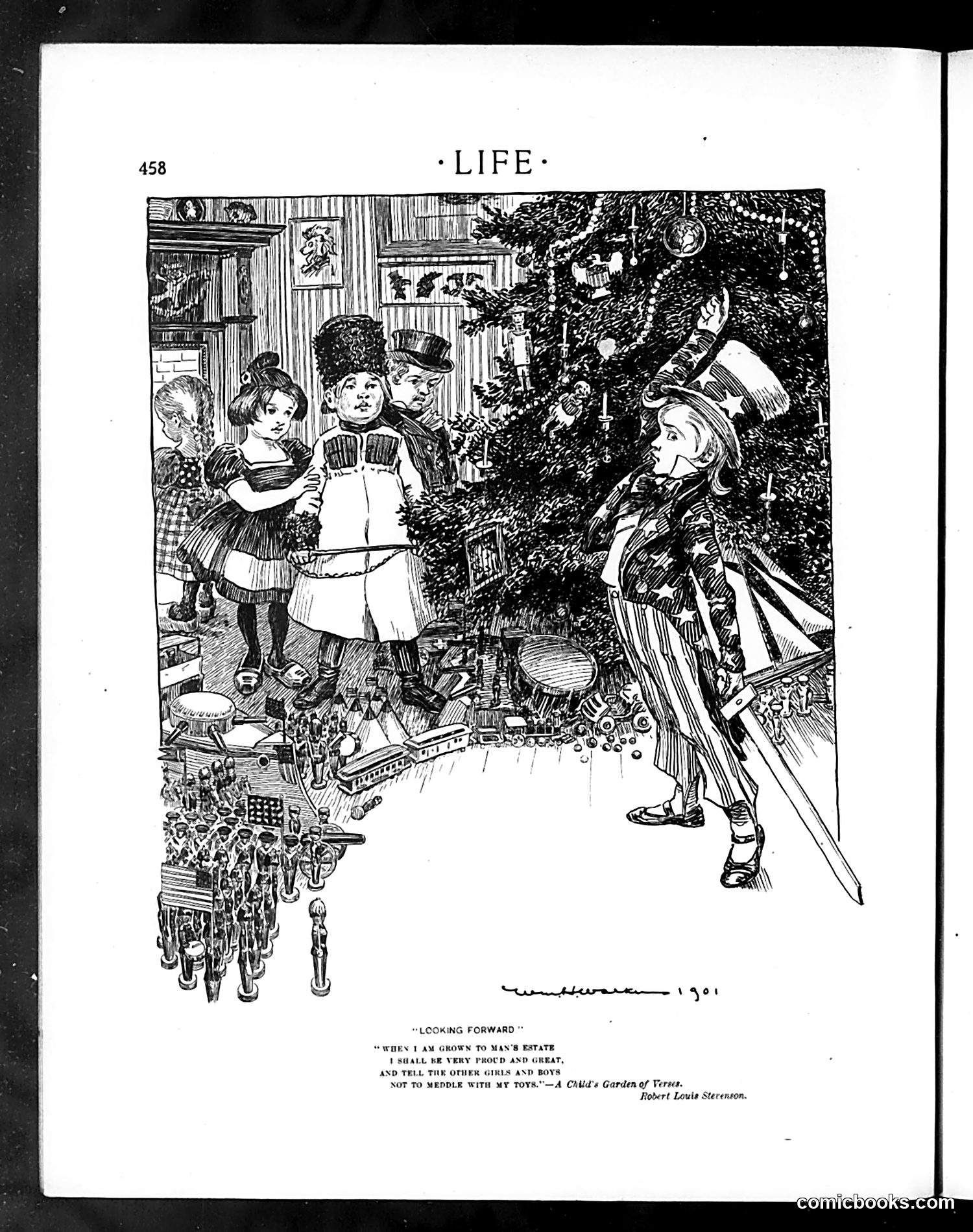
This illustration satirizes childhood aspirations through a quote from Robert Louis Stevenson's *A Child's Garden of Verses*. The cartoon depicts children in an interior setting with a decorated Christmas tree, examining toys and dolls. The satire targets the sentiment expressed in the verse: a child's boastful promise to be "proud and great" as an adult and to selfishly guard possessions from others. The visual context—children surrounded by material goods—underscores the irony: the child speaker imagines future greatness defined by toy ownership and exclusionary behavior rather than genuine accomplishment or generosity. The illustration critiques how childhood materialism and possessiveness can reflect or predict adult character flaws, suggesting that such attitudes persist into adulthood.
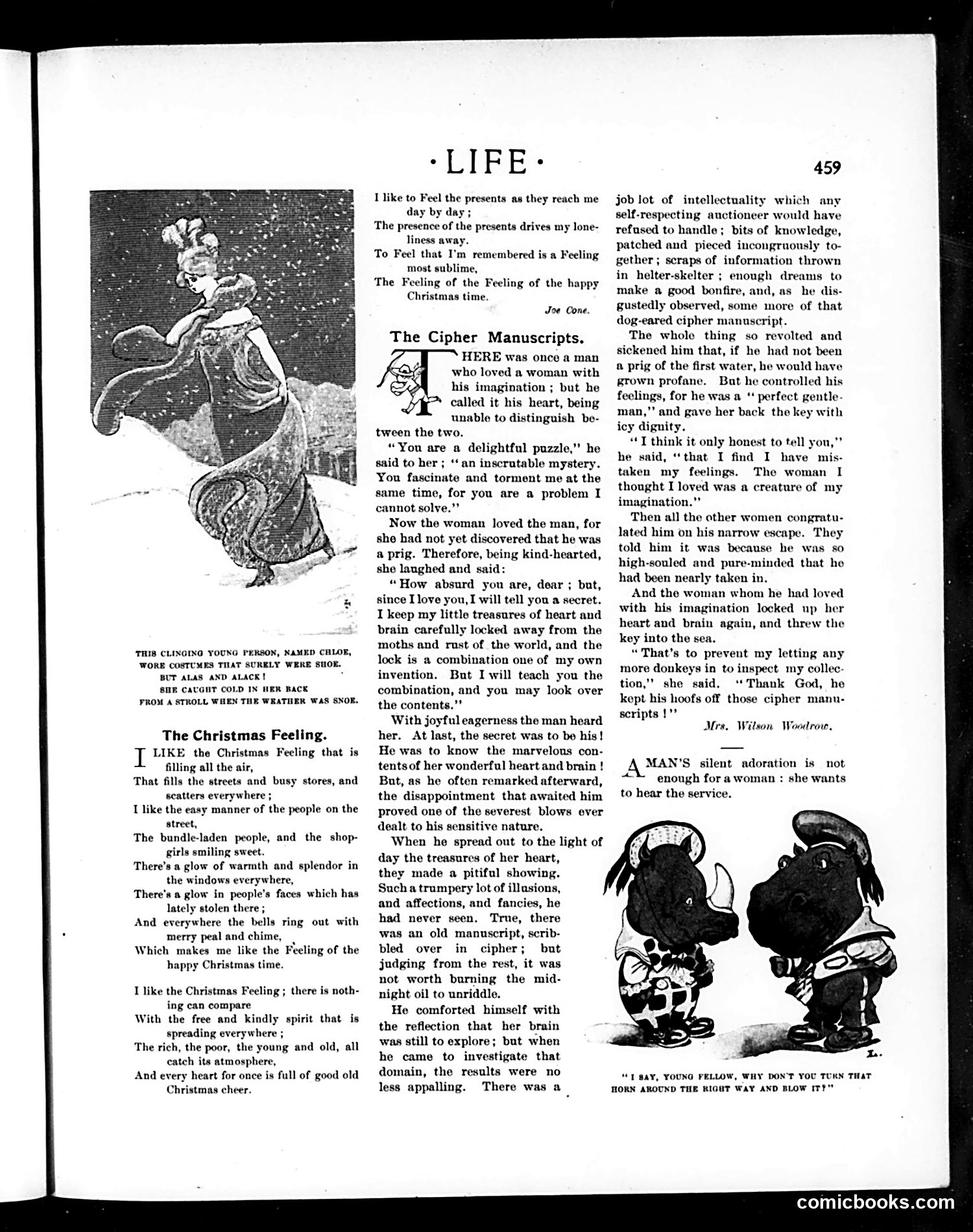
This page contains two satirical pieces mocking self-deception in love and relationships. **"The Cipher Manuscripts"** critiques a man who loves a woman based on imagination rather than reality. He romanticizes her as an "inscrutable mystery," but when she actually reveals herself to him, he's disappointed—finding her mind contains only scattered, mediocre thoughts and "dog-eared cipher manuscript." The satire targets his pretentious self-importance (he's "a prig") and his inability to accept that his idealized fantasy cannot match actual human complexity. When reality disappoints him, he blames *her* rather than acknowledging his unrealistic expectations. **"The Christmas Feeling"** is sentimental verse celebrating holiday warmth—straightforward nostalgia without satirical intent. A small limerick about a woman named Chloe catching cold also appears. The page's central joke: men who claim to love women are often actually in love with their own imaginative projections, and react with wounded superiority when confronted with actual human imperfection.
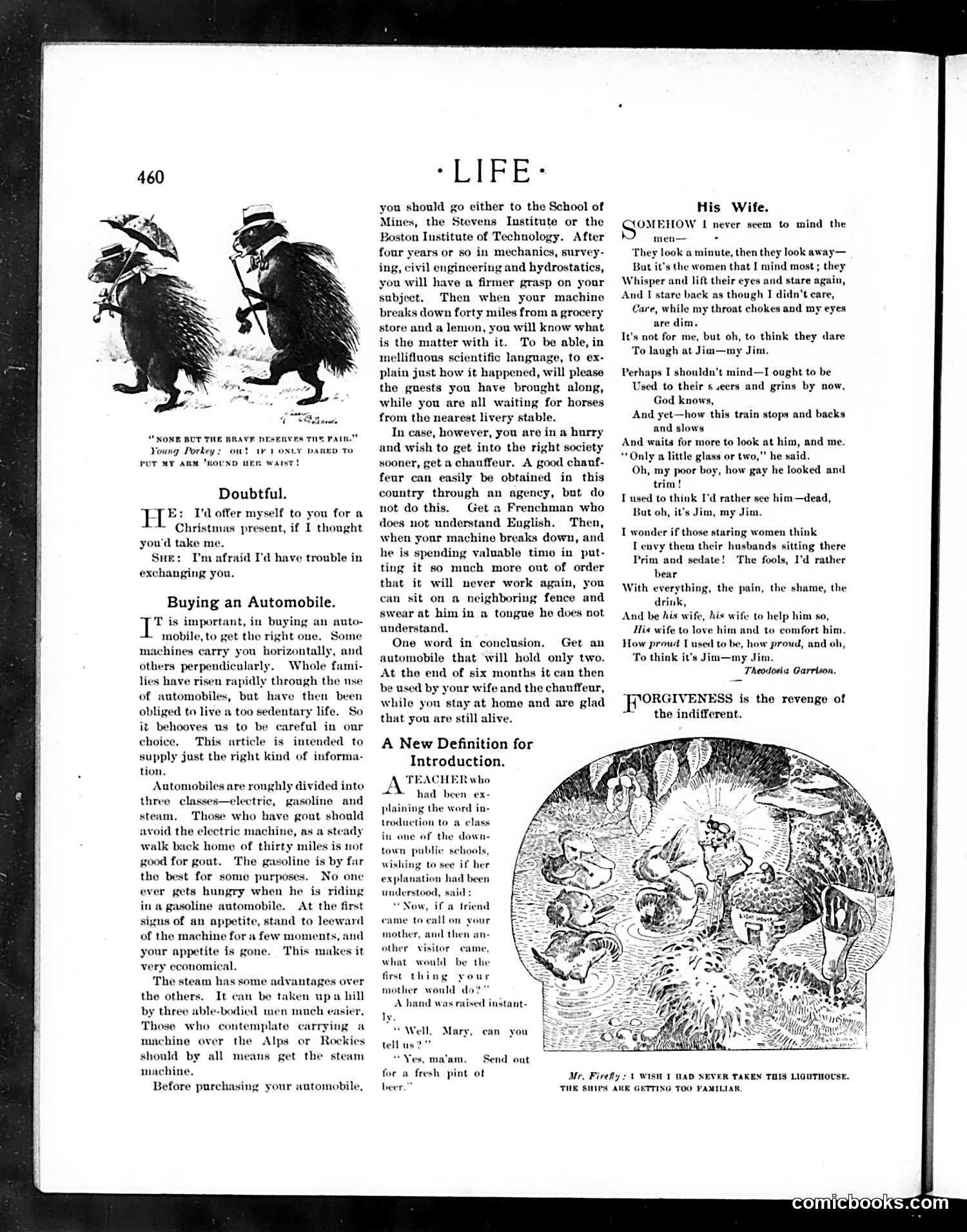
This page contains three separate humorous pieces satirizing early 1900s American life: **"Doubtful"** (top): A brief romantic joke about a man offering himself as a Christmas present; the woman quips she'd have "trouble exchanging" him—implying he's defective goods. **"Buying an Automobile"** (center): Extended satire mocking both automobiles and the pretensions of their owners. The joke: automobiles are unreliable and dangerous (they "carry you perpendicularly"—tip over). The piece ironically suggests buyers need four years of engineering school just to explain breakdowns to guests, or hire a French chauffeur who doesn't understand English so they can blame him. The punchline: buy a two-seater so your wife and chauffeur can use it while you stay home "glad that you are still alive." **"A New Definition for Introduction"** (bottom): A schoolteacher asks students what "introduction" means using a social scenario. A child misunderstands completely, answering: "Send out for a fresh pint of beer"—implying working-class Irish stereotypes and their drinking habits. All three mock technological change, social climbing, and contemporary manners.
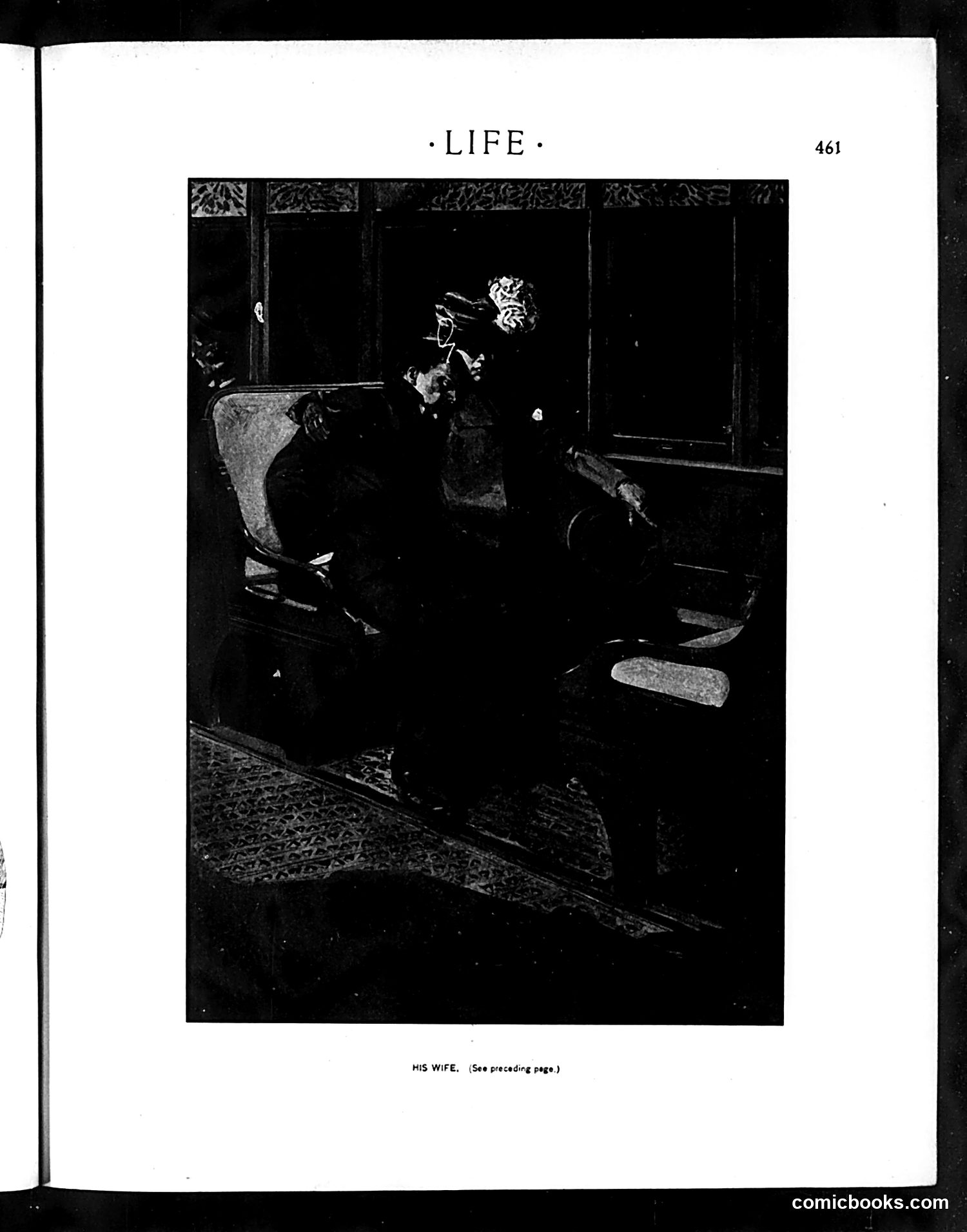
This page from *Life* magazine shows a black and white photograph labeled "HIS WIFE" with a reference to the preceding page. The image depicts a woman in early 20th-century dress sitting in what appears to be a car interior, wearing a hat and formal attire. Without seeing the preceding page, the specific satirical point is unclear. However, the structure suggests this was part of a multi-panel joke or commentary about a married couple. Given *Life*'s tradition of social satire, this likely commented on marriage dynamics, gender roles, or domestic situations relevant to its era. The reference directs readers to understand the full context from the previous page, making this page incomplete for modern interpretation without that source material.
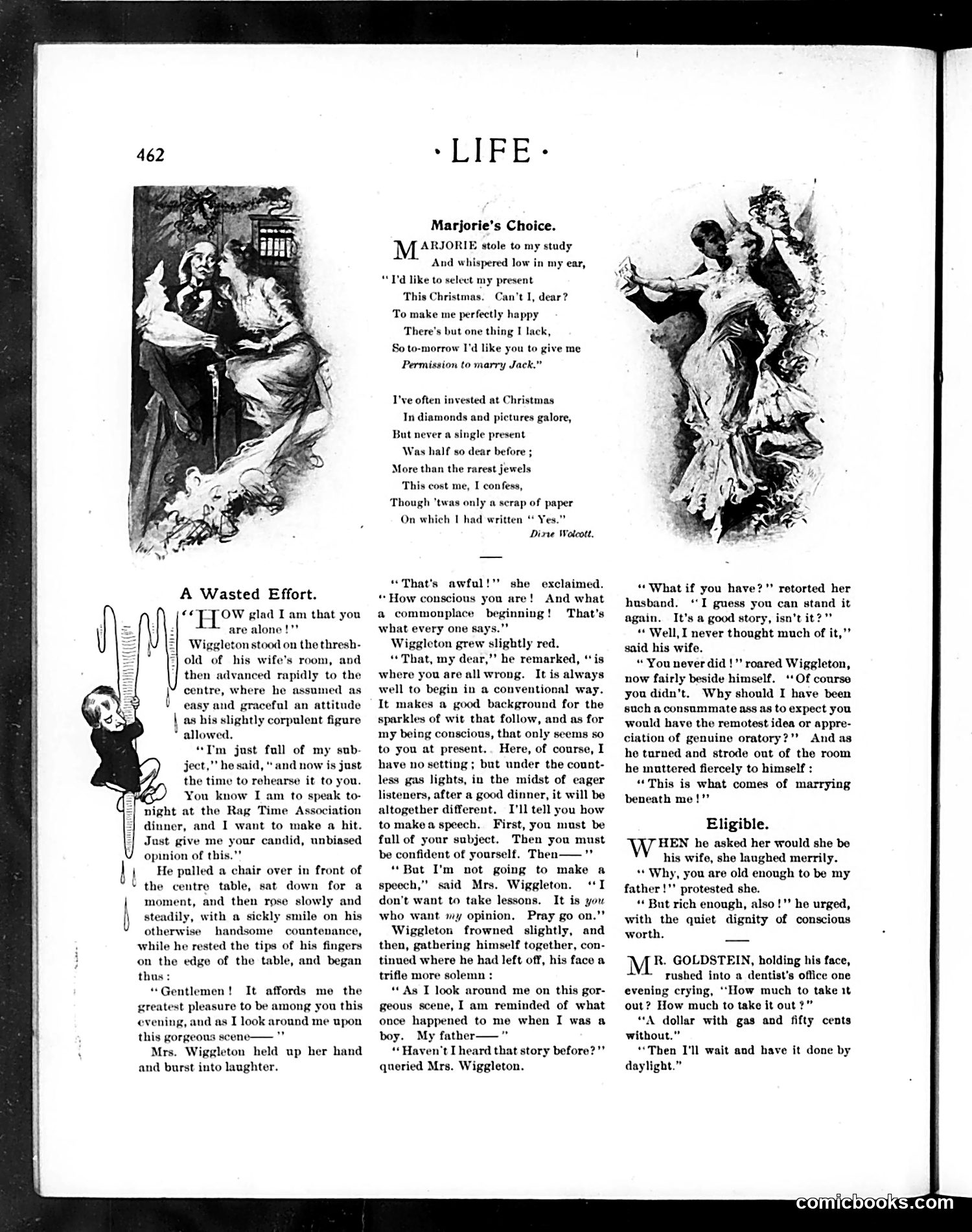
This page from *Life* magazine contains three separate satirical pieces mocking social pretensions and romantic absurdities of the era. **"A Wasted Effort"** ridicules a pompous man (Wiggleton) rehearsing a dinner speech for his wife. The joke: his elaborate, self-conscious oratory is undermined by her frank criticism and boredom. His complaint that she lacks appreciation for "genuine oratory" satirizes male vanity and the gap between how men imagine themselves and how others perceive them. **"Marjorie's Choice"** sentimentalizes a daughter asking permission to marry—a modest "yes" written on paper valued above diamonds. This contrasts sharply with the previous story's pomposity, celebrating genuine emotion over pretense. **"Eligible"** is a brief joke about a wealthy older man pursuing a young woman. He offers himself despite the age difference, confident his wealth compensates. Her agreement to wait for dental work (rather than pay extra for anesthesia) implies she'll accept him for the same mercenary reason. The satire targets masculine self-deception, social climbing, and transactional romance.
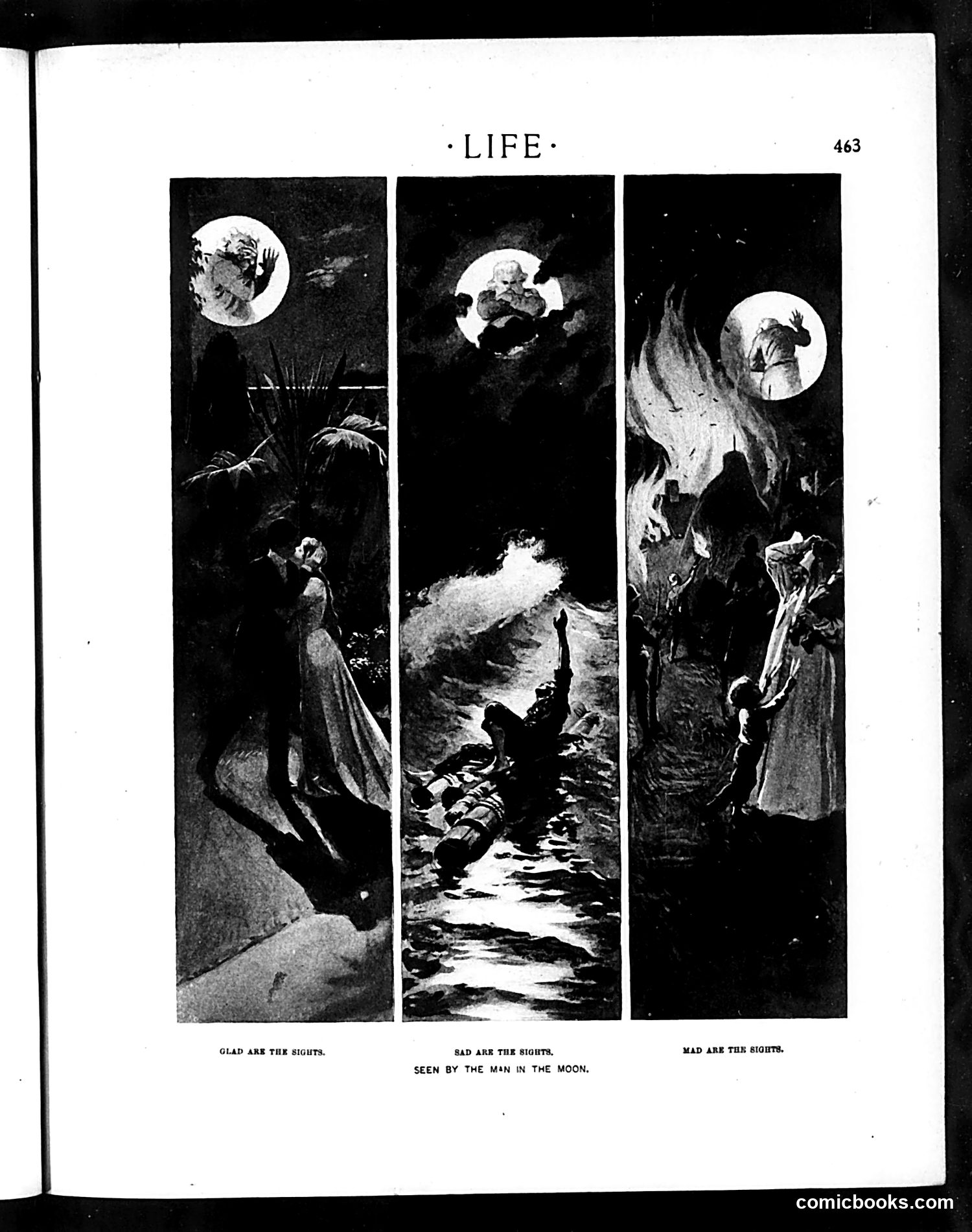
This is a satirical three-panel illustration from Life magazine showing contrasting scenes "seen by the man in the moon." Each panel depicts a circular moon-face observing scenes below: **Left panel ("Glad")**: Shows figures in what appears to be a romantic or pleasant scene with nature. **Center panel ("Bad")**: Depicts figures in what seems a darker, more sorrowful or tragic scene. **Right panel ("Mad")**: Portrays figures amid flames or chaos, suggesting violence or destruction. The title suggests the moon observes humanity's full emotional and moral spectrum—joy, suffering, and anger/madness. This appears to be social or philosophical commentary on the human condition, using the detached perspective of the moon as observer to reflect on earthly experience. The specific historical context or events referenced remain unclear without additional publication information.
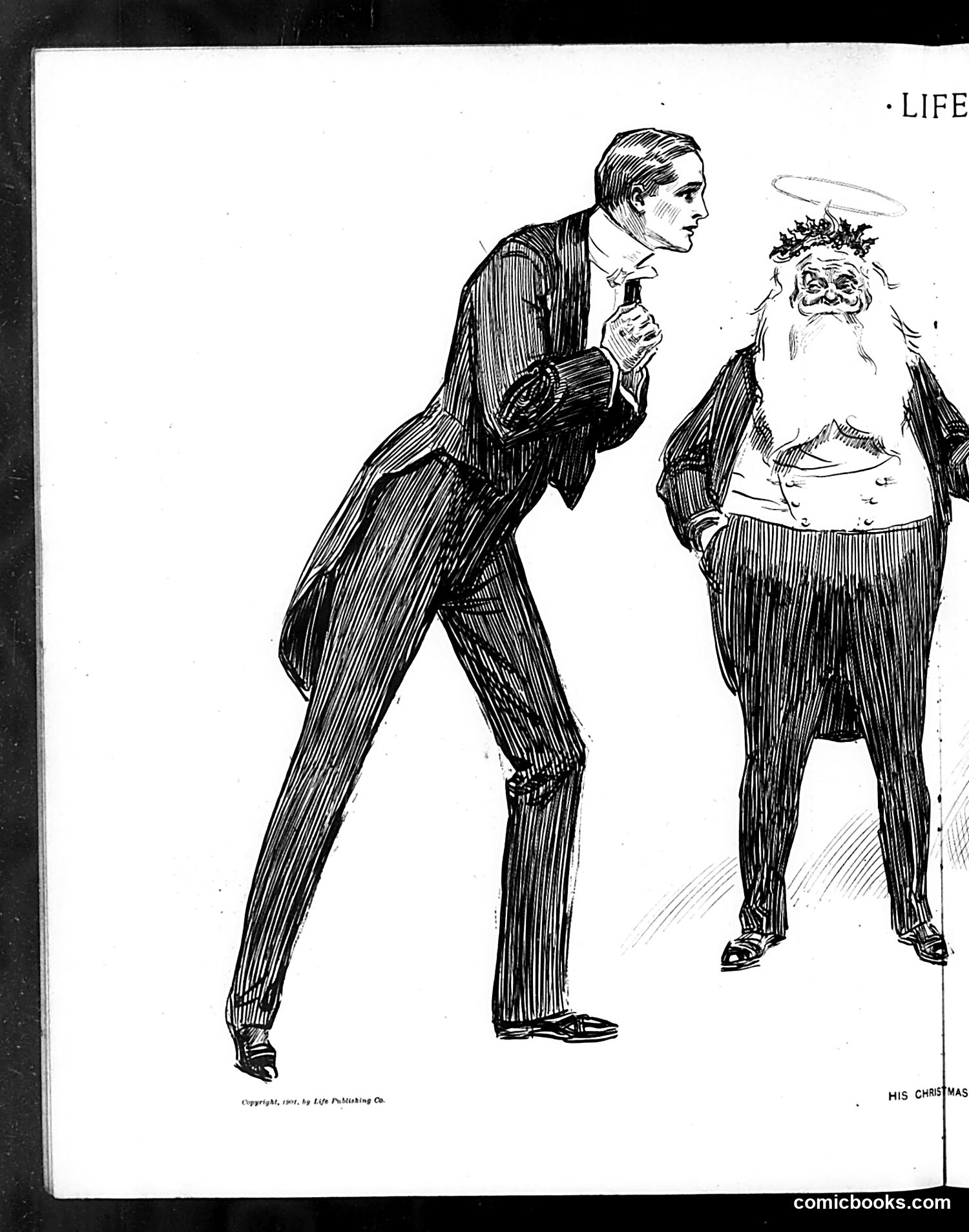
This is a satirical cartoon from *Life* magazine (copyright 1901, Life Publishing Co.) titled "His Christmas." The image shows two figures: a well-dressed man in a business suit leaning forward intently, holding what appears to be a mirror or reflective object, examining a bearded, rotund figure dressed as Santa Claus (complete with halo). The satire appears to critique materialism and commercialization of Christmas. The businessman's intense scrutiny of Santa suggests he's inspecting or evaluating the holiday's commercial value—literally holding a mirror to expose what Christmas has become. The halo above Santa's head is ironic, contrasting the sacred religious holiday with its reduction to commercial spectacle. The cartoon mocks how the holiday had become increasingly commercialized by the early 1900s, with wealthy merchants profiting from Christmas consumption rather than celebrating its spiritual meaning.
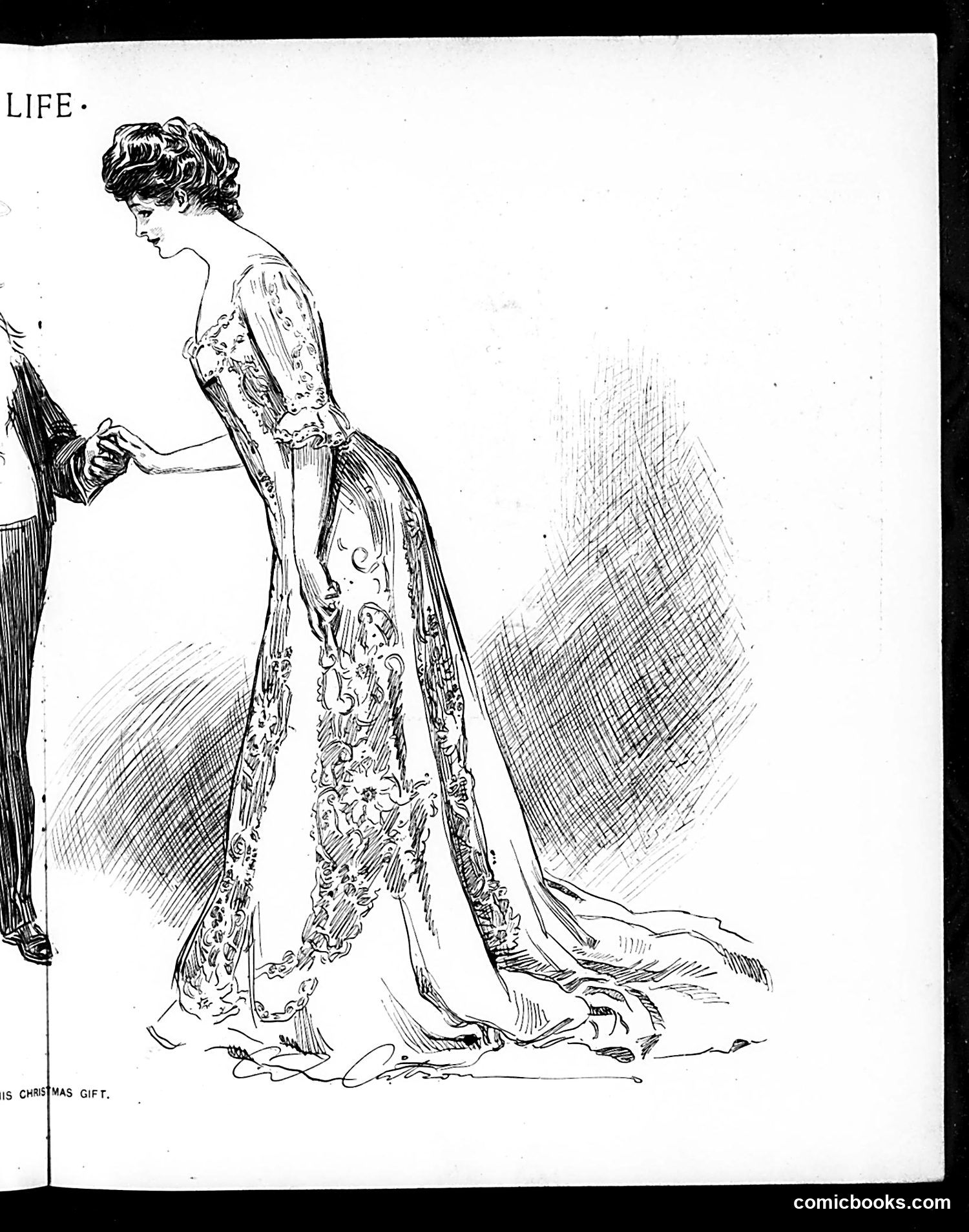
This appears to be a fashion illustration rather than a political cartoon. The page shows an elegantly dressed woman in an elaborate Edwardian-era gown with ornate embroidered details and a dramatic train. A man in dark formal wear (partially visible on the left) appears to be presenting or offering his hand to her. The caption "HIS CHRISTMAS GIFT" suggests this is satirical commentary on gift-giving or courtship customs of the era. The woman's extravagant dress and the man's formal presentation imply commentary on materialism, romance, or social expectations around holiday gifts between couples. The "LIFE" magazine masthead indicates this is from an early 20th-century satirical publication. Without additional context about the specific issue date or artist, the precise social critique remains somewhat unclear, though it likely comments on conspicuous consumption or gender dynamics in courtship.
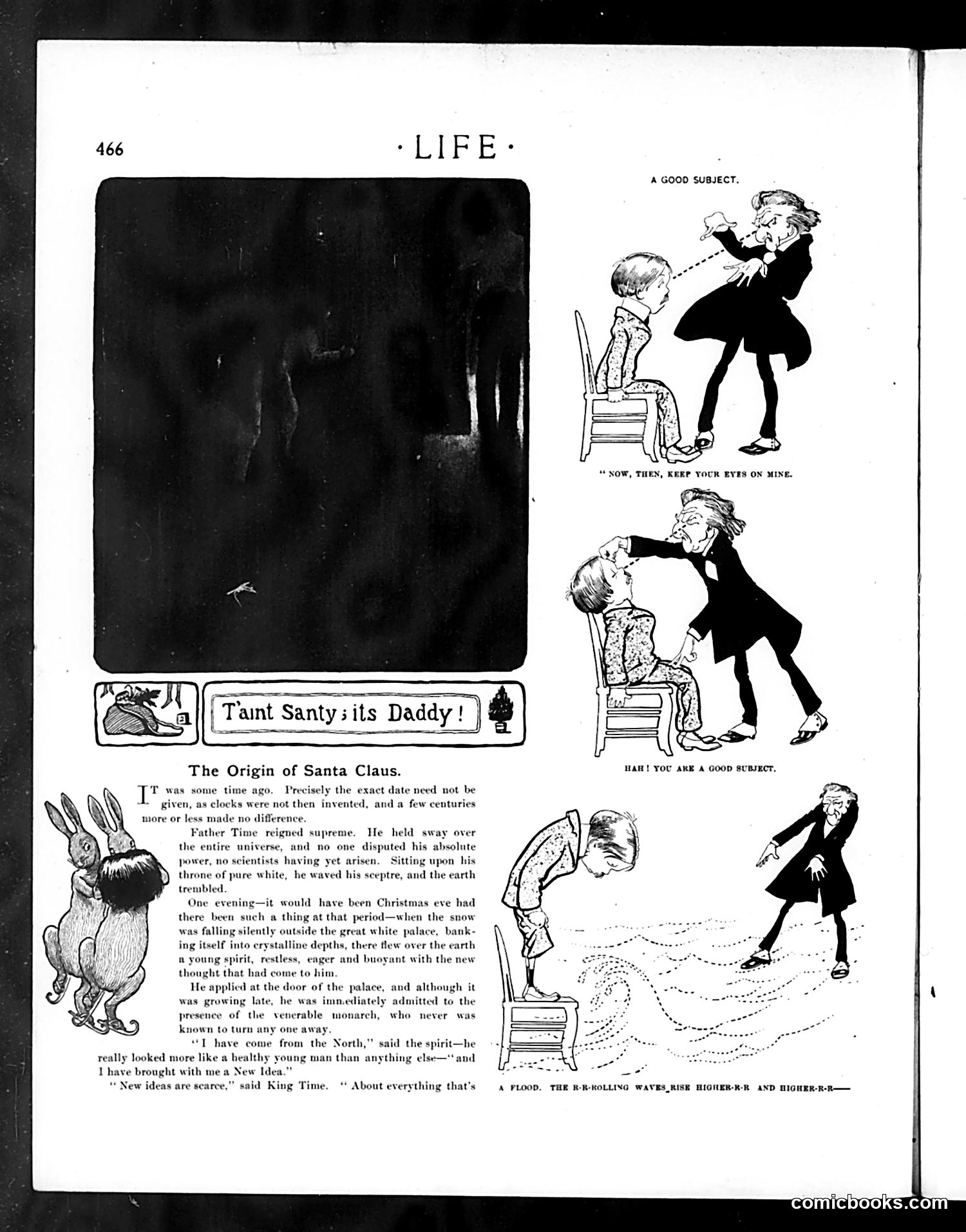
This page contains two separate satirical pieces from *Life* magazine: **"A Good Subject"** (right side): Three cartoon panels showing a stern authority figure (likely a father or teacher) physically disciplining a child for misbehavior, with captions like "Now, then, keep your eyes on mine" and "Hah! You are a good subject." The satire mocks rigid, authoritarian child-rearing practices of the era—suggesting such harsh discipline produces only obedient subjects, not independent thinkers. This was social commentary on parenting/education methods. **"The Origin of Santa Claus"** (left side): A whimsical origin myth explaining how Santa Claus came to exist. Father Time (the bearded elderly figure) permits a young spirit from the North to introduce the "New Idea" of Christmas gift-giving to the world. The story satirizes how new cultural traditions emerge and spread. The contrasting pieces juxtapose authoritarian control with imaginative innovation—suggesting society needs both discipline *and* fresh ideas. The page critiques excessive authoritarianism while celebrating creative thinking.
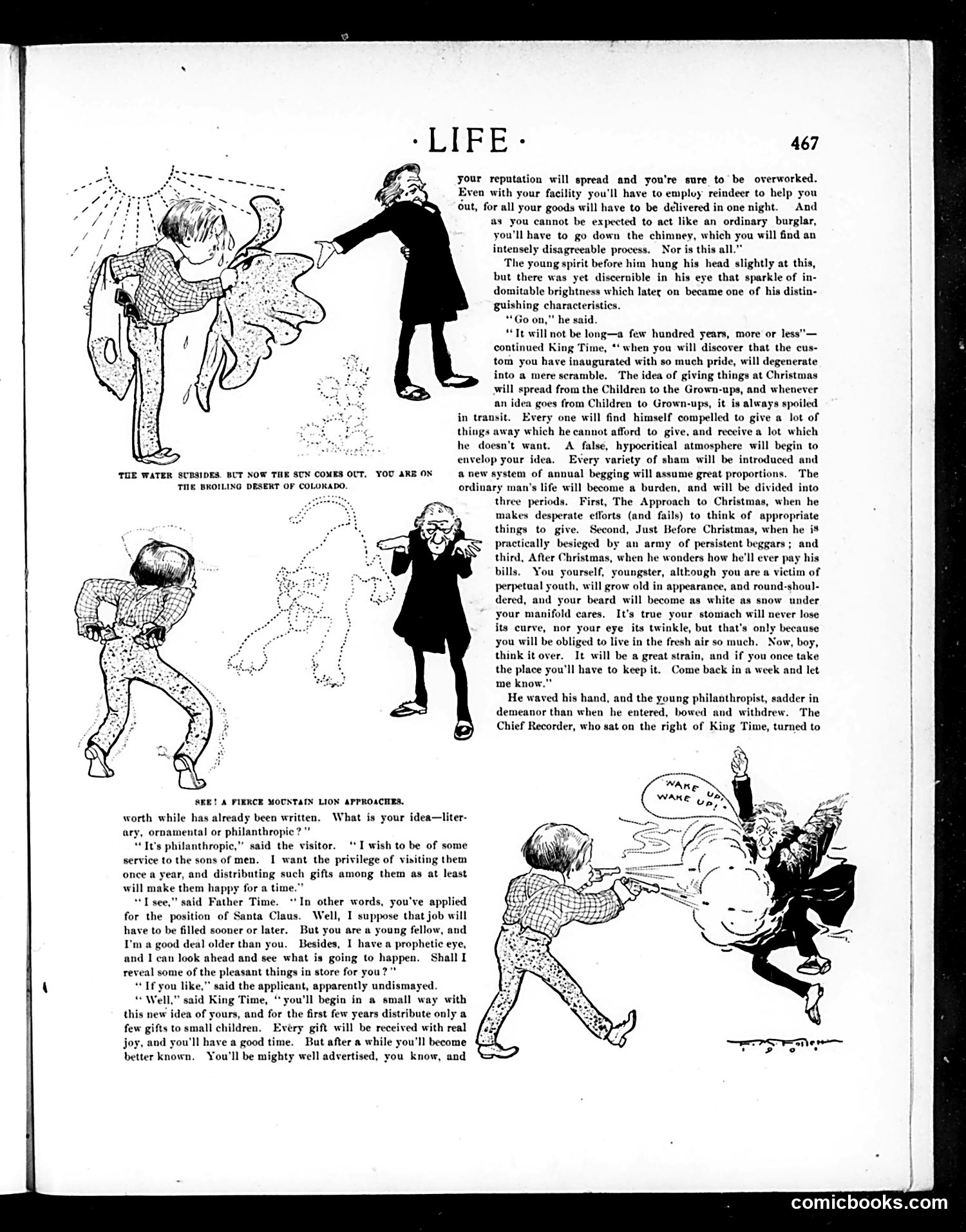
This page satirizes the commercialization of Christmas. A young spirit applies to "Father Time" (King Time) for the job of Santa Claus, proposing to distribute gifts annually to bring people joy. Father Time warns him that his philanthropic idea will inevitably degrade. Initially, gifts will be cherished by children, but once adults adopt the practice, it becomes obligatory—transforming genuine generosity into anxious consumer obligation. People will feel compelled to give gifts they can't afford and receive unwanted ones, creating stress rather than happiness. The satire targets how good intentions become corrupted by commercialism and social pressure. Santa himself will age from the burden of expectations despite maintaining his jolly appearance. The cartoon critiques how capitalism transforms sincere charitable impulses into exhausting consumer cycles—a surprisingly modern concern about Christmas commercialization, suggesting this anxiety about the holiday existed over a century ago. The illustrations show the young spirit's disappointed reaction to this bleak prophecy.
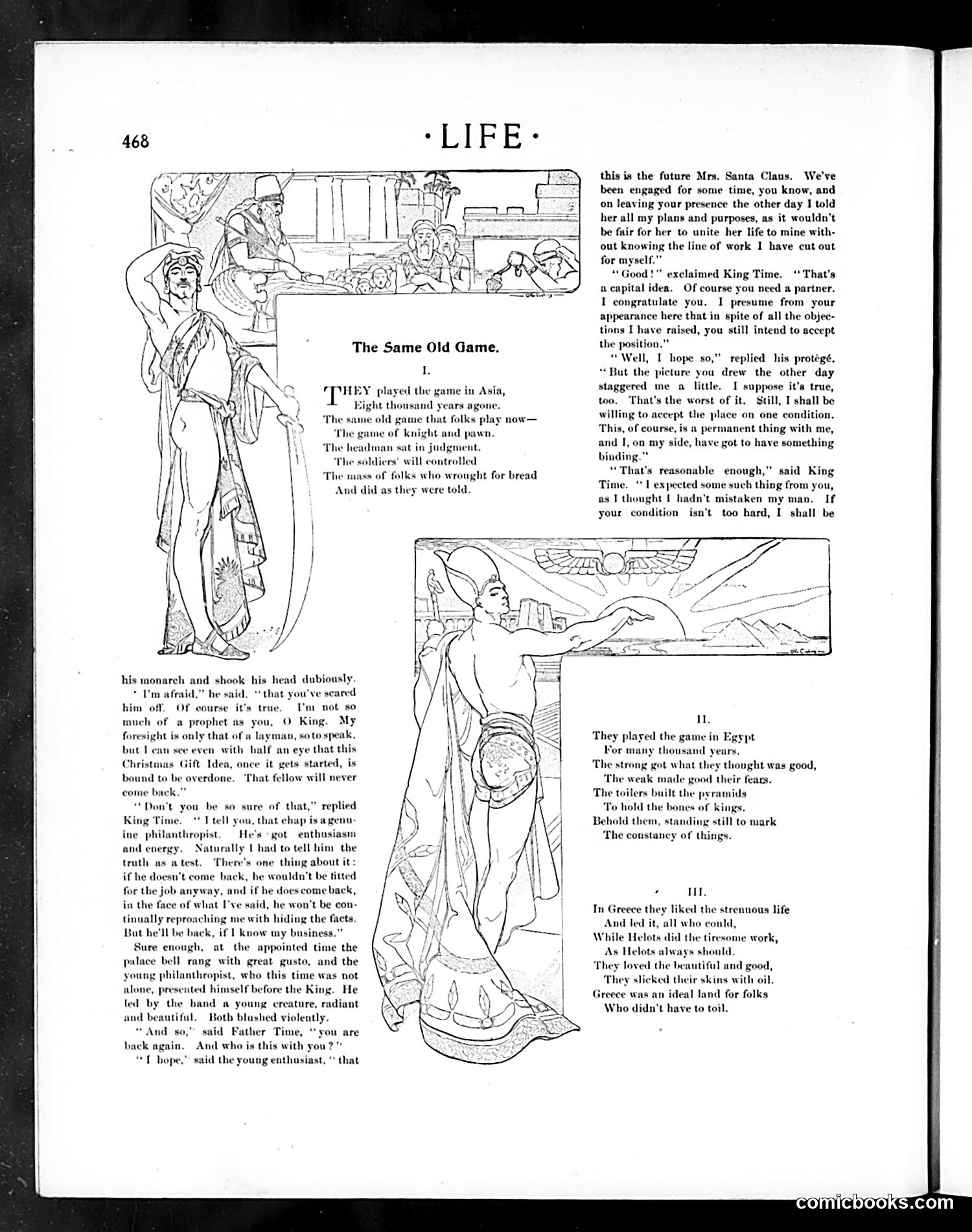
This page presents a cynical commentary on cyclical human history and labor exploitation. The poem and accompanying narrative suggest that throughout history—from ancient Asia, Egypt, and Greece—the same power dynamic repeats: rulers control workers who have no choice but to obey. The story features **Father Time** (an allegorical figure representing history itself) and a young idealistic philanthropist planning a "Christmas Gift Idea." Father Time warns that this well-intentioned scheme will inevitably fail or be corrupted, implying that charitable efforts cannot overcome systemic exploitation. The accompanying verses illustrate this pessimism: pharaohs built pyramids on slave labor; Greek ideals of beauty and leisure depended on helots (enslaved laborers) doing "tiresome work." The satire's point: **human society perpetually recreates oppressive hierarchies regardless of good intentions.** Progress is illusory; the same exploitation persists under different guises. This reflects Progressive Era skepticism about whether reform could genuinely alter entrenched power structures.
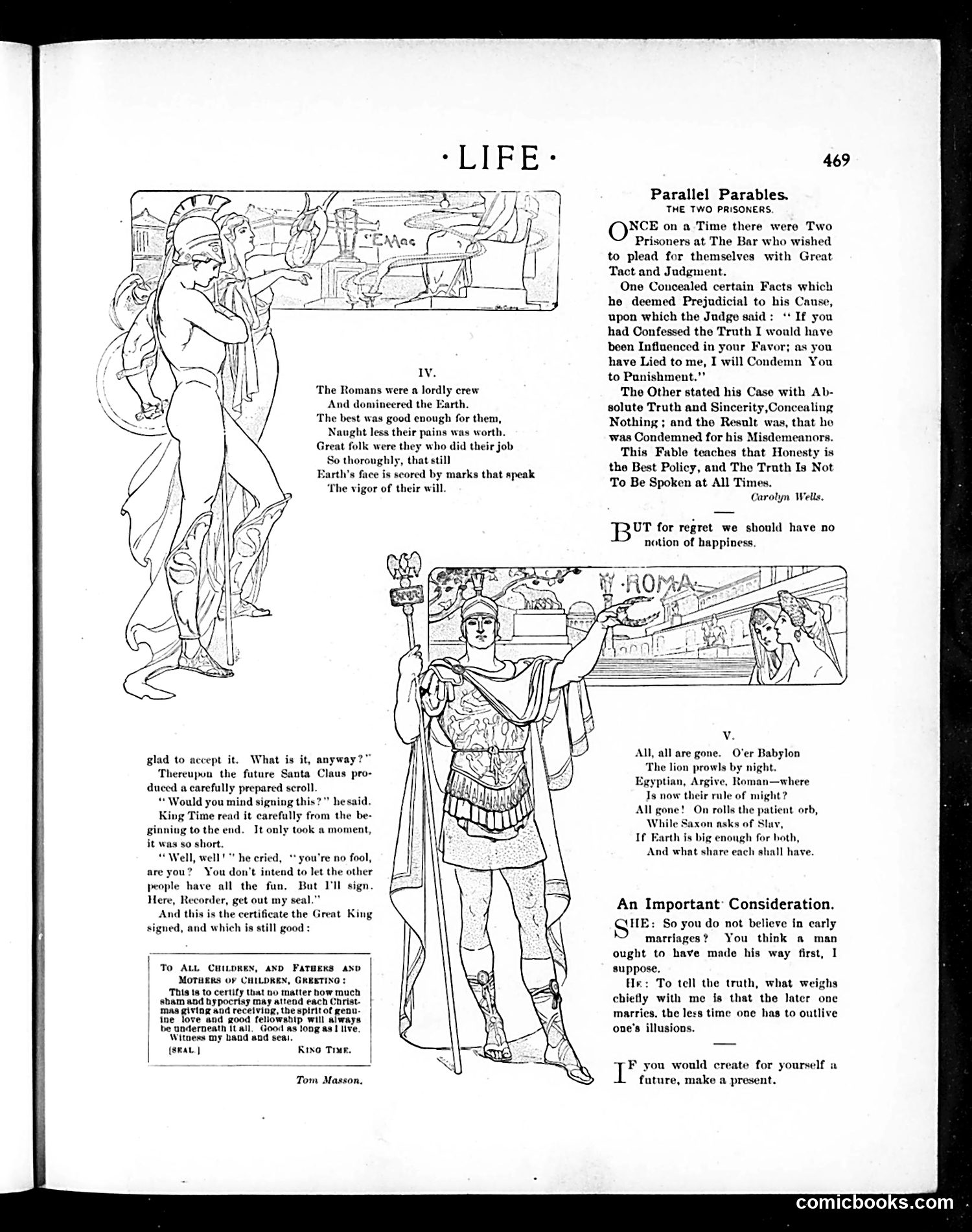
This page contains a moral fable about honesty and legal proceedings. Two prisoners appear before a judge: one conceals facts and lies, receiving condemnation; the other states his case with complete truth but is also condemned for his misdemeanors. The satire's point—stated explicitly—is ironic: "Honesty is the Best Policy, and The Truth Is Not To Be Spoken at All Times." This critiques the legal system's contradictions, where truthfulness offers no advantage and may even harm one's case. The Roman poem (section IV) celebrates Rome's imperial dominance through forceful action. The page also includes unrelated social commentary pieces on regret, early marriage, and creating one's future. The illustrations are decorative classical figures rather than specific caricatures, suggesting the piece targets systemic hypocrisy rather than individuals.
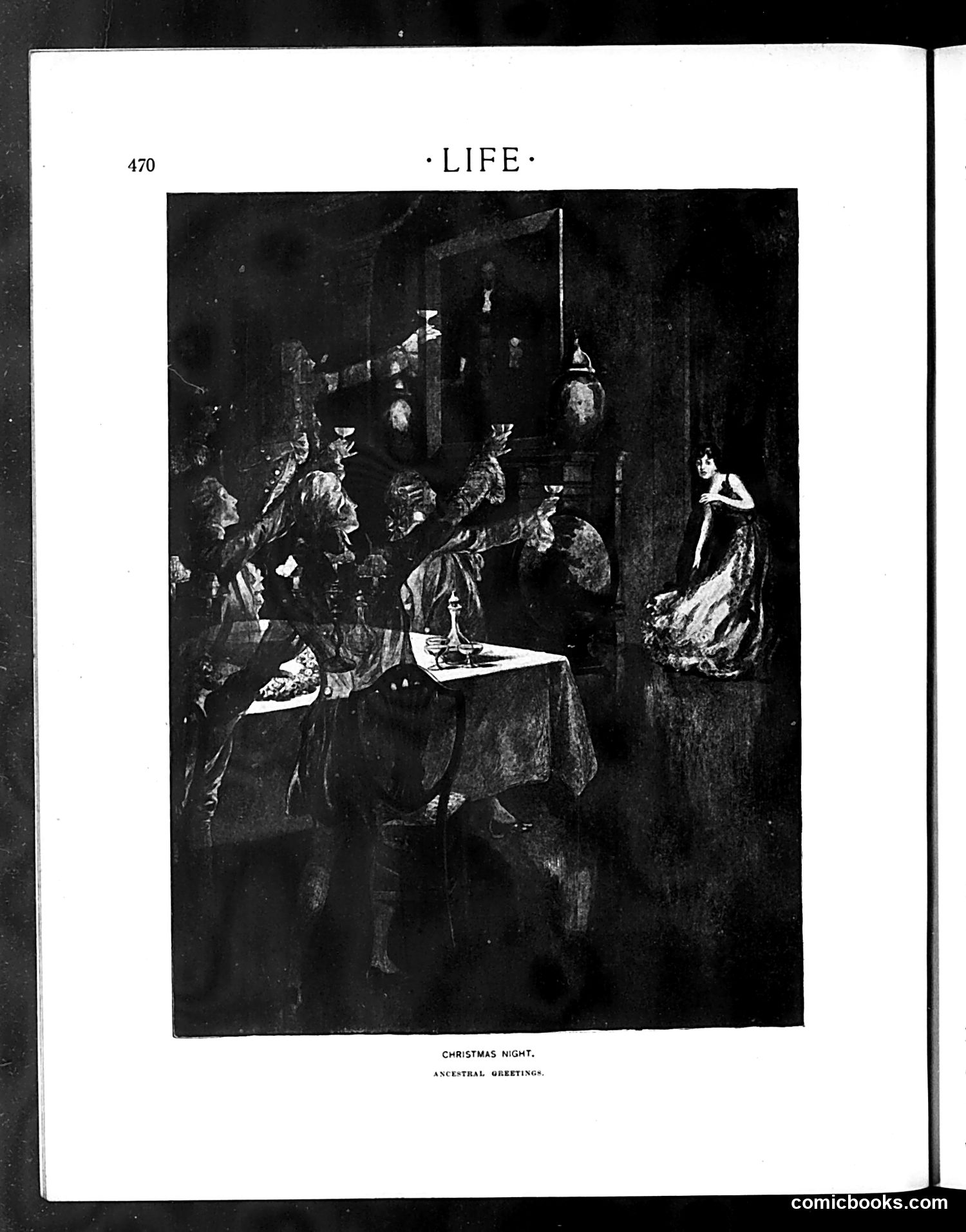
This page from *Life* magazine presents a darkly satirical illustration titled "Christmas Night: Ancestral Greetings." The image depicts what appears to be a séance or supernatural gathering—figures in period dress (suggesting historical ancestors) materialize as ghostly forms in a dimly lit interior space, with hanging heads or spirits visible above. The satire likely mocks either spiritualism—the popular Victorian practice of communicating with the dead through séances—or critiques the veneration of ancestors and tradition. By framing ancestral "greetings" as ghoulish and unsettling rather than noble, the cartoonist suggests that clinging to the past is morbid or foolish. The juxtaposition of "Christmas Night" (typically associated with warmth and joy) with this macabre scene heightens the satirical contrast.
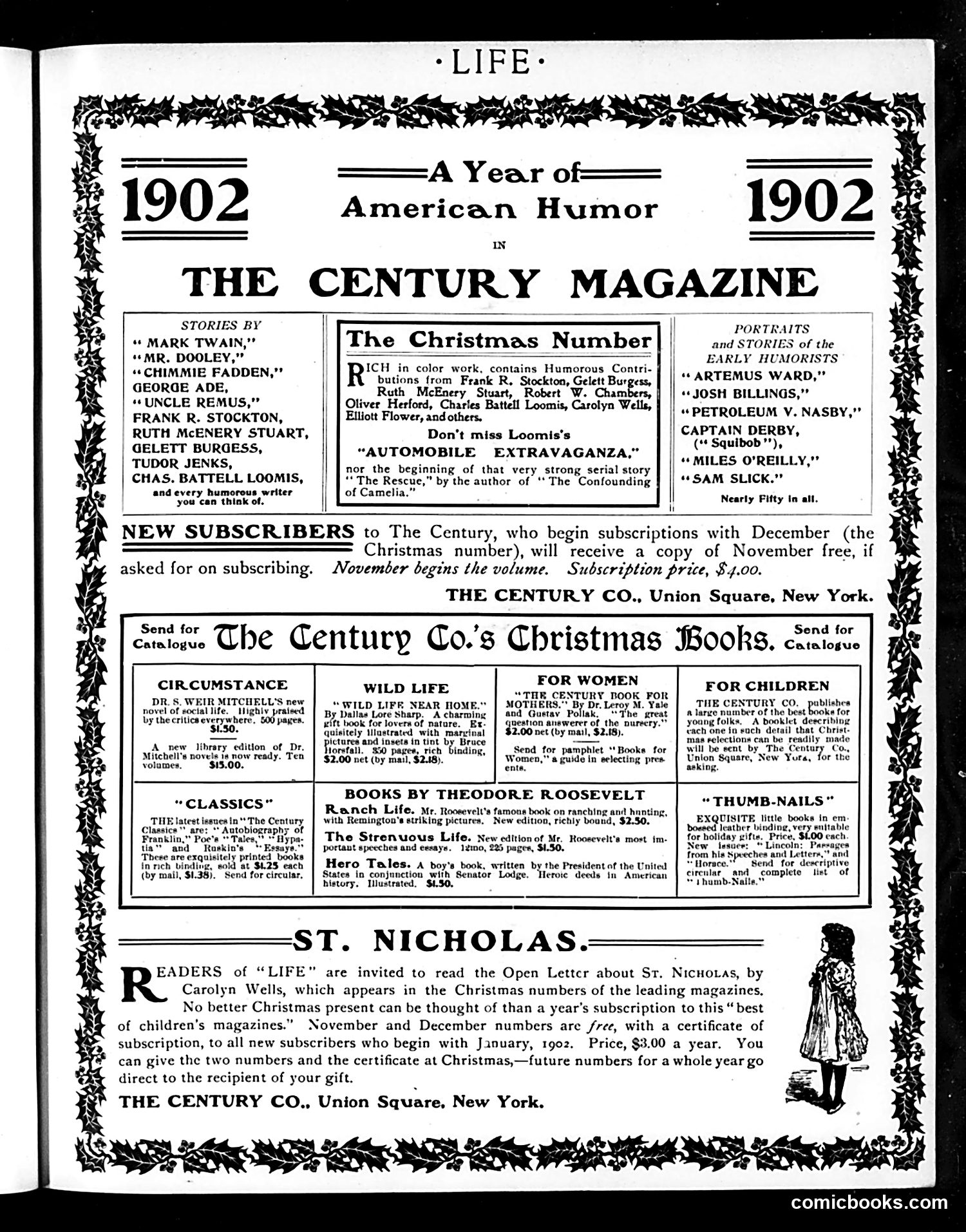
This is primarily an **advertising page**, not a satirical cartoon. It promotes The Century Magazine's Christmas issue featuring American humor writers and The Century Company's book catalog. **Key advertised content:** - The Century Magazine's Christmas Number showcases prominent humorists: Mark Twain, "Mr. Dooley" (Finley Peter Dunne's Irish-immigrant character), George Ade, and others - It includes portraits of "early humorists"—apparently figures from earlier American comic traditions like Artemus Ward and Josh Billings **Notable books advertised:** - Theodore Roosevelt's works on ranch life and "The Strenuous Life" (his famous philosophy) - Dr. S. Weir Mitchell's novel - Dallas Lore Sharp's nature writing - *St. Nicholas* children's magazine **The satire is implicit**: this page celebrates American humor as a literary tradition worthy of serious magazine space and gift-giving—positioning comedy and comic characters as culturally significant rather than merely frivolous entertainment.
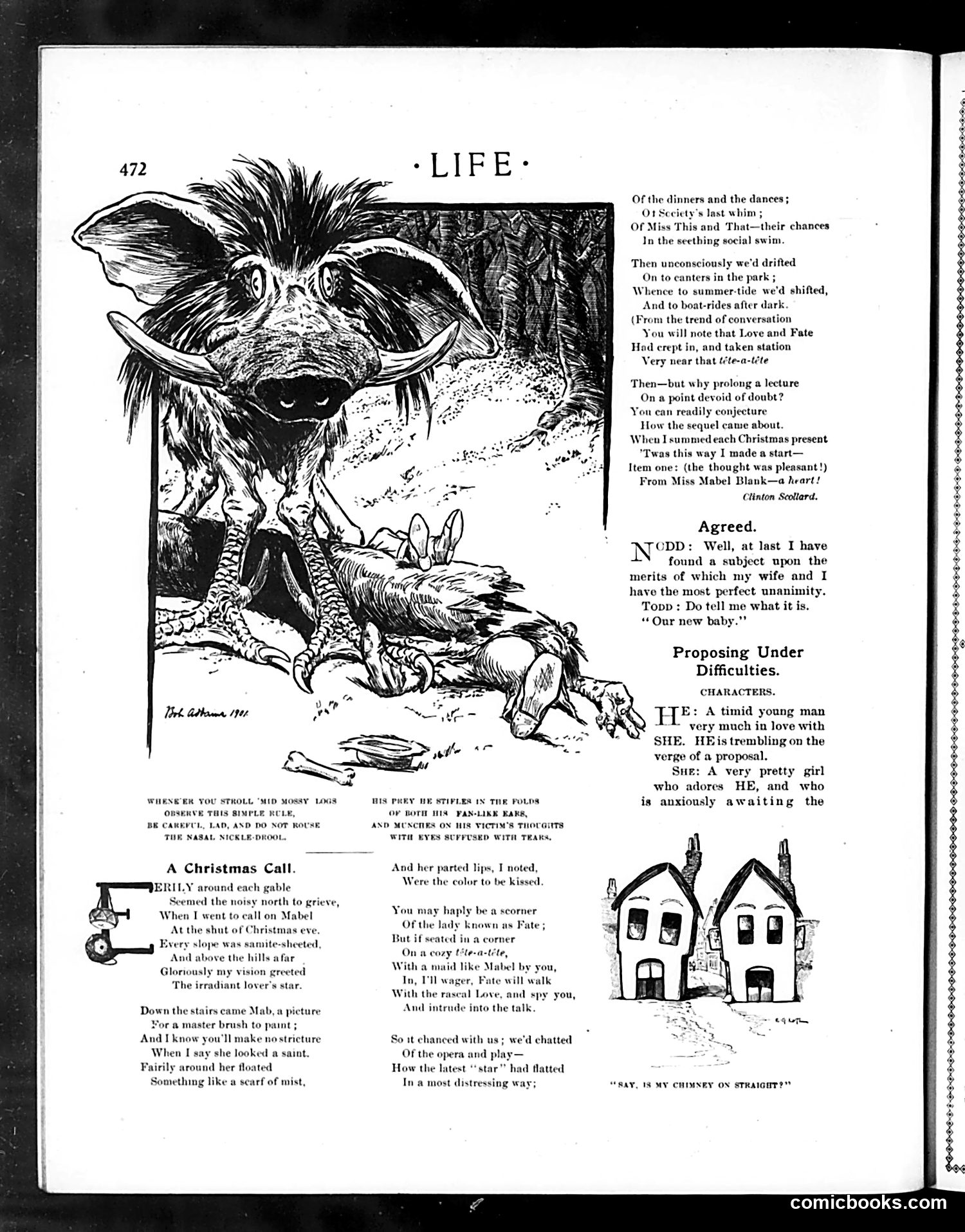
This page contains three distinct pieces of humor: 1. **The Wild Boar Cartoon** (top left): A detailed illustration with a caption warning readers not to disturb a boar in nature. The joke appears to be a naturalist's cautionary observation about wildlife behavior—straightforward animal humor typical of the era. 2. **"A Christmas Call"** (center-left): A sentimental romantic poem by Clinton Scollard about a young man visiting his beloved Mabel on Christmas Eve. The narrative traces how their conversation drifts from social gossip toward intimate topics, culminating in a marriage proposal and an engagement gift of "a heart." It's gentle, Victorian-era romance with mild sexual innuendo ("boat-rides after dark"). 3. **"Agreed" and "Proposing Under Difficulties"** (right): Two separate joke snippets. The first is a brief marital humor piece where a husband and wife finally agree on something: their new baby. The second appears to be a setup for a comedic scene about a nervous proposal, with an illustration showing a house and a punchline about a crooked chimney—likely suggesting the man's nervousness about asking. The page overall represents typical early 20th-century *Life* magazine content: sentimental verse, nature observations, and domestic humor.
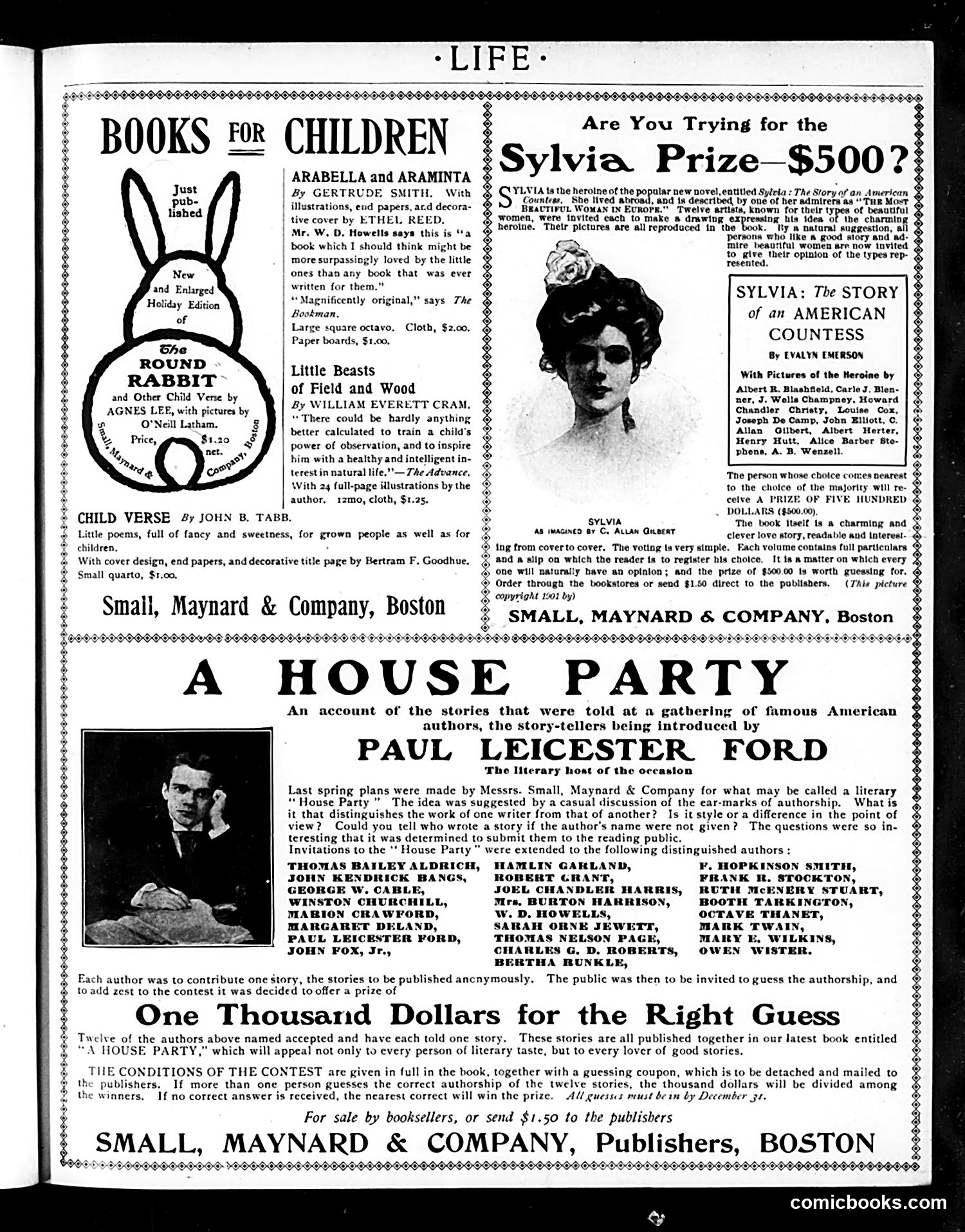
This page announces a creative marketing campaign by Small, Maynard & Company publishers. They invited famous American authors (listed in two columns) to each contribute anonymous stories to a book titled *"A House Party,"* introduced by Paul Leicester Ford. The contest challenges readers to guess which author wrote each story, with the prize being $1,000 divided among correct guessers (or going to the nearest correct answer if no one guesses perfectly). The page also advertises children's books, including *"Sylvia: The Story of an American Countess,"* which features a separate $500 prize—readers vote on which of twelve artists' illustrations best captures the heroine's beauty. This represents early 20th-century book promotion: using celebrity authorship, interactive contests, and reader participation to drive sales and public interest in literature.
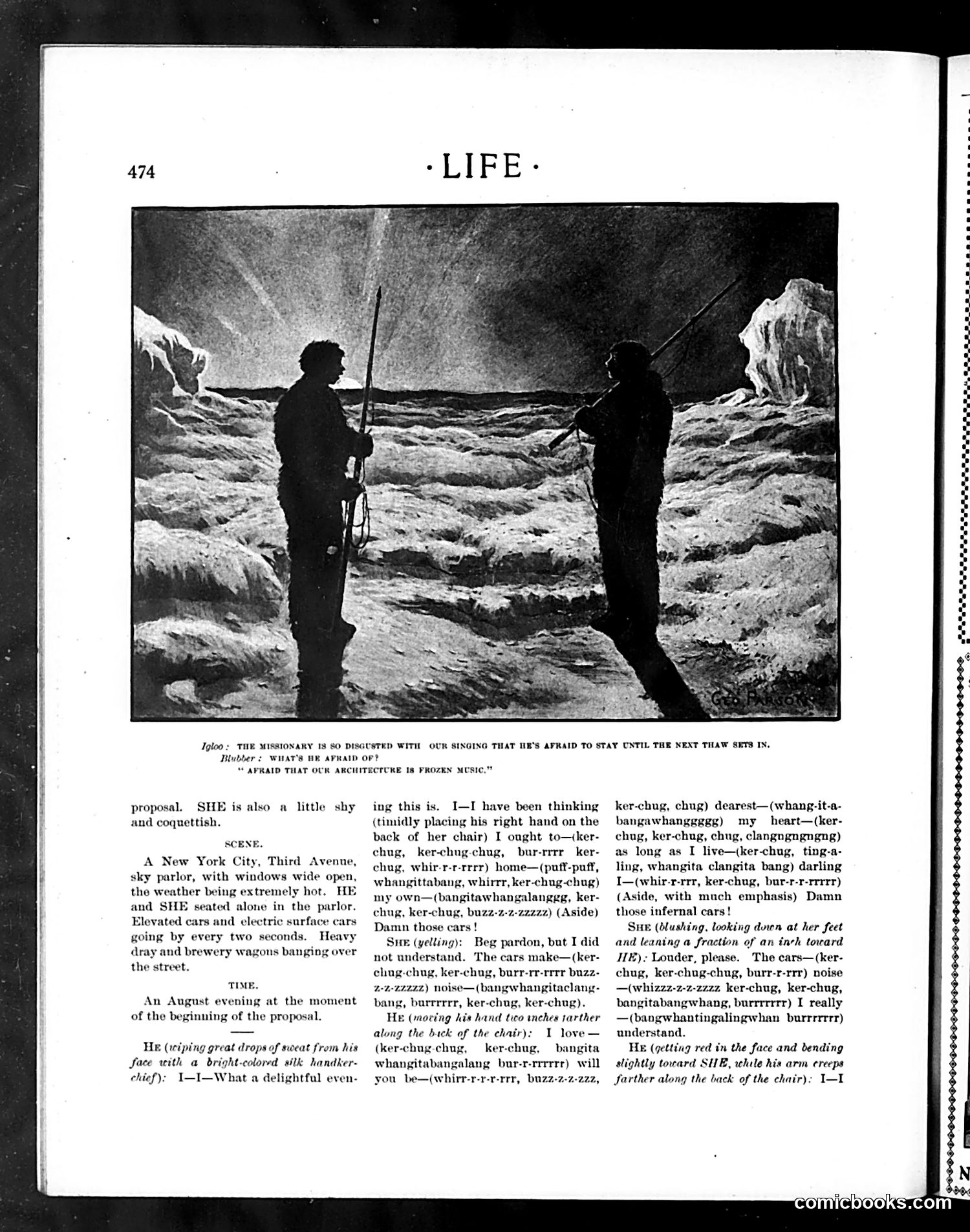
This is a satirical sketch about a marriage proposal in New York City that keeps failing because of urban noise—specifically the constant din of elevated trains and street cars. The two characters, HE and SHE, sit alone in a Third Avenue apartment on a hot August evening. As HE attempts to romantically propose ("I love you...will you be my darling...as long as I live"), his words are repeatedly drowned out by the thunderous sounds of passing trains and cars (represented by the "ker-chug," "whangita," "buzz" onomatopoeia filling the dialogue). SHE keeps asking him to speak louder because she cannot hear him over the noise. The irony is that HE keeps aside-commenting "Damn those cars!" while trying to express his deepest feelings—a satire on how modern urban transportation ruins intimate moments and makes city life hellish. The joke targets New York's increasingly unbearable noise pollution during the early industrial era. The top cartoon uses Inuit figures to mock similar themes of civilization's intrusion on peace.
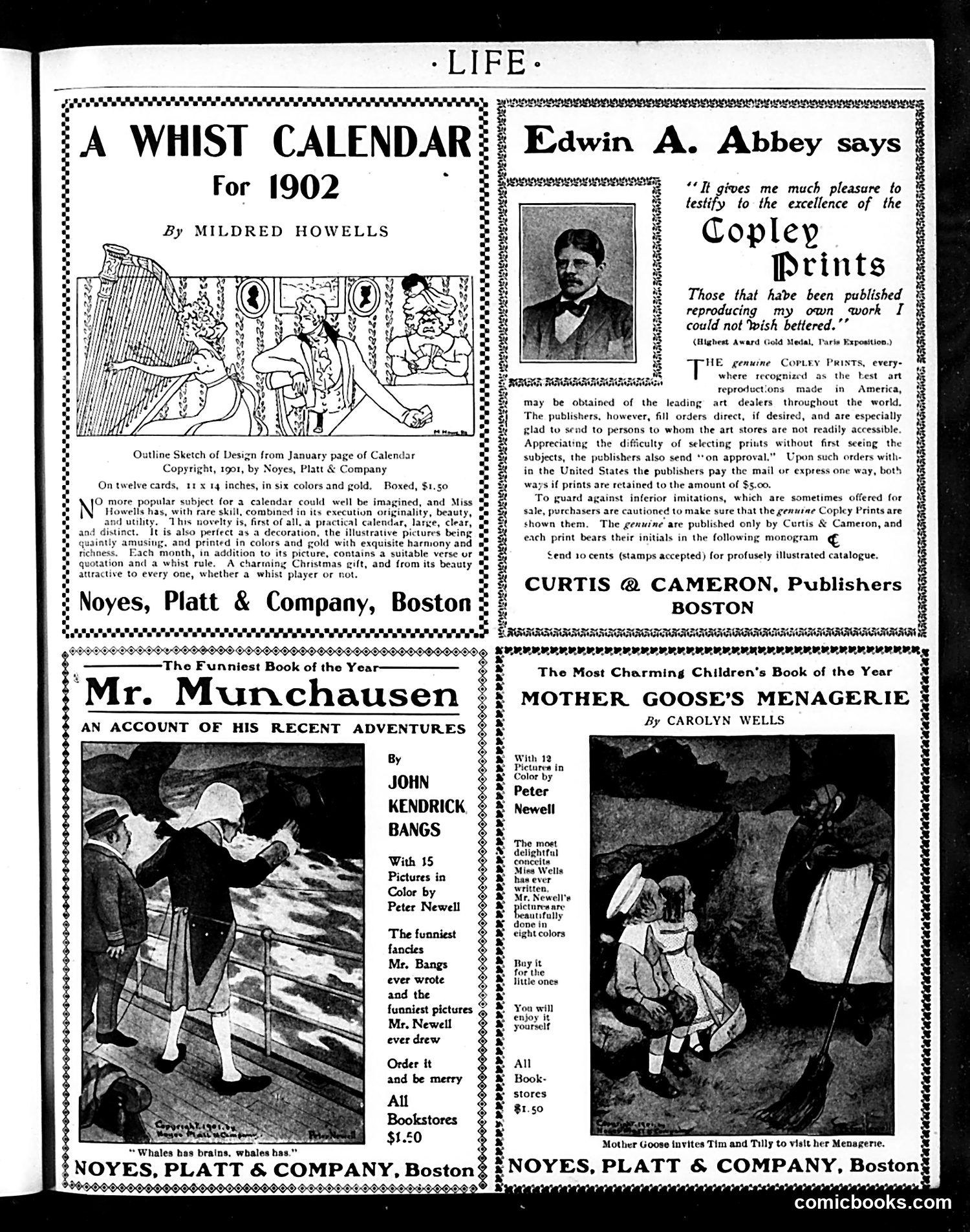
This page is primarily **advertising for books and calendars**, not political satire. It contains four product promotions: 1. **"A Whist Calendar for 1902"** by Mildred Howells—a desk calendar featuring card-game themes, illustrated monthly, priced at $1.50. 2. **Copley Prints endorsement** from artist Edwin A. Abbey, promoting high-quality art reproductions sold by Curtis & Cameron publishers. 3. **"Mr. Munchausen"** by John Kendrick Bangs—a humorous adventure book illustrated by Peter Newell, marketed as "the funniest book of the year." 4. **"Mother Goose's Menagerie"** by Carolyn Wells, illustrated by Peter Newell—a children's book described as charming, featuring colored illustrations. The page reflects early 1900s publishing and gift marketing, targeting educated, middle-class readers. There is no political cartoon or satire—it's a straightforward advertising layout typical of *Life* magazine's commercial content.
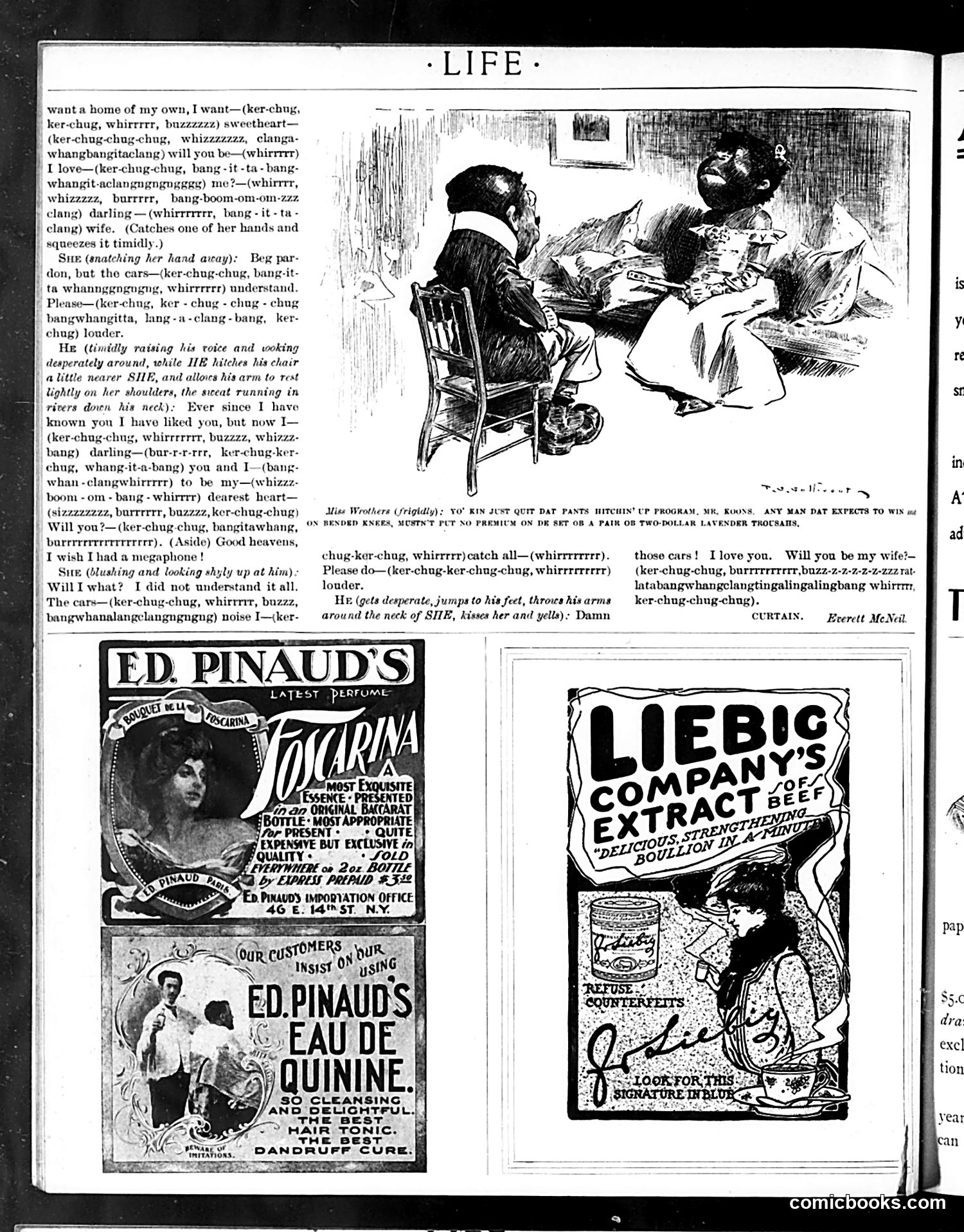
This is a satirical one-act play mocking the impossibility of romantic communication in early 20th-century urban life. A man attempts to propose to a woman (Sue) amid the constant, overwhelming noise of automobile traffic—represented by relentless onomatopoeia (ker-chug, whirrrrr, bang-clang, etc.). The joke targets the sudden disruption cars brought to city life. The man must literally shout his proposal, jumping to his feet and yelling "Damn those cars! I love you!" just to be heard. Sue admits she cannot understand anything he says over the noise. The satire comments on how automobiles—still relatively new, noisy machines—were degrading urban communication and intimacy. The man even wishes aside that he had a megaphone to compete with the mechanical din. The sketch reflects anxieties about industrialization overtaking human connection in modern cities.
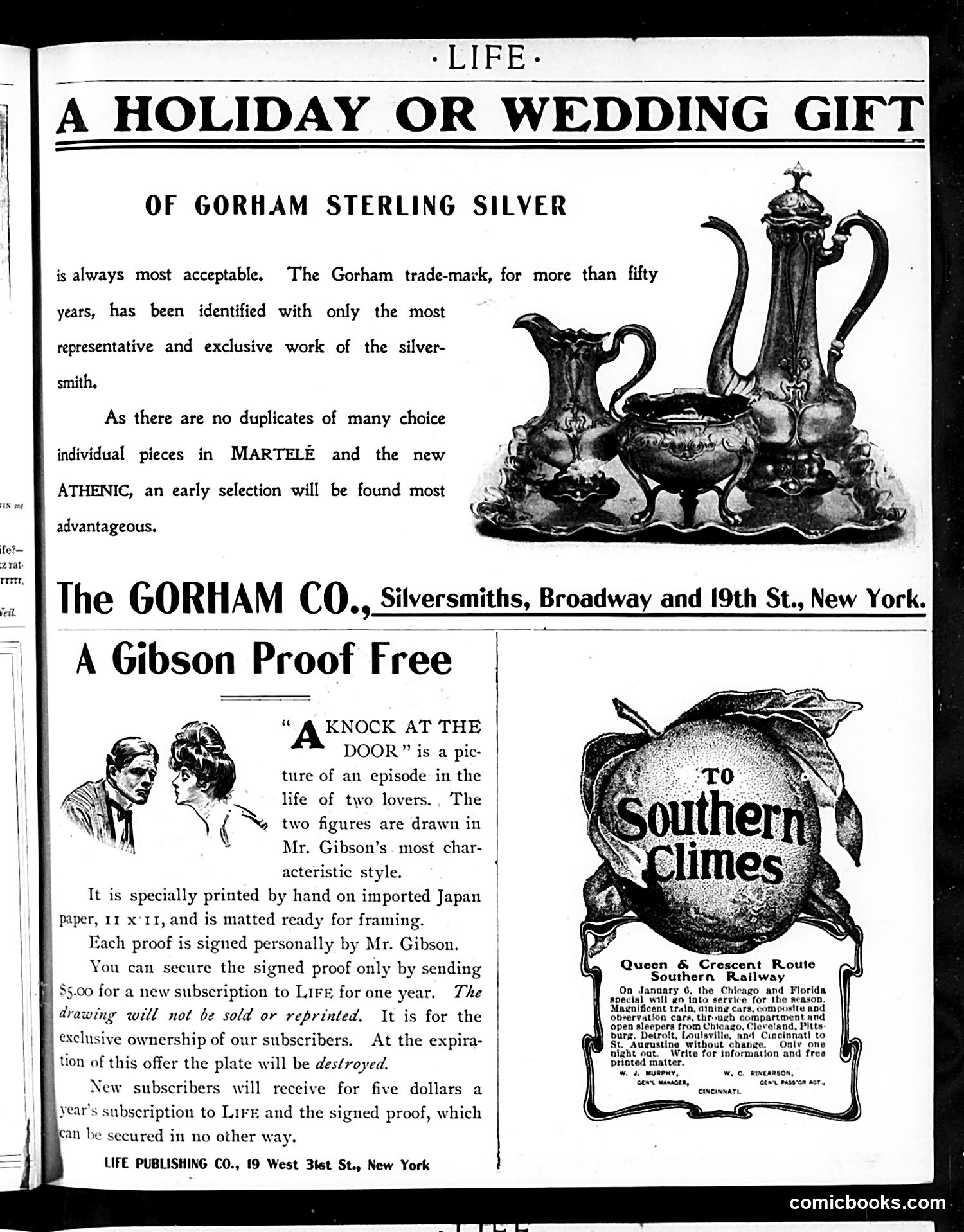
This page contains two advertisements with no political cartoon content. **Top Section:** An advertisement for Gorham sterling silver hollowware (pitchers, bowls, etc.) marketed as appropriate gifts for holidays or weddings. Gorham emphasizes their 50+ year reputation for exclusive, high-quality silversmithing. **Bottom Section:** A promotional offer for a signed Charles Dana Gibson illustration titled "A Knock at the Door," depicting two lovers in Gibson's characteristic romantic style. The drawing is hand-printed on Japanese paper and matted for framing. To obtain the signed proof, readers must subscribe to *Life* magazine for $5 (a new subscription). Gibson personally signs each proof, and the plate is destroyed after the promotional period ends, ensuring exclusivity for subscribers. The right side contains an unrelated railway advertisement for the Queen & Crescent Route. This is primarily a **commercial advertising page** rather than satirical content.
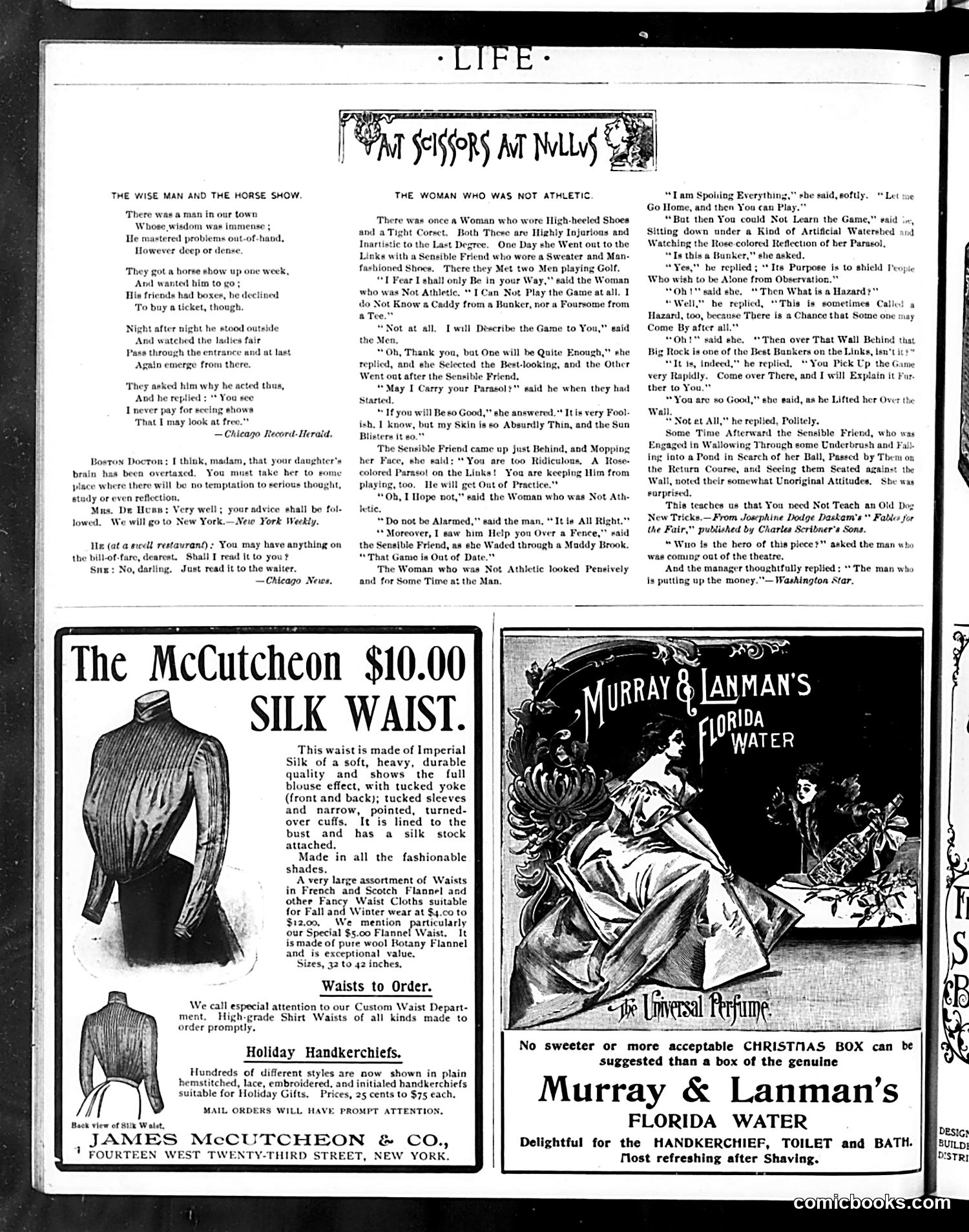
This page contains three separate satirical pieces mocking social pretension and gender dynamics of the era (early 1900s): **"The Wise Man and the Horse Show"**: A man avoids paying for horse show admission but watches fashionable women enter for free—satirizing both cheapness and the era's obsession with viewing "ladies fair" as spectacle. **"The Woman Who Was Not Athletic"**: The main comic narrative mocks a fashionably dressed woman (high heels, corset, parasol) who plays golf while claiming physical fragility. A male golfer teaches her the game, eventually flirting with her. The satire targets feminine pretense—she's helpless by choice, not nature—and suggests women's "athletic" limitations were performative affectations rather than real limitations. **Other jokes**: Include a doctor recommending New York as a place requiring "no temptation to serious thought" and a woman asking her date to read the restaurant menu aloud rather than herself. The page's advertisements for silk waists and Florida Water reinforce the era's focus on feminine appearance and consumer products marketed to women.
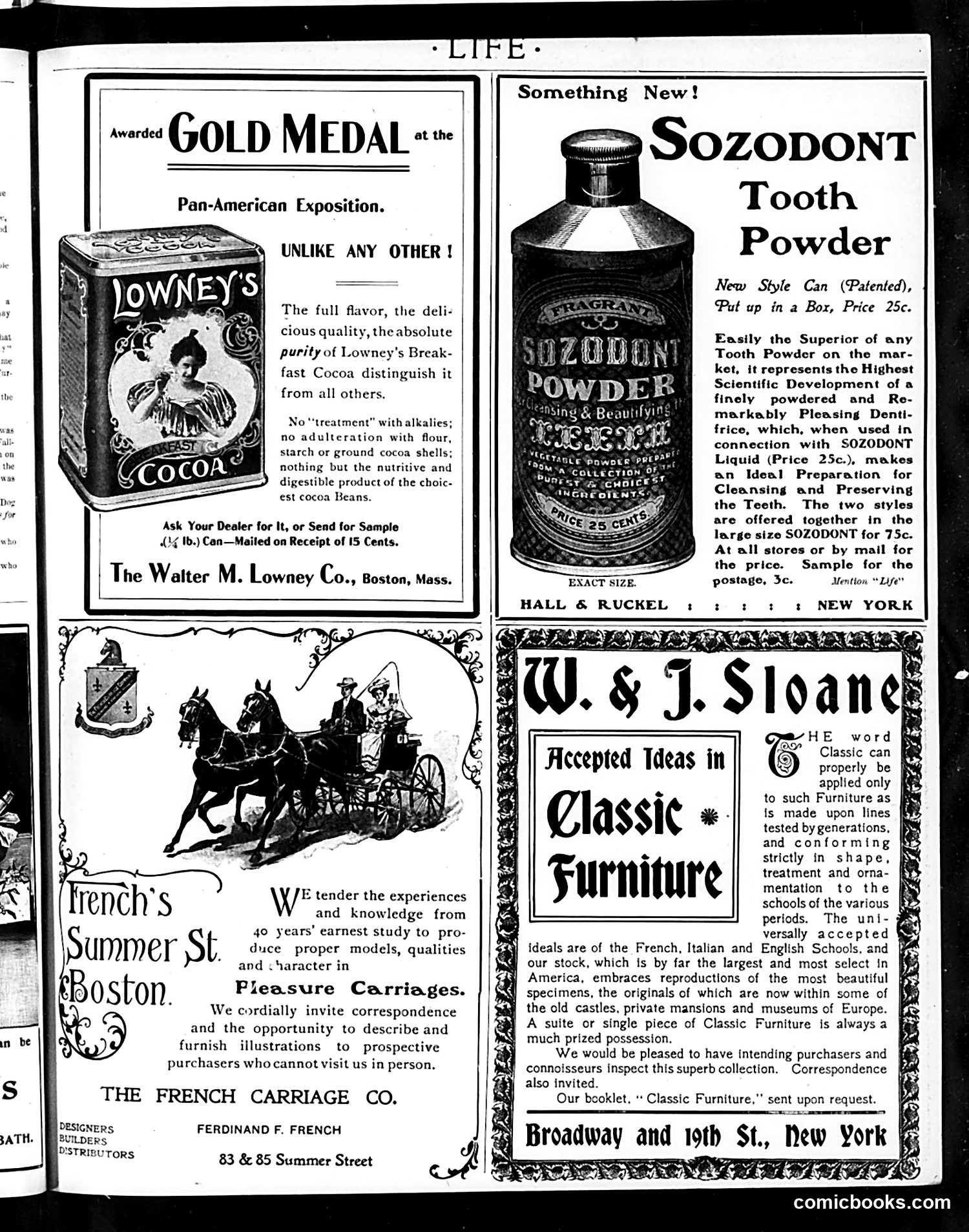
This page contains **no political cartoons or satire**—it is purely a collection of period advertisements from what appears to be the early 1900s (the Pan-American Exposition occurred in 1901). The ads promote: 1. **Lowney's Breakfast Cocoa** — emphasizing purity and lack of adulteration with fillers, a selling point reflecting contemporary food-safety concerns 2. **Sozodont Tooth Powder** — a new patent medicine/dental product with claims of superior scientific development 3. **French Carriage Company** — offering luxury pleasure carriages with 40 years of manufacturing expertise 4. **W. & J. Sloane** — a New York furniture retailer specializing in reproductions of "Classic" European furniture styles (French, Italian, English) for wealthy clients The page reflects Gilded Age consumer culture: manufacturers competed by claiming scientific superiority, purity, and refined taste. There is no satire present—these are straightforward period advertisements targeting affluent urban readers.
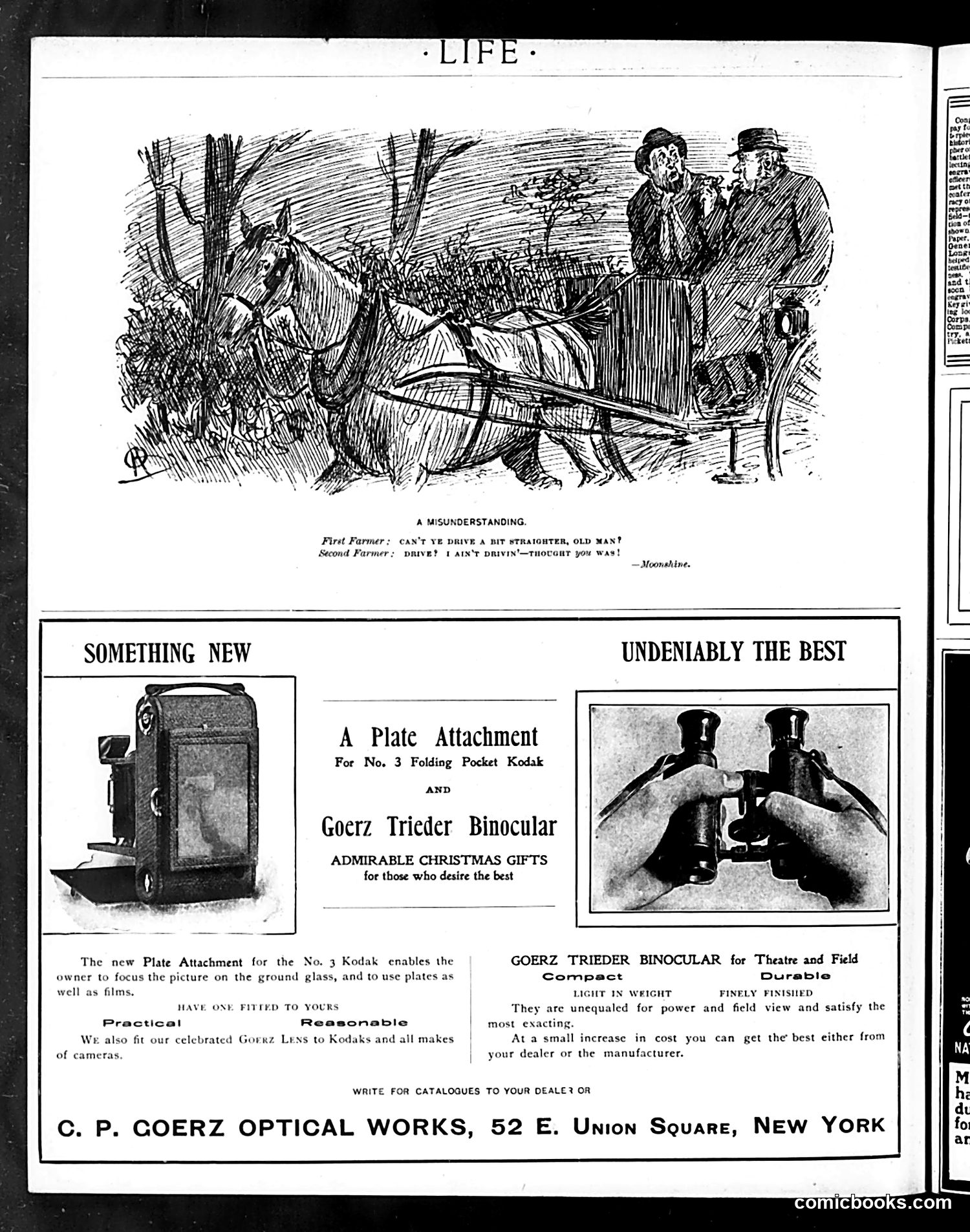
**The Cartoon:** "A Misunderstanding" depicts two farmers in a horse-drawn wagon. The first farmer asks the second to "drive a bit straighter," but the second misunderstands, thinking "drive" refers to motivation rather than steering—responding "I ain't drivin'—thought you was!" The joke relies on a double meaning: "drive" as both (1) operating the wagon's direction and (2) exertion/effort. It's a simple rural humor piece, credited to "Moonshine" (the cartoonist). The satire gently mocks rural dialect and miscommunication between farmers. **The Advertisements:** The rest of the page advertises Kodak camera accessories and Goerz binoculars as Christmas gifts—typical early 20th-century product placements in *Life*. This appears to be a page mixing light satirical humor with commercial content, characteristic of *Life*'s format during this period.
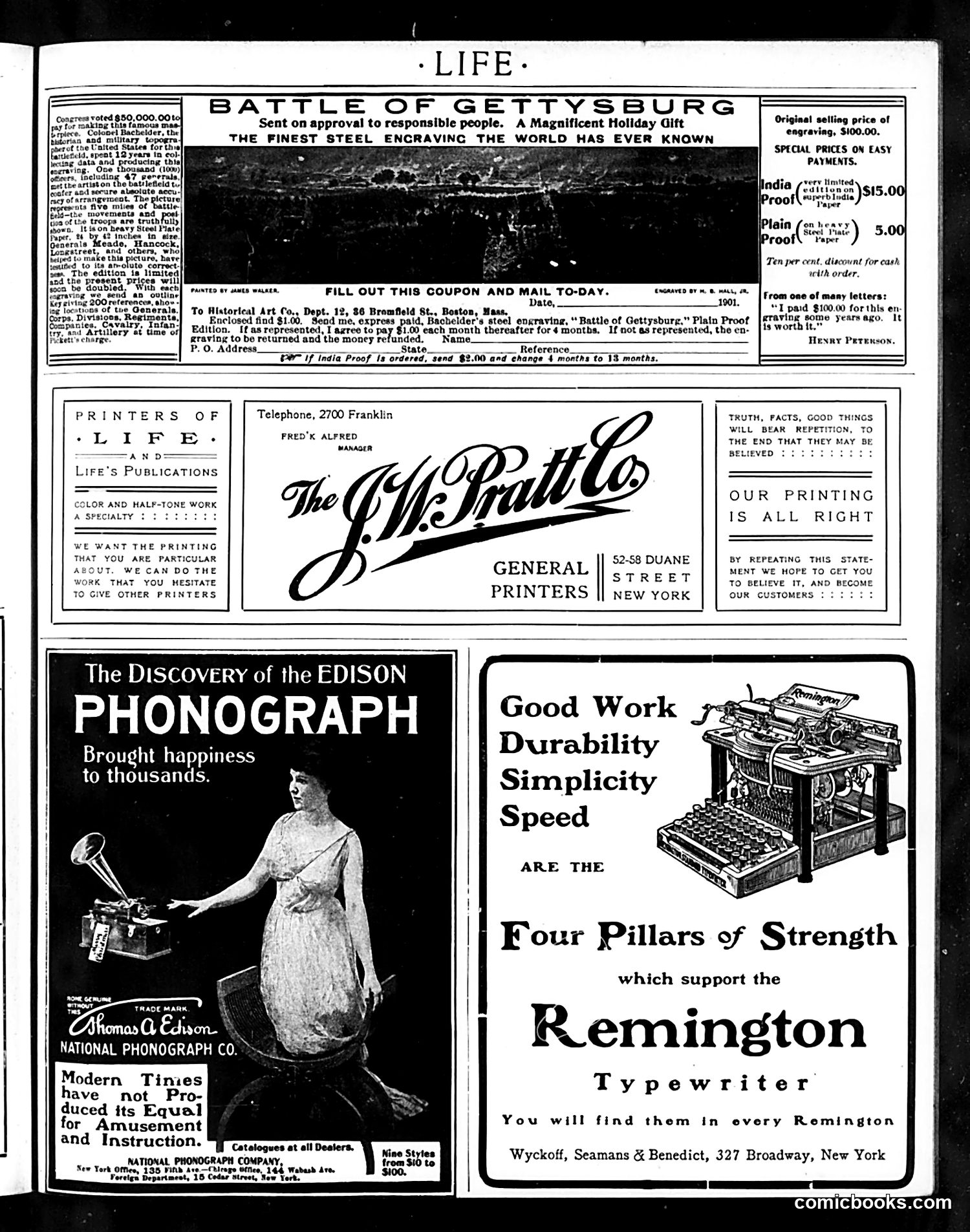
This is primarily a **commercial advertisement page**, not a satirical cartoon page. The page promotes a steel engraving of the Battle of Gettysburg as a "magnificent holiday gift," offering payment plans ($1.00down, then monthly installments) to make the expensive artwork ($100 original price) accessible to middle-class buyers. The page also features period **trade advertisements**: the Edison phonograph (marketed as bringing "happiness to thousands"), the Remington typewriter (emphasizing durability and speed), and a printing company promoting their services. There is **no political satire or cartoon content visible**. The Gettysburg engraving itself—a historical military scene—appears to be genuine merchandise rather than satirical commentary. The overall page reflects early 20th-century consumer culture and marketing strategies, using Life's editorial space to promote products to its affluent readership.
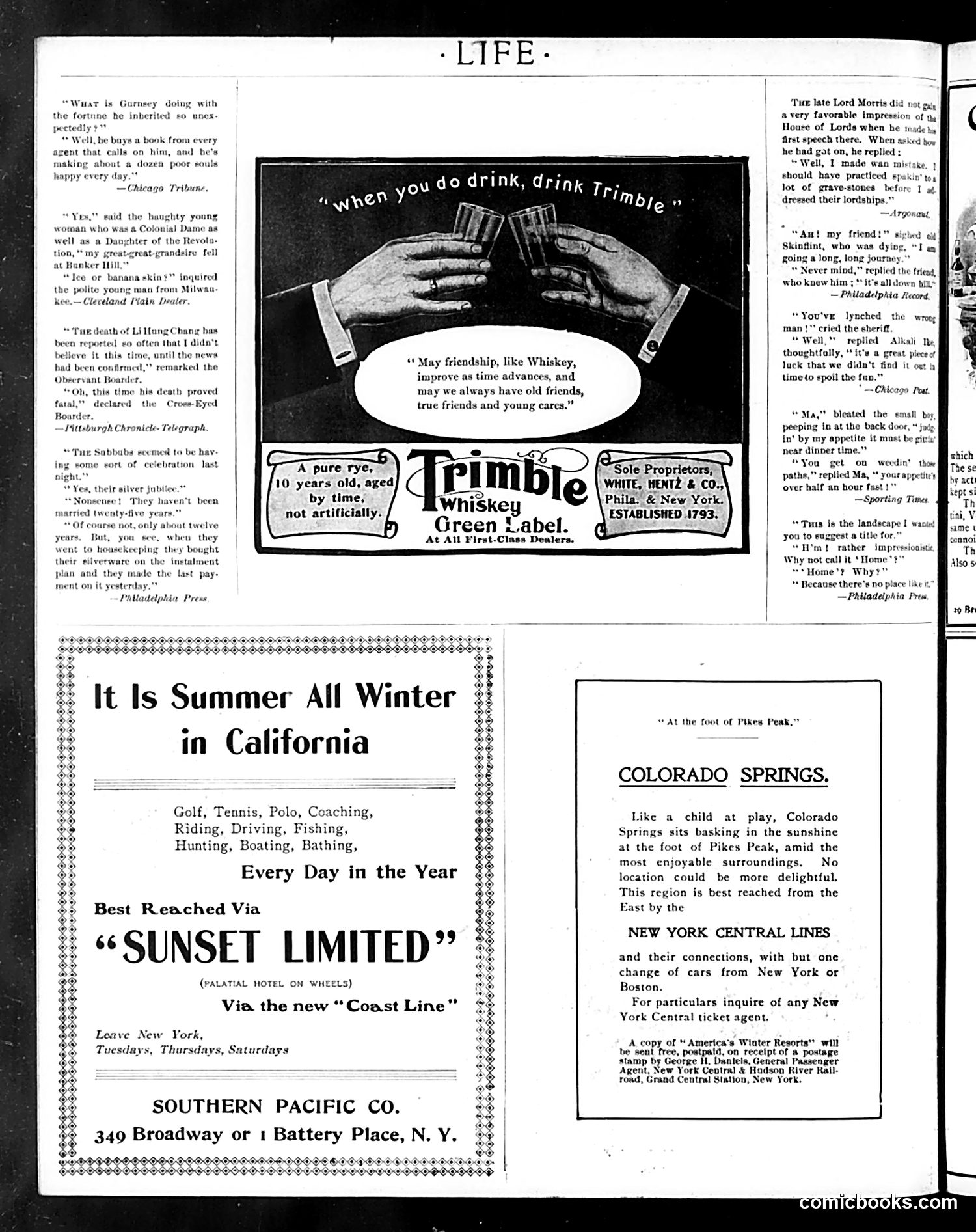
This page features a large **Trimble Whiskey advertisement** (center) depicting two hands clinking glasses with the slogan "When you do drink, drink Trimble." The ad emphasizes the product's quality: "A pure rye, 10 years old, aged by time, not artificially." Surrounding the advertisement are **satirical anecdotes and jokes** from various newspapers (Chicago Tribune, Cleveland Plain Dealer, Pittsburgh Chronicle-Telegraph, Philadelphia Press, etc.). These short humorous pieces use whiskey consumption as a running theme—discussing friendships improving "like Whiskey," a man's death finally being believed because "this time his death proved fatal," and other comedic observations about drinking and life. The satire appears gentle and social rather than political. The layout is typical of *Life* magazine's format: mixing advertising with witty editorial content that comments obliquely on the advertised product through humor rather than direct critique. The overall effect is sophisticated advertising wrapped in entertaining social commentary.
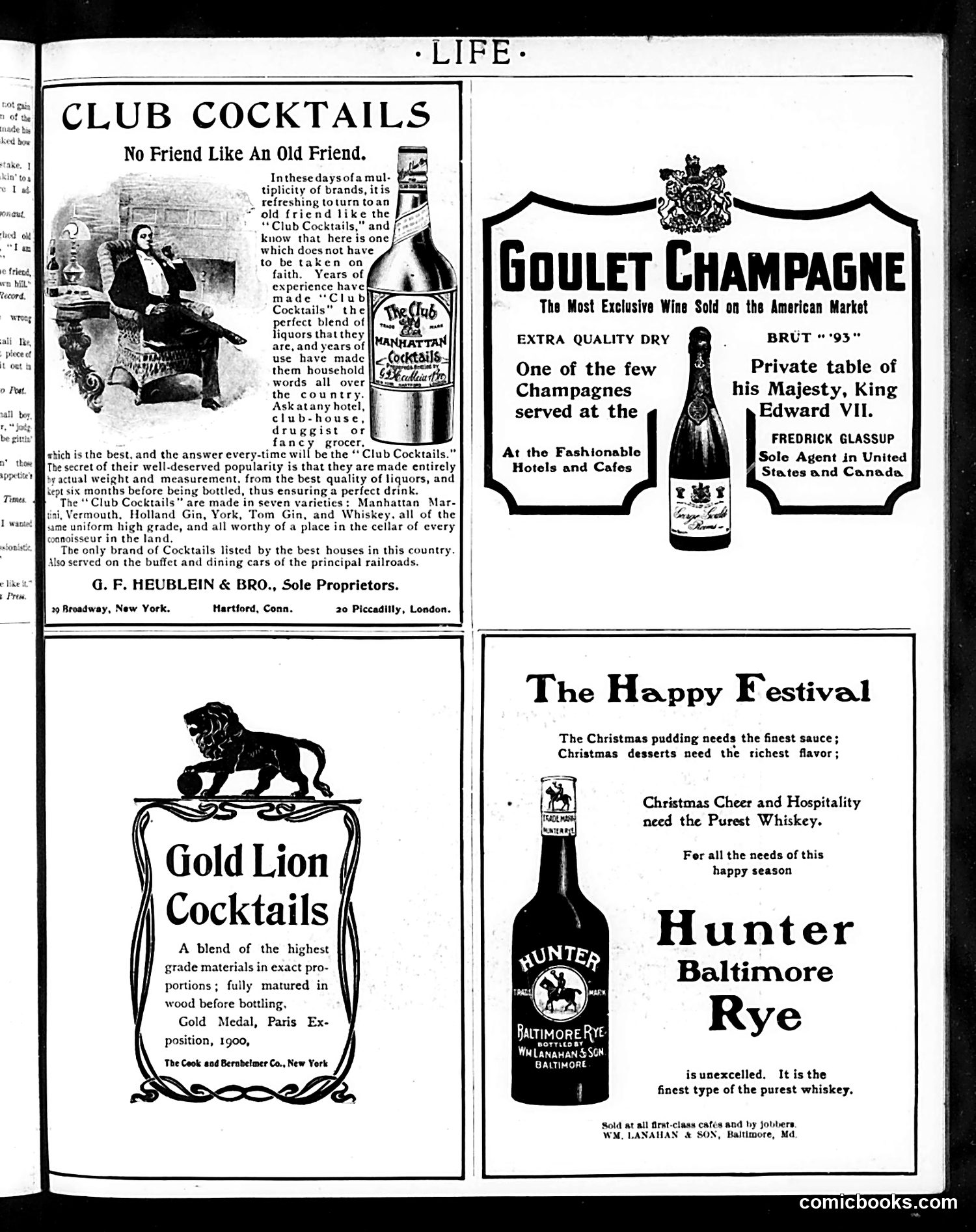
This page is **entirely advertising**—not satire or political commentary. It's from *Life* magazine's advertising section, promoting alcoholic beverages popular in the early 1900s. The ads showcase **Club Cocktails** (pre-mixed drinks by Heublein & Bro.), **Goulet Champagne** (marketed as served to King Edward VII), **Gold Lion Cocktails** (a Paris Exposition gold-medal winner), and **Hunter Baltimore Rye** whiskey. The illustrations depict gentlemen in formal dress enjoying these drinks at clubs and hotels—reflecting the era's upper-class leisure culture. The tagline "No Friend Like An Old Friend" emphasizes brand loyalty and tradition. The context: these ads assume readers were wealthy enough to frequent fashionable hotels and clubs, and positioned alcohol as a refined necessity for entertaining and celebration—particularly around Christmas (the "Happy Festival" ad).
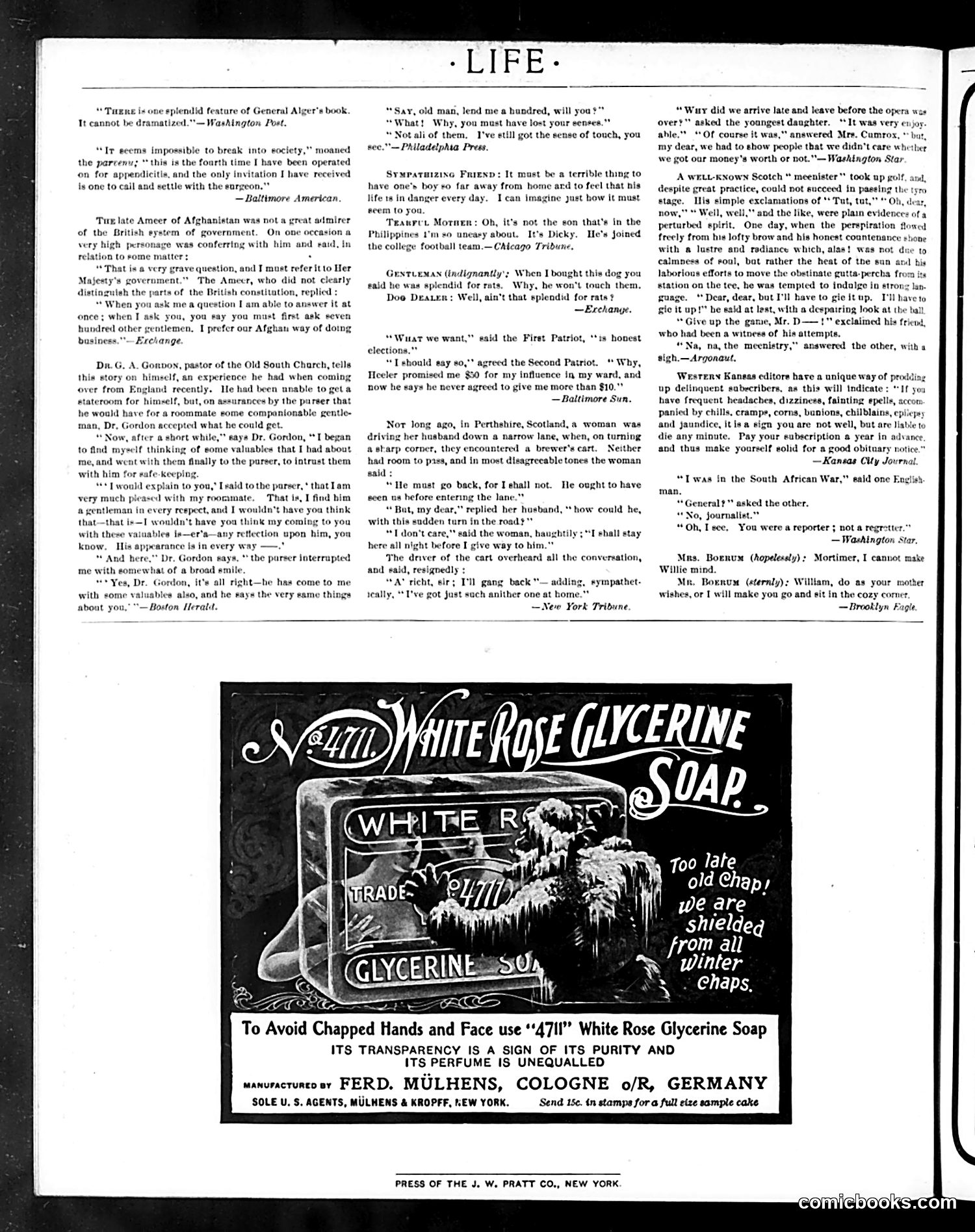
This page from *Life* magazine is primarily a **humor/satire collection** with diverse short jokes and anecdotes, plus an advertisement. **Content Summary:** The satirical pieces mock various social types and situations: - A society-climber undergoing repeated appendix surgery just to gain social invitations - General Alger (appears to be a political figure) whose book is criticized as undramatizable - An Afghan ruler's pragmatic critique of British bureaucratic government - A pastor awkwardly trying to assure a ship's purser that his request for safe-keeping of valuables reflects no suspicion of his roommate - A woman driver refusing to back up on a narrow Scottish lane, stubbornly declaring she'll stay "all night" **The Advertisement:** "47" White Rose Glycerine Soap—a German product promising protection against winter chapped hands and face, emphasizing purity and perfume quality. The page represents typical early-20th-century satirical humor targeting pomposity, social climbing, bureaucratic inefficiency, and stubborn pride.
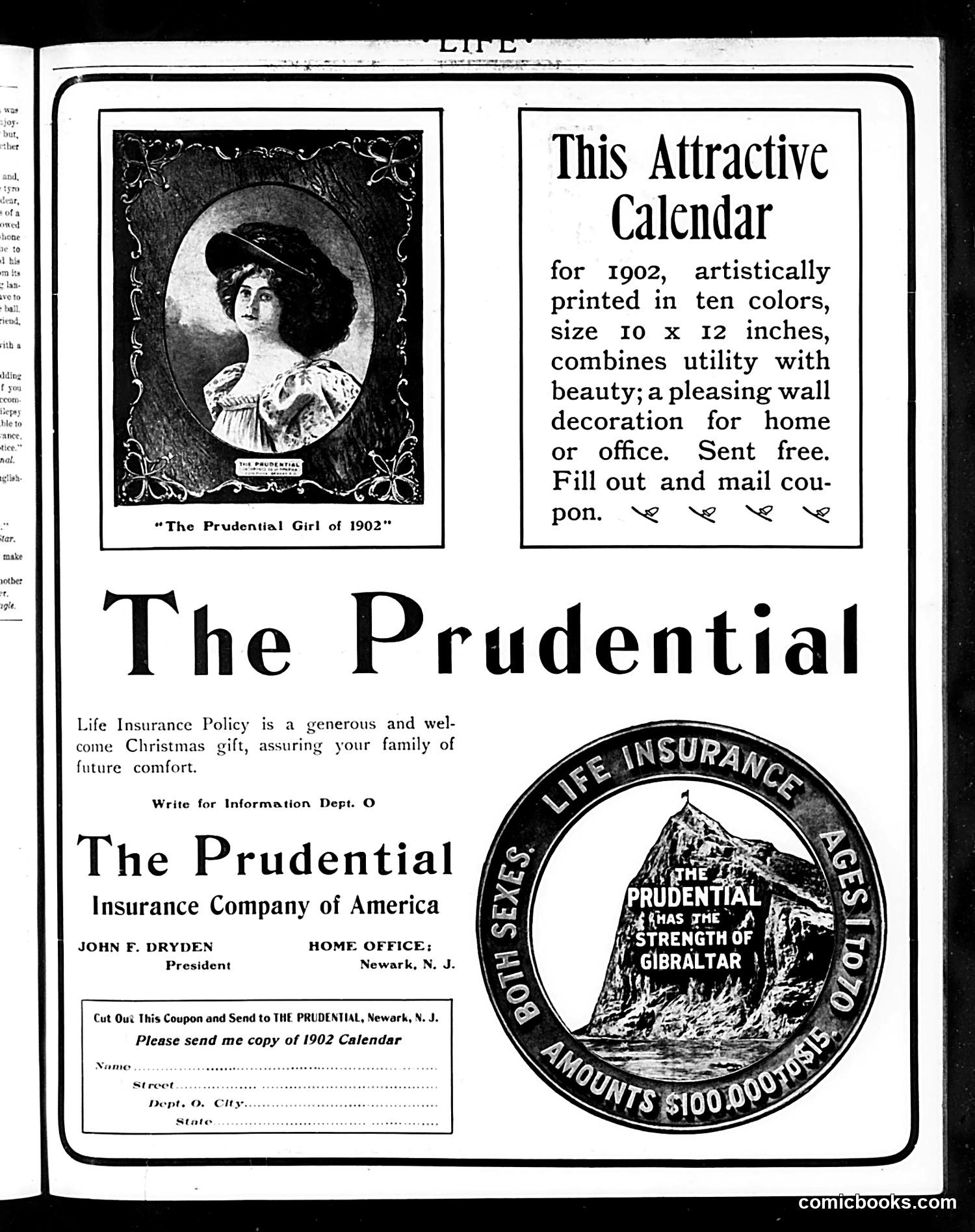
This page is primarily **advertising, not satire or political commentary**. It's a 1902 Life magazine advertisement for The Prudential Insurance Company of America. The "Prudential Girl of 1902" is simply an attractive female portrait used as commercial branding—standard advertising imagery of the era. The image demonstrates how insurance companies marketed themselves through appealing aesthetic calendars that doubled as promotional gifts. The accompanying text emphasizes that life insurance was a "generous and welcome Christmas gift," positioning it as a thoughtful present. The company's logo features the Rock of Gibraltar with the tagline about strength, establishing Prudential's corporate identity around stability and security—imagery designed to reassure potential customers about the company's reliability. This reflects early-1900s marketing practices: offering free calendars to generate leads and build brand familiarity. There is no satirical point visible on this page.
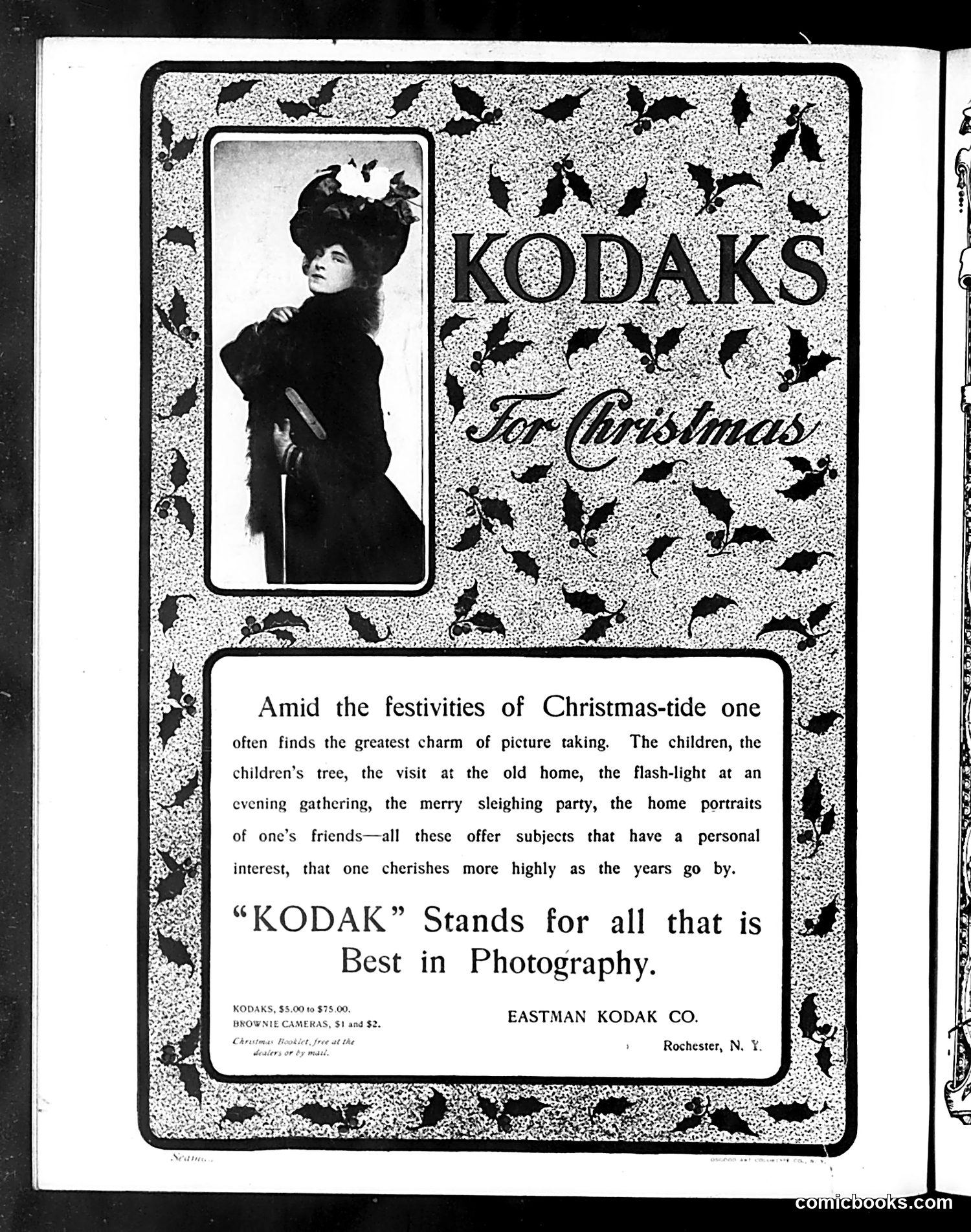
This is a Kodak Christmas advertisement, not a political cartoon. It promotes Kodak cameras and Brownie cameras as gift suggestions for the holiday season. The ad features a elegantly dressed woman in early 1900s attire with an elaborate hat, positioned within a decorative border of holly leaves. The text emphasizes how photography captures cherished family moments—children, home visits, sleighing parties, and portraits of friends—suggesting that these memories become increasingly precious over time. The message positions Kodak products as essential for preserving life's meaningful occasions. Pricing ranges from $1 Brownies to $75 professional models, making photography accessible across different budgets. This represents early consumer advertising targeting middle-class households during the emerging snapshot culture.