A complete issue · 53 pages · 1938
Judge — June 1938
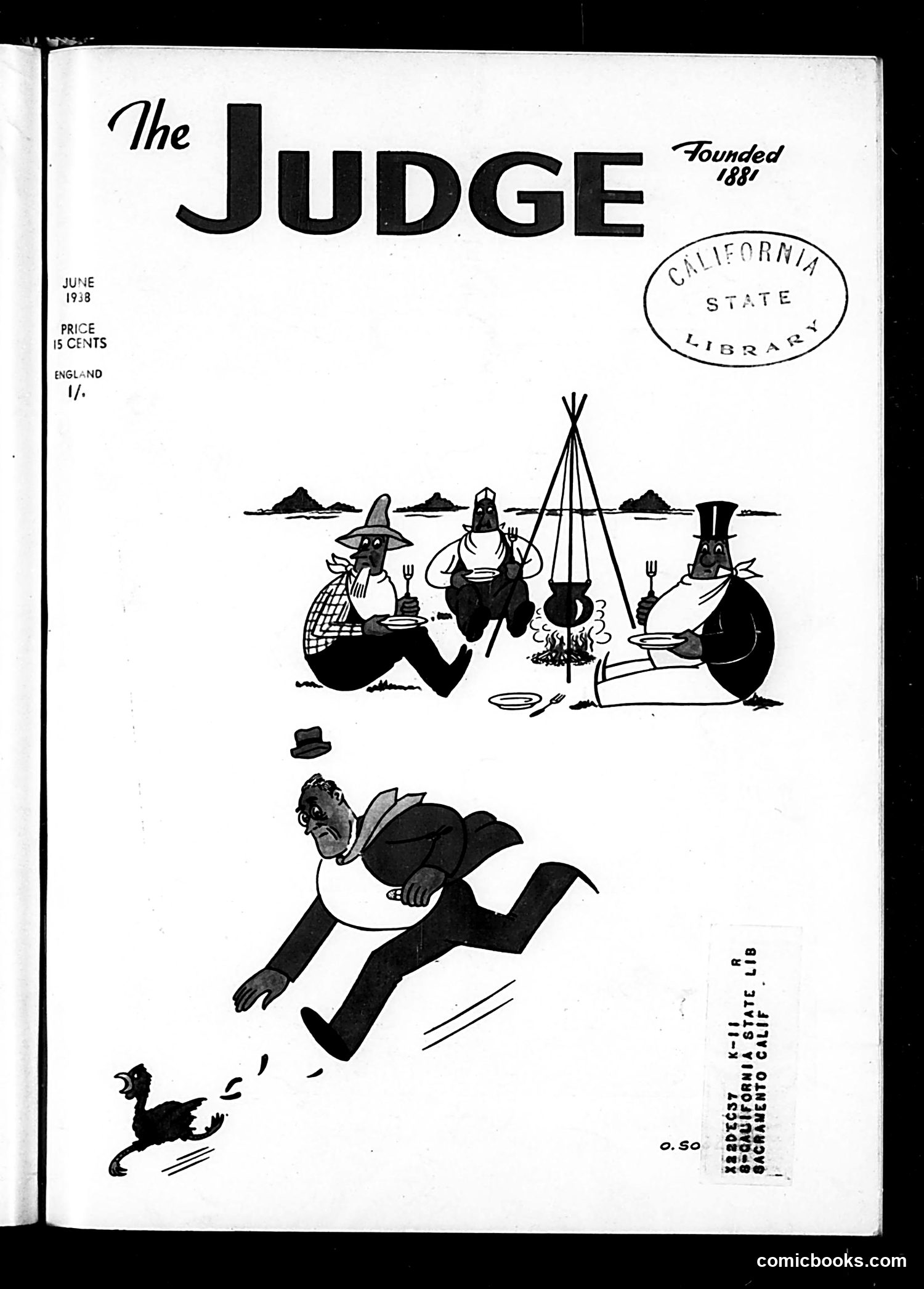
# Analysis of Judge Magazine Cover (June 1938) This cover depicts two cartoon scenes satirizing political anxieties of 1938. The upper panel shows four caricatured figures in what appears to be a camping or diplomatic scene, likely referencing international tensions preceding World War II. The lower panel shows a well-dressed man in formal attire fleeing in panic, chased by a small dog. This appears to be satirizing fear or alarm among political/business figures, though the specific identity is unclear without additional context. The overall tone suggests anxiety about economic or political instability during this period. The magazine's June 1938 date places this during pre-war European tensions and domestic American political concerns. The crude caricatural style was typical of Judge's satirical approach to contemporary events.

# Cherry Grove Kentucky Straight Bourbon Whiskey Advertisement This page is a **liquor advertisement**, not a political cartoon. It displays a label for "Cherry Grove" brand Kentucky straight bourbon whiskey, marked as 100 proof. The ad features a shield-shaped logo with the brand name prominently displayed, characteristic of early-to-mid 20th century whiskey marketing. The "REG U.S. PAT OFF" notation indicates registered trademark and patent office approval. There is **no satirical content or political commentary** visible. This appears to be a straightforward commercial advertisement for bourbon whiskey, likely from Judge magazine's advertising section. The stark black-and-white design was typical of vintage spirits advertising.
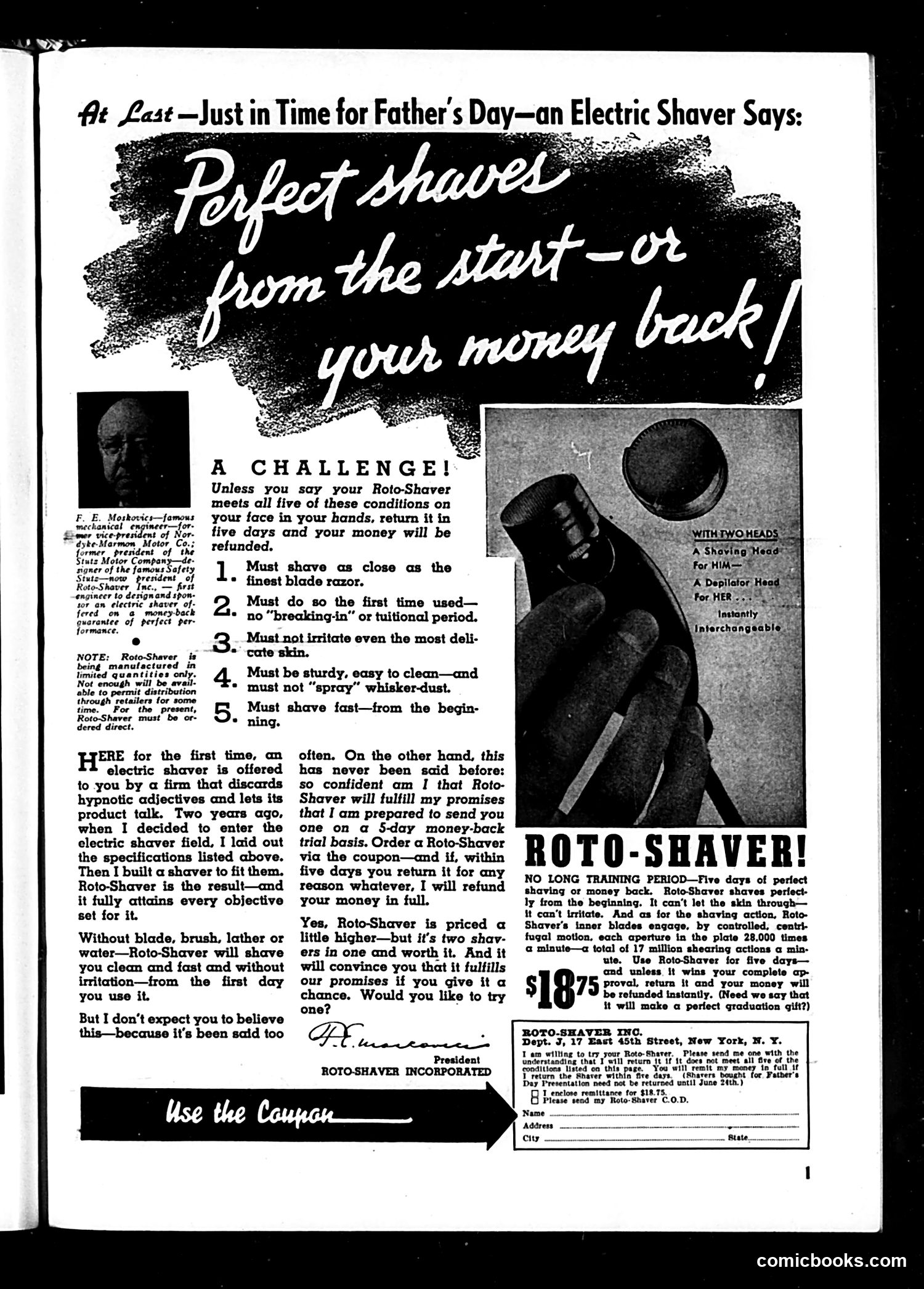
# Roto-Shaver Advertisement This page is primarily a **product advertisement**, not political satire. It promotes the "Roto-Shaver," an early electric razor (priced at $18.75), marketed as a Father's Day gift. The ad features a testimonial from F.E. Markovitch, identified as an "famous mechanical engineer" and former vice-president of various companies. He presents five performance guarantees, claiming the shaver delivers "perfect shaves from the start" without requiring a breaking-in period. The challenge format—promising money-back if conditions aren't met—was a common sales tactic of the era. The accompanying coupon and detailed specifications reflect 1930s-40s direct-mail advertising conventions. The inclusion of interchangeable heads for men and women indicates marketing to multiple demographics. This is commercial promotion rather than editorial content.
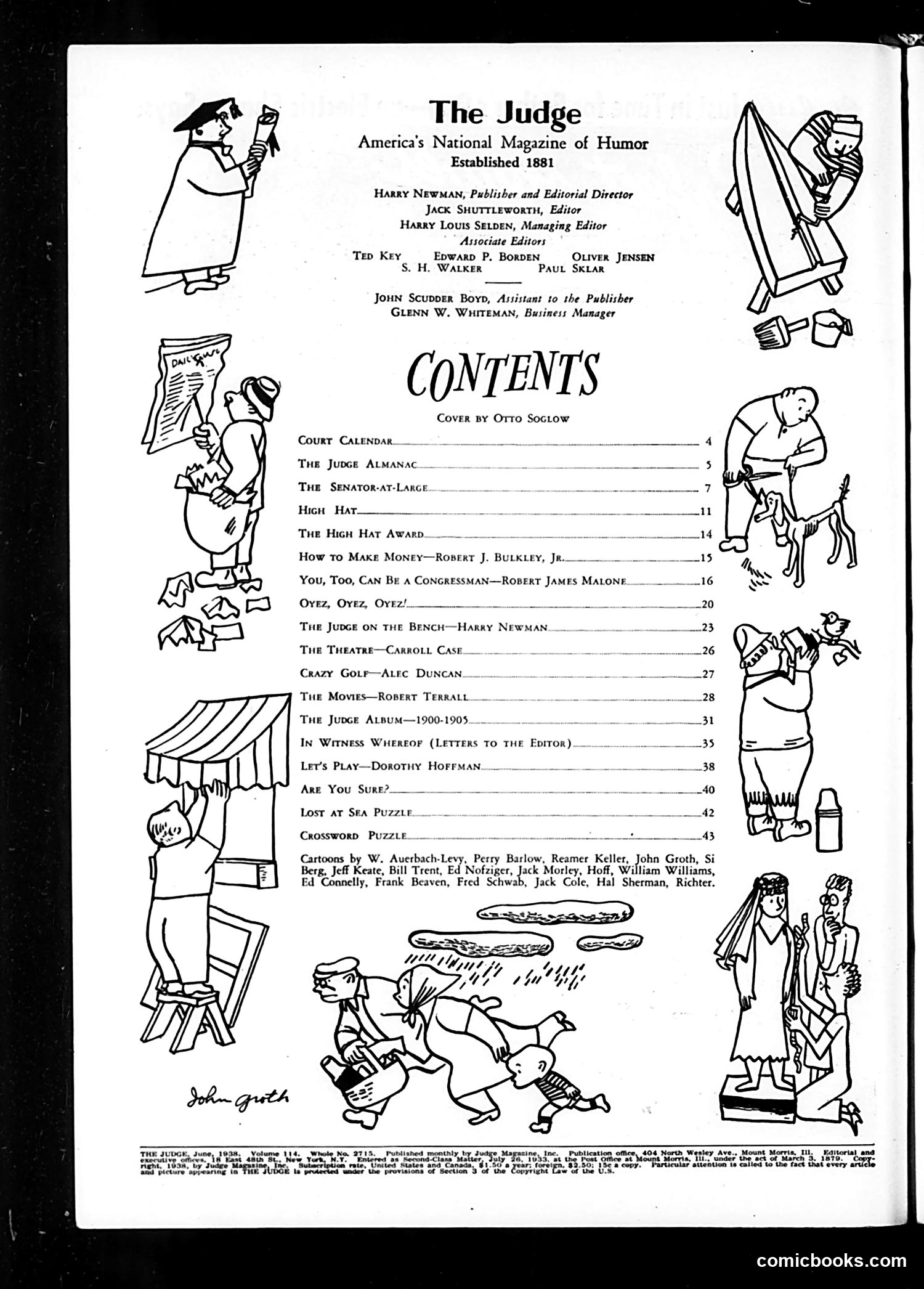
# The Judge Contents Page (June 1900) This is a contents/masthead page from *The Judge*, America's premier humor magazine established in 1881. The page lists articles and features for the June 1900 issue, including pieces on politics ("The Senator-at-Large"), theater, golf, and puzzles. The cartoons decorating the margins appear to be generic humorous illustrations rather than specific political satire—figures with exaggerated proportions engaged in everyday activities (shopping, golfing, parenting). Without identifying specific caricatures or referencing particular 1900 events in the visible illustrations, these seem designed simply as decorative humor typical of the magazine's style. The masthead credits editor Harry Newman and associates, establishing this as an official publication page rather than substantive editorial content.
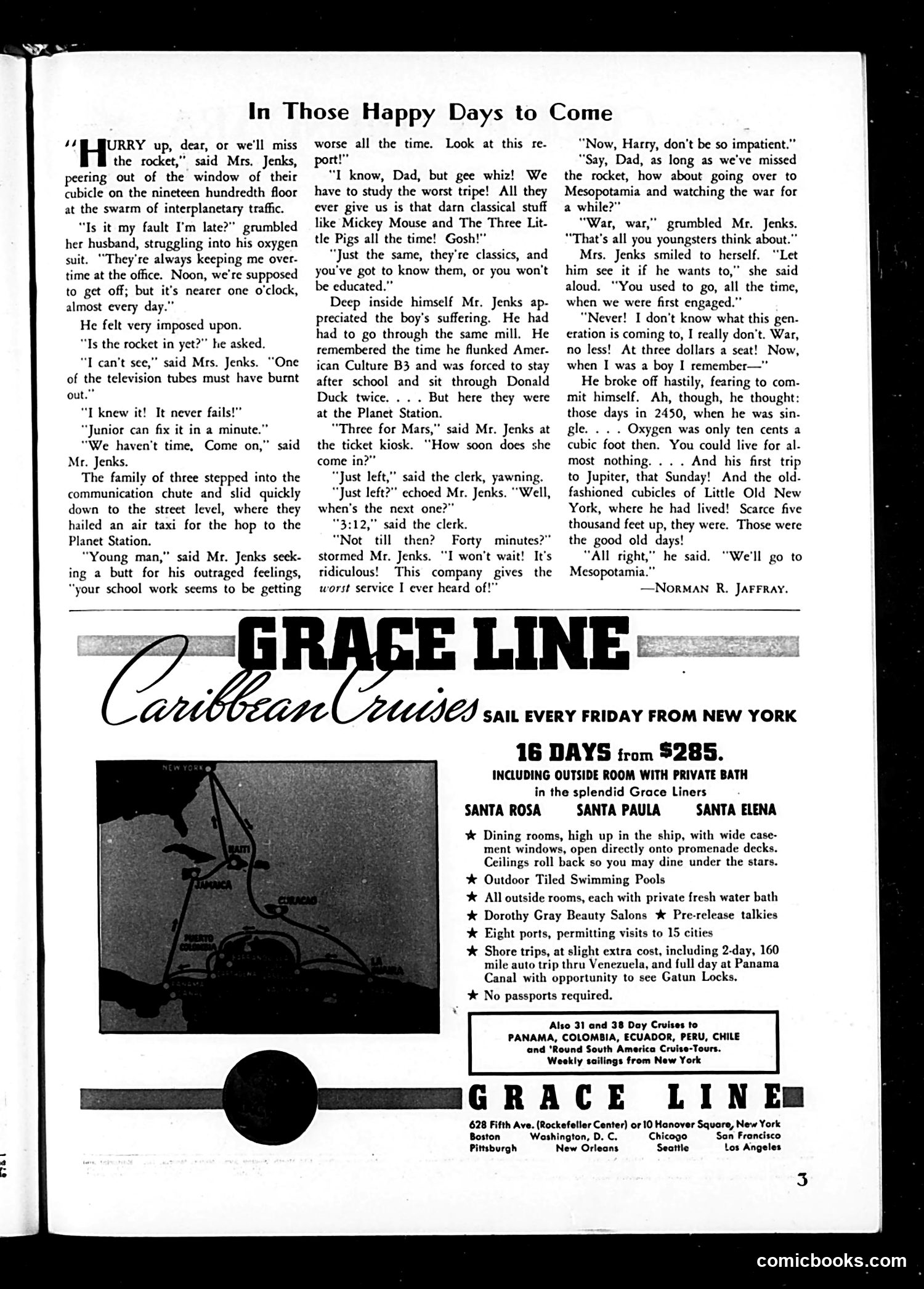
# Analysis This page is primarily **advertising content** rather than satirical cartoon material. The dominant feature is a Grace Line cruise advertisement promoting Caribbean cruises from New York, sailing "every Friday" for 16 days at $285, visiting ports including Santa Rosa, Santa Paula, and Santa Elena. The upper portion contains "In Those Happy Days to Come," a short fictional story by Norman R. Jaffray about a father and son visiting a "Planet Station" — apparently science fiction humor imagining future space travel. The story's joke concerns the son's impatience with classical entertainment (Mickey Mouse, Donald Duck) and the father's nostalgic recollection of 1940s New York geography. The page reflects mid-20th century commercial publishing where advertisements often dominated editorial space in magazines like Judge.
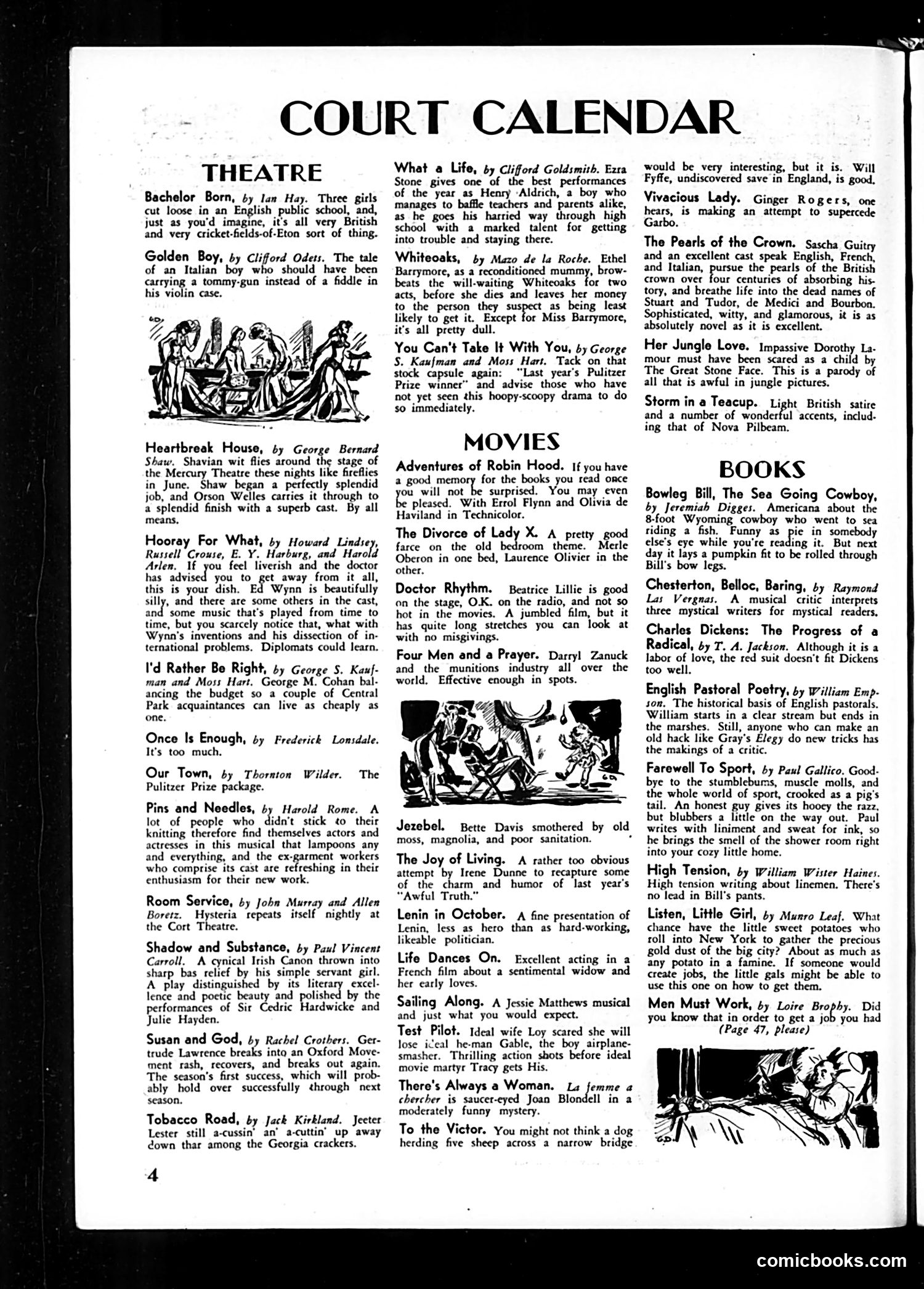
# Court Calendar Page Analysis This page is primarily a **entertainment guide**, not political satire. It lists theatrical productions, movies, and books with brief reviews and descriptions. The two small **cartoons** appear to be generic humorous illustrations accompanying entertainment reviews rather than political commentary. They depict: 1. A theatrical scene showing figures in period costume (top left) 2. A domestic or social scene with figures interacting (bottom center) These illustrations are decorative accompaniments to the entertainment listings rather than satirical commentary on current events or politics. The page itself represents Judge magazine's function as a **lifestyle publication**—providing readers with cultural recommendations for theater, cinema, and literature of the era, alongside its better-known satirical cartoons found elsewhere in the magazine.
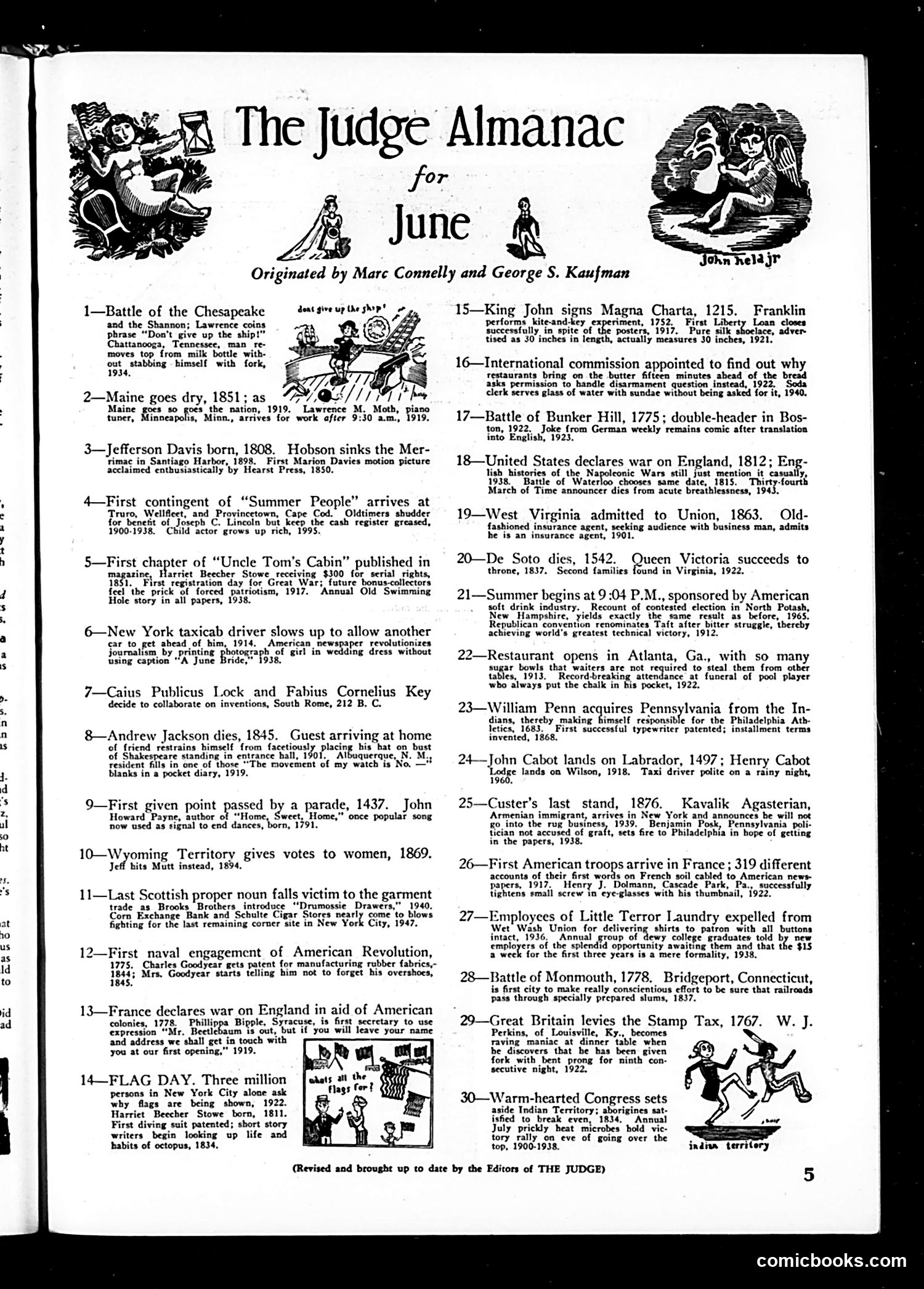
# The Judge Almanac for June This page is primarily an **almanac of historical events** rather than political satire. It lists 30 numbered historical facts arranged chronologically, each with brief descriptions and dates ranging from 1437 to 1922. The few **illustrations** appear decorative rather than satirical—cherubs/angels at the header and small vignettes accompanying entries about Flag Day (showing patriotic imagery) and Indian Territory (showing Native Americans). The content mixes major American events (Revolutionary War, Civil War, westward expansion) with quirky trivia (typewriter patents, restaurant opening records). The humor is gentle and antiquarian—celebrating American history and oddities rather than attacking political figures or positions. This functions as educational entertainment for Judge's readers rather than sharp political commentary.
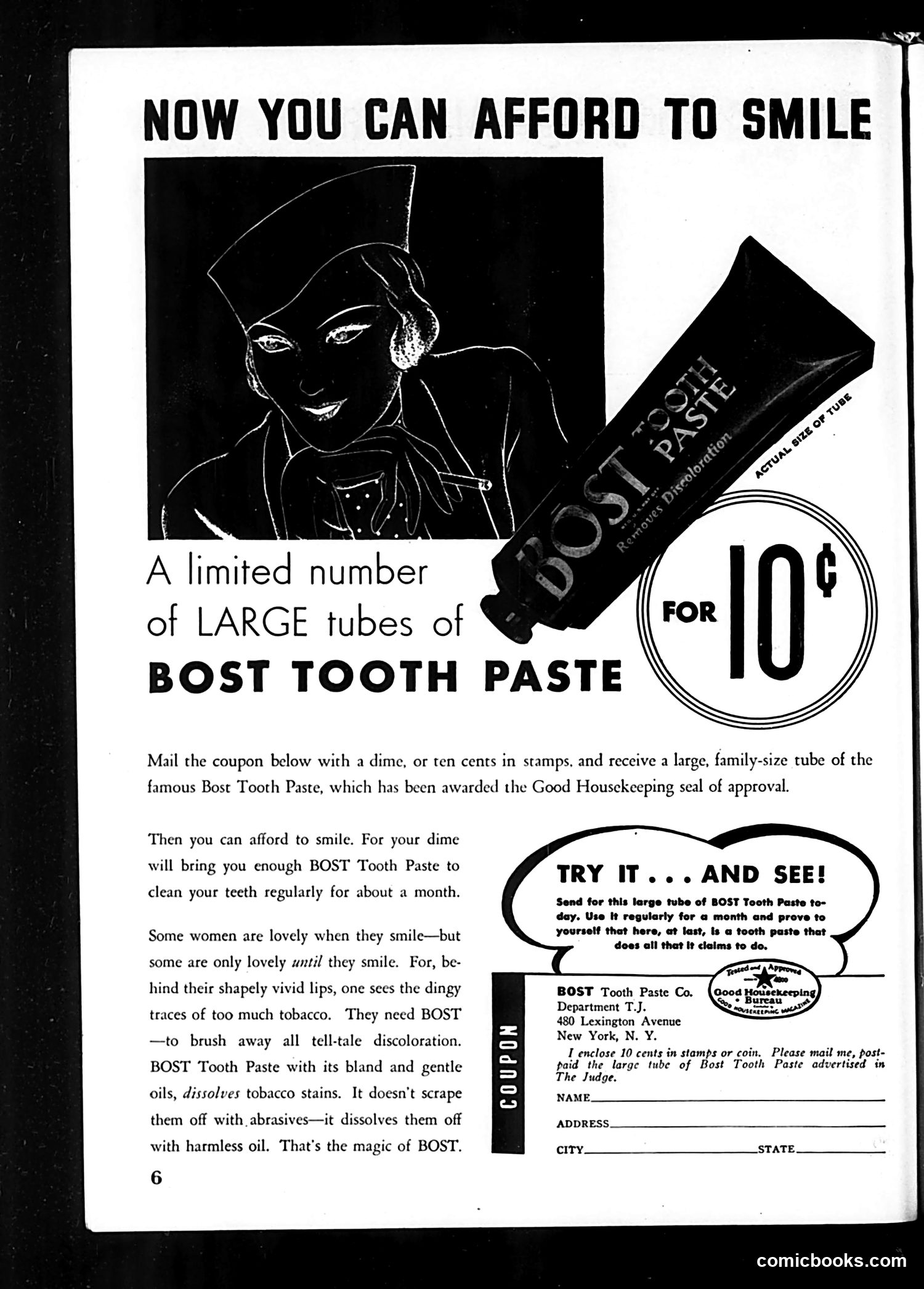
# Bost Tooth Paste Advertisement This is a straightforward **commercial advertisement**, not political satire. It promotes Bost Tooth Paste as an affordable solution for tooth cleaning and whitening. The image shows a smiling woman in 1920s-style dress and hat, illustrating the product's promised benefit: an attractive smile. The accompanying text emphasizes that Bost Tooth Paste can remove tobacco stains "gently" using "harmless oil" rather than abrasive scraping—a notable selling point when smoking was widespread and socially acceptable. The 10-cent price and mail-in coupon were typical marketing tactics of this era. The Good Housekeeping seal of approval lent credibility. The page's appearance in *Judge* magazine simply reflects how such advertisements subsidized publications' printing costs.
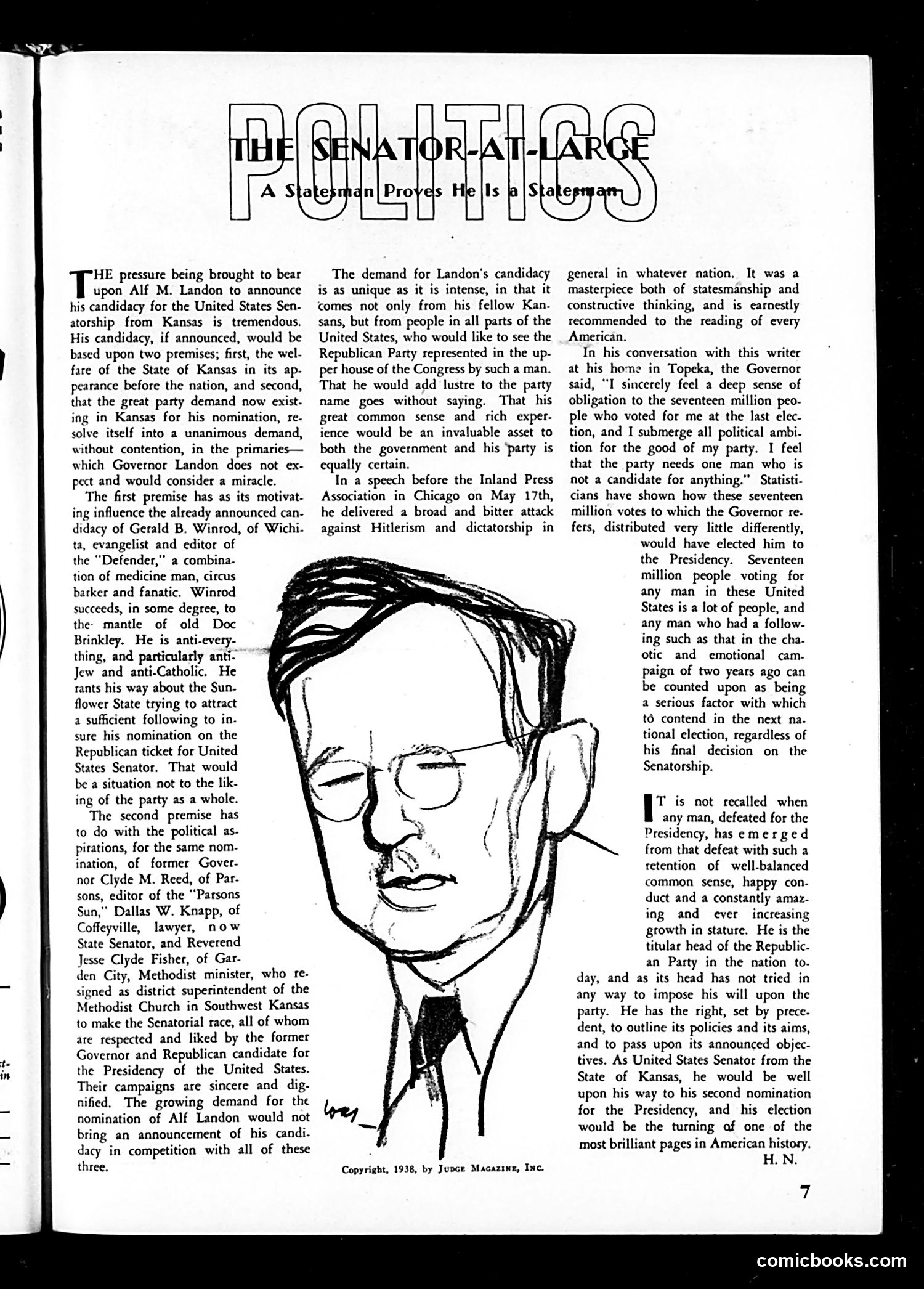
# "The Senator-at-Large: A Statesman Proves He Is a Statesman" This article discusses **Alf M. Landon** of Kansas, who announced his candidacy for U.S. Senator. The text criticizes rival Republican candidates—**Gerald B. Winrod** (described as anti-Semitic and anti-Catholic, compared to "old Doc Brinkley") and others including **Clyde M. Reed** and **Jesse Clyde Fisher**. The accompanying **portrait sketch** depicts Landon as a serious, bespectacled figure—presenting him as a rational, moderate alternative to more extreme Republican candidates. The article praises Landon's "common sense" and "statesmanship," arguing that even if defeated for the Presidency, his Senate election would represent an important victory against extremism and demagoguery in American politics. The satire endorses Landon as the sensible choice.
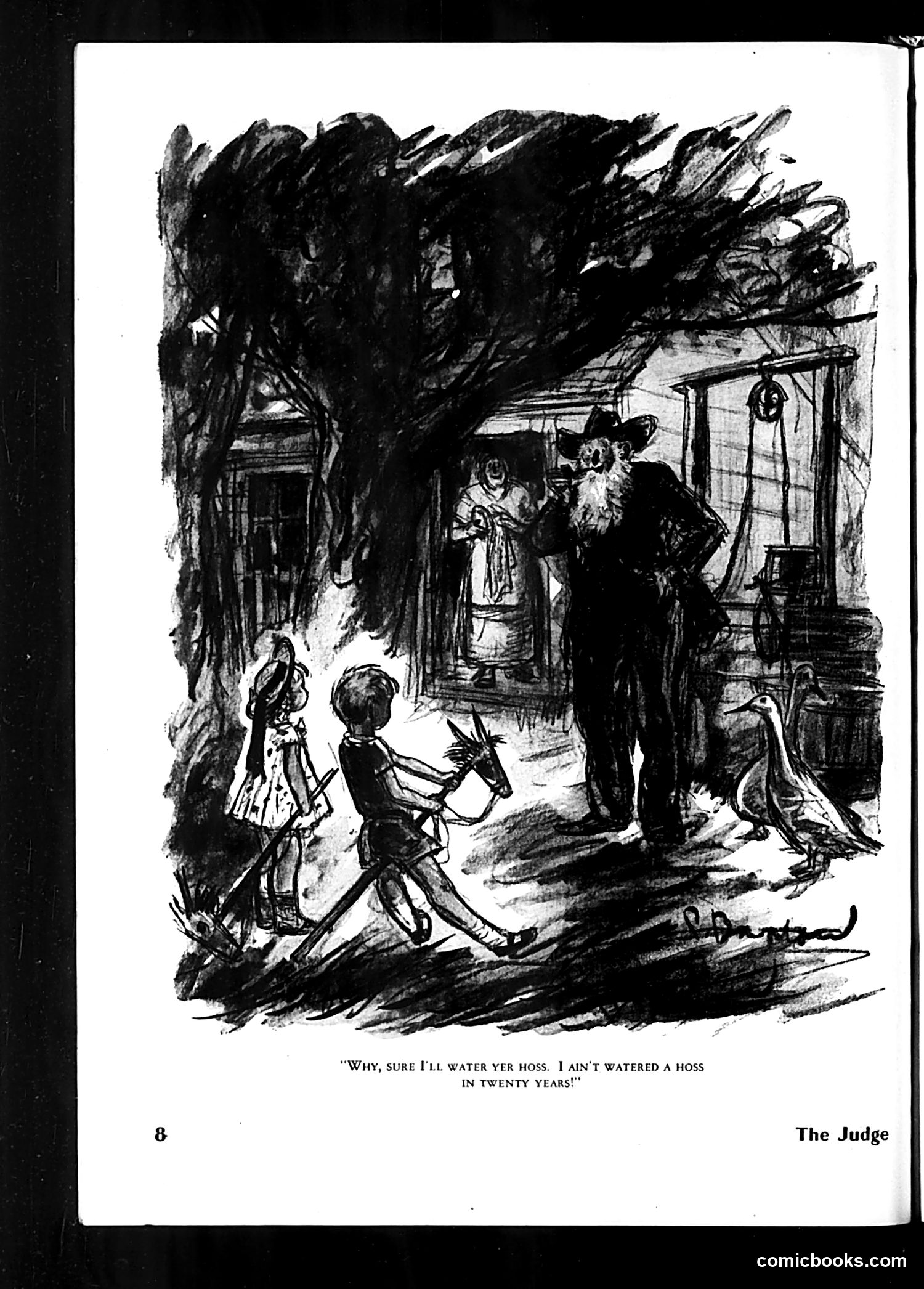
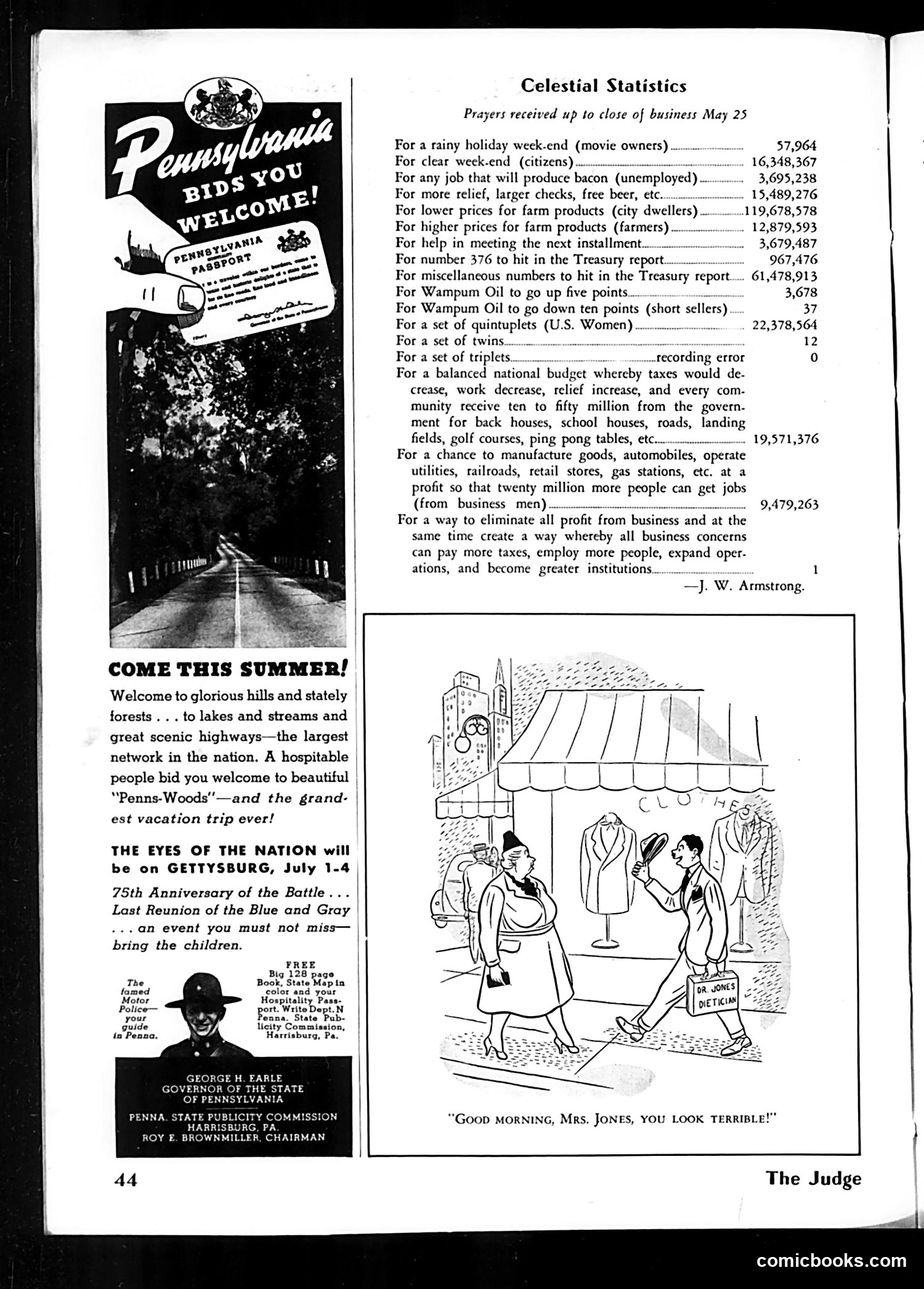
This cartoon depicts a domestic scene where a man (appearing to be a farmer or laborer based on his work clothes) is being confronted by what seems to be his wife and an authority figure—possibly a judge or official—near a house. The caption reads: "Why, sure I'll water yer hoss. I ain't watered a hoss in twenty years!" The satire appears to mock either neglectful husbandry or a man's reluctance to perform basic farm duties. The presence of the official figure suggests legal consequences or social judgment regarding animal welfare or property maintenance. The humor lies in the character's defensive admission that he's abandoned his responsibilities for two decades, implying either laziness or incompetence. This reflects *Judge* magazine's tendency toward social commentary on rural life and domestic accountability in early-to-mid 20th century America.
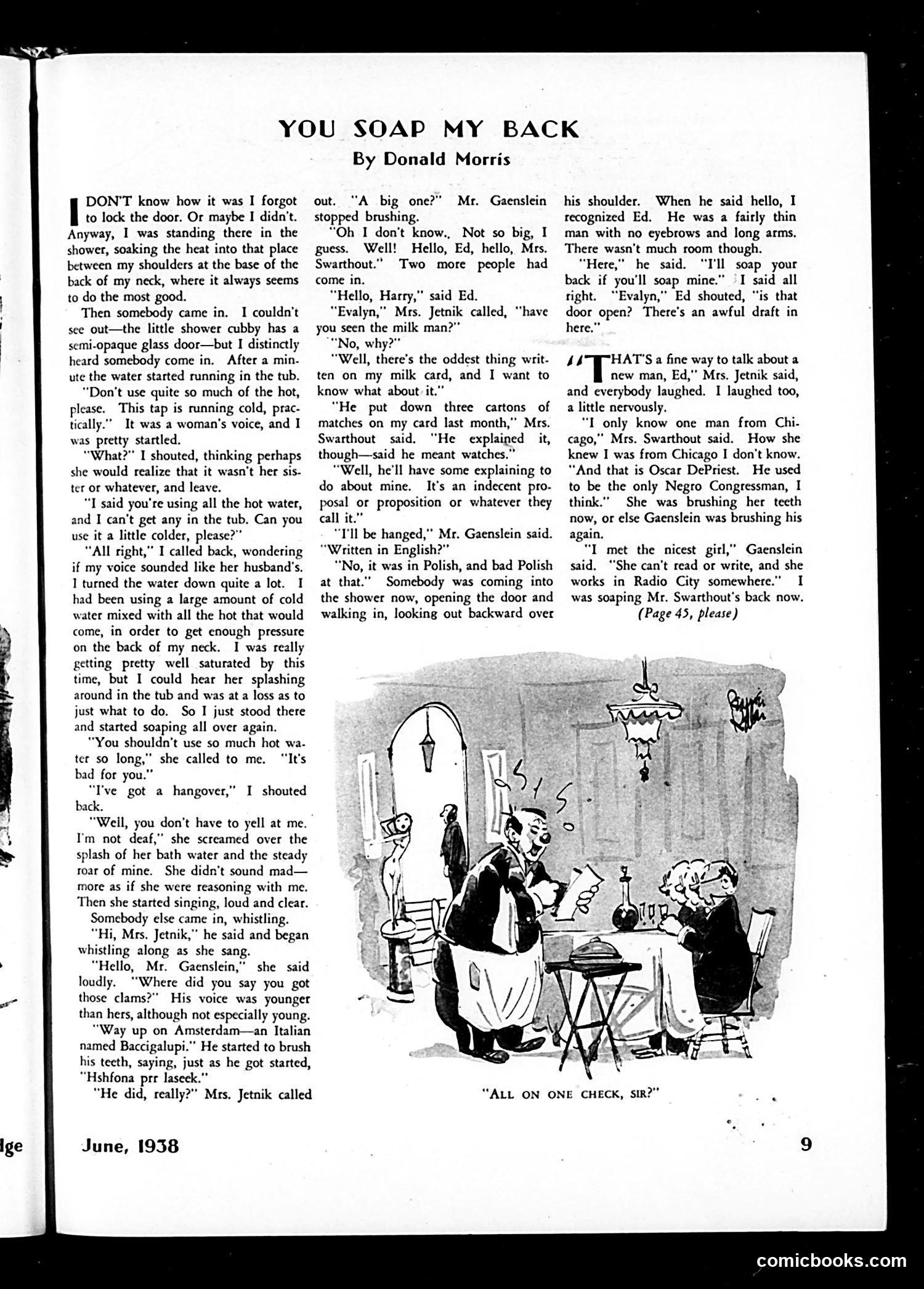
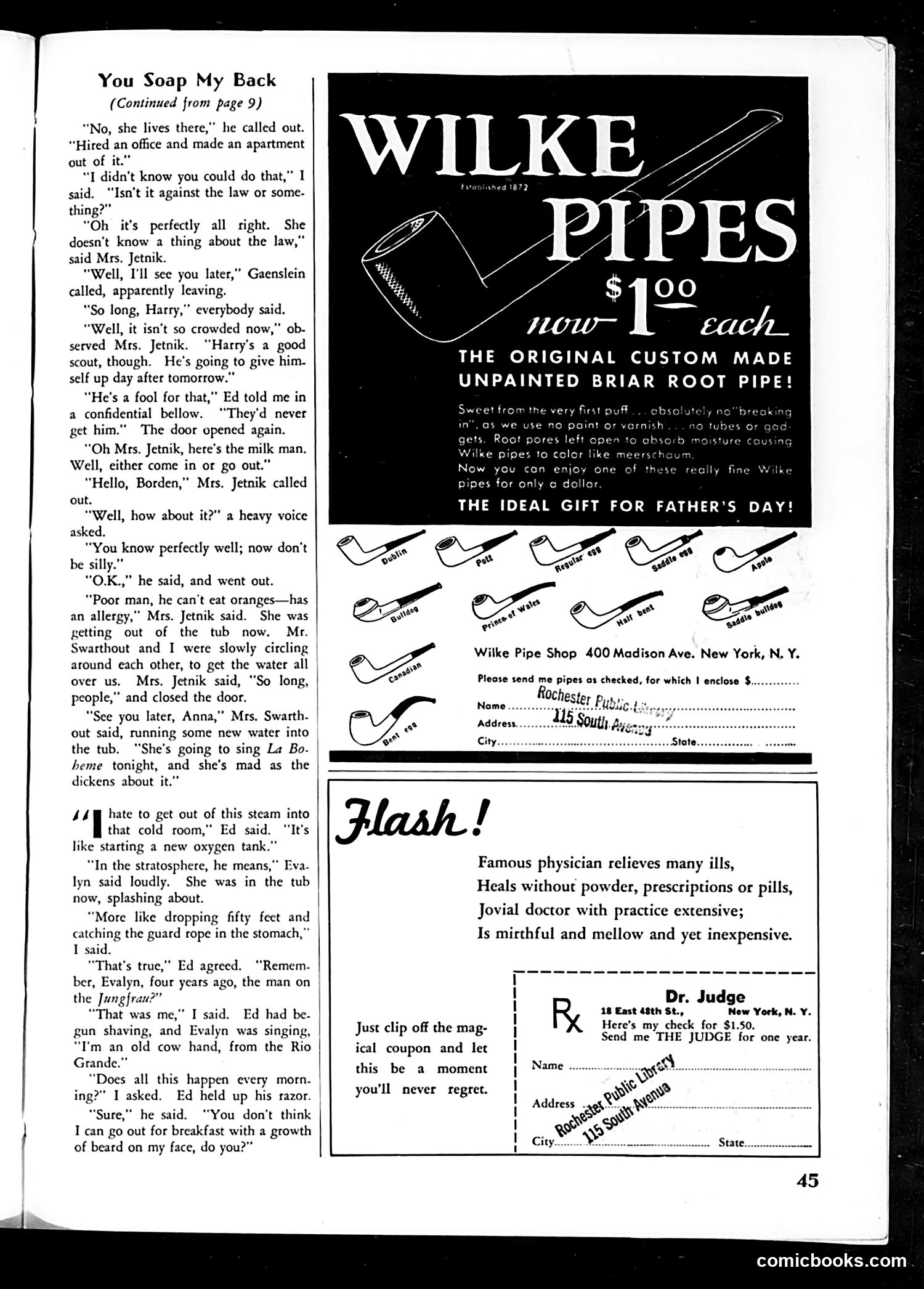
# Analysis This humorous short story satirizes the chaos of crowded, communal urban apartment living in 1930s America. The narrator attempts a private shower but finds himself in an increasingly absurd situation where multiple neighbors—Mrs. Jetnik, Mr. Gaenslein, Ed, and Mrs. Swarthout—casually intrude into the bathroom, bathing, singing, and conversing simultaneously. The satire targets the lack of privacy and personal space in densely-packed city apartments, where neighbors freely impose on one another without embarrassment. The escalating intrusions, from water-sharing complaints to unsolicited hygiene advice to a stranger offering to soap the narrator's back, mock the forced intimacy of cramped urban housing. The casual mention of Oscar DePriest (America's first Black congressman) and ethnic references (Italian grocer, Polish milkman) reflect the immigrant and working-class neighborhood context typical of 1930s urban America. The joke's absurdist humor comes from treating this complete invasion of privacy as mundane neighborly interaction.
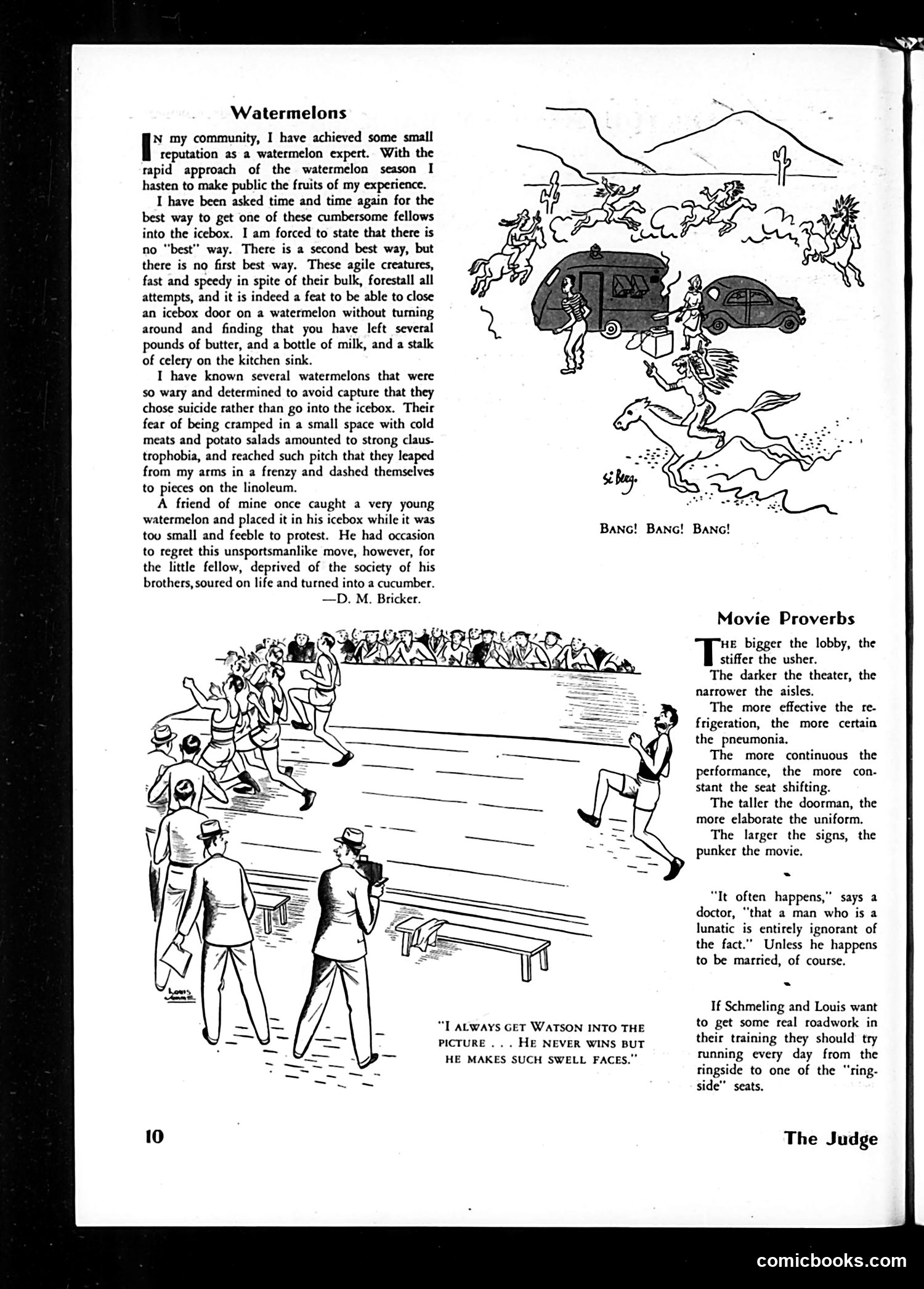
# Page Analysis: Judge Magazine **"Watermelons" (top left):** A humorous essay by D.M. Bricker about the difficulty of storing watermelons in iceboxes. The accompanying cartoon shows a chaotic scene of people chasing watermelons that have escaped into a desert landscape—visual comedy illustrating the text's premise that watermelons are impossibly agile and difficult to contain. **"Movie Proverbs" (right side):** Satirical observations about cinema theater experiences, mocking common annoyances: cramped lobbies with brusque ushers, dark theaters with narrow aisles, overly cold air conditioning causing illness, uncomfortable seats, and misleadingly elaborate signage for poor-quality films. The cartoon below shows a bowling alley, apparently illustrating the "seat shifting" complaint. **Bottom quote about Watson:** References an actor (Watson) who allegedly appears in films despite never winning roles, but is valued for his expressive face—likely mocking overwrought silent-film acting or a specific performer's limited talent. These pieces represent Judge's typical satirical approach: gentle social mockery of everyday frustrations and entertainment industry conventions.