A complete issue · 36 pages · 1937
Judge — April 1937
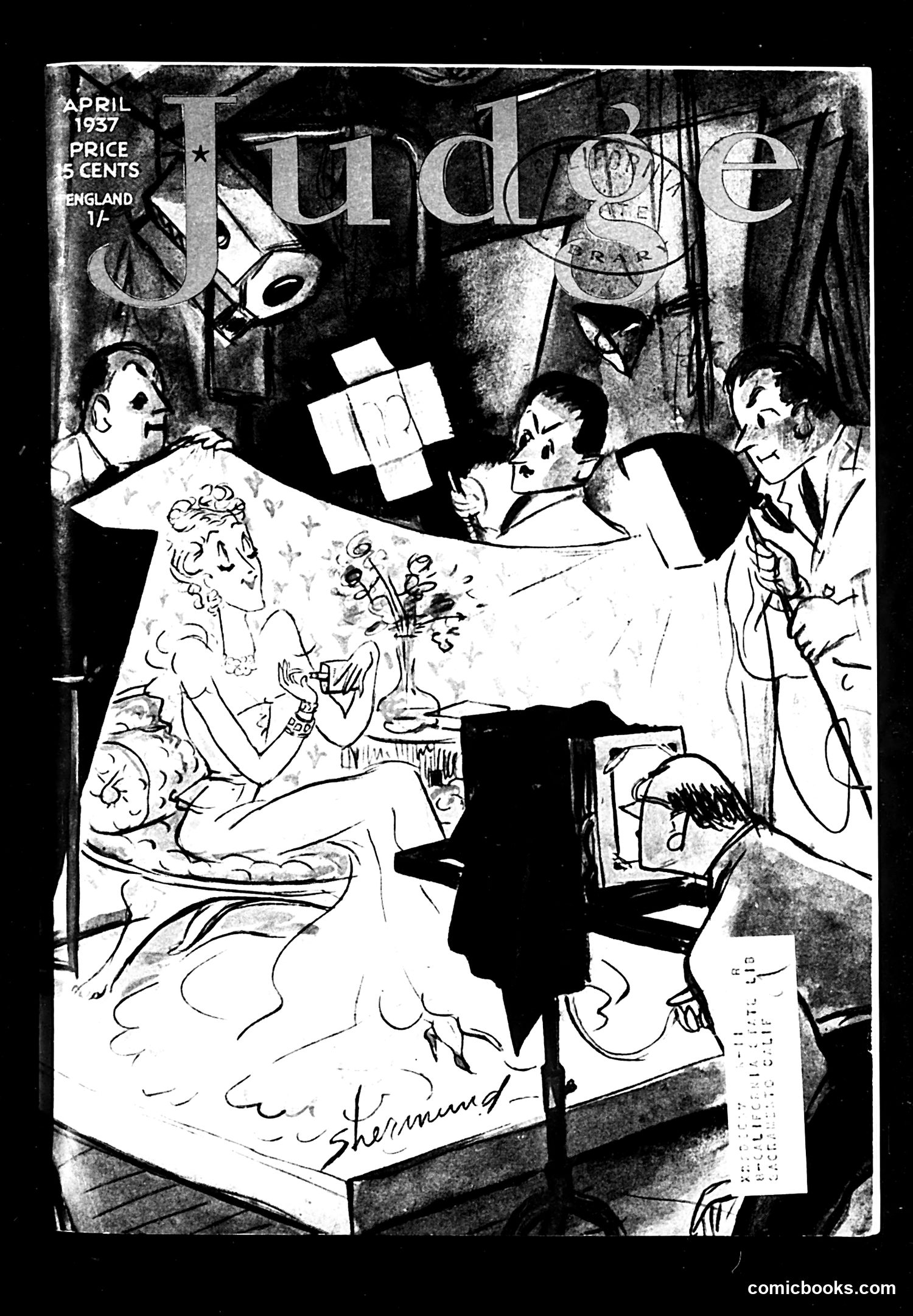
# Judge Magazine Cover Analysis - April 1937 This cover satirizes the art world, likely referencing debates over modern art during the 1930s. The central figure appears to be an artist or art patron displaying an abstract or cubist work to well-dressed gentlemen (possibly art critics or collectors). The exaggerated facial expressions and body language suggest mockery of pretentious art appreciation. The signature reads "Sherwood," identifying the cartoonist. The joke targets the gap between avant-garde artistic movements and conventional taste—portraying serious-faced men examining what appears to be nonsensical or intentionally obscure art, implying the emperor's-new-clothes phenomenon where people praise incomprehensible art to appear sophisticated. This reflects 1930s American skepticism toward modernism, which many viewed as European affectation disconnected from American values.
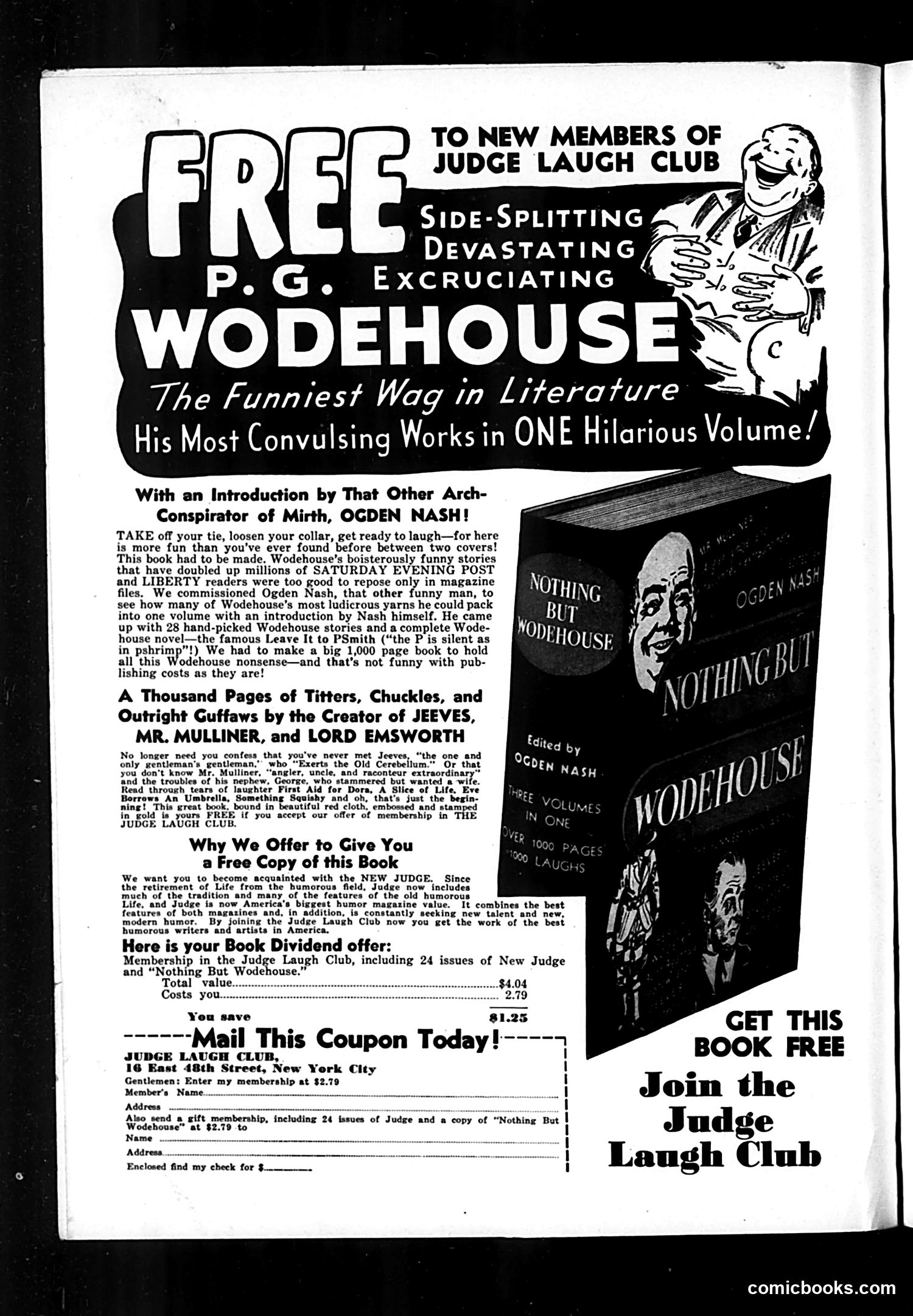
# Analysis This page is primarily **advertising rather than editorial content**. It promotes a free book offer to new members of the Judge Laugh Club—a subscription service bundling 24 issues of Judge magazine plus P.G. Wodehouse's "Nothing But Wodehouse," a compilation of his humorous writings. The advertisement describes Wodehouse as "The Funniest Wag in Literature" and mentions Ogden Nash (a contemporary humorist) wrote an introduction. The copy emphasizes that Judge magazine—already popular with Saturday Evening Post and Liberty readers—now includes works by celebrated humorists and comic writers. The offer itself (membership for $8.79 including 24 magazine issues and the Wodehouse book) is the advertisement's main point, not political or social satire.
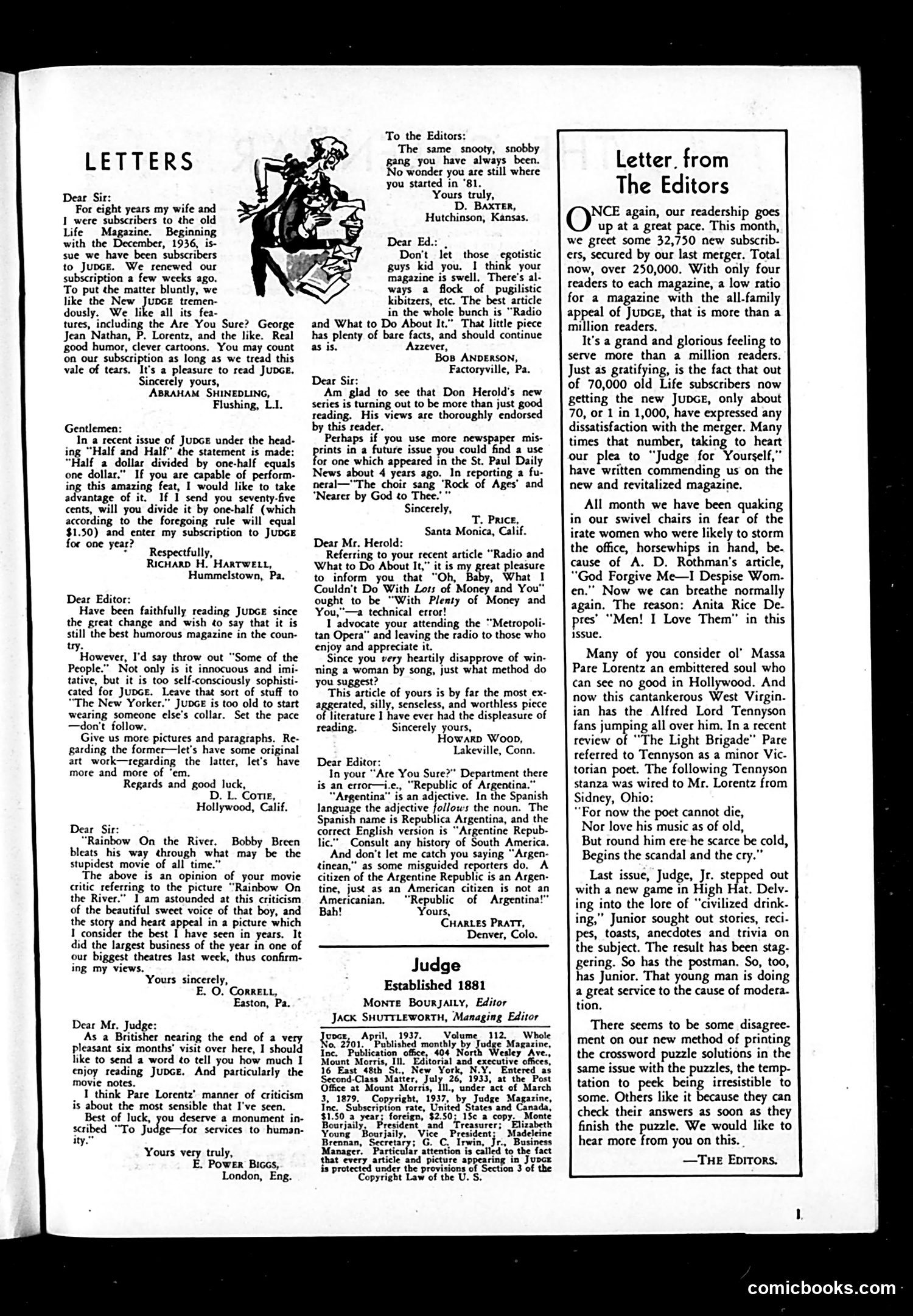
# Analysis of Judge Magazine Page This page consists primarily of **reader letters to the editor** rather than political cartoons. The letters discuss Judge magazine itself—praising its humor, cartoons, and content quality while offering suggestions for improvement. One letter from Howard Wood critiques Judge's "Radio and What to Do About It" article, suggesting the magazine attend a "Metropolitan Opera" broadcast instead of radio programs, implying radio entertainment is inferior to classical arts. Another letter from Charles Pratt corrects a geographical error, noting "Republic of Argentina" is the proper English term, not "Argentine Republic." The small illustration at the top appears decorative rather than satirical. The page reflects Judge's editorial relationship with its readership during the 1930s.
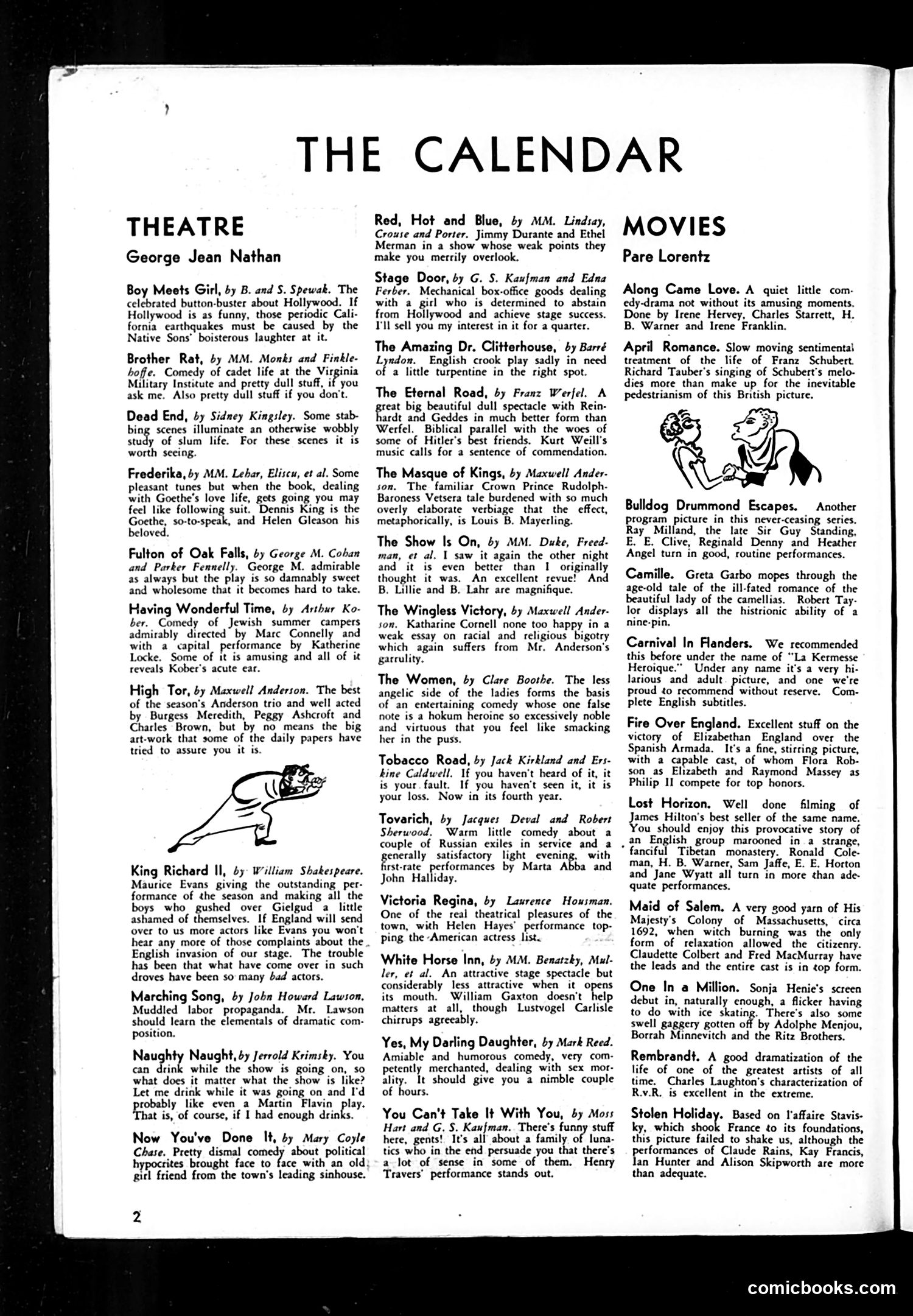
# Analysis of "The Calendar" Page This page is primarily **theater and movie reviews** rather than political satire. It contains critical assessments of Broadway plays (left column) and films (right column), with brief plot summaries and performance evaluations. The only illustration shows **two cartoon figures in casual conversation**—likely representing typical theatergoers or critics discussing a show. This appears decorative rather than satirical. The reviews discuss contemporary productions with performers' names (George Jean Nathan reviewing theater, Pare Lorentz reviewing movies). The tone is lighthearted, evaluating entertainment quality rather than making political points. **No clear political satire or social commentary is evident** on this particular page. It functions as entertainment criticism and promotion typical of Judge magazine's cultural coverage.
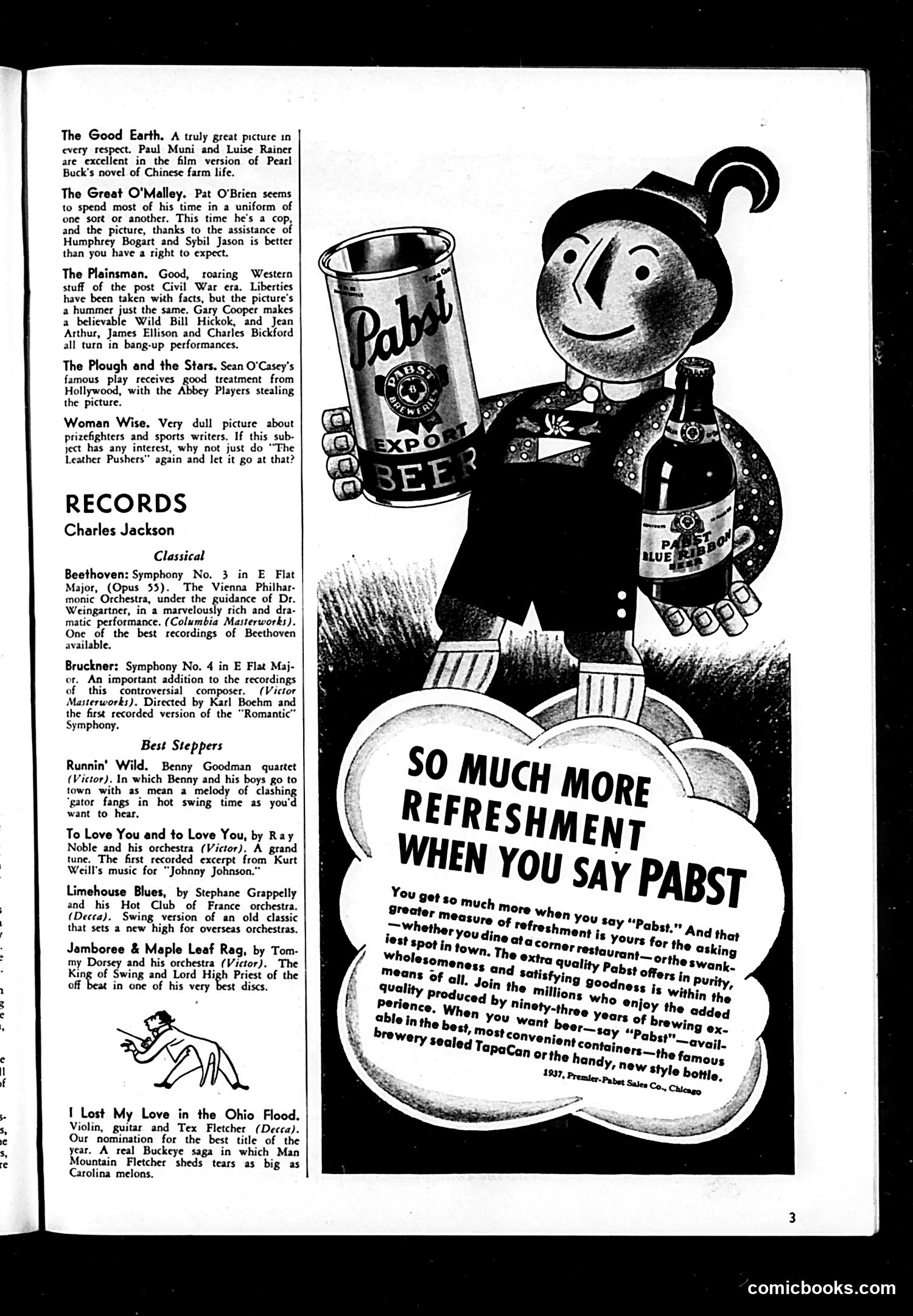
# Analysis This page is primarily a **Pabst Blue Ribbon beer advertisement** rather than political satire. The large illustration depicts an anthropomorphic beer bottle character holding a Pabst mug and bottle, styled as a jovial, rotund figure. The accompanying text emphasizes product quality and purity, claiming Pabst offers "so much more refreshment" due to its 93-year brewing heritage and quality standards. The left column contains unrelated content: film and music reviews (classical recordings by Beethoven and Bruckner, jazz records including Benny Goodman). There is **no apparent political cartoon or satire** on this page. It's a straightforward commercial advertisement mixed with entertainment reviews, typical of Judge magazine's revenue model during this era (dated 1937 based on the footer).
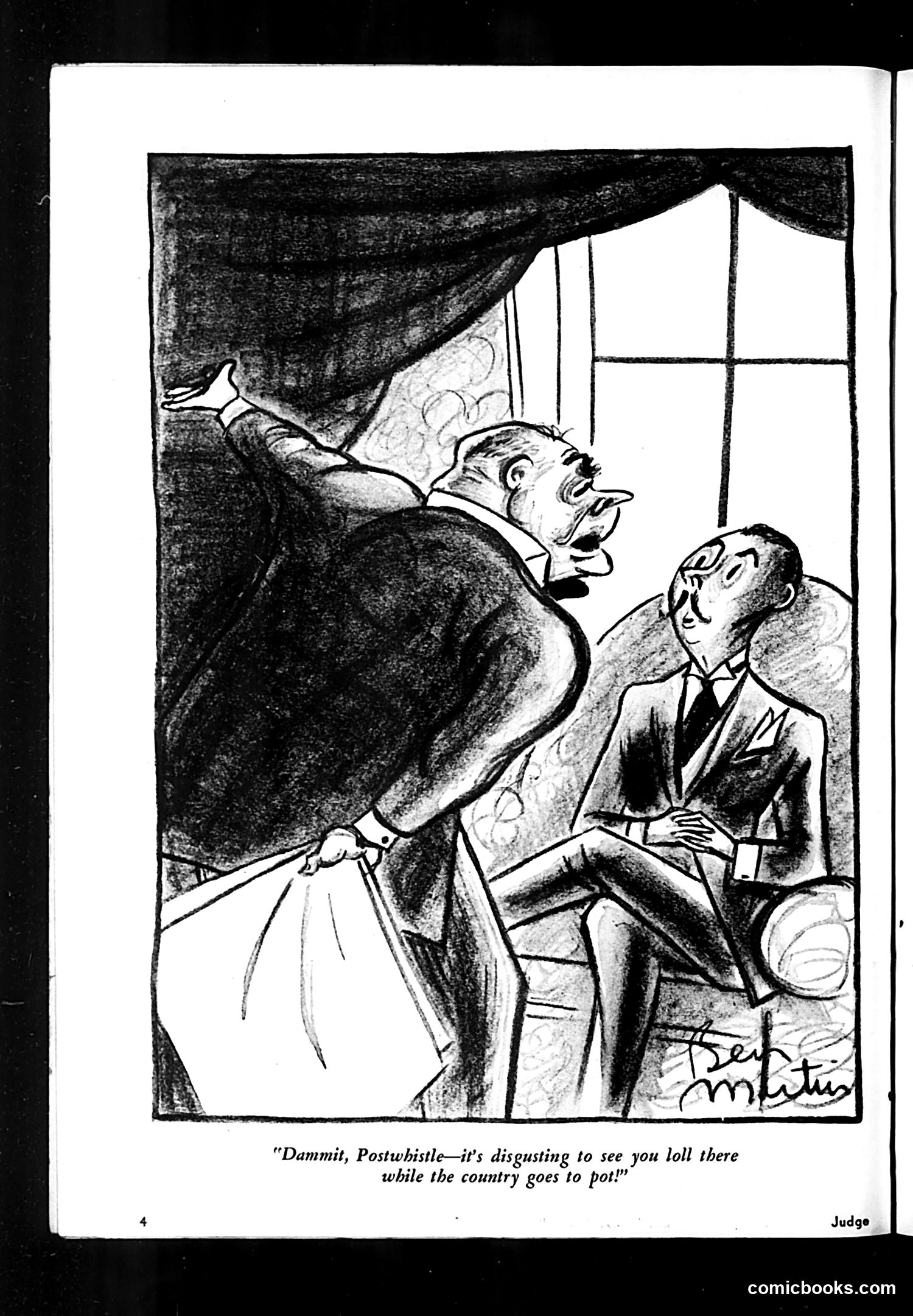
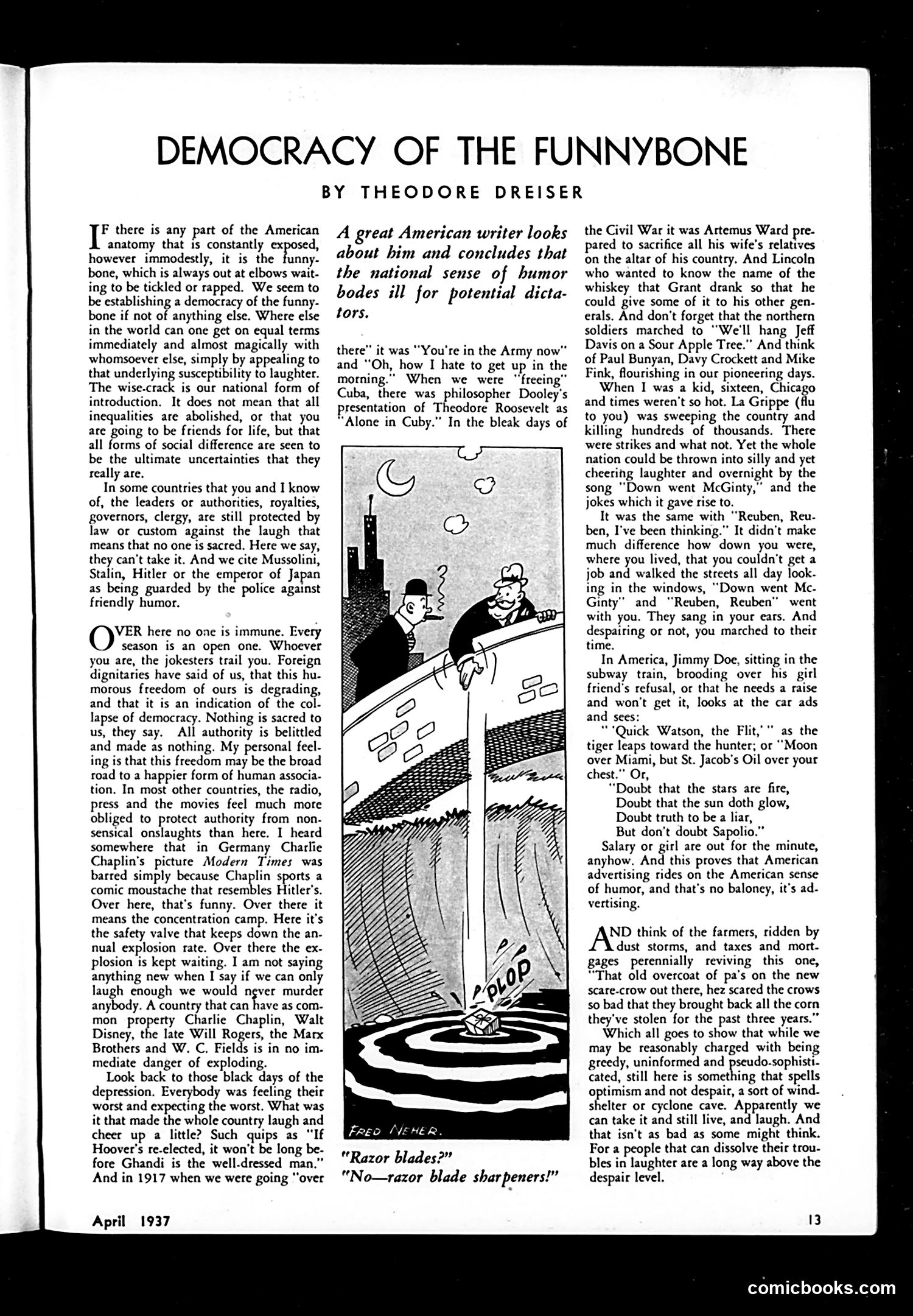
# Cartoon Analysis This single-panel cartoon depicts two men in an office setting. The figure on the left, drawn with exaggerated features and labeled "Postwhistle," reclines leisurely while the smaller man on the right expresses outrage. The caption reads: "Dammit, Postwhistle—it's disgusting to see you loll there while the country goes to pot!" The satire targets government negligence during a national crisis. Postwhistle appears to represent a public official or bureaucrat shirking his duties while the nation suffers. The cartoon criticizes the indifference of those in power to serious national problems. Without knowing the specific historical context or which political figure "Postwhistle" references, the broader point is clear: the cartoonist condemns governmental inaction and apathy during turbulent times. The artist's signature appears in the lower right.
# Judge Magazine, April 1937: "Cross Currents" This page contains a humorous essay by Anthony Weir about his young son Walter's adventures and observations. The text includes several satirical anecdotes about everyday American life, including: - A story about an arctic explorer named Peter Freuchen and his mother-in-law - Commentary on spending habits and Moscow gold - A Senate Campaign Expenditures investigating committee report criticizing political spending across parties (Republican, Democratic, Socialist, and Union Party candidates all criticized for excessive costs per vote) The small illustrations of animals (an elephant, dogs, a sleeping elephant) appear to be decorative rather than satirical political commentary. The overall tone mocks American domestic life, political inefficiency, and spending habits through gentle humor rather than sharp satire.
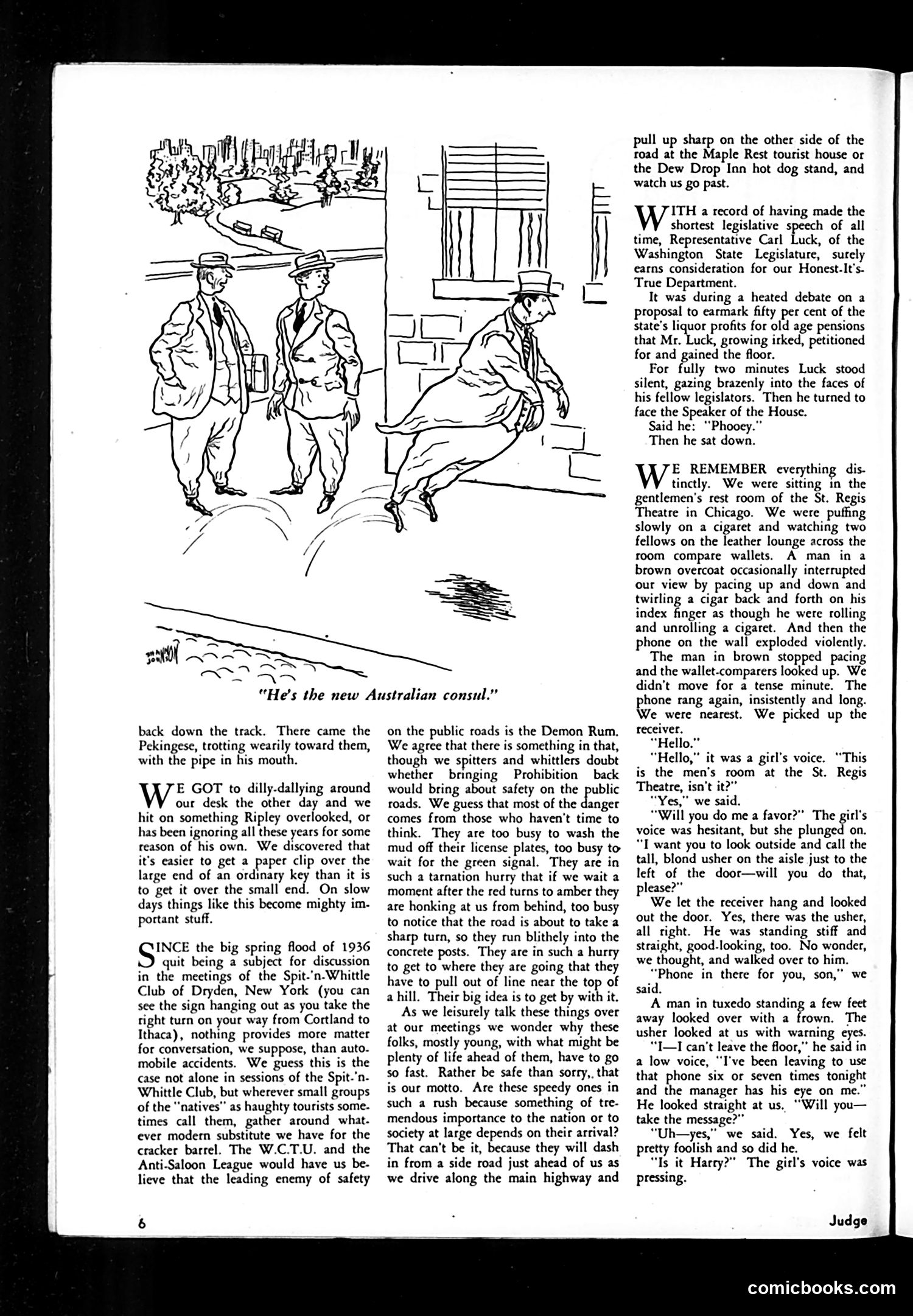
# Political Cartoon Analysis: "He's the new Australian consul" The cartoon depicts two men in suits encountering a kangaroo on a city street, with one man remarking "He's the new Australian consul." **The Satire:** This is a joke about diplomatic appointments, suggesting someone (presumably an actual Australian consul appointee of the era) is incompetent or unsuitable for the role—by humorously implying a kangaroo would be equally qualified. It's a dismissive commentary on either the specific appointment or Australian diplomacy generally. **Context:** Without identifying the specific consul referenced, the satire relies on stereotyping Australians through their most recognizable animal export. The joke assumes readers would find the substitution absurd yet somehow fitting—a common satirical technique questioning official competence or political favoritism in diplomatic postings.
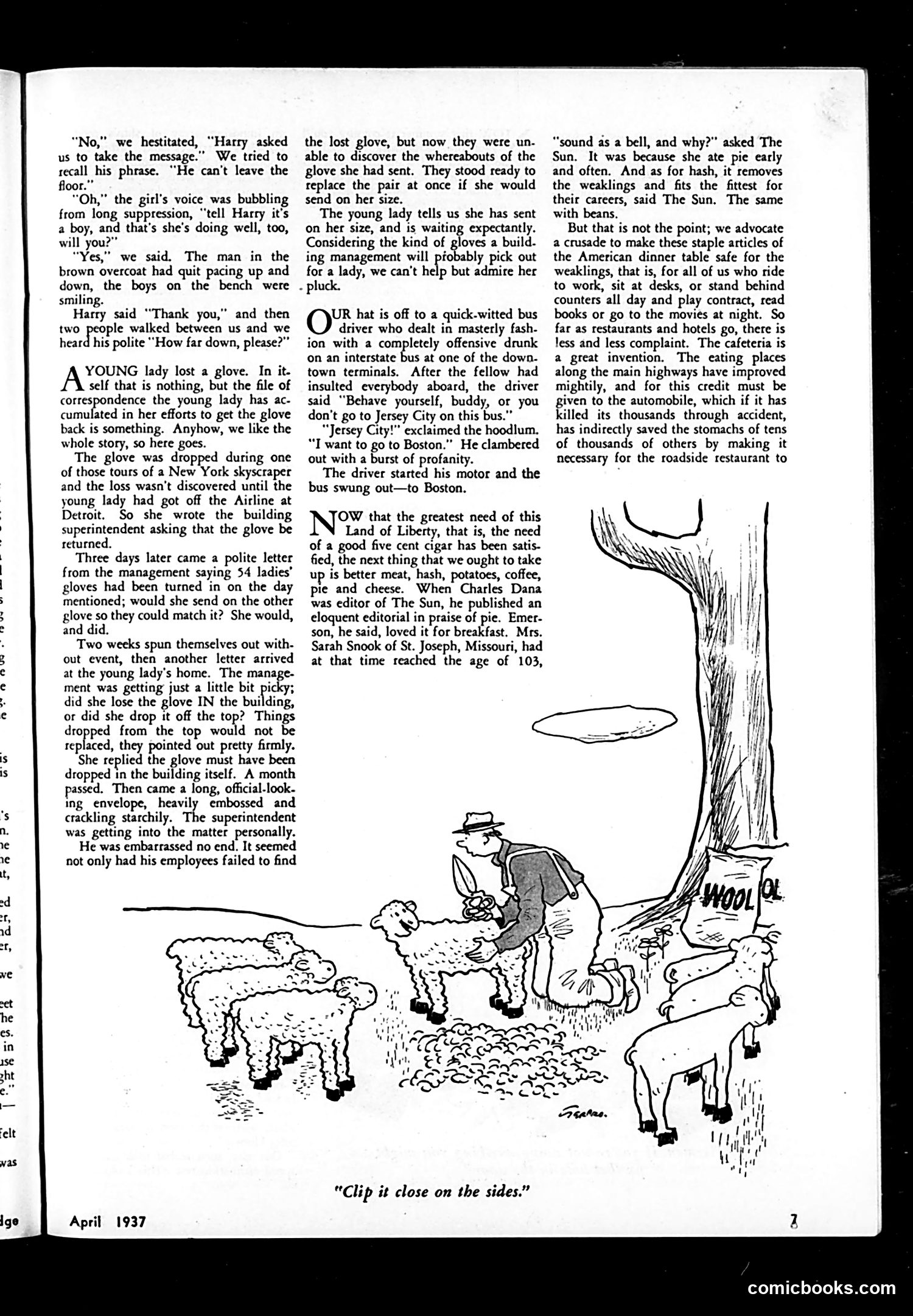
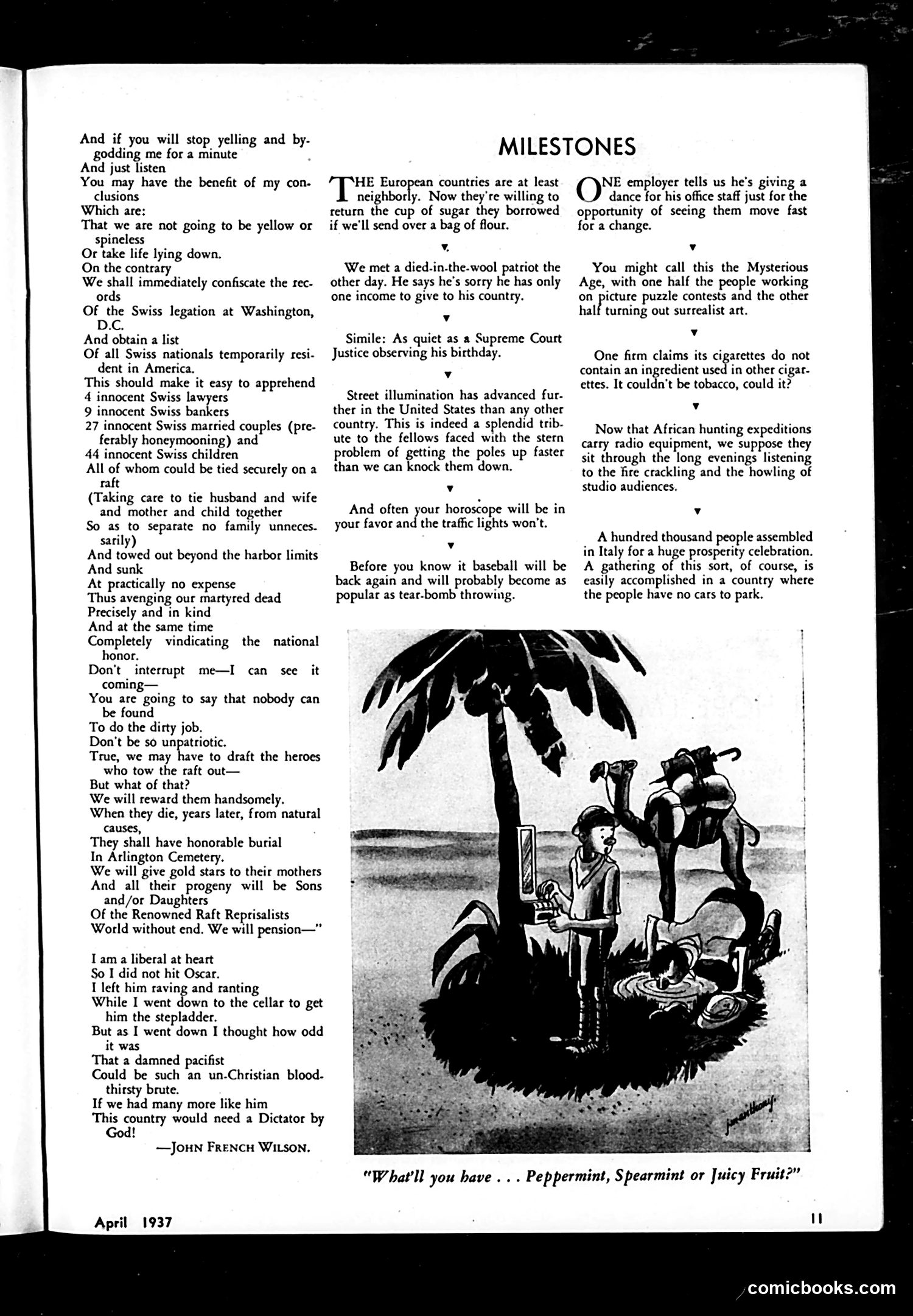
# Judge Magazine, April 1937 - Page Analysis The page contains two distinct pieces: **Top section**: A humorous narrative about a young woman who lost a glove during a New York skyscraper visit. The story satirizes bureaucratic inefficiency—the airline, building management, and various authorities all struggle to locate or replace the lost item, creating absurd correspondence and delays. **Bottom cartoon**: Shows a man shearing sheep while addressing them to "Clip it close on the sides." The joke appears to target wool production or possibly labor practices, likely referencing economic or agricultural concerns of 1937 Depression-era America. Both pieces use gentle, domestic humor typical of Judge's satirical approach—mocking everyday frustrations and institutional red tape rather than attacking specific political figures. The overall tone is light social commentary.
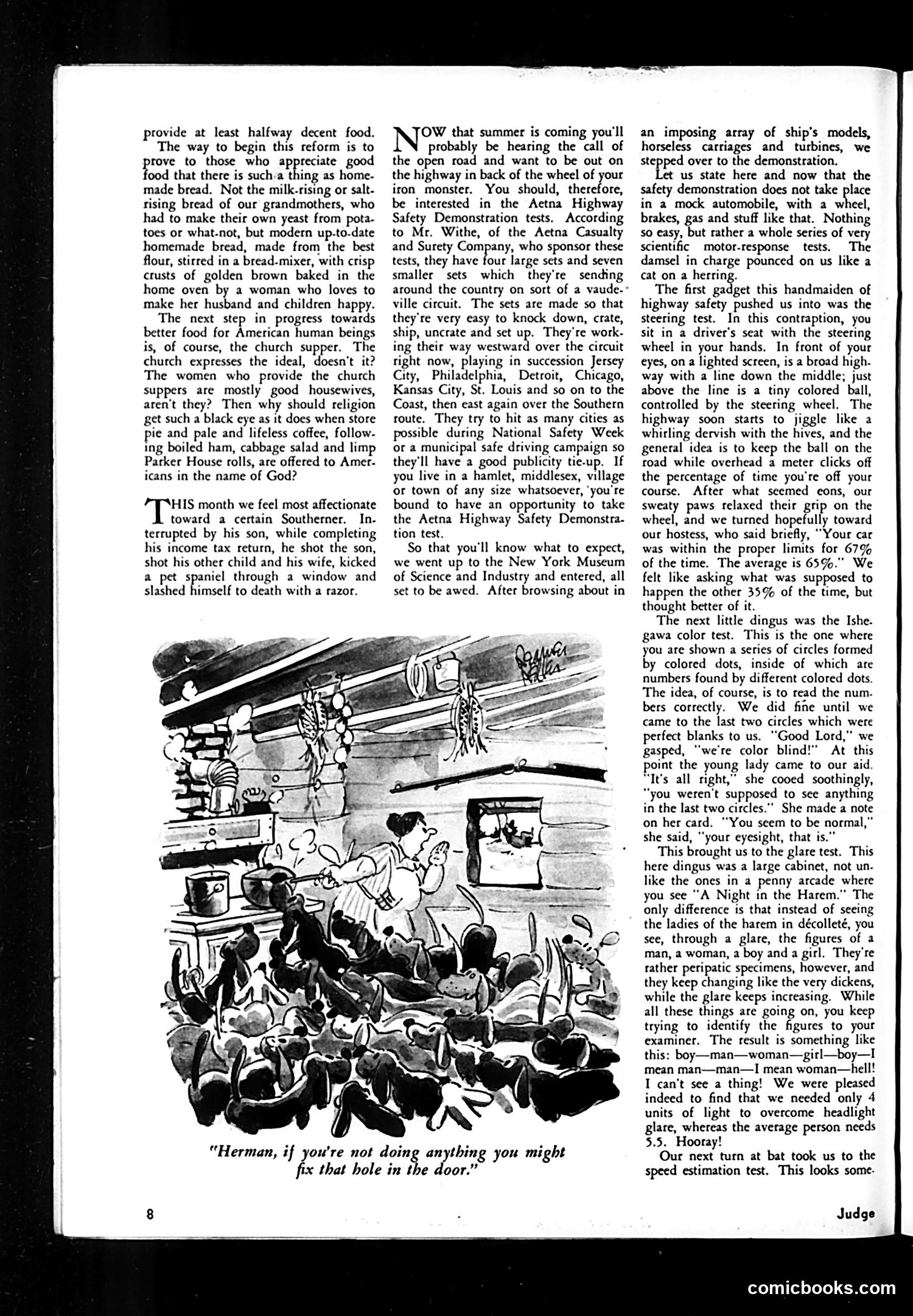
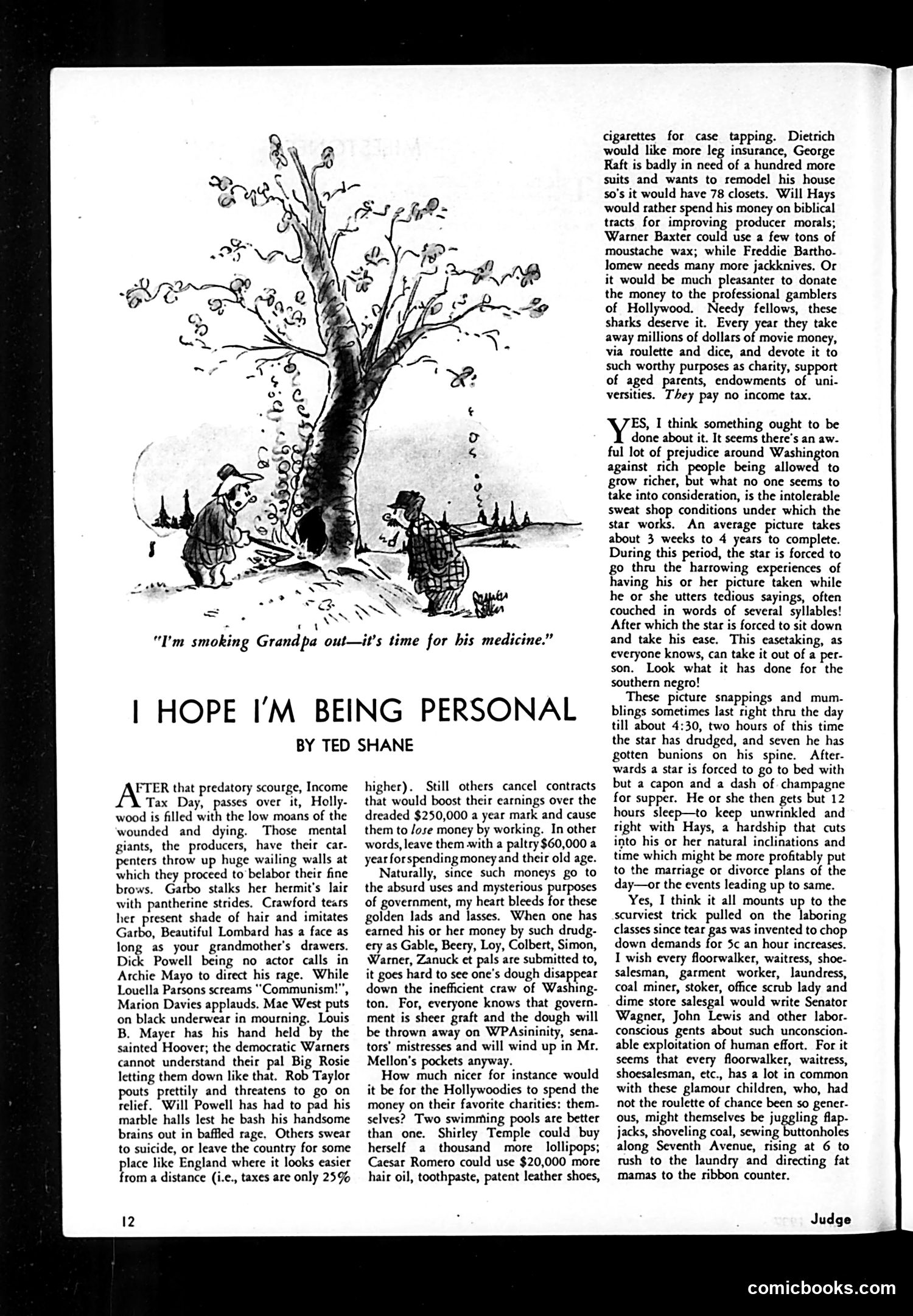
# Analysis The main cartoon depicts a domestic scene where a man sits at a table doing paperwork (income tax return) while his wife speaks to him. The caption reads: "Herman, if you're not doing anything you might fix that hole in the door." **The satire**: This is dark humor playing on a recent news story referenced in the text—a Southern man who, when interrupted by his son while doing taxes, shot his son, shot his wife, shot his other child, kicked the family dog, and killed himself. Judge's joke is cruelly ironic: the cartoon shows an ordinary marital moment (a wife asking her husband to fix something) while the text recounts an extreme case of domestic violence triggered by exactly such an interruption. The humor relies on the reader knowing the tragic news story, making the juxtaposition between mundane domestic annoyance and catastrophic violence darkly comedic—reflecting Judge magazine's typically acerbic, sometimes callous satirical style. The page's other content discusses church suppers and highway safety demonstrations, unrelated to the cartoon's dark joke.
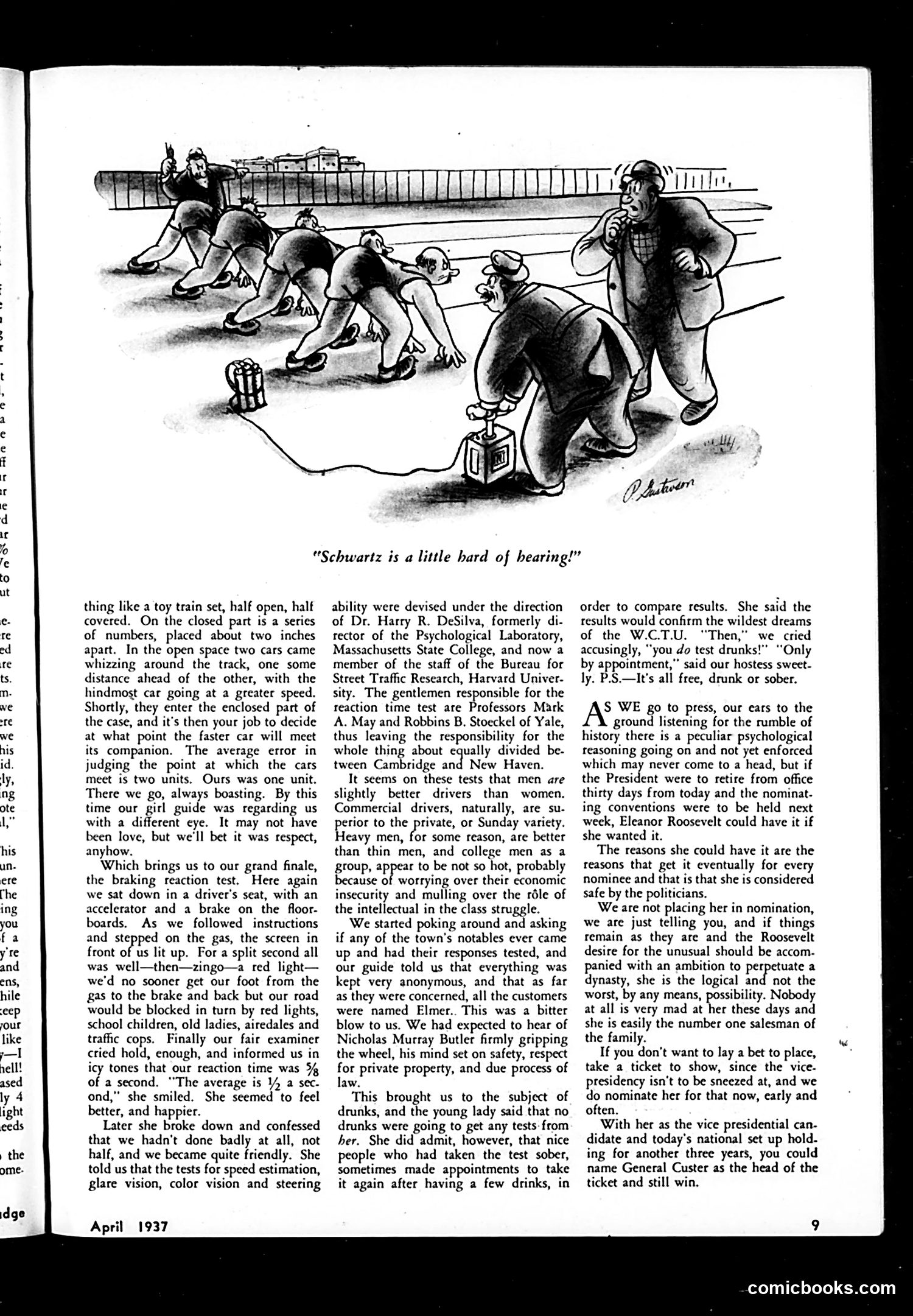
# "Schwartz is a Little Hard of Hearing" This cartoon satirizes driving tests and automobile safety research being conducted at universities (Harvard and Yale are mentioned in the accompanying text). The image shows a man in a suit appearing to direct or coach a line of men in crouched positions—likely depicting a "reaction time test" where drivers' response speeds are measured. The caption's joke is unclear from the image alone, but the article discusses various driving ability tests (reaction time, vision, steering) developed by psychologists to measure driver competency. The accompanying text humorously describes the author's experience taking these tests and notes that results show men drive slightly better than women, and that college men surprisingly perform poorly—attributed to worrying about economic insecurity and their intellectual role in society. The satire targets both the pseudo-scientific nature of early automotive psychology research and broader social anxieties of 1937.
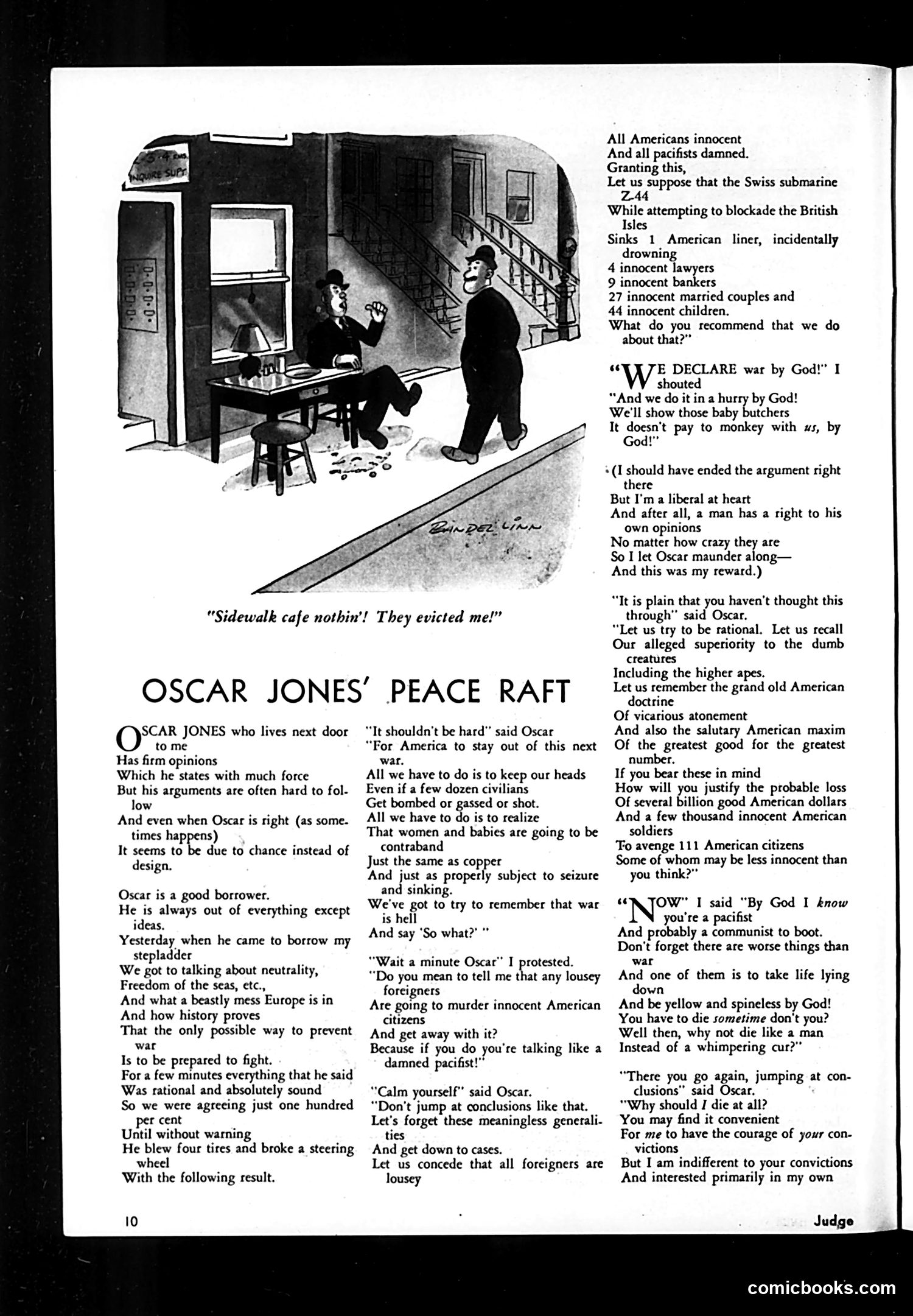
# Oscar Jones' Peace Raft: A WWI-Era Neutrality Debate This satirical piece depicts a heated argument between two neighbors about American intervention in World War I. Oscar Jones argues for strict neutrality and rational cost-benefit analysis—accepting civilian casualties as unfortunate but necessary to avoid war's expense. His unnamed neighbor responds emotionally, equating pacifism with cowardice and communism, demanding America fight to avenge innocent deaths. The satire targets both positions: Oscar's cold logic that reduces human tragedy to accountancy, and the narrator's patriotic fervor that conflates non-intervention with spinelessness. The cartoon's opening image of eviction humorously undermines Oscar's lofty philosophical stance, suggesting his arguments—however logically constructed—stem from impractical idealism disconnected from real consequences. The piece reflects early-1920s American debate over isolationism versus interventionism, with Judge magazine likely skeptical of both extremes.