A complete issue · 36 pages · 1931
Judge — October 31, 1931
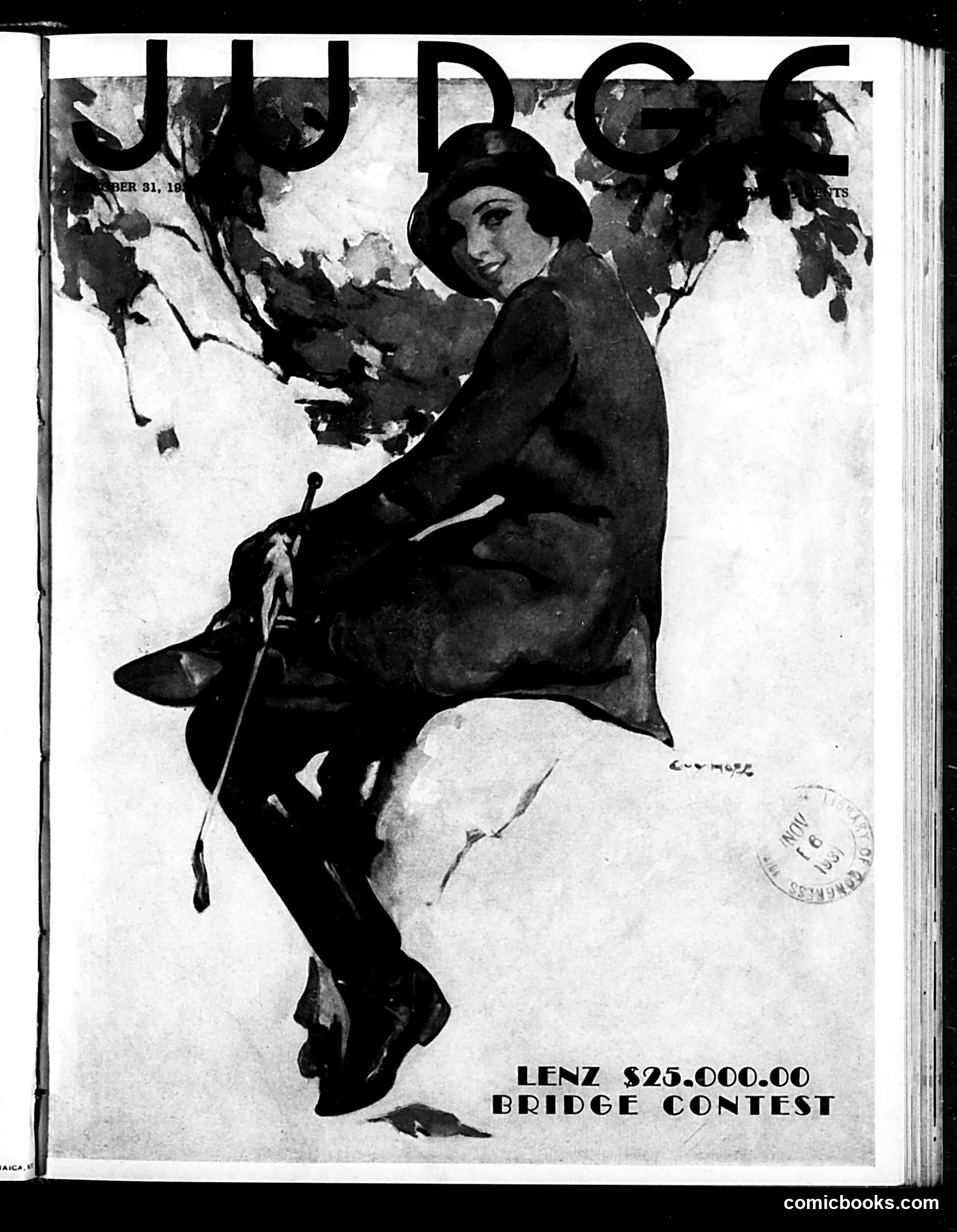
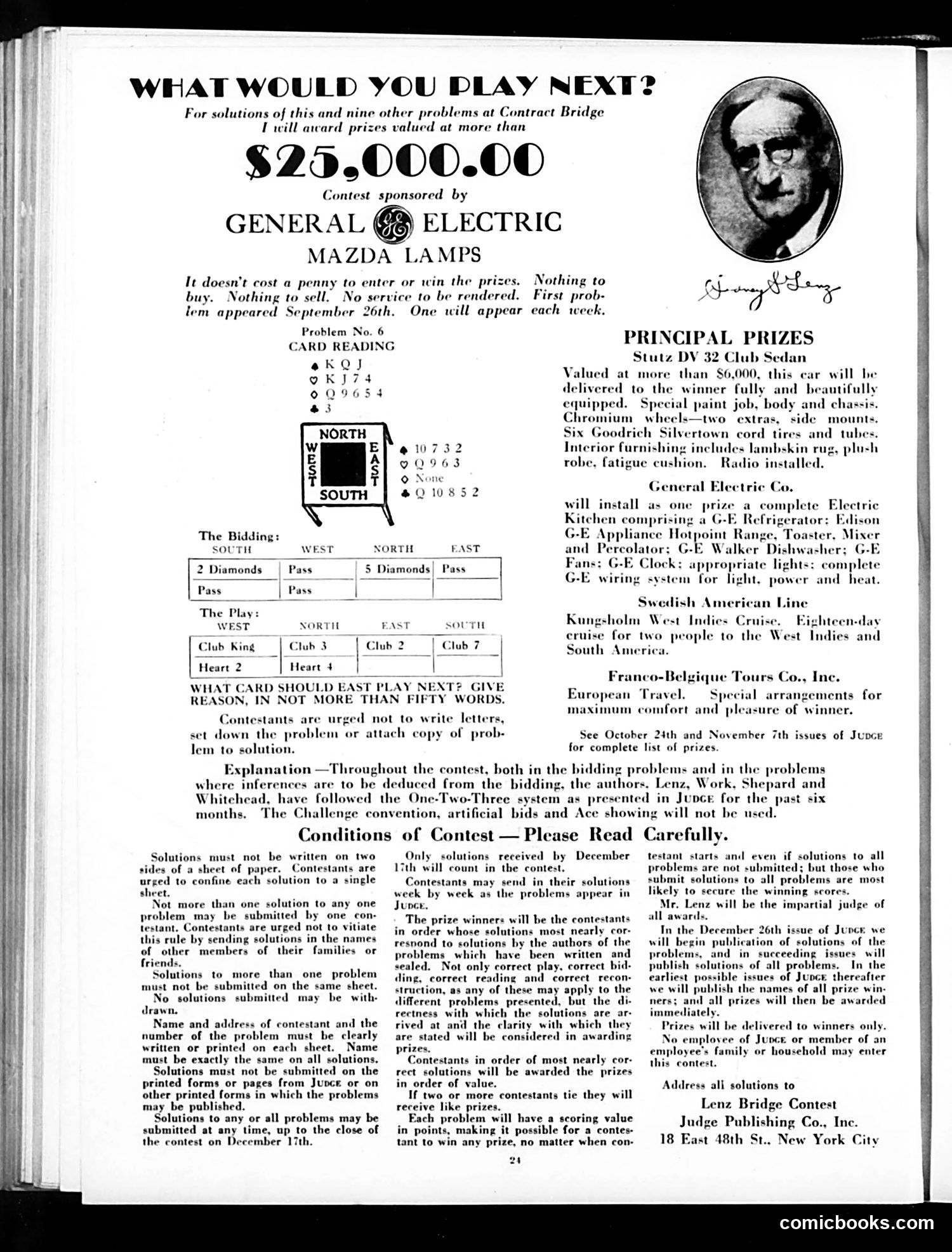
# Analysis of Judge Magazine Page This page appears to be primarily **advertising** rather than political satire. The main content promotes a "Lenz $25,000.00 Bridge Contest" — a competition likely offering substantial prize money for bridge players, the popular card game of that era. The illustration shows a fashionably dressed woman in 1920s-30s attire (cloche hat, elegant coat) in a playful pose with playing cards, clearly designed to attract readers' attention to the contest announcement. The date visible in the header ("DECEMBER 31, 19__") suggests this is a year-end issue, possibly promoting holiday entertainment or New Year's activities. Without additional context about the Lenz organization, the specific historical significance of this contest remains unclear, though such high-prize competitions were notable leisure-time events during this period.
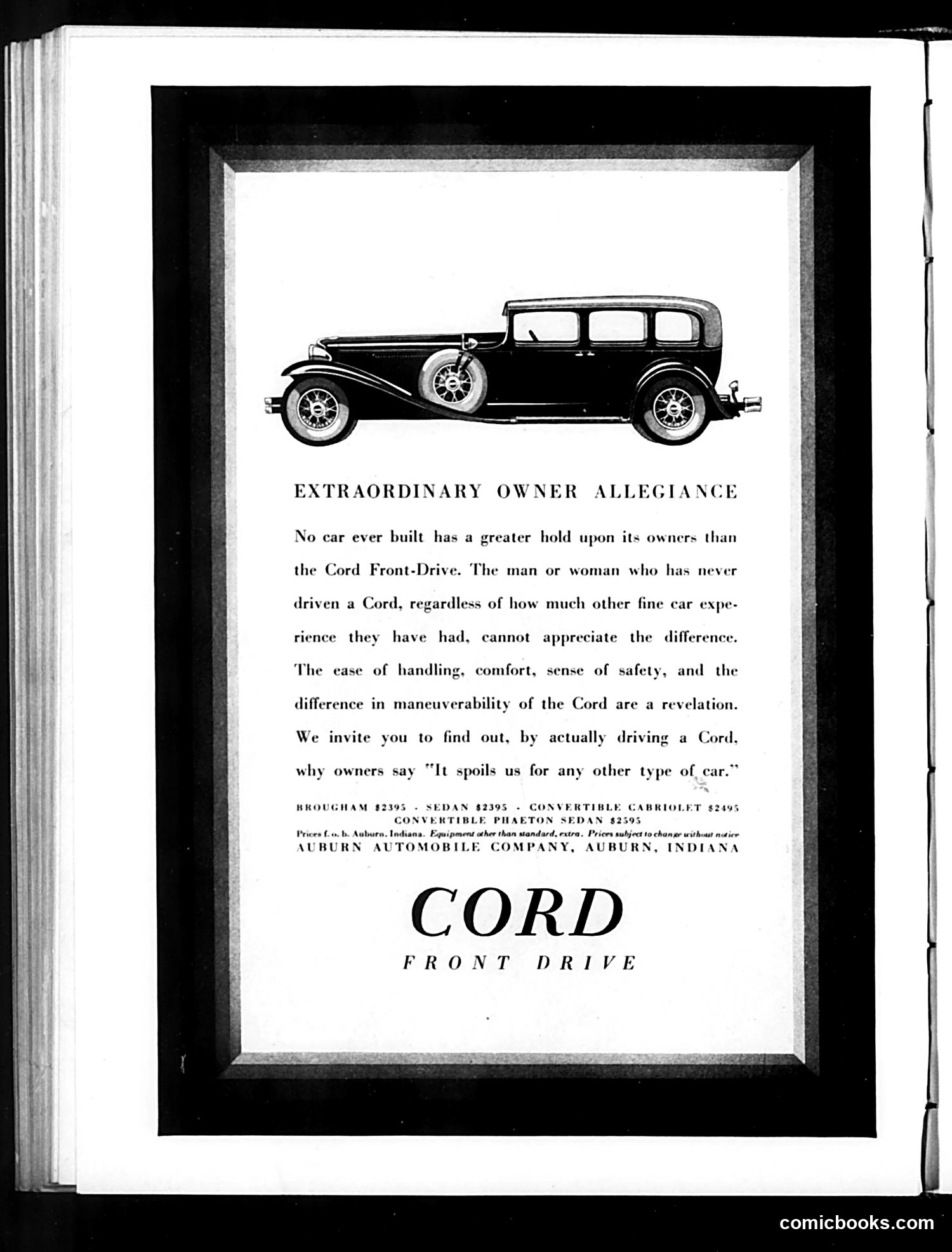
# Analysis This page is **not a cartoon or satire** — it's a straightforward automobile advertisement for the Cord Front-Drive, manufactured by Auburn Automobile Company in Auburn, Indiana. The ad uses persuasive marketing language claiming the Cord has "extraordinary" appeal to owners and superior handling, comfort, and safety compared to other cars. It invites potential buyers to test-drive a vehicle to experience the difference. The illustration shows a sleek, black luxury sedan in profile, typical of 1930s automotive design. This represents Judge magazine's revenue model: selling advertising space to major manufacturers. No satirical commentary or political reference is present — it's purely commercial content.
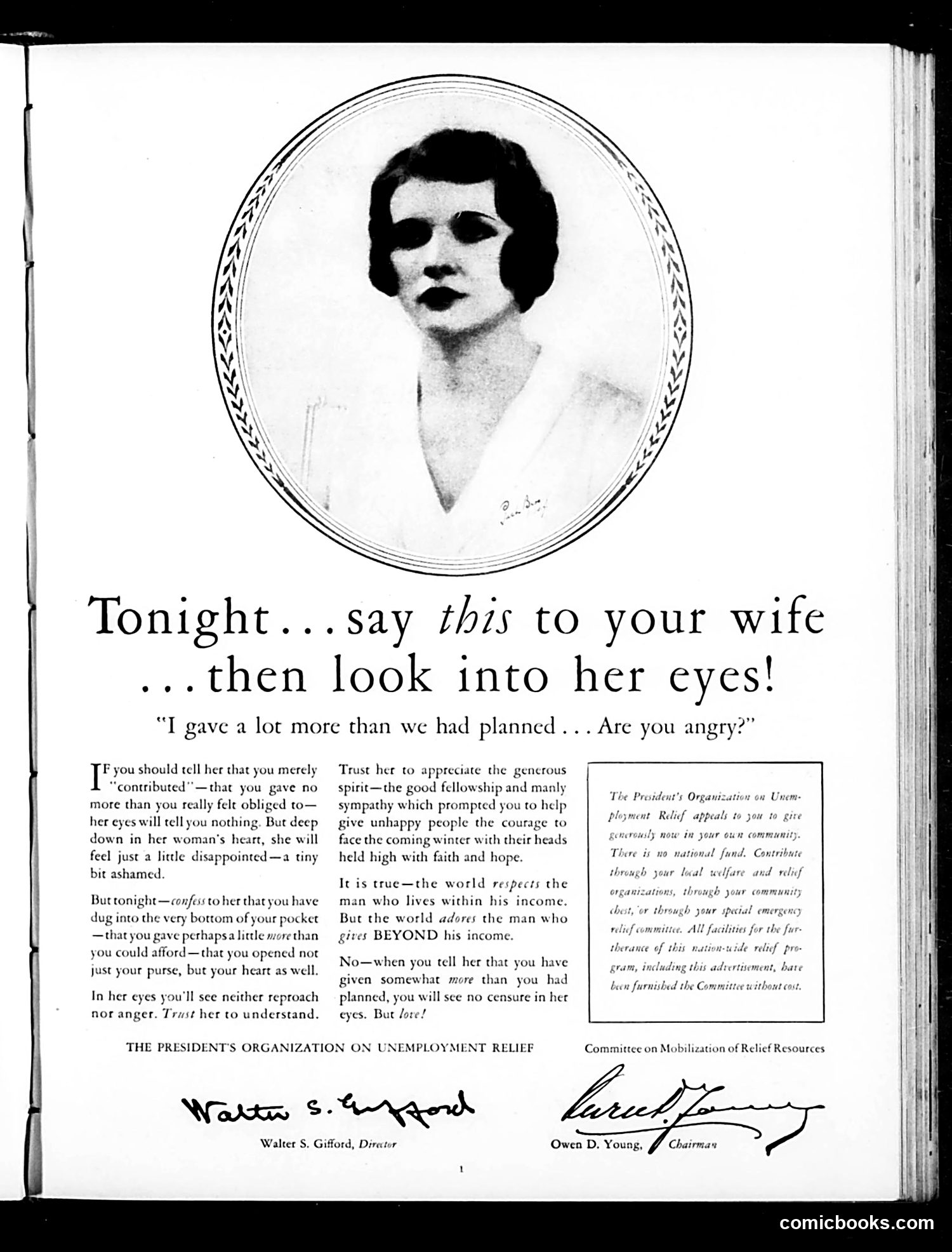
# Analysis of This Judge Magazine Page This is a **public service advertisement**, not satire. It promotes the President's Organization on Unemployment Relief during the Great Depression era. The ad urges men to confess to their wives that they've **overspent beyond their means**—giving more charity than planned. Rather than anger, the message encourages trust and understanding, appealing to wives' "generous spirit" and "manly sympathy." The underlying message is that **voluntary charitable giving** (rather than government assistance) should address unemployment relief. The ad asks readers to contribute through local welfare organizations, emphasizing private, community-based solutions. The formal oval portrait and earnest tone reflect Depression-era appeals for personal responsibility and domestic harmony amid economic hardship.
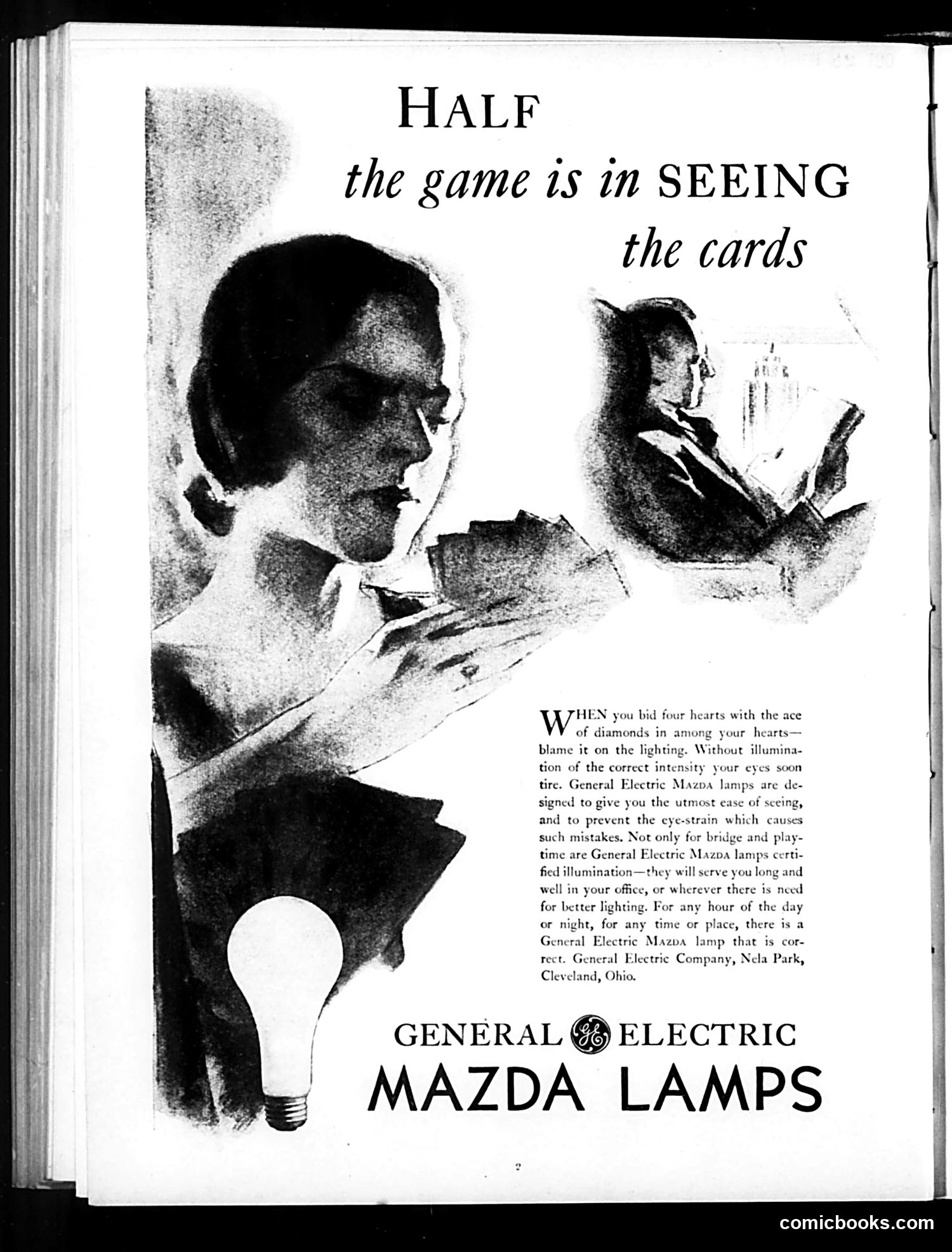
# Analysis This page is **primarily an advertisement**, not political satire. It's a General Electric Mazda Lamps ad from Judge magazine. The illustration shows two figures playing bridge (a popular card game), with the headline "HALF the game is in SEEING the cards." The ad uses this relatable scenario to pitch improved lighting for better visibility during card play and other activities. The body text emphasizes that General Electric Mazda lamps provide "correct intensity" illumination to prevent eye strain—a practical advantage for bridge players and office workers alike. The ad concludes with a company address in Nela Park, Cleveland, Ohio. The "satire" here is gentle and commercial rather than political: the joke is simply that poor lighting ruins card games, and GE has the solution.
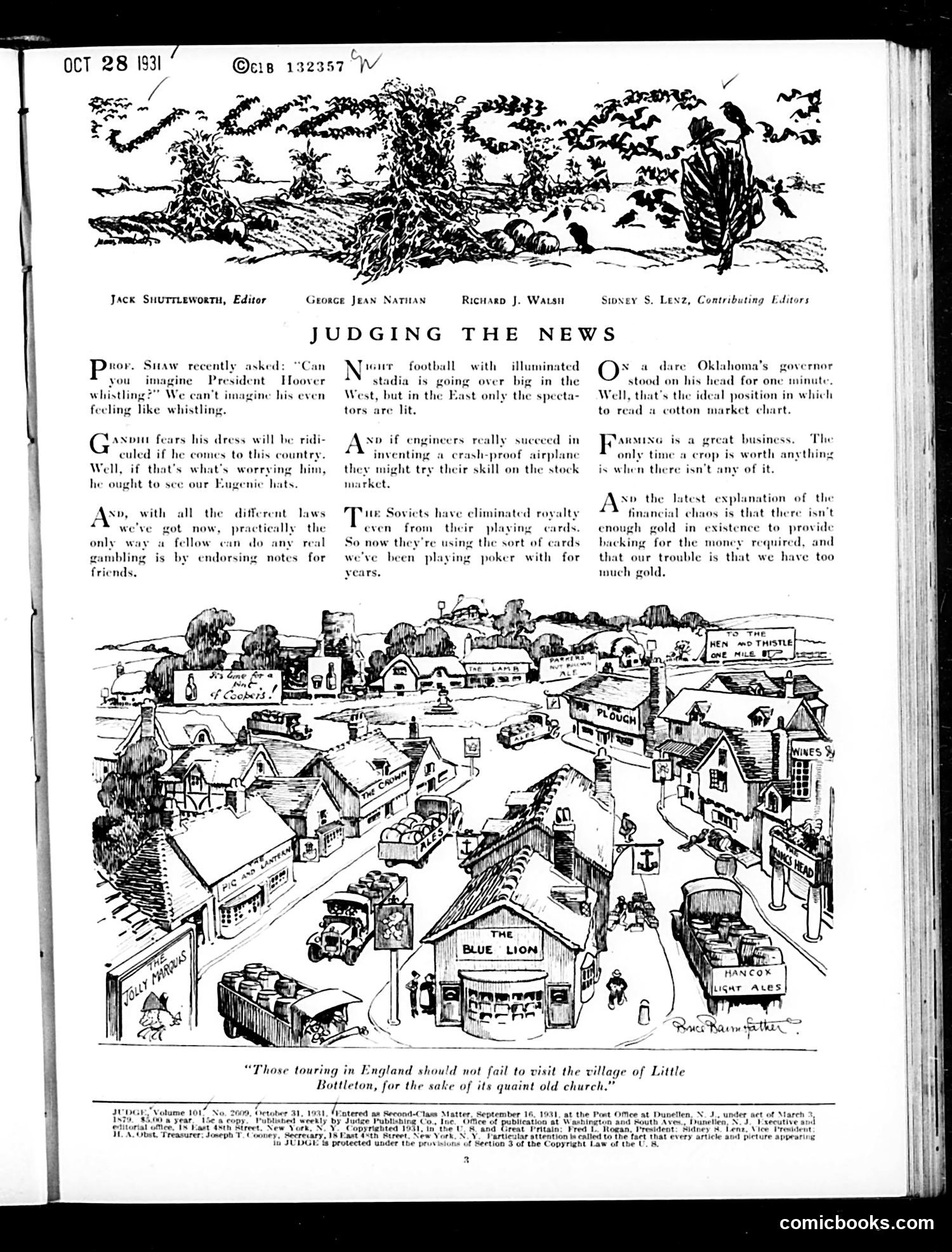
# Analysis of "Judging the News" - October 28, 1931 This editorial commentary page features several brief satirical quips about contemporary issues, accompanied by a detailed illustration of an English village ("Little Bottleton"). **Key references:** - **Hoover whistling**: References President Herbert Hoover's apparent optimism during the Great Depression - **Gandhi's dress**: Mocks Indian independence leader Gandhi's traditional attire - **Soviet playing cards**: Satirizes the USSR eliminating royalty from card decks - **Airplane crash-proofing**: Jokes about engineers' confidence in aviation safety - **Financial chaos commentary**: Critiques the Depression-era economic crisis, suggesting America has "too much gold" The village illustration appears promotional rather than satirical, likely advertising English tourism or cultural content. The overall tone reflects Judge magazine's characteristic blend of political mockery and social commentary during the Depression era.
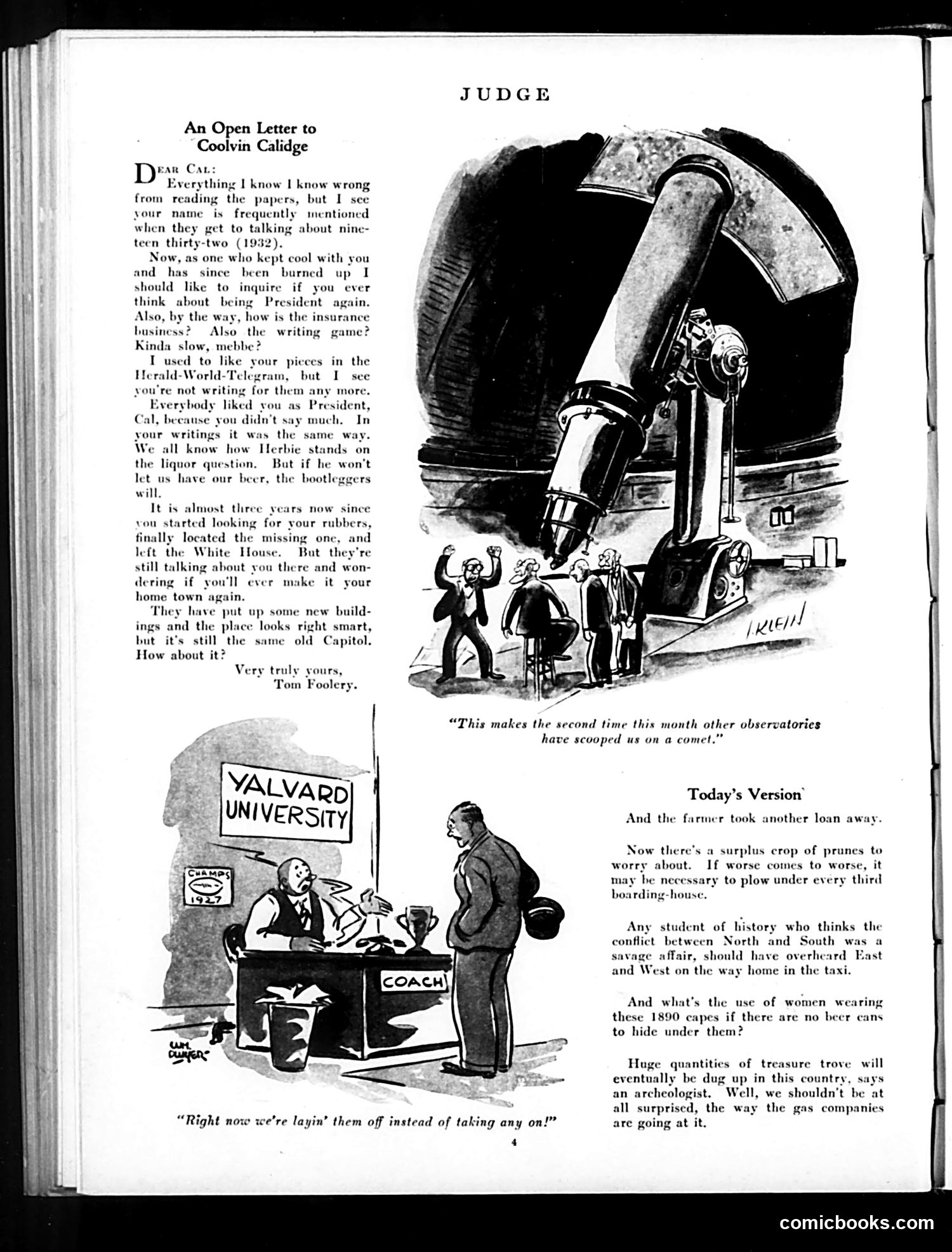
# Analysis of Judge Magazine Page This page contains two satirical cartoons and commentary mocking Coolidge-era politics and social issues. The top cartoon depicts an observatory with officials, captioned about being "scooped on a comet"—likely referencing contemporary scientific competition or institutional embarrassment. The bottom cartoon shows a Valvard University coach discussing loans rather than athletics, with the caption about "layin' them off instead of taking any on"—satirizing how educational institutions managed finances during economic uncertainty. The "Open Letter to Coolvin Calidge" (Calvin Coolidge, president 1923-1929) jokes about his quiet public persona, his failed 1932 presidential aspirations, and Prohibition's effects. The humor targets Coolidge's taciturn nature, the persistence of bootlegging despite the alcohol ban, and general post-Prohibition era anxieties about social change and surplus agricultural products.
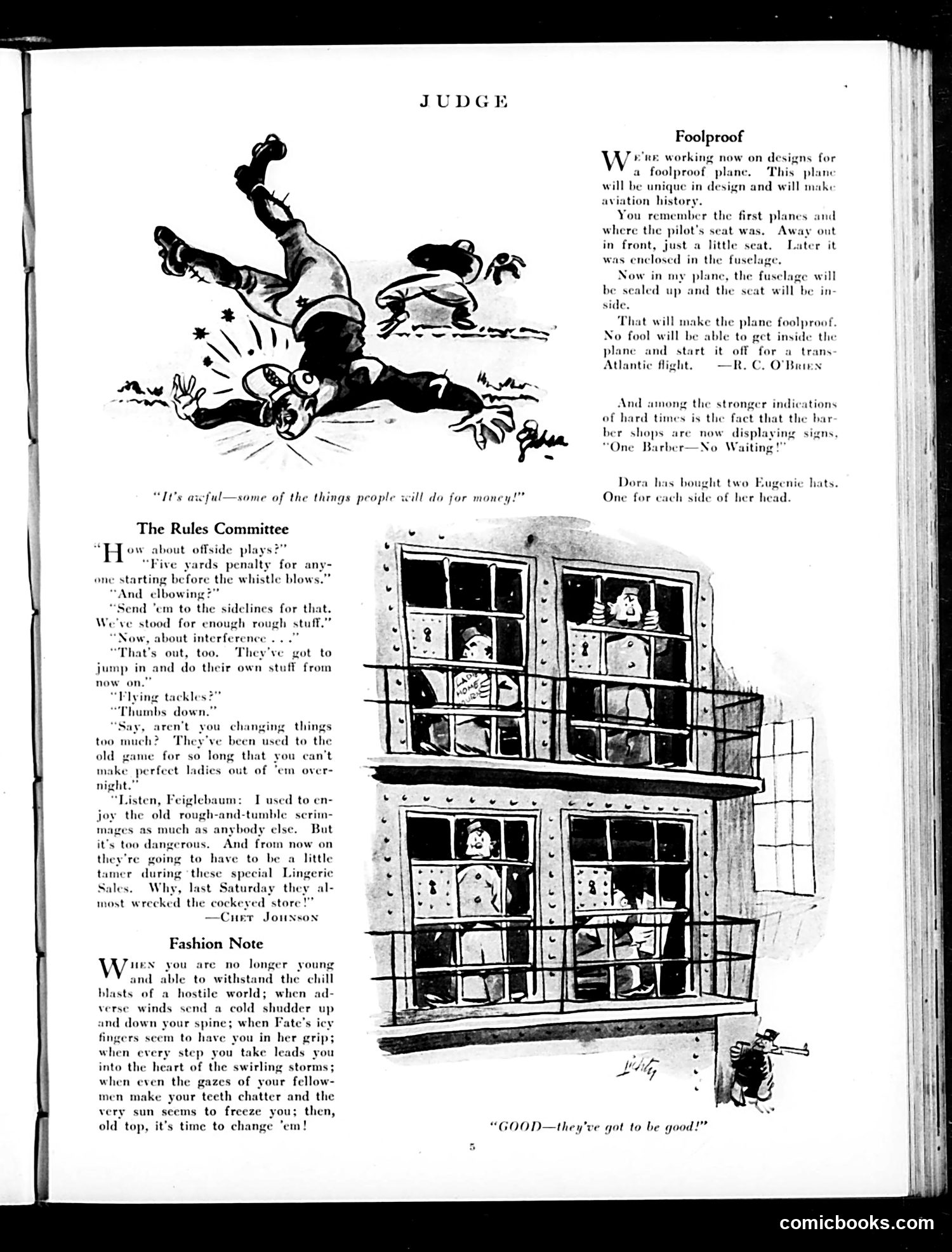
# Analysis of Judge Magazine Page This page contains three distinct pieces: 1. **"It's awful—some of the things people will do for money!"** - A political cartoon depicting people being thrown about violently, likely satirizing dangerous or undignified acts performed for financial gain during hard economic times. 2. **"The Rules Committee"** - A dialogue satirizing baseball rule changes, with characters debating penalties and modifications to the game. The satire appears to critique how sports governing bodies constantly alter rules, making the game difficult to follow. 3. **"Fashion Note"** - A humorous essay about winter clothing, advising readers to change their wardrobes when cold weather arrives—presenting practical advice in comedic, exaggerated language about harsh winter conditions. 4. **Building illustration** - Shows a multi-story apartment building with residents visible in windows, captioned "GOOD—they've got to be good!" The meaning remains unclear without additional context.
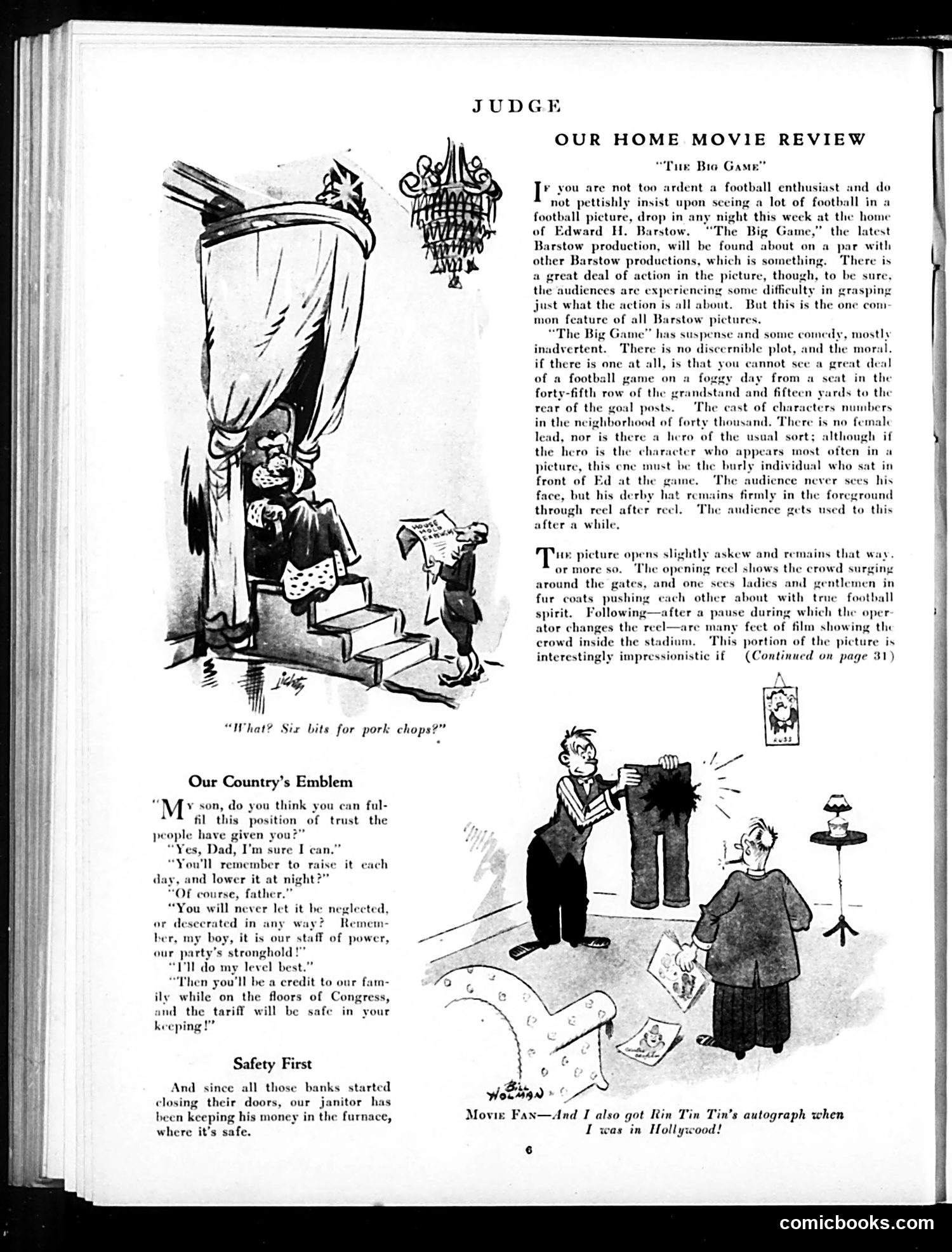
# Analysis of Judge Magazine Page This page contains three separate items: 1. **"The Big Game" movie review**: A critique of an Edward H. Barstow film about football. The review notes the picture lacks clear plot and moral instruction—common complaints about movies of this era. 2. **"What? Six bits for pork chops?"**: A cartoon showing a figure (appears to be Uncle Sam, based on the hat) shocked at prices, reflecting post-WWI inflation concerns that affected American consumers. 3. **"Our Country's Emblem" and "Safety First"**: A dialogue between father and son about patriotic duty and financial responsibility, alongside a cartoon about citizens keeping money "safe" in furnaces during bank closures—referencing the financial anxiety of the 1920s banking crisis period. The page reflects early 1920s American concerns: entertainment standards, economic inflation, and financial instability.
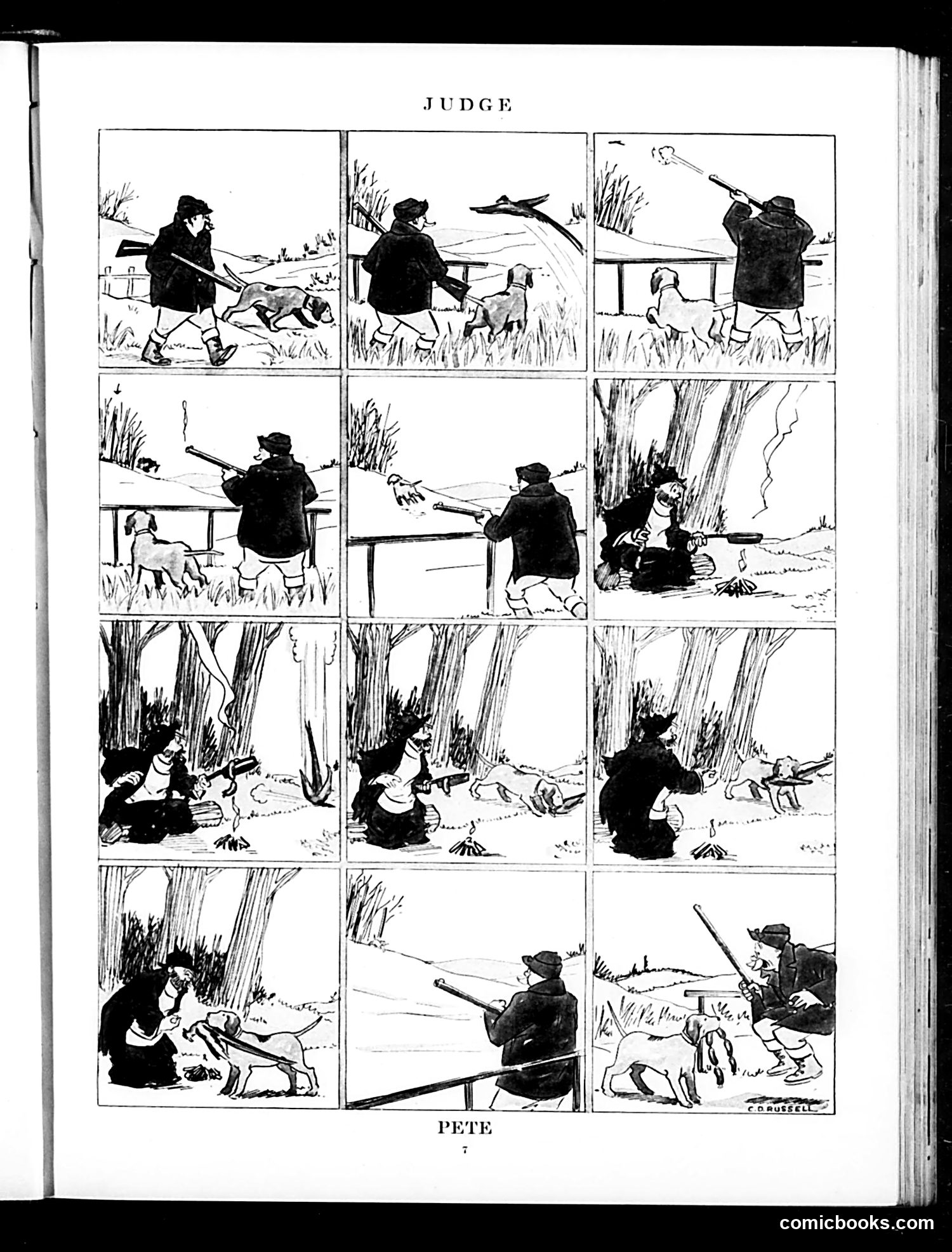
# "Judge and Pete" - A Hunting Comic Strip This is a sequential comic strip titled "Judge" (top) and "Pete" (bottom), depicting a hunting scene. The narrative shows a judge character attempting to shoot at game birds, while his hunting dog repeatedly retrieves the birds he misses. The satire appears to mock judicial incompetence or hypocrisy—the "Judge" is ineffectual and relies entirely on his dog "Pete" to actually catch anything. The judge's fumbling attempts contrast sharply with Pete's competent retrievals, suggesting the judge receives undeserved credit for Pete's work. The strip likely satirizes how authority figures take credit for subordinates' labor, or how the judicial system operates through others' actual effort. The crude, energetic line work is typical of Judge magazine's style.
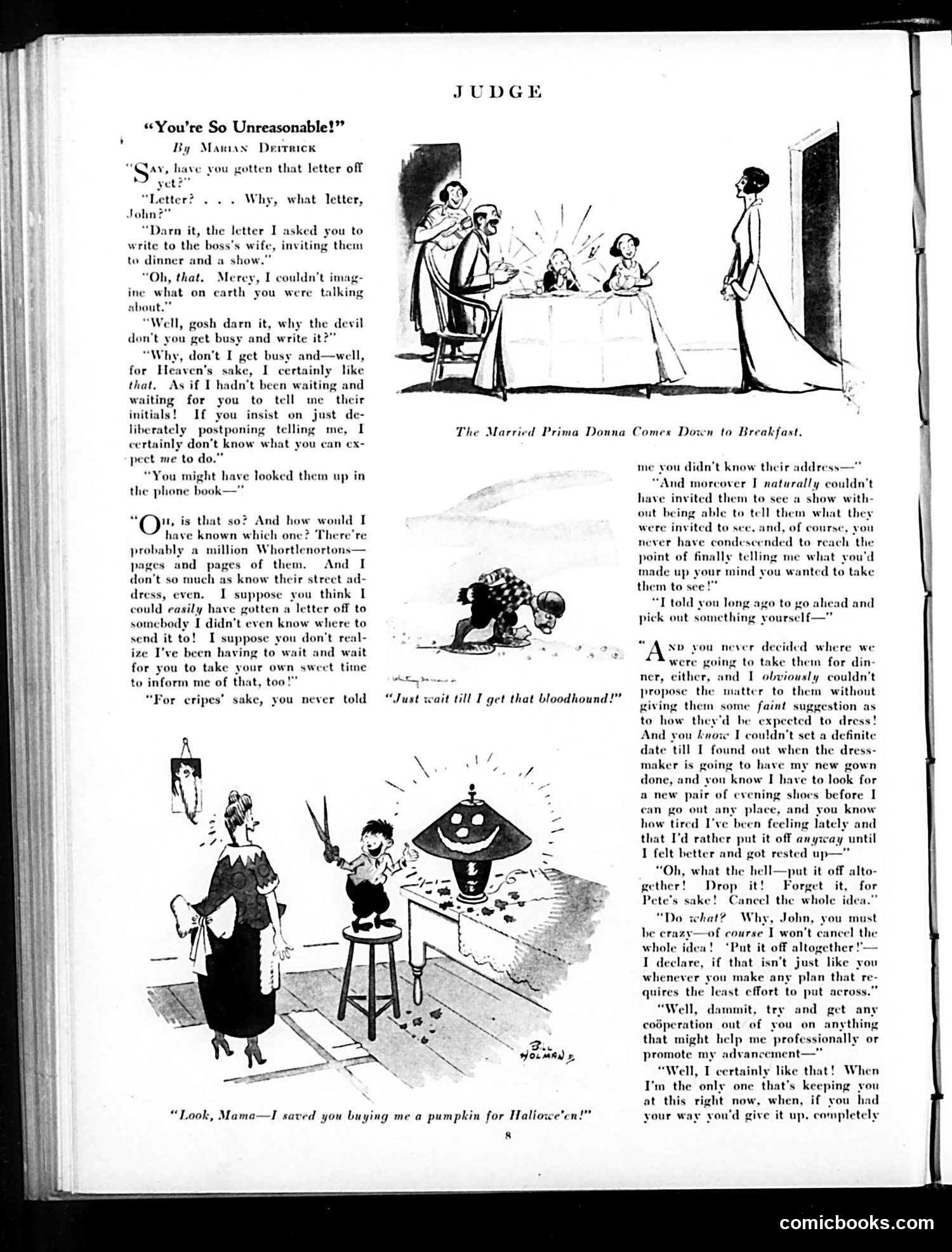
# "You're So Unreasonable!" This marital satire by Manas Dettrick depicts a husband's frustration with his wife's elaborate excuses for not writing a dinner invitation to his boss. The humor lies in the wife's escalating, circular logic: she can't invite them without knowing their address, can't suggest a show without knowing what they'll wear, can't pick a show without a dinner date, can't set a date until her dressmaker finishes her gown, and must wait for new evening shoes—all while claiming exhaustion. The cartoon mocks a particular 1920s-era marital dynamic: the wife as self-absorbed "prima donna" (referenced in the illustration caption) who weaponizes elaborate domestic complications and personal grooming needs to avoid tasks, while the exasperated husband becomes the unreasonable one for requesting simple assistance. The satire targets both the wife's performative helplessness and the husband's inability to manage her.
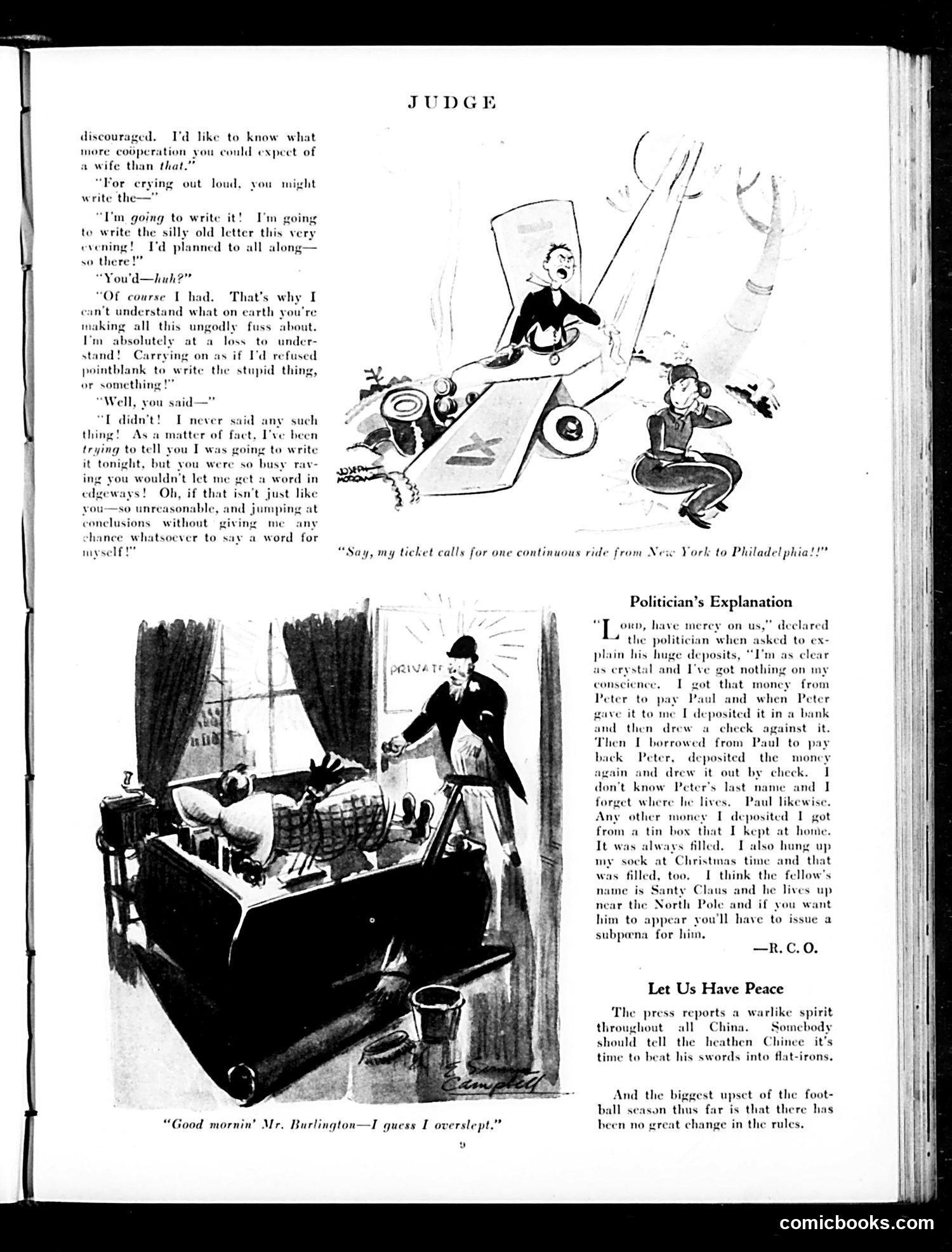
# Judge Magazine Page Analysis This page contains three satirical pieces: **Top cartoon**: A domestic argument where a husband accuses his wife of refusing to write a letter, but she insists she already planned to write it. The satire mocks marital miscommunication—he's upset about something she never actually refused, just poorly communicated. **Middle cartoon**: "Politician's Explanation" satirizes corrupt political fundraising. A politician caught with suspicious deposits claims the money came from "Peter to pay Paul"—circular transactions between unnamed sources (including one "Santy Claus"). The humor lies in the obviously circular logic and implausible explanations designed to evade accountability while technically claiming transparency. **Bottom cartoon**: "Good mornin' Mr. Burlington—I guess I overslept" shows a disheveled man arriving late, likely an office worker's excuse. The page demonstrates *Judge*'s typical targets: domestic absurdity, political corruption, and everyday comedic situations. The politician piece is the sharpest satire, mocking both corruption and the elaborate non-answers politicians gave when questioned about finances.
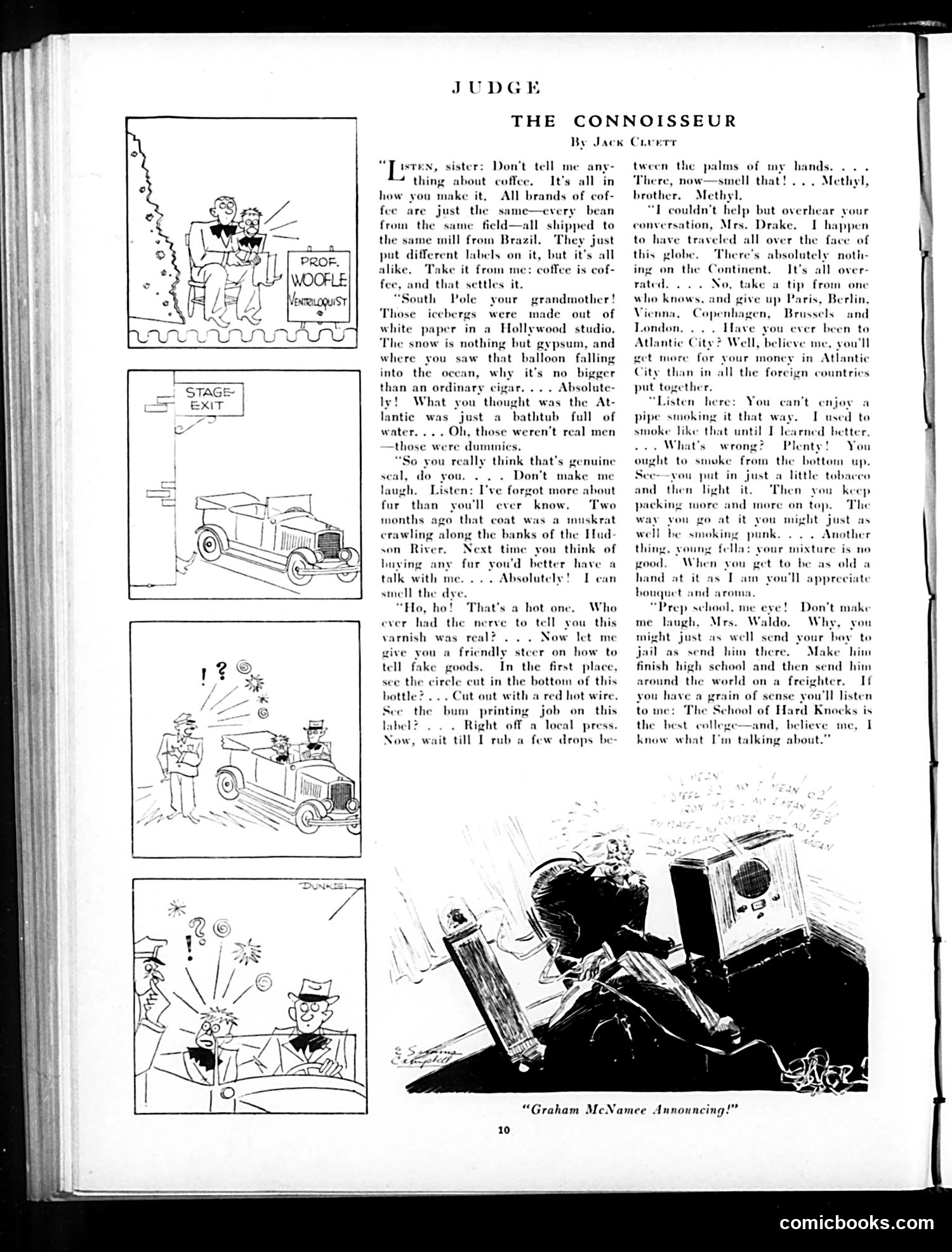
# "The Connoisseur" by Jack Cheerr This satirical piece mocks the "know-it-all" type who pontificates about subjects he claims expertise in while actually dispensing dubious or cynical advice. The comic shows a man lecturing "Mrs. Drake" and "Mrs. Waldo" on various topics: coffee, Hollywood films, fur coats, varnish, pipe smoking, and education. The humor derives from his contradictions and pretension—he dismisses authentic experiences (Atlantic icebergs, real actors) as fakes while revealing his "knowledge" is actually jaded cynicism. He debunks products through chemical analysis ("Methyl"), yet simultaneously boasts of fooling people. His final advice—that prep school is worthless and the "School of Hard Knocks" superior—epitomizes the persona: someone who mistakes worldly disillusionment for wisdom. The title references Graham McNamee, a famous radio announcer, suggesting this character announces his opinions with similar authoritative pomposity.