A complete issue · 36 pages · 1931
Judge — June 13, 1931
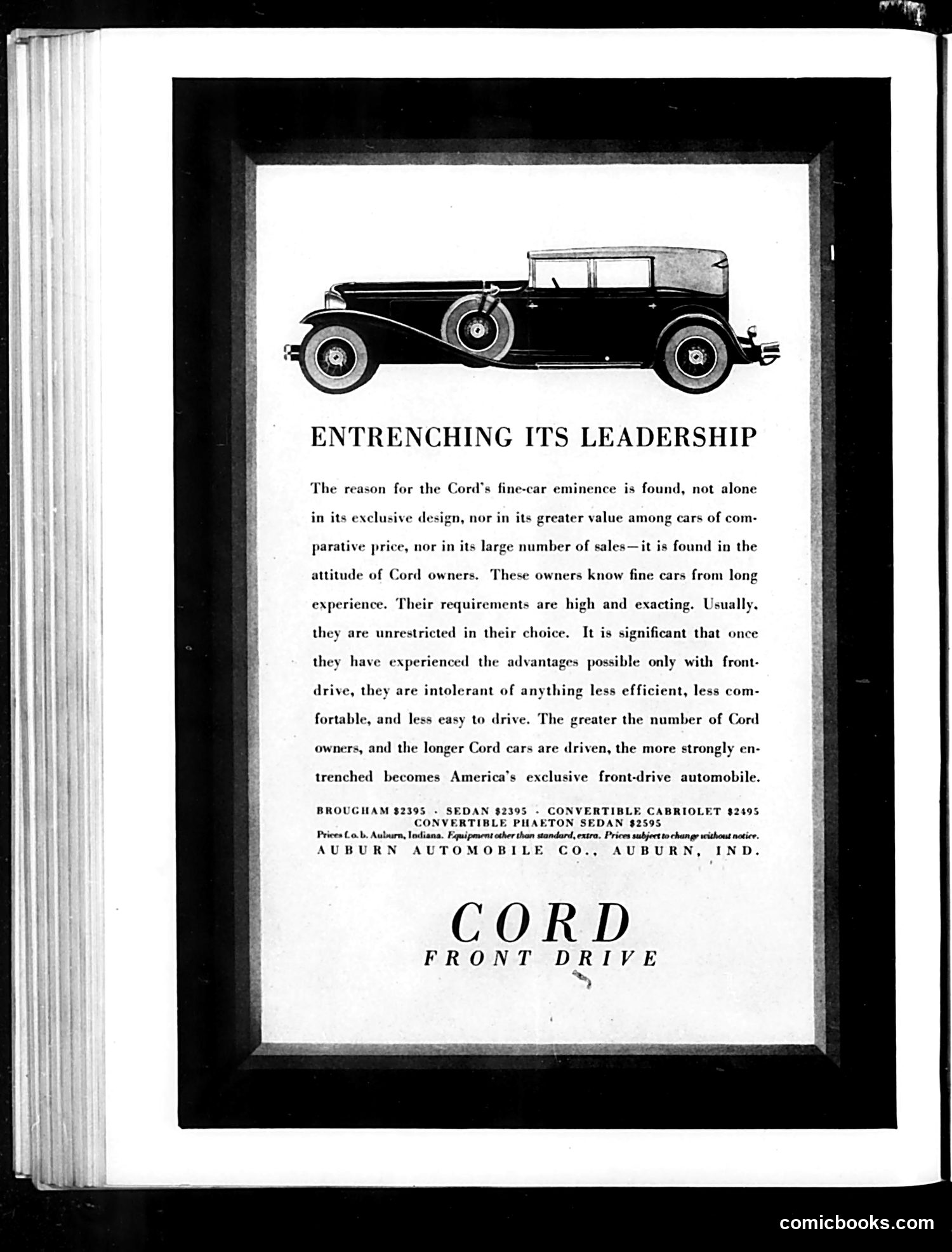
# Analysis This page is **primarily advertising, not satire or political commentary**. It's a full-page advertisement for the Cord automobile, manufactured by Auburn Automobile Co. in Auburn, Indiana. The ad emphasizes Cord's "front-drive" technology as a luxury feature that distinguishes it from competitors. The headline "ENTRENCHING ITS LEADERSHIP" uses military language to suggest the car's dominant market position. The body text appeals to wealthy, experienced car buyers, arguing that once they experience front-wheel drive's advantages, they become devoted to Cord vehicles. The illustration shows a sleek, black luxury sedan in profile—the visual centerpiece emphasizing the car's exclusive design and prestige positioning. There is no political satire present on this page.
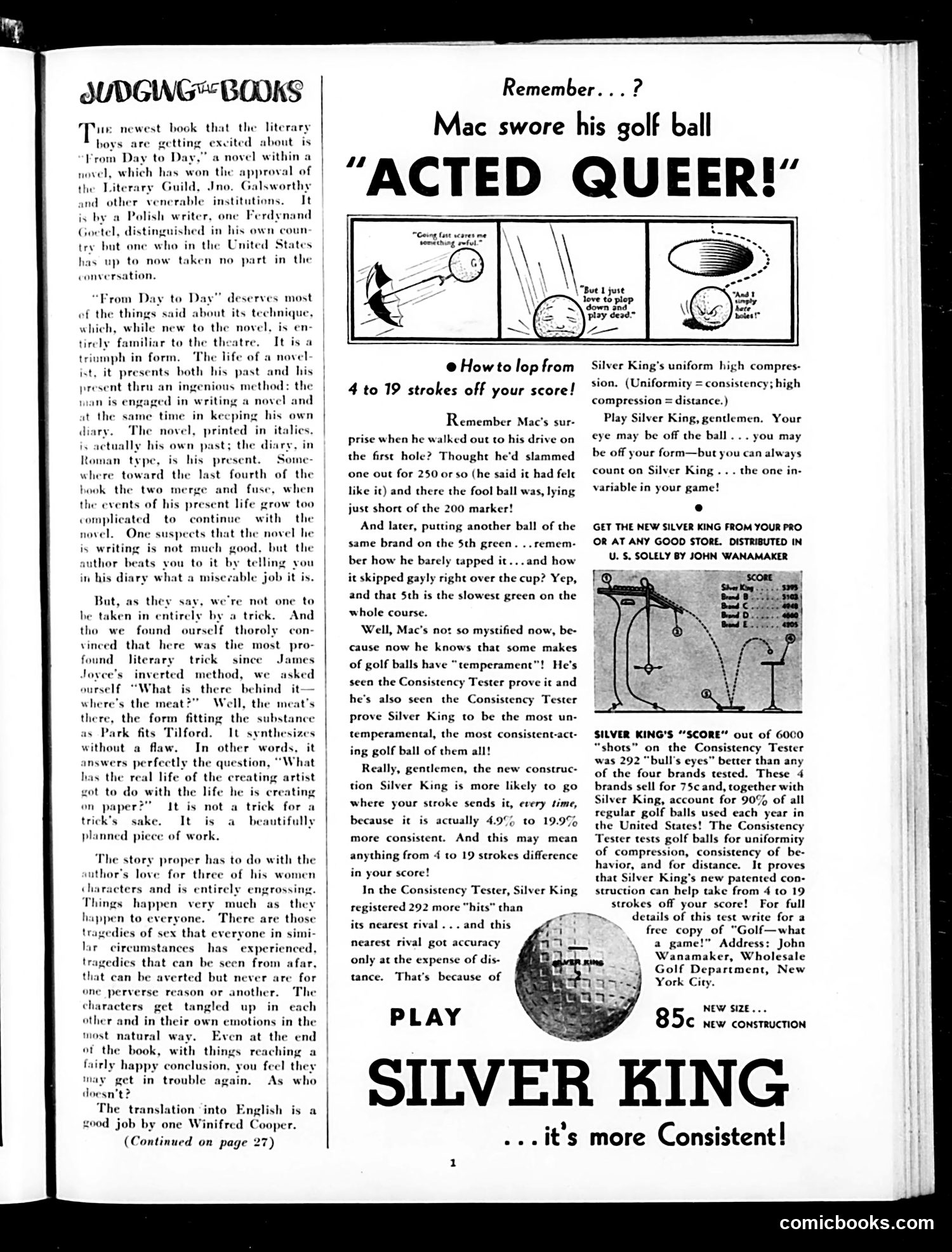
# Analysis This page is primarily **advertising disguised as editorial content**. The left column contains a book review of "From Day to Day" by Ferdinand Goebel, but it serves mainly to establish credibility for the adjacent advertisement. The main content is a **Silver King golf ball advertisement** using a humorous anecdote: a golfer named "Mac" swears "Acted Queer!" after his drives behave unpredictably. The ad's point: inconsistent golf balls cause poor play. Silver King's solution—a ball tested for "consistency" and "temperament"—promises reliable performance. The three-panel cartoon illustrates Mac's frustration with unpredictable shots. This is **straightforward product advertising**, not political satire. The "Judge" magazine format lent authority to advertisements by framing them within editorial pages, a common early 20th-century marketing practice.
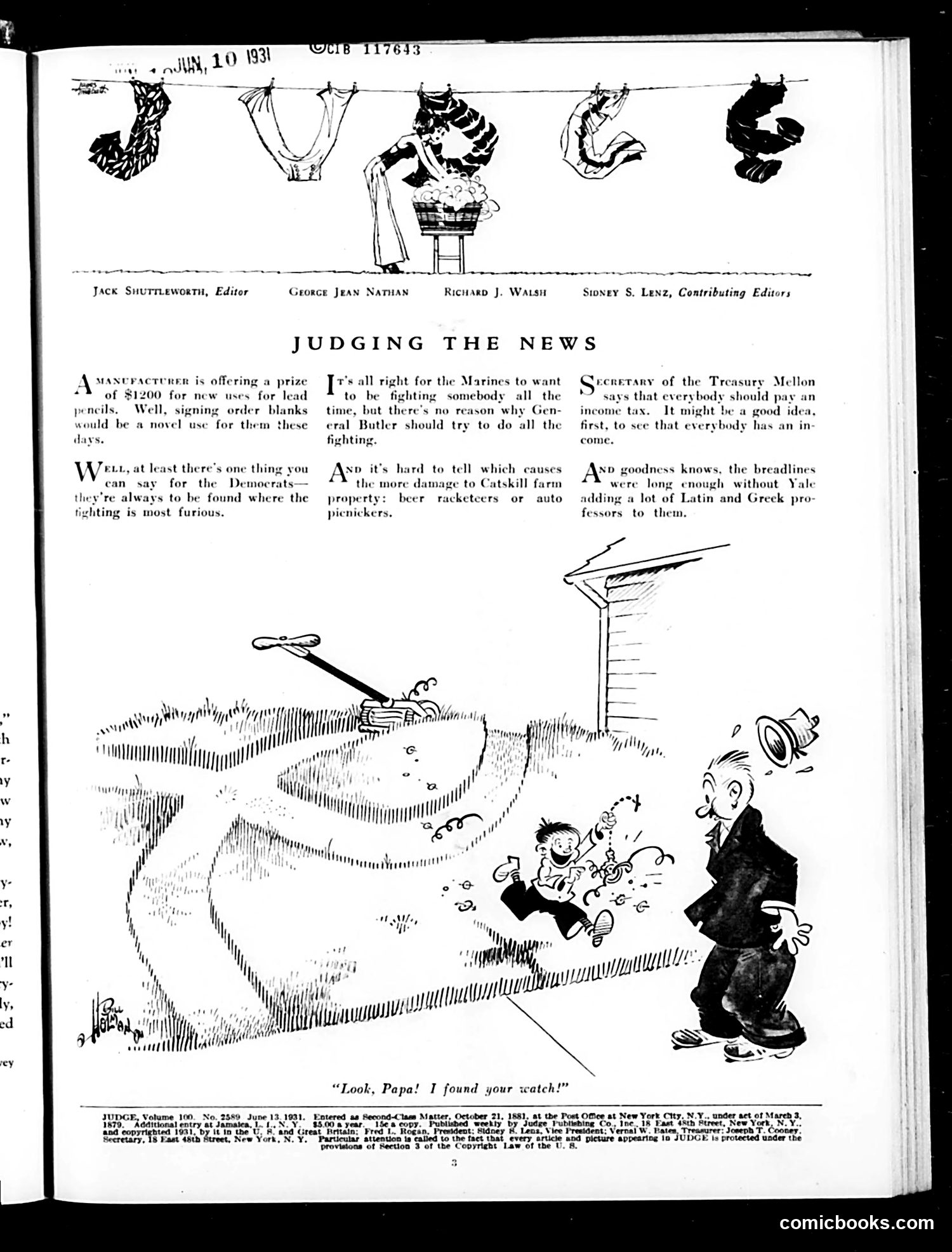
# "Look, Papa! I found your watch!" This 1931 cartoon satirizes economic hardship during the Great Depression. A small child discovers a pocket watch in what appears to be an empty or depleted pocket—a visual joke about poverty and loss of wealth. The well-dressed man's shocked reaction suggests he'd written off the watch as gone, having fallen into financial difficulty. The cartoon's humor relies on the contrast between the child's innocent discovery and the father's desperate circumstances. During the Depression, many Americans lost savings, possessions, and livelihoods. The "Judging the News" commentary above discusses political and economic topics of 1931, though the specific references are partially obscured in this image.
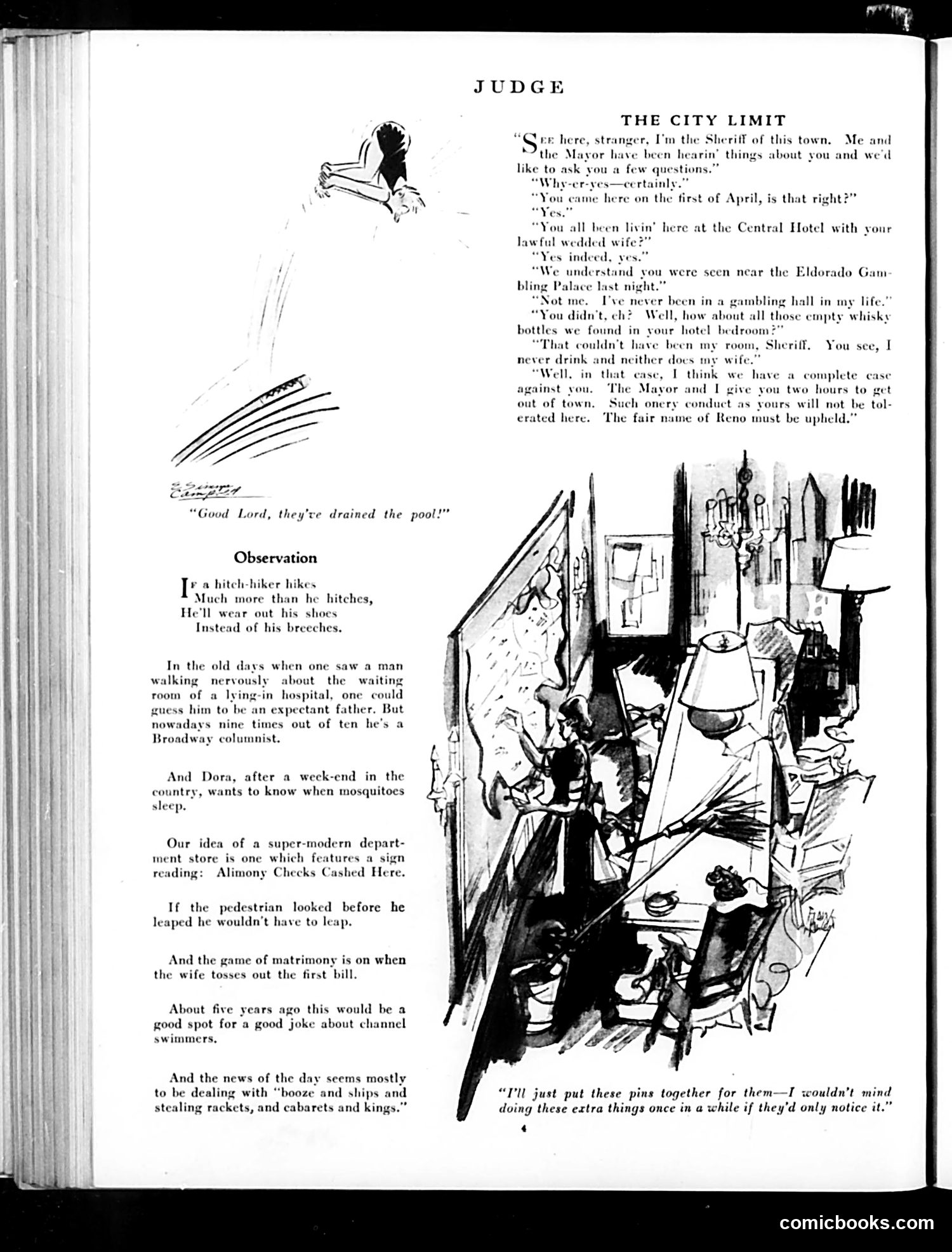
# "Judge" Page Analysis: "The City Limit" This page contains two satirical pieces. The main sketch, "The City Limit," depicts a sheriff questioning a stranger (presumably a newly-arrived visitor) about suspicious activity—empty whiskey bottles in his hotel room, visits to gambling halls. The stranger denies wrongdoing, claiming he doesn't drink. The satire targets hypocrisy: the sheriff threatens to expel him for moral misconduct while the town itself appears rife with vice (gambling establishments, drinking). The "Observation" section below offers miscellaneous social commentary, including jokes about nervous expectant fathers, modern department stores, pedestrian safety, and marital dynamics. The cartoon satirizes frontier/small-town law enforcement selectively enforcing morality while tolerating widespread corruption—a common Judge magazine theme critiquing American civic standards and selective justice.
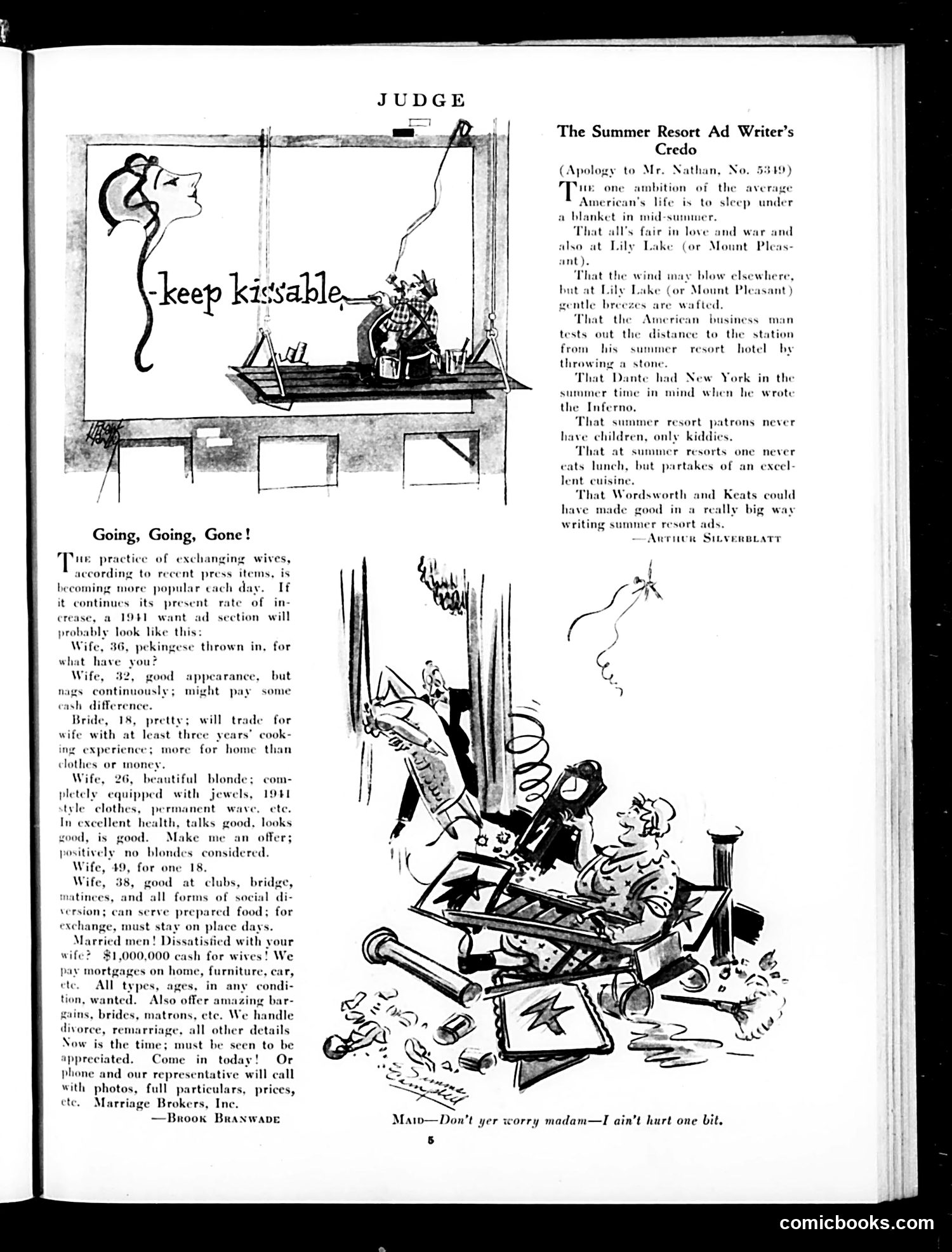
# Judge Magazine Page Analysis This page contains three distinct pieces of satire: 1. **"Keep Kissable"** (top): A billboard advertisement parody mocking summer resort marketing, showing a couple in a canoe. The satire targets how resorts advertise romantic getaways. 2. **"Going, Going, Gone!"** (left): A classified ad-style satire listing wives for exchange or sale, with specific "models" and their features (age, appearance, cooking ability). This grotesque humor mocks both marriage and the commodification of women—reflecting 1910s-era attitudes, though presented as absurd. 3. **"Maid—Don't yer worry madam"** (right): Shows a maid amid chaos and destruction, reassuring her employer she hasn't hurt anything. The visual irony—surrounding wreckage contradicting her words—satirizes incompetent household help and employer-servant relations. The overall theme critiques consumer culture, marital attitudes, and domestic life of the era through exaggerated, darkly comedic scenarios.
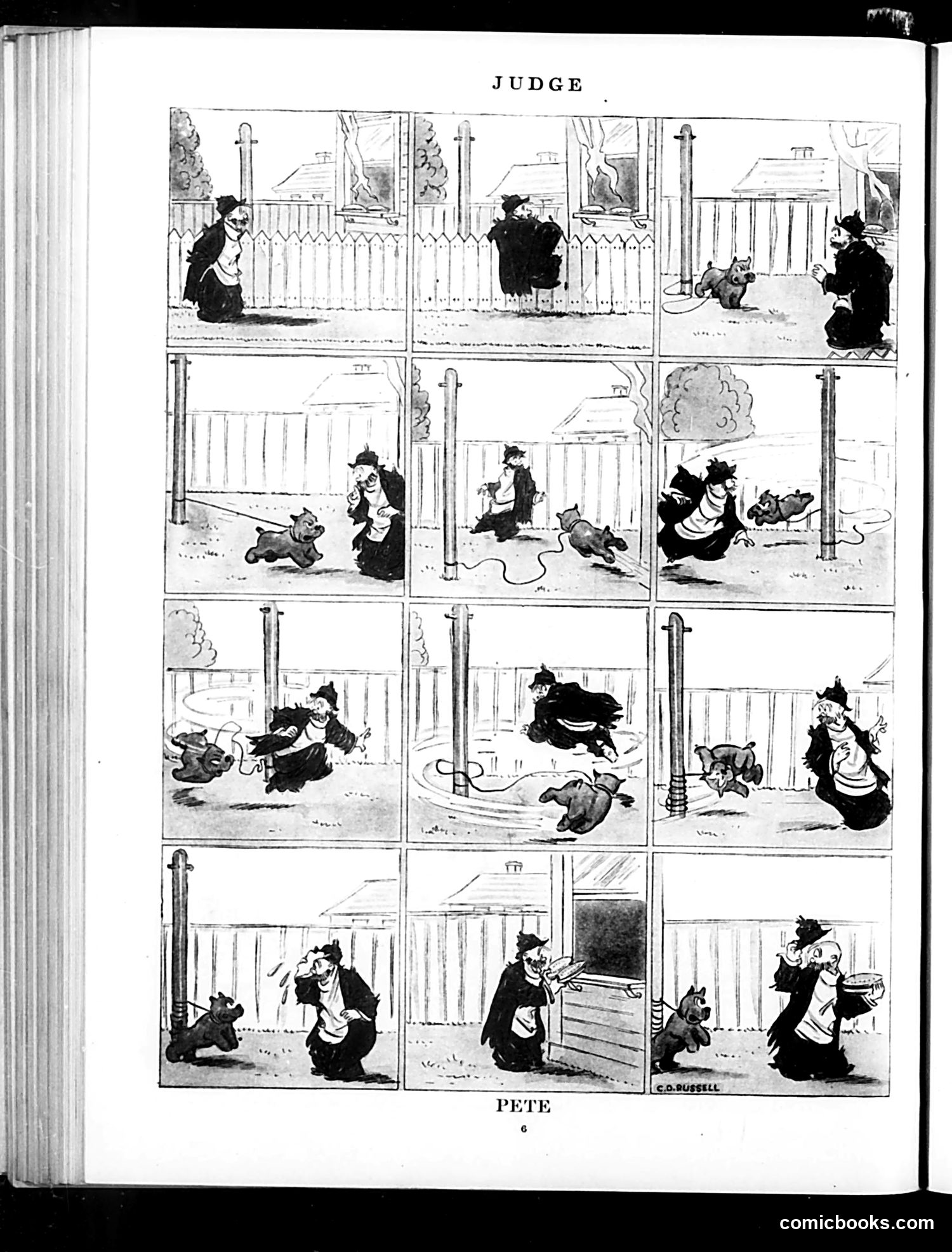
# "Judge" - "Pete" Comic Strip Analysis This is a multi-panel comic strip titled "Pete" signed by C.D. Russell. It depicts a man in formal attire (top hat and coat) repeatedly encountering and being chased or attacked by a small dog in a residential courtyard setting with white picket fences. The humor appears to be slapstick: the formally-dressed gentleman experiences escalating physical comedy—the dog nips at him, tangles him in its leash, causes him to fall, and generally harasses him throughout the sequence. The contrast between his dignified appearance and his undignified treatment by the small dog drives the joke. Without additional context, the figure's identity is unclear—this may reference a specific public figure of the era, or it could be pure comedic scenario.
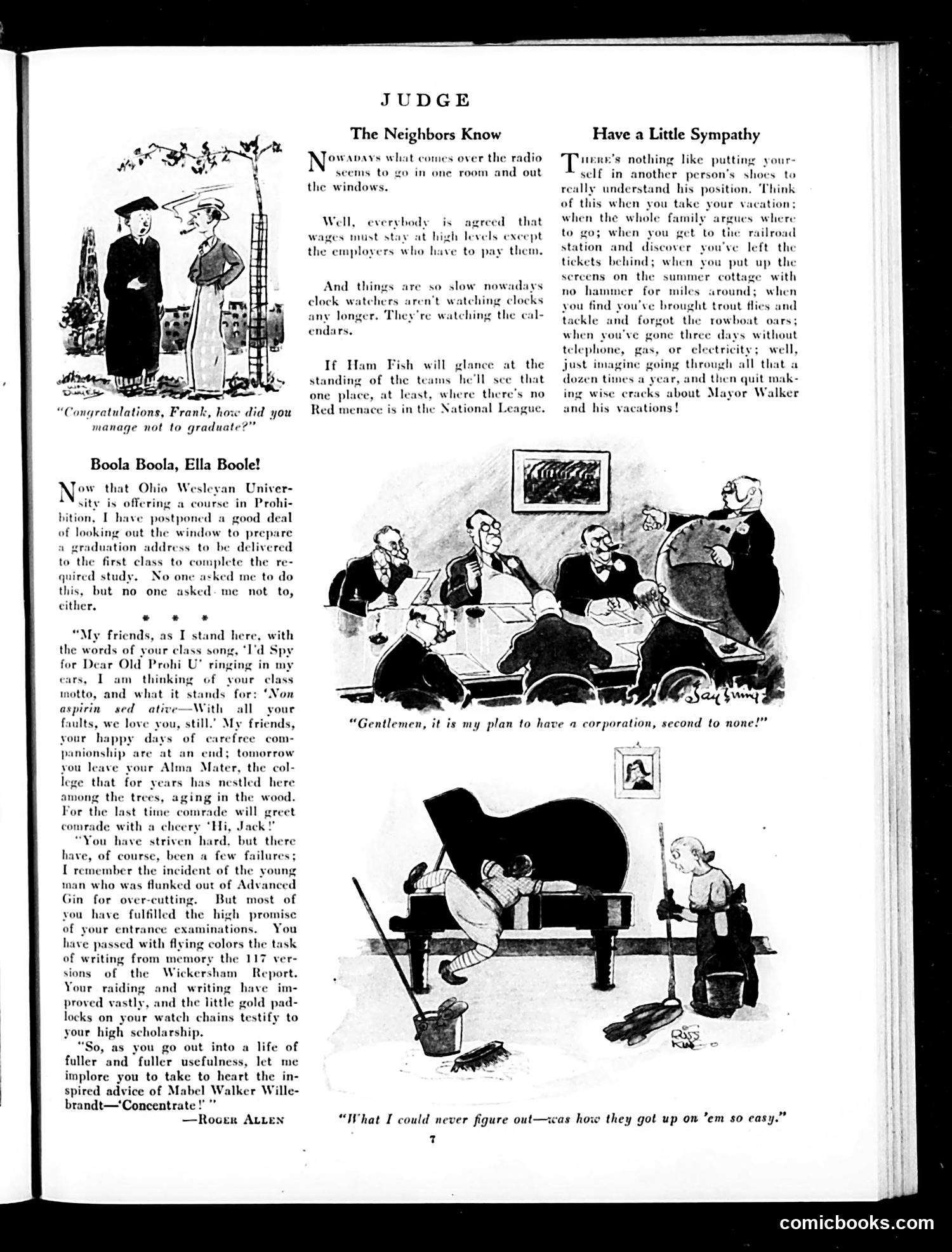
# Judge Magazine Page Analysis This page contains three satirical pieces mocking Prohibition-era America and contemporary politics: **"Boola Boola, Ella Boole!"** (by Roger Allen): A mock graduation address to Ohio Wesleyan University's first Prohibition studies class. The satire skewers Prohibition by having the speaker joke about students studying "Advanced Gin," referencing the Wickersham Report (a notorious federal investigation of Prohibition enforcement failures), and praising "raiding" skills. The dedication to Mabel Walker Willebrandt—the Assistant Attorney General enforcing Prohibition—intensifies the irony. **"The Neighbors Know"**: Short observations about radio, wage-earning workers, and sports. A reference to "Ham Fish" (likely Rep. Hamilton Fish III) and "Red menace" in baseball appears to comment on contemporary political anxieties. **"Have a Little Sympathy"**: Practical humor about vacation mishaps—forgotten tickets, missing tools, lost fishing gear—encouraging empathy. The cartoons depict everyday scenes matching these texts: a couple discussing a graduate, businessmen in a meeting, and a child fishing. The humor assumes reader familiarity with Prohibition's widespread unpopularity and enforcement absurdities.
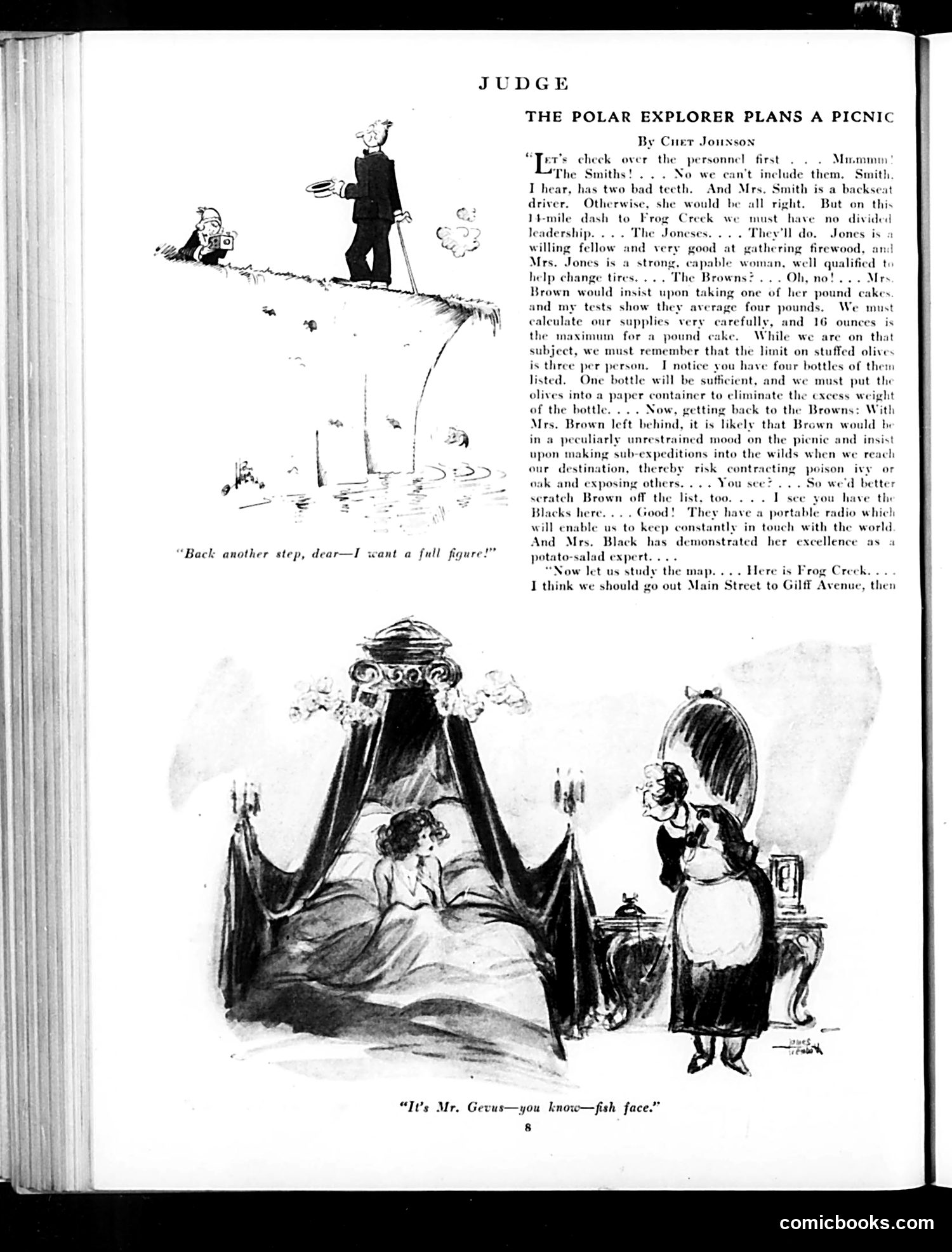
# Analysis This is a satirical piece mocking the obsessive, status-conscious planning of upper-class social gatherings disguised as casual outings. The "polar explorer" frames a simple picnic as a military expedition requiring meticulous personnel vetting. The humor lies in the absurdly petty reasons for excluding guests: the Smiths (Mrs. is a "backseat driver"), the Browns (their pound cakes exceed weight allowances by 4 ounces), potential "unrestrained mood" behavior. Meanwhile, the Blacks are approved because Mrs. Black makes good potato salad and they own a portable radio—practical utility trumps friendship. The satire targets early 20th-century bourgeois pretension: the narrator treats guest selection with the gravity of an actual expedition, reveals class anxiety about appearances and social control, and exposes how material concerns (weight limits, radio access) drive social decisions more than genuine affection. The bottom cartoon's caption "It's Mr. Gevus—you know—fish face" suggests parallel mockery of cruel social categorization by appearance. The overall target appears to be snobbish, calculating upper-middle-class social climbing.
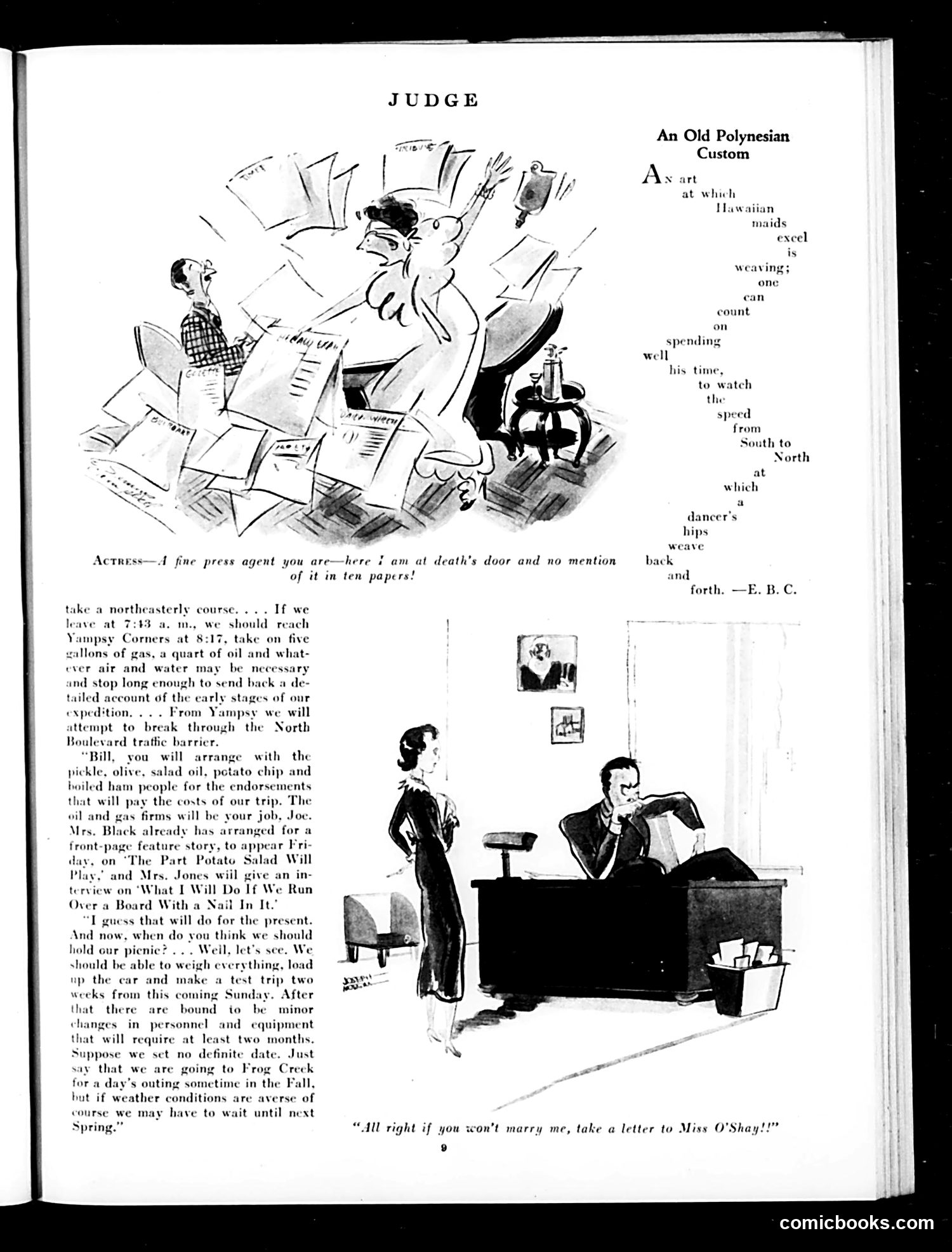
# Judge Magazine Page Analysis This page contains two distinct satirical pieces: **Top cartoon ("Judge"):** An actress complains to her press agent that despite being "at death's door," she's received no newspaper mention. The satire mocks both actresses' desperation for publicity and press agents' incompetence—the actress expects her illness to generate headlines. **Bottom cartoon:** A man at a desk tells a woman he won't marry her, then callously instructs her to "take a letter to Miss O'Shay!" The joke satirizes male indifference and workplace impropriety—he dismisses her romantic rejection by immediately pivoting to dictating business, treating her as his secretary despite their personal relationship. **Middle text:** A humorous account of planning an elaborate road trip with multiple sponsors (oil companies, food manufacturers), requiring endorsement deals and publicity stunts. It mocks corporate sponsorship excess and overly complicated vacation logistics. The page satirizes early 20th-century American attitudes toward publicity, relationships, and commercialism.
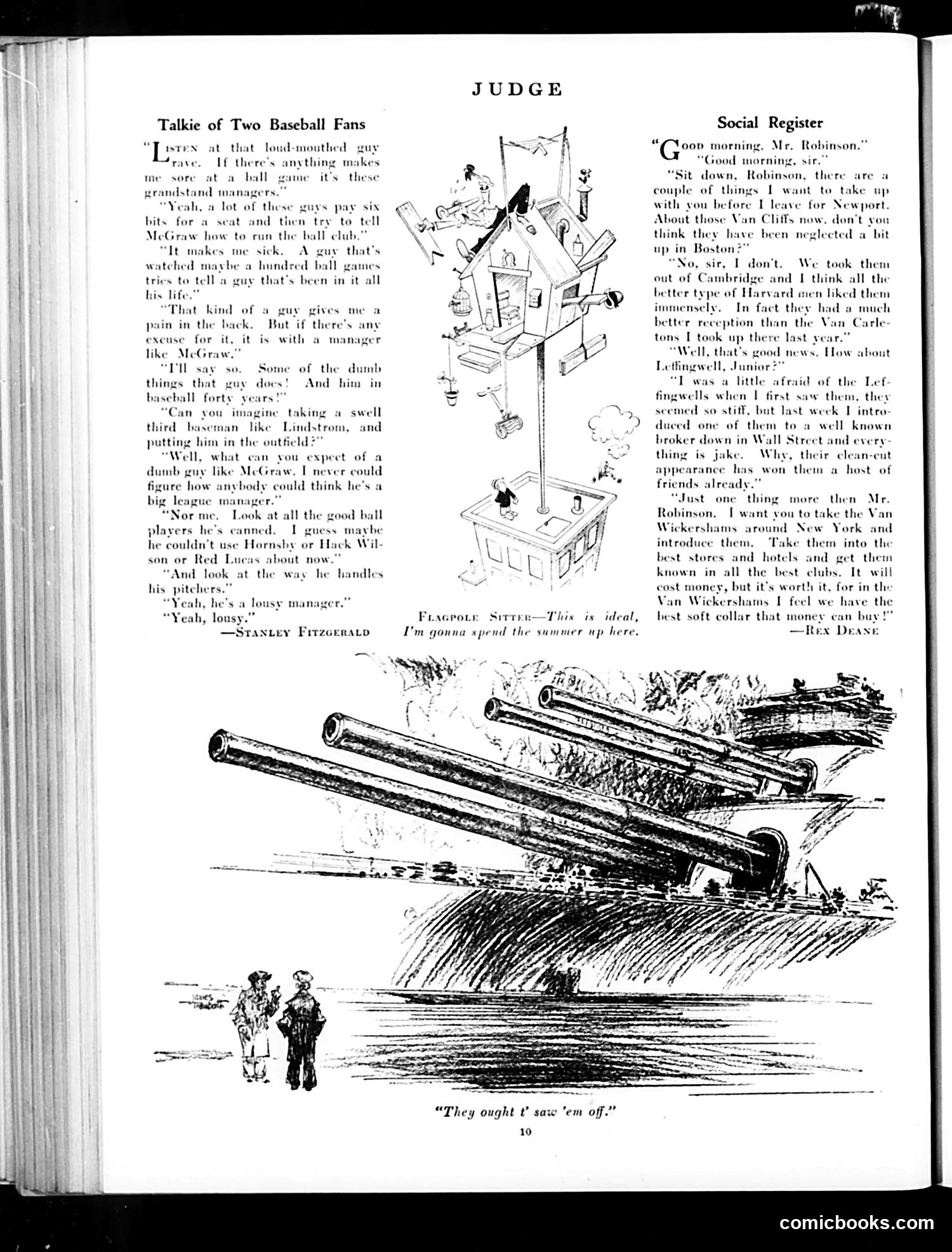
# Explanation for Modern Readers This Judge magazine page contains two satirical pieces: **"Talkie of Two Baseball Fans"** (left): Two working-class men at a baseball game complain endlessly about manager John McGraw, criticizing his player trades and decisions despite their limited knowledge. The humor lies in their hypocrisy—they mock "stand managers" (armchair critics) while being exactly that themselves. Stanley Fitzgerald's byline suggests this is social commentary on how ordinary fans confidently second-guess professional decisions. **"Social Register"** (right): A wealthy employer instructs his servant Robinson to parade the "Van Cliffs" and "Van Wickershams" (newly rich families) around New York's finest establishments to establish their social credentials. The joke is cynical: wealth and appearance alone can buy social acceptance if properly marketed—even Rex Deane's closing quip about the Van Wickershams being "the best soft collar that money can buy" suggests they're commodities, not genuinely refined people. Both pieces satirize American social climbing and pretension in the 1920s-30s era.