A complete issue · 36 pages · 1931
Judge — January 31, 1931
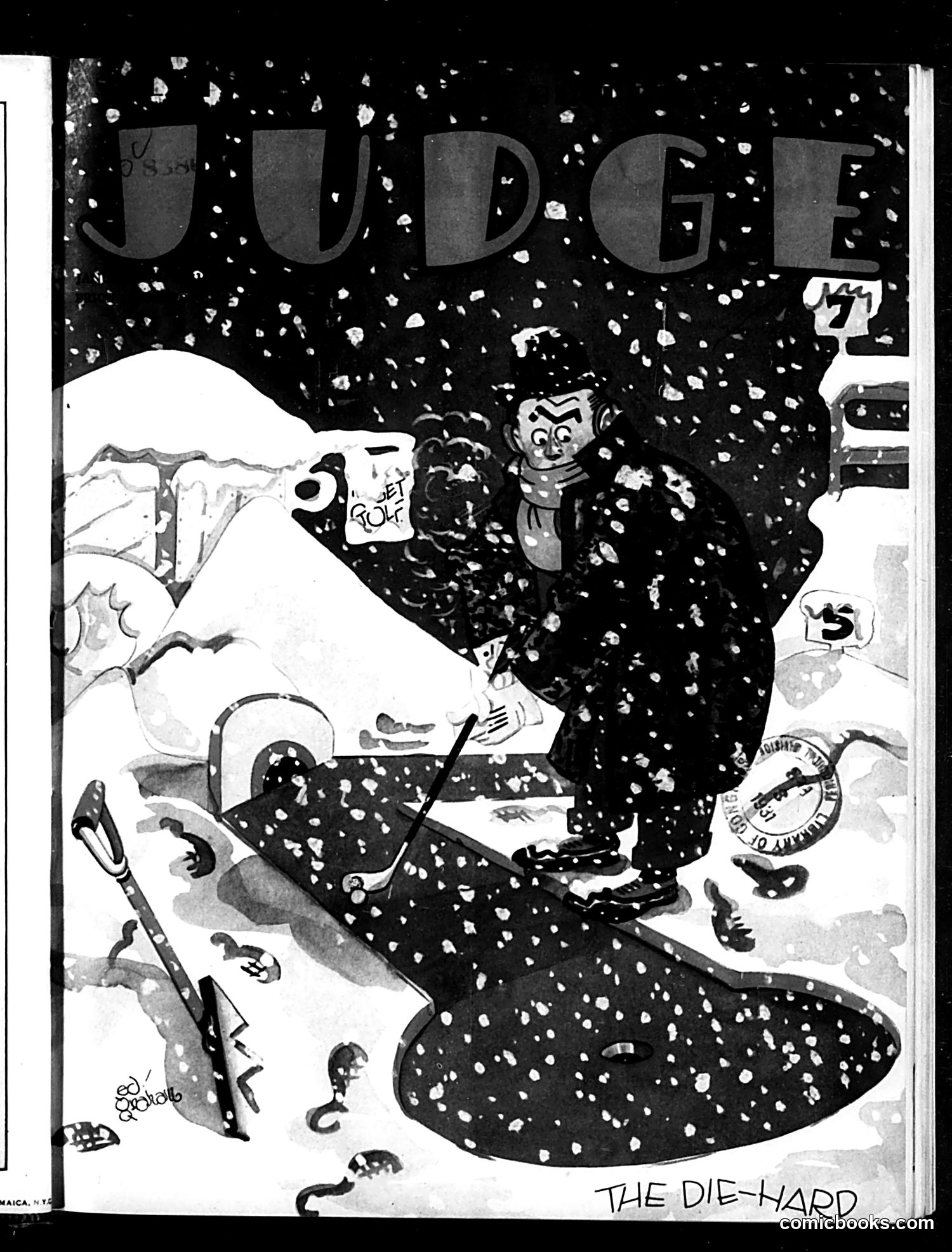
# Judge Magazine Political Cartoon Analysis This appears to be a satirical Judge magazine cover titled "The Die-Hard," depicting a caricatured figure (likely representing a political or social opponent) standing defiantly amid snow and winter conditions. The character sports exaggerated features typical of period caricature. The cartoon's meaning remains somewhat unclear without additional context, though "die-hard" suggests depicting someone stubbornly resistant to change or defeat. Various small figures and symbols surround the main character, possibly representing consequences or opposing forces. The page includes advertising elements and what appears to be a mascot character ("Jet Rolf"). The satirical intent seems directed at mocking persistent resistance to something—possibly a political position, social movement, or policy—though the specific historical reference cannot be definitively identified from the image alone.
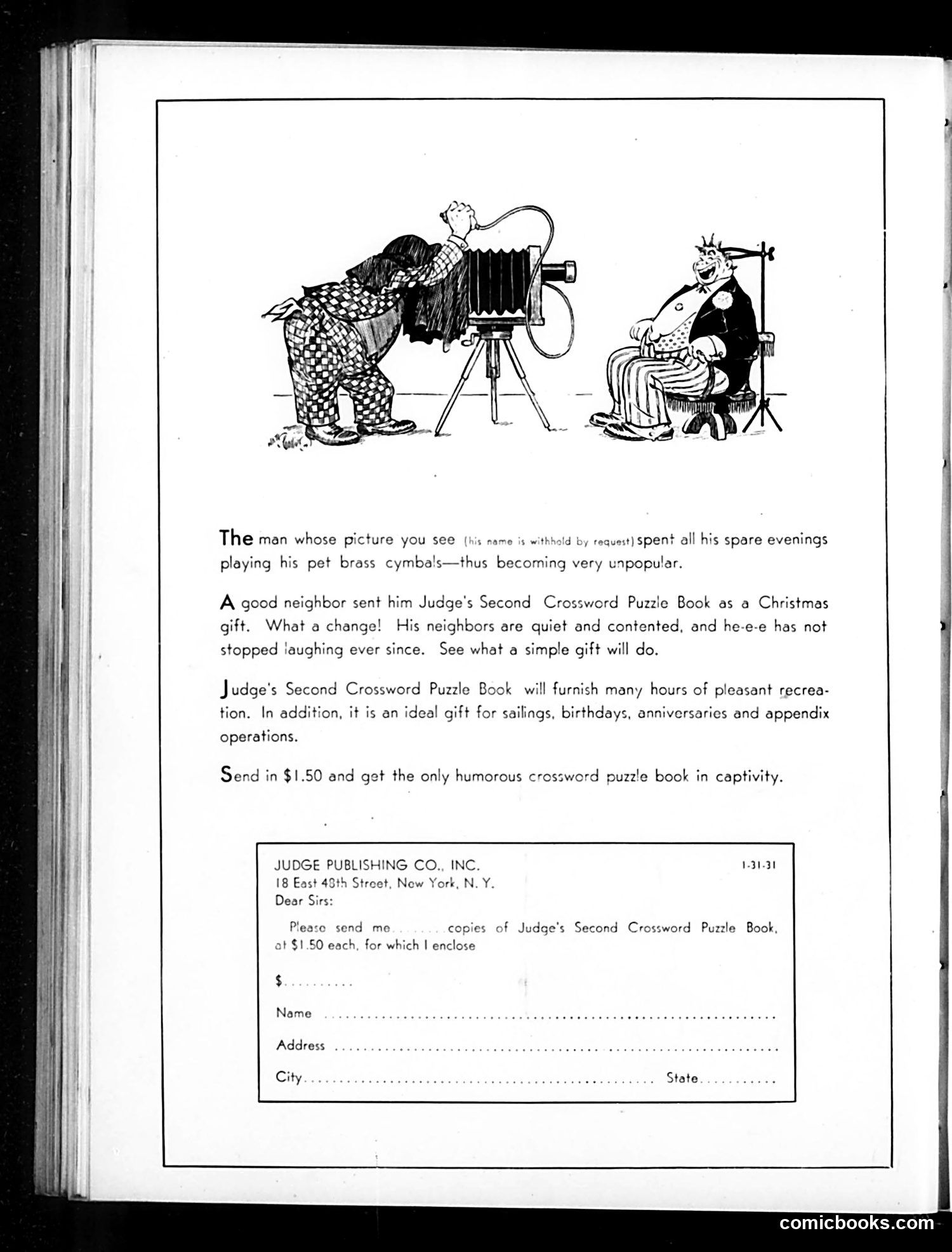
# Analysis This page is primarily an **advertisement for Judge's Second Crossword Puzzle Book**, using humor to promote the product. The cartoon depicts a man playing loud brass cymbals during evenings, making him unpopular with neighbors. A neighbor gave him the crossword puzzle book as a Christmas gift, and it successfully redirected his attention—now he's quiet and his neighbors are happy. The satire is straightforward: the puzzle book is presented as a gift that transforms antisocial behavior. Rather than targeting a specific political figure or current event, it's **social satire** about annoying hobbies and neighborly relations. The humor relies on the exaggerated contrast between the cymbal-playing nuisance and the reformed, puzzle-absorbed man. The advertisement then encourages readers to purchase the book for $1.50, positioning it as an ideal gift for various occasions.
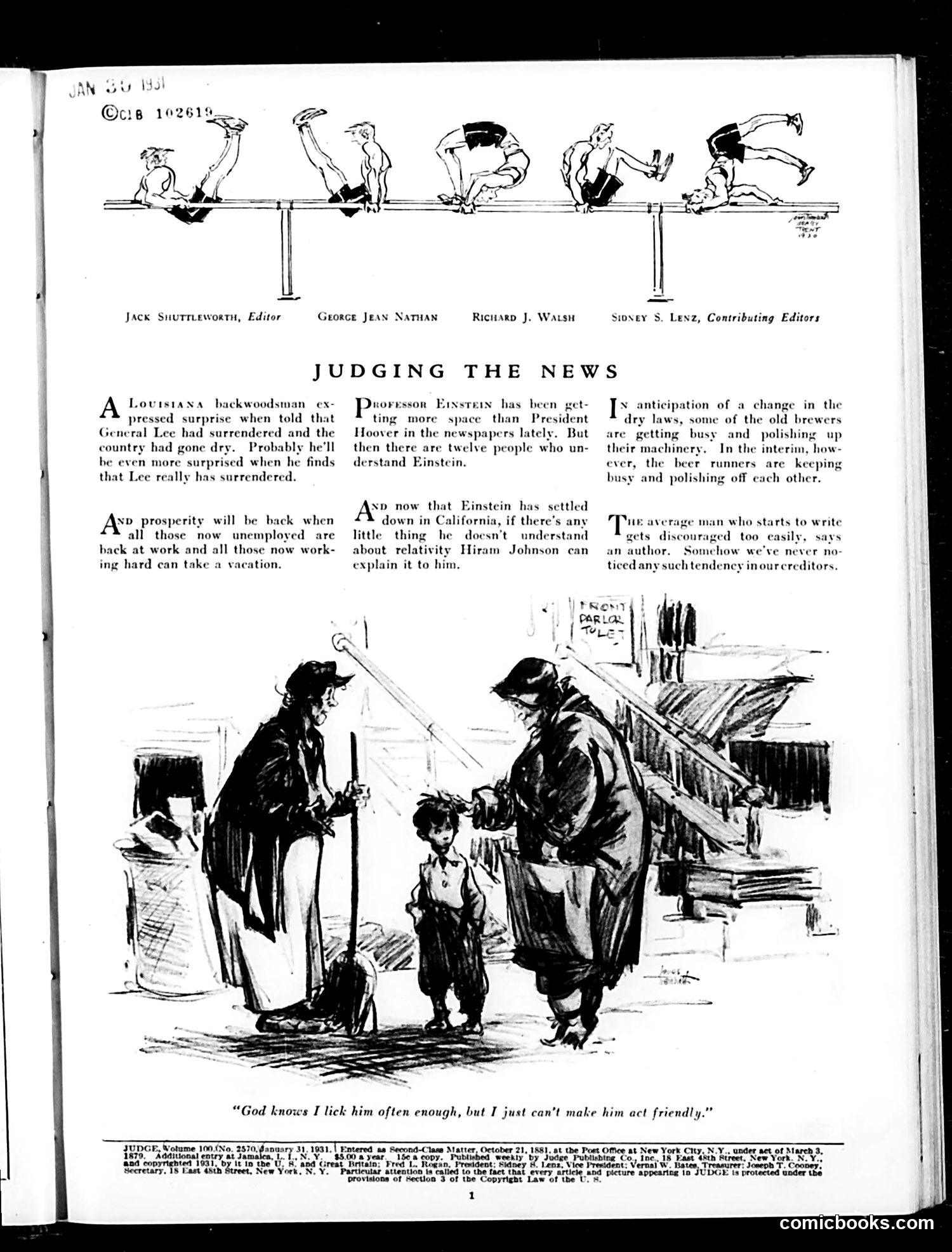
# Analysis of "Judging the News" Page This page from Judge magazine (dated Jan 30, 1931) features editorial commentary with satirical short pieces: **Top section** discusses economic hardship: a Louisiana backwoodsman's surprise at dry conditions, and predictions that prosperity will return when unemployed workers take jobs (rather than vacations)—likely commentary on Depression-era unemployment. **Einstein reference**: The piece notes Einstein's recent arrival in California, joking that among twelve people who understand relativity, perhaps Hiram Johnson could explain it to him—a common contemporary joke about Einstein's complex theories. **Writing commentary**: Addresses aspiring authors' discouragement, attributing failures to "tedious affectations of predecessors." **Bottom cartoon**: Shows two working-class men speaking to a child about a third figure, with caption: "God knows I lick him often enough, but I just can't make him act friendly." This appears to satirize corporal punishment attitudes of the era.
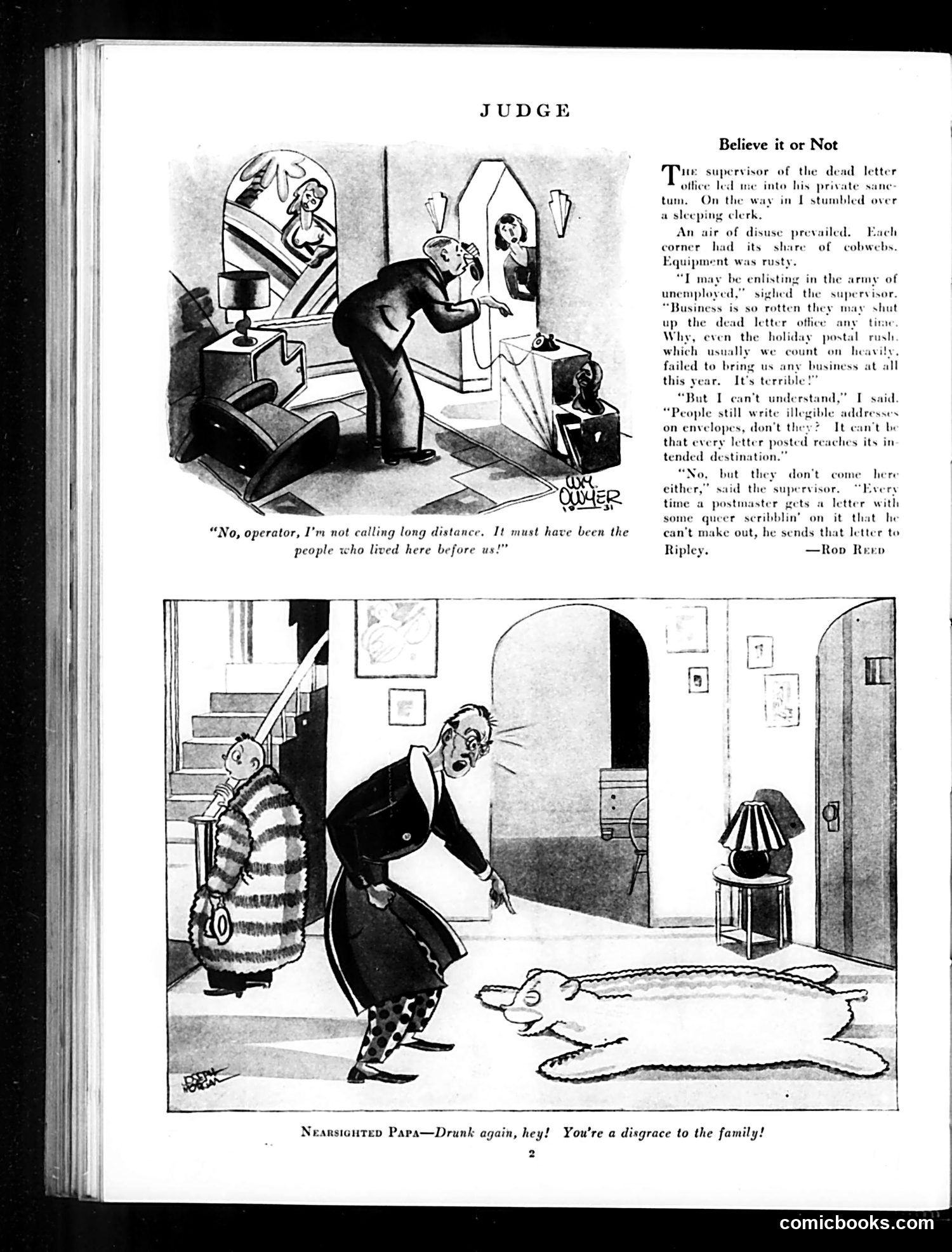
# Analysis of Judge Magazine Page This page contains two unrelated cartoons satirizing early 20th-century American life: **Top cartoon**: A frustrated postal supervisor complains to an operator about mail delivery collapse. The joke critiques the post office's inability to handle business correspondence—even holiday mail fails to arrive. The supervisor ironically suggests the previous occupants of the building handled it better, implying current postal service is incompetent. **Bottom cartoon**: Titled "Nearsighted Papa," shows a man discovering what appears to be a snake on his floor while scolding a woman (likely his wife) for drunkenness. The humor derives from his mistaken identity—he's angry at the wrong "culprit," suggesting his poor vision causes domestic misunderstanding. Both cartoons rely on situational comedy about everyday frustrations rather than political commentary.
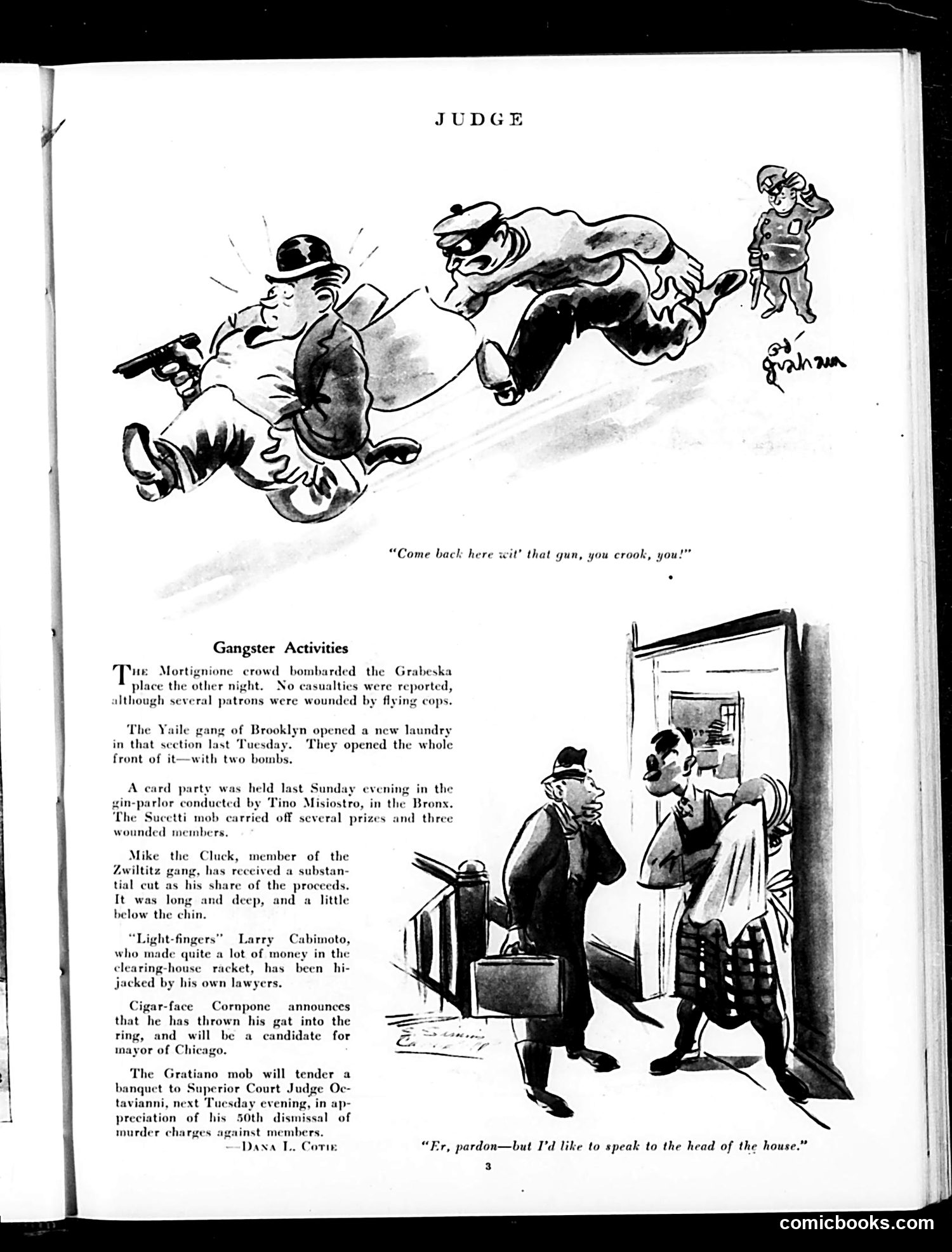
# "Judge" Page Analysis: Gangster Activities This satirical page mocks 1920s organized crime through two cartoons and a gossip column. The top cartoon shows a judge chasing a fleeing gangster, captioned "Come back here wit' that gun, you crook, you!" — satirizing the apparent inability of law enforcement to prosecute criminals effectively. The bottom cartoon depicts gangsters at a doorway saying "Er, pardon—but I'd like to speak to the head of the house," mocking how organized crime infiltrated everyday life and conducted business brazenly. The "Gangster Activities" column details real incidents: bombings, laundry explosions, mob violence at card games, and gang members receiving wounds or payouts. The tone treats serious criminal violence with dark humor, reflecting public frustration with Prohibition-era lawlessness that seemed unstoppable by authorities.
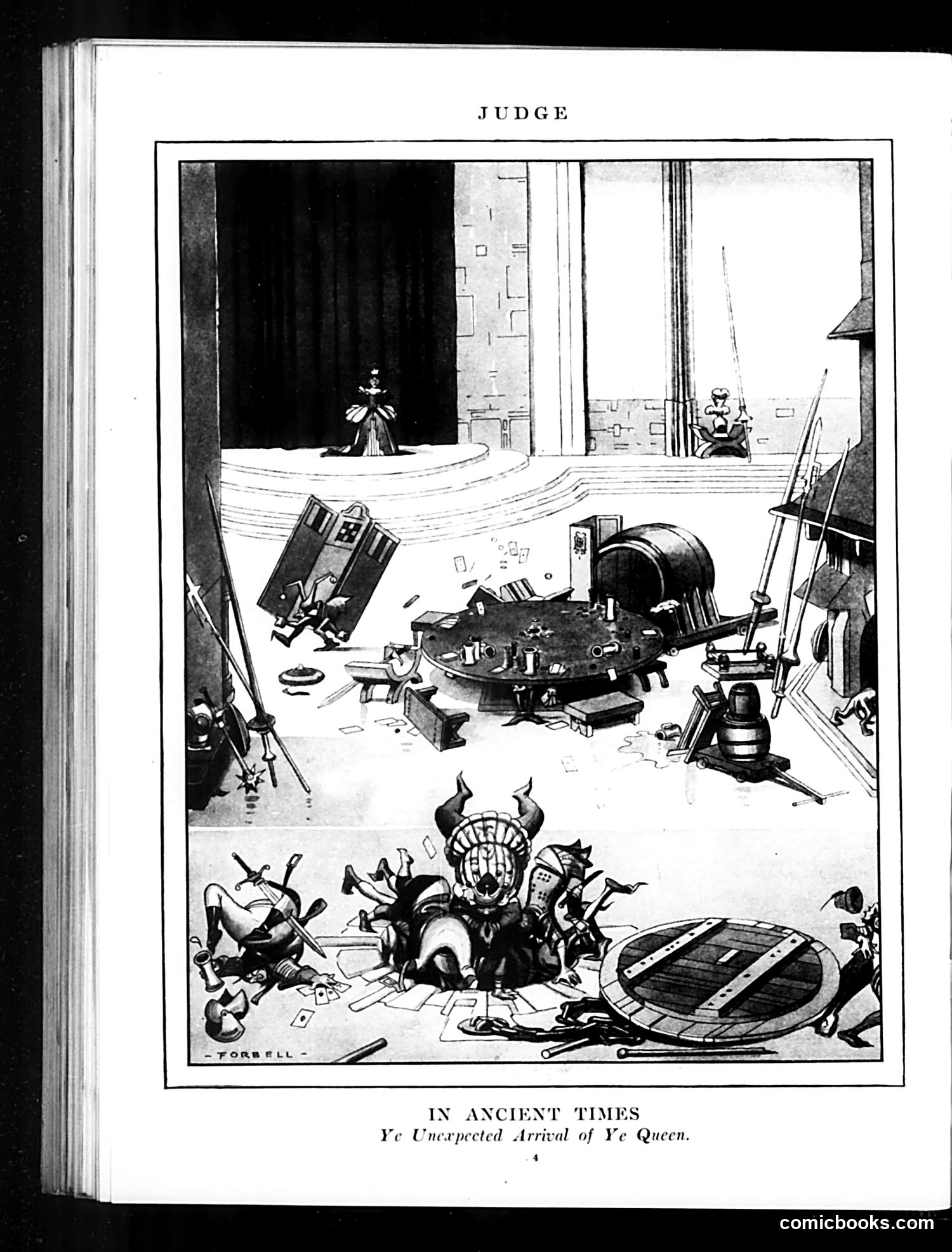
# Analysis This cartoon, titled "In Ancient Times: Ye Unexpected Arrival of Ye Queen," uses anachronistic humor to satirize court chaos. The scene depicts a medieval or ancient throne room in disarray—with scattered weapons, armor, and debris covering the floor while courtiers scramble about in confusion. A queen (or dignitary) sits elevated on the throne, observing the pandemonium below. The joke appears to contrast the dignity expected of royal proceedings with the actual chaos of court life. The cartoonist (signed "Torbell") suggests that even in "ancient times," unexpected royal arrivals caused comical disorder among unprepared courtiers. This likely mocks contemporary political or social institutions by implying institutional incompetence is timeless.
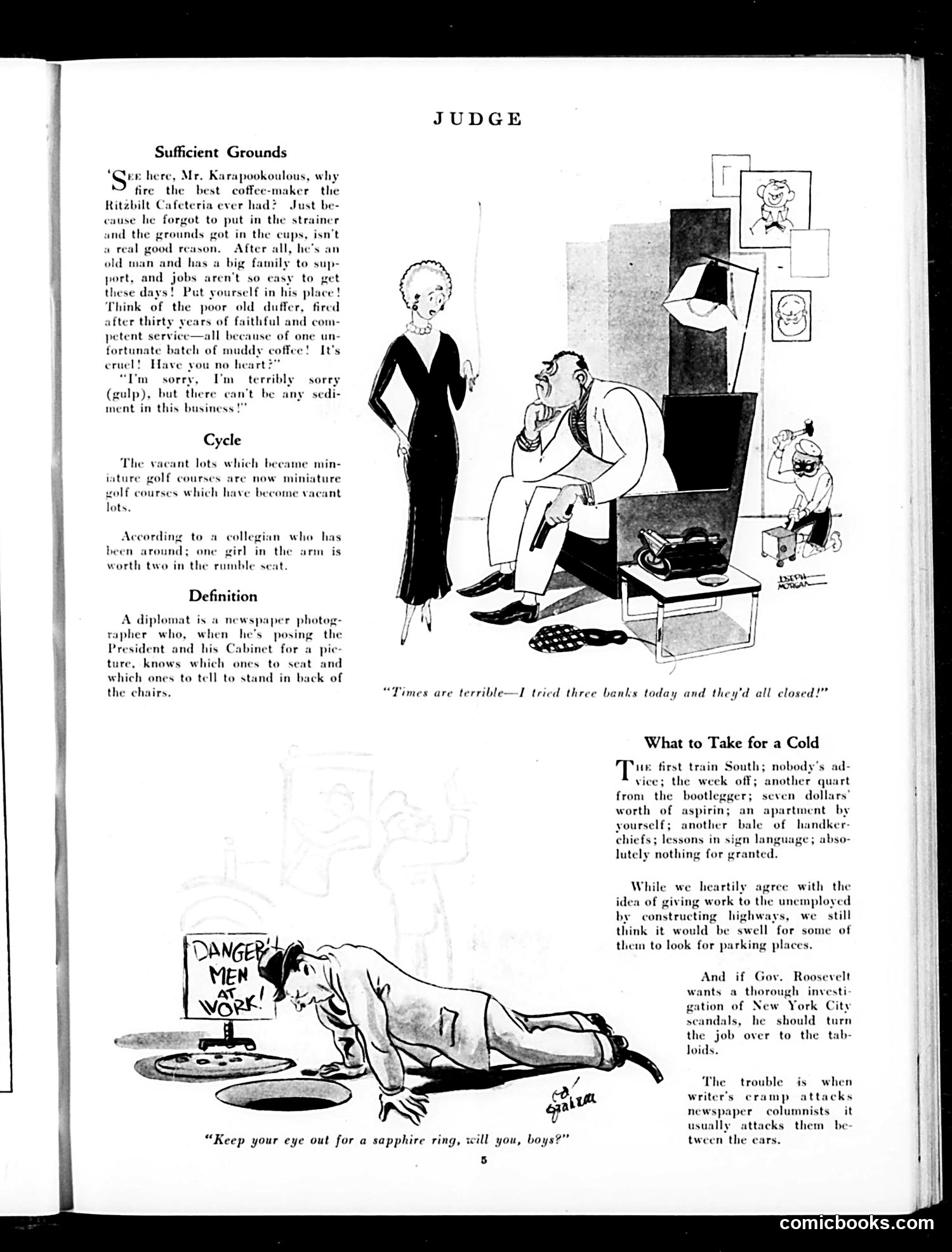
# Analysis of Judge Magazine Page **"Sufficient Grounds"** (top cartoon): A woman fires her coffee-maker, Mr. Karapasokoulous, blaming him for poor coffee despite his 30 years of faithful service and large family. The satire critiques the callousness of employers during economic hardship—firing loyal workers over minor grievances when jobs are scarce and families depend on employment. **"Cycle"** and **"Definition"**: Brief humorous notes about miniature golf courses and diplomats. **"Danger! Men at Work"** (bottom): A construction worker lies injured or dead near a manhole, illustrating workplace dangers. The caption's sarcasm ("Keep your eye out for a sapphire ring") darkly jokes about workplace accidents. **"What to Take for a Cold"**: Satirizes unemployment remedies—absurd suggestions like "first train South" or "bootlegger's liquor"—mocking inadequate relief during economic crisis.
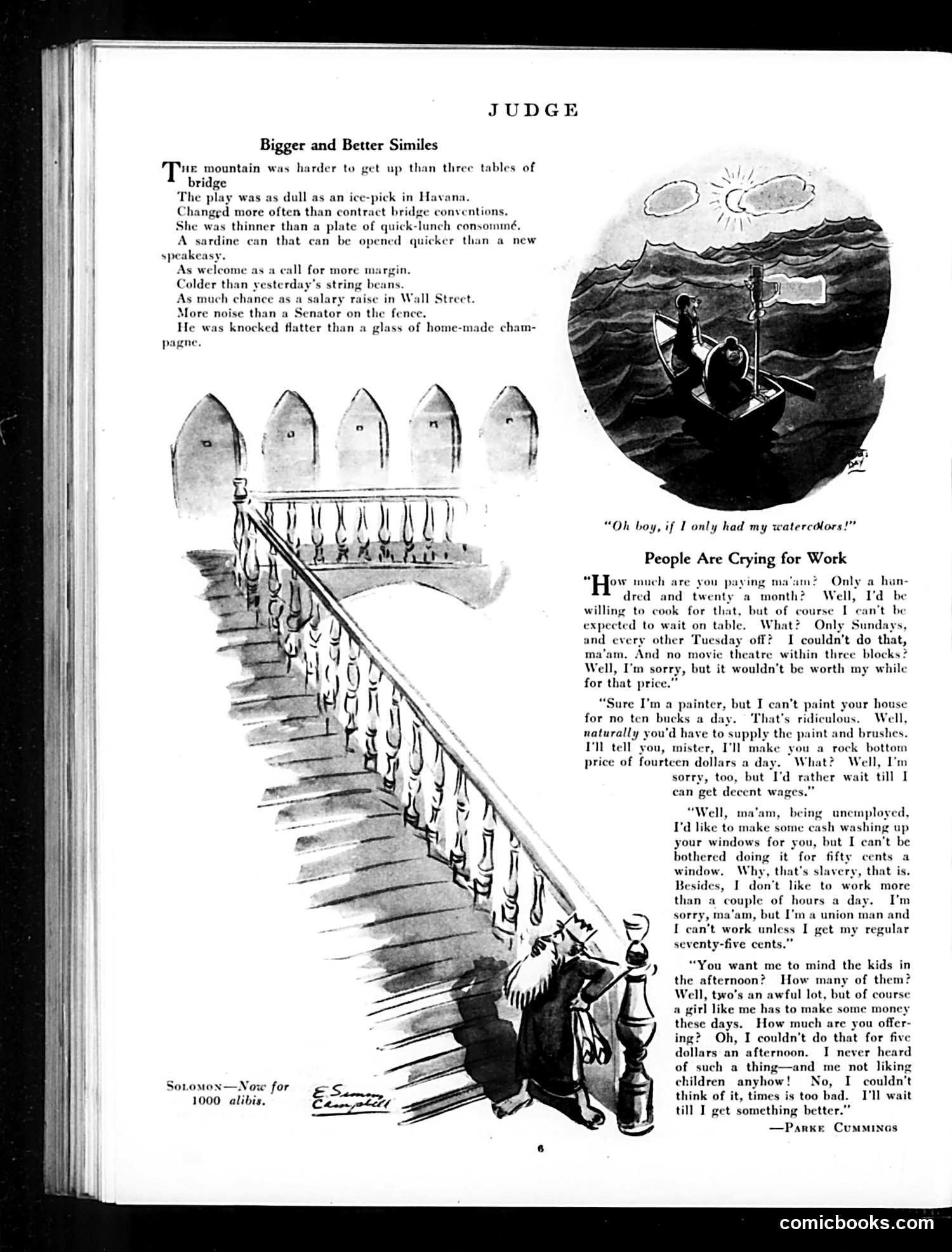
# Judge Magazine Page Analysis This page contains two distinct elements: **"Bigger and Better Similes"** (top): A series of comparative phrases mocking various topics—mountains, plays, Havana conditions, speakeasies, senators, and champagne. These appear to be topical jokes referencing Prohibition-era culture and contemporary politics, though specific references are unclear without dating. **"People Are Crying for Work"** (bottom): A satirical dialogue between unemployed workers and a potential employer, illustrated by a figure on a bridge railing. The exchange mocks the vast gap between job-seekers' desperation and employers' unwillingness to pay reasonable wages. Workers accept near-slavery wages while employers demand unrealistic conditions. The cartoon critiques both economic inequality and labor market dysfunction, likely from the Depression or post-WWI period, though the exact date isn't visible.
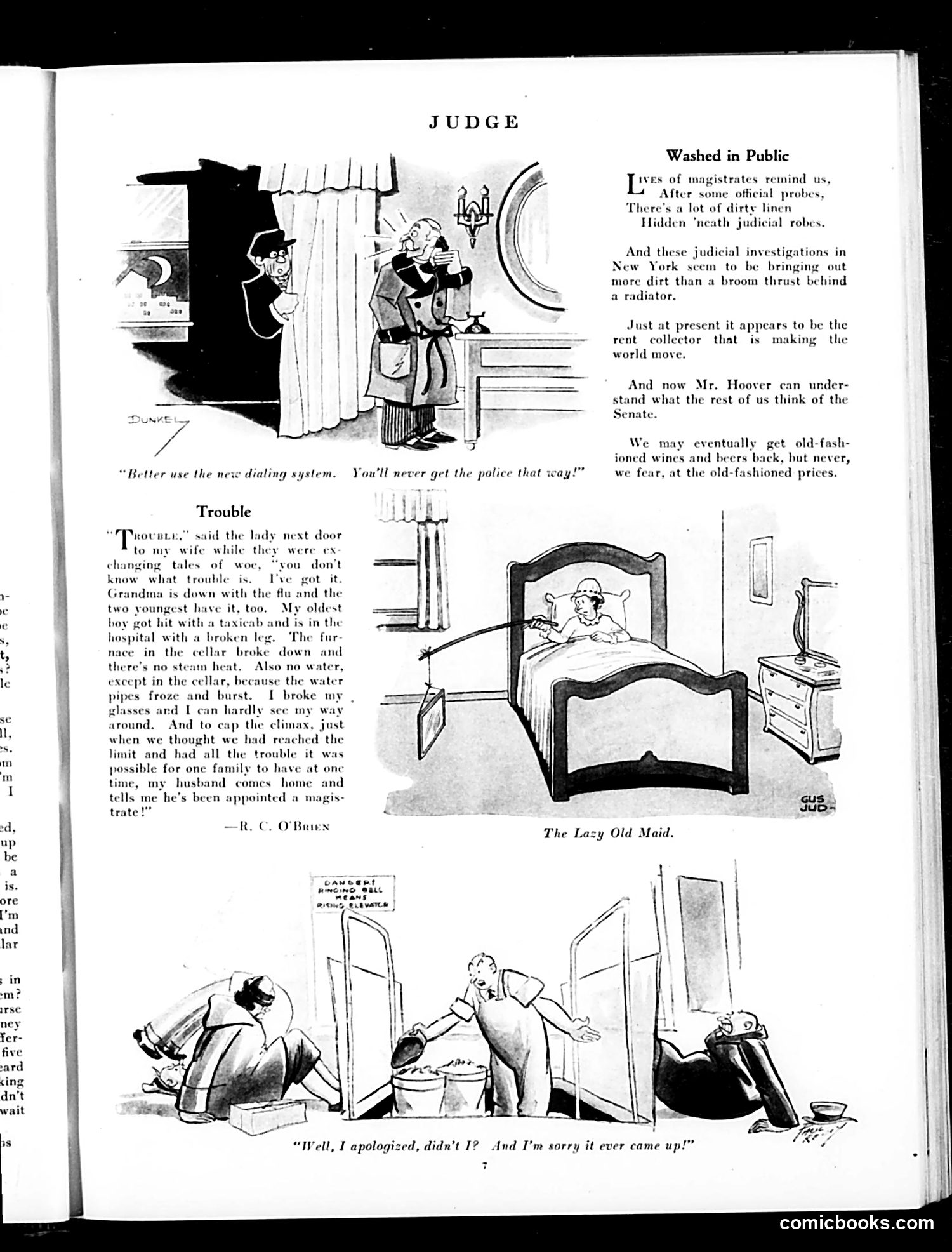
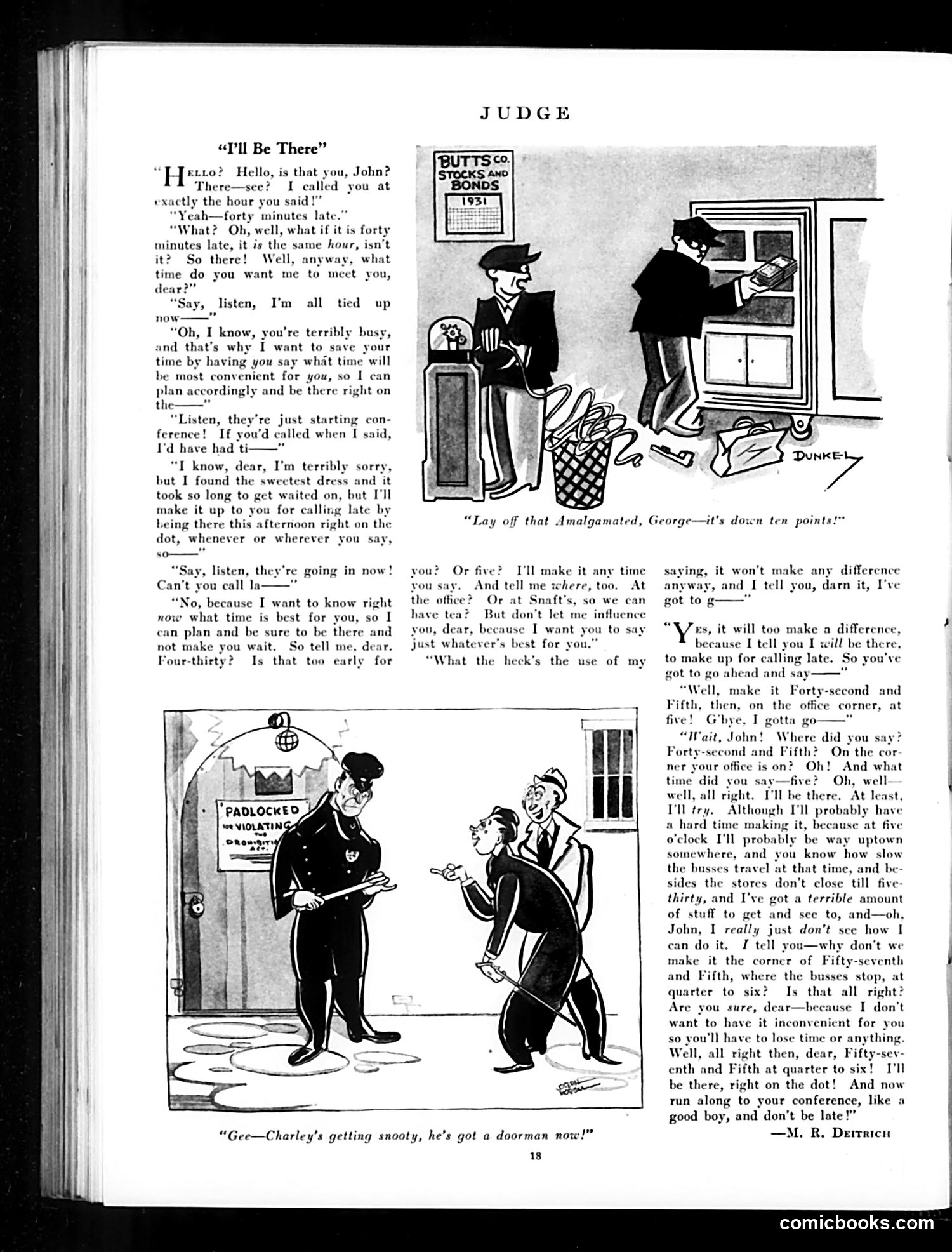
# Judge Magazine Page Analysis This page contains satirical commentary on 1920s-30s American life: **"Washed in Public"** poem mocks judicial corruption in New York, suggesting magistrates hide misconduct ("dirty linen hidden 'neath judicial robes"). It references ongoing investigations exposing corruption and rent-collector scandals. The quip about Hoover likely refers to President Hoover's unpopularity during economic crisis, while the Prohibition-era joke warns that even if alcohol returns, prices won't fall. **"Trouble"** story (by R.C. O'Brien) humorously catalogs domestic disasters—flu, accident, broken furnace, frozen pipes, broken glasses—then delivers the punchline: the husband's appointment as magistrate tops them all. This satirizes the irony that a judicial appointment, normally prestigious, becomes the final indignity given the corruption exposed in the "Washed in Public" section. The cartoons illustrate both pieces with visual gags matching the text's tone of social critique wrapped in humor.
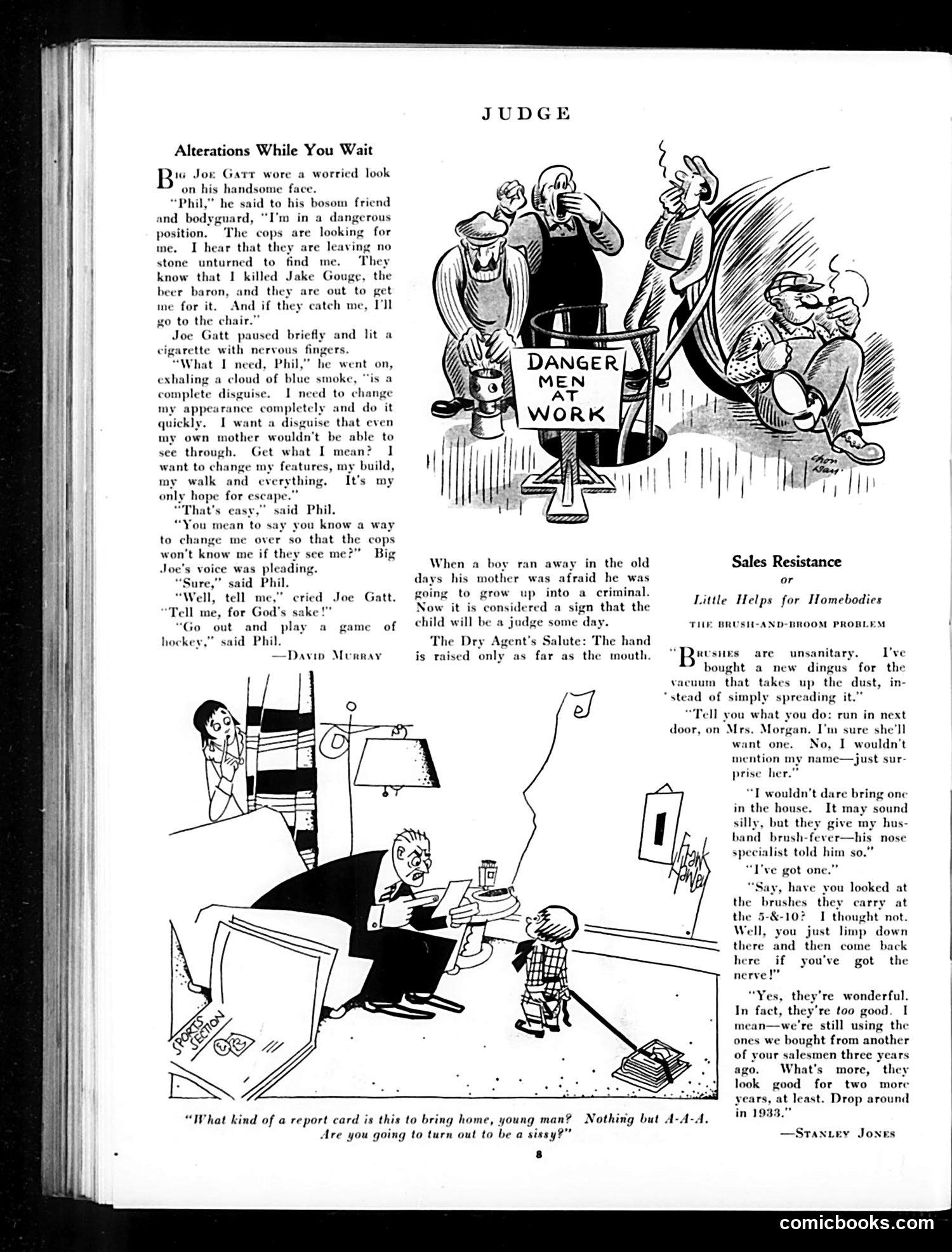
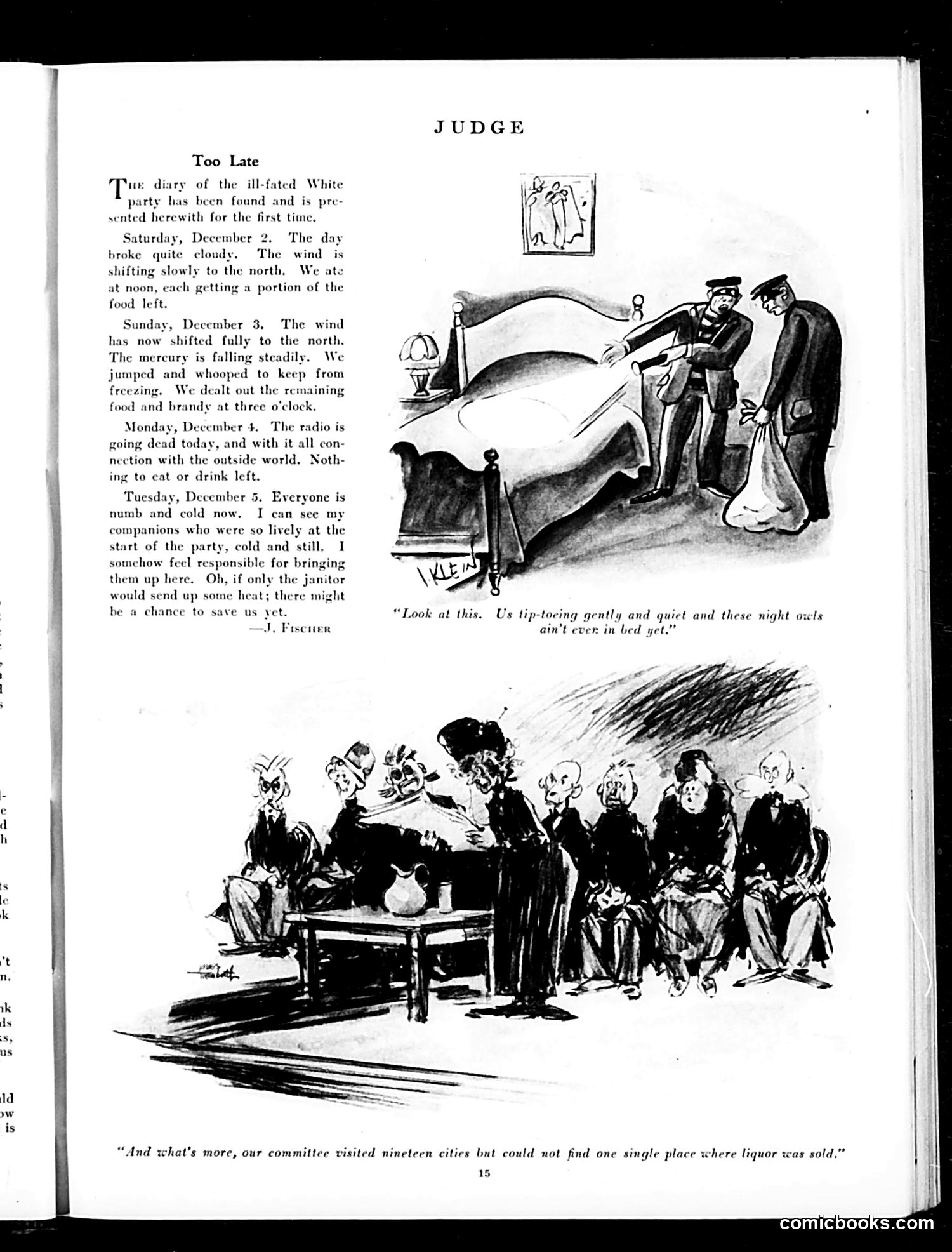
# "Alterations While You Wait" — Judge Magazine This page contains two satirical pieces lampooning American society: **Main Cartoon**: A gangster (Big Joe Gatt) seeks a complete disguise to evade police after allegedly killing a "beer baron" named Jake Gouge. His friend Phil suggests he simply "go out and play a game of hockey"—the joke being that a disguise is unnecessary; ordinary law-abiding behavior itself is the perfect cover. The satire targets Prohibition-era criminals and police ineffectiveness. **Secondary Jokes**: - A quip about boys becoming judges (reversing the moral anxiety of earlier generations) - "Sales Resistance": A housewife resists buying a new vacuum cleaner because her old brushes still work perfectly—satirizing both consumer pressure and domestic thrift during economically uncertain times (the 1930s reference to "1933" suggests Depression-era frugality) - A father angered his son earns only A's in school, fearing academic excellence indicates weakness—mocking parental values and masculinity anxieties. The page reflects Depression-era concerns: crime, consumerism, and changing social expectations.
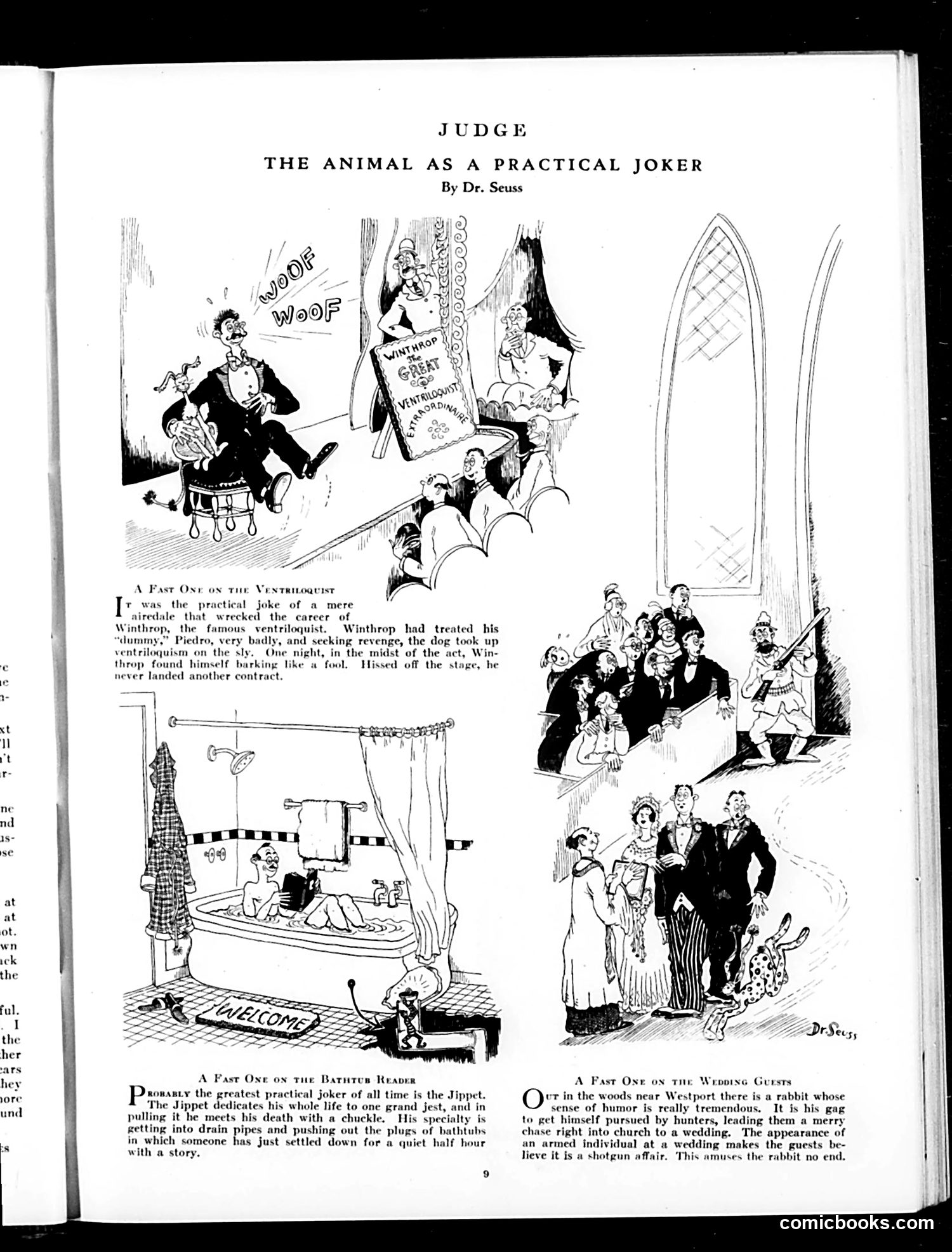
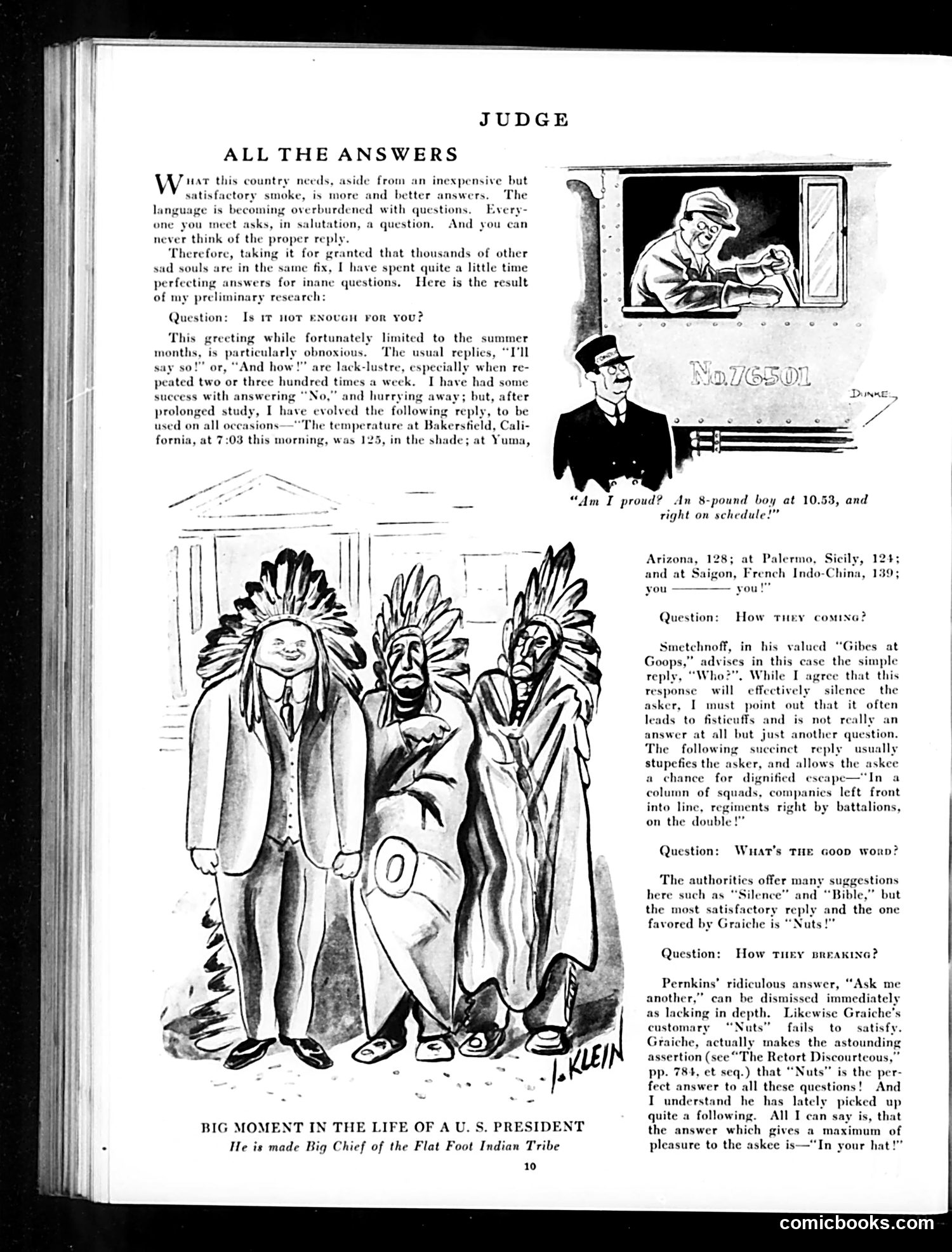
# "Judge" Magazine: "All the Answers" (c. 1920s) This satirical piece mocks the American habit of greeting strangers with tired, repetitive questions ("Is it hot enough for you?") and proposes absurdly elaborate or dismissive answers. The main cartoon depicts a U.S. President being made "Big Chief of the Flat Foot Indian Tribe"—a reference to the era's crude racial caricatures and the condescending treatment of Native Americans. The caption sardonically elevates this ceremonial "honor." The article's recurring punchline is "Nuts!"—suggesting that when faced with inane social questions, the best response is to dismiss them as nonsensical. This reflects 1920s-era humor valuing wit and verbal sparring. The cartoon critiques both shallow American social conventions and contemporary attitudes toward Indigenous peoples, using exaggerated stereotypes typical of early 20th-century publications. The advice to answer "In your hat!" offers mock-earnest solutions to meaningless pleasantries.