A complete issue · 36 pages · 1930
Judge — October 4, 1930
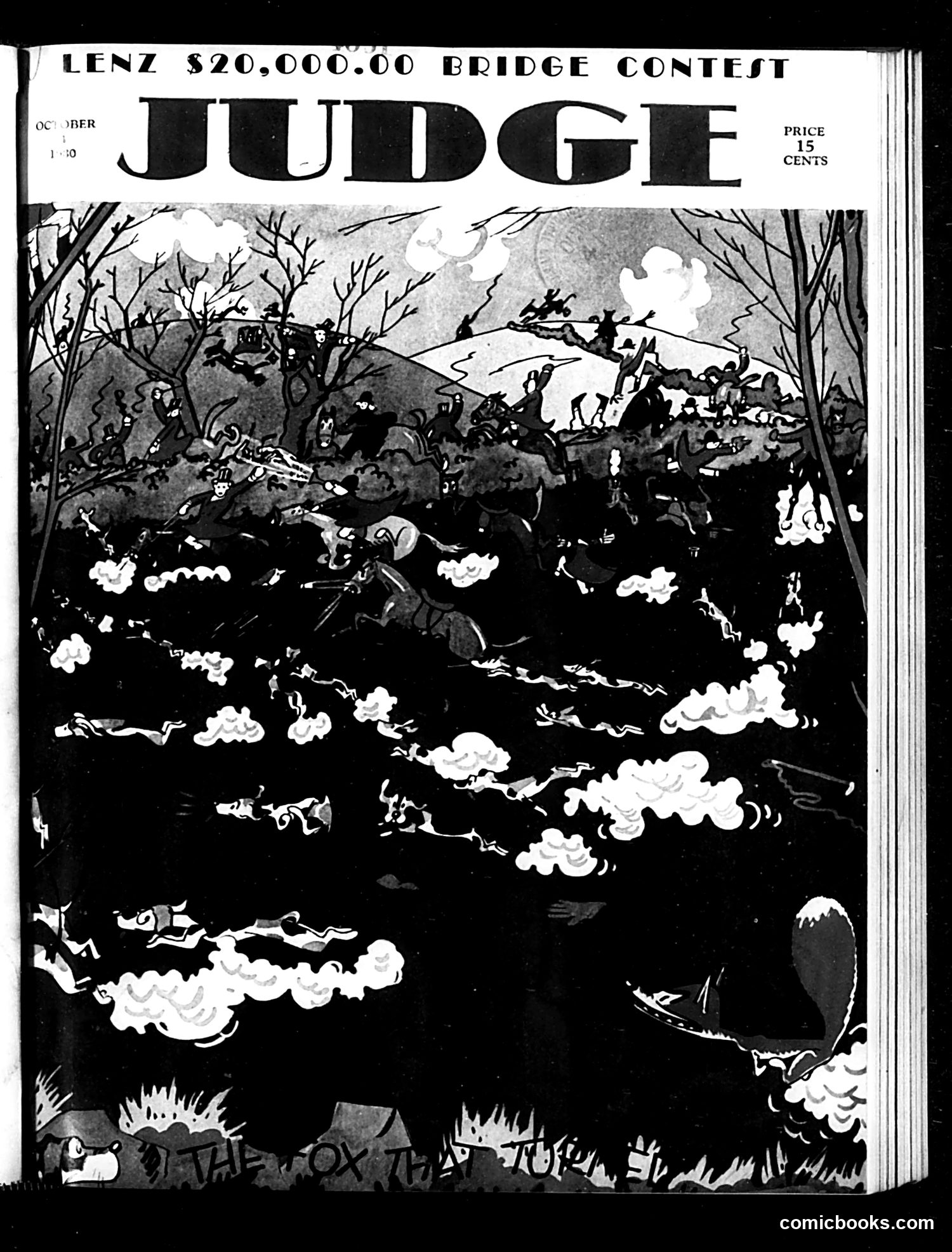
# Analysis of Judge Magazine Cover This appears to be a Judge magazine cover from October 1920, featuring a satirical illustration of what looks like a chaotic underwater or subterranean scene. The image depicts numerous figures engaged in frantic activity amid clouds of smoke or explosions, with bare trees framing the composition. The header announces "LENZ $20,000.00 BRIDGE CONTEST," suggesting the cartoon relates to a specific contemporary event or competition. However, without clearer identification of the figures depicted or additional context about the "Lenz Bridge Contest," I cannot definitively explain the specific political or social satire intended. The chaotic scene with explosions suggests commentary on conflict, competition, or social upheaval, but the exact meaning remains unclear from this image alone.
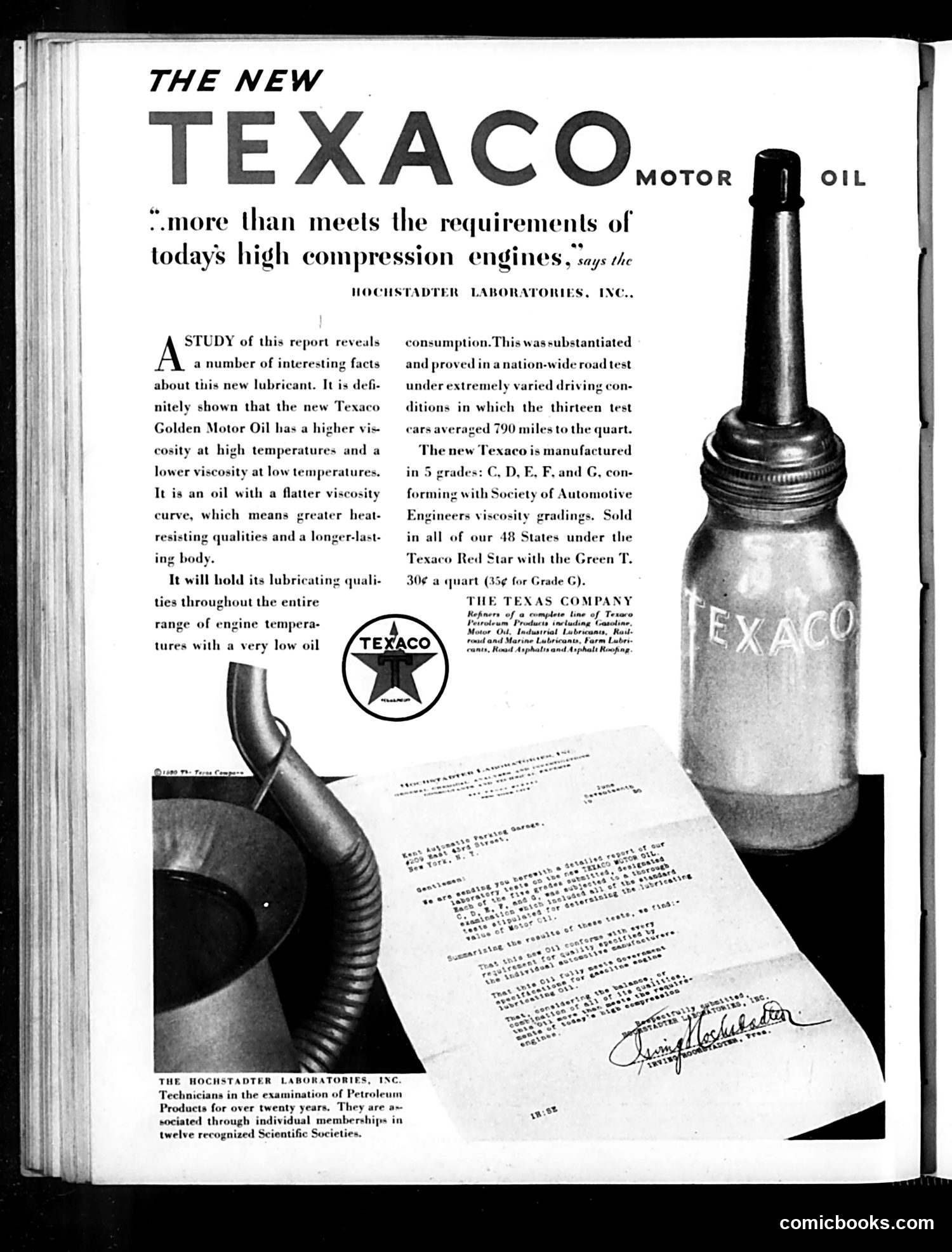
# Analysis This page is **primarily an advertisement**, not satire or political commentary. It promotes Texaco Motor Oil, citing laboratory testing by Hochstadter Laboratories, Inc. The ad emphasizes the oil's technical superiority for "high compression engines"—a contemporary concern as automotive engines grew more powerful. Key claims include superior viscosity at high temperatures and low oil consumption (backed by a nationwide road test averaging 790 miles per quart). The visual elements—an oil bottle and automotive part—are straightforward product imagery. The Texaco Red Star logo appears centrally. The reference to "Society of Automotive Engineers viscosity gradings" grounds the pitch in technical credibility rather than satire. This represents typical mid-20th-century industrial advertising emphasizing scientific validation.
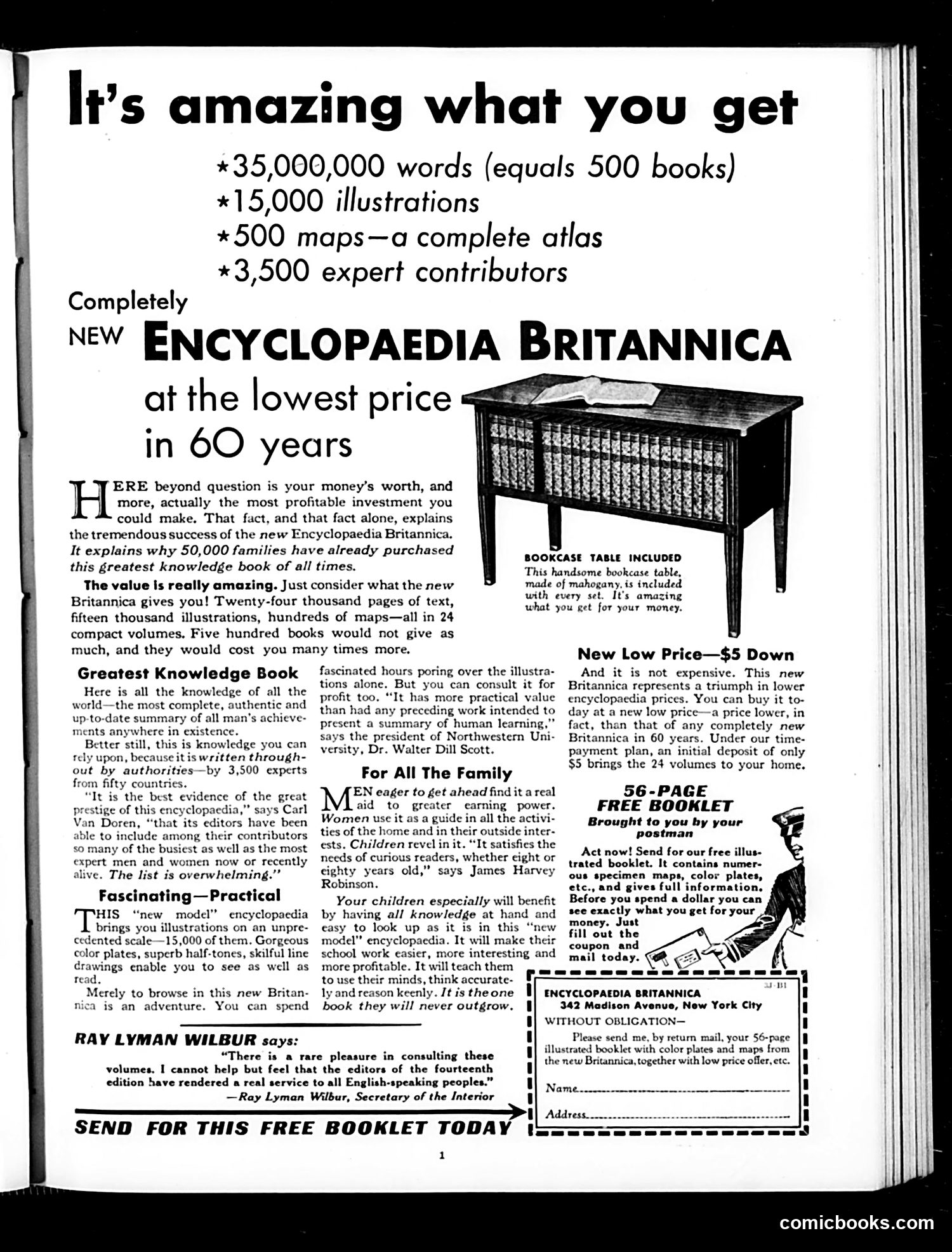
# Analysis This page is **primarily a vintage advertisement**, not satirical content. It promotes the "Completely New Encyclopaedia Britannica" at a claimed lowest price in 60 years ($5 down payment for all 24 volumes). The ad emphasizes the encyclopedia's scope (35 million words, 15,000 illustrations, 500 maps) and includes a testimonial from Ray Lyman Wilbur, identified as "Secretary of the Interior," lending governmental authority to endorse the purchase as a worthwhile investment and educational resource "for all the family." The accompanying furniture image shows a decorative bookcase display. The layout and typography are typical mid-20th century direct-mail marketing, targeting middle-class families seeking self-improvement through knowledge acquisition during an era when encyclopedias represented status and intellectual aspiration.
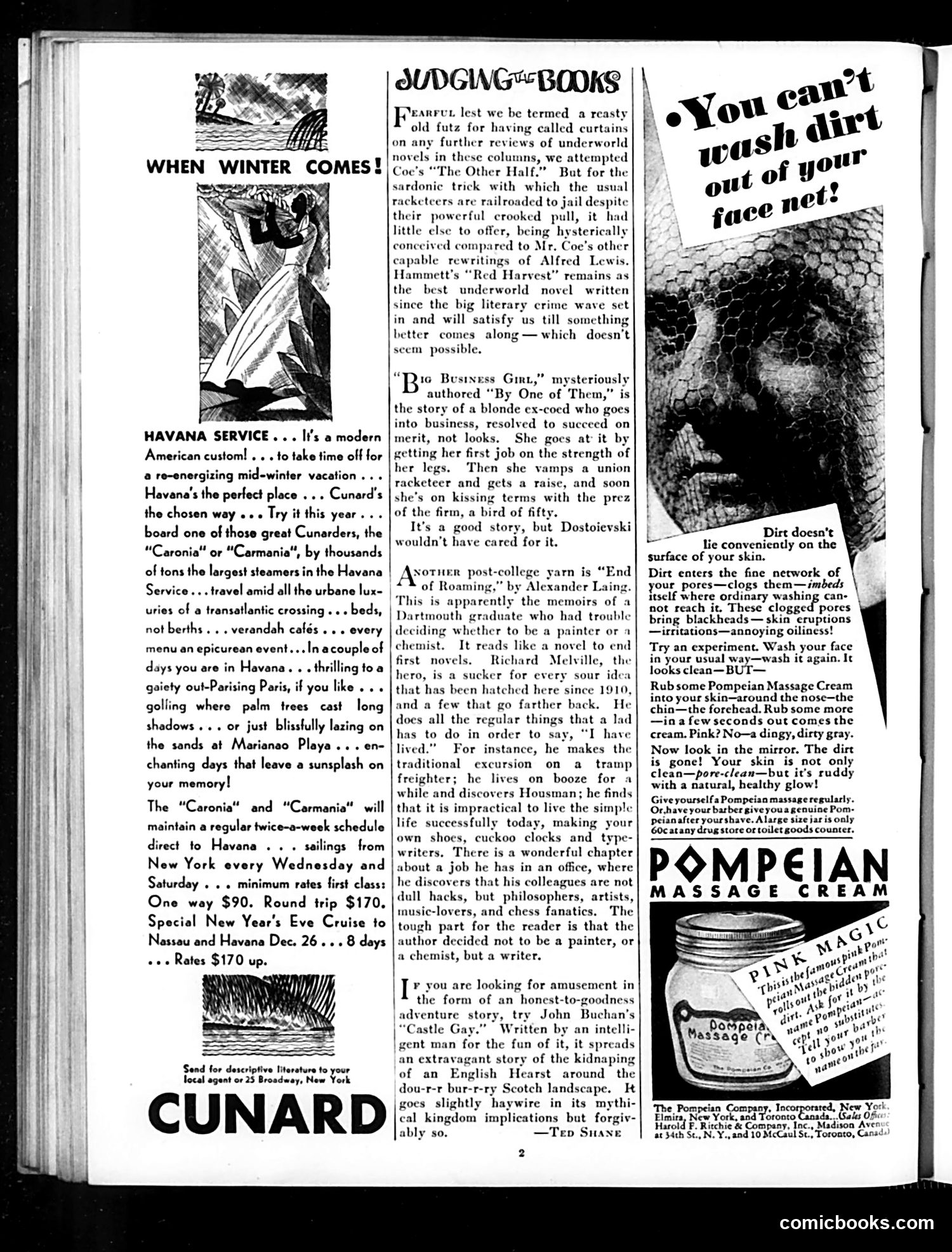
# Content Analysis This page is primarily **advertising and book reviews** rather than political satire. The main elements are: 1. **"When Winter Comes" section**: Advertisement for Cunard cruise line's Havana service, promoting mid-winter Caribbean vacations as an escape from cold weather. 2. **"Judging the Books" section**: Literary reviews of underworld/crime novels, including critiques of works by S.S. Coe and Alexander Laing. The reviews are somewhat dismissive, noting these crime stories lack the quality of better-known works. 3. **"Pompeian Massage Cream" advertisement**: Right side features a beauty product ad with claims about skin cleansing and appearance. The page reflects 1920s-30s consumer culture—travel promotions, pulp fiction popularity, and cosmetic marketing—rather than political commentary.
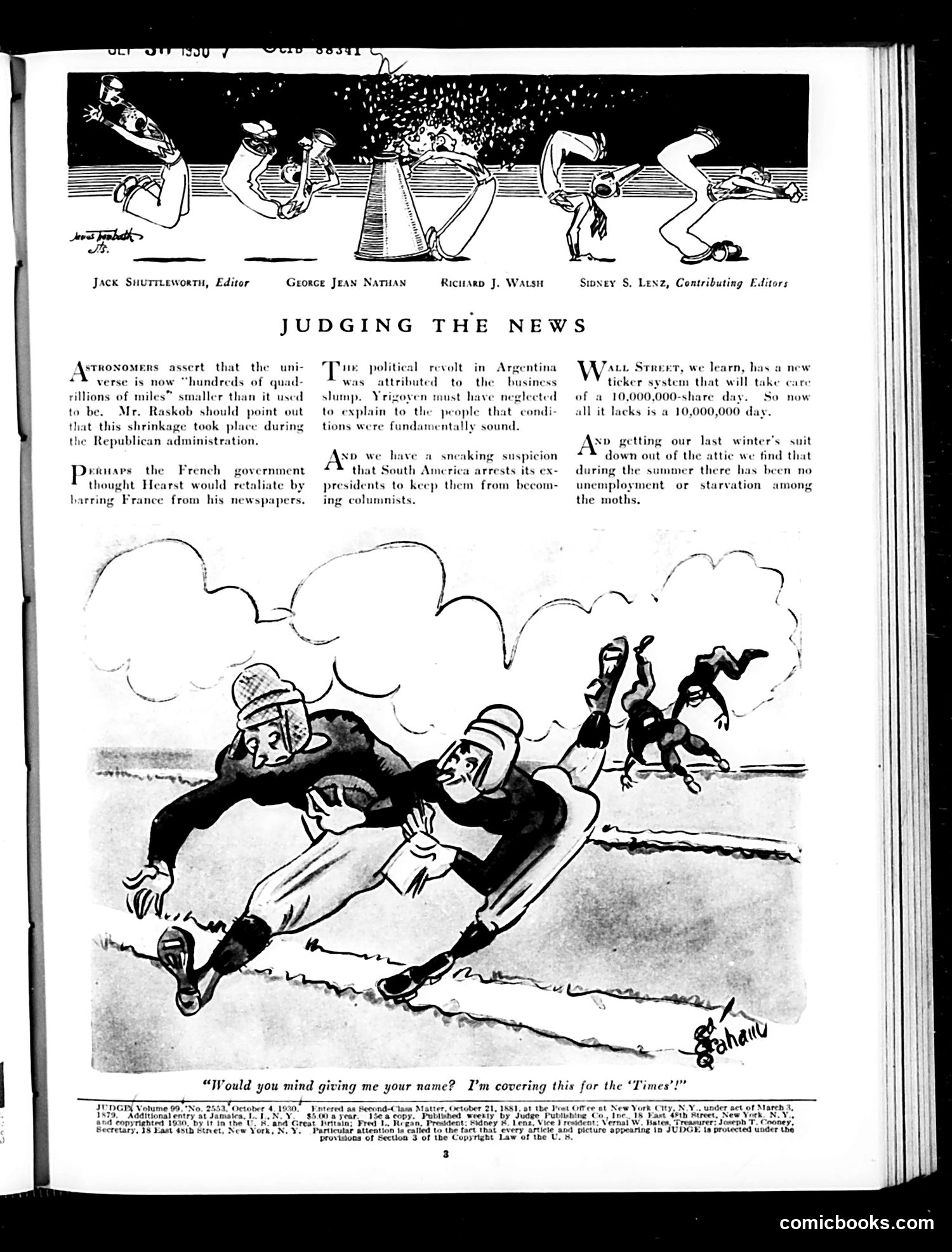
# Analysis of "Judging the News" Page This page from *Judge* magazine features editorial commentary and a political cartoon about contemporary events. **The Main Cartoon:** Two newspaper reporters on skis are chasing figures fleeing across snowy terrain, with one reporter asking "Would you mind giving me your name? I'm covering this for the 'Times'!" The satire appears to reference journalist pursuit of news subjects—likely mocking either overeager reporters or evasive news-makers. The skiing setting suggests winter/cold-weather urgency. **Editorial Comments** address: Argentina's political upheaval and business conditions; concerns about South American communist movements; and economic hardship (moths in attics, winter unemployment). The overall tone mocks both news media sensationalism and contemporary political instability, typical of *Judge's* satirical approach to 1920s American affairs.
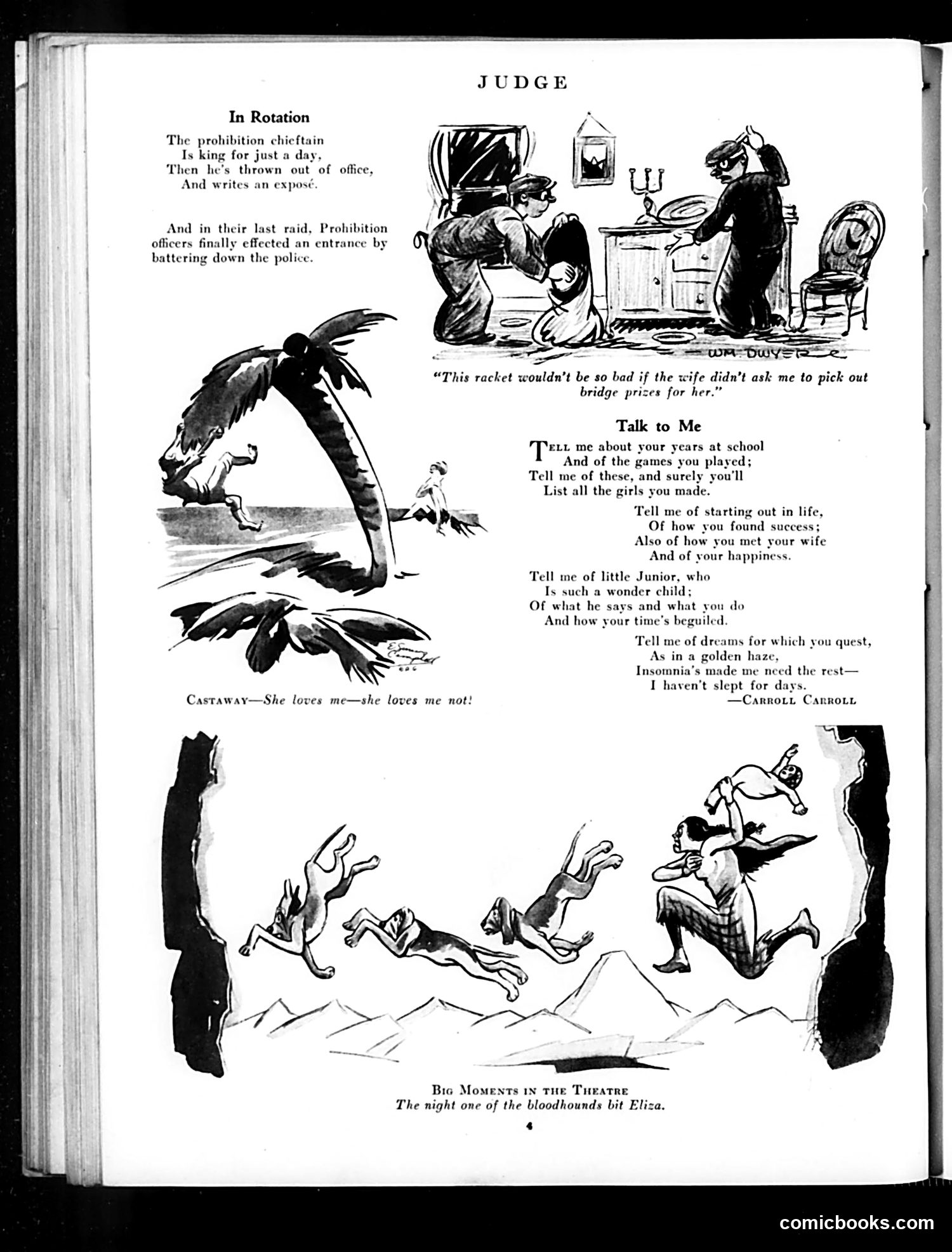
# Analysis of Judge Page **"In Rotation" cartoon (top):** Satirizes Prohibition enforcement corruption. A chieftain "is king for just a day," then gets thrown out and writes an exposé. The poem suggests Prohibition officials cycled through positions while raiding speakeasies and taking bribes. The captioned cartoon shows a man telling his wife about a "racket" involving bridge prizes—likely implying officials shook down citizens for payoffs. **"Talk to Me" poem (center-right):** By Carroll Carrol, this sentimental verse requests personal stories about school, success, marriage, children, and unfulfilled dreams. It appears unrelated to the other satire on the page. **"Big Moments in the Theatre" (bottom):** Shows people fleeing in exaggerated panic, captioned "The night one of the bloodhounds lit Eliza"—a reference to the *Uncle Tom's Cabin* stage adaptation's famous scene.
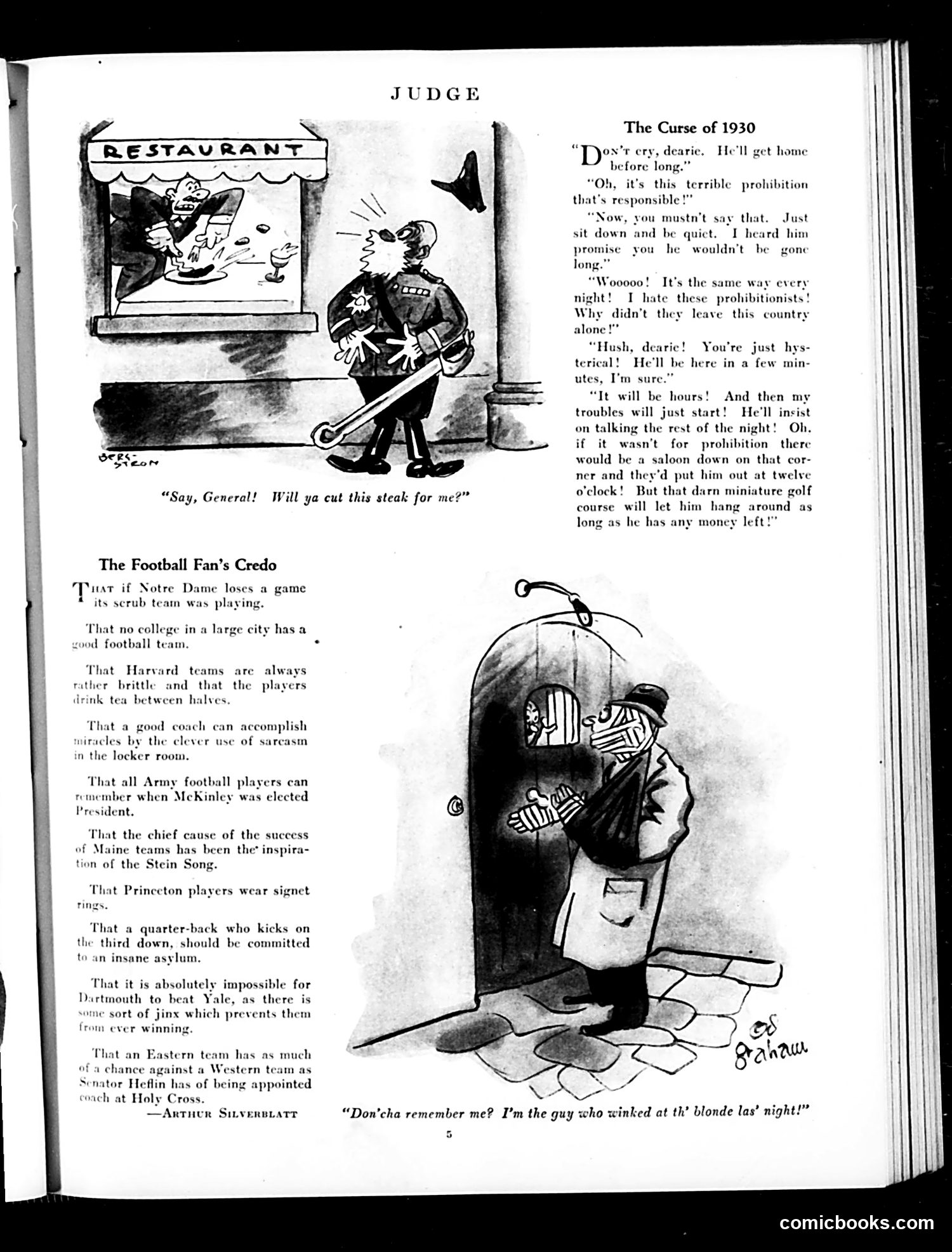
# Page Analysis: Judge Magazine **Top Cartoon ("Say, General! Will ya eat this steak for me?"):** A military officer stands outside a restaurant while a waiter dangles food. The joke appears to satirize either military discipline or an officer's predicament—possibly referencing Prohibition-era restaurant practices or military regulations about where officers could eat. **Main Content - "The Football Fan's Credo":** A humorous list of absurd "beliefs" mocking college football enthusiasts, including exaggerated claims about Notre Dame, Harvard, Army teams, and coaching. The satire ridicules fans' irrational loyalties and the inflated mythology surrounding college football. **Bottom Cartoon:** A man's profile contains a small figure inside his head labeled "the guy who winked at th' blonde las' night"—satirizing how one embarrassing moment dominates a person's thoughts.
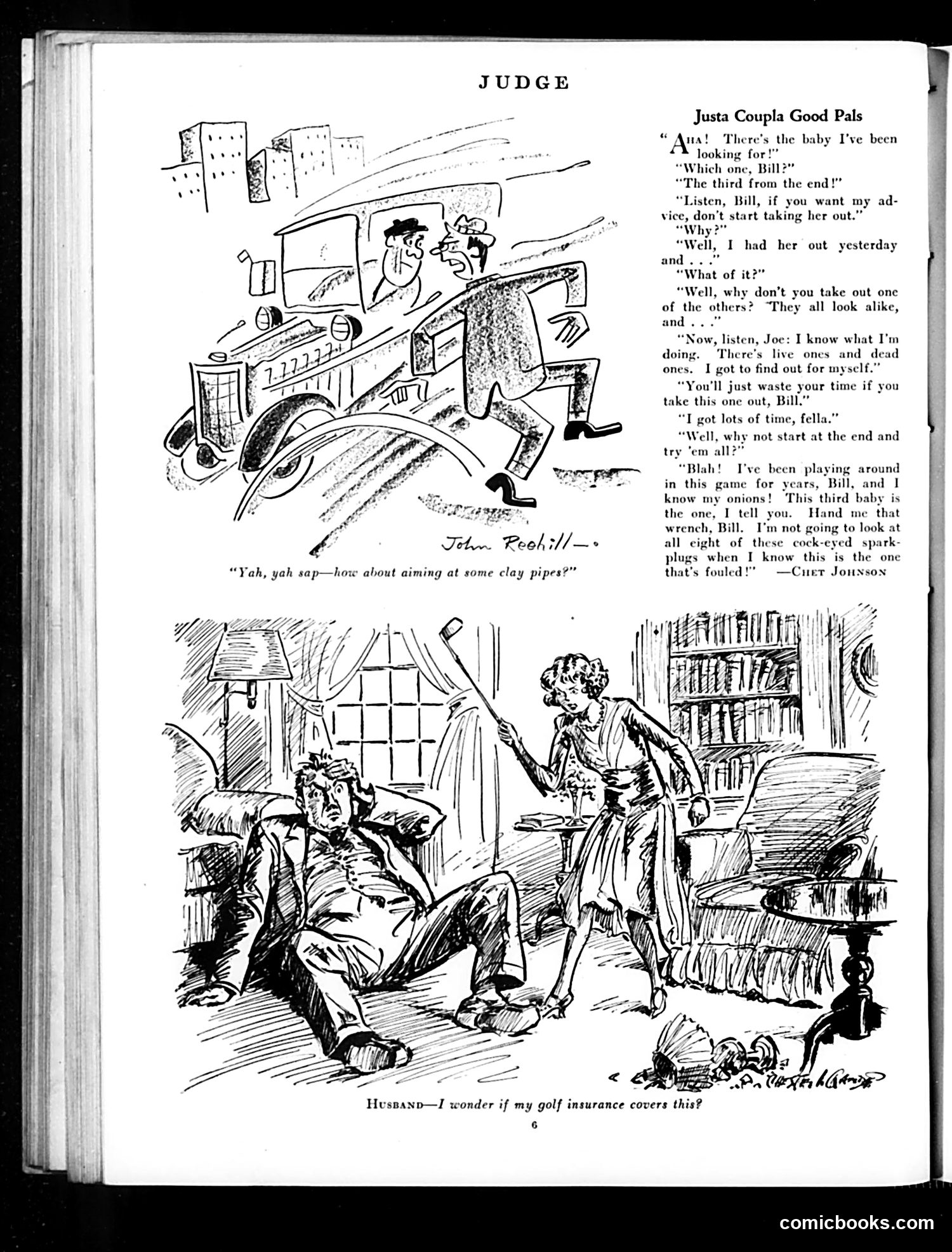
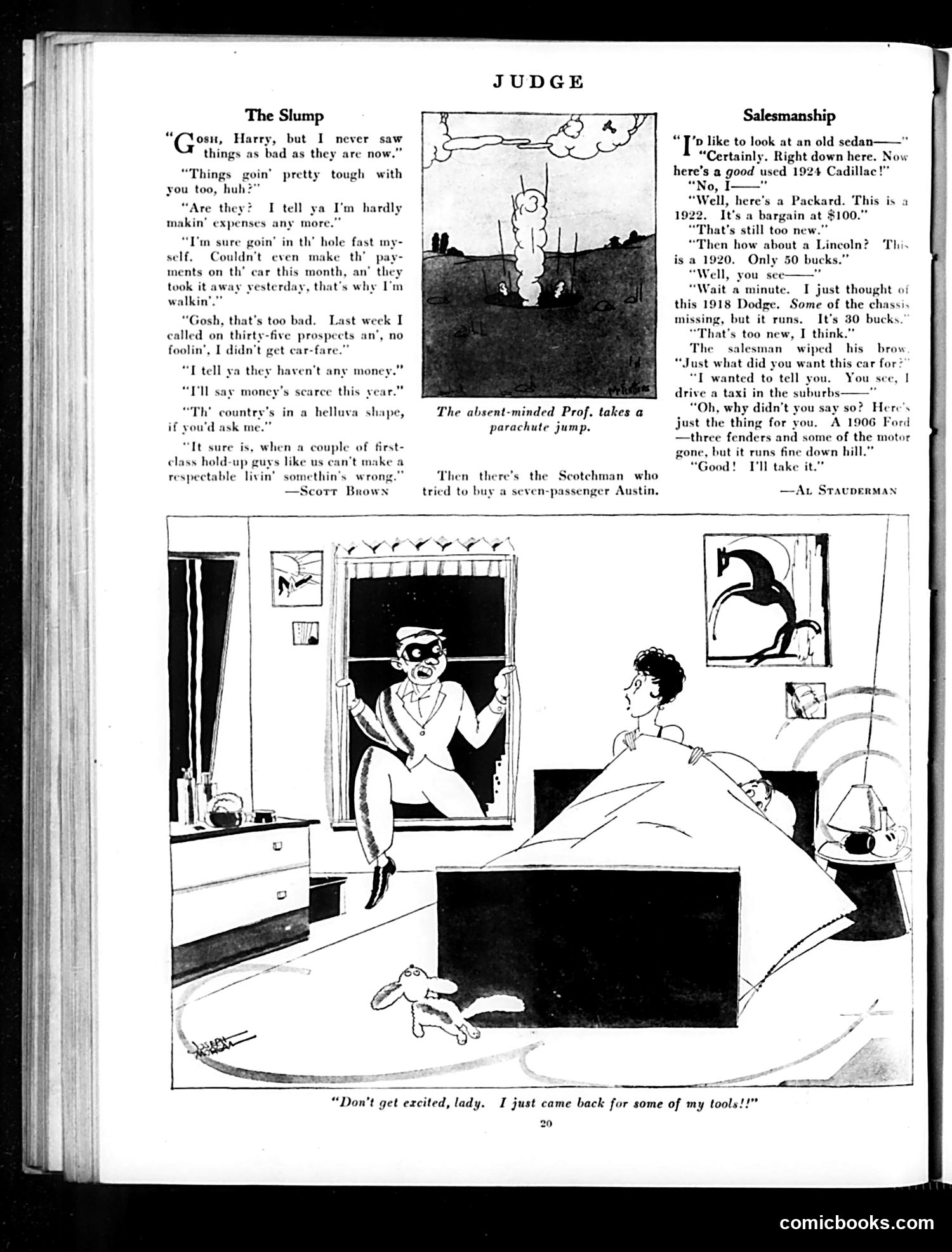
# Analysis of Judge Page This page contains two unrelated cartoons satirizing everyday American life. **Top cartoon** ("Yah, yah sap—how about aiming at some clay pipes?") depicts a car crash, with two men arguing about whose baby they've been searching for. The joke relies on absurdist humor—the driver suggests they're interchangeable since "they all look alike," implying careless parenting or indifference to which child belongs to whom. **Bottom cartoon** ("Husband—I wonder if my golf insurance covers this?") shows a man struck by a golf club wielded by an angry woman indoors, apparently his wife. The satire mocks both golf obsession and domestic conflict—suggesting the husband's insurance policy (presumably for golf-related injuries) wouldn't cover injuries inflicted by his spouse during a domestic dispute. Both rely on slapstick humor and exaggerated domestic scenarios typical of Judge's satirical approach.
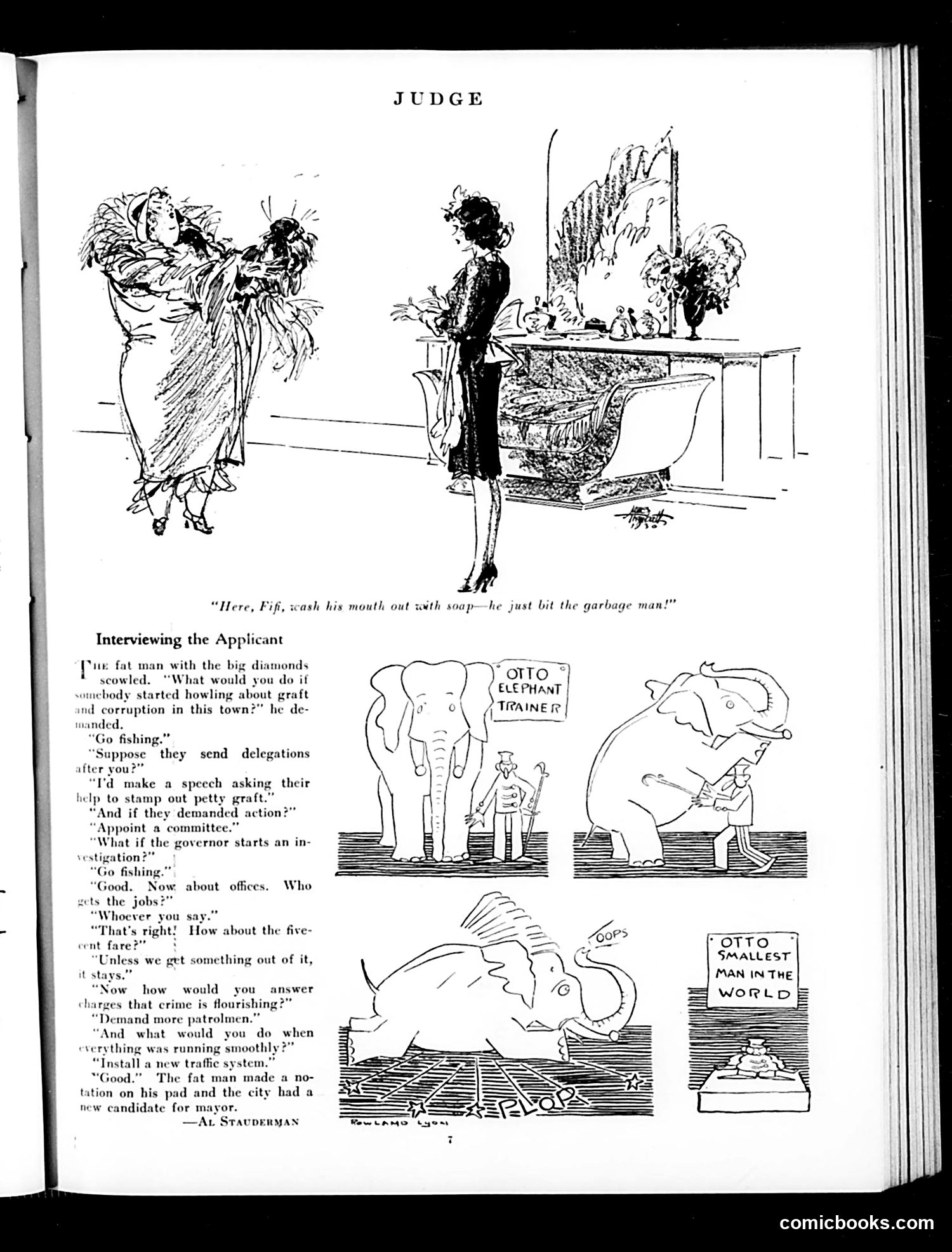
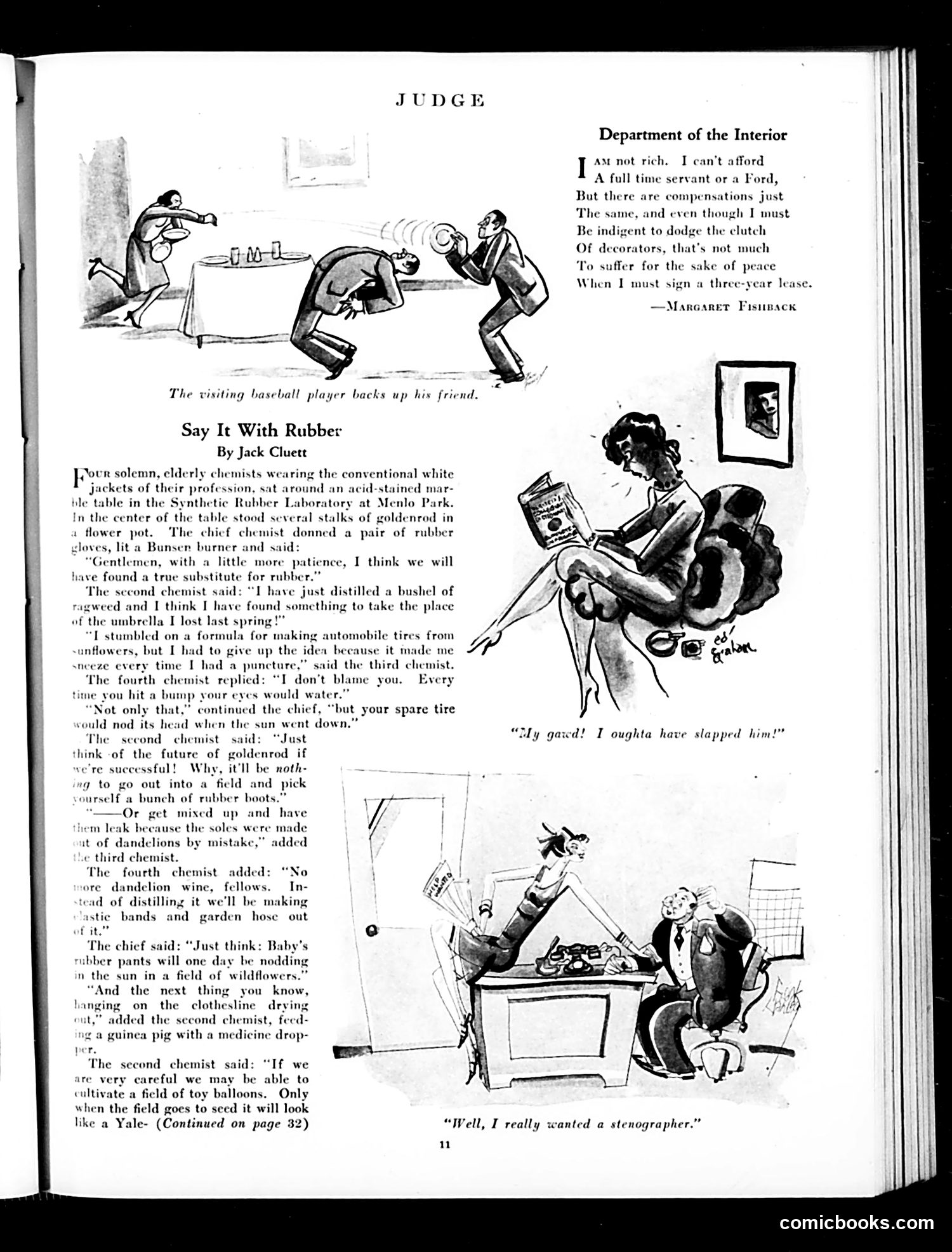
# Political Cartoon Analysis: Judge Magazine This page satirizes municipal corruption and political appointment in early-20th-century American cities. **Top cartoon**: A woman instructs her dog to "wash his mouth out with soap" after it bit "the garbage man"—a crude joke suggesting the dog has poor taste. **Main feature "Interviewing the Applicant"**: A wealthy man (identifiable by "big diamonds") interviews a mayoral candidate. The satire exposes how corrupt city machines operated: the candidate is explicitly advised to deflect serious corruption complaints with dismissals ("Go fishing"), neutralize reformers with speeches, and avoid real action. The fat man approves this cynicism and appoints him mayor—showing how patronage systems rewarded complicity over competence. **Otto the Elephant cartoons**: Appear to be separate comic strips, likely recurring characters in Judge magazine. The piece, credited to Al Stauderman, mocks the normalization of political corruption in American urban governance—showing how openly cynical the system had become.
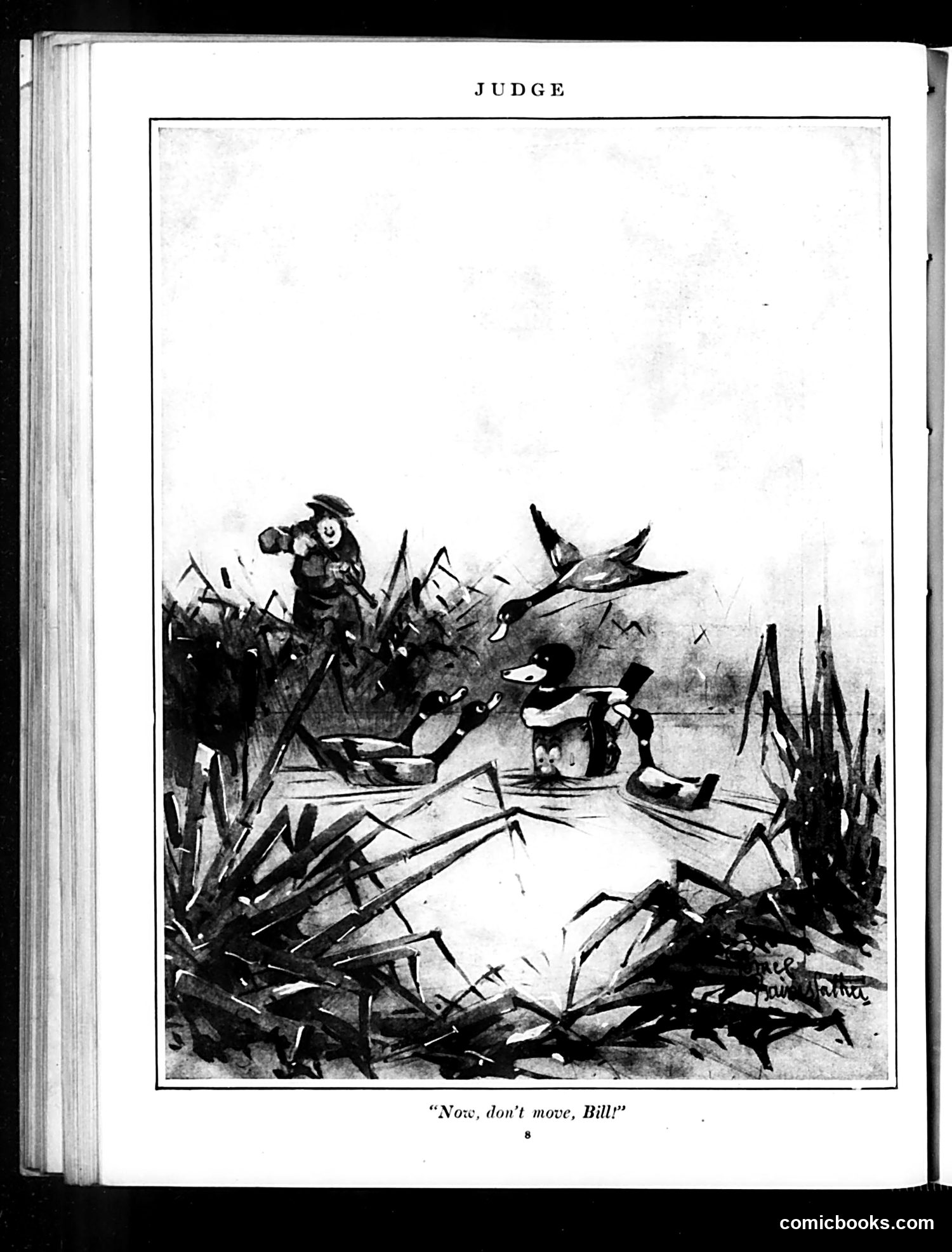
# "Now, Don't Move, Bill!" This Judge cartoon depicts a precarious scene in a pond or marsh setting. A figure labeled "Bill" (likely a character representing a person or political figure) stands motionless in water while another figure with binoculars observes from above, issuing a warning. The scene is surrounded by insects—particularly large grasshoppers or locusts—suggesting either a literal pest infestation scenario or metaphorical use of insects as social/political problems. The "don't move" instruction implies that remaining still is the safest course of action amid chaos or danger. Without the specific historical context of this Judge issue, the exact political reference remains unclear, though the cartoon likely satirizes either a real contemporary crisis (agricultural, economic, or political) or a prominent public figure's precarious position.
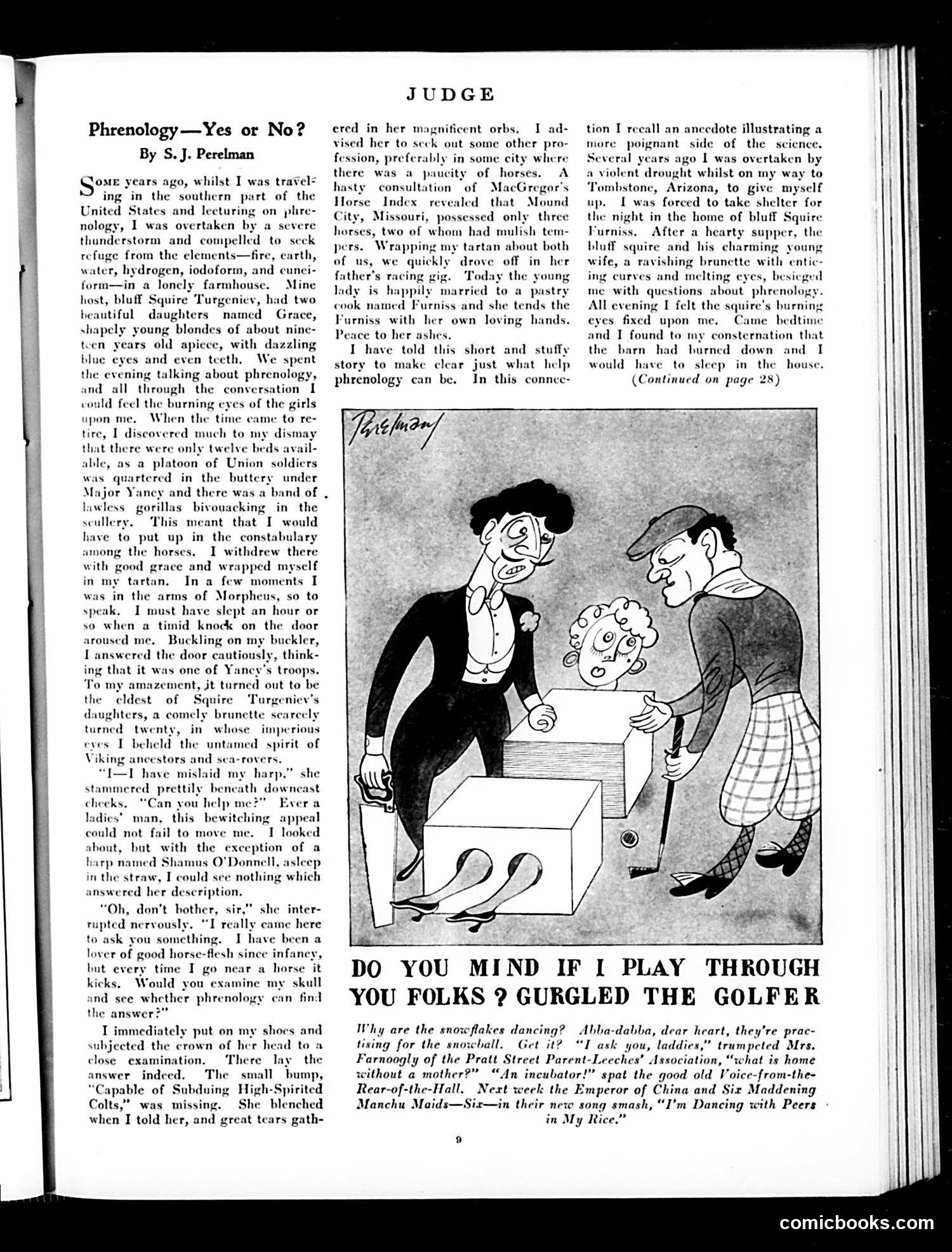
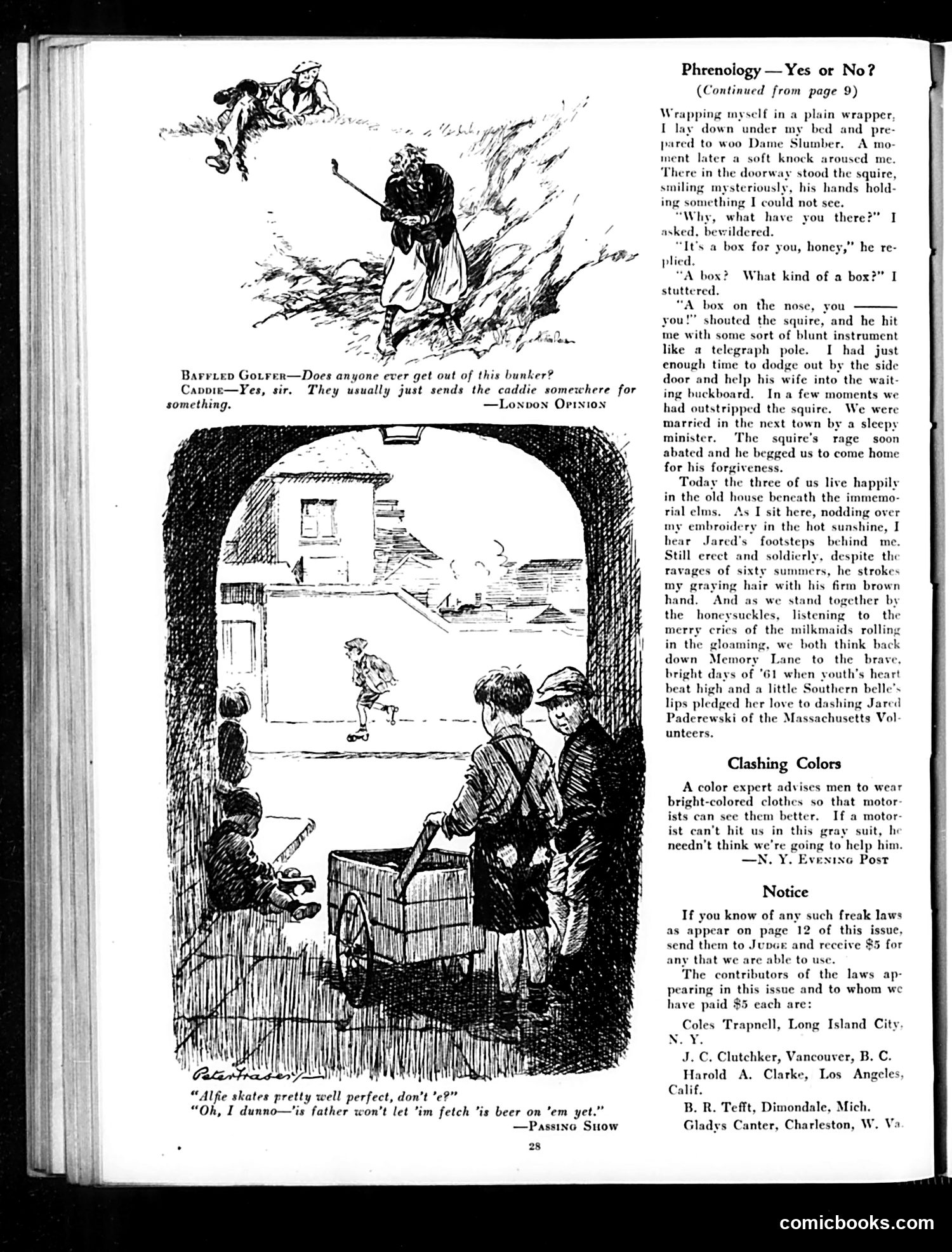
# Phrenology Satire in Judge Magazine This page satirizes **phrenology**—the pseudoscience claiming skull bumps reveal character traits—through S.J. Perelman's absurdist story and an accompanying cartoon. **The cartoon** shows two men observing a third man playing golf. The caption reads: "DO YOU MIND IF I PLAY THROUGH YOU FOLKS? GURGLED THE GOLFER," with the punchline suggesting someone with no social awareness or manners. **The story's satire**: Perelman mocks phrenology by presenting ridiculous "diagnoses"—examining a woman's skull to explain why she's kicked by horses, attributing it to a missing bump for "Subduing High-Spirited Colts." The absurd solutions (relocating to Missouri where few horses exist) underscore how baseless the science is. **The humor** relies on treating phrenology with mock-seriousness while delivering increasingly preposterous scenarios, typical of Judge magazine's satirical style. Both the story and cartoon poke fun at pseudoscience and poor social etiquette using exaggerated, comedic logic.
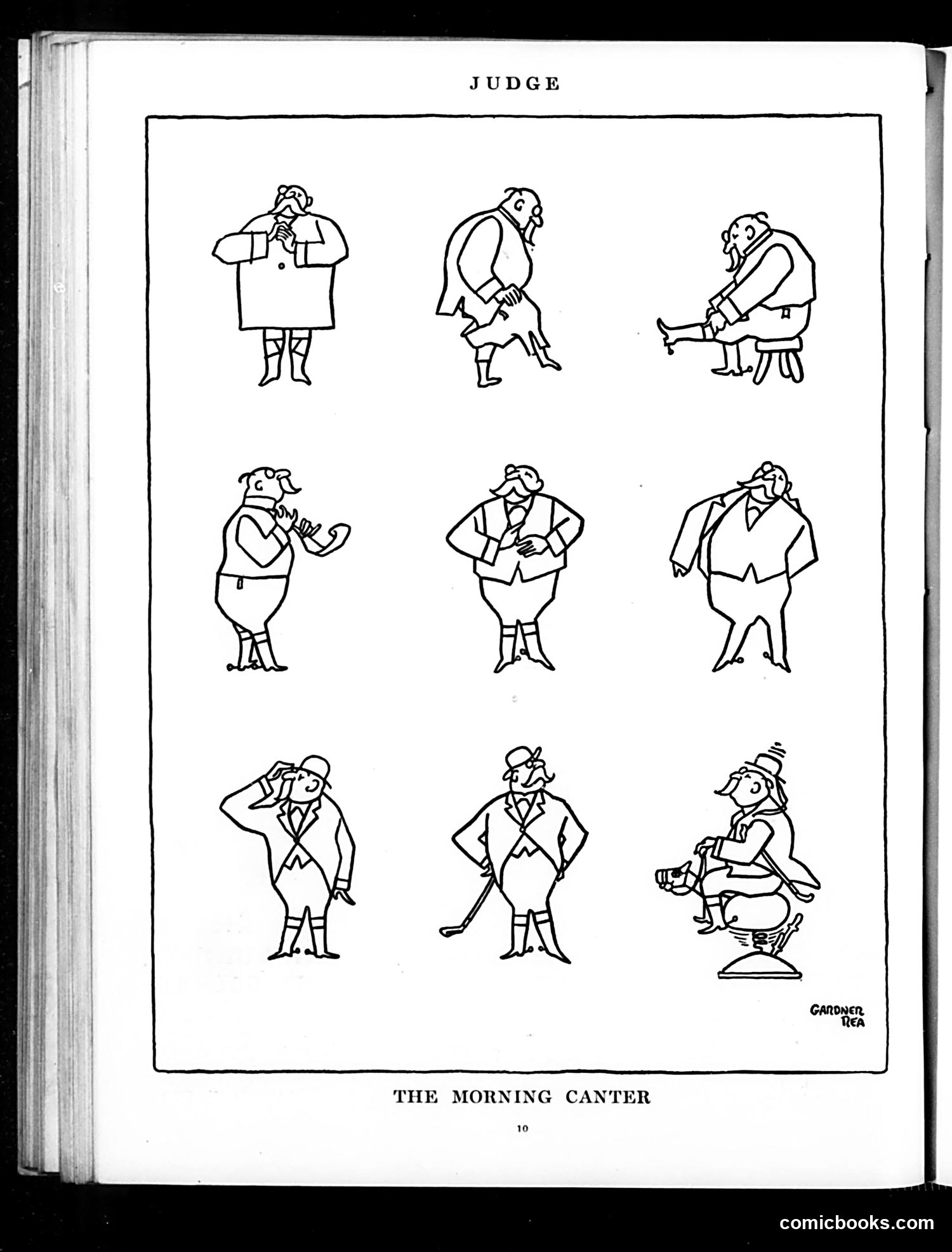
# "The Morning Canter" - Judge Magazine This page presents nine cartoon vignettes of a judge in various moods and situations, all labeled simply "JUDGE." The title "The Morning Canter" suggests these depict a judge's emotional states during his morning routine or commute. The satire appears to mock judicial temperament and behavior—showing the judge alternating between stern authority (holding papers with apparent displeasure), physical exertion (riding/exercising), contemplation, agitation, and other emotional states. The cartoons suggest judges are volatile, inconsistent characters whose moods fluctuate dramatically. The humor likely targets judicial pretensions or the gap between judges' dignified public personas and their actual petulant, physical, or capricious private behavior. Without specific historical context, the exact judge referenced remains unclear.