A complete issue · 36 pages · 1930
Judge — July 12, 1930
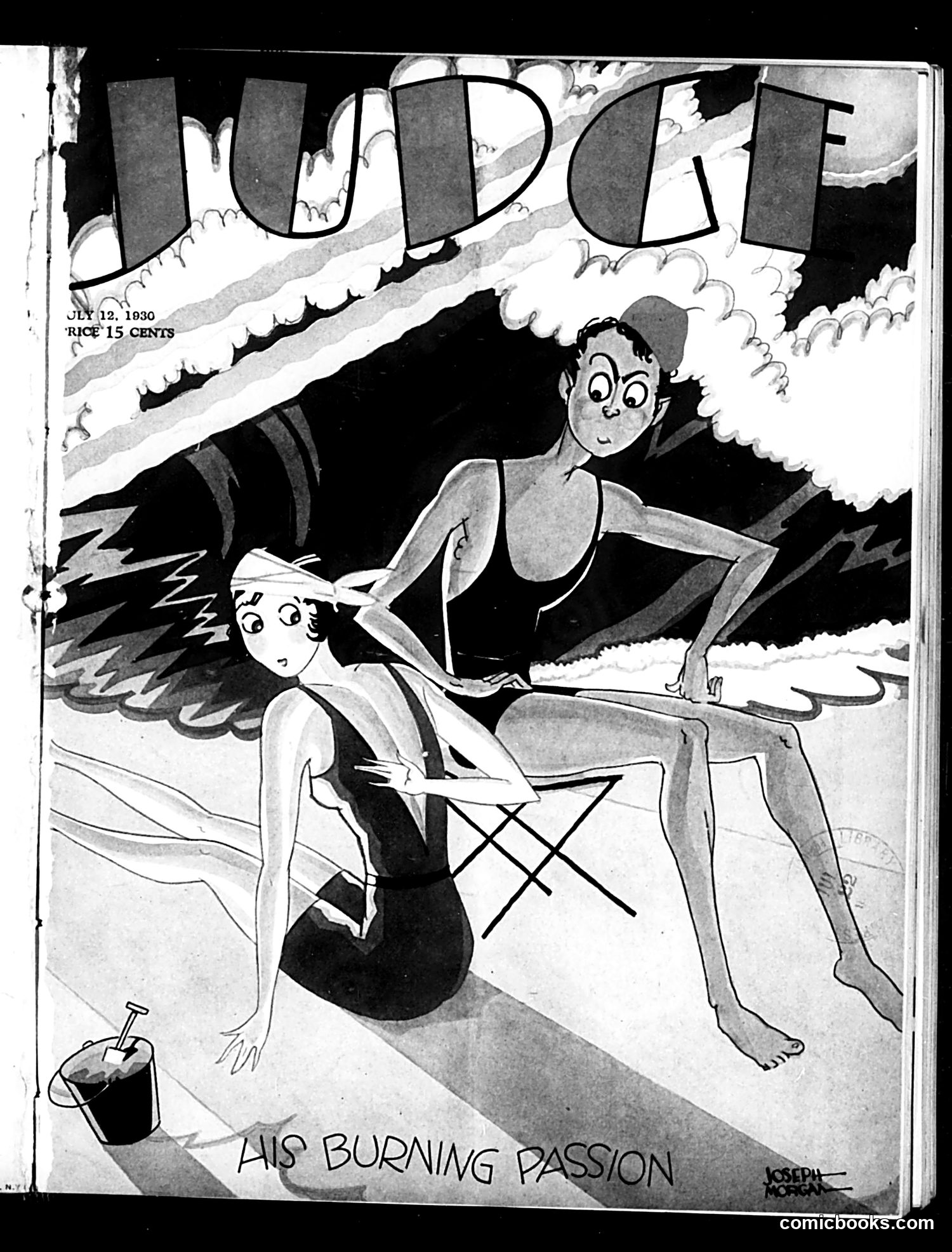
# Analysis of Judge Magazine Cover (July 12, 1930) This cover depicts a beach scene titled "His Burning Passion." Two figures in swimming attire appear surprised or startled—one seated in a beach chair, another standing nearby. A large winged creature (possibly a bat or demon) looms menacingly in the background clouds above them. The satire likely comments on beach romance or summer flirtation interrupted by an unwelcome intrusion. The "burning passion" referenced in the title suggests a comedic take on romantic entanglements, with the monstrous figure representing either a jealous rival, an unwanted third party, or perhaps a humorous exaggeration of passion itself as something wild and uncontrollable. The joke relies on visual contrast between the peaceful beach setting and the grotesque interruption.
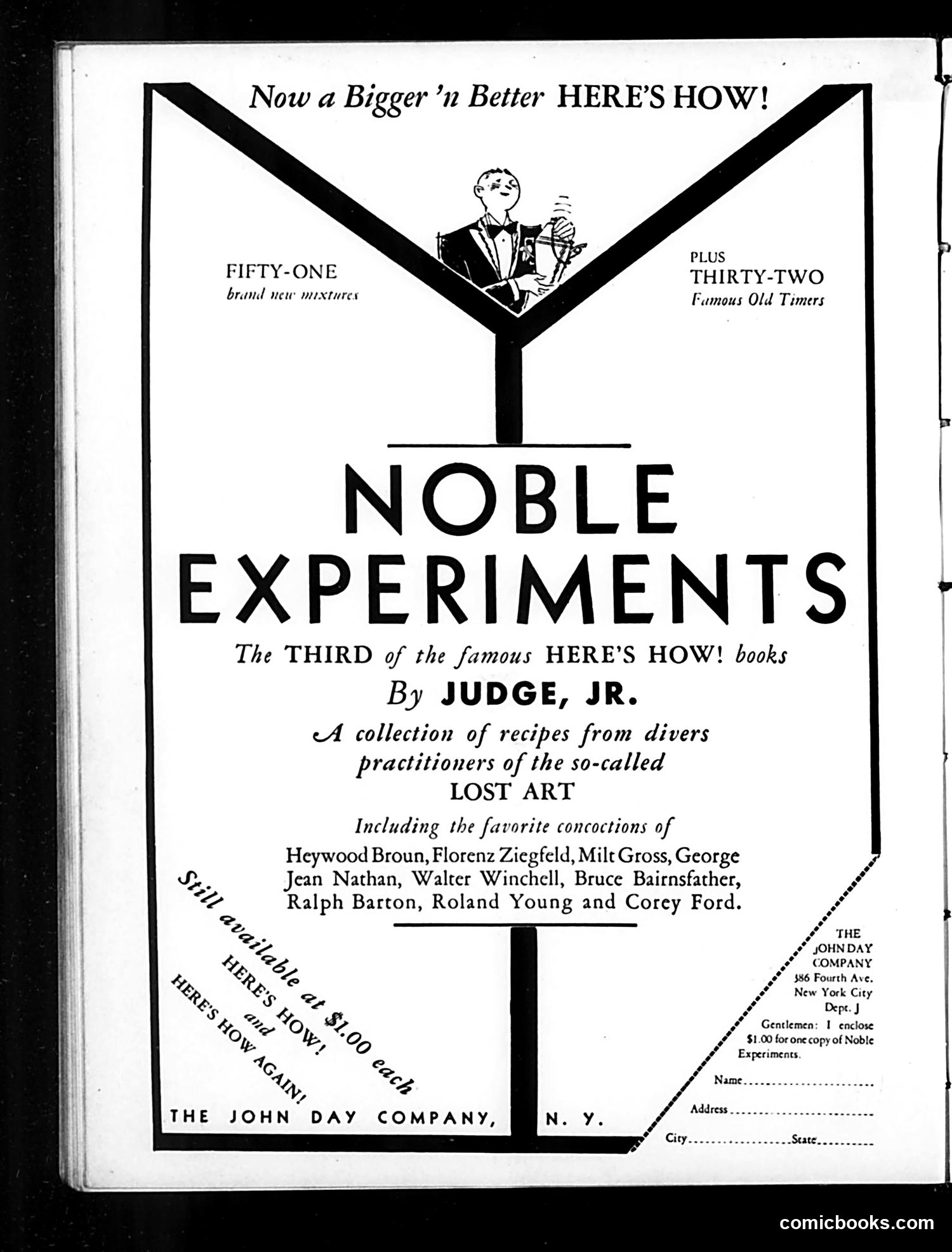
# Noble Experiments Advertisement This is a **book advertisement**, not political satire. It promotes "Noble Experiments," the third in Judge magazine's "Here's How!" cookbook series by Judge Jr. The ad announces the book contains 51 new cocktail recipes plus 32 "famous old timers" (classic drinks). Contributors include celebrities like Heywood Broun, George Jean Nathan, and others. The phrase "**Lost Art**" references **Prohibition** (1920-1933)—the "Noble Experiment" was the government's actual term for alcohol bans. The ad humorously plays on this, selling cocktail recipes during an era when alcohol production and consumption were illegal. The joke is selling prohibition-era drinking guides under the government's own euphemism for the failed policy.
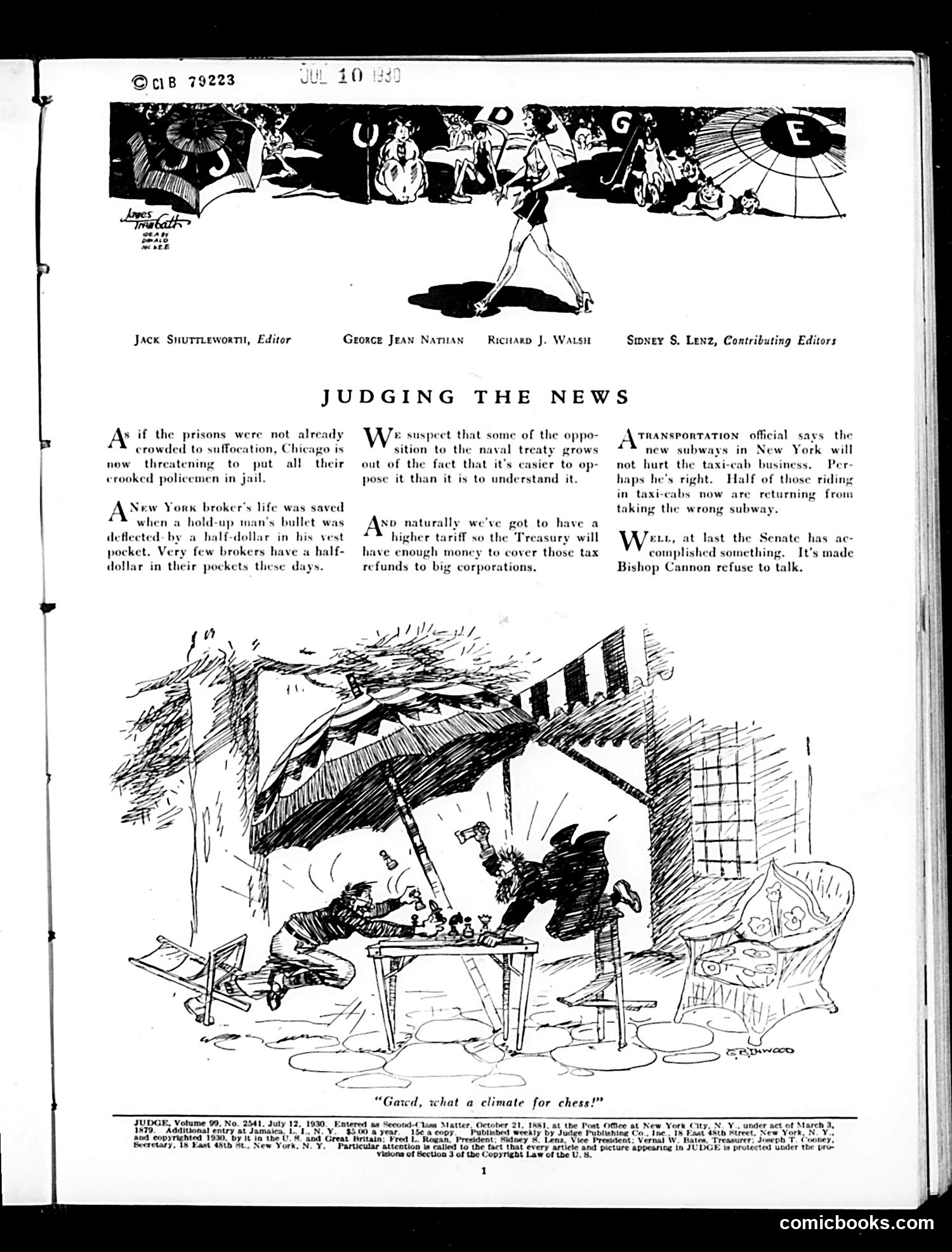
# "Judging the News" - July 10, 1930 This page contains brief satirical commentaries on current events plus one cartoon. The main cartoon shows two men playing chess outdoors during a rainstorm, with the caption "Gaud, what a climate for chess!" The joke appears to be absurdist humor—the men are focused on their game despite terrible weather, commenting on human stubbornness or misplaced priorities. The text snippets above mock various 1930 issues: Chicago corruption, naval treaty negotiations, New York subway problems, tariff policy, and—notably—"Bishop Cannon," likely referring to James Cannon Jr., a prominent Methodist bishop involved in political scandal during this period. The overall tone is cynical commentary on government incompetence and moral hypocrisy.
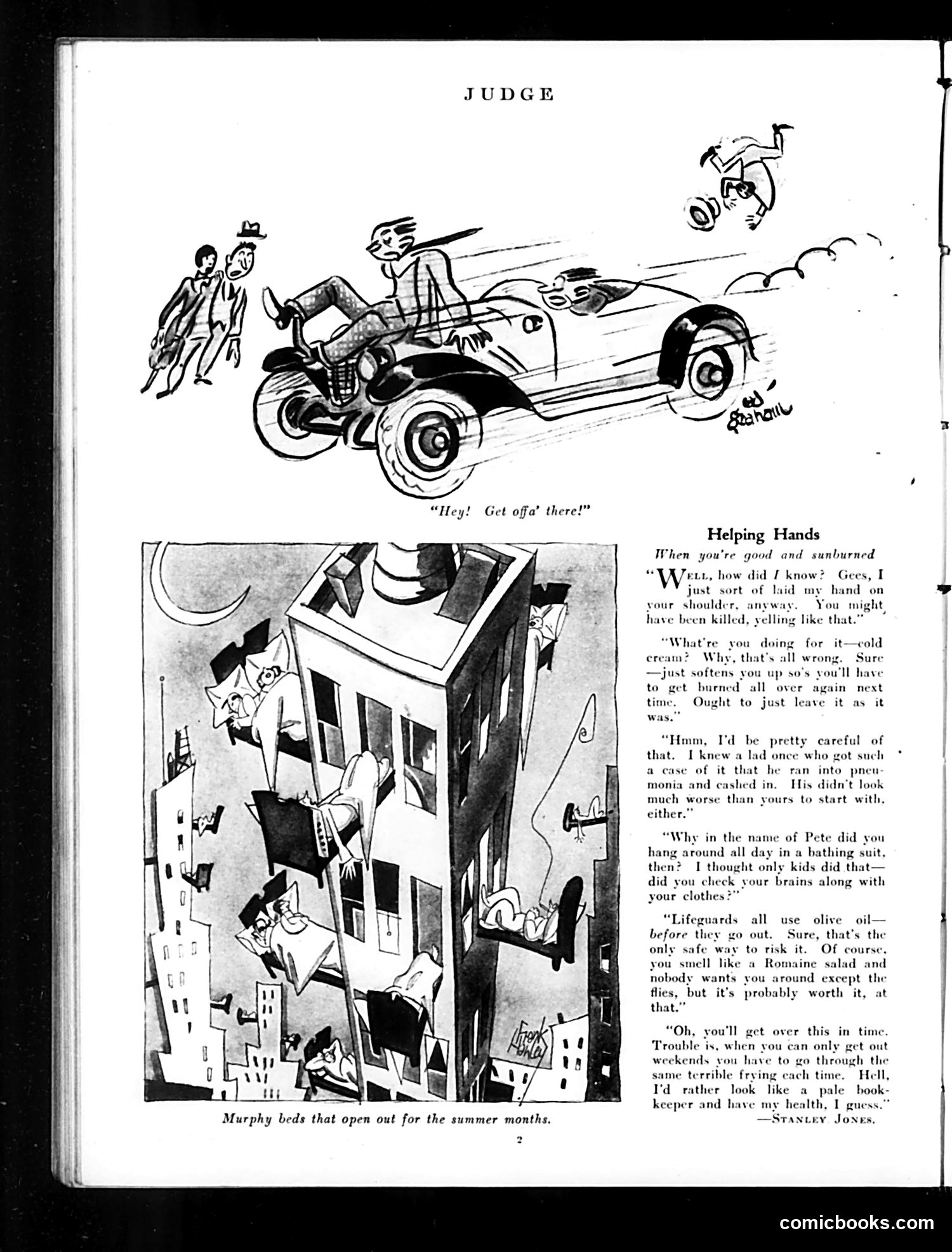
# Analysis This page contains two unrelated pieces: **Top cartoon**: A slapstick driving scene captioned "Hey! Get off there!" shows a car careening dangerously with passengers flying about. The humor is straightforward physical comedy about reckless motoring—a common satire subject in the early automobile era when driving was still novel and accidents frequent. **Bottom section**: "Helping Hands" is a domestic humor piece about sunburned skin care. A character advises against treating a sunburn with cold cream, citing someone who got worse. The dialogue mocks well-meaning but counterproductive advice. This represents typical Judge humor: exaggerated domestic situations and interpersonal mishaps with no apparent political content. Both pieces use slapstick and conversational humor typical of Judge's general entertainment focus.
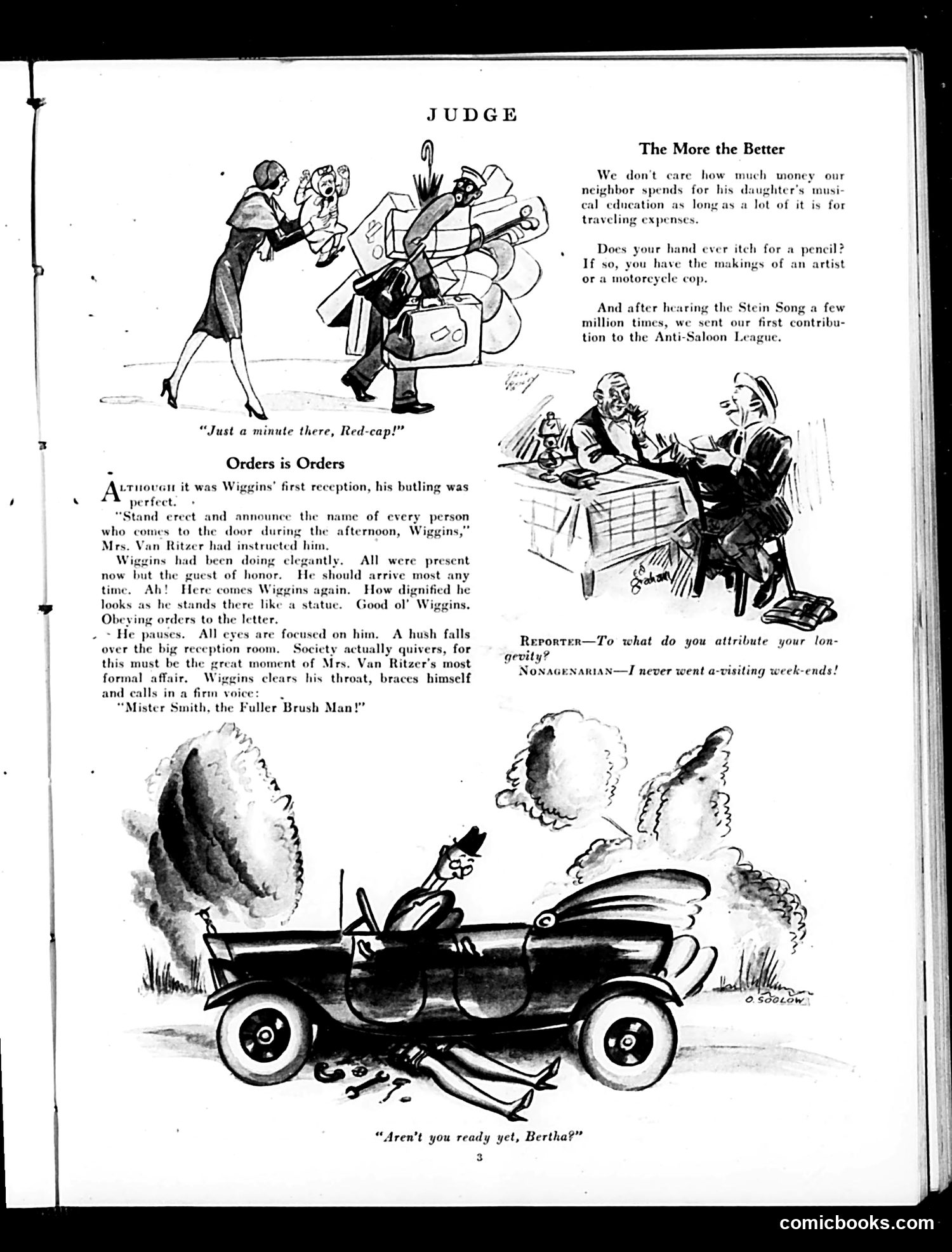
# Judge Magazine Page Analysis This page contains three separate satirical pieces: 1. **"Just a minute here, Red-cap!"** - A cartoon mocking excessive shopping, showing a judge or official figure overwhelmed by packages from a woman's spending spree. 2. **"Orders is Orders"** - A narrative piece satirizing a butler named Wiggins at a fancy reception who rigidly follows etiquette rules, treating formality as absolute law despite social chaos around him. 3. **"Aren't you ready yet, Bertha?"** - A cartoon showing a car disaster mid-journey, with luggage exploding everywhere, humorously commenting on the chaos of automobile travel or overpacking. The overall theme appears to critique excessive consumerism, rigid adherence to social convention, and the complications of modern leisure activities—common targets of Judge's satirical humor during the early 20th century.
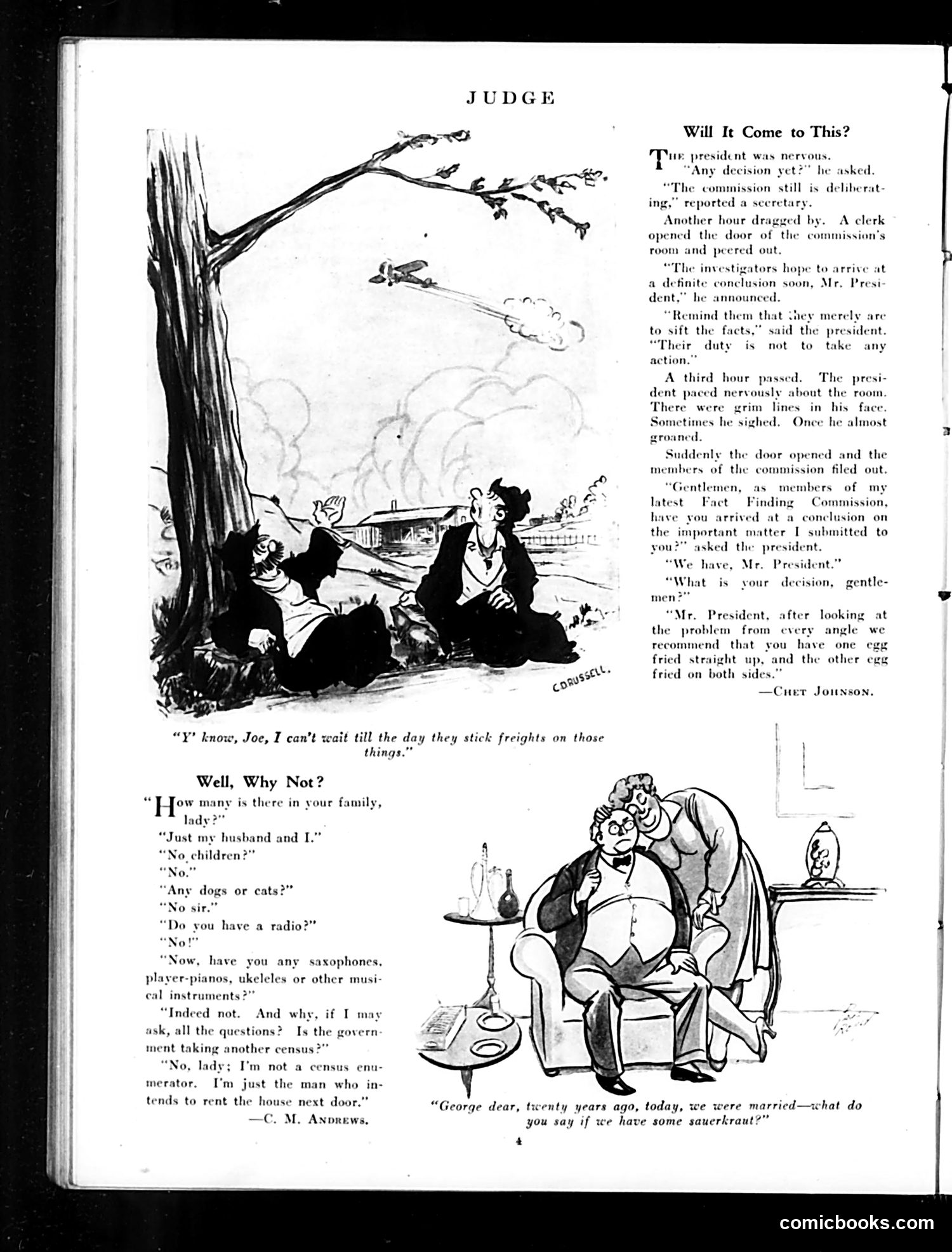
# Explanation for Modern Readers This page from *Judge* magazine contains two satirical pieces: **"Will It Come to This?"** depicts a nervous president awaiting a "Fact Finding Commission's" conclusion on an unspecified matter. The joke appears to reference bureaucratic delay and indecision—the commission can only recommend that eggs be "fried straight up" on one side and "fried on both sides" on the other, a absurdly useless non-conclusion. This satirizes government commissions that produce vague or contradictory findings. **"Well, Why Not?"** humorously depicts a census-taker's interrogation. The joke plays on increasingly absurd questions (about family size, pets, radios, musical instruments) escalating to a ridiculous punchline about the couple's lack of sauerkraut after 20 years of marriage. The satire mocks overly intrusive government census procedures. Both pieces mock bureaucratic inefficiency and government overreach through humor.
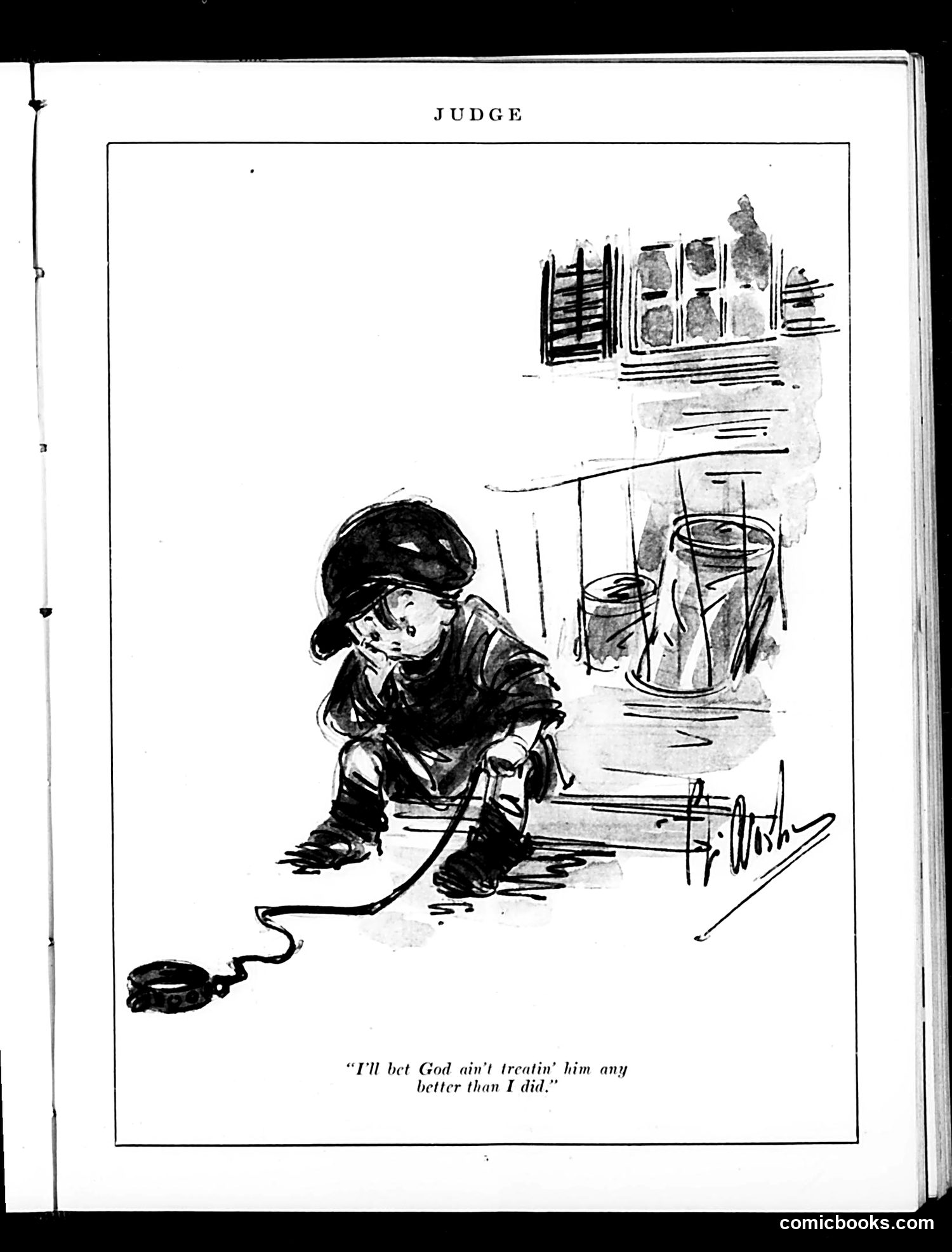
# Judge Cartoon: "Judge" This cartoon depicts a small child operating what appears to be a syringe or medical injection device, with the caption: "I'll bet God ain't treatin' him any better than I did." The image is social satire regarding child welfare and neglect. The child's crude clothing and the clinical setting (visible containers in background) suggest this is commentary on institutional care or medical treatment of poor/abandoned children. The dark humor implies the child has mistreated someone (possibly a sibling or animal) and cynically assumes God treats that person no better—a bitter commentary on divine indifference to suffering. This reflects Progressive Era concerns about child abuse, orphanages, and whether institutional or religious care adequately protected vulnerable children. The cartoon critiques both parental negligence and the adequacy of social systems meant to protect them.
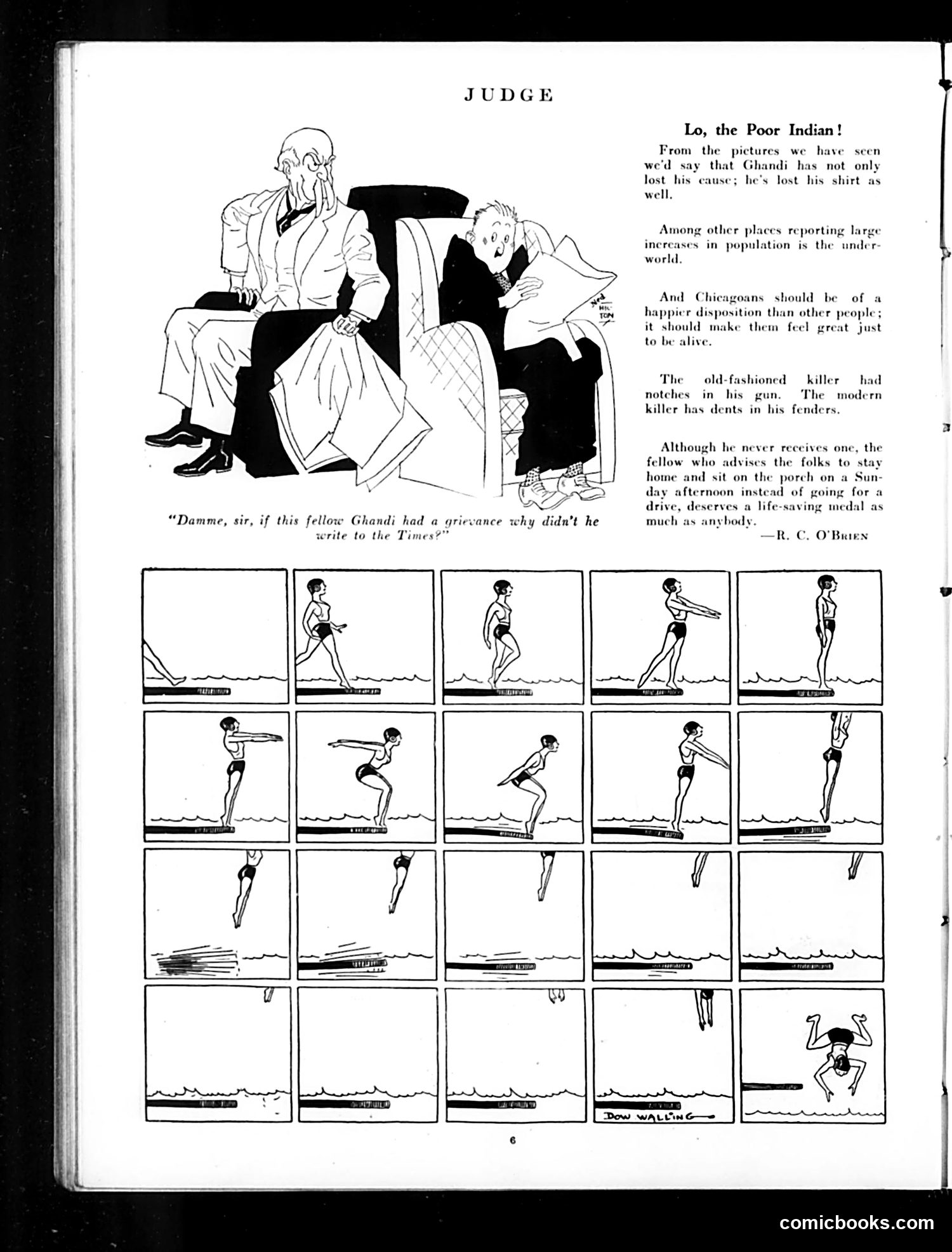
# Analysis of Judge Magazine Page The top cartoon shows a judge interviewing a man, with the caption quoting the man asking why Gandhi didn't write to the Times about his grievance. This satirizes assumptions that colonized peoples should use British institutional channels (like the Times newspaper) rather than pursuing direct action or civil disobedience. The right-side text commentary mocks Ghandi's political effectiveness, referencing his loss of possessions ("short as well") and sarcastically suggesting Chicagoans should feel "happy" merely to be alive. The quote by R.C. O'Brien critiques advice to stay home rather than organize for change. The bottom sequential panel shows a swimming or diving sequence—likely satirizing physical culture or athletic pursuits as frivolous alternatives to political engagement.
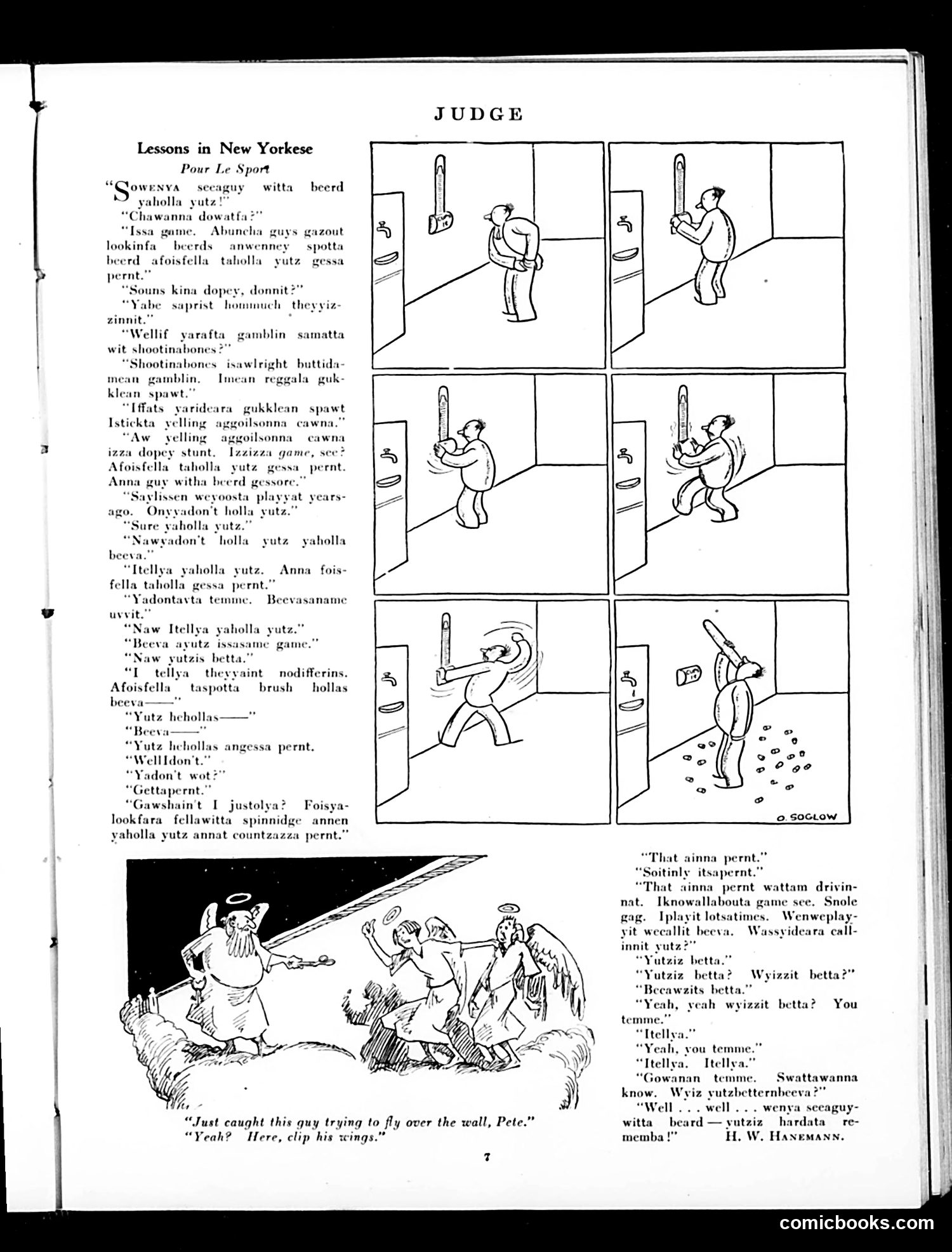
# "Judge" Page Analysis: Lessons in New Yorkese This page satirizes working-class New York dialect and slang through two components: **Top Section:** A six-panel comic strip showing a man repeatedly striking himself with a bat, presumably demonstrating some foolish "sport." The accompanying text is a phonetic transcription of thick New York accent speech about gambling games and "shooting bones" (dice games). **Bottom Section:** An illustration captioned "Just caught this guy trying to fly over the wall, Pete / Yeah? Here, clip his wings"—depicting angels or winged figures, with one suggesting clipping another's wings. This appears to be a darkly humorous reference to punishment or restraint in an afterlife context. The satire targets immigrant or working-class New Yorkers' speech patterns and their association with petty gambling and street games. The exaggerated phonetic spelling mocks their accents as crude and unintelligible to educated readers. The page reflects early 20th-century class-based humor common in Judge magazine.
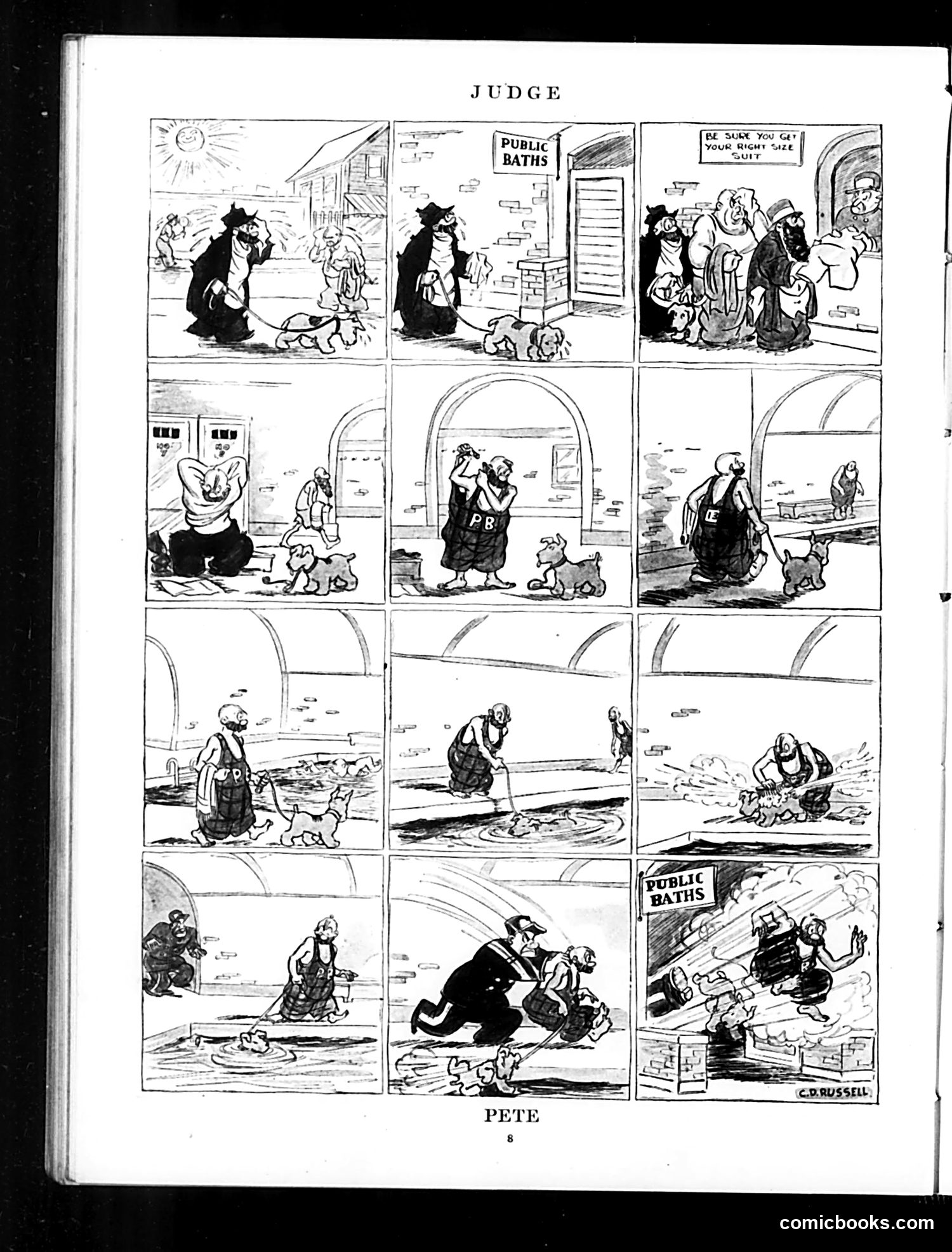
# Judge Magazine Page Analysis This is a multi-panel comic strip titled "Judge" (credited to C.B. Russell) satirizing public bathhouse use. The narrative follows a well-dressed man and a small dog through various bathhouse scenes. The humor appears to center on class contrast and bathing etiquette violations. In the opening panels, the man seems out of place at the public baths (a working-class facility). Subsequent panels show him and his dog creating chaos in the bathing areas—splashing, disrupting other bathers, and generally behaving inappropriately. The satire likely targets wealthy individuals attempting to use public facilities meant for the poor, or mocking those unfamiliar with proper communal bathing customs. The recurring "PUBLIC BATHS" sign reinforces the democratic, shared-space setting, making the gentleman's presumption or incompetence the joke's core.
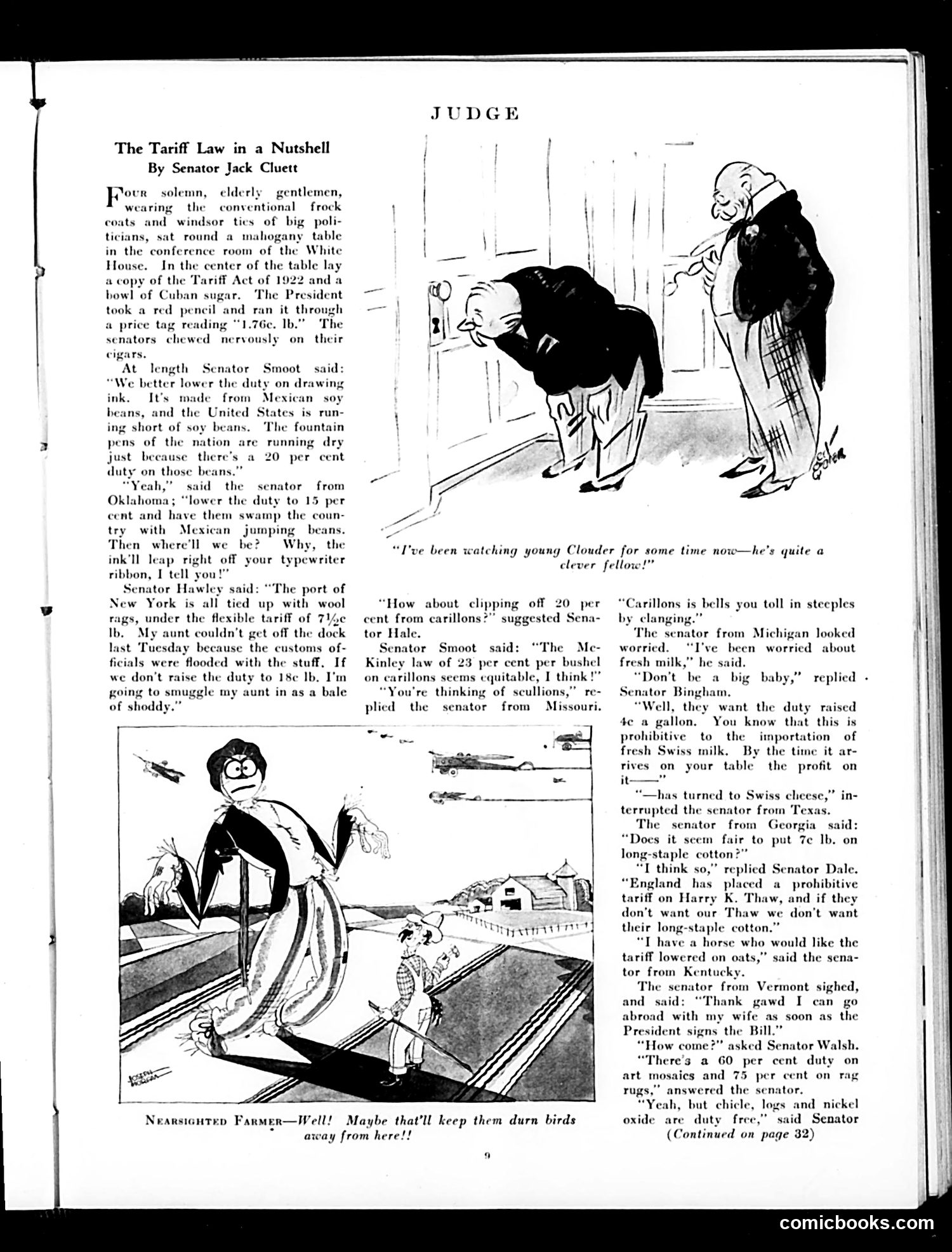
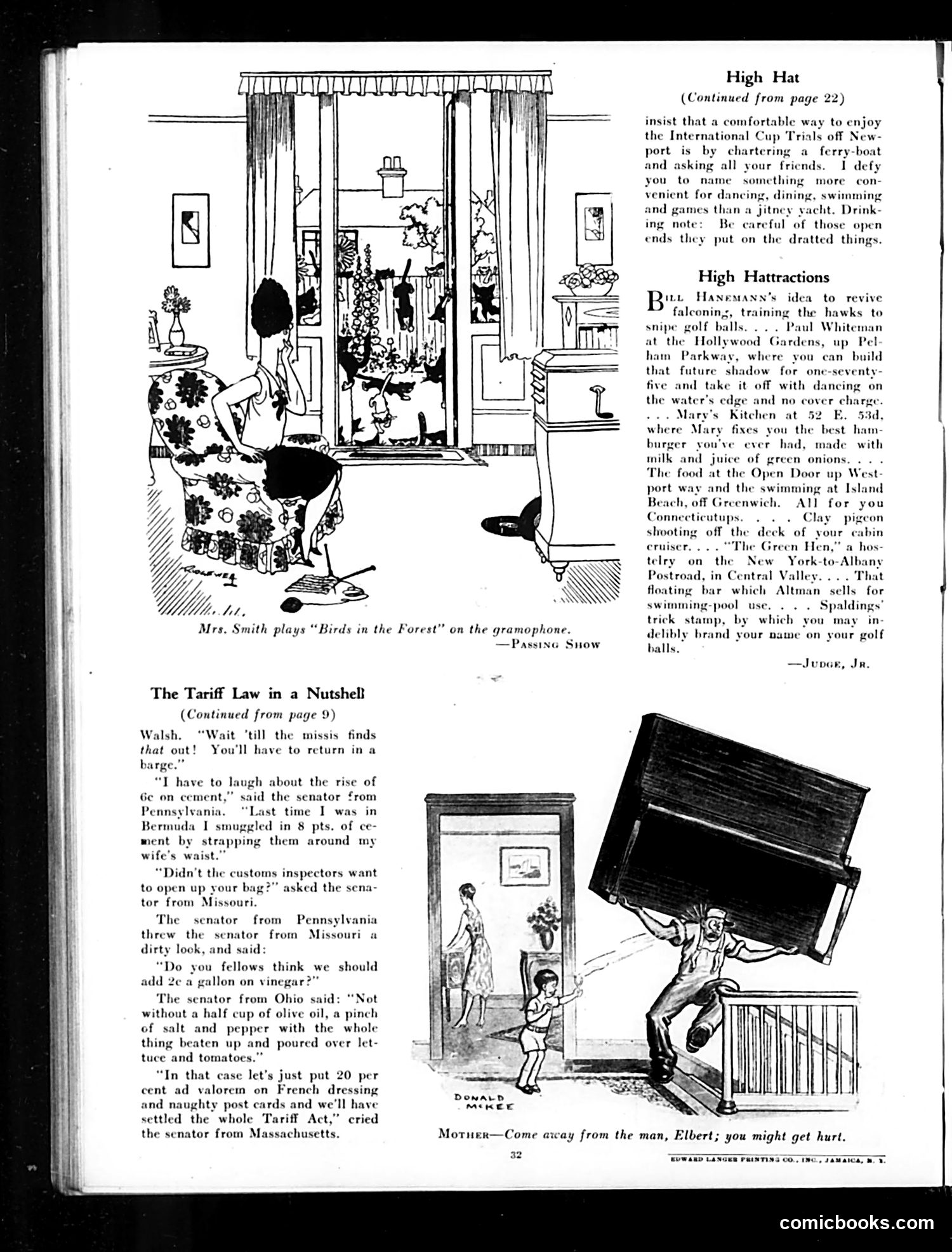
# The Tariff Law in a Nutshell This is political satire about the Tariff Act of 1922, mocking senators' confused and self-interested debates over import duties. The piece portrays politicians in the White House conference room discussing absurd tariff scenarios—Mexican jumping beans affecting typewriter ink, carillons (church bells) versus scullions (kitchen servants), Swiss milk turning to cheese during transport. The satire's point: senators prioritize protecting their home states' industries over logical policy. References include Senator Smoot (likely Reed Smoot, key tariff negotiator), and a joke about "Harry K. Thaw" (a notorious socialite involved in scandals) as an export to ridicule the arbitrary nature of tariff protections. The accompanying cartoon shows a farmer frustrated with tariffs. The humor exposes how tariff laws benefit wealthy interests while harming common citizens—the legislation's real-world consequences hidden behind politicians' circular, nonsensical reasoning.
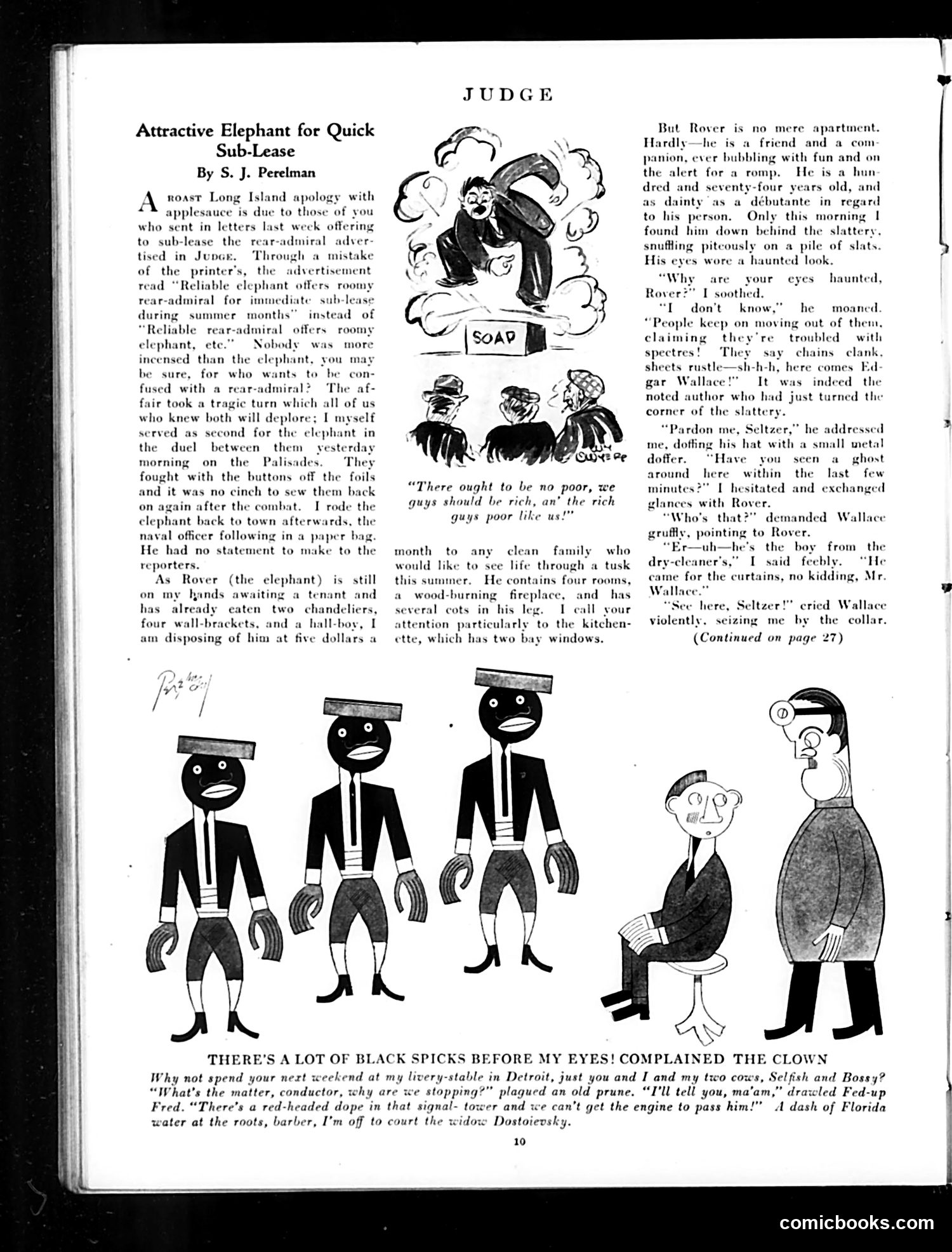
# Explanation for Modern Readers This page from *Judge* magazine contains a humorous short story by S.J. Perelman about a classified ad mishap. Someone advertised a "rear-admiral" for sub-lease; a printer's error made it read "reliable elephant" instead. The story satirizes absurd real-estate situations through exaggeration—depicting an elephant as an apartment building with rooms, fireplace, and kitchenette that can be rented to families. The joke plays on: - **Newspaper classification errors** and their ridiculous consequences - **Housing shortage anxiety** (the elephant's "haunted" previous tenants claiming supernatural disturbances) - **Over-literal interpretations** of advertisement language The bottom panel's crude racial caricature and the crude jokes about conductors and livestock are period period artifacts reflecting *Judge*'s unexamined prejudices. The core humor—confused advertising creating absurd situations—remains legible today, though the surrounding material reflects attitudes we'd reject now.