A complete issue · 36 pages · 1930
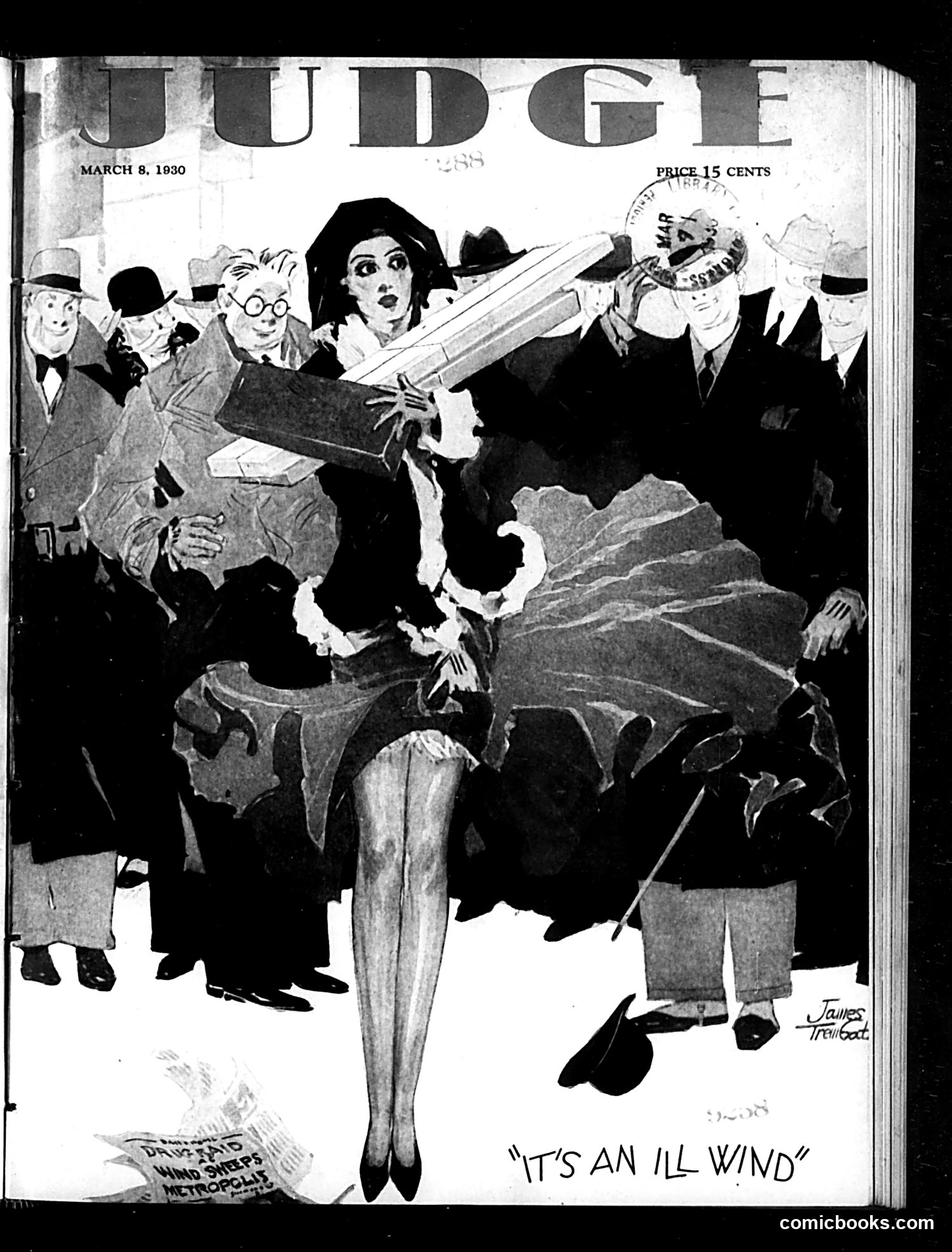
Judge — March 8, 1930
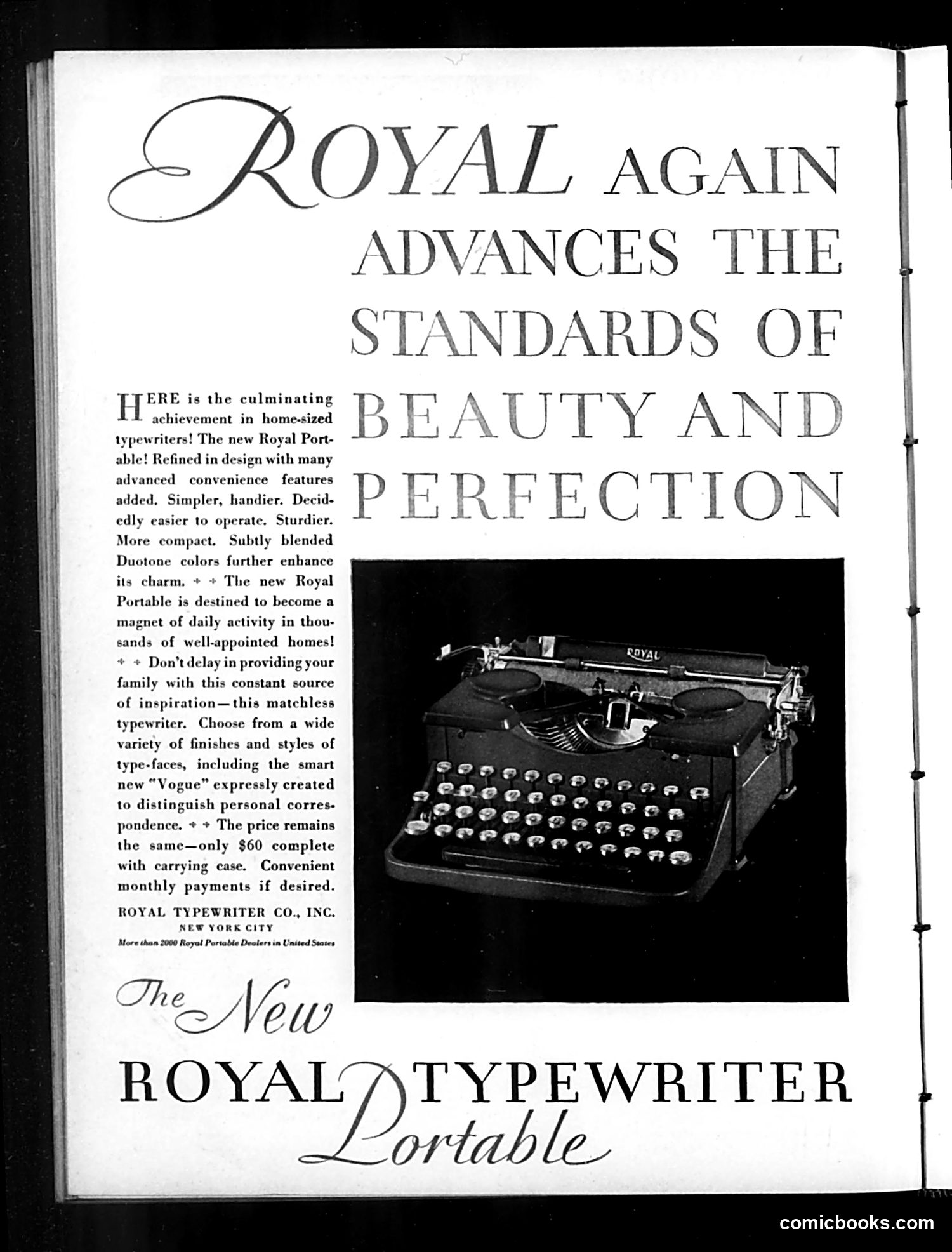
# Analysis This is **not a cartoon or satire page** — it's a straightforward **advertisement for the Royal Portable Typewriter**. The page promotes the new Royal Portable model by emphasizing its improvements: refined design, compact size, easier operation, "Duotone colors," and a new "Vogue" typeface. The ad highlights convenience features and sturdiness, positioning it as essential for "well-appointed homes." The photograph shows the typewriter itself — a desktop portable model typical of the era. The text promises affordability ($60 complete with carrying case) and flexible payment options. The appeal is to middle-class consumers seeking both functionality and aesthetic refinement for home use. This appears in *Judge*, a satirical magazine, but this particular page is purely commercial content, not editorial commentary or political satire.
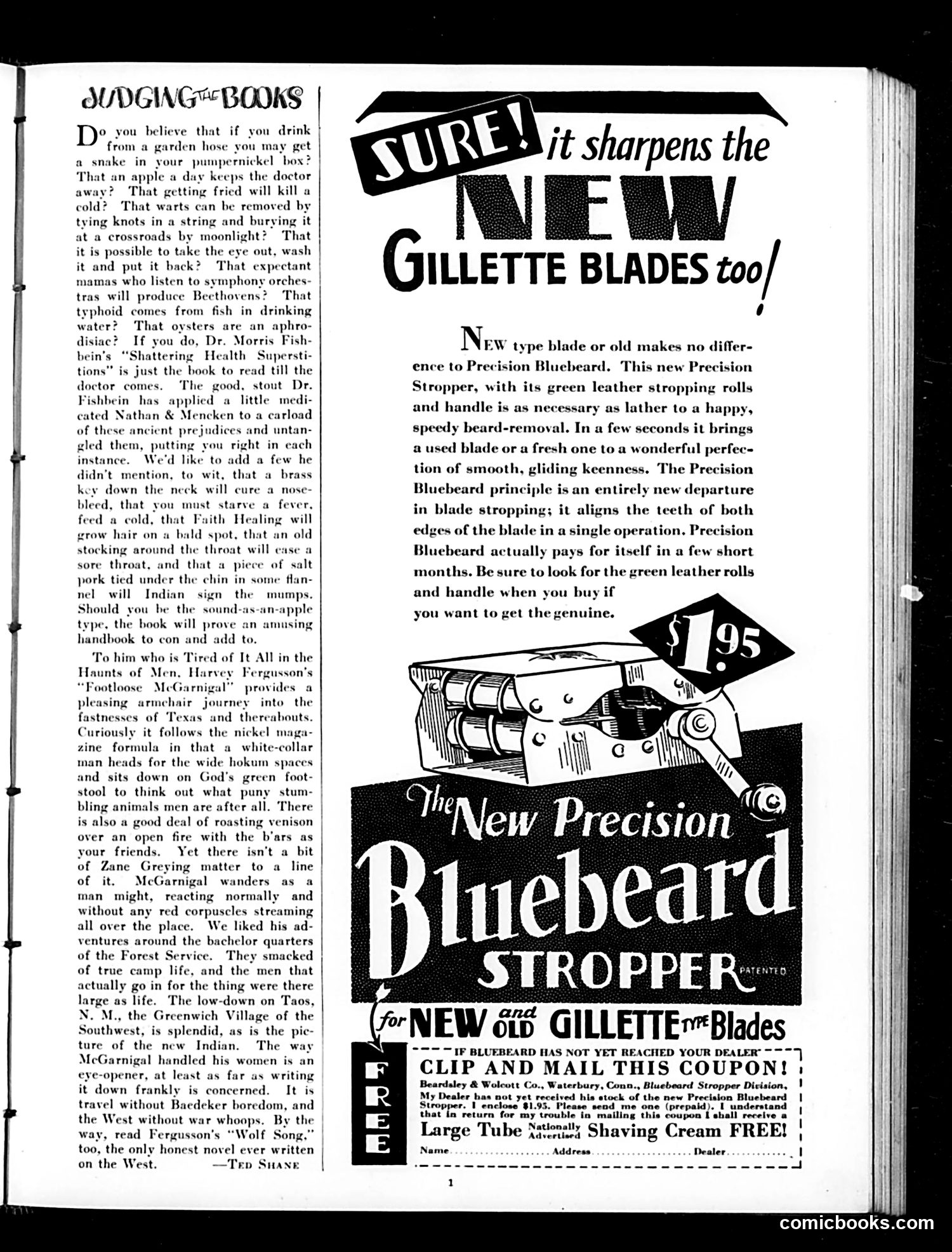
# Page Analysis: Judging the Books & Bluebeard Stropper Ad This page is primarily **advertising content** rather than political satire. The left column contains "Judging the Books," a book review section discussing various publications including Dr. Morris Fishbein's health guide and Harvey Ferguson's "Footloose McGarry." The dominant right side features a full-page advertisement for the **Precision Bluebeard Stropper** razor blade sharpener, priced at $1.95. The ad emphasizes the device's ability to restore used blades to near-new condition, claims it works on "any type blade or old makes," and includes a coupon for free shaving cream. This is straightforward commercial advertising from the interwar period, not satirical commentary. The "Bluebeard" product name references the folklore villain, likely chosen for marketing appeal rather than social critique.
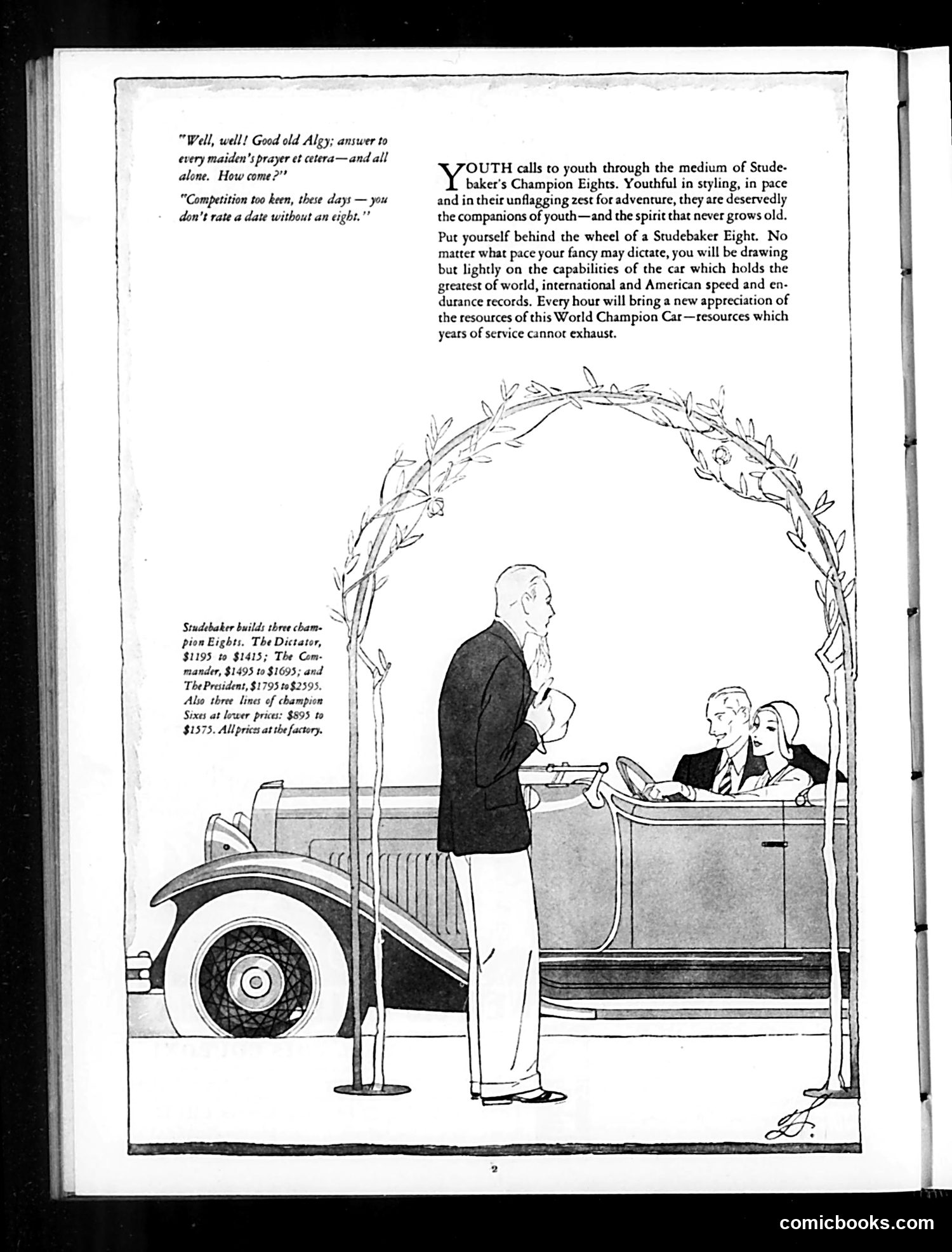
# Analysis This appears to be a **Studebaker automobile advertisement** masquerading as editorial content in Judge magazine. The illustration shows a well-dressed man presenting a Studebaker Eight to a young couple in an idealized garden setting. The ad appeals to youth culture and aspirational values, claiming the car embodies "speed and endurance records" and offers "new appreciation of...World Champion" capabilities. The accompanying text emphasizes the vehicle's durability ("years of service cannot exhaust"). The poetic framing device—the dialogue about youth and adventure at the page's top—romanticizes car ownership as a lifestyle choice. Specific pricing for three "champion Eight" models is listed, suggesting this hybrid advertising-editorial format was common in Judge during this period. The content targets affluent, young consumers.
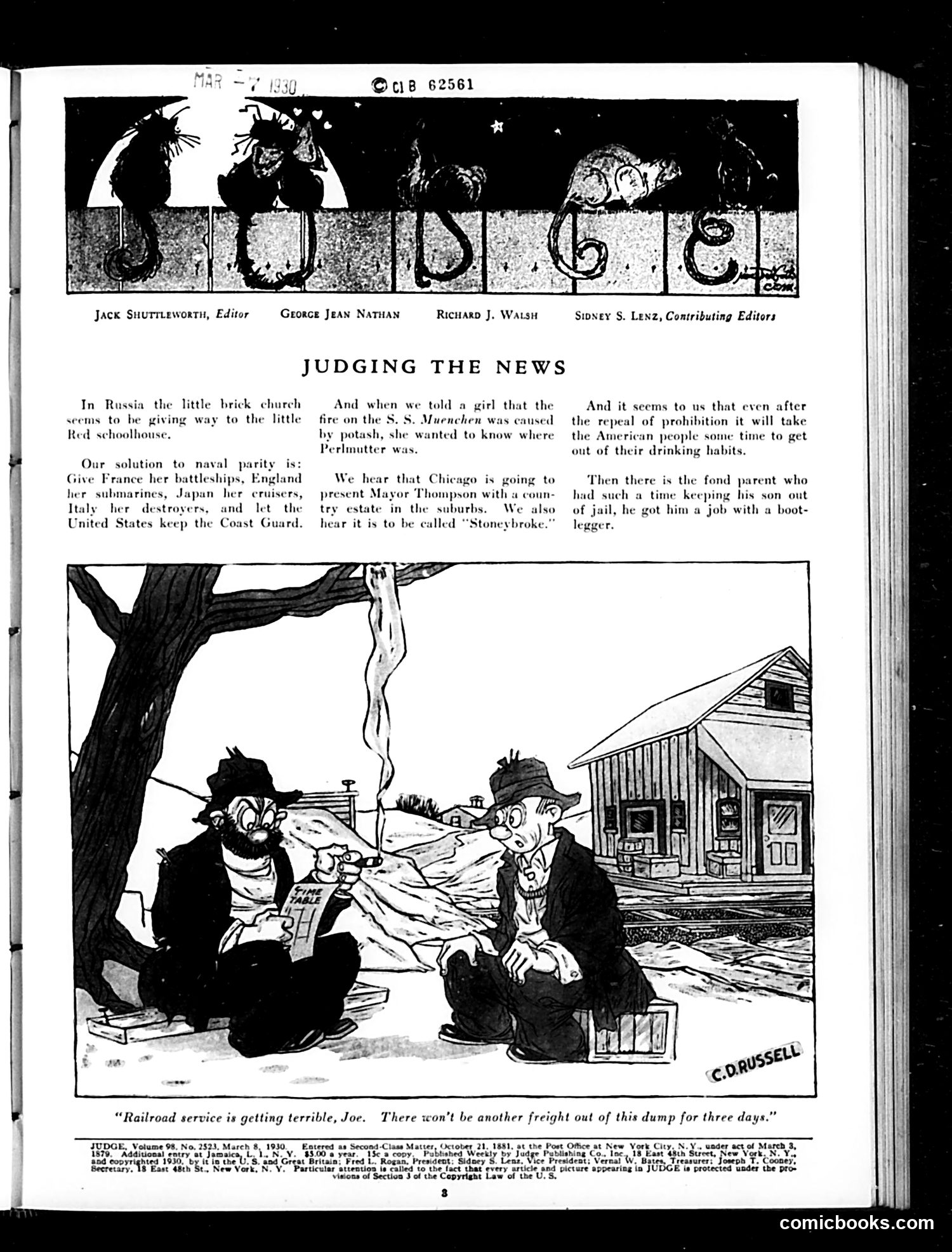
# Judge Magazine Cartoon Analysis This page from *Judge* contains editorial commentary titled "Judging the News" with several brief satirical items about contemporary issues, followed by a cartoon by C.D. Russell. The main cartoon depicts two men in shabby clothes beneath a tree, reading a newspaper. One says to the other: "Railroad service is getting terrible, Joe. There won't be another freight out of this damp for three days." The satire targets railroad service quality during what appears to be an economic downturn (likely the 1920s-30s based on styling). The joke equates vagrant hobos—who typically hitched illegal rides on freight trains—with legitimate passengers, sarcastically suggesting even they can't find adequate service. It's commentary on deteriorating American railroad infrastructure and reliability during this period.
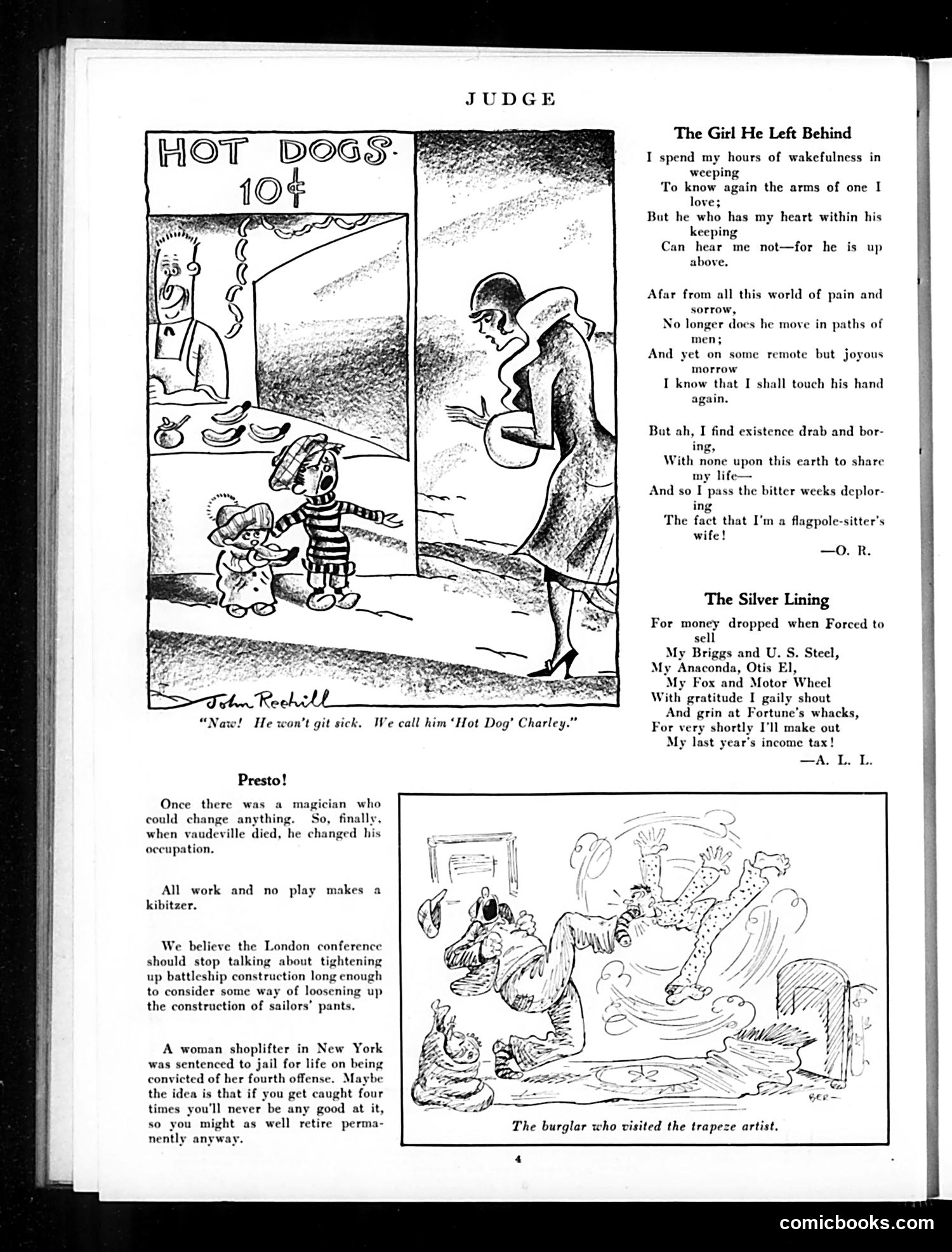
# Judge Magazine Page Analysis This page contains humor typical of early-20th-century American satire: **"Hot Dogs" cartoon** (top left): A street vendor selling hot dogs for 10 cents is labeled "Hot Dog Charley." The joke plays on the common slang term "hot dog" and stereotypes about cheap street food and working-class vendors—likely referencing a contemporary figure or type. **"The Girl He Left Behind"** (right): A sentimental poem about romantic separation, common in period literature and popular songs. **"Presto!" (center text)**: Jokes about occupational changes and work-life balance, with commentary on sailors' uniforms and London conferences—typical of Judge's mix of social observation and light satire. **"The burglar who visited the trapeze artist"** (bottom cartoon): A humorous illustration showing a burglar encountering circus performers, playing on the absurdist humor Judge frequently featured.
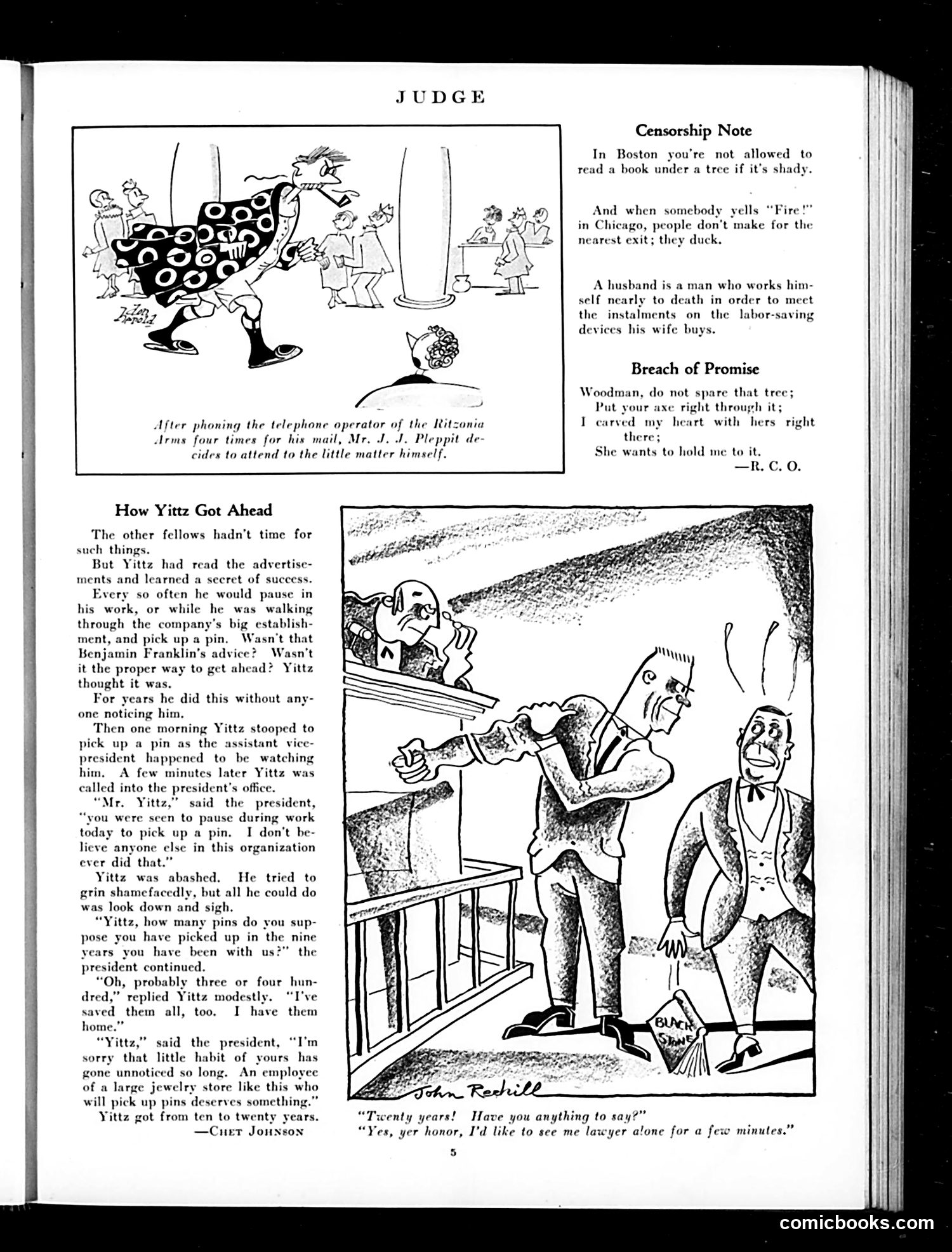
# Judge Magazine Page Analysis **Top Cartoon ("Judge"):** Shows a man with a large polka-dotted chicken fleeing chaos, illustrating the caption about phoning the Ritzonia Arms hotel operator. The joke appears to satirize incompetent hotel management—the operator creates such disorder that the manager must personally intervene in trivial matters. **"How Yittz Got Ahead":** This story and accompanying cartoon by John Redckill depict workplace success through shrewd observation. The protagonist Yittz gains promotion by noticing the company president's habit of pausing to pick up pins during work. When questioned, Yittz reveals he's collected hundreds of these pins over years—demonstrating that small attentiveness and thriftiness, not major achievements, drive corporate advancement. The cartoon shows the president rewarding this calculated, penny-pinching behavior with promotion.
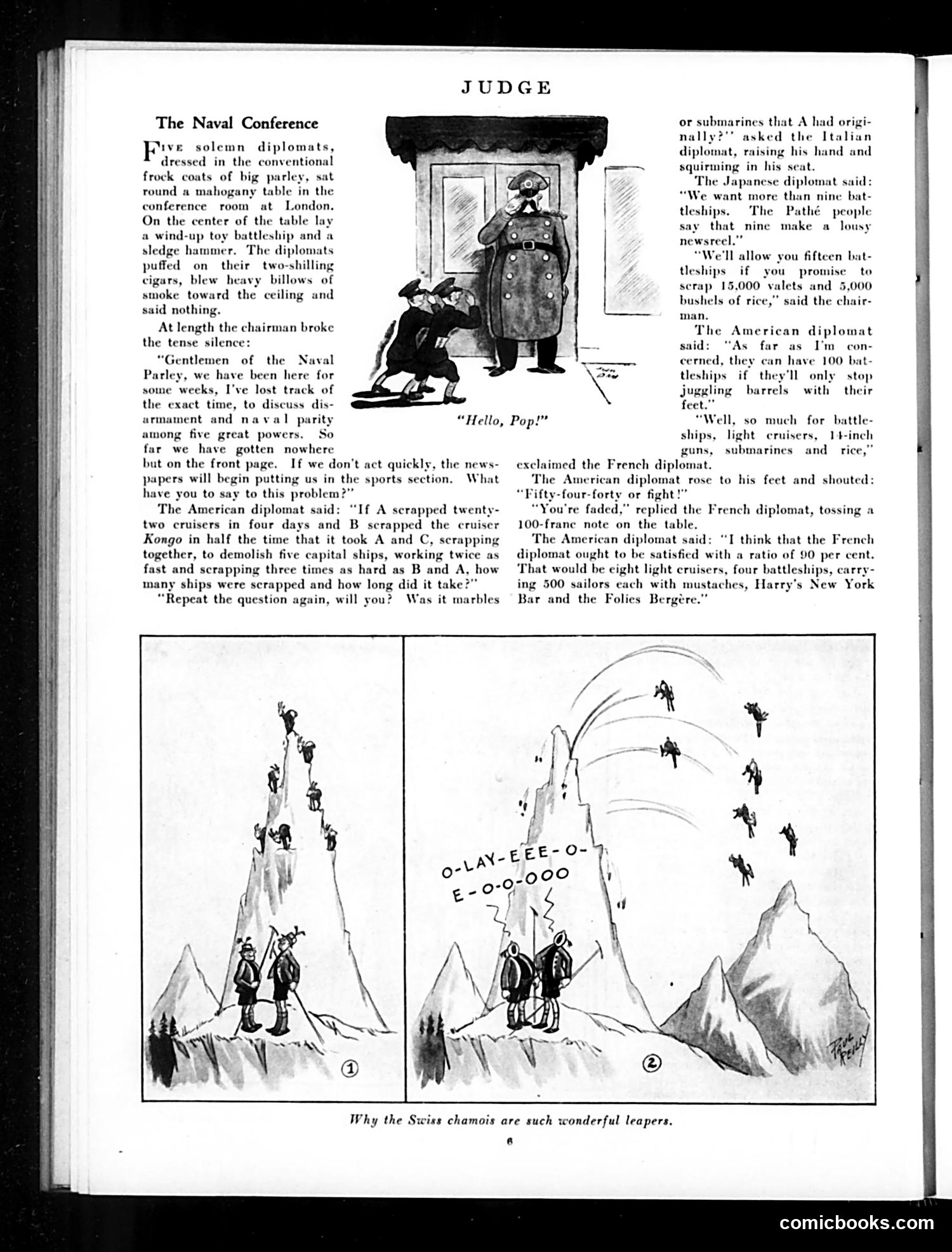
# "The Naval Conference" — Judge Magazine This page satirizes naval disarmament negotiations among world powers. Five diplomats debate battleship ratios in a London conference room. The cartoon depicts them as stubbornly deadlocked: an American diplomat argues for scrapping twenty cruisers, the French diplomat counters with demands for fifteen battleships and rice supplies, while figures bicker over exact vessel ratios (90 percent, 100-franc notes, etc.). The humor mocks diplomatic posturing and nationalist self-interest masquerading as negotiation. The bottom cartoon about "Swiss chamois" leapers appears unrelated—likely a separate joke about mountain climbers. The satire suggests international arms-reduction talks produce endless quibbling rather than meaningful agreement.
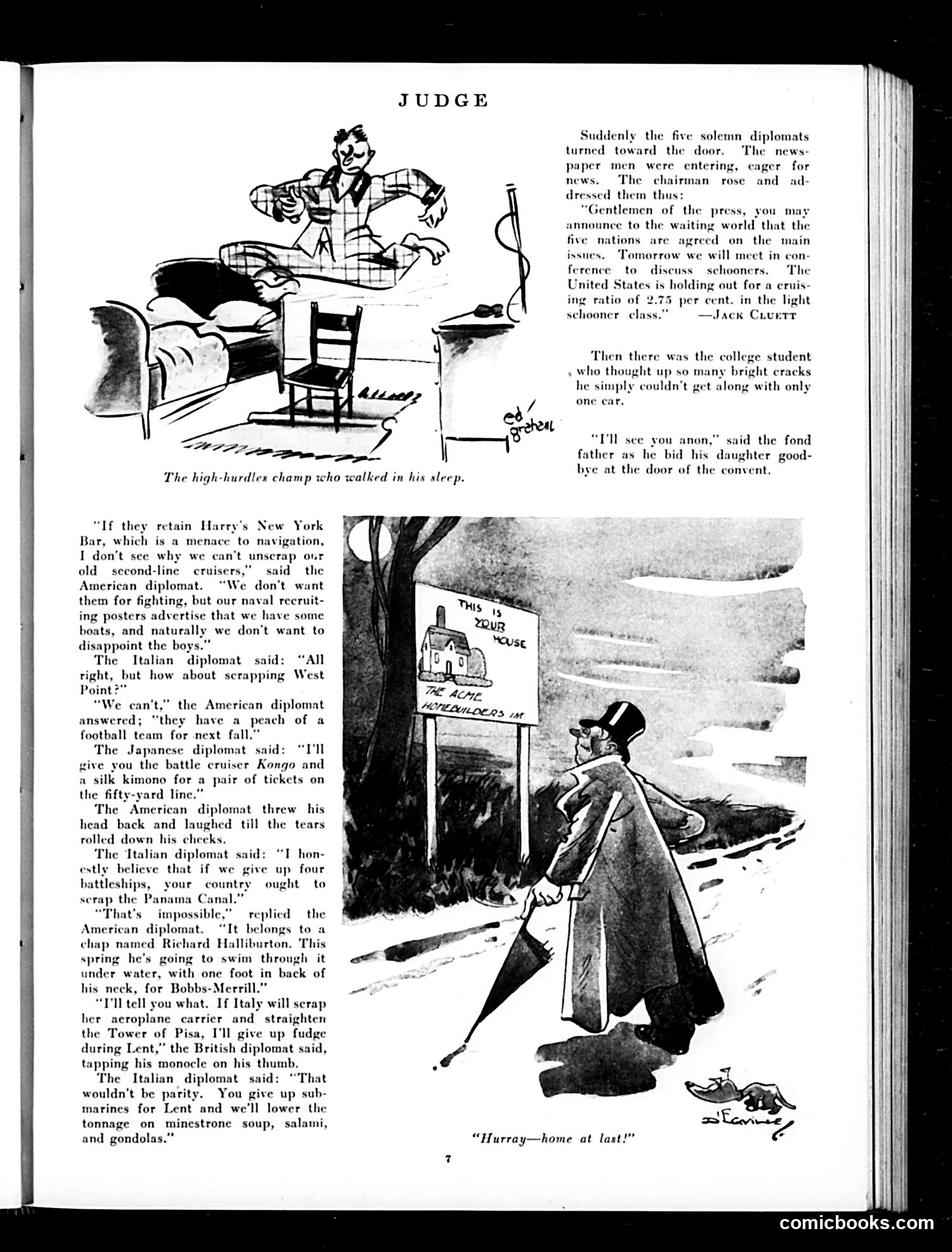
# Judge Magazine Satire Analysis This page satirizes **international naval disarmament conferences** of the 1920s-30s, when world powers negotiated limits on military vessels. Five diplomats (American, Italian, Japanese, British, Italian) debate reducing their fleets with absurd logic. The satire works by having diplomats propose increasingly ridiculous "sacrifices"—scrapping the Panama Canal, West Point football program, and the Leaning Tower of Pisa. References like **Richard Halliburton** (a famous 1920s adventurer planning to swim the Canal) and **Harry's New York Bar** anchor the humor in contemporary celebrity/landmarks. The joke: diplomatic negotiations about weapons reduction devolve into nonsensical barter involving unrelated national treasures, suggesting the conferences themselves were equally farcical. The lower cartoon shows a child arriving home from convent school—context unclear, likely a separate satirical piece about education or family life. The overall message mocks how serious international talks about disarmament become exercises in protecting national pride rather than genuine security measures.
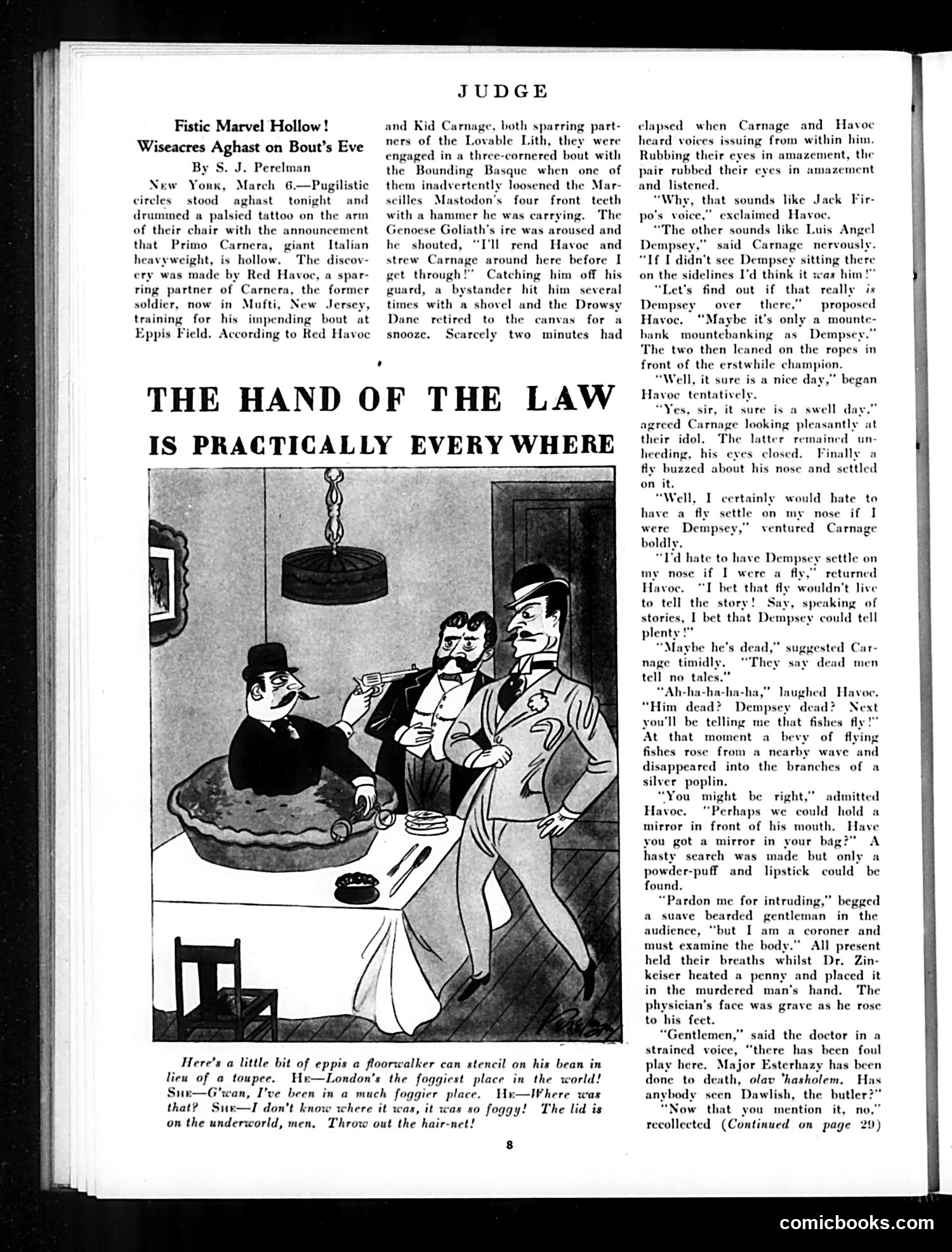
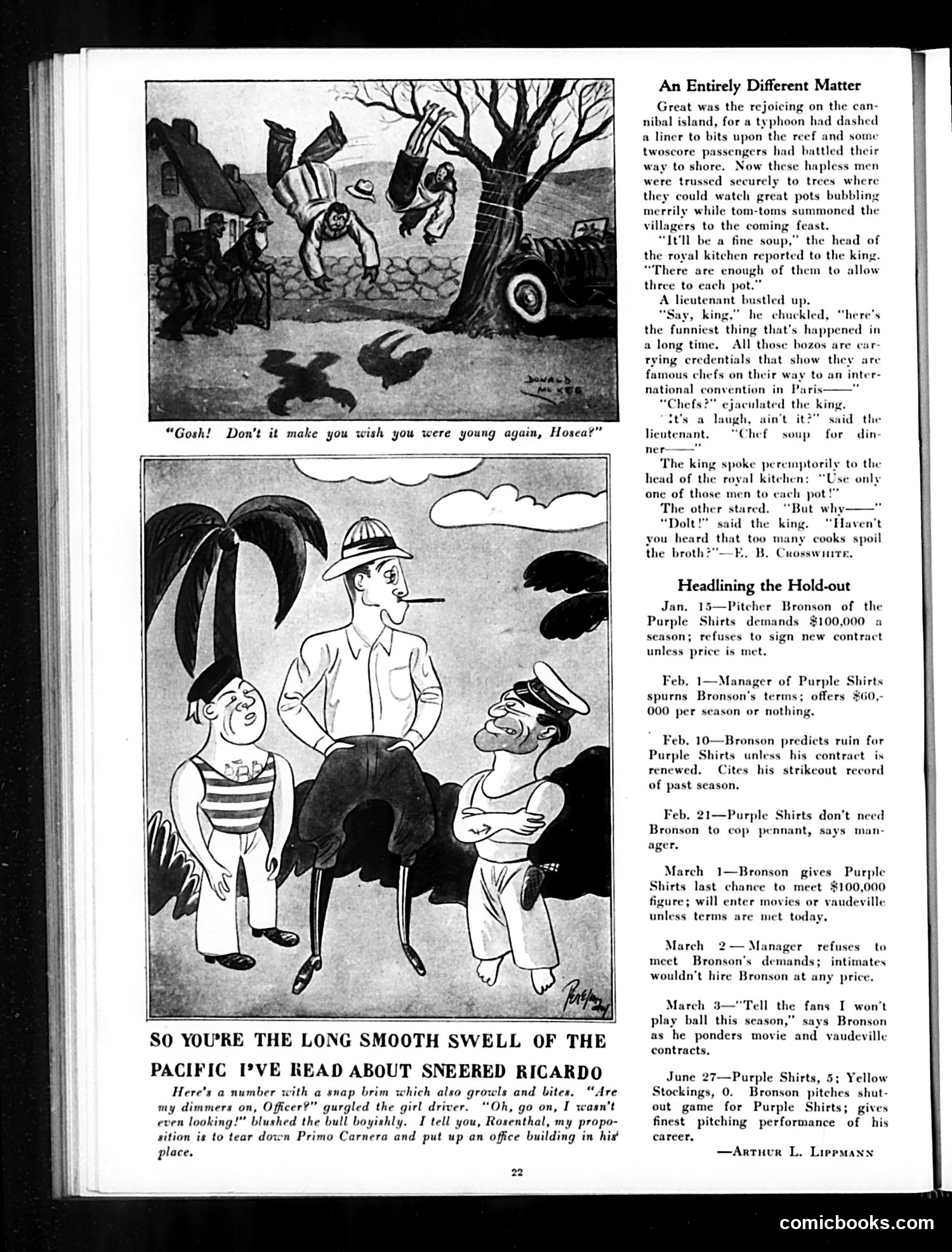
# Explanation for Modern Readers This page contains two satirical pieces from *Judge* magazine: **"Fistic Marvel Hollow!"** (top): A humorous sports column by S.J. Perelman mocking boxer Primo Carnera. The joke plays on rumors about Carnera's legitimacy as a heavyweight champion—the column absurdly claims he's "hollow," with famous boxers' voices (Jack Firpo, Luis Angel Dempsey, Jack Dempsey) supposedly heard emanating from inside him. This satirizes doubts about whether Carnera was a genuine fighter or a manufactured celebrity. **"The Hand of the Law Is Practically Everywhere"** (cartoon): Shows three men arresting or confronting someone in a bathtub, illustrating the pervasiveness of law enforcement. The accompanying dialogue parodies detective/noir fiction with absurd logic and tangential conversations, likely mocking overwrought crime drama conventions. Both pieces exemplify *Judge*'s satirical style: topical sports humor and parodic crime fiction, aimed at educated urban readers familiar with contemporary boxing culture and popular literature tropes.
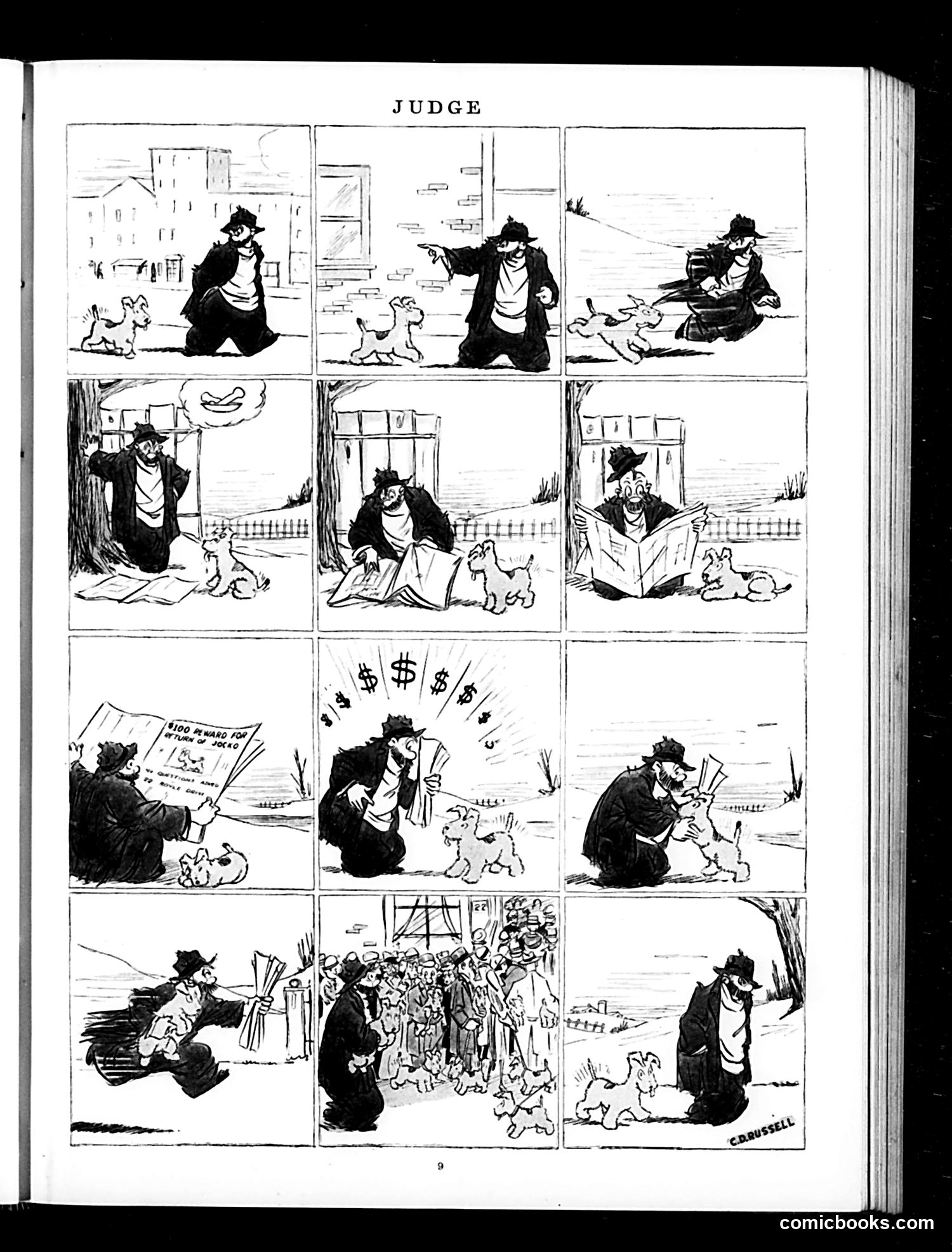
# "Judge" Comic: "Judge" This is a sequential comic strip satirizing judicial corruption or judicial leniency toward wealth. A well-dressed judge character repeatedly encounters small dogs (or similar animals) throughout his day—reading newspapers, in his chambers, and outdoors. The strip's humor centers on the judge's escalating bribery: dollar signs appear prominently in the middle panels, suggesting the dogs represent petitioners or defendants offering money. By the final panels, the judge appears to have been successfully corrupted, surrounded by a large crowd, possibly indicating he's now dispensing favorable rulings for payment. The satire likely critiques the early 20th-century problem of judicial corruption, suggesting judges could be bought off even by absurd or insignificant parties. The artist is Cesrusell (visible signature).
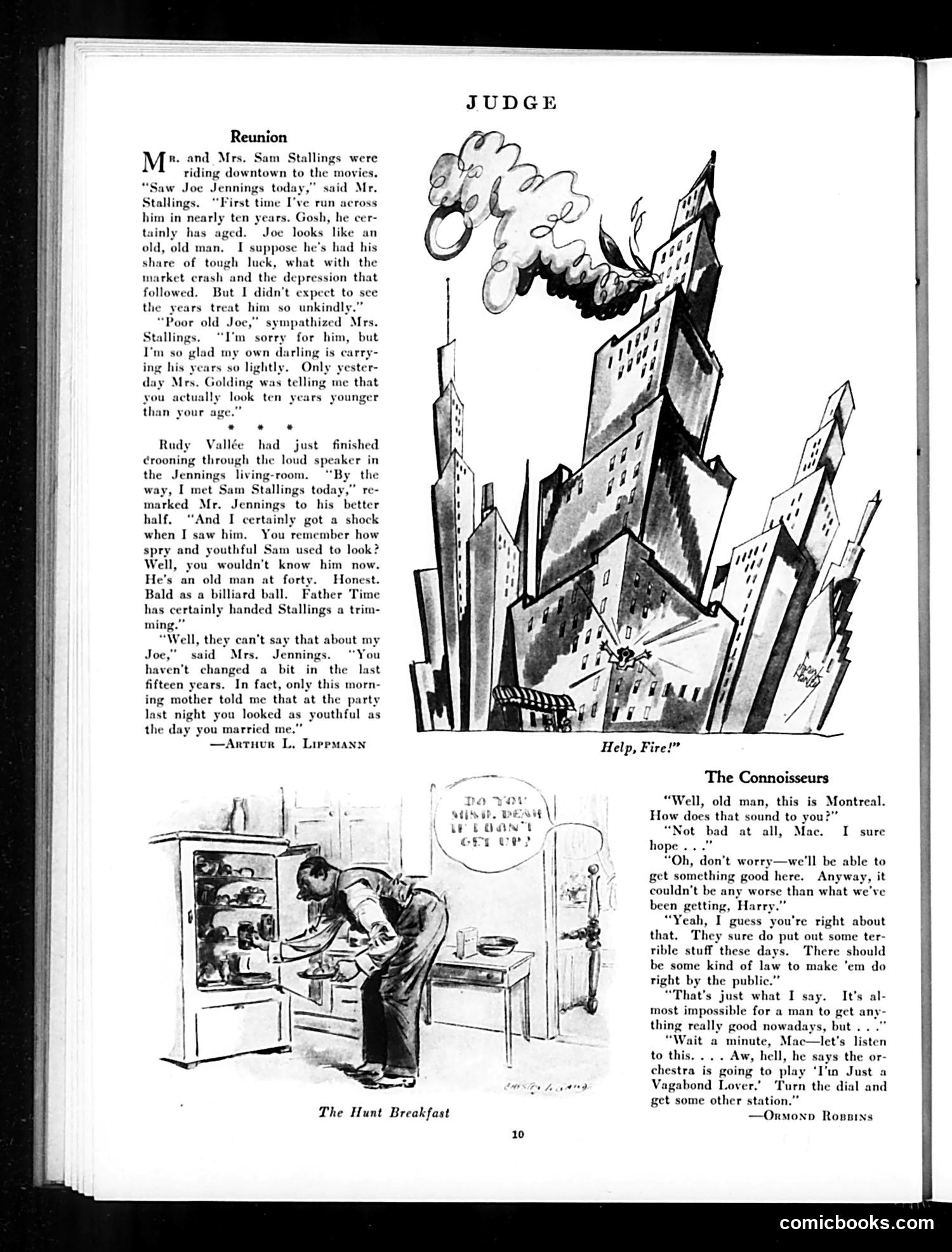
# Analysis of Judge Magazine Page This page contains three humorous pieces satirizing American social pretense and consumerism in the Depression era. **"Reunion"** depicts married couples encountering old acquaintances and boasting about how well *their own* spouses have aged, while criticizing how badly the others have aged. The irony: Mrs. Jennings claims her husband looks as youthful as their wedding day, while Mr. Jennings simultaneously complains that Sam Stallings looks ancient. The satire targets vanity and self-deception about aging and the effects of economic hardship (market crash, depression). **"Help, Fire!"** shows a man fleeing a burning building—likely satirizing panic or overreaction, though the specific reference is unclear from this image alone. **"The Connoisseurs"** depicts two men discussing Montreal dining/entertainment, complaining that quality has declined everywhere. Their solution: they immediately reject a radio station's classical selection for something else, undermining their own standards. This satirizes people who claim to value quality while settling for mediocrity—or who mistake constant complaint for genuine discernment. All pieces mock middle-class pretension and inconsistency.