
A complete issue · 36 pages · 1928
Judge — February 4, 1928
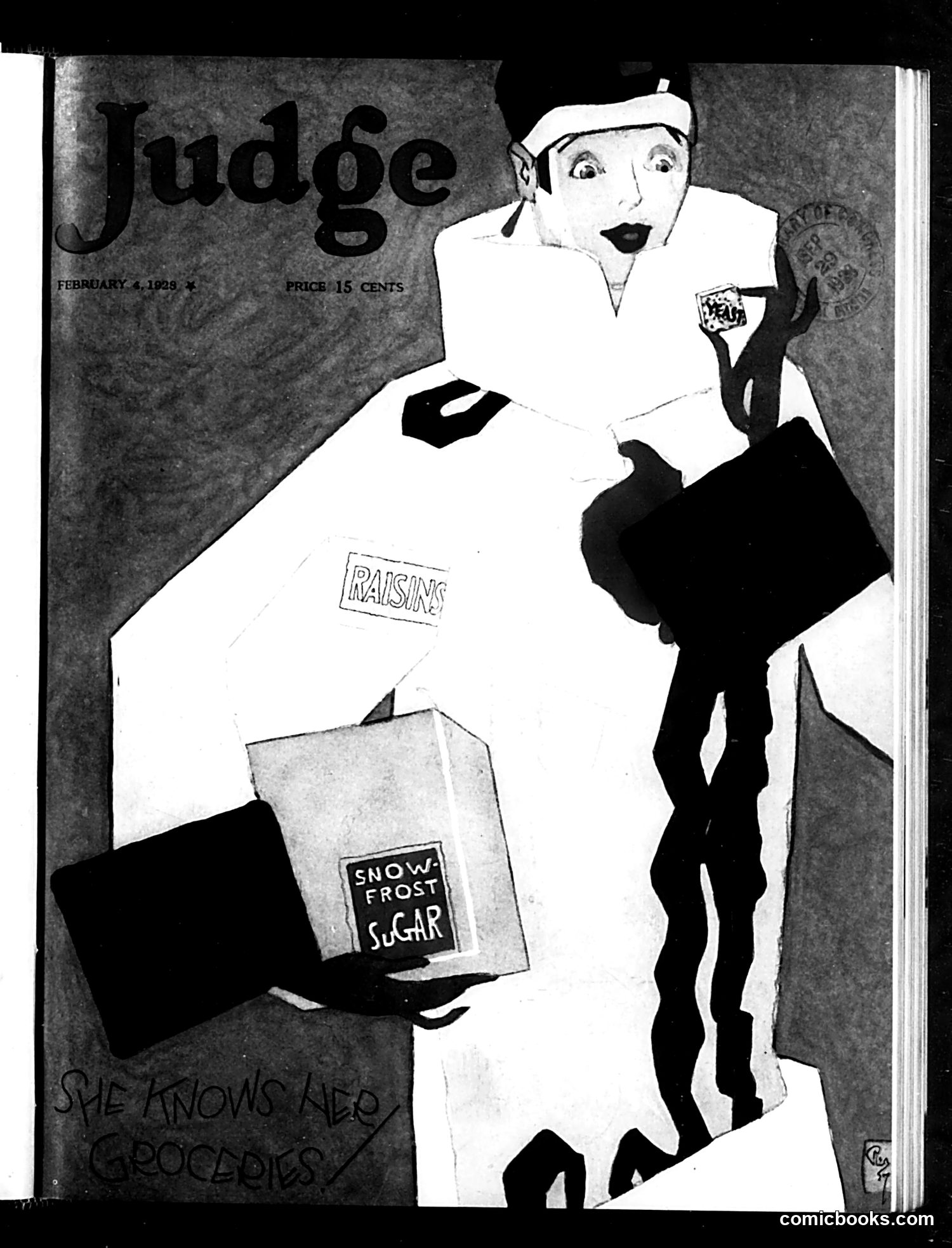
This cover satirizes fashionable winter wear and conspicuous consumption during the Jazz Age. A woman in an expensive white winter coat sports a large fur collar and holds a box of "Snow Frost Sugar," creating a visual pun—her outfit mimics the product's snowy appearance. The caption "She Knows Her Groceries" suggests she's savvy about consumer goods, though the satire appears to mock the absurdity of expensive fashion that merely imitates affordable products. The coat's labels reading "Raisins" add another layer of product placement humor. Published just months before the 1929 stock market crash, the cover reflects the era's materialism and advertising-saturated consumer culture that would soon seem tone-deaf during the Great Depression.
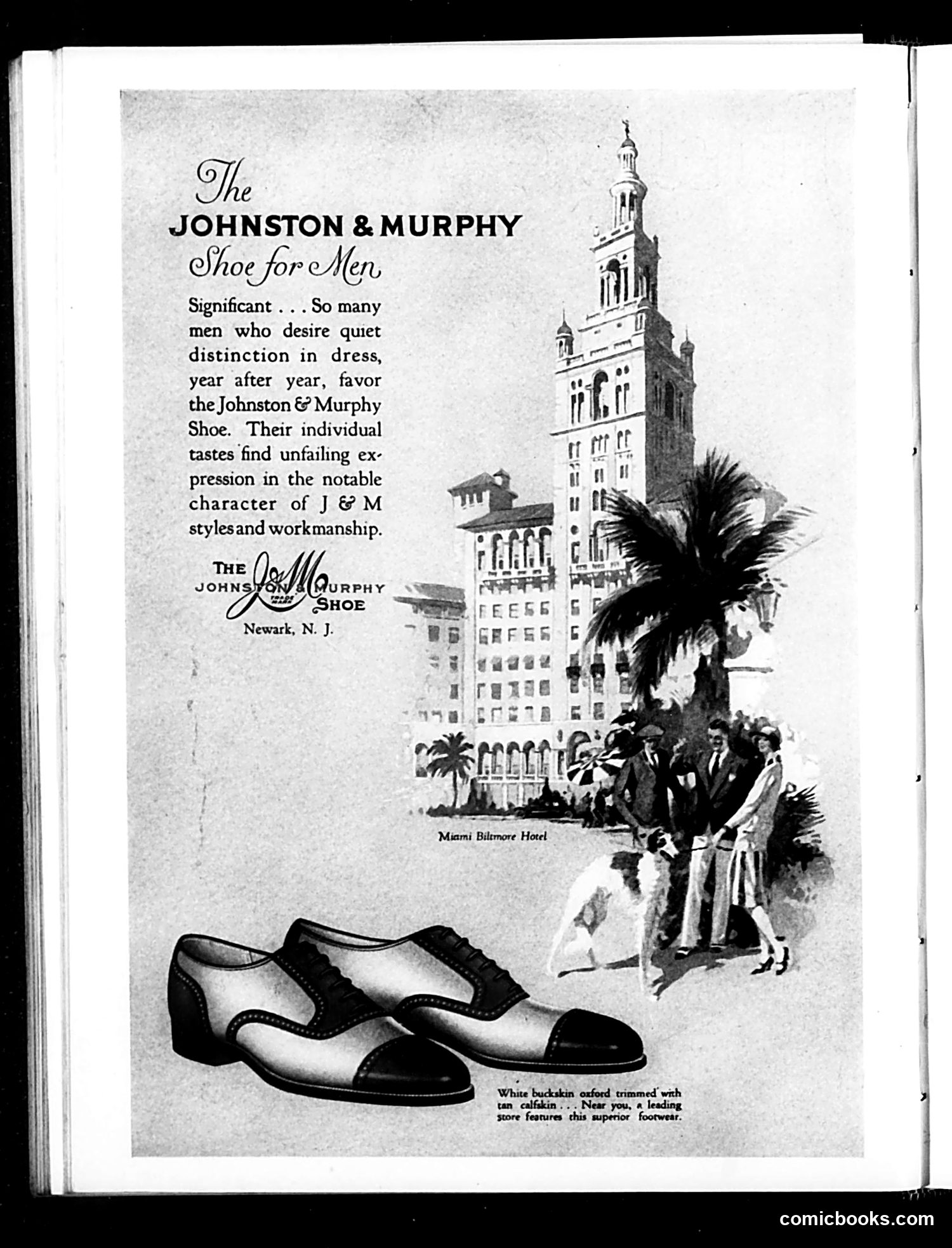
This page is primarily **advertising**, not satire or political commentary. It's a Johnston & Murphy shoe advertisement from Newark, N.J., promoting their men's footwear. The ad uses aspirational imagery: the Miami Biltmore Hotel (a luxury resort) and well-dressed men and women in elegant attire to suggest that Johnston & Murphy shoes convey "quiet distinction" and refined taste. The copy emphasizes how the shoes appeal to men seeking understated sophistication—their "individual tastes find unfailing expression" through the brand's "character" and "workmanship." The featured shoe displays white buckskin with tan calfskin and black toe-cap detailing, positioned as a "superior" style choice for the discerning gentleman. This is vintage lifestyle marketing, not editorial content.
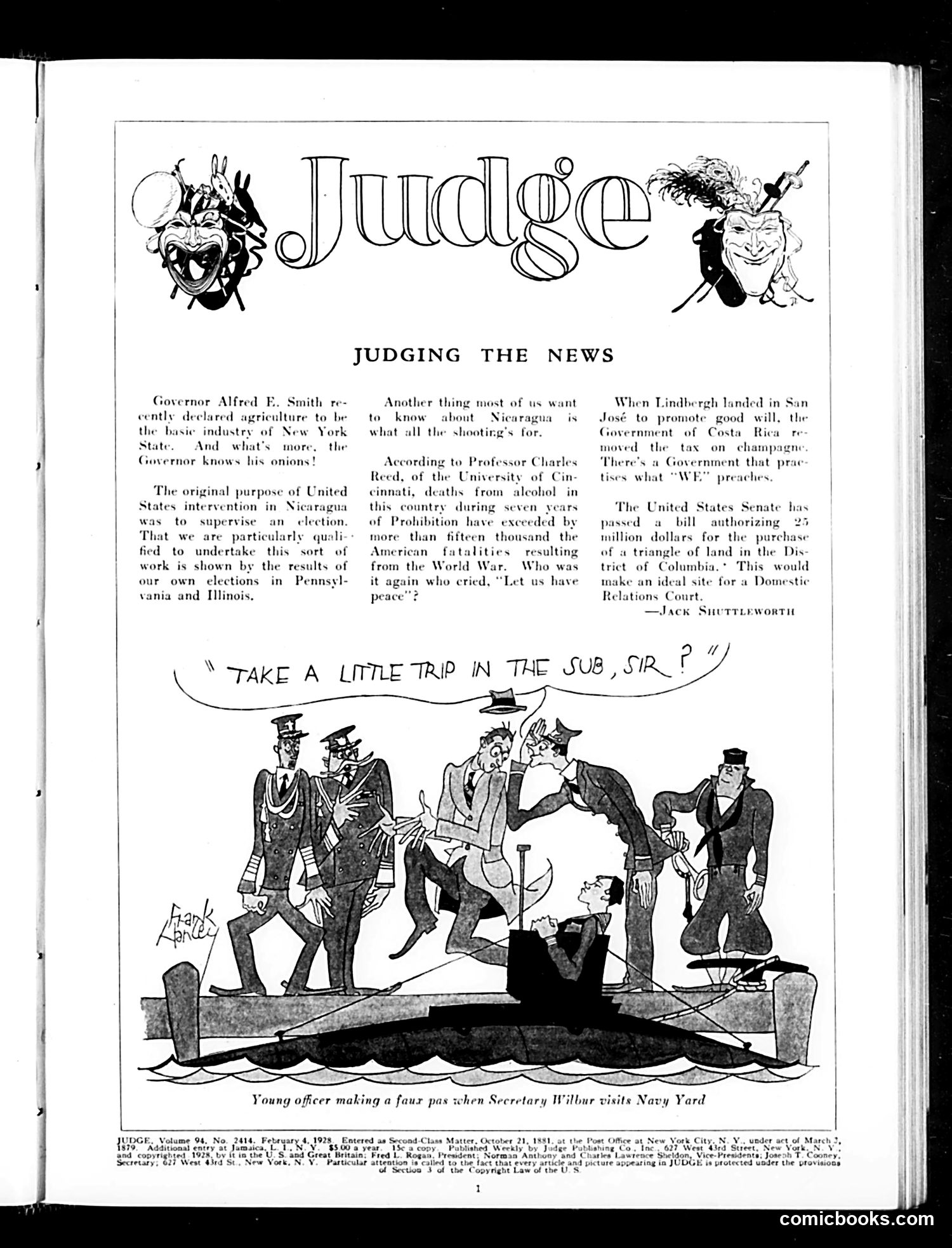
This 1928 *Judge* page satirizes American foreign policy interventionism. The text criticizes Governor Alfred E. Smith's agriculture policies and questions U.S. intervention in Nicaragua, referencing deaths from alcohol prohibition and post-WWI casualties. The cartoon mocks Secretary Wilbur's Navy Yard visit. Military officers and officials (appearing to include diplomatic or naval leadership) invite a civilian to "take a little trip in the sub, sir?"—suggesting they're promoting a submarine excursion as a false show of goodwill. The caption indicates this is a "faux pax" (likely meaning faux pas)—an embarrassing diplomatic blunder. The satire critiques the performative nature of official Navy displays and possibly mockingly suggests duplicitous military intentions toward visiting officials or dignitaries.
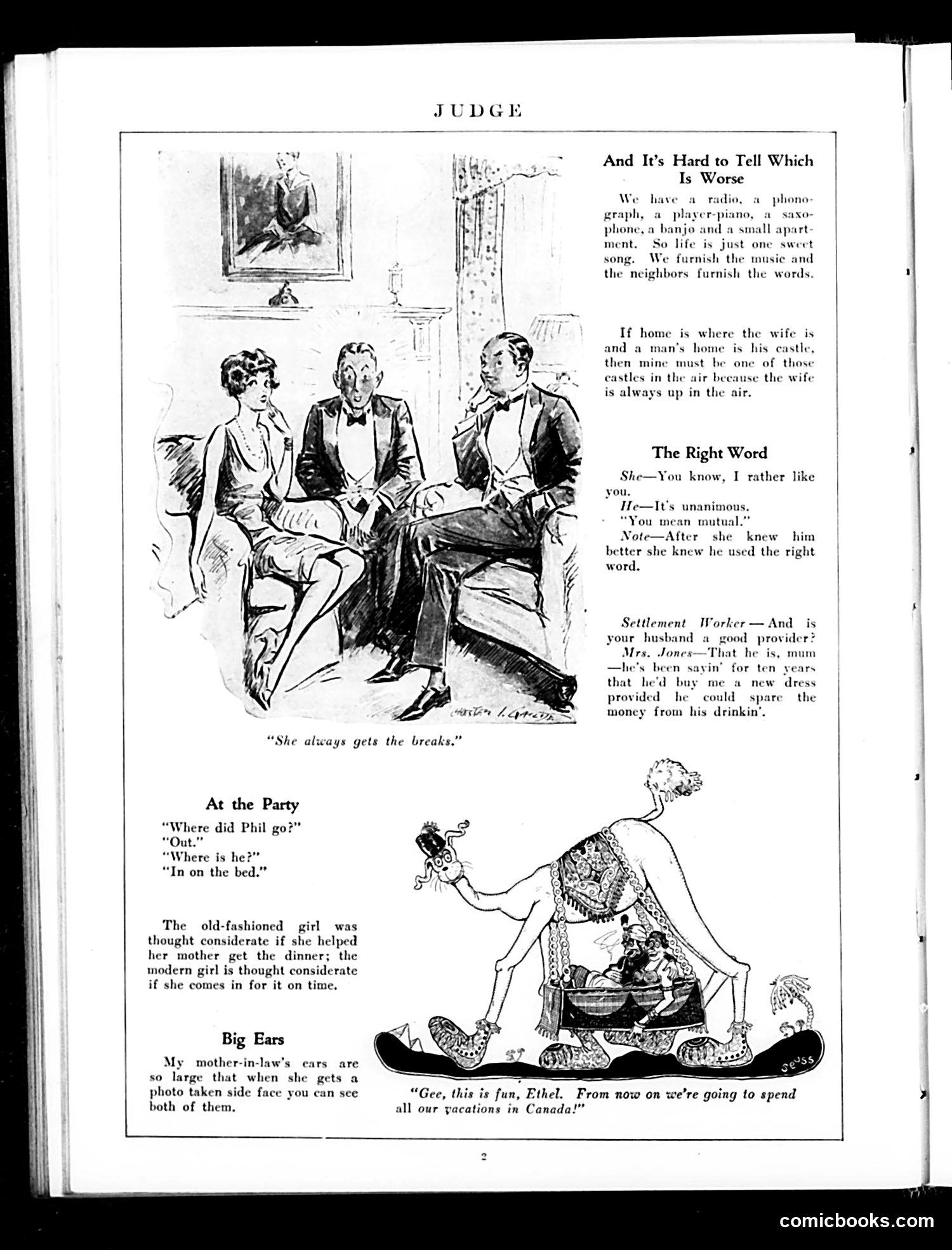
This page contains four separate humor pieces satirizing domestic life and social conventions of the early 20th century: 1. **"And It's Hard to Tell Which Is Worse"**: Jokes about apartment living and domestic noise, suggesting wives are as intrusive as musical instruments. 2. **"The Right Word"**: A brief exchange where a woman prefers "mutual" to "like," suggesting women valued precise language in romantic contexts. 3. **"At the Party"**: Contrasts old-fashioned versus modern girls' domestic responsibilities—whether helping mothers or simply arriving on time. 4. **"Big Ears"**: A joke about a mother-in-law's large ears being visible in photographs. The cartoons mock gender roles, marital dynamics, and generational differences through gentle domestic humor typical of Judge's satirical approach to American middle-class life.
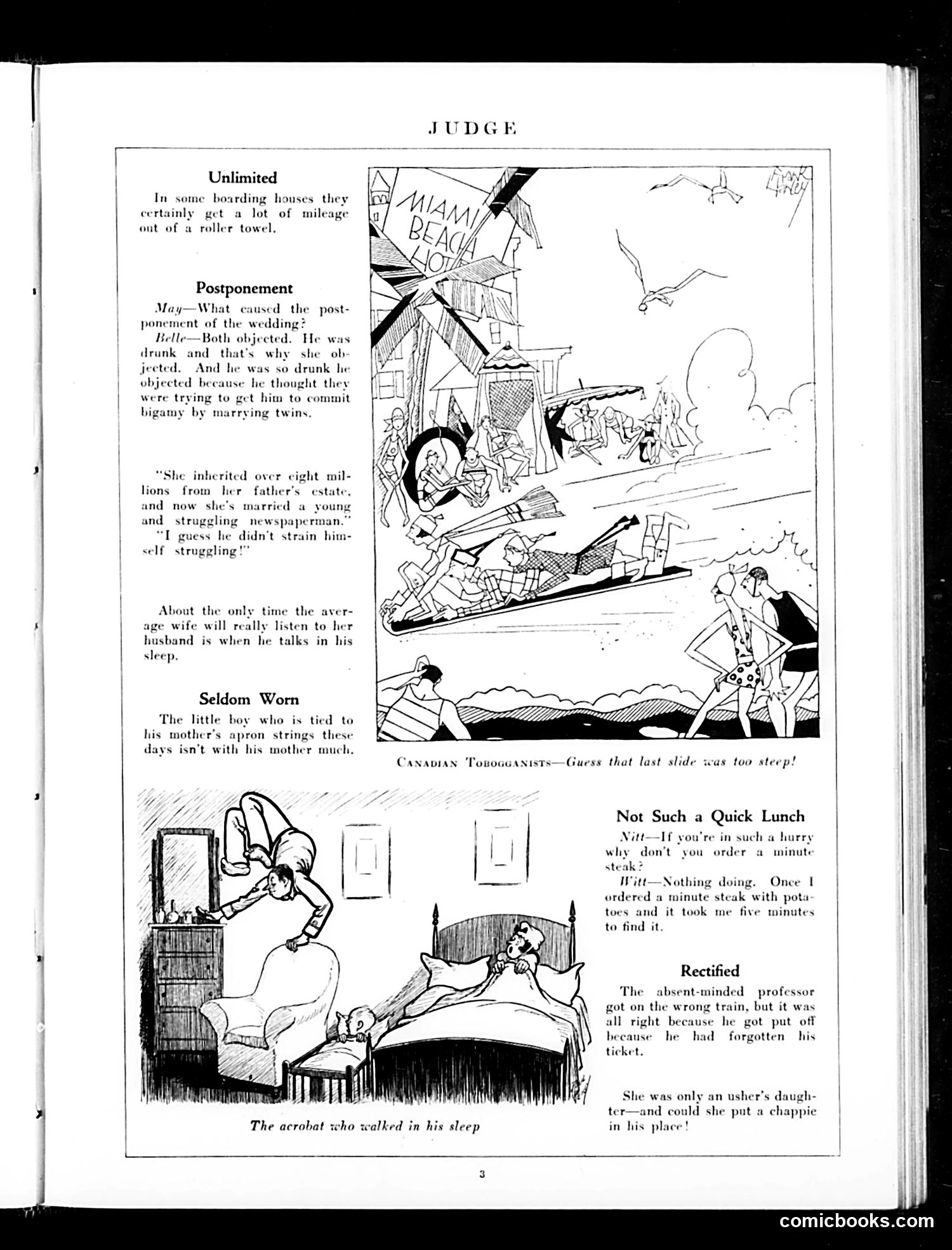
This page contains several unrelated satirical jokes typical of Judge's format: 1. **"Unlimited"**: Jokes about boarding houses providing excessive toilet paper. 2. **"Postponement"**: A wedding delay caused by the groom's drunkenness and concerns about bigamy with twins—likely referencing contemporary anxieties about divorce and remarriage. 3. **"Seldom Worn"**: Quips about apron strings and mothers-in-law, reflecting period anxieties about maternal control in marriages. 4. **The main cartoon** depicts chaos at Miami Beach (visible on a sign), apparently showing a toboggan accident. The caption "Canadian Toboggans—Guess that last slide was too steep!" suggests slapstick humor about winter sports mishaps. 5. **"Not Such a Quick Lunch"** and **"Rectified"**: Brief anecdotes about restaurant service and absent-minded professors. These represent typical early-20th-century American domestic and leisure humor.
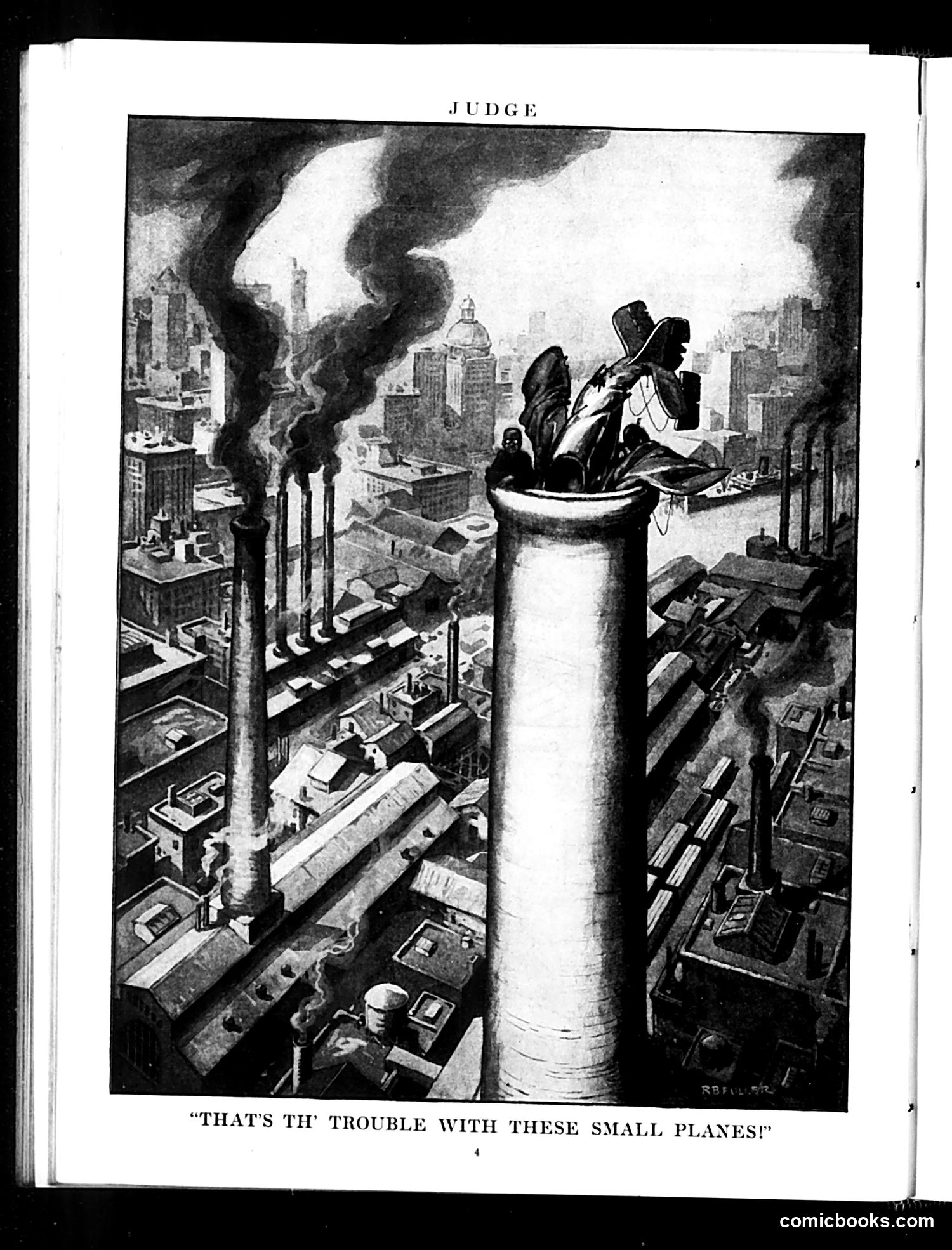
This Judge cartoon satirizes early aviation concerns, likely from the 1920s-30s. The image depicts a giant figure (appearing to be a judge or authority figure) perched atop a massive smokestack overlooking an industrial cityscape filled with smoke and pollution. Below, tiny airplanes navigate between buildings. The caption's complaint about "small planes" is ironic satire: the joke appears to contrast the minuscule scale of early aircraft against the enormous industrial infrastructure dominating the city. Rather than planes being the problem, the cartoon seems to mock industrial pollution and urban congestion as the *real* trouble—the small planes are insignificant compared to the massive smokestacks and factories poisoning the air. The satire likely critiques industrialization's environmental impact rather than aviation itself.
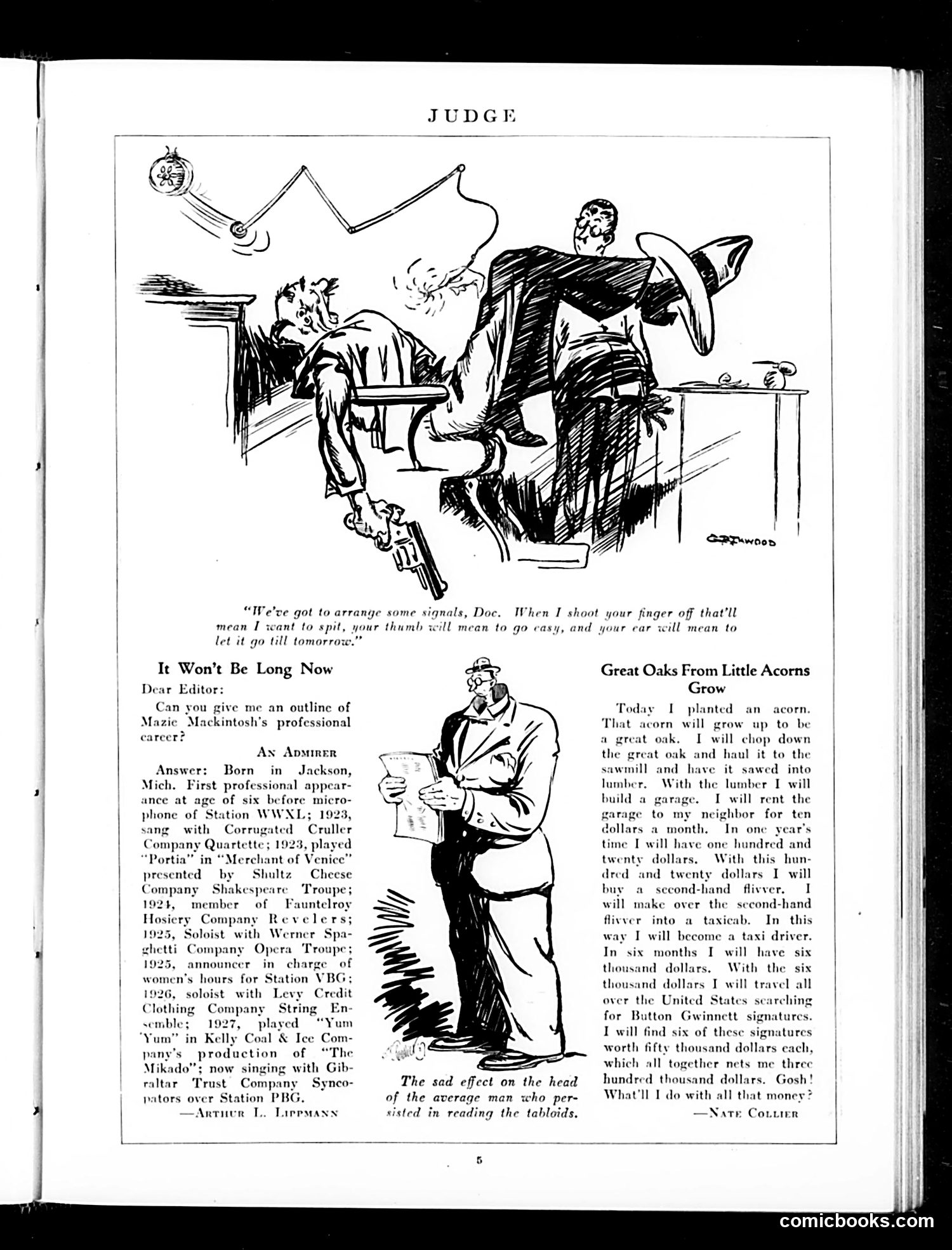
The main cartoon depicts a judge threatening a defendant with violent consequences if he commits perjury—the judge warns he'll shoot off the man's finger, make his thumb "go easy," and damage his ear. This satirizes judicial corruption and intimidation tactics, suggesting judges administered justice through threats rather than legal procedure. The two text sections below are unrelated humor columns: one answers a reader's question about entertainer Mazie Mackintosh's career, listing her theatrical performances; the other presents a humorous rags-to-riches scheme where someone plans to plant an acorn, eventually becoming a taxi driver through increasingly absurd logic. The overall page reflects 1920s satirical commentary on legal system abuses combined with light entertainment content.
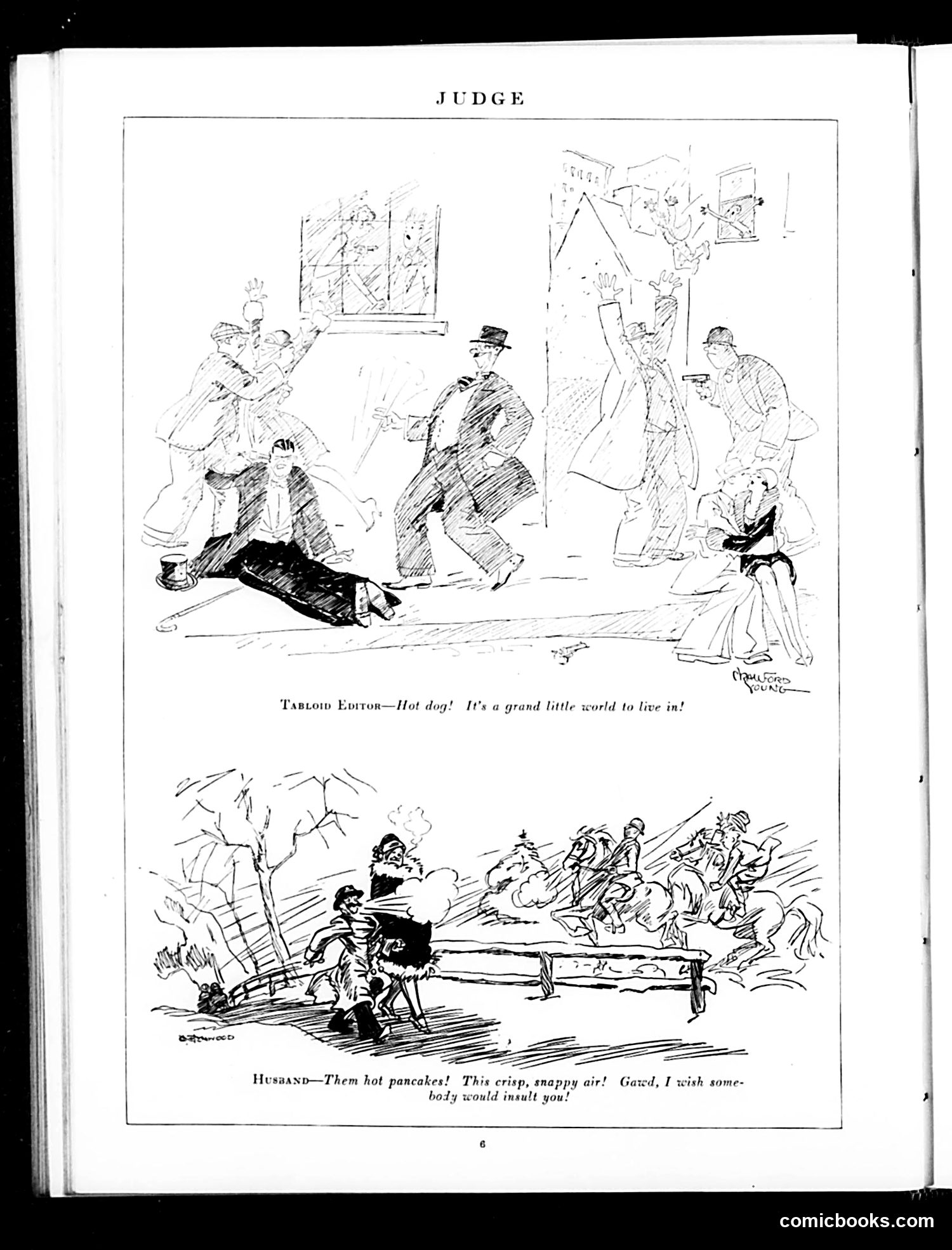
**Top cartoon** depicts a courtroom scene where a judge presides over what appears to be a case involving a "tabloid editor." The caption reads: "Hot dog! It's a grand little world to live in!" This satirizes sensationalist journalism and the frivolous nature of tabloid publishing—suggesting editors celebrate trivial matters. **Bottom cartoon** shows a husband and wife outdoors on a pleasant day. The husband comments on "hot pancakes" and the "crisp, snappy air," then remarks he wishes someone would insult his wife. The joke relies on the common marital trope that wives appreciate compliments and attention; he's sardonically suggesting the fresh air and good mood make him wish for an excuse to defend her honor—implying she normally receives criticism he'd defend against. Both cartoons use humor to comment on contemporary social attitudes.
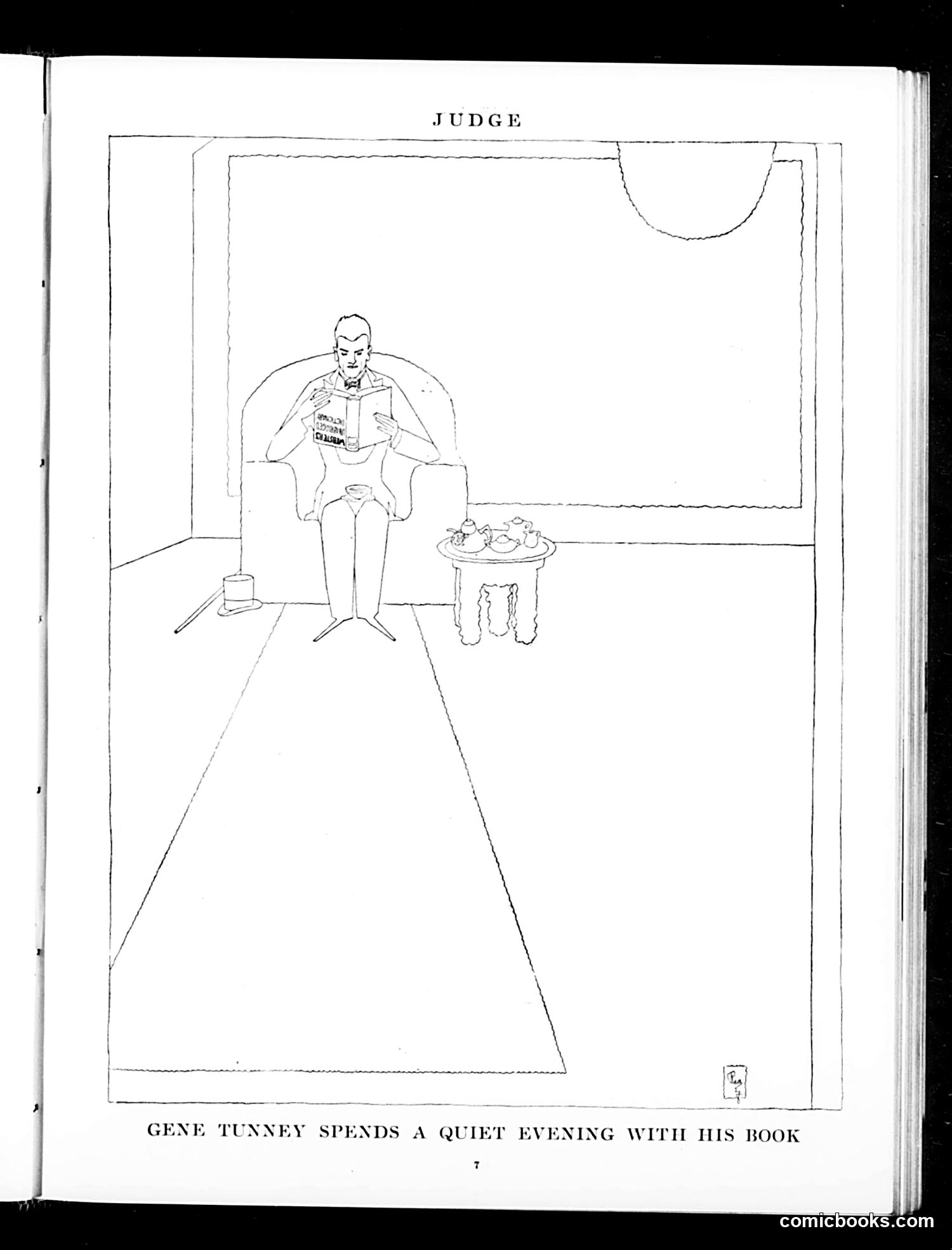
This cartoon satirizes **Gene Tunney**, the famous heavyweight boxing champion of the 1920s. The image shows him seated alone in a stark room, reading a book rather than engaging in typical celebrity nightlife activities. The joke likely plays on Tunney's reputation for intellectual pursuits and refined tastes—unusual for a boxer of his era. Contemporary reports noted his interest in literature and philosophy, which made him an atypical sports figure. The emphasis on a "quiet evening with his book" appears to gently mock him for being cerebral and cultured rather than the stereotypical rough boxer enjoying social pleasures. The stark, minimalist setting emphasizes solitude and studious contemplation, reinforcing the satire of Tunney's intellectual image.
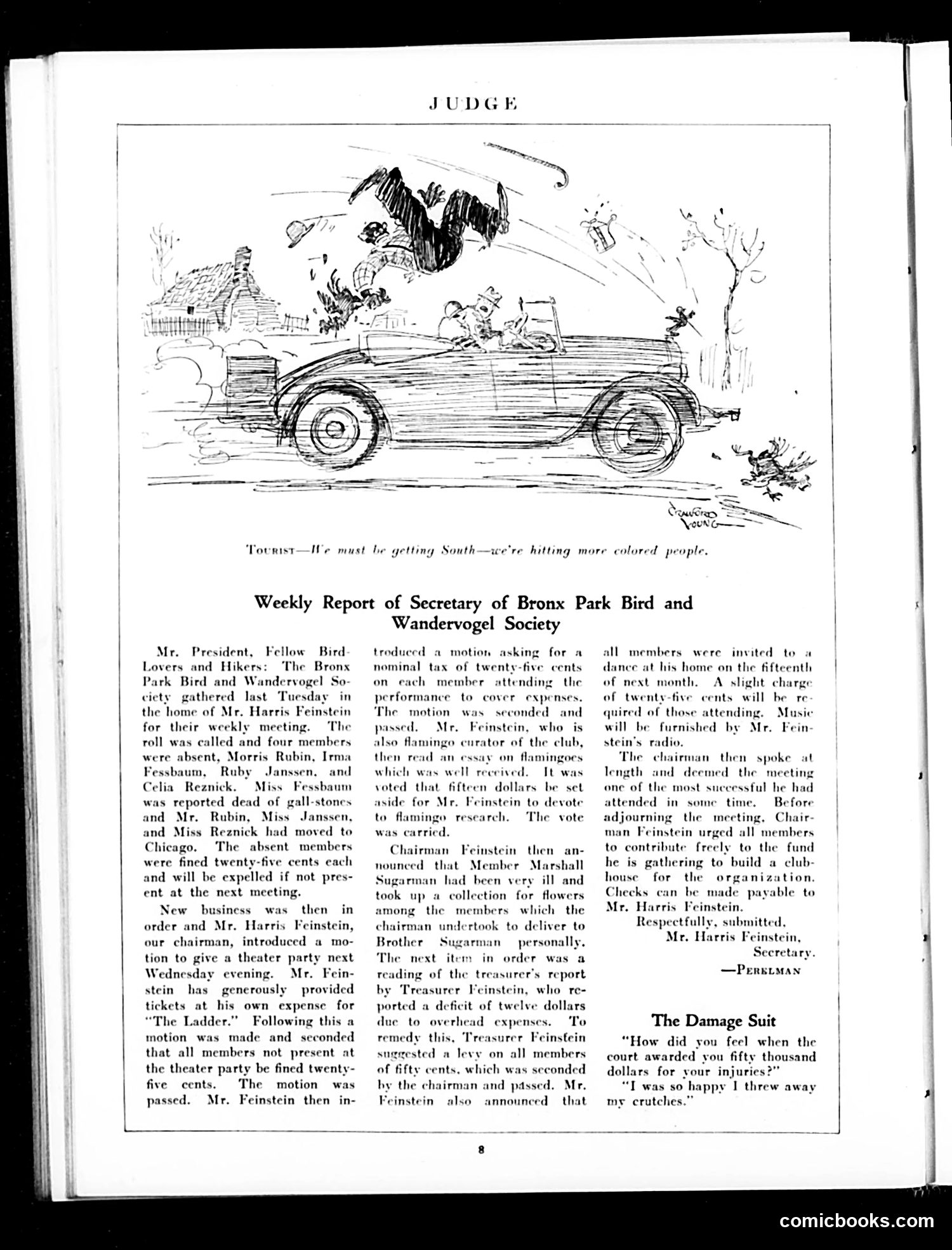
The page contains two pieces of satirical content: **Main Cartoon (top):** A sketch showing a car full of tourists hitting pedestrians, with the caption "We must be getting South—we're hitting more colored people." This reflects early 20th-century racist attitudes and satirizes Northern tourists' shock at encountering Black Americans in the South, treating violence against them as an expected regional characteristic. **"Weekly Report" (center/bottom):** A humorous mock-official document satirizing bureaucratic absurdity and self-serving leadership. Mr. Feinstein, the club chairman, dominates the organization—collecting fees from members (including those absent), profiting from fundraising, and controlling treasury decisions. The satire mocks how small organizational leaders can manipulate rules for personal benefit while maintaining bureaucratic legitimacy. **"The Damage Suit" (bottom right):** A brief joke about a lawsuit plaintiff so pleased with his settlement that he discards his crutches—mocking both frivolous litigation and transparent fraud. All three pieces use humor to critique social hypocrisy and institutional absurdity.
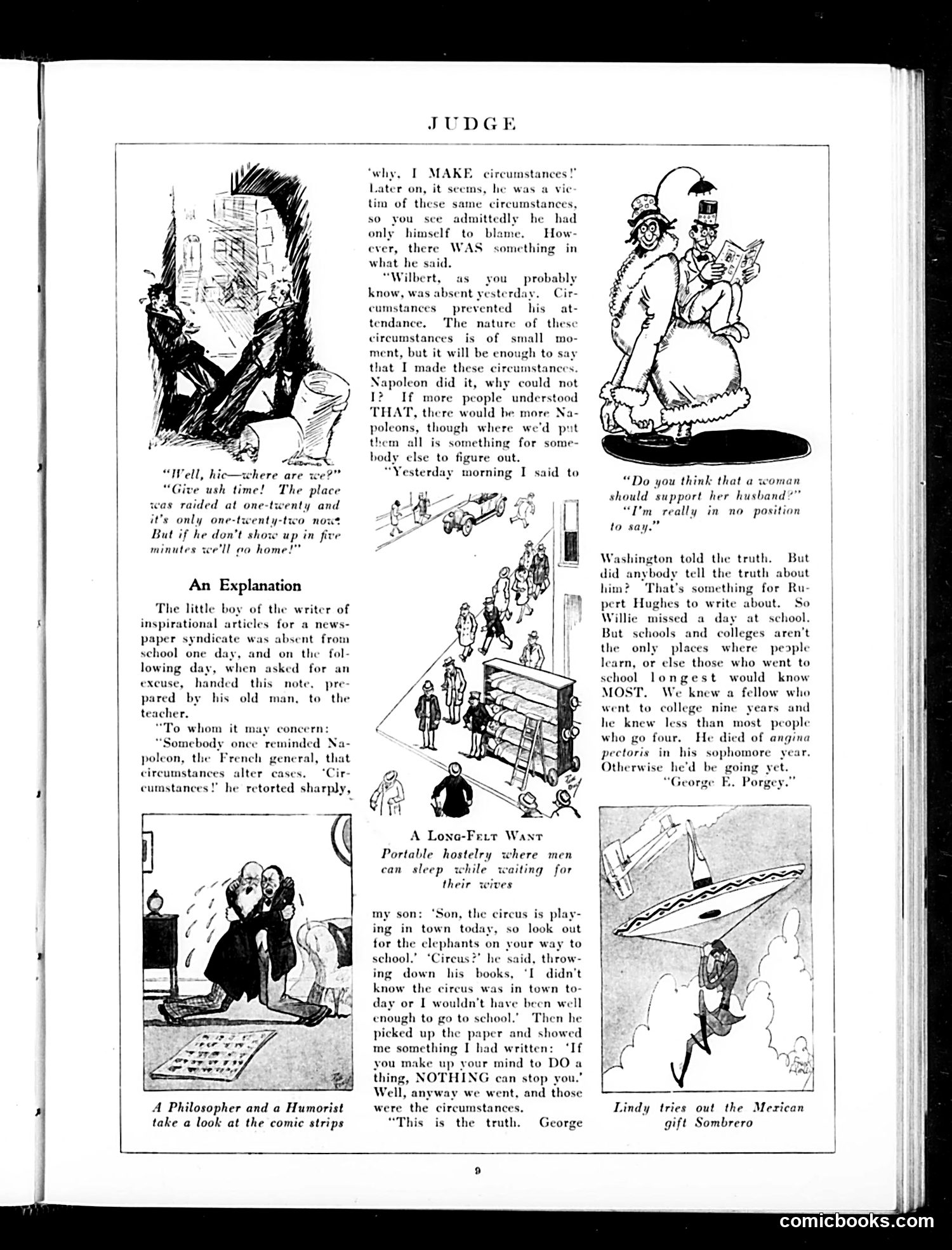
This page satirizes parental excuses and hypocrisy through a newspaper writer's note justifying his son's school absence. The writer invokes Napoleon's famous maxim about circumstances, then admits *he himself* created the circumstances by telling his son about the circus in town—thus preventing the boy's attendance while lecturing him about willpower ("Nothing can stop you"). The satire targets how educated adults rationalize contradictions: the writer positions himself as a self-made man like Napoleon, yet undermines his own philosophy by manufacturing the very excuses he supposedly rejects. The accompanying illustrations—showing a "Philosopher and Humorist" examining comic strips, a "Long-Felt Want" (a hostel for men waiting for wives), and Lindy trying a Mexican sombrero—are separate comic vignettes poking fun at contemporary culture and behavior. The overall message mocks pretentious intellectualism masking simple human weakness.
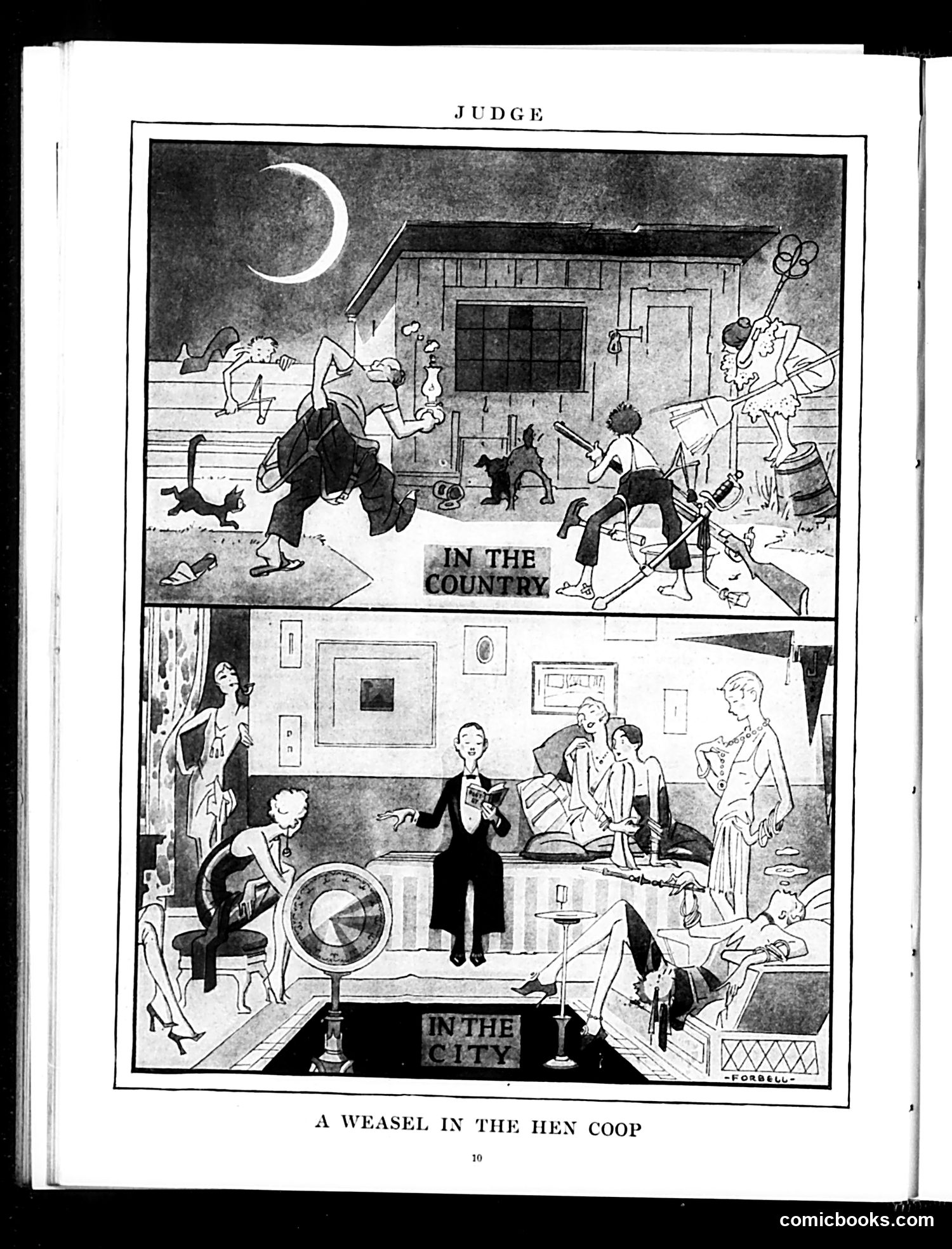
This two-panel satirical cartoon contrasts rural and urban life. The top panel ("In the Country") depicts chaotic nighttime disruption—children and adults in disarray as a weasel invades a henhouse, with a crescent moon overhead suggesting nocturnal chaos. The bottom panel ("In the City") shows an orderly, sophisticated indoor scene with well-dressed urbanites gathered formally around a scale, suggesting measurement, balance, or precise control. The title's "weasel" metaphor implies a troublemaker or infiltrator causing disruption. The cartoon likely satirizes contrasting social conditions or values between rural and urban America—rural life as vulnerable to disorder and threats, urban life as refined but artificially controlled. Without additional context, the specific political or social target remains unclear, though it appears to critique either rural vulnerabilities or urban pretension.
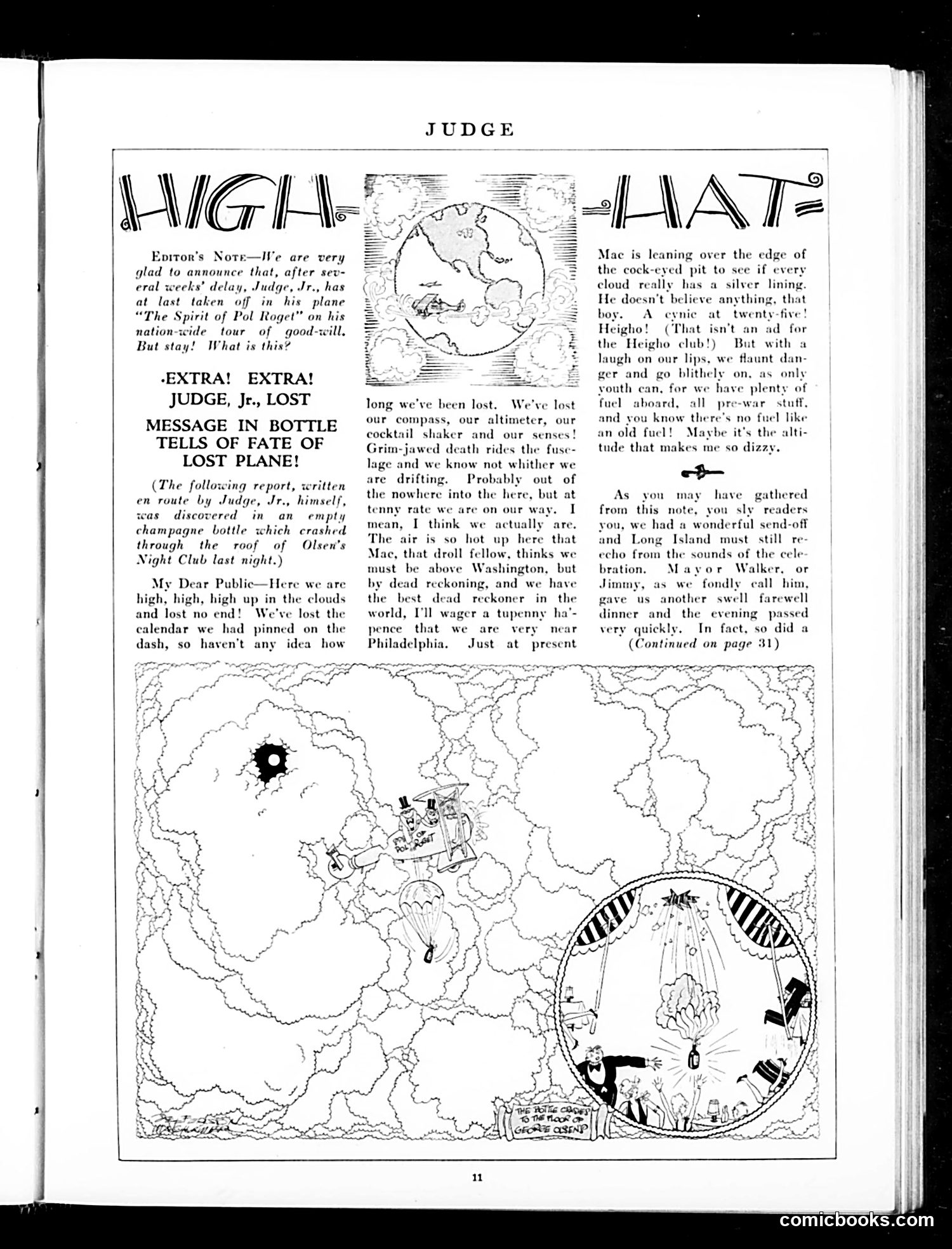
This is a humorous satirical piece about **Judge, Jr.** (presumably the magazine's mascot or a fictional character), who has embarked on a goodwill aviation tour in a plane called "The Spirit of Pol Roget." The joke is that he's now lost in the clouds and sends a message-in-a-bottle report. The satire mocks: - **Aviation's early unreliability**: The plane has lost compass, altimeter, cocktail shaker, and calendar—treating serious navigation equipment as casually as bar supplies - **Imprecise navigation**: The pilot jokes about being "above Washington" but thinks they're near Philadelphia, suggesting the vast uncertainty of early flight - **Youth recklessness**: Despite being hopelessly lost with dwindling fuel, they maintain cheerful bravado - **Political figures**: "Mayor Walker" (likely Jimmy Walker, NYC mayor) is referenced as giving them a farewell dinner The cartoon illustrates the plane lost among clouds, with a circular inset showing the plane's cabin. The overall message satirizes the nascent aviation industry's dangers and the cavalier attitude some took toward them.
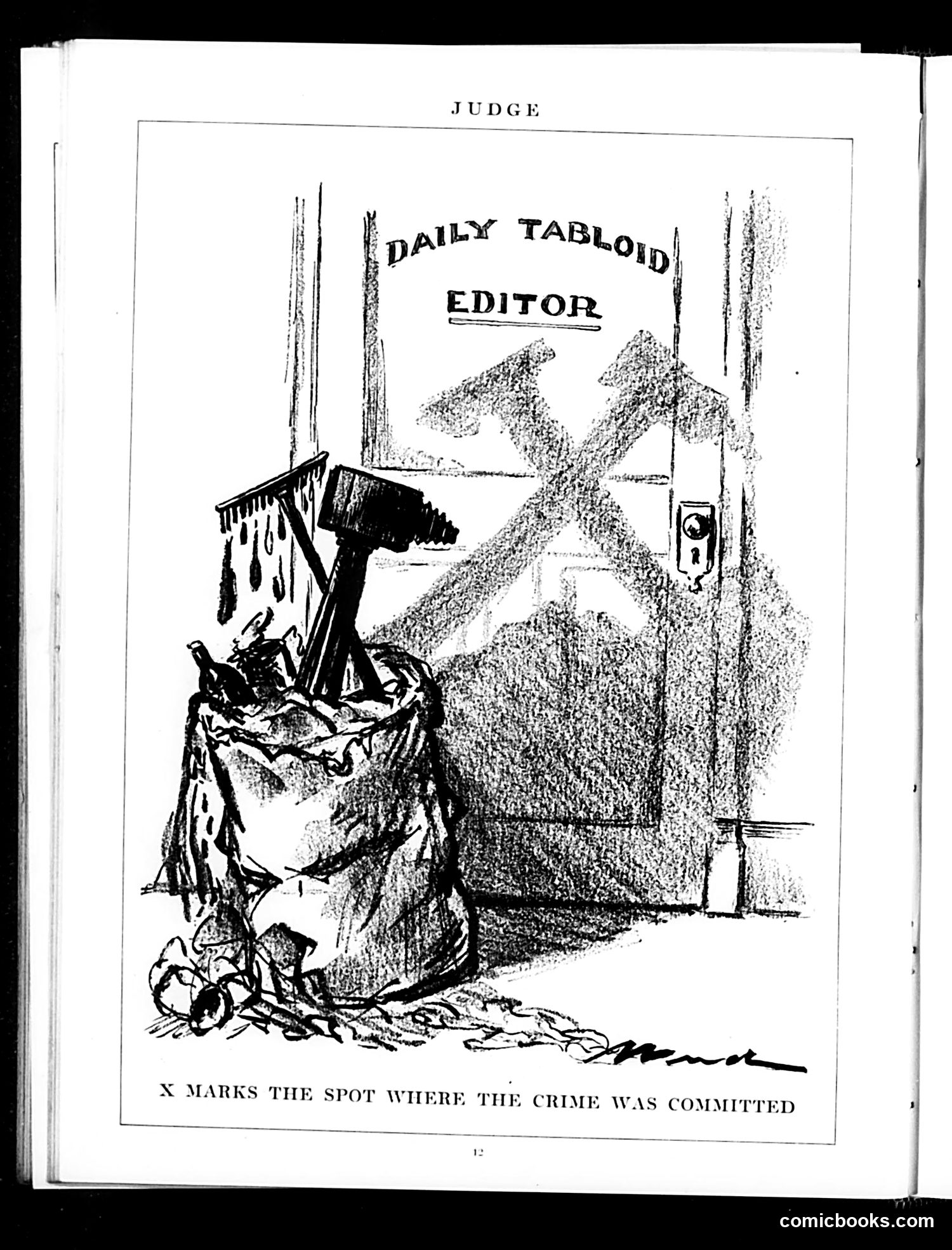
This is a satirical cartoon from Judge magazine titled "Daily Tabloid Editor." The image depicts a figure wielding a hammer and axe, standing amid scattered debris and wreckage in what appears to be an office or building interior. The "X marks the spot" caption references crime scene investigation procedures. The satire criticizes sensationalist tabloid journalism. The editor—portrayed as destructive and violent—represents how tabloids sensationalize crimes and scandals. By literally "marking the spot," the cartoonist mocks tabloids' obsessive coverage of crime scenes and their role in exploiting or amplifying criminal narratives for profit. The wreckage symbolizes the damage caused by irresponsible yellow journalism to public discourse and perhaps to the subjects of tabloid reporting.
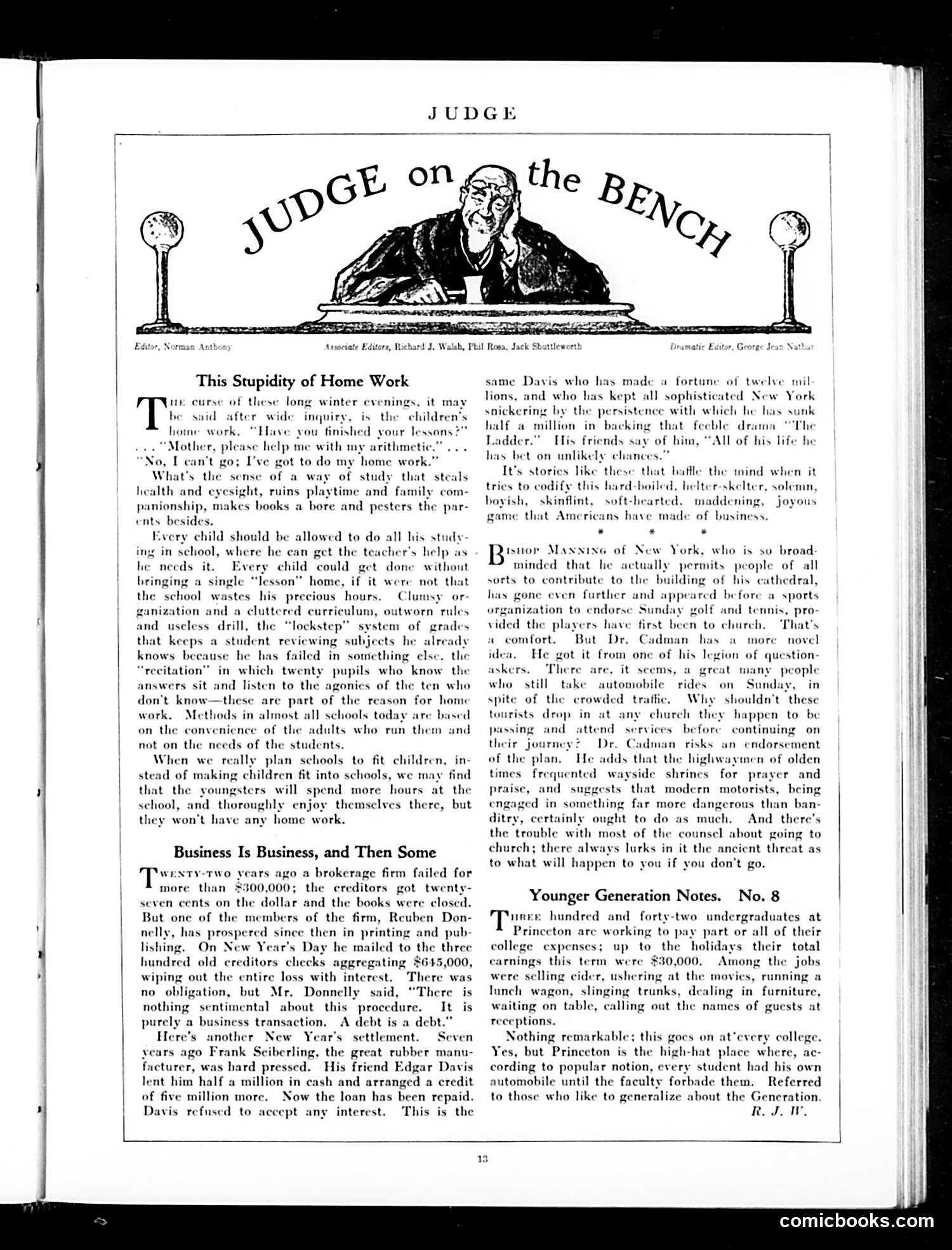
This page contains three distinct opinion pieces from Judge magazine, a satirical weekly: **"This Stupidity of Home Work"** critiques American schools for inefficient organization that forces students to complete assignments at home. The author argues that with better school design, all work could be completed during school hours, eliminating homework's burden on families and children's health. **"Business Is Business, and Then Some"** celebrates two wealthy businessmen—Reuben Donnelly and Edgar Davis—for voluntarily repaying old debts with interest decades later, despite no legal obligation. The piece uses these examples to satirize American business culture as simultaneously ruthless and unpredictably sentimental. **"Younger Generation Notes"** (brief item) observes that Princeton undergraduates work various jobs during holidays rather than assuming automatic privilege. The page represents Judge's characteristic blend of progressive social criticism and celebration of individual moral character. No specific political figures are caricatured; instead, the magazine critiques institutional systems while praising exceptional personal integrity.
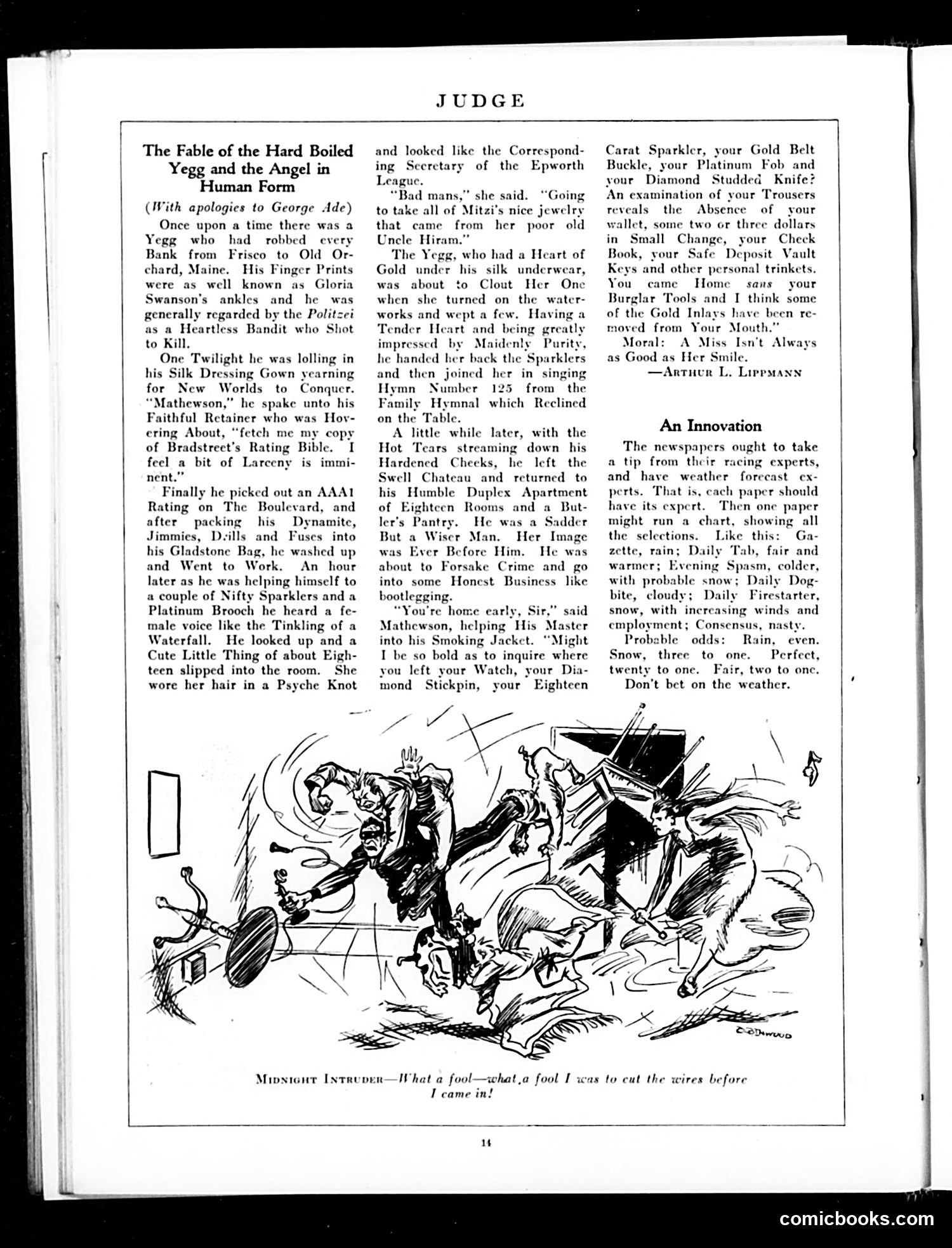
This page contains a humorous moral fable mocking sentimental reformation narratives. A hardened bank robber ("yegg"—slang for burglar) is interrupted mid-heist by a young woman who appeals to his conscience through tears and innocent religiosity (singing hymns). Moved by her apparent virtue, he abandons the crime. The twist: his butler reveals the "angel" has robbed *him*—she stole his valuables while he was distracted by her performance. The moral, credited to Arthur L. Lippmann, sardonically concludes "A Miss Isn't Always as Good as Her Smile." The satire targets both sentimental Victorian morality tales (George Ade was famous for such fables) and the era's assumptions about feminine innocence. The cartoon illustration shows the chaotic robbery scene. The piece suggests that naive sentimentality—trusting appearances over reality—leaves one vulnerable to exploitation, even by those claiming moral superiority. The secondary piece about weather forecasting is unrelated editorial commentary.
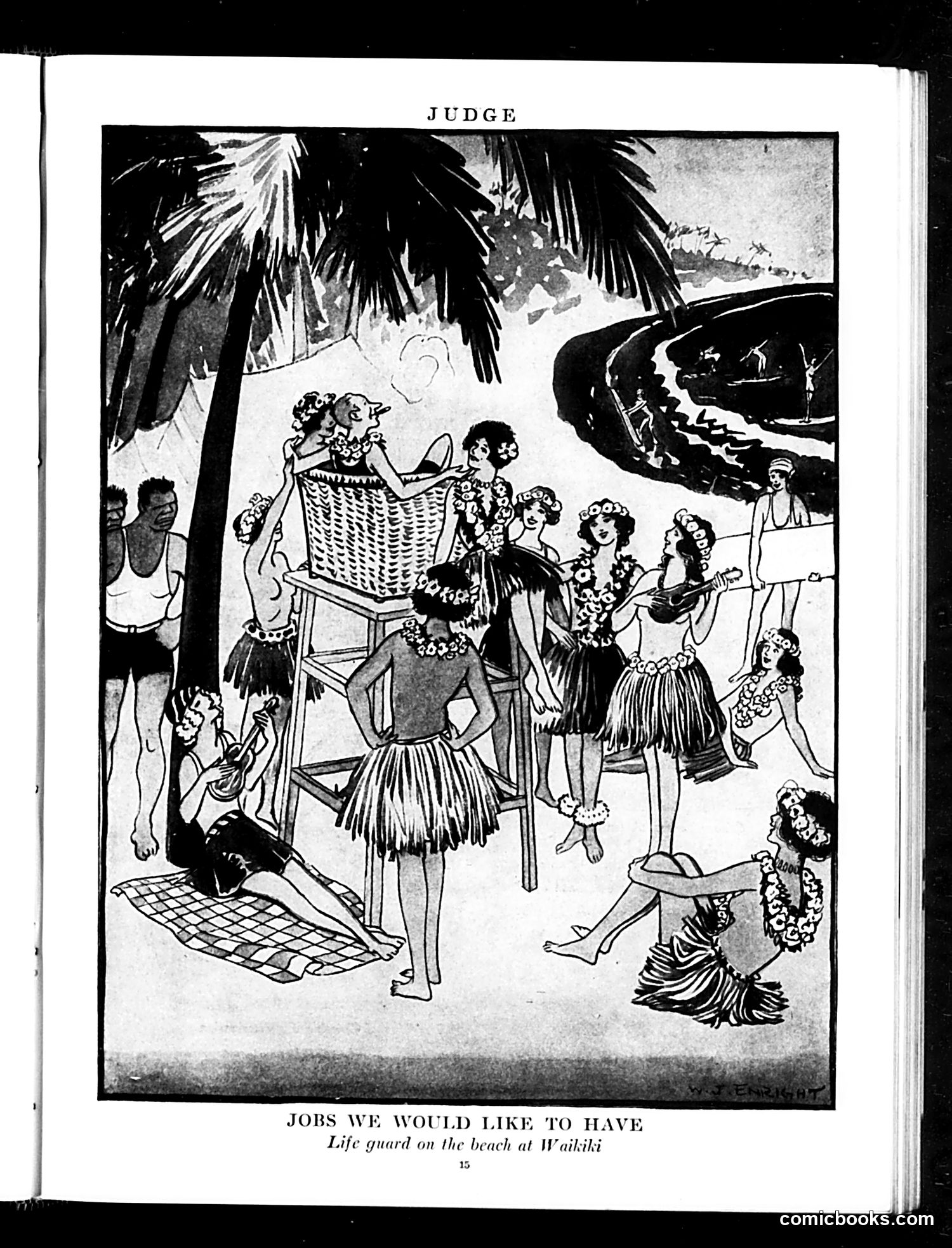
This cartoon, titled "Jobs We Would Like to Have: Life guard on the beach at Waikiki," satirizes American fantasies about tropical vacations and dream jobs during what appears to be the early 20th century. The illustration depicts an idealized beach scene in Hawaii (Waikiki) where a lifeguard sits elevated on a chair, surrounded by attractive women in swimwear and grass skirts. The satire lies in the obvious joke: the "job" is portrayed as leisurely paradise rather than actual work—the lifeguard appears to be more interested in socializing with beachgoers than performing safety duties. The cartoon plays on American fascination with Hawaii as an exotic, pleasure-filled destination and reflects period attitudes toward both tropical locales and gender dynamics. It's humorous commentary on escapist fantasies about employment in what readers would consider an ideal posting.
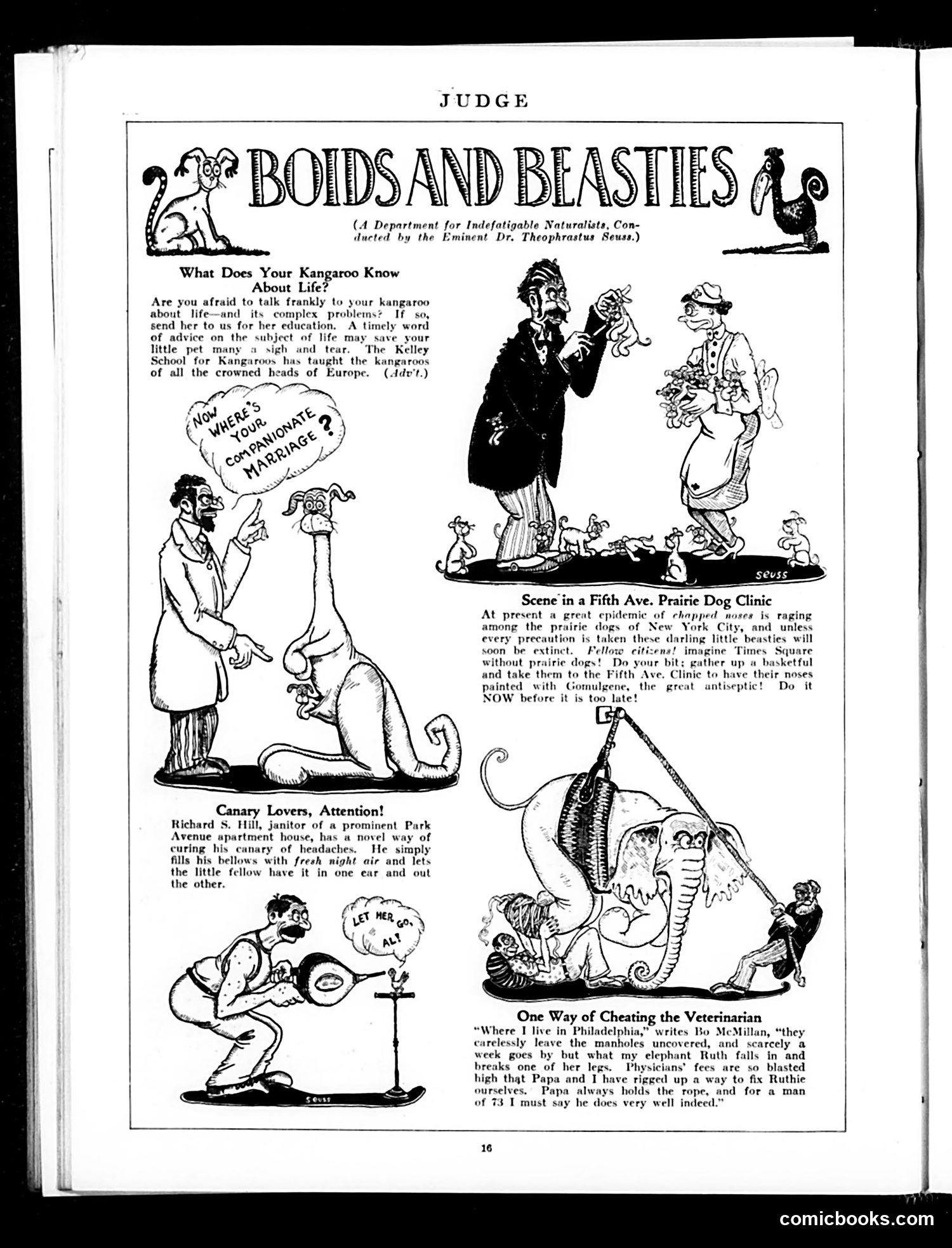
This is a humorous advice column parodying earnest educational content of the early 20th century. The page consists of four absurdist vignettes: 1. **Kangaroo "life education"** mocks parental anxiety about sex education by suggesting parents send their pet kangaroos to finishing school. 2. **Prairie dog nose clinic** satirizes urban pet obsession and commercial health crazes by depicting a veterinary epidemic among fashionable New Yorkers' prairie dogs. 3. **Canary cure** ridicules folk remedies and DIY pet care through an absurd "fresh air" headache treatment. 4. **Elephant leg repair** exaggerates the expense of veterinary fees and working-class ingenuity by showing a family performing surgery on their elephant using rope and a 73-year-old father. The satire targets class pretension, consumer gullibility, and the era's dawning obsession with professional expertise and commodified solutions to everyday problems—all wrapped in deliberately silly animal scenarios that undermine the serious tone being parodied.
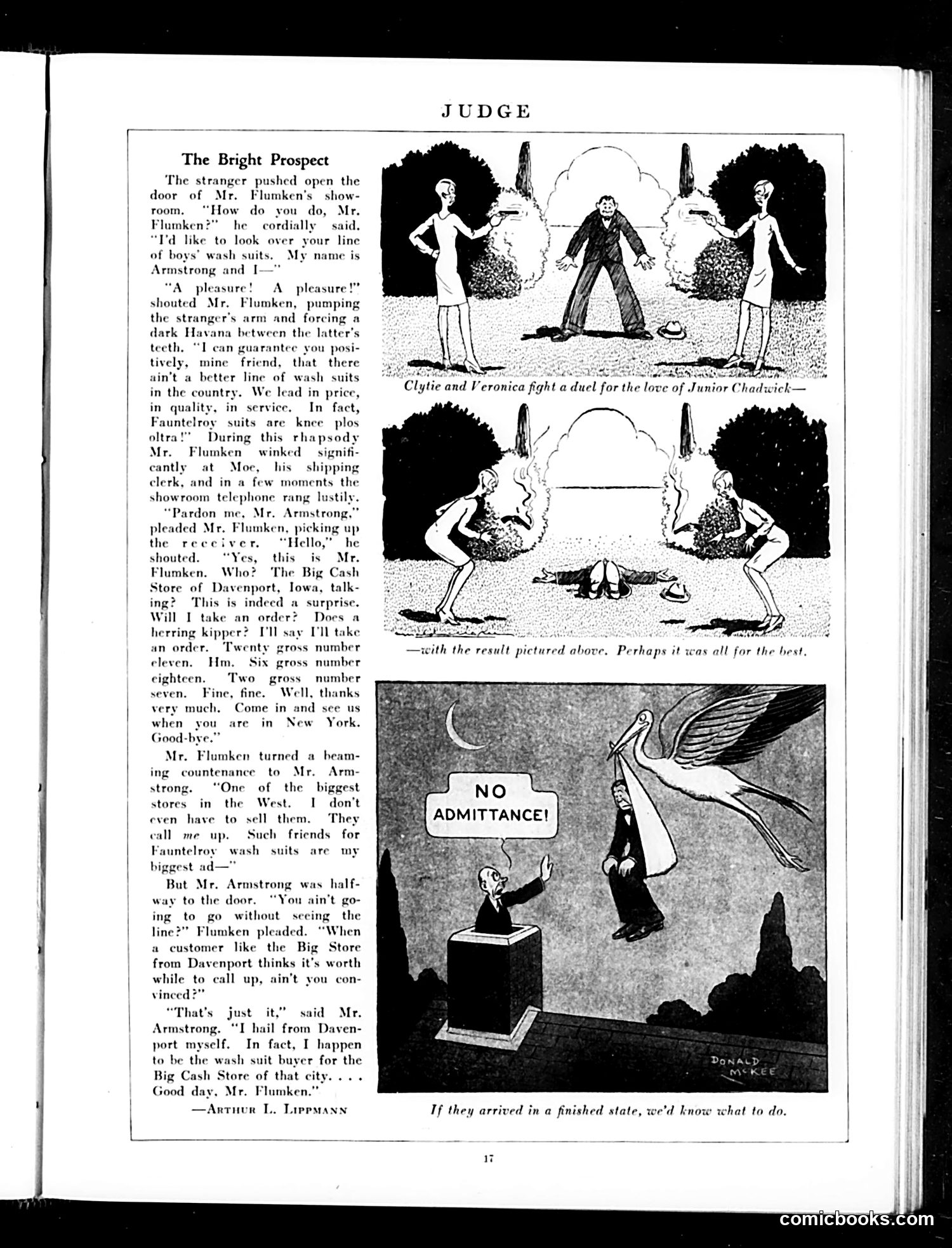
This satirical story mocks dishonest sales tactics and manufactured social proof. Salesman Flumken attempts to impress a potential customer (Armstrong) by staging a fake phone call. He signals his clerk Moe to call back, then pretends to receive an order from "the Big Cash Store of Davenport, Iowa"—a supposed major customer—to appear successful and boost credibility. The joke: Armstrong immediately leaves without viewing the merchandise. He reveals he *is* the buyer for that same store, meaning the "big customer" Flumken just bragged about doesn't actually exist. Flumken's con backfires spectacularly. The accompanying cartoons above satirize romantic rivalry (two women fighting over a man), while the bottom cartoon warns that admitting visitors requires proper "finished state"—likely commenting on social propriety or deception detection. The satire targets con-artist sales culture and how transparent manipulation actually repels smart customers.
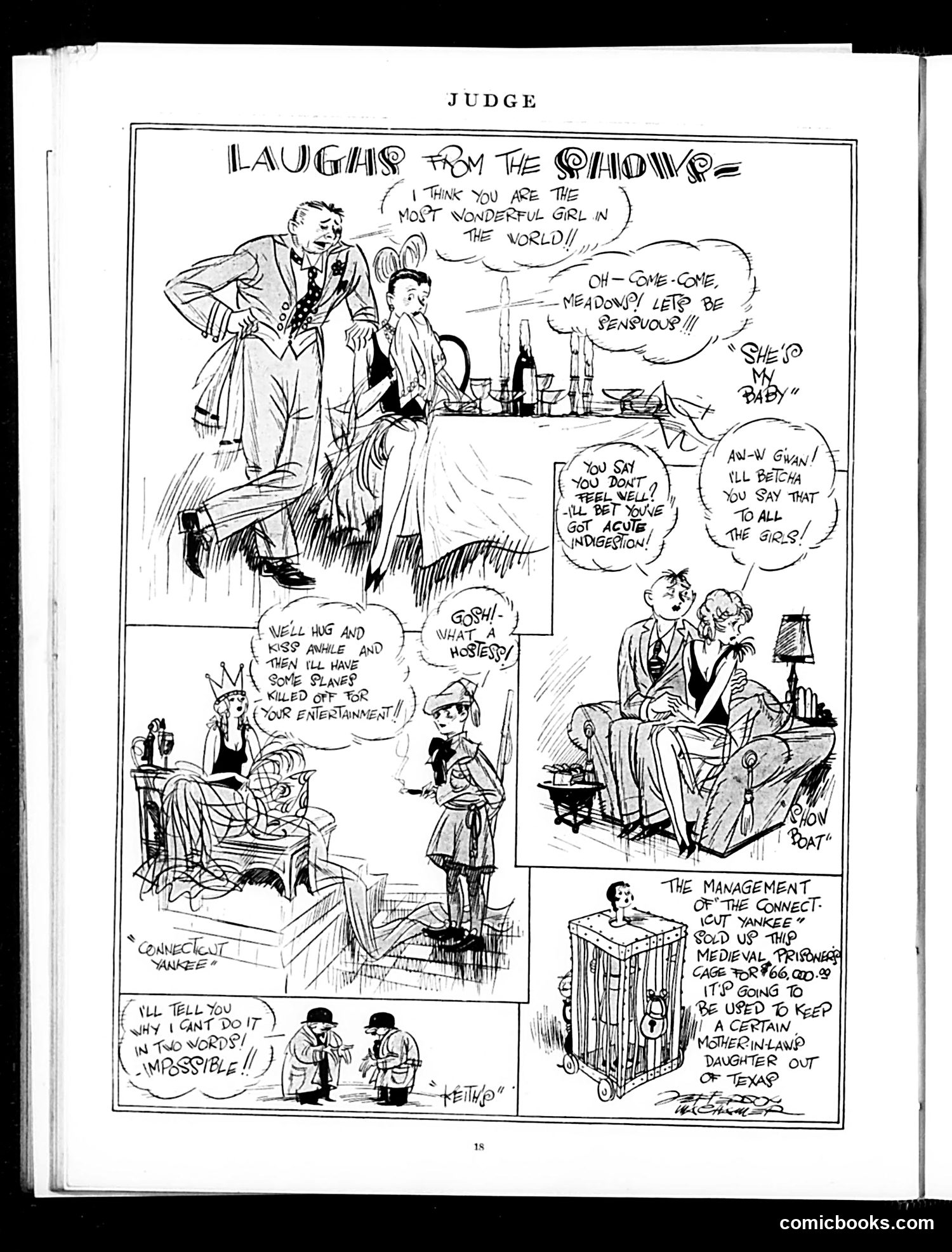
This page satirizes theatrical entertainment and romantic comedy conventions of the early 20th century. The top panel mocks melodramatic stage flirtation—a man flatters a woman with exaggerated compliments ("most wonderful girl in the world"), while she responds with coy, sensuous banter typical of stage romance. The subsequent panels parody common theatrical plots: a "Connecticut Yankee" reference (likely Twain's time-travel narrative), stage scheming involving "slaves" and entertainment, and a darkly comedic final panel depicting a medieval torture cage. This cage, the caption explains, will supposedly manage the "Connecticut Yankee" character—a crude joke reducing a woman to an object to be controlled or contained. The humor relies on contemporary audiences' familiarity with popular stage productions and the absurdity of overwrought theatrical romance and plot devices. Modern readers would need context about early 1900s theater conventions and Twain's "A Connecticut Yankee in King Arthur's Court" to fully appreciate the references.
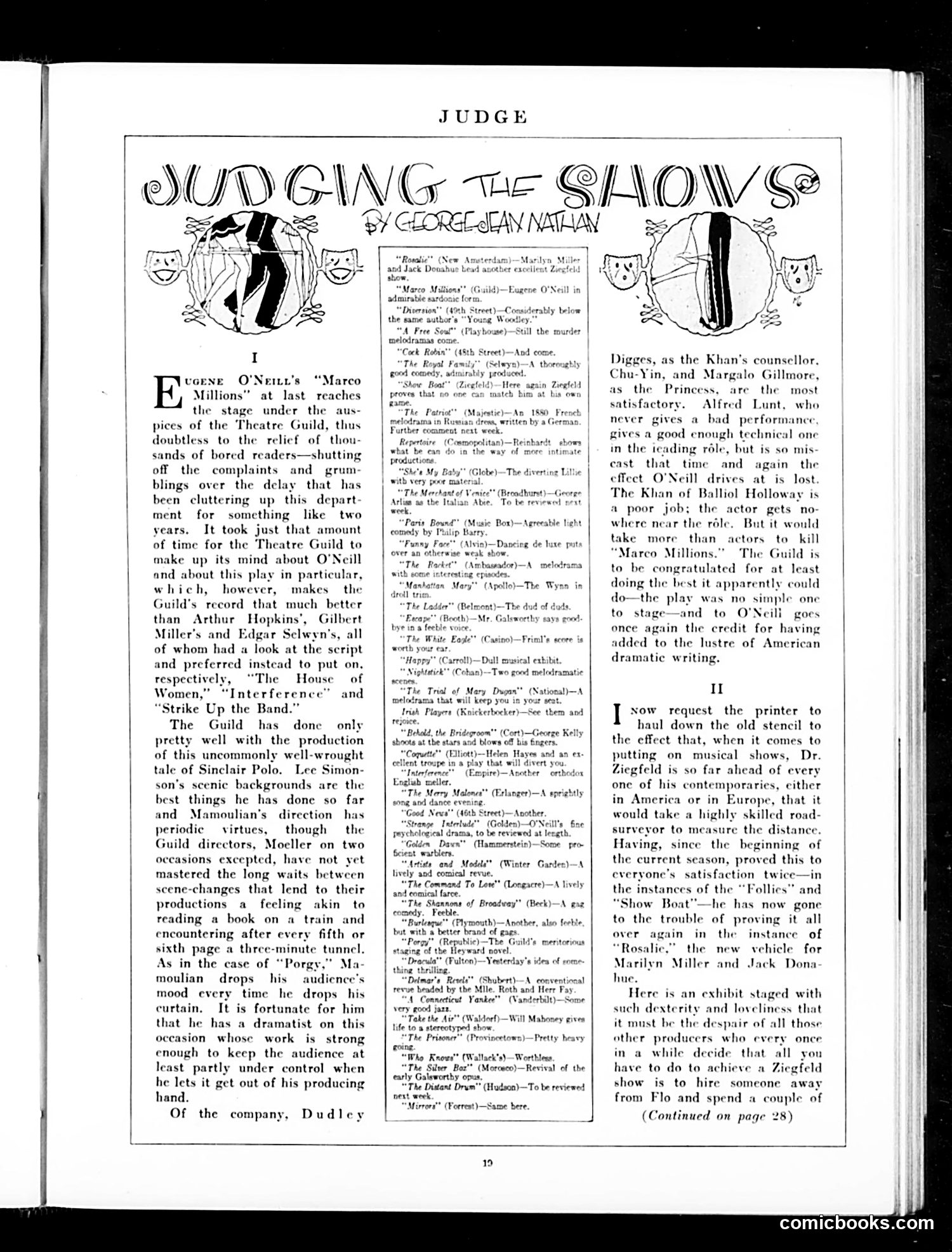
This is a theater review column by George Jean Nathan critiquing Eugene O'Neill's play "Marco Millions," which the Theatre Guild has finally staged after a two-year delay. Nathan praises the production's scenic design by Lee Simonson but criticizes director Rouben Mamoulian for creating awkward pauses between scenes that disrupt audience engagement—comparing the experience to reading interrupted by tunnel passages on a train. The review critiques specific performances: Alfred Lunt is miscast in the lead role; Dudley Digges and Margalo Gillmore perform satisfactorily; Balliol Holloway's portrayal of the Khan is weak. Nathan argues that despite these flaws, O'Neill's strong writing keeps the audience engaged. The column also lists brief notices of other Broadway productions currently running, offering quick judgments on shows like "Porgy," "Interference," and "The Merry Malones."
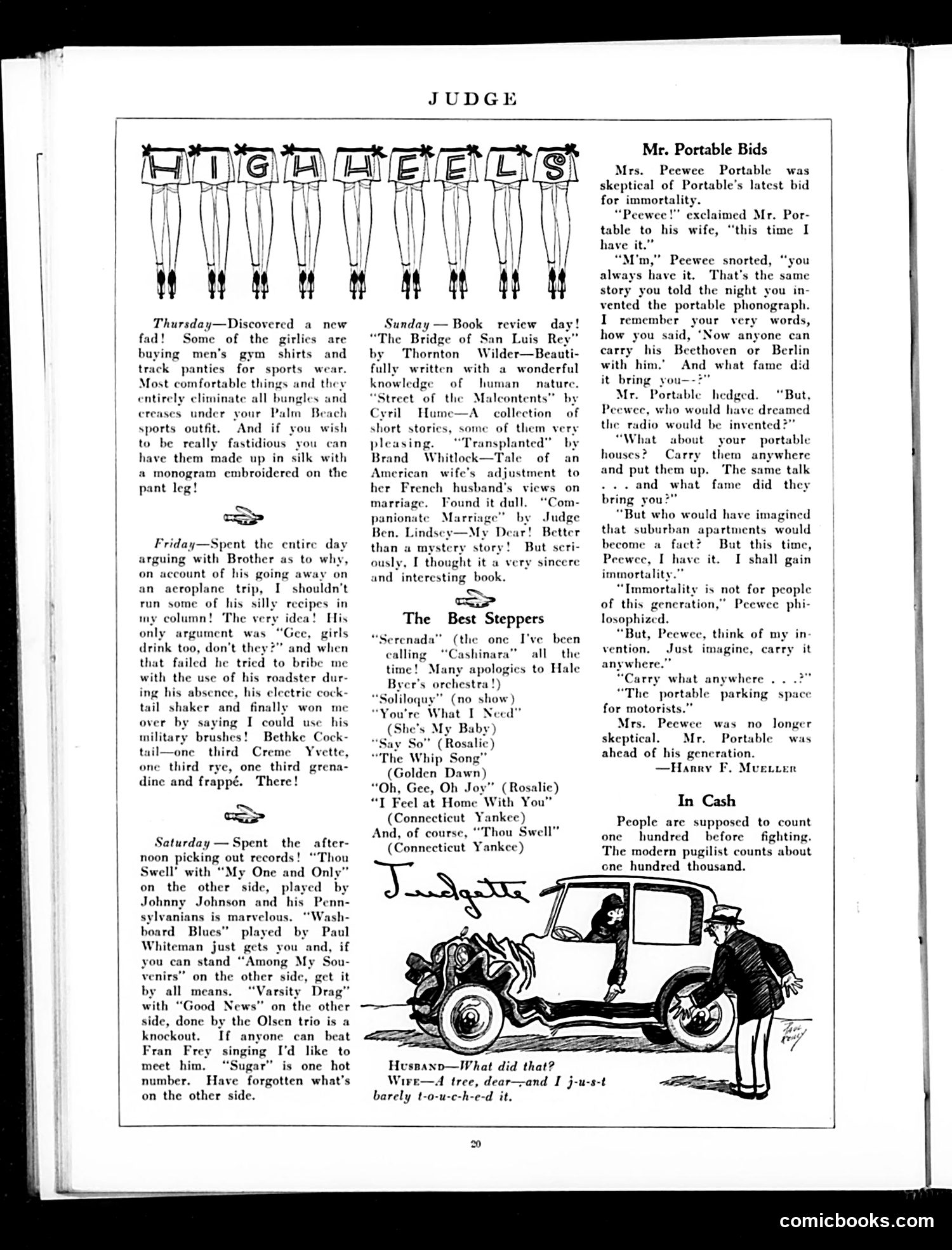
This page from Judge magazine (circa 1920s, based on references) contains society humor and commentary on contemporary fads and culture. **"Hoi Polloi" Column**: A woman's diary chronicles her week—discovering men's gym wear worn by women, arguing about publishing her brother's cocktail recipe, collecting popular jazz records (Paul Whiteman, Fran Frey), and reviewing recent bestsellers including Thornton Wilder's *Bridge of San Luis Rey* and Judge Ben Lindsey's *Companionate Marriage*. **"Mr. Portable Bids"**: Satirizes an inventor husband who repeatedly pitches absurd "portable" inventions (portable phonograph, radio, houses) claiming each will bring immortality. His skeptical wife reminds him these always fail. His latest: a "portable parking space for motorists"—which she finds sufficiently ridiculous to finally intrigue her. The satire mocks both the inventor's naive optimism and the era's automobile-culture obsession. **"In Cash"**: A single-panel cartoon showing a couple examining a damaged car, with the wife's deadpan comment playing on "touching" a tree.
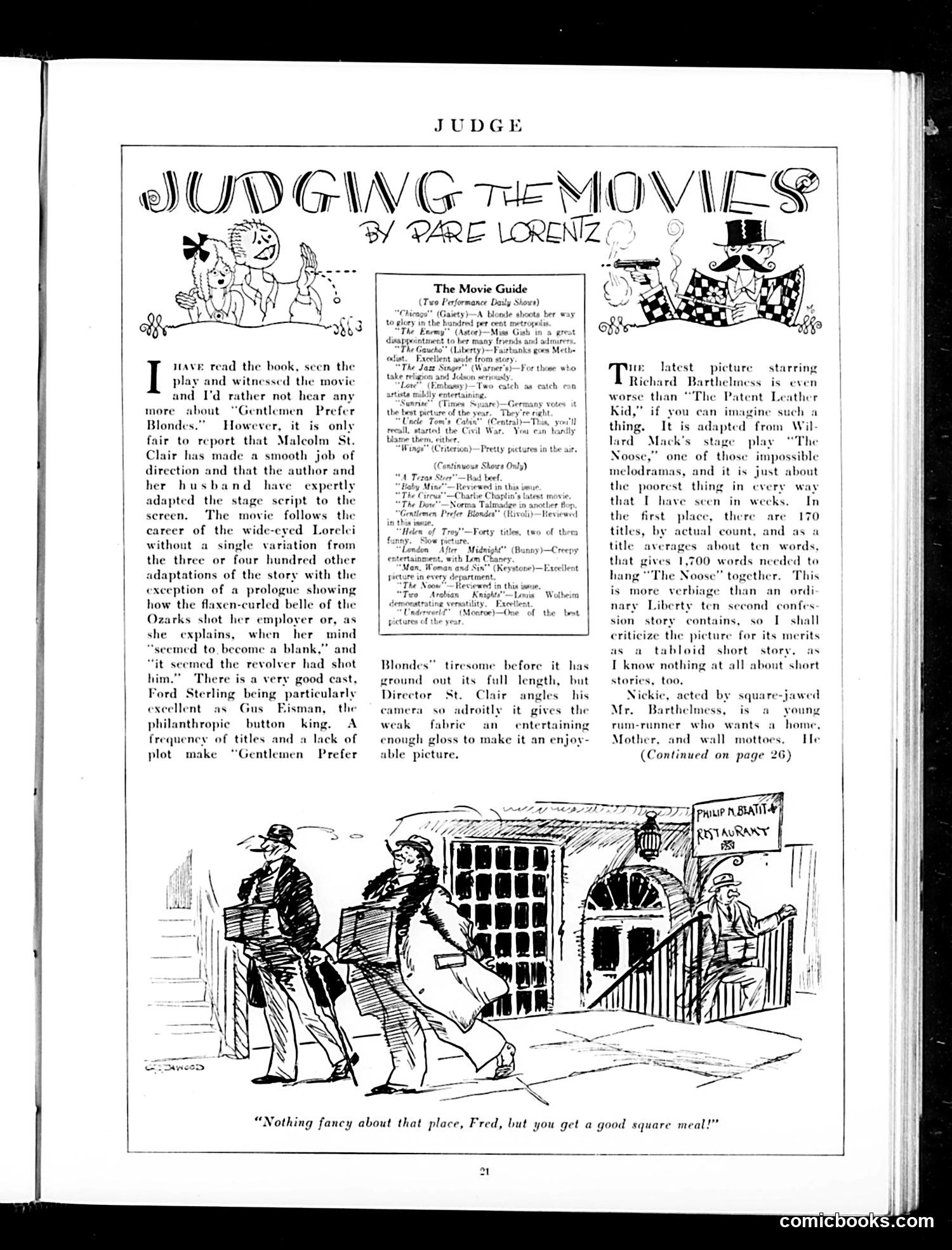
This is a film review column by Pare Lorentz critiquing two movies. The main review concerns "Gentlemen Prefer Blondes," adapted from a popular 1920s book and stage play. Lorentz acknowledges the film is competently made by director Malcolm St. Clair with good casting (Ford Sterling as a wealthy philanthropist), but finds it tedious—the story has been adapted so many times that the novelty is exhausted. The secondary review attacks "The Noose," starring Richard Barthelmess. Lorentz's complaint is absurdly specific: the film contains 170 title cards (text interruptions common in silent films), totaling roughly 1,700 words—more text than a typical magazine confession story. He considers this excessive verbosity a fundamental flaw, making the melodrama about a rum-runner unbearable. The satire mocks both the film's poor construction and silent cinema's heavy reliance on intertitles.
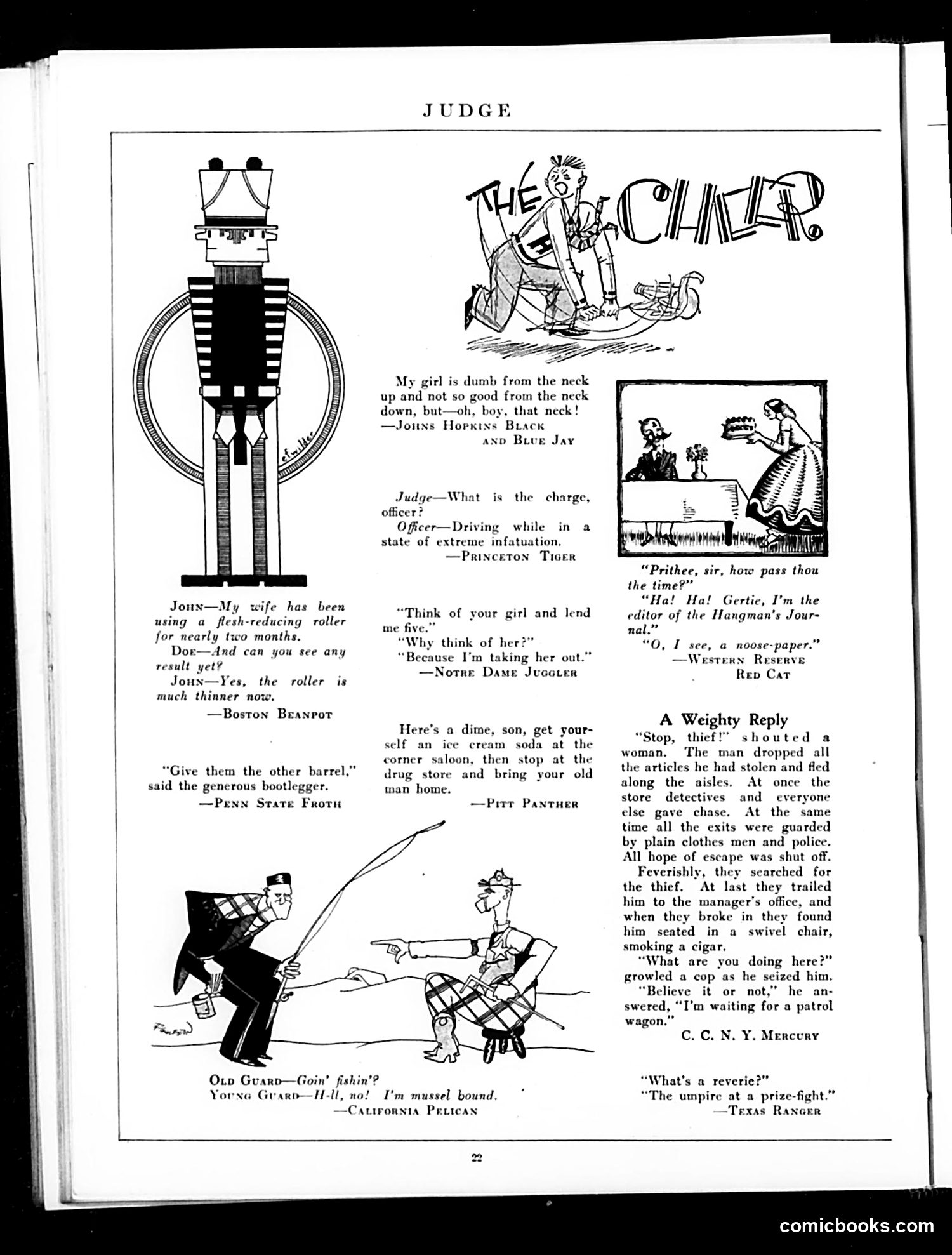
This page from Judge magazine contains various humor pieces typical of early 20th-century American satire. The jokes reference contemporary concerns: a wife using a "flesh-reducing roller" (weight loss obsession), bootleggers (Prohibition era), and a driver arrested for "driving while in a state of extreme infatuation" (romantic distraction). Several pieces mock authority figures—a judge, police, and store detectives. One story depicts detectives chasing a thief only to find him calmly waiting in the manager's office for a patrol wagon, mocking law enforcement's incompetence. The magazine includes college humor (from Hopkins, Princeton, Notre Dame, and other universities), a common Judge feature. References to "noose-paper" (play on "news-paper") and necks suggest wordplay-based humor typical of the era. The cartoons and jokes collectively satirize dating, weight consciousness, law enforcement, and social behavior, reflecting Jazz Age anxieties and preoccupations.
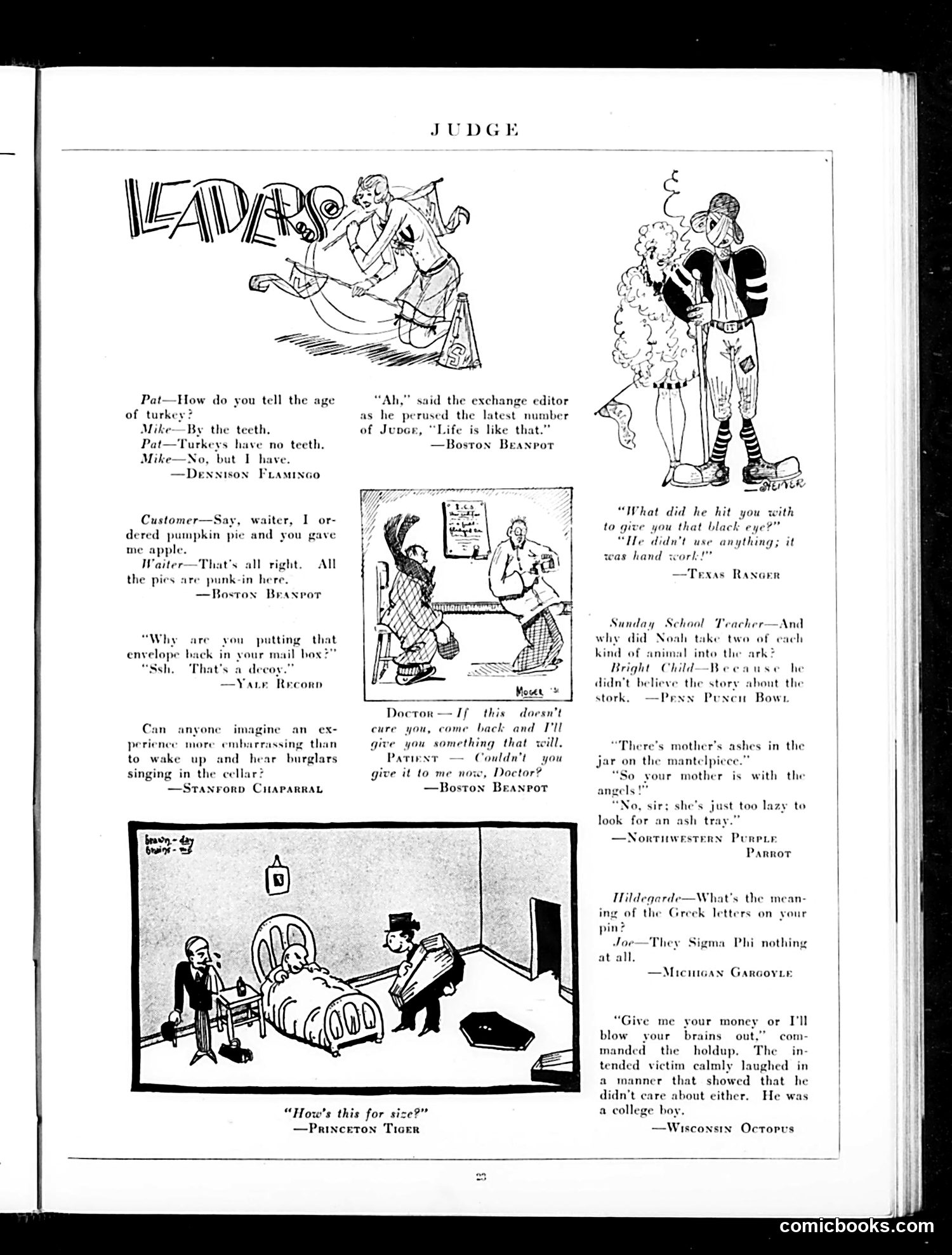
This is a collection of brief jokes and humorous anecdotes typical of Judge magazine's "Judge" humor section. Rather than political cartoons, these are mostly one-liners and short comic situations from college newspapers and humor publications. The jokes reveal early 20th-century humor conventions: puns (waiter confusing "pumpkin" with "punk-in"), absurdist scenarios (burglars singing while robbing), and gentle mockery of social types (the oblivious college boy unafraid of robbery, the lazy woman). One cartoon shows a doctor with a patient in bed—the joke being the doctor's dark threat to provide "something that will" work if this treatment fails. The attributions to college publications (Princeton Tiger, Texas Ranger, Wisconsin Octopus) and Boston Beanpot indicate this compiled collegiate wit circulating among American universities. The humor is largely innocent wordplay and observational comedy, reflecting 1920s-era sensibilities rather than pointed social or political satire.
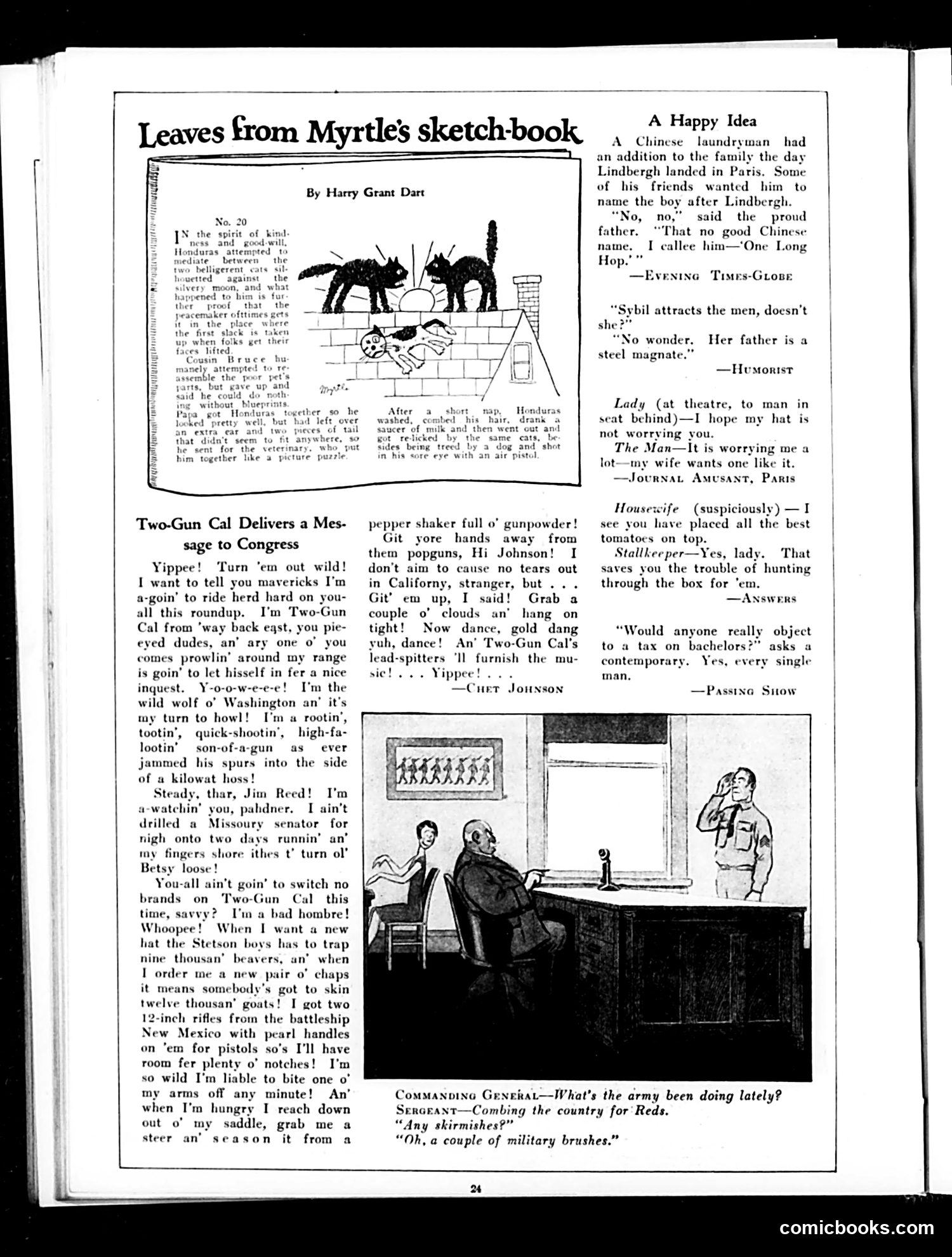
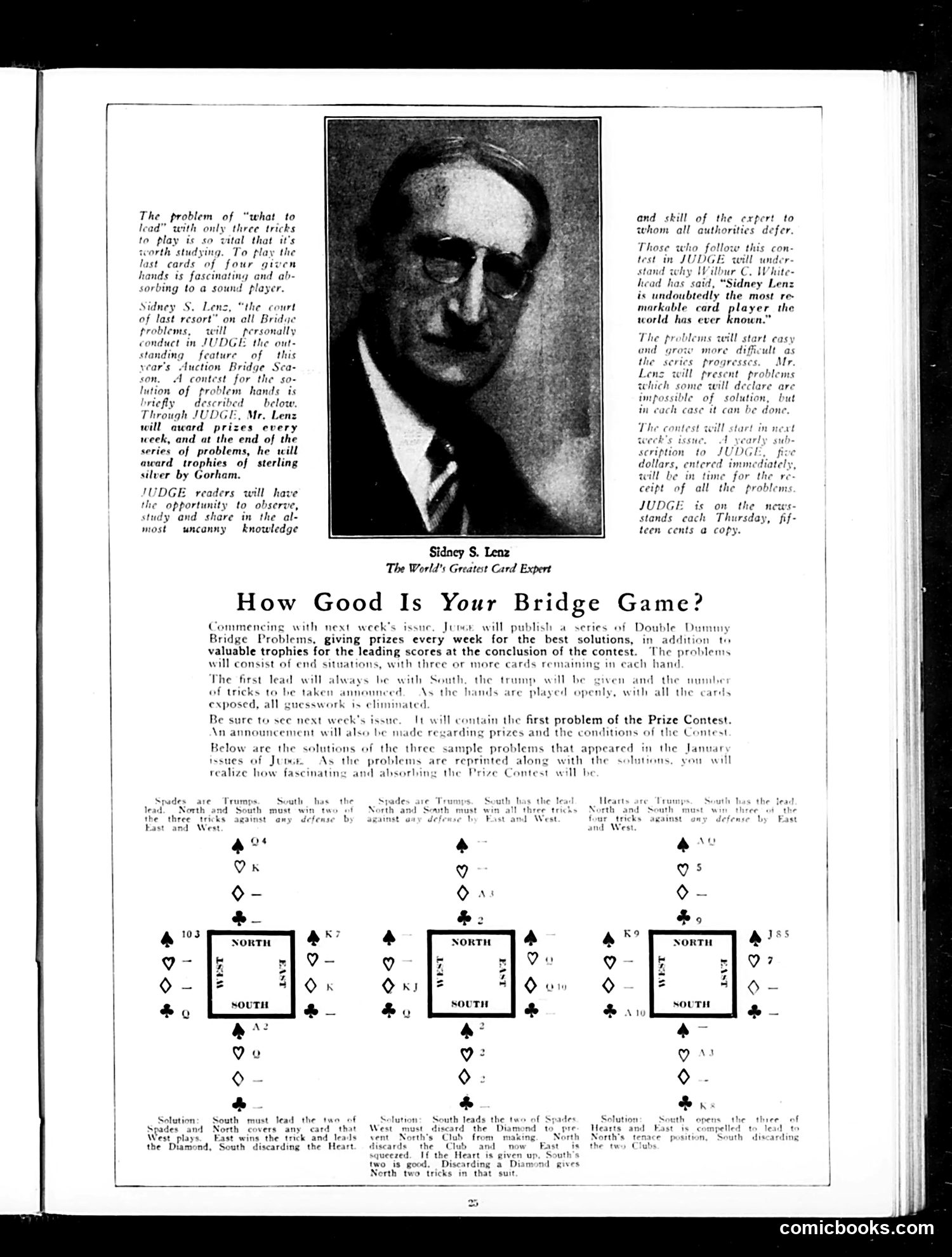
This page announces a new weekly feature in Judge magazine: a bridge card game problem-solving contest. The central figure is **Sidney S. Lenz**, identified as "The World's Greatest Card Expert," whose photograph and endorsement lend authority to the contest. The content is **not satirical or political**—it's a genuine leisure/games feature. Judge magazine, while primarily satirical, regularly published entertainment content including puzzles and games for its readers. The contest invites readers to solve bridge card problems, with weekly prizes and eventual silver trophies from Gorham (a prestigious silverware maker). The page shows three sample bridge "hands" (card-game situations) with solutions, establishing the contest format. Winners would be announced in subsequent issues. This reflects early 20th-century American popular culture, when bridge was a fashionable pastime among educated middle and upper classes, and puzzle contests were common magazine features.
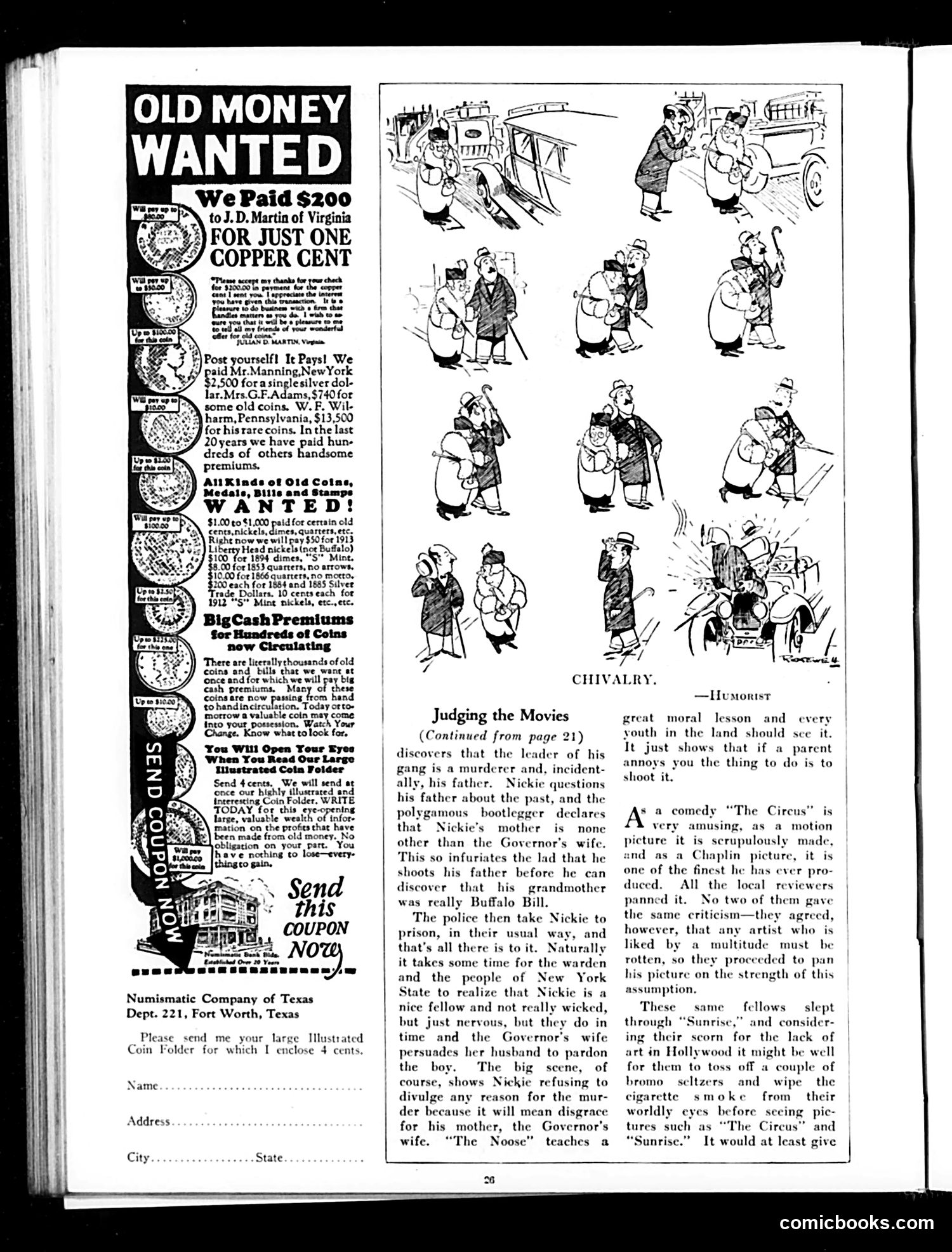
**Left Page - Advertisement:** This is a coin-buying advertisement from the Numismatic Company of Texas. The ad claims they pay premium prices for old currency—examples include $200 for a single copper cent and $5,500 for a silver dollar. This appears to be a legitimate (or semi-legitimate) numismatic business soliciting people to send in rare coins, offering an illustrated catalog for 4 cents. **Right Page - "Chivalry" Cartoon & Movie Review:** The cartoon series depicts various scenarios of men protecting or assisting women—opening car doors, helping with coats, etc.—illustrating traditional 1920s-era gender courtesies. Below, the "Judging the Movies" column sardonically reviews *The Noose* and *The Circus*, criticizing film critics. The reviewer mocks that *The Noose*—a melodrama about a boy who shoots his father—offers dubious moral lessons. He also notes that critics panned Charlie Chaplin's *The Circus* simply because it's popular, suggesting snobbish dismissal of accessible art.
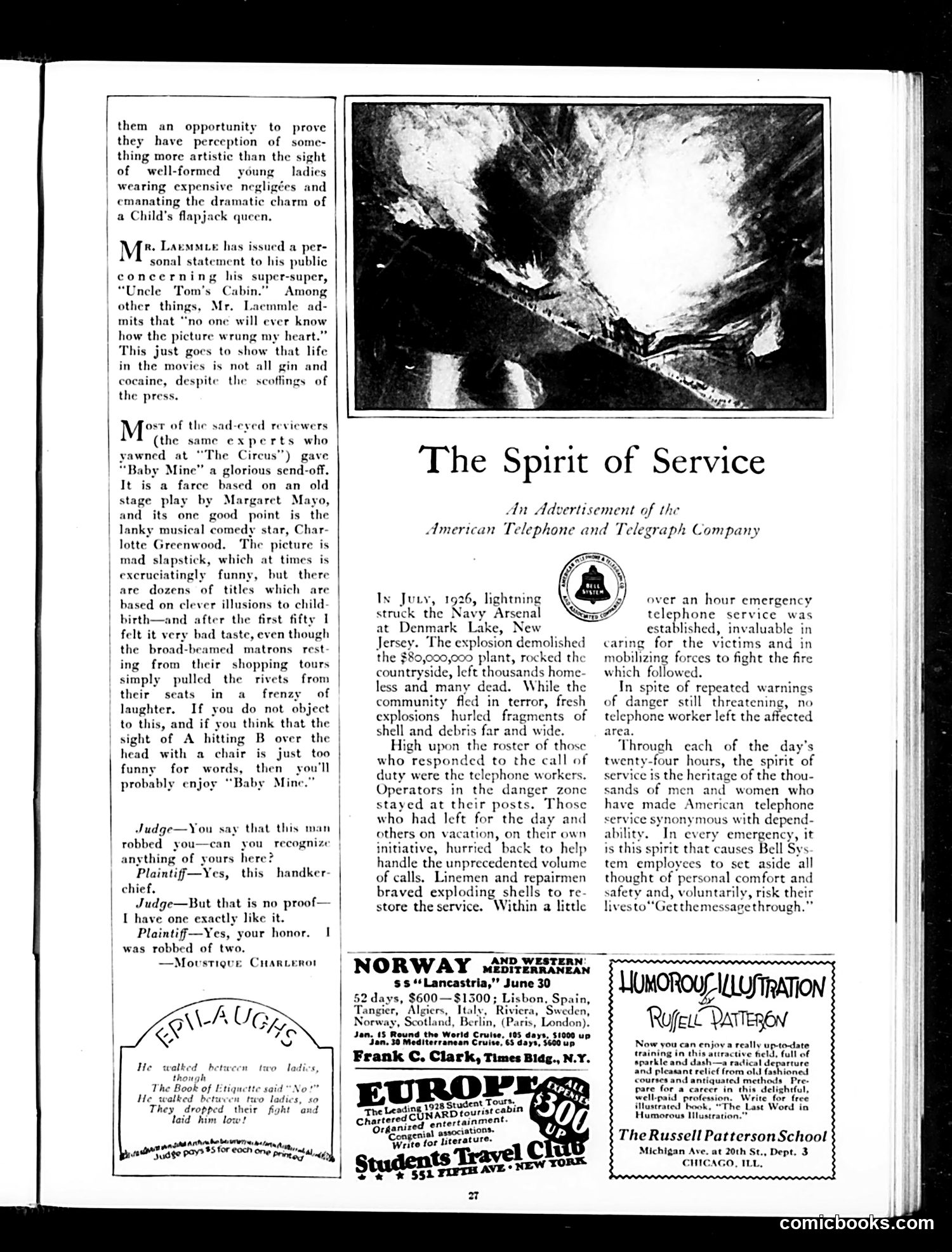
This page contains **primarily advertising and filler content** rather than substantive political satire. The main elements are: **Left column**: Film criticism mocking 1920s movies—specifically dismissing slapstick comedies like "Baby Mine" as lowbrow entertainment relying on crude physical humor rather than artistic merit. It references Carl Laemmle's prestige adaptation of "Uncle Tom's Cabin." **Center**: A full-page **advertisement for AT&T** presenting a 1926 Navy Arsenal explosion in New Jersey as propaganda showcasing telephone workers' heroism and dedication to service—staying at posts despite danger to maintain communications. **Right side & bottom**: Travel advertisements and notices for The Russell Patterson School. The satirical content is minimal. The page's tone reflects Jazz Age skepticism toward both mass entertainment and corporate messaging, though the AT&T ad itself reads as earnest corporate propaganda rather than the magazine's satire of it. No specific political figures or events are caricatured here.
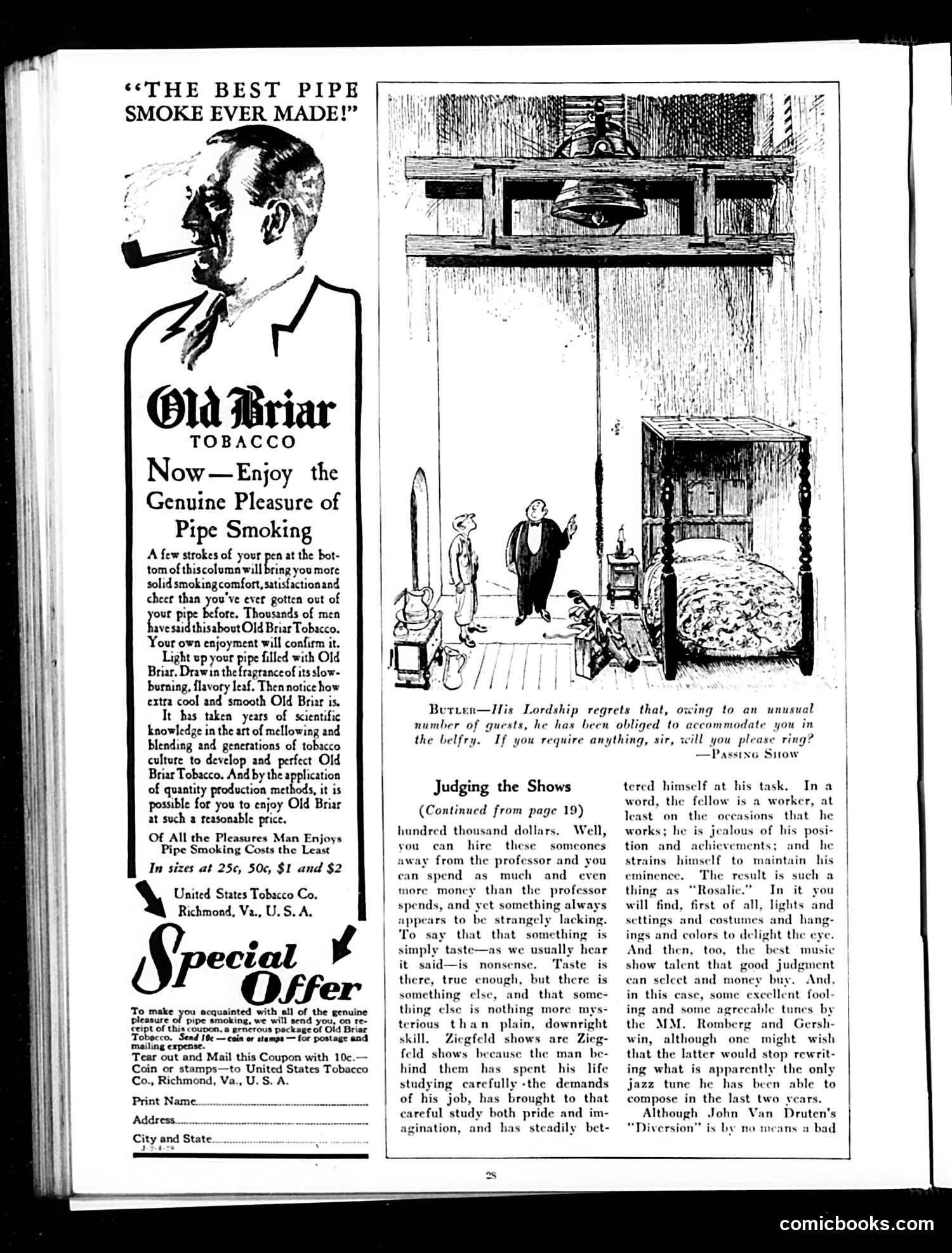
This page contains **two distinct elements**: a tobacco advertisement and a theatrical review. **The Advertisement** (left side) is a straightforward Old Briar Tobacco pitch claiming superior quality and affordability—typical early 20th-century marketing with no satirical content visible. **The Cartoon** (right side) is a brief joke about class hierarchy: a butler informs a guest that the aristocratic host ("His Lordship") has had to lodge him in the *belfry* (bell tower) due to overcrowding—essentially the worst possible accommodation in a grand house. The humor relies on the contrast between the guest's polite request for service and the absurd, insulting housing arrangement. It satirizes the pretense of hospitality among the wealthy. **The Review Section** discusses theatrical production values, specifically praising Florenz Ziegfeld's shows for their skill and attention to detail, comparing them favorably to other productions with larger budgets but less artistic vision. No major political satire or historical events appear to be referenced on this page.
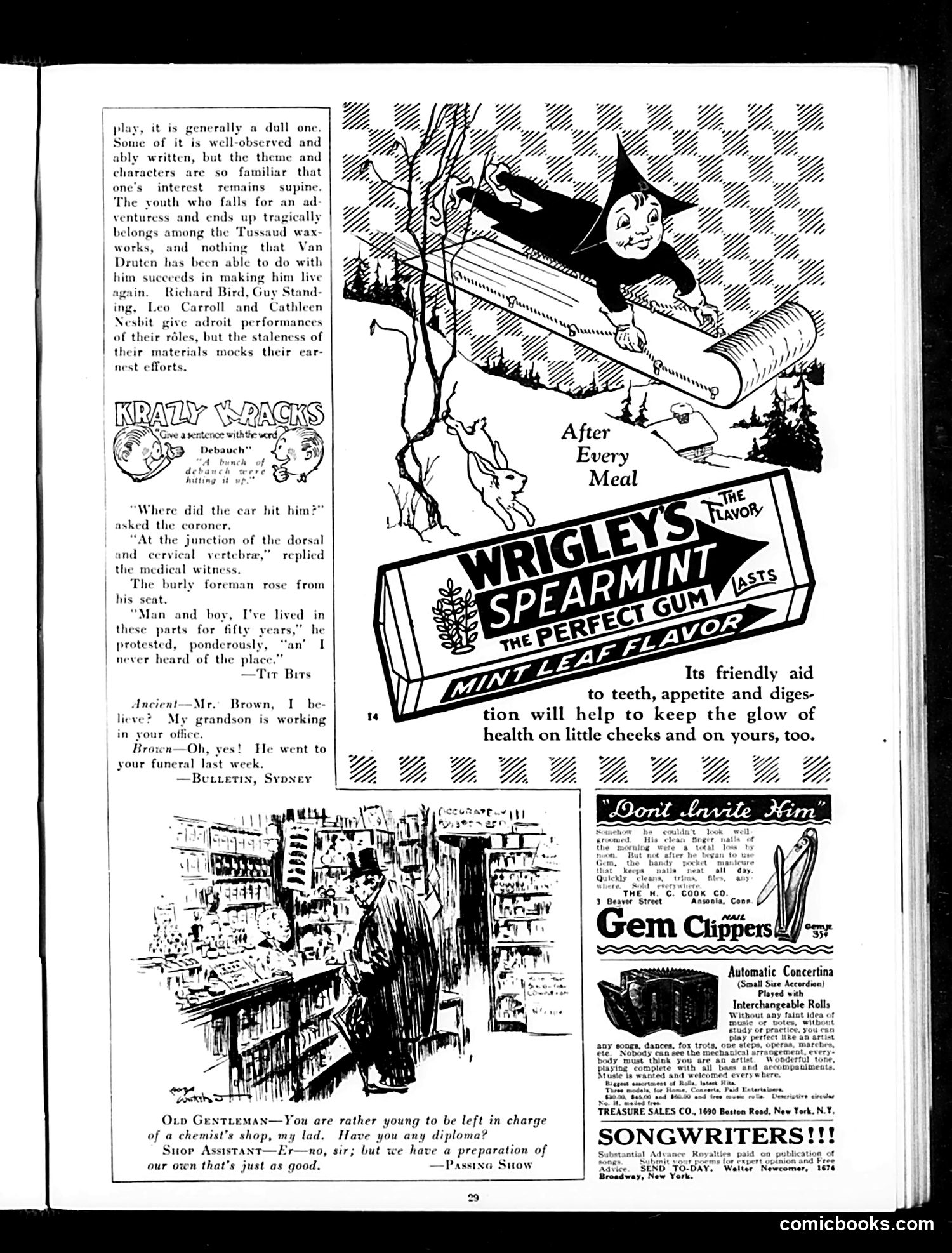
This page contains **multiple unrelated satirical jokes and advertisements** typical of Judge magazine's format—not a single unified cartoon. The main comic vignettes are brief, absurdist jokes: 1. **The coroner's exchange**: A humorous miscommunication where a medical examiner uses anatomical terminology ("dorsal and cervical vertebrae") that a rural foreman claims never to have heard of, despite fifty years living locally. The joke satirizes the gap between educated/technical language and common speech. 2. **The chemist's shop joke**: An old gentleman questions whether a young shop assistant has qualifications. The assistant admits lacking a diploma but claims their shop's "preparation" is "just as good"—likely implying homemade or dubious remedies, mocking unqualified practitioners. 3. **The "Ancient" joke**: A simple pun about someone attending their own funeral. The page is **primarily advertising space** (Wrigley's gum, Gem Clippers, musical instruments, songwriting services), with these brief comic fillers typical of Judge's mixed-content approach. The humor relies on wordplay and class/education satire rather than political commentary.
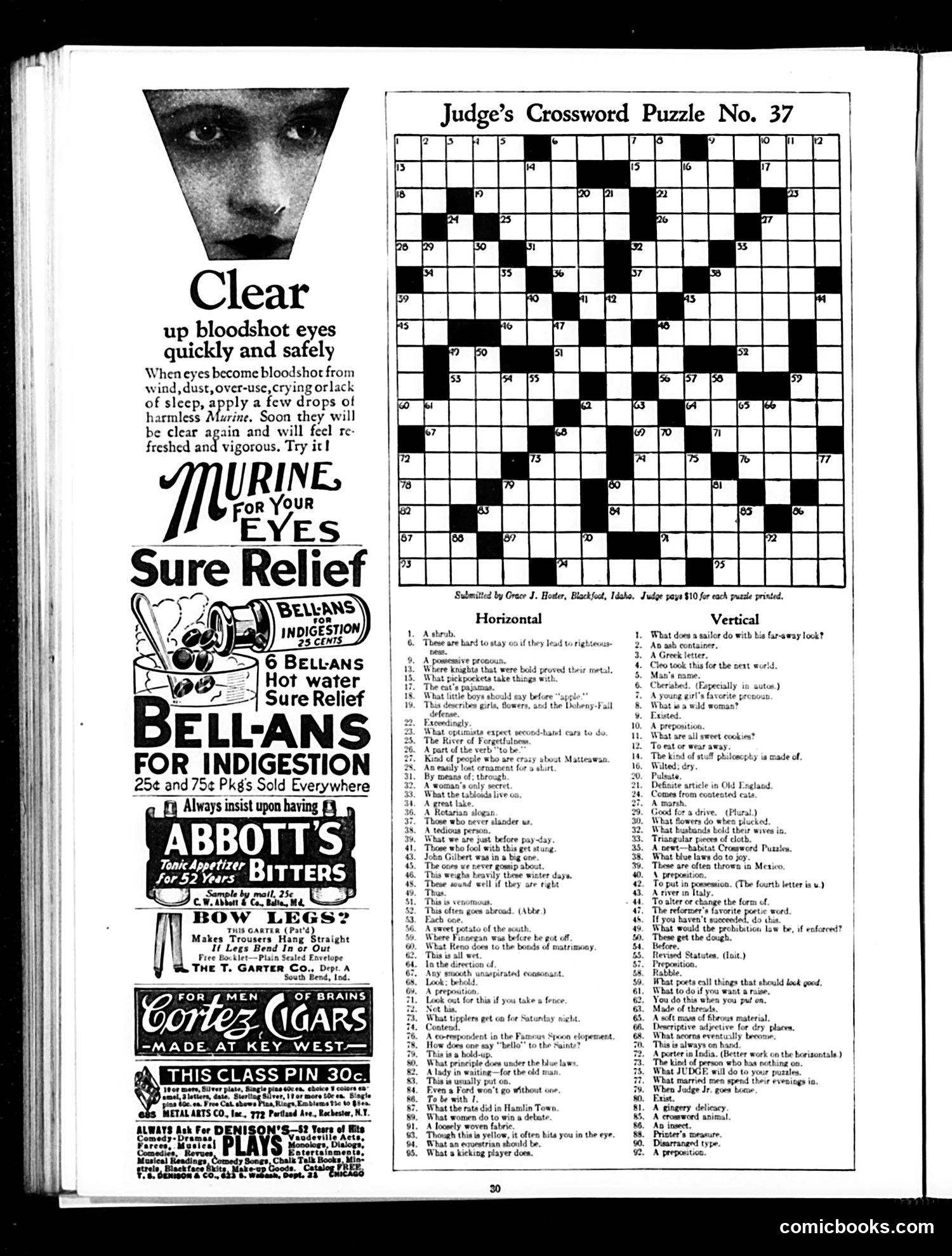
This page is primarily a **crossword puzzle** submitted by a reader, with the main content being the grid and clues rather than satirical cartoons. The clues are playful wordplay typical of 1920s-era puzzles, mixing straightforward definitions with puns and contemporary references. Notable elements include: - **Clue humor**: References to Prohibition ("What would the prohibition law be, if enforced?"), contemporary marriage stereotypes ("What married men spend their evenings in"), and period concerns (mentions of Ford automobiles, Hamlin Town's rat legend) - **Social commentary embedded in clues**: Questions about women's behavior, debates about marriage dynamics, and references to working-class experiences reflect early 20th-century gender attitudes and social anxieties The page is **surrounded by period advertisements** (Murine eye drops, Bellans indigestion relief, Abbott's Bitters, etc.), which was standard for Judge magazine. The puzzle itself contains no political satire—it's entertainment content, though the clue-writing reflects the era's concerns and assumptions about gender, work, and social life.
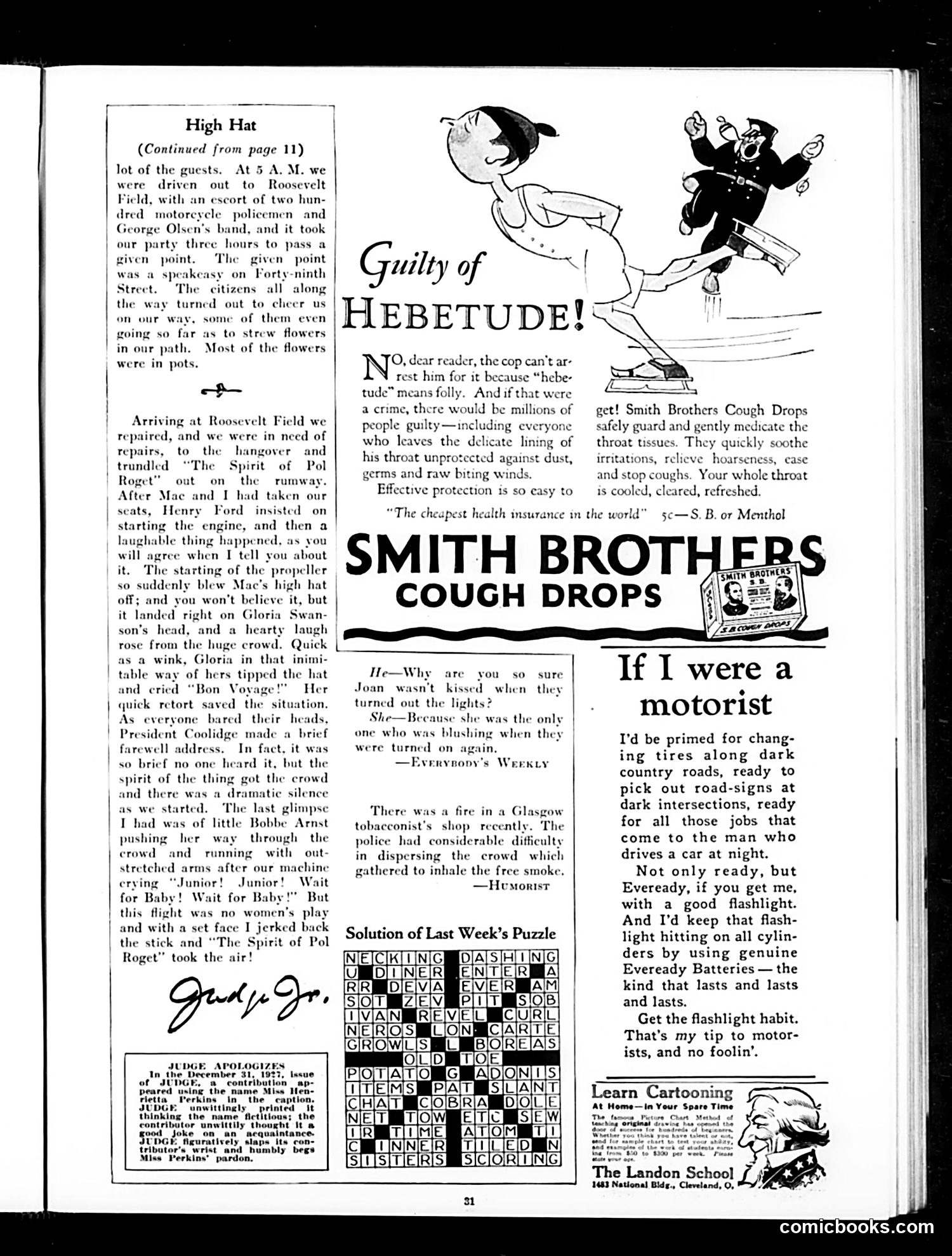
This page is primarily **advertising and filler content** rather than political satire. The main feature is "High Hat" (continued), a humorous anecdote about a aviation event at Roosevelt Field involving Henry Ford, Gloria Swanson, and President Coolidge. The story's joke centers on a high hat blowing off and landing on Swanson's head—she graciously tips it and says "Bon Voyage," defusing an awkward moment. The page's dominant content is a **Smith Brothers Cough Drops advertisement** using wordplay: a cop can't arrest someone for "hebetude" (foolishness) of leaving their throat unprotected. It's a product pitch disguised as mild social commentary about health. Additional ads include Eveready Batteries (marketed to motorists) and The Landon School. There's also a puzzle solution and minor humor pieces ("He-She" jokes). The page reflects **1920s consumer culture** more than political commentary—it's primarily commercial content with light entertainment filler typical of Judge's format.
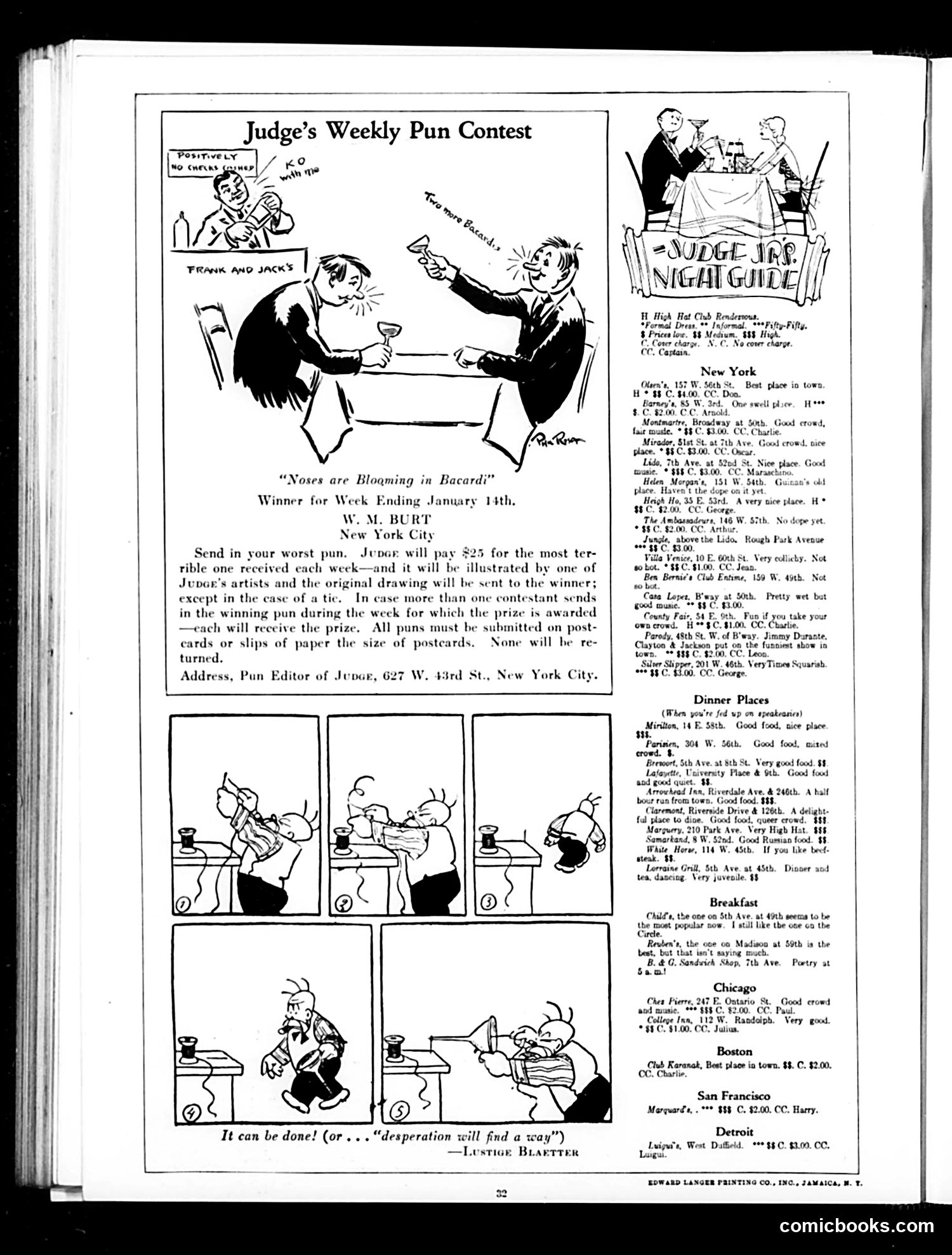
This page showcases Judge magazine's humor competitions and entertainment guides. The main feature is a weekly pun contest where readers submitted their worst puns for prizes. The winning entry—"Noses are Blooming in Bacardi" by W.M. Burt—plays on the phrase "flowers are blooming" while referencing Bacardi rum, a popular drink during Prohibition (though the page doesn't explicitly date it). Below are comic strips illustrating a man's desperate attempts to open a stuck bottle or cork, captioned "It can be done! (or...'desperation will find a way')" by artist Lustice Blaetter. The remainder consists of dining and nightlife guides for major U.S. cities, listing speakeasies (illegal bars), dinner establishments, and breakfast spots with price ratings—evidence this is from the Prohibition era when such underground venues were common cultural fixtures.
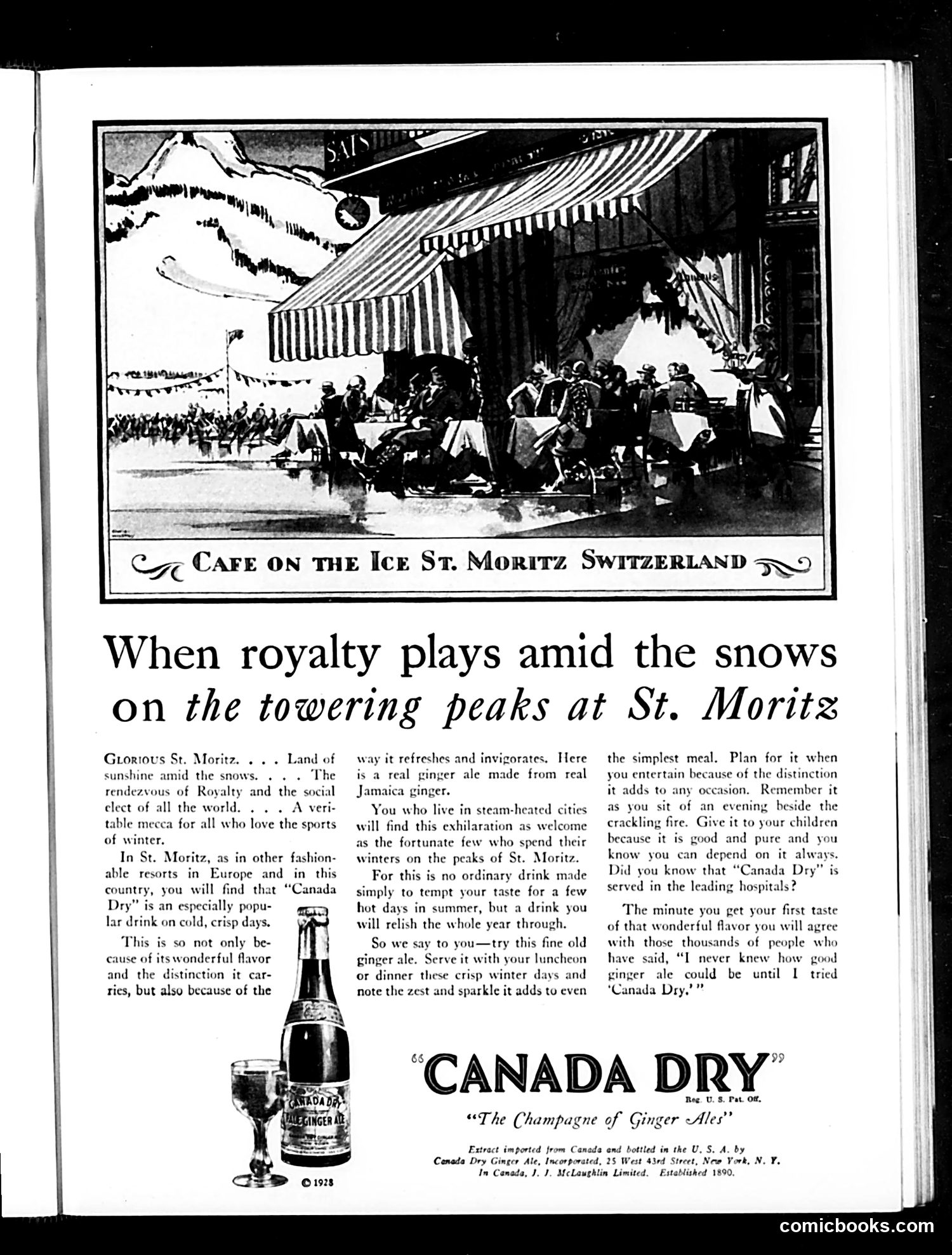
This is primarily a **Canada Dry ginger ale advertisement** disguised as editorial content in Judge magazine (1918). The image shows an elegant winter scene at St. Moritz, Switzerland—a fashionable Alpine resort—depicting well-dressed socialites dining under a striped awning with snow-capped peaks in the background. The caption emphasizes "royalty" enjoying the exclusive setting. The text uses aspirational marketing: by associating Canada Dry with European aristocratic resorts and wealthy winter travelers, the ad suggests that drinking this ginger ale grants access to sophistication and distinction. The copy repeatedly emphasizes the drink's "wonderful flavor" and purity, even claiming it's "served in the leading hospitals"—a common early 20th-century advertising tactic implying health benefits. The ad targets middle-class readers in "steam-heated cities" who cannot afford St. Moritz but can afford ginger ale, offering them a taste of that glamorous lifestyle. The product is positioned as a year-round beverage, not just a summer refreshment. There is no satire here—this is straightforward luxury brand advertising.
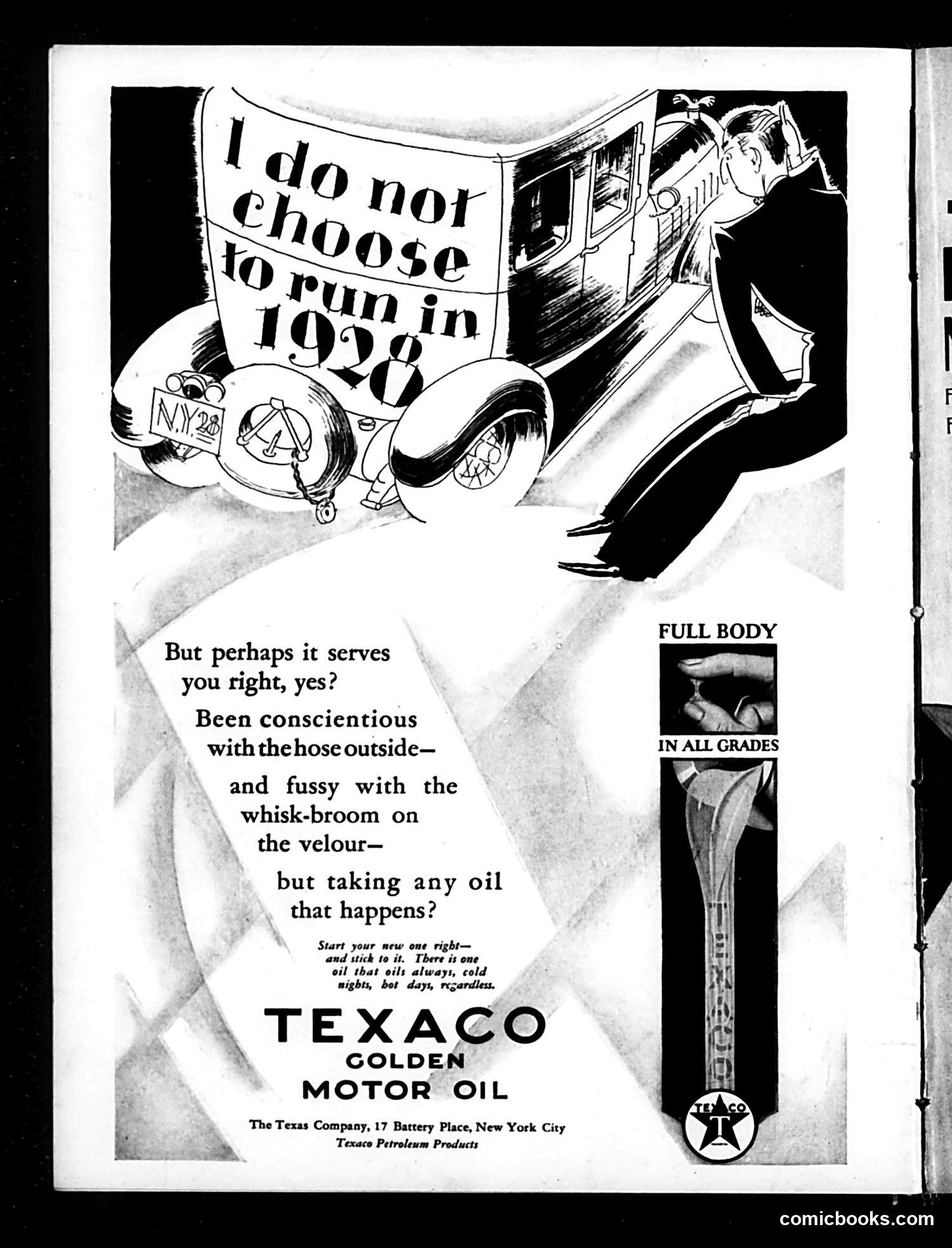
This is primarily a **product advertisement** for Texaco Golden Motor Oil, not political satire. The cartoon depicts a person who refuses to run their car in 1928 (shown in the speech balloon on the vehicle), yet remains careless about oil maintenance—conscientious about exterior care ("hose," "whisk-broom") but indifferent about choosing quality oil. The ad's messaging targets car owners who are finicky about appearance but neglect proper maintenance. The rhetorical question "But perhaps it serves you right, yes?" shames readers into switching to Texaco as a reliable, consistent oil "cold nights, hot days." The two product samples on the right emphasize Texaco's availability in all grades. This reflects 1920s automobile culture and early motor oil marketing strategies.