
A complete issue · 32 pages · 1919
Judge — March 22, 1919
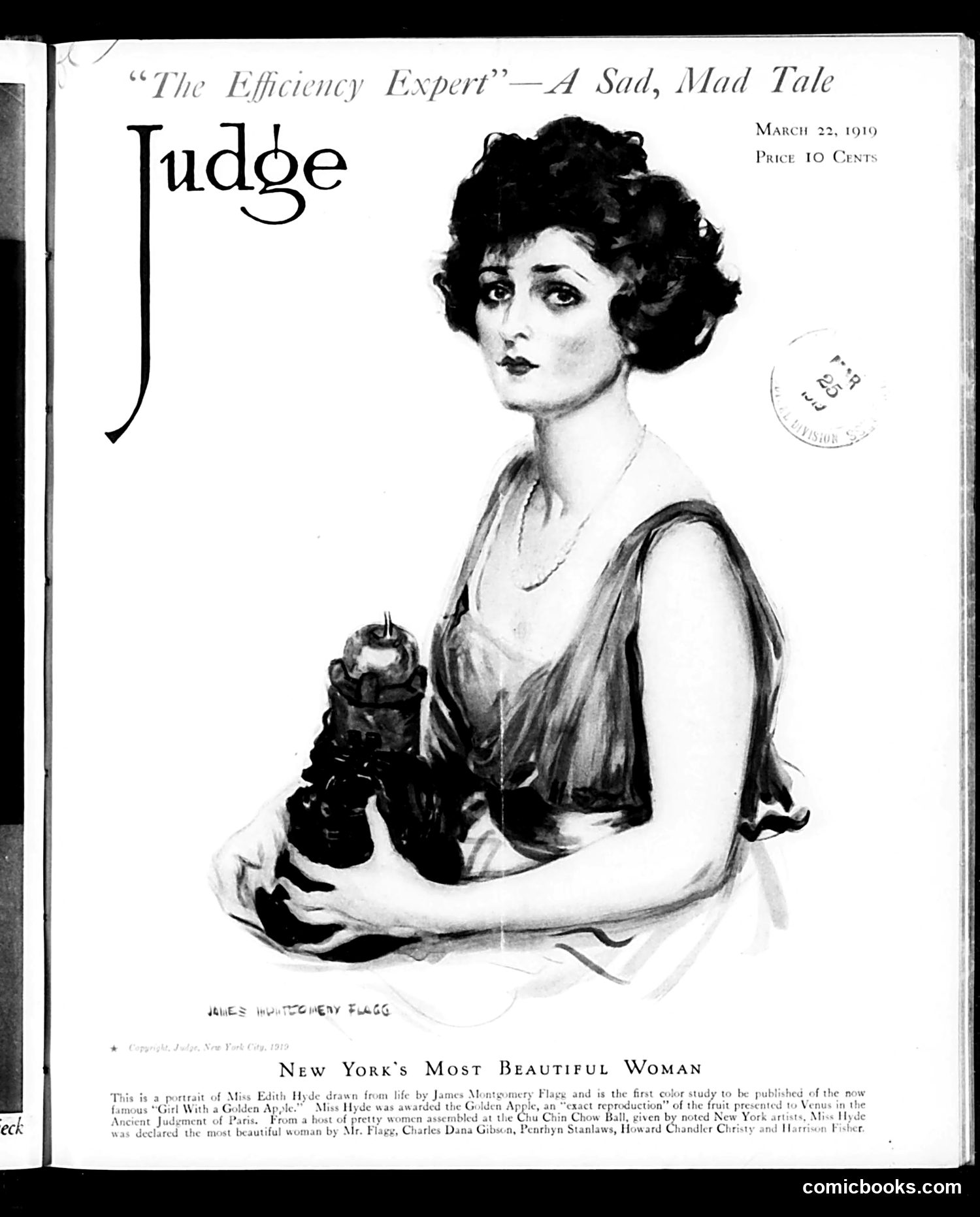
This is primarily a **portrait cover, not a political cartoon**. The page features an illustration by James Montgomery Flagg of Edith Hyde, labeled "New York's Most Beautiful Woman." The accompanying text explains this is a color study portrait and notes that Hyde was awarded the "Golden Apple," described as "an exact reproduction" of the famous Judgment of Paris award from classical mythology. The satirical angle appears subtle: by presenting a modern woman with this classical honor, Judge ironically comments on beauty standards and women's social status in 1919. The reference to ancient judgment traditions slightly mocks the notion of objectively ranking female beauty—a recurring Judge magazine theme during this era.
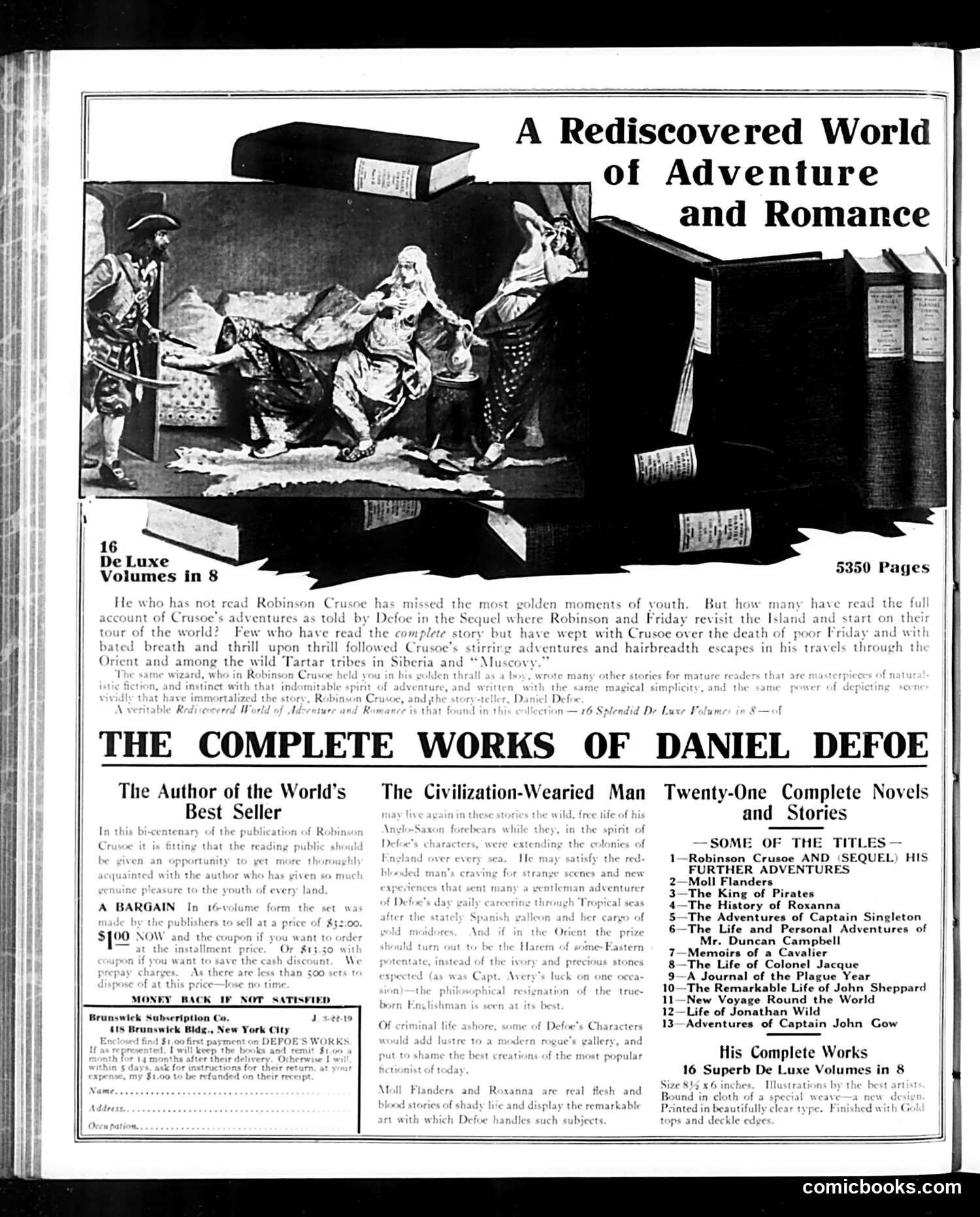
This page is primarily **advertising, not satire or political commentary**. It promotes "The Complete Works of Daniel Defoe" in a 16-volume de luxe edition—marketed as "A Rediscovered World of Adventure and Romance." The advertisement emphasizes Defoe's most famous work, *Robinson Crusoe*, highlighting how readers have missed the "full account" in Defoe's sequels featuring Robinson and Friday's further adventures. It positions Defoe as comparable to a "wizard" and master of natural fiction. The engraving at top depicts a scene from Defoe's works, likely showing colonial-era adventure. The subscription offer at bottom left provides purchase details and a cash discount incentive. **No political satire is evident**—this is purely commercial promotion capitalizing on popular literary nostalgia and the appeal of adventure fiction to early 20th-century readers.
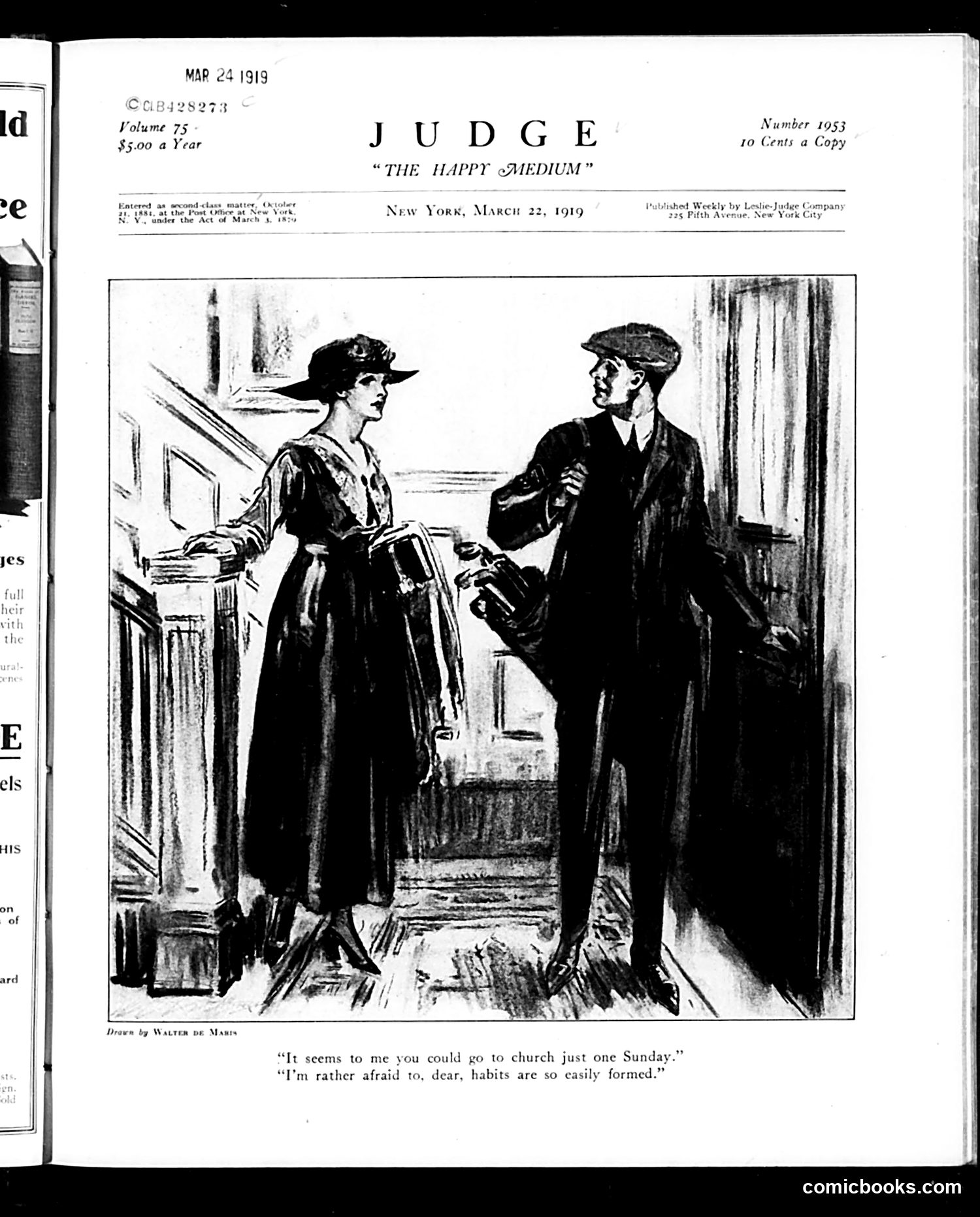
This cartoon by Walter de Maris depicts a domestic disagreement between a couple about church attendance. The woman, dressed for an outing with luggage, suggests her companion "could go to church just one Sunday." He responds, "I'm rather afraid to, dear, habits are so easily formed." The humor inverts typical moral expectations: instead of warning *against* forming bad habits, the man humorously suggests that *attending church* might become an addictive habit he cannot break. This plays on post-WWI anxieties about social obligation and personal autonomy, gently mocking both religious reluctance and the fear that one good deed might lead to unwanted lifestyle changes—a satirical jab at selective morality and male resistance to domestic expectations.
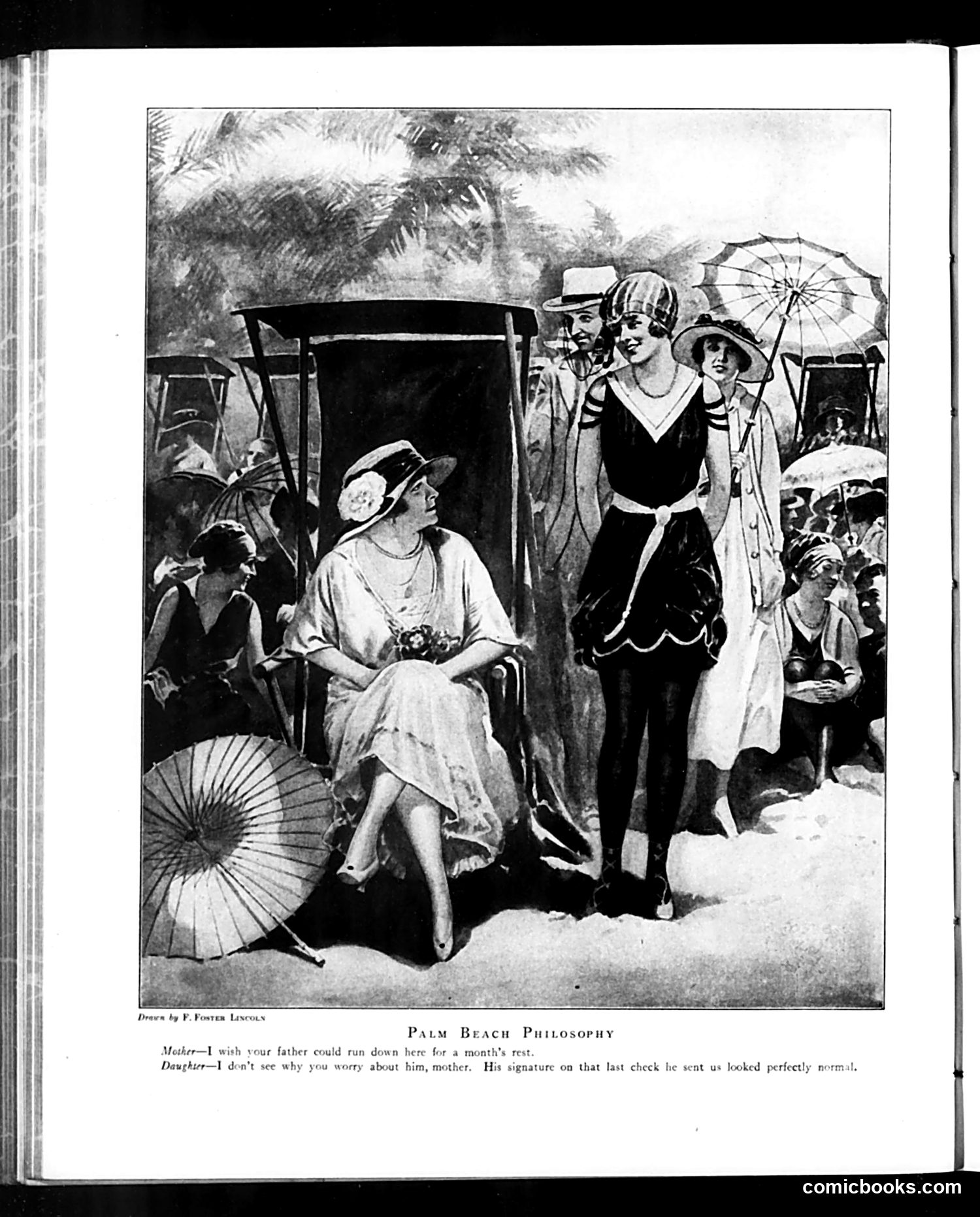
This cartoon satirizes wealthy leisure culture at Palm Beach, Florida—a fashionable winter resort destination. The scene depicts an affluent mother and daughter at the beach, surrounded by attendants holding parasols. The daughter expresses concern about her father's absence, wishing he could "run down here for a month's rest." The mother dismissively responds that she doesn't worry about him, noting his recent check signature "looked perfectly normal." The joke targets the disconnect between wealthy spouses: the father apparently stays away earning money while the wife and daughter enjoy perpetual vacation. The mother's comfort with his absence—judging his well-being solely by his ability to send funds—mocks both marital detachment and the frivolous lifestyle of the wealthy elite who treat Palm Beach as a permanent playground.
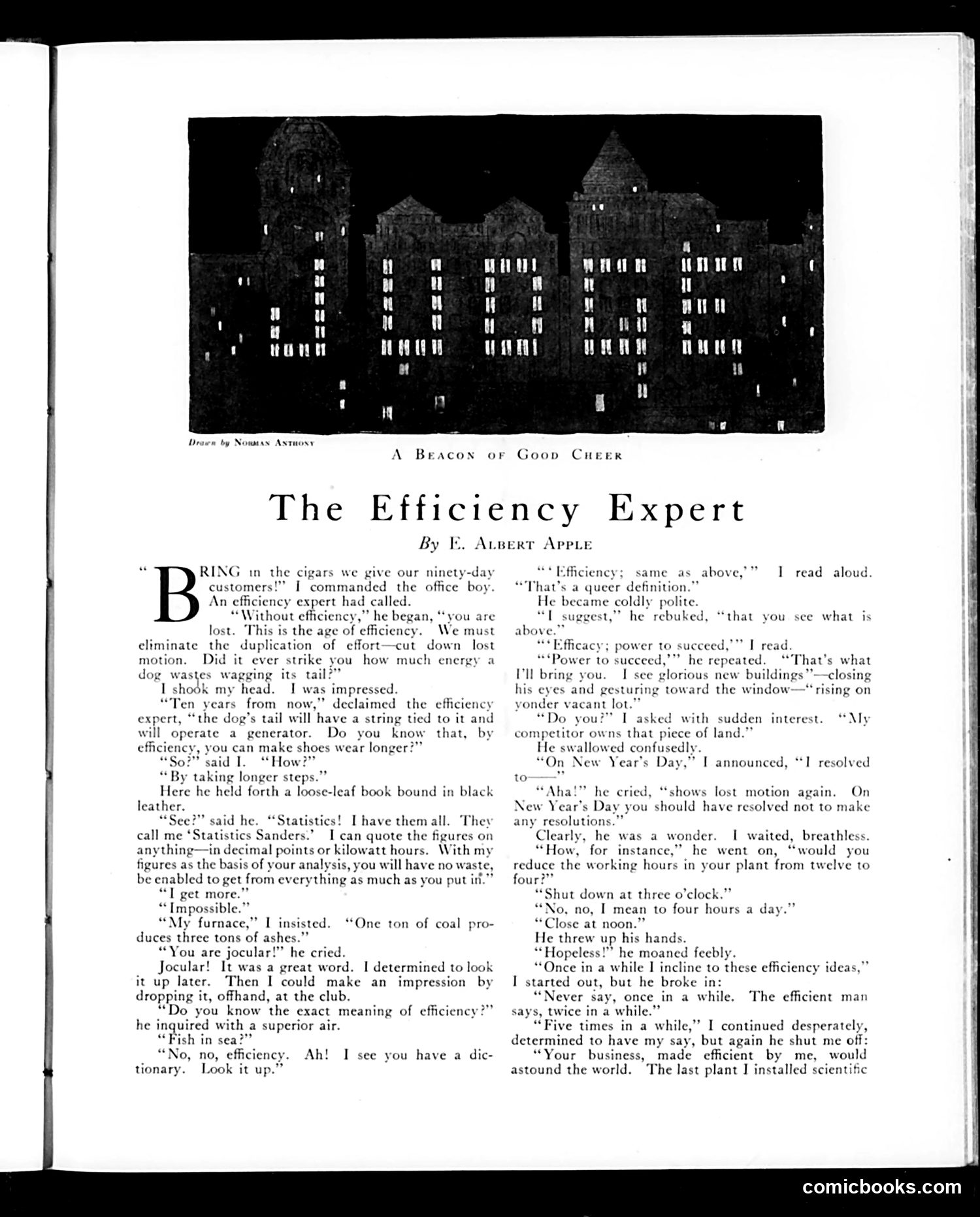
This satirical story by E. Albert Apple mocks the early-20th-century "efficiency expert" craze—consultants who promised to maximize productivity through scientific management (likely referencing Frederick Taylor's influential "scientific management" theories). The narrator commands an office boy to summon an efficiency expert, who arrives spouting jargon about eliminating "lost motion" and "wasted energy." The expert produces statistics and a leather-bound book claiming to solve all workplace problems through precise measurements. The satire lies in the expert's absurd prescriptions—reducing work hours, eliminating coal, adjusting schedules obsessively—contradicting themselves while speaking with unearned authority. The joke: these consultants were often charlatans offering pseudoscientific solutions that created more chaos than improvement. The illustration shows a Gothic mansion lit at night, possibly suggesting the story's melodramatic tone or the expert's grandiose reputation.
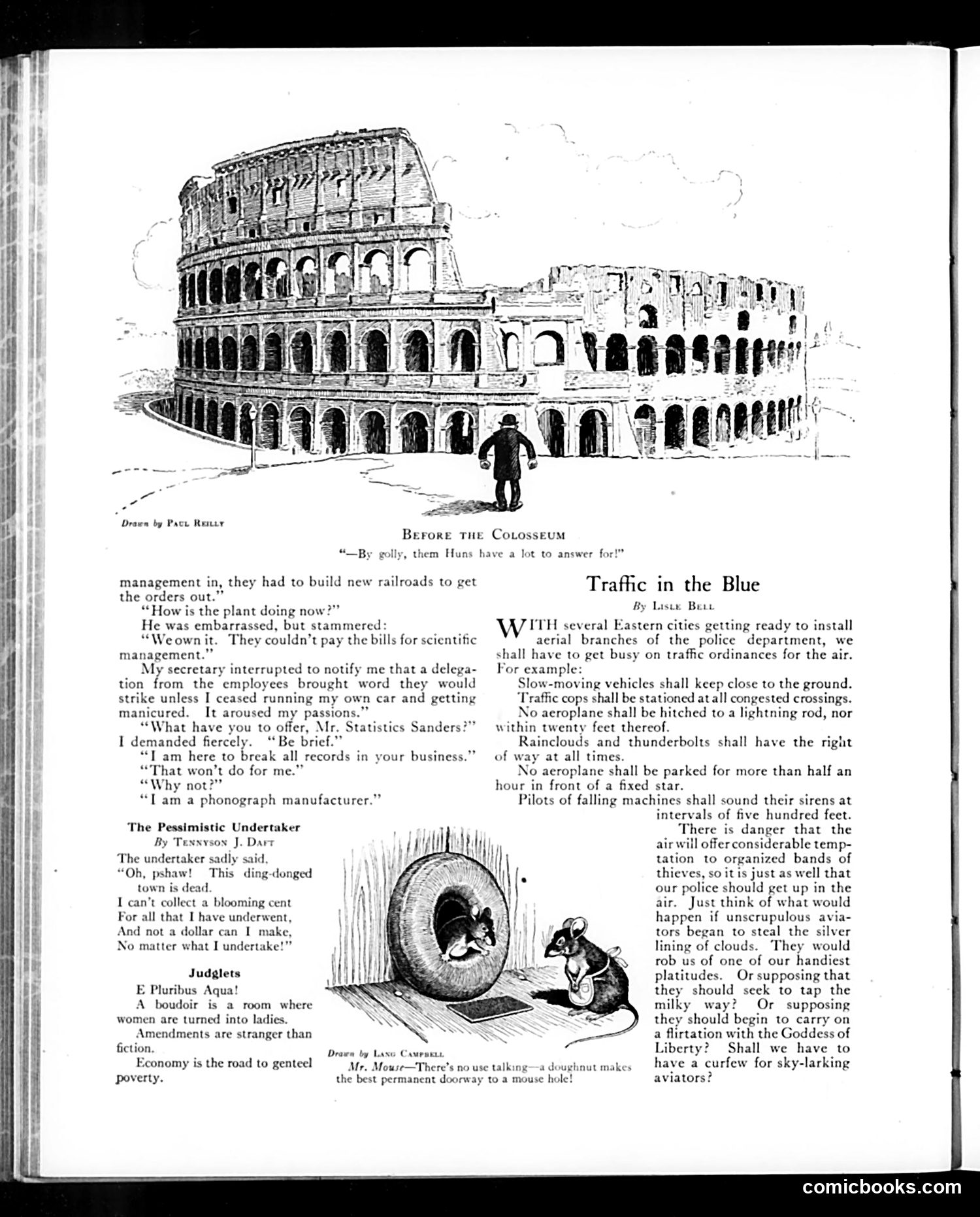
**Top Illustration: "Before the Colosseum"** This sketch by Paul Henley shows a figure contemplating Rome's famous ruin with the caption "By golly, them Huns have a lot to answer for!" The joke references historical barbarian invasions that damaged Roman civilization, likely used as satirical commentary on contemporary destruction or decline—though the specific target is unclear without additional context. **"Traffic in the Blue" by Lislie Bell** This satirical piece proposes absurd traffic regulations for aerial traffic as cities prepare to install air police departments. It humorously imagines applying ground-based traffic rules to airplanes—slow-moving vehicles staying low, traffic cops at crossings, aeroplanes hitched to lampposts—mocking the difficulty of regulating new aviation technology with outdated bureaucratic frameworks.
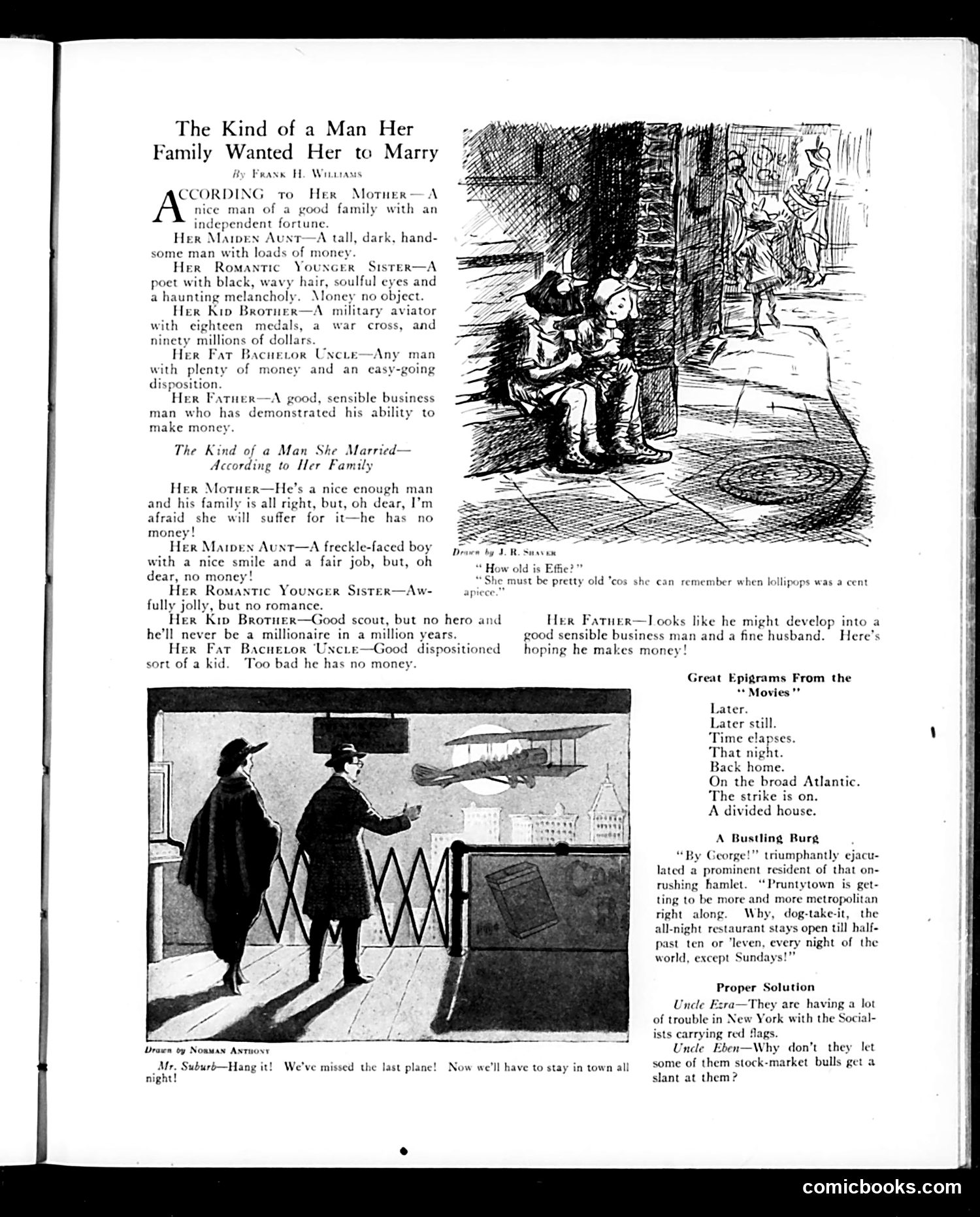
This satirical article contrasts what a woman's family *wanted* her to marry with what she *actually* married—a humorous commentary on class expectations versus romantic reality. The joke plays on early 20th-century social anxiety about money and status. Her family members each demanded wealthy suitors: her mother wanted "good family" wealth, her sister craved a Romantic poet (money irrelevant only for her), her brother wanted a war-decorated millionaire, her uncle wanted any rich man. Her sensible father simply wanted someone who could earn money. The punchline: she married an ordinary, pleasant man with no fortune. Her family's horrified reactions reveal their true priorities—beneath polite society talk about character, they obsess over money. The cartoons accompanying this (the airplane mishap, the "bustling burg" anecdote, the "socialist" joke) are separate humor vignettes. The satire targets materialistic family values and the gap between what society claims matters versus what actually drives marriageability.
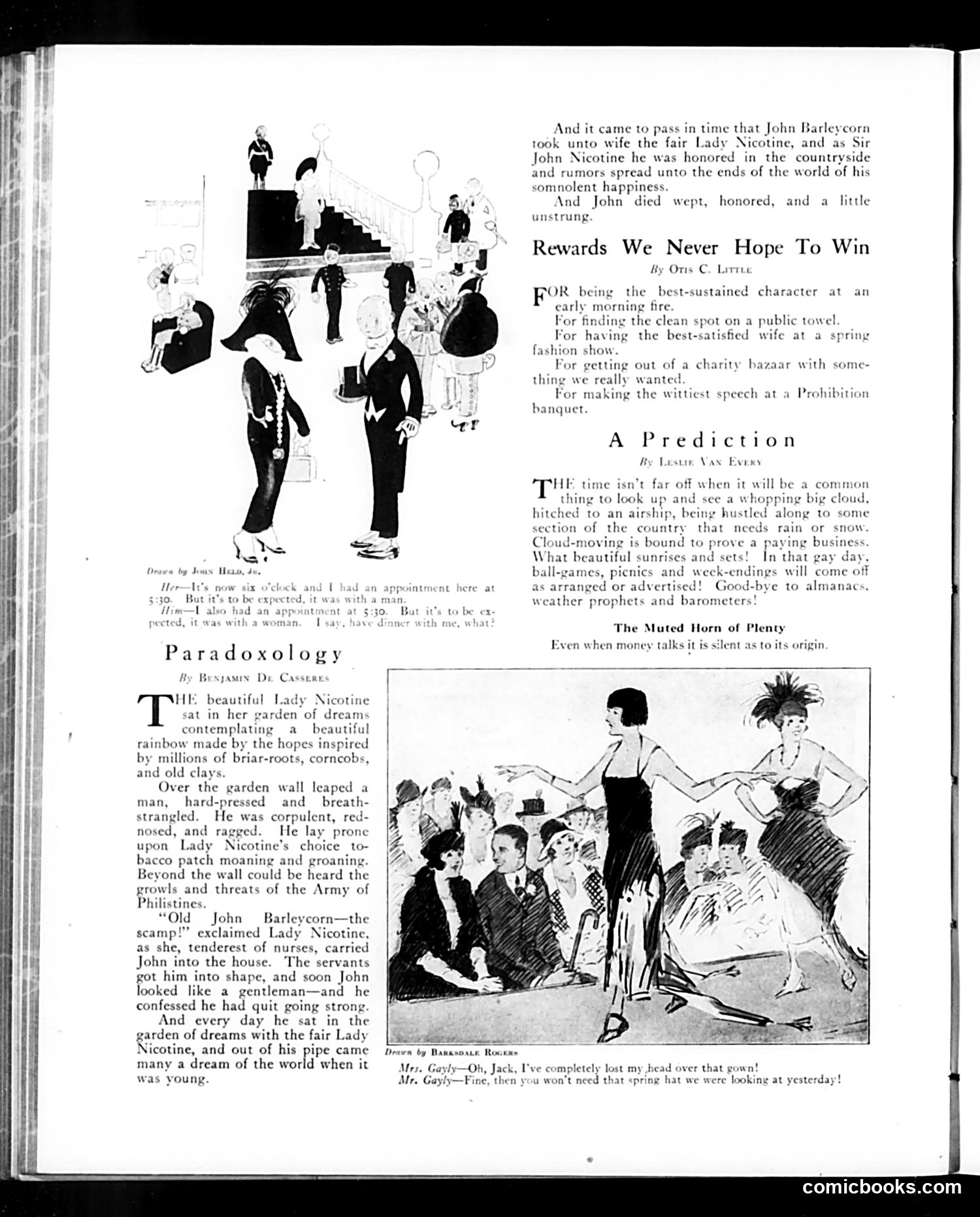
This page presents allegorical satire about substance use and social morality circa the 1920s Prohibition era. **"Paradoxology"** personifies alcohol ("John Barleycorn") and tobacco ("Lady Nicotine") as romantic partners. A ragged, desperate man fleeing "the Army of Philistines" (temperance crusaders) seeks refuge with Lady Nicotine. After cleaning up, he joins her in peaceful dreams. The satire mocks Prohibition advocates by suggesting tobacco and alcohol provide comfort and escape—implying the "Philistines" (anti-vice reformers) are the real villains. **"Rewards We Never Hope To Win"** humorously lists mundane, unattainable domestic ideals (a clean towel, a satisfied wife, success at charity events), satirizing middle-class aspirations. **"A Prediction"** imagines commercialized weather control—clouds rented to ensure perfect conditions for social events. It mocks both technological optimism and the commodification of nature. **"The Muted Horn of Plenty"** is a brief aphorism suggesting wealth's origins remain mysteriously hidden. The cartoon illustration shows fashionable women at leisure, with a caption about losing one's head over fashion—light social satire on consumerism and vanity.
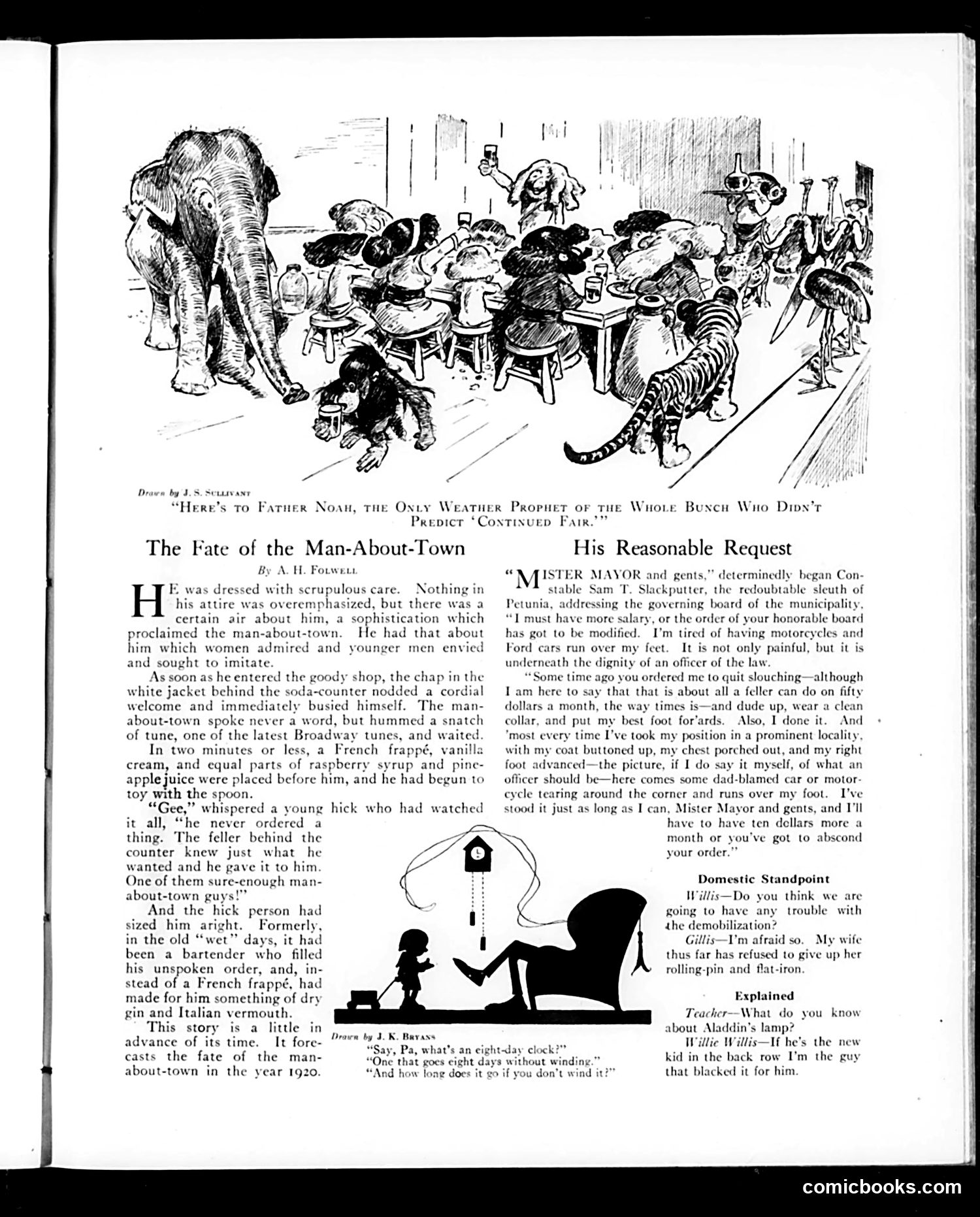
This Judge page satirizes early 1920s American life post-Prohibition. The main story depicts a sophisticated "man-about-town" ordering a French frappé at a soda fountain—the same establishment where he once ordered illegal gin and Italian vermouth from a bartender. The satire: Prohibition's end to "wet days" has reduced the man-about-town's mystique; now he's just another soda customer, his former glamour deflated. The accompanying cartoons mock small-town life: a police officer demands a raise after repeatedly being struck by cars while standing in dignified poses; a wife refuses to surrender her rolling pin during demobilization (implying wartime had given women independence). The humor targets changing social hierarchies and the awkward adjustment to peacetime norms in 1920.
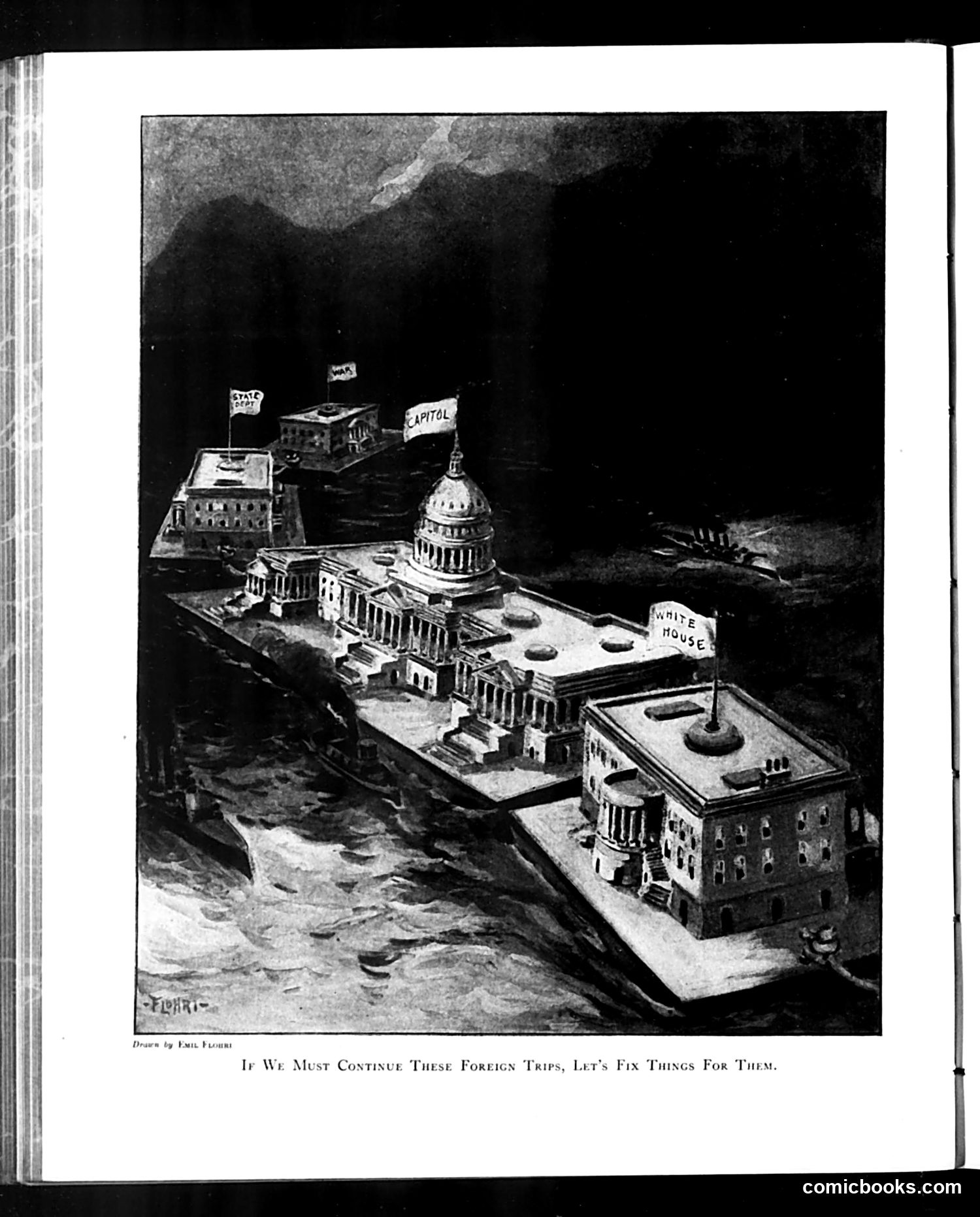
This satirical drawing by Karl Forbert depicts American government buildings—the Capitol, White House, and what appears to be a State building—deliberately flooded or in disrepair, shown as miniature models in a dark landscape. The caption "If We Must Continue These Foreign Trips, Let's Fix Things For Them" suggests the cartoonist is criticizing government leaders for prioritizing foreign travel and international involvement while domestic American infrastructure and institutions deteriorate. The cartoon likely dates from the early-to-mid 20th century and reflects isolationist sentiment—the argument that the U.S. should focus on fixing problems at home before engaging abroad. The ruined appearance of American landmarks emphasizes this critique satirically.
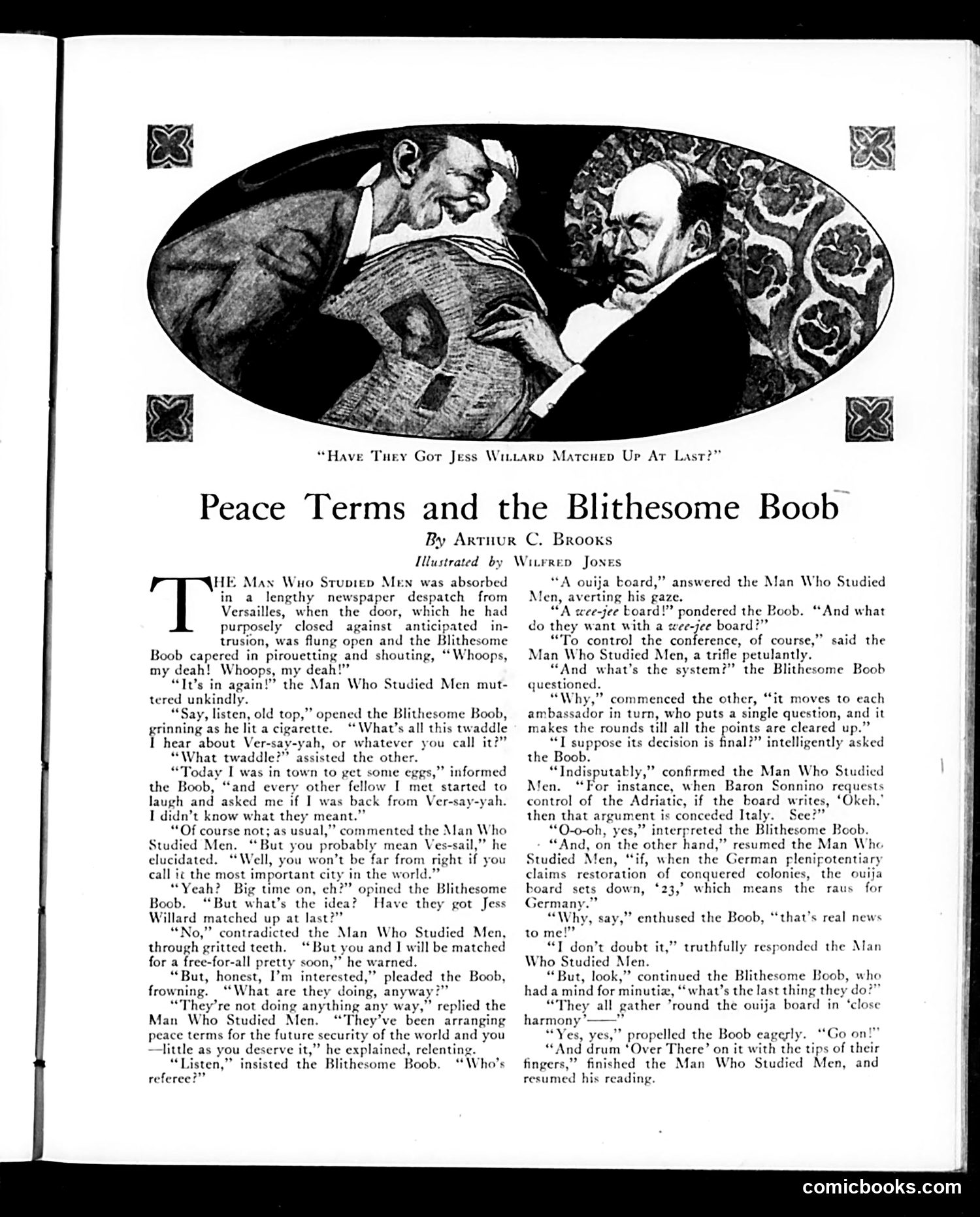
This satirical story mocks post-WWI peace negotiations at Versailles (1919) through dialogue between "the Man Who Studied Men" and "the Blithesome Boob"—a foolish character who confuses "Versailles" with boxer Jess Willard and thinks diplomats use a ouija board to decide peace terms. The satire targets public ignorance about serious international matters. The Boob's absurd misunderstandings—pronouncing Versailles incorrectly, not understanding its importance, imagining supernatural decision-making—ridicule Americans indifferent to or confused about complex postwar negotiations. The joke's finale—drumming "Over There" (a WWI song) on the ouija board—suggests these weighty decisions are treated as frivolous entertainment. Judge thereby mocks both widespread public incomprehension and, implicitly, the questionable validity of the actual peace process itself.
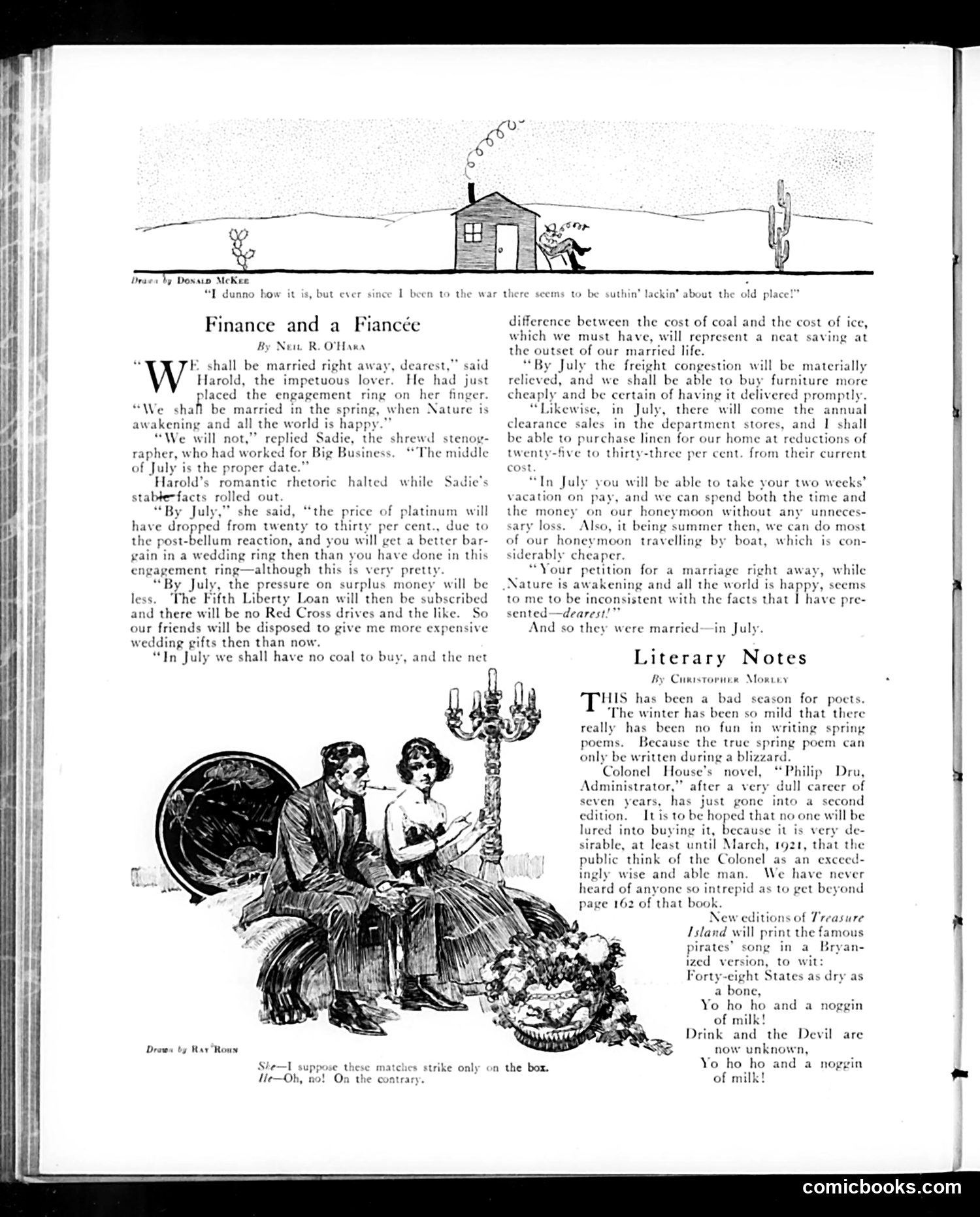
**Main Cartoon ("Finance and a Fiancée"):** A young woman (Sadie) persuades her romantic fiancé (Harold) to postpone their spring wedding to July by laying out brutally practical economic arguments. She calculates savings on platinum rings, furniture, coal vs. ice costs, freight shipping, and department store clearances—all post-WWI economic disruptions. The satire targets the collision between romantic idealism and postwar economic hardship; Sadie represents the shrewd, business-minded woman who won't let sentiment override financial pragmatism. The joke is her complete dismantling of his poetic vision with spreadsheet logic. **Secondary Cartoon (bottom):** A brief domestic exchange about matches "striking"—likely a mild double entendre about marital relations. **Literary Notes section:** Gossip about contemporary books, including sarcasm about Colonel House's "Philip Dru" novel and a joke about *Treasure Island* being rewritten to reflect Prohibition ("dry as a bone"). The page reflects immediate postwar (circa 1920) American concerns: inflation, supply shortages, and the "new woman" of the Jazz Age.
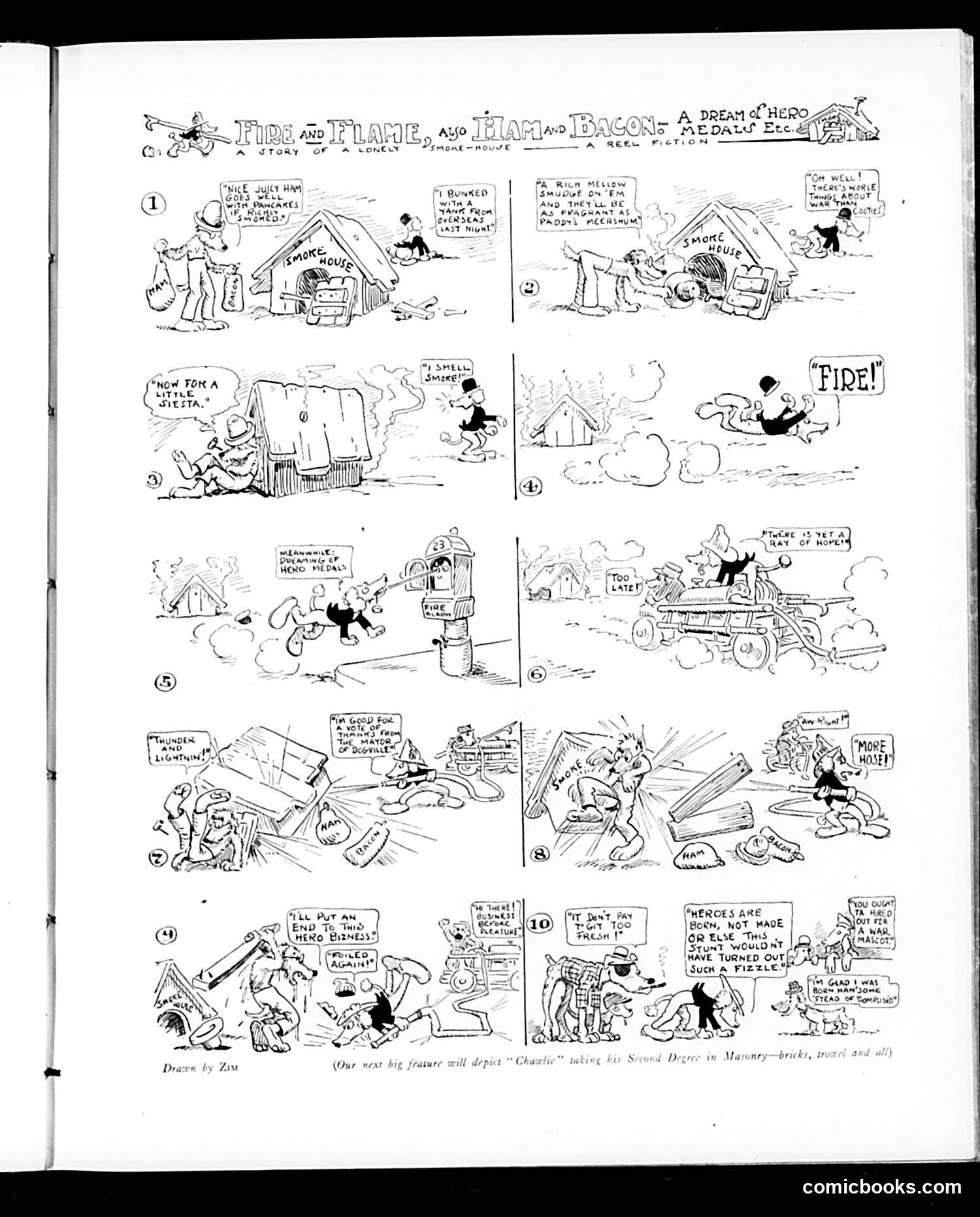
This is a humorous comic strip mocking early silent film melodrama. The story follows a character rescuing someone from a burning "Smoke House" (a play on words—literally a structure for smoking meat, not a dramatic setting). The satire targets the overwrought conventions of 1920s cinema: exaggerated peril, last-minute rescues, and improbable heroics. Panel 10's dialogue—"Heroes are born, not made"—is countered by the observation that this particular "hero" has inadvertently created disaster through incompetence, turning out "such a fizzle." The final caption notes the next installment will feature "Charlie" (likely referencing Charlie Chaplin's slapstick comedy style), suggesting this entire reel is self-consciously absurd entertainment mocking movie pretension. The crude drawings and intentionally silly plot emphasize Judge magazine's satirical approach to contemporary popular culture, particularly cinema's melodramatic tendencies.
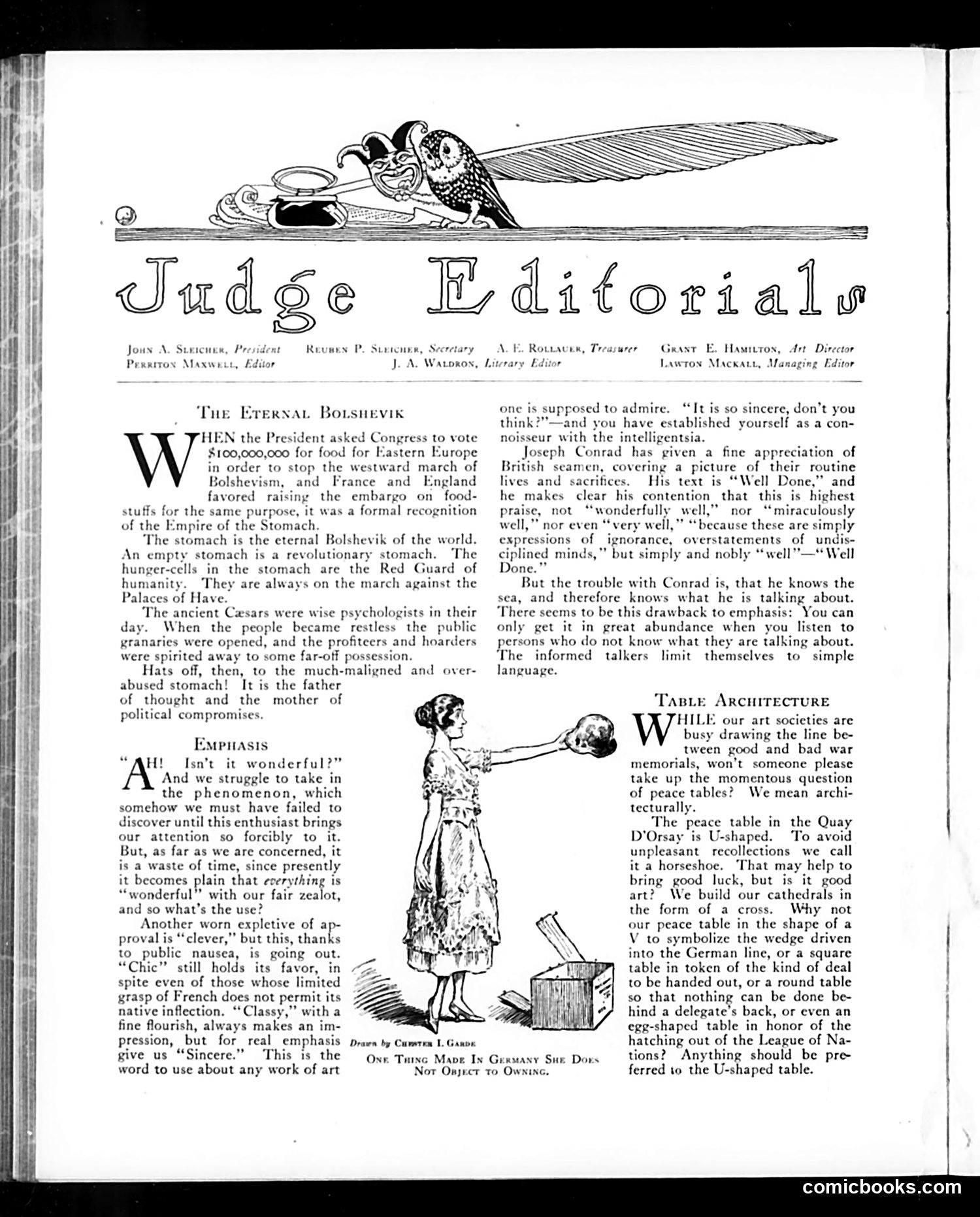
This editorial page from Judge magazine (circa 1919-1920) contains three distinct pieces: **"The Eternal Bolshevik"** critiques President Wilson's $100 million food aid request for Eastern Europe to prevent Bolshevik expansion. The essay argues satirically that hunger—not ideology—drives revolution. Empty stomachs, not political philosophy, fuel unrest. The piece references historical parallels: Roman emperors opened granaries during civil unrest. The implicit message: feed people or face revolution, making stomach-satisfaction a pragmatic political necessity rather than humanitarian virtue. **"Emphasis"** mocks overuse of superlatives like "wonderful," "clever," and "sincere" by those lacking genuine knowledge. The author cites Joseph Conrad's preference for simply saying "Well Done" because Conrad actually knows his subject (the sea). The satire targets pseudo-intellectuals who compensate for ignorance with emphatic language. **"Table Architecture"** humorously proposes that peace conference tables should have symbolic shapes: V-shaped (wedge into German lines), crosses, or round tables (preventing backroom deals)—rather than the actual U-shaped design used at Quay d'Orsay.
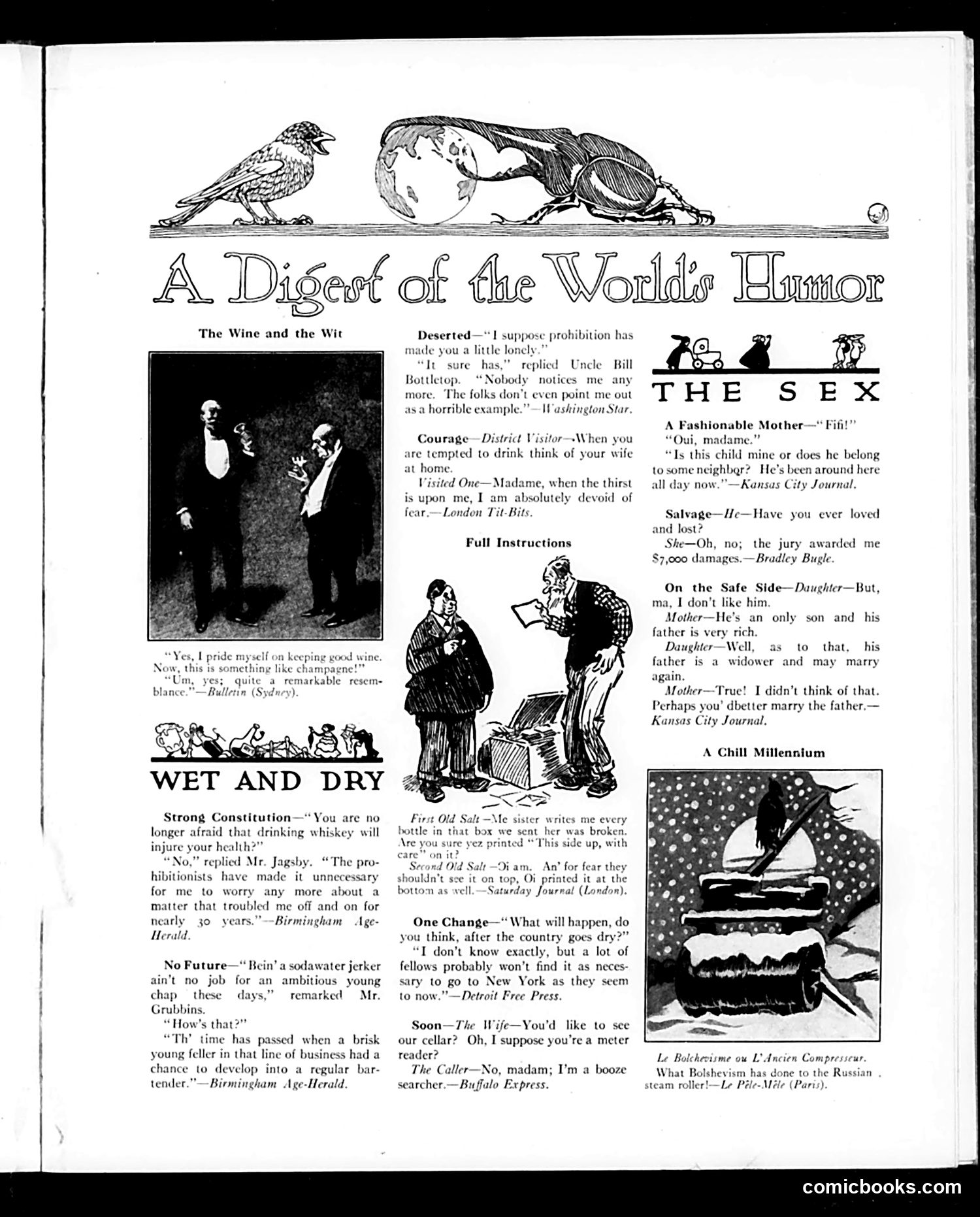
This page from *Judge* magazine satirizes Prohibition's social effects through short humorous anecdotes. The jokes mock how Prohibition disrupted established professions and social habits: - **"Strong Constitution"** and **"No Future"** ridicule the unintended consequences: men no longer fear alcohol's health dangers (since it's banned), and soda fountain workers can't advance to bartender positions anymore. - **"Deserted"** personifies a liquor bottle lamenting lost social prominence—once a cautionary symbol, now irrelevant. - **"One Change"** suggests businessmen will no longer need trips to New York (implying illegal alcohol tourism will cease). - **"Soon"** jokes about meter readers being confused for "booze searchers"—referencing Prohibition enforcement raids. The final cartoon, **"A Chill Millennium,"** references Bolshevism's impact on Russia's imperial power ("steam roller"), suggesting revolutionary upheaval has weakened Russian authority—topical Cold War-era commentary. Overall, the page treats Prohibition as culturally disruptive, undermining traditional industries and social structures while enabling new enforcement challenges.
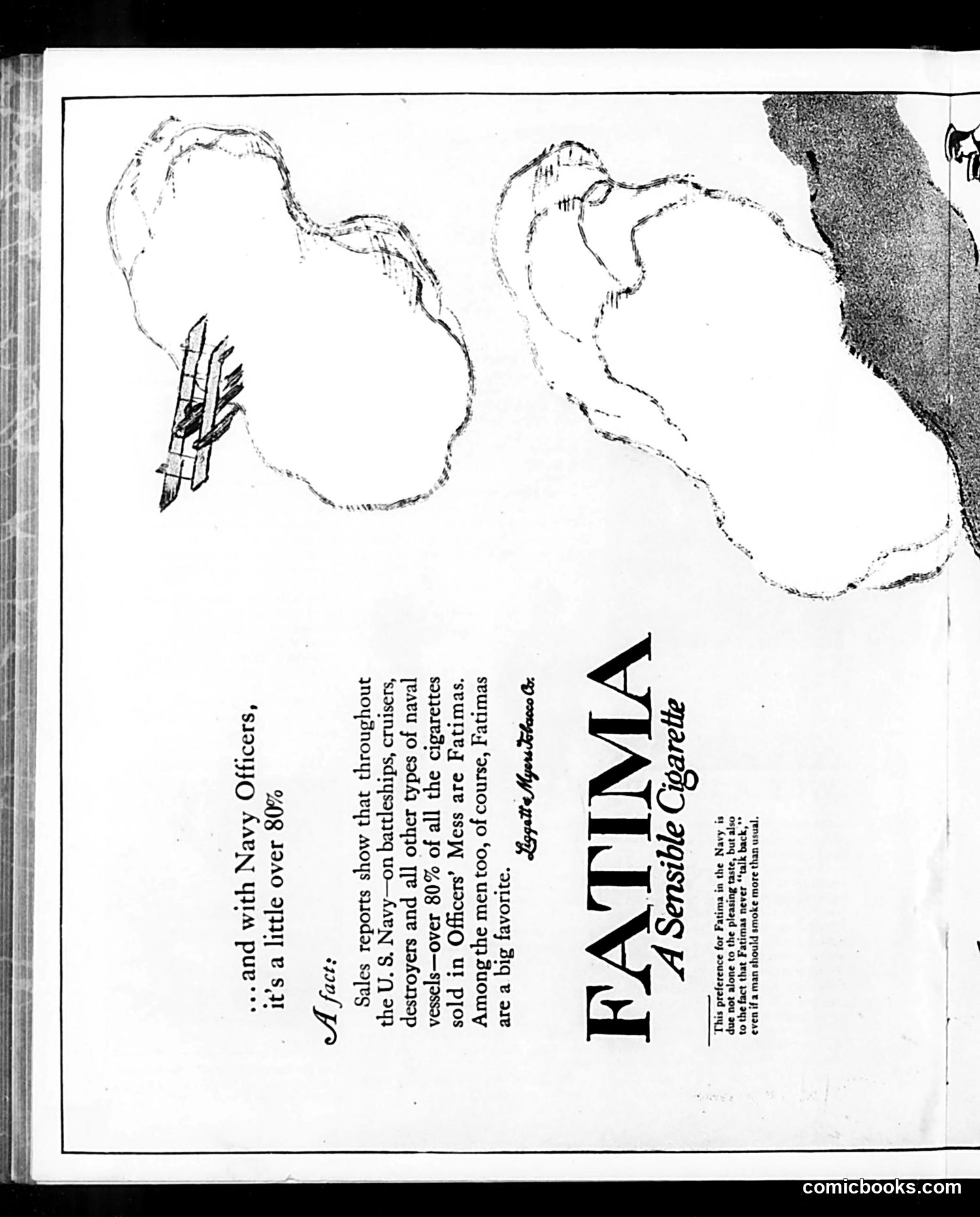
This page advertises "FATIMA," a cigarette brand. The OCR'd text is largely corrupted, but the legible portions describe sales reports praising the U.S. Navy's preference for Fatima cigarettes—noting they comprise "over 80%" of officers' tobacco consumption and are favored aboard Navy vessels. The illustration shows two elongated, caricatured figures that appear to represent **Turkish or Middle Eastern figures** (fitting the "Fatima" branding, which evoked Orientalist imagery popular in early 20th-century American marketing). One holds what looks like military equipment or rifles. The satire likely mocks the absurdity of marketing cigarettes through patriotic Navy endorsements, presenting a foreign-branded product as quintessentially American military preference. This represents typical Judge-era commercial satire of dubious advertising claims dressed in patriotic language.
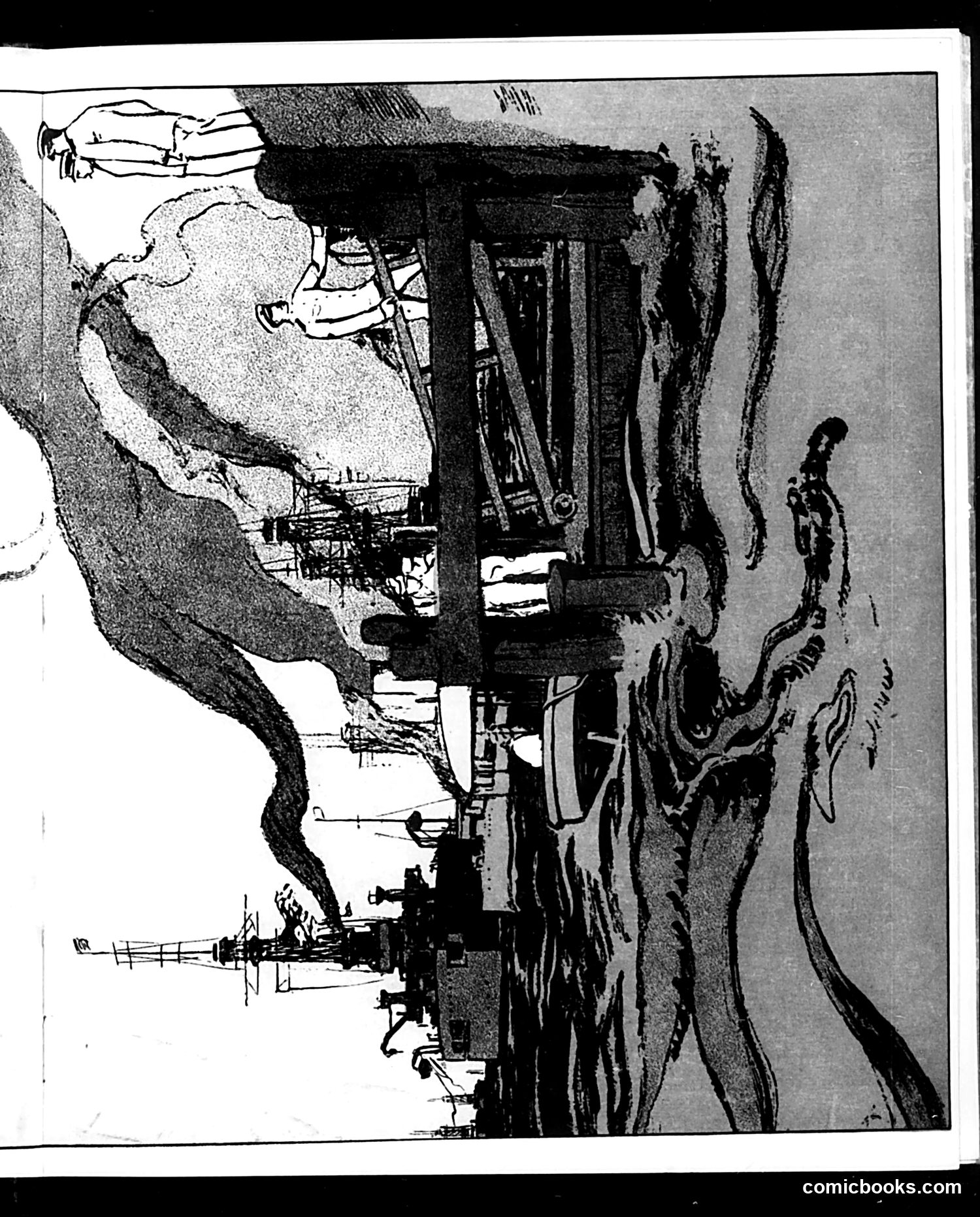
I can see this is a page from *Judge* magazine, but the image quality and orientation make it difficult to read the specific text or identify particular figures with confidence. The page appears to contain a political cartoon with what looks like a map of North America or Mexico in the upper left, and various illustrated figures in the main scene, but the details are too unclear for me to reliably identify the specific political references, caricatures, or satirical points being made. To provide accurate historical context, I would need either a clearer image or the complete, legible OCR text. I cannot responsibly guess at the identities or meanings without being certain.
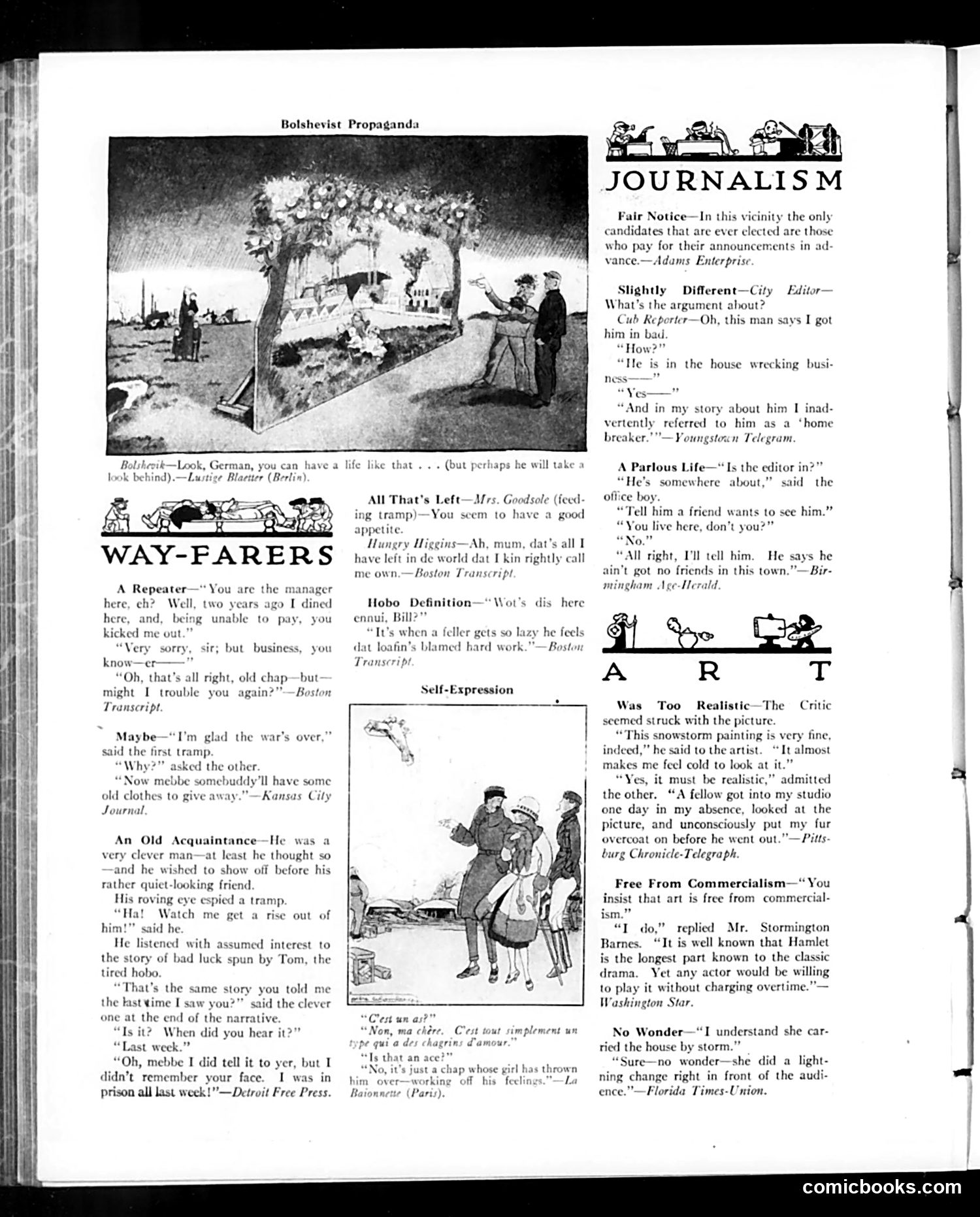
The top image shows a German soldier being tempted by idyllic pastoral scenery, with the caption suggesting Bolsheviks are using propaganda to recruit Germans with promises of a better life—"but perhaps he will take a look behind," implying the reality is darker. This references post-WWI communist propaganda efforts to destabilize Germany and recruit soldiers disillusioned by war. The "Way-Farers" section contains unrelated humorous anecdotes about vagrants and social mishaps, typical of Judge magazine's filler content. The "Art" cartoon features three disconnected jokes about critics, artists, and theater—mocking pretentious art criticism and actors' commercial motivations. **Historical context**: This appears from the Red Scare era (likely 1920s), when American publications warned readers about Bolshevik recruitment tactics among war-weary Europeans. The juxtaposition of serious political commentary with trivial humor was standard for Judge's satirical format.
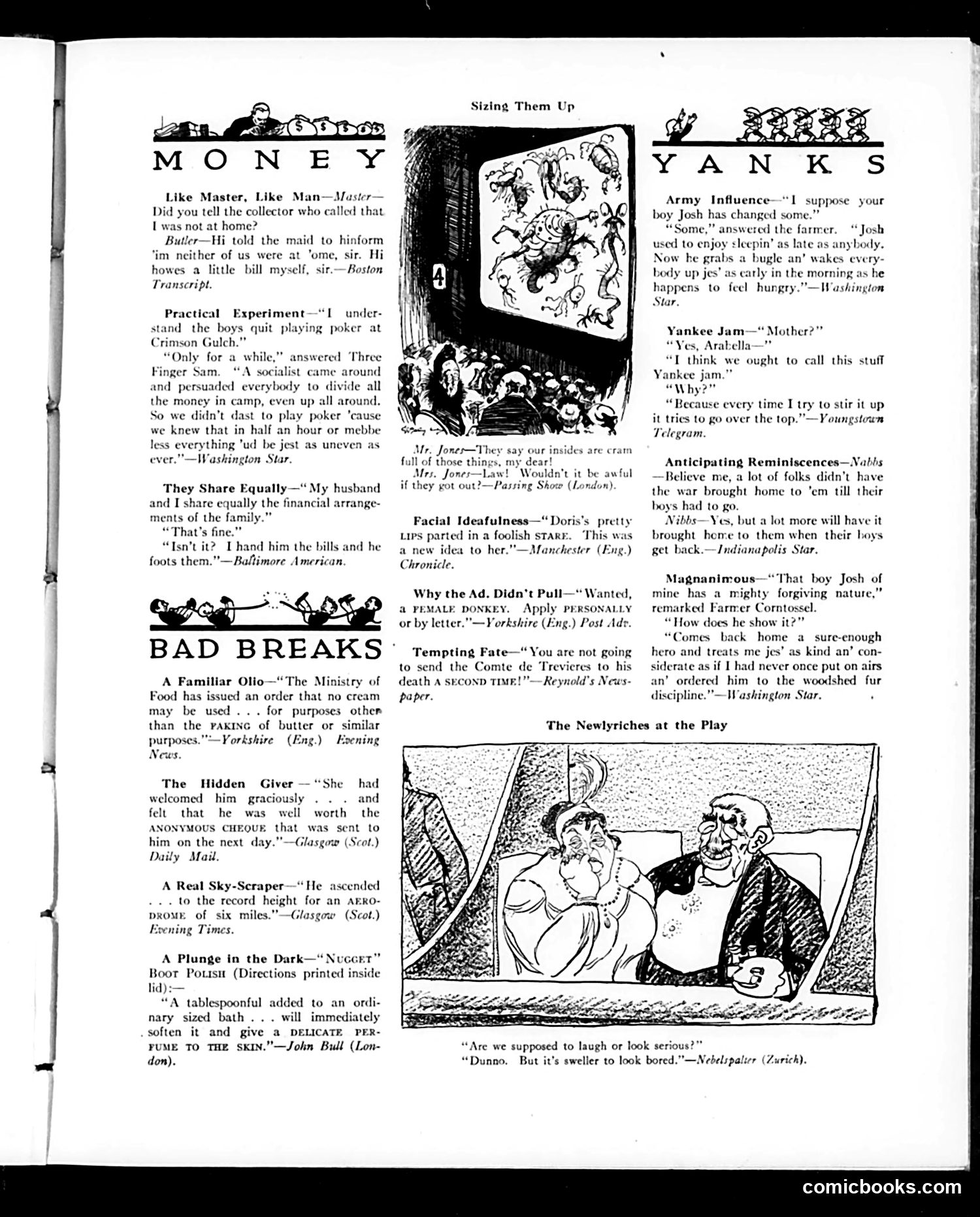
This page from *Judge* magazine collects brief humorous anecdotes and one cartoon, all satirizing working-class and middle-class life during the WWI era. The **cartoon** (bottom) depicts newly wealthy people at a theater, confused about social etiquette—they choose to look bored because it seems more sophisticated, missing the actual point of entertainment. The text items mock various social situations: servants equally avoiding bill collectors as their employers; poker players unable to gamble after a socialist redistributes winnings; a couple where the wife controls finances while claiming equality; and a farmer noting his son has become rigid and authoritarian after military service. Several jokes reference **WWI's home-front impact**: families anticipating soldiers' returns, a child's jam metaphor about "going over the top" (trench warfare terminology), and rural parents observing their sons' changed personalities from military discipline. The "Army Influence" piece gently satirizes how military service transforms civilians into rigid, early-rising authority figures—a subtle critique of militarization's social effects.
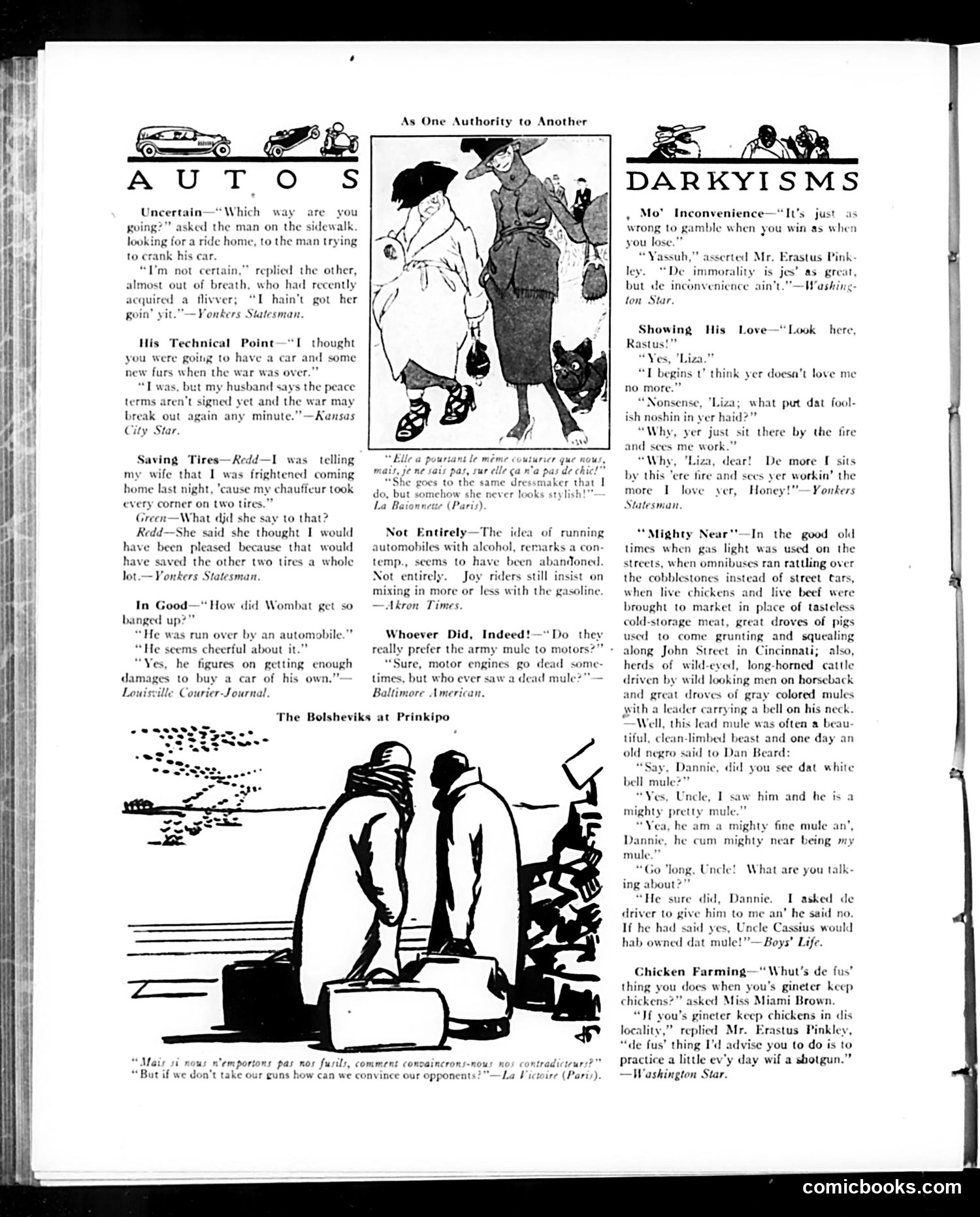
This page from Judge magazine collects brief humorous anecdotes organized by topic ("Autos," "Darkyisms"). The **"Autos" section** satirizes early automobile ownership—cars frequently broke down, required hand-cranking to start, and were unreliable compared to horses. The jokes mock owners' optimism despite mechanical failures. The **"Darkyisms" section** presents dialect humor featuring African American characters (Rastus, Liza, Erastus Pinkley). These pieces use exaggerated speech patterns and stereotypes typical of early-20th-century white publications. The jokes depict rural Black life and relationships in patronizing, comedic terms—such as an elderly man recounting a missed opportunity to own a mule, or advice about using shotguns around chickens. The **Bolsheviks cartoon** appears to reference Cold War-era anti-communist sentiment, showing two figures amid scattered objects (unclear without caption visibility). **Context**: This reflects Judge's target audience—urban, educated white readers who found humor in both emerging technology failures and racist caricature. The "Darkyisms" label itself reveals the casual, normalized racism of the era.
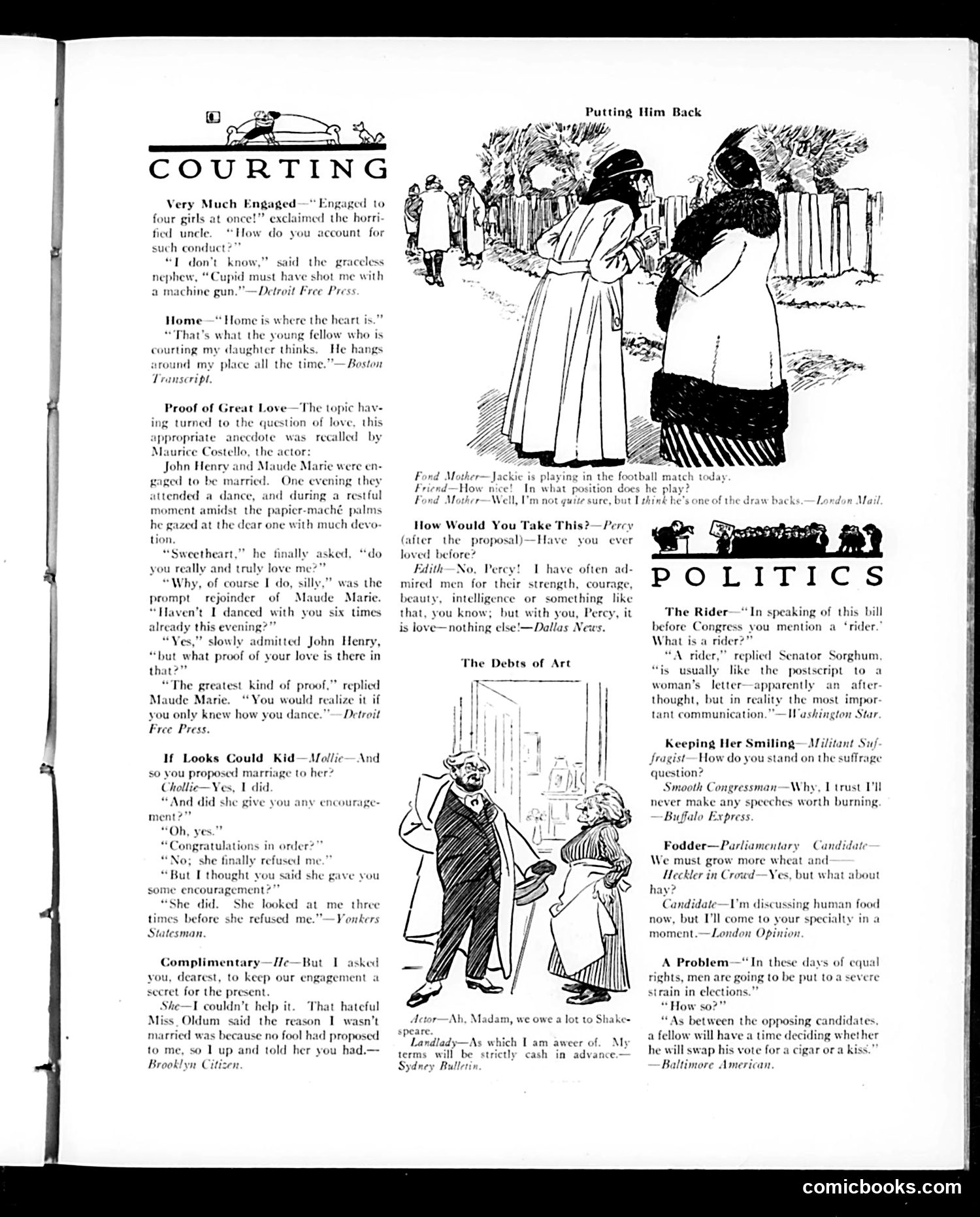
This page contains multiple brief satirical anecdotes about courtship and politics, typical of Judge's humor style. **The Courting Section** mocks romantic conventions through short jokes: a nephew engaged to four women simultaneously, a suitor's constant presence at a house, and a couple where the woman proves her love by dancing with her fiancé six times at a party—which he bizarrely questions as insufficient proof. **The Politics Section** satirizes Congressional behavior and political hypocrisy. "The Rider" joke explains legislative riders (provisions attached to bills) by comparing them to women's postscripts—apparently frivolous but actually important. Other jokes mock a congressman who avoids taking a stance on women's suffrage, and a parliamentary candidate who discusses human food needs while dodging questions about hay production. The final joke suggests men will trade votes for cigars or kisses—mocking both voter fickleness and election ethics. The humor relies on period-specific references (suffrage debates, parliamentary procedure) and gender stereotypes common to early 20th-century satire, targeting both romantic absurdity and political evasiveness.
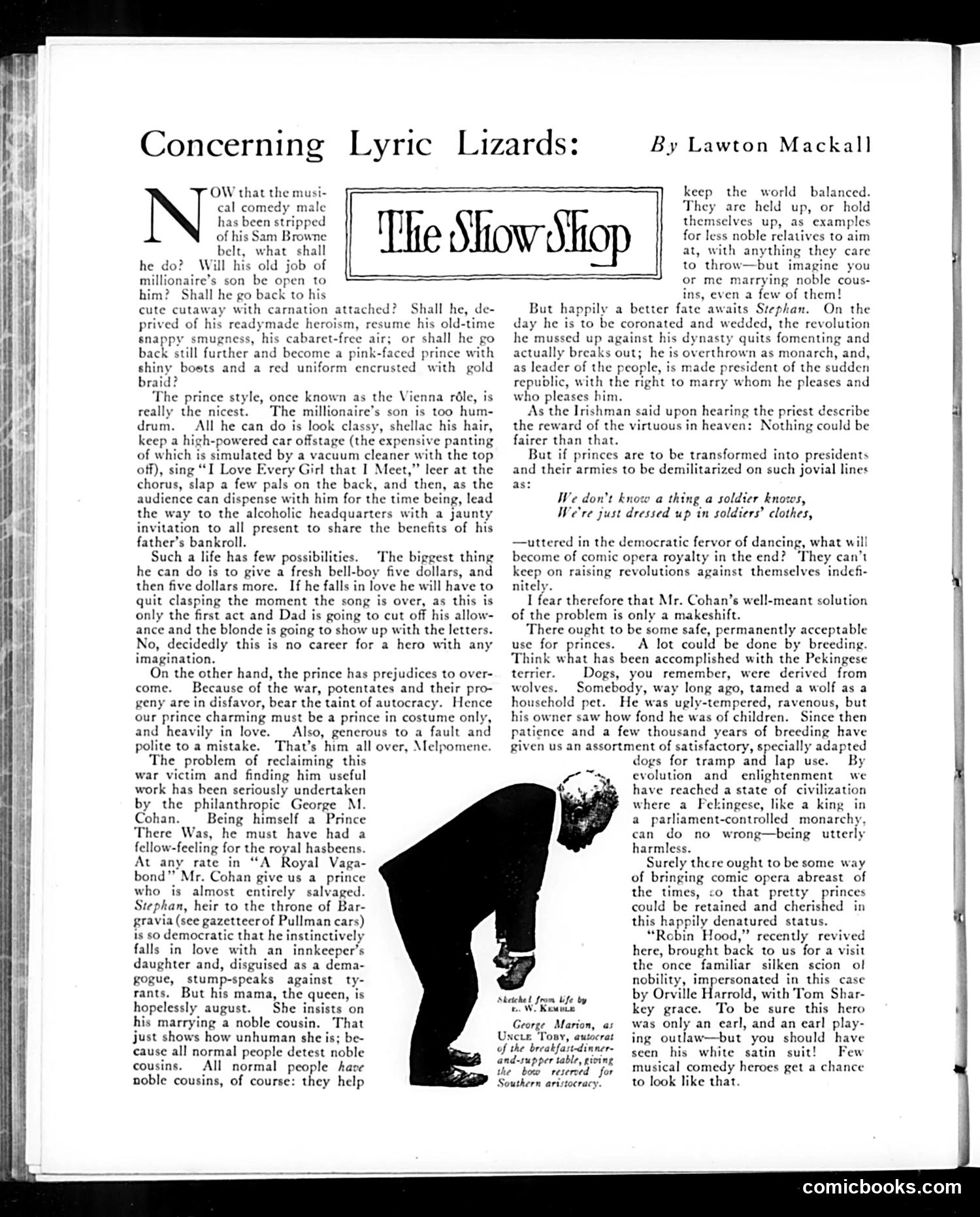
This article by Lawton Mackall satirizes the post-WWI problem of male musical comedy stars who lost their appeal after the war stripped away military glamour. The piece discusses George M. Cohan's solution: the operetta "A Royal Vagabond," featuring a prince character named Stephan. Mackall mocks how composers must now reimagine aristocratic heroes as "democratic" figures who fall in love with commoners and oppose tyranny—ultimately becoming revolutionaries and republic presidents rather than remaining in power. The satire targets both the absurdity of this plot formula and the contradiction it represents: princes-turned-presidents spouting anti-military sentiment ("We're just dressed up in soldiers' clothes") while audiences embrace this fantasy. The illustration shows a figure in formal dress, likely depicting this type of character. Mackall's point: post-war audiences and composers invented implausible character arcs to make princes "safe" and relatable again, transforming wartime heroes into democratic revolutionaries on stage.
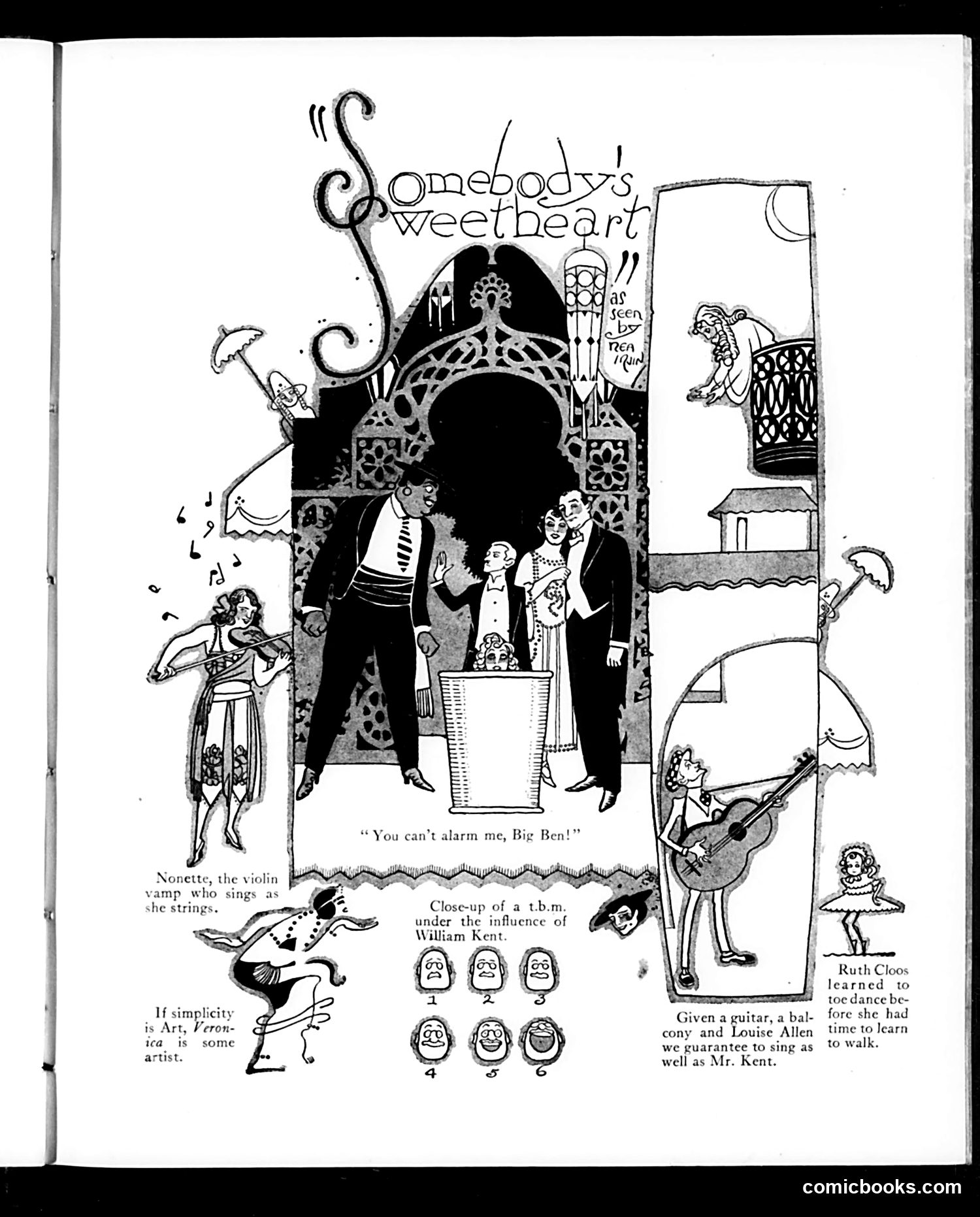
This page satirizes 1920s entertainment trends, particularly the marketing of young female performers with minimal talent. The central scene depicts what appears to be a theatrical performance being hyped despite obvious mediocrity. Key targets include: **"Nonette"** - A violinist-singer character mocked as a "vamp" (seductress) whose musical abilities are questionable despite her showiness. **Ruth Cloos** - Ridiculed for learning to toe-dance before she could walk, suggesting performers were being promoted based on youth/novelty rather than genuine skill. **William Kent** - Appears to be a real performer whose mediocre abilities are sarcastically compared favorably to these women. The phrase "You can't alarm me, Big Ben!" and references to "t.b.m." (unclear abbreviation) suggest commentary on overhyped entertainment and manufactured celebrity. The overall joke: the entertainment industry promotes untalented girls as "sweethearts," banking on visual appeal over actual artistic merit.
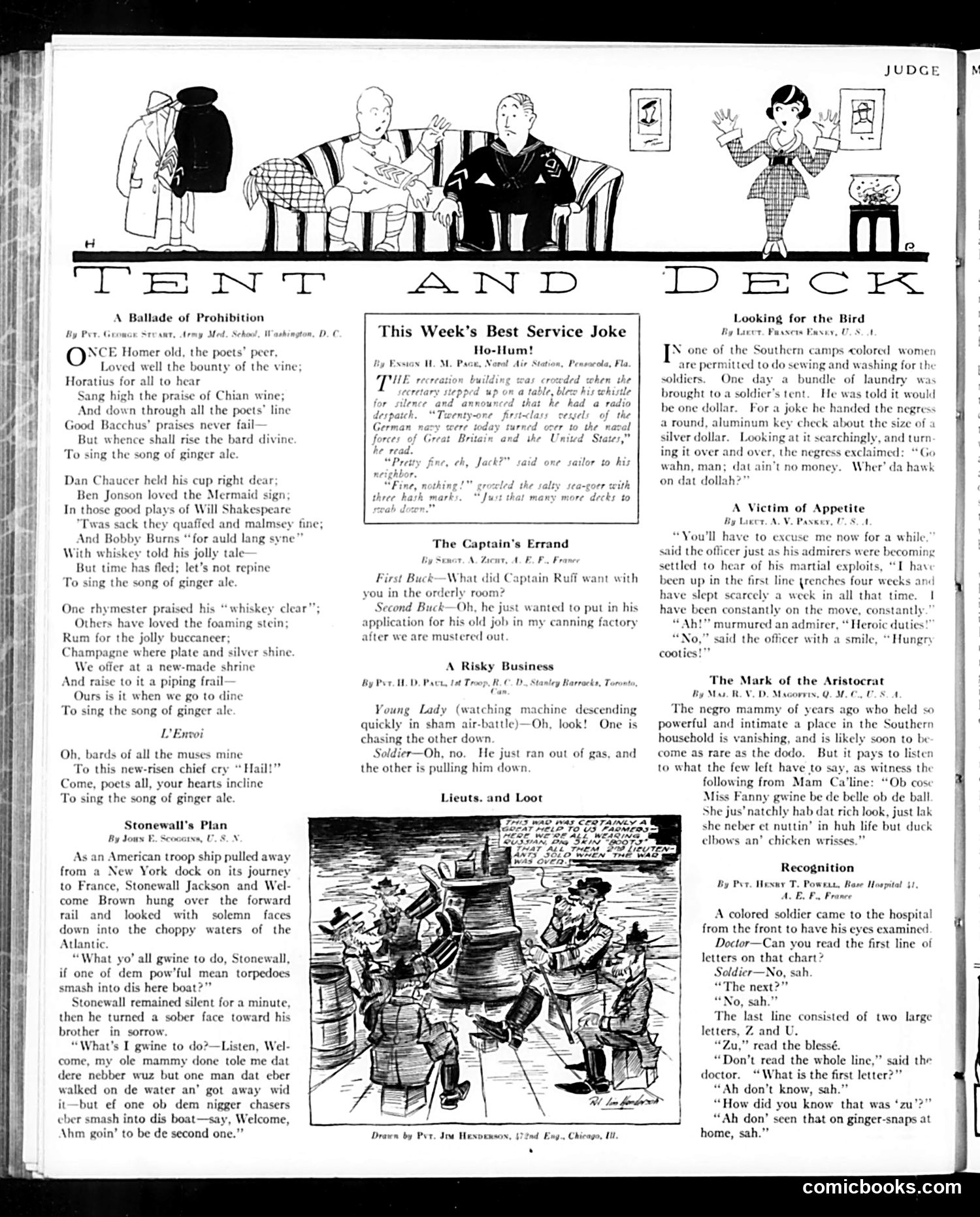
This page from *Judge* (a major American satirical weekly) satirizes Prohibition through poetry and military humor from World War I era. **Main Content:** The centerpiece is "A Ballade of Prohibition"—a poem lamenting that modern bards must now celebrate ginger ale instead of wine, beer, whiskey, and champagne that classical and historical poets praised. It's straightforward social satire on Prohibition's constraints on drinking. **Supporting Stories:** Military anecdotes mock soldier experiences: African American soldiers discussing torpedo safety with religious wordplay; a captain seeking old factory work; and a Southern camp scene where a Black woman is tricked with a laundry token instead of payment, treated as comic relief. **Historical Context:** Published during WWI (suggested by troop ships to France), this reflects pre-1920 Prohibition anticipation. The racial caricatures and dialect humor were standard for the era's *Judge* audience but reflect deeply offensive period attitudes toward Black Americans. The satire targets Prohibition as absurd social policy, not those it marginalized.
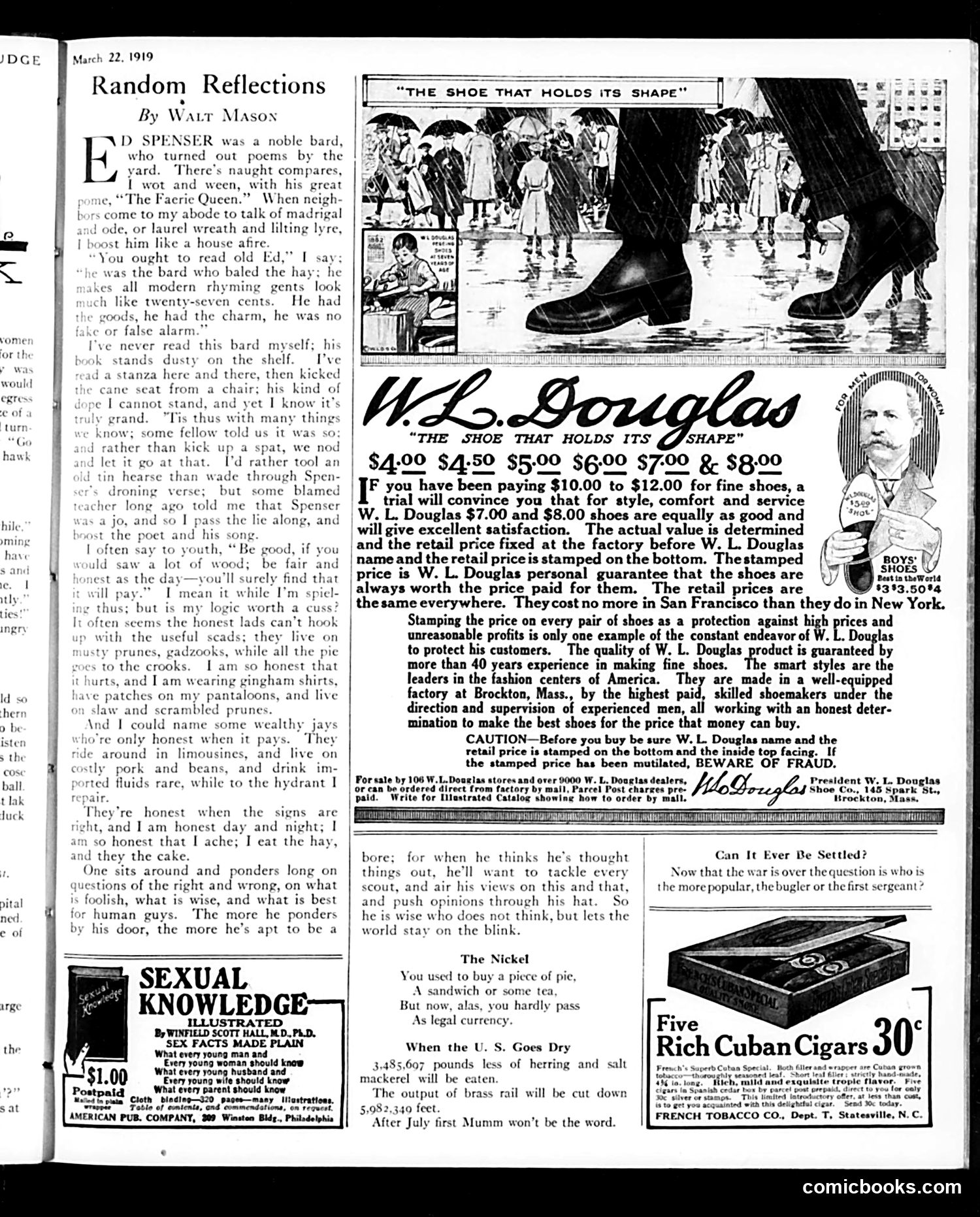
This page is primarily **advertising-driven**, dominated by a W.L. Douglas shoe advertisement and smaller ads for sexual education books and cigars. The main editorial content is "Random Reflections" by Walt Mason—a humorous essay about honesty. Mason celebrates people who are genuinely honest despite poverty, while mocking wealthy people who appear honest only when convenient. The piece critiques shallow moralizing: people repeat platitudes about virtue without understanding them, just as they blindly accept others' opinions on poetry or philosophy. The tone is sardonic social commentary typical of 1919 magazines—targeting hypocrisy and performative morality. References to "Ed" (Edmund Spenser's *Faerie Queene*) anchor the piece in literary tradition to make the point that genuine worth matters more than fashionable opinions. The page reflects post-WWI American concerns about authenticity and social values during a period of rapid cultural change.
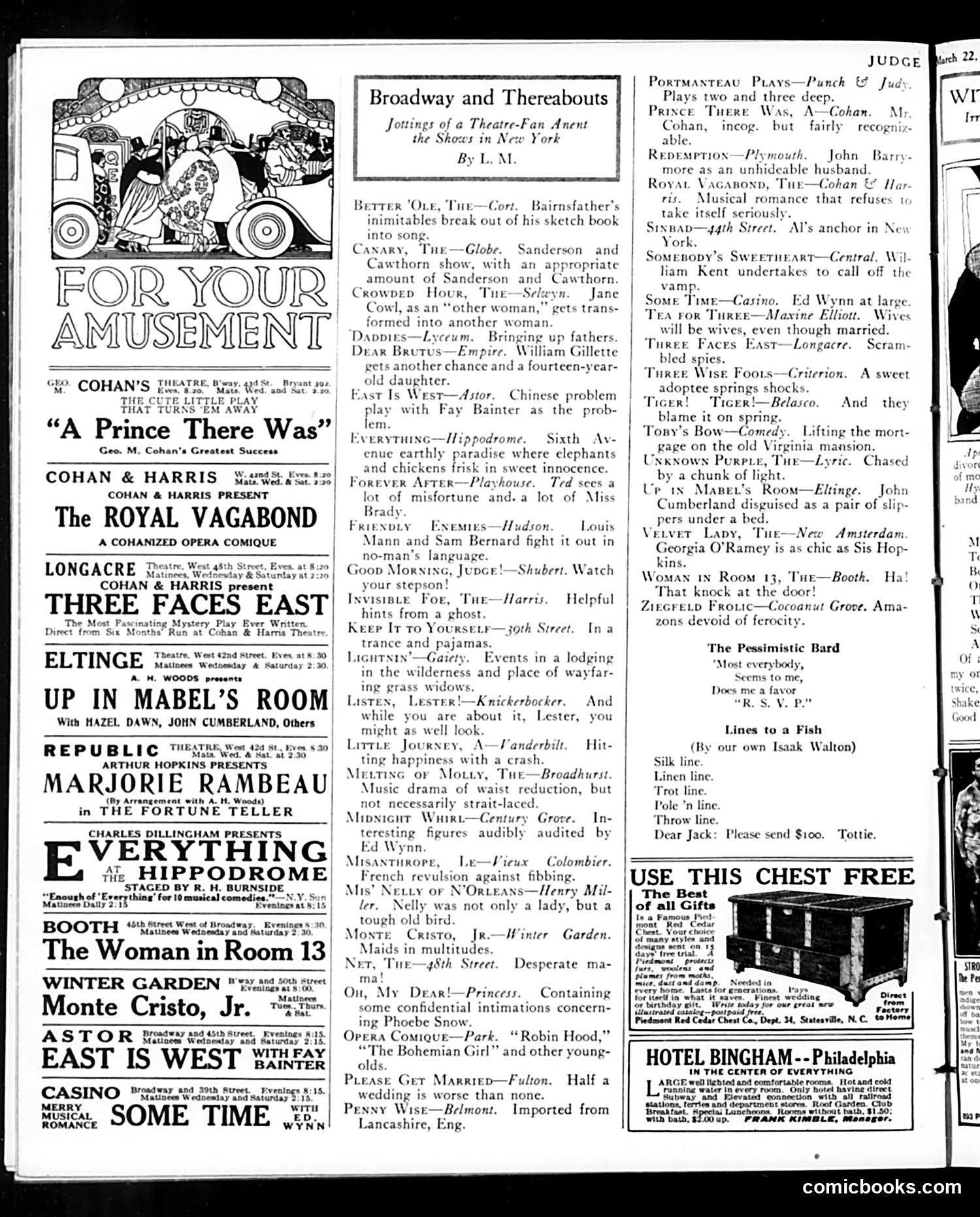
This page is primarily **theatre advertising and reviews**, not political satire. The left side displays Broadway theatre advertisements for shows like "A Prince There Was" (George M. Cohan's production) and "The Royal Vagabond." The right side contains "Broadway and Thereabouts," a theatre-fan column by L.M. offering brief, witty descriptions of current New York shows. These are humorous summaries rather than serious reviews—for example, describing "The Canary" as a show where "Sanderson and Cawthorn show, with an appropriate amount of Sanderson and Cawthorn," or "Crowden Hour" where Jane Cowl "gets transformed into another woman." The cartoon at top left appears to be a generic "For Your Amusement" illustration related to theatre-going, not political commentary. This is essentially **entertainment industry content**—advertising and gossip about Broadway productions typical of Judge magazine's lighter features.
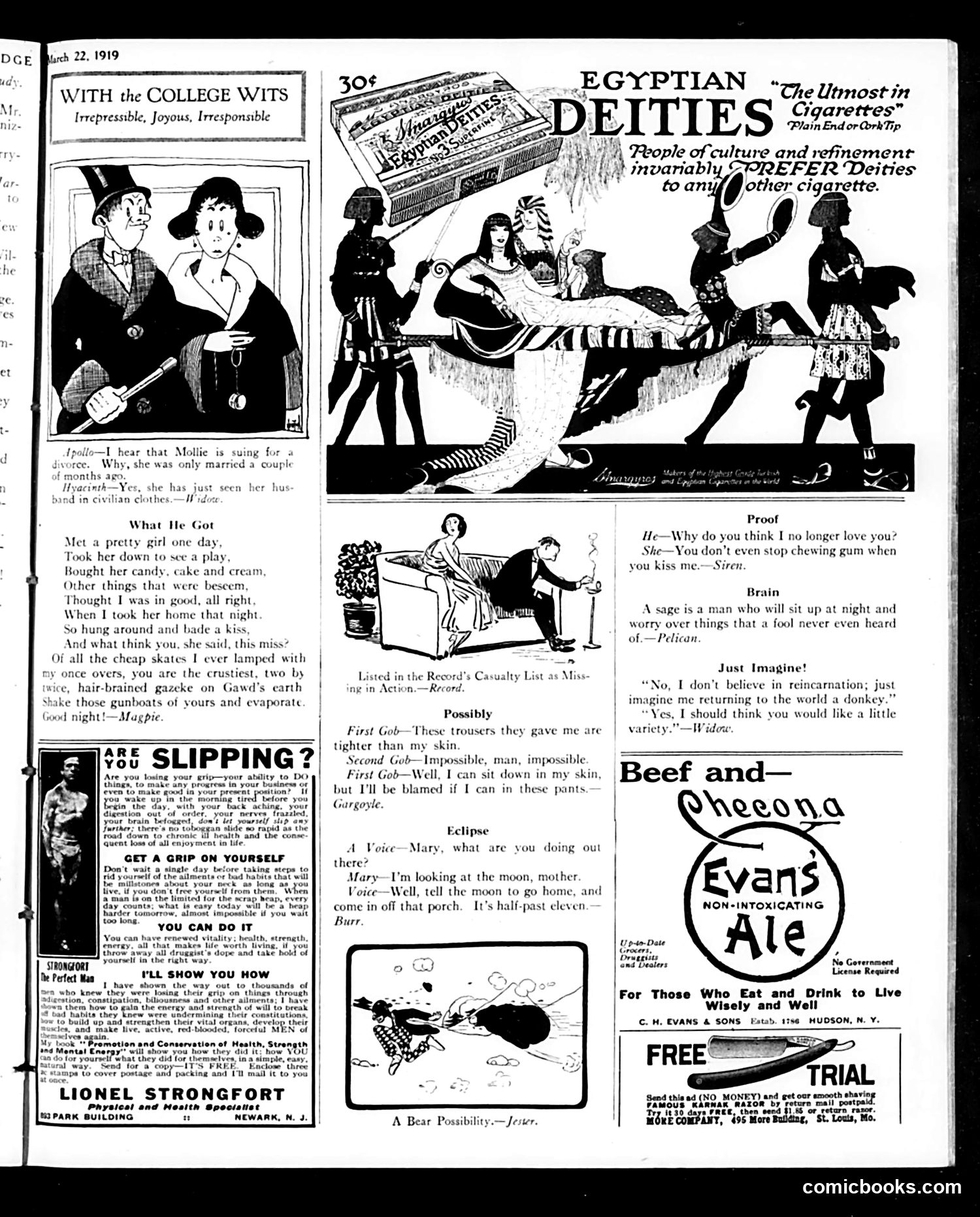
This page combines humor columns with period advertisements. The main satirical content includes: **"With the College Wits"** presents a divorce joke: a woman sues after marrying only months prior, with the punchline that she saw her husband in "civilian clothes"—likely mocking hasty wartime marriages, possibly referencing WWI demobilization (the magazine's date is just after the Armistice). **Humor vignettes** mock romantic disappointment and shallow materialism ("What He Got"), physical appearance ("Proof"), and wartime-related anxieties ("Listed in the Record's Casualty List"). **The Egyptian Deities cigarette ad** is a period product advertisement, not satire. The remaining content consists of self-help advertisements (Lionel Strongfort's fitness program) and beverage ads typical of 1919 publications. The page reflects post-WWI American culture: dating customs, gender dynamics, and consumer advertising targeting middle-class readers seeking humor and self-improvement.
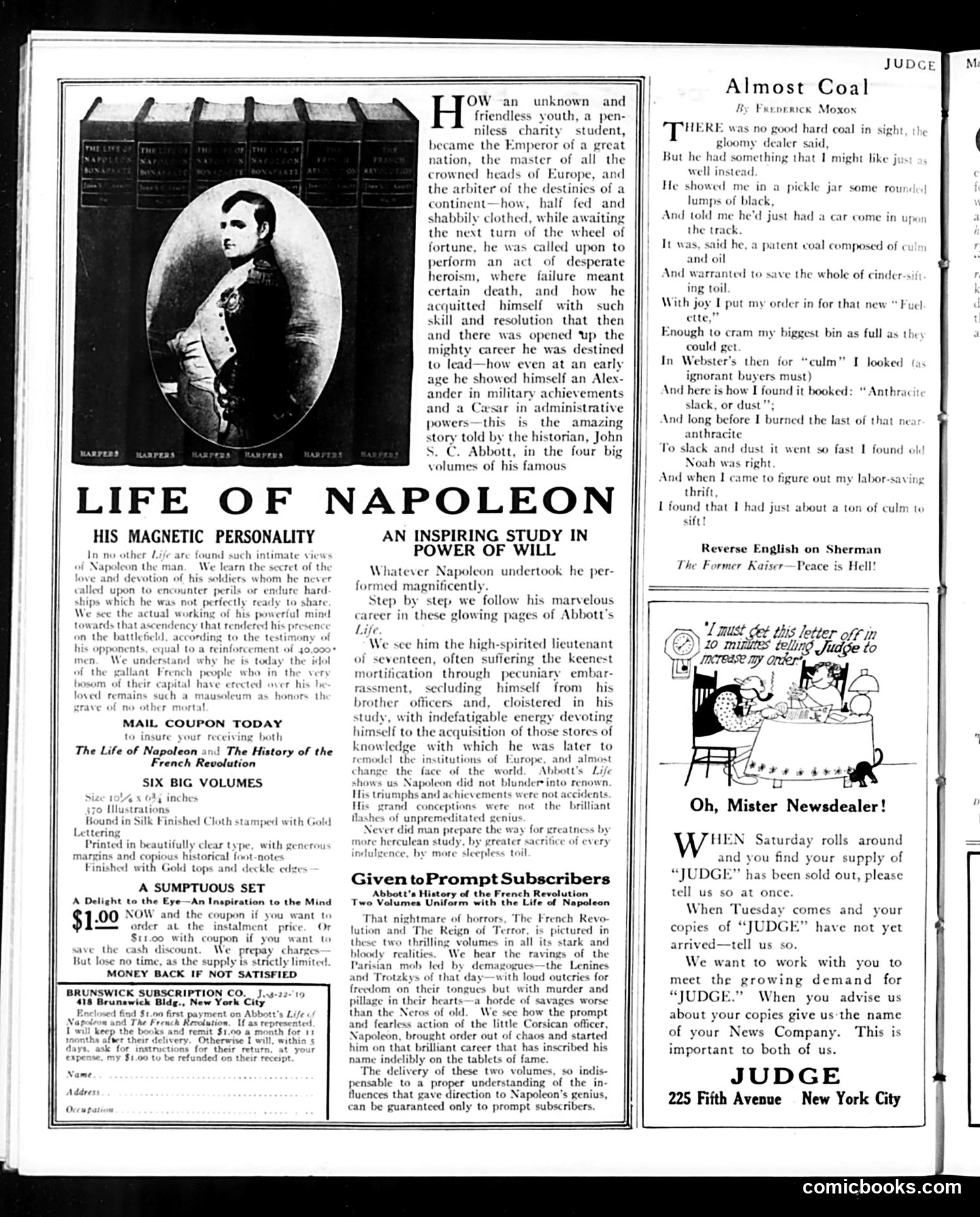
This page is primarily **advertising for a Napoleon biography set** by publisher Brunswick Subscription Company, not political satire. The left side features a portrait of Napoleon and promotes John S.C. Abbott's six-volume "Life of Napoleon" with accompanying "History of the French Revolution" set. The advertising copy emphasizes Napoleon's rise from "unknown and friendless youth" to emperor through willpower and genius—presenting him as an inspirational figure. The right side contains two unrelated items: a poem titled "Almost Coal" by Frederick Moxon, and a cartoon advertisement for Judge magazine itself, captioned "Oh, Mister Newsdealer!" urging readers to subscribe. There is **no political cartoon or satire here**. The page appears to be a standard magazine issue mixing editorial content with subscription advertising—common for early 20th-century periodicals. The Napoleon material functions as straightforward promotion, not commentary.
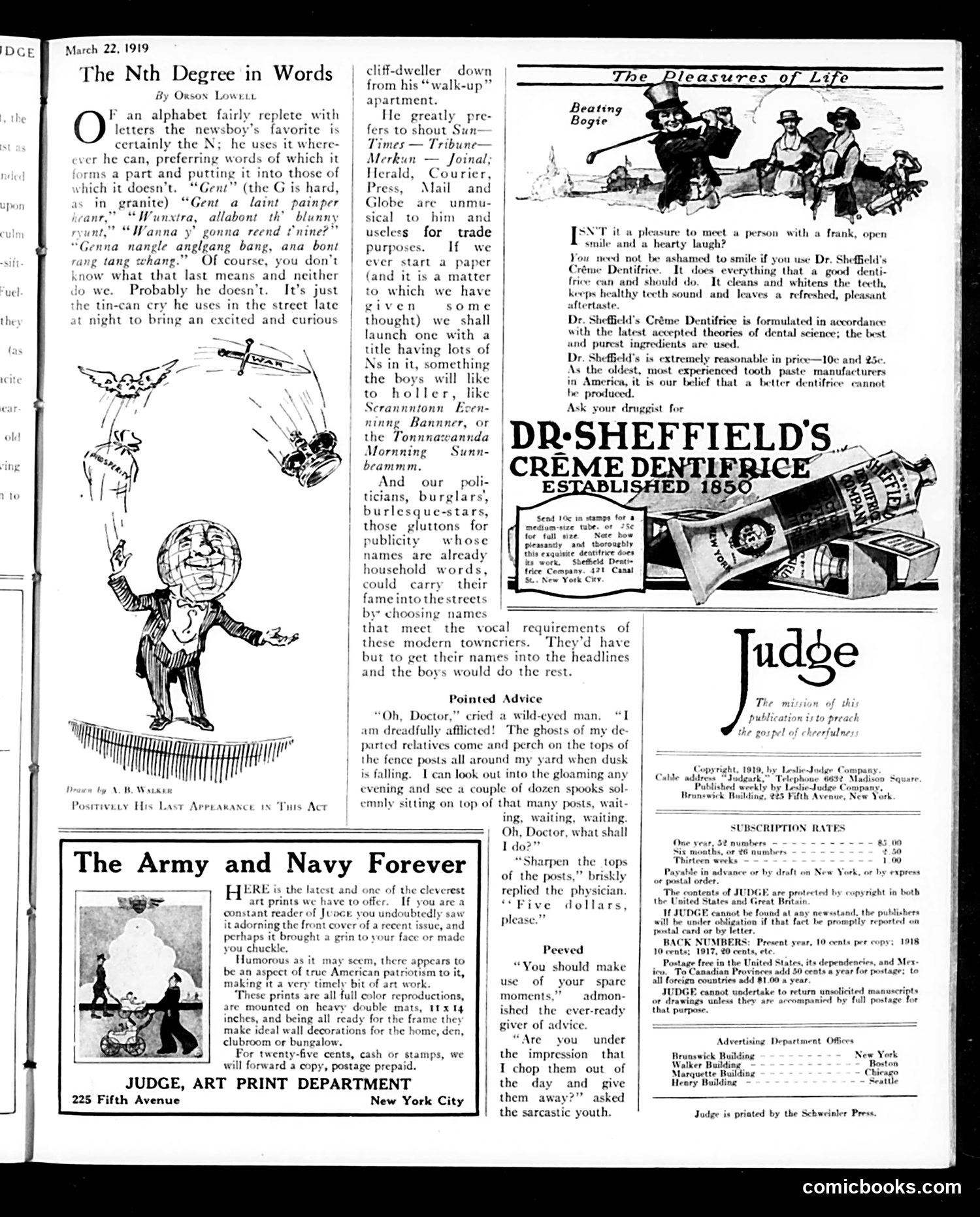
**"The Nth Degree in Words"** by Orson Lowell satirizes newsboys' exaggerated street cries. The piece mocks how newspaper hawkers drop or add the letter "N" to newspaper names ("Gent" for Herald, "Merkun" for American) and invents nonsensical titles with excessive N's to create attention-grabbing sounds. The accompanying cartoon shows a grotesque newsboy figure yelling. The satire targets both the boys' crude marketing tactics and the absurdity of how newspapers compete for readers through catchy branding. The remaining content is primarily **advertisements** (Dr. Sheffield's toothpaste and Judge's art prints) and **filler humor** about a man plagued by ghosts on fence posts—offering satirical "advice" to sharpen the posts. This reflects 1919 urban street culture: unlettered newsboys as distinctive fixtures of city life, their dialect and sales methods targets for middle-class ridicule.
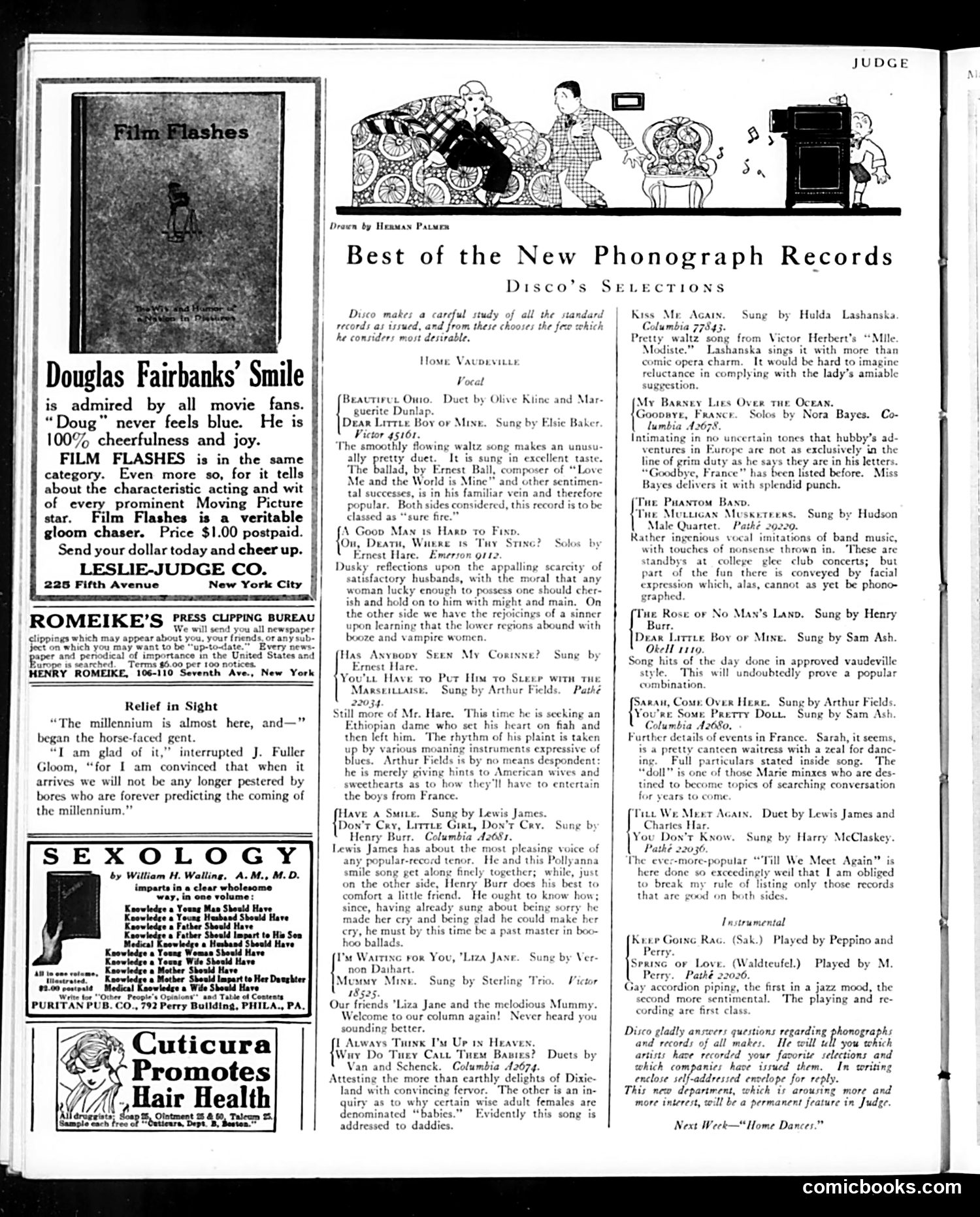
This page is primarily **advertising and entertainment content**, not political satire. The main features are: **Top Cartoon**: A simple domestic scene drawn by Herman Palmer showing a family with a phonograph, illustrating the article below. **Main Content**: "Best of the New Phonograph Records" — Disco's curated selections of contemporary 78 rpm records. The reviews discuss popular vocal recordings from artists like Hulda Lashanska and Ernest Hare, covering sentimental songs ("Dear Little Boy of Mine"), romantic numbers, and humorous novelty recordings about relationships and soldiers returning from France. **Context for Modern Readers**: These records represent 1920s popular music. References to "the boys from France" suggest post-WWI era. The reviews highlight vocal quality and emotional content valued in that period's popular entertainment. **Surrounding Ads**: Include film promotion, a press clipping bureau, a sexology textbook, and hair care products—typical Judge magazine advertising of the era. This is an **entertainment/lifestyle page** rather than political commentary.
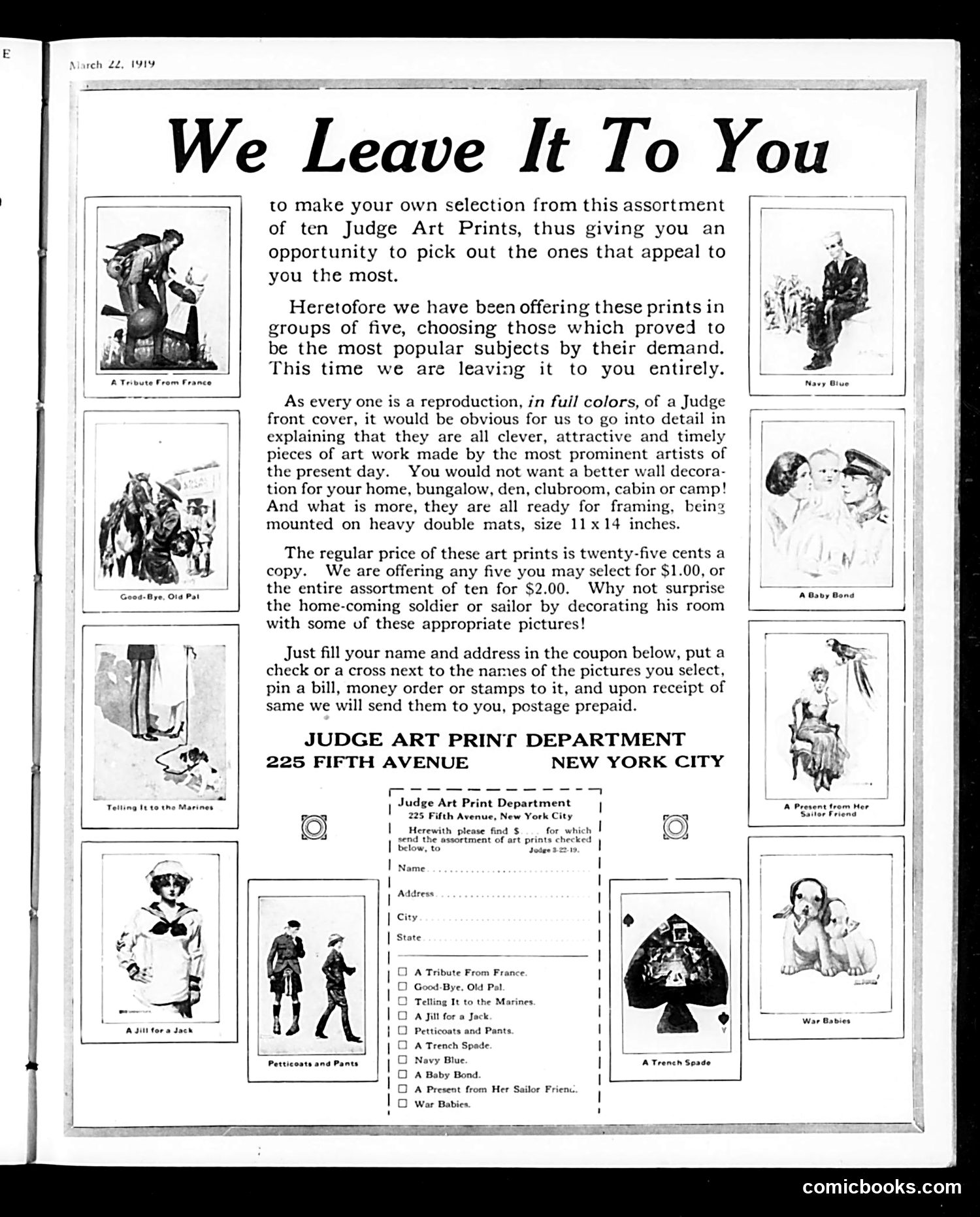
This is primarily a mail-order advertisement for Judge magazine's reprinted cover art. The page offers ten art prints (5 for $1.00, or all 10 for $2.00) featuring timely subjects from Judge's covers. The titles reveal this was published shortly after World War I's end, with prints reflecting contemporary concerns: "A Tribute From France," "Good-Bye, Old Pal," "Telling It to the Marines," "Navy Blue," "A Trench Spade," and notably "War Babies" appear multiple times. These reference soldiers returning home, military life, and war-related social issues. "Petticoats and Pants" and "A Jill for a Jack" suggest gender-role humor typical of the era. The ad specifically pitches prints as gifts "for the home-coming soldier or sailor," capitalizing on post-WWI sentiment. The cartoons themselves are not fully visible but represent Judge's satirical take on contemporary American life and the war's aftermath.
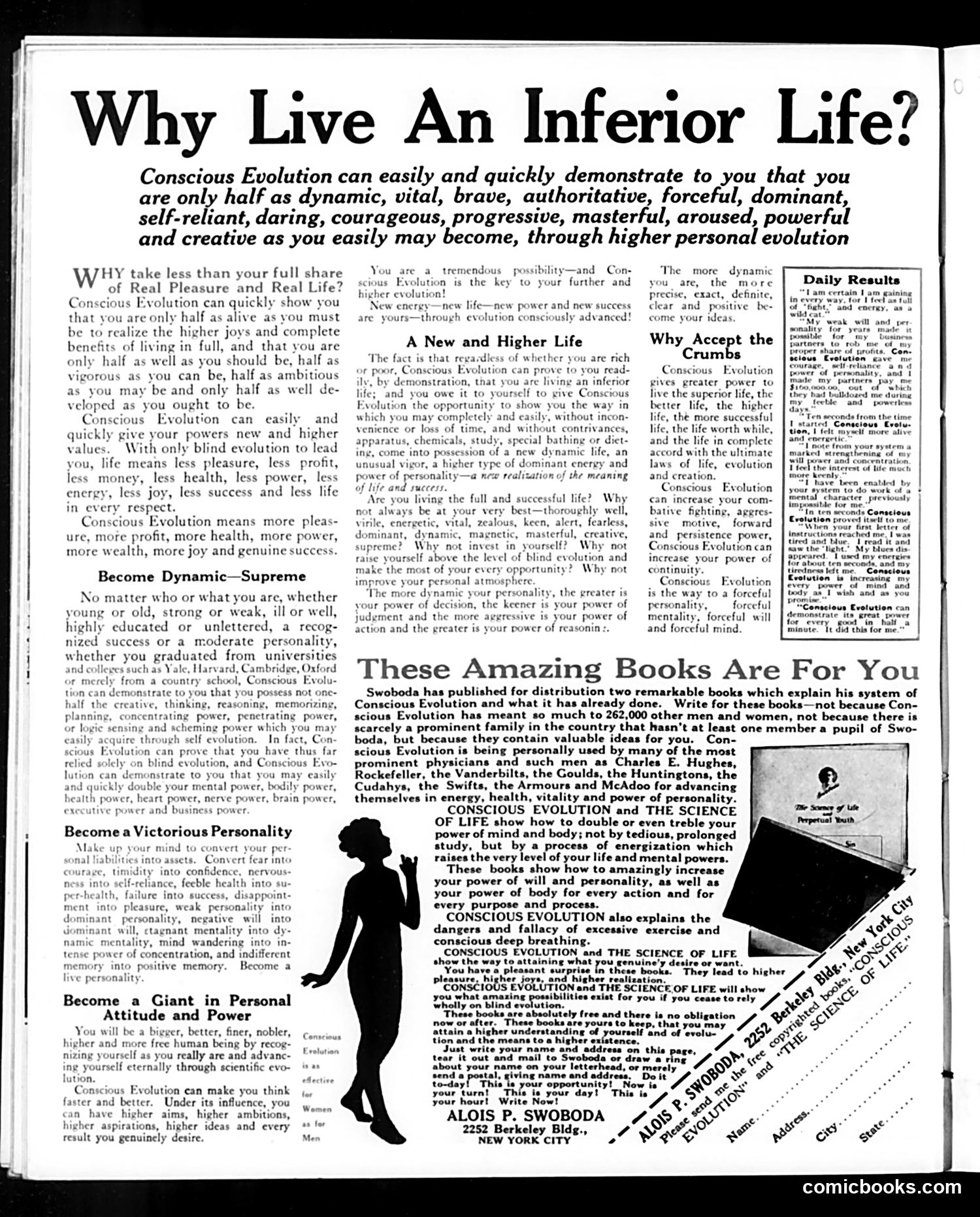
This is primarily a **full-page advertisement** for a self-help movement called "Conscious Evolution," rather than traditional satirical content. The ad promotes a pseudoscientific personal development system, likely from the early 20th century. **Key claims made:** The ad argues that ordinary people—regardless of education or background—are only using "half" their potential and can become more dynamic, powerful, and successful through "Conscious Evolution." It promises to increase willpower, mental capacity, health, and business success. **The satire (if any):** Judge magazine's inclusion of this grandiose ad may itself be satirical commentary on the era's explosion of dubious self-improvement schemes and "New Thought" movements that preyed on aspirational Americans seeking personal transformation through pseudo-scientific methods. **Notable elements:** The silhouetted figure and motivational language ("Why Accept the Crumbs") exemplify marketing tactics typical of early 1900s personal development advertising, which often exploited anxieties about adequacy and social competition.