
A complete issue · 16 pages · 1905
Judge — August 5, 1905
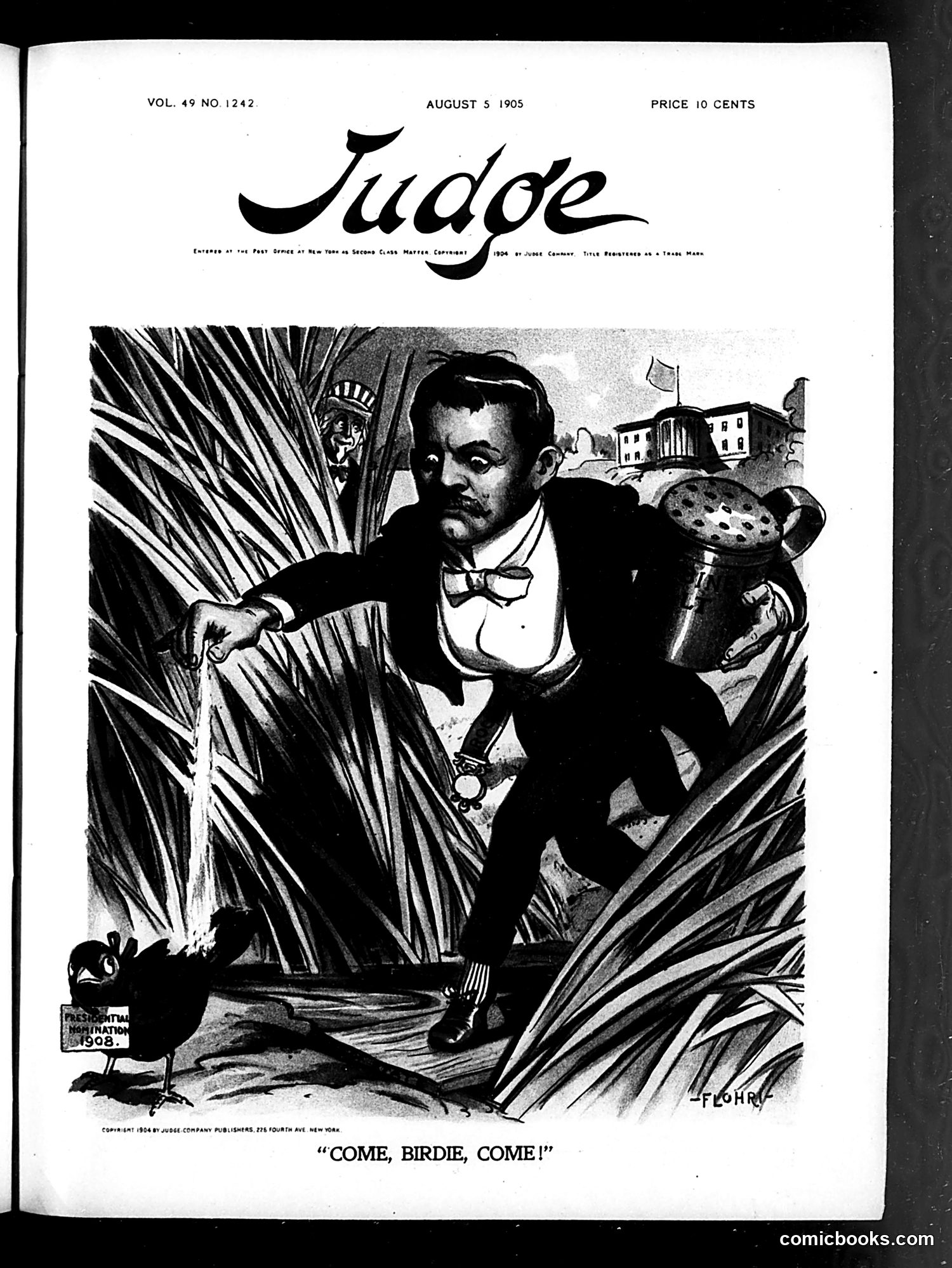
This August 5, 1905 *Judge* cover satirizes a prominent political figure (likely President Theodore Roosevelt, given the formal attire and the eagle/bird motif) attempting to attract or summon something—suggested by the caption "Come, Birdie, Come!" The draped American flag backdrop and formal setting indicate a government/political context. The cartoon appears to mock Roosevelt's efforts to influence or control some political matter, with the "birdie" possibly representing either public opinion, a political ally, or a policy outcome he's pursuing. The figure's gesturing posture suggests coaxing or persuasion. The eagle in the lower left reinforces American political symbolism. Without additional context about 1905 events, the precise target remains unclear, but the satire criticizes executive persuasion tactics.
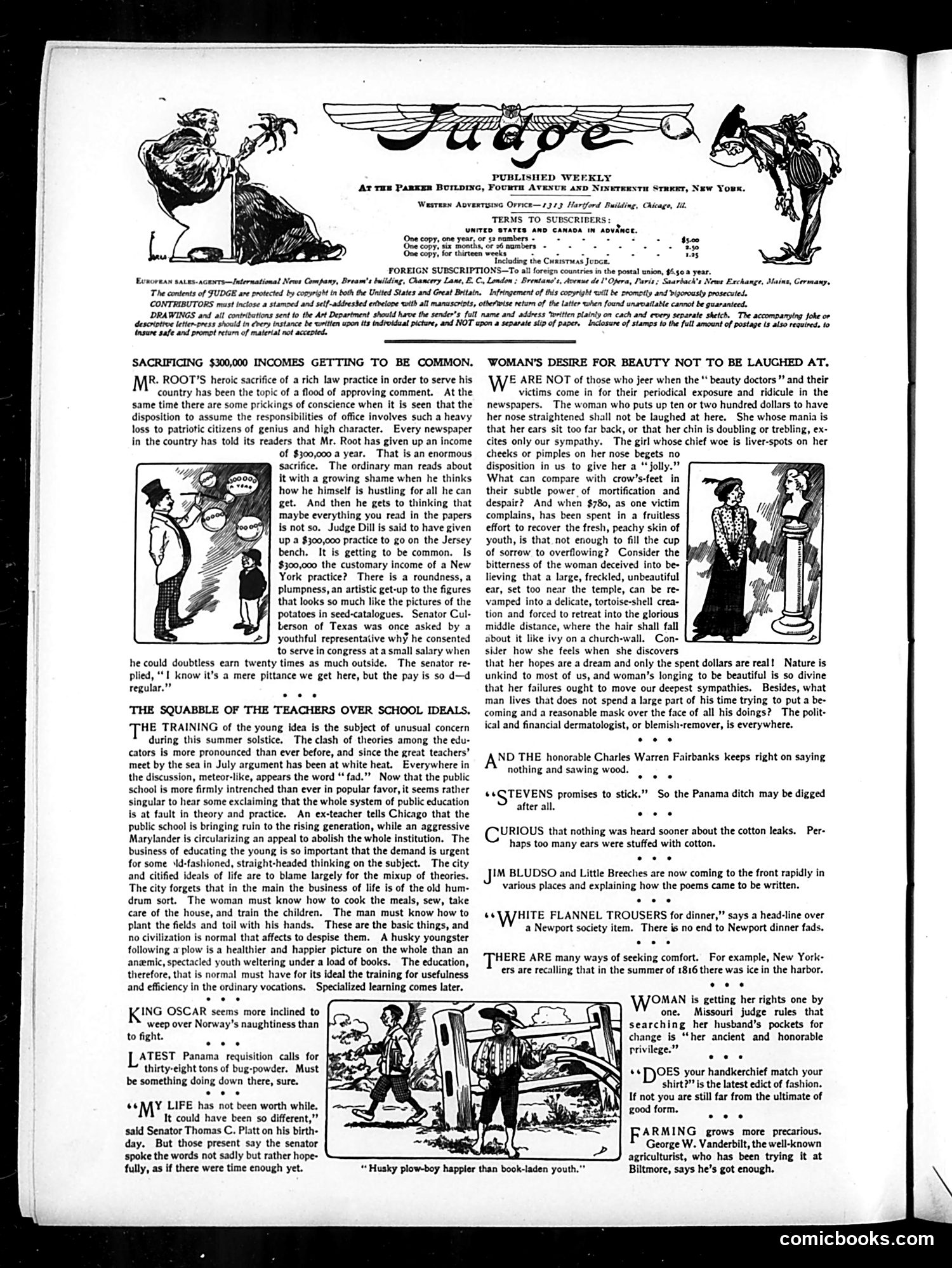
This page contains several satirical commentary pieces rather than single unified cartoons. Key items include: **"Sacrificing $300,000 Incomes Getting to Be Common"** critiques wealthy politicians claiming poverty. The text mocks a senator claiming he "hustled" to earn $250,000 yearly, suggesting this fabricated hardship narrative is becoming standard political rhetoric. **"The Squabble of the Teachers Over School Ideals"** satirizes educational debates, arguing that practical domestic skills matter more than ideological disputes among educators. The cartoon showing a "husky plow-boy happier than book-laden youth" illustrates this anti-intellectual position—valuing manual labor over academic education. **"Woman's Desire for Beauty Not to Be Laughed At"** defends women pursuing cosmetic improvements against social ridicule, presenting it as legitimate self-improvement rather than vanity. The overall tone mixes social criticism with period-typical gender commentary.
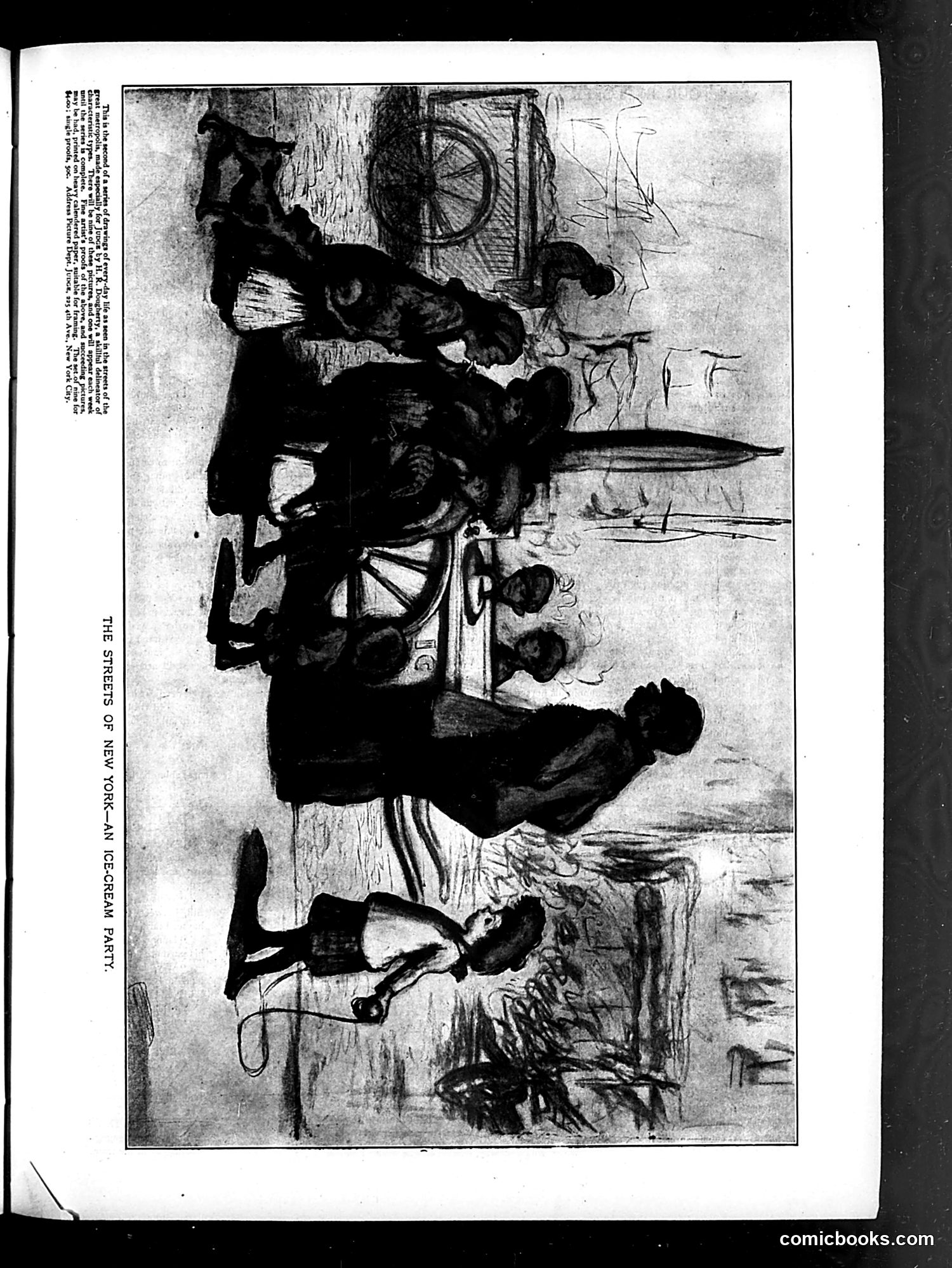
I can see this is a page from *Judge* magazine printed upside-down, showing what appears to be a satirical illustration. However, the image quality and inverted orientation make it difficult to read both the OCR text clearly and identify specific figures in the cartoon with confidence. The illustration depicts several silhouetted figures in what appears to be an indoor urban setting, with architectural elements visible. The composition suggests social commentary typical of *Judge's* satirical style—possibly addressing class dynamics, urban life, or contemporary social issues. Without being able to reliably read the accompanying text or clearly identify the specific figures and their caricatured details, I cannot accurately explain what particular political or social situation this cartoon references. I'd need a properly-oriented, higher-resolution image to provide a reliable historical interpretation.
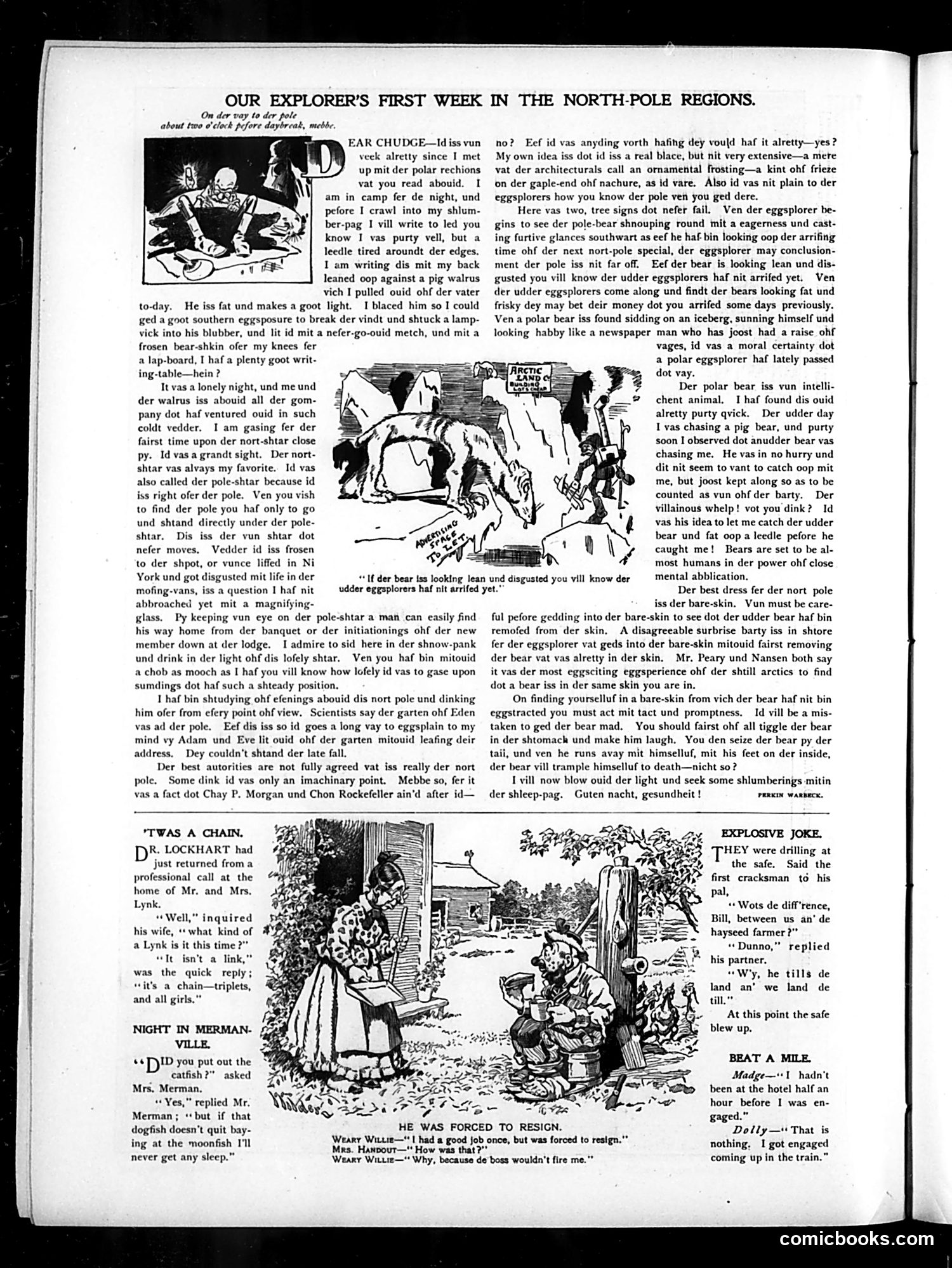
This page contains three separate humorous pieces typical of early 20th-century American satirical magazines: 1. **"Our Explorer's First Week"** - A fictional narrative about Arctic exploration, featuring anecdotes about encountering polar bears and walruses. It appears to be humorous fiction rather than political satire. 2. **"'Twas a Chain"** - A domestic humor piece where a man inquires about a "Lynk" (pun intended), discovering his wife means chain—a play on words about marriage's constraints. 3. **"Night in Mermanville," "Explosive Joke," "He Was Forced to Resign,"** and **"Beat a Mile"** - Brief comedic vignettes with simple punchlines about catfish, drilling, employment, and trains respectively. These represent Judge's mix of wordplay, domestic humor, and light social observation rather than pointed political commentary.
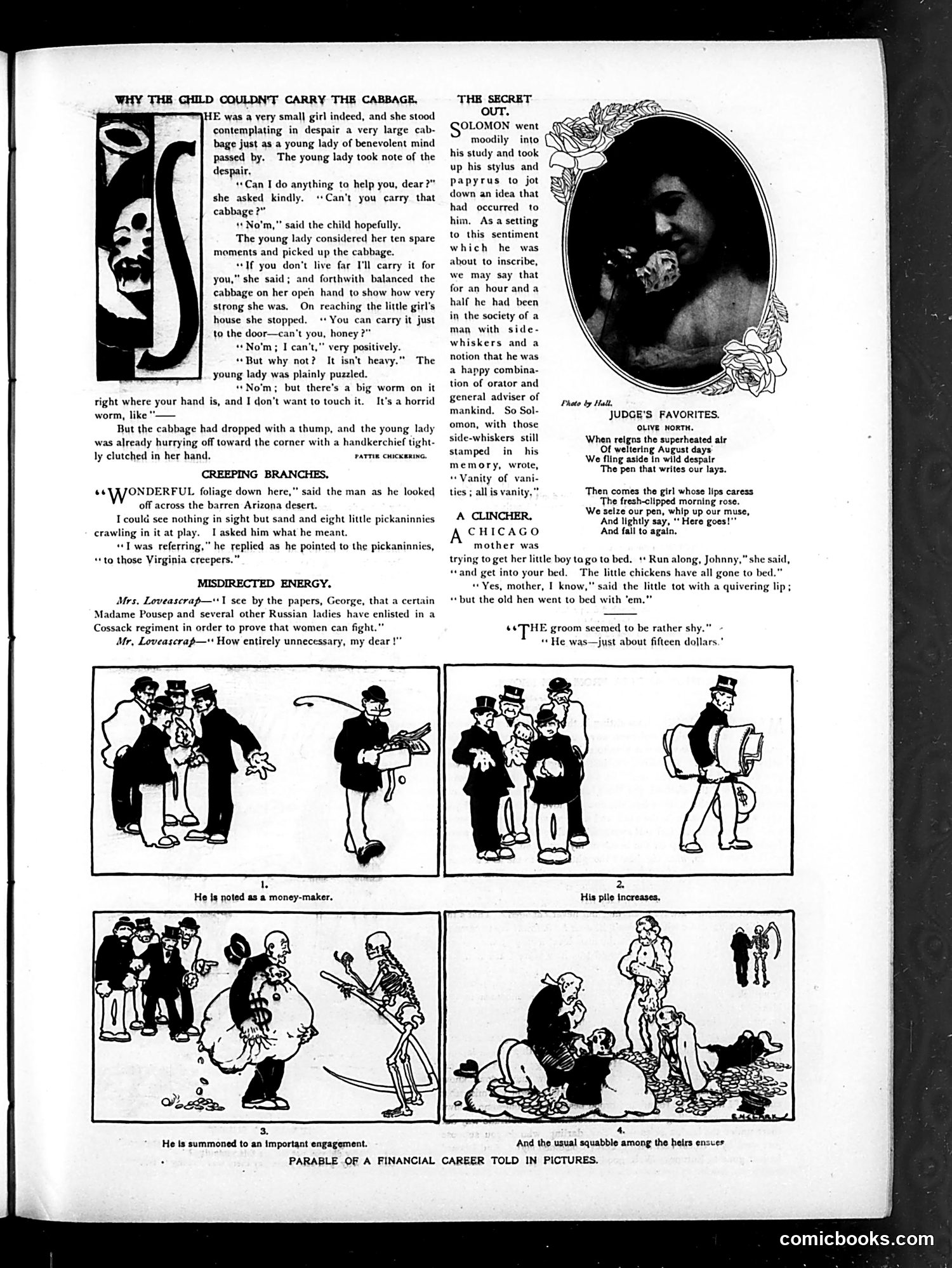
This page contains multiple satirical pieces typical of Judge's humor: **"Why the Child Couldn't Carry the Cabbage"** is a humorous anecdote about a well-meaning lady who offers to help a small girl carry a large cabbage. The joke turns on the girl's revelation of a worm on the cabbage—the lady drops it in disgust and flees, while the girl remained unconcerned, subverting expectations about delicate versus practical sensibilities. **"Creeping Branches"** is a racist "joke" where "Virginia creepers" (a plant) becomes a pun referring to Black children crawling in the desert sand—deeply offensive by modern standards. **"Misdirected Energy"** mocks Russian women soldiers by suggesting women fighting in war is unnecessary because they already fight at home (implying domestic quarrels). **The financial career comic strip** shows a man's rise from modest means to wealth and the inevitable family squabbling over inheritance—satirizing both greed and social climbing. The page reflects early 20th-century attitudes while maintaining Judge's satirical voice targeting hypocrisy and human folly.
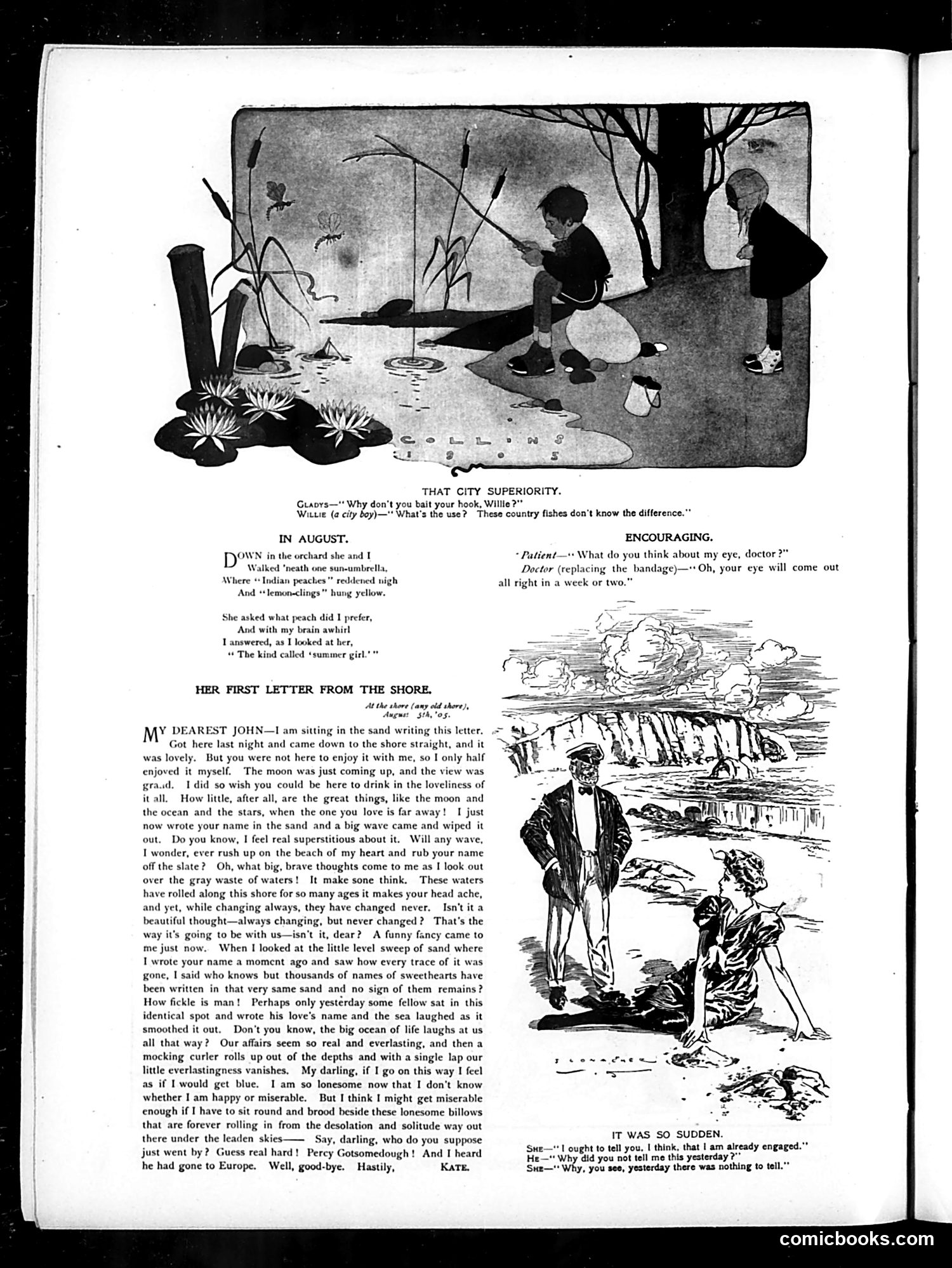
**Top Cartoon ("That City Superiority"):** A city boy named Willie and a country man (Gravity) fish together. Willie claims country fish "don't know the difference" about bait—a dismissive city superiority joke. The satire mocks urban arrogance and ignorance of rural life; Willie's condescension backfires as humor, suggesting city dwellers are actually the foolish ones. **Middle Poems:** Light romantic verses about courtship and summer romance, typical period humor. **Main Feature ("Her First Letter from the Shore"):** Kate writes lovingly to her absent fiancé John from a beach vacation, mixing genuine emotion with overwrought Victorian sentimentality. The satire targets melodramatic lovers—her poetic musings about waves erasing his name in sand, the "ocean of life," and existential loneliness parody the era's sentimental love literature. The final punchline undercuts this: she mentions gossip about Percy Gotsomedough's engagement, revealing her "deep thoughts" are interrupted by shallow scandal.
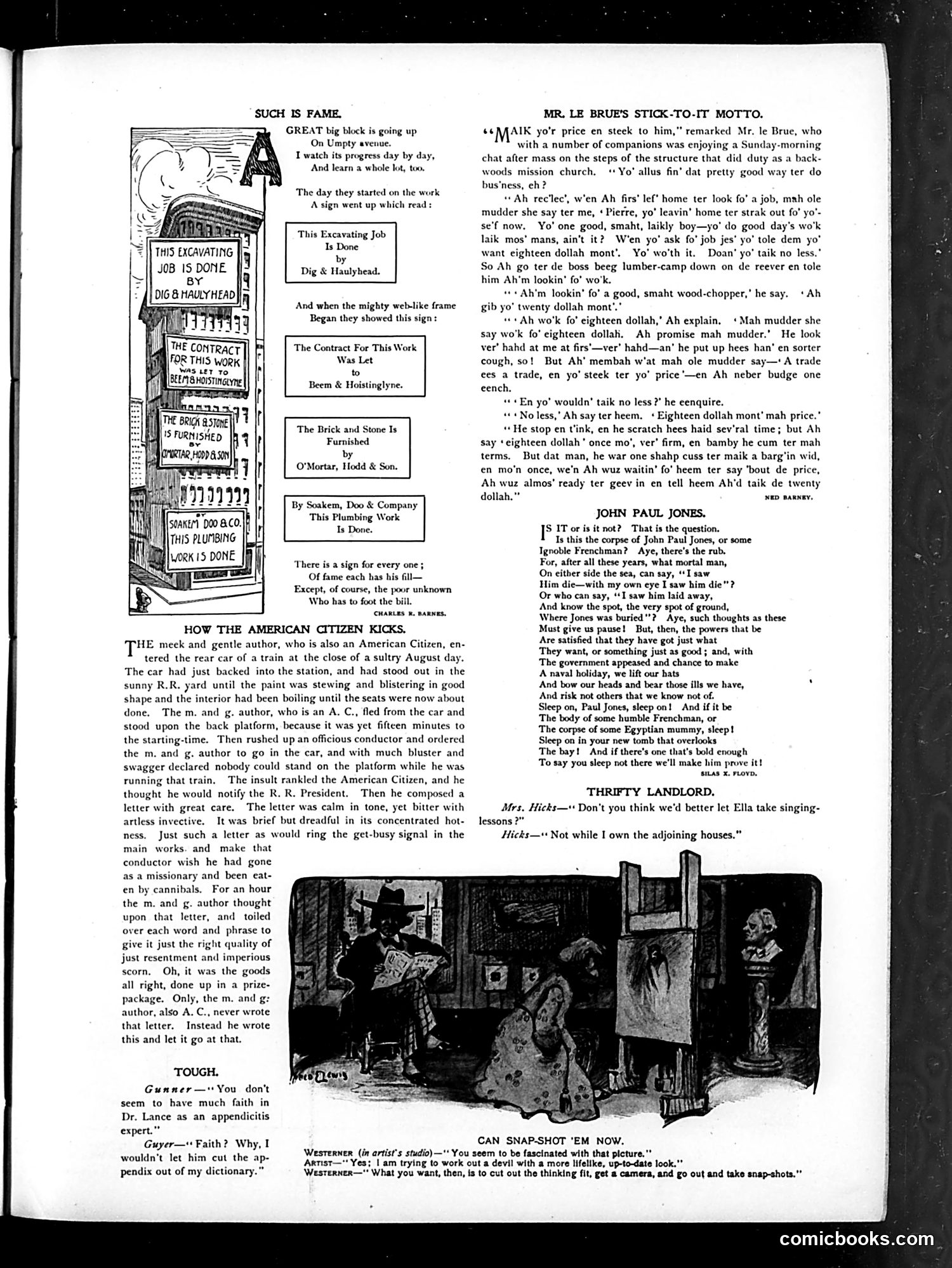
This Judge magazine page contains three separate pieces of social satire: **"Such Is Fame"** mocks construction site signage, where every contractor gets credit with prominent signs—except the unnamed property owner footing the bill. The satire targets how workers claim glory while costs remain invisible. **"How the American Citizen Kicks"** describes a meek traveler wronged by a rude railroad conductor. Despite composing an angry letter of complaint, he never sends it, instead writing this mild piece instead. It satirizes American passivity—citizens tolerate mistreatment without meaningful protest. **"Mr. Le Brue's Stick-to-It Motto"** presents working-class advice in exaggerated dialect. A man recalls his mother's wisdom: stick to your price and never undercut. When a lumber boss tries negotiating down from eighteen dollars monthly, the worker refuses, ultimately succeeding. The satire gently endorses working-class economic self-respect against employer pressure.
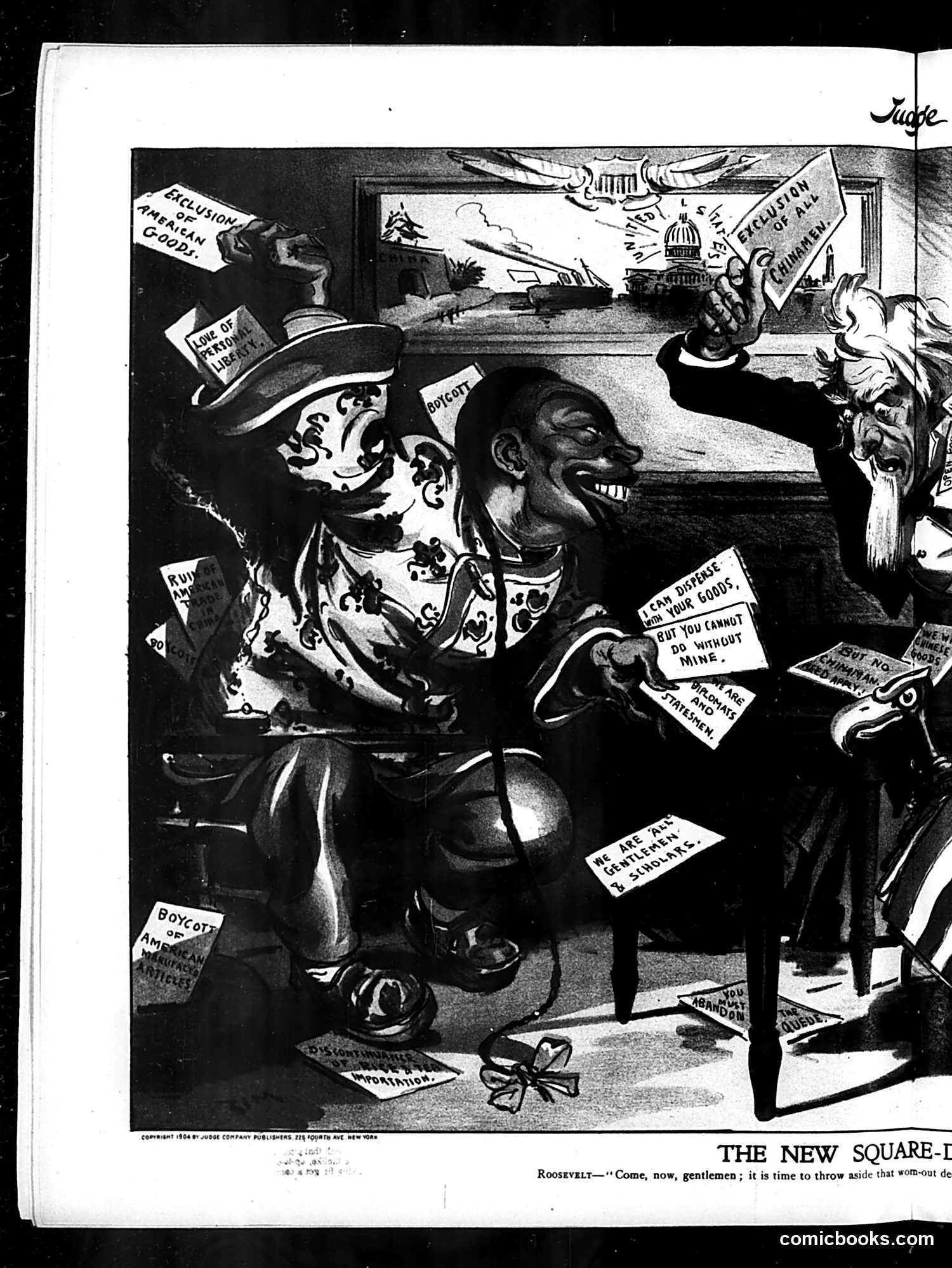
This political cartoon features **Roosevelt** (likely Theodore Roosevelt, given the "Square Deal" reference to his domestic policy platform) as a central figure surrounded by various symbolic elements and protest signs. The cartoon appears to satirize Roosevelt's attempts to mediate between competing interests—labor movements, business concerns, and political factions. Multiple protest signs visible in the image reference boycotts and labor disputes, suggesting tensions between workers' rights and commercial interests that Roosevelt's Square Deal policies attempted to balance. The caricatured figures and exaggerated expressions typical of Judge magazine's style emphasize the cartoon's mocking tone toward Roosevelt's efforts to broker peace among antagonistic groups. The overall composition suggests skepticism about whether his moderate approach could actually satisfy all parties involved.
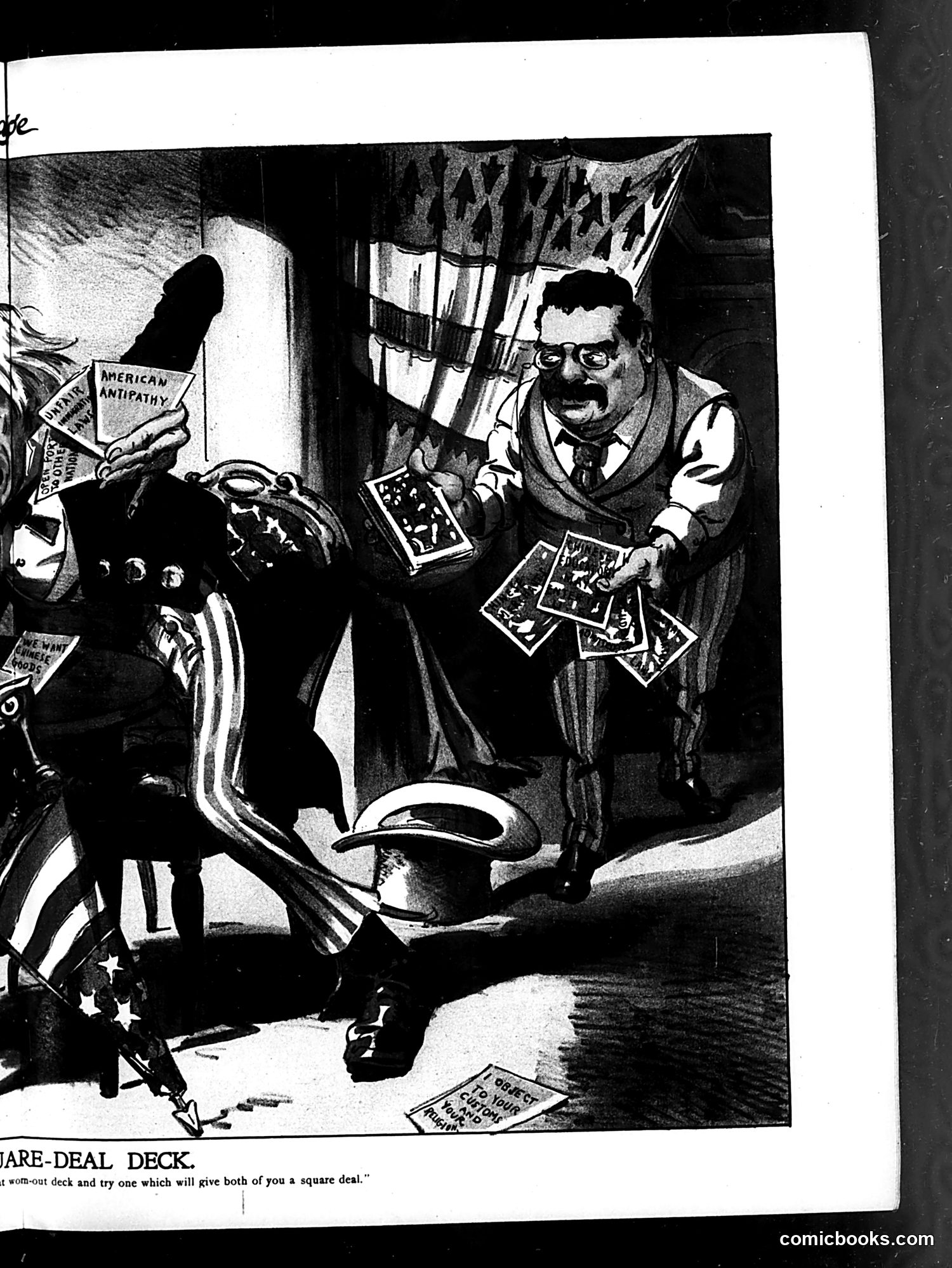
This Judge magazine cartoon titled "A Square-Deal Deck" depicts a character (appearing to represent a political figure or dealer) offering a worn deck of cards to another figure while displaying playing cards labeled "American Antipathy." The satire references the "Square Deal"—Theodore Roosevelt's domestic policy platform emphasizing fair treatment. The cartoon suggests that despite promises of fairness, the political "deck" remains rigged or corrupt ("worn-out"). The scattered cards and imagery suggest manipulation and deception in American politics. The figure on the left holds what appears to be a book labeled "American Antipathy," possibly critiquing hypocritical patriotism or anti-foreign sentiment masking self-interest. The cartoon mocks the gap between political rhetoric about fair dealing and actual corrupt practice.
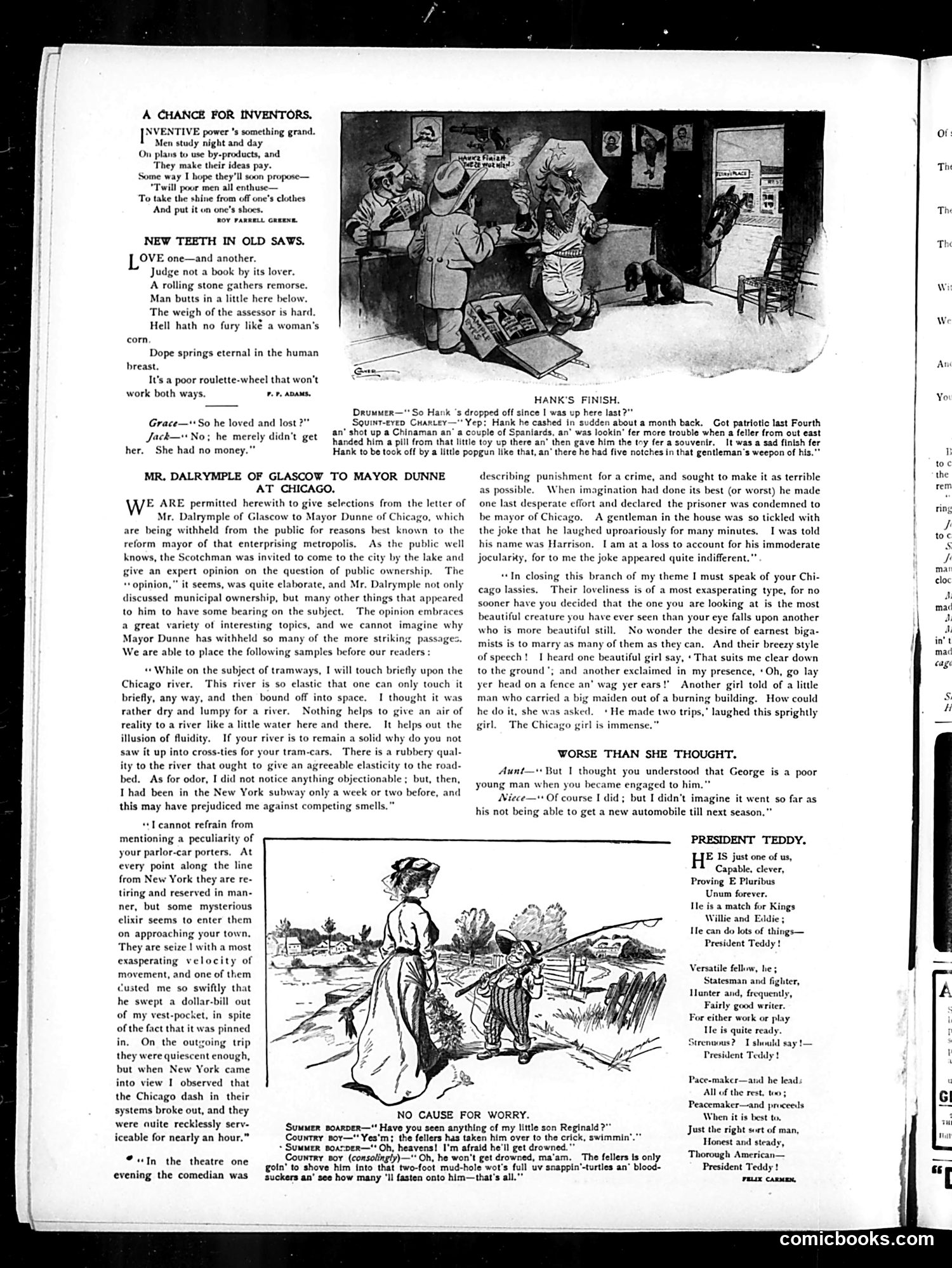
This page contains several satirical pieces targeting American social and political issues circa early 1900s: **"Mr. Dalrymple of Glasgow to Mayor Dunne"** is the main feature—a mock letter from a Scottish visitor criticizing Chicago's infrastructure and character. It mocks Mayor Dunne (Chicago's progressive reformer) by having the Scotsman offer absurd critiques: the Chicago River is "too elastic," the city's railroad porters are mysteriously hyperactive near Chicago. The satire suggests Dunne invited foreign "experts" to validate his reforms, only to receive unhelpful observations—ridiculing Progressive-era obsession with outside expertise. The smaller cartoons and comic verses mock various American types: inventors, romantic failures, incompetent rural people, and civic pretensions. The "No Cause for Worry" cartoon depicts rural indifference to child danger—parents casually accepting their son might be snapped by turtles, satirizing rural ignorance. Overall, the page reflects Judge's skepticism toward Progressive reformers, foreign advice-givers, and rural Americans—typical turn-of-the-century elite satire.
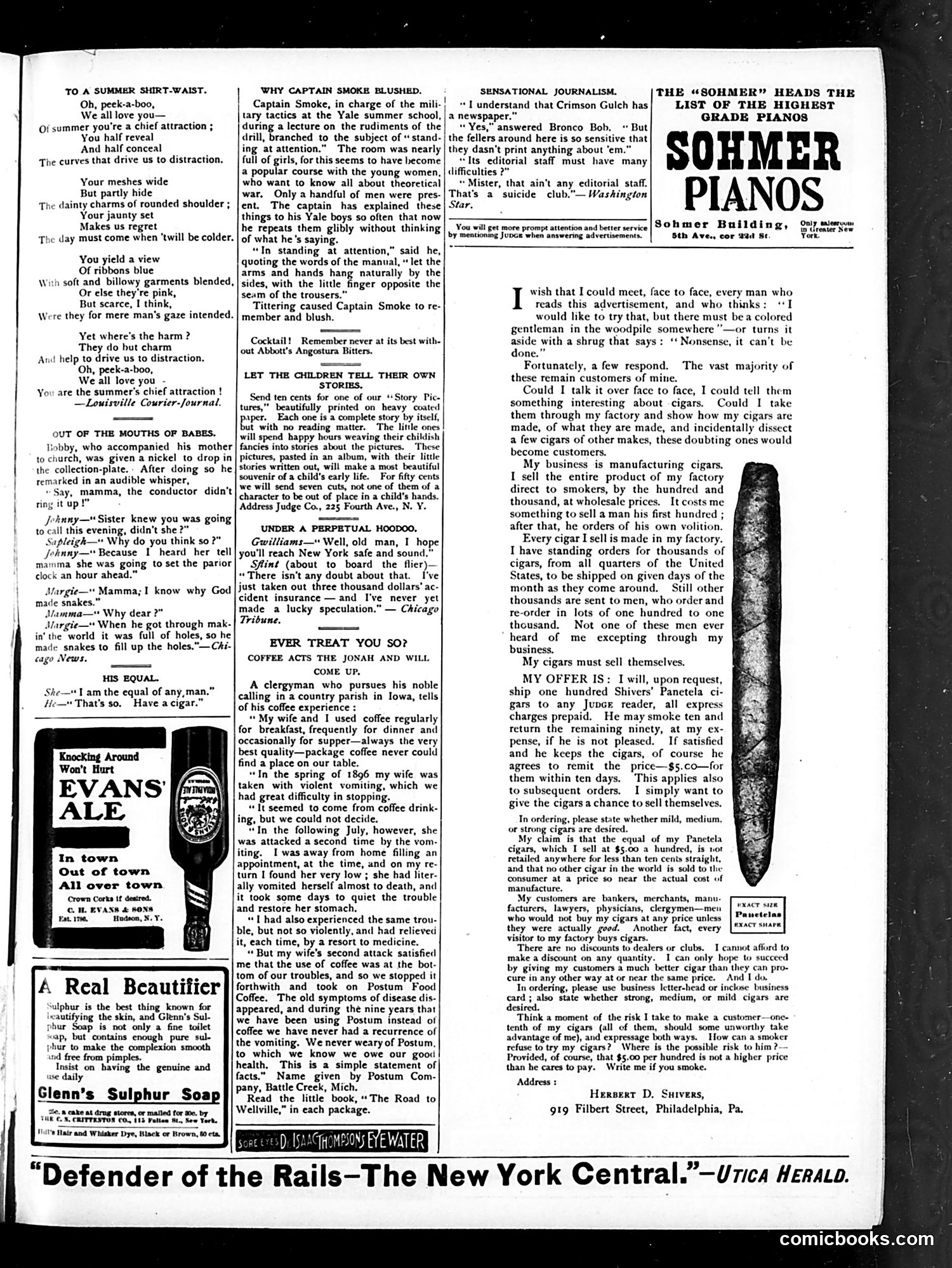
This page consists primarily of **humorous short pieces and advertisements** rather than political cartoons. The main satire centers on social norms of the era: 1. **"To a Summer Shirt-Waist"** — A poem poking fun at fashionable women's clothing that reveals more than Victorian propriety typically allowed, particularly the peek-a-boo shirt-waist style popular in the early 1900s. 2. **"Why Captain Smoke Blushed"** — Ridicules a military instructor at Yale who unconsciously makes a double-entendre when lecturing female students about proper stance ("little finger opposite the seam of the trousers"). 3. **"Out of the Mouths of Babes"** — Children's accidental wisecracks, a recurring humor format. The remaining content is **advertisements** for period products (Evans Ale, Glenn's Sulphur Soap, Postum Coffee) and commercial services. The Sohmer Pianos advertisement features a manufacturer's sales pitch about quality cigars, unrelated to pianos. The page reflects early-1900s middle-class anxieties about propriety, gender roles, and consumer culture.
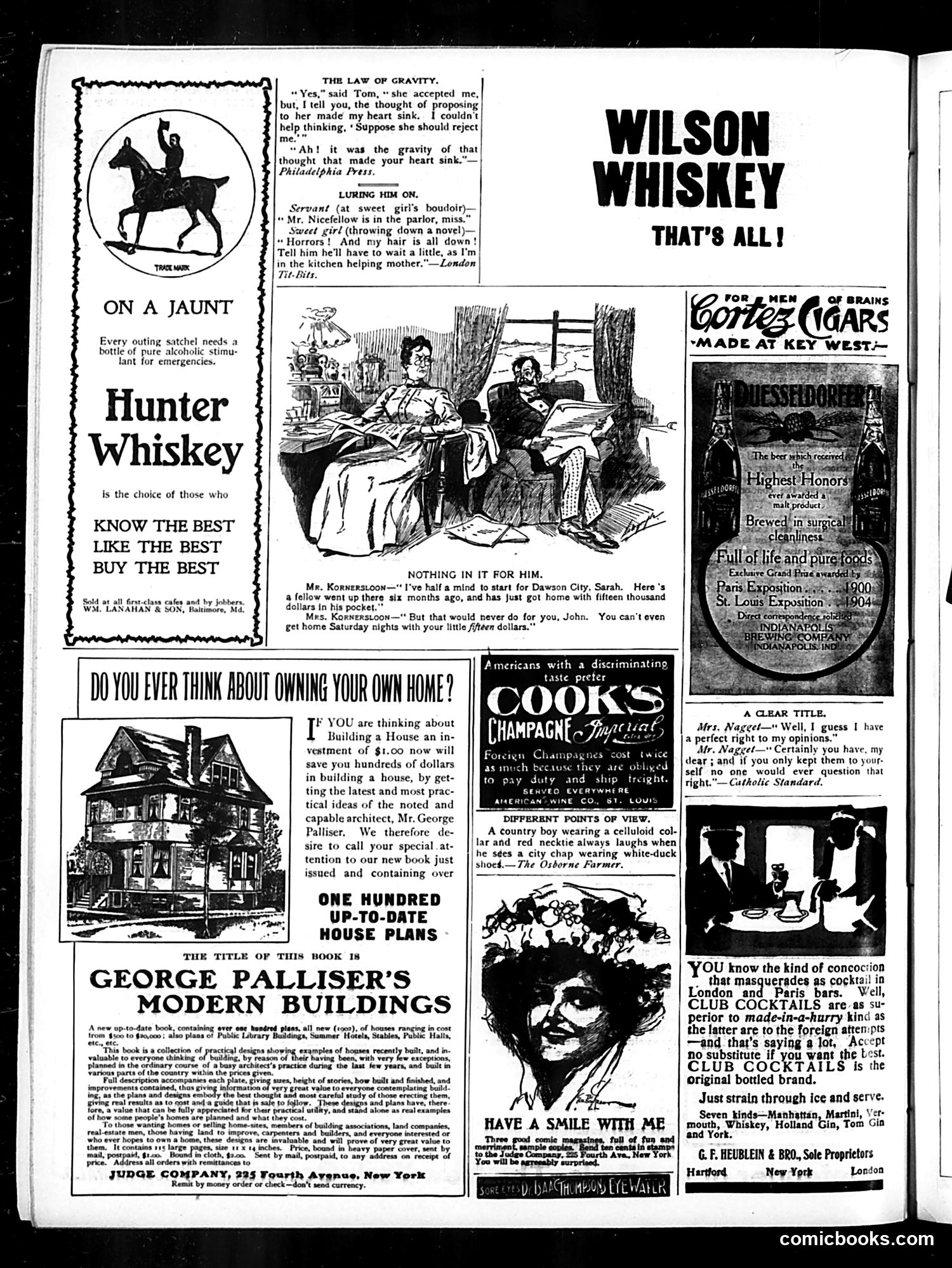
This page contains primarily **advertisements and light satirical humor** rather than political cartooning. The main content includes: **Humorous Anecdotes**: Brief jokes about courtship ("The Law of Gravity"), romantic deception ("Luring Him On"), and marital discord ("Nothing in It for Him," "A Clear Title," "Different Points of View"). These are genteel domestic humor typical of early 1900s magazines—poking gentle fun at gender relations and social pretense. **Product Advertisements**: Heavy promotion of whiskey brands (Hunter, Wilson), champagne (Cook's), cigars, and a book on house design by architect George Palliser. The "For Men of Brains" cigars ad reflects period advertising conventions equating consumption with sophistication. **Illustration**: "On a Jaunt" depicts a gentleman on horseback, accompanying the whiskey ad's suggestion that alcohol is essential for outings. The page reflects **no clear political commentary**—it's primarily entertainment and commercial content aimed at upper-middle-class readers, with humor focused on romantic and domestic situations rather than public affairs or social criticism.
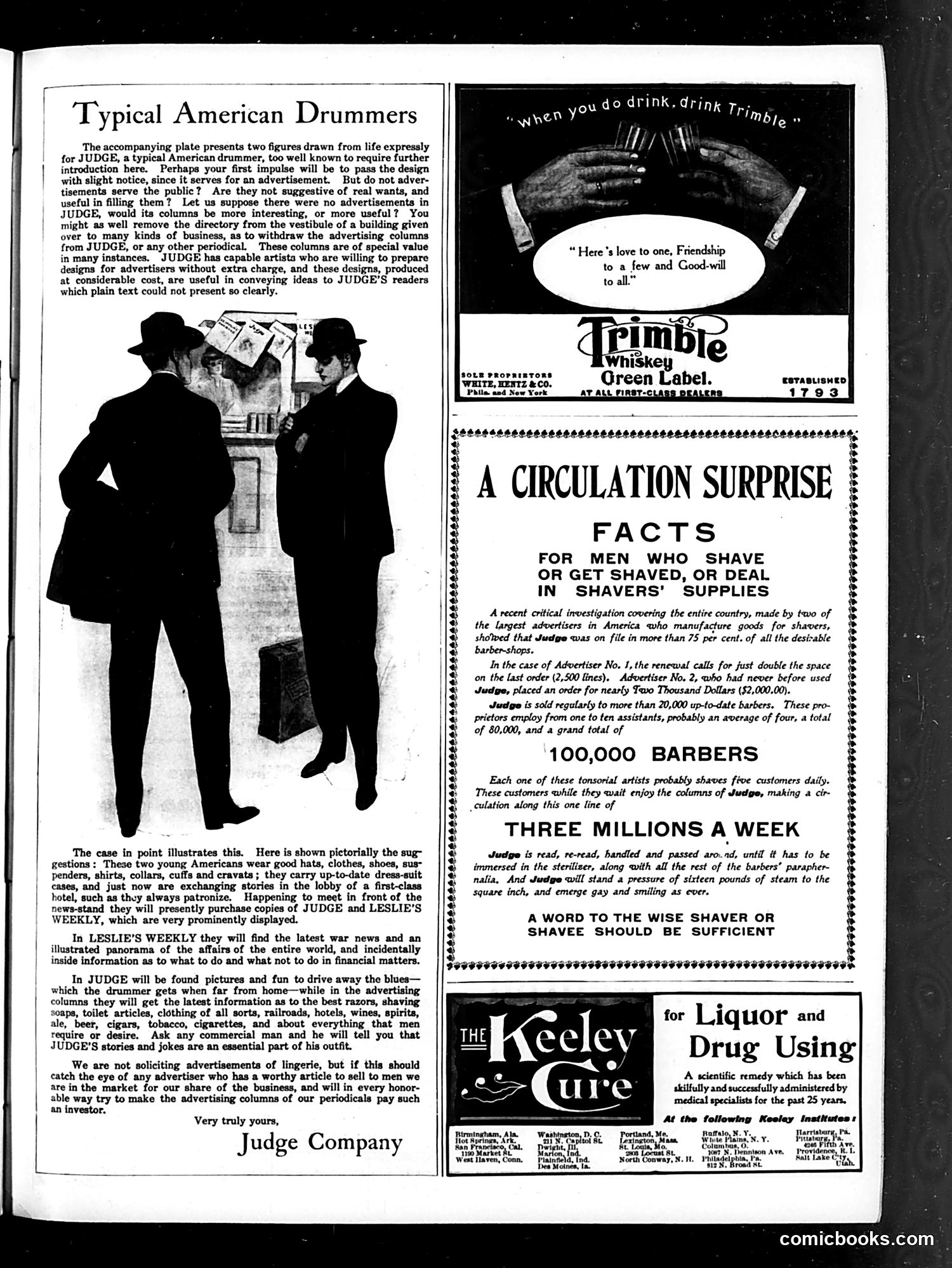
This page is primarily **advertising content** for Judge magazine itself, using satirical commentary to justify why advertisements belong in periodicals. The left illustration depicts two "drummers" (traveling salesmen)—well-dressed men in suits exchanging stories in a hotel lobby. The text explains that these figures exemplify the *type* of reader Judge attracts: commercial men who need practical information about razors, clothing, hotels, and other goods—information conveyed through advertisements. Judge defends its advertising columns by arguing they serve readers' actual needs. The right side features ads for Trimble Whiskey and Keeley Cure (a liquor/drug addiction treatment), with statistics claiming Judge reaches 100,000 barbers weekly and 3 million readers per week. The satire is subtle: Judge positions itself as *essential* to modern business life, claiming advertisements are as vital as a building directory. The "typical drummer" becomes the ideal reader—someone who needs Judge's mix of entertainment and commercial information to survive away from home.
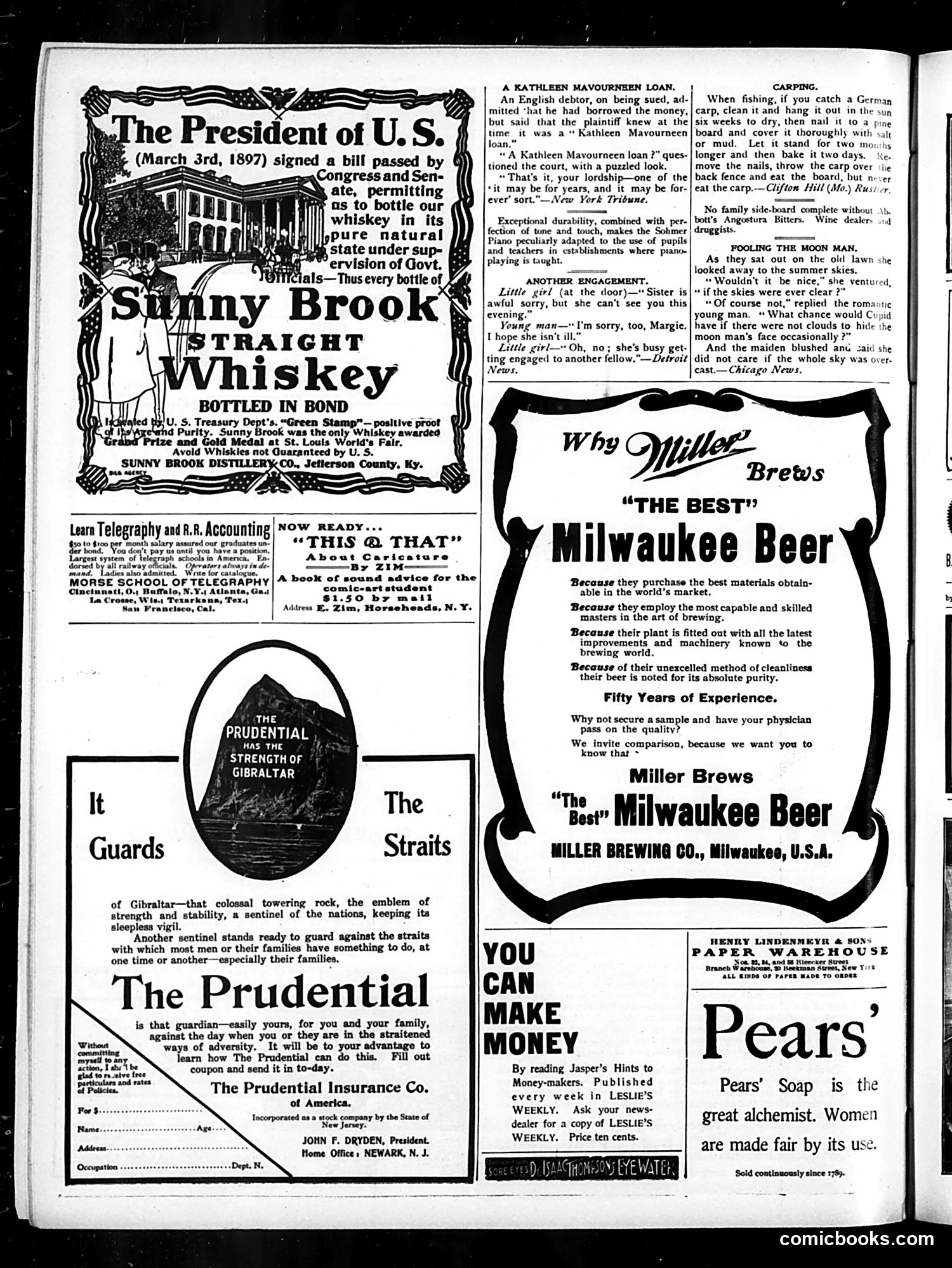
This page is primarily **advertising** rather than political satire. The dominant content consists of commercial ads for Sunny Brook Whiskey, Milwaukee Beer, Pears' Soap, Prudential Insurance, and other products typical of the 1897 era. The only cartoon-like content is **"The Prudential" insurance ad**, which uses Gibraltar—the famous rock fortress—as a metaphor for financial security and protection. The imagery of Gibraltar "guarding the straits" represents how insurance guards families against financial hardship. The small humorous items scattered throughout (about a "Kathleen Mavourneen loan," a girl getting engaged, fishing tips, moon-gazing romance) are **brief jokes or witticisms**, not political cartoons. They appear designed as filler content between advertisements. There is one reference to a presidential action regarding whiskey bottling (March 3, 1897), but it's presented as factual context for the whiskey ad rather than satirical commentary. The page reflects Judge's mixed editorial-advertising format rather than concentrated political or social satire.
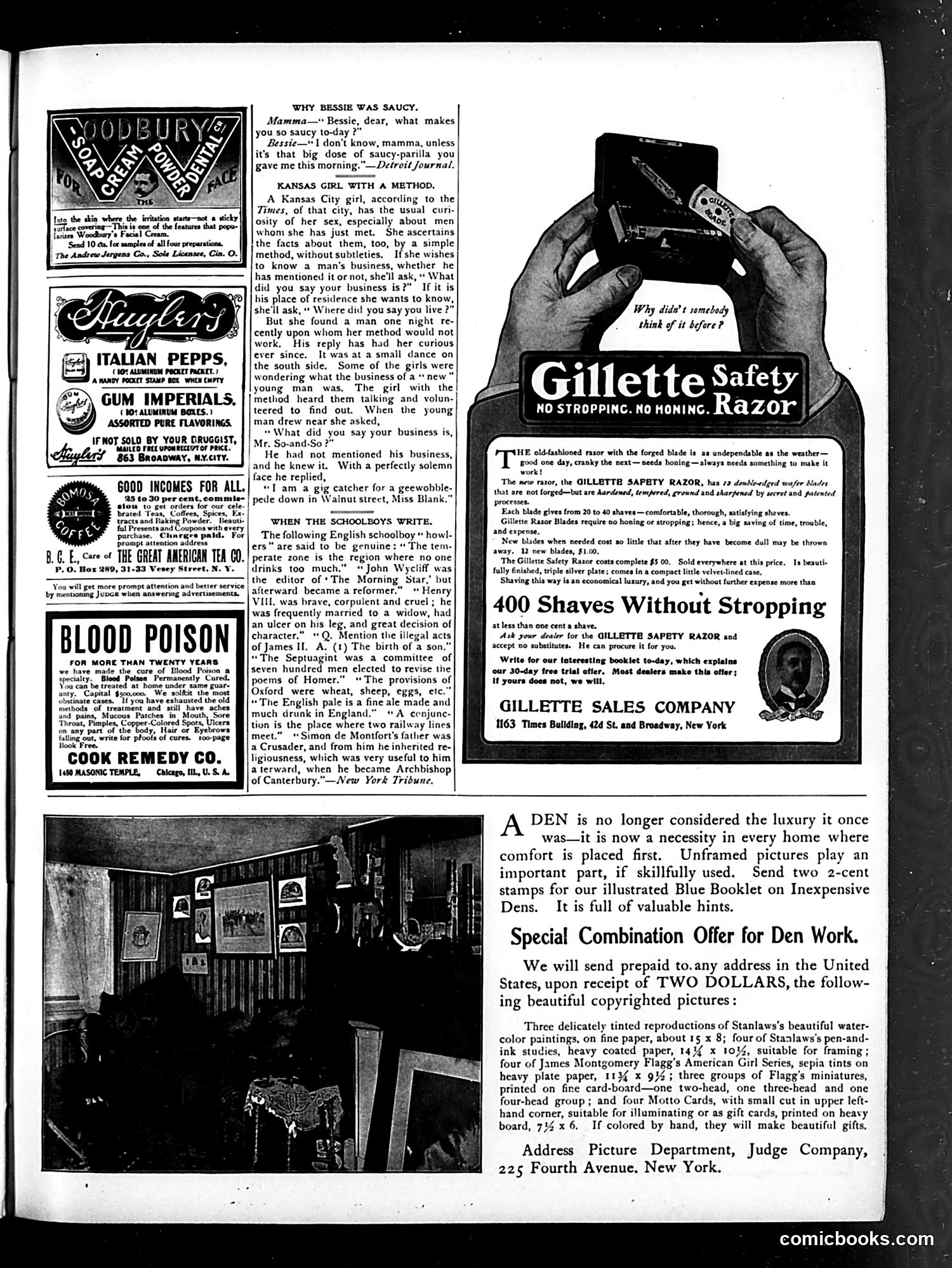
This page is **primarily advertisements** with two brief humorous text pieces embedded among them. The two jokes are: 1. **"Why Bessie Was Saucy"**: A pun where a child claims her rudeness stems from taking "saucy-parilla" (a play on "sarsaparilla," a medicinal drink). 2. **"When the Schoolboys Write"**: A collection of genuine absurd student exam answers demonstrating childish literalism and misunderstanding—e.g., confusing "temperate zone" with alcohol consumption, or calling English ale "a fine ale made in England" (confusing the Pale of Calais with actual beer). Both jokes mock innocent misinterpretations of language and knowledge. The page is dominated by patent medicine advertisements (blood poison cures, remedy companies) and consumer products (tea, gum, razors), typical of early 20th-century Judge magazine. The Gillette Safety Razor ad claims "400 Shaves Without Stopping"—a selling point emphasizing convenience over traditional straight razors requiring stropping and honing.
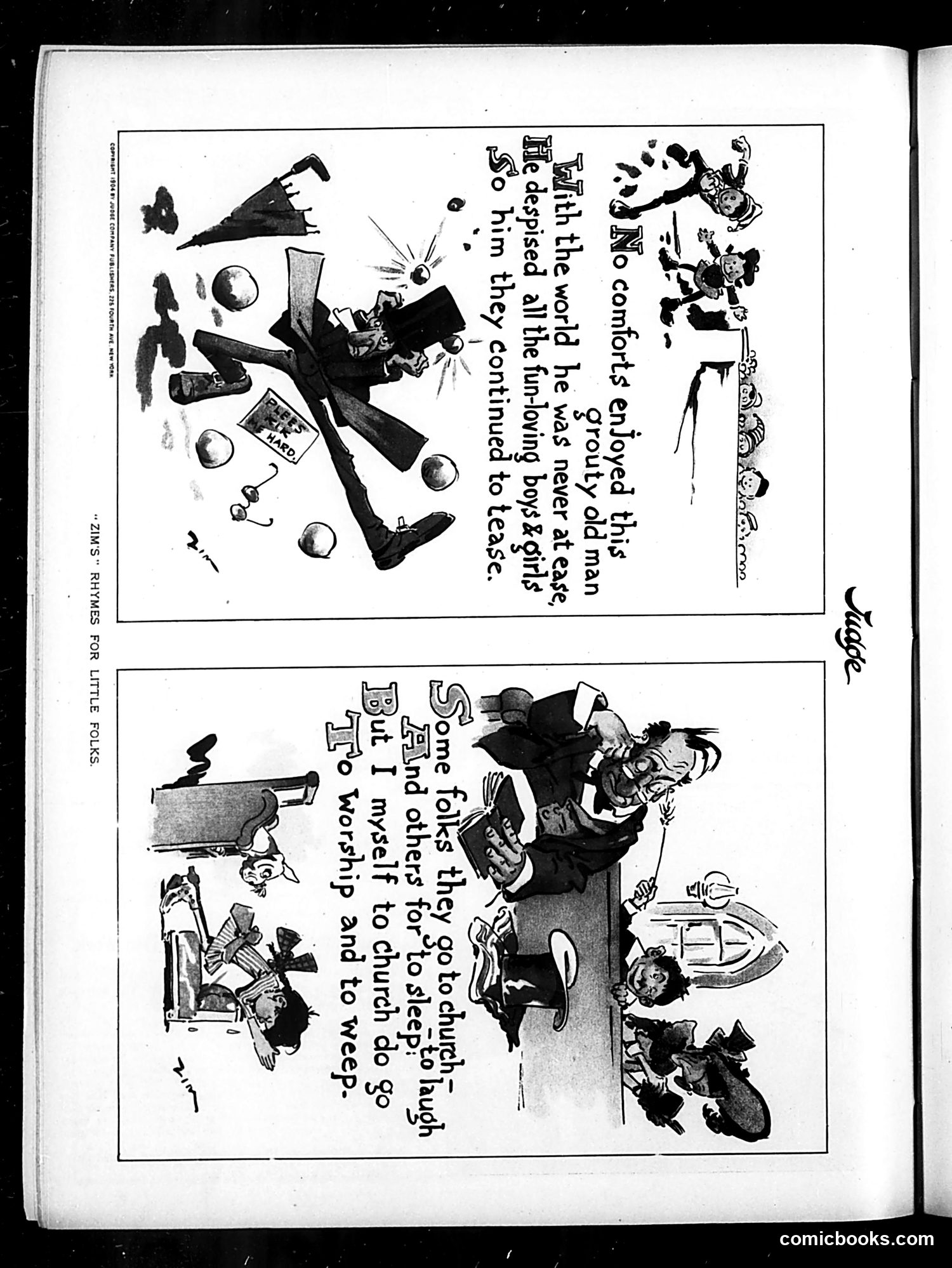
This page contains two cartoon panels illustrating "Zim's Rhymes for Little Folks"—children's moral instruction content. **Top panel**: Shows a man knocked backward by exploding objects, with text about the world having "expedited all the fun-loving boys & girls" who "continued to tease." The satire targets a grouty (grumpy) killjoy character who refuses to enjoy life's pleasures. **Bottom panel**: Depicts the same disapproving figure contrasted with children at play and leisure. The rhyming text presents his self-righteous position: while others go to church to laugh and enjoy themselves, he alone attends to "worship and to weep." **The joke**: Judge satirizes joyless Puritanical attitudes toward religion and childhood fun. The cartoons mock excessive piety and suggest that refusing to participate in innocent pleasures marks someone as disagreeable and out of step—a common Progressive-era critique of strict Victorian moralism.