🏆 Hall of Fame - Judge's Choices (2003)🏆 Grand Prix (1973)🏆 Comic Illustrators and Authors (1972)🏆 Best International Comic-Strip [or Comic Book] Cartoonist (1971)
Known forTintins äventyr
Issues credited551
Active1930–2023
Primary roleartist
Tim und Struppi #[15] (1967)
Georges Prosper Remi was born on 22 May 1907 in Etterbeek, Brussels, into a lower-middle-class family, and died on 3 March 1983. Working under the pen name Hergé — derived from the French pronunciation of his reversed initials, R.G. — he became one of the most significant figures in the history of European comics.
De avonturen van Kuifje #21 (1968)
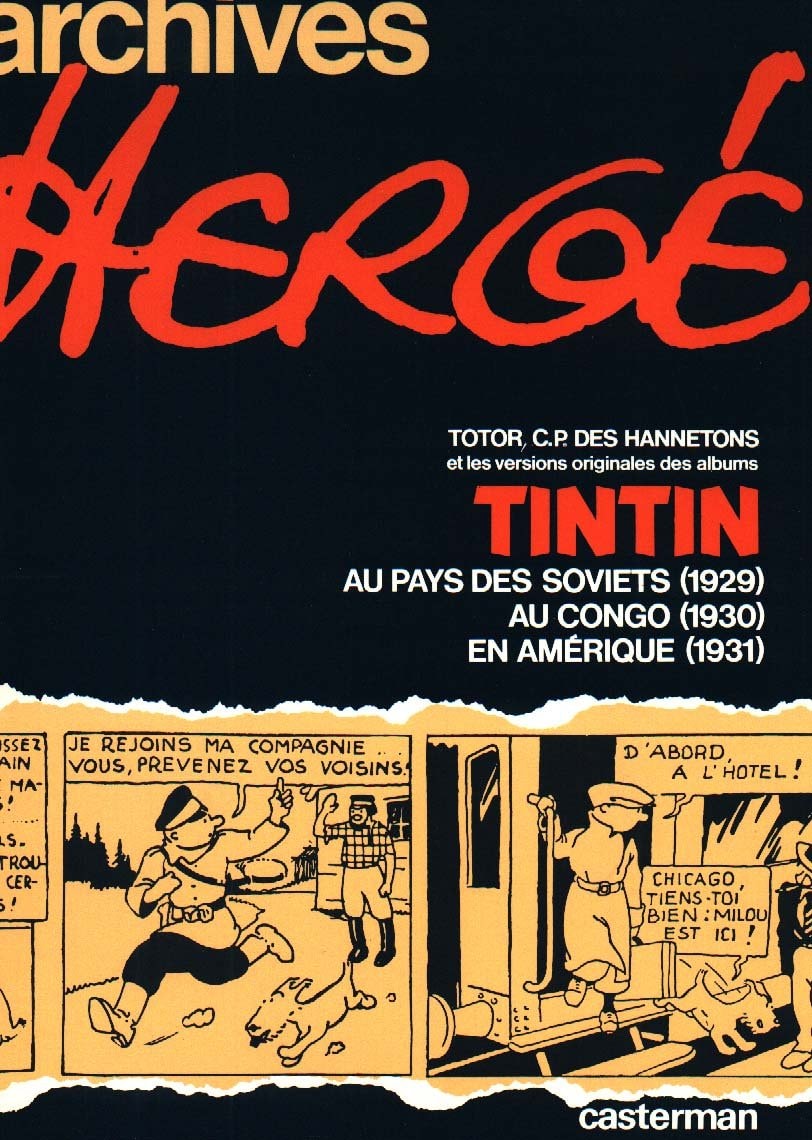
His earliest professional work consisted of illustrations for Scouting publications, and in 1926 he launched his first comic series, The Adventures of Totor, in Le Boy-Scout Belge. It was at the conservative Catholic newspaper Le Vingtième Siècle, on the recommendation of editor Norbert Wallez, that he created The Adventures of Tintin in 1929. Following boy reporter Tintin and his dog Snowy, the series began as children's propaganda but grew considerably more sophisticated over time. A friendship with Zhang Chongren proved pivotal: from 1934 onward, Hergé pursued rigorous background research, and the resulting realism — most visible from The Blue Lotus forward — became a hallmark of the work.
Tim und Struppi #[4] (1970)
Alongside Tintin, he produced two other notable series: Quick & Flupke (1930–1940) and The Adventures of Jo, Zette and Jocko (1936–1957). All his work was rendered in the distinctive ligne claire style, characterized by clean, precise linework and flat color. In 1946 he co-founded Tintin magazine with Raymond Leblanc, and in 1950 established Studios Hergé to support his continuing output. His editorial stewardship also helped bring wider attention to Edgar P. Jacobs' Blake and Mortimer series. The Adventures of Tintin remains among the most widely read and translated European comics of the twentieth century.

![Tim und Struppi #[15]](https://img.comicbooks.com/covers/amazon/3551015155.jpg)

![Tim und Struppi #[4]](https://img.comicbooks.com/covers/amazon/355101504X.jpg)
![Tim und Struppi #[5]](https://img.comicbooks.com/covers/openlibrary/3551015058.jpg)
![Tim und Struppi #[18]](https://img.comicbooks.com/covers/amazon/355101518X.jpg)